BARDIAN
SPRING 2026 BARDIAN
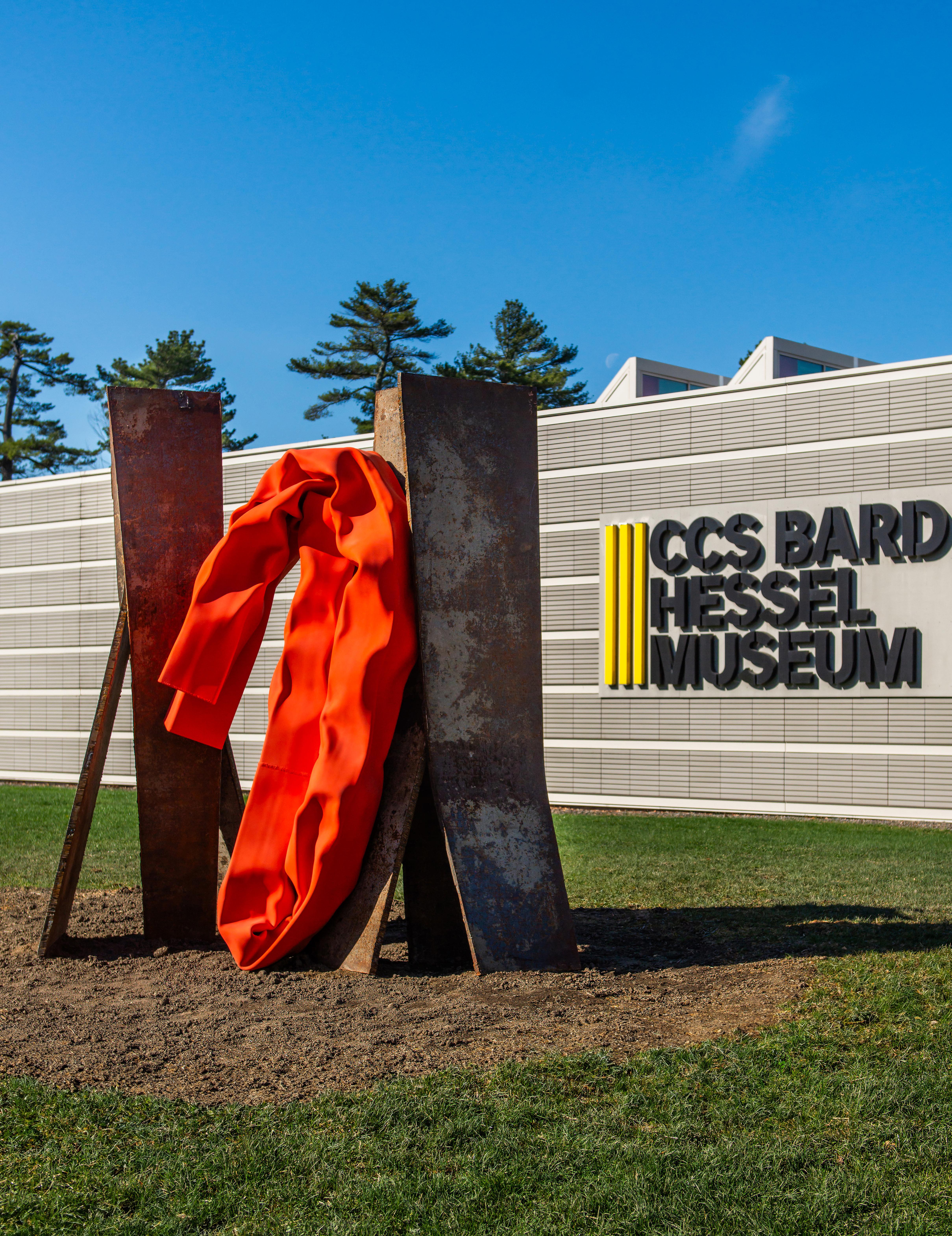
Carol Bove’s Chimes at Midnight VIII (2023) is the most recent addition to the Annandale landscape. Installed at the entrance to CCS Bard’s Hessel Museum, concurrent with Bove’s 2026 midcareer survey at the Guggenheim Museum in New York City, the sculpture is on long-term loan from a member of the CCS Bard Board of Governors (through March 2029). For more on CCS Bard, see page 20.
Photo by Rachel L. Crittenden
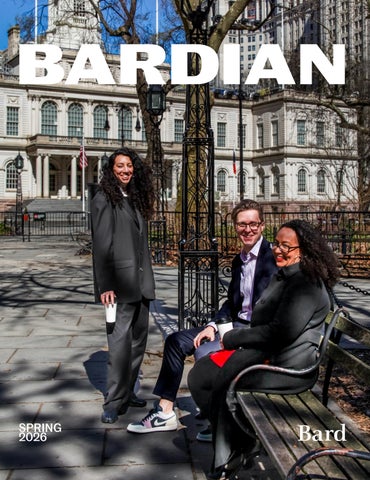
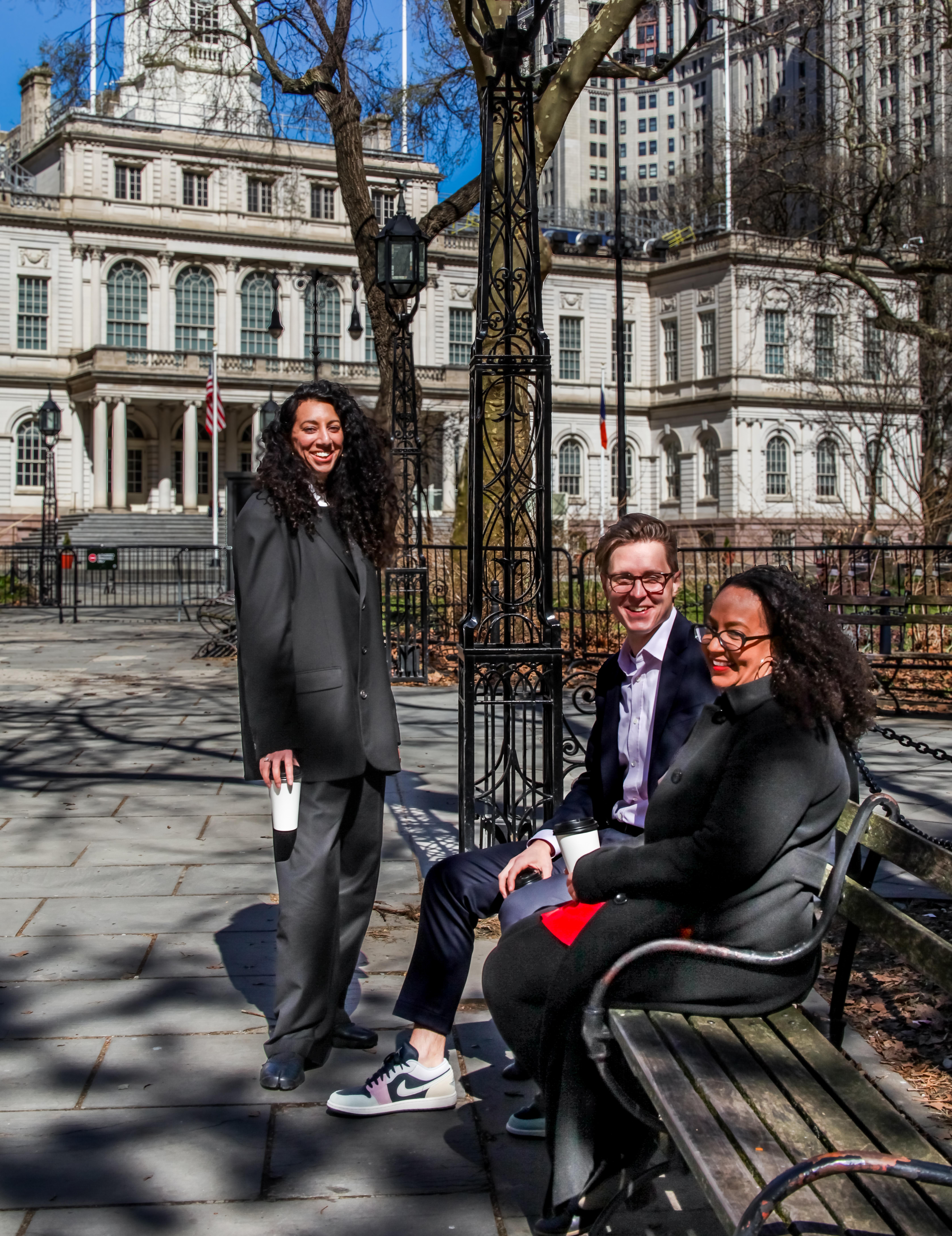
Cover: Diya Vij ’08, Chris Carroll ’13, and Linda Tigani ’08 (see page 2).
Photo by Brennan Cavanaugh ’88
DEVELOPMENT AND ALUMNI/AE AFFAIRS
Debra Pemstein
Vice President for Development and Alumni/ae Affairs
845-758-7405 pemstein@bard.edu
Jane Brien ’89 Director of Alumni/ae Affairs 845-758-7406 brien@bard.edu
ADMISSION
George Hamel III ’08 Director of Admission bard.edu/admission admission@bard.edu 845-758-7472
©2026 Bard College
Published by the Bard Publications Office
Mary Smith, director
James Rodewald ’82, editor
Printed by Qual Print, Pittsfield, Massachusetts
A good-faith effort has been made to supply complete and correct credits; if there are errors or omissions, please contact bardianmagazine@bard.edu
issuu.com/bardian 1-800-BARDCOL alumni@bard.edu alums.bard.edu #bardianandproud
@bardalumni @bardcollege
facebook.com/BardCollege
Bard College Alumni Association Bard College
FEATURES
BY THE PEOPLE, FOR THE PEOPLE 2
Bardians in New York City Government
By Elizabeth Daley ’05
Photos by Brennan Cavanaugh ’88
TRANSFORMATIVE MATCH MADE 24
Bard Completes Endowment Challenge
By James Rodewald ’82
SKY’S THE LIMIT 26
North Campus Expansion
Photos by Bilyana Dimitrova ’99
ON AND OFF CAMPUS 6
BOOKS BY BARDIANS
Alumni/ae 10 Faculty 15
ALUMNI/AE PROFILES
DATA DRIVEN 7
Erika McEntarfer ’95
By James Rodewald ’82
READING THE WORLD THROUGH CHEESE 9
Eric Paul ’08
By Mattie John Bamman ’04
Photo by Kye Ehrlich ’13
CLASS NOTES 33 IN MEMORIAM 40
BY THE PEOPLE, FOR THE PEOPLE
Bardians in New York City
By Elizabeth Daley ’05
Photos by Brennan Cavanaugh ’88
Government
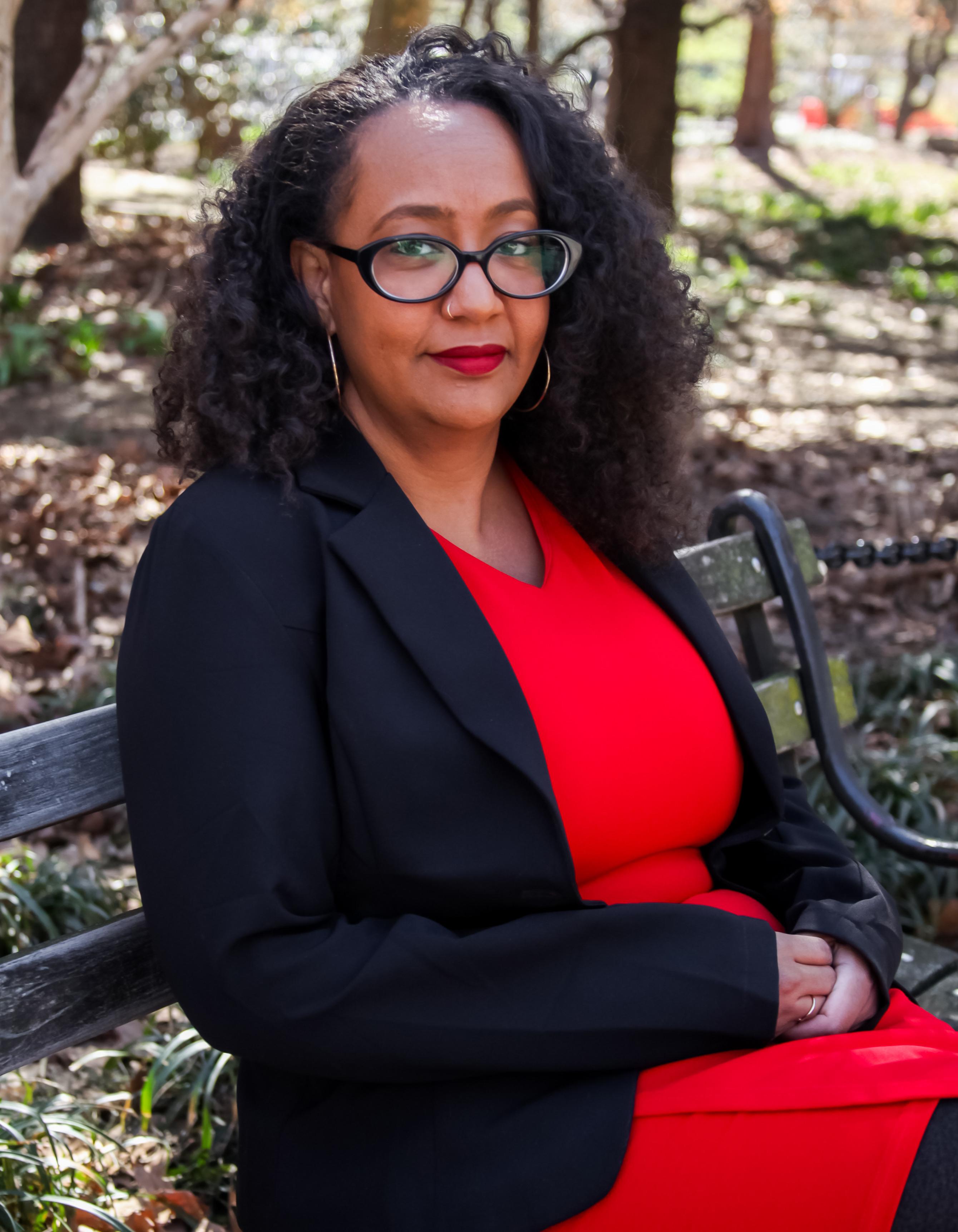
While the raucous environment of the Bard College budget forum—a twice annual democratic contest for funds between clubs in the dining hall—may seem like an unusual first glimpse at public policy, Linda Tigani ’08, chair and executive director of New York City’s Commission on Racial Equity, credits the experience as formative.
“I remember some of the conversations around the budget forum that mirror the conversations now,” Tigani says. “How many students are involved in this group? Where did this money come from? How many people will benefit? They’re the same questions, and I never thought in a million years I would say I learned something at budget forum at Bard. But budgets are moral documents.”
The former sociology major leads the only racial equity commission in the nation that is both an independent commission and an accountability body. It is creating a new blueprint of democracy that is inclusive of Black and Brown communities, repairs race-based harm from past and present government action, and seeks to redesign budget processes and redistribute tax dollars to advance racial equity and social justice. As the inaugural chair and executive director, she is establishing a benchmark at a time when the mere existence of such a body is an affront to the political moment. She has joined a cadre of racial equity leaders across the country leveraging a city’s commitment
for racial equity to advance the payment of a historic debt owed to the Black community through a citywide reparations study and companion truth, healing, and reconciliation process. Tigani is breaking ground by leading these processes simultaneously; previous efforts have historically been undertaken sequentially.
Tigani spent years working in other facets of city government, inspired by her brother, New York City Buildings Commissioner Ahmed Tigani. “He said, ‘Well if you really want to be accountable to the public you should work in government,’” she explains, noting that she now has a role exclusively accountable to the public, as she does not report to the mayor or other elected officials.
Her commission was created by voters in 2022 after protests against the murders of George Floyd and Breonna Taylor at the hands of police. Tigani is required to create community equity priorities with the public, track and respond to racial equity plans, and receive complaints from the public about agency conduct that may exacerbate racial inequity.
Equity recognizes that different groups may need different levels of support to reach the same outcome. “We’re nowhere close to being in a position where we can talk about equality,” she says. “We haven’t repaired any of the horror.” Tigani says, going on to explain
that chattel slavery created a blueprint for race-based harm that lingers on.
As a leader accountable to the people, she is in a unique position to agitate for change and refuse to back down, as she found out early in her tenure. After she was selected to lead the commission, the New York Post wrote numerous articles about her pro-Palestinian views, labeling her an antisemite. She was called into a meeting with then-Mayor Eric Adams’s deputies, who told her that Adams was going to publicly ask her to resign. “I am going to then publicly say ‘no,’” she replied, standing firm. Tigani explains that while she believes in Palestinian liberation, she also believes Israel has a right to exist. Still, she says it was hard to come back from being labeled as an antisemite for using the “From the River to the Sea” slogan, which she didn’t think of as offensive at the time. Reflecting now, she says, “I don’t think any slogan for liberation should enact fear or pain for anyone.”
If anything, she says, the Post’s attention gained her support among those who had initially questioned her bona fides. One article in particular, focusing on her involvement in the Malcolm X Grassroots Movement, which is aimed at creating an independent Black nation in the southern United States, actually led to increased interest in and visibility for the group, she explains. Tigani says she fielded questions from people living in the Northeast who wanted the group’s “Free
the Land” goals to claim territory closer to their homes. “I had to tell them I had no control over where the group decided to focus its efforts,” she says.
Mayor Eric Adams cared so little about racial equity, Tigani notes, “we had to sue him” because he didn’t put out the 2024 plan. Now, Tigani says, she is busy holding Mayor Mamdani accountable. Once again, the commission is owed a racial equity plan, and has been in “conversation quite publicly with the mayor’s team.” They missed the initial deadline, but then said they would put out the plan within the first 100 days. Tigani notes that Mamdani has “a few days left” to deliver the goods, and her team is “anxiously awaiting” his report.
Tigani was born and raised in Brooklyn by a single mom and is a first-generation American of Ethiopian, Sudanese, and “a tiny bit” Egyptian descent. She went to a Catholic high school in Brooklyn, where her teachers expressed disbelief when she said she was going to Bard. Apparently it was an unprecedented choice among her peers.
At Bard, she began organizing for racial equity with other Black students. As leader of the Black Student Organization, she pushed for the school to admit more Black and Latino students and at one point, she and other Black students tried to move into the same dorm together during room draw— her own early Malcom-X grassroots movement. “ Fred Barnes [former director of residence life] found out and he was like, ‘Absolutely not!’ What?”
student who attended Bard when she did and now serves as the school’s vice president, dean of early colleges, and vice president for student affairs. “I was like, ‘Dumaine, you’re not the only one!’ And he says, ‘I know.’ And I was like, ‘I’ve seen quite a number.’ And he says, ‘I know.’ I was like, ‘do you tell them about the past?’ and he says ‘I do, but they don’t believe me,’ which I thought was hilarious!”
cultivate her own lifelong relationship with learning and improved her writing.
“I am also very upfront with people and that is something Bard gave me the opportunity to do,” she says, explaining that she also learned how to “be in a political conversation when I don’t agree with the person.” Additionally, she noted that Bard seems to produce students with a certain level of what she called “social competitiveness.”
I don’t know that I was academically ready for Bard, but Bard made me academically ready for the world.
After graduating, Tigani visited Bard and gave a lecture. Just for fun, she decided to count the Black students she saw. She was elated to find that the numbers had risen sharply. She also ran into Dumaine Williams ’03, another Black
Of all the important things she learned at Bard, she says the most important related to its slogan: A Place to Think. “I don’t know that I was academically ready for Bard, but Bard made me academically ready for the world,” adding that the environment led her to
It’s “not like are we the coolest person or dress the best, but is our art the most vanguard? Has our writing really pushed the envelope? Are we introducing new ideas? Are we creating social innovation?” Bard students come out of college “focused on intellectual and innovation wins, rather than wealth,” she says.
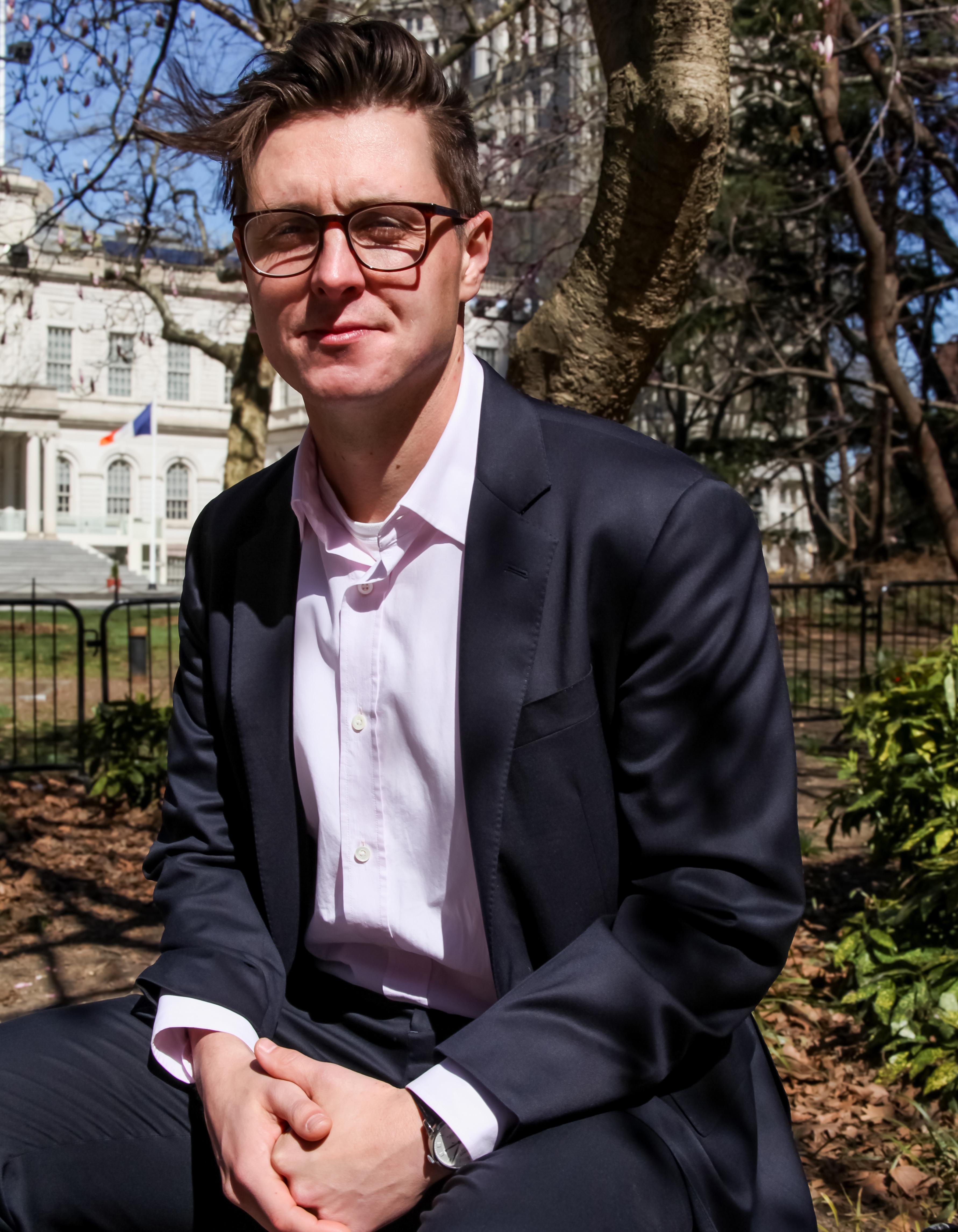
Chris Carroll ’13, executive deputy comptroller of the City of New York, says that his time performing orchestral music at Bard College translated well to his career path in city government. “The cool thing about music is it forces you to learn and communicate,” says Carroll. “You are sitting on stage with anywhere between 5 and 180 other people, with everyone’s native or first language being totally different, their backgrounds totally different, ages all over the place, and you’re playing music from 200 years before you were born and creating a new version of it at that moment.”
Not unlike the cooperation required to run a historic city.
Carroll has held quite a few jobs in New York City government, starting after graduating from Bard as an organizer for Bill de Blasio’s mayoral campaign, inspired, he says, to learn how the city worked by delving into politics. Now working for Mark Levine in the Comptroller’s Office, he oversees the offices’ bureaus of audit, labor law, policy, and communications.
Linda Tigani ’08
He started the position in January, having previously worked as policy director and chief of staff for Levine when he was Manhattan borough president.
Though the positions Carroll has held have been varied, his guiding principle has always been to build from his strengths. He took the discipline he learned through music and the ability to communicate and parlayed it into organizing, he says. He advises Bard alumni/ae and students looking for their next challenges to find what they are good at. “Those things might not line up with what you’re passionate about at first,” he says, “but if you’re building from the place where you’re comfortable, and that takes advantage of your strengths, you can eventually direct yourself to that place or thing that you’re passionate about.”
It might seem daunting for students—or for anyone—to figure out what they want to do for the rest of their lives, but to Carroll, that’s not the mission. “That’s a lifelong thing,” he says, explaining that personal growth and expansion are natural outcomes when building a career in this manner.
Carroll says that in his new role as part of an agency that deals with the financial well-being of the city, he had to learn how to speak about the city in a different way. “We manage the bond sales for the city, which is how we pay for all of our capital work on construction and purchasing of equipment for the city,” Carroll explains. “So we have to be thoughtful about how we talk about the city’s budget, not just because we want to be honest with New Yorkers but also because you have a bond sale next week, and there are going to be people who need to take this debt. So you have to be very thoughtful in your approach.”
Carroll credits Bard with helping him “learn how to be okay with failure,” because, he says, he wasn’t a stellar student. He came to college from New Hampshire without having finished high school, and he struggled, changing his major many times and eventually choosing political studies in addition to trumpet.
Carroll finds Bard alumni/ae to be natural fits for careers in public service, and encourages Bardians to get involved in government. Bard is “a very creative place,” he says. “Good government is actually a very creative thing. We are working hard on how to build affordable housing. How do you finance it? It’s a really complicated finance equation there, and you have to be super creative.”
If you’re building from the place where you’re comfortable, you can eventually direct yourself to that place or thing you are passionate about.
Now that Carroll is himself in the position to hire, he says he always looks for people who are strong writers. “Though I was a really, really, really bad writer in school, I learned the importance and the value of committing to becoming a better one,” he says.
In addition to using his creativity to solve urban problems, Carroll maintains his pandemic hobby: repairing old baseball gloves. So, although no longer works with his hands playing the trumpet, he is busy fixing up equipment for various minor league teams while his father, accomplished trumpet player Edward Carroll, has taken his place at Bard, teaching the class his son started for brass players.
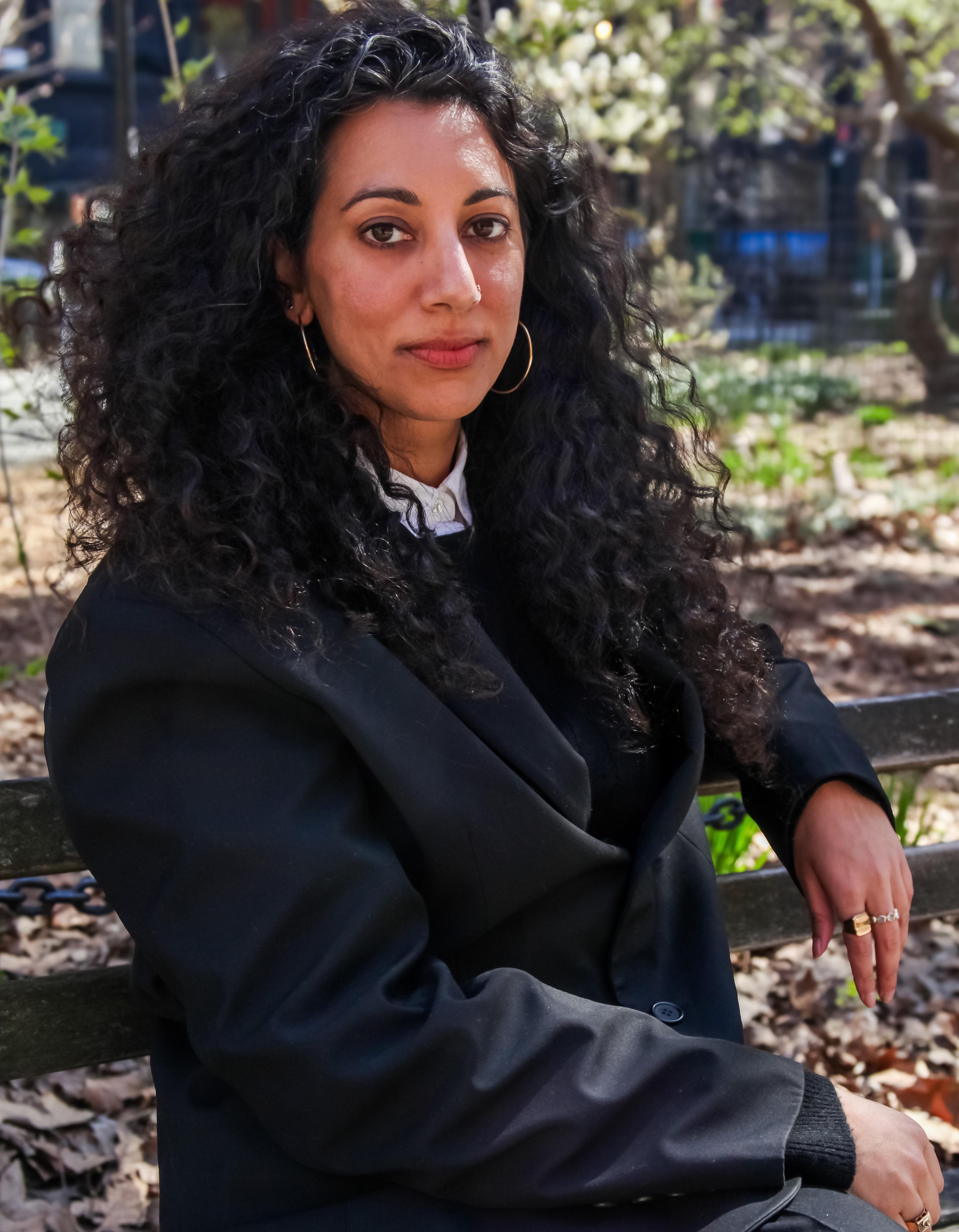
Like many, Diya Vij ’08, who had worked for New York City before her recent appointment as the city’s commissioner of cultural affairs, had become disillusioned with local government—until the election of Zohran Mamdani as mayor.
“I really never thought we would have a mayor like this,” she says. “Someone I feel politically aligned with, but who also has this incredible ability to communicate with people. And I’ve never seen such a critical mass of people interested in city government before. This, for me, is a moment to seize.”
Vij returns to lead the Department of Cultural Affairs (DCLA), the nation’s largest municipal funder of culture, after previously working on special projects there under her mentor, former DCLA commissioner Tom Finkelpearl, whom she first encountered while working at the Queens Museum. Finkelpearl helmed
Chris Carroll ’13
DCLA under Mayor Bill de Blasio, and Vij, who was a photography major at Bard, called her time with him at the Queens Museum “a real education for me on how a museum can be a neighbor to a community.”
“Queens is the most diverse county in the world, and so by virtue of being hyper-local there, we were actually being super international in our programming,” she says. “The through line to my entire career is I am always thinking about how artists are central to social political movements of the city,” she says, adding that she is excited to be working under Julie Su, the city’s first deputy mayor for economic justice.
“I come to this position as a cultural worker really well aware of the struggles of artists and workers and cultural organizations, and really animated and energized by this mayor’s agenda to truly address the affordability crisis and put the focus back on the worker,” she says.
Vij, who hails from Trumbull, Connecticut, “a town whose biggest claim to fame is that it has both a mall and a movie theater,” says Bard “opened my eyes to an entire world of art and its historical movements.” Growing up, she got her start in the arts as a competitive dancer and then eventually turned to photography at the private high school she attended. At Bard, she studied under An-My Lê and Larry Fink, whom she describes as influential and “incredible teachers.”
where she says she was able to do the work she had longed for. She also “lost some faith that government could be a site of change” until the current mayoral administration. She’s now trying to reorient herself at DCLA, but says that her dreaming days aren’t entirely over, the dreams now are just different.
field. Working at DCLA feels like an opportunity to make curatorial work more possible. I care about artists first and foremost, and I know that there is no New York City without the artists who live and work here.”
Vij and Finkelpearl are working with the artist Rick Lowe on a book about his work Project Row Houses. The Houston-based “social sculpture” project was led by Lowe and founded in 1993 by seven other African-American artists. The project rehabilitated 22 abandoned, historic shotgun-style houses, turning them into spaces for art installations, educational programs, and community services. Vij describes the book project as “our reflections on social practice art, and our doubts about it as a practice, as a way to come back to why we think it’s really important.”
I’ve never seen such a critical mass of people interested in city government before. This, for me, is a moment to seize.
After working in Mayor de Blasio’s administration, Vij left city government after finding it limiting. She says she craved working with artists where they could “dream together without any parameters.” She went to get her dreaming in as the head curator at the public arts organization Creative Time,
“I have been a curator for a long time,” she says. “I’ve gotten to do so much of that big dreamy work with artists and it always comes down to how the math maths. You are finding creative ways to realize projects, but the patterns of where resources fall short—for organizations and for artist support— become clear the more you work in the
Vij enjoys engaging the critical thinking skills she honed at Bard, but adds that they are kind of like muscles–if you don’t use them, you lose them. She urges alumni/ae to keep using the critical lens Bard inspired. “Maintaining that deep sense of justice and criticality” is one of the lessons she says Bard continues to teach her.
Journalist Elizabeth Daley ’05 has written and edited stories on topics as wide-ranging as innovation, for Pop City in Pittsburgh; shootings and car crashes, for Bay City News Service in San Francisco; arts and entertainment, for Queens Chronicle; the victims of the Pulse nightclub shooting, for The Advocate website; and everything under the sun for the Bard Observer. She is a reporter for Law360
Brennan Cavanaugh ’88 studied with Stephen Shore and Ben Lifson at Bard, and since the mid ’90s has been making portraits, photographing stories and events, and shooting for companies like T-Mobile, Pepsi, Rolling Stone, The Source, GQ, and Esquire
Diya Vij ’08
ALUMNI/AE ACHIEVEMENTS
Work by Ei Arakawa-Nash MFA ’07, Lotus L. Kang MFA ’15, and Professor of Photography Walid Raad can be seen in the 2026 Venice Biennale, In Minor Keys, which opened May 9 and runs through November 22. Arakawa-Nash is a performance artist and member of the collective Fac Xtra Retreat (FXR). His project, Grass Babies, Moon Babies, is at the Japan Pavilion. Kang, who utilizes sculpture, photography, and installation to communicate themes drawn from industrial and architectural forms, familial and social histories, poetry, and non-human figures, produced a major installation for the inaugural Bulgari Pavilion. Raad, who is best known for The Atlas Group, a 14-year project about the contemporary history of Lebanon, explores in his work how historical events of physical and psychological violence affect bodies, minds, culture, and narrative.
Cecilia Giancola ’25, a Historical Studies major, has been awarded a Fulbright independent study/research grant to India. Her archival research project is focused on the operations of the Baroda (Gaikwad) state in western India during the 19th century. Oskar Pezalla-Granlund ’24, who majored in Art History and Visual Culture, has received a Fulbright independent study/research grant to Spain. He will focus his research on the often overlooked history of the artistic and cultural contact between the Philippines and Spain through an examination of the Museo-Biblioteca de Ultramar. Grace Molinaro ’24, a Middle Eastern studies and cello performance major, has been awarded a Fulbright Scholarship to study Modern Standard Arabic in Egypt. Maia Cluver ’22, a joint Art History and Visual Culture and Human Rights major, has been selected for a Fulbright English Teaching Assistantship to Jordan for the 2025–26 academic year.
This year’s Whitney Biennial features works by alumni/ae Cooper Jacoby ’11, Sula Bermúdez-Silverman ’15, and Jordan Strafer MFA ’20. Jacoby’s work incorporates responsive elements such as machine learning, motors, and sensors to rescript ubiquitous systems in ways that make their labor and forms of circulation intelligible. Bermúdez-Silverman investigates and critiques social structures in sculptures that examine economic, racial, religious, and gendered systems of power. Strafer, an artist and filmmaker, projects stories of herself and her family, while also refering obliquely to questions of racial identity, gender, sexuality, class, and “Americanism.” The 82nd edition of the biennial, the longest-running survey of contemporary art in the United States, is on view through August 23, 2026, at the Whitney Museum of American Art.
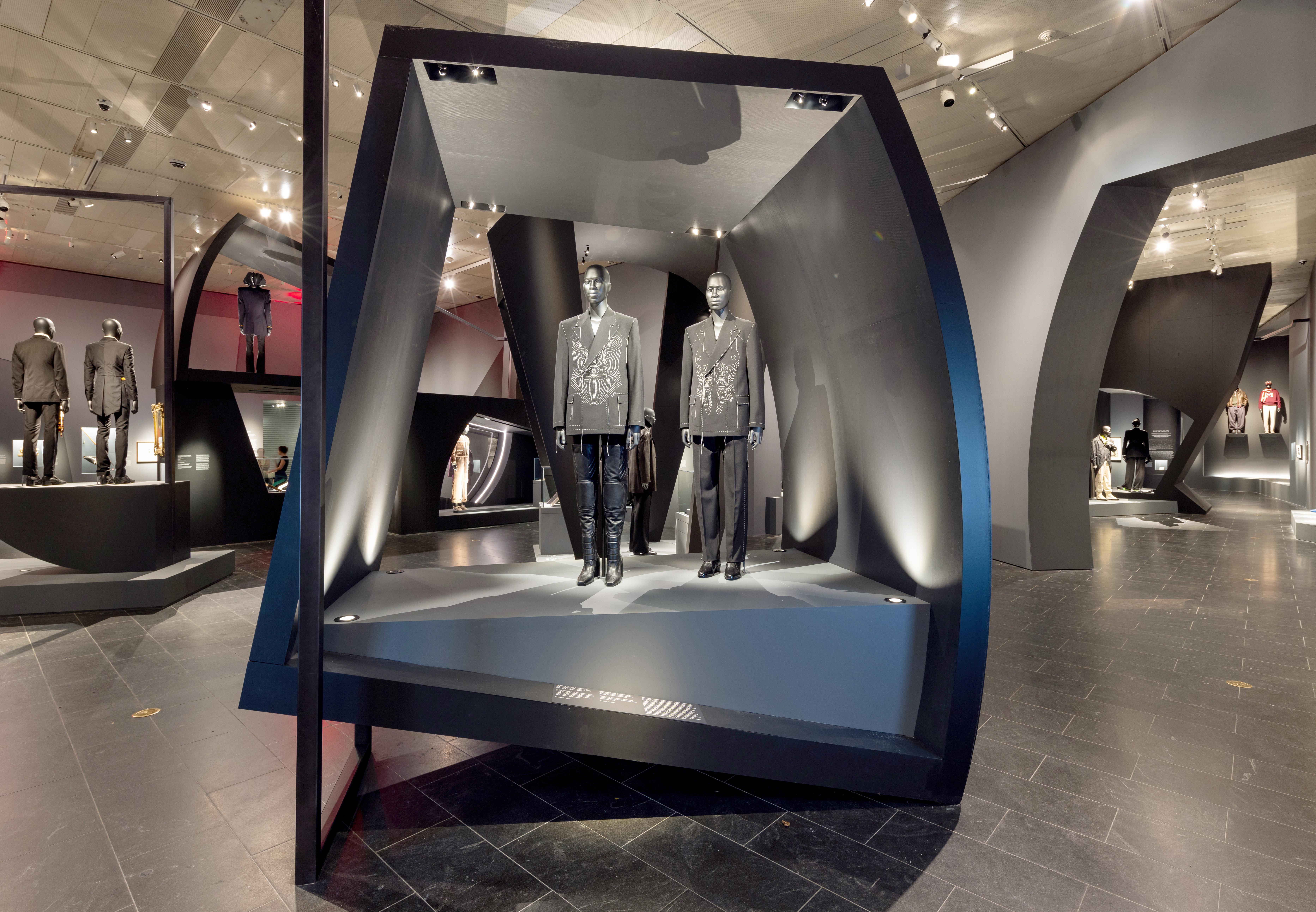
Superfine: Tailoring Black Style, the Metropolitan Museum of Art Costume Institute’s highly touted show of Black men’s fashion, attracted almost as much attention for its exhibition design as the finery on display. Artist Torkwase Dyson, former Bard MFA faculty in sculpture, devised the forms, and her “hypershapes” were realized and installed by Stefan Klecheski ’12, Tyler Dusenbury ’08, and Alan Lucey ’09 of exhibition and experiential design firm SAT3 Studio. Meticulously organized into themes based loosely on Zora Neale Hurston’s essay “Characteristics of Negro Expression” (1934) and drawing from Slaves to Fashion: Black Dandyism and the Styling of Black Diasporic Identity (2009) by Barnard professor Monica L. Miller, who was guest curator for the exhibition, the show presented a “history of Black style through the lens of dandyism, emphasizing the importance of sartorial style to Black identity formation in the Atlantic diaspora and the ways Black designers have interpreted and reimagined this history.” SAT3 Studio, which also worked on the Met’s Karl Lagerfeld: A Line of Beauty in 2023, was well versed in the museum’s rules on circulation, clearance, and accessibility, which greatly enhanced their ability to execute Dyson’s vision. With 300 years of garments, accessories, paintings, videos, caricatures, and sketches arranged throughout the 10,000-square-foot space, this was no simple matter. As Dyson told Vogue’s Lilah Ramzi, “I wanted people to feel held by a thoughtful system—not confined by it.”
Disguise, gallery view, photo ©The Metropolitan Museum of Art
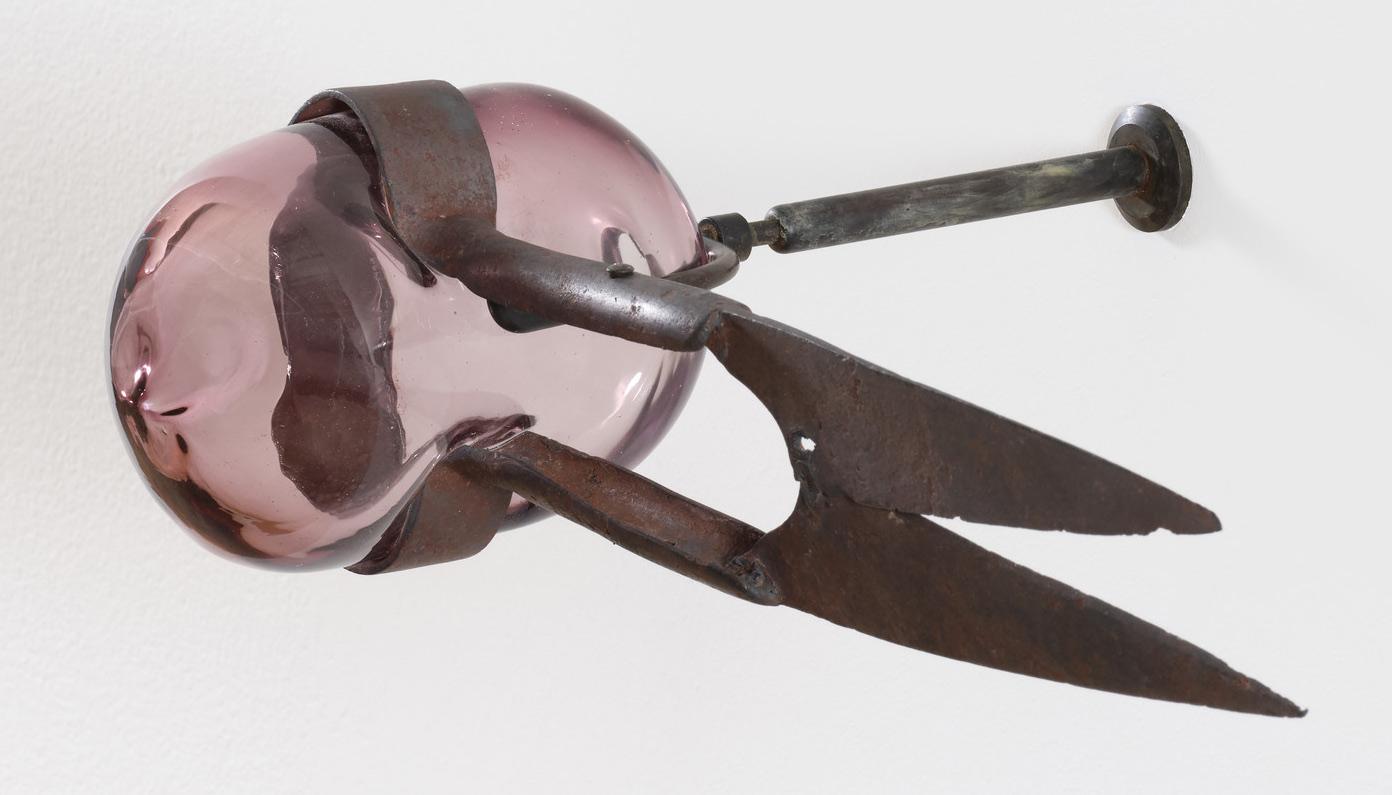
blister iii, Sula Bermúdez-Silverman ’15, 2025 Hand blown glass, iron sheep shears, and steel Collection of Hannah Hoffman and Marguerite Steed Hoffman Courtesy the artist and Hoffman Donahue. Photo by Paul Salveson
ERIKA MCENTARFER ’95 DATA DRIVEN
By James Rodewald ’82
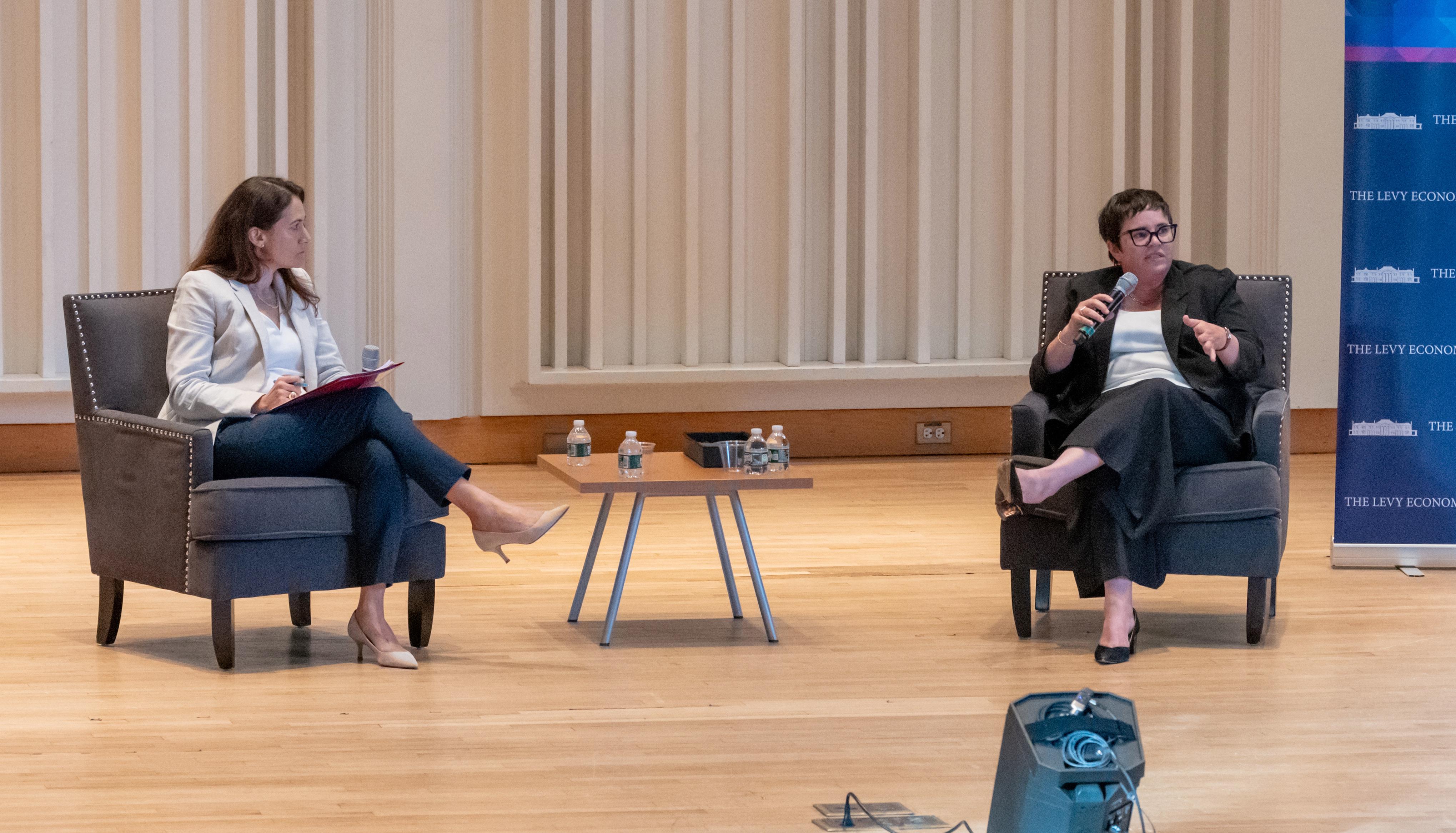
Speaking to an audience of Bard students, faculty, staff, and community members in Olin Hall last fall, Pavlina Tcherneva, president of the Levy Economics Institute of Bard College, said: “. . . truth and rigorous analysis matter . . . our ability to solve problems and find common ground depends on a shared commitment to facts and honest inquiry.” Tcherneva was introducing Erika McEntarfer ’95—commissioner of the Bureau of Labor Statistics (BLS) until August 1, 2025, when President Trump fired her—whom she called a “dedicated public servant whose career has been defined by a commitment to curating good data as the foundation of sound policy.”
McEntarfer was appointed commissioner by President Biden in July 2023 and confirmed rapidly and with broad bipartisan support (86-8) shortly after Trump began his second term. By that time she had dedicated 20 years to nonpolitical roles across the federal government under multiple administrations, including lead labor market economist in the Census Bureau Center for Economic Studies, member of the economic staff of the Treasury Department’s Office of Tax Policy, and White House Council of Economic Advisors nonpolitical staff member. McEntarfer’s yearlong BLS tenure ended not because she was bad at her job, difficult to work with, or even because she expressed views unpopular with the administration. She was fired for doing exactly what every BLS commissioner had done before her: she released a jobs report prepared by professional economists using
data gathered by survey. The report showed a weakening economy and a weakening jobs market, which contradicted the administrations preferred narrative, so McEntarfer herself became a statistic. She is one of the more than 200,000 civil servants who left their jobs in 2025, including nearly 60,000 who were fired. The loss for the federal government, and we the people, is a gain for the Stanford Institute for Economic Policy Research (SIEPR), where McEntarfer was recently named research scholar and distinguished policy fellow. There she will continue her work on labor market dynamics, advancing SIEPR’s mission of promoting evidence-based knowledge about pressing economic issues.
“Economic data must be free from partisan influence,” McEntarfer told the audience in Olin. “Markets have to trust that the data are not manipulated. Firing your chief statisticians for releasing data you do not like will have serious economic consequences. Think of the US economy like a city’s transportation infrastructure. Just like traffic sensors, cameras, and GPS data help city planners understand where congestion, road usage, and repairs are needed, economic data helps policymakers, businesses, and investors understand where the economy is thriving, slowing, or in need of intervention. The city planners of the US economy—senior officials at the Federal Reserve, the president’s senior economic advisers—watch this data very closely. So do traders on Wall Street, investment bankers, and business
economists. Messing with economic data is like messing with the traffic lights and turning those sensors off. Cars don’t know where to go, traffic backs up at intersections, there are more accidents. The city planners no longer have data to reroute traffic. My firing was big news because nobody thinks it’s going to be good for our economy if we start messing with those traffic lights.”
McEntarfer’s appearance in Annandale marked her first public statements since her firing, but the BLS had earlier released a statement that said, “Commissioners do not cook the numbers. They don’t even see them until after the estimates are complete. The real goal is clear: to discredit independent statistics, slash budgets, and bully federal workers into silence. But BLS staff will not be intimidated. We will publish reliable data no matter how inconvenient the results. The numbers will remain accurate and nonpartisan. And if that ever changes, the professionals will tell you.”
Unlike the current administration, the work of the Levy Economics Institute is rooted in, as Tcherneva put it, “a simple credo: start with facts, not ideology, and build models from the real world economic experiences of people.” That sounds like a perfect description of what the Bureau of Labor Statistics does in normal times. These are not normal times, and the firing of a dedicated public servant like Erica McEntarfer is just one of many unfortunate examples of government dysfunction.
Pavlina Tcherneva (left), president of the Levy Economics Institute of Bard College and Erika McEntarfer ’95, photo by Karl Rabe
ALUMNI/AE ACHIEVEMENTS
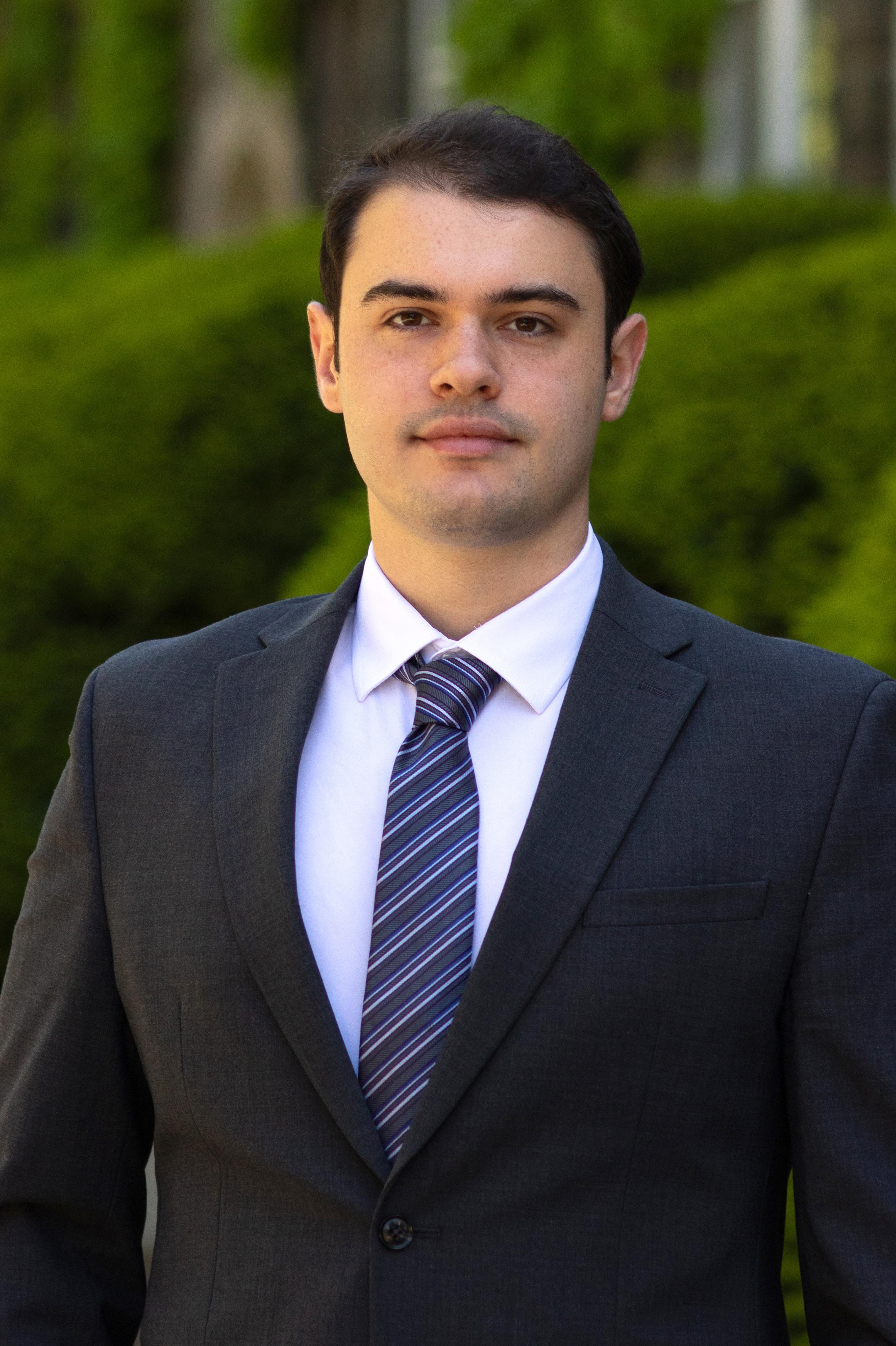
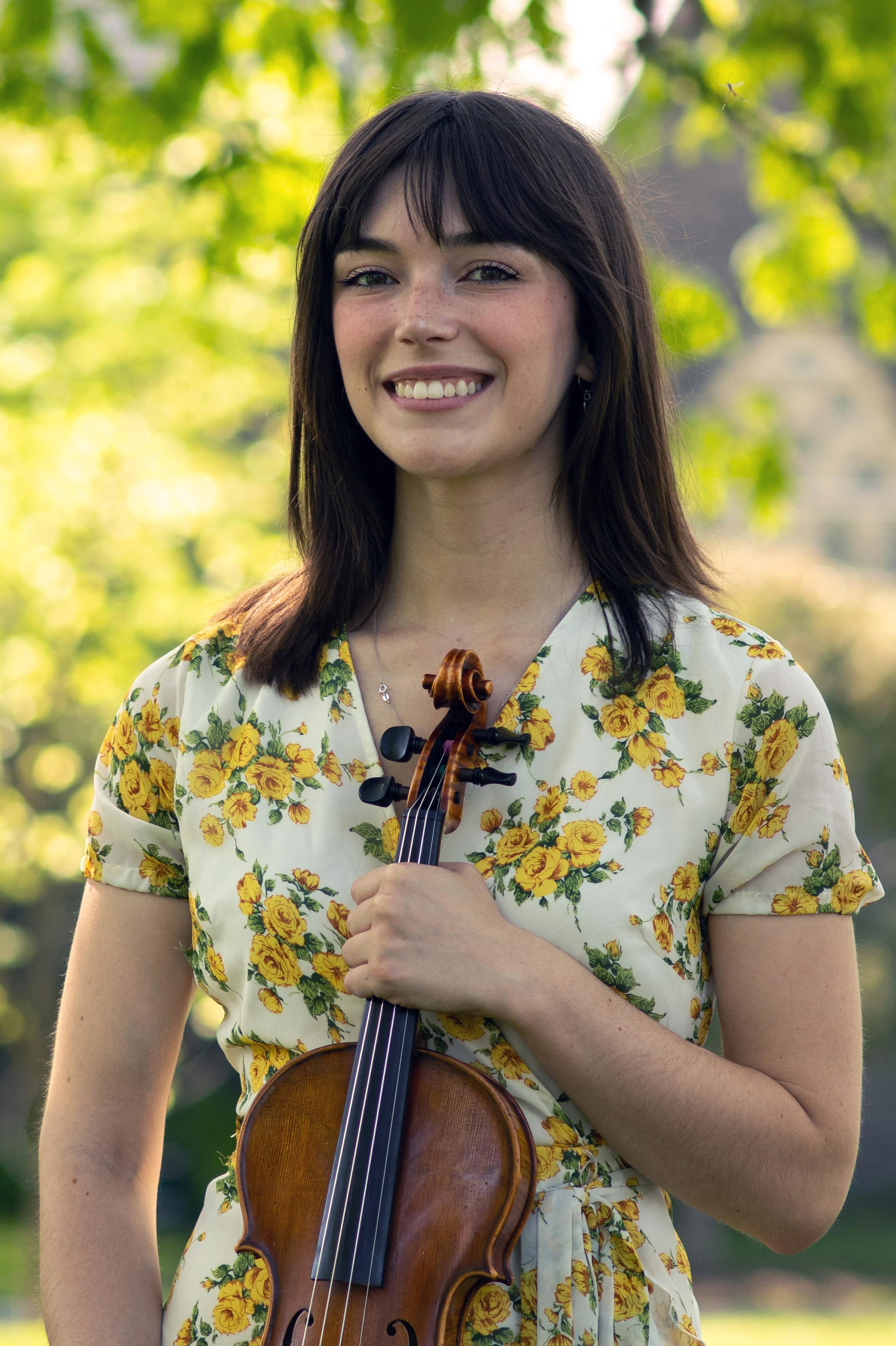
Aleks Vitanov ’25, a dual degree student in political studies and music performance, was chosen as a Schwarzman Scholar. Originally from North Macedonia, Vitanov will focus his one year, fully-funded master’s program in global affairs at Tsinghua University in Beijing, China, on studying China’s strategy in Southeastern Europe.
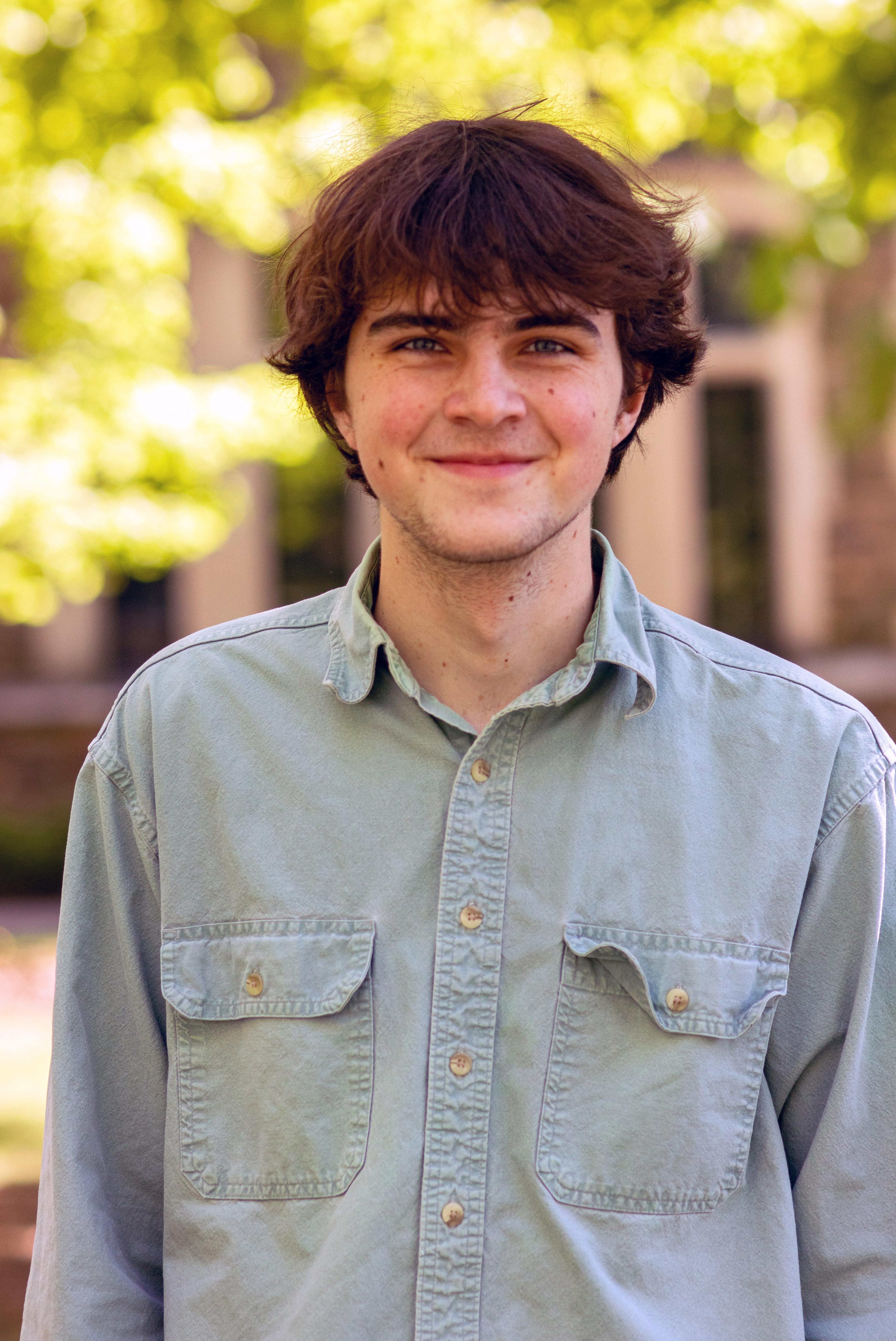
Able Bloodgood ’25 was selected for a prestigious Peace Corps Fellowship in Sri Lanka. A politic studies major, Bloodgood will undertake an intensive language training program to study Tamil and Sinhala before being stationed in a town where he will coteach and lead English language courses for students of all grades.
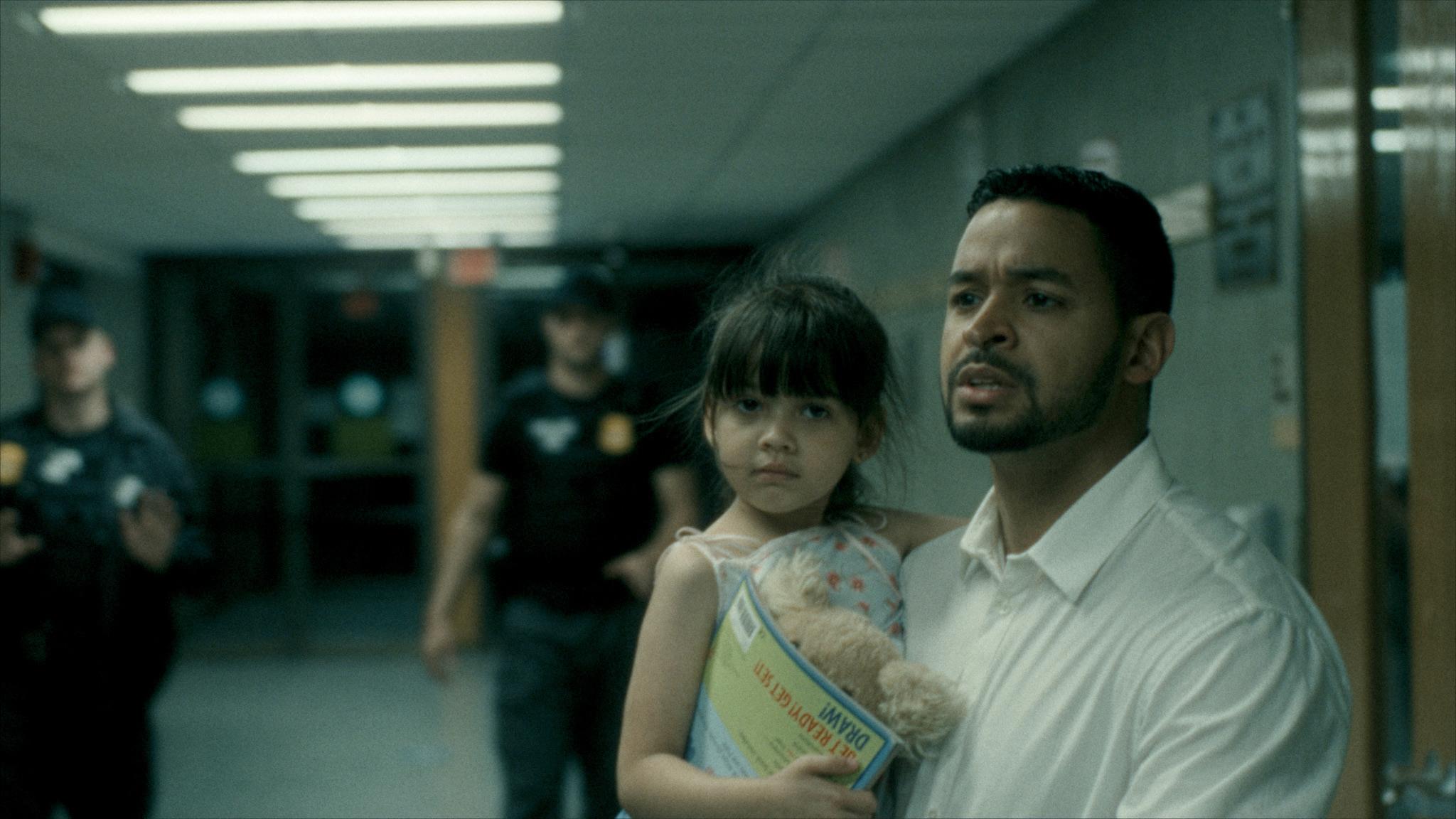
A Lien, directed by Sam Cutler-Kruetz ’13 and his brother David, was nominated for an Academy Award in the best live-action short category. Tara Sheffer ’13 (producer) and Blair Maxwell ’13 (costume designer) also worked on the film.
A Lien won the Special Jury Award from Salute Your Shorts 2024 and the Grand Prize Narrative Awards from the Washington Film Festival 2024.
Harrison Forman ’18, brewmaster and chief production officer of Zeus Brewing Co., Poughkeepsie, New York, won Brewery and Brewer of the Year in the 0–250 Barrels category at the 2026 Great American Beer Festival. Forman also earned a gold medal in the Fruited American Sour Ale category for the brewery’s Urban Oasis: Raspberry & Lemon Verbena.
Ephraim Asili MFA ’11, associate professor and director of film and electronic arts, was one of 50 artists selected to receive a 2025 United States Artists (USA) Fellowship. USA Fellowships are annual $50,000 unrestricted awards recognizing the most compelling artists working and living in the United States, in all disciplines, at every stage of their career.
Corey Sullivan ’03, along with his arts collective Theater Mitu, was presented with the Ross Wetzsteon Award for sustained innovation in the field at the 68th annual Obie Awards. In 2001, while an undergraduate, Sullivan began collaborating with visiting artists on a production for Bard’s Theater and Performance Program. The group continued to work together beyond the show’s run, and Sullivan soon joined the group, forming the interdisciplinary arts collective Theater Mitu.
Blanche Darr ’25 was awarded a Thomas J. Watson Fellowship. Darr, who was an anthropology and violin performance double major, will travel to Kenya, Indonesia, India, and Germany to examine barriers to music-making (including access, cost, and elitism) and, by joining international music education programs, explore ways to overcome them. The Watson Fellowship offers college graduates of unusual promise a grant of $40,000 for a year of independent, purposeful exploration, travel, and independent study.
Rowena Kennedy-Epstein ’02 won the Modern Language Association of America’s Prize for Bibliographical or Archival Scholarship. She was also selected by the New York Public Library’s Dorothy and Lewis B. Cullman Center as one of its 15 Fellows for the 2025-26 academic year. Kennedy-Epstein, professor of gender studies and women’s writing at the University of Bristol, is working on the first biography of writer Muriel Rukeyser (1913–80).
The French Directors’ Guild presented Todd Haynes MFA ’88 with the 2025 Carrosse d’Or prize, which recognizes a director who has made a lasting mark on filmmaking. Past awardees include David Cronenberg, Agnès Varda, and John Carpenter. Haynes’s films include Velvet Goldmine, Carol, and Dark Waters. His first released film, Poison, won the Sundance Film Festival Grand Jury Prize in 1991. While at Bard, he made Superstar: The Karen Carpenter Story, a short documentary that used Barbie dolls to tell the story of the iconic singer.
A Lien, photo by Andrea Gavazzi
Blanche Darr ’25, photo by Anna Bilyk ’27
Able Bloodgood ’25, photo by Anna Bilyk ’27
Aleks Vitanov ’25, photo by Anna Bilyk ’27
ERIC PAUL ’08 READING THE WORLD THROUGH CHEESE
By Mattie John Bamman
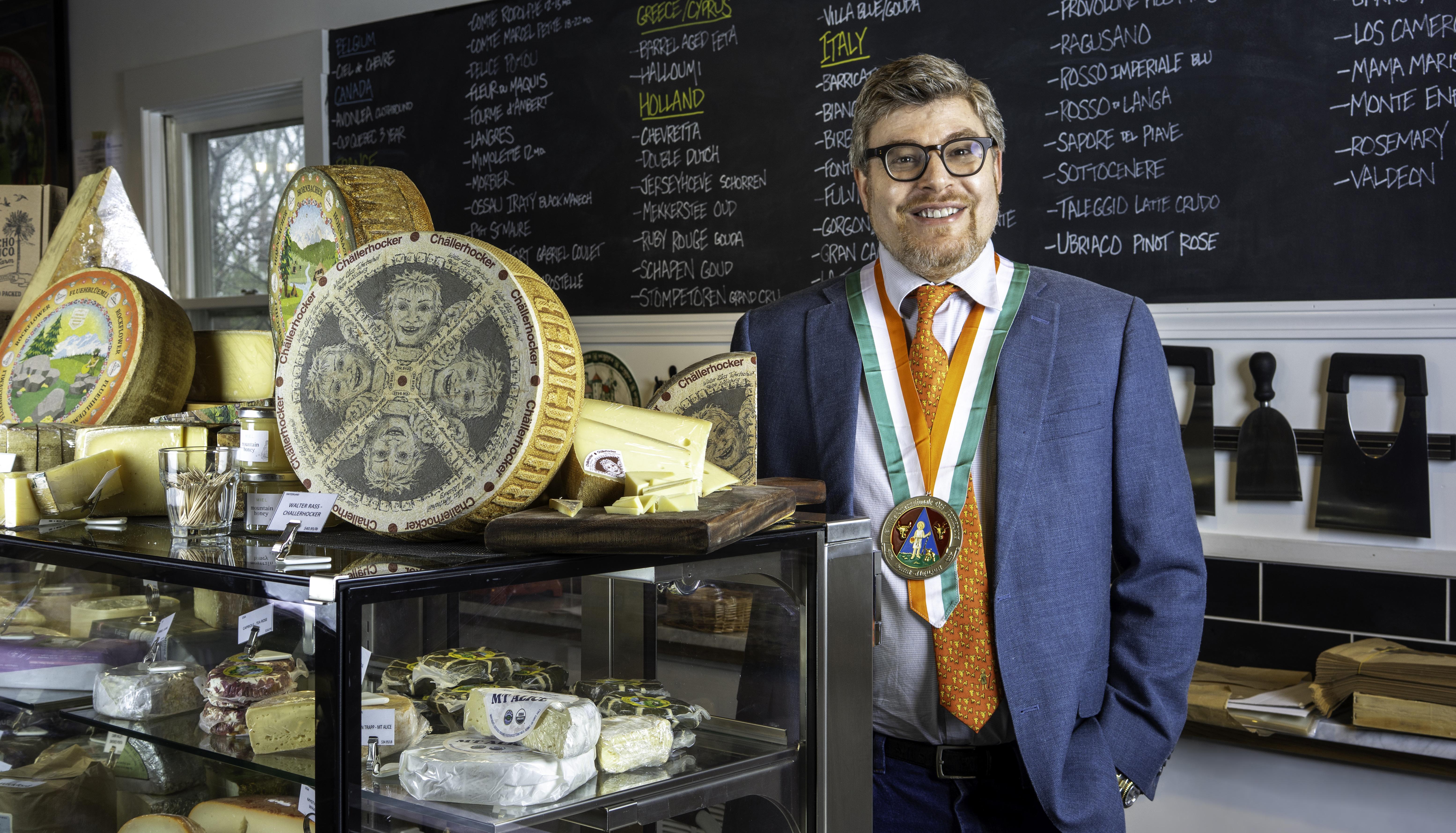
In fall 2025, Eric Paul ’08 was inducted into the Guilde Internationale des Fromagers, an illustrious professional association that celebrates the traditions and knowledge of cheesemaking. The ceremony took place in Tours, France, as part of the Mondial du Fromage, a biennial trade show that includes a cheesemonger competition—informally known as the “Cheese Olympics”—and a juried tasting of some 1,900 of the world’s best cheeses. Paul’s membership in the Guilde, for which he was nominated by his peers, recognizes his pivotal role in pioneering and growing the specialty cheese market in America.
Paul’s college experience was rather untraditional, even by Bard standards. He enrolled in the Continuing Studies Program at age 29 while living in Albany, New York, with his wife and three children. By then he was already well into his career in cheese, having created the highly regarded cheese program at Albany’s Honest Weight Food Co-op. “I dove deeply into the world of cheese,” he says. “It was my job, and it nourished me and my family, but it also fed my imagination and deep desire for learning. I traveled the world through these special, traditional foods.”
At Bard, he focused on ancient Greek and philology, the discipline of making sense of texts. A pivotal moment came during a meeting with Professor Bill Mullen, with whom he was taking a class on ancient lyric poetry. Paul had been struggling with the decision-making involved in translation, and Mullen gave him a piece of advice. “Bill said, ‘You can either analyze the translations or you can muddle with your little flashlight, which is
your knowledge of ancient Greek, into the vast darkness of this language, and just do your best effort, because that’s really what we’re all doing, including me,’” Paul recalls. “That was the freest I ever felt in that major.”
After graduating, Paul founded The Cheese Traveler, Albany’s first—and still only—specialty purveyor of cut-to-order cheeses. Marrying his interests in philology and cheese, he focused on raw milk cheeses for their ability to “offer a clearer picture of a place and time,” he says. “For me, tasting cheese is a combination of place, culture, history, geography, climate, soil, topography, and the tradition and craft of cheesemaking.”
Paul joined Food Matters Again as a sales representative in 2017, selling The Cheese Traveler soon after. He expanded Food Matters Again from Brooklyn to Boston, and he now serves as the company’s sales director. He also shares his knowledge as a mentor to young industry professionals, including Emilia d’Albero, who became the first American and first woman to win the title of “World’s Best Cheesemonger” at the 2025 Mondial du Fromage.
“Monger derives from the ancient Greek noun manganon,” Paul explains. “That translates to ‘any means of charming or bewitching.’” It’s fair to say Paul charms his customers with the stories connecting the sensory experience of the cheese they’re tasting with the places, climates, and twists of fate that made it possible, and this approach has driven his success in the field. “It goes back all the way to Homer,” he says. “Sharing meals, stories, and wine and entertaining, and these are all things that
have been done long before it was even written down.”
This natural propensity led to a special moment at his 10-year Bard reunion. While enjoying a cheese plate with his wife at Blithewood, he caught sight of Professor Mullen crossing the lawn. Seizing the moment, he quickly arranged a selection of cheeses and ran over to say hello. What followed was what he calls “one of my great joys in cheese.”
“I told him about each cheese and the history and cultural circumstance from which they emerged, including a traditional French goat’s milk cheese inextricably linked to the Moorish campaign in France,” Paul recalls. “I told him that the Moors brought goats from North Africa to the Iberian Peninsula of Portugal and Spain, introducing them through the Pyrenees up into the Loire Valley. The goats spread into France only as far as the Moors’ invasion reached, which is why the cheese is only found in the southern part of the Loire Valley.”
Paul looked up and saw that Mullen was beaming. “Bill delighted in the facts and stories I shared of each cheese,” says Paul, “and when I finished, he exclaimed, ‘This is exactly the purpose of a liberal arts education.’”
An experienced culinary travel writer, Mattie John Bamman ’04 lives on a homestead in Midcoast Maine, where he cofounded a food access nonprofit and an affordable green energy homebuilder.
Photographer Kye Ehrlich ’13 studied under Stephen Shore, An-My Lê , and Larry Fink at Bard. He has lived in Providence, Rhode Island, since 2017.
’04
Eric Paul ’08, Food Matters Again sales director, at the company's showcase store, Wickford Cheese & Sundry, in North Kingstown, Rhode Island. Photo by Kye Ehrlich ’13
BOOKS BY BARDIANS: ALUMNI/AE
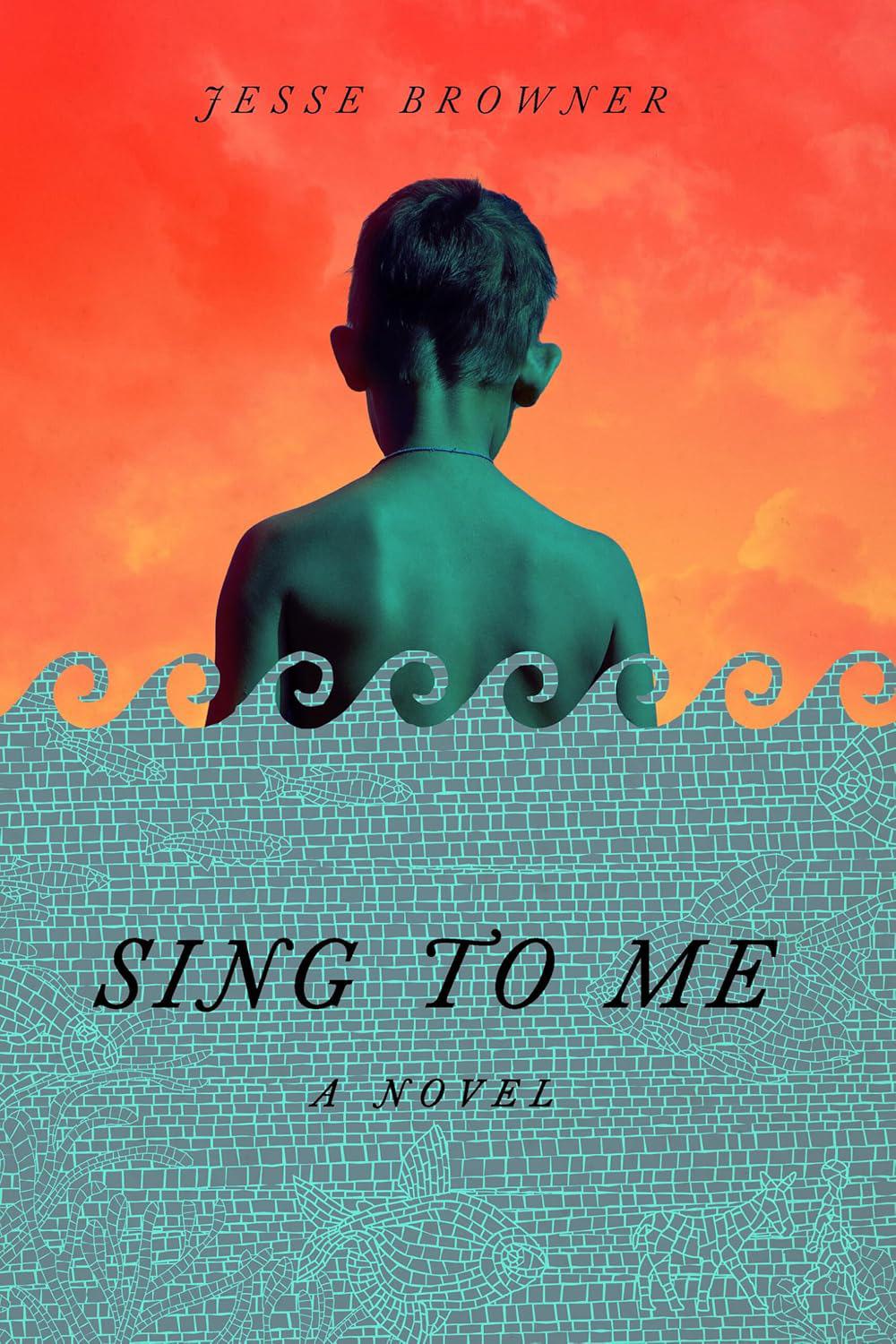
to Me: A Novel by Jesse Browner ’82
Brown and Company
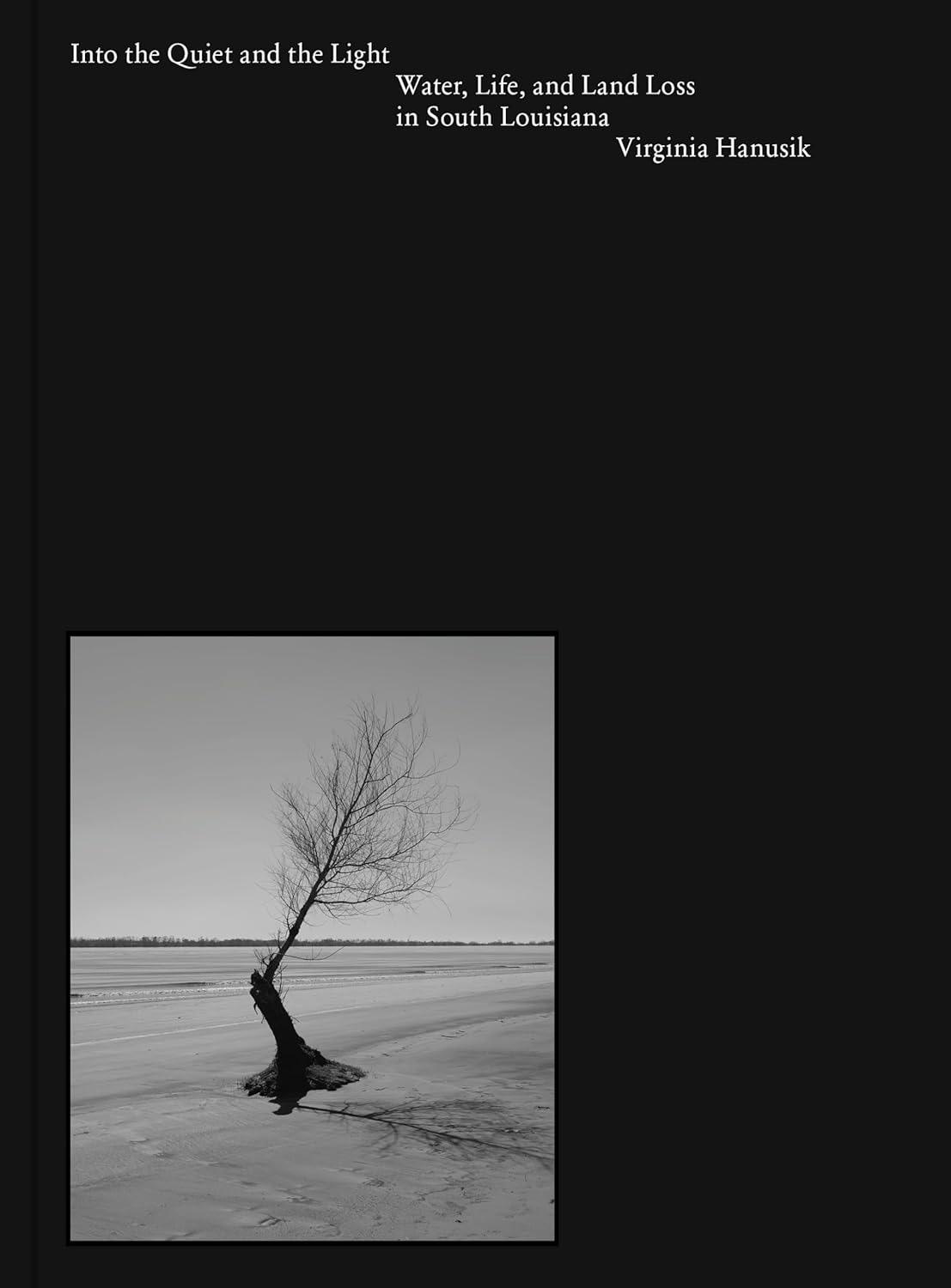
Into the Quiet and the Light: Water, Life, and Land Loss in South Louisiana by Virginia Hanusik ’14
Columbia Books on Architecture and the City
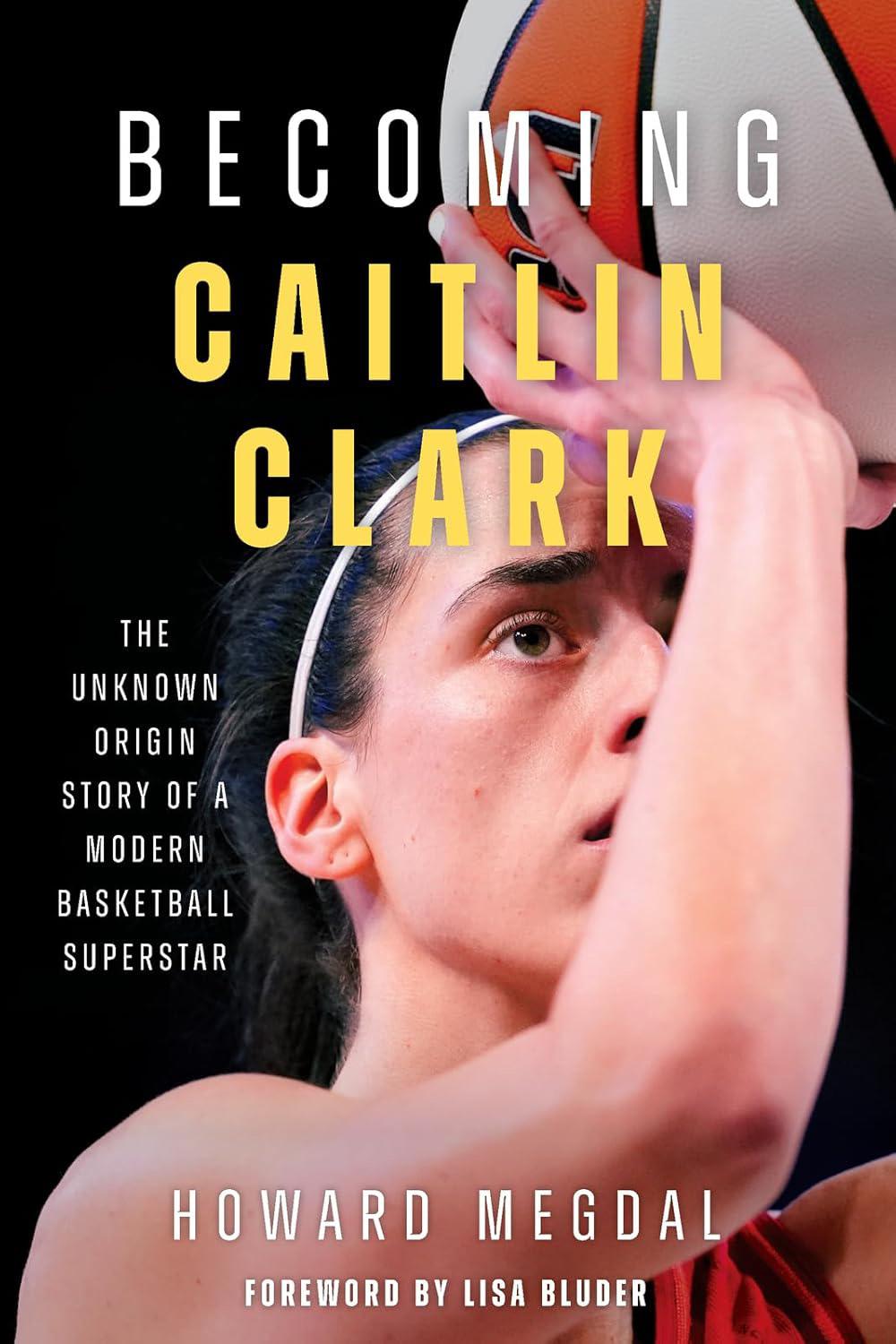
Becoming Caitlin Clark by Howard Megdal ’07 Triumph Books

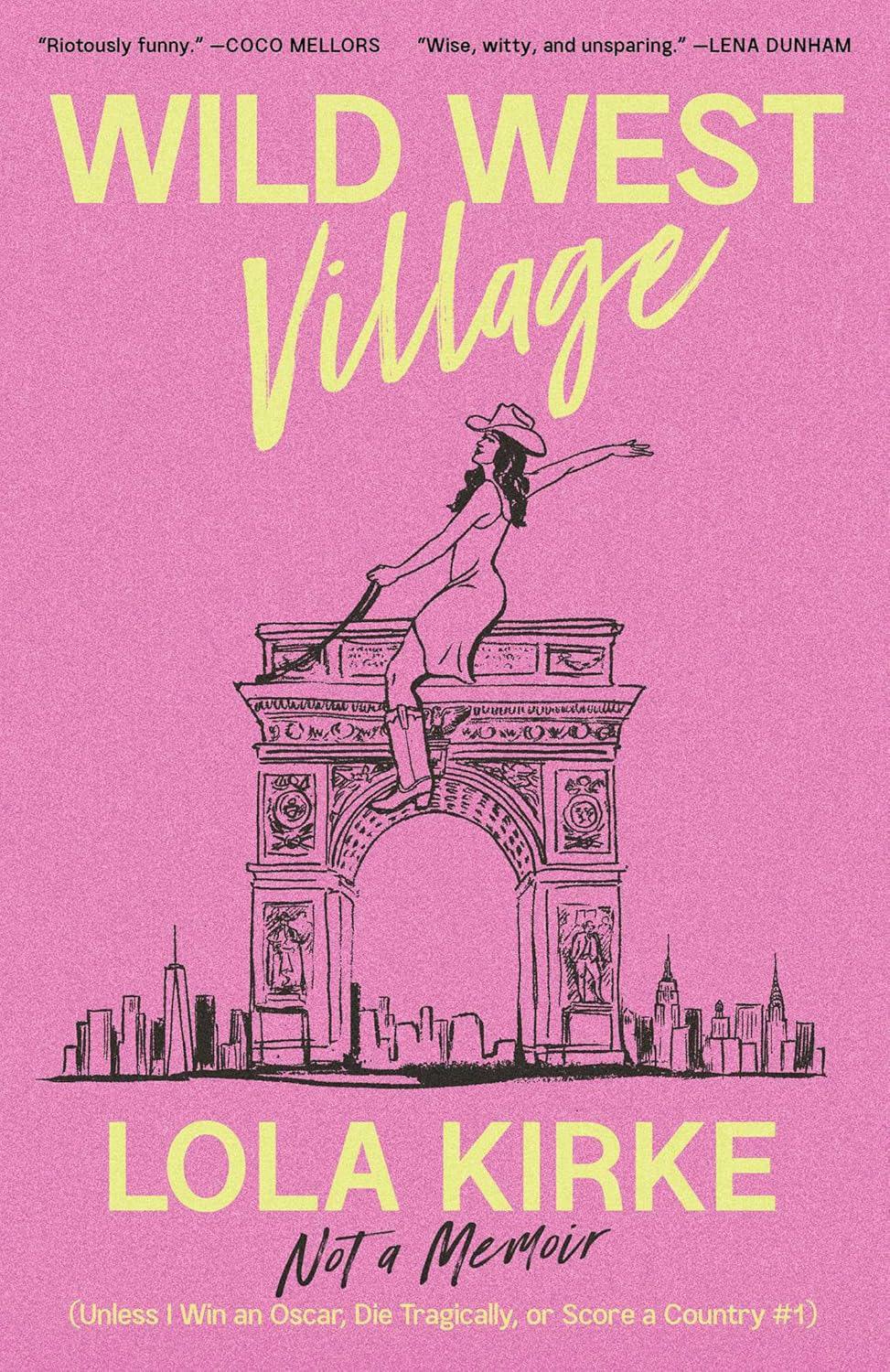
Wild West Village: Not a Memoir (Unless I Win an Oscar, Die Tragically, or Score a Country #1) by Lola Kirke ’12 Simon & Schuster
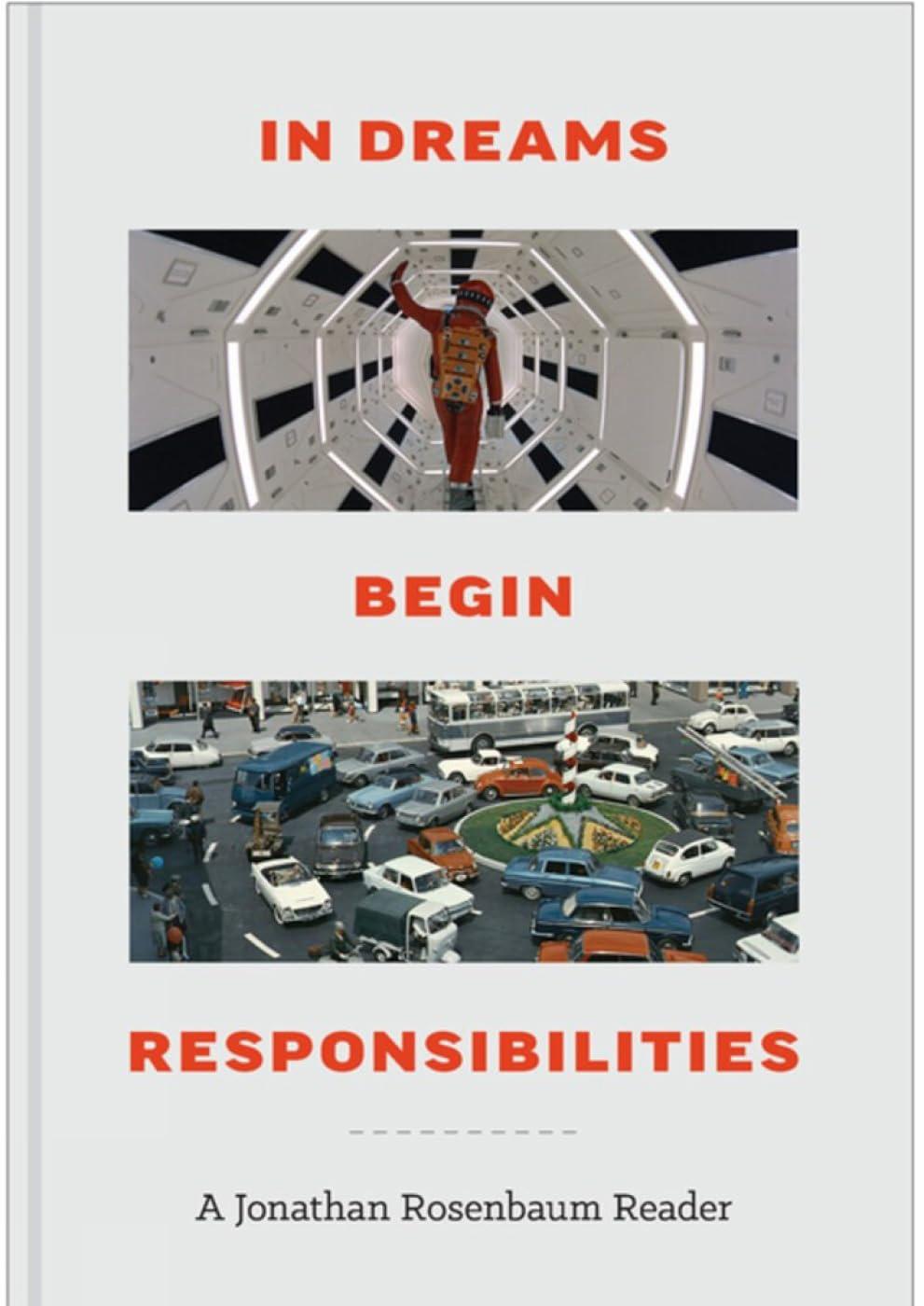
In Dreams Begin Responsibilities by Jonathan Rosenbaum ’66
Hat & Beard Press
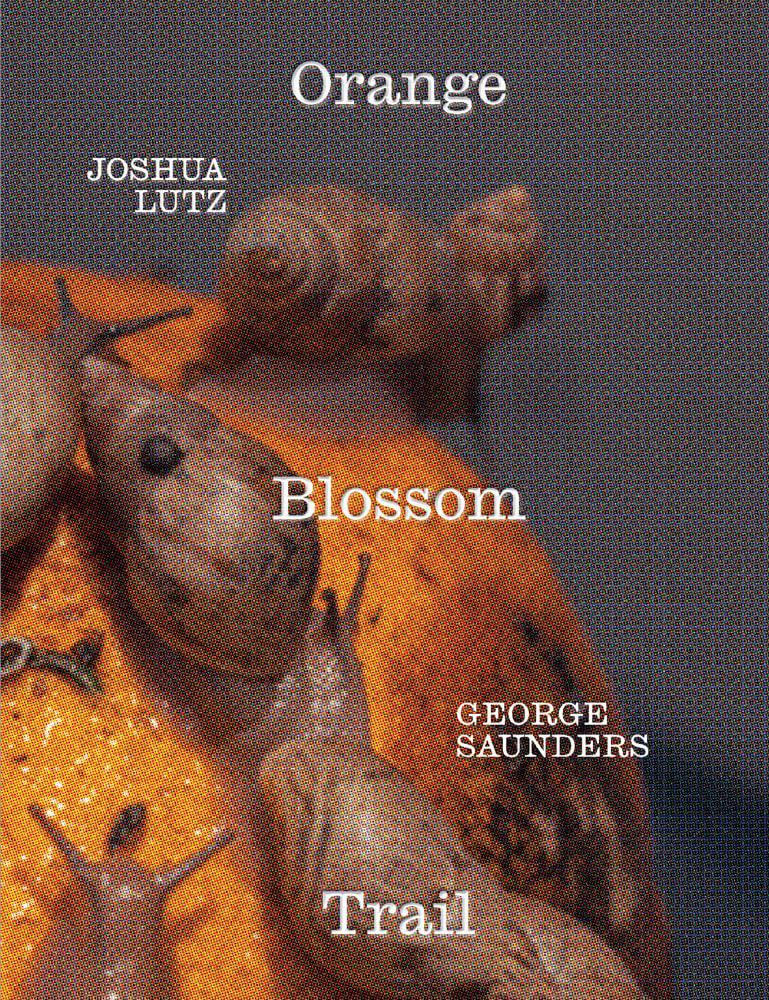
Orange Blossom Trail by Joshua Lutz ’97 ICP ’05 and George Saunders ITI Press
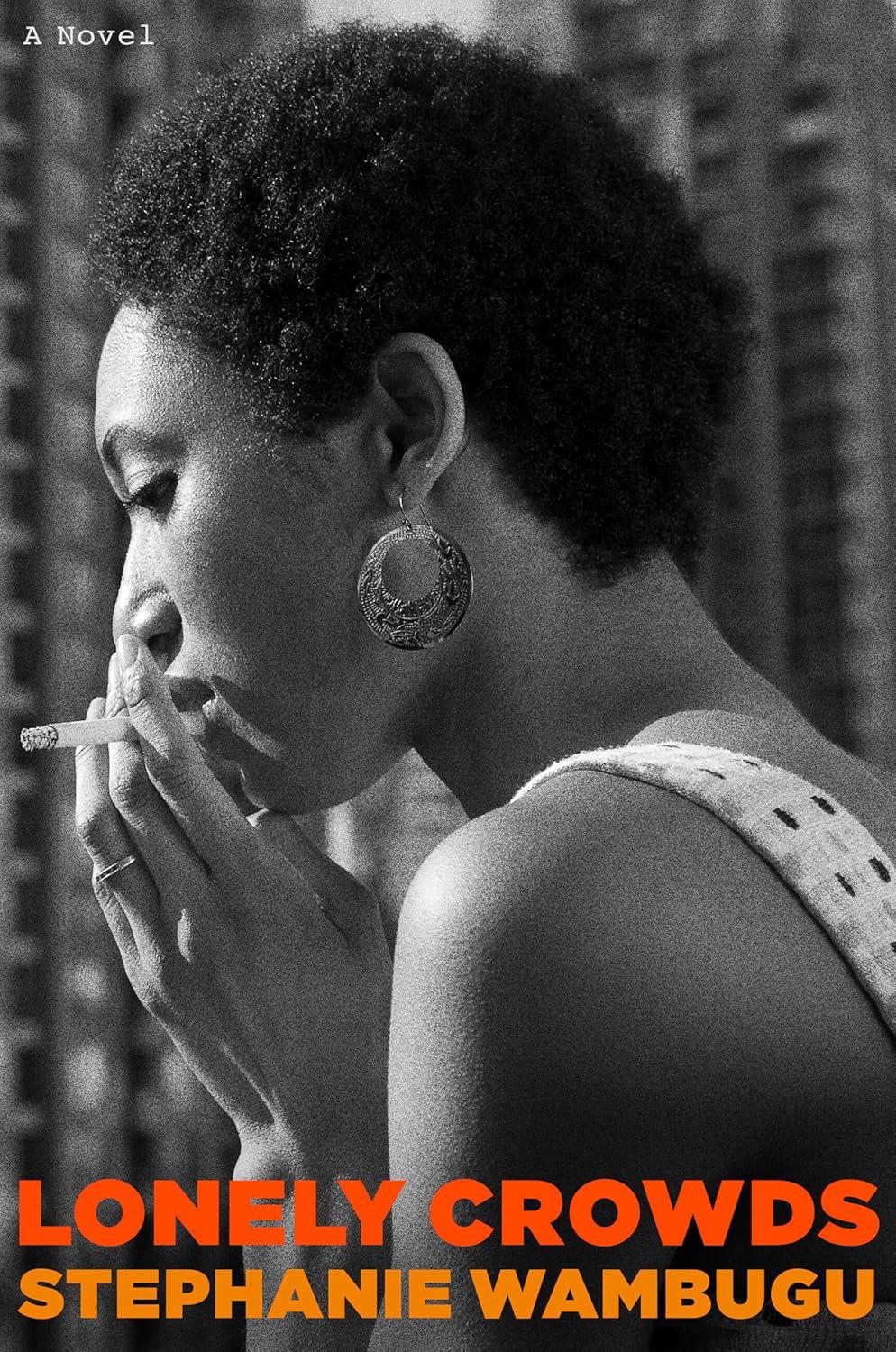
Lonely Crowds: A Novel by Stephanie Wambugu ’20
Little, Brown and Company
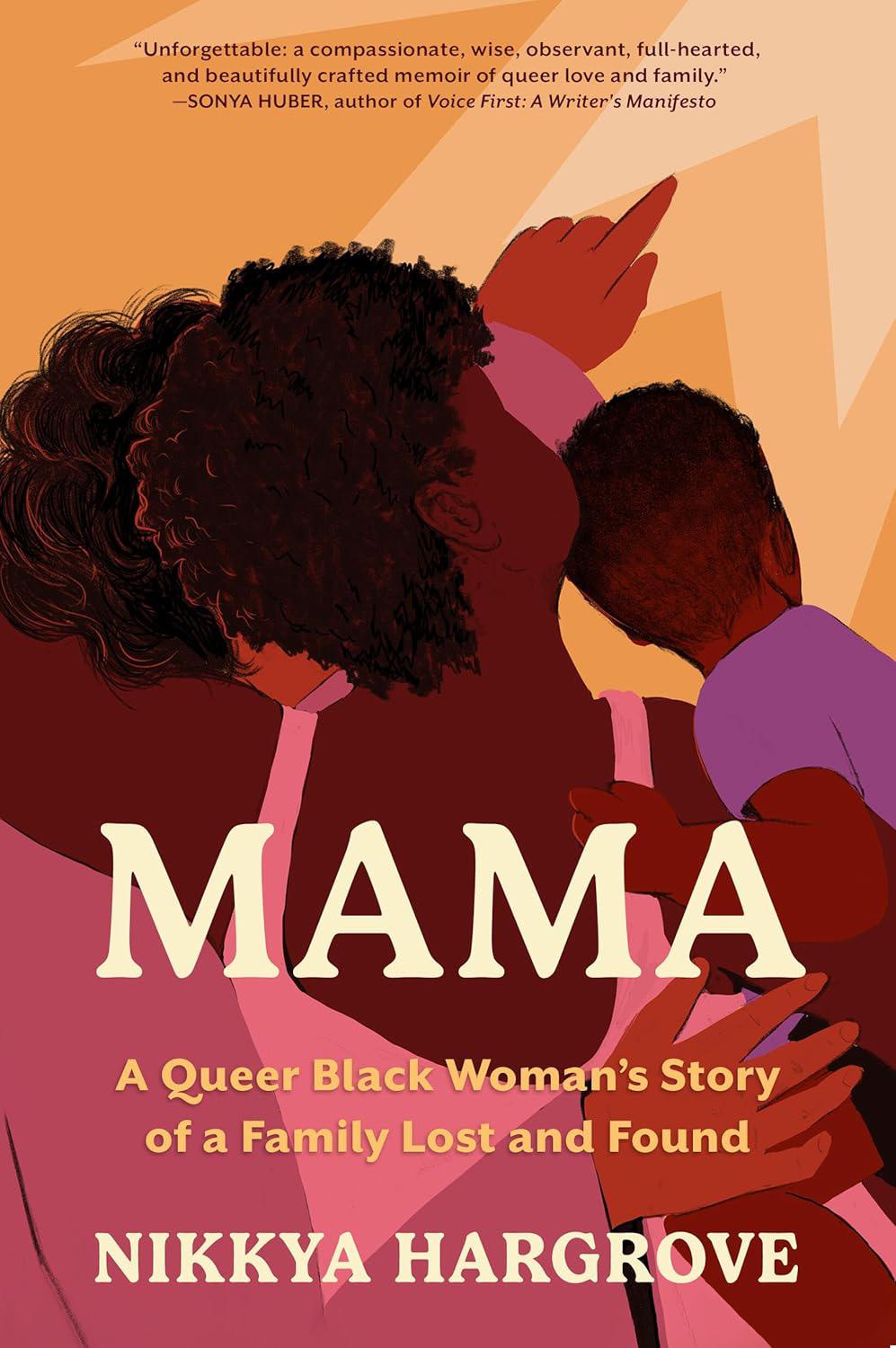
Being a kid is complicated enough, harder still to grow up poor, and unimaginably difficult to be the child of an addict mother who was often incarcerated and often absent when not. Nikkya Hargrove’s mother, Lisa, calls her “mama,” which could be seen as shockingly self-aware, or simply heartbreaking. Hargrove chooses to cast it as “a privilege.” Mama begins with a description, simultaneously tender and gut wrenching, of Lisa being strip searched before a family visit. Ten years and a few pages later, Lisa gives birth to a son, Jonathan, who comes into the world two days after his mother ingested crack cocaine and other drugs. Hargrove, who had graduated from Bard a year earlier, would soon take responsibility for her brother, driven by a need to extricate him from the broken system he was born into. “I came to realize,” she writes, “that being a parent was my calling.” Woven throughout this book about overcoming seemingly insurmountable obstacles are intimate stories of family, commitment, intergenerational trauma, the power of community—including Bard, where Hargrove found friends “who accepted me and where I had come from”—and the importance of mothering one another, and oneself, with love.
Mama: A Queer Black Woman’s Story of a Family Lost and Found by Nikkya Hargrove ’05 Algonquin Books
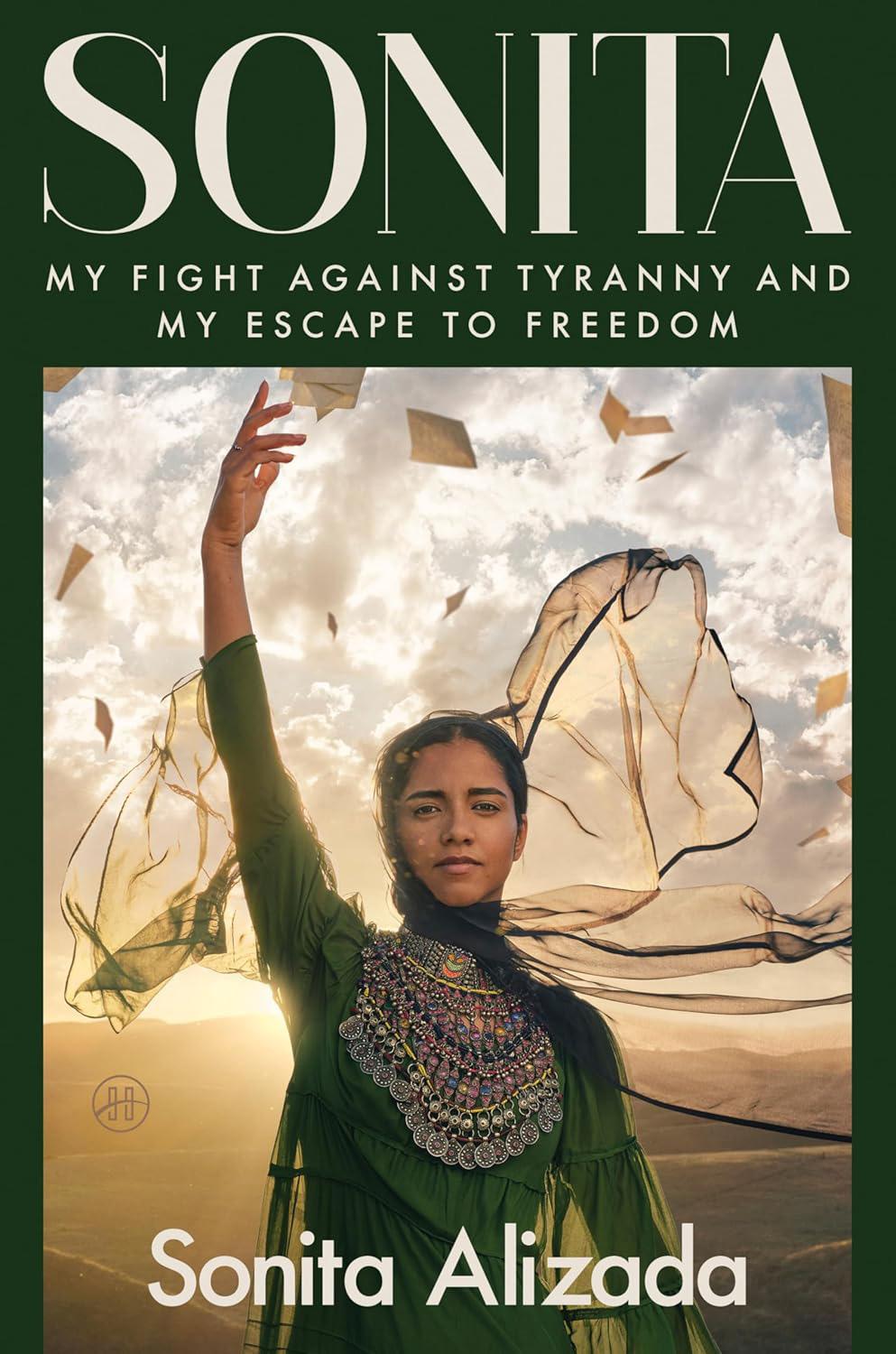
Sonita: My Fight Against Tyranny and My Escape to Freedom by Sonita Alizada ’23 HarperOne
Sing
Little,
The Plotinus by Rikki Ducornet ’64 Coffee House Press
STUDENT ACCOLADES
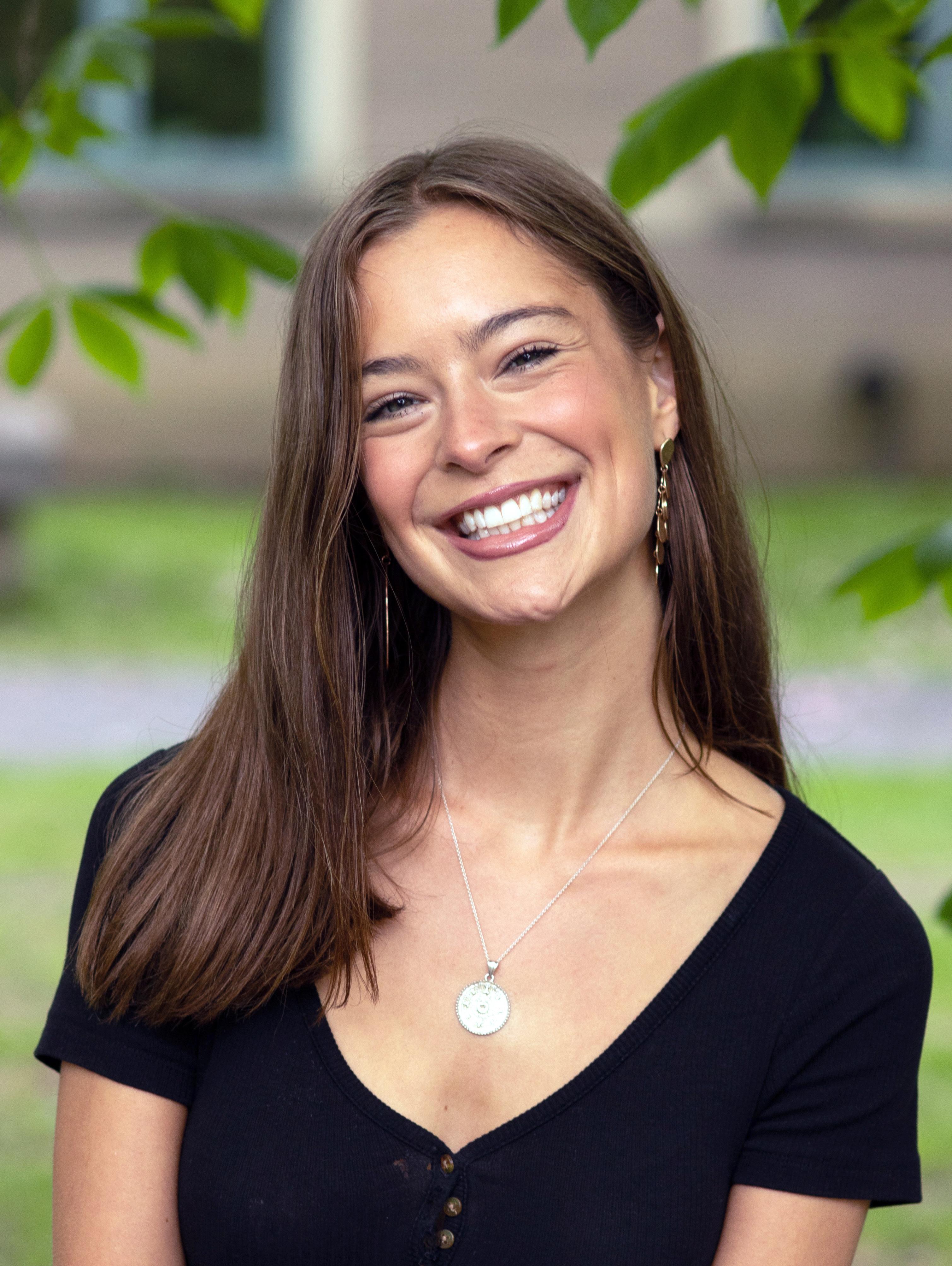
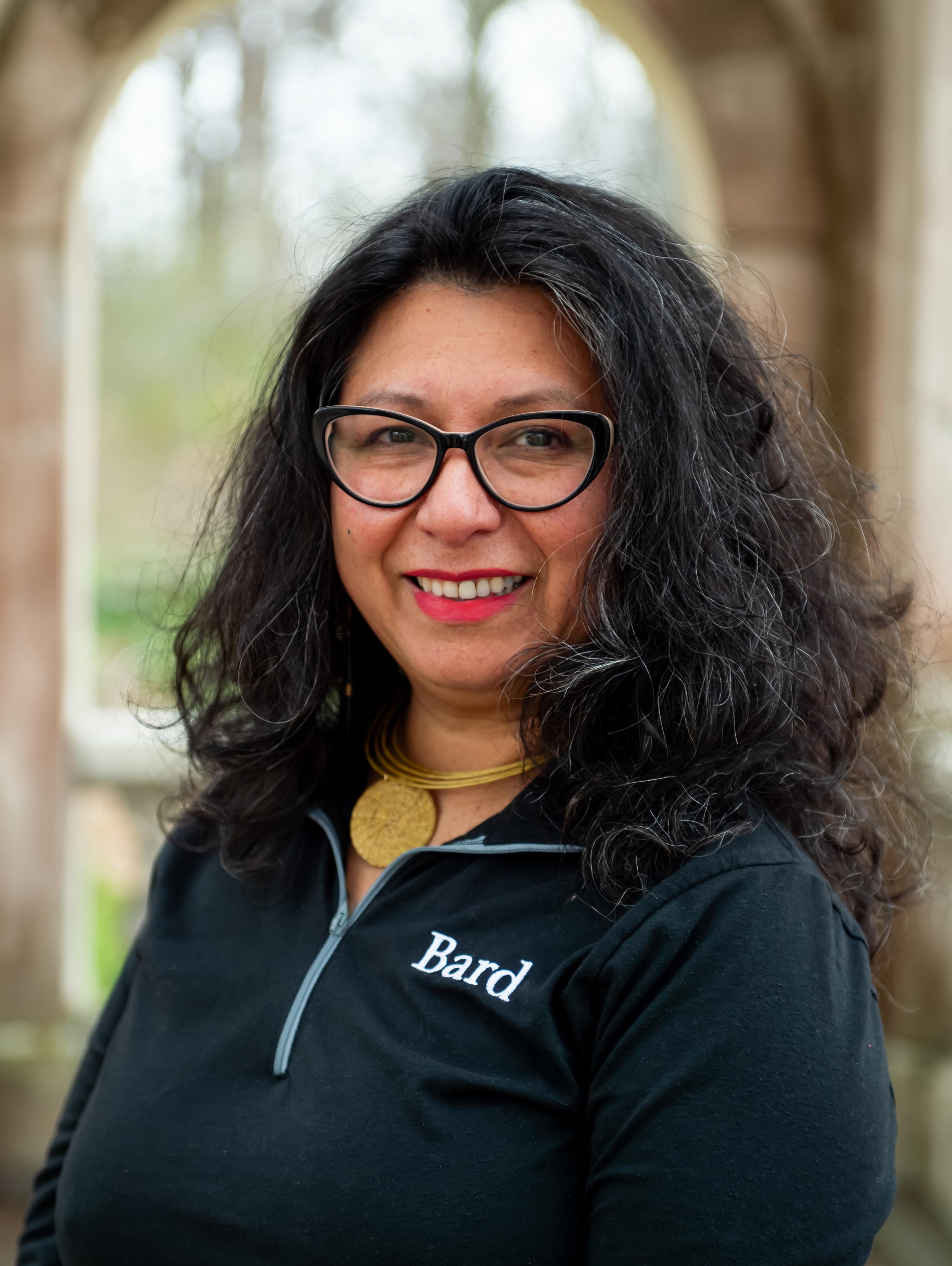
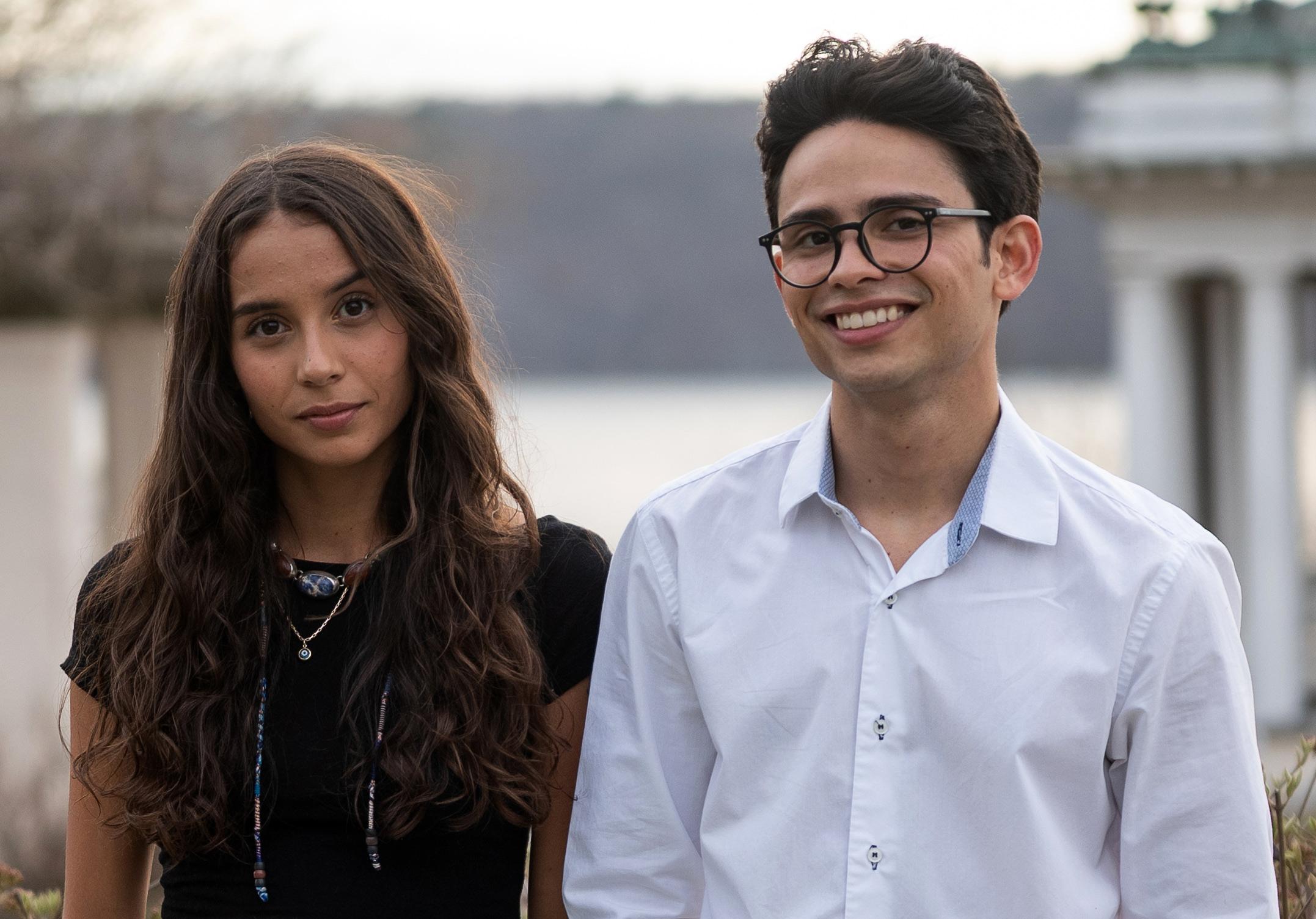
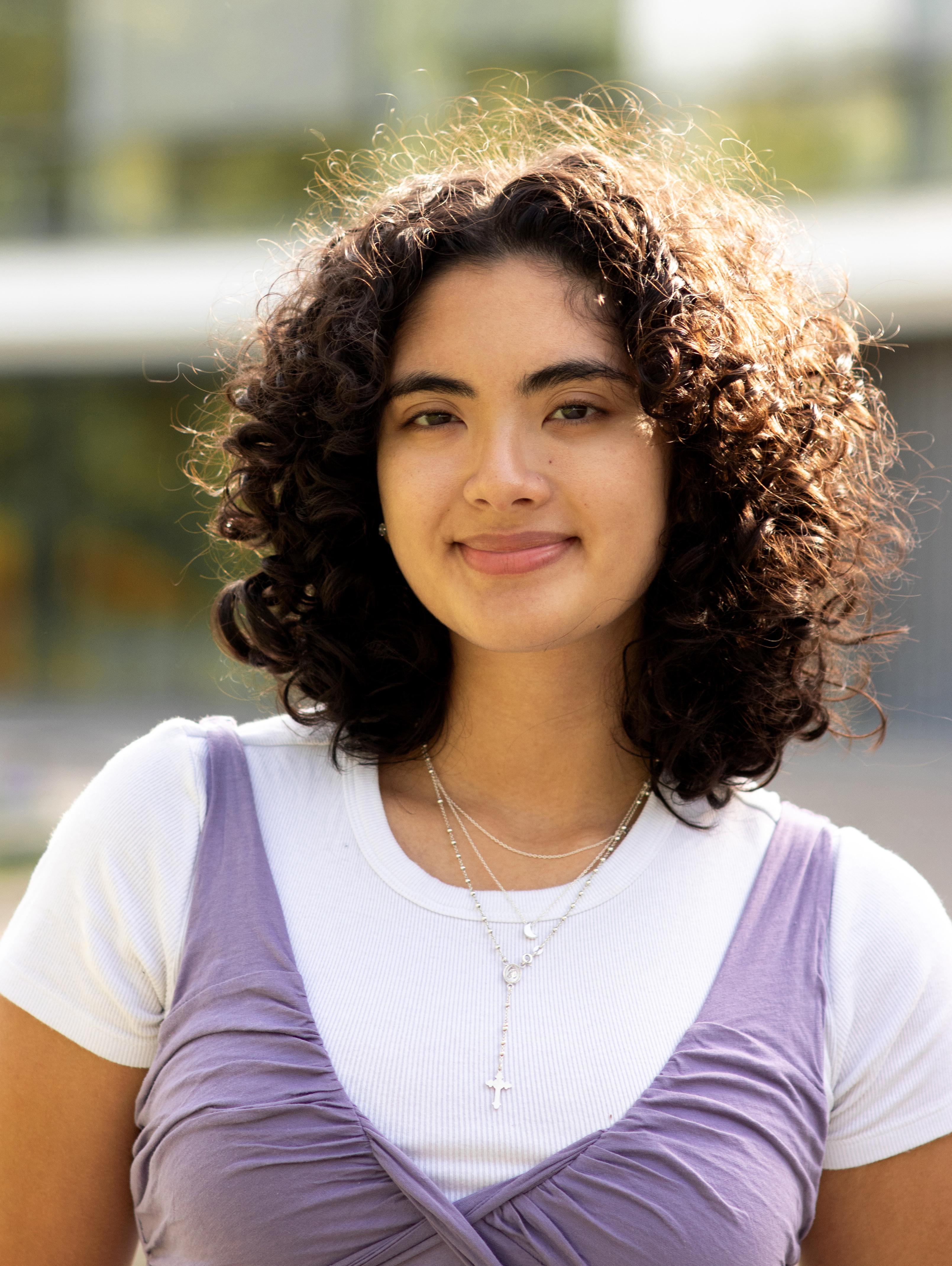
Grace Miller-Trabold ’26 was awarded a 2025 Davis Projects for Peace grant. Her project, “Connecting Threads: Reciprocity and Gratitude as Pedagogies of Peace in Oaxacan Textile,” created, with the Zapotec community, two weeks of workshops on textile traditions and practices for youth in Teotitlán del Valle, Mexico. MillerTrabold also facilitated youth workshops in Poughkeepsie, New York, on Oaxacan dyeing and weaving traditions. This year, Davis prizes were awarded to two projects by Bard students: Ixmucane Pereira ’26 for Worry Dolls: Mayan Indigenous Ways to Remove Worries, which will allow children from Brewster, New York, and Guatemala to create their own muñequita quitapenas (worry removal dolls), tiny figures that
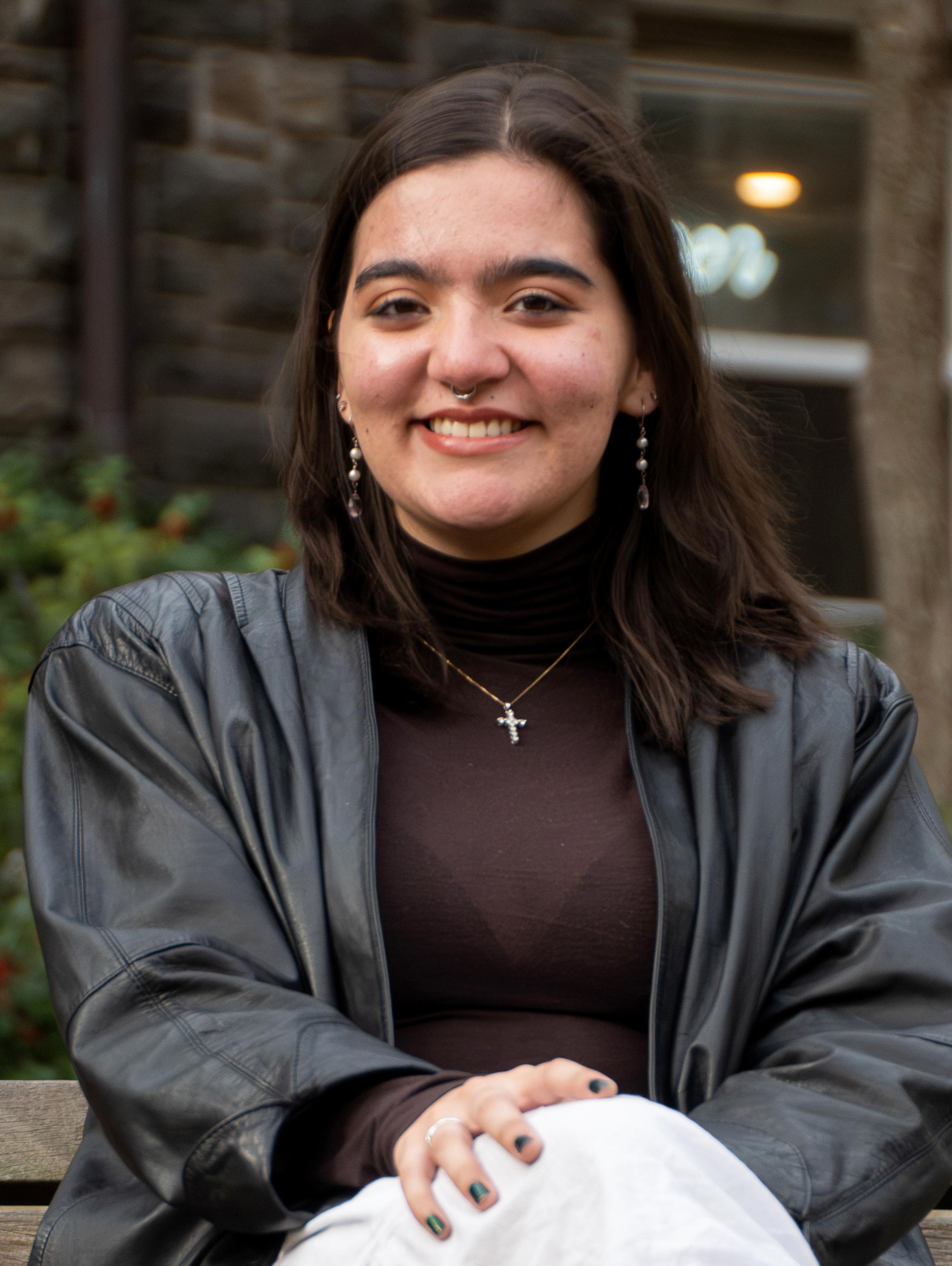
are placed beneath one’s pillow at bedtime to remove anxiety while sleeping; and to João Melo ’26 and Moani Moreira Laliberté ’27, who will design and facilitate percussion and visual arts workshops, providing essential materials and training to address the lack of access to education and creative opportunities in marginalized communities in Salvador, Brazil. The awards give students $10,000 to conduct a peace-related project anywhere in the world.
Five Bard College students received highly competitive
Benjamin A. Gilman
International Scholarships from the US Department of State: mathematics and Italian studies double major Ezra Calderon ’25 to study at the University of
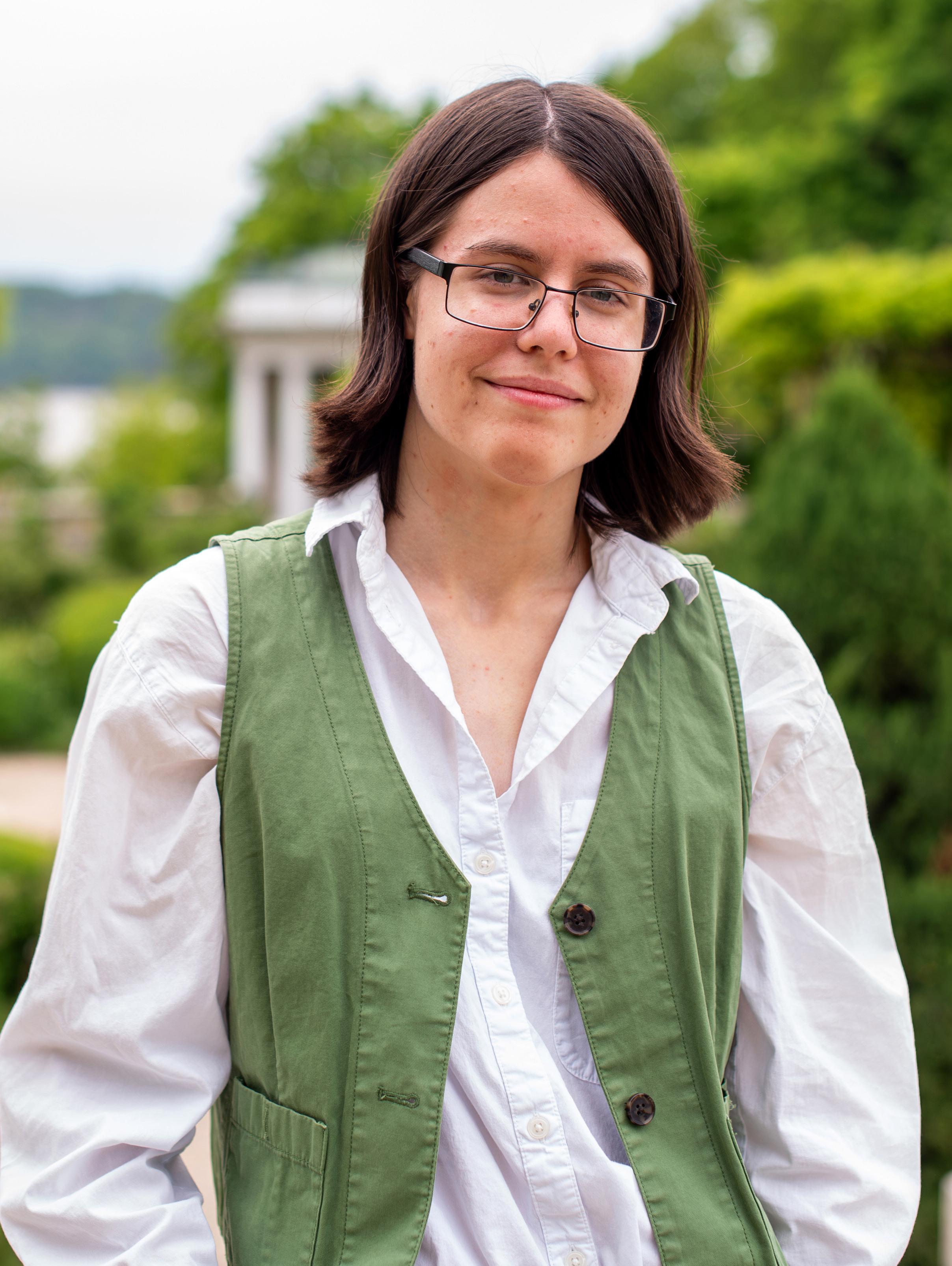
Trento in Italy, studio art major Adelaide Driver ’26 to study at Kyoto Seika University in Japan, architecture and art history joint major Dashely Julia ’26 to study at Bard College Berlin, computer science major Nyla Lawrence ’26 to study at National Sun Yat-sen University in Taiwan, and psychology major Brenda Lopez ’26 to study at Kyung Hee University in Seoul.
Lauren Mendoza ’26 was awarded a Barry Goldwater Scholarship, which supports college sophomores and juniors pursuing research careers in the natural sciences, mathematics, and engineering. In her research the past two years, Mendoza has been grappling with extremely challenging astrophysical data, working to characterize the molecular composition of Venus.
Jessica Zoll ’26, a literature major, won a scholarship from Fund for Education Abroad (FEA). Zoll is one of 71 undergraduates selected from around the
country, and with FEA’s Education in Ireland Access Partner Scholarship, will attend University College Cork in Ireland.
The Dante Society of America awarded Celeste Connell ’26 the 2024 Dante Prize for the best essay on poet Dante Alighieri by an undergraduate in the United States or Canada. Connell, a classical studies and literature major, was recognized for her essay “Lucan’s Exiles: Solitude and Moral Vision in the Commedia.”
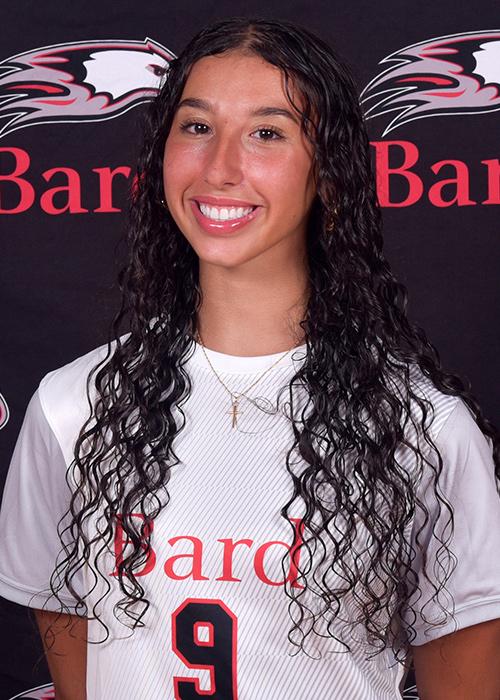
Mahlia Slaiby ’27 was selected to participate in the NCAA Division III Student Immersion Program, a highly competitive, all-expenses paid professional development initiative for emerging leaders in college athletics that took place at the NCAA Convention in Washington, DC, in January 2026. Slaiby, a three-year starter on the Bard women’s soccer team, was one of just 40 students nationwide chosen to engage in this athlete advocacy, leadership, and policy-making program. During her time at Bard, Slaiby has been named to the College Sports Communicators Academic All-District and Liberty League All-Academic teams, and was selected for the Lebanese Futsal National Team.
Grace Miller-Trabold ’26 photo by Anna Bilyk ’27
Ixmucane Pereira ’26 photo by Rachel L. Crittenden
Moani Moreira Laliberté ’27 and João Melo ’26
photo by Gaspard Bason ’29
Lauren Mendoza ’26 photo by Anna Bilyk ’27
Jessica Zoll ’26 photo by Gaspard Bason ’29
Celeste Connell ’26 photo by Rachel L. Crittenden Mahlia Slaiby ’27 photo by Pearllan Cipriano
THE CONSERVATORY CELEBRATES
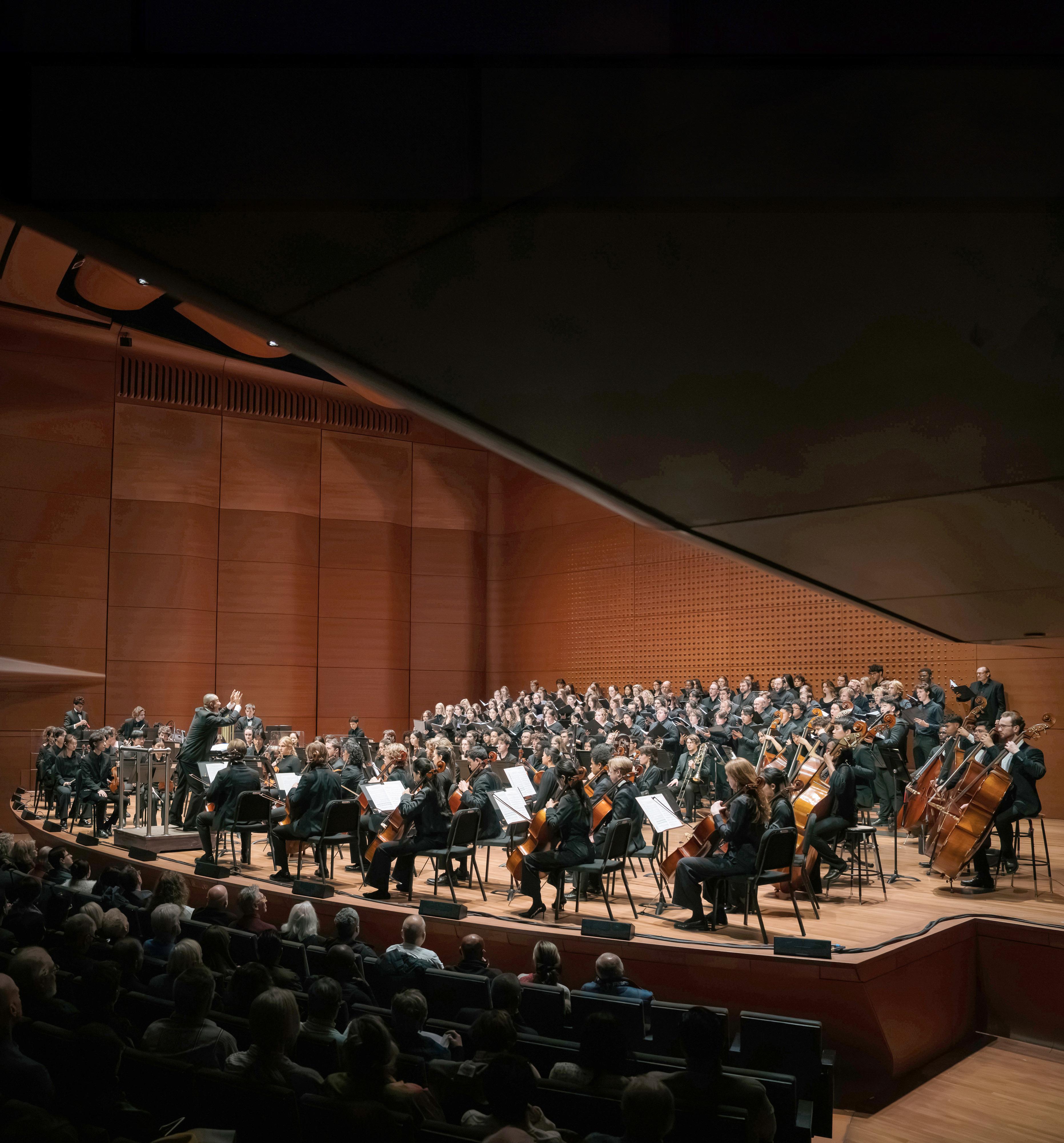
Bard Conservatory of Music marked its 20th anniversary with a performance celebrating two interwoven milestones: the Conservatory’s founding in 2005 and President Leon Botstein’s 50th year of leadership of the College. The concert, Innovation and Legacy: An Anniversary Celebration with Bard Conservatory Orchestra, took place at Lincoln Center’s Alice Tully Hall on October 29, 2025, with Botstein conducting the Bard Conservatory Orchestra in Beethoven’s Ninth Symphony. In conversation with that piece, Bard Conservatory Dean Tan Dun conducted the North American premiere of his Choral Concerto: Nine, a reimagining of Beethoven’s final
symphony through a contemporary global lens. Together, these performances underscored Bard’s ongoing mission to blend tradition and innovation in music education and performance, and the celebration marked Botstein’s extraordinary fivedecade presidency, a tenure that has shaped Bard into a cultural and intellectual force. Under his leadership, Bard has championed and invested in a model that positions the arts—and especially music—as a cornerstone of liberal education. “The placing of the making and study of the arts as equal partners alongside the sciences, the study of society, and the humanities in a college and university context is
extremely timely.” says Botstein. “It makes for better artists, viewers, and listeners, and strengthens forms of life that are ever more essential to the preservation of freedom and democracy. Bard is proud to be in the vanguard of this effort.” The Conservatory, the shining example of this approach, integrates rigorous musical training with a full liberal arts education, offering students dual degrees and close mentorship from international performers and scholars using a model that prepares graduates not only for performance careers but also for meaningful engagement with public life and culture.
Tan Dun conducts the Conservatory Orchestra at Lincoln Center’s Alice Tully Hall, photo by Brian Hatton
BARD SUMMERSCAPE 2026 FROM MOZART TO MARTHA REDBONE
Bard SummerScape continues its annual tradition of presenting a full production of a seldom-staged opera with Richard Strauss’s The Egyptian Helen (July 24 – August 2). Directed by Christian Räth, with a libretto by Hugo von Hofmannsthal, and Leon Botstein conducting the American Symphony Orchestra, this will be an eye-opening introduction to Strauss’s dazzling 1928 epic, which reimagines the Helen myth, set in the aftermath of the Trojan War, as a tale of doubling: a phantom Helen returns to Troy, while the real, faithful Helen has been spirited away from harm. The vengeful husband, Menelaus, surrenders to love; the unfaithful Helen renews her devotion. The opera unfolds as a rich exploration of the complexities and contradictions of love, sexuality, and marriage.
Botstein considers Strauss the modern heir to Wolfgang Amadé Mozart, who is the subject of this summer’s 36th Bard Music Festival. In a series of 11 themed concerts from August 7–13, Mozart and His World will confront the many Mozart myths and examine his enduring legacy. Audiences will come into contact with his life and work in the context of the politics and thought of the 18th century Habsburg Empire under Maria Theresa and Joseph II, in Salzburg, where he and his father Leopold worked, and in Vienna, where Mozart spent the last decade of his life. Mozart’s music will be heard alongside works by Joseph and Michael Haydn, Antonio Salieri, Johann Christian Bach, Franz Süssmayr, Joseph Eybler, Thomas Attwood, and Marianna Martines, among others. Programs will include popular music, examples of the theater of the day, rarely performed compositions such as the late Masonic Cantata and Davidde Penitente, and concertos and symphonies, culminating in a semistaged performance of Mozart’s The Abduction from the Seraglio (Die Entführung aus dem Serail), the opera most performed during his lifetime.
Hope Commissions, which was made possible by a $2.5 million gift to the Fisher Center from the Civis Foundation—matched by the College— to create an initial endowment of $5 million for the program. Civis Hope Commissions support “contemporary artists who will examine, interrogate and transform American artifacts, archival materials or artworks from the past to imagine a more perfect, just, and hopeful future.”
The vitality and dexterity of opera is also on full display in the world premiere of Courtney Bryan’s Suddenly Last Summer (June 25 –
July 19). Based on Tennessee Williams’s fever dream of a play about a family secret and a mother’s desperate attempt to silence the truth, this hybrid music-theater work features Bryan’s ravishing score, which is inspired by the play’s two worlds: the Mediterranean coast and the Garden District of New Orleans, Bryan’s hometown. Fisher Center Artistic Director and Chief Executive Gideon Lester and Daniel Fish (whose acclaimed unmasking of Rodgers and Hammerstein’s Oklahoma! went from the Fisher Center to Broadway, where it won a Tony Award for Best Revival of a Musical) have teamed up to pen the libretto, with Fish directing. The production is the first under the newly formed Fisher Center LAB Civis
Throughout SummerScape, programming in the Spiegeltent showcases a dynamic blend of live music, comedy, and cabaret curated by Jason Collins and emceed by Adrienne Truscott, who will also share the stage with cowriter Le Gateau Chocolat in Grey Arias on July 24 in an evening of musical numbers, comic banter, political debate, and an exploration of the many grey areas that come with being human. Former emcee Justin Vivian Bond, recipient of a MacArthur Fellowship, Obie, Bessie, and Honorary Doctorate of the Arts from Bard College, returns to Annandale to present Heated Rivalry, “an evening of music to lose your gay virginity by” (August 7–9). Celebrated choreographer Lucinda Childs, a defining force in American dance, returns to Bard SummerScape with a one-of-a-kind program: Lucinda Childs: Momentary Reprise, a program of premiere and revived works that includes collaborations with Philip Glass, John Adams, Robert Wilson, and Frank Gehry (June 26–28). Artist, composer, vocalist, and Spiegeltent favorite Martha Redbone returns to SummerScape on July 10 and 11 with Guardian Spirit: The Words of bell hooks, a musical celebration of the words and legacy of author, activist, feminist, and scholar bell hooks. Bluegrass on Hudson returns, this year with The Fretliners, John Hartford Fiddle Tune Project, Darol Anger & Bruce Molsky, Kittel & Co., The Onlies, and Big Richard. There’s truly something for everyone at Bard SummerScape, and if your appetite for entertainment is insatiable, stick around or come back for the After Hours series, hosted by Andy Monk. River Road goes on forever, and the party never ends!
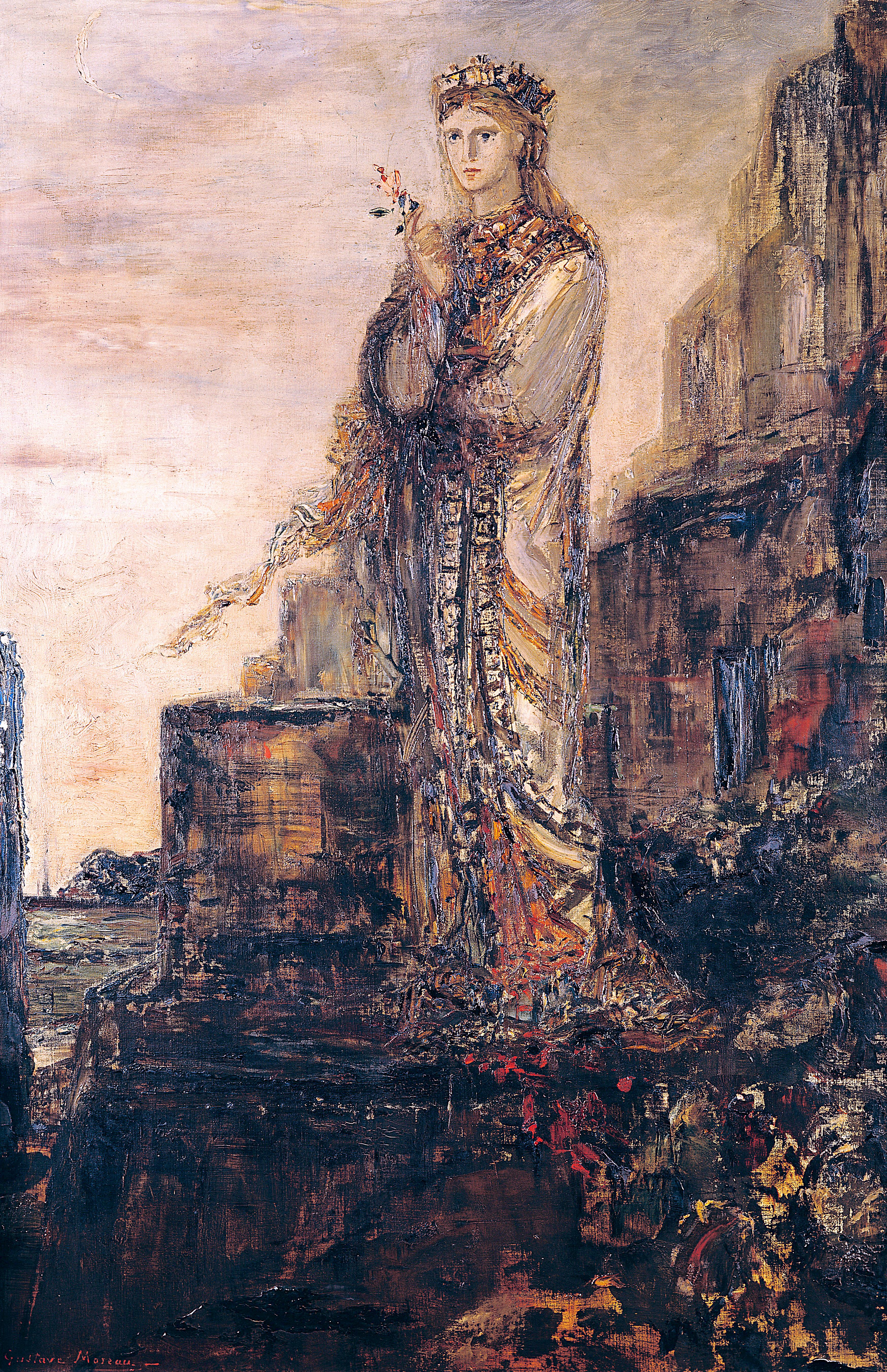
Helen on the Ramparts of Troy, Gustave Moreau (1826–98) Musée national Gustave Moreau, Paris/Bridgeman Images
FACULTY AWARDS AND RECOGNITION
Olga Touloumi, associate professor of architectural history, and Julia Weist, visiting artist in residence, have been awarded MacDowell Fellowships. Touloumi also received a research fellowship from the Canadian Centre for Architecture (CCA) in support of her project Building Worlds: A Feminist Counter-Biography of Modern Architecture, which focuses on the life and works of Christine Benglia-Bevington (1936–2020)—an Afro-French architect, professor, and crocheter. Weist will complete postproduction on her theater project Questioning, which will debut at New Theater Hollywood in July 2026. Four years ago, Weist earned private investigator credential, gaining access to tools that aggregate sensitive, nonpublic data about American citizens, which she used to create photographs. The exhibition of those works attracted the attention of New York’s Department of State, which opened an inquiry into her licensure; Questioning reenacts an exchange between Weist and the agency, which ultimately determined that none of Weist’s work violated any rules and dropped its case.
Sarah Hennies, assistant professor of music, received a Civitella Ranieri Music Fellowship for 2026-27 (she has chosen to defer her residency until 2028).
In recognition of his contributions to global culture and the arts, Oscar-winning composer and Dean of the Bard College Conservatory of Music Tan Dun was awarded the title Officier des Arts et des Lettres by the French Ministry of Culture.
Bard professors Daniel Mendelsohn, Charles Ranlett Flint Professor of Humanities,
and An-My Lê, Charles Franklin Kellogg and Grace E. Ramsey Kellogg Professor in the Arts, were inducted into the Academy of Arts and Letters.
Adhaar Noor Desai, associate professor of English, received the Modern Language Association (MLA) Prize for First Book for Blotted Lines: Early Modern English Literature and the Poetics of Discomposition (Cornell University Press).
Assistant Professor of Art History and Visual Culture
Anne Hunnell Chen won the Archaeological Institute of America’s Award for Outstanding Work in Digital Archaeology for the data accessibility project she directs, the International [Digital] DuraEuropos Archive.
Erika Switzer, assistant professor of music and director of the Postgraduate Collaborative Piano Fellowship; Lucy Fitz Gibbon, visiting faculty in vocal arts at the Bard College Conservatory of Music; Sarah Hennies, visiting assistant professor of music; and Suzanne Kite, distinguished artist in residence, assistant professor of American and Indigenous Studies, and director of the Wihánble S’a Center for Indigenous AI at Bard received grants from the New York State Council on the Arts (NYSCA) in 2025.
The Institute for Humane Studies at George Mason University awarded Karen Barkey, Charles Theodore Kellogg and Bertie K. Hawver Chair of Sociology and Religion, a grant in support of her upcoming book, Successful Religious Pluralism in the Mediterranean: A ComparativeHistorical Study.
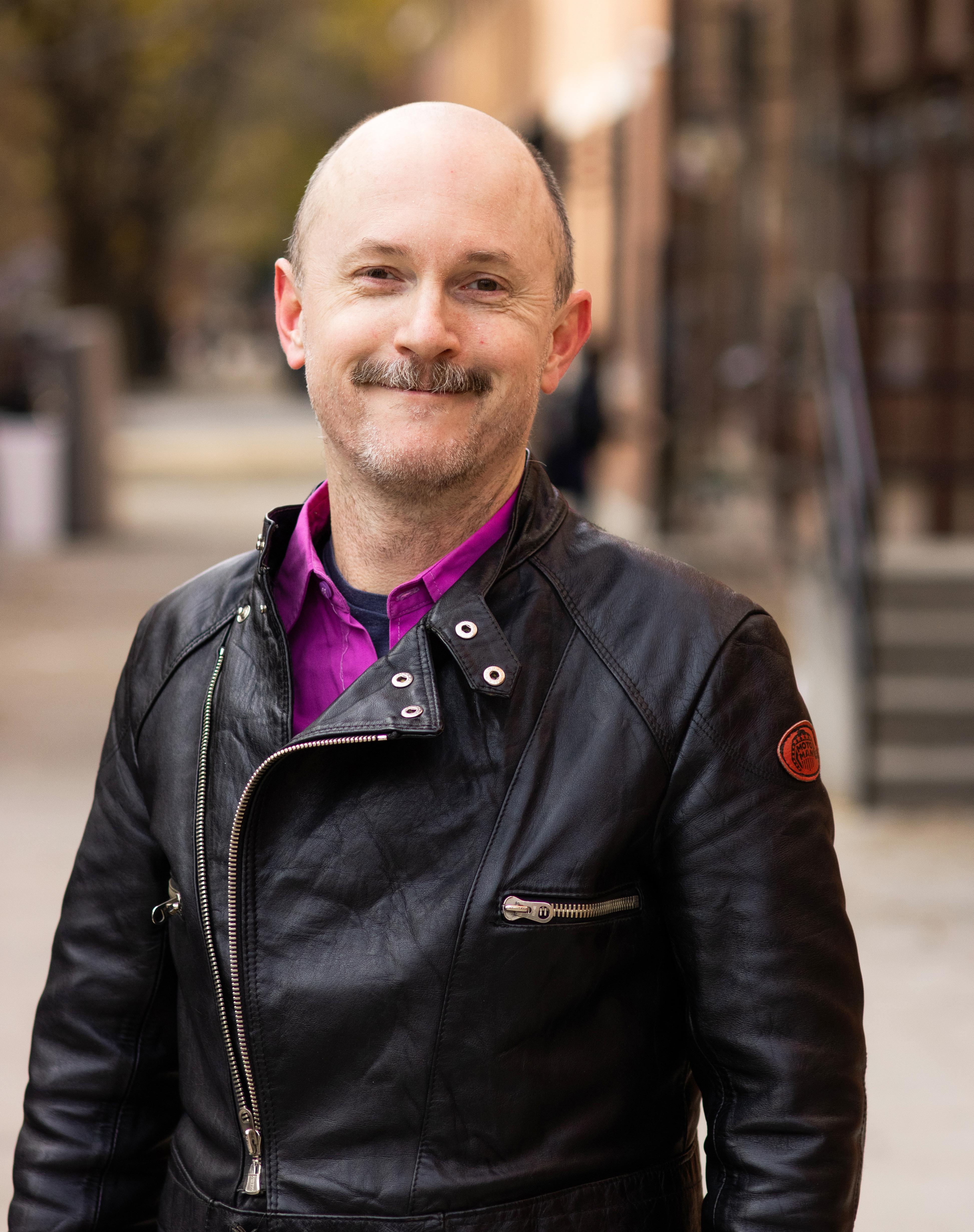
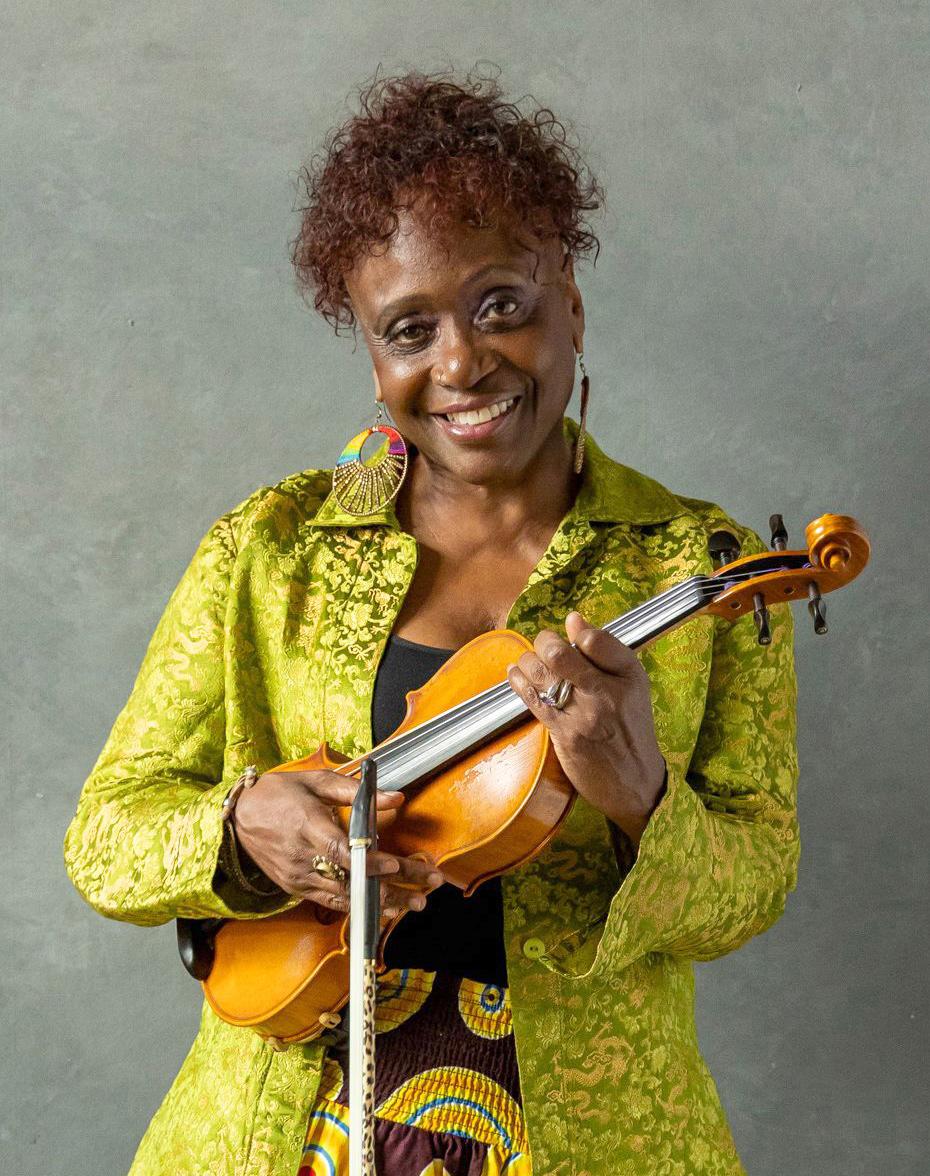
The John Simon Guggenheim Memorial Foundation awarded 2025 Guggenheim Fellowships to Bard College Assistant Professor of Photography Lucas Blalock ’02 and Bard College Visiting Artist in Residence Gwen Laster. Blalock and Laster, who teaches in the Music Program, were chosen through a rigorous application and peer review process from a pool of nearly 3,500 applicants based on both prior career achievement and exceptional promise. In addition, three recent faculty of Bard’s Milton Avery Graduate School of the Arts MFA program won Guggenheim Fellowships: Marc Handelman, Phil Chang, and Miranda Lichtenstein
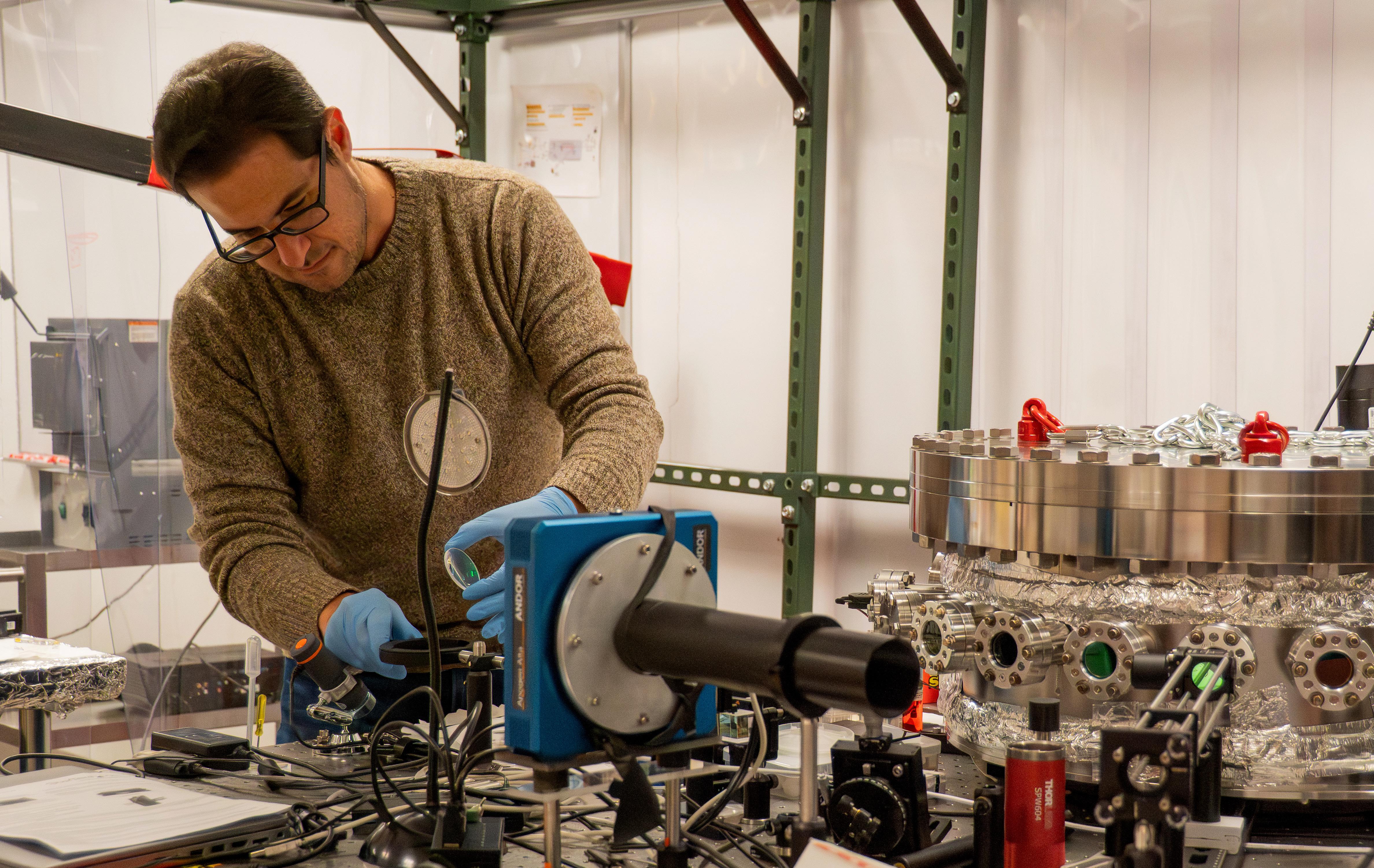
Antonios Kontos, associate professor and director of physics at Bard College, was awarded a three-year, $351,951 research grant from the National Science Foundation (NSF). The NSF award will allow a team of scientists and engineers to produce an initial conceptual design for, and to develop technologies to facilitate the eventual realization of, a next-generation gravitational-wave observatory (the Cosmic Explorer) that will enable the detection of nearly every black-hole collision in the observable universe.
Lucas Blalock '02 (left), photo by Anna Bilyik '27; Gwen Laster, photo by Tom Moore Studios
Antonios Kontos, photo by Gaspard Bason ’29
BOOKS BY BARDIANS: FACULTY
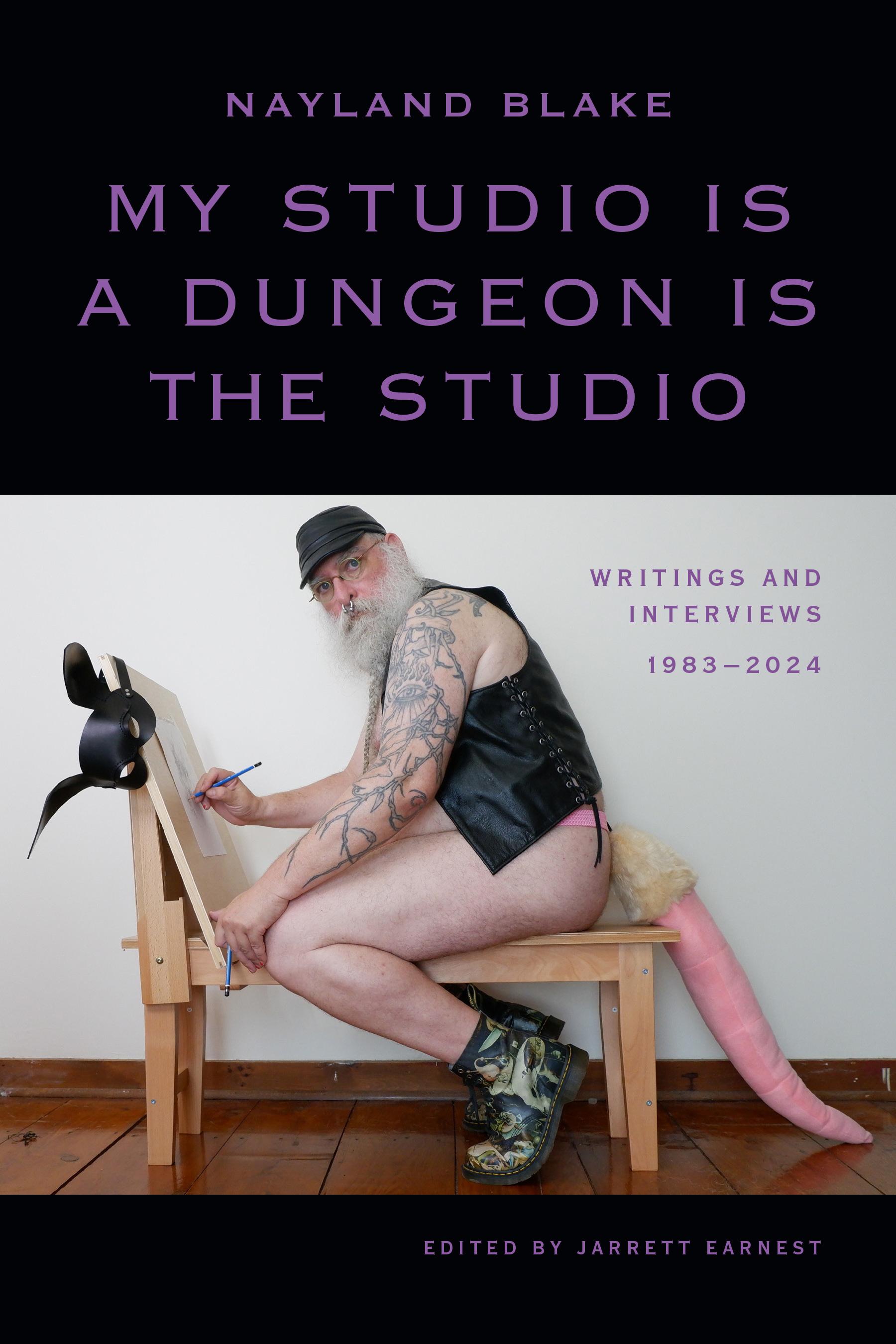
My Studio Is a Dungeon Is the Studio: Writings and Interviews, 1983–2024 by Nayland Blake ’82, professor of studio arts Duke University Press
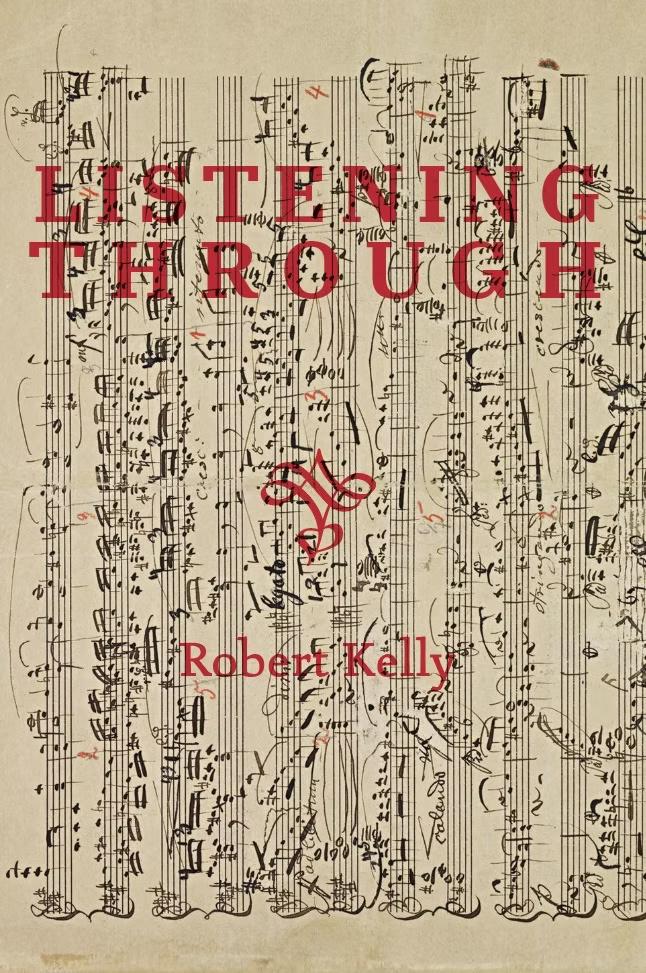
Listening Through by Robert Kelly, Asher B. Edelman Professor Emeritus of Literature Contra Mundum Press
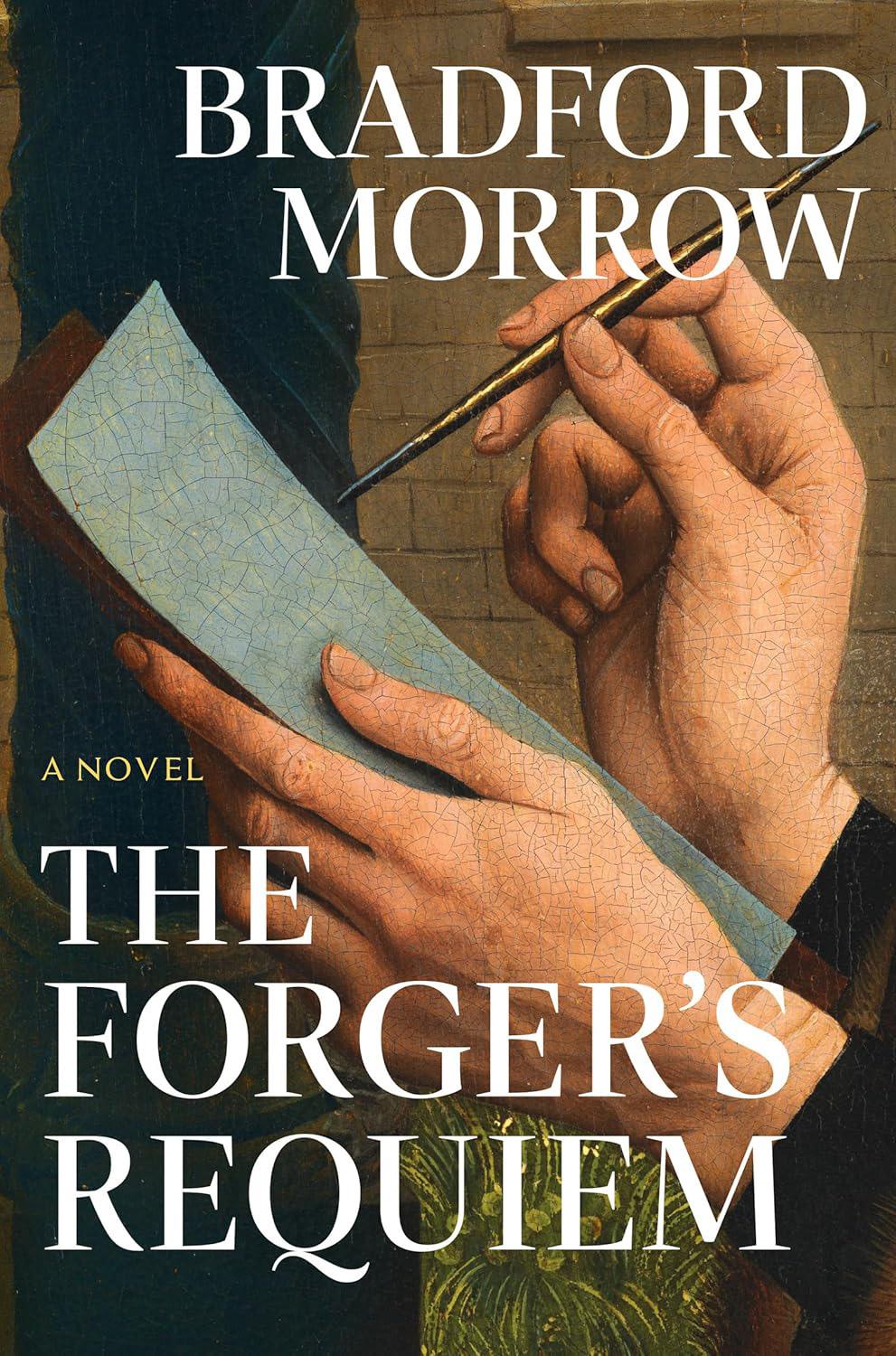
The Forger’s Requiem by Bradford Morrow, professor of literature Atlantic Monthly Press
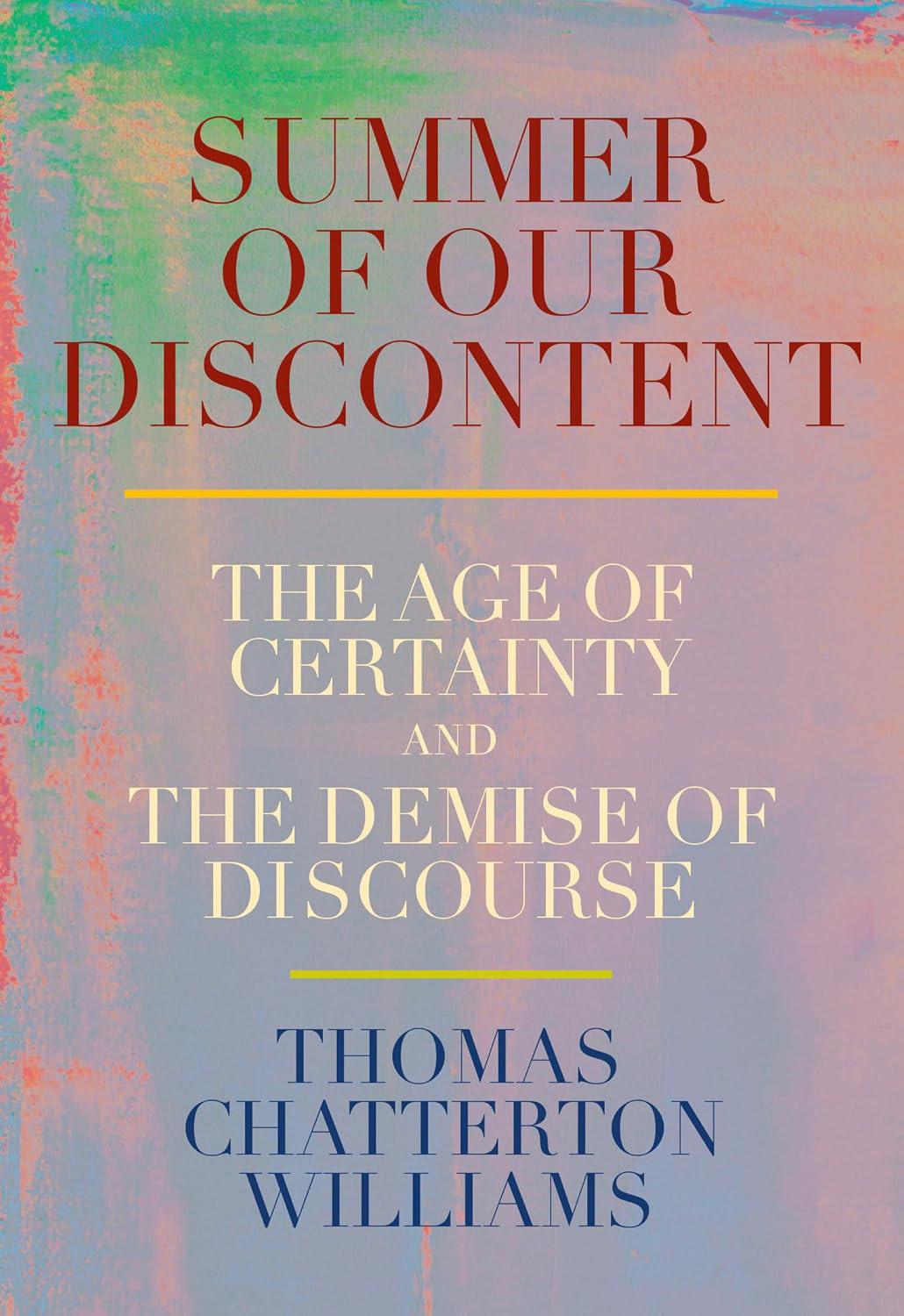
Summer of Our Discontent: The Age of Certainty and the Demise of Discourse by Thomas Chatterton Williams, visiting professor of humanities Knopf
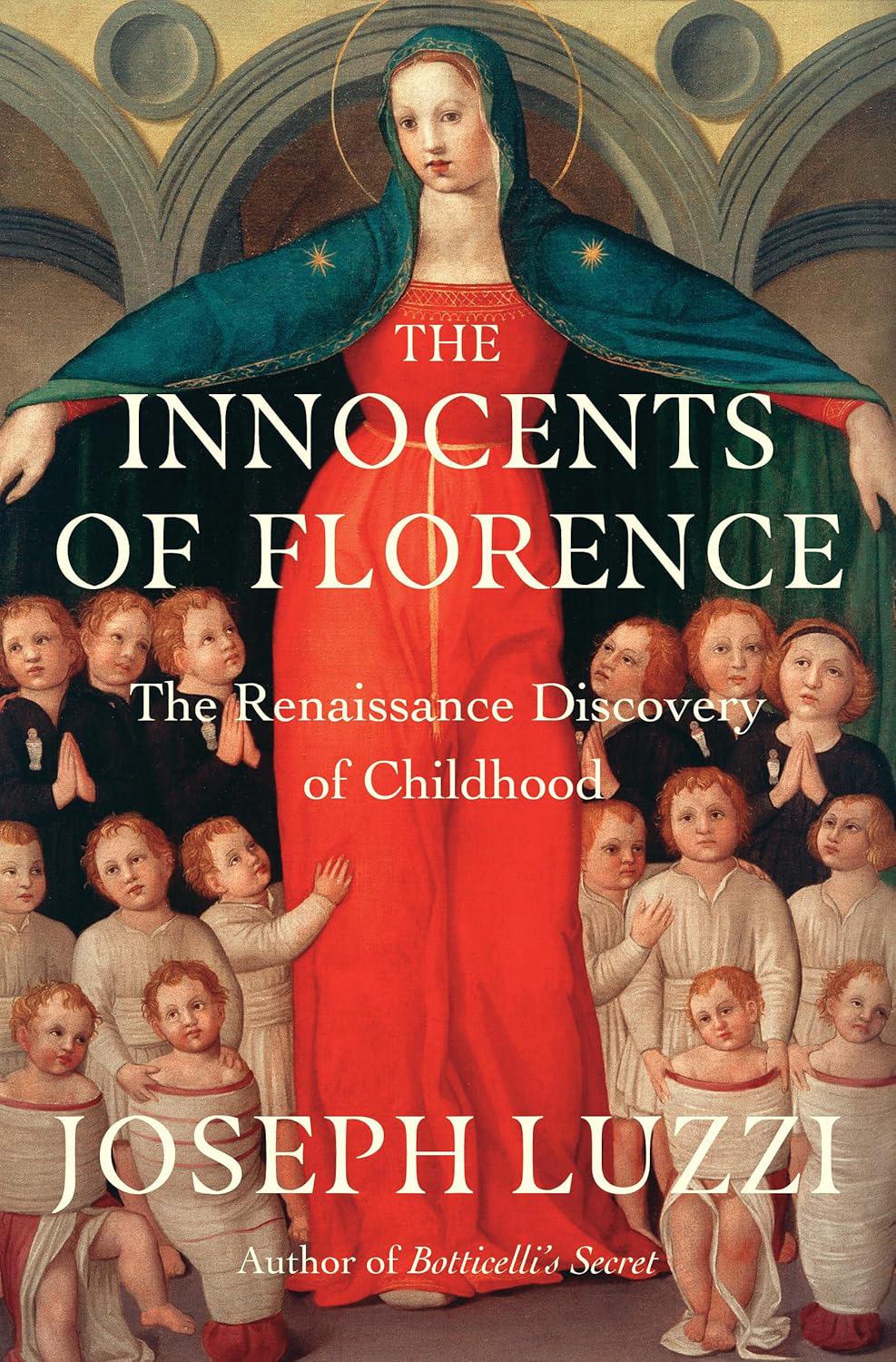
The Innocents of Florence: The Renaissance Discovery of Childhood by Joseph Luzzi, Asher B. Edelman Professor of Literature W. W. Norton
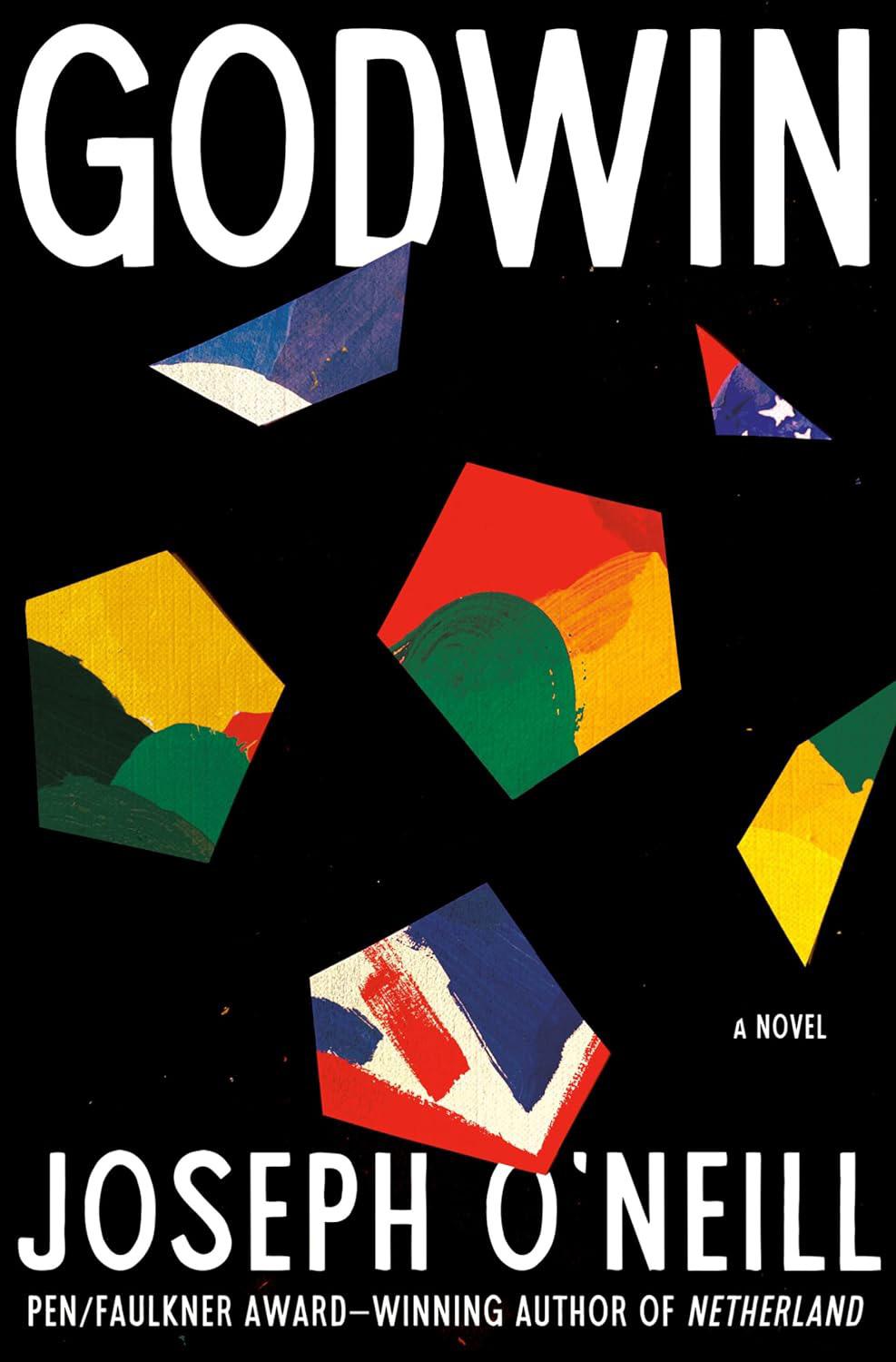
Godwin: A Novel by Joseph O’Neill, distinguished visiting professor of written arts Pantheon
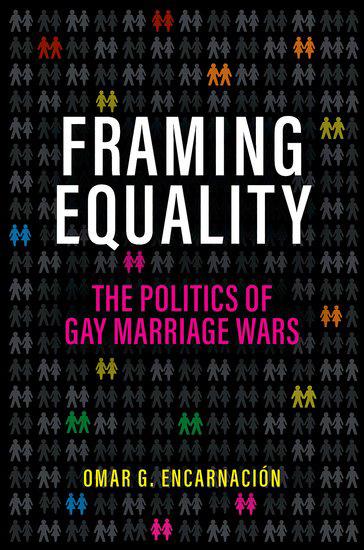
Framing Equality: The Politics of Gay Marriage Wars by Omar G. Encarnación, Charles Flint Kellogg Professor of Politics Oxford University Press
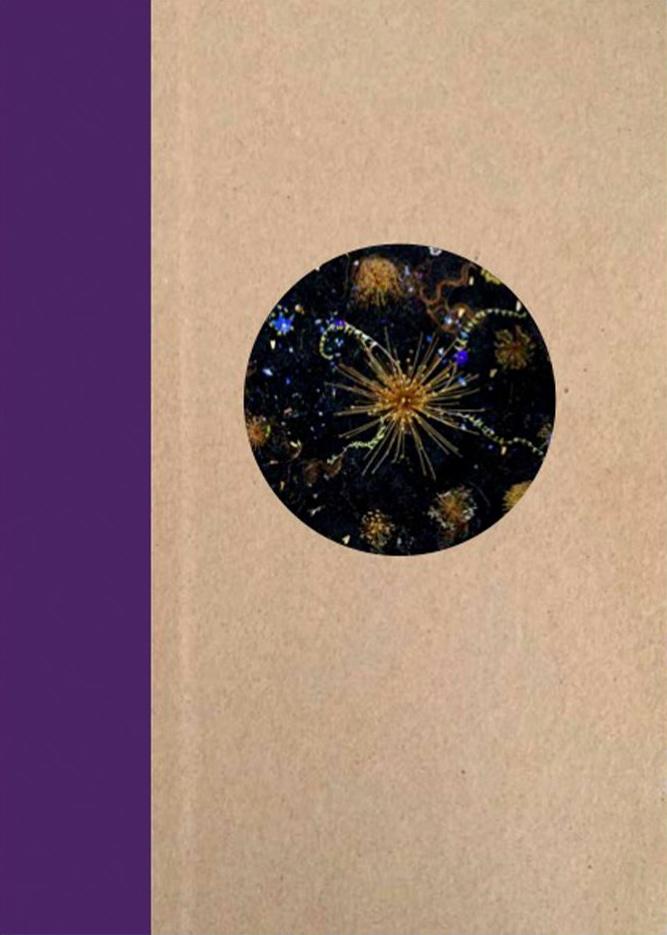
Portent by Tanya Marcuse SR ’81, artist in residence Nazraeli Press
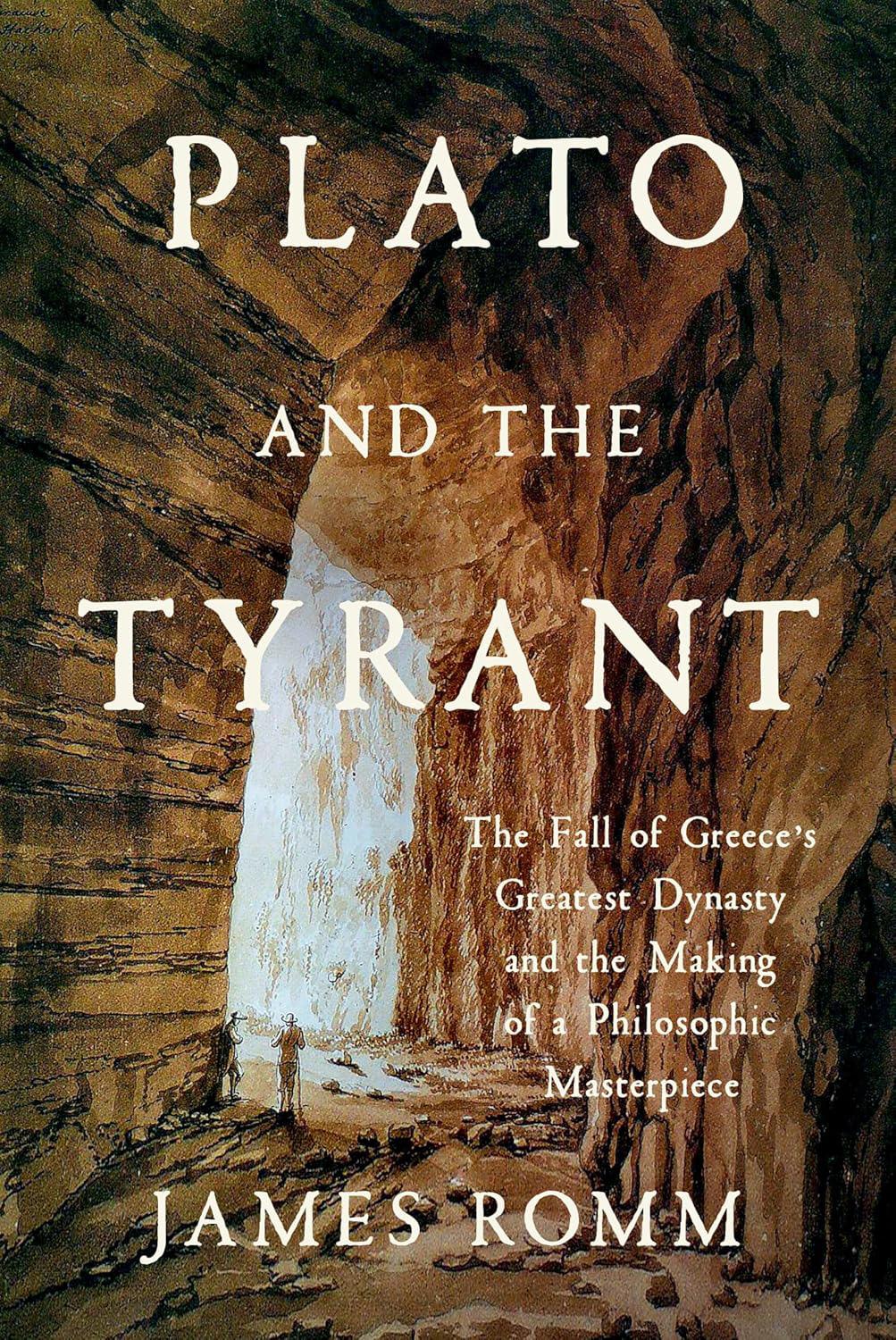
Plato and the Tyrant by James Romm, James H. Ottaway Jr. Professor of Classics W. W. Norton & Company
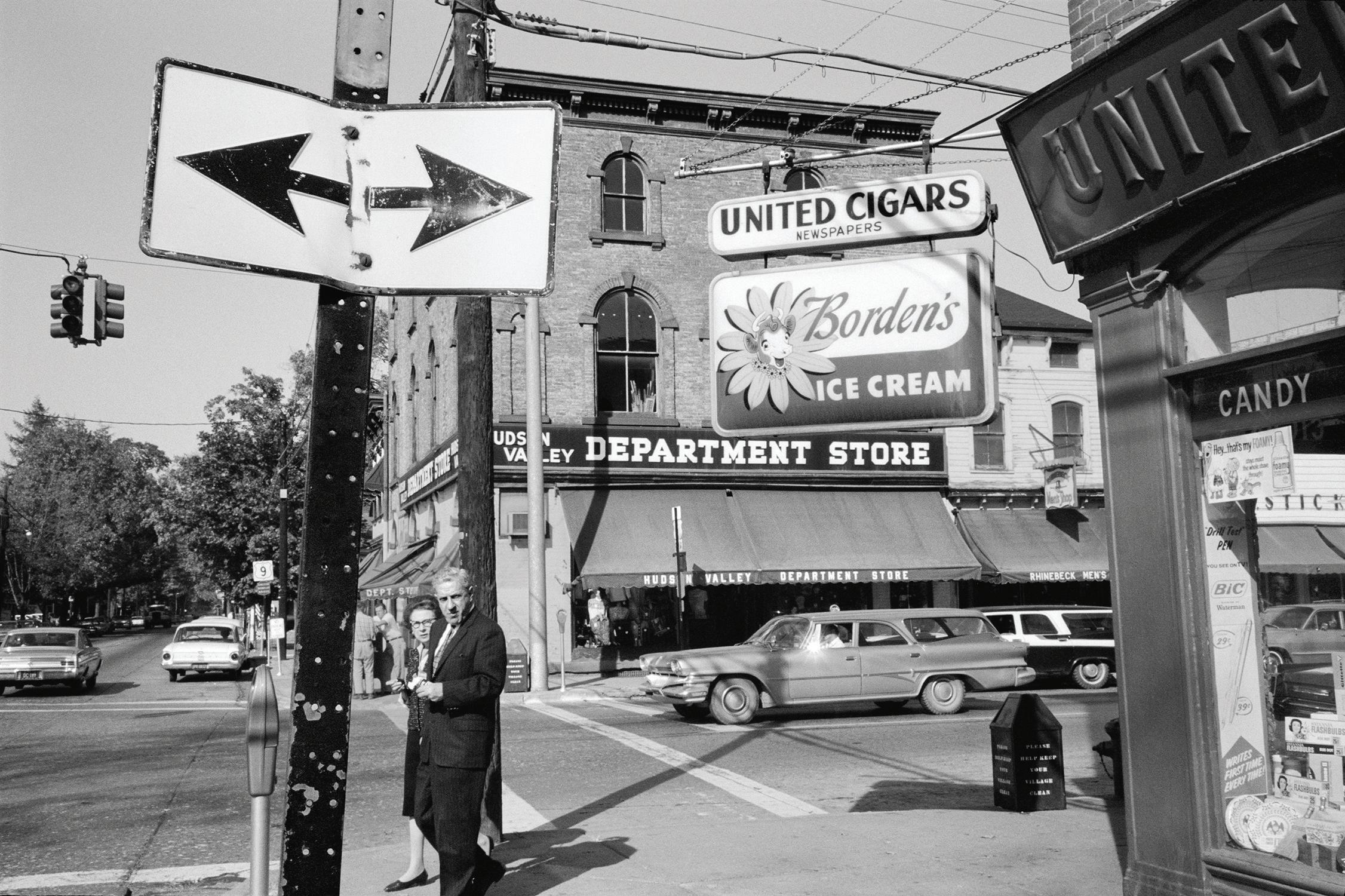
Early Work by Stephen Shore, Susan Weber Professor in the Arts and director of the Photography Program MACK
Before Stephen Shore was the “towering figure he would become in photography,” as The New York Times wrote recently, he was a kid with a Kodak darkroom kit. The neverbefore-seen photographs in Shore’s latest book, Early Work, were made between 1960 and 1965, when he was just a teenager. The sophisticated images show a remarkable sensitivity to his environment, a fine sense of composition, and an innate understanding of what it means to collapse three dimensions into two. Because his primary environment was New York City, the photographs also provide a fascinating look at the city in the 1960s. Shore’s earliest published pictures, taken on his first day at Andy Warhol’s Factory, when he was 17 years old, provide a fitting finale to Early Work. The experimentation of those five formative years would lead to a cross-country photographic excursion, when he took the photographs of diners, gas stations, and national parks that would appear in Uncommon Places. A year after that book was published, the 24-year-old Shore had a solo exhibition at the Metropolitan Museum of Art. He was the first living American since Alfred Stieglitz, more than 40 years earlier, to have such a show. Today Shore is recognized as “a master of elegantly prosaic scenes.” Early Work beautifully illustrates that his ability to capture the essence of the moment was there from the beginning.
Rhinebeck, New York, 1964 ©Stephen Shore. Courtesy 303 Gallery, New York
TŌN IS TEN
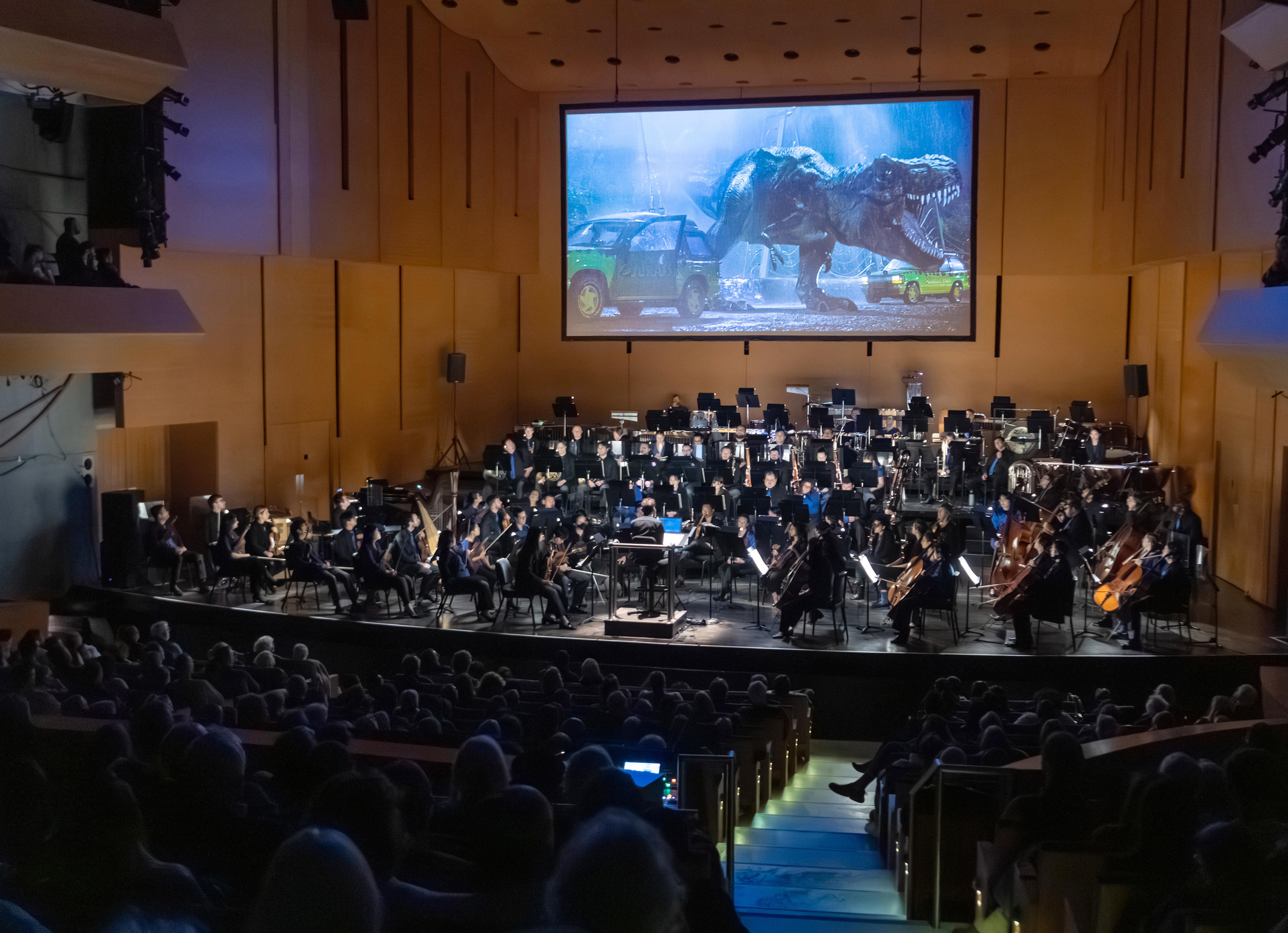
The Orchestra Now (TŌN), a Bard graduate program that is training the next generation of music professionals, celebrated its 10th anniversary last season. After a decade of performing in such venues as Carnegie Hall, Lincoln Center, Metropolitan Museum of Art, and the Fisher Center at Bard, the orchestra—whose members are graduates of the world’s leading conservatories and hail from countries across North and South America, Europe, and Asia—performed abroad for the first time. TŌN’s first concert in Germany was part of the Koblenz IMUKO Festival, which has a focus on multicultural engagement. The program featured Max Bruch’s Adagio on Celtic Melodies and his Ave Maria, both for cello and orchestra; Robert Schumann’s Symphony No. 3 in E-flat major; and Felix Mendelssohn’s Symphony No. 5. Acclaimed cellist Benedict Kloeckner, artistic director of the festival, was the featured soloist. Two nights later, at
Nuremberg’s Congress Hall, once the ceremonial heart of the Nazi regime, TŌN performed Mendelssohn’s Violin Concerto in E minor, Symphony No. 5, and Choral Cantata Verleih uns Frieden. Commemorating the 80th anniversary of the day the Nazis surrendered, ending the Second World War in Europe, Grant Us Peace showcased Mendelssohn, whose music was banned during the Nazi era owing to his Jewish heritage, as a reminder of the hope that the 1945 victory in Europe over Nazism would bring peace and tolerance to a new world without war. The performance drew an audience that included survivors of the war and a distinguished roster of civic and diplomatic leaders.
Other highlights included a Carnegie Hall concert that featured orchestral transcriptions of works by Beethoven, Chopin, and Smetana; TŌN’s spring benefit,
in collaboration with dancers of American Ballet Theatre Studio Company; a concert that included Kaija Saariaho’s Laterna Magica (The Magic Lantern), Carl Maria von Weber’s Clarinet Concerto No. 2 (with soloist and winner of the 2023 Bard Conservatory Concerto Competition clarinetist Miles Wazni ’25), Albéric Magnard’s Symphony No. 4, and two live-to-picture performances of John Williams’s iconic score to Jurassic Park, which was projected in HD in the Fisher Center’s Sosnoff Theater. De-extinction never sounded so good.
TŌN has released albums on the Hyperion, Sorel Classics, and AVIE labels, recordings of its live concerts from the Fisher Center can be heard regularly on Classical WMHT-FM and WWFM The Classical Network, and the orchestra has appeared more than 100 times on Performance Today, broadcast nationwide.
The Orchestra Now, with James Bagwell conducting, performs the score to Jurassic Park; photo by Karl Rabe
BARD: A PLACE TO THINK TANK
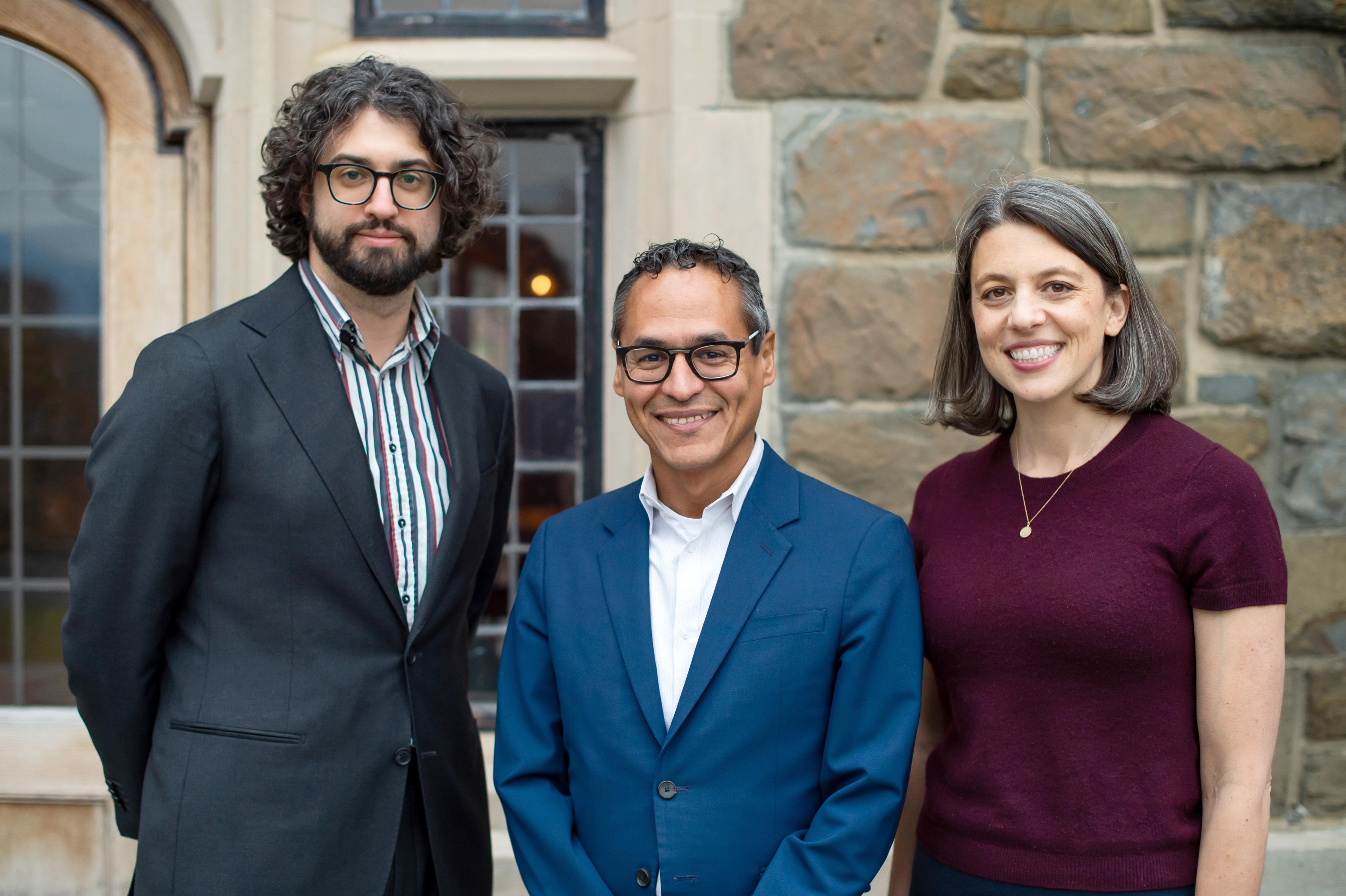
In recognition of the urgent need for general education reform and to shine a light on the responsibility of higher education to prepare students for citizenship in a democratic society, Bard has established the Chang Chavkin Center for Liberal Education and Civic Life. Part think tank and part teaching institute for faculty, the Center will advance curricular reform in colleges and universities with the aim of restoring liberal education to the heart of the undergraduate curriculum. In pursuit of its mission to prepare students for lives of purpose and democratic citizenship, the Center will promote a model of liberal education grounded on four basic commitments: the study of major primary texts; instruction through small discussionbased seminars; commonality of intellectual experience across the student body; and a nondisciplinary approach to course design, content, and staffing. Roosevelt Montás, John and Margaret Bard Professor in Liberal Education and Civic Life in the Division of Languages and Literature, is founding director of the center. Montás was born in the
Dominican Republic and immigrated to the United States as a teenager. He attended public schools in Queens, New York, and went on to study comparative literature at Columbia University, where he also earned his PhD in English. Montás, who specializes in antebellum American literature and culture, with a particular interest in American national identity, is author of Rescuing Socrates: How the Great Books Changed My Life and Why They Matter for a New Generation and the forthcoming Becoming America: Four Documents That Shaped a Nation; he is coeditor of the forthcoming The Princeton History of American Political Thought (all three with Princeton University Press).
Maxim Botstein, who had been Fritz Stern Postdoctoral Fellow at the Hannah Arendt Center for Politics and Humanities and is now visiting assistant professor of humanities, is Chang Chavkin’s assistant director. Jessica Lee, for nearly a decade the executive director of Freedom and Citizenship at Columbia University, is the center’s associate director.
REWEAVING THE BARD NETWORK
The Henry Luce Foundation awarded Bard College a $200,000 grant to extend opportunities for students around the world to take courses offered by the College’s international network. The grant coincides with the launch of the Global Higher Education Alliance for the 21st Century (GHEA21) and the new Bard Global Degree Program for displaced students. GHEA21 provides a full curriculum of regular undergraduate courses, taught by faculty around the world, which reach more than 7,000 students each year across a broad range of geographies and backgrounds. GHEA21’s newly redesigned curriculum consists of certificate programs in civic engagement, global humanities, global studies, human rights, and sustainability and climate solutions. The Bard Global Degree is an online degree program for students who have been displaced or threatened by conflict, crisis, or political repression, and who have little or no access to liberal arts education.
PEN PRESIDENT
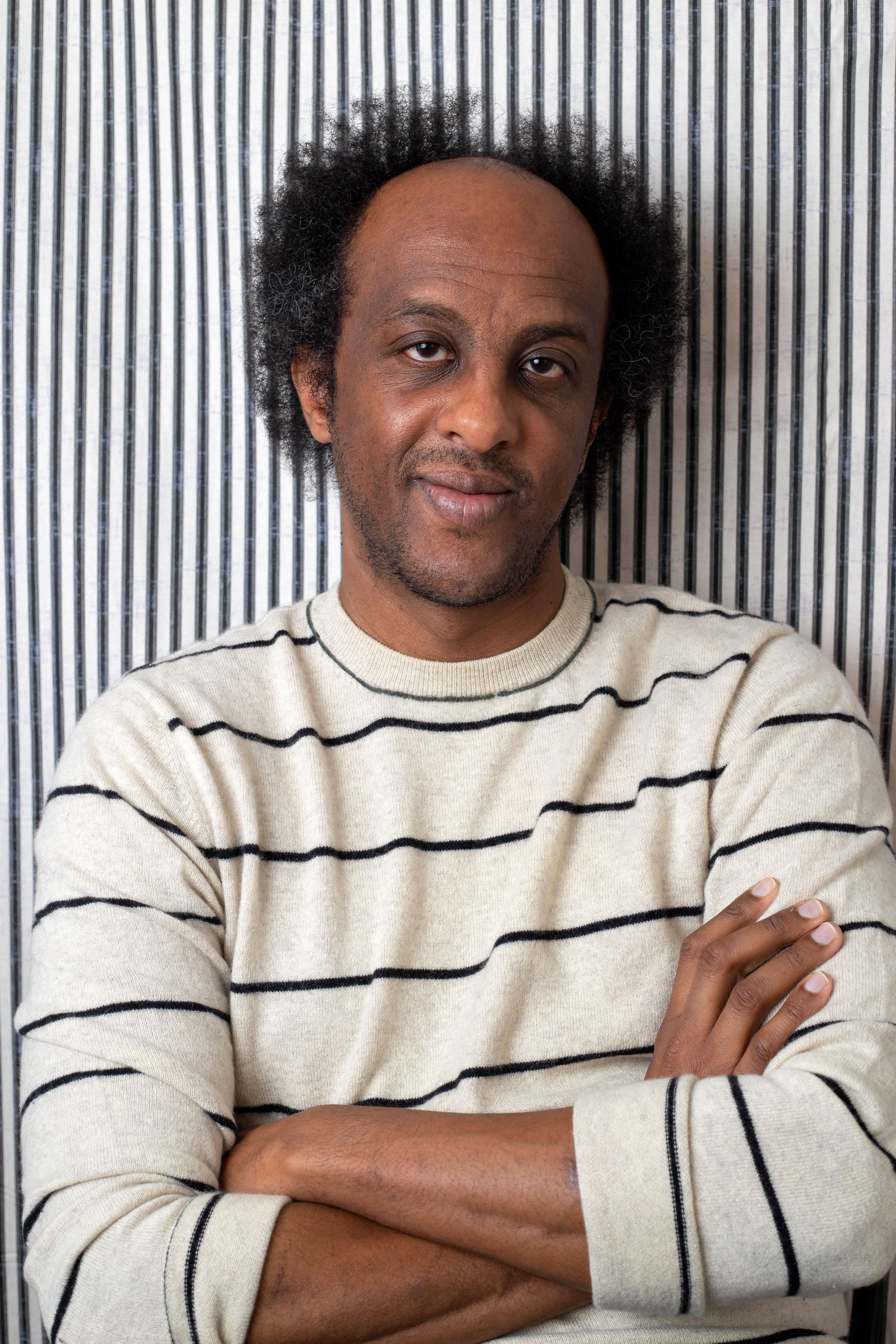
Dinaw Mengestu, John D. and Catherine T. MacArthur Professor of the Humanities, director of the Written Arts Program, and founder and director of the Center for Ethics and Writing, is the newly elected president of PEN America, a 103year-old writers organization whose mission is to celebrate literature and defend freedom of expression. Mengestu, the author of four novels and numerous magazine and newspaper articles, a MacArthur Fellow, and recipient of a Lannan Literary Fellowship, will spend his two-year term working in partnership with the literary community at large to ensure that free expression is safeguarded, and to strengthen the connection with PEN’s international chapters to advance the organization’s mission for freedom of expression worldwide.
Chang Chavkin Center senior administration, from left: Maxim Botstein, assistant director; Roosevelt Montás, director; Jessica H. Lee, associate director. Photo by Rachel L. Crittenden
Dinaw Mengestu photo by Anne-Emmanuelle Robicquet
BARD GRADUATE CENTER
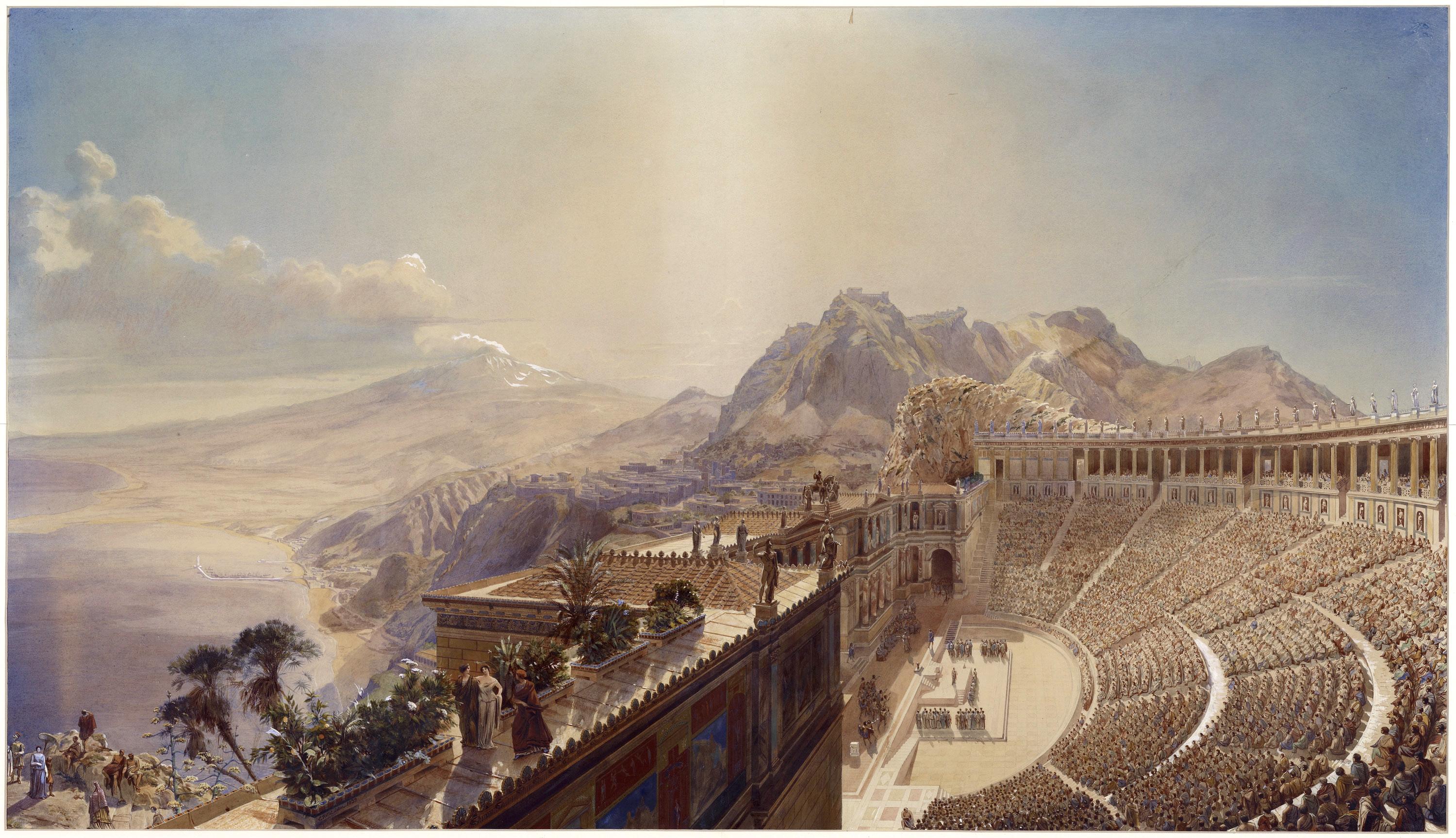
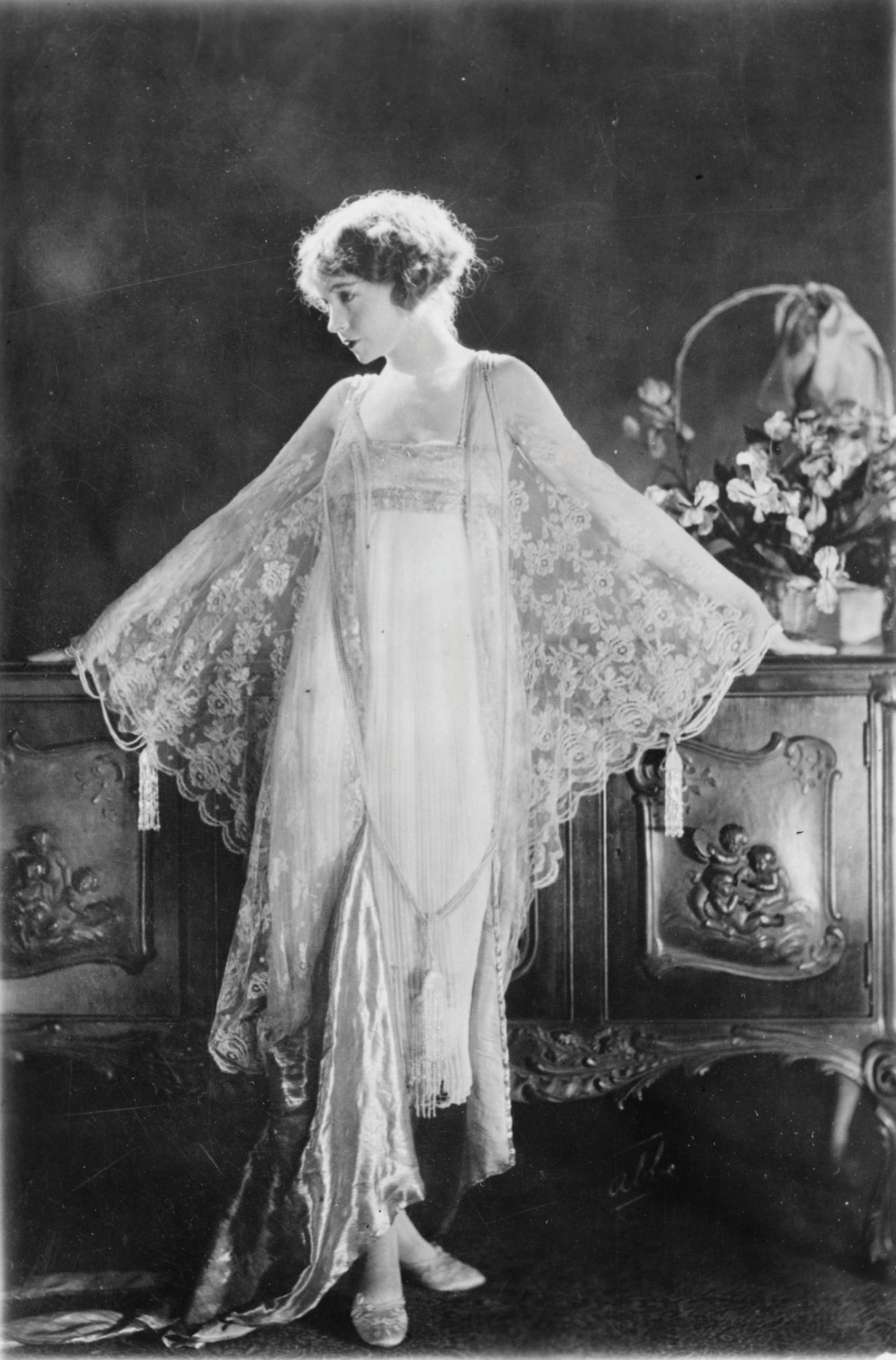
The first major United States exhibition dedicated to the life and work of visionary architect, designer, and theorist EugèneEmmanuel Viollet-le-Duc (1814–79)—best known for his restoration of the Cathedral of Notre-Dame de Paris—was on view at the Bard Graduate Center Gallery from January 28 through May 24, 2026. Viollet-le-Duc: Drawing Worlds brought together nearly 150 drawings and objects, the majority of which had never before been displayed in the United States, highlighting his prolific work as a draftsman and the centrality of drawing to his practice. The exhibition, which included sketches from the architect’s travels to Italy and through the Alps, revealed how his art was inextricably intertwined with his social and political beliefs rooted in a strong sense of national and ethnic identity. Opening September 18, 2026, and running through January 3, 2027, Goddesses in the Machine: Fashion in American Silent Film will tell the untold story of costume and style in early Hollywood. Bringing together a selection of rare objects from the advent of cinema, the show highlights the behind-thescenes work of famous designers such as Travis Banton, Henri Bendel, Clare West, and Lady Duff Gordon (aka Lucile) as well as lessknown names such as Madame Frances, I. Miller, Natacha Rambova, and Lilian St. Cyr.
Iris Foundation Awards
The 29th Annual Iris Foundation Awards honored William and Ellen Taubman, who together built a collection of collections grounded in scholarship, connoisseurship, and long-term engagement, as Outstanding Patrons; John Guy, Florence and Herbert Irving Curator of South and Southeast Asian Art at the Metropolitan Museum of Art, for Outstanding Lifetime Achievement; Matthew Yokobosky, senior curator of fashion and material culture at the Brooklyn Museum, where he has shaped landmark exhibitions that merge fashion, design, and contemporary culture, as Outstanding MidCareer Scholar; and Sylvie Lhermite-King, specialist in Renaissance through 18thcentury art, specifically Venetian and façon de Venise glass of the 16th and 17th centuries, as Outstanding Dealer. The Iris Foundation Awards were created in 1997 by Bard Graduate Center Founder and Director Susan Weber to recognize scholars, patrons, and professionals who have made outstanding contributions to the study and appreciation of the decorative arts and thereby help to sustain the cultural heritage of our world. Proceeds from the awards luncheon, which was held on April 29, 2026, benefit the Bard Graduate Center Scholarship Fund.
Lillian Gish in a nightgown designed by Henri Bendel, film still from Way Down East. Bain News Service, New York/Library of Congress
View of the antique theater at Taormina, restoration project, 1840, Eugène-Emmanuel Viollet-le-Duc. Médiathèque du patrimoine et de la photographie, Charenton-le-Pont
HANNAH ARENDT CENTER: FORUM OR AGAINST ’EM?
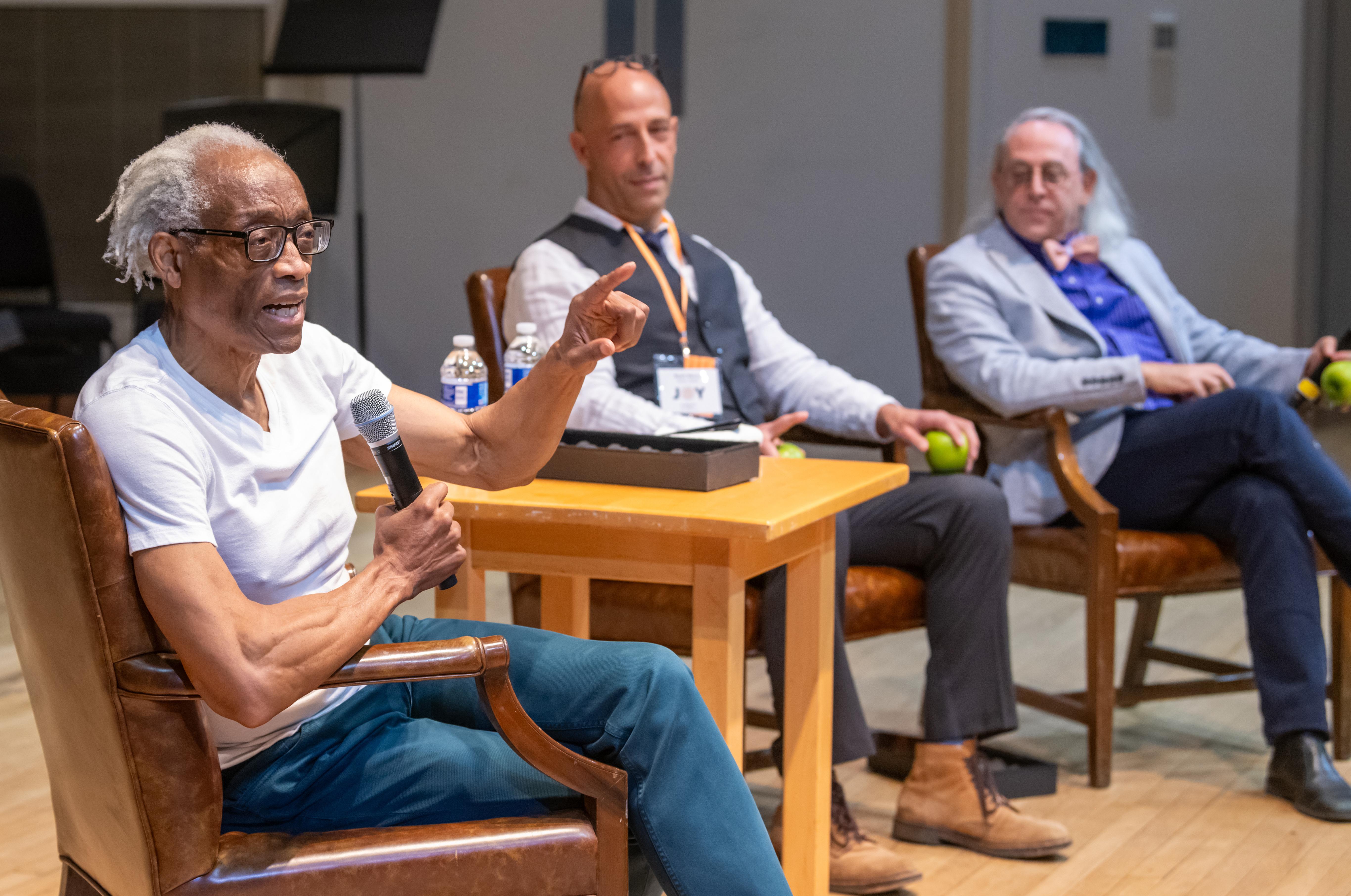
In 2006, to mark the 100th anniversary of Hannah Arendt’s birth, a conference was held at Bard to honor her legacy and provoke the kind of fearless thinking about the world that she exemplified. That first conference, Thinking in Dark Times, launched not only an annual gathering but also the Hannah Arendt Center for Politics and Humanities itself. Over the course of 20 years the Center and its conference have explored various crises, dilemmas, horrors, and conundrums through interviews and roundtables, plays and musical performances, even visits to Arendt’s grave in the Bard Cemetery. Last year, participants and audience members gathered to look for joy. JOY: Loving the World in Dark Times sought ways of finding meaning and connection in today’s fractured world. Among the presenters were dancer and choreographer Bill T. Jones, who presented a clip from D-Man in the Water, which quotes a work by artist Jenny Holzer: “In a dream you saw a way to survive and you were filled with joy.” This year, the Arendt Center will turn from joy to solidarity, and from a “conference” to a “forum.” The Arendt Forum, Solidarity: What Are We Fighting For?, will be a threeday gathering (October 15 through 17) of thinkers, artists, and citizens. Arendt wrote about the “ominous silence that still answers us whenever we dare to ask not ‘What are we fighting against’ but ‘What are we fighting for?’” For her, solidarity binds people together in a shared political project, creating a community of common interest across difference—rich and poor, educated and uneducated, successful and striving. She warned that the greatest danger of the modern age is the loss of common sense—the confidence that a shared world still exists. For three days this fall, this public forum for thinking together about the fragile bonds that hold a plural world together will confront questions we often avoid. We know what we oppose, but what are we fighting for? And what are we willing to risk to sustain it?
VICTORY LAPHAM
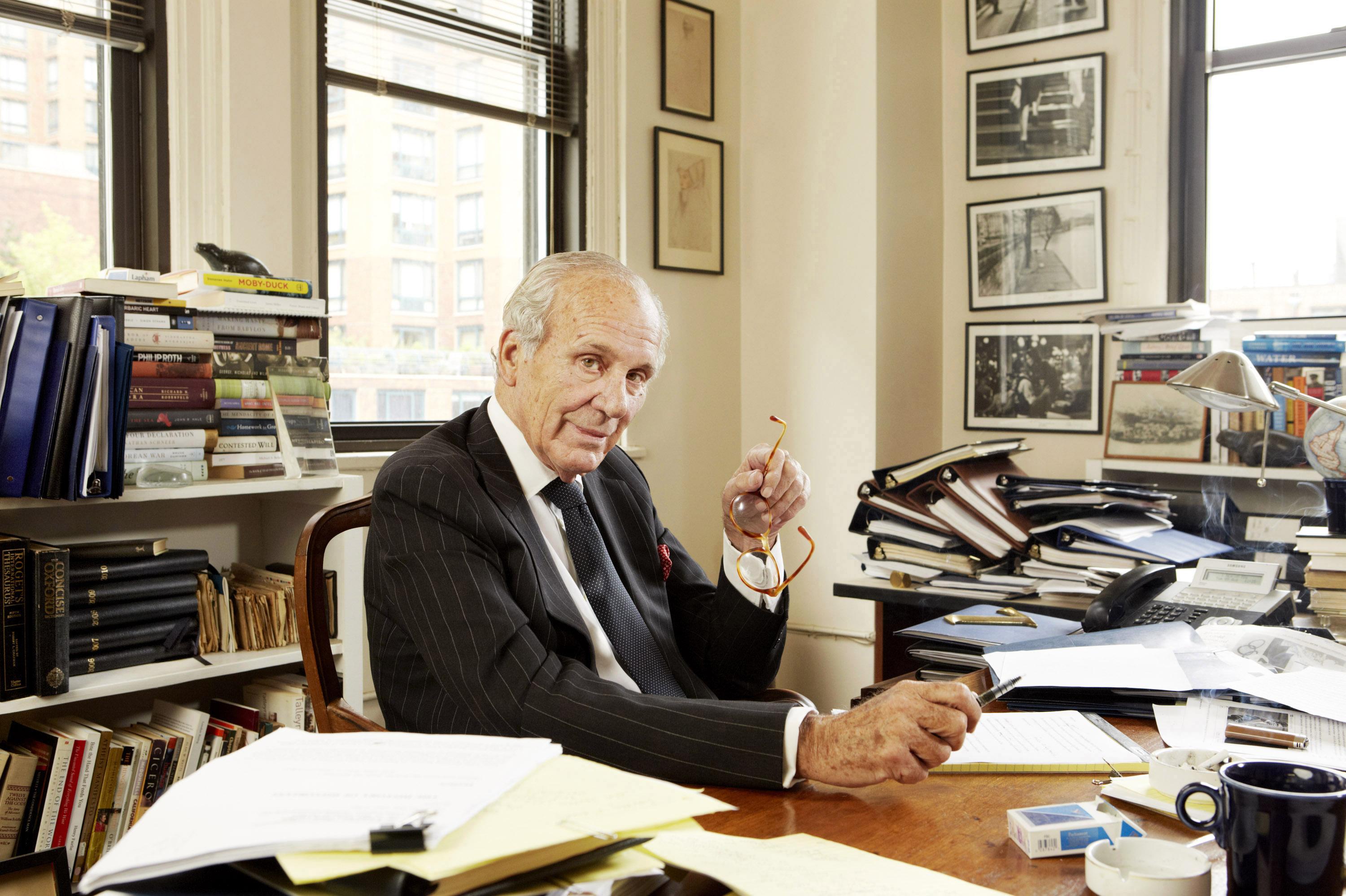
Bard College has taken ownership of Lapham’s Quarterly, the beloved journal of history and ideas founded in 2007 by renowned editor and writer Lewis Lapham, who died in 2024. With Lapham’s death, the fate of the magazine, which features writing by greats of the past and present to illuminate issues of our times, was in doubt. But Paul Morris, publisher and executive editor of the Quarterly reached out to Roger Berkowitz, academic director for the Hannah Arendt Center for Politics and Humanities, who proposed to President Leon Botstein that the publication be brought under the Bard umbrella. Botstein quickly agreed. The fit is a good one, since the magazine “embodies the belief that history is the root of all education, scientific and literary as well as political and economic.” That meshes perfectly with the interdisciplinary focus of both the College and the Arendt Center, whose exploration of politics, culture, and the human condition is as broad as it is deep. The Center plans to build upon Lapham’s legacy by integrating the journal into Bard’s broader mission of fostering critical inquiry and dialogue, and it will realize his longtime wish to distribute free copies of the Quarterly to incarcerated readers, through the Bard Prison Initiative.
Lewis Lapham in the Quarterly's old offices on Irving Place, 2011, photo by Joshua Simpson
From left: Bill T. Jones addressing the audience at the Hannah Arendt Center Conference JOY: Loving the World in Dark Times, Arendt Center Senior Fellow and Bard Writer in Residence Wyatt Mason, and Founder and Director of the Arendt Center Roger Berkowitz; photo by Karl Rabe
CENTER FOR CURATORIAL STUDIES
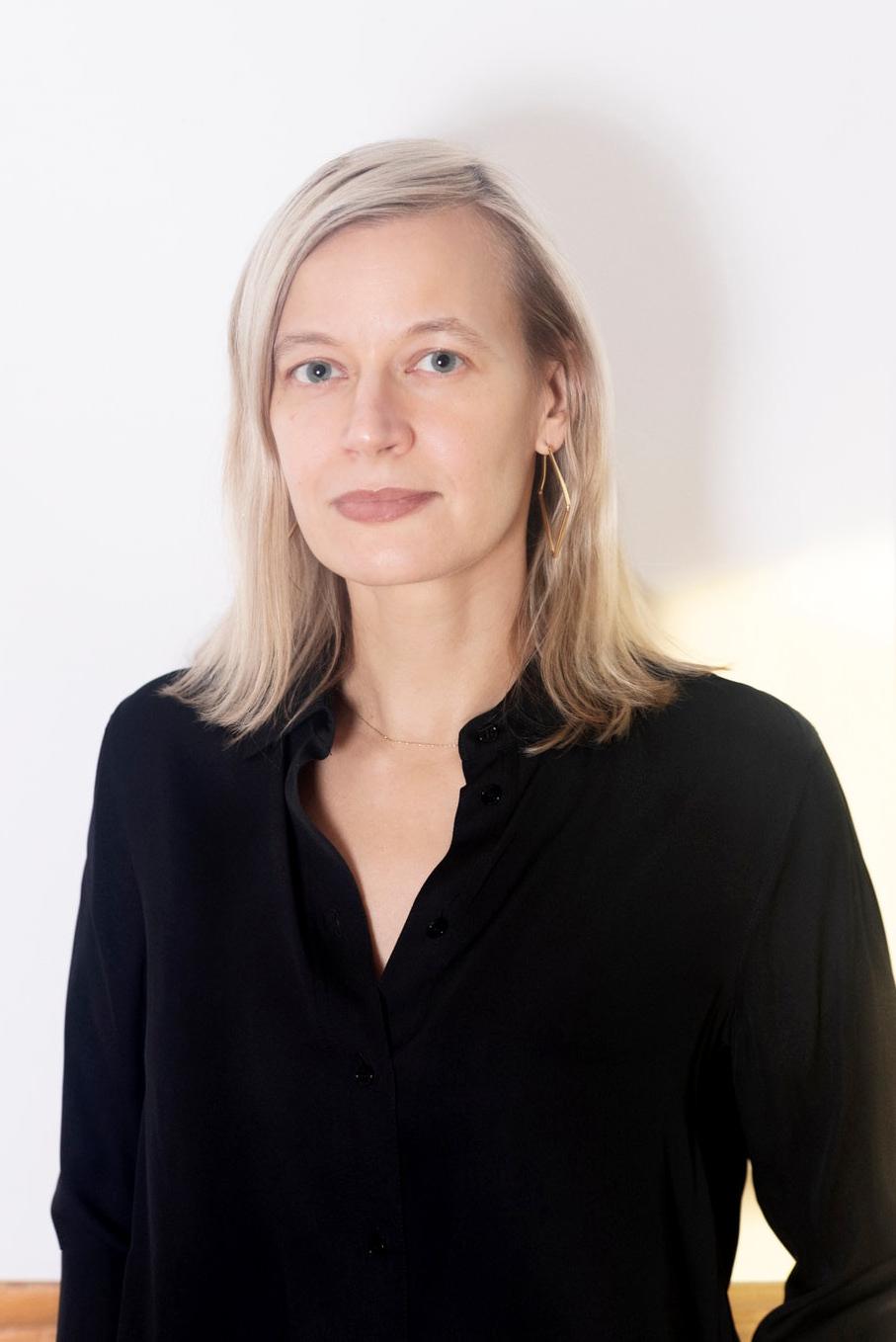
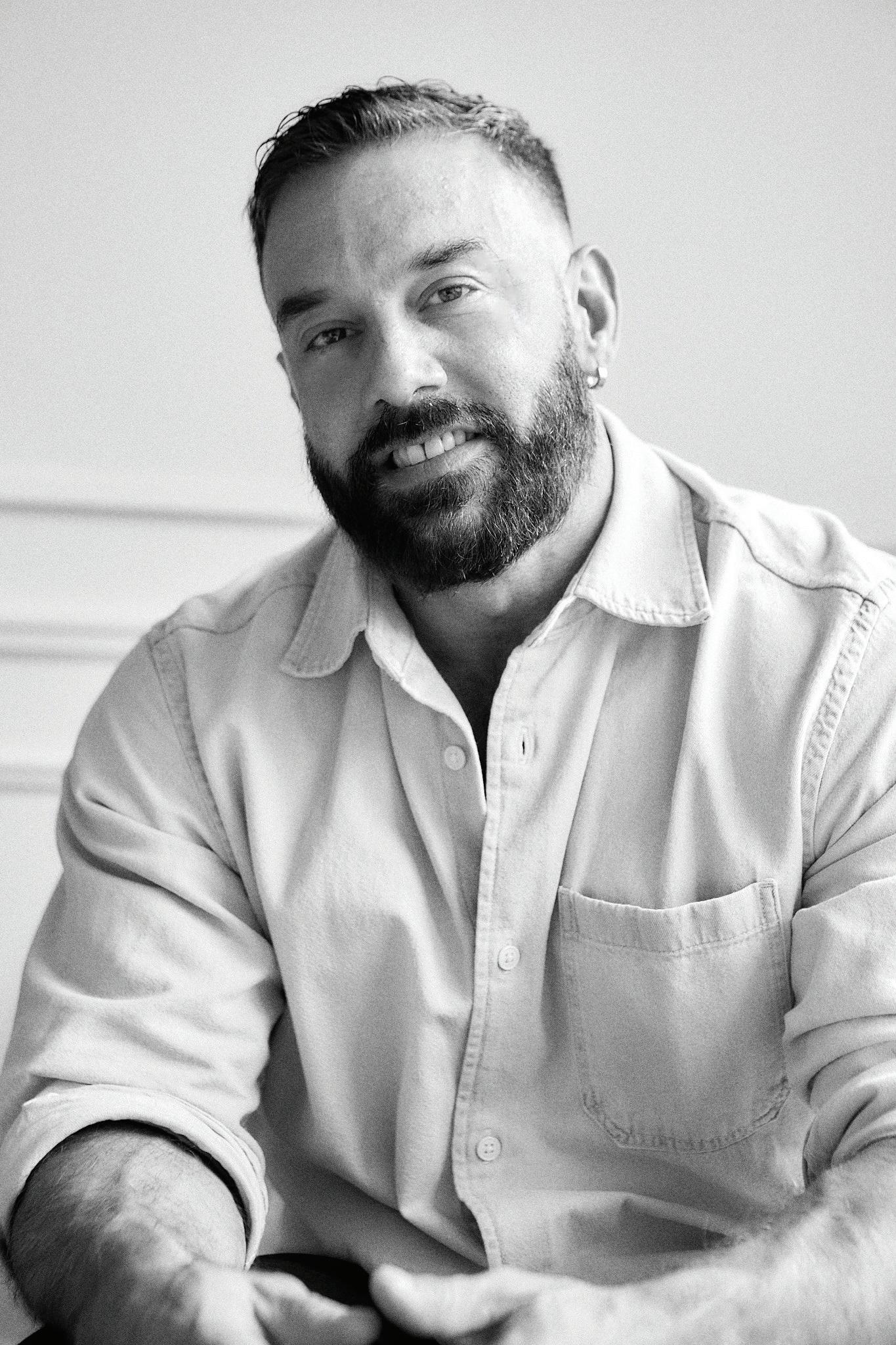
Lauren Cornell, who has been director of the Center for Curatorial Studies (CCS Bard) graduate program and chief curator of the Hessel Museum of Art since 2017, has assumed the new role of CCS Bard artistic director; Argentinian scholar and curator Mariano López Seoane is the new director of the CCS Bard graduate program. Through a strategic partnership with the Institute for Studies on Latin American Art (ISLAA), López Seoane is also ISLAA Fellow in Latin American Art. In her expanded role, Cornell will continue to oversee and enhance the Hessel’s programming while seeking to grow its base of support and financial capacity, refining its acquisitions strategy, and working to further enhance its presence and reputation as a dynamic destination for contemporary art. In addition, she will continue her active role on the CCS Bard faculty, teaching courses within the graduate program. López Seoane, who has been a member of the CCS Bard faculty since 2023, will continue to lead the ISLAA Artist Seminar, an annual, research-intensive course that results in a studentcurated exhibition that utilizes the ISLAA archives and collections in New York City, while overseeing all aspects of the CCS Bard graduate program.
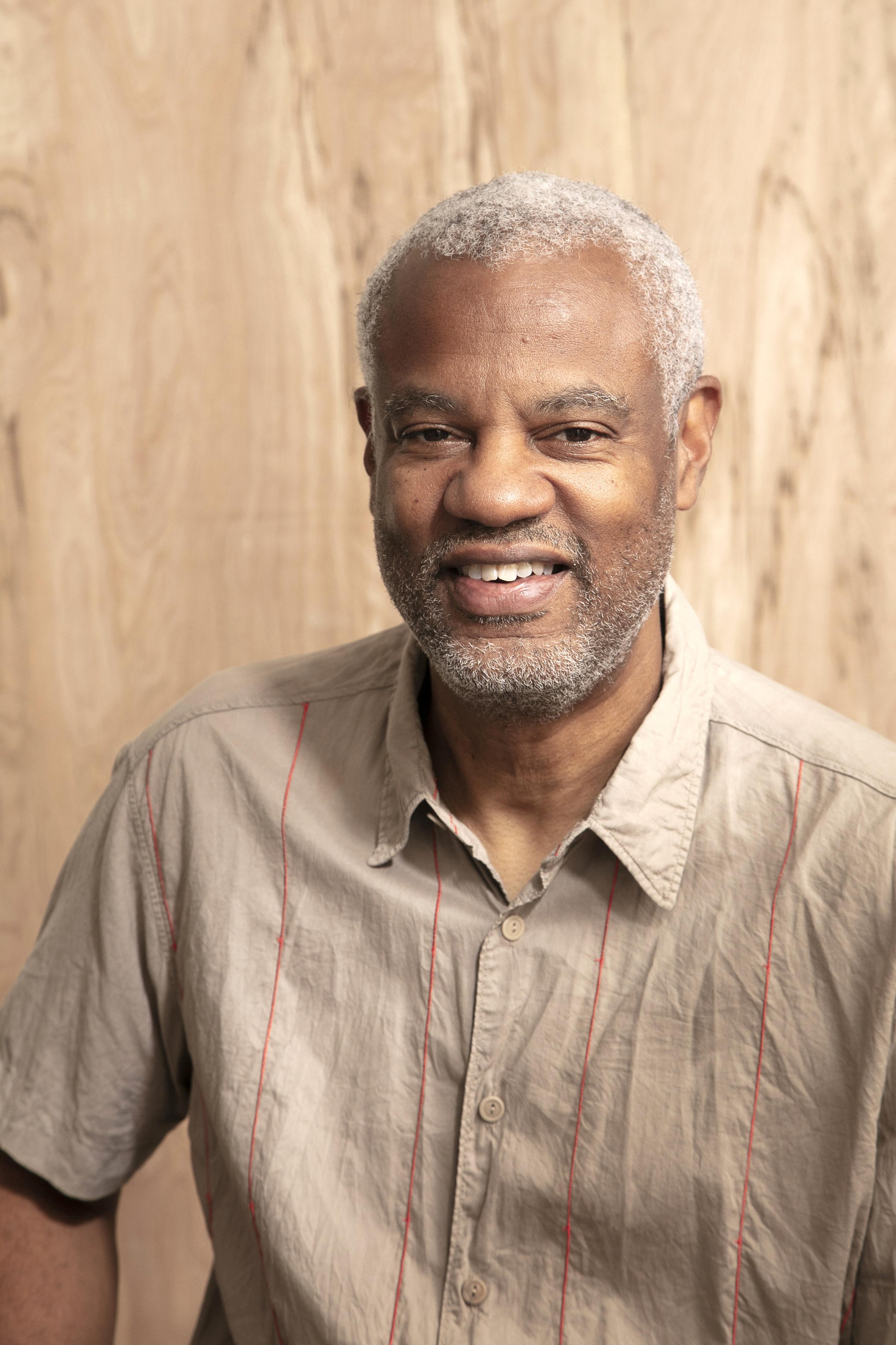
Hamza Walker, curator, writer, educator, and executive director of The Brick (formerly LAXART) in Los Angeles, is the recipient of the 2026 Audrey Irmas Award for Curatorial Excellence from the Center for Curatorial Studies, Bard College. Walker, whose work explores the rhetoric of race in the United States, racial identity, and politics, cocurated the landmark exhibition MONUMENTS (on view through May 3, 2026), which brings together decommissioned monuments and contemporary artworks to examine how symbols placed in public spaces have shaped national identity and historical memory.
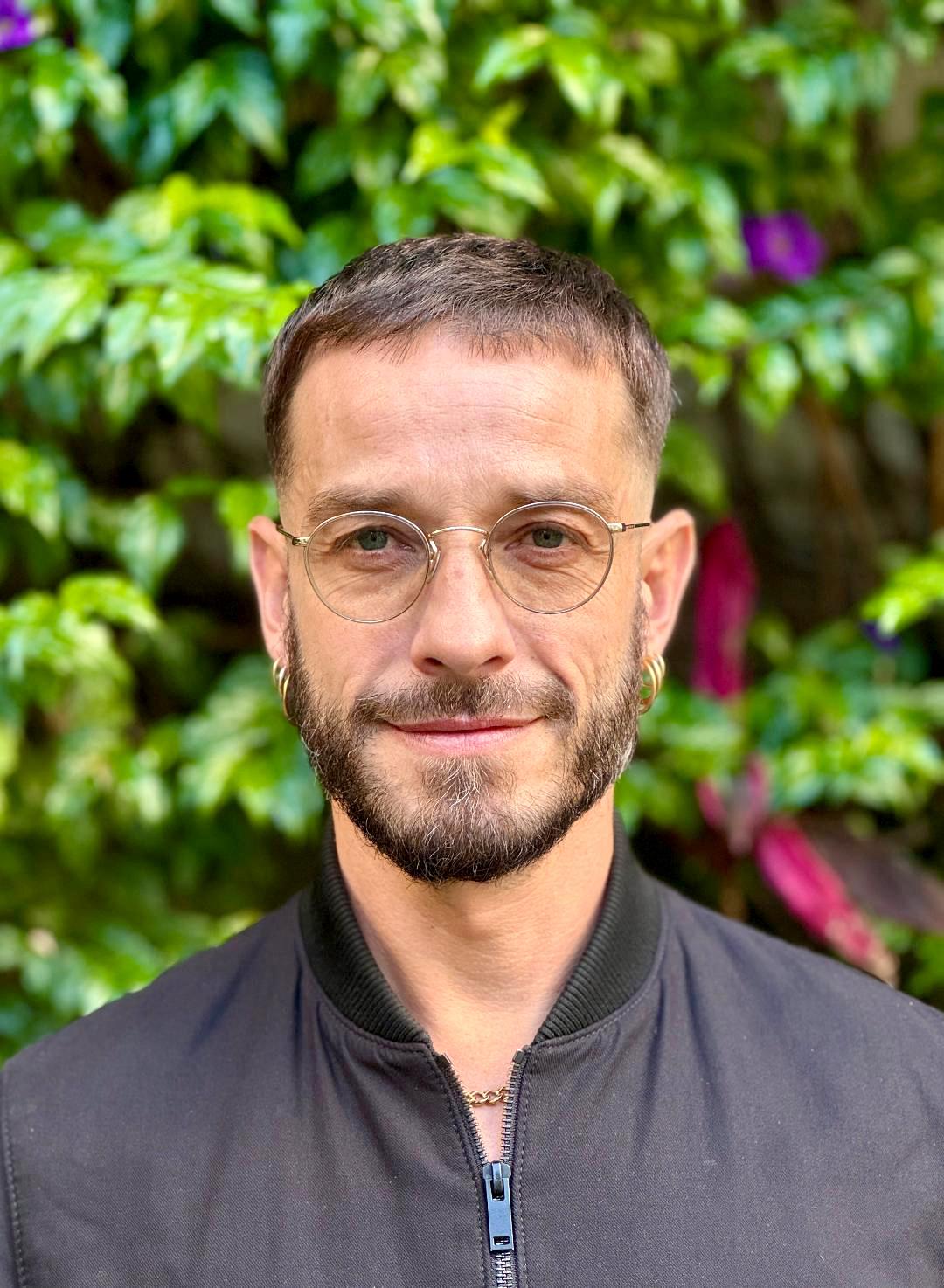
CCS Bard and Bard College’s Human Rights Project have named multidisciplinary artist Carlos Motta as Keith Haring Chair in Art and Activism for 2025–26. Motta's work explores the experiences of post-colonial subjects and societies, documenting the social conditions and political struggles of sexual-, gender-, and ethnic-minority communities through a range of media, including video, installation, sculpture, drawing, web-based projects, performance, and symposia. Motta, associate professor of inter-disciplinary practice in the Fine Arts Department at Pratt Institute, has exhibited globally, and his work is in the permanent collections of some of the world’s most prestigious museums.
Hamza Walker photo by Todd Gray
Mariano López Seoane photo by Cecilia Glik
Lauren Cornell photo by Carrie Schneider
Carlos Motta photo by John Arthur Peetz
HESSEL MUSEUM OF ART
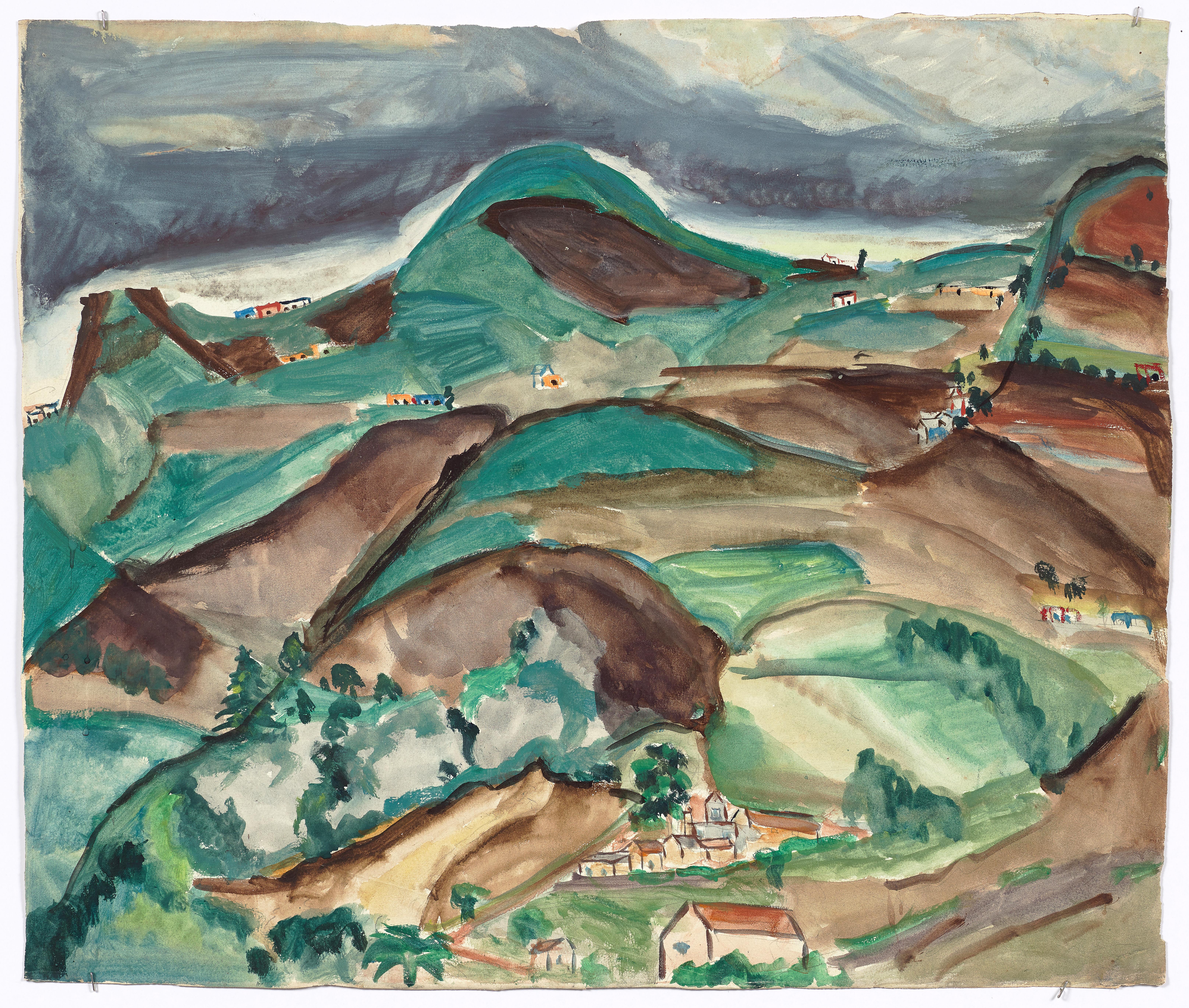

Betty Parsons (1900–82) is justifiably famous for shaping the trajectory of 20thcentury American art. Her eponymous gallery established the careers of artists such as Barnett Newman, Mark Rothko, Jackson Pollock, and Clyfford Still and championed women artists like Agnes Martin, who in 1958 had her first solo exhibition in New York City with Parsons. That history has been well documented, but Betty Parsons: An Expanded World, on view June 27 through October 18, 2026, at the Center for Curatorial Studies at Bard College’s Hessel Museum of Art, is the first major retrospective to examine the intertwined legacies of Parsons as both pioneering abstract artist and trailblazing gallerist. The exhibition, organized by curator Kelly Taxter CCS ’03 and artist Amy Sillman MFA ’95, centers Parsons’s 60 years of creative output as a painter and sculptor, while exploring the radical history of her gallery and its support of underrecognized, experimental artists. “Decades ahead of institutional norms or validation, she gave equal weight to women and queer artists . . . as well as artists positioned well outside of the established and narrow circuits of the art world, while simultaneously forging her own distinctive artistic path,” says Taxter.
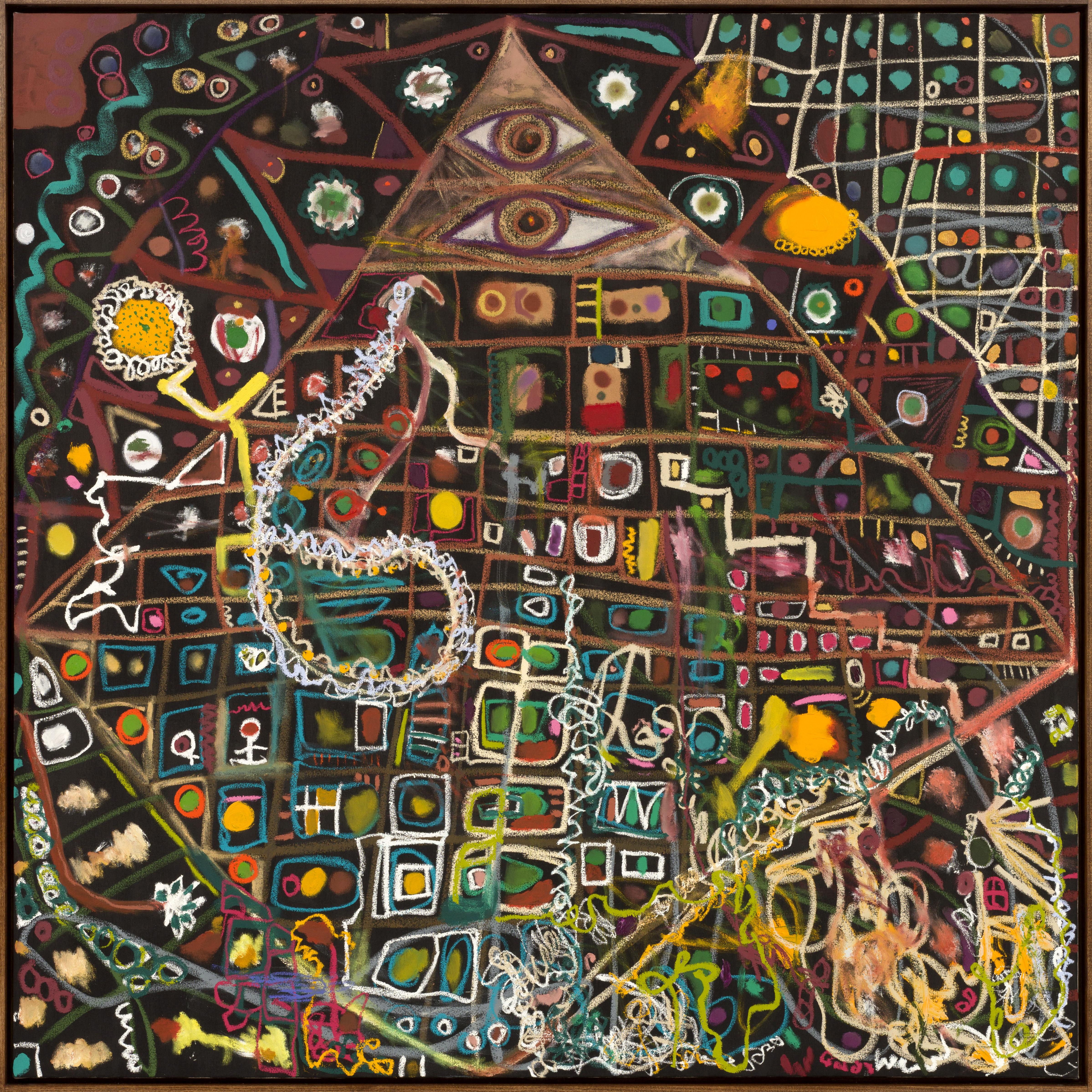
Opening at the same time as the Betty Parsons show will be Uman: Waiting for You and Replica of a Chip: The Weaving Technology of Marilou Schultz. The first traces the evolution of Uman’s practice from the intimate portraits and sketches she made in the 2000s to the commanding paintings she creates today, with a focus on the self-taught artist’s distinct vocabulary of signs, symbols, associations, and chromatic textures. The other is the first survey of acclaimed fourth-generation Navajo/Diné weaver Marilou Schultz, who was commissioned by the Intel Corporation in 1994 to create a woven replica of its Pentium chip. The exhibition explores Schultz’s subsequent engagements with technology and the digital world, highlighting her inventive approaches to material technique and patterning.
Canary Islands, Betty Parsons, 1932. Courtesy Alexander Gray Associates, New York ©2025 Betty Parsons and William P. Rayner Foundation
Samone, Uman, 2023. ©Uman. Courtesy the artist. Collection of Marty and Rebecca Eisenberg. Photo by Lance Brewer
Integrated Circuit Chip & Al Diné Weaving, Marilou Schultz, 2024. Gochman Family Collection. Image courtesy the artist and Kunstverein Munchen. Photo by Maximilian Geuter
KEITH HARING WING OPENS
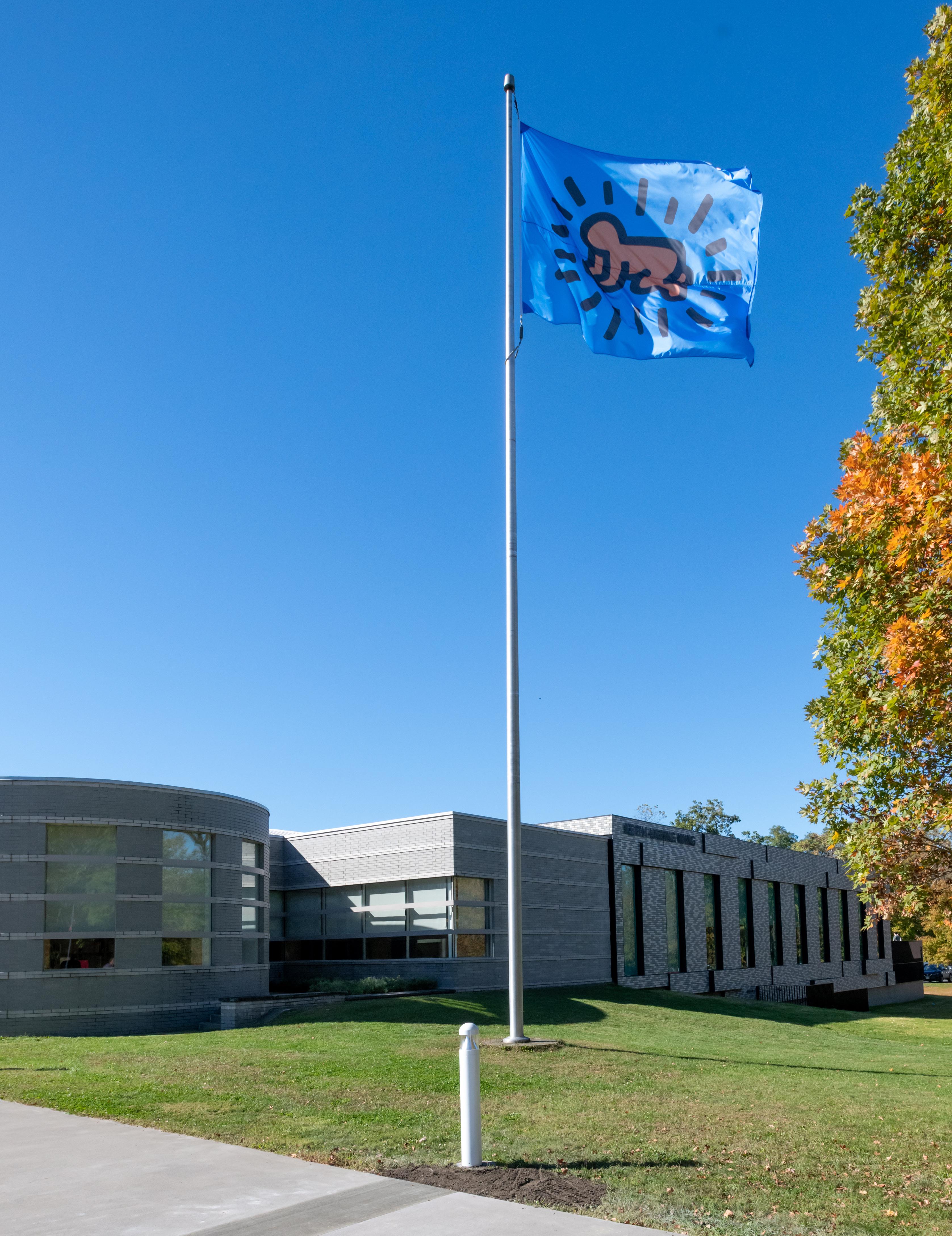
In October, CCS Bard inaugurated its new Keith Haring Wing, named in recognition of a $3 million gift from the Keith Haring Foundation, which added 12,000 square feet to the library and archives, doubling its capacity. The minimalist two-story masonry structure has open ceilings and large windows that incorporate natural light throughout the expanded library. Among the features of the new wing are the Martin and Rebecca Eisenberg Reading Room, open research stacks that can accommodate more than 30,000 additional volumes, the 30-seat Pontus Hultén Classroom—made possible by a generous gift from the Marieluise Hessel Foundation—the Stavros Niarchos Foundation Collaborative Study Room, six new offices, and 6,000 square feet of new storage space.
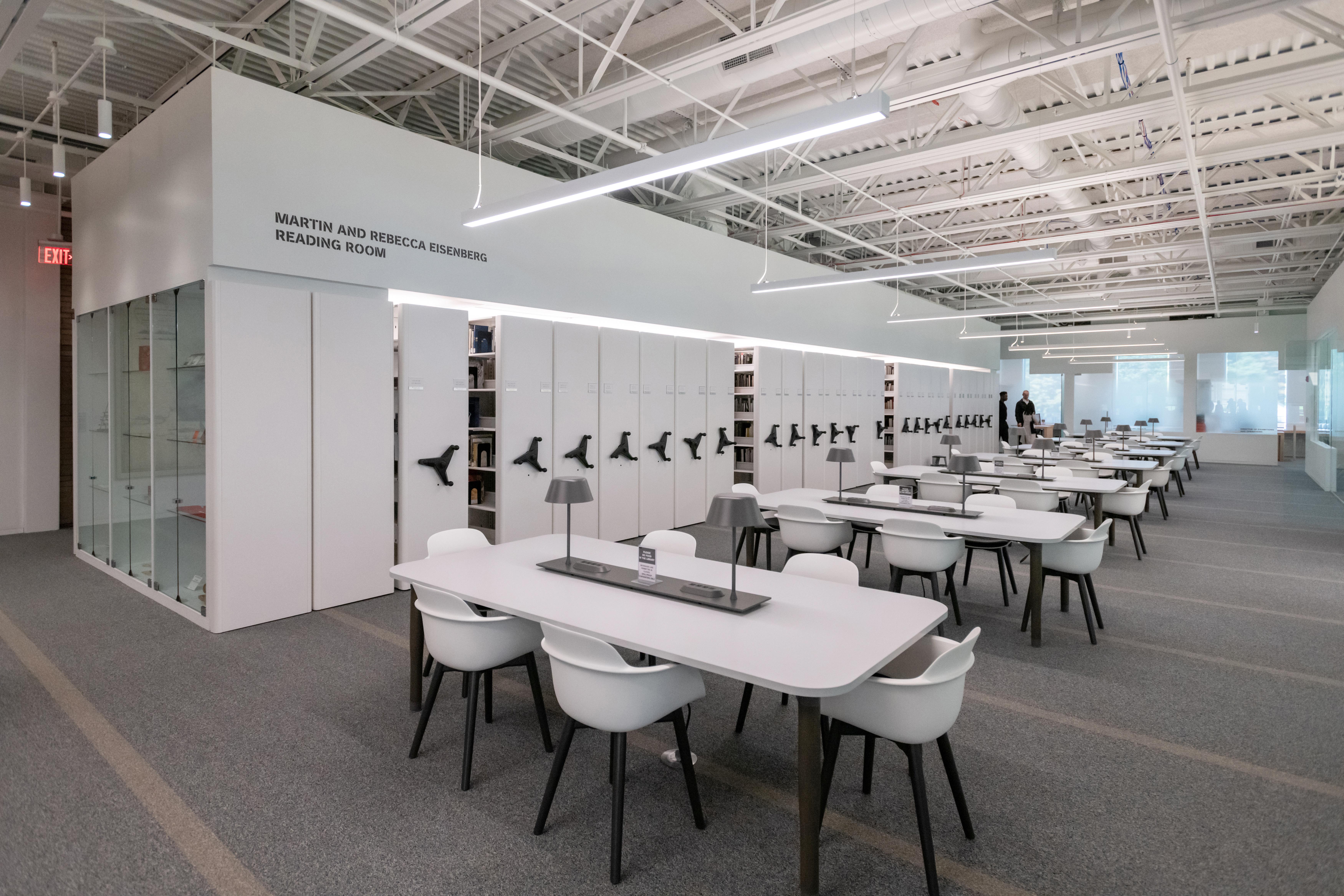
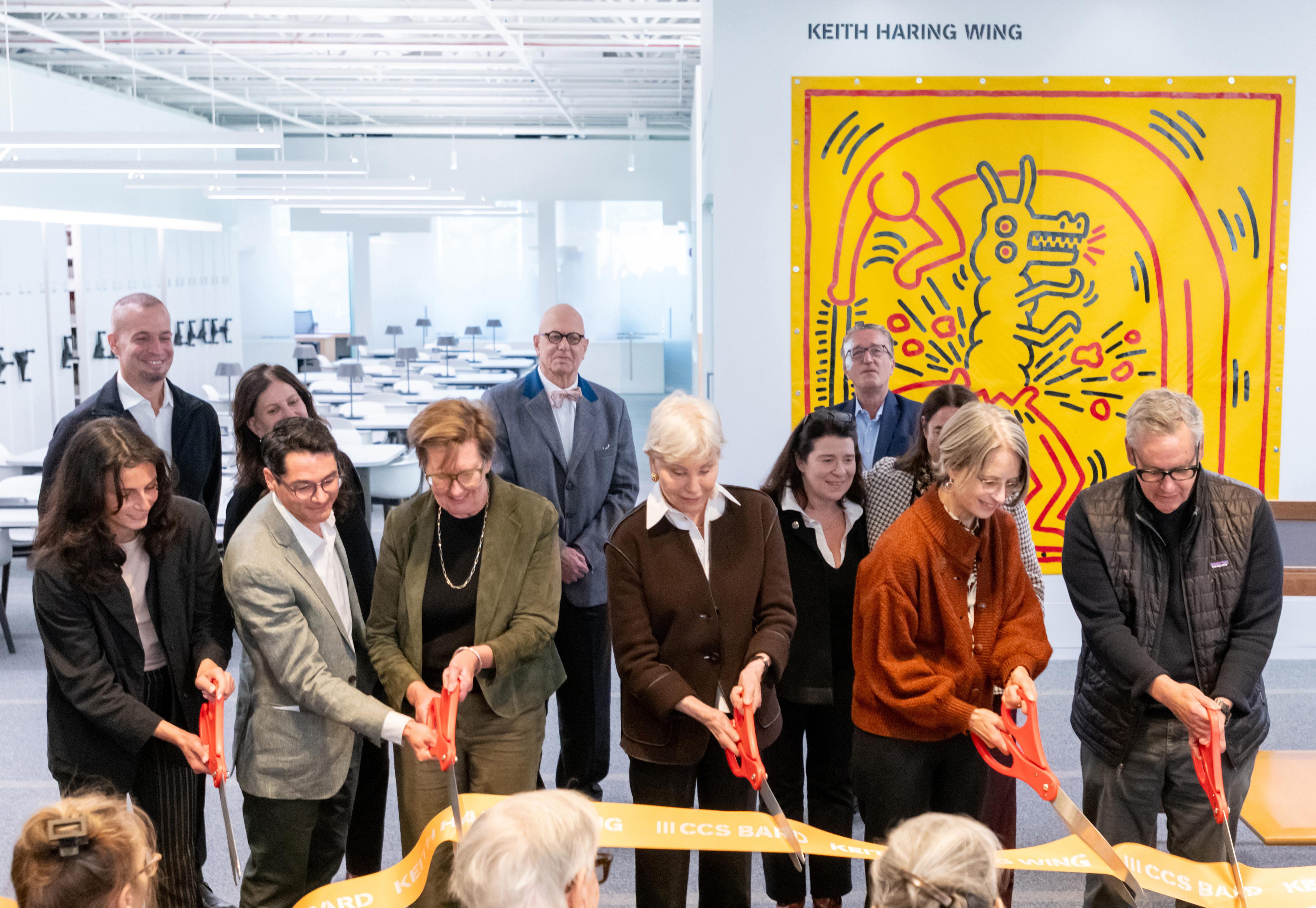
Front row from left: Jaidyn Appel, Shane Brennan, Ann Butler, Marieluise Hessel, Kristen Haring, Marty Eisenberg; back row from left: Matthias Hollwich, Lori Chemla, Leon Botstein, Melissa Schiff Soros, Tom Eccles, Maja Hoffmann
Photos by Karl Rabe
TRANSFORMATIVE MATCH MADE Bard Completes Endowment Challenge
By James Rodewald ’82
Bard’s successful completion of a landmark billion-dollar endowment challenge from the Open Society Foundations (OSF) and its founder, George Soros, positions the College to sustain and expand its mission as an independent institution of higher education centered on the liberal arts and sciences and dedicated to the public interest. The challenge, launched in 2021, invited Bard to match a $500 million commitment from OSF by raising an additional $500 million from other donors within five years. In that time, nearly 2,000 gifts and pledges from more than 1,000 contributors—trustees, alumni/ae, and friends—were made to the endowment, and in January 2026 it was announced that the challenge had been met. The successful campaign has already supported the addition of 17 new faculty chairs and a number of new named scholarships, awards, and prizes made possible by the generosity of alumni/ae.
“Bard is profoundly grateful to George Soros, Alex Soros, and the Open Society Foundations,” says President Leon Botstein. “The response of our donor community, which has given and pledged over $500 million to meet the OSF challenge, affirms George Soros’s belief in Bard and its mission. This outpouring of support endorses Bard’s excellence and innovation and bodes well for the future of the College.”
At a time when American democracy is under strain, and colleges and universities face growing political and
financial pressure, Bard’s endowment underscores the importance of investing in independent higher education as a cornerstone of democratic life. It also reflects OSF’s historical support for higher education and the role of critical thinking in public life. “Higher education is essential to the future of American democracy,” says Alex Soros, chair of OSF. “Bard will continue to be a place where critical thinking flourishes and students learn why the liberal arts are more important to freedom and the rule of law than ever in today’s embattled moment.”
Under Botstein’s leadership over the past 50 years, Bard has played a leading role in advancing liberal arts and sciences education and expanding access to higher education. In addition to undergraduate and graduate instruction in Annandale, programs include the Bard Early Colleges, which enable public high school students to earn college degrees tuition free in supportive environments; Bard Prison Initiative, which provides college education to incarcerated students; and a wide range of international partnerships focused on expanding educational opportunity for underserved communities.
The endowment will help defray the operating costs of the College, and over time, as pledges are converted into cash, the money available—essentially, the interest earned on the principal—will continue to grow. In the meantime, the 250 percent growth of the endowment
has additional profound financial benefits, particularly in the realm of borrowing. In the absence of such a robust “savings account,” the pressure to raise funds to cover student financial aid—more than $60 million annually— the intense competition for top-notch faculty, and the ever-rising costs associated with maintaining and improving the campus create a certain amount of risk; those are expenses that can’t be delayed, and lenders don’t like risk. In recent years, Bard’s credit rating has improved, achieving “investment grade” for the first time in March 2023, and it is no coincidence that S&P Global Ratings raised its long-term rating on Bard’s bonds two notches to BBB+ (from BBB-) in January 2026, citing “significantly improved balance-sheet metrics and liquidity in December 2025,” a clear shout-out to the successful endowment campaign. The improved credit rating greatly enhances the College’s access to loans and lowers the cost of borrowing, which in turn helps ensure that necessary capital projects can be undertaken. The fundraising continues, of course, since only the interest earned on the endowment will be tapped, but the successful campaign is a game changer.
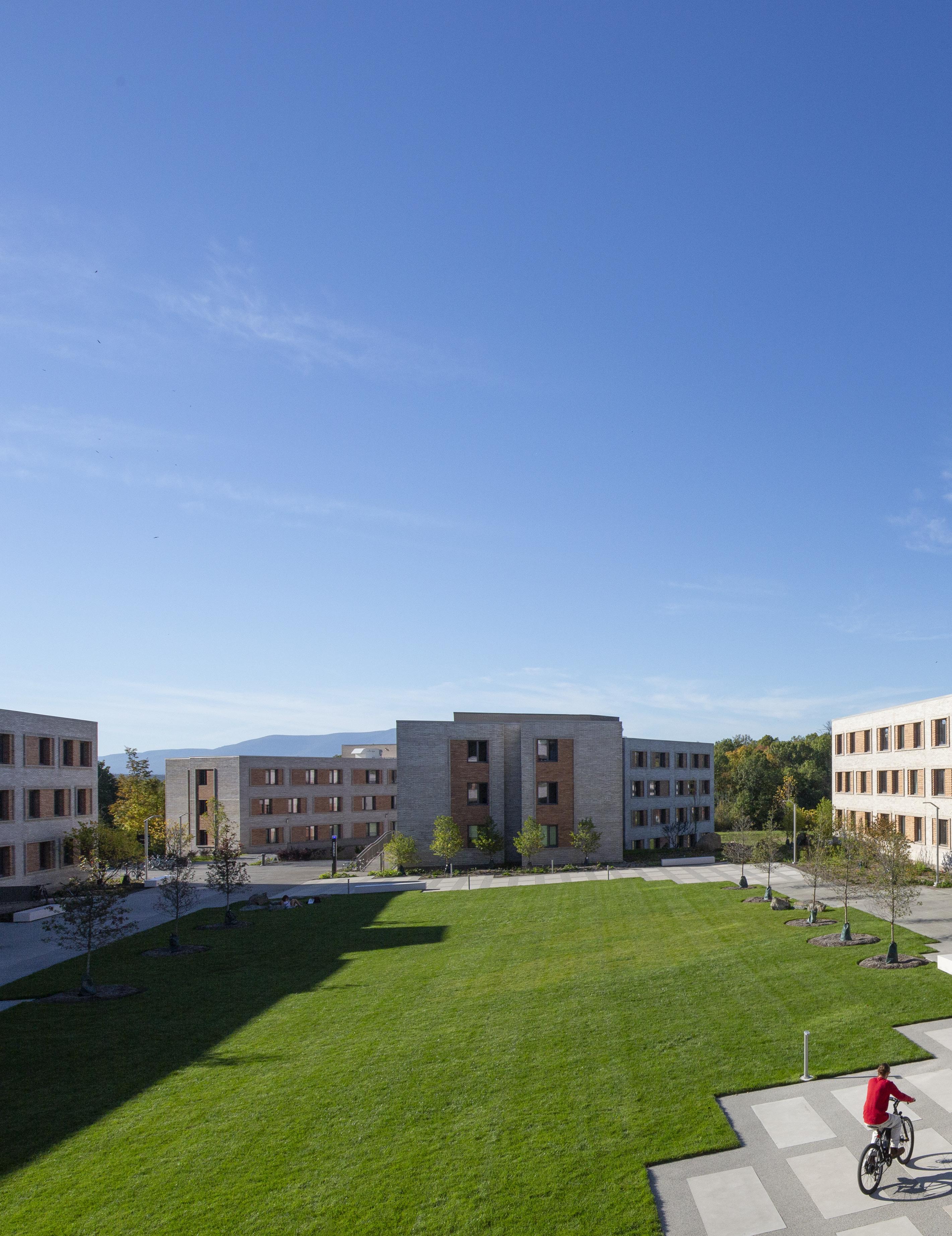
SKY'S THE LIMIT
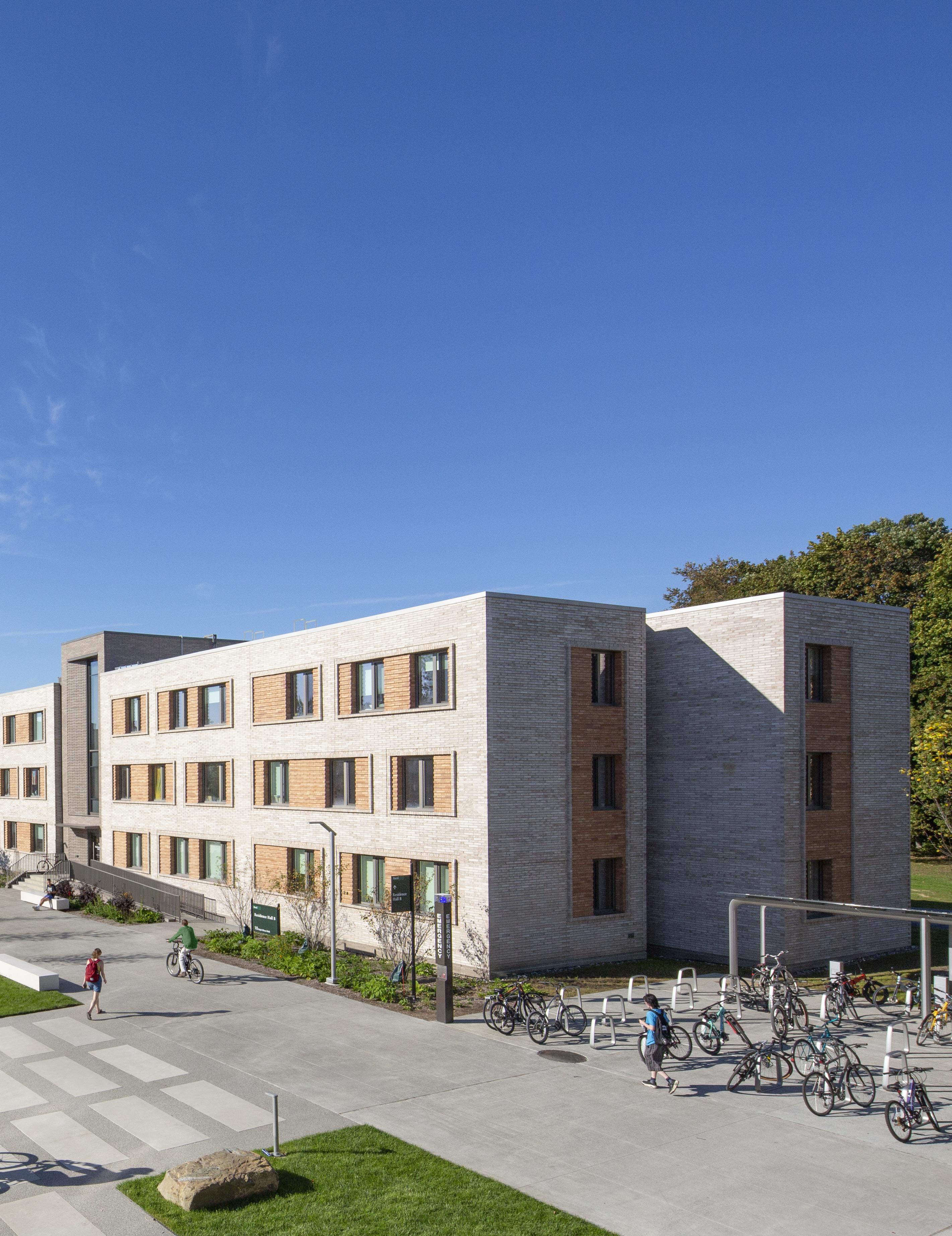
With the recent completion of four suite-style buildings, housing more than 400 students, and a new campus center, a revitalized North Campus is taking shape. All Bard students—but especially those who live in nearby Cruger Village, Resnick Commons, Ward Manor, Robbins House, and the new residence halls—now have access to a variety of spaces in Campus Center North in which to study, gather, attend meetings, and even take classes. Situated adjacent to the Bard Farm and a stone’s throw from the Fisher Center for the Performing Arts, the new Maya Lin–designed Performing Arts Lab, and artist Olafur Eliasson’s installation The parliament of reality, the new construction is Passive House certified, greatly advancing the College’s goal of achieving carbon neutrality by 2035.
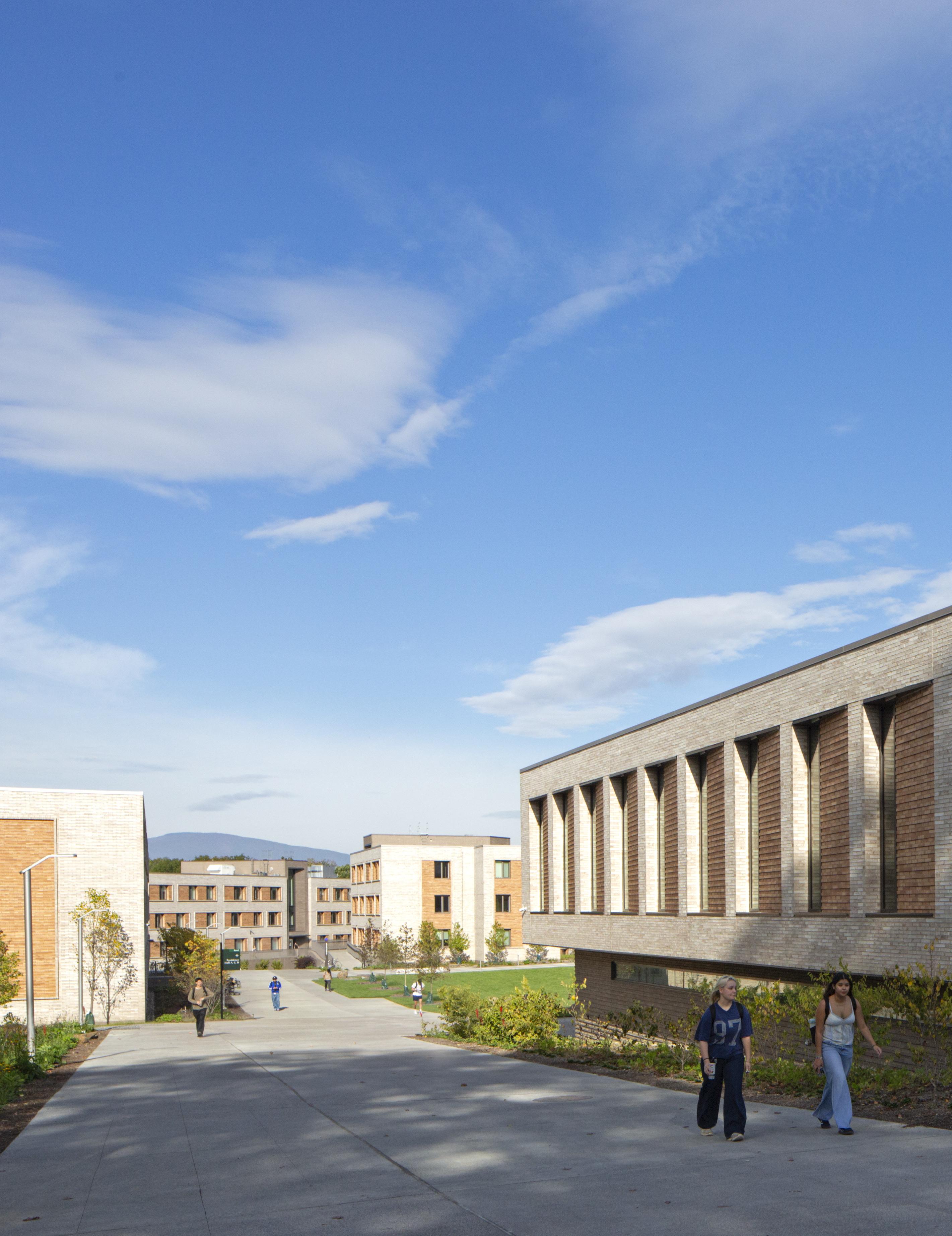
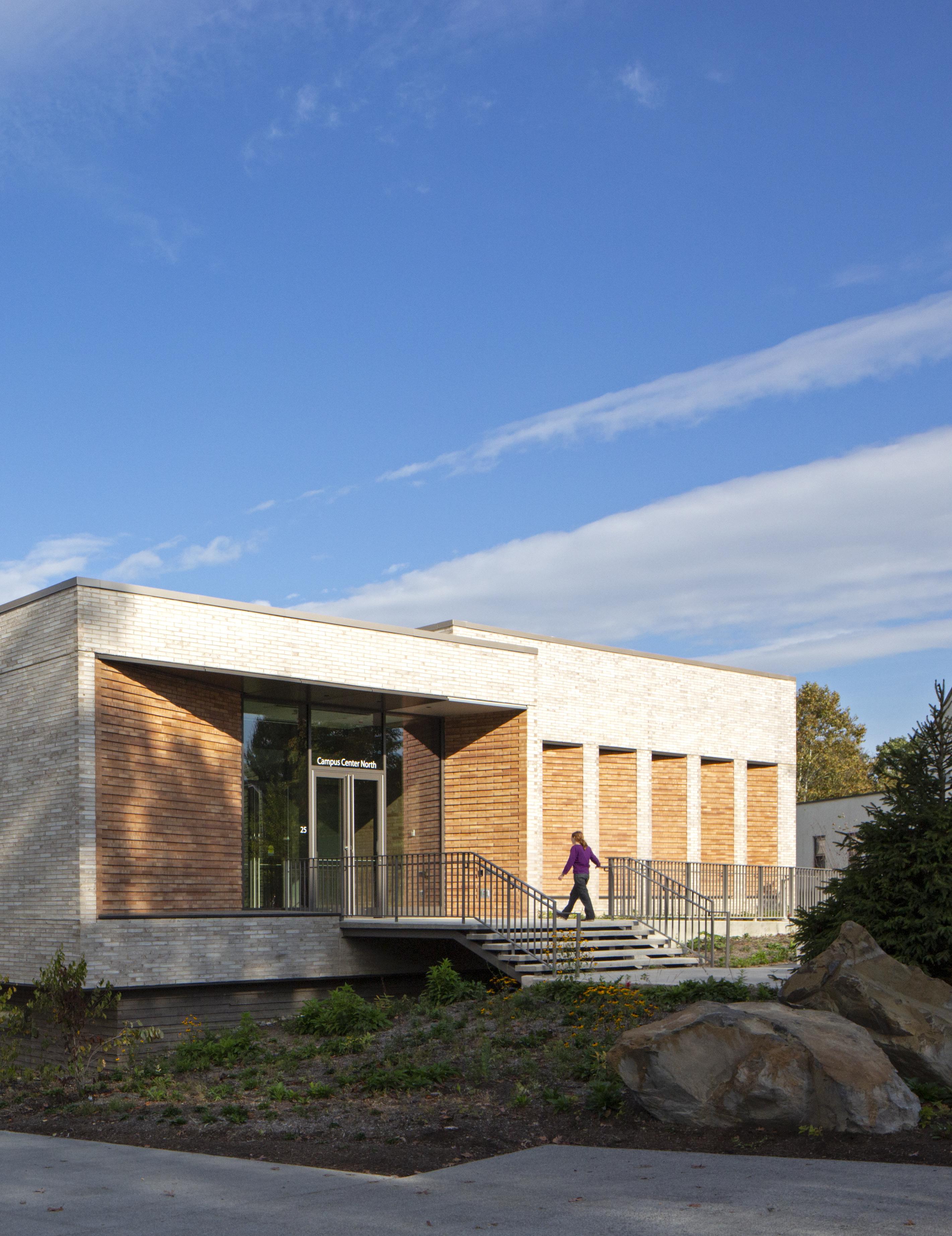
Campus Center North is the home of Bard's new Ralph Ellison Center. Ellison, one of the foremost figures in American literature, was an instructor at the College in the late 1950s, and the Center has been made possible by the transfer of the rights and resources held by the Ralph and Fanny Ellison Trust to Bard. The Center will model Ellison’s multimodal approach to artistic and scholarly expression by convening artists and intellectuals who not only explore and address substantive issues of our time but also take seriously the responsibility of cultivating the intellectual and interpersonal development of student scholars.
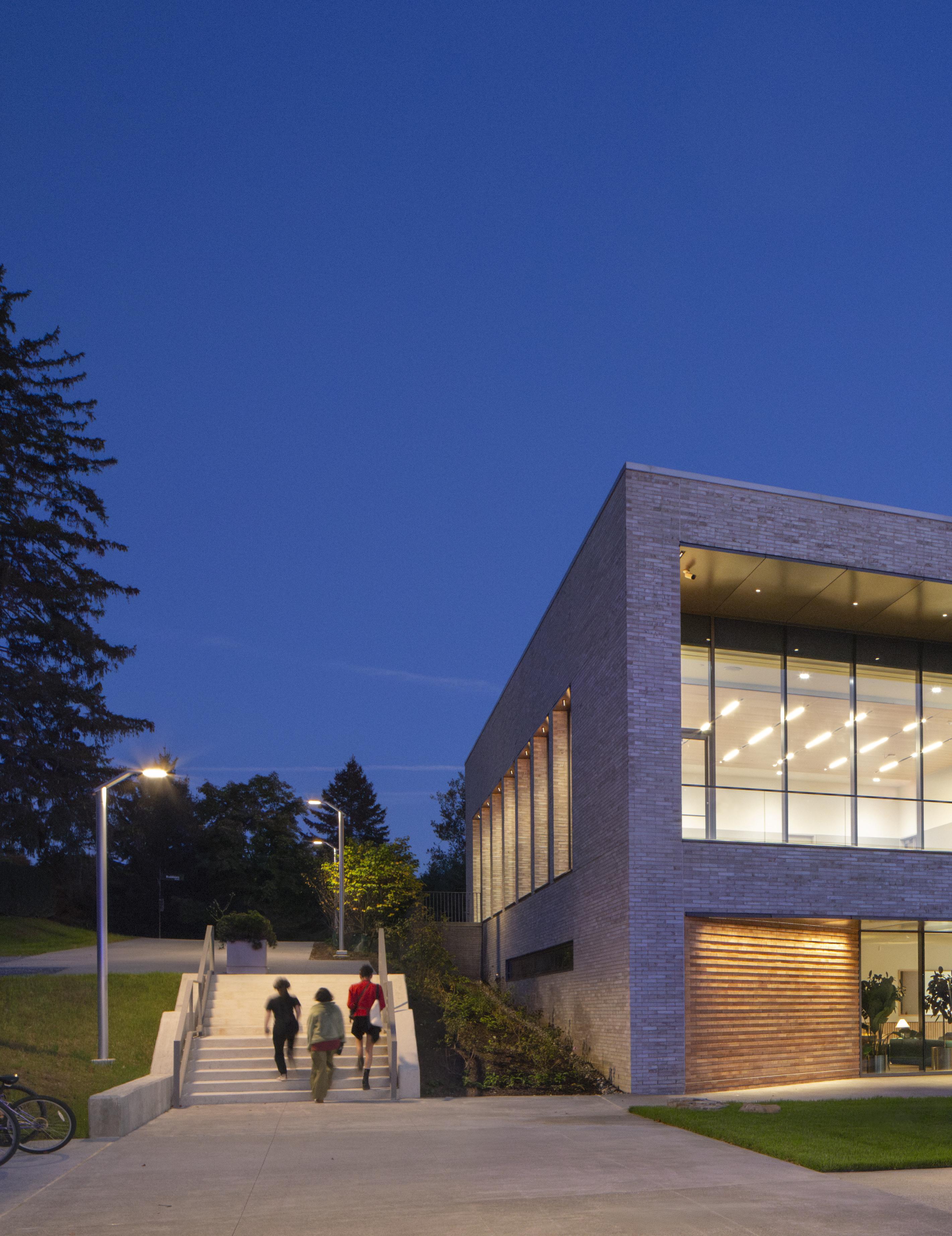
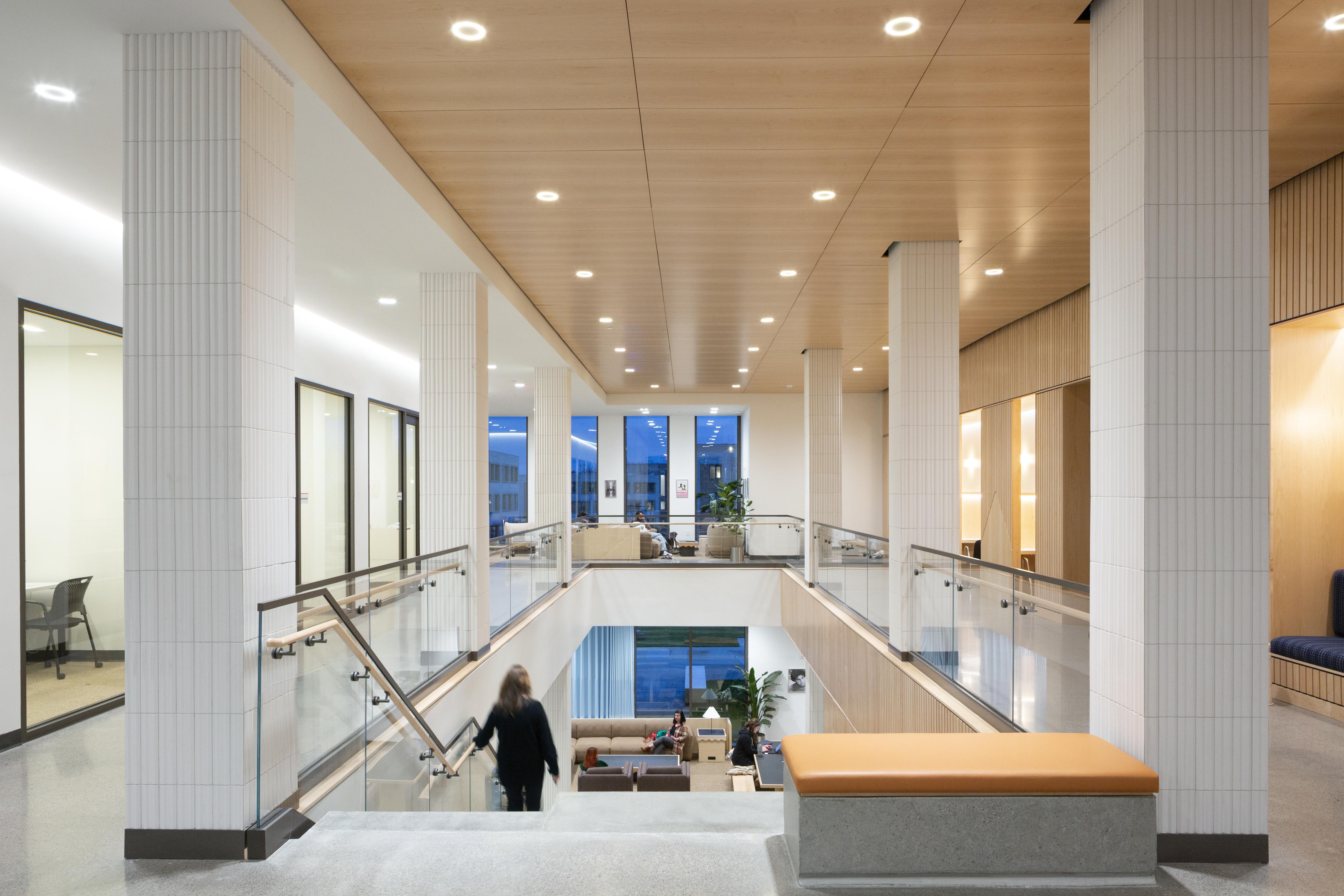
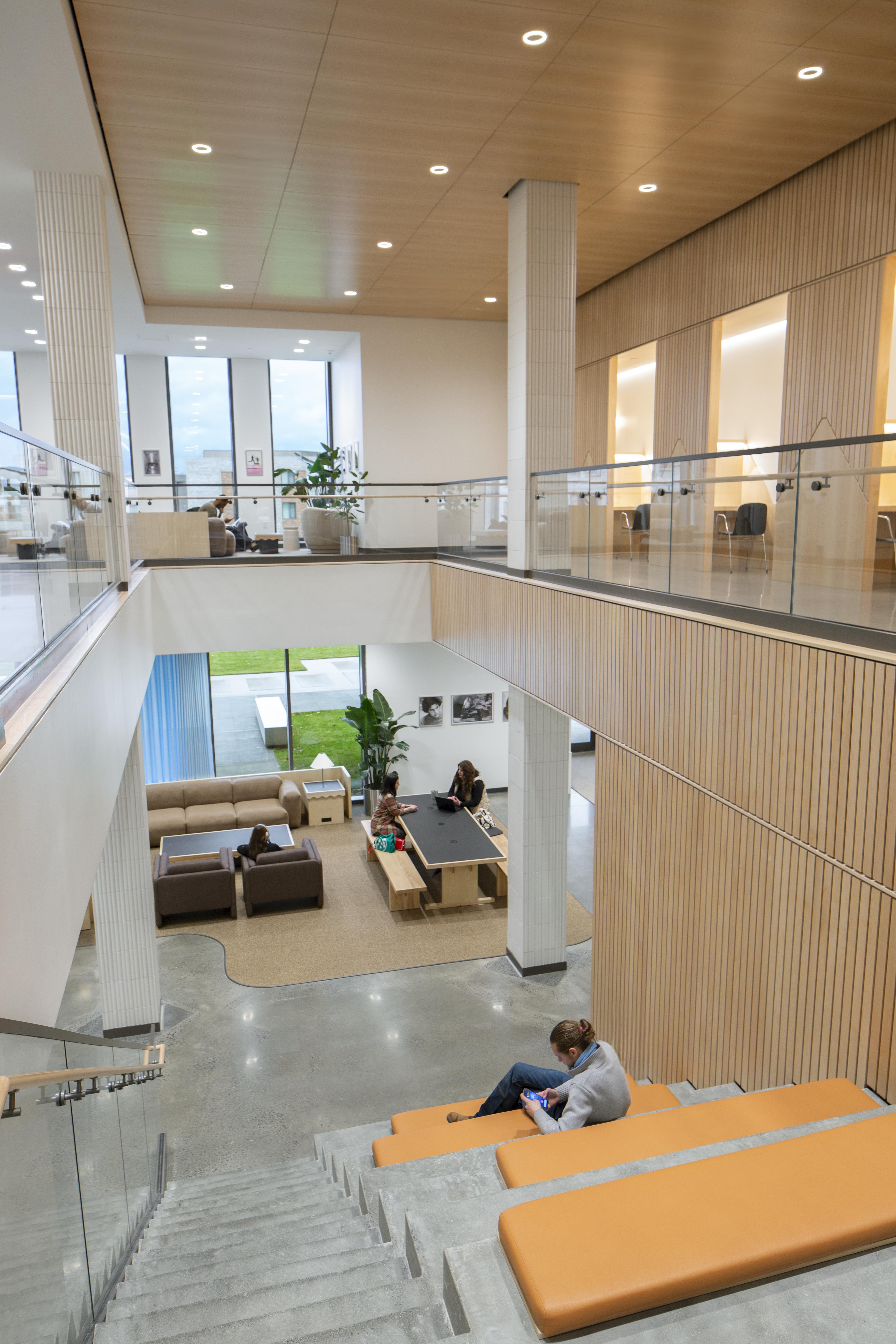
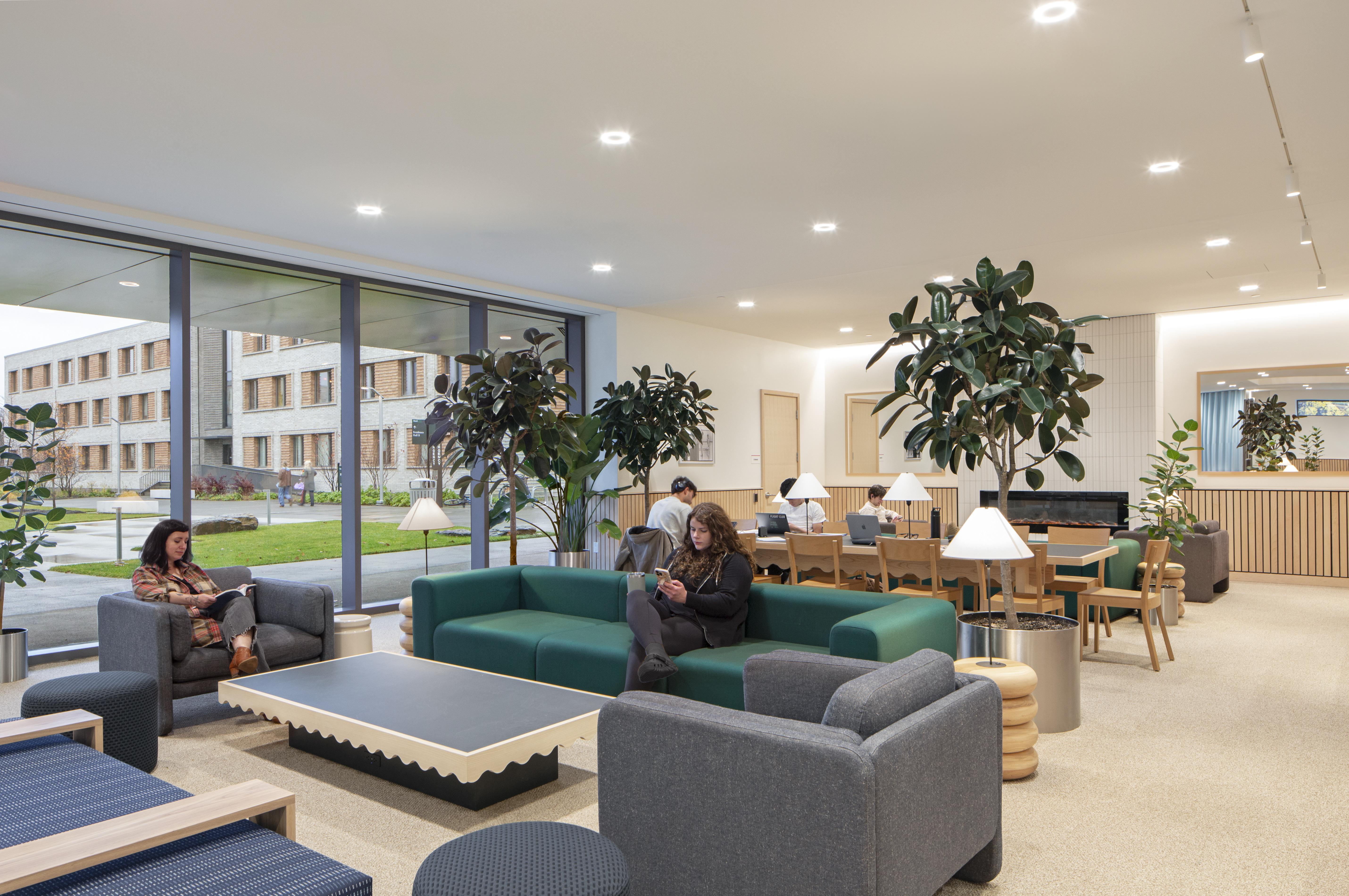

Photos by Bilyana Dimitrova ’99
Architectural photographer and filmmaker Bilyana Dimitrova ’99 was born in Sofia, Bulgaria, and immigrated to the United States with her parents as a young child. She grew up in New York City and studied fine art photography at Fiorello H. LaGuardia High School of Music & Art and Performing Arts and then with Stephen Shore and Larry Fink at Bard. After college she worked with renowned architectural photographer Peter Aaron ’68. Dimitrova is the former photo editor of Metropolis magazine and author of To Each His Home (Princeton Architectural Press). Iris Vanderloo ’26 and Gaspard Bason ’29 assisted Dimitrova on this photoshoot. bdphotography.com
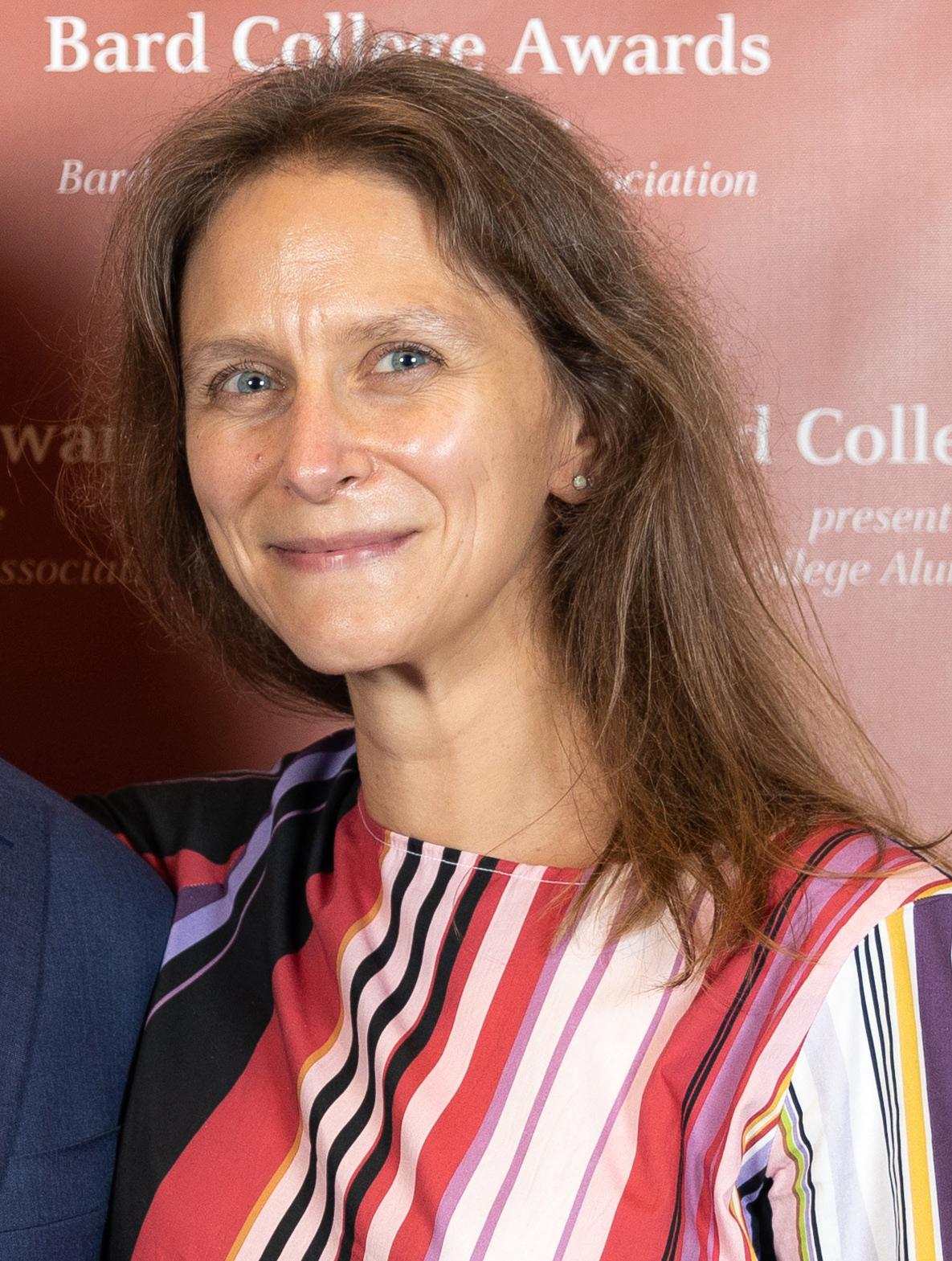
DEAR BARDIANS
As I write this letter, 475 seniors in Annandale are two weeks out from handing in their Senior Projects. They are finishing their classwork, staying up late in the library, going to the Fisher Studio Arts Building for exhibitions and Blum for concerts. They are authoring papers on topics from Arendt to Zappa. And they are thinking about what comes next. I hope everyone who is able will join our Bard Career Network to professionally connect with new graduates and current students alike. The class of 2026 wants to meet you! careernetwork.bard.edu
Bardians never cease to amaze me. From the pages of this magazine to the stage at the Bard College Awards in May, we do incredible things for our community and each other. Like when two recent graduates who are lawyers stepped up last year, pro bono, to represent our fellow Bardian Ali Faqirzada ’28, who was detained by ICE; when an alum in DC helped a new graduate from Afghanistan get a job as a sustainability data analyst in Chicago, or when alumni/ae open their homes to house international students doing summer internships in New York City.
Bard College never ceases to amaze me either. A reminder of what Bard is today:
• 10 free, public high schools in six cities across the country granting associate degrees.
• More than 400 students across seven sites enrolled in the Bard Prison Initiative working toward associate, bachelor’s, and master’s degrees.
• Education without borders: 2,500 displaced students taking college classes in Myanmar, Kenya, Bangladesh, and Afghanistan, plus 85 more on campus in Annandale.
• 14 graduate programs in locations from the Hudson Valley to the West Bank.
• And, still, an undergraduate college with an 8 to 1 student-faculty ratio. Small classes change lives.
I hope you will come back to Annandale this May to celebrate our new cohort of Bardians and each other. Bardian and Proud, Mollie Meikle ’03
President, Board of Governors, Bard College Alumni/ae Association boardofgovernors@bard.edu
P.S. Please note: quarterly board meetings are open to alumni/ae, students, faculty, staff, and friends. You’re invited!
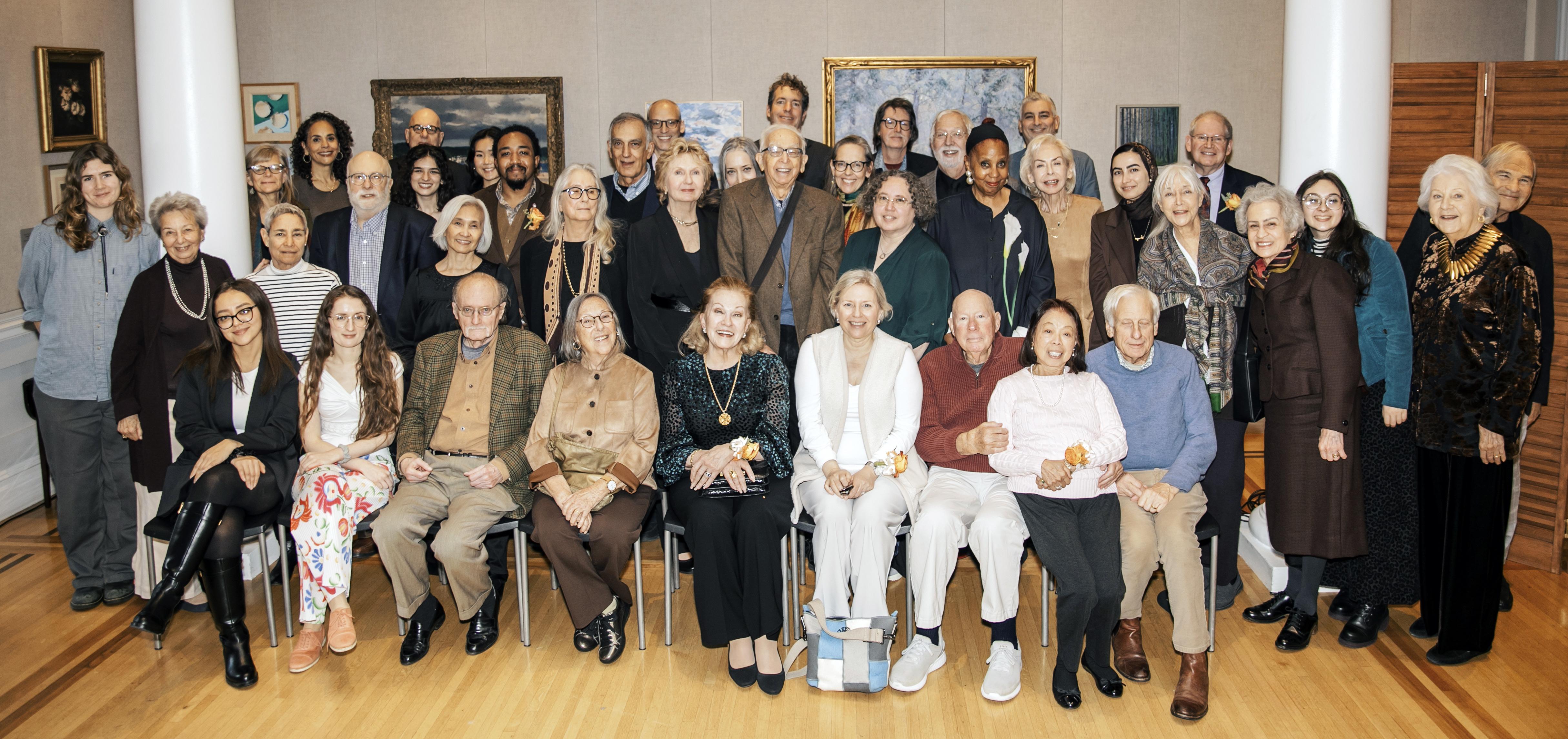
MARGARET AND JOHN BARD SOCIETY
All donors who support Bard through a planned gift become members of the Margaret and John Bard Society. On November 17, 2025, the annual luncheon was held at The Century in New York City. Photo by Patrick Arias
Mollie Meikle ’03 photo by Chris Kayden
CLASS NOTES
2022
Rainer Turim BHSEC’18 released the second edition of his zine on Keith Haring’s Public School 97 murals from 1985 to 1988. The new edition is limited to 100 handnumbered copies. It features never-before-seen photographs, video stills, and news articles that give context and meaning to the murals Haring painted in this littleknown elementary school courtyard, which now belongs to the Bard High School Early College in Manhattan. Rainer’s writing also covers Haring’s earlier mural at Junior High School 22. Copies are available online and at Village Works Bookstore and Printed Matter.
2021
Kent Priore made his publishing debut with The Monsters Among Us, a dark fantasy horror novel released by Rowan Prose Publishing. The novel follows main character Seth’s life, which has been a product of a diabolical Truman Show—his entire upbringing, a façade orchestrated for malevolent purposes. After his beloved dies, he undergoes a demonic metamorphosis, which causes the world’s fictitious walls to crumble. The Monsters Among Us is book one of The Abyss Borne Gods series; the second, In the Wake of Gods, is scheduled to be out May 2026
2020
Ian Ullmann, who served as an enlisted member of the Air Force Reserve throughout his years at Bard, was commissioned as a
second lieutenant in the US Army Reserve upon completing his MA at Tufts University in May. Edgar Guzman, a jazz musician who is also a sergeant in the Marine Corps Reserve, traveled to Boston for Ian’s commissioning ceremony so he could be the first to render a salute to 2LT Ullmann.
2018
Ella Alexander published her debut novel, The Sleeping Land (Unnamed Press) in February 2025. The novel starts less than two years after the collapse of the Soviet Union. It follows three junior archeologists and their gloryhound adviser to a remote cave in the heart of the Siberian wilderness to carry out the first extensive Western dig on Russian soil since the execution of the Czar. More of Ella’s writing can be found in LongReads and the Huffington Post
Funto Omojola published If I Gather Here and Shout (Nightboat Books) in November 2024. The book is a deft, musical poetry collection about the disabling effects of illness, rupture, and inheritance—informed both by Yoruba divinatory systems and
Ashley Stegner ’12 married Christopher Barnhart at Bard in June. After the outdoor ceremony, the party, which included Ashley’s father, longtime Fisher Center staff member Ray Stegner, Nora Rubenstone-Diaz ’11, and Lauren Forstbauer Chapman MAT ’10, moved into the Spiegeltent for dinner, dancing, and celebration.
violent Western medical understandings of the Black body. If I Gather Here and Shout places Ifá divination practices alongside incantatory prose poems to interrogate the concept of illness in a Western context.
Amando Houser’s show DeliaDelia! The Flat Chested Witch! had its first full New York City run at The Brick Theatre in Williamsburg, Brooklyn, following runs at the Edinburgh Fringe Festival and Philadelphia Fringe Festival. The production was directed by Kedian Keohan ’16, scenic design by Charlie Mai, featuring music by Simon Paris, and puppetry by Maddie Assarsson
2017
Clark Wolff Hamel was listed as one of New York’s 2025 Pride Trailblazers, recognizing LGBTQ+ New Yorkers fighting for equality and inclusion. Helming PFLAG NYC, New York City’s leading organization that supports the
families of LGBTQ+ young people, Clark is a proud transgender man who has increased the reach and cultural responsiveness of the group’s support meetings. In his former role as the PFLAG NYC’s director of education programs, he fostered collaborations with schools and community organizations in addition to creating and implementing workshops for students, families, teachers, and administrators citywide. He began his journey at PFLAG as a volunteer.
Alejandro Castro Arias was awarded the Hans Ohlms Prize for best debut film at the Oldenburg Film Festival for Harakiri, Me Haces Falta (Harakiri, I Miss You). The film follows three young Latin American men drifting through the streets of Madrid, Spain, clinging to macho rituals and hollow bravado as they spiral into obsession over a quiet, mysterious neighbor.
CITIES PARTIES
Bard’s Office of Development and Alumni/ae Affairs (ODAA) puts on an annual series of fun-filled Cities Parties—with the help of fabulous alumni/ae—in places like Annandale, Atlanta, Los Angeles, Philadelphia, Portland, Santa Fe, Seattle, Somerville, and Springfield. For information on future Cities Parties, visit alums.bard.edu and click on “Events.”
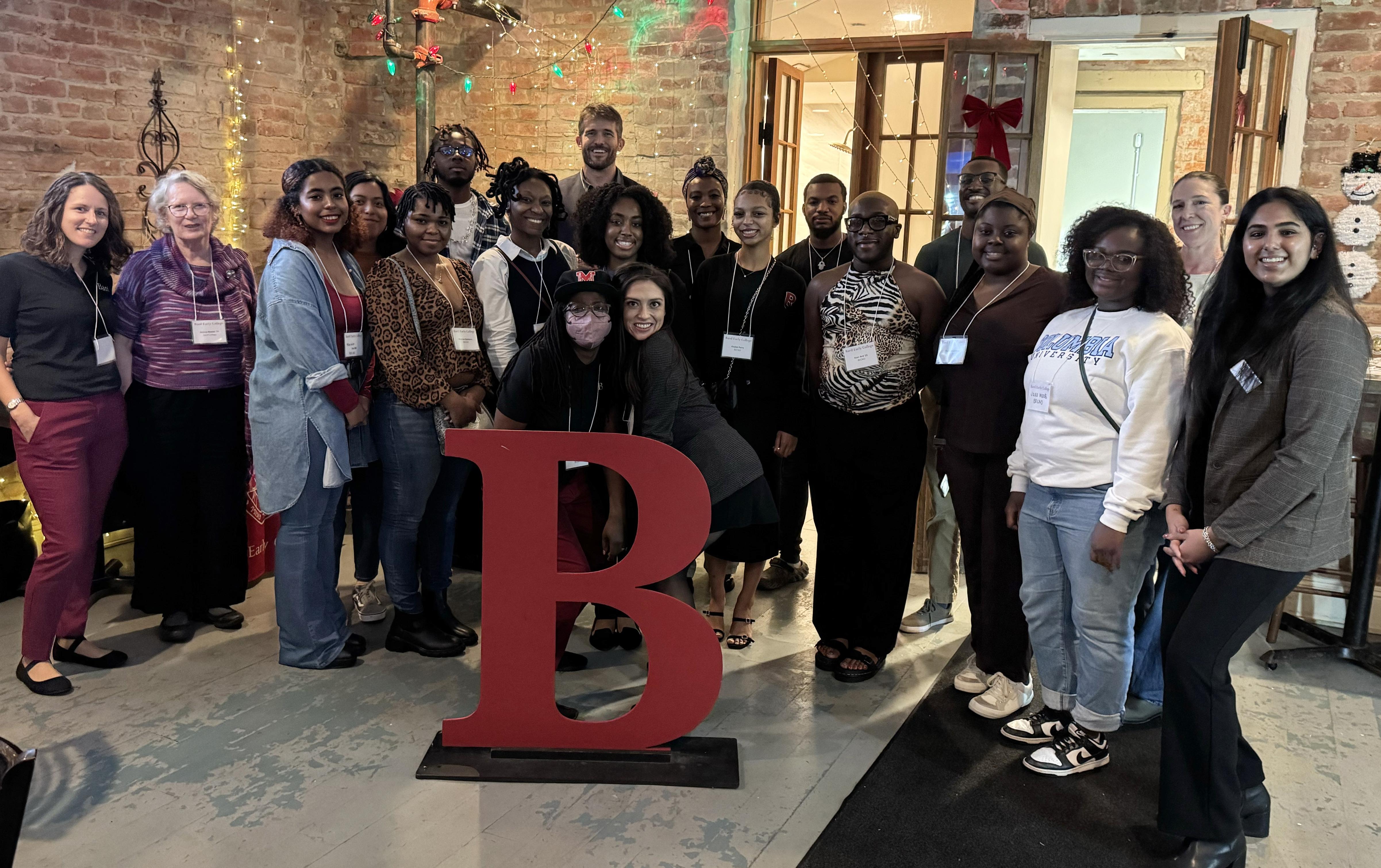
2016
Abby Adler was appointed chief of staff at the New York State Council on the Arts (NYSCA), where she has worked since 2018. In this capacity, she serves as a senior adviser to the executive director, supporting strategic initiatives and promoting the agency’s mission to foster and advance the full breadth of arts, culture, and creativity for all. Founded in 1960, NYSCA supports more than 3,000 arts organizations and artists across New York State annually.
Raina Sokolov-Gonzalez has released a new single, “Go From Here,” and accompanying music video. Raina wrote this song many years ago, and it kept knocking on her door. During the recording process, its meaning and place in her life evolved and took new shape. “Go From Here” can be listened to anywhere you stream music and purchased on Bandcamp.
2008
Sophia Dahlin’s second full length poetry collection, Glove Money, was published by Nightboat Books in October 2025.
Nicholas Shapiro’s new book Homesick (Duke University Press) came out in October 2025. In Homesick, Nicholas draws on almost 15 years working with impacted community members to trace how the story of toxic
emergency housing units expands into a story of how all of our shelters became a seat of exposure and how we can collectively struggle for cleaner indoor air.
Ariel Stess won a 2024 Obie Award for Playwriting for her play KARA & EMMA & BARBARA & MIRANDA.

2007
Bo Ruberg’s latest book How to Queer the World: Radical Worldbuilding through Video Games (NYU Press) was published in April 2025. What does it mean to build a world? Worldbuilding is traditionally understood as an expression of storytelling across media forms. How to Queer the World argues that video games provide us with keen insight into worldbuilding.
2005
Margaux Ogden was interviewed in BOMB Magazine about Tidal Locking, her paintings that were on view at Tif Sigfrids in Athens, Georgia. When asked about her work, Margaux said, “I’m bifurcating the surface. One side mirrors the other, but not in a way that is supposed to be a copy or reflection—more like an echo.”
Caitlin Pearce and Betsy Plum ’08 work together as deputy director and executive director, respectively, of the Riders Alliance, a grassroots organization of transit riders fighting for better subways and buses in New York City. After long stints in public policy and organizing, the two joined forces four years ago to lead this young nonprofit, which is grabbing attention for its robust work on safe, affordable, and reliable service.
Daria Solovieva wrote about her family’s experience during the first 24 hours after the devastating wildfires broke out in Los Angeles in January 2025. The article, “California wildfires show we are not prepared for climate change,” can be read on Salon, where she is deputy money editor. salon.com/writer/daria-solovieva
2003
Laida Lertxundi was appointed Professeur d’enseignement artistique at the Master Art École Nationale Supérieure des BeauxArts de Lyon. Laida hopes to connect with fellow Bard alumni/ae in Paris, France.
Josie Schoel’s book Race and Beauty: Early Modern Cosmetics and the Mythology of Whiteness (Routledge) was published in April 2025. This work examines how beauty standards, specifically the ideology of “fairness,” contributed to the racialization of bodies in early modern England. The book is available for purchase on Amazon or through Routledge.
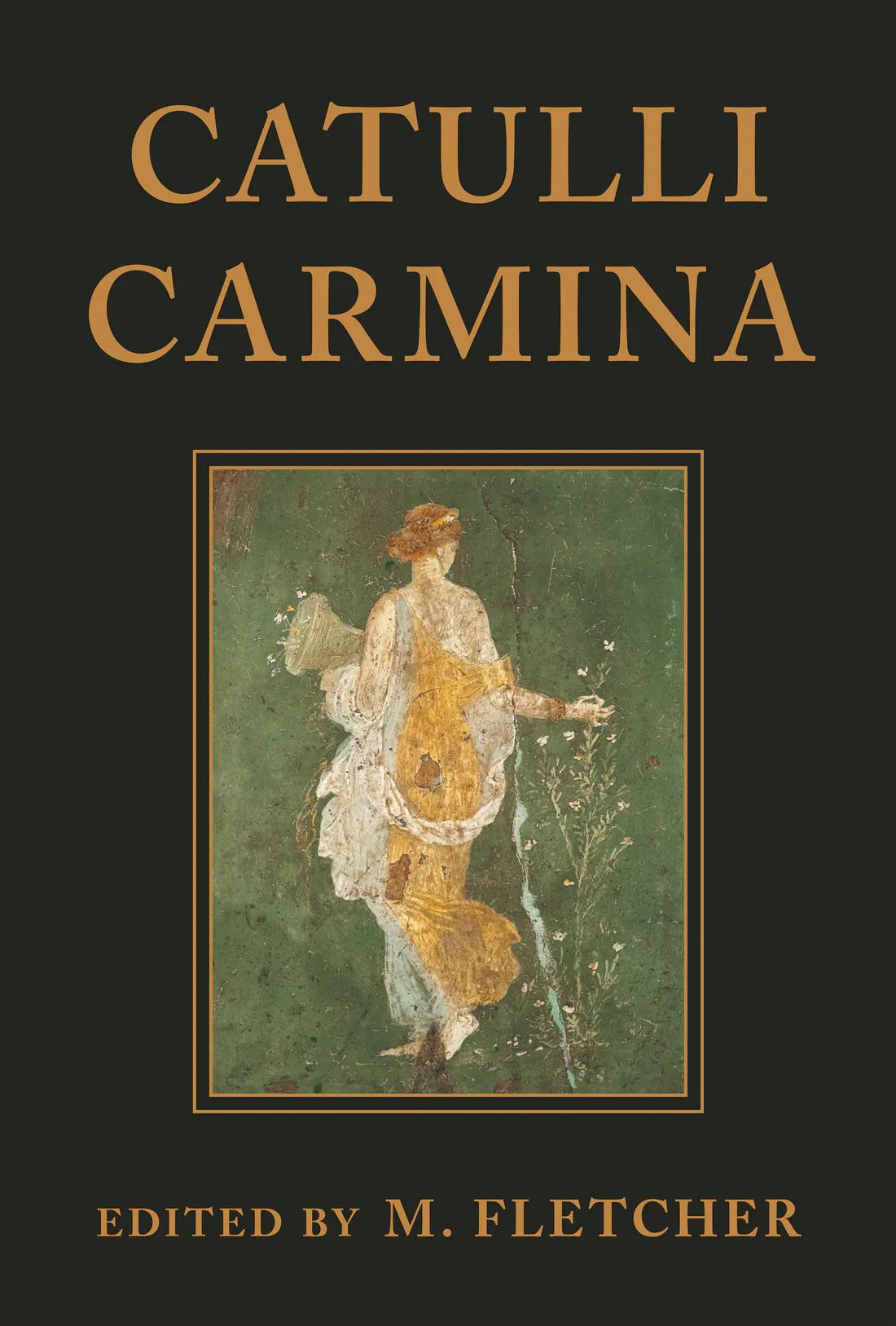
2002
Mike Fletcher published his edition of Catulli Carmina, originally by Gaius Valerius Catullus, through Scribbnotes in September 2024. In this edition, many of the poems have been translated in such a way as to require new interpretations.
Cynthia Kane published The Pause Principle: How to Keep Your Cool in Tough Situations (Wiley) in January 2025. In the book, Cynthia, a renowned holistic communications expert, reveals her tried-and-tested SOFTEN practice to better handle awkward, difficult, or tense conversations at work by breaking free of automatic reactions including shutting down, running away, yelling, or getting passive aggressive or defensive.
Kristina Klemetti, known professionally as Stacy Gonzalez, was selected as a finalist for an Audie award for her performance in the audiobook for Anita de Monte Laughs Last
1999
Ozan Adam published Time is a Bitch & Fame is a Pimp in March 2025.
Jedediah Berry released his book The Naming Song (Tor Books) in September 2024. In this fantasy adventure novel about the power of language and stories, a courier
of the Names Committee uncovers a conspiracy to ignite a war between the nameless and the named. Accompanied by a patchwork ghost and a fretful monster, her search for the truth of her past opens the door to a revolutionary future—for the words she carries will reshape the world. The book won the Massachusetts Book Award for Fiction.
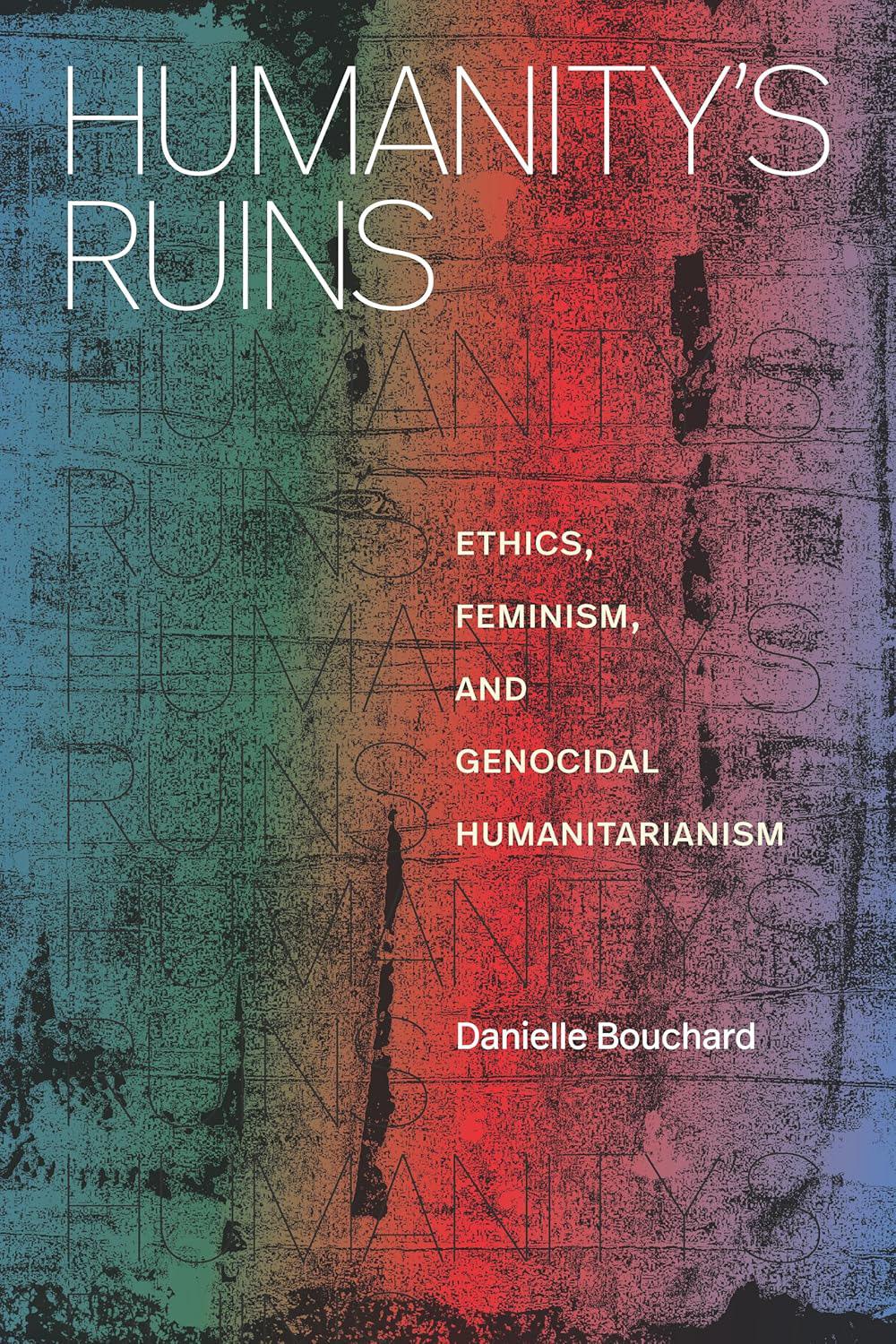
Humanity’s Ruins: Ethics, Feminism, and Genocidal Humanitarianism (Duke University Press), by Danielle Bouchard, was published in August 2025. Danielle examines how genocidal aspirations animate contemporary Western humanitarian projects and discourses, showing that humanitarianism perpetuates fundamentally racist conceptualizations of what it means to be human. She is an associate professor of women’s, gender, and sexuality studies at the University of North Carolina at Greensboro and author of A Community of Disagreement: Feminism in the University (Peter Lang Inc, International Academic Publishers).
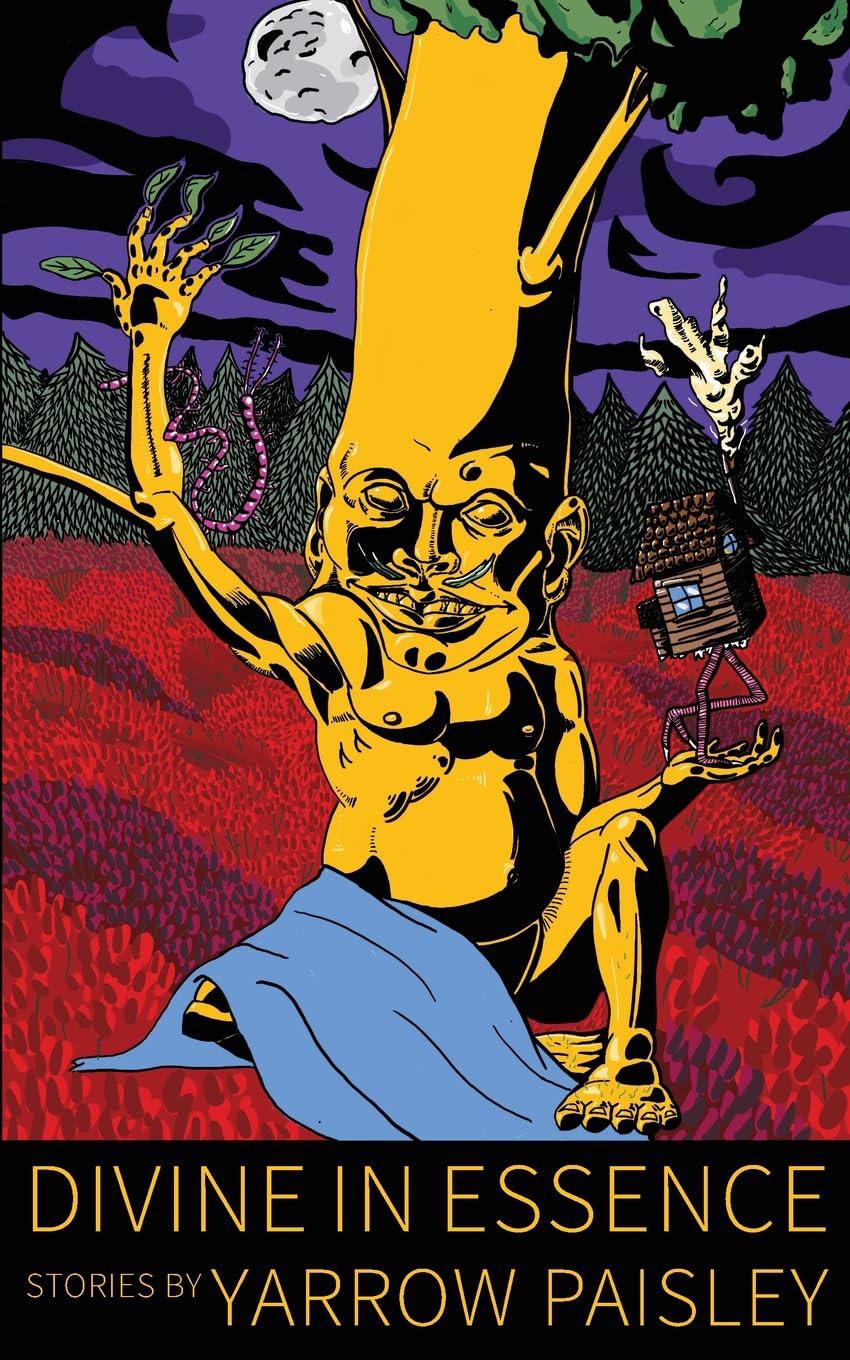
1998
Yarrow Paisley released his collection of short stories, Divine In Essence: Stories (Whiskey Tit) in September 2024. The stories of Divine In Essence exemplify a sui generis slipstream style that deftly weaves a psychedelic literary
fabric from elements of fabulism, occult horror, transgressive fiction, and the weird.
1997
Erika Hughes Hooper coauthored Be the Architect of Your Inclusive Classroom: Building Communities for Learning (Teachers College Press, Columbia University), published in February 2025. Based on the authors’ collaborative work with K–12 public school teachers, this practical book offers an invitation to create dynamic learning opportunities in classrooms designed to challenge and support all learners. Erika is also a proud Bard parent.
1996
Jessica Burr directed a cast of four in Nine Moons, a prequel to Shakespeare’s Othello, produced by the Blessed Unrest Theatre Company and The Untitled Othello Project in New York City. The show had 13 performances between May 30 and June 15, 2025.
Abraham (Abe) Rein, a near 20year veteran white collar defense attorney, has been named chair of Post and Schell’s esteemed White Collar and Internal Investigations Practice Group.
1995
Tereza (Topferova) Bottman works as a high school English language development specialist in Portland Public Schools in Oregon, teaching multilingual learners, consulting on best practices in serving students new to English, and in a leadership capacity as a member of the school’s Instructional Leadership Team. Her experience as a first-generation immigrant and passion for advocacy for underserved students led to her engagement with the English Learner Advisory Group and Statewide Multilingual Learner Strategic Plan Workgroup, convened by the Oregon Department of Education to craft the newly unveiled Oregon Multilingual Learner Strategic Plan. Tereza is also a 2024–25 Teachers for Global Education Program Fulbright Fellow and president of the board of directors of Czech School of Portland, which offers Czech language classes and
cultural experiences for the Czech and broader communities in person and online.
1993
Nina Gould, previously chief product officer at Forbes, was promoted to chief innovation officer overseeing its technology and product businesses. Nina will build out Forbes’s strategic approach and alignment in AI and other key areas.
1992
David Cote continues to review theater—from Broadway to OffOff—in New York City. Also a librettist, he has several operas being presented and developed around the country. His acclaimed opera Blind Injustice was presented in July at Playhouse Square in Cleveland, Ohio. David was in residence at Peak Performances at Montclair State University working on a new opera about the life and activism of Paul Robeson. And on February 8, 2026, his recent work Lucidity had its European premiere at Theater Regensburg in Germany.
Susanne Williams is part of an Emmy-winning lighting team on the daytime talk show The Kelly Clarkson Show
1991
Susan D’Agostino has a new Inside Higher Ed column titled “The Public Scholar.” The first installment, “Don’t Wait for Permission to Write for the Public” was published August 4, 2025. In it, Susan encourages folks to share their expertise now, instead of waiting for a public engagement grant or media team to begin, and offers advice on how to do so. In this monthly column, academics and other experts will get field-tested strategies from Susan, along with a hearty dose of inspiration, to get their writing published in leading newspapers and magazines in ways that help shape public conversations that matter.
1990
The translation by Charlotte Mandell of Mathias Énard’s The Deserters was longlisted for the International Booker Prize 2026.

1989
Joseph Balletti self-published Old Pokey-Poke, a parable of greed and hatred, in July 2025. The book is available through Kindle direct.
Peter Criswell is serving his fourth term as an Ulster County Legislator, representing District 7 in the City of Kingston, and is in his third year as chair. He feels grateful for the ongoing community support and the opportunity to contribute. Peter also recently stepped into a new role as executive director of the Ulster County Historical Society, which has been both exciting and demanding in all the best ways. Peter continues to sing with Key of Q, the Hudson Valley’s LGBTQ+ and Allied a cappella singers, and serve on their board. It’s hard to believe it’s been nearly 10 years since he bought his home across the river in Kingston. He remains connected to the College and continues to serve on the Bard College Alumni/ae Association Board of Governors.
1986
In May, Jim Salvucci released a new book on leadership, Greater than Great, gave a TEDx talk, and moved from Newburgh, New York, to Wilmington, Delaware.
1982
Geoffrey Stein had his collage portrait A.O.C. For The Resistance included in UPRISE 2025: The Art of Resistance, which celebrates a decade of art, activism, and resistance at the Untitled Space in Tribeca, New York. The show, curated by Untitled’s gallery director Indira Cesarine, featured work by 100 artists in the gallery and online.
1978
Flora Eyster was interviewed for an article in Bandcamp Songtradr, featuring jazz flutists and spotlighting the original jazz composition “Riffster.” The article includes Flora in a list of worldclass jazz flutists and highlights her time spent with former Bard professor Roswell Rudd. In her career, Flora has performed with blues superstars and always participates in the alumni/ae jazz music concert during Commencement and Alumni/ae Reunion Weekend. Flora also teaches and plays 40 woodwind instruments. Her most popular programs for young people are Meet the Flute Family and Jazz Cafe. Flora released her latest album, Ave 51 Poems with Riffs Messing with Maria, in August 2023.
1979
David Segarnick’s recent publications include “Reperfusion of Ischemia in the Heart or Brain” in The Journal of Pharmacology and Experimental Therapeutics, “Fibrinolysis was Misunderstood” in Karger, and “Silacrown ethers as ion transport modifiers and preliminary observations of cardiovascular cell line response” in the Journal of Inorganic Biochemistry
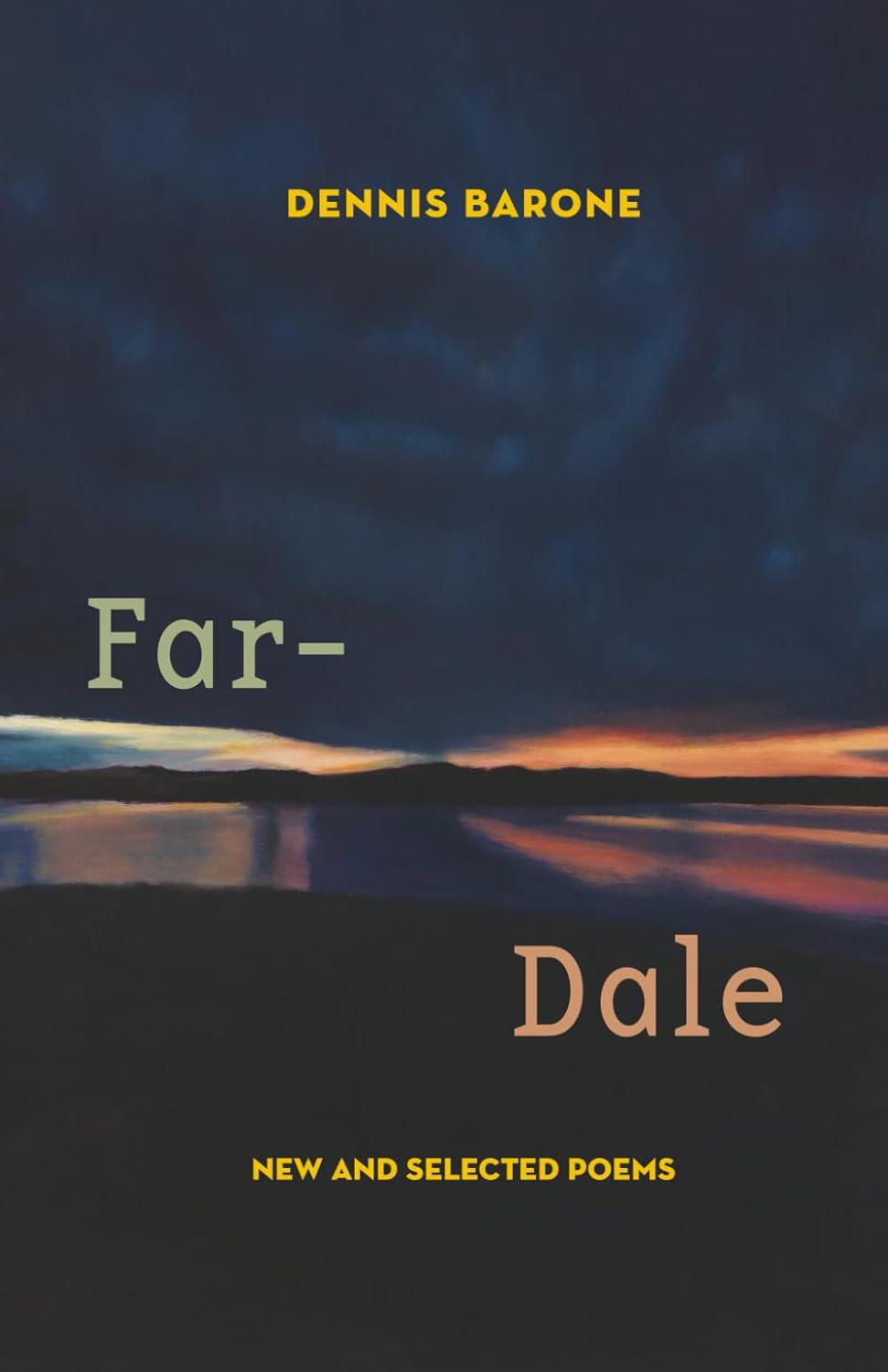
1977
Dennis Barone’s new poetry book, Far-Dale, was released in July 2025. Far-Dale is published by Karyn Kloumann ’92 through The Nauset Press.
Bruce Wolosoff released his solo piano variations on House of the Rising Sun in November 2024 on Avie Records. The album’s CD booklet includes an interview with legendary music critic Tim Page.
1976
Patricia Griffin Mackie recently celebrated 40 years as a New York State licensed architect. After graduating from Bard, she went to
the Harvard Graduate School of Design, earning her master’s degree in architecture in 1980. She completed her apprenticeship and passed the New York State exam, becoming a registered architect in 1985, and has worked as an architect in New York City ever since. There are more than 100,000 licensed architects in the country, and Pat is one of the fewer than 500 women of color.
Grant Harper Reid was part of an exhibit featuring Jimi Hendrix’s 1969 performance in Harlem, New York, that was on display at the Smithsonian’s National Museum of African American History and Culture.
1974
Christine Wade traces the misunderstood legacy of the “Don’t Tread on Me” flag and makes the case for its renewal in her article “Reclaiming the Rattlesnake on Flag Day” for The Overlook (Saugerties, New York).
1973
Kristin Waters recently returned from Martinique, where she received the 2025 Frantz Fanon Outstanding Book Award from the Caribbean Philosophical Association for Maria W. Stewart and the Roots of Black Political Thought. The award was particularly gratifying to Kristin, since the conference celebrated the 100th anniversary of Frantz Fanon’s birth in his birthplace.
1970
Peter Boffey’s 1984 Israel Commentary 2025 consists of a collection of his poetry (Israel 1984: A Personal Mobile), commentary produced while revisiting the poems, and an essay exploring greater debates concerning the current situation in Israel and Palestine. The threepart piece is designed to foment a deep questioning of standard histories and historiography, subjecting habitual assumptions to further scrutiny and ultimately
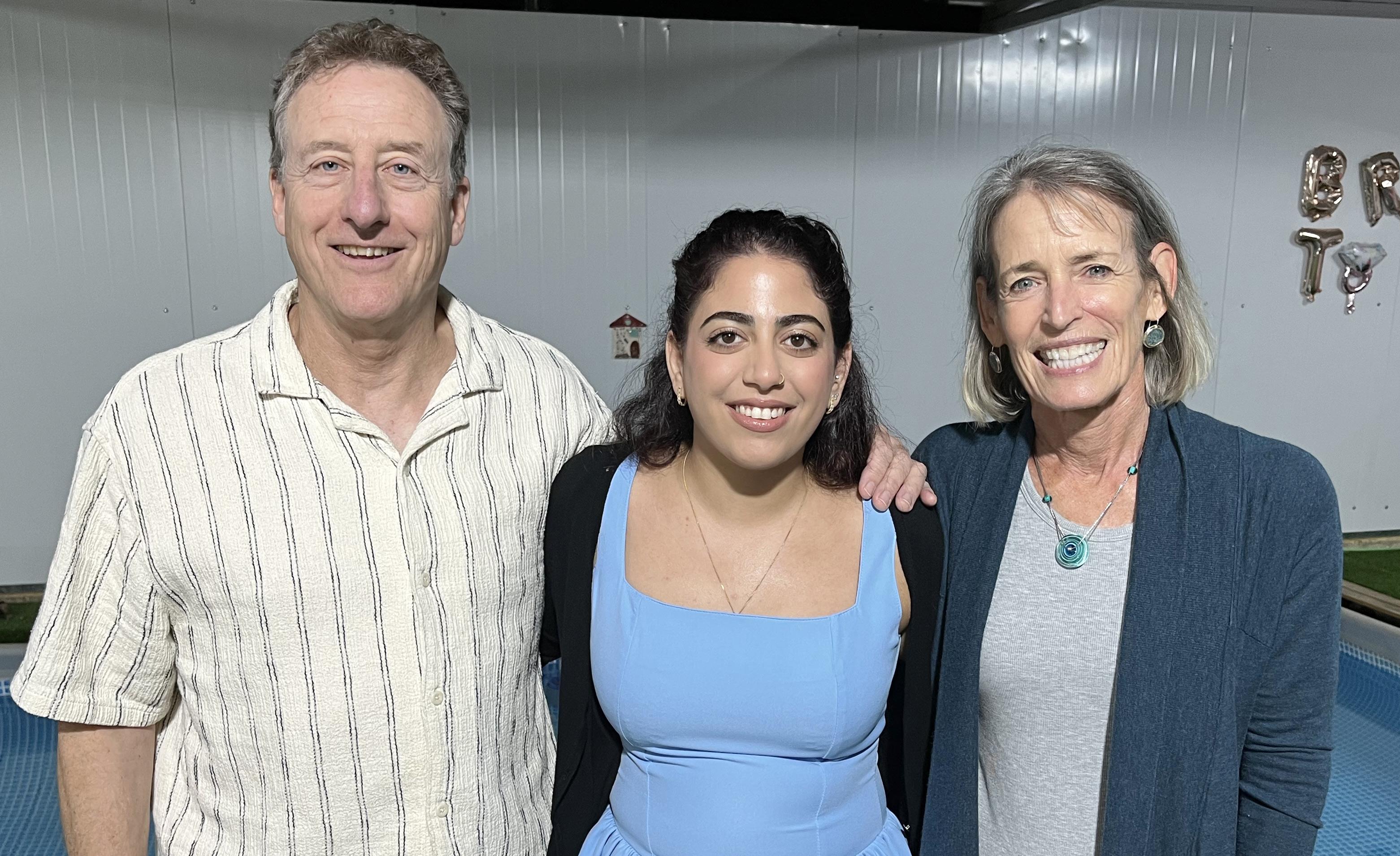
Robert Kramer ’79 and Catherine Storms Fischer ’79 were friends as undergraduates, but had lost touch. Five years ago, Robert was living in the West Bank and working on a biography; Catherine was involved in peace-building efforts between Israelis and Palestinians. But that’s not when they reconnected. They were brought together because of Jina Rishmawi AQB ’22 CHRA ’24, whose grandmother was the subject of Robert’s research, and whose sister, a guide, had introduced Catherine to the rest of her family. When Bard inevitably came up in conversation, the connection was made, and so—of course—when Jina’s wedding was announced, it was a certainty that Robert and Catherine would be there to celebrate, and to have their first in-person conversation in 46 years.
broaching unsettling questions about the resilience of institutional democracy in the Middle East as well as the long-term sustainability of a militarized political State of Israel. It can be accessed on his website: peterboffey.com.
Steven Miller is pleased to announce his publication of Unresolved Museum Issues: a voice from the inside – 1985 to now (BookBaby) in June 2025. The book is a collection of 25 new and previously published essays centered on the importance of museum collections. This includes their care, scholarly role, the administrative attention they deserve, and their disposal by unprotected selling. Steven has nearly 60 years in the profession as a curator, director, trustee, consultant, museum studies educator, and writer.
1963
Nan Toby Feldman Tyrrell’s four years at Bard shaped and changed her life, with strong memories of her friendships and teachers who opened her mind, heart and soul. Living now in Port Townsend, Washington, Nan Toby still keeps sharp snapshots of working during her four field periods, where she
discovered the magic of working with young children. Bard College planted seeds and roots for her to grow and challenge herself, and she is grateful to have been able to study and experience life on the deepest level as she was still evolving into the woman she is today.
BARD GRADUATE CENTER
2013
Sarah Rogers Morris, after attending President Leon Botstein’s virtual fireside chat in May 2025, was inspired to write an article for The Chronicle of Higher Education titled “Want to Save Democracy? Teach Art History.” In the article, Sarah argues that visual comparison cultivates thinking skills that are vital to political life.
2006
Harriette Kaley gave a very wellreceived presentation in March 2025 to the psychoanalytic community on a paper based on her Bard Graduate Center thesis: an art-historical investigation of Sigmund Freud’s antiquities collection.
LOOKING DOWN
1) After the funeral she walked to the sea. She had traveled far to get to this last ritual. For her friend. And she had journeyed on her own. So, no one missed her when she left the cool dim space of the church that she had attended as a child. It had been years since she’d been in any church.
2) Out. Into the blasting July sun. The day clear as a clicking sound. She waited by a side door until all the other mourners had emerged. Then, still unobserved, she turned away from where they stood. Their backs bowed. The widower’s gentle hazel eyes aimed toward the earth.
3) Alone, she followed the land’s curve until she was out of sight of the people clustered at the church entrance. Or its exit.
4) She took off her shoes and let them dangle against her side. The sand yielded beneath her heels as she stepped. At the shore’s edge, she tossed her shoes as far into the surf as she could. She didn’t want them.
5) The water around her ankles cold, despite the day’s hot hot. The low waves, curling in, waved at her. Invited her out. She answered. Knee deep. Thigh deep. Her blue skirt growing darker with the wet. The dark of sorrow. Deeper she went, until her green blouse stuck to her breasts.
6) The horizon didn’t get closer as she approached it. Of course it didn’t.
7) She lifted her legs and floated. Her back in the sea. Her front bobbling. Light and air changing with each easy up and down. A distant airplane, high in the sky, like a silver minnow. Her hair went Ophelia.
8) She was nine years older than the body of the woman in the wooden box in the church. That husk all that remained of her friend, who had been hunted by illness for years. Pain fought. Respite won. Pain redux. Finally, illness the victor.
9) Her younger friend’s body—now on its way to the cemetery—had, when it was a living girl, followed her. Into teenage giddiness. Then bride. Mother. Grandmother. Only in the death dance had her friend leapt ahead.
10) Bouyant in the water, and having so recently looked into the casket (open, as expected in this village), she remembered a different time of looking down. At the new baby that her friend had been then. Round. Plump. Beautiful. Especially the eyes, bright and gentle as the eyes of the devastated husband who had stood outside the church, with something inside him crushed.
11) She had, herself, been a child the first time she had gazed at the other child, the newborn. The tiny blanket like a pink sea in which the infant drifted, asleep. The baby’s toy lamb cuddled against the slats of the crib. Or, another time, not long after, the baby friend’s arms asking her, without words, for “Up! Up!”
13) And she had lifted the child up.
14) “Up! Up!,” she now said to her own liquid-suspended self. “Up.”
15) She dipped her feet downward. Stood. Slipped on the rocky seabed.
16) No matter how carefully she looked down, no matter how much she tried to balance, she stumbled—again and again—as she struggled toward shore.
René Houtrides MFA ’97 (relatively) recently resigned her position on the faculty of Juilliard’s drama division. Her short stories have appeared in The Georgia Review; New Ohio Review; Mississippi Review; Tishman Review; Carve Magazine; Kestrel; The Vincent Brothers Review; Crack the Spine; The Courtship of Wind; Action, Spectacle; Mobius: The Journal of Social Change; and other publications. One of her Georgia Review stories was included in that journal’s 2011 retrospective issue of finest short stories from the past 25 years. renehoutrides.com
CENTER FOR CURATORIAL STUDIES
1998
Regine Basha curated the exhibition Common Sentience at 601Artspace in New York City. It featured an intergenerational group of artists—Janine Antoni, Daniel Bozhkov, Zana Briski, Juan William Chávez, Ania Freer, Hope Ginsburg, Goldie, Poblador, Ana Prvacki, and Miguel Sbastida. Basha also curated the Fall 2025 International artists-in-residence exhibition at Artpace in San Antonio, Texas.
In March 2025, Zhang Zhaohui had a solo exhibition, The Light of Ink, at Crossing Art gallery in Chelsea (New York). The exhibition featured 20 ink brush works, most of which were created during the pandemic, when Zhaohui was residing in the forests of Massachusetts, where he engaged in a profound period of reflection about nature, existence, and spirituality.
2003
Jimena Acosta Romero recently published The ABC of Design, the first bilingual monograph of Mexican designer Emiliano Godoy. Her independent publishing house, Toronja Ediciones, was founded in 2018 and is dedicated to publishing books that explore contemporary design from a critical perspective.
2005
After “retiring” from her career as an independent curator at the end of 2024, Janice (Jyeong Yeon) Kim has been working as the CEO of HIVE, a new art fair that will launch in Seoul in May 2026.
2015
Uruguayan curator and arts administrator Roxana Fabius has been appointed director of the Museo Nacional de Artes Visuales (MNAV) in Montevideo, Uruguay. MNAV houses the largest public collection of paintings and sculptures in the country. This new position brings her back to her home country after 12 years in New York City attending graduate school and working in several arts
organizations, including A.I.R. Gallery, Ford Foundation, and The Neighborhood in Brooklyn.
2022
Marina Caron was assistant curator for Once Within a Time, the 12th SITE Santa Fe International (on view through January 12, 2026) as well as managing editor for the exhibition guidebook and catalogue. She has been appointed assistant curator at the MIT List Visual Arts Center.
Sofia D’Amico and Danni Shen cocurated Ontopo 2025: Sensory Cultivation at Bak Lim Sa (Catskill Zendo), a Chogye Zen Buddhist monastery in Catskill, New York. Structured as an annual hybrid between an artist-led convening and a lightly held temple stay, Ontopo offers an experimental framework for presenting new work—one that sits at the edge of Zen practice while remaining in active conversation with it. Over two days, artists, performers, musicians, and poets came together for shared meals, meditation, and ritual, alongside performances and offerings that test the boundaries of site, form, and immediate spiritual contexts.
2023
Abel González Fernández is the associate curator at the Museum of Contemporary Art Detroit. He is excited to be curating an upcoming survey of Detroit’s legendary textile artist Carole Harris, whose work has influenced several generations of Detroiters across the art and design field.
2025
After graduating from CCS Bard in May, Zuhra Amini started her new role as curator at the Gochman Family Collection in July 2025.
CONSERVATORY OF MUSIC GRADUATE CONDUCTING PROGRAM
2005
Elizabeth Askren was announced as director of the Yale Symphony Orchestra and associate professor adjunct at the Yale School of Music, beginning in the 2025–26
academic year. Elizabeth brings with her a wealth of experience as a conductor, educator, and advocate for inclusive excellence in the arts. She is widely recognized for her collaborative spirit, technical command, and a deep commitment to fostering musical growth. Currently Hawai’i Opera Theatre’s first principal guest conductor and a music staff member at the Lyric Opera of Chicago, Elizabeth has led performances praised for their clarity, vitality, and expressive depth.
CONSERVATORY OF MUSIC GRADUATE VOCAL ARTS PROGRAM
2009
Rachel Schutz published a book titled Welsh Vocal Music: A Guide to Lyric Diction and Repertoire with Routledge. The book introduces audiences to a rich body of art song, choral music, and opera by Welsh composers as well as giving them the tools to accurately and confidently sing in the Welsh language.
MILTON AVERY GRADUATE SCHOOL OF THE ARTS
2025
Lucia Reisig presented a solo show of sculptures at MIMO Gallery in Brooklyn, New York.
Matthew Li is a recipient of a Smack Mellon artist studio residency, in Brooklyn, New York. This year-long residency includes a studio, fellowship, and access to materials.
2022
mj daines has been awarded a two year Core Fellowship at the Museum of Fine Arts in Houston, Texas. She will be in residence through July 2027.
2018
Austin Martin White presented Tracing Delusionships, his second solo exhibition at Petzel Gallery in New York City and his first at
Petzel’s Chelsea space. White’s large-scale canvases and works on paper draw from ruins, archives, and inherited images. His layered compositions reconfigure fragments of the past, testing how painting can hold structure and collapse, clarity and distortion— keeping history alive through acts of reinterpretation and transformation.
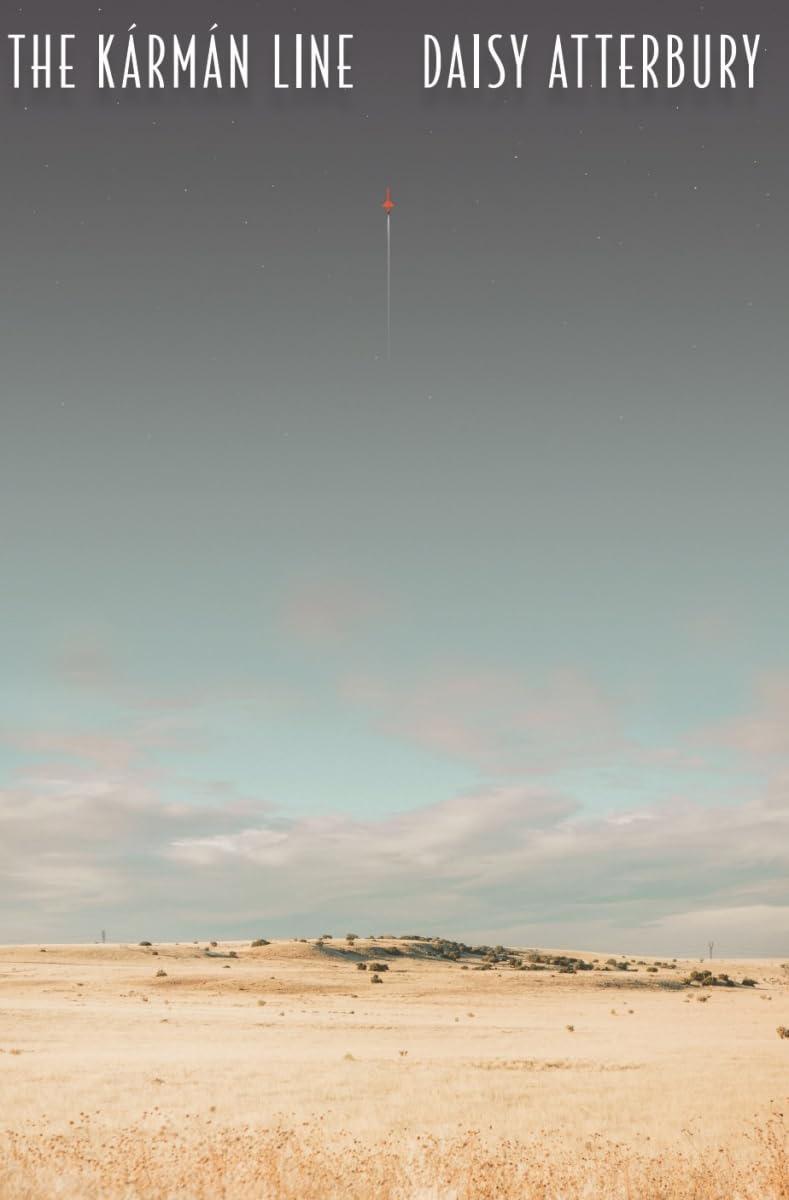
2016
Daisy Atterbury published The Kármán Line, described as “a new cosmology” (Lucy Lippard) and “a cerebral altar to the desert” (Raquel Gutiérrez). The Kármán Line investigates queer life and fantasies of space and place with an interest in unraveling colonial narratives in the American Southwest.
2011
For the International Art Biennial of Antioquia and Medellín, Richard Garet presented nine works from The Perceptual Series, a complete cycle of 31 moving-image compositions that transcode sonic material into visual form. Grounded in the artist’s concept of “material sound,” where sonic matter functions simultaneously as both material and instrument, each work is generated through algorithmic and generative processes that transform urban noise, electromagnetic signals, and other sound-based data into visual structures.
2003
S Topiary Landberg’s new short film Lesbian Custody, codirected with Molly Skonieczny, had its premiere at Frameline the San Francisco International LGBTQ+ Film Festival and screened at the Hammer Museum as part of the Outfest Legacy Project screening series last June. Additional screenings took place at Yale
University; DocLisboa in Lisbon, Portugal; Kyoto and Tokyo, Japan; Dayton, Ohio; and at the Lesbian Lives Conference at the City University of New York Graduate Center.
2002
Bobby Abate has joined the Film/Video faculty at Massachusetts College of Art and Design. Their solo exhibition Big Bad ran May 17 to June 22, 2025, at Delaware Valley Arts Alliance in Narrowsburg, New York. Recent residencies include Zaratan – Arte Contemporânea in Lisbon, Portugal, and Moulin à Nef, Auvillar, France.
2001
Michelle Handelman’s film BloodSisters: Leather, Dykes and Sadomasochism (1995) screened at the Museum of Modern Art in New York City on the occasion of the film’s 30-year anniversary. The screening was part of the series Queer and Uncensored.
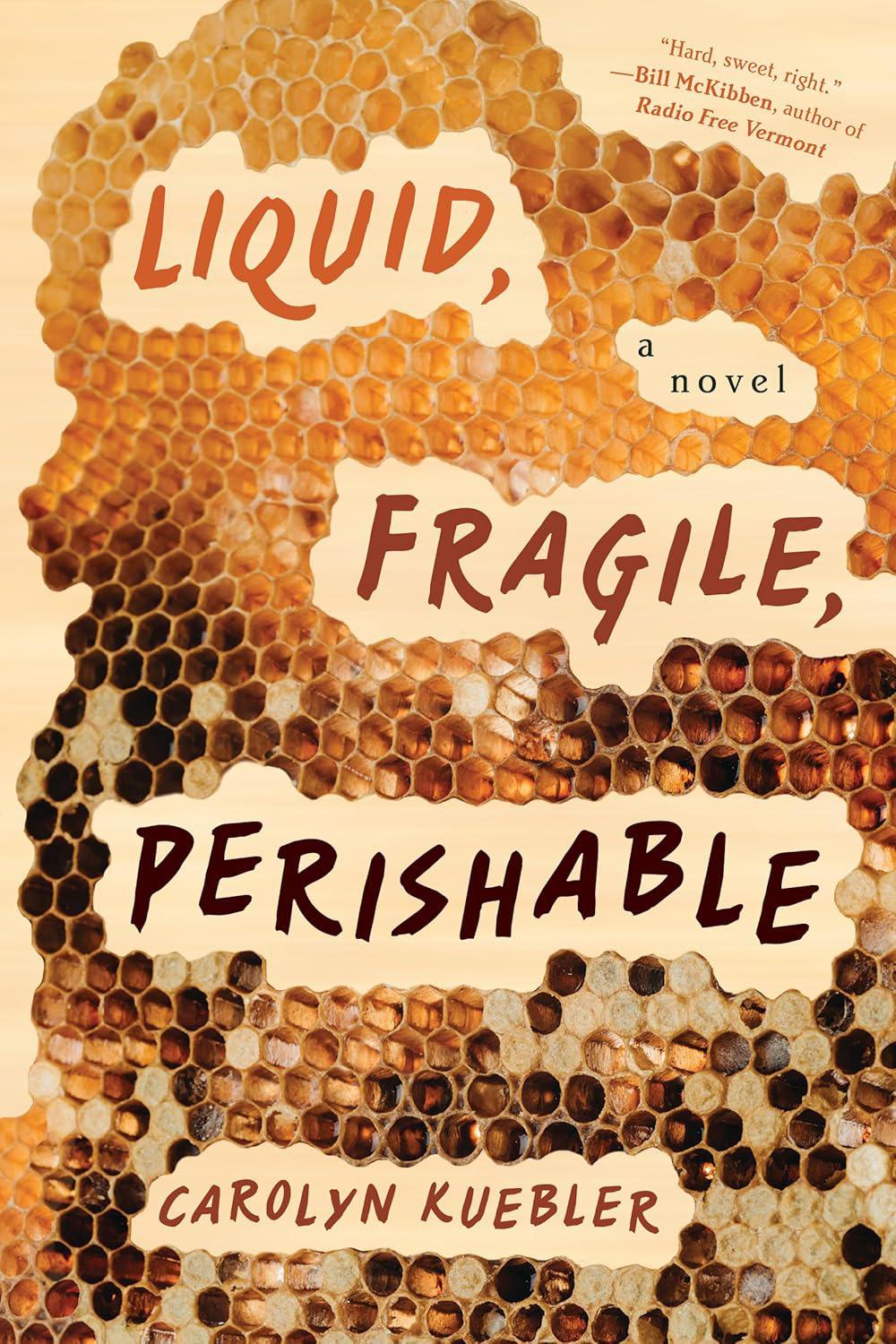
Carolyn Kuebler published her first novel in May 2024, Liquid, Fragile, Perishable (Melville House Press).
1991
Lily Prince exhibited paintings in the group show In Bloom at 532 Gallery Thomas Jaeckel in Basel, Switzerland, from June 17 to August 31, 2025. This was Lily’s first European gallery representation.
IN MEMORIAM
1946
Charles Dyson Friou, 99, died October 16, 2025. Charlie attended P.S. 193 and Erasmus Hall High School in Brooklyn, New York, before coming to Bard on the GI Bill. He began college as a history major, but earned his bachelor’s degree in religion. He then went to Yale University Divinity School for his master’s and immediately embarked on missionary work with the American Friends Service Committee in Gaza, Palestine, where he was head of the Maghzi camp of 10,000 refugees. In 1951, Charlie was ordained a Congregational minister of the gospel and served churches in Flushing, New York, and Chester, New Jersey, before becoming pastor of Ingram Memorial Congregational Church in Washington, DC, where he served from 1956 to 1969. Charlie helped organize the 1963 March on Washington for Jobs and Freedom with the Southern Christian Leadership Conference. In 1970, he moved to the Health and Human Services Community Services Administration (CSA), overseeing the same types of community programs that defined his ministry; he retired in 1991. Charlie returned to campus often for reunions, well into his nineties, and was especially happy to see Congressman John Lewis, with whom he worked in 1963, at Commencement in 2017. Charlie was predeceased by his wife, Odette Simone Schwengeler Friou, and is survived by their daughters: Odette Kent, Louise Fudge, and Suzanne Friou.
1948
Nancy Levin Edelstein, 97, died December 19, 2024. She was a member of Bard’s first coed class, and studied art with Harvey Fite ’30. Nancy remained part of the Bard community her whole life. An accomplished sculptor, visual artist, and supporter of the arts, she was long affiliated with the Broward Art Guild and was a founding member of the Tarpon River Art Collective. Raised in the Detroit area, Nancy raised her own
children in New Rochelle, New York. She was a 40-year resident of Fort Lauderdale, Florida, and a lifelong summer resident of Hilton Beach, Ontario. She is survived by her children: Andrew, Carolyn, and Matthew.
Joann Rosenberger Lang, 98, died September 2, 2024. After graduating from Bard, Joann earned a master’s in social work from New York University. In 1993, Joann, along with Safe Horizon, opened a fully owned and operated domestic violence shelter, which was named Lang House in honor of her and her husband. She had been an active board member since 1997 and was honored with two Lifetime of Service Awards from Safe Horizon. She also served on the board of the Jewish Home and Hospital for 30 years and was a member of the resident care committee. Joann is survived by her sister, Gerrie Soman, and children: William, James, Nancy, and Carolyn.
Selda Steckler (née Jerrold) died July 20, 2025. After graduating as part of Bard’s first coed class, Selda received a master’s in social work from Columbia University and a master’s in education from New York University. She then began a long and successful career as a special education teacher, working first with visually impaired children and then with children with learning disabilities. As a passionate and creative educator, Selda also developed and utilized individualized teaching materials for those with special needs. These learning puzzles were later acquired by a company that produced educational materials. After her retirement, Selda became an accomplished sculptor, working with wood, alabaster, and metal. She was predeceased by her husband, Mortimer, and is survived by her son, Steven, and daughter, Amy.
1949
Roger D. Isaacs, 99, died February 19, 2025. Roger’s studies were interrupted by World War II when he joined the 87th Infantry Division. He fought in France and Germany, was wounded in the Battle of the Bulge, received the
Purple Heart, and was named a Chevalier of the French Legion of Honor in recognition of his service. After the war, he learned about Bard from his cousin, Nancy Edelstein ’48 (see above), during a visit to the home of faculty member Harvey Fite ’30. Roger earned his BA in Languages and Literature from Bard and went on to become a pioneer in public relations, helping found the Public Relations Board and growing it into an international agency. He also served on the boards of directors of the Chicago Crime Commission, Highland Park Hospital, North Shore University Health System, North Bank/Wintrust, WBEZ, and as a member of the advisory council at the Institute for the Study of Ancient Cultures at the University of Chicago. His proposal for a “Declaration of Interdependence” with Europe was used as the basis for President John F. Kennedy’s July 4, 1962, speech at Independence Hall in Philadelphia. Roger was also an independent researcher, specializing in Hebrew Bible studies; his 2010 book, Talking With God, is a recontextualization of Hebrew words, biblical texts, and Abrahamic religions through lenses of linguistics, physics, and chemistry. Roger was predeceased by his wife of 72 years, Joyce, and is survived by his daughters, Gillian (mother of Orion Isaacs ’15) and Jan.
1953
Charles Naef, 94, died February 25, 2025. Charlie spent his early years in Zürich, Switzerland, but the family returned to the United States when he was 17. At Bard, he roomed with Martin Johnson, who would be a lifelong friend. Charlie was drafted into the Army, serving in West Germany, and continued to serve in Army Active Reserves until 1957. He earned a master’s and PhD from Rutgers University, where he met the love of his life, Susan. Charlie taught comparative government, international relations, and politics for 35 years at Colgate University, where he also played a major role in the development of the International Relations and Peace Studies Programs. Charlie actively served the village and town of Hamilton as
well as the wider region, and was elected mayor in 1999. He also held leadership positions in local organizations, including the Rotary and Hamilton Clubs, the Hamilton Interfaith Service Group, and the Hamilton Forum Steering Committee. In 2015, for recognition of his political and civic contributions to Hamilton and Madison County, he received the Madison County Democratic Committee’s annual James and Dolley Madison Service to the Community Award. He is survived by his wife, Susan, and son Eric.
1956
Thomas Rhodes Rockwell, 91, died September 27, 2024. Tom was the author of How To Eat Fried Worms, which won the Mark Twain Award in 1975, and many other beloved children’s books. He was born in New Rochelle, New York, but his parents, Mary and Norman Rockwell, soon moved the family to West Arlington, Vermont. Tom met artist Gail Sudler ’55 at Bard; they married and made their home in LaGrange, New York. For almost 40 years, Tom was the manager of the Norman Rockwell Family Agency, and he collaborated on his father’s autobiography, My Adventures as an Illustrator. Tom leaves behind his son, Barnaby, and daughter, Abigail.
Richard Crittenden Sewell, 89, died September 14, 2024. As a student at Bard, Dick became the youngest person to win the Glascock Poetry Prize. Publications featuring his poetry included The Quarterly Review of Literature and The New Yorker. His facility with language led the Army to train him in Russian at the language school at Monterey, California. While stationed in Germany, he won his first directing award with a production of Shakespeare’s Julius Caesar for a festival created for the Seventh Army Special Services. Dick taught and created theater at High Mowing School, the Coburn Classical Institute, and the Oak Grove-Coburn Schools in central Maine. He received many awards, including for his adaptation of Nathan the Wise, his book In the Theater of Dionysus, and his play The Winter Crane. In 1970, he cofounded a professional classical
rep company, Theater at Monmouth. Dick was artistic director and actor there for more than 25 seasons. In 1974, he was hired by Colby College to begin an official theater program and help design Strider Theater, where he spent nearly 30 years. In 2023, he returned to Strider for its final production, Sarah Ruhl’s Eurydice. Dick acted in five films, an NBC true-crime TV series, and a dozen commercials. He is survived by his wife, Kim; son, Gavin; daughter, Bronwyn; and stepdaughter, Gabrielle.
1957
Alice Jane Mariani (née Gladstone), 87, died November 23, 2024. Alice excelled academically, earning her GED at 16, and attended New York University before transferring to Bard, where she met her husband, Umberto. Alice earned a PhD in comparative literature from Yale University in 1967, with expertise in Homer’s Odyssey. Her intellectual and creative spirit extended to her love of folk and classical music, poetry, literature, and art. She collaborated with her husband on several Italian-English translations, showcasing their shared passion for language and culture. Alice dedicated her career to teaching English as a Second Language, empowering countless immigrants in New Jersey to thrive in their new communities. Her lifelong commitment to social justice was expressed through her active involvement in civil rights organizations, including decades of service to the American Civil Liberties Union. For more than 20 years, she also played a pivotal role in coordinating the Somerset County Free Legal Clinic, providing essential support to those unable to afford legal services. Alice was predeceased—by 15 days—by Umberto. She is survived by her daughters, Francesca and AnnaLisa.
1958
Florence Elinor Bayne, 87, died August 31, 2024. Ellie was the youngest of her family, preceded by three elder sisters, and surprised them when she was born minutes after her twin brother, Tommy. Ellie was mostly raised by other relatives after her mother fell ill when she was only five years old. She was introduced to the Episcopal Church while living with her cousin, Ellie, after whom she was named. At Bard, Ellie studied French by translating plays and books. She loved teaching elementary school and working as a librarian. Ellie drove a British Rover and joined a road rally club, where she met her true love, Jimmie, who raced a convertible TR3. She became his navigator in the car and in life, where he trusted her without hesitation. They married in 1960. Ellie is survived by her daughter, Debbie.
Benjamin Lambert Hall, 90, died May 29, 2025. Born at the Martha’s Vineyard Hospital in Oak Bluffs, Massachusetts, he soon earned the nickname “Buzz” for his constant movement.
As a teenager, he was the lead tenor in the Edgartown Federated Church choir, and he studied music and performed at Bard and beyond. A fascination with electronics led him to become a technician and appliance repairman, and he went on to work at a Boston radio factory, where he quickly advanced to quality control. Buzz founded Edgartown Electrical Equipment Corp. with a childhood friend, and his repair skills made him legendary among lovers of antique radio and tube amplifiers. He also worked in the family business, keeping the Capawock, Strand, Island, Dreamland, and Elm theaters on the island running. He and his wife, Therese, established a business restoring and renting homes to young
Rhoda Levine ’53

Opera director Rhoda Jane Levine ’53, 93, died January 6, 2026. Born in Manhattan and raised in Queens, her father was a civil rights lawyer father and her mother a professor of early childhood education at New York University. Her parents aided refugee Jews escaping Europe, and Rhoda and her two siblings grew up immersed in social justice and political consciousness. Her upbringing carried over into her professional career. She told The New York Times in 1990 that she was drawn to political operas. “I find in many operas,” she continued, “that they show how our failure to listen to each other can lead to despair. This may seem peculiar in a sung world, but if you really look at opera, there is a lot of nonlistening going on.”
Rhoda graduated from Bayside High School and earned her BA in drama and dance from Bard. She aspired to be a dancer and studied with Martha Graham. Though the body was willing, it was also on the diminutive side, so she turned to choreography. Her work impressed composer Gian Carlo Menotti, and he invited her to his Festival of the Two Worlds in Spoleto, Italy. A commission from film director Luchino Visconti, who had been an opera producer before turning to film, to choreograph his 1963 Spoleto production of Verdi’s La Traviata launched her international career.
In that remarkable career, she worked with, among many others, the Cape Town (George and Ira Gershwin and DuBose and Dorothy Heyward’s Porgy and Bess), Glimmerglass (Smetana’s The Bartered Bride), Nederlandse (Viktor Ullmann’s Der Kaiser von Atlantis), New York City (Davis’s X: The Life and Times of Malcolm X and Janacek’s From the House of the Dead), and Omaha (Anthony Davis’s Wakonda’s Dream) Operas, and Opera Theatre of St. Louis (Scott Joplin’s Treemonisha). Rhoda also wrote the libretto for Opus Number Zoo by Luciano Berio as well as seven children’s books, some with drawings by Edward Gorey. She taught at the Manhattan School of Music, Curtis Institute of Music, Yale School of Drama, The Juilliard School, Northwestern University, Manhattan School of Music, Mannes College, University of Maryland, Banff Festival of the Arts, and Tisch School of the Arts at NYU. A documentary film about Rhoda Levine, An Uncommon Woman, by David D. Williams, is in postproduction.
Rhoda Levine ’53 poses for Steve Burr ’53 in a campus studio, early 1950s.
Photo by David Brooks ’45/Bard College Archives
families and workers, and they became known for their generosity to those often overlooked. Buzz was predeceased by Therese and is survived by his sons, Benjamin Lambert Hall Jr. and BrianAlexander McKinnon Hall, and two sisters, Charlotte and Marcia.
1959
Bertram (Bob) Henry Bernstein, 87. Bob was a devoted husband, father, grandfather and physician. Born to Dorothy and David Bernstein on April 14, 1937, in Nyack, New York, Bob attended Bard on a full academic scholarship before earning his medical degree from New York Medical College in 1963. He completed his residency at Lenox Hill Hospital, during which he also served in the Army Medical Corps. While continuing his work as an attending physician at Lenox Hill, Bob established a successful private practice in New York City, where he cared for many patients who adored him, including numerous professional athletes who played on the New York Rangers, Yankees, and Mets. During this time, he met Linda, a nurse at Lenox Hill Hospital. They married in 1977. After 35 years practicing medicine, Bob retired with Linda in Rhinebeck, where he found a community of wonderful friends. In addition to his wife, he is survived by his children Adam, Brad, and Scott.
1961
Charles Leland Currey, 86, died March 25, 2025. After graduating with a degree in psychology from Bard, Chuck earned a master’s degree in vocational rehabilitation from Syracuse University. In 1995, he retired from a lengthy career of helping people as a senior vocational rehabilitation counselor for the State of New York’s Vocational Educational Services for Individuals with Disabilities Program. Although he was against the Vietnam War, he enlisted in the Navy and was an interior communications specialist on the guided missile destroyer Henry B. Wilson. He was grateful to be rescuing his fellow soldiers instead of taking human lives, and was honorably discharged in 1968. He was a member of the Protestant
Young Adult group, where he met his wife, Dorothy. Chuck was a classically trained pianist, and played guitar, banjo, and hammered dulcimer. He was a member of the Electric City Chorus for more than 40 years. Also, an Authur Murray–trained ballroom dancer, he later developed a love for country line dancing and enjoyed going to the Singles Outreach Services parties. His other hobbies included riding his speeder train and steam engine around the track at Adirondack Live Steamers and cleaning up the Hudson River waterways as a volunteer for North River Friends of Clearwater. Chuck is survived by his daughters Lisa, Michele, and Dawn.
1962
Ralph Levine, 85, died July 10, 2025. Ralph had perfect musical pitch and was a natural athlete. A graduate of PS 11 in the Bronx and Bronx High School of Science, Ralph intended to enroll in the 3-2 Program with Columbia University, but decided to change his major from physics to mathematics. He went on to earn a master’s and doctorate from Harvard, and had a long and successful career in educational administration, culminating in decades in the Aeronautics and Astronautics Department at Stanford University.
George S. Wislocki, 89, died September 21, 2024. George was the founding director of the Berkshire Natural Resources Council (BNRC), a nonprofit dedicated to conservation and public access to unspoiled lands. Thanks to his abilities to raise funds, negotiate with landowners and win political allies, BNRC now owns or holds conservation restrictions on nearly 26,000 acres of land. George could be wry and creative, using a sense of humor and showmanship to make a point the media and the public would remember. For many, the master class on that was how George and his best friend came up with the fictional town of Ripton, Massachusetts, and used it to subtly poke Boston-area political leaders who seemed to forget there was a commonwealth beyond Brookline. George served as
executive director of the BNRC through 2001. His higher-level understanding of why people cared about environmental issues—or why they should care—made a difference. He is survived by his wife, Alice; son, Stash; and daughter, Anya.
1963
Abigail Hubbell Rosen McGrath, 84, died December 20, 2024. Born in New York City during the Harlem Renaissance, Abigail was a colorful woman with many talents. Aside from teaching writing, she was an actress, writer, model, local columnist, and producer; she played a role in the Andy Warhol film Tub Girls, was the niece of acclaimed novelist and story writer Dorothy West, and the daughter of poet Helene Johnson. At Bard, she met her first husband, Leonard Rosen ’63. She went on to write, produce, and act in productions with the Off Center Theatre in Manhattan, where she met her second husband, Tony McGrath. Together, they produced political satire, experimental works, Shakespeare plays, and free theater for children. They would drive their truck to the city’s roughest neighborhoods to perform at schools, in the streets, and in parks. In 2000, Abigail created the Renaissance House writing retreat in Oak Bluffs, Massachusetts, to honor the memory of her mother and aunt. After 25 years, it is still one of the few retreats for issue-oriented writers, writers of color, and writers on social justice. She is survived by her son, Jason Rosen.
Sandra Fisk Porter, 85, died October 17, 2024. Sandy was adopted at two days old and raised on a small gentleman’s farm in Windsor Locks, Connecticut. In her teenage years, Sandy met jazz musician Ran Blake ’59, who became a dear friend and mentor. Although she was not a musician herself, she was a lifelong jazz enthusiast. While in college, Sandy met her future husband, architect Tyrus Porter (as in-house architect for the Boston Red Sox, he was instrumental in saving Fenway Park from demolition). They married in Berkeley, California, in 1961. Sandy was a passionate
peace activist, experimental gourmet cook, and enthusiastic weaver. She earned two master’s degrees in special education and worked in several Massachusetts school systems. At age 40, unexpectedly and remarkably, she met her biological father for the first time, along with her newfound sisters, Cynthia and Wendy. She and Tyrus spent years cruising in an antique wooden boat in the Charles River, then to the coast of Maine in a more reliable troller, and for two decades throughout beautiful European canals in a lovely Dutch vessel aptly named Wanderlust. She is survived by her son, Mark Porter, and daughter, Kira Hower.
Lane Sarasohn, 82, died April 16, 2025. Lane was a writer and film producer, best known for Not Necessarily the News (1982), This Just In (1993), and The Munsters Today (1988). At Bard, Lane cowrote for Channel One Underground TV with classmates Chevy Chase ’68 and Ritchie Allen ’67, which later morphed into The Groove Tube (1974), directed by Ken Shapiro ’65.
1968
Libby Titus (nee Jurist), 77, died October 13, 2024. Libby was born in Woodstock, New York, and was best known to the public as a singer-songwriter. “Love Has No Pride,” which she wrote with Eric Kaz and released on her second album, Libby Titus, has been recorded by Bonnie Raitt, Linda Ronstadt, Rod Stewart, Tracy Nelson, and Daryl Braithwaite, among others. Libby collaborated with countless songwriters, sang harmony on many recordings, had a few film roles, and was the subject of several musical tributes from artists such as Carly Simon, Dr. John, and Wendy Waldman. In the late ’80s, Libby became a concert promoter and impresario, enlisting her myriad friends and collaborators for special concerts in restaurants and clubs around New York City. These shows led to a reconnection with Donald Fagen ’69, whom she married in 1993, and the creation of the New York Rock and Soul Revue. She is survived by Donald and her daughter, musician Amy Helm.
Libby’s son from a previous marriage, Ezra Titus, died in 2009.
1969
Deborah Cook, 77, died November 25, 2024. Debbie earned her BA in studio art from Bard and moved to Eastport, Maine, in the 1970s, where she ran a restaurant, and in the ’80s to Stonington, where she purchased land and built a house with her partner, James Day. In Stonington, she worked at Petersen’s Pharmacy, was one of the directors of the Deer Isle Food Co-op, and a volunteer at Stonington Public Library. For 19 years, Debbie worked as a pharmacy tech at Blue Hill Memorial Hospital. With that connection, she also went on several medical mission trips to Ecuador. In 2009, Debbie returned to New Preston, Connecticut, to care for her aging mother. She is survived by her brothers, Timothy and Jeffrey.
Pierre Joris, 78, died February 27, 2025. Pierre was born in Strasbourg, France. His father was a surgeon and his mother worked as an administrator in her husband’s practice. Pierre graduated from the Lycée Classique in Diekirch, Luxembourg, in 1964, briefly studied medicine in Paris to fulfill the wishes of his parents, and then moved to the United States. In 1975, he received a master’s degree from the University of Essex in England in the theory and practice of literary translation. From 1976 to 1979, he taught in the English department of Université Constantine 1 in Algeria. He earned a PhD in comparative literature from SUNY Binghamton in 1990 and taught at SUNY Albany from 1992 to 2013. Pierre was best known as a poet and translator. In eight books published over more than 50 years, beginning in 1967 when he was an undergraduate, Pierre sought to render in English some of the 20th
century’s most difficult verse, the complex work of the German-Romanian poet Paul Celan; to transmit what can’t be communicated in words— the Holocaust and its many aftermaths, physical and psychological—by creating an open-ended poetry of multiple possible meanings. Pierre also translated writers such as Jack Kerouac, Gregory Corso, Allen Ginsberg, and Sam Shepard from English to French and published more than 80 volumes of his own work, including Interglacial Narrows: Poems 2015–2021 and Always the Many, Never the One: Conversations Inbetween, with Florent Toniello, both from Contra Mundum Press. Poasis II: Selected Poems 2000–2024, was published posthumously by Wesleyan University Press. Pierre is survived by his sister, Michou; wife, performance artist Nicole Peyrafitte; son, filmmaker Miles JorisPeyrafitte ’14; and stepson, colorist Joseph Mastantuono.
1970
Michael Edward McAllister, 76, died May 20, 2025. After graduating from Bard, Michael earned a master of arts degree from New York University and a master of social work at the State University of New York at Albany. For more than four decades, Michael devoted his professional life to public service across numerous New York City agencies. As a behavioral therapist and director of both mental health and substance misuse/abuse programs, he worked tirelessly to support individuals from diverse communities. His efforts helped countless people find paths toward sobriety and healthier lives. He is survived by his brother, Paul; sister, Margaret; wife, Livia; son, Colin; and stepson, Devin.
1972
Robert Cummings Wesson, 73, died February 15, 2024. Originally from Chicago,
Billy Steinberg ’72
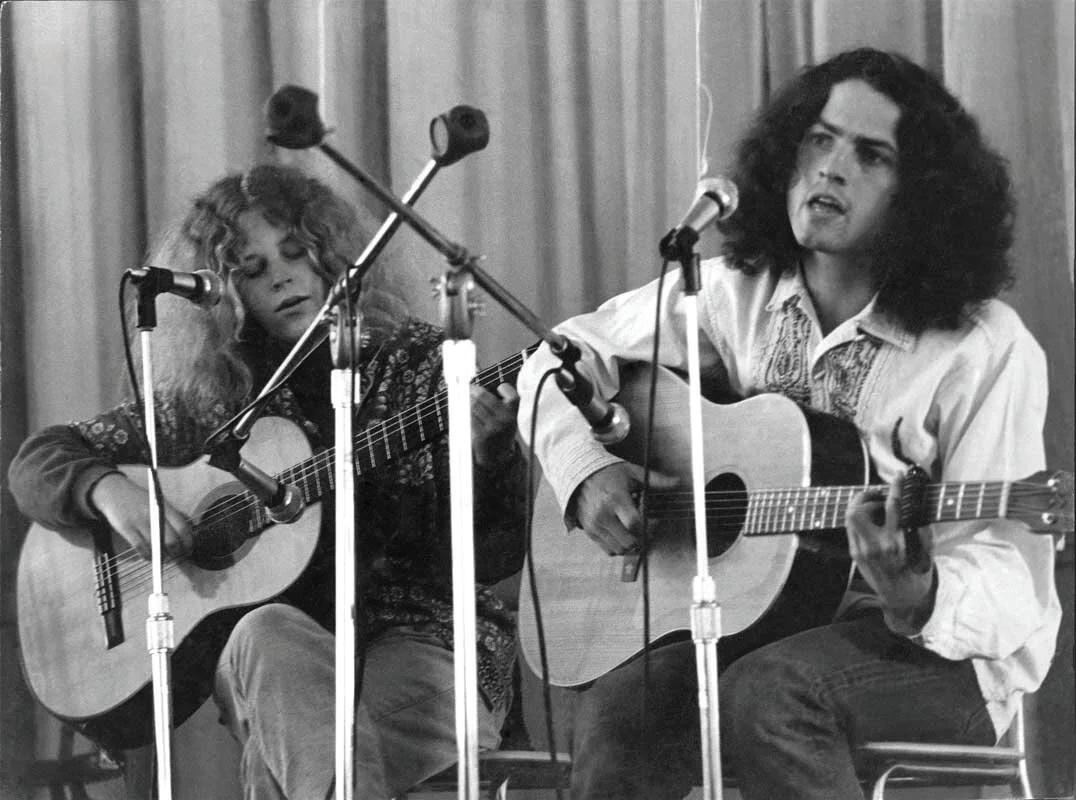
Billy Steinberg ’72 (right) and Leslie Kean ’73 at Bard, circa 1970 billysteinberg.com
Billy Steinberg ’72, a lyricist and Grammy Award–winning producer, died February 16, 2026. He was 75. Steinberg’s remarkable ability to write from a woman’s point of view led to hit recordings by artists including Madonna (“Like a Virgin,” her first No. 1 Billboard hit, which he cowrote with frequent collaborator Tom Kelly), Cyndi Lauper (“True Colors”), Whitney Houston (“So Emotional”), Linda Ronstadt (“How Do I Make You”), and Pat Benatar (“Precious Time,” the title track of her third studio album). He also worked with many female-led bands, including the Pretenders (five of the songs on Last of the Independents, several with the input of band leader Chrissie Hynde), the Bangles (“Eternal Flame,” which he cowrote with band member Susanna Hoffs), Heart (“Alone”), and the Divinyls (“I Touch Myself,” written with lead vocalist Chrissy Amphlett and guitarist Mark McEntee).
Steinberg was born in Fresno, California, and grew up in Palm Springs. He studied literature at Bard and often performed his original songs on campus. In 1979, his band Billy Thermal was signed by Planet Records, but its only album was never released. A year later he met Kelly, and the two became “a machine,” as Kelly described it. He and Kelly were inducted into the Songwriters Hall of Fame in 2011. Steinberg also worked with Rick Nowels on Celine Dion’s “Falling Into You,” the title song from her 1996 album, for which he won a producing Grammy (it also won best album and best pop album), and with Josh Alexander, with whom he cowrote Demi Lovato 2012 hit “Give Your Heart a Break.”
Steinberg is survived by his wife, Trina McKillen Steinberg; sons Ezra and Max; stepchildren Raul and Carolina Cruz; and two sisters, Barbara Steinberg and Mary Pichey.
Robert came to Bard to study painting. After graduation, he moved to Tribeca, working as an art director on feature films. A penchant for travel and the sea led him to earn his captain’s license, and he spent many years sailing yachts between Maine and the Caribbean. In 1986, he left New York City for Bellingham, Washington, joined a year later by Kathleen Beriont ’73. They bought and moved aboard a 1926 53-foot Alden schooner, racing her in classic yacht regattas. Robert went on to work as a vessel master for Clean Sound Cooperative and Marine Spill Response Corporation, finishing his professional career at the Department of Ecology as lead vessel inspector, monitoring maritime compliance for ships entering Puget Sound. Leaving liveaboard life behind, he and Kathleen purchased a classic 1906 craftsman and spent several years restoring it into a gracious family home. The lure of the sea resurfaced, and Robert purchased his last boat: a beautifully restored 1910 40-foot schooner, sailing it well into retirement. In addition to Kathleen, he is survived by a son, Henry.
1973
Susan Pickhardt died July 9, 2025. A lifelong advocate for young people, Susan dedicated more than 35 years to secondary education as a highly respected guidance counselor in the Rochester, New York, area. After graduating with a degree in psychology from Bard, she earned a master’s in education from the University of Rochester. She brought wisdom, empathy, and unwavering support to those she served at Nazareth Academy and in the Victor and Greece public school systems. Even after retirement, Susan remained a steadfast champion for education, volunteering her time and expertise within the Rochester City School District. Susan was a faithful and devoted member of St. Thomas Episcopal Church. She was a fierce and passionate advocate for equal rights and a voice for those too often unheard. She is survived by her husband of
67 years, Charles, and her sons, Steven, Kevin, and Jonathan.
1974
Richard Julian Gladdys, 74, died July 13, 2025. After Bard, he pursued graduate studies at the University of Massachusetts at Amherst. In 1976, Richard married Georgiana, and the couple settled in Conway, Massachusetts, where they raised their two children. Later, they moved to Plymouth, where Richard worked for several large construction firms as director of business development. A civicminded man, he served the town of Plymouth for many years on the finance committee. In 2024, he fulfilled a lifelong dream by publishing his poetry collection, Notes from the Sargasso Sea—a deeply personal accomplishment that reflected his courage, perseverance, and literary spirit. In addition to Georgiana, he is survived by his son, Benjamin, and daughter, Marcy.
Barry Weintraub, 74, died August 13, 2025. He specialized in civil rights law, and was named one of Washington’s Best Lawyers by Washingtonian Magazine
1975
Gerald Drucker, 71, died April 4, 2024. Growing up, Jerry spent summers on Fire Island, New York, where he was a lifeguard and surfer. After graduating from high school he followed his surfing dream to Southern California and attended UC Irvine. Surfing temporarily won out, and he left college and moved to the beaches of Mexico, but soon returned to academics, graduating from Bard with a degree in psychology. He went on to earn a PhD in psychology from UC Santa Barbara (with a minor in surfing). There he also met Lynda McDevitt, and they were married in Regina, Saskatchewan, where Jerry was working at an early childhood intervention center. After four years in Canada, the family moved to Humboldt County, California, where Jerry was employed at the Redwood Coast Regional Center, providing services for clients with developmental disabilities and their families. He worked there for 34 years, while also maintaining a
private practice and, for 17 of those years, also spending one day a week in the Hoopa Valley Tribe’s Department of Human Services. In addition to Lynda, he is survived by his sons, Michael and Jesse. He was preceded in death by his parents, Estelle and George Drucker, and his sister, Lauri Dowling.
Christopher Frederick Wynn, 74, died April 9, 2024. After graduating from Bard, Christopher attended pharmacy school in Philadelphia. He was a pharmacy technician for many years in Philadelphia before moving back to White Plains, New York, to care for his aging mother. He is survived by his sister Becky.
1976
Mary Allan, 70, died October 20, 2024. Mary was born in Pittsburgh and was very proud of her Pittsburgh roots. At Bard she met her future husband, Richard Crotty ’76, and in their 50 years together they traveled all over the United States, with a special fondness for the time they spent in Hawaii. She is survived by Richard and her service dog, Wolfie.
Winifred Anne Carriere, 87, died March 6, 2025. Raised in a Quaker family, Anne attended Friends Seminary and The University of Wisconsin. Anne studied American architectural history through Bard College’s University Without Walls. For her degree, she wrote a comprehensive history of the architecture of Sharon, Connecticut, during its first 100 years. Anne worked as an editor for her mother’s publication Professional Florist Magazine. She also served as public relations director for South Street Seaport Museum, and later as a legal secretary at the firms Paul Weiss and Coudert Brothers. Anne produced numerous short stories and poems, which were published in The New York Times, New Yorker, and Herald Tribune. Her beloved children’s book, Jennifer’s Walk, published by Golden Books in 1973, was illustrated by her then-husband, New Yorker magazine cover artist Arthur Getz. Anne participated in the antinuclear movement,
volunteering for the campaign Ground Zero. Upon retirement, she founded the nonprofit community service organization Ancramdale Neighbors Helping Neighbors. She helped develop the somatic nonviolence method Aiki-AVP, editing its first training manual. Anne was an avid hiker, longdistance swimmer, cross-country skier, canoeist, and flower gardener. She is survived by her husband Bill, her son Kurt, and her daughter Sarah.
1981
Lynn Michael Spitz, 65, died April 10, 2025. Lynn was born in Rochester, New York, and graduated from the School Without Walls in 1977. After earning his BA in biology from Bard, he studied computer science at Monroe Community College. Lynn worked in biology labs and as a software engineer for years before turning to writing; three of his stories were published in anthologies. He played in several different role-playing games, such as Dungeons and Dragons, GURPs, and Traveller, and had been developing a gaming system of his own. In 1991, Lynn met Thomas Douglas and they were married in 2011, when it finally became legal to do so. He was a member of the Society for the Creative Anachronism, where he was known for his assistance in the kitchens and his cooking skills. In addition to his husband, Lynn is survived by his mother, Shirley, and his stepfather, George.
1982
Edward Michael Colon, 65, died August 23, 2024. Ed was born in New York City and attended Xavier High School. Ed remained loyal to the Yankees, Giants, and Rangers, even after leaving the city in 1993, when he moved to Connecticut to marry a Red Sox fan, attend the University of Connecticut Law School, and raise a family. Ed is survived by his wife, Jackie; son, David; and daughter, Mya.
1986
Carlos Cariño-Higgins, 60, died August 15, 2024. Carlos was an exemplary friend, colleague, and public servant who served the New York City Council for 25 years
under every Speaker. New Yorkers everywhere benefited from Carlos’s care and advocacy, and his legacy lives on through all the lives he touched and the countless he mentored.
1987
Lawrence David Le Fever, 60, died August 28, 2024. He was born in Kingston, New York, graduated from Onteora High School, and in addition to attending Bard he studied in the United Kingdom and Germany. He worked for many years for Laufer Group International in New York City as a software engineer. In his spare time, Larry wrote the scripts for and produced four short films. He was also a drummer and guitarist in a band and enjoyed poetry. Larry is survived by his parents, Edith and John, and siblings, Dan and Michelle.
1995
Stephanie Viola Chasteen, 52, died November 3, 2024. After Bard, Stephanie served in the Peace Corps in Guinea, West Africa, where she learned the local language, Pular, and helped establish a rural Health Clinic which was subsequently named in her honor. Stephanie later established the Friends of Guinea organization. Returning from Guinea, she completed a PhD in condensed matter physics at the University of California - Santa Cruz, followed by a National Science Foundation postdoctoral appointment at the Exploratorium Science Museum in San Francisco. She then joined the Science Education Initiative at the University of ColoradoBoulder. While in graduate school, she worked as an independent science journalist, publishing numerous articles of importance to the public, and interned at NPR through her AAAS Mass Media Fellowship. Through her business, Chasteen Educational Consulting, Stephanie worked
with universities throughout the US in various capacities to help faculty improve the teaching of physics using evidence-based methodologies. In recognition of her lifetime of contributions improving the teaching and learning of physics, Stephanie received the 2024 Lillian McDermott Medal of the American Association of Physics Teachers. Her legacy of educational reform has impacted thousands of students and their mentors. Stephanie loved contra dancing, hiking, canyoneering and technical climbing which she shared with many good friends over the years. She is survived by her parents Dennis and Margaret, stepmother Loretta, son Maxwell, and caregiver and loving partner Terry.
Tanya Sophia Thielke MFA, 56, died February 8, 2025. Tanya began violin lessons when she was 4 years old, and went on to earn a master’s degree in violin performance and composition at Bard. As a composer and sound designer, she specialized in unique methods for audio recording and manipulation, and was known for developing compositional approaches using a sound-based expressive language. As Tantroniq, her music can be found on streaming sites. Her magnum opus was an interdisciplinary work, After River, which combined music, narration, sound design, and visuals. She is survived by her husband, Andrew, and daughter, Nico.
2004
Hannah Jean Corin, 43, died September 26, 2024. Hannah had a love for reading and a passion for music, which persisted throughout her life. She had a talent for playing the piano and a broad knowledge of classical music theory, and she cared deeply about human rights. She is survived by her sisters, Erika Doxtader and Erin Cotton.
Elizabeth Felicella ’89
Elizabeth Felicella ’89 died December 22, 2024. She was 58. Elizabeth majored in photography at Bard and went on to study German literature at Columbia University before shifting her focus back to art, first at Columbia and then as a Fulbright scholar at the Hochschule der Künste in Berlin. Her experience in the school’s newly established interdisciplinary art and architecture department led her to pursue architectural photography upon her return to New York City. Elizabeth gained prominence shooting landscape architecture, and her work was published widely, including in The New York Times, Architectural Record, Interior Design, Metropolis, Vogue, and Places Her artistic projects demonstrated a particular interest in New York City’s public space and infrastructure; the best known of these was Reading Room: A Catalog of New York City’s Branch Libraries, a five-year survey of the city’s 210 branch libraries, in which she treated the library system itself as an architecturally fluid “collection” of buildings. Other projects included Idlewild: An Atlas of the Periphery of Kennedy International Airport, a survey of the areas surrounding JFK Airport; and the monographs Uncrating the Japanese House (August Editions, 2013) and Minerva Parker Nichols: The Search for a Forgotten Architect (The Architectural Archives of the University of Pennsylvania, 2024), in which she combined field and archival research with her own newly created photographic portfolios. In addition to her photography, Elizabeth was a political activist, member of the Democratic Socialists of America, practitioner of martial arts and yoga, accomplished bookbinder, surfer, and was pursuing graduate studies at City College of New York focusing on the work of preservationist photographer Richard Nickel. Elizabeth is survived by her mother, Joan; siblings Carol, Vincent, and Jill; and her partner, George Stolz.
Broad Channel, Elizabeth Felicella ’89, 2006
From the series Idlewild: An Atlas of the Periphery of Kennedy International Airport elizabethfelicella.com
FACULTY AND STAFF
Denis Nikolaevich Akhapkin, 55, died April 16, 2025. Denis was an associate professor of literature and university research fellow at the (recently banned) Faculty of Liberal Arts and Sciences (Smolny College) of St. Petersburg State University. Denis joined Smolny in 2004 and over the years served as deputy dean of Smolny, inaugural director of the Smolny Center for Writing & Critical Thinking, Smolny FYSEM curator, and member of the Smolny Academic Council. He taught Russian and Anglophone literature and was an adviser to both Russian and American students spending summers or semesters abroad at Smolny. He led IWT workshops and workshops focused on liberal arts pedagogies at Narxoz University in Kazakhstan and at many Bard Network partners. He often taught bilingually at American University of Central Asia in Bishkek, Kyrgyzstan, and European Humanities University in Vilnius, Lithuania, and in 2023 he taught L&T in Annandale. A prolific Brodsky scholar, Denis published the highly praised Joseph Brodsky and Anna Akhmatova: In the DeafMute Universe and Joseph Brodsky after Russia: Commentary to Poems and contributed “Joseph Brodsky and His Circles,” in The Oxford Handbook of Soviet Underground Culture. He is survived by his mother, Elena Ivanovna; wife, Ekaterina Kuznetsova; and son Sergey.
Bernard Greenwald died March 3, 2026, less than two weeks before his 85th birthday. A professor of studio arts, Bernard taught printmaking, drawing, and painting as well as introductory classes in creative writing and critical thinking at Bard from 1969 until his retirement in 2009. He additionally taught at Yale University, Skidmore College, Swarthmore College, Kansas City Art Institute, Lewis and Clark College, and was an antibias facilitator through the AntiDefamation League’s A World of
Difference Institute. Bernard earned his BFA from the Philadelphia College of Art and his MFA from Yale University School of Art. His paintings, inspired by the Hudson Valley landscape, explored color and how light expresses movement, travel, and a sense of place, depicting both rural and urban environs. His prints and etchings include a series derived from Old Testament themes and several reflecting the cultural turmoil of the Civil Rights and Feminist movements of the late 1950s and 1960s. His work is included in several public collections. Bernard is survived by his wife, Elena Erber; his two sons, Isaiah and Benjamin; and his daughter, Sasha.
Professor of Literature Rebecca Cole Heinowitz, 50, died May 24, 2025 in an accident in California. Cole earned her BA in creative writing and comparative literature from the University of California San Diego and an MA and PhD in comparative literature from Brown University. Prior to coming to Bard College, she taught literature and Spanish at Brown University, Brandeis University, and Dartmouth College. Cole joined the Bard faculty in 2004 and became full professor in 2021, teaching courses that spanned Romantic and Gothic literature, Romantic imperialism, and 20thcentury and contemporary poetry and poetics. Most recently she led a seminar at BardNYC titled Poetry as Radical Community: New York Poetics from 1960 to the Present, that extended the classroom space to introduce students to the network of poetry communities active around them. She was director of the Literature Program from 2016 through 2021, joined the Language and Thinking Program faculty in 2024, and was a frequent guest speaker, introducing students to the world of Mary Shelley’s Frankenstein through a careful consideration of how “the creature has become such an apt metaphor for the diverse range of persons that society excludes,” ultimately encouraging her audience to consider interdisciplinary questions of kinship and
belonging. Cole was the author of three books of poetry: Daily Chimera (Incommunicado, 1995), Stunning in Muscle Hospital (Detour, 2002), and The Rubicon (The Rest, 2007); translated many works from Spanish into English; was published widely in scholarly journals; and received numerous awards and honors, including a 2019 New York State Council on the Arts Grant and the Cliff Becker Prize from the American Literary Translators Association.
Gerry Kelly, 85, died November 10, 2024. Gerry served as Bard’s director of financial aid for many years, retiring in 2005 after 25 years of service to the College. He was ordained to the priesthood in 1965, but left the ministry in 1972 to marry his wife, Margaret. He continued to serve his community, volunteering with such organizations as the Lewis Gordon Norrie Playground, Hudson River Housing, Hyde Park Visual Environment Committee, Hyde Park Community Garden, Friends of Seniors, and Hudson Valley Hospice. He was also active at Regina Coeli Church/St. Paul’s Parish as a eucharistic minister, lecter, cantor, and member of the choir. In addition to Margaret, he is survived by their four children: Bridget, Matthew, Elizabeth, and Catherine.
Mary Florence Kelly (née Barich), 94, died June 24, 2025. Mary worked for 27 years at the Bard College Bookstore, starting as an assistant manager and working her way up to manager. After leaving the bookstore, she served as deputy clerk for the Village of Red Hook for another 20 years, retiring at 80. Mary was a founding member of the New York State Sheep and Wool Festival and the Elmendorph Handspinners Guild of Red Hook, and a leader of the Dutchess County 4-H Club The Golden Fleece for many years. The Mary Kelly Dye Garden at the Dutchess County Fairgrounds commemorates her fiber-arts legacy. She is survived by her children, John, Susan, and Kevin.
David Kettler, 94, died October 6, 2024. For 28 years, David was a research professor in the Division of Social Studies, authoring eight books, organizing academic symposia, and teaching students until his retirement five years ago. His primary scholarly focus was on the role of the intellectual in society, and particularly the work of Adam Ferguson, Karl Mannheim, Franz Neumann, and György Lukács. David also wrote on labor history and law and the theory of negotiation. His last academic project was an examination of exile and émigrés, particularly those from Nazi Germany, and the fate of intellectuals and artists whose careers began and flourished during the Weimar Republic. Born in Leipzig, Germany, in 1930, David and his family fled to America in 1940, sailing on the last Italian Line peacetime ship from Genoa to New York City and settling in New Jersey. In 1948, he was admitted to Columbia University where he earned his undergraduate degree in 1951 and his PhD in 1960. David’s academic career spanned almost seven decades and included faculty appointments at Ohio State University, Franconia College, and Trent University. He is survived by his wife, Janet; their twin daughters, Hannah and Katherine; and a daughter from a previous marriage, Ruth.
Marina Kostalevsky died February 13, 2026. She was 78. Born in Moscow, her mother was a pianist and her father worked in leadership positions at the Soviet Health Ministry. Marina was trained first as a concert pianist, graduating from the Moscow Conservatory of Music in 1965, and going on to earn a doctorate with honors at the Leningrad Conservatory in 1970. For most of the 1970s she was an accompanist and repetiteur with the Bolshoi Opera in Moscow, the leading national institution of opera and dance in the Soviet Union. She also wrote and published poetry, and in 1982 received a PhD in Slavic Studies from Yale University, where she taught in the Slavic program and
also piano at both Yale and Rutgers. A teacher of Russian language, philosophy, and literature, a versatile intellect and artist, Marina came to Bard in 1996. Under her leadership, Bard’s program in Russian studies flourished. Among her publications are Dostoevsky and Soloviev: The Art of Integral Vision (1997) and The Tchaikovsky Papers: Unlocking the Family Archive (2018), both published by Yale University Press. Marina is survived by her son, Joseph Frenkel, and brothers: Igor, Matvey, Valery, and Leonid.
Shutong Li GCP ’21 died February 13, 2026, after being struck by a car while fixing a flat tire. He was 34. A superb musician and a dedicated colleague, he earned his first bachelor’s degree in industrial engineer from Dalian Minzu University in Dalian, China, but changed career paths to pursue music, first coming to the University of New Mexico, where he earned his bachelor’s of music and served as chief conductor of the Symphony of Albuquerque and the University of New Mexico Health Sciences Center Orchestra, and founded an orchestra, Musicians For Musicians, that created meaningful opportunities for young artists. In 2019, Shutong came to Bard, where he earned his master’s of music in the graduate conducting program and became an assistant conductor for the US China Music Institute of the Bard Conservatory of Music and the Bard East/West Ensemble, and conductor and music director of the Bard Chinese Ensemble. He leaves behind not only a blossoming career in music, but also his wife, Ruimin Hou, and their one-yearold son, Benjamin. He is also survived by his father, Yanqiao Li, and mother, Jianmei Wang.
David Nelson, 71, died September 24, 2025. David graduated from Wesleyan University, earned his master’s degree and rabbinic ordination from Hebrew Union College, and his PhD from New York University. Rabbi Nelson was the Jewish Chaplain at Bard from 2008 until his retirement in
2020. Before coming to Bard, he was the rabbi of a congregation in Long Island, New York, and worked for 15 years at the National Jewish Center for Learning and Leadership, a think tank and center for leadership education where he was a senior teaching fellow. He also taught at Adelphi University, New York University, and in the Cantorial School of Hebrew Union College. He was a writer and a scholar whose book Judaism, Physics and God: Searching for Sacred Metaphors in a Post-Einstein World was published in 2005. In addition to his role as a tireless organizer of Jewish life on campus and his mentoring of the Jewish Student Organization, David taught in the religion program at the College. He is survived by his wife of 47 years, Rachel Jewelewicz-Nelson; three sons, Lev, Adin, and Ziv; and a sister who lives in Israel.
P. Adams Sitney, 80, died June 8, 2025. While still a teenager, Sitney was hired by Jonas Mekas to be the avant garde film editor at Film Culture magazine. He later studied Greek and Sanskrit at Yale University, where he earned his bachelor’s degree in classics and PhD in comparative literature. In 1971—the year Jonas Mekas’s brother, Adolfas, became director of Bard’s Film Program—Sitney came to the College for the first time as a lecturer in film. He taught here, as well as at Trinity and Middlebury Colleges; Yale, Cooper Union, Cornell, and New York Universities; and finally Princeton University until his move to emeritus status in 2016. His book Visionary Film: The American Avant Garde, first published in 1974, is considered the standard text on American avant-garde film. Sitney is survived by his first wife, Julie, and his children Blake, Sky, Augusta, and Miranda. He was predeceased by his second wife, filmmaker Marjorie Keller.
U Ba Win, 79, died April 20, 2025. Ba Win came to this country in 1962, fleeing the coup in Myanmar with his entire family. He had studied for one year at
Myanmar University, earned his BA from Kalamazoo College, and pursued graduate study at Johns Hopkins University. In 1979, at the recommendation of Susan van Kleeck, then President Botstein’s assistant, Ba Win and his wife, Judith, came to work at Bard, when Simon’s Rock became part of the College. In the 1980s, Ba Win served as provost of Simon’s Rock, and took the lead in organizing the the first Bard High School Early College (BHSEC), in Manhattan, in 2001. In 2008, he went on to establish the second BHSEC in Queens and played a key role in the subsequent expansion of the BHSEC network. Throughout his career at Bard— from his beginning as co-dean with Judith to his retirement as vice president of Bard in 2018, when he was awarded the Bard Medal, the College’s highest honor—Ba Win also worked tirelessly on behalf of the improvement of education in his native country, helping to support orphanages and create liberal arts institutions. For four decades he recruited Burmese students to Simon’s Rock and Bard, mentored them, and opened his home to them. “I have never known or worked with a finer and more generous human being,” wrote President Botstein. “What made his generous attention to students and their families, colleagues, neighbors, and even strangers all the more remarkable was that Ba Win was a man of strong opinions. He was ethical, but not a moralist. He stood by his principles, but was capable of compromise and determined that just being right was not enough. One had to make the right things happen in the messy and complex web of reality.” In addition to Judith, Ba Win is survived by their children, Amey, Taya, and Zaw.
FRIENDS
Rt. Rev. Herbert Alcorn Donovan Jr., 94, died November 2, 2025. His father, a 1924 graduate of St. Stephen’s College (renamed Bard College in 1934), served as secretary to Bard’s President Bernard Iddings Bell. Herbert
junior joined the United States Navy in 1955 as a chaplain and was a reserve officer until 1991; as a member of the Pastoral Care Team of the House of Bishops, he ministered to armed forces chaplains during Operation Desert Storm in Iraq. A graduate of the University of Virginia and Virginia Theological Seminary, Herbert was ordained deacon and priest in 1957; served as an Episcopal priest in Wyoming; canon to the ordinary in Kentucky; rector of St. Luke’s Church in Montclair, New Jersey; and in 1980 was elected bishop of Arkansas. In 1993 he became vicar of Trinity Church in Lower Manhattan and assisting bishop of New York. He served on the Bard College Board of Trustees as the representative of Mark Sisk and Andrew Dietsche during their tenures as Bishop of New York, reviving the College’s historic association with the Episcopal Church. The College awarded Herbert an honorary Doctor of Divinity degree in 2019. He is survived by his wife, historian, author, and professor Mary Sudman Donovan; and three children: Mary Ellen, Herbert Alcorn III, and Jane Elizabeth.
Jerome Kohn, 93, died November 8, 2024. After earning his BA in literature from Harvard, Jerry went on to study philosophy at Columbia. After reading two essays by Hannah Arendt in The New Yorker, he convinced her to let him audit a class she was teaching at the New School for Social Research. He became Arendt’s teaching assistant, literary executor, and friend, and was instrumental in the founding of the Hannah Arendt Center at Bard College, where he was on the board of directors. Jerry edited five volumes of Arendt’s writings, and in 2022 was given an honorary doctor of humane letters degree from Bard. He is survived by his partner, Gerard Hoolahan, and sister, Mary Kohn Lazarus.
BOARD OF GOVERNORS OF THE BARD COLLEGE ALUMNI/AE ASSOCIATION
Mollie Meikle ’03, President
Gerald Pambo-Awich ’08, Vice President
Kristin Waters ’73, Secretary, Communications Committee Cochair
Imran Ahmed ’02
Beatrice Ajaero ’12 MBA ’17
Hannah Becker ’11, Young Alumnx Committee Cochair
Connor Boehme ’17
Michael Burgevin ’10, Strategic Planning Committee Chair
Hannah Byrnes-Enoch ’08
Kathleya Chotiros ’98
Charles Clancy III ’69, Past President
Meghan Cochran ’93
Peter Criswell ’89, Past President
Caia Diepenbrock ’15, Events Committee Cochair
Nolan English ’13, Young Alumnx Committee Cochair
Randy Faerber ’73, Events Committee Cochair
Mark Feinsod ’94, Communications Committee Cochair
Anna Fink ’94
Andrew Fowler ’95
Richard Frank ’74
Hanna Jane Guendel ’20, CEP ’22
Boriana Handjiyska ’02, Career Connections Committee Cochair
Sonja Hood ’90, Nominations Committee Cochair
Anna Kaczynska ’06
Nicole Katz ’02
Maud Kersnowski Sachs ’86
Arthur Kilongo ’20
Kenneth Kosakoff ’81
Isaac Lertola ’18, CEP ’18
Jake Lester ’20
René Macioce ’15
Darren Mack ’13
Ryan Mesina ’06, Nominations Committee Cochair
Matloob Naweed ’24
Anna Neverova ’07, Career Connections Committee Cochair
Karen G. Olah ’65, Past President
KC Serota ’04, Development Committee Chair, Past President
George A. Smith ’82, Events Committee Cochair
Thoko Soko ’20
Geoffrey Stein ’82
John Stevens ’94
Paul Thompson ’93
Maxwell Toth ’22
Brandon Weber ’97, Past President
Jennifer Woo ’25
Juliette Zicot ’23
Emeritus/a
Robert Amsterdam ’53
Claire Angelozzi ’74
Penny Axelrod ’63
Mimi Roskin Berger ’56
Jack Blum ’62
Cathaline Cantalupo ’67
Arnold Davis ’44, Past President
Michael DeWitt ’65, Past President
Michelle Dunn Marsh ’95, Past President
Robert Edmonds ’68, Past President
Naomi Bellison Feldman ’53, Past President
Barbara Grossman Flanagan ’60
Richard Gerber ’71, Past President
Michael Glass ’75
Diana Hirsch Friedman ’68
Charles Hollander ’65
Maggie Hopp ’67
Cynthia Hirsch Levy ’65
William Lowe ’66, Past President
Peter F. McCabe ’70, Past President
Steven Miller ’70
Anne Morris-Stockton ’68
David E. Schwab II ’52, Past President
Roger Scotland ’93
Mackie Siebens ’12, Past President
Walter Swett ’96, Past President
Olivier te Boekhorst ’93
Toni-Michelle Travis ’69
Paul Weinstein ’73, Past President
John Weisman ’64, Past President
Barbara Crane Wigren ’68
BOARD OF TRUSTEES OF BARD COLLEGE
James C. Chambers ’81, Chair
Emily H. Fisher, Vice Chair
Brandon Weber ’97, Vice Chair; Alumni/ae Trustee
Elizabeth Ely ’65, Secretary; Life Trustee
Stanley A. Reichel ’65, Treasurer; Life Trustee
Fiona Angelini
Roland J. Augustine
Leon Botstein, President of the College, ex officio
Mark E. Brossman
James M. Clark, ex officio
Marcelle Clements ’69, Life Trustee
Andrew Delbanco
Asher B. Edelman ’61, Life Trustee
Kimberly Marteau Emerson
Barbara S. Grossman ’73, Alumni/ae Trustee
Andrew S. Gundlach
Glendean Hamilton ’09
The Rt. Rev. Matthew F. Heyd
Catharine Bond Hill
Matina S. Horner, ex officio
Charles S. Johnson III ’70
Mark N. Kaplan, Life Trustee
George A. Kellner
Fredric S. Maxik ’86
Jo Frances Meyer, ex officio
Juliet Morrison ’03
James H. Ottaway Jr., Life Trustee
Hilary Pennington
Martin Peretz, Life Trustee
Lucas Pipes ’08
Stewart Resnick, Life Trustee
David E. Schwab II ’52, Life Trustee
Roger N. Scotland ’93, Alumni/ae Trustee
Annabelle Selldorf
Mostafiz ShahMohammed ’97
Jonathan Slone ’84
Thomas Vallely
James A. von Klemperer
Susan Weber
MARGARET AND JOHN BARD
SOCIETY MEMBERS
Anonymous
Jamie Albright
Robert ’53 and Marcia Amsterdam
John Dennis Anderson
Claire Angelozzi ’74
F. Zeynep Aricanli ’85
Judith Arner ’68
Neil and Nancy Austrian
Penny Axelrod ’63
Mary I. Backlund
Donald Baier ’67
Dennis Barone ’77 and Deborah Ducoff-Barone ’78
Barbara Barre ’69
Joseph Baxer and Barbara Bacewicz
Wendy and Alexander Bazelow ’71
Stephen H. ’74 and Laurie A. Berman ’74
Sally Bickerton ’89
Carolyn Marks Blackwood
Jack Blum ’62
Leon Botstein
Anne T. Brown
Mary Burns ’73
Stacy Lyn Burnett ’23
Hannah Rose Byrnes-Enoch ‘08 and Gerald Pambo-Awich ’08
Anne Canzonetti ’84
Olivia Carino
Pia A. Carusone ’03
Steven M. Cascone ’77
John and Nancy Childs
Christophe J. Chung ’06
Charles B. Clancy ’69
Michelle Clayman
Noah T. Coleman ’92
Allan Coulter & Kim Knowlton
Peter Criswell ’89
Zachary Cutler ’94
Arnold J. Davis ’44
Matthew and Mary Deady
Brian Glenn Dean ’07 and Elizabeth I. Wand
Matthew Joseph DeGennaro ’96
Nicole de Jesus ’94
Michael ’65 and Wenny DeWitt
Jason P. Drucker ’93
Malia Du Mont ’95
Michelle Dunn Marsh ’95
Gretchen Dykstra
Robert C. Edmonds ’68
Elizabeth W. Ely ’65
Kimberly and John Emerson
Irene Esposito
Randy Faerber ’73
Mark L. Feinsod ’94
Barbara Williams Flanagan ’60
Autumn Joy Florenceio-Wain ’00
Diana Hirsch Friedman ’68
Emily H. Fisher
Jeanne Donovan Fisher
Neil Gaiman
Jennifer Gaudioso ’95
Christopher H. and Helene S. Gibbs
Annette M. Gilson ’86
Eric W. Goldman ’98
Nancy Goodstein ’87
Julia B. Greer
Barbara S. Grossman ’73
George Hamel Jr. and Pamela O. Hamel
Nikkya Hargrove ’05 and Dinushka DeSilva
Michaela (Misha) Harnick
Nancy Hass and Bob Roe
Helen Hecht
Marieluise Hessel
Charles F. Hollander ’65
Miranda May Holman
Maggie Hopp ’67
Elaine Marcotte Hyams ’69
Jill Jackson ’81
Henry Jarecki
Grace Judson ’79
George A. Kellner
Jessica Post Kemm ’74
Catherine M. Kleszczewski ’91
Kenneth Kosakoff ’81
Peter Kosewski and John Anderson
Gary and Edna Lachmund
Lawrence C. (Kit) Laybourne
Nancy S. Leonard
Gideon Lester
Cynthia Hirsch Levy ’65
Steve Lipson ’65 and
Serl E. Zimmerman
Jennifer Lupo ’88
Thomas M. Maiello ’82
Aimee Majoros ’94
Margit Malmstrom ’66
Norman and Cella Manea
Bonnie Marcus ’71
Ana Paula Martinez ’97
Jonathan Massey ’85
Fredric S. Maxik ’86
Rita Katherine McBride ’82
Lew Millenbach ’64
Steven Miller ’70
Jubilith Moore ’91
Anne M. Morris-Stockton ’69
Sarah Mosbacher ’04
Melka A. Myers ’99
Anthony Napoli
Mary L. Nathan ’76
Brian Nielsen ’71
Jennifer Novik ’98
Charles O’Bryne
Karen Olah ’65
Daniel F. O’Neill ’79
James H. Ottaway Jr.
Richard Pargament ’65
Edith Penty
Eric Perlberg ’69
Ellen Kaplan Perless ’63
Heather Petrie ’05 and Nathan Siler
Michele A. Petruzzelli ’76
Patricia E. Pforte ’08
William Pierce ’80
Susan Diane Pilla
Stacy Pilson ’91
Jennifer Gayle Plassman
Lorna H. Power
Janice H. Rabinowitz ’51
Lynda and Stewart Resnick
Steven Richards ’72
Irwin and M. Susan Richman
James Rodewald ’82 and Marella Consolini ’82
Catherine Ruggles ’98
Emily Sauter ’05
Elisabeth Semel ’72
Kendall (K.C.) Serota ’04
Alexandra Shafer ’78 and Denis Duman
Mostafiz ShahMohammed ’97
Sarah A. Shapiro ’02 and Nicholas J. Neddo
John and Marsha Shyer
Denise S. Simon
Rebecca L. Smith ’93
Richard Socher ’62
Martin Sosnoff
Eve C. Stahlberger ’97
William N. Stavru ’87
Lindsay A. Stanley ’12
Geoffery Stein ’82
Kenneth Stern ’75
John A. W. Stevens ’94
Charles P. Stevenson Jr.
Amy J. Strumbly ’11
Albert Stwertka ’48
David H. Swanson
Walter Swett ’96
Lance Tait ’78
Kornelia Tamm ’00
Olivier te Boekhorst ’93
Helene Tieger ’85
Rachel Tieger ’83
Taun Toay ’05
Janis H. Trachtman
Katherine C. Trimble ’94
Beth Uffner
Zubeida Bibi Ullah-Eilenberg ’97
Marylea van Daalen
Lisa Vasey ’84
Christine Wallich
Karen J. Watkins
Susan Weber
Wendy Weldon ’71
Tyler Williams ’19
Michael C. Wolf


WILL POWER
We can all use a little self-care these days. By taking care of yourself you can also take care of Bard. With a will you can secure your future and support Bard.
Bard College has partnered with FreeWill, a free, online resource that guides you through the process of creating a legally valid will in just 20 minutes. This opportunity allows you to secure your future, protect your loved ones, and create a legacy that will inspire curiosity, a love of learning, and an ongoing commitment to the link between higher education and civic participation. Get started by visiting freewill.com/bard.
All donors who support Bard through a planned gift become members of the Margaret and John Bard Society.
For more information, please contact Debra Pemstein, Vice President for Development and Alumni/ae Affairs at pemstein@bard.edu or 845-758-7405.
All inquiries are confidential.