
TREND THE REPORT
The RESILIENCE of LUXURY


Presented by:
BARBARA CHAMIZO
Coldwell Banker Global Luxury® program would like to acknowledge and thank contribu ons from the following:

©2026 Coldwell Banker. All Rights Reserved. Coldwell Banker and the Coldwell Banker logos are trademarks of Coldwell Banker Real Estate LLC. The Coldwell Banker® System is comprised of company owned ofces which are owned by a subsidiary of Anywhere Advisors LLC and franchised ofces which are independently owned and operated. The Coldwell Banker System fully supports the principles of the Fair Housing Act and the Equal Opportunity Act. This report was compiled using the data platform of the Institute for Luxury Home Marketing. Data is deemed reliable but not guaranteed for accuracy. The information contained herein has been compiled for informational purposes. The Coldwell Banker® brand is not making any recommendations for action based on the data within this report. Readers are encouraged to engage with their appropriate legal, accounting, and professional counsel before implementing any suggested actions. The Coldwell Banker® brand, the Institute for Luxury Home Marketing, Altrata, JamesEdition, and McKinsey & Company have no liability for errors, omissions, or inadequacies in the information contained herein or for interpretations thereof and shall not be held liable for any claims or losses that may rise from the implementation of the data in this report. The data is subject to change at any time.

Themes
Trend 1: The Stability E ect
Trend 2: Real Estate Becomes More Strategic
Trend 3: Resilient Wealth Havens 2.0
Trend 4: The Age of Inheritance
Trend 5: Consumer Trends Drive Customiza on
Trend 6: Living Large Beyond the Price Tag
Trend 7: New Blueprint for Luxury Living In Review 2025
76 Final Perspec ve Resources
Methodology
The Coldwell Banker Global Luxury® program collaborated with Coldwell Banker Global Luxury® Property Specialists (through the means of a survey conducted in November 2025), the Institute for Luxury Home Marketing, Altrata, McKinsey & Partners, and JamesEdition to provide insights into wealth, real estate, property investment, luxury spending preferences, and emerging trends.
COLDWELL BANKER GLOBAL LUXURY ® PROGRAM
Data regarding amenities in properties sold based on the following years: January-December 2023, January-December 2024, JanuaryDecember 2025E. For comparative purposes, 2025E totals are projected by annualizing results from the frst nine months of the year.
INSTITUTE FOR LUXURY HOME MARKETING
For The Mid-Year Report 2026, the Institute for Luxury Home Marketing analyzed the data for the top 10% of 120 U.S. markets. Data contained is from November 1, 2022, to October 31, 2025, and has been computed by the Institute for Luxury Home Marketing’s data research partner and shared with Coldwell Banker Global Luxury® Program and based on information attained both privately and publicly. The Top 10% is defned as a property in the Top 10% of any given market. These homes (in terms of inventory, solds, or list prices), match or exceed the 90th percentile sold price for homes sold on a monthly basis from November 1, 2022, to October 31, 2025. Closed sales reported later than the monthly analysis period were not included. Property-specifc sales records were standardized, inaccurate sale prices were corrected when necessary, and all duplicate records were manually excluded. As a result, statistics available via the source data providers may not correlate to this analysis.
Data is then represented monthly, over fve months, and yearly throughout the report, using medians, averages, totals, percentages, and ratios. However, unless otherwise specifed, statistics typically presented in this report represent both the monthly median and the average of monthly medians of the respective data. Market Status is an analysis of Sales Ratio and represents market speed and market type: where the sales ratio is 12% or less, it is a buyer’s market. If it is greater than 12% and less than 21% it is a balanced market. Over 21% it is a seller’s market. If greater than 100%, MLS data reported previous month’s sales exceeded the remaining inventory pulled at the end of the month.
ALTRATA
This report presents data on the wealthy from Altrata’s unique and proprietary Wealth-X Database, the world’s most extensive collection of curated research and intelligence on the wealthy. The database provides insights into their fnancial profle, career history, known associates, afliations, family background, education, philanthropic endeavors, passions, hobbies, interests, and much more. WealthX's proprietary valuation model (as defned by net worth) assesses all asset holdings, including privately and publicly held businesses, and investable assets. The database uses the primary business address as the determinant of a wealthy individual’s location.
The data represented in this report provides a comprehensive analysis and profle of individuals who have a net-worth of at least US$5 million. For comparative purposes, 2025E totals are projected by annualizing results from the frst nine months of the year.
JAMESEDITION
This analysis examines buyer inquiry patterns on JamesEdition's global luxury residential listings, comparing activity from January 1 through October 14, 2025, against the equivalent period in 2024 (January 1–October 14). The core metric tracks unique users who submitted property inquiries during each period. Percentage fgures refect each category's share of total inquiries within its respective timeframe. Because luxury properties frequently feature multiple amenities and attributes, category percentages may exceed 100% when aggregated. All data derives from JamesEdition's proprietary platform tracking system, which monitors user engagement across the marketplace's international luxury property inventory.
KEY Themes
Resiliency is the new luxury benchmark. The luxury market has remained resilient despite economic uncertainty and geopolitical volatility. The absolute dollar value invested globally in real estate has risen consistently each year since 2020. As of 2025, that fgure has grown approximately 29.4%. Nearly 80% of Coldwell Banker Global Luxury® Property Specialists characterize their markets as “resilient.”
• Legacy mindset gains ground: Increasingly, luxury real estate is being viewed by high-net-worth individuals less as a speculative asset and more as a cornerstone of identity, stability, and long-term wealth preservation.
• Real estate investment and wealth remain deeply intertwined in the U.S.: Since 2020, wealth has grown 58.2% for afuent individuals with a net worth of over $5 million, which is matched by a 59.9%. growth in real estate investment. Outside the U.S., the picture is much different: wealth rose 30.7%, but real estate investment climbed only 16.3%.
• Stable price and sales appreciation in 2025: The U.S. luxury housing market saw sales growth of 2.9% — nearly double that of the traditional market at 1.7% in 2025. Prices have remained stable, rising approximately 3% year-over-year for single-family and 4% for attached.
• New luxury resilience markets are mapped: The global “center of gravity” for wealth is beginning to shift. A new class of resilient wealth havens — Atlanta, San Diego, Nashville, Austin, Dubai, and Lisbon — is now showing some of the same resilient markers once reserved for New York and London.
• Historic wealth shift is in the heir: Nearly $38.3 trillion in global wealth is expected to change hands over the next decade, with Gen X and Millennials inheriting the largest share. Gen X will be frst in line, but millennials will be inheriting the most of any generation over the next 25 years.
• Seismic real estate transfer centered in U.S.: Of the $4.6 trillion in real estate projected to change hands worldwide over the next 10 years, nearly $2.4 trillion will trade in the U.S. alone — accounting for roughly 52% of all global real estate activity. An estimated 65.7% of all property changing hands will come from the very-high-net-worth tier ($5 million to $30 million).
• “Nest investing” mindsets drive luxury home spending growth: As the afuent direct more discretionary dollars toward the home, it is becoming one of the fastest-growing luxury spending categories, projected to rise 4.8% globally and 6.0% for U.S.based individuals by the end of 2025. Among U.S. ultra-high-net-worth households, growth in homerelated spending is expected to exceed the growth in spending on personal luxury goods by 18.5%.
• Turnkey properties still rule, but interest in luxury fxers could be on the rise: Move-in-ready homes remain the top target for afuent buyers, per 30.2% of surveyed Luxury Property Specialists. But with turnkey inventory thin and commanding 11-30% higher premiums, it could open the door to smart buyers willing to take on renovations. Nearly 6 in 10 Luxury Property Specialists (58.3%) said they’re seeing at least some movement toward homes with “good bones” in desirable locations.
• “Living large” is back: The pendulum has swung away from quiet luxury and smaller footprints. Per data from JamesEdition, the leading international luxury marketplace, overall interest in detached homes rose 15% between 2024 and 2025. Inquiries for unique estates, castle-style residences, and land increased year-over-year, meanwhile 5+ bedroom homes accounted for 63.7% of all single-family home inquiries.
• Luxury home “must-haves” now center on multidimensional lifestyle needs: Both survey and data show property attributes that resonate most strongly for afuent buyers include: a premium location and views, turnkey or move-in-ready condition, privacy, community amenities, modern architecture, outdoor living, wellness-focused interiors, home ofces, multigenerational suites, secure parking, climatecontrolled comfort, and emerging expectations around sustainability, climate resilience, and smarthome technology.


IN REVIEW
MICHAEL ALTNEU Vice President, Coldwell Banker Global Luxury®
We call this year’s report The Resilience of Luxury because the market has continued to hold its ground despite geopolitical, economic, and trade policy uncertainty.
The luxury real estate market has not mirrored the broader housing market, where affordability pressures and higher borrowing costs have kept activity constrained. For example, the National Association of REALTORS® (NAR)1 reported a modest 1.7% increase in existing-home sales for the entire real estate market as of October 2025. But when isolating the top 10% of the market, the Institute for Luxury Home Marketing (“the Institute”) found that luxury sales rose 2.9% year-over-year — nearly double.
While luxury home sales activity has slowed compared to the peaks of 2020-2022, the market appears to be settling into a more balanced state — returning to what we consider to be “normal.” Some may be tempted to call this a downcycle, but what makes this moment unique is that it does not resemble past downturns. We are seeing steady price appreciation, consistent sales velocity (especially for single-family homes), and a luxury buyer pool that remains both active and well-capitalized.
After analyzing this year’s trends and insights from the Institute, Altrata, McKinsey, and JamesEdition, one fnding was clear: today’s afuent consumers are behaving fundamentally different from past cycles.
Sources: National Association of Realtors and Institute for Luxury Home Marketing
WHAT’S DRIVING THE RESILIENCE FACTOR?
Many of the dynamics that kept the luxury market strong in 2025 now underpin the trends emerging for 2026.
Real Estate as a Wealth Cornerstone
Economic uncertainty may form the backdrop of today’s world, but luxury real estate continues to show its strength as a mature asset class. The home now sits alongside private equity, art, and other longterm holdings within well-diversifed portfolios. This institutional approach continues to lend stability to the sector.
A Capital-Driven Market
Afuent individuals, whose wealth portfolios tend to be more diversifed and supported by ample capital, are often better insulated from economic ups and downs. Luxury real estate remains largely capital-driven and far less dependent on fnancing conditions. In other words, liquidity continues to power the luxury housing market.
Buyers Are Active, But More Discerning Than Ever
In prior downturns, wealthy buyers might have paused their purchasing plans. Today, rather than stepping out of the market entirely, many are simply becoming more selective. Real estate decisions are increasingly rooted in long-term strategy, not the rapid-appreciation expectations that once fueled the market.
These dynamics are playing out in the market in several different ways, including:
Longer decision tmelines and increased property comparisons
Strong preference for turnkey homes with wellness, sustainability, and tech-forward features2
A rising presence of millennial and Gen X buyers, supported by intergeneratonal wealth transfers 3
A contnued edge for cash buyers, who can bypass financing fricton and negotate with speed4
Afuent buyers have demonstrated strong confdence when a property aligns with their priorities — whether it’s multigenerational living, wealth preservation, wellness, geographic diversifcation, or lifestyle enhancement. This dynamic is accelerating as generational wealth transfer brings more Gen X and millennial buyers into the luxury market. Their infuence is sustaining demand for homes that meet their specifc criteria and is likely to reinforce the discerning buying behavior we’re already seeing.
This new level of intentionality could actually bolster the luxury market, creating a healthier balance between pricing expectations and real market demand. Buyers are setting higher standards, and they’re rewarding properties and agents who deliver clarity, transparency, and strategic value.
Data from the Institute echoes these trends. As demand for single-family homes increased in 2025, so did the price buyers were willing to pay relative to list price — signaling stronger alignment with seller expectations and a clear recognition of value in this segment. Attached properties still post a higher SP/LP%, but they have followed a more noticeable downward trajectory, refecting buyers’ greater willingness to negotiate in a slower, more supply-rich environment.
single-family sale-to-list price ratio
attached property sale-to-list price ratio
2023 (Representng Data Period Nov. 2022 to Oct. 2023)
2024 (Representng Data Period Nov. 2023 to Oct. 2024)
2025 (Representng Data Period Nov. 2024 to Oct. 2025)
Source: The Institute for Luxury Home Marketing
When the Economy Moves, Luxury Moves Differently
There’s little doubt that interest rates, equity volatility, tariffs, insurance pressures, and construction costs continue to infuence the luxury landscape to a degree. Insurance challenges in climate-sensitive markets, such as coastal California and Florida, have also impacted where and how afuent households invest. Yet despite these outside forces, demand for high-quality luxury homes remained frm.
The key evolution is that afuent buyers have decoupled short-term macro noise from long-term real estate strategy. Instead of reacting to the news cycle, they’ve tuned themselves to their personal economic stability, long-term fnancial plan, and a desire for high-quality living environments. In this fashion, luxury real estate has become more of a lifestyle asset than a cyclical fnancial one. Even when macro conditions shift, buyers with strong liquidity and a strategic mindset treat volatility as an opening to secure standout properties, rather than a deterrent.
MARKET DYNAMICS TO WATCH IN 2026
Luxury home demand is expected to continue at a steady pace but will remain highly intentional. Afuent buyers are approaching the market with greater clarity about what they want from their next residence — not only as a fnancial asset but as an essential part of their lifestyle.
The buyer pool is also becoming more strategic and globally minded as they seek to broaden their geographic horizons. Many afuent consumers are comparing opportunities across borders and time zones, weighing lifestyle preferences alongside tax strategy,
climate considerations, insurance stability, and longterm value potential.
This widening global perspective may lead to growing variability across local markets. Some areas may maintain seller strength due to strong wealth migration and scarcity of land, while others shift toward balance as new inventory arrives. Neighborhood-level dynamics are likely to matter more than national narratives.
If inventory keeps rising, the market could see a clearer split between move-in-ready homes and properties requiring improvement. Design-forward, move-in-ready homes that align with today’s aesthetics and wellness priorities will continue to attract strong interest. Meanwhile, older or less updated properties may experience longer decision cycles. This environment could also create opportunity: value-driven buyers who are priced out of new construction may show increased openness to renovations, particularly in supply-constrained coastal and gateway markets.
THE BOTTOM LINE
Navigating this increasingly complex market environment will place greater responsibility on agents to help their clients interpret conditions and make informed decisions. Afuent buyers and sellers aiming for the best outcomes in the year ahead will need more than transactional support. They need strategic advisors who can contextualize market signals, assess longterm value, compare opportunities across regions, and align their guidance with both personal objectives and broader economic realities. The Coldwell Banker Global Luxury® program will continue to serve as a key resource for professionals operating in this nuanced landscape.
THE 1 TREND Stability
E ect
Steady price apprecia on, sustainable supply growth, strong demand for single-family homes, and selec vity among buyers and sellers signal a steadier 2026 ahead.
After several years marked by sharp swings in demand, tight inventory, and economic uncertainty, the luxury housing market is entering a new era in 2026 — one marked by stability.
At the end of 2025, luxury home prices posted steady yearover-year gains, inventory growth improved, and sales remained resilient, led by strength in the single-family segment. It’s a notable departure from the volatility of the past two years, when the market was still fnding its footing after the pandemic-era frenzy.
While this more balanced landscape has created a more reliable and predictable environment for afuent buyers and sellers in 2026, it has also introduced a new degree of selectivity on both sides of the transaction. Buyers are taking more time, weighing long-term value with greater scrutiny. Sellers, often under no obligation to move unless conditions are ideal, are adopting a similar long-view approach. Herein lies the double-edged sword of the luxury world: the very fundamentals that make this sector more stable and less reactive than the broader market — i.e., most participants are fnancially secure, well-insulated from external pressures, and free to make decisions on their own timelines — also reduce the sense of urgency surrounding transactions.
These factors will have a steadying effect on the market going into 2026. But to understand where this new era is heading, it’s essential to look back at how prices, inventory, and sales performed in 2025 — and how evolving buyer and seller behaviors will shape the year ahead.
PRICES HOLD FIRM
In 2025, pricing across the luxury market held remarkably steady, but single-family homes stood out for their resilience. According to the Institute for Luxury Home Marketing (the “Institute”), the median sold price for single-family properties rose 3% yearover-year from 2024 and 9.3% compared to 2023 — evidence of continued strength, even as the pace of appreciation is moderating compared to the pandemic years.
Detached homes continue to beneft from the lifestyle priorities that have defned the luxury buyer for the past several years — privacy, space, and long-term functionality. These preferences help keep prices frm, even as inventory expands at a healthy clip. Historically, buyers in this category also tend to be less ratesensitive, more decisive, and more focused on turnkey quality, all of which contribute to stable pricing in the single-family segment.
luxury median sold price | 2023-2025
$1,900,000
$1,800,000
$1,700,000
$1,600,000
$1,500,000
$1,400,000
$1,300,000
$1,200,000
$1,100,000
$1,000,000
2023 (Representng Data Period Nov. 2022 to Oct. 2023)
2024 (Representng Data Period Nov. 2023 to Oct. 2024) 2025 (Representng Data Period Nov. 2024 to Oct. 2025)
Source: The Institute for Luxury Home Marketing
Attached properties, by contrast, told a more uneven pricing story in 2025. According to the Institute, the median sold price for attached homes rose 4.1% year-over-year from 2024 and 7.6% compared to 2023 — still refecting a continued slowing of appreciation. However, monthly performance was choppier, with several periods of price softening before the segment regained its footing in September and October.
While values have largely held, this segment remains more sensitive to interest rates, insurance costs, and shifts in urban or building-level dynamics. Pricing strength is concentrated in newer, fully updated, or highly amenitized units, whereas older or less-renovated condos and townhomes are seeing longer days on market and more aggressive negotiations.
Across both single-family and attached homes, quality has emerged as the defning market differentiator. Turnkey, modern, and lifestyle-aligned properties continue to command premium pricing, while dated homes face increasing pressure. The market overall is behaving with greater maturity and balance: prices are being infuenced less by scarcity and more by fundamentals, localized demand, and long-term buyer priorities.
INVENTORY GAINS GROUND
One of the most notable shifts in 2025 has been the broad expansion of luxury inventory, reversing years of scarcity that characterized the post-pandemic market.
Both single-family and attached homes saw meaningful yearover-year gains. As of October, the average monthly inventory in 2025 for single-family homes was up 14% compared to 2024 and 31.9% compared to 2023. Attached properties followed a similar trajectory, rising 15.6% from 2024 and 39.7% from 2023.
Crucially, this increase in supply did not translate into widespread pricing pressure. Well-located, move-in-ready homes continued to attract strong interest and competitive offers. Meanwhile, properties lacking quality updates or lifestyle-aligned features tended to sit longer and underwent more frequent price adjustments.
The result is a market moving into its most balanced state in years — one where supply and demand are more closely aligned, yet prices remain supported by robust fundamentals and a discerning luxury buyer base.
Single-Family
luxury inventory levels | 2023-2025
Source: The Institute for Luxury Home Marketing
The stabilizing force behind pricing isn’t simply more balanced supply — it’s the increasing segmentation of quality. The luxury market is now drawing a sharper line between homes that deliver meaningful lifestyle value and those that fall short. Inventory may be rising, but desirable inventory remains comparatively limited, which continues to prevent any broad-based price softening.
Today’s buyers are also more informed and more discerning than ever. Armed with richer data, cross-market comparisons, and a clearer sense of how a home should support their lifestyle, they are assessing a home's value with far greater sophistication. This elevated level of scrutiny keeps pricing grounded and rewards properties that genuinely align with modern luxury expectations, while homes lacking quality or relevance face more resistance.
SINGLE - FAMILY HOMES TAKE THE LEAD
In 2025, buyer preferences leaned decisively toward singlefamily luxury homes, which consistently outperformed attached properties in both sales growth and price appreciation. Privacy, space, and lifestyle fexibility remain top priorities for afuent buyers — especially as wellness, nature access, and long-term usability continue to shape modern luxury living.
This pattern is refected across North America and Europe. Knight Frank’s Wealth Report 20251 notes that 56% of HNWIs surveyed prefer detached homes, citing space, privacy, and adaptability as key drivers. The data from the Institute reinforces this trend:


as of October 2025, single-family home sales were up 3.7% from 2023 and 4.2% from 2024, marking a clear and sustained reversal from last year’s modest dip. Detached homes are once again the market’s momentum leader.
Attached homes, meanwhile, delivered a more subdued performance and remained the segment most sensitive to interest rates, fnancing costs, and economic volatility. Sales volumes
declined 3.2% in 2024 versus 2023 and continued that downward trend into 2025, falling 5.3% below 2023 levels and an additional 1.5% below 2024. However, the rate cuts introduced in August helped stabilize the segment, with September and October posting a 6% uptick in sales compared to the same period in 2024.
Even so, pricing within the attached market held steady — evidence of ongoing, albeit selective, demand.
2023 (Representng Data Period Nov. 2022 to Oct. 2023) 2024 (Representng Data Period Nov. 2023 to Oct. 2024) 2025 (Representng Data Period Nov. 2024 to Oct. 2025)
Source: The Institute for Luxury Home Marketing
The continued dominance of single-family home sales also refects a deeper psychological shift. Afuent buyers are prioritizing space, privacy, and long-term optionality — and single-family homes simply deliver more of all three. Outdoor areas, multi-use interiors, and retreat-like living environments have become core to how modern luxury is defned.
Condos, meanwhile, continue to perform well in global gateway cities and select resort destinations, but buyers are approaching them with a more discerning eye. Fees, density, operating costs, and building health — topics once secondary — now factor heavily into decision-making.
This is part of a broader divide emerging across the luxury landscape: a growing separation between “practical luxury” and “positional luxury.” Examples of practical luxury are purchases rooted in day-to-day livability, functionality, and long-term utility — qualities that single-family homes tend to offer. Positional luxury, by contrast, centers on prestige, location, architecture, and cultural cachet — strengths more commonly found in high-end urban and resort condos.
SELLERS EXERCISE RESTRAINT
The supply side of the luxury market evolved signifcantly in 2025. Sellers in 2025 showed more willingness to be strategic about
timing. They were less likely to list unless personal circumstances or strong market signals justifed action. And they began to price homes more realistically, responding to buyer expectations for quality rather than testing the market with aspirational premiums. At several points during 2025, new listings slowed — not because demand weakened, but because sellers recognized the value of waiting for clearer interest rate guidance and a steadier fnancial backdrop. This dynamic was especially evident in August 2025, when anticipation around rate cuts tempered listing activity across both single-family and attached segments, pushing new inventory levels below 2024 and closer to 2023 volumes.
This restraint has been a stabilizing force. Even as total inventory expands, disciplined listing behavior has helped preserve pricing and maintain balance.
Increasingly, sellers have started acting more like portfolio managers than reactive market participants. Decisions are being shaped by broader fnancial considerations — liquidity needs, tax exposure, capital gains implications, and cost-of-capital visibility. Properties that do come to market are more thoughtfully prepared, producing a more curated and less speculative luxury marketplace. Those who anchor timing and pricing to actual demand are outperforming sellers still tied to pre-2022 expectations.
Source: The Institute for Luxury Home Marketing luxury new inventory | 2023-2025
2023 (Representng Data Period Nov. 2022 to Oct. 2023) 2024 (Representng Data Period Nov. 2023 to Oct. 2024) 2025 (Representng Data Period Nov. 2024 to Oct. 2025)
REGIONAL DIVERGENCE BECOMES MORE PRONOUNCED
One of the clearest structural shifts in 2025 was the return of regional divergence across the luxury market. Some areas like California's East Bay region, the Minneapolis-St. Paul region, the coastal towns of Connecticut, and Seattle remained frmly in seller's-market territory with demand continuing to outpace supply. Others — such as Austin, Naples, and Las Vegas — saw conditions tilt towards balance, or even buyers, as inventory normalized.
Local dynamics are now doing more of the heavy lifting. Luxury real estate performance is increasingly being driven by a confuence of factors — some new and some old — including regional economic strength, tax and policy environments, lifestyle opportunities and climate resilience.
PERCENTAGE OF SELLER, BALANCED, AND BUYER MARKETS 2025
This will make micro-market expertise a competitive differentiator for agents and brokerages.
LUXURY: MARCHING TO ITS OWN BEAT IN 2026
If the trends of 2025 hold, the market will be moving into 2026 with a level of stability it hasn’t enjoyed in years. Prices are holding frm. Inventory is growing at a sensible pace. Single-family homes continue to anchor sales activity. And both buyers and sellers are operating with a long-term mindset rather than reacting to short-term noise.
These fundamentals will shape the coming year, along with several emerging forces: lifestyle-driven decision-making (and less focus on price), widening gaps between high-quality and outdated inventory, deeper demand for single-family homes, increasing global search behavior, and more localized, neighborhood-level market conditions. These forces are likely to cement a market already on solid ground.
Underpinning all of this is the fact that real estate has long been a core part of high-net-worth portfolios, and it is now evolving into a more complex hybrid asset that blends wealth preservation with lifestyle return and long-term fexibility. It’s being evaluated not just as a store of value, but as a vehicle for quality of life, legacy planning, and multigenerational utility.
Source: The Institute for Luxury Home Marketing
Markets with strong economic ecosystems, moderate climate patterns, and sound governance are seeing stronger price stability and more committed buyer pools. Markets dependent on speculative migration fows or rapid new development cycles are experiencing more volatility. Luxury, in effect, has become hyperlocal — not just city by city, but neighborhood by neighborhood.
That evolution could further amplify the stability effect in the highend sector this year, and also heighten the need for advisory-style representation. With buyers and sellers approaching decisions more intentionally, the professionals who stand out in this new era will be those who can offer strategic perspective, nuanced local market intelligence, and a deeper understanding of how afuent households live and invest today — not simply those who can facilitate a transaction.

Becomes More REAL ESTATE INVESTMENT 2
Strategic
Amid economic uncertainty and market vola lity, the wealthy are doubling down on luxury real estate.

VHNW - Net worth between $5 million and $30 million
UHNW - Net worth $30 million+
Equity markets have cooled, and borrowing has gotten more expensive. Uncertainty is in the air. Yet one investment class continues to hold its ground: luxury real estate. Even as parts of the broader housing market cool, afuent individuals remain deeply committed to property ownership — viewing it not only as a tangible asset, but as a cornerstone of long-term wealth strategy.
Why does real estate continue to command such confdence among the wealthy? To answer that question, we drew on Altrata’s Wealth-X data from 2020 to 2025 to uncover how global wealth growth, investment behavior, and economic forces have shaped this ongoing preference for property.
The fndings reveal that, despite volatility in equity markets and investment performance, both the very-high-net-worth ($5-$30 million), and ultra-high-net-worth ($30 million+) segments have steadily expanded their real estate holdings since 2020.
“Even in periods of economic turbulence, real estate continues to serve as a stabilizing force in wealth portfolios,” said Maeen Shaban, Director of Research and Analytics at Altrata. “Price appreciation, strong demand, and growing direct investment by private investors have supported steady nominal growth since 2020.”

BEHIND THE WEALTH SURGE
Global wealth has climbed dramatically over the past fve years, fueling the continued confdence in real estate among afuent buyers. According to the Wealth-X data prepared by Altrata, total wealth among the very-high-net-worth (VHNW) individuals rose from $33.9 trillion in 2020 to $47.7 trillion in 2025 and for ultrahigh-net-worth group (UHNW) from $42.7 trillion to $59.8 trillion over the same period.
In the United States this translated into $12.6 trillion in 2020 to $20 trillion in 2025 for the VHNW — a staggering 57.8% increase. The rest of the world also saw healthy gains, up 30.2% over the same period. Among the UHNW group, wealth in the U.S. expanded by 58.5%, compared to 31% globally.
The sharpest rise occurred in 2024, when both wealth tiers saw exceptional gains. Among VHNW individuals, total wealth surged 21.2% in the U.S., while UHNW individuals saw a comparable 19.9% increase.
The momentum was fueled by a robust equity rally that year — the S&P 500 climbed 23%, adding trillions in paper gains to investor portfolios, per UBS’s Global Wealth Report 2025.1 A strong U.S. dollar, improved household balance sheets, and steady housing appreciation further amplifed the effect. In total, the U.S. created an estimated 379,000 new millionaires in 2024 alone.
Source: Wealth-X, An Altrata Company 2025
Growth of Wealth by Tier Group | 2020 vs. 2025 ($BN)
Proportion of global wealth invested in real estate | 2020-2025, $bn (net worth)
Source: Wealth-X, An Altrata Company 2025
HOW REAL ESTATE MOVES AGAINST THE MARKET
As Shaban explains, the relationship between market performance and real estate investment has shown an inverse correlation in recent years. When stock market performance and Gross Domestic Product (GDP) growth accelerated, the proportional share of wealth held in property declined slightly — most notably in 2021, when equities surged and real estate value percentages did not see a similar increase, despite the surge in properties being bought during these years. Conversely, when global equity markets corrected in 2022, the percentage value of real estate grew substantially to 27.7% for VHNW investors, before settling back to 22.9% in 2025 as fnancial markets recovered. A similar pattern appeared among UHNW individuals, whose real estate exposure peaked at 8.7% in 2022 before easing to around 7.2% in 2025.
As equities recovered strongly in 2023 and 2024, total wealth expanded faster than property values, reducing real estate’s relative weight within portfolios. But that doesn’t mean the asset lost favor — quite the opposite. Despite lower proportional allocations, the absolute dollar value of real estate holdings has continued to rise year after year.
In the U.S. for those with $5 to $30 million in net worth, total property wealth climbed from $2.7 trillion in 2020 to $4.3 trillion in 2025 — a 60% increase that mirrors overall wealth gains. Among UHNW households, holdings rose from $800 billion to $1.2 trillion, a 59.7% jump, suggesting that the most afuent are not only holding steady but deepening their commitment to tangible assets.
Source: Wealth-X, An Altrata Company 2025

Wealth Invested in U.S. Real Estate | 2020-2025
Source: Wealth-X, An Altrata Company 2025
Prime residential prices posted steady gains through 20222023, led by major global cities such as Miami, Los Angeles, and New York. By 2025, both VHNW and UHNW individuals held record levels of property wealth in nominal terms, even as their proportional weight declined amid broader wealth expansion.
When U.S. equity markets corrected in 2022, the percentage value of real estate grew substantially to 27.3% for VHNW investors, before settling back to 21.8% in 2025 as fnancial markets recovered. A similar pattern appeared among UHNW individuals, whose real estate exposure peaked at 7.1% in 2022 before easing to 5.7% in 2025.
Outside the U.S., growth was more modest. Real estate investments rose by just 16.1% among VHNW individuals and 16.7% among UHNW — likely a more accurate refection of the diversity of global investors' cultural and structural differences. While wealth holders in countries like the U.K., Australia, and many in the EU tend to favor direct ownership, many others in countries such as China and Japan remain more diversifed across public and liquid assets.
The percentage allocation of real estate investment outside of the U.S. peaked in 2022, around 28% for VHNW and 9.5% for UHNW individuals, as falling equity values and stable property prices
Wealth Invested in R.O.W. Real Estate | 2020-2025
Source: Wealth-X, An Altrata Company 2025
boosted real estate’s relative weight. Although global wealth contracted that year amid infation and rate hikes, property values held frm, underscoring real estate’s resilience as a store of value.
Similar to the U.S. by 2025, as infation eased and equity markets rebounded, real estate’s share returned to near pre-pandemic levels (about 23.6% for VHNW and 8.1% for UHNW investors).
Still, total property holdings reached record highs: VHNW real estate wealth rose from $5.6 trillion in 2020 to $6.5 trillion in 2025, and UHNW assets climbed from $2.6 trillion to $3 trillion. Steady price gains in major global cities and continued capital infows reinforced real estate’s long-term role in wealth preservation, even as portfolios diversifed back toward fnancial assets.
WHY THE WEALTHY STAY INVESTED
Sustained private capital fows into real estate refect continued confdence in property as a store of value and infation hedge, notes Shaban.
“For ultra-high-net-worth individuals and family ofces, property ownership provides stability, diversifcation, and a hedge against infation,” he said. “It also offers strategic advantages, whether it’s tax planning, residency, or intergenerational wealth preservation.”
This diversifcation remains key. Real estate allows afuent investors to balance exposure across asset classes, providing a tangible counterweight to more volatile markets. As the Knight Frank Wealth Report 20242 notes, UHNW investors increasingly view prime property not just as a lifestyle purchase, but as a legacy asset.
Hugh Dixon, Partner and Head of Private Ofce, New York, echoes this sentiment: “I would recommend spreading the investment across different property types and geographic locations to minimize risk. Explore emerging markets with potential for growth

and development; while ensuring you have a foothold in stable and established markets with a history of steady appreciation.”
WHERE THEY’RE INVESTING
In the United States, robust institutional real estate markets, a strong dollar, and sustained global demand for dollar-based assets continue to attract both domestic and international capital. Prime cities such as Miami, Los Angeles, and New York remain magnets for trophy properties and cross-border buyers seeking stability and long-term value, Altrata has consistently found.

Globally, however, the 2024-2025 period marked a notable shift. A 2025 report3 by Altrata ranked the top 20 cities where ultra-highnet-worth individuals are purchasing second homes in 2025. While familiar names like New York and Hong Kong still lead the list, destinations like Dubai, Lisbon, and Naples, Florida are drawing afuent investors looking for diversifcation, favorable residency laws, and tax-efcient ownership structures.
These emerging locations could signal a shift in how the wealthy are thinking about property ownership. “Increasingly, they’re using real estate as a leveraged asset — a way to gain legal footholds in key jurisdictions, diversify tax exposure, and secure homes that double as investment vehicles and escape plans,” the report noted. We cover this in more depth in Trend 3 – The Growth of New Resilient Markets.
FINANCIAL FORCES POWERING GLOBAL LUXURY REAL ESTATE
If lifestyle and mobility are reshaping where the wealthy buy, fnancial strategy continues to infuence how they buy. The same macro forces that have fueled global wealth expansion — strong equity markets, a resilient dollar, and adaptive fnancing — have also underpinned continued demand for luxury real estate worldwide.
Several key fnancial dynamics kept the sector strong, according to Shaban:
Cash remains king.
Elevated mortgage rates pushed many afluent buyers toward all-cash deals for privacy, speed, and negotaton power.
Equity gains fueled purchases. Record stock market performance translated directly into liquidity for new real estate acquisitons.
Private credit filled the gaps.
Family ofces and private lenders provided bespoke financing when traditonal mortgage optons tghtened.
Tax and residency incentives — from Portugal’s golden visas to the U.S. EB-5 program — contnued to shape where and how the wealthy invest.
PROPERTY IS POWER
As the lines between lifestyle and fnancial strategy continue to blur, real estate has emerged as the ultimate expression of both. Whether it’s a penthouse in Miami, a villa in Dubai, or a countryside retreat in Tuscany, the world’s wealthiest increasingly view property as a hybrid tangible asset — one that offers longterm preservation and security in uncertain times, yet also the freedom of movement.
In an unpredictable world, that sense of agency has become a luxury — and for the ultra-wealthy, perhaps the most valuable one of all.
WEALTH 3 TREND Havens
2.0
Wealth is on the move, and the luxury map is being redrawn around a new genera on of resilient “haven” markets.
New York, Aspen, Miami, London, Paris, Hong Kong. Their appeal remains strong over time. Even during periods of volatility, these and other legacy markets have historically shown resilience, reinforcing their status as the world’s original safe havens for global wealth.
But the luxury map is expanding. Wealth creation is diversifying across new industries and regions. The rising value of homes over the last several years has generated more equity and personal wealth than ever before. Meanwhile, the rise of mobile millionaires and digital nomads, accelerated by the COVID-era shift to remote work, has normalized a more fexible cross-border way of living. A new class of very-high-net-worth (VHNW) and ultra-high-networth (UHNW) individuals is now weighing their next real estate moves against changing economic and social realities. Global mobility — once predictable for these wealth groups — looks very different today, infuenced by new priorities such as tax strategy, political stability, climate considerations, and evolving lifestyle preferences.
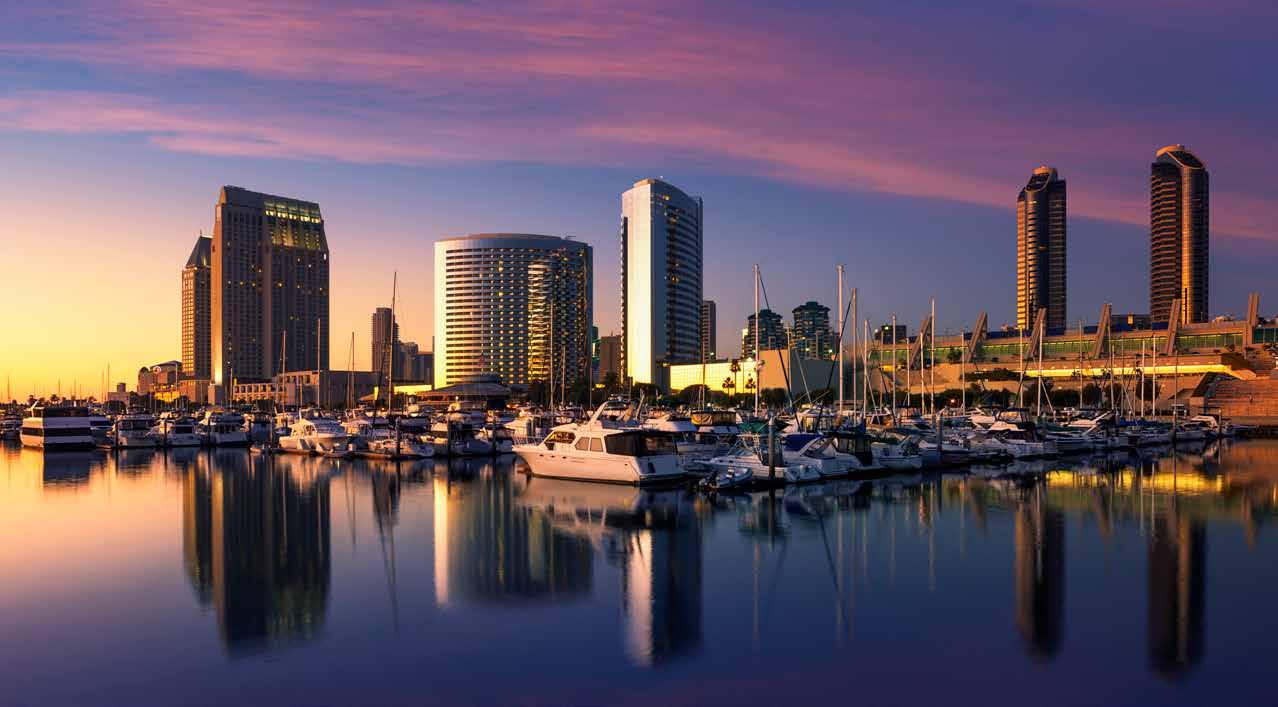
As a result, new wealth havens are gaining ground. Cities like Atlanta, San Diego, Nashville, Austin, Dubai, and European “Golden Visa” hubs like Lisbon are now holding their own alongside legacy markets, matching their historic resiliency in surprising ways.
WHAT MAKES A MARKET A WEALTH HAVEN?
In the simplest terms: resiliency. A resilient market consistently attracts high-net-worth buyers, retains long-term real estate value, and remains stable through economic cycles, while also demonstrating the ability to recover quickly from local impacts such as climate events like fres, fooding, or earthquakes.
These are often places where demand from VHNW and UHNW buyers is both persistent and diversifed, drawing from local, national, and international pools. When we surveyed Luxury Property Specialists for this report, the majority of them noted that resilient markets tend to attract a high volume of cash buyers who are less affected by market conditions or interest rates, and beneft from high equity positions in existing homes.
The same surveyed Luxury Property Specialists also emphasized the scarcity of luxury home supply. With high barriers to new development and limited current or future turnkey inventory, these markets maintain stability through sustained competition — conditions that keep upward pressure on prices across buyer segments.
They are further strengthened by robust local economies with strong employment, diverse industries, major universities and

hospitals, and highly rated public-school systems — all of which support long-term housing demand.
Lifestyle and location advantages are equally important. Many of these markets offer unique draws such as waterfront or oceanfront settings, resort-style amenities, cultural and culinary appeal, proximity to major global cities, or highly desirable climates. Often they are also supported by policy and tax environments viewed as favorable to the wealthy.
In general, wealth havens continue to outperform, retain desirability over time, and recover more quickly regardless of macroeconomic conditions.
WHAT’S DIFFERENT NOW?
Global economic and geopolitical volatility — from trade tensions and protectionist policies to shifting tax and regulatory environments — has made uncertainty a structural feature of today’s luxury residential landscape. Deglobalization, increased political risk, and persistently high interest rates have also dampened cross-border investment in some locations.
While high-net-worth individuals may be generally insulated from this kind of uncertainty, they are still highly attuned to market swings and policy shifts and will look for ways to mitigate their risk. The diversifcation that insulates them is the very same instinct that pushes them to diversify even further. And now, that includes where they choose to live.
Mobility has become a hedge.”
— MICHAEL ALTNEU, VICE PRESIDENT OF GLOBAL LUXURY AT COLDWELL BANKER

Legacy markets will always set the benchmark for resilience, but rising wealth migration is starting to widen the playing feld. Henley & Partners’ Private Wealth Migration Report 20251 shows that high-net-worth migration has substantially increased since 2013, and is expected to accelerate again in 2026. Jurisdictions
more recently viewed as less favorable to wealth — such as the United Kingdom — are seeing increased outfows. Meanwhile, afuent families are gravitating toward destinations like the UAE, the United States, Italy, Switzerland, and Saudi Arabia, which Henley ranks among the top global magnets for migrating millionaires.
“Mobility has become a hedge,” explains Michael Altneu, vice president of Global Luxury at Coldwell Banker. “Most afuent individuals could always live anywhere, and now they’re using that mobility to create more fexibility for themselves. It’s not just about tax benefts or wealth preservation — they’re also thinking about dual citizenship, political stability, climate, safety, and lifestyle.”
Against this backdrop, cities with strong fundamentals — limited property supply, cultural vibrancy, lifestyle appeal, and worldrecognized prestige — are best positioned to withstand volatility and continue attracting global capital even when conditions tighten.
While the policy landscape remains fuid, cautious optimism persists. Nearly 80% of surveyed Luxury Property Specialists — whether they were from Manhattan, Palm Springs, Rome, or Dubai — described their local luxury markets as “resilient.” Afuent buyers continue to view property as both a secure fnancial asset and an expression of lifestyle, often anchoring globally diversifed portfolios. Heading into the second half of the year, confdence will be the defning driver, with wealthy individuals taking a pragmatic, long-term approach to wealth preservation.
global wealth migration: Number of millionaires moving to a new country each year
Source: Henley & Partners
UNITED STATES
Generatonal tech wealth, scarce buildable land, top schools, and tghtly controlled development maintain resilience despite tech-cycle shifs.
A supply-constrained, lifestyle-driven market defined by privacy, natural beauty, and cash-heavy buyers insulated from macro volatlity.
A global wealth hub anchored by finance, culture, and media, with enduring internatonal demand and permanently constrained prime inventory.
(Beverly Hills, Bel Air, Malibu) Lifestyle, privacy, and entertainment-industry wealth power L.A.’s prestge, where trophy propertes and limited ultra-prime supply sustain long-term demand.
Ultra-low inventory, legacy wealth, and a favorable tax environment make it one of the naton’s most stable enclaves for UHNW buyers.
Wealth havens are “sticky”: owners hold longer, sell less, and often buy more when conditions soften, reinforcing long-term property values.
A global gateway with tax advantages, multcultural appeal, and corporate in-migraton that contnue to support strong price durability.
Proximity to NYC, strict zoning, and generatonal ownership keep supply tght and values protected across economic cycles.
NEW YORK CITY
ASPEN
PALM BEACH
LOS ANGELES
MIAMI & MIAMI BEACH
THE HAMPTONS
SAN FRANCISCO
INTERNATIONAL
A global wealth haven with deep liquidity, strong legal protectons, and enduring internatonal status.
Heritage architecture, cultural prestge, and extreme scarcity in historic arrondissements support long-term value.
Hyper-limited land, tax advantages, and extreme exclusivity make Monaco one of the world’s most secure wealth havens.
Despite macro shifs, limited land, and entrenched regional wealth keep ultra-prime demand resilient.
Tax benefits, world-class infrastructure, and global lifestyle appeal contnue to atract UHNW buyers from Europe, Asia, and the Middle East.
Politcal stability, financial strength, and high barriers to foreign ownership make it Asia’s most reliable wealth hub.
Limited coastal land, strong domestc wealth, and coveted harborside neighborhoods support lastng premium value.
THE ORIGINAL WEALTH HAVENS | KEY DRIVERS
Global Recogni on & Pres ge. These ci es are luxury “brands” with las ng cultural and social capital.
Persistent Domes c + Interna onal Demand. A diversified buyer pool stabilizes markets when one region slows.
Centers of Wealth Crea on. Anchored by finance, tech, media, entrepreneurship, or innova on ecosystems.
Long-Term Asset Stability. Prime real estate func ons as longterm wealth preserva on for UHNW buyers.
Lifestyle & Cultural Ecosystems. World-class dining, arts, wellness, recrea on, educa on, and healthcare.
High Concentra on of Ultra-Prime Property. Trophy homes with rarity, architectural significance, or iconic loca ons.
Strong Legal & Ownership Security. Transparent systems and trusted rule of law a ract global capital.
Legacy Ownership. Homes held across genera ons reduce turnover and stabilize pricing.
Iden ty Alignment. Buyers choose these markets because they reflect their aspira ons and lifestyle.
Supply Scarcity & Development Barriers. Geographic or regulatory constraints ensure limited future inventory.
PARIS
DUBAI
HONG KONG
SINGAPORE
SYDNEY
MONACO
THE NEW CLASS OF WEALTH HAVENS
If global wealth migration trends continue, they will increasingly shape which cities emerge on the map. Understanding these movements starts with examining the foundations of the world’s most enduring luxury markets — i.e., the traits that help them hold value, attract afuent buyers, and perform consistently through cycles.
These same characteristics are now emerging in a new set of destinations: places beginning to show the core markers of longterm resilience.
Guided by these parameters and supported by data from the Institute for Luxury Home Marketing (“the Institute”), the National Association of REALTORS® (NAR), and other third-party sources, we identifed the next resilient, high-demand markets that are showing characteristics associated with resilience and may be worth watching as potential future wealth havens.
U.S.A.
As one of the world’s principal destinations for migrating wealth, the United States remains uniquely positioned to attract a new wave of afuent households in 2026. Yet, the true story lies not in the country as a whole, but in the select markets that continue to demonstrate the structural resilience luxury buyers increasingly seek.
A review of the Institute’s historical data reveals a cluster of U.S. cities that have shown remarkable consistency across three key indicators: rising median sold prices, sustained sales momentum, and a healthy fow of new inventory entering the market. These are signals where both buyers and sellers remain confdent — and where market fundamentals have stayed consistent even as broader economic conditions have been more volatile. Six markets, in particular, stood out for their resiliency: Minneapolis-St. Paul, Greater Atlanta, Dallas-Fort Worth, Nashville, Salt Lake City, and San Diego.
• Strong Economic Founda ons
• In-Migra on of Wealth
• Lifestyle and Amenity Appeal
• Limited Prime Supply or High Entry Barriers
• Tax Advantages
• Sense of Security
Across all six markets, median sold price growth from 2020-2025 has ranged from the mid-40% level to well over 90% in some cities, refecting enduring demand and long-term value retention. But more importantly, sales activity has also remained consistently positive over the past two to three years — a period when national trends were more uneven — underscoring the steady appetite luxury buyers continue to show in these cities.
Just as importantly, new inventory has continued to enter these markets at a reliable pace, indicating that sellers feel assured enough to list and that these regions offer sufcient depth of demand to absorb that supply. New inventory in all six markets has grown at a steady pace year-over-year for the past two years.
MINNEAPOLIS - ST. PAUL
GREATER ATLANTA
(The 2020–2022 period was excluded from analysis given the national inventory shortages that made those years atypical.)
What binds these destinations together is a shared alignment with what today’s afuent consumers prioritize. In some cities — such as Minneapolis-St. Paul, Atlanta, and Dallas — buyers are drawn to the value equation: more space, newer construction, and premium amenities at price points that stretch further than coastal hubs. In others, like Nashville and Salt Lake City, cultural vibrancy, lifestyle appeal, and economic opportunity, continue to attract a steady fow of high-earning professionals. And in places such as San Diego, geographic scarcity and an exceptional quality of life continue to support strong luxury demand.
Three of the six standouts sit in the Sun Belt, also reinforcing the region’s staying power as a magnet for afuent households seeking better quality of life and more space for the value. These are the U.S. destinations that could exhibit the greatest potential as America’s next luxury wealth havens.
Outside of these six, several other U.S. markets are beginning to show similar early-stage resilience. Markets to watch over the next year include Park City, Napa Valley, Silicon Valley, Denver, Scottsdale, Connecticut’s coastal enclaves (Greenwich, Westport, New Haven), and Westfeld, New Jersey. Each offers a mix of strong historical luxury demand, quality-of-life appeal, and proven long-term value.
BEYOND THE U.S.
While the United States remains one of the world’s top destinations for migrating wealth, it is far from alone in attracting the attention of globally mobile high-net-worth individuals. In fact, Henley & Partners’ Private Wealth Migration Report 2025 shows that large-scale wealth movement is reshaping demand patterns well beyond U.S. borders. Although we do not have comparable real estate market data for these regions, global migration fows provide valuable insight into which countries may be cultivating the kinds of economic, lifestyle, and policy environments that afuent households increasingly seek.
Across Europe, for example, traditional wealth hubs are undergoing signifcant transition. The United Kingdom continues to see notable outfows, and — for the frst time — major EU economies such as France, Spain, and Germany are also projected to record net HNWI losses in 2025, according to Henley. On the other hand, the following countries are fast becoming the new centers of gravity for wealth migration in Europe: Poland, Italy, Portugal, Switzerland, and Greece, thanks to their favorable tax regimes, lifestyle appeal, and well-established investment-migration pathways. Even smaller nations such as Montenegro, Malta, and Latvia are topping the list of Europe’s fastest-growing wealth hubs.
world's fastest growing wealth markets
Source: Henley & Partners’ Private Wealth Migration Report 2025
Beyond Europe, migration patterns point to a diverse landscape of rising global wealth havens. The UAE continues to lead the world in attracting wealthy newcomers, while Saudi Arabia is experiencing one of the fastest-growing infows as returning nationals and international investors settle in Riyadh and Jeddah. In Asia, Thailand is positioning itself as a new regional alternative to Singapore, and Hong Kong and Japan are both seeing renewed interest from afuent households across the continent. Meanwhile, destinations such as Costa Rica, Panama, the Cayman Islands, and Mauritius are drawing record numbers of globally mobile individuals seeking stability, lifestyle quality, and strategic geographic positioning.
These global movements show that wealth is fowing toward jurisdictions that combine stability, opportunity, and quality of life. These signals often precede renewed economic confdence and long-term investment interest.
TOMORROW’S WEALTH HAVENS
While prestige, cultural capital, and coastal glamour still matter, the next generation of afuent buyers led by Gen X, millennials, and Gen Z are setting new standards for what makes a luxury market truly desirable and resilient over time.
Future buyers will likely be prioritizing wellbeing, access to
nature, and lifestyle-rich environments just as much as the status associated with legacy cities. Climate selectivity is becoming a hallmark of wealth haven thinking, with afuent households gravitating toward locales offering environmental resilience, such as clean air, sustainable infrastructure, water security, and, increasingly, mountain or freshwater settings over traditional oceanfront. Tax optimization and global mobility remain foundational pillars of wealth haven strategy. Wealth preservation and personal security are also rising in importance, fueling demand for multi-jurisdictional living arrangements, second citizenships, trust-friendly environments, and markets with favorable tax and capital gains structures. Safety and geopolitical hedging round out the new calculus.
Expect real estate portfolios to grow in this globally fuid environment. Henley & Partners’ Private Wealth Migration Report 2025 notes that high-net-worth families are increasingly expected to maintain three or more residences. Each property would ft a distinct role within their broader wealth strategy: perhaps an urban base, a resort retreat close to nature, and an international escape outside their home country.
These evolving priorities suggest that the next generation of wealth haven markets will be evaluated through a much broader, more multidimensional lens.
of THE AGE 4 TREND Inheritance
How the largest intergenera onal transfer of assets in history could redefine luxury real estate.
$1M-$5M - High-Net-Worth (HNW)
$5M-$30M - Very-High-Net-Worth (VHNW)
$30M+ - Ultra-High-Net-Worth (UNHW)
$100M+ - Centimillionaires
Ahistoric shift in wealth is underway. Over the next decade, Baby Boomers and older generations are expected to pass down trillions in assets to their heirs — an unprecedented transfer that will reshape not only global fnance but also the future of luxury real estate.
Altrata has reported that trillions of dollars will move between generations in the coming decade. A sizable portion of that inheritance will fow to younger generations — particularly Gen X, millennials, and the frst wave of Gen Z wealth recipients — transforming them into an increasingly infuential client base in the luxury market.
The next decade may see wealth redistributed not just across generations, but across new markets and mindsets. As newly
afuent heirs begin to deploy capital in the coming years, their investment preferences, lifestyle values, and geographic mobility are expected to reshape the defnition of “luxury” itself.
To further examine the impact of the Great Wealth Transfer (or as it’s sometimes called the "Silver Tsunami"), we looked to Altrata’s data powered by Wealth-X for insight. Our analysis explores how the transfer of wealth distribution differs across wealth tiers and by region (U.S. vs. rest of world), how much inherited capital could fow into real estate, and how younger inheritors’ priorities could shift luxury property demand.
WHERE THE WEALTH IS COMING FROM
According to Altrata’s 2024 Family Wealth Transfer Report,1 roughly 1.2 million individuals with a net worth of $5 million or more were projected to collectively pass down nearly $31 trillion over the next decade. By 2025, Altrata revised that estimate upward to $38.3 trillion expected to change hands globally within the same timeframe.
But this enormous exchange won’t unfold evenly across wealth tiers or geography. Of that $38.3 trillion total, the United States
Source: WealthX, an Altrata Company, 2025
will account for $17.3 trillion, while the rest of the world (ROW) — led by Europe and other mature economies — will total nearly $21 trillion. Individuals with $100 million+ in net worth, or centimillionaires, will dominate the transfer, representing roughly 44.1% of the global total.
In the U.S., households with $5-$30 million in assets are expected to pass down approximately $6.6 trillion over the next decade, while those in the $30-$100 million range will transfer about $3.2 trillion. U.S. centimillionaires are expected to pass nearly $7.5 trillion — bringing the total U.S. wealth transfer to $17.3 trillion.
Internationally, the $5-$30 million cohort will transfer roughly $7.1 trillion, those with $30-$100 million will pass $4.5 trillion, and the $100 million+ group is projected to transfer $9.4 trillion. In total, that represents nearly $21 trillion across the rest of the world.
Nearly half of all global wealth passed in the next decade will come from centimillionaire families alone — despite VHNW households making up a far larger share of the population. It shows that the Great Wealth Transfer will remain highly concentrated, with a relatively small number of estates accounting for a signifcant share of the total wealth passed down to the next generations.
HOW WEALTH WILL BE DISTRIBUTED
The Great Wealth Transfer is not just about who gets the money; it’s also about how it’s distributed, where it’s concentrated, and what kind of opportunities in real estate it will create.
In the U.S., the wealth transfer will be powered by a wider swath of VHNW individuals, many of whom have built frst-generation wealth through entrepreneurship, real estate, and technology. This broader base could widen the circle of afuence, increase liquidity in mid- to upper-tier real estate, and fuel a more diverse pool of next-generation investors and business owners. The American
wealth transfer in the
The next decade will see a historic wave of wealth transfer from older high-networth individuals to heirs and charities.”
— MAEEN SHABAN, DIRECTOR OF RESEARCH AT ALTRATA
system has historically been more “democratized” within its upper tiers, so inheritance here is expected to spread wealth horizontally rather than concentrate it vertically.
Across Europe and Asia, however, the pattern reverses. In Europe, old generational wealth remains entrenched in family estates, vineyards, and businesses that pass intact through succession, reinforcing legacy ownership structures. In Asia, much of the wealth is still frst-generation — built in the past 30 years through technology, real estate, and manufacturing — and will now begin to consolidate within ultra-high-net-worth families. Both trends suggest that in many international markets, the wealth transfer may further concentrate capital within established family networks, preserving legacy holdings and reinforcing the continuity of long-standing wealth structures.
SPLITTING HEIRS
Most of that capital will fow to Generation X, millennials, and Generation Z, who together are projected to receive 95% of inherited wealth, according to Capgemini Research Institute’s World Wealth Report 2025.2 Millennials will be inheriting the most of any generation over the course of the next 25 years, but Gen X will be frst in line. They stand to inherit the greatest portion of assets in the next 10 years, per research from Cerulli Associates.3 That view is echoed by Altrata’s 2024 Family Wealth Transfer
Report,4 which found that in North America, the average age of heirs is frmly Gen X: 46.1 years for children inheriting from ultrawealthy parents ($30M+) and 47.6 years for heirs of the very wealthy ($5M-$30M).
“Millennials and Gen Z tend to get all of the buzz in conversations about the next generation of luxury, but the truth is, Gen X will be frst in line,” Maeen Shaban, Altrata’s Director of Research, told us. “Most Baby Boomer heirs today are in their mid-to-late 40s, while younger generations are more likely to inherit from grandparents — and those are often smaller legacies than those passed directly from parents.”
With Gen X set to inherit frst, they’re poised to radically reshape luxury real estate as they tilt their capital toward more digital, purpose-driven, and globally diversifed portfolios. “Members of Gen X, on the whole, tend to be pragmatic and strategic,” says Shaban, noting that many fall into the so-called “Sandwich Generation” who are fnancially supporting their children while also caring for aging parents. “In real estate, that might translate to a greater focus on multi-generational properties, homes with sustainable or smart technology features, or investments in emerging destinations that offer them both lifestyle advantages and risk diversifcation.”
Another dimension of the Great Wealth Transfer that often goes overlooked is the intra-generational exchange of wealth between spouses. According to Cerulli’s5 research, an estimated $54 trillion will pass between partners by 2048 — with roughly $40 trillion expected to go to widowed women from the Baby Boomer and older generations.
Cerulli data notes that afuent “women tend to be more inclined than men to prioritize philanthropic and sustainability goals.” As these preferences shape how they invest and steward new wealth, they’re also likely to infuence how and where they choose to live. Covered in the Coldwell Banker Global Luxury® 2024 Trend Report,6 these “she-elites” tend to favor properties that combine fnancial security with personal and family-oriented benefts, from community safety and sustainable features to proximity to good schools, friends, and family.7 These decision drivers could reverberate across the luxury real estate market, particularly as the next decade brings a wave of newly afuent women entering the space for the frst time.
WHERE THE WEALTH WILL GO
How wealth is ultimately transferred — whether during one’s lifetime or through inheritance following death — and how it’s managed afterward remain some of the most complex questions facing today’s afuent families. The Altrata 2024 Family Wealth Transfer Report8 notes that these transitions often straddle fnancial, legal, and emotional dimensions.
For afuent families, particularly those at the UHNW level, the logistics of securing an intergenerational legacy are uniquely intricate and complex. Many of these families are global citizens, with properties, businesses, and investments spread across multiple countries, each with its own legal and tax structures.
As Shaban explains, “Family dynamics are one of the biggest hurdles in any wealth transition. Differing worldviews, business philosophies, and legacy goals between generations can complicate succession planning.” These challenges are also unfolding against an increasingly complex global backdrop of “more frequent geopolitical confict, rising political populism, heightened trade restrictions, widespread anti-elite and antiimmigrant sentiment, more extreme climate events, and growing fscal pressures from aging populations,” Altrata’s report continued. “It’s rarely just the handover of assets,” adds Shaban. “It’s also the transfer of values.”
Source: Altrata’s 2024 Family Wealth Transfer Report
THE GREAT VALUES TRANSFER
While older generations may lay the foundation for their legacy, it’s the heirs who ultimately shape where it goes next. And that’s where generational differences come into play.
When it comes to investing and wealth preservation, Baby Boomers tend to focus on security (i.e., preserving wealth to ensure stability for future generations). By contrast, the younger generation of afuent individuals are more growth-oriented, willing to take calculated risks and allocate capital toward higherperforming asset classes and niche opportunities.
Younger generations also tend to approach philanthropy and investing through a more values-driven lens, placing greater emphasis on social justice, environmental impact, and sustainability. They show increased interest in healthcare innovation and medical research, according to Altrata, and tend to favor digital-frst service experiences that make their lives easier. The question, then, is how these shifting priorities translate into real estate decision-making.
REAL ESTATE ALLOCATION
According to Altrata, real estate accounts for roughly 12% of the $38.3 trillion expected to change hands — equal to about $4.6 trillion globally. Of that, the U.S. represents nearly $2.4 trillion,
GLOBAL REAL ESTATE WEALTH TRANSFER BY WEALTH TIER
Source: WealthX, an Altrata Company, 2025
ESTIMATED REAL ESTATE WEALTH TRANSFER IN THE NEXT 10 YEARS ($BN)
$2,385.3
$5m-$30m
$30m-$100m
$100m+
and the rest of the world $2.2 trillion. The majority (67.5%) of this property wealth will come from the VHNW cohort ($5-$30 million).
This segment will transfer the most property proportionally — about 22.7% of their total wealth — compared with 10.7% for the $30-$100 million UHNW group and just under 4% for centimillionaires, whose assets skew toward businesses and fnancial investments.
HOW HEIRS WILL SHAPE THE PROPERTY MARKET
A major reshufing of property ownership among the afuent could be on the horizon, as prime residences and estates change hands over the next decade. Some heirs may choose to sell or downsize inherited properties, while others will reinvest proceeds to enter — or move up within — the luxury market. That shift matters, Shaban points out, “because younger generations already dedicate a far larger share of their wealth to real estate — 12% to 24%, compared with just 4% to 6% among older peers.” Gen Z has also demonstrated a greater desire for homeownership compared to their millennial peers when they were in the same age bracket. Additionally, their consumption and housing choices will likely track with their values — favoring ESG-aligned (environmental, social, and governance) investments, global diversifcation, technology, and a strong focus on health and wellness.
BEHAVIORAL SHIFTS BY WEALTH TIER AND REGION
In the U.S., Altrata’s Wealth-X data suggests that VHNW heirs will drive the bulk of real estate turnover (65.7%, or $1.57 trillion). Many in this group may choose to retain primary homes but sell secondary or trophy properties to streamline portfolios or generate liquidity. According to Shaban, “These buyers often show
$2,222.3
$5m-$30m
$30m-$100m
$100m+
interest in turnkey luxury residences and branded properties, with some showing an appetite for renovation-ready investments that balance usability with potential returns.”
U.S. REAL ESTATE WEALTH TRANSFER BY WEALTH TIER
Source: WealthX, an Altrata Company, 2025
United States
Rest of the World
Source: WealthX, an Altrata Company, 2025
For the UHNW cohort (17.8%, or roughly $425 billion), inherited real estate is likely to be approached with a more strategic lens. “This segment tends to balance lifestyle needs with portfolio considerations,” Shaban explains. “We may continue to see demand for high-end suburban estates, trophy second homes, and cross-border diversifcation, often executed through private transactions or branded developments.”
At the top of the spectrum, centimillionaires (16.5%, or about $395 billion) have historically treated prime real estate as both a lifestyle asset and a long-term store of value. Their decisions often refect portfolio rebalancing rather than fnancial necessity. “This group has typically shown interest in ultra-private estates, pied-à-terres, and other trophy properties — both in traditional hubs and select emerging destinations,” notes Shaban.
Across the rest of the world, similar patterns appear — though shaped by local customs and regulatory environments. “In Europe, there is a strong inclination to preserve legacy estates,” Shaban says, “while many Asian heirs explore international diversifcation or occasionally liquidate inherited assets to support new ventures.” Trophy apartments, branded residences, and secure compounds tend to be consistent points of interest among the global centimillionaire set.
REST OF THE WORLD REAL ESTATE WEALTH TRANSFER BY WEALTH TIER
WHAT IT MEANS FOR LUXURY REAL ESTATE
Given the scale of the upcoming wealth transfer, its impact could ripple through the luxury real estate market — whether it’s boosting inventory levels or shifting demand across price tiers, property types, and coveted lifestyle destinations.
Based on Altrata’s analysis, Shaban notes that real estate professionals could see heightened turnover in many prime markets as assets move from one generation to the next. This could include activity in regions such as the U.S. Sunbelt, parts of coastal Europe, and various global resort hubs. In the U.S., leisure markets and gateway cities may continue to attract interest from domestic VHNW heirs, while some Asian UHNW heirs are expected to remain active in trophy markets like New York, London, Miami, Los Angeles, Geneva, and Dubai.
“The net effect is that luxury housing supply could rise,” he explains. “But demand may also stay resilient, as many nextgeneration high-net-worth buyers tend to prioritize lifestyle factors and real-asset ownership.”
Over the next decade, wealth transfers could support stronger mid-market luxury activity in the U.S., particularly within the $3-$10 million property range. A broader base of afuent heirs may pursue upgrades, second homes, or suburban luxury options. Internationally, the ultra-prime segment ($25-$50 million+) is likely to remain concentrated among long-established UHNW families,
Source: WealthX, an Altrata Company, 2025
which may help maintain exclusivity and pricing at the top end of the market.
Across regions, afuent buyers are generally expected to prioritize wellness features, privacy, security, home-ofce capabilities, and high-service amenities. Properties that blend lifestyle appeal with some degree of income or investment potential are forecasted to remain attractive to VHNW and UHNW buyers. Centimillionaires will likely gravitate toward what Knight-Frank calls “high-value collectible assets” — those properties offering privacy, prestige, and wealth preservation.
Family ofces and private advisors may also play a larger role in managing these intergenerational transitions, particularly for UHNW clients who tend to hold real estate as a means of preserving purchasing power and ensuring longer-term stability. As more transfers are facilitated through trusts, private structures, and off-market channels, “public listings may decline — while discreet, high-value transactions and private brokerage activity could increase,” imagines Shaban.
A NEW LEGACY OF INFLUENCE
The Great Wealth Transfer represents more than just the historic passing of fnancial capital from one generation to the next; it marks the transfer of infuence. With a different set of values, investment strategies, and standards of living, the new heirs will reshape the direction — and the defnition — of luxury itself.

Family Office Management of Private Residential Properties | Main Objectives
Family Use and Legacy 44%
Capital Preservaton 29%
Diversificaton 20%
Potental Rental Income 7%
Source: Knight-Frank Wealth Report 2025
Luxury real estate professionals who understand the nuances of this major generational shift will be best positioned to help their afuent clients carry their legacies forward — and, in doing so, will cement their own.
CONSUMER TRENDS 5 TREND
Drive
Customiza on
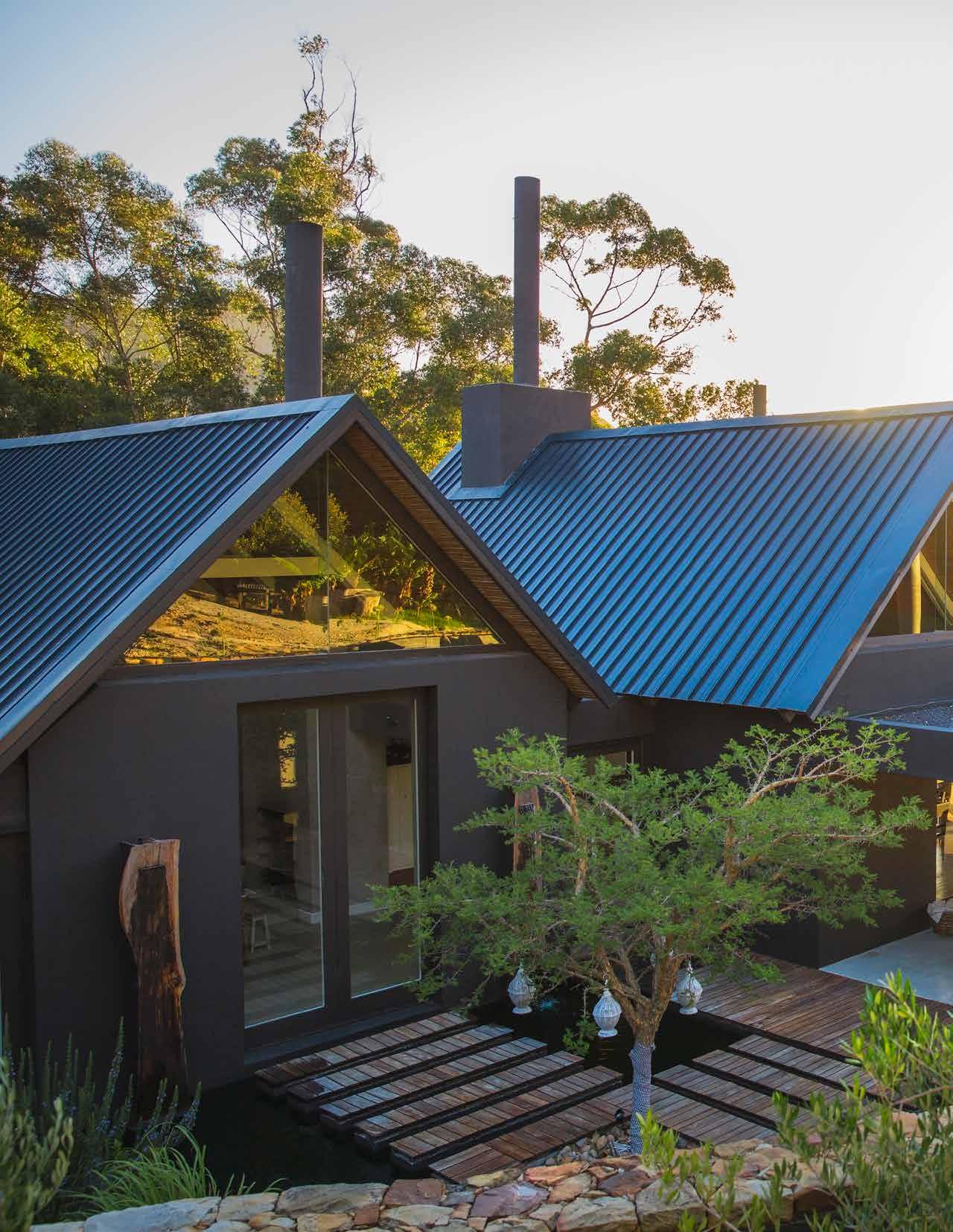
A luent buyers are leaning into “nest inves ng.” With prices high and turnkey op ons scarce, could unrenovated homes in prime loca ons be the next smart play?
VHNW - Net worth between $5 million and $30 million
UHNW - Net worth $30 million+
If 2024 was a year of spending restraint for the world’s wealthiest individuals, then 2025 marked the return of intentional spending. But instead of turning to purchases like cars or couture, they shifted their focus homeward, according to new Wealth-X data prepared by Altrata.
Overall, Altrata found that luxury expenditure was projected to rise in 2025, with home-related spending growth on track to potentially outpace other top spending categories. Separately, we looked to independent insights from McKinsey & Company to help contextualize this trajectory and understand how afuent spending patterns are evolving, where “the home” now fts within that hierarchy, and how shifting consumer priorities intersect with today’s housing market forces.
THE STATE OF LUXURY SPENDING
According to Altrata, overall global luxury expenditures are expected to increase by approximately 4.6% in 2025, reversing the 1% decline recorded in 2024. The rebound is especially notable among the world’s wealthiest tiers: very-high-net-worth (VHNW) individuals are projected to boost their spending by 4.8%, from $355.5 billion in 2024 to $372.4 billion in 2025, while ultra-highnet-worth (UHNW) individuals are expected to see a 4.6% rise, from $421.7 billion to $441.1 billion.
The United States remains the global growth engine for luxury consumption, outpacing other regions with 5.8% growth among VHNW and 5.6% among UHNW individuals. By comparison, the rest of the world will see more moderate gains of around 4%.
FROM RESTRAINT TO REBOUND
Why did luxury spending soften in 2024? According to Maeen

Shaban, director of research for Altrata, infation and higher interest rates squeezed purchasing power, even among the afuent. Slower economic growth in Europe and Asia compounded the slowdown, while luxury brands — coming off an extraordinary post-pandemic boom — faced excess inventory and price fatigue. Consumers, responding to economic uncertainty, shifted focus from conspicuous goods toward experiences, long-term investments, and savings. China’s lingering travel restrictions further suppressed cross-border luxury purchases in key markets like Europe, the U.S., and Dubai.
By 2025, there was a growing perception of stabilizing conditions, which helped restore confdence and activity among some
Estimated Percentage Luxury Spend Increase | 2024 vs. 2025
Source: Wealth-X, An Altrata Company
high-net-worth individuals. Rising asset values in equities, private markets, and real estate bolstered wealth, while private banks and family ofces encouraged luxury purchases as part of diversifed portfolios.
THE U.S. FACTOR
The United States continues to drive global luxury growth1 thanks to its high concentration of wealthy individuals2 with liquid portfolios diversifed across equities, private markets, and real estate. A robust ecosystem of private banks, family ofces, and wealth advisors also supports this group, and helps make access to capital and luxury purchases more seamless.
“The depth and accessibility of luxury experiences within the U.S. also play a role,” notes Shaban. “From travel and hospitality to automobiles and high-end retail, afuent Americans have abundant opportunities to spend domestically. A large and growing ‘aspirational afuent’ segment has further fueled demand.”
HOMES, GOODS, AND AUTOMOBILES : HOW LUXURY SPENDING COMPARES ACROSS CATEGORIES
While home-related investment still represents a smaller share of overall luxury spending, it could become one of the fastestgrowing spending categories for both VHNW and UHNW individuals, particularly in the United States.
Luxury automobiles remain the largest category among the afuent, with total expenditures reaching $341.3 billion in 2024 — split between $177.1 billion from VHNW individuals and $164.2 billion from UHNW individuals. However, growth is expected to
Estimated Spending Increase 2024-2025 ($BN)
moderate in 2025, with global spending projected to rise just 4.2% to $355.7 billion.
Personal luxury goods, the second-largest category, also continued to perform strongly. At $153 billion in 2024, this segment is projected to grow 5.4% globally to $161.3 billion in 2025, with the U.S. again leading at 6.6% growth.
By contrast, Altrata projects a 4.8% annual increase globally on home-related spend, and 6.0% for U.S. individuals with a net worth above $5 million. The UHNW segment in the U.S., in particular, now spends 18.5% more on home luxuries than on personal goods. While projected growth may not yet outpace that of personal luxury goods, it still points to a meaningful shift in how afuent consumers are expected to prioritize their discretionary dollars.
The data shows that afuent consumers appear to be directing greater resources toward their homes — whether it’s in the form of design, furnishings, homewares, home technology, or domestic help. “Higher prices across goods and services, along with rising domestic stafng costs, are likely adding to total expenditures, as afuent households continue to invest in estate management and household operations that sustain a seamless lifestyle,” Shaban points out. But could the rise also signal a shift in how the afuent will be prioritizing their discretionary dollars in the future?
Today’s luxury consumers are not necessarily price-conscious, but quality-conscious.”
LUXURY SPENDING AND VALUE PERCEPTION CHANGES
While overall afuent spending has largely recovered from the dip in 2024, sentiment has not fully followed suit. According to McKinsey’s State of the Consumer 2025 report, the traditional link between sentiment and consumption has weakened. Amid infation, tariffs, and economic uncertainty, afuent consumers are re-evaluating notions of value and quality in the luxury sector. Many are making deliberate trade-offs, choosing to trade down in some categories while splurging in others, refecting a more purpose-driven approach to luxury.

As Colleen Baum, Senior Partner at McKinsey & Company, explains: “Today’s luxury consumers are not necessarily priceconscious, but quality-conscious. Prices of luxury goods are rising faster than what some purchasers feel they are worth, leading even some high-net-worth buyers to ask, ‘Does this still pass the reasonableness test?’ Even if they can afford it, they still want to be savvy shoppers.”
That mindset is particularly pronounced among younger afuent consumers — especially millennials and Gen Z who tend to be less status-driven and more value-oriented. “They’ll splurge when it makes sense on pieces that feel special or durable and save where they can’t see or feel a difference in quality,” she says. This high-low approach often shows up in afuent consumers pulling back on discretionary splurges — like clothing or cars — and redirecting their spending toward investments that enhance their quality of life, such as travel and real estate.
“What’s remained durable for this consumer is spending on experiences, particularly travel and dining, which continue to be resilient categories,” says Baum. “The second priority is home. Data consistently shows spending on the home as one of the most stable categories.”

CONSUMERS CONCERNED ABOUT RISING PRICES AND HOW THAT IMPACTS THEIR PLANS TO SPLURGE
Intend to splurge Do not intend to splurge
*EU-5 = France, Germany, Italy, Spain and UK
Source: McKinsey ConsumerWise Sentiment Survey, Q2 2025. Total Surveyed 25,998
top interests of affluent consumers
McKinsey & Company’s 2022 survey3 of upper-income millennials (household incomes above $100,000) supports this trend: nearly 45% said they would spend more on travel and vacations if their economic situation improves, followed closely by 38% who prioritized home purchase or renovation.
When asked about the top interests of their afuent clients, surveyed Coldwell Banker Global Luxury® Property Specialists also pointed to experience-driven passions: travel ranked frst by a wide margin (71.9%), followed by health and wellness (54.7%) and a near-three-way tie among technology, sports, and cuisine (all around 30%).
The alignment of priorities like experiences and home suggests that real estate itself may increasingly serve as both a lifestyle enhancer and an investment vehicle for the next generation of afuent consumers.
“Instead of buying more clothes or another car, they might say, ‘To feed my desire for travel, I’ll buy real estate in a destination location,’” imagines Baum. “Maybe they’ll purchase a home in a ski resort, and approach it strategically by renting it out to offset costs.”
Source: Coldwell Banker Global Luxury Survey, November 2025
Nest Investing – a personalized sanctuary that builds wealth.
NEST INVESTING
This value mindset could be another reason why home-related spending is climbing. For many afuent consumers, the home feels like the safest place to invest. Perhaps they’re channeling more of their wealth into design, furnishings, smart technology, and wellness features — because these investments enhance their everyday life and boost their property’s long-term value. Often described as “nest investing,” this approach satisfes two impulses: the emotional desire to create a personalized sanctuary and the rational pursuit of wealth building.
The idea of the home as both a refuge and a fnancial asset isn’t exactly new. The concept took root during the pandemic, when the home became the center of life, serving simultaneously as ofce, classroom, wellness retreat, and social hub. Its infuence has only deepened in the era of personalization, as luxury homeowners want thoughtfully designed environments that not only refect their unique tastes but also anticipate their every lifestyle need.
As Baum observes, “Today's luxury consumers are increasingly informed and imaginative, seeking distinctive, personalized solutions that refect their unique preferences, and driving demand for renovations and customizations."
TURNKEY DREAMS MEET MARKET REALITIES
Yet even as nest investing and personalization are important drivers, they’re balanced by an equally strong appetite for ease, comfort, and instant enjoyment. Combined with high expectations
around quality, design, and craftsmanship, this has fueled sustained demand for turnkey properties across the luxury market.
“For this consumer, turnkey is still preferred," says Baum - a sentiment that aligns with what many Luxury Property Specialists continue to see on the ground. Just over 30% said that move-in ready or new construction homes were the most sought-after among their clients, second only to properties in the best locations. Meanwhile 60.4% said buyers are more likely to view a home in need of a renovation as a deterrent.
Yet even as demand for the “have-it-all” property grows, supply has failed to keep pace. Inventory of turnkey homes remains constrained across many prime markets — a dynamic that has helped sustain high prices and ferce competition.
luxury buyers' view on homes ready for renovation
Source: Coldwell Banker Global Luxury Survey, November 2025
What happens when move-in-ready inventory isn’t available — or not available at their price point? And what if the homes within reach simply don’t meet their standards?
“They may be increasingly open to renovation as a path to achieving what they want,” Baum observes. “At what point does the desire for personalization outweigh the need for convenience or move-in readiness?”
ENTER THE CUSTOMIZABLE ESTATE
In the traditional real estate market, the fxer-upper has long been a proven pathway to value creation. Generations of homeowners have built wealth through this time-tested strategy: buy low, improve, sell high. But in the luxury sector, a different set of motivations drives behavior. As we’ve previously noted, afuent buyers are motivated not only by investment potential, but also by personalization, exclusivity, craftsmanship, emotional connection, and experiences.
The luxury counterpart to a fxer-upper could be thought of as the “customizable estate” — a property that combines creative freedom with potential fnancial upside. Remodeling or renovation may build instant equity and long-term value but also allows owners to tailor every detail to their aesthetic, wellness, and lifestyle ideals. For discerning or opportunistic buyers, this could represent the next great entry point into the evolving luxury market.
luxury buyers' preference for homes with 'good bones' in great locations
Surveyed Luxury Property Specialists are beginning to detect a subtle shift in this direction. Roughly 28.1% said they’re noticing a slight movement toward homes with “good bones” in desirable locations, even if they require renovation, while 30.2% said this trend is increasing noticeably. Buyers appear to be weighing longterm potential and personalization over immediate perfection.
Nearly 6 in 10 Luxury
Property
Specialists (58.3%) said they’re seeing at least some movement toward homes with “good bones” in desirable locations — even if they require renovation.
Somewhat – I’ve seen a slight shif in this directon No, buyer preferences are about the same as before No, most buyers stll prefer turnkey homes regardless of locaton
Source: Coldwell Banker Global Luxury Survey, November 2025
“With the uptick in wealth and the continued desire for ownership, we may be at a turning point where aspiration and reality diverge,” says Baum.
That opportunity may be signifcant. Nearly 32% of surveyed Luxury Property Specialists estimate that renovated or turnkey homes sell for 11-20% more than comparable properties requiring substantial updates. Another 25% report the gap can reach 21-30% — a double-digit differential that underscores the potential

Nearly 57% of surveyed Luxury Property Specialists said buyers will pay 11% to 30% more for turnkey properties.
upside for those willing to invest time, vision, and capital into transformation.
We know that today’s luxury consumers are more than willing to pay a premium when the perceived value is there. That same discerning mindset will continue to shape their property decisions, with turnkey homes likely at the top of their wish lists. However, the customizable estate could gain traction if current shifts in consumer mindset, spending behavior, and real estate market conditions hold.
THE BIGGER PICTURE
Should the customizable estate concept move from theory to reality, the implications for the greater luxury real estate market could be meaningful.
As afuent homeowners continue to reinvest in their homes, they’re raising the caliber of housing stock in their local luxury markets. In inventory-constrained areas, these improvements elevate property standards, maintain property values, and open new opportunities for resale. Continued reinvestment in property also strengthens overall confdence in real estate as an appreciating asset.
Ultimately, the next wave of luxury growth may not come from building new, but from reimagining what already exists. Luxury real estate professionals who see not just the home that is, but the home it could become may give their clients the edge.
Source: Coldwell Banker
6 TREND
LIVING
Large Beyond the Price Tag
For decades, price was shorthand for luxury. But in 2026, the real measure of luxury is having “more” — more space, more views, more privacy, and more flexibility.
While price point has long served as the industry’s easiest way to categorize the luxury sector, it has never fully refected how consumers defne luxury. And as the cost of entry rises, it’s becoming even more apparent that luxury can’t be captured by price alone.
What matters now is the experience a property can deliver. Afuent buyers now expect more from their homes than ever before: more bedrooms, more square footage, more fexibility. The pandemic was the catalyst for this shift. A practical need for more space gradually transformed into a defning expectation of the high-end market: the modern luxury home must support our multihyphenate lives. No longer simply places of shelter, properties must now simultaneously function as work hubs, creative studios, wellness retreats, gathering spaces, and increasingly multigenerational living environments.
It would be easy to assume the movement toward “living large” is simply another form of indulgence among the wealthiest classes, but the motivations behind it are far more intentional. Many afuent buyers today are practicing a kind of “informed abundance.” They’re not necessarily pursuing size for its own sake — it’s about the possibilities that additional space opens up for their lifestyle.
This informed abundance mindset is evident across property search behavior and sales activity. On leading global luxury marketplace, JamesEdition.com,1 inquiries for high-end properties rose 23% from 2024 to 2025 — with the strongest demand for larger homes, distinctive estates, and land. As Eric Finnas
Dahlstrom, CEO of JamesEdition, explains: “Interest is being driven by how these spaces function in real life, from supporting hybrid work to accommodating multi-generational living. The demand refects a practical shift rather than a pursuit of size for its own sake.”
Data from the Institute for Luxury Home Marketing (“the Institute”) tells a parallel story: the average single-family property sold in 2025 was almost double the size of a typical newly built singlefamily home.2 Coldwell Banker Global Luxury® Property Specialists echo these trends, reporting that minimum bedroom counts and amenities beyond the four walls remain top client priorities.
23 %
Inquiries for high-end proper tes rose 23% YOY globally
In the pages ahead, we trace how the desire for more is unfolding across the luxury real estate market as afuent buyers move from online searches to working with agents and making fnal purchase decisions.
PROPERTY TYPES IN MOST DEMAND
Across JamesEdition’s global luxury property marketplace (where listings start at €500,000,* or roughly $580,000 USD), detached homes and villas remain the dominant draw, capturing 66.2% of all inquiries. Yet the demand inside this segment is evolving. Overall
interest in detached homes rose 15% between 2024 and 2025, although their share of total inquiries slipped slightly (-4.2%) as other property types grew at a faster pace.
A closer look reveals striking shifts within the detached category itself. Inquiries for unique estates surged by 78.3%, while castlestyle residences climbed 35%. Although these niche segments still represent less than 3% of the broader detached category, their share gains (45.8% and 10.4% respectively) are notable, particularly given the overall softening of the segment’s market share.
Interest in land also accelerated, with absolute inquiries up 38.2% and market share rising 13.0%. This underscores a clear preference among afuent buyers for space and fexibility. Private islands experienced a modest uptick in total inquiries as well, though they ceded some relative share.
These trends point to a growing appetite for properties that provide privacy, expansive surroundings, and the potential to build, expand, or preserve as long-term legacy assets.
Nowhere is this more visible than in South Florida, fast becoming one of the world’s most active ultra-luxury markets. In 2025, at least three properties over $100 million came to market. The Jills Zeder Group, afliated with the Coldwell Banker Realty ofces in Miami Beach and Coral Gables, holds one of these trophy listings — a $200 million, as-yet-to-be completed Ferris Rafauli-designed masterpiece on Indian Creek Island. Listing agents with The Jills Zeder Group note that the scarcity of properties with these attributes makes them especially sought after among ultra-highnet-worth buyers. “These are the kinds of legacy estates people buy and hold onto for generations,” says Coldwell Banker Global Luxury Property Specialist Danny Hertzberg
Attached properties — including apartments, condos, and townhomes — also posted a 31.8% increase after trending downward in 2024. This shift could point to renewed confdence in urban luxury markets, particularly among buyers seeking largerformat units with multiple bedrooms.
Source: JamesEdition.com 2025
All of this data hints at a bifurcation in luxury property preferences: some buyers are prioritizing the space and autonomy of detached living and unique properties, while others are being drawn back to high-end urban lifestyles.
THE SWEET SPOT FOR BEDROOM COUNTS
Bedroom count, too, remains an important barometer of luxury. In single-family homes, 5+ bedroom homes account for 63.7% of all inquiries. Both 4-bedroom and 5-bedroom inquiries climbed yearover-year, with 5-bedroom inquiries rising 2.7% and 4-bedroom inquiries rising 4%, whereas interest for 3-bedroom homes trended down by 10%.
Growth of Inquiries for Single-Family Homes by Number of Bedrooms
Growth of Inquiries for attached properties by Number of Bedrooms
In the attached category, 3-bedroom properties are the sweet spot with the greatest volume of inquiries. But demand for 4+ bedroom properties is rising fastest, with 4-bedroom inquiries up 4.4% and 5-bedroom inquiries up 4.1%. Meanwhile, interest in properties with 2 bedrooms or less fell by 8.8% year-over-year.
Surveyed Luxury Property Specialists confrmed that higher bedroom counts remain a top priority for their luxury clients. Nearly four in ten said that a minimum number of bedrooms and bathrooms is the single most “non-negotiable” feature for their clients after location.
These insights offer a clear picture of what buyers say they want — but do those preferences show up in actual purchases? To answer
Source:
2025
that, we examined the 2025 sales data compiled by the Institute. According to their numbers, the average luxury single-family home sold in 2025 featured 4.4 bedrooms. Those totals fall just shy of the fve-bedroom preference seen in JamesEdition searches. These fndings suggest that buyers looking for single-family homes may be willing to compromise on exact bedroom counts when other wish list items, such as amenities, layout, design quality, or location, are met.
JamesEdition.com
JamesEdition.com 2025
non-negotiable features for luxury buyers
Minimum # bedrooms/baths
Source: Coldwell Banker Global Luxury Survey, November 2025
However, three bedrooms have clearly become the minimum benchmark for luxury buyers in the attached sector. The Institute found that attached properties averaged 3.0 bedrooms, tracking with JamesEdition’s search trends.
SUPER - SIZED SQUARE FOOTAGES
Square footage tells another story. In 2025, the Institute found that the average luxury single-family home measured just over 4,250 square feet. This is nearly double the size of the average new single-family home (2,364 square feet), per a second-quarter 2025 analysis by Census Quarterly Starts and Completions by Purpose and Design and the National Association of Home Builders (NAHB).3 Attached luxury residences averaged around 2,450 square feet — 35% higher than even the average detached home in the broader market.
All of these fndings point to a consistent theme: spaciousness remains a core marker of luxury, regardless of the property category. However, they also expose how sharply the luxury market can diverge from the mainstream — particularly in a segment where buyers are more insulated from affordability pressures, rate movements, and broader economic swings.
Average Home Size: Luxury vs. Traditional
4,250 SQ. FT.
Single-Family Homes
2,364 SQ. FT.
2,450 SQ. FT.
1,800
Source: Institute for Luxury Home Marketing & NAR
SIZE : THE GREAT LUXURY DIVIDE
It was not long ago when “less is more” dominated the housing conversation. Quiet luxury was the buzzword, and buyers across the broader market were gravitating toward smaller homes.
NAHB’s 2024 “What Buyers Really Want” survey4 found that while buyers say they want more space than they currently have (a median of 1,802 square feet), their desired home size — just over 2,000 square feet — is actually about 200 square feet less than what buyers wanted two decades ago.
In 2024, the National Association of REALTORS® (NAR)5 put the median existing-home size at around 1,900 square feet. More recently, in the second quarter of 2025, a Census Quarterly Starts and Completions by Purpose and Design6 and NAHB analysis found that the median single-family square foor area was slightly higher at 2,125 square feet — but it was a decline from the start of the year. NAHB attributed size shifts to interest rate fuctuations. “Home size correspondingly increased in 2021 as interest rates reached historic lows,” wrote NAHB economist Robert Deitz in 2025.7 “However, as interest rates increased in 2022 and 2023, and housing affordability worsened, the demand for home size has trended lower.”
In contrast to the broader market, where rising costs tend to push buyers toward smaller homes, the data from JamesEdition and the Institute shows the opposite pattern at the high end. As demand has shifted toward larger and more distinctive properties, afuent buyers have demonstrated a growing willingness to spend more for the space and uniqueness they want.
LUXURY ISN’T A NUMBER
Price has long been a convenient way for the industry to draw a line around the luxury market. But as price thresholds have climbed dramatically over the past decade, that line has become increasingly blurry, exposing the limits of using cost alone to defne a luxury property.
The once-lofty $1 million benchmark no longer serves as the universal symbol of high-end living.”
— NATIONAL ASSOCIATION OF REALTORS®
For example, the $1 million mark served as the unofcial line separating luxury from the rest of the market for years. That’s no longer the case. According to the National Association of REALTORS® (NAR) and Realtor.com® , 8 a buyer in 2025 would now need to spend at least $1.3 million to enter the lowest tier of the luxury market — roughly three times the national median list price of $430,000. Historical data from the Institute also shows that the median price for properties in the top 10% of over 125 markets has ballooned by an average of 52-56% since 2020.
Beyond infation, rising luxury price thresholds also refect the premium buyers who are willing to pay for exceptional lifestyle attributes and the increasing rarity of properties that deliver them.
5.2%
Inquiries for homes priced €10 million plus rose 5.2% YOY globally
JamesEdition data suggests that as demand has shifted toward larger and more distinctive properties, afuent buyers have shown a greater willingness to spend more. Inquiries for homes priced above €10 million* (or roughly $11,728,500 USD) rose by 5.2% year over year, with detached homes up 6.7% and attached properties rising an impressive 17%. This growth at the uppermost end of the market signals continued appetite for rarity, privacy, and architectural signifcance — attributes that translate into both lifestyle satisfaction and long-term value.
Still, most luxury property interest remains concentrated within more moderate tiers on JamesEdition. For single-family homes, the majority of inquiries were for listings priced €2 million to €5 million (roughly $2,355,000 to $5.5 million USD), while attached properties saw the most demand in the €500,000 to €1 million range (about $540,000 to $1.1 million USD).
Growth of Property Inquiries for Single-Family Homes by Price Bracket ( € )
Growth of Property Inquiries for attached properties by Price Bracket ( € )
These data points reveal the proverbial “tale of two markets” — one where the ultra-wealthy pursue landmark estates and one where a broader pool of afuent consumers seek attainable luxury defned less by opulence and more by livability, design quality, and location.
THE SPACE PREMIUM
The market dynamics of the past few years have made price an increasingly unreliable marker of luxury. While consumer defnitions of luxury will continue to evolve, data from JamesEdition and the Institute offer a preview of what could lie ahead in 2026. Afuent buyers will likely continue prioritizing properties with larger formats — whether that means distinctive property types like estates and castles, or homes with ample square footage and generous bedroom counts that allow them to comfortably accommodate family and guests.
As Ben Bryk, an afliated agent with Coldwell Banker Realty in Vero Beach, Florida, states, “For most afuent buyers, it’s about lifestyle, not square footage. Of course, they still want to make sure it’s a smart fnancial decision.”
This trend toward informed abundance has laid the groundwork for a new blueprint for luxury living. Space, experience, and setting are the signals to buyers that they’ve entered the luxury realm long before they ever see the price tag. We take a closer look at this in the next trend.
Source: JamesEdition.com 2025
*JamesEdition reports pricing data in euros; euro-denominated values are used here for consistency, with approximate U.S. dollar equivalents provided.

7 INDIAN CREEK | INDIAN CREEK, FL
$200 MILLION
Represented by Jill, Danny & Hillary Hertzberg, The Jills Zeder Group, Coldwell Banker Realty
A near-completed architectural masterpiece by designer Ferris Rafauli, this Indian Creek Island estate sets a new standard for luxury living. Set on nearly two acres with 200 feet of Biscayne Bay frontage, it delivers monumental scale at 27,889 square feet, wide-open water views, and an immersive fve-star living experience: a private jazz lounge, double-height library with a hidden passage, 1,500-gallon aquarium, full spa with Himalayan salt-wall sauna, seven-car garage, and a 60-foot pool with a yachtready dock. It’s also the ultimate customizable estate (see Trend 3), offering the future buyer a rare opportunity to fnish it to their own specifcations.
7 TREND
NEW Blueprint for LUXURY LIVING
No single feature defines a modern luxury home. It’s the interplay of every element that elevates a property into something extraordinary in the eyes of today’s a luent buyer.
As afuent buyers increasingly demand more from their homes, they’re redefning luxury on their own terms — and with it, the blueprint for the modern luxury home.
Size still matters, but the experience a home offers may matter even more. As Valerie Vicente, Luxury Property Specialist with Coldwell Banker Realty in Danville, California, explains: “Buyers want to ‘live their best life.’ They work hard and they play hard, and creating a home where they can relax, enjoy, entertain, and accommodate multi-generational living or visiting is a priority. Their home becomes their sanctuary.”
Condition, design quality, and amenities all contribute to that sense of sanctuary. But what specifc qualities and features consistently check the boxes for today’s increasingly selective buyers?
To fnd out, we analyzed JamesEdition.com1 data, polled Coldwell Banker Global Luxury® Property Specialists, and reviewed Coldwell Banker’s 2025 sold data. What materialized is a picture of the property attributes that resonate most strongly for afuent buyers today, and a potential playbook for sellers considering a move in 2026.
Single-family homes now need a minimum of fve bedrooms; attached homes, at least three (as explored in Trend 6). Outdoor living is essential — whether that means a full backyard in the suburbs or a terrace in the city. Views are highly prized across all property types. Privacy remains non-negotiable. And turnkey homes with architectural pedigree continue to check the boxes for buyers, whether it’s a Spanish Mediterranean estate in California, a Colonial Revival in Connecticut, or contemporary designs just about anywhere. That’s only the start. Other features are quickly moving into must-have territory.
SETTING, THE STAGE
A property’s setting — its location, its views, its privacy, its surrounding environment — often shapes the frst and most lasting impression for buyers. But it’s also the one aspect that can’t be changed, making it one of the most enduring drivers of desirability and value.
Gym/ Wellness Center Home Theater 4 Bedrooms with Ensuites
Rec Room with Wet Bar/ Wine Storage
Pickleball Court
“High-net-worth buyers tend to zero in on established neighborhoods with strong reputations that match the lifestyle they want,” says Jade Mills, a Luxury Property Specialist with Coldwell Banker Realty in Beverly Hills. “For buyers at the ultraluxury level, it’s all about the special characteristics they want. They’re asking: ‘Does the home have forever views — those downtown-to-ocean sightlines in the hills or the open coastal views you might get in Malibu? Does it have acreage or fat land, which is very rare in L.A.? Is it truly private — set behind gates or hidden from the street? Does it have architectural pedigree? And is it in a location where the value is inherently protected and less vulnerable to market swings?’
Formal Living Room
3-Car Garage Private Space, i.e., Guest/In-Law Suite, Art Studio
Must-Have: Location
Nearly half of the surveyed Luxury Property Specialists said properties defned by location are the most in-demand among their clients — a reminder that in the upper tier of the market, no feature can compensate for the wrong address. Yet what distinguishes an extraordinary location from a merely good one is far more nuanced.
types of luxury properties in highest demand
Propertes based on locaton
Move-in ready or new constructon Proper
Source: Coldwell Banker Global Luxury Survey, November 2025
Must-Have: Views
Views play an outsized role in shaping desirability. According to surveyed Luxury Property Specialists, 21.6% said their afuent clients ranked views as their top non-negotiable after location.
“Views and location are still top priority for the luxury buyer,” says James Campbell, a Luxury Property Specialist with Coldwell Banker Realty in Seattle. “While they continue to do their own fnancial due diligence, the luxury buyer is still prioritizing remarkable views, location, and quality of the home.”
The desire for a visual connection to water — whether ocean, lake, or river — continues to factor heavily for many afuent buyers. According to JamesEdition’s data, water views rank among the second-most desired amenities globally. Coldwell Banker Global Luxury sold data shows how closely this desire tracks to market performance. More than half of all CBGL listings sold in 2025 featured a water view, while true waterfront properties accounted for just 14%. That rarity continues to command premium pricing and drive swift absorption in top coastal markets.
“True waterfront access is incredibly rare, and that scarcity continues to drive intense demand,” says Linda Skolnick, a Luxury Property Specialist with Coldwell Banker Realty in Westport, Connecticut.
Panoramic and scenic views also ranked No. 8 on JamesEdition’s amenity list, underscoring their appeal across a wide range of markets — from mountain destinations to cities where outlook and skyline matter.
Must-Have:
Privacy
Whether achieved through gated entries, mature landscaping, natural buffers, or generous setbacks, privacy has evolved from a preference to an expectation. In Coldwell Banker Global Luxury 2025 sold data, 45% of properties included references to privacy or private settings — a notable jump from 38% in 2024. Surveyed Luxury Property Specialists ranked privacy and security as the fourth most important non-negotiable for their clients.
Must-Have: Community
Beyond property lines, the surrounding community has also become a vital piece of the luxury equation. A desirable, welllocated residence today typically balances serenity with proximity to fne dining, culture, wellness, and education.
Top Non-Negotiable Property Features (Outside of Location)
Minimum number of bedrooms/bathrooms
Views
Architectural pedigree/ design quality
Privacy and security
Outdoor living space
Square footage/overall size
Source: Coldwell Banker Global Luxury Survey, November 2025
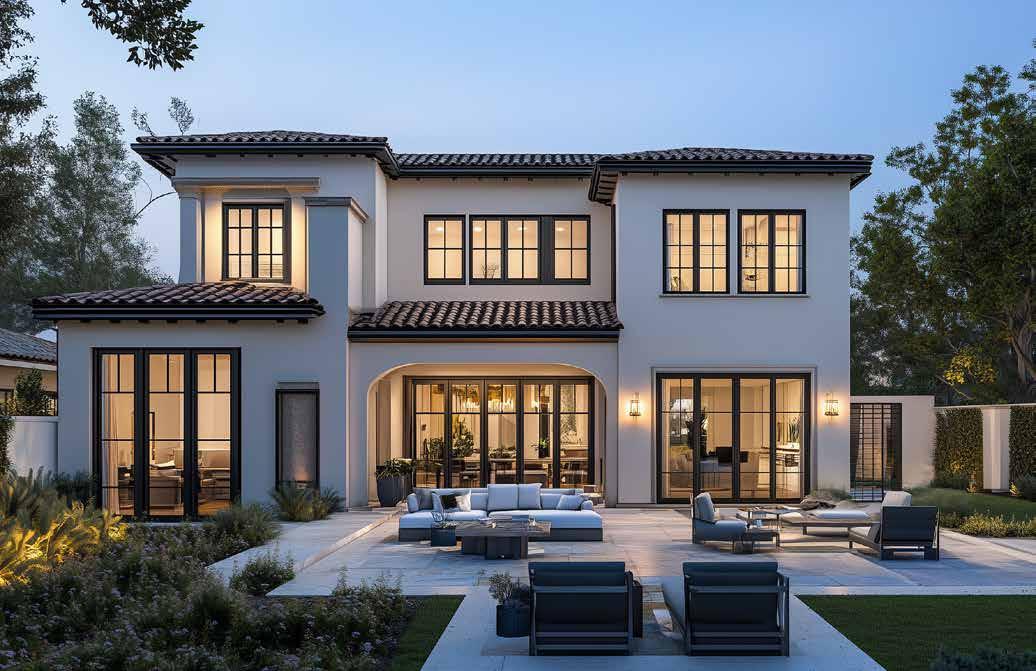
This trend is consistent worldwide, Luxury Property Specialists say. In Los Angeles, younger buyers are prioritizing communities known for top-tier schools and strong amenities, says Michael Edlen, a Luxury Property Specialist with Coldwell Banker Realty in Pacifc Palisades and Santa Monica. In Chicago, buyers are gravitating toward infll luxury developments and boutique enclaves that offer convenience and proximity, adds Walter Burrell, a Luxury Property Specialist with Coldwell Banker Realty in Naperville. And in Dubai, lifestyle remains paramount: privacy, security, and access to restaurants, schools, and essential services all make a big difference when choosing a property, notes Sherry Briet, a Luxury Property Specialist with Coldwell Banker UAE.
LUXURY BEYOND FOUR WALLS
Today’s afuent buyers aren’t just looking at a home’s setting. They’re also evaluating property condition, design, outdoor spaces, and other amenities beyond the four walls as part of a unifed property’s whole experience. The data refects this shift: eight of the ten most-searched amenities on JamesEdition are tied to external or outdoor features rather than what’s inside the home.
Must-Have: Property Condition
Most afuent buyers want the immediate gratifcation of turnkey or move-in-ready homes. Many also prefer new construction for its modern features and customization options, even if it requires overseeing the building process. This preference shows up again and again throughout the search journey, from the way buyers flter listings to the specifcations they share directly with agents.
On JamesEdition.com, inquiries for current-year construction were up 9.5% from 2024 to 2025. Luxury Property Specialists echoed this trend: after location, new construction and fully move-in-ready homes were the most sought-after listings in their markets.
30.2%
of Luxury Property Specialists said move-inready or new construction were highest in demand
Must-Have:
Architectural Pedigree or Modern Design
Afuent buyers increasingly gravitate toward modern, updated homes because they deliver an “effortless” living experience. In many markets, “modern” has become synonymous with “move-in ready.” It’s a signal to a buyer that a property offers 21st century amenities, high-quality fnishes, updated systems, and layouts aligned to how people live and entertain today.
Surveyed Luxury Property Specialists ranked architectural pedigree and overall design third among all non-negotiable features for their clients. This aligns with behavior on JamesEdition.com, where “modern” continues to appear among the top 10 most searched amenities.

Coldwell Banker Global Luxury sold data paints a similar picture. One in four 2025 Coldwell Banker Global Luxury sold listings explicitly highlighted modern design (3,791 out of 15,086, or 25.1%). And realized demand has been rising, with references to modern design growing 53.1% in 2024 and another 26.1% in 2025.
Must-Have: Outdoor Living Spaces
Outdoor spaces, in particular, have taken on heightened importance in the post-COVID era. Among 55 tracked features on JamesEdition, pools topped the list for the second year in a row, accounting for 12.18% of all luxury inquiries in 2025. Gardens ranked No. 4 among the most searched amenities, their ranking unchanged from 2024. Terraces and balconies also remain highly desirable features for buyers seeking private outdoor space, ranking No. 7 and No. 10. The data afrms that greenery, privacy, and connection to nature remain central to the modern luxury lifestyle, regardless of whether a buyer is searching in a suburban, urban, or resort location. “Buyers on JamesEdition show a consistent preference for features that shape how they live day to day,” noted Eric Finnas Dahlstrom, CEO of JamesEdition.
As Ben Bryk, a Luxury Property Specialist with Coldwell Banker Realty in Vero Beach, Florida, sums up: “Luxury home buyers are looking for an indoor-outdoor lifestyle with pools, spas, and outdoor kitchens — but they want a great location, whether it’s on the ocean or a country club golf course.”
Surveyed Luxury Property Specialists echo Bryk’s sentiments. More than half of surveyed Luxury Property Specialists report that pools and outdoor living environments are the No. 1 amenity buyers ask about during showings, far outpacing every other category. Even as a No. 2 or No. 3 amenity, pools and outdoor living continue to rank strongly. Outdoor living spaces also help homes sell faster than almost any other feature, the majority said.
Top 10 Most Inquired about Features
Source: JamesEdition.com 2025
Top Amenities Buyers Ask About During Showings
Pool/outdoor living
Home gym/wellness space
Smart-home technology
Guesthouse/mult-gen living
Ofce(s)/work-from-home setups
Entertainment spaces (theater, bar, game room)
Sustainability features (solar, water systems)
Sold data further reinforces this pattern. Nearly half of 2025 Coldwell Banker Global Luxury sales included a yard or garden (49.2%), and 38.4% featured a balcony, terrace, or patio — both consistent with multi-year demand. Pools appeared in roughly one-third of sales (33.3%), suggesting they remain desirable but may be balanced with other lifestyle features depending on the market.
AMENITIES THAT MOST OFTEN HELP SELL HOMES FASTER
Outdoor living space
Ofce(s)/work-from-home setups
Guesthouse/mult-gen living
Entertainment spaces (theater, bar, game room)
Smart-home technology
Home gym/wellness space
Other
Must-Have: Garages/Parking
Another amenity closely tied to the luxury lifestyle is the garage. It may not be the fashiest space in the home, but it has become essential for afuent buyers as car ownership remains nearly universal at the high-net-worth level. A 2022 Altiant report2 found that 96% of afuent consumers own at least one vehicle, 40% own two cars, and three-car (or more) households are especially common in the U.S. and China. This trend could even
Luxury Home Amenities in Sold Properties | 2024 vs. 2025
Source: Coldwell Banker Global Luxury 2025 Sold Data
Source: Coldwell Banker Global Luxury Survey, November 2025
Source: Coldwell Banker Global Luxury Survey, November 2025
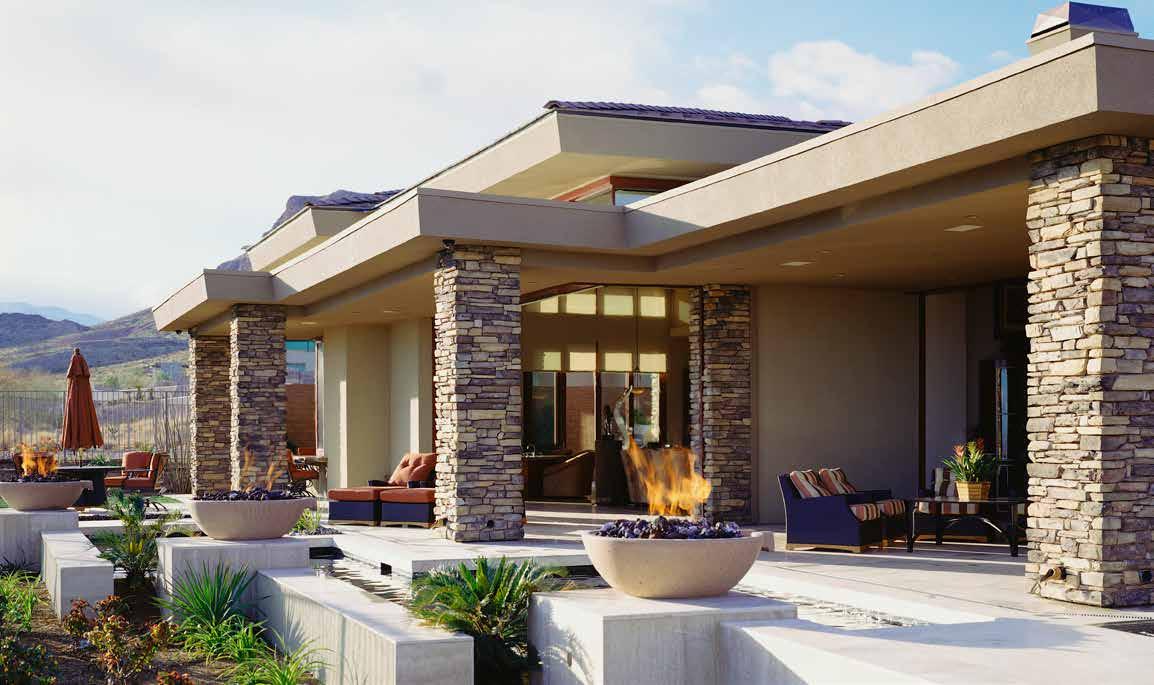
gain more prominence among younger UHNW individuals, who devote a larger share of their wealth to luxury assets such as art, collectibles, and vehicles (alongside real estate) as Altrata’s World Ultra Wealth Report 20253 stated.
On JamesEdition, garages ranked No. 3 among the top-requested features globally for 2025, while 47.3% of Coldwell Banker Global Luxury sold properties included garage or parking mentions. The strong representation of vehicle-related amenities refects a clear cultural link between luxury homeownership and car ownership. For many high-net-worth buyers, a secure space for their vehicles is now as essential as a pool or garden, whether that means accommodating a growing EV feet with in-garage charging or housing a prized collection. For collectors, the garage functions more as a showroom with climate-control systems, car lifts and elevators, epoxy-fnished foors, and museum-style lighting that’s an extension of personal identity.
THE INTERIOR EXPERIENCE
As Vicente observed, luxury buyers want a sanctuary — homes where they can unwind, host, and “live their best life.” Inside the walls, that translates to features that elevate comfort and wellbeing. Data from JamesEdition and surveyed Luxury Property Specialists shows growing demand for interior features designed for climate comfort, health, restoration, and ease in everyday life.
Must-Have: Climate-Controlled Environments
Inquiries for climate-controlled environments rose on JamesEdition in 2025, with air conditioning moving from seventh to sixth place among top-requested features. This increase likely refects heightened wellness awareness, the realities of a warming climate, and growing U.S. interest in international markets where air conditioning is not always standard. Highlighting this
cultural distinction, Coldwell Banker Global Luxury 2025 sold data showed a slight dip in listings that specifcally mentioned air conditioning. (In the U.S., air conditioning is so ubiquitous it often goes unmentioned in listings, but in many European countries it is still relatively uncommon.)
Still, most luxury buyers — especially those in the U.S. — expect much more than air conditioning in their homes. If they’re looking at modern new construction homes, they’re likely to fnd comfort technologies such as zoned temperature control, air purifcation systems, humidity management, and smart climate settings that can be adjusted through mobile apps or whole-home automation platforms.
Must-Have: Home Ofces
Work-from-home environments may not appear among JamesEdition’s top-searched amenities, but they’ve become no less essential to the modern luxury lifestyle thanks to the normalization of remote and hybrid work.
Surveyed Luxury Property Specialists noted the importance of dedicated, well-designed ofce spaces within the home, ranking them among the most asked-about amenities during showings and the No. 2 feature most likely to help a home sell faster.
Must-Have: Wellness Infrastructure
Surveyed Luxury Property Specialists ranked home gyms and wellness centers among the most asked-about interior features. For many afuent buyers, their expectation around wellness goes far beyond a basic gym. Today’s luxury homes increasingly feature fully outftted ftness studios for private training sessions; Pilates rooms; saunas, steam rooms, and cold-plunge pools; dedicated yoga or meditation spaces; and restorative environments
equipped with advanced amenities like cryotherapy chambers, high-oxygen training rooms, or specialized recovery technologies.
Must-Have: Multi-Generational Spaces
Guesthouses and multi-family confgurations also ranked strongly, as surveyed Luxury Property Specialists noted rising demand for multi-generational spaces like guest suites, detached casitas, and fexible secondary dwellings that balance privacy with connection.
THE NEXT MUST - HAVES
With a new generation of afuent buyers gaining infuence, watch for the list of luxury home non-negotiables to expand. Priorities that might feel forward-looking today could quickly become standard expectations tomorrow.
The market is already offering hints of what the next wave of luxury must-haves may include.
Burrell is seeing these shifts frsthand in his Naperville/Chicago market. Health-focused layouts, seamless indoor-outdoor living, and energy-efcient systems like solar, geothermal, and EV charging are rising to the top of his clients’ wish lists. “Flexible spaces that support remote work and multi-generational living are in high demand,” he says. “Technology integration has become a baseline expectation. Buyer demographics are shifting — older downsizers want low-maintenance elegance, while younger afuent buyers favor clean, modern design and authenticity over formality. Outdoor amenities such as pools, kitchens, fre features, and private recreation areas are increasingly essential.”
Of course, these priorities vary by market. In coastal regions of California and Florida impacted by extreme weather events, demand is growing for climate-resilient features such as impact windows, generators, elevated or fortifed construction, and freresistant materials.
“It is important to know lifestyle trends, but it’s also important to know the value of these design features that buyers are looking for,” says Lori Fowler, a Luxury Property Specialist with Coldwell Banker Realty in Naples, Florida. “It is no longer simply about aesthetics, interior design, layout, or views. Savvy local agents must understand the nuance between older properties, location, and new properties built to new codes.”
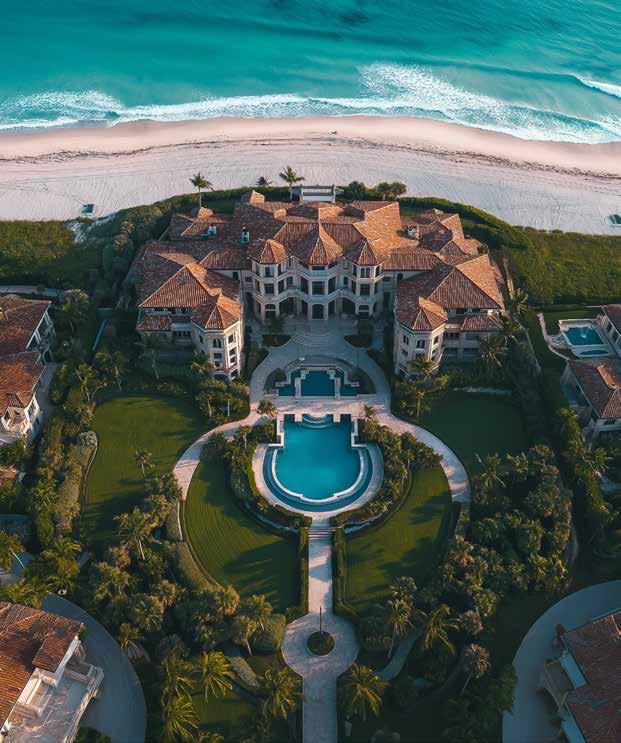
Outdoor amenities such as pools, kitchens, fre features, and private recreation areas are increasingly essential.”
— WALTER BURRELL
HELPING SELLERS SEE WHAT’S POSSIBLE
Just as an architectural blueprint outlines the essential components of a building, these must-haves offer a framework for how today’s afuent buyers are evaluating properties. But a blueprint isn’t fxed. As market conditions shift and new generations with evolving expectations enter the arena, buyer priorities will continue to adapt, and the defnition of “must-have” luxury will expand with them.
It can, however, offer some direction for sellers weighing whether to part with their properties in 2026. While most afuent sellers don’t need to sell, they may want to sell. They’ll look to their agents for a clear strategy on how to position their property to compete and to achieve the price they want.
The listings that will perform best in this environment are those that deliver on the full promise of sanctuary. As Jeremy Kamm, a Luxury Property Specialist of Coldwell Banker Warburg in New York City, sums up, “Location, condition, and scarcity remain the most defning factors infuencing high-net-worth buyer behavior.” Burrell puts it another way: “Only properties offering true architectural distinction, superior fnishes, or exceptional locations command premium prices, while others experience longer market times.”
Properties that align closely with this blueprint will be best positioned for exceptional outcomes in 2026. Those that fall short can still succeed, but may beneft from pricing that refects how today’s buyers defne value. In the end, it will be the agent who provides the vision, helping sellers see what’s possible and chart their next move with confdence.
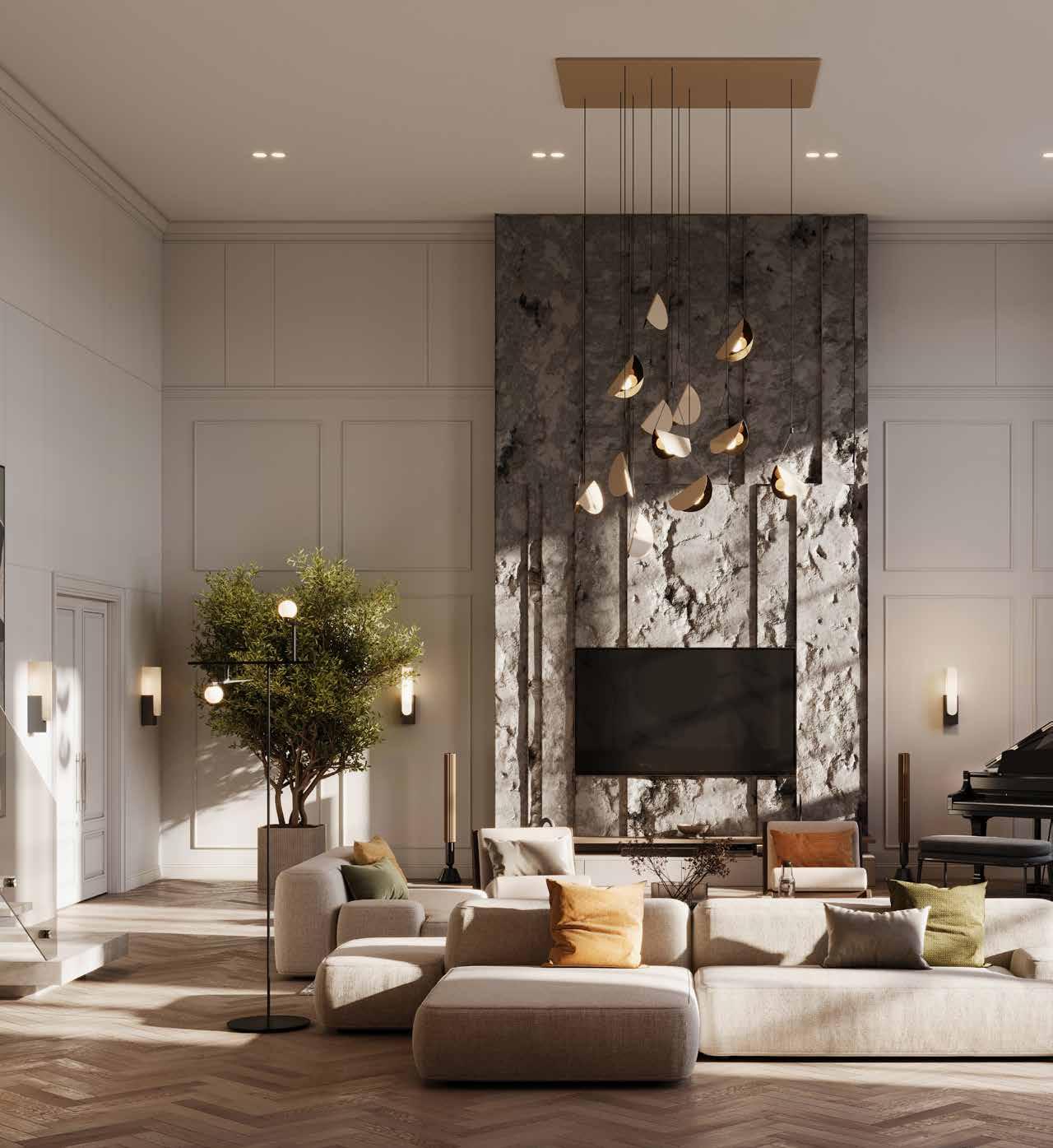
FINAL Perspec ve
While there are nuances in every market, the trends collectively point to a luxury landscape moving toward greater balance for buyers and sellers in 2026. Speculative buying has largely faded, giving way to a more considered, lifestyle-driven, long-view investing ethos — a positive shift for both sides of the transaction. With less urgency and more thoughtfulness underpinning decisions, the pace of the market may feel slower than years past, but it also marks a healthier, more resilient era for luxury real estate.
The central question now becomes: Where will afuent buyers and sellers place their trust, their capital, and their long-term vision?
This next chapter will be shaped by the confdence they have in the markets, the professionals who guide them, and the homes that promise both emotional resonance and fnancial stability. Demand will continue to be propelled by priorities such as wealth preservation, geographic fexibility, wellness, design, sustainability, climate resilience, multigenerational living, and turnkey convenience. Afuent consumers are seeking properties that support every dimension of their lives — and they have continually shown that they are more than willing to invest in the places, features, and advisors that help them achieve that vision.
Resources
IN REVIEW | PAGES 6 - 9
1. https://www.nar.realtor/newsroom/nar-existing-home-sales-report-shows-1-2-increase-in-october
2. https://www.housingwire.com/articles/homebuyers-embrace-sustainability-efciency-in-2025/
3. https://www.capgemini.com/insights/research-library/world-wealth-report/?utm_source=PR&utm_medium=PR&utm_ campaign=wwr&utm_cre=IMG&utm_id=2025May07
4. https://www.realtor.com/news/trends/luxury-real-estate-market-projection-2030-cash-buyers-report/
TREND 1 | PAGES 10 - 17
1. https://www.knightfrank.com/wealthreport
TREND 2 | PAGES 18 - 25
1. https://www.ubs.com/global/en/wealthmanagement/insights/global-wealth-report.html
2. https://content.knightfrank.com/resources/knightfrank.com/wealthreport/the-wealth-report-2024.pdf
3. https://altrata.com/news/the-top-cities-where-the-ultrawealthy-are-buying-second-homes-in-2025-and-its-not-just-london-or-new-york?
TREND 3 | PAGES 26 - 35
1. https://www.henleyglobal.com/publications/henley-private-wealth-migration-report-2025/global-wealth-migration-2025
2. https://www.investopedia.com/this-southern-city-offers-the-most-square-footage-for-usd1-million-11837877
3. https://www.realtor.com/research/october-2025-wsj-rdc-luxury-housing-market-ranking/
4. https://urbanland.uli.org/capital-markets-and-fnance/pwc-and-uli-report-reveals-the-2026-real-estate-trends-transforming-where-welive-work-and-invest
5. https://nypost.com/2025/05/30/real-estate/low-taxes-and-entertainment-scene-are-draws-for-this-tennessee-city/
6. https://www.marketwatch.com/story/why-is-oracle-moving-to-nashville-because-this-one-industry-is-thriving-there-779714d4
7. https://sycamoretn.org/tn-housing-challenges/
8. https://info.altrata.com/l/311771/2025-09-26/27cmbq/311771/17589096956AYjzV5Z/Altrata_World_Ultra_Wealth_Report_2025_ FINAL.pdf
9. https://www.axios.com/local/salt-lake-city/2024/12/03/utah-outdoor-recreation-industry-economic-impact
TREND 4 | PAGES 36 - 45
1. https://altrata.com/reports/family-wealth-transfer-2024_2
2. https://www.capgemini.com/insights/research-library/world-wealth-report/?utm_source=PR&utm_medium=PR&utm_ campaign=wwr&utm_cre=IMG&utm_id=2025May07
3. https://www.cerulli.com/reports/us-high-net-worth-and-ultra-high-net-worth-markets-2025
4. https://altrata.com/reports/family-wealth-transfer-2024_2
5. https://www.cerulli.com/press-releases/cerulli-anticipates-124-trillion-in-wealth-will-transfer-through-2048
6. https://www.coldwellbankerluxury.com/editorial/the-trend-report-2024
7. https://www.nar.realtor/blogs/economists-outlook/celebrating-single-women-home-buyers?mf_ct_campaign=yahoo-synd-feed&utm_ content=syndication
8. https://altrata.com/reports/family-wealth-transfer-2024_2
TREND 5 | PAGES 46 - 55
1. https://www.statista.com/outlook/cmo/luxury-goods/united-states?srsltid=AfmBOoqeFd8TKr871DkZ4ph4tI_1m661TGD69G6FYQNfof ZS9aEIZPph
2. https://altrata.com/reports/world-ultra-wealth-report-2025
3. https://docs.google.com/presentation/d/1vLFoVPHP9wavo8VWwf24PxydgAOjMom/edit?slide=id.p1#slide=id.p1
TREND 6 | PAGES 56 - 63
1. https://www.jamesedition.com
2. https://eyeonhousing.org/2025/08/single-family-home-size-2q25-data/
3. https://www.census.gov/construction/nrc/pdf/quarterly_starts_completions.pdf
4. https://www.builderbooks.com/what-home-buyers-really-want--2024-edition-products-9780867188134.php
5. https://www.nar.realtor/magazine/real-estate-news/new-homes-are-getting-smaller-are-buyers-looking-for-less-square-footage
6. https://www.census.gov/construction/nrc/pdf/quarterly_starts_completions.pdf
7. https://eyeonhousing.org/2025/08/single-family-home-size-2q25-data/
8. https://www.realtor.com/news/trends/million-dollar-listing-luxury-homes-more-expensive-demand-booms-supply-dwindles-reportseptember-2025/
TREND 7 | PAGES 64 - 73
1. https://www.jamesedition.com
2. https://altiant.com/automotive-2022
3. https://altrata.com/reports/world-ultra-wealth-report-2025