WELLBEING
At Bangkok Patana School, our mission is to ensure that students of different nationalities grow to their full potential as independent learners in a caring British international community.
Our vision is to develop global citizens who shape their world through independence, empathy, creativity, and critical thinking.
We value wellbeing, learning and global citizenship.
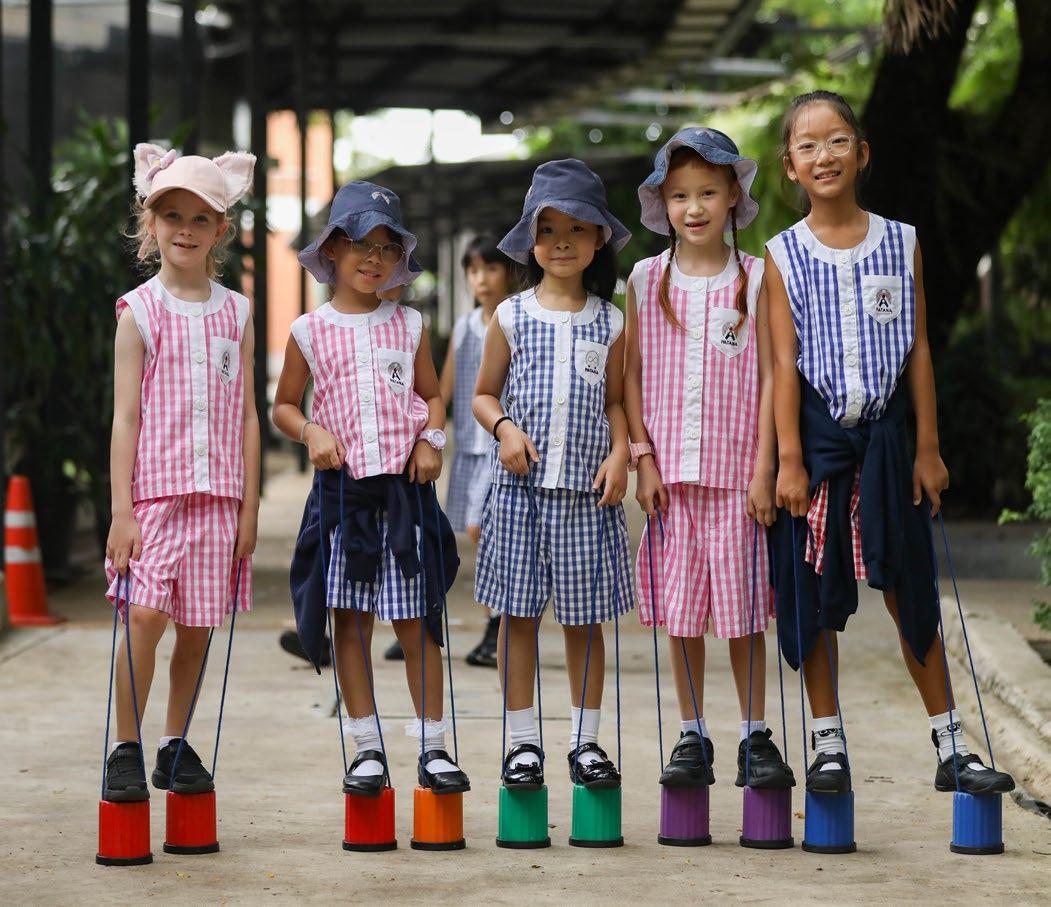
Wellbeing is a term used to describe a feeling of satisfaction with your life. This subjective feeling is based on an individual’s beliefs, experiences and feelings. It varies from person to person, family to family and culture to culture. We recognise that it is important to understand and respect these differences to ensure that our initiatives around improving school life satisfaction are meaningful to everyone.
At Bangkok Patana School, we define student wellbeing as the ‘subjective feeling of satisfaction with life at school’.
The many constructs which are thought to drive feelings of satisfaction in a diverse international community are debated in terms of their validity and measurement. The promising areas of agreement which exist across most cultural groups are:
• Health
• Environment
• Skills and attitudes
• Relationship
We measure student wellbeing through self-reported qualitative surveys to report on student satisfaction across a range of indicators. These surveys help us understand how satisfied students are with their life at school and their relationships with parents, teachers, and friends.
PrinciPal and Vice PrinciPal Wellbeing:
Ensure safety and wellbeing inform all policies, procedures, and practices.
designated safeguarding lead:
Develop and implement child protection policies and approaches.
Vice PrinciPal sPorts and ecas:
Provide oversight of sports and ECA programmes. leader of learning Wellbeing/Head of Year: Manage day to day pastoral, safeguarding and child protection procedures alongside the DSL.
PsHe coordinator/Wellbeing coordinator: Develop resources and approaches for the taught curriculum.
class teacHers/tutors/suPPort tutors:
Provide day-to-day pastoral care and guidance as part of everyday teaching.
social emotional counsellors: Offer group and 1:1 counselling services.
Parents:
Provide a nurturing home life and attend parenting information events.
students:
Develop their own knowledge, skills, and attitudes to advocate for their own wellbeing and contribute positively to others’ wellbeing.
We aim to support a student’s satisfaction with their life at school by making provision, receiving feedback and continuously planning improvements to the following components in the areas below:
• Physical Activity
• Nutrition
• Sleep
• Mental Health
• General Health
• School
• Home
• Community
• Online
• Resilience
• Self-esteem
• Optimism
• Self-control
• Finding Meaning
• School Staff
• Parents and Care-givers
• Peers
• Social Support
The following is provided to all students in our school:
Health
Physical Activity*
Nutrition*
Sleep*
Mental Health*
General Health and Illness*
• PE Lessons in Primary and Secondary Curriculum/ ECA Sports and Activities Programme
• Active learning approaches in each key stage
• Healthy school lunches provided which meet nutritional guidelines, free water onsite
• Snack and sweets are limited to treats on fun days
• Nursery and FS provision include sleep during the day for young learners
• The School Day is planned to optimise travel times and independent study
• Social and emotional counsellors are available, including specialist play therapists
• Education for staff and students as part of training programmes
• AQI , Heat, Adverse Weather, School Closure eg pandemic and Critical Incident Procedures
• Provision of 11 qualified medical nurses on site/ 5 Social and Emotional Counsellors
Environment
School
Home
Community
Online
Skills
Resilience*
Self-Esteem*
Optimism*
Self-Control*
Finding Meaning*
• Specialist facilities and investment in buildings provide excellent physical environment
• Balance of different multipurpose recreation and play spaces
• Home School meetings between teachers and parents and Home School Information Events
• Home School events eg Ploenchit Fair, International Day, Fun Day
• Communal activities such as International Day, Pride Week, Pink Day, CAT and CAS clubs, whole school drama productions, student leadership opportunities, external awards (DofE)
• School Filtering System in place for online access during school day
• Digital Safety Curriculum and Safeguarding Procedures for reporting and managing incidents
• Specialist subject and phase teachers employed in Primary and Secondary School
• Additional workforce of Teaching Assistants and Instructors to allow focused instruction
• Teaching standards and practices inform a pedagogy of learned independence and resilience
• Characteristics of Effective Learning taught and assessed in Primary School
• Attitudes to Learning assessed in Secondary School
• Specialist Support for Learning and EAL teams in Primary and Secondary School
• PSHE and Wellbeing Taught Curriculum to deepen understanding of knowledge and skills
• Effort and progress are celebrated in lessons, assessments and awards system
• Academy programmes allow experiences of recreational, developmental and sporting excellence in our tiered provision
• Service strand in the curriculum (CAT and CAS)
Relationships
School Staff
Caregivers
Peers
School Support
External Support
• Pastoral Support structures based on an ethos of care, emotional consistency, nurture
• Clear codes of conduct and professional working practices intentionally developed.
• Parent Teacher Group hold regular network meetings and act in support of each other
• Parenting and Curriculum Information Programme occurs throughout the year.
• Collaborative learning routines in classrooms, Student Codes of Conduct, Anti-Bullying Policy, Positive Behaviour Policy, Annual Residential for each cohort group
• Planned groupings, student voice and leadership systems, behaviour expectations
• 10 specialist social, emotional and careers counsellors support mainstream staff.
• Signposting to external specialists who partner with the School Board and PTG partnerships in support of school objectives .
* Taught as part of PSHE, Wellbeing, PE and ECA programmes (See Bangkok Patana School Wellbeing Policy)
We offer a school-based counselling service which is ‘a non-clinical form of psychological therapy that provides young people with an empathic, non-judgmental and supportive relationship to find their own answers to their own problems’ (Hill, Roth and Cooper, 2013). This is offered within a safe and boundaried space for children and young people to talk through their difficulties within a relationship of agreed confidentiality.
Our Social and Emotional Counsellors provide:
• education themes taught to year groups through our wellbeing programme
• training workshops for staff and parents
• supportive groups for vulnerable students
• drop-in services
• involvement during critical incidents and postvention services
School based counselling aims to provide time-limited support for the typical developmental challenges which children experience for which they may need some additional personalised support. This one-to-one service is offered to:
• reduce the psychological distress that children and young people may experience
• offer a dedicated and safe space to talk about difficulties independently and without judgment
• help children and young people learn effective strategies and support them in becoming more resilient
• help develop positive self-esteem, confidence, social skills and good mental health
• improve engagement in learning
School Counsellors are available for students in The Hub on a drop-in basis at break or lunchtime. Staff may also recommend students visit The Hub at break or lunch to have an initial chat with a counsellor if they have a non-immediate concern. If a concern remains unresolved or is impacting a child atypically, staff members may contact their Leader of Learning/ Head of Year who will follow up with any additional conversations. Secondary students can self-refer to counsellors by
emailing them directly or speaking to them in The Hub at break or lunch time. All parents may contact counsellors directly to refer their child or ask advice.
Best practice dictates that if a child is accessing counselling, we will contact parents to ensure that we are working in partnership with them for positive outcomes. This is typically the approach in primary school.
When working with older Secondary aged children, the counsellor will assess whether the young person fully understands what is involved in counselling and work collaboratively with parents, if appropriate and it is in the best interests of the child. Children are able to access counselling in secondary school without parental consent if they can demonstrate ‘sufficient understanding’ and ‘show capacity’.
All School Counsellors are supervised by experienced clinical counsellors who are qualified to undertake this work. This is a requirement of all counselling professional bodies; it protects the client and supports the counsellor. Counsellor supervision is usually referred to as external consultative supervision, and may be on an individual or group basis.
Our counsellors will have one or more of the following qualifications:
• A diploma or foundation degree in counselling at Level 4 which includes supervised placements, overseen by the Regulated Qualifications Framework for the country where they trained or were first registered.
• A post-graduate diploma, degree or master’s in counselling or psychotherapy
• Post qualification experience of counselling when working with children and young people aged four to 18 (or a substantial role with children prior to taking any advanced degrees or retraining)
• Eligibility for registration of a recognised professional body to ensure practice within an ethical framework.
(see Bangkok Patana School Social and Emotional Counselling Policy)
Like physical health, everybody has it and we need to take care of it (Mind UK, 2025). Like physical illness, it can be temporary, lifelong, undiagnosed, or untreated. Similarly, people who are diagnosed with mental illness, can also experience wellbeing (feelings of satisfaction with life) when their illness is well managed.
HoW mental illness imPacts Wellbeing
Good mental health means being generally able to think, feel and react in the ways that you need and want to live your life. Everybody goes through periods of poor mental health; however, the persistence and
• Developmental, (experiencing more symptoms as their environment becomes more complex)
• Genetic inheritance or neurological conditions such as Autism, ADHD
• Trauma, abuse, neglect, impoverished environment
• Prolonged stress and low resilience
• Physical injury
• Isolation or loneliness
• Induced from substance misuse
• Physiological and chemical changes within the body
• Experiencing discrimination and stigma
• Prolonged sleep deficit
• Bereavement (and significantly, bereavement by suicide)
• Severe or long-term stress
• Substance misuse
intensity of symptoms can make thinking, feeling, reacting and coping with everyday life more difficult or impossible. Mental health problems and illness affect around one in four people in any given year. They range from commonly diagnosed problems, such as depression and anxiety, to rarer problems such as schizophrenia and bipolar disorder. They can affect anyone at any time which means it is a common phenomena experienced by humans. (Mind UK 2025).
• Isolation
• Mood changes
• Agitation
• Out of character abusive behaviours
• Self-harm
• Trouble with daily tasks
• Emotional reactions out of scale with the situation
• Substance abuse
• Psychosis and paranoia
• Patterns of absence
• Physical manifestations e.g. weight change; personal hygiene and grooming
• Prolonged atypical moods (high, low)
This model may help to visualise when a community member may need to reach for more support.
(Source: www.delphis.org.uk)
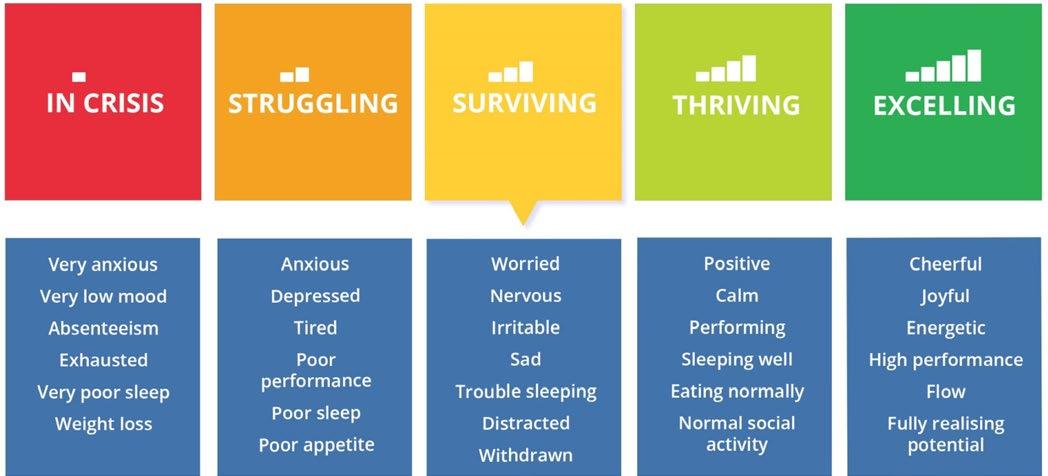
NB: It’s important to remember that we all have times when we get poor sleep, don’t eat a balanced diet or don’t feel like socialising. This does not indicate poor mental health. It’s typical to be positioned between surviving and thriving. Poor mental health and/or mental illness occurs when everyday functioning is impaired for a period of time and results in struggling or crisis.
Our nursing and counselling teams are registered practitioners with a good understanding of common mental health issues and how they can affect adults and young people. They have the ability to spot signs of mental health concerns and can offer invaluable guidance to places of support. They have the knowledge and confidence to advocate for mental health awareness to ensure community members remain appropriately included in school regardless of any episodes of ill health. (see Bangkok Patana School Mental Health and Illness Policy)