
The Port of HaminaKotka is a multipurpose seaport serving trade and industry. This major Finnish port is an important hub in Europe and in the Baltic Sea region.
Welcome to the Port of HaminaKotka!
7 Safe and scalable BE-CHE adoption Certificate of Excellence – re-launched Violence and harassment against women in the transport sector Port authority bulletin – #1 released
8 Safety and Shipping Review 2025 – published New light on container losses at sea Cargo Safety Program – launched
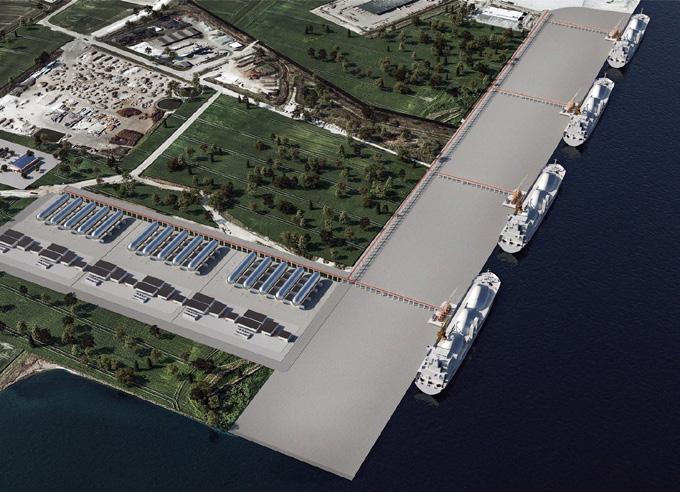
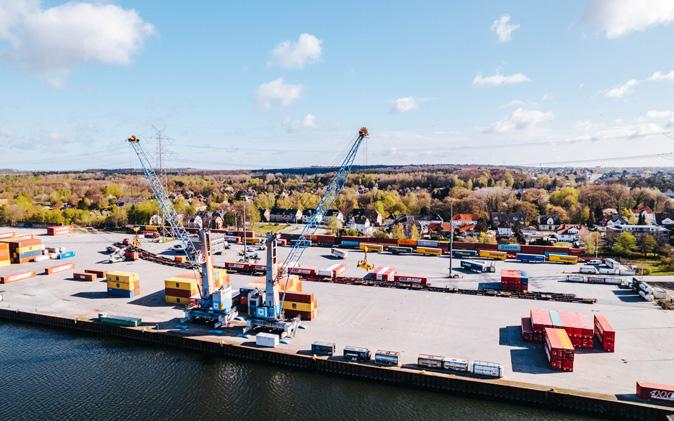
10 Liebherr’s LPS 420 goes to Türkiye… …whilst an LHM 600 remains in Germany
RIKON’s first A-RMG arrives in Madrid… …while two others sailed to İsdemir
Karlshamn’s new reachstacker
RIKON’s RMG in Uzbekistan – mounted
11 HBCT Gdynia orders RTGs from Konecranes
BLG’s new mobile harbour crane
Rauanheimo enters Sweden via a steel-port deal
12 IDENTEC-Paris 5G reefer co-op
Viking Line ups its bioLNG game… …so does Furetank… …and Wallenius SOL
13 OMOQO goes online in Lübeck
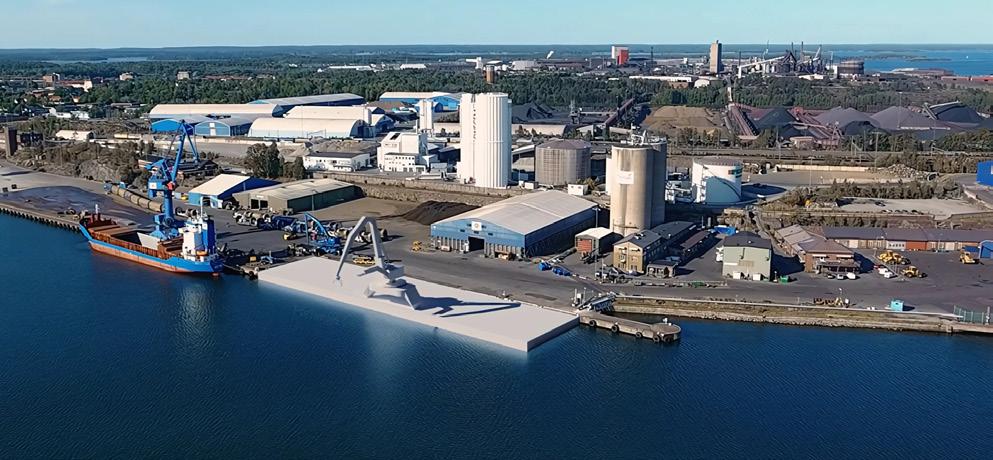
14 Anniversary LHM – delivered Oxelösund’s new berth Green Lane by Finnlines
15 Another step towards a carbon dioxide hub in Aalborg Its eyes carbon dioxide infra in Södertälje Esbjerg breaks ground for ccs Euroports-noatun wind-port co-op
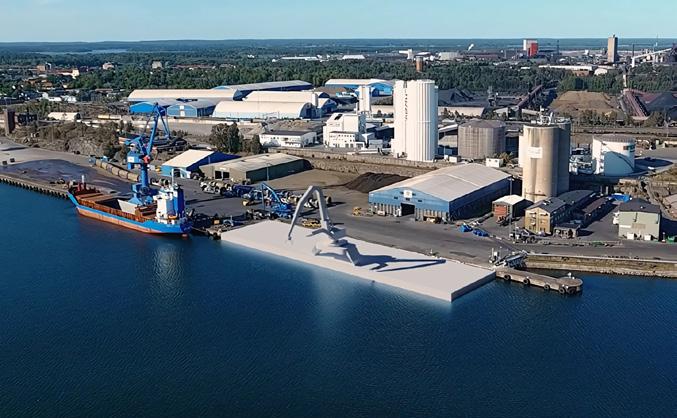

The Port of Oxelösund is growing. With expanded capacity for 10.5 million tons of goods every year, we are now Sweden’s largest port for bulk handling.
It’s all part of Oxchange, our transformation journey that’s redefining our role in Baltic logistics. Higher capacity from ship to shore. A new quay, expanded storage areas and modernized yards.
Discover how our port can become your platform for growth.
17 A LOT OF JOY
– How NemaX grabs gains for VLI – in productivity, maintenance, and safety
FITZWILLIAM SCOTT
19 FROM CHALLENGE TO CONQUEST
– Nemag & SMT Shipping’s journey to a 25% productivity boost
FITZWILLIAM SCOTT
21 THE HYDROGEN BLUEPRINT
– Key takeaways from Blue Supply Chain’s Umeå Roadmap
EWA KOCHAŃSKA
23 RIVERS REIMAGINED
– Key takeaways from Blue Supply Chain’s Lithuanian Roadmap
EWA KOCHAŃSKA
25 WHERE SEA MEETS RAIL
– Blue Supply Chains on the Rostock-Trelleborg shortcut to cleaner trade
EWA KOCHAŃSKA
27 A HOT NEW LIFE
– From coffee to waste to burning logs
BAHEZ KARIM
29 CRITICAL LIMITS
– Key takeaways from TalTech’s Economic Feasibility and Operational Performance of Rotor Sails in Maritime Transport
KRISTĪNE CARJOVA
31 A NEW CHAPTER
– The new Port Reform Toolkit helps build resilience in uncertain Times
EWA KOCHAŃSKA
34 FRAGILE LIFELINES
– Protecting subsea cables in the Baltic – and beyond
IAIN GRAINGER
36 YOU CANNOT DEFEND WHAT YOU CANNOT SEE
– Safeguarding the maritime domain in the Baltic – militarily & commercially
JOHN MUSTIN
38 CURE WORSE THAN ILLNESS?
– A call for rigorously scrutinising the green credentials of future fuels
ROB MORTIMER
40 FROM REACTIVE TO RESPONSIVE
– KILOG’s AI journey at HHLA terminals
OLIVER SCHMITZ, AND EMIN NAKILCIOĞLU
42 ARE YOU READY?
– Designing for flexibility in an uncertain fuel future
JUUSO REUNAMO, AND JOONAS MÄÄTTÄNEN
46 ALL CLEAR
– Unlocking decarbonisation with energy independence
NICHOLAS BALL
48 BEYOND THE GRID
– Flexible shore power solutions for European ports
DAVE LEE

The Zero Emissions Port Alliance has published two new technical papers tackling critical barriers to safe and scalable adoption of battery-electric container handling equipment (BE-CHE). The Battery Fire Risk and Safety paper provides guidance to help ports prepare for the evolving risk profile of BE-CHE fires, emphasising that risks are not higher but different. The Strategic Pathways for
The Institute of Marine Engineering, Science & Technology (IMarEST) and The Nautical Institute have relaunched the Certificate of Excellence (CoE), an international accreditation recognising organisations that show globally benchmarked standards of quality in maritime training and education. The CoE sets a touchstone for quality and continuous improvement in maritime education and training. Institutions applying for accreditation (universities, maritime academies, and commercial training providers) will be evaluated against three key areas that reflect international best practice: education and training standards, education and training
A May-September 2025-conducted survey by the European Transport Workers’ Federation (ETF) found that 74% of female transport workers reported having experienced violence or harassment in their current workplace. Carried out in 12 languages, the investigation gathered responses from 1,071 women across multiple transport sectors (including rail, aviation, urban public transport, road, maritime, logistics, inland waterways, fisheries, and dock work) spanning 24 European countries, as well as from beyond Europe. Among the 772 women who disclosed the frequency of abuse, 7.0% experienced it daily, 17% several times a week, 7.0% once a week, and 45% several times a month. The Federation added in a press brief, “While third-party violence from passengers and service users was most common (56%), a shocking 41% of incidents involved colleagues, managers, or supervisors. Types of abuse included verbal harassment, threats, intimidation, sexual harassment, spitting, and cyber violence.” Livia Spera, ETF’s Secretary General, also commented, “These figures expose the harsh reality for women transport workers across Europe. Violence and harassment are not isolated incidents. They are a structural problem in our industry. It is the employers’ responsibility to guarantee safe workplaces free from any form of violence.”
Battery Circularity publication helps terminals prepare for the wave of end-of-life BE-CHE batteries expected by 2032. This paper breaks down the extend-reuse-recycle pathway, highlighting how ports, terminal operators, OEMs, and recyclers can collaborate on embedding take-back or recycling clauses into contracts, piloting reuse models, and supporting clear end-of-life standards.
Strategic Pathways for
quality, and institutional quality assurance. Captain John Lloyd FNI, CEO of The Nautical Institute, commented, “High-quality maritime education is fundamental to the safety, sustainability, and long-term success of our industry. By relaunching the Certificate of Excellence in collaboration with IMarEST, we are setting a clear standard for institutions that not only meet global expectations but also demonstrate a commitment to continuous improvement. This initiative will help ensure that the next generation of maritime professionals is equipped with the skills, knowledge, and leadership required to support a safer and more resilient future for the sector.”
TT Club has published the first edition of the Port authority bulletin, a publication meant to bring together the TT’s port authority members and the wider industry to share their insights and learning on all aspects of port authority risk. Backed by the insurer’s claims experience and other industry data, the bulletin covers topics such as the current risk landscape for port authorities, energy security, and how to protect ports from project cargo risks. “The world’s port authorities are fundamental to global trade. Their quays, jetties, docks, cranes, marshalling yards, warehouses, and workboats provide the key link between the sea and land journeys that have always been undertaken by most international cargo shipments. But ports are facing unprecedented challenges, with unstable geopolitics, cleaner energy, larger ships, smarter technology, and changing climate all reshaping their risk landscape,” Mike Yarwood, Managing Director Loss Prevention, TT Club, wrote in the Foreword to the inaugural Port authority bulletin.
The fast-changing geopolitical landscape is creating additional risks and challenges for an industry already juggling the energy transition and the legacy of the coronavirus pandemic, according to Allianz Commercial’s newest Safety and Shipping Review. “The industry faces an increasingly volatile and complex operating environment, marked by attacks against shipping, vessel detentions, sanctions, as well as the fallout from incidents involving damage to critical sub-sea cables. Furthermore, the ripple effect of increasing protectionism and tariffs threatens to remake supply chains and shake up established trade relations,” the insurer underlined in a press brief. Fires, collisions, and groundings are still the primary drivers for total losses of large vessels. That said, whereas in the 1990s the global fleet was losing 200+ vessels a year, this total had halved 10 years ago and is now down to a record low of 27 as of the end of 2024 (from 35 in 2023). The Review also brings forth the shadow fleet.
“Today, around 17% of the world tanker fleet is thought to belong to the shadow fleet: estimates indicate there are close to 600 tankers trading Russian oil alone. Shadow fleet vessels have been involved in tens of incidents around the world, including fires, collisions, and oil spills.” Next, “large vessel fires are still a major concern for hull and cargo insurers,” noted Allianz. There were seven total losses reported across all vessel types during 2024 (like the year before). The number of incidents overall was up year-onyear to a decade high of 250 (across all vessel types). Around 30% of these fire incidents occurred on either container, ro-ro, or other general cargo freighters (69). Altogether, over 100 total vessel losses have been caused by fires in the past decade. “Efforts to mitigate these risks are underway, with regulatory changes and technological advancements aimed at addressing mis-declared cargo, a primary contributor to such fires. This is critical as the electrification of the global economy poses further challenges given the growing number of lithium-ion batteries and battery energy storage systems being transported,” commented Allianz.
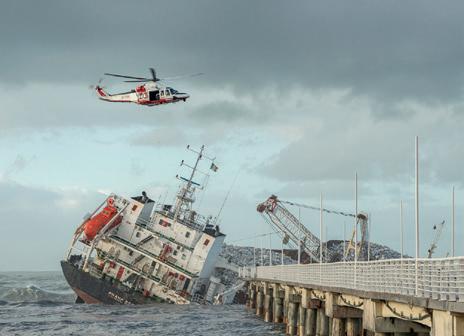
The World Shipping Council reported in June this year that 576 containers were lost at sea in 2024 (out of the approximately 250 million). It was more than in 2023, when 221 boxes flew overboard, but still below the 10-year average of 1,274. A major driver for the 2024 rise in incidents was a 191% increase in container ship transits around the Cape of Good Hope, an area characterised by severe weather, such as many consecutive days with high waves, to avoid Red Sea attacks. According to a May 2025-published analysis (nine cases in 2011-22 involving the loss of 484 containers) by the International Maritime Organization (IMO), high waves and high winds were the prevailing external factors that led to the incidents. Commenting on the publication, TT Club highlighted in one of its TT Talks, “The analysis found that container loss or damage commonly occurred at ships’ sterns due to a combination of hydrodynamic forces, ship motion, and structural stresses. IMO said that structural flexing of the hull at the stern increases the stress on twist locks and lashings, which increases the likelihood of failure. Parametric rolling (a potentially violent combination of pitching and rolling), resonance effects, and sudden course changes also amplify these risks, making the stern particularly vulnerable to container losses in bad weather.” TT Club also brought forward the findings from the 3.5-yearlong TopTier: Securing Container Safety project the insurer partook in. After analysing 44 incidents over the past two decades, involving the loss of nearly 10,000 containers, parametric rolling was found to be the most likely cause of large incidents. The TopTier report also found that single-bay losses often resulted from local failures and stack resonance. Surveys and interviews with 1,500+ sea and shore personnel revealed further challenges – in overseeing the container stowage plan execution and its validation, predicting vessel response to certain weather conditions, and the inconsistent use of navigation software tools. Key recommendations from the project include implementing operational guidance for proactive avoidance of offdesign conditions such as parametric rolling; harmonising performance and functional standards for onboard lashing software; improving inspections of lashing gear and containers; recognising the use of onboard lashing software in rules and regulations; including multi-bay stack resonance effects in container securing computations; addressing uncertainty in container stowage positions; and improving the enforcement of verified gross mass requirements. “Each incident is a stark reminder to everyone in the transport and logistics sector of the need to take steps to prevent such losses, recognising that every lost container can have major environmental, financial, and reputational impacts for supply chain actors,” TT Club cautioned.
The World Shipping Council (WSC) has kicked off its Cargo Safety Program, an industry-led initiative to detect mis- and undeclared dangerous goods to prevent ship fires, as well as to protect crews, vessels, customers’ cargo, and the marine environment. A digital cargo screening tool powered by the National Cargo Bureau’s technology sits at the solution’s heart. It scans millions of bookings in real time using keyword searches, trade pattern recognition, and AI-driven algorithms to identify potential risks. Alerts are reviewed by carriers and, when needed, verified through targeted physical inspections. The Program also establishes common inspection standards for verifying shipments and an incident feedback loop to ensure lessons from real-world cases strengthen prevention. At launch, carriers representing over 70% of global TEU capacity have joined the Program. “By working together and using the best available tools, we can identify risks early, act quickly, and prevent accidents before they happen,” Joe Kramek, President & CEO of WSC, said. “The Cargo Safety Program is a powerful new layer of protection, but it does not replace the fundamental obligation shippers have to declare dangerous goods accurately. That is the starting point for safety, and it is required under international law,” he added.


The cement producer Nuh Çimento saw the installation of the 124-tonne lifting capacity portal slewing crane at its 5.0-million-tonne/year Hereke port in the Gulf of İzmit. The new machinery, with a max turnover of 1,500 tonnes/hour, has replaced a Liebherr LPS 400, the manufacturer’s very first portal slewing crane to be delivered (in operation since 1999; over 130 LPSes have overall been put to work to date). The brand-new crane’s “[…] slewing mechanism is supported by Liebherr’s closed hydraulic circuit, which ensures smooth and energy-efficient rotation even under heavy load. The crane’s advanced Litronic control system enables precise handling of bulk materials,” the producer underscored in a press release. Liebherr added, “Compared to the LPS 400, the new crane offers improved cycle times, reduced maintenance intervals, and a quieter, cleaner working environment. With the new crane in place, the company is well positioned to meet growing demand while maintaining high operational standards.” Nuh Çimento also shared in the press brief, “We have known the LPS series for many years and are very familiar with the material we handle. The LPS 420 was a natural choice for us. Installation was quick and easy, just like Lego. Our operators adapted to the new crane very quickly because it is practical and easy to use. It feels like a continuation of what we already knew, but with more power and less effort.” Andreas Ritschel, General Manager Sales Mobile Harbour Cranes at Liebherr-Rostock, summed up by saying, “This project reflects the strength of our longstanding relationship with Nuh Çimento. The LPS 420 builds on decades of shared experience and delivers a future-ready solution that supports their evolving operational and environmental goals.”
under-construction
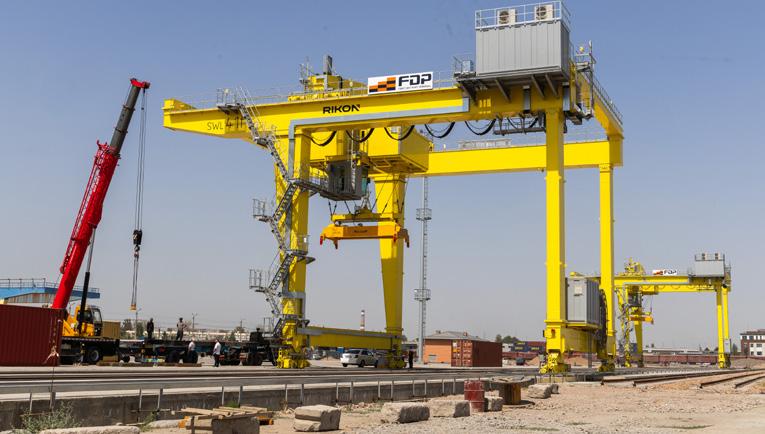
automated rail-mounted gantries (A-RMG) from the Riga-based crane manufacturer. The machinery, spanning 36 metres with a cantilever length of 14.3 metres when assembled on the spot, will offer a lifting capacity of 40 tonnes. ADIF, a state-owned company responsible for the Spanish railway infrastructure, will use the equipment across its €300+ million investment in central Spain to handle 150,000 intermodal units annually following Madrid-Vicálvaro’s launch in 2026. The A-RMGs feature the RIKON Remote Operation System (RROS), enabling remote control. “The advanced automation technology provided for Madrid-Vicálvaro enables the terminal to achieve optimal operational efficiency from its launch, while ensuring maximum safety through automated and remote-controlled operations. This project demonstrates the capability of RIKON to deliver cutting-edge technological solutions for modern intermodal facilities and confirms the company’s position as a trusted partner for national infrastructure projects across Europe,” the producer highlighted in a press release. It furthered, “This shipment represents continued progress in RIKON’s European expansion, following the successful implementation of projects in Valencia and other European ports and terminals.”
The Swedish seaport’s heavy-duty fleet got bigger with a brand-new Kalmar DRG450, ready to lift cargo units up to 45 tonnes. The new gear will serve the port’s rail traffic, both containers and trailers. A month earlier, a new train gate was put in place, making it possible to read numbers
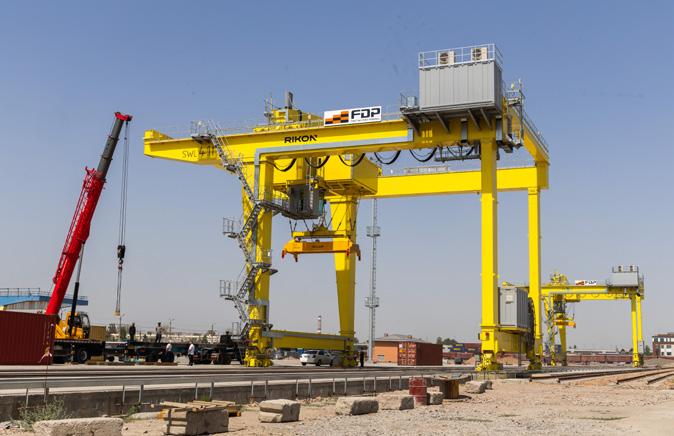
The Riga-based manufacturer of heavy-lifting equipment has installed a second rail-mounted gantry (RMG) for container operations at First Dry Port Terminal in Tashkent. Having a 10.8-metre cantilever length, 7.0 m of operating outreach and 17.1 m span between the legs, each sister RMG can lift up to 41 tonnes. The cranes are equipped with advanced control systems for maximum performance, reliability, and energy efficiency. “The development of the First Dry Port Terminal’s infrastructure, located on the historic Great Silk Road, holds strategic importance for regional economic development and enhanced trade connectivity between Asia and Europe. The terminal spans 22 hectares and features eight railway tracks with a total length of 5,300 meters, a covered customs warehouse, an open customs area, a customs control zone, and loading/unloading platforms,” RIKON highlighted in a press brief.
Rhenus Logistics’ terminal in the Port of Cuxhaven is growing with 19 hectares of waterfront and 600 metres of quay wall – and a brand-new mobile harbour crane to handle heavy-lifts (including for the wind energy industry). The new machinery, able to lift 208 tonnes, will join an LHM 400 from Liebherr. “This crane carries a name with meaning: Peter. It honours Hans-Peter Zint, whose vision shaped Cuxhaven for more than 15 years. His leadership was instrumental in developing the site before his retirement in 2022. Sadly, he passed away earlier this year, but his legacy lives on along this waterfront,” Rhenus Logistics shared in a press brief.
The 55-metre-tall, 550-tonne cranes are being transported fully assembled on a barge, which left the Port of Riga in mid-November 2025. The order executed by RIKON includes four further machines. “Manufactured in Riga with EU-sourced components, the electricdrive cranes are engineered for both loading and unloading operations, mainly bulk cargo. Their development demonstrates Latvia’s ability to deliver complex, high-precision projects that compete on the world stage,” the Port of Riga underscored in a LinkedIn post.
on rail wagons & load units automatically, as well as to perform digital damage inspections. “This contributes to reduced administration, enhanced safety, and more time to provide our customers with the best possible service,” the Port of Karlshamn underscored in a press brief.
The eight hybrid (battery/diesel) rubber-tyred gantry (RTG) cranes, manufactured in Poland, will come with several safety & performance features, such as stack collision prevention, auto-TOS reporting, and auto-steering. The European Union’s NextGenerationEU is funding the purchase as part of the National Recovery Plan in Poland. “We chose the Konecranes RTGs because they offer the best combination of performance and lower emissions. They met our requirements in terms of the technical solution, warranty, value for the investment, and delivery time. This investment fits perfectly with our goal of improving handling capacity while reducing our environmental footprint,” commented Maciej Maliszewski, Technical Director at Baltic Container Terminal (BCT) Gdynia. Heikki Kreku, Director of RTGs, Port Solutions, Konecranes, added, “More than 225 Konecranes hybrid RTGs are now in operation worldwide, with this latest order reflecting their growing popularity in Europe, too. The fact that our 3,000th RTG will be built in Poland for BCT makes this delivery a milestone. Our manufacturing network in Poland has been a fundamental part of our global success with RTGs.”
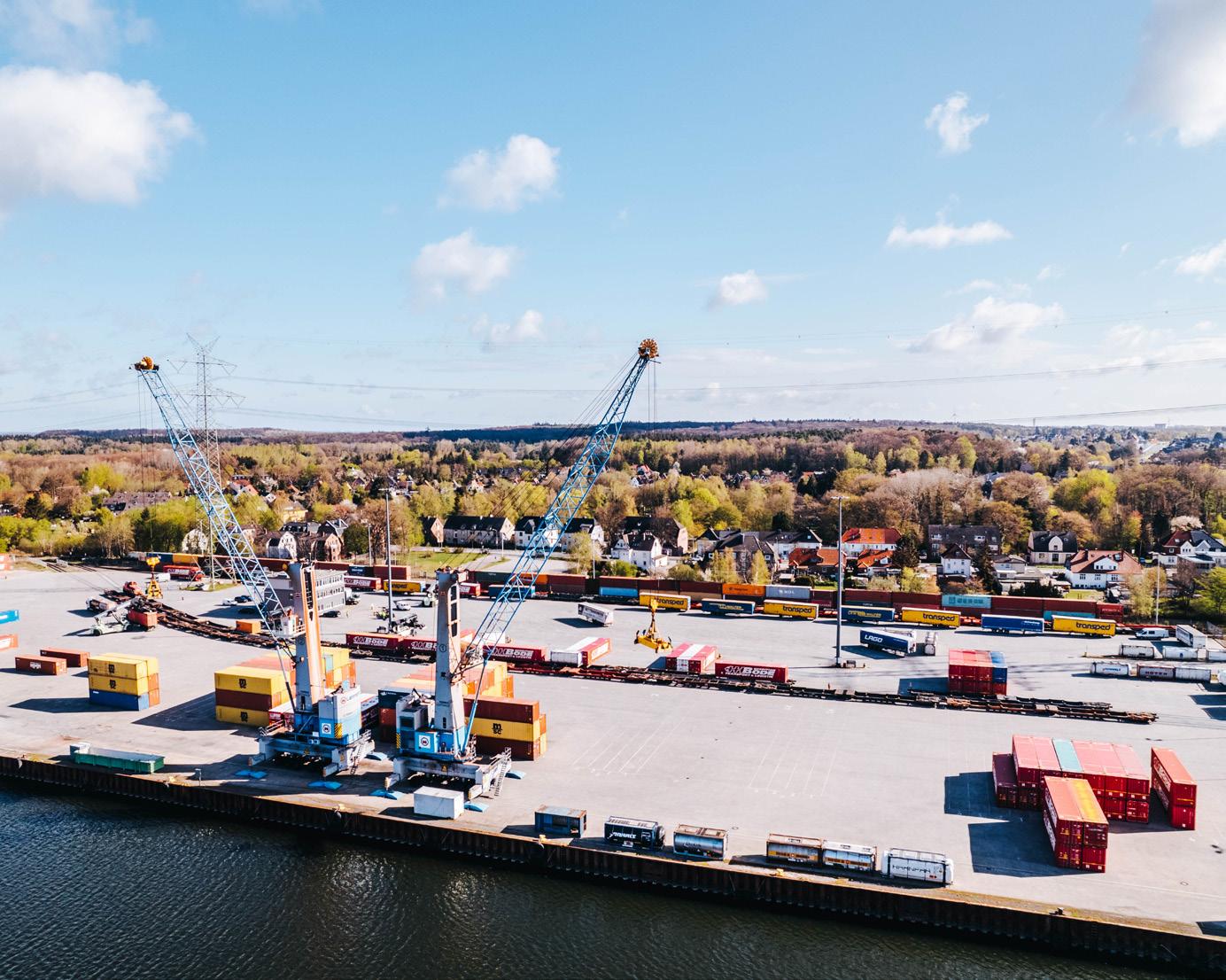
AutoTerminal Bremerhaven saw the deployment of a Liebherr LHM 550, with a tower extension of 4.8 metres, reach of 54 m, and a loading capacity of 154 tonnes (in a two-rope configuration). “With 10 driven axles, it can be used flexibly on site and can be operated with shore power. The LHM 550 can therefore potentially make a contribution to low-emission port logistics and thus supports BLG’s goal of reducing emissions,” Liebherr-Rostock added in a press release. Before the end of 2025, another Liebherr mobile harbour crane will start supporting BLG LOGISTICS’ operations in Bremen (joining an LHM 320 and an LHM 550; there is also an LHM 400 in Bremerhaven). “The new LHM 550 takes us to a new level in heavy-duty cargo handling and is a clear commitment to the further development of the site,” commented Axel Krichel, Member of the Executive Board and COO of the BLG Group. Andreas Ritschel, General Manager Sales Mobile Harbour Cranes at Liebherr-Rostock, also said, “Delivering a crane to a terminal of this size [295 hectares] requires not only knowledge of the technical requirements but also of the entire logistical environment. This LHM 550 was developed to support Bremerhaven in its role as a high-volume, future-proof port.”
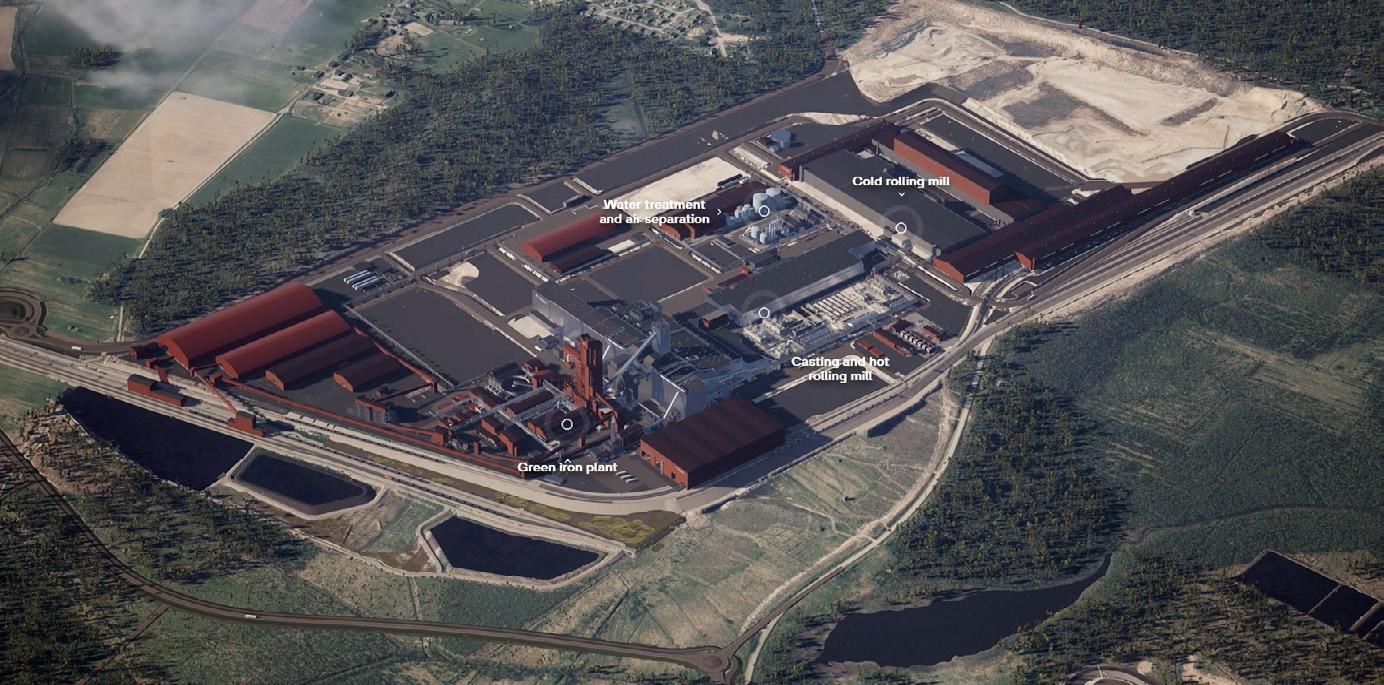
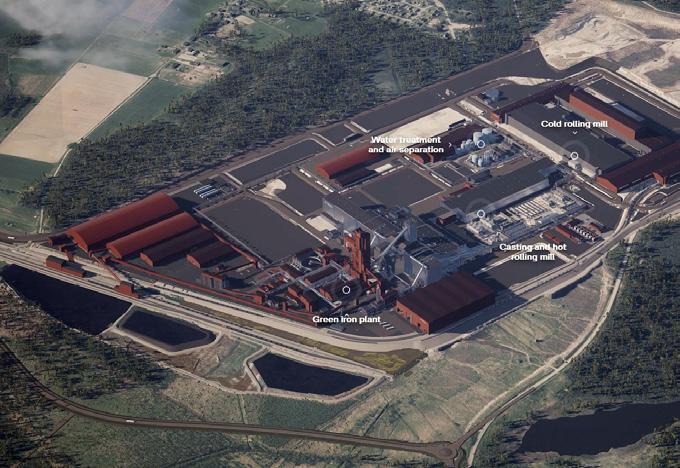
Stegra, whose green steel plant is under construction in the Swedish town of Boden, has entrusted the Finnish company with receiving & managing scrap in the Port of Umeå and with steel coil exports through the seaport in Skellefteå. “The Port of Skellefteå has for some time been working on an ambitious development plan that aligns well with an industrial investment such as Stegra. We value the customer-oriented and solution-driven commercial dialogue with the port in Skellefteå and the operator Rauanheimo, which has quickly led to this agreement securing the export of our steel products from Boden during the first years,” commented Jenny Marin, Head of Logistics at Stegra. Rauanheimo’s CEO, Tero Kosonen, also underscored, “We are very enthusiastic about the opportunity to expand our operations to Sweden. The agreement with Stegra is a historic milestone for us and an important step
in our internationalization. We want to thank Stegra for the trust and the opportunity to be part of building the steel industry of the future. We look forward to collaborating with Stegra and the ports of Skellefteå and Umeå.” Stegra’s 270-hectare-big facility in Boden – said to be Europe’s first greenfield steel mill in 50 years – is expected to start production in 2026. “We will do things differently and produce green steel in a fully integrated production process, using end-to-end digitalization, electricity from renewable sources, and green hydrogen [from a 700-megawatt plant next to the mill]. By replacing coal with green hydrogen and electrifying the steelmaking process, we will be able to cut CO2 emissions by up to 95% compared to traditional steelmaking. Moving forward, we will continue to reduce emissions even more – getting closer and closer to zero – year by year,” reads Stegra’s website.
This autumn, the ferry company increased its purchases of the bio version of liquefied natural gas (bioLNG) sixfold, from around 600 tonnes last year to 3,800. The bunker, delivered by Gasum and made from food and agricultural waste, powered the Viking Glory and Viking Grace cruise ferries on the StockholmTurku crossing (with standard LNG used as a complement). For an additional fee, passengers, conference guests, and cargo customers were able to make their journeys fossil-free. Viking Line expects the LNG-to-bioLNG switch to axe its greenhouse gas emissions by 17,000 tonnes. “We have worked with others to create the market for biogas. Supply has now increased to a level that enables the use of renewable fuel to a significant extent. We have now been able to agree on our purchases through to October, and our goal is to continue at the same level. Moreover, the amount of bioLNG used will increase thanks to the fossilfree maritime journeys that our customers purchase,” commented Dani Lindberg, Head of Sustainability at Viking Line. He furthered, “In the 2025 survey for Finnish maritime transport, carried out by EPSI Rating, 45% of respondents indicated that they will make more sustainable choices in the future when
they travel. These alternatives will become a reality only through long-term development work, bold investments, and good collaboration. For example, the increased use of biofuel and the resulting decrease in total emissions have been made possible thanks to the company’s €450-million investment in Viking Glory and Viking Grace.” Jan Hanses, Viking Line’s CEO, also noted, “We want to be among the pioneers when Finnish maritime transport shows the way to a fossil-free future for the rest of the world. Major investments in sustainable solutions require predictability in operations and good collaboration both throughout the maritime cluster and with public sector actors.” Jacob Granqvist, Vice President Maritime at Gasum, said, “By running on biogas, Viking Line contributes to emission reductions in Gasum’s pooling service for FuelEU Maritime compliance, which is used by vessels that cannot use biofuel themselves. Viking Line thus helps the entire maritime transport sector to reduce emissions. Starting on 1 January 2025, vessels must reduce their emissions by 2.0%, but required reductions will increase all the way to 80% by 2050. We therefore need trailblazers like Viking Line, which can pave the way for others.”
The Swedish tanker company will be operating its EU-based fleet on biogas, having secured a large-scale mass-balanced biomethane agreement with Cargill and Titan Clean Fuels. “Accessing biogas in large volumes has long been a bottleneck for Furetank and other shipping companies that chose gas propulsion as the fastest route towards renewable fuels,” the shipping line from Donsö said in a press brief. It added, “With the FuelEU Maritime Regulation, in force since the start of this year, it is now possible to account for mass-balanced biogas – meaning certified biogas can be injected into one end of the European gas grid and withdrawn at the other, just as has long been done with green electricity. Furetank has now signed an agreement securing all the biogas required to operate all wholly and partly owned gas-propelled vessels trading in the EU during 2025. Most vessels have now been bunkered, and the transition is taking place.” Viktoria Höglund, Sustainability Strategist at Furetank, also underscored, “This was our target when we converted our first vessel to gas propulsion in 2015. It is remarkable that we have finally reached the point we have worked for and talked about for so long. At last, the right incentives are in place to make the business case possible. We have found partners who can deliver the volume and quality of gas we have been looking for, with a very significant CO2 reduction.” The purchased biomethane provides a 150-200% reduction in greenhouse gas emissions on a well-to-wake basis. Biomethane produced from feedstock such as manure, “[…] prevents the potent greenhouse gas methane from being released into the atmosphere during natural decomposition of waste, while also replacing fossil fuels in vessel operations. In addition, residues from the biogas process return carbon to the soil as organic fertiliser, avoiding emissions
from the production of synthetic fertilisers,” Furetank explained. “What makes this agreement stand out is its scale. Furetank has secured significant volumes, becoming one of the first movers in this market. The FuelEU legislation is set to drive meaningful change, and we are only seeing the beginning of LBM [liquefied biomethane] in shipping as one of the most accessible compliance solutions for shipping, requiring no engine modifications in LNG-fuelled vessels,” said Willem Olde Kalter, responsible for Biogas and FuelEU at Cargill, which will produce the biogas from waste. Lana Sissing, Client Manager at Titan Clean Fuels, which will liquefy and deliver the end product, added, “This is a perfect demonstration of all players in the supply chain working together to make a pioneering deal happen. The security of this product, with end-to-end transparency, as the gas is produced in Europe, means the entire production chain can be verified and certified. The demand for bioLNG is accelerating quickly and will only keep increasing.” A small share of Furetank’s vessel operations, about 10% of total fuel consumption, cannot be powered by biomethane. Part of this is the small amount of pilot fuel (traditionally marine gas oil, MGO) injected into the gas engine to initiate combustion. As such, Furetank’s trialled replacing MGO with HVO100 renewable diesel (supplied by ScanOcean). The last part of propulsion involves operating the energy-intensive cargo pumps, which can now be operated via shore power connection on all Furetank vessels concerned (provided that ports offer the possibility). “This means we have done everything currently possible to enter the fossil-free era. In this way, we demonstrate that the 2050 targets are within reach in the immediate future, through the incentives put into force,” Höglund summed up.
As of October 2025, the ro-ros Baltic Enabler and Botnia Enabler run on the bio instead of the traditional version of liquefied natural gas (LNG). The supplied bioLNG is produced from Nordic residual streams (agriculture and food production), certified under RED III, and traceable via ISCC. The switch is part of Wallenius SOL’s Climate Roadmap, a pathway to operate entirely on renewable fuels by 2035, towards no harmful environmental impact a decade later. “The transition from LNG to bioLNG is an important milestone for Wallenius SOL. It shows that renewable fuels are not a distant solution but
something we can use here and now. Switching to bioLNG for the Enablers is clear proof that our Roadmap is delivering, and that we are investing in our customers’ climate goals,” underscored Rebecca Tagaeus, Sustainability Officer at Wallenius SOL. Gasum supplies the bio-bunker under a pooling arrangement. “By aggregating demand from several customers, the arrangement helps scale up supply and build stability in the market. For Wallenius SOL, it provides access to consistent volumes of bioLNG and ensures that the fuel can be introduced in regular
operations,” the Swedish shipping line added in a press brief. Gasum’s Vice President Maritime, Jacob Granqvist, also commented, “We are very excited that Wallenius SOL has decided to join our FuelEU Maritime pool, as this collaboration enables us to open even more regulation surplus to shipowners. The window for securing compliance for 2025 is closing rapidly, and the available capacity may run out before the year’s end. Pooling is a brilliant and easy opportunity for all maritime actors to join forces in lowering emissions from the industry together.”
In the start-up’s first commercial development partnership, its terminal operating system, designed for small and mid-sized terminals, has been implemented at Lehmann Group’s CargoTerminal Lehmann (CTL) in the Port of Lübeck. The cloudbased, modular platform (comprising Terminal Operating Modules, TOM) is used by CTL for digitalising core operational workflows in daily container activities. “The implementation at CTL was completed within eight weeks. The company reported that onboarding and training caused minimal disruption, and early results showed measurable improvements in data quality and process visibility. The stated objective is to gradually replace manual tasks and fragmented tools with TOM,” omoqo
underscored in a press release. Alexander Berg, CTL’s Head of Operations, commented, “We were looking for a solution that wouldn’t require a massive system overhaul but could still deliver real operational impact. With TOM, we’ve been able to improve transparency and reduce manual workload without disrupting our day-to-day business.” To this, Niko Kaufmann, Managing Director of omoqo, added, “With TOM, we aren’t offering a finished product. We’re building a new standard together with the industry. Cargo-Terminal Lehmann is our first commercial development partner. Alongside CTL, there are further co-creators helping us shape a solution that is intuitive, transparent, and ready to grow with their needs.”
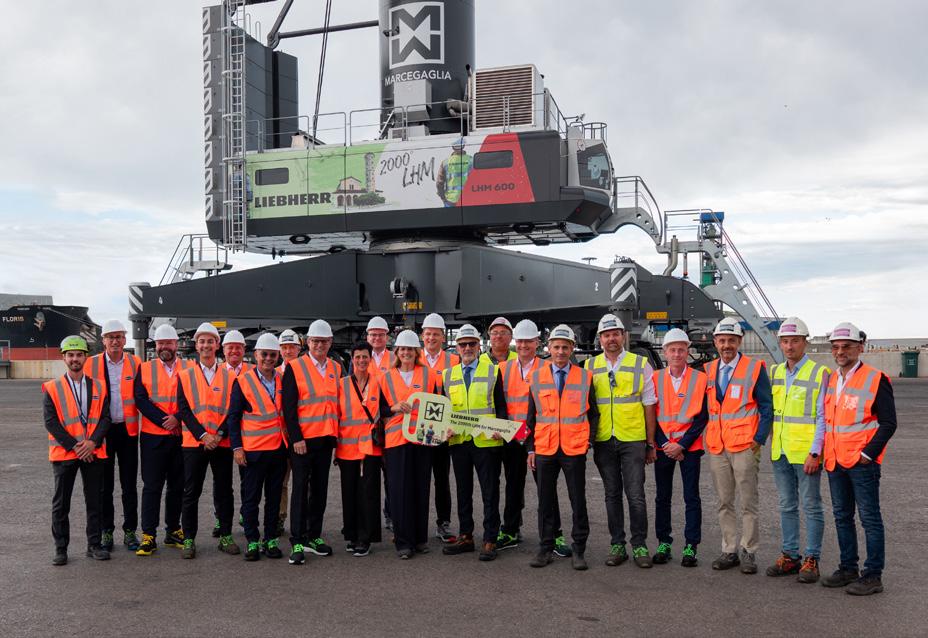
Liebherr Rostock handed over the 2,000th mobile harbour crane, an LHM 600, to Marcegaglia, which put it to use at its Ravenna site for handling steel coils, billets, and plates. The machinery features an outreach of 61 metres and a lifting capacity of 154 tonnes. The new LHM 600 became the largest in Marcegaglia’s fleet (which saw the first Liebherr mobile harbour crane, an LHM 400, in 2001). “We are proud to have received this milestone crane. It is not only a technical asset but a symbol of our shared journey with Liebherr – one built on reliability, innovation, and mutual respect,” highlighted Antonio Marcegaglia, President and CEO of Marcegaglia. Andreas Ritschel, General Manager Sales Mobile Harbour Cranes at Liebherr Rostock, added, “To deliver our 2,000th mobile harbour crane to Marcegaglia is a proud moment. It speaks to the strength of our legacy and to the shared innovation with our customers that drives us forward.”
The Swedish seaport has contracted (SEK137 million; €12.6m) Peab to construct the 122-metre-long Berth 8. The project will also cover dredging, with part of the material stabilised and used for constructing the new infrastructure. Works commenced in June 2025, slated for completion in the spring of 2027. “We are creating another ship berth, which will give us the capacity we need to be part of enabling the steel industry’s climate transition, likewise grow the port organically,” commented Jens Jacobsen, Maintenance Manager, the Port of Oxelösund.
The ferry & ro-ro line has introduced a new concept of shipping, both for freight & passengers, where vessels can now sail fully electric or with biofuel in place of fossil bunker. The 100% electricity-powered cargo shipments are available between Naantali and Kapellskär, with the crossing’s two 5.0MWh cruise ferries green-charged while connected to an onshore power supply in the Finnish and Swedish seaports. “Our utmost goal is to reduce emissions, and we are already seeing concrete results. With the introduction of our new vessels, Finnsirius and Finncanopus, we have entered the hybrid era and can now offer our customers even more efficient and sustainable sea transport services. Although the cargo capacity of the vessels operating on the Naantali-Kapellskär route has increased significantly, absolute carbon dioxide emissions per nautical mile have decreased by 22%,” underscored Antonio Raimo, Line Manager at Finnlines. The biofuel Green Lane option for freight is available on the
Naantali-Kapellskär, Malmö-Travemünde, Malmö-Świnoujście, and Hanko-Gdynia services. “The use of biofuels [derived from renewable sources] can reduce well-to-wake greenhouse gas emissions of transport by up to 90% compared with conventional fossil fuels,” Finnlines highlighted in a press release. The company’s Commercial Director, Merja Kallio-Mannila, added, “We want to offer our customers concrete solutions to help them achieve their decarbonisation targets. Both solutions ensure low emissions; for example, using biofuel can reduce carbon dioxide emissions by up to 700kg per trailer on the HankoGdynia route.” Green Lane is also available for passengers on the Naantali-Långnäs-Kapellskär, Helsinki-Travemünde, MalmöTravemünde, and Malmö-Świnoujście crossings. “If passengers choose this option, Finnlines will consume renewable biofuels to replace the corresponding volume of fossil fuels, and the emissions per passenger on the route will decline,” the company said.
Munck Havne & Anlæg has won the Port of Aalborg’s tender for the construction of a 500-meter-long quay with 60,000 square meters of adjacent land area at the East Port. The new infrastructure will chiefly serve Fidelis New Energy’s Norne Carbon Storage Hub, a reception facility with a pipeline network and storage to receive up to five million tonnes of CO2 per year (potentially 15mt in the future). Construction is set to begin this autumn, with completion scheduled for the
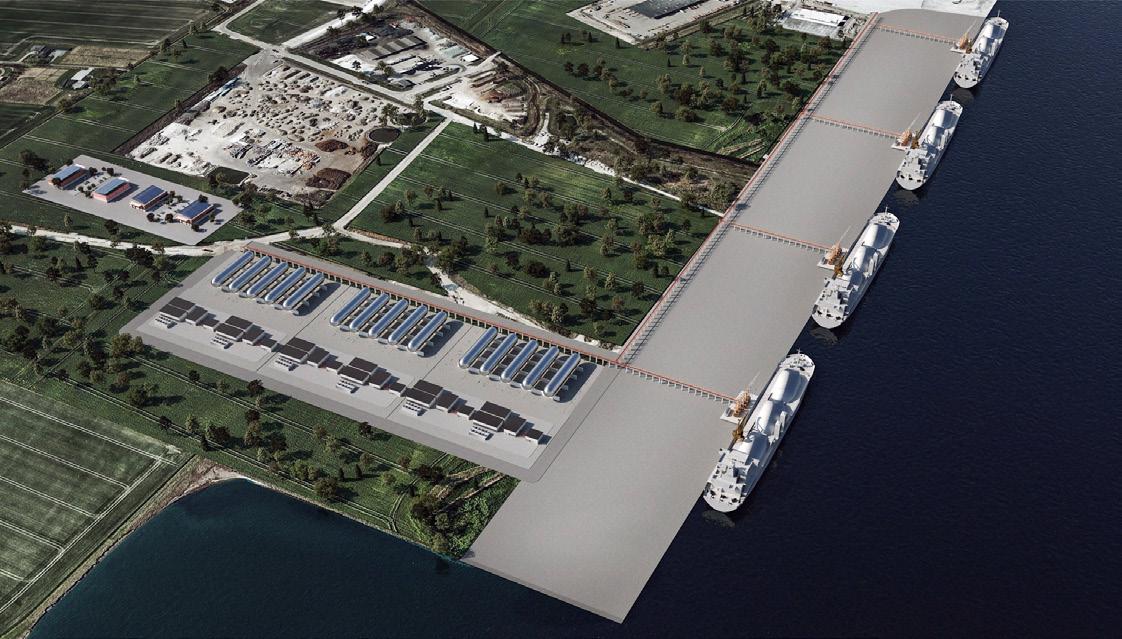
end of 2027. The design-and-build construction project will follow the Integrated Construction model developed by Molt Wengel. “We chose to use the Integrated Construction model to bring both consultancy and contractor expertise into play, from design through to delivery. It gives us a unique opportunity to challenge one another and enhance quality throughout the entire project,” explained Mikkel Guldhammer, Project Manager at the Port of Aalborg. The total budget for the quay expansion runs into several hundred million Danish kroner. The project has received nearly DKK80m (about €10.7m) in EU support through the
Inter Terminals Sweden (ITS), in co-op with the Port of Södertälje, has started a front-end engineering design study for an openaccess intermediate storage facility in the Swedish port for regionally captured carbon dioxide. The project also aims at securing permits. The terminal, expected to be operational by 2030, will see the CO2 exported by sea either for permanent storage or further use, e.g., in the production of e-fuels. “This initiative marks an important milestone for Inter Terminals, positioning us as a key
The Danish seaport, the Esbjerg Municipality, and INEOS Energy hosted the groundbreaking ceremony for a terminal, part of what is hailed as the first full value chain for carbon capture & storage (CCS) in the EU. Once operational in late 2025/early 2026, the facility of Project Greensand will be able to handle up to 6,000 tonnes of CO2 at a time. In the first phase, some 400kt/year is predicted for handling, up to 8.0mt of biogenic & fossil CO2 in the future. Project Greensand says it expects investments of $150+ million across the Greensand CCS value chain to scale storage capacity (with CO2 ultimately stored offshore in the North Sea).
“With today’s groundbreaking, we are not just starting a construction project – we are opening a new chapter, where Port Esbjerg plays a central role in the infrastructure needed for a greener Europe,” the seaport’s CEO, Dennis Jul Pedersen, commented.
Connecting Europe Facility. “The new quay is essential for realizing the CO2 reception facility with Norne, which will position Aalborg as one of Europe’s leading areas for CO2 management. We are pleased that, with this agreement with Munck Havne & Anlæg, we’re now ready to accelerate development,” commented Kristian Thulesen Dahl, CEO of the Port of Aalborg. He also underlined, “Equally important, the quay expansion enables a significant enlargement of our business park, allowing us to offer many more quay-adjacent square meters to industries, especially the wind industry, that are in high demand for such space.”
enabler in the emerging CO2-logistics market in Mälardalen. The objective is to offer an open and accessible solution for all regional companies aiming to capture CO2 and seeking efficient solutions for storage or for reuse,” said Johan Zettergren, Managing Director of ITS. Måns Frostell, the Port of Södertälje’s CEO, also commented, “This joint initiative further strengthens Södertälje Port’s position as a hub for sustainable freight logistics and the future infrastructure for energy management in the Stockholm region.”
The two have signed a letter of intent to develop the Port of Hanko’s Koverhar Harbour into an offshore wind energy (OWE) hub for the 250-turbine-big, 4,000-megawatt-strong Noatun Åland North OWE farm. “Unlike a greenfield development, the Koverhar Harbour already possesses the fundamental infrastructure needed for the offshore wind logistics. With limited adaptations and targeted investments, it can be quickly optimised to serve the industry, making it a highly efficient and cost-effective solution,” the parties said in a press release. As such, the letter of intent outlines a framework for evaluating storage, assembly, and logistical needs. It also includes an option for using Koverhar in setting up Noatun Åland South (4.7GW). In addition, the Port of Hanko and Euroports have a separate exclusive agreement to explore the long-term development of the Koverhar Harbour to meet the growing demands of the general OWE market.
by Fitzwilliam Scott
Years ago, the Port of Pecém in the Brazilian state of Ceará operated two continuous ship unloaders – one for each pier. When VLI took over the logistics from the steel mill nearby, the company realised it could not meet the productivity needed to serve the customer best. Therefore, VLI decided to work with mobile harbour cranes and grabs in combination with hoppers. But not all grabs are created equal, hence the company’s quest to find its perfect match.
“ We changed the whole concept of the harbour,” recalls Paulo Ribeiro, Specialist Technician – Port Operations at VLI. “And because we weren’t just looking for a product but a complete solution, we did a lot of market research. We understood that to achieve the highest productivity, we needed to look for a high-quality grab solution that enabled us to use the cranes at their full capacity. With a poorly performing grab, the crane’s potential is lost.”
In the company’s reference shuffle across local and European markets, Nemag was one supplier that came atop the deck.
However, the first purchase was not of a Nemag grab but one made by a competitor. After realising that this grab did not meet VLI’s requirements, they purchased the Nemag Clamshell, which exceeded the other’s productivity by 15%.
Nonetheless, the cranes still did not reach their full unloading potential. In addition, maintenance costs were high, and changeover times were long. Changing from ore to coal could take up to two hours (read: hundreds of tonnes sitting there and waiting to be handled) – not to mention the additional workforce and lifting platforms needed to adhere to safety regulations.
After two years, VLI decided to optimise its unloading process further and look for a different grab solution. “Because we had already seen a massive increase in productivity with
the Nemag Clamshell and experienced Nemag’s expert support first-hand, we were confident they would be able to help us further along,” says Ribeiro.
VLI had three fundamental requirements for the new purchase. First, productivity should increase by over 15% compared to the competitor’s grab. Second, changing the grab should be faster and easier. Third, the grab should provide safer working conditions. Enter: NemaX!
“Choosing the NemaX was a no-brainer. References from contacts in the European and Asian markets showed that the NemaX’s productivity is higher than any conventional grab,” shares Ribeiro. “Secondly, changing the NemaX grab is made 100% easier and faster as the grab opens up completely and lays flat on the ground. Consequently, changing and maintaining the grab is low-risk as there is no need for workers to be working up high on lifting platforms. So at first glance, the NemaX checked all our boxes.” But how did the grab perform in real life?
Compared to the first grab, the NemaX delivers a 20% increase in productivity – and is even more performant when handling iron pellets. Here, VLI could move 800 tonnes per hour on average without the NemaX. With it, they can move 1,000t/h. “We are already pleased with these results. The thing is, though, we are still in a learning cycle. For example, we still sometimes need
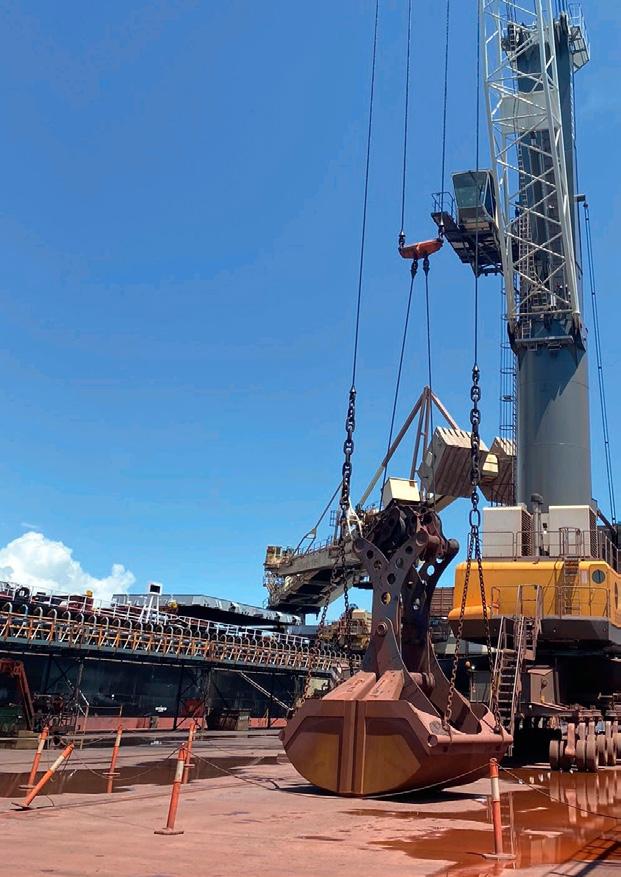
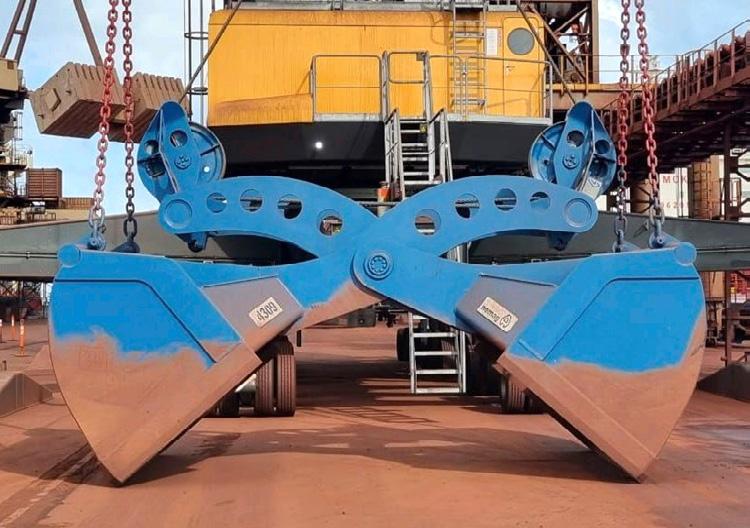
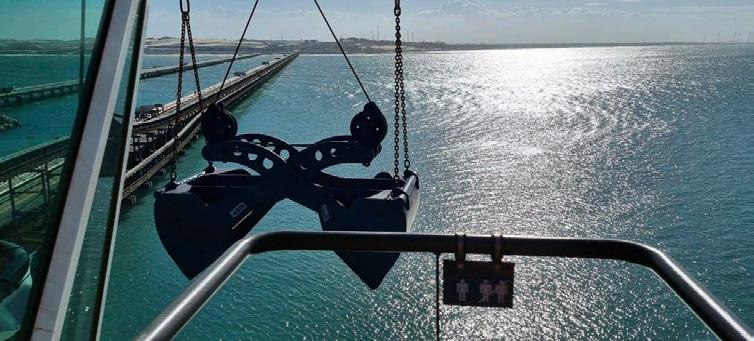
to adjust the configuration of the ropes. And the operators need some more time to get used to the grab. I strongly believe we can reach an even better performance with our Nemax, looking towards an average of 1,100 tonnes per hour,” comments Ribeiro.
The NemaX can reach a staggering 1,400t/h during free digging. This is 300t/h more compared to the competitor’s grab and 200t/h above what the Nemag Clamshell does in the free digging stage. Ribeiro adds, “It used to take up to five days to unload a ship. With the Nemag Clamshell and the NemaX side by side, we manage to unload the ships within four days! The savings in demurrage costs are considerable, to say the least!” Moreover, the NemaX has a far greater reach than conventional grabs. “Regarding cleaning out the hatch, the operators will tell me that when the situation at its worst, that’s when the NemaX works the best!” shares Ribeiro.
Then there’s maintenance. The NemaX ensures ‘clean’ work: the grab closes entirely and only starts opening – with zero rocking – when perfectly above the hopper. The relubrication time is reduced by 50%. And any consumable costs, such as steel cables, have been reduced by 30%.
Also, safety gains could not go unnoticed. Ribeiro explains, “Especially in Brazil, safety regulations are stringent, and with reason, of course. No doubt, the NemaX also brings a massive safety advantage. Because the grab can be placed open and flat on the ground, maintenance can easily be done at ground level. Because maintenance of the NemaX is very low-risk, we no longer have to deploy extra resources (staffing, lifting platform, etc.), which is a (cost)advantage in itself!”
And, naturally, other human elements also come into play. “I think it’s important to mention that working with
the NemaX has brought the team a lot of joy. They’re happy that they can work under safe conditions, their job is made easier, and, of course, the massive increase in productivity positively impacts us all!”
The first grab purchased by VLI for the Pecém site is expected to last another two years. By then, it will be replaced by a new NemaX. “Given the outstanding results, it’s the most logical step. With both cranes operating a NemaX grab, we expect to fully clear a ship in as little as three and a half days. This will reduce costs immensely. Furthermore, we will be able to service our customers even better. At the moment, we can unload 50 freighters per year on average. With both cranes operating with a NemaX grab, we can significantly increase the number of ships,” Ribeiro notes.
He sums up by saying, “Nemag provides first-class equipment with little wear and tear, even in extreme conditions. But perhaps more importantly, Nemag always offers reliable support. The openness to discuss technical improvements showcases their commitment to being a trusted supplier, putting their customers’ needs first. I can’t help but say that I am very satisfied.”

Since Abraham Grootveld developed his first grab and launched Nemag back in 1924, the world has changed significantly. Through constant innovation and by closely listening to and working together with our customers to create optimal solutions, we are proud that we can still convey our founder’s passion for performance to this day. Grab your favourite drink and visit nemag.com to learn more about dry bulk grabs.
by Fitzwilliam Scott
One of Nemag’s customers, SMT Shipping , has achieved significant transhipment advancements, particularly in West Africa on TSV Conakry Pearl. This region presents a unique challenge due to its shallow shores, extending 10 to 20 meters in depth for up to 10 miles. To be profitable, you will have to ship your cargo on colossal ore carriers. These capesize vessels can export up to 200,000 tonnes. However, these fully loaded enormous ships, 18 meters in depth, cannot approach the shore. The traditional solutions, like constructing extensive jetties or dredging long channels, are economically unviable. This is where SMT Shipping’s expertise comes into play.
The company owns and operates vessels with a unique combination of high-loading capacities and shallow drafts. “This allows us to transport a significant amount of cargo from the terminal, usually located on a river in West Africa, to the open sea. We then use large cranes to transfer the cargo to Capesize vessels, also known as Newcastlemax bulk carriers. For rapid and voluminous transfers, a highly efficient grab is essential,” explains Marc Smeets, Technical Project Manager at SMT Shipping. With revenue calculated per tonne, the challenge is clear: “We need to optimize the continuous cargo transfer process to maximize our profit.”
The challenge: different cargo needs a different grab
Originally, SMT’s vessels in West Africa transferred bauxite. When the market for it collapsed, SMT was compelled to shift to iron ore transfer for a client in Sierra Leone. This transition posed challenges because of the different specific gravities of bauxite and iron ore. The former is lighter than the latter, respectively around 1.6 vs 2.5 tonnes per cubic meter. Therefore, each material asks for a unique type of grab that maximizes efficiency without compromising the safety and integrity of the crane system.
Although they purchased a specialized bauxite scissors grab from Nemag, the differing weight characteristics of iron ore presented issues with crane overloading, impacting the time of each unloading cycle – a vital factor in their revenue model calculated on a per-tonne basis. Smeets
explains that SMT now had three different grabs at their disposal; yet, none of them were ideally suited for the specific characteristics of the iron ore they were now transferring. “We had one too-small clamshell grab, a too-big bauxite clamshell grab, and the big bauxite scissor grab from Nemag.” It sounds like a luxurious position to have three grabs available. “Our technical management wasn’t so eager because we already had three expensive grabs on board. But I was fully convinced that we needed a new grab – since they all didn’t enable optimal productivity.”
The solution: faster = better
Facing a challenge with their grab selection for iron ore transhipment, SMT Shipping began exploring the best possible grab solution. They had already experienced Nemag’s craftsmanship with their scissors grab purchase.
“Martine, an account manager at Nemag, already told us about the NemaX grab,” Smeets recalls. “So we returned to Nemag, where she shared a pretty promising presentation. We could also see and experience the NemaX in operation at a steel manufacturer in IJmuiden near Nemag. This live demonstration was very convenient and showed firsthand how satisfied everybody was.” He furthers, “In addition, she calculated and presented data comparing the cycle times of various grabs, revealing that the NemaX showed a remarkable productivity improvement of 14% and 19% compared to the clamshell and scissors grabs with similar specifications. This gave us valuable insights into the performance difference and a clearer
view of the total cost of ownership. These numbers also convinced the commercial manager to give this investment a try.”
The NemaX grab stood out because of its efficiency. Traditional clamshell grabs require a significant amount of wire to be pulled in and out, taking valuable time with each cycle. In contrast, the NemaX grab uses a fraction of the wire length compared to standard grabs. With SMT’s small clamshell grab, the wire length is 13 meters compared to the 8.7 meters of the NemaX grab. “Saving seconds on each cycle doesn’t seem much until you calculate the impact on an annual basis,” Smeets notes.
Although the productivity looked promising, he still had to convince his boss. “Our owner always thought Nemag was a bit like the Mercedes or Ferrari of grab builders – the highest quality but overpriced when you only need to get from A to B.” Yet, he later discovered that the price difference between Nemag and its major competitors wasn’t all that significant. This ended his long-standing perception when he learned that Nemag’s prices are reasonably in line with the market. “High-skilled operators combined with the technical advantage of NemaX meant our overall efficiency would significantly improve. Recognizing the potential of the NemaX grab, as it is also co-developed with the Delft University of Technology, we decided to invest in it,” Smeets says. Comparing its productivity with other grabs in the Sierra Leone use case, NemaX emerged as superior thanks to its speed. This only reaffirmed the notion that faster transfer times result in higher profits.
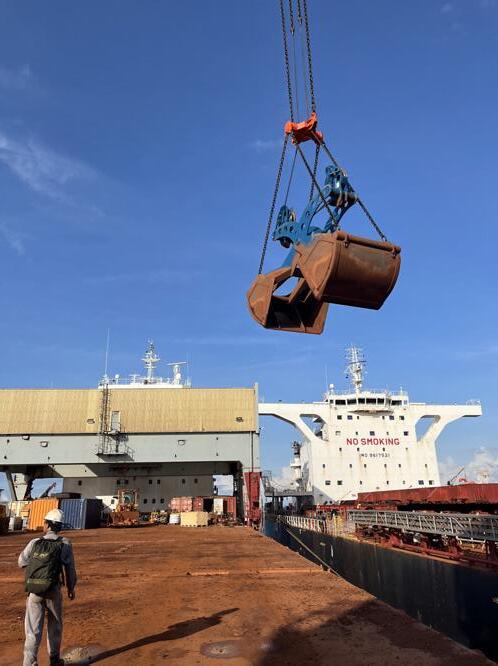
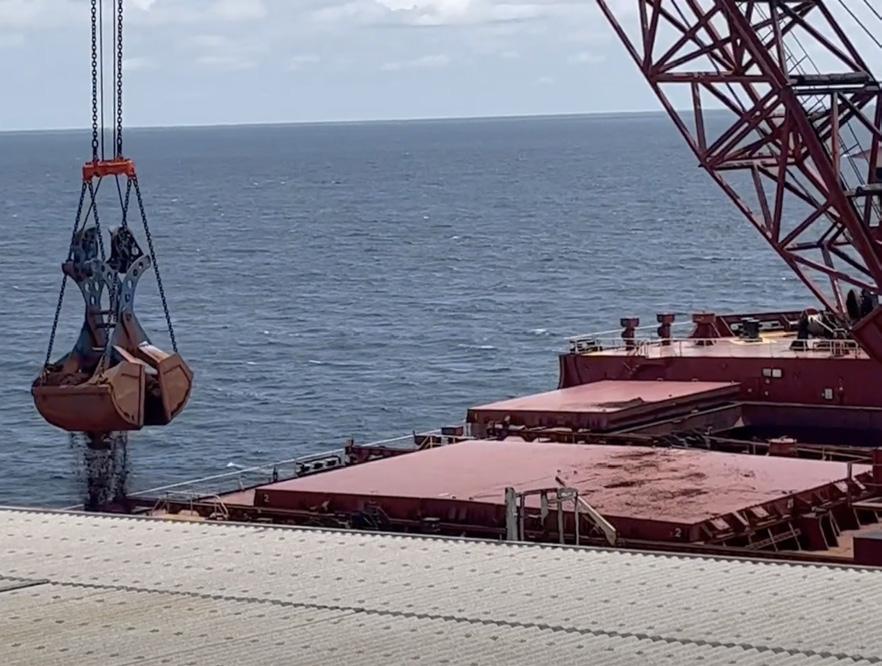
Following the integration of the NemaX grab into SMT Shipping’s operations, the company witnessed an increase in productivity that simply couldn’t go unnoticed. The crew had to get used to the new grab in the first weeks. But after their first month, the handling rate went from 1,000 to 1,250 tonnes per hour. The NemaX Grab boosted productivity by a quarter compared to the previous Nemag scissor grab, which wasn’t optimally suited for iron ore.
The fitting grab for the right job in this continuous transhipment process was an excellent decision – despite the other three available grabs at the ship. The stark improvement in performance resulted in an exceptional return on investment period of less than three months. “This NemaX grab paid itself back more than four times in its first year,” Smeets tells us.
Furthermore, the NemaX grab demonstrated superior safety and maintenance features. Breakdowns are annoying, tedious, and expensive if you’re on a ship in West Africa. With fewer moving parts than the traditional clamshell grab, SMT Shipping experienced zero breakdowns after transferring six million tonnes in the first year. Maintenance was also more straightforward. Technicians needed to climb up to service a clamshell grab, but the NemaX’s design allows for easy access
from the ground. The grab eliminates the risks associated with working at heights, especially on a moving vessel at open sea. Also, unlike a clamshell grab with eight sheaves and the same number of hinges, the NemaX grab only has two sheaves and one hinge. Fewer moving parts and easier access contribute to faster and more efficient maintenance processes.
After seeing the success of the NemaX grab, SMT was eager to keep improving. If you continuously rotate through a 180degree cycle in the open sea, it results in some accidental sideway collisions now and then. The skilled crew, mainly of Polish workers, welded some modifications. These enhanced the grab’s strength with no downtime of the grab leaving the vessel.
Another challenge is West Africa’s seasonal climate. The wet season, stretching from May to October, alters the iron ore’s properties and affects the grab’s penetration ability. The rain in the wet season makes iron ore a bit heavier but also more lubricant and thus easier to penetrate. In the dry season, the ore is harder to penetrate and requires a heavier grab for the
best performance. However, a heavier grab designed for dry material underperforms in handling wet ore due to its extra weight. So, consistent efficiency levels are a challenge to sustain and usually turn into a compromise.
After the success of the NemaX grab, Smeets was interested in buying another grab to further increase their productivity. Open to innovation and custom improvements, Nemag also included the custom SMT-adjustments in the new grab that is currently being delivered after a successful factory acceptance test. Additionally, it has a unique feature to add or remove weight in the grab’s tubing. By changing its gravitational force, this hybrid solution can handle both wet and dry ore equally well. The second grab allows for more flexibility and functions as a productivity insurance for when the current NemaX grab needs large or unforeseen maintenance.
What appeared to be ‘just’ a grab-buy in the first place transformed into a partnership between SMT Shipping and Nemag. The two have opened the doors for future projects to tackle the unique challenges of open sea operations and ensure optimal performance and durability of grabs.
Since Abraham Grootveld developed his first grab and launched Nemag back in 1924, the world has changed significantly. Through constant innovation and by closely listening to and working together with our customers to create optimal solutions, we are proud that we can still convey our founder’s passion for performance to this day. Grab your favourite drink and visit nemag.com to learn more about dry bulk grabs.
by
The Roadmap of Local Green Hydrogen-Based Fuels in the Umeå Region , report of the EU-backed Blue Supply Chains project, outlines an ambitious yet balanced strategy to decarbonise port and industrial activities. Led by the goal of achieving climate neutrality by 2040, the Roadmap details a framework for developing a localised electro-fuel production framework centred on green hydrogen. The proposed multifaceted approach – infrastructure readiness, fuel compatibility, environmental regulations, and financial responsibility – provides a flexible methodology that other port regions in the Baltic can, too, utilise.
The shipping industry is under pressure to reduce its heavy reliance on fossil fuels, which still account for almost all of its energy use – far behind other sectors in decarbonisation efforts. As global shipping is still responsible for nearly 3% of all greenhouse gas (GHG) emissions, this lag could seriously undermine international climate targets. Ports have a vital role to play in this shift – not just as logistics hubs but as key drivers of change by supporting the adoption of alternative fuels and green technologies across the maritime sector.
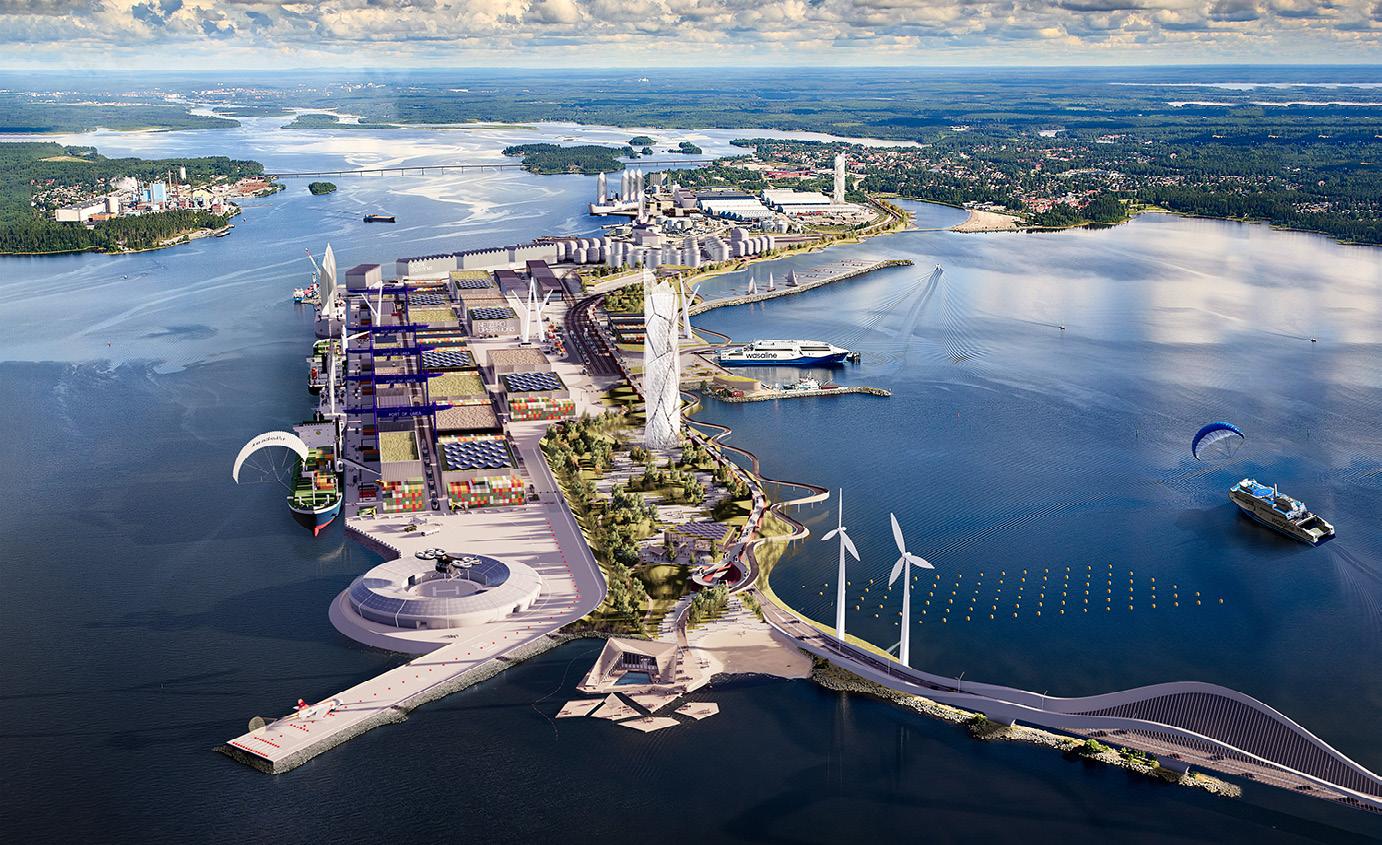
The Umeå region is particularly wellpositioned to become a northern European epicentre for green hydrogen-derived fuels. Substantial, dependable supplies of renewable electricity, particularly hydropower, dominate the area’s energy profile. In addition, Umeå has access to clean water for electrolysis, bio-based carbon dioxide suitable for synthetic fuel production, and a well-developed industrial base. Designated as the primary site for fuel production in the region is the Dåva EcoIndustrial Park. Equipped with district heating infrastructure and situated near robust rail & road networks, Dåva’s location makes it convenient for both domestic use and export opportunities. Umeå has already been taking an active role in renewable energy projects (e-methanol),
showing its consistent resolve to environmental sustainability.
Becoming climate neutral in six steps
The foundation of the Umeå Roadmap is a six-step methodology. First, define the objective and timeframe; second, map the present; third, assess the future; fourth, understand technological developments; fifth, explore pathways, actors, and measures; finally, plan for realisation, follow-up, and evaluation.
The process begins with picking strategic goals – such as that by 2040 Umeå aims to produce enough green electro-fuels for maritime and port activities to cut GHG emissions throughout the logistics chain. Next, the report takes a snapshot of the current situation, including strengths and weaknesses in Umeå’s energy, transport, and industrial infrastructure. For example, the Port of Umeå currently hosts over 800 ship calls annually and supports significant freight operations but lacks the refuelling and support systems necessary for hydrogen-based fuels. Still, the presence of industrial emitters producing biogenic CO2 and a stable energy grid form a solid foundation to continue with the next steps.
Central to the goal of Umeå being climate neutral before long are the future fuel supply and demand projections. The
Roadmap estimates the Dåva site could support the production of up to 110,000 tonnes of e-methanol annually. This fuel, alongside hydrogen and ammonia, has emerged as a leading candidate for maritime decarbonisation due to its energy density and growing market availability. The transitional pathway described in the Roadmap illustrates milestones such as constructing hydrogen infrastructure, implementing carbon capture, and retrofitting port operations and vessels with fuel-flexible or zero-emission tech solutions.
Technology-wise, the Roadmap emphasises that there’s no single one-size-fits-all fuel or technology. Instead, a diverse mix – including hydrogen, methanol, ammonia, batteries, and wind-assisted propulsion – must be deployed concurrently. This is because of the complexity of the maritime sector, where different vessel types and travel routes demand different energy solutions. In terms of the economics of alternative fuels, the report offers detailed comparative cost analyses. At the moment, hydrogen, methanol, and ammonia are more expensive to produce and distribute – largely because electrolysis requires heavy investment while supply chains are still developing. That said, falling costs in electrolyser technology, increasing system efficiencies, and the expanding carbon
pricing regimes in the EU are projected to significantly close the gap by 203040. Green hydrogen costs, currently estimated at $4.0-9.0 per kg, are expected to decline to $1.0-3.0/kg through technological advancement and economies of scale.
The report also stresses the role of EU policies (FuelEU Maritime and the Alternative Fuels Infrastructure Regulation) that incentivise/mandate the use of renewable fuels in shipping and port operations. Sweden’s national policy is also moving towards aligning with the block’s climate targets, although not without some regulatory uncertainty – particularly around hydrogen storage, fuel classification, and CO2 capture and storage permits. The Roadmap identifies these gaps and calls for harmonised standards to facilitate market development.
The governance structure proposed in the Roadmap is collaborative and crosssectoral, bringing together municipal bodies, energy providers, port authorities, private companies, and logistics operators. The Municipality of Umeå and the Port of Umeå are tasked with steering coordination efforts supported by commercial stakeholders, including Umeå Energy, Liquid Wind,
and INAB. Implementation is tracked through a dedicated oversight system that includes performance indicators, pilot project evaluations, and adaptive strategy reviews. This governance model ensures that institutional momentum is maintained over the long timeframe required for full transition while allowing flexibility to incorporate new technologies or policy changes.
The Roadmap of Local Green Hydrogen-Based Fuels in the Umeå Region also outlines an integrated system that leverages existing infrastructure whilst preparing for new investment. The Dåva facility is envisioned as a production and distribution hub, using excess renewable electricity for electrolysis, captured biogenic CO2 from local industries, and thermal integration with the district heating grid to increase overall energy efficiency.
Green hydrogen is expected to serve both as a direct fuel and a feedstock for methanol synthesis, with planned port storage and bunkering facilities. Additional seaport upgrades – such as shore power systems, ammonia-compatible fuelling stations, and rail-port connectors – will align with the broader digital
and environmental modernisation of logistics systems.
Additionally, ‘trickle-down’ economic and regional benefits are forecasted. The development of green hydrogen and e-fuel capacity is expected to spur job creation, innovation, and regional competitiveness. Synergies with other future-oriented industries in northern Sweden – like battery production and green steel manufacturing –enhance the region’s appeal as a centre for sustainable industrial growth. The export potential of e-fuels, particularly as global shipping regulations tighten, positions Umeå as a strategic player in the international maritime decarbonisation sector.
The charted Roadmap represents a comprehensive blueprint for transforming Umeå into a model region for green hydrogen-based fuel production and utilisation. Through detailed analysis of economic, technical, policy, and governance dimensions, the report outlines a clear path towards a zero-emission maritime future. By capitalising on local strengths – renewable energy, industrial readiness, and political will – Umeå is set to lead Sweden and the wider Baltic region in implementing a sustainable and economically viable energy transition.
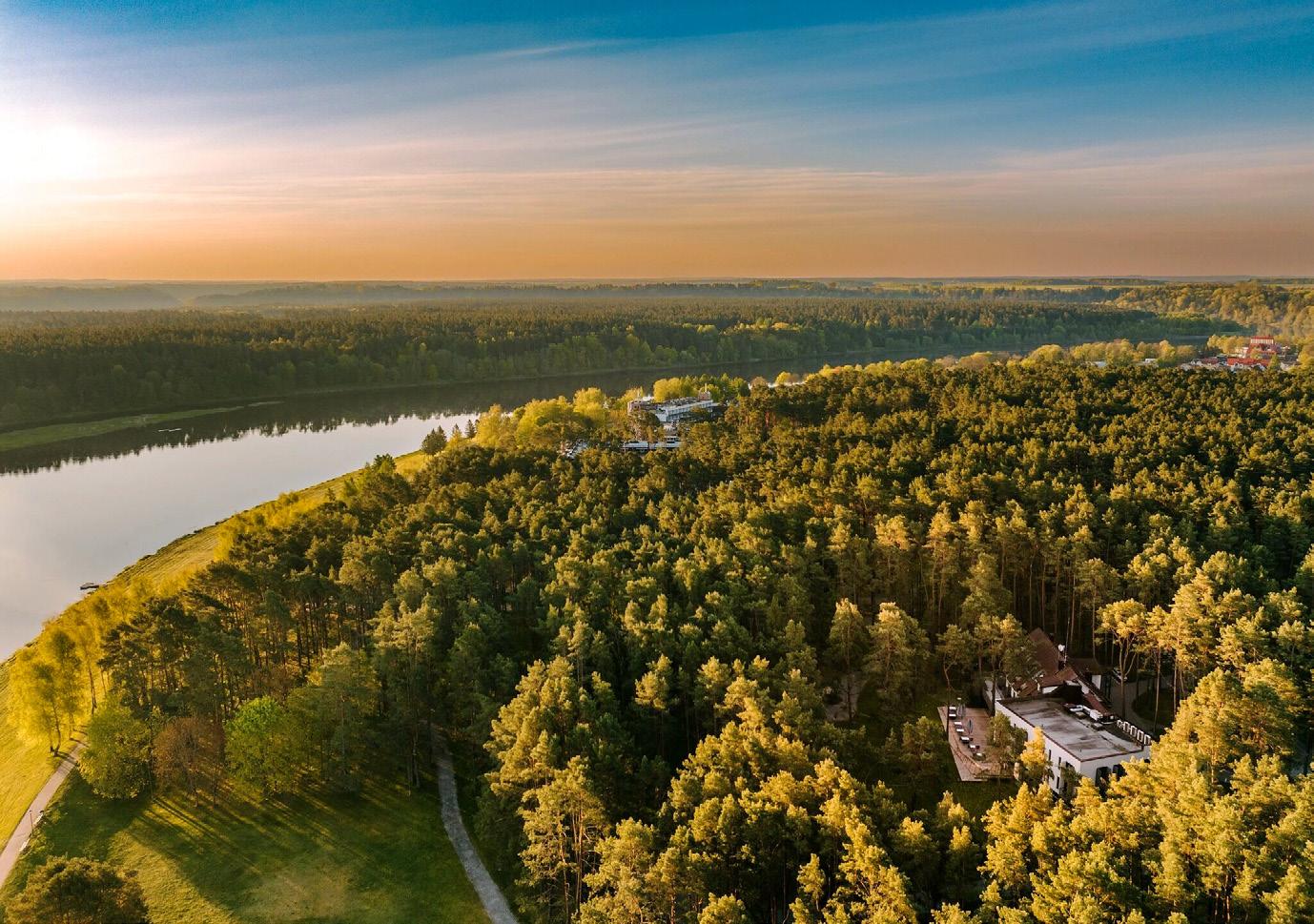
The Greening Lithuania’s Transport Chain report, by the EU-supported Blue Supply Chains project, reviewed the Baltic State’s ongoing project tasked with shifting road traffic onto inland waterways – along the Nemunas River. At the core of the initiative is the electrification of pushboats operating between Klaipėda and Kaunas, supported by a public tender that has attracted domestic and international stakeholders. The project not only advances the country’s environmental agenda but also establishes Lithuania as a test site for green transport solutions.
Lithuania’s road-to-river strategy is consistent with broader maritime aims in the EU. Because the shipping sector still relies almost entirely on fossil fuels for energy (and contributes nearly 3% of worldwide greenhouse gas emissions), (sea & river) ports that quickly develop lowcarbon solutions and infrastructure can gain a lasting competitive advantage. Further, the EU’s Fit for 55 package, which extends carbon pricing to shipping and sets binding targets for alternative fuels, makes early action particularly valuable.
Taking advantage of Europe’s sustainability push, Lithuania is positioning its rivers at the centre of a modern logistics strategy. By utilising inland waterways, the state intends to reduce road congestion, lower emissions, and enhance sustainable transport.
The revival
What had begun under the Project EMMA developed into a flagship programme of the Lithuania Inland Waterways Authority (LIWA) to revive the Nemunas and the E41 waterway as viable commercial routes. Between 2019 and 2023, €27 million was invested to restore the latter (plus some €300,000 spent on light and GPS-equipped buoys). The first field test in 2021 showcased the potential of the project when a barge carried a 164.5tonne General Electric transformer from Klaipėda to Kaunas. By 2022, over 200t of freight had been transported, showing that it is both practical and sustainable to move goods from highways to rivers.
Modernisation and infrastructure development around the Nemunas River
have been necessary to ensure that this early success could continue. Over 550 groynes were built to regulate water flow and manage sedimentation and erosion. As part of the EU TEN-T upgrades, these improvements guaranteed the Nemunas is fit for commercial navigation. Moreover, E41 was upgraded to ensure year-round operation to transport at least 100,000t/ year. In the second half of 2023, regular deliveries were underway on the Nemunas River, and from 2024, LIWA started bulk cargo transports (grain and rubble). Each barge trip replaces about 106 trucks, reducing CO2 emissions by 21t.
The next phase of the programme focuses on innovation. In partnership with the European Investment Bank, LIWA completed a feasibility study for electrifying its fleet. The research looked at market demand, vessel needs, river conditions, port infrastructure, and alternative energy systems (including hydrogen, methanolelectric, and battery-electric options). The results show that battery-electric vessels are most viable at the moment. Supported by €14.6m in grants, the initiative includes ordering six pushers, 12 barges, and 27 battery containers to be introduced over six years. The transition to rivers enabled by these assets could replace around 49,000 truck journeys annually.
A resilient charging network is essential to provide enough power for this brand-new tonnage. The initial grid connections provided only 350kW, insufficient for pushboats, so a dual-link system was introduced, raising capacity
to 750kW per vessel. But more is needed, thus charging points are being set up at three key locations: Klaipėda (as the hub), Jurbarkas (mid-route charging and battery exchange stop), and at the Kaunas Marvelė Port (multi-purpose energy centre supporting both vessels and heavy-duty trucks). The last offers specific advantages, including direct access to a nearby high-capacity transformer. Under a longterm agreement, the Lithuanian government has pledged €500,000 to enhance the grid, while the port operator will cover 10% of the expenses and set the electricity rate at €3.0/kW.
Another key finding from the report is that while electrification is moving along swiftly in road transport, the same cannot be said about maritime, where charging infrastructure is scarce. Only a few European ports are able to provide a large-scale alternative energy supply. Establishing hubs like Klaipėda and Kaunas with long-term, stable grid connections is instrumental in enabling the maritime sector to decarbonise.
However, deploying high-power charging technology is still a tall order. The commercially available solutions at the required scale are insufficient. Thus, a phased method has been adopted in the Lithuania project to allow for infrastructure improvements as new systems become available. There are also constraints on energy supply within urban areas, e.g., at Marvelė, on-site renewable generation is restricted, so the port must rely on the national grid. Here, long-term
planning and fixed-rate contracts with energy providers are critical to ensure a stable, cost-effective supply.
Battery logistics adds another layer of complexity. Each container weighs about 30t, which requires strong docks, special cranes, and improved storage areas to manage safe and efficient exchanges. A second charging point in the Port of Klaipėda is also being considered to meet growing demand, which involves talks with local operators and energy suppliers to get both power and space.
That said, to enhance operational flexibility even further, floating ‘battery barges’ are being considered as mobile power units to keep vessels running without interruption. Also, fixed-rate energy contracts will help control electricity costs, while close coordination between government, industry, and energy providers is helping develop the E41 into a scalable, zero-emission inland waterway system.
With infrastructure plans in place, the focus has shifted to vessel design. A blueprint for electric pushers has been completed, tailored to the Nemunas River
and fit to work with high-capacity batteries. Trials with diesel-electric hybrids, methanol-electric systems, hydrogen fuel cells, and battery-electric vessels have already provided important data that shapes the final specifications.
The project is currently in the implementation stage, with standards of production, regulatory approvals, and procurement underway. A 2024 public tender invited international building companies and technology providers to deliver the pushboats to the needed performance and sustainability criteria. At the same time, the Kaunas Marvelė Port is expanding its capacity to 2.5MW, which will enable three battery containers to charge at 750kW each.
Clearly, the success of Lithuania’s inland waterway electrification depends on a robust charging network. With the dualconnection system, which delivers the necessary 750kW/vessel, the network fits into the European combined charging system standard but remains demand-scalable.
Kaunas’s proximity to a high-capacity transformer reduces grid extension costs, while a public-private financing model ensures stable pricing. Yet, challenges remain – from the limited availability of ultra-high-power charging equipment to reliance on the national grid due to zoning restrictions, as well as the need for heavyduty cranes and reinforced docks to handle 30t battery modules.
To overcome these obstacles, solutions such as battery barges and fixedrate energy contracts have been under discussion. Meanwhile, improvements to the infrastructure at the Kaunas Marvelė Port and the public tender for e-pushboats highlight Lithuania’s capacity for extensive implementation. Thanks to robust collaboration among the government, the private sector, and the EU, the project is progressing despite market volatility and competition from road transport. The initiative’s benefits go beyond logistics, reinforcing environmental targets, supporting economic growth, and positioning Lithuania as a regional leader in sustainable (inland) shipping.
by Ewa Kochańska
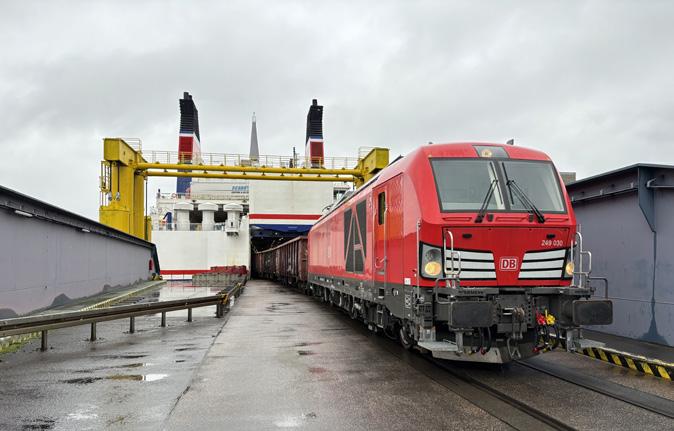
Decarbonising freight transport across Europe requires not only cleaner and smarter technologies but also an innovative use of existing corridors. The reports Role of port authorities in the set-up of green transport chains, Set-up of Green Transport Chains Rail Ferry Case Rostock-Trelleborg, and Improved green transport chains through demonstrated cooperation between port authority and operator, from the Blue Supply Chains project, analysed the Rostock-Trelleborg rail ferry link as an example of how ports can support the creation of greener supply chains by combining sea and rail. This type of solution eases congestion on the roads and diversifies access between countries and cities. The analysis showed that the Rostock-Trelleborg service has long-term potential to support both climate targets and resilience strategies as long as investments in rail capacity, digitalisation, and alternative fuels keep pace with demand.
Besides new fuels and innovative digital tools, decarbonisation of freight transport across Europe also demands a rethinking of how existing corridors are utilised. The RostockTrelleborg rail ferry, the last train ferry connection between Germany and Sweden and a vital link in the ScandinavianMediterranean (ScanMed) TEN-T Core Corridor, serves as a perfect example of this. Once seen simply as a niche service, it is now being repositioned as a model for green logistics, with security and geopolitical implications, at the centre of Europe’s transport network.
Ports have long been the engines of trade, just as they have long been major polluters. As Europe accelerates its Green Deal ambitions, seaports are under pressure not only to cut their own emissions but also to lead the energy transition, helping the
entire transport sector decarbonise. The Rostock-Trelleborg partnership demonstrates how ports can assume this role: by modernising facilities, investing in alternative fuels infrastructure, and supporting sea-rail solutions that reduce truck traffic and diversify supply chains.
Trelleborg, Sweden’s busiest ro-ro port, is already consolidating intermodal operations to reduce internal driving distances, renewing equipment with electric tug masters and hydrogen shunting locomotives, and expanding shore power connections for ferries. Meanwhile, Rostock is building up its combined transport terminal with new storage, additional 680metre tracks, and is testing e-tug masters to cut emissions from port operations.
Stena Line operates the rail ferry between the two. The company’s existing vessels, about 26-28 years old (expected to run for up to four decades), are being retrofitted with silicone hull coatings (one ferry so
far), upgraded propellers, and AI-assisted navigation tools to reduce drag and optimise routes. Additionally, terminal time is being optimised to reduce fuel burn, and vessel machinery is being renewed to prepare for biofuels. Methanol conversion and hybrid propulsion are being explored, following Stena Line’s earlier introduction of the world’s first methanol-powered ferry. The strategy is twofold: extend the life of the current fleet while laying the foundation for fossil-free operations in the coming decades.
In terms of digitalisation, the KV4.0 Data Hub is a new machine-to-machine data exchange system, able to provide realtime visibility across intermodal terminals, allowing users to track shipments, optimise truck arrivals, and better allocate resources. This level of transparency reduces congestion and makes combined transport more attractive, particularly for smaller operators who previously found intermodal logistics too complex.
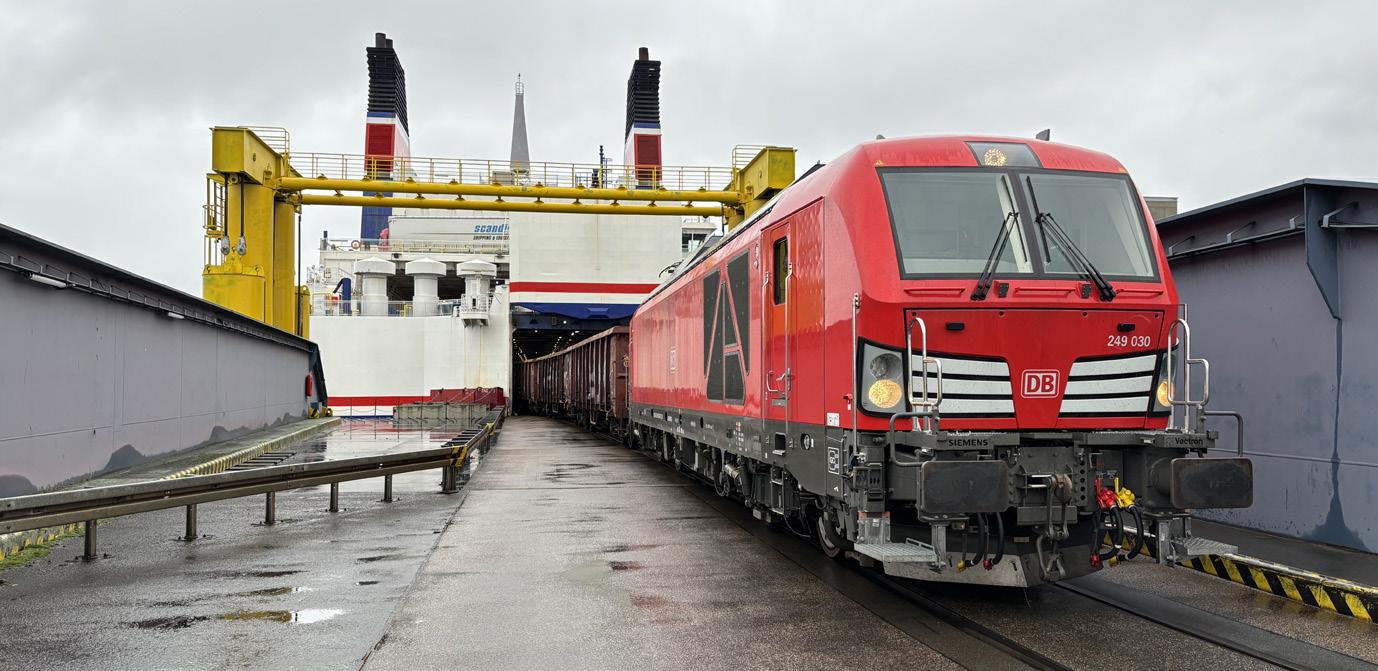
The Rostock-Trelleborg link also plays a strategic role in Europe’s economy and security. It provides an alternative to infrastructure such as the Öresund Bridge when congestion, pandemics, or political upheaval threaten supply chains. Past disruptions have shown how fragile a singlecorridor system can be, and policymakers in Germany and Sweden now emphasise a ‘two-corridor strategy’ as a security issue.
Geopolitical developments have only reinforced this point. The Russian aggression against Ukraine as well as Sweden and Finland’s NATO accession highlight the corridor’s importance for civil protection and military mobility. The ferries can carry entire trains, locomotives, and heavy equipment unsuited for roads due to axle load and clearance limits, and and is approved for the transport of dangerous and critical goods, underlining the link’s twofold role in trade and defence logistics.
Demand is expected to climb steadily for the connection. Northern Sweden’s industrial plans in areas of green steel, batteries, and raw materials will create new freight flows southwards; yet, inland rail remains congested. In the country’s south, the Skåne network is already stretched, and while upgrades, such as the Lund-Hässleholm double track, will certainly help, they will not meet longterm demand. It has been forecasted that daily rail traffic through Trelleborg could double by 2045. Without investment in tracks and yards, road haulage
could end up absorbing the additional volumes, undermining EU climate goals. Germany, meanwhile, offers a stronger base as Rostock’s facilities were originally built for far higher traffic. Technical barriers (e.g., incompatible wagon couplings) are being addressed through EU initiatives like digital automatic coupling, which will simplify cross-border operations and improve efficiency.
However, the corridor is not without its unique challenges. In Rostock, there is currently only one rail-enabled berth; an investment in a second one requires recognition of the ferry’s strategic importance at the federal level. While Sweden is already including the route in its long-term transport planning, Germany has yet to formally recognise its strategic role. Without this recognition, access to national funding is limited. At the EU level, inclusion in frameworks like the Connecting Europe Facility and the Military Mobility programme could secure resources and planning security, but only if Germany and Sweden coordinate. The vessels themselves also need a clear investment path for future replacements. Purchasing specialised, rail-capable ferries is costly and carries high risks for operators unless public policy helps lessen that financial burden.
Despite the challenges, for customers, the Rostock-Trelleborg service is already
a reliable alternative. Six daily departures provide flexibility, and punctuality rates average 98% – something land routes rarely match. The six-hour crossing is shorter than the road trip through Denmark and is unaffected by traffic in southern Sweden. Therefore, booking the rail ferry gives shippers an ‘almost’ certainty that their cargo will move on time. Operationally, the service is efficient and safe. Entire trains roll on and off in a single move, avoiding the risks and delays of craning trailers individually. Ports in both Rostock and Trelleborg are equipped with large shunting yards, allowing wagons to be reordered and new train sets formed before departure. This reduces handling time, minimises the risk of cargo damage, and enhances planning security for operators.
The Blue Supply Chains project has highlighted that the key to the success of the Rostock-Trelleborg link lies in stakeholder engagement. Workshops, roadshows, and advocacy have helped with understanding that the ferry has the potential to be a key part of Europe’s transport network.
The Rostock-Trelleborg train ferry has already been proving itself, as it has reduced road congestion and emissions – likewise improved Europe’s resilience to disruptive events. But its future will be decided by choices made now. The political recognition of its strategic role must match investment in inland rail, port infrastructure, and vessel modernisation.
by Bahez Karim, Founder, Paahtu
The Baltic Sea is probably the heaviest coffee-drinking region in the world. Apart from trade, however, this demand also produces a lot of waste. Sure, it can be composted or turned into homemade skin-beauty peeling – but it can also be upcycled and gain a hot new life. Enter Kahviklapi, a firelog made from used coffee grounds, designed as a sustainable alternative to traditional wood-based logs. But why on earth are you reading this in a publication devoted to transport & logistics? All because Tallink & Silja Line’s Silja Serenade is already seeing its used coffee transformed into a sought-after resource!
Paahtu was ignited by the idea of creating value from waste, and we have been on this path for over a year. We believe we are becoming an important part of local circularity systems by challenging traditional waste practices and contributing to reduced deforestation and pollution. For example, a company that consumes 500 cups of coffee per day produces 3,120 kg of coffee ground waste yearly. That’s about 15 trees saved per year if, instead of disposing of it, this stream lands with us. Kahviklapi burns 45% hotter, lasts almost twice as long, and takes 40% less space than wood. The logs can be used in saunas, hot tubs (“palju” in Finnish), and fireplaces.
There is plenty of coffee waste to collect, and we have been pleasantly surprised by the eagerness of companies to have their coffee grounds collected by Paahtu. With a forward-thinking partner, Tallink & Silja Line, we collect around 300 liters of coffee grounds every week from Silja Serenade, which cruises between Helsinki and Stockholm. That sums up to 10 tonnes annually, or as the Estonian ferry company puts it, concrete action that has an impact and is an essential part of their sustainability work. From Paahtu’s perspective, even this seemingly small waste stream makes a significant difference in our effort to
offer sustainable alternatives to essential consumer goods. On top of that, suppliers benefit by saving on bio-waste disposal fees and by receiving data on waste collected and trees saved.
Our cooperation with Tallink & Silja Line demonstrates how shipping companies can integrate circular economy solutions into their sustainability strategies. A cruise ship is essentially a floating town, generating significant waste streams but also presenting unique opportunities to close the loop. Coffee waste is just one of many materials that can be repurposed. By collecting and transforming it, we reduce disposal costs, contribute to sustainability, and showcase tangible results to passengers and stakeholders.
Other companies are noticing the opportunity, too. For example, Paahtu was approached by a US retailer operating near a busy harbour. Together, we see not only the potential of Kahviklapi in the over-the-pond market, but also the possibility of local production near ports where coffee waste is abundant (and certainly the Baltic’s ~200 ports could lay the ground!).
At the same time, we have a long list of excited suppliers from hotels to office buildings and cruise ships, and we can’t wait to bring them on board. For now, we are focusing on larger suppliers, but in the future, we plan to include smaller waste
producers, such as cafés. Our logistics are fairly straightforward: Tallink & Silja Line collects its coffee grounds in buckets provided by Paahtu, and we collect and replace them once a week.
The excitement is not limited to suppliers: consumer and retailer interest has exceeded our expectations, counting 120+ pre-orders (and an additional 250 on the waiting list). Indeed, we have temporarily closed our online store because of overwhelming demand that exceeds our current production capacity. That’s also where we arrive at the missing part of our circular equation: we have enthusiastic suppliers, plenty of raw material, and eager customers, but we cannot produce enough logs to meet demand.
Currently, Paahtu’s production line is highly manual, but it still allows us to deliver our pre-orders. Right now, it takes us over five days to make 100 bags, which is enough to collect valuable feedback from our first customers (cleaner burning, less ash, and easy storage). However, our current retailers alone would require a minimum of 2,600 bags per month. In other words, everything is ready to begin sales and scaling, but to meet demand, we need an investor to help build a proper production line.
Like our logistics, the production process itself is quite simple: drying, mixing, and pressing. While industrial production often seems costly, with a €500k pre-seed investment, we can

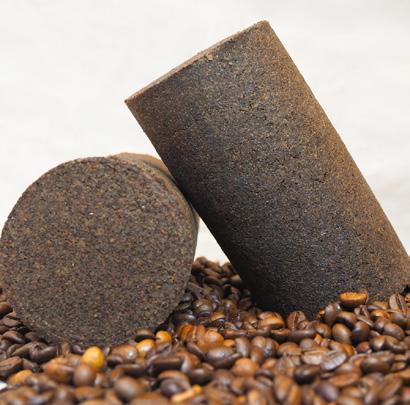
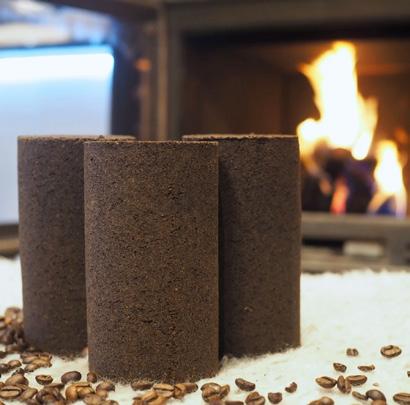
establish an efficient production line and expand logistics to serve both current and near-future demand.
We also know how to maximise our resources: Paahtu has grown from an idea into a lab-tested product with pre-orders and supplier contracts on just €20k in equity funding and €40k in soft funding. Now we are ready to scale.
As for our long-term vision, we aim to become experts in the waste-to-value business and a significant supplier of eco-friendly products. Our potential extends beyond Kahviklapi, and we have multiple products in our R&D pipeline, such as fire starters and logs
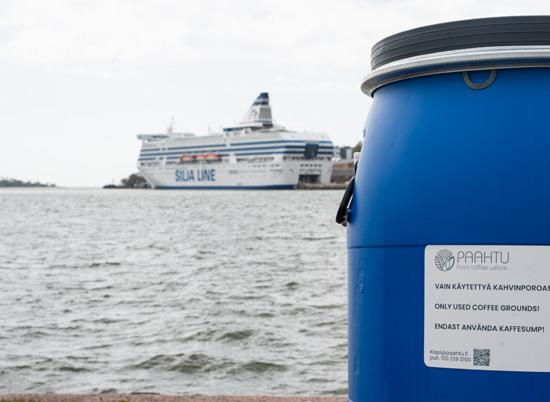
with special features. In the future, we’ll expand into local waste streams (ports & shipping lines, can you hear that?) and other coffee-ground applications beyond heat generation.
A circular dream is close to becoming reality. It is a win–win scenario for

all stakeholders – from investors to nature – but we need initial support to scale our operations. Our team works hard every day to make Paahtu a global phenomenon, and we welcome comments, thoughts, or collaboration ideas this article may inspire. Meanwhile, enjoy a warm cuppa coffee and follow our journey on social media!
Paahtu is a Finnish circular economy start-up transforming coffee waste into sustainable, bio-based products. Our flagship innovation, the Kahviklapi coffee log, is made from used coffee grounds and offers a cleaner, hotter, and longer-lasting burn than traditional firewood. Designed for saunas, hot tubs, and fireplaces, it provides a more sustainable and efficient alternative that reduces waste as well as helps prevent deforestation and pollution. Visit paahtu.fi to learn more (and support!).
by Kristīne Carjova, Dr.sc.ing., Senior Researcher, TalTech Estonian Maritime Academy
It may seem ironic that in an era of nuclear power, autonomous electric vessels, and emerging hydrogen technologies, the shipping industry is once again looking to the wind. Yet, there is nothing surprising in this return to sails. The sea has a long memory, and shipowners have never forgotten the allure of free, inexhaustible energy.
Long ago, when steamships were rapidly displacing traditional sail, owners of large trading vessels resisted abandoning the wind entirely. Their response was the creation of windjammers – large steel-hulled sailing ships fitted with up to seven masts. Advances in metallurgy and machinery made them possible – steel hulls allowed greater size and lighter weight, while steam winches eased sail handling and cargo work. The result was vessels that could compete with steam on cost. Windjammers averaged 15 knots and sometimes exceeded 21, outpacing many cargo steamers of their era, which typically managed 14 knots.
Nowadays, instead of racing to ever-higher speeds, ship operators deliberately slow down. Slow steaming has become the industry norm, sacrificing time for fuel savings. Could today’s wind-assisted ships challenge that logic, helping vessels be both energy-efficient and fast?
The International Maritime Organization (IMO) is raising ambition for greenhouse gas reduction, and shipowners are exploring alternatives. Wind-assisted ship propulsion has reentered the cluster in several forms — rotor sails, hard sails, suction wings, kites, and soft sails. What follows focuses on rotor sails, the option now seeing the broadest commercial deployment.
Rotor sails have now moved beyond the experimental status and are operating on a growing number of commercial ships. Over the past 15 years, at least 25 confirmed installations have taken place, ranging from ferries and ro-ros to tankers and bulk carriers. Performance figures vary from single-digit fuel savings to peaks of 25%; overall reductions are in the 4-15% range (with occasional higher values on routes with particularly favourable winds).
Our century’s rotor sail installations began with Enercon’s E-Ship 1, launched in 2010. It remained the company’s only vessel equipped with rotors, but nonetheless demonstrated reductions of around 25%. Maersk Tankers’ Pelican (later Timberwolf ) recorded 8.2% fuel savings on voyages between the Middle East and the Far East. Installation on the ro-ro SC Connector was reported to achieve fuel savings of up to 25%, while also showing advances in design by using tiltable rotors to pass under bridges.
Fuel savings from rotor sails do not scale linearly with installed thrust. Ships with more or bigger rotors do not automatically achieve proportionally higher efficiency, while vessels with one smallest rotor on windy routes can perform just as well. For example, the very large ore carriers Sohar Max, 360 meters long and equipped with about 1,750 kN of rotor thrust, and the 340-m Sea Zhoushan
with 875 kN of thrust, are both reported to achieve around 6-8% savings. Mid-size bulkers, such as Chinook Oldendorff (235-m, 525 kN) and TR Lady (229-m, 540 kN), reach 10-15%, while the Kamsarmax bulker Afros (200-m, 700 kN) reported 12.5% of savings. The ship’s overall length is therefore used as a practical comparison metric in the analysis we carried out at TalTech – since detailed loading conditions by voyage are rarely disclosed.
Widely cited studies, including those used by the European Maritime Safety Agency and the IMO, derive “typical” savings by grouping ships into broad bands of deadweight or displacement and applying average fuel consumption figures, while excluding some ship categories altogether. Such simplifications may serve reporting purposes, but to understand the true contribution of rotor sails, ship size, type, operational profile, and other technical parameters must all be considered.
Also, terminology matters. Across case reports, the same savings are expressed in very different ways: as percentages of fuel consumption, as reductions in energy demand, as tonnes of fuel or kilograms of CO2 avoided, or as the share of propulsion provided by rotors. Thus, the figures are not directly comparable. One project may report a 10% saving in fuel use, another a similar figure in emissions, and a third in terms of energy efficiency, but these are not interchangeable metrics. For shipowners, inconsistency creates uncertainty. Investment decisions require a clear understanding of what is being saved and how it is measured.
If performance outcomes are difficult to compare, the economic case is even less transparent. Published data on costs are scarce, and when disclosed, figures vary widely depending on vessel type, retrofit conditions, and contractual arrangements. Several manufacturers reportedly developed rotor sails over the past two decades, but only two players control today’s commercial market by actively delivering installations.
We constructed a simulation model drawing on verified performance data and a range of economic scenarios. The model was not intended to reproduce exact operating conditions for individual ships. Instead, it tested the investment case under varying assumptions of fuel price, CO2 cost, and financing. The analysis focuses on outputs – how quickly rotor sails can pay back their cost under different regulatory and market environments. The results indicate that with current fuel prices and a CO2 allowance cost of around €85 per tonne under the EU Emissions Trading System (EU ETS), rotor sails can deliver a payback period of three
to six years. In trades outside the EU ETS, the payback period can sometimes lengthen beyond a decade. A Monte Carlo analysis confirmed the sensitivity of results to market conditions: fluctuations in fuel prices and carbon pricing dominate the outcome, while other assumptions, such as interest rates or installation, costs have a secondary effect.
Tab. 1. Rotor sail installations across
1 Period with rotor 2 Tonnes fuel/year
The windjammers’ story did not end because their crews forgot how to sail. Constraints and logistics set critical limits then and now. The constraints are challenging – rotor efficiency declines in persistent headwinds, aerodynamic interference can reduce performance when multiple units are installed, and deck space or air-draft restrictions constrain applications on some ship types (particularly container vessels). Information on costs and longterm operational performance is still incomplete, and the economics remain highly sensitive to fuel prices and carbon regulation (although under the right conditions, rotor sails consistently deliver verifiable savings). While rotor sails will not make every vessel on every route faster, they can provide reductions in fuel consumption and emissions that are both immediate and measurable.

The Estonian Maritime Academy, a structural unit of the Tallinn University of Technology (TalTech), provides multi-level education and carries out professional research in marine sciences and fields related to them, making it the only competence centre of its kind in Estonia. Sail to taltech.ee/en/estonian-maritime-academy to discover more.
by Ewa Kochańska
The Port Reform Toolkit , from the World Bank Group, has been the maritime sector’s reference point since 2001, helping governments, port authorities, and operators modernise and navigate change. Now in its third edition, the Toolkit offers a structured approach to port reform, with practical guidance on governance, regulation, financing, and institutional design. It gives decision-makers a clear road map for reform, ensuring ports remain resilient, competitive, and able to continue driving economic growth. The current issue includes new material on digital transformation, cyber security, environmental & social governance, labour transitions, and the critical role of ports within their communities.
The 2025 Toolkit’s key value lies in providing a consistent framework at a time when ports are under unprecedented ecological, societal, and geopolitical pressures. Global disruptions such as the coronavirus pandemic and armed conflicts have revealed how fragile supply chains can be, while environmental regulation, decarbonisation, and rapid technological change are forcing ports to adapt.
Globalisation has long been a driving force behind the growth of maritime trade. After WWII, and especially during the hyperglobalisation era of the 1990s and early 2000s, growing trade and value chains increased demand for sea transport, with ports acting as gateways. However, recently this trend slowed down, opening a period called slowbalisation with weaker global GDP growth, a decoupling between trade and output, and a gradual shift away from the deep international specialisation in supply chains.
While early globalisation bolstered the power and control of developed nations, today developing countries import as much, if not more, than they export. This is mostly fuelled by Asia’s demand for commodities such as iron ore and grain, as well
as goods needed for production.
Geopolitics is also reshaping trade flows. While the talk of nearshoring has so far produced little change, friendshoring (favouring politically aligned and trusted partners) is gaining traction as companies and governments try to build resilience against sanctions, instability, and supply chain shocks.
Energy trade is also transforming; fossil fuels still make up 40% of maritime volumes, but investment in clean energy now far outpaces fossil fuel spending. Ports will increasingly be expected to handle renewable energy components and to act as transportation, storage, and bunkering hubs for low- or zero-carbon fuels, reshaping their cargo and infrastructure needs.
Meanwhile, shipping routes are lengthening as operators prioritise reliability over speed in the face of droughts and security risks. The effect of these circumstances is a port sector at the centre of changing trade dynamics, where resilience, adaptability, and planning are becoming especially significant.
The global container shipping industry has also been reshaped over the past three decades by sweeping consolidation,
strategic alliances, and the pursuit of economies of scale. For port authorities, this has complicated the task of managing competition and maintaining a balance between the public interest and private power.
Horizontal integration through mergers and acquisitions meant that the top 20 carriers’ share of the market went up from under 50% in the mid-1990s to more than 90% today. The sector is now dominated by a few giants, who control more than half of global container carrying capacity. At the same time, vertical integration erased the boundary between shipping lines and terminal operators as several of the largest carriers are now among the world’s leading terminal operators, competing directly with long-established independent players.
Alliances continue to play a major role in the shipping industry, with vessel-sharing agreements allowing carriers to share the huge costs of running liner services across broader networks. While these partnerships improve (carrier) efficiency, they also raise concerns among regulators and shippers about decreasing competition, rising costs, and the growing leverage carriers hold over ports.
Furthermore, the vessels themselves have undergone a transformation. Container
ships that in the past carried 1,500 TEUs now reach over 24,000, forcing ports and other parties (like maritime offices in charge of fairways) to upgrade infrastructure almost continually. This race for scale overextends port capacity, requires deeper channels, longer crane arms, and more flexible labour, while also exposing supply chains to new risks. Incidents like the Ever Given’s grounding in the Suez Canal highlighted the fragility of ever-larger ships. There is a growing debate about whether vessel growth has reached its practical and economic limits, even as jumbo ships continue to enter regional trades.
Fleet composition has shifted as well, with dry bulkers and container ships gaining share at the expense of oil tankers. In the coming years, decarbonisation will continue transforming the tonnage due to ports and shipping lines having to handle new clean energy molecules. This will require new vessels and significant investment in liquid bulk infrastructure, reshaping maritime sector strategies for decades to come.
Reinvention towards resilience
The role of port authorities is also undergoing a key shift. Once seen primarily as landlords, regulators, or operators, their job now is to act as community builders, entrepreneurs, and organisers in response to extra pressures such as climate change, digitalisation, and growing stakeholder scrutiny. They no longer just manage port estates; they also have to balance financial competitiveness with environmental and social responsibilities. Consolidation in the shipping sector, public scepticism about port expansion, and the need for climate resilience have forced port authorities to be more proactive and transparent. They coordinate various stakeholders, from shipping lines and energy providers to local communities, likewise cultivate innovation to attract investment and talent.
Since ports are becoming a bedrock for new trades and energy systems, they have also become the key actors in the transition from fossil fuels to clean energy. Authorities must manage trust and the validity of their actions, as societal acceptance of port activities is no longer automatic. Regional cooperation among ports, often supported by governments, is also on the rise, reflecting a recognition that ports function as interconnected nodes in global and regional logistics networks.
Over the past three decades, ports worldwide have also changed through privatisation and financialisation. The shift began in the 1990s, when reforms transferred responsibilities from public authorities to private operators, with the landlord model (separating public ownership of land and infrastructure from private management of quay & yard services) becoming dominant. While this boosted efficiency and investment, it also raised concerns about loss of public control, especially when foreign state-backed companies or financial investors gain influence over critical infrastructure/services.
Next, the expansion of global trade and shipping capacity attracted new financial actors, including pension funds, investment banks, and sovereign wealth funds. Their capital increased port growth but also introduced risks, including inflated asset prices and conflicts between shortterm investor goals and long-term national interests. Governments are increasingly scrutinising these investments to balance efficiency gains with sovereignty, resilience, and strategic security.
The last few years have shown just how fragile global supply chains really are and how a single local event can send shock waves across the world. Natural disasters like earthquakes, floods, droughts, and pandemics have become more frequent, while humanmade disruptions, such as wars, cyber attacks, labour strikes, and industrial accidents, have pushed ports to their limits. The epitomic Suez Canal blockage, the COVID-19 pandemic, and most recently the Red Sea vessel attacks have highlighted how quickly crises ripple
across trade networks. Resilience has therefore become a strategic necessity. A resilient port must absorb disruptions, restore operations quickly, and adapt to new realities. In practice, resilience is about reducing potential vulnerability while ensuring that ports remain reliable in an increasingly unpredictable world.
Ports have a serious challenge in meeting global climate change objectives while also maintaining operational efficiency and competitiveness. To meet their obligations, ports have been implementing various decarbonisation strategies based on emissions assessments, low-carbon technologies, and specific policy frameworks. For example, electrification of cargo-handling equipment, providing vessels with shore power, and on-thespot renewable energy generation through solar and wind installations are becoming standard measures; operational efficiency, supported by digital traffic management and automation, helps minimise idle times and unnecessary fuel use.
Additionally, regulations and policies concerning issues such as carbon pricing, renewable power procurement, or separate port fees for low-emission vessels help with reinforcement. Since the global shipping industry is guided by the International Maritime Organization’s climate strategy (to cut greenhouse gas emissions to net zero by 2050), the ports have to become central to the transition to cleaner fuels. This shift creates new market opportunities for ports in countries with renewable energy resources, allowing them to develop export-oriented clean fuel supply chains (or to become increasingly independent from overseas imports).
Ports also have to adapt as they are especially vulnerable to sea-level rise, storm surges, extreme heat, and changing precipitation patterns. Integrating climate resilience into port design through higher construction standards, coastal defences, and improved drainage helps protect assets. Further, additional soft measures, like risk mapping or flexible land-use policies, also help. For example, tools like the IMFOxford PortWatch platform now enable authorities to model climate hazards and estimate downtime and infrastructure damage. Ports are now evaluated using ESG frameworks that promote transparency, fair labour practices, and community engagement. By integrating mitigation, adaptation, and accountability, ports can play a pivotal role in the development of a low-carbon economy.
Smart = safe
Digitalisation plays an important role in transforming global supply chains and, more specifically, port operations by reshaping everything from vessel scheduling to cargo handling. Technologies such as the Internet of Things, artificial intelligence, blockchain, and advanced terminal operating systems are included in the shift toward smarter, data-driven port logistics.
Automation has become a defining feature of this change. Since mid2024, around 71 container terminals (about 8% of the world’s major facilities)
have been either fully or partially automated. These systems rely on interconnected sensors, real-time data analytics, and cloud-based management tools to improve efficiency, safety, and environmental performance.
However, this growing interconnectivity of ports has introduced new vulnerabilities, bringing cyber security to the top of the most important safeguards in the maritime industry. Ports now depend on wide digital networks to control many operational aspects such as automated cranes, gate access/visual data-gathering systems, and electronic customs documentation. A single breach in these networks can bring the entire supply chain to a standstill. To minimise these risks, ports have to adopt a top-down, integrated approach to cyber security. According to the World Bank, cyber security should be looked at as a core component of a port’s operational and governance strategy, not simply as an IT function.
The Toolkit highlighted that port leadership must be able to define security priorities, ensure compliance across terminal operators and logistics providers, and allocate resources for constant monitoring, threat detection, and incident response. This can be done by using standardised frameworks across different systems, encryption, access control, and intentional data redundancy. Equally important is developing a culture of cyber awareness. Regular
training, simulation exercises, and clear reporting procedures improve preparedness and resilience. Last but not least, collaborating with governments and global/regional/national organisations also boosts intelligence-sharing and defence coordination.
As ports continue adjusting to their role as trade and green energy hubs, integrating technologies such as digital twins, just-in-time arrival systems, and smart city connectivity will benefit the entire supply chain. At the same time, sustaining cyber security, which is necessary for operational reliability and global trade resilience, depends on maintaining trust, continuity, and data integrity.
is (still) king – but there’s a (growing) court too
The global port sector has entered a new chapter, written by changing economic conditions, rapid technological progress, and growing environmental & social pressures. Clearly, ports are no longer just for cargo handling; they have evolved into strategic hubs that must strike a balance between efficiency and resilience, economic growth and sustainability, and traditional operations and digital transformation. To meet these challenges, port authorities need a long-term vision, cooperation, and flexibility as well as a versatile toolkit for monitoring, forecasting and scenario planning to create smarter, more resilient operations for the future.
subsea cables in the Baltic – and beyond
by Iain Grainger, Chief Executive, International Marine Contractors Association (IMCA)
Few people give much thought to the cables and pipelines that run unseen across the seabed. Yet in the Baltic Sea, these silent arteries are every bit as strategic as ports, airports, and railways. They carry the power that drives industry and lights homes, as well as the data that underpins everything from mobile banking to international trade.
Globally, subsea cables carry 99% of international data traffic and support some $50 trillion in annual financial transactions. In the Baltic, they also serve as conduits for cross-border power, linking the grids of neighbouring nations and carrying the renewable electricity essential to Europe’s energy transition. However, recent events have exposed just how fragile these networks are. Their protection can no longer be treated as a technical afterthought; it must be elevated to the same level as defending a nation’s borders or safeguarding its critical military assets.
Vulnerabilities – exposed
Accidents remain the leading cause of cable failures. Anchors dropped or dragged, fishing gear snagged, and heavy equipment mislaid across buried assets can each sever vital connections. Every day maritime activity can, when compounded by tense geopolitics, become a trigger for wider strategic concern.
In October 2023, the Balticconnector gas pipeline and several data cables were damaged when a Hong Kong-flagged vessel’s anchor was dragged for kilometres along the seabed. Repairs cost tens of millions of euros, causing disruptions to both power flows and internet connectivity.
A year later, in November 2024, Finnish coastguards seized a tanker carrying Russian gasoline after it allegedly cut a subsea power line. That same month, two more internet cables were severed, one linking Sweden to Lithuania, another connecting Finland and Germany.
Sabotage suspicions and the geopolitical backdrop
The Baltic is not just an energy and communications hub. It is also a region of growing strategic friction, bordered by
NATO states and hosting Russia’s Baltic Fleet headquarters in Kaliningrad.
The explosions that destroyed the Nord Stream gas pipelines in 2022 showed how subsea infrastructure can be deliberately targeted. Since then, suspicion has grown that cables and pipelines may also be used as instruments of political intimidation or as a means to probe weaknesses.
Proving intent is difficult. Mechanical failure, human error, or severe weather may be responsible for individual events. But the pattern of repeated disruptions has led governments, militaries, and industry alike to recognise that subsea resilience is now a matter of strategic security.
The Baltic trial that raised global alarms
In mid-2025, the trial in Helsinki of the Eagle S tanker’s captain and officers, accused of serious criminal damage and disruption to telecom infrastructure in late 2024, highlighted this risk on the world stage. Prosecutors alleged that the Cook Islands-flagged vessel dragged its 11-tonne anchor for nearly 90 kilometres, severing the Estlink 2 power interconnector and four telecommunications cables between Finland and Estonia. The result was more than €70 million in immediate damages and days of disruption. NATO raised readiness levels, underscoring how quickly an incident, whether intentional or not, can escalate into a wider crisis. This trial served as a stark reminder that subsea lifelines are both essential and exposed.
What is happening in the Baltic mirrors a wider challenge. In early 2025, multiple cuts to subsea cables in the Red Sea resulted in internet outages spanning from Yemen and the Gulf to India and Pakistan. Disruptions rippled through markets and governments alike, underlining the global interdependence of seabed infrastructure.
Subsea networks are now recognised as critical national infrastructure. When they fail, the consequences are immediate: lost connectivity, financial shocks, and interrupted energy flows.
Strengthening resilience through partnership & preparedness
Here at IMCA, working closely with the European Subsea Cables Association (ESCA), we have consistently urged governments and regulators to take a more strategic approach to preparedness and resilience. Our joint recommendations emphasise the importance of public-private cooperation and sustained investment across the cable repair ecosystem. We believe action should centre on: targeted investment in the telecommunications repair ecosystem serving European and adjacent waters (including vessels, equipment, and critical supporting capabilities); collaboration with subsea power cable owners to identify sector-specific repair solutions; harmonised regulatory processes across jurisdictions to minimise delays; strategic stockpiling of essential spare parts and equipment to enable rapid response; and support for workforce development (among others, funding to upskill personnel and promote high-skill offshore careers).
Engagement between governments and industry through existing EU platforms, including the Cable Security Toolbox, offers a valuable route to build alignment and readiness before the next disruption occurs.
Subsea cable repair depends on a highly specialised workforce, including cable engineers, jointers, and vessel crews. While current capability remains strong, the sector faces an ageing workforce profile, and attracting
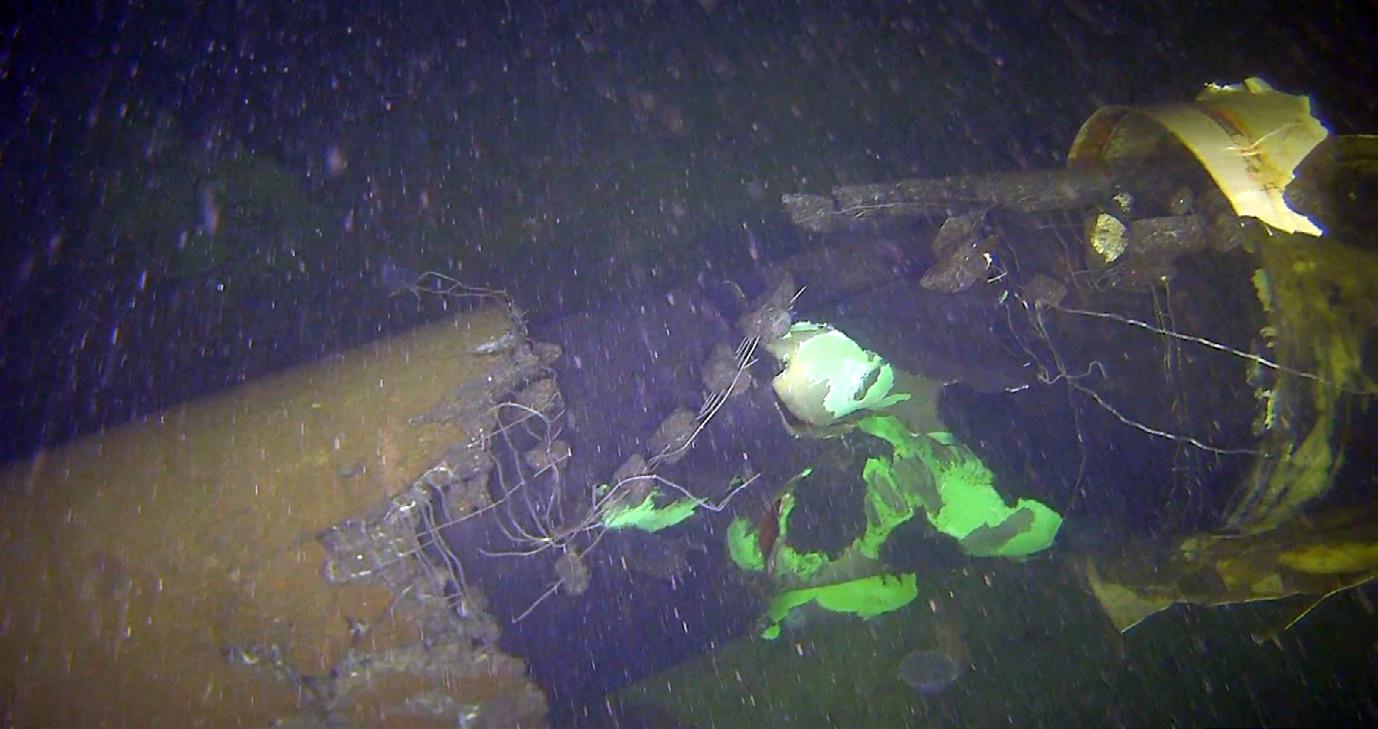
new entrants has become a clear priority. Without sustained efforts to recruit, train, and retain new talent, workforce shortages could become a bottleneck for repair response.
Here at IMCA, together with ESCA, we recommend: national programmes to train and retain specialist deck officers, marine engineers, and cable jointers; integration of subsea repair roles into national resilience strategies (including cross-training within naval or emergency response frameworks); adequate resourcing of regulators and licensing bodies, ensuring they have the capacity and knowledge to manage permit applications swiftly when urgent repairs are required.
This is not a challenge of capability but of planning, making sure that expertise built over decades is passed on to the next generation.
Regulatory frameworks can either accelerate or obstruct cable repair. Policies designed for other sectors (including but not limited to shipping, environmental protection, or fisheries) can unintentionally create obstacles to rapid response.
Here at IMCA, we believe that effective reform must: adopt fast-track permitting or exemptions across EU Member States, particularly for telecom cable repairs and maintenance; foster international coordination in policy and regulation, recognising that the cable repair fleet and its operations
are global in nature; promote cross-border cooperation that allows regulators and industry to mobilise personnel and vessels rapidly, without administrative delay.
Well-designed exemptions or preapprovals for emergency repair can significantly reduce recovery times and mitigate the economic and security impacts of cable failures.
For the Baltic and Europe more broadly, building resilience means: stronger physical protection – deeper burial of cables, protective rock placement, and improved design standards; smarter monitoring –fibre-optic sensing technologies to detect interference or vibration in real-time; shared maintenance capacity – regional pooling of repair resources for power cables, modelled on telecom agreements; closer civil-military coordination – NATO surveillance integrated with industry readiness for faster detection and repair; policy alignment – harmonised regulations across the EU and Baltic states to reduce delays and provide certainty for operators.
As Chief Executive of IMCA, I see daily the capability and commitment of our member companies, who are building and maintaining the offshore energy and communications systems that societies now depend on. But capability alone is not enough. It must be matched with strategic planning, investment, and regulatory support.
The Baltic incidents are not isolated warnings; they are proof that governments and industry must act now. These lifelines may lie hidden beneath the sea; however, their importance is absolute, and they must be defended and maintained with the same urgency and resources devoted to airspace, borders, and defence assets.
Protecting and repairing seabed infrastructure is not simply an engineering challenge. It is vital for the energy transition, and it is a matter of economic security, national defence, and global stability. The Baltic, in this sense, is not simply a regional story. It is a test case for how the world responds to the vulnerabilities hidden beneath the sea.
The International Marine Contractors Association (IMCA) is the global business association for construction and engineering companies working in offshore energy – both wind and oil & gas.
Our membership of 700 companies comprises contractors, energy companies, and suppliers in over 65 countries. We have a 50-year history of developing and publishing best-practice technical and operational documents to improve the safety, efficiency, and performance of our industry. Sail to imca-int.com to learn more.
militarily & commercially
Flanked by NATO allies and partners, the Baltic Sea is one of the world’s most strategically important waterways. It is a vital corridor for commerce, a flash point of great-power competition, and home to the undersea pipelines & cables that power Europe’s energy and digital economies. I served nearly three and a half decades in the U.S. Navy – including experiences planning BALTOPS as Deputy Commander of U.S. 2nd Fleet and later as Commander of Expeditionary Strike Group 2 – during which I witnessed firsthand that a free and stable Baltic is essential to European security. I also observed during military planning sessions that the region was exposed. Its narrow geography, proximity to adversaries, and dependence on critical infrastructure make it acutely vulnerable to disruption.
Today, traditional approaches – periodic patrols and episodic surveillance – no longer deter or defeat the threats facing our NATO partners. Securing the Baltic now demands capabilities that are persistent, adaptive, and intelligent. That belief, shaped by decades at sea and sharpened by today’s evolving threat environment, is what brought me to Saildrone. Persistent and autonomous systems like ours are no longer optional; they are foundational to credible maritime defense. In a region defined by proximity, speed, and complexity, we provide the continuous presence and real-time intelligence needed to close critical gaps. Without it, Europe’s security architecture will remain incomplete.
The Baltic is a dense, contested waterway: a crossroads of constant commercial traffic, unconventional threats, and adversaries eager to exploit any lapse in awareness. Traditional patrols inevitably leave gaps – and in those gaps, risk grows. That’s why maritime domain awareness is the foundation of security in the region.
Baltic nations must maintain a persistent, comprehensive picture of what’s happening on, above, and below the surface. As one regional policymaker put it, “awareness is deterrence,” and that awareness is not a luxury; it is the first layer of defense.
Persistent, autonomous, and real-time awareness closes the blind spots that manned fleets cannot. Operating continuously 24/7/365 with mission-tailored sensor packages, Saildrone’s vehicles patrol without crews or refueling, powered by wind and solar energy. Deployed in coordinated fleets, they blanket approaches, sea lanes, and choke points, extending the reach of coast guards & navies and multiplying the impact of limited assets. The result is widearea maritime surveillance, sustained for months on end, turning the Baltic from a patchwork of uncertainty into a domain that can be monitored, understood, and defended around the clock.
But awareness is only the first step. To stay ahead of sophisticated threats, commanders must turn raw data into actionable intelligence; intel that anticipates rather than reacts, revealing hostile behavior, tracking targets across domains, and informing
decisions in real time. Adversaries in the region are using irregular tactics: Russian artificial general intelligence operations are expanding, commercial vessels are being weaponized for jamming & spoofing, and the electromagnetic spectrum is being manipulated to hide intent.
To counter that, data collected from our advanced electro-optical, radar, AIS, and acoustic sensors is processed on the edge by potent artificial intelligence algorithms and machine learning models, detecting and prioritizing threats as they emerge. This enables Saildrone to expose hidden, multi-domain activity –including undersea risks – and provide decision-makers with timely, meaningful intel that stays ahead of evolving threats.
Even with persistent awareness and real-time intelligence, though, the mission is incomplete without securing the most vulnerable part of the maritime battle space: the seabed. Europe’s prosperity and its deterrence credibility depend on critical infrastructure beneath the Baltic’s surface, where pipelines and fiber-optic cables serve as the silent arteries of its economy. Their disruption can devastate energy markets,
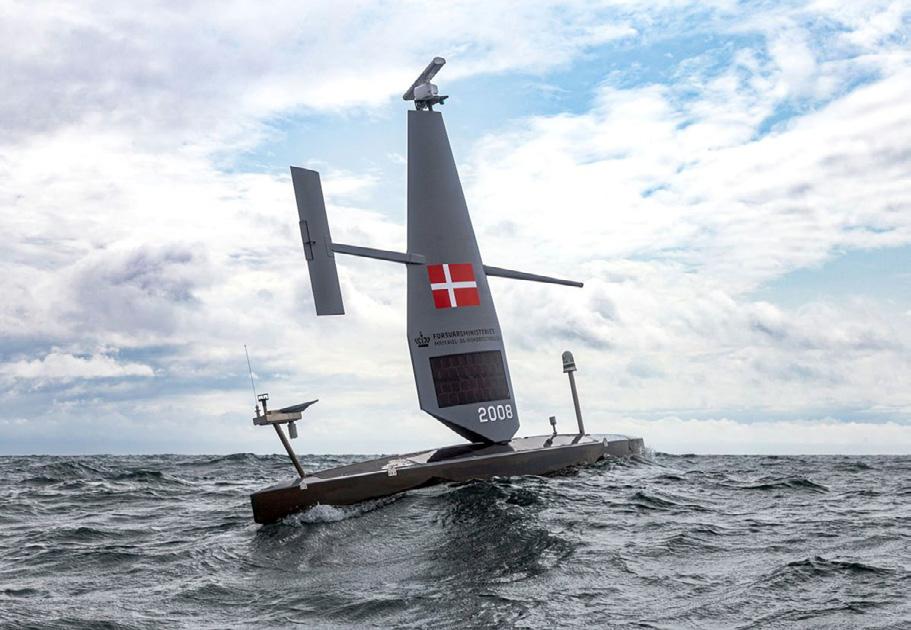
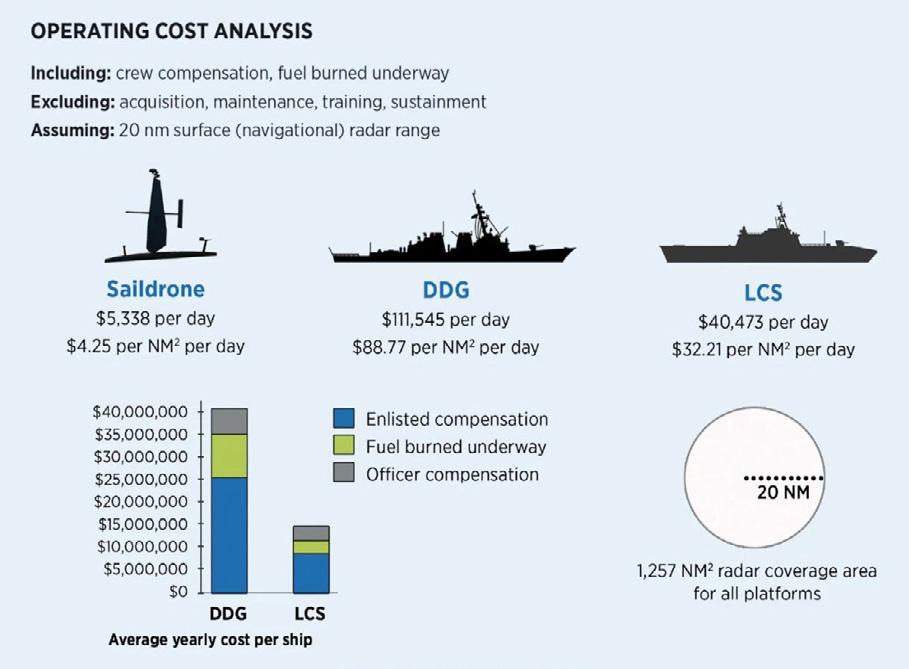
sever communications, and fracture alliances, as seen with the Nord Stream sabotage and repeated cable interruptions. Yet these networks remain difficult to monitor, while a growing ‘shadow fleet’ manipulates AIS transponders to evade detection. These unseen lifelines need visibility; persistent visibility. Simply put, you cannot defend what you cannot see! Our vehicles patrol critical nodes continuously for months, conduct undersea surveys, detect suspicious activity, and deliver early warning before damage is done.
The nature of maritime warfare is changing, and traditional fleets – built for high-end conflict – were never designed for continuous surveillance, infrastructure defense, or gray-zone deterrence. Nations now recognize that the future is hybrid:
crewed ships, un-crewed platforms, and advanced sensors working together.
With over a decade of operational experience and 60,000+ cumulative days at sea, we’ve proven our ability to go farther, last longer, and deliver the intelligence advantage needed to defend sovereignty and secure vital infrastructure. And with a variety of business
models available to support our customers, Saildrone delivers this capability at a fraction of the cost of crewed assets. Rear Admiral Carlos Sardiello, Commander of the U.S. Navy’s 4th Fleet, shared an important Center of Naval Analysis study in his September 2025 U.S. Naval Institute article, Develop the Hybrid Fleet in Southcom , concluding Saildrone’s cost per nautical mile of surveillance is less than 5% of that of a guided missile destroyer. By providing an unmatched range, precision, endurance, and affordability, we multiply the effectiveness of allied fleets, freeing crewed ships for high-end missions only humans can perform while delivering the persistent surveillance and domain awareness modern deterrence demands.
Persistent, autonomous intelligence-surveillance-reconnaissance is no longer optional – it’s the backbone of modern maritime defense. Without it, the Baltic will remain a tapestry of exploitable gaps. With it, the region can be monitored, defended, and secured. By augmenting existing fleets and surveillance networks, our platforms provide actionable intelligence where and when it matters most: helping to defend sovereignty, secure commerce, and protect the infrastructure underwriting European strength.
In an era of heightened tension and gray-zone threats, Baltic nations need partners who can deliver intelligence dominance at sea. Our company’s rugged, wind- and solar-powered un-crewed surface vehicles have already sailed over two million nautical miles, from the North Sea to the Southern Ocean, proving their endurance and resilience in the harshest conditions. Now, we are ready to scale that proven capability and deliver the persistent maritime advantage the region’s security demands.
A former U.S. Navy Vice Admiral and C-suite technology entrepreneur, John Mustin brings to Saildrone over three decades of experience at the intersection of national security, emerging technology, team development, and enterprise growth. A frequent speaker, published author, early-stage start-up investor, and advisory board member, he has led large, global enterprises and managed multibillion-dollar budgets. With a BSc in Systems Engineering from the United States Naval Academy, a Master’s in Operations Research from the Naval Postgraduate School, and an MBA from Babson College, he is an advocate for military & veteran causes, and speaks & writes regularly on national security topics & post-military service hiring practices.
by Rob Mortimer, CEO, Fuelre4m
The global conversation around decarbonisation has reached a fever pitch, with the International Maritime Organization (IMO) even failing to reach a decision on the Net-zero Framework during the autumn meeting of the Marine Environment Protection Committee – the vote delaying the decision for a year. Policymakers, NGOs, and industry leaders line up to hail new technologies as the silver bullet that will deliver a clean future. Hydrogen, ammonia, synthetic fuels, electrification, you-name-it – the list is long and growing. Projections estimate that 2050 Baltic international shipping CO2 emissions (for IMO-registered ships) will be ~48% lower than 2008 levels. Each new announcement is made with a sense of inevitability, as if the mere fact that an alternative exists means fossil fuels should be discarded immediately. But the uncomfortable truth is this: we cannot yet answer the most important question. Better than what?
Until that question is answered with evidence, data, and accountability, there is a real risk that in rushing to embrace the new, we may create something worse than the old. If the cure proves more damaging than the illness, nothing has been achieved. The world deserves honesty – not slogans – and this is where the maritime sector must take a firmer, more disciplined stance.
The mirage
In every cycle of innovation, there is a temptation to believe in miracles; in the Next Big Thing that will send the competition to the ash heap of history. The shipping industry has seen this before with liquefied natural gas (LNG). Heralded as the clean (transition) fuel of its era, it was rolled out at speed across fleets without a full grasp of the life-cycle of methane slip that undermines much of its environmental benefit.
The lesson is painful but vital. Simply switching fuels or technologies without holistic measurement can replace one set of problems with another. Today, hydrogen, ammonia, and synthetic fuels are being elevated in the same way… and before we fully understand the safety implications, the production emissions, and the infrastructure realities.
The maritime sector cannot afford to repeat the LNG experience. We need innovation, sure enough, but we need it grounded in rigorous measurement, not marketing.
The unfashionable but unavoidable reality
It has become politically incorrect to say this, but fossil fuels remain the backbone of global transport. More than 90% of world trade moves by sea, and almost all of it depends on oil-based fuels. No amount
of ambition alters the scale of that reality.
This is not a defence of the status quo. Fossil fuels will – must – decline. But in the interim, until viable large-scale alternatives are ready, the world will continue to consume more barrels a day. Millions more. The question is whether those barrels are burned wastefully or optimised to deliver every possible unit of efficiency.
That is the space where companies like Fuelre4m are working: not to defend fossil fuels indefinitely but to ensure that each drop is used with maximum efficiency, minimum waste, and a measurable reduction in emissions. Optimisation is not glamorous, but it is measurable, immediate, and available today.
Optimising existing fuels is not an excuse for delay. It is the pragmatic bridge between aspiration and reality. Every percentage point of efficiency gained in existing operations reduces emissions right
now, without waiting for infrastructure, regulation, or technology to catch up. In practical terms, that means extending the useful life of existing assets while making them cleaner. Zero retrofit – or limited technology addition. Reducing waste and inefficiency that needlessly add to emissions. Delivering verifiable data that can be audited – not simply promised.
Our company’s work in maritime is built on this philosophy. By focusing on real-world optimisation of fossil fuels in use today, the industry can buy the time and space to develop tomorrow’s fuels properly – without forcing immature solutions into the market.
If fossil fuels are to be scrutinised and regulated to the last decimal point of emissions, then new fuels must be subject to the same discipline. Yet too often, new solutions are exempt from critical questioning simply because they are new.
The message must be consistent: any fuel or technology must prove that it is better –both demonstrably and measurably better, across its whole life cycle. That includes: production emissions and energy intensity; supply chain safety and scalability; end-use efficiency and pollutant profile; and realworld performance in maritime conditions.
Without such accountability, we risk sleepwalking into new dependencies that are no more sustainable than the ones we are leaving behind. A fuel that looks ‘green’ in theory but creates larger upstream emissions in practice does not solve the problem.
The scale of maritime decarbonisation is almost unimaginable. To replace oil-based fuels at scale would require trillions in investment, new global infrastructure, and radical redesigns of ship technologies. It will happen over decades, not years.
That long horizon creates risk. If industry abandons fossil fuels prematurely, without fully functional alternatives, the result will be disruption to trade, higher costs, and potentially higher emissions elsewhere in the value chain. If industry clings to fossil fuels indefinitely, we lock in unacceptable levels of warming.
The only rational path is a dual approach: squeeze every possible drop of efficiency from current fuels while developing and testing new alternatives under the most rigorous conditions. This is not caution. It is discipline. It is what genuine progress looks like.
As such, “better than what?” should be the first question-test applied to any decarbonisation pathway. It should be asked relentlessly of every new technology and each optimisation claim. Without that benchmark, the conversation is reduced to aspiration and marketing spin. Take hydrogen. Is it better than fossil fuels

produced under optimised, measured conditions? Only if its production is decarbonised, its distribution made safe, and its life-cycle emissions proven lower in practice. Ammonia, methanol, biofuels, and electrification must pass the same test.
The industry must demand hard evidence, not theoretical models. And until that evidence is robust, fossil fuels optimised to their maximum potential remain not just necessary but responsible.
Fuelre4m has been working with partners across the industry to apply this thinking in practice. Optimisation technologies, when deployed across fleets, demonstrate that immediate emission reductions are achievable without waiting for new fuels to mature. This is not an abstract argument. It is measurable, verifiable, and already delivering results. Partnerships are essential because no single company or solution will solve the decarbonisation challenge alone. By working across the supply chain, shipowners, fuel suppliers, technology providers, regulators – the industry at large – can ensure that progress is made on multiple fronts, with accountability embedded at every stage.
The shipping industry is at a crossroads, with the debate polarised between climate urgency and industrial reality. Either we must decarbonise overnight, or we are accused of dragging our feet. The truth lies in the middle. Urgency without realism leads to failure. Realism without urgency leads to complacency. The maritime industry cannot afford either.
Decarbonisation is not a beauty contest of new ideas. It is a battlefield where reason can sharpen itself to the benefit of transport & logistics and all those who rely on it (you and me and pretty much everybody else on the third rock from the Sun). It should ask ‘why?’ instead of wowing the high shine of the polished surface.
If we hold ourselves accountable at every step, the shipping industry can transition with integrity – and ensure that the next era of fuels is truly worthy of replacing the last.
Fuelre4m empowers businesses to operate more sustainably by revolutionising the use of fossil fuels. The company’s product range, Re4mx, is a powerful, completely organic, fossil fuel reforming nanobiotechnology that enhances the combustion process in engines. By breaking down impurities and complex hydrocarbons in liquid fossil fuels, the tech ensures a more efficient and cleaner burn, resulting in increased power output, lower fuel consumption, and a significant reduction in harmful emissions. Visit fuelre4m.com to learn more.
by Oliver Schmitz , Research Associate, and Emin Nakilcioğlu, Research Associate, Fraunhofer Center for Maritime Logistics and Services (CML)
As container logistics grows increasingly complex, the ability to anticipate and respond to disruptions becomes a defining factor in terminal performance. The KILOG project (Künstliche Intelligenz für Logistikoptimierung in deutschen Häfen/Artificial intelligence for logistics optimization in German ports) explores how artificial intelligence (AI) can strengthen operational precision and resilience at the Altenwerder (CTA) and Burchardkai (CTB) container terminals of HHLA. Funded under the IHATEC II program (Innovative Hafentechnologien/Innovative port technologies), the project addresses intermodal use cases such as rail slot optimization, predictive maintenance, and container availability forecasts. This article focuses on two of those initiatives: a container flow forecast that predicts yard blockages before they occur and on a pipeline, based on a large language model (LLM) that consolidates ship arrival information from heterogeneous sources. Together, they reduce manual effort, enhance planning reliability, and provide the foundation for scalable, data-driven decision-making across terminal operations.
Global supply chains have entered a phase marked by growing complexity, data fragmentation, and operational uncertainty. Ports and terminals, as pivotal nodes in this system, face increasing pressure to synchronize planning decisions with ever-changing cargo flows. Within this context, HHLA’s CTA and CTB in the Port of Hamburg are taking decisive steps toward more responsive and datadriven operations through KILOG, which unites expertise from HHLA, Fraunhofer CML, and Hamburg Port Consulting (with Modility and Metrans contributing their intermodal experience).
The project’s goal is to make terminal operations more predictive, adaptive, and sustainable by pairing algorithmic forecasting with LLM agents that structure and interpret real-world data on the spot. The focus is not on replacing established systems but on augmenting them, embedding AI-driven intelligence directly into daily decision-making. Achieving this requires a foundation of clean & reliable data, well-integrated interfaces, and clear governance to ensure trust and continuity in critical operations.
Through two concrete use cases – a container flow forecasting system and an LLMpowered ship arrival data pipeline – KILOG shows how targeted, human-centered AI applications can translate research into operational value, improving both efficiency and decision reliability across maritime logistics.
Resource-unlocking structure built on ground truth
Ship arrival data comes in many formats: spreadsheets with varying layouts, PDFs, emails, websites, and APIs. It changes frequently and must be kept up to date. In most terminals, assembling and maintaining a single, reliable picture of arrivals is still manual work, which is time-consuming, repetitive, and prone to inconsistencies.
KILOG deploys specialized LLM agents to ingest and understand these diverse sources, extract relevant fields, and structure them into a trustworthy dataset. A dedicated pipeline supports the agents with parsers for different media, connectors to source systems, and rules for reconciling discrepancies into a defensible ground truth. To improve performance in maritime contexts, the agents are fine-tuned on domain-specific data and guided with carefully crafted prompts and contexts. We benchmark different LLMs to balance accuracy, robustness, latency, and cost.
Crucially, operational trust is built through a human-in-the-loop validation system. Experienced maritime professionals review edge cases, provide continuous feedback, and capture nuanced domain knowledge, ensuring that data anomalies are detected before they affect mission-critical downstream decisions. This collaborative loop has proven essential to adoption, giving confidence in the AI’s outputs and transparency in its logic to the operational teams.
The consolidated data set is delivered to a dashboard for OP teams and written to the data lakehouse, where it supports AI use cases as well as various stakeholders relying on precise ship arrival information. As updates propagate in near real time, schedulers move from manual wrangling to oversight and exception handling. The payoff extends beyond speed and reduced effort: skilled staff reclaim time for strategic thinking while automated agents handle routine data extraction; data quality and traceability improve significantly; and the same agent-based framework can be applied to other workflows (processing invoices, packing lists, or work orders), ensuring consistent, auditable information flows across shipping operations.
Completing the picture – with intelligent granularity & dynamic action
Terminal yards pulse with constant motion – containers flowing in from ships, trucks, and trains, then departing through another mean of transport. Yet, for all this orchestrated movement, yard planning has traditionally relied on seasoned intuition rather than granular intelligence. Existing research often focuses on long-term predictions, such as monthly, weekly, or daily forecasts, which help with broad planning but lack the precision needed to prevent localized pressure, blockages, or cascading congestion.
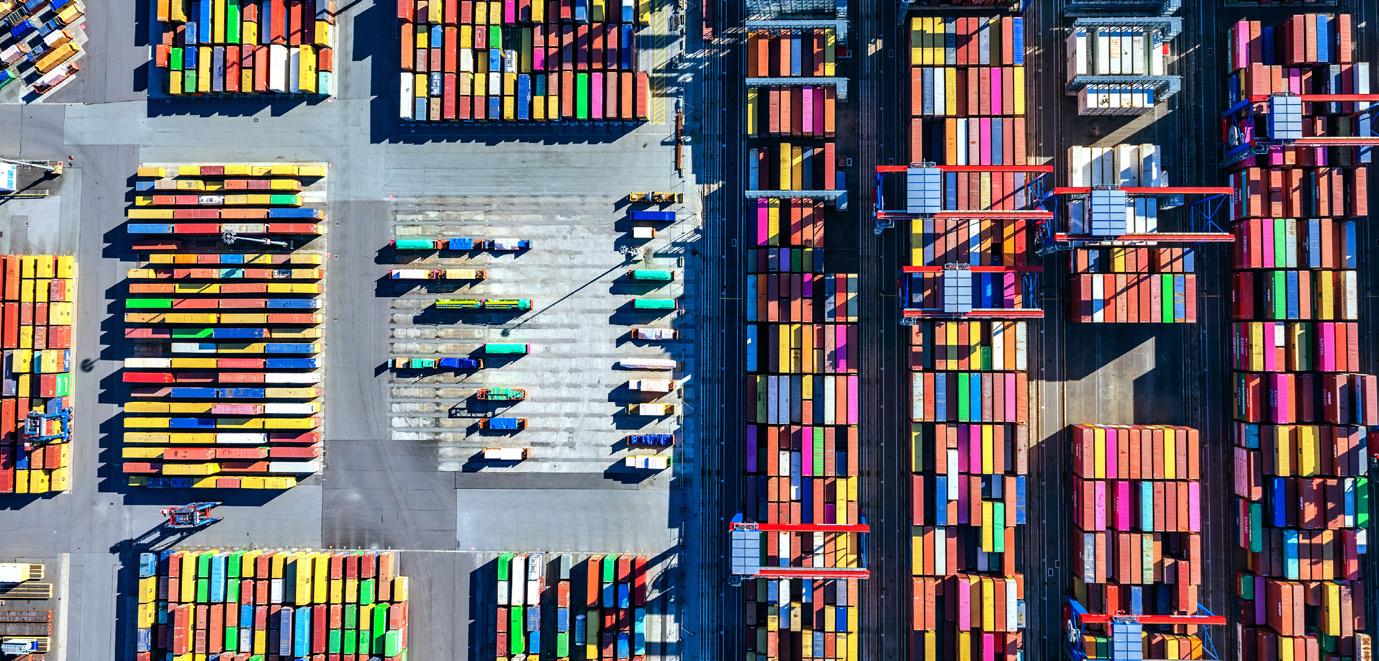
KILOG’s forecasting engine provides near-real-time insights for yard operations: hourly predictions spanning 48-hour horizons, drilling down to individual yard blocks. The system processes multiple data streams simultaneously: terminaloperating-system signals capturing block utilization and equipment status; vessel schedules enriched with live ETAs and cargo manifests; and truck appointment systems revealing ground transport patterns. Weather data, holiday calendars, and disruption reports complete the intelligence picture, creating forecasts that adapt continuously as conditions evolve.
Advanced algorithms, tested and benchmarked across different modeling approaches, process this data stream into actionable intelligence. The models learn from operational patterns while incorporating live feedback loops, ensuring predictions track reality rather than theoretical schedules. Integration with optimization tools enables automated responses: equipment redeployment ahead of demand spikes, container routing adjustments to prevent blockades, and resource scheduling that anticipates rather than reacts.
With our forecasting framework in place, planners shift from reactive problem-solving to proactive orchestrators, repositioning resources ahead of demand surges, rerouting containers around predicted bottlenecks, and smoothing operational flows through strategic intervention. This transforms disruptive
KILOG proves that the step from reactive to responsive operations is achievable when AI is grounded in solid data foundations, human-centered design, and clear governance. Granular yard forecasts turn uncertainty into manageable variation, while LLM agents convert fragmented, unstructured data into dependable, highquality information.
The project’s next phase will deepen integration with optimization systems, expand into adjacent use cases (such as
container availability forecasting and predictive maintenance) and scale across terminals and transport modes. As these systems mature, scalability and sustainability emerge as shared outcomes: consistent forecasting frameworks and data pipelines streamline operations, reduce idle time and emissions, and strengthen the resilience of entire logistics networks. Ultimately, KILOG offers a blueprint for AI adoption in the maritime sector; one built on trust, transparency, and measurable operational impact. In a sector where slight delays can ripple through complex chains, timely, trustworthy information is not just helpful – it is decisive.
Oliver Schmitz completed his bachelor’s degree in supply chain management at the University of Duisburg-Essen and then got a master’s in business administration with a focus on operations research and production management. Since June 2021, he has been working as a research associate at Fraunhofer CML, where he is primarily involved in optimizing various processes in terminals (e.g., through AI-based forecasting of container dwell times or the development of various algorithms for optimizing container handling). Furthermore, Schmitz has a deep understanding of intermodal supply chains and has already successfully collaborated with a variety of stakeholders in this field.
Emin Nakilcioğlu completed his B.Sc. in mechanical engineering at Istanbul Technical University and his M.Sc. in mechatronics at the Hamburg University of Technology. During his graduate studies, he specialized in intelligent systems, robotics, and deep learning. Since August 2020, Nakilcioğlu has been a research associate at Fraunhofer CML, contributing to AI- and data-driven digital innovations in maritime logistics. His work focuses on developing solutions for automatic speech recognition, natural language processing applications, time-series forecasting, and workload prediction, alongside providing software development and technical support for maritime-specialized projects.
With multiple regulatory pressures accelerating the transition away from conventional fuels, shipowners are increasingly being asked to commit to fuel choices that may not remain viable for the full operational life of their vessels. The need for long-term flexibility in fuel and engine strategy has never been more urgent – but preparing for future transitions requires a deep understanding of how technical decisions made today will shape a vessel’s adaptability tomorrow.
At Deltamarin, fuel readiness is not an add-on – it’s an integral part of smart ship design. From spatial planning and systems integration to life-cycle cost modelling and scenario analysis, our engineering teams work closely with owners to ensure their newbuilds are not only compliant at delivery but will remain competitive in an evolving market.
Let us then explain how to balance today’s fuel strategy with tomorrow’s uncertainty so that vessels will stay efficient, adaptable, and valuable for decades to come. We will do this by, among others, exploring real-world examples of cost trade-offs, conversion planning, class notations, and the cascading impact of fuel decisions on vessel systems (such as waste heat recovery).
What’s driving the urgency
The regulations set at the 83rd meeting of the International Maritime Organization’s (IMO) Marine Environmental Protection Committee (MEPC), as well as by FuelEU Maritime (FEUM), are giving a clear and strong signal that now is the time to consider how vessels being built today can fulfil environmental requirements throughout their operational lifetime. The impact is not limited to fuel choice – it extends to how fuels are produced and distributed, affecting operational and investment strategies alike.
At MEPC 83, the IMO agreed on midterm greenhouse gas (GHG) reduction measures, setting a target of reducing the carbon intensity of shipping by at least 40% by 2030 versus 2008 levels and pushing towards a 70-80% GHG reduction by 2040. In parallel, FEUM came into effect in 2025, setting escalating annual limits on GHG intensity for ships calling at EU ports, with a 2.0% reduction target this year, up to 80% by mid-century. This will directly affect vessel design and fuel strategies,
as compliance will require significant emissions reductions year on year.
Critically, these regulations have a broad geographic reach. While some owners previously planned to reposition or trade vessels outside the EU to avoid regional regulations, the new global IMO standards make that a less viable ‘Plan B.’ Ships will need to comply with increasingly stringent emissions standards wherever they operate, reinforcing the need for long-term flexibility in vessel design.
While the ship systems themselves are generally agnostic to the production method of alternative fuels, the environmental performance and regulatory compliance of the fuels are not. Over time, ships will likely shift from conventional bunkers to greener blends or entirely renewable alternatives. Increasingly, regulations are moving from a tank-to-wake approach – measuring only exhaust emissions – to a well-to-wake (WtW) framework that considers the entire fuel life cycle, from production to combustion. For example, FEUM sets GHG intensity limits based on WtW emissions, meaning that both upstream production and on-board combustion performance affect compliance. Even for fuels like bio- or renewable diesel, which are close in characteristics to conventional bunkers, there are important considerations regarding compatibility, availability, life-cycle emissions, and cost.
Today, the majority of ships adopting alternative fuels are dual-fuel (DF) vessels. For example, those operating on marine gas oil and liquefied natural gas (LNG) already enjoy a degree of flexibility, as both fossil and bio/synthetic blends can be used in these systems. However, if operational or regulatory pressures push towards adopting other fuels – such as methanol or ammonia – a conversion will be required. This is where securing a high level of fuel readiness can deliver significant benefits by reducing
the complexity, cost, and downtime associated with future adaptations.
When considering the appropriate level of fuel readiness, the starting point of the vessel is critical. Ships that rely solely on conventional fuels typically have the highest need for fuel readiness upgrades, but they also face the greatest technical challenges due to limited existing compatibility in systems and arrangement. In contrast, some of the DF LNG vessels recently delivered or under construction are built with tanks that can be adapted for alternative fuels, like ammonia or methanol, which can significantly reduce the complexity and cost of future conversions (however, this is not automatically the case with standard LNG tanks on existing vessels).
We divide fuel readiness into three primary levels to guide owners through these strategic decisions. First, minimal readiness, the most basic level, is designed to ensure that the vessel can technically be converted. It typically involves documentation and pre-approval drawings showing how the vessel could be modified but with no physical space reservations or installed equipment. Engine conversion kits may not be available yet but are planned for future release. However, executing a conversion from this baseline can be highly expensive and time-consuming, involving the installation of new tanks, re-routing of pipes and cabling, upgrading safety systems, and possibly even replacing engines – all of which would cause significant downtime.
Next, intermediate readiness aims to reduce future conversion costs and time by incorporating some physical preparations during the initial build. The design ensures that critical components – such as engines – can be converted with kits and
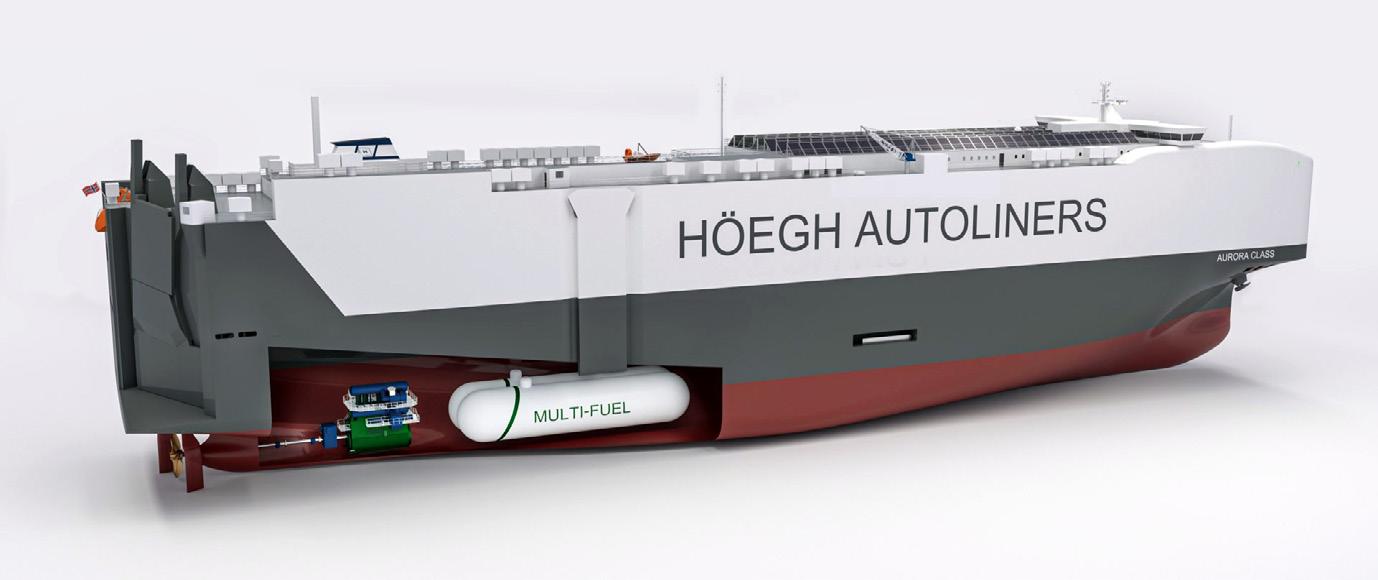
that the vessel layout includes access routes that allow these components to be installed or removed with no structural modifications. These access routes refer to predefined paths within the vessel (such as removable deck panels, hatches, or bulkhead openings) that are sized and located to support both initial installation and future hauling or maintenance. Tanks are either already suitable or require only minor modifications for alternative fuels. There is space reserved, or pre-installed infrastructure, for auxiliary systems and fuel-handling equipment. The hazardous and non-hazardous zones are already planned with future fuels in mind, minimising later regulatory hurdles.
Finally, there’s full readiness. This level equips the vessel to be immediately capable of operating on the alternative fuel – even if the actual fuel is not yet commercially available or bunkering infrastructure is limited. It includes fully installed fuel storage, supply systems, and engines either capable of DF operation or pre-certified for future conversion. In some cases, engine manufacturers may offer conversion kits for installation post-delivery, meaning the vessel is only a few minor steps away from operational readiness on the new fuel. This level of readiness gives the highest future flexibility but also involves the highest upfront investment.
Overall, fuel readiness opens the door to multiple future pathways, even where today’s fuel solution might seem like a safe bet. In many instances, owners operating vessels in specific regions – e.g., where LNG, biogas, and eventually synthetic gas are readily available – might opt for LNG propulsion as the obvious choice. This fuel, along with
its bio- and synthetic derivatives, offers lower emissions and some compliance assurance for the near future. That said, the market and regulatory landscape can shift rapidly. If future availability or economics change – for instance, if LNG supply becomes constrained or synthetic gas adoption is slower than expected – owners could find themselves exposed. Without fuel readiness built in, the investment in LNG-specific infrastructure could become a sunk cost. In contrast, if the vessel is designed with a degree of flexibility, that risk can be mitigated.
In many projects, a hybrid approach can also be advantageous – applying a full readiness level for one primary alternative fuel while maintaining intermediate or minimal readiness for secondary options. This ensures that owners do not over-invest but still retain flexibility if market conditions or regulations shift. Fuel-ready designs allow for this flexibility. Spaces and systems initially designed for LNG tanks and fuel handling can be dimensioned and arranged to accommodate alternative fuels with minimal modifications. Utility routes, structural supports, and hazardous zoning can be preengineered to be adaptable, reducing the complexity and cost of future conversions.
The optimal fuel-readiness strategy depends heavily on the ship type, operational area, trading profile, fuel availability, and the owner’s long-term business plan. That’s why at Deltamarin, we support clients with advanced scenario modelling and simulation tools. These models incorporate not only the vessel’s operational profile but also projected GHG emissions pathways, cargo capacity impacts, and endurance trade-offs under various fuel strategies. Importantly,
all current and emerging regulatory requirements – including the latest IMO and FEUM targets – are integrated into these simulations. This allows our clients to make informed, data-driven decisions about the right level of fuel readiness, the opportune conversion window, and the most resilient path to long-term compliance.
Fuel readiness is often viewed as an additional upfront cost – but when properly considered, it’s a fundamental investment in life-cycle value and operational flexibility.
Understanding the cost dynamics of fuel storage is key. LNG and ammonia, for instance, are both liquefied gases and can be stored in similar cryogenic tanks – but the tank material and design strength must be carefully specified to handle the specific properties of either LNG or ammonia (or ideally both). Methanol, on the other hand, can be stored in coated structural tanks, requiring different configurations, including protective cofferdams for safety. This matters because if designed carefully, an LNG tank can also be certified for ammonia and even methanol with only minor modifications. In contrast, a methanol-designed tank cannot be safely upgraded to store LNG or ammonia later. Some conventional fuel tanks can be designed with structural reinforcements or reserved space to allow easier conversion to methanol use in the future.
From a cost perspective, the logic is simple: investing in readiness at the newbuilding stage – when systems are already being installed – is significantly cheaper than trying to retrofit these capabilities later, when structural modifications,
steelwork, and system reconfigurations will add substantial cost and downtime. Conversely, if fuel simulations and regulatory projections show that the selected initial fuel will meet long-term targets, a lower readiness level can be applied to avoid over-investing.
In one feasibility case study, we compared two configurations: a standard LNG fuel system and an LNG system with an ammonia-ready tank design. The cost increase for preparing the tank for future ammonia use at the newbuild stage was approximately 20% over the baseline LNG system. While this adds modest cost upfront, it significantly reduces long-term risk.
In contrast, if a vessel with a conventional LNG system were later required to convert to ammonia, the cost implications would be far higher. Not only would the original LNG tank – which may have cost around $6.0 million – become obsolete, but the retrofit would require an entirely new ammonia-compliant tank, plus major structural modifications and system adaptation. This could bring total costs up to $20m – over 200% higher than the ammonia-ready option at the newbuild stage. This includes scrapping the existing tank, procuring and installing a new one, and undertaking extensive steelwork (particularly if the tank is located deep within the vessel).
The takeaway is clear: when future fuel transitions are even a moderate possibility, it is far more cost-effective to prepare at the outset. The marginal investment today avoids substantial conversion costs, downtime, and technical challenges later. At Deltamarin, we help clients understand the total cost of ownership implications of their fuel-readiness decisions. By balancing initial CAPEX against future OPEX and retrofit risks, we ensure owners are making informed, financially sound decisions, optimising their investment not just for today’s regulations but for decades of operational flexibility.
Early technical decisions made during the design phase have a profound impact on how easily – and cost-effectively – a vessel can adapt to future fuel transitions. While it might be tempting to focus on engine choice solely, true flexibility demands a broader, systems-level view from the outset.
Engine selection remains a critical factor, though. Traditionally, engine designs were optimised for a specific fuel type, but recent trends show manufacturers increasingly developing engines capable of multi-fuel
configurations. Even so, important limitations remain; for example, many LNGfuelled four-stroke engines are available in a more limited range of bore sizes and power outputs compared to conventional diesel engines, which can restrict flexibility in engine selection and future conversion options. Methanol and ammonia engines can sometimes be based on conventional or LNG platforms, but the initial choice can still lock in or limit future adaptability. Selecting an engine with a clear, documented conversion pathway to alternative fuels is an important safeguard for future flexibility.
Beyond the engine room, spatial and structural considerations play a major role in determining how straightforward – or costly – future conversions will be. Key examples include bunker station layout, ventilation systems and vent mast design, and tank space and routing. It is essential to position bunker stations during newbuilding to meet the safety regulations of alternative fuels, such as segregation requirements for hazardous areas. If designed thoughtfully from the start, this can usually be achieved with minimal or no additional cost. However, if not considered early, costly and complex structural modifications may be required later to meet safety standards for alternative fuels like ammonia or methanol.
Adequate separation distances between hazardous and non-hazardous areas must be maintained. If insufficient distance is allowed during initial design, extensive retrofits might be necessary – including repositioning major components or raising vent masts. Taller vent masts could also inadvertently impact vessel air draft, restricting access to certain ports and waterways, which adds significant operational limitations.
Providing flexible spaces and unobstructed routes for future installation of additional fuel tanks, piping, or auxiliary equipment (e.g., fuel treatment systems) can dramatically ease conversion efforts. Structural reinforcement or space reservation now prevents costly steelwork and downtime later in the vessel’s life.
As tightening regulations drive up the cost of emissions and future fuels, it has become increasingly important to design energy-efficient ships that maximise the use of all available energy – including waste heat that is typically recovered from exhaust gases. However, alternative fuels like methanol and ammonia introduce
a significant technical challenge that is often underestimated in early designs.
One key issue is that methanol and ammonia combustion have different waste heat distributions, which reduces heat in the exhaust stream when compared to conventional fuels like marine diesel oil or LNG. This distribution has direct and indirect implications for on-board systems that either rely on thermal energy recovered from exhaust gases or are affected by their availability, including steam turbines, organic Rankine cycle (ORC) units, auxiliary boilers, exhaust gas boilers, and heating and ventilation systems.
If the vessel is equipped with waste heat recovery systems (e.g., for generating electricity or process heat) that are designed based on the thermal output distribution of conventional fuels, they may become oversized or underutilised when the ship transitions to alternative fuels. In such cases, exhaust gas boilers may no longer deliver sufficient heat output, and the vessel may need to rely more heavily on auxiliary boilers to meet energy demands. This shift can lead to higher fuel consumption, increased OPEX, and, in some cases, render advanced waste heat recovery equipment economically unviable.
In one recent study, Deltamarin identified that switching from diesel to methanol would result in an approximate 30% drop in available exhaust gas heat. To address this, the ship’s heating system was re-engineered – transitioning from a traditional steam-based configuration to a hot waterbased system. The updated design focused on maximising heat recovery from the engine’s high-temperature cooling water, which is less affected by the fuel type and provides a more stable heat source. While some energy was still recovered from the exhaust gases, the shift in focus enabled the vessel to maintain reliable heating efficiency despite the lower thermal output of methanol combustion. Over the vessel’s lifetime, this design adaptation helped ensure energy efficiency, reduce dependency on auxiliary boilers, and maintain optimal performance of both heating and ORC systems while reducing life-cycle emissions.
It is important to understand that there is no one-size-fits-all solution. The optimal configuration depends heavily on vessel type, operational profile, voyage patterns, and anticipated fuel pathways. This is why Deltamarin applies a systems-level approach to fuel readiness – not only considering propulsion but also carefully evaluating the cascading impact of fuel choices
on auxiliary systems and long-term vessel operability. By doing so, we help clients avoid hidden inefficiencies and future-proof their ships against evolving energy realities.
Most classification societies offer fuel readiness notations, and while the naming and specifics vary slightly, the basic structure is broadly similar. Typically, notations fall into three main categories. Design readiness: indicates how the vessel could be modified to accommodate alternative fuels based on design documentation. Tank readiness: focuses on the preparedness of the fuel tanks – materials, structure, and safety measures. Engine and boiler readiness: covers the propulsion and auxiliary machinery’s capacity for future conversion.
Within each category, there is usually a three-tiered scale. A: conversion is possible in the future, but no physical preparations are made (essentially a ‘paper’ readiness, low cost). B: partial preparation – e.g., engine conversion kits are available, or the design accommodates future retrofitting without major structural changes. C: full readiness – the vessel is already equipped with most or all necessary modifications, requiring only minimal work for full compliance. Deviations from full compliance are minor, typically related to scheduling, technical availability, or other practical factors. For example, a vessel might have a B-level main engine (conversion kit available), an A-level auxiliary engine (future conversion possible but not yet prepared), and a C-level tank (fully built to the specifications required for alternative fuels).
However, it is important to note that class notations can sometimes offer a false sense of security. Many A and B levels involve little to no physical investment and are more about documentation and pre-approval than tangible shipyard work. As a result, while these notations can be obtained at relatively low cost, they do not necessarily reduce the future conversion burden.
Moreover, not everything that matters is captured by class notations, for instance, small but critical design features, such as dimensioning fuel handling room ventilation to accommodate more stringent requirements for fuels like ammonia or future-proofing hazardous zoning and space for fuel treatment systems. These elements often fall outside formal class criteria but can have a significant impact
on future conversion costs, shipyard downtime, and regulatory compliance. If considered thoughtfully at the newbuilding stage, they can be included at negligible extra cost, but save substantial time and money during future retrofits.
At Deltamarin, we go beyond simply aiming for notations. We work closely with clients to critically assess which levels of readiness deliver real operational and financial value – and where it’s worth investing a little more at the design stage to avoid bigger expenses later. By combining regulatory insight, technical detail, and cost-benefit analysis, we help owners avoid superficial readiness and instead achieve true future-proofing for their fleet.
Despite the growing momentum around alternative fuels, there are still significant uncertainties that shipowners must navigate when preparing for the future.
While the IMO’s current mid-term measures and the FEUM provide a framework, the details are still evolving – particularly around life-cycle emissions (WtW accounting) and future fuel certification standards. Regional regulations may also diverge, creating a patchwork of requirements that ships must meet in different trading areas.
Although fuels like LNG, methanol, and ammonia are technically viable, global bunkering infrastructure remains uneven. Betting on a fuel too early – or without ensuring long-term supply reliability –can expose vessels to operational risks or unplanned retrofitting costs. For instance, it took an entire decade to scale bioLNG supply so that ‘gas-committed’ shipping lines in the Baltic could increasingly use it instead of the fossil version (though with a higher price tag, this green LNG has opened the doors to banking on FEUM over-compliance, e.g., through pooling).
Engine and fuel-system manufacturers are still developing and refining DF and alternative fuel solutions. Delays in engine certification, supply chain constraints, or unexpected technical challenges can impact the timelines for safe and efficient fuel adoption.
Fuel pricing, carbon taxation schemes, and emissions trading systems are volatile and can shift quickly, affecting the costcompetitiveness of different fuels over the vessel’s lifetime. We saw this in all vividness at the latest ‘postponing’ session of MEPC.
At Deltamarin, we help clients manage these uncertainties strategically rather than
reactively. Our approach is to focus not only on current regulatory compliance but also on real emissions reduction and long-term operational efficiency. Instead of chasing regulatory targets that may shift, we guide clients towards robust, resilient design strategies that minimise life-cycle emissions under a wide range of future scenarios, preserve operational flexibility through modular, adaptable fuel system designs, and incorporate scenario modelling that stresstests vessel performance against different fuel price forecasts, regulatory regimes and technology adoption curves.
By prioritising the most efficient vessel design, owners can position themselves well for future regulations – many of which will become more stringent. Achieving genuine efficiency and low emissions cannot be reached simply by meeting today’s minimum regulatory requirements; it requires forward-looking thinking that anticipates where the industry is heading.
Our mission is to ensure that the vessels we design today – be they tankers, bulkers, cruisers, ferries, ro-ros, and offshore units – are not only compliant at delivery but also competitive and resilient for decades to come, regardless of how the regulatory and fuel landscape evolves. Quite often, the vessel delivered is very close to the first concepts we developed – a testament to the robustness of our prior design work and the depth of our technical expertise.
Focusing only on a single vessel type or fuel can easily lead to blind spots, causing minor-seeming oversights that, if left unaddressed, may later have a disproportionate impact on cost, safety, or operational flexibility. A broad, integrative approach ensures that clients are protected from these avoidable risks; it means they’re fully ready to serve seaborne trade – commercially and environmentally.

Deltamarin is one of the leading companies in ship design and offshore engineering in the world. Services are offered from concept development and engineering to project management during shipbuilding and commissioning as well as a wide range of services for operating vessels to maintain the fleet in excellent condition or even upgrade it. The company has invested extensively in developing sustainable and cost-efficient designs both for cargo and passenger vessels. Please check www.deltamarin.com for more info.
Many shipowners face costly and unappealing choices to meet global emission regulations. There is, however, another way to connect the dots of being green and commercially sound. Namely, vessel owners can make strides to build their low-carbon fuel supply chain end-to-end, thus reclaiming some energy independence.
The shipping industry faces ambitious decarbonisation targets; from aiming to achieve net-zero emissions by 2050 to shorter-term objectives. In April, the International Maritime Organization (IMO) agreed on mandatory emission limits and a global price on emissions for ships that exceed them, set to come into effect in 2028 – subject to approval at its Marine Environment Protection Committee (MEPC) session in October this year. Shipowners will need to reduce the greenhouse gas (GHG) emissions of the fuel that powers their vessels by 30% by 2035, up by 65% five years later. Such regulations are putting pressure on the maritime sector to explore all viable decarbonisation pathways.
The clock is ticking
Low- and zero-carbon fuels are a critical solution to decarbonisation. Yet, despite rapid developments, the gap between the current state of low-carbon fuel production and distribution and the scale required for meaningful decarbonisation remains vast. Closing it at a cost that is accessible to operators and their customers is an additional challenge for the sector. With more than 95% of the global fleet still running on conventional fuels, shipowners need to find economically viable, low-carbon, drop-in solutions that can secure global and regional regulatory compliance.
Today, owners face tough choices: fleet overhaul means significant investment and paying a premium for newbuilds that incorporate low-carbon and clean technologies. Failure to act will expose companies to financial penalties. Meanwhile, relying on vessel pooling to secure compliance
will mean ceding some independence and aligning with the operational plans of somebody else. With the clock ticking on fleet compliance and costs on the rise, shipowners need reliable long-term solutions without delay.
Whose move is next?
The shipping industry has historically relied on an energy strategy that uses lowquality, low-cost bunkers. Today, regulations across all transport sectors are mandating higher-quality, lower-carbonburning fuels, pushing demand and costs up. This very regulatory framework is defining the path and pace of the shipping industry’s decarbonisation transition. As such, fuel buyers in the shipping industry need to rethink their strategies.
But this is easier said than done! The range and complexity of the alternative fuel choices mean many owners lack clarity about the best route to compliance. There is no silver bullet. Particular alternative fuels may suit the needs of different shipping segments, and the supply and technological maturity of alternative fuels are often determined by where in the world a vessel is operating. Consequently, many owners are waiting for suppliers to move first, aware that their return on investment will depend on the cost of alternative fuel 10-20 years in the future.
However, fuel suppliers and their clients have different expectations. To safeguard their investments in production and distribution infrastructure, energy suppliers are eager to secure long-term off-take agreements. But such agreement structures are unfamiliar to the maritime sector. Shipping companies want the flexibility of
the spot market, suited to their routes and charter agreements, and to hedge against the changing price of fuel.
The sector would greatly benefit from a fuel that’s affordable, scalable, and proven to reduce emissions. One that can work as a drop-in fuel for over 50,000 vessels on the water today and help them strengthen their compliance with emission regulations.
Sludge, found in the most familiar of places, is one contender to bridge this gap. The shipping industry produces millions of tonnes of residual waste oil every year, equal to 1-3% of all fuel oil used by vessels. MARPOL Annex 1 regulates this significant problem for the sector.
Vessel operators view MARPOL Annex 1-sludge as waste to dispose of as easily and cheaply as possible. In reality, though, its disposal is an expensive and time-consuming process. Sludge is a regulated waste stream that every ship has to manage. Processes for handling the waste material vary around the world. In the US, operators pay for disposal; however, in less regulated states, they may store waste in open ‘lakes,’ contaminating the environment and harming local wildlife. The illegal discharge of sludge still occurs – an estimated 3,000+ illicit dumping incidents per year in European waters alone. Adequately disposing of sludge with contained environmental impact often requires incinerating it on board – a process that offers no direct benefit to the vessel.
There is another way, however. Sludge, along with other waste feedstocks, can be transformed into recycled carbon fuels (RCFs). These are cost-effective and proven
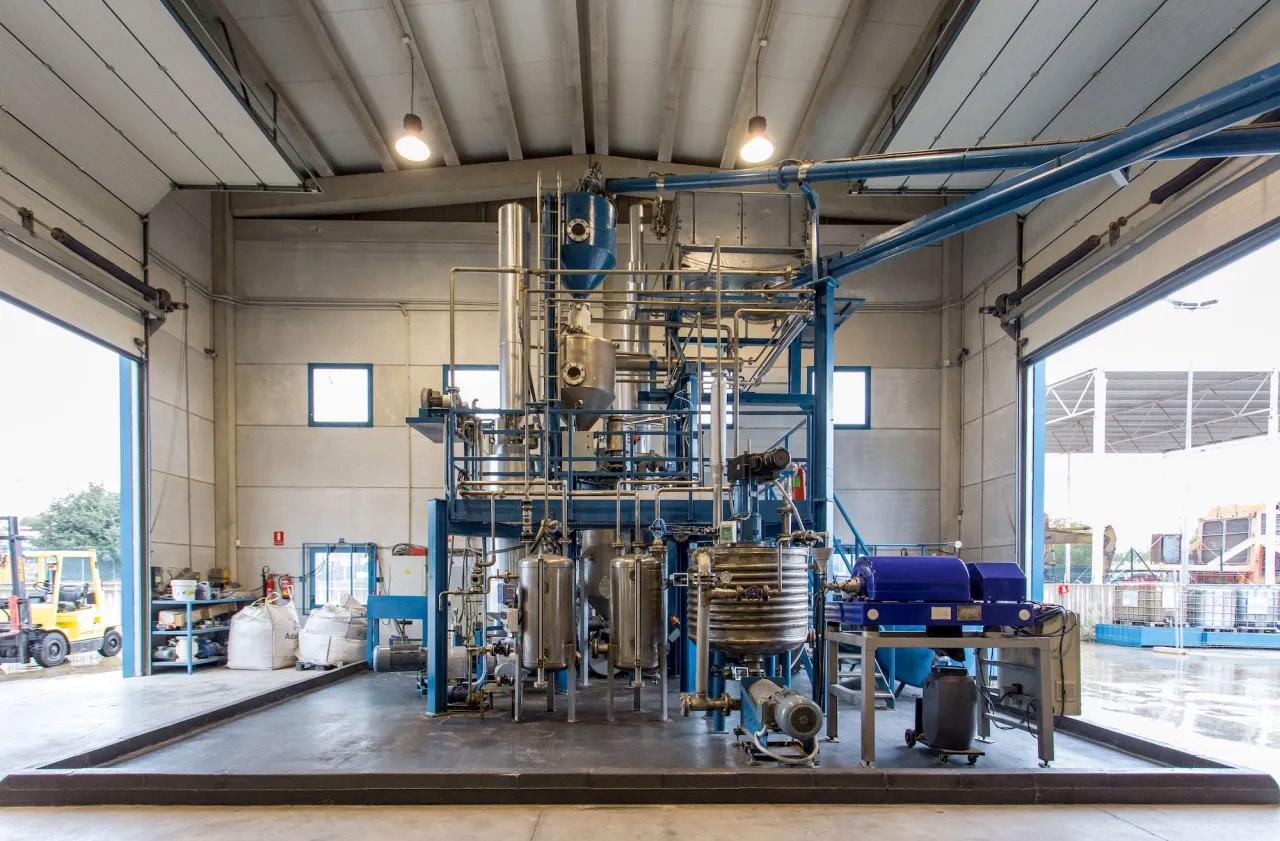
to enable owners-operators to extend decarbonisation compliance for their vessels. RCFs can contribute to reducing GHG by extending the life cycle of carbon in waste fossil sources, substituting for traditional fossil fuels and avoiding low-value incineration or disposal that results in additional GHG emissions. Beyond an environmental choice, the adoption of RCFs and lowcarbon fuels is a sound compliance strategy, one that avoids charges from the EU Emissions Trading System, carbon levies, or port emission rules. Evidently, these fuels must be produced to specific sustainability and environmental standards: the EU requires a minimum GHG reduction of at least 70% compared to its fossil fuel counterpart. That is no easy feat. It requires technological knowledge and expertise to transform feedstocks into ISO-compatible fuels that are proven to reduce emissions without compromising performance.
XFuel has developed a technology to do just that; one that is price-comparable to fossil fuels. XFuel’s Chemical Liquid Refining technology (CLR – ‘CLEAR’) can refine marine sludge and other waste
hydrocarbons into a direct replacement (drop-in) low-carbon marine gas oil (MGO), which is ISO 8217 DMA compliant, and compatible with existing engines and infrastructure.
The technology is both modular and decentralised. Each fuel production facility is CAPAX efficient and supported by a local supply chain. A single module can produce 14,000 tonnes of refined MGO annually from 16,000 tonnes of dewatered sludge. Importantly, the CLR technology is feedstock-flexible: besides marine sludge, it can process a variety of waste hydrocarbon liquid streams, which are being expanded by our R&D team. Its modular design allows for rapid scaling, which enables production to grow in step with demand. Modules can be strategically located near ports, ensuring proximity to both waste feedstock

providers and fuel off-takers, minimising supply chain environmental impact and reducing operational costs.
For shipowners, this represents more than a new fuel source. By investing in modular production and partnering with XFuel’s technical expertise, they can secure greater energy independence and exert end-to-end control over their fuel supply chain. This strategy supports decarbonisation goals affordably, without delay, and requiring no retrofits or infrastructure changes.
Converting waste into low-carbon fuel provides both environmental and economic advantages: it reduces the costs and emissions linked to waste disposal, delivers long-term operational savings, generates compliant fuel, and helps shield against volatile fuel prices –a win-win situation.
XFuel is an SME with R&D headquarters on the Spanish Mallorca, making sustainable fuel a reality for hard-to-abate sectors of maritime, aviation, and HGV transport. The company has developed proprietary breakthrough conversion processes and technologies to produce high-grade, drop-in, low-carbon transport fuels from waste in a cost-efficient way. These meet fossil fuel specifications and performance, and are compatible with existing combustion engines and fossil fuel infrastructure, allowing for direct replacement today. Visit xfuel.com to discover more.
by
As the 2030 FuelEU Maritime deadline looms, pressure is mounting for Europe’s ports to deliver viable shore power solutions that can serve a growing global fleet. The Regulation requires container ships and passenger vessels with a gross tonnage (GT) of over 5,000 to connect to shore-side electricity while at berth in Trans-European Transport Network (TEN-T) ports. It is a positive step for progressing decarbonization, but meeting the requirements of this mandate could be easier said than done. Let us discuss the challenges Europe’s seaports face in scaling shore power and the options available to support existing infrastructure.
Despite Europe leading globally in shore power adoption, with more than 50% of TEN-T Core Ports offering onshore power supply (OPS) at one or more berths, a stark reality remains: many still lack the grid capacity, infrastructure, or economic case to scale up in time. According to the European Sea Ports Organisation, cost, complexity, and grid readiness are among the key barriers to expanding OPS. For some seaports, particularly those near major cities, the power capacity simply isn’t available – and may not be for another decade.
If Europe is to meet its decarbonization targets, it must look beyond the grid. That means embracing a hybrid energy model where modular, scalable technologies can fill the gaps and complement traditional OPS – not compete with it. At e1 Marine, we believe methanol-tohydrogen reformers in combination with fuel cell technology represent one such solution, offering ports a clean, compliant, and flexible way to power berthed vessels and port operations without relying on grid infrastructure.
Hydrogen is widely recognized as a cornerstone of the maritime sector’s zeroemissions future, but distributing and storing it in its pure form remains costly and logistically complex. By contrast, methanol is already available in over 125 seaports. For example, Rotterdam is not only the largest dry bulk port in Europe but also the largest methanol hub in Northwestern Europe. Methanol serves as a stable, safe, and energy-dense hydrogen carrier,
reformable into fuel cell-grade hydrogen on-site and on demand.
e1 Marine’s modular systems use methanol and water to generate hydrogen, which powers proton exchange membrane fuel cells, producing clean electricity. This process reduces harmful emissions like nitrogen oxides, particulate matter, and carbon dioxide by over 99%, and greenhouse gas emissions by up to 85% when using green methanol.
One can deploy these containerized systems at ports in months – not years – and they don’t require expensive grid connections or multi-million-dollar infrastructure investments. This makes them a valuable option for ports facing grid constraints or seasonal energy demand fluctuations, where traditional OPS may be technically unfeasible or financially unsound.
Scaling OPS in Europe will take time – and massive investment. According to the Financial Times, the EU faces a €584 billion infrastructure bill to modernize its grids, with some projects taking five to 15 years to complete. OPS installation alone can cost between €200,000 and €6.0 million per berth (excluding grid upgrades).
Meanwhile, fuel and emissions regulations aren’t waiting. The International Maritime Organization’s new carbon levy (effective 2027) and the EU’s Emissions Trading System are stepping up the cost of carbon-intensive fuels. Ports and shipowners alike need viable alternatives now, especially for short-sea operators, tug fleets, and workboats that lack the scale to justify full-scale OPS infrastructure.
While not yet designed to directly power large container or passenger vessels over 5,000 GT, e1 Marine’s methanol-to-hydrogen reformers can ease the pressure on constrained local grids today. By supporting port-side operations and smaller vessels, these systems reduce total grid demand – indirectly supporting compliance with FuelEU Maritime by allowing grid capacity to be prioritized where it’s needed most.
Matching power to demand – use cases in action
Unlike fixed OPS infrastructure, which can face challenges around costeffectiveness, scalability, or low utilization at certain berths, modular hydrogen systems offer a more adaptable approach. For example, containerized reformers can be deployed on shore and configured to meet the specific demands of each port, supporting cold ironing for smaller vessels such as tugs, ferries, and feeder ships; charging hybrid cranes, reefers, and electric workboats; and supplying auxiliary or back-up power during outages. They can also stabilize fluctuating terminal loads by powering mobile micro-grids in areas with variable or seasonal demand.
Beyond shore-side use, these compact systems can be installed directly on board vessels under 2,000 GT, providing a reliable power source for hybrid propulsion. Paired with battery systems, they enable extended operational range compared to purely electric solutions – particularly useful for short-sea shipping and inland or coastal operations. Hydrogen One , a methanol-fueled
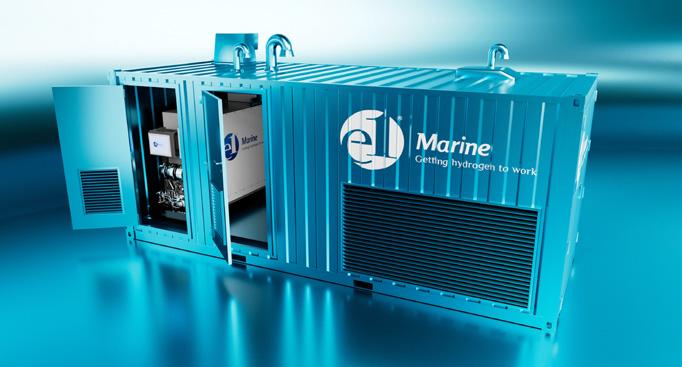
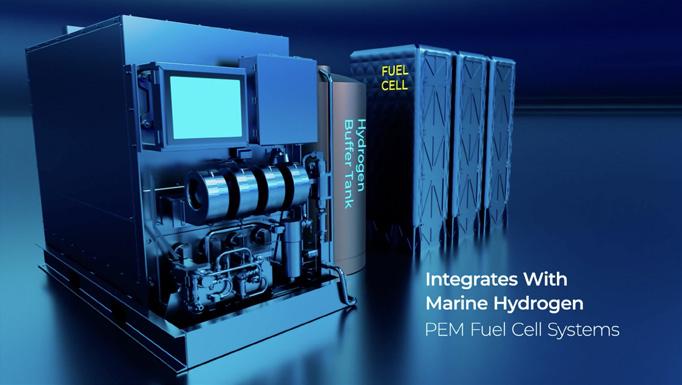
towboat under development by e1 Marine and Maritime Partners, is a prime example of this application in action.
The flexibility to scale output and deploy units where they’re needed most enables port authorities and operators to build a more resilient and efficient energy ecosystem. Demonstrating this capability is our recent collaboration with STAX Engineering in California. There, our M2PWR methanol-to-hydrogen system will power emission-capture barges, demonstrating how containerized hydrogen generation can support at-berth decarbonization – without the added strain on the local grid.
A powerful proposition
Demand for port operations doesn’t stop when the grid fails. Unfortunately, compromised power is becoming an increasingly common occurrence. Urban congestion, weather events, and rising electricity demand all threaten the reliability of port power. In areas like the Gulf Coast of the U.S., hurricanes regularly disrupt shore-based supply. In parts of Europe, cities prioritize power access for residents, leaving ports with intermittent or capped energy availability.
Grid-independent systems like e1 Marine’s provide a vital safety net. They can deliver green energy consistently and on demand, regardless of external
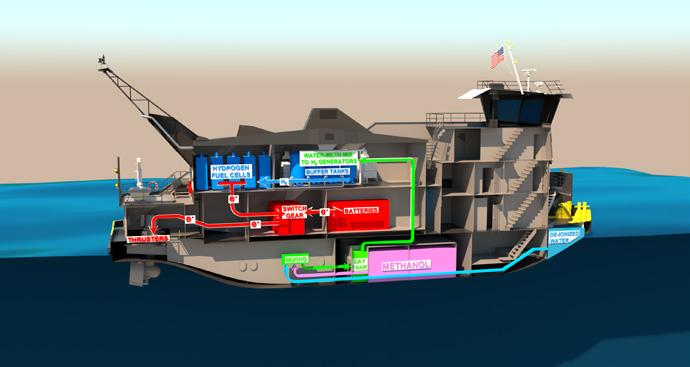
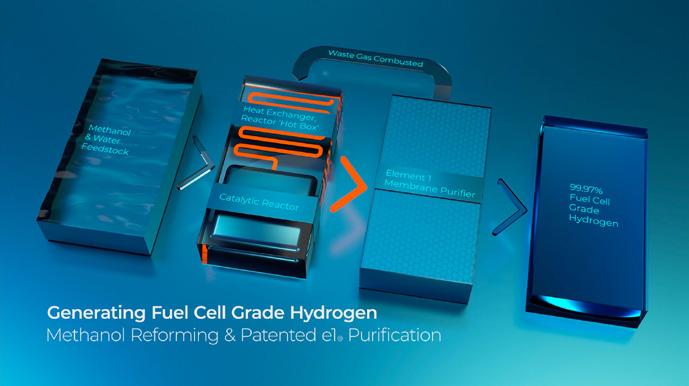
conditions, supporting energy security and operational continuity. For ports seeking to electrify operations without compromising reliability, that’s a powerful proposition.
Integration, not competition
It is tempting to think in binaries –grid versus off-grid, OPS versus hydrogen. But the genuine opportunity lies in integration. No single solution will decarbonize Europe’s port infrastructure. Instead, it will take a coordinated web of complementary technologies: renewables, battery storage, grid-tied OPS, and containerized generation units working together to deliver reliable, sustainable power.
That’s why regulatory and certification frameworks must continue to support flexible deployment. FuelEU Maritime’s inclusion of “equivalent zero-emission technologies” is a step in the right direction, but future OPS policies must remain technology-neutral and application-sensitive. Otherwise, we risk sidelining viable innovations that could bring us closer to our climate
goals simply because they don’t plug into the wall.
Facing the hard truths – with collective action
Ports in Europe are more than logistics hubs – they’re key enablers of the continent’s climate strategy. But realizing their decarbonization potential means facing the hard truths – the grid won’t be ready everywhere, funding won’t flow fast enough, and the cost of inaction is growing.
By diversifying our approach to shore power, we can move faster, reduce emissions sooner, and protect the health of coastal communities. e1 Marine’s methanol-to-hydrogen reforming technology is one piece of that puzzle – not a silver bullet, but a proven, scalable tool that can support the transition where it’s needed most.
Collaboration – not competition –will define the next phase of maritime decarbonization. Ports that embrace a flexible, technology-inclusive strategy today will be the ones powering the green corridors of tomorrow.
e1marine provides clean energy solutions for the maritime sector, specialising in advanced methanol-to-hydrogen generation systems designed to reduce emissions and improve efficiency in maritime operations. Our technology enables ports and operators to produce fuelcell-grade hydrogen on board or on shore, and on demand – efficiently, safely, and wherever it’s needed. Go to e1marine.com to learn more.

Overview of products, infrastructure, Overview of products, infrastructure, services, and many more greenstuff services, and many more greenstuff in one place – on your wall, in one place – on your wall, computer, or phone! Plus the digital computer, or phone! Plus the digital BALTIC GREEN MAP BALTIC GREEN MAP CATALOGUE with plenty of CATALOGUE with plenty of wholesome details! details!

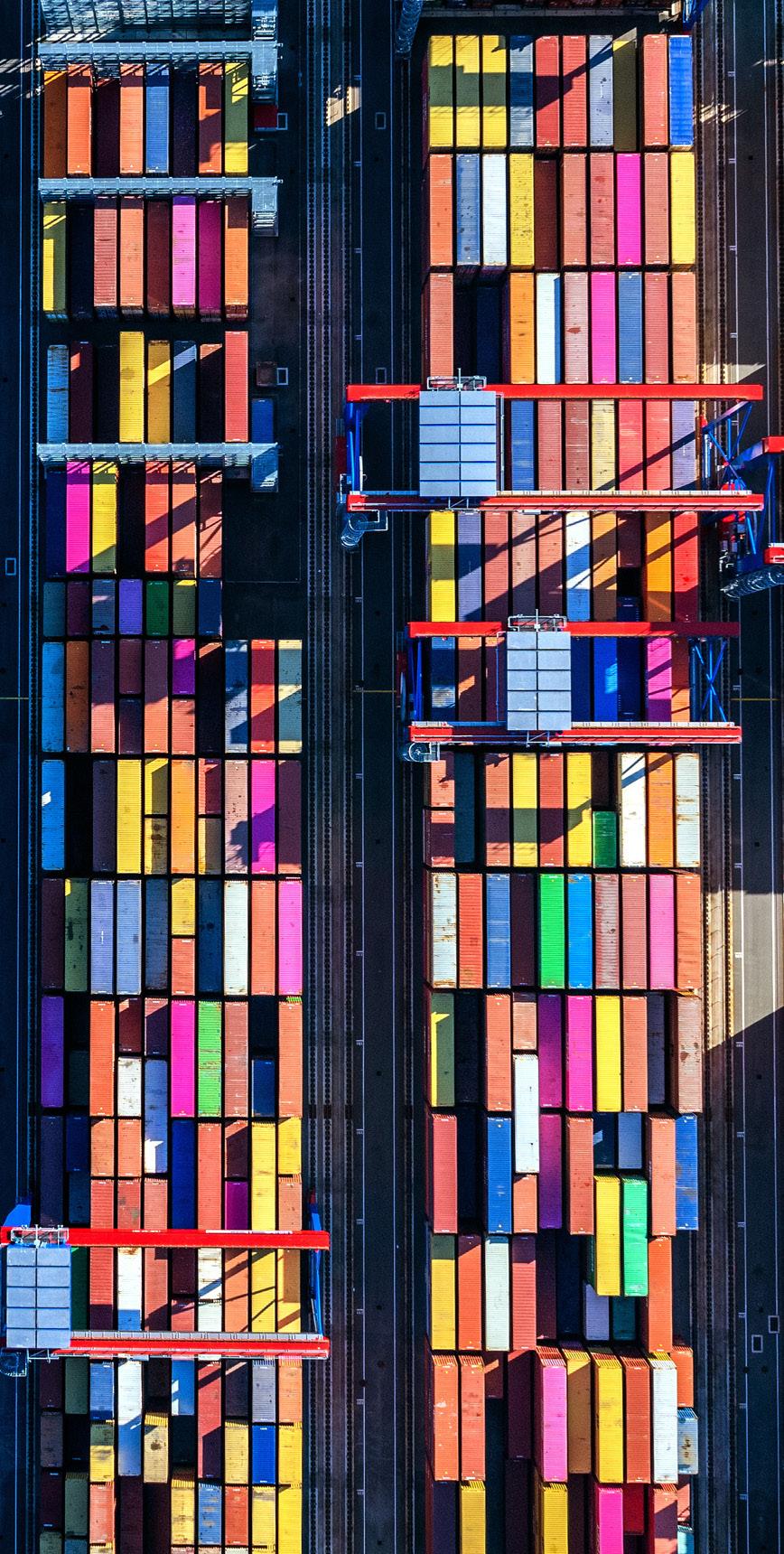
Publisher BALTIC PRESS SP. Z O.O.
Address: ul. Pułaskiego 8 81-368 Gdynia, Poland office@baltictransportjournal.com
www.baltictransportjournal.com www.europeantransportmaps.com www.linkedin.com/company/baltic-transport-journal
President of the Board BOGDAN OŁDAKOWSKI
Managing Director PRZEMYSŁAW OPŁOCKI
Editor-in-Chief
PRZEMYSŁAW MYSZKA przemek@baltictransportjournal.com
Roving Editor MAREK BŁUŚ marek@baltictransportjournal.com
Proofreading Editor EWA KOCHAŃSKA
Contributing Writers
BATUHAN AKTAS, NEIL DALUS, MIKE GARRATT, K OSTAS GKONIS, JÖRG HERBERS, MARTIN ISIK, ALEXA IVY, PANOS KOUTSOURAKIS, JÉRÔME LACROIX, JOONAS MÄÄTTÄNEN, SIDDHARTH MAHAJAN, STUART NICOLL, HELGE A. NORDAHL, KUNAL PATHAK, EVA SAVELSBERG, FITZWILLIAM SCOTT, ARE SOLUM, JOHN SOUTHAM, LEE STENHOUSE, PETER SZELEI, ANTONELLA TEODORO, CHAD VAN DERRICK, EMMANUEL VERGETIS, BENJAMIN WUTTKE, MIKE YARWOOD
Art Director/DTP DANUTA SAWICKA
Head of Marketing & Sales PRZEMYSŁAW OPŁOCKI po@baltictransportjournal.com
If you wish to share your feedback or have information for us, do not hesitate to contact us at: editorial@baltictransportjournal.com
Contact us: PRZEMYSŁAW OPŁOCKI tel.: +48 603 520 020
Cover Fuelre4m PORt GeAR
GeAR
ISSN 1733-6732
Subscriptions Go to www.baltictransportjournal.com and click: SUBSCRIPTION or contact us at subscription@baltictransportjournal.com