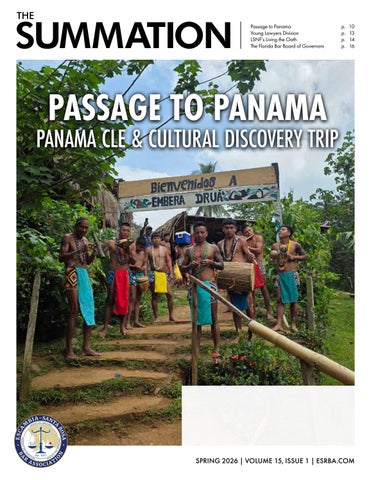
PASSAGE TO PANAMA PANAMA CLE & CULTURAL DISCOVERY TRIP


















Escambia-Santa Rosa Bar Association 260 South Tarragona Street, Suite 160 Pensacola, FL 32502
Phone: 850.434.8135
email: esrba@esrba.com
Lawyer Referral Service: 850.434.6009
Lawyer Referral Service
Debra Zern Stinnett lrs@esrba.com
Published quarterly by the Escambia-Santa Rosa Bar Association as a service to its membership.
Articles appearing in The Summation are not to be construed as official expressions of the views of the Escambia-Santa Rosa Bar Association. Official positions are expressed only by formal resolutions adopted by a majority of the membership and will be so designated when published. Editorials are expressions of the opinion of the Editor.
Due date for all advertisements, articles and announcements is the first of the month for the issue you wish to advertise in.
Address all editorial correspondence to the Escambia-Santa Rosa Bar Association office. For all inquiries concerning advertising rates contact Ballinger Publishing. The Summation Committee is dedicated to providing a publication to the legal community which contains articles that are accurate, informative, entertaining, educational, relevant and timely.
Summation Committee
If you have any comments or suggestions about The Summation, please feel free to express them to any of the committee members. If you would like to join the committee, please call the Bar office at
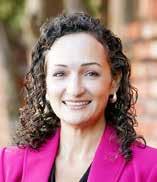
From the President
Bench and Bar Professionalism Conference Reaffirms our Personal and Professional Obligations
The ESRBA, in conjunction with the Okaloosa and Walton County bars, recently hosted the Bench and Bar Professionalism Conference. If you weren’t there, you missed out on a great program. First, I have to start by thanking our Executive Director, Jeff Nall, for spearheading the program and getting it organized. And, due to unforeseen circumstances, I also have to thank Stephen Hayward (and yes, I mean that in the most sarcastic way possible) because on the day of, Jeff was unable to attend and Stephen stepped into his shoes and coordinated everything with the venue. The event was so packed that Stephen had to bring in more tables and chairs! So, I guess I have to amend my above… if you weren’t there, you did miss out, but you wouldn’t have fit anyways. At the end of the day, without these two, the program would probably not have happened. Thank you for making the ESRBA look good.
Now to the meat and potatoes. Attendees heard from several local judges and attorneys on multiple topics with an overall focus on professionalism that included breakout sessions for criminal, family, and civil law. Personally, I think the big takeaway from this event was complimentary to our area. The vast majority of attorneys in the panhandle work hard to satisfy the rules and clients while maintaining high professional standards. We know there has been a lot of recent focus by the Florida Bar on professionalism and, unfortunately, most if not all of us have experienced less-than-stellar behavior from other attorneys. But conferences like this remind us not only of our professional obligations, they also encourage us to maintain (or implement) personal goals of always taking the higher road. Remember, every email, letter, phone call, and § 57.105 letter we send reflects not just upon those to whom we send it, but on ourselves, too. Let’s continue to strive to reflect our community standards as well as meeting our professional obligations. And, thank you to all of our community and local bar members who already do these things.
Warm regards,
Rebecca Gilliland
The Escambia-Santa Rosa Bar Association
Executive Council
Officers
President
Rebecca Gilliland
Vice President
Stephen Luongo
Secretary
Aaron Watson
Treasurer
Andrew Spencer
Immediate Past President
Joe Passeretti
Executive Council
Kristina Cook
Brenton Goodman
Patrick Jennings
Jessica Scholl
Alexis May
Lee Elebash
Shelby Savage
Alex Messmore
Angela Trawick
Haley Hadden
Carllee Godwin
Young Lawyer
Representative
Alexander Shimek
Don’t forget that members save 40% on our ever expanding library of CLEs
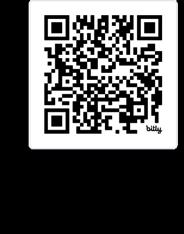
Scan this QR code to check out our current selection of great CLE programming!

Stay current on everything going on with the
Escambia – Santa Rosa County Bar Association
Be sure to check out the ESRBA website for all upcoming events.
Announcements
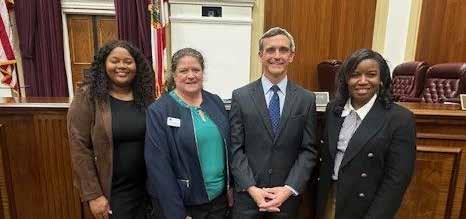
Recently, Douglas Alan Bates (Clark Partington) was recognized by The Florida Supreme Court as the 2026 First Judicial Circuit Pro Bono Honoree. Douglas Alan Bates serves the legal profession and local community by providing free legal support to pro se debtors through the Northern District of Florida Bankruptcy Court’s Reaffirmation Assistance Program (RAP). Managing four to six pro bono matters at a time, Bates often works behind the scenes with parties who would otherwise be left without meaningful legal assistance. (pictured: Shekka Drayton, Wilson Harrell, The Florida Bar YLD Pro Bono Committee; Leslie Powell Boudreaux, Executive Director LSNF; Doug Bates, 2026 First Judicial Circuit Pro Bono Honoree; Rashel Johnson, Director of Pro Bono and Volunteer Engagement LSNF)
2026 ESRBA Directories will be arriving soon! Contact the office to order an extra copy for your summer travel plans!
On the Move


Michelle Nguyen has opened her own law firm, Nguyen Family Law at 7 N. Coyle St., Unit B in Pensacola. She can be reached via email at mtn@nguyenfamilylaw.com or by phone, 850-407-8082. Michelle will focus her practice on family law matters.
Bruce Partington has officially joined Jones Walker, LLP as a Partner. He can be reached at 850-982-3875, or by email at bpartington@ joneswalker.com. The firm was founded in May 1937 by Joseph Merrick Jones Sr., William B. Dreux, and A.J. Waechter, all Tulane Law graduates. It has grown over eight decades into one of the roughly 140–145 largest law firms in the United States, serving local, national, and international business clients.

Emmanuel Sheppard & Condon is proud to announce that shareholder Adam J. White has been elected to serve on The Florida Bar Board of Governors as the representative for the First Judicial Circuit.
White has a strong record of leadership and service within the legal community. He previously served as president of The Florida Bar Young Lawyers Division for the 2020-2021 Florida Bar year and as an appointed member of The Florida Bar Board of Governors for the 2024-2025 Florida Bar year. Through his involvement at both the state and local levels, he has demonstrated a continued commitment to supporting the legal profession and the attorneys of the First Judicial Circuit.
The Escambia-Santa Rosa Bar Foundation Board of Directors
Officers
President
D. Steve Traylor, Jr
Vice President
Jodi Dubose
Secretary & Treasurer
Cameron Gore
Directors
Jeremy Branning
Shekka Drayton
Heather Lindsay
Patrick Martin
Aaron McCurdy
Adrianna Spain
Warren Todd
Kasey Watson
John “Buz” Windham
Mikaela Ziko
Chris Kelly
ESRBA President
Rebecca Gilliland
Escambia-Santa Rosa Bar Association Young Lawyers Division Board of Directors
Officers
President
Alexander Shimek
Vice President
Madison Stacey
Treasurer
Craig Wood
Secretary
Rebecca Radd
Directors
Alex Messmore (Immediate Past President)
Marilee Butler
Savannah Green
Margaret Lovelock
Lexie Fuller
Will Hahn
Brooke DiSalvo
Hannah McDonough
Joseph Seidler
Gabe Mueller
Madison Leonard
Katharine Wu
Carllee Godwin
Law Week
Judicial Reception
Tuesday, April 28th
The Wine Room at V. Paul’s 5-7 PM

Law Day Luncheon
Friday, May 1st
Heritage Hall 1130AM - 1PM
Our Luncheon Sponsors

Join us for the Liberty Bell Award and Student Recognition!
Our Judicial Reception Sponsors



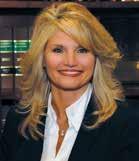
News from the Clerk of the Circuit Court and Comptroller
Red-Light Camera Citations and Uniform Case Reporting
Pam Childers
Red-Light Camera Citations – What You Should Know
In January 2025, the City of Pensacola launched its redlight camera program, which has become a major topic of discussion in Escambia County and across the state. Red-light camera citations in Florida are legal civil penalties issued under the Mark Wandall Traffic Safety Act. These citations carry a $158 fine and provide options to pay, contest, or complete a driver improvement course, with no points assessed on the driver’s license.
If no action is taken within sixty days, the citation escalates to a Uniform Traffic Citation (UTC). UTCs are issued by law enforcement when a driver is alleged to have violated a traffic law. There are two types of UTCs: a Civil Traffic Infraction and a Criminal Traffic Violation. The UTCs issued for red-light camera violations are Civil Traffic Infractions.
The UTC then becomes a formal moving violation filed with the Clerk of Court. When a UTC is issued for red-light camera violation, the fine increases and three points are added to the driver’s record upon conviction. If the UTC is not paid within thirty days, the driver’s license will be suspended for failure to pay.
Since the City implemented the red-light camera program, the Clerk’s Office has received more than six thousand UTCs. All funds collected from these citations are distributed according to the established distribution schedule.
Uniform Case Reporting (UCR)
Uniform Case Reporting (UCR) is a data collection project initiated by the Judicial Management Council’s Performance Workgroup in February 2015. The workgroup recommended the Commission on Trial Court Performance and Accountability direct clerks to provide specific data elements, transmit the data in a prescribed format, and transmit in a timely manner. The supreme court has directed the Florida Office of the State Courts Administrator (OSCA) to implement a specific auditing process to validate the data collected.
Supreme Court of Florida AOSC 16-15 specifically requires the clerks of the circuit court to expand the existing clerk of court data reporting requirements and to increase the data elements provided. Requirements represent a much-needed modernization of the older case reporting requirements and will ultimately consolidate several existing reporting requirements.
Supreme Court of Florida AOSC 18-18 implements Uniform Case Reporting and recognizes that uniform case reporting is a valid and necessary reporting requirement for the judicial branch to efficiently manage its work.
UCR tracks case activity through real or near real-time exchange. In the UCR environment, time is an essential factor in accurate reporting as the order in which data is reported conveys meaningful information. It is the responsibility of the records custodian to accurately and completely describe the activity being reported.
Clerks of court transmit the auditing of data in the form of Summary Reporting System pursuant to F.S. 25.075, Case Inventory statistics pursuant to Fla. R. Jud. Admin. 2.225(a)(2), and pending caseload statistics required by Fla. R. Civ. P. 1.201. The data being maintained and provided is an essential information resource used by the courts to determine judicial need (judgeships), develop budgets, and support core judicial functions. The existing reporting remains official until explicit notification from OSCA is provided for discontinuation.
Authored by Robert Smith and Susan Jernigan on behalf of Pam Childers, Clerk of the Circuit Court and Comptroller
INews from the Bench
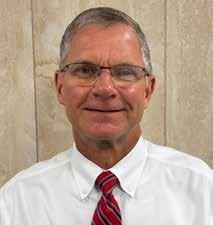
Chief Judge John F. Simon, Jr., First Judicial Circuit of Florida
have long believed that our area enjoys some of the most professional and collegial attorneys in the state. This commitment to civility was evidenced by the outstanding participation in February’s Bench and Bar Professionalism Conference. I would like to thank all who planned and participated in the conference. In a time in which we are increasingly doing business at a distance by email and Zoom, it was wonderful to gather and meet new people, learn from those with different experiences, and share ideas of how the practice of law can improve for each of us. Considering some of the discussions we had at the conference, I am writing to share a few thoughts about a topic that is becoming increasingly present in all our professional lives: artificial intelligence (AI).
AI is already part of everyday practice in many law offices. It appears in legal research platforms, grammarchecking programs, document drafting tools, and case management systems. We can expect to see more of it not only in private practice, but throughout the broader justice system. As with every technological development we have encountered, the key question is not whether it will be used, but how it will be used. One point bears repeating: AI is
only a tool. It is not a lawyer, and it is not a judge. It cannot substitute for the professional judgment that each of you brings to your clients and to the Court. Used thoughtfully, it can enhance efficiency, improve access to information, and reduce administrative burdens. Used carelessly, it can undermine credibility, distort the record, and ultimately harm the very individuals the justice system is committed to serving.
When an attorney or a selfrepresented litigant uses AI in drafting a pleading, motion, or memorandum, the filer of that document must remain fully responsible for everything above his or her signature. Citations must be verified. Authorities must be checked. Factual representations must be accurate. Every statement to the Court must meet the same standards of candor and diligence that have always governed the practice of law. These are not new obligations. They are enduring ones.
Maintaining confidentiality is also critical. As you likely are aware, AI systems use submitted information to train their models, unless those features are disabled. It is important to understand how any tool you use handles data, where that information is stored, and what security protections are in place.
At the same time, while there are understandable concerns about any emerging technology, we cannot overlook its potential benefits. As the courts consider appropriate boundaries for the use of AI throughout the State, we bear in mind that the goal is not to stifle innovation, but to ensure that technology serves the administration of justice.
The practice of law has always evolved alongside technology. We have moved from typewriters to word processors, from paper to e-filing, from analog recordings to digital. Each change required adjustment, and AI is simply the next evolution. While it can mimic reasoning and polished language in ways that create an illusion of reliability, it remains simply a tool. Sound judgment, careful analysis, and ethical responsibility remain ours alone. Innovation must always be guided by integrity, accuracy, and our shared commitment to justice above all else.
There is little doubt that AI will shape the future of legal practice and the courts. As members of the bench and bar, we share a responsibility to ensure that it strengthens—rather than weakens—the fair and impartial administration of justice.
Thank you for your professionalism, your adaptability, and your continued partnership in serving the people of our community.
PASSAGE TO PANAMA PANAMA CLE & CULTURAL DISCOVERY TRIP
by Jeff Nall
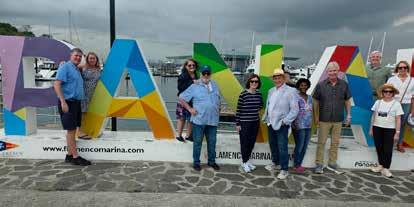
On Thursday, February 19, a group from ESRBA set out to Panama for our 2026 International CLE Trip in collaboration with by Scand-America International, the Floridabased travel company that coordinated our Cuba trip. This time, we were also joined by three folks from the Martin County Bar Association. It was great to meet them as well as spend some casual, fun time with our fellow ESRBA members and guests.
The trip started bright and early with a 6 a.m. departure from Pensacola with a stop in Miami, where we caught up with our Martin County friends. We all arrived safe and sound in Panama early that afternoon.
As was the case in Cuba, we had a great local guide who went above and beyond. After a late lunch, we did some sightseeing by bus before checking into the hotel. The hotel was very tall and modern with panoramic views of the high-rises in the financial district. The accommodations were very nice though the Goodmans did have an interesting encounter with a cryptic message that appeared on their mirror when it steamed up. I cannot tell the story as well

as they can, so please ask them about poor Tomas when you see them. It is quite a funny story.
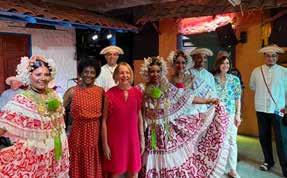
We wrapped up day one with a folkloric dance dinner show. We enjoyed a traditional Panamanian dinner and talented dancers dressed in colorful polleras and traditional attire performing lively rhythms like tamborito and cumbia — a perfect blend of culture, flavor, and celebration.
Friday started off exploring Panama’s legal system and judicial landscape. The presentation was a Florida Bar accredited CLE lecture delivered by a Panamanian lawyer. He offered valuable
insights into the country’s legal traditions, court structure, and the practice of law in Panama. We were also abler to visit a local courthouse before making our way to the world-famous Panama Canal, where we had the chance to witness ships navigating the locks and gained insight into the construction, operation, and global impact of the canal at the Miraflores Locks Visitor Center.
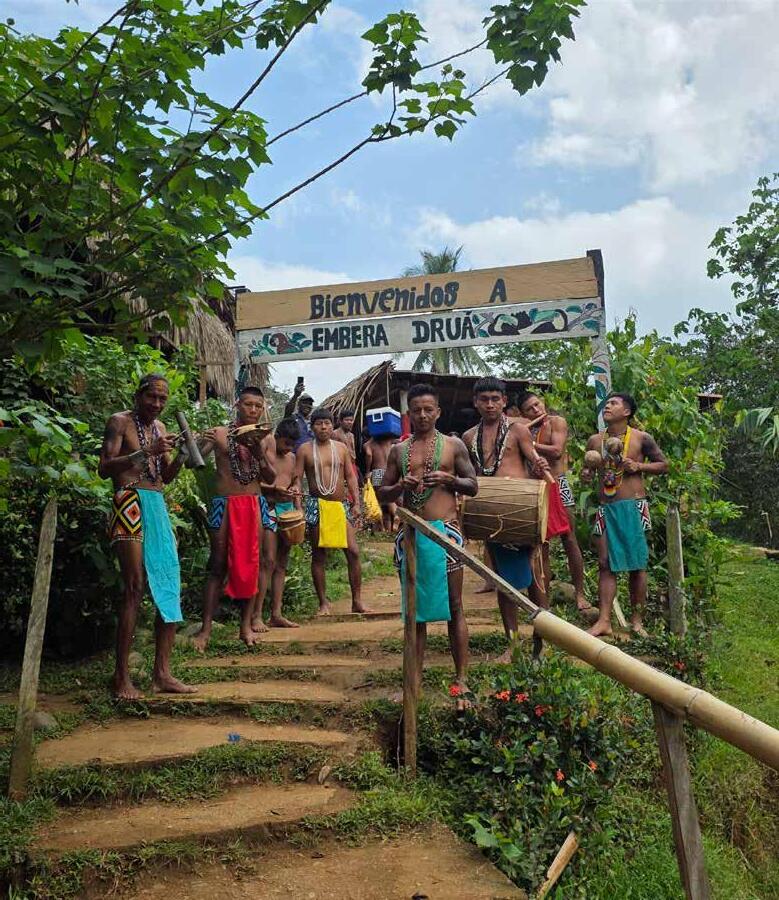
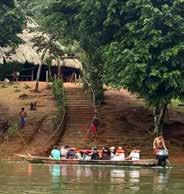
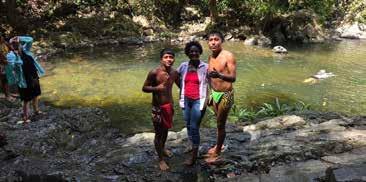
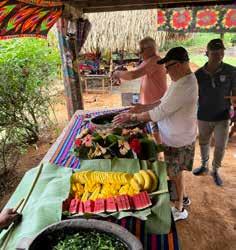
Saturday was probably everyone’s favorite experience. We did not know that the largest rain forest outside of Brazil was in Panama. It was a full-day trip to Corotú and Chagres National Park for an Emberá Village and Jungle
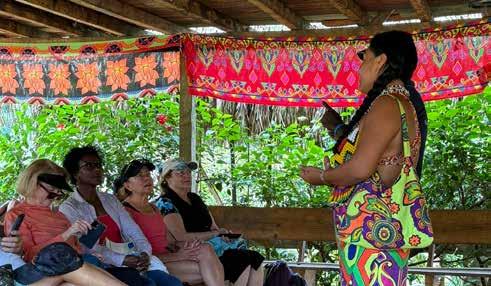
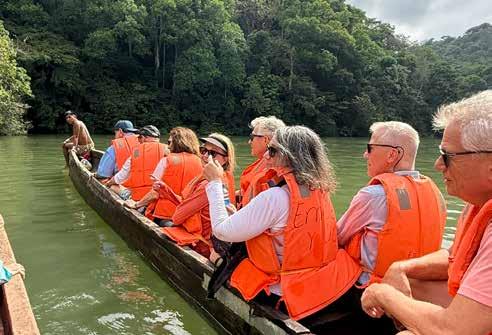
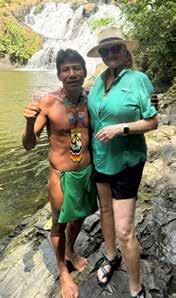
Experience. Traveling by traditional canoe led by expert local guides, we explored the heart of Emberá territory. This was a unique opportunity to connect with a community known for its colorful traditions, spiritual wisdom, and close bond with nature. We were introduced to the lifestyle and traditions of the Emberá Indigenous tribes when we visited an authentic village for a wonderful lunch of fresh fried fish and plantains and chance to learn about their culture.
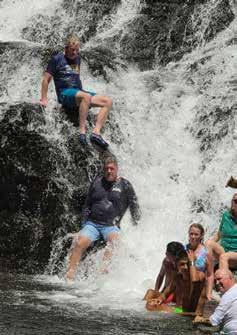
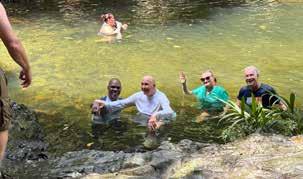
They were such wonderful host and the lunch was delicious! After our time at the village, we got back into the canoes to visit a hidden waterfall. What an amazing site! Though someone in our group did get a whistle blown at them for climbing too high up the waterfall, everyone left in good shape and quite refreshed after a nice swim.
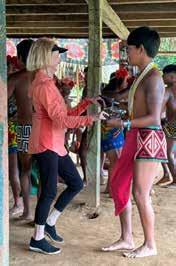
We commemorated our final evening in Panama with a second dinner show. Still an evening of cultural immersion,
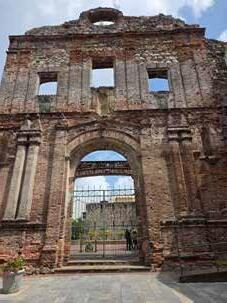
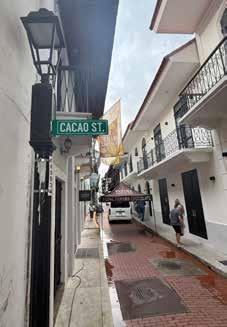
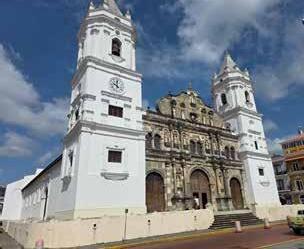
the popular venue provided a bit rowdier taste of Panama’s music and dance with lots of audience participation. Sunday, it was time to return to the airport for the trip back home. Though not before many of our group went back to Casco Viego, the city’s beautifully preserved historic quarter and a UNESCO World Heritage Site, to shop and stroll through its cobblestone streets and admire colonial churches, colorful plazas, and elegant architecture.
At the airport, we said our goodbyes to our friendly, informative guide, Aldo, and boarded our flight for Pensacola without incident.
So, where are we going next year? There are possible options for a eight-day trip to Norway or long-week trips to Mexico and/or South America. Please contact Jeff Nall if you are interested in seeing itineraries and estimated pricing.


Young Lawyer’s Division
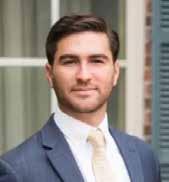
by Ander Shimek, YLD President
Spring is always an exciting and productive season for the Young Lawyers Division, and I want to take a moment to reflect on some of our recent successes while also looking ahead to what is to come.
We begin with a quick look back at our highly successful YLD Christmas event. In addition to creating opportunities for networking and strengthening professional relationships, our young lawyers came together to support underprivileged children and families in our community by providing Christmas gifts for more than 50 children and families in Escambia County. The event, held at Odd Colony, was made possible through the generous support of local firms, including Aylstock, Witkin, Kreis & Overholtz, PLLC, and was further honored by appearances from Judge Frydrychowicz and Judge Pitre. We are grateful to everyone who attended, donated gifts, and helped make the ESRBA YLD Christmas event such a meaningful occasion.
In February, several YLD Board members traveled to Orlando for the Florida Bar YLD Affiliate Outreach Conference. During the conference, ESRBA YLD presented a grant request for a future professionalism-focused program addressing client interactions across a variety of practice areas. We were also proud to have two of our own, Brooke DiSalvo and Shekka Drayton, represent the First Judicial Circuit as members of the Florida Bar YLD Board of Governors.
Also in February, the YLD hosted a successful happy hour sponsored by Emmanuel, Sheppard & Condon. The event gave our young lawyers the opportunity to connect with Adam White, a former ESRBA YLD President, former President of the Young Lawyers Division of The Florida Bar, and recently elected member of The Florida Bar Board of Governors. Mr. White shared valuable insight from his experience in bar service, leadership, and professional involvement, and we are thankful for his time and guidance.
Looking ahead, we are excited to announce an upcoming Coffee with a Judge event, currently scheduled for May 8 with Judge Frydrychowicz. This event will give YLD members the opportunity to visit the courthouse, enjoy coffee with Judge Frydrychowicz, participate in a question-and-answer session, and learn more about her background and path to the bench. We are honored that Judge Frydrychowicz has taken time out of her busy schedule to provide guidance and insight to our YLD members. We encourage all YLD members to attend this special event at the courthouse on May 8. Additional details about this event, as well as our other upcoming events, will be shared on the YLD social media pages and through email blasts as the date approaches.
YLD has an upcoming happy hour at The Establishment on April 23, sponsored by Zarzaur Law. This will be a great opportunity for young lawyers to network, build relationships within the legal community, meet the current YLD Board, and learn more about opportunities to become involved, including applying for board positions later this year.
Finally, the YLD Board has been working diligently to plan a Laws and Lattes event in Molino, Escambia County, currently scheduled for June 20. In partnership with Legal Services of North Florida, this event is intended to provide pro bono assistance and legal resources to underserved members of our community in a welcoming setting. Attendees will be able to enjoy free coffee, connect with the Legal Services team, and receive information and guidance related to legal issues they may be facing. As the event approaches, we encourage members to reach out to the YLD Board for updates and to continue supporting pro bono efforts whenever possible.
Thank you to everyone who has contributed their time, energy, and support to the YLD. I am proud of what we have accomplished together and excited for what lies ahead.
LSNF’S LIVING THE OATH 50 NEVER LOOKED SO GOOD!
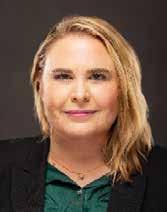
by Melissa Condon Onacki
Welcome to another installment of LSNF’s Living the Oath: 50 Never Looked so Good!
Reintroduction: Legal Services of North Florida (LSNF) is a nonprofit law firm that provides no cost civil legal help to residents who qualify, mostly low-income and at-risk people across 16 counties, from Escambia all the way to Jefferson County.
Let’s go back in time to 1976 . . . Jimmy Carter defeated incumbent president Gerald Ford in the presidential election, both Apple Computer Company and Microsoft are incorporated, and it is a special leap year, because it is when LSNF took its first leap and was formed!
Over the past 50 years, LSNF has navigated many significant challenges. In this century alone, LSNF has dealt with repercussions from Hurricane Ivan in 2004, the Deepwater Horizon oil spill in 2010, Hurricane Michael in 2018, and Hurricane Sally in 2020, not to mention the COVID-19 pandemic. Through these past 50 years, LSNF has been there, making a critical difference for people in our community facing housing insecurity and other dire circumstances.
As LSNF looks to the future, our priority continues to be identifying and addressing the shifting needs of our community. LSNF’s goal is to raise awareness about the specialized nature of our work. We are committed to resolving legal problems that cannot be addressed through other means, relying on partnerships and community resources. Who are these community resources? I am so glad you asked! You, my dear colleagues, are our greatest untapped community resource. 50 never looked so good, but we want the next 50 to look even better! We can only do that with your help.
LSNF relies on our legal community to provide pro bono services to our clients. I know, I said the dreaded word: “pro bono.” In my experience, that word often conjures up images of spending countless hours of your precious time on a complicated case with no pay-off. Let me be the one to debunk that myth. Pro bono does not have to engulf your life. In fact, a little bit of pro bono goes a long way.
LSNF has recently launched a new program focused on helping pro se litigants better navigate the court system, starting with family law. As part of this effort, we host a monthly Self-Help Family Law Workshop at the Escambia County Courthouse Library. It’s an easy way to give back, and takes only a small amount of time, not the hours and hours we associate with pro bono work. It’s as simple as helping someone understand and complete their family law forms, and really, no prior experience in family law is needed! We’ve also expanded our Estate Planning Clinics in Pensacola to a bi-monthly schedule, creating another opportunity to make a meaningful impact without a major time commitment. If you’ve been looking for a manageable way to get involved, this is it. Whether it’s one of these projects, a Justice on the Block clinic, or another pro bono opportunity, we’d welcome your time and expertise. Reach out to LSNF to get started at www.LSNF.org/Volunteer. We will also never say “no” to some cold-hard cash. Please go to www.LSNF.org/Donate to make a donation or offer an in-kind donation in support of LSNF.
Thanks for the past 50 years. Here’s to at least 50 more! Until next time.
Melissa
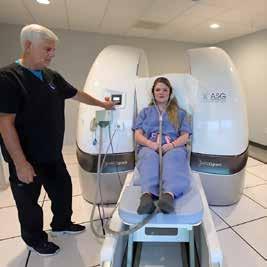
Why do personal injury cases get challenged?
Gaps in credibility
If the documentation, diagnostics, or clinical story aren’t aligned, defense will exploit the inconsistency. Injury severity isn’t objectively supported
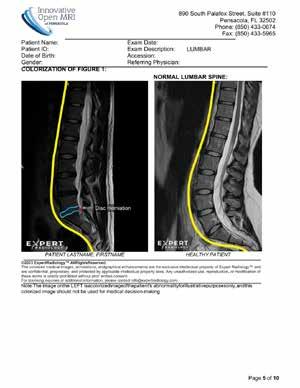
When imaging fails to fully demonstrate the extent of injury or doesn’t correlate with symptoms, the case loses strength. Findings fall flat in front of a jury
Even strong clinical evidence can be undermined if the imaging or reporting isn’t presented clearly, defensibly, and in a way laypeople understand.

Florida Bar Budget
The Board unanimously approved the Budget Committee’s proposed budget that would ensure that membership fees remain unchanged. Under the proposal, annual membership fees would remain at $265 for active members and $175 for inactive members.
The proposed budget maintains current membership fees while relying on reserves and modest increases to certain service charges — such as CLE and other voluntary activity-related fees generally paid with a credit card — to address rising costs and a long-standing issue related to credit card processing expenses. The proposed credit card processing fee would not apply to members using credit cards to pay their annual Bar fees.
Listening to Lead Tour
President Rosalyn Sia Baker-Barnes reported that approximately 500 participants registered for the Bar’s “Listening to Lead: Professional Sustainability for Florida Attorneys” online listening tour — a series of Zoom meetings held over four days in late February and early March to gather member feedback about the challenges lawyers face and what the Bar can do to help attorneys build “meaningful, sustainable, fulfilling legal careers.”
The Special Committee on the Sustainability Initiative for Attorneys is examining these and other issues through four subcommittees. Baker-Barnes said feedback from the listening tour will help guide the committee’s work. Members can also email sustainability@floridabar.org to provide their perspective on legal career sustainability.
Florida Bar Job & Resource Fair
The Young Lawyers Division reported that more than 400 young lawyers and law students gathered in Ft. Lauderdale on March 6 for the inaugural Florida Bar Job & Resource
Fair, exceeding expectations and generating several on-the-spot job offers. The job fair was a collaborative effort between the YLD and the Board of Governors designed to connect new attorneys with employers while offering practical career development resources.
Other Board Action
In other action, the Board approved an amendment to the Bar’s bylaws that would eliminate the requirement to offer paper ballots in Bar elections. Sponsors say the change would modernize current practices, streamline election results by eliminating manual ballot counting, and save the Bar approximately $4,000 annually in printing and mailing costs.
The Board also voted to amend Rule 20-6.1 to authorize Florida Registered Paralegals to receive up to five CLE credits per three-year reporting period for pro bono work. The proposed language allows FRPs to receive continuing education credit when volunteering to support attorneys performing pro bono work, or when working under the supervision of an attorney through an approved legal aid organization. The amendment aligns with a recent change to CLE eligibility for attorneys concerning pro bono. The Florida Supreme Court will have the final say.
In addition, the Board voted to amend Standing Board Policy 15.40 governing grievance committee membership to clarify that current Florida Bar employees and their family members are ineligible to serve on grievance committees. The change would also require former Bar employees to wait one year after leaving employment before becoming eligible for appointment.
The Board also appointed Stacey A. Scaldo of Jacksonville to serve a 4-year term (July 2026 - June 2030) on the Judicial Ethics Advisory Committee.
Bottom Line
Probate Avoidance Estate Planning
By: April L. Swift
Student Liaison Officer, Northwest Florida Paralegal Association
This publication is for general informational purposes only and is not legal advice. It does not create an attorney–client relationship. Estate planning outcomes depend on specific facts and applicable law. You should consult a licensed Florida attorney for advice regarding your particular situation.
Avoiding probate is a common concern in estate planning. Two primary strategies can help minimize or avoid probate at your death: (1) a last will and testament paired with probate-avoidance planning, or (2) a properly funded revocable living trust. This article outlines how each plan works, the key differences, benefits, drawbacks, and which might fit your circumstances.
A will outlines how your assets will be distributed and names fiduciaries, including executors, guardians, and trustees (if a testamentary trust is included). Any assets titled solely in your name without a pay-on-death (also called transfer-on-death) or other beneficiary designation are subject to probate. To avoid probate, pairing your will with non-trust tools is essential. Common probate-avoidance tools include: (1) beneficiary designations for financial accounts and securities; (2) joint ownership, where assets pass directly to the surviving owner; (3) enhanced life estate deeds to transfer real property; and (4) lifetime gifts of select assets.
The benefits of a will include lower initial cost and simpler setup. While a will is straightforward to
maintain, you must remain diligent to update beneficiary designations as you acquire or move assets. This approach suits simple estates and manageable probate processes. A will can also include a testamentary trust to: (1) manage assets for minor or young-adult children; (2) protect a beneficiary’s inheritance from creditors; or (3) provide for individuals with special needs. Some assets may still require probate, which is a somewhat public process, and your will becomes part of the court record. Under Florida Statutes § 732.901, the person in possession of the original will must deposit it with the clerk of the court in the decedent’s county of domicile within 10 days after learning of the death. Probate records are not readily available to the public through the clerk’s website but are available upon request to qualified individuals. A will also offers limited incapacity planning, typically relying on powers of attorney. These Florida-specific requirements may change and can differ in other jurisdictions; consult a licensed attorney for current, state-specific guidance.
Alternatively, a revocable living trust is created during your lifetime, and you can serve as trustee to manage your assets. If properly implemented and funded—meaning assets are retitled to the trust or have pay-on-death/transfer-on-death or beneficiary designations—the plan can avoid probate. When all assets are titled in the trust, it provides centralized incapacity planning, seamless asset management, and greater control over distributions and beneficiary provisions. If you
become incapacitated, your successor trustee can manage trust assets; upon death, the successor trustee can distribute assets under the trust without court involvement. Assets not titled in the trust (and without beneficiary designations) may still require probate, and for those assets, incapacity planning may rely on powers of attorney.
Trusts also simplify multi-state asset administration and enhance privacy because the trust document is not filed with the court. A successor trustee should contact a Florida attorney for guidance on trust administration, which includes filing a Notice of Trust in the decedent’s county of domicile pursuant to Florida Statutes § 736.05055. This reference to Florida law is informational only and is not a substitute for legal advice tailored to your circumstances.
Trusts require higher initial costs and setup time and must be properly funded by retitling assets. Wills are typically less expensive initially but may lead to longer timelines and higher costs if probate is required. Trusts, though more expensive upfront, can provide more streamlined administration depending on the circumstances.
The comparisons and potential benefits described are general in nature and may not apply to your situation. Do not act or refrain from acting based on this information without obtaining legal advice from a qualified attorney.
With that being said, THAT’S THE BOTTOM LINE.


Platinum

Beasley Allen
Clio®

Silver Bronze Innovative Open MRI
The Cowork Annex + The Brent Lofts
The Leavenworth Team
CPC Office Technologies
Emmanuel Sheppard & Condon
Henry Chiropractic
Hixardt ™ Technologies, Inc
Lamar Advertising
LexisNexis®
Pro Legal Discovery
Rafferty Domnick Cunningham Yaffa
Rimkus
The Kelly Group at Morgan Stanley
Need a Lawyer?
It is always a good idea to check with a lawyer before you make an impor tant decision—whether you are buying a house, making a business deal, or set tling a dispute. A shor t talk with a lawyer of ten tells you all you need to know —how serious a problem is, how to handle it swif tly and how to make sure it is set tled for good.
Get Answers to Legal Questions Such As...
• Marriage, Divorce & Family Mat ters
• Business Problems
• Criminal Charges of Juvenile Hearings
• Wills, Trusts & Proper t y of Decreased Relatives
• Tax Problems & Planning
• Credit or Collection Problems
• Corporation & Par tnership Mat ters
• Real Estate Purchases, Sales or Disputes
• Consumer Problems
• Landlord/Tenant Relations
• Injuries to Yourself or Family Members
• Proper t y Damage
• Workers’ Compensation
• Job Discrimination or Employer/Employee Disputes
• Patents, Trademarks or Copyrights
• Wages & Benefits
• Social Securit y Disabilit y
• Labor Law
With over 50 par ticipating local at torneys experienced in many dif ferent areas of law, we can help you find an at torney to handle your case.
Your call is free. When you meet with your lawyer, there will be a small fee of $40.00 for the first half-hour consultation. Fees for additional ser vices af ter the first half-hour are arranged bet ween you and your lawyer.
We do not have at torneys who accept pro bono or contingency cases.
