A mower that tackles so much more. So you can mow less.
With its innovative triple flail cutting system, the highly productive Toro LT-F3000 makes light work of longer, wetter or coarser grass so you can go longer between cuts, saving time and money. Plus the new cylinder attachment provides a finer finish when needed, too! What more could you ask for from just one machine?
reesinkturfcare.co.uk
Chair’s welcome
It only feels like yesterday that we were celebrating at the BALI National Landscape Awards in December, and yet here we are –with spring blooms poking their heads through the soil. Time truly does fly. The Awards carried us straight into Christmas and the New Year, and while they remain a fantastic memory, they are now part of another successful chapter in our story.
Last year’s Awards showcased some of the most impressive entries we have ever seen. The Principal Award winner, The Outdoor Room, was recognised for its outstanding work at Hawthorne House – an exceptional project celebrated for its technical precision and craftsmanship. We also saw remarkable success from Elite Landscapes, whose passion, professionalism, and unwavering support for the industry make me personally very proud. They represent exactly what our membership stands for: integrity, expertise, and commitment.
Now, we move confidently further into 2026. For those who had a successful and profitable 2025, I sincerely hope that momentum continues. My ambition for this year is that we collaborate more closely, share experiences more openly, and strengthen our collective voice, campaigning and lobbying in the best interests of both the BALI members and the industry.
January and February have already been incredibly busy with AGMs across the country – from Scotland down through East Anglia and the South. These events have, as always, been energising and enjoyable, with fantastic speakers and brilliant venues bringing members together at a regional level.
However, the standout moment of this first quarter was undoubtedly our National Landscape Conference on 26 March 2026 at the Royal Society, London – the first in almost 20 years. This was more than an event; it is a turning point. It’s about business resilience, futureproofing, and tackling the real pressures we face as business owners.
We welcomed experts from major financial institutions alongside respected university economists and – importantly – our own members. Those on the front line of the industry shared both their successes and their lessons learned. Honest conversations about profit, growth, and sustainability are vital. Let’s be clear: profit and success are not dirty words. They are essential for a thriving, professional industry.
Looking ahead, 2026 holds even more historic milestones. We eagerly anticipate our first BALI garden at the RHS Chelsea Flower Show in some time, and in December 2026 we will celebrate the 50th Anniversary of the National Landscape Awards – a truly momentous achievement.
So, despite the unpredictable weather of the early months, I remain optimistic. Let’s promote our businesses, champion our industry, and continue driving prosperity together.
I look forward to seeing many of you throughout what promises to be a landmark year for BALI.
Adrian Wickham National Chair
"Honest conversations about profit, growth, and sustainability are vital. Let’s be clear: profit and success are not dirty words."
In this issue
06
Editor's thoughts
Our editor welcomes you to the Spring issue.
08
Chief Executive's report
Find out how our Chief Executive has been championing BALI members’ interests.
10
Out and about with BALI
Where we’ve been and what’s coming up in the world of events this quarter.
13
BALI benefit: Policy team
Discover more about how the BALI policy team fights for your interests and the landscaping sector.
16
Beyond compliance: BNG and your business
Helen Nyul talks about all things BNG following on from her keynote speech at the BALI National Landscape Conference 2026.
18
Stronger together: BALI Regional AGMs
Get the inside information from BALI’s excellent regional AGMs with Membership Engagement Manager Fran Bienek.
Discover everything we’ve got lined up in this issue of Landscape News…
20
Growing together: Origin Enterprises
Discover more about the BALI National Landscape Awards’ headline sponsor.
22
New faces join the fold
Meet all the newest members to the BALI community, including Q&As with some of our latest recruits.
24
Understanding the unique challenges of heritage landscapes
The Garden Co. reveal the unique challenges that come with designing a beloved National Trust garden.
28
Court is in session: three decades behind the scenes with the “King of Chelsea”
With an incredible 115 gardens built at RHS Chelsea, Managing Director of Landform Consultants, Mark Gregory, shares his insights and wisdom.
32 Is your brand working hard enough for you?
How do you know when it’s time for a brand refresh? The experts at Humaniise provide their top tips to revamp a stale brand.
42
Water ways: latest government white paper brings a flood of landscaping opportunity
Take a closer look at the recent Water white paper and how it impacts landscaping businesses with our Policy team.
44
37
From natural to nourishing: the new direction of domestic design
The Garden Company’s James Scott MBALI, FSGLD, explores the garden design trends shaping the year ahead and beyond.
40 Safety is always in style
Paul Hicks, STIHL GB, outlines the key protection classes and standards landscapers should understand, and how to select the right PPE.
Know your numbers: How to stay strong in a tough economy
Discover how to understand the financial health of your business with Sones Accountancy.
47
Your data protection duties for customer information
Customer data is valuable, but it comes with legal responsibilities. BALI benefit provider Quest, explain your legal duties.
48
The future is now
We spoke to BALI Chalk Fund’s Landscape National Student of the Year, Archie Matthews, to see how his life has changed since winning the accolade.
50
Smiley happy people
Investing in People Platinum Award winner, Paul Downer, explains how putting your employees first can help to boost the overall financial health of your business.
54
Fresh hope for the next generation
Find out what the GoLandscape team have been doing to encourage new skills into the sector.
Editor's thoughts
“Customers will never love a company until the employees love it first.”
These words from author Simon Sinek reinforce the notion that it is only through a workforce that is motivated and empowered to go above and beyond that exceptional results can be consistently achieved.
This issue of Landscape News focuses on those true drivers behind our incredible industry – the individuals who graft through rain or shine to build stunning landscapes and bring joy to clients and communities alike.
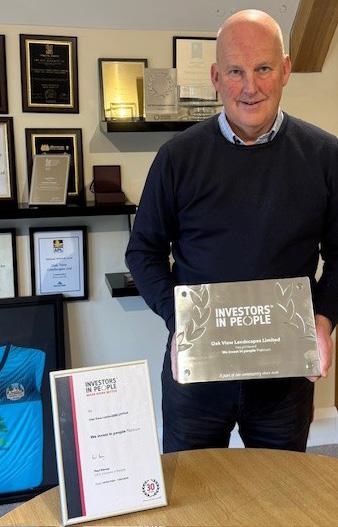
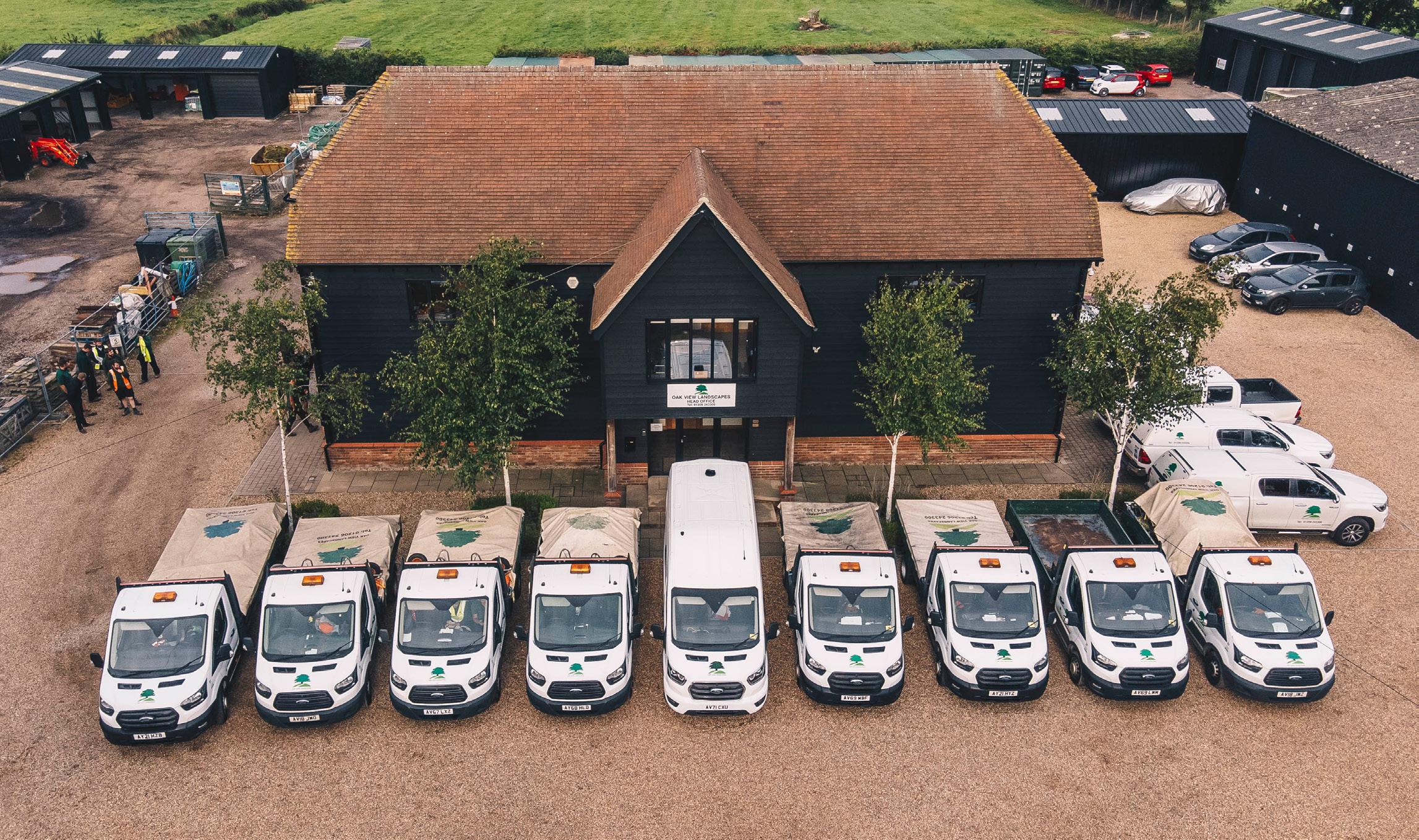
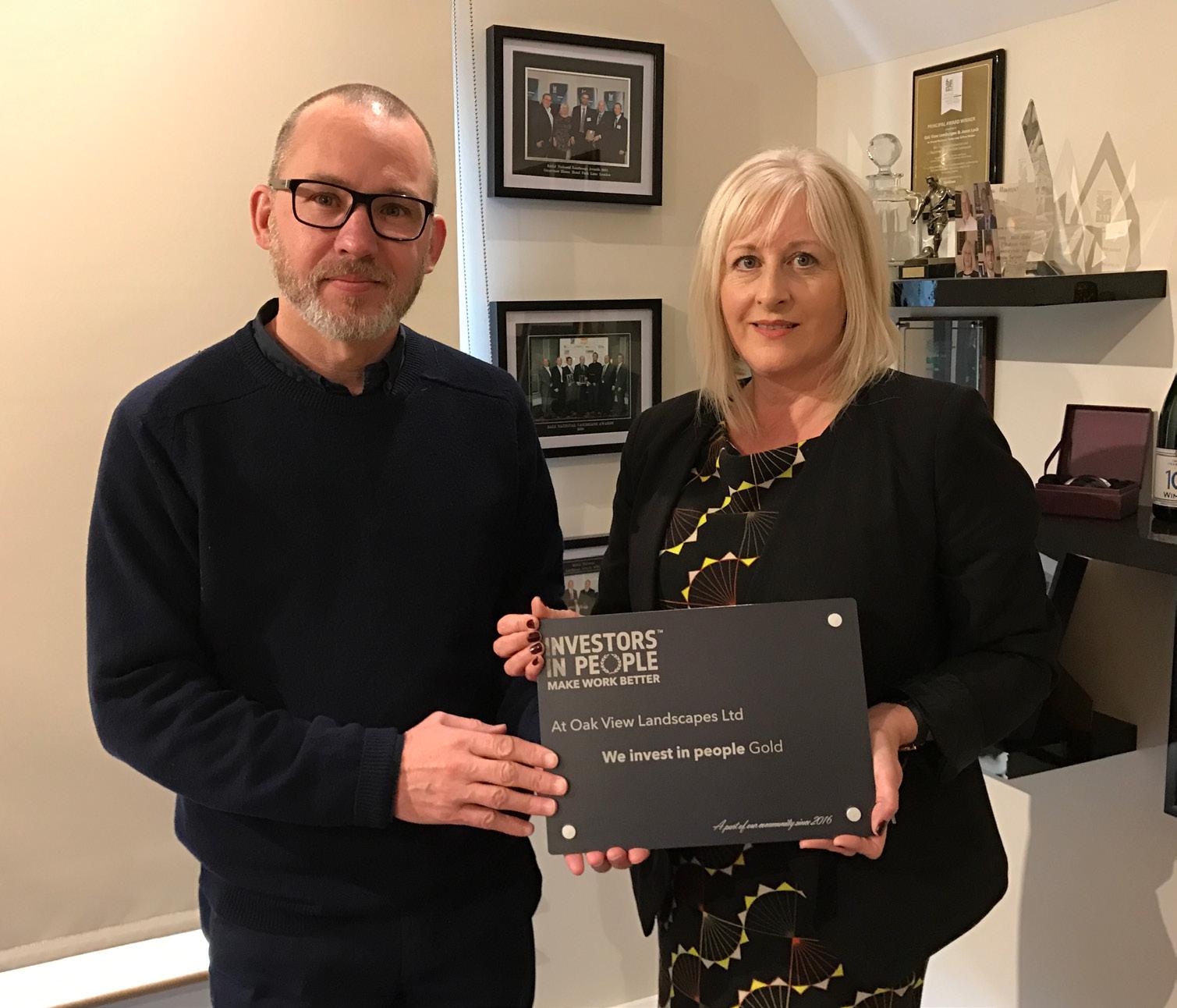
Nowhere is this more evident than at Oak View Landscapes. In an era of skills shortages and spiralling recruitment costs, their people-first approach has placed them in the enviable position of recruiting almost exclusively through recommendation and referral. Many candidates actively seek them out, and the company enjoys excellent retention levels to match. This culture of valuing people recently culminated in their achieving the highest
Meet the team
Name:
Ian Ludgate
Role:
Technical Manager (Policy & Research)
Go-to biscuit selection:
Chocolate digestive
Hobbies:
Sports and fitness, motorbike trials, DIY
“Investors in People” award, placing them 40th in the world in the 1-49 employees category. Check out page 50 where Managing Director Paul Downer reveals how they achieved this remarkable feat, and how adopting a peoplecentric mindset can benefit your business.
Elsewhere, we catch up with Mark Gregory, Managing Director of Landform Consultants and widely known as “The King of Chelsea”. Mark shares the secrets behind consistent success at the prestigious RHS Chelsea Flower Show and the unique challenges and pressures of show garden design. (Spoiler alert: once again, it comes down to having the right people and allowing them to feel empowered.) Discover more on page 28.
Speaking of people, addressing ongoing skills shortages will not happen overnight. By inspiring interest through schools, colleges, and industry initiatives, we can help nurture the next generation of landscapers and horticulturists. Over on page 48, we catch up with a BALI Chalk Fund Student of the Year winner to hear how the award has shaped his journey, while on page 54, GoLandscape reveal the work they are doing to get people hooked on an amazing career in landscaping.
Luke Garner Editor
QWhat did you do before joining BALI?
I joined BALI from the National Farmers Union (NFU) – a very convenient five-minute walk across Stoneleigh Park! Here I spent around five years working on water and air quality policy, following a year on pesticide and safety policy. This experience was directly transferable to my current role, communicating policy developments to members and representing their interests in lobbying work.
QWhat do you do at BALI and how does this help members?
There are two sides to my role; one is the policy work and the other is more, well, technical. On the policy side, I focus on the role of landscaping in environmental issues,
Registered address: British Association of Landscape Industries Landscape House Stoneleigh Park Warwickshire
CV8 2LG
Designed by: humaniise.com
Print and mailing: hobbs.uk.com
Front cover: PL London Limited t/a Panoramic Landscape Contractors"Mountbatten House".
BALI National Award Winner 2025, Soft Landscaping Construction (non-domestic) - Over £500K category.
complementing my colleagues’ business expertise. On the technical side, it ranges from designing member surveys and gathering health & safety data, to overseeing our dispute resolution service and handling queries from members.
QWhat do you like most about working in the landscaping industry?
I love working in an industry dedicated to creating and maintaining fantastic environments. From cutting-edge gardens to pristine public spaces, our members help deliver landscapes which benefit people, society, and the environment, and I’m proud to play a very small part.
Contact: ian.ludgate@bali.org.uk
Take on the toughest mowing and landscaping jobs with the latest range of high-performance lawn mowers from
With long working-times, constant power and low vibrations, you can rely on STIHL to always have a strong partner at your side.
Legendary performance and quality since 1926.
DISCOVER MORE AT STIHL.CO.UK
Chief Executive’s Report
Changes set to reshape the employment rights landscape
With many facets of the Employment Rights Act 2025 set to kick in very soon, Chief Executive, Wayne Grills, looks at the key elements to be aware of.
If there’s one thing that I have learned over the almost 15 years that I’ve been with BALI, it’s that our industry is extremely resilient.
Currently, it seems that there is a mixed bag out there for businesses. Indeed, BALI membership has suffered some losses this last year due to 23 companies that have gone into liquidation. For some, there is talk of tightening the belts, but for many who have seen these times before, they remain resilient and adaptable to change – a great USP for our sector.
Many BALI members are also reporting business being up by 34% year-on-year, so it’s great to see many thriving too – hopefully, that’s what sets most BALI members apart from the rest of the industry; performing well, creating fantastic green spaces, and delivering both quality and excellence. So, while times remain unclear with the threat that war in the Middle East brings, along with the political
turmoil, you – our members – continue to deliver day in, day out, and it makes me extremely proud to head up the Association.
Employment Rights Act 2025: what’s changed?
A number of rights changed in the Employment Rights Act 2025 and some of these come into force in April 2026. Here’s a recap of some of the key changes:
Statutory sick pay (SSP)
From 6 April, SSP changes in two important ways. Firstly, it becomes a day-one right. Previously, SSP only kicked in from the fourth day of absence, meaning short-term illness went uncompensated. That waiting period is now gone.
Secondly, lower-earning employees will qualify for the first time. Workers earning below the lower earnings limit (£125 per week) were previously excluded entirely. From April, they will be entitled to SSP at 80% of their average weekly earnings or the flat rate, whichever is lower. The flat rate of SSP also rises from £118.75 to £123.25 per week.
“Many BALI members are also reporting business being up by 34% year-on-year.”
In short, all employees, regardless of earnings or length of absence, will now be entitled to SSP when off sick.
Family leave and pay
Paternity leave becomes a day-one right, removing the previous 26-week service requirement. It can also now be taken after a period of shared parental leave (note that the service requirement for statutory paternity pay remains in place).
Parental leave also becomes a day-one right, down from the previous one-year qualifying period. Employees who qualify under the new rules (those who wouldn't previously have had sufficient service) can already notify their employers of their intention to take leave.
A new statutory leave will also come into effect, Paternity Leave for bereaved parents (BPPL). This means that employed partners will be entitled to take up to 52 weeks' statutory leave if the mother or primary carer/ adopter dies within the first year of a child being born or adopted. This will also be a day-one right; however, at present, any leave taken under this would be unpaid, unless an employer decided to pay part of it.
From 6 April, the weekly rate for Statutory Maternity Pay, Maternity Allowance, Paternity Pay, Statutory Adoption Pay, Shared Parental Leave Pay, Parental Bereavement Pay and Neonatal Care Leave Pay all increase to £194.32, or 90% of average weekly earnings, whichever is lower.
The government is currently conducting a wider review of parental leave and pay rights, with a report expected in January 2027.
Whistleblowing: sexual harassment
To make a protected whistleblowing disclosure, an employee's concern must currently fall into one of six categories, things like criminal offences, health and safety dangers, or miscarriages of justice.
The Employment Rights Act adds a seventh: sexual harassment. From April, an employee who discloses that sexual harassment has occurred, is occurring, or is likely to occur will – subject to the other qualifying criteria being met – be protected from dismissal or detrimental treatment as a result of raising a concern.
The fair work agency
A new public body, the Fair Work Agency (FWA), comes into existence on 7 April. It brings together the enforcement functions currently split across HMRC (National Minimum Wage), the Employment Agency Standards Inspectorate, and the Gangmasters and Labour Abuse Authority.
The FWA will have significant powers, including the ability to bring employment tribunal proceedings on a worker's behalf, provide legal assistance in employment-related civil proceedings, require individuals to attend interviews and produce documents, enter business premises for inspection, and access computers and software used to store relevant information.
Over time, the FWA's remit is expected to expand to cover holiday pay, SSP and other employment rights.
“The current compensation cap will be removed, meaning tribunals could award unlimited compensation.”
Redundancy: Protective Awards
Where an employer fails to collectively consult when making 20 or more redundancies within a 90-day period, employees can currently claim a protective award of up to 90 days' pay. From April, that maximum doubles to 180 days' pay – a significant increase in the potential cost of getting redundancy processes wrong.
Trade Union reform
Phase two of the Act's trade union reforms will simplify the statutory recognition process, building on changes already in effect from 18 February, which included reducing the strike notice period from 14 to 10 days, extending the strike mandate duration from 6 to 12 months, removing the 12-week cap on unfair dismissal protection for strikers, scrapping the requirements for picket supervisors, and having to provide detailed breakdowns of strike participants.
Menopause action plans
Employers with more than 250 employees will be expected to publish annual Menopause Action Plans from April, initially on a voluntary basis, becoming mandatory in 2027.
These plans should address practical workplace support, including management training, workplace adjustments (such as temperature control, uniform flexibility and break arrangements), and how menopauserelated absences are recorded.
While menopause is not yet a standalone protected characteristic, this legislation signals a clear direction of travel and sits alongside existing exposure to age, sex and disability discrimination claims.
Unfair dismissal: plan ahead now
Currently, employees need two years' service to bring an unfair dismissal claim. Though this change doesn't take effect until 1 January 2027, under the new legislation, the qualifying period drops to six months. Crucially, although the law is not retrospective in the traditional sense, any employee in post on or before 1 July 2026 is likely to have the required six months' service by the time the legislation comes into force.
Two further points worth noting: the current compensation cap (the lower of 52 weeks' salary or £118,223) will be removed, meaning tribunals could award unlimited compensation; and employees will gain the right to written reasons for dismissal after just six months' service.
This is the single biggest change in the Act. If your dismissal processes, probationary policies and documentation aren't already under review, now is the time to start.
Wayne Grills Chief Executive
ASSOCIATION NEWS: The events round-up
With BALI’s showpiece event set to mark a half century of excellence this year, BALI Membership Events Manager, Izzy Plain looks at why it will be bigger and better than ever.
This year marks a truly special milestone –the 50th anniversary of the BALI National Landscape Awards. Since 1976, these awards have celebrated the very best in landscaping, showcasing the exceptional skill, creativity and professionalism that defines our industry. If there was ever a year to enter, this is it.
The BALI National Landscape Awards are not just another date in the calendar; they are the largest landscaping event in Europe, bringing together over 1,000 industry professionals each year for an afternoon that recognises excellence at every level. From contractors and designers to suppliers and clients, the room is filled with the very people shaping the future of landscaping.
Unrivalled industry recognition
Winning a BALI National Landscape Award carries real weight. These awards represent industry-wide recognition from peers who understand the expertise, dedication and precision that goes into delivering outstanding projects. To be recognised on this stage is a significant professional achievement and a powerful endorsement of your team’s hard work.
Entering the awards is also an opportunity to reflect on what you have accomplished. Submitting an entry gives you the chance to showcase not just the finished result, but the process, passion and professionalism behind it.
The impact goes far beyond the ceremony itself. Award recognition can strengthen your reputation, support new business opportunities, boost team morale and help attract top talent. Being able to say you are a BALI National Landscape Award winning company sets you apart in an increasingly competitive marketplace.
And in our 50th year, the celebration will be bigger than ever. This landmark anniversary is a moment for the entire industry to come together, honour its achievements, and look ahead to the next 50 years.
Fresh judging perspectives
This year also brings an exciting development to the judging process as we welcome three new judges to the panel, bringing fresh viewpoints and additional years of experience to an already highly respected and knowledgeable team. Their expertise further strengthens the integrity and credibility of the awards, ensuring that every entry is reviewed with care, fairness and a deep understanding of what quality landscaping entails.
“The Awards represent industry-wide recognition from peers who understand the expertise, dedication and precision that goes into delivering outstanding projects.”
The Awards have always been about raising standards and championing quality. By entering, you are not only showcasing your own work, but you are contributing to the continued growth and recognition of the landscaping profession as a whole.
Be part of this historic year. Put your projects forward. Step into the spotlight.
Entries are open until 8 June, so there is still plenty of time to write your name down in landscaping history. The entry guidelines and application process can all be found on the BALI National Landscape Awards website: baliawards.co.uk
Izzy Plain
Membership Events Manager
Effective water solutions for all landscapes
BREATHE NEW LIFE
Five spray options. One
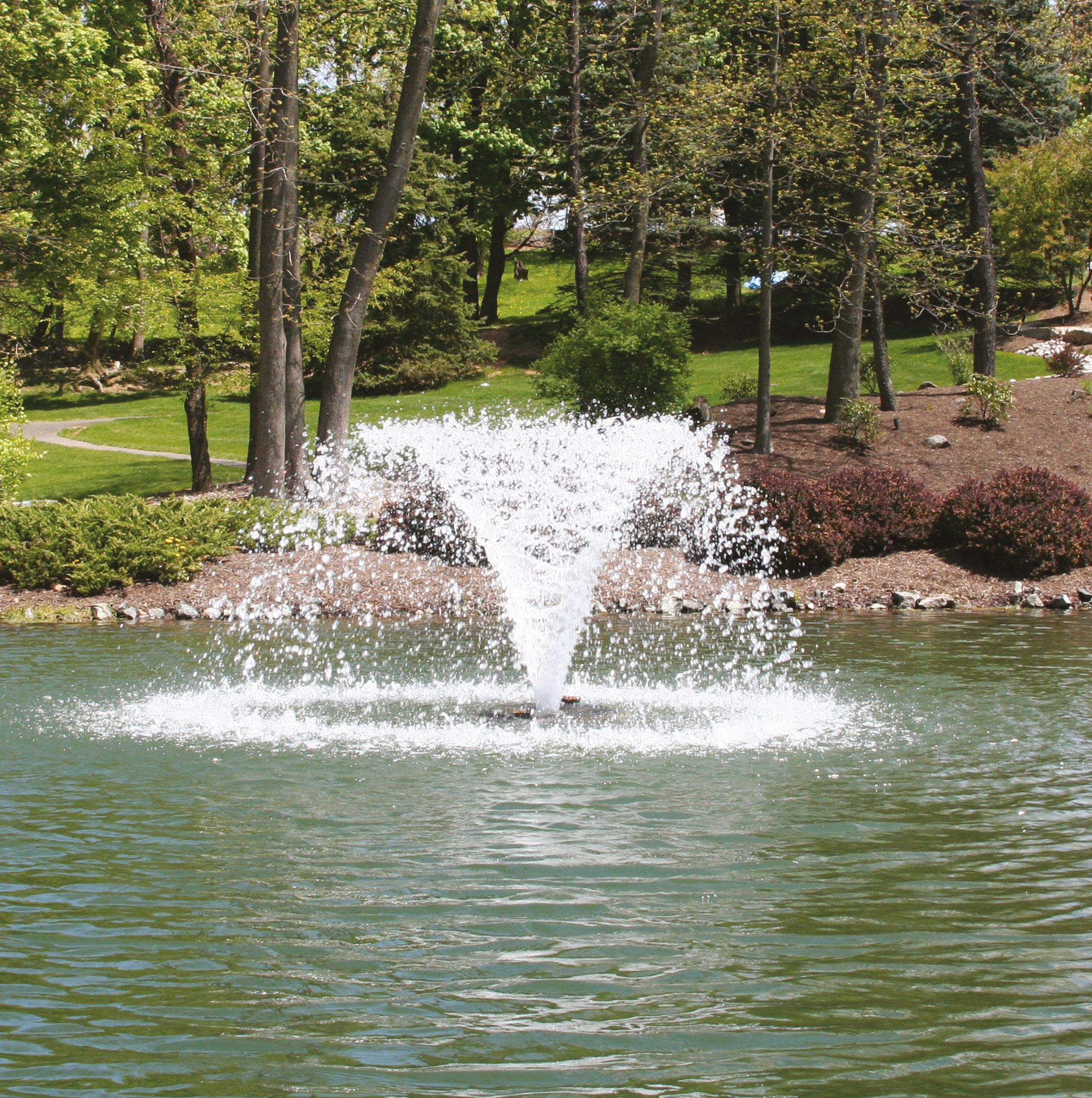
Don’t let stagnant water spoil your landscape. Designed for small to mid-sized ponds, Otterbine’s Fractional Series aerators deliver industry-leading oxygen transfer, beautiful spray displays, and easy maintenance.
BALI BENEFIT INSIGHT:
Your voice in the corridors of power
Discover how BALI’s expert policy team help to promote the landscaping industry and your interests with those who influence UK policy.
In a challenging political and business environment, it may be more important than ever for landscaping businesses to stick together to fight for the interests of an industry that contributes approximately £38bn to UK GDP and supports over 700,000 jobs.
BALI plays a critical role in creating a stronger voice and bringing industry players together, but also understands that running a business is a time-consuming endeavour. That’s why BALI’s policy team, consisting of Head of Policy and Public Affairs, Amy Cobbett, and Technical Manager (Policy & Research), Ian Ludgate, do the hard work so you don’t have to. They work throughout the year to promote the interests of the industry with policy makers and influencers in UK government and beyond.
Here, we catch up with Amy to discover what goes into their vital work on your behalf.
QHow does the work of the policy team help BALI members?
Amy: Each government, whether local or central, sets out policy priorities and ambitions through manifestos, budgets, bills, and white papers which indicate what they want to focus on while in office. At BALI, we believe the industry is well placed to deliver across these ambitions, including water management, biodiversity enhancement, house building targets, and improving social and physical well-being. In engaging with government on these topics, we aim to secure the funding support and planning that the industry requires to support in the delivery of these policies.
Simply put, it is our job to bridge the gap between government and industry and to ensure that landscaping is sufficiently represented and considered in the development and delivery of government policy.
QWhat wins have the team achieved so far on behalf of members and industry?
Amy: We’re still a relatively new team, not quite a year in post for me, and about a year for Ian, but in that time, we’ve had some notable ones. These include proposed changes to how late payments are policed for SMEs, including stricter rules and shorter timelines in which to repay. Furthermore, we’ve had some great successes in advocating for the importance of the industry and particularly the need to get landscapers involved at the earliest part of a project. A major water company has been working with BALI and members to assess how to best landscape new water infrastructure projects which will become major social and environmental spaces for generations to come.
“Your experiences are the evidence-base we use when advocating on behalf of the industry.”
QWhat interactions does the policy team have with government?
Amy: We work with government at every level, including central, devolved, and local. We are also increasing government engagement through the Environmental Horticulture Group (EHG), which is a cross-industry advocacy group of which BALI is a key member. I routinely meet with MPs through All Party Parliamentary Groups (APPGs), as well as cross-party group meetings with Scottish government, and civil servants from key departments such as Defra, MHCLG, and the Environment Agency. We are always looking for more opportunities to have members engage with MPs, so if you have a project or topic which you feel is important and would like to draw attention to, please email me and we can aim to arrange your local MP out for a visit.
QHow can BALI members interact with the policy team on a day-to-day basis?
Amy: We are always looking for more engagement with members; your experiences are the evidence-base we use when advocating on behalf of the industry. In fact, we have created a BALI Policy Committee for this very reason, so members can discuss any issues or opportunities in the sector, which we then feed into our work. Any barriers for businesses in their social, economic, or environmental delivery are of interest for us across any topic such as plant health, employment and labour concerns, trade, access to materials, biodiversity, cash flow, or anything else that you either struggle with, or have found to be a great opportunity. Call us on the usual BALI number or drop us an email at technical@bali.org.uk - we'd love to hear from you.
QWhat has the policy team got on the horizon in 2026?
Amy: Policy is hard to pin down, as it changes with the whims of a government, but what we know we can look forward to is greater MP engagement, through showcasing BALI members and their projects. We are working on the BALI Water Strategy and will be updating the Lay of the Land Report (available at bali-policy.org.uk/news/lay-of-the-land2025-report), which was such a success last year.
We’ll also be working on responding to consultations on the back of the Water white paper, which was published earlier this year. It sets out the Government’s intentions for delivering water management in the future. We’ll be working on our own Water Strategy too, which looks at how landscaping can support water health and management –read more about this in our regular policy updates over on page 42.
QFinally, what do you most enjoy about your role in the policy team and your interactions with BALI members?
Amy: I love feeling like I am making a difference! This role allows me to meet members and see the amazing things they're doing, and then take the lessons learned to government to advocate for more support for the sector. I enjoy the challenge of engaging with government and industry to give them a new perspective which they are unlikely to have considered. It’s also immensely satisfying when I have the opportunity to represent the landscaping sector in spaces which have traditionally not considered the industry, and getting more decision-makers thinking about landscaping and the positive role it can play, not just in the UK economy but also in the lives and wellbeing of the population.
Contact: technical@bali.org.uk
“Our job is to bridge the gap between government and industry, ensuring that landscaping is sufficiently represented and considered.”
VERSATILITY AT ITS FINEST
sculptures and for cutting another landscaping and leaves systems off one can attach safe to use. I
Contact your Local Dealer to book a demonstration on your site today!
Contact your Local Dealer to book a demonstration on your site today!
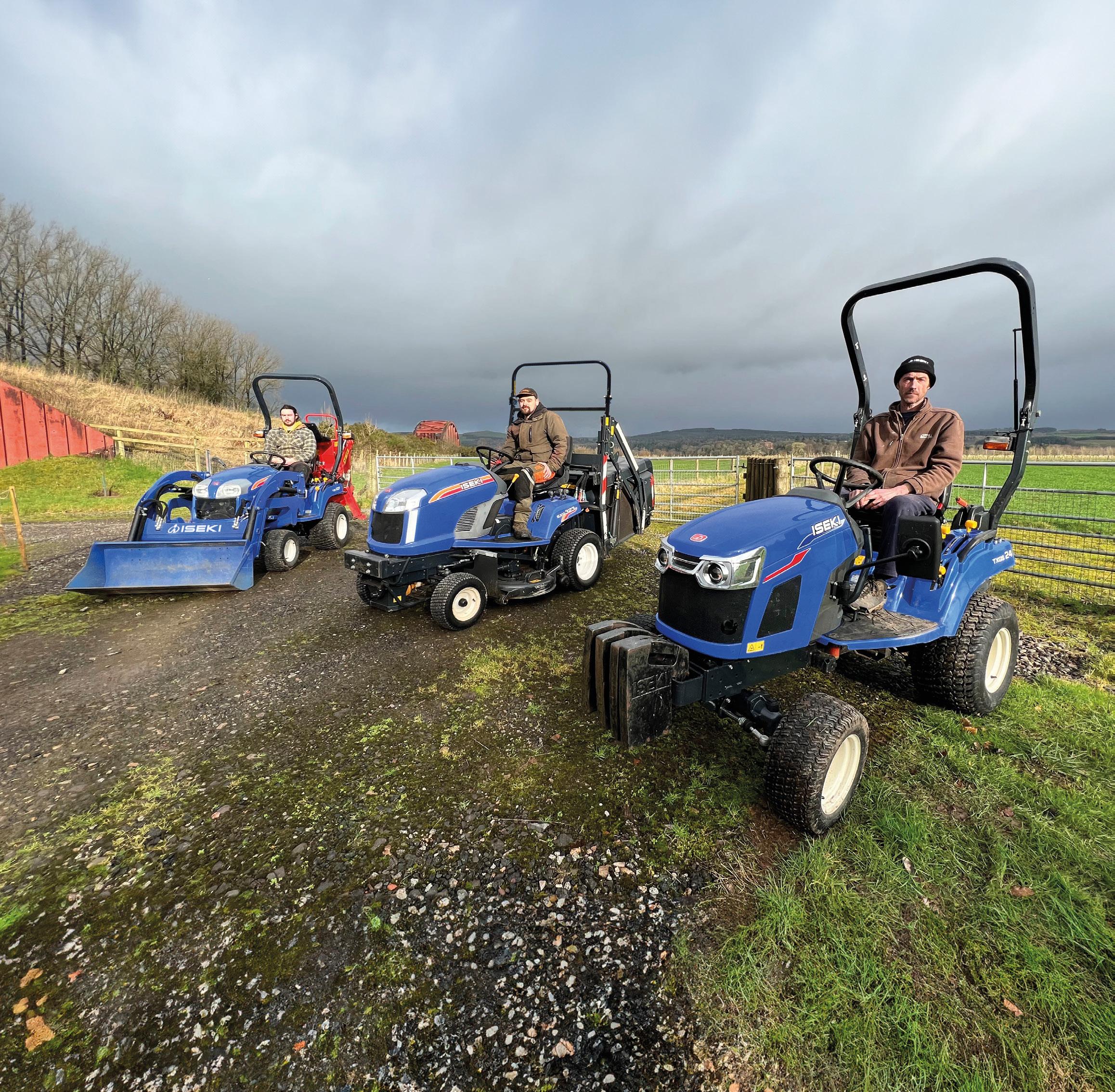
“Here at the Garden of Cosmic Speculation with it’s vast landscapes, sculptures and gardens we are never short of jobs to do. We already have a SXG mower for cutting the lawns and one TXG tractor, so to help with the workload we purchased another TXGS24 23hp subcompact tractor.
“With the front loader and bucket fitted it’s largely used for excavating and landscaping purposes. It’s also used for towing trailers, transporting grass cuttings and leaves for easy disposal. With the two tractors we can run the PTO’s and systems o one trailer and can unload into a trailer attached to the other tractor. If we can attach something to them, then we can use it.
“ISEKI o er exactly what we need, they are reliable, comfortable and safe to use. I would recommend these machines to absolutely anyone.”
Ben Wakefield, Portrack House
Making Biodiversity Net Gain regulations work for your business
Recapping her talk from the recent BALI National Landscape Conference, Helen Nyul, Director of Ecology at Verna, explains how you can turn BNG requirements into real business opportunities.
When I spoke at the BALI National Landscape Conference in late March, I wanted to share a simple message: Biodiversity Net Gain (BNG) is not a burden.
For landscape professionals, BNG represents one of the most significant opportunities in a generation.
It became mandatory for most developments in February 2024, and many businesses are still working out what it means for their contracts, their teams, and their clients. At the same time, the climate pressures shaping which plants survive and which drainage systems work are intensifying. These two forces may seem like competing demands, but my experience suggests they are natural partners.
Results that speak for themselves
Much of my talk drew on the story of Kingsbrook in Aylesbury, a partnership between Barratt Redrow and the RSPB that began in 2014, a decade before BNG became law. Across 2,450 homes and 756 acres, we set out to prove that housing development and nature could thrive together. The results speak for themselves: house sparrow populations increased by nearly 4,000 percent, starlings were up 96 percent, and the total number of bird species on site held steady throughout construction. These outcomes did not happen by chance. They happened because ecological thinking was embedded from the earliest stages of design, because we worked collaboratively across disciplines,
and because we invested in long-term habitat management.
A key theme of my address was the relationship between BNG and climate resilience. There is a perception that these goals are in tension, but I believe this is a false choice. The habitats created under BNG – wetlands, meadows, hedgerows, etc. – deliver genuine climate adaptation benefits, from flood attenuation to urban cooling. The challenge lies in designing for thirty-year viability, which means specifying the right native plants for the conditions a site will face, not the conditions we might wish for. Building on Beth Chatto’s well-known principle of “Right plant, right place,” I’ve added a third dimension: “for the right future”. When we get this right, we create landscapes that achieve biodiversity gains, require minimal intervention, and remain resilient over the long term.
Boosting the bottom line
For landscape businesses, BNG creates tangible commercial opportunities. Thirty-year habitat management commitments mean long-term, recurring contracts rather than one-off installations. Developers increasingly need partners who understand what achieving good condition means in practice. Specialist services, such as meadow management, habitat monitoring, and climate-resilient design, will command specialist pricing. And for recruitment, the ability to say “we create and maintain habitats that support nature and people” is a compelling proposition in a competitive labour market.
Don’t delay, start today
My encouragement to the industry is to start the journey now. Invest in training your teams in ecological principles. Build partnerships with ecologists and conservation organisations. Engage with the guidance that already exists – from BS 8683 to CIRIA’s free practical resources.
Nobody has all the answers yet, but the frameworks are there, and this industry has always been built on collaboration. The businesses that embrace this transition will be the ones shaping our sector for the next generation, winning contracts, attracting talent, and leaving a legacy to be proud of.
Contact: verna.earth
“When we get this right, we create landscapes that achieve biodiversity gains, require minimal intervention, and remain resilient.”
BALI members show strength of Association across the UK
Our Membership Engagement Manager, Fran Bienek, recaps some of the recent highlights from regional AGMs and looks ahead to a season full of fun learning and networking opportunities.
Last year was an incredibly packed schedule for BALI member gatherings, with 25 regional events across the country, and it highlighted one major unifying thread for me; namely just how integral the individuals – the workers who inhabit this industry and work so hard, rain or shine, to push it forward – are to the success of landscaping as a whole.
This year is set to be no different, with an abundance of events taking place across our fair isles. These events really do give members (and non–members!) the opportunity to visit new places, learn, network with one another, and share both their successes and struggles.
I cannot stress enough that everyone from industry is welcome. I appreciate it can feel daunting to attend a group event if it is the first time. However, these are informal events attended by down to earth individuals wanting to share their knowledge and experience with one another. If you have considered attending and not yet made the leap, make sure to attend this year and bring along a friend or colleague – growing your network truly is invaluable.
This year’s Regional AGMs started taking place at the end of January and, along with the usual AGM and BALI updates from Chief Executive Wayne Grills, we have also been promoting more on the BALI benefit Quest and also invited a BALI Awards judge to share the benefits of achieving a National Landscape Award.
Scotland
We kicked off the AGM calendar at SRUC Oatridge Campus, Edinburgh – a familiar location for members. As part of the event, Harrowden Turf delivered a talk on their products. Being a distributer for Kress they also brought in machinery for members to be able to view. The last speaker of the day was David Knott, the Curator at Living Collections of Royal Botanic Garden Edinburgh, who spoke about horticultural challenges and potential solutions, skills, biosecurity, and climate change.
East Anglia
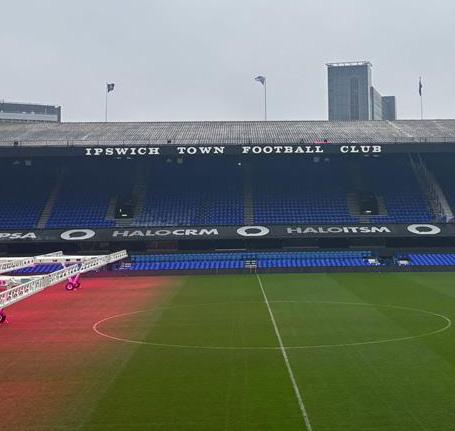
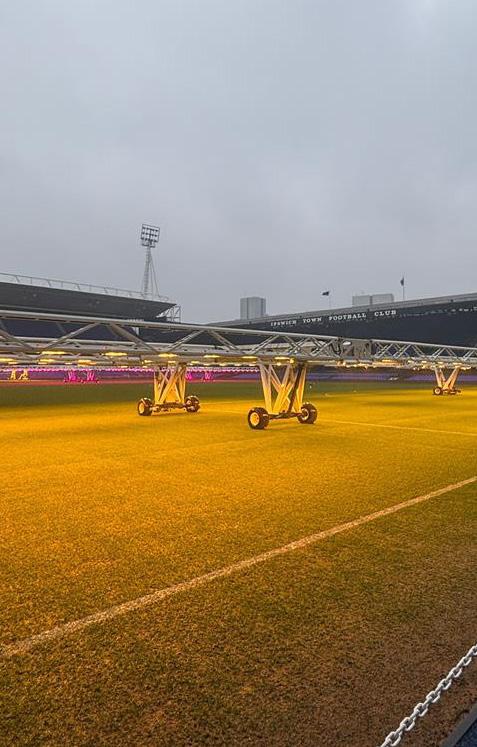
We really hit the back of the net at Ipswich Town FC, the venue for our East Anglia AGM. The day, sponsored by Green-tech, encompassed a tour of the grounds and a talk from the experienced head groundsman of 15 years, Ben Connell, whose role oversees all grounds operations, including the stadium pitch and 15 training pitches.
The afternoon led with Alisdair Innes, Green-tech, talking about their new Mona Pluvia Irrigation innovation, then followed with Russell Ball, chartered Biologist and founder of the charity Fund4Trees speaking about the “National Urban Tree Establishment Campaign”.
Join us for an upcoming BALI event
• North Thames Clay Pigeon Shooting14 April
• South West Croquet & BBQ - 6 May
• Supplier Forum at Stihl - 7 May
• North Thames Olympic Park - 12 May
• Yorkshire & North East Golf Day14 May
• Scotland Botanical Gardens - 4 June
• Midlands Sky Garden - 24 June
• East Anglia Natural Swimming Pools25 June
Visit: bali.org.uk/events
Growing your network truly is invaluable.
North Thames
Hosted at the stunning Capel Manor College, talks from the Assistant Principal of Employer Skills, Innovation and Growth, and other staff members delved into what they are currently delivering, as well as their future proposals. It was clear on the day that industry and colleges need to work together to help bridge the skills gap.
After the AGM, former student of the college, Fiona Packe, gave an inspirational talk sharing her work experiences throughout her career journey, including at the historic gardens of the Middle Temple, London. She also shared insight into her latest role as Head Gardener for the garden to commemorate Queen Elizabeth I at The Regent's Park. It will feature climate resilient planting and sustainable design, showing how a beautiful garden can be created from a brownfield site.
Contact: Francesca.Bienek@bali.org.uk
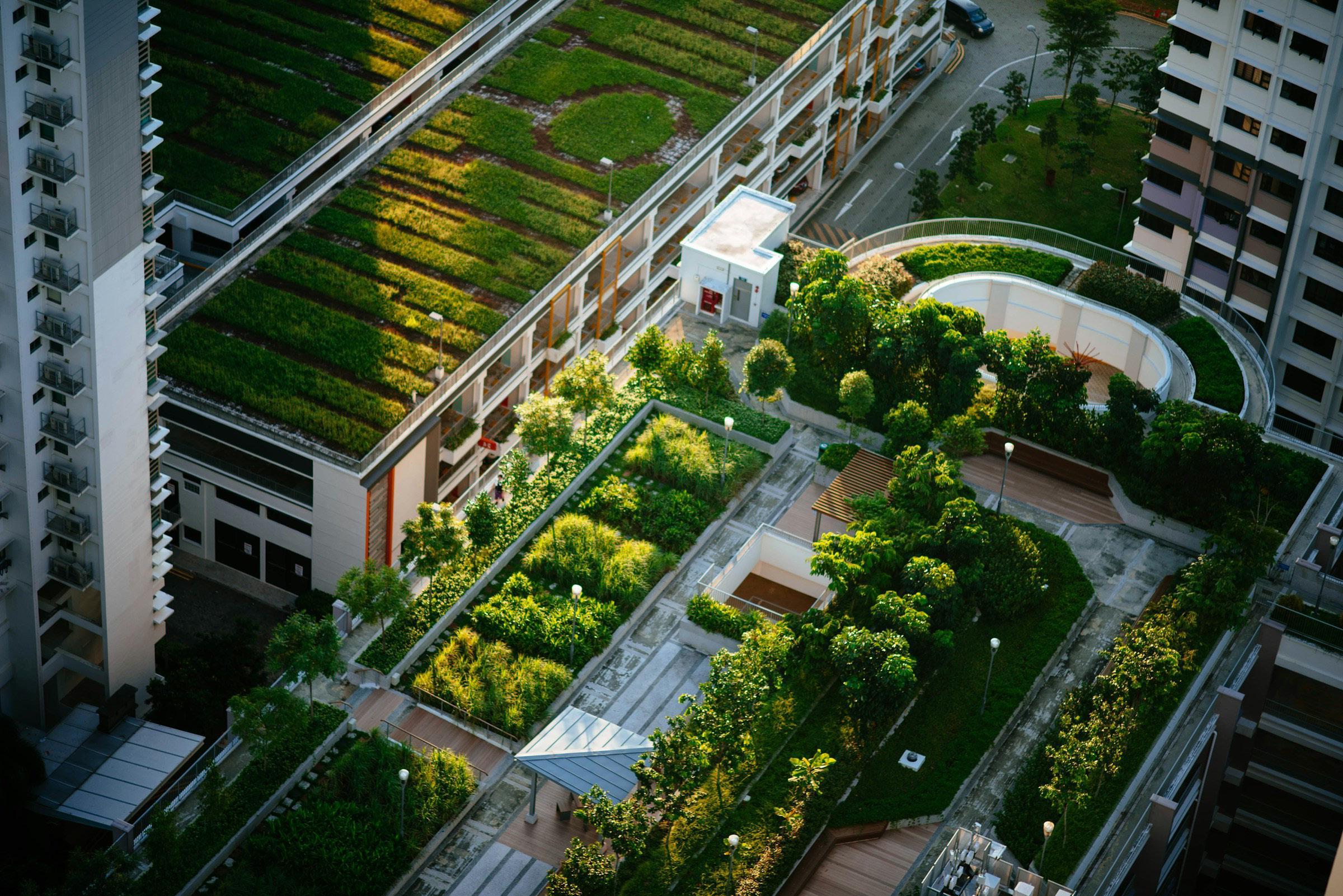
BRINGING GREEN BACK TO THE CITY
Origin Amenity Solutions: Helping deliver sport and recreation in the UK
Origin Enterprises PLC is the headline sponsor of this year’s BALI National Landscape Awards. A global leader in sustainable land use, offering technically led solutions and empowering customers to enrich their land so it can achieve its true potential, its sponsorship reflects the company’s dedication to supporting the professionals who design, build, and maintain the UK’s landscapes, sports facilities and greenspaces.
Within the Group, the Living Landscapes division provides future-ready products, services and advice across the sports, environmental and landscape sectors, supporting both community-level provision and elite performance environments.
Trusted people, trusted products
Origin Amenity Solutions (OAS) is the UK’s leading turf solutions provider, with a strong focus on sport. Through its dedicated sports division, OAS supports greenkeepers, grounds teams at sports clubs, schools, colleges, universities and private estates, local authorities, lawn care providers, landowners and sports and amenity contractors.
Its broad and innovative portfolio combines high performance products, research and development, education, and digital services. Those responsible for constructing, renovating and maintaining sports and amenity surfaces rely on OAS to help them set the benchmark for quality, playability and resilience.
Customers benefit from bespoke technical advice and comprehensive support from a dedicated team of more than 100 sector specialists. From soil analysis and nutrient management to pest and disease control, this team of trained experts provide seasonal managed programmes designed to optimise turf health and aesthetic appeal, even under intensive use.
Innovating to meet future challenges, from parks to Premiership
OAS is proud to work in partnership with those who manage surfaces within local communities and at some of the world’s most renowned sporting venues. This breadth of experience underpins its commitment to the pursuit of excellence and best-practice, helping those working within the sports and amenity sector meet the pressures of today while preparing for the challenges of tomorrow.
Innovation is driven by collaboration. OAS works closely with suppliers and manufacturers who share its commitment to sustainable plant health solutions. From new turfgrass seed cultivars that perform in suboptimal conditions, to the development of new soil surfactant and biostimulant formulations, as well as the introduction of robotic sports line marking technology, it continues to lead the way.
The company’s commitment to research and development is evident to any visitor to its Turf Science and Technology Centre. Working at the forefront of turf science, agronomists and research scientists conduct wide-ranging studies that are advancing the way turf and other amenity surfaces are managed, ensuring that its customers can continue to work effectively and sustainably in the face of a warming climate and changing legislation.
“Origin’s research scientists conduct wideranging studies that are advancing the way turf and other amenity surfaces are managed.”
Learning together, succeeding together
In addition to research and consultancy services, OAS specialists deliver training seminars, workshops and in-situ support across the UK. Within these sessions the team share trial results, explore emerging research and encourage open discussion around product development and application techniques.
By investing in education and long-term partnerships, OAS empowers sports turf professionals with the knowledge and confidence to adopt new approaches and translate innovation into practical, real-world outcomes.
Contact: originamenity.com
New arrivals
Willowhayne
Gardens (Accredited Contractor)
We are a professional garden maintenance business working in large private gardens. A key part of our work is supporting newly designed gardens through their formative years, helping bring the designer’s original vision to life as the landscape matures. We focus on long-term care, working with homeowners, estate managers and design teams who value our consistency, professional communications and team-wide horticultural knowledge.
QA
What projects have you worked on that you’re particularly proud of?
We are especially chuffed with the restoration of The Old Rectory, Pullborough. Over 5 years and with design input from Amanda Patton Landscape & Design, the owners now display their garden twice a year via the National Garden Scheme.
QWhy did you join BALI?
ABecause we wanted to be part of a professional body that takes standards seriously. As a business owner, it’s important to align with others who have the same values and the BALI bar seems pretty high. Whether it’s how to provide a service or look after your employees, BALI felt focused on raising standards across the industry which makes it a good fit.
The Good Plant Company (Accredited Contractor)
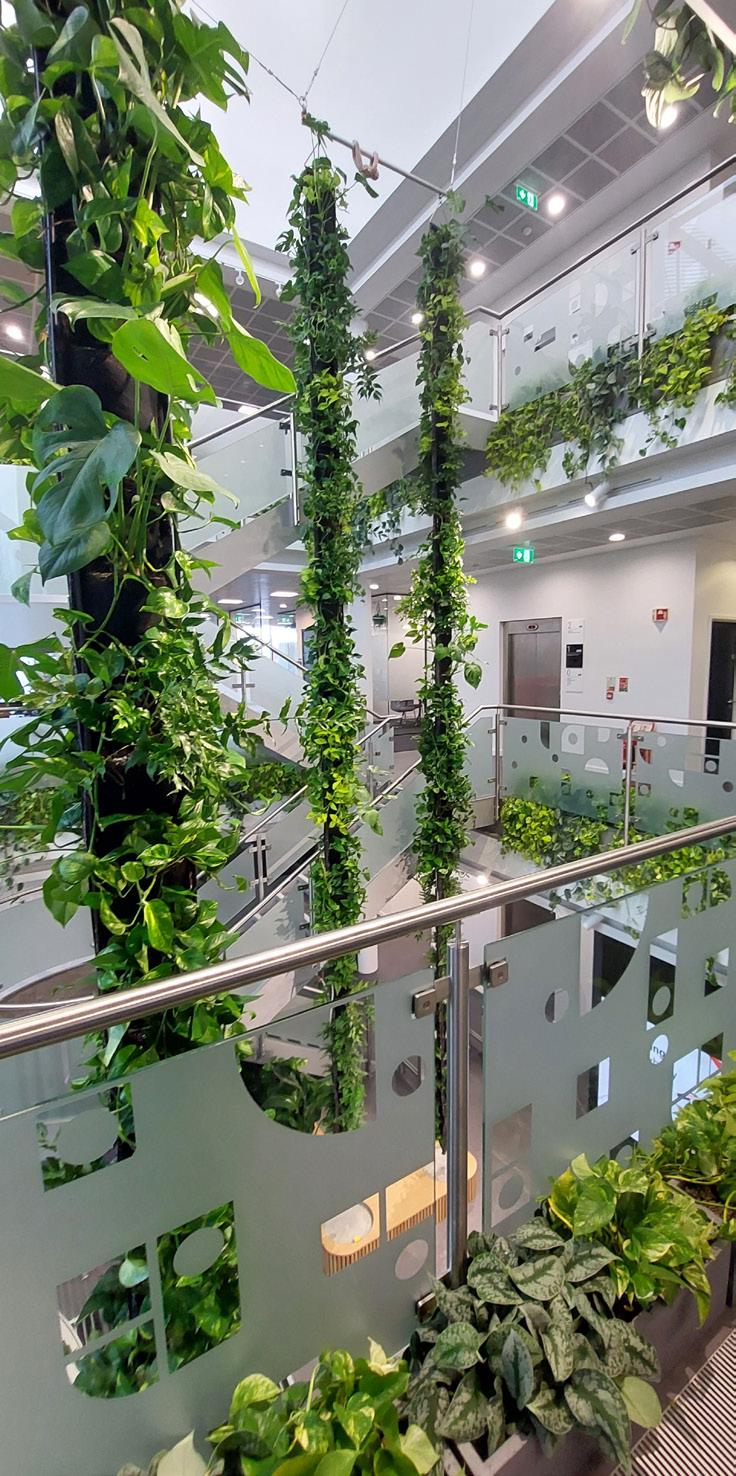
Based in Cambridge, we design, install and maintain interior planting schemes that bring nature into workplaces and commercial spaces across the UK. We collaborate with architects, designers, contractors and end clients to create planting that enhances wellbeing, supports sustainability and brings genuine joy to the workplace. Our clients span life sciences, healthcare, technology, law firms and corporate offices. We’re involved in office refurbishments and new builds, we supply and install green walls, reception planting, desk and breakout-space schemes, as well as ongoing maintenance contracts.
Q
A
Are there any projects you’re particularly well-known for?
We recently completed a stunning installation at the HQ of Raspberry Pi, featuring 12-metre hanging plant wires cascading through a dramatic triple-height atrium, alongside lush planting throughout the office spaces (pictured). It has transformed the environment, and the team absolutely love it.
QHow important is the BALI accreditation and vetting process to you and to your customers?
AThe accreditation provides reassurance around quality, compliance and professionalism, which is increasingly valued by our clients, particularly those in corporate, life-science and regulated environments.
QWhat do you hope to get out of your BALI membership?
AWe’re keen to build stronger connections across the industry, share knowledge, stay aligned with best practice, and be part of the wider conversation around sustainability, skills and professionalism in landscaping.
Meet the latest members of your Association who have joined BALI this quarter.
How have your early experiences with BALI and other BALI members been?
There’s a strong sense of mutual respect and camaraderie. Members at the two meetings I have attended have been open, practical, and generous with advice. I’ve gained a lot from conversations with founders who are 10, 20, 30 years further along in their journey.
Acorn to Oak Landscaping (Accredited Contractor)
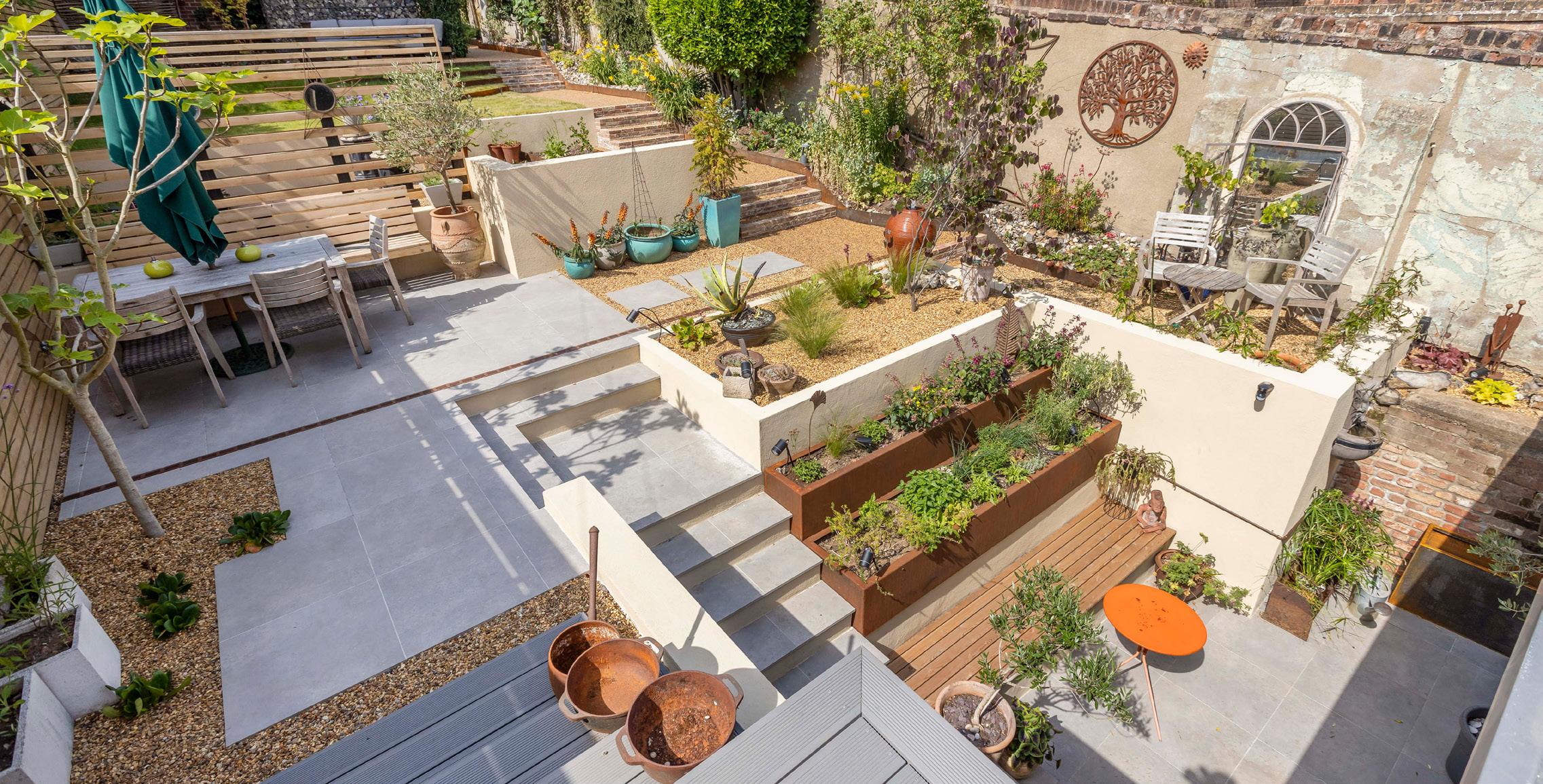
We design and build premium, bespoke gardens and outdoor spaces, covering garden design, high-spec hard landscaping, planting, and detail-led finishing that elevates a property. Our customer base is mainly high-end residential homeowners across Norfolk who want a luxury, design-led transformation, with additional work coming via architects, garden designers, and property professionals needing a trusted contractor for larger renovations or new-build outdoor schemes.
AQAre there any specific projects you are particularly proud of?
One project that stands out is our project at Carrow Hill in Norwich (pictured above). It was challenging, both mentally and physically. There were many height changes to figure out, as well as the logistics of getting materials in and out of the garden. The end garden was great and the clients absolutely loved it.
QHow important is the BALI accreditation and vetting process to you and to your customers?
AAccreditation reassures customers of our quality, high standards, and ethics, giving them confidence to work with us. As Norfolk's only Accredited contractor, we expect a significant boost and new opportunities this year.
AQHow have your early experiences with BALI and other BALI members been?
So far very good - our assessment was very good for us, with the advice given helping to move us in a good direction. The event we attended was great too; people were welcoming and easy to talk to, and it’s great talking to others about something you have such a strong connection over.
New members
(1 December 2025 – 28 February 2026)
Accredited Contractors
• Acorn To Oak Landscaping
• BlueSky Services
• GL Leisure Services
• Hooper Services (South West)
• PVR Contracting Limited
• Riverdale Natural Water Features
• The Good Plant Company
• Turnabout Landscapes
• Willowhayne Gardens
Associate Contractors
• Exmoor Gardening Services
• Southwick Estate Enterprises LLP
Training Providers
• Groundwork London
Understanding the unique challenges of heritage landscapes
When being tasked with redeveloping a beloved National Trust garden there’s a great deal of weight and expectation that comes with it. Founder of the Garden Company, James Scott MBALI FSGLD, examines the unique challenges such a project presents, with reference to their reimagining of the Long Garden at the Cliveden Estate.
James Dobson.
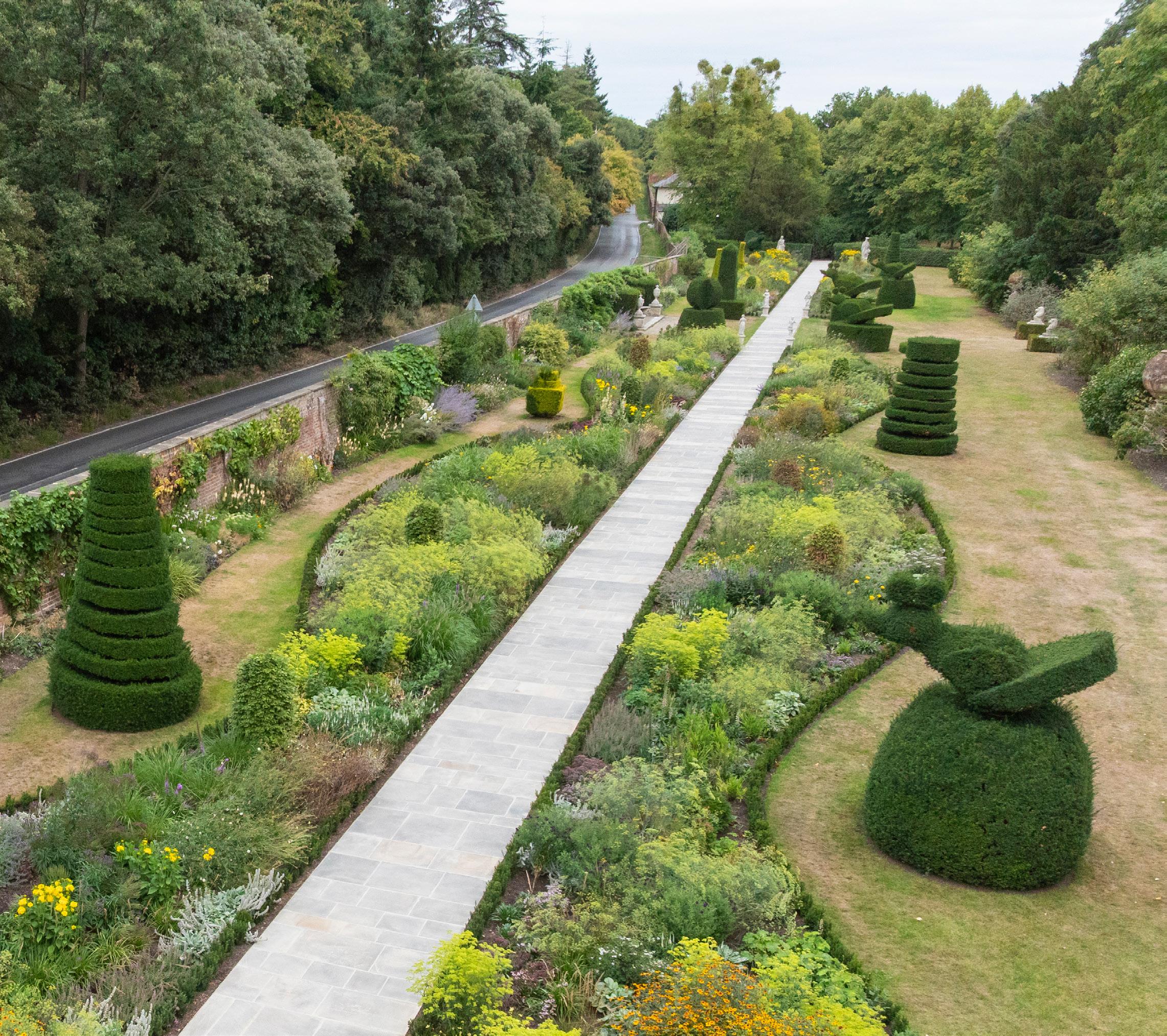
Heritage landscapes require a different design mindset from private gardens, and that difference becomes most apparent when you are immersed in a live project. When we were appointed to reimagine the Long Garden at the National Trust Cliveden estate in 2024, it was very clear that this was not simply a scaled-up domestic garden with additional planning constraints, but a working public landscape shaped by historic significance, environmental responsibility and operational demands. The site carried layers of history, long-established patterns of use and strong public expectations, while also needing to function safely, inclusively and sustainably for contemporary visitors.
Our role was therefore not to ‘impose’ a new design identity or merely refresh a tired garden, but to act as temporary custodians - interpreting what already existed while carefully introducing the modern, environmentally responsible requirements needed for the garden’s continued public use. In other words, our role was one of stewardship rather than pure design, balancing conservation with the careful adaptation required for modern use.
History of The Long Garden, Cliveden
The Long Garden is a formal historic garden with strong associations to the Astor family and to Norah Lindsay, a pioneering early 20thcentury garden designer. Despite remaining much loved, the garden had lost clarity by the time we were approached. Planting was tired, accessibility was limited and artificial surfaces undermined both character and sustainability. In addition, annual bedding displays were being created, which wasn’t a sustainable approach or particularly beneficial to biodiversity. With year-round public access, the site was also under constant physical pressure.
From the outset, it was clear that any successful intervention would need to balance conservation, accessibility, sustainability and long-term maintenance - without diminishing the spirit of Lindsay’s original work.
“Heritage landscapes are held in trust for future generations, not shaped to reflect individual designers.”
Research first –understanding significance
Our first task was research. On heritage sites, this underpins the entire design process. Estate plans, early Ordinance Survey mapping, archival photography and original drawings can all help reveal lost paths, spatial hierarchies and historic sightlines. At Cliveden, this meant looking beyond the garden itself to the wider estate, its historic function and its relationship to surrounding buildings and routes.
Crucially, the research also extended to Lindsay herself. Studying her original plans and reading her biography* gave us insight into her design philosophy: strong formal structure softened by immersive, rhythmical planting. This understanding shaped every subsequent decision. Visitors instinctively sense when a place “feels right”, and that coherence often comes from reinstating historic movement patterns rather than imposing new ones. In many cases, the layout already exists - it has simply been obscured over time.
Choosing the period of interpretation – Lindsay, reimagined
One of the most important early discussion topics with the National Trust team centred on the period of interpretation. Like many historic landscapes, Cliveden is layered, but there was a clear desire to focus on Norah Lindsay’s era of influence. The design challenge was how to do this without turning the garden into a replica.
The guiding question became: what might Lindsay have done today, with modern plant knowledge, environmental awareness and public access requirements? This approach allowed us to celebrate her legacy while avoiding pastiche. Once that period of significance was agreed, decisions around materials, planting and detailing became far easier to discuss with all stakeholders.
Designing with, not for
Consultation and careful listening were central to the project’s success. Extensive discussions were held by my design team (Anna and Molly) and I with Head Gardener Anthony Mason and his team to understand horticultural preferences, maintenance capacity and longterm pressures. Their practical knowledge of the site was invaluable, and their enthusiasm for Lindsay’s legacy helped shape realistic, workable solutions.
The process was highly collaborative throughout. We worked closely with the General Manager Robert Miles, the National Trust Architect, and its Heritage and Archaeology team members. Archaeologists were actively involved in the removal, restoration and repositioning of several historically significant sculptures, ensuring changes were managed sensitively and without risk. The shared ethos was one of no surprises - a principle that proved essential on a complex heritage site.
Planting with integrity –honouring without replicating
Original drawing plans and planting lists by Lindsay, provided by the National Trust, became a key reference point. Rather than recreating her planting verbatim, we focused on the principles behind it. Only around 15% of her original planting palette was retained. The remainder was adapted to prioritise biodiversity, resilience and year-round interest, while a no-dig approach has been adopted to reduce soil disruption.
We studied the plants Lindsay would have had access to in the early 20th century and interpreted them for contemporary conditions. The use of grasses was significantly expanded, reflecting modern sustainable public planting while maintaining the softness and movement she valued. In some areas, Victorian-style bedding and specimen trees informed the structure, creating continuity without imitation.
Access without visual compromise
Historic estates were obviously never designed for pushchairs or mobility scooters. At Cliveden, accessibility was addressed through widened paths, smooth paving surfaces and discreet electric gates, allowing mobility vehicles to pass comfortably without altering the garden’s visual language.
When considered early, accessibility measures can reinforce historic circulation rather than undermine it. Done well, they are barely noticed.
Outcomes
Success was judged by a combination of the garden’s restored function and aesthetics. Visitor movement is now easier, while the garden offers a modern, immersive experience that encourages people to slow down, linger and observe rather than simply pass through. Long-term maintenance demands have been reduced through more robust planting. Overall, the space feels settled and natural, rather than newly made.
Head Gardener at Cliveden House, Anthony Mason explained:
“This restoration is about more than preserving a beautiful garden – it’s about reinterpreting a historic design for the future. We’ve designed the garden to be relevant to the changing climate. The new planting will attract a wider range of pollinators, and by allowing plants to die back naturally, we’re creating shelter and food sources for insects and birds throughout the year. Norah Lindsay’s bold vision has guided us, and we’ve worked to ensure the Long Garden remains a place of inspiration, biodiversity and accessibility for generations to come."
Even the strongest heritage designs carry risks if maintenance is overlooked. At Cliveden, working closely with the Head Gardener and his dedicated team allowed us to develop a maintenance strategy alongside the design. Their knowledge and experience ensured that planting choices were realistic to manage over time. This collaboration significantly increased confidence that the garden will thrive.
Reflections for fellow professionals
The Long Garden reinforced several lessons regarding heritage projects: research deeply, define the period of significance, collaborate early and often, and design with those who will care for the landscape long after the designers have gone. Heritage projects are most likely to succeed when expertise is shared and decisions are made collectively.
Heritage landscapes are held in trust for future generations, not shaped to reflect individual designers. Our involvement is temporary within a much longer continuum of care and change. The measure of success is an intervention that feels natural, as though the landscape has been revealed rather than redesigned. In heritage work, stewardship - not authorship - is the true achievement. Our approach was affirmed when, following the completion of The Long Garden, we were reappointed by the National Trust to work on another site within the Cliveden estate –an outcome that, for us, signalled a shared confidence in both the process and the result.
Contact: thegardenco.co.uk
Summary: key features of the redesigned Long Garden
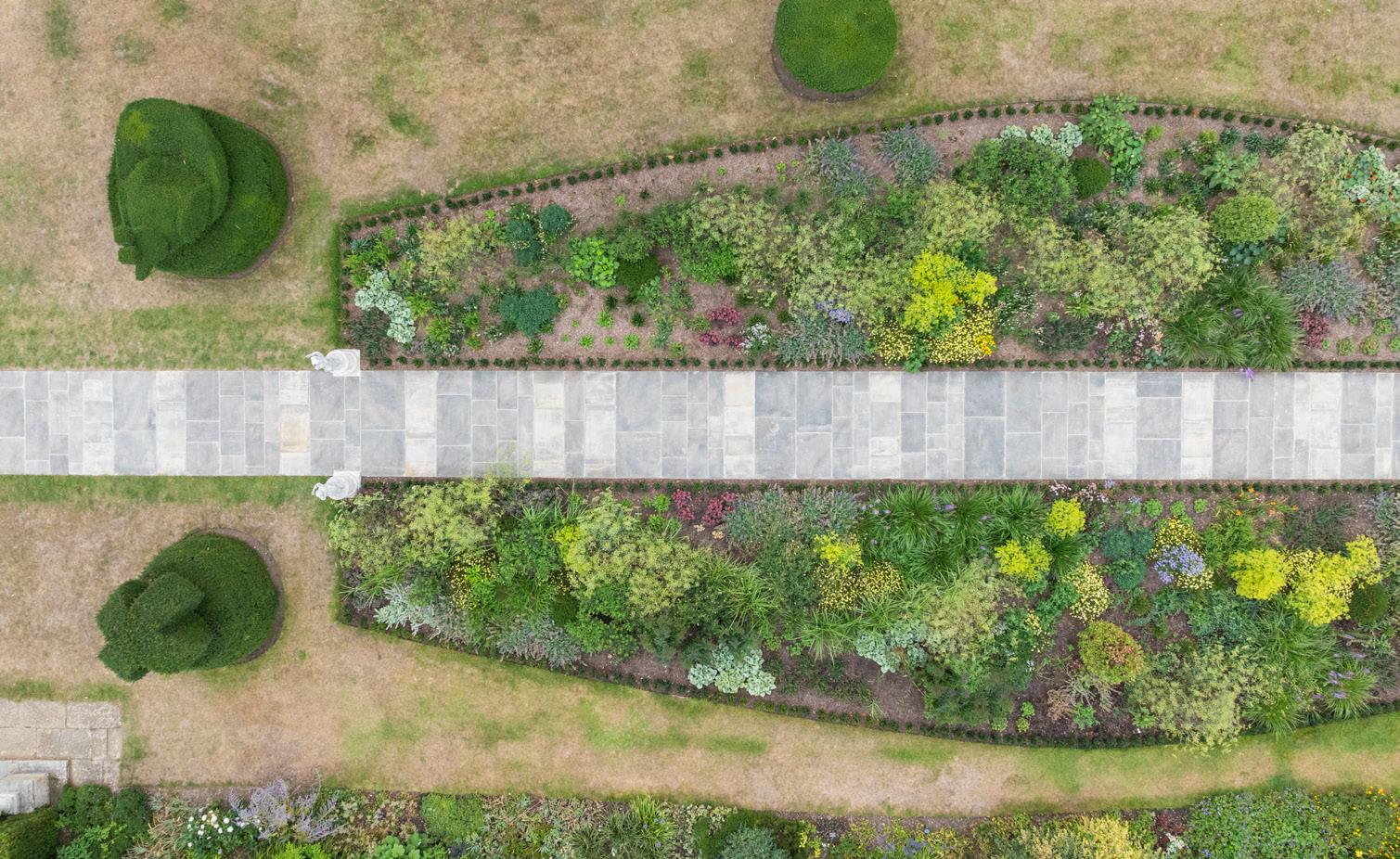
• Replanted central flower beds, now subtly enlarged to enhance the scale and dynamic of the space.
• Replacement of the artificial grass path with locally-sourced, sawn Yorkstone paving (supplied by Allgreen) - in line with National Trust policy, more fitting for Cliveden’s character and fully accessible to all visitors.
• Removal of ageing box hedging, replaced with Taxus x media ‘Hilli’ yew, chosen for its manageable height and long-term sustainability.
• The addition of new topiary forms, carefully designed to complement existing heritage structures and provide visual anchors for the surrounding planting.
• A focus on planting that evolves gracefully through the seasons, from spring vitality to winter silhouettes, rose hips and seed heads, creating year-round interest that encourages repeat visits.
*Norah Lindsay: The Life and Art of a Garden Designer – Allyson Haywards – useful biography as part of our research process.
The National Landscape Awards Ceremony will be held on Friday 4 December 2026, JW Marriott Grosvenor House, Park Lane, London
Telephone: 07936 944258
Court is in session: three decades behind the scenes with the “King of Chelsea”
With a mammoth tally of 115 gardens built at RHS Chelsea over the past 35 years, there is perhaps nobody who knows more about success at the globally-revered showpiece than BALI board member and Managing Director of Landform Consultants, Mark Gregory. Here, he shares the value of his experience and wisdom.
For many in the landscaping sector, the RHS Chelsea Flower Show represents the pinnacle: the shop window of British horticulture, the catwalk of craftsmanship, and the most exacting – and high pressure – stage on which a landscape contractor can perform. For Mark Gregory, Managing Director of Landform Consultants and a long-standing BALI member, it is also something more personal.
“This year will be my 36th at Chelsea,” he says. “I think I’ve built 115 gardens at Chelsea itself, and 178 for the RHS overall. I’ve never not won a medal either.”
That tally includes 48 team gold medals and five personal gold medals as a designer. In 2010, he achieved three gold medals in one year across three separate categories –an unprecedented feat that has never been matched.
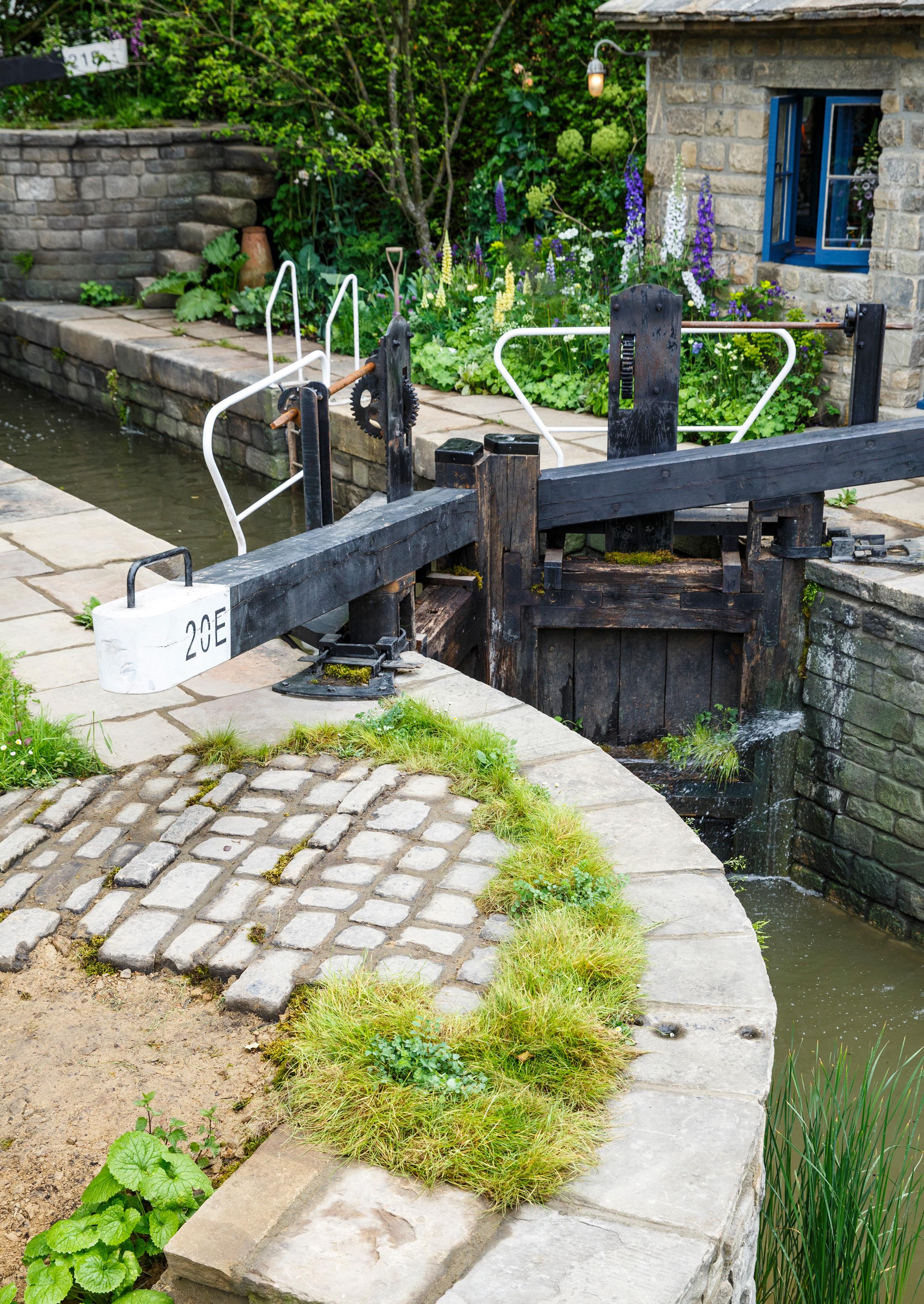
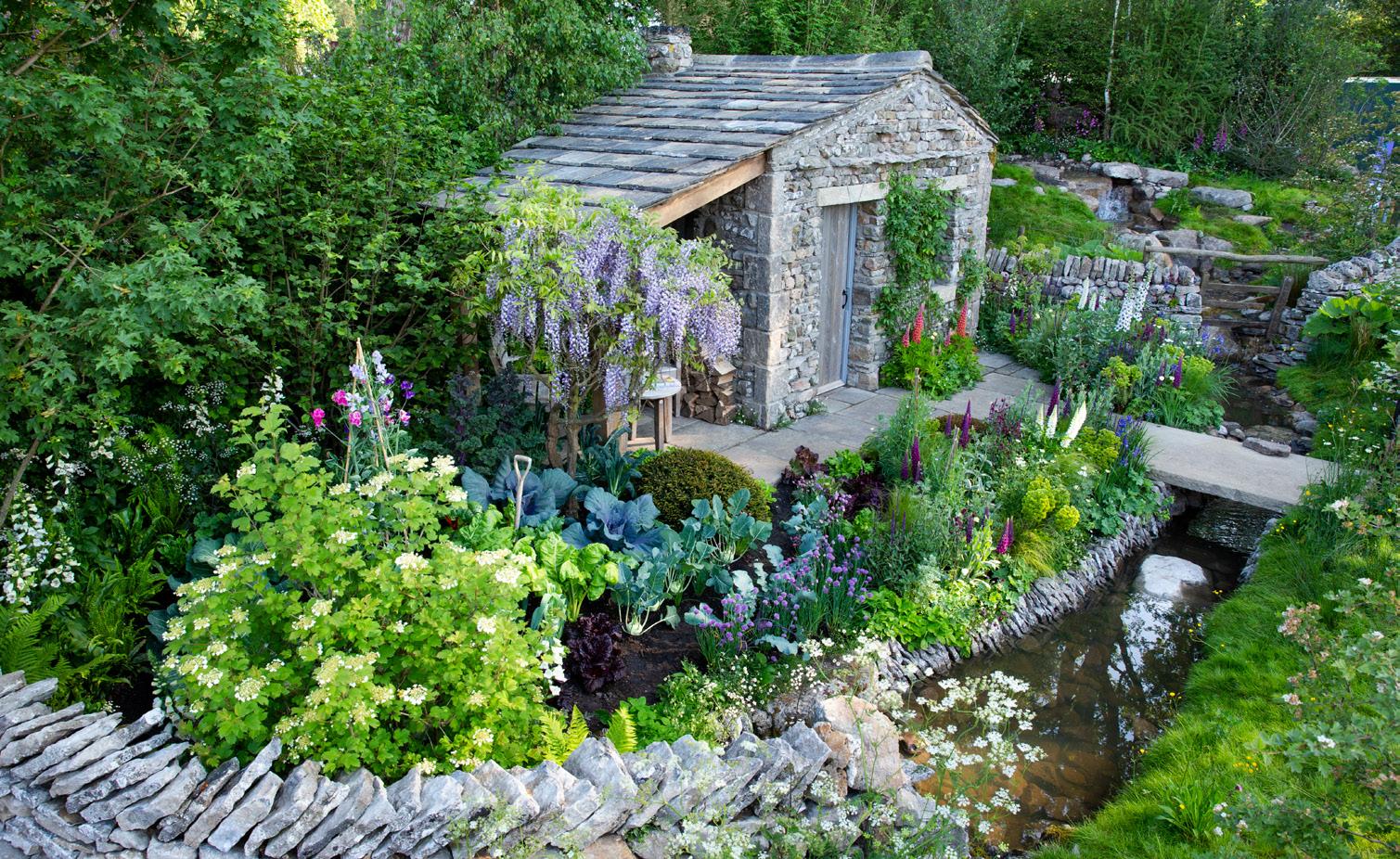
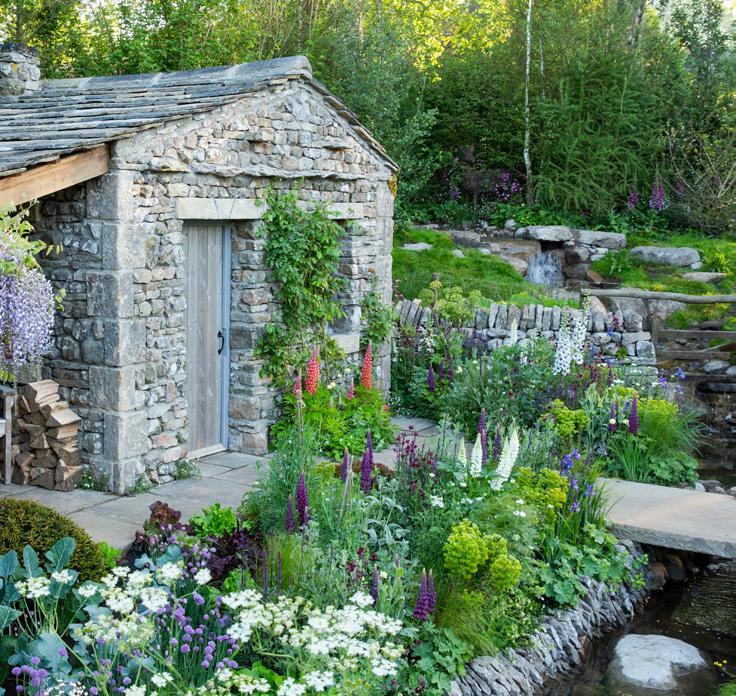
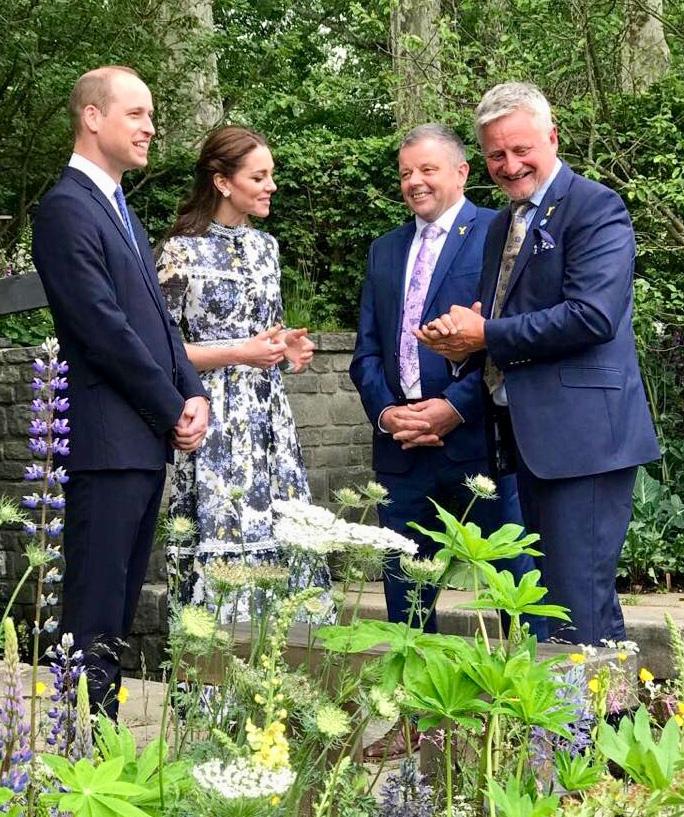
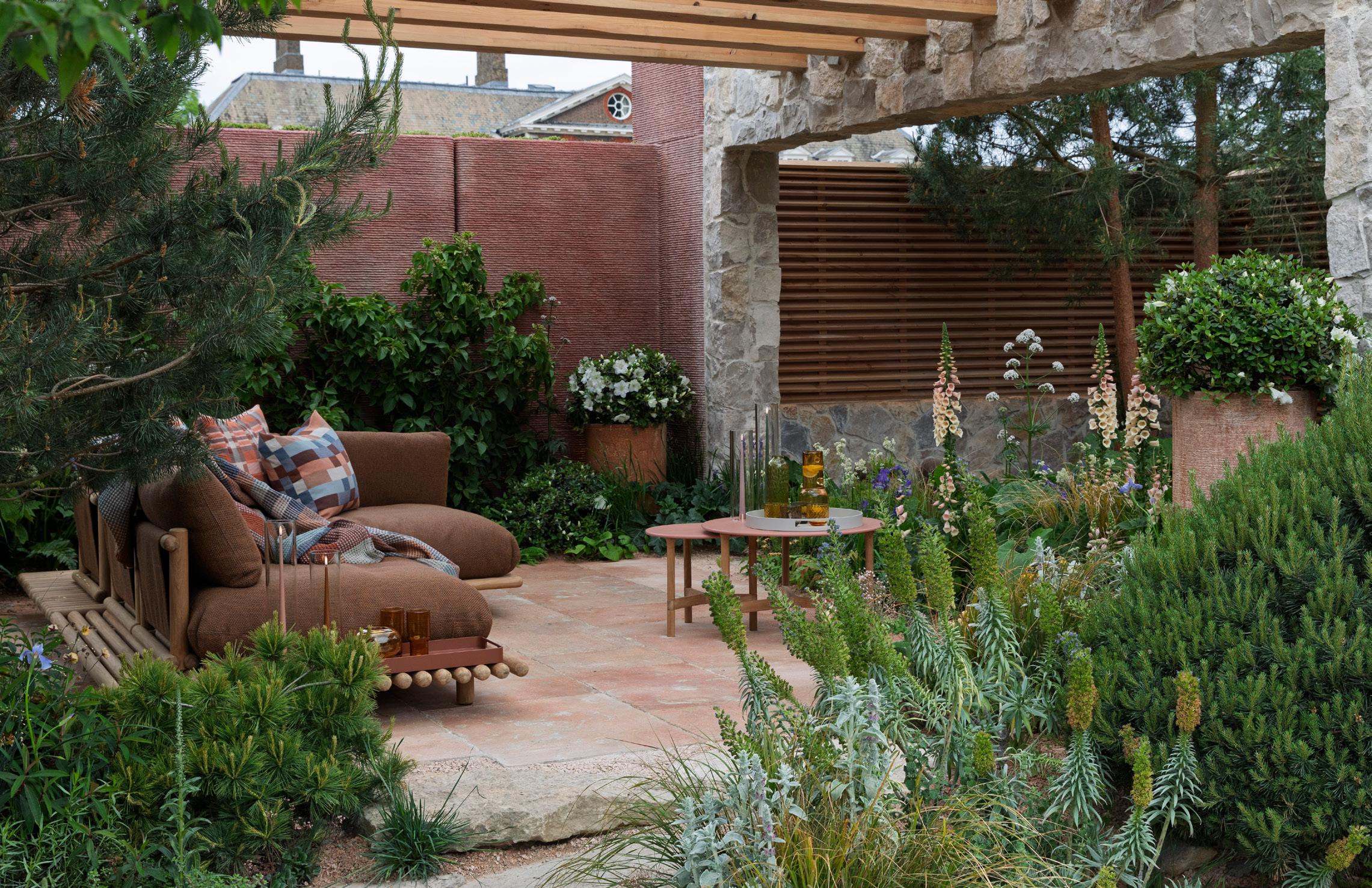
While those eye-watering tallies in themselves are truly outstanding, Mark says one of his proudest claims to fame at the RHS Chelsea Flower Show is that he was the only person to win an award in 2020 – the year that the event was cancelled due to the outbreak of Covid-19. It stemmed back to 2018, when his “Welcome to Yorkshire” garden (pictured top right) won a Gold Medal, Best Construction, and the BBC People's Choice Award. It then went on to win “Garden of the Decade” during the BBC’s 2020 retrospective programming –making it the only award handed out that year and providing Mark with a unique honour.
For Mark though, the numbers only tell part of the story. What truly matters most is what Chelsea does for a business, for a team, and for an industry. And for BALI members considering a foray into RHS shows – whether at Chelsea or elsewhere – his experience offers both inspiration and hard-nosed guidance.
Chelsea as a strategy, not vanity
One of the biggest misconceptions about Chelsea is that it is an indulgence, an ego trip or a marketing stunt. While some may treat it as such, Mark is clear that for Landform Consultants, that is far from the truth.
“We don’t do it for vanity,” he says. “It’s part of our business model. It pays money, it makes money, we market from it, we recruit from it, we learn from it.”
He speaks candidly about the commercial mechanics. The figures he quotes – between £500,000 and £1.2 million in some years – are not speculative leads generated on Main
Avenue, they are the contracted build values that flow through the business for designand-build commissions and sponsored gardens.
In most cases, the garden is funded by a sponsor – a PLC, a brand, a charity backed by philanthropy, working with a designer who pitches to interpret a brand brief. Accordingly, a good show garden, he insists, is not an exercise in designer ego – it must translate brand values into landscape language.
“Any leads we get post-Chelsea are a bonus,” he explains. “The real value is demonstrating that we can deliver a world-class product to a fixed budget in a fixed timeframe.”
He cites the moat renovation at the Tower of London as a direct commercial outcome of that reputation. The client’s confidence in Landform’s ability to deliver in a high-profile public setting, under scrutiny and to deadline, was reinforced by decades of Chelsea performance.
For BALI members, the lesson is clear: if you enter a show, do so with a commercial rationale. Understand the cashflow, fix your price, and treat it as a live demonstration of your capability.
“Chelsea is the catwalk of the world. British horticulture at its finest, and we should be rightly proud of it.”
The perfect contract?
Mark describes show gardens as “the perfect contract”. Why? Because everything is in perfect alignment.
“You’ve got a client who really wants to be there, you’ve got a designer who’s pushing, and everybody’s pulling in the same direction.”
Uniquely in the landscaping world, there is also no snagging to worry about. Once the garden is judged, photographed and celebrated, it is dismantled. No dogs on the lawn, no arguments about plant failure in the wrong aspect, no lingering defects liability period.
“You build it, you fire it up, you photograph it, and then you pull it out. Zero snagging.”
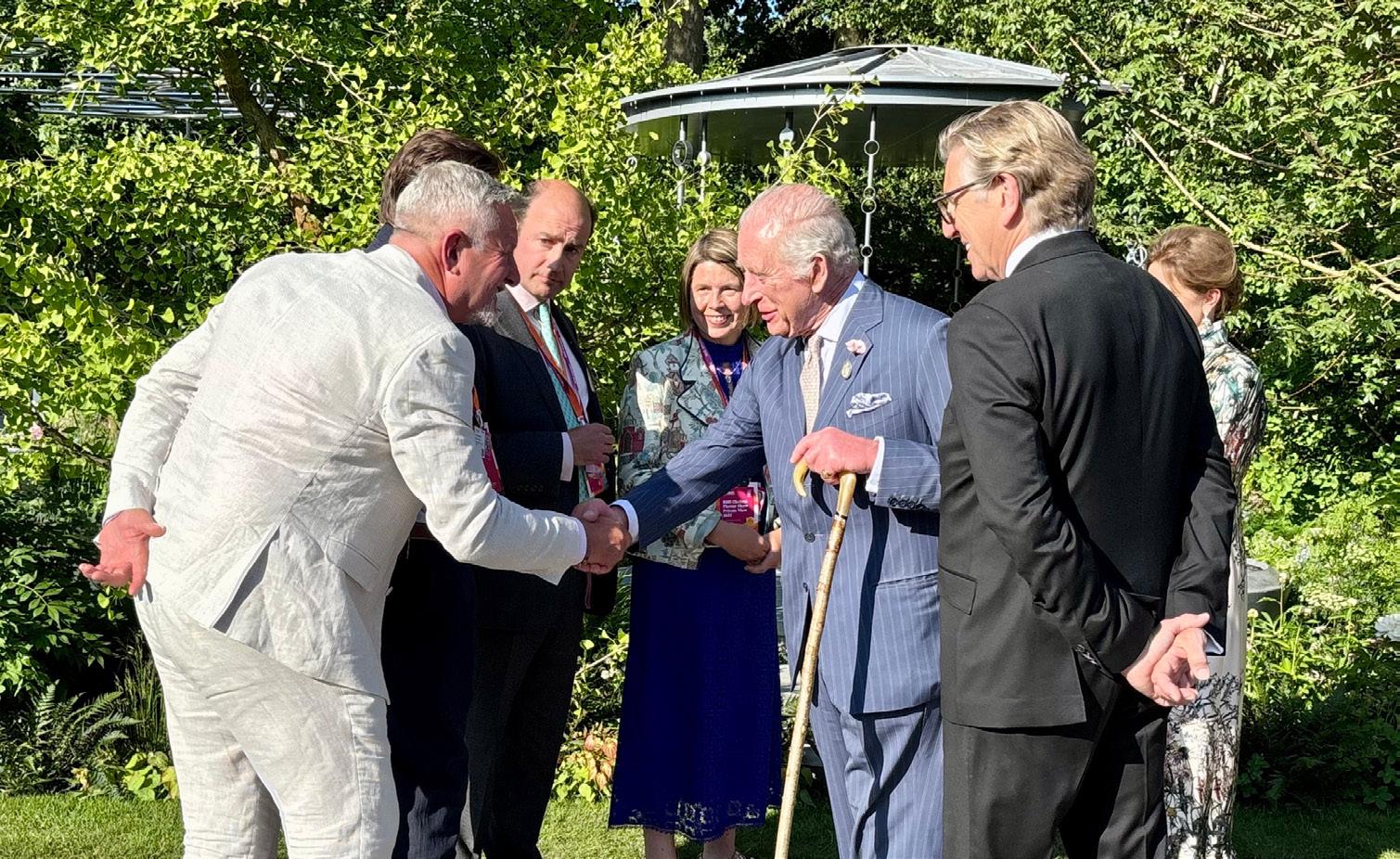
Of course, the trade-off is the sheer intensity of the show, from the moment you arrive to the day of pack down. On Main Avenue, contractors have a maximum of 17 days to get their installations ready for the public. Other categories may have 10–15 days, with staggered starts depending on location within the show grounds. The King will walk the avenue on press day whether you are finished or not.
“You can have the big idea,” says Mark, “but can you deliver it in 17 days? That’s the challenge. Chelsea isn’t for everyone.”
Planning like a war campaign
If there is one mantra Mark returns to repeatedly, it is planning. As the saying goes, “fail to plan, plan to fail.” It’s all in the planning.
Applications are submitted almost a year in advance, with gardens accepted in September. Designs evolve and are “frozen” around Christmas or January. Only then does the construction team fully engage, programming the build, commissioning mock-ups, preparing health and safety documentation, and managing an increasingly bureaucratic compliance regime.
“There’s a person in our office from midMarch, two days a week, solely tackling RHS documentation,” he notes.
Security accreditation, utilities applications, traffic management, hotel bookings, vehicle permits – every detail is formalised. Mark likens it to preparing for war: “You pack everything you think you’ll need and off you go. There’s no time to go back for anything. You have to be prepared.”
“On every garden there are two or three moments where it could go wrong. What’s your backup? What’s your alternative material? Your alternative resource? At Chelsea, something will go wrong, the question is how you respond. You need a contingency for every possible eventuality.”
RHS / Sarah Cuttle
When it goes wrong
Even among all of Landform’s glittering success, there have been moments where things could have gone seriously wrong. Mark recalls a 2019 incident in which irrigation left running overnight on a neighbouring garden caused catastrophic erosion and a pond collapse along a shared boundary. Thousands of litres of water vanished and soil subsided by 50mm.
He only discovered it after his team had already fixed it.
“It was a major issue, but my team not only sorted it, they didn’t tell me about it until it was done and fixed. They didn’t even need my input to know how to tackle it. That was brilliant as it told me I had a grown-up business,” beams Mark.
Another time, a liner failure drained a canal feature on one of his own designs. Again, the response was decisive: assess, regroup, repair.
“If nothing goes wrong, it’s been a dull Chelsea,” he says. “That’s where the learning is. That’s where the team builds.”
For BALI members, this resilience is critical. Show gardens amplify pressure. They reveal weaknesses in systems, communication and leadership. Used correctly, they are a stress test that strengthens the wider business.
Team, culture and recruitment
The “King of Chelsea”, as Mark is known, is unequivocal about the HR benefits of show work.
“Every landscaper wants it on their CV. It’s great for recruitment, it’s great for retention, they get paid well, they get the glamour and they’re part of the culture.”
Chelsea offers an unusual transparency. Unlike private residential projects behind gates and hedges, contractors work shoulder to shoulder, visible to peers and competitors alike.
“You see how other companies organise themselves, what tools they use, how they leave the site. It’s amazing intel.”
He describes the pre-press build period as one of camaraderie and mutual respect. Competitors share kit, advice and labour. “You’re competing against the standard, not each other,” says Mark.
Mentoring the next generation
As a senior RHS judge and Ambassador for Landscaping, Mark now sees part of his role as opening doors.
Landform regularly mentors emerging designers and contractors, sometimes stepping aside to allow former subcontractors to build in their own name. Mark and Landform’s Principal Landscape Designer Catherine MacDonald jointly mentor entrants to the RHS Young Designer competition, offering both design and construction insight.
He is passionate about broader industry exchange too, particularly internationally. His ambition? A reciprocal programme enabling young landscapers to work in Australia or New Zealand for six months, and vice versa.
“That dialogue exists because of Chelsea,” he says. “It’s for me to use it to help other people.”
The implication is powerful; shows are not just showcases, they are platforms for leadership, influence and collaboration.
Technology, AI and the O-ring
When asked about the biggest change he has witnessed at Chelsea over the decades, the industry veteran’s answer is unexpectedly technical.
“The O-ring,” he says. “Hydraulics. Mechanisation has transformed the scale and ambition of show gardens. Seven-tonne trees, complex engineering, heavy cranage – all are now routine.”
Budgets have also risen accordingly.
At the same time, sustainability pressures are reshaping materials and methods. Mark speaks of the various different ways they’ve tried to improve in this area - reducing cement, experimenting with alternative materials and accepting that perfection may look different during transition.
On the emergence of AI, he is pragmatic and optimistic. From concept generation to document review and 3D visualisation, he sees AI as an aid rather than a threat. It may prevent costly misunderstandings by helping clients visualise proposals more clearly – but it will not replace craft.
“AI is another tool in the toolkit. We shouldn’t be afraid of it, but we should use it appropriately. We’re many decades away from robots building gardens,” says Mark.
For BALI members, the message is not to resist change, but to harness it.
Pride and perspective
Despite the medals, the royal visits and the public acclamations, Mark’s favourite moment might come as a surprise – it is the Sunday before Press Day.
“The build is complete, the crowds have not yet arrived, and contractors stand together, exhausted and reflective. That’s the moment,” he says. “Just us.”
Chelsea, in his telling, is theatre – “a theatrical production with plants” – but it is also something profoundly human: shared endeavour under pressure, pride in craft, and the relentless pursuit of higher standards.
For BALI members contemplating a show garden, the path is not easy. It demands financial clarity, forensic planning, cultural resilience and absolute commitment to quality.
It may not suit every business, but for those prepared to embrace it, the rewards are more than medals.
As Mark eloquently puts it, “Chelsea is the catwalk of the world. British horticulture at its finest. There’s no better and we should be rightly proud of it.”
Contact: landformconsultants.co.uk
Is your brand working hard enough for you?
Has your branding become stale? Perhaps it no longer represents who you are? Or maybe it isn’t bringing in the right clientele? The experts at Humaniise offer some advice on branding; knowing when – and how – to make a change to positively impact your business.
Rebranding is often seen as something only large corporations do when they hit trouble. In reality, for landscaping businesses of all sizes, a well-timed rebrand can be a powerful growth tool – helping to attract better clients, command higher fees and reflect how a business has evolved.
Why consider a rebrand in the first place?
Many landscaping businesses put off rebranding because it feels unnecessary, indulgent or disruptive. After all, if work is coming in, why change anything? The reality is that a brand is working, whether you actively manage it or not.
Every interaction a potential client has with your business, from your van on the road to your website or quotation, shapes their perception of your quality, reliability and value.
If that perception doesn’t match the standard of your work, you may be losing opportunities without realising it.
A rebrand is often worth considering when growth has stalled, margins are under pressure or competition feels increasingly crowded. In these situations, improving visibility, clarity and perceived value can be just as powerful as investing in new equipment or staff.
Rebranding can also be a proactive move rather than a reactive one. Businesses that take control of how they are perceived are better placed to attract the right clients, command higher fees and compete on quality rather than price. For owner-managed firms in particular, a strong brand can help the business stand independently of the individual – an important step if future expansion or succession is planned.
The signs it is time to rebrand
“If your logo and website look similar to many competitors, potential clients may default to comparing price rather than value.”
Ultimately, rebranding is not about chasing trends. It is about ensuring your business is clearly understood, taken seriously and positioned for the next stage of its journey.
But how do you know when it’s time? And how far should you go without losing what made your company successful in the first place?
Most rebrands aren’t triggered by a single event, but by a gradual sense that your business has moved on while your brand hasn’t.
Common warning signs include:
Your business has evolved
Perhaps you now focus on higher-end projects, commercial contracts or specialist services, but your branding still reflects when you were doing small domestic jobs. If your brand undersells your capability, it can actively hold you back.
You’re attracting the wrong type of work
If enquiries are consistently misaligned with the work you want to do, your brand may be sending the wrong signals.
Rebrand or refresh –which do you need?
Not every business needs to start from scratch. Understanding the difference between a full rebrand and a brand refresh can save time, money and unnecessary disruption.
Your brand looks dated or inconsistent Outdated fonts, low-quality logos or inconsistent use across vans, clothing and digital platforms can undermine trust – particularly with commercial clients or high-value domestic customers.
You feel embarrassed by your own branding
A surprisingly reliable indicator, if you hesitate to share your website or marketing materials, clients will likely sense that too.
You struggle to stand out
If your logo, website and messaging look similar to dozens of other landscaping firms, potential clients may default to comparing price rather than value.
A brand refresh may be enough if:
• Your core values and positioning are still right
• Your logo works but needs modernising
• Your messaging is unclear or inconsistent
• Your visuals don’t translate well online or on vehicles
A refresh might involve refining your colour palette, typography, photography style, tone of voice and how your brand is applied across touchpoints.
A full rebrand may be needed if:
• Your business direction has fundamentally changed
• You’re repositioning into a premium or specialist market
• Your name, identity or reputation no longer fits
• You’ve merged, expanded or restructured
A full rebrand typically includes strategy, positioning, visual identity, messaging and how the brand shows up everywhere from proposals to site signage.
Tackling the rebrand
A successful rebrand is not about picking a nicer logo. It starts with clarity.
1. Revisit your ethos and purpose
Before thinking visually, define what hasn’t changed. Why does your business exist? What do you stand for? What values guide how you work on site and with clients?
Your new brand should amplify this, not replace it.
2. Understand your audience
Who are you really trying to attract over the next five to ten years? Domestic homeowners, commercial estates, developers, architects? Each audience responds to different cues of trust, professionalism and value.
3. Clarify your positioning
What makes you different? This doesn’t have to be radical, but it must be clear. It could be craftsmanship, reliability, sustainability, designled thinking or project management expertise.
Your brand should make that difference obvious at a glance.
4. Design for real-world impact
Landscaping brands live in the real world - on vehicles, PPE, signage, hoardings and muddy sites, as well as online.
Effective branding is legible at distance, works in colour and mono, scales across vans, clothing and digital, and looks professional even when weathered.
A beautiful logo that doesn’t work on a van is not doing its job.
5. Keep continuity where it matters
Rebranding doesn’t mean erasing your history. Retaining familiar elements – colours, tone of voice, or even evolved logo forms – helps existing clients recognise and trust the new brand.
Evolution often feels more credible than revolution.
“What makes you different? This doesn’t have to be radical, but it must be clear.”
Find out the value of excellence in design –
At Humaniise, we partner with organisations to engineer thoughtful, effective brand evolution that improves real-life outcomes. So you can communicate with confidence and grow with purpose.
If you're curious about what that might mean for your business, let's talk. Email us at hello@humaniise.com for an initial conversation.
Making your new brand stand out
To create impact while staying true to your company’s spirit:
• Be confident, not generic: Avoid stock imagery and vague claims. Show real projects, real people and real expertise.
• Tell your story clearly: Explain what you do, who you do it for and why it matters –simply and consistently.
• Invest in consistency: A strong brand is weakened by inconsistent use. Set guidelines and stick to them.
• Think long-term: Design for where the business is going, not just where it is now.
• Brand Strategy & Visual Identity
• Print, Editorial & Communication
• Website & Platform Development
• E-Learning, Video & Motion Graphics
hello@humaniise.com
+44 (0)1243 512106 humaniise.com
A final thought
Rebranding is not about pretending to be something you’re not. At its best, it’s about aligning how your business looks and communicates with who you’ve already become.
If your brand no longer reflects your quality, ambition or professionalism, it may be time to ask a simple question: Is your branding helping your business grow or quietly holding it back?
Done thoughtfully, a rebrand can be one of the most valuable investments a landscaping business ever makes.
From natural to nourishing: The new direction of domestic design
From edible arrays to carefully cultured wildness, client desires are changing. The Garden Company’s Managing Director and Principal Designer, James Scott MBALI, FSGLD, explores the trends shaping the year ahead.
Across domestic projects of all sizes, one clear trend is shaping conversations with clients this year: people want gardens that feel natural, useful, and enduring. The days of imposing, statement design schemes are giving way to gardens that feel real and truly connected to nature - spaces that are immersive, seasonal and rooted in ecological principles. For designers and landscapers, this shift presents creative opportunities and practical challenges, as clients increasingly seek gardens they can engage with throughout the seasons and enjoy for years to come.
The backbone: a move towards naturalistic design
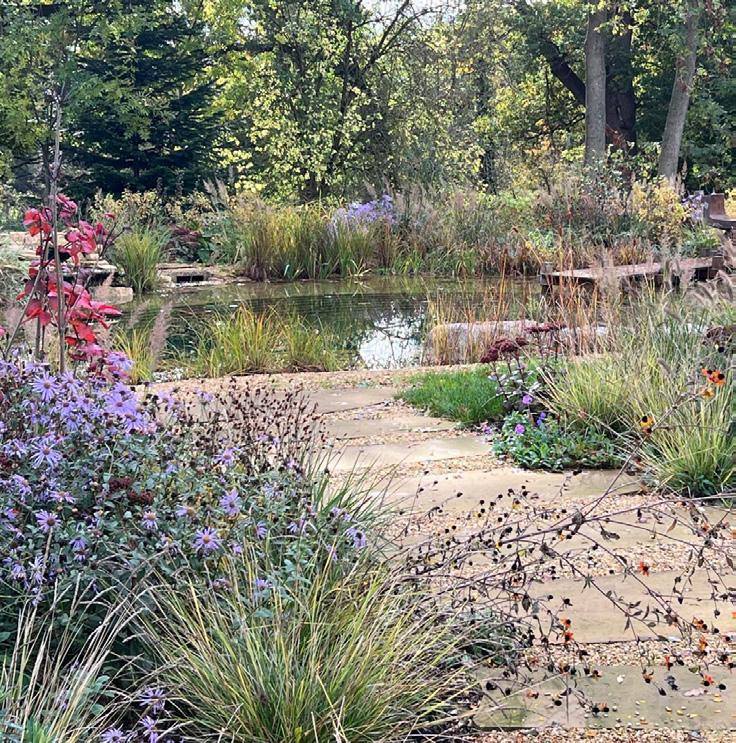
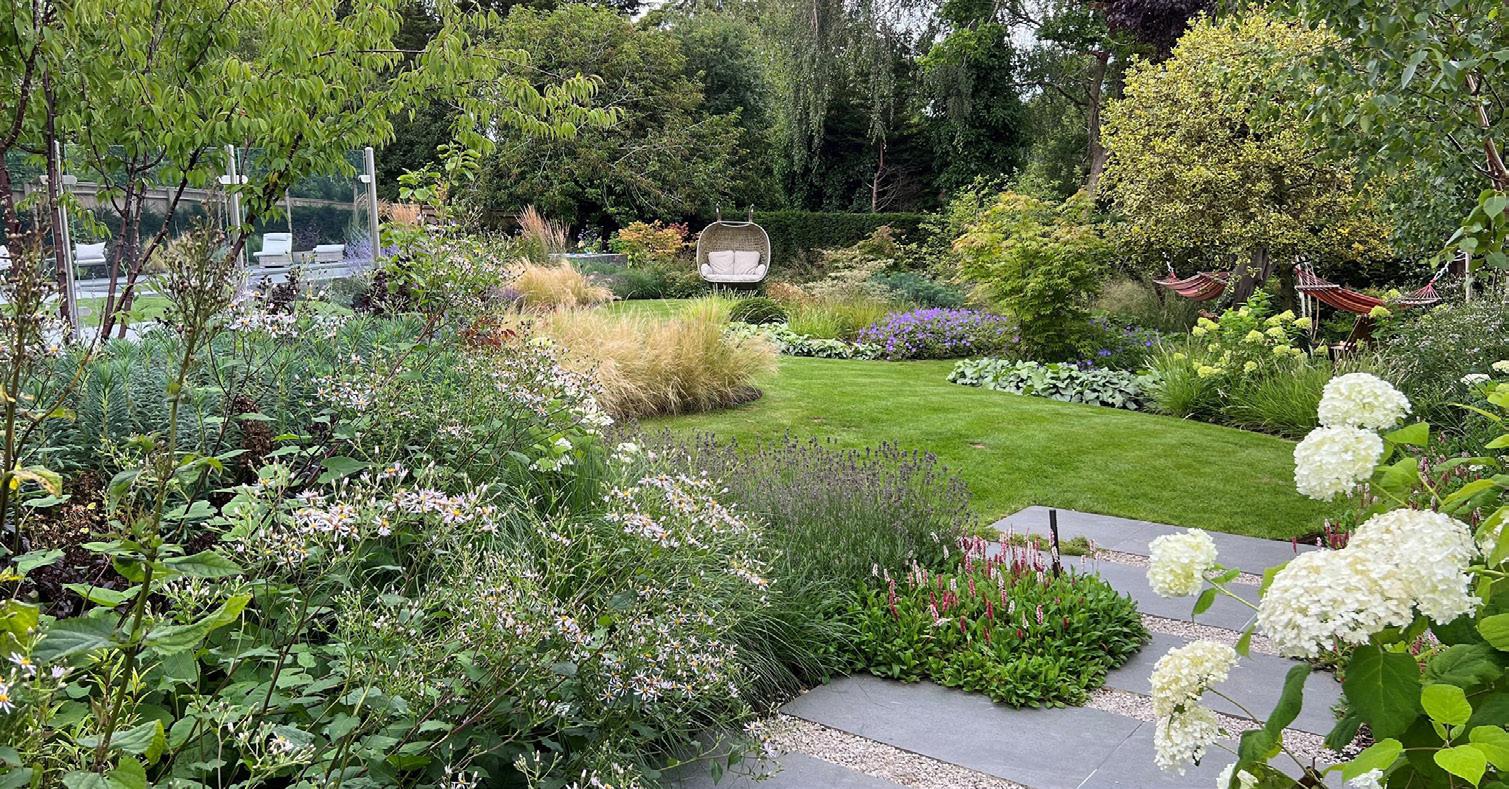
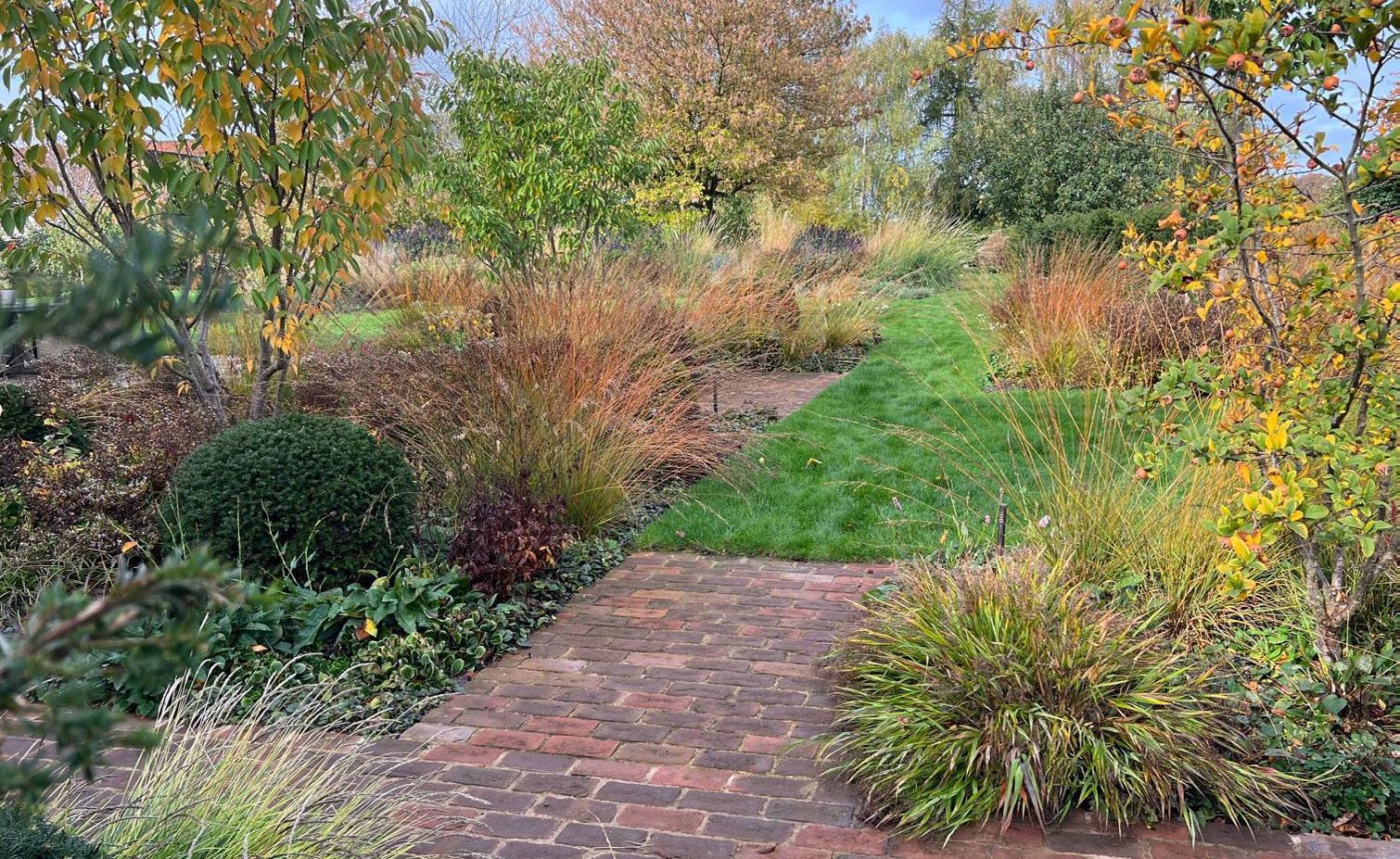
The strongest trend is the growing preference for naturalistic garden design. Clients may not always describe it as such, but they increasingly ask for gardens that feel softer and less ‘manicured’ – spaces that evolve with the seasons and blend harmoniously with their surroundings. During lockdown, people engaged deeply with their outdoor spaces, and we observed a clear divide: some clients sought naturalistic, immersive garden experiences, while others longed to recreate the boutique hotel grounds they could not visit. Today, that divide has shifted, with demand for the latter decreasing, and demand
“The days of imposing, statement design schemes are giving way to gardens that feel truly connected to nature.”
for nature-inspired design clearly increasing. Even clients requesting swimming pools are now more likely to ask for natural swimming pools, reflecting a broad shift towards natural, sustainable garden design.
Naturalistic gardens take their cues from wild and semi-wild landscapes, favouring organic layouts and planting schemes that prioritise structure, texture and longevity rather than short-term impact. Crucially, these gardens are not unplanned. Successful naturalistic planting relies on horticultural knowledge and clear design intention.
It’s worth contemplating how the things we love in nature – ocean waves, mountain ranges, bluebell woods – all feature rhythm and repetition. This concept lies at the heart of naturalistic design, where a restrained plant palette plays a central role. By repeating a limited number of species – including structural shrubs, grasses, flowering perennials, and small trees – rhythm and cohesion are created, allowing gardens to feel abundant without becoming chaotic.
A key aspect of naturalistic design is the shift from hard to soft landscaping. Paths, terraces and structural features still exist of course, but they play a supporting role. Greenery dominates. Lawns, meadows, mixed borders and layered planting create immersion and movement, so the garden feels like an evolving landscape rather than a set of built rooms.
Naturalistic planting choices
Naturalistic gardens remain captivating throughout the year. The key to this lies in selecting plants that are well-suited to the specific soil, light, and exposure conditions and layering them effectively. Plant layering –ranging from bulbs and groundcovers to midheight perennials and taller vertical elements – ensures seasonal succession, suppresses weeds and reduces maintenance. In these planting schemes, winter interest often comes from leaving old flower heads and grasses undisturbed. Clients are increasingly open to what might be considered ‘untidy’ garden spaces, recognising this as an opportunity to nurture the garden, provide winter wildlife habitats and create a more sustainable environment.
Wildflowers and wildflower lawns
Interest in wildflowers, especially wildflower lawns, is steadily growing. Clients are increasingly drawn to their softer appearance, their biodiversity benefits and the reduced need for mowing. In fact, there is a broad shift away from traditional emerald-green lawns that are highly fertilised and maintained to be weed-free.
Turf-based wildflower systems have been key to this trend, offering reliability, quicker establishment and predictable results compared with traditional seeding. Defined edges, mown paths or adjacent structured planting ensure these areas feel intentional rather than unmanaged, which is essential in domestic gardens.
Pollinator-friendly planting
There is a growing environmental awareness among clients, who are more open to gardens that support bees, butterflies and birds. Naturalistic gardens, with their emphasis on nectar-rich perennials, grasses and plants offering year-round structure and food, are ideal. Designers should increasingly consider flowering sequences, seed heads and overwintering value when selecting plants.
Edible plants
Edible planting continues to be popular, but with a more refined approach. There is becoming a preference for kitchen gardens that blend into the overall design, rather than traditional layouts tucked away in hidden corners. Herbs and soft fruits are increasingly incorporated into mixed planting schemes, while fruit trees – offering spring blossoms and vibrant autumn colour - are experiencing a resurgence in popularity.
Ambient lighting
Lighting trends are shifting to ambient, low-level schemes that extend usability while enhancing mood. Subtle lighting that highlights planting, movement and structure works particularly well with naturalistic design, while minimising light pollution and protecting local wildlife. Early collaboration between designers, landscapers and lighting suppliers ensures fittings are discreet, durable and integrated over time as the planting matures.
Designing for enduring value
Perhaps the most positive trend is a growing recognition that gardens are living, evolving spaces. We are finding that clients are increasingly open to designs that develop over time, reward patience and deliver lasting value. For the industry, this is good news. As clients value biodiversity, environmental responsibility and thoughtful design, our professional expertise becomes increasingly important.
At The Garden Company, this philosophy underpins our mission: to improve people’s lives through transformational garden design, build and gardening. Naturalistic design has been a passion of ours for a long time, and we are delighted to see clients becoming increasingly informed and appreciative of its many benefits.
A balance for the future
Domestic gardens are evolving to be more closely aligned with how people relax and engage with nature. At the heart of this shift is naturalistic design, supported by sustainable planting choices and nature-inspired features, creating spaces that are both beautiful and enduring. However, cost remains a crucial factor in design decisions and many sustainable choices (such as using local stone instead of imported alternatives) can come with a higher price tag, albeit at a lower carbon cost. As clients become more attuned to the value of eco-friendly, enduring gardens, professionals must strike a delicate balance between environmental responsibility and financial practicality. Those who can effectively navigate this balance will not only meet client expectations, but also lead the way in shaping sustainable outdoor spaces for the future.
Contact: thegardenco.co.uk
Images copyright and courtesy of James Scott MBALI, FSGLD, The Garden Company.
High Impact Meadows for Urban Spaces
Designed for biodiversity, sustainability and low-input management
With over two decades of experience, Pictorial Meadows® specialist mixes combine aesthetic impact, ecological value and reliable performance. The UK’s largest selection of bespoke seed and wildflower turf mixes, alongside expert meadow consultation, installation and long-term aftercare options.
TECHNICAL & INNOVATION:
Safety is always in style
Paul Hicks, Marketing & Product Manager at STIHL GB, outlines the key protection classes and standards landscapers should understand, and how to select the right PPE for everyday tasks.
Working with chainsaws, brushcutters and hedge trimmers is routine for professional landscapers, which is why choosing the correct PPE is essential. But while forestry workers require the highest levels of protection, landscapers often need a balance of safety, mobility and comfort to work efficiently throughout the day.
The basics
PPE is designed to reduce injury risk, not replace safe working practices. Before starting any job, teams should assess the working environment, identify hazards, and review the operator manuals for both machinery and PPE. Protective clothing must also fit well and allow free movement, as restrictive or poorly fitted items can increase risk rather than reduce it.
Understanding standards for cut protection
Chainsaw protective clothing is regulated under EN ISO 11393, which replaced the previous EN 381 standard. Items meeting this standard have been tested to ensure the protective inlay can withstand a saw chain striking at a specified speed without the inner layers being cut.
Landscapers can quickly verify compliance by checking garments for the correct EN label. This ensures trousers, footwear or gloves have passed the required safety tests and are suitable for their intended use.
Cut protection clothing classes
Trousers are the most critical piece of PPE for chainsaw use, as the legs are usually closest to the saw during cutting. Two factors guide selection: protection class and design type.
Protection classes (0–3) indicate the maximum chain speed the fabric can defend against:
• Class 0: up to 16 m/s
• Class 1: up to 20 m/s
• Class 2: up to 24 m/s
• Class 3: up to 28 m/s
Most landscapers will work within Classes 0–1, with Class 0 suited to lighter or occasional use and Class 1 appropriate for regular professional cutting. Classes 2 and 3 are generally used by trained forestry workers carrying out higher-risk tasks.
Design types determine where protection sits within the garment:
• Design A protects the front of the legs and is the most practical option for landscaping tasks, offering safety without restricting movement.
• Design C offers full 360° leg protection, typically reserved for climbing or high-risk tree work.
STIHL offers three distinct ranges of PPE trousers to meet different user needs. The FUNCTION CORE range is designed for occasional chainsaw users and provides Design A, Class 1 protection.
For professionals working in varied conditions, the DYNAMIC DuroTEC range delivers flexibility and durability, with options in both Class 1 and Class 2 protection levels, and available in Design A and Design C. Finally, the ADVANCE FlexTEC range represents STIHL’s premium offering, designed for forestry professionals and featuring Class 1 protection in both Design A and Design C styles.
“Protective clothing must fit well and allow free movement. Restrictive items can increase risk rather than reduce it.”
Footwear and glove protection
Accessories such as boots and gloves must also meet the correct standards for chainsaw use.
Footwear is certified under EN ISO 17249, which classifies protection into Classes 1–3 (20–28 m/s). For landscaping tasks, Class 1 is typically sufficient, providing robust protection without adding unnecessary bulk. STIHL offers boots meeting this requirement across their range.
Gloves are assessed under EN ISO 11393-4 with the same four cut-protection classes used for clothing. Most landscapers will require Class 0 or Class 1 gloves, ensuring a balance between protection and tactile dexterity. STIHL’s DYNAMIC PROTECT MS gloves provide Class 1 while maintaining comfort and grip.
In all STIHL protective clothing, high-tech fibres play a key role: if the saw chain makes contact, the fibres rapidly pull out and wrap around the sprocket to stop the chain.
Hearing protection standards –getting the right level
Power tools generate noise levels that can damage hearing over time, so landscapers should follow guidance from the Health and Safety Executive (HSE) when selecting hearing protection. Operators should note the tool’s decibel rating, factor in the length of use, and remember that battery tools often produce significantly less noise than petrol equivalents.
Hearing protection must comply with EN 352, which uses a Single Number Rating (SNR) to show the level of noise reduction. The higher the SNR value, the greater the protection. In some cases, identifying the HML rating (high, medium, low frequencies) gives a more precise understanding of how the protection performs across different noise levels.
STIHL offers a full range of ear defenders and earplugs designed for landscaping needs. For hedge trimming, mowing or similar applications, models combining ear and face protection can be particularly beneficial, with integrated visors helping to guard against flying debris.
Using the correct cut protection clothing and accessories for chainsaw applications, paired with effective hearing protection, is a must for professional landscapers. Protective clothing works best when it fits well, is worn consistently, and maintained according to the operator’s instructions.
In choosing the right PPE, according to recognised standards, teams can ensure that they are sufficiently protected, without adding any excess weight or bulk. This allows professionals to remain productive, comfortable, and most importantly, safe, day after day.
Contact: stihl.co.uk
POLICY & FINANCE:
Water ways: latest government white paper brings a flood of landscaping opportunity
Ian Ludgate, BALI’s Technical Manager (Policy & Research), takes a closer look at the recent Water white paper and how it impacts landscaping businesses.
From climate-driven floods and droughts to sewage pollution in our rivers, water has become a hot topic, so much so that the Labour government launched a major review after coming to power in 2024.
Led by the Independent Water Commission, the review of the water sector in England and Wales concluded in summer 2025, producing a number of recommendations for reform. The government has now responded to these recommendations by publishing a white paper – the first stage of the law-making process – and here we will explore some of its key proposals. But first, let’s take a look at the current state of the water environment and the role of landscaping in addressing waterrelated issues.
Flooding, drought, and water quality
Water issues are often described as a result of having too much (flooding), too little (drought), or too poor (water quality), with the first two being quite closely connected. That said, when it comes to public policy, each issue tends to be addressed in isolation; the government has distinct teams and plans for flooding, drought, and water quality. From experience, many inside and outside of government are keen to take a more connected approach to water issues, but this is challenging due to the range of sectors involved. Nevertheless, the reality is that stakeholders like the landscaping industry experience all three water issues and can even help address all three through a single project.
Let us take flooding and drought, for instance, which are both to do with the amount of water present at a certain point in time. As climate change advances, rainfall patterns are becoming more intense and less predictable, meaning water can build up and deplete more quickly. On a macro scale, the risk of flooding and drought can be mitigated through major landscape changes and new reservoirs, but these interventions often require government coordination and significant funding. However, smaller scale measures, such as permeable paving and soakaways, can also make a significant difference when combined and they are easily implemented by landscapers and their clients.
Water quality in our rivers, lakes, and aquifers is largely determined by water companies and farmers, but pollution from urban areas and roads also has a major impact. Despite the recent political focus on sewage in rivers, the quality of our waters has generally improved over the last few decades. Nevertheless, further improvements are needed and the landscaping sector can play a role, both in terms of reducing inputs and managing water. For instance, many grounds maintenance companies are reducing the risk of pesticides getting into water by taking a more integrated approach towards pest management. And some of the measures for managing excess water, such as soakaways, ponds, and swales, are also very effective at filtering pollutants out of water.
Water sector review
Heightened public concern over sewage pollution in rivers led the current government to come out swinging when elected in 2024. Then Environment Secretary, Steve Reed, quickly announced a range of measures
“A move towards prepipe solutions for water management could open up for opportunities for landscapers.”
to address the problem, almost entirely aimed at water companies. These measures included a mix of short- and long-term actions, including ringfencing funding for water infrastructure, new criminal charges for failing executives, and a wide-ranging review of water sector regulation in England and Wales. The last of these was conducted by the newly established Independent Water Commission and produced recommendations for reform in 2025. Having considered these recommendations, the government has now published a white paper on changing water sector regulation, titled A New Vision for Water.
As you might expect, much of the white paper is focused on water companies, but some of the key plans do touch on other sectors, such as landscaping. With nationalisation off the table, the most significant proposals for the water industry include longer-term, morewide ranging direction from government, moving to a new single water regulator, and various new measures to attract investment. In addition, the paper talks about an enhanced regional water planning system, a shift towards pre-pipe solutions for water management, and removing barriers to using more naturebased solutions – all areas in which BALI and its members can play a role.
“Despite the recent political focus on sewage in rivers, the quality of our waters has generally improved over the last few decades.”
An enhanced regional water planning system, for example, will bring water companies together with sectors like agriculture, transport, and development to improve the water environment and supply planning. This activity could provide an opportunity for landscaping representatives and major businesses to take a strategic role in addressing water issues, potentially unlocking further opportunities for work in the region. Elsewhere, a move towards pre-pipe solutions for water management, such as rainwater harvesting and sustainable drainage solutions, and nature-based solutions for pollution reduction could open up for opportunities for landscapers in a more direct way.
While these proposals may feel somewhat abstract or remote, they are likely to reflect a broad direction of travel in the water sector over the coming years and may be used as
a guide. Like all policy documents, the white paper is merely an indication of current government thinking and specific ideas may be dropped, altered, or replaced in the future. However, it is also true to say that moves towards greater stakeholder collaboration and more pre-pipe and nature-based solutions build on existing trends and will probably come to pass. And, therefore, landscapers may wish to take the proposals into account when making long-term business decisions, particularly where existing activity is closely tied to water.
Looking ahead
A New Vision for Water is the product of both an extensive review of the water sector, as well as the political furore which preceded it, and is, therefore, an ambitious document. This fact is recognised in the white paper itself and will be addressed by the UK and Welsh governments through a shared transition plan. The transition plan will be published this year alongside interim guidance for regulators on how to navigate the change. Meanwhile, the policy team at BALI will continue to monitor developments, including the eventual new water bill, influence relevant parts where possible, and communicate potential opportunities to members.
Contact: technical@bali.org.uk
Know your numbers: How to stay strong in a tough economy
Understanding the financial health of your business and regularly assessing it are vital to any thriving business. Emma Noon, Sones Accountancy, explains more.
With the arrival of spring and busier periods, many landscaping businesses are hoping for renewed momentum after the winter, but the reality can feel a bit different. Enquiries may not be coming through as quickly as expected, costs continue to creep up, and cash flow still feels uncomfortably tight. In times like these, knowing your numbers is not just good practice, it is the difference between survival and struggle.
So, what does ‘knowing your numbers’ actually mean? It means having a clear picture of your financial health, such as your profits, cash flow, overheads, and break-even point. This is not just once a year when your accountant sends over your annual accounts; you need real-time visibility, ideally monthly, so you can steer your business with confidence.
“You need real-time visibility, so you can steer your business
This is what you should be tracking:
• Your cash flow: this is your business’s oxygen. Forecast your inflows and outflows to ensure you have enough to cover bills, wages, and VAT. If you spot a gap ahead, you can plan for it instead of panicking when the account hits zero.
• Gross profit margin: this tells you if your jobs are priced right. If your margin is shrinking, your costs might be creeping up unnoticed. Material prices, labour inefficiencies, or underestimated quotes can quietly erode your profits.
• Overheads: these are your fixed costs (such as rent, insurance and software). Review them regularly. Are you paying for tools you do not use? Could you renegotiate rates or switch providers?
• Costing jobs: track the time and materials that go into each job. It is surprising how often the actual cost is higher than expected. This intel helps you price smarter next time.
• Debtor days: how long are your customers taking to pay you? If you are acting as the bank for your clients, your cash flow will suffer. Tighten up your credit control and
“If you are acting as the bank for your clients, your cash flow will suffer.”
In a strong economy, you can get away with coasting. However, when things get tough, the businesses that survive are those that keep a close eye on their numbers and make decisions based on facts, not gut feeling.
You do not need to become an accountant, but you do need access to the right reports, systems, and advice. If you are not sure where to start, speak to a financial expert who understands the landscaping industry.
This spring, work smarter, not just harder. Knowing your numbers is the first step to taking back control.
Contact: sonesaccountancy.co.uk
This article is dedicated to the memory of Emma Noon, who sadly passed away earlier this year. Everyone at BALI would like to express their deepest sympathies to her family, loved ones, and all at Sones Accountancy.
Support habitat creation and biodiversity in your projects with John Chambers Wildflowers.
Our UK-provenance native mixes are designed to complement BNG, SuDS, and a wide range of habitats and public spaces, helping you make ecologically informed design choices. Choose from habitat-specific or bespoke mixes, backed by technical guidance and species-level information to support planning, policy, and long-term ecological value. Order now for spring sowing and bring your landscapes to life.
“Premium plants have been like an extra pair of hand in the o ce. Andrew and Andrei are part of the planting design process. I rely on Premium Plants for all areas of plant supply and they have never let me down. Delivery of plants always on time, on schedule and at the best prices.”
Nicholas Dexter Garden Design
Your data protection duties for customer information
For landscaping businesses, customer data is a valuable resource, but it also comes with legal responsibilities. Perry Johnson, from BALI benefit provider Quest, explains more about your legal duties.
Whether it’s names, addresses, email contacts, or phone numbers, keeping data secure is not just good practice, it’s a legal requirement. Mishandling customer data can lead to complaints, fines, and reputational damage, so understanding your obligations is essential.
All businesses that handle personal information must comply with the UK General Data Protection Regulation (UK GDPR) and the Data Protection Act 2018. This legislation is designed to protect individuals’ personal data, ensuring it’s used transparently and fairly. For landscapers, this means collecting, storing, and using customer information only for legitimate business purposes, such as updating customers on ongoing projects, sending invoices, and scheduling services.
It’s important to remember customer data belongs to the individual, not the business. Customers have the right to access, correct, or request deletion of their personal details, and businesses must respond promptly to these requests.
Top tips for handling customer data
When it comes to data protection, a few simple practices can make a world of difference.
Keep customer records organised, accurate, and updated. It’s also good practice to limit access to only those employees who need the information to perform their work.
Do not share customer details with third parties without their explicit content, and do not use personal data for marketing purposes unless the customer has agreed. Employers should also avoid storing client data on personal devices without appropriate security measures or holding information longer than is necessary.
“Even seemingly minor breaches, such as sending an email to the wrong customer, can create risk.”
Secure storage is also key. Password-protect digital files and ensure your antivirus software is up to date. Regularly back up any important records and consider encrypted systems for sensitive information. For paper documents, ensure that records are kept in locked cabinets and shred all outdated paperwork that includes personal data.
Staff training is equally important. Ensure all your employees understand the business’ data protection policies, know how to handle requests from customers, and are aware of the potential consequences of a breach. Clear procedures for reporting compromised or lost data can prevent small errors from escalating into serious issues.
Following these straightforward rules will reduce risks while also demonstrating that your business takes data protection seriously.
Common UK GDPR pitfalls to avoid
Small businesses often run into problems by keeping unnecessary information, sharing data too freely, or failing to update records. Another common mistake is assuming that only large companies need to worry about data protection obligations – the law applies to businesses of all sizes. Even seemingly minor breaches, such as sending an email to the wrong customer or leaving records in an unsecured location, can create risk.
Protecting your business and customers
Good data handling is more than a legal requirement; it also builds trust. Customers are more likely to continue using your services if they know you treat their personal data with care. By implementing clear procedures, storing information securely, and keeping staff informed, landscapers can manage customer data with safety and confidence.
Need help with data protection?
Navigating data protection obligations can feel complicated, but you don’t have to do it alone. As a BALI member, you have unlimited access to our HR, Health & Safety, Legal, and Tax & VAT Advice Lines on 0116 243 7881. You can also access our library of over 700 templates and guidance documents, including policies for handling customer data.
To ensure your business is fully compliant, why not book a free, no-obligation One2One Business Review with one of our specialist advisors? Simply call 01455 852 0278.
Contact: questcover.com
SKILLS & EMPLOYMENT:
The future is now
The BALI Chalk Fund, through work such as its Student of the Year competition, is helping to encourage fresh faces into the sector. We caught up with recent winner, Archie Matthews, to find out more.
Each year, the BALI Chalk fund supports the next generation of landscapers with the “Student of the Year” awards. Four months on from his coronation at the BALI National Landscape Awards as the Landscape National Student of the Year, Archie reflects on how the award has impacted his life, and his hopes for the future.
QHow did you get started on your landscaping journey?
Archie: I have always enjoyed the outdoors growing up helping in the garden. My enthusiasm was further channelled out of the Covid-19 lockdowns when I set up a small garden maintenance business at just 13 years old to fill my time, which mostly involved weeding people's gardens and public parks.
Later, at school, I ran a club called “Climate Justice Revolution” which focused on the climate and, as a community, being as ecofriendly as we could. As part of this I received a hand-written letter from Alan Titchmarsh, which really helped to cement my passion for the industry.
So, once I left school, I did an apprenticeship in landscaping for two years, before moving on to my Level 3 landscape studies. I also competed in the World Skills UK Landscaping Finals in 2024 and 2025, being awarded Silver in 2024 and then Gold in 2025.
QHow did you first find out about the Student of the Year competition and what encouraged you to enter?
Archie: I learned about the competition through my college tutors, and I was encouraged to apply because of the dedication I have shown toward my studies and my commitment to achieving the best possible academic outcomes.
QWhat does winning the award mean to you, and how has it helped you in your fledgling career so far?
Archie: It means a great deal, not only as validation of my efforts, but now my name is out there and people know what I do, who I am, etc. - I've even been offered jobs because of winning this award!
Q
What do you enjoy most about your life in landscaping and horticulture?
Archie: What I really love about my work in the industry is that every job is different, every job is unique in its own way, no day is the same, and there are always surprises along the way.
Q
What are the biggest challenges you face?
Archie: One of my main challenges is finding the most suitable education pathway, as opportunities can be limited. I also find it difficult to access work experience, as many employers are hesitant to take on young people without skills – even though those skills can often only be gained if we are given a chance.
Q
What are your plans and hopes for the future?
Archie: At the moment I plan on staying where I am, but you never know where the world might take you. I would potentially like to own my own business one day.
About the competition
The Student Of The Year competition is a twotiered process, with the first stage at college level, where tutors at each BALI member college and training provider are asked to nominate the student that they feel has performed best in their year group and that they believe will make a positive impact on the industry.
The second stage involves all first-phase applicants being assessed by judging panel to crown the BALI Chalk Fund National Students Of The Year.
Contact: balichalkfund.org.uk
Smiley, happy people: why a people-first philosophy can solve the industry’s ills
Fresh from being awarded the prestigious Investors in People Platinum Award, Oak View Landscapes’ Managing Director Paul Downer explains how you don’t have to choose between employee wellbeing and profits – one naturally leads to the other
When Paul Downer talks about productivity, he doesn’t start with targets or marginshe starts with experience.
“If you push people hard, you’ll often see a short-term spike,” he says. “It looks like productivity has improved but it’s rarely sustainable. Errors creep in, fatigue builds, engagement drops, and then performance falls away.”
That perspective has been shaped over a decade-long journey with Investors in People, culminating in Platinum accreditation. The award places Oak View Landscapes 40th in the world in the 1-49 employees category –an astonishing achievement.
But for Paul – who is also a GoLandscape Ambassador, a Trustee of the BALI Chalk Fund, and sits on the BALI Board – the award is less important than the thinking behind it: designing a business around how people actually work, not how leaders wish they would.
Activity vs output
One of the most common mistakes Paul sees in the sector is confusing busyness with productivity.
“When businesses are under pressure, they focus on how busy people look rather than what they’re producing,” he explains. “Longer hours, tighter deadlines and packed diaries get mistaken for productivity gains.”
The result, however, is more visible effort, but not necessarily better outcomes. Mistakes increase, rework rises, supervisors spend more time firefighting, and people move faster but think less.
“True productivity,” he says, “is right-first-time work, not visible effort.”
For Oak View, that means investing heavily in planning. Clear scopes, realistic programmes, proper sequencing of trades, and ensuring materials and information arrive when they should. When projects are compressed without fixing underlying issues, the burden shifts unfairly onto site teams.
“Leaders shorten timelines, but materials are still late. Information’s still unclear. Decisions are reactive. The failure upstream gets transferred directly onto the people on site.”
That erodes trust, and trust, Paul argues, is a performance multiplier.
Pushing harder isn’t leading better
In early-stage businesses especially, pressure to survive can distort decisionmaking. Owners often start hands-on, overheads are low, margins look healthy and growth feels rapid. But as structure builds – managers, admin support, compliance costs – the model changes.
“You can go up a gear, but you can’t just keep pushing, pushing, pushing. It becomes unsustainable. People start to feel like a means to an end rather than valued contributors,” he explains.
Another common error is increasing accountability while removing autonomy. Layers of checking, reporting and micromanagement are added in the name of control.
“Supervisors are told they’re responsible for results but given less authority to make decisions. That creates learned helplessness. People stop thinking ahead and just wait to be told what to do.”
Oak View experienced this first-hand during a period of intense management. The lesson was clear: capable people don’t need micromanaging – they need empowering.
“When you give someone scope and freedom, some of them just take off. You see highflyers emerge. Try to curtail them and they’ll leave.”
“Without people, there is no business. With the right system, performance becomes a natural outcome, not a forced one.”
Fatigue is not a badge of honour
It is no secret that landscaping is physically demanding, and Paul is candid about the industry’s tendency to normalise exhaustion.
“Tiredness often gets praised as commitment. But physically and mentally tired people are less efficient, less accurate and more riskprone,” he says.
“Over time, that translates into absence, injuries, turnover and inconsistent performance. What appears to be productivity is actually value leakage.”
“At Oak View we avoid forced overtime. Some employees choose additional hours, but flexibility cuts both ways: three- or four-day weeks are also available where personal circumstances require it. There must be recovery. If someone’s done four or five hard days, they need time off. Otherwise, you’re just storing up problems for later.”
Recognition that lands
Verbal recognition, delivered directly and sincerely, is one of the simplest tools in Oak View’s leadership toolkit – and one of the most powerful.
Through ISO feedback processes, the company gathers testimonials on every project. Positive comments don’t disappear into a file; they are shared with the teams responsible and linked to profit-share mechanisms.
“There’s a financial element,” Paul acknowledges, “But it’s also about physically taking someone aside and saying, ‘I’m proud of how you represented the company.’ That’s a very powerful tool and it means a lot to employees.”
That visibility matters. Staff surveys repeatedly highlight the impact of leadership presence. To that end, Paul makes a point of being on-site early and available for informal conversations.
“It’s not about saying you’ve got an open-door policy, it’s about being there. A five-minute chat can bring an issue to the surface before it festers, so it can be dealt with. A quick decision can not only remove a weight from someone’s mind but also free them to focus on their role.”
“If you treat people how you’d like to be treated yourself, that goes a long way,” adds Paul. “It’s an old saying, but it still stands today.”
Retention not recruitment
Perhaps Paul’s strongest message is this: stop obsessing over recruitment and start focusing on retention.
“Investors In People gets you thinking about what happens once they’re here,” he says. “What journey are they going on? How are you developing and retaining them?”
“We are at the point where we now recruit almost exclusively through referrals and prospective employees contacting us. I recently had a SSIP portal ask for a job advert example to evidence ED&I, and we just didn’t have one as it has been so long since we’ve placed one.”
Cultural fit – attitudes and behaviours aligned with company values – outweigh qualifications on a CV, according to Paul. Since formalising this approach in 2016, headcount has grown from 28 to more than 40, with strong retention and long service becoming the norm.
“The skills shortage in landscaping is wellknown. There isn’t a big pool out there to cherry-pick from, and I think it’s shrinking,” Paul warns. “The cost of constantly recruiting and upskilling people is huge, so it makes more sense to invest in the ones you’ve already got, rather than keep having to find new ones.”
With employment legislation tightening and employee rights strengthening, recruitment risk is rising too. Retention, he argues, is safer, smarter and more strategic.
Learn how to communicate
The Investors In People journey also reshaped how Oak View approaches performance conversations.
Traditional annual appraisals – often formheavy and infrequent – have been replaced by regular job chats and structured six-month reviews. Employees are told in advance what topics will be covered but are not required to complete paperwork, unless they prefer to do so, with some enjoying written preparation. Many, however, prefer verbal discussion. Recognising a significant proportion of the workforce as neurodiverse has led to more tailored communication styles.
“We used to let things sit for a year, but now there are regular touchpoints. Most problems in business come down to poor communication,” Paul reflects.
Designing for real life
Asked what single piece of advice he would give leaders seeking both performance
and wellbeing, Paul’s answer is beautiful in that it should be obvious, yet is frequently overlooked:
“Design the business around how people actually work, not how you wish they would.”
In practice, that means aligning planning, supervision, training and client communication with the lived experience of teams on the ground. Clarity reduces stress, tools and support enable success, while consistency builds trust.
“Wellbeing and engagement aren’t optional extras,” he says. “They’re the mechanisms through which quality and efficiency are achieved.”
For Oak View, Platinum accreditation is not simply a badge on the wall but a framework that aligns culture, capability and operational design. Without people, there is no business. With the right system around them, performance becomes a natural outcome, not a forced one.
“Build the system around your people, and they will build the business with you.”
“The next three years are exciting,” Paul explains in reference to the Platinum award. “It’s a bit like being top of the league; you can only go one way if you’re not careful; you must strive for continuous improvement.”
But if the past decade is any indication, that direction will continue to be shaped not by pressure or shortcuts, but by a simple principle: build the system around your people, and they will build the business with you.
Contact: oakviewlandscapes.co.uk
Fresh hope for the next generation
From National Apprenticeship Week to Employers’ Forums, GoLandscape’s Cheryl Ranner reflects on how they’ve been working to encourage new skills into the landscape industry.
It’s been an absolute whirlwind start to the year and is already shaping up to be the busiest year on record for GoLandscape. Here’s a taste of what we’ve been up to:
Three Counties Career Fair
Held at the Three Counties Showground in Malvern, more than 2,000 students from local schools met a range of local and national employers. At the GoLandscape stand, students were invited to construct a Da Vinci Bridge, demonstrating impressive teamwork and perseverance, on a fantastic day filled with engaging conversations and inspiring interactions.
Scottish AGM, SRUC
We travelled to Edinburgh to attend the Scottish AGM, held at SRUC’s Oatridge Campus. The event provided a valuable opportunity to connect with colleagues from across Scotland and to engage with a series of insightful presentations highlighting current work and emerging priorities in the sector. A particular highlight was an engaging address by Royal Botanic Garden Edinburgh representative David Knott, whose presentation offered thoughtful perspectives on botanical research and landscape practice.
North Thames AGM, Capel Manor
Capel Manor College hosted the North Thames AGM, welcoming a strong turnout of BALI members. The AGM offered valuable insight into Capel Manor’s apprenticeship programmes and bootcamps, as well as its strategic plans for future growth – reinforcing the vital role further education plays in supporting the landscape industry’s workforce pipeline. Members also enjoyed a guided tour of the college’s gardens and specialist learning facilities, showcasing the high-quality training environments available to students.
Capel Manor Employers’ Forum
During half term, the GoLandscape team joined employees and ex-alumni at Capel Manor to discuss ways in which the college could better support students after they complete their qualifications. There was an emphasis on how best to help students who were looking to start their own small business once they leave Capel.
Tutors at Capel were also keen to establish better links with industry and business leaders to ensure that planned curriculum development met the needs of employers and students.
National Apprenticeship Week
During National Apprenticeship Week, we celebrated the vital role apprenticeships play in strengthening horticulture and landscaping. Apprenticeships remain central to addressing skills shortages across the industry, offering clear progression pathways and opening doors to rewarding careers for people of all backgrounds. Throughout the week, GoLandscape highlighted success stories from apprentices and employers alike, reinforcing the message that vocational training is not only valuable but essential to the long-term growth of the profession. GoLandscape also attended apprenticeship events at the Berkshire College of Agriculture and Myerscough College, joining BALI members and Lantra to promote the role of landscaping, horticulture, and arboriculture apprenticeships in the sector.
“Apprenticeships remain central to addressing skills shortages, offering clear progression pathways and opening doors to rewarding careers.”
Northwest AGM, Myerscough College
This event provided a valuable opportunity to engage directly with contractors, designers and suppliers, reinforcing GoLandscape’s mission to promote careers in horticulture and landscaping. Discussions throughout the day focused on workforce development, skills shortages, and the importance of attracting new talent into the profession – themes closely aligned with GoLandscape’s ongoing outreach work. Hosting the AGM within a leading land-based college environment further underlined the vital connection between education and industry.
Merrist Wood careers adviser event
Merrist Wood College welcomed careers leads and advisers for a dedicated industry engagement event designed to highlight the breadth and potential of the landscape and horticulture sector. The morning featured a series of inspiring presentations, outlining opportunities across the sector and the skills in demand. Attendees also toured the college’s new horticulture facilities, gaining first-hand insight into the modern training environments supporting the next generation of professionals.
Your guide to our range of trees. Showing their form and size over 15, 25 and 50 years, plus helpful information on suggested usage for a variety of projects and locations.
Scan this QR code to download your copy today!
Hillier Trees: Supplying the landscaping industry for 160 years.
Green roofs and podiums are true architectural highlights. They create usable space, enhance urban living, and deliver both ecological and economic benefits. By improving insulation, managing stormwater, boosting biodiversity, and reducing heat islands, they actively contribute to urban climate resilience.