Burnie City Council Annual Report 2024 - 2025 Final - Compressed
Council Meetings
Introduction by the Mayor
It is with immense pride and genuine optimism that I present the Burnie City Council Annual Report for the 2024-25 financial year, a pivotal year of bold vision and unwavering momentum.
Introduction by the General Manager
I am very pleased to be able to comment on the performance of the Burnie City Council for the first time as General Manager.
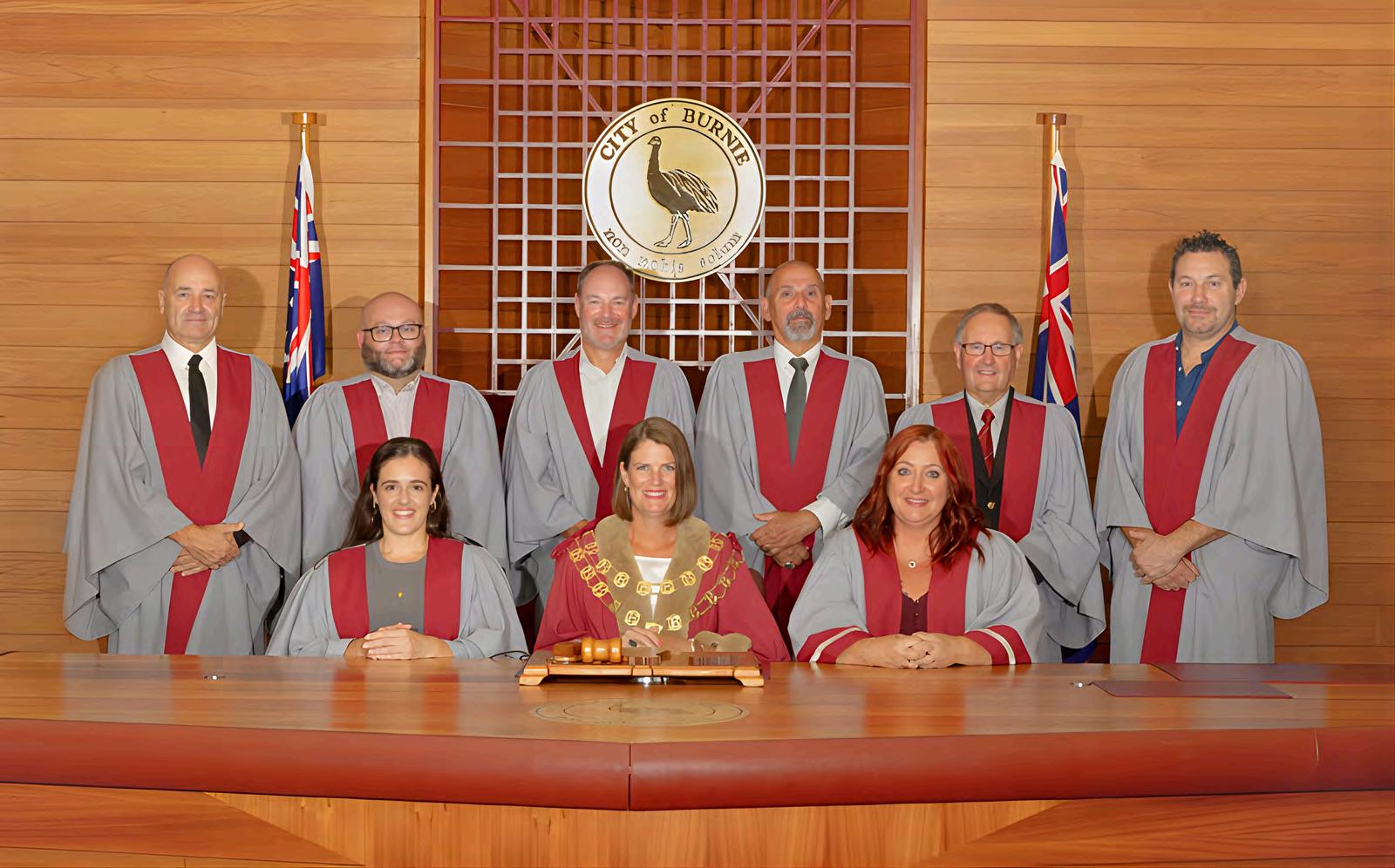
Elected Members
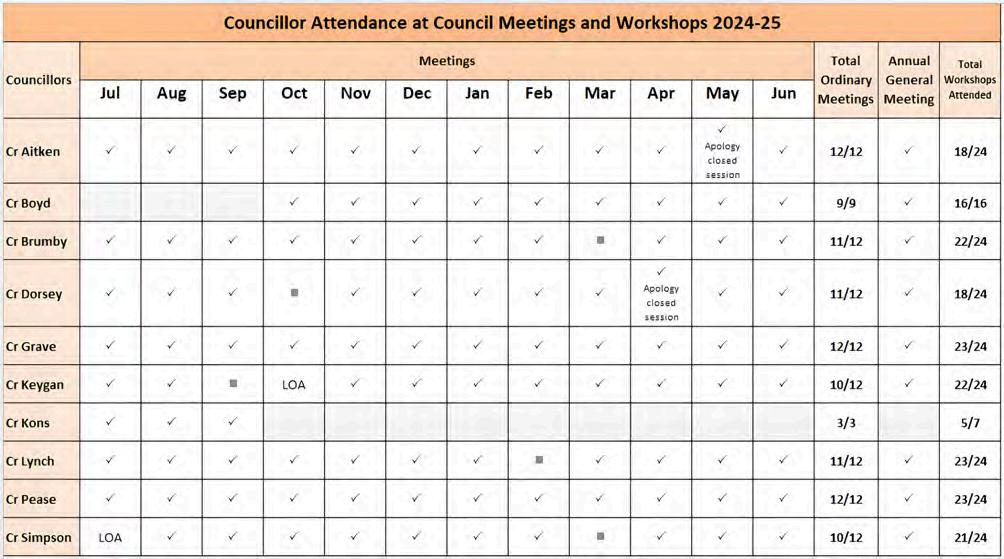
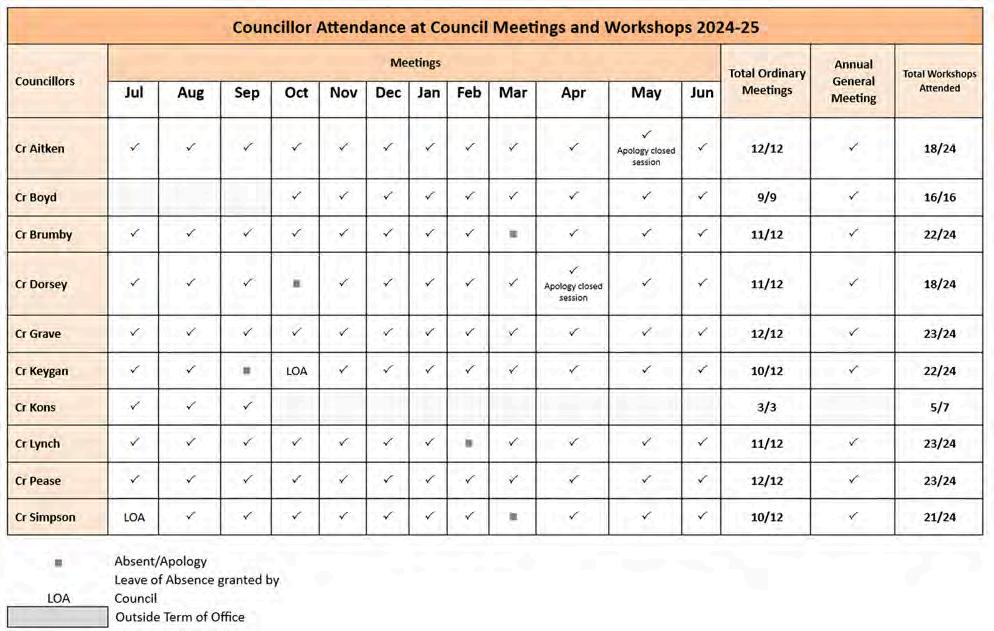
Councillor Attendance at Council Meetings and Workshops
Burnie at a Glance
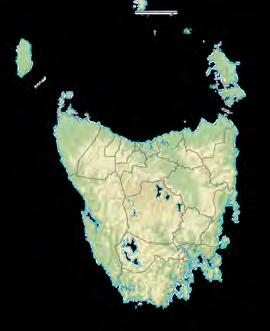
Burnie is in the north-west of Tasmania, and is 611km in size
20,417 people live in Burnie
8.6% of residents have moved to Burnie from overseas
8.5 % of residents identify as First Nations people or Torres Strait Islander (higher than the 5.4% average across Tasmania)
We are diverse – we speak 23 different languages at home. The top 5 after English are: Mandarin, Nepali, Punjabi, Arabic, and Sinhalese
Our median age has increased from 38.1 to 40.4 over the past 15 years
Most people work in health care, social assistance, retail, education and training industries
Total visitor numbers in Burnie were 174,525 (year ended March 2025)
25% visited galleries 51% visited national parks 8% went fishing
Shane Crawford General Manager
Executive Management Team
Damien Aherne Director Operations
Bel Lynch Director Corporate and Commercial Services
Simon Overland General Manager
Strategic Planning Framework
Active Town Centre
Key Directions
A great place to live, shop, work and play
Clean, well serviced and maintained
Green, visually attractive and safe
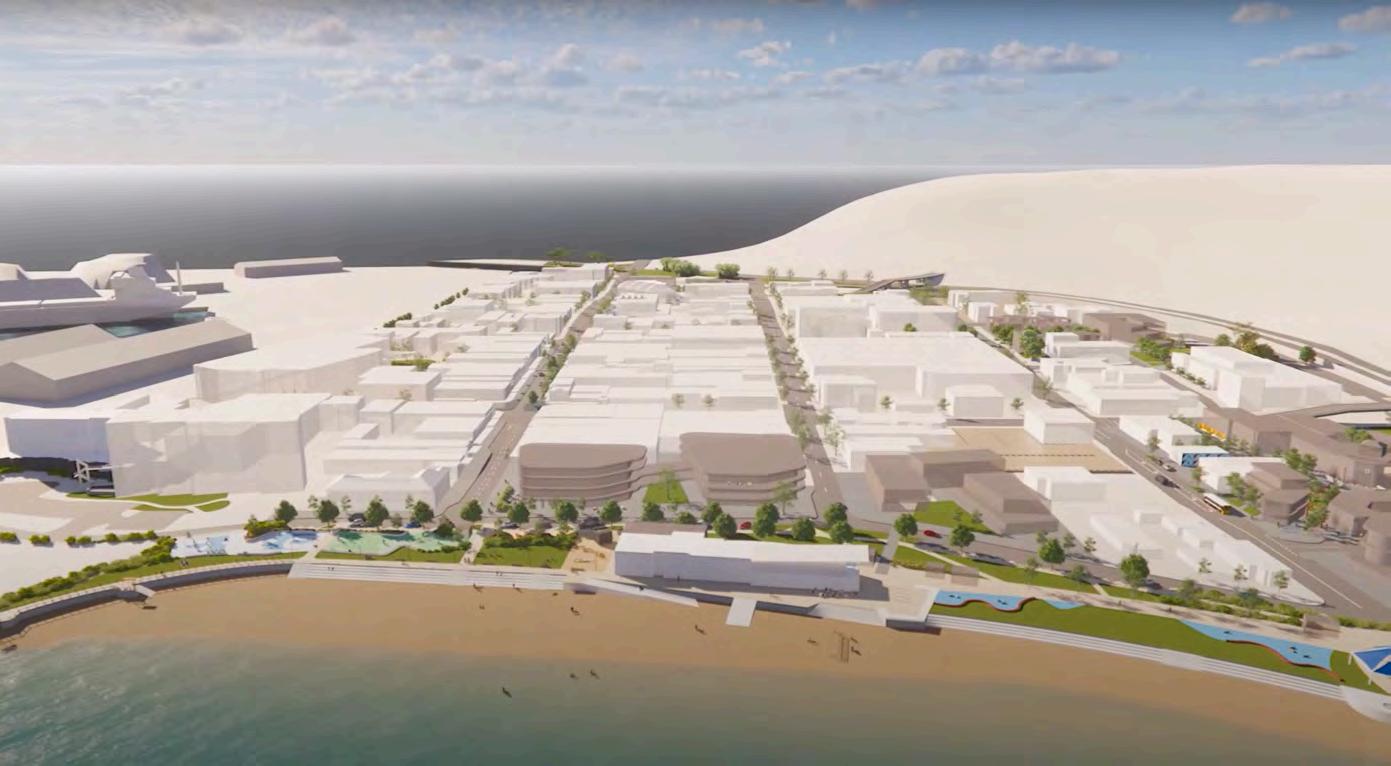
Urban Plan
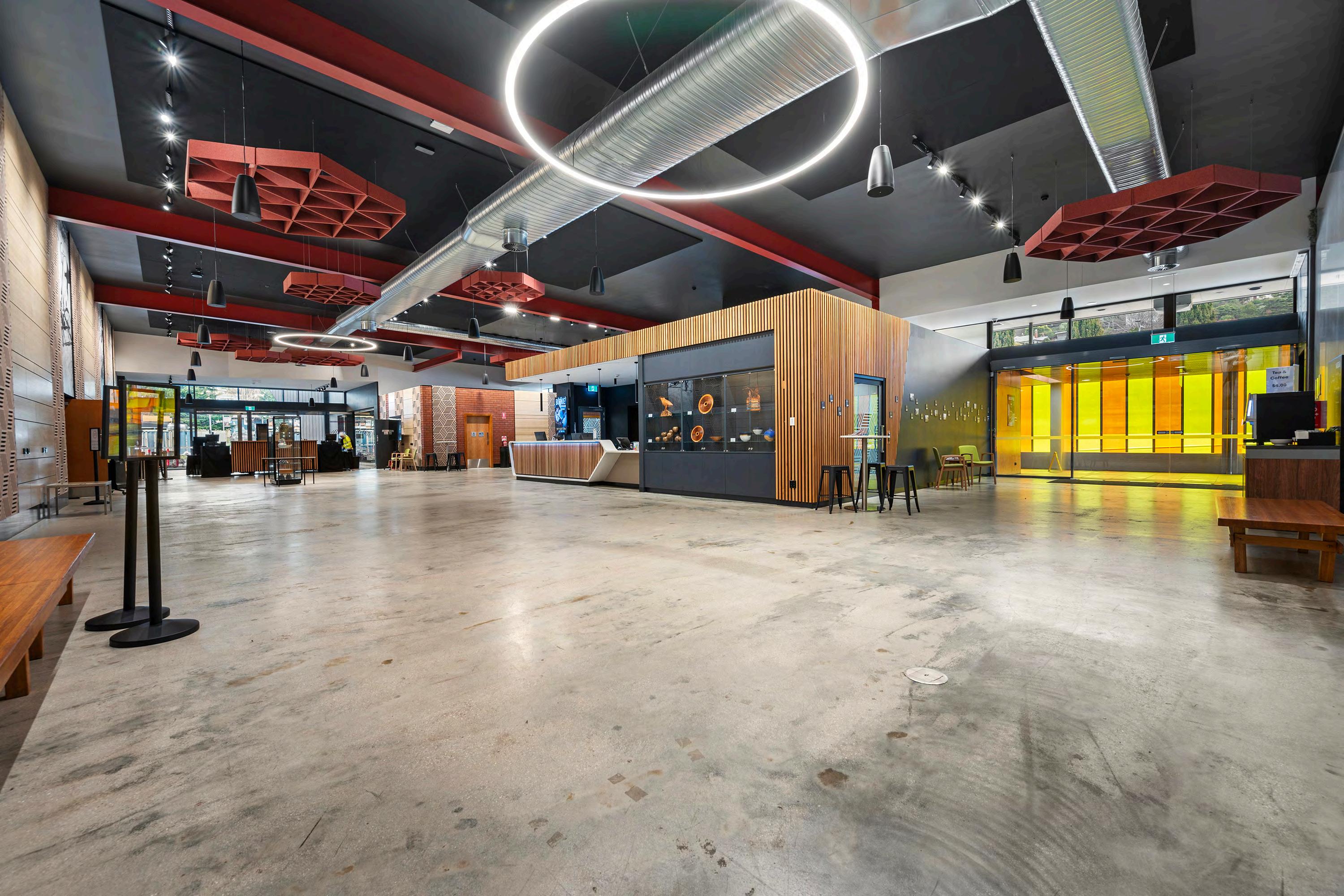
Burnie Arts Redevelopment
Easter Egg Hunt
International Day of People with Disability
The Evening Feast
Australia Day
Aussie Fun Day
FIRST Lego League
7BU Spark up the Sky
Liveable Local Communities
Key Directions
Plannedconnectedcommunities
Cleangreenstreets,parksandopenspaces
Diversewelllocatedhousing
Parks, Reserves and Open Spaces
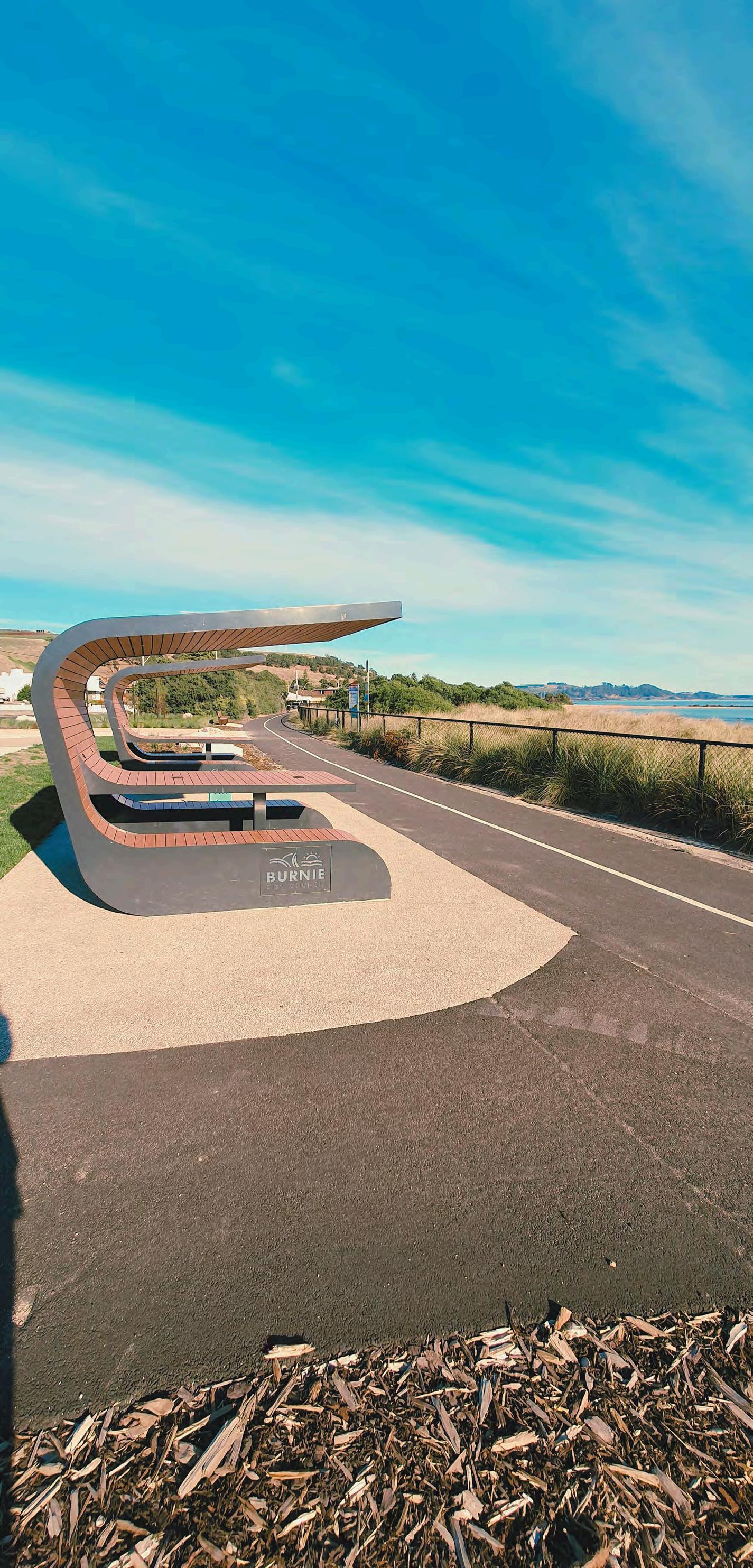
Coastal Pathway
Aquatic Centre
Transport
Parks, Reserves, Sports Grounds and Cemeteries
Roads and Bridges
Stormwater
Plant and Equipment
Buildings
West Park Cycle Track Resurfacing
Netball Courts Resurfacing
Bitumen Surfacing
Flood Recovery Oonah Road
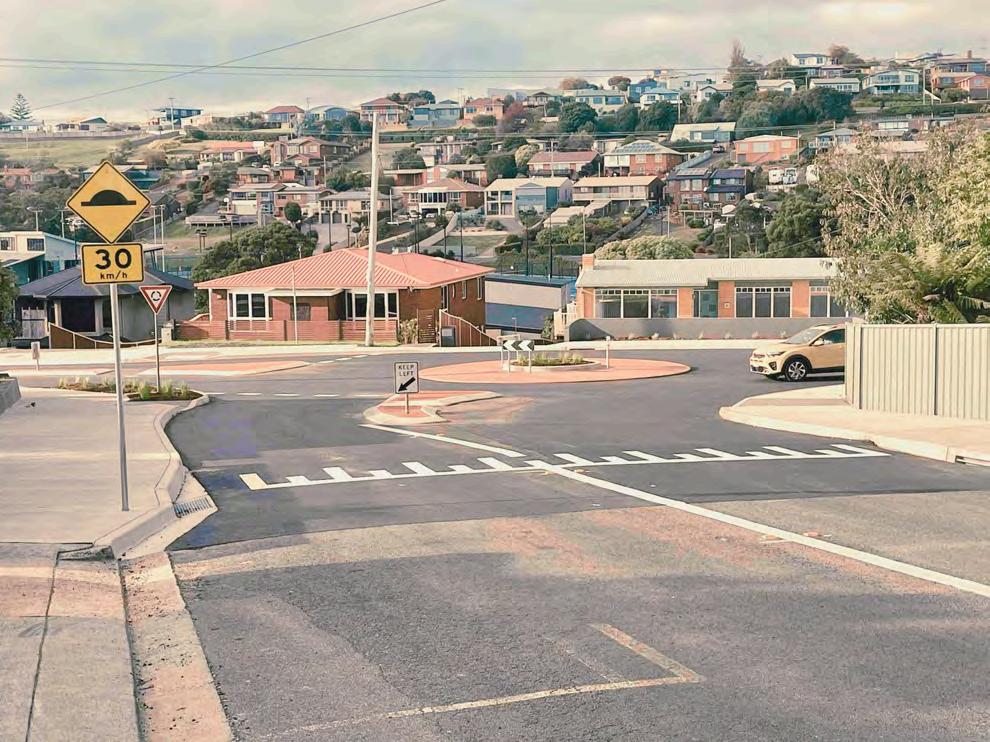
West Park Grove Futuna Avenue Roundabout
Mount Street Three Mile Line Roundabout
Building and Plumbing
Sustainable Built and Natural Environments
Key Directions
Leaders in sustainability
Clean and green communities
Healthy, cared for and sustainable environments
Natural Resource
Management
FOGO
Activity Overview
Aims
Resources
Public Health Risk Activities
Objective
Actions
Summary (skin penetration procedures)
Immunisations
Objective
Actions
Food and Safety Hygiene
Objective
Actions
Summary
Objective
Actions
Summary
Objective
Actions
Summary
Regulated
Objective
Actions
Summary
Enviroment and Health Complaints
Culturally Rich and Vibrant Communities
Key Directions
Active communities
Thriving diverse community groups
Participating communities
Burnie Arts
Exhibitions
Citizenship Ceremonies
Remembrance Day
Anzac Day
Community Recognition Awards
Community Events
Easter Eggstravaganza
Christmas Winter Wonderland
New Year’s Eve Celebrations
Carols by Candlelight
Pacific Islands Cultural Showcase
Community Sporting Events
Strait Link Burnie 10
Tasmanian Masters Games
Pickleball Championship
Softball State Championships
Harcourts 321-GO
New Years Carnival
Other sporting highlights
Community Facilities
Wivenhoe Recreation Ground Grandstand Upgrades
McKenna Park Hockey Complex
Wivenhoe Recreation Ground Changeroom upgrades
Wivenhoe Recreation Ground Clubrooms Upgrades
Burnie Memorial Hall
Upper
Fostering inclusion and respect: Smoking Ceremony at New Year’s Eve
Achievement Grants
Partnership Program
Marinus Link and Burnie City Council Community
Mayors Grant Fund
Educational Bursaries
Permit Discounts and Waivers to Charitable and Not for Profit Organisations
Remissions
Democratic and Engaged Communities
Key Directions
Leadership through communications, consultation, collaboration and facilitation
Strong advocacy for all communities
Delivery of this strategy
Community Engagement
Participation
Emergency Management
Western Emergency Management Committee Community Recovery
Local Government of Tasmania
Burnie Airport Corporation
Directors
Financial Position Highlights
Contracts and Awards over $100,000 (2024-25)
Contracts and Awards over $100,000 (2023-24)
Donations of Land
Audit Panel
Statewide Framework
Councillor Induction Program
Dispute Resolution Complaints
Complaints under Customer Service Charter Public Interest Disclosures
Capital Expenditure
Assets and Performance
Asset Consumption Ratio
Burnie
City Council
ANNUAL FINANCIAL REPORT for the year ended 30 June 2025
Independent Auditor’s Report
To the Councillors of Burnie City Council
Report on the Audit of the Financial Report
Opinion
I have audited the financial report of Burnie City Council (Council), which comprises the statement of financial position as at 30 June 2025 and statements of comprehensive income, changes in equity and cash flows for the year then ended, notes to the financial statements, including a summary of significant accounting policies, other explanatory notes and the statement of certification signed by the General Manager
In my opinion, the accompanying financial report:
(a) presents fairly, in all material respects, Council’s financial position as at 30 June 2025 and its financial performance and its cash flows for the year then ended
(b) is in accordance with the Local Government Act 1993 and Australian Accounting Standards
Basis for Opinion
I conducted the audit in accordance with Australian Auditing Standards. My responsibilities under those standards are further described in the Auditor’s Responsibilities for the Audit of the Financial Report section of my report. I am independent of Council in accordance with the ethical requirements of the Accounting Professional and Ethical Standards Board’s APES 110 Code of Ethics for Professional Accountants (including Independence Standards) (the Code) that are relevant to my audit of the financial report in Australia. I have also fulfilled my other ethical responsibilities in accordance with the Code.
The Audit Act 2008 further promotes the independence of the Auditor-General. The AuditorGeneral is the auditor of all Tasmanian public sector entities and can only be removed by Parliament. The Auditor-General may conduct an audit in any way considered appropriate and is not subject to direction by any person about the way in which audit powers are to be exercised. The Auditor-General has for the purposes of conducting an audit, access to all documents and property and can report to Parliament matters which in the AuditorGeneral’s opinion are significant.
My audit responsibility does not extend to the budget figures included in the financial report, the asset renewal funding ratio disclosed in note 10.5(f), nor the Significant Business Activities disclosed in note 10.4 to the financial report and accordingly, I express no opinion on them.
I believe that the audit evidence I have obtained is sufficient and appropriate to provide a basis for my opinion.
Responsibilities of the General Manager for the Financial Report
The General Manager is responsible for the preparation and fair presentation of the financial report in accordance with Australian Accounting Standards and the Local Government Act 1993 and for such internal control as determined necessary to enable the preparation of the financial report that is free from material misstatement, whether due to fraud or error.
In preparing the financial report, the General Manager is responsible for assessing Council’s ability to continue as a going concern, disclosing, as applicable, matters related to going concern and using the going concern basis of accounting unless Council is to be dissolved by an Act of Parliament or the Councillors intend to cease operations, or have no realistic alternative but to do so.
Auditor’s Responsibilities for the Audit of the Financial Report
My objectives are to obtain reasonable assurance about whether the financial report as a whole is free from material misstatement, whether due to fraud or error, and to issue an auditor’s report that includes my opinion. Reasonable assurance is a high level of assurance, but is not a guarantee that an audit conducted in accordance with the Australian Auditing Standards will always detect a material misstatement when it exists. Misstatements can arise from fraud or error and are considered material if, individually or in the aggregate, they could reasonably be expected to influence the economic decisions of users taken on the basis of this financial report.
As part of an audit in accordance with the Australian Auditing Standards, I exercise professional judgement and maintain professional scepticism throughout the audit. I also:
• Identify and assess the risks of material misstatement of the financial report, whether due to fraud or error, design and perform audit procedures responsive to those risks, and obtain audit evidence that is sufficient and appropriate to provide a basis for my opinion. The risk of not detecting a material misstatement resulting from fraud is higher than for one resulting from error, as fraud may involve collusion, forgery, intentional omissions, misrepresentations, or the override of internal control.
• Obtain an understanding of internal control relevant to the audit in order to design audit procedures that are appropriate in the circumstances, but not for the purpose of expressing an opinion on the effectiveness of Council’s internal control.
• Evaluate the appropriateness of accounting policies used and the reasonableness of accounting estimates and related disclosures made by the General Manager
• Conclude on the appropriateness of the General Manager’s use of the going concern basis of accounting and, based on the audit evidence obtained, whether a material uncertainty exists related to events or conditions that may cast significant doubt on Council’s ability to continue as a going concern. If I conclude that a material uncertainty exists, I am required to draw attention in my auditor’s report to the related disclosures in the financial report or, if such disclosures are inadequate, to modify my opinion. My conclusion is based on the audit evidence obtained up to the
date of my auditor’s report. However, future events or conditions may cause Council to cease to continue as a going concern.
• Evaluate the overall presentation, structure and content of the financial report, including the disclosures, and whether the financial report represent the underlying transactions and events in a manner that achieves fair presentation.
I communicate with the General Manager regarding, among other matters, the planned scope and timing of the audit and significant audit findings, including any significant deficiencies in internal control that I identify during my audit.
Martin Thompson Auditor-General
25 November 2025 Hobart
Burnie City Council
Statement
of Comprehensive Income for the year ended 30 June 2025
Other comprehensive income: Items
The above comprehensive income statement should be read in conjunction with the accompanying notes.
Burnie City Council
Statement of Financial Position
as at 30 June 2025
The above balance sheet should be read in conjunction with the accompanying notes.
Burnie City Council
Statement of Changes in Equity
for the year ended 30 June 2025
The above statement of changes in equity should be read in conjunction with the accompanying notes.
Burnie City Council
Statement
of
Cash Flows
for the year ended 30 June 2025
The above statement of cash flows should be read in conjunction with the accompanying notes.
to Financial Statements for the year ended 30 June 2025
Note Details Page
Note 1 Overview
1.1 Reporting entity
1.2 Basis of accounting
1.3 Use of estimates and judgements
1.4 Material budget variations
1.5 Functions/Activities of the Council
Note 2 Revenue
2.1 Rates and charges
2.2 Statutory fees and fines
2.3 User fees
2.4 Grants
2.5 Contributions
2.6 Interest
2.7 Other income
2.8 Net gain/(loss) on disposal of property, infrastructure, plant and equipment
2.9 Investment revenue from water corporation
Note 3 Expenses
3.1 Employee benefits
3.2 Materials and services
3.3 Impairment of receivables
3.4 Depreciation and amortisation
3.5 Finance costs
3.6 Other expenses
Note 4 Current assets
4.1 Cash and cash equivalents
4.2 Trades and other receivables
4.3 Contract assets
Note 5 Other investments
5.1 Investment in water corporation
Note 6 Non-current assets
6.1 Property, infrastructure, plant and equipment
6.2 Right-of-use
6.3 Other
Note 7 Current
7.1 Trade and other
7.2 Trust funds and deposits
7.3 Provisions
7.4 Lease Liabilities
7.5 Contract liabilities
Note 8 Non-current liabilities
8.1 Interest-bearing loans and borrowings
Note 9 Other financial information
9.1 Reserves
9.2 Reconciliation of cash flows from operating activities to surplus/(deficit)
9.3 Reconciliation of liabilities arising from financing activities
9.4 Superannuation
9.5 Commitments
9.6 Operating leases as lessor
9.7 Financial instruments
9.8 Fair value measurements
9.9 Events occurring after balance date
Note 10 Other matters
10.1 Related party transactions
10.2 Interest in joint venture
10.3 Other significant accounting policies and pending accounting standards
10.4 Significant business activities
10.5 Management indicators
Additional
disclosures
Burnie City Council
Notes
to Financial Statements for the year ended 30 June 2025
Notes to Financial Statements for the year ended 30 June 2025
Note 6. Non-current assets
6.1 Property, infrastructure, plant and equipment
(a) Property
(b) Plant and equipment
Burnie City Council
Notes to Financial Statements for the year ended 30 June
Note 6. Non-current assets (continued)
(c) Infrastructure
Notes to Financial Statements for the year ended 30 June 2025
Note 6. Non-current assets (continued)
Burnie City Council
Notes
to Financial Statements for the year ended 30 June 2025
Note 6. Non-current assets (continued)
Property, infrastructure, plant and equipment
Reconciliation
Burnie City Council
Notes
to Financial Statements for the year ended 30 June 2025
Note 6. Non-current assets (continued)
(a) Impairment losses or items expensed
Impairment losses are recognised in the Statement of comprehensive income under other expenses.
Reversals of impairment losses are recognised in the Statement of comprehensive income under other revenue.
Items of works in progress that were expensed instead of being capitalised are also recognised in the Statement of comprehensive income under other expenses (or detail where they have been presented)
Burnie City Council
Notes to Financial Statements for the year ended 30 June 2025
iii. 3. Upfrontpaymentsoffundsfromcontractswithcustomersarerecognisedasacontractliabilityuntilperformanceobligations aresatisfied.Revenueisrecognisedasperformanceobligationsareprogressivelyfulfilled.
Burnie City Council
Notes to Financial Statements for the year ended 30 June 2025
Note 8. Non-current liabilities
8.1 Interest-bearing loans and borrowings
a) The maturity profile for Council's borrowings is:
Notes to Financial Statements for the year ended 30 June 2025
Note 9. Other financial information (continued)
9.3 Reconciliation of liabilities arising from financing activities
Liabilities arising from financing activities are liabilities for which cash flows were, or future cash flows will be, classified in the Statement of Cash Flows as cash flows from financing activities.
Notes to Financial Statements for the year ended 30 June 2025
Note 9. Other financial information (continued)
9.5 Commitments
The Council has entered into the following commitments. Commitments are not recognised in the Balance Sheet. Commitments are disclosed at their nominal value and presented inclusive of the GST payable.
Not later than 1 year Later than 1 year and not later than 5 years Later than 5 years
Burnie City Council
Notes to Financial Statements for the year ended 30 June 2025
Note 9. Other financial information (continued)
Burnie City Council Notes
to Financial Statements for the year ended 30 June 2025
Transfers between levels of the hierarchy Council'spolicyistorecognisetransfersinandoutofthefairvaluehierarchylevelsasattheendofthereportingperiod. Thefollowingassets/liabilitiesthataremeasuredatfairvalueonarecurringbasishavebeensubjecttoatransferbetween levelsofthehierarchy
(1) Includes total cost of providing and maintaining vehicles provided for private use, including registration, insurance, fuel and other consumables, maintenance cost and parking (including notional value of parking provided at premises that are owned or leased and fringe benefits tax). (2) Section 72(1)cb of the Local Government Act 1993 requires the disclosure of expenses paid to Councillors. The main category of Councillor expenses directly relates to communications (i.e. telephone, internet costs). Other areas of expenses include seminars, functions and professional development, plus out-of-pocket costs (i.e. meals, travel and accommodation) associated with attending a seminar or function, as well as dependant person care. All costs claimed are in accordance with the Local Government Act 1993 and associated General Regulations
Notes to Financial Statements for the year ended 30 June 2025
Note 10. Other matters (continued)
Burnie City Council
Notes to
Financial Statements for the year ended 30 June 2025
Note 10. Other matters (continued)
(1) Gross Salary
(6) Non-monetary benefits include annual and long service leave movements and non-monetary benefits (such as housing, subsidised goods or services etc)
(6) Mr D Aherne acted in role of General Manager 04/11/2024 - 15/12/2024
Burnie City Council Notes to Financial Statements for
the year ended 30 June 2025
Note 10. Other matters (continued)
(iii) Transactions with related parties
Transactions with joint ventures
Transactions with joint ventures are detailed above
Transactions with subsidiaries and associates
There were no transactions with subsidiaries and associates in the 2024-25 financial year.
Transactions with related parties
In accordance with s84(2)(b) of the Local Government Act 1993, the General Manager has been notified in respect interests in the following entities with which the
Nature of Transactions: Purchase of uniform for staff from a local shoe store and uniform supplier, operated by a Councillor, purchased on normal market terms
Amount of Transactions: 290
Outstanding balances, including commitments at year end: 0 Terms and Conditions Net 30 Days
Provision for doubtful debts: 0
The expense recognised during the period relating to bad or doubtful debts due from related parties: 0
Nature of Transactions: Corporate rental of a premises, operated by a Councillor, purchased on normal market terms
Amount of Transactions: 11,550
Outstanding balances, including commitments at year end: 0
Terms and Conditions Net 30 Days
Provision for doubtful debts: 0
The expense recognised during the period relating to bad or doubtful debts due from related parties: 0
Nature of Transactions: Reserved parking, sold on normal market terms
Amount of Transactions: 122
Outstanding balances, including commitments at year end: 122
Burnie City Council
Notes
to Financial Statements for the year ended 30 June 2025
Note 10. Other matters (continued)
Terms and Conditions Net 30 Days
Provision for doubtful debts: 0
The expense recognised during the period relating to bad or doubtful debts due from related parties: 0
(iv) Transactions with related parties that have not been disclosed
Most of the entities and people that are related parties of council live and operate within the municipality. Therefore, on a regular basis ordinary citizen transactions occur between Council and its related parties. Some examples include:
• Payment of rates on a primary residence
• Dog registration
• Use of Council's swimming pool
• Use of Council parking facilities, on street and reserved parking, at the publicly advertised rate
Council has not included these types of transaction in its disclosure, where they are made on the same terms and conditions available to the general public.
Burnie City Council
Notes to Financial Statements for the year ended 30 June 2025
At each reporting date, Council reviews the carrying value of its assets to determine whether there is any indication that these assets have been impaired. If such an indication exists, the recoverable amount of the asset, being the higher of the asset's fair value less costs to sell and value in use, is compared to the assets carrying value. Any excess of the assets carrying value over its recoverable amount is expensed to the Statement of Other Comprehensive Income, unless the asset is carried at the revalued amount in which case, the impairment loss is recognised directly against the revaluation reserve in respect of the same class of asset to the extent that the impairment loss does not exceed the amount in the revaluation surplus for that same class of asset. For non-cash generating assets of Council such as roads, drains, public buildings and the like, value in use is represented by the deprival value of the asset approximated by its written down replacement cost.
(c) Allocation between current and non-current
In the determination of whether an asset or liability is current or non-current, consideration is given to the time when each asset or liability is expected to be settled. The asset or liability is classified as current if it is expected to be settled within the next twelve months, being Council's operational cycle, or if Council does not have an unconditional right to defer settlement of a liability for at least 12 months after the reporting date.
(d) Financial guarantees
Financial guarantee contracts are recognised as a liability at the time the guarantee is issued. The liability is initially measured at fair value, and if there is material increase in the likelihood that the guarantee may have to be exercised, at the higher of the amount determined in accordance with AASB 137 Provisions, Contingent Liabilities and Contingent Assets and the amount initially recognised less cumulative amortisation, where appropriate. In the determination of fair value, consideration is given to factors including the probability of default by the guaranteed party and the likely loss to Council in the event of default.
(e) Contingent assets, contingent liabilities and commitments
(g) Adoption of new and amended accounting standards
In the current year, Council has reviewed and assessed all the new and revised Standards and Interpretations issued by the Australian Accounting Standards Board, and determined that none would have a material effect on Council's operations or financial reporting.
This ratio serves as an overall measure of financial operating effectiveness. The result achieved reflects Council's continued improvement in its financial performance consistent with its financial management strategy. More details on Council's financial performance can be found in Note 1.4 Material budget variations
This ratio indicates the net financial obligations of Council compared to its recurrent income
(e) Asset consumption ratio
An asset consumption ratio has been calculated in relation to each asset class required to be included in the long-term strategic asset management plan of Council. Buildings
Notes to Financial Statements for the year ended 30 June 2025
Note 10. Other matters (continued)
(f) Asset renewal funding ratio
An asset renewal funding ratio has been calculated in relation to each asset class required to be included in the long-term strategic asset management plan of Council.