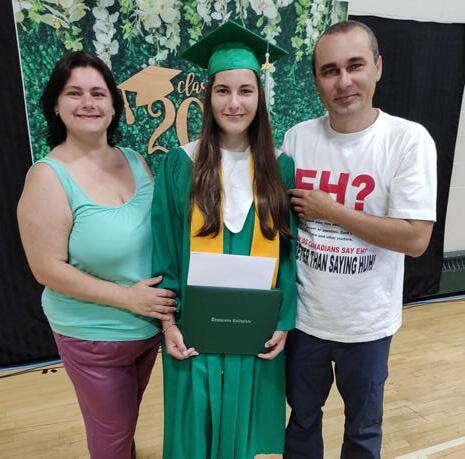
Jocelyn Castellanos, daughter of Local 4 California member Jorge Castellanos, is among the 193 students from union families to receive a 2025 Union Plus scholarship. Over 6,200 students applied for the 2025 scholarships, which range from $500 to $4,000. Jocelyn, a 2025 graduate of Garey High School in Pomona, CA, is a student at Mt. San Antonio College majoring in nursing.
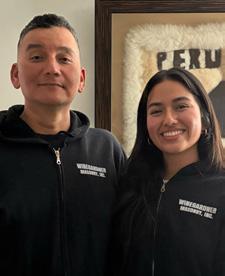
“The union means so much to my family and me. It represents hard work, unity, and the strength that comes from standing together. Growing up, I saw how the union supported my dad and his coworkers not just in their jobs, but also in giving them dignity and security. It taught me the value of community, dedication, and helping others, values I carry with me in everything I do,” Castellanos said.
“Receiving this Union Plus Scholarship is an incredible honor,” she continued. “It reminds me that all the effort, late nights, and determination are worth it, and that there’s a whole community believing in my potential. This recognition motivates me even more to achieve my dream of becoming a NICU nurse and giving back to others the same way the union has supported my family and me.”
Union Plus will begin accepting applications for the 2027 scholarship in the summer of 2026. The application and further details will be posted in the education section of unionplus.org
To read about the winners of the BAC US and Canada Bates Scholarships, see page 30.

Timothy
Jeremiah
REGIONAL DIRECTORS
NORTHEAST
Al Catalano
IU Northeast Regional Director, Albany, NY Email: acatalano@bacweb.org Office: 518-439-6080
NORTH CENTRAL
Jeremy Rivas
IU North Central Regional Director, Portage, IN Email: jrivas@bacweb.org Office: 219-248-5017
WEST
Darin Compton
IU West Regional Director, San Leandro, CA Email: dcompton@bacweb.org Office: 202-304-8582
Craig Strudwick
IU Canada Regional Director, Ottawa, ON Email: cstrudwick@bacweb.org Office: 613-830-0333

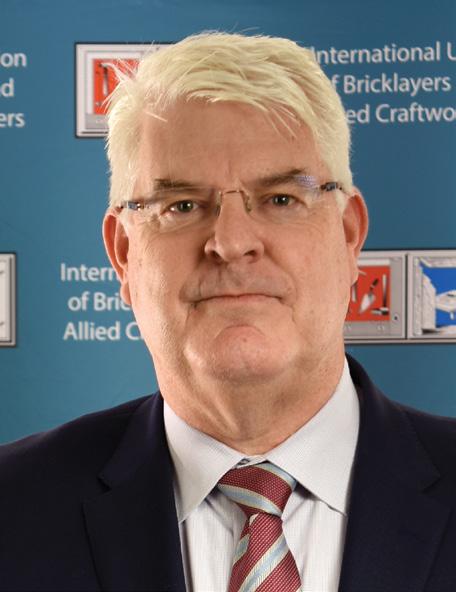
While some would seek to exploit cultural issues to distract us from our fundamental goal of lifting up workers across our industry, our shared experience as craftworkers and members of BAC is far greater than any perceived political or personal differences. This unity has always been our union’s greatest strength.
BAC is defined by a commitment to trade excellence and mutual support, upholding the belief that every worker deserves dignity and a seat at the table. This dedication is evident in our daily work on major projects like the impressive Buffalo Bills Stadium featured in this issue (pages 3–9), and through the ongoing professional development of BAC members in our training and education programs (pages 14 & 26). We see that solidarity and support reflected in our scholarship programs that help BAC families meet their dreams of higher education for their children (pages 30–33) and our Membership Assistance Program that supports BAC members in times of need (page 38).
Unfortunately, our right to band together to improve the standing of workers in our industry and our communities is under constant attack. A textbook example of this assault on workers is that of those elected leaders that promote
legislation to exploit workers by misclassifying them as independent contractors who receive neither the protection nor the benefits of lawful employment (page 17).
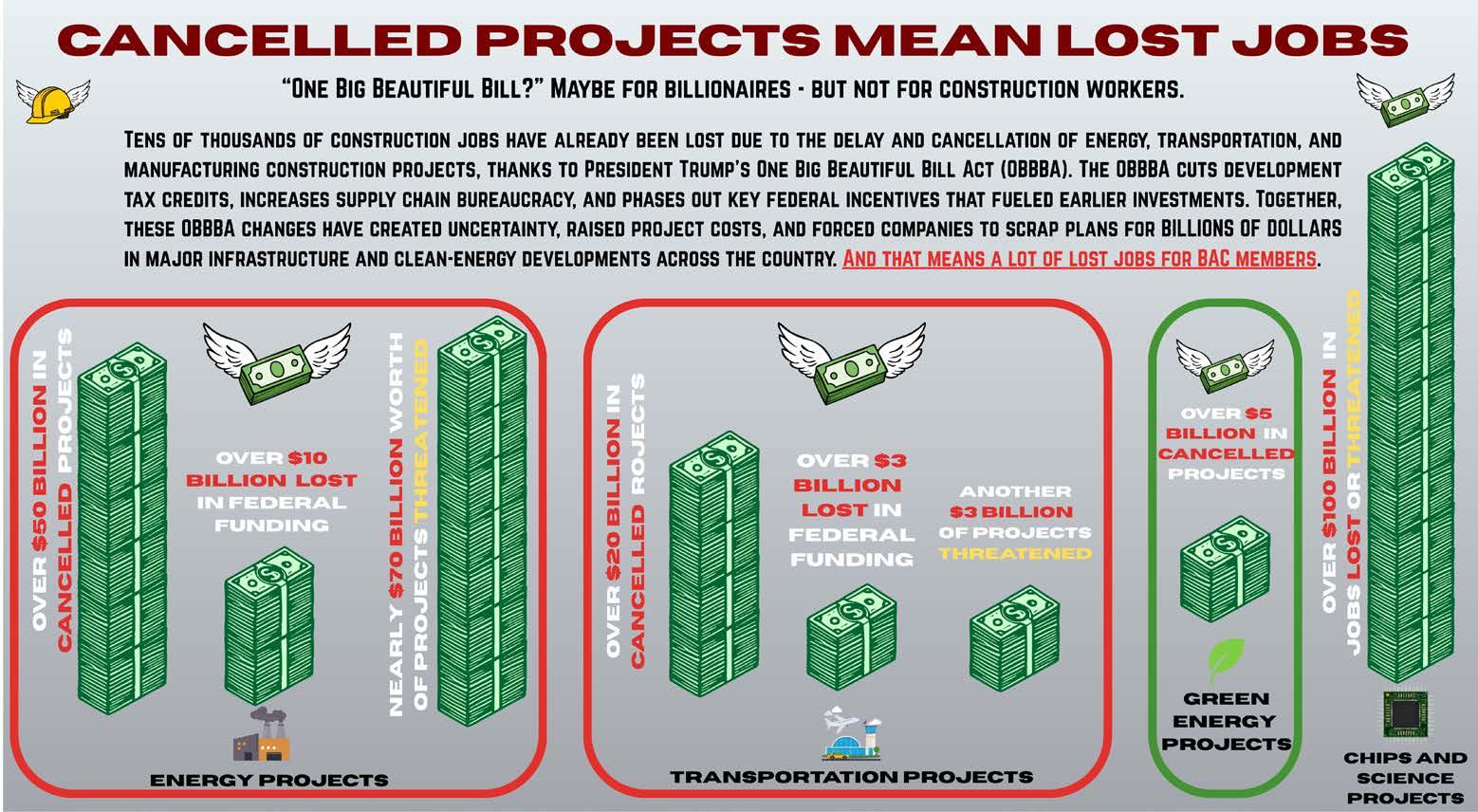
We are also witnessing an attack on workers by politicians who seek to increase our healthcare costs by shifting the burden for uncompensated care onto the backs of workers while at the same time cancelling billions of dollars’ worth of projects that sustain tens of thousands of construction jobs (pages 16 & 18). And adding insult to injury are those elected politicians that challenge the use of project labor agreements (PLA) that ensure workers receive the wages, benefits, and conditions they deserve for building projects in their local communities (page 19). However, BAC will not be deterred from pursuing our goal of justice on the job and in our hometowns.
Where anti-union forces rise up to challenge our goal of uplifting workers across our industry, we will respond. BAC delegates to the 25th LCLAA Convention (Labor Council for Latin American Advancement) in Atlanta provided a powerful example of workers speaking truth to power. Likewise, the 2025 Tradeswomen Build Nations Conference offered
compelling testimony to the power and agency that workers banding together represent (pages 10–11). And in the Bluegrass State AFLCIO President Dustin Reinstedler of BAC Local 4 IN/KY reminds us that his path to a “better life in a union” started with his journey as a BAC craftworker and leader (page 12).
The challenges we face are significant, but never insurmountable. We must reject those voices that seek to pit worker against worker by invoking cultural differences. Because when we stand together, united in purpose to advance the economic interests of all workers in our crafts, we are able change lives for the better.
Stay safe brothers and sisters.
Mientras algunos intentan explotar problemas culturales para distraernos de nuestro objetivo fundamental — fortalecer a los trabajadores de toda nuestra industria— nuestra experiencia compartida como artesanos y miembros del Sindicato Internacional de Albañiles y Artesanos Afines (International Union of Bricklayers and Allied Craftworkers, BAC) es mucho más importante que cualquier diferencia política o personal aparente. Esta unidad ha sido siempre la mayor fortaleza de nuestro sindicato.
El BAC se define por su compromiso con la excelencia en el oficio y el apoyo mutuo, y defiende la creencia de que cada trabajador merece dignidad y un lugar en la mesa. Esta dedicación se refleja en nuestro trabajo diario en grandes proyectos, como el impresionante estadio de los Buffalo Bills, que aparece en esta edición (páginas 3–9), y en el desarrollo profesional continuo de los miembros del BAC a través de nuestros programas de capacitación y educación (páginas 14 y 26). Vemos esa solidaridad y apoyo reflejados en nuestros programas de becas, que ayudan a las familias del BAC a cumplir el sueño de que sus hijos accedan a educación superior (páginas 30–33), y en nuestro Programa de Asistencia a los Miembros, que brinda apoyo a los miembros del BAC en tiempos de necesidad (página 38).
Lamentablemente, nuestro derecho a unirnos para mejorar la situación de los trabajadores en nuestra industria y en nuestras comunidades se encuentra bajo ataque constante. Un claro ejemplo de este ataque contra los trabajadores es el de aquellos líderes electos que promueven leyes para explotar a los trabajadores al clasificarlos incorrectamente como contratistas independientes, quienes no reciben la protección ni los beneficios de un empleo legal (página 17).
Además, somos testigos de un ataque contra los trabajadores por parte de los políticos que buscan aumentar nuestros costos de atención médica al trasladar la carga de la atención médica no remunerada a los trabajadores, mientras que al mismo tiempo cancelan
miles de millones de dólares en proyectos que sostienen decenas de miles de puestos de trabajo en la construcción (páginas 16 y 18). Como si fuera poco, aquellos políticos electos que cuestionan el uso de los acuerdos laborales de proyecto (project labor agreements, PLA), que garantizan que los trabajadores reciban los salarios, beneficios y condiciones que merecen por los proyectos de construcción en sus comunidades locales (página 19). Sin embargo, el BAC no se dejará intimidar en su lucha por la justicia en el trabajo y en nuestras comunidades.
Donde las fuerzas antisindicales se levanten para desafiar nuestro objetivo de fortalecer a los trabajadores de toda nuestra industria, responderemos. Los delegados del BAC en la 25.ª Convención del Consejo Laboral para el Avance de América Latina (LCLAA) en Atlanta proporcionaron un poderoso ejemplo de trabajadores que dicen la verdad al poder. Asimismo, la conferencia Las Mujeres en los Oficios Construyen Naciones 2025 (Tradeswomen Build Nations Conference) brindó un testimonio convincente del poder y la capacidad que representan los trabajadores cuando se unen (páginas 10–11). Y en la región de Bluegrass, el presidente de la Federación Estadounidense del Trabajo y Congreso de Organizaciones Industriales (American Federation of Labor and Congress of Industrial Organizations, AFLCIO), Dustin Reinstedler, del BAC Local 4 IN/KY, nos recuerda que su camino hacia “una mejor vida en un sindicato” comenzó con su trayectoria como artesano y dirigente del BAC (página 12).
Los desafíos que enfrentamos son importantes, pero nunca insuperables. Debemos rechazar aquellas voces que buscan enfrentar a los trabajadores y apelar a las diferencias culturales. Porque cuando permanecemos unidos, con un propósito común de impulsar los intereses económicos de todos los trabajadores en nuestros oficios, somos capaces de cambiar y mejorar vidas.
Cuídense mucho, hermanos y hermanas. //
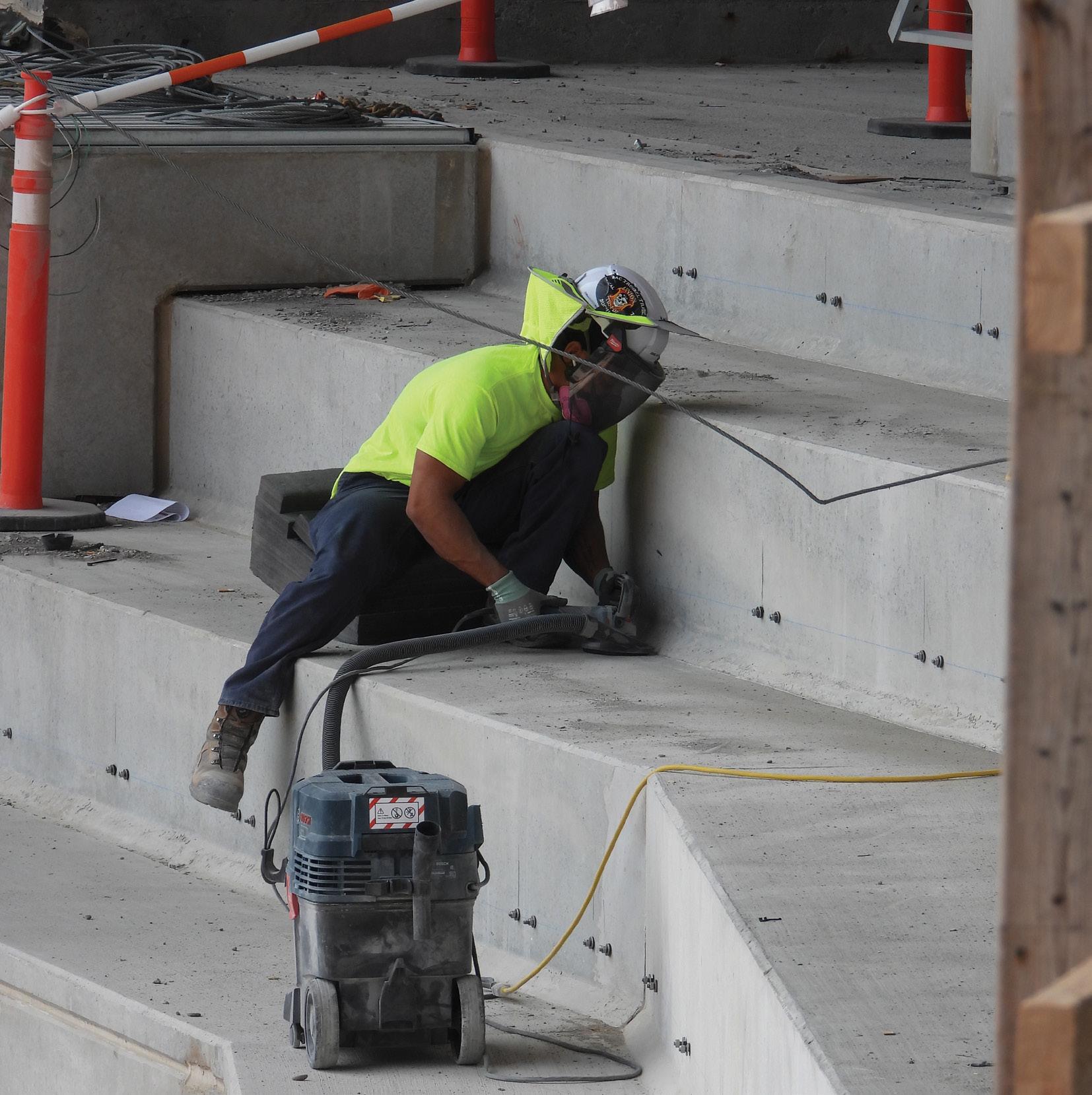
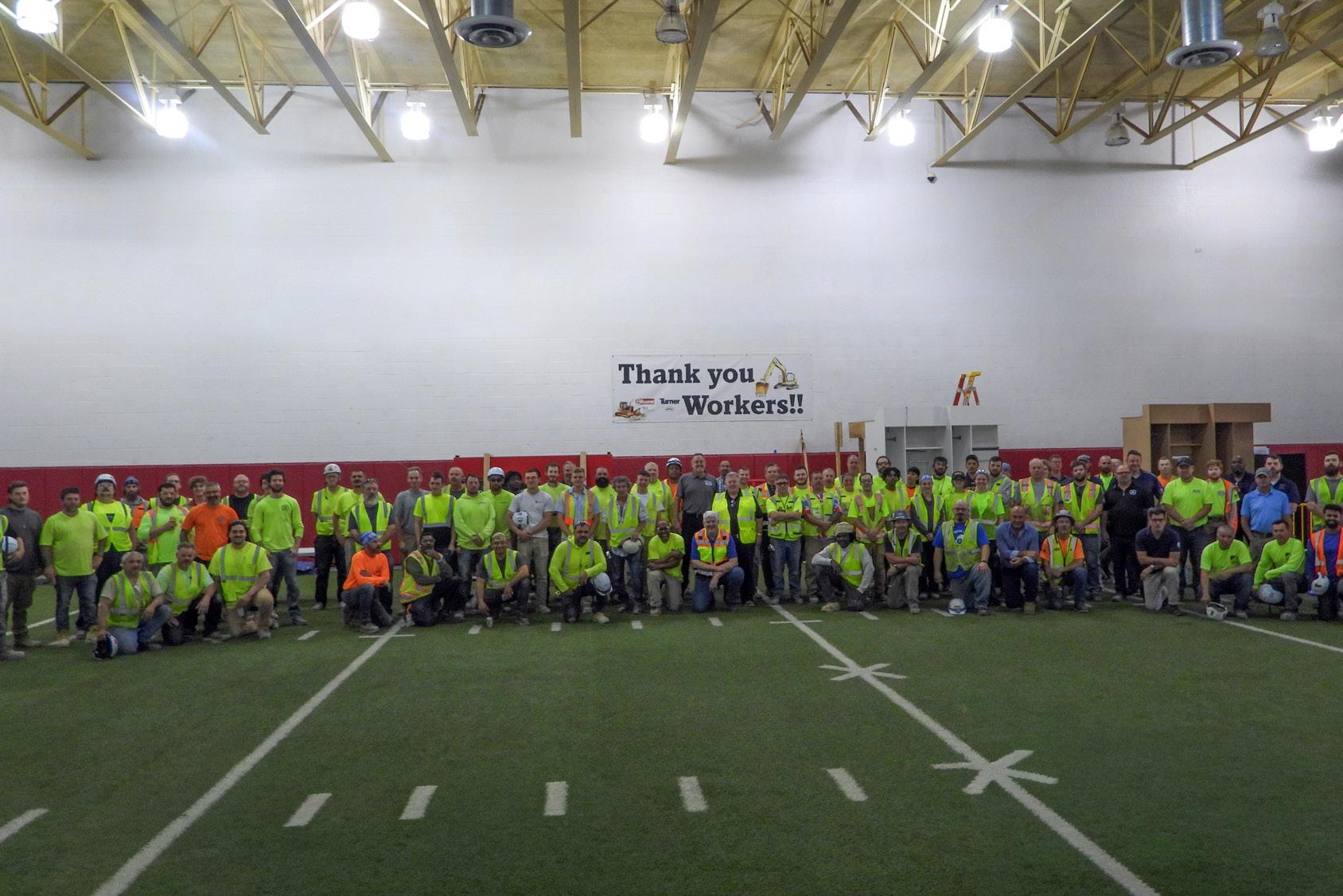
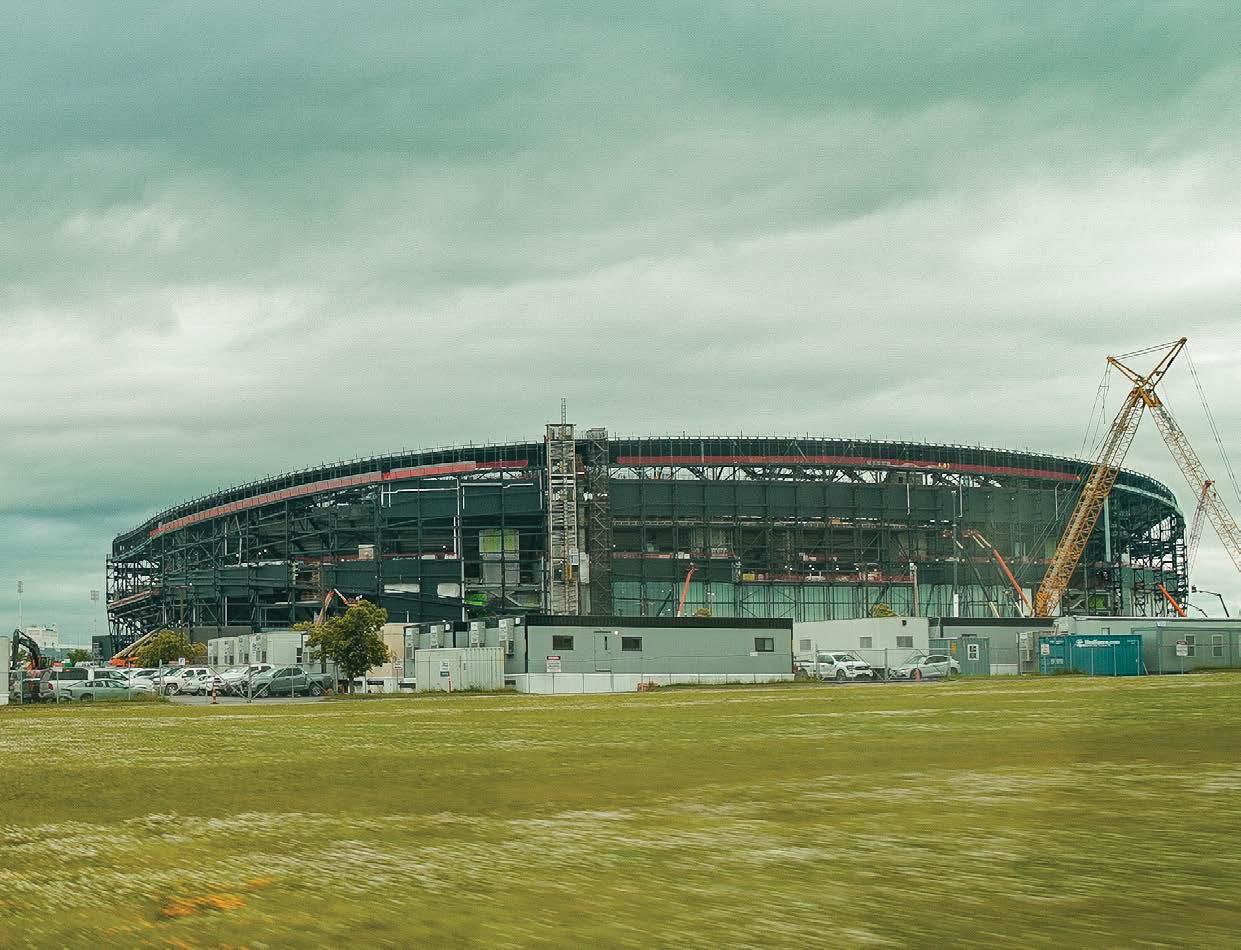
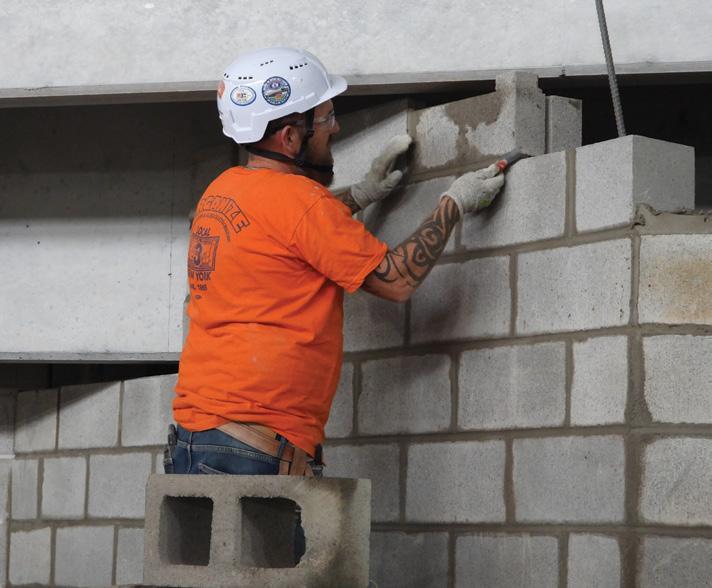
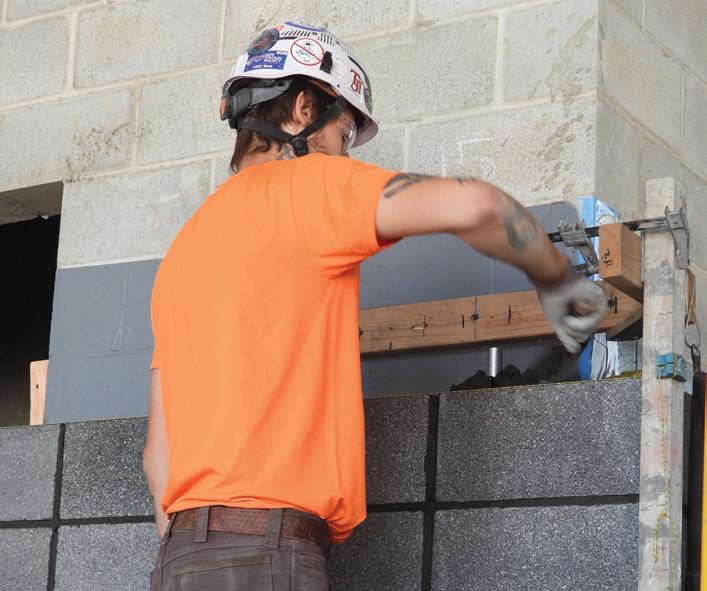
BAC craftworkers are leading the charge to complete Western New York’s highest-profile construction project — one that will be visited by hundreds of thousands of people every year, and seen by hundreds of millions more across the world on television every fall. The NFL’s Buffalo Bills plan to move into their new Highmark Stadium in 2026.
This sports arena will be state of the art — a big upgrade from their current home, which was built in the 1970s. Engineered to prevent strong Lake Erie winds from affecting on-field conditions, the stadium will have a canopy protecting a majority of seats — though not the field itself — from snow and rain. These features will also add to its ability to hold major concerts and other events.
At a ceremony in April celebrating the raising of the final beam for the stadium, Buffalo Bills team owner Terry Pegula hailed the workers on the project, saying, “Today is not about Terry Pegula, [New York Governor] Kathy Hochul, [Erie County Executive] Mark Poloncarz, or [NFL Commissioner] Roger Goodell — today is about you hard-working men and women.”
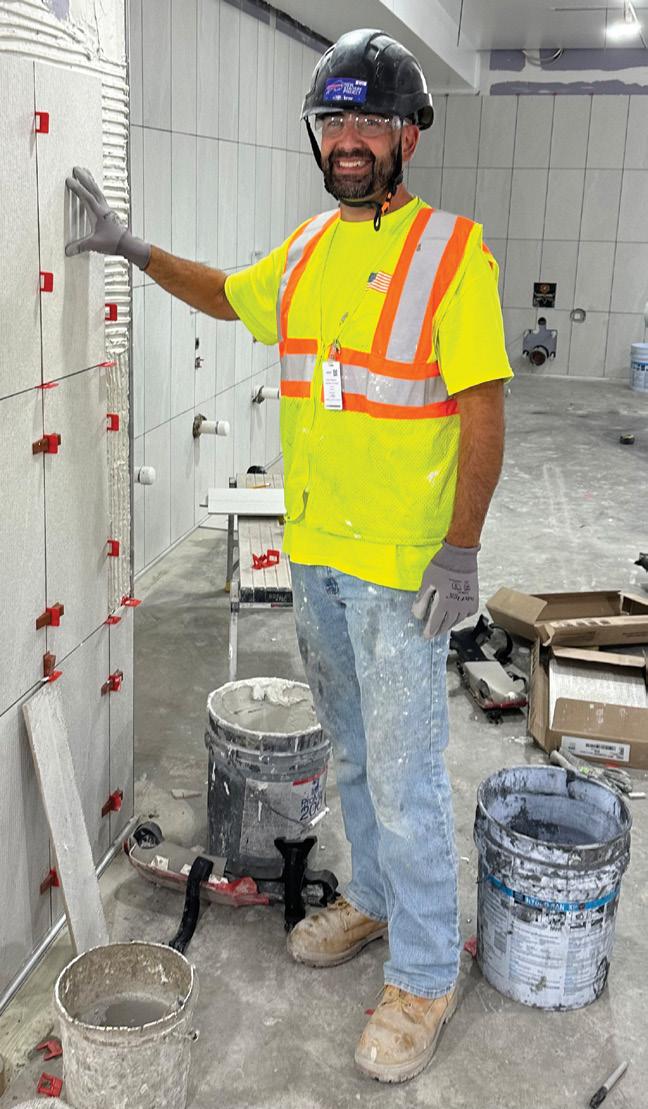
For Tom Gilmore, a foreman for Tiede Zoeller Tile Corp. — who previously worked on the Buffalo Sabres hockey arena — this has been another opportunity to build a Buffalo icon for a Pegula-owned team. “I am thankful to have been a part of Mr. Pegula’s vision for our community,” he said.
“We’re season ticket holders for the other stadium,” Local 3 NY member Brianna Witul said. “It’s just cool being part of something that you know is going to be around for a bit, and that your family and people you know are going to go to.”
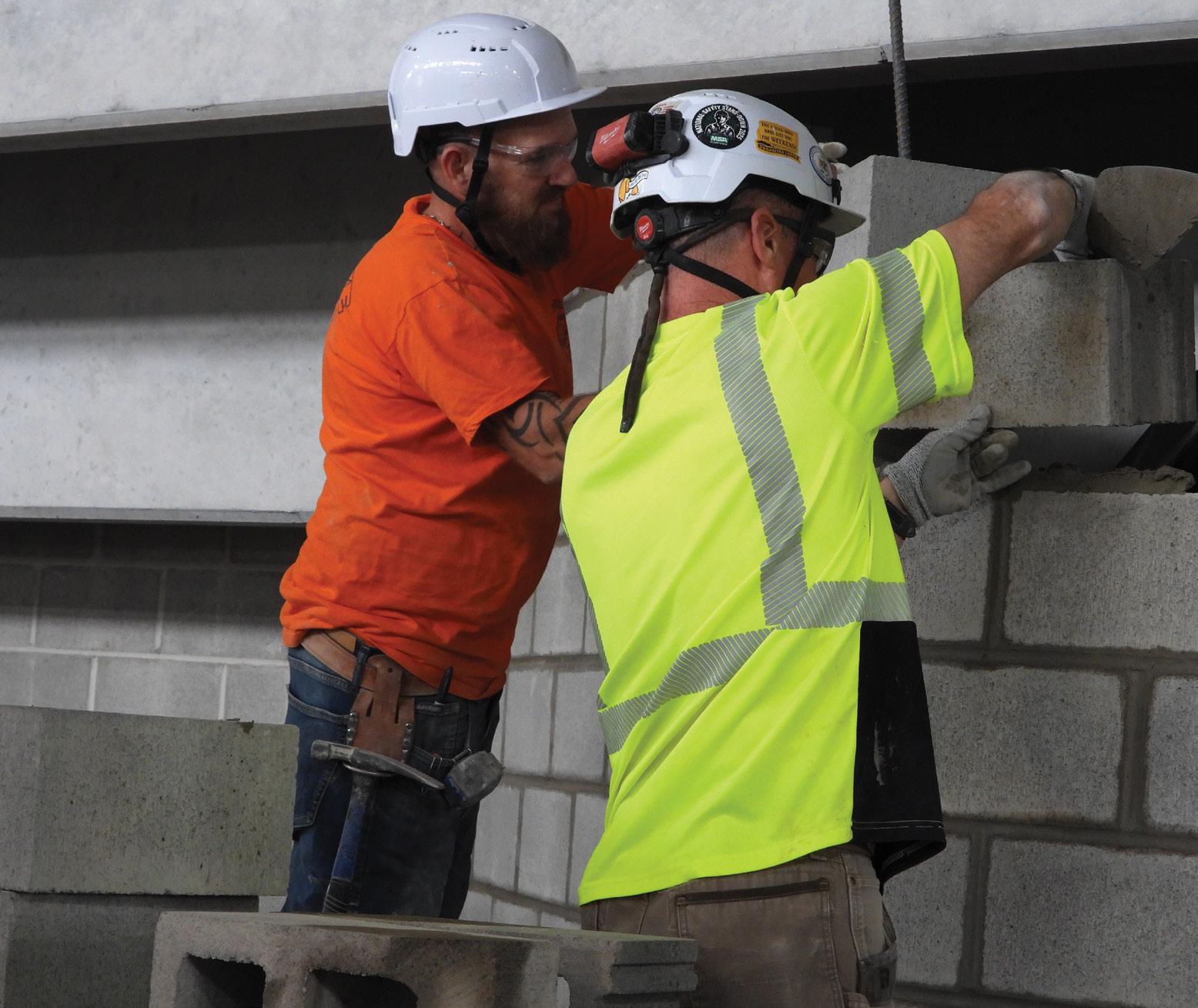
The project’s immense scope is a constant challenge for the workers — even moving from one spot on the jobsite to another location in the stadium can be time-consuming. As all the contractors involved race to finish in time for the 2026 NFL season, BAC members are constantly working around other trades.
“It’s fast-paced, a lot of people working on top of each other,” Drew Christensen, a BAC member of almost 15 years, and a foreman for Thomas Johnson Inc., explained. “So, there’s a lot of getting along and working with other trades, as with your own members.”
In his role as foreman, Christensen balances active supervision of his larger-than-usual team and
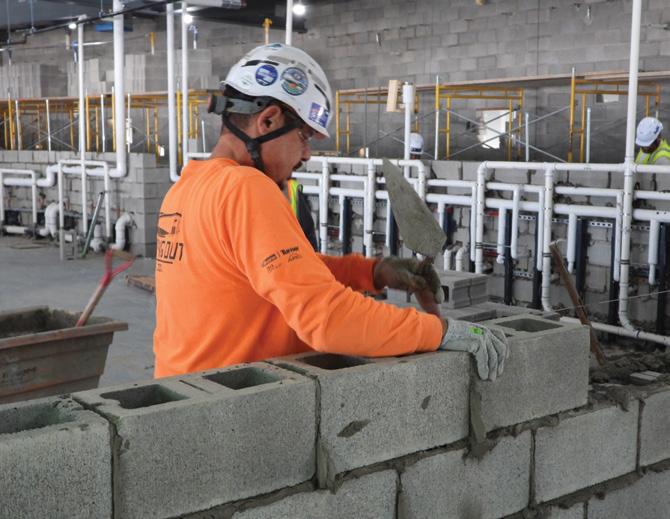


his own hands-on work on the layouts. “There’s a lot of elevator shafts, a lot of stairwells, so my role as a foreman is I have to go ahead of the men and women and lay the walls out, and get the rebar drilled into the floor,” Christensen said. At the same time, “you have to walk from area to area to area, checking on your team and make sure that everything’s being done right, because you don’t want a wall to be torn down.”
As work moved from the mezzanine level to the 300 level, “everything changed,” Christensen continued. “There are different rods, different depths for drilling –which is understandable, but you have to pay constant attention, so everything’s done to spec.”
Jessica Weber, a member starting her fifth year and journeyed out last June, divides her time between firestopping, installing air vapor barrier, and caulking the joints where the precast comes together in the stadium. “If another trade gets into the spot first and they put stuff up in the ceiling, now we have to get our lift up in there, and that’s really tricky,” she said.
As her team works around other trades, Weber relies on her BAC training to “manage and figure out, ‘OK, this is what’s safe and I can still get my job done.’”
The unavoidable challenges of coordinating with other trades would be far more imposing were it not for the project labor agreement (PLA) between New York State, the Bills, and the Buffalo Building Trades. “The PLA ensures that all the trades on the stadium site are union, and that all the craftworkers all have union safety and apprentice training,” remarked BAC Local 3 New York President Rick Williamson. “Without that guarantee, it would be almost impossible to complete a project of this complexity safely and on time.”
The size of the project has also meant opportunities for apprentices. Many have been able to work already at the site for over a year, with almost another until completion.
“I think this job being so big, I have a lot more opportunity to get on the wall than I would if I was on a


smaller job,” said Brandon Sweat, a first-year apprentice. “I think that I’ve really gotten a head start on my career with the company. I’m really learning a lot here.”
“A lot of the apprentices are getting laying time,”
Christensen said. “When you come in as a first-year, you normally don’t see a lot. So, I tell them, ‘take it when you can get it, and if you shine, you’ll be laying units and you’ll progress.’ They’ve gotten to experience every aspect of the trade.”
“It has been good to see the young up-and-comers,” Christensen continued. “They are going to make
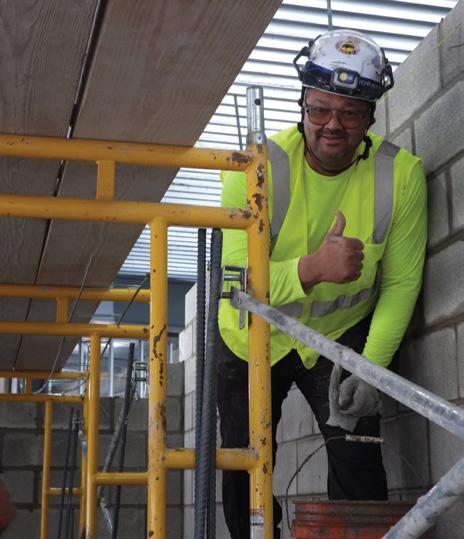

great masons. This job will boost their confidence and keep pushing them.”
Even for the journey workers, there is always something to learn. Weber was excited to experience her first opportunity to install vapor barrier. “The other workers here have been great, explaining stuff to me and how to do it the proper way,” she said.
Tile foreman Gilmore said that this project had been a chance to see how far Brianna Witul — a craftworker he first met as an apprentice — has come. Now in her 12th year as a BAC member, her first-ever job was
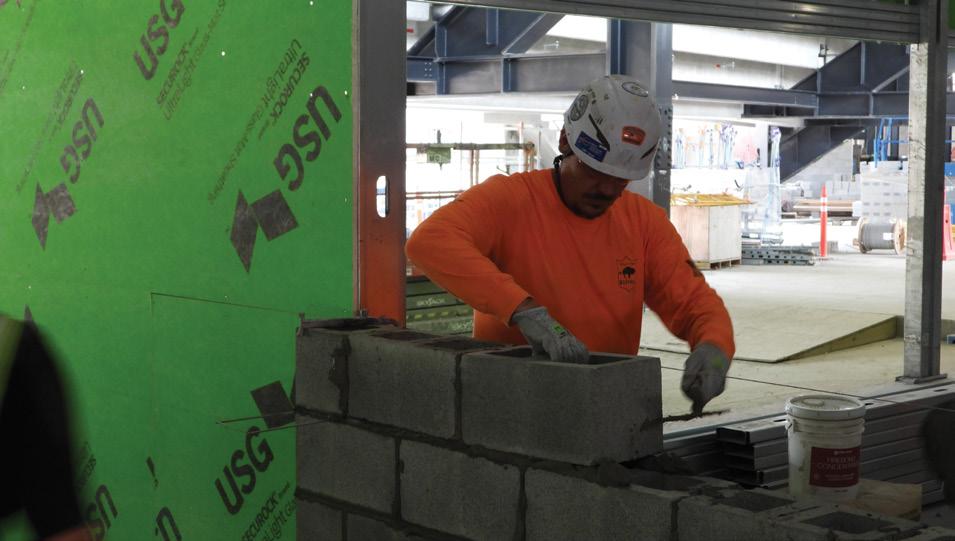
working under Gilmore on the Sabres stadium. “She’s come a long way,” he said with a smile. “She’s setting tile now. She’s moved up into the mechanic position.”
“My son’s working the job now too,” Gilmore said proudly. “He just started out as a journeyman finisher.”
This job has taught even a veteran foreman a thing or two. “I’m 50 years old, I’ve been doing tile work for 33 years, and just recently I had to learn to use a smartphone and how to use a tablet and emails and attach pictures ... things like that,” Gilmore explained. “So even me being an old dog, I still have to learn new things.” He’s had good teachers, though. “I taught these younger guys how to put tile and grout, and now they’re the ones teaching me how to use a smartphone.”
There’s no question that this is a special project, for the BAC craftworkers and the entire city of Buffalo.
“It’s kind of a bucket list thing for me to work on a professional stadium of any kind,” Josh Burns, a 25-year member from Local 3 Iowa.
“When am I ever going to get to work on another project like this?” Jessica Weber exclaimed rhetorically. “Something so big that people all around are going to be coming to see this place?”
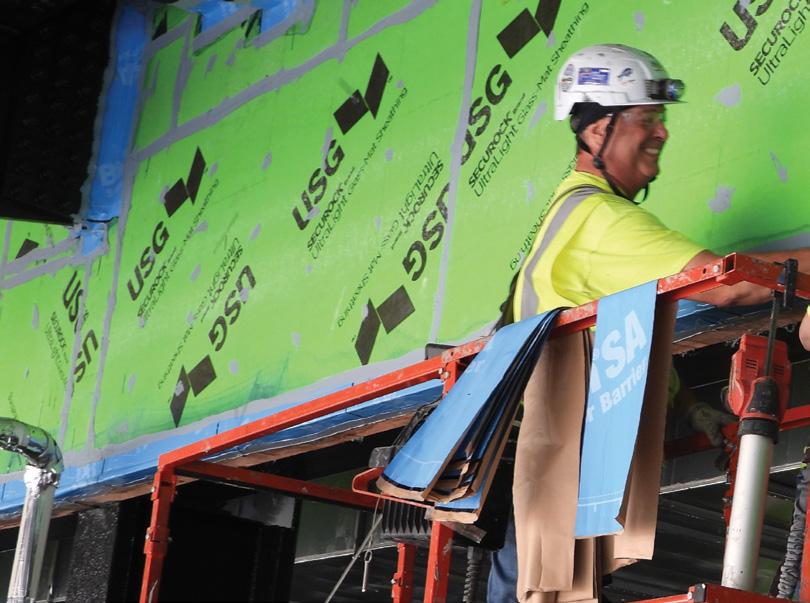
“It’s not just me, it’s my kids, they see it,” Weber added. “We drive by, and they go ‘Mommy, that’s your work, that’s your work!’ Seeing how excited they get about it, and telling other people about it, that’s cool that they know that I built a part of this.”
Christensen said he tells friends who ask about the job, “it is exciting, but you have to have the mindset that it’s just another job.” At the same time, “It’s pretty cool to tell people that yeah, I worked on the Bills

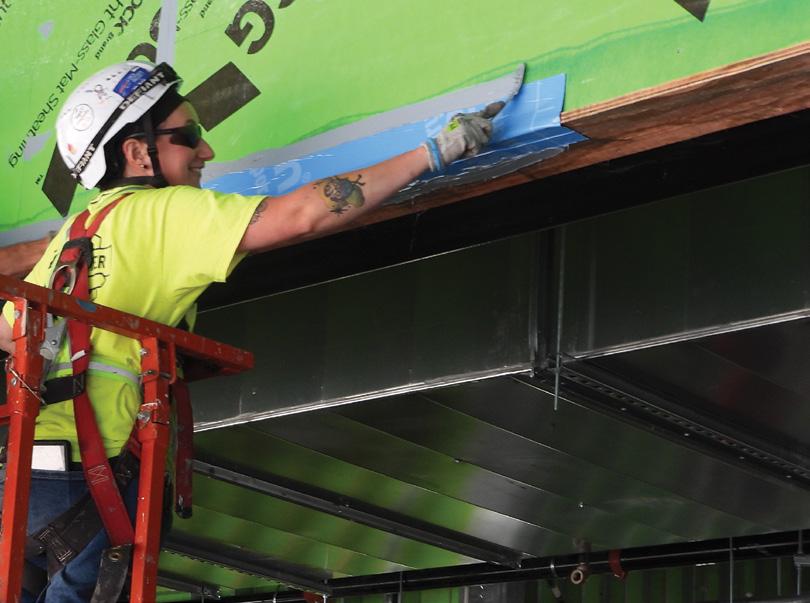
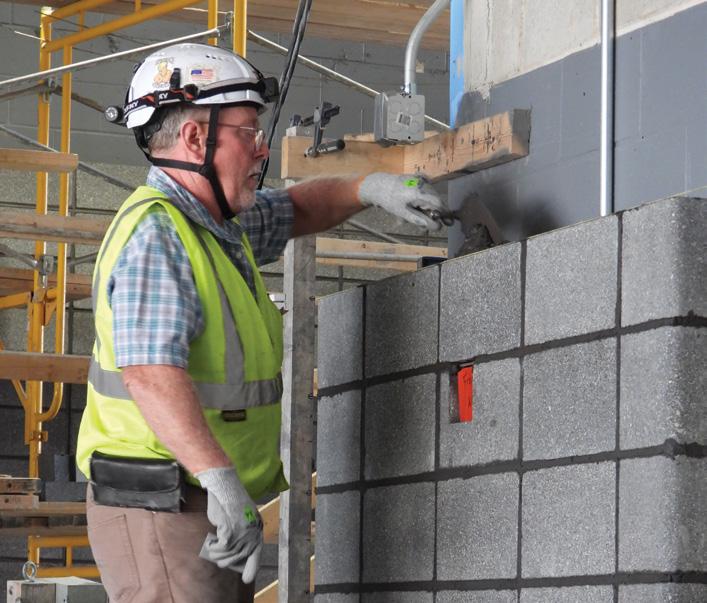
stadium, I’ve been there. And it will be cool down the road, that I was a part of that.”
“When the Buffalo Bills step onto the field at the New Highmark Stadium in 2026, we’ll know that it wouldn’t have been possible without the skill and sweat of BAC members,” Williamson said. “In addition to Local 3 NY members, we had numerous travelers from other Locals come in to help meet the contractor’s needs and hit the aggressive schedule. We thank
those members who were able to come to Buffalo and work on this magnificent stadium, and the other local leaders for sparing them.”
“To have skilled craftworkers available to come like this is a testament of the training, commitment, and leadership throughout the BAC,” Williamson continued. “Every BAC member who put in hours can be proud that their hard work and dedication have been part of this iconic project — go Bills!” //
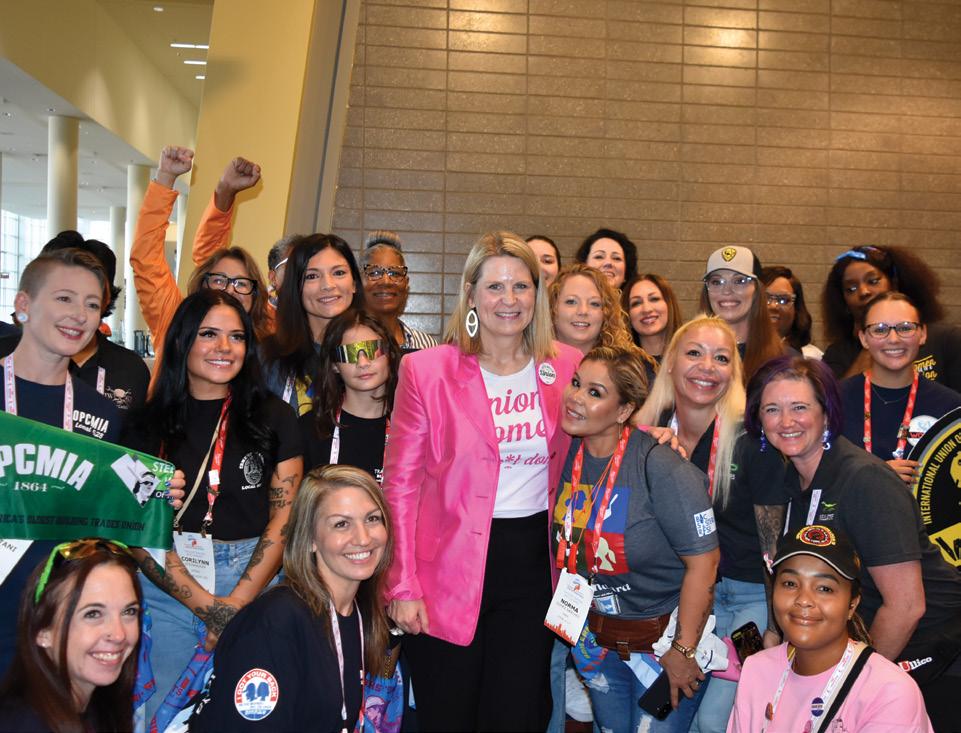
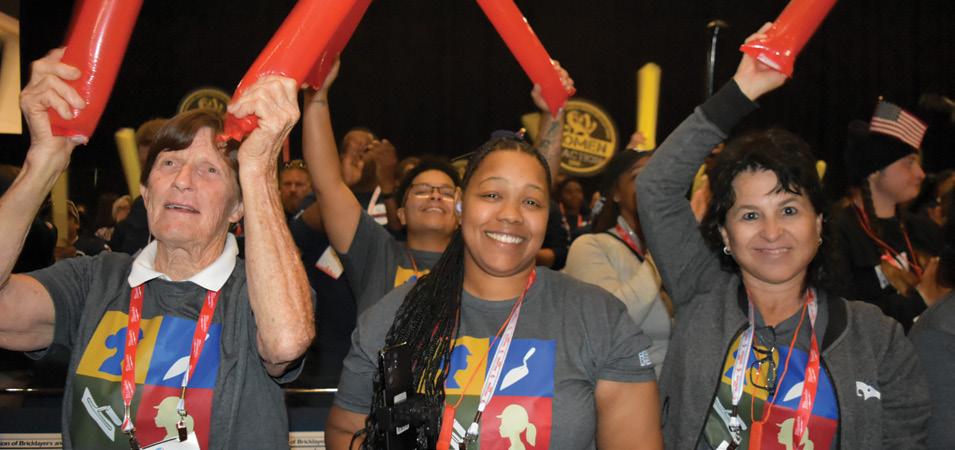
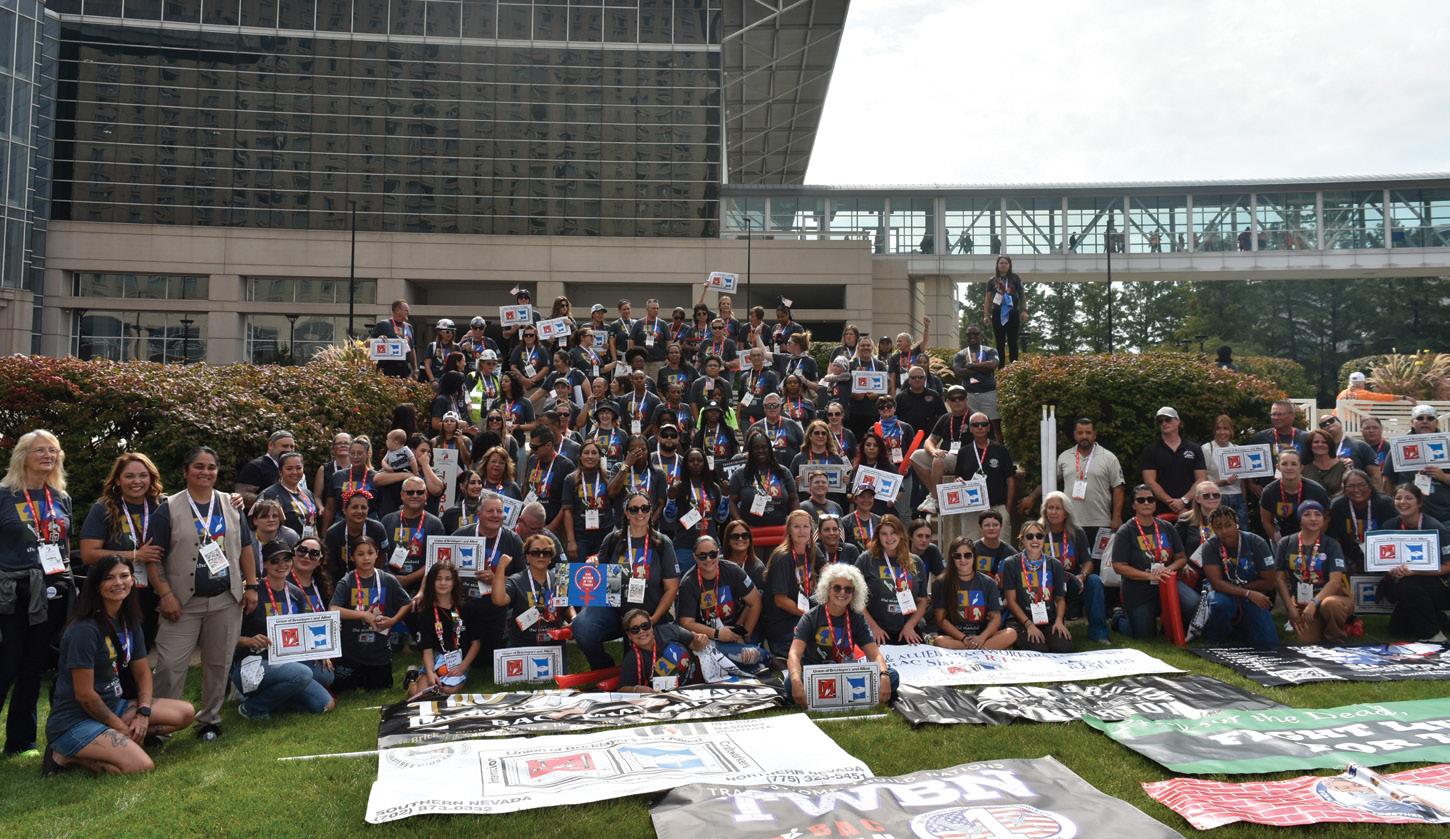
The 2025 Tradeswomen Build Nations (TWBN) conference, the largest event for women in construction, took place in Chicago last September. The North America’s Building Trades Unions (NABTU) event again set attendance records — drawing over 6,000 tradeswomen, labor leaders, government officials, and industry heads from across North America. As in previous years, the Conference featured a variety of programming, including plenary sessions, workshops, panels, and the annual TWBN banner parade, creating an energizing and empowering atmosphere for all.
As the conference-wide attendance has grown, so has the BAC delegation — showing the increased solidarity, participation, recruitment and support for women in the trades. “Attending an event like this gives the tradeswomen the opportunity to see that they are not alone in their field,” said BAC’s Director of Health and Safety Liliana Calderon Castillo. “It makes tradeswomen and their contributions visible to everyone who attends, and everyone who watches the parade march by.”
The conference featured high-profile speakers, including NABTU President Sean McGarvey,

The International Union encourages all BAC Sisters to join our R.I.S.E. (Resource for Inclusion, Success and Empowerment) group. For information on BAC Sisters R.I.S.E., and to sign up for their monthly virtual educational forum, email bacsistersrise@gmail.com. Scan the QR code for the link to the private Facebook group.
Governor of Illinois JB Pritzker, and AFL-CIO President Liz Shuler, who is herself an IBEW member and fellow tradeswomen.
For sisters like Local 8 Southeast’s An’Jel “Alyx” Hilton, who was attending her first TWBN,
excitement was in the air. “I loved being surrounded by so many skilled and driven women from across the trades,” she said. “It’s powerful. It reminds me that even though our field is challenging, we’re a part of a community.
That community gives me confidence and reassurance that I belong here.”
For other sisters, such as Local 2 Michigan’s Michele Riley, attending TWBN has become a yearly tradition. “This was my seventh conference! My first one was 2014 in Sacramento,” she said. “I love to go and experience the sisterhood and solidarity.”
“Being in a room with thousands of other women helps break the sense of isolation many may feel on job sites,” Riley continued. “Being one of the only women on the job for the last 25 years, I know the importance of knowing you are not alone!” //
In November, the Kentucky AFL-CIO held their 36th Biennial Convention in Bowling Green. At the event, Kentucky AFL-CIO President, and 20-year BAC member, Dustin Reinstedler was re-elected.
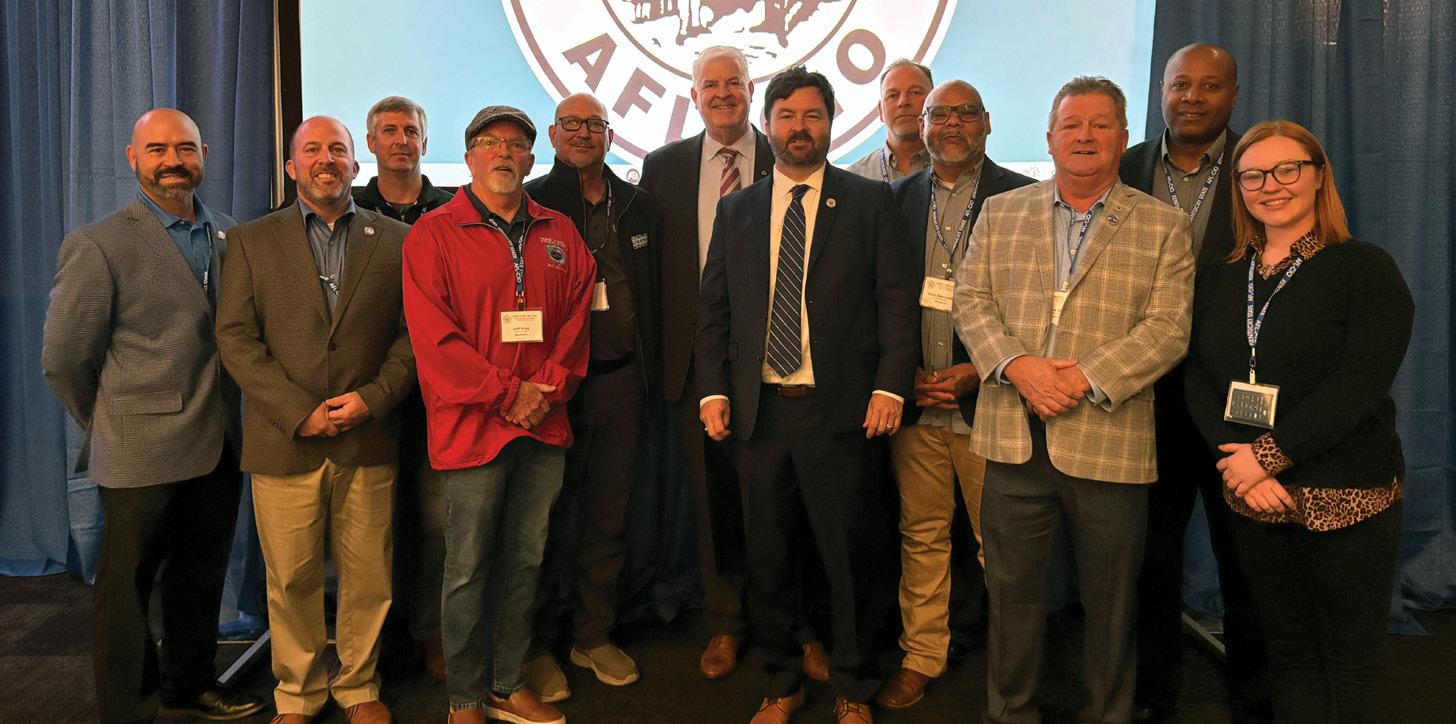
Brother Reinstedler began his apprenticeship with BAC Local 4 IN/KY in 2005. He quickly became involved in local union meetings — becoming Recording Secretary for the Louisville Chapter when he was only a 2nd year apprentice. Upon completion of his apprenticeship, he started supervising large industrial projects and joined his local as a Field Representative in 2014.
In 2020, Brother Reinstedler was elected President of the Kentucky State Building and Construction Trades Council, representing tens of thousands of tradespeople in the state. In 2023, he was elected President of the Kentucky AFL-CIO.
“The BAC means everything to me, and I’m not shy about that pride,” Reinstedler said. “It is a living testament to how much better
life is in a union. Through my union training and on-the-job experience, I gained confidence that has shaped every part of my life. I walk confidently knowing that BAC helped build America — not only its infrastructure, but its standards of living… I know that when I look back at the end of my career, getting involved with BAC will stand out as one of the most important decisions I ever made.” //
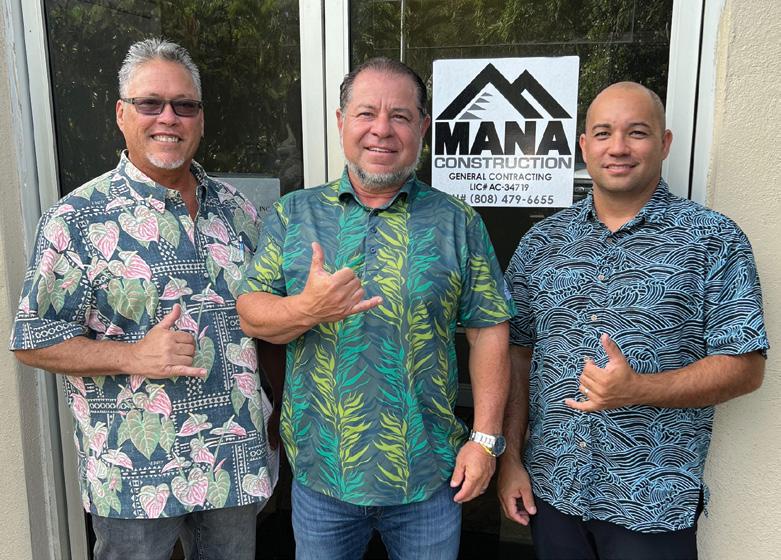
Akey reason contractors look to sign with the BAC is to grow their business, expand their work opportunities and offer more services. In Hawaii, Mana Construction wanted to start ramping up their bids and get more projects across the islands.
Seeing BAC members out in the field, the company knew that signing with the union would give them peace of mind that their full-time workforce would be the quality their clients expected.
“Mana has a lot of work, and wanted to scale up even more,” said Local 1 Hawaii Business Manager / Financial Secretary-Treasurer Patrick Coronas. “They could not do that with their current business model for getting workers, so they realized the clear answer was to sign with the BAC.”
“Mana’s ownership already understood our organization, our training standards, and the level of work our members deliver,” Coronas continued. “We met with them to assure them they would get the support they needed from the union, and the owner signed shortly after.” //
Michael Arnold, a 67-year member of Local 5 OK/ AR/TX, was recently recognized by the AFL-CIO Housing Investment Trust (HIT) for his commitment to the restoration of the Granada Senior Apartments in San Antonio, TX. The Granada’s Michael M. Arnold Ballroom was dedicated in June 2025. Brother Arnold worked at HIT for 25 years and, as a founding father, was instrumental in making the HIT what it is today.
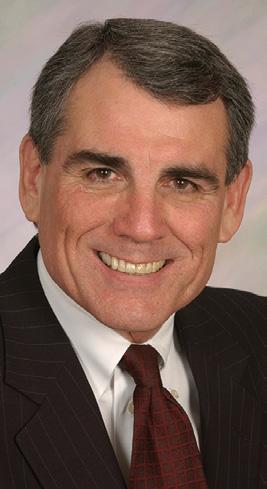
HIT, funded by workers’ capital, provides union-built affordable housing across the US. Arnold also worked at the AFL-CIO’s Human Resources Development Institute. Throughout his career, he promoted union jobs, affordable housing, living wages, and retirement security. Brother Arnold is a labor leader whose legacy will inspire generations to come. //
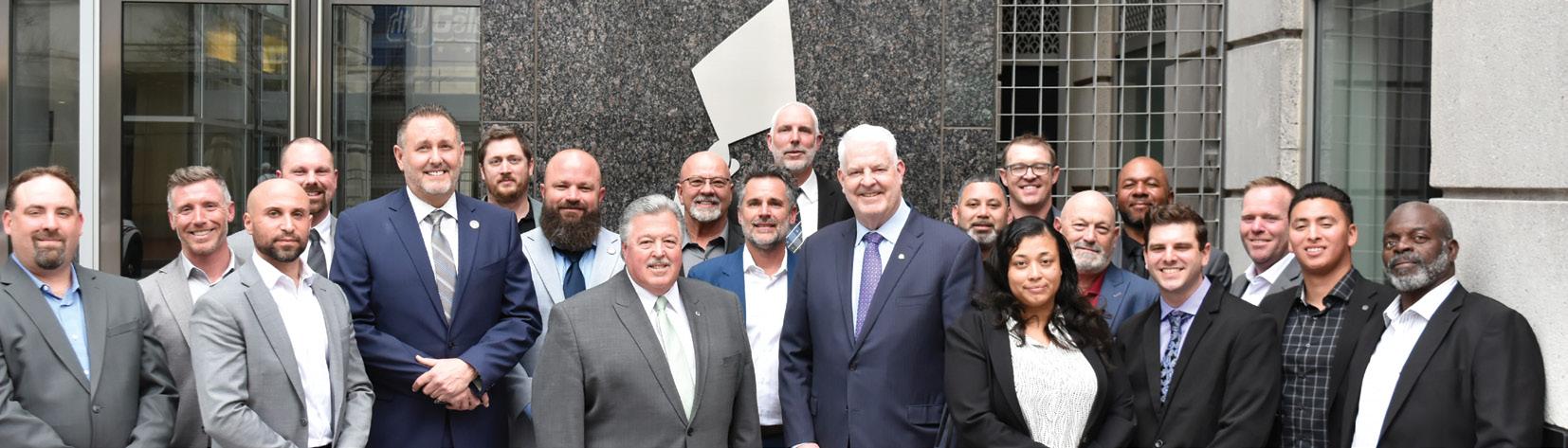
Thirty-four local leaders from across the US and Canada participated in the International Union’s 2025 New Leaders program, held during two separate sessions in Washington, DC.
A fundamental education program for over 50 years, the training offers a comprehensive orientation to the IU’s programs, resources, and personnel for recently appointed or elected Local/ADC officers and staff.
“The New Leaders training gave me a deeper understanding of leadership, communication, and the importance of staying active and engaged in our union,” reflected Local 7 NY/NJ Field Representative Ramon Melendez.
“President Driscoll’s message of passion, planning and persistence was an empowering send-off. These are essential requirements for building and strengthening the health of not only our Locals, but collectively as an International Union and its importance in the industry we love so much,” shared Local 1 MN/ND/SD Secretary-Treasurer Nicholas Musech. //
Top: The March 2025 class of New Leaders Program graduates. Left to right: Frank Andreas of WI ADC, Donnie Joswick of Local 1 PA/DE, Mike Fasulo of NJ ADC, Nick Peters of Local 1 AB, BAC Executive Vice President Keith Hocevar, John Walker of 1 SK, Jeremiah Schmitendorf of ADC 1 of IL, BAC Secretary-Treasurer Jerry Sullivan, James Giddens of 8 IL, George Dych of Local 1 PA/DE, Aaron Forck of Local 15 MO/KS/NE, BAC President Tim Driscoll, Ramon Melendez of Local 7 NY/NJ, Andy Bradley of Local 2 MI, Nicole Ohmer of Local 23 OH/WV/KY/MD, Scott Ansell of Local 23 OH/WV/KY/ MD, Otis Peebles of Eastern MO ADC, Kyle Moreau of Local 7 CN, John Brassow of Local 23 OH/WV/KY/MD, Victor Torres of Local 4 CA, and John Moss of Local 8 SE.
Bottom: The June 2025 class of New Leaders Program graduates. Left to right: Cory Willeck of Local 1 MN/ND/ SD, Jose Serratos of Local 2 MI, Greg Pudlo of ADC 1 of IL, Stephen Carney of Local 1 CT, Mason Carrican of Local 3 NY, Michael Beamer of Local 3 NY, Drew Fernandez of Local 23 OH/WV/KY/MD, BAC Secretary-Treasurer Jerry Sullivan, BAC Executive Vice President Keith Hocevar, BAC President Tim Driscoll, James Millard of Local 1 PA/DE, Nicholas Musech of Local 1 MN/ND/SD, Eugene Findley of Local 1 CT, Anthony Merkel of Local 1 PA/DE, Joshua Harrison of Local 23 OH/WV/KY/MD, Joseph Harrison of Local 23 OH/WV/KY/MD, Thomas Dieringer of Local 23 OH/ WV/KY/MD, Ryan Harmon of Local 2 MI, and Michael Soltis of Local 23 OH/WV/KY/MD.

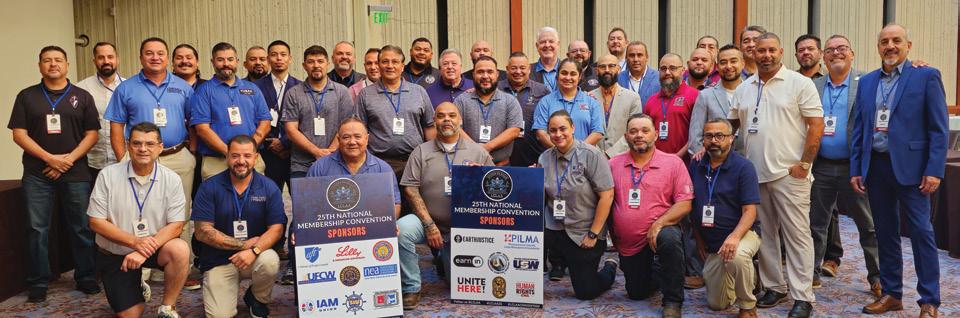
Forty local union officers and international union staff from across the United States attended the Labor Council for Latin American Advancement’s (LCLAA) 25th National Membership Convention, held over the summer in Atlanta, GA. The theme of the Convention was “United We Stand: Construyendo Puentes, Rompiendo Barreras y Protegiendo Nuestro Legado.”
Delegates heard from a range of speakers, including AFL-CIO Secretary-Treasurer Fred Redmond, American Federation of Government Employees President Everett Kelly, American Federation of Teachers President Randi Weingarten, and Service Employees International Union United Service Workers West President David Huertas. Delegates participated in a variety of workshops, including Building an Inclusive and Powerful Union, A Living Wage for All, Systems Thinking for Union-Led Transformational Change, Know Your Rights, and more.
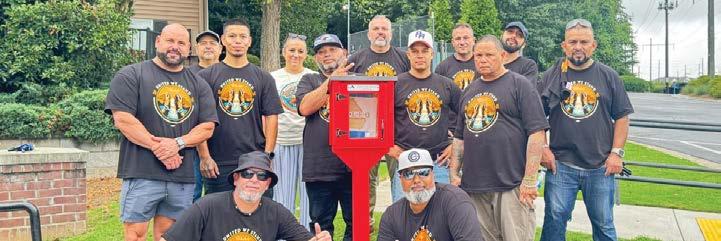
During LCLAA’s Day of Action, BAC delegates built six community libraries in a Latino neighborhood to promote bilingual literacy and strengthen Latinos’ collective unity.
LCLAA welcomed three new chapters during the Convention, including the Louisville Kentucky Chapter, which Local 4 IN/KY

Organizer Rick Hernandez helped organize. “The LCLAA Convention was a powerful reminder of the strength we carry when we come together with shared purpose,” Hernandez shared. “The formation of the Louisville LCLAA Chapter came from that same spirit. We saw a need to create a space where
Latino and Latina workers in our region could organize, advocate, and be heard.”
“It’s about amplifying voices that have too often been overlooked,” Hernandez continued, “building a foundation for longterm change — rooted in solidarity, dignity, and action.” //
On November 12, 2025, President Trump signed a bill ending the longest federal government shutdown in history. Much of the debate surrounding the 43-day shutdown was focused on the continuation of the Affordable Care Act (ACA) subsidies. ACA tax credits are a form of financial assistance that can help lower the cost of insurance for eligible individuals and families who purchase coverage through the Health Insurance Marketplace (or Exchange).
The ACA established exchanges where individuals without employer-based insurance coverage can purchase health insurance. The ACA also provided tax credits to partially cover the premium costs for enrollees, paid on a sliding scale based on income.
These tax credits were enhanced by the American Recovery Act (ARA) and the Inflation Reduction Act (IRA)and expired at the end of 2025.
On December 18, Congress adjourned for the New Year with no solution, dramatically increasing the healthcare premiums for the 24 million Americans who purchase their insurance on the Exchange. The Urban Institute estimates that the lowest income individuals will see their premiums quadruple in
cost. As a result, nearly 5 million Americans will no longer be able to afford to keep health care coverage.
Since hospitals and other health care providers are often required to provide care to uninsured patients, the cost of the increase in uncompensated care will impose a burden on the health care system across the board. As a result, hospitals will be under severe financial stress. They may be forced to lay off workers or even shut down facilities. In
Shuler continued to explain that if the Trump administration and their Congressional allies did not extend the credits “179 million workers with employer-based insurance will be forced to pay more for worse care.”
“This is an issue that effects everyone,” President Driscoll said. “Congressional inaction will force BAC health plans to shoulder rising costs. As a result, local negotiators will be stuck shifting money away
“When working people lose affordable coverage, local clinics struggle, rural hospitals face even greater financial pressure, and the entire community loses access to care. This puts working families living in these communities at risk.”
addition, costs will rise for those with insurance, leading insurers to increase health care premiums for everyone, including BAC’s own Taft-Hartley health care plans.
“Working people are already being crushed by rising grocery costs, rent and electric bills,” said AFL-CIO President Liz Shuler.
“The last thing we need is for our health care costs to spike even further because Washington politicians count not solve a crisis of their own making.”
from worker raises to maintaining healthcare coverage.”
“In addition, these spikes in health care costs will be felt by BAC members across their communities, especially in rural areas,” President Driscoll continued.
“When working people lose affordable coverage, local clinics struggle, rural hospitals face even greater financial pressure, and the entire community loses access to care. This puts working families living in these communities at risk.” //
Scan the QR code to watch the Senate Committee Hearing
In July 2025, the Senate Health, Education, Labor and Pensions (HELP) Committee held a hearing about the effect of “independent contractors” on the general workforce structure, including employee-paid vs. employer-sponsored benefits. It was held to discuss further proposed legislation, the Unlocking Benefits for Independent Workers Act, proposed by GOP lawmakers that, as of January 2026, would significantly add to the problem of worker misclassification. President Driscoll testified to the committee about the harm the proposed legislation would cause to American workers.
“Misclassification of workers as independent contractors is
rampant in the construction industry. It provides low-road employers the ability to mistreat workers as contractors, deny workers the essential protections afforded to employees, and deprives state and local governments of the tax revenue that such employment should generate,” said President Driscoll in his prepared testimony. “The Unlocking Benefits for Independent Workers Act would only accelerate this insidious race to the bottom by providing such unscrupulous employers a ‘safe harbor’ under all federal laws.”
“Rather than spend time on disingenuous efforts such as these, Congress should instead pass the Protecting the Right to Organize


(PRO) Act so that all working people have the freedom to join together and negotiate with their employers for better wages and working conditions,” President Driscoll continued. He went on to state how the PRO Act would address “real policy solutions to challenges that face American workers today.” //
Two newly announced Project Labor Agreements (PLAs) with the Building & Construction Trades Council of Greater New York and Vicinity (BCTC) will create more job opportunities and ensure fair wages and benefits for members of the New York building trades unions, including thousands of BAC brothers and sisters.
The agreements, covering more than $7 billion in city projects, will include new construction,
renovation, and rehabilitation of city-owned buildings and structures, ranging from schools to water treatment facilities and libraries.
Jack Argila, President of BAC Local 1 New York, said that these PLAs not only create decent jobs for skilled building trades workers, but also ensure that projects are completed safely, on schedule and within budget. “Local 1 New York stands with the BCTC and
city officials to support the new PLAs,” Argila said.
“The agreements reflect our strong partnership with the city and our dedication to building stronger communities together.”
The agreements will also expand access to union apprenticeship programs through community hiring requirements.
“Our apprentices in tile, marble, and terrazzo have a path to a stable career, health insurance, pension, and competitive wages without college debt,” William Hill, President of BAC Local 7 New York/New Jersey, said. “Additional apprenticeship opportunities provided by these agreements will ensure a pipeline of highlytrained, skilled, BAC workforce of the future.”
IU Secretary-Treasurer Jerry Sullivan, a New York City native and former President of Local 1, welcomed the City’s dedication to fair contracting and apprenticeship.

“It’s exciting to see the City commit to over $7 billion of tangible investment in our neighborhoods, but just as important is the recognition that partnering with union labor is the best way to get this vital work done. BAC members — in all of our crafts — will benefit greatly from these PLAs, and New Yorkers will benefit from the skill and efficiency that we bring to the project. //
Project Labor Agreements (PLAs) have been a powerful tool for almost a century to create standard, pro-worker conditions on a large construction project. For the working tradesperson, supporting a PLA is supporting your own paycheck, safety, job security and your future.
PLAs — sometimes referred to as Community Workforce Agreements (CWAs) — are a pre-hire agreement that establishes rules for wages, work hours, safety standards, dispute resolution procedures, and hiring practices. While it might sound overly bureaucratic, this framework brings order to the chaos and complexity of large-scale construction while boosting the efficiency of the construction and saving money for the taxpayers.
mechanisms to resolve labor disputes without shutting down the job site.
+ Contractors also benefit from PLAs by gaining access to a ready supply of skilled workers, maintaining a steady workflow, and avoiding costly shutdowns.
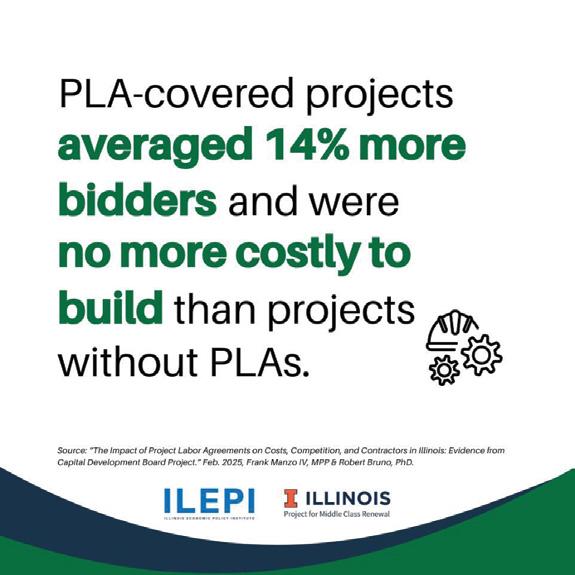
Project labor agreements also serve as a de-risking mechanism widely used across construction jobs in the United States. PLAs are a valuable tool for project managers, project planning, and workforce stability on both public and private projects. At the same time, PLAs ensure market-competitive wages and benefits, a skilled workforce, uninterrupted labor supply, safety standards, robust workforce development commitments that create career pathways, and timely completion of critical infrastructure projects on budget.
+ Contractors use PLAs to prevent labor shortages, limit unexpected delays, and implement
+ Workers benefit from PLAs from the ensured consistent pay rates, reliable work schedules, and strong safety protections.
+ PLAs require the use of registered apprenticeship programs, which not only raise the skill level of workers, but also opens the door for new workers seeking to enter the trade, and workers from disadvantaged backgrounds.
+ PLAs stabilize construction costs and promote competitive building, while ensuring projects are completed on time and within budget.
Construction partners and researchers from public universities, the United States Department of Labor, North America’s Building Trades Union (NABTU), and others demonstrate through multiple examples that construction projects are completed on time and within budget when under a PLA. Ultimately, real-world data show that project labor agreements are a crucial tool for general contractors, developers, and governments to deliver on infrastructure improvements promised to customers, investors, and taxpayers. //
To learn more about PLAs visit bacweb.org/issue/project-labor-agreements
Two federal agencies — one enforcing rules, the other doing research — work hand in hand to protect not only union members on the job, but all workers in the United States. From deadly silica dust to dangerous falls, their partnership has saved countless lives over the past decades. Yet, federal budget cuts and staffing shortages threaten this critical safety structure.


Since the 1970 Occupational Safety and Health Act, two agencies have been dedicated to protecting workers on the job: OSHA and NIOSH. The Occupational Safety and Health Administration (OSHA) is housed under the Department of Labor and sets and enforces workplace safety rules. The National Institute for Occupational Safety and Health (NIOSH), housed within the Centers for Disease Control and Prevention (CDC), conducts research and testing to identify workplace hazards and develop solutions.
OSHA makes sure employers follow the law, while NIOSH provides the science to shape those laws.
For example, OSHA requires that employers supply only NIOSH-approved respirators for silica dust exposure. Under NIOSH’s Respiratory Approval Program, they test and approve respirators to ensure they meet strict quality and performance standards. Without the program — or lack of funding and staff shortages — off-brand respirators could flood the market and falsely protect workers. NIOSH’s research on exposures, equipment, and controls directly informs OSHA’s standards. Together, they create a safer work environment.
As BAC members know, cutting or grinding concrete, stone, and brick creates fine silica dust—the invisible hazard that causes silicosis, lung cancer, and more. For decades, NIOSH research showed that workers needed

stronger protections. In 2016, OSHA responded by lowering the permissible silica exposure limit to the same level NIOSH had long recommended.
The new rule requires employers to implement dust controls such as wet cutting, vacuums, and ventilation. OSHA estimates these measures will prevent 600 deaths annually.
The agencies also partner directly with unions and CPWR (The Center for Construction Research and Training, a primarily NIOSH-funded construction research center founded by the building trades) on safety campaigns such as:
+ National Safety Stand-Down to Prevent Falls campaign
+ The Work Safely with Silica toolkit
+ Heat Week to educate workers and employers on heat illnesses
+ Trench safety weeks
“These programs show the partnership between labor and regulators in action,” explains Secretary-Treasurer Jerry Sullivan. “Unions raise concerns, NIOSH studies them, and OSHA translates findings into enforceable protections.”
Despite its essential role, NIOSH normally operates on a shoestring budget, cut further to roughly $73 million a year after the White House’s cuts. Compare that to
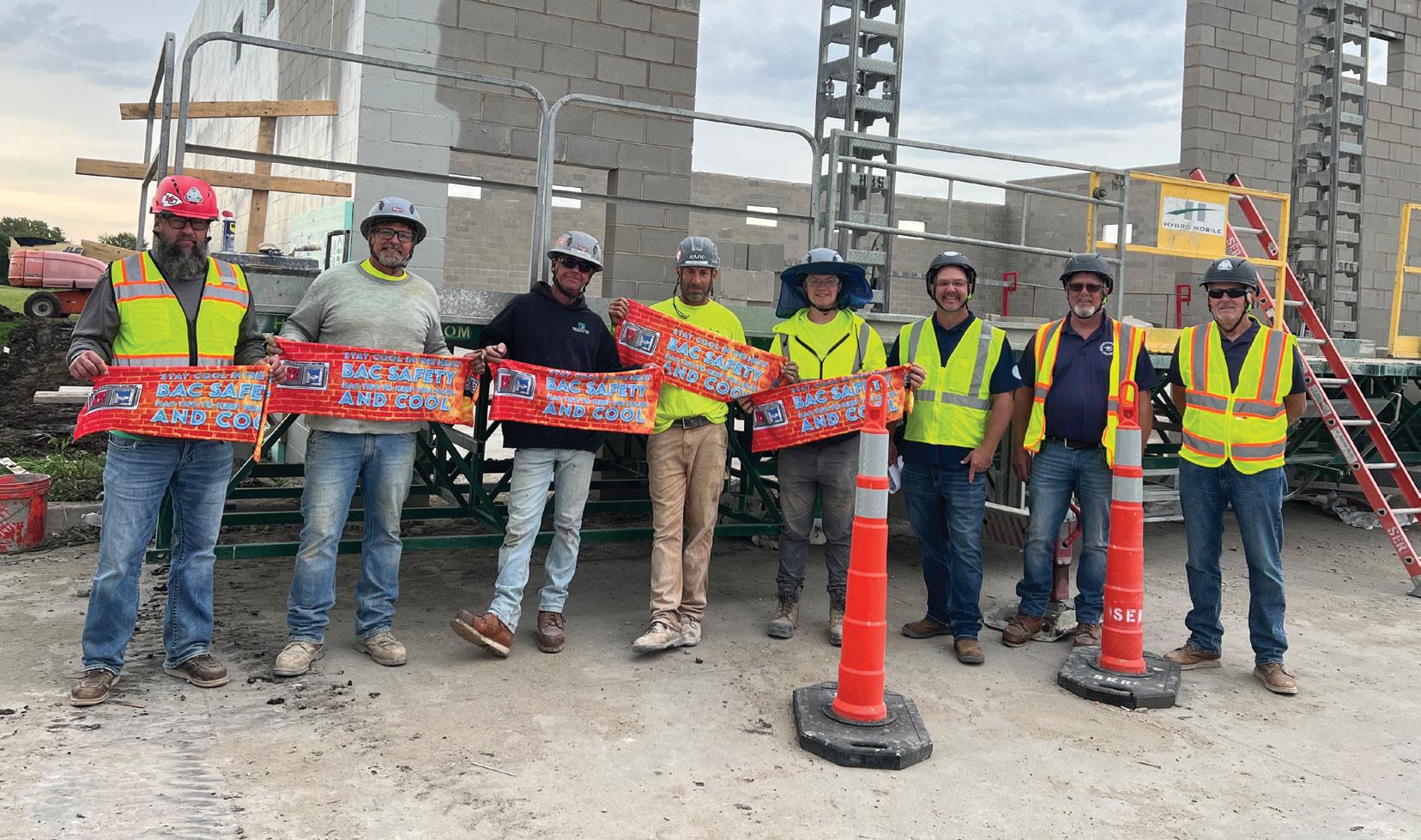
Last June, BAC’s Safety & Health Department launched its Stay Cool Heat Illness Prevention Campaign. With the priority to engage our members where they are, IU Safety and Health Director Liliana Calderon traveled around the United States to talk to
the $250 billion annual cost of workplace injuries and illnesses. NIOSH’s work saves far more lives and dollars than it costs.
“Construction is one of the most dangerous industries in America. Falls alone cause more than a third of all fatalities. Hazards like silica dust, heat, and new materials constantly emerge,” IU Safety and Health Director Liliana Calderon emphasized. “Without NIOSH’s research, OSHA would be left enforcing outdated standards. Without OSHA’s authority, NIOSH’s findings would never become enforceable protections.”
“Unions have long fought for both agencies, understanding that together they deliver practical results,” Calderon continued. “NIOSH helps design safer tools, methods, and training; OSHA ensures those measures become standard practice on every jobsite.”
For union members and contractors, this partnership is important in making sure everyone gets home safely every day. It is also crucial to make sure low-road contractors risking workers’ safety are held accountable, and our signatories are not punished financially for doing the work safely.
“This partnership is the reason respirators are certified, saws are equipped with water hoses, scaffolds are safer, and dust is controlled,” Sullivan said. “Cutting NIOSH funding means fewer protections, even as risks grow.” //
members — visiting the ADC 1 of Illinois, Wisconsin District Council, Local 3 Iowa, and Local 8 Southeast chapter meetings, jobsites, and training centers.
Listening to members and seeing their work environment helps shape the IU Safety & Health initiatives
and training. The International Union partnered with IMTEF Safety Director Dave Wysocki to hold jobsite safety standdowns and hazard awareness talks on silica, heat illnesses, and fall prevention during the jobsite visits. Wysocki also spoke about training opportunities offered through the National Training Center in Bowie, MD, and at the local training centers.
“It’s important to hear it from our members so we are aware of all the hazards that they are facing each day they go to work,” Calderon said. “Our goal is to provide the resources needed to keep them safe and healthy.”
“Having 1-on-1 interactions with members is essential; you can’t do that from a screen,” Calderon continued. “Meeting members where they are and hearing directly from them helps shape our efforts in providing safe workplaces for all our members.”
Members, field staff, contractors, and their safety managers attended the jobsite safety standdowns and shared their thoughts on the benefits of standdowns.
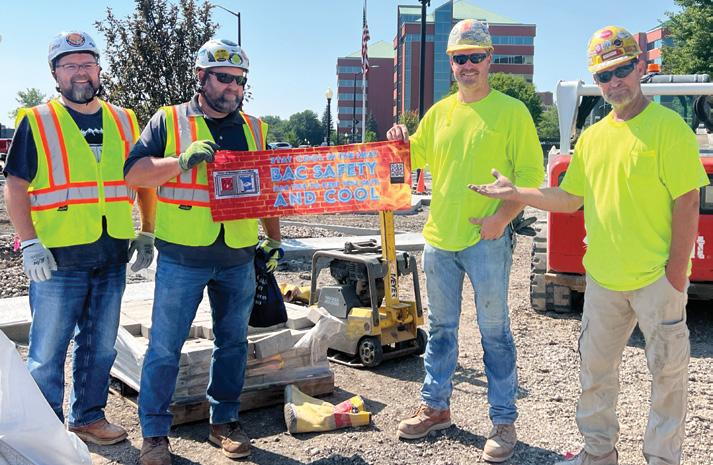
“I cannot express how much this means to us, having these types of standdowns where the workers can engage is great. It lets us know how we can do better,” said a Safety Manager for an Iowa contractor. The visits will continue in 2026. Go to bacweb.org/safety to learn more about the Stay Cool campaign, and other safety resources and trainings available. //
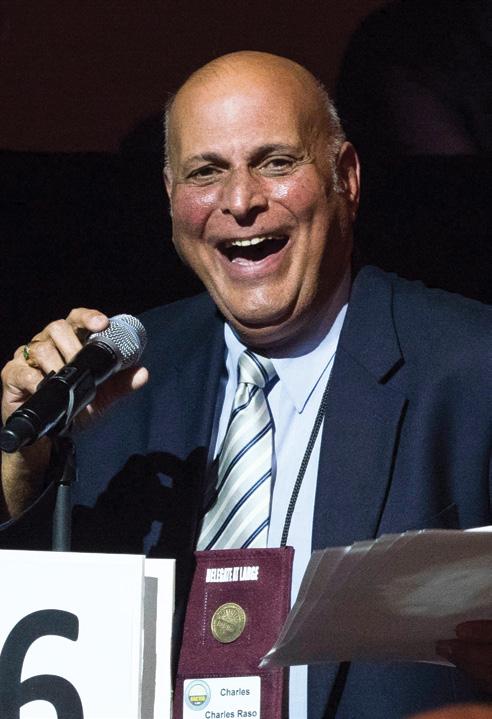
Brother Chuck Raso was a respected leader in the unionized masonry industry throughout his native New England and nationally. Reflecting on his service over a 61-year career as a bricklayer, local officer, and mentor, Raso had previously told the BAC Communications team that, “I love the challenge. And I love everything that is involved in the job that I do… It’s been my life’s work.”
Brother Raso was part of the strong, multi-generational BAC tradition — the son of a dedicated, 40-year member. Raso started his own career as a bricklayer in 1964, laying brick in the field for over 16 years before being elected to office in Local 3 MA/ME/ NH/RI. “I loved working in the field,” he said. “I always enjoyed the difficulty of the work and the camaraderie amongst the crew.”
“Then in the late 70s, I started serving on different boards at the local and eventually ran for local president,” Raso said when discussing his 44 years as an officer.
When asked what word comes to mind when he thinks of BAC, Raso answered strongly, “‘Superlative.’ Because we’re the best hands in the business and nobody can match our work… We do the best job, we work the hardest, and we’re the most quality minded.”
As a local president, he regularly looked to bring more skilled workers into the trade, speaking with potential apprentices about why they were seeking a career with BAC. “The younger generation really isn’t much different from others,” Raso concluded. “They are looking for stability in the workplace, a good wage, and to own a home… They are very excited and can’t wait to jump in, learn the trade, and become good members of their communities.”
Brother Raso was a dynamic and forceful leader for BAC members throughout his career.
“The members and their families are very important to me,” he said. “That’s why I hang in and fight for them and do the best I can to enhance their quality of life. We have seen how this union changes lives.”
“Everything you’re doing as a local union officer, you’re doing for the members to help them out,” Raso explained. “You’re there for them because that’s what the job entails, whether it’s making sure that they can get employment, enforcing collective bargaining agreements, assisting with personal issues… whatever you can help them with.”
“You get close to the members,” Raso continued. “They share problems with you, and they ask you for help in certain areas. So, members of the union become part of your family.”
“Chuck’s dedication and commitment to our union, his BAC family, over his 61-year career were second to none,” said BAC President Tim Driscoll. “He leaves behind a legacy of service that enriched the lives of thousands of BAC members and their families. He will be deeply missed by all those fortunate enough to have known him.” //
Editor’s Note: This BAC Profile is written in memory of Charles Raso, Sr. Brother Raso served as President of Local 3 MA/ME/NH/RI for 44 years, one of the longest serving local leaders and International Executive Council members in BAC history. He sadly passed away on December 4, 2025. Quotes are taken from previous interviews with the International Union.
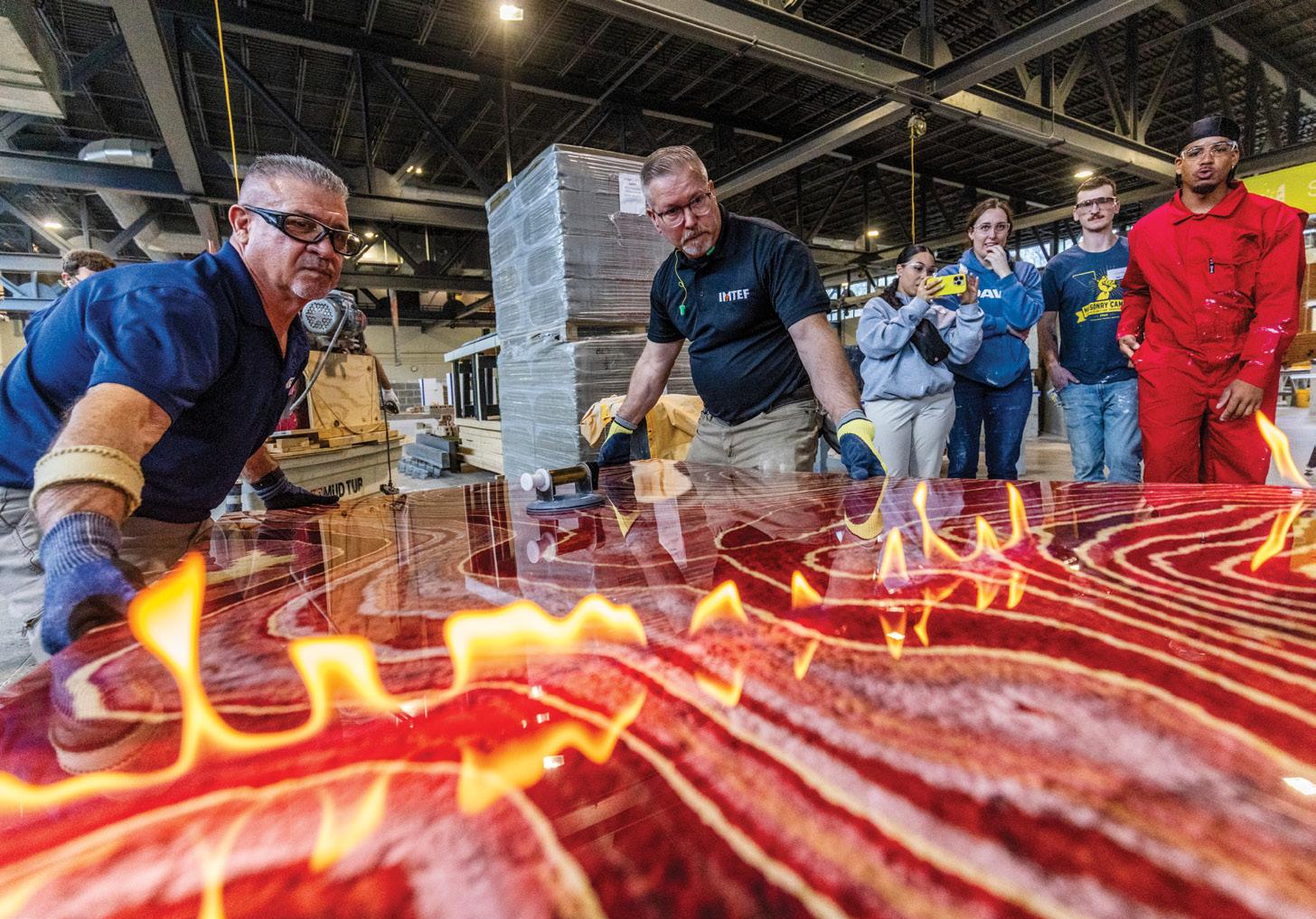
A new generation of architects, construction managers, and BAC craftworkers came together for IMI’s 2025 Masonry Camp. Hosted at the John J. Flynn BAC/IMI International Training Center, the immersive week-long program focused on building better collaboration between design and construction practices.
“Masonry Camp has been a truly unique and invaluable opportunity to work hand-in-hand with the talented individuals who bring our designs to life,” shared Benjamin Slater, architect with ZGF Architects. “Having the chance to actually hold and lay the brick opened my eyes to a whole new level of appreciation for the craft. There’s a genuine art to what BAC craftworkers do.”
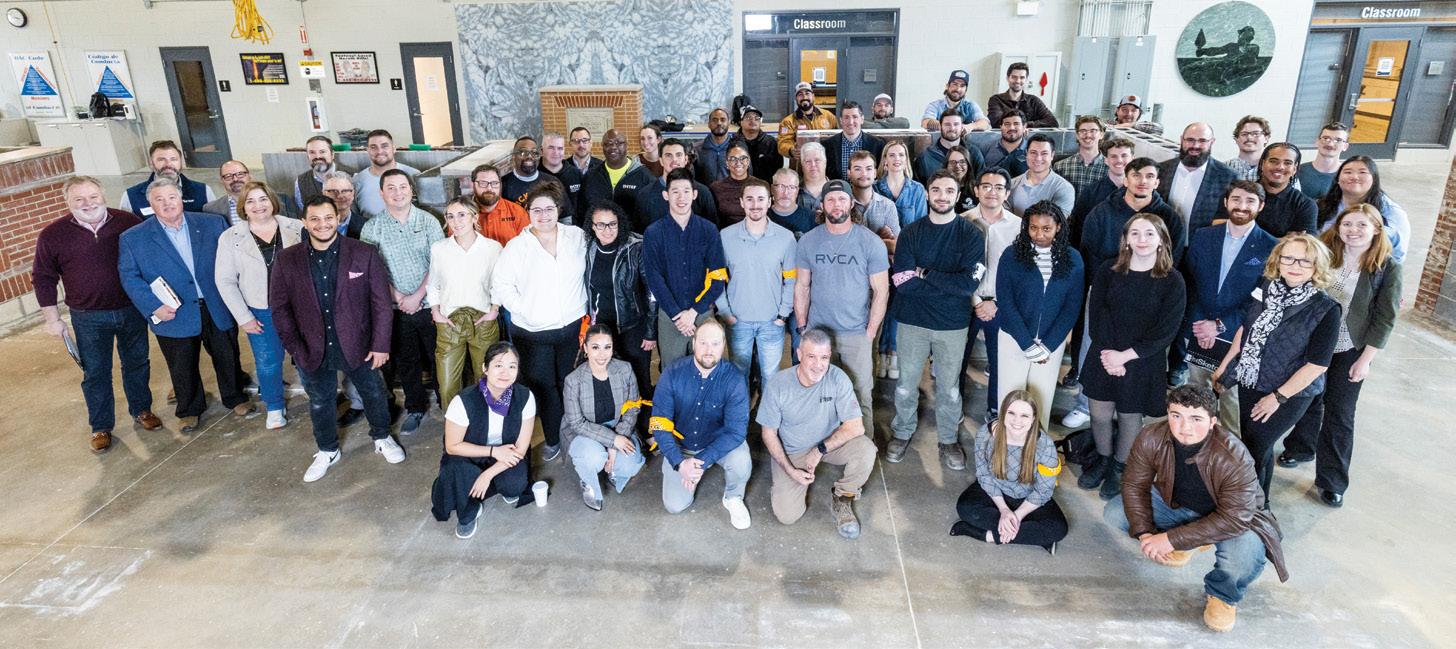
This year’s campers worked in teams to design and build a mockup of a material innovation incubator that addressed climate challenges in different cities across the country.
Imani St. Jean, Assistant Engineer at Turner Construction, brought the perspective of a construction management firm to the challenge. “I found myself helping bridge the gap between the design and what was actually buildable. The experience mirrors the real-world challenges I face on job sites.”
Benjamin Reimer, a bricklayer with BAC Administrative District Council of Eastern Missouri, appreciated the opportunity to collaborate with architects. “Out in the field, you rarely see an architect, so sitting side-by-side with them was eye-opening,” Reimer said. “The architects think very conceptually about a whole building, while I think very practically and am focused on the details of the build, so we had to find a way to meet in the middle.”
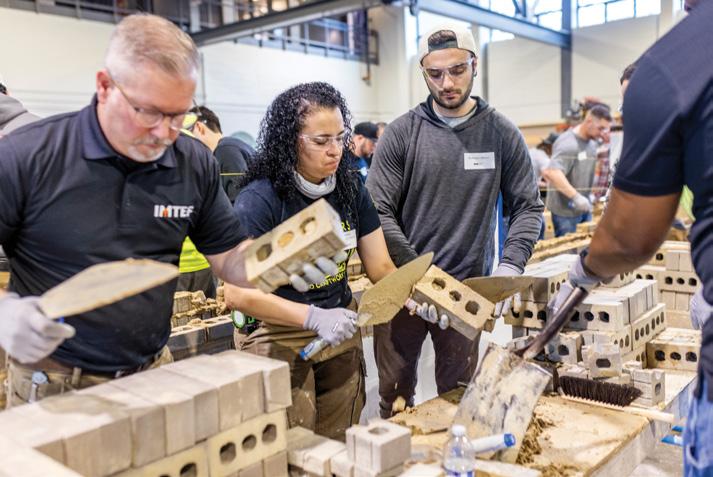
Frank Putt, a bricklayer with BAC Local 5 PA, agreed. “I’ve learned a lot from the designers,” Putt explained. “Their job isn’t just about designing one structure. They have to plan for so many different outcomes. There’s a lot more strategy and complexity involved than I realized.”
The skills, perspectives, and camaraderie shared at Masonry Camp prepare the next generation of designers and builders to create successful projects and tackle the challenges of the built environment — together. //
The tradition of passing the trowel trades from one generation of BAC craftworkers to the next is thriving, thanks to 16 new graduates from IMI/IMTEF’s Instructor Certification Program (ICP).
Through immersive courses, peer learning, and hands-on practice, ICP prepares BAC instructors — all masters of their craft — to carry out BAC’s renowned training programs.
“As a bricklayer of 40 years, becoming a certified IMI instructor is the top achievement in my career,” said Scott Ansel, Local 23 OH/WV/KY/MD Brick Instructor. “This experience has enabled me to mentor and teach the next generation.”
A major part of that role is helping apprentices understand what it takes to succeed in the construction industry. “Preparing students for the workforce goes beyond just teaching them how to set tile,” said Adrian Hernandez, IMI Tile Instructor at Inland Empire Job Corps. “It’s about developing their mindset, work ethic, and professional skills to help them succeed in any job site or career path they choose.”
For many instructors, the ICP reshapes how they approach the classroom. “ICP gave me several instructional breakthroughs and completely reframed how I approach teaching,” said John Slama, Local 1 MN/ND Manager of Operations.
Over the 5-year program, instructors learn to create curriculum and lesson plans, teach adults with diverse learning styles, mentor across generations, and more.
The 2025 graduates were honored in the fall during an awards ceremony at the John J. Flynn BAC/IMI International Training Center, surrounded by their peers, the BAC Executive Board, and IMI/IMTEF leadership.
“As instructors, your engagement of apprentices brings people along in our trade — but more
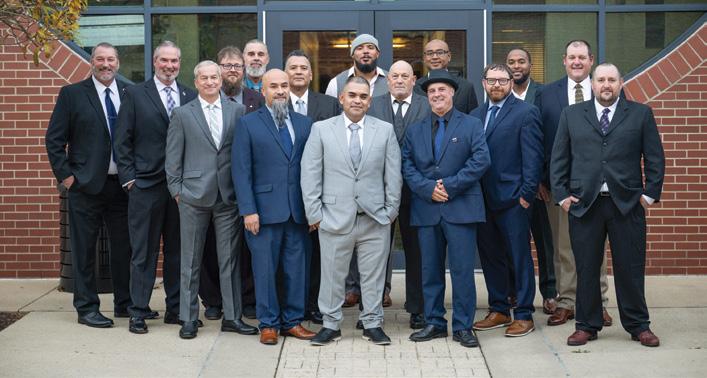
to the 2025 ICP
1 OR/WA/ID/MT; Jorge Godinez-Lopez, 1 CT; Tom Tagliarini, 23 OH/WV/KY/MD; Mike Mulligan, 1 MD/VA/DC; and Casey Midstokke, 1 OR/WA/ID/MT.
importantly, in their lives,” said BAC President Tim Driscoll at the ceremony.
That sense of responsibility resonates with the graduates. “ICP has given me the skills to guide apprentices at every stage of their career and through all life’s challenges, supporting them as they become journeyworkers and good union members,” said Andy Hanrahan, Local 3 NY Apprentice Coordinator.
Dwayne Borowski, Local 5 PA Coordinator and Instructor, echoed that sentiment. “The union is a vital part of my life, and it provides very well for myself and my family. If I can help teach our trade and instill good union values into young men and women, I can give them the same opportunity I had.”
Being a part of the union is about being “a part of something much bigger than one local, school, or crew,” explains Domonic Espinoza, Local 1 OR/ WA/ID/MT Brick Instructor. “If ICP has taught me anything, it’s that the brotherhood and sisterhood of masonry can weather any storm when we stay true to each other and to the trade we love.” //
As demand for greener buildings grows, BAC and IMI are convening the industry to ensure designers have the sustainability information they need to specify masonry and tile with confidence.
The Brick Industry Association (BIA) — with support from IMI — just released a new 2025 Industry Average Environmental Product Declaration (IA EPD) for clay masonry products, like brick.
A key update is the new 150-year service life, which is double the typical 75-year assumption used in most building lifecycle assessments (LCAs). The extended lifespan was made possible by data from BAC signatory contractors, whose real-world project experience helped BIA establish an accurate, evidence-based service life.
The new EPD not only covers nearly 40% of U.S. brick production but also establishes a baseline for manufacturers to develop product-specific EPDs, which is expected to increase the available sustainability data for clay masonry. The tile industry has already shown how this works. After the industry-wide EPD for tile was introduced nearly a decade ago, manufacturers developed many product-specific EPDs, making it easier for designers and owners to choose tile on green building projects.

The updated EPD is also cradle-to-grave, evaluating the full life cycle of clay masonry from raw material extraction through manufacturing, use, maintenance, and end-of-life. A cradle-to-gate EPD, by contrast, stops its assessment at the construction gate. Combined with the extended service life, the assessment highlights brick’s durability, reuse potential, and minimal environmental impact.
“The new EPD turns what we’ve always known about brick’s long-term performance into verifiable data,” said Roy J. Ingraffia, IMI National Director of Industry Development and Technical Services. “Now, designers have accurate information in the tools they rely on to specify brick as a leading sustainable building product.”
IMI is also actively representing BAC on the committee updating the Product Category Rule (PCR) for Masonry Concrete Products, which guides manufacturers in creating EPDs for CMU. These EPDs are essential for architects, engineers, and owners when comparing materials’ sustainability, and a clear, accurate PCR ensures masonry is evaluated fairly against competing systems.
Expected in early 2026, the updated PCR will modernize how concrete masonry’s environmental impacts are measured and account for real-world jobsite factors, including transportation, installation, service life, and end-of-life. Once finalized, it will provide a consistent, credible foundation for EPDs that reflect masonry’s true performance.
IMI looks forward to putting these new tools into the hands of architects, engineers, and owners, helping them design sustainable buildings with masonry and tile while creating new work opportunities for BAC members and signatory contractors.
BAC Local 1 Manitoba has partnered with First Peoples Development Inc. (FPDI) to provide indigenous people training in employment readiness, safety, and construction skills — preparing them for apprenticeships and employment in the construction industry.
This new Pre-Apprentice Bricklayer Program now offered by the FPDI runs for 23 weeks, during which students receive two weeks of workforce readiness instruction followed by a week of safety training — including lessons on first aid, flagging and fall protection. The first weeks of introduction are then followed by 20 weeks of pre-apprenticeship classroom and practical training with Steve Egan, a 24-year member of Local 1 MB, serving as the instructor.
After completing 800 hours of training, participants received their Level 1 apprentice bricklayer accreditation. Next, they will take part in a three-month work placement that could lead to permanent, full-time employment.
on training with it. “If it was just auditory or visual learning … you would not know how to flow with a brick or with your trowel or to feel the mortar or know how your body moves,” Wood explained.
“I like to be a watch-and-learn kind of guy,” Kiyewakan said, agreeing with Wood about the hands-on aspect. “I don’t like to just sit and read a book all day. I need to physically learn how to do something in order
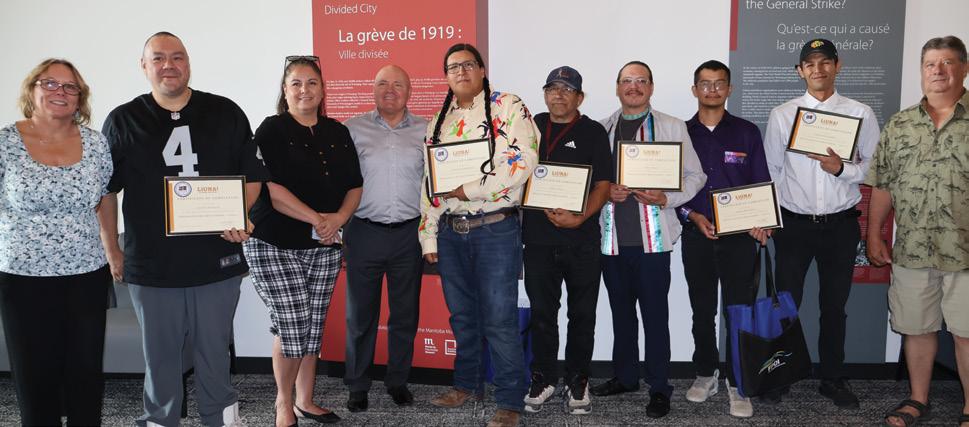
Greg Wood and Stacy Kiyewakan are among the first participants. Wood is a member of the First Nations community of South Indian Lake, spending much of his adult life working as a heavy equipment operator in northern Manitoba. Two years ago, he moved to Winnipeg to further his education and seek a new career, while also providing new opportunities for his two sons. Shortly after his arrival, he learned about FPDI’s Bricklayer Program from a family friend. He took to it right away, glad there was in-person, hands
to know what I’m doing.” Kiyewakan learned about the program while he was participating in FPDI’s Workforce Ready program.
“The program has been a positive experience”, said Local 1 MB Business Manager/Financial Secretary Evan Collingridge. “There aren’t a lot of opportunities for indigenous people, unfortunately, even though they’re very hard working and some of the best people on the job. This program is mutually beneficial in that it provides a pathway to a career in the trades for indigenous people while also growing BAC’s membership.” //
La section locale 1 du Manitoba du BAC s’est associée à First Peoples Development Inc. (FPDI) pour offrir aux personnes autochtones une formation axée sur la préparation à l’emploi, la sécurité et les compétences en construction – les préparant ainsi à des postes d’apprenti·e·s et à un emploi dans l’industrie de la construction.
Ce nouveau Programme de préapprentissage en maçonnerie, maintenant offert par FPDI, s’étale sur 23 semaines. Les participants suivent d’abord deux semaines de formation en préparation au marché du travail, suivies d’une semaine de formation en sécurité – comprenant des leçons sur les premiers soins, la signalisation et la protection contre les chutes. Ces premières semaines d’introduction sont ensuite suivies de 20 semaines de formation théorique et pratique en préapprentissage, sous la direction de Steve Egan, membre de la section locale 1 du Manitoba depuis 24 ans, qui agit à titre d’instructeur.
Manitoba. Il y a deux ans, il a déménagé à Winnipeg pour poursuivre ses études et chercher une nouvelle carrière, tout en offrant à ses deux fils de nouvelles possibilités. Peu après son arrivée, un ami de la famille lui a parlé du programme de maçonnerie de FPDI. Il s’y est tout de suite intéressé, prisant particulièrement l’aspect pratique et en personne de la formation.

Après avoir complété 800 heures de formation, les participants recevront leur accréditation de maçon apprenti de niveau 1. Ensuite, ils prendront part à un placement professionnel de trois mois, qui pourrait déboucher sur un emploi permanent à temps plein.
Greg Wood et Stacy Kiyewakan comptent parmi les premiers participants. M. Wood est membre de la communauté des Premières Nations de South Indian Lake et a passé une grande partie de sa vie adulte à travailler comme opérateur d’équipement lourd dans le nord du
« Si c’était juste de l’apprentissage auditif ou visuel… on ne saurait pas comment manipuler une brique ni comment utiliser une truelle, sentir le mortier ou comprendre comment notre corps bouge », a expliqué M. Wood.
« Moi, j’apprends en observant », a affirmé M. Kiyewakan. Il se dit d’accord avec M. Wood sur l’importance de la pratique. « Je n’aime pas simplement rester assis à lire un livre toute la journée. J’ai besoin d’apprendre physiquement comment faire quelque chose pour comprendre ce que je fais. » M. Kiyewakan a pris connaissance du programme alors qu’il participait au programme Workforce Ready de FPDI.
« Le programme a représenté une expérience positive, a déclaré Evan Collingridge, directeur administratif/secrétaire financier de la section locale 1 du Manitoba. Malheureusement, il n’y a pas beaucoup d’occasions pour les Autochtones, même s’ils sont très travaillants et parmi les meilleurs sur les chantiers. Ce programme est bénéfique pour tout le monde, car il offre une voie vers une carrière dans les métiers pour les Autochtones, tout en permettant au BAC d’accueillir un nombre croissant de membres. » //
Six college-bound students from BAC families are receiving financial assistance to continue their education thanks to the 2025 US and Canadian Bates scholarship programs.
Each year BAC awards three US Bates scholarships to graduating seniors whose parents or stepparents are BAC members in the United States. The stipends are $5,000 per year, for up to four consecutive years.
Each year BAC awards three Canadian Bates scholarships to graduating seniors whose parents or stepparents are BAC members in Canada. The stipends range from $2,000 to $3,000 (CN) per year, for up to four consecutive years.
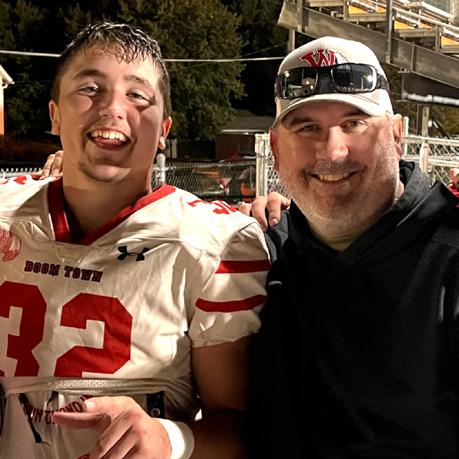
Attending: Emporia State University — Emporia, Kansas
Major: Fisheries and Wildlife
Family/IU Info: Kaleb Oviatt, BAC Local 15 Missouri/Kansas/ Nebraska
WHAT DOES THIS RECOGNITION AND THE UNION MEAN TO YOU?
This recognition means so much! I have always been worried about college costing too much and it was a big reason I thought about not attending at all. This scholarship has made me more comfortable about my decision of attending to further my education. My family has always been supporters of the union, and it has served my father
very well. It provides necessary benefits and pay to support our family. Overall, the union has always provided for my father, and he is very appreciative of that!
WHAT ADVICE WOULD YOU OFFER YOUR PEERS AND YOUNGER STUDENTS?
Attending secondary education is a gift, so don’t waste it. It’s a lot easier to work hard now so you don’t have to wear yourself out later.
WHAT’S THE BEST PIECE OF ADVICE YOU HAVE EVER RECEIVED?
Proverbs 3:5: “Trust in the Lord with all your heart and lean not on your own understanding.”
WHO WOULD YOU LIKE TO GIVE A SHOUT-OUT TO?
I would love to give a shout out to my father. He is the strongest man I have ever met, a true role model. He walks with confidence that guides his steps and what a blessing it has been for me that he is my dad.
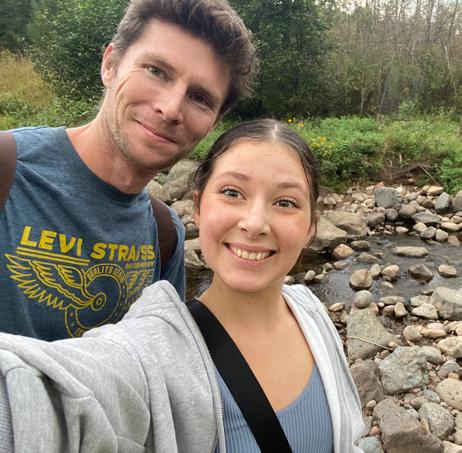
Attending: Minnesota State University-Mankato — Mankato, Minnesota
Major: Elementary Education
Family/IU Info: Nicholas Radtke, BAC Local 1 Minnesota/North Dakota/South Dakota
WHAT DOES THIS RECOGNITION AND THE UNION MEAN TO YOU?
This scholarship is helping me build a future that I have looked forward to as long as I can remember. I’m grateful to have the continued support that the bricklayers union has shown my family for years. BAC has offered stability to my family for generations. My great grandpa, grandpa and dad have all been a part of it and it has shaped our family into the hardworking people that we are.
WHAT ADVICE WOULD YOU OFFER YOUR PEERS AND YOUNGER STUDENTS?
I would tell younger students to apply for this scholarship. I thought it was something out of my reach — that I was unlikely to receive such an amazing
scholarship—but I was wrong. All you can do is apply and it could save you years of paying off debt that you would otherwise have. Apply, apply, apply!
WHAT’S THE BEST PIECE OF ADVICE YOU HAVE EVER RECEIVED?
The best piece of advice I ever received was to work for what you want. Put in the extra time to make your goals a reality. No one can do it for you. It’s worth it every time.
WHO WOULD YOU LIKE TO GIVE A SHOUT-OUT TO?
I would like to shout out my dad for always supporting our family and teaching me the value of hard work.
Attending: University of Akron Main Campus — Akron, Ohio
Major: Aerospace Aeronautical Family/IU Info: Matthew Moll, BAC Local 23 Ohio/West Virginia/ Kentucky/Maryland
WHAT DOES THIS RECOGNITION AND THE UNION MEAN TO YOU?
This recognition means a lot to me because above all things it is giving credit to all the hard work the generations of bricklayers in my family have done and what they will continue to do. The union has meant a lot to my family, as it has been a large source of support and stability. We always knew it would have my dad’s back, like it had my grandpa’s and great-grandpa’s so many years ago. We knew we could always rely on the union to keep my
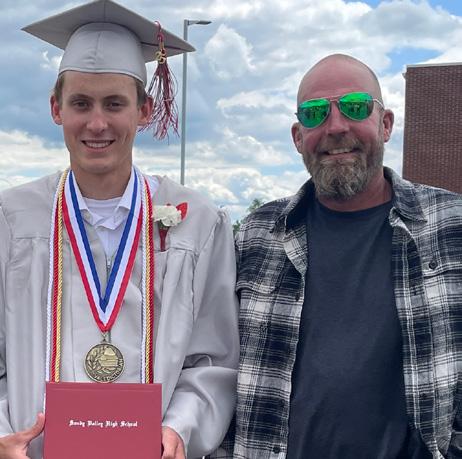
dad in work and therefore supporting us, always.
WHAT ADVICE WOULD YOU OFFER YOUR PEERS AND YOUNGER STUDENTS?
A piece of advice I would offer to younger students would be that it does not matter where you come from or where you start, it’s where you decide to go that matters. Don’t let where you came from dictate who you will be, that’s for you to decide.
WHAT’S THE BEST PIECE OF ADVICE YOU HAVE EVER RECEIVED?
The greatest piece of advice I received was that nobody had ever achieved anything great by following everyone else. That piece of advice was given to me by a former cross-country coach.
WHO WOULD YOU LIKE TO GIVE A SHOUT-OUT TO?
I would first like to give a shout-out to my dad and grandpa for showing me what hard and consistent work can earn. Also to my family for letting me try to figure out who I wanted to be, instead of telling me who I had to be.
Attending: University of Manitoba
Major: Physics and Astronomy
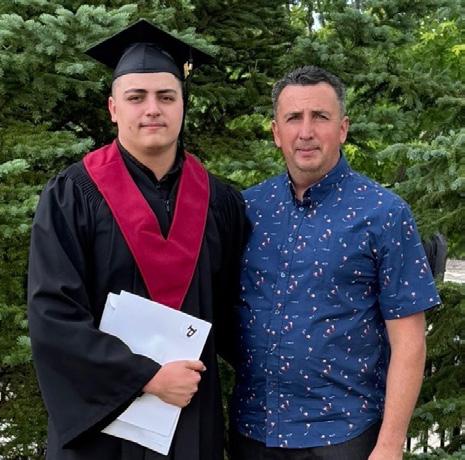
Family/IU Info: Ruslan Melnyk, BAC Local 1 Manitoba
WHAT DOES THIS RECOGNITION AND THE UNION MEAN TO YOU?
This recognition reminds me that I’m on the right track and that my efforts are being noticed and appreciated. It gives me the motivation to keep moving forward and the reassurance that I’m doing something right.
For my family, the union represents stability and a sense of safety — things that are truly invaluable to us, since we were deprived of them when we were forced to flee our homes due to the war [in Ukraine].
Knowing that my father’s workplace values fairness and security brings peace of mind to all of us. It allows our family to focus on growing, learning, and supporting one another, rather than worrying about uncertainty. BAC has given us not only financial stability
but also the confidence that we are part of a community that stands up for its members.
WHAT ADVICE WOULD YOU OFFER YOUR PEERS AND YOUNGER STUDENTS?
You are more capable than you think. It may sound cliché, but you just have to keep going and keep trying. Even if you feel like you can’t do something, give it your best effort and see where it gets you. If you struggle to believe in yourself, find someone who believes in you until you learn to believe in yourself. Keep trying, keep learning, and keep moving forward.
WHAT’S THE BEST PIECE OF ADVICE YOU HAVE EVER RECEIVED?
“You won’t lose anything if you try.” Even if the outcome isn’t what you hoped for, attempting something new comes with no loss — and often leads to growth, learning, and new opportunities.
WHO WOULD YOU LIKE TO GIVE A SHOUT-OUT TO?
First, my father and family, who work hard to support me every step of the way financially and emotionally. Even with all the scholarships and financial support, post-secondary education is still a strain on the budget for a big family of newcomers. I’m grateful to my parents for finding and supporting my first steps on this path.
I also want to mention my high school teachers, who believed in me and encouraged me to challenge myself and improve. Also, I can’t forget to mention my dear tutors from the Junior Achievement program, who helped me to truly come out of my shell and gain confidence in expressing myself and pursuing my goals.
Is your child in high school and interested in going to college? Thinking about applying for the 2026 Bates Scholarships?
Complete information and the application forms for the 2026 US and Canada Bates scholarships is available in the Education & Training section of bacweb.org. If you are in the US, you can get more information by texting BATES to 50607.
Attending: University of Manitoba
Major: Science
Family/IU Info: Faruk Omanovic, BAC Local 1 Manitoba
WHAT DOES THIS RECOGNITION AND THE UNION MEAN TO YOU?
This recognition means a lot to me, as it rewards the work I did in high school, while enabling me to be motivated and work even harder in university. The union means a lot to me and my family, as it fights for my father’s job security and advocates for a better working environment.
WHAT ADVICE WOULD YOU OFFER YOUR PEERS AND YOUNGER STUDENTS?
My advice would be to explore options and give opportunities their chance. Getting involved wherever you are and learning new things will help you build connections and bonds that will last.
WHAT’S THE BEST PIECE OF ADVICE YOU HAVE EVER RECEIVED?
The best piece of advice I’ve ever received was to let go of what others think. What only matters to me is my own journey and my own goals, and I should not let the thoughts or words of others distract me from that.
WHO WOULD YOU LIKE TO GIVE A SHOUT-OUT TO?
I would like to shout out my parents, as without them, I wouldn’t be able to do the any of the things I can. My parents
enable basically all of my success through the sacrifices they make to put me in an environment where I can succeed.
Attending: Acadia University
Major: Environmental and Sustainable Studies
Family/IU Info: Christopher MacIvor, BAC Local 1 Nova Scotia
WHAT DOES THIS RECOGNITION AND THE UNION MEAN TO YOU?
This recognition means so much not only to me personally but to my family. It reminds me just how important the union is and the role it plays in my and my family’s lives. The union is everything to my family. My grandfather first joined the union back when he founded the company my father runs now. Back then it meant that he could provide for my dad and his siblings not just financially but by making sure he was in safe working conditions and came home safe every day. Now it means the same for me and my brother. The union is how my dad can provide for us, it’s how we know he has a safe and supported work environment.
WHAT ADVICE WOULD YOU OFFER YOUR PEERS AND YOUNGER STUDENTS?
If I could offer any advice to my peers or younger students, I would say show up! Go to all your classes, go to your practices even when it’s the last thing you want to do because just showing up makes all the difference.
WHAT’S THE BEST PIECE OF ADVICE YOU HAVE EVER RECEIVED?
The best piece of advice I’ve received would have to be from my mom who’s always told me that the only opinion that truly matters is your own. It really drives me to take pride in what I do every day and strive to create quality work that I am proud of!
WHO WOULD YOU LIKE TO GIVE A SHOUT-OUT TO?
I want to give a shout-out to my grandparents Joe and Faye MacIvor. Without their hard work I wouldn’t have the life I have today. My grandparents are one of my biggest inspirations and greatest loves. They truly mean the world to me, and I hope they know how much I love them. //
The BAC International Pension Fund would like to remind members that they have the right to request a statement of their benefit accrued under the plan once every 12 months.
For this we furnish a calculation of the accrued benefit and let the member know if they have enough service to be vested in their benefit.
Future benefits can also be calculated based on hypothetical accumulations of additional service via the Member Portal. If a member would like to access the portal, but has yet to make an account, they can scan the QR code to go to the website and start the process.
Benefit estimate requests should be made in writing, and include

your name, mailing address, and IU member number. Requests must be sent to to:
Bricklayers & Trowel Trades International Pension Fund 620 F Street, NW, Suite 700 Washington, DC 20004
Or e-mail your request to pensionestimate@ipfweb.org //
As we approach 2026, it is imperative to remember the importance of preventive care screenings.
Preventive care can help you avoid potentially serious health conditions and/or obtain early diagnosis and treatment. Generally, the sooner your doctor can identify and treat a medical condition, the better the outcome.
Under the Patient Protection and Affordable Care Act, most health plans, including the United Healthcare plan offered through the International Health Fund (IHF), are required to provide coverage for preventive health care services at no cost. To access preventive care at no cost, members just need to seek services from an in-network provider. Preventive care includes services such as screenings, counseling, vaccines, and preventive medications.
Preventive care services recommendations vary based on age. For children, some recommendations include age-appropriate well-child examinations, hearing screening, cholesterol screening for children aged 24 months and up, vaccines and immunizations as recommended by the Centers for Disease Control (CDC), and vision screening. For adults, recommendations include:
+ Annual wellness examinations
+ Blood pressure screening at every wellness exam
+ Cholesterol screening for adults aged 40–75 years old
+ Colorectal cancer screening for adults aged 45–75 years old
+ Diabetes screening for adults aged 40–70 years old and overweight, or at any age with a history of gestational diabetes
+ Mammography screening

+ Cervical cancer screening for women aged 21–65 years old
+ Screening for anxiety and/or depression during every wellness exam
Lung cancer screening is another important preventive care screening for BAC members. This screening is recommended for individuals aged 50–80 years old with at least a 20-pack year smoking history. A 20-pack year is defined as smoking one pack per day for the last 20 years, or two packs per day for the last 10 years. Studies also show that individuals working in the construction industry are at a moderately higher risk of lung cancer likely due to potential carcinogen exposure, such as silica and asbestos, making this screening essential for our members.
The IHF also provides coverage for a wide range of generic preventive medications, including those used for asthma, blood thinners, diabetes, blood pressure, cholesterol, and mental health conditions. Beyond these essential preventive services, the IHF offers 100% coverage for both preventive and non-preventive lab services at Quest and LabCorp, as well as diagnostic imaging at freestanding facilities. With services fully covered, members face no financial barriers to accessing their high-quality benefits.
To learn more about what preventive care screenings are recommended for you, scan the QR code to the UnitedHealthcare link. With this site you can generate a checklist of recommended screenings that can then be discussed with your provider to determine what is appropriate for you. Members enrolled in the IHF can find in-network providers by visiting the UnitedHealthcare website at www.myuhc.com, and may contact the Fund Office at 1-888-880-8222 with any questions. //



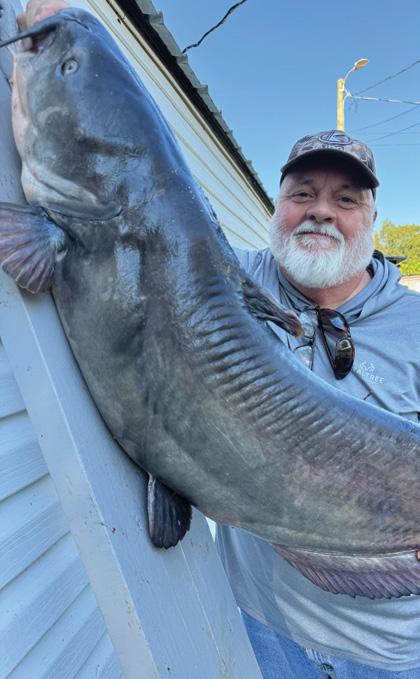
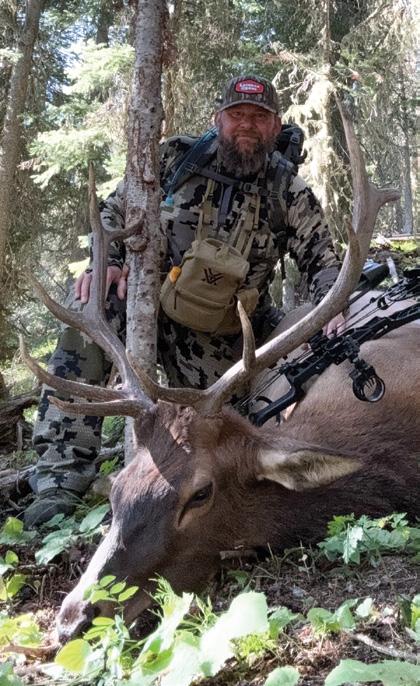
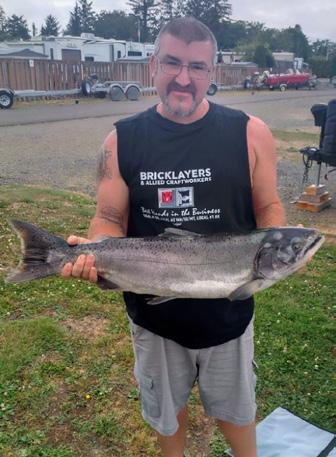

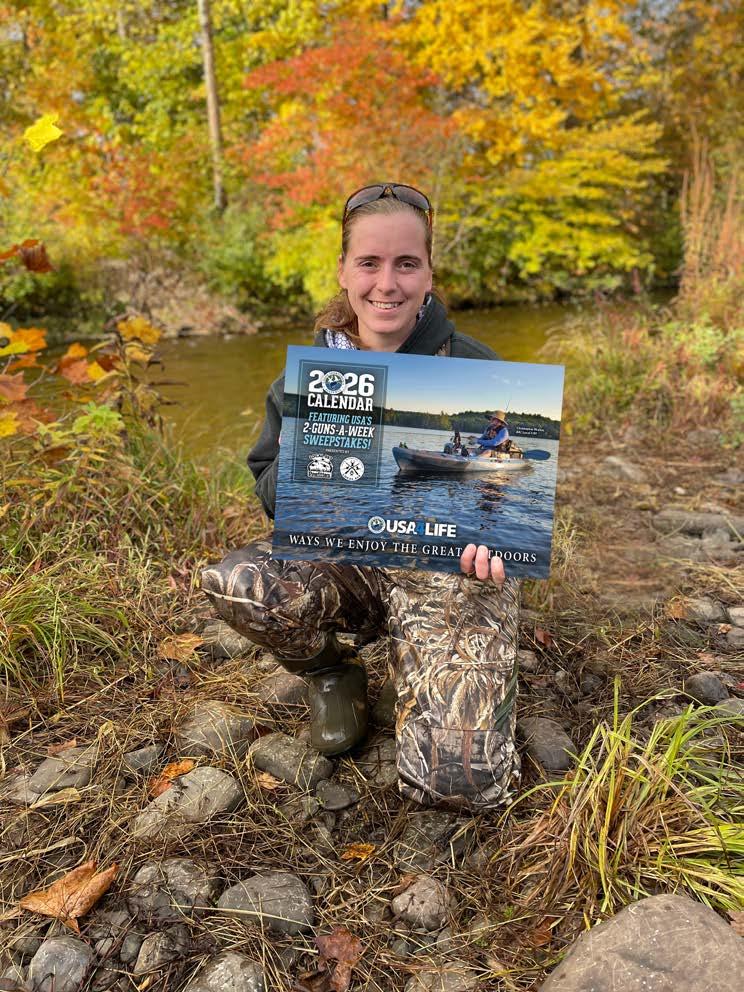
Left: Local 1 OR/WA/ID/MT member Coy Seeger caught a chinook salmon at buoy 10 on the Columbia River.
Right: Local 1 OR/WA/ ID/MT member Matt Bott shot a beautiful sheep in Oregon. This was a once in a lifetime opportunity for Brother Bott since sheep hunting tags are very difficult to obtain.




In response to several studies highlighting the opioid crisis’ significant impact on construction workers, the BAC Member Assistance Program (MAP) launched a campaign in 2018 to address the matter. MAP partnered with locals to recommend training protocols and appropriate interventions, as well as to highlight resources. As new developments and best practices have evolved, BAC is engaging in ongoing efforts to support and protect members at risk. Public health leaders in the United States and Canada have strongly endorsed the use of naloxone in combating the opioid crisis.
Naloxone, commonly referred to by its brand name Narcan, is an over-the-counter opioid overdose reversal medication. It can be administered as a nasal spray to block life-threatening effects, such as respiratory failure, when someone appears to be experiencing an opioid overdose. The US Food and Drug Administration (FDA) has stated that naloxone is not a controlled substance and that it does not have abuse potential. The FDA has also stated that naloxone can be given safely to people of all ages, and that it will not harm someone who has not taken an opioid. Being aware of how to respond to a suspected opioid overdose — including having quick and easy access to naloxone, knowing how to administer it, and immediately contacting emergency medical services — can help save a life and open a pathway to recovery. Naloxone is more easily obtainable than ever before, often for free through community programs and local health departments.
Monday-Friday, 8am–7pm ET. To view previous articles about the opioid epidemic, please visit the News Center at bacweb.org and search for the Member Assistance Program under BAC Journal.
MAP is committed to increasing visibility, providing education, reducing stigma, and fostering a sense of community around mental health challenges in the construction industry. In 2025, MAP held multiple webinars to generate awareness and promote recovery.

In May, during Mental Health Awareness Month, MAP Director Alex Jacobi engaged in a conversation with Local 1 SK President/ Secretary-Treasurer Derek Halldorson, Local 1 WA/AK
Vice Chair Chris Ellis, and Local 23 OH/WV/KY/MD
Field Representative Sierra Kriston to discuss challenges on and off the jobsite and behavioral health in general, as well as finding hope and getting help.
In September, during Construction Suicide Prevention Week, Jacobi spoke with the American Foundation for Suicide Prevention’s Senior Director for Special Projects, Ryan Price, around steps that can be taken to help prevent suicide within the construction industry. They discussed the risk factors and warning signs of suicide, as well as life-saving resources — all necessary toolbox tools for taking care of BAC brothers and sisters, family members and friends, and yourself.
To learn more about naloxone, opioid use disorders, or to pursue treatment, please contact the BAC Member Assistance Program by calling 1-833-MAP-TALK,
To access links to the webinar recordings, please visit bacbenefits.org/member-assistance-program. Visit bacbenefits.org/map/map-now for regular updates and additional awareness month campaigns. //


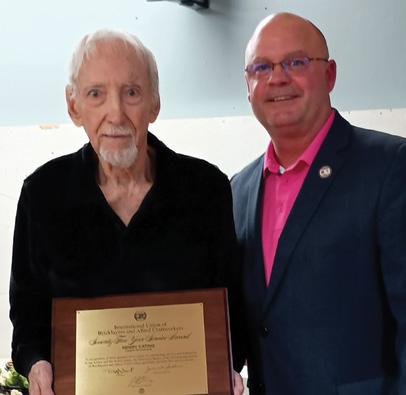
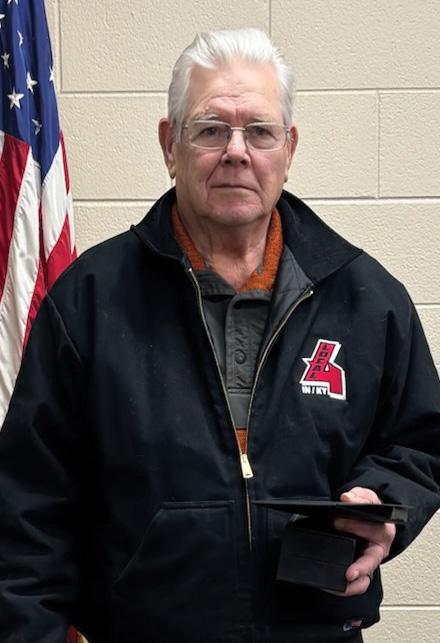
Local 5 PA held an award ceremony in April to honor retired Local 5 PA Field Representative Henry Catino for his 75 years of membership and service to BAC. Brother Catino joined then-Local 53 PA in 1949 as an apprentice. His son, father, and grandfather were also members, marking four generations of BAC members in the Catino family.

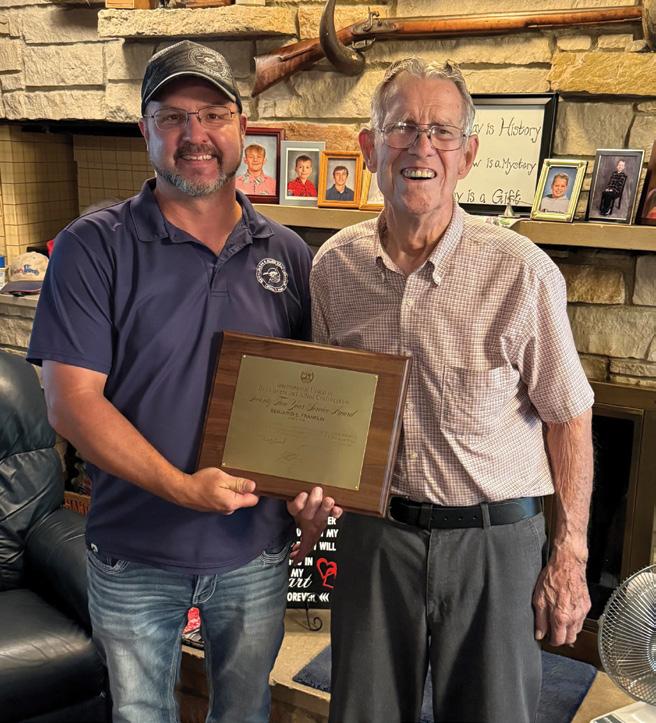
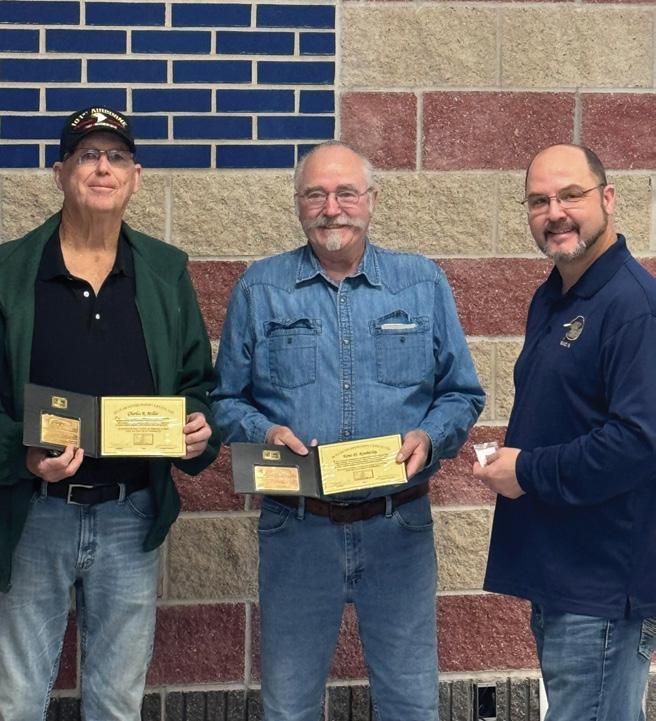
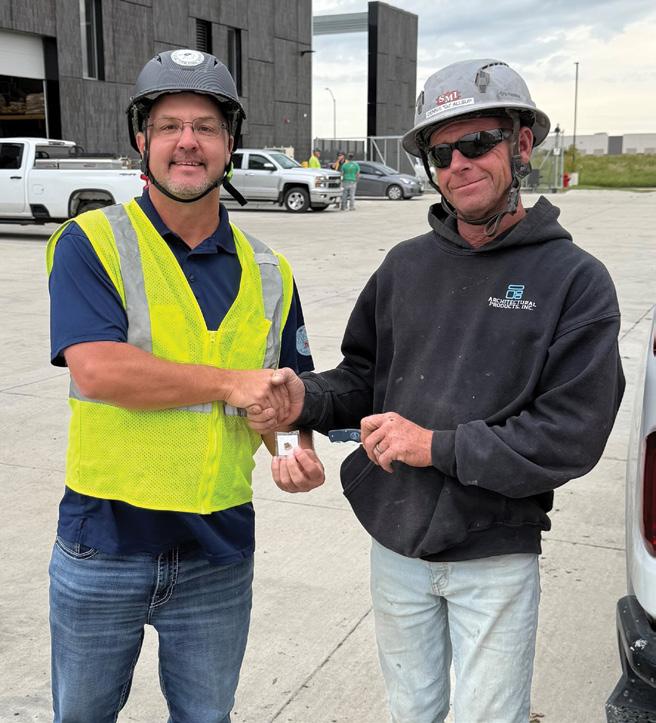
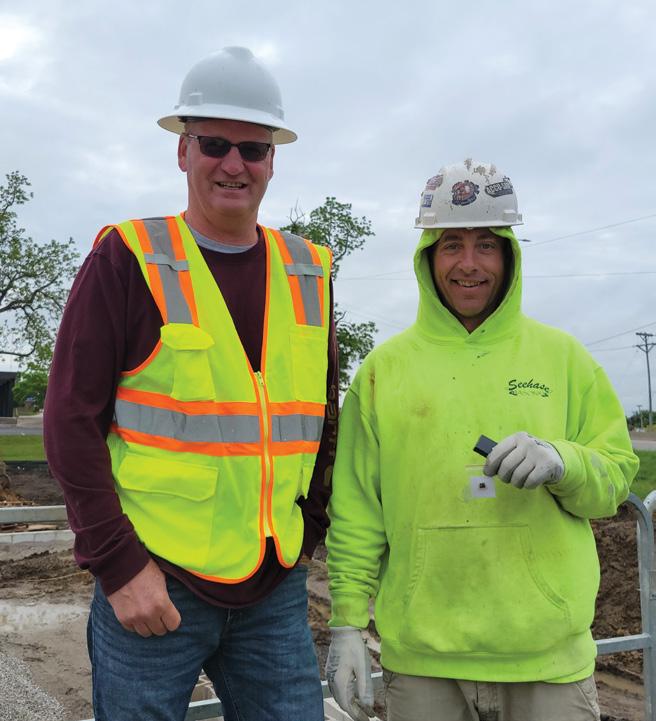
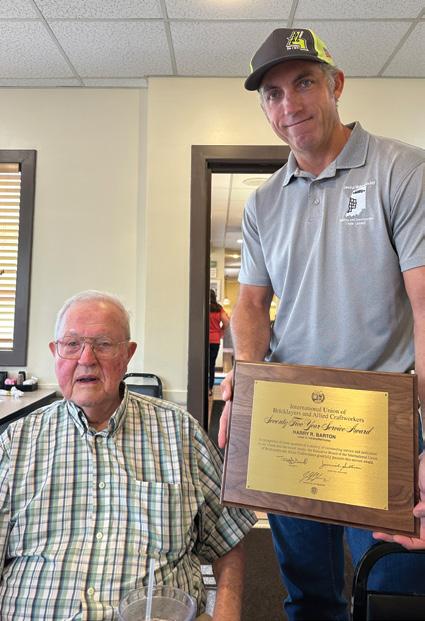
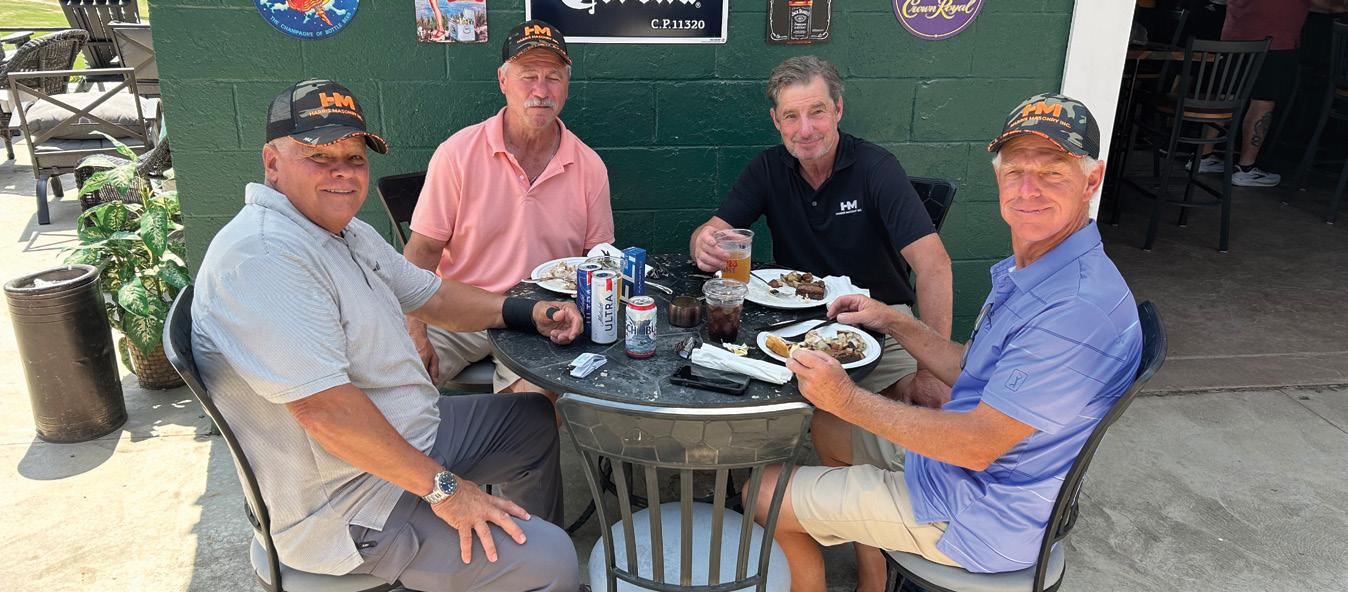
Local 9 PA held their first annual golf outing for members on August 9 at 3 Lakes Golf Course in Penn Hills, PA.
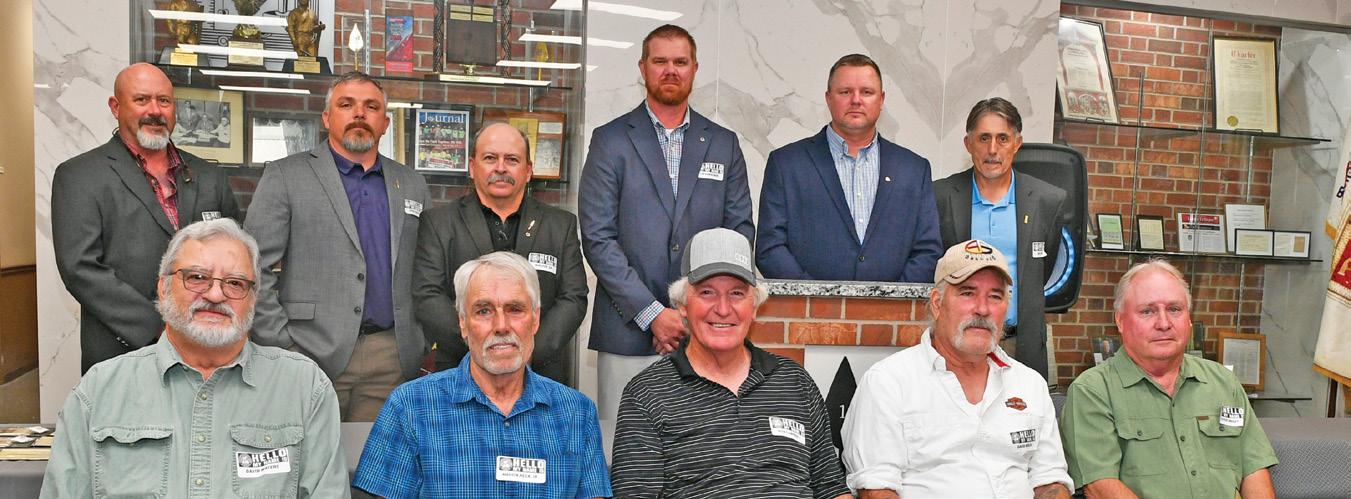
ADC of Eastern MO presented several members with their Gold Cards at a retiree luncheon in June.

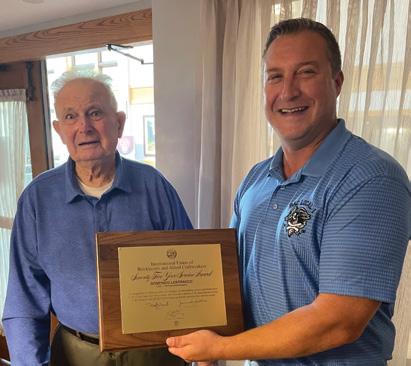
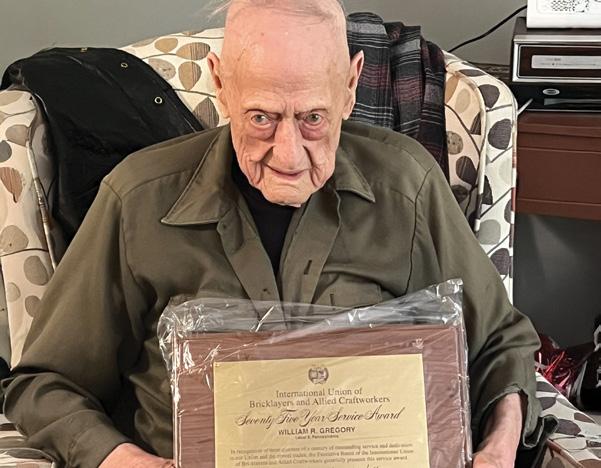
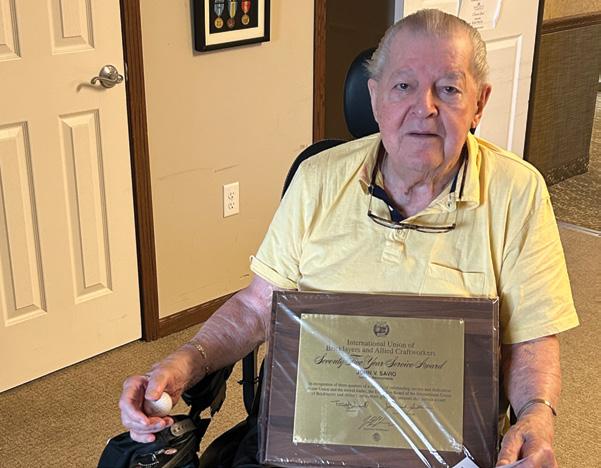
Top: Local 9 PA member William “Bill” Gregory receives his 75-year service award Middle: Local 9 PA member John Savio receives his 75-year service award. Bottom: Local 9 PA life member Marco Andreuzzi receives his 50-year service award.

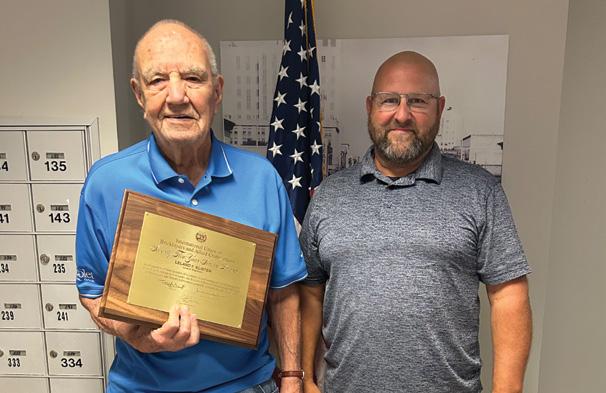
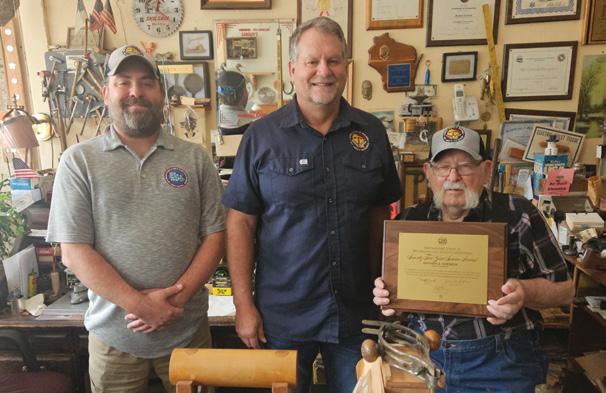
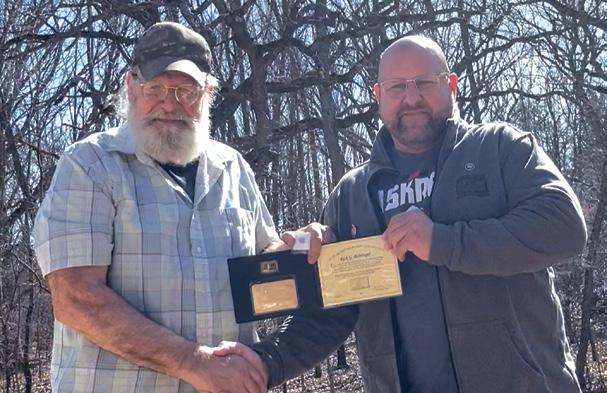
Top: WI ADC member Leland Klister receives his 75-year service award from WI ADC Field Representative Doug Goble. For a period, Brother Klister served as Recording Secretary for Local 9 WI. Middle: WI ADC member Gayhart Swenson receives his 75-year service award from WI ADC Field Representative Frank Andreas (left) and WI ADC Director Jim Vick
WI ADC
Arcand, Kenneth J. - 01, MN/ND/SD B 89 69
Asci, Forrest A. - 03, MA/ME/NH/RI B, CM, M 91 74
Baldini, Jr., Conrad P. - 03, MA/ME/NH/RI B, CH, CM, PC 59 35
Barbagallo, Anthony C. - 01, NY B 96 74
Beaulieu, Lee A. - 03, MA/ME/NH/RI B, CM, M, TL 77 37
Bennett, Michael R. - 01, NY B 91 76
Blackburn, Jr., Percy T. - 08, SE B 94 73
Blythers, Devon - 08, SE MH
10
Bonds, James A. - 03, CA B 59 14
Brys, John J. - 21, IL B 84 60
Capone, Peter A. - 01, CT B 93 75
Correia, Jose D. - 03, MA/ME/NH/RI CM, P 91 53
Criscuolo, Andrew - 74, IL B
Darrow, Lawrence I. - 15, MO/KS/NE B
DiPietro, Carmine - 04, NJ B, CM
60
Domingue, James P. - 04, CA B 93 76
Dronen, Donald R. - 01, MN/ND/SD B
Ellis, Howard B. - 03, MA/ME/NH/RI B
Fitzgerald, Jr., Leonard - 74, IL B
Joop, Michael A. - 08, IL B 78 61
Kantoniemi, Steven W. - 03, CA MM 63 40
Leonardo, Robert A. - 09, PA B
Linkes, Michael M. - 02, MI B
Llewellyn, Daniel P. - 08, IL B 81 62
Lynch, Martin P. - 13, WI B, M 70 31
Mahurin, Ronald A. - 04, IN/KY B
57 Maiers, Arthur C. - 04, NJ
Neitz, Elroy C. - 05, PA B
26 Nichols, Jr., Arthur J. - 03, CA TL
Orgera,
William A.
52
Fredrickson, Lloyd H. - 01, MN/ND/SD B 83 62
Grabow, Albert C. - 21, IL B 97 74
Groebler, Eugene P. - 02, NY/VT B, CM, P 89 70
Grove, Daniel E. - 01, HI FN 59 19
Gyori, Gilbert G. - 06, ON B, M 91 74
Halter, Richard E. - 23, OH/KY/WV/MD B 84 64
Harris, Douglas H. - 05, PA B 68 37
Heil, Joseph A. - 03, AZ/NM B 92 72
Hemminger, Franklin - 23, OH/KY/WV/MD B 80 57
Hicks, William A. - 01, MO B, M 90 65
Hostetler, Arthur R. - 09, PA B 92 55
Hovancik, Michael S. - 03, NY B, CM, M, MM 64 17
Iafrate, Albert L. - 23, OH/KY/WV/MD B, M 95 62 Ihland, David D. - 13, WI TL 87 62
D’Amico, Nunziato - 02, MI CM 89 40
DeSantis, Anthony H. - 05, NJ/DE/PA TL 91 58
Easton, Jr., Robert A. - 04, IN/KY B 54 9
Eggen, Neil - 01, MN/ND/SD B 87 66
Glaude, Roland J. - 03, MA/ME/NH/RI B 95 50
Goebel, Lavon R. - 04, IN/KY B, M 84 55
Harris, Jewel M. - 15, MO/KS/NE B 85 40
Heiter, Robert L. - 01, MO B 86 50
Heller, William J. - 01, MN/ND/SD B 90 50
Hotella, Jessie - 05, OK/AR/TX B 82 50
Jakubosky, Thomas E. - 21, IL TL 91 59
Janella, Horst W. - 01, MB B 89 64
Jerome, Jerry M. - 01, MN/ND/SD B 74 40
Johnson, Mark E. - 01, MN/ND/SD B, CM, W 68 47
Karosseit, Guener - 01, AB B 84 56
Kilhoffer, Kenneth P. - 08, IL B 76 52
Krasley, Jr., Robert J. - 01, PA/DE TL, PM 77 50
Larmett, Tom - 01, CT B, CM, M 91 65
Lenzer, William R. - 05, PA B, CM, M 88 70
Lincoln, William L. - 01, NY B, CM 73 40
Luli, Raymond W. - 23, OH/KY/WV/MD B 82 64
Martinez, Jr., Albert J. - 08, SE B 94 75
Mauro, Calogero - 05, NJ/DE/PA B, CM 96 68
Mazzillo, Lawrence - 01, CT P 97 77
McDermott, Joseph A. - 21, IL PC 64 41
Meunier, Aime - 04, QC B 75 55
Miller, Leroy P. - 23, OH/KY/WV/MD B 61 25
Monger, James E. - 08, SE B 77 41
Mossburg, James H. - 23, OH/KY/WV/MD B 95 75
Nelson, Gerald G - 21, IL M, B 79 59
Oja, Wayne I. - 01, OR/WA/ID/MT B 84 63
Palmer, Headley - 04, NJ B, M, P 88 48
Passmore, Wilfrid E. - 01, ON B 95 66
Pellman, Hubert C.- 04, IN/KY B, RE, W 74 52
Reedy, Donald L. - 04, IN/KY B 75 39
Sanford, Jeffrey L. - 02, NY/VT B, CM, M 77 42
Schneider, Stephen R. - 01, MN/ND/SD B 73 46
Schroeder, Jr., Karl - 01, NY B, M, MM, W 88 68
Stumpf, Anthony - 05, ON B 89 66
Stutzman, Roger L. - 05, WI TL 89 59
Thomson, Robert - 01, NY M, B 85 66
Toniutti, Antonio - 28, ON B 92 67
Vaccaro, Sr., Joseph S. - 05, NJ/DE/PA CM, B 98 73
Vial, Giuseppe - 07, CN B 92 52
Walker, Rufus B. - 04, IN/KY B, M, MM, W 98 75
Watson, Jr., Ollie N. - 23, OH/KY/WV/MD B, M, MM, TL 89 61
Watson, Leonard A. - 23, OH/KY/WV/MD B 76 52
White, Peter G. - 02, BC B 79 51
Bardini, Guido - 01, MD/VA/DC TL, CH 91 52
Barr, Sr., Vincent J. - 03, CA TL 74 43
Champeau, John A. - 03, WI CM, B, P, TL, CH 81 59
Chrysler, Leslie J. - 02, MI B 79 57
Compton, Joseph F. Jr., - 21, IL B 93 50
DeMarco, Aldo A. - 03, IA TL, T W, M, MM 91 66 Difato, Antonio - 01, NY B 84 60
Fittipaldi, Domenico - 01, PA/DE B, M, P 77 55
Geary, Dennis R. - 21, IL PC 75 41
Herrell, Sr., Allen D. - 23, OH/KY/WV/MD B 86 60
Hood, Joseph H. - 01, PA/DE M, MM, W 83 62 Hook, Barry L. - 05, NJ/DE/PA B 80 31
Hubauer, Joseph H. - 09, PA B 80 60 Huerta, Edward - 03, CA FN 56 34
King, Jr., Stephen E. - 23, OH/KY/WV/MD B 84 62
Kohm, Douglas P. - 03, MA/ME/NH/RI B, CH, CM, M 61 42
Lawson, Joseph - 23, OH/KY/WV/MD B 83 57 Lotti, Costantino - 02, ON B 91 69
McGrath, Vernon J. - 03, MAME/NH/RI B, CM 84 69 MrKonja, John - 09, PA B 83 50
Nitz, Kenneth M. - 04, IN/KY B
Pekala, David - 21, IL B
Quinn, Michael P. - 02, MI B,
Reins, Frederick J. - 01, MN/ND/SD B, M, P 93 70 Rey, Alois - 04, IN/KY B
Rickert, Allen L. - 08, IL B
Sanelli, Joseph A. - 02, NY/VT B, M, P
Sebben, John E. - 04, IN/KY
Sinclair, Robert B. - 03, CA