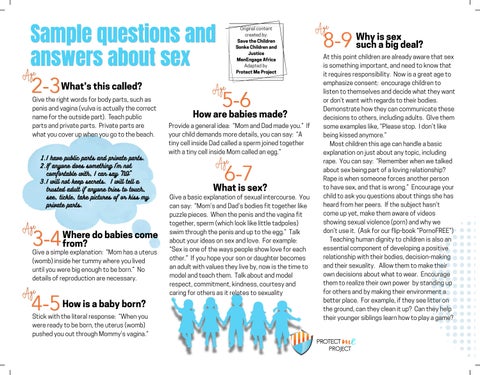



What’s this called?
Give the right words for body parts, such as penis and vagina (vulva is actually the correct name for the outside part). Teach public parts and private parts. Private parts are what you cover up when you go to the beach


1.I have public parts and private parts.
2.If anyone does something I’m not comfortable with, I can say “NO”
3.I will not keep secrets. I will tell a trusted adult if anyone tries to touch, see, tickle, take pictures of or kiss my private parts.

Where do babies come from?
Give a simple explanation: “Mom has a uterus womb) inside her tummy where you lived until you were big enough to be born ” No details of reproduction are necessary
How is a baby born?
Stick with the literal response: “When you were ready to be born, the uterus (womb) pushed you out through Mommy’s vagina.”

Why is sex such a big deal?
How are babies made?
Provide a genera “Mom and Dad made you. ” If your child deman re details, you can say: “A tiny cell inside Dad called a sperm joined together with a tiny cell inside Mom called an egg. ”
What is sex?
Give a basic explanation of sexual intercourse. You can say: “Mom’s and Dad’s bodies fit together like puzzle pieces When the penis and the vagina fit together, sperm (which look like little tadpoles) swim through the penis and up to the egg. ” Talk about your ideas on sex and love. For example: “Sex is one of the ways people show love for each other ” If you hope your son or daughter becomes an adult with values they live by, now is the time to model and teach them. Talk about and model respect, commitment, kindness, courtesy and caring for others as it relates to sexuality
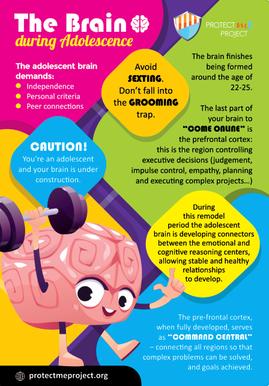
At this point children are already aware that sex is something important, and need to know that it requires responsibility. Now is a great age to emphasize consent: encourage children to listen to themselves and decide what they want or don’t want with regards to their bodies Demonstrate how they can communicate these decisions to others, including adults. GIve them some examples like, “Please stop. I don’t like being kissed anymore ”
Most children this age can handle a basic explanation on just about any topic, including rape. You can say: “Remember when we talked about sex being part of a loving relationship? Rape is when someone forces another person to have sex, and that is wrong ” Encourage your child to ask you questions about things she has heard from her peers. If the subject hasn’t come up yet, make them aware of videos showing sexual violence (porn) and why we don’t use it (Ask for our flip-book “PornoFREE”) Teaching human dignity to children is also an essential component of developing a positive relationship with their bodies, decision-making and their sexuality Allow them to make their own decisions about what to wear. Encourage them to realize their own power by standing up for others and by making their environment a better place For example, if they see litter on the ground, can they clean it up? Can they help their younger siblings learn how to play a game?