


s we begin 2006 with enthusiasm and hope, the proverbial question is: ”What are your New Year’s resolutions?” May I suggest one? Partner with your ASID Chapter! The Partnering, i.e., teamwork theme has been a popular editorial subject in our profession for a while, and it is a great idea. The growing trend in the built environment is to partner from the very inception of the project with the architect, builder, and interior designer all working together to produce the best result for the client. Relationships like these will expedite and improve the productivity and efficiency of projects.
As chapter leaders, the Board of Directors works as a team to bring the Work Plan to the members and Industry Partners to grow and improve the chapter. The qualified and competent professionals that make up ASID Arizona North are responsible to their team to volunteer time and sometimes dollars to get the job done. From the inception of every project, we must depend totally on the volunteer efforts of the members to bring the event to a successful conclusion.
My wish to you for a “resolution accomplished” is: When you are called on by the President, a Board Member, or Chair of a Committee, please find some time! Many of the chapter projects are to support the chosen charity; SARRC (Southwest Autism Research and Resource Center) is our goal this year. Most important of all, your chapter events are planned to encourage professional growth through networking with other members and Industry Partners. We are a community of professionals partnering to mutually benefit each other. The chapter needs all of you to contribute so that our chapter can remain strong, and one of the most successful in the country!
Sheri
ASID DESIGNER SAMPLE SALE
April 1, 2006, 8:30am – 5:30pm Arizona Design Center
We need merchandise!! Fabrics, accessories, furniture, area rugs, lamps, etc. can be donated or consigned to ASID. Unsold merchandise, if not picked up, will be donated to an ASID student chapter for a future sale. Proceeds from this sale will go to the ASID Scholarship Fund. Donations are deductible as business expenses. Please contact Pauline Wampler at (602) 569-8916 for more information.
Ilove reading the paper every morning; it gives me a fresh outlook to start off my day. As of late, it has been a challenge getting through it all. The business section is hidden behind the sports section, which seems to be four times its size most mornings.

Let me explain. Many Americans have developed an unnatural draw to sports and reality shows, instead of getting out and participating in life. We are becoming a nation of voyeurs, living vicariously through others’ accomplishments and misfortunes.
Where am I going with this? The application to the interior design industry is the fascination with television shows about design and renovation. They show edited clips of the project’s progression, giving a false impression of how the process really works. It is easy to watch TV and see how “easy” it is, or go out and buy some pre-packaged “Bed in a Bag”, but the reality of good design and the talent and effort it takes to put together the pre-packaged design idea is very different.
The real process is a creative, collaborative effort between the interior designer and the client, is something that takes months to come to a successful conclusion, not a mere 30minute time slot…interrupted by commercials. It is about participating, not sitting around letting someone else do the work and dealing with all of the problems and issues that arise during the course of the project.
The next time I have the urge to sit and watch television, I am going to go play tennis instead, or ride my bike, or…
Best,
Gretchen Palmer
Gretchen L. Palmer
glp@phgltd.net
Sandra Kieffer skinteriorsolutions@hotmail.com
Tracey Marshall tlm@phgltd.net
Naomi Anderson naomiaz@msn.com
Susan Kay Schultz detailshm@cox.net
Echo Surina echo.surina@gmail.com
Our apologies – In the article on the Design Excellence Awards Banquet in our last issue, we mistakenly wrote that Dan Heldenbrand had been named Volunteer of the Year. Christine Piotrowski, ASID, is the proud recipient of the Volunteer of the Year title. Dan was awarded the National Shadow Week Award.



President
Sheri Newton, ASID
Officers:
President:

Oren Bishop, ASID
Sheri Newton, ASID, sherin@aol.com
President Elect: Oren Bishop, ASID oren.bishop@dmjm.com
Past President: Greta Guelich, ASID perceptions@mindspring.com
Board of Directors: Communications Director: Susan Kay Schultz, detailshm@cox.net Professional Development Director: Katherine Thornhill, ASID thornhillinteriors@cox.net
Financial Director: Michael Clare, clareframe@aol.com
Membership Director: Paul Buys, plbtd@cox.net
At-Large Director: Sandra Kush Administrator: Pauline Wampler
Student Rep to the Board: Laramie Simpson Northern Arizona University





Membership
Sylvia Lorts
Tel: 480-423-8000
Fax: 480-423-1141
Email: as.sylvia@gmail.com
Nominating
Sheri Newton,ASID, chair
Tel: 480-614-5899
Fax: 480-836-8800
Email: sherin@aol.com
Sponsorship Program
Sherry Hauser, ASID
Tel: 623-935-5061
Fax: 623-935-3146
Email: hauserdesign@cox.com
Ethics
Sandra Evans, ASID
Tel: 602-468-9250
Fax: 602-468-9212
Email: Sandra@kqarchitects.com
Community Service
Susan Nicholson, ASID, co-chair
Tel: 480-429-9337
Fax: 480-424-3683
Email: dwki@aol.com
Robyn Randall, ASID, co-chair
Tel: 480-213-9407
Fax: 480-556-6434
Email: rr-intdes@cox.net
Scholarship
Larry Lake, ASID
Tel: 480-443-3400
Fax: 480-596-3577
Student Affairs
Sheena Geohagan
Tel: 480-216-7873
Email: sgleo@msn.com
Shadow Week
Dan Heldenbrand
Tel: 602-616-0569
Fax: 602-923-4962
Email: dhinteriorsanddesign.att.net
STEP program
Norma Michaels, ASID
Tel: 602-257-2283
Fax: 602-257-1203
Email: nminteriorsgroup @cox.net
Education Day
Catherine Pliess ASID, co-chair
Tel: 480-661-5300
Fax: 602-953-5388
Email: cpliess@cpinteriordesign
Cindy Lewton, co-chair
Email: cindylewton56@hotmail.com
ASID Arizona North Chapter Meeting for February, 2006
Wednesday, February 15, 2006 6:00 p.m. to 8:00 p.m.
Reception and Presentation: 6 to 7 Tour: 7-8 Hors d’oevres, Wine and Tabletops
AVIANO at Desert Ridge Community Center and Model Complex 22500 North Avian Way, Phoenix (West of Tatum off Deer Valley Road)
Presentation of Award-winning project by Aterra Lighting. Paul Salmonson of Aterra and Mark Tate, AIA, will explain lighting techniques and applications of the project.
$25 ASID Members / $30 Non-Members $20 Students
Design Consultant Services
Wanda Frederick, ASID
Tel: 480-657-3960
Fax: 480-515-0240
Email: wanda3133@aol.com
Sample Sale
Christine Cox
Tel: 623-876-2633
Email: coxfamily@hotmail,com
Winter Tour of Homes
Sandra Kieffer, co-chair
Tel: 480-556-1988
Fax: 480-350-7783
Email: skinteriorsolutions@hotmail.com
Angelica Henry, ASID, co-chair
Tel: 602-002-6775
Fax: 480-443-4215
Email: angelica@janetbrooksdesign.com
Awards Competition
Melinda Foote,ASID, co-chair
Tel: 602-278-0860
Fax: 602-678-1080
Email: mafooteas@msn.com
Sharon Hodson, ASID, co-chair
Tel: 480-941-1314
Email: asidsharon@hotmail.com
Awards Event
Shirley Kern Brown ASID, chair Tel: 480-321-8108
Email: az_browns@hotmailcom
Anne Elzroth/presentation Tel: 480-609-5060
Email: huproth@aol.com
Sam West/design review
Tel: 602-955-3062
Julie Coleman/liaison Tel: 623-487-9447
Fax: 623-487-9447
Email: colemanj@la-z-boy.com
Telephone Tree to be filled
Directory Update to be filled
Reception
Nathalie Nicolai,co-chair
Tel: 480-423-8000
Fax: 480-423-1141
Monica Ramirez, co-Chair Tel: 480-423-8000
Newsletter
Gretchen Palmer Tel: 480-515-0111

Inspired by the four elements—air, water, earth and fire—our Elements Glass Tiles feature decorative liners with natural motifs that harmonize seamlessly with its mosaics and field tiles. Consisting of 85 percent recycled content, they are an obvious choice for those who are environmentally aware but also desire beauty and style. The well balanced color palette includes translucent, opal and metallic colors with an iridescent finish.
ASID National has pledged $25,000 to the American Red Cross to assist hurricane survivors. ASID’s regional chapters have also undertaken a variety of activities to help displaced professionals and their families. The Arizona North Chapter donated $3,000 to the relief efforts, donating $1,000 to each of the following charities; The Salvation Army, Red Cross, and the Arizona Humane Society. The Texas Gulf Coast Chapter has partnered with the Houston Chronicle to furnish four to five apartments and create a registry of items that are needed. They are accepting donations and encouraging volunteering. In addition, student chapters are holding a raffle to raise funds. To learn more about relief efforts and our contributions, visit the chapter’s Web site at www.asidtgcc.org.
A special thank you to:
Roland Arnold and Arizona Tile for a Turquoise Sponsorship of the November meeting at Caleo.
Jeff and Mick at a.k.a. Green for a Friend of ASID Sponsorship of the October meeting at e4.

Student Shadow Week is a wonderful opportunity for students to explore the plethora of job opportunities awaiting them after graduation. We are looking for designers willing to “host” a student for a single day. Students will simply shadow their host for the day; soaking in the atmosphere and as much information as they can. This is not an internship – students do not need to be assigned any work to do. Student Shadow Week will be held February 27-30. If you are a designer interested in hosting a student, or a student interested in participating, please call Dan Heldenbrand at (602) 616-0569 to sign up.
Beginning January 1, 2006, all reservations for meetings and special events will require a 48-hour cancellation notice. No-shows without proper notice will be billed. No Exceptions. We thank you in advance for your cooperation and understanding.
The 2nd Annual Design Consultant Services (previously Spring Design For Hire) will be held March, April and May. Interior designers interested in participating in the program will donate up to two hours at approximately $100/ hour. Any additional time/work requested by the client, would be contracted separately and at the designers standard scale. “We look forward to the same success achieved last year,” said Wanda Frederick, ASID, committee chair. Several projects started as simple consultations, and resulted in full-scale renovations. For more information or to volunteer for this event please contact Pauline Wampler at (602) 569-8916 or via email at asid@ theadmin.com.

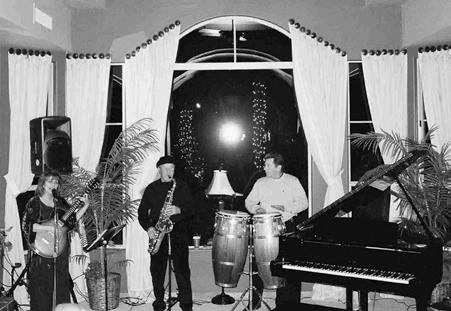
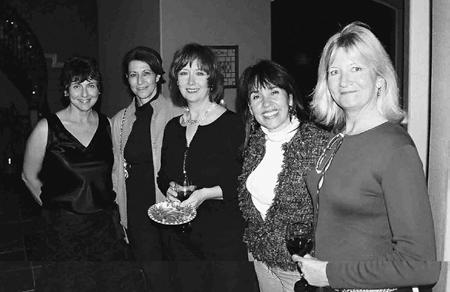
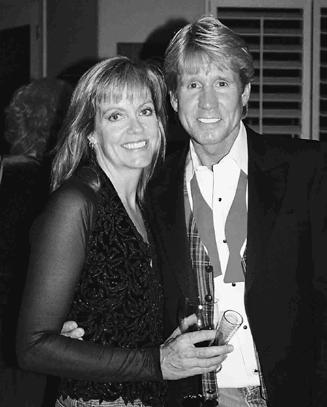
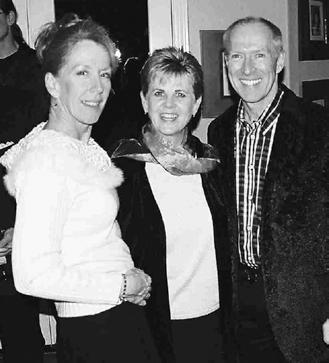
Gretchen Palmer, Allied Member ASID, of PHG Asset Management and Development Co. and her husband, Kevin, hosted this year’s Christmas party at their home in Desert Highlands Country Club. Attendees were treated to a wonderful buffet, an open bar and an eveninglong jazz performance by KJZZ’s Blaise Lantana.




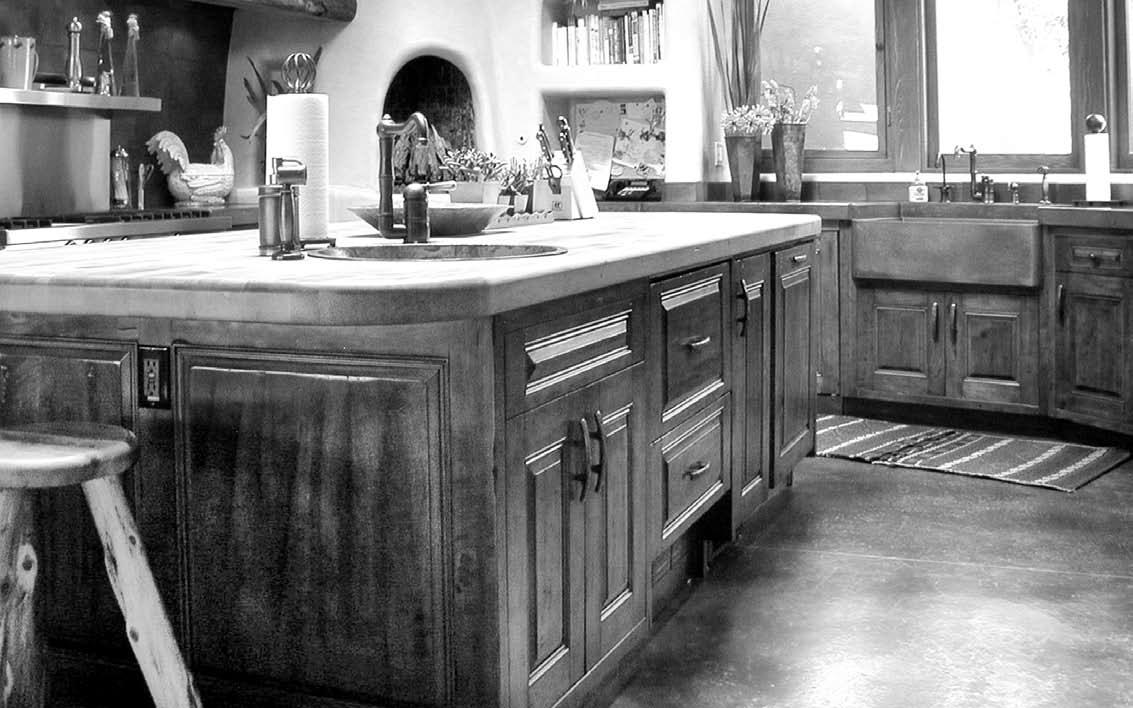
Your local Ferguson Bath and Kitchen Gallery will indulge your senses in the latest, most innovative bath and kitchen products from Kohler.
Our experienced showroom consultants will help you choose the precise products that suit your lifestyle. Call today to learn more about Ferguson and the products and services we are proud to offer.

ASID and Arizona Foothills Magazine presented the 17th Annual Tour de Noel Saturday, Dec. 3 and Sunday, Dec. 4. The three homes included in the tour were in Scottsdale and Paradise Valley and each featured a unique concept of desert living. Additionally, each home was paired with gourmet cuisine from notable Valley chefs.
Three separate tours began at the Fairmont Scottsdale Princess Resort with a silent auction. A focal point of the auction was a Christmas tree decorated with ornaments for sale, the proceeds of which will go directly to the Southwest Autism Research and Resource Center (SARRC) Campus for exceptional children. An additional portion of the proceeds from the tour will go to SAARC and other educational programs.

From the auction, a motor coach transported all participants to the different homes in style. The homes, beautifully decked for the holidays by ASID professionals and their floral specialists, were featured in the December ’05 issue of Arizona Foothills Magazine
Leila Armstrong-Winssinger, Allied Member ASID of Wiseman & Gale Interiors, Inc. presented a traditional Santa Barbara styled home with an East Coast sensibility. Stone balusters, columns, wrought iron work, thick crown and base moldings, wooden wainscoting, and wooden columns were featured throughout the home. English Chippendale and French period antiques and quality reproductions filled the home, as well as 19th century decorative accessories. Home and holiday décor were provided by Steve Brock, Keisler Enterprises and Table Tops Etcetera.
Beverly Oberg, Allied Member ASID of Beverly Oberg Interiors presented a traditional home with a welcoming French flair. A rich color palette, luscious fabrics and lovingly collected antiques embodied the home’s subtle and nurturing spirit. This home remodel started with the cherry wood flooring, new French doors, and the raising of a sunken living room. The heart of this home is the country French kitchen and family room. The Provencal style of these rooms blends with the formal grandeur of the dining room and master bedroom. Holiday and home décor was provided by Foliage Factory, North Scottsdale Floral, Fenwicks of Scottsdale, Scottsdale Marketplace, Scottsdale Marketplace Master Gardner Nancy King, On The Veranda, Evelyn’s Draperies, Lapalatte, and Alexander Sinclair.
Gabrielle Roeckelein, Allied Member ASID of Park Avenue Design, Inc. presented a contemporary home with Polynesian influences and hints of loft style living. The house is divided equally by the inside stairs forming two completely self-sufficient areas, the top floor for the home owners and the lower level for their son. The formal living room features a fantastic view of the south Valley and has other focal points such as the Asian styled wall shelving. Custom touches continue throughout the home with stone walls in the dining room and family room fireplace, and acrylic and oil paintings fill the walls. Striking color combinations, the use of black to accent the outlines of the furniture, and luxurious fabrics give this home a formal, yet playful ambience. Holiday décor was provided by Foliage Factory, which is exclusively to the trade.

Executive chef Reed S. Groban; chef Jon-Paul Hutchins, corporate chef of The Living Kitchen by Interwest, Sub-Zero and Wolf; executive chef Michael O’Dowd from the Sheraton Wild Horse Pass Resort & Spa; executive Sous chef Chaz Frankenfield from The Fairmont Scottsdale Princess Resort; executive chef Michael DeMaria from Michael’s at the Citadel; executive chef Anton Brunbauer from the Westin Kierland Resort and Spa; chef Amy Ahrensdorf from SunWest Appliance Distributing; chef Robin Ufkes from Arizona Catering.
Thank you to the student members for all of the entries for the Wreath Design competition. Once again the wreaths made a wonderful addition to the Tour de Noel auction.
• First Place: Bobbie Champagne - $150.00
Mesa Community College
Entitled “Snow Queen “
• Second Place: Dawn Kemp - $100.00
Mesa Community College
Entitled “Fairies”
• Third Place: Lisa Butler - $50.00
Mesa community College
Entitled “Mountain Top”
Event Chairman
Cote Butera-Gilmore, Allied Member ASID
Dede Radford (Chair), Allied Member ASID
Claire Ownby (Chair), Allied Member ASID
Don Nottingham (Co-chair), Industry Partner of ASID
Kristi Ludenia (Co-chair), Industry Partner of ASID
Roland Arnold, Industry Partner of ASID
Sandra Kieffer, Allied Member ASID
Arizona Foothills Magazine
Allstate Appliances, Inc. – Electrolux
Arizona Tile Supply
Burdette Cabinet Co. Inc.
SunWest Appliance Distributing
The Living Kitchen by Interwest
The Fairmont Scottsdale
Princess Resort
• We extend a special thank you to all volunteers - you are great!




Feb. 25th -10 am to 5 pm
By Susan Kay Schultz




Our 2nd Annual ASID Winter Tour of Homes will be held on Saturday, February 25 from 10 a.m. to 5 p.m.


This year’s tour will be self-driven as it was last year. We will be showcasing the following four spectacular homes from four ASID Arizona North Chapter interior designers:
This 6,500-square-foot Santa Barbara-style home with Spanish influences is located in Silverleaf at DC Ranch in North Scottsdale. One immediately feels the power and elegance of this four bedroom, four bathroom home. The mere height of and views from the living room and dining room windows set the stage for an experience of uplifting elegance steeped in “Old World” charm.
Warmth and coziness are established with meticulous attention to detail, abundant use of stone, patterns and materials unique to each room, the use of rough plaster with scalloped details at the windows, and leaded glass and custom ironwork. The fountain at the front of the home is an original design, sculptural and carefully integrated, as the slope of the driveway is significant.
The homeowners did not want a showplace, but rather a home that is casual yet elegant. From the design conception to the materials used for furnishings, such as textured fabrics and stamped leather, Jean Claude was able to help the owners turn their dreams into reality.

This nostalgic home located on the golf course of Desert Mountain’s Saguaro Forest is tucked away and secluded with paramount views of the mountain. Its rustic flavor stems from its Southwestern architecture and an interior that is warm and cozy with a flare of Spanish influence. The home was constructed around boulders to emphasize the natural beauty of the site, and windows were strategically placed and moved to take advantage of the surrounding nature.
Characteristics such as finishes, aged fireplaces, wood beam ceilings and distressed furniture contribute to the nostalgia and Old World charm of the home. Contemporary and current fashion such as colored concrete floors creates a design element of mixing the old with the new to help achieve an eclectic feel.

This Spanish Colonial/Mediterranean themed home sits on two and one-half acres in the Ladera Vista development in North Scottsdale. The 14,000-square-foot home has four bedrooms, five bathrooms, two powder rooms, guest casita and offers 8,500 square-feet of livable space. A balcony overlooks city lights with a 360 degree view of Pinnacle Peak. The exterior wrought iron spiral staircase connects the balcony with the backyard pool and barbeque areas. Other features include a clay tile roof, Cantera stone throughout, reflecting pond in front courtyard entry, fireplaces (two outdoor, three indoor), gazebo with water feature, theater, craft room, workout room, children’s playroom, coffered ceiling home office, game room, walk-in refrigerator, butler’s pantry and cathedral ceiling in the master bedroom.



This 2005 ASID award winning 4,687-square-foot Santa Barbara-style home sits on one acre at the western edge of Cattle Track at 74th Place and Lincoln in Scottsdale. The four bedroom, four and one-half bath single level includes a formal living room, dining room, family room and a three-car garage. The home is light, open, flowing and emphasizes privacy throughout its discreet layout.
The home is an outdoor retreat from the entrance to the elegant pool. The eight-foot windows immediately frame the 36-foot by 17-foot pool, which runs perpendicular to the horizontally set home—affirming the inside/ out continuity. An eight-foot spa spills into the pool that has a serene blue granite pebble sheen.
Garcia describes the Santa Barbara home as an American Style merging a variety of styles: Spanish, Mexican, Italian, French, country house and villa. There is harmonious “dialogue” between the different styles that are both innovative and classic. This inviting home is a place where everyone can walk in and feel this is the home for them.

Cost: $45 at the door, $40 advance purchase, $20 for students. Order tickets by calling Pauline Wampler at 602-569-8916.
All proceeds from the ASID Winter Tour of Homes 2006 will benefit ASID and SARRC (Southwest Autism Research and Resource Center).
Please contact either co-chair if you are interested in volunteering on this committee. Sandra Kieffer, Allied Member ASID, (480) 556-1988, skinteriorsolutions@hotmail.com Angelica Maria Henry, ASID, (602) 327-0474, angelica@janetbrooksdesign.com.

Natural light showcases every living space in your home. But it also causes glare, hot spots and fades precious furnishings. Desert Shield SunScape Select™ Window Films reduce 99% of the harmful UV rays, including up to 80% of the sun’s solar heat. These films are available in many designer tints. Let us protect you and your client’s place in the sun.
Celebrating 30 years in the industry
Designed Exclusively for the Professional Trade Recommended & Approved by APS/SRP
By Susan Kay Schultz and Ginger Eiden
As interior designers, we find ourselves craving variety in the spaces we work to transform. We find a secret pleasure in pairing subtle textures with rich color, the right amount of lighting and most importantly, signature accessories. We try and blend these components to meet the needs of a room and, without asking, the needs of our clients. Overcoming the challenges of a room through calculated, artistic talent is one of the underlying motivations to late night projects, yet it is truly one of the most rewarding components to our day.
When the ASID board learned about an opportunity to partner with the Southwest Autism Research & Resource
Center (SARRC) on a community service project we could not wait to get to work! The project, which will be introduced during January’s ASID chapter meeting, will give us an opportunity to apply our knowledge of design to a non-profit in need. What makes this project truly unique is that every design component that we introduce to the building will have to address the specific sensory needs of children with autism. Below is useful information on how color, texture and other design components can create a positive environment for children with autism. We look forward to having you join us in the New Year as we begin this interior make-over project for some truly wonderful kids.
When you think of a children’s playroom or a pediatrician’s office, your mind immediately turns to vivid colors, inviting textures and stimulating lights. But many of the conventional design elements used to create a youth environment are flipped upside down when it comes to designing interiors for individuals with autism. SARRC’s design team embraced those considerations when creating the various spaces at the new campus. The end result is a soothing atmosphere that welcomes families and offers them a sanctuary of support. Major considerations include:
Lighting: Traditional fluorescent lighting often produces a subtle humming sound and a flicker. While such effects are unnoticed by most people, they can be extremely distracting to a person with autism. To combat this, the new campus for exceptional children utilizes a combination of natural lighting and canned lighting set on dimmers, which makes it easy to adapt the brightness in a room to a person’s comfort level.
Color and patterns: Primary colors and vivid patterns scream “kid’s zone”; however, these bright visuals also scream “over-stimulation” in the autistic world. Muted tones and soft patterns comprise the color palette for the campus’s interior, creating an inviting space.
Sound: For people with autism, loud or repetitive sounds become an overwhelming distraction. However, it is unrealistic to expect an environment being visited by children and young adults to be as quiet as a college library during finals. Knowing this, campus designers incorporated a variety of wall coverings to dampen sounds and maintain a calm auditory environment.
Technology meets nature: While communication systems and panic buttons for therapists working with children were a major part of the design, the use of natural spaces was of equal importance. Large windows, a courtyard garden and smaller outdoor retreats offer places for families and staff members to decompress with one another.
If you are interested in volunteering for the Campus Design Team, please contact our co-chairs for further information: Susan Nicholson, ASID, 480-250-0930, dwki@ aol.com or Robyn Randall, ASID, 480-213-9407, rr-intdes@ cox.net.

By Janet Friedman, ASID, CID
Operating a design business in two states, as Friedman & Shields has done since 2000, presents both opportunities and challenges. It is certainly not the easiest way to build a practice but it does have its rewards. My partner, Traci, and I have managed to successfully juggle our two locations, with Traci managing Scottsdale and me managing San Francisco and commuting back and forth as needed.

We did not make a conscious decision to open an office in the San Francisco area; the need evolved slowly in the 90s, largely because we wanted to expand our design horizons beyond what the Arizona market could offer. At the time there were few showrooms in the area and we craved the stimulation that larger markets, such as the SF Design Center could offer. We also attended frequent specialty markets all over the country so we could offer our clients a wider variety when it came to products and applications. Eventually I was spending as much time shopping outside the state as I was inside; and thus, the second office was born. (So, incidentally, was my granddaughter, sealing the California deal for sure!)

It works for us in the reverse, too. Our California clients appreciate the economies that our Arizona vendors offer when it comes to custom pieces as labor is significantly cheaper here, and they enjoy trips to Scottsdale in the winter as much as our Arizona clients enjoy escaping the summer heat. The hardest part for us as designers is remembering that California properties, while three times more expensive than those in our own backyard, are much smaller in scale and do not offer the architectural variety that we enjoy in the desert. So the projects we do in California end up being quite different than those we do in Arizona.
On the downside, we have had to work out procedures and make the Scottsdale showroom the home office and the source of all recordkeeping. Still, paperwork and samples occasionally go astray, landing in the wrong office at the wrong time. Then there is the hassle of shipping client files and samples back and forth, back and forth, depending on travel schedules. Believe me, you do not ever want to trust an airline to not lose your luggage. And now that they have instituted weight limits, it is practically impossible to check a heavy bag.
From a marketing standpoint, this strategy has paid off handsomely. Our clients appreciate our exposure to sources outside Arizona and they know we will not give them a stereotypical desert look. Plus they enjoy their trips to the Bay Area and come to understand, and value, the design process more when they experience the breadth of product knowledge and skill that we bring to their projects.
It takes significant mental and physical organization, a tolerance for frequent travel, and an ability to live in two places at once. While the demands may be greater to have the two offices in different states, so may be the rewards.

The following was taken from the NCIDQ Web site. You will notice the eligibility requirements will change significantly after January 1, 2008.
All experience prior to graduation is limited as indicated below and may serve to satisfy an education requirement for training, but may not apply to credit hours for education.
• Graduates with a baccalaureate degree (min.) in programs of no less than 120 semester or 180 quarter credit hours, of which 60 semester or 90 quarter hours, respectively, are interior design related, must have completed 96 semester hours or 144 quarter credit hours of education prior to field experience for that experience to be applicable to the NCIDQ requirements for IDEP participation for exam candidacy. Applicable experience shall not exceed 1,760 hours prior to graduation. A total of 3,520 hours of experience is required for IDEP completion or exam candidacy.
• Persons completing programs leading to a certificate, degree or diploma of no less than 60 semester hours or 90 quarter credit hours in interior design-related coursework must complete the education program prior to commencing any field experience for that experience to be applicable to the NCIDQ requirements for exam candidacy. A total of 5,280 hours of experience is required for IDEP completion or exam candidacy.
• Persons completing programs leading to a certificate, degree or diploma of no less than 40 semester hours or 60 quarter credit hours of interior design-related coursework must complete the education program prior to commencing any field experience for that experience to be applicable to the NCIDQ requirements for exam candidacy. Applicants must have completed an education program of at least 40 semester or 60 quarter credit hours and a total of 7,040 hours of experience to be eligible for exam candidacy.
This criteria for eligibility is counted up to the time of application submission. It is not up to the following examination period. Education is evaluated based on a review of college or university transcript(s) and, when necessary, copies of course descriptions from the college or university catalog in force at the beginning of course work.
It is recommended that employment be under the direct supervision of an NCIDQ Certificate holder or a registered interior designer architect who offers interior design services. Examination candidates who begin their years of work experience after January 1, 2008 will be required to complete that experience under the direct supervision of an NCIDQ Certificate holder or a registered interior designer or an architect who offers interior design services. No independent practice time will be accepted.
If you reside in a licensed state/province and/or intend to become licensed in a regulated state/province, you must contact the appropriate state/provincial agency before completing the NCIDQ application to verify the state’s/province’s requirements for licensure.
The STEP workshop will be held at Mesa Community College:
Friday, February 17th, 6 pm to 9 pm
Saturday, February 18th, 9 am to 5 pm
Sunday, February 19th, 9 am to 5 pm
STEP Workshop cost:
$275 for ASID members
$350 for non-members

The instructor is Curt Sherman. A partial workshop is available for those who have taken the full workshop in the past. For additional information, contact Norma Escandon Michaels at nminteriorsgroup@cox.net, (602) 257-2282 work or (602) 677-3954 mobile.
Congratulations Are In Order!
The following members have recently past the NCIDQ exam!
• Wanda Frederick • David Hobart
• Dominique Horsman • Esther Leal Isla
Any other members who have recently past the NCIDQ should please contact Pauline Wampler at the ASID Arizona North Chapter office, (602) 569-8916.

By Tracey Marshall
We were served a wonderful assortment of appetizers while browsing the largest gathering of tabletops at any membership meeting to date for our Chapter. The meeting itself was an interesting and informative panel discussion led by Dorothy Bron, Bron Design Group; Jackie Jordan, Sherwin-Williams; both of the Color Marketing Group and Carolyn Richardson of the International Association of Color Consultants/Designers. Colorful mediation was provided by Paul Buys.
Mass-market retailers, like Target, are hiring renowned designers to create specialty lines for their stores. What affect does this have on color and design for Mr. and Mrs. America?
When Gloria Vanderbilt came out with the first “designer” jeans they were so successful, because it gave people the feeling of instant richness. That is what Target has been able to accomplish– anyone can have that “rich” feeling. They market to the neighborhood.
These mass-market retailers are actually doing a good thing for our industry. When the average consumer is exposed to good interior design, at any level, it opens them up to wanting better design as their incomes increase. The Target shopper today may be the fully-custom home of tomorrow. Now that these stores are incorporating better design ideals into their wares, consumers are becoming more interested in acquiring this aesthetic for their own homes.
How do world and national events affect color choices and design?
World events do not usually affect today’s color choices, but rather tomorrow’s. The attention given to the flooding in New Orleans could easily translate into a moody or jazz-inspired color palette in the months to come. Just as the coverage of the tsunami may lead to Asian or tropical color combinations and patterns.
World events may affect future color trends. Catastrophic events that have affected the heart and soul of human beings will delve more into the psyche of the people affected as we look to forecast colors for future years. The cultural and geographic characteristics may play into the forecast as well.
The plethora of information and visual images available on every TV channel from communities around the globe has made exotic design concepts much more accessible. Import stores are more and more common as people seek out materials similar to those they have seen on TV.
Baby Boomers continue to control many consumer dollars. This must affect color palettes. How would you define that influence?
Many Baby Boomers – Second Homes – Empty Nesters
As people get older their perceptions of color go through a physical change. Blues and greens tend to blend together, and all colors start to take on a yellower hue. Older clients need to use color combinations with higher contrasts because they can no longer visually recognize subtler colors.
What role does home-makeover and HGTV-type media play in color usage?
The average consumer is now able to see high-end homes and interior design concepts on TV that they may not have access to in their day-to-day lives. They are coming to appreciate color palettes and custom designs that they may have shied away from before.
People are receiving an influx of design help from these TV shows that is helping the average person attain superior environments. They see what is out there and are hoping to bring those influences into their own homes.
What impact does technology have on color palettes?
Consumers do not always understand the differences between the color processes for ink and light. They expect the colors on their computer monitors to translate perfectly to the actual items. We need to remember this when presenting downloaded information, or when our clients see something on the Internet that they are interested in. We need to be pro-active in stating that colors on the screen do not work the same as those applied to materials and that there may be significant differences.
Some colors seem to be classics. Do these classics change and if so how are they changing? What colors may be on the verge of becoming new classics?
“Classics” are really just trends that last longer than others. Certain colors tend to stay around for a long time, while others garner a very short attention span from the public. Classic colors often stick around for multiple decades, trends are usually associated with a single decade, and at the opposite end, fads are only seen for a year or so. A classic could be steel-grey which stayed in fashion for some 20 years. A current trend is yellow-green (or mauve in the 80s), while today’s true orange could be seen as a fad color.
Classic colors are very regional. What is “classic” in one country, or even one area of a country, may be short-lived or non-existent somewhere else.
How do manufacturers use forecast information to determine what colors to introduce in existing and new product lines?
Trends vary from industry to industry, and also from manufacturerto manufacturer. The colors that Sherwin-Williams tells us are the latest trends, will not necessarily match up to those from any other source. However, color choices are based on the same factual information which is shared, discussed, and analyzed by all industries. For example, the CMG color forecast is used andinterpreted to reflect the trends in specific industries. Each manufacturer’s interpretation may or may not have the same exact color palette, but they will have similarities. This is why you can go to Crate and Barrel and buy an orange mixing bowl, then go to Target and buy matching dish towels.
Product lines are usually produced in universal colors (neutrals, black, white) with some of the latest trend colors used in peripheral items. A white mixer will always be in style. Terra-cotta now seems a little dated, but not out of place, whereas an olive green sofa has definitely seen its day. Manufacturers have a delicate line to balance between what will be new and exciting and what will be a short-lived fad.

by Alexis Barnes
Reprinted with permission from K+BB, May 2005
Over the years, colors have defined more than just rooms. Color has always played an important role in history. Each era has a distinct palette that reflects the emotions and evolutions of that time period. One look at a particular color group can tell you the decade and give you hints as to what was going on in the world then.
“Colors don’t just fall out of the sky and land in our laps,” says Lee Eiseman, executive director of the Pantone Color Institute. “There are reasons why colors do come forth, most particularly in the socio-economic realm.”
The ‘50s are a perfect example. After World War II, Americans were badly in need of cheering up. Enter flamingo, butter-yellow and aqua. The colors covered everything—ranges, refrigerators, countertops, typewriters, you name it. In fact, according to K+BB’s premiere issue in September 1955, yellow was the number one color choice for ranges. “It was the ‘Lucy and Ethel’ era of housewares,” says Eiseman. “People were expressing optimism for America’s future through color.”
Optimism dimmed in the ‘60s, but colors did not, as the world was in a frenzy. Man landed on the moon, the civil rights movement took hold, the Berlin Wall was built and the Bay of Pigs invasion happened. But there was also Elvis and the Beatles, Janis and Jimi. Colors were as psychedelic as the times. Pink went from soft to Day-Glo, yellow morphed into acid green and aqua deepened to a darker turquoise. Patterns were also bolder. “When the colors manifested themselves in actual décor, it might have looked as if the designer was hallucinating at the time,” says Eiseman.

Orange wasn’t a problem in the ‘80s. Overdosed on avocado, designers (and consumers) moved toward the more muted mauve. The color was so popular that Time magazine referred to the “mauving of America.” Complementing colors included sea foam and peach. But as the decade wore on and the economy got stronger, so too did the colors. Influenced by Santa Fe and Miami, corals and teals grew in popularity. On the other end, the monochromatic, blackand-white look was also in style.
But just as the strong ‘80s economy affected color, so did its downturn in the ‘90s. People retreated to their homes and sought earthier colors. Terra cottas, almonds, greens and watery blues defined the era, especially as Americans became more concerned about the environment. “In the ‘90s, a lot of natural resources came into play,” says Eiseman. “Shabby chic really took hold, such as using found and recycled materials in décor.”
Colors don’t just fall out of the sky and land in our laps. There are reasons why colors do come forth, most particularly in the socio-economic realm.
”Perhaps as a reaction to the brightness of previous decades, the ‘70s are known for their drabness, particularly in the form of two colors—avocado green and harvest gold. Accent colors weren’t much brighter either: rusts, browns and oranges rounded out the palette. “Whether people loved the colors or hated them, everyone was doing it, so people went out and bought that avocado refrigerator,” says Eiseman.
Bright and cheery, pink and aqua were two of the pastels that defined the ‘50s. Everything from appliances to cosmetics came in these colors, which were amplified in the ‘60s. Not only were colors ultra bright then, but patterns were ultra bold. Bold turned boring in the ‘70s, the decade of avocado green and golden harvest yellow. Ready for a change, black and white color schemes ruled for part of the ‘80s, but they were replaced by earthier colors in the ‘90s. Spurred by a desire to protect the environment, browns and greens were tops. Today’s color palette incorporates a bit of everything.
Whether earth tones or pastels, brights or muted tones, each decade has left a distinct, colorful mark on the world’s landscape.
Jim Patterson
Through my work at Scott Group Custom Carpets I have seen some definite trends in carpet and custom area rug choices for 2006. Not only have style and functionality been consumer demands, but new colors and textures as well. Current choices are being influenced by natural materials, styled leathers, fur pelts, exotic woods, deep roast coffee, burnished metals and oxidized iron.
Mocha browns are shifting to earthen and mineral browns with red overtones. In addition, these browns are being paired with varied combinations of peacock and earthen green, burnished and coral oranges, cool lavenders and spa blues, and neutrals like charcoal, cream or camel.
Interior trends show a keen interest in the juxtaposition of not only materials, but periods as well, combining modern furnishings with antiques. Following that, consumers have been asking for texture and irregularity in their rugs so the pieces will look older, or will look like hand-made originals, not mass produced copies.
By Larami Simpson
When I was 12 years old, I did not realize the benefits of working with my father and his construction company. When he was building our family’s home, I “consulted” with him on colors, furniture and cabinets, unaware of the knowledge that I would gain from the experience. My father built custom homes with remarkable attention to detail. He caringly explained to me the design rationale behind the details, so that maybe, just maybe, I could use it in my future profession. Years later when I decided to study interior design at Northern Arizona University (NAU), needless to say, my parents were not surprised.
NAU has given me invaluable experiences and opportunities, one of which was an opportunity to attend an interior design focused school trip to New York City. This profound experience was inspiring and one I wish for others in this profession. It not only taught me that being an interior designer not only means interior design, but also interior integration of ideas and products from different sources. ASID has created connections for me with other like-minded people who are inspired by what this career can bring. Combining volunteerism with design has been such a great experience and connecting with interior designers throughout Arizona and the United States has been a rewarding and fun experience as well—all of for which I am grateful to ASID.
I intend to take the knowledge that my father gave me, my past experiences from NAU, ASID and New York City and integrate them into my future endeavors. We all have our own experiences. We must learn from them and continue to be refined as designers and life-long learners in this fantastic field.
The Art Institute’s main focus last quarter was to pull all of their prized projects for FIDER to see and evaluate towards accreditation. The response should be posted by February.
Last September the Mesa Community College chapter took student donations for Hurricane Katrina victims. They were able to fill a mini-van FULL of clothes, money, hygiene products, and items for children. These donations went to at least 300 people who were sent here for temporary housing at the Arizona State Fairgrounds to help them get back on their feet. Also in September guest speaker Naomi Anderson, former publisher of (to-the-trade-only) magazine Sources+Design, lectured on how to be your own best PR person.
In October guest speaker Bob Meist with the Arizona Department of Revenue covered “Learning to apply for and correctly use your TPT license.” November’s meeting featured Sandra Saoud of Sincerely Sandra. Sandra is an image consultant and spoke about being professional, how to make a good first impression, “musts” for job interviews and public speaking. In addition, Lee Ann Walker, the MCC ASID professional liaison and the past MCC ASID president spoke about the importance of taking advantage of networking opportunities as a student. Collections began again in December, this time for the Sojourner Center, a home for battered woman and children. Students also volunteered to help with the Tour de Noel home tours and auction. MCC’s FIDER review will be held in March of 2006.
Northern Arizona University ASID student chapter has been doing some incredible things this year and is planning more for the future. In October they took on a renovation of a battered women’s shelter in Sedona, Arizona. They selected paint colors, furniture, and used hard labor to create an improved environment. Mike Elliot from Southwest Wind Power spoke to them about using wind power as an alternative energy source. In November they started on a residential interior design project in an arts and crafts style development called Coyote Springs. The Historic Colton House asked NAU and ASID to decorate for Christmas with money from an anonymous donor. Future events include a marker workshop (open to all students and professionals), a portfolio workshop, and numerous guest speakers. Please e-mail Chrissy Manes at clm233@dana.ucc.nau.edu for more information.
Students from the Phoenix College chapter ended the fall semester by helping Bee Busy Interiors decorate a holiday home open to the public. They concluded a busy philanthropic day with a lunch reception at Romano’s Macaroni Grill. In January they will have a membership luncheon and tour of the new Arizona Design Center in Scottsdale. In February they are planning a workshop/lecture on entering design competitions and publishing work.
The popular PC-ASID totebags are back! Help raise money for the chapter with these fashionable and functional totes. The totebags will be on display in the Interior Design Showcase in the upstairs hall.
SCC has had an exuberating semester! They have been busy with chapter meetings, a guest speaker panel of recent SCC graduates/designers, and lessons in sustainable design at aka Green. They also hosted their first Student Designer’s Challenge to encourage skills in hand drafting, space planning, and time management. Congratulations to Moriah Adamson, Meegan Berner and Carrie McKibben. The Student Board of Directors has been busy planning an exciting spring semester with the highlight being a fashion show featuring an image consultant guest speaker.
Student Affairs Chairman
Sheena Gohegan, (480) 216-7873, sgleoe@msn.com
Art Institute of Phoenix Faculty Advisor: Ginney Lopez, (602) 331-7553, gcull@aii.edu
President: Sandi Harms, lovevil@gmail.com
ASID Liason: Tracy Weeden, tracy weeden@yahoo.com
Mesa Community College Faculty Advisor: CJ Robb, (480) 461-7391, cmahaffey@mailmc.maricopa.edu
President: Mellisa Trottier, meltnaz@mac.com
ASID Liason: Andrea Stimpson, andrea.stimpson@cox.net
Northern Arizona University Faculty Advisor: Carl Clark, FASID
President: Chrissy Manes, clm233@dana.ucc.nau.edu
ASID Liason: Larami Simson, ljs56@dana.ucc.nau.edu
Phoenix Community College Faculty Advisor: Ken Roberts, (602) 285-7289, ken.roberts@pc.maricope.edu
President: Linda Benson, imageryessentials@yahoo.com
ASID Liason: Eugene Halona, thehalonian@yahoo.com
Scottsdale Community College Faculty Advisor:
Marcia Gonzales, (480) 423-6254, marcia.gonzales@sccmail. maricopa.edu
President: Sabrina Susini, interdesignrgirl@aol.com
ASID Liason: Ann Bertino, anne@akagreen.com
PROFESSIONAL
Jamie Stratman, ASID 19777 N. 76th St. Apt. 3186 Scottsdale AZ 85255 (480) 275-5491
ALLIED
Alison Craig Victoriously Natural Designs PO Box 3918 Show Low AZ 85902-3918 (928) 532-0564
Diane J. Davey 1659 E. Montoya Ln. Phoenix AZ 85024-4325
Shasta Ireland
1965 E. Dava Dr. Tempe AZ 85283-4911
Cindy Lewton 21606 N. 44th Place Phoenix AZ 85050-6934 (480) 513-0629
Gabriela Sanchez Best Western Int’l 6201 N. 24th Pkwy. Phoenix AZ 85016-2023 (602) 957-5618
INDUSTRY PARTNERS
aka Green Jeffery Frost 4408 N. Miller Rd., Ste. 101 Scottsdale AZ 85251-3696 (480) 946-9600
Stockett Tile and Granite Co. Susan Beggs, Gary Cole Kim Hester 7329 E. Greenway Rd. Scottsdale AZ 85260-1666 (480) 695-8750
Arizona Solar Control Tom Vanderhoof 21632 N. 7th Ave., Ste. B-4 Phoenix AZ 85027 (623) 780-4950
ACCOUNT EXECUTIVE: Unique position as sales representative for interior design firm marketing complete home plans to condominiums, resorts, lofts, etc. For details call: Robert Calvin Carr, ASID at 602-703-8033 or 480-361-0550

December



Arizona North Chapter
4035 E. Fanfol Dr. Phoenix, AZ 85028
602.569.8916 (p) 602.996.3966 (f) www.asidaznorth.org