When they put their trust in you, it’s vital to have information you can trust.
AMH Aged Care Companion
PRACTICAL REFERENCE FOR AGED CARE
Covers over 70 conditions to assist healthcare professionals in delivering effective care.
DESIGNED FOR OLDER PEOPLE’S UNIQUE NEEDS
Provides information on treatment options to minimise harm caused by inappropriate use of medications.
SUPPORTIVE TOOL FOR MEDICATION REVIEW
Features evidence-based insights to optimise disease management, including deprescribing and frailty.
OPTIMISE HEALTH OUTCOMES
Maximise the benefits of medication to improve and assist overall quality of life.
Annie Butler
ANMF Federal Secretary
Now more than ever, we must strive for harmony, respect and peace in our communities, our workplaces and our public life.
In times of uncertainty and heightened tension, the values we choose to uphold matter more than ever. As nurses and midwives, we know that healing is multifaceted, but it always begins with compassion, dignity and a commitment to the wellbeing of every person.
Recent violent incidents, both in Australia and internationally, have been deeply distressing for many of our members and the broader community. Tragic events such as the devastating and senseless attack at Bondi, confronting scenes of violence and aggression in public protests, and the use of force that has raised serious concerns about police conduct, sit alongside the brutality unfolding in areas of conflict across the world. While these events occur in different contexts, they are connected by a broader climate of division, hostility and harmful rhetoric. Hate speech does not exist in isolation. It contributes to an environment in which violence, dehumanisation and intolerance can take root and become normalised.
Such words and actions are inconsistent with the values of a safe, democratic and inclusive society. They erode trust, create fear and ultimately harm the communities that nurses and midwives work every day to care for and protect. Hate speech has no place in our workplaces, our communities or our public life. Nurses and midwives care for people from every background, culture and belief, and we see firsthand how prejudice and exclusion impact health and wellbeing. When people feel unsafe, unheard or dehumanised, the consequences are profound and long-lasting.
As health professionals, we understand the power of language. While words can heal and bring people together, they can also divide and cause harm. In our daily practice, we create safe and respectful environments for patients, families and colleagues. That same standard must guide how we engage with one another in public life.
The Australian Nursing and Midwifery Federation condemns hate speech in all its forms and rejects the violence and intolerance it fuels. We stand with our members and the communities they serve. We stand for inclusion, respect and dignity. At times of heightened tension, leadership matters. It requires us to reject violence and division, to listen with empathy and to work collectively towards solutions that strengthen our communities and our democracy.
At the same time, we continue to call for the protection of healthcare workers in conflict zones and stand in solidarity with our colleagues across the world. In many countries, nurses and midwives are at the forefront of responding to conflict, disasters and humanitarian crises that cause widespread suffering and place enormous strain on health systems. From war-torn regions to disaster-affected communities, they witness violence and trauma while continuing to provide care, stability and hope. They often do so in unsafe and challenging environments, facing risks to their own safety, professional practice and rights.
Our Nurses and Midwives for Peace campaign reflects this commitment. It recognises that nursing and midwifery are powerful forces for unity and social cohesion. Every day, our members bring people together through care, professionalism and compassion. In doing so, they help build the safer, more respectful and more connected society we all want to see.
In this issue of the Australian Nursing and Midwifery Journal, we also turn our focus to aged care, where our members continue to tell us that too many older Australians are not receiving the safe, dignified care they deserve. It is clear aged care is NOT fixed. There is still significant work to do to ensure transparency, accountability and safe staffing in every facility. The ANMF and its members are determined to continue advocating for meaningful reform so that every older person receives the quality care, respect and dignity they deserve.
We also mark two important moments in our professional calendar — International Day of the Midwife and International Nurses Day. These occasions provide an opportunity to celebrate the extraordinary contribution of nurses and midwives, to reflect on the impact we make in the lives of individuals, families and communities, and to recognise the strength, skill and compassion that define our professions.
At a time when the world can feel uncertain and divided, these days remind us of what unites us. Every day, nurses and midwives demonstrate the values of respect, inclusion and care. Through our work, we build trust, strengthen communities and promote health and wellbeing for all.
Advertising Chris Masters cmasters@anmf.org.au 0428 052 138
Design and production
Graphic designer: Lorna Hendry lornahendry.com
The Australian Nursing & Midwifery Journal is delivered free quarterly to members of ANMF Branches other than New South Wales, Queensland, Western Australia and ACT. Subscription rates are available via ANMJadmin@anmf.org.au. Nurses and midwives who wish to join the ANMF should contact their state or territory branch. The statements or opinions expressed in the journal reflect the view of the authors and do not represent the official policy of the Australian Nursing & Midwifery Federation unless this is so stated. Although all accepted advertising material is expected to conform to the ANMF’s ethical standards, such acceptance does not imply endorsement. All rights reserved. Material in the Australian Nursing & Midwifery Journal is copyright and may be reprinted only by arrangement with the Australian Nursing & Midwifery Journal
Note: ANMJ is indexed in the cumulative index to nursing and allied health literature and the international nursing index ISSN 2202-7114 Online: ISSN 2207-1512
Moving state.
Transfer your ANMF membership
If you are a financial member of the ANMF, QNMU or NSWNMA, you can transfer your membership by phoning your union branch. Don’t take risks with your ANMF membership –transfer to the appropriate branch for total union cover. It is important for members to consider that nurses who do not transfer their membership are probably not covered by professional indemnity insurance.
Printing: IVE Group
Distribution: D&D Mailing Services
ANMJ is printed on A2 Gloss Finesse, PEFC accredited paper.
The Journal is distributed by D&D Mailing Service and is wrapped in post consumer recycled (PCR) plastic which reduces environmental waste
The ANMJ acknowledges the Traditional Owners and Custodians of this nation. We pay our respects to Elders past, present and emerging. We celebrate the stories, culture and traditions of Aboriginal and Torres Strait Islander Elders of all communities. We acknowledge their continuing connection to the land, water and culture, and recognise their valuable contributions to society.
NURSES WORKING IN MEDICARE URGENT CARE CLINICS NEED BETTER SUPPORT
Nurses working in Medicare Urgent Care Clinics are facing heavy workloads and limited opportunities to work to their full scope of practice, according to the second independent evaluation of the government’s first 87 bulk-billed walk-in clinics.
Of 188 Medicare Urgent Care Clinic (UCC) nurses surveyed, only 63% said they have the opportunity to work to top scope, compared to 80% of GPs.
Despite high levels of positive workplace culture, workload pressures were a concern for many staff. Just 52% of nursing respondents considered their workload manageable, and only 40% of total respondents believed staffing levels met demand.
Training programs and opportunities to upskill were also limited for nursing staff, with just 67% saying they can access the right learning and development opportunities when they need to.
Recruitment of staff to adequately fulfill workforce requirements and meet patient demand across urgent care clinics remains a challenge across the board. New data shows clinics are especially struggling to recruit nurses with urgent care or ED experience. Other barriers to recruitment included hospitals and state-run urgent care services in some jurisdictions offering higher pay and better benefits for nursing staff, making it difficult for Medicare UCCs to attract the workforce they need.
CNMF host two international conferences in 2026
The Commonwealth Nurses and Midwives Federation (CNMF) is inviting Australian nurses and midwives to attend two international conferences in 2026.
An inaugural CNMF West Africa Region conference will be held in Abuja, Nigeria on 21-23 April 2026. Co-hosted with the National Association of Nigerian Nurses and Midwives (NANNM), this landmark event will provide a vital platform for networking, collaboration and knowledge-sharing. Abstracts include from the West African countries of Nigeria, Ghana, Cameroon and Sierra Leone, as well as Canada, the United Kingdom, the United States, Kenya, Malta and South Africa.
“The upcoming conference represents a significant moment for the region. It will not only celebrate the innovation and dedication of West African nurses and midwives but also provide a forum to address the pressing issues in practice, education, and regulation,” said NANNM Assistant Secretary-General Chidi Aligwe.
The 7th biennial Commonwealth Nurses and Midwives Conference is being held in partnership with the Trained Nurses Association of India, in New Delhi on 24-
25 September 2026. The 2026 theme is Shaping the future: nurses and midwives navigating new frontiers www.commonwealthnurses.org
Unions call for current Capital Gains Tax (CGT) discount to be halved
The Australian Council of Trade Unions (ACTU) is calling for the current Capital Gains Tax (CGT) discount to be cut from 50 to 25% so that workers, including health professionals and younger workers, have more access to affordable housing near where they work.
In February, ACTU President Michele O’Neil told a Senate Inquiry into the CGT that the current tax discount privileges professional landlords and hurts everyday Australians who are being priced out of home ownership.
She claimed the CGT discount has become a tax minimisation scheme allowing the very rich to pay lower rates of tax by investing in the property market, while young people struggle to access affordable housing.
The ACTU’s submission argues that the CGT discount and negative gearing tax breaks should be limited to one investment property. The changes should apply to all new housing investments extending beyond a single investment property, with a five-year grandfathering period for existing investment properties giving investors time to adapt to the new arrangements.
“Too many workers can no longer afford to live near where they work, leaving them stuck with long and costly commutes and less time to spend with their families,” Ms O’Neil said.
ACT NPs first in Australia to issue death certificates
The ACT is the first jurisdiction in Australia to grant nurse practitioners the authority to issue cause of death certificates and witness nonwritten health directions after the Legislative Assembly passed the Nurse Practitioners Legislation Amendment Bill 2025 in late February.
NPs who have undertaken the requisite training can issue cause of death certificates, where they were responsible for the care of the person and within 48 hours of the person’s death, and where a referral to the coroner is not required.
“Granting NPs who are often directly involved in a person’s final hours, the authority to complete death certificates provides clarity and closure for families
and carers and supports continuity of care,” said Australian College of Nurse Practitioners ACT Chapter lead Tim Keun.
The new law will enable NPs in the ACT to work to their full scope of practice, especially those who work in hospice, palliative care, or residential aged care facilities.
The legislation also authorises ACT NPs to witness non-written health directions. The change removes the need for a medical officer’s involvement where a NP has the capacity to undertake the role.
Further work in the ACT is underway to enable NPs to conduct fitness to drive medical assessments and complete documentation such as work capacity certificates for initial workers’ compensation claims.
FINAL ROLLOUT OF NURSE- AND MIDWIFE-TO-PATIENT RATIOS COMMENCES IN ACT
The final stage of mandated minimum staffing ratios has begun rolling out across the ACT’s public health system.
Ratios, which set the mandated minimum number of nurses and midwives working on a ward, unit or area, based on patient numbers and the complexity of care required, will expand to the University of Canberra Hospital inpatient areas and sub-acute mental health services. This follows the first phase of ratios in all other inpatient areas across Canberra Hospital, North Canberra Hospital and
public mental health units over the past 18 months.
The Australian Nursing and Midwifery Federation (ANMF) (ACT Branch) said ratios have been well received by members.
“Where ratios are consistently being met, we’re already seeing positive impacts, with more time for direct care and improved clinical oversight. That is exactly what ratios were designed to achieve,” ANMF (ACT Branch) Secretary Carlyn Fidow said.
“Ratios have also resulted in increased transparency around the public health
system performance in recruiting and retaining nurses and midwives while public reporting of ratio compliance also puts the spotlight on performance.”
While progress has been made, the ANMF (ACT Branch) says there are still workplaces where ratios had not yet been implemented.
“It is essential that the rollout continues so that all nurses, midwives and the communities they serve benefit and the Branch is pursuing this in public sector enterprise agreement negotiations which have just commenced.”
Astrid S Tiefholz
ANMF Federal Vice President
A workforce under strain: Why midwives are leaving
The Australian midwifery workforce is in a state of crisis, with localised staffing shortfalls and significant risk of attrition. Recent modelling from the Midwifery Futures project indicates that one midwife in three is considering leaving the profession due to anxiety, burnout, and waning job satisfaction.
A central reason for this exodus is the emotional cost of caring, especially secondary traumatic stress (STS) and vicarious trauma. While maternity care has principally focused on physical safety for mothers and infants, the importance of the psychological, social, and spiritual wellbeing of families and the clinicians who care for them cannot be overstated.
STS is an occupational hazard for midwives, who can experience post-traumatic stress disorder (PTSD) symptoms from exposure to trauma experienced by the families in their care. Research shows that the prevalence of STS in midwives in Australia and the United Kingdom is in the range of 20 to 60%. Almost one in five midwives surveyed in Australia meet the criteria for presumptive PTSD.
sometimes uncounted work of caring for newborns who are not tallied in official patient ratios, adds to moral injury and physical exhaustion. Without proper support, these experiences can lead to a cycle of guilt and shame, potentially driving clinicians out of midwifery.
To safeguard the future midwifery workforce, maternity services must move beyond calls for individual resilience and embrace systemic change. The responsibility for improvement needs positive collaboration between organisations, clinicians, and community stakeholders.
If you’re experiencing anxiety, burnout, reduced job satisfaction, or any other challenges, support is available through the Nurse Midwife Health Program Australia (NMHPA).
Call 1800 001 060 or email info@nursemidwifehpa.org.au for confidential support.
Visit the NMHPA website for additional resources and personal stories to support your health and wellbeing nursemidwifehpa.org.au
Midwives are often exposed to potentially traumatic events, with over 80% reporting witnessing a traumatic birth at some point in their career. This includes medical emergencies, fetal/neonatal or maternal death, and near-misses. However, a significant source of trauma is witnessing or being implicated in unconsented interventions, coercion, and disrespect within the maternity setting. Midwives have described their horror of being part of care that violates a woman’s human rights, leading to a phenomenon increasingly described as moral injury. When a midwife sees or feels pressured to participate in actions that violate their moral beliefs, such as failing to protect a client from unnecessary intervention because of hierarchical pressure or fear of retaliation, their professional autonomy and competence is undermined and their psychological safety can be damaged.
The impact of STS on the individual midwife is profound, affecting belief in the natural birth process. Midwives can experience intrusive memories, emotional detachment, or hypervigilance that affects their job performance and erodes their empathy. This emotional withdrawal both diminishes the midwife’s quality of life and impacts client care, as stressed clinicians may avoid connecting with clients or increase medicalised risk management approaches to soothe their own anxiety.
Workplace conditions often worsen these issues. Midwives report feeling disempowered by patriarchal and hierarchical medical structures where their advocacy may be discouraged or even punished. Further to this, unmanageable workloads, such as the
Some practical support that organisations can offer midwives include clinical supervision and mentoring. These formal programs provide protected time for midwives to address the emotional impact of their work with a trained professional. As well as clinical supervision, mentoring should be structured and available throughout the midwife’s career.
Midwives often gravitate towards their peers for support, and the implementation of structured, evidence-based peer debriefing tools can facilitate clinicians in processing distressing events in a timely, judgement-free environment that nurtures growth and learning.
Organisations must also create psychologically safe working cultures where ethical concerns can be raised and named without fear of reprisal.
Flexible working options can also be helpful, with part-time and job-sharing options being essential for retention, especially for midwives who are themselves pregnant or caring for young families.
The option to work in continuity of care models, such as a midwifery group practice, can be protective for midwives whose balance of work-life responsibilities align with this model. High levels of job satisfaction and decreased stress are reported by midwives who choose this program, however the on-call nature can be untenable for some.
The wellbeing of the midwifery workforce is inextricably linked to high-quality maternal care. Acknowledging STS and moral injury as risks and responding with robust support structures, midwives can be clinically safe and sustained ethically and emotionally. Proactive measures to address the emotional cost of caring is no longer optional.
At
Online
Working
super
At Aware Super we’re here to help – so you can look forward to the retirement you’re working hard for. As Chant West’s Best Fund: Member Services 2025, being super helpful starts with:
With super service, Aware Super is super helpful.
Friendly Aussie call centres ready to support your workforce
Online tools and our app, making it easy for your people to manage their super and retirement, anytime, anywhere
Online
Working to keep their account safe and secure, with advanced security features including multi-factor authentication1
They’re working hard for their retirement. Now let us help them.
With super service, Aware Super is super helpful.
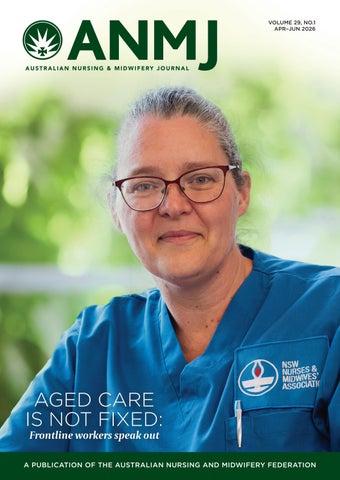
AGED CARE IS NOT FIXED: FRONTLINE WORKERS SPEAK OUT
Four years after the Royal Commission, aged care workers say the system is still failing. Robert Fedele reports.
When direct care worker Lannelle Bailey lost her 104-year-old grandmother, one comment from her father stayed with her. As they cleared out her room and walked out of the aged care facility he said: “Please don’t put me in one of those places.”
“Even though staff are providing the minimum level of care, it’s not enough for people to have that wonderful experience passing onto the next life,” says Lannelle.
“It takes an emotional toll on us [aged care workers] because we want to do more, but we can only do what we can with the time that we have.”
Working across the New South Wales-Victoria border in Albury-Wodonga, Lannelle is employed at two aged care facilities – giving her a unique perspective of how care is delivered under different staffing models. In her Victorian role, a balanced mix of registered nurses, enrolled nurses and care workers are rostered around the clock.
“They [the provider] prioritise their RNs and ENs, and carers, yes, they’re prioritised, too, but they’re
a supplementary support for the nurses. It means residents get primary care where it’s most important. We can identify changes more quickly because we’ve got staff with the clinical knowledge, and that’s so important in this sector.”
Across the border in Albury, however, Lannelle says staffing looks markedly different, with carers providing the bulk of direct care and far fewer nurses on the books.
A New South Wales Nurses and Midwives’ Association (NSWNMA) Councillor, in the past year Lannelle has helped report ongoing staffing issues at the workplace, including the number of RNs on the floor not matching legislated care minutes targets. The provider later admitted that non-direct care roles –such as care coordinators and managers – had been included in order to meet care minutes.
“They weren’t rostering staff for direct care, they were just rostering staff to make sure they had enough people to say that these minutes were care minutes,” Lannelle explains.
“It takes an emotional toll on us [aged care workers] because we want to do more, but we can only do what we can with the time that we have.”
LANNELLE BAILEY
Lannelle Bailey. Photo: Jamila Filippone
ROYAL COMMISSION LAYS THE GROUNDWORK FOR REFORM
Established in 2018, the Royal Commission into Aged Care Quality and Safety investigated whether the system was providing safe, high-quality, person-centred care and aimed to identify the structural reforms needed to fix the system.
Its final 2021 report, Care, Dignity and Respect, made 148 recommendations, including minimum staff time standards for residential aged care, higher award wages, a new Aged Care Act, and Star Ratings to help older Australians and their families make more informed choices.
These recommendations laid the groundwork for a series of major reforms that promised longoverdue change. From 1 July 2023, aged care homes were required to have a registered nurse on duty around the clock (RN 24/7). Mandatory care minutes requirements were introduced later that year, initially set at 200 care minutes per resident per day, including 40 minutes delivered by an RN. They have risen to an average of 215 care minutes per resident per day, including 44 RN minutes.
The ANMF also secured increased wages that reflect the skill, responsibility and complexity of nursing and care work successfully through its landmark Work Value Case at the Fair Work Commission.
Yet despite these measures, many aged care workers report that understaffing and compromised care remain daily realities.
WHEN COMPLIANCE BECOMES A NUMBERS GAME
Dr Khalil Sukkar, the ANMF’s Strategic Lead – Aged Care, says many aged care residents continue to experience the effects of understaffing even when providers appear compliant on paper.
“This is not accidental,” Dr Sukkar says. “The current system allows providers to meet formal reporting
requirements while delivering less hands-on care than residents need. Most penalties for non-compliance are easily outweighed by the financial gains of trimming staff, and the likelihood of detection remains low. As such, compliance becomes a calculation rather than a safeguard.”
While providers often argue that flexibility in roles and rostering reflects modern, multidisciplinary care, Dr Sukkar suggests that, in practice, this creates loopholes.
“Hours that do not deliver personal or clinical care can still be counted toward care minutes. Hybrid roles blur accountability. Staff can be shifted away from peak demand periods – particularly busy morning routines – into quieter times of the day, while weekly averages remain unchanged. On paper, the numbers hold. On the floor, residents wait.”
ARE AGED CARE MINUTES WORKING?
Kate (not her real name), a Victorian enrolled nurse who has worked in aged care for nearly two decades, says that although staffing and conditions have improved in some areas, challenges remain, particularly regarding provider compliance with care minutes.
“They’ll turn around and put me down as being on the roster as an EN, but I’ll be doing a cleaning shift,” reveals Kate.
Inconsistent with legislative requirements, she says there is no permanent registered nurse on site where she works but, instead, an on-call RN. More carers have been hired in preference to nurses since the introduction of care minutes, she says.
Kate considers safe medication administration and management one of the most significant issues, calling for greater education and oversight. Last year, the Victorian Government introduced new legislation that from July 2026 will require registered aged care providers to ensure only nurses (and other registered health practitioners) administer Drugs of Dependence and Schedule 4, 8 and 9 medications to residents.
“They’re manipulating the data and that manipulation is concerning because our residents may not be receiving the care that they need.”
JOCELYN HOFMAN
Jocelyn Hofman. Photo: Jamila Filippone
“The current system allows providers to meet formal reporting requirements while delivering less hands-on care than residents need.”
STRENGTHENING REFORMS
At the ANMF’s 17th Biennial National Conference last October, delegates backed a Federal Council resolution for a national review of Australia’s aged care system to assess the impact of the Royal Commission’s recommendations.
“Despite the damning findings of the Royal Commission and its 148 recommendations over four years ago, ANMF members continue to tell us that their ability to deliver safe, quality care to residents and clients is being compromised by understaffing and unsafe workloads. Too many of them say nothing seems to have changed,” ANMF Federal Secretary Annie Butler said.
Delegates also endorsed a range of resolutions aimed at targeting aged care reforms.
These included calling on the Federal ANMF to lobby the federal government to investigate the potential misuse of government funding, including proper compliance with care minutes, and establishing a national registration scheme for personal care workers
Several resolutions focused on enrolled nurses, calling for mandated Enrolled Nurse care minutes in nursing homes, a 24/7 EN requirement, and incentivising providers to retain and expand EN positions.
“Nursing care in the nursing home setting is best provided by registered and enrolled nurses working collaboratively as a team to provide safe, high-quality nursing care to vulnerable older Australians and enrolled nurses present around the clock would provide a greater level of safety and support to registered nurses, carers and older Australians, particularly after hours when the skill mix and staffing often only consists of registered nurses and unregulated care workers,” Queensland Nurses and Midwives’ Association (QNMU) Delegate Michelle McInnes said.
New South Wales Nurses and Midwives’ Association (NSWNMA) aged care RN Jocelyn Hofman moved a resolution to enshrine care minutes in appropriate legislation such as the Aged Care Act and Modern Awards, to ensure proper compliance.
“Providers are not taking us seriously,” she said.
“They’re manipulating the data and that manipulation is concerning because our residents may not be receiving the care that they need and taxpayers are funding that care and it’s not being delivered. We’re concerned that the providers are really using those unspent funds to boost their profits.”
WHERE TO FROM HERE?
For Lannelle, the Royal Commission and its subsequent reforms marked an important turning point for aged care. Yet her experience, echoed by many other aged care workers, shows that legislative change alone is not enough without strong enforcement, transparency and accountability.
“If there were greater penalties for breaching care minutes, if there was jail time even for providers that do not meet these simple requirements, how much better would they be responding?” she reflects.
DR KHALIL SUKKAR
Dr Khalil Sukkar
ANMF appoints new Federal Assistant Secretary
By Robert Fedele
Registered nurse Catelyn Richards has stepped into the role of Federal Assistant Secretary of the Australian Nursing and Midwifery Federation (ANMF), an appointment she describes as “a huge opportunity to represent our professions”.
With experience spanning paediatric nursing, union organising and climate change advocacy, she brings a diverse skillset and clear vision for the future.
“I’m a bit of a dreamer,” Catelyn told the ANMJ. “I love to think about what it will look like to be a nurse or midwife or carer in the future, and when I’m tackling some of the bigger issues that we’re across – aged care reform, workforce reform, industrial relations reform and climate change – I think about where we want to get to.”
Her pathway into nursing wasn’t clearcut. Hailing from Bridport, a small rural town on Tasmania’s northeast coast, Catelyn weighed up offers to study both law and nursing after finishing high school. During a “period of reflection” while volunteering as a teachers’ aide in the Solomon Islands for AusAid and Young People Without Borders, her direction became clearer.
“I wanted to pursue a career where I could have a direct impact giving back to the community,” she recalls. “I wanted to have skills that I could use in community, being from a rural and remote area myself. Healthcare is so translatable across contexts and health is something that’s so foundational for everything that we do.”
Her early clinical career began in paediatrics at the Royal Children’s Hospital Melbourne, where she developed a strong foundation in person-centred care and multidisciplinary teamwork. Caring for vulnerable children was deeply rewarding.
“There was something quite special about getting to work with kids because they are very resilient and just want to get better and be up and about and
playing as soon as possible. In many ways, they’re the ideal patient.”
Catelyn joined the ANMF (Vic Branch) as a student and later expanded her understanding of unionism through ‘Union Summer’, a paid internship run by Victorian Trades Hall Council.
Her union journey continued when she moved back to Tasmania mid-COVID pandemic and became an organiser with the ANMF (Tasmanian Branch), advocating for members to resolve workplace issues.
“I really liked the tenacity of the other organisers that I saw in the space who had seen major wins from years of persistence; you keep going until you have a good outcome.”
A co-founder of Climate Action Nurses in 2021, Catelyn became the ANMF’s first Climate Change Officer in 2025. Her work included establishing the ANMF Climate and Health Unit (CaHU), building relationships with groups such as Renew Australia for All, and co-developing Australia’s health policy priorities with The Lancet Countdown on Climate and Health.
Transitioning to her federal leadership role, Catelyn says she is committed to improving conditions for the ANMF’s 356,000 members.
“What excites me most about the future of nursing and midwifery are the priorities that we’re actively working on and fighting for – scope of practice reform, aged care reform, gender equity. To look ahead and think ‘We won that, and now future nurses and midwives will benefit’, motivates me to build a legacy for future generations of nurses and midwives.”
Credit: Christopher Hopkins
REGISTER HERE
FREE SEXUAL VIOLENCE RESPONSE
the skills to recognise and
Standing
beside the ANZACs: Nurses and the hidden costs of war
“Anzac. North Beach. The Hospital Ship is at her usual mooring.”
Credit: Dr Herschel Harris, 1915
“Arrival of first detachment of Sisters on Lemnos Is. They marched to the Hospital headed by a Piper.”
“Medical officers and nursing staff on board HMAT Shropshire on their way from Melbourne to the Western Front.” Credit: Rex Hazlewood, 1917
On Saturday 25 April 2026, Australia will mark the 111th anniversary of the Gallipoli landings and commemorate all those who have served in times of war and peace. ANZAC Day invites us to reflect on the immense sacrifices made in service to the nation, often at profound personal cost. In the years following Gallipoli and subsequent conflicts, there has been growing recognition of the psychological injuries carried by soldiers long after the fighting ends. Yet the trauma experienced by nurses at this time and subsequent wars, who have worked alongside them in war zones, field hospitals and humanitarian crises, has historically been minimised, overlooked or rendered invisible.
Kathryn Anderson explores the burden and the impact of service on nurses during the ANZAC campaign who have borne witness to war.
More than 3,000 Australian nurses served during the First World War, including in the Gallipoli campaign in Turkey. From the moment Australian troops landed on 25 April 1915, nurses were confronted with the harsh and confronting realities of modern warfare. Working aboard hospital ships and in makeshift wards, often under the constant threat of attack, they cared for hundreds of wounded soldiers evacuated directly from the front. Many arrived with devastating injuries - severely infected wounds, bodies torn by shrapnel, or injuries so extensive that survival was unlikely.1,2
Conditions were harsh and unrelenting. Nurses worked in unsanitary environments with inadequate supplies, limited clean water, and severe staff shortages. The imbalance between the number of patients and nurses left little time for comfort or reassurance. Men frequently died frightened and alone. For nurses trained to provide holistic care, the inability to ease suffering created a profound moral
distress - one that would haunt many long after the war ended.1,2
From 1916, Australian nurses moved even closer to the fighting, serving in Casualty Clearing Stations (CSS) on the Western Front. These units operated almost on the front line and were among the most dangerous environments in which nurses could serve. Soldiers arrived within hours of injury - bloodied, shattered by artillery, blinded by gas, or dying from massive trauma. One CCS, staffed by just 20 nurses, treated more than 2,800 patients in the first 18 hours of a major offensive.1,3
The pace was relentless. Nurses worked extreme hours, often through the night and into the following day with only brief breaks. War oscillated between long periods of tense waiting and moments of overwhelming terror.1
Their words, preserved in diaries and letters, offer rare insight into the psychological toll of their service. Sister Mary Tilton
recalled starting duty at 8pm and working continuously until midday the next day, barely pausing to eat. She wrote of injuries so horrific that “to watch them dying was ghastly,” later confessing, “I cannot speak of it. I want to scream and scream.”
Sister Connie Keys wrote to her mother, admitting, “I am only afraid of being afraid.” Lieutenant Harold Williams, wounded in 1918, described nurses as: “pale and weary beyond words, hurried about. That these women worked their long hours among such surroundings without collapsing spoke volumes for their willpower and sense of duty. The place reeked with the odours of blood, antiseptic dressings, and unwashed bodies … They saw soldiers in their most pitiful state - wounded, blood-stained, dirty, reeking of blood and filth.4 Nurses spent hours triaging wounds described as “ghastly,” bloody, and clogged with mud and grit and gangrenous limbs“slimy and green”. Facial injuries were almost impossible to manage. Septic poisoning was a constant threat. Many men endured
Credit: AW Savage, 1912–1914 “Sisters lines after a strong night. They had many experiences of this kind and their night disturbances did not dishearten them.”
Credit: AW Savage, 1912–1914
“Patients were willing helpers. They are here seen airing their ward equipment.” Credit: AW Savage, 1912–1914
surgery with little or no anaesthetic, gripping nurses’ arms so tightly from pain that one nurse recalled being left “black and blue with bruises.” The suffering did not end with physical injury. Disease spread rapidly from the trenches - measles, influenza, lice, placing nurses themselves at continual risk.3
Despite this, while “shell shock” among soldiers gradually entered medical and public understanding, nurses’ trauma remained largely invisible. Their distress was frequently dismissed as exhaustion, debility, or “overstrain.” Historian Kayla Campana notes that women’s psychological suffering was often labelled “hysteria,” reflecting deeply entrenched gendered assumptions that minimised genuine trauma.3
The diagnosis of shell shock became firmly coded as masculine. Early in the war, men suffering psychological trauma were sometimes labelled as experiencing “male hysteria,” but as case numbers grew, military and medical authorities became increasingly uncomfortable with the association between male trauma and a condition considered feminine. “Shell shock” emerged as a more acceptable, masculine-sounding diagnosis - one that obscured its similarities to hysteria and reinforced a separation between male and female suffering.3
For nurses, no equivalent space existed. Even when women displayed the same symptoms - nightmares, emotional collapse, withdrawal, despair - the diagnosis of shell shock rarely applied. Instead, their suffering was framed in ways that preserved ideals of nursing as selfless, sacrificial, and morally pure.
For many nurses, returning home offered little relief. Social norms discouraged open discussion of mental health, particularly for women. Many married soon after their return and left the workforce, effectively disappearing from public and professional memory. Isolated from others who shared their experiences, they carried their trauma in silence.1,2,3
Like many male combatants, nurses faced stigma and shame around mental illness. With few official records, much of what we know comes from private writings never intended for public view - raw attempts to make sense of experiences that defied comprehension.2,3
From these writings it is believed some nurses’ took their own lives. Their deaths were recorded under vague or ambiguous causes now believed to conceal suicide. Contemporary observers struggled to reconcile the idea of a woman - particularly a nurse - ending her life. Medical professionals, military leaders, families, and the press often described such deaths as temporary lapses, or heroic sacrifices, maintaining the image of nursing as a profession untouched by psychological injury.2,3
Although the term “shell shock” was given to explain the traumatic impacts during the First World War, it was not until 1980 that these injuries were formally recognised as Post Traumatic Stress Disorder (PTSD).5 Nurses’ war-related trauma, however, was acknowledged only years later, largely through studies of Vietnam War nurses in the late twentieth century. For those who served in earlier conflicts, their psychological injuries remained unseen and unnamed.
On ANZAC Day, we honour those who served and sacrificed for Australia. To truly do so, we must broaden our remembrance to include the nurses who stood beside the ANZACs, shouldering the burden of care amid unimaginable suffering. They were not only witnesses to war but, in many respects, its casualties - bearing psychological wounds that went unrecognised for decades.
Their experiences remind us that the costs of war extend far beyond the front line. As nurses and midwives today continue to work in crisis and conflict settings around the world, the legacy of World War I nurses challenges us to acknowledge, support, and care for those who care for others. This ANZAC Day, their unseen wounds deserve to be remembered.
References
1. McLeod F, Crotty M. (2021). “I want to scream and scream”: Australian nurses on the Western Front were also victims of war. The University of Queensland. doi.org/10.64628/ AA.etgeqhv7p
2. Campana K. (2022). Sacrificing Sisters: Nurses’ Psychological Trauma from the First World War, 1914–1918. University of Central Florida. stars.library.ucf.edu/ etd2020/983
3. Department of Veterans’ Affairs. Australian Army Nursing Service. Anzac Portal. anzacportal.dva.gov.au
4. Australian War Memorial. (1918). Papers of Lieutenant Harold Williams. AWM Collection.
5. Friedman MJ. Post-traumatic stress disorder: history of the concept. In: Friedman MJ et al., editors. Handbook of PTSD: Science and Practice. New York: Guilford Press; 2013.
“Sisters
Credit: AW Savage, 1912–1914
“Sick Sisters outside their Sick Quarters. They appreciated a few hours in the open air.” Credit: AW Savage, 1912–1914
at needlework.”
“Interior of ward. Fully and properly equipped.”
Credit: AW Savage, 1912–1914
NATIONAL NURSING FORUM
FORUM Power of Nurses in a Changing World
MELBOURNE 6-7 AUGUST 2026
Power of Nurses in a Changing World
The National Nursing Forum (NNF) is the Australian College of Nursing’s signature annual event. Featuring many networking and professional development opportunities, inspiring speakers and sessions, and the opportunity to connect with exhibitors and innovators in the health space. This unmissable event unites students, nurses, and all health professionals. Register now
acn.edu.au/events/national-nursing-forum
Understanding patients’ perspectives regarding non-attendance to outpatient appointments within an acute hospital: Quality Improvement project
By Lynette Cusack, Michelle Munro, Leanne Jedani, Emma Fedele, Celena Hayward, Julie Tucker and Van MT Hoang
High levels of patient non-attendance across a range of outpatient clinics at two major acute care hospitals in South Australia were identified by nursing staff, representing a substantial challenge to service efficiency and continuity of care.
The outpatient department experienced on average 10% of new and follow-up patients who did not attend their scheduled appointments, however, some speciality clinics within the outpatient department had a greater rate of non-attendances than others.
Outpatient department non-attendance rates vary globally, with Chapman et al.1 reporting figures in the United States between 5%-55%, and Alturbag2 citing non-attendance in the United Kingdom outpatient clinics at 7.5% in 2012 and 16.7% in Ireland in 2015. This project identified reasons for patients’ non-attendance at their outpatient appointments. Identification of barriers to non-attendance in outpatient clinics provides an opportunity for nurse managers to target improvements in service delivery.
To address the issue of high non-attendance the project addressed the following questions. What factors affect patients’ attendance to outpatient appointments?
What can be implemented to enhance attendance rates of patients at future outpatient appointments? An online survey, co-designed with consumers, was conducted by automated text to patients who did not attend appointments between April and June 2024 in one of the two tertiary hospitals. To optimise engagement with patients the term “non-attendance” was referred to as “appointment did not proceed” in the online survey. “Nonattendance” or “failure to attend” has negative connotations and the outpatient staff did not want to engender a sense of blame. Health service approval for the quality improvement project was obtained. The initiative was considered by the health services Research Governance Office as a quality improvement project.
The 11 survey items were drawn from the literature,1,2,3 where reasons for nonattendance were identified as well as suggestions from outpatient staff and consumer representatives. The survey was then entered in RedCap, an electronic
data capture tool hosted at the health service, following consultation with a statistician. Data was collected over an eight week timeframe.
A total of 1,501 non-attenders were sent text messages over a period of eight weeks, with a subset of 229 (15.2%) survey respondent. Responses were quantitatively analysed using descriptive statistics in R version 4.3.1. Continuous variables presented as median (interquartile range), while categorical variables shown as count (percentage). The Fisher exact test was employed to assess significant differences between the two groups.
The survey demographic profile of nonattenders had a median age of 46 (IQR 32-62). Patients scheduled for follow-up reviews had a higher non-attendance rate than patients scheduled for their initial appointment, comprising 67.8% of the total, compared to new appointments. The highest reported reasons for non-attendance were unaware of scheduled appointment
(n= 59), feeling unwell on the day (n=40), forgetting appointment (n=34) and unable to rebook (n=22). When asked about their preferred modes for future appointments, most patients still favoured face-to-face consultations for their new appointment. Patients reported that they would consider telephone consultations for review appointments, with 41.2% choosing this option compared to only 26.2% of those with new appointments, and this difference is statistically significant (p = 0.03). When outpatient staff were discussing the issue of a high non-attendance rate at the department, it was thought that the patients’ reasons may be personal or socio-economic, it was a surprise, therefore, to find that the hospital outpatient appointment communication system was the major reason for non-attendance. This unexpected finding highlights the importance of consumer feedback for service improvement. Timely communication between the outpatient department and patients is widely described
in the literature as the most effective strategy to reduce rates of non-attendance.3 The use of multiple reminder notifications is the most frequently suggested strategy regardless of the clinical focus of the outpatient department.3
The survey findings led the nurse manager to a review on how the outpatient department communicated scheduled appointments to mitigate the elevated level of non-attendance. A business case was written that gained support for a new digitally designed outpatient appointment management system. In addition, ensuring current and accurate patient contact information and simplifying access to rebook appointments were initial steps taken to reduce the rates of missed appointments. Improvements to the outpatient appointment management system will be evaluated through a controlled before and after implementation study.
Authors
Lynette Cusack, PhD RN is at Adelaide Nursing School, University of Adelaide, South Australia Michelle Munro RN; Leanne Jedani RN; Emma Fedele RN; Celena Hayward RN; Julie Tucker PhD RN; and Van MT Hoang PhD are at the Northern Adelaide Local Health Network, Elizabeth Vale, South Australia
References
1. Chapman KA, Machado SS, van der Merwe K, et al. Primary Care Non-Attendance: A Study of Low-Income Patients. Journal of Primary Care & Community Health. 2022;13. doi:10.1177/21501319221082352
2. Alturbag M. Factors and Reasons associated with appointment non-attendance in hospitals: a narrative review. 2024. Cureas16(4): e58594 DOI 10.7759/cureus.58594
3. Oikonomidi T, Norman G, McGarrigle L, et al. Predictive model-based interventions to reduce outpatient no-shows: a rapid systematic review. Journal of the American Medical Informatics Association. 2023; 30(3): 559–569.
Congenital syphilis –what midwives need to know
By Jasmine Kirk
Midwives are deeply concerned about the rise of congenital syphilis cases in Australia.
Syphilis is a curable condition, marked by inexpensive testing and simple treatment. Although the majority of cases are among males, increases in syphilis notifications among women of reproductive age have coincided with high numbers of congenital syphilis and associated infant deaths. From 2023 to 2025, there have been 18 infant deaths attributed to congenital syphilis.
The syphilis bacterium can be transmitted through the placenta at any stage of pregnancy or can transmit from contact during birth. It can also be spread through skin-to-skin contact with sores during any sexual activity, making it highly transmissible.
Congenital syphilis is serious – over 50% of cases result in adverse birth outcomes including miscarriage or stillbirth. Complications in the newborn can include prematurity, low birthweight, pneumonia, enlargement of the liver or spleen, jaundice, dental and skeletal abnormalities, neurological problems, or developmental delays. While symptoms typically appear in the first two to eight weeks of life, they can appear later in childhood.
Midwives are critical to early detection and treatment of syphilis, and the prevention of congenital syphilis.
ADVOCACY
Higher rates of congenital syphilis amongst Aboriginal and Torres Strait Islander peoples reflect entrenched health inequities. The ANMF recently wrote a letter of support for NACCHO’s successful advocacy to have antenatal syphilis testing included in National Perinatal Data Collection (NPDC).
This change will allow policymakers to identify the frequency of syphilis testing in pregnancy; recommendations have recently been updated to screen every trimester. NPDC will start collecting this data as soon as 2028.
Significant gaps in antenatal care can lead to devastating outcomes. The ANMF continues to advocate for adequate access to midwifery-led continuity of care models, which support adequate screening and adherence to treatment. Greater access to Birthing on Country programs ensures a holistic approach to care in Aboriginal and Torres Strait Islander communities.
SCREENING
Most syphilis infections are asymptomatic, which means universal testing is recommended in pregnancy. Syphilis serology is a simple blood test, which should occur three times in pregnancy; once at booking in, once around 28-32 weeks, and finally around 36 weeks (or at birth – whichever is earlier). This is in line with the Australian Pregnancy Care Guidelines and is supported by sexual health
organisations. If screening has been missed, offer follow up syphilis screening at the next available opportunity.
Those who have been assessed at an increased risk of syphilis should be tested more often; an additional test at the time of birth, and six weeks postpartum is recommended. This may include people with active symptoms, those with recent sexual contact with a syphilis-positive person, incarcerated individuals, or those who use intravenous substances.
TREATMENT
If a pregnant person tests positive for syphilis, their partner(s) must be tested urgently. Midwives can refer to infectious diseases experts and sexual health experts to manage ongoing treatment, arrange specialised contact tracing, and plan for assessment of the neonate at birth. Syphilis is a notifiable condition, which means the pathology services are legally required to report it to state or territory health departments.
Endorsed midwives can treat syphilis with intramuscular benzylpenicillin, which should ideally be administered at least 30 days before the estimated date of birth. Those who are allergic to penicillin must be referred to an infectious diseases specialist for treatment. Be sure to check up to date medication protocols prior to commencing treatment.
Serology testing should be repeated to confirm the efficacy of the treatment. The infant must also be tested following delivery.
ACTION
The Commonwealth has published a formal plan to eliminate congenital syphilis in Australia. Midwives are uniquely skilled at educating pregnant people about the risks of sexually transmitted diseases, and ways to prevent them. Non-judgemental conversations about condom use, safe injection practices, and consent are all a part of routine antenatal education.
Fifteen countries and territories have eliminated congenital syphilis transmission in recent years; Australia can easily join their ranks. Empowered midwives who recognise their role in prevention can make a decisive difference to Australia’s congenital syphilis rates.
Author Jasmine Kirk, ANMF Strategic Lead – Midwifery
Hitting the ceiling: When “Top of Scope” meets governance reality
By Bronwyn Coulton
“Nurses working to top of scope”it is a phrase frequently invoked by nursing executives to describe the future of the profession — one associated with empowerment, innovation, and improved care delivery. Yet for many Nurse Practitioners (NPs) working in public health settings, “top of scope” functions less as an enacted organisational commitment than as an aspirational slogan.
This disconnect is evident in the persistent underutilisation of advanced nursing capability, limited inclusion of NPs in governance structures, and inconsistent organisational support for a legislated role that is firmly embedded within contemporary models of care across Australian states and territories.
A SYSTEM THAT DOES NOT PRACTISE WHAT IT PREACHES
The Nurse Practitioner role was established to improve access, continuity, and timeliness of care through advanced diagnostic expertise, autonomous clinical decision-making, and holistic management within legislated scope.
Despite the well-evidenced capacity of the role, organisational barriers persist across many settings. Governance arrangements are often opaque, and recognition of the NP role remains inconsistent across formal authority, role legitimacy, and operational enablement. Consequently, opportunities for genuine partnership between NPs and nursing leadership remain structurally constrained.
Nurse Practitioners are regulated by the Nursing and Midwifery Board of Australia; however, local credentialing processes are commonly overseen by non-NP clinicians, in contrast to the professionspecific, peer-led models applied in medicine. This arrangement creates misalignment between regulatory authority, role accountability, and expertise in advanced practice evaluation. In practice, credentialing frameworks frequently fail to resolve ambiguity around NP authorisation of practice extensions — such as referral and requesting rights across funding models — with issues often escalated without clear ownership, decision-making authority, or feedback. The result is a persistent governance gap between role assurance and scope authorisation.
MEDICINE’S ENDURING INFLUENCE ON NURSING LEADERSHIP
At the heart of this tension lies a reflex within nursing leadership: a continued reliance on medicine to legitimise the boundaries of advanced nursing practice. Decades after the NP role was legislated, many health services continue to require layers of medical approval for NP practice and governance. Although commonly justified as collaboration, such arrangements risk reinforcing hierarchical dependencies that sit uneasily with nursing’s regulatory autonomy.
Rather than standing confidently within the legislated legitimacy of NP practice, nursing leadership often continues to defer to inherited models of clinical authority that privilege medical oversight. In doing so, responsibility for defining and policing scope is displaced beyond the profession itself.
Traditional nursing leadership models, historically oriented toward administration and operations, have not consistently kept pace with the growing clinical autonomy of advanced nursing practice. This misalignment creates distance from diagnostic and therapeutic work and can constrain leadership’s capacity to assert nursing authority within contested clinical spaces.
Paradoxically, medicine frequently becomes a strong ally once the benefits of expert, nurseenabled collaboration are demonstrated. Many of the strongest patient and service outcomes are observed in settings where multidisciplinary respect is embedded and leadership actively enables shared clinical authority. For many NPs, the primary source of constraint is therefore not medicine, but nursing governance itself — particularly where leadership structures remain cautious, procedurally focused, and distant from advanced clinical practice.
RECLAIMING INTEGRITY AND COURAGE
Nursing leadership cannot credibly advocate for empowerment while maintaining structures that constrain NP practice. Organisational integrity requires alignment between stated values and enacted governance.
Nursing executives frequently cite contextual pressures to explain limits on advanced practice implementation, including workforce shortages, fiscal constraint, rising service demand, and system reform. These pressures are real. However, they are neither new nor unique to the settings in which NP roles are intended to operate — indeed, they have long formed the rationale for NP role development! After decades of pilot programs, evaluations, and demonstrated impact across diverse settings, the persistent framing of these conditions as barriers warrants closer scrutiny. At this point, the challenge is less one of evidence or design, and more one of organisational will, governance alignment, and leadership confidence in advanced nursing capability.
Continued reliance on short-term funding, pilot logic, or external endorsement risks obscuring a central truth: the NP role is no longer experimental. What is required now is deliberate and widespread integration into core service models.
A PROFESSIONAL PATHWAY WORTH BELIEVING IN
Despite these challenges, the future of nursing is shaped by the calibre of its practitioners. Each year, more NPs emerge — clinicians of extraordinary capability, whose work is driven by responsibility to patients and communities, and whose innovation arises from need and self-belief rather than ambition. Yet without governance structures that fully enable advanced practice, public health services risk continuing to lose these clinicians to private and non-public sector roles where scope, autonomy, and contribution are more consistently supported.
The NP role does not represent a challenge to medicine, but a maturation of nursing’s clinical authority. It demonstrates that advanced practice, accountability, and collaborative care can coexist within clear professional boundaries.
If nursing leadership is serious about enabling practice at the top of scope, the task ahead is no longer conceptual. It is structural. It requires leaders to align governance, authority, and trust with the realities of advanced nursing practice — deliberately, consistently, and without further delay.
Author
Bronwyn Coulton, Stroke Nurse Practitioner, Melbourne, Victoria
Is climate change a health emergency? The world answered at COP30: The Belém Health Action Plan
by Catelyn Richard
FIRST THINGS FIRST.
WHAT IS A “COP”?
At its simplest, a COP (Conference of the Parties) is the annual United Nations climate summit where almost every country on Earth negotiates how to respond to the climate crisis.
These meetings sit under the United Nations Framework Convention on Climate Change, the global treaty established to prevent dangerous climate change.1 COP is the central decision-making forum for climate policy. Governments gather to set shared goals, report on progress, and agree on collective action on climate change. One of the most well-known COPs was COP21 in 2015, where countries adopted the Paris Agreement.2 Since then, the focus has increasingly shifted from recognising the problem of climate change to implementing practical solutions.
SO, WHAT WAS COP30?
COP30 took place in Belém, Brazil, in November 2025. Hosting the summit in the Amazon region was symbolic. It placed the world’s attention on one of the most climate-vulnerable ecosystems and reinforced the urgency of moving from commitment to action. While reducing emissions remains critical, countries are now confronting a parallel reality: Climate impacts are already occurring, and health systems must be prepared. Yet until recently, there has been no globally agreed upon blueprint focused specifically on how health systems should adapt. This has now started to shift.
THE BELÉM HEALTH ACTION PLAN
At COP30, Brazil, in partnership with the World Health Organization, launched the Belém Health Action Plan.3 It is regarded as the first international climate adaptation framework dedicated entirely to the health sector and was endorsed by Australia.4 The Belém framework is organised around three major action areas.
SURVEILLANCE AND MONITORING
Health systems are encouraged to enhance epidemiological and environmental monitoring so they can detect climate threats early and support timely responses.
EVIDENCE-BASED POLICY AND CAPACITY BUILDING
The plan calls for stronger national and local capabilities through multidisciplinary and participatory approaches that prioritise health equity and climate justice.
INNOVATION, PRODUCTION AND DIGITAL HEALTH
Countries are urged to climateproof infrastructure, strengthen supply chains, and integrate digital solutions to ensure continuity of care during extreme events.
WHAT DOES THIS MEAN FOR NURSES, MIDWIVES AND CARERS?
Although the plan addresses infrastructure and governance, its implications for the health workforce, including nurses, midwives and carers, are noteworthy.
TECHNICAL SKILLS
(Action 2.6.1)
The plan recommends tailored technical capacity building for health workers and managers so they can respond to both gradual climate impacts and acute emergencies. Training programs should be accessible, regularly updated, and use simulations and case studies to strengthen capability.
EDUCATION
(Action 2.6.2)
It also calls for environmental and climate content to be integrated into health education alongside peer learning, mentorship, and continuous professional development. In practical terms, climate literacy is being positioned as a future core competency.
WORKFORCE DISTRIBUTION
(Action 1.3.5)
The plan highlights the need to promote equitable workforce distribution and retention policies to address shortages and ensure continuous service provision during climate-related emergencies, particularly in vulnerable regions. This reframes workforce planning as a form of climate preparedness.
WORKER HEALTH
(Action 2.5)
Importantly, the Belém framework recognises that climate change affects not only patients but also those delivering care. It encourages evidence-based regulations to address the physical and mental health impacts of climate change on workers and supports the expansion of surveillance systems and regional teams dedicated to workers’ health.
WHAT CHANGE COULD THIS ACTUALLY DRIVE?
If countries start to operationalise the Belém Health Action Plan, healthcare workers may begin to see:
• stronger disaster readiness across services;
• climate-informed clinical guidance and data;
• expanded education and training on climate change;
• new roles focused on resilience and preparedness; and
• greater attention to staff safety during extreme events.
THIS IS THE STARTING POINT, NOT THE FINISH LINE
MULTIDISCIPLINARY TEAMS
(throughout)
The plan calls for strengthening multidisciplinary teams, particularly in areas such as mental health and psychosocial support, to assist communities affected by climate change. Future models of care are therefore likely to be more collaborative, spanning clinical services, public health, emergency management, and community support.
The Belém Health Action Plan is, in many respects, long overdue. For years, health leaders, clinicians, and advocates have warned that climate change is not only an environmental crisis but a defining health challenge of this century. In many respects, this plan is a mandate that climate change is one of the defining workforce issues of the coming decades. Importantly, the release of the plan is not the finish line. It is the starting point. The world has acknowledged the health risks of climate change. The next step is ensuring that this recognition drives meaningful changes across the health system.
References
1. United Nations Framework Convention on Climate Change. (n.d.). Conference of the Parties (COP). United Nations Framework Convention on Climate Change. unfccc.int/process-and-meetings/united-nationsframework-convention-on-climate-change
2. United Nations Framework Convention on Climate Change. (n.d.). The Paris Agreement. United Nations Framework Convention on Climate Change. unfccc.int/process-and-meetings/the-paris-agreement
3. COP30 Brasil. (2025, November 13). Brazil launches the first climate adaptation plan for health at COP30. COP30 Brasil. cop30.br/en/news-about-cop30/brazil-launches-the-firstclimate-adaptation-plan-for-health-at-cop30
4. Department of Health and Aged Care. (2025, 25 November). Australia endorses Belém Health Action Plan. Australian Government Department of Health and Aged Care. www.health.gov.au/ministers/the-hon-mark-butler-mp/ media/australia-endorses-belem-health-action-plan
Frontline to shortfall: Post-pandemic realities for Australia’s nursing workforce
By Michael Krejany
Australia’s nursing workforce continues to grapple with the long-term impacts of the COVID19 pandemic. After years of frontline service, structural issues — including workforce attrition, burnout, and inadequate policy responses have converged to create a significant nursing workforce crisis, with implications for future health system resilience.
PSYCHOLOGICAL AND INDUSTRIAL IMPACT ON NURSES
The pandemic placed extraordinary demands on nurses’ wellbeing. While Australia did not experience the same caseloads as some other countries, research indicates substantial psychological strain for frontline clinicians. A study involving nurses and midwives in Melbourne found that around one fifth reported moderate to extremely severe symptoms of depression, anxiety, and stress during the pandemic’s early stages, alongside concerns about health risks for themselves and their families.
Historical evidence from workforce surveys also highlights widespread burnout and workload stress among nurses, midwives, and care workers during the pandemic. Respondents reported significant increases in workload, concerns about staffing, and inadequate support, all of which correlate with psychological and professional strain.
The industrial impact of this strain is evident: extensive burnout and psychological distress have been directly linked with intentions to leave clinical practice, accelerating workforce attrition at a critical time. Peak nursing bodies have emphasised that burnout and trauma are key drivers of nurse exits and early departures from the profession.
WORKFORCE ATTRITION AND INTENTIONS TO LEAVE
Data from the Australian Primary Health Care Nurses Association (APNA) 2022 Workforce Survey demonstrates the scale of workforce dissatisfaction and potential attrition. Among primary healthcare nurses surveyed:
• Over 74% reported feeling exhausted and stressed at work.
• About 26% indicated plans to leave their current job within the next two to five years.
These figures reflect a broader trend of nurses considering leaving practice, a factor that compounds existing workforce pressures and poses risks to continuity of care and service access.
PROJECTED
NURSING SHORTAGES BY 2035
Structural workforce analyses show that the nursing workforce is not keeping pace with growing healthcare demand. The National Nursing Supply and Demand Study 2023–2035, commissioned by the Australian Government, projects a substantial national undersupply of nurses across major sectors if current trends persist.
Key findings include:
• A projected undersupply of 70,707 full-time equivalent (FTE) nurses nationally by 2035.
• Significant shortfalls in acute care (26,665 FTE), primary healthcare (21,765 FTE), aged care (17,551 FTE), and mental health services (1,918 FTE).
These projections underline a growing imbalance between supply and demand in the nursing workforce, threatening service delivery across multiple care settings.
POLICY IMPLICATIONS AND THE NEED FOR STRUCTURAL REFORM
Peak organisations such as the Australian Nursing and Midwifery Federation (ANMF) and the Australian College of Nursing (ACN) have supported strategies to strengthen nursing workforce capacity, highlighting concerns about declining numbers in key nurse cohorts and the need for reforms that enhance recruitment, retention, and professional support.
Addressing workforce sustainability requires a multipronged approach, including:
• Mental health supports tailored to nurses’ experiences during and after the pandemic.
• Retention and career pathway reforms that enable nurses to work to their full scope of practice and are linked with improved job satisfaction and wellbeing.
• Workforce planning and policy action that aligns training, recruitment, and retention strategies with projected healthcare demand.
Without systemic responses to these interconnected challenges, Australia risks exacerbating nursing shortages and constraining the health system’s ability to respond to future public health needs.
Author
Michael Krejany RN MN
References
1. Australian Government Department of Health, Nursing Supply and Demand Study 2023-2035, Health Workforce Data, 2024.
2. One in four nurses consider leaving primary health care. Australian Primary Health Care Nurses Association (APNA), Workforce Survey, 13 Nov 2023.
3. Overhauls needed to slow nurse and midwife exodus. NSW Nurses and Midwives’ Association, 15 Feb 2023.
4. The APNA Workforce Survey, APNA, 2024/2025 overview.
5. National Nursing Supply and Demand Study released. Western Health, 3 July 2024.
6. ACN backs strategies to expand Australia’s nursing workforce. Australian College of Nursing, July 2024.
7. COVID-19 and the workforce wellbeing of nurses, midwives and care workers. Australian Nursing and Midwifery Federation South Australia (ANMFSA), 2021
Alice Kett
ANMF Strategic Lead
– Education, Qualified
Sexual Health Nurse
Syphilis: Not a disease of the past
Syphilis might sound like a condition from the history books, but it remains a very real public health issue – and one that deserves the attention of every nurse, midwife and care worker.
In August 2025, Australia’s Chief Medical Officer declared syphilis a Communicable Disease Incident of National Significance (CDINS).1 This designation is reserved for situations where a disease poses a national public health risk.
A CDINS triggers strengthened surveillance, closer jurisdictional coordination, targeted public health action and a strong emphasis on workforce awareness.2
For the health workforce, it is a clear call to action. CDINS declarations are rarely made. Before syphilis, the most recent was for Japanese encephalitis virus in 2022. Syphilis now sits in this select group – not because the condition is new, but because the harms we are seeing are preventable and escalating.
In 2023,2 infectious syphilis notifications reached their highest levels in since reporting began and transmission has remained high. Cases of congenital syphilis have increased, representing one of the most concerning and avoidable consequences of untreated infection.
WHO IS AT RISK?
References
1. Australian Government Department of Health, Disability and Aged Care. Chief Medical Officer’s statement declaring syphilis a Communicable Disease Incident of National Significance. Canberra: Commonwealth of Australia; 7 August 2025. Available from: www.health.gov.au/news/ cmo-statement-syphiliscdins
2. Australian Centre for Disease Control. National response to syphilis. Canberra: Australian Government Department of Health and Aged Care; 10 December 2025. Available from: www.cdc.gov.au/ topics/communicablediseases-prevention-andcontrol/national-responsesyphilis
3. Communicable Diseases Network Australia. Syphilis: CDNA National Guidelines for Public Health Units.
Version 2.0. Canberra: Australian Government Department of Health and Aged Care; 2024.
Further resources are available through the Australian Centre for Disease Control website: www.cdc.gov.au
Perhaps the most important shift is who is being affected. Although men account for the majority of infectious syphilis cases, recent reductions have been most evident in this population.2 This is an encouraging sign of what proactive communityled health promotion, routine testing, and early healthcare engagement can achieve.
Infectious syphilis notification rates remain around seven times higher among Aboriginal and Torres Strait Islander peoples than non-Indigenous Australians,² reinforcing the need for culturally safe responses grounded in community leadership.
Surveillance data also shows increasing infections among women of reproductive age – a key factor driving ongoing cases of congenital syphilis.2
Syphilis affects people of all ages and rates are rising among older people.2 For nurses and care workers in aged care, this highlights the importance of including sexual health as part of holistic, inclusive care across the lifespan.
The implication is simple but critical: syphilis can no longer be thought of as sitting in one corner of the health system. It is appearing in emergency departments, general practice, antenatal care, aged care and mental health – sometimes without obvious clues.
A QUICK CLINICAL REFRESHER
Syphilis is caused by the bacterium Treponema pallidum.3 It usually spreads through direct sexual contact with infectious lesions and can be transmitted vertically during pregnancy. It progresses through stages when untreated: primary, secondary, latent and tertiary. Presentations are highly variable.
Early infection may involve a painless ulcer.3 Secondary disease can present with lesions in places you might expect (like the genitals), rashes in places you might not (such as the hands or trunk) or vague systemic symptoms. Latent infection has no symptoms at all, while late disease can involve neurological or cardiovascular complications. Many infections are detected without obvious symptoms; cases may be unaware, untreated, and at risk of unknowingly passing infection on so regular asymptomatic screening is important.
There is no vaccine, but syphilis is easily diagnosed and effectively treated when clinicians think to test.
WHAT THIS MEANS FOR YOUR PRACTICE
For healthcare workers in all settings, this means staying open to a broader range of explanations for someone’s symptoms. Unexplained rashes, neurological symptoms, ulcers, or unexplained systemic illness should prompt consideration of syphilis – even when patients don’t match our assumptions about who it affects.
You do not need to be a sexual health expert to discuss syphilis risk or testing. Nurses and midwives are experts in creating safe, respectful spaces for the people we care for. Inclusive language, openness, and a nonjudgemental approach are skills we use every day.
Sexual health is a normal part of life, and a sexual history should be part of any comprehensive assessment. Using matter-of-fact language such as “I ask everyone these questions” can reduce discomfort. If we treat these conversations as routine, they will start to feel routine, both for us and the people we care for.
Sexual health needs do not disappear as we age; inclusive conversations and offering information remain important in supporting earlier diagnosis for older Australians.
A WORKFORCE CALL TO ACTION
The national response identifies nurses, midwives and care workers as central to reversing current trends. The brief: think syphilis more often, test early (repeating as often as needed) and talk openly about sexual health.
Dr Rebecca Millar
Dr
Rebecca Millar is a forensic mental health nurse and lawyer and is in the nursing program in the school of Health and Biomedical Sciences at RMIT
When does your shift really start? The growing expectation of pre-shift tasks in nursing
In our busy healthcare environments, it is crucial that nurses are ready to start work on time. Many of us can sympathise with ‘being ready’ involving making sure we get that third cup of coffee before (or whilst) receiving handover.
Whilst nurses need to be ready to start work from their start time, recent case law has explored what ‘starting work’ means, discovering that many of the start work rules and processes put in place by employers are not always substantiated by law. Specific controversy surrounds the concept of preshift (or sometimes post shift) tasks and what should constitute paid work.
Although it would be great to be paid for work from the moment we jump into our cars or onto the tram, travel time isn’t generally considered a paid work task. However, this concept was scrutinised in the matter of Frank Sheehan v Theiss Pty Ltd.
Employees of Theiss were routinely required to catch a company bus from their specific location of work to the break huts that were 20 minutes away on unpaid time. There are many contexts where similar travel is required within a workplace setting in nursing, such as high secure nursing environments, which may have layers of entries for employees to navigate before reaching their specific work location.
Aside from travel as a pre-shift activity, tasks such as checking on stock and other administrative tasks have been considered work activities by the Fair Work Commission 2018 and the Federal Circuit Court in 2022, in SDA v Aldi Foods Pty Ltd [2022]. Employees were routinely required to undertake such tasks, with the company arguing that those tasks were always completed prior to starting work and so were not considered paid tasks. The premise of Aldi’s argument for pre-shift tasks was the need for employees to be ready to commence work at the start of their rostered shift, including the completion of activities in order to be ‘shift ready’.
Representing employees, SDA argued that these tasks constituted work and therefore should be on paid time. Aldi’s counterargument was that they would often let their employees leave their shifts early once the tasks were completed, effectively saying that the time was made up at the end of the shift. The cross claim was dismissed on the basis that there was no evidence of employees leaving early and even they were leaving early, there was no legal basis for an offset argument.
We have all worked in that workplace or for that in-charge nurse who won’t let you leave until the exact minute of your shift or will find other tasks to be completed, regardless of the time that you started work.
Similar pre-shift tasks have been identified in healthcare contexts, with nursing homes that required Covid tests prior to commencing a shift also having been embroiled in similar arguments. In two recent Australian cases, nurses argued that they start work at the point of attending the site for antigen testing prior to starting their shift. In deciding the case, the court held that pre-shift activities were set out in their workplace agreement, finding that onsite antigen testing should be considered part of their ‘’work’’ and therefore undertaken on paid work time (see Australian Nursing and Midwifery Federation v Johnson Stenner Aged Care Pty Limited T/A New Auckland Place (21 April 2023) and Australian Nursing and Midwifery Federation (145V) v Jeta Gardens (QLD) Pty Ltd T/A Jeta Gardens [2022] FWC 3039 (16 November 2022)).
So when is work ‘work’? Principles emerging from recent case law requires consideration of several points:
• Is the activity solely to the benefit of the employer and with no personal benefit to the employee?
• Are the tasks ‘work’?
• Was there a direction by the employer to attend prior to the shift starting to complete those tasks? (Even in the absence of a direction request, directions can be implied by way of the threat of disciplinary action if the tasks aren’t undertaken prior to the shift start time).
• Is the phrase, “that’s the way it has always been’’ used?
An employer’s failure to consider whether pre-work tasks are legal can result in costly applications for back payment and potentially, in limited circumstances, additional compensation claims. In the case of Aldi, this resulted in millions of dollars of backpay. Whilst getting dressed into scrubs or driving around to find a car park may not be considered work, tasks such as collecting keys, Covid testing or arriving at a site within a site, or even switching on lights and computers, may warrant further consideration.
Rural healthcare rebirth: Reopening of Gulgong Medical Centre
By Robert Fedele
When the lights were switched back on at Gulgong Medical Centre last July, it marked more than just a clinic reopening – it was a town collectively breathing a sigh of relief.
For 18 months, the small, tight-knit Central West NSW historic gold-mining town lived without a local GP clinic due to a lack of staff. Put simply, there wasn’t a doctor after the last one left and was unable to return.
“As time rolled on, it became unviable to keep a clinic open with no doctor,” says nurse practitioner and practice manager, Skye Bradford. “So, the decision was made to sadly close the clinic.”
CLINIC CLOSURE FELT ACROSS WHOLE COMMUNITY
The clinic’s closure caused a ripple-effect, too, with nearby medical practices like Mudgee closing their books to new patients amid rising demand.
“The clinic remained open for about six months, so it gave people time to transition to other practices while they still had books open, but I don’t think anyone really realised the impact it was going to have. It was stressful for people in the first instance that their doctor wasn’t here and then when medical centres further afield closed their books, it became pretty dire.”
Without a local GP, the town’s 3,000-plus people, mostly an ageing population managing chronic diseases, were quickly forced to find alternatives. The community became heavily reliant on the Gulgong Hospital for routine care and the Virtual Rural Generalist Service (VRGS), which provides medical coverage for smaller rural communities via telehealth and in-person. Some drove as far as Sydney, nearly 300 kilometres away, just to see a doctor.
DEVELOPING A LOCAL SOLUTION
A recently endorsed nurse practitioner who grew up in NSW and has spent most of her career living and working in Gulgong, Skye is at the heart of the clinic’s return.
When doors closed nearly two years ago, Skye took on more shifts at the hospital and began working one day a week at the Mudgee Medical Centre. It was through her casual conversations with doctors from the VRGS that the idea of bringing the Gulgong Medical Centre back to life was sparked. As fate would have it, Doctors4Mudgee, a dedicated not-for-profit initiative committed to improving access to quality healthcare across the Mid-Western Region of NSW by attracting, supporting and retaining GPs to serve these communities and surrounding towns, got in touch around the same time.
With Doctors4Mudgee offering the doctors a $45,000 bonus across three years to support them to move to Gulgong, including help with securing accommodation, schooling and employment for their families, the pieces finally aligned and the clinic was able to reopen.
NEW BEGINNINGS
Since reopening, the clinic has onboarded about 1,500 new patients who had never accessed the practice previously. The interim focus has been getting the practice back up and running and stable.
Skye believes the clinic’s reopening has had an immediate positive effect on healthcare access and outcomes across the community, including fewer emergency department presentations due to chronic conditions being monitored more effectively.
“Just being able to see a doctor locally has been huge for people,” she says.
“Our doctors, they’re our heroes. We love having them here and we need them to have a medical centre. They are extremely supportive of me as a nurse practitioner and nursing is at the forefront of how our model of care is going to work.”
On top of owning and managing the practice, Skye’s clinical role as a nurse practitioner involves managing and treating minor illnesses. But her long-term vision goes further.
“We’ve got registered nurses working as practice nurses here, so I’m able to step out of that role and more into my nurse practitioner role,” Skye says.
NURSING AT THE HEART OF CARE
“My goal for the nurse practitioner role, particularly in this little rural community, is to lead a care coordination role. So, the patients have their GP, which luckily now we have two, and then any of that legwork that needs doing such as liaising with specialists, repeat referrals, any of that sort of follow-up stuff, I can do. So, I’m in a supporting role of the doctors.”
Looking ahead, Skye hopes to expand on the model, eventually offering a balance between private practice and the public system to help locals navigate the many different health practitioners they may need to access and, importantly, taking further pressure off the in-demand doctors.
STRENGTHENING RURAL AND REMOTE HEALTHCARE
Gulgong’s story isn’t unique. Across rural and remote Australia, many clinics are forced to close due to lack of staff or infrastructure. Financial incentives can attract health professionals, as does a focus on recruiting people who grew up in the bush. Yet, according to Skye, retention remains the biggest challenge.
“There are a lot of doctors, nurses, and other healthcare professionals who do come to rural areas,” says Skye.
“Our situation here, is they’ve often had an incentive to come, but then the question is what’s going to keep them here?
“I think burnout is one of the things that really gets missed. Looking forward, we need to check in with staff to make sure that they’re ok and get relief when they need it so that people don’t come here to work and work until they just can’t stand it anymore and leave.”
At the Gulgong Medical Centre, the message is clear – the goal is longevity, not just survival.
“We’re just seeing the forest from the trees now,” says Skye.
“The growth of the clinic has been huge in the first six months. I’d like to bring some more visiting services. I’m currently working with the primary health network with regard to allied health services to visit. We have a cardiologist visit, a podiatrist, and we also brought in pathology services. In six months, that’s a pretty big upscale and I’d like to strengthen the services here so that patients can have a little bit more of a onestop-shop. Women’s health, for example, is an area we would really like to expand on here.”
Dr Micah D J Peters
Associate Professor
Dr Micah DJ Peters is based in the ANMF National Policy Research Unit (Federal Office) in the Rosemary Bryant AO Research Centre, College of Health, Adelaide University
Under Pressure: What the budget needs to deliver for care workers
At the core of the ANMF’s 2026-27 Pre-Budget submission is the fact that every nurse, midwife and care worker knows: you can’t deliver safe, high-quality care without a properly supported workforce.
Across health, aged care, maternity services, primary care, disability and community health, nurses and midwives carry an increasing burden. Our population is living longer with chronic and complex conditions, mental health needs are rising, and services are stretched thin after decades of underinvestment.
We make it clear that meeting these challenges isn’t about quick fixes or once-off funding. It requires long-term, properly planned investment.
A major focus of the submission is workforce recruitment and retention. Australia doesn’t just need new nurses, midwives, and care workers; it needs to stop losing good workers because of unsafe, unsustainable, or financially challenging jobs. The ANMF is calling for serious investment in education and training, more Commonwealth Supported Places for nursing and midwifery degrees, more Fee-Free TAFE places, and better support for workers who want to upskill. For students, cost-of-living pressures are a real barrier to graduation. We argue strongly for ongoing support for the Commonwealth Prac Payment, reimbursement for placement costs like travel and accommodation, and freezing HECS debts and boosting student income support.
The submission highlights how burnout, understaffing, occupational violence, climate-related risks, and rising living costs are driving people away from the professions. To tackle this, the ANMF is pushing for funded transition-to-practice programs, better mentoring and clinical support roles, stronger mental health support for the workforce, and guaranteed funding for permanent positions, particularly beyond cities. We also call on the government to undertake better future workforce planning with a national workforce planning and data unit.
Safe staffing is another central theme. When staffing levels are safe for both patients and staff, outcomes are better and staff are more likely to stay. Staffing standards, however, still vary wildly depending on where you work or live. The submission calls for nationally consistent minimum staffing levels to be embedded in safety and quality standards.
Aged care reform remains a major priority. While important steps have been taken since the Royal Commission, there is further to go. Nurses and care workers in aged care are still undervalued, understaffed, and under pressure. The submission calls for stronger enforcement of staffing and care-minute requirements, better skills mix, fair wages
and secure jobs, and specified direct care time for enrolled nurses 24/7. It also pushes for more public aged care, better access to in-home care, and stronger aged care and health interfaces.
Equity in health and maternity care runs through the submission. Nurse- and midwife-led models of care improve access and outcomes, particularly where people struggle to see a doctor. The ANMF calls for further removal of barriers that stop nurses and midwives working to full scope, permanent funding for key Medicare initiatives, better support for primary care nurses, and real investment in continuity of midwifery care, Birthing on Country, and national midwifery leadership.
Preventive and public health is framed as essential to the sustainability of the whole system. When nurses and midwives are properly supported in prevention, early intervention, and health promotion, fewer people end up in hospital and communities are healthier. The submission argues for sustained funding for public health, nurse-led prevention programs, and a stronger focus on the social determinants of health, like housing and income security.
The submission also tackles gender equity and industrial relations. Nursing, midwifery, and care work have been undervalued for decades because they are female-dominated. The ANMF calls for continued government support for the Nurses and Midwives Work Value case to close the gender pay gap. We also push for stronger workplace rights, including reproductive health leave, better access to flexible work, and expanded protections for people affected by family and domestic violence.
Looking to the future, we call for investment in nurseand midwife-led research and leadership in climate change, so the people delivering care can help design and evaluate better models of care. It also recognises that climate change, mental health pressures, and system fragmentation are already affecting frontline workers, and that ignoring these issues will only make shortages and burnout worse.
Our budget priorities send a clear message: investing in nurses, midwives, and care workers is not a cost to be managed, but an investment in the health, safety and wellbeing of all. When the workforce is valued, supported and properly resourced, patients get better care, communities are stronger, and the health system becomes something we can all rely on, now and into the future.
Kristen Wischer
ANMF Senior Federal Industrial Officer
The ANMF attends the ICN International Workforce Forum in Yokohama
I had the privilege of attending the ICN International Workforce Forum (IWFF) and Japanese Nursing Association (JNA) Summit in early February on behalf of the ANMF. The events were hosted by JNA in Yokohama, just south of Tokyo.
Nursing Association representatives from Canada, Ireland, Italy, Japan, Norway, Sweden and the UK attended the IWFF to share country reports about the biggest issues facing nurses and reports were passed on from New Zealand and the USA. We estimated some 3.6 million nurses were represented in the room. What was striking was the similarity of issues we all face in attracting and retaining nurses to the profession. No country was unaffected by the impact of nursing shortages, reflecting the global shortage of nurses, currently estimated at 5.8 million in the context of extremely unequal distribution of nurses across the world. The call for safe staffing levels is universally held as a priority, together with reducing occupational violence, and building career and wage structures that recognise skill and expertise.
As hosts, JNA lead discussion about the challenges faced in providing sustainable staffing for nightshifts, which are commonly 16-hour shifts in Japan, with 8-hour day shifts. All nurses are expected to work night shifts, except where legislation provides exemptions, including for pregnant employees and mothers in the first six years of child rearing to refuse night shift.
The major theme of both IWFF and the Summit was to explore flexible ways of working that may assist in reducing the burden of nightshift and to attract and retain nurses across all stages of their working life. This discussion led to the sharing of policies and strategies from different countries that have assisted in making nightshift more palatable.
Lots of ideas were shared, about shift patterns, such as the Australian model of day, afternoon and night and ensuring sufficient days off between night shifts. Shift loadings, or increased hourly rates were common, but varied considerably across countries.
Sweden provided a powerful account of its campaign to improve the experience of nightshift for Swedish nurses. The campaign drew on evidence of the negative health impact of doing more than two nights in a row, including an increase in the risk of breast cancer. Members submitted drawings and comments from their children, who illustrated in their own words how much they missed mum or dad when they were away on nightshift.
Sweden won its campaign and entered a new country wide enterprise agreement, which is now the basis for a European campaign. The agreement provides that where a nurse performs 30% or more rostered shifts as nightshifts, their full-time hours are reduced from 38 hours to 34 hours, without loss of pay.
The theme of flexibility was expanded at the JNA Summit, an event for nurse leaders from across Japan to gather and hear from JNA officials, politicians and policy makers on the challenges and proposed solutions for creating more flexible approaches to nursing work in Japan.
I was proud to be part of a panel presenting on workforce flexibility and to give an overview of some recent developments in Australia that support flexibility for nurses across different life stages and career points.
Being part of the IWFF and JNA Summit, was a wonderful opportunity to learn from other nursing associations and unions. We have much in common but also our distinct country identities, challenges and solutions. Combined with the exchange of cultural connection the experience was truly memorable.
Representatives from ICN, nursing associations and unions gather for the IWFF in Yokohama
International Day of the Midwife/ International Nurses’ Day
The International Council of Nurses (ICN) has announced Our Nurses, Our Future as the 2026 theme for International Nurses’ Day.
This year, as we mark both International Day of the Midwife on 5 May and International Nurses’ Day on 12 May, we shine a spotlight on our graduates. Recruitment and retention continue to be significant challenges across both professions. That’s why this year we’re taking the opportunity to celebrate the newest members of our workforce and show our support as they begin their professional journey - embracing them as one of us. Natalie Dragon reports.
AMY M C LEAN
Amy McLean is a dual registered RN and midwife completing her midwifery graduate year with Far West Local Health District in Broken Hill, NSW.
“I’ve always been passionate about women’s health, autonomy, and rights. I got into nursing and did my nursing grad year, which I really enjoyed. Then the opportunity to do the graduate diploma of midwifery came up, and I was lucky to secure a spot in the transition program.”
Amy completed the 12 month MidStart program in NSW, a transition into midwifery practice that allows nurses to work as student midwives while studying.
“It’s called MidStart, where you work as a student midwife for 12 months while studying. Going back to fulltime study was tricky, but the team I’m working with now is so supportive. A lot of the midwives have done the same transition.
“It’s really hands-on, which helps you become familiar with midwifery. After the 12 months, you come out with dual registration. It gave me such a strong foundation - learning on the job was the most exceptional way to learn.”
A standout of the program for Amy was working at Broken Hill Health Service Maternity Unit in the Midwifery Group Practice (MGP) model rather than doing rotations in antenatal, postnatal, and birthing units.
“Working in MGP means you have continuity with women. You get to know them throughout pregnancy, follow them through their birth, and see them postnatally. It’s so special to build that rapport and trust, especially during birth. It’s such a vulnerable time, and when they know you and you know them you can really see why MGP is considered gold standard care.”
This year, Amy gained employment as a new graduate midwife within the same MGP team where she completed her MidStart placement. “It’s MGP for the next 12 months, which is exciting because a lot of grads don’t get an MGP role. I’m able to continue my education and keep that continuity in my work.”
Before midwifery, Amy worked as an ICU nurse. She moved to Broken Hill four years ago after being offered a new graduate nursing position.
“I’m from Newcastle originally, and getting offered the new grad position out here was a big change, it’s 15 hours away. My partner came with me, which I’m so grateful for, because not everyone wants to pack up and move to a rural town. But we’ve fallen in love with it. The lifestyle is so different. We’re not stuck in the hustle
and bustle of Sydney or Newcastle. It takes us three minutes to get to work. I thought little ‘beach-lover me’ would last six months, but here we are four years later and we’ve even bought a house.”
Working in a small community has been one of the unexpected joys of her career. “The greatest thing about working in a small town is going out for a coffee and seeing the women you’ve cared for, watching their babies grow, seeing their families flourish. It’s nice.”
Reflecting on her early career, Amy says the transition from student to clinician is always challenging, but manageable with the right support. “I remember when I did my nursing new grad, the transition was tricky, but you work through it. You find your balance between work and selfcare, and it gets easier. Having good support is so important. I prioritise going to the gym, taking walks, and spending time with my partner.”
Now firmly settled into midwifery, Amy sees her future in the MGP model. “I’m lucky to be a new grad working in MGP, so my goal is to stay in this model as long as I can. I might pick up the occasional ICU shift, so I don’t lose those skills, but I think midwifery is where I’m meant to be.”
ZACH MORTIMER
Zach Mortimer is a graduate registered nurse from South Australia soon moving to Queensland to continue his career.
After a failed attempt moving interstate for a paramedicine degree in Queensland, Zach deferred his course and moved back to Adelaide. Looking down the barrel of a year’s wait until he can recommence university, Zach was fortunate to secure a job as an orderly at Calvary Adelaide Hospital. It was here he found himself inspired by the cardiac and perioperative nurses of the Angiograph department.
“Being around all these amazing nurses, I thought, maybe what I’m looking for is nursing. It was just so clear how much potential for me to learn and grow there would be as a nurse.”
He applied, completed three years at the University of Adelaide, and loved every moment. Throughout his degree Zach continued working in Angio as an AIN, which became a stepping stone into clinical practice. Three challenging but quick years later, he’s now an RN. “So far, it’s been incredible. But I’m leaving my wonderful department in three weeks and moving to Sunshine Coast University Hospital to join the interventional suites there. If I didn’t choose nursing, I wouldn’t have these amazing opportunities.”
While the shift work is challenging and daunting as a new grad, the reason you keep coming back is the real difference you make for real people, he said. “Each day I know I’ve helped someone, seeing the physical impact I’ve had in their day, impact in their life. I don’t think there will ever be anything more rewarding than that.”
One of the reasons nursing has been so rewarding for him is the breadth of opportunity.
Zach served as the Nursing, Midwifery and Paramedicine Officer for the National Rural Health Student Network (NRHSN). Also completing a term as Vice President of the Adelaide University Rural Health Alliance (AURHA). Rural health is an area he’s passionate about. “I love patient interaction. I absolutely adore it. But I’d also love to eventually move into the bigger picture, trying to change our system to better support equity of health access and quality.”
“With my NRHSN role last year, I was fortunate to spend some time attending the Goodooga Games in rural NSW. It was an amazing experience to be a part of such a large-scale event for young First Nations people.”
Zach was fortunate to participate in one of AURHA’s outreach trips to Yalata, an Aboriginal community two hours west of Ceduna South Australia, in the same year. The trip takes 12 multidisciplinary health students from the University of Adelaide in conjunction with some of the AKction Kidney Health Team.
“We slept in the school, and were embraced by the community, especially the school children. It was such an
impactful experience to firsthand see the lengthy and sometimes scary health journeys many of the people in those communities faced when accessing healthcare.”
Zach also completed a two-week study tour at a university teaching hospital in Freiburg, Germany. “It was beautiful. Freiburg is a university town, and the Freiburg Klinic is roughly a 2,000 bed hospital. It was an amazing experience to see how another health system functions. Also giving me an understanding of how scary a health experience can be without language.”
Zach doesn’t consider that ‘life experience’ is something you can only gain with age.
“It’s how much you throw yourself into the deep end. I did that with the SES, being an Emergency Ambo student whilst studying my first year at university, helping out as a scout leader for young kids. Although I’m only 22, I’d like to think that mixing pot of professional experiences all worked to help expand what I do know, changing how I approach what I don’t. I think that’s what life experience really is.”
Leadership in nursing: Exploring styles and their impact on clinical practice
By Kristine Mei Abesamis
Effective leadership and management are essential in nursing to support staff wellbeing and ensure the delivery of safe and high-quality patient care.1 While the two are interlinked, leadership focuses on inspiring and guiding teams toward shared goals,2 whereas management involves planning, coordinating, and controlling resources.3
Kotter distinguishes their roles, suggesting management maintains stability while leadership drives change.4 As nurses comprise the largest segment of the healthcare workforce, their leadership capacity significantly influences clinical outcomes.5
This essay explores four leadership styles - democratic, laissez-faire, transformational, and transactionaland analyses their impact on nursing practice. A literature review will present contemporary research on these styles, followed by three clinical case studies illustrating their application. Understanding leadership theory enhances individual professional growth, improves collaboration, supports decisionmaking, and promotes patient-centred care in diverse clinical settings.
LITERATURE REVIEW
Leaders exhibit unique styles as they inspire and motivate their teams to achieve organisational goals. Leadership style is vital in influencing the quality of nursing care and positive patient outcomes.6 This literature review explores four leadership styles to critically examine their strengths and limitations in guiding nursing practice within healthcare environments.
DEMOCRATIC LEADERSHIP
Democratic leadership, or participative leadership, actively involves team members in decision-making and management processes, aiming to foster a sense of ownership and align individual goals with those of the organisation.7 While this leadership style may be less efficient in certain situations that demand quick decisions, it encourages flexibility, motivation, and creativity by empowering team members to contribute their ideas and expertise. Leaders in this style typically provide guidance and direction rather than exerting control, to promote autonomy and confidence in the team.8 In nursing, democratic leadership helps build strong teamwork through mutual respect and trust, which enhances job satisfaction and increases nurses’ confidence in taking on new responsibilities.9 The inclusive nature of this style is particularly valuable in multidisciplinary and high-pressure healthcare settings. However, its collaborative decision-making process can slow responses in urgent situations, limiting its effectiveness in emergency care.10
LAISSEZ-FAIRE LEADERSHIP
Also known as permissive or non-directive leadership, laissez-faire leadership is characterised by a hands-off approach, where leaders minimise planning and decision-making, often refraining from guiding or directing their teams.8 While generally viewed unfavourably in nursing literature,
this style may benefit non-healthcare settings with highly competent and self-motivated staff. It has been suggested that laissez-faire leadership can foster autonomy and promote valuable learning opportunities in such environments.11 However, in clinical settings, where rapid decision-making and coordinated care are crucial, this leadership style has been linked to lower staff satisfaction and poorer patient outcomes, emphasising the risks of disengaged leadership in high-stakes situations.12 This style can be detrimental in healthcare settings where active engagement and prompt decisionmaking are essential.13
TRANSFORMATIONAL LEADERSHIP
Transformational leadership is characterised by inspiring and motivating team members through a shared vision, passion, and personal example. It emphasises building strong relationships, empowering individuals, and fostering professional development.14 In healthcare, transformational leaders drive change, improve patient outcomes, and promote teamwork.15 Research indicates that this style is associated with enhanced patient safety, increased nurse engagement, and reduced turnover rates.1 Specchia et al. found that transformational leadership fosters significant job satisfaction and improves care quality by cultivating a culture of continuous improvement and collaboration.16 However, its implementation can be hindered by barriers such as insufficient institutional support for leadership training, lack of experience, and resistance to authority.17 Despite these challenges, transformational leadership remains a powerful force for positive change, mainly when supported by the organisation.
TRANSACTIONAL LEADERSHIP
Transactional leadership is marked by adherence to structured policies, clear procedures, and reward systems, where leaders set specific expectations and use rewards or penalties to influence performance.18 This leadership style is effective in critical care and high-risk environments where rapid decision-making and protocol compliance are essential.19 However, overstressing task completion can hinder optimal outcomes for nursing staff.20 Exclusive reliance on transactional leadership may result in lower levels of empowerment and job dissatisfaction, negatively affecting staff health and wellbeing. Despite these drawbacks, transactional leadership can be effective when combined with transformational leadership elements, blending structure with empowerment to enhance compliance and motivation within the team.19
DISCUSSION
Each leadership style offers unique advantages and challenges within nursing practice. Democratic leadership fosters collaboration and autonomy but can be less effective in urgent situations. Laissez-faire leadership promotes independence but can lead to disengagement in high-stakes environments. Transformational leadership enhances team morale, job satisfaction, and patient outcomes, though its implementation can be challenging without adequate support. Transactional leadership ensures structure and compliance but may hinder innovation and staff engagement.
The most effective leaders adapt their approach to the specific teams’ needs and the environment’s demands.21 Al-Rjoub et al. suggested that nursing leadership development and training programs should emphasise a balanced approach to leadership to improve nursing care quality.19
CASE STUDIES AND ANALYSIS
The following scenarios are drawn from nursing practice to illustrate the application of leadership styles. Each case is critically examined to evaluate how the selected leadership approach influenced decisionmaking, team performance, and patient outcomes within the healthcare setting.
STAFF SHORTAGE DURING A NIGHT SHIFT
Two nurses called in sick during a weekend night shift, leaving the ward short-staffed. The team leader maintained a calm presence, giving minimal guidance, and allowing the junior staff to manage the situation themselves. The lack of structured delegation and planning increased staff stress and posed risks to patient safety.
The laissez-faire leadership style observed in this scenario proved ineffective given the circumstances. In critical situations, such as a staff shortage, this approach can lead to confusion, lack of direction, and inefficiency.8 It is regarded as one of the least effective leadership styles in clinical settings.13,16 This style also deprives staff of accountability, as monitoring or feedback is absent.20 As a result, roles and responsibilities become unclear, leading to disorganisation and an increased likelihood of errors and poor patient outcomes.13,22 Without clear guidance, inexperienced nurses may struggle with task prioritisation and decision-making, which can heighten stress and lead to critical tasks being overlooked.
While laissez-faire leadership may work in environments with highly experienced, self-directed staff, these conditions were absent in this scenario, making it inappropriate.5,23 Furthermore, the lack of leadership supervision can lead to disengagement among staff, fostering feelings of isolation and helplessness.12 When staff feel unsupported, they are more likely to become disengaged, weakening team cohesion and diminishing overall effectiveness. This disengagement contributes to burnout and can decrease job satisfaction and retention rates, further affecting the quality of care provided.20 A more hands-on approach is necessary in stressful environments to ensure staff remain focused, confident, and committed to delivering quality care.
In contrast, a transactional leadership approach would have been more effective in managing the staff shortage and maintaining patient safety. Transactional leaders provide structured oversight and set explicit expectations, which could have mitigated staff stress and facilitated more efficient task delegation. This approach aligns closely with the management process, as it focuses on short-term risks, rational problem-solving, and clear communication to achieve goals.18 It is particularly effective in environments that require adherence to established protocols, promoting compliance with rules and standards, and contributing to safer, more consistent care delivery.19,13
Additionally, leaders employing this style can implement corrective actions based on staff performance, supporting accountability during critical situations.16
Compared to laissez-faire leadership, transactional leadership has been associated with better clinical outcomes and higher care satisfaction.13 However, its limitations include reduced autonomy and flexibility, which may hinder innovation and staff development over time.18,13 Despite these drawbacks, its structured nature makes it particularly suitable for high-pressure environments with less experienced staff, where clear guidance and close supervision are essential.
This scenario highlights the need for clear direction and structured leadership during high-pressure situations. A more active approach can reduce stress, improve teamwork, and support better patient outcomes.
INTRODUCTION OF THE MEDICAL EMERGENCY TEAM (MET) CALL PROTOCOL
Following the hospital’s implementation of the Medical Emergency Team (MET) call system, some staff were reluctant to activate it due to fear of criticism or appearing incompetent. During a shift, a nurse hesitated to escalate a patient’s deteriorating condition. The team leader intervened, encouraged activation, and facilitated a debrief.
This situation demonstrated transformational leadership, where the leader inspired confidence, promoted clinical autonomy, and cultivated psychological safety. Transformational leadership has been found to significantly enhance team collaboration and morale, improve job satisfaction, and positively influence patient outcomes.13,31 Leaders using this style model idealise influence, provide intellectual stimulation, and empower their team members.23 This approach fosters engagement and accountability in clinical settings, enabling staff to act decisively and align with patient safety.
Transformational leadership also plays a critical role in shaping the work environment and supporting patient safety. Ystaas et al. highlighted that although transformational leadership has been widely recognised in healthcare, it remains underutilised in nursing practice.25 Its association with structural empowerment, job satisfaction, and organisational commitment suggests that it is vital in improving job effectiveness and reducing adverse events. According to the study, transformational leaders help foster a blame-free culture, which can dismantle barriers to safety and support nurses in delivering safer care. In this case, the team leader’s approach supported the nurse emotionally and professionally, reinforcing a culture of openness and learning rather than criticism. This reflects the idea that effective leadership can empower staff and promote shared responsibility for safety.
Consequently, transactional leadership was evident in the follow-up, where the team leader reinforced MET activation guidelines. Transactional leadership, which emphasises task orientation, compliance, and performance expectations, ensures consistency with new systems.18 Transactional leadership focuses on managing daily workflows and rewarding task completion.5 In this context, reinforcing procedures through debriefing ensured that staff understood the rationale behind the MET protocol and their roles in executing it correctly.
The combination of transformational and transactional leadership styles is considered efficient in healthcare. Al-Rjoub et al. and Gruessner suggested that these styles complement each other - transformational leadership drives engagement and vision, while transactional leadership provides structure and goal alignment.19,26 This blended style supports behavioural and systemic change, especially when introducing new clinical protocols. It also reflects ambidextrous leadership, where leaders balance innovation and routine operations to support team adaptability and empowerment.27
It is important to note that laissez-faire and democratic leadership styles were unsuitable in this scenario. Laissez-faire leadership involves minimal direction and would have risked delayed escalation and adverse outcomes.5 Similarly, democratic leadership, which encourages collective input, may hinder rapid decision-making in time-sensitive situations.5 Acute care scenarios require prompt and directive leadership to protect patient safety. This case highlights how effective leadership fosters confidence, reinforces clinical protocols, and improves safety culture. The appropriate blend of styles enabled timely action and sustainable behavioural change in the team.
HIGH STAFF TURNOVER AND BURNOUT
The ward has lost several experienced nurses and the remaining staff are disengaged. The Nurse Unit Manager (NUM) fosters a supportive environment, encourages teamwork, and involves the team in decision-making.
In clinical settings with high staff turnover and burnout, the impact of leadership styles becomes visible. Democratic leadership, described by Huber and Joseph, promotes discussion and group decisionmaking, focusing on human relations and teamwork.5 This approach, while slower, can bring together individuals from diverse professional and personal backgrounds to collectively focus on challenges and plan actionable steps. In this scenario, the NUM demonstrated a democratic approach by involving the team in shift planning and clinical protocols. This inclusivity helped build mutual respect and trust among staff, which promoted morale and engagement. Qtait supports this argument, highlighting that nurses feel more confident and satisfied when part of a democratic environment.9 Similarly, Hassnain found that democratic leadership increases employee efficiency and loyalty, positively impacting organisational performance.28
Democratic leadership also has downstream effects on patient satisfaction. Vincent and Baptiste argue that employee satisfaction is positively associated with customer satisfaction, suggesting that improved staff engagement can enhance patient experiences.29 However, the limitations of this style must be acknowledged. Rosing et al. found that while democratic leadership increases trust during transitional phases, it may hinder performance in action phasessuch as emergencies - due to slower decisionmaking.30 In such fast-paced environments, this lag can adversely affect patient safety. In contrast, transformational leadership provides a proactive and adaptive alternative. Transformational leaders create a compelling vision, motivate their teams, and build strong interpersonal relationships that reduce burnout and increase engagement.18,31 In this case, the NUM could shift towards a transformational style by mentoring junior nurses, recognising team contributions, and initiating improvement projects. These actions will offer nurses a sense of purpose beyond routine tasks, promoting autonomy and motivation. Boamah et al., Liu et al. and Tsapnidou et al. highlight that transformational leadership improves job satisfaction, builds team cohesion, and reduces burnout by increasing psychological empowerment and self-confidence.1,32,24
Furthermore, transformational leadership is essential in developing a healthy and innovative work culture. Wei et al. and Weng et al. found that transformational leadership improves safety climate and promotes innovation, especially among frontline nurses.31,15 Ystaas et al. reinforce that this leadership style supports bedside and senior nurses in leading change, enhancing the patient safety culture through inclusion and trust.25
Conversely, laissez-faire leadership is counterproductive in this case. Usman et al. report that this passive approach leads to ambiguity, lack of support, and diminished resource access, which increases burnout and dissatisfaction.33 In high-turnover settings, ineffective leadership exacerbates uncertainty, reduces performance, and undermines team morale.
This situation highlights the importance of active and adaptive leadership. While democratic leadership builds trust and inclusion, integrating transformational
elements ensures that the team remains resilient, engaged, and aligned with patient care priorities.
CONCLUSION
Exploring leadership styles in nursing has emphasised that there is no single ‘right’ approach. Each leadership style has strengths, and effectiveness comes from matching the style to the organisation’s culture and specific needs. Leadership should be flexible, adapting to the current situation and considering the challenges and the team dynamics. A key benefit of this assessment is understanding how a context-driven approach to leadership can improve decision-making and patient outcomes. However, a limitation of this assessment is that only four leadership styles were analysed, excluding others that may offer additional insights. Expanding knowledge of a broader range of leadership theories is essential for developing a more comprehensive approach.
This paper was submitted on 13 April 2025 as a requirement for the Leadership and Management in Nursing and Midwifery course, a part of the Graduate Certificate in Nursing program at the University of South Australia (UniSA).
Author
Kristine Mei Abesamis is an Associate Nurse Unit Manager in an Adult General Ward at Port Augusta Hospital, part of the Flinders and Upper North Local Health Network under SA Health. In addition, she undertakes Shift Coordinator responsibilities.
References
1. Boamah SA, Laschinger HKS, Wong C, Clarke S. Effect of transformational leadership on job satisfaction and patient safety outcomes. Nurs Outlook. 2018;66(2):180–9. doi.org/10.1016/j.outlook.2017.10.004
2. Northouse PG. Leadership: Theory and practice. 9th ed. Thousand Oaks: SAGE Publications; 2021.
3. Fayol H. General and industrial management. Ravenio Books; 2016. (Original work published 1949)
4. Kotter JP. A force for change: How leadership differs from management. New York: Free Press; 1990.
5. Huber DL, Joseph ML. Leadership and nursing care management. 7th ed. St. Louis: Elsevier; 2022.
6. Zaghini F, Fiorini J, Piredda M, Fida R, Sili A. The relationship between nurse managers’ leadership style and patients’ perception of the quality of the care provided by nurses: Cross-sectional survey. Int J Nurs Stud. 2020;101:103446. doi.org/10.1016/j.ijnurstu.2019.103446
7. Wang Q, Hou H, Li Z. Participative leadership: A literature review and prospects for future research. Front Psychol 2022;13:924357. doi.org/10.3389/fpsyg.2022.924357
8. Whitehead DK, Weiss SA, Tappen RM. Essentials of nursing leadership and management. 5th ed. Philadelphia: F.A. Davis Company; 2010.
9. Qtait M. Systematic review of head nurse leadership style and nurse performance. Int J Afr Nurs Sci. 2023;18:100564. doi. org/10.1016/j.ijans.2023.100564
10. Sfantou DF, Laliotis A, Patelarou AE, Sifaki-Pistolla D, Matalliotakis M, Patelarou E. Importance of leadership style towards quality of care measures in healthcare settings: A systematic review. Healthcare. 2017;5(4):73. doi.org/10.3390/healthcare5040073
11. Ahmed Iqbal Z, Abid G, Arshad M, Ashfaq F, Athar MA, Hassan Q. Impact of authoritative and laissez-faire leadership on thriving at work: The moderating role of conscientiousness. Eur J Investig Health Psychol Educ 2021;11(3):667–85. doi.org/10.3390/ejihpe11030048
12. Hult M, Terkamo-Moisio A, Kaakinen P, Karki S, Nurmeksela A, Palonen M, et al. Relationships between nursing leadership and organizational, staff, and patient outcomes: a systematic review of reviews. Nurs Open. 2023;10(9): 5920–5936. doi.org/10.1002/nop2.1876
13. Hashlan MA, Alqhtani NA, Alshaiban AM, Alqahtani MMS, Alqahtani MSM, Alward HNM, et al. Nursing leadership and its impact on healthcare quality: a systematic review. J Ecohumanism. 2024;3(6):6071. doi.org/10.62754/joe.v3i6.6071
14. Marshall ES, Broome ME. Transformational leadership in nursing: From expert clinician to influential leader. 3rd ed. New York: Springer Publishing Company; 2021.
15. Weng RH, Huang CY, Chen LM, Chang LY. Exploring the impact of transformational leadership on nurse innovation behaviour: a cross-sectional study. J Nurs Manag 2015;23(4):427–439. doi.org/10.1111/jonm.12149
16. Specchia ML, Cozzolino MR, Carini E, Di Pilla A, Ricciardi W, Damiani G. Leadership styles and nurses’ job satisfaction: results of a systematic review. Int J Environ Res Public Health 2021;18(4):1552. doi.org/10.3390/ijerph18041552
17. Ferreira VB, Amestoy SC, Silva GTR, Trindade LL, Santos IAR, Varanda PAG. Transformational leadership in nursing practice: Challenges and strategies. Rev Bras Enferm 2020;73(6):e20190364. doi.org/10.1590/0034-7167-2019-0364
18. Dwyer J, Hopwood N. Management strategies and skills. 2nd ed. North Ryde (AU): McGraw-Hill Education; 2013.
19. Al-Rjoub S, Alsharawneh A, Alhawajreh MJ, Othman EH. Exploring the impact of transformational and transactional style of leadership on nursing care performance and patient outcomes. J Healthc Leadersh. 2024;16:557–68. doi.org/10.2147/JHL.S496266
20. Cummings GG, Tate K, Lee S, Wong CA, Paananen T, Micaroni SPM, et al. Leadership styles and outcome patterns for the nursing workforce and work environment: A systematic review. Int J Nurs Stud. 2018;85:19–60. doi.org/10.1016/j.ijnurstu.2018.04.016
21. Yukl G. Leadership in organizations. 8th ed. Boston (MA): Pearson; 2013.
22. Khan A, Tidman MM. Impacts of transformational and laissez-faire leadership in health. Int J Med Sci Clin Invent. 2021;8(9):5605–5609. doi.org/10.18535/ijmsci/v8i09.04
23. Hundie ZA, Habtewold EM. The effect of transformational, transactional, and laissez-faire leadership styles on employees’ level of performance: The case of hospital in Oromia Region, Ethiopia. J Healthc Leadersh. 2024;16:67–82. doi.org/10.2147/JHL.S450077
24. Tsapnidou E, Kelesi M, Rovithis M, Katharakis G, Gerogianni G, Dafogianni C, et al. Transformational leadership—Quality achievements and benefits for the healthcare organizations: A scoping review. Hospitals. 2024;1(1):87–103. oi.org/10.3390/hospitals1010008
25. Ystaas LMK, Nikitara M, Ghobrial S, Latzourakis E, Polychronis G, Constantinou CS. The impact of transformational leadership in the nursing work environment and patients’ outcomes: A systematic review. Nurs Rep. 2023;13(3):1271–90. doi.org/10.3390/nursrep13030108
26. Gruessner RWG. The complementary nature of transformational and transactional leadership styles in modern hospital and healthcare systems. Br J Healthc Manag 2024;30(8):1–10. doi.org/10.12968/bjhc.2023.0044
27. Zhang B, Zhao K, Yang Z. Effect of ambidextrous leadership on clinical nurse leadership: The mediating role of psychological empowerment among critical care nurses. Nurs Crit Care. 2025;30(2):e13293. doi.org/10.1111/nicc.13293
28. Hassnain AMU. Impact of autocratic and democratic leadership styles on employees’ performance and motivation. J Adm Bus Stud. 2023;8(3):115–24. doi.org/10.20474/jabs-8.3.2
29. Vincent J, Baptiste M. The impact of a democratic leadership style on employee satisfaction, customer satisfaction, and customer loyalty at a midsized nonprofit sport and recreation center. Glob Sport Bus J. 2021;9(1):Article 6. scholarworks.sfasu.edu/gsbj/vol9/iss1/6
30. Rosing F, Boer D, Buengeler C. When timing is key: How autocratic and democratic leadership relate to follower trust in emergency contexts. Front Psychol. 2022;13:904605. doi.org/10.3389/fpsyg.2022.904605
31. Wei H, King A, Jiang Y, Sewell KA, Lake DM. The impact of nurse leadership styles on nurse burnout: A systematic literature review. Nurse Lead. 2020;18(5):439–50. 10.1016/j.mnl.2020.04.002
32. Liu C, Liu S, Yang S, Wu H. Association between transformational leadership and occupational burnout and the mediating effects of psychological empowerment in this relationship among CDC employees: a cross-sectional study. Psychol Res Behav Manag. 2019;12:437–446. doi.org/10.2147/PRBM.S206636
33. Usman M, Ali M, Yousaf Z, Anwar F, Waqas M, Shafique Khan MA. The relationship between laissez-faire leadership and burnout: mediation through work alienation and the moderating role of political skill. Can J Adm Sci. 2020;37(4):432-434. doi.org/10.1002/cjas.1568
NURSING & MIDWIFERY EDUCATION
PART 2
Preparing nursing and midwifery students to provide culturally safe care for Aboriginal and Torres Strait Islander patients on clinical placements
By Lynne Stuart, Ali Moloney and Matthew Mason
Clinical placements provide nursing and midwifery students an opportunity to apply and consolidate their theoretical and clinical nursing knowledge in live healthcare settings.
For a well-rounded professional practice portfolio, it is essential for nursing and midwifery students to have the supported opportunity to deliver culturally safe care to Indigenous Peoples.
This can be within mainstream healthcare settings or within Indigenous community settings such as Aboriginal Community Controlled Health services or jurisdictional services in Indigenous communities.
Schools of Nursing and Midwifery are accountable for preparing their students to provide care for Aboriginal and Torres Strait Islander patients in a manner free from racism and bias.1 Further to this, these schools are also accountable to peak regulatory bodies such as Australian Health Practitioner Regulation Agency for ensuring that all graduating nurses and midwives meet the professional standards required.2
Unfortunately, there are many incidences where culturally safe care has not been provided, which perpetuates the ongoing mistrust of non-Indigenous nurses and health services by Indigenous Peoples and their communities.3,4 The direct outcome of these incidences result in students potentially adopting these racist and culturally unsafe practices modelled within the clinical environment, regardless if this is in contradiction to what they have already learned.5,6
River Health Clinic (2025). Sandra Bettles, NP, DON Burketown Primary Health Clinic QLD
RECOMMENDATIONS
❶ Nursing and midwifery students must undertake a standalone Aboriginal and Torres Strait Islander health course, covering shared history, cultural aspects of health and the current health status of Indigenous Australian Peoples today, prior to attending a clinical placement.8
❷ Nursing and midwifery students must demonstrate their acquired knowledge and understanding relating to the five principles of cultural safety through formal assessment. This will require all academic staff teaching in entry to practice programs to have undertaken cultural safety education.9
❸ Nursing and midwifery students must adhere to NMBA Standards for Practice and incorporate the NMBA and CATSINaM joint statement to ensure cultural safety when working with Aboriginal and Torres Strait Islander patients whilst attending Indigenous clinical placements.1
❹ Prior to nursing and midwifery students attending clinical placement, they must acquire knowledge of the Indigenous Peoples’ Country and the cultural protocols specific to that area. Students need to have a good understanding of Indigenous terminology and the roles of Indigenous health workers, and the health support services specifically for Indigenous patients in hospitals/health services and in the community following discharge.
A culturally safe nursing and midwifery workforce at all levels is urgently needed to facilitate Closing the Gap (CTG), where currently, the life expectancy for Indigenous Peoples is eight years less than non-Indigenous Australians, by far an unacceptable statistic for a developed country.7
The above recommendations are for nursing and midwifery students and educational providers to identify how to overcome these potentially devastating impacts from inadequate clinical placement preparation.
Indigenous People’s health in Australia continues to be inequitable. Through incorporation of these seven recommendations, nursing and midwifery students and nursing and midwifery academics can begin to prepare students adequately for clinical placement and importantly to act as change agents in Closing the Gap.
Authors
Dr Lynne Stuart (Mandandanji Woman), Senior LecturerNursing, School of Health, Academic Lead – Aboriginal and Torres Strait Islander Curriculum Advisor, UniSC, Sippy Downs Campus
Ali Moloney, Lecturer - Nursing, School of Health, UniSC, Sippy Downs Campus
Dr Matthew Mason, Lecturer/Program Coordinator (Clinical) Nursing, School of Health, UniSC, Sippy Downs Campus
References
❺ Nursing and midwifery students must understand CTG and their role in this initiative, including the alignment of health plans and other strategies specific to Indigenous Peoples.
❻ Nursing and midwifery students must refrain from challenging Indigenous Peoples identities, which is indicative of interpersonal racism and a breach of cultural safety, this contributes to poor patient outcomes including discharge against medical advice.8,10
❼ Nursing and midwifery academics need to ensure that nursing and midwifery students are provided with cultural safety education that supports the link between Indigenous identity and culturally safe care.9,10
1. Nursing and Midwifery Board Australia, Congress of Aboriginal and Torres Strait Islander Nurses and Midwives. Joint Statement on Culturally Safe Care [Joint Statement]. 2018. Available from www. nursingmidwiferyboard.gov.au/news/2018-02-01-nmba-catsinam.aspx
2. Australian Health Practitioner Regulation Authority. 2020. The National Scheme’s Aboriginal and Torres Strait Islander Health and Cultural Safety Strategy 2020-2025. Retrieved from www.ahpra.gov.au/About-Ahpra/Aboriginaland-Torres-Strait-Islander-Health-Strategy/health-and-cultural-safetystrategy.aspx
3. Best O, Bayliss L, Hodgman S, & Peters MDJ. 2025. Aboriginal and Torres Strait Islander nurses’ experiences of racism at work. Collegian, 32(2), 61-68. doi.org/10.1016/j.colegn.2024.12.004
4. Willis C. 2025, 3 June 2025. Queensland Health faces class action over allegations of systemic racial discrimination. NITV. www.sbs.com.au/nitv/article/ queensland-health-faces-class-action-over-allegations-of-systemic-racialdiscrimination/3io36xexr
5. Dafny HA, Snaith N, McCloud C, Waheed N, Cooper P, & Champion S. Racism during clinical placement, the perpetrators, impact, advocating and reporting. Nursing Ethics, 0(0), 09697330251317675. doi.org/10.1177/09697330251317675
6. Hartz DL, Coleman R, Butcher S, McGrath L, Buzzacott C, Williams K, Kosiak M. 2025. What are the experiences of Aboriginal and/or Torres Strait Islander midwifery students and midwives? A scoping review. Women and Birth, 38(1), 101856. doi.org/10.1016/j.wombi.2024.101856
7. Australian Bureau of Statistics. 2023. Aboriginal and Torres Strait Islander life expectancy www.abs.gov.au/statistics/people/aboriginal-and-torres-straitislander-peoples/aboriginal-and-torres-strait-islander-life-expectancy/ latest-release
8. Laccos-Barrett K, Brown AE, Saunders V, Baldock KL, & West R. 2022. Are we teaching nurses to be racist towards Aboriginal and Torres Strait Islander Peoples? A critical race document analysis of discrete Aboriginal and Torres Strait Islander health courses. Int J Environ Res Public Health, 19(18). doi.org/10.3390/ijerph191811455
9. Best O, Cox L, Ward A, Graham C, Bayliss L, Black B, Walker J. 2022. Educating the educators: Implementing cultural safety in the nursing and midwifery curriculum. Nurse Education Today, 117, 105473. doi.org/10.1016/j.nedt.2022.105473
10. Power T, Geia L, Adams K, Drummond A, Saunders V, Stuart L, West R. 2021. Beyond 2020: Addressing racism through transformative Indigenous health and cultural safety education. Journal of Clinical Nursing, 30(7-8), E32-E35. doi.org/10.1111/jocn.15623
Tailored education for domestic and food services staff to deliver safe patient care
By Dasha Riley and Kellee Barbuto
In hospitals, patient safety is not just the responsibility of clinical staff. Collaboration between nurses and domestic and food services staff plays an important role in delivering safe care.
Furthermore, due to their frequent contact and interaction with patients, the domestic and food services staff play a vital role in the patient experience. A gap was identified in educational offerings for domestic and food services staff to orientate them to the specialised needs of the older, confused patients in acute, subacute and residential care settings in the local area health district. An education offering was developed and implemented to address this gap.
PARTICIPANTS/SETTING
Participants:
• Prince of Wales Hospital (POWH) – acute care setting.
• War Memorial Hospital (WMH) –subacute care hospital.
• Garrawarra - residential care.
METHODS
• Face to face education sessions were 60 minutes in length (1 or 2 sessions delivered tailored to the facility’s needs).
• Sessions focused on dementia, reasons for challenging behaviours; delirium; communication strategies; falls; and how to approach and respond to a person at risk.
• Staff were provided with a resource workbook which was specifically tailored to the role and knowledge base of the staff.
• Pre- and post-education questionnaires were conducted, and the results analysed. The pre-questionnaire established the baseline, and the results of the post-questionnaire demonstrated improvement in the intent of the staff to apply what they had learnt into their work practice.
RESULTS
The results of the post-education questionnaire indicated:
• improved level of confidence of staff when communicating with the older confused patient (76% pre-education to 94% post-education);
• increased understanding and ability to employ communication strategies;
• increased awareness in being able to positively impact the patient’s hospital experience by the ways they interact with them (from 86% pre-education to 94% post-education).
These positive interactions add to the safety culture and ensure all staff have the skills to interact effectively with patients.
CONCLUSION
The tailored education sessions for domestic and food services staff in the acute, subacute and residential care settings successfully improved staff confidence, understanding, and skills in providing person-centred care to older, confused patients.
Exploring clinical learning in graduate entry nursing education
By Krishna Lambert and Sarajane Collins
The Master of Nursing Practice (Graduate Entry) offers a rigorous two-year accelerated pathway designed for individuals with a non-nursing undergraduate degree who seek registration with the Australian Health Practitioner Regulation Agency (Ahpra).
This Australian Nursing and Midwifery Accreditation Council (ANMAC) approved program integrates theoretical coursework with immersive clinical simulations and placements, demanding rapid adaptation to clinical environments.
The accelerated nature of the program cause students to quickly develop foundational nursing competencies and professional skills. For international students, this challenge is compounded by the simultaneous need to navigate English language nuances, cultural norms and disciplinary learning. This intersection of linguistic, cultural and academic learning creates a dynamic but demanding educational environment.1,2
The first clinical placement block is a critical milestone in the program. It marks students’ initial transition from classroom-based learning into real-world clinical settings. During this three-week period, students begin to apply theoretical concepts to patient care and are introduced to the culture, pace, and expectations of the Australian healthcare workforce.
During the clinical placement block, the clinical liaison nurses and the academic team meet weekly to monitor and moderate students’ progress. In the first progress meeting it became evident that many students were experiencing challenges. Key concerns included limited confidence, communication barriers - particularly in understanding and using clinical language - and uncertainty around the expectations of clinical staff. These are common issues for students new to the healthcare system, and they are particularly pronounced among international students unfamiliar with Australian clinical norms.3
However, what was evident in the second week was the students’ remarkable progress. The clinical liaison nurses reported that the students had understood the feedback, and there was a significant improvement in their ability to communicate, engage with patients and staff, and show initiative in clinical tasks. The students appeared more confident, professional, and self-aware in their practice.
A contributing factor to this rapid development may be attributed to students’ academic maturity, specifically, and their
feedback literacy. Abraham and Singaram4 suggest that feedback literacy enhances the ability to engage with and benefit from feedback, improving clinical skills. These students exhibited an ability to integrate feedback effectively; characteristics associated with higher academic readiness and adaptability.5
These observations suggest that feedback literacy functions as a form of pedagogical capital - a resource shaped by prior academic experiences that students bring into clinical learning environments.6 For graduate-entry students, this capital may assist them to engage more deeply with the feedback, accelerating their clinical learning and professional development.
Overall, it has been rewarding to witness the students’ growth and adaptability. Their progress in such a short period is a promising indicator of their potential as future nursing professionals, and a testament to the resilience and capability they bring to the program. It is proposed, by enhancing students’ ability to effectively engage with and apply feedback, educators can facilitate the development of clinical competencies essential for safe quality patient care.
References
1. Edgecombe K, Jennings M, & Bowden M. 2013. International nursing students and what impacts their clinical learning: Literature review. Nurse Education Today, 33(2), 138–142. doi.org/10.1016/j.nedt.2012.07.015
2. Graham C, Ng L, Best O and Patrick J. 2024. Experiences of international nursing students in a regional university: A clear direction for nursing education. Collegian 31(4), 211-217 doi.org/10.1016/j.colegn.2024.04.005
3. Nagy E, Luta GMM, Huhn D. et al. Teaching patientcentred communication skills during clinical procedural skill training - a preliminary pre-post study comparing international and local medical students. BMC Med Educ 21, 469 (2021). doi.org/10.1186/s12909-021-02901-7
4. Abraham R, Singaram VS. Self and peer feedback engagement and receptivity among medical students with varied academic performance in the clinical skills laboratory. BMC Med Educ. 2024 Sep 28;24(1):1065. doi.org/10.1186/s12909-024-06084-9
5. Walker R, Cooke M, Henderson A, & Creedy DK. 2013. Using a critical reflection process to create an effective learning community in the workplace. Nurse Education Today, 33(5), 504–511. doi.org/10.1016/j.nedt.2012.03.001
6. Cleveland-Innes M. 2020. Student Demographic Change and Pedagogical Issues in Higher Education. In: Slowey M, Schuetze HG, Zubrzycki T. (eds) Inequality, Innovation and Reform in Higher Education. Lifelong Learning Book Series, vol 25. Springer, Cham. doi.org/10.1007/978-3-030-28227-1_11
Authors
Krishna Lambert RN BN MN PhD Senior lecturer, University of Canberra, ACT
Sarajane Collins RN Clinical Liaison Nurse, University of Canberra, ACT
Celebrating successful completion of their first clinical placement (L-R) Lokendra, Yan, Sarajane (CLN) and Chanmi
Virtual education and the Serious Illness Conversation Guide: A boost to regional nurses’ confidence
By Nicole Dawes and David Foley
Nurses working with patients who have life-limiting nonmalignant chronic conditions in regional South Australia provide support throughout the illness trajectory, from initial diagnosis to end-of-life. Despite this central role, many lack confidence in initiating end-of-life (EOL) care conversations due to limited training, geographical isolation, and uncertainty about how to begin.
A recent regional study evaluated whether virtual education and the use of the Serious Illness Conversation Guide could help address this gap. Thirty-eight nurses across six regional Local Health Networks participated in tailored training workshops, delivered live and recorded for flexible, ondemand access. Nurses then used the Serious Illness Conversation Guide in practice over an 18-week period.
The Serious Illness Conversation Guide was modified to suit the South Australian regional context and for cultural appropriateness.
The online education platform provided a practical, structured approach that enabled nurses to quickly develop skills using the Serious Illness Conversation Guide. Nurses found the guide easy to use and reported that it enhanced the quality of communication with their patients, helping overcome key barriers such as uncertainty about how and when to begin conversations and dealing with patient denial about the severity of their condition. Leading to improved chronic condition management.
Using the Anderson et al. Involvement in Palliative Care Communication Scale (2016), which applied a 5-point Likert scale to measure confidence, the study found significant improvements. The proportion of nurses who felt ‘very confident’ in initiating EOL care conversations increased from 5.41% pre-intervention to 35.29% post-intervention. Confidence in discussing prognosis rose from 7.89% to 37.84%, while those feeling very confident in communicating the benefits of palliative care to patients and families increased from 7.89% to 52.63%. Uncertainty about when to begin conversations also decreased
markedly, 26.32% of nurses initially strongly agreed they were unsure of the timing, which fell to just 5.26% post-intervention.
This research demonstrates that online education combined with structured conversation can empower regional nurses to lead earlier, patient centred EOL care conversations, even in settings with limited resources and where nurses often work in isolation. It better equips them to have meaningful discussions with patients earlier in their illness trajectory, improving care quality and supporting care that aligns with individual preferences at the end of life.
Authors
Nicole Dawes RN, BN, Grad Dip (Cardiac Nursing), MPhil (Clinical Science), Advanced Nurse Manager, Strategic Projects, Rural Support Service
Dr David Foley BSc, RN, Cert Emerg Nursing, MN, PhD, Adelaide Nursing School, University of Adelaide SA
in
Virtual
Participants: Nicole Dawes, Dr Peter Allcroft, Dr David Holden, Andrea Janko, Heather Leach, Claudine Clark, Jeanette Farquhar, Janeece Archer, Kath Hampel, Jessica Mitchell, Laura Hoffmann, Jessica Maddock, Kimberley Ireland, Jane Agnew, Rachel Strong, Tammy Mathie and Joanne Rivers.
education
action: Supporting regional nurses to lead earlier, more confident end-of-life care conversations using the Serious Illness Conversation Guide.
Crafting a dynamic skills matrix and continuing competency framework for school health nurses
By Lisa Evans and Elizabeth Mackay
In June 2023, our former Director of Nursing instigated a survey of the staff. Keen to bring shared governance to the School Health Nurse Program (SHNP) a working group of school health nurses (SHNs) was formed to address issues identified by the team around career progression and support for new and experienced nurses.
Following much deliberation, we decided the aim of our working group would be to create a structured framework to guide professional development and enhance practice. We researched existing nursing skills matrices, identifying only one specifically for school nurses, with others tailored to hospital-based nurses. Drawing on resources like the SHN Statement of Duties, the ARACY Wellbeing Domains, the Registered Nurses Code of Conduct and the School Nurse Code of Conduct, and relevant research articles we explored various models and formats.
Our process involved semi-frequent online meetings, though in-person sessions with whiteboards and pens proved more effective for brainstorming. After extensive discussion, we named the tool the Skills Matrix and Continuing Competency Framework (SMaCC Framework). Through collaborative analysis, we defined six domains of school nursing practice:
Nursing Practice, Primary Health, Legal and Ethical Knowledge, Communication and Collaboration, Continuing Quality Improvement, and Initiative in Practice.
To structure competency progression, we adapted Dr Patricia Benner’s Stages of Clinical Competence, tailoring them to the SHN context1
The stages - Novice, Emerging, Competent, Proficient, and Advancing - provide a clear pathway for nurses to track their development.1 Each domain includes SHNP-specific descriptors, which nurses must meet to advance to the next stage. Our research, including a review of terms like “skills matrix” and “professional development pathway,” uncovered a single comparable SHN competency framework in Korea, reinforcing the novelty of our work.2
We developed an initial draft, conducted a trial, and refined the formatting and wording based on feedback, resulting in a finalised SMaCC Tool and Guideline. This tool has proven valuable for both novice and experienced SHNs. New nurses use it to chart their professional growth, while seasoned nurses identify practice gaps and pursue further development. The tool sets ‘Competent’ as the expected standard, with ‘Proficient” and “Advancing’ as optional stages for those pursuing leadership roles. The SMaCC Framework supports clinical nurse educators and managers in identifying educational needs and fostering professional growth. By providing a clear structure for career progression, it addresses the survey’s concerns and enhances the quality of school nursing practice. We believe this tool empowers SHNs to excel in their roles and contributes to the broader goal of improving health outcomes in school settings.
Many thanks to the team of nurses who committed time to meeting, reading, researching and robust conversations!
Above: The Skills Matrix and Continuing Competencies Tool Left: Brainstorming session
Authors
Lisa Evans RN, Grad Cert Nursing (Emergency Nursing), Grad Cert Domestic and Family Violence Practice, Clinical Nurse Educator, School Health Nurse Program; Department for Education, Children and Young People
Elizabeth Mackay RN, Bachelor of Nursing, Master of Clinical Nursing (Community), Grad Cert Clinical Nursing & Teaching, Grad Cert Forensic Nursing (Sexual Assault), Bachelor of Nursing with Clinical Honours (Leadership), Nurse Manager, School Health Nurse Program, Department for Education, Children & Young People
References
1. Benner P. From novice to expert: excellence and power in clinical nursing practice. Menlo Park (CA): Addison-Wesley; 1982.
2. Shin EM, Roh YS. A school nurse competency framework for continuing education. Healthcare. 2020;8(3):246. doi.org/10.3390/ healthcare8030246
We are LINMEN: Educating the educators for cultural safety
By Adrienne Lipscomb, Lynne Stuart, Hayley Mongta, Stacey Butcher, Holly Northam and Linda Deravin
The Leaders in Indigenous Nursing and Midwifery Education Network (LINMEN) is entering a new chapter - guided by cultural knowledge, driven by purpose, and strengthened by collective leadership. Our re-established advisory committee brings together experienced Aboriginal and Torres Strait Islander academics who have long championed cultural safety in nursing and midwifery education, alongside emerging Aboriginal and Torres Strait Islander educators bringing passion, energy, and a commitment to shaping the future of nursing and midwifery education.
LINMEN conference on Waibene (Thursday Island). L-R: Allan Merrit, Adrienne Lipscomb, Stacey Butcher, Linda Deravin, Hayley Mongta and Holly Northam.
Under the guidance of our LINMEN Elder, Aunty Professor Doseena Fergie OAM, LINMEN is creating space for educators to grow, connect, and share high quality teaching.
At its heart, LINMEN is a collaborative, national network of Aboriginal and Torres Strait Islander and non-Indigenous nursing and midwifery educators. We support each other to deliver high-quality nursing and midwifery education on cultural safety and Aboriginal and Torres Strait Islander health, history, and culture - because culturally safe care begins with educators who are empowered, well-supported, and equipped to teach in culturally safe and responsive ways.
WHO ARE WE? WHAT DO WE DO?
Aboriginal and Torres Strait Islander peoples have been caring for families, birthing babies, and nurturing communities on this country for over 65,000 years. Deep knowledge of health and healing continues to shape understandings of care today. Yet, due to the legacy of ongoing colonisation, Australia’s healthcare and education systems have often remained unsafe, inaccessible, and exclusionary for Aboriginal and Torres Strait Islander peoples.
In nursing and midwifery, providing culturally safe care is not just an aspiration - it is an ethical and professional obligation embedded within nursing and midwifery codes of conduct and accreditation standards, it is not an optional extra. This responsibility begins in education, cultural safety must be embedded into the learning experiences of every student, so they graduate ready to deliver safe, respectful, and effective care to Aboriginal and Torres Strait Islander peoples. LINMEN recognises that the responsibility for teaching cultural safety must be shared - and that First Nations leadership is essential to transforming health education.
LINMEN’s mission is to support education providers to develop and deliver culturally safe education that embeds Aboriginal and Torres Strait Islander knowledge systems, histories, and ways of being. The goal is a more culturally safe health workforce, which can be achieved through shaping nursing and midwifery graduates to be ready to deliver respectful and culturally safe care - and better health outcomes for Aboriginal and Torres Strait Islander peoples.
WHERE
WE’VE COME FROM
LINMEN has grown from a strong foundation as an important program of the Congress of Aboriginal and Torres Strait Islander Nurses and Midwives (CATSINaM). It builds on the legacy of the GENKE report (Getting ‘Em and Keepin’ Em, 2002), which laid out a national plan for increasing Aboriginal and Torres Strait Islander participation in nursing education and embedding cultural safety into curricula.
CATSINaM published the GENKE report in 2005 and has since worked with the Australian Nursing and Midwifery Accreditation Council (ANMAC) to mandate Cultural Safety in undergraduate programs.
In 2017, CATSINaM launched the National Nursing and Midwifery Aboriginal and Torres Strait Islander Health Curriculum Framework, giving educators a clear, practical guide to embed Indigenous Peoples content. And in 2022, GENKE II was released - a refreshed call to action that LINMEN now supports by helping institutions to walk the talk.
OUR GOALS AND VISION
We honour Aboriginal and Torres Strait Islander ways of knowing, being, and doing. We support nonIndigenous allies to walk respectfully alongside us. And we work together to:
• Embed cultural safety in nursing and midwifery education.
• Eliminate racism in teaching, policy, and practice.
• Support the graduation and success of Aboriginal and Torres Strait Islander students.
• Hold institutions accountable for creating culturally safe spaces.
• Celebrate our wins and support each other through challenges.
Guided by its Strategic Roadmap 2023–2028, LINMEN works across three strategic priorities:
❶ Community of Practice for cultural safety and Aboriginal and Torres Strait Islander health educators.
❷ Education and Training to support high quality and culturally safe nursing and midwifery cultural safety through health education.
❸ Supporting GENKE II, LINMEN will enable CATSINaM to lead nursing and midwifery education reform.
LINMEN
OFFERS:
• A national community of practice where educators can connect, share, and learn from each other.
• Workshops and professional development tailored to real-life classroom and clinical teaching needs.
• Access to culturally safe, evidence-based curriculum resources.
• Leadership opportunities for Aboriginal and Torres Strait Islander educators.
• Shared learning to support non-Indigenous nursing and midwifery academics in the delivery of Aboriginal and Torres Strait Islander content within nursing and midwifery programs.
Authors
Ms Adrienne Lipscomb, Wiradjuri & Ngemba, Nursing, School of Health, University of Melbourne
Dr Lynne Stuart, Mandandanji, Nursing, School of Health, University of the Sunshine Coast
Ms Hayley Mongta, Gunaikurnai, First Peoples Nursing Lecturer, School of Nursing and Midwifery, Griffith University
Ms Stacey Butcher, Dunghutti, Nursing and Midwifery, School of Nursing and Midwifery, University of Southern Queensland
Professor Holly Northam OAM, Non-Indigenous. Nursing and Midwifery, School of Nursing and Midwifery, Western Sydney University
Dr Linda Deravin, Wiradjuri, Head of School, School of Nursing and Midwifery, University of Southern Queensland
HOW TO GET INVOLVED
The time is ‘now’ to create long lasting embedded change in the way we attract, grow, inspire, educate, support and amplify the impact of Aboriginal and Torres Strait Islander nurses and midwives. LINMEN offers an opportunity for members to have a voice and be part of this powerful force for change and healing.
Bring your passion, knowledge, and commitment to this shared journey and become a LINMEN member.
Join us at: www.catsinam.org.au Email us: enquire@catsinam.org.au
Join Nurses & Midwives Healthhealth cover dedicated to nurses, midwives and care workers.
As a not-for-profit, we’ve always given more back to members as benefits than the industry average.
And as an ANMF member you and your family are eligible to join!
Eligibility criteria and conditions apply.
Teachers Federation Health Limited ABN 86 097 030 414 trading as Nurses & Midwives Health. A Registered Private Health Insurer. NMH-ANMF-03/26
ANMJ_June edition Ad.pdf 1 20/02/2026 6:46:29 AM
Rachel, ANMF and Nurses & Midwives Health member
Learning needs of Perinatal Mental Health
Nurses (PMHN)s
caring for infants: “This is such emotionally hard work”
By Cate Teague
Over my 50 years of nursing, I have completed general nursing, midwifery, child & family health nursing, adult mental health nursing and infant mental health science. You well may ask why? Because one thing just led to another and voila! That is what I love about nursing!
However, I held back on Master level qualification until the right one came along for me. This was Master of Health (Perinatal & Infant Mental Health) at Federation University. This gave me the opportunity to conduct research, inform the field and give back to the field that I love.
I had been working in a Mother Baby Unit (MBU) as a senior perinatal & infant mental health nurse (PIMHN) and maternal & child health nurse (MCHN) for the previous 10 years. My knowledge of all things infant was sound but I continued to witness the stress that mental health nurses (MHN) s experienced in caring for the distressed infant within this environment.1 Neither perinatal nor infant mental health are part of the curriculum for mental health nurse training.2 However these MHNs were expected to care for, educate parents about, and understand the emotional needs of the infant from the beginning of their tenure. Reflective practice, or clinical supervision was not offered routinely.3 At the time, as there was no specialised educator, I employed a number of strategies to assist in their education which extended my role to capacity and beyond.
Hence it was obvious. My thesis needed to be ‘Understanding the learning needs of mental health nurses working in an Australian inpatient perinatal mental health unit caring for infants admitted with their primary carer’. An exhaustive literature search on the topic demonstrated the current sparsity of research regarding PIMHN infant education needs.4
Overarching theme PIMNH lack of preparedness for working with infants in an MBU
Team Subject of infant mental health
The topic was well suited to an exploratory qualitative methodology within a socialconstructivist paradigm. From interviews with participants, I would like to emphasise how powerful open-ended questions were. It enabled them to speak freely, honestly and as emotionally laden as they wished. All participants agreed, irrespective of their level of experience, that in the beginning, without a reference point, they were emotionally unprepared for working with this cohort of infants. They used the words shock, panic, fearful to describe how it was ie. “This is such emotionally hard work”. Many issues ensued from the above themes however throughout; their voices were heard loud and clear that ‘we are a proud profession’
The implications for this speciality of mental health nursing were multifaceted: it included an urgent need for further research, development of infant mental health education, consistent clinical supervision, consideration of PIMH scope of practice and advocacy regarding the ethics of ‘infant as person’.5
Since my thesis was completed, I have been appointed as the Deputy Chair of Australian College of Mental Health Nurses (ACMHN), Perinatal & Infant Mental Health Special Interest Group (SIG) which has been recently re-activated. I urge all PIMHNs to join this SIG to be an active participant in the future of this fulfilling career of PIMH Nursing.
For access to full thesis please email: catherine.teague@federation.edu.au
1. Wright T, Stevens S, & Wouldes T. 2018. Mother and their Infants co-admitted to a newly developed Mother-Baby Unit: Characteristics and Outcomes. Infant mental health journal, 39(6), 707-717. doi.org/10.1002/imhj.21742
2. List of Universities in Australia. 2021. universityreviews.com.au/list-of-universities/
3. Victorian Government. 2018. Clinical supervision for mental health nurses. A framework for Victoria www.health.vic.gov.au/ mental-health/chief-mental-health-nurse
4. Connellan K, Bartholomaeus C, Due C, & Riggs D. 2017. A Systematic review of research on psychiatric mother-baby units. Archives of Women’s Mental Health doi.org/10.1007/s00737-017-0718-9
5. Priddis LE, Matacz R, & Weatherston D. 2015. Building a Workforce Competency-Based Training Program in Infant/ Early Childhood Mental Health. Infant Ment Health J, 36(6), 623-631. doi.org/10.1002/imhj.21535
‘Math graduation....I did it!’
Navigating aged care reform: A nurse educator’s perspective on CHSP confusion
By Vida PoljakPhillips
Australia’s aged care reforms — including the introduction of the Support at Home program and the staged transition of the Commonwealth Home Support Program (CHSP) — have created significant uncertainty for older people, families, and providers.
This article presents a case study involving an older woman from a culturally and linguistically diverse (CALD) background who experienced delays accessing essential CHSP services. Through this lens, the article explores the evolving role of nurse educators in advocacy, system navigation, and capability building. It also connects these practical challenges to the broader policy context of the Aged Care Act 2024, highlighting the need for strong governance, risk management, and compliance (GRC) practices to ensure equitable, rights-based care.
INTRODUCTION
Australia’s aged care system is undergoing its most significant transformation in decades. The introduction of the Support at Home program, changes to assessment pathways, and the upcoming commencement of the Aged Care Act 2024 have created widespread confusion for older people, families, and even frontline staff. As a nurse educator, I have observed how these reforms, while necessary have exposed gaps between policy intent and practical implementation. This is particularly evident for older people from culturally and linguistically diverse (CALD) backgrounds, who often face additional barriers in communication, system navigation, and service access.
This article reflects on a recent volunteer experience supporting an older CALD woman living independently. It highlights the critical role nurse educators can play in advocacy, system interpretation, and professional development during this period of reform.
BACKGROUND: AGED CARE REFORM AND THE AGED CARE ACT 2024
The Aged Care Act 2024 commenced on 1 July 2025, reframes aged care around the rights, dignity, and needs of older people. Key themes include:
• Personcentred care
• Equity of access
• Cultural safety
• Stronger governance and accountability
• Mandatory incident, complaints, and whistleblower systems
• Improved information management and privacy
These reforms require providers to strengthen governance, risk, and compliance (GRC) systems to ensure safe, high quality care.
The transition to the Support at Home program adds further complexity. While Home Care Packages (HCP) and Short Term Restorative Care (STRC) transitioned in November 2025, CHSP will not transition until 1 July 2027, creating a two tiered system that is difficult for families to navigate.
CASE SCENARIO: SUPPORTING A CALD OLDER PERSON THROUGH SYSTEM CONFUSION
In November 2025, I assisted an older woman from a CALD background who had not accessed CHSP services for more than 12 months. Her immediate needs included:
• Garden maintenance
• Transport for orthopaedic surgery
• Support for ongoing chronic conditions
With her consent, I contacted My Aged Care. The representative acknowledged that staff were still adjusting to the new system, a reflection of the broader workforce learning curve.
Despite her eligibility, service access had stalled. This experience highlighted the gap between policy and practice, particularly for CALD clients who may struggle with:
• Language barriers
• Limited digital literacy
• Reduced confidence navigating government systems
• Reliance on family or community advocates
FAMILY COMMUNICATION: A WINDOW INTO SYSTEMIC GAPS
The client’s son expressed gratitude and relief when services finally began to progress:
“Vida, your efforts are appreciated. We have been wondering why things were not moving, especially about the garden maintenance, but it appears that with your help things will finally progress. The transport to and from appointments will also be a huge help. Thanks again.”
This communication reflects a common experience among CALD families: delays are often interpreted as neglect or inaction, rather than systemic bottlenecks.
In my response, I clarified the structural limitations:
• Garden maintenance was available only via a waiting list (2–3 months).
• Domestic assistance and personal care were not available, even for waitlisting.
• Alternative providers (Mable, Bolton Clarke) confirmed no availability in the Taylors Lakes region.
The son later added:
“If you don’t mind continuing to assist with followup, that would be greatly appreciated. Perhaps your title and role will have a positive influence on the providers to actually follow through with the plan.”
This highlights the perceived authority of health professionals, particularly for CALD families who may feel disempowered when interacting with large systems.
WHAT’S CHANGING IN CHSP
Key changes contributing to confusion include:
• Mandatory My Aged Care registration
• Updated assessment pathways
• New funding and service agreements
• Provider obligations to verify eligibility before delivering care
• Increased emphasis on rights, dignity, and cultural safety under the Aged Care Act 2024
For CALD clients, these changes can compound existing barriers.
THE ROLE OF NURSE EDUCATORS
Nurse educators are uniquely positioned to support older people and families during this transition. Our role extends beyond teaching, it includes:
❶ ADVOCACY
• Supporting clients to understand their rights under the Aged Care Act 2024
• Escalating delays or gaps in service access
• Ensuring culturally safe communication
❷ SYSTEM NAVIGATION
• Interpreting reforms and explaining pathways
• Assisting with My Aged Care interactions
• Identifying alternative supports when services are unavailable
❸ WORKFORCE CAPABILITY BUILDING
• Educating staff on governance, risk, and compliance obligations
• Promoting cultural safety and trauma informed care
• Strengthening understanding of the Aged Care Quality Standards
❹ MODELLING ETHICAL PRACTICE
• Demonstrating respectful, rights based communication
• Supporting CALD families who may feel intimidated by formal systems
PRACTICAL CARE PLANNING
For this client, the following actions were taken:
• Essential Care Services referral for garden maintenance
• Link Community Transport referral for hospital travel
• Postsurgery recommendations: physiotherapy, OT, hydrotherapy (chlorine free), GP review
• Ongoing podiatry for diabetes
• Future CHSP options: home modifications, domestic assistance, social support
DISCUSSION
This case illustrates the intersection of policy reform, system complexity, and the lived experience of older people, particularly those from CALD backgrounds. It also demonstrates the critical role of nurse educators in bridging gaps between:
• Legislation and lived experience
• Policy and practice
• Providers and families
• Rights and access
The Aged Care Act 2024 emphasises governance, risk management, and compliance. However, without skilled professionals who can interpret and operationalise these requirements, older people may continue to experience delays, confusion, and inequity.
CONCLUSION
Aged care reform presents both challenges and opportunities. For older people from CALD backgrounds, the risk of being left behind is significant. Nurse educators can play a transformative role by advocating, educating, and supporting families through this transition.
By staying informed, modelling advocacy, and engaging with community needs, nurse educators can help ensure that the principles of the Aged Care Act 2024 — dignity, rights, equity, and cultural safety are not just legislative aspirations, but everyday realities.
Author
Vida PoljakPhillips is a Registered Nurse and educator in the Diploma of Nursing program at Victoria University. She advocates for ethical, community-based care and supports nurse educators in navigating aged care reform through practical engagement and legacy-building initiatives.
References
1. Department of Health and Aged Care. Support at Home program www.health.gov.au/our-work/support-at-home
2. Aged Care Quality and Safety Commission. Transition to Support at Home www.agedcarequality.gov.au/providers/ transition-support-home
3. My Aged Care. Support at Home Resources www.myagedcare.gov.au/news-and-updates/supporthome-resources
4. Department of Health and Aged Care. CHSP Reforms www.health.gov.au/our-work/chsp/reforms
PIVCs: Small lines, big responsibilities
By Dilshani Hitihamy Koralage, Krishnapriya Krishnakripa,
Sarah Russell, Meriah Stack, Philip Rawson-Harris, Kirsty Sim, Pauline Bass, Daniela Karanfilovska and Marina Paspaliaris
Peripheral intravenous catheters (PIVCs) are widely used in acute care, yet up to 69% develop complications, with nearly 90% of those devices removed prematurely¹.
In response, the Australian Commission on Safety and Quality in Health Care released the Management of Peripheral Intravenous Catheters Clinical Care Standard (CCS) to support evidence-based practice and quality improvement.1
In late 2024, a Victorian public hospital conducted an organisation-wide point prevalence survey of 735 inpatients, identifying 335 patients with a PIVC in situ. Thirteen CCS-aligned indicators were analysed to identify local practice gaps in PIVC management and documentation, informing targeted ward selection for a quality improvement (QI) project.
METHODS
A QI project was implemented across four inpatient wards (renal, cardiac and cancer) between April 2025 and January 2026, conducted over three months in each area. The project was led by an infection prevention research nurse alongside a ward-based PIVC champion nurse, supported by Nurse Unit Managers and Clinical Support and Development Nurses. A three-phase model was used: baseline audit, implementation of a multimodal education strategy, and post-intervention
audit aligned to CCS indicators. Data were collected using REDCap electronic data capture survey.2,3
Education included twice-weekly 30-minute sessions, six-minute intensive training (SMIT) during double-staffing, and point-of-care prompts via laminated reminders on mobile workstations. Content focused on documentation standards, ongoing assessment, dressing integrity, phlebitis scoring, clinical indication and recommended dwell time.
RESULTS
Across audit periods, ~400 PIVCs were reviewed. Targeted ward-based education led to meaningful improvements in PIVC documentation, particularly insertion, dressing condition, phlebitis scoring and management of appropriate dwell time. Documentation increased by 30%, and overdue PIVCs were reduced by 10% on some wards. These improvements were achieved without additional funding, demonstrating that local leadership and engagement can drive practice change.
PRACTICE IMPLICATIONS
Embedding a designated PIVC champion program with ongoing education, audit and feedback is critical to sustaining safe practice and alignment with the National CCS. This model supports safer care, reduces overdue devices, strengthens nursing capability and provides leadership development opportunities.
FUTURE DIRECTIONS
Future work should focus on establishing a sustained PIVC champion program. This scalable framework could extend to other clinical areas and invasive devices, including central venous access devices. Incorporating additional outcomes such as infection rates and PIVC complications will strengthen evaluation and demonstrate clinical impact.
References
1. Australian Commission on Safety and Quality in Health Care. Management of Peripheral Intravenous Catheters Clinical Care Standard, Australian Commission on Safety and Quality in Health Care [Internet]. www.safetyandquality.gov.au. 2024. Available from: www.safetyandquality.gov.au/standards/clinical-carestandards/management-peripheral-intravenous-cathetersclinical-care-standard
2. Harris PA, Taylor R, Thielke R, Payne J, Gonzalez N, Conde JG. Research electronic data capture (REDCap)-A metadatadriven methodology and workflow process for providing translational research informatics support. Journal of Biomedical Informatics. 2009 Apr;42(2):377-81
3. Harris PA, Taylor R, Minor BL, Elliot V, Fernandez M, O’Neal L, et al. The REDCap consortium: Building an international community of software platform partners. Journal of Biomedical Informatics. 2019 Jul;95(1):103208
Authors
Our local Nursing PIVC Champions
Dilshani Hitihamy Koralage: Registered Nurse –Renal Medicine (including Kidney Transplant, Endocrinology, Vascular and Rheumatology) at Alfred Health for 2.5 years, nursing in total for 3 years. Krishnapriya Krishnakripa: Clinical Nurse Specialist Cardiology Department at Alfred Health for 8 years, with 11 years of nursing experience. Completed a Master’s of Nursing in Cardiac Care.
Sarah Russell: Clinical Nurse SpecialistHaematology & Oncology Department at Alfred Health for 5 years, nursing in total for 5 years. Completed postgraduate studies in Cancer Nursing.
Meriah Stack: Clinical Nurse Specialist Cardiothoracic Department at Alfred for 8 years, with 10 years of nursing experience. Completed postgraduate studies in Cardiac Critical Care.
Our Data Team
Philip Rawson-Harris: Manager – Epidemiology and Data Management Service at Alfred Health for Infectious Diseases. 7 years’ experience in Public Health and Infectious Diseases, and an additional 6 years in Toxicology and Pharmacovigilance. Completed A Master’s in Control of Infectious Diseases
Kirsty Sim: Antimicrobial Stewardship Data Analyst - working in this role for the last 12 months with the Infectious Diseases Data Team, 3 years total as a member of the Infectious Diseases Data Team at Alfred Health.
Our Infection Prevention & Epidemiology Team
Pauline Bass: Nurse Unit Manager - Infection Prevention and Epidemiology Department for the last 21 years at Alfred Health.
Daniela Karanfilovska: Senior Clinical Nurse Consultant - Infection Prevention and Epidemiology Department for the last 12 years at Alfred Health.
Marina Paspaliaris: Project Nurse – Infection Prevention and Epidemiology Department for 1.5 years, Clinical Nurse Specialist – Haematology & Oncology for 5 years, with 10 years of nursing experience. Completed postgraduate studies in Cancer Nursing.
Laminated point-of-care. Credit: Pauline Bass
The perfect cannula. Credit: Dilshani Hitihamy Koralage
Can a chatbot improve the quality of assessment feedback for postgraduate nursing students?
By Sonia Matiuk, Tamer Al-Ghraiybah, Carmen Axisa, Tran Dinh-Le, Caroline Havery, Lisa-Angelique Lim and Antonette Shibani
Quality postgraduate (PG) nursing education is essential for developing the advanced clinical knowledge, critical thinking and clinical judgement required to meet the increasing complexity of healthcare.
It prepares nurses for specialised and advanced practice roles, strengthens leadership and research capability, and supports the development of a sustainable, high quality healthcare workforce.1,2 High quality feedback is central for students to learn; however, in higher education the feedback process is often constrained by competing priorities such as academic staff workloads and students’ emphasis on grades as well as pragmatic challenges including limited time and increasing marking demands.3
To address some of these challenges, we were interested in investigating whether custom-built chatbots could support assessors with providing high quality feedback in a large online, asynchronous, accelerated PG subject. The chatbots were designed to help assessors efficiently craft constructive, consistent feedback that aligned with the rubric and subject learning objectives, while maintaining a supportive tone to provide relational support for students.3
Feedback Buddy interface showing an example of original draft feedback and suggestions for revised feedback, with coaching advice
Student assessment was still undertaken by human assessors who used the chatbots to refine their feedback prior to sharing it with students. We evaluated the use of the chatbots through surveys and interviews. The surveys were administered to students in an earlier iteration of the subject where markers did not use the chatbot and then administered again in the same subject delivered later in the year to compare responses with and without the chatbot use.
Overall, student satisfaction with the feedback both with and without the use of the chatbot was positive. However, there were more positive responses by students that received chatbot supported feedback. We also interviewed assessors to explore their experiences. All assessors interviewed reported having previously used GenAI (eg. ChatGPT) to refine their feedback prior to sharing it with students, suggesting a pre-existing interest in technology supported marking. The assessors that trialled the chatbots during the marking process reported increased efficiency in providing detailed feedback that aligned with the assessment rubric while meeting workload deadlines and feeling supported with the quality of the feedback they provided to students.
This was a pilot project, and the number of survey responses and interviews was small, which limits our ability to draw strong conclusions about the effectiveness of chatbots in supporting feedback and learning outcomes. However, the early promising findings point to a need for further research into the possibilities afforded by chatbots in supporting feedback for learning. The role of chatbots in supporting assessors to develop and enhance the quality of their feedback, in written form and in diverse contexts including clinical assessment, requires further investigation. The value of subject focused chatbots for students to engage with prior to assessment submission for feedback and to enhance their feedback literacy is another possibility for consideration.
ACKNOWLEDGEMENTS
Acknowledgement to academic colleagues who contributed to this pilot project.
FUNDING
A small university-based grant provided a means for undertaking this pilot project.
Authors
Sonia Matiuk, BN, MN, Grad Cert Neuroscience Nursing, Grad Cert HETL, Lecturer in Nursing, School of Nursing and Midwifery and Health, UTS
Dr Tamer Al-Ghraiybah, BN, MN, CPHRM, PhD, Lecturer in Nursing, School of Nursing Midwifery and Health, UTS
Dr Carmen Axisa, RN, BN, MClinN, PhD (Medicine), Adjunct Senior Lecturer, School of Nursing and Midwifery and Health, UTS
Tran Dinh-Le, BN, GC Critical Care Nursing, GCHETL, MAdvN, Lecturer in Nursing, School of Nursing and Midwifery and Health, UTS
A/Prof Caroline Havery, BA(Hons), PGCE, DipTESOL, M.Applied Linguistics, PhD, Teaching learning and Curriculum Unit, UTS
Dr Lisa-Angelique Lim, BA(Hons), MPhil (Education), PhD (Education), Lecturer, Connected Intelligence Centre, UTS
Dr Antonette Shibani, BE (Computer science), MSc (Information Science), PhD (learning analytics), Senior Lecturer, Transdisciplinary School, UTS
References
1. Öztürk ES, Arpaci T, Kalkan N. Predictors of attitudes towards postgraduate education of nurses: A descriptive and correlational study. Journal of Evaluation in Clinical Practice [Internet]. 2025 Mar 1 [cited 2026 Jan 29];31(2):1–6. onlinelibrary. wiley.com/doi/10.1111/jep.14175
2. Ng L, Eley R, Tuckett A. Exploring factors affecting registered nurses’ pursuit of postgraduate education in Australia. Nursing & Health Sciences [Internet]. 2016 Dec 1 [cited 2026 Jan 29];18(4):435–41. doi.org/10.1111/nhs.12289
3. Carless D, Winstone N. Teacher feedback literacy and its interplay with student feedback literacy. Teaching in Higher Education [Internet]. 2023 Jan 1 [cited 2026 Jan 29];28(1):150–63. doi.org/10.1080/13562517.202 0.1782372
Pumpkin, feta & almond dip
Prep time 20 mins / Cook time 30 mins / Portions 10 serves
Welcome to Healthy Eating
Each issue we will be featuring a recipe from Maggie Beer’s Foundation, which ensures research, education and training will lead to better outcomes and the delivery of nutritious and flavoursome meals to our ageing population in nursing homes. Maggie’s vision is not only to improve nutrition and wellbeing for the aged, but also for all who enjoy good wholesome food.
INGREDIENTS
1.3kg pumpkin, 3cm chunks
20g extra virgin olive oil
3.3g salt, iodised
13.3g lemon juice, fresh squeezed
133.3g almond meal
66.6g feta
33.3g parmesan, finely grated
13.3g honey
2g pepper, white
METHOD
1. Preheat oven to 220°C. Grease and line flat trays with baking paper.
2. Peel and cut the pumpkin into 3cm chunks. Toss in a bowl with extra virgin olive oil and salt.
3. Arrange on the lined trays, place in the oven to roast for 15–20 minutes.
4. Squeeze lemon juice over the roast pumpkin, place back in the oven to burnish for 10 minutes.
We invite you to try and make Maggie’s recipe.
Send a photo of you and your creation from this issue, and in a sentence, let us know what you liked about It. If we pick your entry, we’ll publish it in the next ANMJ and reward you with a Maggie’s Savoury Platter Essentials Gift Pack. Send your entry to: healthyeating@anmf.org.au
Nicely done Alison on making the Mango, lime and coconut sago pudding published last issue. We hope you enjoy your gift pack. “This was a delicious, refreshing, tropical dessert, perfect for a hot summer night.”
5. Add the cooked pumpkin, oil from the roasting tray, almond meal, feta, parmesan, honey and pepper to a food processor, blend until silky smooth and lump free.
6. Taste and check seasoning.
A Nurse, A Spare Room, and a Big‑Hearted
Yes: Jess’ journey to foster care
After 17 years in nursing, from remote four bed emergency departments in the Northern Territory to a busy Melbourne ED, Jess had long seen how health, disadvantage and child protection intersect.
But three years ago, she made a decision that extended her impact beyond the hospital: she became a foster carer.
“I’d always thought about it,” Jess says. “Working in paediatric emergency, you realise not all kids are born with the same opportunities.”
A quiet thought became a phone call to check the requirements, and soon an application. “I’m a young profes-
sional with a spare room and love to give. I understand the system. So, I thought, why not?”
Jess now provides part-time care and occasional emergency care through www.mackillop.org.au/fostercare,
supporting a boy she lovingly calls “T man,” who lives in long term care with another carer family.
The Power of Respite
Part-time care offers planned breaks which give valuable respite for long term carers. It’s a flexible model that suits nurses juggling rotating rosters.
“I work seven days a fortnight. MacKillop gives me a heads up about potential dates and I can roster around that. Sometimes I have to say no, and that’s fine. MacKillop has been very supportive.”
She wants nurses to know foster care isn’t only long term, full time care. “You can choose an age group. You can say no if timing is not right. You can pick the type of care that works for you. It’s low stakes.”
Why Nurses Are Uniquely Placed
Nurses understand trauma, systems, advocacy and communication. They collaborate daily with families, allied health, and services, skills that are mirrored in foster care.
But Jess is clear: “You don’t have to be extraordinary. You just have to be willing.”
“Just Make the Call.”
When colleagues ask about fostering, her message is simple.
“Just make the call. The process is straightforward, and you can stop at any time if it’s not right for you.”
Outside of nursing and caring, Jess swims with the “Red Witches Hats,” sings with Find Your Voice Collective who recently performed with the Melbourne Symphony Orchestra, and spends time with her golden retriever, Elka, “part dog, part seal, part human, and the kids love her.”
Her life is full. Foster care fits beautifully into it.
“It’s been nice to know I’ve done something for a kid at a tricky time. To give them stability.”
What if more nurses said yes?
Across Australia, children and young people need safe, stable adults, not only forever families, but part-time carers, emergency carers and shortterm supports.
“Nurses already step toward vulnerability every shift. We are skilled in holding complexity. We are comfortable with uncertainty. We understand that healing happens in relationship,” Jess adds.
Sometimes, the next step isn’t a new clinical qualification or leadership role.
Sometimes, it’s a phone call.
As Jess puts it:
“I had a spare room and love to give. I understood the system. So, I thought why not?”
Find out if foster care could work for you at www.mackillop.org.au/fostercare