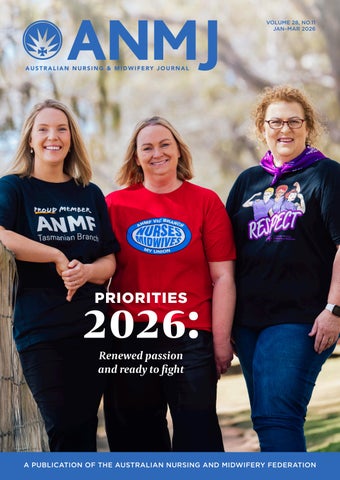
PRIORITIES 2026:
Renewed passion and ready to fight








TRUSTED AUSTRALIAN MEDICINES REFERENCE
Independent, evidence-based drug information for confident decision-making.


CONCISE FOR BUSY PRACTITIONERS
Provides essential and practical details to facilitate point-of-care use.
UNIQUE COMPARATIVE INSIGHTS
Comparative drug information supports users to make rational decisions.
WISE CHOICES
Prioritises the quality use of medicines, contributing to safe and effective treatment options.















































Annie Butler
ANMF Federal Secretary
As we begin a new year, I want to acknowledge the extraordinary work nurses, midwives and care workers continue to do for their patients, their communities and for one another. In recent years, your collective effort and advocacy have driven some of the most significant reforms our professions have seen in decades.
From advances in gender equity and industrial relations, to long-awaited improvements in aged care and the expansion of scope of practice, your voices, expertise and commitment have shaped every gain. Yet despite all we have achieved together, too many reforms are still not being fully realised where they matter most- on the floor, at the bedside, and in the daily work of nurses and midwives across the country.
In 2026, the ANMF’s mission is clear: to ensure the reforms we’ve achieved are fully translated into reality — delivered where they matter most, for nurses, midwives, care workers and the communities they support.
That means enforceable standards, fair pay, safer workplaces and health-centred policies that deliver genuine, measurable improvements on the ground.
Aged care remains a core focus for the ANMF. Important improvements including 24/7 registered nurse coverage, mandated care minutes and significant wage increases through the Aged Care Work Value Case are reshaping the sector. But the real-world impact is inconsistent. Too often, providers continue to prioritise profit over care, staffing levels remain inadequate, and wage increases funded by taxpayers fail to reach workers.
The new Aged Care Act, introduced late last year, provides a stronger rights-based foundation, but major gaps remain. In 2026, the ANMF will continue pushing for enforceable staffing requirements, recognition of enrolled nurses, national registration for the unregulated workforce, and genuine transparency and accountability for every taxpayer dollar.
A top priority is workforce retention. Australia continues to face a critical nursing and midwifery shortage that undermines patient care, staff safety and the sustainability of health services. Without manageable workloads and enforceable minimum staffing levels, we cannot keep the workforce we have, let alone grow it. That is why the ANMF is calling for national minimum staffing levels across all healthcare settings, embedded into the National Safety and Quality Health Service Standards so safe staffing becomes a universal requirement.
We will also continue to lead national advocacy for safer workplaces, including urgent action on occupational violence — one of the biggest factors driving nurses and midwives out of the professions.
Supporting students and early-career nurses and midwives remains essential. The introduction of the Commonwealth Prac Payment in 2025 was a major win, but it is only a first step. The ANMF will push to expand eligibility, ensure payments reflect the cost
of living, and end placement poverty. We will also continue advocating for a freeze on higher education fees for nurses and midwives.
We are awaiting government action on several major workforce reforms — including the National Nursing Workforce Strategy, the Maternity Futures Report, and implementation of recommendations from the Unleashing the Potential of Our Health Workforce review. Fully realised, these reforms would strengthen the workforce and improve access to care across Australia.
Medicare reforms introduced in 2025 including expanded bulk billing and increased incentives will make timely care more accessible for many Australians. Nurses and midwives are central to delivering that care, particularly in primary health, mental health, urgent care clinics and in rural and remote communities.
We welcome the introduction of the RN prescribing standard, an important milestone in recognising nursing capability. But its success depends on appropriate access to Medicare and PBS arrangements. The ANMF will continue advocating for full MBS and PBS access for advanced practice nurses, nurse practitioners and endorsed midwives, alongside strengthened nurse- and midwife-led models of care.
The ANMF will continue advocating for gender equity. While progress has been made, we need fairer superannuation settings, workplace flexibility, reproductive health leave and stronger protections for women’s health needs. Our successful push for superannuation on government-funded paid parental leave was a major step forward, and in 2026 we will build on that by campaigning for universal paid reproductive health leave.
Further, the ANMF will continue to lobby for action on urgent Climate Change, and specific action on climate-related health risks. We will continue to stand up for human rights such as the protection of healthcare and healthcare workers in war zones through our Nurses and Midwives for Peace campaign. Additionally, we will work with Branches and the Australian Human Rights Commission to address racism in healthcare, a key driver of health inequity, especially for Aboriginal and Torres Strait Islander peoples.
While together, we have achieved extraordinary things, together we will also ensure these reforms deliver what they promised as we continue to shape a fairer, safer, more equitable future for the communities we serve.
ANMF FEDERAL & ANMJ
Level 1, 365 Queen Street, Melbourne Vic 3000 anmffederal@anmf.org.au
To contact ANMJ: anmjadmin@anmf.org.au
BRANCH SECRETARY Carlyn Fidow

OFFICE ADDRESS
2/53 Dundas Court, Phillip ACT 2606
POSTAL ADDRESS
PO Box 4, Woden ACT 2606
Ph: 02 6282 9455 Fax: 02 6282 8447 anmfact@anmfact.org.au

OFFICE ADDRESS
16 Caryota Court, Coconut Grove NT 0810
POSTAL ADDRESS
PO Box 42533, Casuarina NT 0811
Ph: 08 8920 0700 Fax: 08 8985 5930 info@anmfnt.org.au
NSW
BRANCH SECRETARY
Michael Whaites

OFFICE ADDRESS
50 O’Dea Avenue, Waterloo NSW 2017
Ph: 1300 367 962 Fax: 02 9662 1414 gensec@nswnma.asn.au
QLD
BRANCH SECRETARY
Sarah Beaman

OFFICE ADDRESS
106 Victoria Street West End Qld 4101
POSTAL ADDRESS
GPO Box 1289
Brisbane Qld 4001
Phone 07 3840 1444 Fax 07 3844 9387 qnmu@qnmu.org.au
FEDERAL SECRETARY
Annie Butler

BRANCH SECRETARY
Maddy Harradence

OFFICE ADDRESS
191 Torrens Road, Ridleyton SA 5008
POSTAL ADDRESS
PO Box 861
Regency Park BC SA 5942
Ph: 08 8334 1900 Fax: 08 8334 1901 enquiry@anmfsa.org.au

OFFICE ADDRESS
535 Elizabeth Street. Melbourne Vic 3000
POSTAL ADDRESS PO Box 12600, A’Beckett Street. Melbourne Vic 8006 Ph: 03 9275 9333
MEMBER ASSISTANCE records@anmfvic.asn.au
TAS
BRANCH SECRETARY
Emily Shepherd

OFFICE ADDRESS
182 Macquarie Street
Hobart Tas 7000
Ph: 03 6223 6777
Fax: 03 6224 0229
Direct information 1800 001 241 toll free enquiries@anmftas.org.au
WA
BRANCH SECRETARY
Romina Raschilla

OFFICE ADDRESS
260 Pier Street, Perth WA 6000
POSTAL ADDRESS PO Box 8240
Perth BC WA 6849
Ph: 08 6218 9444 1800 199 145 (toll free) membership@anfiuwp.org.au
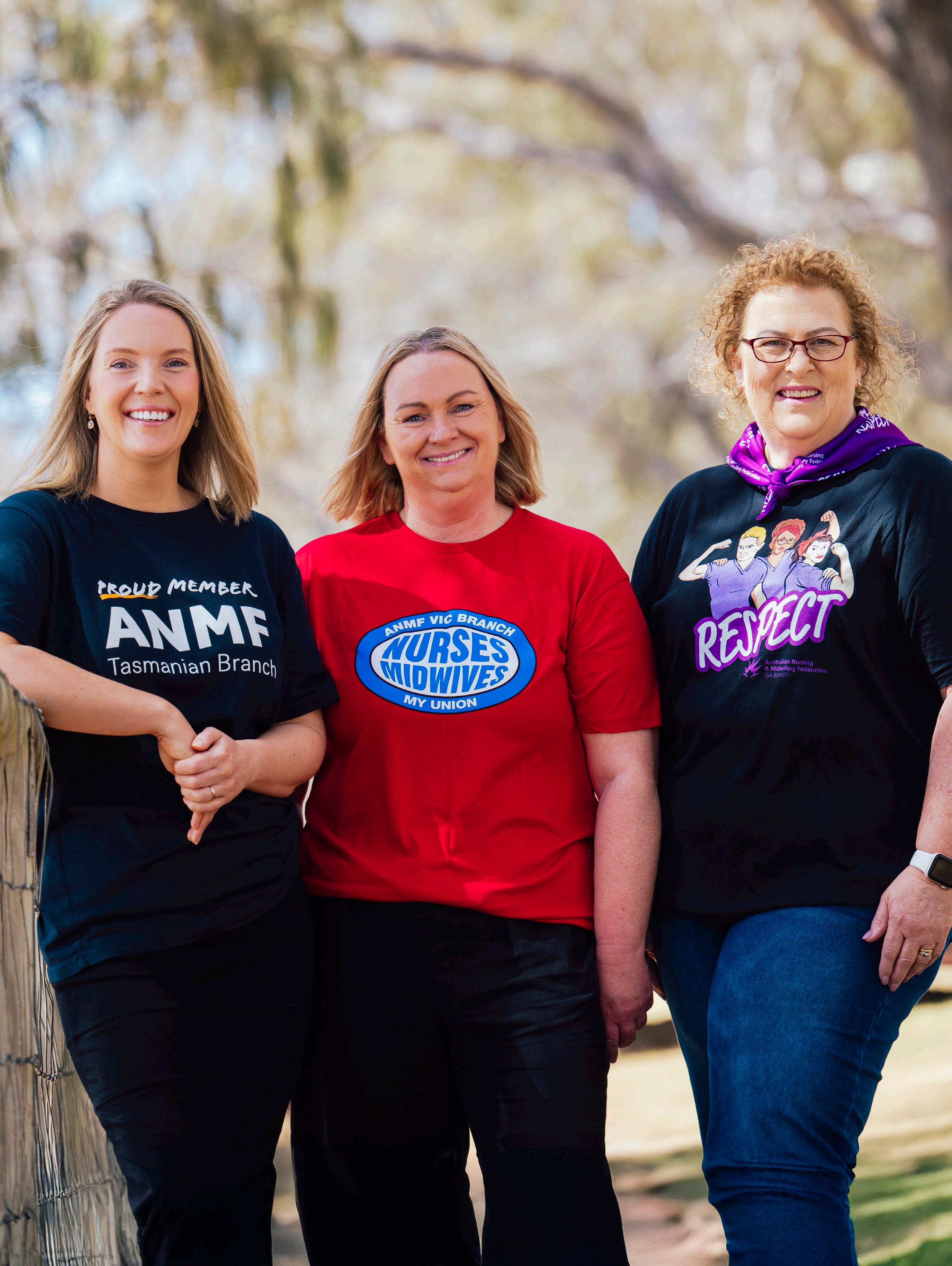
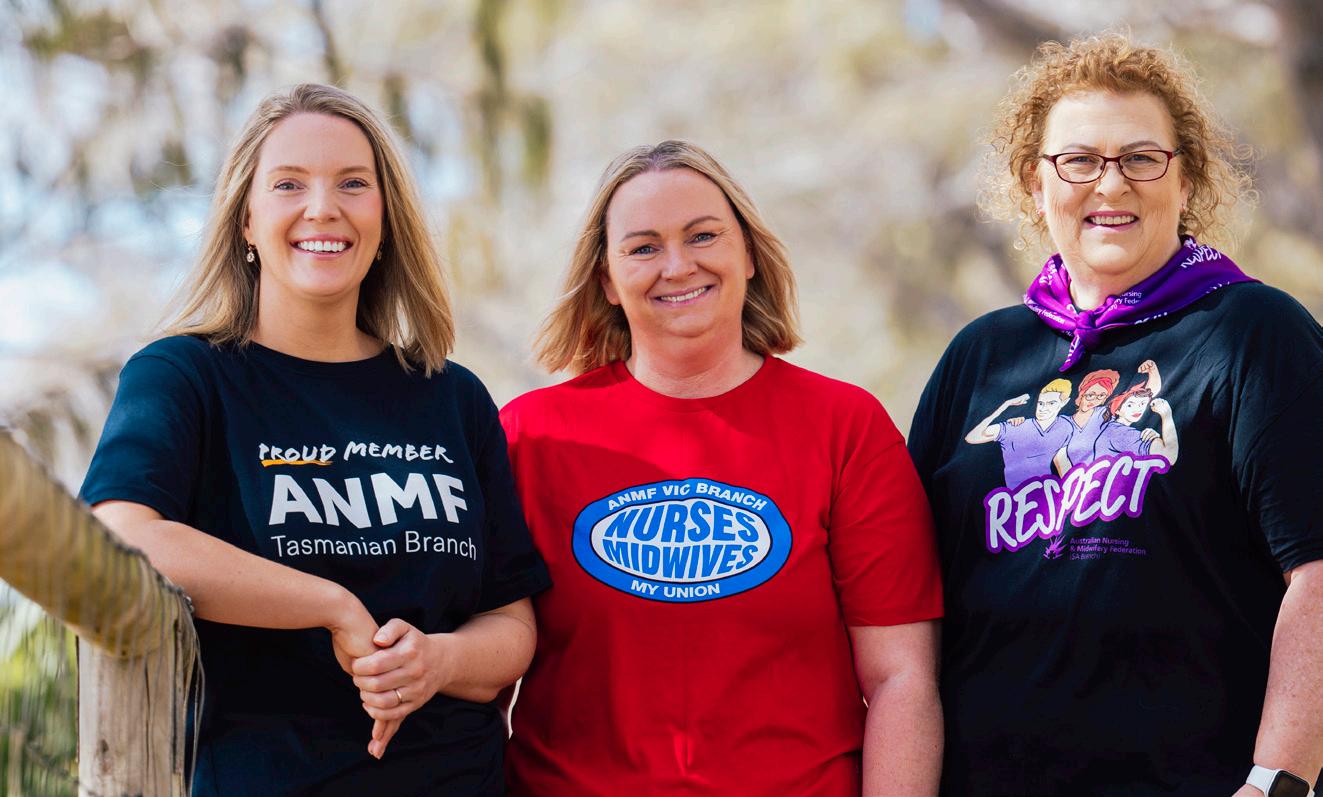
left to right, Mary Totonidis, Carly Hickson, and Sue Norris. Photo: Jamila Filippone
Editorial
Editor: Kathryn Anderson
Journalist: Robert Fedele
Journalist: Natalie Dragon
Production Manager: Cathy Fasciale
Level 1, 365 Queen Street, Melbourne Vic 3000 anmjadmin@anmf.org.au
Advertising Chris Masters cmasters@anmf.org.au 0428 052 138
Design and production
Graphic Designer: Erika Budiman pixelsandpaper.studio
The Australian Nursing & Midwifery Journal is delivered free quarterly to members of ANMF Branches other than New South Wales, Queensland, Western Australia and ACT. Subscription rates are available via ANMJadmin@anmf.org.au. Nurses and midwives who wish to join the ANMF should contact their state or territory branch. The statements or opinions expressed in the journal reflect the view of the authors and do not represent the official policy of the Australian Nursing & Midwifery Federation unless this is so stated. Although all accepted advertising material is expected to conform to the ANMF’s ethical standards, such acceptance does not imply endorsement. All rights reserved. Material in the Australian Nursing & Midwifery Journal is copyright and may be reprinted only by arrangement with the Australian Nursing & Midwifery Journal
Note: ANMJ is indexed in the cumulative index to nursing and allied health literature and the international nursing index ISSN 2202-7114
Online: ISSN 2207-1512
Moving state.
Transfer your ANMF membership
If you are a financial member of the ANMF, QNMU or NSWNMA, you can transfer your membership by phoning your union branch. Don’t take risks with your ANMF membership –transfer to the appropriate branch for total union cover. It is important for members to consider that nurses who do not transfer their membership are probably not covered by professional indemnity insurance.
Printing: IVE Group
Distribution: D&D Mailing Services
ANMJ is printed on A2 Gloss Finesse, PEFC accredited paper.
The Journal is distributed by D&D Mailing Service and is wrapped in post consumer recycled (PCR) plastic which reduces environmental waste

The ANMJ acknowledges the Traditional Owners and Custodians of this nation. We pay our respects to Elders past, present and emerging. We celebrate the stories, culture and traditions of Aboriginal and Torres Strait Islander Elders of all communities. We acknowledge their continuing connection to the land, water and culture, and recognise their valuable contributions to society.

UTERINE CANCERS: AUSTRALIA’S FASTESTGROWING WOMEN’S CANCER
Uterine cancers have become Australia’s fastestgrowing women’s cancer, with the disease now rising fastest among women aged 25 to 44 years.
Australia’s first State of the Nation: Uterine Cancers in Australia 2025 report by the Australia New Zealand Gynaecological Oncology Group (ANZGOG), highlights cases in the 25–44 age group are expected to increase by around 60% by 2035.
The incidence of uterine cancer has doubled over the past 25 years and projected to continue to surge. More than 44,000 women are expected to be diagnosed by 2035, and 8,900 will lose their lives to the disease.
A staggering 94% of women are unaware of what uterine
or endometrial cancers are yet increased awareness could prevent up to 60% of future diagnoses. Many women face pain, fatigue, anxiety and longterm side effects alone.
“Diagnoses are increasing across almost every age group, particularly younger women, and the impact is being felt by women, families and communities in every corner of the country,” said ANZGOG Chair Professor Clare Scott.
Aboriginal and Torres Strait Islander women, women in regional and remote areas, and

those from lower socioeconomic backgrounds are all more likely to be diagnosed later, have less access to specialist care, and face higher mortality rates.
The State of the Nation report sets out a national plan with
New report shows preventable hospitalisations cost Australia $7.7 billion
A new Australian Institute of Health and Welfare (AIHW) report has revealed that “potentially preventable hospitalisations” accounted for 8.5% of total admitted patient spending in 2023–24, costing the health system $7.7 billion.
Published late last year, The Cost of potentially preventable hospitalisations in Australia 2023–24 categorises these hospitalisations into acute conditions, chronic conditions and vaccinepreventable conditions. Chronic conditions made up the largest share,
representing 45.2% of all preventable hospitalisations, followed by acute conditions at 37.5%.
Spending was highest for diabetes complications ($962 million), congestive cardiac failure ($861 million) and chronic

five urgent priorities: halve incidence, eliminate inequities, ensure access to precision care, support every woman to live well, and invest in research and data. The report is available at anzgog.org.au
obstructive pulmonary disease (COPD) ($797 million) — all conditions where targeted prevention and better disease management could significantly reduce hospital demand.
Association CEO Adjunct Professor Terry Slevin said the findings highlight the urgent need for greater investment in prevention.
“This report tracked hospital expenditure from 2014–15 to 2023–24 and shows most people were hospitalised for chronic conditions that could be prevented,” Adjunct Professor Slevin said.
“Properly resourcing prevention programs mean less pressure on our stretched emergency departments and ambulance services, so less hospital ramping.
Adjunct Professor Slevin said the findings align with the Productivity Commission’s recent report Delivering quality care more efficiently, which identified boosting prevention as a key priority.
“For decades, all Australian and state/ territory governments have prioritised spending on acute care instead of keeping people out of hospitals, he said.
“This latest AIHW report, if it’s acted on, can help us address that imbalance.”
UNITED NATIONS WELCOMES FIRST FORMAL TREATY WITH INDIGENOUS PEOPLES
The United Nations has lauded Australia’s first formal treaty with Indigenous Peoples, passed by legislators in Victoria, as an historic step toward self-determination for First Peoples.
“This is a very significant occasion for all Australians. It represents a major step toward justice and equality. It addresses the continued exclusion of and discrimination against the country’s First Peoples – the result of colonisation,” said UN Human Rights Chief Volker Türk.
The statewide treaty provides for a democratically elected and permanent First Peoples Assembly, the Gellung Warl, which will also include a truthtelling body, called Nyerna Yoorrook Telkuna, and an accountability body, known as Nginma Ngainga Wara
The move follows the call for constitutional recognition and a voice for First Peoples made by Indigenous leaders in 2017 in the Uluru Statement from the Heart
“The state of Victoria is leading an initiative with the potential to be truly transformative, ensuring the First Peoples have a direct voice in advising and shaping laws, policies and practices that affect their lives, in line with Australia’s international human rights obligations,” said Türk.
“I hope this inspires other leaders in Australia and beyond to adopt similar measures to recognise Indigenous Peoples through inclusive governance and innovative mechanisms for participation and reconciliation, all of which ultimately promote a society built on mutual respect and human rights for all.”

RN prescribing: Coming in 2026
Community access to prescription medicines is being bolstered under changes that extend prescribing rights to qualified registered nurses.
In one of the biggest changes to nursing regulation in decades, the first cohort of graduates from approved programs of study is expected from mid-2026.
The Nursing and Midwifery Board of Australia (NMBA) published a registration standard and guidelines to support RN prescribing in late September.
“This standard is one of the biggest changes to nursing regulation in decades,” said NMBA Chair Adjunct Professor Veronica Casey AM.
The NMBA is working with jurisdictional Chief Nursing and Midwifery Officers, and an implementation group has been established to guide the national roll-out of designated RN prescribing.
Four RN education providers have submitted education programs for assessment against the RN prescribing accreditation standards, paving the way for hundreds of students to begin their studies in early 2026.
First national snapshot of general practice nursing to guide future health policy
Researchers will collect real-time data to shed light on how Australia’s primary healthcare workforce delivers care to patients.
A collaboration with the University of Wollongong School of Nursing and the University of Sydney, the Occasions of Care Explained and ANalysed (OCEAN) study will be the first to map in real time the clinical practices of nurses, nurse practitioners, physiotherapists and Aboriginal and Torres Strait Islander health workers and health practitioners across the country.
Health professionals involved in OCEAN will record data about their work as it occurs, including the types of patients they see, the health problems managed,
To qualify for the endorsement, RNs must:
• hold current general registration as a registered nurse;
• demonstrate at least three years’ fulltime clinical experience post-initial registration; and
• complete an NMBA-approved postgraduate qualification or equivalent units of study leading to endorsement for scheduled medicines as a designated RN prescriber.
The scope of prescribing will align with each RN’s role, the clinical governance framework, the prescribing agreement, and relevant state and territory medicines legislation. Once endorsed, designated RN prescribers must also complete a six-month period of clinical mentorship with an authorised health practitioner.
www.nursingmidwiferyboard.gov.au

diagnoses made and management actions taken.
The study will act as a census of the primary care nursing workforce, said UOW study lead Professor Liz Halcomb.
“Data produced from this project will shape the future of nursing in general practice, Aboriginal Medical Services and Aboriginal Community Controlled Health Services, equipping our health system for the challenges ahead.”
The project will capture an unprecedented picture of primary care nursing and provide evidence to strengthen workforce planning, health policy, education and patient outcomes.
The project’s strength lies in its ability to link every patient interaction with specific treatments and interventions, said UOW research fellow Dr Ruth Mursa. “When health practitioners can see patterns as they happen, it strengthens every decision, from staffing and training to patient support, and ensures care keeps pace with both population growth and complexity.”

Astrid Tiefholz
ANMF Federal Vice President
Are we paying attention to Neurodiversity?
Neurodiversity has received growing attention in recent years, and yet its presentation in the nursing and midwifery workforce has received limited attention.
Given our professional pride in caring, connection, and empathy, there may be some denial that neurodivergence even exists in nursing, but this reflects the broader cultural misunderstanding of its many and varied experiences.
Neurodiversity is an umbrella term for neurodevelopmental differences in thinking, learning, and processing. It includes attention deficit and hyperactivity disorder (ADHD), the autism spectrum, dyslexia, dyspraxia, and dyscalculia. It is estimated that between 15-20% of the general population may identify as neurodivergent, with similar figures expected among clinicians. Data from the 2024 Australian Public Service Employee Census found that 8.8% of respondents were divergent, and a further 9.3% reporting that they might be. The true incidence of neurodivergence in the nursing and midwifery workforce is unknown, partly due to persistent underdiagnosis, especially among women and gender-diverse individuals.
Stigma is a significant issue, with neurodivergent nurses often believing that their neurotype will be seen as a personal and professional deficit, leading to a disclosure dilemma. Many choose not to share their identity, fearing workplace discrimination, and worries about career progression. This fear compels neurodivergent nurses and midwives to mask their authentic selves, acting as if they are neurotypical.
Maintaining the protective shield of masking is emotionally and psychologically exhausting, potentially affecting the individual’s mental health and leading to burnout.
Neurodivergent clinicians bring skills and capabilities that can significantly improve patient care. Contrary to unhelpful stereotypes, neurodivergent people are often immensely empathetic, feeling drawn to nursing and midwifery. They can excel at building strong therapeutic relationships with clients. The cognitive dynamism that can be part of neurodivergence can include strengths such as creative thinking, lateral problem-solving, and seeing issues from a range of perspectives. The ADHD brain, for example, can be highly adept at handling complexity and high-pressure situations. Attention to detail and hyperfocus can also be traits of autism, with high levels of pattern recognition being highly valued in patient monitoring and medication management. Anecdotal evidence in Australia suggests that nurses with ADHD might be drawn to high-intensity specialties, such as emergency nursing, where the pressure in clinical situations can paradoxically help these nurses feel calmer and more focussed in using
their problem-solving skills. Nurses on the autism spectrum often excel in research, clinical governance, and occupational health and safety, where defined protocols and processes are essential. The fact that neurodiverse patients and consumers can be found in all areas of healthcare means that the lived experience and awareness of neurodivergent clinicians can support therapeutic relationships and improve patient outcomes.
While neurodivergent nurses bring a range of strengths to their work, clinical settings can cause stress to sensory processing and executive functioning. Busy hospitals can cause sensory overload from noise and external stimuli, affecting concentration and causing anxiety. Executive functioning challenges, such as difficulties with multitasking, time management, and preparing handover information, are common, and can be worsened by time pressures and fatigue.
As Australian employers must comply with the Disability Discrimination Act 1992, managers must ensure reasonable workplace adjustments to ensure equal access to work and career progression for all employees. Adopting a neurodiversity-affirming approach requires a shift from a deficit model, instead embracing a strength-based paradigm that addresses the need for societal adaptation to neurodiversity, rather than “fixing” the individual. It is important to build a psychologically safe environment where staff can be authentic without fearing repercussions for disclosure. Accommodations should be personalised, not generic. Managers need to be able to have supportive conversations with staff and be willing to think openly about adaptations such as having a quiet area for documentation, flexible work arrangements, modifying lighting or noise in the unit, and adapting job descriptions to reallocating tasks that might pose specific difficulty. Some changes to working environments and practices can also benefit neurotypical staff. Ensuring interruptionfree processes while preparing and administering medications and ensuring a quiet, calm break room can be positive for everyone. Investing in training and mentorship to improve staff awareness can reduce stigma and build positive regard. Staff education should ideally be delivered by neurodivergent clinicians, and extended mentorship for new grads to help neurodivergent clinicians to thrive.
Supporting neurodivergent nurses and midwives enriches our profession, improves patient care, and ensures our workforce reflects the community we serve.


PRIORITIES 2026: Renewed passion and ready to fight

Over recent years, nurses, midwives and care workers have helped drive significant reforms made to healthcare and the professions they work in. This has included advances in gender equity; industrial relations reforms including wage increases through the Aged Care Work Value Case, stronger delegate rights; and long-awaited improvements in aged care with 24/7 registered nurse coverage and mandated care minutes. Meanwhile there has been health reform that has expanded scope of practice for endorsed midwives and nurse practitioners while most recently RN prescribing standard has been introduced.
While these reforms mark real progress, their full impact is yet to be fully realised by those working on the ground. For example, some aged care providers are still failing to pass on the full wage increases to staff, even though they are funded by taxpayers to do so.
The ANMF remains focused on ensuring every reform translates into meaningful, tangible

improvements for nurses, midwives, care workers, and the communities they serve. In 2026, our mission is clear: enforceable standards, fair pay, safer workplaces, and health centred policies that deliver genuine change on the floor, not just promises on paper.
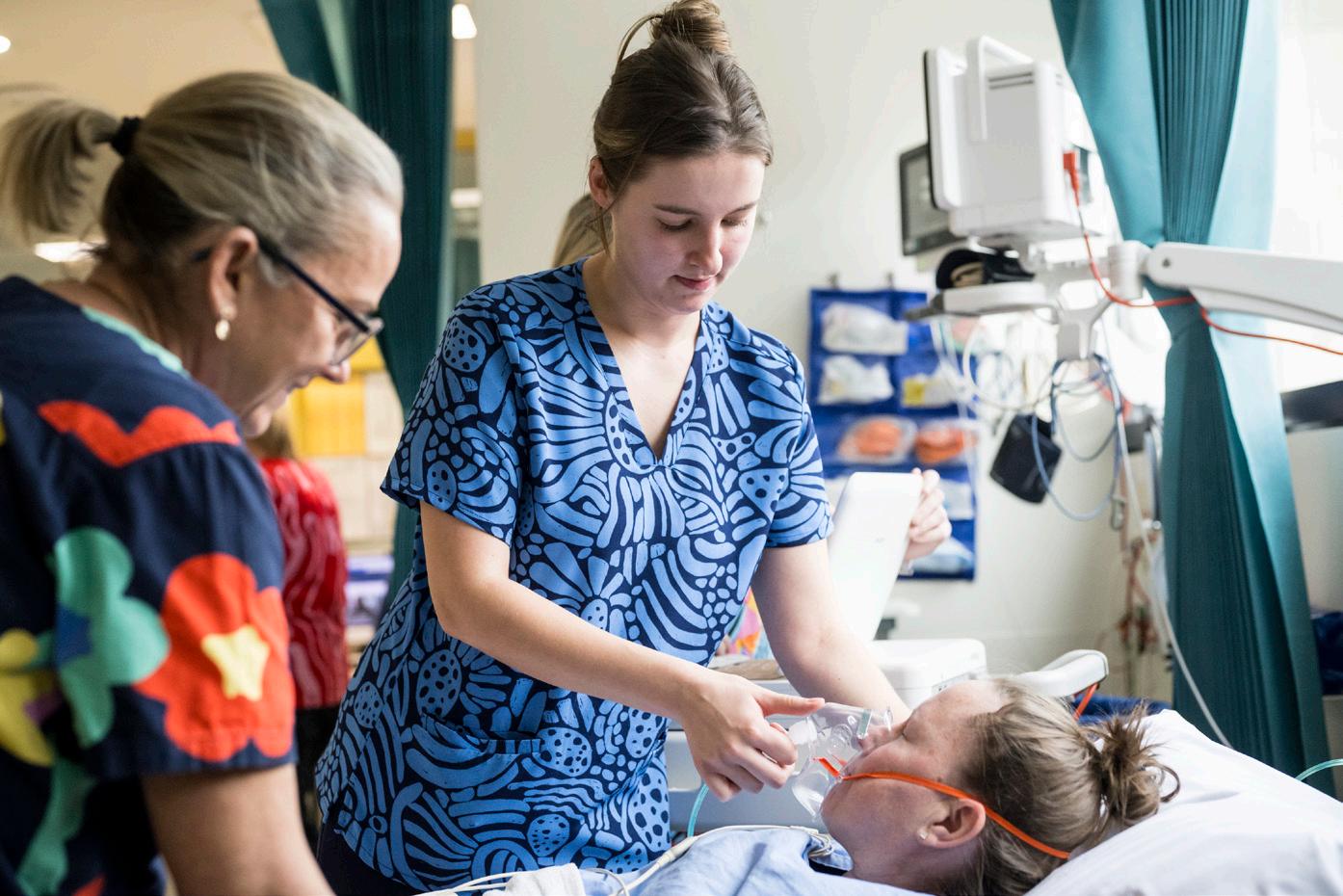
Workforce Reform
Australia continues to face critical staffing shortages that compromise patient outcomes, staff wellbeing, and the sustainability of health services. The ANMF remains committed to strategies that strengthen recruitment, reduce undergraduate attrition, and improve workforce retention.
Retention is the most pressing driver of the crisis: sustainable workloads are essential to keeping nurses and midwives in the profession. Without enforceable minimum staffing levels, disparities persist not only between states and territories but also between metropolitan and regional facilities. In 2026, the ANMF is calling on the federal government to mandate national minimum
staffing levels across all healthcare settings. These must account for patient acuity, skill mix, and fluctuating demand, and be embedded into the National Safety and Quality Health Service (NSQHS) Standards. Embedding staffing requirements into the NSQHS Standards would promote equity, improve patient care, and provide the workforce with clear, enforceable protections.
The ANMF will also continue to advocate nationally for safer workplaces, addressing the unacceptably high levels of occupational violence that drive nurses and midwives out of the profession.
With the continuing workforce crisis, every avenue must also be explored to support the education and growth of the nursing and midwifery workforce. Students face significant financial and time burdens during clinical placements, particularly mature-age and female students.
After years of lobbying, the ANMF welcomed the federal government’s introduction of the Commonwealth Prac Payment in July 2025. While the means-tested payment provides some relief, the ANMF will campaign to expand eligibility so more students can access support. The union will also push to end placement poverty and financial hardship caused by mandatory placements, and advocate for a freeze on higher education fees for nurses and midwives.
The ANMF is keenly awaiting government responses on key workforce reforms. The National Nursing Workforce Strategy provides a coordinated approach to workforce planning, while the Maternity Futures Report, commissioned by the Nursing and Midwifery Board of Australia (NMBA), makes vital recommendations for scaling up midwifery models of care.
In addition, the ANMF will work with stakeholders to ensure adoption of key recommendations from the national Unleashing the Potential of our Health Workforce scope of practice review, which will enable nurses and midwives to work to their full potential – which evidence demonstrates improves community health outcomes.
“It’s
a great first step, but it needs to be lifted above the minimum wage and made available to more people. The eligibility criteria cuts out too many who could benefit. I’ve seen firsthand people who’ve had to abandon their training because they couldn’t afford to be on clinical placement.”

NSW registered midwife Emma Gedge said the Commonwealth Prac Payment has been a game-changer.
Photo: Christopher Hopkins
Photo: Jamila Filippone
Aged care reform
The ANMF is actively shaping the future of aged care in Australia, focusing on raising care standards and ensuring the workforce is adequately supported to deliver highquality services.
The federal government has implemented many of the Royal Commission’s 148 recommendations, including mandated minimum direct care minutes, 24/7 registered nurse coverage in residential facilities, the Australian National Aged Care Classification (AN-ACC) funding model, and the development of a new Aged Care Act.
Yet the real-world impact of these reforms on workloads, staff support, and care quality remains unclear.
The new Aged Care Act, effective 1 November 2025, establishes a clearer framework for quality, accountability, and transparency. While the ANMF welcomed its rights-based approach, it expressed disappointment at key omissions:
• No enforceable requirement for providers to employ adequate numbers of well-trained staff
• No recognition of the enrolled nurse role
• No national registration scheme for the unregulated aged care workforce
• No legislated mechanism to enforce accountability of government funding, including passing on wage increases in full
Further, there have been ongoing issues and concerns in aged care adversely affecting the recruitment and retention of aged care workers, said ANMF Federal Secretary Annie Butler. “Our members consistently report that safe workloads and the ability to deliver their best care are what matter most.”
She says despite reforms, it appears many providers continue to prioritise profit over care, resulting in poorer working conditions and suboptimal resident outcomes.
“Even with reforms like RN 24/7 and care minutes, there’s been no real regulation or consequences when employers fail to comply,” said ACT registered nurse Philip Ohman.
The ANMF believes there needs to be a comprehensive national review of the aged care system to assess the effectiveness of reforms following the Aged Care Royal Commission.
In October 2025, the ANMF launched a national survey of aged care workers, examining staffing levels, skill mix, funding, consumer safety, worker safety, and clinical safety. Results will guide advocacy and potentially a national aged care campaign throughout 2026.

Lannelle Bailey, a carer in aged care, from NSW/Victoria who has worked in the sector since 2013, said mandated care minutes have improved outcomes.
“Residents get the care they need, and we can identify changes more quickly with clinically trained staff.”
However, some providers sometimes manipulate care minutes by assigning non-care tasks to carers, she said.
“Residents aren’t getting the full time care they deserve. It impacts us emotionally because we want to do more, but we’re limited by the time we have.”
Photo: Jamila Filippone

Healthcare equity
The ANMF welcomed federal government initiatives in 2025 to strengthen Medicare, including expanded bulk-billing incentives.
One in 10 Australians were unable to afford healthcare they required in 2025, according to research by the Consumers Health Forum of Australia. Nearly half (49%) delayed care due to cost, only 32% felt confident they could afford treatment if seriously ill, and 28% avoided dental visits because of expense.
The government announced expansion of bulk-billing to all Australians and introduced incentive payments for practices that bulk-bill every patient. By 2030, nine out of 10 GP visits are expected to be bulk billed, with the number of fully bulkbilled practices tripling to around 4,800 nationally.
Other Medicare reforms include: opening 90 Medicare Urgent Care Clinics, with 47 more planned; tripling the bulk-billing incentive; establishing 61 free Medicare Mental Health Centres; lowering the maximum cost of PBS-listed medicines to $25 from January 2026; and freezing concession prices at $7.70 until 2030.
Expansion of Medicare incentives would enable more people in the community to access timely, affordable healthcare, said Ms Butler.
“More bulk-billed services mean more Australians can access care when they

need it. As nurses and midwives, we see the consequences of delayed treatment— more people ending up in overstretched emergency departments or with worse health outcomes.”
As a member of the Strengthening Medicare Taskforce, Ms Butler emphasised the role of nurses and midwives in improving equity. “Nurses and midwives, who make up the majority of the workforce, have the expertise to vastly improve access for communities across Australia.”
In a major boost to improving healthcare access and delivery is the change in nursing regulation enabling experienced registered nurses to prescribe a range of medicines. The move, signed off by state and federal health ministers means eligible RNs will be able to prescribe Schedule 2,3,4 and 8 medications on completion of approved training.
The ANMF will continue to advocate for broader access to MBS and PBS rebates for advanced practice nurses, nurse practitioners, and endorsed midwives, as well as increased nurse-led and midwifeled models of care. For example, Medicare item numbers are being added to cover insertion and removal of long-acting reversible contraceptives (LARCs) by nurse practitioners. The ANMF is advocating for endorsed midwives to also have access to the MBS for insertion and removal of LARCs.
These initiatives will strengthen primary healthcare delivery, particularly for Aboriginal and Torres Strait Islander peoples, rural and remote Australians, and marginalised groups for whom healthcare remains inaccessible or inequitable. Such reforms will also boost job satisfaction, aiding retention and recruitment.
Victorian registered nurse and midwife Abbi Ainsworth said the federal government needs to recognise the skills of nurse prescribers to improve healthcare delivery by granting them PBS rights. “Primary care nurses and midwives also require access to Medicare item numbers for prescribing in rural, remote, and urban communities where they support marginalised populations.”
Photo: Jamila Filippone
Photo: Christopher Hopkins
Climate change and social justice
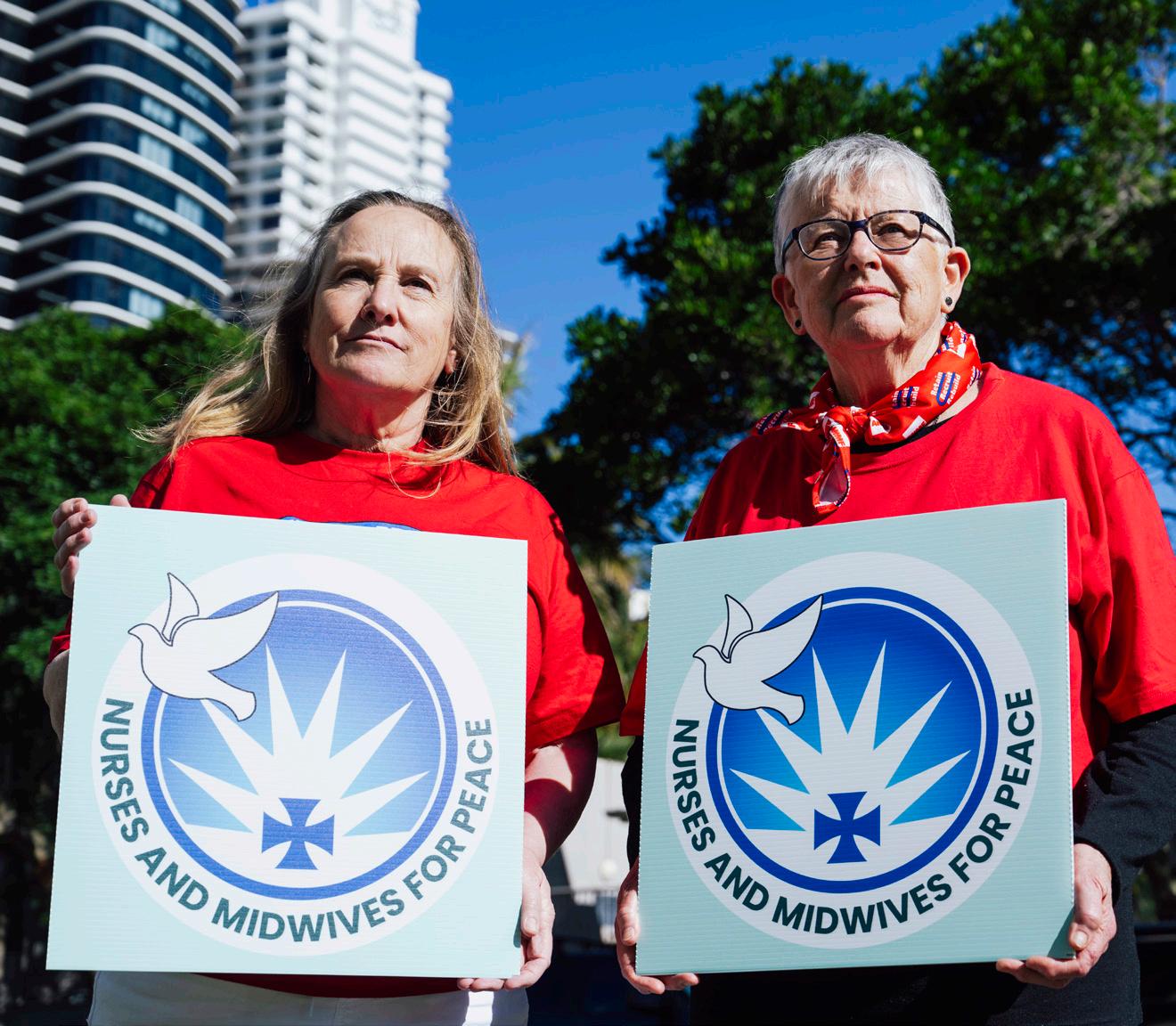
Nurses and Midwives for Peace
In July 2025, the ANMF launched the Nurses and Midwives for Peace campaign in response to escalating conflicts in Gaza and Ukraine, which have claimed the lives of countless healthcare colleagues worldwide.
Across the globe, war and violence devastate communities, destroy critical infrastructure, and increasingly target healthcare workers, their facilities, and the patients they serve. The ANMF stands as a voice for global peace, calling for an end to violence that threatens our shared humanity.
• Without peace, humanitarian needs cannot be met.
• Without safety, healthcare systems cannot function.
• Without protection, nurses and health workers cannot deliver lifesaving care.
In 2026, the ANMF will continue to stand alongside frontline nurses and healthcare workers, advocating for an immediate ceasefire and a lasting peace.
Climate Change
The ANMF, in partnership with The Lancet Countdown on Health and Climate Change, has released a national policy report urging the federal government to place health at the centre of climate policy. The report identifies three urgent priorities to safeguard the health of Australians and build a climate resilient future:
• Establish a national clean air framework to protect public health
• Invest in the implementation of a national health and climate strategy
• Redirect fossil fuel subsidies toward health and climate resilience
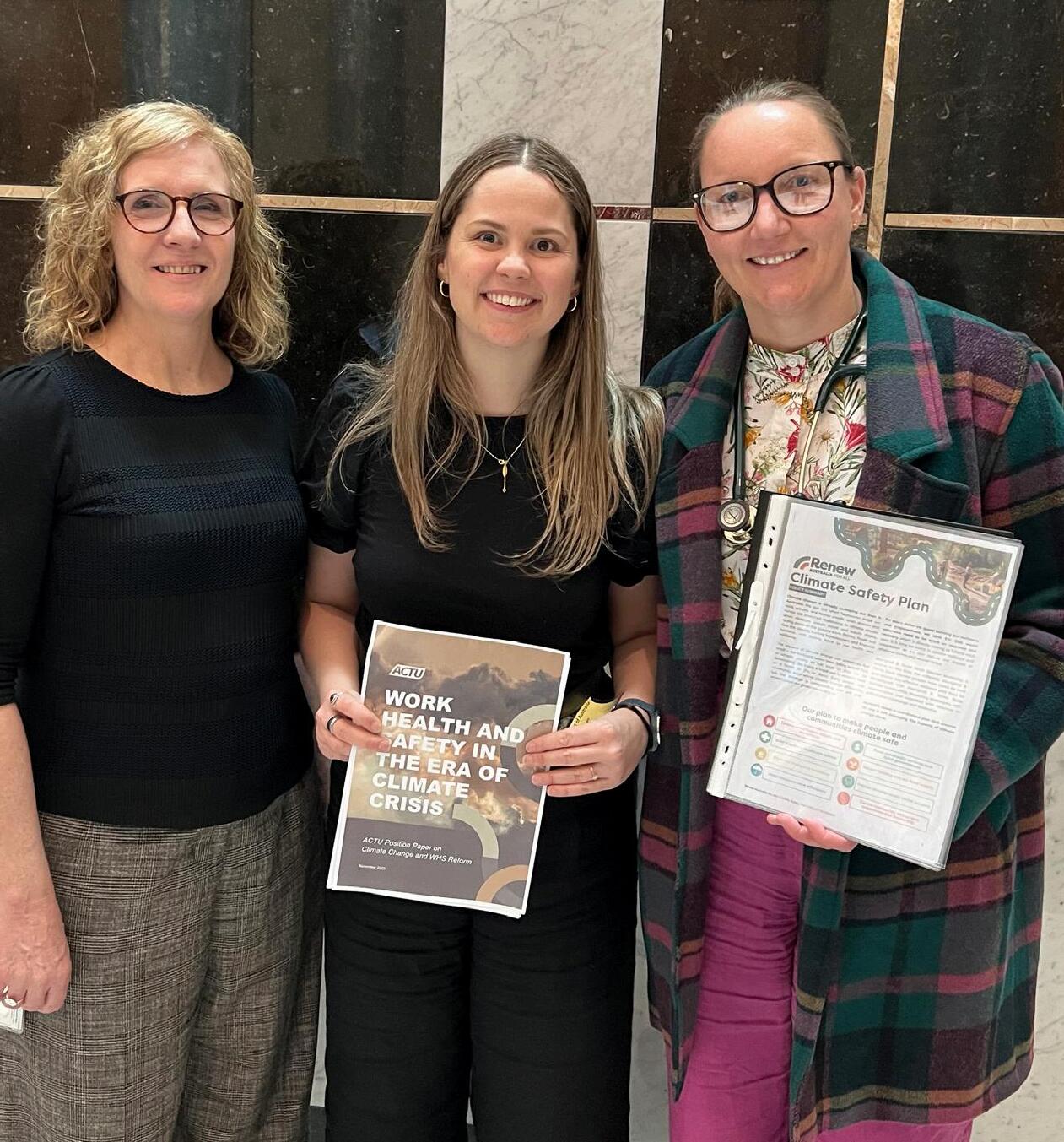
Australia’s first National Climate Risk Assessment, released in September, confirms the nation faces increasingly frequent and severe climate hazards. In response, a delegation of union leaders and frontline workers, including nurses, firefighters, and teachers, travelled to Canberra in November to launch Work Health and Safety in the Era of Climate Crisis, a report outlining the escalating risks to worker safety and the urgent reforms required as temperatures rise.
The ANMF and its members will continue to engage with policymakers, health organisations, and key stakeholders to ensure that Australia’s climate commitments reflect the health needs of the nation.
Photo: Jamila Filippone
L-R ANMF Federal Secretary Annie Butler, ANMF Climate Change Officer Catelyn Richards, and ANMF Victorian Branch member Sigrid Pitkin
Racism in healthcare
The Australian Human Rights Commission has laid bare the devastating impact of racism on health outcomes for Aboriginal and Torres Strait Islander peoples and other communities across Australia. Its Health Inequities in Australia scoping review found that racism, both systemic and interpersonal, is a critical driver of poor health, chronic illness, and premature death.
“When you go into the healthcare system and you identify as an Aboriginal person, people’s demeanour changes straight away. We sort of knew that this discrimination existed but after the referendum it really came out. People don’t think racism is still an issue.” — Aunty Maureen.
Research conducted by the NSW Nurses and Midwives’ Association (NSWNMA, ANMF NSW Branch) in 2025 revealed that nearly two thirds of nurses, midwives, and care workers from culturally and linguistically diverse (CALD) and/or Aboriginal and Torres Strait Islander backgrounds reported experiencing racism. The findings showed
IR reform
little progress since the 2019 report, which exposed systemic racism as widespread in the workplace.
The ANMF will work with its state and territory Branches to drive meaningful change, collaborating with the Australian
In 2025, the ANMF and aged care members celebrated the third and final pay rise for the aged care workforce, delivered through the Fair Work Commission’s (FWC) landmark Aged Care Work Value Case.
Aged care workers received the last of three pay increases, while nurses in aged care received their second of three scheduled rises, with the final increase due in August 2026. These wage gains mark a historic milestone in the ANMF’s longstanding campaign to secure fair and just pay for aged care staff, who for decades have been undervalued and underpaid.
“It was the final outcome of the Aged Care Work Value Case commenced by the ANMF in 2021, where we argued that the work of nurses and carers in the aged care sector had never been properly valued due to gender based undervaluation and that their work had increased in complexity and skill over the last decades,” said ANMF Federal Secretary Annie Butler.
“The determination by the FWC finally recognised the true worth of Australia’s nursing and care workforce, respecting and valuing the essential, compassionate and quality care they provide to older Australians and ensuring they are paid accordingly.”
Fairer wages will help retain and recruit the nurses and carers urgently needed across the sector, said Ms Butler. “Fairer wages make aged care a more viable, attractive career path for workers entering the industry.”
The ANMF will continue to ensure that the outcomes of the Work Value Case are fully implemented and embedded transparently by 2026.

Human Rights Commission to strengthen racism education and reporting. This includes lobbying federal and state governments to adopt health-based recommendations within the National Antiracism Framework
Michelle, a Queensland personal care worker with 25 years’ experience, said the work had increased in complexity. “Aged care is a specialised job. Not everybody can do it.”
She considers the current allocation of 200 care minutes per resident per day - with 40 minutes for registered nurses and 160 for carers - is insufficient. “When broken down, carers often have only two to three hours per resident across a 24hour shift. It’s a minimum that needs to be extended.”
Michelle said there needed to be greater accountability and transparency of government funding to providers with some organisations misreporting care minutes by including non-direct care tasks.
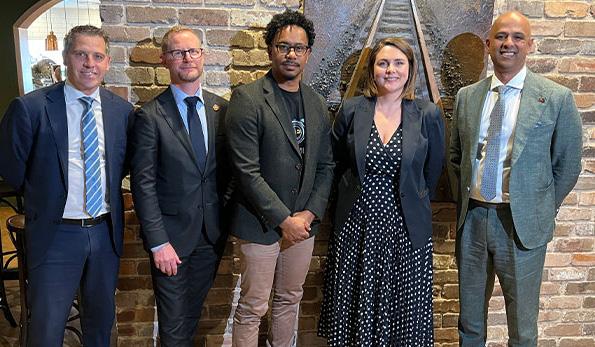
Former NSWNMA General Secretary Shaye Candish, fourth from left, with stakeholders including Race Discrimination Commissioner Giridharan Sivaraman, and CATSINaM CEO Ali Drummond at the report’s launch.
Bronwyn Pillardth, aged care worker speaking with Prime Minister Anthony Albanese at Parliament House, Canberra

Gender equity
Australia is making significant progress toward gender equality, particularly in advancing economic opportunities for women and girls. The national gender pay gap has fallen to a record low of 11.5%, while women’s workforce participation has reached a record high of 63.5%, with women working more hours.
Despite these gains, barriers remain.
Unequal domestic responsibilities and pay disparities across industries continue to hold women back, according to University of Sydney research. Male dominated occupations earn, on average, 16% more than female dominated roles such as care work. National analysis further confirms that gendered education and career pathways restrict women’s access to secure, well-paid jobs, while contributing to persistent skills shortages in priority growth sectors.
Reducing the gender pay gap has been central to the Albanese Government’s economic agenda over the past three years.
Key reforms include:
• Raising wages in the care economy
• Strengthening workplace laws to address gender undervaluation
• Enhancing gender pay gap reporting
• Banning pay secrecy provisions
• Expanding access to skills and training through fee free TAFE
At the national level, the ANMF continues to advocate for stronger measures, including workplace flexibility, superannuation reform, fairer tax concessions for women, and a benchmark on retirement adequacy that does not disadvantage women.
The urgency is clear: women retire with 25% less superannuation than men, and research from the Super Members Council warns of a looming crisis of older women entering retirement in poverty. The Workplace Gender Equality Agency reports that the pay gap begins in workers’ 20s, accelerates in their 30s, and peaks at nearly $53,000 per year between ages 55 and 59.
Recent wins include ANMF’s successful lobbying for superannuation contributions on government funded paid parental leave. From 1 July, parents now receive an additional 12% contribution to their nominated super fund.
Progress has also been made in women’s health. The federal government’s landmark $800 million women’s health package improves access, affordability, and choice nationwide. Around 300,000 women each year will benefit from more affordable long acting contraceptives, saving up to $400 in out-of-pocket costs. The package also funds free practitioner training and introduces a 40% bulkbilling incentive to strengthen reproductive autonomy.
Looking ahead, the National Women’s Health Advisory Council will transition into expert panels to guide priority areas of women’s health. Meanwhile, unions, including the ANMF are campaigning for universal paid reproductive health leave through the It’s For Every Body campaign, which seeks 10 days of paid leave annually for issues including menstruation, fertility, and menopause. Menopause alone is estimated to cost women aged 50–54 more than $15 billion per year in lost earnings and superannuation due to early retirement. In 2024, Queensland public sector workers secured this entitlement, setting a precedent for national reform.


Caring for the patient with additional bariatric needs in an acute care hospital
BY JESSICA LIDDLE
ABSTRACT
Objective: To use a case study to explore an initial organisational response to the unexpected admission of a patient with additional bariatric needs, present our reflections on that response, and describe how we consequently improved our procedures and equipment to create a more holistic and positive patient experience.
Background: Increasing rates of severe obesity in Australia and lack of a personcentred model of care can lead to staff injuries, patient distress and healthcare avoidance. Obesity is a complex, multifactorial chronic disease characterised by excessive body fat, and requiring multidisciplinary care. Patients with obesity experience discrimination and judgement, with many reluctant to engage with healthcare providers.
Conclusion: A person-centred approach to care for patients with additional bariatric needs can improve both the patient and staff experience during hospital admission.
Implications for research, policy, and practice: Healthcare organisations are encouraged to reflect on their views and policies for care of patients with bariatric needs.
What is already known about the topic?
• Obesity rates are increasing.
• Every patient with bariatric needs presents with a unique clinical picture.
• Current practice focuses on hazard reduction, not care.
What this paper adds
• Describes the implementation of a person-centred bariatric care procedure.
• Identifies the challenges of caring for a patient with severe obesity.
• Dispels myths about caring for patients with obesity in the acute care setting.
Keywords: Obesity; Bariatric; Weight Prejudice; Body Mass Index; Obesity Management.
OBJECTIVE
The purpose of this article is to use a case study to explore an initial organisational response to the unexpected admission of a patient with additional bariatric needs, our reflections on that response and how we consequently improved our procedures and equipment to create a more holistic and positive patient experience.
THE PROBLEM OF OBESITY
Overweight and obesity is an increasing issue within Australia. In 2022 in Australia, 66% of adults aged 18 years and over were living with overweight or obesity.1 Over the 12 months prior to this case, (October 2023 to October 2024) an average of 14 patients per month were admitted to our hospital inpatient services with the alert “bariatric” “obesity” or “obese” entered in the electronic medical record.
Obesity is a complex, multi-factorial chronic disease characterised by excessive body fat, and requiring multidisciplinary care.2,3 Patients with obesity may have related




weeks prior as the provider determined that he needed a higher level of care than they could provide, and as the house was unsanitary for the care workers to enter.
Peter was well known to the outpatient clinic in the same hospital network where he is on a waitlist for bariatric surgery. However, there are no formal communication channels between the acute care sector and the outpatient clinic. Peter remained in ED for several hours before he was eventually allocated to a general medical ward, which was resistive to accepting his admission.
Peter was diagnosed with streptococcus bacteraemia and was administered intravenous antibiotics. Peter’s admission was further complicated by a drug reaction experienced with severe skin rash and ulceration progressing to Acute Generalised Exanthematous Pustulosis (AGEP).
WARD MANAGEMENT
Peter was placed in a single room on a bariatric bed with an alternating pressure relieving mattress. He required the assistance of 9-10 staff members for personal hygiene and pressure area care. Staff used an air transfer mattress to move him in the bed. The high number of staff required was difficult to arrange on a regular basis, resulting in delayed or missed care.
The room on the ward was not big enough for the bariatric bed plus associated equipment such as lifters to allow the staff to work safely. Peter was unable to access the bathroom as the door was too narrow for the bariatric shower chair, and weight limits on the toilet and grab rails were not high enough. Peter remained on this ward for two weeks with the staff becoming increasingly distressed and several staff injuries being reported including psychological stress,
shoulder, and back injuries. At this time, it was communicated to the hospital executive the issues with Peter’s care management. A working group was formed to meet daily and determine how to best care for Peter. Security guards trained in manual tasks were assigned to assist with pressure area care and personal care. Peter got on well with this “turn team” and this solution provided was very successful while Peter was acutely unwell.
After 28 days Peter’s condition improved, and he was able to be transferred to the rehabilitation ward to a purpose-built room with ceiling hoists and sufficient space. The “turn team” was quickly phased out and care was managed within existing ward staffing. After three months in hospital, Peter was discharged to his home.
REVIEW OF ORGANISATIONAL CARE PRACTICES AND PROCESSES
Peter’s initial admission experience triggered a review of the processes related to bariatric care, starting with the organisational procedure.
In the review of the existing procedures, it was found that there were two different groups of patients that could be classed as having bariatric needs. The approach to assessing and managing consumers with bariatric needs differs depending on body size, shape, and physical ability. There are heavy but not physically impaired people, for example, from ethnic groups or people with large muscle mass.
In contrast there are people who have obesity who have a physical impairment because of their weight, as well as other comorbidities related to obesity. These people are identified as having additional bariatric needs.
We developed some criteria for the procedure for what would constitute these additional bariatric needs:
• Body weight ≥ 160 kg, and a further increase in needs with body weight ≥ 250 kg.
• BMI ≥ 50, and a further increase in needs with BMI ≥ 60.
• Seated Hip Width ≥ 65 cm, and a further increase in needs with Seated Hip Width ≥ 70 cm.
• Supine Width ≥ 90 cm and a further increase in needs with Supine Width ≥ 117 cm.
• Consumer has other additional comorbidities/care issues/dependencies.
• Size is extremely restrictive to mobility and independence. Consumer may be unable to mobilise due to weight.

Our aim for the new revised procedure was to support clinicians to provide safe, dignified and person-centred care for patients with bariatric needs. A search of the literature and a request for examples of best practice from other healthcare organisations within Australia did not find any other documents that differed from a manual handling task focus. Several other case studies highlighted similar issues to our experience.4,5-8
A draft of the new procedure was reviewed by representatives from Nursing and Midwifery, Worker Health & Safety, and Physiotherapy to provide a multidisciplinary view. It included sections on patient assessment, diet, pharmacology, psychological care, bariatric equipment hiring, bariatric room location and manual tasks. This draft was then presented at several multidisciplinary education sessions to allow for questions from staff and to highlight the proposed changes to practice. These sessions were invaluable for discovering additional aspects of care that we could address, such as linen supply and equipment supply. A related procedure for physiological observations was updated to include measuring blood pressure at the wrist, when the upper arm was misshapen by obesity, or if a large enough cuff was not available.9
The new procedure facilitates the hospital admissions staff to appropriately stream the patient into the most suitable space in the hospital, avoiding unnecessary transfers. This was demonstrated in Peter’s
subsequent readmission to the hospital, where he had a better experience.
SECOND ADMISSION
Peter had a second admission to the same hospital three months after discharge. This time he was admitted directly to a purpose-built bariatric room with a multidisciplinary care team assigned at admission and a shared model of care between the physical ward location and the treating medical team.
CONCLUSION
This comprehensive reflection on practice, patient outcomes and procedures has resulted in a person-centred procedure that supports the best possible care for patients with additional bariatric needs and addresses staff safety. Future activity will focus on provision of suitable equipment, provision of suitable consumables, and addressing weight stigma amongst healthcare workers. The multidisciplinary project team also have provided advice to hospital administrators on planned new builds to ensure that bariatric patients can be safely accommodated in new wards or clinic areas.
Author
Jessica Liddle, Nurse Manager, Policy Procedure & Quality, Corporate Nursing and Midwifery, Southern Adelaide Local Health Network.
References
1. Australian Institute of Health and Welfare. 2024. Overweight and obesity. Web report aihw.gov.au/reports/overweightobesity/overweight-and-obesity/contents/summary [accessed 13/02/2025]
2. Puhl RM & Heuer CA. 2010. Obesity stigma: Important considerations for public health. American Journal of Public Health, vol. 100 no. 6, pp1019-1028
3. Phelan SM, Burgess DJ, Yeazel MW, Hellerstedt WL, Griffin JM & van Ryn M. 2015. Impact of weight bias and stigma on quality of care and outcomes for patients with obesity. Obesity Reviews, vol 16 pp319-326
4. Broome C et al. 2014. Nursing care of the super bariatric patient: Challenges and lessons learnt. Rehabilitation Nursing, Issue 40, pp. 92-99.
5. Dambaugh L & Ecklund M. 2016. Progressive care of obese patients. Critical Care Nurse, 36(4), pp. 58-63.
6. Ewens B; Kemp V; Towell-Barnard A & Whitehead L. 2022. The nursing care of people with class III obesity in an acute care setting: a scoping review. BMC Nursing, v21 n1
7. Lawrence B, de la Piedad Garcia X, Kite J, Hill B, Cooper K, Flint SW, Dixon JB. 2022. Weight stigma in Australia: a public health call to action. Public Health Research and Practice, vol 32
8. Pagels J. 2016. Care of a homebound super obese patient: a case study. Home Healthcare Now, 34(3), pp. 139-145.
9. Anast N, Olejniczak M & Ingrande J. 2016. The impact of blood pressure cuff location on the accuracy of noninvasive blood pressure measurements in obese patients: an observational study. Canadian Journal of Anaesthetics, Volume 63, pp. 298-306.

Bridging the gap
A fresh look at the transition from paediatric to adult care models for Type 1 diabetics
By Britney Edwards
Diabetes Mellitus diagnosis in Australia has risen by 32% over the past 10 years.1 About 1.5 million Australians are burdened with this lifelong disease, including the 150,000 who live with Type 1 Diabetes.2
The transition to adult care for adolescents has been associated with non-adherence to treatment plans and deterioration of their glycaemic control.3
This article aims to address the major gap in the continuity of care that exists when transitioning adolescent patients with Type 1 Diabetes Mellitus to the adult care
model. It will also explore the application to advanced nursing practice, any barriers and challenges faced by Advanced Practice Nurses (APNs) and solutions for bridging the gap between the paediatric and adult models of care.
The role of APNs in diabetic management includes pharmacological management, clinical assessment and diagnosis, patient education and self-management support, coordination of multidisciplinary care and psychosocial and behavioural support.4 All of these aspects contribute to the transitional care model for Type 1 diabetics.
THE GAP
Paediatric diabetic care is often managed by the patient’s parents, creating a familycentred model, while adult care typically shifts the focus to a patient-centred model of care and self-management.5 The transition from a paediatric to adult model of care is essential for effective management of Type 1 diabetes.
It takes purposeful planning and should follow a systematic approach to ensure there is continuity of care for the patient.6
The Townsville University Hospital7 developed a Transition Model of Care for Type 1 Diabetes. This model consists of four phases; planning, preparation, transfer, and evaluation.
This process usually starts at ages 12-14 (or when developmentally appropriate). Currently, this model involves a multidisciplinary approach that incorporates doctors, psychologist, dietetics and diabetes nurses. This process is complex and tedious, causing some patients to fall

through the cracks, resulting in nonadherence to diabetic management plans and a deterioration in their glycaemic control.8
Adolescence involves major physical and psychosocial changes that can hinder the ability to self-manage their diabetes.9 Additional patient factors such as burn out, limited knowledge and insight into the long-term complications, reluctance to leave trusted staff and inadequate self-advocacy skills all increase the risk of diabetic related complications.8 These factors all contribute to the inability to provide continuity of care for our patients transitioning to adult care.
THE APPLICATION
APNs play an enormous role in the continuity of care for adolescent Type 1 diabetics who are transitioning to adult care models.1 APNs coordinate care within a multidisciplinary team and promote self-management and autonomy within their patients.4
Effective communication within a multidisciplinary team is essential for a seamless transition to an adult model of care.5 This involves referring patients to dieticians, podiatrists, psychologist, endocrinologists, diabetes educators, and support groups. APNs also facilitate multidisciplinary team-based care.1
THE BARRIERS
Barriers that APNs face include inadequate communication, organisational barriers, and role ambiguity.10 Ineffective communication between care providers can hinder the ability for a seamless transition to an adult care model. This barrier can lead to miscommunication, ineffective collaborative care, delays in person-centred, safe and effective care, and team breakdown.11
At an organisational level, APNs face interpersonal barriers due to traditional hierarchies between different disciplines.10 These hierarchies lead to power struggles and result in an ineffective care model. APNs found that there was no clear role definition and others misunderstood their extended role.10
This lack of standardised role definition has caused role ambiguity for APNs within these care models.12-13 Hospital regulations, state restrictions and health professional expectations was noted as restricting APNs in their roles and limiting their full potential.12
THE SOLUTIONS
To address these barriers at an organisational level, the team can implement changes to improve team communication, establishing open channels of communication, holding regular team meetings, and clarifying everyone’s roles.12
At an interpersonal level, it’s important to define clear roles and responsibilities, establish leadership, and respect the professional views and values of others.10 By utilising structured processes, trustbuilding exercises and collaborative techniques, it can create a supportive environment that reduces role ambiguity, improves team communication, and minimises conflict.12,14
CONCLUSION
Transitioning adolescents with Type 1 diabetes to an adult care model is a complex process with significant gaps. The shift from a family-centred to a patient-centred model requires purposeful planning and a systematic approach. APNs are crucial in bridging this gap by coordinating
care, promoting health autonomy, and implementing self-management plans. However, APNs face barriers like poor communication, role ambiguity, and organisational hierarchies. By implementing effective communication tools, structured processes and clear definition of roles and responsibilities, it will foster a supportive environment and improve the continuity of care for transitioning from a paediatric to adult care model.
Author
Britney Edwards RN, BNursing, GCert Nursing (Advanced Practice)
References
1. Diabetes Australia. The state of the nation 2024: The diabetes epidemic in Australia Diabetes Australia. Published 2024. Accessed September 23, 2025. diabetesaustralia.com.au/ wp-content/uploads/State-of-the-Nation-2024-DiabetesAustralia.pdf
2. Freelander M. Diabetes in Australia in 2024. Published 2024. Accessed September 20, 2025. aph.gov.au/About_Parliament/ House_of_Representatives/About_the_House_News/ Media_Releases/Diabetes_in_Australia_in_2024
3. Aljiohani N, Donetto S, Due-Christensen M, Forbes A. The journey to adulthood: A systematic review of interventions in type 1 diabetes paediatric to adult transition care. Paediatr Diabetes. 2024;2024(1):1773728. doi:10.1155/2024/1773728
4. Powers M, Bardsley JK, Cypress M, et al. Diabetes selfmanagement education and support in adults with type 2 diabetes: a consensus report of the American diabetes association, the association of diabetes care & education specialists, the academy of nutrition and dietetics, the American academy of family physicians, the American academy of pas, the American association of nurse practitioners, and the American pharmacists association. Diabetes Care. 2020;43(7):1636-49. doi:10.2337/dci20-0023
5. Zurynski Y, Carrigan A, Meulenbroeks I, et al. Transition models of care for type 1 diabetes: a systematic review. BMC Health Serv Res. 2023;23(1):779. doi:10.1186/s12913-023-09844-9.
6. Toulany A, Gorter JW, Harrison M. A call for action: Recommendations to improve transition to adult care for youth with complex health care needs. Paediatr Child Health 2022;27(5):297-302. doi:10.1093/pch/pxac047
7. Townsville University Hospital. Type 1 Diabetes Transition Model of Care Guideline: A journey from paediatric to adult health care. Published 2020. Accessed September 21, 2025. health.qld.gov.au/data/assets/pdf_file/0021/1417620/transit
8. Carrigan A, Lake R, Zougas S, et al. Mapping care provision for type 1 diabetes throughout Australia: a protocol for a mixed-method study. BMJ Open. 2022;12(12): e067209. doi:10.1136/bmjopen-2022-067209
9. de Beaufort C, Gomber A, Sap S, Laffel L. From paediatric to adult diabetes care: lost in transition. Lancet Diabetes Endocrinol. 2024;11(7):446-8. doi:10.1016/s2213-8587(23)00091-8
10. Shin H, Seo JY, Choi ES, De Gagne J. Facilitators and barriers to multidisciplinary teamwork in adolescent and young adult oncology care: A descriptive qualitative study. J Multidiscip Healthc. 2025;16(1):817-32. doi:10.2147/JMDH. S501077
11. Howick J, Bennet-Weston A, Solomon J, et al. How does communication affect patient safety? Protocol for systematic review and logical model. BMJ Open 2024;14(5):e065312. doi:10.1136/bmjopen-2024-065312
12. Fosah R, Llahana S. Barriers and enablers to leadership in advanced practice nursing: A systematic review. Int Nurs Rev 2025;72(2):e70034. doi:10.1111/inr.70034
13. Kilpatrick K, Savard I, Audet L, et al. A global perspective of advanced practice nursing research: A review of systematic reviews. PLoS One. 2024;19(7):e0305008. doi:10.1371/journal. pone.0305008
14. Busca E, Savatteri A, Calafato T, et al. Barriers and facilitators to the implementation of nurse’s role in primary care settings: an integrative review. BMC Nurs. 2021;20(1):171. doi:10.1186/s12912-021-00686-y
The climate goals worth making this year
Catelyn Richards, ANMF Climate Change Officer
Rounding off 2025 was the year nurses put climate on the health agenda and a milestone year for our profession’s climate leadership.
We launched the Lancet Countdown on Climate and Health policy document alongside the Renew Australia for All Climate Safety Plan campaign, and met thousands of nurses, midwives and carers at events across the country.
The ANMF also established a Multibranch Climate and Health Unit, an internal committee where branch climate representatives coordinate climate initiatives across the Federation.
The through-line in all this foundational work was simple: when nurses and midwives act together, systems shift.
So, as we head into 2026, what’s next?
A good start is to think about our new year’s resolutions. While I admit resolutions can seem a little clichéd, I find they expose the things that genuinely matter to us, revealing a pathway toward progression and change. So rather than thinking about resolutions in the usual sense, perhaps this is an opportune moment to ask how we can act together for greater climate impact.
Did you know, the concept of the personal carbon footprint was popularised by fossil fuel companies as a way to shift

USE OUR COLLECTIVE VOICE TO MOVE THE BIG LEVERS Commitment to advocacy on climate change is one of the most powerful resolutions we can make.
• As one of Australia’s largest member-based professional communities, and one of the most trusted voices in our communities, the most powerful climate action we can take is in organised advocacy.
• In 2026, key resolution should be to mobilise our workforce to tackle some of the bigger determinants of climate change, including the prolific use and reliance on fossil fuels such as coal, oil and gas.
• When thousands of nurses, midwives and carers speak with one clear and unrelenting voice, boards, departments and ministers listen.
CHOOSE HIGHER-IMPACT PERSONAL ACTIONS
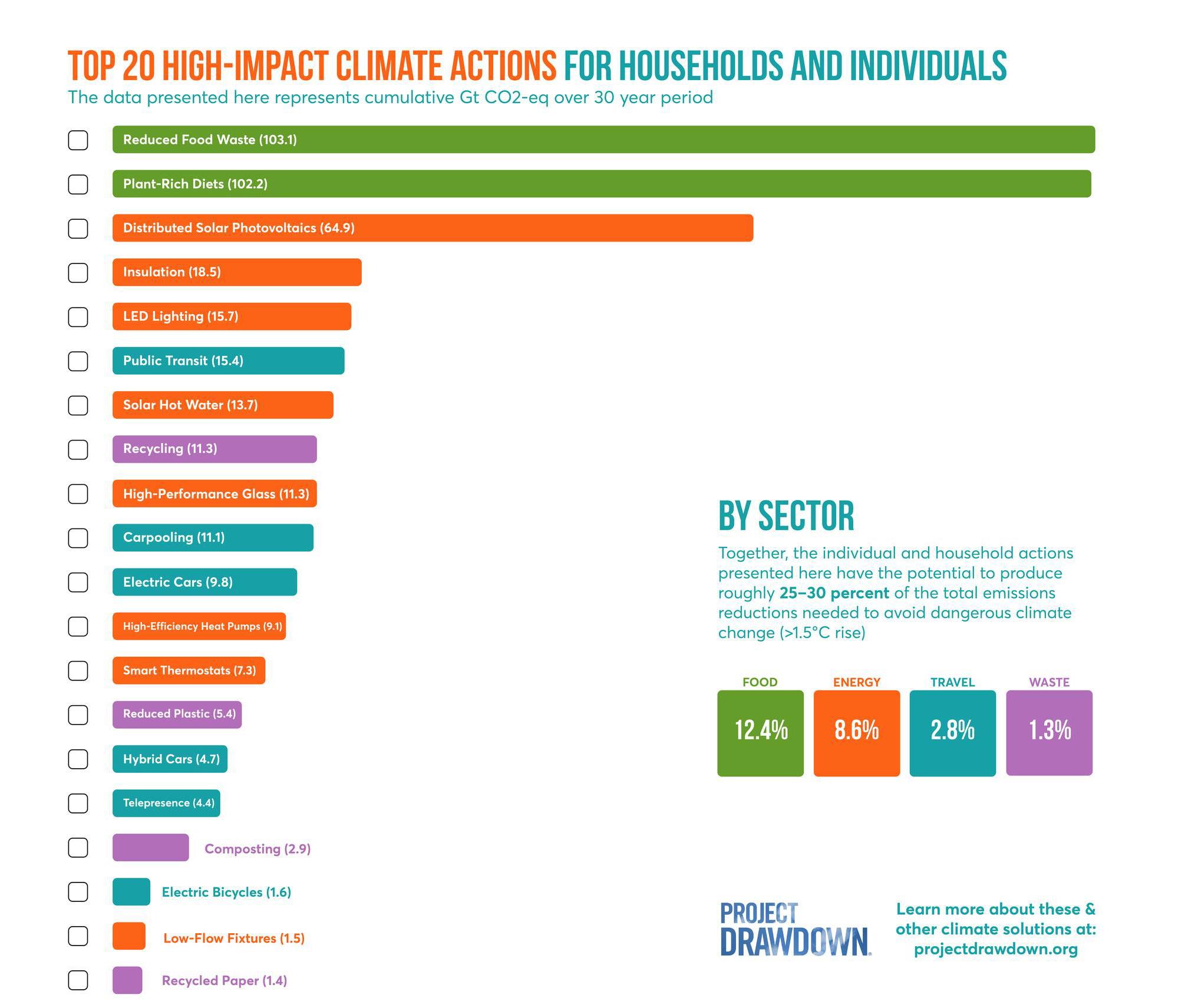
For those who are ready to make personal changes but want them to count, I often point to Project Drawdown as a trusted resource.
• Project Drawdown identifies and aggregates peer-reviewed studies.
• This then enables them to synthesise and rank the most high-impact steps we can take to reduce our emissions.
• For households and individuals, the highest-impact choices include things like: reducing food waste, adopting plant-rich diets, installing rooftop solar, improving home insulation and lighting, and shifting travel from private cars to public or active transport.
responsibility away from systemic polluters and onto individuals?
Individual choices still matter, but their real power lies in being part of something larger. When we align ourselves around high-impact, evidence-based solutions, we have the best opportunity to drive change. Bearing that in mind, let’s look at some collective climate resolutions we can make as we start 2026.
“Project Drawdown’s analysis reveals that individual and household actions have the potential to produce roughly 25–30% of the total emissions reductions needed to avoid dangerous climate change (>1.5°C rise).”
The point of Project Drawdown is to re-focus our attention away from dozens of lowerimpact, green habits that can cause undue stress, and toward set of actions with what the evidence shows really moves the needle. You might choose to tackle just one for 2026. Or, if you’ve already progressed through some of the strategies, you might choose to ‘tack on’ a new one.
Change rarely happens all at once, but when enough of us pull in the same direction, it becomes inevitable. Our resolve this year is simple: to ensure that caring for people and caring for the planet are no longer separate acts, but the same commitment lived out every day.
TURN YOUR EYES TO THE HEALTH SYSTEM
In 2026, our focus should be on ensuring that Australia’s National Health and Climate Strategy is implemented to deliver tangible change across the health system. The Strategy provides a national framework for building resilience, reducing emissions, and preparing health services for the growing impacts of climate change. Nurses, midwives and carers can play a key role in making this happen. By engaging in workplace sustainability initiatives, contributing to local adaptation planning, and supporting investment in low-carbon health infrastructure, we can help translate national goals into everyday practice.
GETTING STARTED
Setting meaningful goals can make climate action more achievable. Start small, focus on impact, and build momentum over time.
1. Choose what you want to work on. Identify one or two areas that matter most to you, such as waste, energy, or advocacy.
2. Use the SHIFT framework. Developed by Project Drawdown and climate scientist Kimberly Nicholas, helps focus your efforts where they matter most.
3. Share your goal. Tell a colleague, friend, or peer group what you plan to do. Making your goal visible.

4. Connect with your ANMF branch. Ask what sustainability or climate initiatives are underway and how you can contribute. Collective efforts are more effective than individual ones.
5. Take small, steady steps. Progress matters more than perfection. Start where you are and keep going.
6. Commit to learning more this year. Stay curious about the links between climate and health, attend a webinar, read an article, or join a community of practice to keep your knowledge growing. For additional inspiration, explore ANHE’s Nurses Drawdown, a movement applying the drawdown framework to nursing practice.
References
Climate and Health Alliance. 2024. Climate and health alliance summit 2024 caha.org.au/
Department of Health and Aged Care. 2023. National health and climate strategy. Australian Government. health.gov. au/topics/climate-change/national-health-and-climatestrategy
Lancet Countdown. 2025. Lancet Countdown policy brief: Australia 2025 lancetcountdown.org/ Nicholas KA, & Project Drawdown. 2023. SHIFT: A sciencebased guide to climate action. Project Drawdown. drawdown. org/news/project-drawdown-and-climate-scientistkimberly-nicholas-phd-introduce-shift-a-science-based Nurses Drawdown. 2025. Nurses drawdown: Nurses leading climate action. Alliance of Nurses for Healthy Environments. nursesdrawdown.org/
Project Drawdown. 2025. Drawdown primer: How we calculate climate solutions https://drawdown.org/explorer/primer
Project Drawdown. 2025. Drawdown explorer drawdown. org/explorer
Project Drawdown. 2025. Drawdown nexus drawdown.org/ drawdown-nexus
Renew Australia for All. 2025. Renew Australia for all: Climatesafe communities campaign renew.org.au/
“If you understand structural racism, how it’s in the systems and institutions that you work in, live in, play in, access health services, then you know that you have a responsibility as individuals and as a collective to take action to bring about change.”

Australia’s Race Discrimination Commissioner calls for systemic change in healthcare
Speaking at the ANMF’s 17 TH Biennial National Conference last October, Australia’s Racism Discrimination Commissioner, Giridharan Sivaraman, urged delegates to drive anti-racism strategies in healthcare to bring about meaningful change.
By Robert Fedele
Race Discrimination Commissioner Giridharan Sivaraman speaking at the conference. Photo: Jamila Filippone

According to Giridharan Sivaraman, Race Discrimination Commissioner at the Australian Human Rights Commission, meaningfully implementing anti-racist approaches in workplaces begins with understanding and acknowledging structural racism.
“If you understand structural racism, how it’s in the systems and institutions that you work in, live in, play in, access health services, then you know that you have a responsibility as individuals and as a collective to take action to bring about change.”
Unlike direct interpersonal racism, systemic racism extends beyond personal bias to the broader systems that harm people through a lack of racial literacy and cultural safety, the Commissioner explained.
“Then the next step is understanding what is deemed acceptable or not. And if you want to fight against racism, you have to acknowledge it. You have to name the beast to say it.”
Last November, the Australian Human Rights Commission released the National AntiRacism Framework, providing a roadmap for governments, business and community organisations to address all forms of racism in Australia. The Framework contains 63 recommendations for a whole of society approach to eliminating racism with proposed reforms across Australia’s legal, justice, health, education, media and arts sectors as well as workplaces and data collection.
The workplace was identified as a critical setting for action, Commissioner Sivaraman told delegates, with many of the 63 recommendations directly relevant to the health sector.
These included:
• Employers developing internal workplace anti-racism strategies and mandating workplace anti-racism training.
• Governments incorporating cultural safety codes of practice into workplace health and safety legislation.
• Employers across all sectors developing, implementing, monitoring, and evaluating strategies for the hiring, promotion and retention of staff identifying as First Nations and from other negatively racialised backgrounds to increase representation in the workforce, particularly in leadership and senior roles.
“There is plenty of research out there that shows that people with English sounding names are much more likely to get job interviews than those without; about 10 times more likely, actually,” Commissioner Sivaraman highlighted.
Too often, he said, the burden of addressing racism falls on the very people experiencing it. Systemic change, however, demands active leadership and accountability at an organisational level.
In the Framework, he calls on employers to commit to a positive duty to eliminate racism rather than the burden falling on the targets.
“So, actually putting the onus on those that run, employers, or those that provide goods and services to bring about change, rather than as it currently stands, you need to have suffered harm, and then, having been traumatised, probably under resourced and overwhelmed, you have to make a complaint.”
Despite the challenges, Commissioner Sivaraman said there are encouraging signs of progress, pointing to the New South Wales Nurses and Midwives’ Association (NSWNMA) as an example of leadership in confronting racism.
Last September, the NSWNMA released the findings of its latest survey exploring NSW nurse, midwife and AIN/care worker experiences with racism at work.
The report – Standing together against racism –revealed since the initial survey in 2019 that nearly two-thirds of nurses, midwives and care workers from a Culturally and Linguistically Diverse (CALD) and/or Aboriginal and/or Torres Strait Islander background surveyed had been direct victims of racism
Of these, 9% had experienced racism within the past day, 17% in the past week, 29% in the past month, and 45% in the past year. Forms of racism included racial bias (44%), stereotyping (37%), bullying (33%) and verbal abuse/insults (21%).
According to survey findings, 88% of nurses, midwives and care workers who reported an incident of racism at work received no support, while 73% didn’t bother to report it to management due to lack of faith in the system and fear of repercussion. Three in five nurses, midwives and care workers had witnessed racism in their workplaces as a bystander.
Despite the bleak data, Commissioner Sivaraman praised the NSWNMA’s commitment to confronting the problem.
“Your union has showed that change is possible,” he told delegates.
“They’ve done the hard thing. They have surveyed their members to ask them about their experiences of racism and then they went back and did it again. And when the results hadn’t improved, they realised they had a problem, and they realised that it wasn’t just going to go away without active action.”
That action includes launching the AntiRacism Collaborative – a partnership between the NSWNMA, Australian Human Rights Commission, Congress of Aboriginal and Torres Strait Islander Nurses and Midwives (CATSINaM), government and community stakeholders – to create safer workplaces and eliminate racism.
“That’s courage. That’s actually facing the problem, naming it and facing it, and bringing about change.”
Commissioner Sivaraman encouraged delegates to read the National Anti-Racism Framework, reflect on their own areas of work and influence, and consider what actions they can take to tackle racism.
At the conference, delegates voted unanimously in favour of a motion to include anti-racism strategies into all EBA’s supporting the recommendations of the Framework, and to establish a positive obligation to eliminate racism in workplaces.
NSWNMA General Secretary Michael Whaites speaks about the Branch’s Anti-Racism Collaborative. Photo: Jamila Filippone












ANMF Federal Industrial Officer
The campaign for a national Human Rights Act
Did you know that Australia has no national human rights framework? Australia has been a signatory to the Universal Declaration of Human Rights since 1948, but this has never been adopted into Australian law.
There are state and territory-based human rights charters in Queensland, Victoria and the ACT, with legislation introduced in NSW in October 2025. However, these do not bind our federal government and are not necessarily very effective in enforcing human rights. Governments remain able to have the final say without oversight on whether a law or decision will infringe on a person or group’s human rights. The national campaign for a Human Rights Act is well underway, and the ANMF has signed onto this campaign as a supporter. So, what would a national Human Rights Act look like, and how would it operate?
HISTORY OF THE CAMPAIGN
There have been several attempts to launch a Human Rights Act in previous decades, the most recent of which occurred during the Rudd government. The concept of enshrining human rights on a national level appears inherently good, but the campaign has historically failed due to a lack of political will. After all, a large part of a Human Rights Act would be to require governments to consider human rights when making laws and decisions.
WHAT WILL A HUMAN RIGHTS ACT DO?
Put simply, a Human Rights Act would do three core things:
1. Hold our governments accountable.
2. Consolidate and promote our national values of equality and non-discrimination.
3. Align our laws with our international obligations and provide legal clarity.
In doing these three things, a Human Rights Act would allow everyone in Australia to look to a set of rights that encapsulates our values and provides an understanding of what people can and cannot do, consistent with a rights-based framework.
Given the federal government makes laws and decisions in relation to key areas like immigration, childcare, aged care, welfare, taxation, and some aspects of health and housing, it is important they are bound by a human rights framework. A Human Rights Act would make sure the government considers our human rights and acts without breaching them. Key examples where a human rights framework would have impacted and potentially prevented poor decision-making include the Robodebt crisis or the use of indefinite immigration detention.
Finally, a Human Rights Act would enable the enforcement of our rights by the courts and prosecutions when they are breached. Individuals or groups would have a clear framework by which they can assess whether their rights have been breached and strong enforcement mechanisms to ensure those breaches do not continue.
HOW WILL A HUMAN RIGHTS ACT IMPACT ANMF MEMBERS AND PATIENTS?
Several particularly relevant human rights that would feature in a national Human Rights Act include:
• The right to health: this right would ensure everyone has access to safe and affordable healthcare. It also ensures the underlying determinants of health including environment and work facilitate a person’s good health. This right in particular would have huge impacts for our members and patients across the health system, ensuring healthcare is delivered in a safe environment and at a high quality by appropriately qualified people.
• The right to an adequate standard of living: this right would guide housing policy to ensure it is available and affordable, particularly for public and social housing. It would also impact welfare policy to ensure that our society’s most vulnerable are able to have dignity in their lives.
• The right to privacy: in an increasingly digitised world, this right would ensure everyone has their privacy and data protected.
• The right to education: this right operates to ensure education is readily accessible and affordable for everyone.
• The right to freedom of association: this right enshrines the right for you as our members to be part of a trade union.
• The right to work: this right ensures that everyone is able to meaningfully gain a living from employment and enjoy favourable conditions at work. Clearly, this is core business for the ANMF!
The arguments for a national Human Rights Act are resounding, and the ANMF is advocating for it to be added to the Albanese government’s legislative agenda. If you are interested in learning more about the campaign for a national Human Rights Act, you can visit the website here and sign up: humanrightsact.org.au
Nathan Retmock
Navigating generational diversity and intergenerational friction in nursing and healthcare
BY MANDY DIAS
Australia’s nursing workforce has never been more generationally diverse. From Baby Boomers born between 1946-1964 nearing retirement to Generation Z (Gen Z) nurses (born between 1997-2012) entering clinical roles, we are seeing shifts not just in experience and skill mix – but in values, communication styles, and expectations of leadership.
This is more than a demographic change. It’s a cultural evolution that affects how nurses relate to hierarchy, technology, professionalism, and patient advocacy. The real challenge is not whether the health system is responding, but whether it is evolving fast enough to harness this diversity as a strength.
CHALLENGING HIERARCHY
For Baby Boomers and Generation X (born 1965-1980) nurses, traditional hierarchies have long underpinned clinical practice.1 The directives of senior clinicians were typically followed without question. This model often mirrored in older patient populations who value authority, chain of command, and positional respect.
Millennials (born 1981-1996) began to shift this mindset by promoting collaborative care and flatter leadership structures. Gen Z has taken this further- raising clinical concerns directly with management, questioning decisions, and escalating issues through formal channels or external bodies.1 These are not acts of defiance; they are often acts of advocacy, clarity, shaped by a generation raised with access to information, social accountability, and expectations of transparency. While this can enhance safety and transparency, it also creates tension around concepts like respect, responsibility, and communication style. From a leadership standpoint, the pressure on senior clinicians and managers is intensifying. Many are not accustomed to having their decisions openly examined by junior staff
or debated in public forums- behaviours sometimes perceived as insubordinate or disrespectful.2 Similarly, when older staff express frustration about perceived disrespect or loss of professional formality, they are often grieving a cultural identity that gave them stability and meaning in their practice. Without proper support, this can lead to defensiveness, communication breakdowns, and fractured team dynamics. Therefore, importantly, emotionally intelligent senior leadership is required. Rather than viewing questioning as a challenge to authority, we must reframe it as a strength – an opportunity to teach, clarify, and support critical thinking.
THE DOUBLE-EDGED SWORD OF DIGITAL LITERACY
Gen Z’s fluency in technology is an asset but not without risks. Digital natives by upbringing they can quickly access clinical guidelines and peer-reviewed research, they are also exposed to oversimplified or inaccurate health information.3 The blurred lines between high-quality resources and unverified content can pose risks to clinical decision-making.4 Without proper frameworks for digital discernment, staff may unintentionally reference misinformation, eroding trust, and undermining professional communication. Equally, posting on social media can breach privacy, harm the organisation’s reputation, and lead to severe disciplinary action.5-7
Similarly, Gen Z’s use of digital tools to inform their practice can be mischaracterised as laziness or avoidance

of critical thinking.8 In truth, it reflects a different approach to clinical inquiry – one rooted in digital efficiency and immediacy. Nursing leaders must take an active role in supporting digital literacy. This means embedding digital professionalism into orientation and continuous professional development programs, setting clear standards for online engagement, and coaching staff in assessing the validity of digital information.
GEN Z IN LEADERSHIP
Historically, nurses have been promoted into leadership based on clinical skill rather than leadership readiness. Early-career nurses promoted into associate managers or nursing/midwifery manager roles often report feeling isolated, undertrained, and overwhelmed by responsibility without support. Gen Z expects supportive environments, regular feedback, flexibility, mental health support, and authentic

connection.9,10 If they do not find these in the leadership system, they may either leave or conform, repeating the very hierarchical practices they once questioned problem-solving.
This is a missed opportunity. We could be building a generation of transformative leaders, if we provide mentorship, flexible pathways, and psychologically safe learning environments. Intergenerational mentorship programs, reverse-shadowing, and co-designed leadership models are practical tools we can use right now.
If we fail to support them this is a missed opportunity. There’s a risk they’ll replicate the same hierarchical behaviours they once questioned – perpetuating burnout, disengagement or disillusioned. Intergenerational leadership development must be embedded as a priority, ensuring continuity, trust, and adaptability across the workforce.
GENERATIONAL DIFFERENCES AT THE BEDSIDE
The generational shift also extends to patients too. Gen Z patients like their clinician counterparts often seek codesigned care, second opinions, and full transparency. They are more likely to question medical advice, research their symptoms in cyberspace, seeking peer advice on social media, and share their healthcare experiences publicly, including online.11
While this can promote accountability, it can also heighten the pressure on nurses, particularly junior staff. A single social media post or online review can significantly impact morale and professional standing even if the complaint lacks context or accuracy. This is particularly dangerous in underresourced settings, where system delays or workforce shortages are outside individual control. One poorly informed social media post can damage a nurse’s reputation, especially for those early in their careers. Nurses must be supported through clear organisational policies around digital conduct, respectful feedback processes, and mechanisms for addressing online harassment. Psychological safety in the digital age is not a luxury – it is essential.
A CALL TO ACTION FOR NURSING LEADERS
To create truly generationally inclusive teams, leaders must:
• Cultivate emotionally intelligent leadership in all levels of leadership.
• Deliver training on intergenerational dynamics to support culturally responsive, respectful communication across multidisciplinary teams.12
• Promote psychological safety by fostering open dialogue, ensuring every voice is heard, respected, and valued.
• Facilitate cross-generational mentorship allowing wisdom to flow both ways.13
• Embed digital literacy and critical appraisal of artificial intelligent tools while safeguarding staff from online hostility and reputational harm through education, policy, and support.
When these structures are in place, generational diversity becomes a strength, not a source of division. Ultimately, sustainable nursing workforce requires more than clinical skill. It demands agility, empathy, and a willingness to embrace new ideas while preserving the wisdom of experience. Gen Z is not here to dismantle what came before but to build upon it. The role of leadership is to guide that growth with clarity, compassion, and collaboration.
Author
Mandy Dias Nurse Unit Manager, Gynaecology & Cancer Services and Complex Care Unit, The Royal Women’s Hospital, Melbourne Australia
References
1. Tan SHE, Chin GF. Generational Effect on Nurses’ Work values, engagement, and Satisfaction in an Acute Hospital. BMC Nursing [Internet]. 2023;22(1). Available from: ncbi.nlm. nih.gov/pmc/articles/PMC10061355/
2. Gursoy D, Maier TA, Chi CG. Generational differences: An examination of work values and generational gaps in the hospitality workforce. International Journal of Hospitality Management [Internet]. 2008 Sep;27(3):448–58. Available from: sciencedirect.com/science/article/abs/pii/ S0278431907001223?via%3Dihub
3. Choudhary R, Shaik YA, Yadav P, Rashid A. Generational differences in technology behavior: A systematic literature review. Journal of Infrastructure Policy and Development. 2024 Sep 5;8(9).
4. Monteith S, Glenn T, Geddes JR, Whybrow PC, Achtyes E, Bauer M. Artificial Intelligence and Increasing Misinformation. The British Journal of Psychiatry [Internet]. 2023 Oct 26;224(2):33–5. Available from: cambridge.org/ core/journals/the-british-journal-of-psychiatry/article/ artificial-intelligence-and-increasing-misinformation/ DCCE0EB214E3D375A3006AA69FFB210D
5. Kanste O, Ylisirniö M, Hammarén M, Kuha S. The perceptions of Generation Z professionals and students concerning health-care work: A scoping review. Nurse Education Today [Internet]. 2025 Mar 11;150:106678. Available from: sciencedirect.com/science/article/pii/ S0260691725001133
6. Sator P, Tahir J, Joannes M, Nafisah Mokti. The Effects of Social Media Regarding Nursing Services. ResearchGate [Internet]. 2020 Apr 8 [cited 2024 Oct 9];161. Available from: researchgate.net/publication/340501413_The_Effects_of_ Social_Media_Regarding_Nursing_Services
7. Maciura J, Wade A. How Off-Duty Use of Social Media May Lead to Professional Discipline. Journal of Nursing Regulation [Internet]. 2019 Jan [cited 2019 Sep 12];9(4):31–3. Available from: journalofnursingregulation.com/article/S21558256(19)30013-4/fulltext
8. Petre Sorin Savin, Rusu G, Mihai Prelipcean, Lucia Nicoleta Barbu. Cognitive Shifts: Exploring the Impact of AI on Generation Z and Millennials. Proceedings of the International Conference on Business Excellence. 2024 Jun 1;18(1):223–32.
9. Schroth H. Are You Ready for Gen Z in the Workplace? California Management Review. 2019 Apr 9;61(3):5–18.
10. Kanste O, Ylisirniö M, Hammarén M, Kuha S. The perceptions of Generation Z professionals and students concerning health-care work: A scoping review. Nurse Education Today [Internet]. 2025 Mar 11;150:106678. Available from: sciencedirect.com/science/article/pii/ S0260691725001133
11. Tussing TE, Chipps E, Tornwall J. Generational differences in the nursing workforce. Nurse Leader [Internet]. 2024 Apr 1;22(5). Available from: sciencedirect.com/science/article/pii/ S1541461224000478
12. Huyler D, Gomez L, Rocco TS, Plakhotnik MS. Leading Different Generational Cohorts in the Workplace: Focus on Situational and Inclusive Leadership. New Horizons in Adult Education and Human Resource Development. 2024 Nov 8;37(1).
13. Haidusek-Niazy S, Huyler D, Carpenter RE. Mentorship reconsidered: A case study of K-12 teachers’ mentor-mentee relationships during the COVID-19 pandemic. Social Psychology of Education. 2023 May 2;26(5).

Dr Khalil Sukkar
Aged Care Lead, ANMF Federal Office
The New Aged Care Act (2025): Reform or reality for nurses?
The Aged Care Act 2024, commenced on 1 November 2025. It has ushered in the most significant overhaul of aged care law in a generation. Grounded in rights, dignity and accountability, it replaces a 25-year-old framework with one built around transparency and fairness for older Australians.
For nurses, the largest health professional group in aged care, the new Act brings long-awaited recognition of their leadership, yet with higher expectations, more documentation, and little relief from mounting workloads. As one nurse said, “Reform means little if nurses are too exhausted to carry it out.”
A RIGHTS-BASED FRAMEWORK WITH NEW DEMANDS
The Act promises safer care through mandated 24/7 Registered Nurse coverage and an average of 215 minutes of care per resident per day, including 44 minutes from an RN. It introduces a new Code of Conduct, stronger whistleblower protections and expands the Serious Incident Response Scheme to include home and community care.
While the legislation recognises nurses as clinical leaders responsible for oversight and mentoring, it falls short on providing time or funding for training and education. Many nurses are asking how they can fulfil new responsibilities without structured support.
POLICY VERSUS PRACTICE
In total, 88% of aged care homes report meeting the RN care minutes requirements. Yet beneath those numbers are roster adjustments and duty reclassifications that stretch nurses thin. Increasingly, employers are including non-care duties such as dining assistance or lifestyle support as care minutes, a practice that dilutes the intent of reform.
Meanwhile, resident care needs are rising. Nurses manage complex medical conditions, dementia, and palliative care, often spending more time on compliance paperwork than bedside care. “We spend more time proving care than providing it,” one Victorian RN said.
Other countries, such as New Zealand and the UK, show that sustainable reform depends not only on regulation but on strong workforce investment and retention.
PAY, PRESSURE AND PROFESSIONAL STRAIN
Despite public wage announcements, many nurses and care workers are still waiting for full pay increases. Some employers have offset rises by reducing hours or revising roles.
Nurses feel accountable for new standards but unsupported by funding or staffing levels to meet them. Smaller and regional homes face additional
financial pressure, with closures affecting staff security and resident continuity of care.
WHAT STILL NEEDS FIXING
• Workforce shortages: Ongoing RN and EN gaps threaten compliance, care standards, and care continuity.
• Training time: No protected funding or release time for nurse supervision and education.
• Transparency: Unclear tracking of new funding and care-minute supplements.
• Accountability: Need for stronger auditing to ensure public funds reach the frontline.
THE HUMAN FACE OF REFORM
At the bedside, reform means risks translating into longer shifts, more reporting, and increasing care complexity if not implemented as intended. Nurses welcome the renewed focus on dignity and rights but question whether the system can sustain it without investing in its workforce.
The new Quality and Consumer Advisory bodies could give nurses a stronger governance voice if they are supported to participate. As one nurse noted, “The Act recognises us as leaders. Now it must give us the time and tools to lead.”
WHAT NURSES NEED NEXT
• Ongoing recognition and appropriate remuneration.
• Protected training time with funding that formalises nurse education and supervision duties.
• Accurate reporting to stop counting non-care tasks as care minutes.
• Safe staffing ratios by basing staffing on resident acuity, not averages.
• Transparency to facilitate tracking of funding to ensure tax-payer funded investments reach the bedside.
EMPOWER, DON’T EXHAUST
The Aged Care Act 2025 is a long-awaited step forward for older Australians and those who care for them. But reform without resources cannot succeed.
If Australia truly wants aged care built on dignity, it must extend that same dignity to nurses through fair pay, time to lead, and genuine workforce support.

Dr Rebecca Millar
Dr
Rebecca Millar is a forensic mental health nurse and lawyer and is in the nursing program in the school of Health and Biomedical Sciences at RMIT
AI and the law
The explosion of generative artificial intelligence (AI) has opened a new frontier in commercial advertising.
The most recent example of this, is the flooding of social media and online advertising platforms with highly convincing images of ‘health professionals’ recommending new weight loss programs or injectable weight-management medications.
Many of these supposed clinicians, however, are not real people at all. They are AI-generated composites or stock photographs dressed in lab coats, stethoscopes, and scrubs. These digital avatars, often presented as nurses, lend a false sense of legitimacy to products that may be unproven, unsafe, or available only under prescription.
In Australia, the Health Practitioner Regulation National Law (as enacted in each state and territory) and the Australian Health Practitioner Regulation Agency (Ahpra) Advertising Guidelines impose strict obligations on registered health professionals with respect to advertising. Section 133(1), for example, requires that a person must not advertise a regulated health service or a business that provides a regulated health service, in a way that is false, misleading or deceptive; or uses testimonials or purported testimonials about the service or business. Further regulations are imposed by the Therapeutic Goods Act 1989 (Cth), specifically the Therapeutic Goods (Therapeutic Goods Advertising Code) Instrument 2021, which regulate how therapeutic goods such as medicines and medical devices can be promoted to the public. Only products entered on the Australian Register of Therapeutic Goods (ARTG) may be advertised, and any advertising must comply with standards designed to protect consumers from misinformation and undue influence. Despite these legal frameworks, the rise of AI-generated content has revealed a significant regulatory blind spot: these restrictions apply to real health practitioners and registered advertisers of therapeutic goods, but not to private companies using fabricated, AI-generated “professionals” to give the illusion of medical endorsement.
The core legal issue is that these AI-generated and stock-image campaigns exploit the public trust in health professionals while falling outside existing enforcement boundaries. Under the Australian Consumer Law (ACL) — contained in Schedule 2 of the Competition and Consumer Act 2010 (Cth) — businesses must not engage in misleading or deceptive conduct. In theory, an AI-generated image implying endorsement by a medical professional could breach
section 18 of the ACL. However, enforcement is complex. The “person” in the advertisement is not a real health professional and therefore cannot claim that their image or professional status has been misused. Regulators like the Australian Competition and Consumer Commission (ACCC) typically prioritise cases where there is clear consumer harm or financial loss, and AI-generated likenesses can blur evidentiary lines. In contrast, a nurse or doctor using their real identity to promote a product is directly accountable to Ahpra, subject to professional misconduct sanctions, and bound by the ethical codes of their profession.
This mismatch in accountability creates a two-tier system: human professionals are tightly regulated, while corporations using synthetic images that imitate professional trust are not. The use of “synthetic health professionals” in digital advertising also raises questions of implied authority and public deception. The average viewer is unlikely to distinguish between a real clinician and a computer-generated one — particularly when imagery is combined with pseudo-scientific claims, medical uniforms, and apparent clinical settings. From an ethical perspective, such practices amount to a misappropriation of the nursing and medical professions’ collective reputation, commodifying public trust built over decades of patient care and professional regulation. This unregulated advertising practice has direct implications for health equity and safety, particularly as AI-generated endorsements circulate widely on social media platforms where vulnerable consumers may seek solutions for chronic health issues, including obesity and metabolic disease.
Closing this gap will require regulatory modernisation that acknowledges the new realities of digital advertising and AI content creation. If left unchecked, this emerging practice threatens to erode the social capital of health professions in Australia — an asset built on integrity, ethics, and evidence. The law must move swiftly to ensure that the trust the public places in nurses, midwives, and doctors is not hijacked by those seeking profit through illusion. Regulation that recognises “digital impersonation” as a form of misleading health advertising would not only close a dangerous loophole but also safeguard the moral authority of the professions upon which the health of the nation depends.
* I acknowledge the contribution of Professor Sonja Cleary who observed and highlighted the core issue discussed in this article.

Dr Micah D J Peters
Associate Professor Dr Micah DJ Peters is based in the ANMF National Policy Research Unit (Federal Office) in the Rosemary Bryant AO Research Centre, UniSA Clinical & Health Sciences, University of South Australia.
Learning to fly: Critical thinking and GenAI in nursing and midwifery education
The rapid uptake of generative artificial intelligence (GenAI) in higher education holds enormous promise, but for nursing and midwifery, this promise is accompanied by risks.1
University must prepare students for safe, reflective, and analytical practice, so we must carefully examine how GenAI impacts students’ development of analytical skills, critical thinking, and problem-solving.
Tools like large language models and chatbots offer students immediate feedback, adaptive pathways, and examples of clinical scenarios. This can allow students to engage with complex concepts and opportunities for learning, however, not without drawbacks.
For educators, GenAI can assist with resource development, supplemental teaching materials, and generating teaching and learning outcomes which can free up valuable time. These features are especially attractive for busy staff and students.
But what is lost when these tools are used? When students rely on GenAI, the process of thinking can be short-circuited. We may get the output, but we lose the journey. Further, the outputs themselves can often be flawed, and users might not clearly understand or be able to decipher this or why. Skills in critical thinking and problem-solving which are fundamental to nursing and midwifery practice don’t emerge from the correct answer, they come from wrestling with ambiguity, synthesising evidence, reason-checking, and reflecting on assumptions. Crafting good prompts for GenAI to produce a desired output does not readily foster a growing ability to deepen and enrich these skills.
metacognition, as the critical process of reflecting on one’s own thinking is skipped when answers can be rapidly generated. GenAI can also foster over-reliance on outputs by delivering decontextualised responses, bypassing the essential, ‘messier’ work of integrating diverse patient contexts necessary for problemsolving. This avoidance of complexity can mask deficiencies in genuine learning that are difficult to identify in assessments. Further, students might adopt more passive learning styles which undermine the development of professional accountability.
Encouraging uncritical GenAI use risks graduating clinicians whose reasoning is shallow. This could pose direct risks to patient safety, collaboration, and the development of adaptive practices in dynamic environments.
Assessment strategies in education must evolve. Intentional redesign emphasising process, reflection, iterative decision-making, and in-person demonstration of reasoning is even more essential to support students not to bypass learning.
References
1. El Arab R, Al Moosa O, Abuadas F, Somerville J. The Role of AI in Nursing Education and Practice: Umbrella Review. J Med Internet Res. 2025;27:e69881
2. Zhai C, Wibowo S, Li LD. The effects of over-reliance on AI dialogue systems on students’ cognitive abilities: a systematic review. Smart Learn. Environ. 2024;1,28.
3. Khlaif ZN, Salameh N, Ajouz M, Mousa A, Itmazi J, Alwawi A, Alkaissi A. Using Generative AI in nursing education: Students’ perceptions. BMC Med Educ 2025;25(1):926.
Research highlights a worrying pattern. Students may become passive receivers of AI content rather than active thinkers.2 Greater ‘AI competency’ has even been linked to worse performance in some areas.3 When students rely on GenAI, they avoid the cognitive struggle that underpins ‘traditional’ learning, effectively outsourcing thought and creativity. In nursing and midwifery, this shortcut might be perilous. Graduates face real-world clinical decisionmaking where critical thinking and reflection is nonnegotiable. A student who hasn’t internalised those core processes through practice may perform well in a computer-based assignment but struggle at the bedside when lives are at stake.
The risks GenAI poses to foundational clinical skills are significant. Over-reliance can lead to skill erosion, where users’ analytical thinking is diminished, reducing capacity to independently appraise evidence and justify reasoning. This is compounded by the weakening of
Acknowledging these risks does not mean outright avoidance. Our challenge is to harness GenAI to support analytical, critical, and problem-solving skill development, not replace it. This requires educators to scaffold tasks emphasising how students reach decisions, allow opportunities for works-in-progress to show thinking pathways, and design real-time, inperson reasoning tasks. Furthermore, curricula must foster GenAI literacy and ethical use and teach students to question and critique AI outputs. GenAI technology is just one resource among many and students should learn that clinical reasoning ultimately resides in the human clinician, not the machine.
The arrival of GenAI is a critical juncture and the evidence and our knowledge of AI’s risks and benefits is nascent. GenAI offers an opportunity for innovation and benefit but risks undermining the foundations of professional analytic, critical, and problem-solving skills essential for safe, high-quality care. We must ensure our students are not just operators of GenAI, but thinkers, decision-makers, and reflective practitioners who use technology. Failing this, we risk training clinicians who can generate effective AI prompts but might struggle to evaluate, reason, or solve problems in the unpredictable, human-centred, and ethically complex environments of nursing and midwifery.

ROX Index: A nurse-led high flow nasal prong initiation in Post-Operative Pneumonia and Atelectasis
By Jagon Jamila Babu
Post-operative pulmonary complications such as pneumonia and atelectasis are common causes of delayed recovery and prolonged hospital stay.1
Early recognition and prompt respiratory support are crucial to prevent deterioration. In recent years, the introduction of High Flow Nasal Prongs (HFNP) therapy in ward settings has enabled nurses to initiate effective oxygen therapy earlier, avoiding unnecessary transfers to critical care. The use of the ROX Index provides a structured, evidence-based approach to guide decisionmaking and monitor patient response to HFNP in the post-operative setting.
UNDERSTANDING THE ROX INDEX
The ROX Index was developed as a predictor of success or failure of HFNP therapy in acute hypoxaemic respiratory failure.2 It combines three routinely available parameters: oxygen saturation (SpO₂), fraction of inspired oxygen (FiO₂), and respiratory rate (RR). It is calculated as: ROX Index = (SpO₂/FiO₂) ÷ RR
A higher ROX value indicates more efficient oxygenation and less respiratory distress. Conversely, a declining ROX score suggests potential HFNP failure and the need for early medical review or escalation3. A score of ≥4.88 after 12 hours of HFNP is considered reassuring, while <3.85 may indicate risk of deterioration.4
NURSE-LED HFNP IN THE WARD
Traditionally, HFNP therapy was confined to intensive care units. With advances in monitoring and staff education, its use has expanded into surgical wards under nurse-led protocols5. Ward nurses now play a pivotal role in identifying suitable postoperative patients—those with worsening oxygen requirements, increased work of breathing, or chest X-ray changes consistent with pneumonia or atelectasis despite standard oxygen therapy.
A structured nursing assessment that includes respiratory rate, SpO₂, and FiO₂ allows the calculation of the ROX Index at the bedside. Regular recording of the score alongside vital signs helps track trends and communicate changes effectively during multidisciplinary handovers6
CLINICAL APPLICATION: POSTOPERATIVE CASE EXAMPLE
A 62-year-old male patient following upper abdominal surgery developed increasing oxygen needs (FiO₂ 0.4 to maintain SpO₂ 93%) and respiratory rate of 28 breaths/ min on Day 2 post-operation. Initial ROX Index was 5.8, which declined to 4.2 over four hours. Following consultation with the medical team, HFNP therapy was initiated at 50 L/min with FiO₂ 0.5. Continuous monitoring showed an improvement in comfort, respiratory effort, and ROX score, which rose to 6.1 after six hours. The patient avoided ICU transfer and was weaned to lowflow oxygen after two days.
This example highlights how nurseled initiation, guided by ROX trends, can prevent escalation of care while maintaining patient safety and comfort.7
BENEFITS OF USING THE ROX INDEX
The ROX Index offers several advantages for ward-based care:
• Objectivity: Provides quantifiable data to support clinical observations.
• Timely escalation: Falling ROX scores can trigger early medical review and escalation pathways.
• Enhanced communication: Numeric trends support concise updates between nurses and doctors.
• Empowerment: Fosters confidence among nursing staff to initiate HFNP safely within defined protocols.8
Integrating the ROX Index into postoperative observation charts aligns with early warning systems and clinical governance frameworks already in use across Australian hospitals. Nurse educators and respiratory specialists can incorporate ROX monitoring into training programs, ensuring staff competence and consistency of practice.
CHALLENGES AND SAFETY CONSIDERATIONS
While the ROX Index is valuable, it should not complement comprehensive nursing assessment. Patients with altered consciousness, poor airway protection, or haemodynamic instability require immediate escalation regardless of ROX score.9 Ongoing audits and multidisciplinary collaboration are essential to refine criteria for initiation and escalation of HFNP in surgical wards.
Nurse-led use of HFNP, supported by the ROX Index, represents a safe and effective approach to managing post-operative pneumonia and atelectasis. This practice promotes early intervention, standardises assessment, and improves patient outcomes. As the scope of acute ward nursing continues to expand, structured tools such as the ROX Index will remain integral to evidence-based, high-quality respiratory care.
References
1. Miskovic A, Lumb AB. Postoperative pulmonary complications. Br J Anaesth. 2017;118(3):317–334.

2. Roca O, Caralt B, Messika J, et al. An index combining respiratory rate and oxygenation to predict outcome of nasal high-flow therapy. Am J Respir Crit Care Med 2019;199(11):1368–1376.
3. Roca O, Messika J, Caralt B, et al. Predicting success of highflow nasal cannula in pneumonia patients: the ROX Index. Intensive Care Med. 2016;42(12):2200–2208.
4. Prakash J, Bhattacharya PK, et al. ROX Index: A guide to early prediction of high-flow nasal cannula therapy outcome. J Crit Care. 2020;57:102–107.
5. Nishimura M. High-flow nasal cannula oxygen therapy in adults. J Intensive Care. 2015;3:15.
6. Bell N, McMullen L. Nursing application of ROX Index in respiratory wards. Aust Crit Care. 2022;35(2):137–142.
7. Suliman LA, Abdelgawad TT. The validity of ROX Index for predicting HFNP failure in COVID-19 pneumonia. Respir Med 2021;187:106550.
8. O’Driscoll BR, Howard LS, et al. BTS guideline for oxygen use in adults. Thorax. 2017;72(Suppl 1):ii1–ii90.
9. McKinstry A, Bannon L. Integrating ROX Index into ward monitoring protocols. ANZ J Nurs Pract. 2023;29(3):55–59.
Author
Jagon Jamila Babu, M.Sc Nursing, RN, Associate Nurse Manager/Clinical Nurse Specialist, Monash Health, Dandenong

When healthcare becomes the target: Nurses stand up for protection in conflict zones
Thousands of messages of solidarity from ANMF members and the Australian community are on their way to nurses, midwives, and healthcare workers in Gaza, translated into Arabic and hand-delivered through the International Committee of the Red Cross and the Palestine Red Crescent Society.
Each message carries the same simple truth: you are not forgotten
The International Committee of the Red Cross has expressed heartfelt thanks to Australians who shared these messages of solidarity.
For health workers facing impossible conditions — tending to the wounded in makeshift hospitals and working through unimaginable loss these words of support are a lifeline.
STANDING WITH COLLEAGUES ACROSS BORDERS
The ANMF continues to stand with nurses, midwives, and healthcare workers in all conflict zones- places where, far too often, hospitals and clinics are being bombed instead of protected, and those who provide care are being targeted for it.
Across Gaza, Sudan, Ukraine, and other war-torn regions, health professionals are risking their lives each day simply to do
their jobs. These attacks are not only morally indefensible- they breach international humanitarian law, including the Geneva Conventions, which guarantee the protection of medical staff, the wounded and sick, and civilians during times of war.
TURNING SOLIDARITY INTO ACTION
Through its Nurses and Midwives for Peace campaign, the ANMF has launched a national petition calling on the Australian Government to publicly condemn all attacks on healthcare and take stronger action to protect health workers everywhere.
Coinciding with this call, the Australian Government, alongside more than 100 other countries, has endorsed a new Declaration for the Protection of Humanitarian Personnel. The declaration commits nations to practical measures that safeguard those delivering aid and medical care in conflict and disaster zones.
But lasting change depends on ongoing advocacy from health professionals themselves.
“When healthcare becomes a target, it’s an attack on humanity itself,” ANMF Federal Secretary Annie Butler says. “Our voices matter — and together, we can demand accountability and change.”
ADD YOUR VOICE FOR PEACE AND PROTECTION
The ANMF is urging members and the wider community to stand with nurses, midwives, and healthcare workers who continue to care under fire.
Sign the petition calling on the Australian Government to act
Learn more about the Nurses and Midwives for Peace campaign at anmf.org.au/media/ nurses-and-midwives-for-peace
Because when nurses and midwives raise their voices together across borders, languages, and frontlines we send a message the world cannot ignore: healthcare must never be a target.

SIGN THE PETITION
PROTECT NURSES, MIDWIVES AND HEALTHCARE WORKERS IN CONFLICT ZONES
Because healthcare must never be a target.
Right now, nurses, midwives, and healthcare workers are risking their lives to deliver care in conflict zones - and being targeted for it.
Ambulances are blocked, hospitals are struck, and patients are left without lifesaving treatment. These are illegal attacks that breach the Geneva Conventions and threaten the core values of healthcare: neutrality, humanity and protection of the sick and wounded.
Stand with nurses, midwives and healthcare workers. Add your name.
This petition calls on the Australian Government to:
1. Condemn attacks on healthcare
2. Push for stronger enforcement of international law
3. Increase humanitarian assistance, and
4. Pursue accountability for perpetrators
Your signature matters: it strengthens the mandate for Australia to act, helps move issues up the diplomatic agenda, and signals to frontline healthcare workers that Australians stand with them.
ADD YOUR NAME TO SAY CLEARLY: Healthcare must never be a target



Social, health, and wellbeing challenges facing older nurses and midwives
By James Bonnamy, Viktorija Bonnamy and Bethany Carr
The global nursing and midwifery workforce is undergoing a profound demographic shift, with an increasing proportion approaching retirement age.1
This trend is pronounced in high-income countries like Australia, where an ageing population is simultaneously increasing demand for healthcare.2 In Australia, 38% of nurses and midwives are over the age of 45 years.3 Older nurses and midwives bring extensive expertise, clinical judgement, and mentoring; however, they also face unique challenges.4 These challenges are gendered as 89% of nurses and 93% of midwives are women.5 This article explores some of the social, health, and wellbeing challenges that are experienced by older female nurses and midwives.
LIFESTYLE
There is evidence of increasing obesity, decreasing physical activity, poor diet, smoking, and excessive alcohol intake among nurses and midwives.6 Fatigue after work is regularly reported as a barrier to engaging in regular physical activity.7 Further, nurses and midwives report that shift work makes healthy eating difficult.8 Older female nurses and midwives may be drinking at levels that may pose a significant risk to their health and wellbeing which is complicated by a “culture of permissibility”.9
MENTAL HEALTH
Internationally, the midwifery workforce is in crisis – with 20% of midwives suffering severe symptoms of depression, anxiety, and stress.10 A similar picture exists in nursing where the rates of anxiety and depression are increasing.11 Concerningly, there is evidence that nurses and midwives are at a higher risk for suicide compared to the general population.12 Pre-existing mental health conditions can be exacerbated by work patterns, and older nurses report poorer mental health resulting in earlier retirement.13
PERIMENOPAUSE AND MENOPAUSE
Available evidence indicates that during perimenopause and menopause, nurses’ quality of life is negatively impacted by high stress levels and unstable work patterns.14 One quarter of nurses and midwives in Australia fall into the age for perimenopause and menopause,3 therefore greater attention is needed to support them
to manage the myriad of difficult symptoms and co-morbidities. For example, the oftenunrecognised collective of musculoskeletal symptoms15 needs greater attention given already high rates of carer-limiting workrelated musculoskeletal injuries sustained from years of accumulated manual handling16 and increasing patient obesity.17
INTIMATE PARTNER AND FAMILY VIOLENCE
Nurses and midwives experience higher rates of abuse and violence from intimate partners.18 Older women are more likely to be victims/survivors of both intimate partner and family violence.19 Nurses and midwives often prioritise the care of others over their own wellbeing, which can delay recognition of abuse/violence or seeking assistance, reinforcing cycles of harm.20 Nurses and midwives who experience intimate partner or family violence are more likely to end up quitting.21
DIVORCE AND FINANCIAL SECURITY
Divorce rates among older women are increasing, and older divorced women face economic disadvantage due to systemic gender pay gaps, career breaks for caregiving,22 and underfunded superannuation for lower-paid positions.23 Additionally, women returning to the workforce seeking flexibility for caring responsibilities may opt for part-time work, further contributing to this gap. A report from Super Members Council23 found that older women’s super-balances are also disproportionally impacted by events later in life, including early retirement to care for elderly family members. Nearly 60% of older women who rent live below the poverty line, therefore, older female nurses and midwives may find themselves resiliently working longer for a secure and dignified retirement.24
CARING RESPONSIBILITIES
Known as the ‘sandwich generation’, older women are caught between meeting the needs of growing children, ageing parents, grandchildren, and work.25 The squeeze is felt more by women due to the gendered
nature of care at both work and home; women, aged between 50-69, are the biggest providers of unpaid, ongoing care at home.26 Time away from work for caring contributes to their financial disadvantage. In addition, caregiving may impact the health and wellbeing of the caregiver, increasing their risk of other health conditions.27,28
CANCER AND SURVIVORSHIP
Almost one in two Australians will be diagnosed with cancer by the age of 85.29 Nurses and midwives are no exception –the International Agency for Research on Cancer has classified rotating shift work as ‘probably carcinogenic to humans’.30 Studies suggest that long-term circadian disruption may play a role in rectal31 and breast cancer32 development. Nurses and midwives working rotating shifts are less likely to undertake bowel and breast cancer screening than people who work office hours.33 In addition, nurses have reported mental distress following a cancer diagnosis as they switch between being a provider and recipient of healthcare.34
CONCLUSION
Older nurses and midwives are essential to the health of the nation – our healthcare system could not function without their skills, knowledge, compassion, and mentorship. Yet, they face complex social, health, and wellbeing challenges that threaten their ability to remain in practice. These realities highlight the urgent need for a fundamental rethink on how workplaces support older nurses and midwives.
Authors
James Bonnamy RN MNurs, GradCertHlthProfEd, BN(Hons), BNurs, FHEA, AFANZAHPE, Advanced Life Support Registered Nurse, Authorised Nurse Immuniser, Research Fellow and PhD Candidate, School of Nursing and Midwifery, Faculty of Medicine, Nursing and Health Sciences, Monash University, Victoria, Australia and Patient Services Manager, Peninsula Health, Victoria, Australia
Viktorija Bonnamy RN Grad Dip Occupational Health and Safety, Grad Dip Counselling (Grief & Loss), Teaching Associate, School of Nursing and Midwifery, Faculty of Medicine, Nursing and Health Sciences, Monash University, Victoria, Australia and Acting Manager Health, Safety and Wellbeing, Clinical Nurse Consultant, and Patient Services Manager, Peninsula Health, Victoria, Australia
Dr Bethany Carr RM PhD, Master of Clinical Midwifery, BMid, Research Fellow, School of Nursing and Midwifery, Faculty of Medicine, Nursing and Health Sciences, Monash University, Victoria, Australia
References
Available on request
ANMF endorses ICN’s new global definition of nurses and nursing
The Australian Nursing and Midwifery Federation (ANMF) has welcomed and endorsed the International Council of Nurses’ (ICN) newly released definitions of nursing and the nurse — a landmark update that formally reflects the profession’s contemporary scope, identity, and contribution to global health.
Unveiled at the ICN 2025 Congress in Helsinki, where more than 7,000 nurses from over 130 countries gathered, the new definitions represent the most comprehensive articulation of nursing in nearly four decades. They were unanimously approved by the Council of National Nursing Association Representatives, including the ANMF delegation, and are the culmination of an extensive global consultation led by Australian nursing leader Professor Jill White.
Grounded in disciplinary knowledge, ethical values, scientific evidence, and human connection, the updated definitions affirm nursing as a science-based, peoplecentred, and socially just profession.
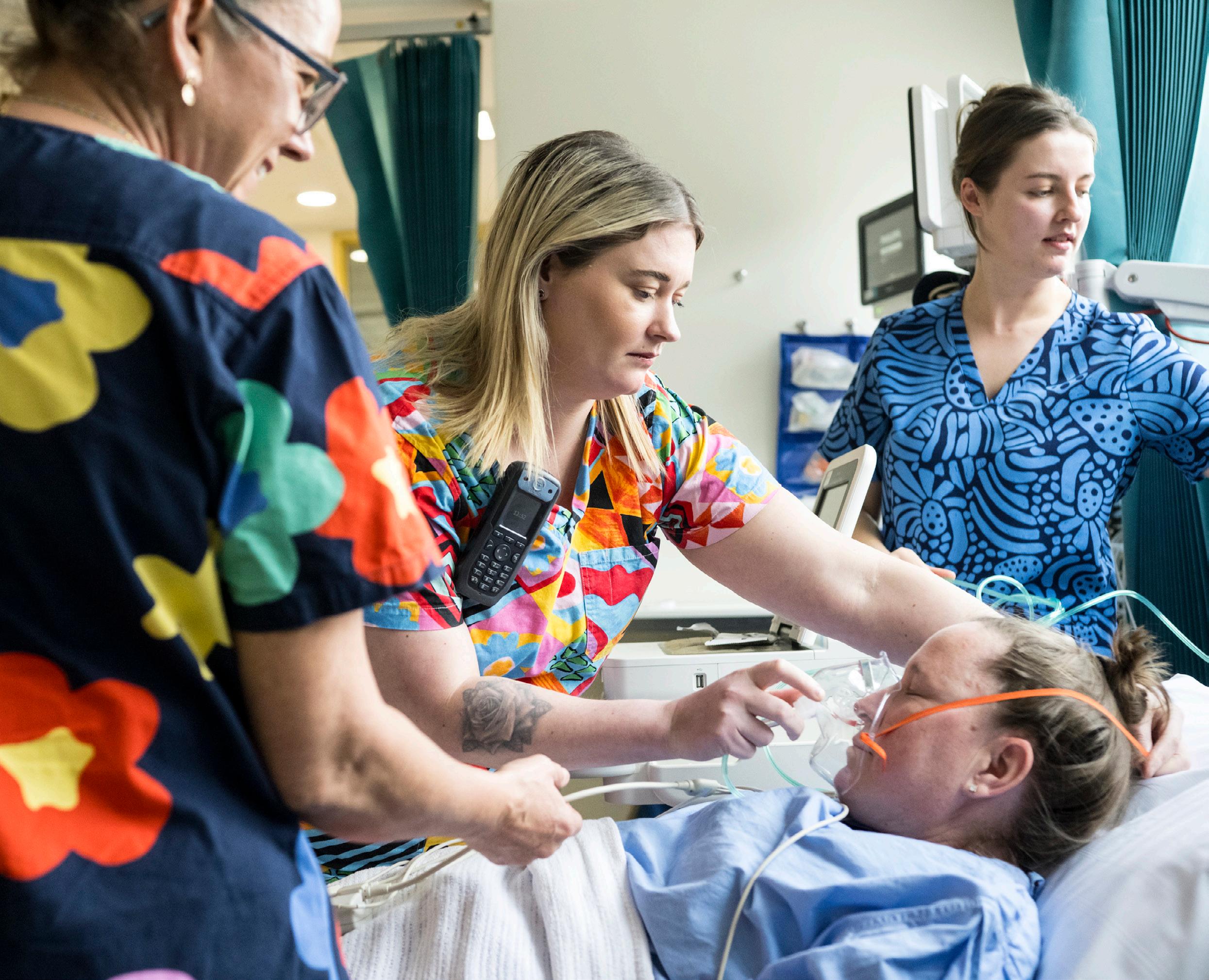
Photo: Christopher Hopkins
They replace ICN’s earlier descriptions published in 1987 and 2002, capturing the dramatic evolution of nursing shaped by technological change, shifting models of care, an increasingly health-literate public, and rapidly rising healthcare demands.
ANMF Federal Secretary Annie Butler said the Federation strongly supports the new definition, noting its importance not only for global nursing but for Australia’s future workforce, policy frameworks, and public understanding.
“This definition captures the true breadth, depth and impact of nursing,” Ms Butler said. “For too long, nurses’ roles have been narrowly described. The ICN’s updated definition makes our profession visible as clinicians, leaders, advocates and innovators. It provides the clarity we need to shape education, workforce planning, and reform in a way that reflects the real work nurses do every day.”
The ANMF says the definition will help support ongoing national reforms, including the expansion of scope of practice, by strengthening how nursing is represented in legislation, regulation, and policy.
“As our profession continues to grow and evolve, ensuring that nurses are properly recognised and understood is essential,” Ms Butler said. “This definition gives us the language to do exactly that.”
DEFINITION OF ‘NURSING’
Nursing is a profession dedicated to upholding everyone’s right to enjoy the highest attainable standard of health, through a shared commitment to providing collaborative, culturally safe, peoplecentred care and services. Nursing acts and advocates for people’s equitable access to health and health care, and safe, sustainable environments. The practice of nursing embodies the philosophy and values of the profession in providing professional care in the most personal health-related aspects of people’s lives. Nursing promotes health, protects safety and continuity in care, and manages and leads health care organizations and systems. Nursing’s practice is underpinned by a unique combination of science-based disciplinary knowledge, technical capability, ethical standards, and therapeutic relationships. Nursing is committed to compassion, social justice and a better future for humanity.
ABRIDGED DEFINITION OF ‘A NURSE’
A nurse is a professional who is educated in the scientific knowledge, skills and philosophy of nursing, and regulated to practice nursing based on established standards of practice and ethical codes. Nurses enhance health literacy, promote health, prevent illness, protect patient safety, alleviate suffering, facilitate recovery and adaptation, and uphold dignity throughout life and at end of life. They work autonomously and collaboratively across settings to improve health, through
advocacy, evidence informed decisionmaking, and culturally safe, therapeutic relationships. Nurses provide peoplecentred, compassionate clinical and social care, manage services, enhance health systems, advance public and population health, and foster safe and sustainable environments. Nurses lead, educate, research, advocate, innovate and shape policy to improve health outcomes. For more information of the definitions visit the ICN website icn.ch/resources/nursing-definitions/ current-nursing-definitions
Photos: Christopher Hopkins
Photo: Christopher Hopkins
Photo: Christopher Hopkins

NURSING & MIDWIFERY EDUCATION
PART 1
Changing the narrative: Why failure needs a place in learning
By Jonathon Marthick-Hone
Failure to fail is a global phenomenon in nursing education, driven by emotional discomfort, fear of conflict, and a lack of institutional support. But failure, when warranted, is not a punishment – it’s a professional responsibility.
Rather than viewing failure as a final judgement, we should see it as a formative, developmental tool. Clinical placements offer a critical opportunity to provide feedback that can guide a student toward improvement. When framed appropriately, failure becomes a catalyst for growth, not the end of the road.
UPHOLDING OUR STANDARDS
This perspective aligns with the Nursing and Midwifery Board of Australia (NMBA) Registered Nurse Standards for Practice.1 These standards emphasise accountability, not only for our own actions but also for those to who responsibilities are delegated. Passing a student who is not meeting clinical expectations is, in effect, a failure to uphold these standards. It compromises the safety of future patients and undermines the credibility of the profession. Conversely, when warranted, failing a student is not only an act of integrity but a demonstration of commitment to public trust and professional excellence.
IT’S NOT ALWAYS CLEARCUT
It is often assumed that failing a student is a straightforward process when performance is clearly substandard. But in practice, the boundaries of unsafe or not yet competent are rarely black and white. For many preceptors, these decisions involve uncomfortable subjectivity. What complicates this further is the nature of the preceptorship relationship itself, a relationship often built on rapport, vulnerability, and trust. To fail a student within this context can feel like a betrayal of that trust. It is not just a performance assessment; it can feel deeply personal.
What emerges is an environment of emotional and ethical tension, caused by conflicting loyalties to the student, the patient, the organisation, and the profession.

In this context, what should be a professional decision can feel personal, especially in a profession built on compassion.2
A CALL TO COMPASSION AND RESPONSIBILITY
This is not a call to punish or shame preceptors. On the contrary, it is a call to compassion, rooted in responsibility. Preceptors are often thrust into assessment roles without adequate preparation, guidance, or support. They may have limited training in the practical use of formal assessment tools or may be unaware of regulatory frameworks that underpin educator responsibilities.3 Emotional discomfort, fear of confrontation, or concern for the student’s future can cloud judgement. These are very human reactions, and they deserve acknowledgement. But they cannot override the need for honest assessment.
Failing a student is not a failure of teaching or preceptorship. It is a reflection of professional integrity. It signals to students and the profession that the standards we are registered against are not aspirational –they are real, and they matter. Importantly, failure is not the end. For many students, it is the turning point that prompts deeper reflection and resilience.4
WHAT NEEDS TO CHANGE?
This requires a shift in narrative: failure should not be seen as a reflection of a student’s worth or a preceptor’s inadequacy, but as a professional judgement made in the interest of safety, learning, and growth. Academic and clinical institutions need to implement clear, defensible processes for documenting and managing underperformance, supported by timely guidance and protection for
assessors. Equally important is the need for comprehensive assessor training – particularly in decision-making, documentation, and feedback – so educators are equipped not only with practical tools but also with the moral courage to act when standards are not upheld.5
Key strategies include:
• Assessor training: Equip assessors with the skills to identify, document, and communicate concerns effectively.
• Clear policies: Develop and enforce institutional guidelines that support honest assessment and protect assessors from undue repercussions.
• Early intervention: Use mid-placement assessments as checkpoints for feedback and remediation, not just as formalities.
• Support systems: Provide emotional and professional support for assessors navigating difficult decisions.
Importantly, students must also be prepared to receive and respond to failure. When framed as an opportunity for reflection and improvement, failure fosters growth and resilience. It teaches students that nursing is not about perfection –it’s about accountability, adaptability, and continuous learning.
THE MOST CARING ACT
Our profession is founded on ethical care and public trust. Protecting these principles requires more than clinical skill, it requires courage. To fail a student is not to fail the student. It is, in many cases, the most caring and professionally responsible act an educator can make.
References
1. Nursing and Midwifery Board of Australia. Registered nurse standards for practice. 2016.
2. Hughes LJ, Mitchell M, Johnston ANB. ‘Failure to fail’ in nursing – A catch phrase or a real issue? A systematic integrative literature review. Nurse Education in Practice [Internet]. 2016 Sep;20(20):54–63.
3. Larocque S, Luhanga FL. Exploring the issue of failure to fail in a nursing program. International Journal of Nursing Education Scholarship [Internet]. 2013 Jan 8;10(1).
4. Black S, Curzio J, Terry L. Failing a student nurse, A new horizon of moral courage. Nursing Ethics. 2013 Aug 28;21(2):224–38.
5. Yepes-Rios M, Dudek N, Duboyce R, Curtis J, Allard RJ, Varpio L. The failure to fail underperforming trainees in health professions education: A BEME systematic review: BEME Guide No. 42. Medical Teacher. 2016 Sep 7;38(11):1092–9.
Author
Jonathon Marthick-Hone Bachelor of Nursing, Grad cert Wound Care, Grad Cert Nursing Education, Lecturer in Nursing, School of Nursing and Midwifery, La Trobe University
ICU Graduate Transition Program celebrates 25
years and 500TH graduate
By Penny Holmes
Princess Alexandra Hospital’s ICU
Transition Support Program (TSP) recently clocked up a 25-year milestone since the first graduate nurse finished, and the 500TH nurse to graduate the program.
Registered Nurse Emma Veneris was more than proud to represent her role as the 500TH graduate of the program that has offered so much support to her and generations of other nurses.
“Meeting Brad and Petra at a Graduate Open Day stall at PAH changed the course of my nursing,” she said. “I was a University Student in Nursing (USIN) working on level 4 at PAH with the intention of applying for a graduate position in that area but after meeting them, I was so inspired that I applied for the Transition Program in ICU.”
This would become a turning point in her career offering autonomy, a team that helped build confidence in her nursing practice, and new opportunities for skills development that aren’t available in the wards.
“Becoming a specialist nurse in ICU comes with opportunities for continued training to take cardiac patients, renal replacement therapy; there are so many specialist areas that involve more opportunities to learn,” Emma said.
The transition program has supported staff like Clinical Nurse Elizabeth (Libby) Pauli who completed the transition program in the first cohort in 2000 when it was voluntary and has continued working at PA Hospital for 30 years now – 27 of those in ICU.
“ICU is a great career decision and I’ve loved every minute of being an Intensive Care nurse – it is a different way of life and I love the people I work with.”
ICU nursing also changed the career trajectory for Libby who went on to do a Graduate Certificate in critical care nursing which allowed her to move into Clinical Nurse roles and various Grade 7 management roles over the years.
PA Hospital’s ICU Transition Program, led by ICU Nurse Educators Petra Strube and Joe
Jennings, is one of 22 sites in Queensland now running this training program for nurses specialising in ICU nursing and Petra was a key contributor to latest Version 7 of the statewide program released in 2025.
“PAH is proud to have contributed 500 TSP graduates over the past 25 years to the statewide ICU clinical capability which is now in the thousands thanks to the strength of the program across Queensland.
“Almost every member of our 230 PAH ICU nursing staff has been through this training program but a lot of its success is due to ALL the ICU nurses whose day-to-day bedside teaching and skills training supported those going through the program,” Joe said.
Graduate recruitment for the ICU TSP occurs in the later half of the calendar year – contact icu_clinical_facilitator@ health.qld.gov.au with interest for the 2027 program.
Author
Penny Holmes is Director of Media & Communications, People, Engagement and Research at Princess Alexandra Hospital in Woolloongabba Qld
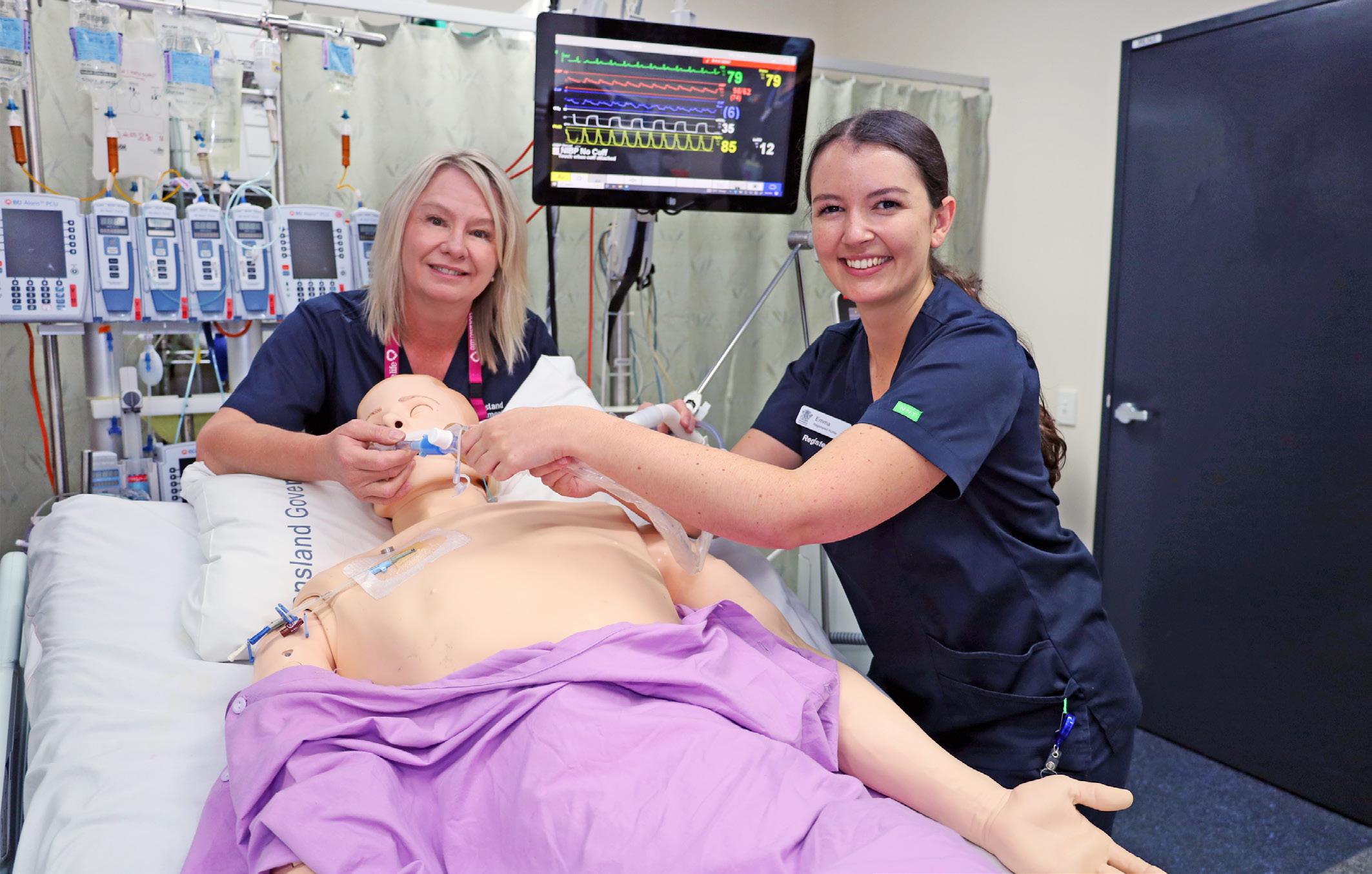
PA Hospital ICU Transition Program’s 500th graduate RN Emma Veneris and Clinical Nurse Elizabeth (Libby) Pauli who graduated in the first cohort in 2000.

Promoting and retaining nurses as preceptors of graduate nurses
By Lien Johns, Noelleen Kiprillis, Christine Murray and Cheryle Moss
The motivations and career aspirations of experienced registered nurses who precept graduate nurses have been understudied.
As the preceptor role is key to safeguarding patient safety whilst also supporting the graduate nurse transition from student to healthcare professional, it is key to understand what motivates registered nurses to precept graduate nurses.
Experienced registered nurses are often allocated as preceptors of new graduate nurses. There is significant importance associated with the preceptor role as new graduate nurses are at higher risk of making errors, and of becoming overwhelmed as they find themselves responsible for a patient allocation.1 Retaining graduate nurses and improved job satisfaction is linked with successful preceptorship.2
A review of current literature by the authors found that most research about nursing preceptorship is based on the experience of preceptoring students3 and on the quality of the preceptorship provided.4 The review identified limited knowledge about the motivations that experienced nurses have for precepting new graduate nurses. Additionally, there is minimal knowledge of how registered nurses feel the preceptor role can support their own career progression. To explore this gap in knowledge, a qualitative descriptive study was conducted, and nurse preceptors were invited to share their views in interviews.
The preceptors reported many reasons of RNs for wanting to precept new graduate nurses. These included being motivated to support and retain future generations of nurses, sharing knowledge and skills, and keeping current in their own practice. The preceptors shared how their experiences assisted their own skill and knowledge development and created possibilities for their own career development.
These findings could be used to promote and engage registered nurses with preceptorship of new graduate nurses. Further, they could also be used to support preceptors to leverage the role for their own skill and career development. Finally, it may assist promotion and retention of nurses as preceptors of new graduate nurses.
Acknowledgements
Lien Johns is undertaking the research for a Master of Nursing. Supervisors are: Noelleen Kiprillis (Eastern Health), Christine Murray (La Trobe University) and Cheryle Moss (La Trobe University).
Authors
Lien Johns, RN, GradCertNur, Clinical Nurse Educator, Eastern Health; Master of Nursing student, La Trobe University
Noelleen Kiprillis, RN, PhD, Associate Program Director, Practice Capability Eastern Health; Adjunct Lecturer, La Trobe University
Christine Murray, RN, RM, ProfDoc, Lecturer, La Trobe University
Cheryle Moss, RN, Ph.D., Associate Professor, La Trobe University; Adjunct Associate Professor, Monash University
References
1. Wakefield E. Is your graduate nurse suffering from transition shock? Journal of Perioperative Nursing. 2018;31(1):47-50.
2. Mulkey D, Casey K. Factors that influence the retention of graduate nurses at a safety net teaching hospital. Journal for Nurses in Professional Development. 2023;39(2):70-9.
3. Alhassan A, Fuseini A-G, Osman W, Dadinkai IA, Mahama SS. Preceptors’ perceptions of support, commitment to the preceptor role, and preferred incentives: A cross-sectional study. Nurse Education Today. 2022;116:105457-.
4. Moroney T, Gerdtz M, Brockenshire N, Maude P, WellerNewton J, Hatcher D, et al. Exploring the contribution of clinical placement to student learning: A sequential mixed methods study. Nurse Education Today. 2022;113:105379.
Oral Health Promotion In
Prison – Perceptions of Nurses: The OHIPNURS Project
By Izabella Barak, Rebecca Bosworth, Brandon Smith, Ajesh George and Yenna Salamonson
Oral diseases (ODs) impact approximately 3.5 billion people, representing the most prevalent, preventable, noncommunicable condition globally.1
People in custodial settings (PICS) are disproportionately affected, experiencing significantly higher rates of periodontal disease, dental caries, poor oral hygiene behaviours and diminished oral health (OH)related quality of life compared to general populations.2 In 2018, OH issues constituted 70% of all health clinic visits initiated by individuals in Australian prisons.3 This high demand for dental services has resulted in extended waiting times limiting access to preventative OH promotion.
Nurses can play a key role in OH promotion and education in custodial settings, but their perceptions about the acceptability and feasibility of undertaking this role remains unclear. The aim of this study is to qualitatively explore the involvement and perception of nurses in OH promotion in adult custodial settings, and to explore nurses’ perceptions of an OH promotion program led by non-dental professionals.
BACKGROUND
Oral Health Promotion In Prison –Perceptions of Nurses: The OHIP-NURS Project is situated within an overarching Oral Health in Prison initiative, exploring the potential for a new interprofessional model of care involving other non-dental professionals, including correctional officers, Aboriginal Health Workers and PICS. The initiative is informed by the World Health Organization Oral Health Action Plan 2023-20304 and Sustainable Development Goal 3,5 which is good health and wellbeing for all. The initiative uses a preventative and educational model rather than a reactive emergency-care based model, that is cheaper, sustainable and has positive implications for when people transition to community settings.6 The initiative aims to firstly educate and train non-dental professionals. These professionals may deliver education on oral

hygiene tools and techniques, and OH riskrelated behaviours such as tobacco, alcohol, illicit substances and sugar consumption, with the goal being to improve OH outcomes for PICS.
RESULTS AND IMPLICATIONS
Thirteen participants were recruited from two New South Wales correctional centres. The study findings revealed strong enthusiasm for the proposed new model of care. However, knowledge gaps and low confidence levels of nurses was also found, with concerns of low OH prioritisation from patients. Participants highlighted the urgency of implementing changes, reporting daily presentations of serious OH issues including facial swelling, oral abscess and severe dental decay. Participants reported educating patients using personal lived experiences and using facial swelling guidelines. Participants were highly motivated to assist patients due to experiences of pain and the debilitating nature of poor OH. Suggestions from participants for the proposed OH promotion program included educating nurses, correctional officers and Aboriginal Health Workers to increase their knowledge and skills and involving other multidisciplinary team members including drug and alcohol and dental assistants.
CONCLUSION
This research underscores opportunities for public health workforce development through integrating OH promotion into routine care by non-dental professionals. A collaborative interprofessional approach is paramount in connecting OH and primary health to effectively prevent and treat ODs among PICS, thereby returning healthier people to communities.7 Addressing immediate healthcare needs contributes to broader public health objectives and social equity goals, as prison health is public health.8
Authors
Izabella Barak RN, BN, Honours student at the University of Wollongong, School of Nursing, Faculty of Science, Medicine and Health, NSW, Australia
Dr Rebecca Bosworth RN BN (Hons) PhD, Justice Health and Forensic Mental Health Network Operational Nurse Manager - South Region, School of Nursing, Faculty of Science, Medicine and Health, University of Wollongong, NSW, Australia
Brandon Smith RN, BN (Hons), BN, BSc, BBC, BALCT, Associate Lecturer, Deputy APD (BN & MNPR): Accreditation & Pathways, School of Nursing, Faculty of Science, Medicine and Health, University of Wollongong, NSW, Australia
Professor Ajesh George PhD, Australian Centre for Integration of Oral Health (ACIOH), Professor of Interprofessional Oral Health, School of Nursing & Midwifery, Liverpool, Western Sydney University, Honorary Professor, Faculty of Science, Medicine and Health, University of Wollongong, NSW, Australia
Professor Yenna Salamonson PhD MA(Ed&Wrk) GDipNEd BSc CCU Cert RN, Head, School of Nursing, Faculty of Science, Medicine and Health, University of Wollongong, NSW, Australia
References
1. World Health Organization. 2022. Global oral health status report: Towards universal health coverage for oral health by 2030 [Online]. Available: who.int/publications/i/ item/9789240061484 [Accessed].
2. World Health Organization. 2023. Oral health in prisons fact sheet [Online]. Available: who.int/europe/publications/m/ item/oral-health-in-prisons---fact-sheet
3. Australian Institute of Health and Welfare. 2019. The health of Australia’s prisoners 2018 [Online]. Available: aihw.gov.au/ reports/prisoners/health-australia-prisoners-2018/summary
4. World Health Organization. 2024. Global oral health action plan (2023–2030) [Online]. Available: who.int/publications/i/ item/9789240090538 [Accessed].
5. United Nations. 2025. Sustainable Development Goal 3. sdgs. un.org/goals/goal3
6. Greifinger, R. B. 2022. Public health behind bars: From prisons to communities (2nd Edition ed.). Springer.
7. Justice Health and Forensic Mental Health Network 2023. 10 year strategic plan 2023-32. NSW Government.
8. World Health Organization. 2025. Health promotion action means [Online]. Available: who.int/teams/healthpromotion/enhanced-wellbeing/first-global-conference/ actions
Custodial nurse triaging patient with an oral health condition
The importance of engaging in discussions about gender diversity in nursing education
By Jessica D Collingburn, Sharon L Bourke and Beverley Copnell
The recognition of gender diversity (transgender, gender fluid, nonbinary) has grown significantly in recent years, highlighting the experiences of gender diverse individuals in healthcare.
Despite this progress, nursing education largely operates within a gender-binary (man or woman) framework, limiting future nurses’ ability to provide culturally safe and inclusive care. This gap calls for an updated approach in nursing education to better prepare healthcare professionals for diverse patient populations. Currently, little research exists on nurse educators’ perspectives, particularly in Australia. To address this, we undertook a qualitative study exploring nursing educators’ experiences with teaching gender diversity in undergraduate curricula. Understanding educators’ views is crucial, as they shape future nurses’ competencies and ensure inclusive care.
WHY GENDER DIVERSITY MATTERS NOW
As societal discussions around gender inclusivity expand, healthcare must evolve to meet diverse needs. Gender diverse patients often face barriers, discrimination, or a lack of understanding in care.1 Nursing, a profession built on holistic, patientcentred care, must address these disparities by incorporating gender diversity education into training programs.
THE ROLE OF GENDER DIVERSITY IN NURSING EDUCATION
Nursing education is vital in shaping the attitudes and competencies of future nurses. Including gender diversity content in undergraduate curricula helps students develop the knowledge, confidence, and cultural competence for equitable care.2 Research shows that when gender diversity is integrated, students feel more prepared to meet gender diverse patients’ needs. However, many educators feel underprepared to teach this content, highlighting the need for training and institutional support.
IMPACT ON PATIENT CARE
A well-informed nursing workforce fosters a healthcare system that respects and affirms gender diverse individuals. When nurses are equipped with the right knowledge, they can:
• Build trust by using correct pronouns and inclusive language.
• Recognise and address disparities specific to gender diverse populations.
• Advocate for inclusive policies in healthcare settings.
Ensuring students receive gender diversity education improves care quality and outcomes for gender diverse individuals. Without this, miscommunication and inadequate care may occur, discouraging individuals from seeking help. Integrating gender diversity into nursing curricula fosters trust and improves engagement.
IMPLICATIONS OF OUR FINDINGS
Our research emphasises the need for comprehensive gender diversity education in nursing curricula. Educators require more support, resources, and training to confidently integrate inclusive content. Without these changes, knowledge and preparedness gaps will persist, affecting both students and patients.
Efforts should focus on:
• Embedding gender diverse case studies in clinical training.
• Providing ongoing professional development for educators.
• Encouraging policy reforms mandating gender diversity education.
By equipping educators and students to support gender diverse patients, nursing can contribute to a more inclusive healthcare system, ensuring compassionate, competent care for all.
Authors
Ms Jessica D Collingburn RN, MN, Lecturer in Nursing, School of Nursing and Midwifery, Deakin University and School of Nursing and Midwifery, La Trobe University Australia
Dr Sharon L Bourke RN, PhD, MN, Senior Lecturer in Nursing, School of Nursing and Midwifery, La Trobe University Australia
Dr Beverley Copnell RN, PhD, BAppSc, Associate Professor, School of Nursing and Midwifery, La Trobe University Australia
References
1. Abeln B, Love R. Bridging the gap of mental health inequalities in the transgender population: The role of nursing education. Issues in Mental Health Nursing 2019;40(6):482-5.
2. Koch A, Ritz M, Morrow A, Grier K, McMillian-Bohler JM. Role-play simulation to teach nursing students how to provide culturally sensitive care to transgender patients. Nurse Education in Practice. 2021; 54:103123.

Infection Prevention and Control (IPC) education for nurses/ midwives by ACIPC: Advancing practice in
a new era
By Carrie Spinks
In the wake of the COVID-19 pandemic, the importance of infection prevention and control (IPC) in every healthcare setting has become more apparent than ever. For nurses and midwives, staying up to date with the latest evidence, practices, and standards is essential - not only for healthcare users’ safety but for the safety of the workforce and broader community.
The Australasian College for Infection Prevention and Control (ACIPC) supports this need through a broad range of practical, flexible educational opportunities tailored to the realities of modern nursing. ACIPC’s programs are designed to be accessible and relevant. Whether you are new to IPC or working toward advanced IPC credentials, there are courses and resources to meet your needs. Diverse setting online IPC courses form the foundation, combining live tutorials, self-
directed modules, and interactive elements such as video scenarios, case studies, and simulations. The format supports deep learning while accommodating busy schedules. Nurses can access help from facilitators via phone, email or video chat, and engage in real-time discussion through Q&A forums and peer networks.
These courses do not just convey information; they build confidence and capability. Nurses gain practical skills they can use immediately: recognising transmission risks; applying appropriate precautions; improving hand hygiene practices; and influencing safe workflows within their teams. The learning outcomes contribute to improved infection control, reduced healthcare-associated infections, and stronger workplace culture. Australia’s residential care sector has been hugely impacted by the large numbers of students completing the course to become established IPC leads.
A standout feature supporting this education is ACIPC’s extensive IPC resource bank. Available online, this open-access library caters to a wide range of settings – acute care, aged care, dentistry, paediatrics, community health, and even beauty therapy. It is designed for relevance across Australasia, including rural and remote contexts. Members benefit from a comprehensive suite of tools, including position statements, interpretation aids for emerging evidence, and resources that address even controversial or complex IPC issues.
Learning continues beyond formal courses with live or recorded ‘Lunch and Learn’ webinars on current IPC topics, join
Special Interest Groups (SIGs), or connect through the Aged Care Community of Practice (CoP) or chat forums - a space for sharing experiences, asking questions, and collaborating on solutions. Annual international conferences, offered both in-person and online, bring together professionals to explore new research and practical innovations, further enriching the learning experience.
Educational resources are also provided to support key IPC events like International Infection Prevention Week and Hand Hygiene Day. These materials, customised for various settings, help nurses lead conversations and promote safe practices within their own workplaces. The monthly ACIPC newsletter ensures continuity of information and collaboration between conferences.
Ultimately, IPC education today is about more than knowledge, it is about strengthening systems and supporting colleagues to keep everyone safe. For nurses, the opportunity to learn, grow, and lead in this space has never been more important. ACIPC’s educational approach makes that not only possible, but practical and sustainable.
Author
Carrie Spinks BA Science (Nursing), Master of Nurse Practitioner, Master of Infection Control is Infection Prevention and Control Consultant at the Australasian College for Infection Prevention and Control Ltd
Fundamentals of emergency nursing program
By Miriam Attard, Sarah Ratcliffe and Joshua Kristy-Purcell
The current global nursing shortage is well documented, exacerbated by a combination of baby boomer nurses retiring, and experienced nurses leaving the profession.1
These shortages have led to large numbers of new graduate nurses entering the healthcare system, at times without the support of an established, supportive education program.2 There is a high turnover rate amongst new graduate nurses, with suggestions that many leave due to inadequate support.1 These issues are documented globally and observed locally including Canberra Hospital Emergency Department.
It is recognised that a dedicated, supported, area specific program for new graduate nurses improves retention and skills.3
Canberra Hospital Emergency Department’s nursing education team developed a dedicated, twelve-month education program specifically for new emergency nurses, with the aim of not only retention after 12 months, but also developing a team of highly supported, skilled, and confident emergency nurses.
Thirty-five nurses were recruited to the program, consisting of a variety of new graduates, second year nurses (having just completed a new graduate program) and new emergency nurses (with a variety of experience, but none with ED experience). Participants were carefully rostered for the first six months of the program, to allow them to rotate through all acute areas of the department (excluding resus and triage) in a supported manner, including supervised, or ‘shadowed’ shifts. The program additionally included specifically developed study days delivered in combination with area rotation. Topics covered included common emergency clinical skills, paediatric care, mental health, occupational violence, and nursing leadership. Participants were provided with specific case studies each fortnight with associated resources to support interaction with the case topics. In addition to being supported by existing emergency nurses and nurse educators, the organisation recruited a small number of retired emergency nurses, or ‘emeritus

nurses’, who worked with the new nurses in a non-clinical mentorship capacity. Overall, a significant increase in retention was observed when compared to 2020-2023 observed retention rates. At six months, one participant opted to leave emergency, and one more participant left at approximately eight months. At 12 months, 33 of the original 35 participants were still working in the emergency department, with the majority planning to continue in this clinical area. Furthermore, four of the original participants were recently found suitable to commence the department’s resus education pathway, demonstrating a supportive program producing individuals with advanced skills. The overall feedback from the participants was positive, with the majority reporting feeling well supported and having a positive experience. The program continues to grow after the first year, with a further two cohorts commencing the program since its original conception.
CONCLUSION
To grow and retain a strong nursing workforce, new nurses must be adequately supported. Specifically tailored programs for new nurses are an effective retention strategy, moreover an effective development and progression opportunity for individuals commencing their nursing career trajectory.
Authors
Miriam Attard Masters of Advanced Practice, Emergency Nursing, Graduate Diploma Critical Care Nursing, Nursing Lecturer, Faculty of Health, University of Canberra ACT
Sarah Ratcliffe Graduate Certificate in Critical Care Nursing (Emergency), Specialist Certificate in disaster and terror health management, Graduate Certificate in Clinical Education, A/g Clinical Nurse Educator, Emergency Department, Canberra Health Services
Joshua Kristy-Purcell Graduate Certificate of Critical Care Nursing (Emergency), A/g Nurse Unit Manager, Nursing and Midwifery Workforce Unit, Canberra Health Services
References
1. Wakefield E, Innes K, Dix S, & Brand G. Belonging in high acuity settings: What is needed for newly graduated registered nurses to successfully transition? A qualitative systematic review. Nurse Education Today [Internet]. 2023 [cited 2025 May 22]; 121.
2. Serafin L, Pawlak N, Strzaska-Klis Z, Bobrowska A, & Czarkowska-Paczek B. Novice nurses’ readiness to practice in an ICU: a qualitative study. Nursing in Critical Care [Internet]. 2021 [cited 2025 May 22].
3. Bel, S, Gorsuch P, Beckett C, McComas A, Boss K, & Rose K. An evidence-based initiative to reduce new graduate nurse turnover: implementation of a mentorship program. Worldviews on Evidence-Based Nursing [Internet]. 2025 [cited 2025 May 30].

Clinical supervision: An innovative pilot project in a university maternal and child health program
By Leanne Sheeran, Helen Stevens and Peter Sheeran
Maternal and Child Health (MCH) nurses are working with increasingly complex families and child health scenarios. Family violence, poverty, substance use, child abuse and impaired parentinfant relationships are examples of challenges impacting families.1
Postgraduate MCH students at RMIT University are obtaining greater support to address these issues through the introduction of clinical supervision, previously not a part of this or other MCH programs.
Clinical supervision enhances ‘clinical skills, experience, confidence and
resilience’.2 Clinical supervision also develops the individual’s clinical knowledge and self-awareness and promotes quality improvement.3 Qualified Victorian MCH nurses receive clinical supervision to support skills, encourage reflection and further develop understanding of self and others. Pivoting on student program reviews and teaching academics, this project innovatively took up the challenge to enhance student learning outcomes and application to practice, thereby improving client experiences and enhancing student confidence and wellbeing. This was achieved through the introduction of facilitated structured, clinical supervision for postgraduate MCH students.
This pilot project involves fortnightly sessions during students’ MCH placements, and it consists of groups of 12-14 students each having 10 one hour live online group sessions over the year. A working together agreement is developed with each group and Gibbs Cycle is presented as a theoretical framework for reflection. Sessions are facilitated around students’ discussion with an emphasis on deep reflection arising from their clinical experiences and clinical case presentations.
This pilot project is innovative as clinical supervision is not traditionally available
to postgraduate MCH students. It aims to address students identified needs for peer interaction and support, discussing clinical cases, hearing other students’ experiences, enhancing clinical reasoning, and exploring options for managing challenging behaviour. Whilst this project continues to the end of this year, anecdotal evidence strongly supports the ongoing formal implementation of this innovation.
Authors
Dr Leanne Sheeran RN, RM, DipAppSci, BAppSci, Grad Dip MCH, MN, MA, Grad Cert TTL, Grad Cert PIMH, PhD, Program Manager, Child & Family Nursing Program, RMIT University.
Ms Helen Stevens RN, RM, BAppSci (MCH), MMH (IMH), Sessional Lecturer, RMIT University.
Dr Peter Sheeran BPod, Doctor of Medicine, Medical Practitioner, Wagga Wagga Base Hospital.
References
1. Dept Health. 2019a. Enhanced maternal and child health program guidelines, health.vic.gov.au/publications/ enhanced-maternal-and-child-health-program-guidelines
2. Dept of Health. 2019b. Maternal and child health service guidelines, health.vic.gov.au/publications/maternal-andchild-health-service-guidelines
3. Australian Nursing & Midwifery Federation (ANMF). 2023. Clinical (reflective) supervision for nurses and midwives position statement. anmf.org.au/media/hxkekqxi/ anmf-position-statement-clinical-ref.ision-for-nurses-andmidwives.pdf
Pursuit of specialty choices among nursing students: The PROSPECTS project
By Caitlin Rabone, Brandon W Smith, Yenna Salamonson, and Suzanne Bowlder
A sustainable paediatric nursing workforce is critical amid rising demand and persistent nursing shortages.1 While paediatrics is a popular specialty among nursing students, the intention to pursue it professionally is shaped by complex and evolving factors.
Although career preferences have been broadly studied, limited attention has been given to the specific influences on paediatric specialisation. This study explored factors influencing preregistration nursing students’ intention to specialise in paediatrics.
BACKGROUND
Career intention in nursing is shaped by more than interest alone. Literature highlights a multifaceted interplay of identity, perception, and experience. Students who favour paediatrics are typically young, female, and have caregiving backgrounds or strong affinity for children.2,3 Paediatric nursing is often romanticised as joyful, meaningful, and emotionally rewarding; an image reinforced by societal and cultural narratives.3 Clinical placement is central to affirming or shifting
these intentions. Positive exposure builds confidence and sustains interest; negative or absent experiences can prompt students to reconsider previously held aspirations.2,3 These complexities highlight the value of a multifaceted approach to exploring paediatric career intentions.
METHODS
A concurrent embedded mixed-methods design was used to explore student intentions at one Australian university in March 2025. A total of 310 students enrolled in Bachelor or Master of Nursing (PreRegistration) programs completed a survey including demographics, the ASPIRE-PAEDS tool, and two open-ended prompts. The ASPIRE-PAEDS measured interest, selfefficacy, preparation, and perceived value of paediatric nursing. Quantitative data were analysed using descriptive and inferential statistics in SPSS. Qualitative responses were thematically analysed to contextualise and expand on quantitative results.
RESULTS
Of the 310 participants, 126 scored above 66 out of 98 on the ASPIRE-PAEDS, indicating strong interest in paediatrics. These students were significantly more likely to identify as female (p = 0.026). A non-significant trend linked interest in paediatric nursing with concurrent healthrelated employment (p = 0.077). Qualitative analysis confirmed this relationship, with students frequently citing previous caregiving experience as a motivator. Concerns about limited paediatric placement opportunities were common, with students noting that lack of exposure hindered skill development and confidence.

CONCLUSION
Identifying students with early interest in paediatrics is key to strengthening the future workforce. Embedding paediatric content across the curriculum, alongside interprofessional learning with early childhood and allied health, may sustain interest when clinical access is limited. Reimagining placements to include flexible models and a broader range of settings, particularly community-based care, may enhance continuity of exposure and better support students’ development. Providing consistent, structured opportunities to experience paediatric nursing supports student development and reinforces career intentions.
Authors
Caitlin Rabone RN, BN, Honours student at the University of Wollongong, NSW and Associate Lecturer, School of Nursing, Faculty of Science, Medicine and Health, University of Wollongong, NSW
Brandon Smith RN, BN (Hons), BN, BSc, BBC, BALCT, Associate Lecturer, Deputy APD (BN & MNPR): Accreditation & Pathways, School of Nursing, Faculty of Science, Medicine and Health, University of Wollongong, NSW
Professor Yenna Salamonson PhD MA(Ed&Wrk) GDipNEd BSc CCU Cert RN, Head, School of Nursing, Faculty of Science, Medicine and Health, University of Wollongong, NSW
Dr Suzanne Bowdler BN, MN, RN, PhD, Lecturer, Associate Head of School (Learning & Teaching), School of Nursing, Faculty Science, Medicine & Health, University of Wollongong, NSW
References
1. Macintyre MR, Brown BWJ, Schults JA. Factors influencing pediatric hematology/oncology nurse retention: A scoping review. Journal of Pediatric Hematology/Oncology Nursing 2022;39(6):402-17.
2. Anyango E, Adama E, Brown J, Ngune I. The impact of final-year clinical placements on nursing students’ career planning for the graduate year and beyond. Nurse Education in Practice. 2024;76:103944.
3. Happell B. When I grow up I want to be a...? Where undergraduate student nurses want to work after graduation. Journal of Advanced Nursing. 1999;29(2):499-505.
Innovative education program promotes comprehensive care
By Lucy Haver, Matthew Dutton, Kellee Barbuto and Dasha Riley
Comprehensive care requires that a clinician provide holistic, coordinated healthcare to a person’s personal needs and preferences, considering the person’s physical, mental and cognitive health.1 Importantly, comprehensive care examines how a person’s health affects their health and wellbeing.
Therefore, it is essential that we as clinicians promote shared decision-making, multidisciplinary collaboration and harm minimisation.
Educating and promoting comprehensive care in an efficient and timely manner has been challenging for local health districts. To address the challenges of educating and promoting comprehensive care an innovative education program is currently being trialled in South Eastern Sydney Local Health District (SESLHD). The education sessions are being led and facilitated by district leads in pressure injuries, falls and dementia and delirium, working with site educators.
An identified gap in education around comprehensive care was noted within SESLHD. Education was being delivered in silos with no crossover or engagement between subjects and not considering risk assessment and care plan from a comprehensive care lens. We decided to demonstrate shared risk factors and mitigation strategies of falls, pressure injury and delirium and other aspects of comprehensive care.
The scenario is based on a real patient experience, with the importance of developing person-centred strategies in comprehensive care and alignment with the CEC Comprehensive Care Model central
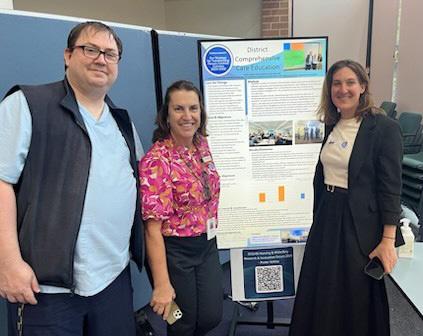
to its structure. The education provides simulations of the building blocks of a safe ward that are in the CEC Comprehensive Care Model. The simulations and case study are adapted to the clinical context of the area receiving education. This is informed by working with site-based MDT educators who are involved in the education and/or as part of a train the trainer model.
Staff engagement throughout the case study is seen with interactive simulation on effective handover, comprehensive care risk identification and mitigation strategies, communicating for safety, post fall management and use of the Huddle Up process.
The purpose of the education is to ensure the person is at the centre of what we do to provide relevant holistic care in line with the SESLHD nursing and midwifery strategic plan.
This innovative approach has seen over 300 staff undertake the training. Staff feedback from the comprehensive care sessions have demonstrated increased knowledge and awareness of comprehensive care assessment, care planning and communicating for safety.
Feedback collected suggested that the education supported staff to have an emphasis on skin inspection, safety huddles and early mobilisation, value of orientating patients to the care environment, early engagement of carers, families, and highlighted the need to understand individual risk factors for each patient and implement person-centred, evidence-based mitigation strategies.
Authors
Lucy Haver, South Eastern Sydney District Falls Prevention and Management Coordinator
Matthew Dutton, Skin Care Co-Ordinator for the South Eastern Sydney Local Health District
Kellee Barbuto, Clinical Nurse Consultant for Dementia/Delirium for South Eastern Sydney Local Health District
Dasha Riley, Clinical Nurse Consultant – Dementia and Delirium at South Eastern Sydney Local Health District
Reference
1. Comprehensive Care – Minimising Harm - Clinical Excellence Commission [Internet]. cec.health.nsw.gov.au. Available from: cec.health.nsw.gov.au/keep-patients-safe/ older-persons-patient-safety-program/comprehensive-careminimising-harm
Poster presentation of SESLHD Comprehensive care Education, Matthew Dutton, Kellee Barbuto and Lucy Haver
Nursing in North Queensland 1910–1925
By Sandra Dash
There is a paucity of knowledge about the life of nurses in the North Kennedy region of North Queensland in the early 20th century.¹ When the towns of Charters Towers, Townsville, Ayr and Ingham were first settled, they had no formal healthcare services of any kind. As families moved into the region, whether for settlement or to work in the gold mines, injury, illness, and the need for basic medical care quickly followed.
In these early days, nursing of any kind was carried out by settlers themselves. They relied on personal medical kits, remedies sourced from gardens, and knowledge shared by Indigenous peoples. Often, women who were left alone on remote properties shouldered the responsibility for administering treatment, assisting in childbirth, and even burying the dead.
By the time Dr John Flynn produced The Bushman’s Companion in 1910² –primarily a firstaid guide – one third of Queensland still had no access to a medical practitioner or nurse. Society was deeply patriarchal, with medicine firmly dominating healthcare. Unlike metropolitan areas, regional communities operated without refrigeration, electricity, hot running water or adequate sanitation. Several institutions did train nurses in caring for people with infectious diseases, managing scarce resources, and administering and
dispensing medications, yet these nurses also faced challenges such as poor skill mix, chronic under-resourcing and navigating work across diverse cultures.
Despite societal expectations that nurses be educated, cultured women of a certain class, recruitment proved difficult due to the demanding nature of the work. Nevertheless, several women and one man, Ernest Steers –entered nursing from both prominent and modest families across the region, as well as from Far North Queensland, west of Charters Towers, and even the Gulf of Carpentaria.
Nursing education varied depending on the year of study. Until the mid-20th century, completing 6th-grade primary school was sufficient to begin training. Australia-wide examinations, introduced in 1905, cost one guinea to sit and lasted two hours. Uniforms developed as a marker of professionalism,
helping distinguish trained nurses from those without formal preparation. According to Townsville nurse Nellie Lambton, local nurses wore lavender uniforms in 1916.³
Importantly, while nursing histories often focus on metropolitan hospitals, North Queensland also maintained a strong nursing service staffed by fully trained and educated nurses who met the standards set by the Australasian Trained Nurses Association. Despite staff shortages and the tyranny of distance, a small community of determined healthcare workers collaborated to build a developing healthcare system and uphold emerging standards of safe, quality care.
Today, in the 21st century, the North Kennedy region has evolved into a pivotal healthcare hub for Northern Australia – a testament to the resilience and dedication of its early nurses.
Author
Sandra Dash, Lecturer – Nursing, Midwifery and Nutrition, College of Healthcare Sciences, Division of Tropical Health and Medicine, James Cook University, Townsville Qld Australia
References
1. Dash, S. A history of nursing in the North Kennedy region from 1910-1925 [master’s thesis]. [Townsville (Qld)]. James Cook University; 2024. 189 p.
2. Flynn, J. The bushman’s companion. Australia: Home Mission Committees of the Presbyterian Church of Victoria and New South Wales; 1910. 113 p.
3. Jaumees, K. History of Townsville General Hospital 1866-2001. Townsville: Townsville General Hospital; 2001. 257 p.
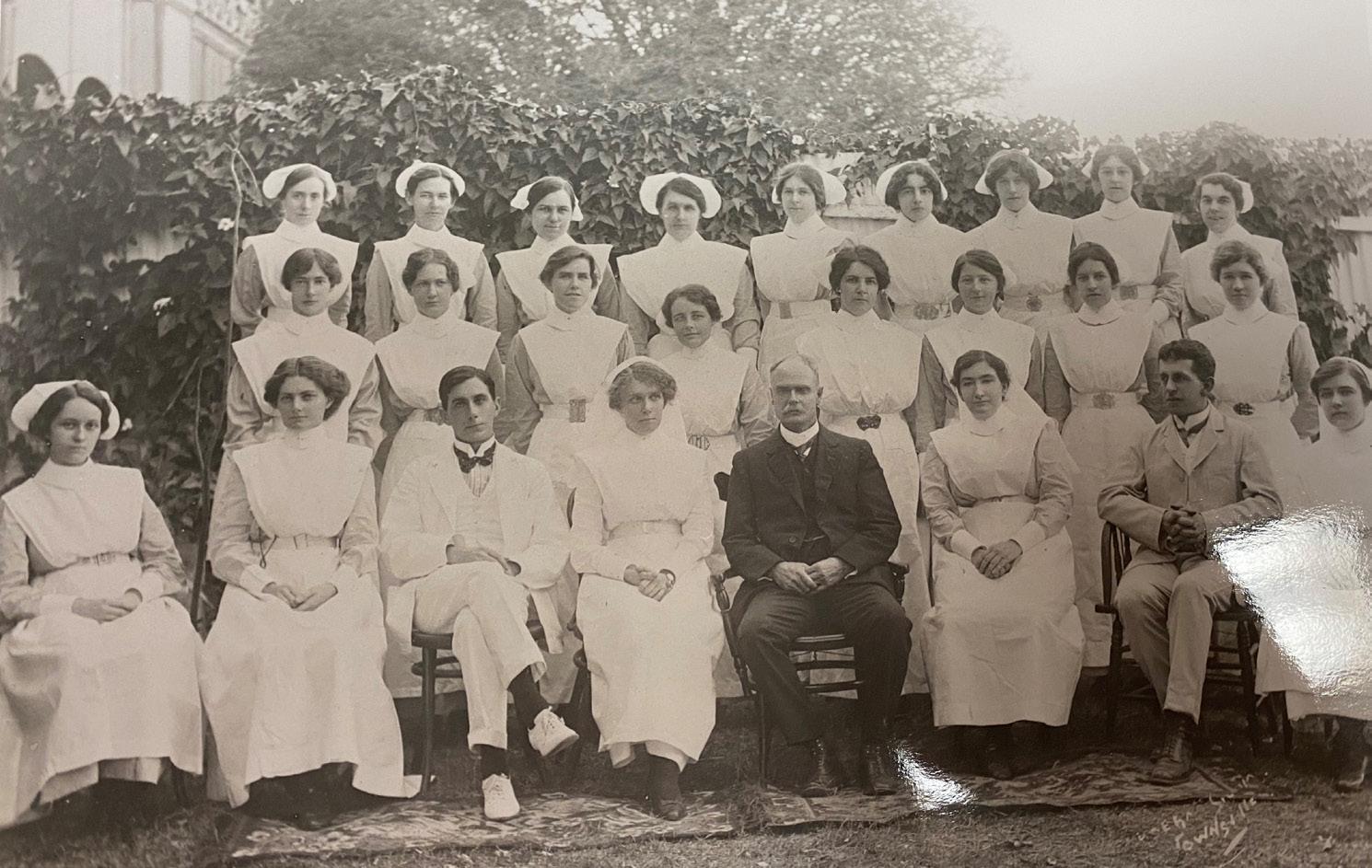
Townsville staff 1915
Leila Bonning was a nurse at Ingham hospital in the early 1900s
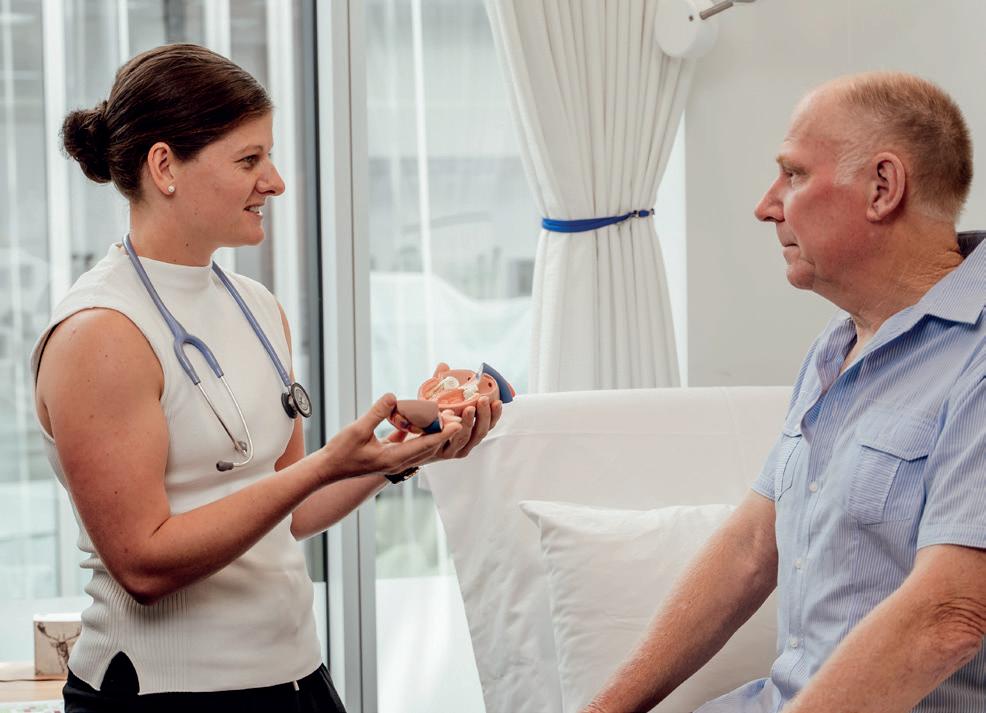
Take your nursing expertise further
Our Advanced Nursing postgraduate programs are designed for registered nurses ready to lead, innovate, and specialise. Flexible study options and scholarships available.
Foster a brighter future

Throughout Australia, there is a high demand for foster carers who can provide nurturing and traumainformed support for children in their community full-time, short-term, or on weekends.
MacKillop Family Services is calling on the community to foster a brighter future for vulnerable children and young people.
If you think this is a role that you are ready for, visit mackillop.org.au/fostercare for more information.


NURSING THE IMPACT IS REAL



At La Trobe University, we’re dedicated to furthering the education of the next generation of nursing and midwifery professionals. As a university that focuses on health, science and technology, we’ve built a unique perspective on nursing education, setting us apart from other universities. If you’re passionate about finding your place in healthcare, there are some big reasons to join La Trobe and take the next step in your career.

Personal growth in action: Insights from an alternative mental health clinical placement
By Abigail Leplaw
Clinical placements play a vital role in skill development and career specialisation for student nurses.1,2 With clinical placements also seen to aid in the solidification of skills learnt in the classroom, increasing clinical confidence.3 However, are the current clinical placement models achieving this?
The Australian Heath Practitioner Regulation Agency (Ahpra) listed numerous challenges of the current model. Identifying that student nurses lack the required supervision needed to improve upon their skills, significant knowledge gaps on registration, and the quality of the clinical placement did not weigh as heavy as the acquired clinical placement hours needed for registration.
Such challenges are also experienced during mental health clinical placements, alongside students holding stigmatising beliefs towards those with a lived experience of mental illness and increased fears entering mental health clinical placements.4 The Australian Government’s 2020 Productivity Commission into Mental Health5 identified this concern regarding stigmatising beliefs and the vital need
more positive mental health clinical placements, which instil knowledge and breakdown stigmatising beliefs and fears. Its recommendation was that student nurses should attend clinical placements in therapeutic recreation environments.
The American Therapeutic Recreation Association,6 reports that active participation in therapeutic recreation allows participants to find purpose within their lives, promoting a significant contribution to their overall life. This unique clinical placement promoted a significant contribution to the academic lives of the 16 research participants. Student nurses explored how the visceral experiences of the therapeutic recreation activities allowed their theoretical growth to be pushed into action, increasing their understanding of mental illnesses such as bipolar, schizophrenia and anxiety, with one student nurse, Imogen, reporting the profound learnings she had post the giant swing:
“He said that rush that you feel on the giant swing is very similar to how he feels when he has a manic episode, so it’s really good to, like, put that into practice and lock it in my head that is not just a mood swing”.
Through participating in the same therapeutic recreation activities with those with a lived experience, student nurses were able to feel what it may be like to experience a symptom such as mania, increasing their understanding of mental illness and challenging their pre-conceived thoughts regarding ill mental health. Such experiences empowered the student nurses to take charge in their educational experiences and their future practice. Soon to be registered nurse, Kel, stated: “We can really, genuinely truly help people and we
didn’t know that before coming here, and now we’ve been empowered with all this information, it’s so powerful”.
From the experiences uncovered through the interviews with the 16 student nurses who attended a therapeutic recreation based mental health clinical placement, it is apparent the profound impact alternative clinical placements can have on the personal growth of its participants. Student nurses identified how the challenges identified by Ahpra could be addressed on the alternative therapeutic recreation clinical placement while increasing their knowledge base and address their preconceived thoughts regarding mental illness.
Author
Abigail Leplaw, RN, BN, BN(Hons), PhD Candidate at the University of Wollongong, NSW
References
1. Currie J, Thompson C, Grootemaat P et al. 2023. A scoping review of clinical skill development of preregistration registered nurses in Australia and five other Englishspeaking countries. Journal of Clinical Nursing 32, no. 1–2: 283–297. https://doi.org/10.1111/jocn. 16239.
2. McKenna L, McCall L, and Wray N. 2010. Clinical placements and nursing students’ career planning: a qualitative exploration. International Journal of Nursing Practice 16, no. 2: 176–182. https://doi. org/10.1111/j.1440-172X.2010.01827.x.
3. Suliman M, and Warshawski S. 2022. Nursing students’ satisfaction with clinical placements: the contribution of role modelling, epistemic authority, and resilience – a crosssectional study. Nurse Education Today 115: 105404. https://doi. org/10.1016/j.nedt.2022. 105404.
4. Shaygan M, Jaberi A, Hosseini FA, and Moghadam MF. 2023. How to prepare nursing students for mental health clinical engagement: a qualitative study. BMC Medical Education 23: 672. https://doi.org/10. 1186/s12909-023-04657-8.

5. Productivity Commission. 2020. Productivity Commission Inquiry Report Volume One: Mental Health, No. 95, 30 June 2020. Australian Government. pc.gov.au/inquiries/ completed/mental- health/report/mental-health.pdf
6. American Therapeutic Recreation Association (ATRA). 2021. “What is recreational therapy?” atra-online.com/page/About RecTherapy.

Welc om e to Healthy Eating
Each issue we will be featuring a recipe from Maggie Beer’s Foundation, which ensures research, education and training will lead to better outcomes and the delivery of nutritious and flavoursome meals to our ageing population in nursing homes. Maggie’s vision is not only to improve nutrition and wellbeing for the aged, but also for all who enjoy good wholesome food.
Mango, lime and coconut sago pudding
Prep time 30 mins Cook time 1hr and 15 minutes Portions Serves 4–6
INGREDIENTS
80 g sago
2 cups (500 ml)
coconut milk
½ vanilla bean, halved lengthways and seeds scraped
Finely grated zest and juice of 2 limes
2 medium or 1 very large ripe mango
1 tablespoon very thinly sliced mint
3 tablespoons toasted coconut flakes
METHOD
1. Place the sago, coconut milk, vanilla bean seeds and scraped bean, and ¾ cup (180 ml) water in a medium saucepan and stand for 30 minutes.
2. Place the pan over medium heat and bring to the boil, stirring occasionally.
3. Reduce the heat to low and cook, stirring often, for 10–15 minutes or until the sago is tender.
4. Remove from the heat, strain and then stir in most of the lime zest.
5. Divide the mixture among serving glasses or dishes, then cover and refrigerate for 1 hour.
6. To serve, peel the mangoes and cut off the cheeks. Thinly slice into a bowl and mix with the lime juice. In a blender, puree one third of the mango and any flesh from around the seed.
7. Place in a bowl with the mint and stir.
8. Spoon the mango puree over the puddings, then top with the mango slices.
9. Scatter with the coconut flakes and remaining lime zest and serve.

We invite you to try and make Maggie’s recipe.
Send a photo of you and your creation from this issue, and in a sentence, let us know what you liked about It. If we pick your entry, we’ll publish it in the next ANMJ and reward you with a Maggie's Savoury Platter Essentials Gift Pack. Send your entry to: healthyeating@anmf.org.au
Nicely done, Nicole, on making the baked eggplant, tomato, rosemary, lentil & parmesan bake published last issue. We hope you enjoy your gift pack.
“This was a lovely dish, healthy easy to make and extremely delicious to eat”.