COVID Busters
A Look Behind the Scenes
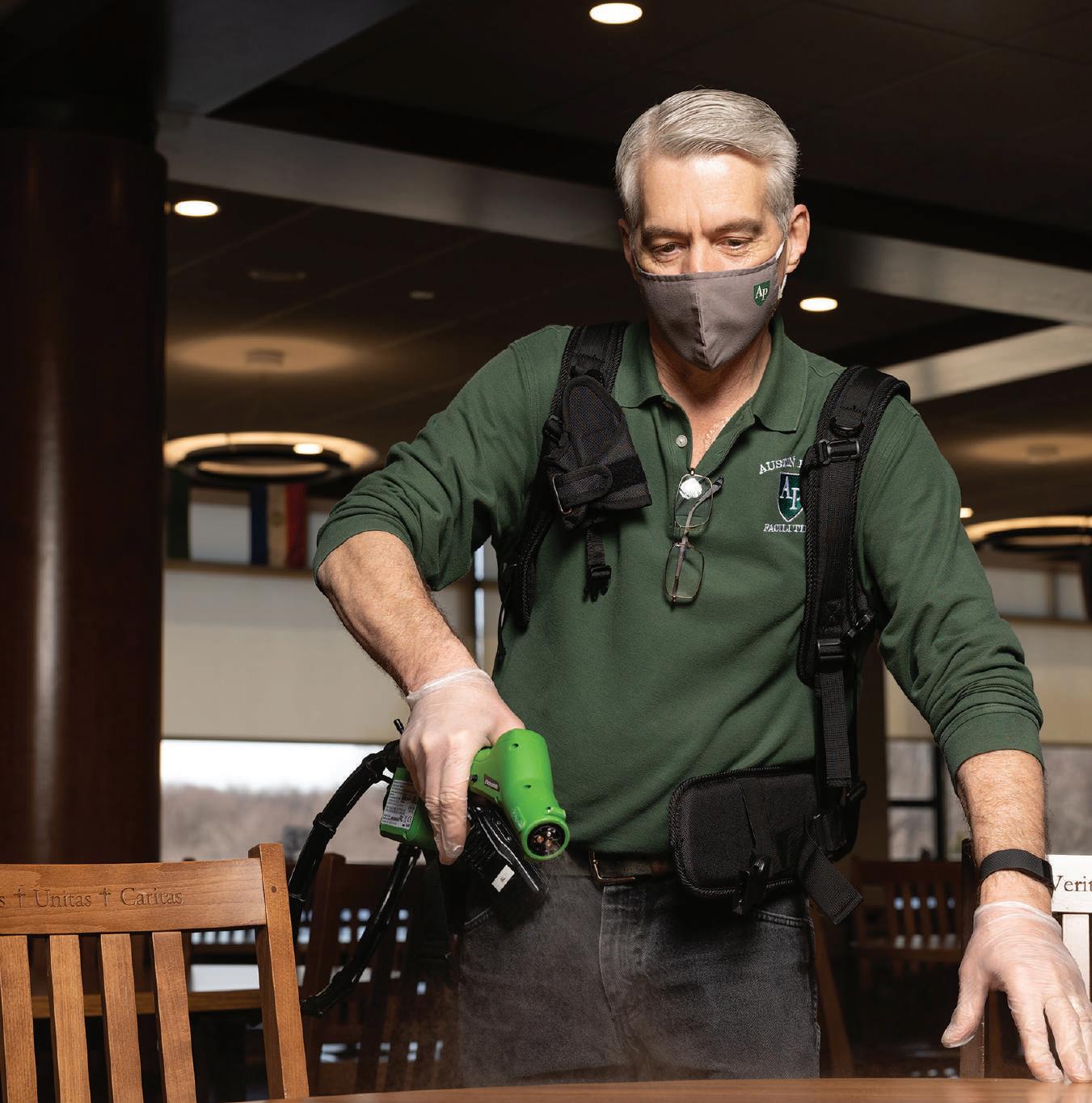

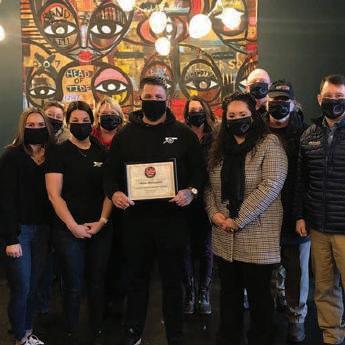
Photo Credit: Jared Charney
Feature Stories
Head of School’s Letter page 1
COVID Busters
A look behind the scenes at AP. page 2
Sometimes the Class Itself is The Experiment Learning there isn’t always an answer.
page 10
Ms. Bishop’s Class is Murder Forensics science is fun. page 13

Faces In The Community page 16
St. Augustine Lecture page 17
Alumni Profiles page 18
Class Notes page 24
Austin Prep Presents back cover

A popular Catholic hymn reminds us of the words of Jesus.
“Be not afraid, I go before you always. Come follow me, and I
Every time I hear it, I am reminded that no matter how tough things may seem, we are never alone. And that while fear may be natural, we also always have the choice of being courageous. With confidence.
During the last pandemic how often have you been asked to resist fear and to trust in God’s providence?
The considerable challenges we’ve encountered in the last year were caused by a public health crisis that generated understandable apprehension and fear. Fear of illness or even death. Fear of change. Fear of loss.
In this challenging time, the Austin Prep community made brave decisions to protect the common good.
Our community shares love and passion for a host of things that bring us together as a school community. Unitas. Caritas.
We embrace academic vigor and the excitement of mastery learning and the adventure of discovery.
We love creative outlets like music and art and coming together as groups to create beauty to the eye and ear.
We love the thrill of competition and working with coaches and teammates to set noble goals and striving to achieve them.
We love spending time together. Humans are social beings made in the image and likeness of God.
We love putting good intentions into action, serving others in need of our community and surrounding towns.
And in each of these endeavors we’ve been asked to make compromises, or do without, to sacrifice things we love, or what we prefer so that we can safeguard the good of others.
Students, parents, alumni, faculty, and staff have all answered
And it was done with courage and conviction, with bravery, and with an energetic spirit of enthusiasm.
The word enthusiasm is of Greek origin, ‘en’ meaning within, and “Theos” meaning God, as in the word Theology. Translated enthusiasm literally means “God within,” or perhaps in the Catholic tradition, to be full of grace. Those who possess grace are people who possess a strong commitment
During these challenging times, individual and shared enthusiasm is fundamental to overcoming fear.
In the City of God, Augustine wrote that “a people are a multitude defined by the common objects of their love.” In that regard Augustine’s wisdom is central to our earthly
“ e heavenly city – this is the City of God – is on pilgrimage in this world. Even so we possess a degree of peace in this life because of our faith. By virtue of that faith, we arrive with God’s grace to lives of righteousness, knowing that each little victory of justice and love, each good action performed in relation to God and our neighbor, provides a glimpse of heavenly peace. For our life here in earth, as well as our eventual life in heaven, is inevitably a social life.”
(cf City of God 15.17)
Head of School James Hickey, Ph.D. P’22, ’23, ’24, ’27
On March 10, 2020 Governor Charlie Baker ordered schools closed throughout the Commonwealth of Massachusetts due to the spread of the Covid Virus.
For many schools, the pandemic would prove overwhelming.
Not surprisingly, Austin Prep was more than ready thanks to a band of professionals, who often perform behind the scenes and who quickly came together to meet every challenge and keep the school afloat.
Their work over the last year and a half can be broken down into three phases: reaction, planning, and execution. Ideally these steps would be sequential, but circumstances called for the ability to juggle many things at once. While not exactly the old “Ready, fire, aim,” only years of experience and a commitment to teamwork and hard work equated to success.
This is their story.
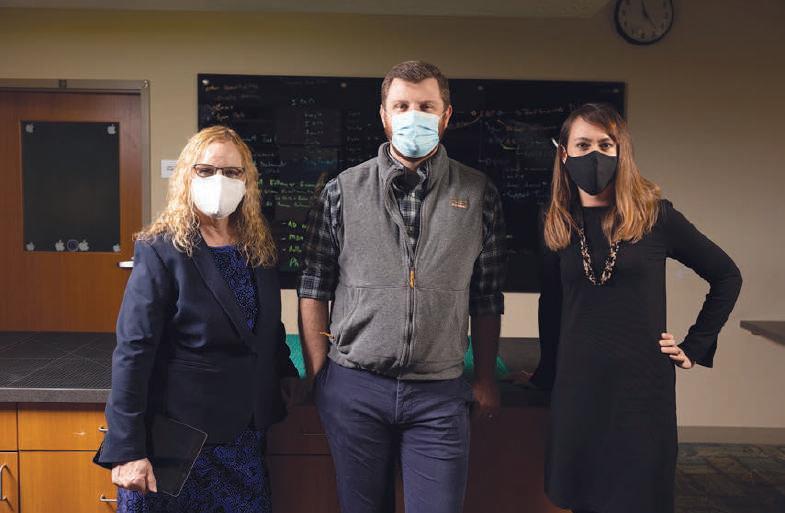
Head of School James Hickey, Ph.D. and Chief Financial Officer John Weber quickly realized that three main areas needed to be addressed immediately for the school to function, Facilities, Technology and Food Services.
In order to create a healthy, safe, hybrid-learning environment, all needed to coordinate and operate like clockwork. Fortunately, Austin Prep had the right people in the right positions at the right time.
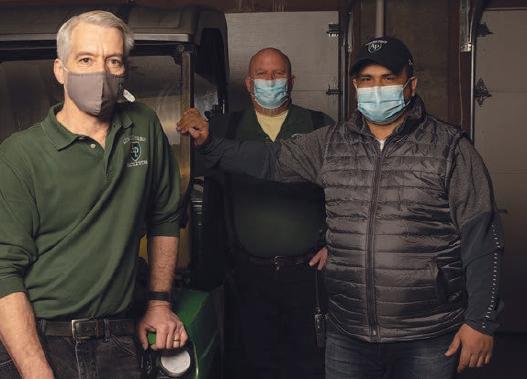
Mike Fahey, Todd Moriarty P’26, and Jill Bonina and their teams were ready to give 110% from day one.
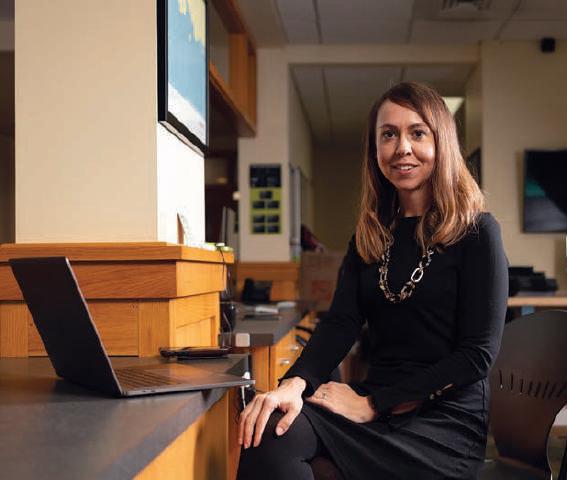
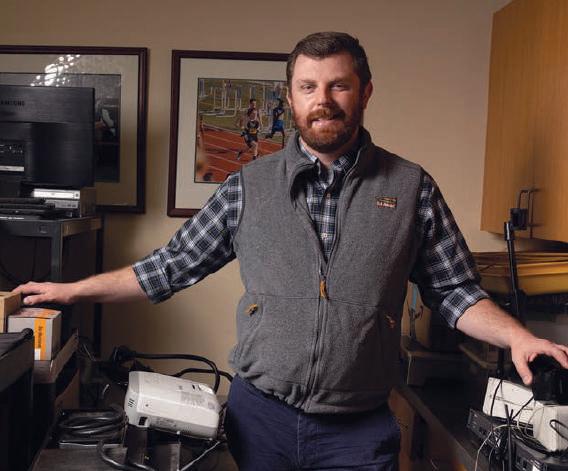
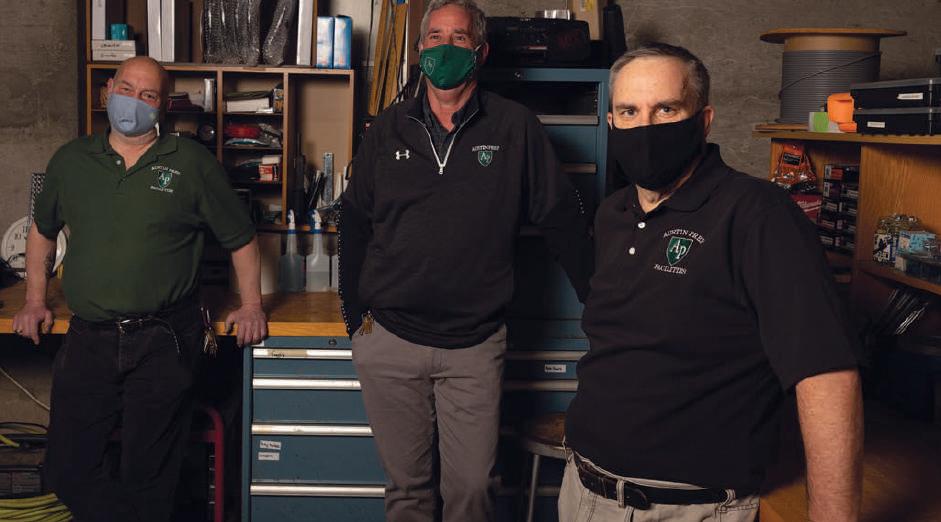
Director of Facilities Mike Fahey joined Austin Prep four years ago after heading operations at the local ABC network TV affiliate in Needham, and at Newton Country Day School. Deadline pressure at Channel 5 prepared him to think fast, aiding him to find creative solutions at Austin Prep, from clean air circulation, to designing and constructing safe classrooms, to providing adequate security measures.
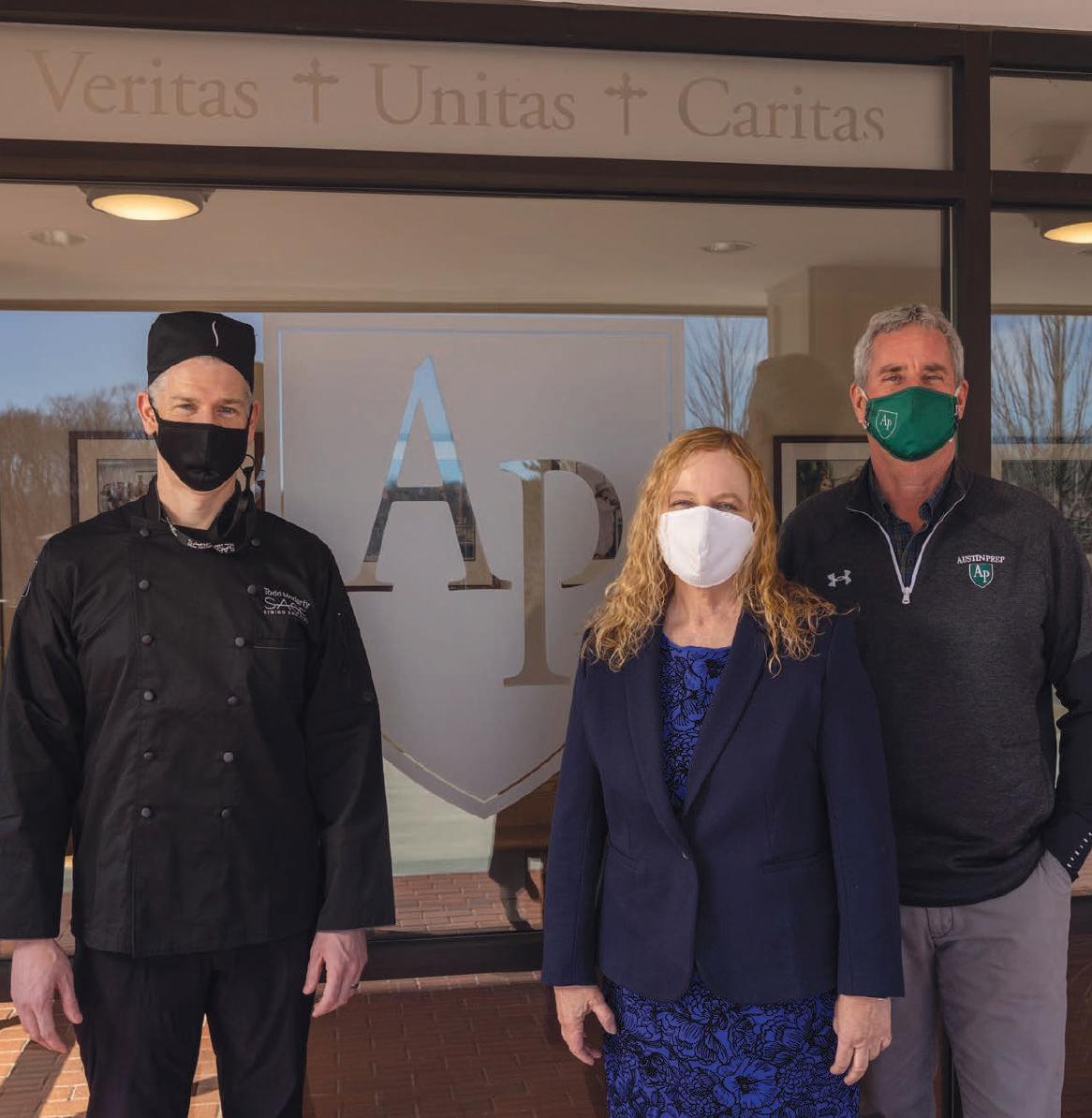
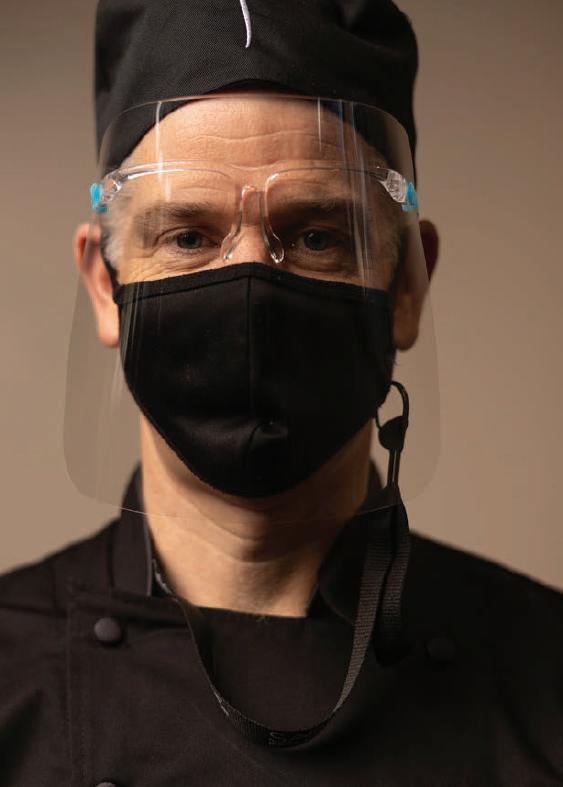
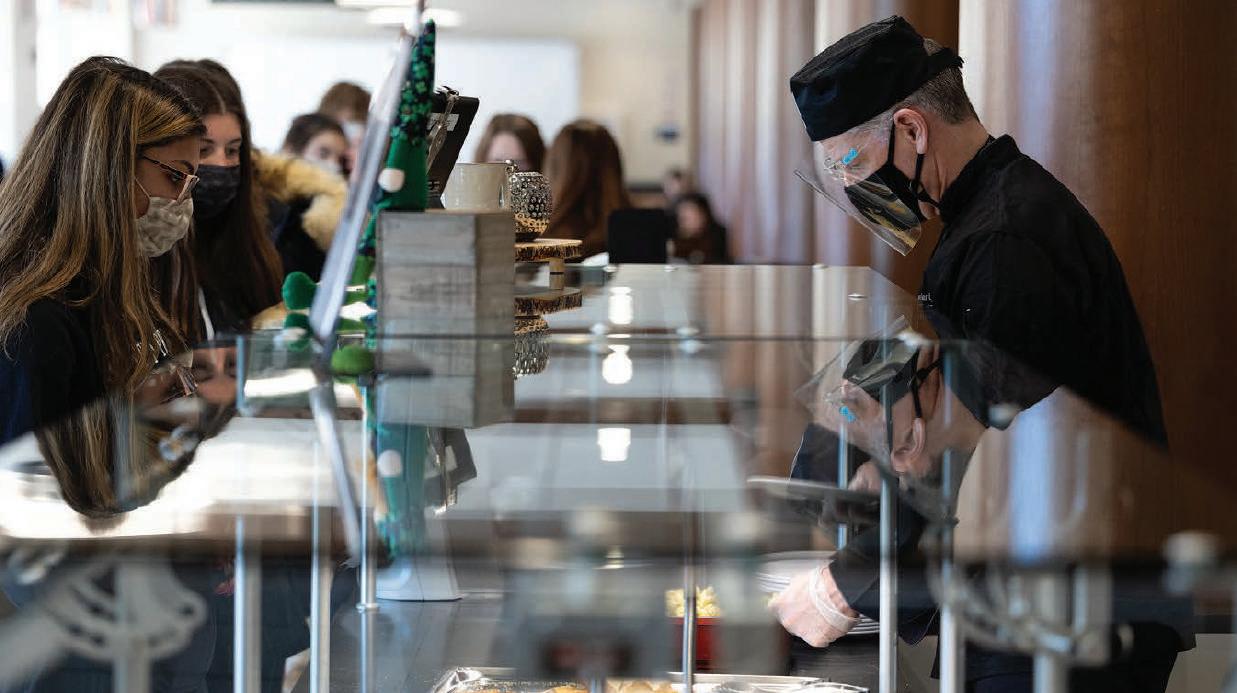
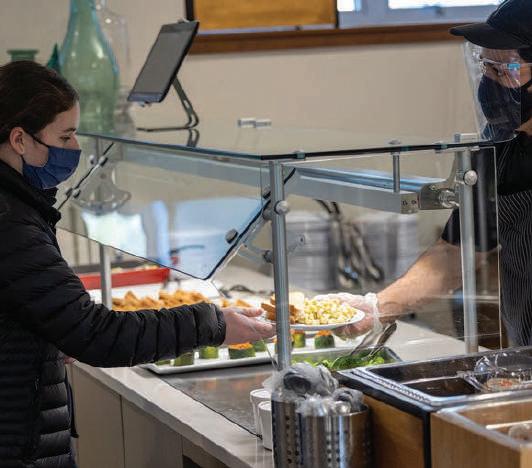
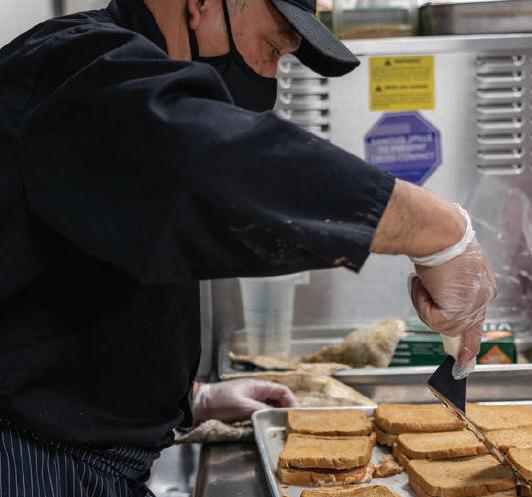
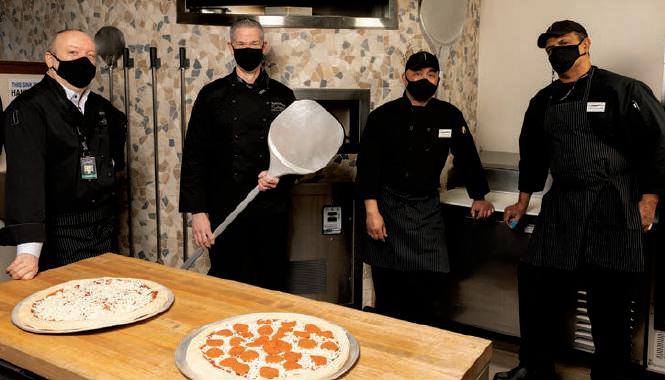
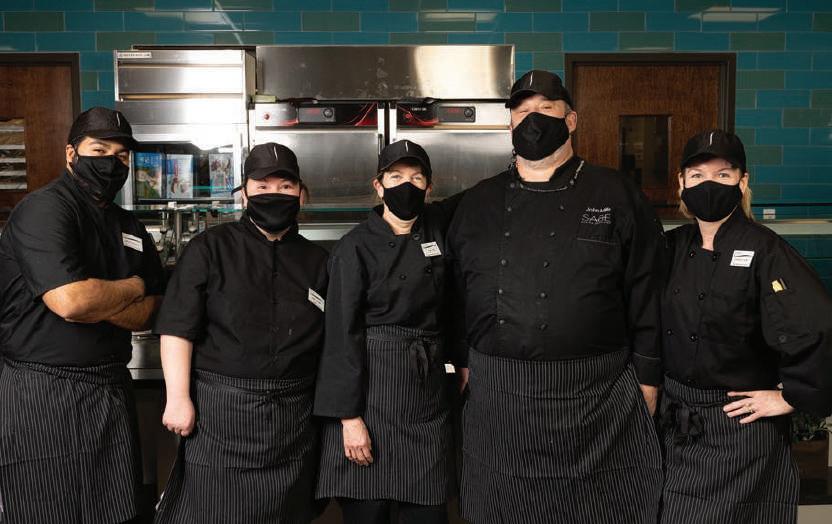
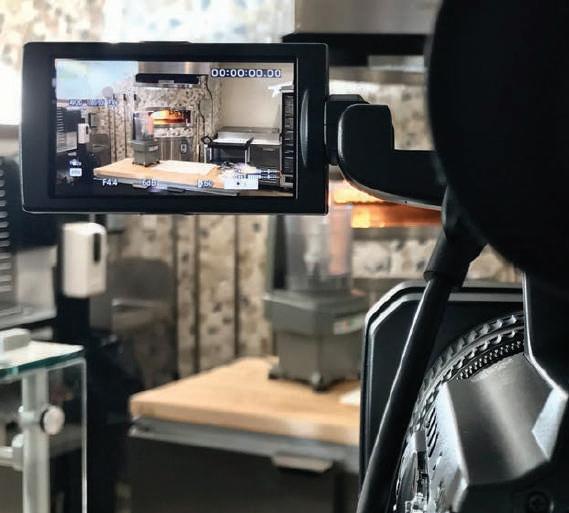
As Director of Dining Services, SAGE Dining, Todd Moriarty was used to preparing 800 meals a day at Austin Prep, but now he had to respond to heightened hygiene and distance requirements, from prep to consumption, never seen before during his time in the hospitality business in New York City at the World Trade Center, and at corporations and other schools in Massachusetts.
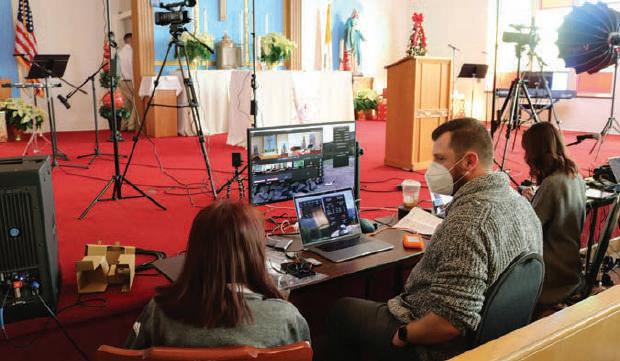
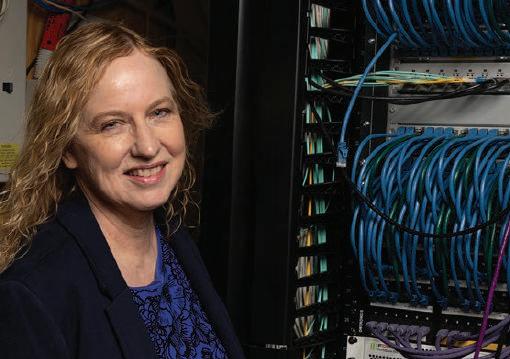
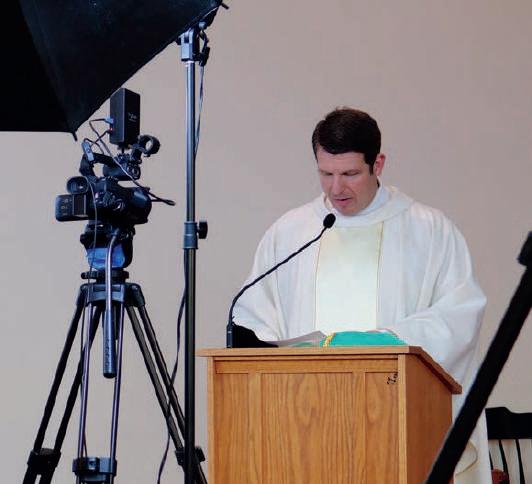
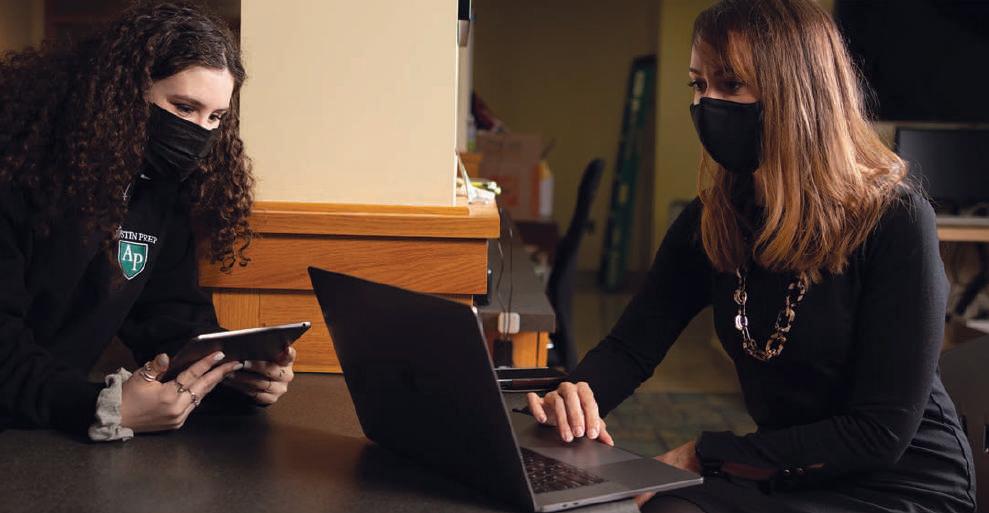
Director of Technology Jill Bonina, led the effort to create an infrastructure that would support online remote learning, appropriate in-class teaching, produce and transmit events ranging from plays and concerts, to Baccalaureate Mass and graduation, the first-ever Day of Giving telethon, and the regular celebrations of Mass. All in a day’s work for a leader who graduated from Wellesley College while the mother of triplets and who kept working even after contracting the COVID-19 virus herself during the year.
The one thing in common each would tell you is that they never could have done it alone. They led teams who were totally committed to the success of the faculty, administration, and students. Together they shared goals and integrated strategies, successfully supporting operations on all levels during extremely challenging times.
Although the teams worked together, perhaps it would be easiest to focus on how each unit answered the call.
When Mike Fahey joined Austin Prep after 15 years at Channel 5 he thought he had seen everything. From designing and constructing things like new weather satellite installations or broadcast towers, tackling projects like a new football stadium or baseball diamonds seemed, literally, like a walk in the park.
All that changed dramatically last March when overnight air quality and circulation became critical issues as research

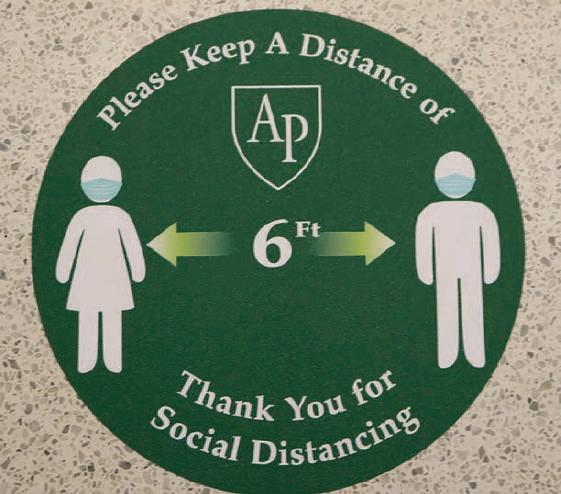
surfaced each day with news about how the air-borne virus was transmitted, and suddenly the distance of six feet became the norm.
Suddenly the heating, ventilation and air conditioning pipes needed to be re-evaluated. Having up to date HVAC would play a vital role in being able to hold in-person classes.
With the expedient approval of the Board of Trustees and Dr. Hickey, John Weber, CFO quickly gave the green light, and Mike ordered new filtration systems, disinfecting ultra-violet lighting, and new ductwork. Their fast thinking enabled Austin Prep to beat the lines and get the needed equipment months ahead of the curve as others had to deal with inventory shortages and supply chain delays as the pandemic settled in.
That not only applied to ordering items like hand sanitizer dispensers that became common, but crucial everyday appliances.
“ is past year, with the strength of our community, we have met these challenges – together.”
Head of School James Hickey, Ph.D.
Mike and his team worked non-stop with Dr. Hickey going to each classroom, measuring safe distances between desks, and then acting out student placement.
Classrooms, that in previous years comfortably held 20 students, were now retrofitted for 12, storing furniture as needed.
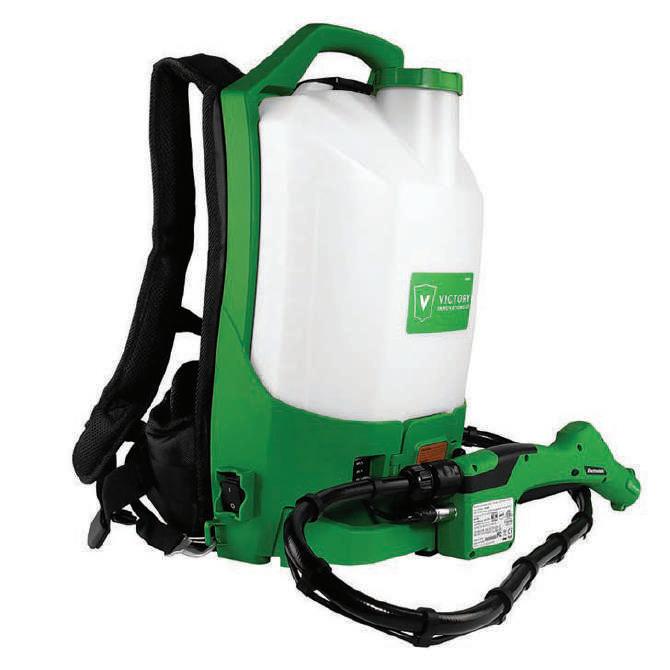
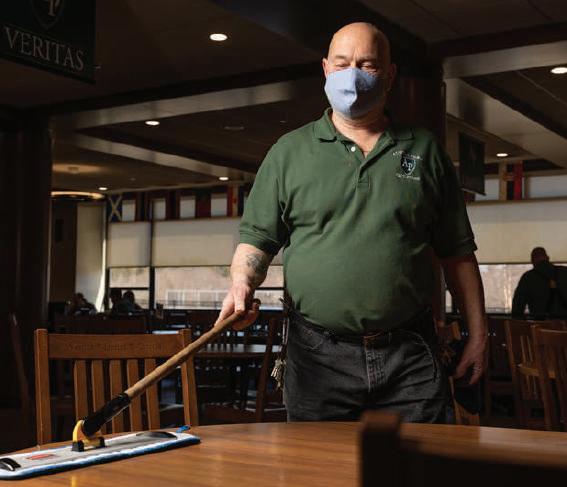
Cleanliness was also essential. Austin Prep contracted an overnight maintenance service, but during the day the facilities team wore Electrostatic Backpacks – like those in the movie Ghostbusters- to spray between periods.
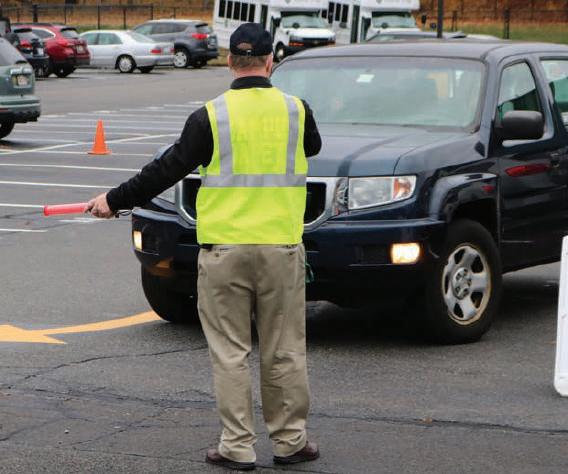
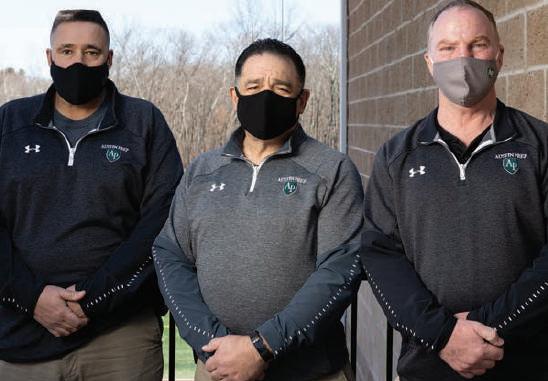
Campus security also reports to Mike. This team of three formerly retired local community and State Police law enforcement officers raised safety to new levels. Beginning in September when students arrived on campus in the morning, they were met with a carefully structured drop-off procedure including thermal scanners and temperature stations. The officers even took turns during meals to wipe off tables and enforce distance protocols.
That same attention to detail and cleanliness extended into Todd Moriarty’s unit. A 30-year veteran of the food service and
respected Austin Prep for years, so much so that his youngest son is now enrolled in the Middle School.
SAGE Dining Services feed leading schools and colleges in the area including St. John Prep, Moses Brown School and Dexter Southfield. After graduating from UMass Amherst and working in New York City, Todd returned home to Massachusetts because he liked the approach and values of SAGE’s privately owned business model, where he and his team are encouraged to act like a part of the Austin Prep family.
The SAGE Dining team of 10 have an attitude of “Whatever it takes,” and have evolved from preparing 850 regular meals to 500 a day during the Hybrid model.
The logistics of meals has also been challenging, from sanitation to safety, keeping students distanced and in line, so that when a table is called the food is still hot and ready to eat, and no one has done it better than the SAGE Dining team at Austin Prep.
Thinking on the fly is intrinsic to the tech team- Jill Bonina, Marissa McLaughlin ’03 and Brad Harkins.
There is an old saying that learning is messy by its nature. However, the technology that makes it happen is not. Educational technology was never intended to replace in-person learning. It’s best when it supplements it.
The technology team was already part of a ‘culture of change’ at Austin Prep before the pandemic hit. If there was a blessing connected to COVID-19 it might be that it accelerated improvements to educational pedagogies across the campus, in all grades, in all subjects and even extracurricular activities.
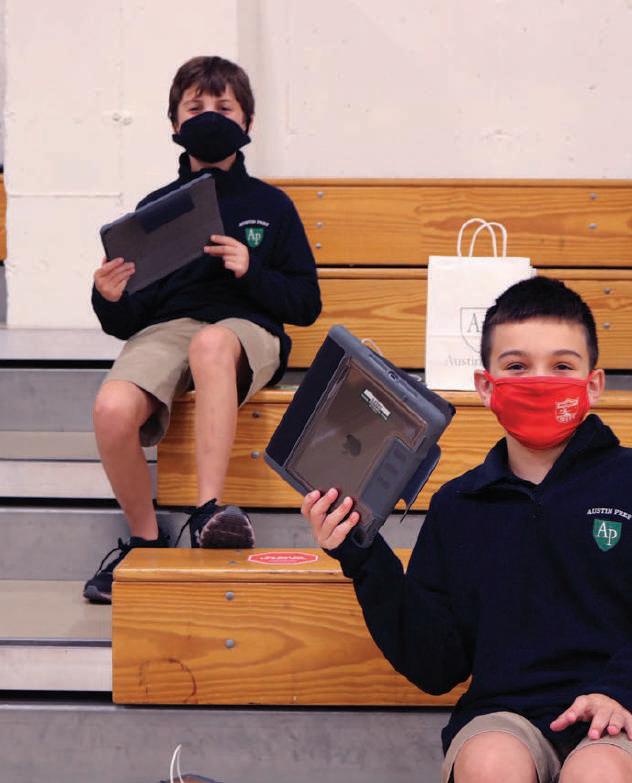
In March of 2020, the faculty were already getting started on personal teaching iPads, each programmed for their specific classes and needs.
When COVID-19 hit, that program was turbo-charged and 75 units had to be individually programmed immediately.
There is a difference between embracing an approach and getting it up and running. Between concept and completion there were hours of planning, purchasing, and procuring in an incredibly competitive market, and finally placing performing hardware and software around campus. Cameras. Microphones. Speakers. Everything from applications to Zoom had to be acquired and installed, then users needed to be trained. All the while, each component needed to be scheduled and coordinated with NASA-like precision.
All by a team of three people. It was like building a plane that had already taken off from the runway!
Studies have shown that for some students and teachers online learning can be freeing and focused. For many others it is stressful and causes anxiety.
In either case, it works better when the technology works and doesn’t become a distraction; when it feels intuitive and not needlessly complex.
Austin Prep quickly earned a reputation in the area for meeting these challenges and beyond.
Besides classroom work, technology was needed to bring every aspect of the Austin Prep experience to life. There were live-streamed Masses, Baccalaureate Mass and graduation shot by drones, Broadway-quality performances of concerts and traditional holiday events transmitted to thousands of viewers at home.
Perhaps the highest compliment one can pay all of Austin Prep’s behind-the-scenes teams, is that over the year people came to expect it.
As you visit campus, take a moment to look around and notice the small stuff. The safe parking lots. The clean tables. The humming air purifiers. The audible speakers. Each by themselves, most days, maybe deservedly invisible and taken for granted.
But these days perhaps it’s worthwhile to see each as a gift, and together as almost a miracle, or at least evidence of what is possible when a team of dedicated people and a community come together, dream, work hard, and dare to try.
Now that is Veritas, Unitas, and Caritas in action.
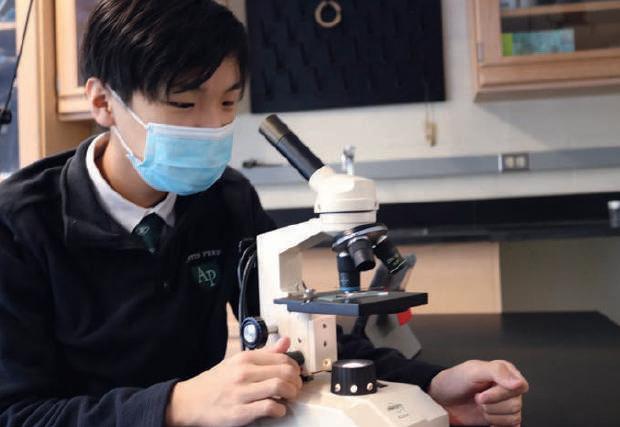
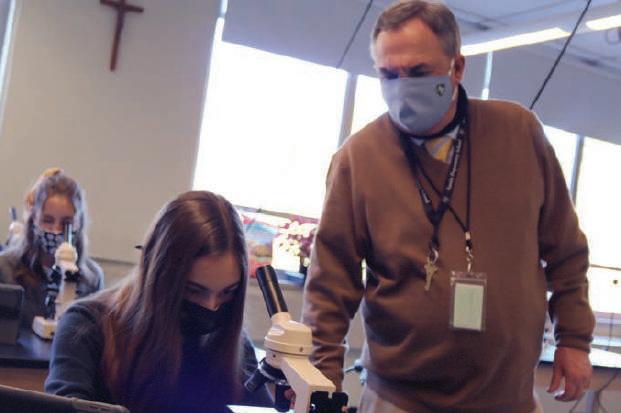
Science teacher and department chair Dr. Maria Blewitt never anticipated having to teach class remotely. “Zoom” was a new word to me,” she says. “I really wasn’t prepared for what happened.” But thanks to her long professional experience, Augustinian centeredness, and a tech department that just wouldn’t quit, she has made it all work remarkably well.
Along the way, she has been supported by people like Lab Assistant Mrs. Alison Holland and Consulting Meteorologist Joe Sciacca ’13 – more about them in a minute.
“The toughest part was not being able to walk around the classroom and connect with everyone,” Dr. Blewitt says. “To gauge their understanding. That’s a big part of teaching. Instead, we had to come up with things they could do at home and take it from there.”
Maria credits her students for adapting to remote and hybrid learning so readily. “Most turned out to be more flexible than we ever imagined. Thanks to their natural curiosity and work ethic, we haven’t lost any ground, we’re right on schedule.”
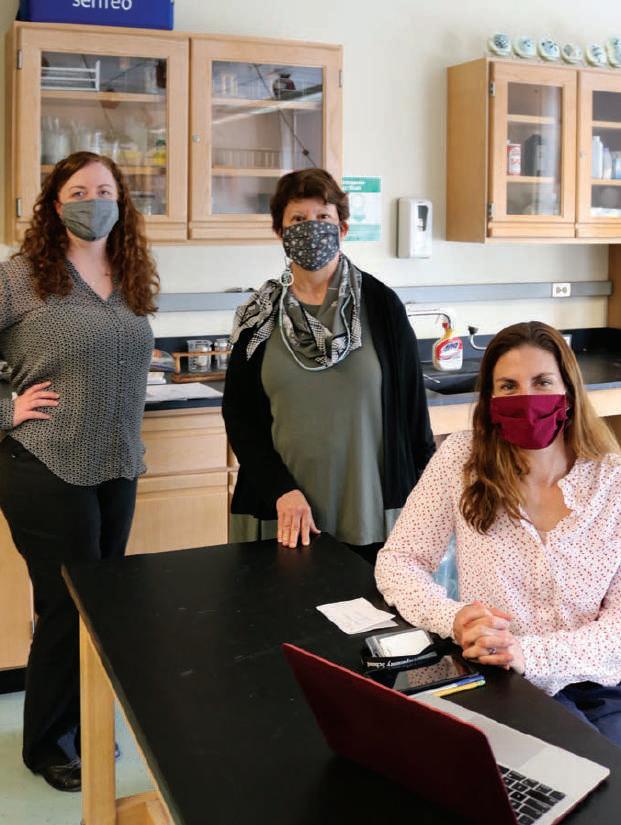
The organizational genius behind this success was Mrs. Holland, who only came to AP in the fall of 2020. “There are basically two parts to my job,” she says. “One, thinking through the logistics of the labs. Two, reimagining the lab itself in terms of what’s possible.
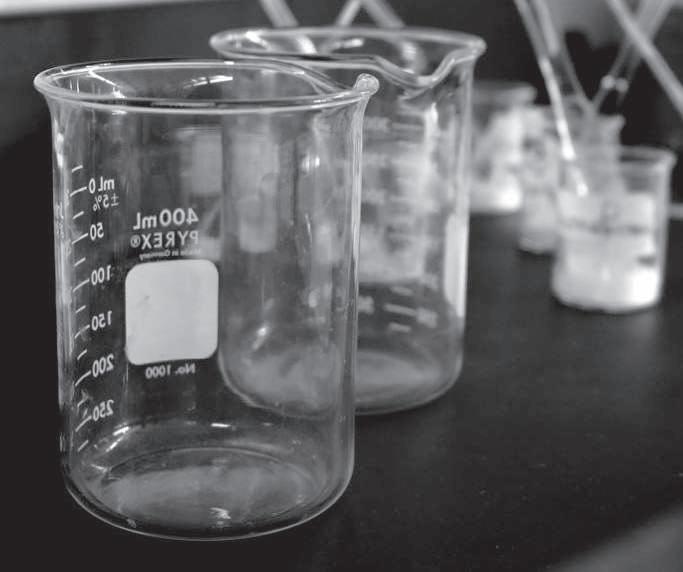
“Take a lab on chemical bonding. Or a mitosis lab for biology. Cohort A will be in the classroom. Cohort B at home. The first issue is how many kids can we physically fit in the classroom? Will we need two rooms? Will multiple teachers be doing the same thing? The second issue is what resources will we need? Do we have them? Can we get them? We were surprised at how many labs are available on video.”
This spring Dr. Blewitt staged a Cycle of Water segment. It was part of a larger section on the environmental crisis.
“Everyone understands the importance of the Water Cycle,” Dr. Blewitt says. “For once I didn’t have to answer the question: Dr. Blewitt, will you tell us again why we need to know this?”
Briefly, the Water Cycle is the movement of water, through evaporation, from the earth’s surface into the atmosphere and back again in the form of precipitation. Some of this moisture flows through the soil into rivers, lakes, streams and other
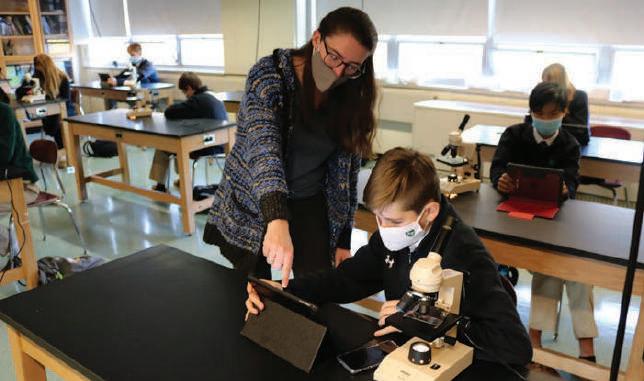
waterways, most of it making its way back to the ocean where it evaporates again. The ongoing Water Cycle plays a major role in the weather and, by extension, the capacity of the earth to support life.
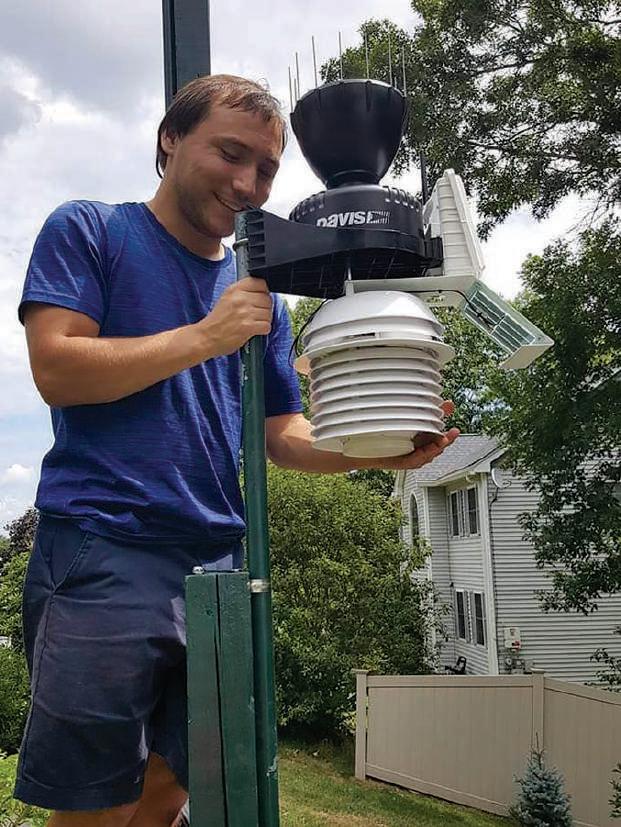
To really drive the lesson home, Dr. Blewitt brought in class of 2013 alum Joe Sciacca, a consulting meteorologist and a man whose knowledge of weather is matched only by his Force 7 enthusiasm for the subject. Joe’s clients include local governments, school systems, hospitals, truck fleets, almost every kind of organization that has to know what will happen next weather-wise. “They want to know when, how much, and estimated road temperature,” says Joe, who is often awake all night monitoring conditions and updating his clients.
Over the last several years, he has spoken to more than 2,000 students. He knows that a classroom lab experiment can illustrate principles, but what he wanted to impart to Austin Prep’s sixth grade students was an appreciation for the planet-wide stakes involved.
2020 was one of the three warmest years on record. Carbon dioxide in the atmosphere is at a three-million-year
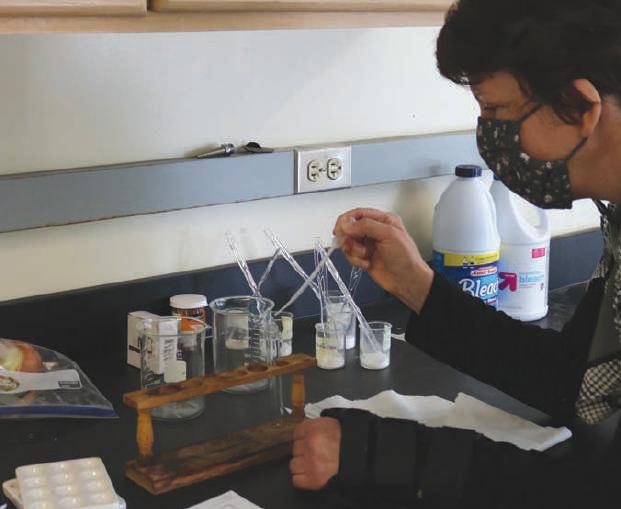
I especially liked learning about the macsciences, and all of the tools used to measure rain, snow, and wind.”
Lilly, 6th Grade Student
high. Events involving climate and weather displaced almost 10,000,000 people in the first six months of 2020. And another violent hurricane season is only a few months away.
“To put this in context, think about what has been happening to the Gulf Stream,” Joe begins. “That’s a giant water cycle in its own right. What’s going on there as the result of global warming worries me and every other meteorologist. The Stream hasn’t been this weak in the last one thousand years.
“Technically, the Stream circulates warm water northward on its surface and cold water south at deeper levels. Global warming disturbs this mechanism. We’re seeing Increased rainfall and more melting of the Greenland Ice Sheet. All this fresh water reduces the salt content of the ocean water so that it doesn’t sink as much and this weakens the Stream, with serious consequences for the US East Coast and the western coasts of Europe and Africa. These consequences include rougher storms, heavier snowfall, drier conditions in some places, bad flooding in others. You’ve heard of El Nino? It’s similar and the effects are getting worse.”
As you can tell, teachers like Dr. Blewitt and Mrs. Holland are not letting limitations imposed by the pandemic impact the academic value of their classes. In fact, Dr. Blewitt sees some definite advantages: we’re using less paper and killing fewer trees with no loss of quality!”
On a more serious note, she observes that “We’ve had different levels of success in both the Middle and Upper schools. Hybrid isn’t the best method for teaching everybody, but it’s much better than any alternative we’ve seen so far.”
Like Joe who is always conducting research from his home and collecting data using equipment such as a rain/snow gauge and his Davis Vantage Pro 2 weather station, Mrs. Holland is unwilling to leave anything to chance, and often runs through the experiments at home or in the classroom before sharing them with the students. “Just to see how well they work. And sometimes they don’t. But that’s science. Our attitude is that one way or another the kids are always learning. You can learn a lot from a lab that fizzles.”
“People want hard answers every time,” Dr. Blewitt adds. “Sorry, science doesn’t work like that. Not in my class.”
“ e weather a ects all of us, and the science behind it is incredibly fascinating. e drive to learn new things keeps me going in my meteorology career - and that is something that was instilled in me at Austin Prep.”
Joe Sciacca ’13, Meteorologist, Precision Weather

Technically speaking, students have been studying violent death for generations: Macbeth, the Peloponnesian War, the Cambrian Extinction, etc.
But Austin Prep takes things a grisly step further.
The curriculum of Austin Prep’s Forensics class covers everything from poisons and ballistics, to blunt force trauma and blood spatter analysis. Led by faculty member Ms. Stacey Bishop, students consider the finer points of scientific crime scene investigation. Determining who killed whom and by what means calls on them to apply a knowledge of chemistry, biology, anthropology, morphology, pathology, mathematics, and toxicology. From the students’ point of view, this is hands-on education at its best.
“Forensics as a subject started to become popular in 2008,” Ms. Bishop recalls. “We heard all about it at the National Science Teachers Conference that year. The objective was to show students real-world applications of science, not just theory. We introduced Forensics at Austin Prep in 2010 and it was immediately popular. The CSI series undoubtedly had something to do with that. Now, demand is so high that we usually offer two sections a year. There are no prerequisites.
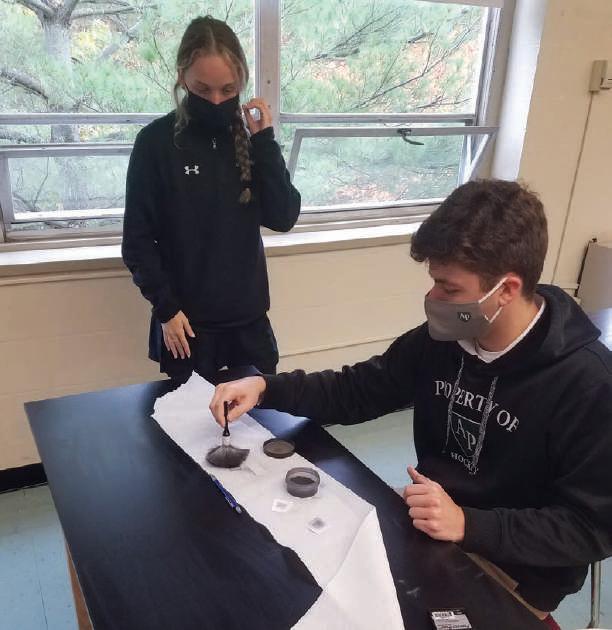
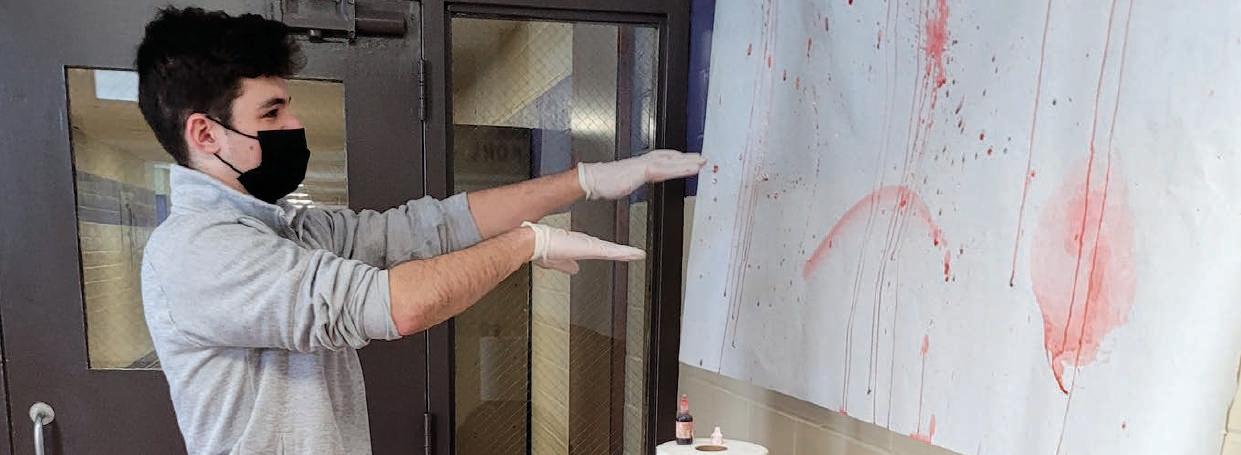
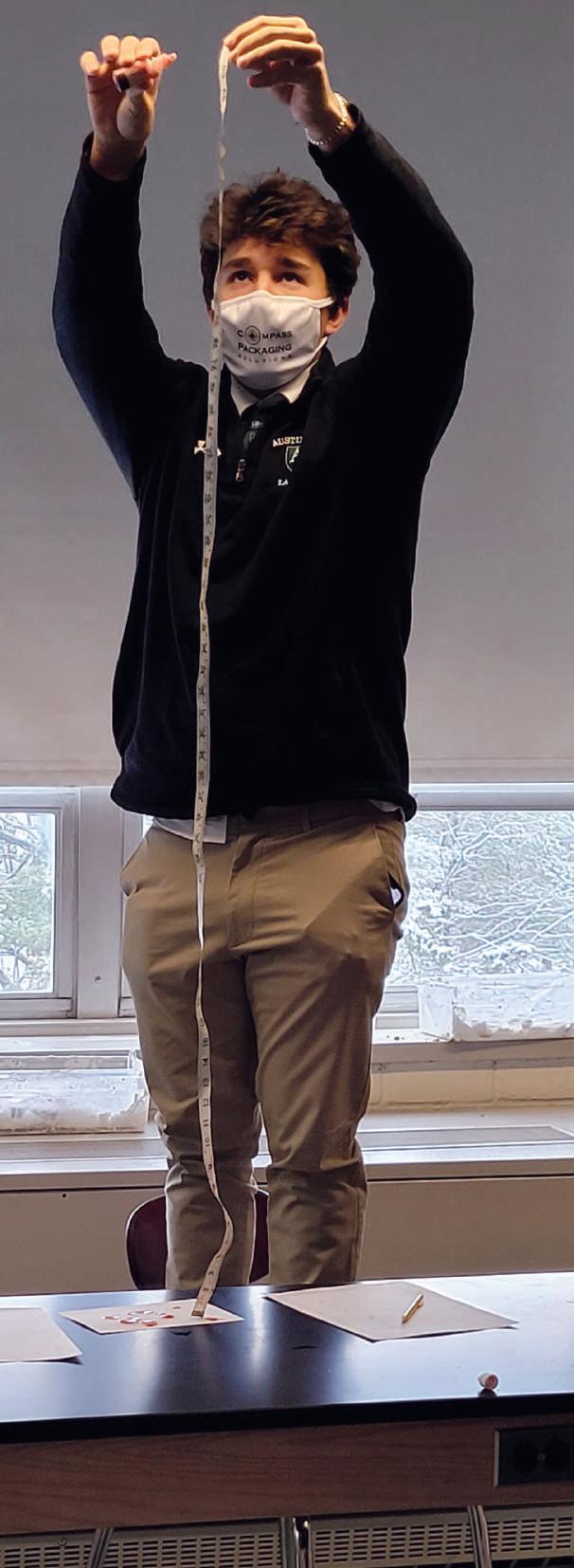
Easy to see why. AP forensics students use many of the same tools and techniques used by law enforcement. This includes methods for determining the velocity, direction, height, and impact angle of bloodstain patterns on a wall in order to visualize a crime. Lifting fingerprints from different types of surfaces, gauging livor mortis and the effect of toxic substances. “It’s amazing how much of the actual process we can simulate,” Ms. Bishop says.
As entertaining as the coursework can be, Forensics at Austin Prep is rigorous and comprehensive. It begins with a review of forensics history, the scientists who helped establish it, and –to set the right tone – the lurid careers of several noted serial killers.
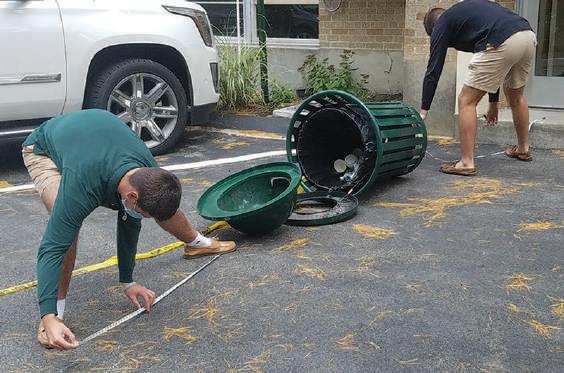
From here the student criminologists proceed to the crime scene itself, learning how to uncover, collect, secure, and photograph evidence. How to determine time and cause of death. How to ascertain a victim’s age, height, and race by examining skeletal remains. Even legal issues regarding types and admissibility of evidence are discussed.

‘We are so lucky to have alumni who are willing to share their experience as it relates to what we are studying in class.”
Stacey Bishop, faculty
For a teacher, all the books devoted to true crime come in handy. “We often use actual cases from the Forties and Fifties to get a better perspective on how forensic technologies have developed over time,” Ms. Bishop says. “For example, I might ask the class to describe how modern methods could have been applied to resolve one of those old cases. It wasn’t long ago that evidence that would identify a killer was literally invisible to investigators.”
Austin Prep is fortunate to have an expert forensic scientist close-by. Class of 1978 alum John Drugan is a senior forensic scientist for the Massachusetts State Police Crime Laboratory. Having worked on thousands of cases during his 37-year tenure, Mr. Drugan has plenty of experience to share with Austin Prep students, whether in a chemistry class or in the forensics class. His presentations are fascinating. Most recently, John reviewed cases around gunshot residue with Ms. Bishop’s class.
Fingerprinting preceded DNA testing as a way of convicting criminals by at least a century, but it’s still used widely and Austin Prep forensics students become adept at employing it. Lesson one involves learning how to make clear fingerprints and classify them according to their distinctive whorls, loops, and arches. They study these on paper with magnifying glasses
and by inflating prints on balloons to make the detail clear. Then they move to methods of capturing latent fingerprints by dusting surfaces with white or black powder, or lifting them with tape.
This is when things get really interesting. To apply the skills they have mastered, groups of students are put into scenarios in which they must fingerprint suspects and then try to match the prints they get with one taken at the crime scene. It’s even harder than it sounds.
Not all forensics work is this intriguing. According to Ms. Bishop, investigation connected with gathering and analyzing hair and fiber evidence, requires a high degree of patience.
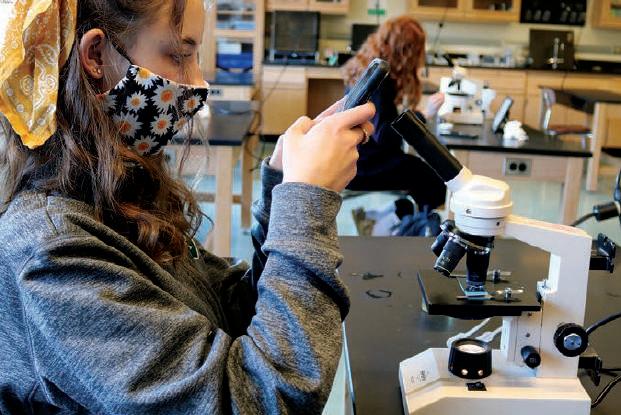
“Compared to some of the other things we do, sitting bent over a microscope trying to identify follicular tags can be…less exciting.” Working with blood evidence is a perennial favorite; so is learning to collect and compare bite marks, footprints, and tire tracks; using paper chromatography to determine whether a given pen was used in writing a suspicious note; plotting bullet trajectories; matching fired bullets to a specific weapon; and extrapolating time of death using insect evidence.
As you would expect by now, final exams are always lots of fun in Forensics. In one version, a group of students develops a crime scene and another processes it, bringing to bear the
“I hope the students enjoyed a little insight into the real CSI world in our class together on gunshot residue.”
John Drugan ’78, Senior Forensic Chemist, Massachusetts State Police
encyclopedic knowledge they have acquired from Ms. Bishop. Evidence is gathered and tested. Data is compiled and analyzed. Conclusions are drawn and defended. A crime is solved.
In a second version of the final, groups of students write their own episodes of Forensic Files, a documentary-style series that was so popular it ran for 14 seasons. The show’s structure is ideal for class purposes. Every episode features a cast of investigators and scientists struggling to unravel a mystery so complicated it would have almost surely resulted in a cold case 25 years ago. Pulling a creative episode together requires students to first develop a story around hard-to-find forms of evidence, then specify the appropriate means of detection, scientific interpretation, and construction of a criminal case.
“When you get right down to it,” Ms. Bishop says, “this is just another science course. We use the scientific method, critical thinking, and working from hypotheses. We do chemistry, biology, math, and lab work.”
All true. The fact is, however, that Forensics at Austin Prep includes things that other science classes don’t, namely gory stories, dead bodies, simulated blood sprayed all over the place, and the acquisition of rare, Sherlockian skills.
If that isn’t experiential learning, what is?
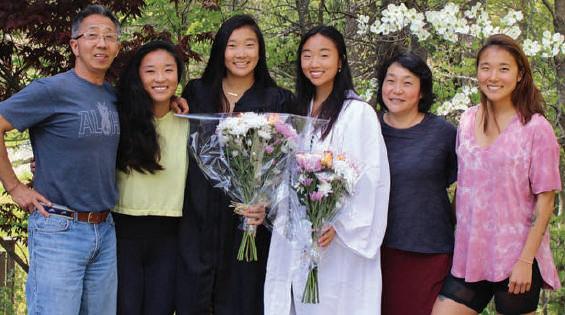
In November, the Austin Prep Board of Trustees welcomed two new members, John and Sun-Min Han, P’20 Parents of four daughters, the Burlington residents bring a useful skill set and experience that will benefit the School.
Both of the Hans come from large families that emigrated from South Korea to the United States where they met. Education has been a driving force in their lives from the start.
Sun-Min was an English major at Rutgers and later worked in the Harvard administration before joining her husband at Rubix Composites, the high-end technology manufacturing company he founded where he is now CEO.
John attended St. Mark’s School in Southborough and Cornell where he earned B.S. and M.Eng degrees in Material Science Engineering before starting his career with Hexcel and later with IBM.
The Hans discovered Austin Prep when their youngest child, Mia ’20 was drawn by the school’s spirit and values.
Mia was an active athlete and both of her parents enjoyed meeting members of the school community watching her teams compete. Mia later followed in her father’s footsteps. John played varsity soccer at Cornell and Mia is now on the women’s team at Emory University in Atlanta where she is studying business.
Interested in both STEM program education and the Arts, the Hans are excited to be joining the Board and look forward to contributing to Austin Prep’s future growth and success.
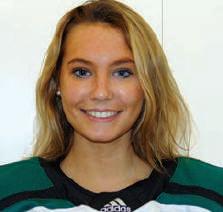
Ice
player Isabel Hulse ’22 reached the 100 career-point mark this season. Heading into a big game against Bishop Stang, knowing she was at 99 points, Isabel scored 30 seconds into the first period and from then on was able to successfully concentrate on keeping the team winning streak going. Isabel points to her coaches, who are former college players, as role models and who understand what it takes to be a studentathlete at a competitive school like Austin Prep.
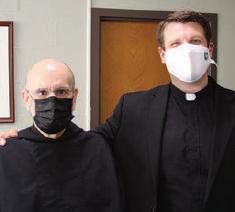
Throughout the school year, Fr. Jorge Reyes, OSA, Director of Mission and Inclusion, and Fr. Patrick Armano, School Chaplain concelebrated Masses and liturgical services.
Masses have been celebrated weekly with both Fr. Reyes and Fr. Armano praying for those who have gone before us through Mass intentions. Special Liturgies for Peace and Justice in honor of Martin Luther King, Jr. Day and for those tragedies impacting our Asian-American community were live-streamed for the entire Austin Prep community to participate.
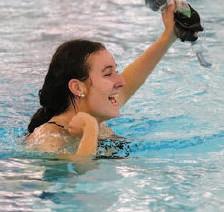
Senior Elizabeth Walsh ’21 holds 6 school records in swimming but says the best feeling is the support of her amazing team. Although it’s an individual sport, the Austin Prep combined boy and girls’ team is 100% family. Results like hers come from hours of practice. Yet Ellie says they also come from going to a school where there is a culture of hard work, accountability, and responsibility. She also points to her coaches who put the fun back into swimming. Without them, Ellie says, she couldn’t have made her mark.

Junior Elizabeth Morin ’22 recently had the thrill and honor of seeing her first book published. The Last One , has been described as an enthralling dystopian thriller, taking place in a time when AI powered robots have become common in our society. The novel was the product of a writing camp Elizabeth participated in last year, and she also credits the support and encouragement of her English and writing teachers at Austin Prep.
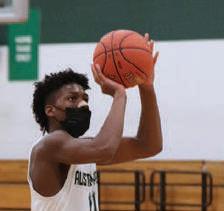
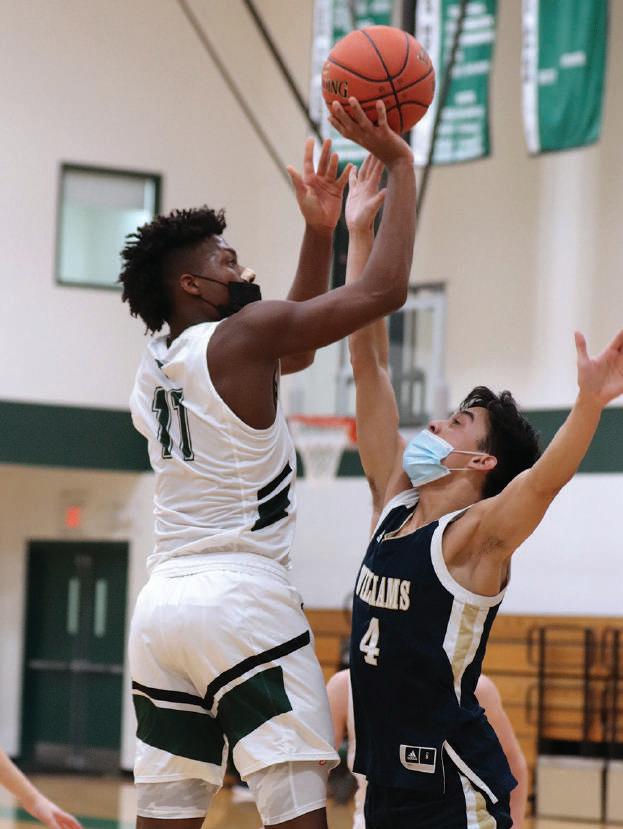
During his senior basketball season Lence Altenor ’21 hit the 1,000-point milestone and finished 2nd all-time in Austin Prep scoring history. Later named to the Boston Globe All Scholastic team, Lence credits his coach Jaycob Morales for mentoring him since middle school and teaching him the value of focusing every day on getting better. He says reaching the goal was like a dream come true from childhood, but sharing it with his team and the AP school community was the ultimate thrill.
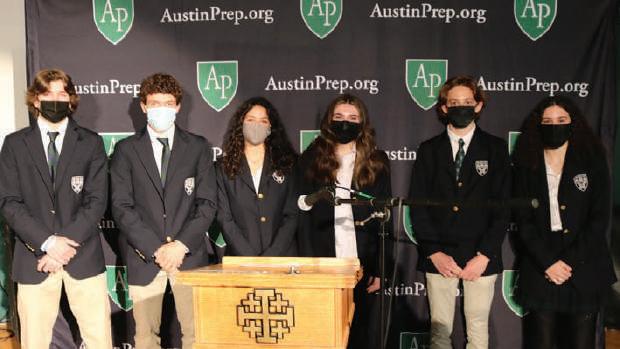
"I pray that they all may be one."
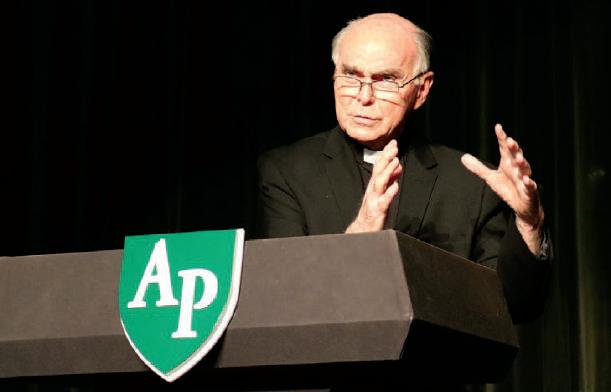
The annual St.Augustine Lecture series featured distinguished Catholic theologian and ethics professor Fr. Bryan Hehir of Harvard’s Kennedy School of Government, who examined this year’s school theme at Austin Prep,“I pray that they all may be one,” from John’s Gospel.
Fr. Hehir’s career has also included teaching and administrative posts at the Georgetown School of Foreign Service and within the Archdiocese of Boston and earned numerous prizes and recognitions including the prestigious MacArthur Award, often referred to as ‘the genius grant.’
His teaching, research and writing focus on ethics and the role of religion in world politics and in American society, so his topic was well-timed.
Pointing out that “Down through the centuries because we are human and imperfect, unfortunately the phrase is still an aspiration. It’s what we hope to be.”
He later connected the theme to the motto of the United States, ’E pluribus Unum’ – Out of many one – and how we use it as a beacon to guide us through difficulties we currently face including challenges relating to race, immigration, ethnicity and religion.
This year’s talk was live-streamed while the junior class attended the presentation in person allowing for a lively discussion with students during the question-and-answer period.
When asked by Olivia Doherty ’22 what steps our school can take to achieve unity in the community, Fr. Hehir optimistically suggested that great ideas are usually “a step ahead of us, and even when we fail, we get up and we start again.”
Fr. Hehir reminded the audience that “by following the teachings of St. Augustine,”one of the Church’s great thinkers, “you must know you are in very good company.”
Named for Austin Prep’s patron, the St. Augustine Lecture Series is designed to enrich the intellectual life of the school community by exposing our students to accomplished individuals who share their experiences and lessons learned in life.
• Brian Montgomery, former Deputy Assistant to the President and Cabinet Secretary in the Executive Office of President Bush and former Housing & Urban Development Secretary for President Obama
• Major General Charles W. Whittington, Jr., Deputy Commanding General of Operations in the U.S. First Army
• Dr. Steven R. DiSalvo, President of Endicott College; Trustee
• Grace Cotter Regan, the first female President of Boston College High School.
• Fr. Raymond Dlugos, O.S.A., Vice President Mission and Ministry at Merrimack College; Trustee
• Dr. Crystal Kuykendall, former Executive Director of the National Alliance of Black School Educators and Director of Urban and Minority Relations for the National School Boards Association
“Think of it in these terms:In med school,they take you to an Olympic-sized swimming pool and tell you that if you complete 2,000 laps you will get your degree. If it’s a Ph.D. in science you want,they bring you to the edge of a lake. There they tell you that they have tossed your diploma in the water somewhere and when you find it,it’s yours.
“Well,science students tend to think they know exactly where their diplomas are,so they make a beeline for that spot – but no diploma. So they pick another spot and swim straight for that. Still no diploma. Over time,they realize the only way to find it is to swim in ever-smaller concentric circles. That’s the difference between becoming a doctor and a researcher.”
When asked what advice he has forAustin Prep students interested in pursuing a doctoral degree in medicine or science,Dr.Bix quips: “I’m a masochist.I went for both!”
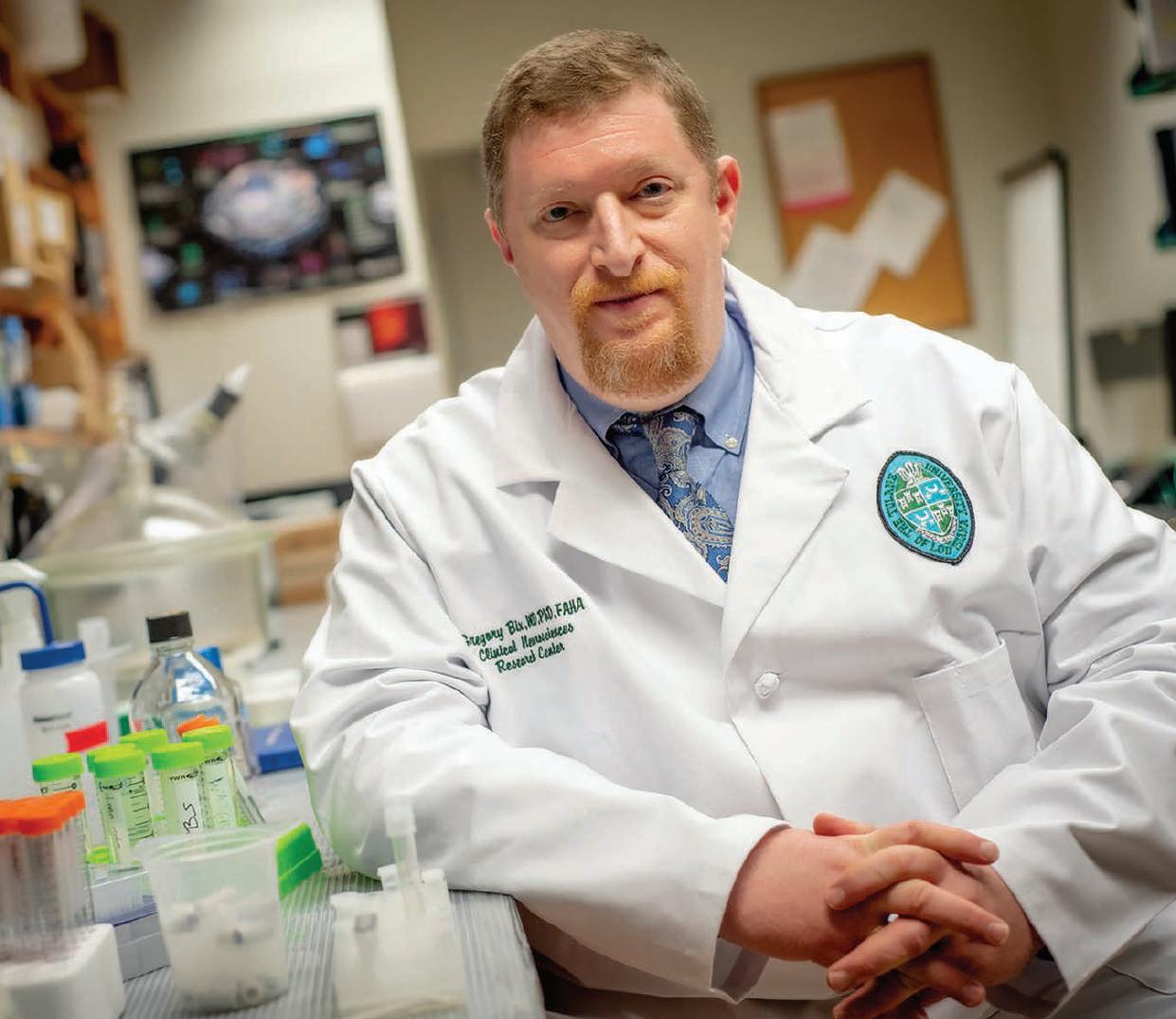
Gregory Bix ’89, MD, Ph.D. is Professor of Neurosurgery and Neurology atTulane University. He is the Director of the Clinical Neuroscience Research Center,Vice-Chair of Clinical &Translational Research, Department of Neurosurgery, and theVada Odom Reynolds Chair in Stroke Research. He holds the position of Clinical Lecturer (honorary) at the University of Glasgow, adjunct Professor at the Queensland University of Technology, Professor (honorary) at the University of Manchester, and is a Fellow of the American Heart Association.
Dr. Bix is also head ofTulane’s COVID-19 Biobank and Library, a job that has given him a special perspective on the pandemic, particularly the problems associated with “longhaulers,” patients who seem to recover, but then later develop symptoms, such as anxiety and fatigue, that can last for months.
Dr. Bix says that, in the early days of the pandemic, he and his team predicted that COVID-19 would manifest in two distinct parts, an acute phase and a lengthy aftermath. Sadly, this has proven true. As he puts it,“This thing has legs. Up to 20% of patients are affected by difficulties long-term.”
From the beginning, he has been gathering tissue samples from convalescents. “The BioBank is the gift that goes on giving,” he says. “We can return to it again and again. There are many clues.
Our ultimate goal is to determine who is most at risk and why.” Dr. Bix points out that Tulane “made its bones as a research center” in the fight to understand and then eradicate Yellow Fever in the 19th century. “I’m proud to be here,” he says. “And to have played a role in Warp Speed.” Warp Speed was the almost unbelievably fast development of effective vaccines.
As a neuroscientist, he has spent the last twenty years leading research into the causes and treatment of injuries to the brain through trauma, stroke, blood loss, etc. “The brain isn’t good at repairing itself,” he explains,“but I have identified parts that are therapeutically responsive.The extracellular matrix and its receptors, for example.” The ECM initiates crucial biochemical and biomechanical cues that can help restore molecular signaling pathways.
“There is a stand-by pattern that protects cells,” he says. “It helps them recover. We’re learning to augment that response.”
Dr. Bix is also studying vascular contributions to cognitive impairment and dementia and the effects of aging in ischemic stroke.
His work has already made substantial contributions in a variety of areas including Alzheimer’s disease. He has published more than 50 scientific papers and holds a variety of patents. Stream Biomedical is now developing several of his discoveries as therapies.
Like many people, Dr. Bix notes that the pandemic has disrupted his preferred ways of working. “I’m used to traveling to seminars and conferences. Meeting colleagues, sharing ideas, gathering input. That kind of professional exchange is not easy to duplicate by other means.”
As of this writing, his main concern regarding the pandemic is the rise of new, potentially more lethal variants and the
misinformation that still obscures the basic facts, making some people hesitant to be vaccinated.
America has a mistrust of science overall and that makes it hard to use science for the public good. Maybe that’s why scientific questions became political questions early in the process. People have to understand that science is data-driven. We can only make decisions based on what we know at the time. Of course, there will be missteps. There always are. There’s no substitute for that.”
Unlike other scientists, however, Dr. Bix is optimistic about the future. “COVID-19 won’t go away,” he says,“but it will become endemic. If 50-60% of the population develop immunity, it will be manageable. We may wind up needing an annual shot like the one we get for the flu.” He also believes we should be
better prepared for the next time an epidemic arises. “We must focus on the moments we got right. We need a playbook.”
He remembers his years at Austin Prep as a highly formative time in his life.“It was an all-boys school in those days;” he recalls,“and a fantastic experience for me. I’d love to be able to travel back to campus and talk with students in person, especially the ones thinking about careers in science and medicine.”
We should all hope he does. Dr. Bix is a natural storyteller with a dry sense of humor and a gift for illuminating even the most complex issues.
Dr. Kartik Kumar ’04
It’s true. After a brief stint studying business, Dr. Kartik Kumar ’04 matriculated at a medical school in India. “On the strength of my studies at Austin Prep I might add,” he says with a chuckle. His medical education also included stints with the World Health Organization in Geneva andTufts Medical Center and this July will be starting at the Icahn School of Medicine at Mount Sinai in NewYork City as an interventional cardiology fellow.
Today, Dr. Kumar is an internist specializing in cardiovascular disease. As of this writing, he is Chief Cardiology Fellow at Wayne State University/Detroit Medical Center, where he deals with everything from treating cases of sudden cardiac death, to congenital heart defects, coronary artery disease, heart failure, and heart rhythm disorders.
“My focus of training is interventional cardiology,” he says. “In heart attack cases, I will be the one they call in to open things up.”As Chief Fellow, he is also responsible for lecturing, recruiting new doctors, and administering the fellowship program. He lists his many duties calmly. It is apparent within a minute that even a hurricane couldn’t ruffle Dr. Kumar.
Not even the COVID-19 pandemic.
His earliest impression was the speed with which hospitals were being overwhelmed. “Medical codes were happening at twice or maybe even more than the usual rate,” he remembers. “The ICU list went from 30 or 35 to more than 75 patients very quickly. They were packed everywhere.”
To make matters worse, there wasn’t nearly enough medical equipment or PPE for the staff. “In the beginning, the CDC said that masks weren’t important because there weren’t enough to go around and they didn’t want to cause a panic. But we knew how vital masks were and the lack of them caused real anxiety.”
Although he is quick to emphasize that the frontline doctors and nurses are the real heroes, Dr. Kumar and his colleagues provided daily support when a given situation required a cardiologist. Cardiac dysfunction is common among patients hospitalized with COVID-19. In some cases, it is the worsening
of a pre-existing condition; in others it’s a new development, but cardiomyopathy and myocarditis are always serious problems which can arise from COVID-19 and require prompt intervention.
“As cardiologists, we naturally have a lot of experience with lines, procedures, and hemodynamics.” Here Dr. Kumar is referring to cardiac catheterization and procedures such as angioplasty, biopsy, and placing advanced hemodynamic monitoring catheters.“In the early days particularly, we were seeing patients from nursing homes with co-morbidities. Expectancies were lower. We did the best we could. Placing a single line can take an hour.”
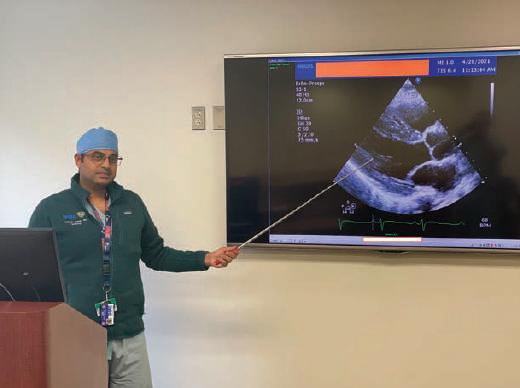
Hospitals are usually highly regulated environments, so the almost chaotic conditions faced by overworked doctors and nurses added greatly to the strain. “There was a general sense of trepidation. A feeling that anything could happen. We were working 14-hour days in uncharted territory,” Dr. Kumar remembers,“at one point 40% of the ICU team had gone down. The government response was not nearly what we expected. There were no tools coming. No equipment.
“And there was no way to escape those high levels of stress. You couldn’t even go to a restaurant for a few hours. Of course, we were also worried about taking the virus home to our families. One of the doctors slept in his garage for weeks to keep his family safe.”
Like many doctors (see Remote Possibilities in this issue), Dr. Kumar was surprised to see acute heart attacks nearly disappear. “This disease didn’t just stop. Patients were clearly afraid of coming to the hospital. They put off regular visits, probably real emergencies in some cases. I suspect a lot of people may have simply died at home. I think we can expect to see more heart failures than usual in the coming months because people postponed the treatment they needed. That will be another strain on the healthcare system.
“I can tell you, though,” he concludes,“the staff was always there for the patients. They never stayed away, no matter how dangerous things got.”
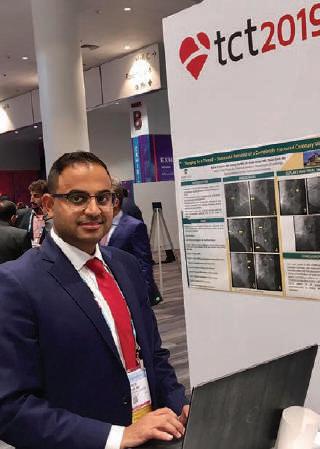
Dr.Kumarpresentingacaseat anationalconference(TCT2019).
When asked about his choice of career, Dr. Kumar admits that it’s not for everyone. “It’s an honest profession.” he says,“When you can get good outcomes that’s what keeps you going.”
As for whether the country has learned what it needs to know in order to face another pandemic more successfully, he expresses guarded confidence. “On one hand, the manpower is the same. We have the same number of hospitals. Improving our response will have to be a process. We need more drug development. More attention paid to the ways in which we respond. The current pandemic is still ongoing, it must be studied and lessons derived from what we have seen. Can we do that? Time will tell.”
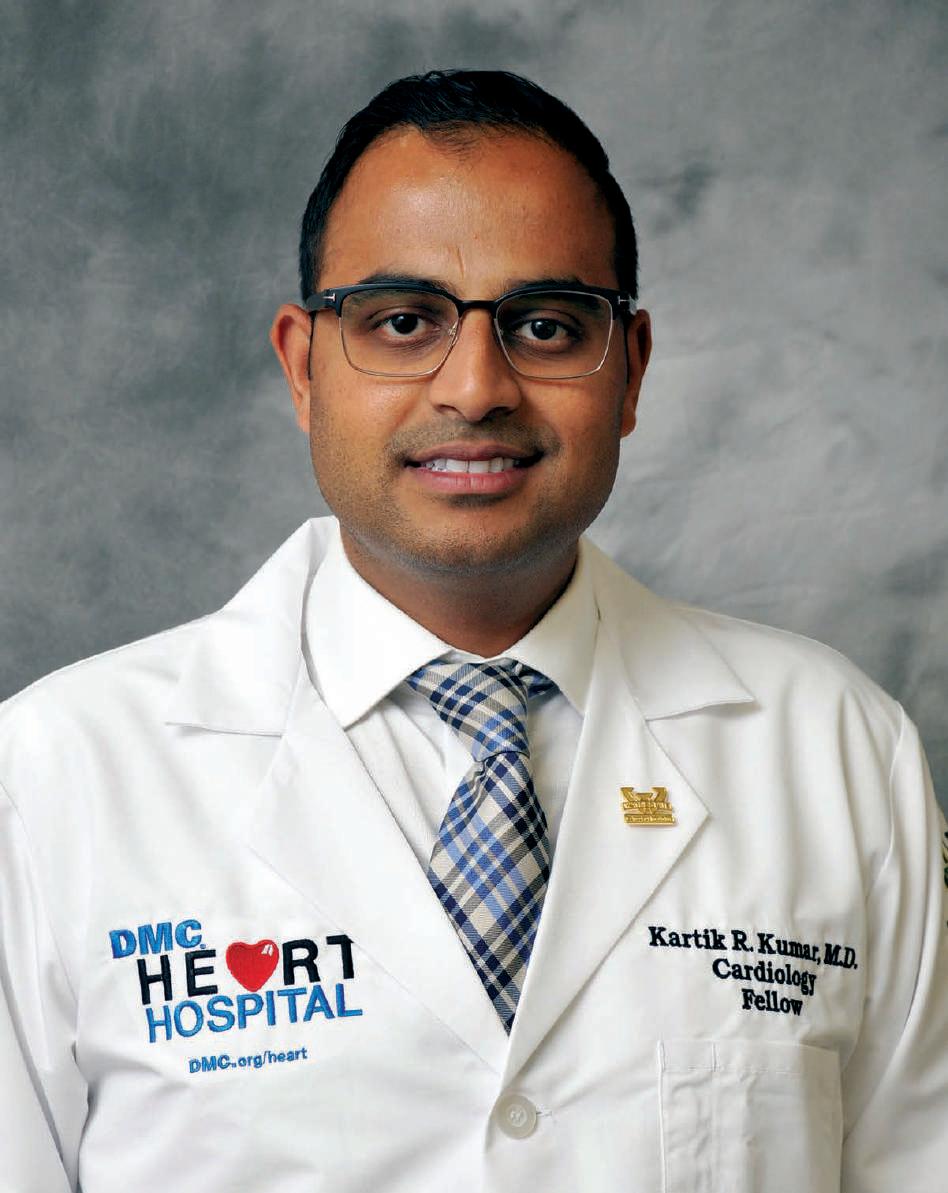
Dr. Kumar communicates compassion in everything he says. “If you want to become a doctor, study the world around you, not just textbooks. The more you learn about people, the better able you will be to show empathy to your patients, to connect with them. Give yourself the chance to see things the way your patient sees them. Gathering experience of ordinary life in all its forms is some of the best training a physician can have.”
As a Hindu, Dr. Kumar experienced Austin Prep from a slightly different perspective. “I could appreciate the values the teachers were trying to impart. They lived those values. Augustinian ethics ran like a red thread through the entire school. The
His message to the AP community? “Cherish every day.”
Dr. Rima Shah Leclere ’07 has always been open to new experiences and other points of view. After graduating from Boston University Medical School, she and her husband, who is also an MD, decided to move to the West Coast. “Most people don’t realize that medicine is practiced somewhat differently in different parts of the country,” she says.
Her first post involved a fellowship with Kaiser Permanente in Los Angeles. “I worked at six clinics that primarily served low-income families, including free clinics and health centers. There was a lot of variety in terms of environments. One consistent challenge across all settings was the limited time she had with patients. “And the amount of time you can spend with people is key to good medicine,” she says.
According to Dr. Shah Leclere, learning to think on her feet was one of the most important lessons she took away from her months at the clinics. For instance, having to adapt a growing stream of CDC guidance to each of the clinics in real-time.
As the pandemic worsened in the spring of 2020, Dr. Shah Leclere was surprised to see the number of patients on her schedule dropping off rapidly. Clinics were challenged to find ways to keep seeing patients while simultaneously keeping the community and staff safe. As clinics worked to keep their doors open though, it became apparent that patients had their own reservations about venturing into the healthcare setting. “For the first time, multiple slots were opening up in our schedules,” she recalls. “Obviously, out of fear of COVID-19, people were postponing treatment for everything but the most urgent problems.A great deal of misinformation was circulating in between those now rare visits,” she says. “And there still is.”
Unwilling to stand by idly, Dr. Shah Leclere and her colleagues did something they would have been unlikely to do in ordinary circumstances: they looked to social media platforms as a window into the community’s latest COVID-19 concerns. Instead of ignoring the misinformation circulating, acknowledging social media’s influence on patient health and openly discussing it in the exam room facilitated honest conversations with curious patients. They were able to guide patients to reliable content
from medicine and public health experts that could be used as a supplement to the office visit.
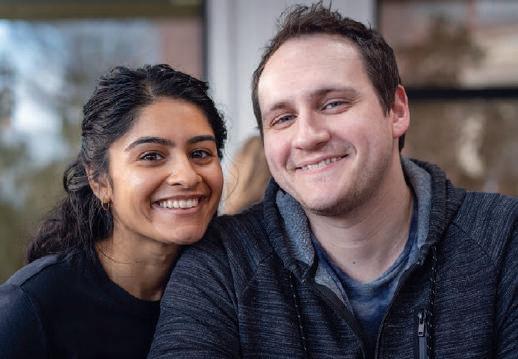
In fact, many physicians have been surprised by the reception social media efforts have gotten. Now that she and her husband, an Emergency Medicine specialist, are working in Phoenix, Dr. Shah Leclere has been able to augment her in-office discussions with patients who are vaccine hesitant by identifying their areas of doubt and guiding them to additional learning from reliable sources on social media.The idea is that patients are going to seek information outside of Dr. Shah Leclere’s clinic visit,“Much of what influences a patient’s health occurs outside of my office. If I can embrace that and guide them towards reliable sources, then they can make better-informed decisions for their health and return to me with additional questions.” When it comes to healthcare, solid information is valuable, however it is dispensed.
But this was just the beginning of Dr. Shah Leclere’s experience with medicine-at-a-distance. Necessity has accelerated the adoption of telemedicine and she has been amazed at how fast it happened and how well it’s working.
As background, the CDC reported a 154% increase in telehealth visits during the last week of March 2020, compared with the same period in 2019. McKinsey estimates that $250 billion in healthcare spending could shift to virtual care models in the wake of the COVID-19 pandemic. Finally, a survey by the Association of Community Health Plans indicated that nearly 90% of consumers who used telehealth for accessing care were satisfied with their experience.
In short, telehealth seems to be a win-win for patients and their healthcare providers, a conclusion echoed by Dr. Shah Leclere.
“We can do much more than we thought we could without person-to-person contact. We really can gather patient data remotely and make sound clinical decisions in new ways. Of course, no matter how effective telehealth is, some patient concerns require an in-person visit. But now I’m more likely to assist patients in leveraging technology as part of their healthcare, for example by asking them to send me a picture in advance of our telehealth appointment. It’s fascinating to see what’s possible.”
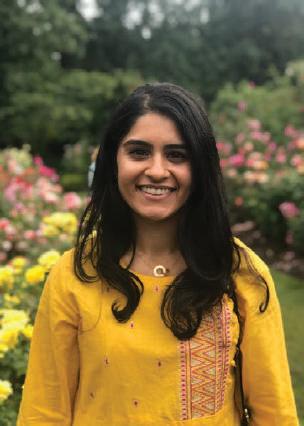
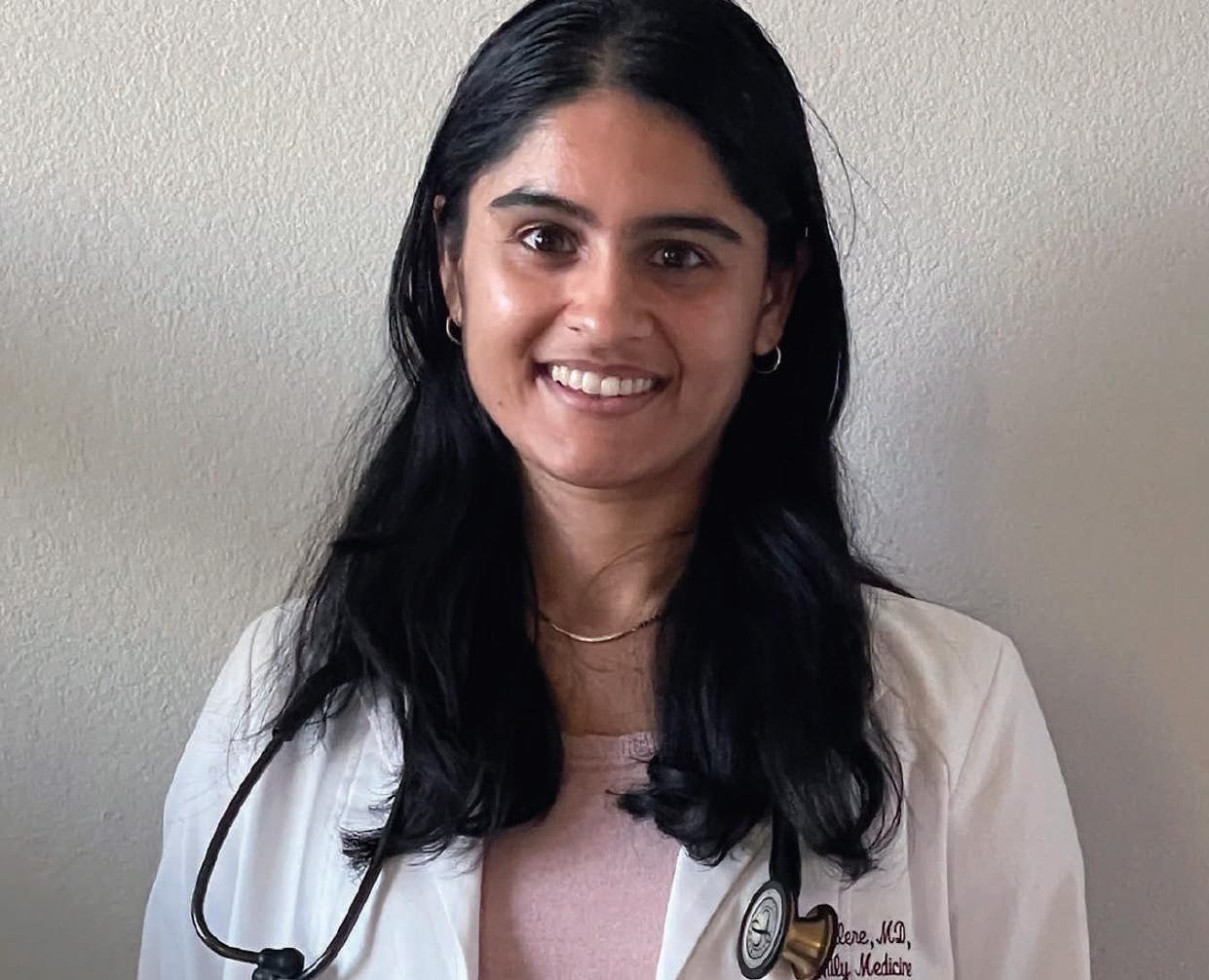
“Be curious about everything. Don’t focus too much. I remember asking our chemistry teacher Ms. Elizabeth Farrell endless questions. I always had just one more. She was so patient with me.”
A pragmatist, Dr. Shah Leclere urges any Austin Prep student interested in a medical career to approach the subject as broadly as possible. “Volunteer at a hospital to get a firsthand look at the reality of working in healthcare. It’s a field with so many opportunities that you might never learn about until you put yourself in the middle of it,” she says. She also believes in finding mentors along the way. “Be curious about everything. Don’t focus too much. I remember asking our chemistry teacher Ms. Elizabeth Farrell endless questions. I always had just one more. She was so patient with me.”
Dr. Shah Leclere knew early in life that being a physician was what she wanted to do. “The more I learned, the stronger my resolve became.” She also emphasizes the effect of Augustinian
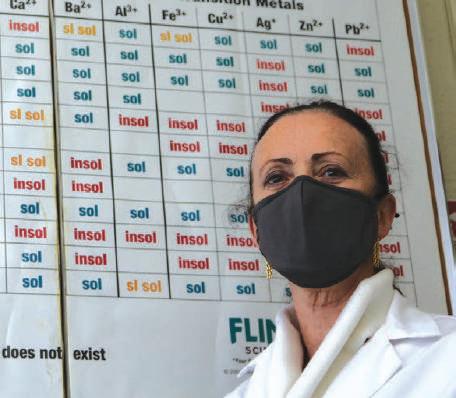
ethics had on her development as a person and physician.“Ethics pervaded everything at AP, every class. They made us understand that learning is a lifetime project and takes many forms.”
If she could change one thing about healthcare it would be:“The concept of money. Insurance. No patient should have to worry about the financial feasibility of treatment-- choosing between food, shelter, or medicine.”
The phrase she returns to repeatedly is “Health Equity.” Making affordable, quality healthcare available to underserved communities via telehealth modalities.
“There’s no going back now,” she says. “Healthcare providers will continue the movement out into the community to intercept patients there. Cool stuff is happening. I’m excited about how telehealth has grown rapidly and seems to be making health more accessible and achievable.
“Remote care can still be personal care.”
Send us an update on your life, your work, your Journey.
A note from Al Zappala ’68: Greetings from Sicily where I now live! Located in Aci Catena, between Catania and Taormina, and 15 miles from the ever- erupting Mt.Etna. Mama Etna has been very angry lately throwing ash everywhere and lava streams 1,000 meters into the air.We are safe though! I am an attorney and the Executive Producer of the TV program “You, Me & Sicily.” Mostly though, a grandfather of four great kids!You can follow what I do on YouTube if you search by my name, orYou Me and Sicily! Go Cougars!

Ken Eulie ’75 was a student at Austin Prep from 1971 to 1975. Ken reached out with an update: I enjoyed the challenging and rich experience during that time but it was in the decades that came after when I really came to appreciate the classical education and the friendships that have lasted until today. My favorite class was American Literature with Mr. Vincent Parrella. He immersed us in an amazing world of wonderful readingPortrait of Jenny,The Raven,The Friendly Persuasion, to name a few. I loved Biology with Mr. McDonough.Advanced Biology with Father Art Johnson:, French class with Mr. DeFlorio, Geometry with Mr. Enfanto, and lively discussion about religion and relationships in Father Morgan’s class. Mr. Gramling was a fantastic teacher in the sociological and
and political realms - we had some spirited debates in his enjoyable class.The buddies I made in those four years have become more like brothers.We have helped each other move more than a few times; dozens of camping trips; new business launches; car restorations; a television show; weddings; and one very sad funeral. It all began on my very first day at Austin Prep. Ken is aTechnical Illustrator, Graphic Artist,Video Editor, Screenwriter and resides in Lawrence, MA.
TommyVee, aka Tom Vitale ’76, received a degree in Hotel & Restaurant Management following his years at Austin Prep. In 1990 or so,Tommy changed careers and followed in his father’s (JerryValley) footsteps and became a Clinical & Comedy Stage Hypnotist. “Those who have good memories might remember JerryValley doing a hypnosis show in St.Augustine Chapel!” Billed as “Hypnotist Extraordinaire”,Tommy has had many successful tours throughout the United States, Canada, England, Grand Cayman and Iceland. He was the featured hypnotist at the West Tennessee State Fair for 13 years straight. Many organizations have utilized this show to raise thousands at fundraisers. Clinically, Tom runs and operatesValley Hypnosis in Methuen, MA.There he helps clients make
wonderful changes and reach goals. Using relaxation techniques, he assists people to stop smoking, to improve sleep, to improve both sports and academics, among other difficulties and areas of concern. He is currently working with two state troopers to overcome anxiety as they prepare for the lieutenant exam. Tommy resides in Salem, NH. For fun,Tom loves live music, fishing, traveling, and cooking.
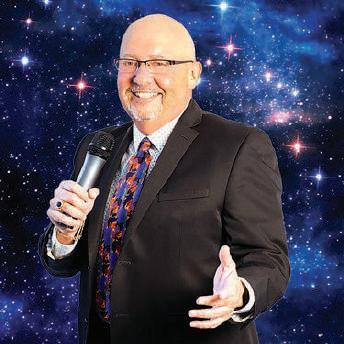
David Pulson ’78 is working in the television and film production industry. He is currently working on a new production with Showtime, having previously worked on “Castle Rock,”“The New Mutants,”“Defending Jacob,”“Spenser Confidential,” and Season 2 of “Castle Rock.”
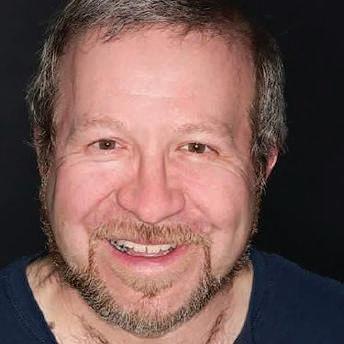
In February 2021, Frank Capone ’85 opened Capone Floral Studio in Wakefield, MA with friend and floral designer Melinda Syer. In addition to this new venture, Frank owns and operates Capone Landscaping, which was founded by his grandfather in1946; passed on to his father in 1968; then passed on to Frank in 2001.
Matt Riordan ’90, was named interim varsity head coach for boys lacrosse at Beverly High School. Matt has previously coached within the school’s boys lacrosse program while serving as an English teacher at the high school.
“At the end of January, our son Patrick Callahan was accepted into Austin Prep’s Class of 2025. He was very excited and wanted to come up with a unique way to tell his family (especially since his father Jay Callahan ’92 and two uncles Mike ’96 and Ryan ’00 are all Austin Alumni). Patrick had the family over for lunch and served them this special dish. He also made the family an appetizer from a classic Austin Prep cookbook.”
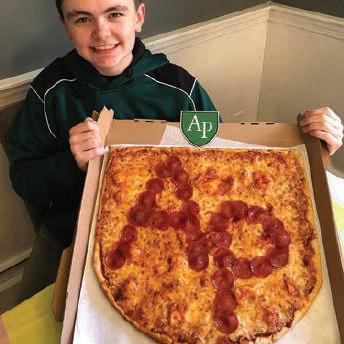
Peter Volpe ’95 founded his racing team Volpe Racing in 2014. In early 2018, Peter purchased the Racecraft-built 1993 twin turbo 481x powered Mustang. It was the first radial car to run the quarter-mile in the 5s, and the first car to run a 3-second eighth-mile pass in Pro 275 competition. He purchased the machine with an eye towards running in the Pro 275 and Limited Drag Radial categories. Peter creditsTim Dutton, Jamie Miller, John Maguda, Josh Klugger, Pro Line Racing, FuelTech, Homier Fabrication, RK Racecraft, Garrett Advancing Motion, Spikes Performance & Refinishing, Hogan’s Racing Manifolds, ProTorque, and Menscer Motorsports for their support. Most notably,
he credits his father “PeterVolpe Sr., has been always with me from the get-go with any racing. He used to take my brothers and I to New England Dragway when we were kids. He was always into cars, always wrenching on something,”Volpe said.“He’s there every time I go down the track. I’m not sure where I’d be without him.”

Peter Agostinelli ’96 was recently named the Culinary Director at LaBelle Winery in New Hampshire. In his new role, Peter will oversee LaBelle Winery’s food and beverage operations at its Amherst, Portsmouth, and the new Derry locations, and help co-owners Amy LaBelle and Cesar Arboleda with their goals of crafting the most creative, excellent and approachable menus in New England. On February 2nd Peter returned to Austin Prep as part of the Austin Prep Presents virtual series. He worked in the pizza kitchen in the dining hall to create a family-friendly Super Bowl party menu alongside Director of SAGE Dining ServicesTodd Moriarty and Director of Alumni Relations and Giving Jennifer Hodgdon.
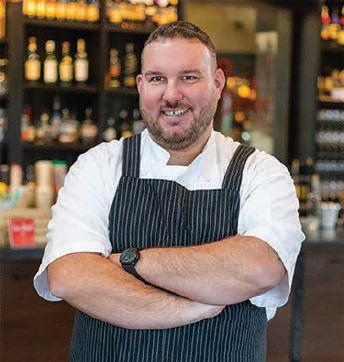
In January 2021, Shawn McLaughlin ’98 of State Lunch in Augusta, Maine was selected as one of three finalists for this year’s Cynergy Young Professional Award, given out by the KennebecValley Chamber of Commerce! Shawn is not only an outstanding business owner, but a downtown resident and Augusta Downtown Alliance member, as well. On February 22nd, Shawn and the State Lunch
team celebrated their 1-year anniversary. Congratulations!
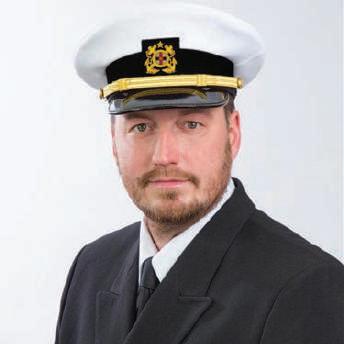
Jay Watt ’00 will serve as Rear Commodore of the BostonYacht Club in Marblehead, MA for 2021 and 2022. Jay is SeniorVice President of Distribution Services at EverQuote and resides in Marblehead with his wife and three children.
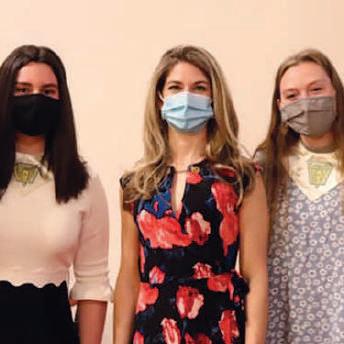
Dr. Abbey Denaro ’05 served as the keynote speaker for the National Honor Society Induction Ceremony on April 15th.A National Honor Society member, who has also been inducted into the National Leadership Honor Society and the National Chiropractic Honor Society, Abbey credits her experiences at Austin Prep as a tremendous launching pad for her extended studies and career success in the chiropractic field.
“So I challenge you tonight. I challenge you to start thinking about what it is you dream about. And I don’t care what it is – it doesn’t have to be anything exceptionally noteworthy, like winning the Nobel Peace Prize. But every little thing in your life that’s important to you. Excelling academically, achieving fitness goals, ranking higher in your athletics,making changes in your circle – whether
\ that’s helping your family, helping your neighbors, community or if you have bigger picture.” Dr. Denaro said.
“Our world is on the brink of some major changes.And we need the people who are going to make those changes.“
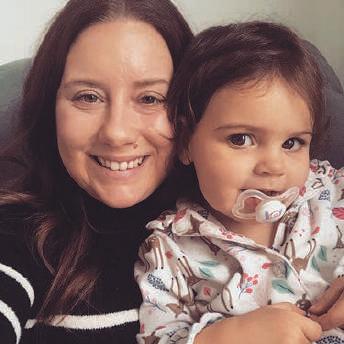
Kate (Flynn) Rosini ’06 is thrilled to have joined Ambulnz in February as a Corporate Recruiter.Ambulnz is the leader in technology-based emergency medicine and transportation and they have been leading the COVID-19 charge for mobile testing and vaccination sites in NYC. Kate resides in NewYork with her husband Justin and their daughterTeagan.
After a decade-long pursuit to work full-time in Esports, Brian Tran ’10 recently accepted a position as a Partnerships Account Coordinator for GenG Esports in Santa Monica, California.The video game space is rapidly growing. Companies from all industries are trying to get more involved in Esports but don’t know where to start. Brian will be working at GenG to realize these partnerships and to help these companies achieve their goals & dreams.
Brian focused on building his esports resume through various opportunities including being an esports coach for amateur teams, leadership positions for video game organizations and conferences, and being event manager of large scale video game activations. He accomplished this while in school and working full-time within the Computer Science and Finance industry.
If anyone would like to connect, the best ways to reach Brian are discord, instagram, twitter, and linkedin.
Discord:Weiho#9419
Instagram:Weiho77
Twitter: BaboonBrian
LinkedIn: www.linkedin.com/in/btran88888
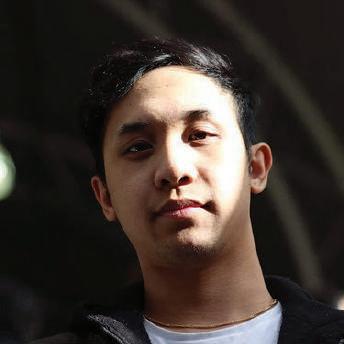
Louis Finocchiaro ’17 will graduate from Northeastern in 2021 and will be going back to school to receive his Masters in Finance from Northeastern in 2022.This winter, Louis has been working with the Northeastern Men’s HockeyTeam who won the last 3 Beanpot Championships (2018, 2019, 2020) and a Hockey East Championship (2019).
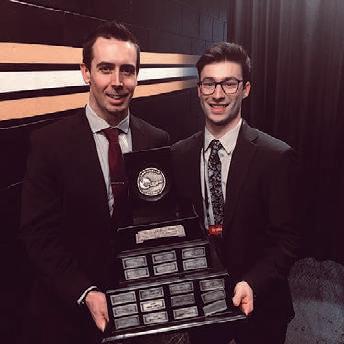
This semester Ella Saracco ’19 had the opportunity to be back on campus at Saint Michael’s College in Colchester,Vermont for her sophomore year. She was also able to get back on the ice and skate with her hockey team, as well as doing team workouts. This year Ella was given the honor of being named Captain of the Women’s Ice Hockey Team, which made her the first Sophomore to ever be named a primary captain in the program’s history.“I am very honored to be given this position and I am so happy to be back on campus!”
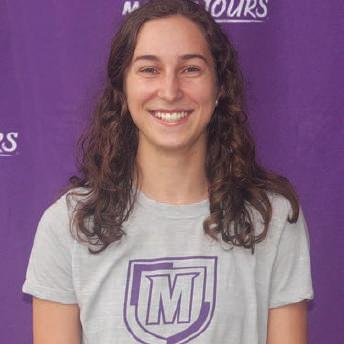
Jonathan Whooley ’20 is currently a freshman (Class of 2024) at Worcester Polytechnic Institute (WPI) majoring in Mechanical Engineering with a potential minor in business and/or history.At school, he has joined the Division III Men’sVarsity Rowing team. On the side, he has created a sporting podcast called “Targeting Podcast” with fellow AP alums, Justyn Bourque ’20 and Gerard Caruso ’20, covering all-things sports related each week!
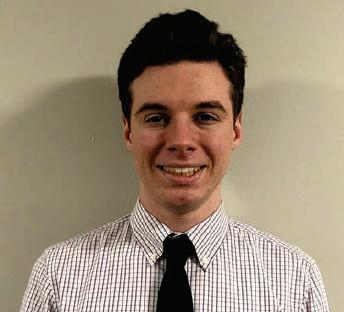
QuinnTeresa arrived to proud parents Erica and Ryan ’03 Moschella on April 13, 2021 weighing 5 lbs.15 oz. and 19.5 in.
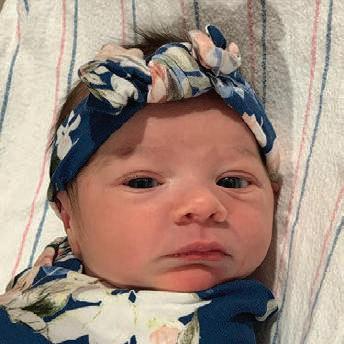
Christiana (Homeyer) Fink ’08 and her husband David announce the birth of their daughter Ellie Ann Fink, born on November 5, 2020. Ellie is an absolute joy, and loves her many aunties from AP Class of 2008!
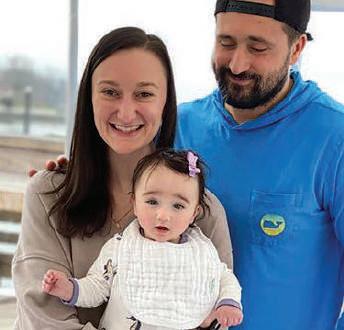
Sheetal (Kumar) Patel ’05 and her family welcomed Layla Patel on November 8, 2020. Layla was born weighing 6 pounds 6 ounces and 21 inches long. Layla loves being held, being outdoors and smiling at ourYorkie named Micky.

James Steven arrived on April 9, 2021 surrounded by his loving parents Allison (Roy) ’08 and Steve DeLuca ’08 and three older sisters: Ella,Ava & Aubrey.

Noa Amelia Dowd was welcomed into the world on December 14, 2020 by proud parents Phil ’05 and Carolyn and big sister Leigh. Noa is the 4th grandchild of long-time Austin employee Jay Dowd ’69.
Grace and DJ ’05 Napolitano welcomed Brendan Daniel on March 23, 2021. Brendan arrived weighing 8 lbs., 13 oz. and 21.25 in. Jack is ready to take on the role of Big Brother!
At the end of a crazy year, Kathleen Campbell ’09 and her husband Nolan McKinnon and son Cillian welcomed Saoirse Marra into their family a month earlier than expected! “Cillian is happy to take on big brother responsibilities and we are so in love with our growing family!”
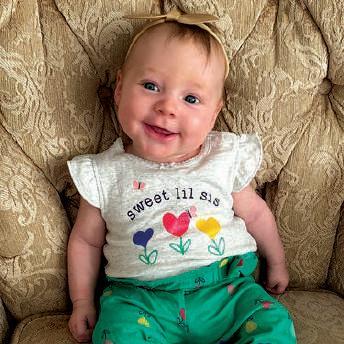
Crissy and Scott ’09 Sutherland welcomed Finley David on January 4, 2021.
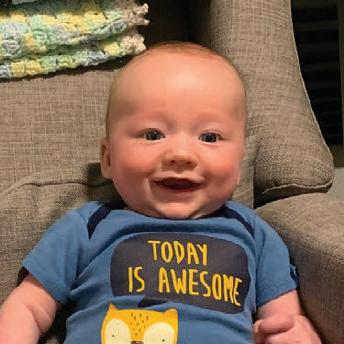
Daniel Richard Eldridge was welcomed into the world January 9th weighing 6 lbs 11 oz. Proud parents are Ashley Eldridge, Associate Admissions Director and her husband Sean.
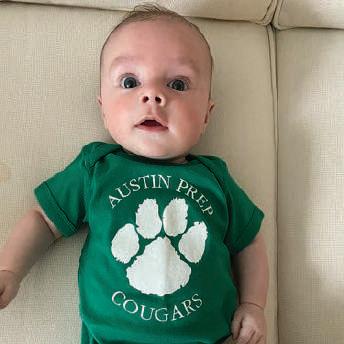
Campus Security Officer and proud grandfather Pat Iapicca shared 1-year-old grandson Henry’s photo in his Austin Prep onesie. #APClassof2037
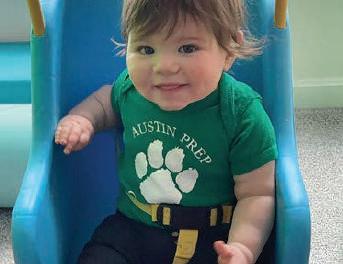
Theology teacher Ray Kabunga and his wife Virginia welcomed Emmanuel Nelson on December 29. Emmanuel arrived weighing 7.3 lbs., and 22.15 in. Noah is ready to take on the role of big brother!
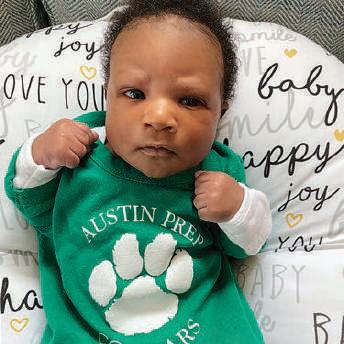
History teacher Jess Swindell, and her family welcomed Alexander Henry on August 5, 2020.Alex arrived weighing 8 lbs., 4 oz. and 21.25 in.Alex loves to watch his siblings, Sam and Allison, and is eager to enter the fray.
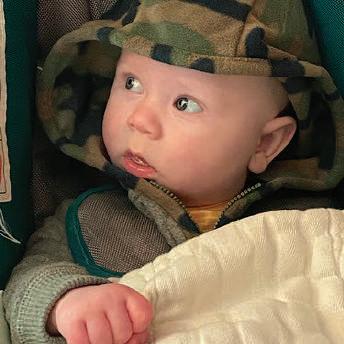


Nicole (Rheaume) ’00 married Michael Henry on May 8, 2021. She now resides in Virginia and continues her work with Chi Alpha campus ministries at Georgetown University.
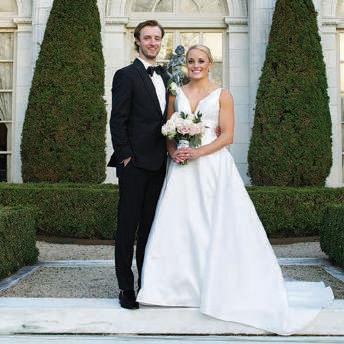
Just two weeks before their wedding, the pandemic turned their plans upside down. In a quick turn of events, Jamie Hodnett ’11 and Conor Kelly, of St. John’s Prep, were married in a private ceremony with their parents on April 4, 2020 at Wingaersheek Beach in Gloucester, MA. Their wedding celebration took place in Newport, RI in the fall. They had a Catholic wedding ceremony at the historic St. Mary’s Church in Newport, RI, where President John F. Kennedy and Jacqueline Lee Bouvier were married in 1953. Their reception was held at Rosecliff, one of Newport’s Gilded Age mansions. After months of changes, Conor and Jamie are fortunate to have had a perfect celebration with family and friends in October. Erin Zani ’11 served as Maid of Honor. Emma White ’11 was also in the wedding party.
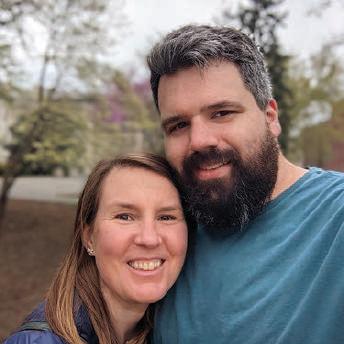
Nicole Casper ’12 and Steven Jepeal ’12 celebrated their marriage at Saint James Parish in Haverhill, MA on April 10, 2021. After they began dating at Austin Prep in 2011, it all came full circle when they were married by Father Kenneth Healey and Father James Morris, their former Austin Prep teachers. Nicole’s sister Carolyn Casper ’15 was Nicole’s Maid of Honor, while Joseph Barry ’12 and Philip Cappello ’12 were best man and groomsman, respectively. Nicole is a Solution Engineer at DocuSign. Steven will be graduating with his Ph.D. in Nuclear Engineering from MIT this summer. They are both very excited to begin this next chapter as Mr. and Mrs. Jepeal!

Stay in touch.
Email Jennifer Hodgdon, Director of Alumni Relations and Giving, at jennifer.hodgdon@austinprep.org.
You have made us for yourself, O Lord, and our hearts are restless, until they rest in you.
Augustine of Hippo (354–430), in Confessions
Richard A. Campbell ’67, Father of Patrick Campbell ’88
Sara Duval, Sister of Jacob Duval, grade 8
James Foley, Grandfather of PJ Concannon ’09
Fr. Dennis J. Gallagher, O.S.A., Faculty
Joan M. Havey, Grandmother of Ryan ’11, Kyle ’15 and Rachel ’18
Patrick K. Hayes, Class of 1971
Kevin P. McCarthy, Class of 1981
Margaret T. McDonough, Faculty
Pauline McLaughlin, Grandmother of Krystle ’16 and Shealagh Boyajian ’19
Dennis Lee McNeil, Father of David ’94 and Pamela ’96
Anne-Marie Norman, Wife of Lawrence R. “Larry” Norman ’77
John Parolin, Father of Michael ’75, James ’77, the late Mark ’79 and Scott ’82
John Henry Piantedosi, Father of John ’72
Robert A. Pike, Faculty and Coach
Ruth C. Siraco, Mother of Christopher ’90 and Mark ’92
Michael R. Solano, Father of Steve ’94
James E. Swarbrick, Father of Kara Henrie ’99
Georgene ‘Gigi’ Westaway, Mother of Fred ’85
Gerald White, Class of 1981
† Spelling correction from Fall/Winter 2020 Journey Magazine: Paul Cohan, Class of 1983
This list contains the names shared with us as of May 3, 2021. If you would like to list a loved one in Journey Magazine or have Mass Intentions said in their memory, please contact Jennifer Hodgdon, Director of Alumni Relations and Giving at Jennifer.hodgdon@@austinprep.org
101 Willow Street
Reading, MA 01867-1599
Address Service Requested

The Office of Alumni Relations will continue to share Austin Prep updates with our alumni community via email, mail and social media. Don’t miss out on class updates or what is happening on campus. If you are not sure that we have your current contact information, please visit www.austinprep.org/alumni/stay-connected and share your current information with us.

@AustinPrep

@AustinPrep

Austin Prep Alumni
@austinprepschool
Share your JOURNEY
We want to follow your journey beyond Austin Prep. Please share your updates including academic and athletic accomplishments, career milestones, marriages, birthdays and any of life’s other big announcements. We want to celebrate YOU! www.austinprep.org/alumni/stay-connected
WEDDINGS & ONESIES!
Are you getting married? The Office of Alumni Relations will lend you an Austin Prep banner for photos at your wedding.
Did you recently welcome a new cougar into your family? Let us know and the Office of Alumni Relations will send along one of our new Austin Prep baby onesies.
Office of Alumni Relations
Jennifer Hodgdon, Director of Alumni Relations & Giving, jennifer.hodgdon@austinprep.org 781-9444900 ext. 852
29
Sharon Driscoll Klardie ’96, Sr. Manager Salesforce Labs at Salesforce: Hosted by Lucie Langa #IamRemarkable


#IamRemarkable is a 90-minute workshop created by Google that strives to empower women and underrepresented groups to speak openly about their accomplishments in the workplace and beyond, thereby breaking modesty norms and glass ceilings. In this interactive course, you will participate in group discussions and exercises around self-promotion and unconscious bias to develop the confidence and skills to promote yourself effectively.
Austin Prep Presents is a virtual seeker series designed to provide a platform for distinguished Austin Prep alumni to connect with fellow alumni and current students, parents, faculty and staff, while reflecting on Austin Prep experiences that helped shape their lives. Presenters have the opportunity to discuss current trends and their contributions in their field, and expand on the career path that led to their current role. The series focuses on areas ranging from media relations athletics, arts and more and is open to the entire school community.
For more information including registration for upcoming programs and recordings of past programs visit www.austinprep.org/alumni/austin-prep-presents
We look forward to seeing our alumni from the classes of 0 & 5 and 1 & 6 at future class reunions and gatherings during Fall 2021. To learn more about upcoming events and happenings, please visit www.austinprep.org/alumni/reunions-gatherings
www.austinprep.org/about-us/campus-map-directions
www.austinprep.org/support-austin-prep Sustaining a