January - March 2026
Volume 28 Issue 1
Two
One
Paths,
River: Perspectives on Brazil’s Agua Boa
by Jim Gray and Gary Geddes
January - March 2026
Volume 28 Issue 1
Two
One
By Jim Gray and Gary Geddes
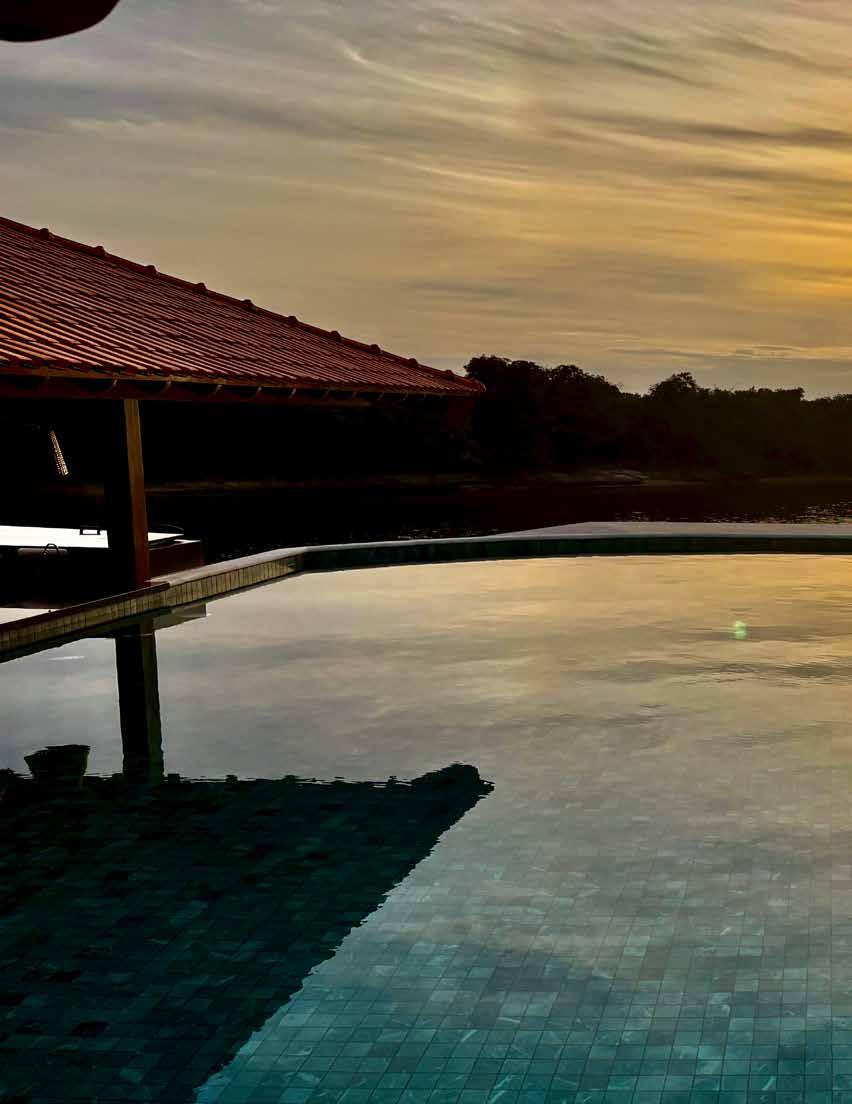
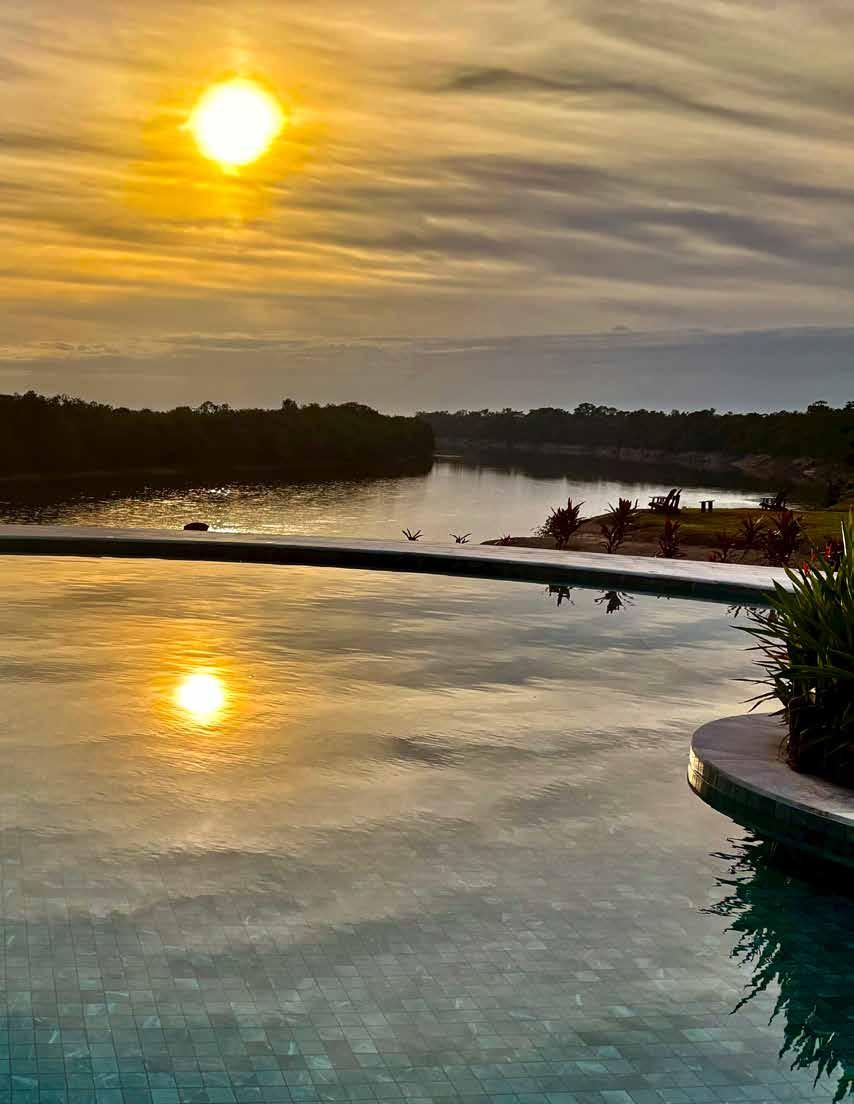
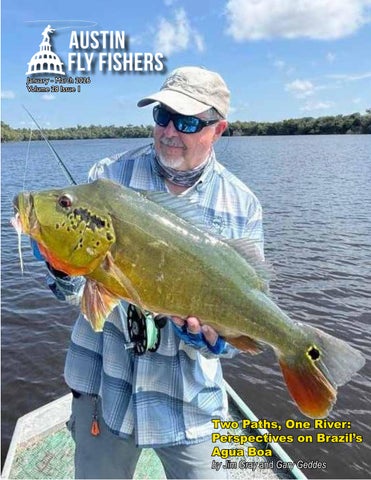
Two veteran anglers—Jim Gray and Gary Geddes—recently traveled to the Agua Boa Lodge. Though they traveled at different times, their stories converge on a singular truth: there is nowhere else on Earth quite like this location in Northern Brazil—from the high-stakes adrenaline of sight-casting to 20-pound peacock bass on the sand flats to the sheer serenity of the Niquia Ecological Reserve. Their combined insights provide a helpful guide to navigating this remote fishing destination tucked deep within the green heart of the jungle. With their permission, I have combined their stories for this article
The Amazon rainforest has long occupied a legendary space in the minds of anglers. For some, it is a lifelong dream fueled by childhood books and nature documentaries; for others, it is a destination that requires a bit of convincing before realizing that the reality far exceeds the reputation. Whether you are a seasoned peacock bass hunter or a first-time jungle explorer, the Agua Boa River offers a freshwater fishing experience that is truly on another level. —Nils Pearson
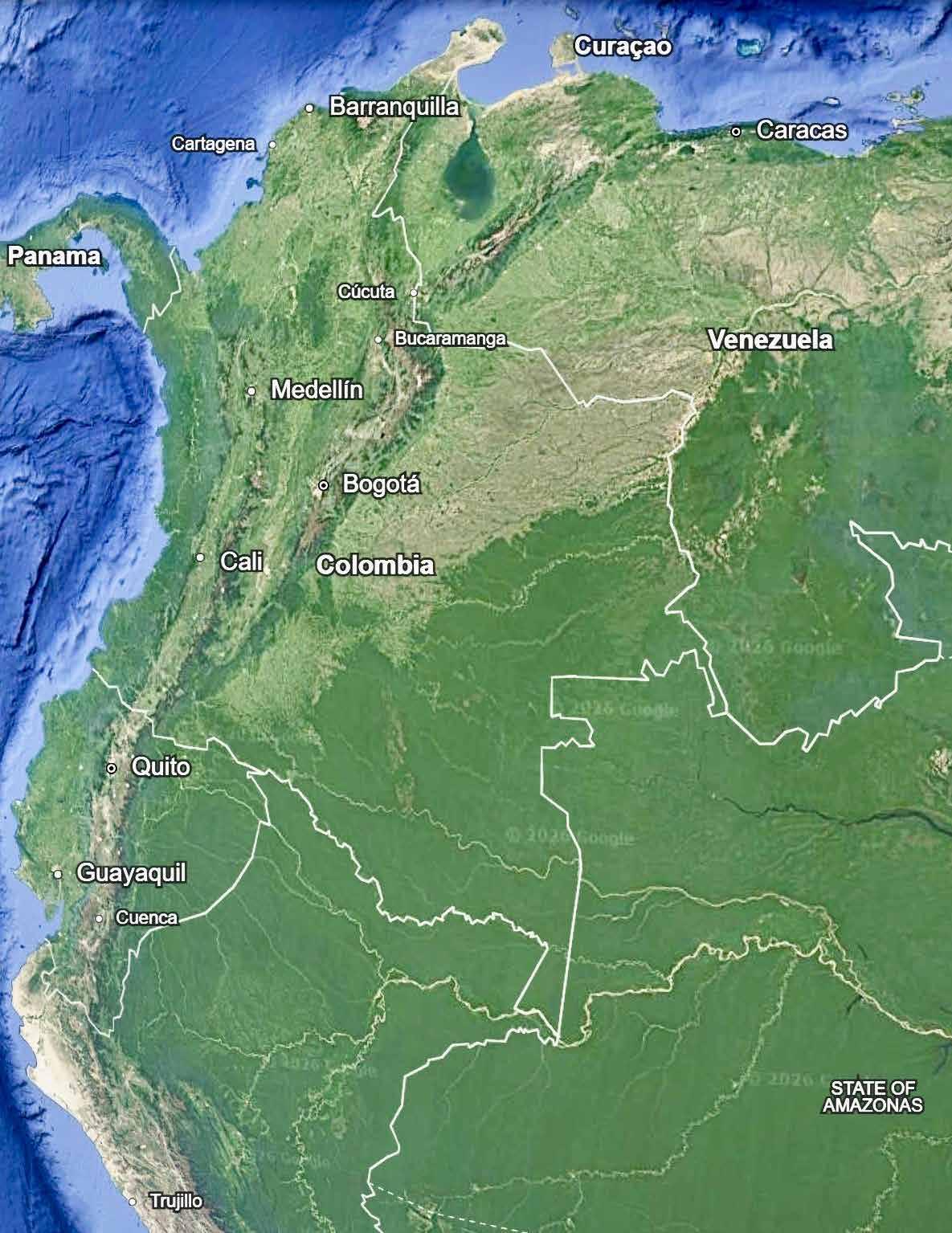
The Journey to the Jungle Gary: The journey typically begins in Manaus, Brazil. To say Agua Boa Lodge is remote is the ultimate understatement. From Manaus, a two-hour charter flight over endless miles of
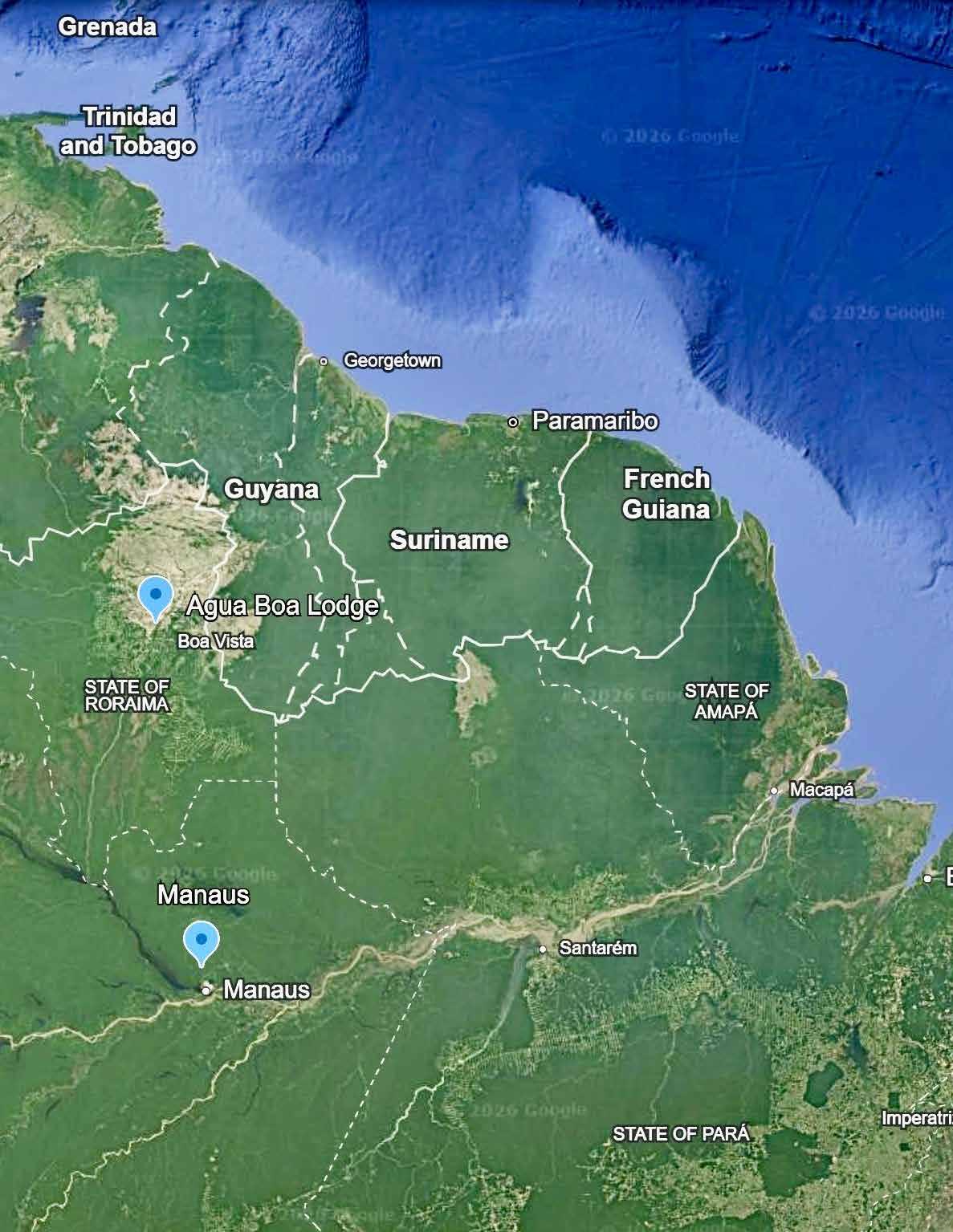
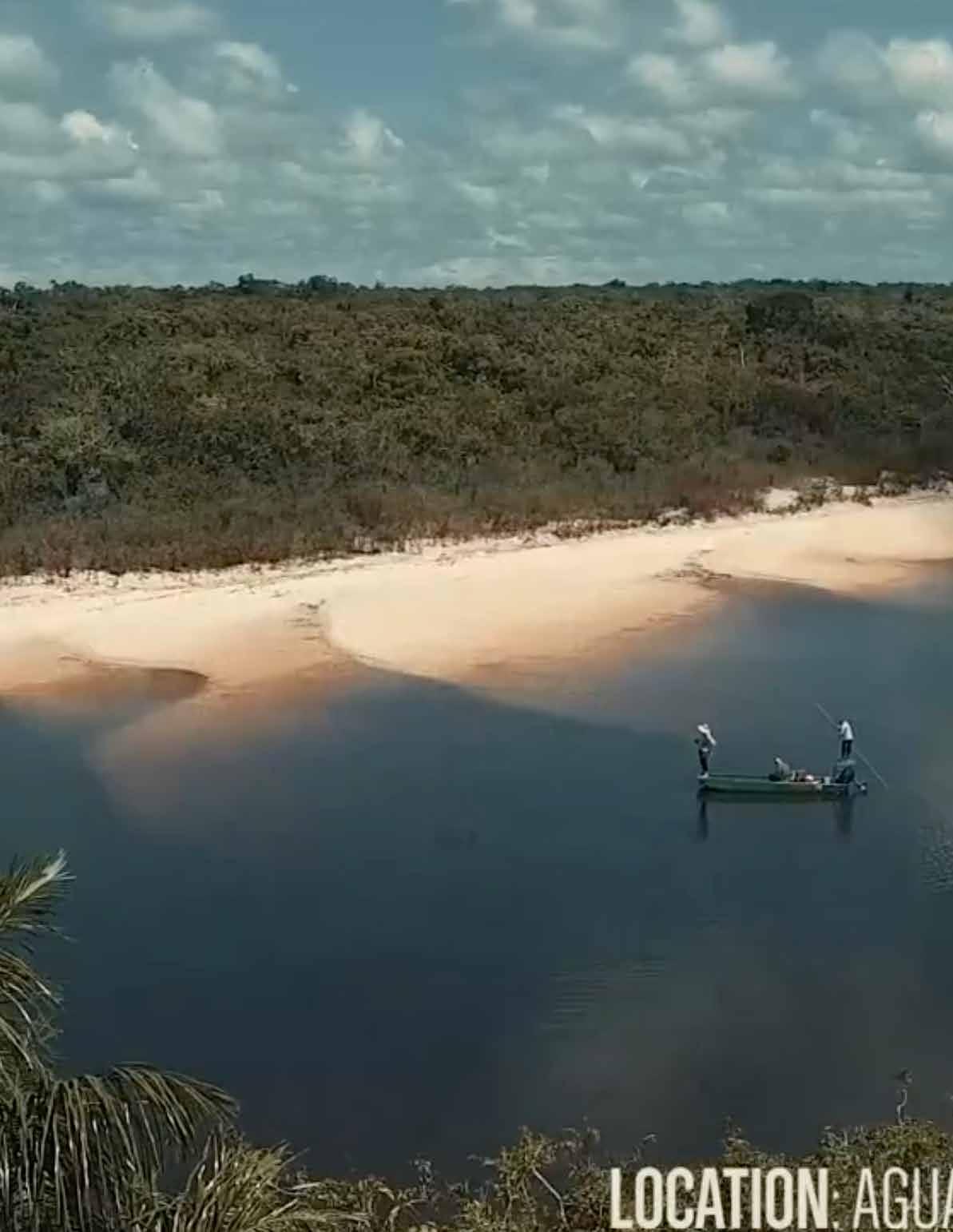
untouched jungle takes you to the lodge’s private air strip. The veterans in the group grew excited seeing the sandbars and clear water indicating lower water levels—ideal conditions for sight fishing.
Gary: Many anglers take advantage of the travel schedule to spend two days exploring Manaus, visiting the famous Teatro Amazonas opera house, sampling incredible seafood dinners, and of course a visit to a churrascaria (Brazilian steakhouse specializing in barbeque) to feast on excellent Brazilian beef. You can take a boat to the “Meeting of the Waters,” where the dark Rio Negro and the sandy Amazon River flow side-by-side without mixing.
The Fishing Experience
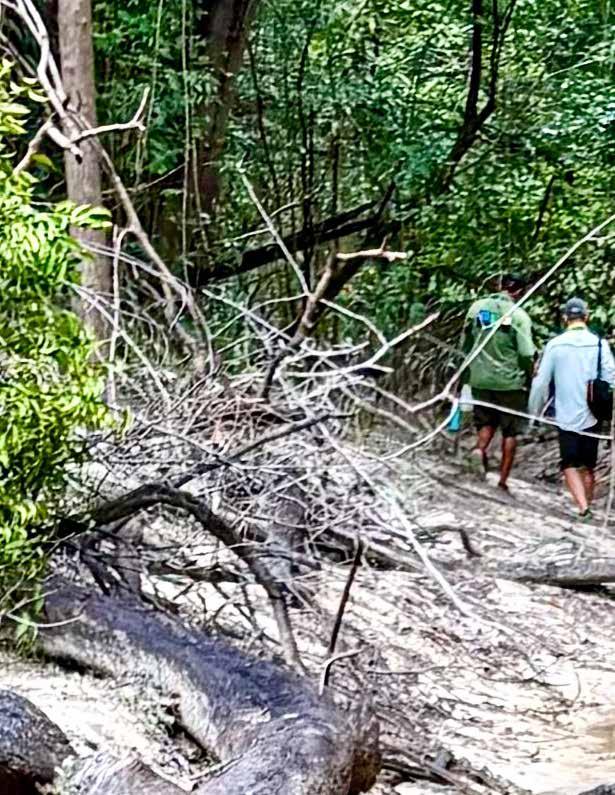
Gary: The lodge has exclusive access to the upper Agua Boa River, which is strictly fly-fishing only, barbless, and 100% catch-and-release. The river is divided into several “beats,” ensuring that anglers never see another soul on the water. Pairs of anglers rotate through the stable of guides during the week, so you don’t fish the same water twice. Each beat has a distinctive character and together they present a tremendous variety of environments from upriver to down. In addition, there are many oxbow lakes and lagoons accessible by hiking through the jungle to access these isolated waters, many of which only get fished once per week.
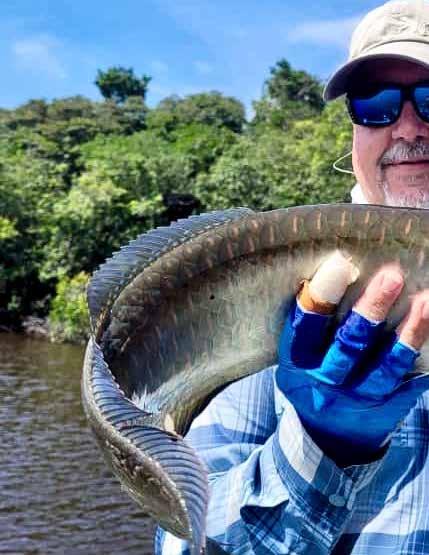
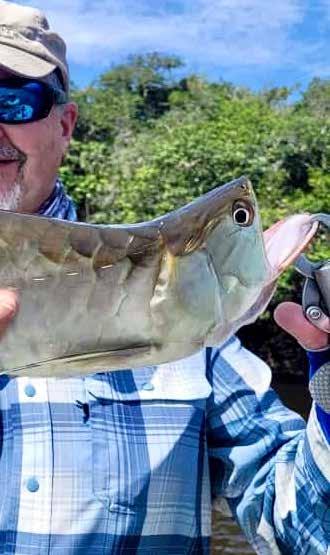
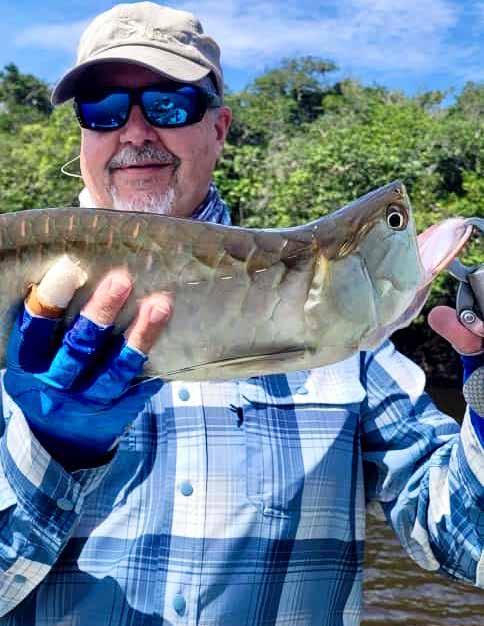
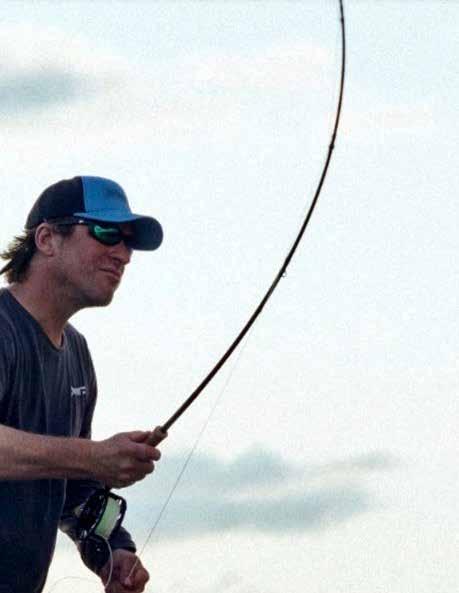
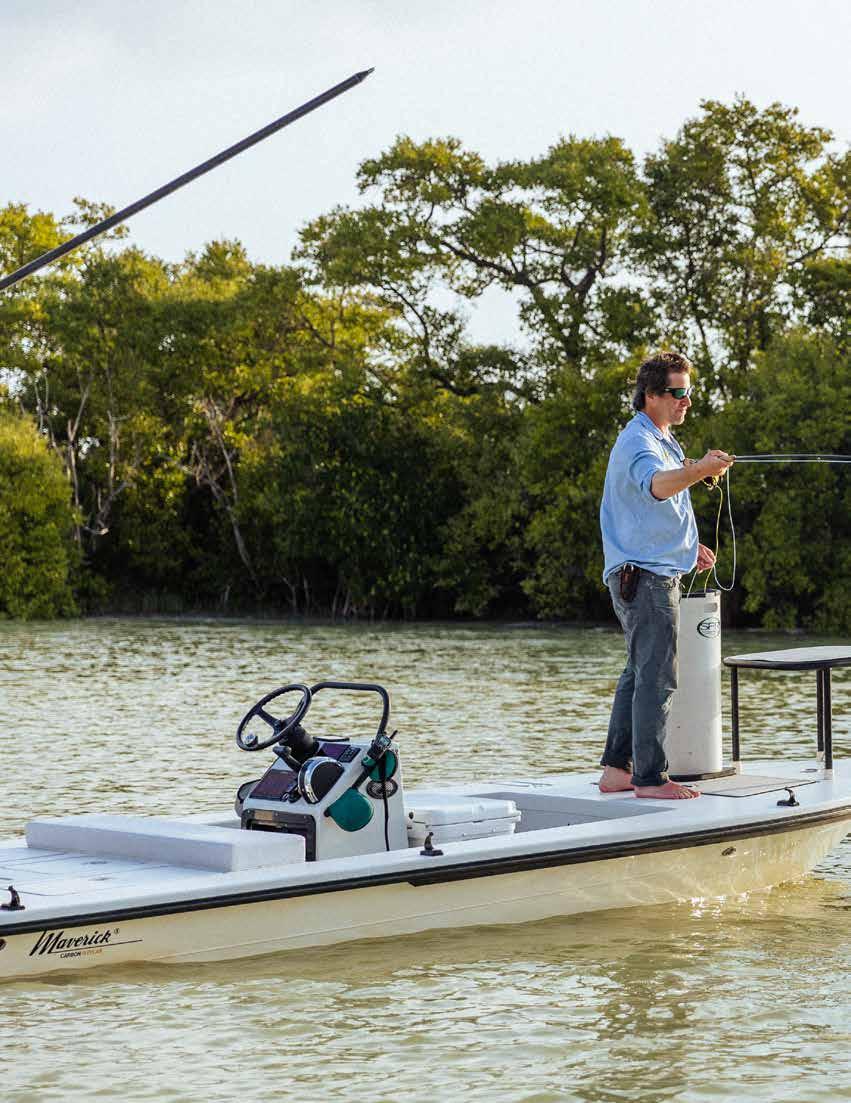
Jim: Much of the time is spent-sight casting from 17-foot john-boats or wading sand flats. Beyond the iconic peacock bass, anglers can target arapaima (which can exceed 100 lbs), arawana, payara, red-tailed catfish, black piranha, and wolffish.
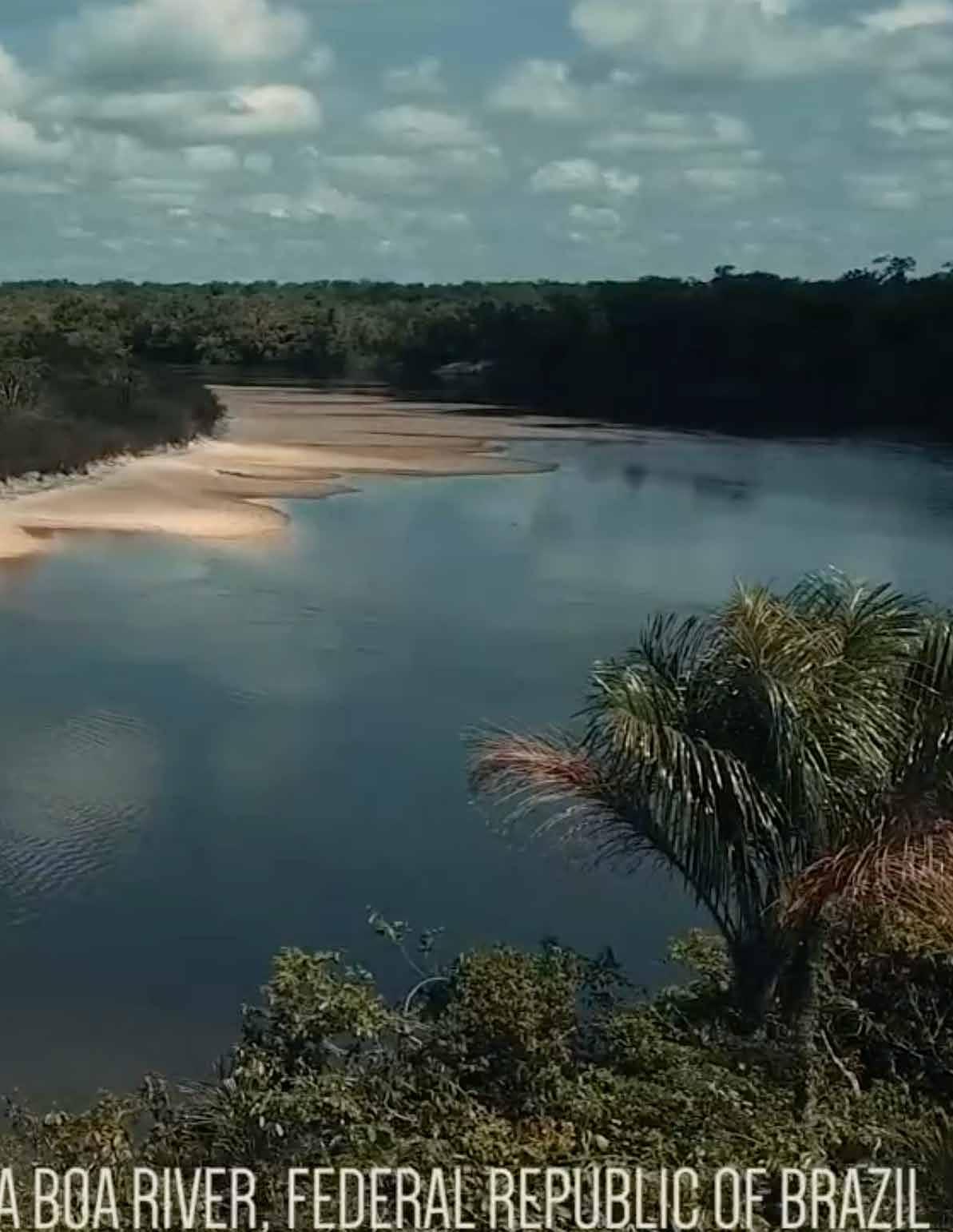
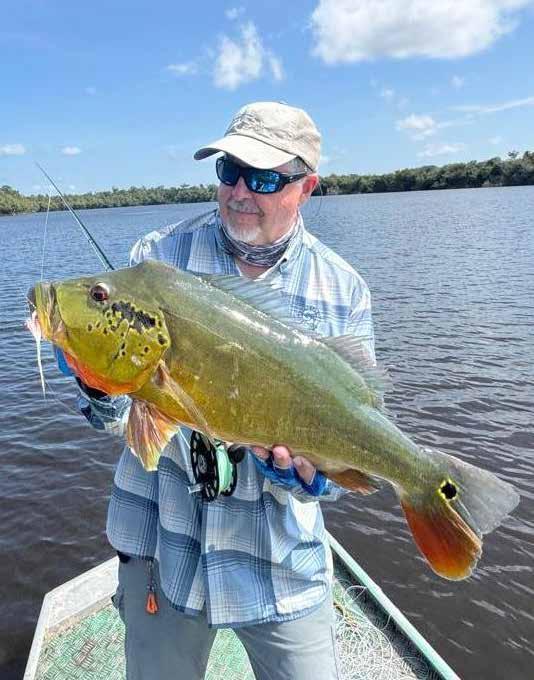
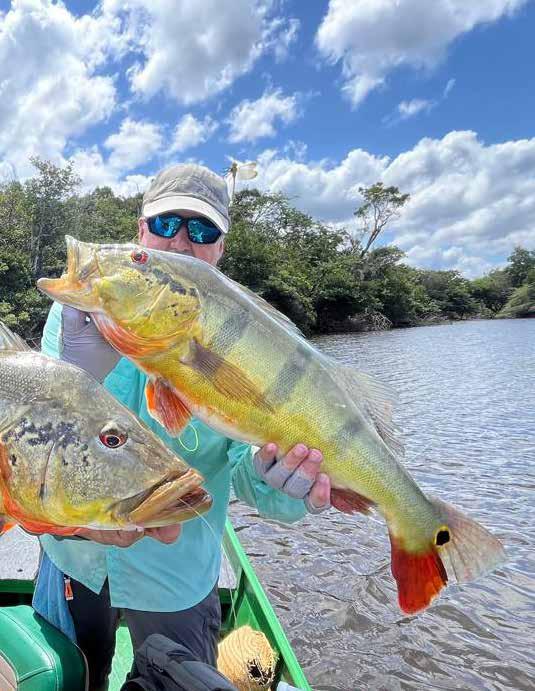
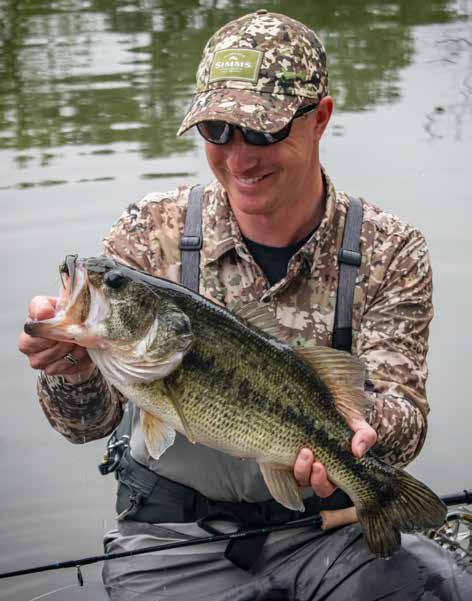
Jim: While South Florida offers peacock bass fishing, the Amazon is incomparable. Florida peacocks are a blast, but what Brazil offers is on another level. The fish are bigger, up to 20 pounds, and there are a lot more of them. It wasn’t uncommon to have 10 fish over 10 pounds each day. On one day, I caught 23 peacocks on 24 casts. If you just wanted numbers, I have no doubt you could catch 100 4-to-5 pound peacocks every day; but that’s not why you go to the Amazon. You want the 18 pound peacock, or the 80 pound arapaima.
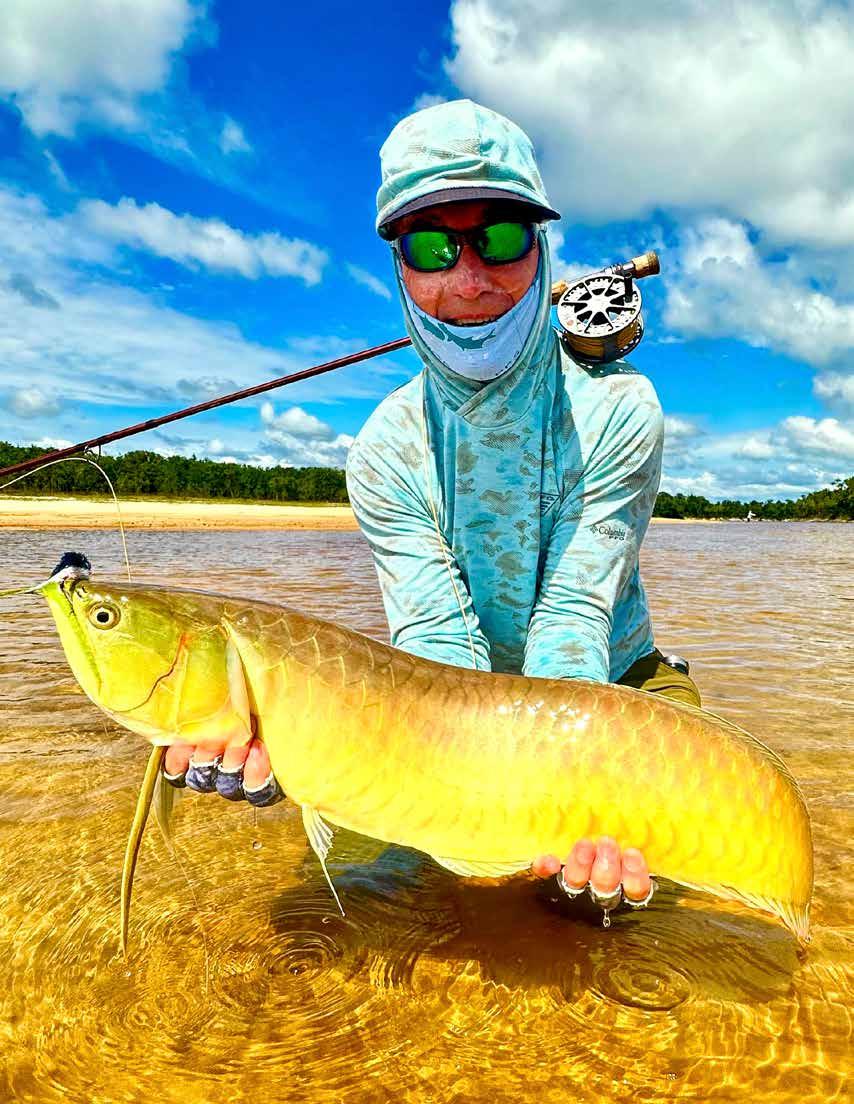
Gary: For me, wading the sandbars and flats was the highlight of the trip. Just like our sand flats in Texas (even replete with copious stingrays!), the skinny clear water holds big fish. I was stalking an expansive sand flat with my guide Lucas who spotted a pair of large arowana lazing in the shallows about 60ft distant. I laid a cast down just upstream of the fish and let the current carry the streamer toward our targets. “Wait…wait..slow strip, slow…SET!” and the huge arowana was on. He raced and jumped multiple times but the hook held and soon he was at hand. A memory I will never forget!
Gary: For a successful trip to the Agua Boa, versatility and durability are the names of the game. My primary setup was an 8wt G. Loomis paired with a Hatch 7+ reel. Given how quickly these fish can peel off line and reach your backing, a reel with a rock-solid drag system is non-negotiable. I rigged this with a clear-tip intermediate line and a short, stout 6ft 50lb fluorocarbon leader.
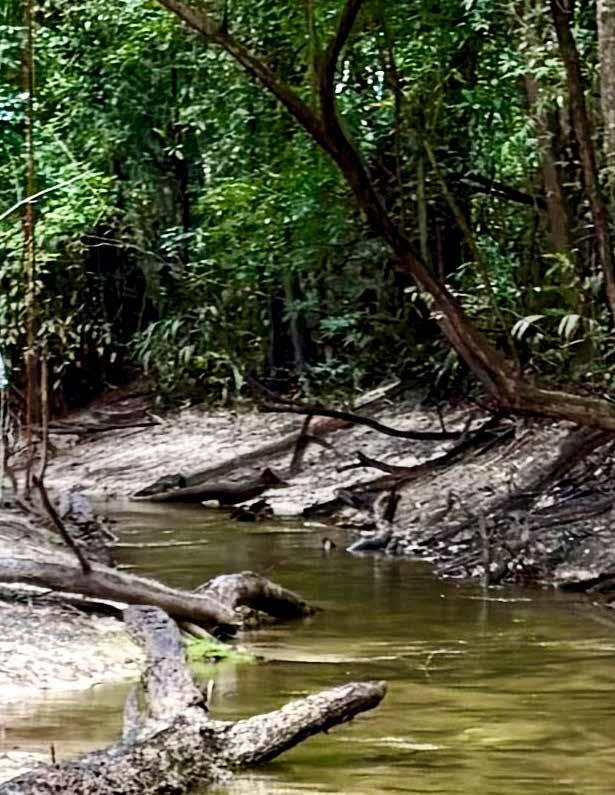
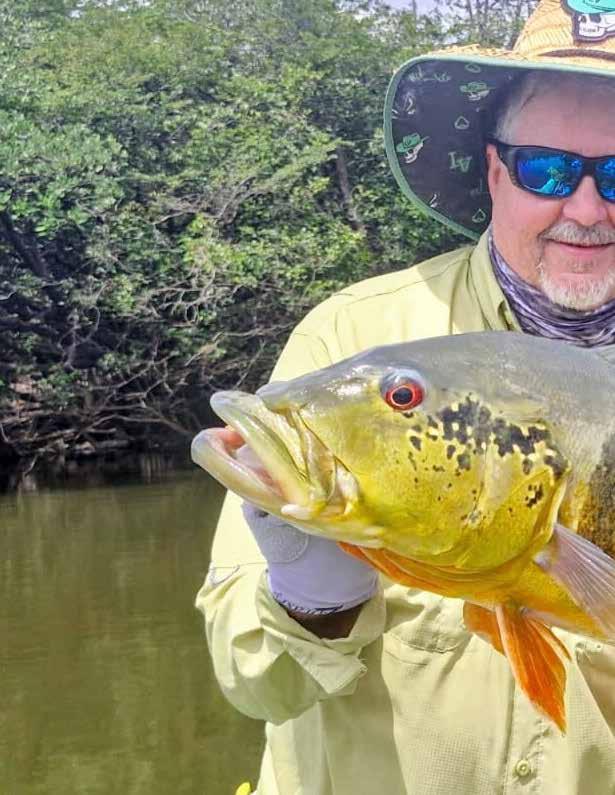
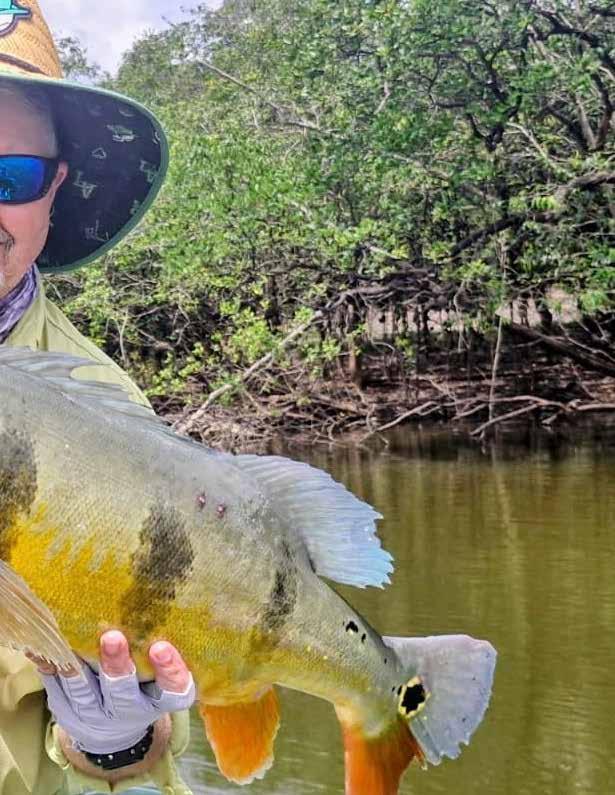
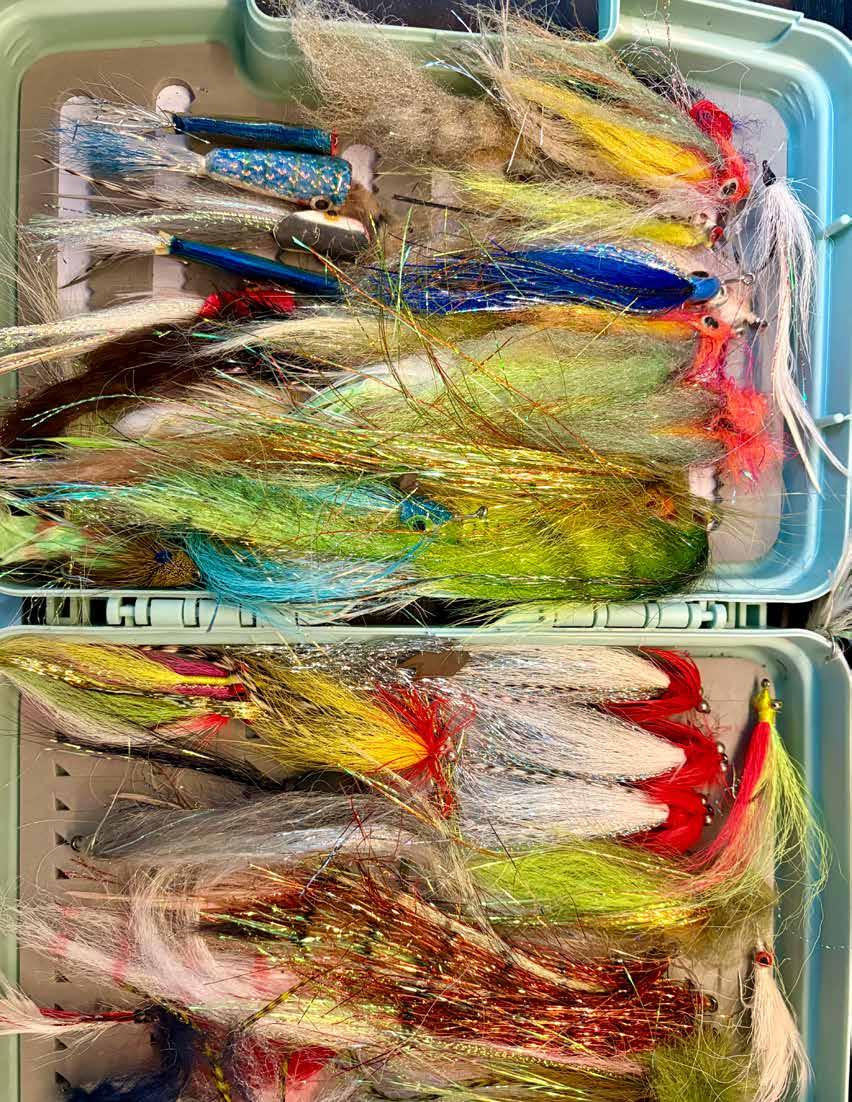
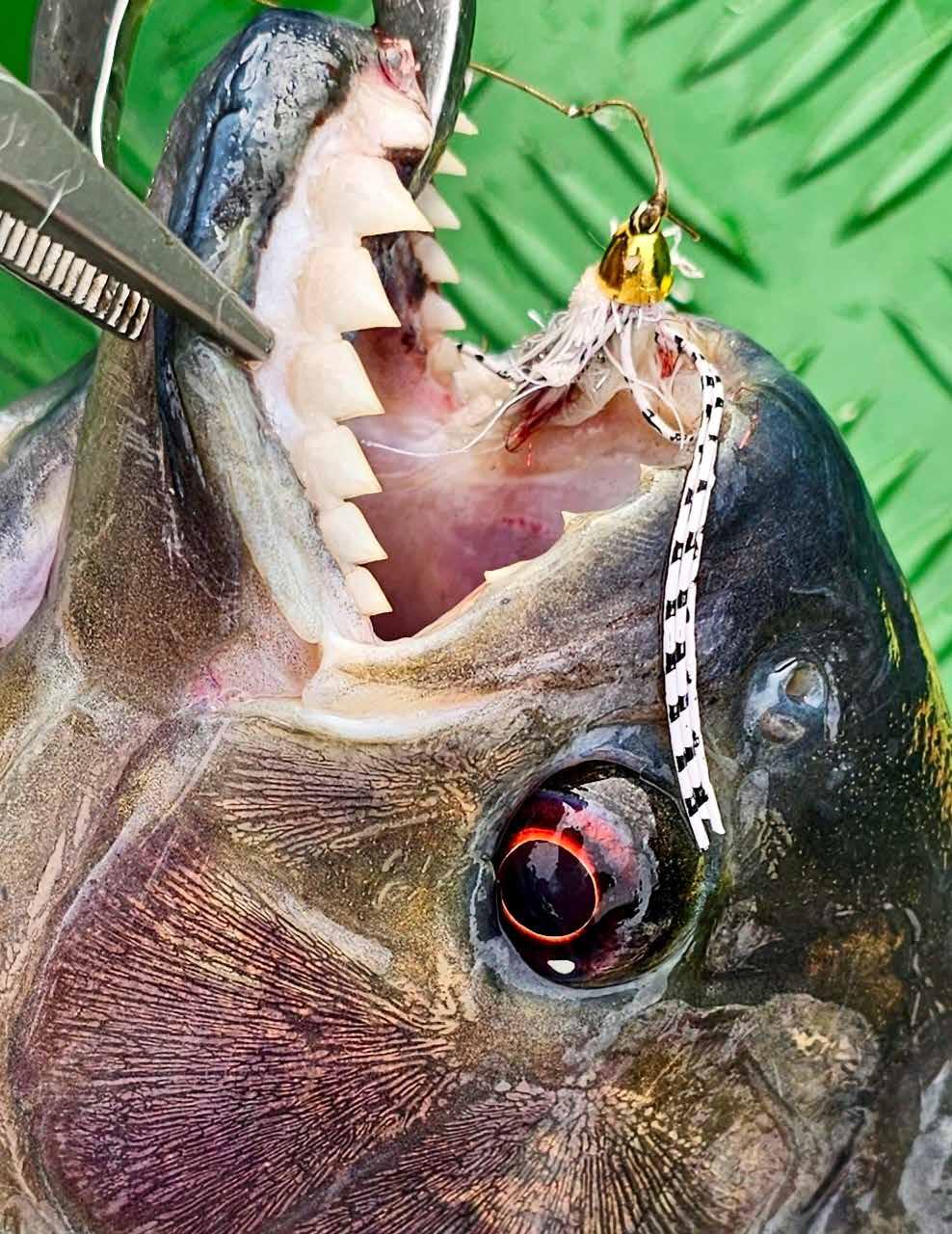
Gary: On the main river we used size 2/0 EP baitfish patterns in natural or high-vis tones like tan, white, and chartreuse. For the Lagoons, we went big and flashy. Size 4/0 patterns like the Jungle Junkie, Flashfire Mushy, or Flashtail Whistler are the local favorites for peacock bass. In skinny water, I kept a 9wt with a full floating line ready. There is nothing in fly fishing quite like the adrenaline of a peacock bass exploding on a topwater lure. Toothy local species that include wolffish, bicuda, dogfish, and piranhas are notorious for shredding gear. Piranhas have been known to bite fly lines clean in half. Don’t let a single encounter end your trip; bring spares. A Boga Grip is useful for safely handling the toothier residents of the river.
Gary: Don’t overlook the “pint-sized” fun. Bring a 5 or 6wt floating setup for the docks. At sunrise and sunset, the pacu and other smaller species feed voraciously, providing a great way to bookend your day. For more specifics, I highly recommend consulting the official Agua Boa website packing list https://amazonaguaboalodge.com.
Gary: Despite the remote location, the accommodations were “top notch” and a “well-oiled machine.” Managed by Carlos Azevedo, the lodge offers modern cabins, luxurious baths, and outstanding cuisine featuring fresh tropical fruits and Brazilian beef.
Jim: The environment surrounding the lodge is a wildlife enthusiast’s paradise. You will see plenty of wildlife that include caiman, capybara, tapir, giant river otters, monkeys, and even
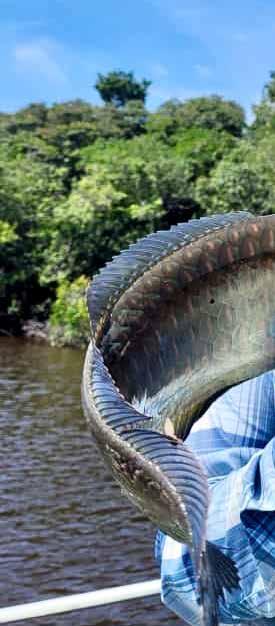

a jaguar if you are lucky. Surprisingly, despite the heat, the bug pressure—particularly mosquitoes—was remarkably minimal.
Jim: I’ve had the opportunity to fish around the world, and I’ve never been anywhere that has this many fish. From baitfish to apex predators and everything in between. Big schools of peacocks blowing up the banks is commonplace. This is a direct result of limited angling pressure and a pristine environment. Over half of the anglers were returning fishermen and they all said that if they were limited to one place to travel and fish, it would be Agua Boa.
Jim: An Amazon excursion is a significant investment, but of immense value. The estimated total cost at just under $9,000, covering the lodge, all flights, hotel stays in Manaus, and tips. My trip was organized by Captain Scott Hamilton at blueh20fly@aol.com.
Gary: I booked my trip through Randy Richter or Yellow Dog Fly Fishing https://www.yellowdogflyfishing.com. Editor’s note. The season runs from October through February (the dry season). Both Jim and Gary have already committed to returning to this jungle paradise.
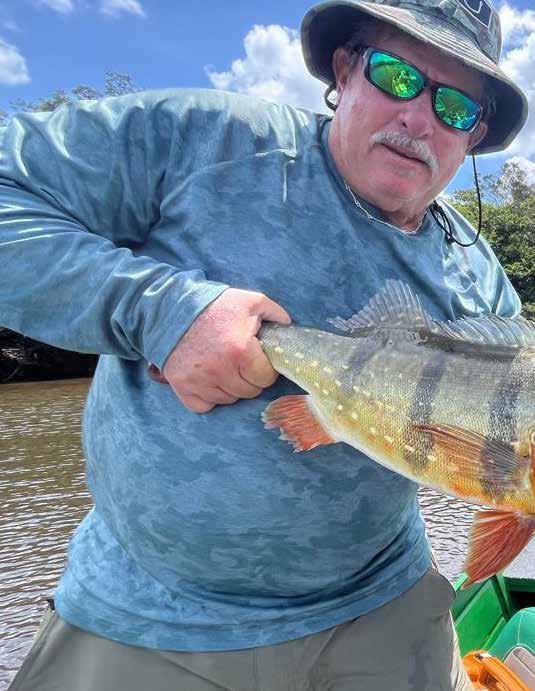
Hook-ups were common
The first time a father goes fishing with a child is a special moment and it usually happens when the children and the father are young. My children were never very interested in fishing when they were young and I was away for work a lot.
My daughter Olivia was the first of my children to pick up the fly rod and the first to catch a fish on the fly, when she was 12. I thought she liked it, but never really wanted
to do it again, now I know her poking holes in fish.
Now that we are all a bit older, My oldest son, Jacob, was on Christmas and said he wanted if we had time, an idea that head. I was elated at the idea by
by Bill Buglehall
her soul is much too gentle for
older, I finally got my chance. on leave from the Marine’s for wanted to try fly fishing with me that I believe his wife put in his idea of my son taking an interest
in fly fishing as an adult and as a member of our military. I only had a few hours and the South San Gabriel River nearby to introduce him to the art I love, and he had never even touched a rod. The weather was nice but the fish were a bit picky being winter and all. This video is my telling of the best day of fishing in my life. The day my son picked up a rod looked at me and asked “now what?”.
by Bob Maindelle
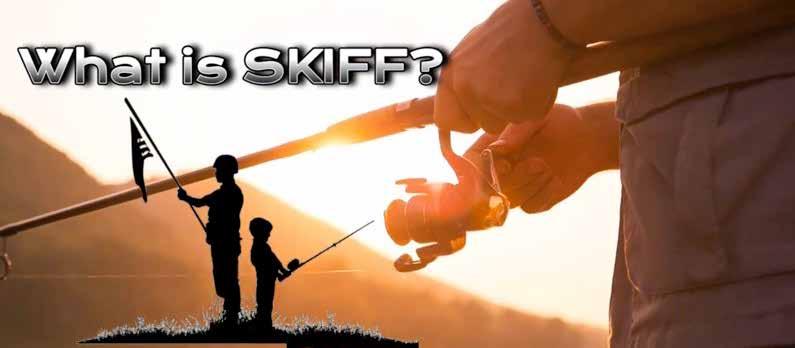
Well, Looking back at calendar year 2025, SKIFF conducted 13 trips for 31 children. Those children landed 844 fish, averaging just over 27 fish caught per child.
Since my last update, we treated the Adams family, the Huffman family, the Gilman family, and the Applegate family to fishing trips targeting white bass in the cooling, autumn waters of Lake Belton and Stillhouse Hollow.
As we head into 2026, both reservoirs I operate on are in good condition water-wise thanks to the surplus water we got over the Fourth of July weekend last year.
If there has been an ongoing challenge for the SKIFF program through the years, it has been getting the word out about what we offer to military families.
This past year we produced a promotional video to quickly and visually summarize what SKIFF is about.
In 2026, we will attempt to partner with the City of Killeen’s Parks and Recreation Department to offer fishing for qualified families just as that organization now offers basketball, baseball, and soccer. This will greatly help us reach many more families than we currently reach, and make SKIFF a readily recognized entity with the community.
Additionally, I recently met with Mrs. Emma Tighe who authors the weekly col-
umn “The Milspouse Space” (as in military spouse) for the Killeen Daily Herald. She is well-connected with several service organizations on Fort Hood and committed to assisting us in getting the word out, especially to the 1st, 2nd, and 3rd Brigades of the 1st Cavalry Division, all of whom will be rotating away from Fort Hood this year either for training or deployment.
Funding-wise, we are in excellent shape with 2025 grants from the McBride Foundation, Austin Subaru, and VFW Post 4008. In 2026, I hope to continue with these grants and will also be applying for grants from the Great Place Spouses’ Club (Fort Hood), the Fort Hood Thrift Store, and from the Sun City chapter of Women Helping Others (WHO).
Finally, Manuel Pena and I are working to link AFF with Benevity for the sake of more readily accepting donations made online.
Each time a trip is scheduled, I’ll keep Manuel apprised of it so he can get word out to you should you like to accompany me and experience a SKIFF trip first-hand.
Thank you for your support and encouragement through the years!
Owner, Holding the Line Guide Service 254.368.7411 (call or text) www.HoldingTheLineGuideService.com Bob@HoldingTheLineGuideService.com www.Facebook.com/bobmaindelle www.Twitter.com/BobMaindelle
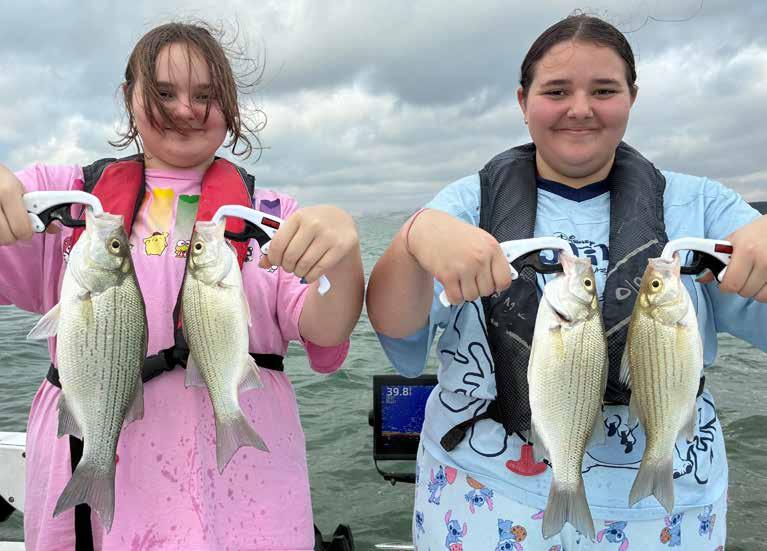
On Dec. 23, I treated the Applegate sisters, Rose (left, age 14), and Serenity (age 13) to a SKIFF trip on Stillhouse. The girls’ parents both accompanied them. Their mother, Emerald Applegate, is a bona fide disabled veteran. The girls landed 14 fish.

On Benjamin Adams, age 16, traveled in from Dallas with his mom, Maria, to take part in a SKIFF trip on Lake Belton. He landed 50 fish in 4 hours. Benjamin’s father passed away while on active duty, thus qualifying his family as a Gold Star family.
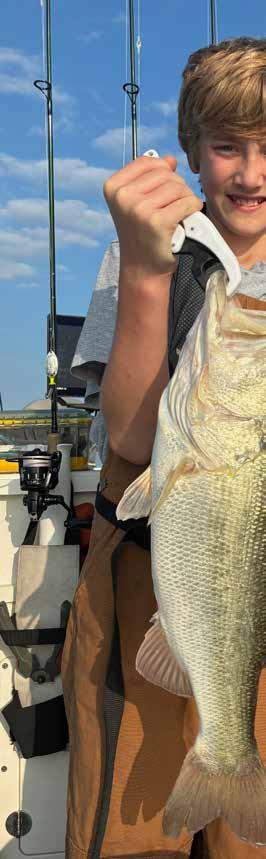
On November 21, I fished with (8) Gilman while their father, Gilman was deployed to eastern landed 58 fish.
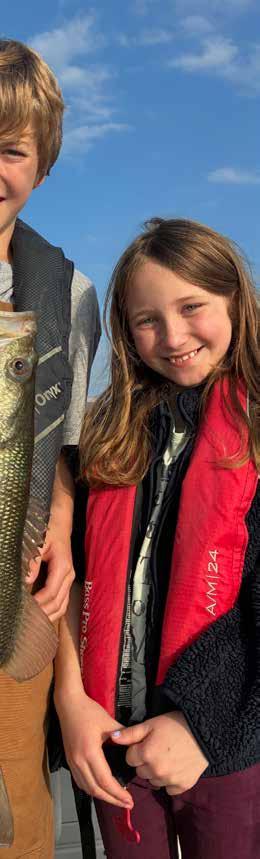
with Michael (11) and Zoey father, Staff Sergeant Michael eastern Europe. The siblings
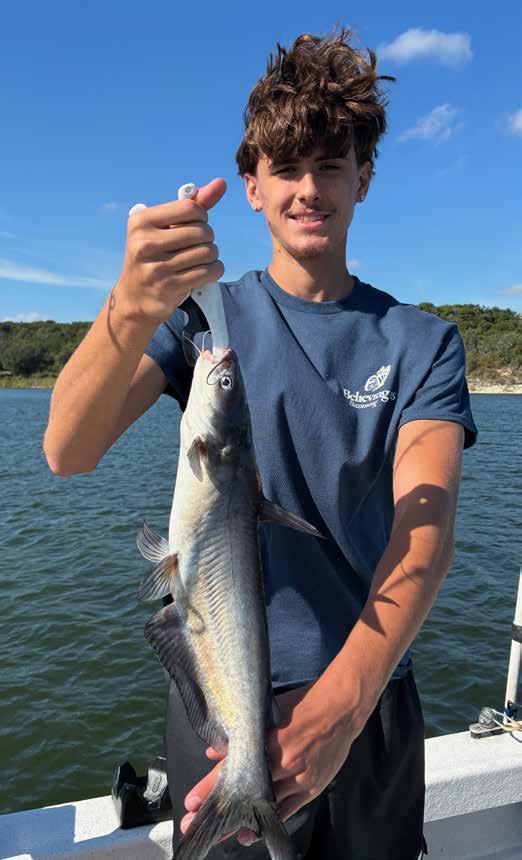
On Oct. 20, I fished with 16-year-old Jackson Huffman whose father, Captain Steve Huffman, was recently sent to Fort Carson, Colorado, for a temporary duty (TDY) assignment. Jackson landed 70 fish.
By: Nils Pearson
Manager
If you joined us for the Austin Fly Fishers Fishmas fundraiser for Casting for Recovery this past December, you likely saw the 7wt fly rod donated by Sawgrass Fishing Rods. Before it went to auction, I took it out for a test run with some Rio Flats Pro line. To say I was impressed is an understatement; I was honestly surprised at how effortlessly I could punch out long casts.
Between the performance and the high-end finish, I knew I had to learn more about this Texas-based company. I reached out to General Manager Captain Collins Illich to see how this newcomer could find its place in this crowded market. He got back to me that same day, and our conversation follows below.
Q: Can you give me little background about yourself and your interest in fly fishing?
Collins: I began fly fishing as a kiddo in the early eighties. My family vacationed in Rocky Mountain National Park and my dad had attended the University of Montana. He used most of his time in the Summers to fish a bit himself and more often to help my brother, sister and myself fish. I was very committed to fishing at a very early age.
Q: Was there something that occurred to you that prompted you to go into the rod manufacturing business?
Collins: I have spent about 20 years in the rod business. I would never advise any of my kiddos to do this. It is ultra-competitive and saturated. But, it is what I love and what I know best.
Q: Why did you enter the rod manufacturing business in the USA when so many other companies are producing their rods overseas?
Collins: Sawgrass Rods was born from a simple but ambitious goal: to merge high-level American engineering with unmatched customer service. Founded by Greg Zwernemann—an aerospace engineer with 40 years of industry experience—our mission is to provide anglers with the quality they deserve but rarely find.
After years of testing rods from every major brand and coming away unsatisfied, we knew we could do better. In 2022, Greg partnered with me as industry insider to bring his vision to life: “White Glove, Blue Collar Service.”
Direct to You by operating as a consumer-direct brand, we eliminate wholesale markups, offering premium performance at a competitive price. We realize, however, that buying a rod you haven’t held can be daunting. To solve this, we launched the industry’s first “Touch to Trust” guarantee.
If your rod arrives and doesn’t meet your expectations for any reason, we will buy it back and cover the return shipping. You risk nothing. Our results speak for themselves: with a return rate of less than 0.01% and over 80% of our customers returning for a second order, we don’t just build rods—we build trust.
I encourage everyone to check out our reviews—they speak for themselves. When you call Sawgrass, there’s no automated phone tree or waiting on hold. 99% of the time, I’m the one picking up. You’ll reach Chris or myself on the first or second ring, every time. Yes, real people with real expertise happy to talk with you.

Video Link
Q: I understand that you are using North Fork Composites rod blanks for your rods. Can you tell me more about this relationship?
Collins: I have been very fortunate in my career to work with some amazing industry professionals. Rick Pope, Flip Pallot, Banning Collins, and finally Gary Loomis. They (and many others) all crafted who I am and my philosophies relative to rod design, personal fishing and customer service. Gary in particular extended wayyyyyy too much time my way. We spent many years working together in various form. I even named my daughter after his wife!
There are a lot of approaches to design and finish out. One thing is for sure, I will ONLY use Gary and his teams blanks in my builds. They are all experts and take time to listen to what I need for Sawgrass.
Q: What is so special about your one-piece saltwater rods?
Collins: We spend an enormous amount of time building the lightest, highest preforming rod possible. That is the first thing most anglers notice when they hold a sawgrass. I tell a lot of prospective anglers not to buy our rods. They are tools for the boating angler. It is not a rod for everyone. But, I can tell you we have an angler in SC that has two of each 3-12wt. Once people start fishing them, they usually do not stop.
Q: Do you have anything you want to say to fellow fly fishermen?
Collins: Lefty probably said it best, “share knowledge, don’t show knowledge”’ I think that speaks to the ethos of fly fishing better than anything else I can say. Point is, fish, have fun and don’t judge others on the water. The waters are only going to get more crowded in the upcoming years. Courtesy and patience will help us all have a better time.
By Keith Mars
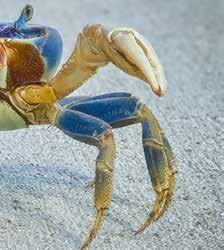
The blue crab is a cornerstone of the Texas coastal ecosystem, yet its population is currently at a critical juncture. For fly fishermen and conservationists, the decline of this crustacean is not just a commercial concern—it is a direct threat to the health of the entire fishery, particularly for those pursuing redfish on the flats.
Blue crabs function as a vital link in the Gulf food web. They process nutrients by scavenging and, in turn, provide a high-calorie food source for a variety of apex predators.
• The Redfish Connection: For redfish, blue crabs are a primary dietary staple. Biologists often describe crabs as “candy” for redfish, providing the essential proteins and fats needed for rapid growth and successful spawning.
• The Trophic Ripple: When crab populations decline, redfish are forced to rely on less calorie-dense prey like small shrimp or baitfish. This can lead to slower growth rates and shifts in migration patterns as fish move deeper or to different bay systems in search of more reliable forage.
The statistics regarding Texas blue crabs are stark. Data from Texas Parks and Wildlife (TPWD) highlights a multi-decade slide that has only recently begun to stabilize at historically low levels.
• Declining Yields: In the late 1980s, Texas saw annual landings of nearly 11.9 million pounds. In recent years, that number has plummeted to roughly 3.1 million pounds.
• Juvenile Scarcity: While adult numbers show some stability, survey data from early 2026 indicates that juvenile abundance continues to remain low. Without a steady influx of young crabs, the population lacks the resilience to recover from environmental shocks like major freezes or prolonged droughts.
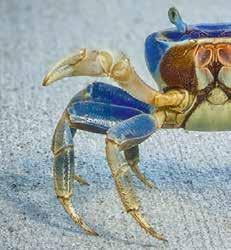
For the fly angler, the presence of blue crabs often dictates the behavior and location of fish.
• “Tailing” Behavior: Many of the most sought-after sights on the Texas flats—red fish tailing in shallow water—are a direct result of fish rooting through the mud and grass for small crabs. A lack of crabs means fewer fish in the skinny water where fly an glers spend their time.
• Fly Selection: The entire “crab fly” category is built around this predator-prey relation ship. As crab numbers drop, the predato ry response of fish to these imitations can become more erratic, making the fishery more challenging and less predictable.
crabs fish. most flats—reddirect and means ancategory relationpredatocan fishery
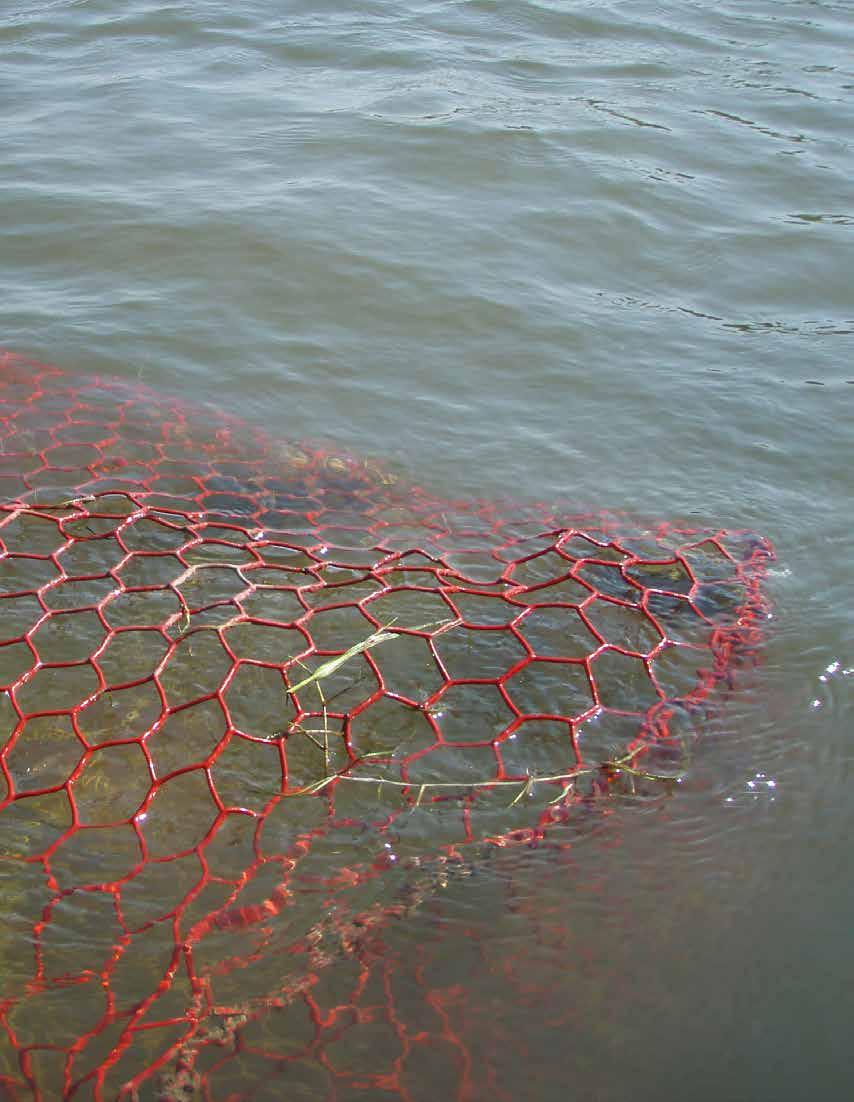
Two major factors are driving this decline: hydrological changes and abandoned gear.
• The Fresh Water Crisis: Blue crabs need a specific salinity balance. Increased droughts and upstream water diversions make estuaries too salty, which stresses young crabs and encourages the spread of lethal parasites.
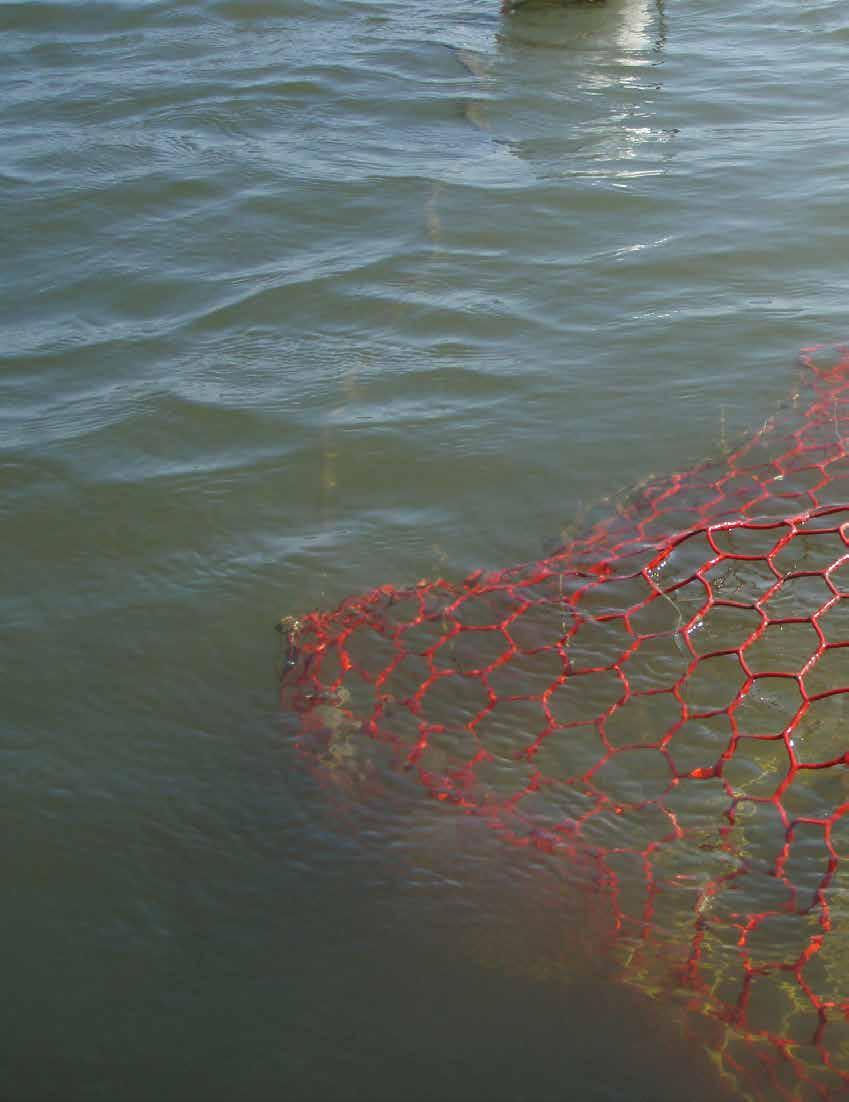
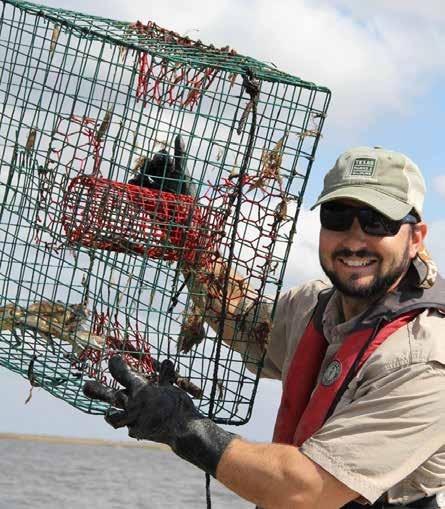
• Ghost Fishing: Abandoned wire mesh traps continue to “fish” indefinitely. These derelict traps are responsible for the incidental deaths of hundreds of thousands of crabs annually, as they become trapped and unable to escape.
Conservation is a participatory sport. For those who enjoy the Texas coast, the most impactful way to help is through the 2026 Abandoned Crab Trap Removal Program.
• The Closure Period: From February 20 to March 1, 2026, all Texas coastal waters are closed to wire mesh crab traps. Any trap found is legally considered litter.
• Volunteer Opportunities: On Saturday, February 21, 2026, TPWD facilitates a coastwide volunteer effort. Anglers with shallow-draft boats.
• Logistics: You can pick up free tarps and gloves at your local TPWD Coastal Fisheries field station (located in hubs like Galveston, Rockport, and Port O’Connor) to help haul out derelict gear.
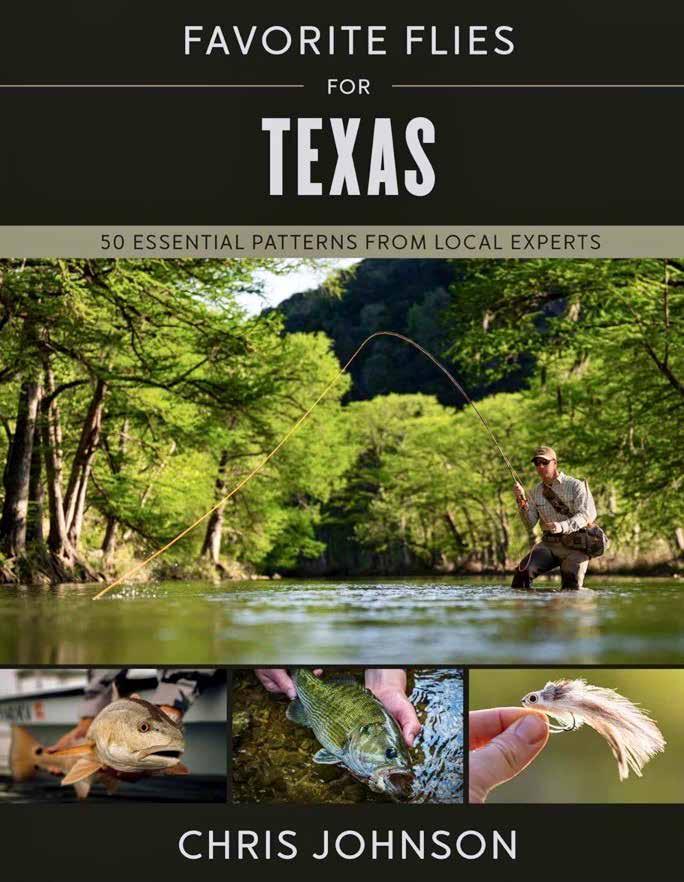
by Chris Johnson
Texas is a literal fly fishing paradise. From the cypress-lined rivers of the Hill Country to the rolling surf on the coast, the Lone Star State has more than its fair share of fly fishing destinations. Texas is a large state with a wide variety of fish species, so curating a well-equipped fly box can be daunting. Chris Johnson is the author of Favorite Flies for Texas, a new book that features 50 essential fly patterns from local experts. In this presentation, Chris will walk you through an array of the most effective fly patterns for both fresh and salt water. These patterns will help you be ready for just about anything that Texas fish can challenge you with. Learn the histories of some of Texas premiere fly patterns and most importantly – how, when, and where to fish them!
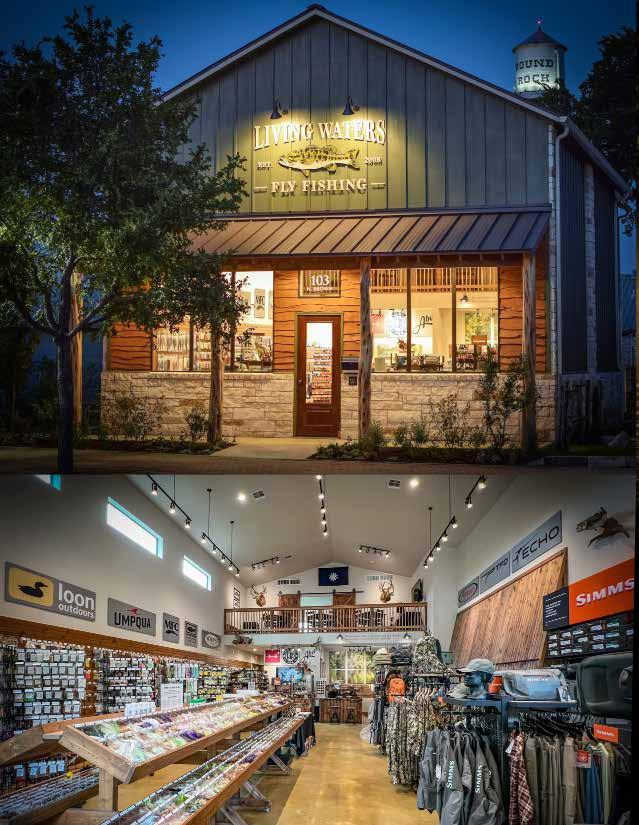
Chris is the owner and founder of Living Waters Fly Fishing, a premier fly shop and guide service based in Round Rock, Texas. With nearly two decades of guiding experience in the Texas Hill Country and over 25 years spent fishing the Lone Star State, Chris is a cornerstone of the regional angling community. His expertise extends far beyond Texas borders, having held guide licenses in Oklahoma, Colorado, and Alaska.
A highly credentialed professional, Chris is an FFI Certified Casting Instructor, Umpqua Signature Fly Designer, Tenkara USA Guide, and TPWD Angler Educator Area Chief. He also represents the industry’s top brands as a pro team member for Scott Fly Rods, Whiting Farms, Dyna-King Vises, and Scientific Anglers.
Chris is a published author—most recently of Favorite Flies for Texas—and his work has been featured in Trout Magazine, Garden & Gun, and Tenkara Magazine. Under his leadership, Living Waters received the FFI’s prestigious Lee Wulff Award, and Chris himself was named the 2014 FFI Texas Council Man of the Year.
Beyond the shop, Chris is a staunch advocate for fisheries conservation. As the current State Council Chair for Texas Trout Unlimited, he spearheaded the film Unspoken to champion the Rio Grande Cutthroat. His conservation leadership extends to the Texas Freshwater Fisheries Advisory Committee and the Texas Chapter of the American Fisheries Society.
When he isn’t on the water or at the vise, Chris enjoys traveling the world with his wife, Emily, and passing on the traditions of the sport to their children.

https://www.thegratefulangler.com
Lindy Wilks serves as and casting instructor in Bee Cave. With over in both freshwater and she has established herself angler. https://sportsmansfinest.com
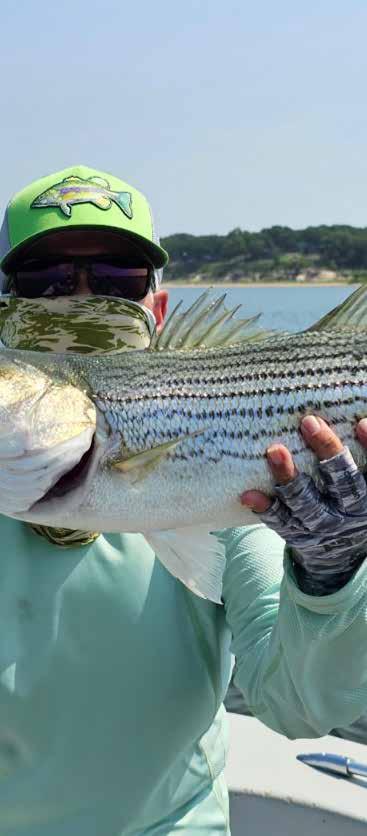
as the fly shop sales lead instructor at Sportsman’s Finest over 15 years of experience and saltwater fly fishing, herself as an accomplished https://sportsmansfinest.com
Chris Johnson
Chris is the owner and founder of Living Waters Fly Fishing, a fly shop and guide service based out of Round Rock, Texas. He has guided the Texas Hill Country for nearly two decades, and has fly fished the heart of the Lone Star State for over 25 years. https://livingwatersflyfishing.squarespace.com




Every year, members of the Austin Fly Fishers club come together to celebrate the season with our annual “Fishmas” Party. Beyond being a wonderful social gathering, the event serves as a vital fundraiser for Casting For Recovery. I am proud to announce that this year’s Fishmas Party raised over $3,100 to benefit the cancer survivors who participate in this meaningful program.
The success of Fishmas depends entirely on the enthusiastic participation of our members. Behind the scenes, the work begins months in advance—reaching out to donors, collecting and tracking items, and selecting the perfect venue. On the night of the event, a dedicated team worked tirelessly to organize donations, manage bid sheets, sell raffle tickets, conduct drawings, and track transactions.
I would like to extend a special thank you to the following members for their extraordinary efforts and donations: Doug Kierklewski, Dave Bush, Gary Geddes, Brandon Rabke, Shawn Riggs, Carol Olewin, Bill Buglehall, Nils Pearson, Jim Robinson, Joey Cutting, Dave Armer, and Austin Orr.
I also want to express my sincere appreciation to the local businesses and the guide who provided generous donations. Finally, thank you to every member and friend who attended; your presence and generosity made this event a resounding success.
Tight lines,
Manuel Pena, President Austin Fly Fishers
Austin Fly Fishers Fishmas December 11, 2025
Auction/Raffle
44 plates @ $30 each 43 plates @
All Hands Custom Cocktails Austin Orr
Jack Allen's Kitchen
Living Waters Fly Fishing
Mark Machado fishing guide
Brandon Rabke
Carol Olewin
Dave Armer
New Moon fishing rods Dave Bush
Sportsman's Finest
YETI
Doug Kierklewski
Gary Geddes
Glyn Slay
Jim Robinson
Joey Cutting
Mark Machado
Nils Pearson