Where Your Money Goes When You Donate to the Austin Bar Foundation
Thank you for your flexibility and understanding as we work to reschedule the 2026 Austin Bar Foundation Gala.
Funds raised through this year’s Gala will go toward funding the Austin Bar Foundation’s various charitable programs and projects. We want to highlight several individuals who graciously allowed us to interview them to see how the work of the Austin Bar Foundation has impacted their lives.
Austin Adoption Day
The Austin Bar Foundation plays an integral part in Austin Adoption Day, held every year in November. Funds are used to pay for the decorating of the Travis County Civil and Family Courthouse as the Land of Oz, provide food and beverages, and ensure the day is special for the families and especially the children involved.
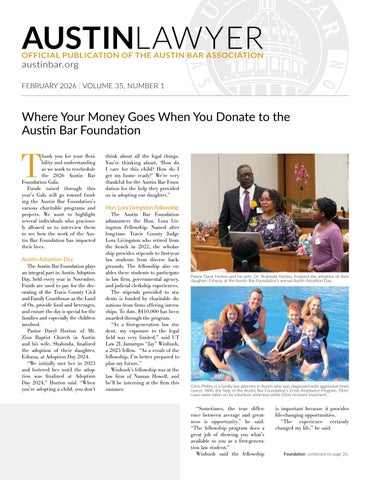
Pastor Daryl Horton of Mt. Zion Baptist Church in Austin and his wife, Shalonda, finalized the adoption of their daughter, Eshana, at Adoption Day 2024.
“We initially met her in 2023 and fostered her until the adoption was finalized at Adoption Day 2024,” Horton said. “When you’re adopting a child, you don’t
think about all the legal things. You’re thinking about, ‘How do I care for this child? How do I get my home ready?’ We’re very thankful for the Austin Bar Foundation for the help they provided us in adopting our daughter.”
Hon. Lora Livingston Fellowship
The Austin Bar Foundation administers the Hon. Lora Livingston Fellowship. Named after long-time Travis County Judge Lora Livingston who retired from the bench in 2022, the scholarship provides stipends to first-year law students from diverse backgrounds. The fellowship also enables these students to participate in law firm, governmental agency, and judicial clerkship experiences.
The stipends provided to students is funded by charitable donations from firms offering internships. To date, $410,000 has been awarded through the program.
“As a first-generation law student, my exposure to the legal field was very limited,” said UT Law 2L Jamarqus “Jay” Winbush, a 2025 fellow. “As a result of the fellowship, I’m better prepared to plan my future.”
Winbush’s fellowship was at the law firm of Naman Howell, and he’ll be interning at the firm this summer.


“Sometimes, the true difference between average and greatness is opportunity,” he said. “The fellowship program does a great job of showing you what’s available to you as a first-generation law student.”
Winbush said the fellowship
is important because it provides life-changing opportunities.
“The experience certainly changed my life,” he said.
Chris Philley is a family law attorney in Austin who was diagnosed with aggressive brain cancer. With the help of the Austin Bar Foundation’s Crisis Assistance Program, Chris’ cases were taken on by volunteer attorneys while Chris received treatment.
Pastor Daryl Horton and his wife, Dr. Shalonda Horton, finalized the adoption of their daughter, Eshana, at the Austin Bar Foundation’s annual Austin Adoption Day.
austinbar.org
austinlawyeronline.com
billy@austinbar.org
Austin Bar Association 712 W. 16th Street Austin, TX 78701

NEWS
Interested in Serving on the Austin Bar’s Board of Directors? Applications are now being accepted to serve on the Austin Bar’s Board of Directors. This is a great way to get involved in the legal community and make your voice heard. The deadline to apply is Feb. 27, 2026. To submit an application, please view the rules and and submit the form available at austinbar.org/bod-application. Voting will conclude on May 1.
Austin Bar app available for iPhone and Android. SOCIAL March 26 Equity Summit
FOLLOW instagram.com/theaustinbar
CONNECT https://www.linkedin.com/ company/austin-barassociation
WATCH vimeo.com/austinbar



ADDICTION & MENTAL HEALTH RESOURCES
24-Hour Suicide & Crisis Lifeline - 988 - call or text | Live chat: SuicidePreventionLifeline.org
Texas Lawyers’ Assistance Program (TLAP) - 1-800-343-8527
TLAP is a 24-hour confidential crisis counseling and referral program to help lawyers, law students, and judges with substance use and mental health issues.
Justice Mack Kidd Fund
The Austin Bar Foundation administers the Justice Mack Kidd Fund, which can provide financial assistance to individuals seeking treatment for depression or similar illnesses. Visit austinbar.org/?pg=justice-mack-kidd-fund to learn more.
Personal Crisis Assistance Program (PCAP)
The Austin Young Lawyers Association Foundation provides grants and/or peer support for individuals suffering from a personal crisis.
Contact Debbie Kelly: 512-472-0279 x 105
Sheeran-Crowley Trust
Administered through TLAP, the trust provides financial help to Texas attorneys, judges, and law students who need treatment for substance use, depression, and other mental health issues. Visit sheerancrowley.org to learn more.
Alcohol & Drug Abuse
Austin Drug & Alcohol Abuse Program - 512-454-8180
Alcoholics Anonymous - 512-444-0071
Cocaine Anonymous - 512-479-9327
Narcotics Anonymous Counseling - 512-480-0004
Psychiatric Emergencies
Emergency Screening in a Psychiatric Crisis 24/7 - 512-472-4357
Samaritan Center (provides professional counseling services on a sliding scale) - 512-451-7337

AUST INL AW Y ER AL A
L
OFFICIAL PUBLICATION OF THE AUSTIN BAR ASSOCIATION
AUSTIN BAR ASSOCIATION
Maitreya Tomlinson President
Judge Maya Guerra Gamble President-Elect
Sarah Harp Secretary
Ciara Parks Treasurer
Mary-Ellen King Immediate Past President
AUSTIN YOUNG LAWYERS ASSOCIATION
Jenna Malsbary President
Gracie Wood Shepherd President-Elect
Lena Proft Treasurer
Ben Evans Secretary
Emily Morris Immediate Past President
Austin Lawyer
©2026 Austin Bar Association; Austin Young Lawyers Association
EXECUTIVE OFFICES
712 W. 16th Street
Austin, TX 78701
Email: austinbar@austinbar.org
Website: austinbar.org
Ph: 512.472.0279
DeLaine Ward Executive Director
Debbie Kelly Associate Executive Director
Roslyn Warner Assistant Editor
Samantha McCoy Assistant Editor
Abigail Ventress Assistant Editor
Billy Huntsman Managing Editor
Austin Lawyer (ISSN #10710353) is published monthly, except for July/August and December/January, at the annual rate of $10 membership dues by the Austin Bar Association and the Austin Young Lawyers Association, 712 W. 16th Street, Austin, TX 78701. Periodicals Postage Paid at Austin, Texas. POSTMASTER: Send address changes to Austin Lawyer, 712 W. 16th Street, Austin, TX 78701.
Austin Lawyer is an award-winning newsletter published 10 times a year for members of the Austin Bar Association. Its focus is on Austin Bar activities, policies, and decisions of the Austin Bar board of directors; legislation affecting Austin attorneys; and other issues impacting lawyers and the legal professionals. It also includes information on decisions from the U.S. District Court for the Western District of Texas and the Texas Third Court of Appeals; CLE opportunities; members’ and committees’ accomplishments; and various community and association activities.
The views, opinions, and content expressed in this publication are those of the author(s) or advertiser(s) and do not necessarily reflect the views or opinions of the Austin Bar Association membership, Austin Bar Association board of directors, or Austin Bar Association staff. As a matter of policy, the Austin Bar Association does not endorse any products, services, or programs, and any advertisement in this publication should not be construed as such an endorsement.
Contributions to Austin Lawyer are welcome, but the right is reserved to select and edit materials to be published. Please send all correspondence to the address listed above. For editorial guidelines, visit austinbar.org in the “About Us” tab.

















Bob Weir (the Grateful Dead’s last remaining fulltime singer) recently passed away. It affected me deeply because the Dead have been part of my life since I was a child. In grade school, my father took my brother and me to meet Jerry Garcia in his hotel room after a show. That night, Jerry gave us a private tour of the Dead’s tour bus and lifetime backstage passes (that my brother and I promptly lost). As I grew older, I enjoyed attending shows by myself or with friends, especially the pre-show gatherings in the venue’s parking lot. At that time, I probably couldn’t aptly identify why I enjoyed those gatherings and the shows in a way that didn’t exist at other concerts. But, as John Mayer discussed while holding back tears at Bob’s memorial, the magic of Dead shows lay in the community of people who gathered for the shows and their connection with each other and the band.
Why Community Matters–Especially in Our Profession
MAITREYA TOMLINSON, AUSTIN BAR PRESIDENT
Whether it’s a Dead show or the legal profession, community matters, and the magic can lie within. Practicing law can often be a solitary pursuit. We spend many hours sitting alone, thinking, researching, planning, and drafting. But the profession itself depends on a community. From law firm offices, courtrooms, and chambers to bar associations and other professional organizations, the legal system depends on our collective participation and responsibility.
Community serves a practical purpose in our profession. Among other reasons, I became a lawyer because of the intellectual challenge. The law can be complex, time-consuming to learn, and constantly evolving. Especially as less experienced attorneys, we rely on colleagues to evaluate our work, share their expertise, and provide a more time-developed perspective. We also lean on them to answer questions when the rules, caselaw, or resources provide no assistance. Our profession depends on these everyday knowledge exchanges to maintain competence, achieve justice, and function smoothly.
Beyond these things, community helps promote ethical behavior. We have designed our profession

to be self-regulating, which means that the profession’s integrity depends on shared ethics and mutual accountability. When attorneys stay connected as a community through our peers, our bar associations, and other professional organizations, the community helps model proper ethics, naturally polices bad behavior, and minimizes the isolation that can enable unethical behavior. Among other things, community permits us space to ask tough questions and seek guidance when navigating our responsibilities to courts, clients, and fellow practitioners. Equally important is the human component. While we don’t want to admit it, legal work can be isolating and emotionally demanding. We routinely deal with conflict, stepping in the shoes of others to manage uncomfortable situations with significant consequences. Community offers something essential but often overlooked: support. It reminds us that we are not alone in managing our stress, that others share the same doubts, and that we all make mistakes. Community supplies the connection that helps overcome the perils fostered by the isolating nature of our work.
Lastly, community allows us to give back more efficiently. Orga-
nized legal networks allow us to educate the public and provide pro bono help in a timely and focused manner. Our community (though our colleagues’ generous efforts) also inspires us to give back and provides the resources for us to do so.
In the era of remote work, technological change, and increasing specialization, it is tempting to retreat into our professional silos. But we and our practices do not function well in isolation. Like those who experienced the community at a Dead show, the magic lays in our connection. Rest in peace, Bobby. AL
SAVE THE DATE
Equity Summit - March 26
1 - 5 p.m. with reception to follow CFCF
1700 Guadalupe Street
Golf Tournament - April 16
Shotgun start at 8 a.m.
Lions Municipal Golf Course 2901 Enfield Road
Bench Bar Conference - May 1
9 a.m. - 5:30 p.m.
Austin Country Club 4408 Long Champ Drive


New Members
The Austin Bar welcomes the following new members:
Tom Anson
Anna Barndt
Elijah Barrish
Maikieta Brantley
Ollin Collet
Marcus Crosby
Dennis Grebe
Jennifer Grunewald
Elissa Henry
Sarah Keathley
Yoonjeh Kim
Jeremy Krenek
Olivia Land
Jackson Olesky
Christian Rice
Adelina Sanchez
Michael Sulak
Ronald Sullivan
Justin Sun
Jonathan Woodward
Jinyi Yang




ON THE MOVE
Congratulations to Duggins, Wren, Mann & Romero (DWMR), which has joined the law firm of Balch & Bingham. Balch is a national, full-service firm with more than 240 attorneys in nine offices. The 21 attorneys joining from DWMR bring specialized knowledge in energy, environmental and tax law, including regulatory compliance, contested proceedings, and policy matters across the electricity, oil and gas, and renewable energy sectors.
Congratulations to Michael A. Boldt, who has joined Greenberg Traurig’s energy and natural resources practice group as a shareholder. Previously, Boldt was with the firm Eversheds Sutherland as the partner in charge of the Austin office and head of its state energy regulatory group.
Congratulations to Lauren Restino, who has joined Goranson Bain Ausley as an associate. Lauren practices family law. At SMU Dedman School of Law, she served as guardian and attorney ad litem for abused and neglected children through the W.W. Caruth, Jr. Child Advocacy Clinic. In 2024, Lauren was inducted into the State Bar of Texas Pro Bono Honor College.
Congratulations to Ethan Scroggins, who has joined Bollier Ciccone Stinson in its Family Law Practice Group. Ethan is a graduate of Baylor Law, where





was an accomplished member of the school’s mock trial program, competing on several teams and earning the title of barrister.
KUDOS
Congratulations to Watson Bowen, who has been promoted to partner in Shackleford, McKinley & Norton’s Austin office. Watson is a member of the firm’s aviation practice group and counsels individual aircraft owners and operators, as well as large, multinational corporations in the purchase and sale of private jets. He also assists with tax and general risk management issues, as well as Federal Aviation Administration and Department of Transportation regulatory compliance matters.
Congratulations to Kristiana Butler, who has been promoted to partner at Goranson Bain Ausley. Kristiana is certified in family law by the Texas Board of Legal Specialization. She practices divorce law for high-net-worth individuals, business owners, and professionals, as well as facilitates the collaborative divorce process.
Congratulations to Angelica Rolong Cormier, who has been promoted to partner at Goranson Bain Ausley. Angelica practices divorce law and specializes in cases involving children. She helps her clients with coparenting plans, cohabitation agreements, contested and uncontested property division, and financial plans.
Congratulations to Carl Galant, who has been elected managing partner of McGinnis Lochridge. Carl also leads the firm’s electric energy practice group. He represents clients before the Texas Legislature and state and local regulatory bodies, in agency rulemakings and contested case proceedings, in state and federal courts, and in corporate governance and transactional matters.
Congratulations to Jason LaFond, counsel at Scott Douglass & McConnico, who has been appointed to the Texas Pharmaceutical Initiative Governing Board. The board has been tasked with creating a business plan to procure cost-effective drugs and medical supplies for public employees.
Congratulations to R. Adam Swick, who has been promoted to partner in Akerman’s Austin office. Swick focuses on bankruptcy and complex commercial litigation in the firm’s Bankruptcy and Reorganization Practice Group. He has filed numerous Chapter 15 cases that have resulted in influential opinions and holds leadership positions in the American Bankruptcy Institute and the International Insolvency Institute.
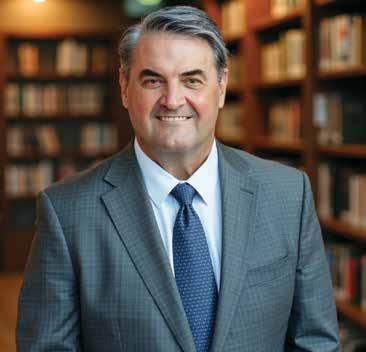
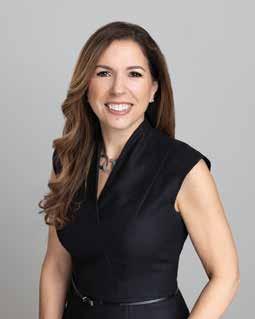
TOP (from left): Boldt, Bowen, Butler, Cormier, Galant, LaFond. BOTTOM (from left): Restino, Scroggins, Swick.


ONLINE PARALEGAL CERTIFICATE PROGRAMS
Third Court of Appeals Celebrates Service Milestones
As the Third Court of Appeals closed in on yearend and Thanksgiving, it had a time of celebration for those employees who have served the court loyally and faithfully for many years. The court began the Day of Celebration of Public Service in 2024 to celebrate employees who have been with the court for five, 10, 15, 20, and, for some, even 25 years.
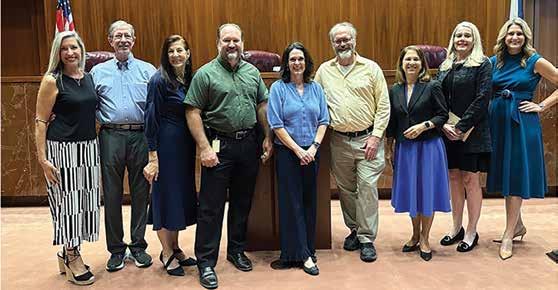
On Nov. 18, 2025, the court had the honor of celebrating three amazing public servants who crested new service terms with the court:
Jenny Brannen, staff attorney to Justice Gisela Triana, has served the court for 15 years. Her service is invaluable to the court. She has served in several roles and for numerous justices, but her wisdom and thorough analysis have remained her North Star. Thank you, Jenny.
Jeff Kyle, the court clerk, has served the court with his calm demeanor and lovely sense of humor
for more than 20 years. Many may think that is crazy, but those of us at the Third Court are so very grateful for his leadership and steady hand.
Finally, but certainly not least, David Dubose, staff attorney to Chief Justice Darlene Byrne, has been with us for more than 25 years. He actually left the court and
was silly enough to rejoin this motley crew. We are so glad he did. He is a treasure of wisdom and humor. Hats off to all three of them for their service to Texas! AL



(L-R): Justice Gisela Triana, Justice Woodie Jones, Chief Justice Darlene Byrne, Jeff Kyle, Jenny Brannen, David DuBose, Justice Karin Crump, Justice Rosa Theofanis, and Justice Chari Kelly.




Because apparently our nervous systems didn’t get the memo that we’re supposed to be “professionals.”
Okay, let’s be honest— stress and lawyers go together like briefs and deadlines, pb&j, or better yet, cake and coffee. The National Jurist calls being a lawyer “the most stressful occupation in America.” The American Bar Association explains why: “lawyers are expected to perform at a high level, make critical decisions, and meet tight deadlines—all while juggling demands from clients, colleagues, and the court system.” It’s no wonder burnout, anxiety, and depression are common.
Lawyers are constantly faced with stress—it comes with the job, and, as a result, we try our hardest to prioritize wellness with the very little free time we seem to find for ourselves. Between competing deadlines, working for multiple partners or clients, juggling billable hours, CLE credits, and having a personal life, it’s no wonder we’re constantly on edge. Add in the pressure to be perfect, and it’s easy to feel like you’re drowning in expectations. I even procrastinated writing this article because I had so many ideas swirling that I didn’t know where to start. Should I talk about my stress management disasters? Or dive into the science of stress and how it affects our bodies? Then it hit me: that indecision and overwhelm? That’s the stress talking, which is exactly what we need to discuss.
5 Tips for Managing Stress from a Legal Yogi1
BY VANISHA WEATHERSPOON, NORTON ROSE FULBRIGHT

Your Body: The Ultimate Whistleblower
Did you know that your body actually holds stress? No, this is not something they teach in law school. I learned this through years of yoga and during my yoga teacher training. Ever notice how your hips or upper back feel tight after a brutal week? That’s not just bad posture—it’s your body storing stress.
And it goes deeper than muscle tension. Stress affects every system in your body. Your muscles ache like you’ve been in a fight with particularly aggressive opposing counsel. Your breathing gets shallow. Your heart races. Your hormones go haywire, flooding your system with cortisol. Your stomach turns into a horror movie audition. Your nervous sys -
tem gets stuck in fight-or-flight mode, and suddenly your inbox feels like a threat.
And for those of us who menstruate, stress can throw everything off—from your cycle to your mood. Instead of letting stress run the show, let’s get proactive.
Here are five tips that help me manage stress—especially during those especially busy seasons when everything feels like too much.
1. Focus on one thing at a time Multitasking is a myth. I used to think I could juggle everything at once—until I found myself crying in my office at 9 p.m., wondering how I got there. Now, I pick one task—JUST ONE. I finish it, then move on. It sounds simple, but it’s powerful. Your brain can only ef-
fectively handle one complex task at a time, despite what we’ve been told about multitasking being a superpower. Give it a break.
2. Put everything on your calendar I’m currently reading Indistractable, and it’s changing how I work. The idea is to schedule everything—yes, everything. Not just meetings and deadlines, but also lunch, workouts, conversations with your partner, and even downtime. If it matters, it goes on the calendar. Otherwise, it won’t happen, and stress will fill that vacuum.
3. Move your body (because Elle Woods was right about everything)
As the great Elle Woods once said, “Exercise gives you endor-
phins. Endorphins make you happy.” This is also scientifically accurate for stress management. Movement is a reset button for your nervous system. And no, you don’t need to train for a marathon (or in my case, the MS 150 at the start of each year). Some days it’s a proper workout. Other days it’s dancing to your favorite song in your office with the door closed. Both count. If you don’t have a go-to song that lifts your spirits, now’s the time to find one. Mine is “Stop” by the Spice Girls… you’re welcome.
4. Actually, take breaks (revolutionary, I know)
This could also be called “Remember That Fun Exists.” Don’t neglect the things that make you feel like a human being instead of a billing machine. What can you go do that is far away from your laptop and actually brings a smile to your face? Step away from your laptop. Read something non-legal. Call a friend. Go outside. Even if you’re measuring your day in six-minute increments, you can still take micro-breaks. One song. One text. One deep breath. It all adds up.
Stress doesn’t have to be your default setting. … We get to choose how we show up and how we respond to whatever comes our way, and it is that choice that might be the most important one you make today.
5. Know what sets you off
The best strategy is knowing your patterns before they knock you flat. What situations, people, or deadlines consistently send you into stress mode? For me, it’s feeling behind. When I recognize that, I can break big projects into smaller steps and build in buffer time. Your body gives you clues— tight shoulders, headaches, irritability. Pay attention before you hit burnout.
Conclusion
While I won’t pretend that following these five tips will eliminate stress from your life completely, what I am saying is that stress doesn’t have to be this thing that is just a part of your life. Stress doesn’t have to be your default setting, and
these tools can help you manage it. We get to choose how we show up and how we respond to whatever comes our way, and it is that choice that might be the most important one you make today. Your body is keeping track of how you treat it, and, unlike opposing counsel or even those cranky partners that you wish would just retire already, it is actually on your side. It might be time to return the favor.
The next time stress shows up uninvited to your day, remember: you’re the one in charge of how this story ends. AL
ENDNOTES
1 A term I use for someone in a demanding job trying to prioritize wellness without sacrificing their precious free time.
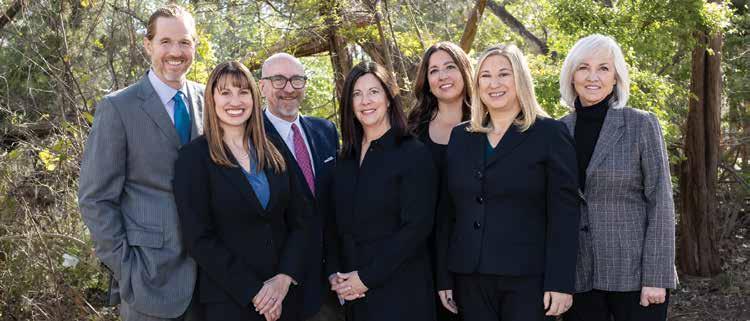
partners:
Keith D. Maples
Andrea (Andi) St. Leger
Judith Bryant
Sam D. Colletti
Coleen Kinsler
Hillery R. Kaplan
Leigh de la Reza
ASSOCIATE ATTORNEYS: Emily Tesmer, Ryan Curington, Katie Valle
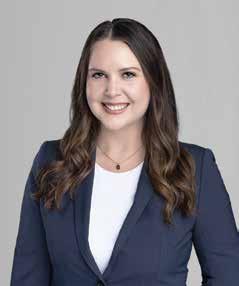
Vanisha Weatherspoon is a fifth-year commercial real estate associate at Norton Rose Fulbright US LLP in the Austin office. She is also a 500-hour Registered Yoga Teacher and has been teaching public classes since 2019. Vanisha blends mindfulness with legal practice and hosts a wellness podcast called The Legal Yogi.

Each year, the presidents of the Austin Bar Association and the Austin Young Lawyers Association (AYLA) are invited to speak at the Leadership Academy Orientation. This year, I was asked to discuss leading with empathy. As I reflected on my development as a leader and how I incorporate compassion into my professional style, I immediately thought of my friends—many of whom are also my colleagues. Since my undergraduate years, these individuals have been the backbone of my perseverance.
My perspective on leadership was forged during a period of significant personal adversity. During my second year of high school, one of my parents began struggling with severe mental health issues. I navigated college while these episodes fluctuated, managed by a family culture of silence and a lack of understanding of the underlying illness. While the situation stabilized somewhat during law school, the persistent anxiety regarding the next crisis remained.
Everything changed after graduation. As I navigated my first years as a first-generation attorney, my family member’s episodes intensified, involving multiple near-fatal suicide attempts and prolonged hospitalizations. Simultaneously, a second family member developed mental health challenges. I found myself flying across the country to locate them, balancing a demanding legal workload with the heavy realiza-
My Path to Leading with Empathy
JENNA MALSBARY, AYLA PRESIDENT

tion that I was the only one in my family positioned to manage these crises. Today, I am profoundly grateful that both family members have remained healthy for over seven years following successful treatment.
These trials defined my journey toward empathetic leadership. What I remember most is the extraordinary kindness and compassion my friends, colleagues, and employers extended to me. Their grace allowed me to persevere without the added fear of professional instability. I was fortunate to work in environments that offered the flexibility necessary to care for my family. I will never forget one supervisor who remained patient and kind while I billed minimal hours and searched for a missing relative—all while she was undergoing cancer treatment herself. Her support was life-changing for me and, quite literally, life-saving for my family.
I also remember the colleagues who sent flowers to the motel where I was staying, and those who brought comfort to me during the darkest days. These
actions provided a blueprint for how to lead with a heart of empathy. My colleagues modeled how to treat others facing tumultuous situations. Over the years, I have gathered these demonstrations of grace and compassion, incorporating them into my own leadership toolkit.
These experiences are why I prioritize sending check-in texts and cards, and why I strive to understand the difficult decisions others must make. I choose to offer support because I know its value.
My hope for you is that you are shown the same grace and kindness I received when navigating my most difficult chapters. If you find yourself supervising someone who needs time, support, or the grace to help themselves or a family member, I urge you to choose kindness. It can change— or even save—a life. Each act of empathy has the potential to create a ripple effect that improves our practice and strengthens our profession. AL
UPCOMING EVENTS
THUR, FEB. 19
Big Law Social Hour
5:30 - 7 p.m. Fareground 111 Congress Avenue
RSVP at AYLA.org
Sponsored by The Lewis Group
Three years and 2,000 miles apart, we each reached the same crossroads. Both of us worked as public defenders—Mindy in California, Lindsay in Colorado— where success was measured in jury verdicts, motion wins, and sheer survival in a relentless, high-stakes system.
Over time, our definitions of success changed. For different reasons—ethical concerns, motherhood, and the cumulative stress and anxiety of public defense—we found ourselves increasingly out of alignment with the lives we wanted.
Each of us eventually took the leap into owning our own law firms. For the first time, our goals were truly ours to define: how much we worked, how much we earned, how many cases we took, and even how we spent our time on any given day. We both came to the same realization—building the professional and personal lives we wanted required intentional, values-driven goal setting.
Goal Setting in the Legal Profession
The legal profession demands precision, discipline, and longterm thinking in our day-to-day work. However, many lawyers find themselves moving from one stage of their career to the next without a structured plan for where they want to go. Whether navigating the pressures of billable hours, business development, leadership responsibilities, or personal well-being, lawyers

benefit enormously from intentional and well-designed goals.
Why Goal Setting Matters
Goal setting is not merely a productivity exercise; it is a strategic practice that helps lawyers align their daily efforts with broader professional and personal objectives. In an environment dominated by urgent demands, goal-setting protects what is important—offering clarity around priorities, a more manageable workload, and a stronger framework for decision-making.
Before tactics and frameworks, goal setting is most powerful when grounded in a clear vision. In our coaching we use structured visioning exercises to help lawyers realize and articulate what they want their professional lives to look like in the future, not only in terms of achievement, but also impact, fulfillment, and sustainability. This vision becomes a reference point against which individual goals can be evaluated and refined.
Different Types of Goals
Effective goal setting begins with recognizing that not all goals serve the same function. Lawyers often default to outcome-based goals such as making partner, hitting a revenue target, or winning a major case. While these goals are important, they are most effective when paired with process-oriented goals that focus on the behaviors and habits required to achieve them. Process oriented goals focus on the journey and
Goal Setting for Lawyers: A Useful Framework for Sustainable Success
LINDSAY GOLDFORD GRAY AND MINDY GULATI
creating habits, such as setting aside two hours each week for writing briefs, or responding to client communications within two business days.
The SMART Goals Framework
One of the most widely used and effective tools highlighted in the presentation is the SMART goals framework. SMART goals are:
• Specific: Clearly defined so there is no ambiguity about what success looks like.
• Measurable: Trackable through concrete indicators or milestones.
• Achievable: Ambitious yet realistic, given available resources and constraints.
• Relevant: Aligned with personal values, professional priorities, and long-term objectives.
• Time-Based: Anchored to a clear deadline to create urgency and momentum.
For lawyers, applying the SMART framework helps translate broad intentions, such as “grow my practice” or “improve work-life balance,” into actionable commitments. A SMART goal, such as “I will present one CLE per quarter this year” or “I will not respond to texts or emails after 5 p.m. for the next three months” forces clarity and reduces the likelihood of procrastination or overcommitment.
Don’t Fall into the Traps
Even well-crafted goals can stall when common obstacles arise. Lawyers often cite lack of time, competing priorities, perfectionism, and fear of failure as barriers to follow-through.
Progress becomes more sustainable when large goals are broken into small, manageable steps that fit within demanding schedules. Reframing perfectionism as
progress and prioritizing consistent, imperfect action over ideal conditions also helps maintain momentum. Finally, identifying and challenging unhelpful internal narratives allows lawyers to replace them with more constructive, evidence-based thinking.
Accountability is Where It’s At!
Finally, accountability is essential. Lawyers are accustomed to external accountability through clients, courts, and colleagues, but personal and professional goals often lack similar structures. Creating accountability through peer check-ins, mentors, coaches, or regular self-reviews or tracking helps maintain momentum and course-correct when necessary.
Conclusion Goal setting, when done thoughtfully, is not about adding more to an already full plate. Instead, it is about ensuring that effort is directed toward what matters most. By using frameworks, addressing barriers head-on, and committing to accountability, lawyers can design careers that are not only successful by external measures, but also intentional, resilient, and personally meaningful. AL
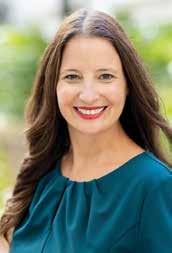
Lindsay Goldford Gray and Mindy Gulati are leadership coaches and advisors to law firms and corporations. They are the co-founders of Safra Leadership and co-hosts of the podcast Take the Lead, Change the Game. Learn more about Lindsay at lindsaygoldfordgray.com, about Mindy at Fundamental Advisory (www.fundamentaladvisory.com), explore their work at Safra Leadership (safraleadership.com), or listen to the podcast on YouTube (youtube.com/@ SafraLeadership).
AYLA Spotlight
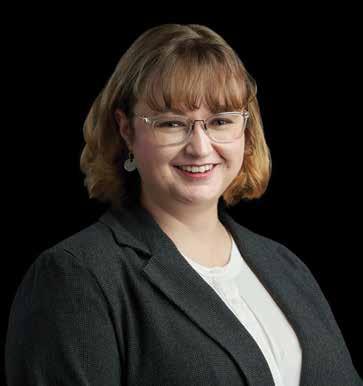
Toni
Rask
Tell us a little bit about yourself and your law practice.
I’m a newer attorney with a lot of life experience under my belt— it makes me flexible and resilient.
I’m a former elementary school teacher, avid birder, puzzle and board game enthusiast, and meditation novice. I work in the water practice group at Lloyd Gosselink Rochelle & Townsend where most of my practice is focused on surface water issues—water quality, water supply development, impoundment, permitting, and enforcement, but everything is so nuanced that I’ve never worked on the same issue twice.
How long have you been involved in AYLA and what has been your best AYLA experience so far?
I’ve been involved with AYLA since I moved to Austin right after law school! (Go Coogs!) I particularly loved being involved in AYLA’s Leadership Academy. It was such a great experience getting to bond with members of the AYLA community, esteemed public servants, and serve the le -
gal community in ways I couldn’t have imagined.
What was your childhood dream job?
Four years old? A Power Ranger.
At eight? A lawyer and the owner of an NFL team.
At thirteen? A writer of adventure and science-fiction novels!
Always listen to your 8-year-old self.
What are some of things you enjoy most about living in Austin?
Just a few, I suppose. I enjoy that I’m always close to a park or outdoor space because Austin and the surrounding communities, for now at least, prioritize greenspace and access to nature. Breakfast tacos: I’m from Minnesota originally—which you’ll find out after talking to me for about five minutes, dontcha know, so breakfast tacos every day. Record shops. Comedy clubs. The “Lake.”
What’s your best piece of advice for young attorneys?
Learn how to say no, when to

say no and knowing the difference between the two. Prioritize your commitments and don’t stretch yourself too thin. If it’s important to you to grow your commitment to your legal community through service to the Bar, great! If you want to focus on industry organizations focused on the area of law that you practice, very cool! Personal life— church, PTA, soccer league—calling you? Go for it! Just know how to prioritize what’s most important to where you want to grow and when to say no to an opportunity that may seem good but just puts too much on your plate. Learning
how to say no, however, isn’t the same as having the tact to know when to say no. AL


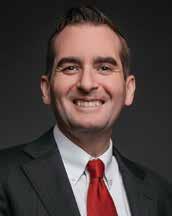
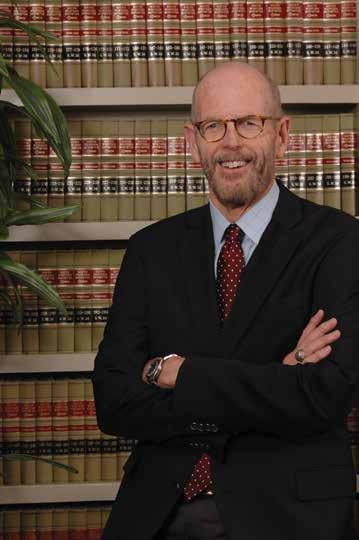
Ari Cuenin is a partner at Stone Hilton, where he litigates complex government disputes. He has presented more than 30 arguments in state and federal courts, and has been involved in more than a dozen U.S. Supreme Court cases for the State of Texas.
SOVEREIGN IMMUNITY:
Split panel allows voting-law challenges to proceed, rejects others.
La Unión del Pueblo Entero v. Nelson (5th Cir. No. 22-50775).
The Fifth Circuit addressed sovereign immunity, standing, and Ex parte Young in consolidated challenges to Texas’s Election Integrity Protection Act of 2021 (S.B. 1). Multiple advocacy organizations sued state officials, alleging that dozens of S.B. 1 provisions violated the Constitution, the Voting Rights Act (VRA), and other federal statutes. Texas’s Attorney General and Secretary of State appealed the district court’s denial of sovereign immunity as to multiple Section 1983 claims.
The panel first held it had collateral-order jurisdiction, reaffirming that a state may immediately appeal a denial of sovereign immunity even when immunity would not dispose of the entire case. Relying heavily on Mi Familia Vota v. Ogg, 105 F.4th 313 (5th Cir. 2024), the court rejected arguments that interlocutory review is available only when all claims would be dismissed. The court also exercised pendent appellate jurisdiction to review traceability and redressability because those standing inquiries substantially overlap with the
Ex parte Young analysis. Finally, the court conducted a provision-by-provision enforcement analysis, determining whether each state official had a sufficient enforcement connection to strip immunity. The court held that the Secretary of State is a proper Ex parte Young defendant for numerous provisions that she operationalizes through mandatory duties—such as voter-roll verification, registrar sanctions, ballot-by-mail forms, and voter-assistance documentation—because prescribing required forms and procedures can “compel or constrain” local officials. Other provisions lacking such a connection remained immunity-barred. The panel majority concluded that functions like form-design authority and compliance oversight can establish enforceability even absent prosecutorial power. Judge Oldham, however, dissented in part, and would have found that the requisite enforcement authority was missing altogether.
HEALTHCARE -- Court rejects
hospitals’ challenge to Medicaid rule on jurisdictional grounds.
Baylor All Saints Medical Center v. HHS (5th Cir. No. 24-10934). The Fifth Circuit reversed a decision vacating an HHS regulation that altered how Disproportionate Share Hospital (DSH) payments are calculated for hospitals in states that rely on Medicaid demonstration projects rather than Medicaid expansion. Texas hospitals challenged a 2023 HHS rule excluding patients covered by Texas’s uncompensated-care demonstration pool from the Medicaid fraction used to compute DSH payments. The district court reached the merits and invalidated the rule; the Fifth Circuit held the court lacked subject-matter jurisdiction.
Judge Jones’s opinion reaffirmed the strict Medicare channeling doctrine. Under 42 U.S.C. §§ 405(g), 405(h), and 1395ii, virtually all claims “arising under” Medicare must be presented to the agency and proceed through the Provider Reimbursement Re -

view Board (PRRB) before judicial review. The hospitals had not submitted cost reports or received Notices of Program Reimbursement reflecting the challenged rule. Because presentment to the agency was nonwaivable, the district court could not exercise jurisdiction—even though the hospitals framed their suit as a pre-enforcement challenge to a regulation. As Baylor illustrates, hospitals and healthcare litigators should anticipate jurisdictional dismissals for pre-enforcement Medicare challenges and plan strategically around cost-reports, PRRB appeals, and judicial review.
STANDING -- Fifth Circuit rejects early challenge to prohibited-country land buys.
Wang v. Paxton (5th Cir. No. 25-20354). The Fifth Circuit affirmed dismissal of a pre-enforcement constitutional challenge to Texas S.B. 17, holding that plaintiff Peng Wang lacked Article III standing. S.B. 17 restricts the acquisition of Texas real property by
individuals “domiciled” in designated foreign countries, including China. Wang, a Chinese citizen residing in Texas on an F-1 student visa, argued that the statute was unconstitutional. The panel concluded that Wang failed to allege an injury-in-fact.
First, the court held S.B. 17 did not proscribe Wang’s conduct because he is not domiciled in China under the statute’s plain definition. A person’s domicile is the person’s “true, fixed, and permanent home” to which he intends to return. Wang had lived in Texas for sixteen years, intended to remain after graduation, and admitted he had no plans to return to China. Visa-related requirements to depart the United States upon expiration did not establish intent to return to China, and extrinsic definitions of “domicile” were irrelevant.
Second, Wang failed to show a credible threat of future enforcement. The Texas Attorney General repeatedly and unequivocally disavowed applying S.B. 17 to Wang, and no enforcement steps had

been taken since the law’s effective date. The court emphasized that, outside the First Amendment context, plaintiffs receive no presumption of enforcement
where officials expressly renounce prosecution. As Wang highlights, Fifth Circuit plaintiffs face a high bar for pre-enforcement challenges in non-speech cases. AL

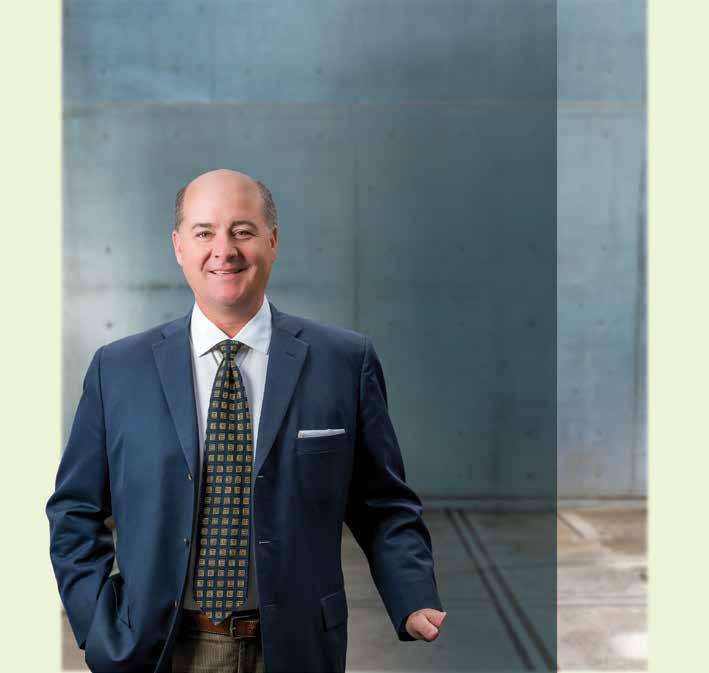
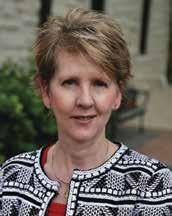
Laurie Ratliff is a former staff attorney for the Third Court of Appeals. She is boardcertified in civil appellate law by the Texas Board of Legal Specialization and owner of Laurie Ratliff LLC.
The following are summaries of selected civil opinions issued by the Third Court of Appeals during November and December 2025. The summaries are an overview; please review the entire opinion. Subsequent histories are current as of January 7, 2026.
>FAMILY LAW:
Court reverses order that converted separate property to community.
Cruz v. Bazan, No. 03-24-00478CV (Tex. App.—Austin Nov. 14, 2025, no pet. h.) (mem. op.). Wife contended a deed that conveyed certain property from “Nicholas Cruz, a single man, to Nicholas Cruz, a married man” converted husband’s separate property to community. The trial court awarded the property to wife in the
divorce. The presumption that property acquired during marriage is community property is inapplicable in summary-judgment proceedings, the court of appeals noted. The inception of title doctrine fixes the character of property. Thus, the property remained husband’s separate property unless the deed changed the characterization. Whether property acquired during marriage is separate or community turns on the funds used to purchase it. Wife’s summary-judgment evidence did not conclusively show the source of the consideration identified in the deed. Accordingly, the trial court erred in awarding wife the property. The court reversed and remanded.
SPECIAL APPEARANCE:
Court reverses and dismisses VRBO rental dispute.
McCready v. Mayor, No. 03-2300845-CV (Tex. App.—Austin Nov. 26, 2025, no pet. h.) (mem. op.). Texas residents (Mayors) sued a California resident (McCready) for breach of contract regarding McCready’s California rental property that Mayors could not use because of the 2020 lockdown. McCready refunded only the security deposit. The trial court denied McCready’s special appearance. The long-arm statute establishes jurisdiction over a nonresident doing business in Texas by contracting by mail or otherwise with Texas residents if either party is to perform in Texas. Specific jurisdiction exists if a defendant purposefully avails
itself of the privileges of conducting activities in Texas and suit arises from those activities. The court of appeals held the evidence negated specific jurisdiction. The agreement involved a California property owned by a California resident. That payment came from, and the deposit returned to, Texas did not establish purposeful contact with Texas. The court reversed and dismissed.
ORIGINAL PROCEEDING:
Court grants mandamus relief in forcible detainer suit.
In re 705 Sunrise, LLC, No. 0325-00776-CV (Tex. App.—Austin Dec. 12, 2025, orig. proceeding) (mem. op.). During the parties’ divorce, Relator filed a forcible detainer suit to evict wife. Wife contended husband defaulted on a note to orchestrate foreclosure to allow Relator to purchase the property. Relator challenged county court’s abatement of the forcible detainer suit in favor of wife’s district-court title dispute. The displaced party in a forcible detainer suit can bring a separate suit in district court to determine title. Wife argued that the abatement was appropriate because the issues of possession and title were intertwined. According to the court of appeals, if foreclosure pursuant to a deed establishes a landlord-tenant at sufferance relationship, the trial court has an independent basis to determine possession without addressing title. Wife’s complaints about the foreclosure do not implicate title issues that must be decided first.
The court granted mandamus relief.
TRIAL PROCEDURE: Court affirms summary judgment granted on deemed admissions.
Affirmation Holdings, LLC v. Clear Property Mgmt., LLC, No. 03-25-00112-CV (Tex. App.—Austin Dec. 19, 2025, no pet. h.). Clear filed a motion for summary judgment in its breach-of-contract suit based on Affirmation’s deemed admissions. Affirmation filed a response and a motion to withdraw the deemed admissions but offered no evidence to support its failure to answer the admissions. The trial court denied the motion to withdraw and granted summary judgment. According to the court of appeals, to prevail on summary judgment based solely on deemed admissions the movant must show opposing counsel’s flagrant bad faith or callous disregard for the rules. Here, Affirmation knew the deadline to respond, missed it, did not respond to the admissions after receiving the motion based on the deemed admissions, and sent an attorney unfamiliar with the case to the hearing. The court concluded counsel acted with callous disregard and affirmed. AL

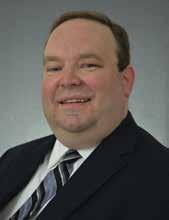
or any of the individual justices on the Court.
The following is a summary of selected criminal opinions issued by the Third Court of Appeals from June 2025. The summary is an overview; please review the entire opinions. The subsequent history is current as of January 6, 2026.
>COURT COSTS – INDIGENCY:
Trial court did not abuse its discretion by ordering indigent defendant to pay court costs at later date.
Cruder v. State, No. 03-24-00328CR (Tex. App.—Austin June 5, 2025, no pet.) (mem. op., not designated for publication). Cruder was convicted of driving while intoxicated. On appeal, in addition to challenging the sufficiency of
the evidence, Cruder asserted that the trial court erred by assessing costs against him. Specifically, he argued that the trial court, despite determining multiple times that he was indigent, ordered that he pay $355 in court costs. The appellate court concluded that the order, which was announced during sentencing, was not an abuse of discretion. Article 42.15 of the Code of Criminal Procedure provides that if the court determines that the defendant does not have sufficient resources or income to immediately pay all or part of the fine and costs, the court can require the defendant to pay costs later. That is what occurred here. At the punishment hearing, the trial court inquired whether Cruder needed time to pay his court costs, and Cruder requested thirty days. The trial court gave Cruder additional time and ordered at the hearing and in its judgment that the fees be paid 110 days from the date of his sentencing. The court concluded: “Given that the trial court ordered payment at a later date as authorized by article 42.15, that Cruder did not object at trial to the imposition of costs, and that the trial court gave Cruder significantly more time than he requested in order to pay the costs, we would not conclude that the trial court abused its discretion by ordering Cruder to pay costs.” Additionally, the court observed that under article 43.035, a defendant may ask a trial court to reconsider the imposition of fines and costs if he “has difficulty paying the fine and costs in compliance with the judgment”


is
is
and that the trial court is required and retains jurisdiction to “hold a hearing to determine whether that portion of the judgment imposes an undue hardship.”
TRIAL COURT JURISDICTION – REVOCATION PROCEEDINGS: Trial court did not lose jurisdiction over revocation proceedings during pendency of habeas appeal.
Lopez v. State, Nos. 03-23-00380CR & 03-23-00381-CR (Tex. App.—Austin June 11, 2025, no pet.) (mem. op., not designated for publication). Lopez was placed on deferred-adjudication community supervision after pleading guilty to multiple felony offenses. The State subsequently filed motions to adjudicate Lopez’s guilt. Lopez filed an application for writ of habeas corpus challenging the voluntariness of his guilty pleas, which the trial court denied. Lopez moved for a stay of the adjudication proceedings pending appellate review of the denial of his requested habeas relief, which the trial court also denied. On appeal, Lopez asserted that the trial court erred by not granting his motion to stay the adjudication proceedings pending the resolution of his habeas appeal. In his view, the trial court did not have jurisdiction because of article 11.32 of the Texas Code of Criminal Procedure, which provides that “[w]hen the return of the writ has been made, and the applicant brought before the court, he is no longer detained on the original warrant or process, but under the author-

ity of the habeas corpus.” Lopez argued that because Article 11.32 “contrasts ‘the authority of the habeas corpus’ with ‘the original warrant or process,’” the statute required the trial court to stay the adjudication proceedings until his habeas appeal was decided. The appellate court disagreed, observing that “[a] habeas corpus proceeding has always been regarded as separate from the criminal prosecution” and that “[t]his distinction remains when the habeas applicant invokes the trial court’s habeas jurisdiction during the pendency of the State’s motion to revoke probation.” For this reason, the court concluded that the trial court retained jurisdiction over the revocation proceedings during the pendency of Lopez’s habeas appeal.
SPEEDY TRIAL: Balance of Barker factors weighed against finding speedy-trial violation.
State v. Uhl, 717 S.W.3d 117 (Tex. App.—Austin 2025, pet. ref’d). In a case that provides a very thorough analysis of the Barker speedy-trial factors, the trial court found that Uhl’s right to a speedy trial had been violated following a nearly six-year delay between his arrest and the hearing on his speedy trial motion. The appellate court reversed, concluding that although the lengthy delay weighed in Uhl’s favor, his responsibility for the delay, his failure to timely assert his right to a speedy trial earlier in the proceedings, and the absence of prejudice weighed against him. AL


Zak Hall is a staff attorney for the Third Court of Appeals. The summaries that follow represent the views of the author alone and do not reflect the views of the Court
Anji Maddox
October, November & December 2025 Jury Trials
District And County Court Only
BY VELVA PRICE, TRAVIS COUNTY DISTRICT CLERK
OCTOBER
CIVIL
Alta Mensa, LLC d/b/a Alta Towers Advisors and Andrei Duta v. Zeep, Inc.
Cause No.: D-1-GN-23-000306
Judge: Catherine Mauzy, 419th District Court
Dates: Oct. 6-8, 2025
Attorneys:
Plaintiffs: Russell Horton, George Brothers Kincaid & Horton, LLP (Austin)
Defendant: Adam Schiffer, Brown Rudnick, LLP (Houston)
Summary: Plaintiffs sued Zeep, Inc., claiming breach of contract arising out of a broker agreement. Plaintiffs claimed that despite identifying a buyer, Defendant refused to pay the contractually obligated success fee to Plaintiffs. A unanimous jury found that the defendant failed to comply with the agreement. (The defendant stipulated to damages prior to the jury trial.)
Arielle Carrara v. Ronald J. Marble, Ind. and Progressive County Mutual Insurance Company
Cause No: C-1-CV-21-004574
Judge: Todd Wong, County Court at Law #1
Dates: Oct. 20-21, 2025
Attorneys:
Plaintiff: Jose A. Chapa, Jr., Jose A. Chapa Law Firm, PLLC (McAllen)
Defendants: Progressive-Brett Payne, Walters, Balido & Crain, LLP (Austin)
Summary: On or about June 2020, Plaintiff was rear-ended by the defendant, Ronald Marble, after she stopped at a red light. A unanimous jury awarded the following damages: Past physical pain - $10,000; future physical pain - $0; past physical impairment - $0; future physical im-
pairment - $0; past reasonable expenses of necessary medical care - $37,441.92; past mental anguish - $0; future mental anguish - $0. (Plaintiff had settled with Defendant Marble. Defendant Progressive was dismissed after the jury verdict because the plaintiff’s total damages did not exceed the settlement credit of $100,000.)
In RE Commitment of Michael Bruce Ortega
Cause No.: D-1-GN-24-009741
Judge: Bob Perkins, 390th District Court
Dates: Oct. 20-23, 2025
Attorneys:
State of Texas: Sarah Waller, Special Prosecution Unit (Huntsville)
Defendant: Ugochukwu Olike, State Counsel for Offenders (Conroe)
Summary: State of Texas filed a civil commitment action pursuant to Texas Health and Safety Code Chapter 841 against Michael Ortega, requesting that he be found to be a sexually violent predator and committed for treatment and supervision. The jury found beyond a reasonable doubt that Michael Ortega was a sexually violent predator.
CRIMINAL
State of Texas v.
Julian Caldwell
Cause No.: C-1-CR-25-206013
Judge: Kim Williams, County Court at Law #9
Dates: Oct. 6-7, 2025
Attorneys:
State of Texas: Bailee Beilman
Defendant: George Lobb (Austin)
Summary: The state charged the defendant, by information, with making a terroristic threat to cause fear of imminent bodily injury. The jury found the defendant not guilty.
State of Texas v. Brandon Anthony Donald Cause No.: D-1-DC-24-204321
Judge: Melissa Goodwin (Visiting Judge)
Dates: Oct. 6-9, 2025
Attorneys:
State of Texas: Clayton Myers
Defendant: Michael Watson (Austin)
Summary: The defendant was indicted for committing the offense of assault/aggravated assault by intentionally, recklessly, and knowingly causing bodily injury to the victim by shooting the victim in the chest and legs with a deadly weapon. The defendant asserted justification by self-defense. After an Allen charge was issued, a mistrial was declared.
State of Texas v. Jenner Ramirez Cause No.: D-1-DC-25-904083
Judge: Chantal Eldridge, 331st District Court
Dates: Oct. 6-9, 2025
Attorneys:
State of Texas: Cindy A. Izquierdo/John Castro
Defendant: Raymond Espersen (Austin)
Summary: The defendant was indicted for the offenses of sexual abuse of a child victim under 14, indecency with a child - sexual contact, and aggravated sexual assault of a child. The defendant was convicted of two counts of aggravated sexual assault of a child and one count of indecency of a child by contact. The defendant was found not guilty on a separate count of indecency with a child by contact. The jury sentenced the defendant to 99 years for each of the aggravated sexual assault of a child convictions and 15 years for the indecency with a child by contact conviction and fines that total $30,000. (The sentences will run concurrently.)
State of Texas v. Dominique Devon Smith Cause No.: C-1-CR-24-203059
Judge: Dimple Malhotra, County Court at Law #4
Dates: Oct. 8, 2025
Attorneys:
State of Texas: Sarah Eberhardt
Defendant: Evan Snyder (Austin)
Summary: The state charged the defendant, by information, with assault - family violence. The jury found the defendant not guilty.
State of Texas v. Juan Riojas, Jr. Cause No.: D-1-DC-25-904014
Judge: Chantal Eldridge, 331st District Court
Dates: Oct. 20 - 23, 2025
Attorneys:
State of Texas: Jacob David Swaab
Defendant: Jason Katims (Austin)
Summary: The defendant was charged with two counts of sexual assault, two counts of attempted sexual assault, and one count of prohibited sexual conduct. The jury acquitted the defendant of all the counts.
State of Texas v. Marili Garcia-Ramirez Cause No.: C-1-CR-22-201254
Judge: Carlos Barrera, County Court at Law #8
Dates: Oct. 20-23, 2025
Attorneys:
State of Texas: Devin Faick
Defendant: Charles Baird (Austin)
Summary: The state charged the defendant, by information, with driving while intoxicated. The jury found the defendant guilty. The court assessed a fine of $2,000 and 180 days confinement in Travis County Correctional Center.
State of Texas v. Todd Hunter Perkins
Cause No.: C-1-CR-24-202518
Judge: Elisabeth Earle, County Court at Law #7
Dates: Oct. 21-22, 2025
Attorneys:
State of Texas: Kim Hidrogo
Defendant: Kenneth Gibson
Summary: The state charged the defendant, by information, with driving while intoxicated. The jury found the defendant not guilty.
State of Texas v. George Johnson
Cause No.: D-1-DC-23-904027
Judge: Mike Denton (Visiting Judge)
Dates: Oct. 27 - 29, 2025
Attorneys:
State of Texas: Dominic Selvera
Defendant: Charles Arnone (Austin)
Summary: The defendant was indicted for two counts of aggravated assault with a deadly weapon, with an allegation that the victim was selected due to the defendant’s bias against a group identified by sexual preference. The press release issued by the Travis County District Attorney stated that the defendant approached the victim on a public bus with a box cutter in his hand, slapped the victim in the face, and made derogatory and homophobic comments to the victim. The jury found the defendant guilty for two counts of aggravated assault with a deadly weapon and that the defendant intentionally selected the victim because of the defendant’s bias/prejudice against a group identified by sexual preference. The court sentenced the defendant to serve five years for each count to be served concurrently.
State of Texas v. Gary Chandler
Cause No.: C-1-CR-25-209825
Judge: Kim Williams, County Court at Law #9
Dates: Oct. 28, 2025
Attorneys:
State of Texas: Bailee Beilman
Defendant: Peter Davis Reed (Austin)
Summary: The state charged the defendant, by information, with making a terroristic threat
to cause fear of imminent bodily injury. The jury found the defendant guilty. The court assessed 145 days of confinement in Travis County Correctional Center.
NOVEMBER
CIVIL
PPF AMLI Simond Avenue, LLC v. Travis Central Appraisal District
Cause No.: D-1-GN-23-007144
Judge: Maya Guerra Gamble, 459th District Court
Dates: Nov. 3-5, 2025
Attorneys:
Plaintiffs: Dan McDonald, McDonald Law Firm, PC (Fort Worth)
Defendant: Mary Sanchez, Evertson & Sanchez, PC (Austin)
Summary: Plaintiff appealed the 2023 tax year assessed value set by the Travis Appraisal Review Board. Ten of the jurors agreed that the equal and uniform value of the subject property, commonly known as AMLI at Mueller as of Jan. 1, 2023, was $78,141,044.
Anya Sabo v. State Farm Mutual Automobile Insurance Company
Cause No.: D-1-GN-24-007395
Judge: Laurie Eiserloh, 455th District Court
Dates: Nov. 3-5, 2025
Attorneys:
Plaintiffs: Ben Newman (Austin)
Defendant: J. Hampton Skelton, Skelton and Woody, PLLC (Austin)
Summary: Plaintiff Anya Sabo was involved in an automobile accident in December 2020.

Y’all.
Y’all | definition: meaning to refer to a group of people – “you all”. As in, we’d like to help y’all succeed.
We know Texas. Since 1979, we’ve been protecting Texas lawyers, across all Texas jurisdictions, in all areas of practice. We use the best Texas defense trial lawyers around. And, we insure more lawyers in the State of Texas than any other insurance provider.
Y’all is who we serve.
Apply today to be protected by the best.
We help Texas attorneys succeed.
or (512) 480-9074
The other driver’s policy limit of $300,000 was paid to Plaintiff. The plaintiff had an underinsured policy with State Farm in the amount of $250,000 per person and $10,000 in personal injury protection. A jury of 11 awarded the following damages: Past physical pain and mental anguish - $200,000.00; future physical pain and mental anguish - $1.35 million; past physical impairment - $200,000; future physical impairment - $800,000; past medical care expenses for necessary medical care - $100,000; and future medical care expenses for necessary medical care - $200,000.
Cirilio Sanchez, III v. Stephanie Sanchez
Cause No: D-1-GN-23-008696
Judge: Jan Soifer, 345th District Court
Dates: Nov. 18-21, 2025
Attorneys:
Plaintiff: Ard Ardalan, Ardalan Law Firm, PLLC (Austin)
Defendants: Michelle Garcia Shaw, Martinez, Dieterich & Zarcone Legal Group (Edinburg)
Summary: In February 2023, Plaintiff claims that Defendant was negligent and caused him injury. The Defendant stated that another vehicle hit her on the driver’s side, which caused her to shift lanes and hit Plaintiff in the rear. 10 of the jurors found that Defendant was not negligent.
Ella Mae Edwards v. Antonio Rodriguez Garcia III, Estes Express Lines, David Bustillo, Sysco Central Texas, Inc.
Cause No: D-1-GN-23-007458
Judge: Laurie Eiserloh, 455th District Court
Dates: Nov. 18-20, 2025
Attorneys:
Plaintiff: Nicholas J. Coward, Shamieh Law (Dallas)
Defendants: Antonio Rodriguez Garcia, III and Estes Express Lines – Jason E. Kipness, Murphy Legal (College Station)
Sysco Corporation, Sysco Food Services, Inc. and David Bustillo – Justin Click, Hartline Barger, LLP (Houston) Summary: The lawsuit arises from an accident that occurred in November 2021 when Defen-
dant David Bustillo vehicle struck a drivetrain, which had fallen from an unknown vehicle. Plaintiff then struck the drivetrain, which traveled into her lane, and subsequently, the vehicle operated by Defendant Antonio Rodriguez Garcia, III, struck the rear of Plaintiff’s vehicle. Defendant Bustillo was working for Sysco Central Texas, Inc., and Defendant Garcia was working for Estes Express Lines at the time of the accident. Ten jurors found that Defendant John Doe was 100 percent negligent and found no negligence for Defendants David Bustillo, Antonio Rodriguez Garcia, III, or Plaintiff Ella Mae Edwards. (The court’s charge defined “John Doe” as a fictitious name to refer to the unknown person who left the drivetrain on the road at the time of the incident.)
Richard Warton v. John Ristaino
Cause No.: D-1-GN-23-007030
Judge: Catherine Mauzy, 419th
District Court
Dates: Nov. 17-19, 2025
Attorneys:
Plaintiff: Price Ainsworth, Lorenz & Lorenz, PLLC (Austin)
Defendant: Brett H. Payne, Walters, Balido & Crain, LLP (Austin)
Summary: Plaintiff claimed that he was injured when Defendant negligently merged into Plaintiff’s lane and struck the side of Plaintiff’s vehicle. Agreed motion to dismiss with prejudice was filed after a jury was chosen and the jurors were dismissed prior to receiving the court’s charge.
CRIMINAL
State of Texas v. Jose Antonio
Olvera Escalante
Cause No.: C-1-CR-25-207505
Judge: Dimple Malhotra, County Court at Law #4
Dates: Nov 3-4, 2025
Attorneys:
State of Texas: Brooks Lachowsky
Defendant: Alfonso Carlos Hernandez
Summary: Defendant was charged with violation of bond and protective order. The jury found Defen-
dant guilty. Defendant was sentenced to 30 days in county jail.
State of Texas v. Daniel Sanchez
Cause No.: D-1-DC-22-900135
Judge: Karen Sage, 299th District Court
Dates: Nov. 3 – 17, 2025
Attorneys:
State of Texas: Rob Drummond
Defendant: William Heilman
Summary: Plaintiff was indicted for knowingly discharging a firearm at or in the direction of one or more individuals. A mistrial was declared after an Allen charge was given.
State of Texas v. Delaisha Abone-Forcey Cause No.: C-1-CR-23-501698
Judge: Carlos Barrera, County Court at Law #8
Dates: Nov. 17 – 20, 2025
Attorneys:
State of Texas: Jonathan Ramirez
Defendant: Mark Hopkins/ Benjamin Gergen/Kenavon Tramayne Cater
Summary: Defendant was charged with assault causing bodily injury, alleged to have occurred in May 2023. The jury found Defendant not guilty.
State of Texas v. Byron Minton
Cause No.: D-1-DC-21-206082
Judge: Dayna Blazey, 167th District Court
Dates: Nov. 17–22, 2025
Attorneys:
State of Texas: Amanda McColgan
Defendant: Charles F. Baird
Summary: Defendant was charged with assault by strangulation/suffocation - family violence (spouse). The jury found Defendant not guilty on the offenses of assault on family/household member by impediment. The court issued an Allen charge for the second count for aggravated assault with a deadly weapon, and a mistrial was declared.
State of Texas v. Roberto Diggs-Powell Cause No.: D-1-DC-25-904089
Judge: Brad Urrutia, 450th District Court
Dates: Nov. 19 - 21, 2025
Attorneys:
State of Texas: Kate Hall/Jacob Swaab
Defendant: Michael Thomas Watson (Austin)
Summary: Defendant was arrested and charged with burglary with intent to commit a sexual assault in August 2024. The jury convicted Defendant and sentenced him to 18 years in prison.
DECEMBER
CIVIL
Alan Limuel v. City Of Austin
Cause No.: D-1-GN-22-002207
Judge: Maya Guerra Gamble, 459th District Court
Dates: Dec. 8-15, 2025
Attorneys:
Plaintiffs: Gary Bledsoe, The Bledsoe Law Firm, and Francesca A. Di Troia, Barron & Newburger, PC (Austin)
Defendant: Kimberly Miers/ Melissa Ackie, Littler Mendelson (Austin)
Summary: Plaintiff filed an employment lawsuit alleging disability discrimination, failure to accommodate, and retaliation. Defendant denied Plaintiff’s claim and stated he was terminated for cause in the Defendant’s motion for summary judgment. Ten of the jurors found that the City of Austin terminated or discharged Plaintiff from employment after Jan. 28, 2021, refused to accept Plaintiff’s disability paperwork and documentation during the Jan. 28, 2021 termination meeting, refused to process Plaintiff’s request for disability accommodation or to engage in an interactive process and refused to provide disability department services to Plaintiff after his termination while he was appealing the decision. Further, the jury found that Defendant failed to provide a reasonable workplace accommodation to Plaintiff, Plaintiff was unable to perform the essential function of his position (dead animal collection operator) without reasonable accommodation, and disability was a motivating factor in Defendant’s decision to terminate or discharge the Plaintiff.
The jury awarded the following damages: Backpay - $130,000; past compensatory damages$30,000; future compensatory damages - $0; and front pay (equitable remedy to compensate Plaintiff for future loss of wages and benefits - $730,000.
Alan Coy v. Steven Sheehan
Cause No: C-1-CV-20-005029
Judge: Todd Wong, County Court at Law #1
Dates: Dec. 9, 2025
Attorneys:
Plaintiff: David Rodriguez, Rodriguez Law Firm (San Antonio)
Defendant: Robert McGann (Edinburg)
Summary: In November 2018, Plaintiff claims that Defendant was negligent when Defendant entered into Plaintiff’s right of way and caused him injury. A unanimous jury panel found that neither party was negligent.
Jane Doe 1; Jane Doe 2 v. Benjamin David Berkowitz and Andres Aiza
Cause No.: D-1-GN-24-004090
Judge: Maria Cantu Hexsel, 53rd District Court
Dates: Dec. 9-19, 2025
Attorneys:
Plaintiffs: Thomas Sellers (Fort Worth)
Defendant: Ryan Squires (Austin)
Summary: Plaintiffs claim that they were sexually assaulted by Defendants. Defendants filed a counterclaim for defamation. The jury deadlocked after the court issued additional instructions.
CRIMINAL
State of Texas v. Kevin Denmon
Cause No.: D-1-DC-23-302255
Judge: Chantal Eldridge, 331st District Court
Dates: Dec. 1-4, 2025
Attorneys
State of Texas: Cindy Izquierdo/Lorraine Garcia
Defendant: Michael Thomas Watson (Austin)
Summary: Defendant was arrested for indecency with a child by exposure. The jury convicted Defendant and sentenced him to seven years in prison.
State of Texas v. Randi Matul Barrios
Cause No.: D-1-DC-24-302617
Judge: Brenda Kennedy, 403rd District Court (Visiting Judge)
Dates: Dec. 2–3, 2025
Attorneys:
State of Texas: Yasmeen Aboellhasan/Emily Scholten
Defendant: Raymond Espersen (Austin)
Summary: Defendant was indicted for 13 counts. The jury found Defendant guilty of continuous sexual abuse of a child under 14, two counts of indecency with a child by sexual contact, and three counts of sexual assault of a child. The jury sentenced him to serve life without parole for continuous sexual abuse of a child under 14, 20 years for each of the two counts of indecency with a child by sexual contact, and 20 years for each of the three counts of sexual assault of a child. His sentences will run concurrently.
State of Texas v. Vincente Reveles
Cause No.: D-1-DC-22-300384
Judge: Dayna Blazey, 167th District Court
Dates: Dec. 8-12, 2025
Attorneys:
State of Texas: Kiera Kilday Defendant: Allison Tisdale (Austin)
Summary: Defendant was charged with aggravated assault - discharge of a firearm for shooting another person in downtown Austin. The jury found Defendant guilty of murder and deadly conduct and sentenced Defendant to 30 years for the murder and 10 years for the deadly conduct - discharge of a firearm. The sentences will run concurrently.
State of Texas v. Elliott Garcia
Cause No.: D-1-DC-25-904061
Judge: Brandy Mueller, 403rd District Court
Dates: Dec. 9-12, 2025
Attorneys:
State of Texas: Jean Sullivan Defendant: Scott A. Constantine (Austin)
Summary: Defendant was charged with murder. According to the DA press release, Defendant was accused of assaulting and confronting staff at a South Austin strip club, and Garcia shot the individual when he was waiting outside the club for a ride. The jury found Defendant guilty of murder and sentenced him to 30 years.
State of Texas v. Daniel Grice
Cause No.: D-1-DC-25-904078
Judge: Brad Urrutia, 450th District Court
Dates: Dec. 10-11, 2025
Attorneys:
State of Texas: Alexis Musick
Defendant: Rob Chesnutt
Summary: Defendant was charged with aggravated assault with a deadly weapon because the victim claimed that Defendant pulled a semiautomatic pistol from his waistband and pointed the gun at the victim and then at his own head. The jury found Defendant not guilty. AL
Foundation continued from page 1.
Law Day
Every year, the Austin Bar’s Law-Related Education Committee partners with high schools in and around Austin to participate in the State Bar of Texas’ annual Law Day Competition.
Local and state bars around the country participate in Law Day every year. Each Law Day’s theme is different and determined by the American Bar Association.
The first-place winners of the Austin Bar’s local Law Day competition are submitted to the state bar’s competition. The theme for Law Day 2025 was “The Constitution’s Promise: Out of Many, One.”
First, second, and third places in the Austin Bar’s competition receive cash prizes, which are funded through donations to the Austin Bar Foundation.
Sonia Joseph, a senior at Round Rock High School, won first place in the Austin Bar’s Law Day essay contest and, subsequently, won first place in the state bar’s essay contest. Her essay, “Threads of Justice: Weaving Unity in a Diverse Nation,” is available to read at austinlawyeronline.com.
“Submitting my essay to the Austin Bar’s competition was the first time I really put my work out there for people not only to see but also judge,” she said. “Finding out my essay had won was super humbling.”
Her participation in the competition encouraged her to continue pursuing a legal career. In college, she plans to study government before enrolling in law school and building upon her previous experience as an intern at Thompson Law in Austin and as an intern in the office of Texas State Rep. Ryan Guillen.
“Every student should take part in these competitions,” she said. “Just put your ideas out there–they do matter, they are heard, and your perspective will be valued by somebody out there.”
CANLaw Clinic
The CANLaw Clinic is a project of the Austin Bar Foundation that provides free will drafting and estate-planning services to patients
w ith cancer and their families.
Sherroll Reese of Round Rock is a clinic client. She said getting her affairs in order was important to her so that her estate would not go to probate and deprive her children of what should rightly be theirs.
“It was a great experience,” she said of her time getting help from the clinic. “They had a team of attorneys to help me.”
Reese said the clinic is important because it provides an essential service that is often overlooked when it comes to helping people w ith illnesses.
“There’s a lot of things that we don’t think about when we’re planning for our untimely death,” she said. “Sick people need more than food and water.”
LGBTQ+ Scholarship
The Austin Bar Foundation administers the LGBTQ+ Scholarship, which is awarded by the LGBTQ+ Law Section of the Austin Bar Association. Each year, t he section hosts a Drag ‘n’ Justice show, and revenue generated from this show, as well as charitable donations throughout the year, provide the funding for the scholarship.
Ava Stuart is a student at Texas Law and a recipient of the LGBTQ+ Scholarship.
“Not having to focus on the financial pressures of law school has enabled me to really dive into pro bono opportunities, particularly with UT’s parole program,” she said.
Stuart said the scholarship is important because it shows there’s a place at the table for LGBTQ+ law students and a community to support them.
Crisis Assistance Program (CAP)
The Crisis Assistance Program was established in 2025. It helps attorneys who need to step away from their practice for up to 90 days to redistribute their cases to other attorneys in their practice area. Once redistributed, the custodian attorney then provides case updates to the clients and courts until the principal attorney can resume practice.
CAP was jointly established by
the Austin Bar Foundation, the State Bar of Texas, and the Travis County District Courts and is actively accepting cases, as well as recruiting volunteers.
Chris Philley is a solo family law attorney in Austin. Earlier in 2025, he was diagnosed with glioblastoma, an aggressive form of brain cancer, and had to step away from his practice as he received treatment.
“About 200 people in the United States have it, and it can be relatively deadly,” Chris said. “But some people survive and go into remission, and that’s my intention.”
His w ife, Taylor, reached out to the Austin Bar, unaware of CAP, to see what help they could receive. Chris and Taylor were referred to CAP, and Chris’ more than 70 family law cases were redistributed to volunteer attorneys.
Chris said his treatment is going well and nearing completion. He is looking forward to returning to practice, as well as performing stand-up comedy again.
“ Thank you to everyone who helped our family in so many ways,” Taylor said.
Justice Mack Kidd Fund
The Austin Bar Foundation administers the Justice Mack Kidd Fund. Funded by charitable donations, the fund provides attorneys and U T law students the means to receive treatment for depression or similar mental health conditions. These funds can be used to receive treatment rendered by a licensed medical or mental health provider and/or medication prescribed by the provider, and is available for both inpatient and outpatient treatment.
To date, the Justice Mack Kidd Fund has distributed $80,000 for treatment.
Thank you to everyone who has made a contribution to the Austin Bar Foundation. If you would like to donate, either one time or as an annual contribution, please visit austinbar.org/donate and select the program you’d like to donate to, or you can make a general pledge.
Thank you also to the Fellows, Life Fellows, and Sustaining Fel-
lows of the Austin Bar Foundation. These are individuals who have elected to donate $200 every year to the Foundation. Fellows have committed to a period of 10 years; Life Fellows have completed their 10-year commitment; and Sustaining Fellows have completed their 10-year commitment and continue to donate $200 a year.
If you would like to become a fellow, please visit austinbar.org/ fellows.
All donations are tax-deductible as a charitable expense and help support the work of the Austin Bar Foundation. AL

Call for Nominations for the Austin Bar Board of Directors
If you are interested in running for a position as a director or officer of the Austin Bar Association, please fill out the form located at austinbar.org and email it to DeLaine Ward at delaine@austinbar.org by Feb. 27.
All candidates must be current attorneys and Austin Bar members in good standing.
Officer positions are one-year terms; director positions are for two years. Nominees for the office of president-elect must have served at least two years on the board of directors prior to assuming office.
The number of candidates to be nominated for each position shall be left to the discretion of a majority of the Nominating Committee. The Nominating Committee’s decision will be announced on or before March 15. Any qualified member not receiving the nomination of the committee may be included on the ballot by submitting a written petition signed by 75 members of the Austin Bar. Such petitions must be submitted by April 10.
Voting will run until 4 p.m. on May 1.
Voting will be conducted via electronic ballot. If you have any questions about the nomination or election process, please contact DeLaine Ward at delaine@austinbar.org; 512-472-0279 ext 104.
Board Duties & Expectations
Each board member is expected to actively support the Austin Bar’s mission, programs, and activities.
Each new board member is expected to participate in the formal board orientation activities and to become familiar with the Google docs related to the affairs of the Austin Bar. Additional information should be sought from the executive director or president as the year progresses, to ensure full participation in board deliberations.
Each Austin Bar board member is expected to attend the Bench Bar Conference and the Austin
Bar Foundation Gala. Each Austin Bar Board member is expected to assist in securing an item of $100 or more value for use in the silent auction at the gala.
Each Austin Bar board member is encouraged to support Volunteer Legal Services of Central Texas through financial and/or volunteer efforts, and encourage others to do so as well.
The board usually meets on the last Wednesday of each month from 5:30 to approximately 6:30 p.m. Occasionally, alternative dates are selected or additional sessions held. Attendance at these meetings is expected, and unexcused absences are grounds for removal. An absence is unexcused if not conveyed to and excused by the executive director and/ or Austin Bar president prior to the meeting. Directors, section chairs, and affiliate representatives are welcome to attend executive committee meetings but
are not required. Executive committee meetings usually occur the Monday prior to the last Wednesday of each month from 12 to approximately 1 p.m via Zoom
Each Austin Bar board member is expected to serve as a member or chair of at least one Austin Bar committee and as a liaison to his/ her assigned Austin Bar sections. The president seeks board input when making these annual appointments.
Each Austin Bar board member is expected to prepare for and participate in board and committee meetings, which includes being knowledgeable about related meeting agendas and materials, being prepared to develop and/or articulate Austin Bar Association policy, asking substantive questions, and/or suggesting agenda items on significant member or professional issues. In order to participate in Board meetings, it is imperative that each Austin Bar
board member attend the entire meeting. Failure to arrive by 5:45 p.m., or before the first action item is considered, whichever is earlier, is an unexcused absence.
Each Austin Bar board member must be a current attorney Austin Bar member. AL

Alvarez, Howard, Taylor Sworn in as Magistrates to Travis County Criminal District Courts
The following are remarks from the investiture ceremony for Travis County’s new magistrate judges: Adam Alvarez, Naomi Howard, and Jesse Taylor. The ceremony was held Nov. 19 at the Thurman-Blackwell Criminal Justice Center
Thank you all for coming out today as we honor the three new magistrates who will be sworn into the Travis County Criminal District Courts.
Judge Adam Alvarez is a graduate of the Texas Tech University School of Law. After graduating law school, Judge Alvarez entered private practice, founding his own law firm, the Law Office of Adam Alvarez, in 2013. As a solo attorney, he represented injured Central Texans in court, as well as others accused of misdemeanor and felony crimes. He has also practiced family law, focusing on divorce and custody, as well as wills-and-estate planning. He is admitted to practice in the U.S. District Court for the Southern District, or the Bankruptcy Court, as well as the Western District of Texas. Judge Alvarez speaks Spanish fluently and is sure to be a wonderful addition to the court.
Judge Naomi Howard comes to the court after practicing as a constitutional-defense attorney at
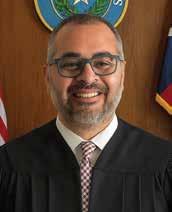

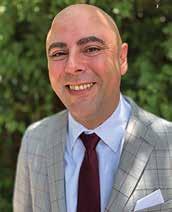
Naomi Howard, P.C. Judge Howard brings a wealth of experience to the court: She practiced for six years for a Houston law firm.
Judge Howard is also a former briefing attorney for the Texas Court of Criminal Appeals. In undergrad, Judge Howard served as a legal assistant in Waco and clerked for Scott, Douglass & McConnico. While pursuing her J.D. at St. Mary’s School of Law, she clerked for a San Antonio firm and interned at the U.S. Federal Public Defender’s Office. Two interesting details about Judge Howard are that she spent time in Japan teaching English, and she is one of the very few women who has trained as a sushi chef.
Judge Jesse Taylor comes

to the criminal courts from the Travis County Public Defender’s Office. Before that, he was an assistant attorney for the county. Prior to entering government work, Judge Taylor was in private practice, practicing criminal law at the Vazquez Law Firm. He also went solo for several years at the Law Office of Jesse Taylor, then practiced at Smith & Vinson. While pursuing his J.D. at the University of Texas School of Law, Judge Taylor clerked in the Law Office of Charlie Roadman, where his responsibilities evolved as he progressed in his legal education.
Judge Taylor was also a summer intern for UT’s Capital Punishment Clinic, where he conducted research for a petition for federal
habeas corpus in a capital case in Texas.
I speak for everyone here today when I say congratulations to all three of you. We know you will be valuable additions to the court and will fight for equal access to justice for everyone in Central Texas. AL
Three new Magistrates were sworn in during investiture ceremonies in November 2025. Congratuations to (L to R): Judge Adam Alvarez, Judge Naomi Howard, and Judge Jesse Taylor.
Why It Matters if Your Clients Actually Like You
BY LISA CUNNINGHAM, LCD LAW
Think about the last time you needed to find a new hair salon, dry cleaner, or wanted to find a restaurant for dinner. For many of you, when you don’t have a personal recommendation to go on, you look at Google reviews.
Nowadays, the local legal landscape allows our clients a variety of law firms to choose from. How are they going to choose? Some will simply choose based on an advertisement they saw on social media or the billboard they pass by every day on their way to work. But what about everyone else?
Getting 5-star Google reviews should be a priority for all firms. Your expensive ad campaigns and impressive attorney credentials don’t look so hot next to your 2.5 Google rating. Clients will inevitably leave Google reviews.

Why not have them work to your advantage? I can’t count the number of times clients have told me they picked my firm over another because I had the best Google reviews.
Take some time to really think about your firm’s client satisfaction philosophy. Is it working for you? Are there things you can do to improve? Look at the employees who always get rave reviews from clients. What are they doing differently? As you create your action plan, make sure it is both cost effective and realistic.
Prior to opening my own law firm last year, I was the managing attorney for a mid-size disability firm. For the last three years of my tenure, I was required to personally bring in 100 5-star Google reviews per year. I was able to surpass the quota every single year.
Travis County Constable 5 The Courthouse Constable 1003 Guadalupe Austin, Tx 78701 Office: 512-854-9100 Fax: 512-854-4228 www.Constable5.com
EFILE: Request Constable 5 for Efile Process Service
SERVICE FEES INCLUDE: Rush Services, Skip-Trace, Research, plus exclusive access to law enforcement database
SERVICE AREA INCLUDES: Travis and surrounding counties 24/7 Online Service Check
Daily delivery to State of Texas offices
“Your civil process experts. Available for civil and family process needs.” ~ Constable Carlos B. Lopez

Six months ago, I opened my own solo law practice. In that time, I have been able to obtain 26 5-star Google reviews.
I have made a short list of steps that are easy to implement across all practice areas and firm sizes:
Address your clients formally, using their last name.
This immediately creates professional interaction between the two of you. By maintaining the formalities, the client is more likely to keep in mind you are on their side even when you are having to deliver bad news or explain why your strategy may be better than what your client has in mind. Sometimes, being addressed formally by someone they view as important can simply feel nice.
Always be on time.
Never keep a client waiting, even for a minute. It shows the client you respect their time. However, don’t ever let the client think you are rushing them off the phone. I always keep a 30-minute buffer in between each of my appointments, just in case one appointment runs over.
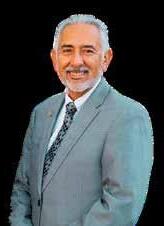
Be transparent.
It is probably the first time your client is going through this process. Many times, our clients come to us because something bad has occurred in their life. The legal process can be long and confusing. Your client should have at
least a basic idea of what is going on in the case, what to expect next, as well as a broad overview of the process and time frame, generally.
Here is a list of more involved steps that can be implemented over time:
Conduct regular client satisfaction trainings
Keep in mind, everyone in your firm interacts with clients in one way or another. Make sure the staff understands the importance of client satisfaction and your expectations. Your intake team is likely the first point of contact for new clients. Pay special attention to make sure each individual staff member meets your expectations.
Incentivize your staff to bring in Google reviews.
When an outstanding review comes in, send it around to the whole firm. When a bad one comes in, spend time debriefing on it. Figure out what happened and how it can be corrected in the future.
Sometimes, even with awesome client service, some people are just going to remain unmoved. And that’s ok! There are enough other clients out there that will be happy to leave you 5-star reviews. A
The Modern Lawyer Wellness Guide to Everyday Mindfulness
BY KIELE SILVAN, ESQ.
Use these simple steps to reduce anxiety, overwhelm, and mental fatigue by cultivating peace of mind, clarity, and focus in everyday life. The result is increased effectiveness and fulfillment in law, business, and life in general–in just a few minutes a day.
Habitualizing Mindfulness in Three Simple Steps
1. Learn the basics of meditation
2. Take meditative practice into everyday activities
3. Make mindfulness an everyday habit
Step 1: Find a quiet spot where you won’t be disturbed for a brief period – whether it’s five, three, or even just one minute. Whatever time you can spare is perfect! If possible, use your phone’s timer
with a soothing notification sound to mark the end of your session.
Important Tip: Starting your day with a brief meditation sets you up for success by clearing your mind, regulating your nervous system, and helping you set intentions in alignment with your goals.
Close your eyes, relax your body, and take three deep breaths, in through your nose and out through your mouth. Then, let your breathing return to its natural rhythm. As you sit, bring your attention to the present moment. Notice the sensations of your breath, the air on your skin, the pressure of your body against the surface beneath you, and the sounds around you. Don’t focus on these details–simply notice that they are present.
When distractions arise (and they will), gently acknowledge

them without judgment. Then, let go of the thought or feeling that took your focus, and calmly return your attention to the present moment. When your time is up, open your eyes and take a mo-
ment to notice how you feel. Step 2: Mindfulness isn’t just for quiet moments. The real magic begins when you practice mindfulness with ordinary activities like cooking, eating, washing



dishes, putting on makeup, driving in traffic, waiting in line, riding an elevator, sitting in a meeting, or attending a hearing.
Focus on your senses–what you see, hear, smell, and feel in that moment. Engage fully with the present. When you catch yourself dwelling on the past or projecting into the future, let go of the thought or feeling that distracted you–without judgment–and gently return your attention to the present moment. That’s it!
I first realized the power of mindfulness one busy Saturday when I attended three kids’ birthday parties back-to-back. It sounded terrible, but practicing mindfulness actually led me to have a good time, both hosting and visiting with friends! Since then, it’s become nothing short of life-changing!
Step 3: Making a habit of mindfulness not only brings peace of mind in the moment but also increases your overall sense of well-being over time.
Choose a day to start practicing. It doesn’t have to be perfect–just start. At the beginning of your day, set the intention to practice mindfulness throughout the day. Say it out loud and with meaning if you can: “Today, I will practice mindfulness throughout my day.” Consider writing it on a sticky note where you can see it, or setting reminders on your phone. Whatever works for you! The more you do it, the more powerful a transformation you’ll experience.
Now go set yourself up for a fantastic day, week, or even month–because you deserve to thrive in all areas of your life!
Conclusion
Mindfulness is more than a practice–it’s the beginning of a mindshift shift that changes how you experience the world, everyday mindfulness is an excellent place to begin the journey of creating what you truly want in law, business, and life. AL
Kiele Silvan, Esq. (formerly Pace) is a lawyer-turned success strategist and wealth attorney for founders and law firm owners who’ve outgrown conventional success and are ready for real change.
SPONSORED CONTENT
AVOIDING MALPRACTICE IN TAXABLE DAMAGES
AVOIDING MALPRACTICE IN TAXABLE DAMAGES
The 2025 Tax Law made permanent the loss of ‘personal exemptions’, which means an individual can no longer deduct Attorney Fees and Expenses from their ‘taxable’ litigation settlements; they must pay taxes on the GROSS recovery. Congress carved out “unlawful discrimination, ” and ’pure employment’ settlements, with few other exceptions
The 2025 Tax Law made permanent the loss of “personal exemptions”, which means an individual can no longer deduct Attorney Fees and Expenses from their “taxable” litigation settlements; they must pay taxes on the GROSS recovery. Congress carved out “unlawful discrimination,” and “pure employment” settlements, with few other exceptions.
Attorneys can no longer deal with Taxable damages of ‘non-physical injury’ and ‘punitive damages-Gross Negligence’ after an agreed settlement/mediation or before funds are distributed.
Attorneys can no longer wait to deal with Taxable damages of “non-physical injury” and “punitive damagesGross Negligence” after an agreed settlement/mediation or before funds are distributed.
The remedy on ‘contingency fee’ cases is to create a Plaintiff Recovery Trust (PRT), but it must be created BEFORE the mediated settlement; the litigation must be transferred to the trust prior to an agreed settlement so the plaintiff can avoid taxation on the fee/expense portion of the recovery, receiving tax reporting (an IRS Form K-1) only on the net recovery.
The remedy on “contingency fee” cases is to create a Plaintiff Recovery Trust (PRT), but it must be created BEFORE the mediated settlement; the litigation must be transferred to the trust prior to an agreed settlement so the plaintiff can avoid taxation on the fee/expense portion of the recovery, receiving tax reporting (an IRS Form K-1) only on the net recovery.
Structured settlements also have a role to play: Tax savings occur when structuring client proceeds to lower tax brackets! (Use in conjunction with the PRT to maximize tax savings, for non-contingency fee cases, and as the only rememdy if it is too late for the PRT.)
Structured settlements also have a role to play: Tax savings occur when structuring client proceeds to lower tax brackets! (Use in conjunction with the PRT to maximize tax savings, for non-contingency fee cases, and as the only rememdy if it is too late for the PRT.)
Now wrongful death cases in Texas under Texas Labor Code Ch. 408 are not only taxable, but paying taxes on the GROSS settlement has a devastating effect for widows and orphans, and serious implications for attorney malpractice.
Now wrongful death cases in Texas under the 408 statute are not only taxable, but paying taxes on the GROSS settlement has a devastating effect for widows and orphans, and serious implications for attorney malpractice.
WITHOUT USING ONE OF THESE REMEDIES, THE ATTORNEY’S FEES EXCEED THE NET DOLLARS TO CLIENT, and IGNORING TAX ISSUES CAN CREATE LIABILITY!
WITHOUT USING ONE OF THESE REMEDIES, THE ATTORNEY’S FEES EXCEED THE NET DOLLARS TO CLIENT, and IGNORING TAX ISSUES CAN CREATE LIABILITY!
Plaintiff attorneys: Protect your clients (and yourselves) by increasing your client’s recovery so they receive more than you!
Plaintiff attorneys: Beware! Malpractice trap is waiting, and you will have a difficult time justifying your fees that exceed the net to clients!
These cases require extra-care, planning and action. Create a PRT before mediation!
These cases require extra-care, planning and action. Create a PRT before mediation! There are no up-front costs in doing so… but plenty of problems if you do not. Defer finalizing the mediated settlement until the PRT is in place (more time is allowed if any Court orders are required, or if case is Appealed)
There are no up-front costs in doing so… but plenty of problems if you do not. Defer finalizing the mediated settlement until the PRT is in place (more time is allowed if any Court orders are required, or if case is Appealed)
Appellate attorneys: Interest accumulations on appeal should be considered for amounts of $100,000 or greater. Punitive damages is a must do.
Appellate attorneys: Interest accumulations on appeal should be considered for amounts of $100,000 or greater. Punitive damages is a must do.
Mediator/Arbitrators: Alert plaintiff attorneys to this issue; consider a means for parties to finalize the settlement agreement after a PRT is in place.
Mediator/Arbitrators: Alert plaintiff attorneys to this issue; consider a means for parties to finalize the settlement agreement after a PRT is in place.
TRIAL VERDICT STRATEGIES: A PRT works as long as (1) there is no binding release, or binding agreement to enter into a release. Get busy creating a PRT before the verdict is final for any taxable damages (Nonphysical injuries, Defamation, Contract disputes, Punitive damages, etc.)
TRIAL VERDICT STRATEGIES: A PRT works as long as (1) there is no binding release, or binding agreement to enter into a release. Get busy creating a PRT before the verdict is final for any taxable damages (Non-physical injuries, Defamation, Contract disputes, Punitive damages, etc.)
Contact us for more information regarding the Plaintiff Recovery Trust and remedies.

DAVIS SETTLEMENT PARTNERS
DAVIS SETTLEMENT PARTNERS
The Attorney’s Indispensable Partner in Settlement Planning 830.609.5555 • cmdavis388@gmail.com www.DavisSettlementPartners.com
Attorney’s Indispensable Partner in Settlement Planning 830.609.5555 • cmdavis388@gmail.com www.DavisSettlementPartners.com
Carola M. Davis, CFS
Carola M. Davis, CFS
While others consolidate, Broadway Bank remains family-owned, financially sound, and focused on Texas. Rooted in the communities we serve, our Private Banking team delivers customized financial solutions with one goal in mind — your success.