About Us
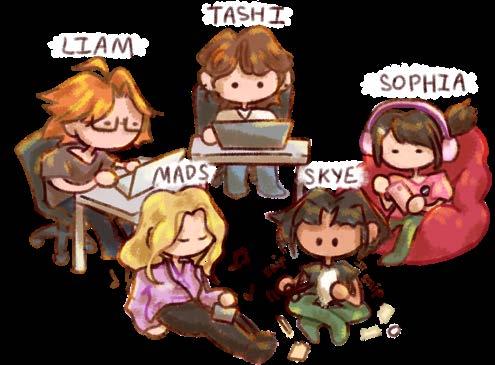
Kia Ora! We’re Debate your free student magazine at AUT. Each fortnight we scatter magazines across campus talking about student news, art, and culture. Each issue is made by us and a small team of contributors - no AI was used in the production of any work to our knowledge.


TITLE---
Mars Is Not Our Whenua

He
CREATOR---
Tashi Donnelly
Te Matapuna introduces specialist neurodivergent services
The Global Impacts of the Paramount-Warner Bros.
Deal - Including for New Zealand
Ngā roimata o Ranginui
Why barefoot culture makes Kiwis the best travellers
Listening to the land: How KōreroNet is helping us better understand Aotearoa’s environment
Come Grab a Kiwi Dose!
Kōkōwai, Whenua, Mauri.
Kōrero Toi: Ken Faber
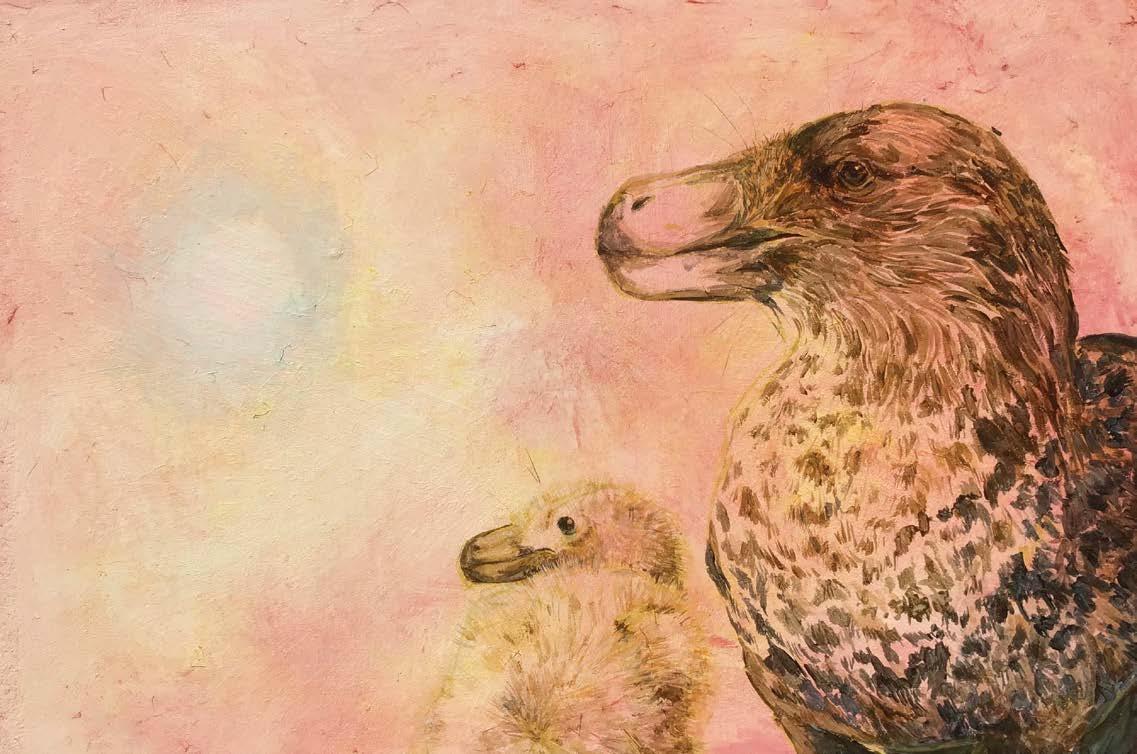
“Hakoakoa Deinonychus”
Rīpoinga
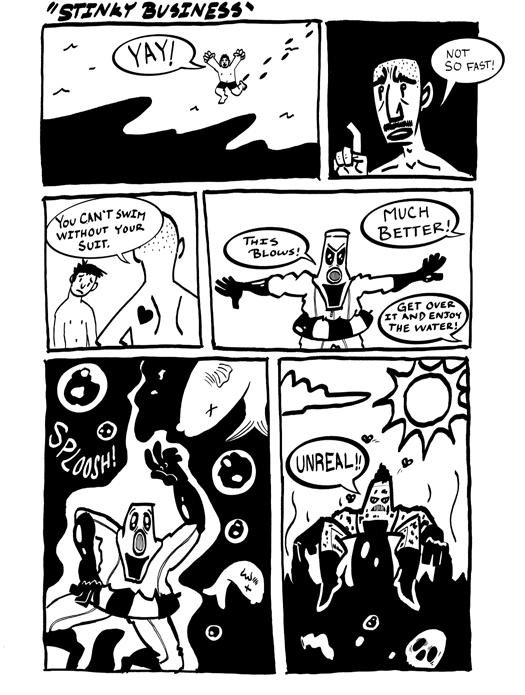
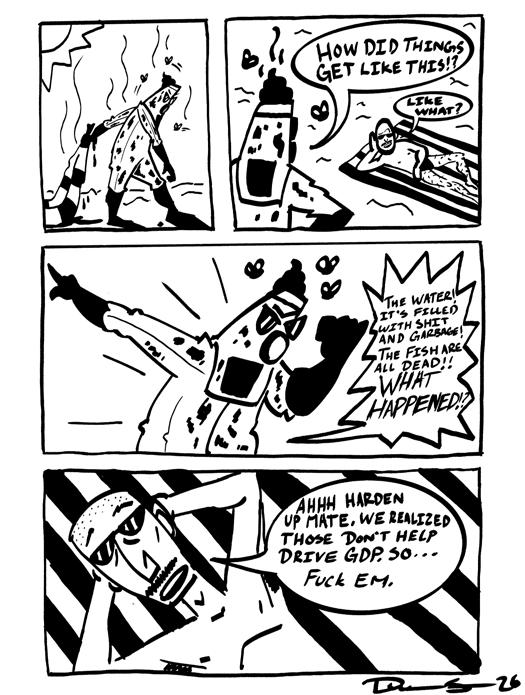
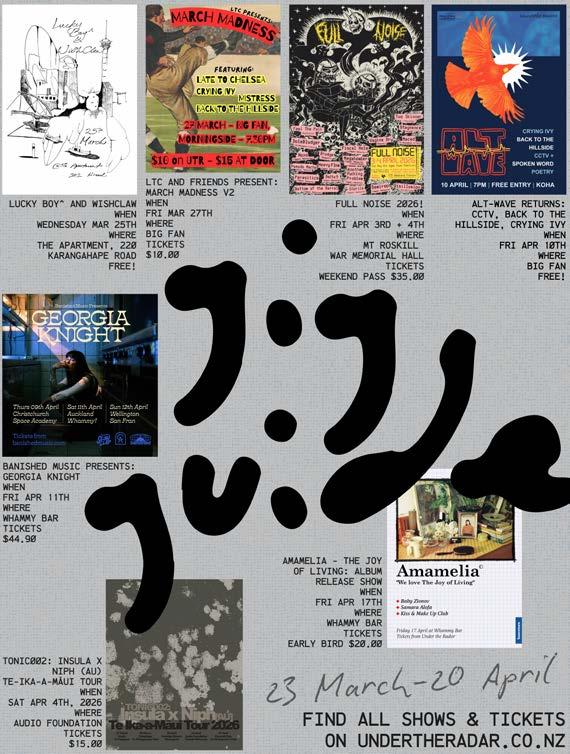
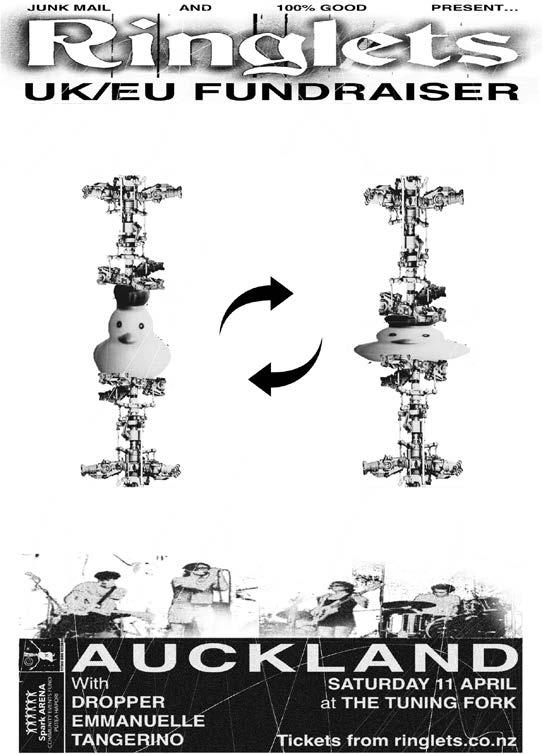
Stinky Business comic Gig Guide
PUZZLES
Bread in Circus
Rick’s Reel Recommendations
Liam Hansen
Caeden Tipler Skye Lunson-Storey
Polly Wenlock AUT Ventures
Sanskruti Bannerjee
Ivy Lyden-Hancy
Ken Faber
Ken Faber
Elise Sadlier
Darian Serrano
Debate staff
Tashi Donnelly
Luke Fisher
Ricky Lai

Material contained in this publication does not necessarily represent the views or opinions of AUTSA, its advertisers, contributors, Nicholson Print Solutions or its subsidiaries.
This publication is entitled to the full protection given by the Copyright Act of 1994 (“the Act”) to the holders of the copyright, being AUT STUDENT ASSOCIATION (“AUTSA”). Reproduction, storage or display of any part of this publication by any process, electronic or otherwise (except for educational purposes specified in the Act) without express permission is a break of the copyright of the publisher and will be prosecuted accordingly. Inquiries seeking permission to reproduce should be addressed to AUTSA.
Debate is a member of the NZ Media Council and subject to its complaints procedure. Complaints about stories must first be directed in writing to us (provide link) within a month of the story being published. If you are not satisfied with our response you can complain to https://www.mediacouncil.org.nz/complaints/. You will need to attach a copy of the article complained about and any correspondence you have had with us.
Emily Wharekura (she/her) @emily_wharekura Indie McMillan (she/her) @indie.pdf
Niamh Donnelly, Caeden Tipler, Ivy LydenHancy, Polly Wenlock, AUT Ventures, Sanskruti Bannerjee, Ken Faber, Elise Sadlier, Darian Serrano, Luke Fisher, Ricky Lai.

Madeline Bradley Sophia

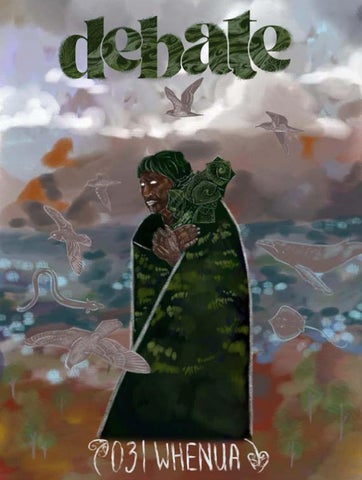
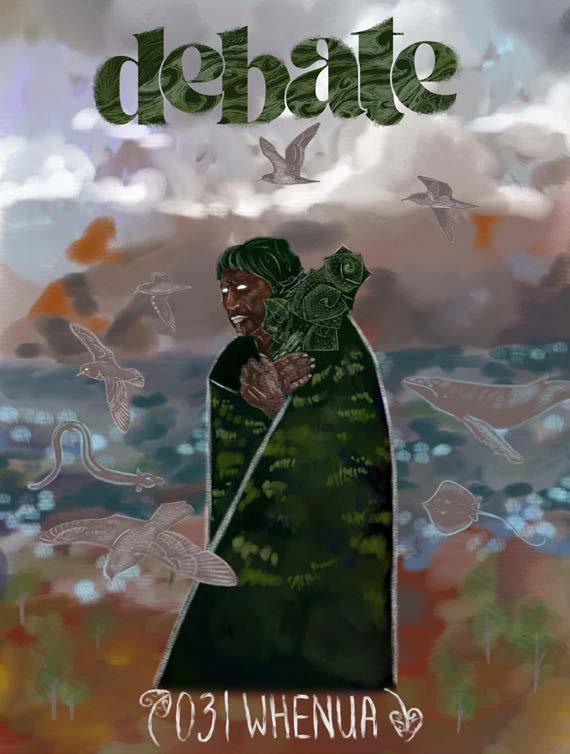
Mars Is Not Our Whenua
We forget how unpoetic English can be as a language until we encounter words like ‘whenua’. Those words that say what English would need ten words to describe. Words like ‘wabi-sabi’ or ‘schadenfreude’. Translated into English, ‘whenua’ could mean ‘land’ or ‘homeland’. It could mean ‘Motherland’ or ‘Mother Earth’. ‘Ancestral land’ might come close. Another translation is ‘placenta’. Whenua is land, but it’s a word that understands what land means.
Here at Debate Magazine, we commit to an environmental-themed issue each year, our little way of reminding each other to keep fighting for this little planet. In 2026, I want to ground myself in this issue. I want to feel the damp, warm soil, to remember my flesh as something born from the earth’s labour. I wanted to thank planet Earth, this holy gift of life that sustains us.
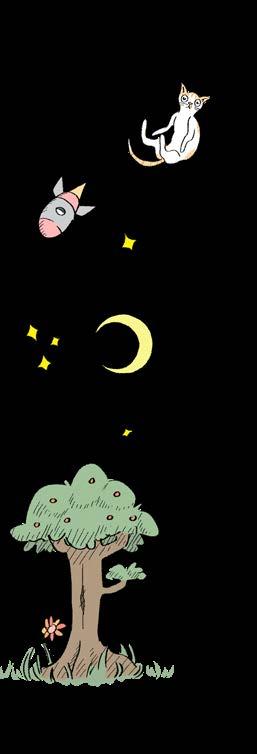
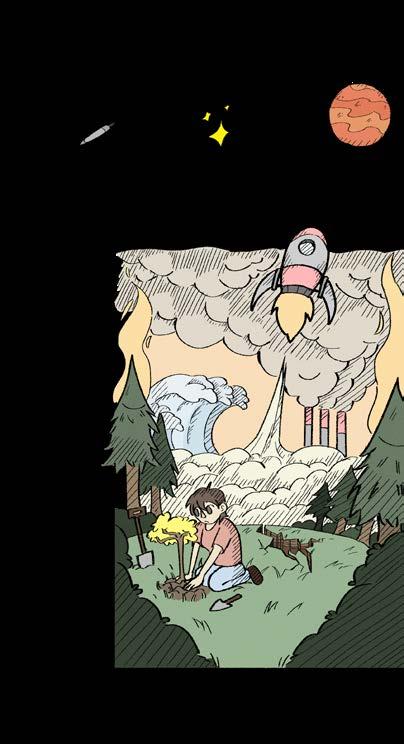
While billionaires fill the atmosphere with rocketship exhaust fumes in an attempt to find reflected glory in a highprofile space race, you may find yourself wondering, what’s the plan for Earth? The funding of space travel has undeniably advanced everyday life, from satellite communication to fire-resistant materials and medical imaging technology; these gains are impressive. But the scale of investment required to chase other planets, while Earth, already burning, flooding, and extractively mined, remains structurally neglected, doesn’t sit right with me.
In 1970, Gil Scott-Heron’s spoken-word piece ‘Whitey on the Moon’ critiqued US government spending on NASA during the Apollo project, while Black Americans were living in poverty. Fifty-six years on, billionaires like Elon Musk set their beady eye-holes on colonising Mars, while blocking their workers from unions, giving them poverty wages, all while aggressively polluting our air and waterways, and mining our whenua to the point of collapse.
Before we set our sights on Mars in all her crimson glory, can’t we look down at our feet? We have our planet, she’s right here, beneath us. Like a placenta, she feeds us. She grows our food, and the food of the animals we eat. The idea that we’ll one day have to leave this place to the destruction we’ve caused, WALL-E style, to make a home among hostile environments seems completely backwards. Why not now, right now, take a stand? Demand that the resources under our feet be treated with the same affection we afford a human being. After all, in te ao Māori the rivers, mountains, and forests are considered living relatives with their own mauri and dignity. A concept that proves vital in the protection of our precious land and water, which is threatened by the National Government’s lust for mining.
The 2026 New Zealand general election is scheduled for Saturday 7th November. I encourage you, dear reader, to think beyond the scope of yourself and remember that the ground you are
standing on is not stable. There are no safe places when our environment collapses. There is no colony on Mars. What we do have is real-world policy. And right now, that policy is shifting.
This year, our own government rejected every recommendation from the Climate Change Commission, including stronger emissions reduction targets, even as scientists warn that floods, fires and rising sea levels are accelerating. Plans to fold the Ministry for the Environment into a mega-ministry further risk diluting environmental oversight at the very moment we need sharper accountability. Meanwhile, more than half of the bills considered by this Parliament have been pushed through under urgency, often bypassing the select committee process that normally allows experts and the public to weigh in.
In these pages, you’ll find personal reflections on the meaning of whenua, beautiful works of art inspired by the earth, as well as our usual accumulation of funny, sad, and thought-provoking articles. Read about how walking barefoot helps you feel a location. Or how amateur (and pro) sport will be affected by climate change. And while you’re reading, think about what whenua means to you. Immerse yourself in the earth’s soil, water, and air. Thank her for all she gives to you.
And register to vote, for the love of all things holy.

Written by Tashi Donnelly (she/her) @tashi_rd
EDITOR-IN-CHIEF
Illustrated by Niamh Donnelly (she/they) @zaxoof

Neurodivergent and ESOL Students Key Focus of New Te Matapuna Programme
The university experience isn’t moulded to every student and their needs. It varies from course to course, but the overreliance on readings, tests of rote learning, and reflections tend to serve the needs of most students fine. But the amount of students who feel like they’re working against a brick wall has increased year on year, and with AUT’s cohort of domestic and international students climbing once again post-Covid, something needed to change before too many students were left behind.
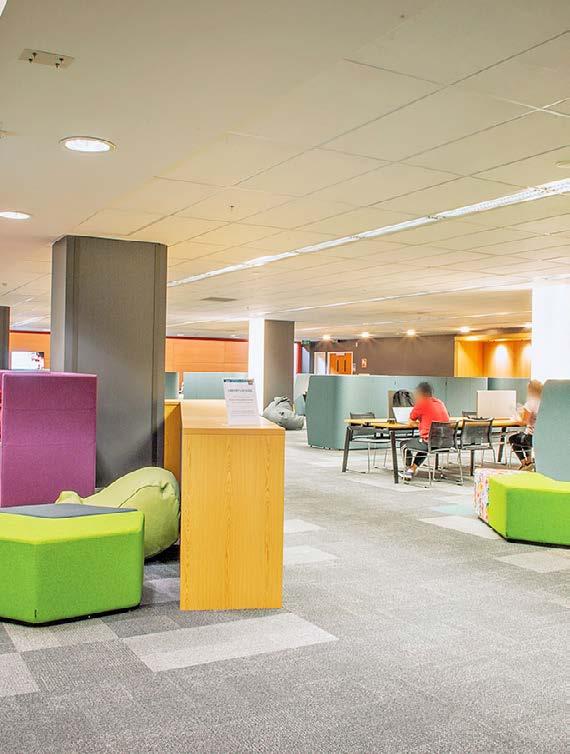
Te Matapuna, AUT’s Library and Learning Services, is introducing increased support programmes in 2026 for two growing student groups: students with English as a second language, and neurodivergent students. Throughout the first semester, various workshops and study sessions are being organised by library staff and learning specialists, who are also available for one-on-one appointments and further support for assessments and classwork.
Kate Absolum, Learning and Engagement Senior Manager explains: ‘‘We’re evolving how we work with students to meet their increasingly diverse learning needs. We’re also addressing changes new digital tools have had for students and how they write, learn, and engage with information. While these tools bring exciting opportunities, they also have the potential to widen the digital divide and increase demand for personalised, targeted support.’
The extended support goes handin-hand with the vision AUT has for its future, and admittedly, some of its economic needs - as the public funds for universities have been cut under the National government, the need for international students as a source of income has seen leadership aim for a 115% increase in international enrolments for the next few years.
While that might be part of the deal, the kaupapa for Te Matapuna Library Staff is much more driven by desires to see international and neurodivergent students succeed. Simon Todd is one of the learning specialists involved in creating the programme and curating it to the needs of students throughout its runtime. When we caught up, he spoke about his time across learning environments working with students speaking English as a second language, and how the team was curating the experience for new students. “Everyone here has worked with, experienced with, or at least highly empathises with students struggling in these new learning environments.”
Recently, New to New Zealand workshops have been held, running students through the basics of Te Reo Māori and Te Titiri o Waitangi. “Especially as subjects like health, law, and similar embed aspects of Te ao Māori into their assessments and coursework, we really wanted to give students a rundown of the topics and introduce them to the new and sometimes intimidating environment.

Written by Liam Hansen (they/them) @liamhanse.n ASSOCIATE EDITOR
The Global Impacts of the Paramount-Warner Bros. Deal - Including for New Zealand
It’s the biggest news story in entertainment of the decade - Warner Bros. put itself up for sale late last year, leading to a public bidding war between two industry giants: Paramount Skydance and Netflix.
The ensuing battle was worthy of Hollywood.
Paramount successfully launched a hostile takeover, backed by the billionaire Ellison family. The studio and its very determined Chief Executive, David Ellison, circumvented Warner Bros. management, who were in negotiations with Netflix, and went straight to the shareholders with a much higher bid.
The ironic part is that the Warner Bros. sale comes at the end of a hugely commercially and critically successful year for the studio. The past year includes Academy Award-nominated films like Sinners, One Battle After Another, and Weapons, as well as beloved shows like The White Lotus.
However, Warner Bros. has a complex history of terrible mergers, leaving it in a bad financial position. The company owes an estimated $35 billion USD in debt, and industry disruption, including the rise of streaming, has left Warner Bros. in a challenging position. Likewise, Paramount is underperforming financially and could benefit from iconic Warner Bros. franchises like Harry Potter and the DC Universe.
The deal is one of the biggest in entertainment history, and will have
massive ramifications across the media landscape. Lawmakers in the United States are concerned about the monopolisation of streaming, which could lead to price hikes, lower pay for workers, repetitive content, and less creative control for producers, cast, and crew. These are all ramifications that could play out on a global stage, including in New Zealand.
The deal still has to be approved by the US government, notably the Department of Justice (DOJ) Antitrust Division, which has the authority to block takeovers. This may be positively influenced by President Donald Trump, especially due to his close ties with the Ellison family. The deal is expected to close in Q3 of 2026, but it is dependent on DOJ approval.
Paramount doesn’t have a serious streaming service, so part of the appeal of Warner Bros. is its ownership of HBO Max.
Right now in New Zealand, HBO content is hosted on Neon, owned and operated by Sky. However, Neon is set to lose its rights to this content when HBO Max launches its own streaming service in New Zealand in mid-2026. It is not yet known how the Paramount buy-out could impact this.
There is a Warner Brothers production arm based in New Zealand, and they make popular TV shows like the New Zealand variations of The Block, The Bachelor and Bachelorette, and RuPaul’s Drag Race Down Under.
Rachel Daniels, Lecturer in Communication Studies at AUT, says the deal could mean fewer productions made
in New Zealand. She also notes that we may lose some of our culturally diverse content.
In the context of similar mergers, Daniels says, “we start to see content replaced by standardisation or sameness. [...] We want to make sure that you still see diverse content being made, and original stuff being made, and stuff that isn’t just the same.”
There’s also the question of whether these big studios will continue to come to New Zealand to make films, and how this could affect smaller New Zealand production companies’ chances of getting films made and distributed.
Debate approached Warner Bros. International Television New Zealand for comment, but they declined our request.
This deal could also have huge ramifications for the news media, and by extension, democracy. Paramount already owns CBS News; Annie Goldson, Professor in Media at the University of Auckland and documentary filmmaker, has expressed concerns about the same organisation acquiring CNN, which is currently owned by Warner Bros.
“A corporate takeover could well see journalists fired, which is not only unpleasant for individual workers but also reduces opportunities for genuine and diverse reportage that we can then draw upon to understand the world and each other.”
Written by Caeden Tipler (they/them) @caedentipler
CONTRIBUTING REPORTER
“Although CNN and CBS are based in the US, American politics and decisionmaking impacts heavily on us all - hence having watchdogs scrutinising power is critically important wherever we live.”
Since Paramount Skydance took control of CBS News, they have been criticised for political interference. The Editor-inChief appointed last year, Bari Weiss, has been criticised for censorship, including for pulling a 60 Minutes story on the deportation of Venezuelan men to an El Salvadorian prison.
The Ellison family are closely allied to Donald Trump, who has publicly stated his dislike of CNN. There is concern that Paramount taking over CNN could weaken its editorial independence. Goldson also notes this in the larger context of the current news media landscape, “We have seen Jeff Bezos buying the Washington Post, another highly significant US news outlet. He too has proven to be an ‘interventionist’ owner, impacting editorial content and recently laying off a significant chunk of the workforce.”
“We have our own apparent billionaire too - the Auckland-based Canadian Jim Grenon, who not only launched the publication The Centrist but also is a powerful shareholder in the NZ Herald, part of the NZME suite of media outlets, which remains an important player in the news ecosystem in Aotearoa. How this may impact editorial content is the big question again if our news media is to remain free from interference.”

Ngā roimata o Ranginui
The tears of Ranginui
Concrete weeps. Steel remembers. Water carries the weight of what we’ve buried. When rain falls in Tāmaki Makaurau, it carries the memory of wetlands drained, rivers forced underground, and land reshaped by colonial infrastructure. My recent artworks explore these relationships between wai, whenua, and tangata. Asking how we might rethink the way our cities respond to flooding.
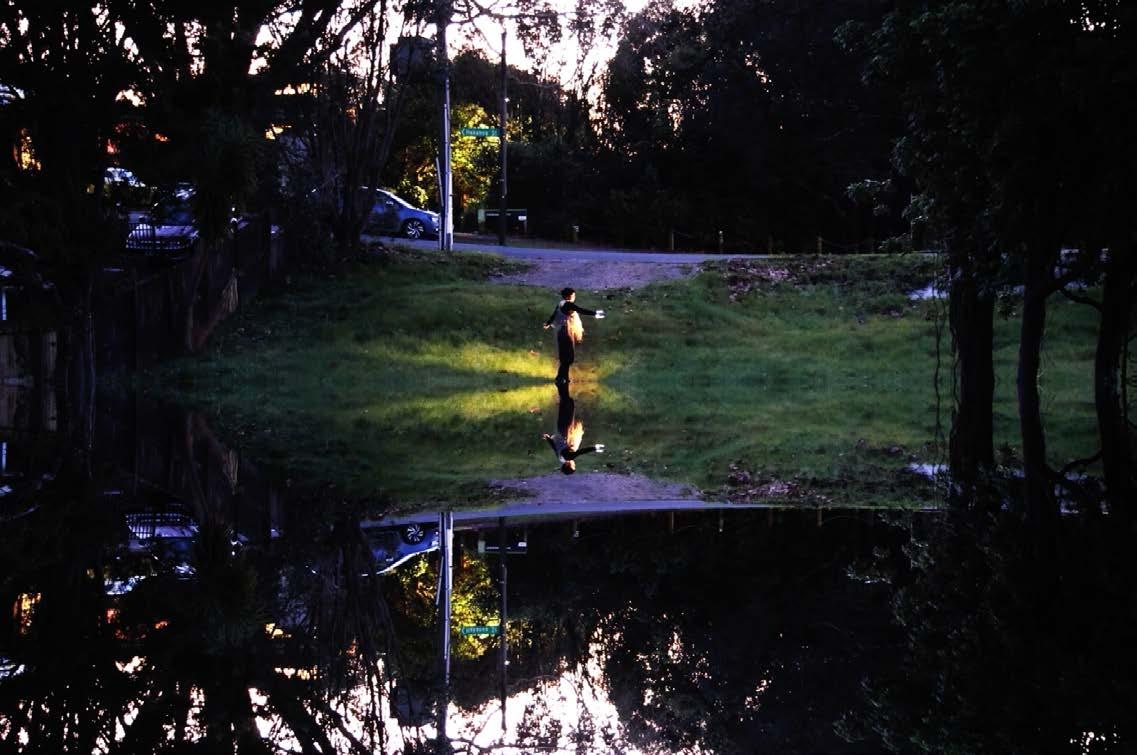
The moving image work Kei te heke ngā roimata o Ranginui explores the systemic causes and lived impacts of flood risk in Tāmaki Makaurau. The work investigates a site at the intersection of Dryden, Tutanekai, and Hakanoa Streets in Grey Lynn. This whenua once held several homes, but now remains an eerie void of the past. Where houses once stood, fragments of concrete driveways remain. A quiet symbol of lives that have since been displaced.
The work responds to the legacy of drained wetlands, colonial planning, and climate disruption. While the title references the phrase said while it’s raining: the tears of Ranginui are falling. An expression of the grief felt between Ranginui and Papatūānuku. In this context, those tears grieve for the whenua altered and cut by colonial infrastructure, and for the communities affected by flooding.
The work asks a simple but urgent question: how can we shift from containing water to living with it?
A related sculptural work, Te Mauri o te Wai, responds to the ongoing impacts of the 2023 Auckland Anniversary floods and the failure of urban water
infrastructure. Made from concrete, steel, rainwater, harakeke, and wool, the work explores how materials themselves hold memory, mauri, and agency.
As we carve our cities with concrete, the whenua loses its ability to breathe. Wetlands as natural infrastructure absorb, filter, and slow water. Once widespread across Aotearoa, around ninety percent of these wetlands have been destroyed. Their absence is deeply felt during extreme weather events.
Te Mauri o te Wai reverberates this loss while calling for the return of wetlands as living systems. Referencing Auckland Council’s freshwater vision to protect and enhance Te Mauri o te Wai, the lifesustaining capacity of water.
On January 27th, 2023, at the beginning of Auckland Anniversary weekend, Tāmaki Makaurau experienced an extreme rainfall event that caused catastrophic flooding across the region. Within hours, roads became rivers, homes filled with water, and critical infrastructure failed. Lives were lost, and thousands of people were displaced.
The event revealed the problems in how we design, value, and inhabit our cities.
Between 2016 and 2023, the Auckland Council granted resource consent for more than 9,000 new dwellings on floodplains. These numbers do not include additional developments built on overflow paths and other flood-prone areas. These patterns reveal a deeper issue in the relationship between urban development and the natural systems it replaces. Rather than working with water,
our cities have long attempted to control it through pipes, drains, and concrete channels. As climate change accelerates, these systems are increasingly overwhelmed.
The importance of wetlands in stormwater management is reflected in the work of civil engineer Troy Brockbank. His research explores how mātauranga Māori can inform water-sensitive design that works with natural systems. Using green infrastructure like wetlands to support existing stormwater drainage. Protecting the mauri of a site and reconnecting decision-makers back to water and the land.
In this context, artists also have a role to play. Creative practice can act as a bridge between communities, scientists, and policymakers. Through storytelling, material exploration, and visual language, artists can translate complex environmental challenges into experiences that build empathy and understanding.
Many families are still struggling with the aftermath. Some homes have been designated as Category Three properties, presenting an intolerable risk to life.
Owners are offered a buy-out scheme, but the decision and the process are not simple.
This raises an important question: what happens to land made uninhabitable by climate change? And what happens to the people who are connected to that land?
While these conversations are unfolding in Auckland, they reflect a wider issue facing various Māori communities across Aotearoa. Floodplains, river valleys, and
Written by Skye Lunson-Storey (she/they/ia)
@uku_rangi

ARTS,
CULTURE
& TE AO MĀORI EDITOR
coastal areas were historically important places of settlement. Many marae, urupā, and wāhi tapu are located in landscapes now increasingly vulnerable to flooding and erosion.
For Māori, leaving these places is more than just a decision. Whenua holds whakapapa. It holds memory, identity, and a direct connection to tūpuna. Relocation reflects a loss that is hard to leave behind.
In some places, urupā have already been partially washed away by erosion. Marae situated near rivers and streams face an ongoing flood risk. During recent extreme weather events, some communities were cut off from roads, power, and medical supplies. These climate events damage not only infrastructure, but also places central to spiritual and cultural wellbeing. As each year passes, more communities face the possibility of displacement. Rural and lower socio-economic areas are often the most exposed and the least resourced to respond. Highlighting the difficult reality of what happens when the whenua that holds our whakapapa becomes unsafe to live on.
Across Aotearoa, many Māori communities are already facing this question. As the climate shifts and the land changes, the challenge is not simply rebuilding infrastructure, but protecting the mauri of these places and the communities connected to them.
The tears of Ranginui will continue to fall. We must decide whether to learn to live with water and with the whenua before more is lost.
Why barefoot culture makes Kiwis the best travellers
The value of physically experiencing environments
Australia looks to be a land of sun-baked influencers.
It looks like rolling surf, blue skies, gold sand.
It looks just like the reels you scroll endlessly and wistfully on your 30-minute lunch break
But how does Australia feel?
Australia feels like sand in every crevice, under every nail.
Australia sounds like the chatter of kookaburra and the buzz of light rail as day breaks.
Australia smells like overfilled trash cans on public beaches, baking their unfortunate aromas in the midday sun These, the sensations beyond sight, are the things that tell me I’m in Australia, that my environment has changed.
I recently had the opportunity to travel to Aus for the first time as part of a sports event.
I had seen images of Australia right across my social media in advance of the trip, had what I was to see pre-experienced, explained, photographed, videoed and prespoiled in the loaning of a thousand other eyes on Instagram, YouTube, TikTok. I also recently viewed a Valid crashout video on this same experience. One creator shared a video complaining he was upset that his opportunity to see Mt Everest’s summit for the first time had been ruined by the fact he’d experienced it through someone else’s experience; through a screen.
In some way, this message chimed with me.
In another, it made me consider the value of physical and other-than-sight sensorial interaction with one’s environment, and the application of the senses in travel, which become newly significant in our engagement with technology.
In our screen-based age, it is not uncommon to see awe-inspiring scenes plastered across socials, advertising, media. With images of different locations so accessible and promoted, what then differentiated the value of seeing a place through one’s own eyes rather than seeing a place through one’s own eyes on a screen?
Simply put, the difference comes down to your other senses and their physical engagement in an environment.
You can hear the difference in wildlife, smell the difference in cuisine, feel the warm/cold/soft/hard/concreted/ carpeted/tiled ground underneath your feet.
This, the physical sensation of travel, isn’t just a pleasantry, nay, I’d argue it’s essential as a means of clueing your body in on the fact you have travelled.
In my experience, I travelled to Australia for sports. My sport falls in the realm of surf life-saving, meaning that beyond being David Hasselhoff ripped with heroic abilities (all jokes... mostly), I am largely barefoot when heading to and from competition.
Competing for this sport while in Australia, I was able to have a real physical
grounding in a new environment. Am I saying go have a barefoot interaction with a heroin needle on Venice Beach just to say you’ve been to LA?
No...Unless that’s the kind of trip you’re desiring
Rather, I’m simply suggesting that when sight becomes a sense less valuable due to the surplus of images of nature available to us, and in light of brand and social-cultural globalisation, the value of travel now lies in physical experience of new environments.
Furthermore, physical immersion is newly essential in letting your body know that it has travelled.
Way-back-when, in our great-greatgrandparents time, travel took time. Time allowed the body to process said travel. Weeks to months onboard a vessel, hearing the waves lap against the bow, smelling the briny air, feeling the temperature gradually change as you move across zones.
In the present era of travel, the icy tundras of Wellington’s south coast can be swapped for the sunbaked sands of Sydney’s northern beaches in less time taken than a bus replacement for any NZ commuter line service.
Sure, you’re conscious and aware through sight and knowledge of having travelled (hopefully), but given the ease of accessing video and photo documentation of global spots, it comes down to your bodily sensorial experience to clue you into the change of environment.
If your body isn’t permitted the time to physically realise a new environment,
Written by Polly Wenlock (she/her) @p0lly2001 on Substack
CONTRIBUTING WRITER
and your activity in this environment comes down to the same screen-based behaviours as persist at home - tapping on glass rather than touching grass - will it even realise a change of environment?
It’s worth realising also then, the value of physical immersion in your home environment, to then sense the difference provided by travel.
Across differing locations - home, work and travel - much creativity, communication, work, and leisure now takes place across a backlit handheld box.
The end product of your device usage may be different - hell, you may be engaging in any variety of activity as wide-ranging as writing a screenplay or playing Moshi Monsters - but the physical experience undertaken is the same, pared back to its basic sensation: Fingers swiping on a glass panel.
Physically immersing yourself in your environment at home allows your mind and body to relax, but also provides a standard against which to experience travel, in the same way physically and sensorally engaged travel allows you to freshly experience home.
On the tail end of my own travel, how does home feel?
To me, Aotearoa’s environment is:
The sweet smell of cow manure permeating from the vehicle deck of a Bluebridge crossing, The wet feel of tent fabric when dew falls at dawn,
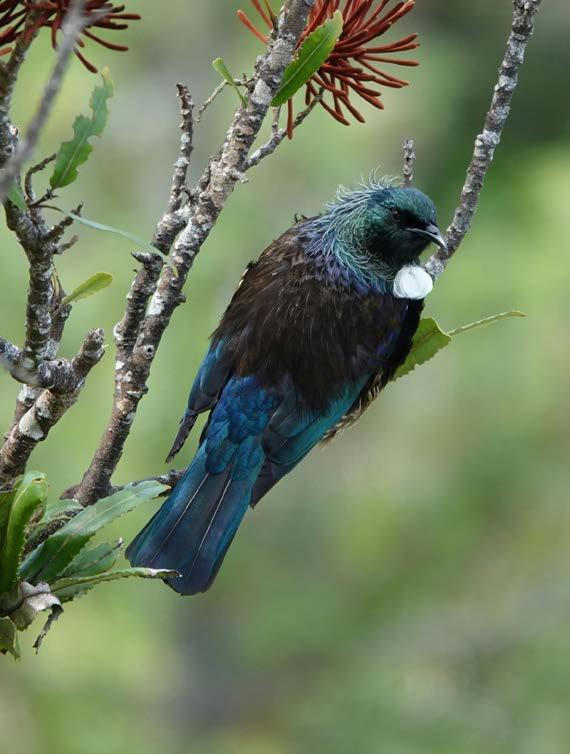
The lonely night call of one morepork transitioning to the morning buzz of 100 fizzing cicadas
Listening to the land:
How KōreroNet is helping us better understand Aotearoa’s environment
When we think about caring for the environment, we often think about what we can see; forests, rivers, wildlife. But what if understanding the health of our whenua starts with listening?
At AUT’s School of Engineering, Computer & Mathematical Sciences, researcher Dr Amin Barzegar is exploring exactly that through KōreroNet, a project that uses sound to better understand what’s happening in our natural environments. Developed alongside Dr Akbar Ghobakhlou, KōreroNet is a network of small acoustic sensors that can be placed out in nature to “listen” to what’s around them. These sensors pick up sounds from birds, bats, and even invasive species, and use AI to recognise which species are present, all in real time.
The real-time aspect is important because most biodiversity monitoring methods only provide snapshots. Data is collected periodically, meaning we only see small pieces of a much bigger picture, yet our environment is constantly changing. KōreroNet instead continuously listens to the environment, building a more complete and ongoing understanding of how ecosystems function. It doesn’t just show which species are present, but how they behave, when they are most active, and how these patterns shift over time.
For Amin, this work is also about how emerging technologies like AI can be used more responsibly in today’s environmental context. As he explains, “AI is often talked about in terms of its impact
on the environment, particularly the resources it consumes. But as it becomes more embedded in our everyday lives, the focus shifts to how we choose to use it. At AUT, I’ve seen how it can also be part of the solution, whether we use these tools in ways that take from the environment, or in ways that help us understand and protect it.”
For Aotearoa New Zealand, this work is especially significant. Our ecosystems are unique, yet they are under increasing pressure from climate change, habitat loss, and invasive species. Having access to more consistent, real-time information can strengthen conservation efforts and support more informed decisions about how we protect and care for our whenua. While the technology is still being developed, KōreroNet has recently been recognised through the KiwiNet Emerging Innovator Programme, a sign that projects focused on understanding and protecting our environment are being supported and pushed forward.
For students, this is a reminder that innovation doesn’t have to be separate from care for the world around us. Whether through technology, creativity, or community, there are real opportunities to contribute to the future of our whenua, and to be part of meaningful change. For those with ideas they want to take further, AUT Ventures offers support to help turn early thinking into real-world impact. Reach out to us today!
@aut_ventures | ventures.aut.ac.nz
Come Grab a Kiwi Dose!
Here’s a Peek Inside Mount Eden’s New Dessert and Drink Spot!
Nestled in the heart of Mount Eden village, Kiwi Dose is a family business that is quickly becoming a new go-to spot for students and locals alike. Whether you’re looking for a quick pick-me-up between lectures, a late-night study location, a casual date spot, or simply somewhere to grab a dessert with friends, Kiwi Dose offers a space that feels both vibrant and welcoming.
I had the opportunity to sit down with Aqueel Hafeez, who is leading Kiwi Dose’s operations. He balances life as an engineer at WSP by day and entrepreneurship by night. An exinternational student, Aqueel always envisioned stepping into the world of entrepreneurship. For him, business is about chasing freedom, creativity, and building something meaningful.
At Kiwi Dose, the menu reflects that same energy. It aims to strike a balance between making healthy and nutritious food, delicious as well! Customers can customise their own açaí soft serve bowls, indulge in sweet treats, or warm up with comforting desserts such as crepes or mini dutch pancakes. In need of something to drink? Kiwi Dose has an extensive drink selection with; berrypacked smoothies, fresh juices, and electrolyte blends for a post-workout pick-me-up. But they also have an impressive caffeine lineup, with a wide range of coffees, matcha, and more.
The Business Journey
Outside of work, Aqueel enjoys playing football and mountain biking, hobbies that reflect his energetic approach to life and business. He says he is the type of person who believes volume increases your chances of success. Aqueel’s philosophy is simple: “The more you do, the more likely you are to succeed.”
As someone who constantly reflects and ideates, Aqueel had long been looking for the right opportunity to start a business in New Zealand. Entrepreneurship was something that had been in his vision for a while. Opening Kiwi Dose in Mount Eden felt like the perfect fit. One thing he quickly noticed about New Zealand culture is that Kiwis tend to work hard, play hard. There are few places in Auckland open late-night that have a community centred approach to the way they run. Kiwi Dose aims to cultivate an environment that is safe and welcoming for all. By offering clean, energising food and drinks alongside indulgent treats, the space is designed to cater to people who want the best of both worlds.
More Than Just a Dessert Spot
Beyond the food and drinks, Kiwi Dose is also looking to become a community hub. They plan on regularly hosting monthly events in collaboration with grassroots organisations, ethnic communities, and people involved in arts and culture.
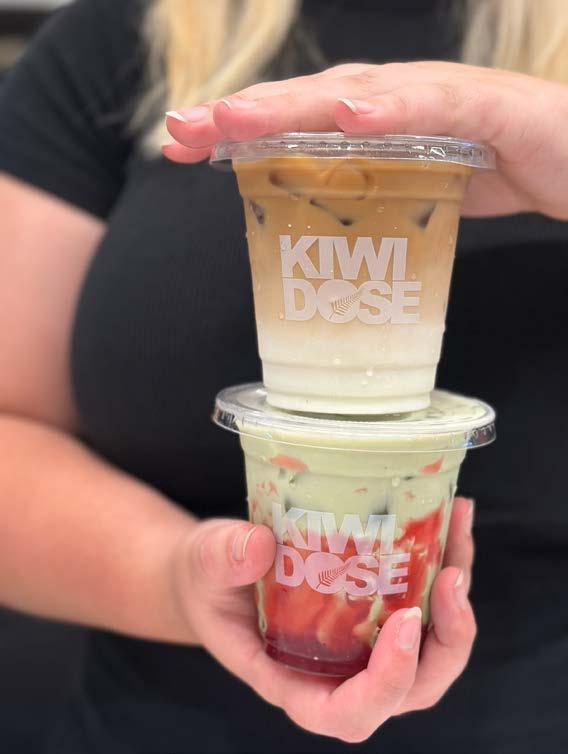
These events aim to create an inclusive environment where people can connect, share ideas, and simply enjoy themselves.
Of course, building a business while working full-time is not without its challenges. Aqueel says one of the biggest lessons he has learned through the process is patience. “There’s so much that could go wrong,” he explains. “What matters most is how you react to those situations.”
Balancing a demanding engineering career with the responsibilities of running the operational side of a business, while still maintaining physical and mental wellbeing, requires discipline and resilience. Yet for Aqueel, the challenge is part of what makes the journey worthwhile.
Kiwi Dose is a place where you can recover after a long day of lectures, push through a late-night study grind, catch up with friends, or simply enjoy a moment of indulgence in the middle of a busy week. Kiwi Dose hopes to give New Zealand exactly what its name suggests: a dose of life, so go check it out!

Written by Sanskruti Bannerjee (she/her) @san._.banerjee
CONTRIBUTING WRITER
Kōkōwai, Whenua, Mauri.
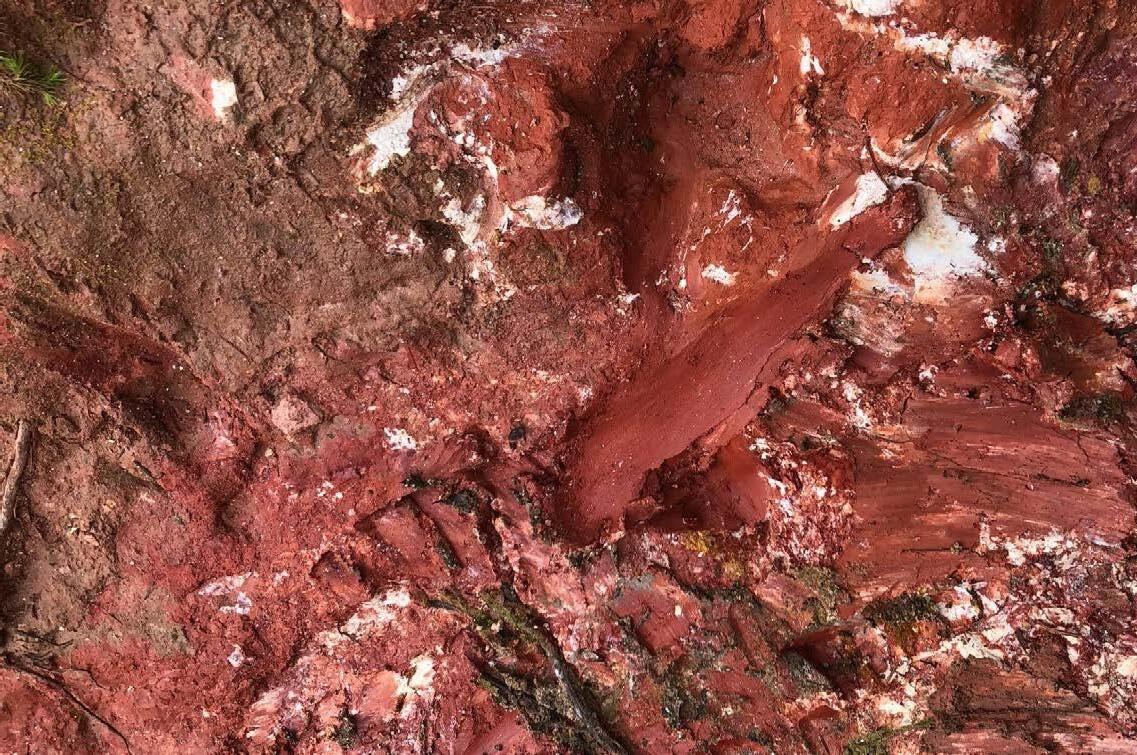
When I think about whenua and how it was in history I think of kōkōwai. Kōkōwai carries the colour of papa’s first breath, a deep, iron-rich red that binds Māori to the land, to their whakapapa and to the pulse of mauri, the life force that threads through all living things. More than a pigment, it is a story in itself, dug from soil, earth clay, and mixed with oils that once lay in the mātauranga of all māori. In its making, there is ritual; in its wearing there is remembrance.
For Māori women, kōkōwai has long been a companion in ceremony. It adorned the skin of wāhine as they stepped into motherhood, mourning, and even celebration. Its warmth echoes the whakapapa it carries, genealogies of atua and knowledge that have been lost to time like moko. To speak of whenua is to speak of things that are being lost to the time. To sustain the stories and the ways of being, and when kōkōwai touches the body it is not decoration, it is declaration.
Kōkōwai also adorned carvings and taonga, sealing them both with physical and spiritual resilience. In the same way, it protected the spirit of wāhine, strengthening their connection to whenua and to each other. Even today, kōkōwai remains a living practice and appears in toi māori by those who wish to revitalise these practices. Kōkōwai is a thread binding past, present, and future in a single breath.
Ivy Lyden-Hancy (she/her/ia)
Te Rarawa, Ngāpuhi, Ngāti Wairere, Samoan (Falefā), Tongan (Vava’u) @tekaraipiture
CONTRIBUTING WRITER
Kōrero Toi: Ken Faber
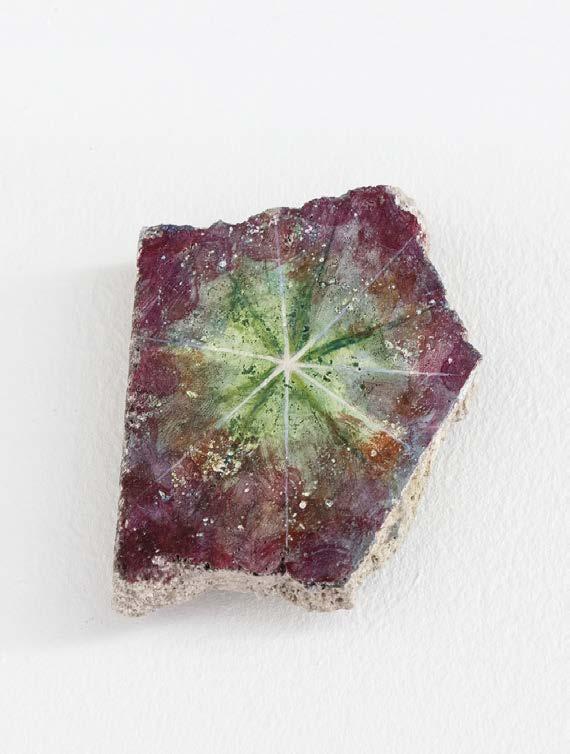
In The End We Are Together confronts the internal biases rooted in the ideology of the Anthropocene—Eurocentrism, chronocentrism, and anthropocentrism— clawing at its reifications of the innate sin of humanity in causing our extinction. It’s easier to imagine the end of the world than the end of capitalism.
Egg tempera is a naturally occurring emulsion, a nonbinary combination of oil and water. The paint I have produced and used in these paintings emulates a genderqueer transcendence of the false binaries of capitalism—male and female, human and nature, self and other. The merging sequences of the Cretaceous and Capitalocene extinctions question our agency and comprehension of an end already past.
The radioactive luminescence of the painted sketch, the trace fossils of the goathair brush, and the light catching in the dancing gestures of feathers, reveal a sense of lived being—myself, the subjects, the mediums themselves—by highlighting what is usually concealed in a painting. The dinosaurs counteract pop-culture depictions of mindless monsters: their feathers contradict the gender expectations imposed on women to be hairless and skinny; their iridescent relationships with each other emphasise their agency as living beings outside of heteronormative, anthropocentric logic.
The meteorite penetrates everything. Transparency shows each gesture, as I paint up, scrub away, paint up, fighting
the permanency of the tempera, remembering things I try to erase. It hovers over our heads, painted on diatomaceous fragments industrially harvested a hundred million years ago for your basement floor.
Look into the sun and see the halo of the incoming meteorite. Can you see it coming?

Written by Ken Faber (they/he) @_kekeno_
CONTRIBUTING CREATOR
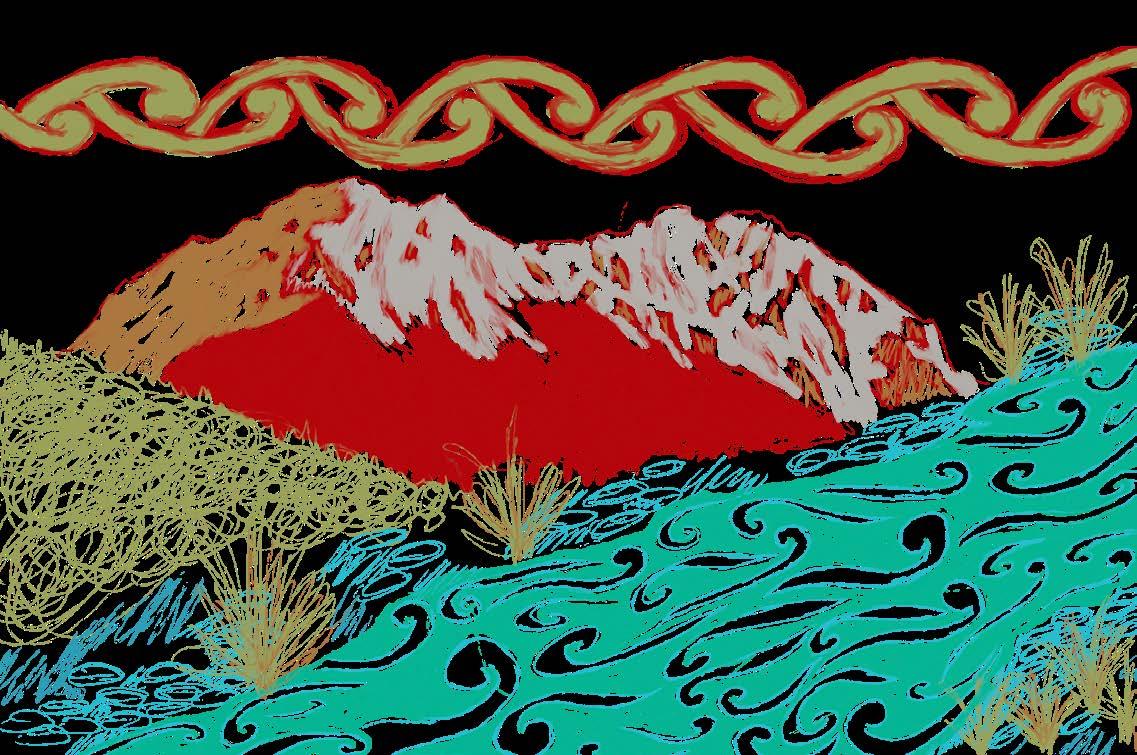
Rīpoinga
E tōku Whenua,
Do you hold a place for me still?
My ancestors are pressed into the soft moss of the Mangaoporo Valley I circle home like the Kārearea always swooping, never landing It is the east and you are the sun.
I spent a month of my summer this year at home, in Gisborne. While I was there, my friend, Te-Amo — a wanderer inconveniently without a vehicle of her own — had hitched a ride to Te Araroa with her sister. My father and I would drive up the coast to collect her. I had meant to go anyway. Going to Gisborne feels like a waste if you don’t venture up further. For me, it settles something. There is a displacement when you are without a single kāinga.
I am splintered; My body is in Tamaki My heart is in Gisborne My Wairua is in Te Tairāwhiti.
We fuelled up, and pressed on through Okitū and around the coast, where the lip of the road overhangs the sea. The sky was grey, as it so often is.
Past Tolaga Bay, where single lane bridges descend into the hills, and the road is swallowed up by farmland and bush, blackberries and gorse. Rugged horses chew at the bracken and ferns behind haphazard fences.
State Highway 35 is the spine of the Coast,
rivers branching like nerves in search of potholes. Cyclone Gabrielle has scarred the land, whole chunks of road, bridges and land swept out and reduced to slash.
We stop at Tokomaru Bay, and steal the last remaining Pāua pies. It burns my lips because I refuse to wait. The five peaks greet us as we continue — Hikurangi with her head in the clouds.
Our first stop is my grandfather’s whenua, in the riu of the Mangaoporo, backing on to the river.
While we’ve been gone, it’s grown wild. I never met my grandfather, but I know that this is his whenua. I see him in the buttery yellows and deep reds of the paint, I recognise him in the joints and the boards he laid. And I know that my greenthumbed grandmother has been here too, because all the plants have grown so fiercely — even the weeds.
The bright blue bach is hidden now among the grasses.
“Ah, your grandfather,” My father says. His voice wavers a little. Between his words I hear the wind, the rustling of the pines, and the distance we’ve grown apart - empty worlds suspended in the space we never bridged. We were never really rooted here to begin with.
E mokopuna
It says

There is work to be done.
I squeeze my father’s hand and reassure him that we will come back with a weed eater when I’m home next. Stay a few days if we need to.
Tinātoka Marae sits just across the road. We wander through, peering through the lapis and jewel-toned glass of the Church, then climb the hill to the Urupā. As a child, I thought Marae and Urupā - especially old ones - were haunted. The notion that someone’s spirit lingers in a place feels more comforting to me now. Why fear the ghosts of those who could only have ever loved you? Your tīpuna would never wish any harm upon you. I imagine them haunting me sweetly; blowing on a cup of tea, brushing an eyelash off my cheek.
My father wants to show me St Mary’s in Tikitiki. We obsess over the carvings, the kōwhaiwhai and the stained glass. The steady interweaving of Toi Māori and Catholic imagery. Two Māori Battalion soldier’s wrought in lead and glass kneel with their rifles propped. Ihu Karaiti is almost peaceful in his anguish; eyes closed at the moment he gave up the ghost. My father points out the names of my C Company great-uncles.
Just outside of Tikitiki is the land where my grandmother grew up. I haven’t been there yet. On the hill overlooking a brook are three brick chimneys. My father tells me that they are all that remain of the
house that my grandmother grew up in.
“If you scratch the ground,” he says
“You’ll probably find a bottle of top-shelf liquor.”
I sit on the fallen chimney, looking out over the land under the shade of a magnolia tree. Presumably, peacocks roam these hills. The trees sing with a choir of cicadas. I feel like I hold a cicada in my throat, chirping in my clenched jaw. I am overcome by the sheer volume of time. I think of lives lived and unlived, of the children who gathered by these fires, who waded in this stream. I wish that I could have heard my grandmother’s stories about this place, which that I had thought to ask when I was younger.
Nostalgia for a time that wasn’t mine, a time that could’ve been, a time that could be still.
It could be still, and I could be ahikā stoking the fires and I could build a house around these chimneys and I could toast apples at the hearth and I could cut through all the weeds at my grandfather’s bach, and maybe the orchard and the beehives will spring to life again after what has been a long, and hard winter. My sentimentality hangs heavy as a pounamu. I want to hoard these things, to keep them close to my chest, but they are slipping through my fingers.
I am too late I am too early I am right on time.

We eat our lunch by the stream, skimming stones. Catharsis hits and I am content to sit in the soft light of the glade beside my father.
We head back towards home, with TeAmo in tow. My father tells her stories but mostly we look out the window as the greenery and the hills envelop us. We stop at St Mary’s again, pointing out each landmark we’ve visited.
“Wow, Elise,” she says.
“Your home is so beautiful.”
I look at it with new eyes. Yes, yes it is.
@elise_sadlier
CONTRIBUTING WRITER
Written by Elise Sadlier (she/her)
Illustrated by Skye Lunson-Storey (she/they/ia)


Can sport survive a scorched Earth?
My first encounter with the concept of climate change was seeing the bumper stickers on my primary school bible studies teacher’s van.
Climate change is just a load of hot air. It’s always been hot.
Aged seven, I didn’t have a clue what these meant. I honestly thought the first one was nothing more than a scientific fact. But fast forward 14 years (good god), and the phrases ‘climate change’, ‘global warming’, and ‘greenhouse gases’ have marauded their way to the forefront of my brain.
In 2023, Cyclone Gabrielle, with the help of hundreds of tonnes of forestry slash, tore its way through my home region of Tairāwhiti. Since then, it seems like every six months, another catastrophic weather event has ravaged communities that barely got a chance to recover from the last one. When you open up Instagram in the morning and get greeted by The Spinoff’s Now You Know star Robbie Nichol standing next to a slide that simply reads, ‘Is the NZ summer gone for good?’ (his answer was yes), it’s difficult to avoid worrying.
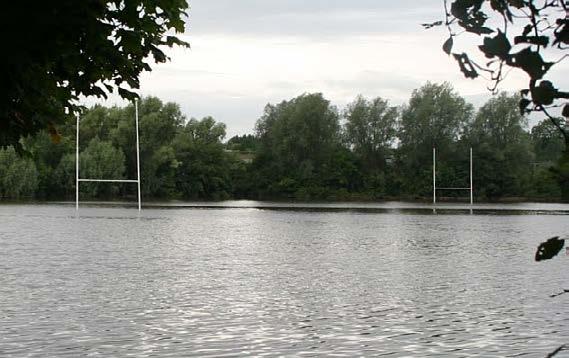
Almost all sports are being, and will be, affected by climate change – not just the never-ending bat and ball sport I like to harp on about. Although given that all it takes for a game to be called off is a sprinkling of rain on a field with poor
drainage, I’d say cricket is one of the most in danger.
The Heat is On
A couple of years ago, Sport New Zealand published a report aiming to lay out what a climate-changed future of sport might look like, and how little old Aotearoa might mitigate and adapt to it. Authored by a futurist, it charted four 2040 scenarios on a spectrum from best case to worst.
Scenario 1, the best case, relies on societies across the globe taking radical steps to achieve net-zero emissions. These steps begin to work, and it looks like we’re going to meet the Paris Agreement target of keeping global warming to 1.5 degrees Celsius above pre-industrial levels. Sport and recreation in this scenario do not escape radical change. Facilities like fields have to adhere to strict water, power and fertiliser requirements. Flooding leads large cities to invest more in green spaces to act as sponges, benefiting sport and recreation.
Competitive sport in school, beset by economic and environmental concerns, declines in favour of “wild play” on pitches and in forests alike. The international sporting realm winds the clock back a few centuries, with less overseas travel and longer trips for teams and athletes.
Scenario 2 sees the world make some progress, but not enough to reach its targets. Technological impact is underwhelming. We look on track for around 2 degrees Celsius of global
warming by 2050. Outdoor sport suffers disruption from increasingly common extreme weather events. Rising heat and humidity give rise to new pests and diseases, while increased fees and transport costs slice staff and volunteer numbers in half. The decline in playing opportunities dries up our elite athlete talent pool, so many of our best leave for better opportunities overseas.
In Scenario 3, many global climate commitments fall apart. New Zealand suffers, but is not as badly affected as other countries – becoming a lukewarm pie on the world’s windowsill. Funding for sport and recreation is slashed by the government in favour of coping with the immigration boom. Virtual sports are all the rage and even gain real-world equivalents. Traditional sports adapt, becoming shorter, snappier, and more intense (while the report doesn’t mention this, I assume five-day test cricket is doomed )
Scenario 4 is nightmare fuel, but fortunately unrealistic. I mean, what kind of country would “reduce investments in nuclear power, hydrogen, renewables, carbon capture, and the circular economy and accelerate the exploitation of coal and other fossil fuels”? It certainly couldn’t be us! With 2.5 degrees of global warming in 2040, the outdoors is no longer viewed as a safe and reliable environment. Those still participating wear high-tech gadgets that tell them when to get the fuck back inside. Swimming and other sports done on awa or the moana are simply too dangerous. A variety of new “extreme weather sports” played during severe storms become popular among adrenaline junkies wanting to pit themselves against the elements. These events are often sponsored by oil and mining companies.
With these glimpses into the possibilities of the future, I’m almost glad I’m starting to feel my back giving up.
Is this a Napoleon moment?
There is nothing we can do. Sport and recreation busts out an estimated 0.8% of global emissions, and New Zealand emits about 0.1% share of the world’s total. Mash those numbers together, and it amounts to approximately not very much. Except that’s not really the point, because, as every exasperated climate change scientist will tell you, every tonne counts.
Some sports organisations have begun taking steps in the right direction. SailGP has committed to becoming the world’s first climate-positive sports and entertainment institution. Yachting New Zealand and Golf New Zealand have developed sustainability strategies and have made some tangible advancements.
But the real power sport lies not in curbing its own emissions but rather in its global reach. Education, advocacy, and soft power. Promoting climate action messages in stadiums and broadcasts. Setting clear targets and commitments. Who knows, maybe a certain football club in the city of Manchester could finally wean itself off oil.
And you can argue that politics should be kept out of sport, and I hear you. But, as laid out above, the future of sport as we know it depends on decisions made by politicians now and over the next few decades. And just look at examples like the state-sponsored Russian Olympic doping scandal a decade ago, and more recently how India has been using cricket as a foreign policy tool (search ‘Why isn’t Bangladesh playing in the T20 World Cup?’). You begin to realise the two are inextricably linked. We need to ask more of our leaders.
To my shame, I’ve often pushed away any climate-related dread by dismissing it as a problem for the distant future. Lorde –Pure Copium. The past few years, though, have taught me that this is happening to us now. And those 2040 scenarios are less ‘distant future’ and more ‘Happy 46th birthday, Dad!’ I hope I get a mug and
some socks. My blown back and diseased knees will have sidelined me by then. Sometimes I imagine taking my kid home after a string of cancelled games – this time Lake Taupō completely evaporated and then fell on the field. That breaks my heart.
Plus, I couldn’t forbid them from taking part in those ‘extreme weather sports’ as conditions would make helicopter parenting way too dangerous.
Written by Luke Fisher (he/him) @lukefish7__
CONTRIBUTING
WRITER
Rick’s Reel Recommendations | 3 Films on Whenua
1. Chocolat (Claire Denis, 1988)
Don’t get mixed up here: I don’t mean Chocolat (2000). Not the shlocky rom-com starring Juliette Binoche as a travelling chocolatier who brings love back to rural France with the power of sweeties; the DVD which you find on op-shop shelves next to Hayley Westenra CDs. I mean the lesserknown Chocolat, about a native African servant named Protée (Isaach de Bankolé) working for a white family in colonial Cameroon. Those familiar with the restless eye of Claire Denis’ later masterworks (Beau Travail, 35 Shots of Rum) may be intrigued by how comparatively still she keeps the camera in this debut film. Instead, Chocolat realises other ways of wandering to and fro. Abrupt cuts from one tableau to the next make each resident’s relationships with
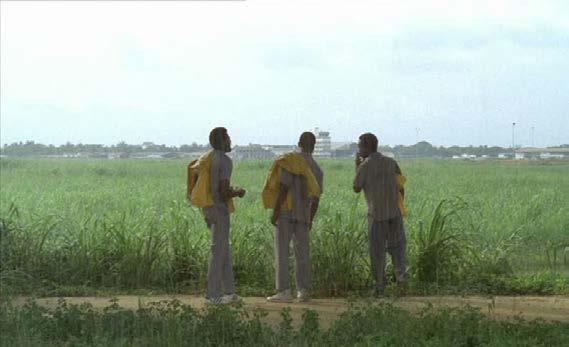
their environments feel even richer. As does Denis’ remarkable balance of recounting her own West African upbringing without centring her gaze. So while this is the memory of a Caucasian narrator, and our sympathy aligns with Protée, each character still gets their chance to be placed at odds with their own horizons. By contrast, the final minutes of Chocolat ring with an optimistic euphony, homing in on a few citizens untethered from the rest of the story. They are a trio of Cameroonian airport workers, bantering on their smoke break before the rain comes down.
Written by Ricky Lai (he/him)
@rickthelai on IG & Letterboxd
CONTRIBUTING WRITER
2. When It Rains (Charles Burnett, 1995)
At a staggering length of 13 minutes, this will no doubt be the shortest film I recommend in the column, and how’s this as a bonus: you can watch it right now on YouTube! A kind-hearted jazz trumpeter (Ayuko Babu), donning one of George Clinton’s outfits, walks block to block in his LA neighbourhood to help a mother pay rent on New Year’s Eve. Everybody he encounters in this Bicycle Thieves-esque quest seems passive about the favour, returning to their mundane business after Babu leaves. The funniest is a kid spending his afternoon doing armpit farts in the yard. Some are also a lot less helpful than others. I find pleasure in the rhythm of this film, informed early on by Babu’s narration over a city symphony of the LA streets. Listen closely to his lyric: the assonance when he raps ‘My mother and her mother never uttered a mumbling word’. After that, it’s hard not to see a musical essence in Burnett’s storytelling. So on one hand, the film is like jazz: we observe variations on a riff (the act of asking to spare a dollar).
On the other hand, the film is also like the blues: a tone-poem under the strain of displacement and poverty. Babu does eventually appease the stolid landlord, but not in the way you’d expect: Behold, a tale where money circulates through a circuit of owed fees to vacant pockets.
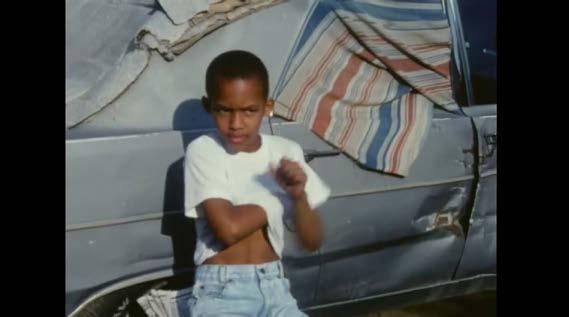
3. I Walked With a Zombie (Jacques Tourneur, 1941)
The concept of whenua in the horror genre could fill out a whole other piece. That’s what happens when a genre’s bread and butter is the spilling of blood, whether staining walls or seeping into soil. For instance, Mārama, which has just been released in theatres, seems to be Aotearoa’s most fertile example to date. I also considered so many other worldwide examples: Onibaba (1964), Ganja & Hess (1973), The Wicker Man (1973), Ravenous (1999), Wendigo (2001), Dumplings (2004) & Chime (2024). All of these are worth a slice of your day, but they kneel before the moonlit magnificence of Jacques Tourneur and Val Lewton’s I Walked with a Zombie. It is only over an hour and still feels gigantic. Borrowing the skeleton of Brontë’s Jane Eyre, the
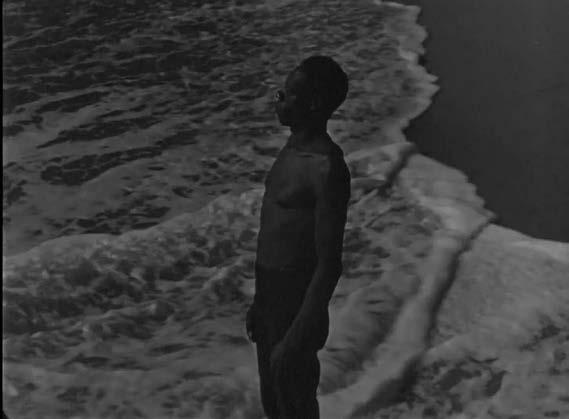
duo smuggled a haunting poem about power and slavery into the cadaver of the zombie-themed B-movie. A nurse travels to the Caribbean to help a wealthy family that inherited a sugar plantation from their slave-trading ancestors, as their matriarch has mysteriously gone catatonic. The doctor says a tropical disease is to blame; their maid suggests she is under a Haitian Vodou spell. And what imperishable atmosphere comes of it. Shadows hang over the island like an unwashable shame. We lean over the cliff’s edge, standing above a portal of crashing waves. A Haitian man stares vastly into nothingness, and we can recognise the passage of history in his eyes, while the pulse of a distant ritual –always drumming along – threatens to jolt you awake at last.