FALL/WINTER 2025
A Commitment to Care
FOSTERING WELL-BEING
ACROSS CAMPUS
Aurora University Magazine
Fall/Winter 2025 Volume 11, Issue 2
aurora.edu/magazine
President
Susana Rivera-Mills, PhD
Senior Vice President for Enrollment and Marketing
Deborah Maue
Editorial Team
Sara Meers ’15 MS
Mary Nicholas ’17 MBA
Jeremy Pittenger
Christina Young ’16, ’21 MBA
Designer
Nicole Dudka
Contributing Designer
Teresa Drier
Contributing Writers
Zachary Bishop
Deborah Blumberg
Hal Conick
Sean Frey
Copy Editor
Molly Heim
Photographers
Sam Krueger
Sylvia Springer
Aurora University
347 S. Gladstone Ave. Aurora, IL 60506-4892
© 2025 Aurora University
Aurora University is accredited by the Higher Learning Commission to award degrees at the baccalaureate, master’s, and doctoral levels.
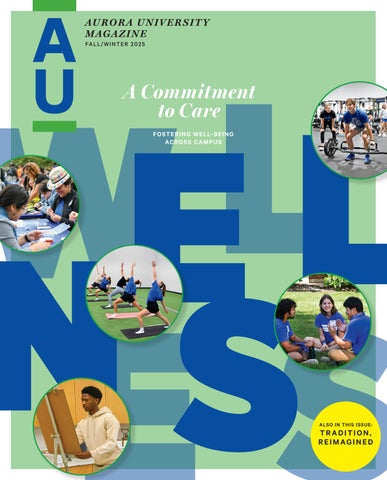
On the cover: Photos from summer and fall 2025 campus happenings.
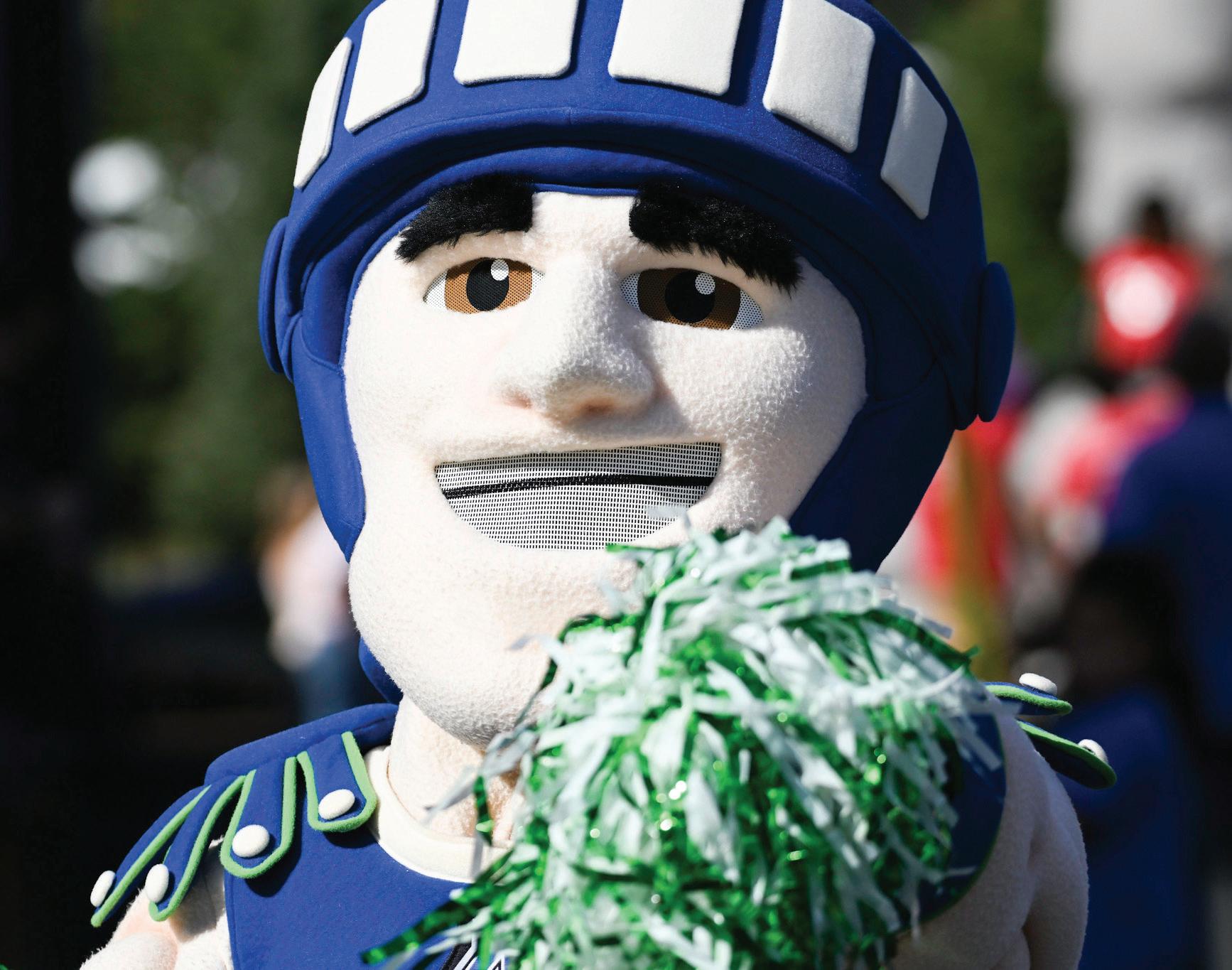
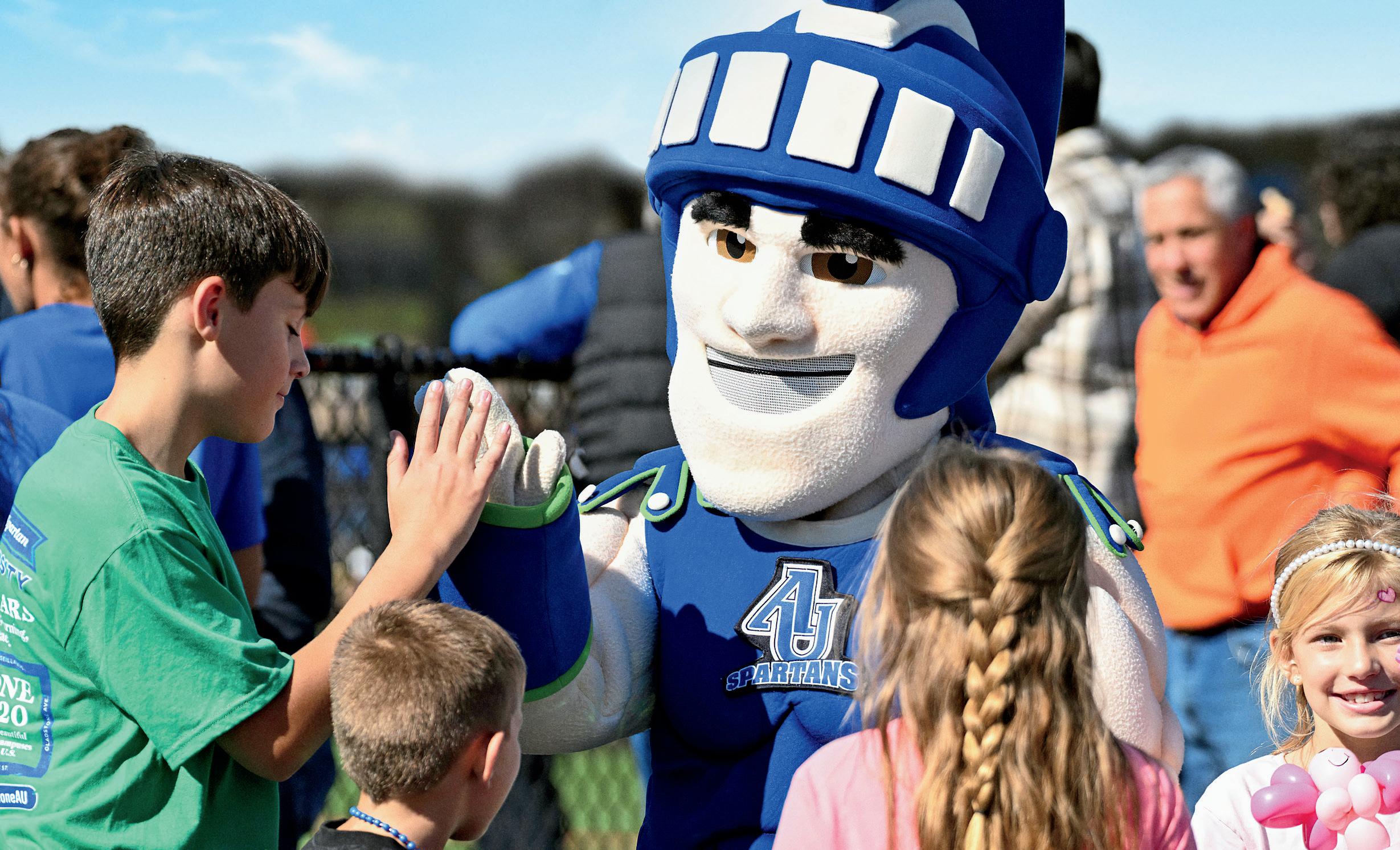
warm welcome Sammy Spartan spreads AU pride across campus while mingling with students, families, alumni, and friends during Homecoming and Family Weekend. page 18
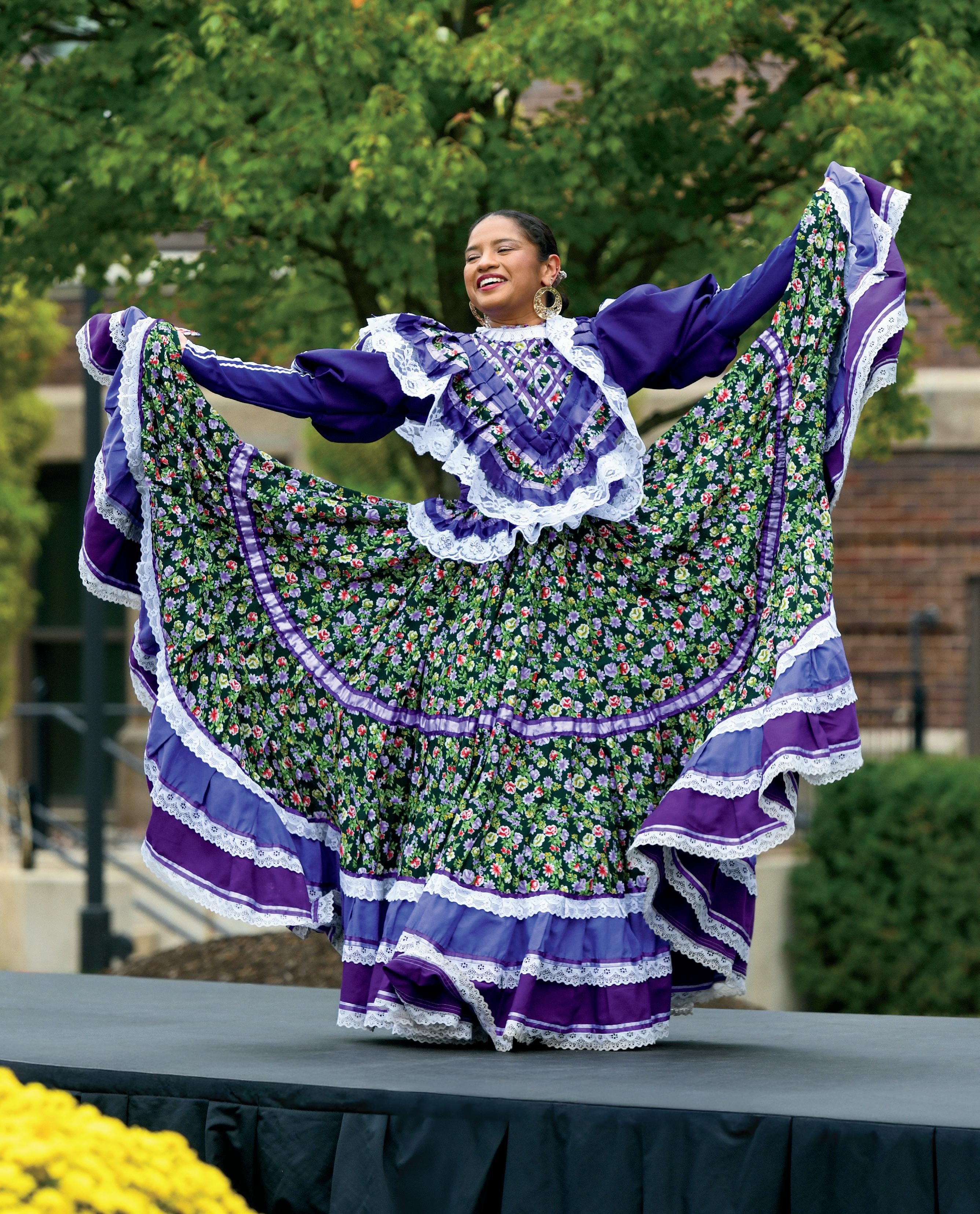
Angela Garcia Guerrero ’27 performs a Mexican folk dance at Cultural Fest during Homecoming and Family Weekend. page 18
A Commitment to Care: Fostering Well-Being Across Campus Building wellness through collaboration, Aurora University integrates health, support, and community into every aspect of student life and employee culture. 10 18
Tradition, Reimagined
A beloved AU tradition takes on new life as Homecoming and Family Weekend unites Spartans of all generations in celebration of legacy, community, and what’s to come. Features

Your Gift POWERS THE FUTURE
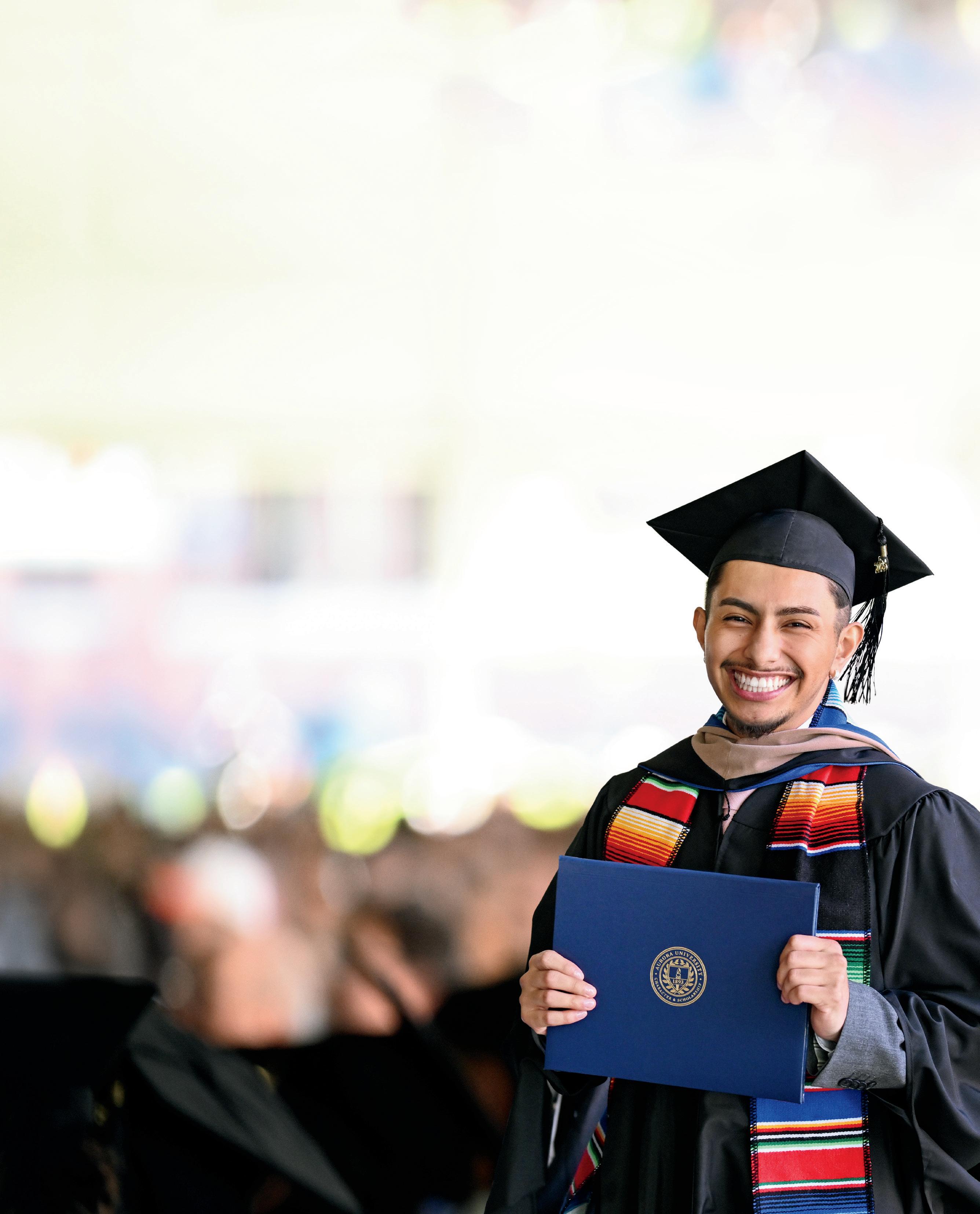
When you give to the AU Annual Fund, you provide the flexible support that helps Aurora University meet its greatest needs and highest priorities. Together, we create life-changing opportunities for students, strengthen the AU community, and build momentum for a brighter future.
EXPANDING ACCESS
Your gift sustains vital programs like advising, tutoring, and mentorship — support that is especially critical for first-generation students.
RESPONDING TO STUDENT NEEDS
Flexible funding enables AU to act quickly and strategically to fill funding gaps and strengthen services.
ADVANCING BOLD PRIORITIES
Your generosity provides the foundation to pursue major initiatives like the new Learning Commons and the Future Promise Fund.
BE PART OF THE PROMISE. Scan the QR code to learn more.
From the President
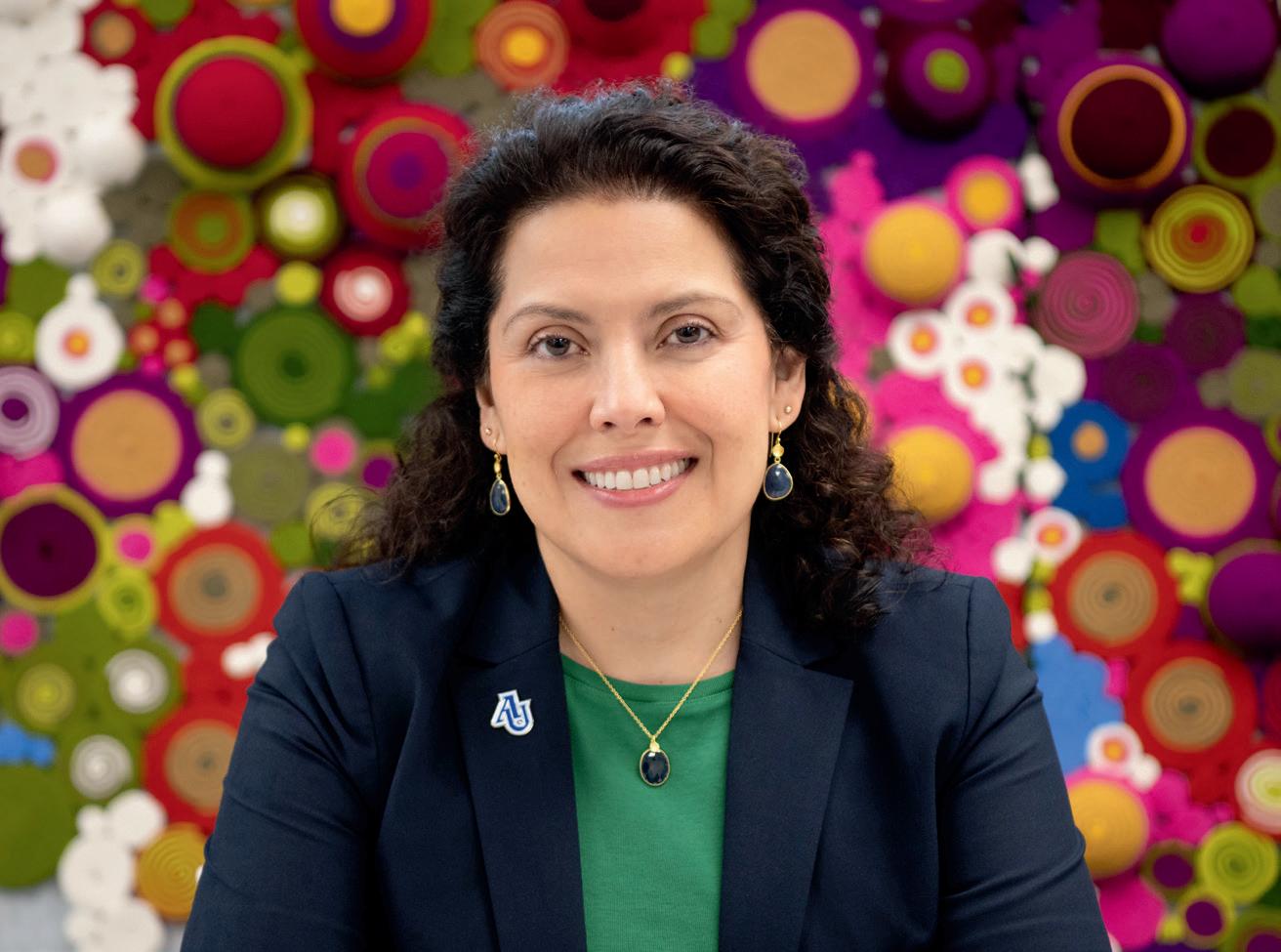
As the crisp days of fall give way to the quiet of winter, I’m reminded that this season is, above all, about coming together. Reflecting on what it means to lead and learn alongside one another, I returned to a quote that has long guided my perspective: “We rise by lifting others.”
That simple but profound idea also inspired my theme for the academic year: Elevate. In this issue of Aurora University Magazine , you’ll see how the power of collaboration has elevated our community in recent months — strengthening our shared purpose and reminding us of what we can achieve together.
Our cover story reflects that same spirit through a focus on holistic wellness. At AU, supporting students is a shared responsibility that extends beyond academics. Today, we know that wellness encompasses mental, emotional, and social well-being, as well as the balance between studies, work, and family. Together, we’re creating a community where every student can thrive.
This collective commitment to student success is earning national recognition. Aurora University was again named one of the top colleges in Illinois by U.S. News & World Report and this year was recognized for leadership in social mobility as well, and we were honored by Washington Monthly as one of America’s Best Hispanic-Serving Colleges.
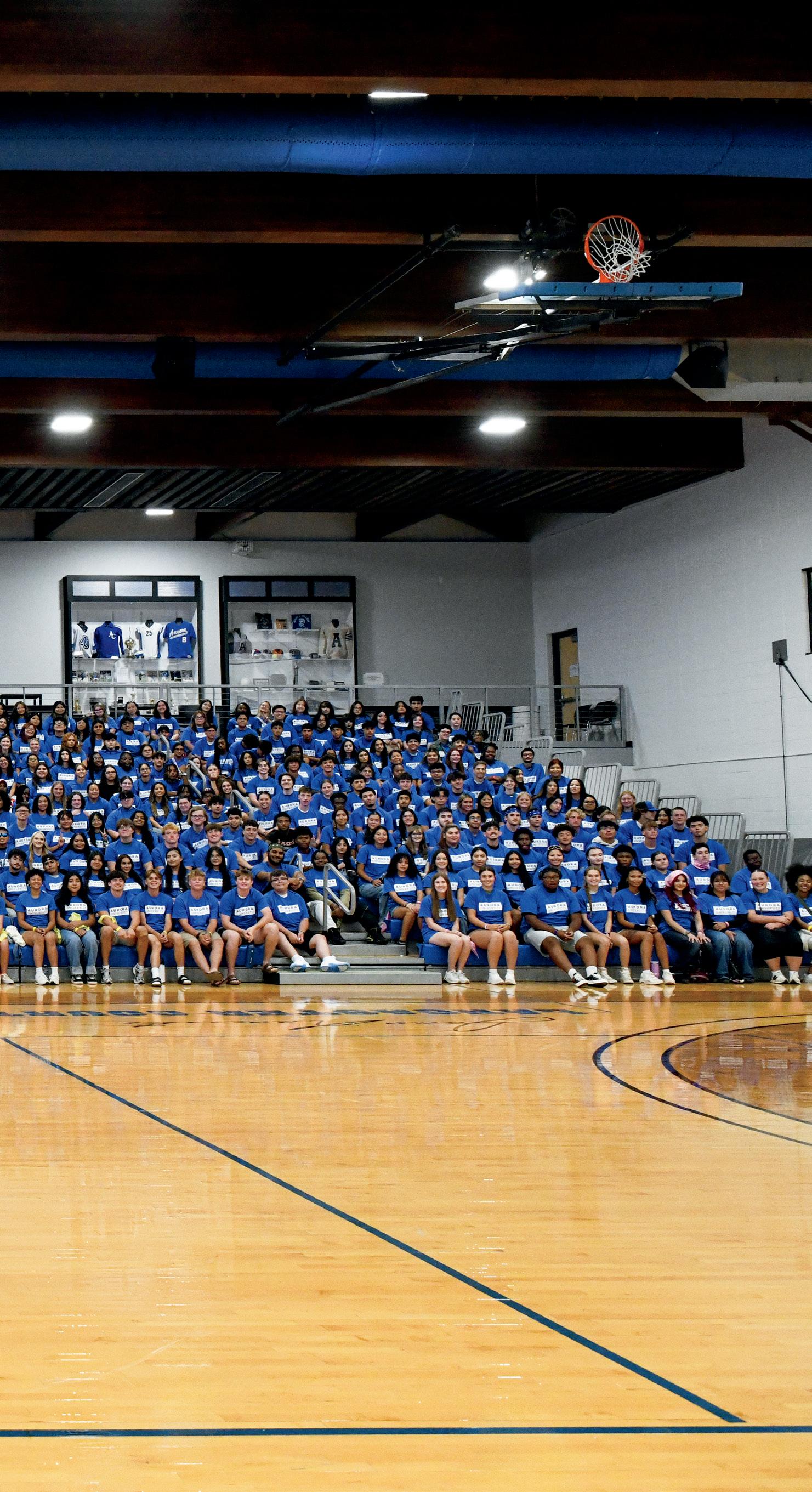
These accolades aren’t just distinctions — they’re opening doors for our students, including our largest incoming class ever this fall. More than 1,200 new undergraduates became Spartans as faculty and staff work together to elevate the student experience.
That work was apparent this fall at the AU Career and Internship Fair, where more than 90 employers connected with over 1,250 students and alumni, and in the launch of Finding Your Purpose: The Freshman Experience, a new yearlong program helping first-year students thrive academically, socially, and personally.
That same spirit of connection was also on display at the Student Involvement Fair earlier this fall, where more than 70 campus clubs and organizations welcomed new and returning students. These groups are the heartbeat of campus life, offering opportunities to lead, learn, and belong — and providing meaningful ways for the local community to connect with AU.
Seeing students, faculty, staff, and community partners come together in different ways affirms what Elevate truly means. The culmination of this shared work is evident this month, as more than 450 graduates walk across the stage during December commencement, a celebration of how we empower lifelong learners to transform their lives — and the world around them.
Our momentum is rising, and in the months ahead, I welcome opportunities to continue building, connecting, and lifting one another even higher.
Susana Rivera-Mills, PhD President
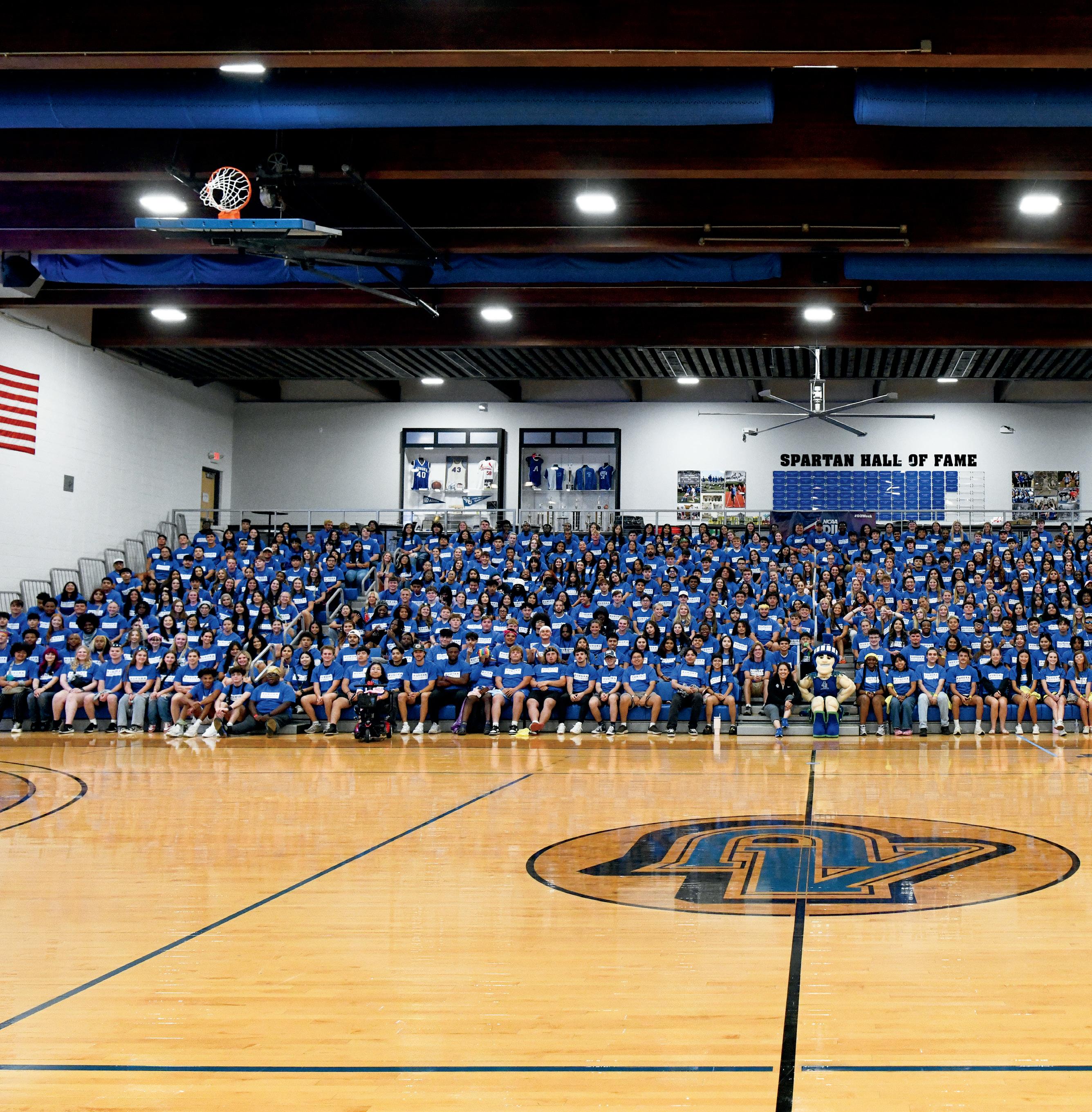
Aurora University welcomed its largest incoming class ever this fall, with more than 1,200 new undergraduates beginning their college journey on campus.
AU earns state and national recognition
Aurora University’s strong focus on helping students from lower-income backgrounds improve their economic and social standing earned it a 34-place climb to No. 22 on the U.S. News & World Report 2026 Top Performers on Social Mobility list, placing AU among the top 5% of universities nationwide. The achievement coincided with AU earning the No. 10 spot in the Best Colleges in Illinois ranking for the second consecutive year. These recognitions highlight the university’s dedication to expanding academic excellence, student success, and access to higher education.
News of Note
New certificate explores AI ethics
As artificial intelligence reshapes our world, Aurora University is preparing students and professionals to meet its opportunities and challenges through a new Certificate in AI Ethics.
The three-course certificate examines AI’s societal impact from multiple perspectives, including business, computer science, criminal justice, healthcare, and philosophy. It explores issues such as bias, governance, privacy, and transparency, and shows how these concerns apply in realworld settings.
“Artificial intelligence is rapidly reshaping the world around us,” explained Gopal Gupta, the Joe Dunham Distinguished Associate Professor of Ethics.
“From intelligence-assisted surgeries and weapon systems to algorithm-driven financial markets, the ethical implications are profound. The Certificate in AI Ethics equips us with the tools to understand how artificial intelligence can be used ethically or misused across industries.”
Combining theoretical grounding with practical case studies, the curriculum prepares students to navigate an AI-driven world and to champion ethical innovation.
Elevating the AU experience
Aurora
University is reimagining campus life to create a welcoming, student-centered environment that begins with the very first visit and continues throughout a student’s journey.
New home for the Office of Admission
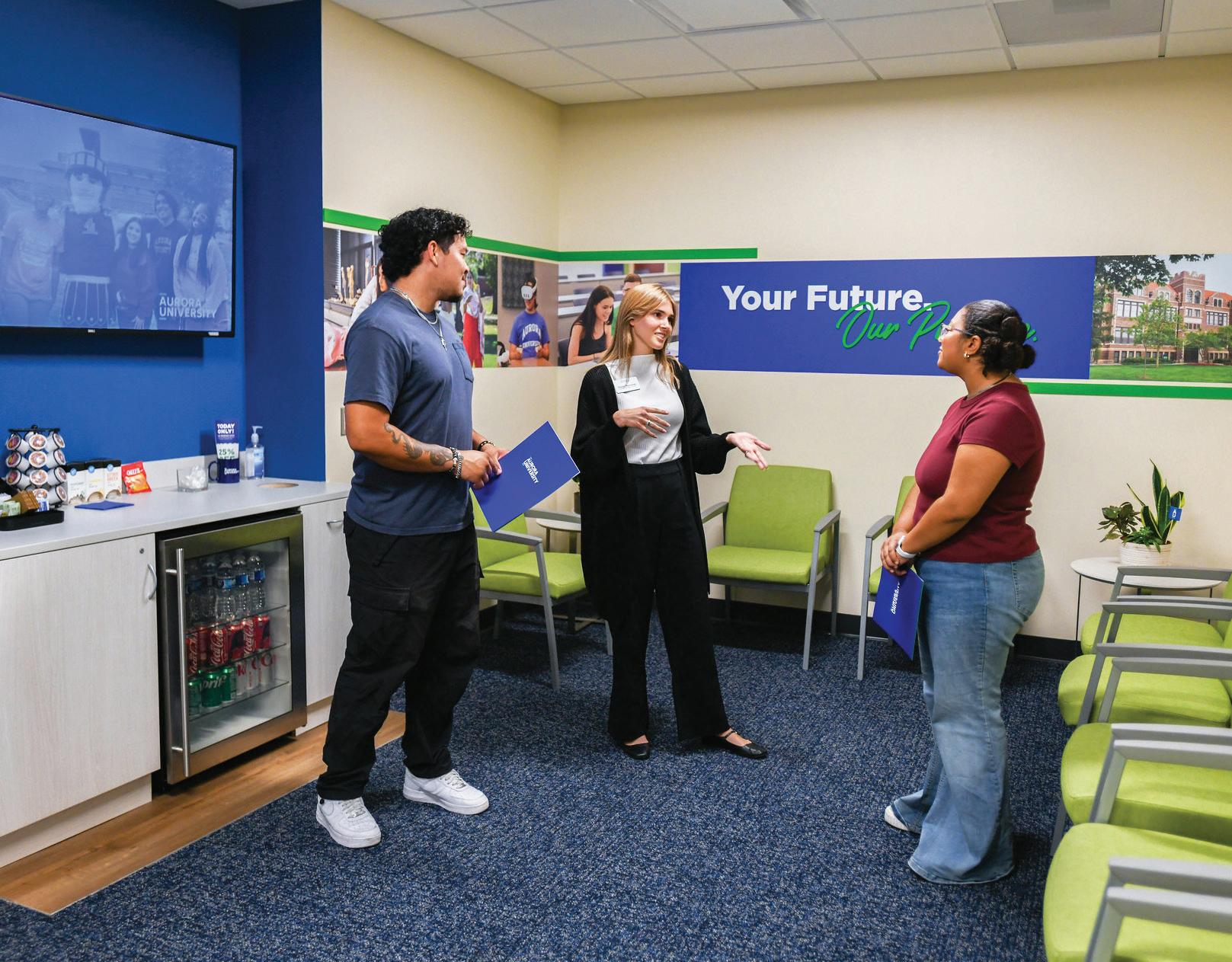
A major enhancement to campus is the relocation of the Office of Admission to the Institute for Collaboration. Each year, approximately 1,300 prospective students and their families visit AU, and this new space offers them an engaging introduction to the university. Features include a large-screen video display of campus life and a photo op wall with a graphic of Sammy Spartan.
By bringing together all enrollment services, including for undergraduate (freshman and transfer), graduate, and online programs, this new area provides a unified space where prospective
students can explore their options and receive personalized support. Its location — surrounded by classrooms, faculty offices, Crimi Auditorium, and Tru Blu Coffee — provides a convenient, authentic preview of student life. The design encourages meaningful interactions between future Spartans and the community they will soon join.
Learning Commons construction
Looking ahead, the Learning Commons — now under construction along Prairie Street — will become a central building for academic life, bringing key student resources together in one collaborative space.
Replacing the aging Phillips Library, the 45,000-square-foot facility is designed for a growing, increasingly tech-connected student body. Scheduled to open in fall 2026, this innovative hub will feature interactive learning spaces and advanced technology to help students think creatively and solve complex problems.
Follow the construction progress, view the timeline, and watch live footage at aurora.edu/ learningcommons
Interactive map
To help everyone navigate the campus better, AU has launched an updated, interactive map — an accessible way to explore the campus anytime, anywhere. The map lets users tour buildings, landmarks, and residence halls through photos and descriptions; find parking and accessibility features before arriving; and experience campus life right from their phones.
It also includes walking, biking, and driving directions, a searchable directory, and a printable version for offline reference. Explore the map at map.aurora.edu
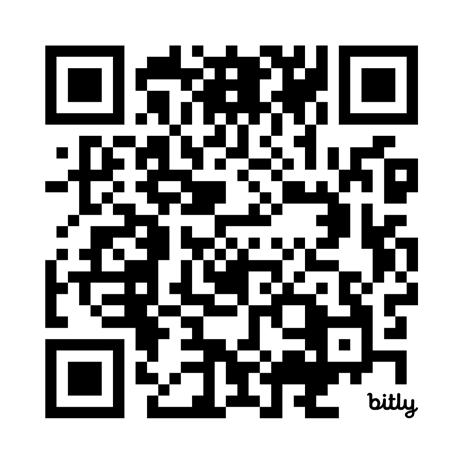
Chen receives 2025 Trumbo Award for Excellence in Teaching
Aurora University awarded its most prestigious faculty recognition to C.J. Chen, associate professor of health science and pre-medical professions advisor. The Marcus and Mark H. Trumbo Award for Excellence in Teaching acknowledges the finest work of full-time AU faculty in their roles as teachers, mentors, and scholars.
Chen, who holds the Kenneth C. Corkum Distinguished Professorship in Life Science, was recognized for his creativity and imagination in the classroom, where his dynamic approach ensures learning remains both interactive and effective. Students note that he consistently encourages and validates their efforts, fostering a sense of belonging and confidence.
Through thoughtful discussions and real-life examples, Chen challenges students to reflect on their aspirations and the positive contributions they can make in the healthcare field.
“What motivates me the most is when students share their achievements with me after graduating from AU,” Chen said.
“For example, after students are accepted to graduate medical programs, some share recordings of their white coat ceremony. As I watch them put on their white coat for the first time and pledge their professional oath, I am so proud that I get emotional.”
Students also shared that Chen inspires them to engage with university events, build connections, and broaden their experiences. Leading by example, he frequently attends cultural and historical events on campus, demonstrating his commitment to lifelong learning and intellectual growth. Faculty colleagues describe him as a well-rounded individual and a pleasure to work with.
Chen joined AU as an adjunct professor in 2014 and became a full-time faculty member in 2016. He holds a PhD in molecular genetics from the University of Illinois Chicago, an MS in biochemistry from National Yang Ming University in Taiwan, and a BS in human nutrition from Fu Jen Catholic University in Taiwan.
Scan the QR code to view AU’s updated, interactive 3D map. The enhanced tool offers detailed views of both the main campus and Spartan Athletic Park.
Algebra Recitation Program nationally recognized for boosting student success
Aurora University’s Algebra Recitation Program was named a finalist for the 2025 Examples of Excelencia , a national, data-driven initiative recognizing programs that demonstrate evidence of improving student success in higher education, particularly among Latinos.
The recitation program was recognized for enhancing outcomes in entry-level college algebra courses by combining innovative teaching practices with comprehensive student support.
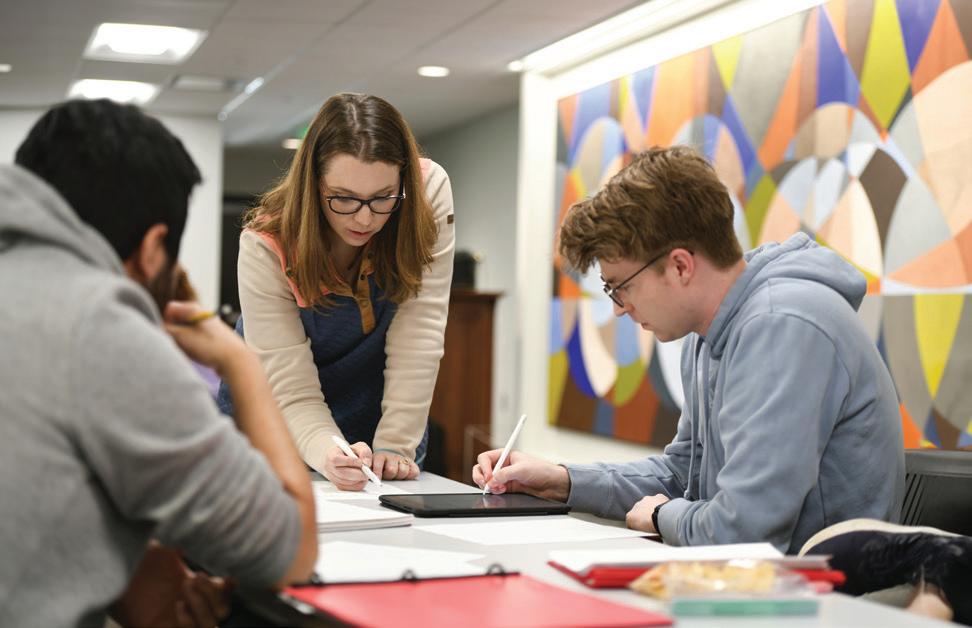
“It’s really important for those of us in higher education to do everything we can to support students from different backgrounds. We can’t just teach things the way they’ve always been done,” said Regina Rahn, professor and chair of mathematics at AU. “We have to find ways to make the experience more engaging and meaningful for our students.”
In fall 2022, all AU College Algebra students began attending required recitations — small, interactive group tutoring sessions — to address declining math readiness. With nearly half of its students identifying as Latino, AU implemented culturally responsive teaching methods to create an inclusive environment and provide targeted support.
The program led to measurable success, particularly among this subset of students, with significant improvements seen in content knowledge, College Algebra grade point average, and time spent in online learning. The Academic Support Center also reported that more students sought help beyond required recitations in both math and other subjects.
Excelencia in Education is the nation’s premier authority on advancing Latino talent and strengthening the nation’s workforce and civic leadership. AU joins more than 400 programs that have earned recognition through Examples of Excelencia since 2005.
BY
THE NUMBERS
In fall 2024, Latino students in College Algebra achieved much stronger results than before algebra recitations were offered.
5% increase in content knowledge
7% increase in College Algebra grade point average 8% additional hours per semester enhancing math skills through online learning
Meet AU’s new vice president for philanthropy and engagement
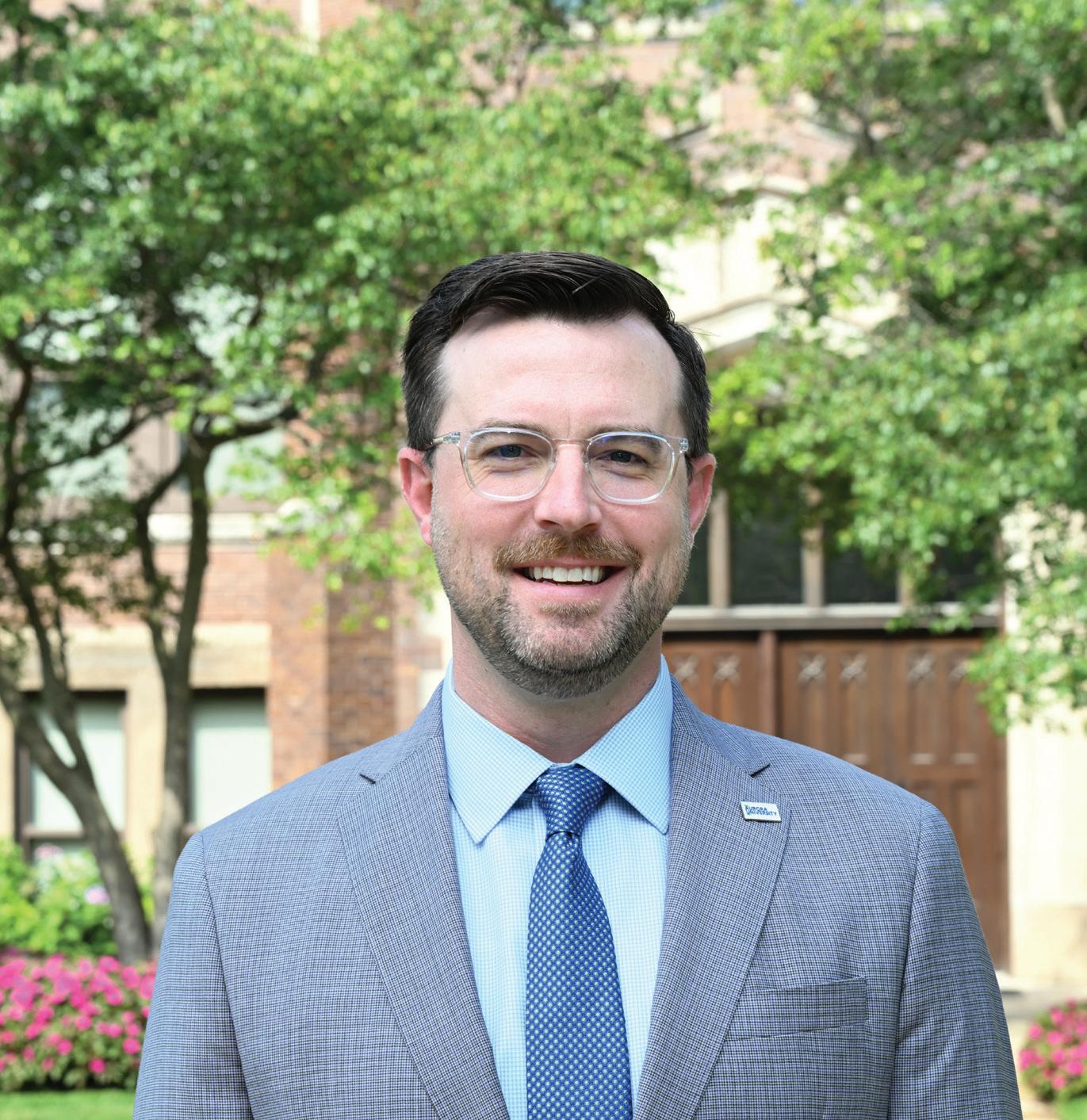
Aurora University welcomed Jonathan Jensen this summer as vice president for philanthropy and engagement. In this role, he leads the university’s advancement and alumni engagement efforts, working to strengthen connections with supporters, expand philanthropic opportunities, and enhance the student experience.
Jensen brings extensive experience from both cultural and educational institutions, most recently serving as chief development officer at the Paramount Theatre in Aurora. We sat down with him to learn more about his vision for philanthropy at AU — and to get to know him beyond his professional background.
What drew you toward a career in higher education and philanthropy? Nearly everyone in my family were educators. My parents were high school and middle school teachers — my dad was also a Division III swimming coach — and my grandparents all taught. The memories I have of visiting their classrooms, standing on the pool deck, and attending special events with them keep me grounded in the life-changing work we get to support at AU.
In contrast, I first stepped into fundraising out of necessity to keep the organization I worked for afloat. Over time, I discovered how rewarding it is to work with people who genuinely want to make a transformative contribution that ripples through communities.
What made you want to join the AU community? The student experience is truly special, with a palpable sense of purpose and energy across campus. I was also drawn in by President Rivera-Mills’ inspiring leadership and the opportunity to work alongside such dedicated colleagues. The fundraising team here is exceptional, and I’m excited to help build on the momentum they’ve created.
What are you looking forward to most in your new role? I’m most excited to get to know the incredible individuals who have invested in AU. Hearing their stories and learning why they give and stay involved is deeply meaningful. Those personal connections make this work so fulfilling. I’m also focused on growing our team and expanding our philanthropy and engagement operations to better serve the AU community and amplify our reach.
What lessons from your previous experiences will you bring to AU? I’ve been fortunate to work in settings where I
built programs from the ground up. At AU, we have the opportunity to build upon something very special and then elevate it. It’s rewarding to develop programs, partnerships, and facilities that create lasting impact.
How do you see philanthropy and alumni engagement shaping the student experience at AU? They’re essential to enriching the student experience, providing resources and opportunities that go beyond the classroom, including scholarships, mentorships, and internships. When alumni stay connected and invest in the next generation, it creates a powerful cycle of support and inspiration.
Outside of work, how do you and your family like to spend your time? I enjoy time outdoors with my wife, Jessica, who is on the theatre faculty at AU, and our daughter. Camping is a favorite activity, and we’re often found at parks, on bike rides, out on walks with our dog, or at a pool or golf course. It’s all about spending quality time together and enjoying nature.
New programs in health, business, and beyond
Aurora University continues to introduce new academic programs that reflect workforce needs and encourage students to make an impact in their careers and communities.
This summer, AU launched a nonprofit leadership certificate in partnership with the Dunham Foundation. Emerging and transitioning leaders completed the 10-week program, co-taught by Joe Jackson ’16 MBA, executive director of Hesed House, the second-largest homeless shelter in Illinois, and Michelle Meyer ’09 MBA, assistant director of community health with the Kane County Health Department.
The university has also launched the Bachelor of Science in Communication Sciences and Disorders to prepare students for graduate study and careers in speech-language pathology and audiology; the Master of Science in Computer Science to provide students with advanced technical expertise to meet the increasing demand for professionals in the tech sector; and the Doctor of Nursing Practice, Family Nurse Practitioner program to prepare advanced practice nurses to deliver primary care across the lifespan.
Students can also choose new minors in economics, environmental studies and sustainability, and sports media.
In addition, the Dunham School of Business revised its curriculum to be more flexible, adaptable, and relevant, transitioning its business administration program from a bachelor of arts to a bachelor of science to strengthen quantitative and analytical skills sought by today’s employers.
A Commitment to Care: Fostering Well-Being Across Campus
Building wellness through collaboration, Aurora University integrates health, support, and community into every aspect of student life and employee culture.
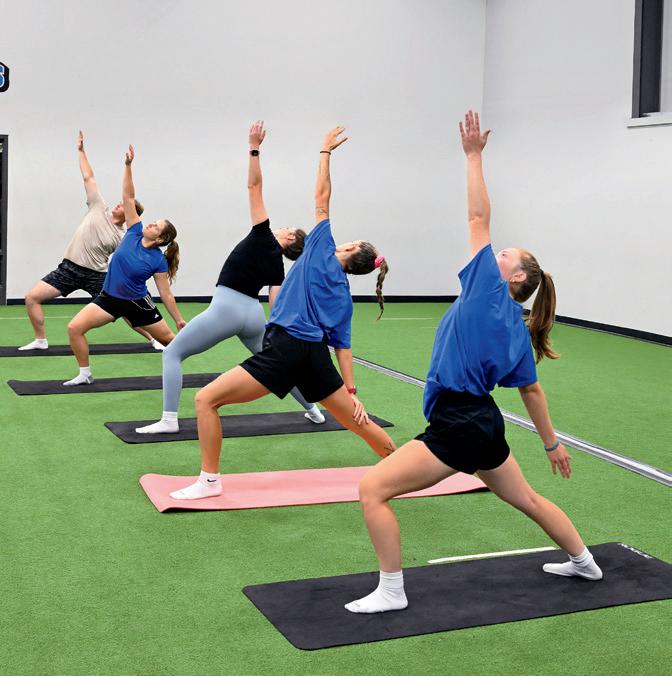
CCampus wellness has come a long way from the days of quick strep tests and free flu shots at the Wellness Center. At Aurora University today, well-being means a lot more, including hopping on a smoothie bike, joining a sleep workshop, getting mental health counseling, and even picking up nutrition tips — all under one roof.
Like universities across the country, AU has evolved wellness offerings far beyond its early focus on treating physical ailments, mirroring a broader societal shift toward holistic health. Basic clinic services are now just one piece of comprehensive, campuswide wellness programming designed to address the emotional, financial, mental, and social well-being of students, faculty, and staff. Programs are proactive, reflecting a broader understanding that success depends on a holistic, preventative approach.
This shift has been driven by forces including the lingering effects of the COVID-19 pandemic and shutdowns, social media and information overload, and growing societal divisions.
“Wellness on campus is much broader now than it was,” said Jen Buckley ’95, senior vice president for student success. “It’s mind, body, and spirit. It’s about education, prevention, and intervention. It’s all three of those working together simultaneously.”
Increasingly, wellness at AU is infused across all corners of campus — from academics to athletics to student life and, of course, the Wellness Center itself.
Fueling mental wellness
At a time when mental health is a struggle for a number of college students — some 70% according to a U.S. News-Generation Lab report — supporting students’ mental well-being is a cornerstone of the university’s wellness initiatives.
A state law (House Bill 3385) goes into effect in January mandating public colleges and universities make available up to three licensed mental health professionals — provided the school meets the required ratio of clinical, nonstudent staff to students. AU is ahead of the game; it satisfies that benchmark with three full-time licensed professional counselors already serving student needs prior to the legislation.
The center’s counselors see students in person Monday through Friday for short-term, individual, confidential counseling for a range of issues including anxiety, depression, and relationship challenges. AU also partners with TimelyCare, a 24-7 virtual mental health and well-being platform, to offer students up to 12 on-demand or scheduled counseling sessions per year — including evenings and weekends. “It broadens the opportunity for students,” Buckley said.
As part of the TimelyCare partnership, students can access unlimited health coaching to learn how to develop an exercise routine or adopt healthy eating habits. Or, if students prefer, Wellness Center nurses are there to provide them in-person counsel on healthy diet, nutrition, and sleep habits.
The Wellness Center staff have close relationships with mental health professionals in the community, too, and are able to make referrals for more complicated cases that require dedicated, longer-term care.
Since transportation to outside counseling appointments can be a challenge for some students, the center partners with campus offices to help remove those obstacles.
Faculty play a key role in student mental well-being too. At the start of the school year, the Wellness Center staff meets with faculty campuswide to review mental health warning signs so they’re prepared to support students in crisis. “We’ve had faculty walk students to our clinic because they’re concerned,” Buckley said, “and then we triage them right away.”
Faculty can also submit a report to the center’s Behavioral Intervention Team. The team assesses the student’s needs, may consult other faculty to identify potential behavioral patterns, and then reaches out to the student. In some cases, a student may be missing an early-morning class simply because they’re not a morning person. In others, the absences could signal a mental health concern. Then, “we come up with a systemic, holistic response,” Buckley said. During orientation, the Wellness Center also runs a popular parent session on the transition to college.
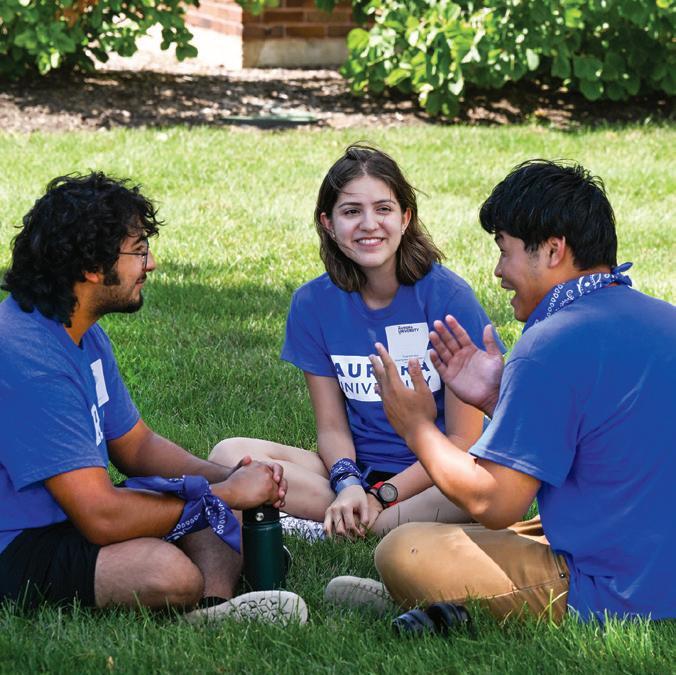
The Student Success team launched two new mentoring initiatives to help foster a strong sense of community on campus and support students’ mental health. The New Student Mentor Program pairs all incoming freshman and transfer students with trained peer mentors who provide guidance and support from before they start orientation through the first half of their first semester. Students then transition into Spartan Connections, which pairs them with a staff or faculty mentor. More than 80 staff and faculty volunteered to participate in the program’s pilot this fall.
“The purpose is really to create a sense of belonging with students and bridge resources across campus,” explained Assistant Vice President for Student Success and Innovation Arin Carter ’01, ’15 MA, ’21 EdD. “The idea is that students get
continuous mentoring into their sophomore year. To ensure they have access to the resources they need to thrive academically, socially, emotionally, and personally, wellness has to be a visible part of the student experience.”
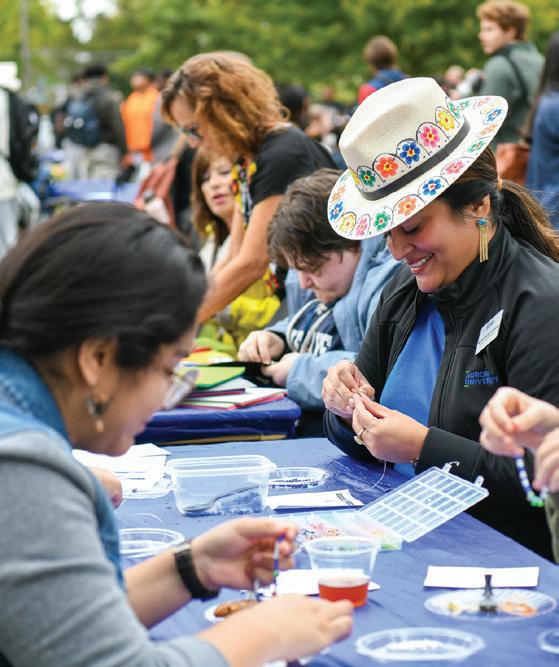
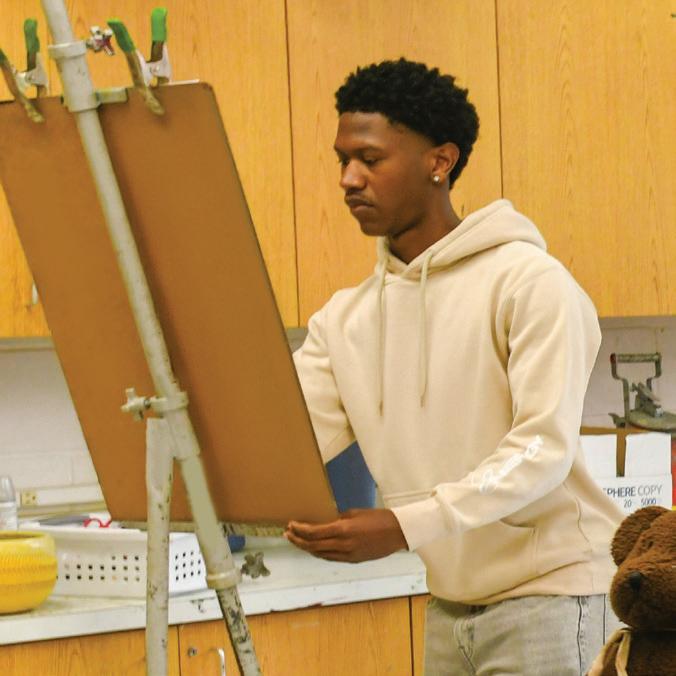
Other campus efforts, including crafting activities organized by the Office of Campus Life, boost mental well-being by reducing stress. For example, students come together to build teddy bears at a Stuffed with Spirit event during Homecoming and Very Beary Valentines in February, make charm bracelets, and meet up for guided painting activities.
“It’s not about the items they’re taking away with them,” Carter said, “it’s about getting them out of their rooms and connecting them with each other, helping them to develop that sense of belonging.”
staff. Students also have access to a study space within the Wellness Center that is stocked with healthy drinks and snacks and free activity rentals — balls, cornhole, and frisbees — to encourage outdoor activities and social interaction.
The center collaborates with departments across campus, too, including Athletics and the Office of Campus Life, and supports neurodiverse students working with the Office of Student Success’ Pathways Collegiate Program. Neurodiverse students have individual success plans, access to dedicated sensory rooms for study or decompression, and structured study tables. They can attend seminars on executive functioning, social skills, and career prep.
Both neurodiverse and neurotypical students benefit from residence halls designed with noise-reducing materials and dimmable lighting. “That makes the residence halls a quieter, calmer environment even though it’s communal living,” said Carter.
In a recent example of close collaboration, a Wellness Center counselor supported a student experiencing academic stress and family conflict, while also addressing challenges related to food insecurity and financial strain. The Wackerlin Center for Faith and Action worked with the Office of Campus Life to provide the student with a meal plan, ensuring access to nutritious meals in the cafeteria. “This let him focus on his studies with less stress,” Buckley said.
Expanded wellness services and proactive programming
AU students who stop by the campus Wellness Center today will also find a variety of health offerings. Preventative wellness initiatives include: workshops on seasonal affective disorder, grief, and transitions, such as going home for the holidays; a specialized bike students can hop on and pedal to blend a healthy smoothie; COVID19 and pregnancy testing; glucose monitoring; and vaccine clinics open to students, faculty, and
At the Office of Latino/a Excellence, a staff member helped the student apply for an oncampus job, which he successfully secured. The office takes a proactive and creative approach, engaging students in meaningful ways rather than simply waiting for them to seek out support.
“
To ensure (students) have access to the resources they need to thrive ... wellness has to be a visible part of the student experience.”
— Arin Carter ’01, ’15 MA, ’21 EdD, Assistant Vice President for Student Success and Innovation
A more personalized approach for athletes
Over the past several years, wellness initiatives for student-athletes have evolved as well. “Today’s athletes are more educated and proactive about their wellness than ever before,” said Chad Trudo ’09, associate athletic director for facilities and logistics.
For instance, he’s noticed an increase in interest in data, recovery, nutrition, and individualized performance metrics. “Student-athletes are asking more questions and requesting performance feedback,” he said. The increased awareness creates opportunities for deeper engagement. “It allows us to partner with them in a more informed and supportive way,” Trudo added, and to shift strategies as needed.
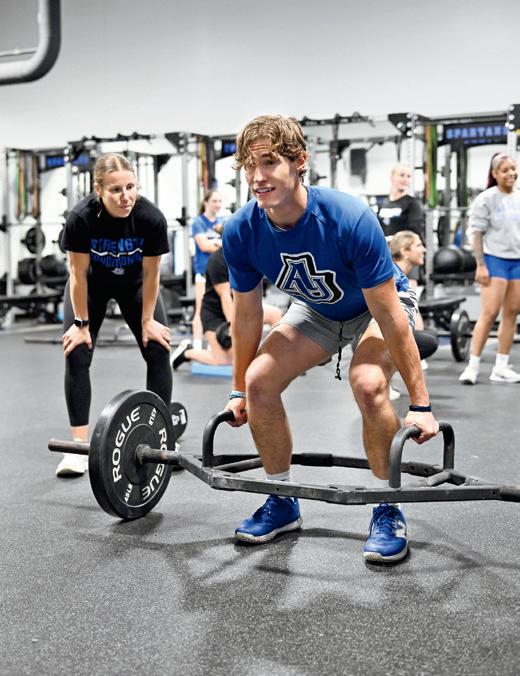
AU meets student-athletes’ needs with science-backed, evidence-based tools, including the force plate — a device that measures the forces athletes exert and assesses strength, power, balance, and jumping ability — as well as velocity-based training units, which track the speed of a lift or movement. Trudo and his team assist with sprint assessments using devices that measure an athlete’s sprint speed, acceleration, and stride mechanics.
“Our role goes far beyond designing weight-lifting programs or leading conditioning drills,” Trudo said. “Our focus is on developing durable, high-performing, and well-rounded student-athletes who can thrive throughout a competitive season — and beyond. We’re really able to specify what each individual and team needs.”
President Rivera-Mills’ monthly wellness push
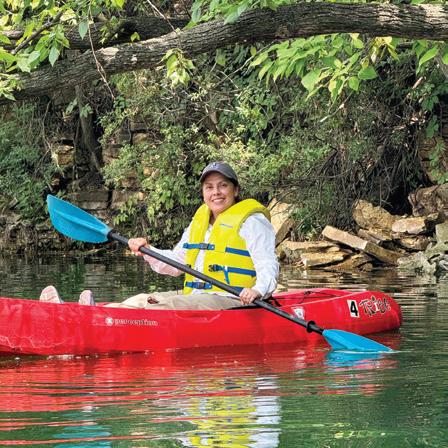
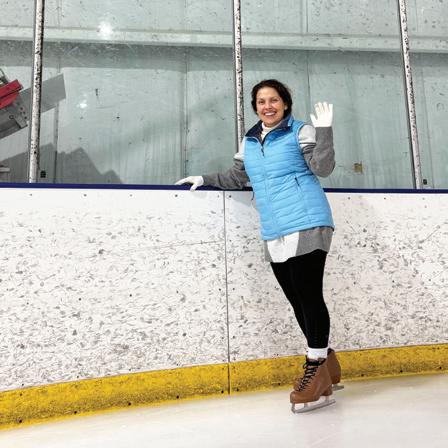
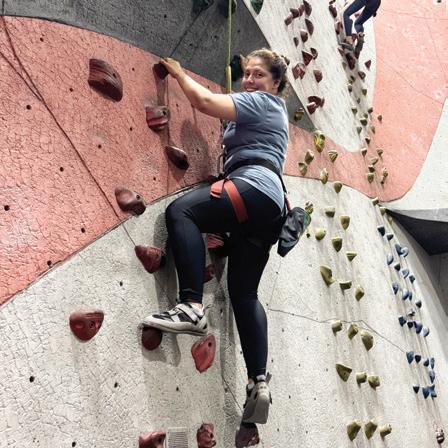
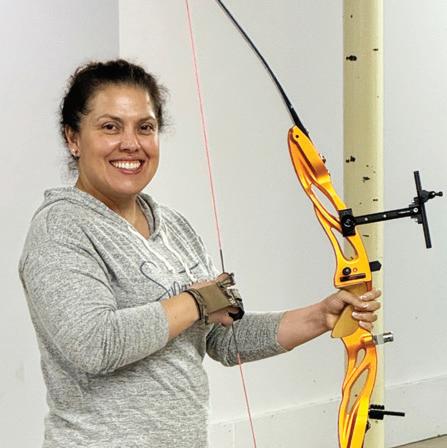
To promote wellness on campus, President Susana Rivera-Mills launched a challenge on Instagram in January, committing to try a new activity each month. Students, faculty, and staff have followed along as she stepped outside her comfort zone in the name of leading by doing.
Early in the year, she practiced ice skating at All Seasons Ice Rinks, home to AU’s men’s and women’s ACHA Division 2 hockey teams. She later tested her swing at a golf simulator, her bowling skills on the lanes, and her strength and balance in an aerial sling class. “Wow, was it challenging,” Rivera-Mills wrote on Instagram after trying the class.
She continued to expand her horizons throughout the year. During a family vacation to California, she sailed through the Sea of Cortez. “Being out on the open waters surrounded by nothing but water and sky reminded me how interconnected and vast the planet really is,” she reflected.
Summer brought new challenges — from taking an archery lesson at the local, family-owned Nock & Feather Kustom Archery to scaling an indoor rock wall to kayaking. She even invited her Instagram followers to vote on which wellness activities she should try next.
Heeding the online poll results, she rounded out the year roller skating, boxing, line dancing, and practicing hot yoga. “It was a fun challenge and a great reminder that wellness comes in many forms,” she shared.
To help prevent burnout and foster longterm wellness, the department prioritizes injury prevention and performance optimization combined with nutrition, recovery strategies, mental well-being, and a strong team culture. Some 86% of Spartan athletes participate in training programs — the highest in program history. Total training sessions have ballooned by 286% since 2015.
Student-athletes have access to an online strength training platform year-round. They take advantage of tools like Theraguns and foam rollers in the athletic center’s snack-stocked recovery room and participate in learning sessions on hydration, proper fueling, and sleep to build healthy habits, in season and off. Coaches and trainers also work closely with Wellness Center staff to support students with their mental health.
The holistic approach has paid off. “We’ve seen sustained reductions in injury rates that significantly outperform NCAA averages,” said Trudo. For example, during the 2024–2025 academic year, AU men’s teams posted a practice injury rate of 0.49 per 1,000 practices, compared with the NCAA average of 4.75, and 3.30 per 1,000 games, versus the 15.14 national average. Women’s teams showed similar positive trends.
Professor of Social Work Don Phelps is AU’s faculty athletic representative, who works closely with the university’s student-athletes as they balance the demands of practices, games, and travel with the academic rigor of college coursework.
“Add personal commitments, jobs, and the challenges of emerging adulthood, and the pressure on student-athletes can be intense,” he said. “It takes all of us to help them thrive in the classroom, in competition, and in life.”
Trudo knows the department’s techniques are working when visiting alumni athletes tell him they’re still eating healthy, thanks to the department’s guidance. “I take a lot of pride in that,” he said. “My hope is that our student-athletes take some of what they’ve learned here with us and carry it on into their adult life.”
Embracing a people-centered employee culture
Wellness and well-being initiatives at AU extend beyond students and student-athletes to the university’s faculty and staff as well.
Last year, the Office of People and Culture (OPC) and the Staff Executive Council partnered to launch the university’s first annual Employee Benefits Fair on Halloween. The fair featured the fun added component of a costume contest.
“Social wellness and engagement with the university community is a big part of wellness,” said Sara Veitch, AU’s director of human resources.
Belonging is a feature of all employee programming.
For example, OPC paired a walking challenge with a hydration challenge so people unable to move around on campus could participate. All participants received a university water bottle and had access to a virtual water cooler to socialize and share wellness goals.
“Being inclusive is a huge part of our employee wellness,” Veitch said, “that regardless of someone’s ability, they’re able to engage.”
“
If we think about wellness holistically, then the humanities and the performing arts are an essential extension of what it means to be human.”
— J. Andrew Prall, Professor of English
Other employee programs supporting the university’s strategic plan to become an employer of choice have included self-guided meditations, morning walks, and a faculty and staff summer book club — members of the President’s Cabinet make the book recommendations. “It was a nice way to bring people together,” said Veitch.
Last winter, OPC rolled out financial wellness programming. The office partnered with AU’s retirement plan to provide informational sessions and encourage employees to increase their contribution to their retirement plan by 1%. The office met its goal of having 10% of employees do so.
pad for “ailments” such as exam anxiety or the Monday blues. Recipients without ails got a personalized prescription to brighten their day.
“That students opted to focus on a wellness-oriented initiative speaks to how they recognize the need to connect academic work to wellness,” said Prall. “Language can be so powerful and healing. Poets and artists help us feel less isolated or alone. If we think about wellness holistically, then the humanities and the performing arts are an essential extension of what it means to be human. In the age of artificial intelligence, we need them more than ever.”
AU’s student-led Social Work Association has also hosted events around self-care, professional identity, and community volunteerism. “Because of this, students are able to have meaningful experiences that build a sense of efficacy and belonging, something we often talk about at AU,” said Assistant Professor of Social Work Giulia Visconti.
Additionally, the George Williams School of Social Work Kindness Fund was established last summer to support students by helping them overcome financial barriers. The fund covers the cost of textbooks, course materials, and unique academic opportunities, boosting mental health and emotional well-being and promoting a sense of belonging.
In Professor of Social Work Kristen Brendel’s graduate-level Mindfulness in Clinical Social Work class, students journal, walk the campus labyrinth, and engage in mindfulness-based stress reduction and mindfulness-based cognitive therapy.
Student-driven and classroomfueled wellness
Perhaps most striking when it comes to campus wellness are new, student-driven initiatives emerging from coursework, and the inventive ways in which professors are weaving well-being directly into classrooms and curricula.
For an assignment that entailed creating a space or moment in which the broader public could encounter poetry, students in Professor of English J. Andrew Prall’s Poetry Writing course designed a Poetry Pharmacy. The student “poetry pharmacists” wrote — and curated from nationally recognized poets — verses to “treat whatever ails” AU community members.
Approximately 100 people across three campus locations received a poem that the students wrote on a prescription
“For students in demanding fields such as social work, learning ways to manage stress, regulate emotions, and build resilience is critically important,” said Brendel. “Incorporating these practices into the classroom allows them to experience the benefits firsthand, which not only enhances their ability to use mindfulness authentically with clients, but also supports their own well-being.”
Brendel and Prall look forward to expanding classroom wellness-focused experiences, continuing to weave wellbeing into daily learning. For Buckley, these efforts show that when faculty, staff, and students collaborate on wellness, students are better supported, and they leave campus with a strong foundation in well-being for the world beyond AU.
“These types of collaboration are central to supporting our students,” Buckley said. “They ensure every student has the guidance and support needed to reach their fullest potential.”
A beloved AU tradition takes on new life as Homecoming and Family Weekend unites Spartans of all generations in celebration of legacy, community, and what’s to come.
Tradition, Reimagined
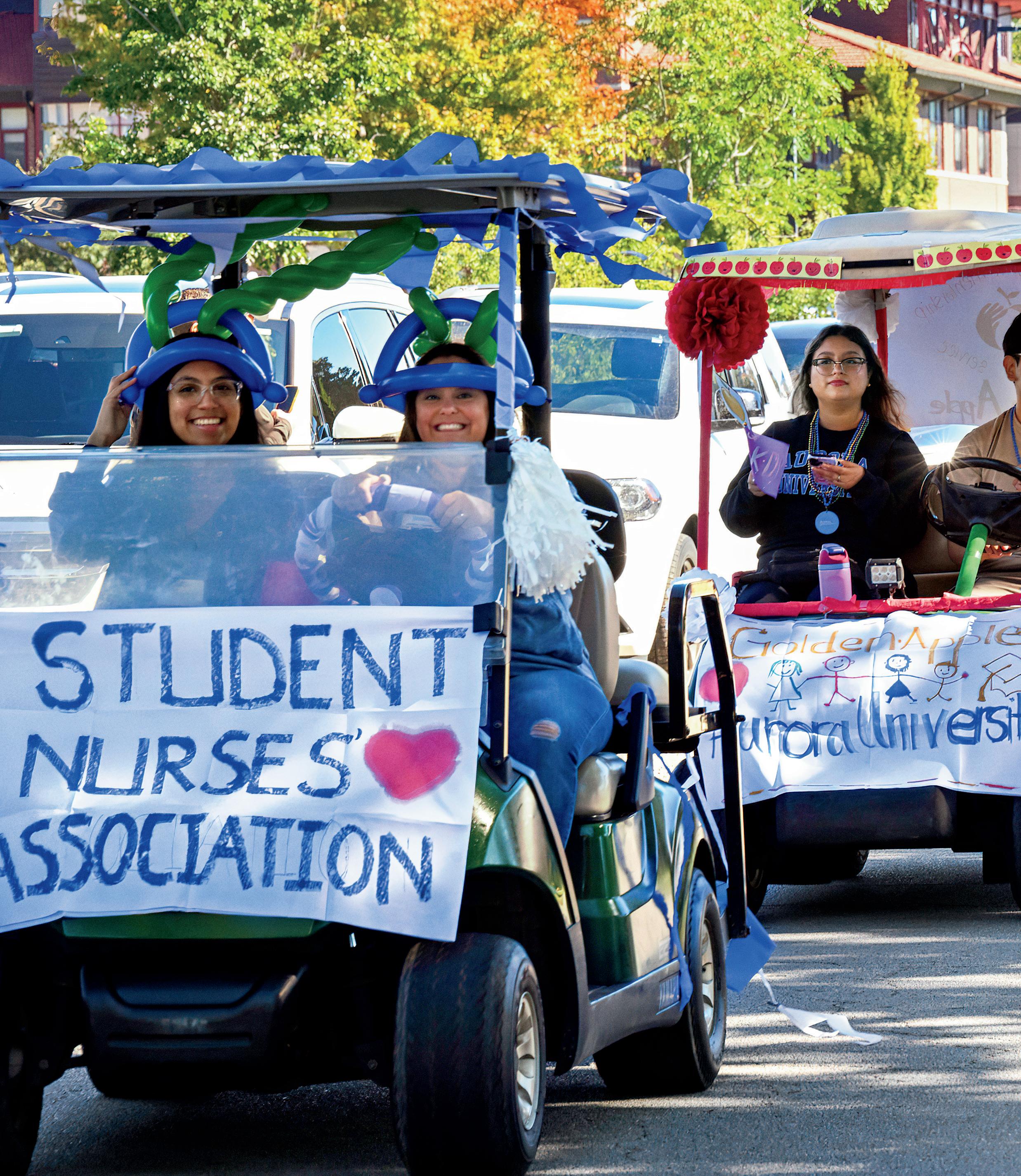
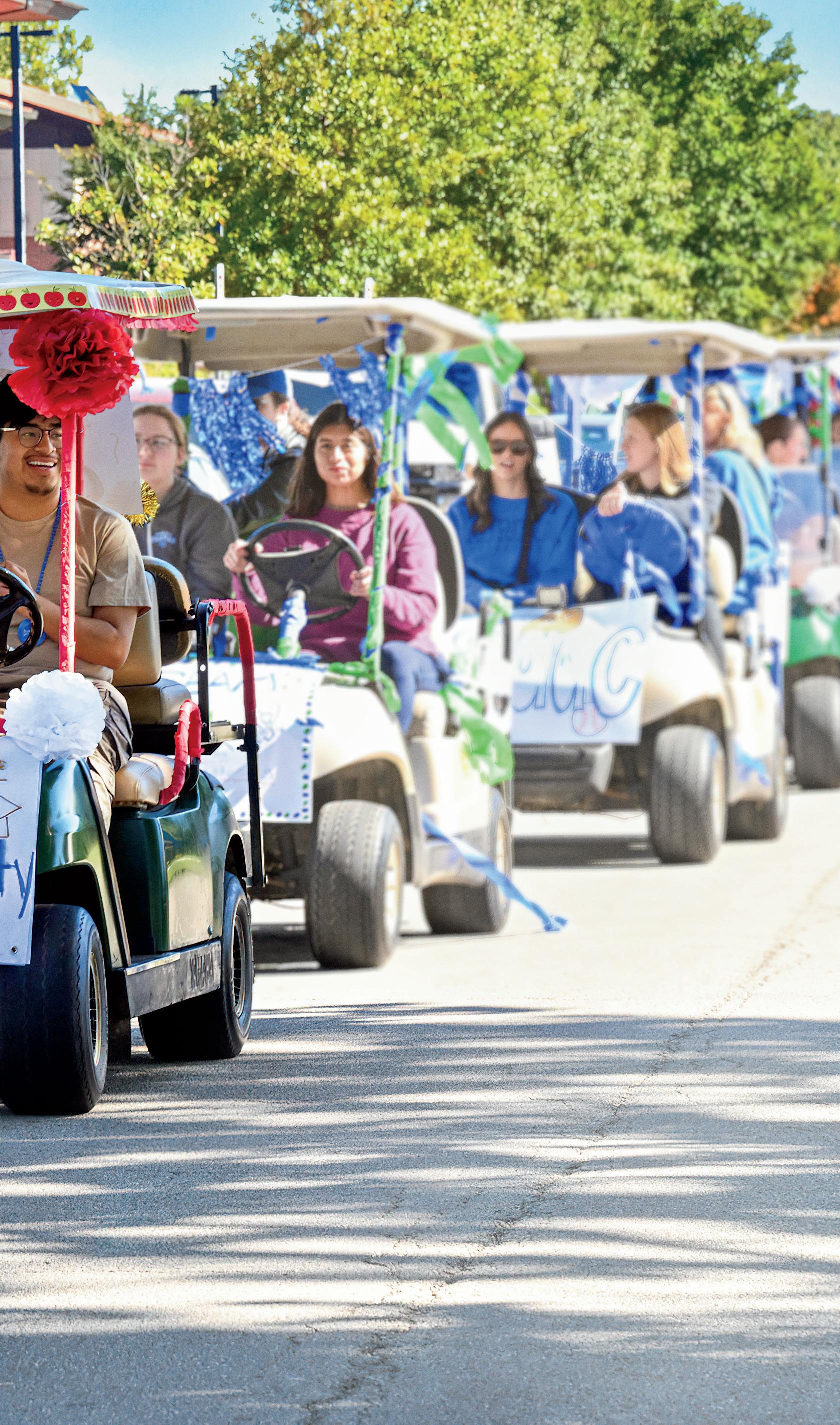
IIt was another festive Homecoming and Family Weekend at Aurora University, a celebration of Spartans on a sunny October Saturday. School spirit was everywhere you looked.
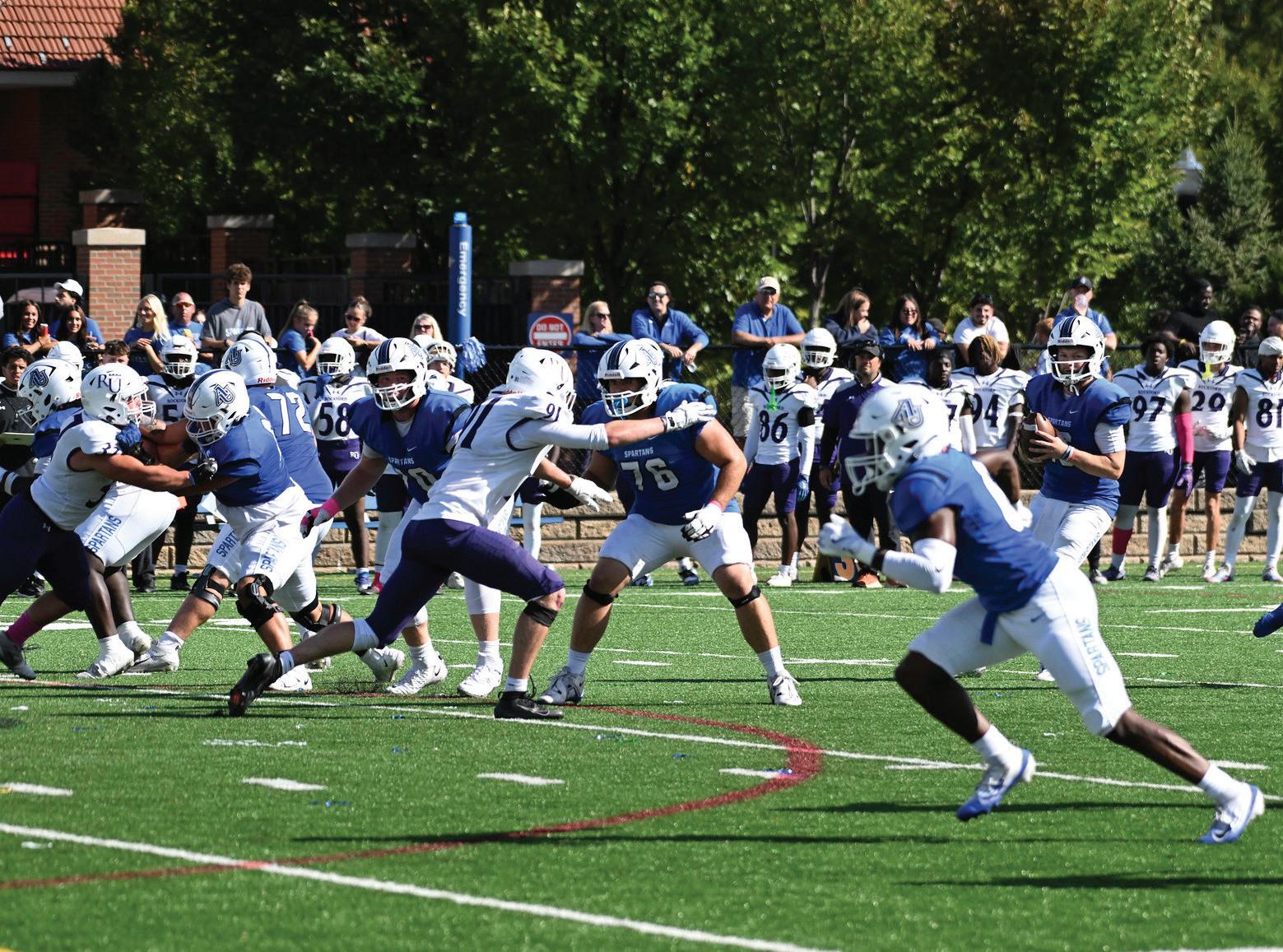
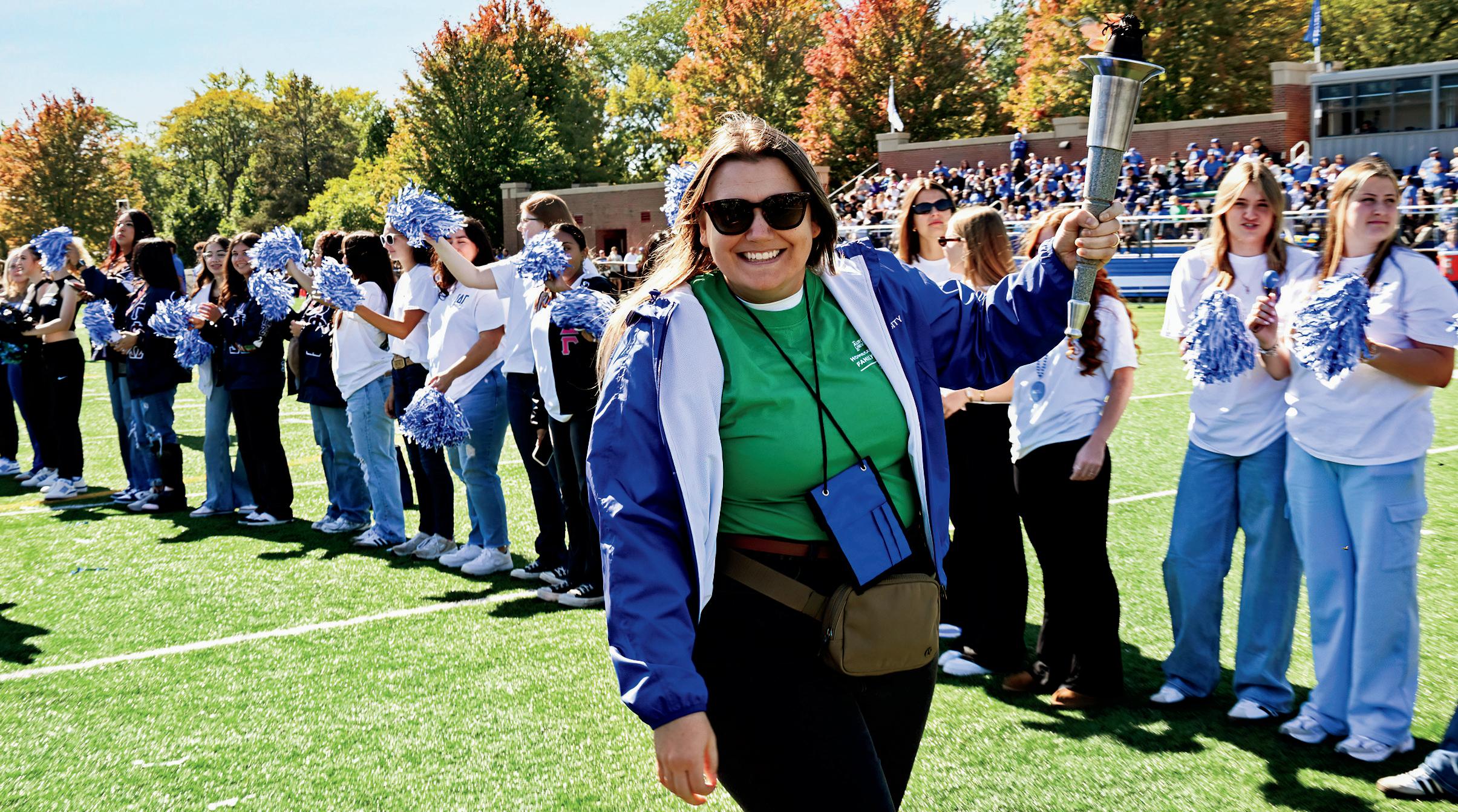
Alumni gathered in small groups around the west side of campus, sharing laughs and memories from their college days. Students, families, and friends of the AU community happily wandered around Family Fun Fest, some with painted faces and others wearing limited-edition green T-shirts just for the occasion. The Spartan Torch, a nod to AU’s roots as Mendota College, arrived at Vago Field minutes before kickoff for the football game.
At first glance, it may have felt like any other Homecoming weekend: roaring crowds, the referees’ whistles, and the soft hum of food trucks serving hungry fans. But among the din was buzz about a weekend that is growing — not only to honor AU’s alumni, but to build a stronger future for all Spartans and inspire lifelong engagement.
Transforming Homecoming
Dating to 1930, Homecoming is one of AU’s oldest traditions and it has had several looks over the years. In 2024, the addition of Family Weekend, in partnership with the Office of Campus Life, sparked deeper collaboration to create a larger and more impactful celebration.
“In past years, Homecoming followed a familiar recipe: campus tours, the alumni awards dinner, the football game,” said Emily Telford, assistant vice president for advancement operations. “We reimagined Homecoming and Family Weekend as one cohesive experience — a time for families, alumni, students, employees, athletic teams, and our wider community to come together in celebration of Spartan pride and to enjoy campus life.”
“The response last year showed us that when everyone is together at the same time, Spartan pride is amplified,” added Chris Smith, associate dean of students and director of campus life.
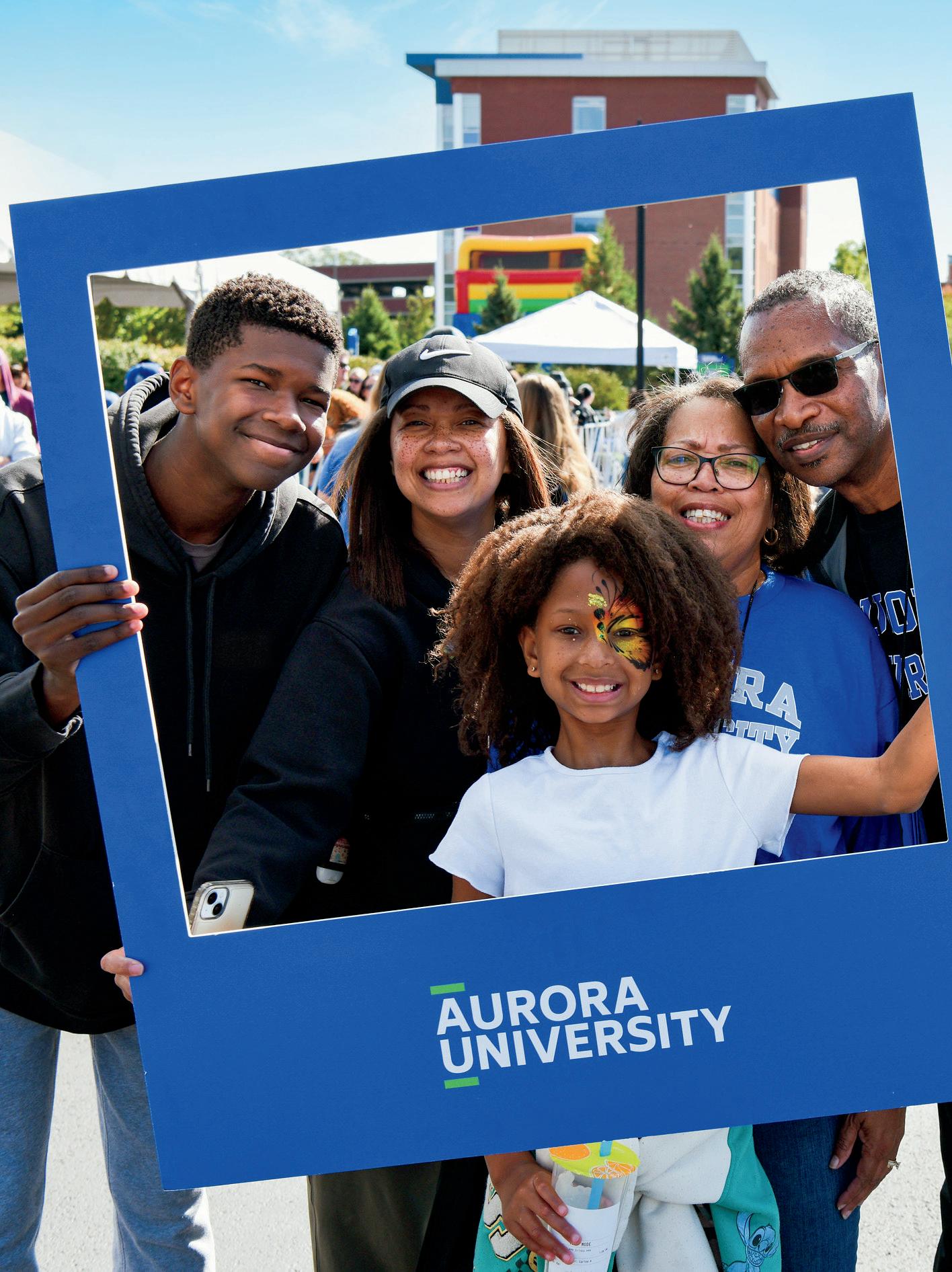
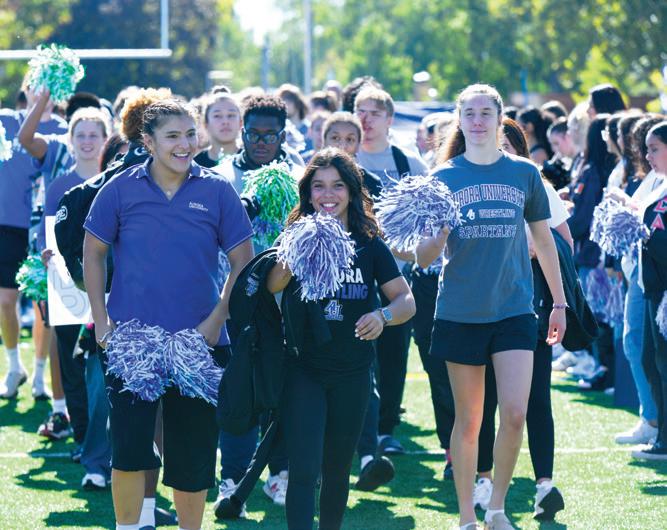
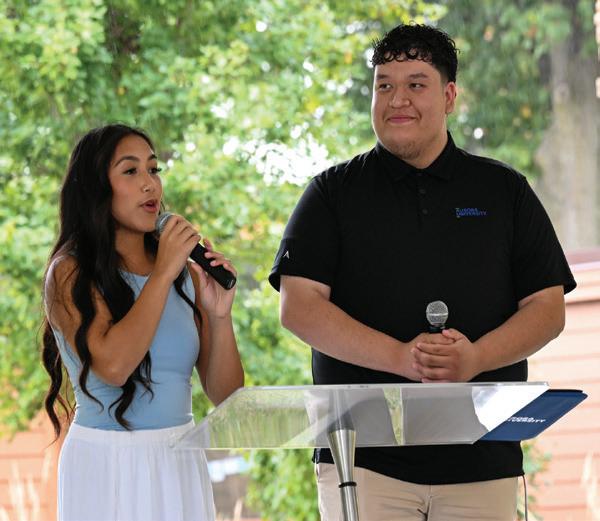
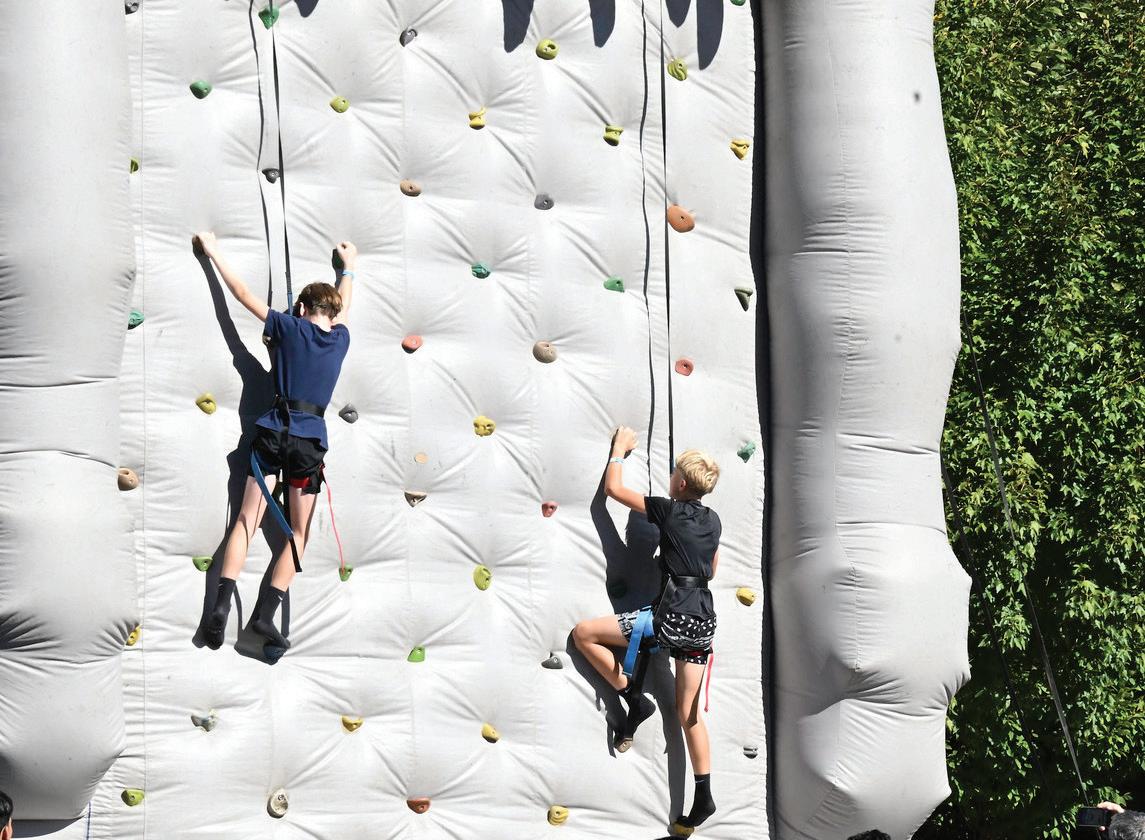
The result was a weekend that was community focused from the outset. This year, Cultural Fest, an annual campus event highlighting food, art, and music from around the world, was added to the lineup, showcasing the diversity of the AU community. Bounce houses, face painting, and balloon art returned with Family Fun Fest, to the delight of young fans in attendance. And academic open houses were included for potential future Spartans to experience a campus alive with spirit and activity.
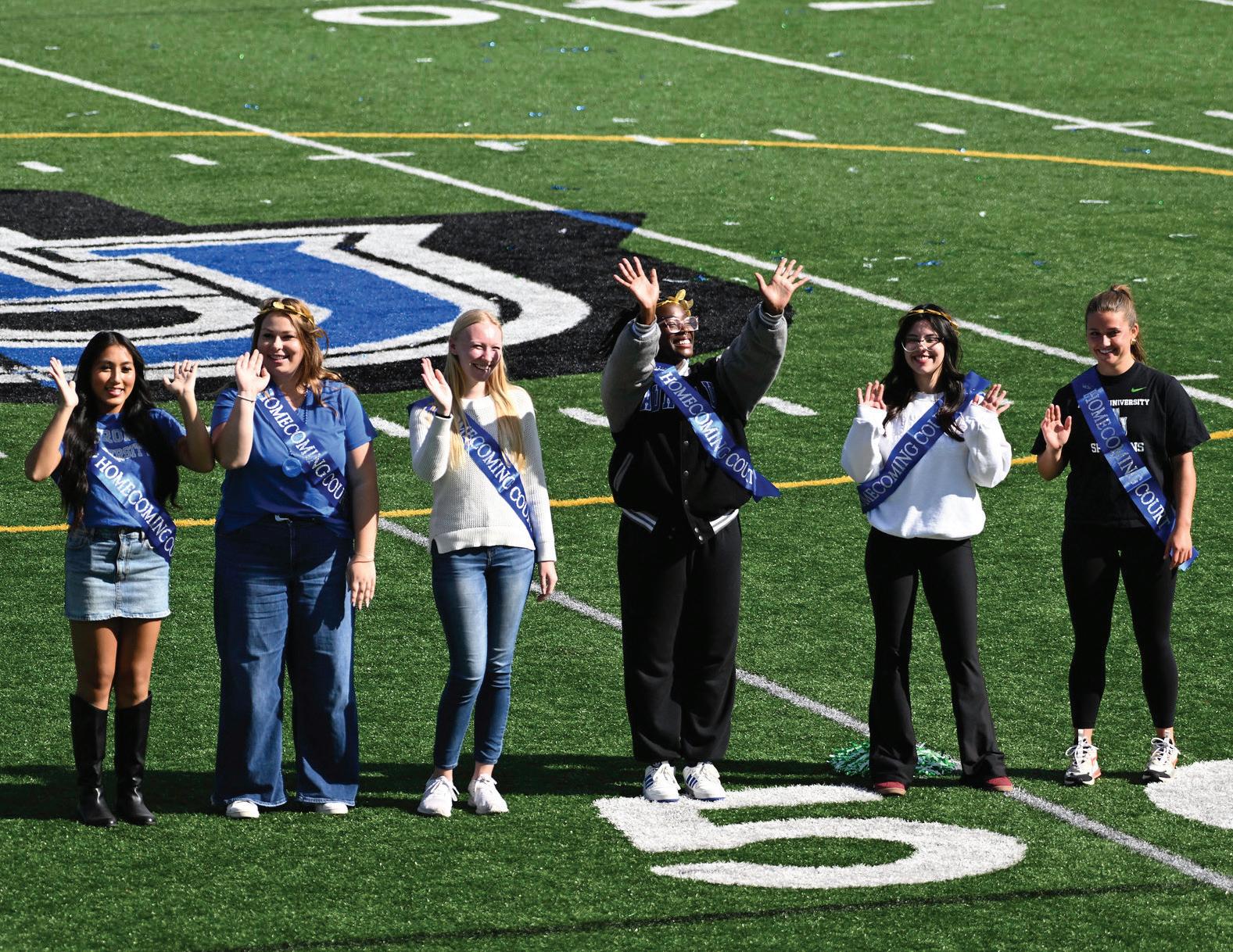
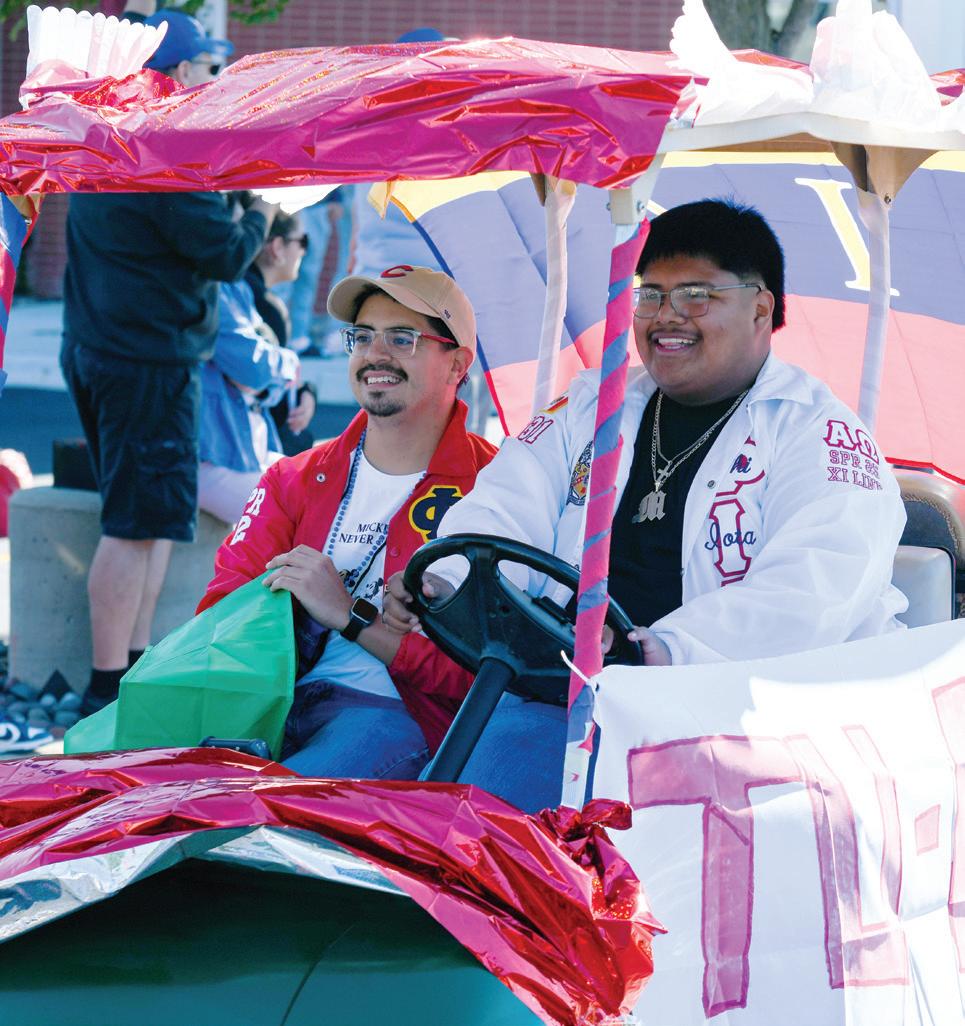
The talk of the weekend was the newly revamped Homecoming Parade, featuring members of student organizations and athletic teams, the Homecoming Court, Athletics Hall of Fame inductees, and Sammy Spartan waving to an excited crowd.
“Traditions like this create lasting memories and provide a sense of identity for the community,” Smith said of adding the parade. “They matter because they give our campus a legacy — something students can look forward to, alumni can reminisce about, and families can celebrate alongside.”
Building for tomorrow
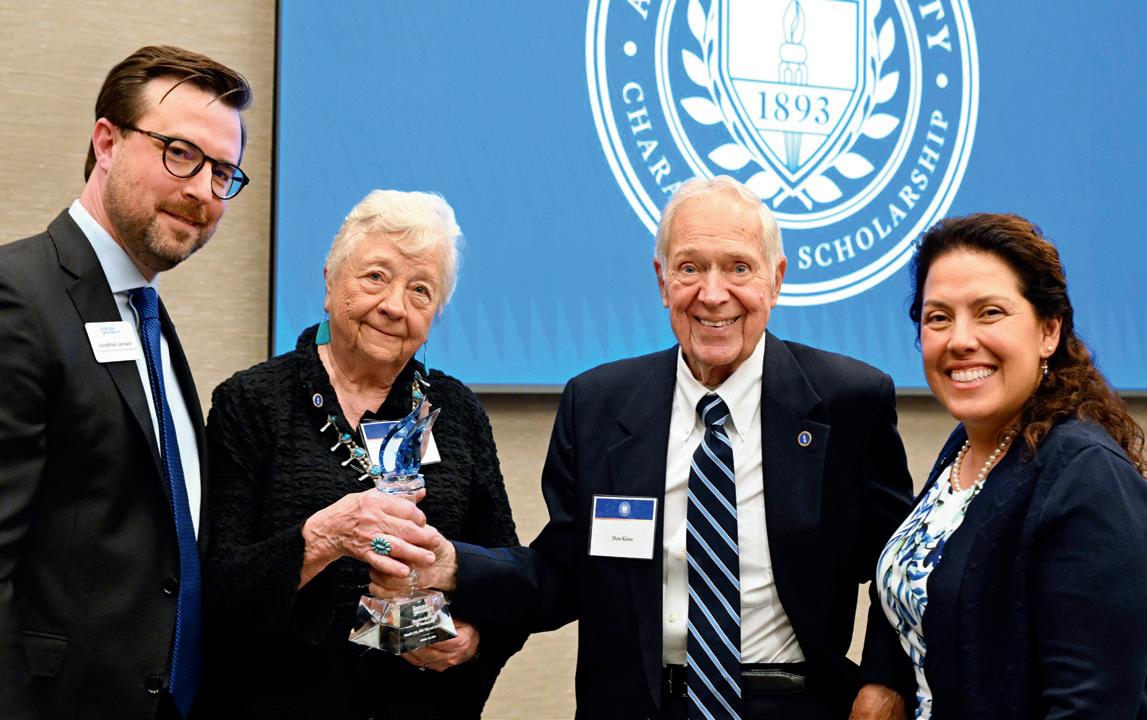
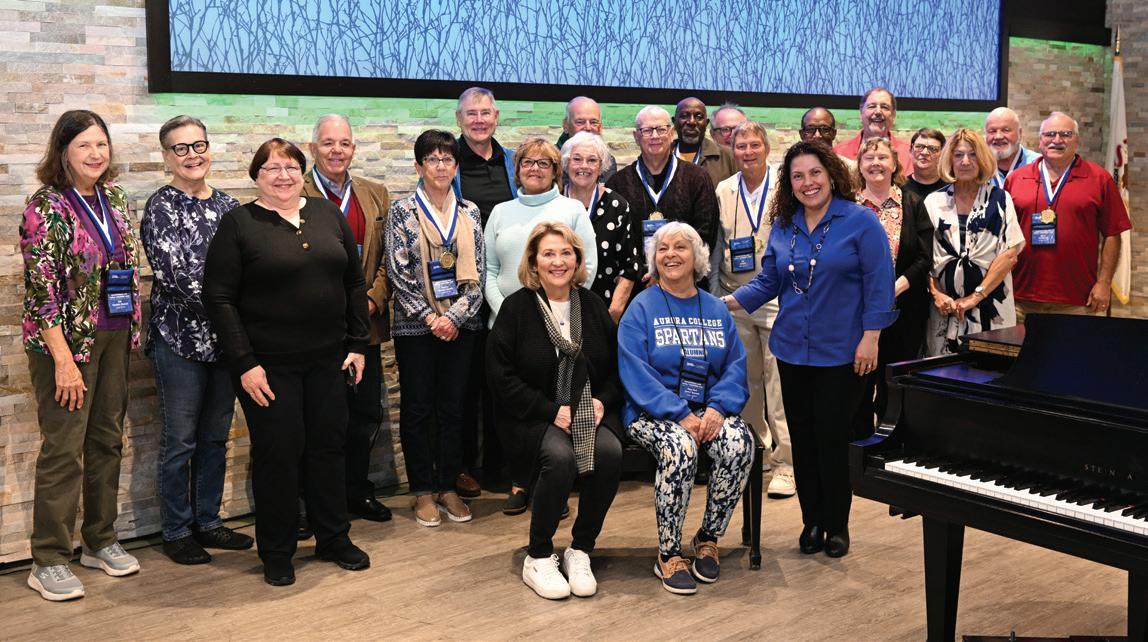
Throughout the weekend, a variety of events were designed to celebrate milestones and recognize the lasting impact of alumni, former faculty, and support staff. Highlights included a breakfast to welcome the Class of 1975 into AU’s 50-Year Club, the induction of five distinguished alumni student-athletes into the Athletics Hall of Fame, and the Wackerlin Center for Faith and Action’s 25th anniversary open house.
These celebrations also cast a hopeful eye to the future. The university’s strategic plan, “AUnity: Fulfilling Our Promise,” charts an ambitious path to expand
access to an affordable, high-quality education while meeting the challenges of the moment. Throughout the weekend, officials hoped to inspire alumni and other supporters to invest time, talent, and resources toward student success.
Philanthropic priorities for the weekend included support for first-generation students through the Future Promise Fund, enhancements to athletics with plans for a new baseball stadium, the new Learning Commons, micro grants that advance student success initiatives and help address financial challenges, and a new university chapel at the Wackerlin Center.

“Homecoming serves as a platform to educate and inform stakeholders about Aurora University and its initiatives,” Telford said, “ensuring that the broader community gains a deeper understanding of AU’s impact and vision for the future.”
Bringing generations together
From the first stages of planning, a major goal for the weekend was deepening connections with and strengthening the AU community. That thinking led to the enlistment of alumni ambassadors, volunteers who encouraged participation and shared Homecoming spirit.
Wackerlin Center celebrates 25 years of community, faith, and service
Aurora University’s Wackerlin Center for Faith and Action marked its 25th anniversary during Homecoming and Family Weekend with an open house and ceremony.
The gathering celebrated the center’s humble beginnings, its growth into a student- and service-oriented hub, and its lasting impact. Guests explored its history and learned about future goals, including plans for a new university chapel.
“We hoped to engage alumni who were impacted in some way by the Wackerlin Center as well as donors and others instrumental in sustaining it,” said Justin West, executive director of the Wackerlin Center and AU’s chief diversity officer. “We also wanted to connect with those curious about our work and interested in supporting our future ambitions.”
Founded in 2001 with support from 1918 Aurora College alumna Helen Zentmyer Wackerlin, the center started as a multifaith space for religious exploration. In addition to fostering belonging and understanding across diverse faith and cultural backgrounds, its mission has expanded to include leadership development and service opportunities.
Located in the historic Goldman House since 2011, the center also serves as a quiet corner for reflection and study.
“The Wackerlin Center functions as a retreat on campus,” West said, noting the Prairie-style architecture, garden, and labyrinth. “It encourages students to slow down, breathe, and recharge.”
President Susana Rivera-Mills spoke to attendees during the celebration, highlighting the center’s roots and future, including plans to move the university chapel — currently located in Eckhart Hall — to an extension at the Wackerlin Center, providing a larger sanctuary for reflection, worship, and spiritual discovery.
“I see it as a gathering place for inspiration, celebration, and community, reflecting the diversity and inclusivity that define AU today,” Rivera-Mills said.
The new chapel would also honor the history of George Williams College, with pews and stained-glass windows preserved from GWC’s chapel to be installed in the new annex.
Even as the Wackerlin Center looks ahead, its mission remains grounded in serving students and ensuring every member of the AU community feels connected. The anniversary celebration offered a moment to reflect on the center’s journey and the people who have contributed to a quarter-century of impact.
“We were happy to express our gratitude to those who have helped the center thrive, and to present a vision that will lead to stronger partnerships and more opportunities to support our students,” West said.
The newest members of the AU Athletics Hall of Fame
Aurora University celebrated its rich athletic tradition by welcoming five new members into its Athletics Hall of Fame during Homecoming and Family Weekend.
The Hall of Fame recognizes individuals or teams for exceptional careers or contributions to AU Athletics, as student-athletes, coaches, or administrators. The selections were made by the 10-person Athletics Hall of Fame Committee, which includes five current Hall of Fame members.
National and regional athletic recognition, school records, and AU athletic department honors are among the criteria for consideration, as well as academic excellence and community citizenship.
“The Athletics Hall of Fame celebrates the lasting impact of our alumni and former athletics leaders, honoring their achievements and inviting them back to campus to be recognized and applauded once again,” said Jim Hamad, vice president for athletics. “We also want current students to understand the vital role alumni and friends of the university play in strengthening the institution.”
Hall of Fame induction is the highest honor bestowed by the AU athletic department, and marks an achievement that is deeply meaningful for those selected.
“One of my favorite parts of the job is calling inductees to share the exciting news that they’ve been selected for the AU Athletics Hall of Fame,” Hamad said.
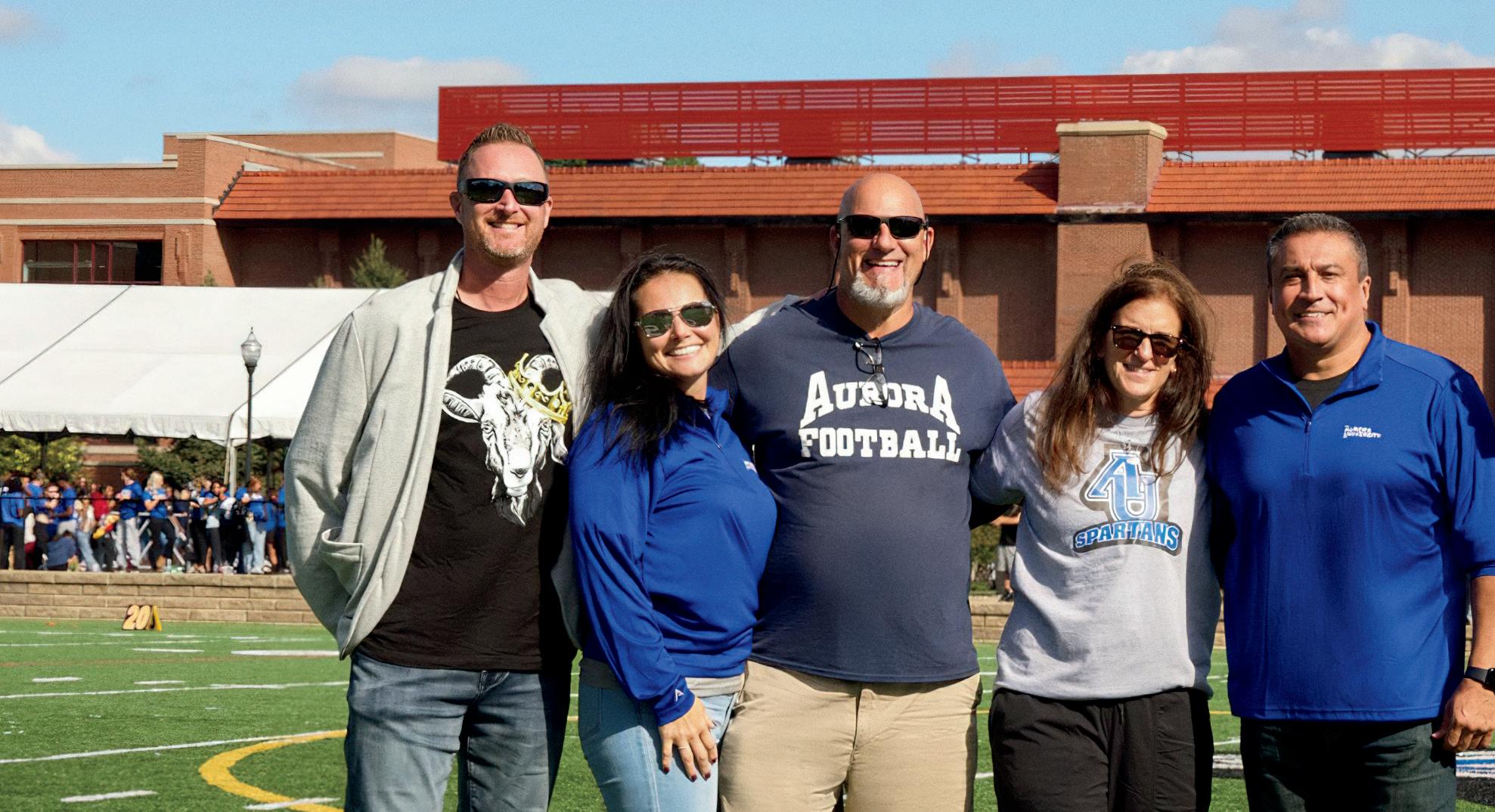
The 2025 class piled up individual and team accolades during their playing careers:
Sona Bedenian Torosian ’93, (second from right) a threesport athlete, scored 1,384 points for AU women’s basketball, graduating as the program’s all-time leading scorer and currently sitting fifth on the career-scoring list. AU’s Female
Athlete of the Year in 1992 and 1993, she was conference Player of the Year in basketball in 1992, an Academic All-American in 1993, and also played softball and women’s volleyball.
Lou Hernandez ’93 (far right) enjoyed great success on the baseball diamond over his four years. He won 22 games as a pitcher and earned All-Conference nods twice, including 1992 Player of the Year. He also helped lead AU to four-straight conference titles and NCAA Tournament appearances, highlighted by a national runner-up finish in 1990.
Taylor Petersen ’06, ’11 MA (second from left) set multiple AU softball records that still stand today. During her sensational senior season, she set school records with 274 strikeouts and 27 wins en route to First-Team All-American honors and Second-Team Academic All-American recognition. She was named AU’s Female Athlete of the Year in 2004 and 2005.
Fred Schuldes ’93 (center) established himself as a defensive force for AU’s football team. He is third in program history with 312 tackles, and one of only nine players to record more than 100 tackles in a single season. He earned All-American recognition and was a team captain during his final season, in 1991.
Eric Zaleski ’99 (far left) remains AU baseball’s preeminent power hitter, smashing a program-best 42 career home runs, including a school-record 17 as a junior on the way to conference Player of the Year recognition. An All-American in 1999, Zaleski graduated with 194 total hits and appeared in the NCAA Tournament in all four years on the roster.
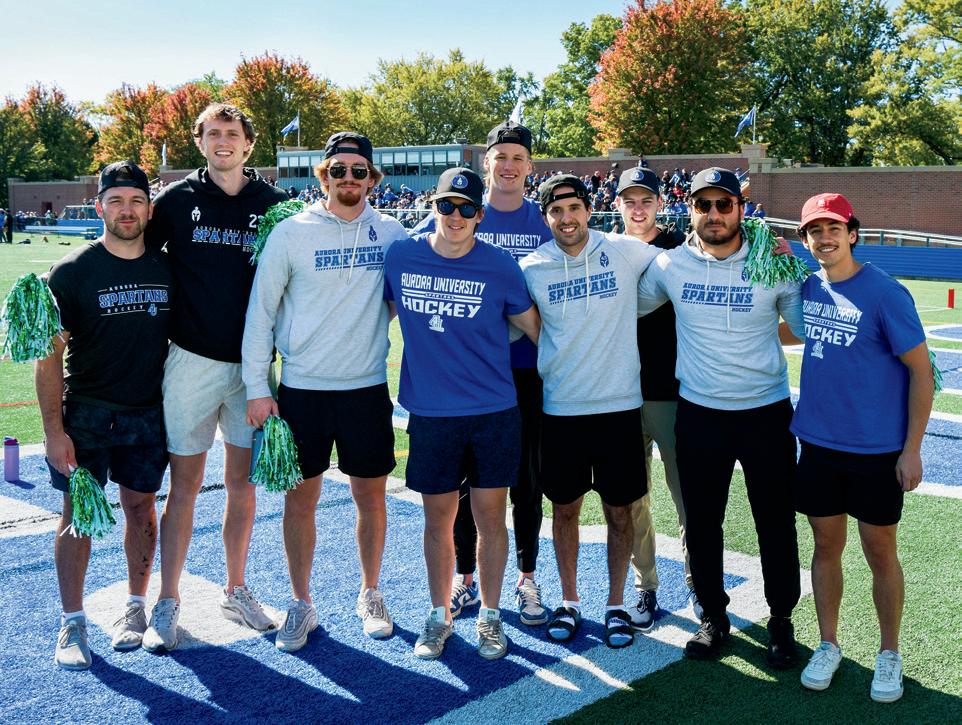
“I wanted to be an ambassador because of the profound impact AU had on my life,” said Mason Brauer ’24. “It allowed me to celebrate the traditions I cherished as a student while welcoming alumni back to campus with the same sense of belonging and pride I experienced throughout my time here.”
Brauer, a former Aurora University Students’ Association president, was one of 30 alumni ambassadors focused on bringing people together across multiple generations.
“Homecoming creates a rare and special opportunity for alumni to celebrate a common bond: being Spartans,” Brauer continued. “It reinforces the idea that we are part of something much larger than ourselves, and bridges the past, present, and future of the university.”
Carmen Weedston ’72 and her husband, John Weedston ’72, members of AU’s 50-Year Club since 2022, also served as alumni ambassadors. Carmen noted how her perspective on Homecoming has changed over time.
“Early on, it was fun just catching up with friends and classmates. The older you become, the more important it is to have a deeper connection with them,” Carmen explained. “Homecoming is more like a family reunion now — it’s about memories, laughter, reflection, and tears for those we have lost.”
The event also provides an opportunity for older alumni to share wisdom with more recent graduates and current students. For the Weedstons, the common thread is involvement.
“When you’re a student, take advantage of all the activities and clubs you can take part in,” John advised.
“Then as alumni, stay involved with AU as best you can!” Carmen added.
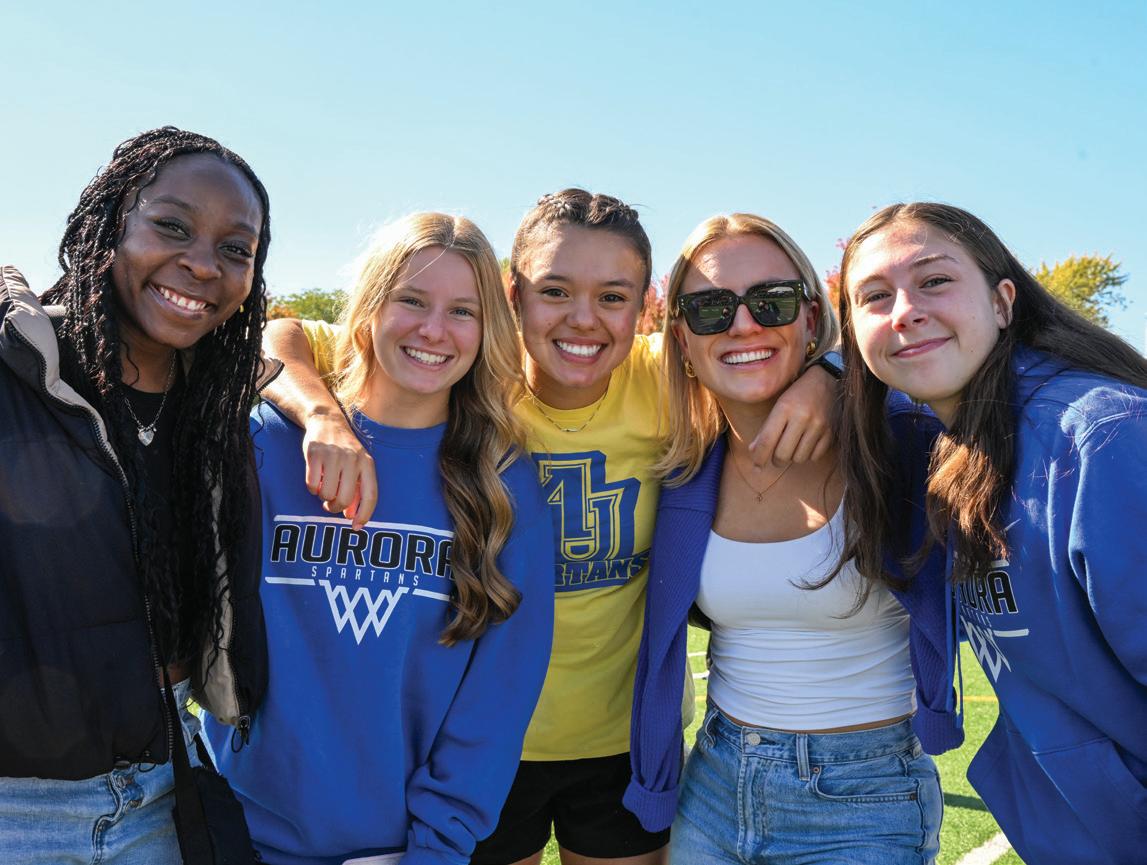
That involvement was on display throughout the weekend, as students, alumni, and families came together to celebrate Spartan pride.
“Homecoming captures the spirit of student days and fosters lasting emotional bonds that keep the AU community connected,” Telford concluded. “It’s a firsthand look at what makes Aurora University special — it’s a place of purpose and possibility, and a community that truly cares.”
Spartan studentathletes excel on the field and in the classroom
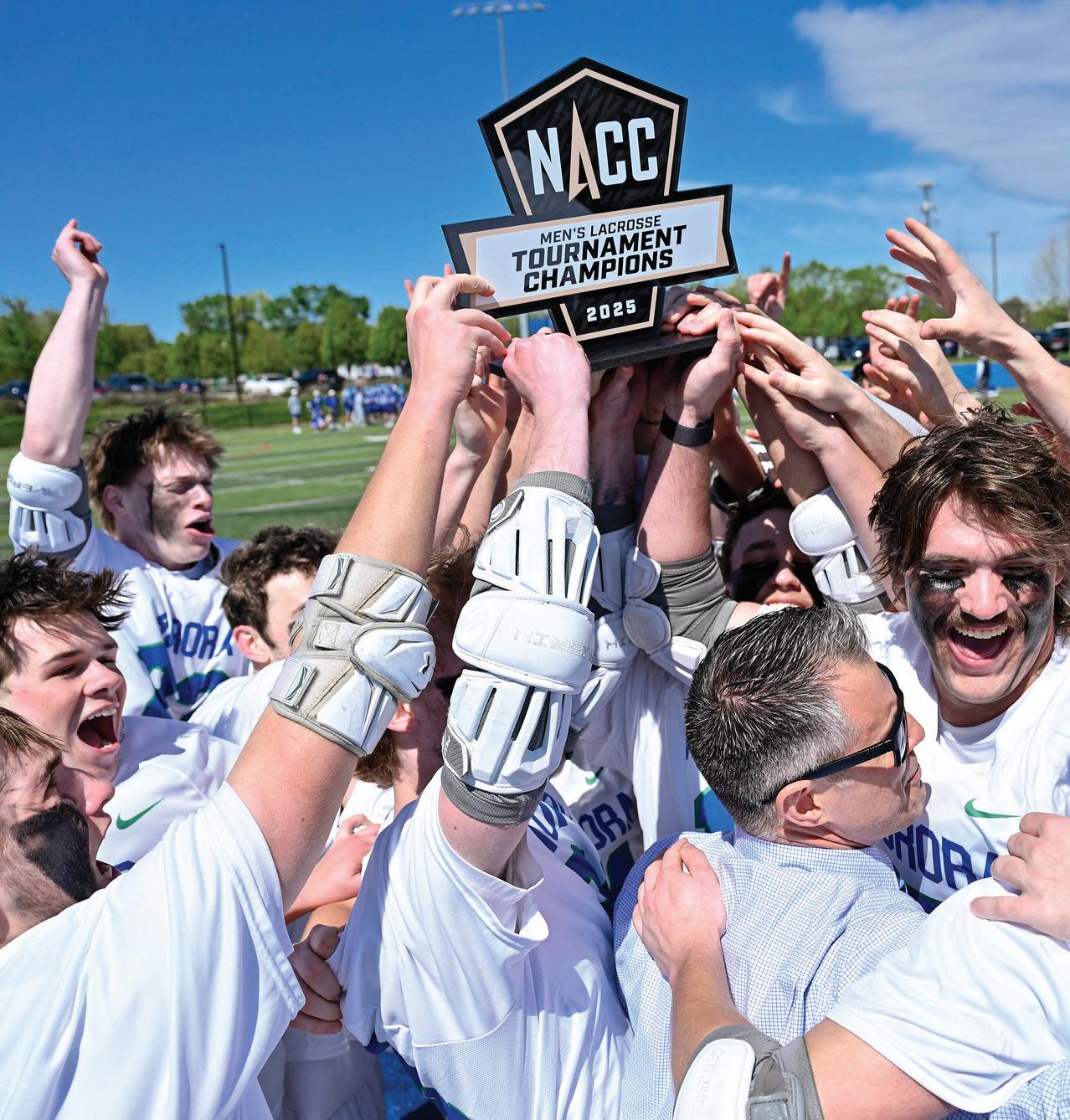
Aurora University student-athletes enjoyed another decorated year, claiming seven conference championships and sending 16 teams or individuals to NCAA Tournaments in the 2024–2025 season.
Football, men’s and women’s golf, men’s lacrosse (pictured, this page), and men’s volleyball each won the Northern Athletics Collegiate Conference championship, while men’s wrestling won the NACC Dual Championships. Men’s hockey secured its first Northern Collegiate Hockey Association crown en route to its first ever NCAA Tournament berth.
Four AU student-athletes earned College Sports Communicators Academic All-American honors. Josh McLellan ’26 (men’s volleyball) and Braeden Duncan ’25 (men’s golf) received first-team recognition in their sports, Matt Kickel ’24, ’25 MBA (football) was a second-team selection, and Branden Dolezal ’25, ’27 MS (men’s soccer) netted third-team status. The honor recognizes student-athletes who perform at an elite level both in their sport and academically.
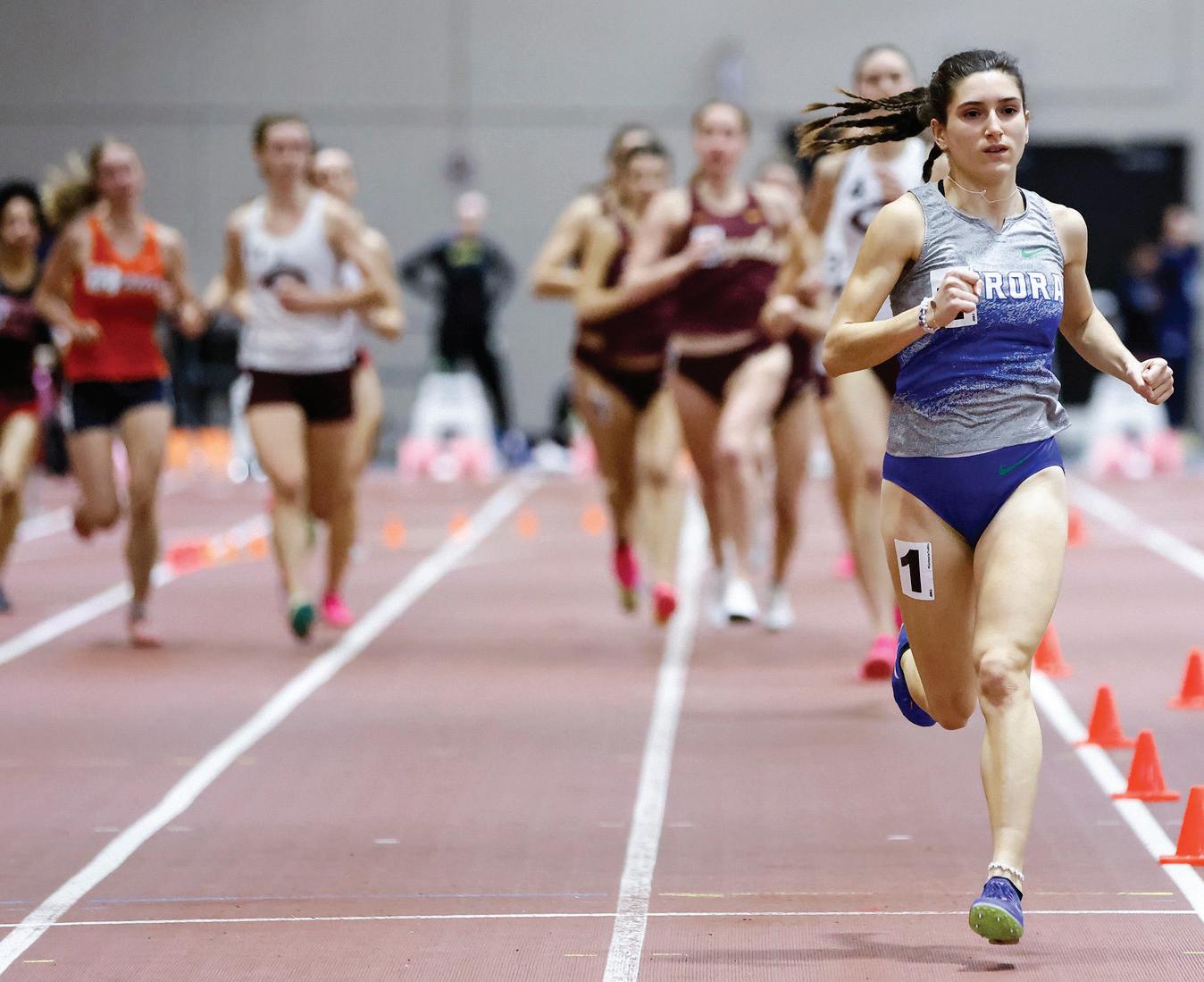
Senior Deedee Colon Maldonado ’25 finished her career as the most decorated cross country/track and field athlete in AU history. She amassed five Athletic All-American awards, including two first-team honors, during the 2024–2025 season, giving her 10 All-American nods during her time as a Spartan.
Men’s golf senior Braeden Duncan ’25 piled up honors in his final year at AU. Duncan won the NCAA’s Elite 90 award — presented to the student-athlete with the highest cumulative GPA at each NCAA championship site — for the third consecutive year. He also received First-Team Academic All-American recognition, a program first. Finally, he received an NCAA Postgraduate Scholarship worth $10,000 to finish his graduate-degree work, which he is pursuing at the University of Florida in its Department of Physical Therapy.

BY THE NUMBERS
134
All-Conference nods in total
13 Player of the Year awards
12 Athletic All-American honorees
5 Coaching Staff of the Year recognitions
5 Freshman of the Year selections
Women’s wrestlers shine on the global stage
Three Spartans are making their mark in international competition.
Alexis Janiak ’26, who captured AU’s first women’s collegiate national championship last winter, won the U.S. Marine Corps Women’s National Championship at 59 kilograms this past April. The victory qualified her for the U23 World Championships in


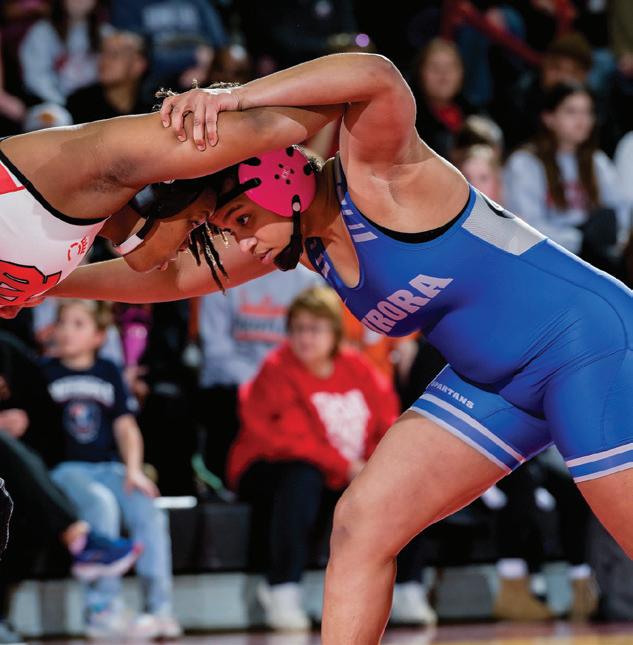
Antonia Phillips ’27 represented the U.S. at the 25th Summer Deaflympics in Tokyo. She wrestled at 68 kilograms after qualifying for the event last year. This was the sport’s debut at the Deaflympics, a quadrennial competition sanctioned by the International Committee of Sports for the Deaf, and organized and operated exclusively by Deaf people.
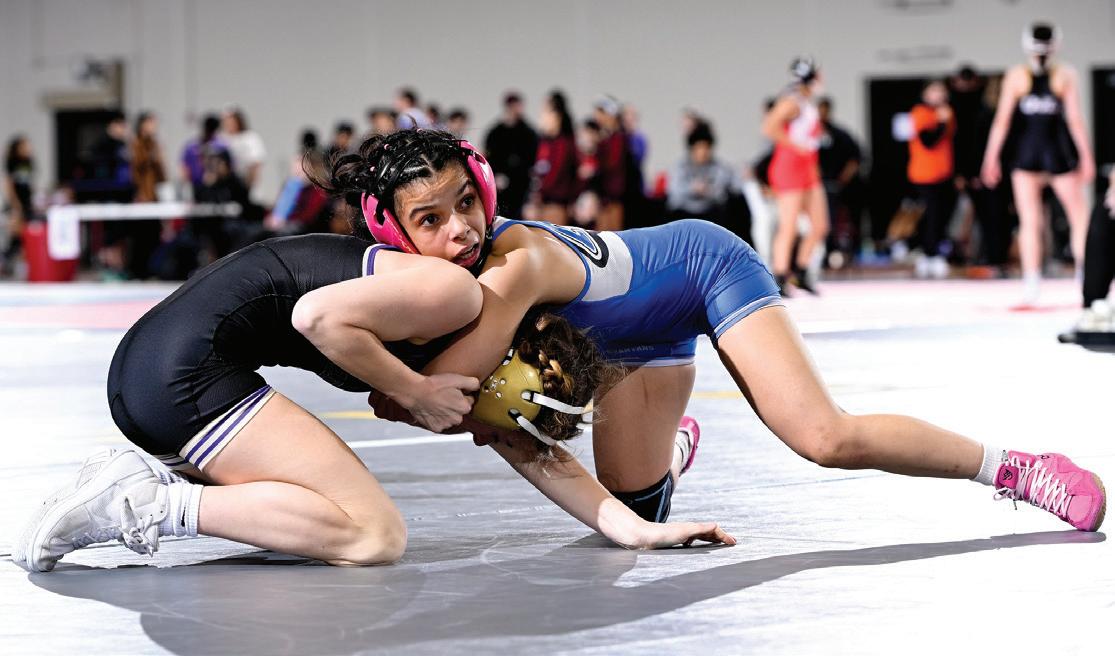
Genesis Ramirez ’27 won Puerto Rico’s U20 Women’s National Championship in the 50-kilogram division.
Junior Josh McLellan ’26 was honored as a First-Team Athletic and Academic All-American last spring, becoming the first to achieve each honor in AU men’s volleyball program history. McLellan was seventh in the nation with 413 kills and led the program to its first NCAA Tournament appearance.

Legacy
Preserving the spirit of George Williams College
For over a century, the George Williams College campus in Williams Bay, Wisconsin, was a place of learning, friendship, and transformation. Though the campus has entered a new chapter, its legacy lives on through the George Williams School of Social Work at Aurora University, scholarships in the GWC name, and carefully preserved archives.
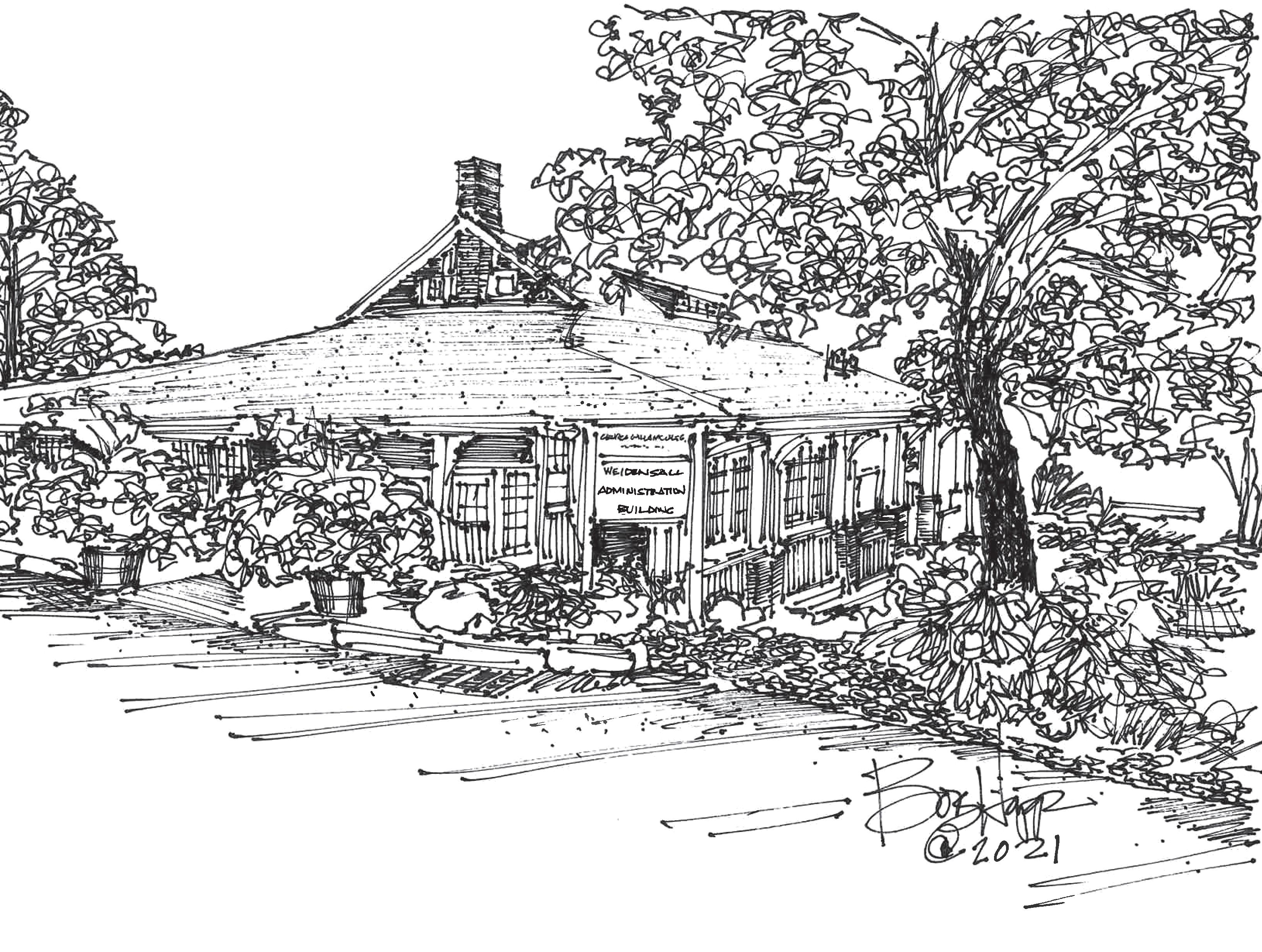
That same spirit of preservation and celebration of history is carried forward through the work of alumni like Bob Happ ’87, ’92 MBA. Happ has long combined his love of architecture and art. Trained as a draftsman and commercial illustrator, he first captured AU buildings in a series of pen-and-ink drawings that celebrated the campus and its history, which he donated to the university in 2021. His follow-up project aims to keep the GWC story alive by turning his attention to the former Williams Bay campus and sketching 20 cherished landmarks. Over the summer, he donated the complete series to AU.
To schedule a time to view the prints in person, visit aurora.edu/ archives or scan the code.
This page: Weidensall Administration Building
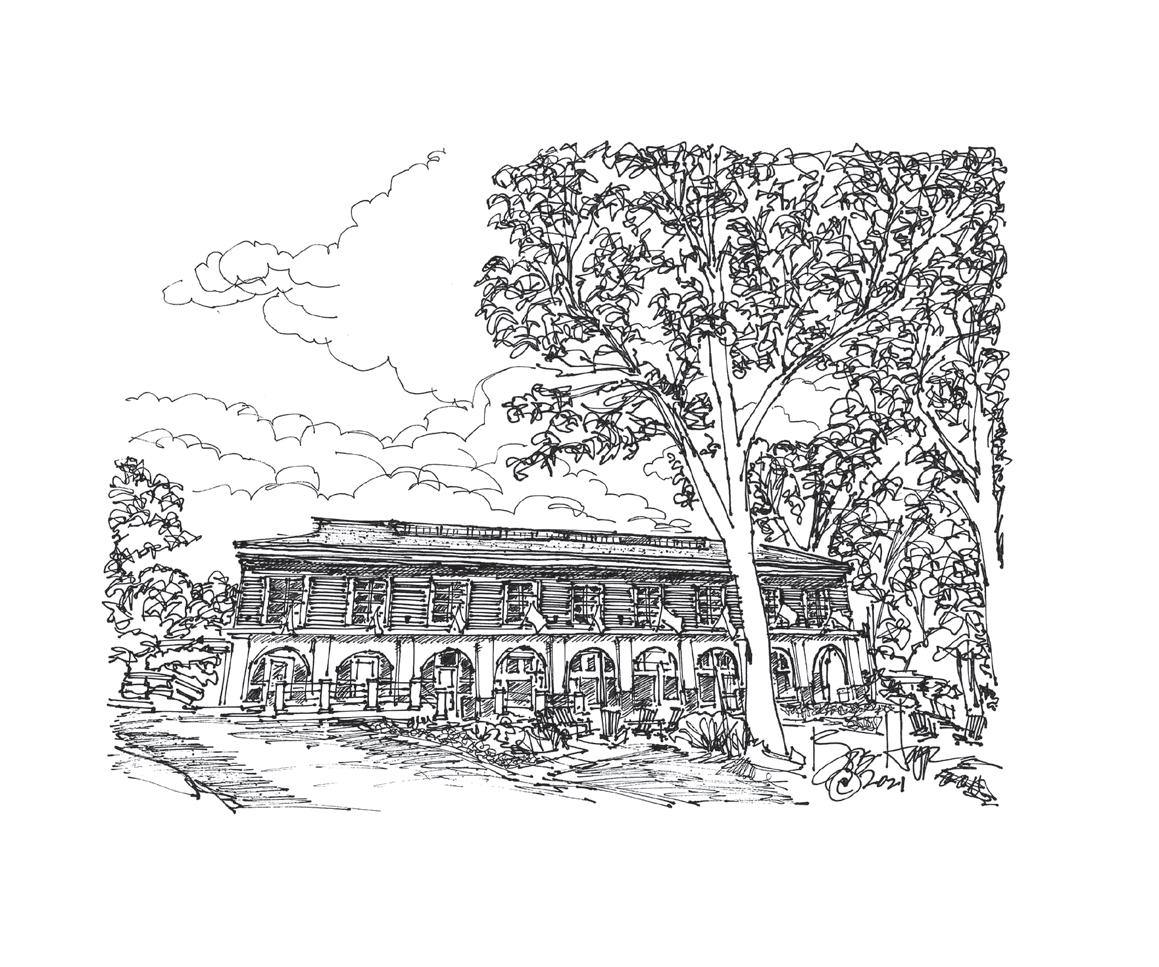
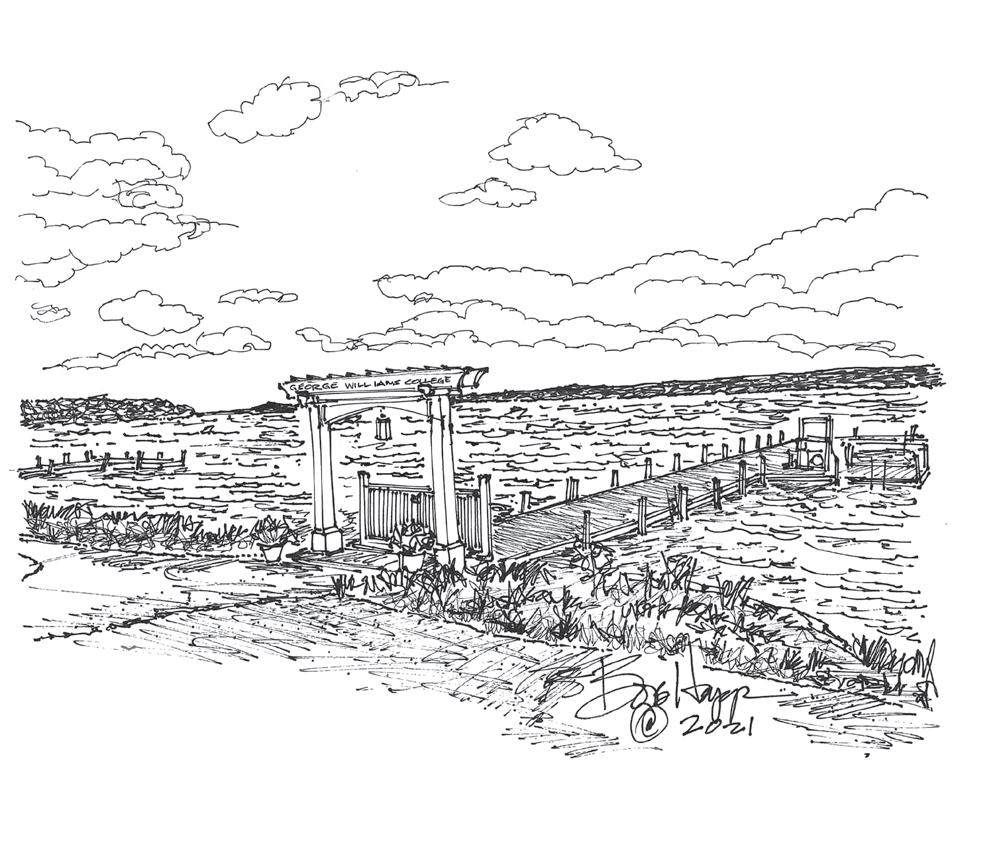
Top: College Inn Middle: Pergola on Geneva Lake Bottom: Winston Paul Educational Center
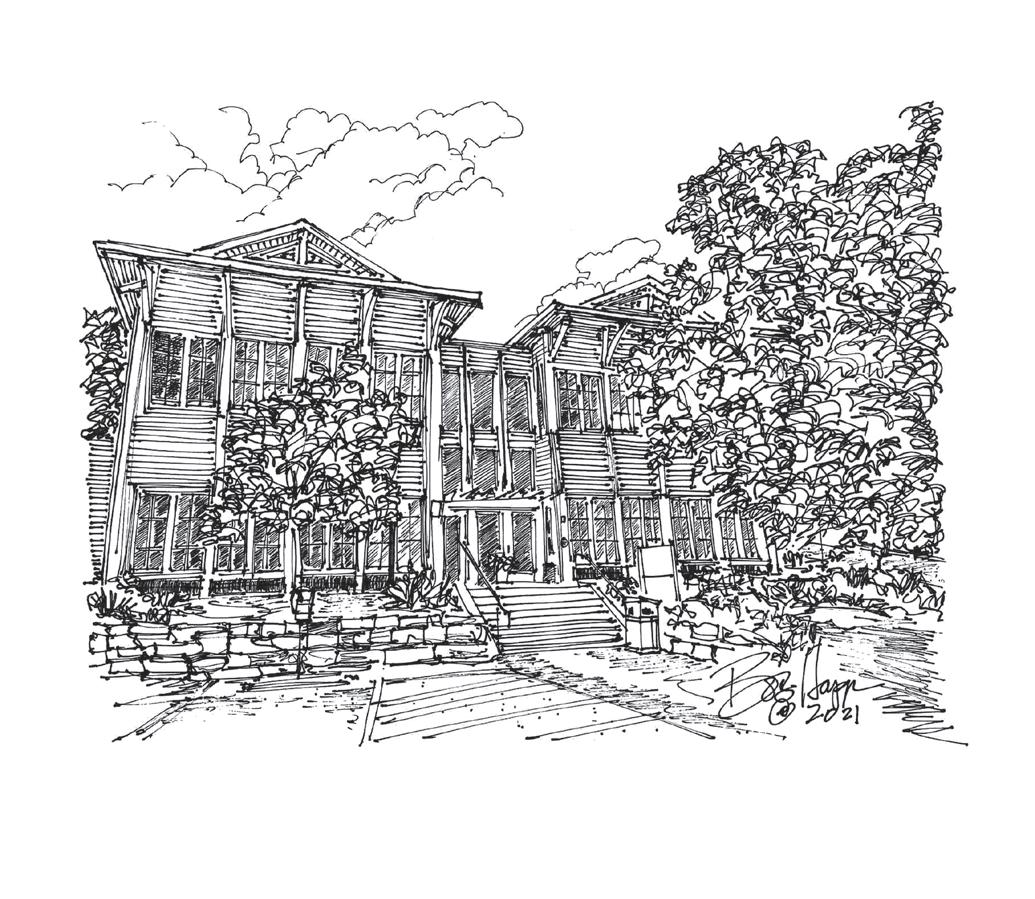
In a letter to President Susana Rivera-Mills that accompanies the drawings, Happ expressed his gratitude to AU for providing him with not only a strong education but also a lasting sense of community. “As a graduate of Aurora University, I deeply appreciate your commitment to high-quality education, the arts, and preservation of AU’s rich history,” he wrote.
Like the Aurora campus series, Happ’s renderings of GWC highlight the character and elegance of its architecture. Together, they serve as a lasting tribute — preserving memories, honoring the community, and celebrating the enduring spirit of the Williams Bay campus.
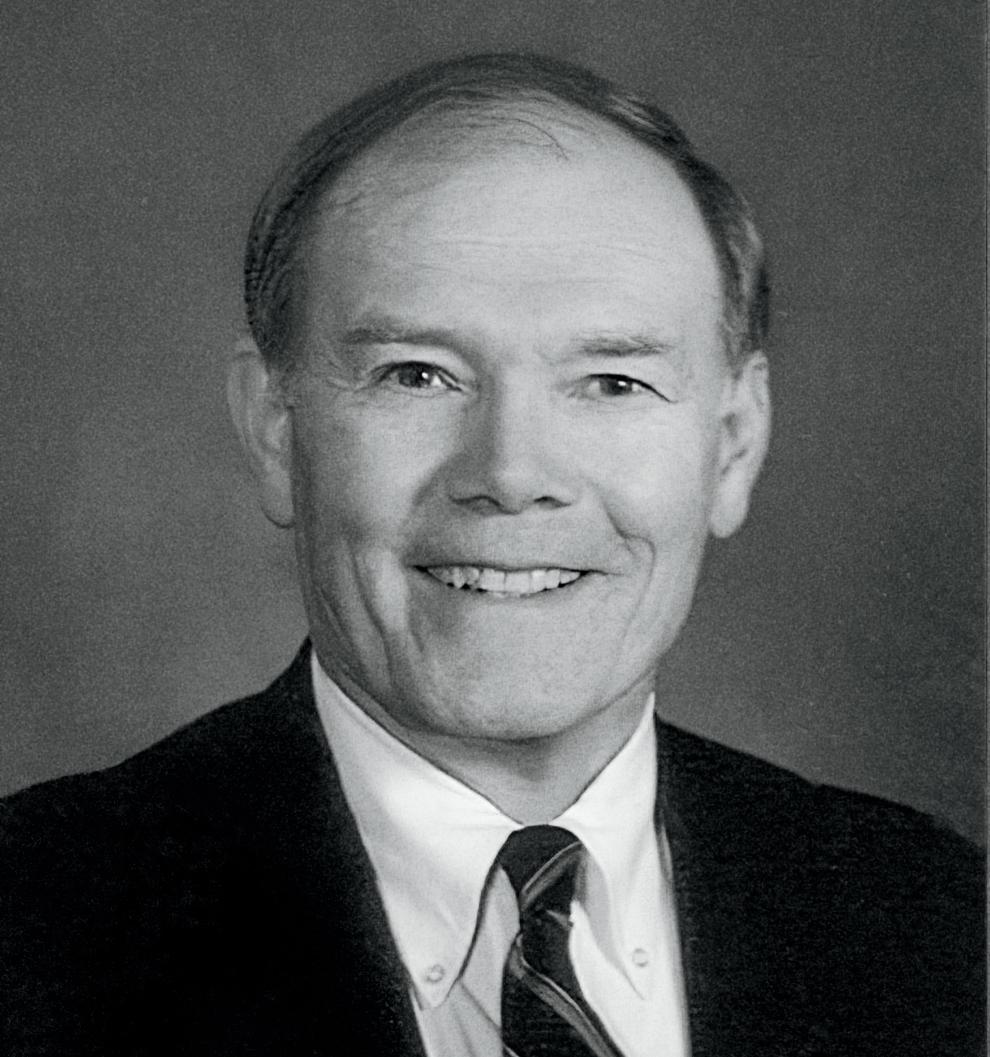
In memoriam: Calvin R. Myers ’64
Calvin R. Myers ’64, former Aurora University trustee, passed away in early August. His vision, service, and leadership helped shape the university’s academic and athletic programs and ensure their long-term success.
Myers graduated from Aurora College in 1964 with a Bachelor of Arts in Economics and Business. As a student, he excelled academically and athletically — receiving the school’s Gold Ivy Leaf Award for superior scholarship and being named Male Athlete of the Year for his contributions to baseball and men’s basketball.
In 2008, he returned to the diamond to throw the ceremonial first pitch at the dedication of the new baseball field at Solfisburg Park, where the team continued to play home games until 2015. In 2014, he was inducted into the AU Athletics Hall of Fame.
After earning an MBA from the University of Chicago and a PhD from Northern Illinois University, Myers returned to Aurora College and served as a faculty member from 1966 to 1976. He chaired the Department of Economics and Business, advised the Executive Club, and sat on several committees.
Myers later moved to banking, ultimately serving as president and CEO of Merchants Bancorp Inc. He also held leadership roles with the Illinois Bankers Association, the Illinois Chamber of Commerce, and numerous civic organizations.
Elected to the AU Board of Trustees in 1996, Myers chaired the board from 2004 to 2011 and helped lead fundraising and capital projects, including for Vago Field and Spartan Athletic Park.
In recognition of his service and leadership, in 2011 AU presented Myers with the Spirit Award, its highest honor. He is remembered for his humility, wisdom, and unwavering support for AU students and the university’s mission.
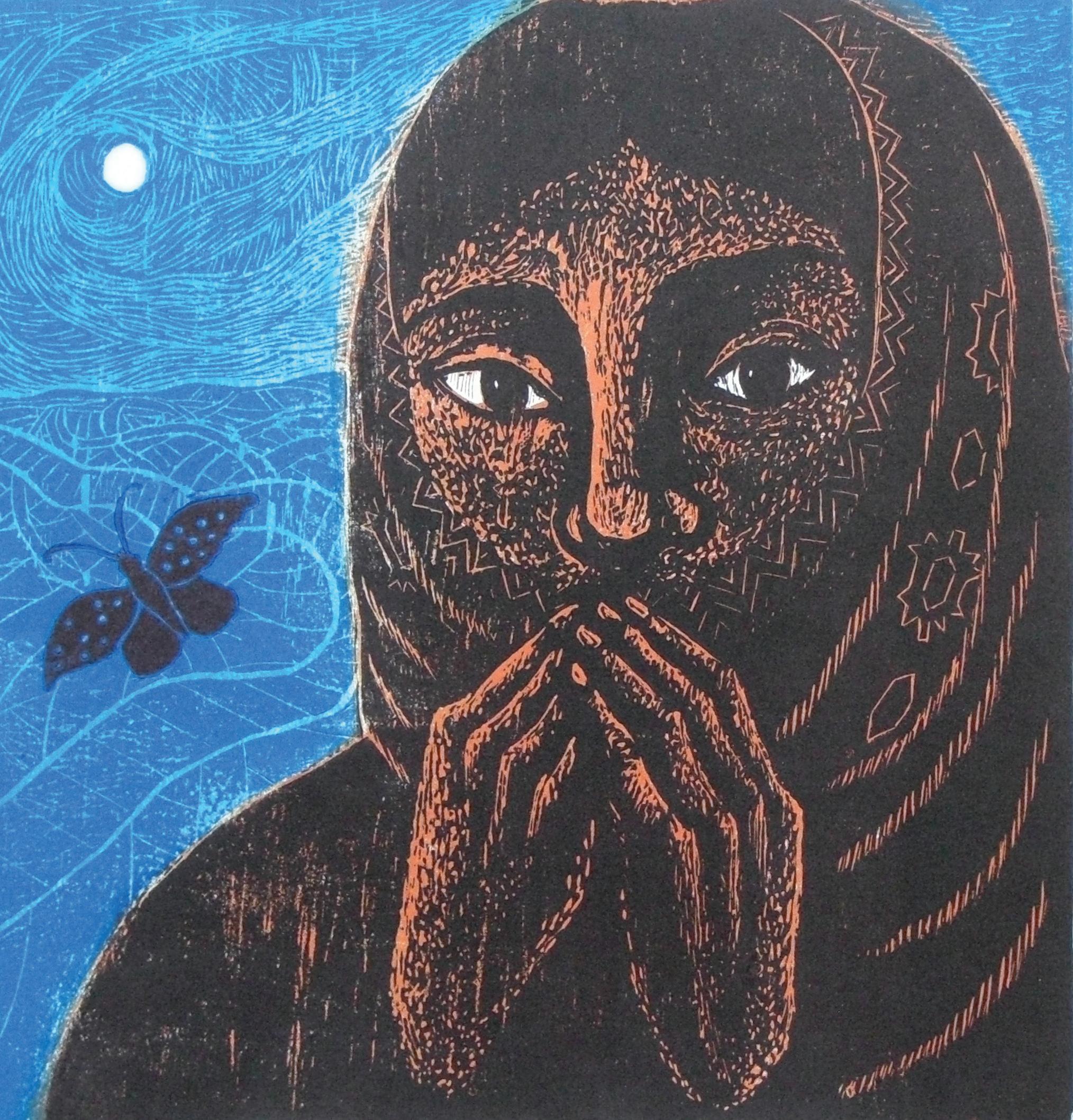
Poli Marichal, “Premonición,” 2012. Woodcut and linocut.
Image courtesy of Arceo Press.
‘Mapping
Territories’:
Art, memories, and the stories we carry
The upcoming exhibition explores migration, identity, and community through Pilsen artists.
Art has long been a bridge across cultures. This spring, the Schingoethe Center of Aurora University will bring this power to life in “Mapping Territories/ Trazando Territorios: The Art of Exile in Pilsen – Chicago.” The exhibition is both timely and meaningful, offering students and the wider community a chance to connect with stories of migration, resilience, and cultural pride.
In Chicago’s Pilsen neighborhood, murals stretch across facades like open books, telling the community’s story. Alongside these vibrant works, generations of printmakers have used ink and paper to capture the experience and conditions that brought waves of Mexican migrants to the city. “Mapping Territories,” which premiered at the Mexican Cultural Institute in Paris in 2024, highlights this rich history of printmaking and its role in shaping a community’s collective identity.
The exhibition features 58 prints by renowned Latin American artists, including Carlos Cortéz, Hector Duarte, and Dolores Mercado. The works were chosen from print portfolios that Chicago artist and curator René Arceo has been assembling and publishing since 2005 under Arceo Press. For each of his portfolios, Arceo invites printmakers from around the world to interpret a single theme.
“As a printmaker myself, I have been publishing portfolios for more than 20 years and am interested in finding ways to share them,” said Arceo. “I expect students will relate, in a meaningful way, to the different aspects this exhibit addresses.”
The exhibition was cocurated by Aline Hémond, professor of anthropology at Paris Nanterre University; Fabienne de Pierrebourg, curator of Americas collections at the Jacques Chirac Museum of Quai Branly; and Ingrid Arriaga of the Mexican Cultural Institute in Paris. Together, they structured “Mapping Territories” around three themes: the Journey, Inhabit the City, and Memory, Identity, Disjunction.
The curators note in the exhibition catalog that while every migrant’s story is unique, there are also shared narratives — like Pilsen’s, where artists have built connections among residents, most of Mexican origin, through murals and prints that are open to everyone.
Alumni, students, and friends of AU are invited to experience the exhibition January 13–May 15, at the Schingoethe Center. Through the lens of Pilsen’s artists, visitors will be encouraged to reflect on migration, belonging, and the enduring power of art to transcend borders.
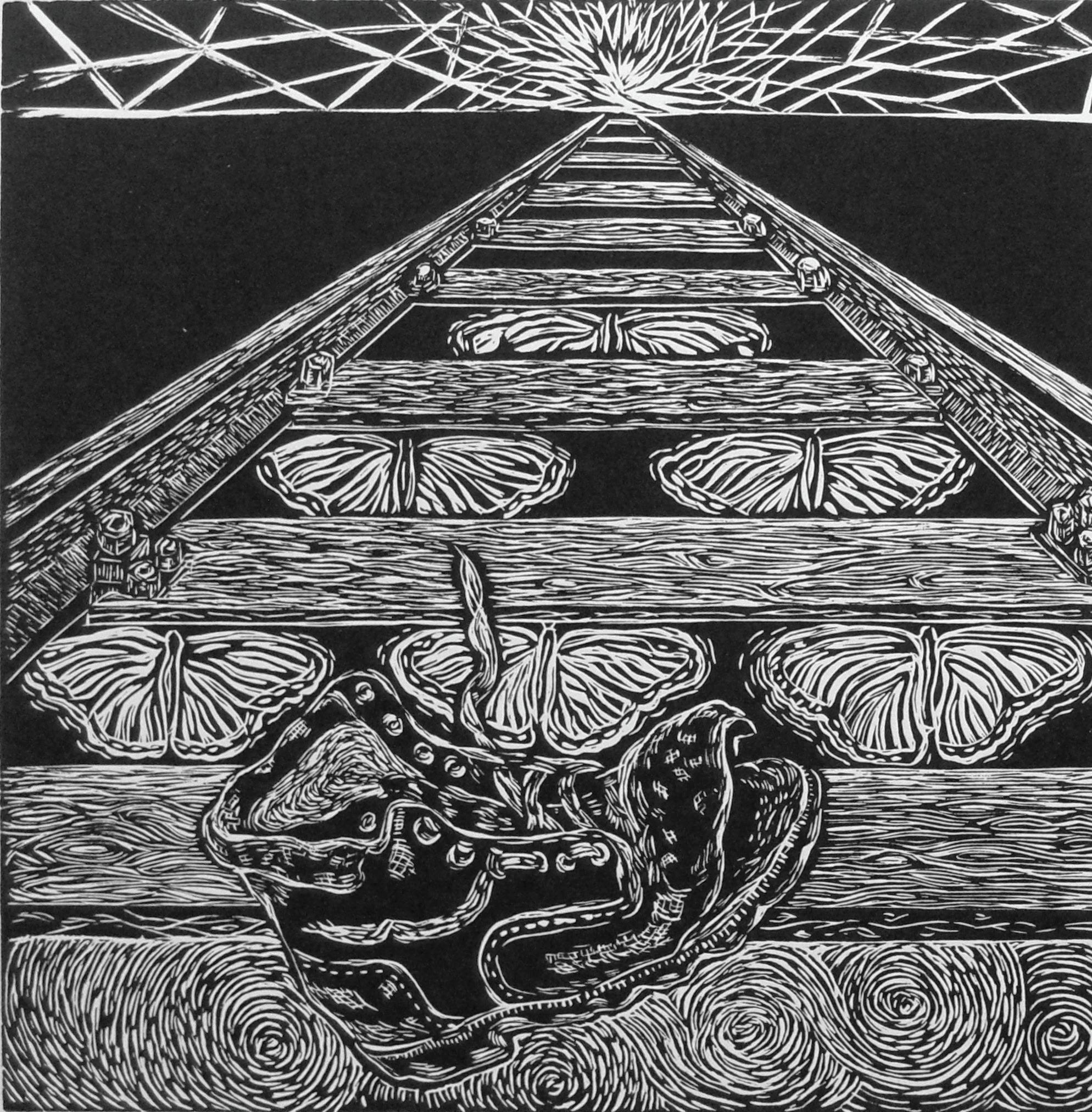


Top: Dolores Mercado, “AdiosFarewell,” 2012. Linocut. Bottom left: Eufemio Pulido, “La Noche del Nahual,” 2007. Linocut. Bottom right: Eva Solíz, “Lucky Cards,” 2010. Serigraph. All images courtesy of Arceo Press.
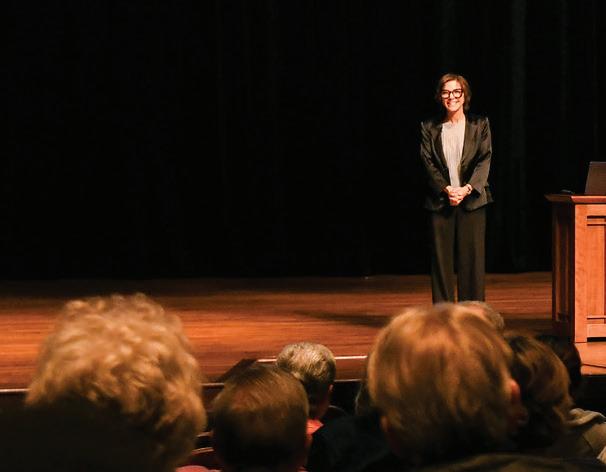
Leading like a futurist
Lisa Kay Solomon opened the Celebrating Arts and Ideas season.
Aurora University launched the 2025–2026 Celebrating Arts and Ideas series with a conversation led by Lisa Kay Solomon, futurist, author, and educator. Solomon invited the AU community to imagine, design, and share visions of the future.
She began with a question: Do you think the future is happening to you, or are you happening to the future? While no one can predict what lies ahead, Solomon argued, we can build skills to navigate with intention.
Solomon noted that in a world of volatility and uncertainty, the most important leadership skill is to think like a designer rather than a mechanic. Mechanics rely on fixed plans; designers embrace experimentation and iteration.
That discovery begins with imagination, a skill often overlooked in schools and workplaces. “We cannot build a future we haven’t first imagined,” she reminded the audience.
By asking open-ended questions, testing ideas, and welcoming diverse perspectives — grounded in values of inclusion, collaboration, and accessibility — individuals and organizations can navigate uncertainty with confidence. Solomon praised AU as a community where these values are lived across disciplines.
She reminded the audience that shaping the future is not someone else’s responsibility. “There is no they that’s going to shape it,” she said. “You are the they. We are the they. We’ve got to do it. We’ve got to try. We’ve got to push. We’ve got to share.”
It was a fitting conclusion for an evening that encouraged the AU community to step boldly into uncertainty. By seeing possibilities, shaping outcomes, and sharing meaningful stories, we can all learn to lead like futurists — and, in doing so, help design better tomorrows.
Seeing ourselves
The Schingoethe Center’s fall exhibition explored identity through portraiture.
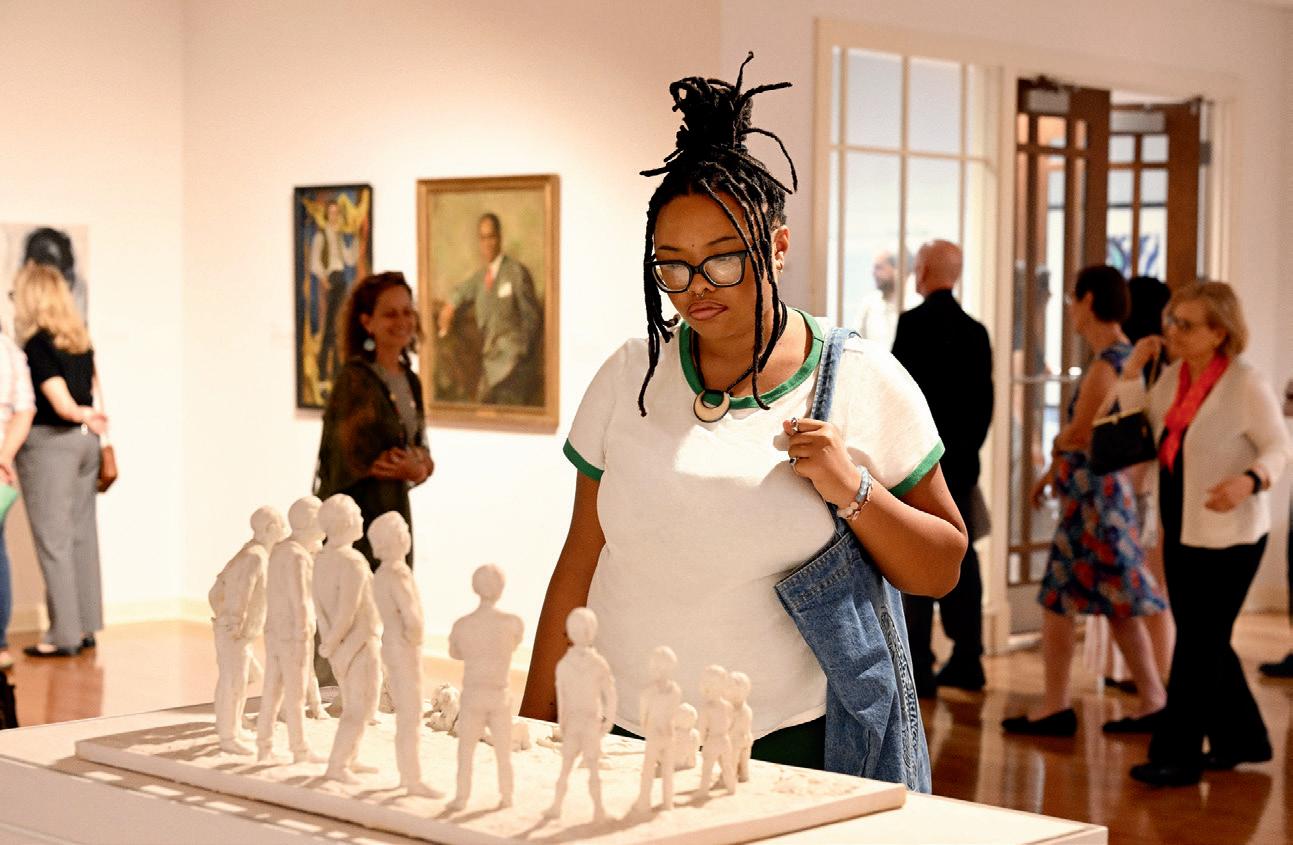
This past semester, the Schingoethe Center of Aurora University presented “Eye to Eye,” an interdisciplinary exhibition that brought together works from more than 40 artists across the globe. The show positioned portraiture not simply as representation but as a living dialogue between artist, subject, and viewer.
On view were a striking range of media, including photographs, paintings, prints, and sculptures, that probed how identities are shaped and reshaped by cultural, social, and institutional forces. Names such as Gertrude Abercrombie, Sonya Clark, Jess T. Dugan, Harry Fonseca, Omar Imam, and Wendy Red Star anchored the exhibition, but the breadth of voices ensured a dynamic, layered experience.
Among the nationally and internationally recognized artists featured, two members of the AU community also took the spotlight. Instructor Jennifer Scavone, who teaches art and photography at AU, contributed “Resilience,” a nontraditional self-portrait depicting a lone tree standing tall and unwavering.
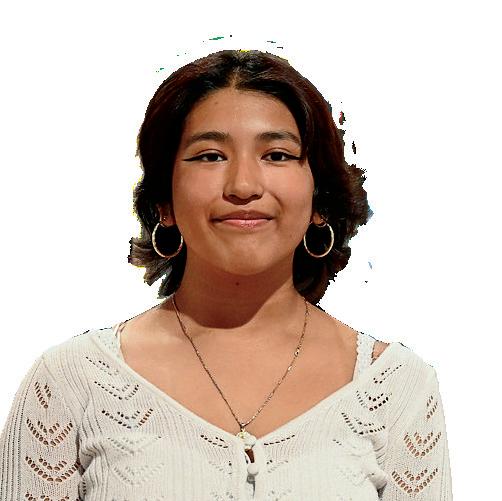
Also included was Jocelyn Olivera ’28. In her work “Alien,” a bold painting that reclaims the alien stereotype as a symbol of vitality and cultural pride, Olivera drew on research into antisemitic caricatures and racist depictions of African Americans through history. She merged those images with portraits of Latina women to challenge viewers to reconsider how identity is shaped and distorted by prejudice.
“Throughout the process, I had a love-hate relationship with the piece, admiring its beauty while also confronting the painful and ugly message it conveys,” Olivera shared. “Using oil pastels, I aimed to turn a dehumanizing stereotype into something powerful and vibrant with culture. This piece serves as a reminder of the sacrifices that were made to bring me where I am today.”
Social work major Jocelyn Olivera ’28 reclaims the alien stereotype as a symbol of vitality and cultural pride in “Alien,” 2024. Oil pastels and embroidery thread.

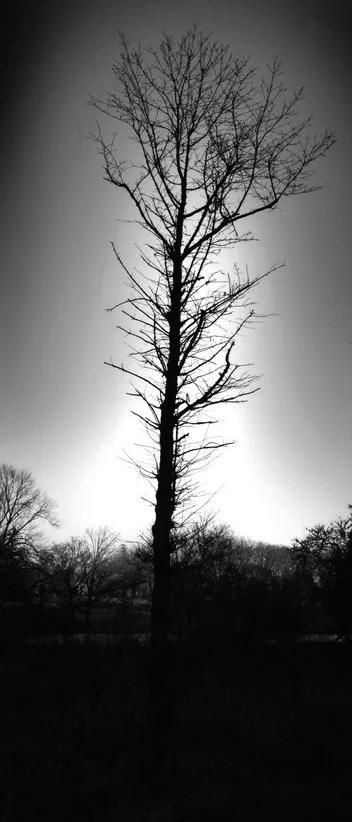
Jennifer Scavone, art and photography instructor, depicts a lone tree standing tall and unwavering in the nontraditional self-portrait “Resilience,” 2022. Digital photograph on velvet fine art paper.

Beyond Campus
AU president honored for commitment to education
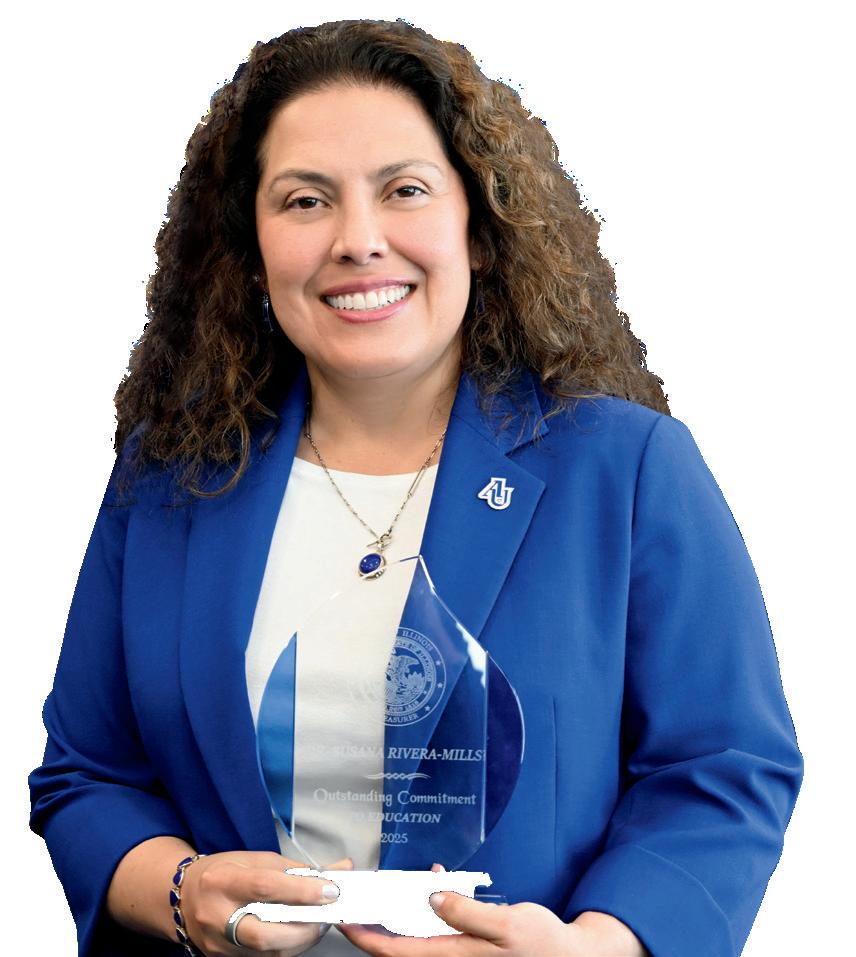
President Susana Rivera-Mills received the Outstanding Commitment in Education Award from Illinois State Treasurer Michael Frerichs at a Hispanic Heritage Month celebration in Chicago this September. Frerichs’ office hosts the annual event honoring the contributions and accomplishments of the Hispanic community throughout Illinois. The award recognizes Rivera-Mills’ dedication to advancing education and expanding access for students of all backgrounds.
A piece of GWC history in a new Chicago museum
An unexpected link to Chicago and George Williams College history sits inside a newly established museum. Earlier this year, the National Public Housing Museum opened inside the last remaining building of the Chicago Housing Authority’s Jane Addams Homes. Thousands of families lived at the homes, Chicago’s first public housing projects, from the time they were built in 1938 to when they closed in 2002.
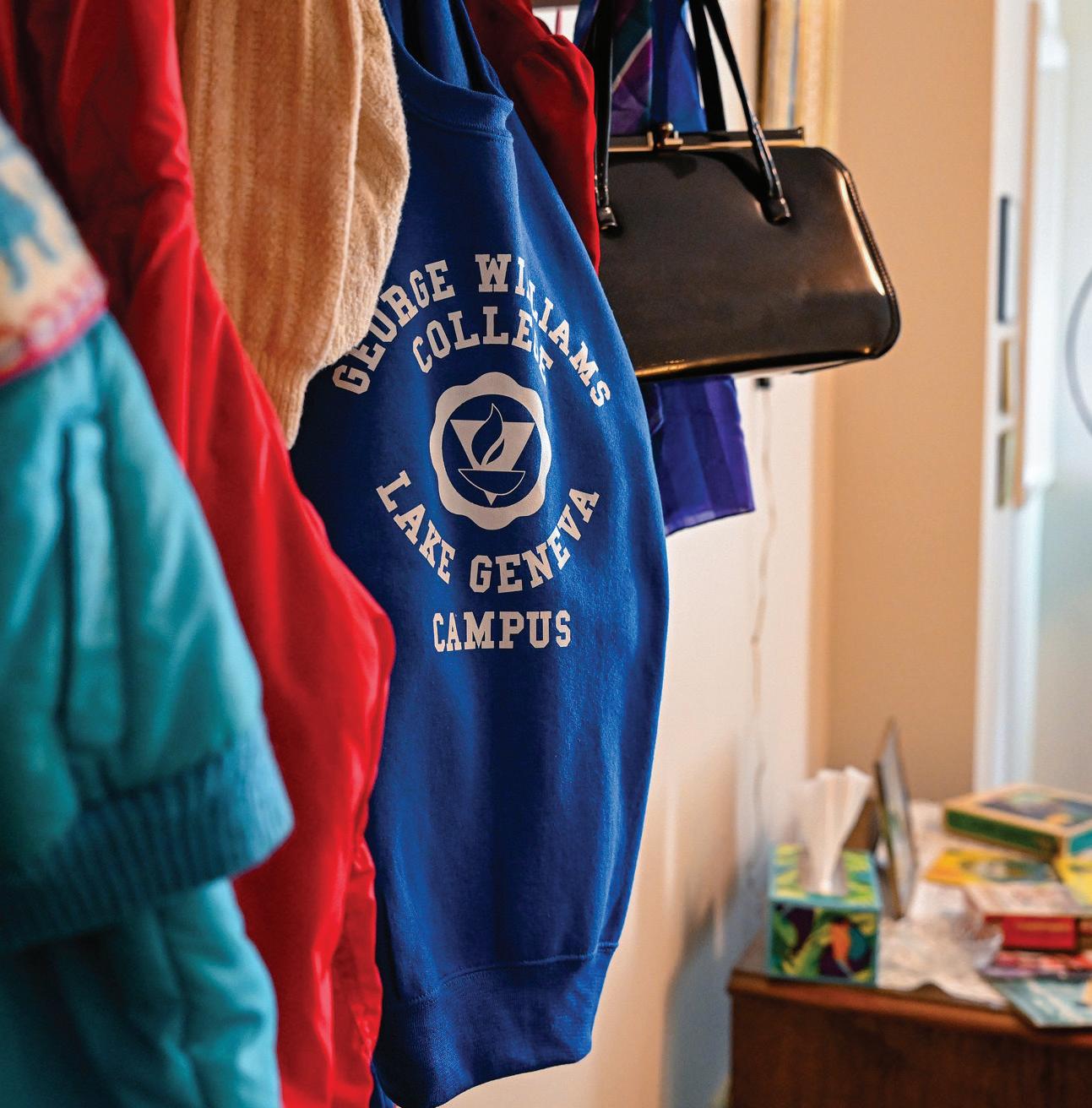
Within the museum sits a replica of a Jane Addams apartment where the Hatch family lived from 1960 to 1975. As visitors walk through the exhibit, they’ll see a photo of a young boy, Marshall Hatch, wearing a George Williams College sweatshirt. There’s also a recreation of the sweatshirt made by museum staff inside the exhibit.
“We wanted the apartment to be realistic and recognizable from photos, so we did our best to find original pieces that can be seen in the photos or to recreate the ones we couldn’t find,” said Alexandra Orfirer Maher, the museum’s exhibit manager.
“Imagine my surprise when one of the apartments sported a GWC sweatshirt hanging on a coat rack,” said MaryMargaret Sharp-Pucci GWC ’83, a member of the Aurora University Board of Trustees, who toured the National Public Housing Museum soon after it opened. “I was so impressed with the museum. The history, the stories, and the learning that comes from it are remarkable. As a long-time Chicagoan, I have to say this new museum is making its mark in the city and rightfully so.”
President Susana Rivera-Mills also visited the museum over the summer as part of her interest in learning more about the Chicagoland region. During her tour, she and the museum staff discussed how GWC students and faculty often engaged with nearby communities.
Around town
Since stepping into her role as president of Aurora University, Dr. Susana Rivera-Mills has embraced Aurora and the Fox River Valley as more than just a home — it’s become a place of discovery, connection, and joy. Her days may be devoted to helping students, educators, and the community thrive, but she still makes time for adventure and fun along the way. You can find her enjoying local traditions such as the annual Aurora Hispanic Pioneers Breakfast, relaxing at some of her favorite spots, and exploring nearby neighborhoods.
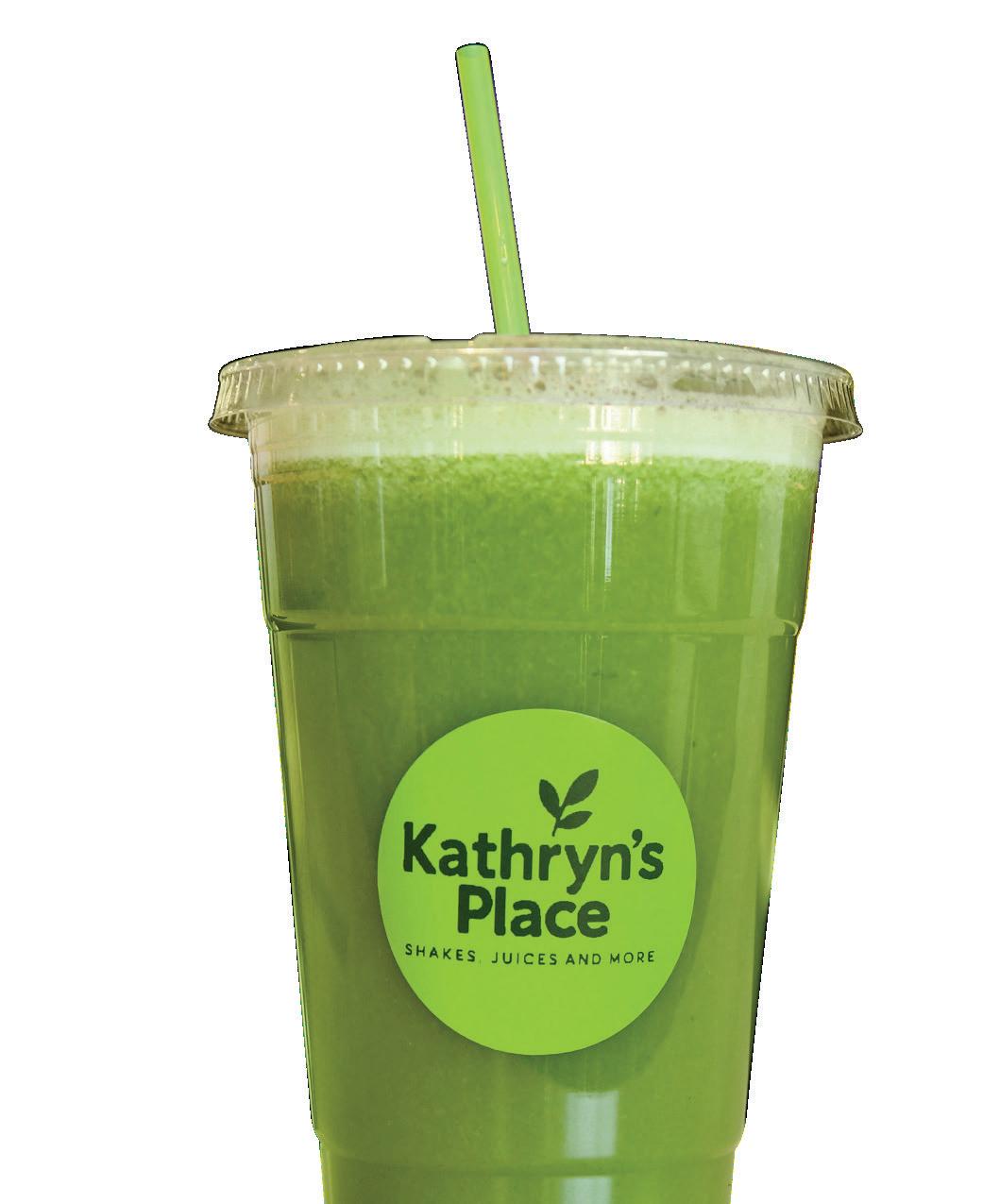
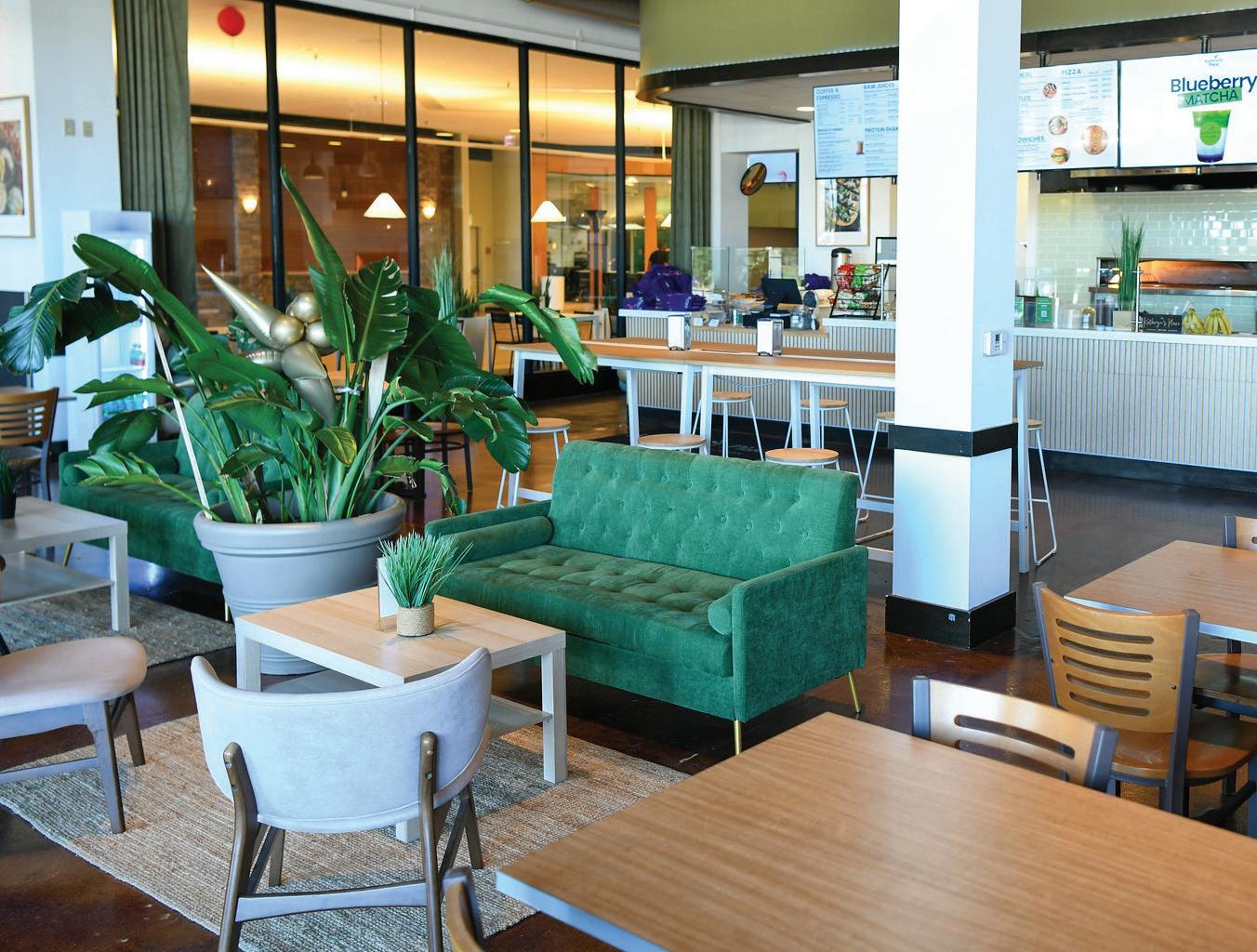
Kathryn’s Place
“The Green Glow Raw Juice is as refreshing as it is nutrient rich. Made with

@presidentriveramills
Follow President Rivera-Mills on Instagram for news of her campus and community activities.

Downtown public art
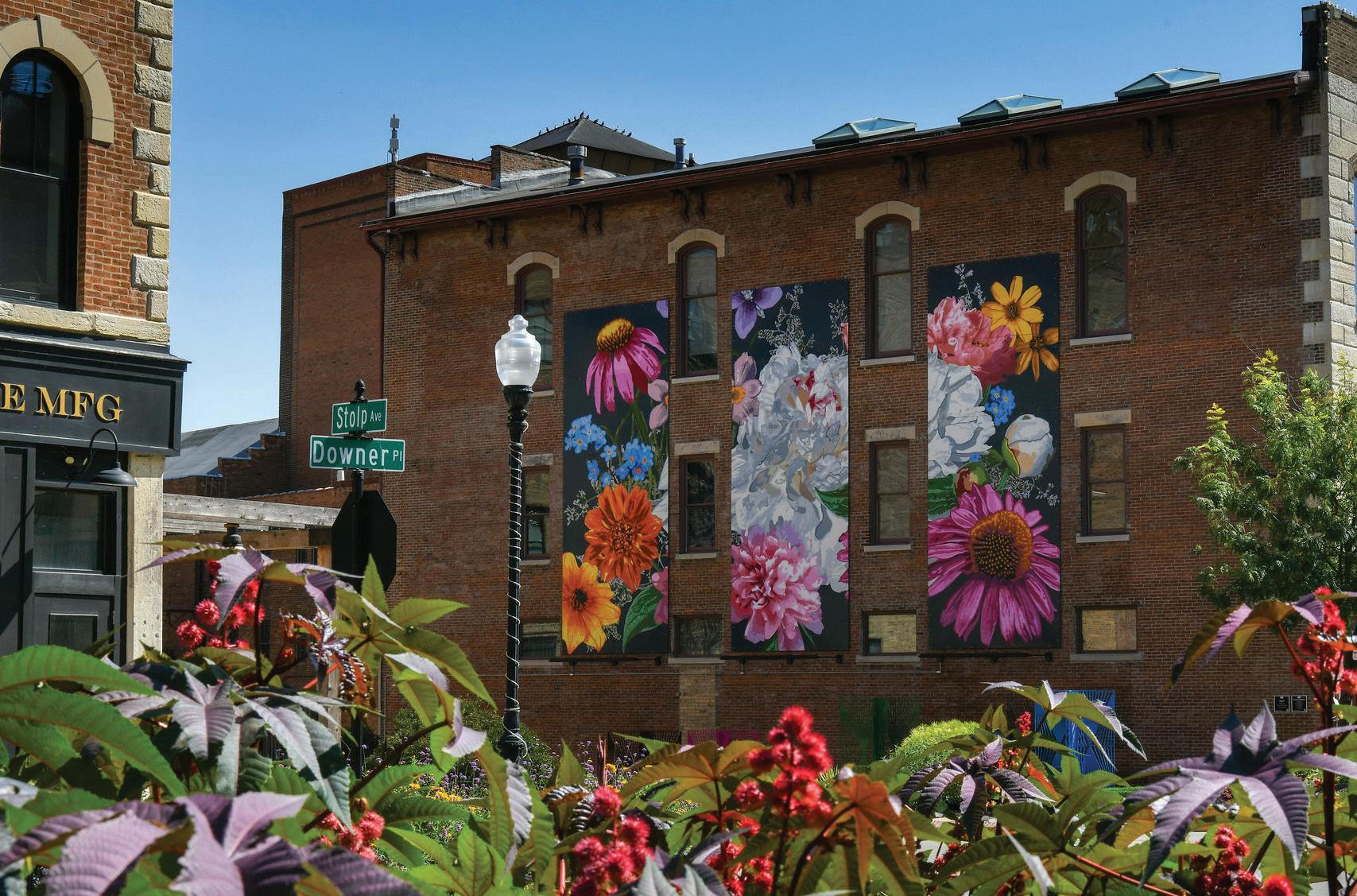
“I love the vibrant, larger-than-life public art in downtown Aurora. My favorites include the

Classic Cinemas
Kendall GDX
“From the collective experience of watching the story play out on the big screen to the comfortable recliner seating and affordable snacks with free refills — including two of my favorites, popcorn and Coke slushies — there’s just something special about going to the movies.”
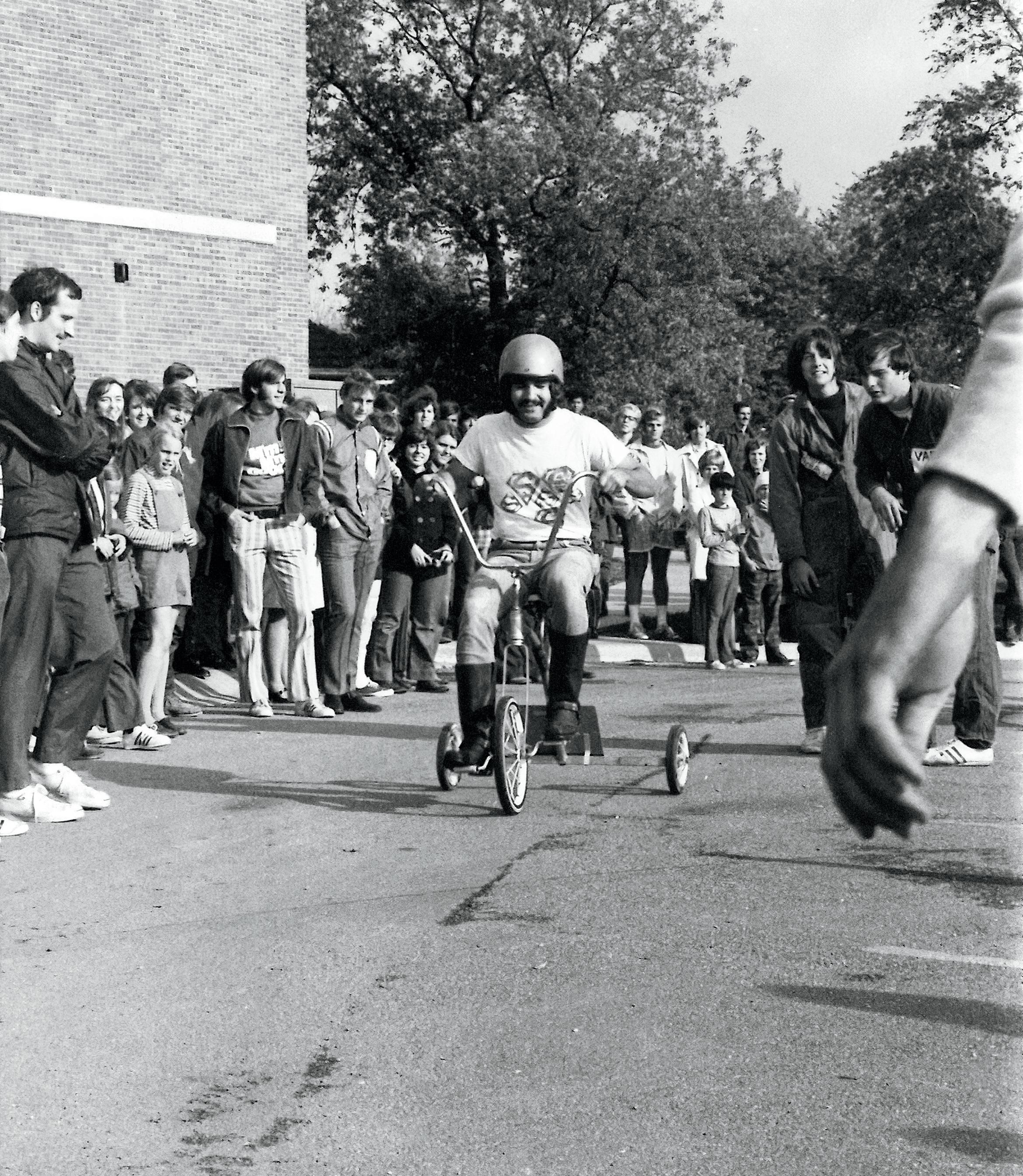
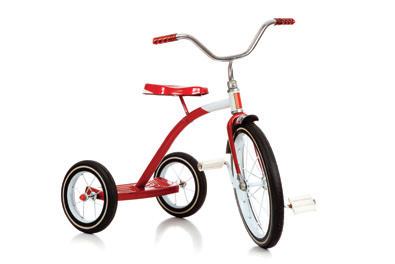
Aurora 500 Tricycle Race. From the pep rally and football game to theatre productions, movie screenings, and a greased pig contest, there was no shortage of activities during Aurora College’s 1971 Homecoming. One of the most memorable was the Aurora 500 Tricycle Race, where competitors Dennis Hyker ’73 (pictured), Jerry Fredricks ’72, and Dean Riordan ’73 turned the Watkins parking lot into a speedway. Riordan gained an early lead, but Hyker overtook him at the first turn. A mandatory pit stop evened the race, thanks to Riordan’s lightning-fast crew, while Fredricks tipped over and had to be carried across the finish line by friends. In the end, Hyker won the race, with Riordan finishing second. The lighthearted event is a reminder that Homecoming has always been about camaraderie and connection. (Turn to page 18 to learn about today’s reimagined Homecoming and Family Weekend.)
Legacy in stone and spirit
For more than a century, Aurora University seniors and alumni have left their mark through class gifts. Many of these treasures still stand on campus today, celebrating a legacy of generosity, creativity, and the spirited AU community. Here, we highlight several examples of these lasting contributions.
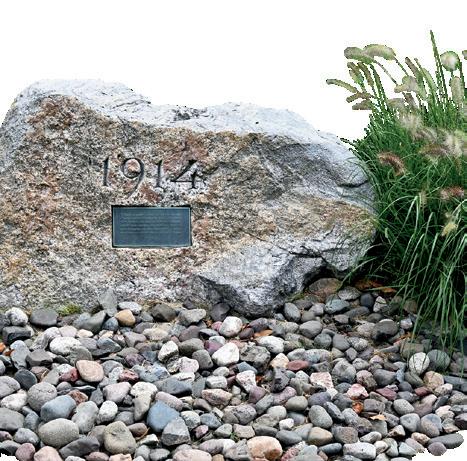
Engagement Rock
After nearly two years of fundraising, the Class of 1914 arranged for this boulder to be moved from Mendota, Illinois, to Aurora in 1911. Traditionally, only engaged couples were said to sit upon it, while others admired it from afar. Over time, it has become a beloved spot for celebrating love and marking special moments, including marriage proposals.
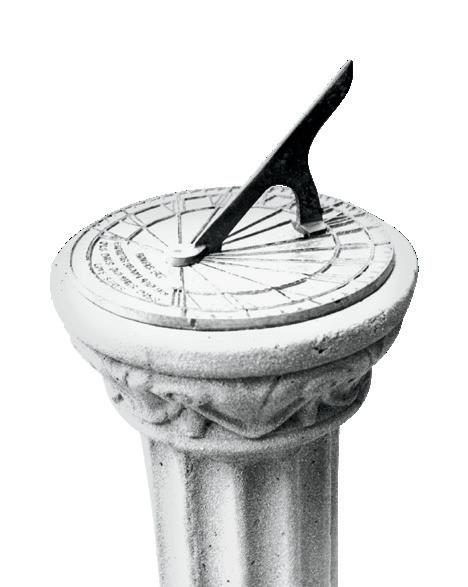
While the face of the sundial has changed over the years, the column has stood on the south side of Eckhart Hall for more than a century. Erected by the Class of 1921 as a lasting symbol of time and tradition, the sundial reflects the countless students who have spent their days on campus throughout the years.
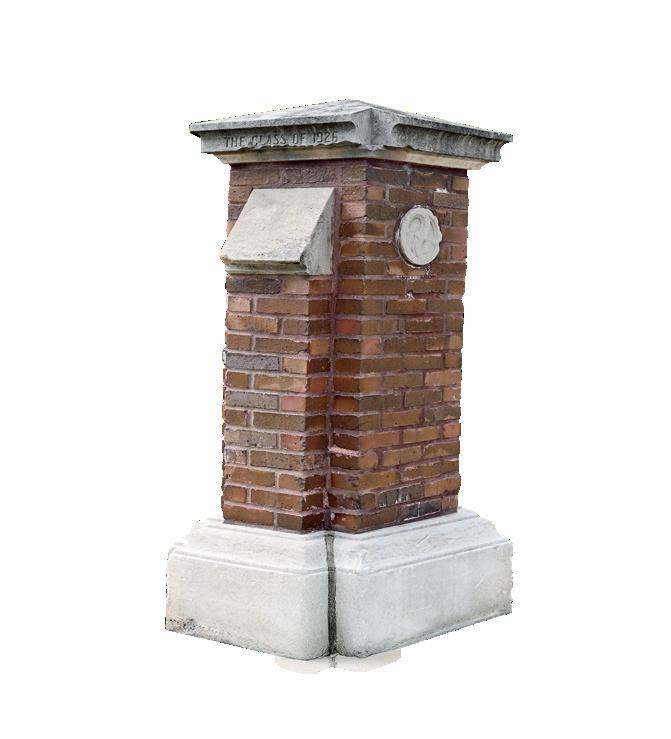
The Class of 1926 gifted the brick pillar on the northeast corner of campus as a nod to stability and tradition, and as a representation of the vision for a growing campus that would one day flourish beyond the undevel oped land.
Labyrinth
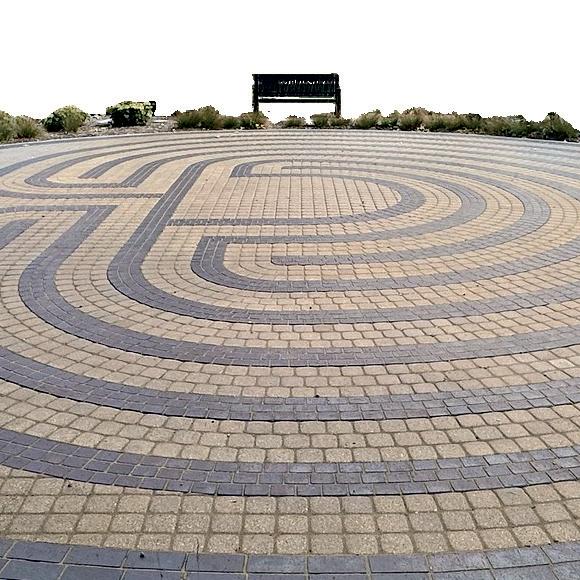
Funded by the Class of 1967, AU’s seven-circuit labyrinth at the Wackerlin Center invites students to pause, reflect, and explore their path. Open to all, it offers a space for meditation and contemplation, or simply a moment of calm — it’s a uniquely transformative experience for anyone who walks its circles.
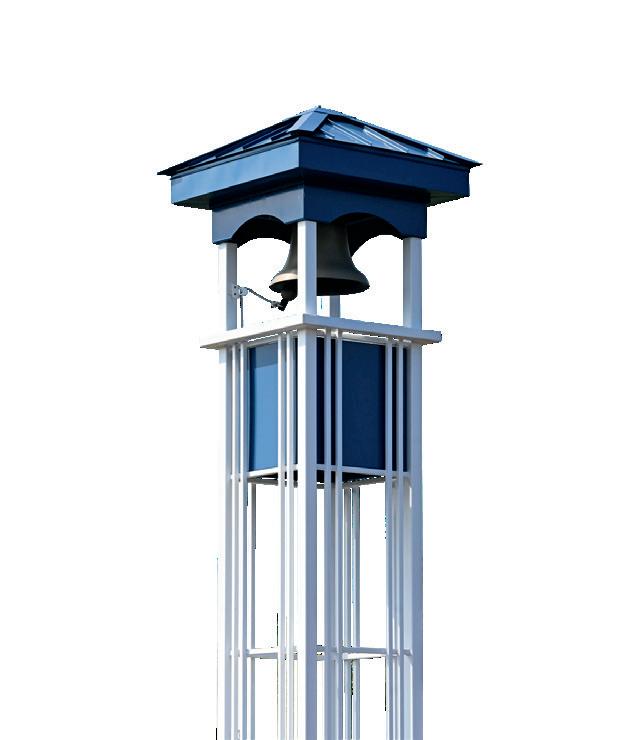
Gifted by the Class of 1969 for their 50th reunion, AU’s Spirit Bell Tower at Spartan Athletic Park rings out — sometimes literally, always symbolically — as a beacon of university pride and school spirit.
Sundial
Brick Pillar
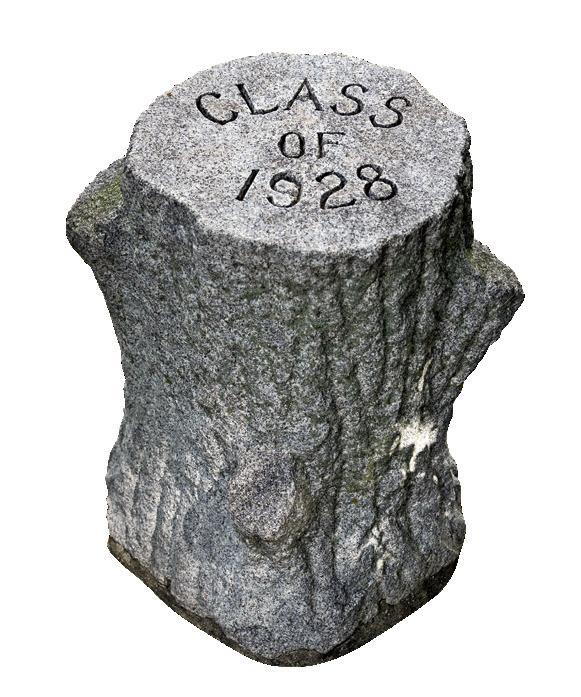
Fifty years after the Class of 1928 gifted Circle Drive to the university, a concrete tree trunk marker was placed on the site where the path existed before Phillips Library was built — a quiet reminder of growth, roots, and the enduring legacy that continues to shape the campus landscape.
Spirit Bell Tower

SAVE THE DATE:
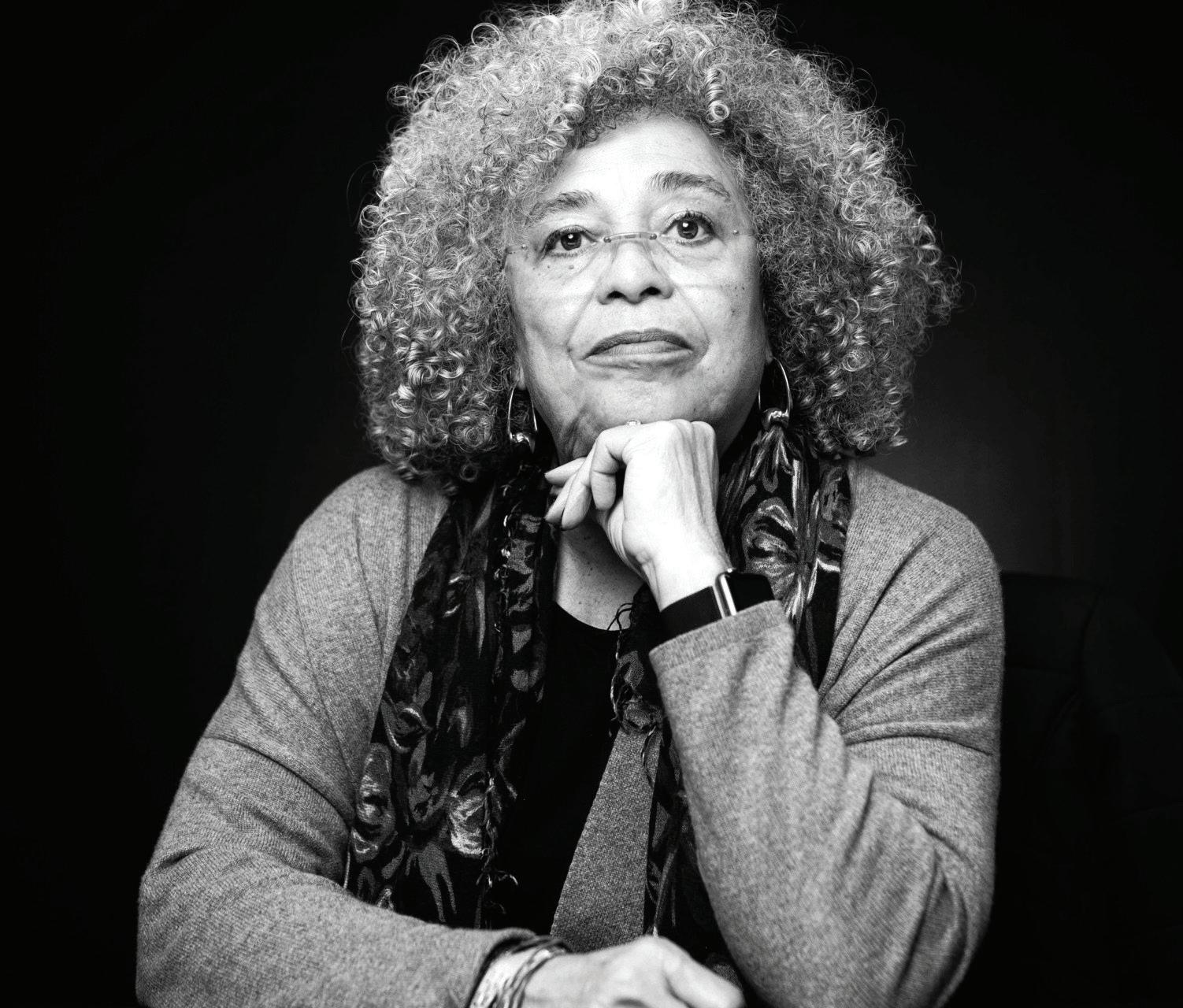
Author ANGELA DAVIS presents “Reflections on 100 Years of Black History: A Personal Journey of Justice and Collective Activism” Wednesday, February 18, 2026 | 7 p.m. Crimi Auditorium
To register for this free program and view other upcoming events, scan the QR code or visit auartsandideas.com.