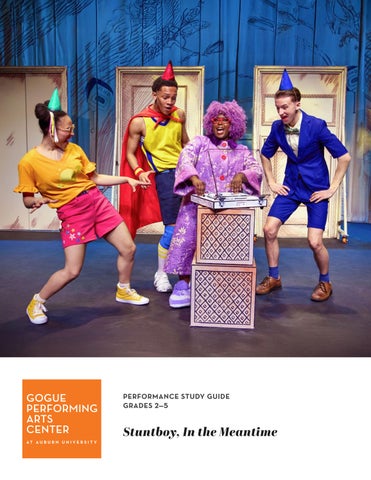
Gogue Center Performance Study Guide: “Stuntboy, In the Meantime”
PERFORMANCE STUDY GUIDE GRADES 2— 5
The Jay and Susie Gogue Performing Arts Center at Auburn University engages audiences across the university, the state of Alabama and beyond with curated arts experiences that inspire, enlighten and unite.
Our annual K–12 School Performance Series provides opportunities for students to enjoy exclusive performances by some of the most talented and accomplished artists from around the world. Prior to each K–12 school performance, teachers receive a study guide containing details about the performance, artist and company, supplemental information about the art form and its history, and grade-appropriate activities designed to spark conversation and exploration in the classroom.
To learn more, visit goguecenter.auburn.edu/education.
produced by
Jay and Susie Gogue Performing Arts Center at Auburn University 910 South College Street Auburn, Alabama 36849
k–12 school performance series contact Andrea Jarmon, D.M.A. Education Coordinator telephone: 334.844.7371 email: gpac.education@auburn.edu
This guide is optimized for online engagement and contains links to multimedia components and external sources.
To access digital versions of this and other performance study guides produced by the Gogue Center, scan the QR code or visit aub.ie/gpac-psg.
Stuntboy, In the Meantime
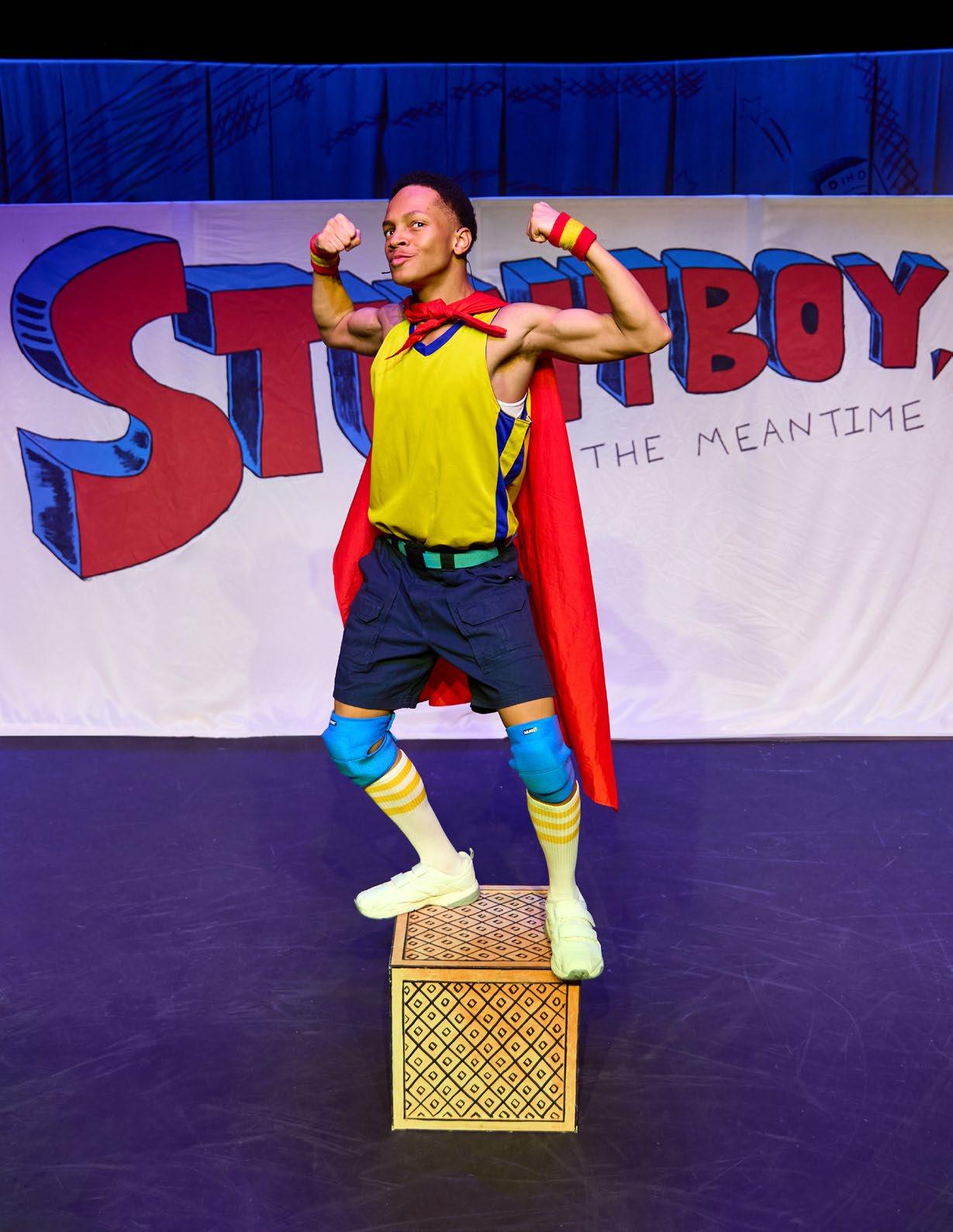
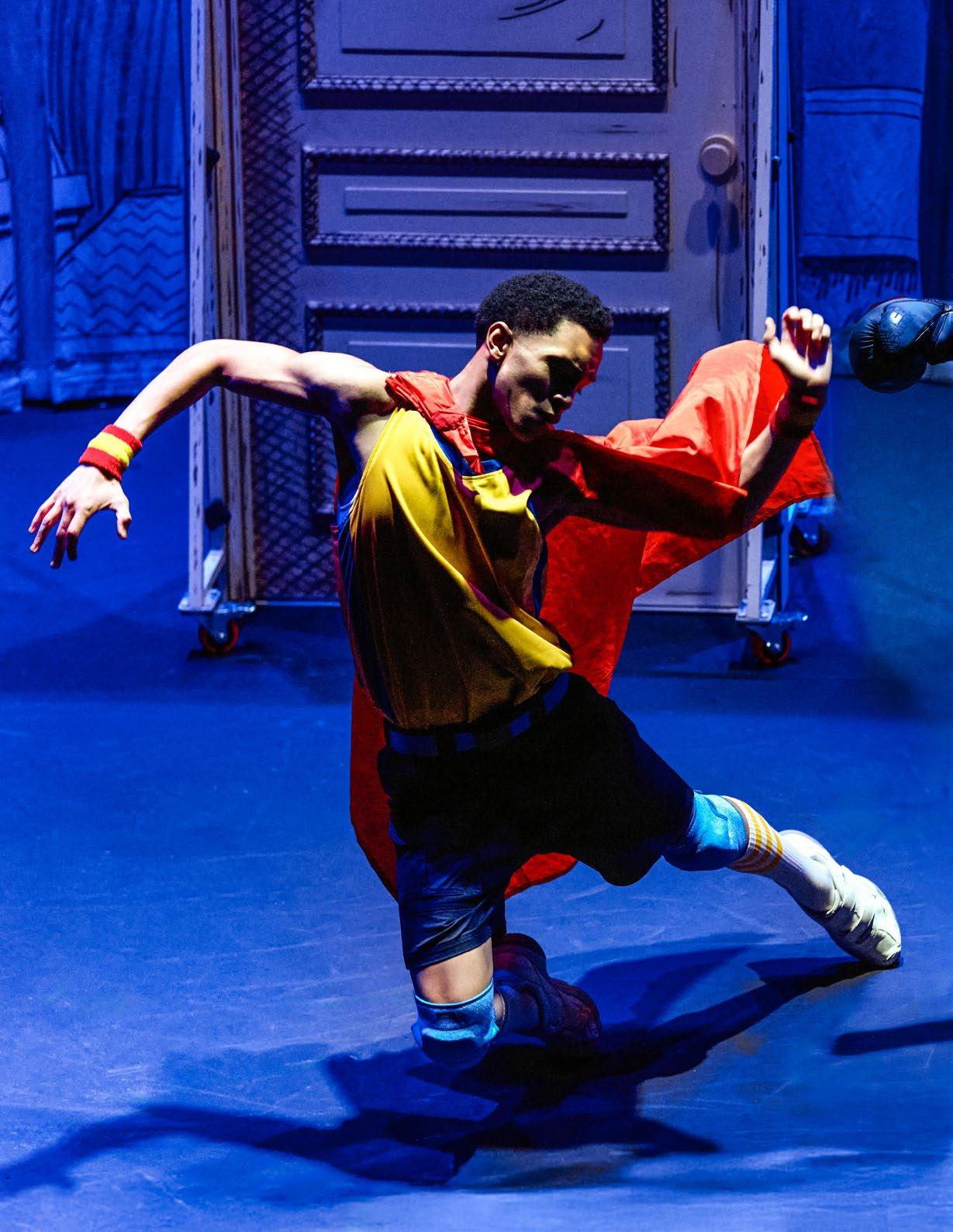
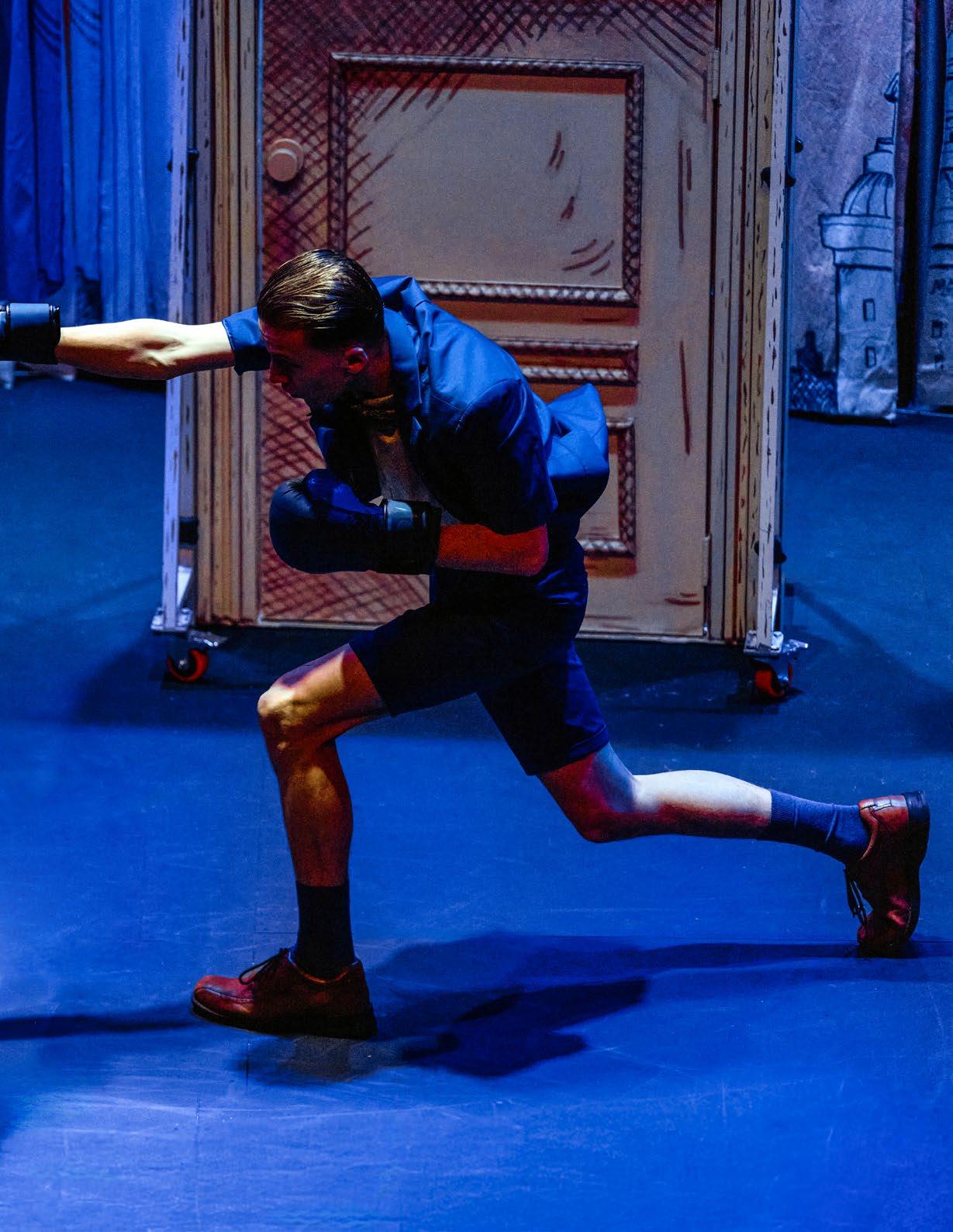
Stuntboy, In the Meantime cast member Jackson Kanawha Perry
photo: Jeremy Daniel
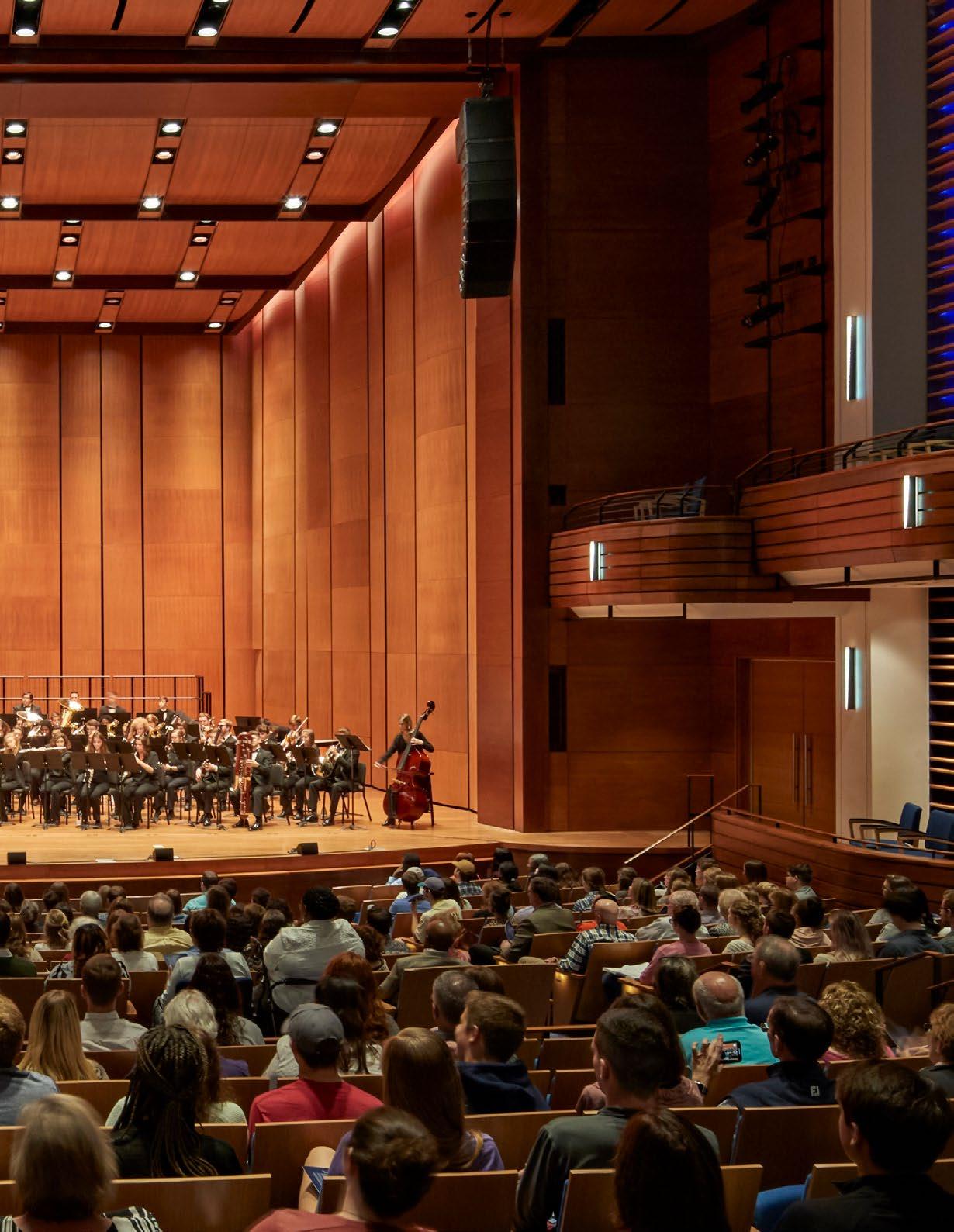
The Jay and Susie Gogue Performing Arts Center at Auburn University
Where will we go?
GOING TO THE GOGUE CENTER
The Jay and Susie Gogue Performing Arts Center, otherwise known as the Gogue Center, is located on the campus of Auburn University in Auburn, Alabama.
The Gogue Center houses the 1,200-seat Woltosz Theatre. The theatre was built with exceptional acoustics so that it is possible to hear well from every seat.
WHO WILL YOU SEE HERE?
Ushers
These are the people who will greet your bus, lead your class into the building and help you find your seat. Be sure to say “hello!”
Stage Crew
These are the people who work backstage, so you won’t see them in the lobby, but you might see them before or after the performance, and sometimes, they even come on stage during the performance to move things.
Lighting & Sound Operators
These are the people who control the lighting and the sound for the performance. You may see them in the middle of the auditorium at the big sound board or in the back of the auditorium in the booth. Sometimes, the spotlight operators are in the back way above your head.
Performers
These are the people on the stage who may be dancers, musicians, singers, actors, puppeteers or acrobats. It is their job to communicate using their bodies, instruments and voices.
Audience Members
This includes you, your classmates, and other students and teachers from Alabama, and beyond.
What Does the Audience Do?
Alabama Course of Study
National Standards
MU:Pr6.1.3-8b
The audience is an important part of the performance. Without the audience, who would watch the performers? Who would clap and sing along and appreciate what the artists bring to the stage? When you are a member of an audience at the theatre, there are a few things to know about what to do and what not to do.
Listen and watch, but do not talk.
Have a camera or phone? Please turn it off.
The performers will take to the stage, and we know they will engage. You can laugh, you can sing, you can get up and dance, but just make sure that you give them all a chance!
Sit in your seat and look around, but please keep your feet toward the ground. THANK YOU!
When the song is done, or the show comes to an end, make sure that you give the performers a hand! Applause is the way that we can say thank you for all that they did today!
The Walter Stanley and Virginia Katharyne Evans
Theatre
Acoustics: The Science of Sound
Acoustics is the study of sound and how that sound reacts in spaces, particularly rooms and buildings. What is sound? Sound is vibration. That vibration travels through the air and into our ears where we hear it. Vibration begins through movement—for example, strumming a guitar string. That vibration creates a sound wave. In a theater or concert hall like the Woltosz Theatre, acoustics are important so that everyone can hear the performers.
There are two ways that acoustics are controlled. The first, reverberation, is controlling how sound waves bounce off surfaces, like walls and floors. Hard surfaces cause more reverberation and make spaces louder. The second way, absorption, is the opposite of reverberation. Soft surfaces absorb sound waves and make rooms quieter.
Of the materials and surfaces listed below, which do you think cause sound to reverberate? Which absorb sound?
• Tile
• Carpet
• Stone
• Curtains
• Cushions
• Wood
Who to know at the show
MEET THE CREATIVE TEAM
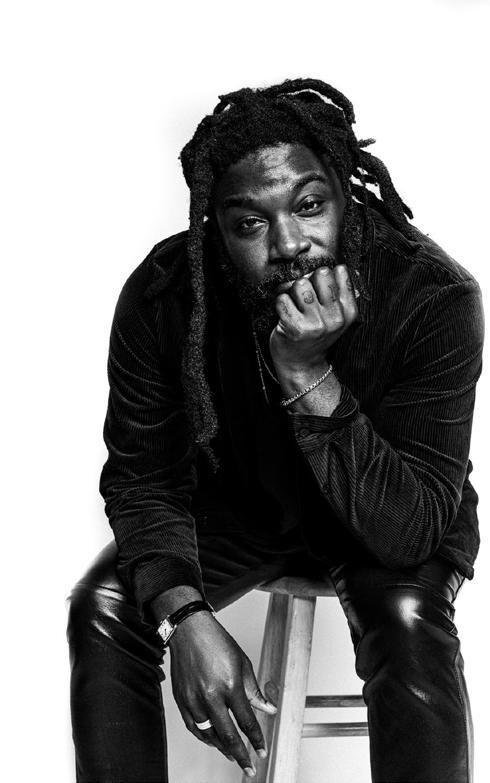
Jason Reynolds, author
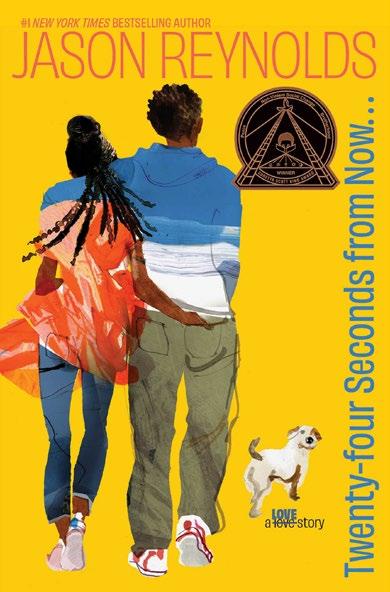
Jason Reynolds is a #1 New York Times bestselling author of many award-winning books, including Look Both Ways: A Tale Told in Ten Blocks, All American Boys (with Brendan Kiely), Long Way Down, Stamped: Racism, Antiracism, and You (with Ibram X. Kendi), Stuntboy, in the Meantime (illustrated by Raúl the Third), and Ain’t Burned All the Bright (with artwork by Jason Griffin). The recipient of a Newbery Honor, a Printz Honor, an NAACP Image Award and multiple Coretta Scott King honors, Reynolds is also the 2020–2022 National Ambassador for Young People’s Literature. He has appeared on The Late Show with Stephen Colbert, The Daily Show with Trevor Noah, Late Night with Seth Meyers, CBS Sunday Morning, Good Morning America, and various media outlets. He is on faculty at Lesley University for the Writing for Young People M.F.A. program and lives in Washington, DC.
Raúl the Third, illustrator
Raúl the Third is the illustrator of the New York Times bestselling Stuntboy, in the Meantime, by Jason Reynolds. He is also a three-time Pura Belpré Award winner for ¡Vamos! Let’s Go to The Market! and his Lowriders picture book series written by Cathy Camper, the first of which, Lowriders in Space, also won the Texas Bluebonnet. Raúl is also the author and illustrator of ¡Vamos! Let’s Go Eat and ¡Vamos! Let’s Cross the Bridge. His work centers around the contemporary Mexican American experience and his memories of growing up in El Paso, Texas, and Ciudad Juárez, Mexico. He has also contributed to the SpongeBob Comics series. Raúl lives outside of Boston, Massachusetts.
Melvin Tunstall, III, book and lyrics, music
Melvin Tunstall, III began his writing career while still a student at the Cincinnati Conservatory of Music as a founding member of the AMP Theatre Company. A proud participant in the Yale Institute for Musical Theater, Tunstall took a small break from writing to make his Broadway debut in Beautiful: The Carole King Musical after originating the role of Ja’Keith in the Toronto Company of the Broadway smash Rock of Ages. His acting bug now quenched, Tunstall returned to writing with commissioned adaptations of the Broadway musicals Wonderland and The Wiz. His original musical BLooM! was a finalist in the renowned NAMT Festival in New York City. Peter, darling…, his highly anticipated new musical version of the classic Peter Pan, was commissioned by and will premiere at Casa Mañana Theatre in Texas in the spring of 2018. His show Polkadots: The Cool Kids Musical won the Off-Broadway Alliance Award for Best Family Show in 2018. Tunstall currently resides in New York City where he is hard at work writing the book, melodies and lyrics to Senior Class—a new musicalized Pygmalion
jason
reynolds
Greg Dean Borowsky, music
Greg Dean Borowsky is a songwriter and producer from South Africa, signed to Sony ATV. He is the creative producer and writer behind some of South Africa’s biggest SAMA (South African Grammy) winning artists. His debut album, signed to Universal Music SA, was nominated for a Metro FM Best RnB Award and his single “Chocolate Vanilla” was nominated for a Best RnB Channel O Africa Award. After cowriting and producing the official “20 Years of Freedom” song for the South African government, Borowsky moved to New York to complete his next producer album, The Greg Dean Project, featuring soul and Broadway artists. The album reached #1 on the UK Soul Chart and remained on the USA Billboard RnB chart for six weeks in 2016, and also received a nomination for a SoulTracks Album of the Year Award. His show Polkadots: The Cool Kids Musical won the Off-Broadway Alliance Award for Best Family Show in 2018.
Banji Aborisade, director/choreographer
Director, choreographer and actor Banji Aborisade is known for his work in theatre, film and television. He holds a B.F.A. from Syracuse University. Aborisade served as the assistant director for both Harry Potter and the Cursed Child and Beetlejuice the Musical on Broadway. He also served as assistant/ associate director for Bye Bye Birdie at The Kennedy Center, the Hairspray National Tour, Oliver at New York City Center, Beetlejuice on Norwegian Cruise Line, and the world premiere of Bull Durham, A New Musical at Theater Raleigh. Additionally, he has directed and choreographed numerous regional theatre productions. His film and television credits include SC7NARIO on BroadwayHD, The Last Fall, While You Were Dreaming, SYNC: The Dance Series, and Every Right.
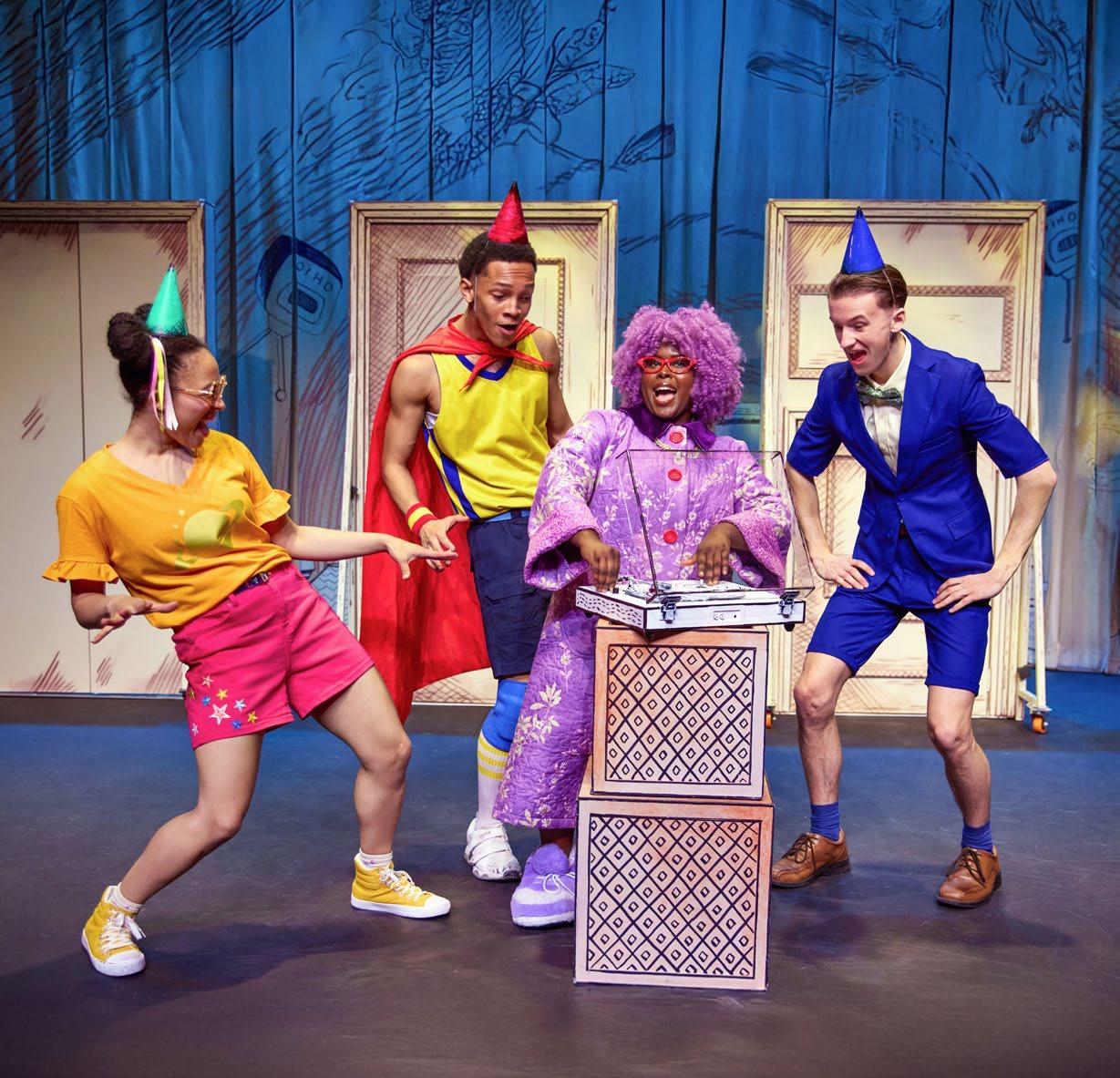
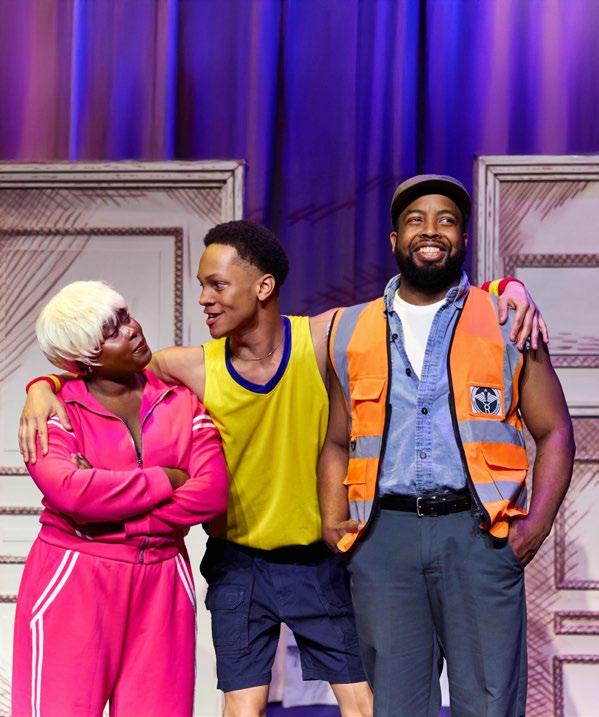
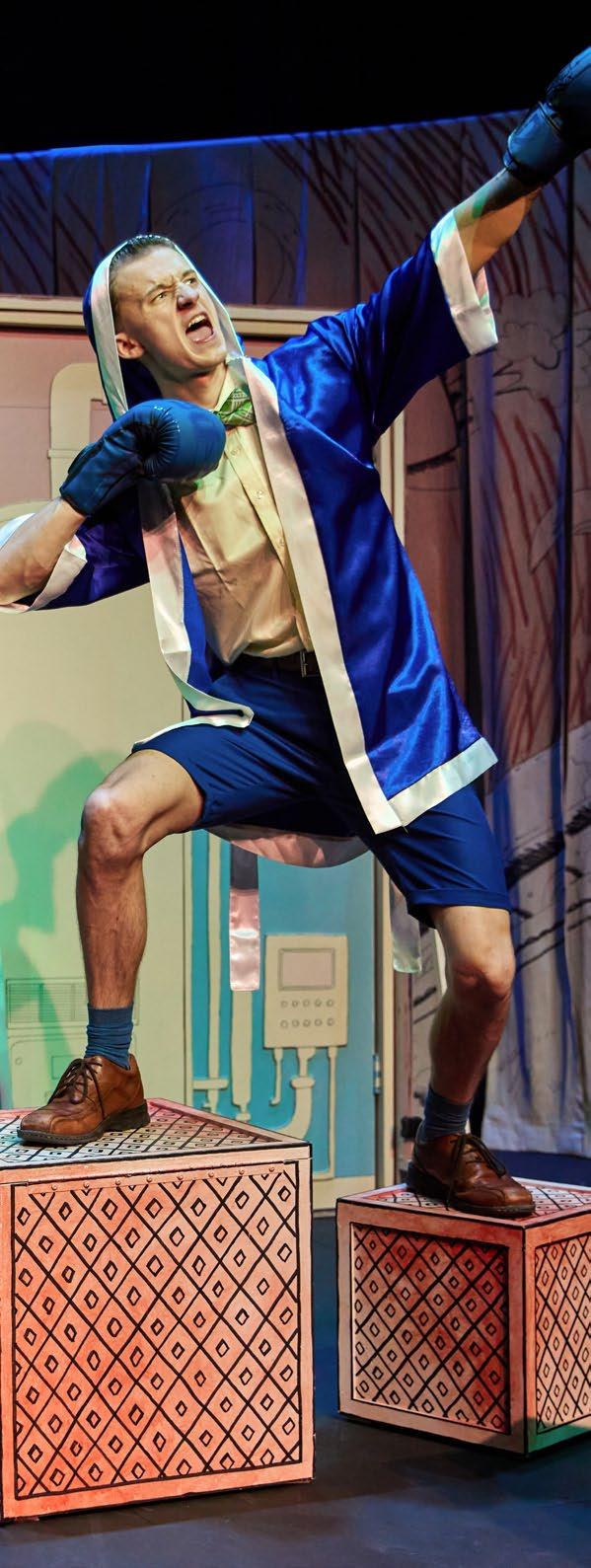
Stuntboy, In the Meantime cast members Nicole Smith, Jackson Kanawha Perry and Manny Houston
Portico Reeves
Otherwise known as “Stuntboy,” Portico keeps all the other superheroes and residents of his apartment safe. Zola
Portico’s best friend and the only one who knows his secret identity
Mrs. Reeves
Portico’s mother
Mr. Reeves
Portico’s mother
Herbert Singletary Portico and Zola’s archnemesis
Soup the Super
The superintendent of Skylight Gardens
Gran-Gran
photo: Jeremy Daniel
What to know before the show
STORYTELLING
Storytelling is an integral part of our society. It can be used for entertainment, education or preserving history. Stories typically involve plot, setting, characters, theme, tone, a point of view and conflict. The plot is the series of events that make up the story. A plot is typically divided into five parts:
rising action
BEGINNING
The characters are introduced, the setting is established, and the general story set-up begins.
climax falling action
This is the height of the story—the main conflict and most exciting part. This is what moves the story from its climax toward its resolution. This is the conclusion, or ending, of the story. beginning resolution
This involves the buildup to the climax and all the events that lead to the main conflict of the story.
The setting is where the story takes place. This can be specific or general, it all depends on the story. Sometimes the settings change throughout the story. Sometimes, the setting remains the same. Establishing the setting helps the audience better understand the story.
The characters in a story are the people, animals or imaginary creatures that experience the story. They complete the action; the story is about them, and they move the story forward.
The theme is the overall message of the story. It is the “why.” A theme can be a lesson or a warning, or it can be a message of love or hope.
The Tone is the overall feeling of the story. Is it funny or mysterious? Is it sad or optimistic? The tone is created through word choice and sentence structure, as well as setting and character descriptions.
Stories are typically told from either the first-person or third-person point of view. First-person point of view tells the story from a character’s perspective using first-person pronouns (e.g., I, me, my, mine,
we, our, ours). A first-person point of view does not necessarily have to be from the perspective of the main character; it can be from any character telling the story from their personal perspective. Thirdperson point of view tells the story of the characters using third-person pronouns (e.g., he, him, his, she, her, hers, their, theirs).
Conflict is what propels the story forward. There are internal conflicts that the characters have to overcome, and there are external conflicts that the characters face. Conflict is what makes the story interesting. How the characters deal with these internal and external conflicts is what propels the plot. The conflict can be between two of the characters (for example, two players competing for one spot on a team). The conflict could be between a character and nature, like someone trying to learn to surf big waves. The conflict could be between a character and something supernatural, such as someone fighting ghosts. The conflict even could be within the character (for example, an actor fighting their own stage fright). Whatever the conflict, how characters face and overcome the conflict is what engages audiences with the story.
Alabama Course of Study Standards
OBJECTIVE
By completing this activity, students will:
• Understand the elements of a story
• Write a story that includes the elements of a story including a clear plot, setting, characters, theme, tone, point of view and conflict
MATERIALS
For these activities, you will need the following items:
1. Begin with a discussion about the elements of a story. Write each element on chart paper or a whiteboard: plot, setting, characters, theme, tone, point of view and conflict.
2. Ask students to share examples of these elements from stories they know.
3. Show students a visual catalyst, such as a painting or photograph. Discuss what they see and how it could inspire a story.
4. Have students imagine walking into the painting or photograph and engaging their senses to brainstorm ideas about the theme, message and emotions of the characters.
5. Copy and distribute the “Story Planner” worksheet on page 15. Students can use this document to organize their ideas and bring additional structure to their stories.
6. Discuss with the class the various story elements outlined in the “Story Planner” worksheet.
suggested discussion questions
• Plot: What happens in your story? What is the sequence of events?
• Setting: Where and when does your story take place?
• Characters: Who is in your story? What are their traits?
• Theme: What is the main idea or message of your story?
• Tone: What is the mood or feeling of your story?
• Point of View: Who is telling the story?
• Conflict: What challenge or problem do your characters face?
7. Allow students time to write their stories using their plans.
8. Encourage them to be creative and use descriptive language to bring their stories to life.
9. Invite students to share their stories with the class or in small groups.
10. Discuss how each story incorporated the elements and what made each story unique.
DIFFERENTIATION
For younger students: This activity can be easily adapted for lower grades.
• Read a story and discuss the different elements as is appropriate for the age group.
• Allow students to create a story together as a class. Write the story on the board as it is told.
• Once the story is completed, have students draw illustrations.
Story Planner
Beginning
COMIC BOOKS
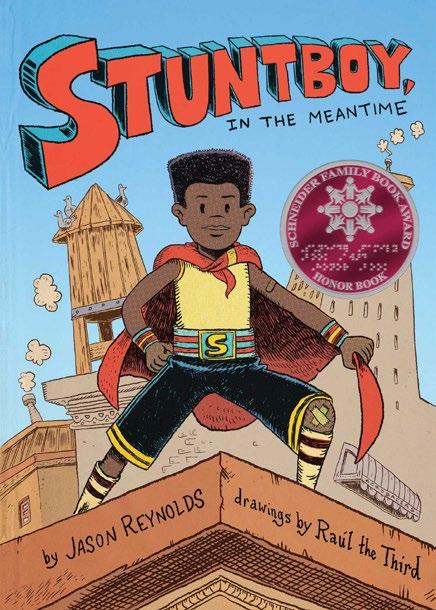
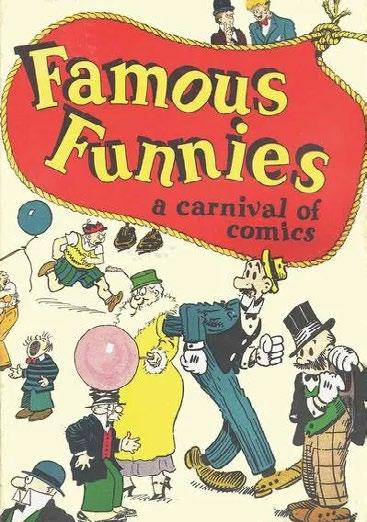
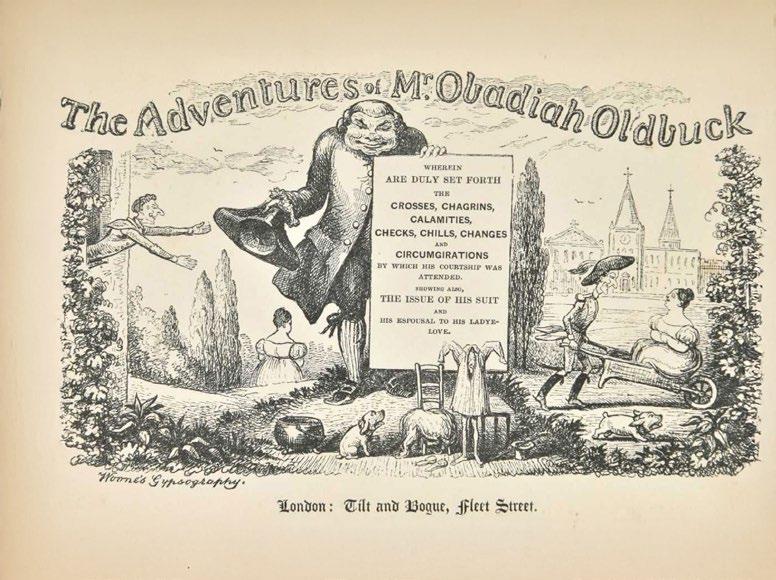
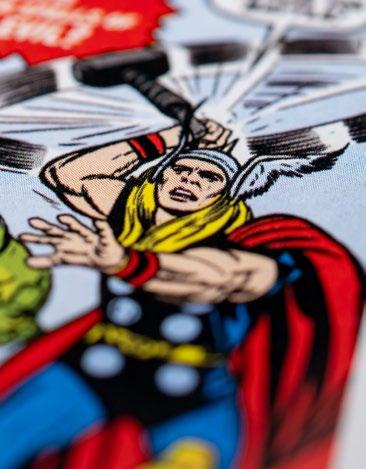
Stuntboy, In the Meantime is a novel for young audiences that was inspired by comics. Comics or comic books are publications that consist of a series of side-by-side illustrated images that represent individual scenes and together create a story. Often the illustrations are accompanied by a written narrative underneath the pictures with dialogue included in the illustrations themselves.
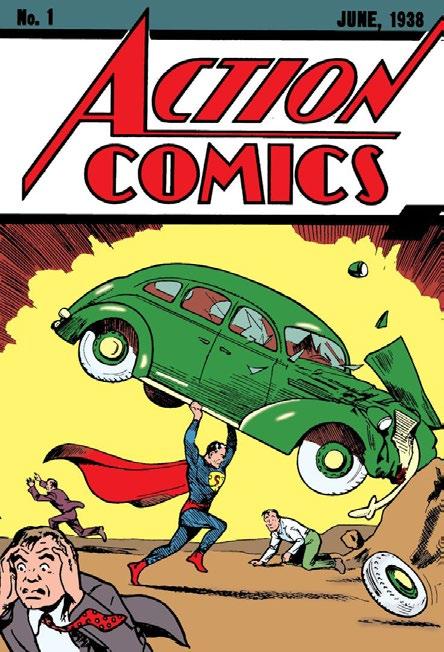
The first comic book was published in the late 19th Century in England. The first modern American comic book was published in 1933. The American comic book gained popularity with the introduction of Superman and the superhero in 1938 and experienced a decline during the 1950s with the increased presence of the television. Interest in superhero characters rose again in the 1960s, and they have remained the most popular characters in comics to this day.
Comic books may vary in size and length. Traditionally, the American comic book has been thin and floppy, like a magazine, rather than thicker and tightly bound, like a book.
Did you know that creating a comic book may involve multiple people? Yes, one person can handle all the writing and illustrations, but often there is a writer and a separate artist. In other cases, there are different artists for different characters within one story. For some comics, the art gets divided even further, with the artist drawing the entire story in pencil and different people adding the color and lettering provided by the writer. Sounds like it can get complicated!
Graphic Novels
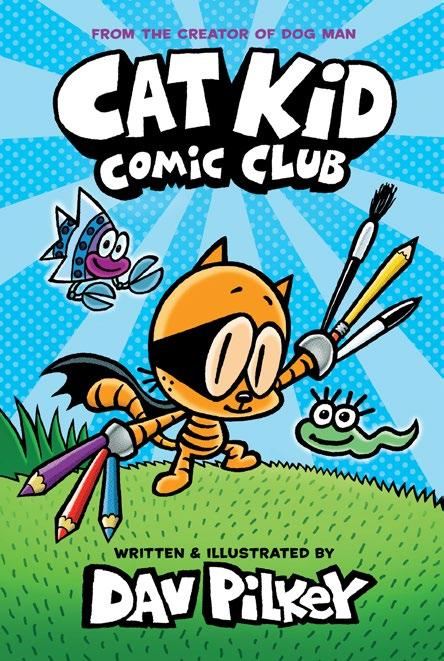
Jason Reynolds has stated that the work of graphic novelist Dav Pilkey, author of Cat Kid Comic Club, inspired him to create Stuntboy. Graphic novels evolved from comic books. Essentially, a graphic novel is a longer comic book. It is one continuous story, not a collection of stories, told in comic strip form. The first use of the term “graphic novel” was in 1964, and the term became more widely used in the 1980s when Marvel comics began publishing a line of graphic novels.
Comic Books
Graphic Novel
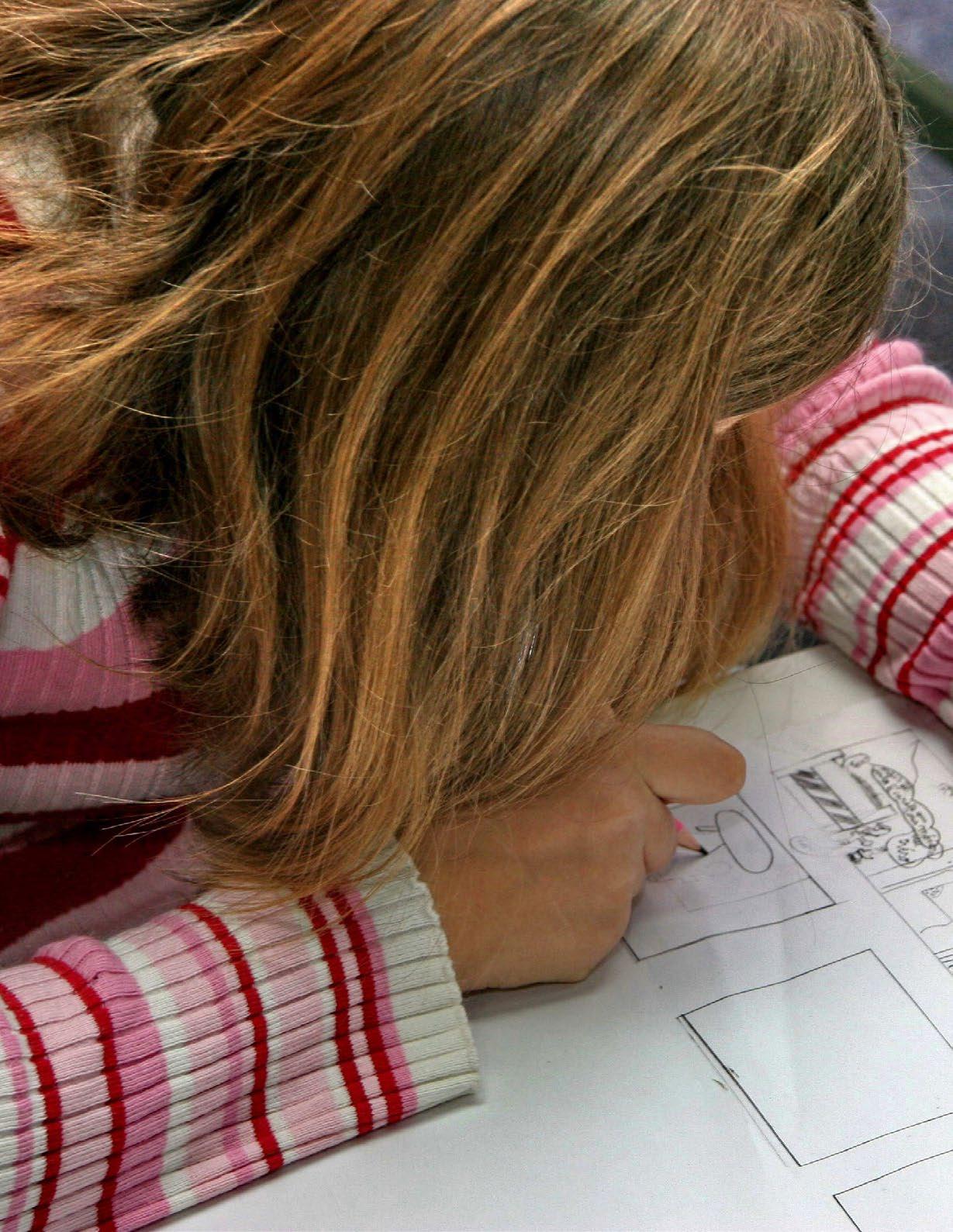
CONSTRUCTING A COMIC: COMMUNITY HEROES
Alabama Course of Study Standards
National Standards
OBJECTIVE
By completing these activities, students will:
• Create a simple comic strip featuring a superhero who helps their community
• Use both text and illustrations to tell a sequential story
• Connect the concept of heroism to community service
• Include basic dialogue in speech bubbles
• Create a class community service project (optional)
MATERIALS
For this activity, you will need the following items:
• Blank comic strip templates (four or six panels):
X aub.ie/gpac-comic-strip-template
• Pencils, crayons, colored pencils and markers
• A few sample comics or superhero images
• Chart paper or whiteboard
• Images of community helpers
• “Hero Planning” worksheet (optional)
ACTIVITIES
Introduction
1. Begin by sharing examples of simple comic strips or panels that depict fictional superheroes helping their communities.
2. As you review these examples, ask students to identify heroes within their own community.
3. Show students examples of community helpers, or real-life heroes, such as doctors, nurses, firefighters, police officers, volunteers and teachers.
4. Work together to create a list of ways everyday people— including students—can make a positive difference in their communities. Examples might include picking up litter, caring for the elderly or assisting neighbors.
Exploration
1. After reviewing the “Storytelling” lesson on page 12, remind students of the elements of a story (plot, setting, character, theme, tone, point of view and conflict).
2. Next, after reviewing the “Comic Books” and “Graphic Novels” lessons on page 16, remind students of the two additional elements specific to comics: panels, and speech or thought bubbles.
3. Share examples of comic strips and identify the key elements together as a class.
Creative Activity
1. For this activity, students will plan, create and share a comic strip featuring an original superhero.
• Ask students to brainstorm their own superhero. Create a simple “Hero Planning” worksheet to help students focus their thoughts, or simply ask students to consider the following:
• The superhero’s name
• Their special ability or power
• How they help the community
• A simple sketch of their superhero
For younger students: Allow younger students to create a superhero who helps with a single problem within the community. Provide sentence starters as needed.
For older students: Encourage older students to create a superhero with specific powers related to community service.
2. Once the initial superhero brainstorming is complete, have students plan their comic strip by outlining their story’s narrative arc. In addition to writing out as much of their outline as possible, encourage students to create rough sketches to help plan the art for their panels. Outlines should include the following:
• Introduction of the hero and the community problem
• Development of the hero’s plan and/or solution as well as the hero in action
• Resolution, showing how the community is helped
3. Provide students with a blank comic strip template. Allow time for them to transfer their sketched story arc onto the template, beginning in pencil. Encourage students to refine their panels by adding narration and dialogue through speech or thought bubbles, as well as additional visual details. Once their pencil drawings are complete, allow time for students to add color using crayons, colored pencils or markers.
4. Have students share their completed comic strip panels. They may take turns presenting to the class, or you can create a gallery wall display for classmates and others to enjoy.
EXTENSION
Extension activities may require additional materials.
• Create a class anthology of community superhero comics.
• Implement a real community service project based on ideas from the class comics.
• Research real-life heroes in the community and, if possible, interview one.
• Write thank you notes to real-life heroes in the community.
Share your students' colorful creations with us.
We'd love to see the masterpieces your talented students create. Send us a photo of their comic strips and other projects from this performance study guide. Be sure to include each student's name, age, grade and school with your submission. You can send all submissions to the Gogue Center via email at gpac.education@auburn.edu.
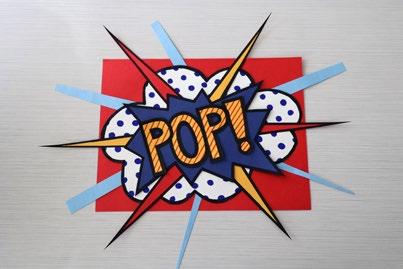
• Create art to represent onomatopoeia (words that imitate sounds)
• Recognize and imitate characteristics of pop art
MATERIALS
For these activities, you will need the following items:
• Blue, red and yellow construction paper (9” x 12” sheets recommended)
• White construction paper
• Pencils
• Broad tip black markers
• Red, yellow and blue markers
• Scissors
• Glue or glue sticks
ACTIVITIES
Introduction
1. Begin by reviewing the important activity-related words and terms listed below. As you review, share (or ask students to provide) examples.
Onomatopoeia: A word formed from a sound associated with its name. Examples include words like bam, boom, buzz, cuckoo, ding, honk, moo, oink, zap and zoom.
Primary colors: There are three primary colors—blue, red and yellow. These colors are considered the basic building blocks of all colors. Primary colors cannot be created by mixing other colors, but they can be combined to create new colors like green, orange and purple.
Pop art: An art movement that emerged in the 1950s and 1960s, primarily in Britain and the United States. Pop art is characterized by imagery from popular culture and the integration of mass production techniques into fine art.
2. To further introduce the pop art movement, share examples of works by American artist Roy Lichtenstein (1923–1997). As you present the art, ask students to discuss the characteristics of the works.
suggested works to share
Pop Art: Roy Lichtenstein Digital Gallery X aub.ie/gpac-stuntboy-lichtenstein
suggested discussion questions
• Do you see any examples of onomatopoeia?
• What primary colors do you see in each work?
• Do the works remind you of another type of artwork?
Exploration
After reviewing some examples of onomatopoeia, brainstorm as a class a list of additional onomatopoeia words. Ask students to describe images these onomatopoeia words suggest.
Creative Activity
For this activity, students will create a primary color collage inspired by onomatopoeia. While the activity calls for primary colors, you may provide paper in additional primary tones— such as light blue, navy, pink, dark red and light yellow—to expand the palette.
This activity involves layering multiple pieces of paper. Before beginning, instruct students not to glue any pieces of paper into place until they have completed all steps, so they can adjust and refine their layout as they work.
1. Have each student choose a word from the onomatopoeia list created by the class.
2. Next, allow students to select one sheet of blue, red or yellow construction paper to use as their background.
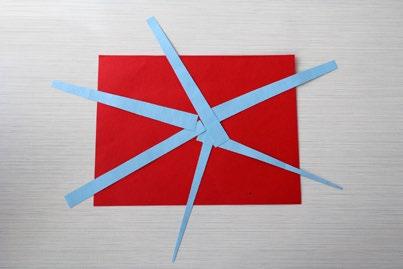
3. Have students select a second sheet of construction paper in a color different from their background. Using the second sheet of paper, instruct students to cut out six long, narrow strips. These strips can be rectangular or irregular parallelograms. Students should then place the strips on top of their background to create a star-like shape radiating from the center of the paper.
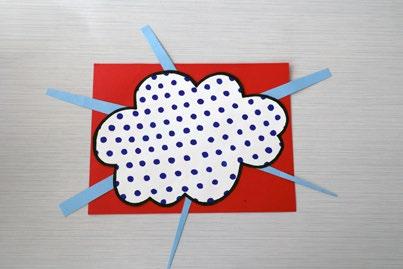
4. Provide students with a sheet of white construction paper. Ask them to draw a large bubble (like a thought bubble) using a pencil. The bubble should fill as much of the page as possible. Once they are happy with their shape, have them cut it out with scissors. Then, have students use a blue, red or yellow marker to draw a polka dot or striped pattern across the entire shape. Next, have them outline the edges of the bubble with a broad tip black marker.
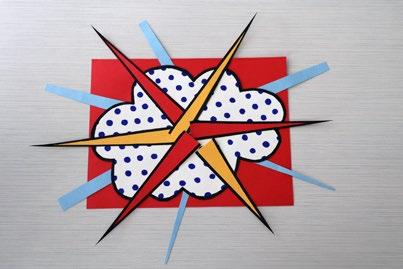
5. For the next layer, allow students to select two sheets of construction paper in colors that contrast with the marker they used for their polka dots or stripes. Have them cut out six long, narrow triangles and outline the edges with a broad tip black marker. Students can then add the triangles to the top of their bubble, once again radiating from the center. (For the best effect, the triangles should fill the empty spaces between the second-layer strips.)
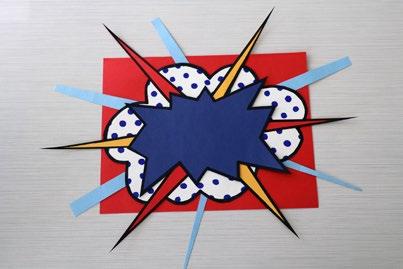
6. Allow students to select another sheet of paper in a color different from their triangles. Have them draw a classic comic-style spikey bubble. Once they have drawn a shape they like, have them cut it out and outline the edges with a broad tip black marker.
7. Allow students to select one final sheet of paper in a color different from the spikey bubble they just made. Instruct student to draw their onomatopoeia word with bubble letters. (For this step, it may be helpful to give students scrap paper to practice drawing bubble letters before moving on to the colored construction paper.)
8. Once they have finished drawing their word, students should fill in the letters with a polka dot or stripe pattern using blue, red or yellow markers. Once the pattern is added, students should then carefully cut out their word and outline the edges with a broad tip black marker. (You may need to help students whose words contain letters with enclosed spaces like A, O or R.)
9. Ask students to review the layout of their design. Once they are happy with the arrangement of the layers, provide glue or glue sticks and have them assemble their collage layer by layer—starting with their background and finishing with their onomatopoeia word.
10. Have students share their completed collage with the class. As each work is shared, have students make the sound their onomatopoeia work invokes.
EXTENSION
Extension activities may require additional materials.
• Create a class comic strip stringing together the onomatopoeia collages.
• Add a narrative to the class comic strip or have the students write their own narrative for their individual work.
• Have students act out onomatopoeia words.
• Create a class modern art museum.
In Stuntboy, In the Meantime, Portico deals with something he calls, “the frets.” His grandmother calls it anxiety. But what is anxiety? Anxiety is your body’s reaction to stress. It can be a thought or a feeling, but it can often feel uncomfortable. It is important to know that everyone experiences stress and everyone experiences anxiety. It is completely normal. Sometimes, it is even good. Anxiety can let you know that you are in a bad or dangerous situation. But sometimes, anxiety has a mind of its own. Sometimes it makes your heart beat faster and your stomach upset. Sometimes it makes thoughts race around in your brain.
What are some of the ways that Portico learns to deal with his anxiety? Zola teaches him about meditation, but there are many other things that you can do to help manage anxiety, such as:
Talk to someone. It is important to let a parent, guardian or one of your teachers know about what you are feeling so that they can help.
Practice mindfulness to help you refocus your thoughts. Notice all the things in the room around you—the door, the windows, the floor, the ceiling, the lights, the furniture. Keep going and see if your heart starts to slow down as you become mindful of your safe surroundings.
Try thinking about going to your favorite place in the world —the place where you are the happiest or most relaxed. What would you do there? How do you feel when you are there?
Use a breathing exercise to help clear your mind. Try breathing in through your nose while you count to three or five in your head and then exhaling through your mouth for the same number of counts. Do that until you feel yourself start to calm down. Remember, everyone feels anxiety sometimes, and there are always people who are willing to help.
learn more
Click here to learn more about anxiety by watching a short video.
Breathing Technique for Managing Stress & Anxiety
Stuntboy, In the Meantime cast members
Markia Nicole Smith, Jackson Kanawha Perry and Payton Tabb
photo: Jeremy Daniel
FINDING COMMUNITY IN DEALING WITH STRESS
Alabama Course of Study Standards
National Standards
NL-ENG.K-12.6
OBJECTIVE
By completing these activities, students will:
• Reflect on their community and the people involved in their lives
• Reflect on their strengths as a person
• Examine approaches to dealing with stress
MATERIALS
For these activities, you will need the following items:
• “Stress & Anxiety” lesson on page 22
• Board or chart paper
• A copy of Stuntboy, In the Meantime
• Technology with internet access
ACTIVITIES
Introduction
1. Begin by discussing with the class what makes a community. To help illustrate the concept of community, draw concentric circles representing different elements, groups or locations commonly associated with a community. Examples might include a home, school or workplace; a place of worship; a community organization; an athletic team; and a city, state or country.
2. Help students understand the idea that communities exist within communities and that they themselves are members of many communities.
Exploration
1. Have each student select one community to which they belong. Ask them to explore the concept of community by writing brief responses to prompts. suggested prompts
• Describe a community to which you belong.
• In this community, who is important to you?
• Whom do you look to for help?
• Whom do you rely on?
2. Working in pairs, small groups or as a class, have students share and discuss their responses.
Writing Activity
1. Continuing with the same chosen community, have students build further upon the concept of community by writing lengthier responses to discussion questions. suggested questions
• What is your role in your community?
• What is your role at home?
• What is your role in school?
• What are the strengths you share with the people around you?
2. Working in pairs, small groups or as a class, have students share and discuss their responses. (You may also allow students to share the strengths of their fellow classmates.)
3. Have students identify their top three strengths.
Investigation
1. Begin by reviewing the “Stress & Anxiety” lesson on page 22.
2. Discuss with students the different types of stress they may experience in their daily lives. As students provide examples, write their responses on the board or chart paper.
3. As a class, watch the Annie & Rocco video Managing Stress for Kids.
Managing Stress for Kids
X aub.ie/gpac-stuntboy-stress
4. Add to the board or chart paper any thoughts students may have after watching the video.
5. Remind students that there are many healthy and helpful ways they can deal with stress and anxiety. Ask students for examples of how they deal with stress.
6. Have students write or draw events or experiences that make them feel stressed, worried or anxious. Encourage them to include examples of how they deal with stress.
Movement Activity
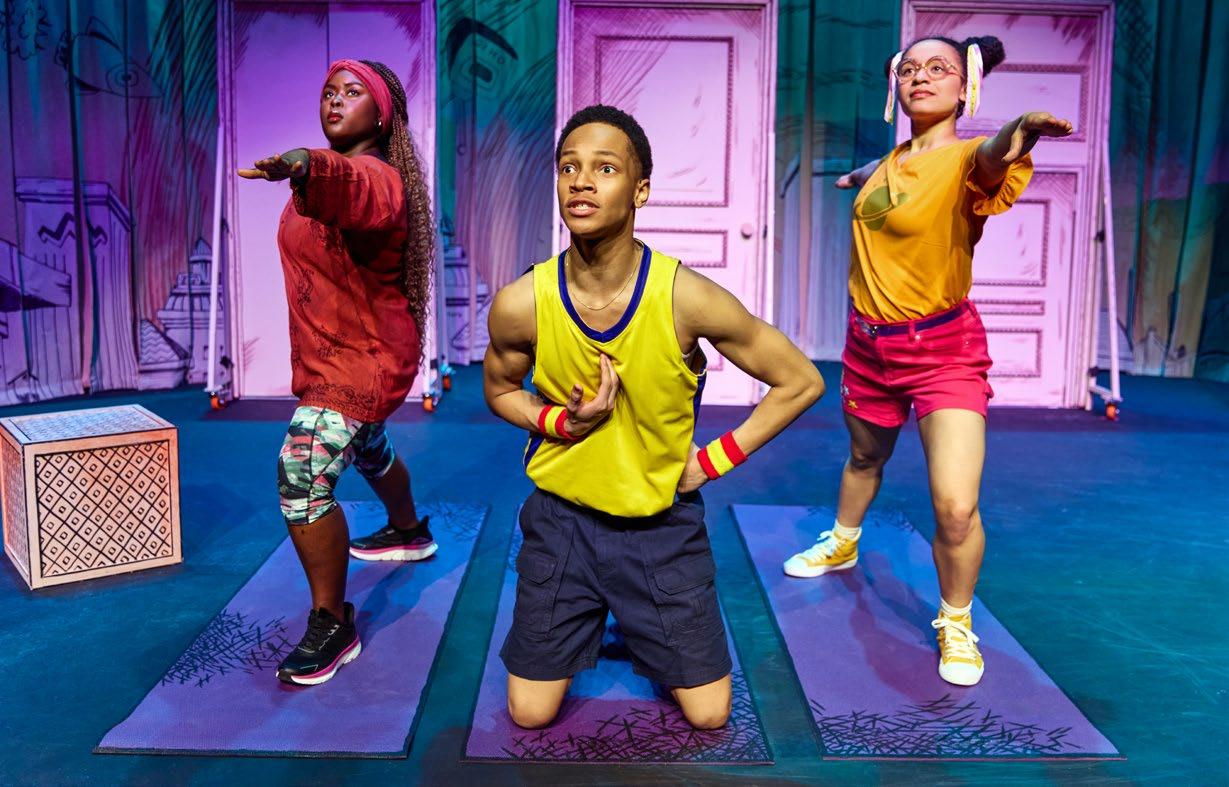
In this activity, students will examine movements related to anxiety (or “the frets”) and stress management, as portrayed in the TheaterWorks USA production of Stuntboy, In the Meantime. As a class, students will learn basic choreography for a calm down dance.
1. Introduce the anxiety dance by watching the following video excerpt:
“The Frets”
X aub.ie/gpac-stuntboy-frets
2. After watching the video, ask student to recall some of the moves (or, in this case, symptoms of stress) mentioned in the anxiety dance.
3. Consider sharing some excerpts from the Stuntboy, In the Meantime book in which Portico is dealing with anxiety.
4. In a defined space within the classroom, have students express anxiety or stress through movement.
5. While students are still standing, remind them that there are actions they can take to help reduce stress. Introduce the calm down dance by watching the following video excerpt:
“The Calm Down Dance”
X aub.ie/gpac-stuntboy-calm-down
6. After watching the video, explain to the class that they will be learning their own version of the calm down dance. suggested calm down dance movements
• In their defined spaces, have students stand tall with both feet planted firmly on the floor.
• Ask them to gently swing their arms around their torsos, twisting at the waist and creating a full circle while they count to eight.
• On the count of eight, students should raise their hands overhead and bring their palms together.
• Next, have them bring their hands to their hearts while softly saying, “Stop. Wait.”
• Invite students to breathe in deeply. Then say, “Now exhale.”
• After exhaling, students should lower their hands to their sides.
• Repeat this sequence several times to help students remember the choreography and feel the rhythm of the movements.
Consider allowing students to add another eight to 16 counts of movement. Ask students to describe how their bodies move when they feel relaxed and relieved of stress.
Conclusion
Lead a class discussion or have students complete a writing exercise answering the following questions: suggested discussion questions
• How do you handle stress?
• Do you talk to someone about stress, or do you handle it on your own?
• How can your community help you when you are working through stress?
• What types of activities might help you relieve and manage stress?
EXTENSION
Extension activities may require additional materials.
• Have students create their own calm down dance.
• Have students create a work of art that represents the feelings of stress and anxiety.
• Have students brainstorm a service project designed to help alleviate stress for community members.
BECOMING AN EGG HERO
Alabama Course of Study Standards
Standards
OBJECTIVE
By completing these activities, students will:
• Identify their own feelings and/or fears or will identify someone or something they want to protect
• Learn how to calculate speed
• Learn that speed can impact a collision
• Learn that objects in motion will remain so unless acted upon by a force
MATERIALS
For these activities, you will need the following items:
• “My Fears & Feelings Journal” worksheet on pages 28–29
• Eggs—one per student, plus extra eggs in case of accidents (store at room temperature)
• Permanent markers (assorted colors)
• Various building materials for parachute building (e.g., cardboard, string, tissues, plastic, paper, tape, coffee filters, rubber bands, scissors, tape, etc.)
ACTIVITIES
Introduction
In Stuntboy, In the Meantime, Portico deals with the divorce of his parents, a bully and concerns about his friends and neighbors. Most of his fears result in a case of “the frets” or anxiety. Lead a discussion about fears and how they make us feel. Ask students questions about what makes them feel afraid. Help them identify other feelings that uncomfortable events or experiences might make them feel.
Exploration
1. Copy and distribute the “My Fears & Feelings Journal” worksheet on pages 28-29. Ask students to complete the first section. Here, they will write or draw about something that makes the feel afraid. This fear will be used in the “Egg Drop Activities” outlined below.
2. Pivoting from the discussion on fear and feelings for a moment, facilitate a conversation about speed. Start by asking students to define speed in their own words . Ask
them to provide ideas on how they might control the speed of a falling object. Chart their responses. Explain that speed is the measurement of distance over time. Work through a few calculations showing speed. From your examples, change one of the variables (distance or time) to illustrate its impact on speed. As a class, discuss the impact of distance and/or time on the measurement of speed.
suggested questions
• How could slow the speed of a falling object?
• How could you cushion the fall of a falling object?
• What will stop an object from falling once it has started falling?
Chart student responses; these will be helpful during the egg drop activities outlined below.
Egg Drop Activities
For this series of activities, students will assign a chosen fear or feeling to an egg. Students will design and construct a protective device to safeguard their egg from breaking as it is dropped. Students will record and analyze data from the experiment.
Egg Selection
Allow each student to select an egg. Inform students that their egg will be used to represent a fear or feeling. Have students write the name of their chosen fear or feeling on their egg using a black permanent marker. Then, instruct students to decorate their egg using an assortment of other colorful markers.
Egg Protector Activity
For this activity, students will design and construct a parachutetype object or protective covering to keep their egg from breaking as it falls during the egg drop activity.
1. Using the discussion points made during the class conversation on speed and speed-related variables, ask students to plan and design a parachute/egg protector that will save their egg from breaking when dropped.
2. Provide students with an assortment of craft and packing materials. Ask students to construct their parachute/egg protector based on their design.
3. Once the parachute/egg protector is complete, have students attach it to their egg or place the egg inside.
Egg Drop Experiment
For this activity, students will drop their protected eggs from a designated location/height.
1. Select a single location from which each student will drop their egg. It is important to make sure the height from which the eggs are dropped is the same for all students as well. Go ahead and measure the distance from the drop location to the point of impact (ground, floor or tabletop).
2. Allow students to drop their protected egg one at a time. Use a stopwatch to record the time it takes for each egg to reach the ground after it is released. Chart the time it took for each student’s egg to drop.
3. As each egg is dropped, be sure to also chart the following:
• Did the egg break?
• What type of device (parachute or protective covering) was used?
• What materials were used to protect the egg?
4. As a class, calculate the speed of each egg’s descent. (Remind students that speed is equal to distance divided by time.)
Data Analysis
As a class, analyze the egg drop results. Discuss the following:
• What type of device (parachute or protective covering) worked best to protect the egg during its fall?
• Which materials helped slow the egg’s descent?
• Which materials helped protect the egg from breaking? Using the egg drop results and analyzed data, ask students to consider how they might alter their parachute/egg protector designs to achieve greater success?
EXTENSION
• Make a price list for the craft and packing supplies that were provided and give students an activity budget. For example, tell them they have $20 to spend on their parachute/egg protector. Budgets will be set and approved by you and students can only shop for the protective materials once. The goal of this extension exercise is to motivate students to think through their entire plan while being mindful of resources as they design.
• Encourage students to have a backup plan in the event they realize part of their original strategy does not go as expected. Make sure students can identify why they need to change their plan. How can they alter their plan and remain within the established budget?
• Repeat the egg drop, allowing students to vary the distance of the drop. How do different distances affect the outcome?
My Fears & Feelings Journal
1. Understanding My Fears
Draw or write about something that makes you feel afraid.
My fear looks lLike: I feel afraid when:
This fear makes my body feel: (Circle all that apply)
Shaky Fast heartbeat Cold Tight chest
Hot Butterflies in stomach
Other:
2. Emotions Behind My Fears
Every emotion is okay to feel!
When I’m afraid, I also feel: Worried Angry Sad Confused Embarrassed (Circle all that apply)
Other:
If my fear was a color, it would be because:
If my fear was a sound, it would sound like:
3. My Protection Plan
We all need strategies to feel safe.
When I feel afraid, these things help me feel better:
My three calm down strategies are:
A brave character from a story who might help me face my fear is:
One small brave step I could take is:
4. My Daily Check-in How am I feeling today?
Today I feel: Happy Sad Scared Calm Worried Excited (Circle or write a word)
Other:
(Or draw a face)
One thing I’m proud of today:
Something I want help with:
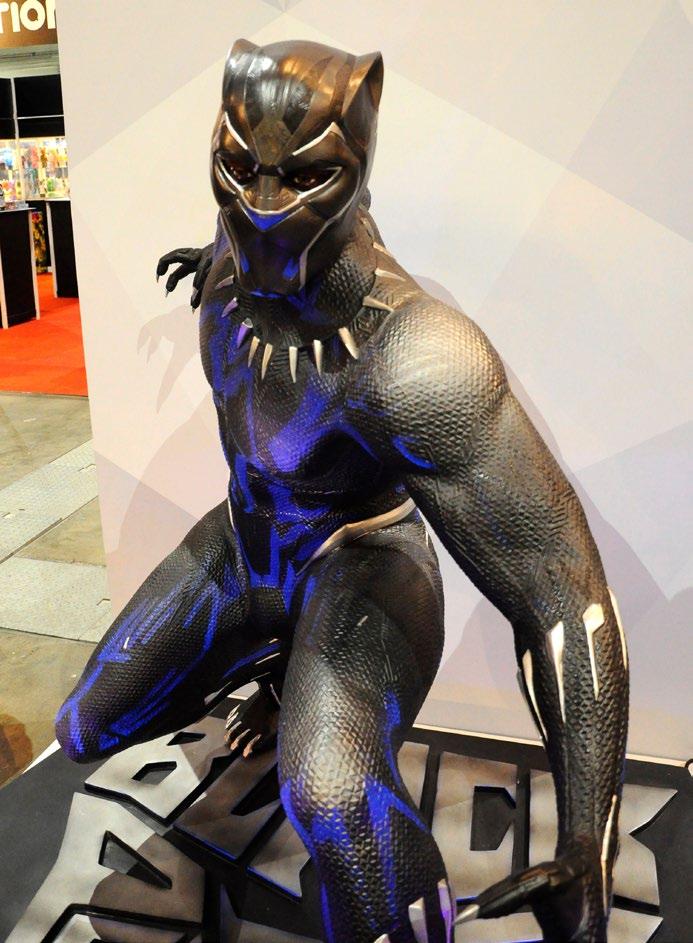
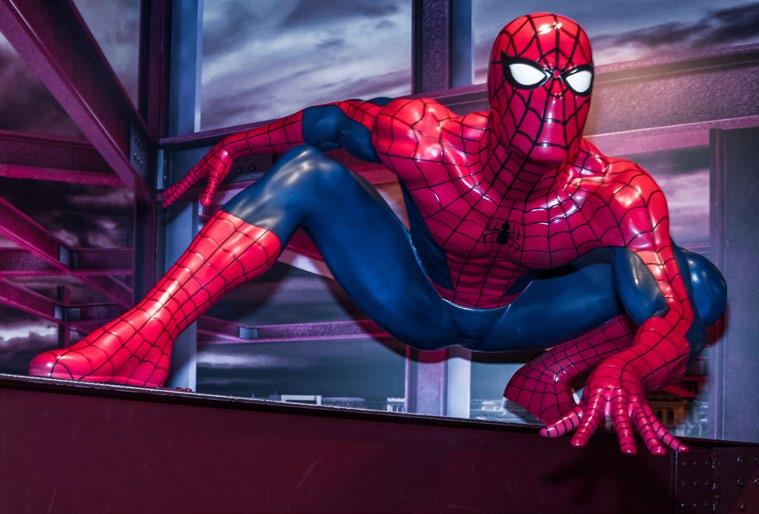
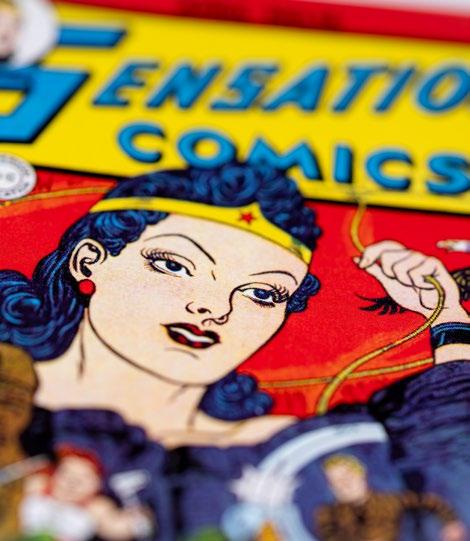
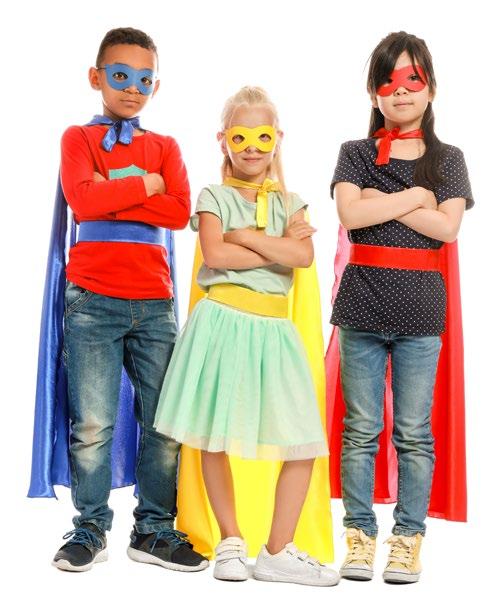
In Stuntboy, In the Meantime, Portico’s alter ego, Stuntboy, is a superhero. But what is a superhero? Traditionally, superheroes are fictional characters that have extraordinary powers that they use to fight crime and protect ordinary people. To hide their true identity, superheroes usually wear costumes. Many superheroes have an archnemesis, meaning they have one person that they are always trying to defeat or overcome. Superheroes gained popularity first through comic books and later through television and then film.
What superheroes can you name? Do you know their true identity? What does their costume look like? What is their superpower? Do they have an archnemesis? What about Stuntboy? What is his true identity? If you said Portico Reeves, that is right! What does his costume look like? Does he have a superpower? Does he have an archnemesis; can you name them?
What about you? If you were a superhero, what would your name be? What superpower would you have? How would you help people? It can be fun to use your imagination to create a superhero of your own!
Batman
Black Panther Wonder Woman
MAKING MIXED-MEDIA SUPERHERO SELFIES
Alabama Course of Study Standards
OBJECTIVE
By completing these activities, students will:
• Create a mixed-media self-portrait
• Explore a variety of art media and techniques
• Recognize personal superhero traits and translate those to their artwork
MATERIALS
For these activities, you will need the following items:
• White paper (preferably cardstock, construction paper or watercolor paper)
• Black construction paper
• Oil pastels and watercolor paint
• Pencils, crayons, colored pencils and markers
• Scissors
• Glue
ACTIVITIES
Introduction
1. Explain to students that they will be creating a mixed-media self-portrait composed of three distinct components: a background, a cityscape and a superhero selfie.
2. Lead a short discussion or review of important concepts related to the activity.
suggested discussion questions
• What is mixed-media art?
• What is a scene or setting?
• What is a self-portrait or selfie?
• What is a superhero?
Exploration
Take a moment to review the creative activity steps and discuss the various media the students will be using. As you review the activity, take a moment to discuss how movement, line, texture and color are important in art. If time permits, allow students to plan their superhero selfies by creating a simple rough draft. Students should consider all three components (or layers) when sketching their draft.
Creative Activity
1. Using white paper and watercolor paint, have students create the background for their superhero selfie. As most of the background will likely be covered with their cityscape (detailed next), guide students to focus on adding elements typically found in or near the sky. Elements might include the sun, moon, stars and planets; bird, planes, helicopters; treetops, hills, mountains; clouds, wind and rain. Encourage students to fill their entire background.
2. Next, as the background dries, have students create their cityscape using black construction paper. Students can create buildings and other city elements by cutting out rectangles, squares and triangles. Have them glue the cut shapes to the now-dried background. Windows and doors can be added by collaging colored construction paper or with oil pastels and crayons.
3. Now it is time to create the superhero selfie! Begin by discussing with students the various shapes used to draw a human figure (head, body, legs, arms, etc.). Next, discuss what superheroes typically wear (specific colors, masks, capes, colors, etc.). Using a pencil on a sheet of white paper, have students draw their superhero selfie.
note: Remind students that their superhero will be placed within their artwork. If needed, consider offering a circle template to help them create an appropriately sized superhero head.
4. Once the pencil sketch is complete, have students trace it using a dark fine tip marker. Ask them to add color and additional details with crayons, colored pencils or markers.
5. Finally, have students carefully cut out their superhero selfie and glue it to their background/cityscape collage.
6. Have students share their completed mixed-media superhero selfies. They may take turns presenting to the class, or you can create a gallery wall display for classmates and others to enjoy.
EXTENSION
Extension activities may require additional materials.
• Have students write a fictional narrative about their superhero. This could include the backstory of how they became a superhero, the discovery of their superpower, or a time their superhero saved the day.
• Combine this activity with the “Writing Your Own Superhero Story” activity on page 34.
Share your students' colorful creations with us.
We'd love to see the masterpieces your talented students create. Send us a photo of their superhero selfie and other projects from this performance study guide. Be sure to include each student's name, age, grade and school with your submission. You can send all submissions to the Gogue Center via email at gpac.education@auburn.edu.
WRITING YOUR OWN SUPERHERO STORY
Alabama Course of Study Standards
OBJECTIVE
By completing these activities, students will:
• Create a detailed superhero character with unique traits and a backstory
• Write a short narrative introducing their superhero
• Practice speaking and listening by sharing their superhero with peers
MATERIALS
For these activities, you will need the following items:
• “Superheroes” lesson on page 30
• “My Superhero” worksheet on page 35
• Superhero Comics graphic organizer
ACTIVITIES
Introduction
Review the “Superheroes” lesson on page 30. As a class, discuss the traits, behaviors and abilities that make a superhero interesting. Examples might include superpowers, their personality and challenges they solve. Share examples of superheroes from popular culture, like Spider-Man, Wonder Woman and Superman.
Creative Activity
For this activity, students will create their own superhero.
1. Copy and distribute the “My Superhero” worksheet on page 35.
2. Have students brainstorm about an original superhero.
3. Using the worksheet as a guide, instruct students to create a superhero name, a superpower and an origin story. Ask students to identify their superhero’s challenge or mission and to think about their archnemesis or any enemies they may have. Finally, have students describe their superhero’s costume. Encourage creativity and uniqueness.
Writing Activity
After creating the basis for their superhero, have students write a paragraph or short story introducing their newly developed character. Emphasize the importance of using descriptive language and a clear sequence of events.
Sharing and Discussion
Have students share their superhero stories with a partner or in small groups. Remind students to practice their speaking and listening skills by asking questions and providing feedback.
EXTENSION
Extension activities may require additional materials.
• Have students draw their superhero.
• Have students create a comic strip featuring their superhero.
• Create a gallery wall display of superhero artwork for classmates and others to enjoy.
• Create a class superhero team; write a collaborative story featuring multiple superheroes.
My Superhero
Superhero’s name
Superpower
Origin story
(How did they become a superhero?)
Costume
Challenge/Mission
Archnemesis/Enemy
Why we go to the show
REAL-LIFE SUPERHEROES
Stuntboy, In the Meantime tells the story of a regular boy who imagines that he is also a superhero. And maybe he is—at least to the people he tries to help. We have learned about fictional superheroes and their superpowers; however, what about real-life superheroes? They may not have superpowers, but the main job of a superhero is to help people, right? Do you think there are people from the past or present who have done extraordinary things to help people? Of course! One such person is from right here in Alabama.
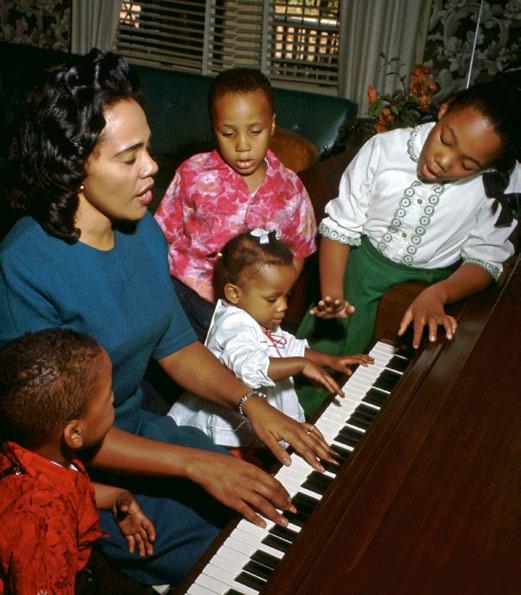
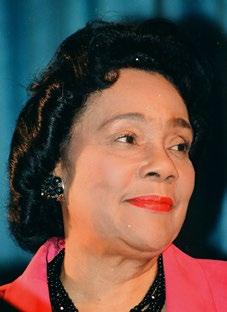
Coretta Scott King was born in the town of Heiberger in Perry County, where she lived until she left for college. She attended Antioch College in Ohio, and it was here that she first became involved in the civil rights movement. Coretta Scott King was a music major and was able to transfer on a scholarship to the prestigious New England Conservatory of Music in Boston, Massachusetts. It was here that she met her future husband, Martin Luther King, Jr. They married in 1953 and after she completed her degree in music, they moved to Montgomery. In Montgomery, the Kings found themselves at the forefront of the nation’s growing civil rights movement. The Kings were advocates of nonviolent protest as they believed it aligned best with their personal and religious beliefs.
king
Coretta and children (Yolanda, Bernice, Dexter, MLK lll)
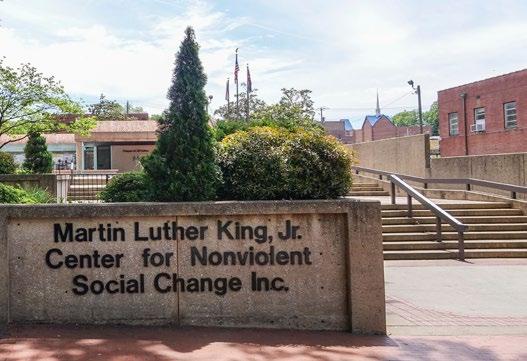
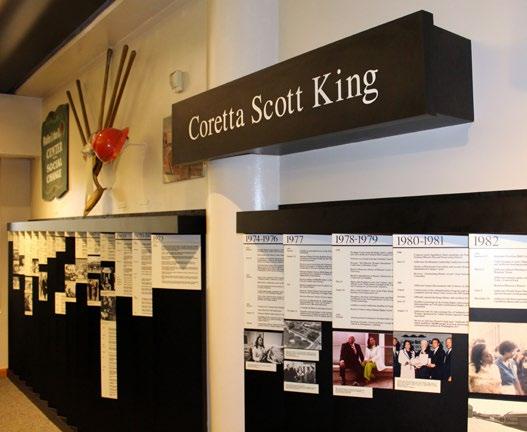
Coretta Scott King fought for civil rights legislation in Alabama. She represented the movement across the United States and internationally. After the assassination of her husband, Coretta Scott King continued to fight for civil rights in America. She founded the King Center for Nonviolent Social Change in Atlanta, Georgia. In time, she would go on to fight for other humanitarian causes across the nation and the world. In 2004, she was awarded the Gandhi Peace Prize and was inducted into the Alabama Women’s Hall of Fame in 2009 and the National Women’s Hall of Fame in 2011.
Coretta Scott King died in 2006, but her legacy lives on to this day. One such way is through the Coretta Scott King medal, awarded by the American Library Association to outstanding African American writers and illustrators of children’s literature. Jason Reynolds, the author of Stuntboy, In the Meantime, has won this award multiple times—just one more way that this reallife superhero is connected to the show.
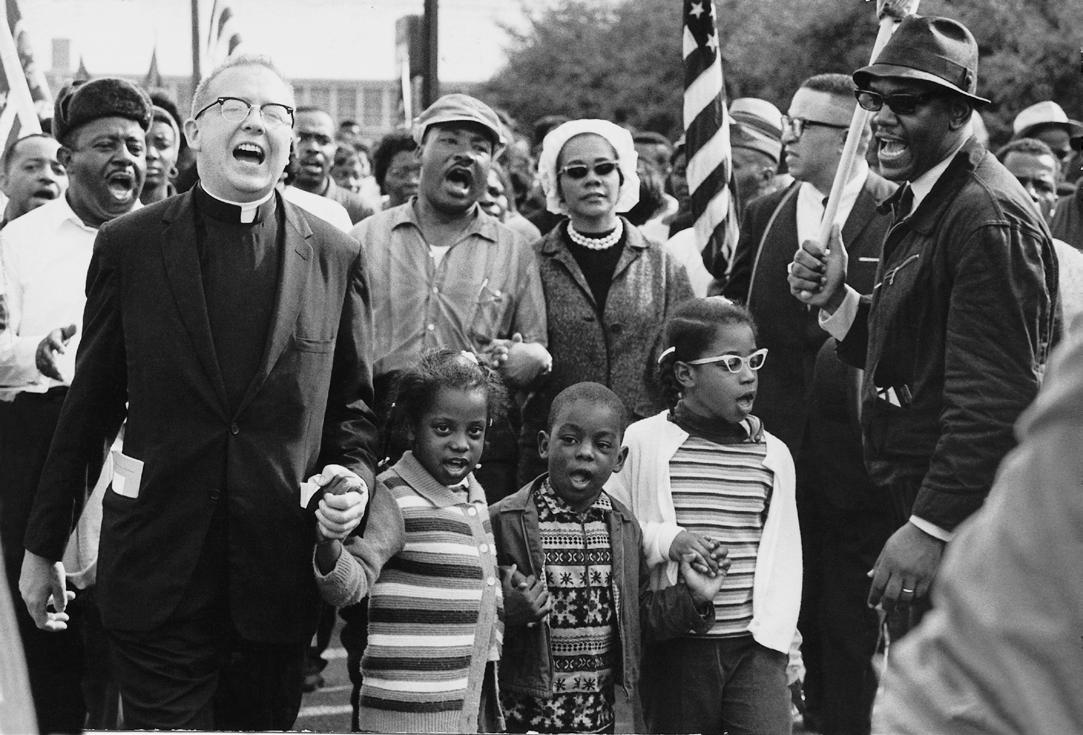
Civil Rights Movement Co-founder, Dr. Ralph David Abernathy, and his wife, Mrs. Juanita Abernathy, follow with Dr. and Mrs. Martin Luther King as the Abernathy children march on the front line, leading the Selma to Montgomery March in 1965.
• Recognize historical and living figures who have made an impact on the world around them
• Conduct a research-based activity that encourages use of various reference materials/sources (digital or print) to recount important figures and events
• Present their research findings to the class
MATERIALS
For these activities, you will need the following items:
• “Real-Life Superheroes” lesson on page 36
• Board or chart paper
• “Real-Life Superhero Research” worksheet on page 39
• Technology with internet access
• Reference materials/sources with information about the figures listed below
ACTIVITIES
Introduction
Just as you began the “Writing Your Own Superhero Story” activities on pages 34-35, start by discussing the traits, behaviors and abilities that make a superhero interesting. Examples might include superpowers, their personality and challenges they solve. Have students share their ideas in small groups or as a class. Record student responses on the board or chart paper.
Exploration
Review the “Real-Life Superheroes” lesson on page 36. Guide students in a discussion on the similarities and differences between fictional superheroes and real-life superheroes.
Research Activity
For this activity, students will be asked to research real-life Alabama superheroes. Using reference sources (digital or print) available in the classroom or school library, students will gather, review and present facts about important figures and events.
1. Present the suggested list of real-life Alabama superheroes provided below. Add additional names as desired.
Hank Aaron
Charles Barkley
George Washington Carver
Tim Cook
Bo Jackson
Lonnie Johnson
Helen Keller
Vivian Malone
Rosa Parks
Condoleezza Rice
Octavia Spencer
Tuskegee Airmen
Jim Voss
Booker T. Washington
2. Assign each student one of the names provided—or allow them to select a name of their own choosing. Ask students to research their figure to better understand that person’s contributions to the state of Alabama, the nation and the world. Students should be prepared to present and discuss facts that support why their figure could be considered a real-life superhero.
3. Copy and distribute the “Real-Life Superhero Research” worksheet on page 39 to help students organize their research notes. (If your school has a www.pebblego.com account, encourage students to utilize the site to conduct additional research.)
Sharing & Discussion
When their research is complete, have students present their findings to the class in the most grade-appropriate format. Research can be presented orally or in a digital format. Following the presentations, recap the students’ research in a class discussion highlighting the ways these real-life superheroes have changed the world.
EXTENSION
Extension activities may require additional materials.
• Have students create drawings of their real-life superheroes.
• As a class, create and publish a digital presentation that compiles the students’ research.
Real-Life Superhero Research
Name of superhero
Early life
Family
Later years
Contributions
What makes them a superhero?
member Kolter Erickson
What to do after the show
POST-SHOW DISCUSSION
Included in this section are some post-performance activities you can share with your students.
Class Discussion
Following the performance, gather students for a postperformance conversation about their experience.
suggested discussion questions
• Which part of the performance did you enjoy the most? Why?
• What surprised you about the performance?
• Did you find the stories easy to follow and understand?
• What questions do you have about the performance?
Download and distribute the post-show worksheets available from TheaterWorksUSA here: X aub.ie/gpac-stuntboy-twusa Stuntboy, In the
• Did the performance make you curious to learn something new? What?
• Did the performance make you want to see more performances in the future.
For an additional post-performance discussion activity, copy and distribute the “My Trip to the Gogue Center” worksheet on page 41.
POST-SHOW WORKSHEETS
photo: Jeremy Daniel
My Trip to the Gogue Center
Answer these questions about the performance and your visit to the Gogue Center. Name Date
List three things you remember hearing or seeing during the performance of Stuntboy, In the Meantime.
Name something you learned during the performance.
Name something from the performance you would like to know more about.
If you could ask a member of the cast a question, what would you ask?
In the space below, draw something special you remember hearing or seeing during the performance.
Stuntboy, In the Meantime cast members
Jackson Kanawha Perry and Kolter Erickson
photo: Jeremy Daniel
Alabama Course of Study standards index
EDUCATION
ARTS EDUCATION (CONTINUED)
ENGLISH LANGUAGE ARTS
ENGLISH LANGUAGE ARTS (CONTINUED)
ENGLISH LANGUAGE ARTS (CONTINUED)
ENGLISH LANGUAGE ARTS
Report on a topic or text, tell a story, or recount an experience in an organized manner, using appropriate facts and relevant, descriptive details to support main ideas or themes, and speaking clearly with adequate volume, appropriate pacing, and clear pronunciation.
directly to specific information shared by others in classroom discussion, using facts to support the ideas being discussed.
Locate similes, metaphors, personification, hyperbole, imagery, alliteration, onomatopoeia, and idioms and interpret their meanings in context.
For a given or collected set of data, create a scaled (one-to-many) picture graph and scaled bar graph to represent a data set with several categories.
SCIENCE
SC23.2.2 Conduct
to determine suitable uses of natural and manufactured materials based on their observable properties, including strength, flexibility,
absorbency, and texture.
SC23.5.6
SOCIAL STUDIES
SS10.2.2.3 Describing the significance of national holidays, including the birthday of Martin Luther King, Jr.; Presidents' Day; Memorial Day; the Fourth of July; Veterans Day; and Thanksgiving Day
SS10.4.14
Online resources
Below are supplementary online resources, including links to additional lesson content and activity materials, to help support and enrich your teaching.
Stuntboy, In the Meantime Study Guide
Produced by TheaterWorksUSA
X aub.ie/gpac-stuntboy-twusa
Jason Reynolds
X aub.ie/gpac-stuntboy-jason-reynolds
Pop Art
Roy Lichtenstein Digital Gallery
X aub.ie/gpac-stuntboy-lichtenstein
All For Kids
“How to Explain Anxiety to Kids”
X aub.ie/gpac-stuntboy-anxiety
Allie & Rocco
Managing Stress for Kids
X aub.ie/gpac-stuntboy-stress
Credits
All images featured in this performance study guide are wholly owned and copyrighted by their respective copyright holders and are used for educational purposes only. No copyright infringement is intended. The Gogue Center does not claim ownership of any images unless explicitly stated otherwise. If you have concerns about the use of any image included herein, please contact us immediately.
For a list of additional image sources and credits, please contact our Department of Communications and Marketing by telephone at 334.844.7234 or via email at jaosborne@auburn.edu
This guide was produced in collaboration with
The Jay and Susie Gogue Performing Arts Center at Auburn University serves students and educators across the state of Alabama and beyond with its annual K–12 School Performance Series.
These high-quality and transformative arts experiences are further enriched with performance study guides that provide meaningful cross-curricular connections.
Developed by our Department of Education and Engagement, in collaboration with the Gogue Center Curriculum Council, each performance study guide contains information about the featured performing artist(s) or company, the art form, and relevant, grade-appropriate lessons and activities designed to help incorporate academic and arts standards into the classroom.
Our sincerest thanks to the members of the 2025–26 Gogue Center Curriculum Council.
2025–26 Gogue Center Curriculum Council
Lacey Basgier
Secondary Art
Lee Scott Academy
Alabama Independent School Association
Sherry Brown
College and Career Coach
Guntersville High School
Guntersville City Schools
Jan Burkhalter
Enrichment/Gifted Specialist
Wrights Mill Elementary (Formerly)
Auburn City Schools
Anna Carmichael
Elementary Art
Beulah Elementary School
Lee County Schools
Michelle Hopf
English Language Arts
Auburn High School
Auburn City Schools
Cynthia Jackson
English Language Arts, Curriculum & Instruction
Burns Middle School
Chambers County School
Kelsey Long
Second Grade
Dean Road Elementary
Auburn City Schools
LaTisha Mangram
Math
Burns Middle School
Chambers County Schools
Amber Pickard
Social Studies
Lee Scott Academy
Alabama Independent School Association
Frances Smith
STEM/Physical Science
Lee Scott Academy
Alabama Independent School Association
Dr. Quesha Starks
Retired Principal
Booker T. Washington Arts Magnet HS
Montgomery Public Schools
Alison Starr
Science
Lee Scott Academy
Alabama Independent School Association
Jenn Travis
English Language Arts, Special Education, Dance
Auburn High School
Auburn City Schools
L.R. Davidson, Jamie LaVerdiere, Brian Owen (Back),