Gogue Center Performance Study Guide: "Peppa Pig: My First Concert"
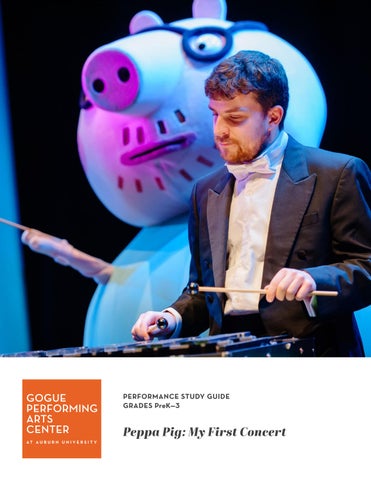
PERFORMANCE STUDY GUIDE
GRADES PreK— 3
Peppa Pig: My First Concert
The Jay and Susie Gogue Performing Arts Center at Auburn University engages audiences across the university, the state of Alabama and beyond with curated arts experiences that inspire, enlighten and unite.
Our annual K–12 School Performance Series provides opportunities for students to enjoy exclusive performances by some of the most talented and accomplished artists from around the world. Prior to each K–12 school performance, teachers receive a study guide containing details about the performance, artist and company, supplemental information about the art form and its history, and grade-appropriate activities designed to spark conversation and exploration in the classroom.
To learn more, visit goguecenter.auburn.edu/education.
produced by
Jay and Susie Gogue Performing Arts Center at Auburn University 910 South College Street Auburn, Alabama 36849
k–12 school performance series contact Andrea Jarmon, D.M.A. Education Coordinator telephone: 334.844.7371 email: gpac.education@auburn.edu
This guide is optimized for online engagement and contains links to multimedia components and external sources.
To access digital versions of this and other performance study guides produced by the Gogue Center, scan the QR code or visit aub.ie/gpac-psg.
PERFORMANCE STUDY GUIDE GRADES PreK— 3
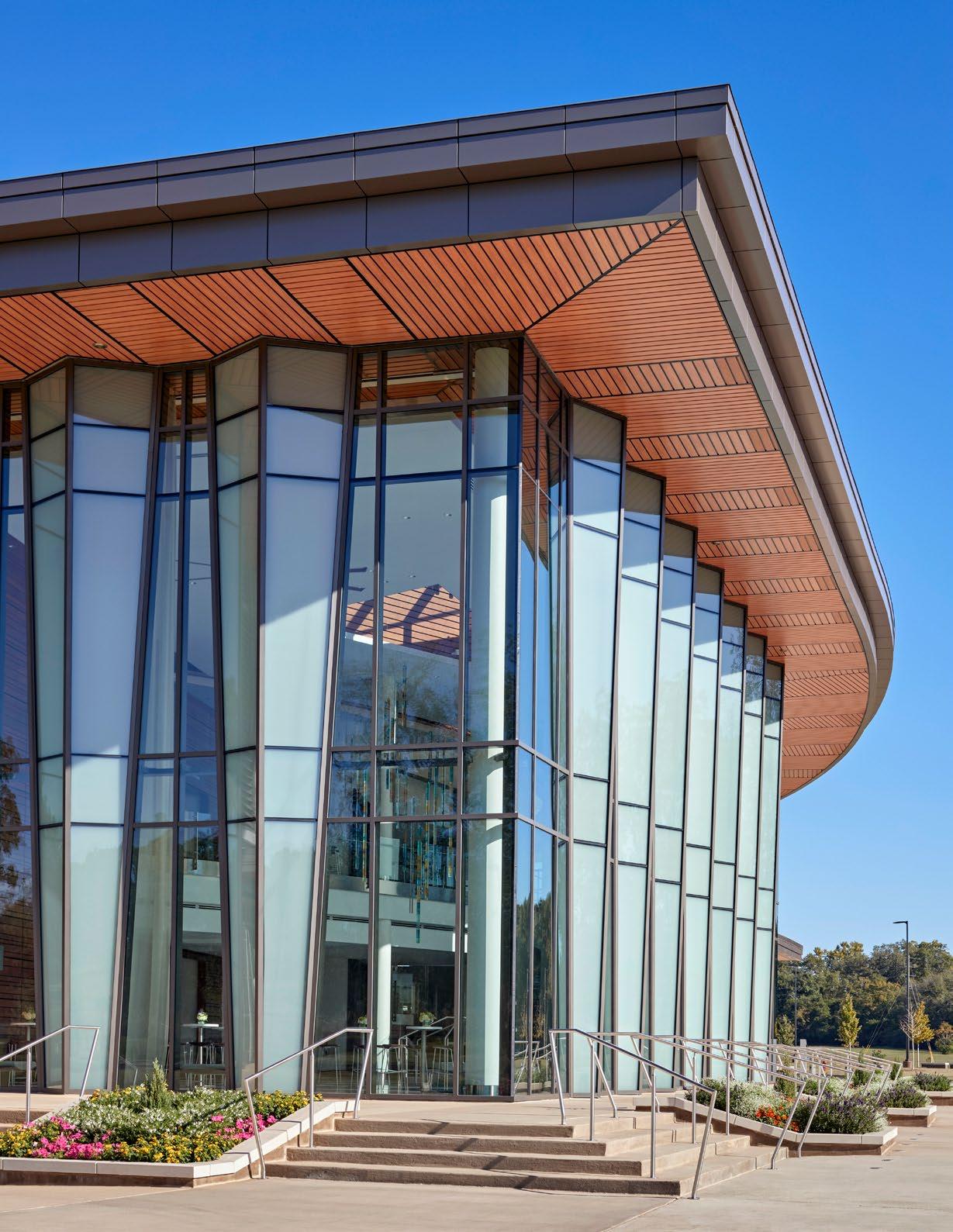
photo: Dan Tsantilis
The Jay and Susie Gogue Performing Arts Center at Auburn University
Where will we go?
GOING TO THE GOGUE CENTER
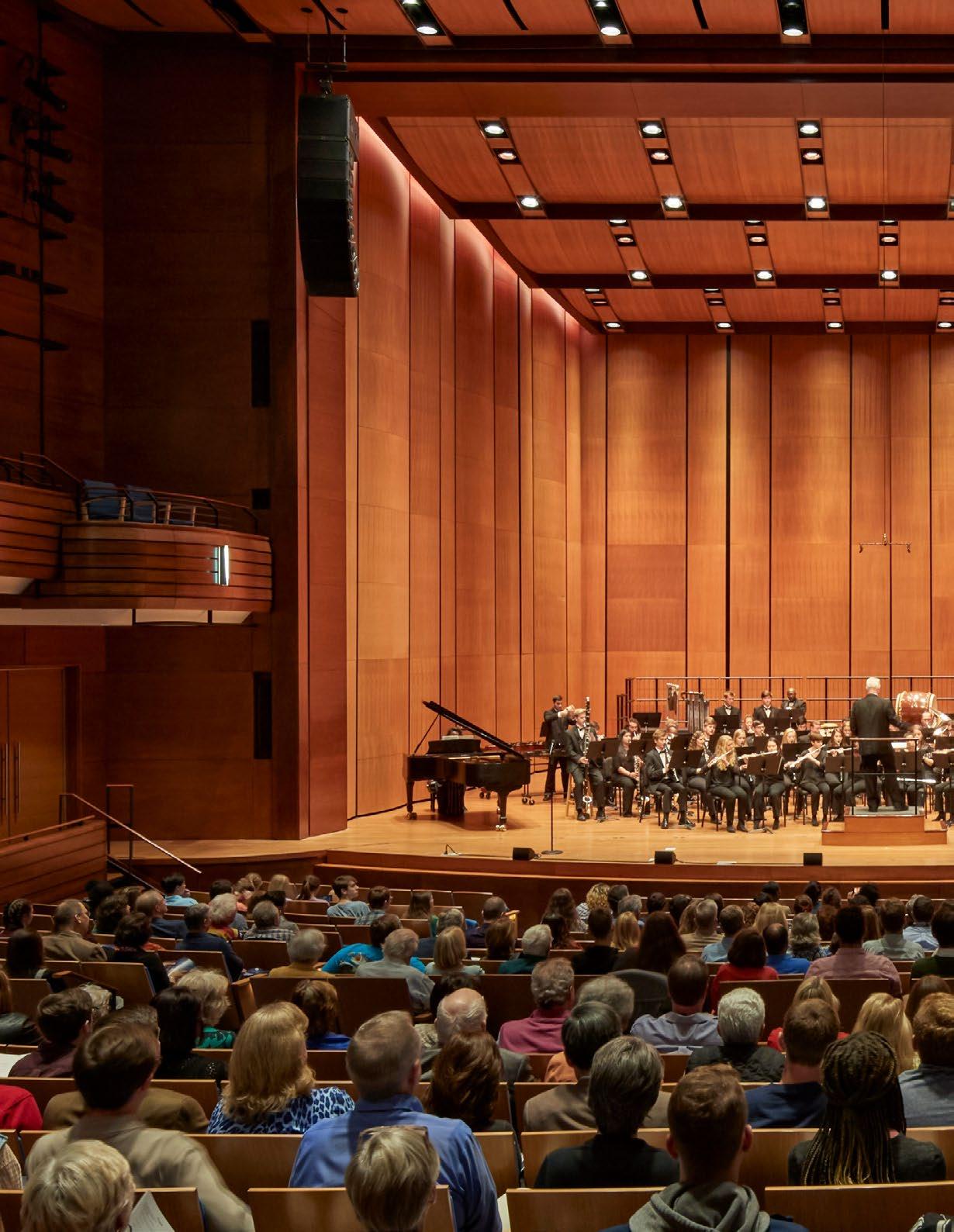
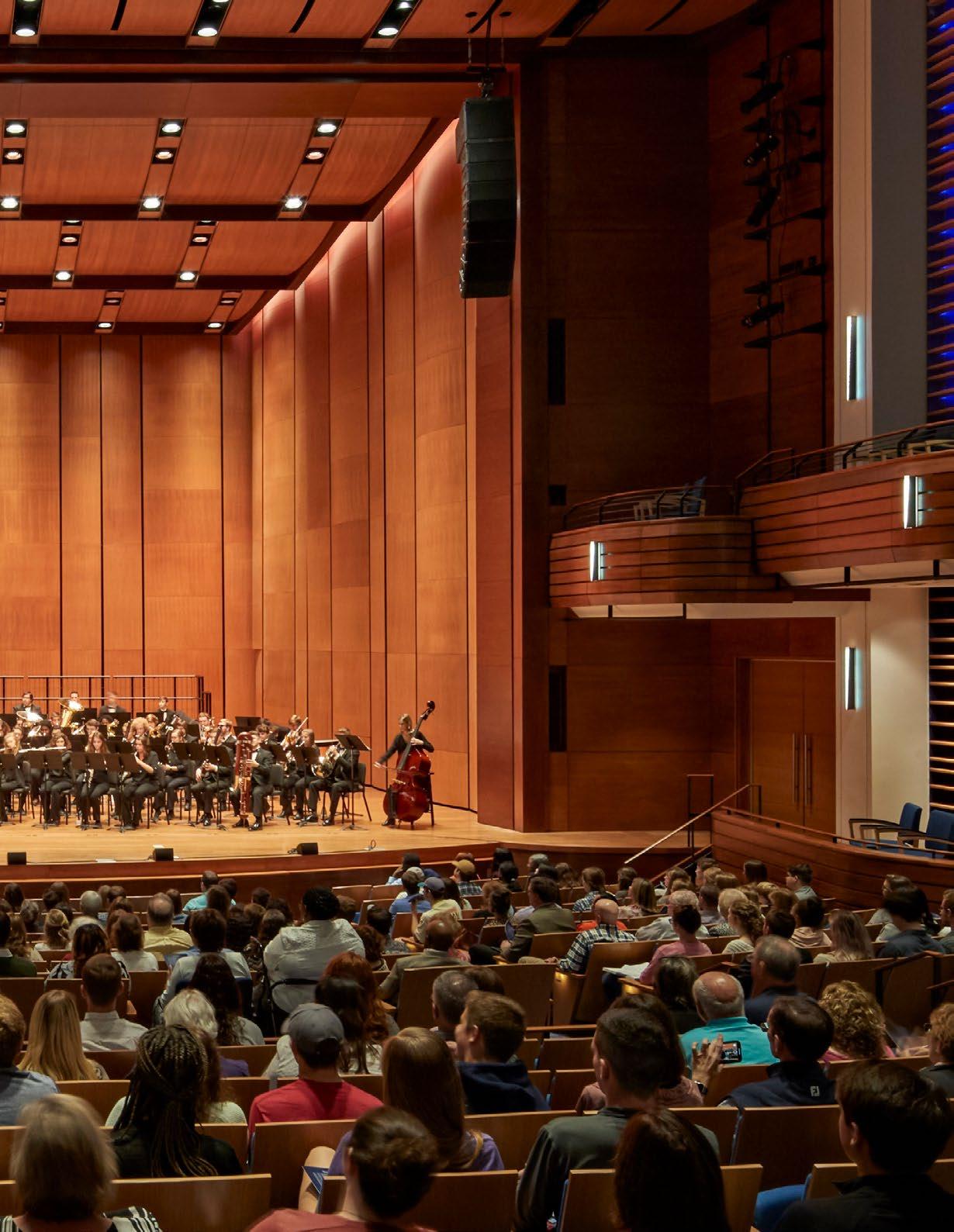
The Jay and Susie Gogue Performing Arts Center, otherwise known as the Gogue Center, is located on the campus of Auburn University in Auburn, Alabama.
The Gogue Center houses the 1,200-seat Woltosz Theatre. The theatre was built with exceptional acoustics so that it is possible to hear well from every seat.
WHO WILL YOU SEE HERE?
Ushers
These are the people who will greet your bus, lead your class into the building and help you find your seat. Be sure to say “hello!”
Stage Crew
These are the people who work backstage, so you won’t see them in the lobby, but you might see them before or after the performance, and sometimes, they even come on stage during the performance to move things.
Lighting & Sound Operators
These are the people who control the lighting and the sound for the performance. You may see them in the middle of the auditorium at the big sound board or in the back of the auditorium in the booth. Sometimes, the spotlight operators are in the back way above your head.
Performers
These are the people on the stage who may be dancers, musicians, singers, actors, puppeteers or acrobats. It is their job to communicate using their bodies, instruments and voices.
Audience Members
This includes you, your classmates, and other students and teachers from Alabama, and beyond.
What Does the Audience Do?
Alabama Course of Study
AE17.MU.3-5.15
AE17.MU.6-8.14
National Standards
MU:Pr6.1.3-8b
The audience is an important part of the performance. Without the audience, who would watch the performers? Who would clap and sing along and appreciate what the artists bring to the stage? When you are a member of an audience at the theatre, there are a few things to know about what to do and what not to do.
Listen and watch, but do not talk.
Have a camera or phone? Please turn it off.
The performers will take to the stage, and we know they will engage. You can laugh, you can sing, you can get up and dance, but just make sure that you give them all a chance!
Sit in your seat and look around, but please keep your feet toward the ground. THANK YOU!
When the song is done, or the show comes to an end, make sure that you give the performers a hand! Applause is the way that we can say thank you for all that they did today!
The Walter Stanley and Virginia Katharyne Evans Woltosz Theatre
Acoustics: The Science of Sound
Acoustics is the study of sound and how that sound reacts in spaces, particularly rooms and buildings. What is sound? Sound is vibration. That vibration travels through the air and into our ears where we hear it. Vibration begins through movement—for example, strumming a guitar string. That vibration creates a sound wave. In a theater or concert hall like the Woltosz Theatre, acoustics are important so that everyone can hear the performers.
There are two ways that acoustics are controlled. The first, reverberation, is controlling how sound waves bounce off surfaces, like walls and floors. Hard surfaces cause more reverberation and make spaces louder. The second way, absorption, is the opposite of reverberation. Soft surfaces absorb sound waves and make rooms quieter.
Of the materials and surfaces listed below, which do you think cause sound to reverberate? Which absorb sound?
• Tile
• Carpet
• Stone
• Curtains
• Cushions
• Wood
Who to know at the show
ORCHESTRA
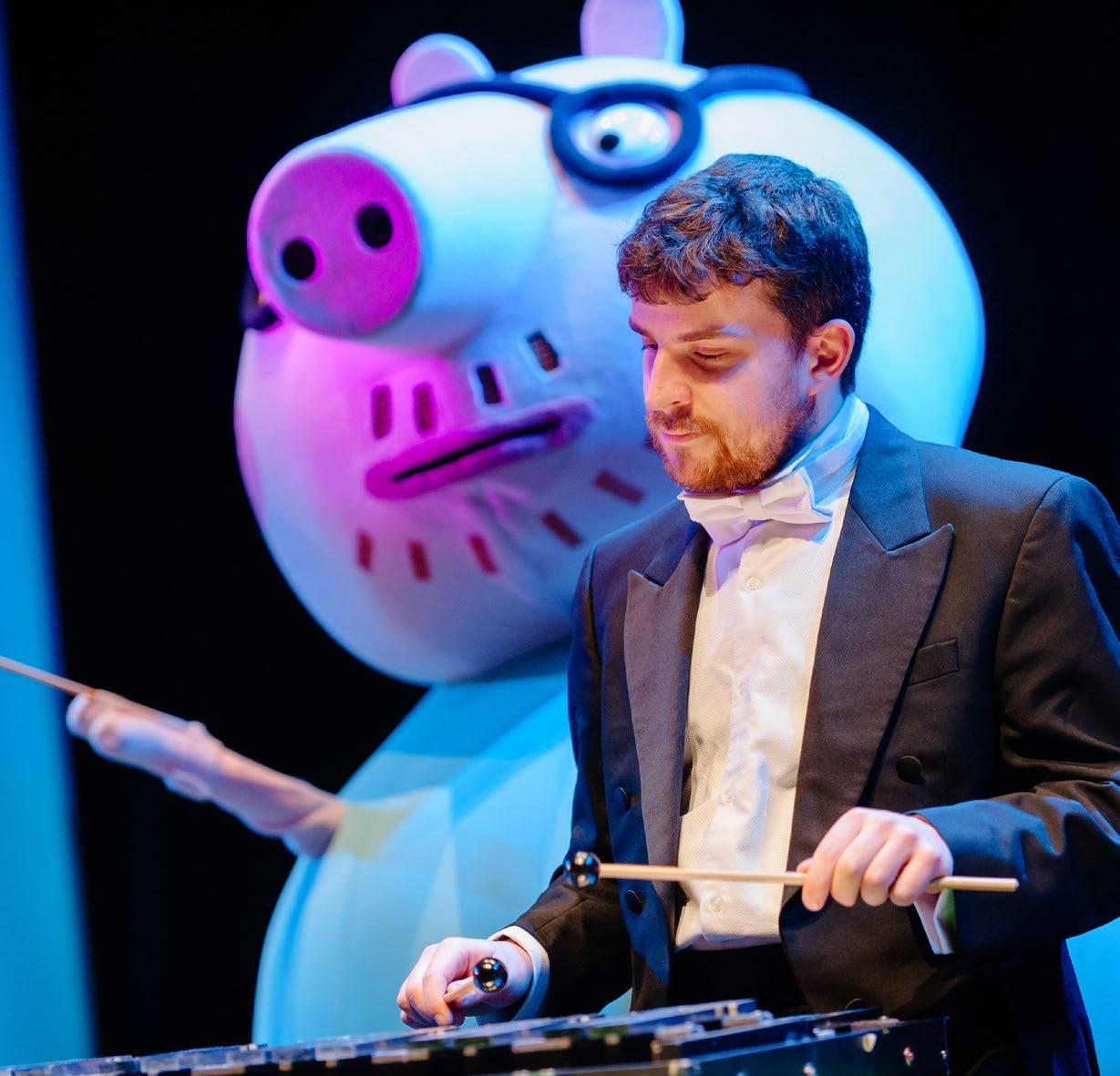
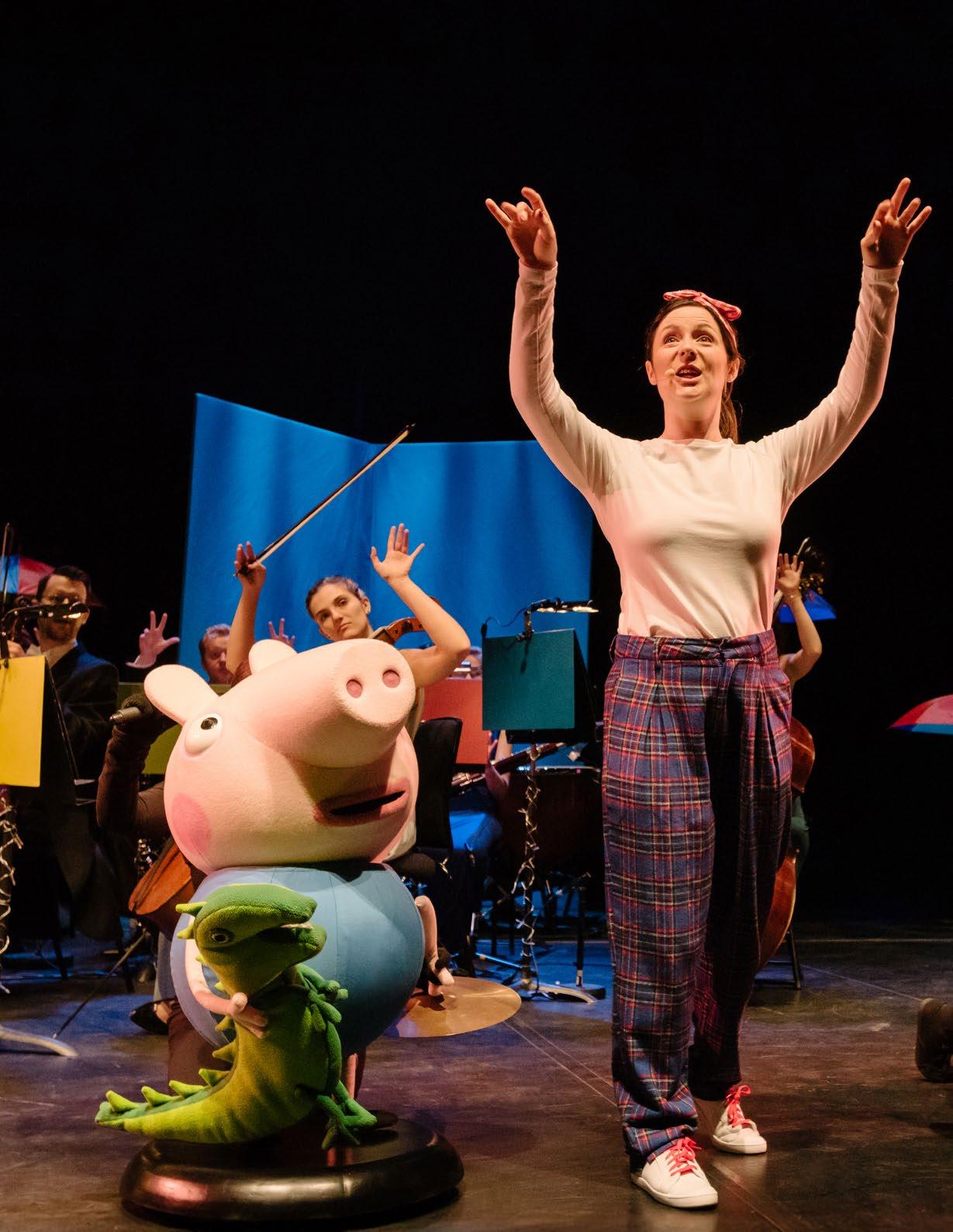
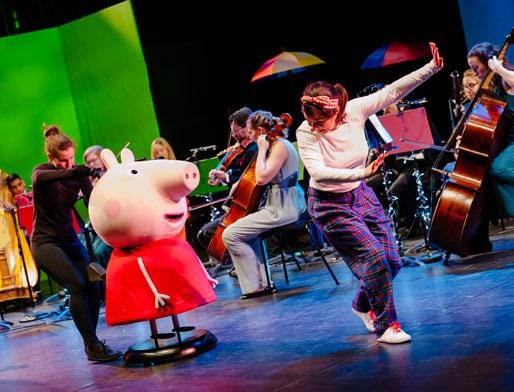
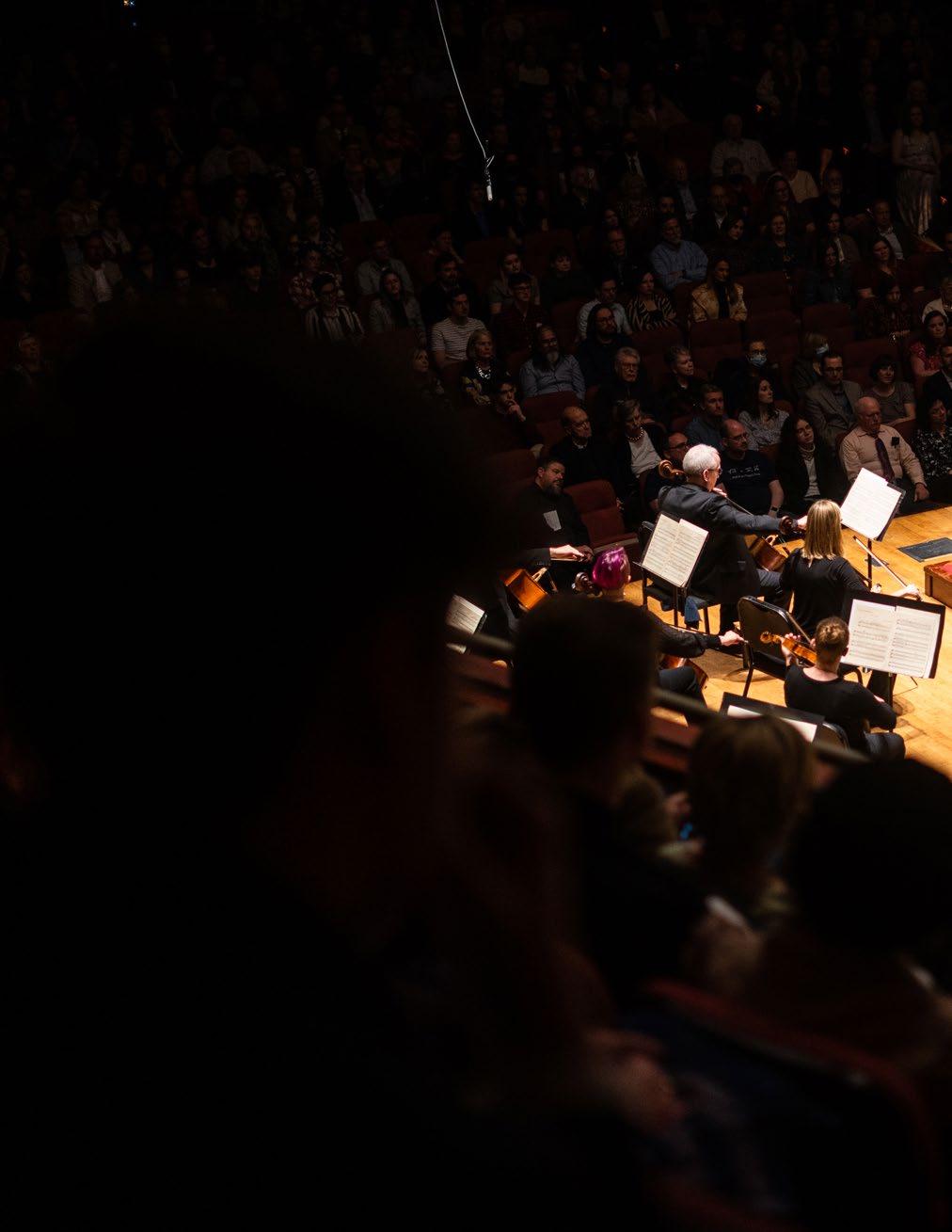
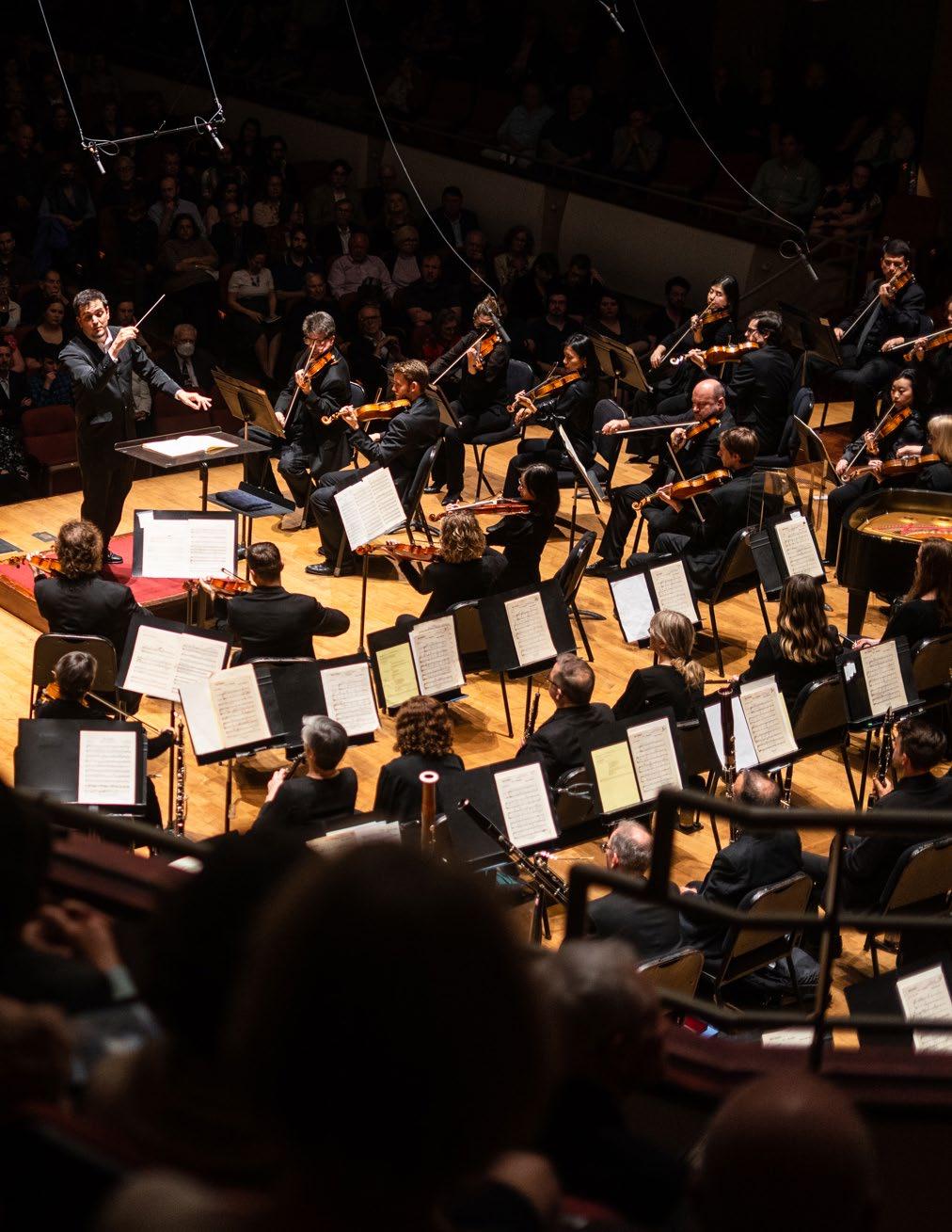
An orchestra is a large musical ensemble made up of people playing instruments from the four different instrument families: string, woodwind, brass and percussion. An orchestra typically plays classical music but often plays more popular tunes as well. A full-sized orchestra is sometimes called a symphony orchestra or philharmonic orchestra; a smaller orchestra is called a chamber orchestra. Peppa Pig: My First Concert features a chamber orchestra.
photo: Dan Tsantilis
CONDUCTOR
The person who leads the orchestra is called the conductor. It is their job to interpret the music and get all the members of the orchestra to play together in harmony. The conductor is the keeper of the beat. They do this by using their hands and a long, slender stick called a baton. (This isn’t like a baton you twirl on the football field; it looks a lot more like a magic wand!) The conductor helps the orchestra know when to start, how fast or slow to play, how loud or soft to play, and when to stop playing. A conductor practices for many years to become an expert at their job.
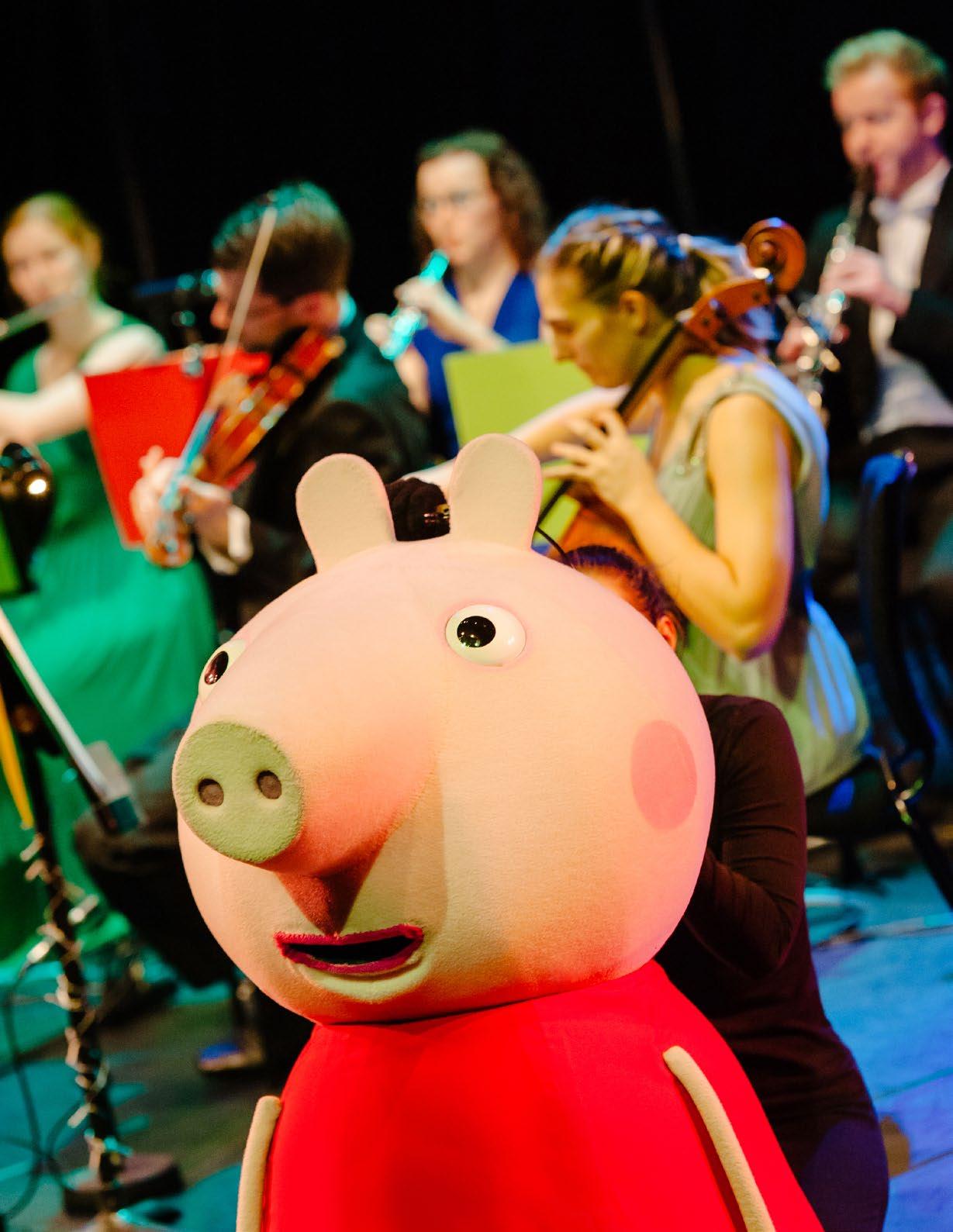
Peppa Pig: My First Concert cast and chamber orchestra members
CHARACTERS
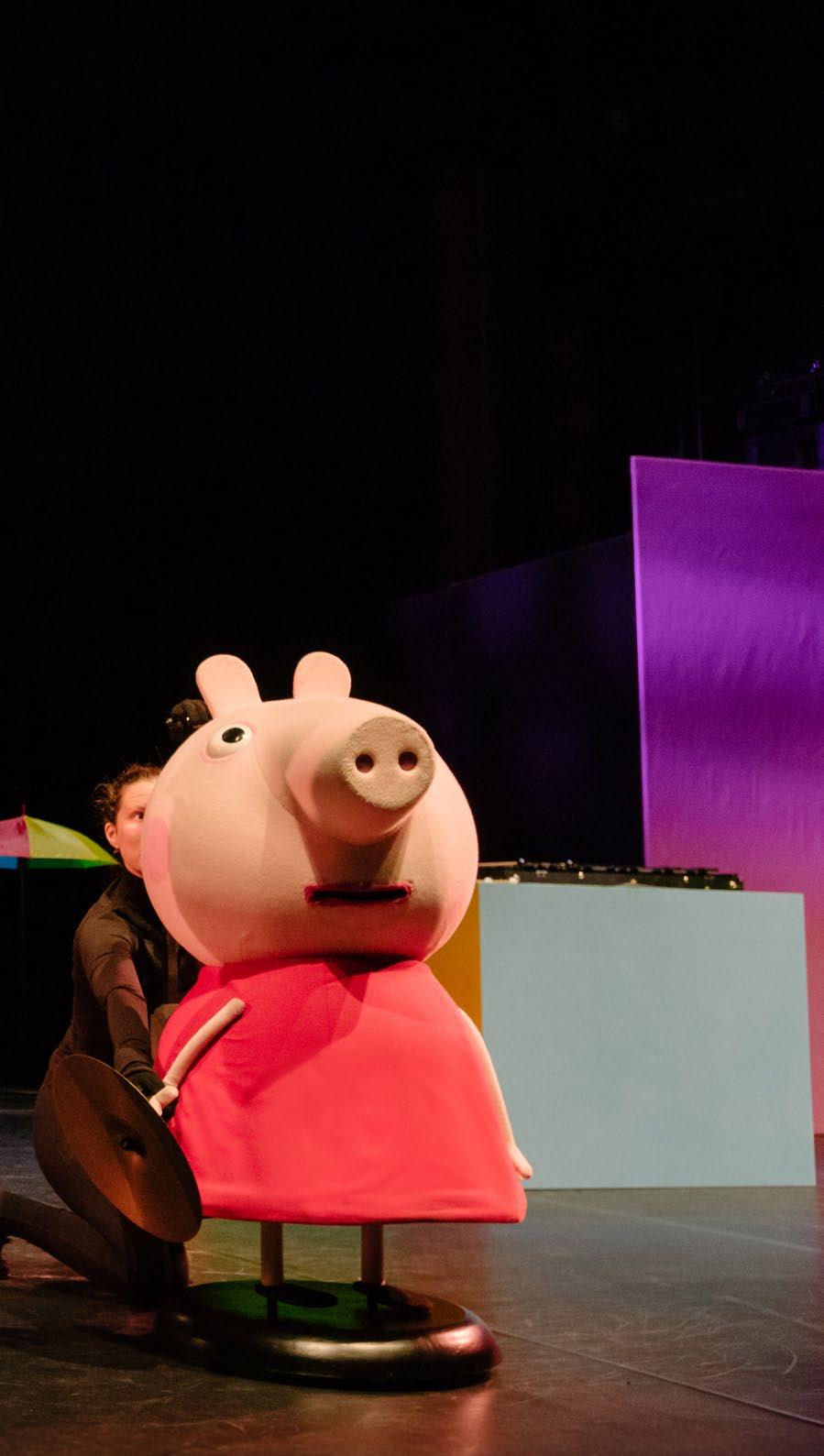
Peppa Pig
A four-year-old female pig who enjoys playing in puddles, with her teddy bear, her friends and all by herself
George Pig
Peppa’s younger brother who loves his toy dinosaur and being with Peppa and his friends
Mummy Pig
Peppa’s mother who works from home and as a volunteer firefighter
Daddy Pig
Peppa’s father, a structural engineer and concrete technician
Narrator
The person who helps to tell this story
What to know before the show
ORCHESTRAL INSTRUMENTS & THEIR FAMILIES
The instruments of an orchestra can be divided into four families: string, woodwind, brass and percussion.
String Instruments
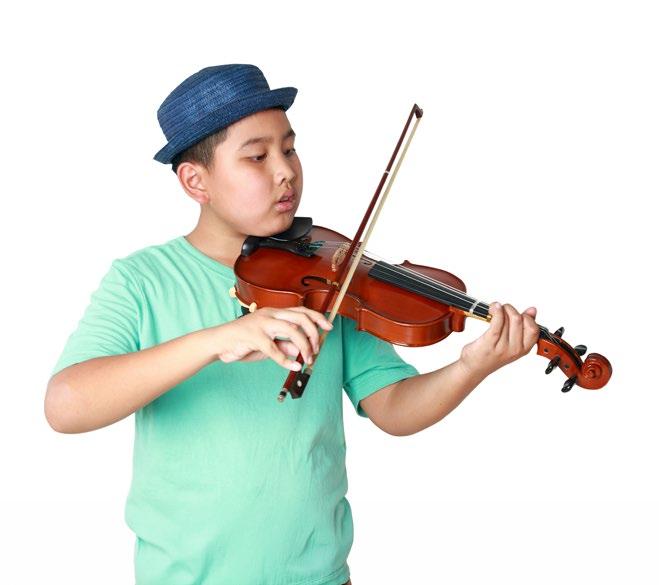
String instruments are made of wood and have strings you can play. You can pull a bow across the strings, pluck them with your fingers, or strum them. A bow is a stick with horsehair that you can use to move the strings to help them make their sounds.
Examples of string instruments include:
• violin (small and plays high notes)
• viola (a little larger than the violin)
• cello (even larger and sits on the floor)
• double bass (the largest and plays the lowest notes)
• harp
• ukulele
• guitar
• electric bass
Woodwind Instruments
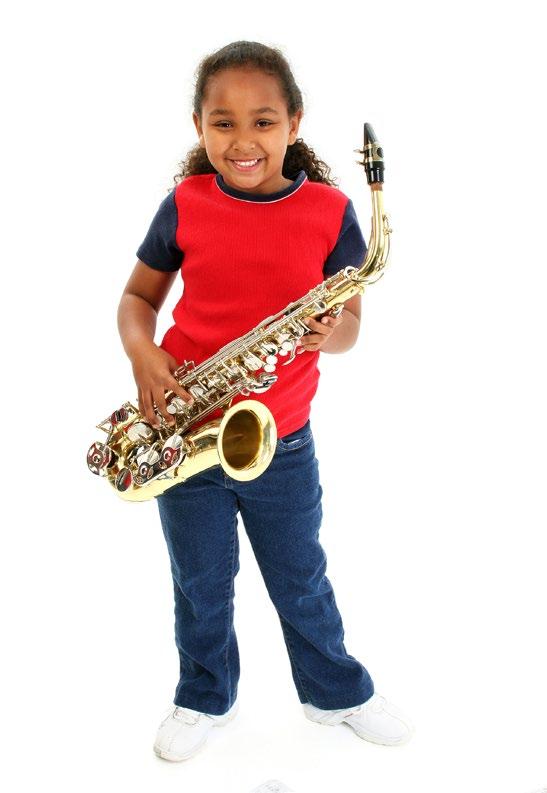
Woodwind instruments used to be made only from wood, but now they can be made from other things too. You play them by blowing air into them. Some woodwind instruments contain a tiny piece called a reed that is used to help make their sounds.
Examples of woodwind instruments include:
• flute (played by blowing across the top)
• clarinet and saxophone (played with a single reed)
• oboe and bassoon (played with a double reed)
• accordion (played with keys and by pushing and pulling)
Brass Instruments
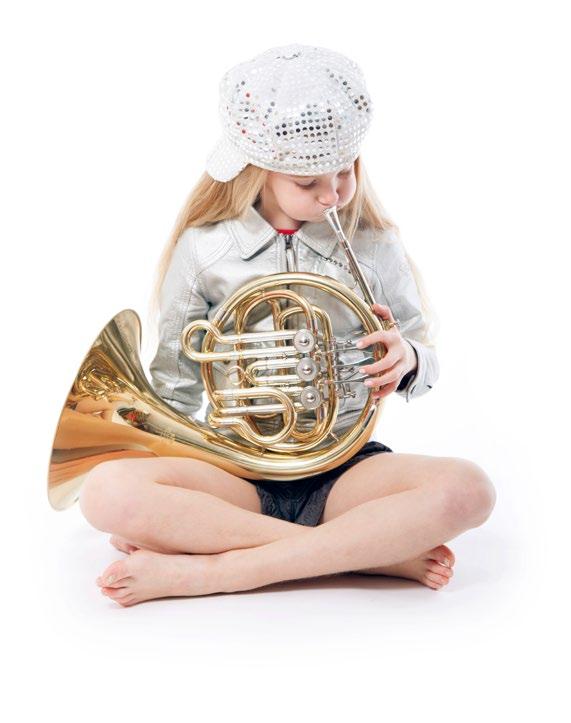
Brass instruments are shiny and made of metal. You play them by buzzing your lips into a mouthpiece— like making a silly “brrrr” sound! The sound from brass instruments comes out of a large opening called a bell.
Examples of brass instruments include:
• trumpet
• French horn
• trombone
• euphonium
• tuba (the largest brass instrument)
Did you know?
Percussion Instruments
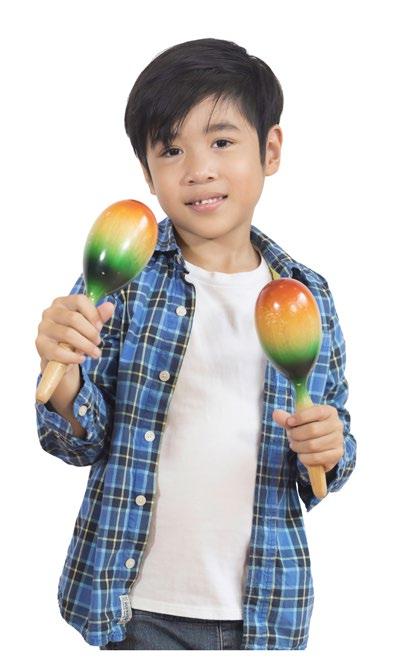
Percussion instruments make sound when you hit, shake or tap them. Some percussion instruments can play different notes (like the xylophone), and some just make fun sounds (like the triangle).
• bells, glockenspiel and xylophone (played with mallets)
• triangle
• tambourine
• cymbals
• gong
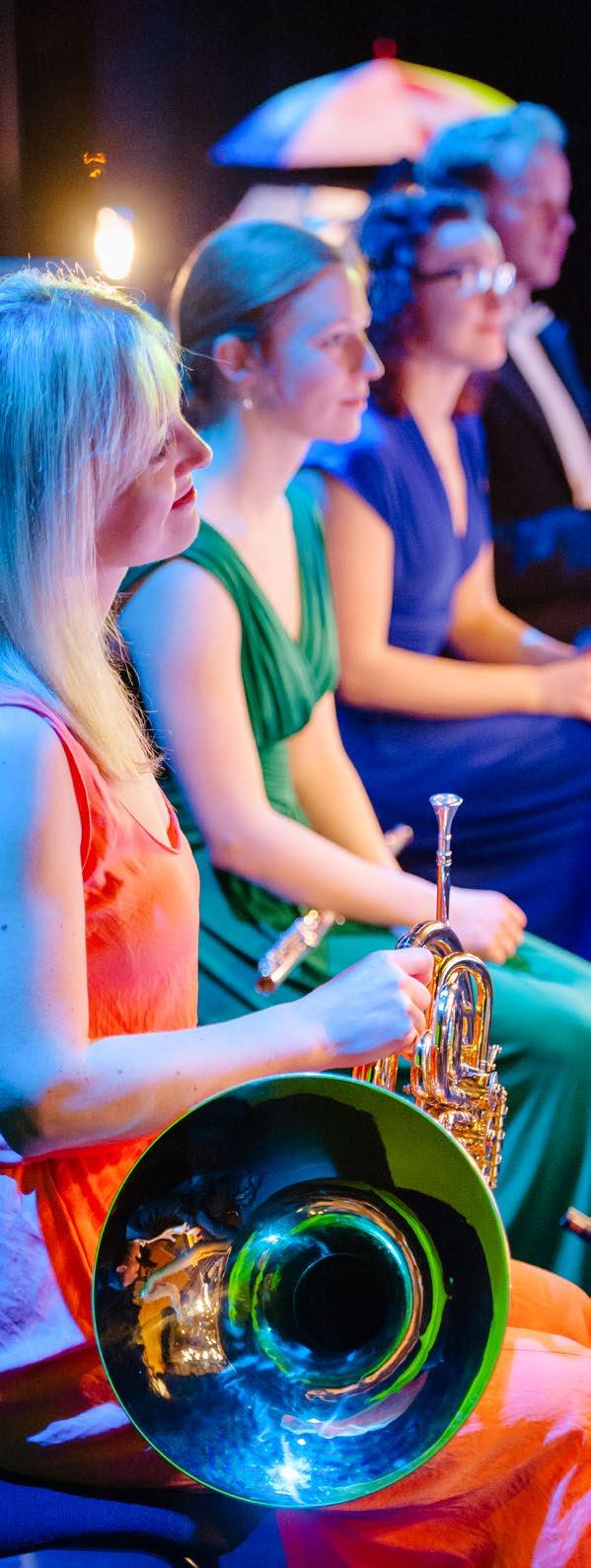
In this show, there will be 14 different instruments played by 12 musicians: two violins, a viola, cello and double bass from the string family; a flute, oboe, clarinet and bassoon from the woodwind family; a French horn from the brass family; and drums, timpani, tambourines, cymbals and a glockenspiel from the percussion family.
Though technically not an instrument, it is closely related to the woodwind family. For this show, the train whistle will be played by a percussionist.
INVESTIGATING INSTRUMENT FAMILIES
Alabama Course of Study Standards
Standards
OBJECTIVE
By completing this activity, students will:
• Understand that instruments make sound when something vibrates or moves back and forth
• Sort instruments into four families (i.e., string, woodwind, brass and percussion)
• Measure instruments using rulers or nonstandard tools (e.g., paper clips, cubes, etc.)
• Listen, vote for and graph their favorite instrument sound
• Use both math and science to learn about sound
MATERIALS
For these activities, you will need the following items:
• “Orchestral Instruments & Their Families” on pages 12-13
• Student worksheets
• Pictures or models of the 14 instruments that will appear in Peppa Pig: My First Concert: X aub.ie/gpac-peppa-instruments
• Rulers or nonstandard measurement tools (e.g., paper clips)
• Short audio clips or live sound demonstrations
• Chart paper and markers
ACTIVITIES
Introduction
1. Show students a familiar instrument (or picture), such as a drum or guitar.
2. Ask: “What happens when you hit or pluck it? How does it make sound?”
3. Explain in simple language: “All instruments make sound because something vibrates—it moves back and forth very fast.”
4. Let students feel a vibration (e.g., tap a drum, pluck a rubber band, etc.).
Math Activity
1. Pass out the student worksheet.
2. Display all 14 pictures of the instruments.
3. Have students count the number of instruments together or in small groups.
4. Ask students: “Who counted 14 instuments?” and “Let’s count again to check!”
5. Celebrate correct counting strategies (touching each picture, pointing left to right).
Instrument Families
1. Next, introduce the four families using simple explanations:
• String: These instruments have strings you can pluck or bow.
• Woodwind: You blow into these instruments; many have reeds.
• Brass: You buzz your lips into these instruments.
• Percussion: You hit, shake or tap these instruments.
2. Put the 14 instrument pictures on the board/table.
3. Invite students to help you sort them into four labeled areas.
4. Ask simple questions (e.g., “Which group has the most?” “Which group has only a few?” “What do you notice about the instruments in the same family?”).
5. After completing the sorting, give each student a ruler or a line of paper clips.
6. Show students how to measure from one end to the other.
7. Let students measure selected instrument pictures on their worksheets. Make sure to limit choices to two or three instruments.
8. Ask: “Which is longest?” “Which is shortest?” “How many paper clips long is it?”
9. Emphasize consistent measuring.
Musical Activity
1. Ask students: “Do large instruments sound high or low?”
2. Explain that large instruments typically make low sounds and small instruments make high sounds.
3. Play a short audio clip of a low-sounding instrument like a tuba or bass drum and a clip of a high-sounding instrument like a flute.
4. Allow students to describe what they hear using ageappropriate vocabulary.
5. Now play three-to-four fun instrument sounds and allow students to vote for their favorite by raising their hands or some other means.
6. Make tallies on chart paper.
7. Create a simple bar graph together to record the results.
8. Teach the vocabulary as necessary:
• Vote
• Tally
• Bar graph
• Most/least
9. Ask students questions, such as:
• Which instrument received the most votes?
• Which received the fewest?
• How many more liked the drum sound than the flute sound?
Conclusion
1. For review, ask students:
• How do instruments make sound?
• How did we use math to explore the instruments of the orchestra today?
EXTENSION
Extension activities may require additional materials.
• Have each student draw their own invented instrument and show how it could vibrate.
• Set up a simple sound center with rubber bands, cups or drums.
• Use body percussion (e.g., clapping, tapping and stomping) to reinforce vibration concepts.
Name
Date
Investigating Instruments Through Math & Science
Counting and Sorting Instruments
There are 14 instruments used in Peppa Pig: My First Concert . Let’s count and sort them. Count the number of instruments in each family. Write that number in the last column.
Instrument Family Instruments Included Number of Instruments
String Violin, Viola, Cello, Double Bass
Woodwind Flute, Clarinet, Oboe, Bassoon
Brass
Percussion
French Horn
Drums, Timpani, Glockenspiel, Tambourine, Cymbals
Now sort the instruments by drawing a line to match each instrument to its family:
Instrument Family
Violin
Flute String
Drums
French Horn
Cello
Woodwind
Clarinet Brass
Tambourine
Double Bass Percussion
Measuring Instruments
Use a ruler or paper clips to measure the length of these instruments. Write the length you measured.
Instrument Length (inches or paper clips)
Violin
Viola
Cello
Double Bass
Flute
Which instrument is the longest?
Which instrument is the shortest?
Sound and Size
We learned that instruments make sound because they vibrate. The size of an instrument can change the sound it makes.
Do you think larger instruments make higher or lower sounds?
Do you think smaller instruments make higher or lower sounds?
Favorite Sound Survey and Graph
Listen to the sounds of these instruments (your teacher will play them). Draw a tally for each instrument you like.
Instrument Tally Marks
Violin
Flute
French Horn
Drums
Glockenspiel
Which instrument received the most votes?
Which instrument received the fewest votes?
Number of Votes
Draw a bar graph below showing the number of votes each instrument received:
Instrument Number of Votes (draw bars)
Violin
Viola
Cello
Double Bass
Flute
Reflection
Write or draw what you learned about how instruments make different sounds and how math helps us understand music.
COMPOSERS
A composer is someone who writes music. Just as an author writes stories with words, a composer makes music with notes. They think about what they want the music to sound like—happy, sad, exciting or peaceful—and write it down so others can play it on instruments such as the piano, violin or drums. Often, when you hear music at a concert or in a movie, a composer made that music.
In Peppa Pig: My First Concert, there will be pieces written by different composers. Some of them are very famous. Let’s learn about three famous composers whose music you might hear.
Famous Composers
Wolfgang Amadeus Mozart (WOOLF-gang am-uhDAY-uhs MOHT-sart) was only the age of 3 when he started playing music. By the time he was 5, he was already writing music. He played the piano and the violin, and he traveled all over Europe with his family to play music for kings and queens. Mozart wrote hundreds of songs, including music for orchestras, operas and even songs for children. Even though he lived a long time ago during the 1700s, people still love to listen to his music today.
let’s listen
Click here to listen to Mozart’s Eine kleine Nachtmusik (A Little Night Music).
Wolfgang Amadeus Mozart
Ludwig von Beethoven (LOOD-vig van BAY-tohvuhn) started learning the piano when he was very young and wrote his first music when he was still a child. He grew up to be one of the most famous composers in the world. He wrote big, beautiful music for symphony orchestras and the piano. Some of his music is loud and exciting, and some is soft and sweet. When Beethoven got older, he started to lose his hearing; however, he kept writing music even after he could no longer hear. He used his memory and imagination to “hear” the music in his mind. One of his most famous works is called “Ode to Joy,” and many people still sing or play it today. Beethoven showed everyone that even when things are hard, you can still do something great.
let’s listen
Click here to listen to “Ode to Joy” from Beethoven’s Symphony No. 9.
Pyotr Ilyich Tchaikovsky (PYEH-ter ill-YITCH chyKOFF-skee) was a composer from Russia who wrote beautiful music a long time ago. He made music that sounds like a story is being told—full of magic, dancing and feelings. He wrote the music for some of the most famous ballets in history:
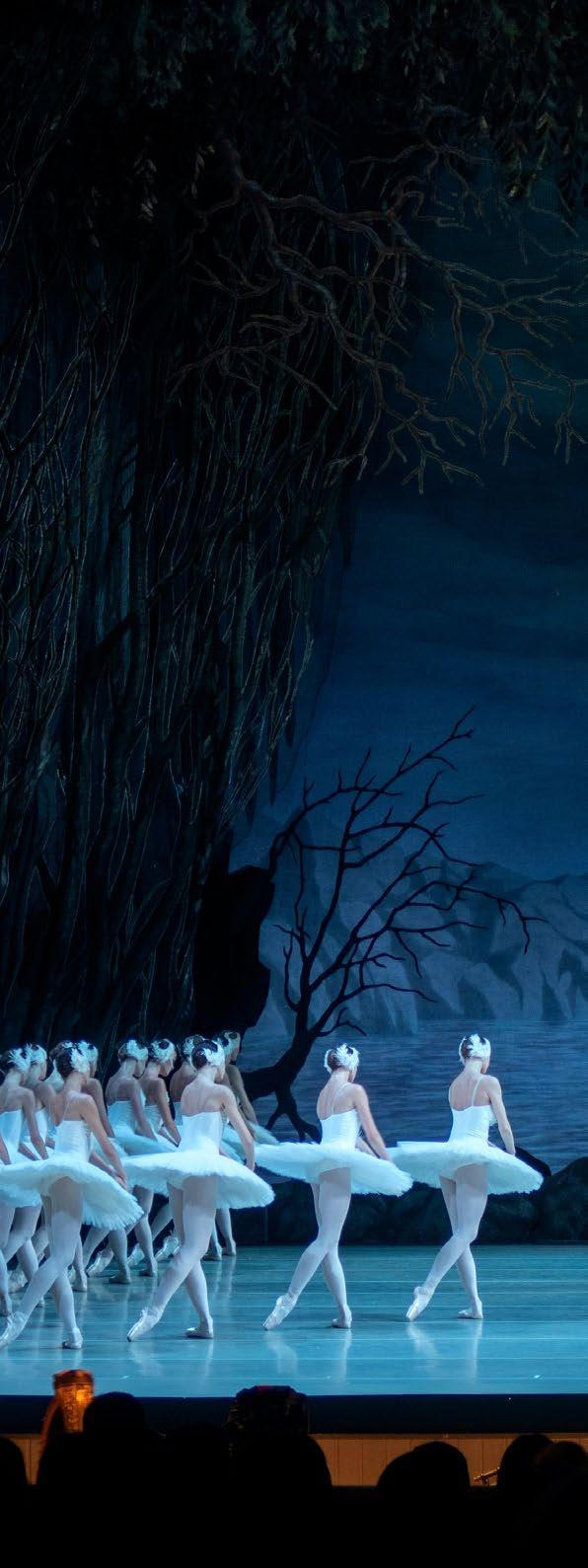
• The Nutcracker: A ballet with dancing sugar plum fairies and toy soldiers
• Swan Lake: A story about a magical swan princess
• Sleeping Beauty: A fairytale about a princess who wakes up with true love’s kiss
His music is great for dancing, pretending and using your imagination.
let’s listen
Click here to listen to “Waltz of the Flowers” from Tchaikovsky’s The Nutcracker.
Ludwig von Beethoven
Pyotr Ilyich Tchaikovsky
MAKING ART INSPIRED BY SOUND
Alabama Course of Study Standards
OBJECTIVE
By completing these activities, students will:
• Interpret and describe non-verbal language (i.e., auditory and visual)
• Respond to music organically by creating a visual representation of the music
• Discuss interpretations of work
MATERIALS
For these activities, you will need the following items:
• Paper
• Musical works by the following composers:
Mozart
X Requiem in D minor
X Symphony No. 40
Beethoven
X Sonata No. 14 in C-sharp minor (Moonlight Sonata)
X Symphony No. 5
Tchaikovsky
X Sleeping Beauty
X Swan Lake
You can also use the musical works highlighted on pages 18-19.
• Drawing or painting media (e.g., crayons, colored pencils, markers, watercolors, etc.)
note: If your class can handle a bit more creative freedom, give them many options and let them choose their preferred media while they listen to the music. If your class requires a bit more structure, you may want to limit their choices to a few items and/or colors.
ACTIVITIES
Introduction
1. Define non-objective art for your students and look at examples—non-objective art is a kind of art that does not show real people, places or things.
2. Explain to the students that in non-objective art, instead of painting a dog, a tree or a house, an artist uses colors, shapes and lines to create something new that does not look like anything from real life. For example, an artist might paint big red circles, wiggly blue lines or floating yellow squares. While these shapes and colors do not look like a picture of something you recognize, they are still put together in an interesting way.
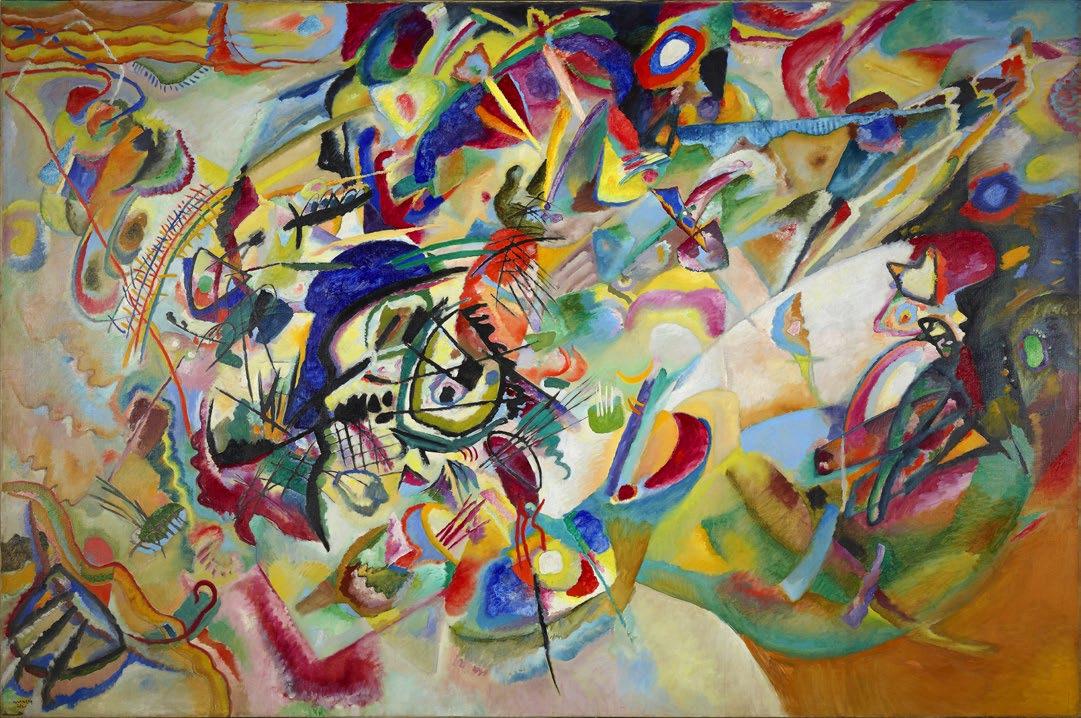
3. Show students one famous artist who made non-objective art, for example, Wassily Kandinsky. Explain that Kandinsky believed colors and shapes could show feelings, just as music does. So, one way to think of non-objective art is like music you can see!
Creative Activity
1. Play a musical piece (or an excerpt) of your choice by one of the three composers while students quietly listen with their eyes closed. Ask students to visualize colors, shapes and patterns that represent what they hear.
2. After listening to the music, ask students to discuss what they heard. Did they recognize any instruments? Did any sounds stand out to them? Have students do a “turn and talk” with a neighbor and then take turns sharing their ideas with the class.
3. Pass out paper and your art-making materials of choice (drawing or painting media) to students.
4. When students are ready, begin playing your musical piece again. This time, have students begin creating lines, shapes and other patterns that mimic the sounds they are hearing in the music. Encourage students to draw or paint what they feel, overlapping elements as they go. Remind them their artwork does not need to represent any particular object or picture.
5. Once the music ends, allow students extra time to finish their artwork as needed. If your musical selection is short, you may want to repeat it for them while they continue working.
6. If time allows, repeat the previous steps with a different musical selection.
Wassily Kandinsky, Composition VII, 1913, oil on canvas, 79 x 119 inches (200.6 x 302.2 cm cm), Tretyakov Gallery, Moscow.
EXTENSION
Extension activities may require additional materials.
• Have students present their artwork to the class, explaining why they chose to use particular lines, shapes or colors based on the music.
• Have students write an artist statement that explains their artwork and the choices they made.
• Play Antonio Vivaldi’s The Four Seasons and have students create non-objective artwork for each of the four seasons.
Share your students' colorful creations with us.
We'd love to see the masterpieces your talented students create. Send us a photo of their puppets and other projects from this performance study guide. Be sure to include each student's name, age, grade and school with your submission. You can send all submissions to the Gogue Center via email at gpac.education@auburn.edu
ENGLAND
Peppa Pig and her family live in England. England is found on the island of Great Britain, on the other side of the Atlantic Ocean from the United States. England is part of the United Kingdom. The United Kingdom is made up of four countries:
• England
• Wales
• Scotland
• Northern Ireland
Wales and Scotland are also found on the island of Great Britain, while Northern Ireland is located on the island of Ireland.
The English language began in England and has become the most-spoken language in the United States as well. England’s capital is London. It is a big and busy city where lots of people live and work. It is where the English government works, too. England has a king and a queen, but it also has a group of elected leaders called Parliament. Parliament is a lot like our Congress here in the United States. The members of Parliament work together to make laws that help the English people.
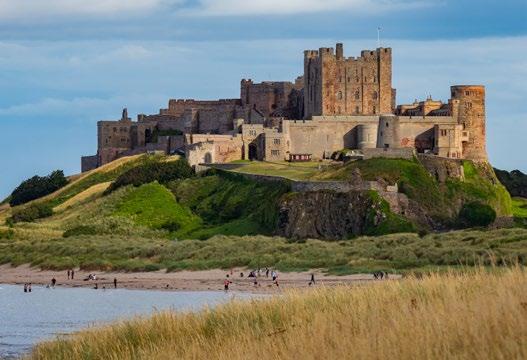
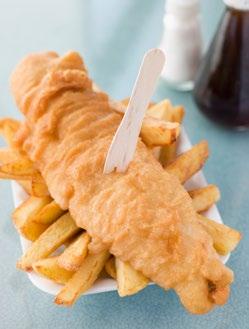
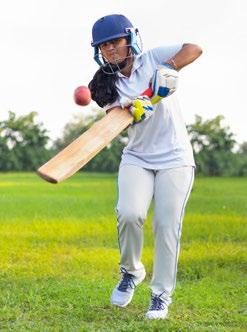
England is much older than the United States and has a rich culture. There are many very old buildings, castles and churches that people can visit throughout the country. There are also many museums that have beautiful and famous works of art that people can see. The food in England can be delicious. Some of the more famous foods from England include fish and chips (which is fried fish and French fries), Yorkshire pudding (which isn’t like pudding at all), and English breakfast (with eggs, bacon, sausages, beans and even mushrooms). The most famous sport in England is football, known as soccer in the United States. People also like to play cricket (a bat and ball game) and rugby (a sport like American football but with no pads or helmets). Some other fun sports that people play include tennis, hockey and badminton.
JOURNEYING TO ENGLAND
Alabama Course of Study Standards
OBJECTIVE
By completing these activities, students will:
• Demonstrate understanding of directional language (i.e., above, below, beside, next to, forward, backward, up, down, around)
• Move safely through general space and self-space
• Use body shapes and levels to communicate ideas
• Follow multi-step directional instructions
• Understand Alabama’s geographic location and relationship to England
• Recognize that crossing the Atlantic Ocean is necessary to reach England
• Demonstrate understanding of directional concepts through movement
MATERIALS
For these activities, you will need the following items:
• Open classroom space, or a gymnasium or outdoor area
• Maps of Alabama and England, displayed or projected
• “Carnival of the Animals” music or ocean/travel sounds (optional)
• Scarves, ribbons or lightweight props (optional)
• Classroom furniture to represent landmarks (optional)
ACTIVITIES
Introduction
1. Gather students in a circle.
2. Show them a map of Alabama and of England. Explain that Peppa Pig lives in England. Ask if anyone has ever heard of England.
3. Say: “Today we’re going to use our bodies to travel from Alabama all the way to England! We’ll move through space, follow directions and imagine what the journey might be like.”
4. Discuss: “What do we have to cross to get to England?” (The Atlantic Ocean!)
5. Ask: “How do you think we could cross the ocean (e.g., boat, airplane, ship, etc.)?”
Exploration
1. Introduce self-space:
• Say: “Draw an imaginary box around yourself—that’s your self-space. Stay in one spot.”
• Have students stand with their arms at their sides.
2. Call out directional movements for students to perform in place:
• “Reach your arms above your head.”
• “Bend down low to the ground.”
• “Stretch your arms beside you to the right.”
• “Move your hands next to your face.”
• “Make yourself tall and stretch up.”
• “Make yourself small and crouch down.”
• “Reach one arm above and one arm below.”
• “Put your hands next to your shoulders.”
• “Stretch forward.”
• “Lean backward.”
3. Combine movements:
• “Reach above, then down and then beside.”
• “Move up slowly, then down quickly.”
• “Stretch forward and above at the same time.”
4. Introduce general space:
• Say: “Now we’re going to move through the whole classroom—that’s general space!”
• Establish safe movement rules (e.g., watch for friends, move carefully, etc.).
5. Call out directional movements:
• “Walk forward toward the window.”
• “Walk backward toward the door.”
• “Move beside a friend.”
• “Stand next to the bookshelf.”
• “Move in a circle around the classroom.”
• “Move below the windows.”
• “Skip forward to the front of the room.”
• “Tiptoe backward to the back of the room.”
• “Walk above the line on the floor.” (optional)
6. Combine directional language with different locomotor movements:
• “Hop forward.”
• “Gallop beside the wall.”
• “Crawl next to a desk.”
• “Jump up and down.”
• “Slide backward.”
Creative Movement and Social Studies Activity
1. Starting in Alabama
• Say: “We live in Alabama! Let’s look at our map. Point above your head to show the sky. Point below to show the ground. Point beside you to show where Alabama is.”
• Have students move through the classroom with purposeful steps, exploring Alabama’s space.
• Say: “Move forward through Alabama. Move beside the trees. Look up at the sky!”
2. Traveling to the Atlantic Ocean
• Say: “We need to cross the Atlantic Ocean to get to England. Let’s travel forward toward the water.”
• Have students walk to one side of the classroom that represents the ocean.
• Ask: “How should we cross the ocean? What transportation will we use—airplane, ship or submarine?”
3. Choosing a Method of Transportation Airplane
• Say: “Spread your arms like airplane wings!”
• Have students move with their arms spread, traveling through space.
• Say: “Fly forward! Fly up high! Now fly down lower! Fly beside another airplane!”
Ship
• Say: “Move like you’re on a ship sailing across the Atlantic Ocean!”
• Have students sway side to side, moving forward across the “ocean.”
• Say: “Move forward across the water. Sway beside the waves. Look up at the sky. Look below at the water!”
Submarine
• Say: “We’re in a submarine exploring below the water!”
• Have students move slowly and carefully, looking around.
• Say: “Move forward slowly. Dive down deep. Look above for ships. Move beside the coral.”
4. Crossing the Atlantic Ocean
• Say: “Now we’re crossing the ocean! It’s a long journey!”
• Have students travel across the general space using their chosen transportation method.
• Call out directional cues throughout:
- “Move forward! Don’t stop!”
- “Move beside your travel buddy!”
- “Look up at the clouds!”
- “The waves push you backward a little, then forward again!”
- “We’re getting closer to England!”
5. Arriving in England
• Say: “We’ve arrived in England! We made it!”
• Have students celebrate with a movement of their choice (e.g., jumping, spinning, stretching, etc.).
• Say: “Now let’s explore England!”
• Have students move through the “new” space with curiosity.
• Say: “Move forward to explore. Stand next to Big Ben (or another landmark). Look up at the buildings. Move beside the Thames River.”
6. Return Journey
• Say: “Now we need to travel back home to Alabama! Let’s use a different method of transportation this time!”
• Ask: “Who has used an airplane before? This time let’s try a boat! Who used a boat? This time, let’s try a submarine!”
• Have students travel back across the “ocean” using a different method.
• Call out directional cues: “Move forward across the ocean. Move beside your friends. Look up at the stars to guide us home. We’re getting closer to Alabama!”
• As the journey is ending, announce: “We’re back in Alabama!”
• Ask students to return to the starting area.
• Celebrate the completed journey with a final movement.
Conclusion
1. Gather in a circle.
2. Ask reflection questions:
• “What directions did we use today?”
• “What was your favorite part of the journey?”
• “How did you travel across the ocean?”
• “Can you show me one movement we did today?”
3. Vocabulary review:
• Have students demonstrate each directional word one more time: above, below, beside, next to, forward, backward, up, down and around.
EXTENSION
Extension activities may require additional materials.
1. Add props:
• Wear scarves to represent water, wind or movement.
• Use binoculars (made from paper towel tubes) to “look” at landmarks.
• Wear hats or crowns to represent English royalty.
2. Add music:
• Play travel/journey music during movement.
• Use ocean sounds during the crossing.
• Create rhythmic patterns to move to.
3. Combine with visual art:
• After movement, have students draw the pathway they traveled.
• Create a map showing their journey with directional arrows.
• Draw what they saw in England.
4. Connect to literacy:
• Write directional sentences about their movement journey (e.g., “I moved forward across the ocean.”).
• Create a class book titled Our Journey to England.
• Write about what students saw using directional language.
5. Create an outdoor extension:
• Take the activity outside to use real space and natural features.
• Explore actual directional landmarks on school grounds.
6. Make a map connection:
• After the movement activity, return to the map.
• Have students trace the journey with their fingers.
• Discuss the actual distance and directions between Alabama and England.
MAMMALS
Peppa Pig and all her family members are pigs. A pig is a kind of animal known as a mammal. Mammals are warm-blooded animals that breathe air, have backbones, grow hair (at least at some point in their lives) and have highly developed brains. All female mammals can produce milk to feed their young.
There are more than 5,000 types of mammals on Earth, including humans. While most mammals live on land (whether on the ground, in trees, or even underground), some live on both land and water, and a few even live exclusively in the water. And there are some mammals, like bats, that can fly. Altogether, mammals can walk, run, crawl, fly and swim to move through their lives.
Mammals come in many shapes and sizes, from tiny rodents to enormous whales. In fact, the largest animal on Earth is a mammal—the blue whale.
Mammals can be carnivores (meat eaters), herbivores (plant eaters), or omnivores (meat and plant eaters). What type of eater are you?
Pigs
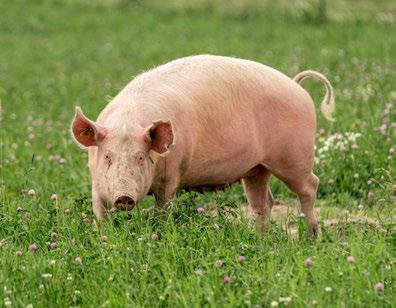
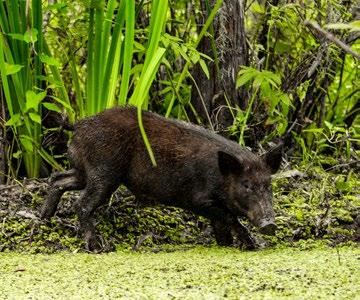
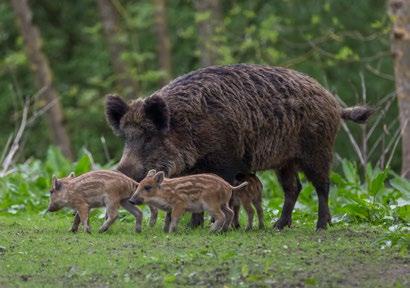
One mammal found throughout North America—and featured in the show, of course—is the pig. There are domestic pigs, feral pigs and wild boar. Domestic pigs are typically farm-raised, while feral pigs are domestic breeds that have either escaped or been released into the wild. Wild boar are pigs native to a particular area. Pigs can also be called hogs or swine.
Farm-raised pigs typically eat commercial feed that is made mostly of corn. In the wild though, pigs eat plants and animals, making them omnivores. Pigs are born with tusks, but farmers often remove those tusks to protect other pigs as well as people.
Pigs are one of the most intelligent domesticated animals and are considered smarter than dogs. They have poor eyesight, but a keen sense of smell that they use to find food. Full-grown pigs can weigh between 300 and 700 pounds.
carnivore herbivore
omnivore
wild boar
feral pig
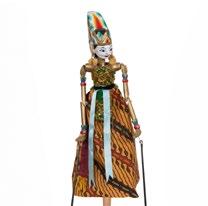
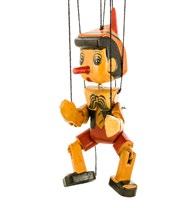
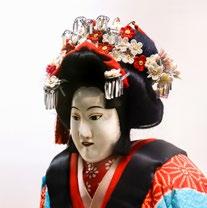
PUPPETS
Puppetry is a theatrical art form. In puppetry, puppets represent characters in the show. They are controlled by artists known as puppeteers. Some shows have only puppet characters and other shows mix puppet characters with actors or characters portrayed by people.
A puppet is an inanimate object that is created to look like a person, animal or other imaginary creature for use in theatrical storytelling. There are many types of puppets:
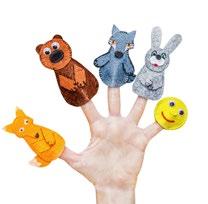
• Finger puppets are worn on fingers.
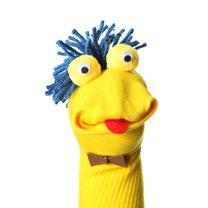
• Sock puppets are made from socks.
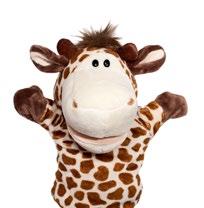
• Hand puppets are worn on the puppeteer’s hand. These are the simplest types of puppets.
• Rod puppets are manipulated by a single rod through the length of the puppet.
• Marionettes are suspended from strings and controlled from above.
• Bunraku (boon-rah-koo) puppets are large and usually controlled by several puppeteers who are visible to the audience.
In Peppa Pig: My First Concert, the puppets are the most like bunraku because they are large and controlled by puppeteers who will be visible throughout the performance. Each puppet is only handled by one puppeteer, though.
Finger puppets
Sock puppet
Rod puppet
Bunraku puppet
Hand puppet
Marionette
DISCOVERING PIGS
Alabama Course of Study Standards
OBJECTIVE
By completing these activities, students will:
• Identify characteristics of pigs that make them mammals
• Understand the basic needs of pigs (i.e., food, water, shelter, care)
• Learn about pig habitats and behaviors
• Recognize different pig breeds and their purposes
• Create a simple pig puppet
• Use their puppet to tell a short story
MATERIALS
For these activities, you will need the following items:
• Images of different pig breeds
• Pig fact cards
• Video clips about pigs (e.g., farm life, pig behavior, etc.)
• Chart paper for creating anchor charts
• Paper towel tubes or toilet paper tubes (one per student)
• Construction paper (pink, brown or black)
• Googly eyes
• Markers
• Glue sticks
• Scissors
• Yarn or string for tail
• Pipe cleaners for snout (optional)
• Magnifying glasses for examining materials (optional)
ACTIVITIES
Introduction
1. Ask: “What makes a mammal?”
2. Show students pictures of various animals (e.g., dog, cat, whale, bat, pig, human, etc.).
3. Ask: “What do all of these animals have in common?”
4. Introduce the concept of mammals through a discussion.
5. Highlight key characteristics of mammals:
• They have fur or hair on their bodies.
• They are warm-blooded (maintain body temperature).
• They have backbones (vertebrates).
• They breathe air with lungs.
• They can produce milk to feed their babies.
• Most of them give birth to live babies, and they don’t lay eggs.
• They have different types of teeth they use for different purposes.
6. Ask students: “Are you a mammal? Do you have hair, breathe air and have a backbone?”
7. Have students respond “yes” or “no” with a thumbs-up or thumbs-down.
8. Conclude to students that they are mammals too.
Exploration
1. Tell students they are going to go see a show that features a specific kind of mammal, a pig.
2. Explain that pigs have many distinguishing characteristics.
3. Begin with the physical features:
• Show pictures of pigs.
• Talk about their snouts, curly tails, hooves and pink, brown or black coloring.
• Ask: “Why do you think pigs have snouts?” (for rooting in mud and soil)
• Ask: “What do pig hooves help them do?” (walk, dig and stay balanced)
4. Next discuss pig behaviors:
• Pigs are intelligent animals.
• They love to roll in mud to stay cool and protect their skin from the sun.
• They are social animals that live in groups called herds.
• They communicate with grunts, squeals and snorts.
• They are curious and playful.
Introduce different pig habitats and needs:
• Wild pigs live in forests, grasslands and wetlands.
• Farm pigs live in barns, pens or pastures.
• All pigs need food (like grains and vegetables), water, shelter and space to move.
• Farmers care for pigs by providing food, water, shelter and medical care.
6. Finally mention that there are many different pig breeds (show pictures):
• Duroc: Reddish-brown color, good for meat
• Yorkshire: White with black spots, large breed
• Berkshire: Black with white markings
• Pot-bellied pigs: Smaller, often kept as pets
• Wild boars: Darker, hairier and live in forests
7. After completing the discussion, create a class anchor chart titled “All About Pigs.” Divide this into different sections for Pig Characteristics, What Pigs Eat, Where Pigs Live, How Pigs Communicate and Why Pigs Are Special.
Share your students' colorful creations with us.
We'd love to see the masterpieces your talented students create. Send us a photo of their puppets and other projects from this performance study guide. Be sure to include each student's name, age, grade and school with your submission. You can send all submissions to the Gogue Center via email at gpac.education@auburn.edu.
Creative Activity
1. Explain to students that they will be making pig puppets.
2. Distribute materials to students.
3. Tell students to begin by making the body:
• Students take a paper towel tube.
• Next, they wrap pink or brown construction paper around it.
• Last, they glue it down.
4. Explain that students will make the head next by cutting a circle from construction paper and gluing it to the top of the tube.
5. Next, students will make the snout by cutting a small circle or oval for the snout, gluing it to the head and drawing nostrils with a marker.
6. Now, instruct students to glue on the googly eyes.
7. Then, students will add the ears by cutting two small triangles and gluing them to the sides of the head.
8. Last, students will add the tail by gluing yarn or string to the back and curling it with their fingers.
9. Once the puppet is complete, allow students to add details such as spots, color or other features with markers.
10. Encourage students to engage in some quick storytelling:
• Have students hold up their puppets.
• Ask: “What would your pig say?”
• Have three to four students share their pig’s name and one thing it likes to do.
• Act out a simple version of “Three Little Pigs” with puppets (optional).
Reflection
Allow students time to reflect on what they have learned and experienced.
• Ask: “What was your favorite part?” and “What makes your pig special?”
• Display puppets on a shelf or bulletin board.
EXTENSION
Extension activities may require additional materials.
• Have students write or dictate full stories to act out with their puppets.
• Create a model of a pig habitat.
• Have older students use technology to do short research on different pig breeds and present their findings to the class.
5.
Why we go to the show
ALABAMA SYMPHONY ORCHESTRA
In Alabama, we have our very own symphony orchestra called the Alabama Symphony Orchestra (ASO). A symphony is a large ensemble made up of people who play instruments from all four families: string, woodwind, brass and percussion. Symphonies can have as many as 120 players and as few as 20, but they average somewhere in between. The conductor is the person who directs, or conducts, the orchestra by moving their hand and arms to help the musicians stay together.
The ASO is in Birmingham. They employ 48 musicians as well as three conductors. The orchestra plays around 20 concerts a year. They also play some smaller concerts and do educational programs. The ASO are active all year long. They play most often at the Alys Stephens Center on the campus of the University of Alabama at Birmingham, or UAB. The ASO has played at the Gogue Performing Arts Center many times and even conducted a performance as part of the Gogue Center’s K–12 School Performance Series for the 2023–2024 season.
To become a member of the ASO, you first need to learn how to play an instrument. Then you must practice a lot and work very hard to become a great player. Finally, you have to audition. An audition is a kind of tryout. An instrumentalist performs some examples so that the conductor can hear how they play. Orchestra auditions are often blind auditions, which means the audition panel can only hear the player, they cannot see them. Can you think of any other things that have auditions or tryouts? Have you ever auditioned for anything?
There are many symphony orchestras around the United States and even around the world. Have you ever heard a symphony orchestra? Well, hopefully you have or will have the chance one day soon!
let’s listen Click here to listen to the ASO perform the finale of Tchaikovsky’s Symphony No. 5 in E minor.
For these activities, you will need the following items:
• Audio or video of an Alabama Symphony Orchestra performance (or any orchestral piece with clear instrument families)
• Speakers or a sound system
• A projection system for visuals (optional)
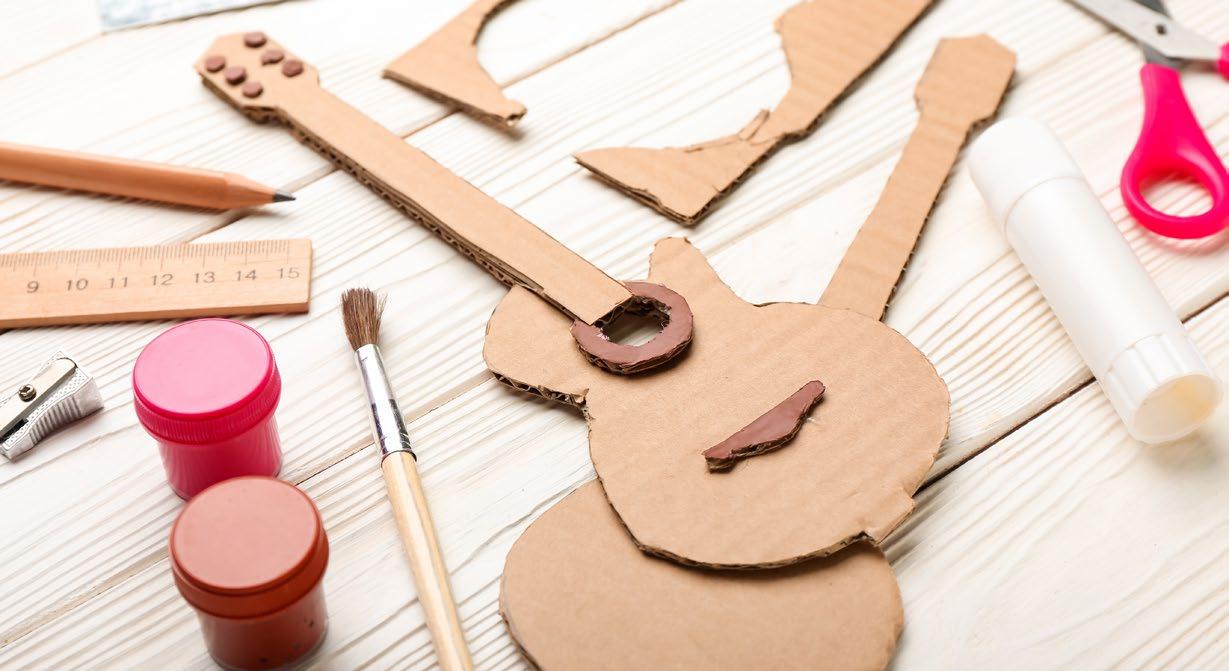
• Instrument-making materials such as:
Paper towel tubes or Yarn and string
toilet paper rolls
Aluminum foil
Paper plates Permanent markers
Rubber bands (various sizes) Plastic bottles
Popsicle sticks
Pipe cleaners
Cardboard boxes
Tin cans (with smooth edges)
Straws Plastic containers
Beads and buttons Newspaper or scrap paper
Rice or dried beans
• Scissors
• Staplers
• Hole punchers
• Tape (helpful for this age, but optional)
ACTIVITIES
Introduction
1. Tell students: “Today, we are going to listen to real orchestra musicians from the Alabama Symphony Orchestra. An orchestra is a large group of musicians who play different instruments together. Let’s listen and see if we can hear the different instruments.”
2. Play a three-to-five-minute orchestral excerpt (e.g., Britten’s “Young Person’s Guide to the Orchestra” or a simple Alabama Symphony Orchestra recording).
3. As students listen, have them:
• Close their eyes and listen for different sounds
• Raise their hand when they hear something new
• Identify orchestral families (if you have completed the “Investigating Instrument Families” activity on page 16)
• Make movements that match the music (optional)
4. After listening, engage students in a discussion. Ask simple questions:
• “What did you hear?”
• “Were the sounds loud or soft?”
• “Did you hear fast music or slow music?”
• “Can you describe a sound you heard (e.g., high, low, pretty, scary, happy, etc.)?”
Exploration
1. Say: “Now you are going to make an instrument.”
• Spread out the materials on tables.
• Tell students they can use any of these materials to create something that makes sound.
- Consider having some examples made or that you can quickly put together to demonstrate for students. Some ideas are putting rice or beans in plastic containers to make shakers, cutting the end of plastic bottles to make horns, spreading aluminum foil over a paper plate and with pipe cleaners, or put some beads or buttons on the
plate before spreading the foil to create a sort of tambourine. The possibilities are endless!
- Have students pick their own materials.
- Ask students to put the materials they chose together to make an instrument. They can use tape, a stapler, glue or just hold them together— whatever works best.
- Ask students to take what they made and create sounds.
- Circulate and ask: “What sound does that make?” “How did you make that?”
- Help with scissors or other tools as needed.
- Encourage all creations—remind students they don’t have to be perfect.
- Encourage students to have fun and play!
2. Gather students in a circle or semi-circle with their instruments.
3. Play the orchestral excerpt again.
4. Ask students to play their instruments along with the recording. Give simple instructions like:
• “Play when the music is loud.”
• “Play softly when the music is soft.”
• “Stop when the music stops.”
Writing Activity
1. Pass out materials and ask the students to draw a picture of their instrument.
2. Once they have drawn their instruments, have them write about their instrument.
For younger students: They might complete the sentence: “My instrument sounds like_______.”
For older students: They should write several sentences using prompts such as:
• What does the instrument sound like?
• What did you use to make your instrument?
• How do you play the instrument
EXTENSION
Extension activities may require additional materials.
• Choose a student to be the “conductor” of the classroom orchestra. They can point to different “instrument groups” to play (e.g., loud, soft, fast, slow, etc.).
• Ask students: “Our orchestra just played the story of [character/event]. What happened?” Then, have them create a story of what happened.
• Consider sending a note home to students’ families that says something like: “Today we listened to the Alabama Symphony Orchestra and created our own instruments. We performed as a classroom orchestra. Ask your child what their instrument sounds like!” (This could spark family conversations and interest in attending an actual Alabama Symphony performance.)
What to do after the show
POST-SHOW DISCUSSION
Included in this section are some post-performance activities you can share with your students.
Class Discussion
Following the performance, gather students for a postperformance conversation about their experience.
suggested discussion questions
• Which part of the performance did you enjoy the most? Why?
• What surprised you about the performance?
• Did you find the stories easy to follow and understand?
• What questions do you have about the performance?
• Did the performance make you curious to learn something new? What?
• Did the performance make you want to see more performances in the future?
For an additional post-performance discussion activity, copy and distribute the “My Trip to the Gogue Center” worksheet on page 37.
Peppa Pig: My First Concert chamber orchestra members
photo: Dan Tsantilis
My Trip to the Gogue Center
Answer these questions about the performance and your visit to the Gogue Center.
List three things you remember hearing or seeing during the performance of Peppa Pig: My First Concert.
Name something you learned during the performance.
Name something from the performance you would like to know more about.
If you could ask a member of the cast a question, what would you ask?
In the space below, draw something special you remember hearing or seeing during the performance.
Alabama Course of Study standards index
ARTS EDUCATION
ARTS EDUCATION (CONTINUED)
ENGLISH LANGUAGE ARTS
Count to answer “how many?”
MA19.K.6 Orally identify whether the number of objects in one group is greater/more than, less/fewer than, or equal/the same as the number of objects in another group, in groups containing up to 10 objects, by using matching, counting, or other strategies.
Classify objects into given categories of 10 or fewer; count the number of objects in each category and sort the categories by count.
Identify and describe measurable attributes (length, weight, height) of a single object using vocabulary such as long/short, heavy/light, or tall/ short.
MA19.K.17 Directly compare two objects with a measurable attribute in common to see which object has “more of” or “less of” the attribute and describe the difference.
the
of an
by selecting and using standard units of measurement shown on rulers, yardsticks, meter sticks, or measuring tapes.
MA19.2.20 Measure to determine how much longer one object is than another, expressing the length difference of the two objects using standard units of length.
SC23.1.5
and
provide evidence that the vibrations of matter can make sound and sound can make matter vibrate.
SOCIAL STUDIES
Online resources
Below are supplementary online resources, including links to additional lesson content and activity materials, to help support and enrich your teaching.
ADDITIONAL LESSON CONTENT
Musical composers
Mozart
X aub.ie/gpac-peppa-mozart-1
Beethoven
X aub.ie/gpac-peppa-beethoven-1
Tchaikovsky
X aub.ie/gpac-peppa-tchaikovsky-1
ACTIVITY MATERIALS
Orchestral instrument illustrations/pictures
X aub.ie/gpac-peppa-instruments
Musical composers and compositions
Mozart
X aub.ie/gpac-peppa-mozart-2
X aub.ie/gpac-peppa-mozart-3
Beethoven
X aub.ie/gpac-peppa-beethoven-2
X aub.ie/gpac-peppa-beethoven-3
Tchaikovsky
X aub.ie/gpac-peppa-tchaikovsky-2
X aub.ie/gpac-peppa-tchaikovsky-3
Vivaldi
X aub.ie/gpac-peppa-vivaldi
Alabama Symphony Orchestra
X alabamasymphony.org
Credits
All images featured in this performance study guide are wholly owned and copyrighted by their respective copyright holders and are used for educational purposes only. No copyright infringement is intended. The Gogue Center does not claim ownership of any images unless explicitly stated otherwise. If you have concerns about the use of any image included herein, please contact us immediately.
For a list of additional image sources and credits, please contact our Department of Communications and Marketing by telephone at 334.844.7234 or via email at jaosborne@auburn.edu
The Jay and Susie Gogue Performing Arts Center at Auburn University serves students and educators across the state of Alabama and beyond with its annual K–12 School Performance Series.
These high-quality and transformative arts experiences are further enriched with performance study guides that provide meaningful cross-curricular connections.
Developed by our Department of Education and Engagement, in collaboration with the Gogue Center Curriculum Council, each performance study guide contains information about the featured performing artist(s) or company, the art form, and relevant, grade-appropriate lessons and activities designed to help incorporate academic and arts standards into the classroom.
Our sincerest thanks to the members of the 2025–26 Gogue Center Curriculum Council.