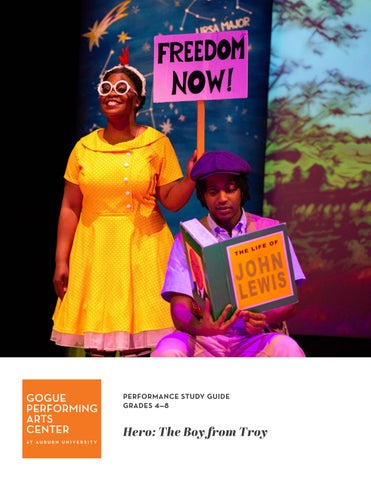
Gogue Center Performance Study Guide: “Hero: The Boy from Troy”
PERFORMANCE STUDY GUIDE GRADES 4— 8
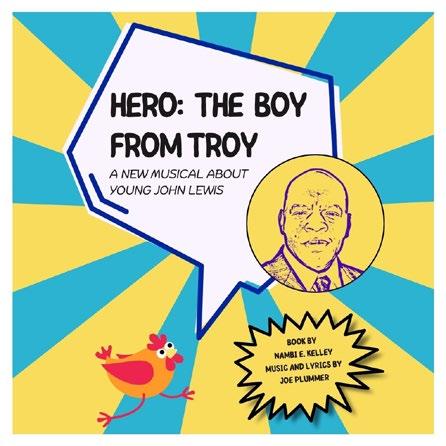
Hero: The Boy from Troy
The Jay and Susie Gogue Performing Arts Center at Auburn University engages audiences across the university, the state of Alabama and beyond with curated arts experiences that inspire, enlighten and unite.
Our annual K–12 School Performance Series provides opportunities for students to enjoy exclusive performances by some of the most talented and accomplished artists from around the world. Prior to each K–12 school performance, teachers receive a study guide containing details about the performance, artist and company, supplemental information about the art form and its history, and grade-appropriate activities designed to spark conversation and exploration in the classroom.
To learn more, visit goguecenter.auburn.edu/education.
produced by
Jay and Susie Gogue Performing Arts Center at Auburn University 910 South College Street Auburn, Alabama 36849
k–12 school performance series contact Andrea Jarmon, D.M.A. Education Coordinator telephone: 334.844.7371 email: gpac.education@auburn.edu
This guide is optimized for online engagement and contains links to multimedia components and external sources.
To access digital versions of this and other performance study guides produced by the Gogue Center, scan the QR code or visit aub.ie/gpac-psg.
Hero:
The Boy from Troy
PERFORMANCE STUDY GUIDE GRADES 4 — 8
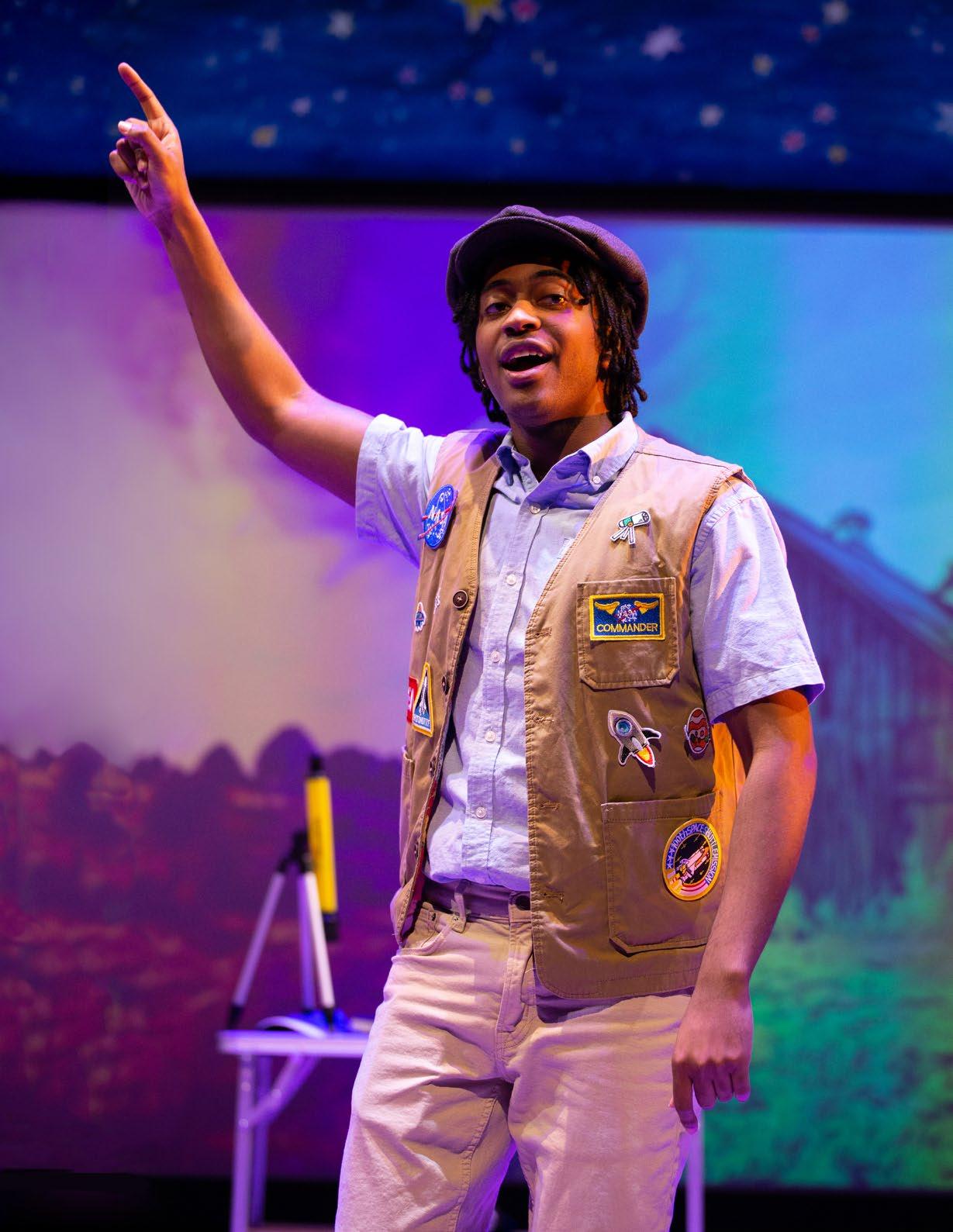
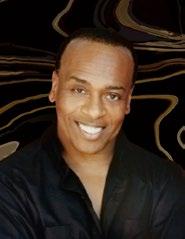
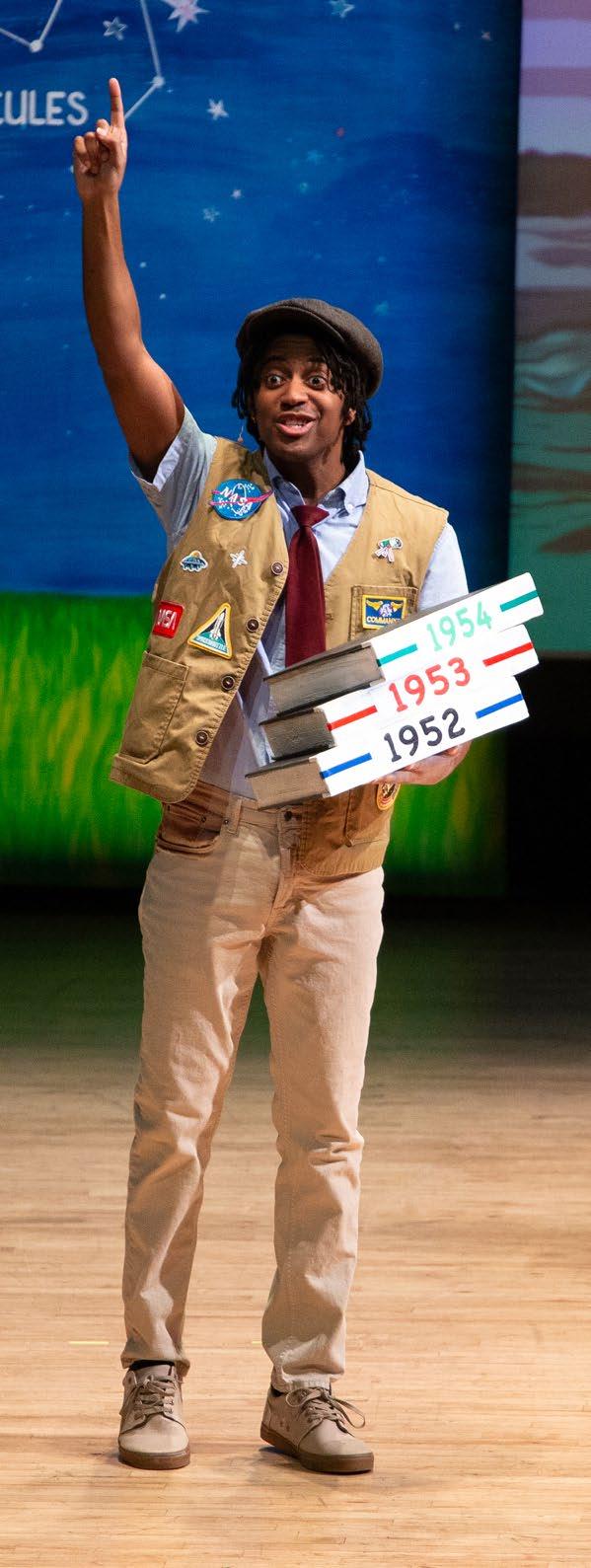
Hero: The Boy from Troy cast member Patrick Saint Ange as John Lewis
photo: Katie Day
The Jay and Susie Gogue Performing Arts Center at Auburn University
Where will we go?
GOING TO THE GOGUE CENTER
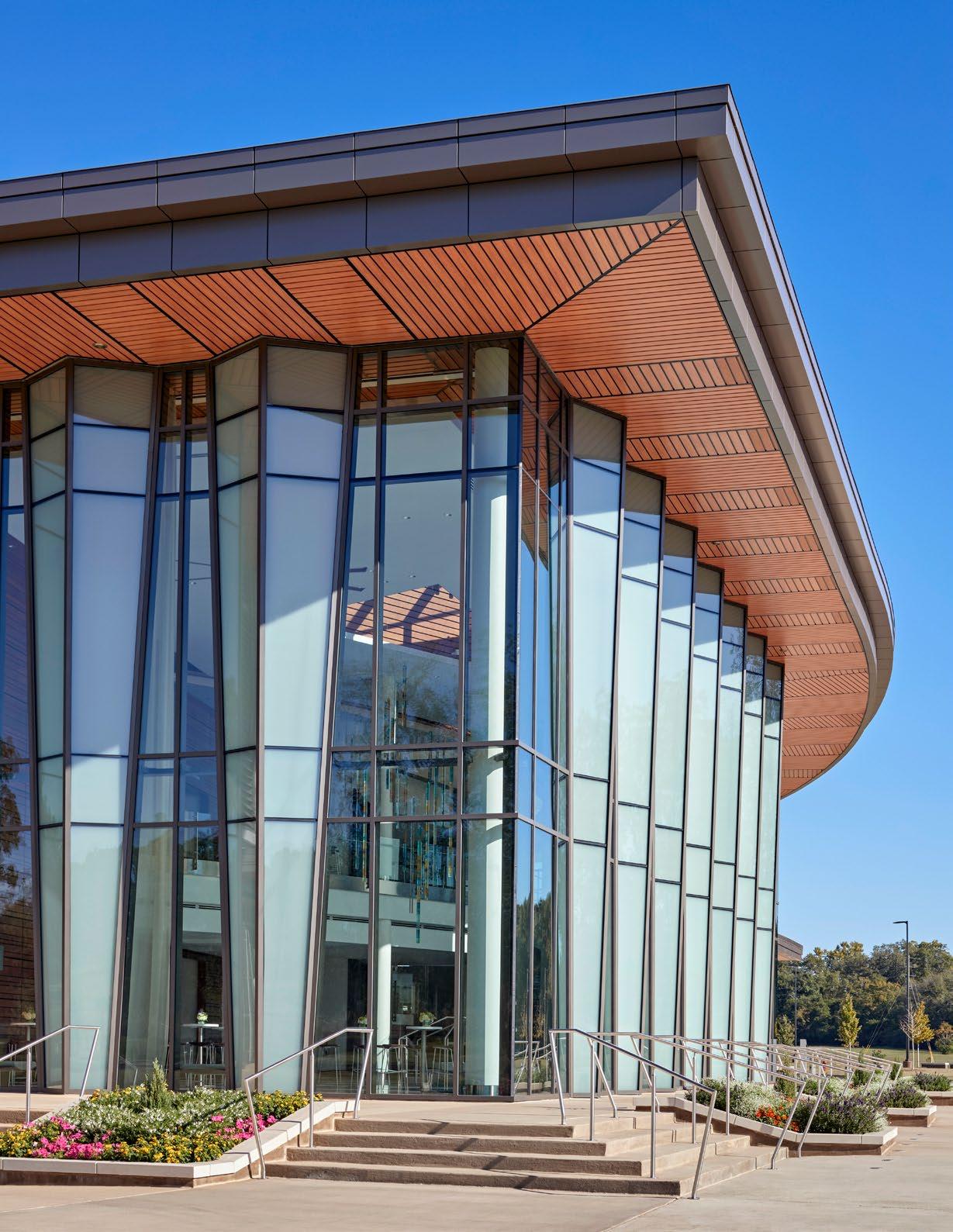
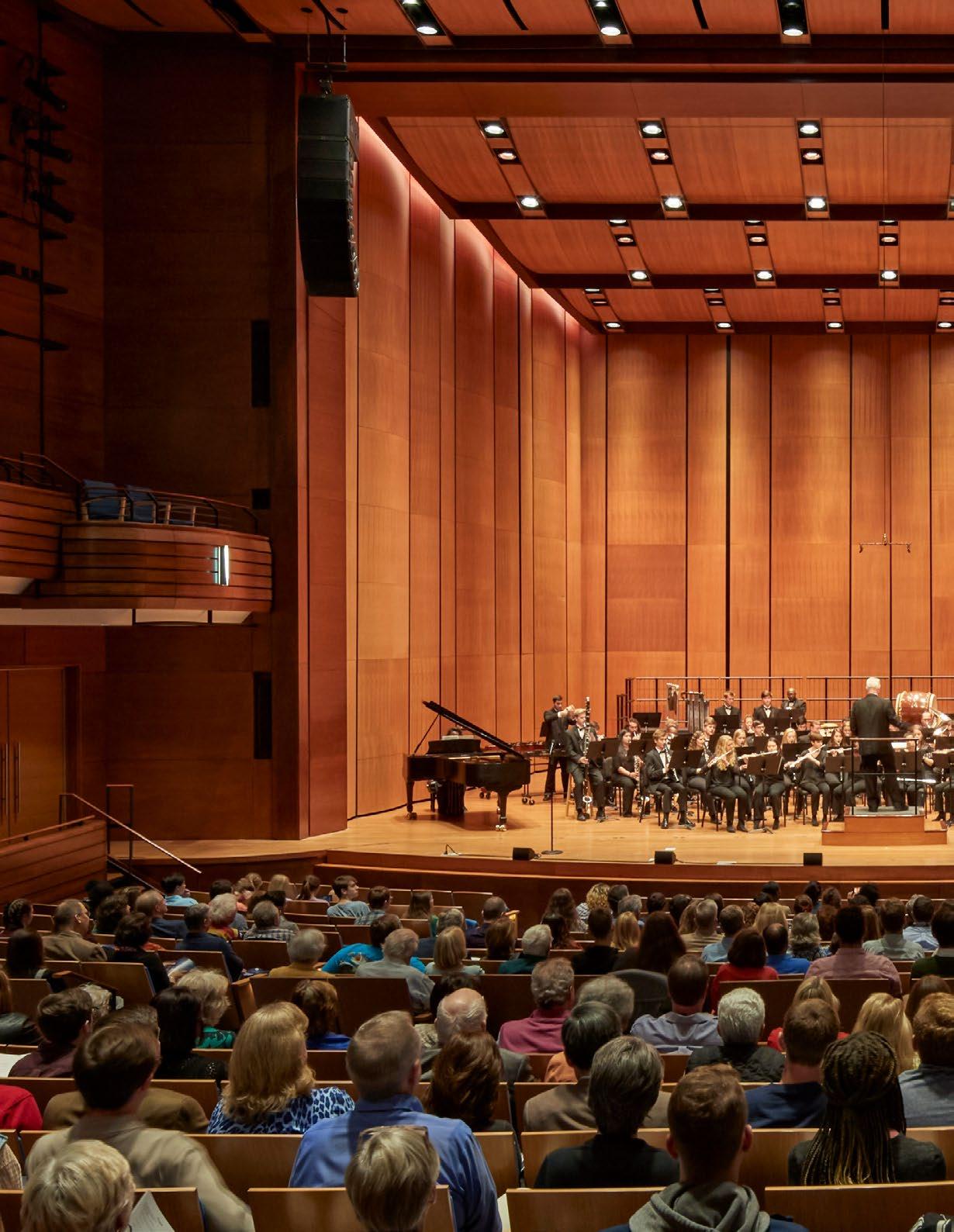
The Jay and Susie Gogue Performing Arts Center, otherwise known as the Gogue Center, is located on the campus of Auburn University in Auburn, Alabama.
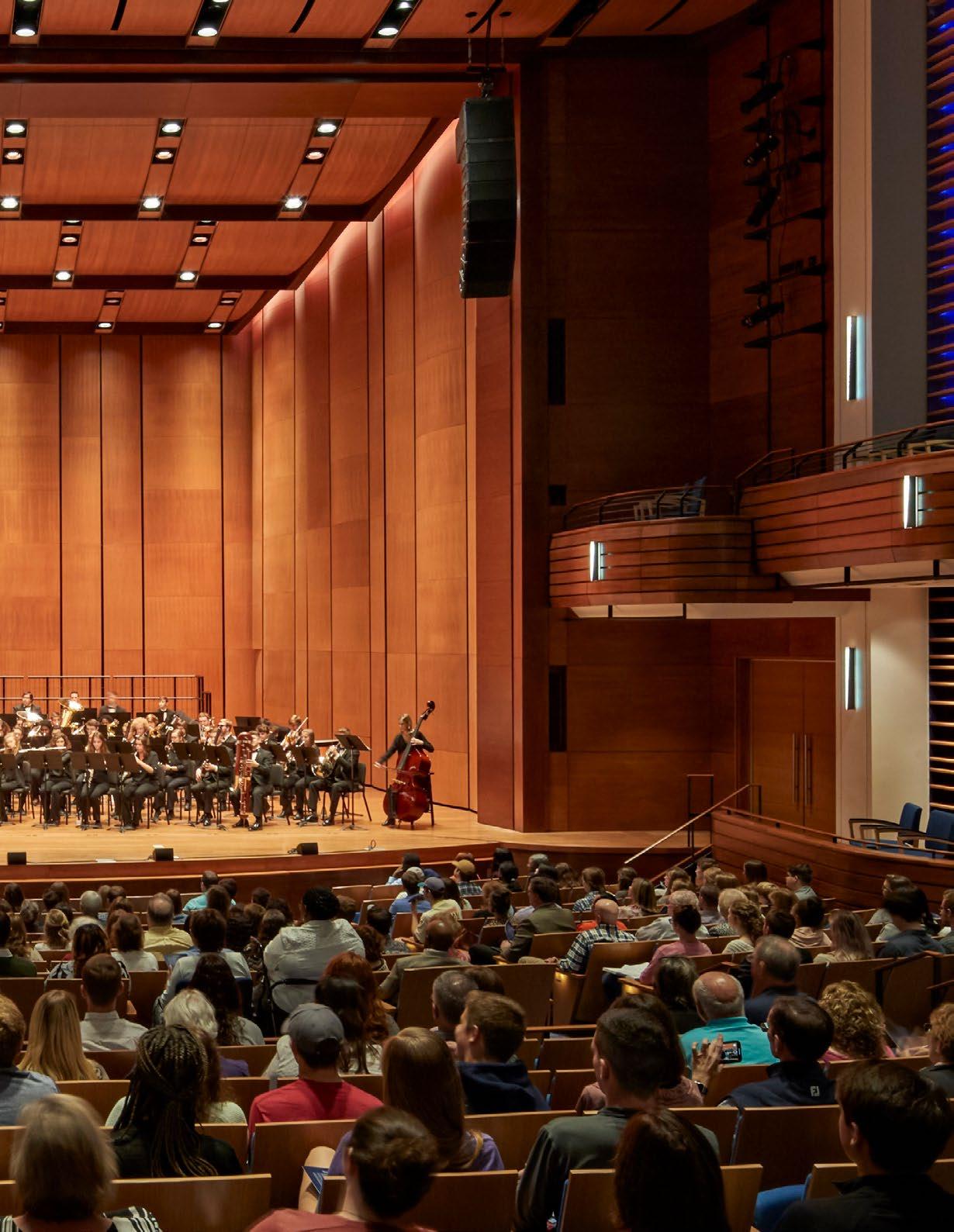
The Gogue Center houses the 1,200-seat Woltosz Theatre. The theatre was built with exceptional acoustics so that it is possible to hear well from every seat.
WHO WILL YOU SEE HERE?
Ushers
These are the people who will greet your bus, lead your class into the building and help you find your seat. Be sure to say “hello!”
Stage Crew
These are the people who work backstage, so you won’t see them in the lobby, but you might see them before or after the performance, and sometimes, they even come on stage during the performance to move things.
Lighting & Sound Operators
These are the people who control the lighting and the sound for the performance. You may see them in the middle of the auditorium at the big sound board or in the back of the auditorium in the booth. Sometimes, the spotlight operators are in the back way above your head.
Performers
These are the people on the stage who may be dancers, musicians, singers, actors, puppeteers or acrobats. It is their job to communicate using their bodies, instruments and voices.
Audience Members
This includes you, your classmates, and other students and teachers from Alabama, and beyond.
What Does the Audience Do?
Alabama Course of Study
AE17.MU.3-5.15
AE17.MU.6-8.14
National Standards
MU:Pr6.1.3-8b
The audience is an important part of the performance. Without the audience, who would watch the performers? Who would clap and sing along and appreciate what the artists bring to the stage? When you are a member of an audience at the theatre, there are a few things to know about what to do and what not to do.
Listen and watch, but do not talk.
Have a camera or phone? Please turn it off.
The performers will take to the stage, and we know they will engage. You can laugh, you can sing, you can get up and dance, but just make sure that you give them all a chance!
Sit in your seat and look around, but please keep your feet toward the ground. THANK YOU!
When the song is done, or the show comes to an end, make sure that you give the performers a hand! Applause is the way that we can say thank you for all that they did today!
The Walter Stanley and Virginia Katharyne Evans Woltosz Theatre
Acoustics: The Science of Sound
Acoustics is the study of sound and how that sound reacts in spaces, particularly rooms and buildings. What is sound? Sound is vibration. That vibration travels through the air and into our ears where we hear it. Vibration begins through movement—for example, strumming a guitar string. That vibration creates a sound wave. In a theater or concert hall like the Woltosz Theatre, acoustics are important so that everyone can hear the performers.
There are two ways that acoustics are controlled. The first, reverberation, is controlling how sound waves bounce off surfaces, like walls and floors. Hard surfaces cause more reverberation and make spaces louder. The second way, absorption, is the opposite of reverberation. Soft surfaces absorb sound waves and make rooms quieter.
Of the materials and surfaces listed below, which do you think cause sound to reverberate? Which absorb sound?
• Tile
• Carpet
• Stone
• Curtains
• Cushions
• Wood
Who to know at the show
MEET THE CREATIVE TEAM
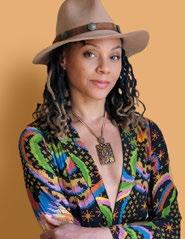
Nambi E. Kelley, playwright
Nambi E. Kelley is an awardwinning playwright and actress. In 2017, she was chosen by Toni Morrison to adapt Morrison’s novel Jazz, which premiered at Baltimore Center Stage. Her adaptation of Richard Wright’s Native Son, which premiered in New York in 2019, was nominated for New York’s Drama League Awards, winning Best Production from the AUDELCO Awards. Kelley’s production company, First Woman, produced a digital and in-person national tour of her young audiences’ play, Jabari Dreams of Freedom, with the digital version being selected for several film festivals and winning Best Kids Movie at the ARFF Paris International Awards. Kelley is the recipient of the National New Play Network Annual Commission, winner of the Prince Prize and was named a New Victory LabWorks Fellow. More recently, she completed a residency at New Victory Theatre through the LabWorks Program for BIPOC artists in New York City, which gifted her $15,000 to participate in workshops and develop her latest work, Hero: The Boy from Troy. As an actress, Kelley has worked on stage and television in Chicago, New York, Los Angeles and internationally, playing opposite such artists as Phylicia Rashad, Alfre Woodard, Blair Underwood and Patrick Swayze. She worked as a co-producer on season 2 of Peacock’s Bel Air, and her previous television writing credits include Lady in the Lake (Apple TV) Our Kind of People (Fox) and The Chi (Showtime). Kelley is a former playwright-in-residence at the National Black Theatre, the Goodman Theatre, and a former Dramatists Guild Fellow, among numerous other honors and distinctions. She holds a B.F.A. from The Theatre School at DePaul University and an M.F.A. in interdisciplinary arts from Goddard College in Vermont.
Joe Plummer, music director
Joe Plummer is a true renaissance man who has found a successful niche as a musical playwright. Get Ready, his premiere work with Jaye Stewart, has enjoyed many acclaimed productions, including at Victory Gardens Theatre (Black Theatre Alliance Award for Best New Writing of a Play; Jeff Award nomination), ETA Theatre (Jeff Award nomination), Black Ensemble Theatre in Chicago and Penumbra Theatre. His musical, I Got’cha: The Story of Joe Tex and the Soul Clan, at Black Ensemble Theatre garnered Plummer and cowriter David Barr III two Black Excellence Awards, and the New Horizon Theatre production in Pittsburgh took home 11 Onyx Awards. Plummer’s third musical, Nothing but the Blues, was presented at the Black Ensemble Theatre (Jeff Award nomination; 10 Black Theatre Alliance Awards), New Horizon Theatre, and the Legendary Rhythm and Blues Cruise onboard Celebrity Cruises. His next musical, Vee Jay Records, cowritten with Sanetta Gipson, had its first reading at The Chicago Dramatists. A film version is in production and stars Oscar nominee Viola Davis.
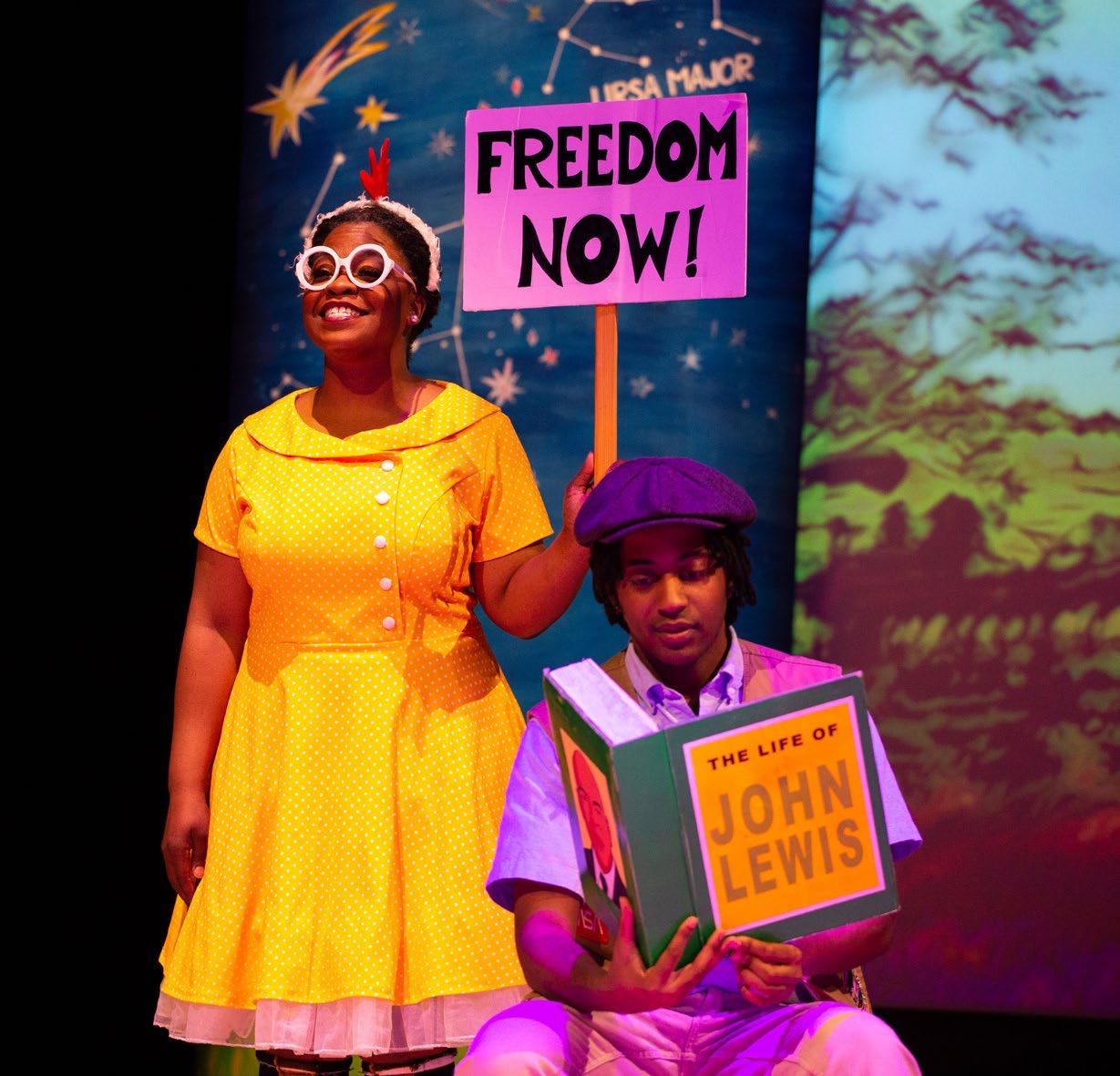
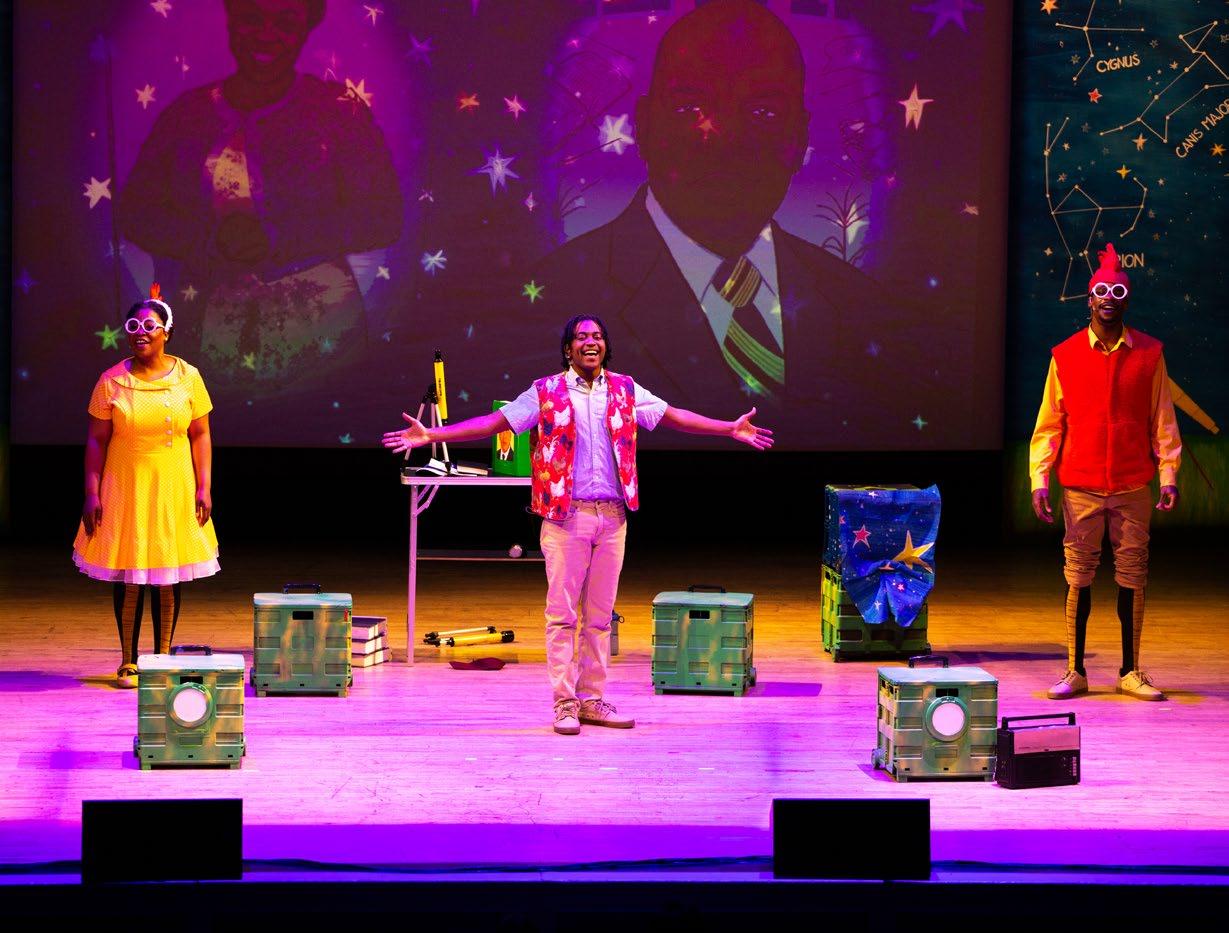
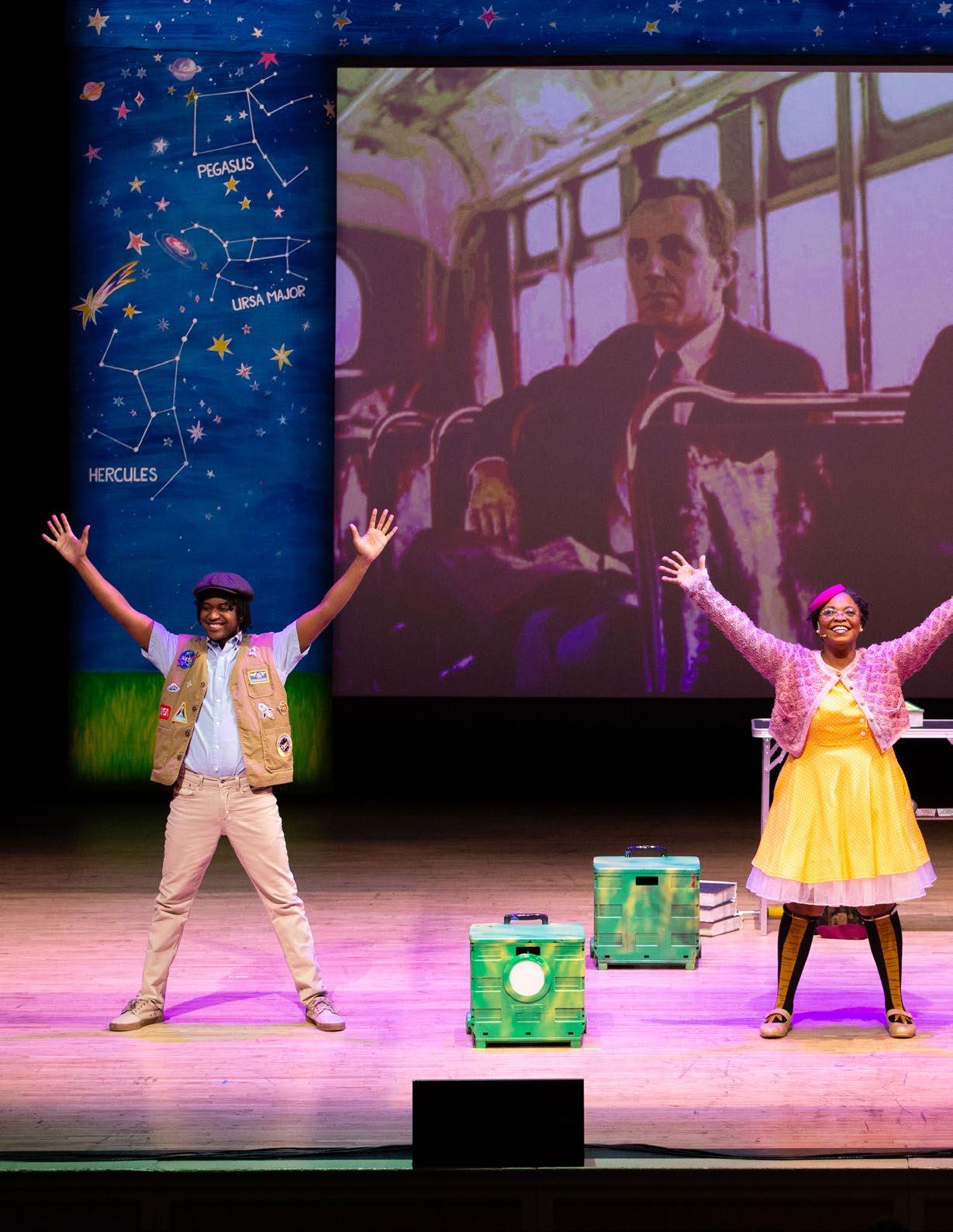
Hero: The Boy from Troy cast members Matelyn Alicia as Ursula, Patrick Saint Ange as John Lewis and Myles Walker as Jim Bone
CHARACTERS
Jayden
A young boy in detention who thinks history has nothing to teach him
John Lewis
The subject of the book
Jayden is reading
Mr. Lewis
John’s father
Dr. Martin Luther King Jr.
A person that John Lewis meets in the book that Jayden is reading
Rosa Parks
A person that John Lewis meets in the book that Jayden is reading
Chicken
The “congregants” on whom John practices his sermons
photo:
Katie Day
Hero: The Boy from Troy cast member
Myles Walker as Jim Bone
What to know before the show
THE STORY OF HERO: THE BOY FROM TROY
Jayden is stuck in detention with a book about Congressman John Lewis, but he thinks that history has nothing to teach him. Together we go on a musical journey through the decades that shows how the heroes in the Civil Rights Movement inspired young John Lewis to protest injustice and get into “good trouble.”
As a boy, John dreams of being a preacher who can help others. While he doesn’t have a congregation yet, he does have a loyal group of singing chickens that listen to him as he finds his voice. On a harrowing road trip through the South, John’s eyes and mind are opened to the injustices of segregation and racism, inspiring him to take action. As John meets Rosa Parks and Martin Luther King Jr., and ultimately becomes a leader and American hero himself, Jayden learns how he too can take a stand.
PRODUCTION HISTORY
Hero: The Boy from Troy was commissioned through Pittsburgh Civic Light Opera and was developed at New Victory Theatre through the LabWorks Program for BIPOC artists in New York City. LabWorks gifted Nambi E. Kelley $15,000 to participate in workshops and develop the material. The show then toured regionally in early 2023 before receiving a workshop in August of 2023, co-sponsored by First Woman with support from Chicago Children’s Theatre, Flushing Town Hall, WP Theater and Amas Musical Theatre in New York.
JOHN ROBERT LEWIS
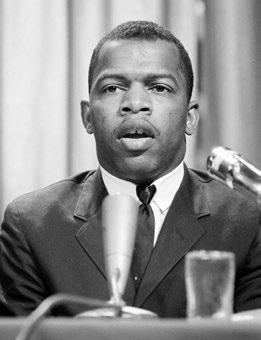
As the show title reveals, John Robert Lewis was born and raised just outside Troy, Alabama, in Pike County. Born on February 21, 1940, his parents were sharecroppers, and the family lived on a farm. As a young boy, Lewis wanted to be a preacher and used to practice preaching to his chickens. As a teenager, he was inspired by Rosa Parks and Martin Luther King Jr. during the Montgomery Bus Boycotts. Lewis attended American Baptist Theological Seminary and Fisk University, where he began to get involved in peaceful or nonviolent protests as part of the Civil Rights Movement in Nashville, Tennessee. In 1963, he was elected leader of the Student Nonviolent Coordinating Committee. This role allowed him to be a key leader in many of the most historic events of the Civil Rights Movement, including the 1963 March on Washington and the march from Selma to Montgomery in 1965 that became known as “Bloody Sunday” after the police turned violent. For his commitment and leadership during this time, Lewis is considered one of the “Big Six” leaders of the Civil Rights Movement. He continued working for the cause throughout the 1970s as the director of the Voter Education Project and the leader of the federal volunteer agency, ACTION. In 1981, he was elected as a city councilman in Atlanta, Georgia. In 1986, Lewis was elected to the U.S. House of Representatives and proceeded to serve 17 terms in Congress, becoming a leader of the Democratic Party. He remained in office until his death from pancreatic cancer on July 17, 2020. Lewis was the first African American lawmaker to lie in state at the U.S. Capitol Rotunda. His funeral services began at Troy University and traveled through Selma, Montgomery, Washington, DC, and finally to Atlanta. After lying in state at the Georgia State Capitol, services for Lewis were held at Ebenezer Baptist Church,
where Martin Luther King Jr. had once been pastor. Former Presidents Bill Clinton, George W. Bush and Barack Obama all spoke with Jimmy Carter, who sent his remarks as his health did not permit travel. Lewis is buried in South-View Cemetery in Atlanta.
Throughout his career, Lewis was the recipient of many awards, including the Martin Luther King Jr. Nonviolent Peace Prize, the Presidential Medal of Freedom, a Congressional Gold Medal and the Liberty Medal. He has had roads, schools and buildings named after him, including the primary building on the campus of Troy University. There are multiple statues of him in Atlanta.
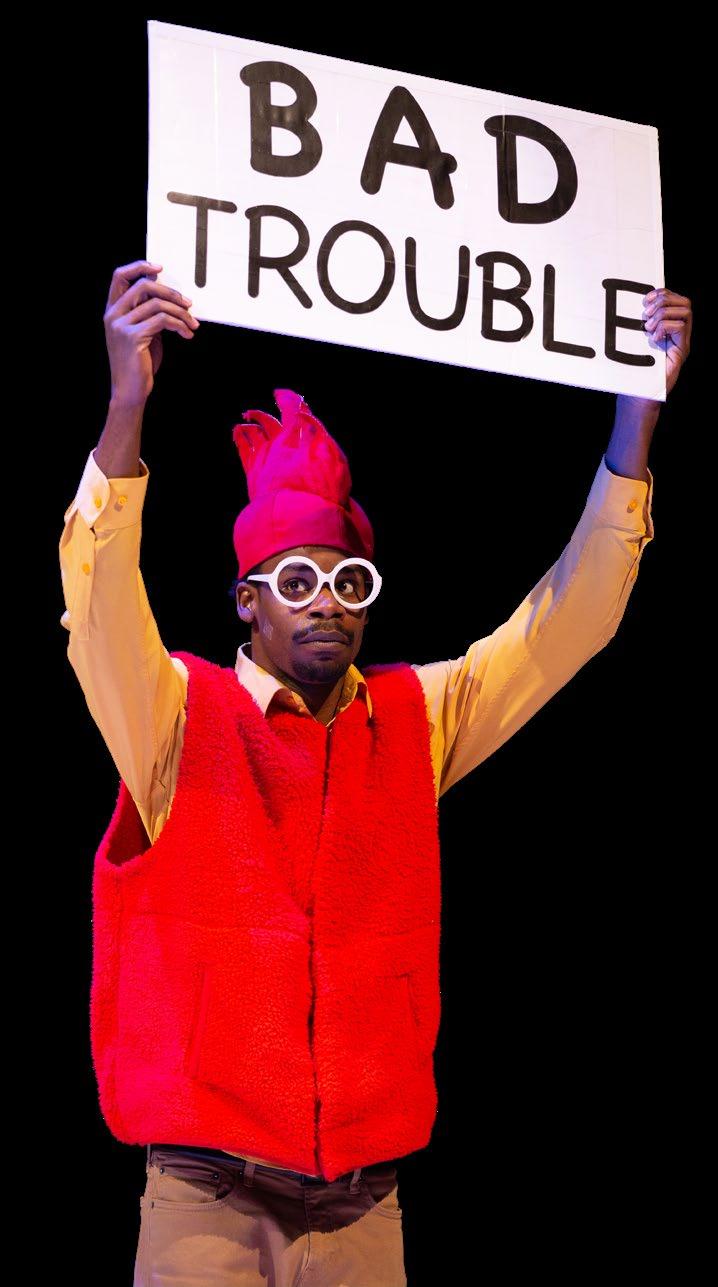
Lewis was also awarded more than 50 honorary degrees in his lifetime. He was instrumental in the establishment of the National Museum of African American History and Culture, which is part of the Smithsonian. Lewis always advocated for nonviolent, civil disobedience as a powerful way to affect change. His motto was that it was necessary to get in “good trouble.” In one of his last speeches he said, “speak up, speak out, get in the way. Get in good trouble, necessary trouble, and help redeem the soul of America.”
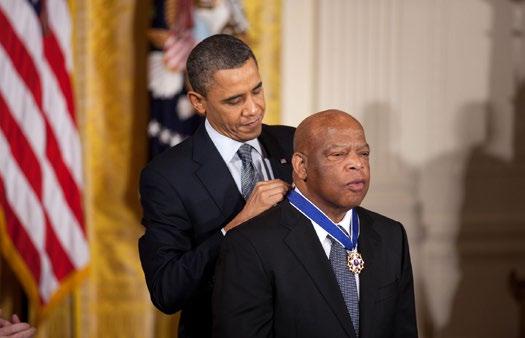
President Barack Obama awards the 2010 Presidential Medal of Freedom to Congressman John Lewis
• Explore the life and legacy of John Lewis through reading and discussion
• Identify and analyze emotions connected to key events in Lewis’s life
• Use creative expression and media to deepen empathy and understanding
• Practice critical reading, writing, speaking and listening skills
MATERIALS
For these activities, you will need the following items:
• A printed copy or digital version of a John Lewis speech or excerpt to annotate
• Tools for annotation (e.g., a digital annotation tutorial, pens, pencils, etc.)
• Devices with a video-creating app of your choice (e.g., Clips, iMovie, etc.)
ACTIVITIES
Introduction
1. Read aloud a John Lewis speech, annotating his word choices that provide tone, intent and feeling.
2. Provide students a copy of the speech and ask them to highlight or underline key phrases that standout—words showing emotion, calls to action or powerful imagery.
3. Have students write short margin notes explaining why those parts are important or how they make them feel.
4. Discuss annotations and then remind students of rhetorical devices. Ask them which rhetorical devices they see in the speech (e.g., repetition, metaphors, parallelism). Identify the examples and discuss how these devices strengthen his message and evoke emotions.
5. Discuss key moments where Lewis showed courage or hope or faced sorrow.
6. Ask leading questions to reinforce that the author deliberately chose specific words (e.g., “How did you feel when you read this?”; “Why didn’t he choose a different
word?”; “What emotions do you think John Lewis felt during these moments?”).
Research Activity
1. Introduce the Faces of the Civil Rights Tribute Project. Allow students, individually or in small groups, to choose a Civil Rights leader and research the following:
• The leader’s role in the Civil Rights Movement
• Basic biographical information about this person (e.g., date of birth, where they lived, events they participated in, etc.)
• Three important facts about the leader
2. Choices for a Civil Rights leader include John Lewis, Rosa Parks, Martin Luther King Jr., Emmett Till, Fred Lee Shuttlesworth, Jo Ann Robinson, Angela Davis, Malcolm X, W.E.B. DuBois, James Baldwin and others.
3. After gathering the pertinent information, have students collect digital images and video clips that represent the Civil Rights leader and the facts they have identified to create a biography in the free version of Padlet (padlet.com) or another similar program.
Creative Activity
1. After they have completed their research and are creating their biographies, students can make a documentary style tribute using Clips, iMovie or a similar video editing application. Students can use the information they have gathered and images they pulled from the web to create a short video to showcase their subject. Students should consider the rhetorical impact of things like font, image and sound as they create their tributes.
2. Once students have completed their documentaries, host a “premiere” where all the films are screened for the class.
Sharing & Reflection
1. Take time to lead a discussion with students about what they learned through completing these activities and hearing from and observing the work of their classmates.
2. Ask students what they learned about the use of rhetorical devices in speech and other forms of media. Discuss with them other places that they may regularly encounter the use of rhetorical devices.
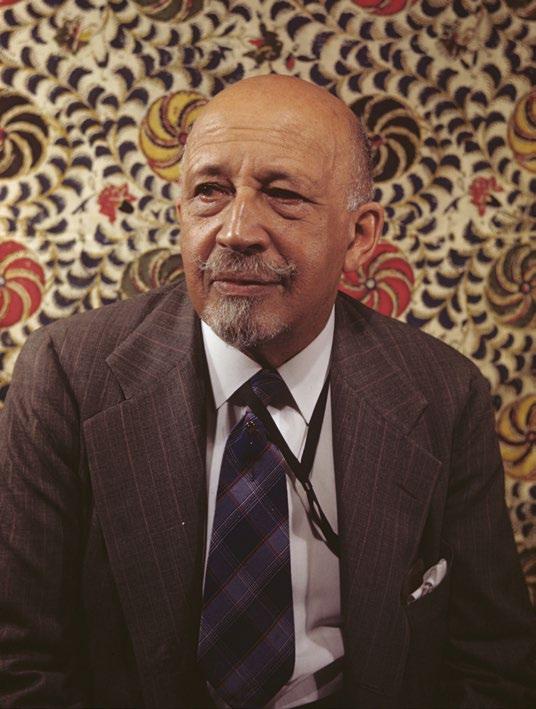
w.e.b. dubois
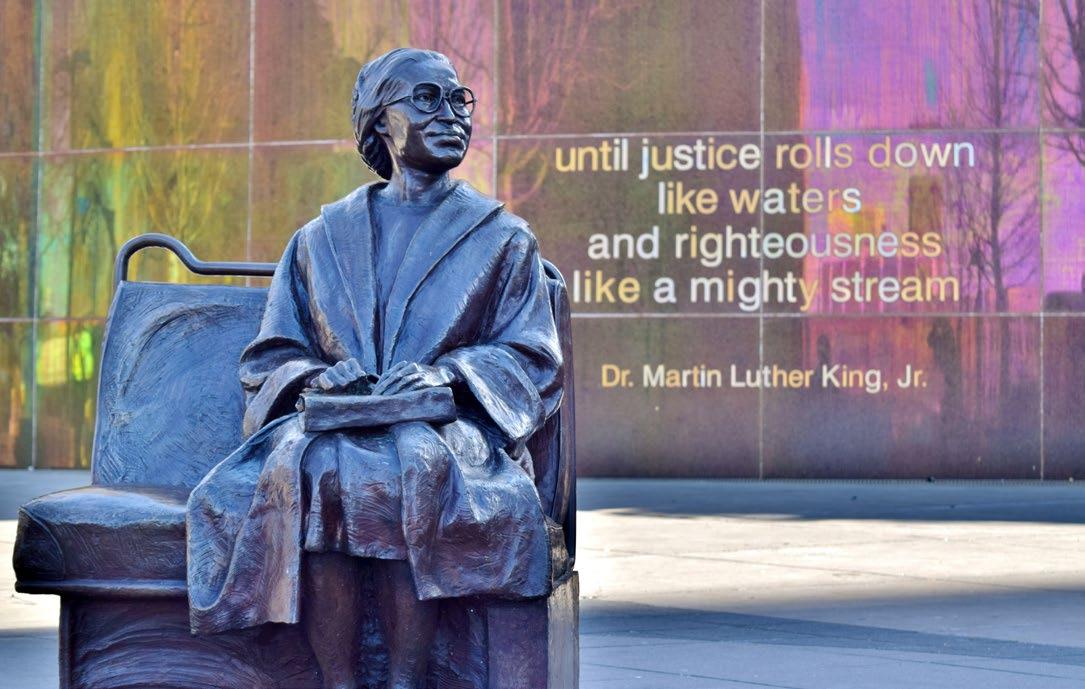
rosa parks
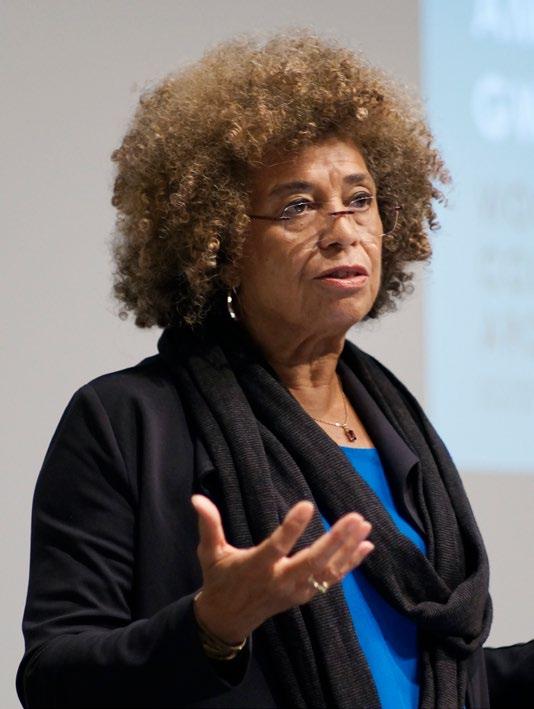
angela davis
THE CIVIL RIGHTS MOVEMENT
What are civil rights? Civil rights ensure that all citizens, regardless of race, religion or gender, receive equal treatment and opportunity under the law. In the United States, those rights include the right to vote, have a fair trial, access to public education, freedom of religion, freedom of speech, freedom of the press, and many more. In fact, the United States has two very important legal documents, the Constitution and the Bill of Rights, that establish the laws which protect the civil rights of citizens.
Though there have been multiple times in the history of the United States that a movement has worked to secure civil rights for specific groups, the Civil Rights Movement commonly refers to the fight to end racial segregation, discrimination and the disenfranchisement of African Americans in the United States that took place from approximately 1954 to 1968. The Civil Rights Movement was centered around nonviolent protests and civil disobedience, or what John Lewis referred to as “good trouble.” Let’s look at some of the key events and people involved in the movement.
Brown v. Board of Education
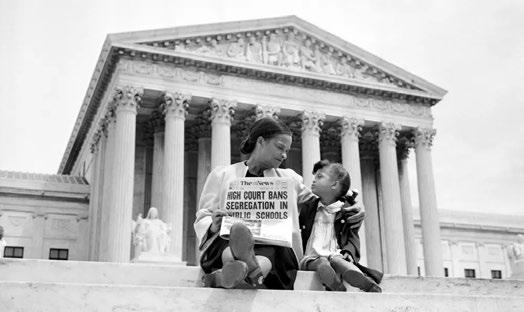
On May 17, 1954, the U.S. Supreme Court ruled unanimously that mandating or permitting public schools to be segregated by race was unconstitutional. This ruling set in motion the fight for desegregation and equality that was the crux of the Civil Rights Movement.
Montgomery Bus Boycott
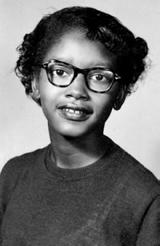
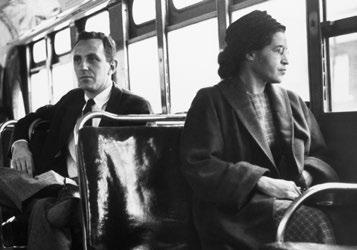
In March of 1955, 15-year-old Claudette Colvin was arrested for not giving up her seat on a Montgomery bus. After Rosa Parks was also arrested for not giving up her seat later that year, African American leaders in Montgomery organized a boycott protest. The success of this protest is what thrust Martin Luther King Jr. into the spotlight.
Nashville Sit-ins
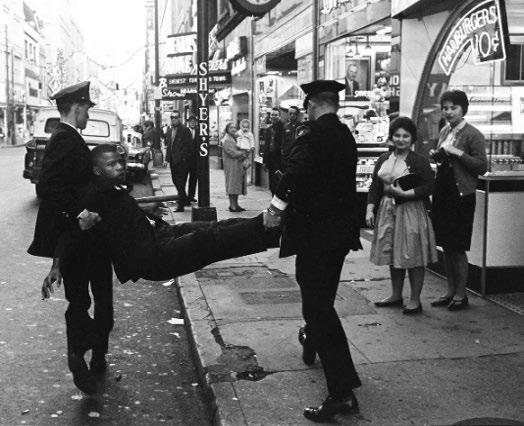
Starting in 1958, Black students around the South began leading sit-ins at segregated lunch counters. This peaceful protest method involved students sitting at the counter, attempting to order food, and remaining seated at the counter after service was denied. The most successful of the lunch counter sit-ins was organized in Nashville, Tennessee, where hundreds of college students executed sitins around the city. One of the organizers of the Nashville sit-ins was John Lewis.
claudette colvin
rosa parks
Freedom Rides
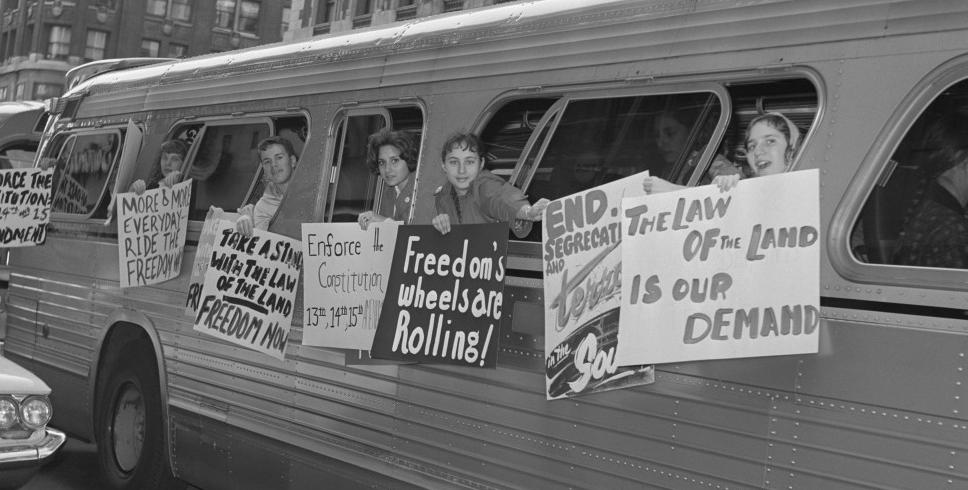
Civil rights activists organized another kind of nonviolent protest known as Freedom Rides. These journeys involved taking rides on interstate buses into areas of the country that remained segregated. The goal was to desegregate bus terminals and bus seating. One of the students prominently involved in Freedom Rides was John Lewis. The Freedom Riders were often attacked, beaten and arrested. In 1961, President John F. Kennedy ordered the Interstate Commerce Commission to issue a desegregation order, providing a victory for the Freedom Riders after all that they had endured.
The March on Washington
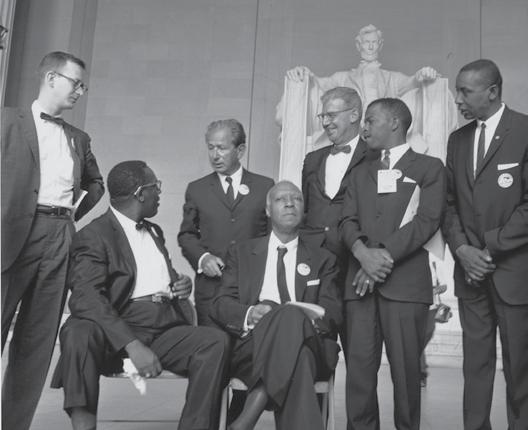
The March on Washington for Jobs and Freedom was a gathering of more than 200,000 people who were marching for economic equality and racial justice. John Lewis helped organize this event and made a speech before the crowd when he was only 23 years old. The March on Washington is best remembered as the event where Martin Luther King Jr. delivered his historic “I Have a Dream” speech. Above, Lewis is pictured with the other organizers of the March on Washington. He is second from the right.
nashville sit-ins
freedom rides
march on washington
CONSTRUCTING A TIMELINE
Alabama Course of Study Standards
OBJECTIVE
By completing these activities, students will:
• Identify key persons and events of the Civil Rights Movement
• Use vocabulary associated with the Civil Rights Movement
MATERIALS
For these activities, you will need the following items:
• “What to know before the show” section on pages 12–13
• Handout with list of suggested events
• Devices/books for research
• Research template on page 20
• Timeline template on page 21
• Pen or pencil
• Various art materials
ACTIVITIES
Introduction
1. Begin with an introductory discussion about John Lewis. You can use the contents of the “What to know before the show” section of this guide or your own content, but be sure to cover who he was, where he was from, what he accomplished in his lifetime, what he was most known for, and particularly emphasize his role in the Civil Rights Movement.
2. Lead a discussion with students about the Civil Rights Movement. You can use the contents of the “What to know before the show” section or your own content but be sure to cover key events and people associated with the movement.
Research Activity
1. Assign each student or student group an event to research. Students should research the date or dates of the event and be able to provide a brief summary of what took place and
why it was significant. (Use the “Suggested Events” list on page 19 as guidance or create your own list of Civil Rights events.) Students can use the template for research to assist them, if desired.
2. As a class, figure out which event took place first. Mark that event as the beginning of the timeline on the board. Continue adding events in chronological order until all the researched events are placed on the timeline.
3. Once the timeline is complete, begin with the first event and allow students to present what they learned to the class. Make sure that the rest of the class is filling in the important information on their timeline handouts. Make sure that they have multiple timeline handouts, if needed, depending on class size and the number of events being researched.
Creative Activity
1. After students have completed their research on John Lewis and the Civil Rights Movement, explain that they will now create a piece of art to represent what they learned.
2. Give students access to various art-making materials (e.g., construction paper, colored paper, markers, paint, colored pencils, pastels, magazines, scissors, tape, glue, pencils, pens, etc.).
3. Allow students to create a visual representation of their timeline (e.g., drawing, collage, sculpture, painting, etc.). It can represent the entire movement, one event, one person, a group of people or whatever stood out to them and made an impact. Feel free to provide examples of art that may inspire them.
4. Once students have completed their art, ask them to write an artist statement about what they have created.
5. With the completed artwork, artist statements and timelines, create a display in your classroom or somewhere in the school where it can be appreciated by everyone.
Sharing & Reflection
1. Take time to lead a discussion with students about what they learned through completing these activities and hearing from and observing the work of their classmates.
2. Allow interested students to share their artwork and artist statement with the class.
SUGGESTED EVENTS
• Plessy v. Ferguson
• Brown v. Board of Education
• Montgomery Bus Boycott
• Freedom Riders March on Selma
• Montgomery Voting Rights March
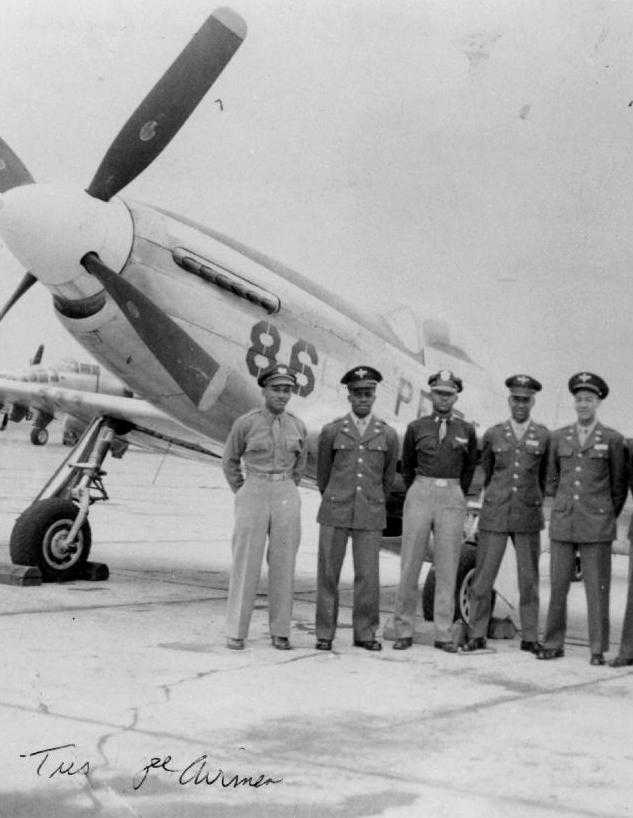
• Tuskegee Airmen
• Civil War
• Thirteenth, Fourteenth and Fifteenth Amendments
• 16th Street Baptist Church Bombing
• Civil Rights Act of 1964
• Voting Rights Act of 1965
• Jim Crow Laws
• Nashville Sit-ins
Research Template
Historical Event
Who was involved?
Date(s)
Summarize
Why we go to the show
CIVIL RIGHTS LEADERS CONNECTED TO ALABAMA
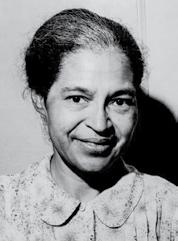
Rosa Louise McCauley Parks was born on February 4, 1913, in Tuskegee, and rose to national prominence when she refused to give up her seat on a Montgomery bus in December of 1955, sparking the beginning of the Montgomery Bus Boycott. Parks had also engaged in activism before that moment. She joined the Montgomery chapter of the National Association for the Advancement of Colored People in 1943 and successfully registered to vote in 1945, despite the many attempts to stop her. Prior to the beginning of the Civil Rights Movement, she was an active leader of several campaigns aimed at bringing attention to racial violence in Montgomery. Though she relocated to Detroit, Michigan, in 1957, she continued to work as a civil rights activist throughout her life. Parks died on October 24, 2005. Montgomery’s Rosa Parks Museum, named in her honor, presents exhibitions dedicated to the bus boycott and many other Alabama civil rights events.
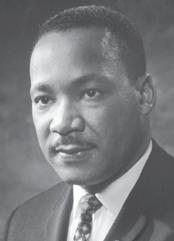
Martin Luther King Jr. was not born in Alabama, but served as the pastor of Dexter Avenue Baptist Church in Montgomery at the height of the Civil Rights Movement, placing him front and center. He was a leader in the Montgomery Bus Boycott and the march from Selma to Montgomery. Considered one of the nation’s most significant civil rights leaders, King delivered some of the most famous speeches in his quest for racial equality in the United States. Martin Luther King Jr. was assassinated on April 4, 1968, in Memphis, Tennessee. The Lorraine Motel, where he was shot, is now the site of the National Civil Rights Museum.
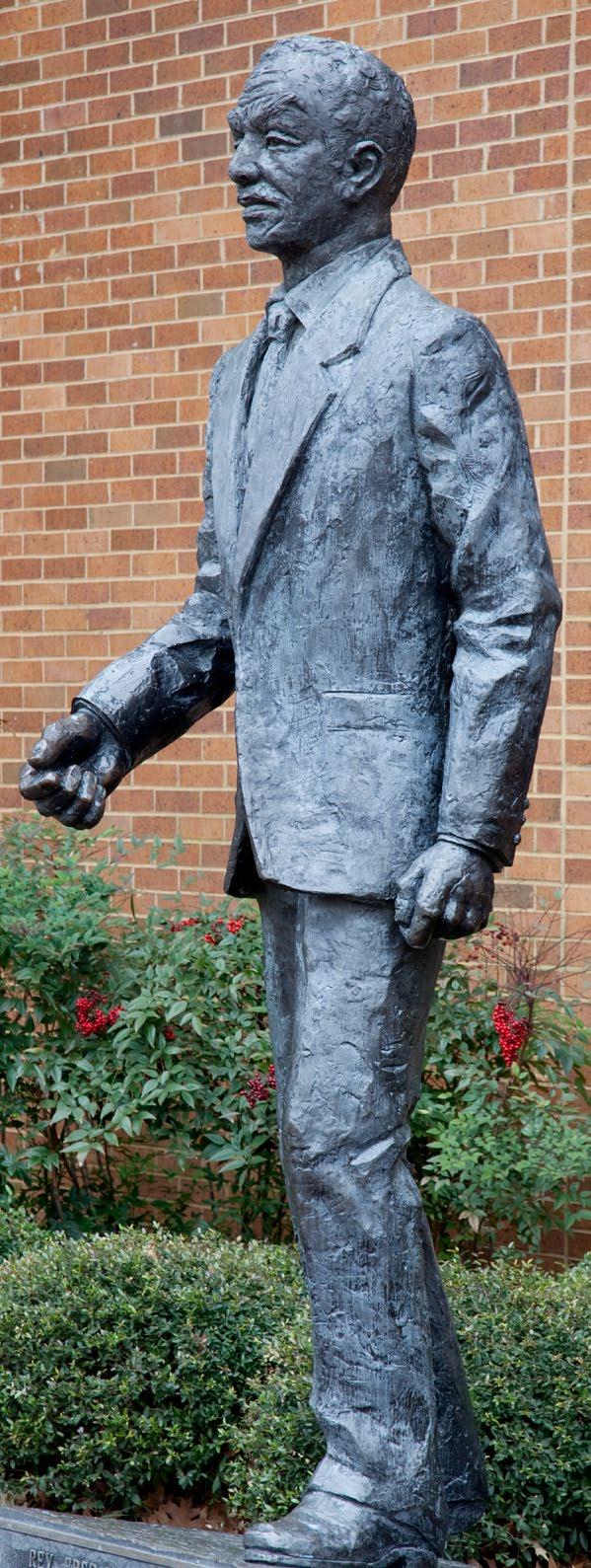
Statue of Reverend Fred Shuttlesworth located outside the Birmingham Civil Rights Institute
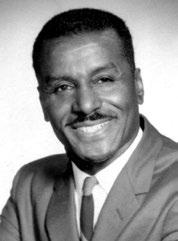
Fred Lee Shuttlesworth was born in Montgomery in 1922 and grew up in Oxmoor. He attended Cedar Grove Bible College in Mobile as well as Selma University and Alabama State College, where he graduated in 1952. He was pastor of Selma’s First Baptist Church and then Bethel Baptist Church in Birmingham. In Birmingham, Shuttlesworth began to get involved in the fight for civil rights. He founded the Alabama Christian Movement for Human Rights in 1956. This organization was responsible for leading the Civil Rights Movement in Birmingham. He was one of the founders of the Southern Christian Leadership Conference (SCLC) along with Martin Luther King Jr., which became the preeminent civil rights organization in the South. Shuttlesworth was instrumental in the organization of the 1963 Birmingham demonstrations that began to thrust the Civil Rights Movement into the international news and which President Kennedy said was the one of the major catalysts that lead him to introduce legislation that became the Voting Rights Act of 1965. Fred Shuttlesworth died in 2011 in Birmingham. In 2024, the name of the city’s airport was officially changed to Birmingham–Shuttlesworth International Airport in his honor.
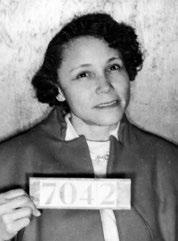
Jo Ann Robinson was born and raised in Georgia. The highly educated Robinson took a teaching position at Alabama State College in Montgomery in 1949. Robinson attended Dexter Avenue Baptist Church famously pastored by Martin Luther King Jr. She came to
understand segregation when she was driven to tears by a Montgomery bus driver after mistakenly sitting in the wrong section on the bus as she headed home for Christmas. This experience awakened her interest in the fight for equality. Robinson is credited with conceiving of the Montgomery Bus Boycott idea more than a year before it actually happened. She was arrested as one of the leaders, though she never stood trial. Her memoir, The Montgomery Bus Boycott and the Women Who Started It, was published in 1987. She remained a community activist until her death in 1992.
CIVIL RIGHTS EVENTS IN ALABAMA
Birmingham Movement
On April 3, 1963, civil rights organizations lead by Fred Lee Shuttlesworth and Martin Luther King Jr. began a campaign to desegregate Birmingham. Demonstrations, sit-ins, boycotts and marches went on for more than a month. King was arrested during the operation and penned his famous “Letter from a Birmingham Jail” during this time. His letter called on white religious leaders to join the fight. While King was incarcerated, his organization, the SCLC, organized what came to be known as the Children’s Crusade, calling on school children to join the cause. Even amidst harsh reactions from the white civic leaders and the police, more people continued to join the protests. On May 10, 1963, the city agreed to a gradual desegregation plan ending the crusade. On September 16, 1963, the 16th Street Baptist Church was bombed, killing four young African American girls aged 11–14, proving that the violence was not over. The Birmingham Movement directly lead to President Kennedy sending what would become the 1964 Civil Rights Act to Congress.
shuttlesworth
robinson
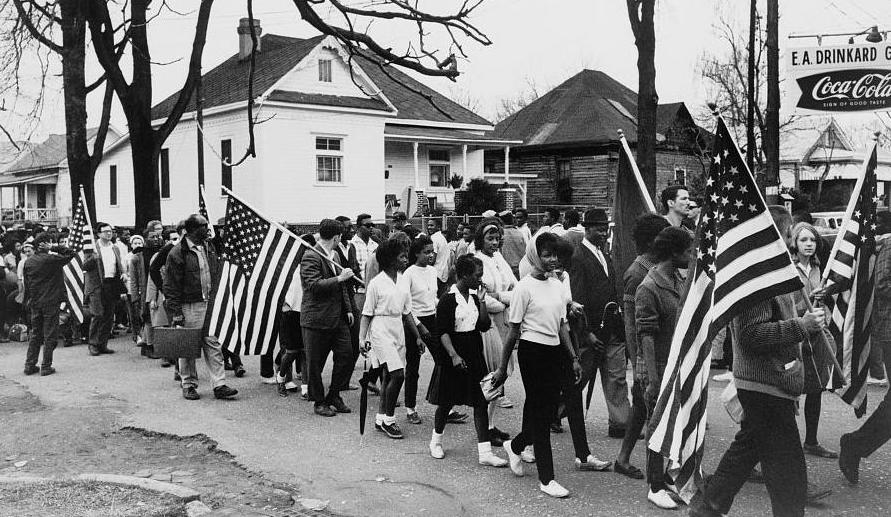
Participants, some carrying American flags, marched from Selma to Montgomery, Alabama, in the 1965 Civil Rights March
Selma to Montgomery March
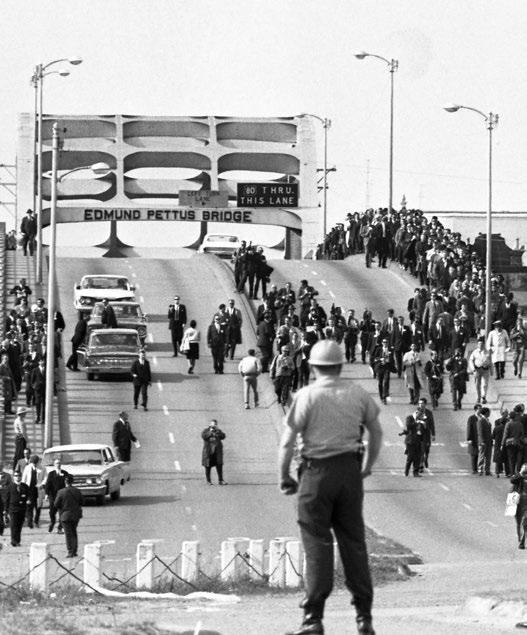
In 1965, both the SCLC and the Student Nonviolent Coordinating Committee (SNCC) began a campaign to bring national attention to the denial of voting rights to Black citizens in Dallas County and across the South. On February 18, 1965, Jimmie Lee Jackson was shot by a state trooper when he came to the defense of his mother and grandfather who were being beaten by police. He succumbed to his injuries a week later. In response, the SCLC and SNCC organized a march from Selma to Montgomery. On March 7, 1965, 600 marchers, including John Lewis and Jimmie Lee Jackson’s grandfather, gathered in Selma to begin the march to Montgomery. As they attempted to cross the Edmund Pettus Bridge, state troopers attacked the marchers, beating them and not allowing them to pass. The event became known as “Bloody Sunday.” On March 21, 1965, the march started again under protection from the federal government. Though ordered to limit the number who would walk the 50-mile trek, more than 20,000 people joined the protestors as they made their way to Montgomery, finally arriving on March 25. The march culminated in a speech by Martin Luther King Jr. on the steps of the capitol. The events of
this march created the path for President Lyndon Johnson to sign the Voting Rights Act of 1965.
WHERE CIVIL RIGHTS STORIES LIVE ON
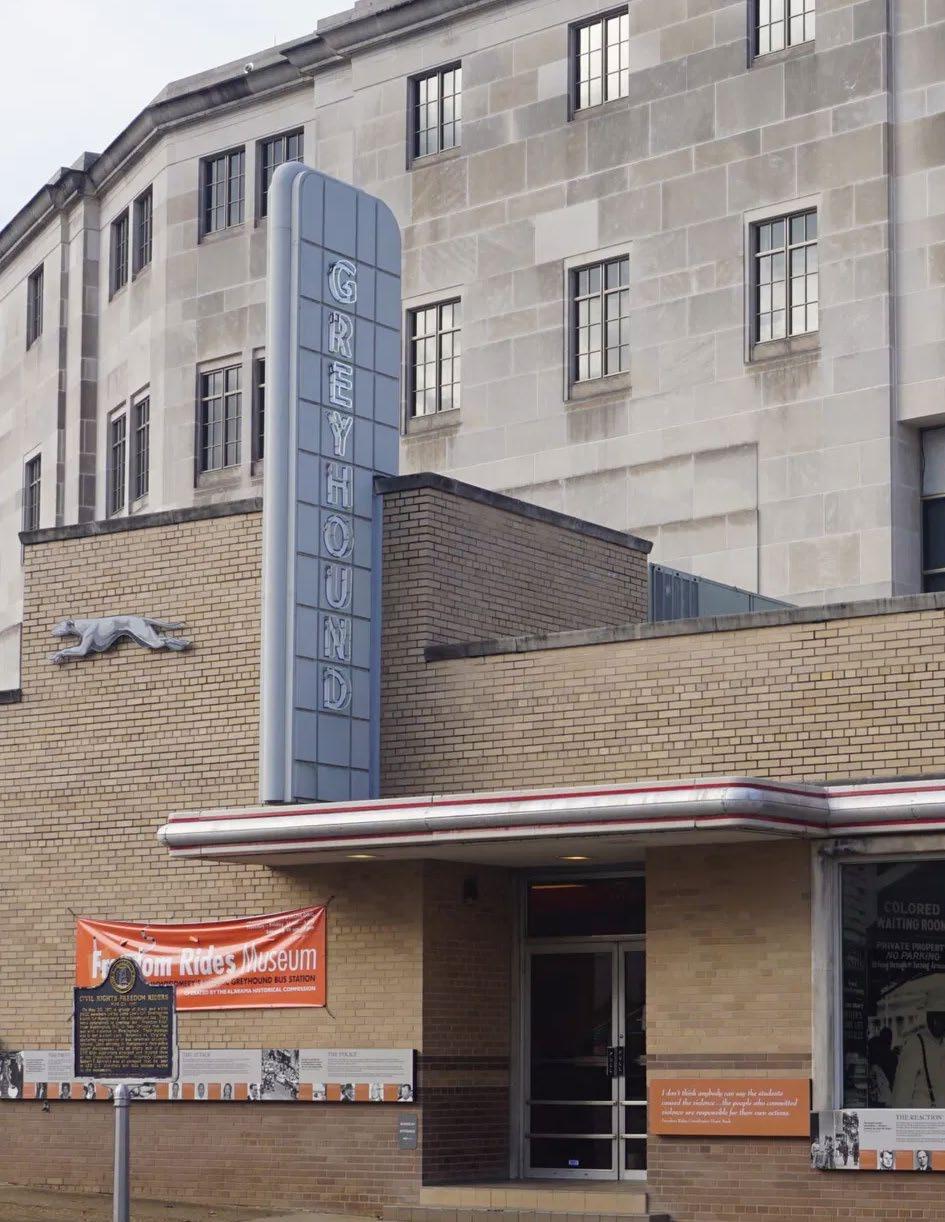
Today, Montgomery holds many reminders of the fight for civil rights during the Civil Rights Movement. People can visit the Civil Rights Memorial Center, which houses exhibits, has educational activities and materials, and is home to the Wall of Tolerance. They can go to the Freedom Rides Museum located in an old bus station that has been restored to look like it did in 1961 when Freedom Riders were attacked there. The Rosa Parks Museum is located at the site where she was arrested and tells her story while highlighting artifacts of the civil rights era. Visitors can see the First Baptist Church on Ripley Street where some of the Montgomery Bus Boycott planning meetings took place. It also served as a refuge for Freedom Riders during the Freedom Rides. Dexter Avenue King Memorial Baptist Church remains preserved as it was when Martin Luther King Jr. served as its pastor.
Just outside Montgomery, the Edmund Pettus Bridge still stands in Selma. In Anniston, one can find the Freedom Riders National Monument. The 16th Street Baptist Church still stands in Birmingham; there, visitors can also see the Birmingham Civil Rights Institute and walk through Kelly Ingram Park where the Children’s Crusade took place.
The state of Alabama was certainly at the center of the Civil Rights Movement. The events that took place here and the men and women who helped to lead the way are now an integral part of the story of the United States.
Gee’s Bend Quilters
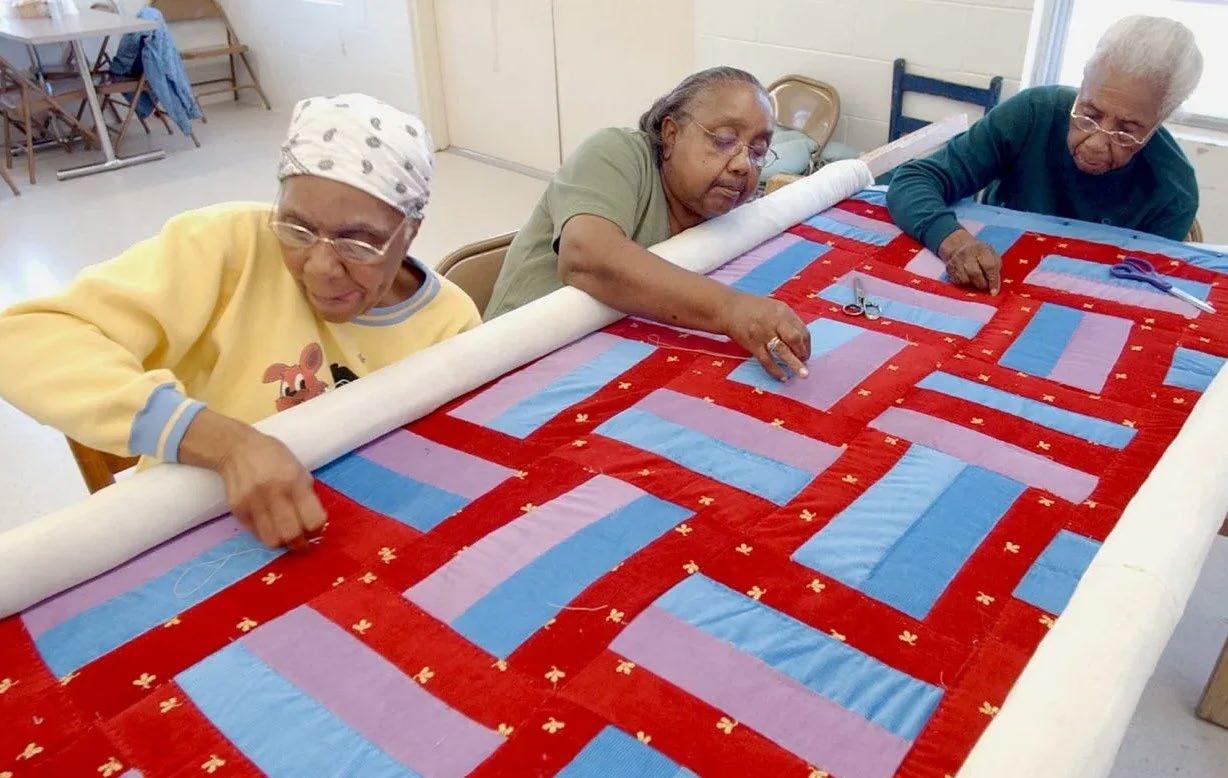
Gee’s Bend (now Boyslabama) is a small, historically Black rural community shaped by its past as a former cotton plantation. For generations, women
there transformed adversity into artistic and cultural strength through quilting. Their quilts served practical needs but also became tools of resistance, community building and civil rights activism. In fact, women from Gee’s Bend even participated in the Selma march for voting rights with John Lewis. Gee’s Bend quilts have been displayed at the Smithsonian and other museums across the world. They have even been featured on U.S. postage stamps. Passed down through families, this artistry forms a powerful legacy of place, protest and creativity. Today, you can visit Gee’s Bend and experience the “tradition of activism and artistic excellence” of these women firsthand, particularly at the annual Airing of the Quilts Festival in October, but also through tours and workshops.
Gee’s Bend quilters Lucy Marie Mingo, Nancy Pettway and Arlonzia Pettway (from left) work to attach the top piece of a quilt to the batting at Boykin Nutrition Center in this 2006 photo.
MARCHING THROUGH TIME
Alabama Course of Study Standards
OBJECTIVE
By completing these activities, students will:
• Calculate distance using a scale
• Calculate time over various parameters
• Apply mathematical calculations to real-world historical contexts
• Demonstrate understanding of the Civil Rights Movement’s key journeys
• Use creative expression to convey emotional and historical insights
• Present findings and reflections in visual, written or digital formats
MATERIALS
For these activities, you will need the following items:
• Freedom Rides supplementary information
X aub.ie/gpac-hero-freedom-al
X aub.ie/gpac-hero-freedom-ga
• “Time Marches On” map on page 29
• “Time Marches On” worksheets on pages 30–31
• Inch rulers
• Pencils, colored pencils and markers
• Chart paper or poster board
• Digital design tools and devices to use them
• Journal or writing paper
ACTIVITIES
Introduction
1. Review the “Freedom Rides” lesson on page 17 and “Selma to Montgomery March” lesson on page 24. To provide additional context, discuss the details included in the supplementary information.
2. Discuss with students the significance of the Selma to Montgomery March.
3. Examine the various Freedom Ride routes traveled across the eastern United States, with special attention to those in Alabama. Highlight the museums and memorials throughout the state where visitors can learn more about these historic events.
Math Activity
1. For this activity, students will perform various calculations related to significant Civil Rights Movement marches and Freedom Rides.
2. Copy and distribute the “Time Marches On” map and worksheets. Each student will also need a standard inch ruler.
3. Before beginning, explain to students that the map they are using is not geographically accurate. For the purposes of this exercise, the map provided uses a scale of 1 inch = 100 miles. This scale does not reflect true geographic proportions and is provided solely to allow for simplified calculations.
4. Using a ruler, have students mark and measure each Freedom Ride and/or march route (location to location) in a straight line. Ask students to mark each route in a different color. Have students record their findings for each route.
5. Once the initial measurements are made, have students convert the inches measured to miles using the map’s 1 inch = 100 miles scale. (For quick and easy conversions, students can simply multiple the number of inches measured by 100.)
6. Have students calculate the time required to complete each route as if traveling on foot. Use a walking rate of one mile per 30 minutes. Ask students to calculate how long each route would take to travel on foot in minutes; hour and minutes; days, hours and minutes; and weeks, days, hours and minutes.
7. For older students: Explain that students can travel only four hours before taking a 30-minute break and a maximum of three 4-hour intervals per day. How do these restrictions affect their travel time?
8. Next, ask students to calculate the number of calories they might expend if walking from location to location. For this
calculation, students should assume they would burn 100 calories for every 30 minutes of walking.
9. Finally, ask students to calculate how much water they would need to drink each day if walking from location to location. For this calculation, students should assume they require 16 ounces of water for every 30 minutes of walking.
10. Once students have completed the worksheets with their final calculations, review the findings as a class and resolve any discrepancies.
Reflection Activity
1. Ask students to reflect on the following prompts in their journals:
• How would it feel to travel those long distances on foot or by bus, knowing what the Freedom Riders and marchers faced?
• What challenges—physical, emotional and social— might they have encountered?
• What would keep them motivated to continue?
• Encourage students to use the data they calculated— distances, time, calories and water—as part of their reflection (e.g., “After walking for 8 hours and burning 1,600 calories, I might feel…”).
2. Allow students the opportunity to share their thoughts and reflections with the class.
Creative Activity
1. Have students choose one of the following three projects:
• A journey poster titled “Walking for Freedom” that includes:
- The specific route they chose (with distance and time calculated)
- Illustrations or images of landmarks, people or events along that route
- Math data (distance, time, calories, water needs) displayed creatively
- A short paragraph from the perspective of a marcher or Freedom Rider
• A virtual museum exhibit where students design a digital or paper “mini-museum” display that features:
- A map of their chosen route
- Mathematical insights (distances, time, calories, water needs)
- Images and short captions explaining what happened on the route
- A brief description of what visitors can learn about perseverance and justice
• A diary entry or poem written from the point of view of someone on the Freedom Rides or Selma to Montgomery march that features:
- Mathematical details woven into the narrative (e.g., “We’ve been walking for 12 hours and covered 24 miles”)
- Reflections on courage, fear, hope and purpose
2. Ask students to display their posters or virtual exhibits around the classroom as part of a gallery walk. Have students walk around, view others’ work and leave positive comments or “museum visitor notes.” For diary entries or poems, invite a few students to perform a dramatic reading of what they have written.
3. Engage students with these discussion questions:
• What surprised you about the distances and challenges these people faced?
• How does combining math with history change the way you understand these events?
• What lessons can we learn today from the perseverance of the Freedom Riders and marchers?
Alabama officers await demonstrators at the Edmund Pettus Bridge on “Bloody Sunday.”
Freedom Rides Museum Montgomery, Alabama
Newark, NJ
Saint Louis, MO
Washington, DC
Nashville, TN
Sikeston, MO
Little Rock, AR
Wilmington, NC
Sumter, SC
Birmingham, AL
Montgomery, AL Selma, AL
Tallahassee, FL
Shreveport, LA
Jackson, MS
McComb, MS
Baton Rouge, LA
New Orleans, LA
Tampa, FL
Routes How many miles?
Selma, AL
Montgomery, AL
Washington, DC
Sumter, SC
Sumter, SC
Birmingham, AL
Nashville, TN
Montgomery, AL
Montgomery, AL
Jackson, MS
Washington, DC
Wilmington, NC
Wilmington, NC
Tampa, FL
Time Marches On
How many minutes?
How many hours and minutes?
How many days, hours and minutes? How many calories burned? How much water?
Routes How many miles?
Newark, NJ
Little Rock, AR
Saint Louis, MO
Shreveport, LA
Sumter, SC
Tallahassee, FL
New Orleans, LA
Jackson, MS
Saint Louis, MO
Sikeston, MO
Baton Rouge, LA
McComb, MS
Time Marches On Date
How many minutes?
How many hours and minutes?
note: For this activity, the map provided uses a scale of 1 inch = 100 miles. This scale does not reflect true geographic proportions and is provided solely to allow for simplified calculations.
How many days, hours and minutes? How many calories burned? How much water?
DESIGNING A GEE’S BEND-INSPIRED QUILT COLLAGE
Alabama Course of Study Standards
National Standards
OBJECTIVE
By completing these activities, students will:
• Create a paper collage inspired by Gee’s Bend quilts
• Recognize and utilize geometric shapes in designing their artwork
• Discuss the importance of using art to celebrate historical moments
MATERIALS
For these activities, you will need the following items:
• Scissors
• Glue
• A variety of colored paper (construction paper, scrap, tissue, patterned scrapbook paper)
• Cardstock or Construction paper squares for quilt backing (we recommend anything from 5” x 5” to 12” x 12”)
• Graph paper and pencil (optional, but useful for preplanning designs)
ACTIVITIES
Introduction
1. Establish background knowledge with your students about Gee’s Bend quilters and their connection to the Civil Rights Movement.
• Books to read aloud:
- Belle, The Last Mule at Gee’s Bend: A Civil Rights Story by Bettye Stroud
- Pearl and Her Gee’s Bend Quilt by Tangular A. Irby
- Stitchin’ and Pullin’ a Gee’s Bend Quilt by Patricia C. McKissack (a book of poems inspired by the women of Gee’s Bend)
• Resource books for teachers:
- The Quilts of Gee’s Bend by Susan Goldman Rubin
- Gee’s Bend: The Architecture of the Quilt
- The Quilts of Gee’s Bend
• Videos:
X “How a Group of Women in This Small Alabama Town Perfected the Art of Quilting,” The New York Times
X “Industry: Gee’s Bend Quilters,” Craft in America
2. Look at examples of Gee’s Bend quilts with your students. Discuss the shapes, patterns and colors they show.
Creative Activity
1. Have students begin designing their quilt squares using graph paper or sketching a design. Challenge students to use similar repeated shapes inspired by the Gee’s Bend quilters.
2. When students are ready, pass out collage materials—white paper for quilt backing, a variety of colored paper for collaging, scissors and glue).
3. Have students copy their pre-planned design in collage form. Encourage students to cut all shapes and layout their design before gluing anything down.
4. When all students are finished, you can choose to display their quilt squares individually, or you may choose to piece together their squares into one large community quilt. Butcher paper works well as a backing. Students may work together in small groups to decide on the overall layout of the final design.
5. Have students write a short artist statement to display next to their quilt square. An added challenge for older, more advanced students might include providing a set amount of paper at the beginning of the project and then requiring them to use all their paper scraps in their finished quilt collages.
Reflection Activity
1. Have students place their finished quilt squares in front of them. Ask them to sit quietly and look closely at their work. Invite them to notice:
• The shapes and patterns they chose
• The colors they used
• How their design feels (e.g., calm, bold, busy, balanced, etc.)
2. In a journal, have students respond to the following prompts:
• What inspired your quilt square’s design—what shapes, patterns or ideas came from the Gee’s Bend quilts?
• How does your artwork connect to the Gee’s Bend quilters? (Ask students to think about resourcefulness, creativity and storytelling through art.)
• The Gee’s Bend women used quilting to support the Civil Rights Movement.
- What do you think made their quilts powerful?
- How can art be a form of protest or courage?
• If your quilt square could tell a story, what story would it tell? (Ask students to consider themes of strength, fairness, family, or community.)
• Gee’s Bend quilts were often made from scraps and reused materials.
- How did using (or trying to use) all your paper pieces change the way you created?
- What did you learn from their minimal-waste approach?
• How did working together as a class feel?
• How does the big community quilt change or deepen the message of your individual square? (Ask if your class made a combined quilt.)
3. Have students walk around the room quietly, noticing patterns and ideas in their classmates’ squares. Ask them to choose one quilt square (not their own) to respond to these questions:
• What stands out to you about this piece?
• How does it remind you of the Gee’s Bend quilts?
4. End with a short reflective conversation. Ask students:
• What did the Gee’s Bend quilters teach us about creativity?
• What did they teach us about courage?
• How can we use art to tell our own stories or stand up for what’s right?
WORDS TO KNOW
• Quilt: A multi-layered textile, traditionally composed of two or more layers of fabric or fiber
• Collage: A piece of art made by attaching different materials such as paper or fabric to a backing
• Geometric Shapes: Two-dimensional forms like triangles, squares and rectangles with precise, defined edges and corners, often described by mathematical terms
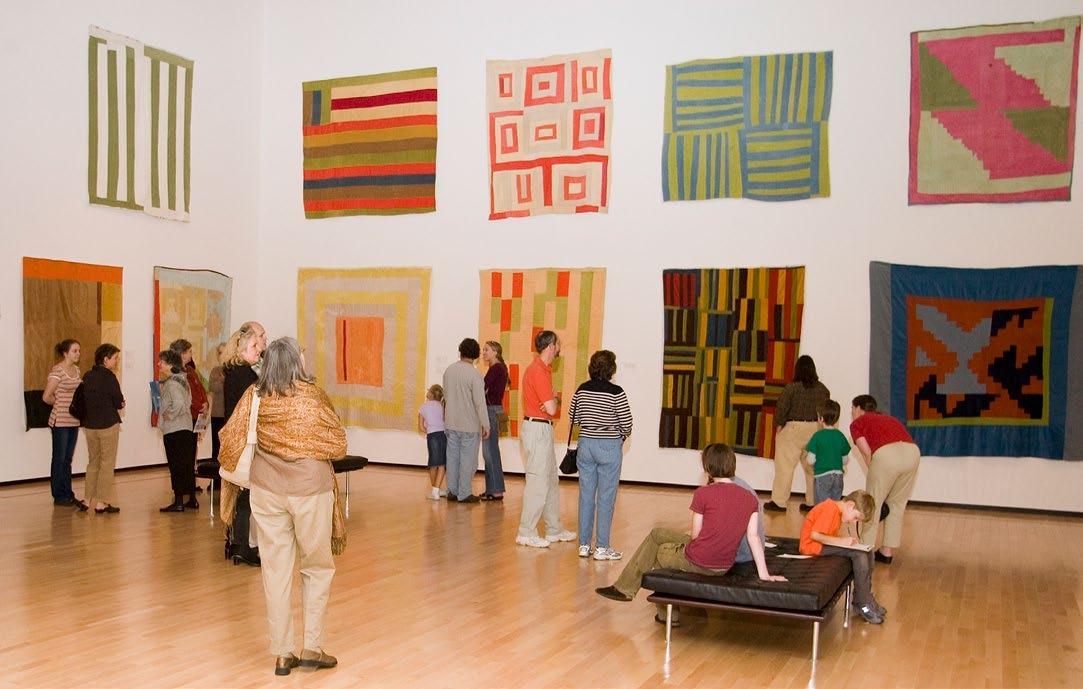
The Quilts of Gee’s Bend, Jule Collins Smith Museum of Fine Arts at Auburn University, Fall 2005
What to do after the show
POST-SHOW DISCUSSION
Included in this section are some post-performance activities you can share with your students.
Class Discussion
Following the performance, gather students for a postperformance conversation about their experience.
suggested discussion questions
• Jayden is a dynamic character who changes from the beginning of the play to the end. Can you think of some examples from John Lewis’s life that influence Jayden to change his own life?
• There are only a few actors playing multiple parts in Hero: The Boy from Troy. How did the actors help audiences to know they were playing different characters throughout the show? How did they make these characters believable?
• What was the most memorable part of the performance for you?
• Can you think of a time in your life where you learned something new that changed the way you thought or felt about something?
For an additional post-performance discussion activity, copy and distribute the “My Trip to the Gogue Center” worksheet on page 35.
POST-SHOW WORKSHEETS
Download and distribute the post-show worksheets available from Holden & Arts Associates here: X aub.ie/gpac-hero-holden
photo: Katie Day
Hero: The Boy from Troy cast member Patrick Saint Ange as John Lewis
My Trip to the Gogue Center
Answer these questions about the performance and your visit to the Gogue Center.
List three things you remember hearing or seeing during the performance of Hero: The Boy from Troy.
Name something you learned during the performance.
Name something from the performance you would like to know more about.
If you could ask a member of the cast a question, what would you ask?
In the space below, draw something special you remember hearing or seeing during the performance.
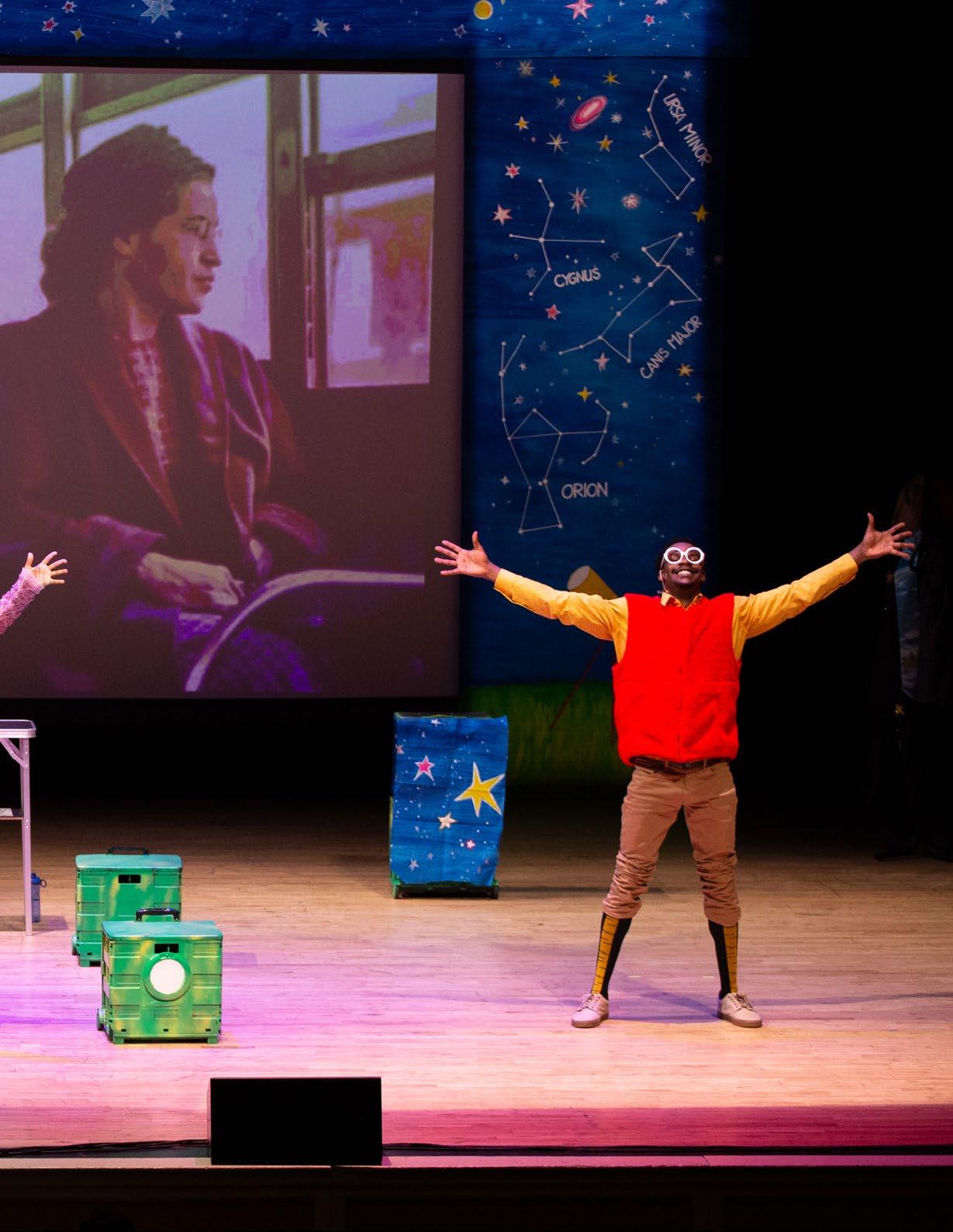
Hero: The Boy from Troy cast members
Patrick Saint Ange as John Lewis, Matelyn Alicia as Rosa Parks and Myles Walker as Jim Bone
photo: Katie Day
Alabama Course of Study standards index
ARTS
concepts of diverse content and varied forms into unified media arts productions that convey
an increasing set of artistic, design, technical, and career skills through creative problem-solving, organizing, and collaboration to produce media artworks.
Collaboratively structure and critique ideas, plans, prototypes, and production processes for media arts productions, considering intent, resources, and the presentation context.
ARTS EDUCATION (CONTINUED)
Develop new ideas through open-ended experiments, using various materials, methods and approaches in creating works of art.
AE17.VA.6.4 Explain and/or demonstrate environmental implications of conservation, care, and clean-up of art materials, tools, and equipment.
Develop and implement criteria to guide making a work of art or design to meet an identified goal.
AE17.VA.7.3 Develop and demonstrate skills with various techniques, methods, and approaches in creating art through repeated and persistent practice.
Demonstrate ethical responsibility to oneself and others when posting and sharing images and other materials through the internet, social media, and other communication formats.
how response to art is influenced by understanding the cultures, times, and places in which it was created.
Collaboratively shape an artistic investigation of an aspect of present-day life using a traditional and/or contemporary practice of art and design.
AE17.VA.8.3 Engage, experiment,
and/or illustrate awareness of practices, issues, and ethics of appropriation, fair use, copyright, Open Source, and Creative Commons as they apply to creating works of art and design.
ENGLISH LANGUAGE ARTS
ENGLISH LANGUAGE ARTS (CONTINUED)
comprehension of varied literary and informational texts by utilizing its content when discussing or writing in response to the text.
ELA21.5.17 Demonstrate comprehension of text by asking and responding to questions about literary elements used in the text.
ELA21.5.38 Gather information on a topic or question, and share the results through various modes of writing, including projects and presentations.
Identify and explain an author’s rhetorical choices, including point of view, purpose, anecdotes, and figurative, connotative, and technical word meanings, to develop central and supporting ideas.
ELA21.6.4 Describe the use of literary devices in prose and poetry, including simile, metaphor, personification, onomatopoeia, hyperbole, tone, imagery, irony, symbolism, and mood, and indicate how they support interpretations of the text.
Evaluate the development of central and supporting ideas in recorded or live presentations by examining the speaker’s rhetorical choices regarding point of view, purpose, anecdotes, and figurative, connotative, and technical word meanings.
interpretations of recorded or live presentations by examining the speaker’s use of hyperbole, tone, symbolism, imagery, mood, irony, and onomatopoeia.
technology, including the Internet, to research, analyze, produce, publish, and update individual or shared writing products, taking advantage of technology’s capacity to link to other information, people, and resources and to display information flexibly and dynamically.
Evaluate literary devices to support interpretations of literary texts using textual evidence, including simile, metaphor, personification, onomatopoeia, hyperbole, imagery, tone, symbolism, irony, and mood.
Evaluate rhetorical strategies used to develop central and supporting ideas in recorded or live presentations, including point of view, purpose, comparison, categories, and word meanings (figurative, connotative, and technical).
Evaluate the speaker’s use of hyperbole, tone, symbolism, imagery, mood, irony, and onomatopoeia in a live or recorded presentation.
ELA21.7.7 Produce clear, coherent narrative, argument, and informative/explanatory writing in which the development, organization, style, and tone are relevant to task, purpose, and audience, using an appropriate command of language.
ELA21.7.9 Participate in collaborative discussions about prose and poetry by evaluating the use of literary devices and elements.
ELA21.7.DL.A Use technology, including the Internet, to research, analyze, produce, publish, and update individual or shared writing products, taking advantage of technology’s capacity to link to other information, people, and resources and to display information flexibly and dynamically.
ELA21.7.RL.A Engage in inquiry through the research process to locate, acquire, refine, and present relevant and credible findings in multiple modes. multiple modes.
ELA21.8.4 Analyze the use of literary devices, including simile, metaphor, personification, onomatopoeia, hyperbole, imagery, tone, symbolism, irony, mood, and allusion, to support interpretations of literary texts, using textual evidence to support the analysis.
ELA21.8.6 Evaluate the development of central and supporting ideas in recorded or live presentations by examining the speaker’s rhetorical strategies and choices regarding point of view, purpose, comparisons, analogies, categories, allusions, and figurative, connotative, and technical word meanings.
ELA21.8.7 Critique the speaker’s use of hyperbole, tone, symbolism, imagery, mood, irony, and onomatopoeia in a live or recorded presentation.
ELA21.8.8 Produce clear, coherent narrative, argument, and informative/explanatory writing in which the development, organization, style, and tone are relevant to task, purpose, and audience, using an appropriate command of language.
ELA21.8.DL.A Use technology, including the Internet, to research, analyze, produce, publish, and update individual or shared writing products, taking advantage of technology’s capacity to link to other information, people, and resources and to display information flexibly and dynamically.
ELA21.8.10 Engage in coherent and collaborative discussions about prose and poetry by evaluating the use of literary devices and elements.
ELA21.8.RL.A Engage in
through the research process to locate, acquire, refine, and present relevant and credible findings in multiple modes.
MA19.4.21
Solve word problems involving multiplicative comparison using drawings and write equations to represent the problem, using a symbol for the unknown number.
Select and use an appropriate unit of measurement for a given attribute (length, mass, liquid volume, time) within one system of units: metric - km, m, cm; kg, g, l, ml; customary - lb, oz; time - hr, min, sec.
Use the four operations to solve measurement word problems with distance, intervals of time, liquid volume, mass of objects, and money.
Convert among different-sized standard measurement units within a given measurement system and use these conversions in solving multistep, real-world problems.
MA19.6.19 Write and solve an equation in the form of _x+p=q_ or _px=q_ for cases in which _p, q_, and _x_ are all non-negative rational numbers to solve real-world and mathematical problems.
MA19.7.1 Calculate unit rates of length, area, and other quantities measured in like or different units that include ratios or fractions.
MA19.7.8 Solve multi-step real-world and mathematical problems involving rational numbers (integers, signed fractions and decimals), converting between forms as needed. Assess the reasonableness of answers using mental computation and estimation strategies.
MA19.7.9 Use
quantities in real-world or mathematical
and construct algebraic expressions, equations, and inequalities to solve problems by reasoning about the quantities.
SS10.6.7.4 Describing the experience of African Americans and Japanese Americans in the United States during World War II, including the Tuskegee Airmen and occupants of internment camps (Alabama)
SOCIAL STUDIES 2010 (CONTINUED)
SS10.7C.11.2
SOCIAL STUDIES 2024
Supplemental books
Bass, S. Jonathan. Blessed Are the Peacemakers: Martin Luther King, Jr., Eight White Religious Leaders, and the “Letter from Birmingham Jail”. Baton Rouge: Louisiana State University Press, 2007.
Branch, Taylor. Parting the Waters: America in the King Years, 1954-1963. New York: Simon and Schuster, 1988.
Branch, Taylor. Pillar of Fire: America in the King Years, 1963-65. New York: Simon and Schuster, 1998.
Brinkley, Douglas. Rosa Parks. New York: Viking, 2000.
Eskew, Glenn T. But for Birmingham: The Local and National Movements in the Civil Rights Struggle. Chapel Hill: University of North Carolina Press, 1997.
Gray, Fred D. Bus Ride to Justice: Changing the System by the System, The Life and Works of Fred D. Gray. Montgomery, Ala.: Black Belt Press, 1995.
Manis, Andrew M. A Fire You Can’t Put Out: The Civil Rights Life of Birmingham’s Reverend Fred Shuttlesworth. Tuscaloosa: University of Alabama Press, 1999.
Parks, Rosa. Rosa Parks: My Story. New York: Putnam, 1992.
Robinson, Jo Ann Gibson. The Montgomery Bus Boycott and the Women Who Started It: The Memoir of Jo Ann Gibson Robinson. Knoxville, Tenn.: University of Tennessee Press, 1987.
Thornton, Mills. Dividing Lines: Municipal Politics and the Struggle for Civil Rights in Montgomery, Birmingham, and Selma. Tuscaloosa: University of Alabama Press, 2002.
Walker, Robert J. Let My People Go! Lanham, Md.: Hamilton Books, 2007.
White, Marjorie, and Andrew M. Manis, ed. Birmingham Revolutionaries: The Reverend Fred Shuttlesworth and the Alabama Christian Movement for Human Rights. Macon, Ga.: Mercer University Press, 2000.
Williams, Donnie, and Wayne Greenhaw. The Thunder of Angels: The Montgomery Bus Boycott and the People Who Broke the Back of Jim Crow. Chicago: Lawrence Hill Books, 2006.
Online resources
Below are supplementary online resources, including links to additional lesson content and activity materials, to help support and enrich your teaching.
Hero: The Boy from Troy Study Guide
Produced by Holden & Arts Associates
X aub.ie/gpac-hero-holden
Encyclopedia of Alabama
“Civil Rights Movement in Alabama”
X aub.ie/gpac-hero-alabama
United States Civil Rights Trail
“Montgomery: The Home of Leaders and Martyrs of the Civil Rights Movement”
X aub.ie/gpac-hero-montgomery
Gee’s Bend
X aub.ie/gpac-hero-Gee’s-bend
Credits
All images featured in this performance study guide are wholly owned and copyrighted by their respective copyright holders and are used for educational purposes only. No copyright infringement is intended. The Gogue Center does not claim ownership of any images unless explicitly stated otherwise. If you have concerns about the use of any image included herein, please contact us immediately.
For a list of additional image sources and credits, please contact our Department of Communications and Marketing by telephone at 334.844.7234 or via email at jaosborne@auburn.edu
Global Oneness Project
“The Quilters of Gee’s Bend: Art and Resilience”
X aub.ie/gpac-hero-quilters
Where I Yet Live
X aub.ie/gpac-hero-quilters-film
Birmingham Civil Rights Institute
“Airing of the Quilts”
X aub.ie/gpac-hero-quilt-festival
This guide was produced in collaboration with
The Jay and Susie Gogue Performing Arts Center at Auburn University serves students and educators across the state of Alabama and beyond with its annual K–12 School Performance Series.
These high-quality and transformative arts experiences are further enriched with performance study guides that provide meaningful cross-curricular connections.
Developed by our Department of Education and Engagement, in collaboration with the Gogue Center Curriculum Council, each performance study guide contains information about the featured performing artist(s) or company, the art form, and relevant, grade-appropriate lessons and activities designed to help incorporate academic and arts standards into the classroom.
Our sincerest thanks to the members of the 2025–26 Gogue Center Curriculum Council.