2. Introduction
2.1 Research objectives
Through a rare collaboration between experts in urban, landscape and architectural design, public health, climate science, engineering and climate, energy and water modelling, this project aims to:
Generate evidence to inform solutions and policy decisions concerning the climate change adaptation of urban precincts and housing to projected temperature and rainfall changes and foster healthy and climate-resilient communities across WA’s climate regions.
The specific objective of the previous phase (Phase 2) was to:
• Identify changes between the current and likely future performance of urban precinct and housing case studies due to climate change-induced variations in temperature and rainfall.
The related Phase 2 reports are available on the AUDRC website The objective of this Phase 3 research is to:
• Develop and evaluate the performance of design proposals to adapt urban precinct and housing case studies to projected climate change using micro-climatic, building energy, and water modelling and community engagement. Subsequent phases will:
• Develop CSUD principles for adaptation of WA urban precincts and housing to temperature and rainfall changes for inclusion in the revision of future state and local government policies and design guidance (Phase 4)
This report summarises Phase 3 of the project in relation to the climate adaptation of suburban streetscapes
2.2 Project governance
This project capitalises upon a long-term successful research collaboration with four partner organisations: The Western Australian Planning Commission (WAPC), the Department of Planning Lands and Heritage (DPLH), Development WA, and the Department of Housing and Works (DHW). The project also forges collaborations with CSIRO, the Water Corporation and WA Local Governments - the City of Karratha, the City of Greater Geraldton, the Shire of Toodyay, the City of Wanneroo, the City of Cockburn, the City of Vincent, and the City of Perth. Project coordination and reporting occur through biannual Partner Organisation meetings. Project updates are also provided to AUDRC’s Advisory board, which comprises Emma Cole – Chair of the WAPC; Anthony Kannis– Chair of DPLH; Dean Mudford – CEO of Development WA, and Garrick Allen – Executive Director of Strategy Planning and Policy at the DHW and the Urban Design Research and Education Committee which includes officer level staff from the State Government Partner Organisations.
2.3 Background
The design of streetscapes influences how people move, interact, and connect in neighbourhoods, with implications for physical activity, social connection, and well-being (Furchtlehner, Lehner, & Lička, 2022; Giles-Corti et al., 2013; Hassen & Kaufman, 2016). Well-designed streetscapes that prioritise walkability, greenery and comfortable pedestrian environments can foster community engagement and social capital, in both urban and suburban contexts (Sonta & Jiang, 2023; Wan Mohammad et al., 2021) At the same time, street trees and biodiverse verge plantings provide important urban green space that supports climate adaptation, ecological connectivity and neighbourhood amenity (O'Sullivan, Holt,
Warren, & Evans, 2017; Salmond et al., 2016). In Australian cities facing rapid growth, densification, and climate stress, there is a need to rethink car-dominated streets as multifunctional social and ecological infrastructure that can contribute to improved urban liveability, health, and sustainability (Alberti, 2023; Bambrick, Capon, Barnett, Beaty, & Burton, 2011; McGreevy et al., 2020)
Urban designers work to create places where people want to spend time, yet thermal discomfort remains a major barrier to their use. Indeed, a ‘thermally comfortable microclimate is the very foundation of well-loved and well-used outdoor places’ (Nouri & Matzarakis, 2019). Climate comfort in local streets during hot conditions is key to encouraging walking, which has well-documented health benefits, and is accessible for a large proportion of the population (Sugiyama et al., 2014). Indeed, based on Australian Bureau of Statistics (ABS) data, walking is the number one recreational activity for Australian adults (The Australian Bureau of Statistics, 2022). The willingness to walk can be significantly enhanced with the provision of street trees (Institute for Transportation & Development Policy, 2013) Indeed, pedestrians in urban areas are more inclined to walk to their destinations when street trees are spaced more closely (Barron et al., 2019)
2.3.1 Poorly climate-adapted roads
Despite this evidence, the streets of many suburban areas are poorly adapted to hot conditions, a situation owing to vehicular dominance. Until about 1945, early Australian suburbs were built as walkable neighbourhoods because few residents had cars. The breadwinner walked or cycled to work or the train station every day, and the person looking after the house had no alternative but to walk to obtain daily groceries and other necessities (Seamer, 2019) Nonetheless, as streets became increasingly auto oriented, they were designed by and for influential men in positions of power, without regard for the needs of vulnerable road users. As Sheller explains:
White, able-bodied, middle-class, male experts and technicians dominate transport policy and urban transit agencies, policy, planning, and design often overlooks women's, children's, disabled people's, and poor people's perspectives, experiences, and needs, or see them as irrelevant to the sector (In Marx, 2022)
Over many decades, other road users were pushed off the streets, and new infrastructure was designed to serve drivers, creating a feedback loop that eventually made driving the only realistic option for most residents of suburban and even urban areas (Marx, 2022). The result overlooks the many potential overlapping uses of residential streets (e.g., vehicular movement, social contacts, and civic activities) and delivers a typically denuded streetscape environment (Ben-Joseph, 2007).
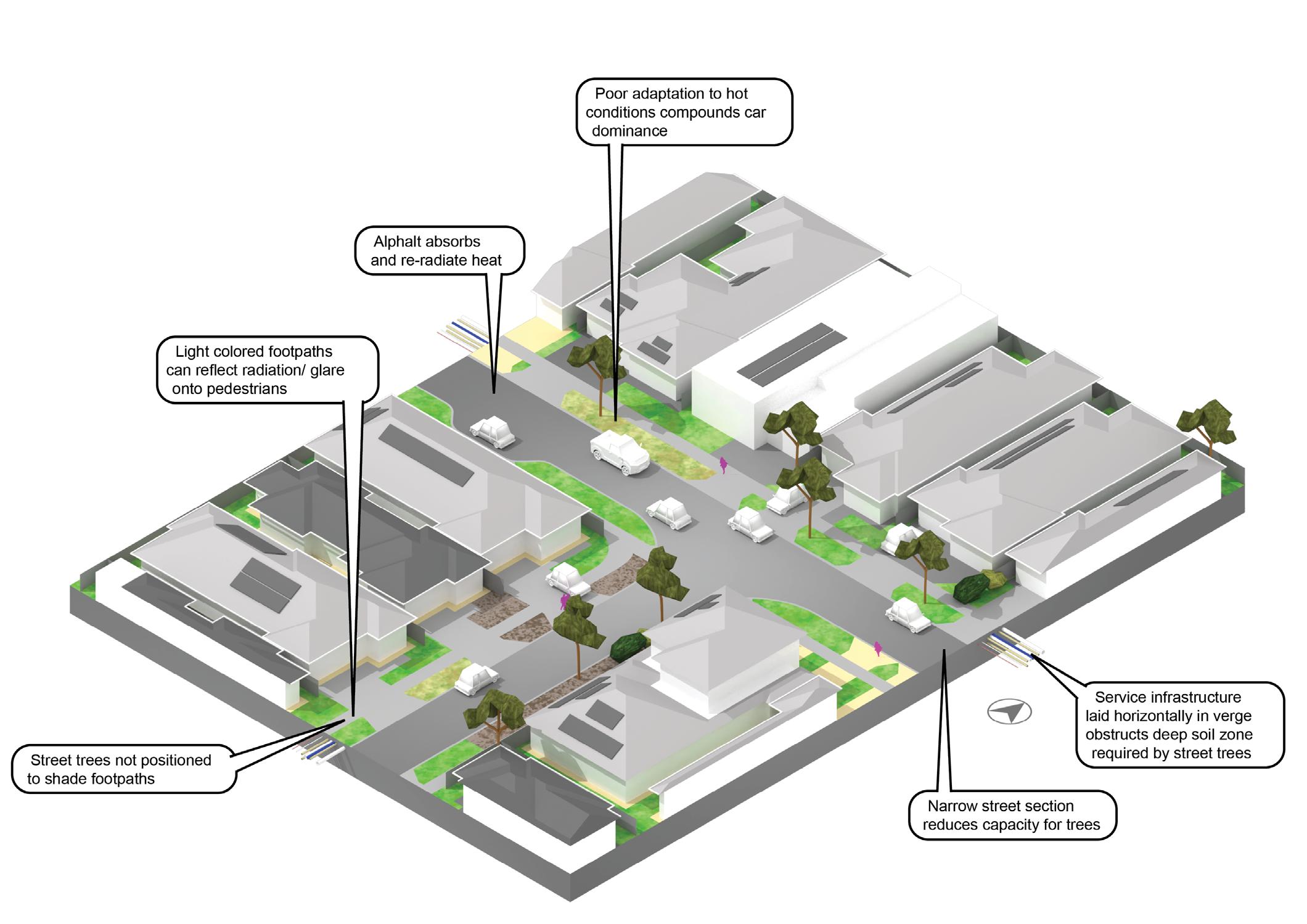
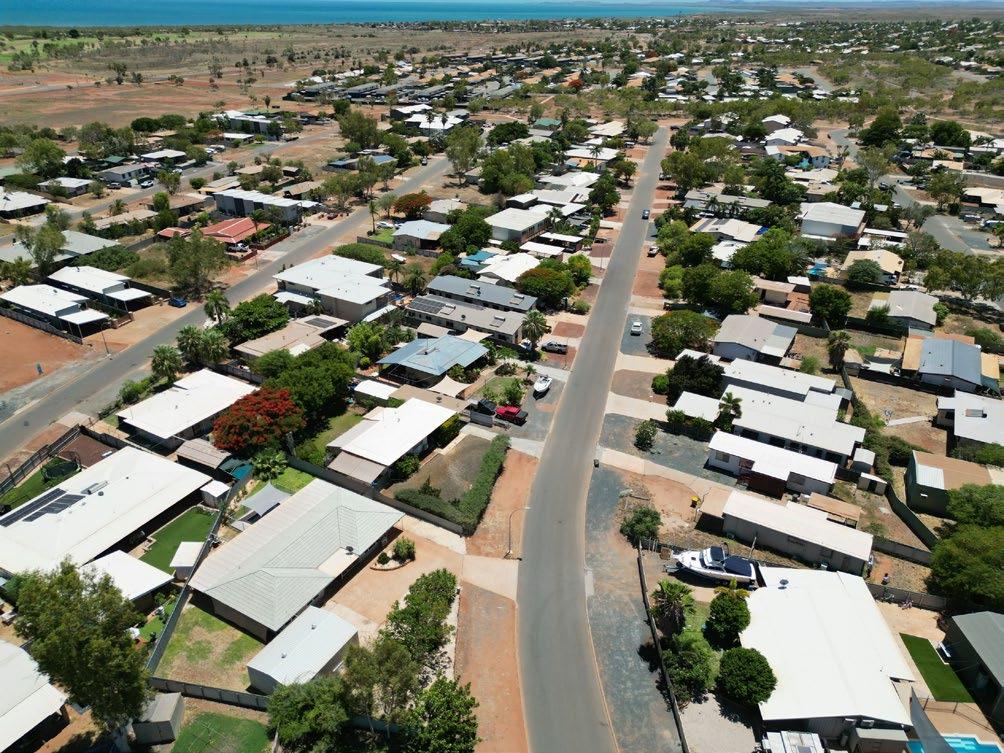
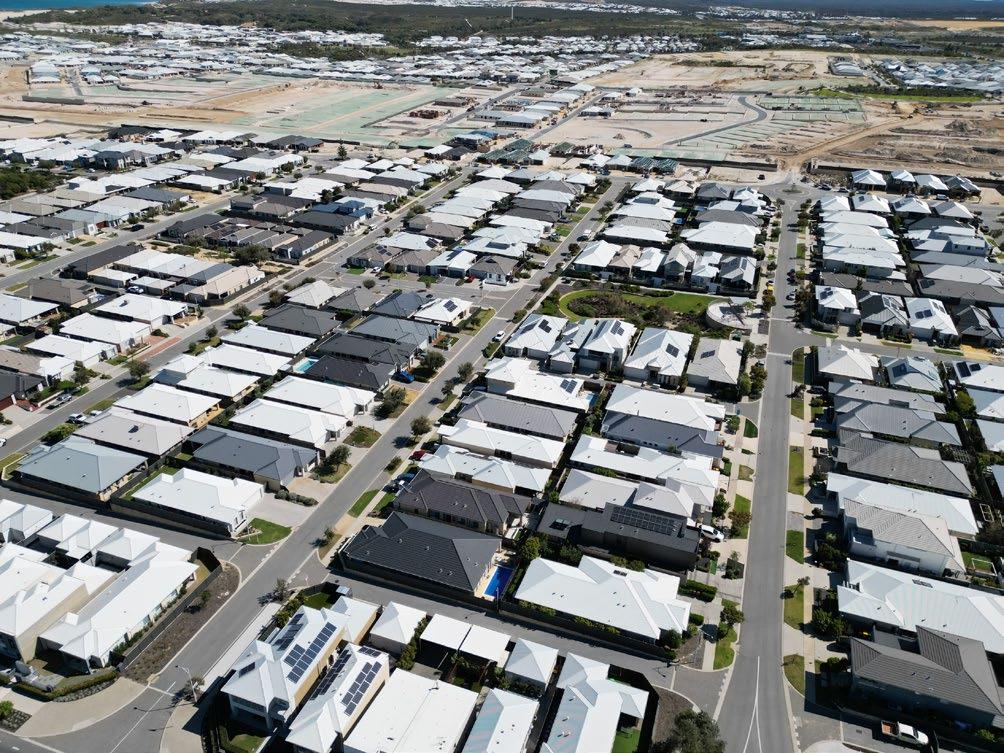
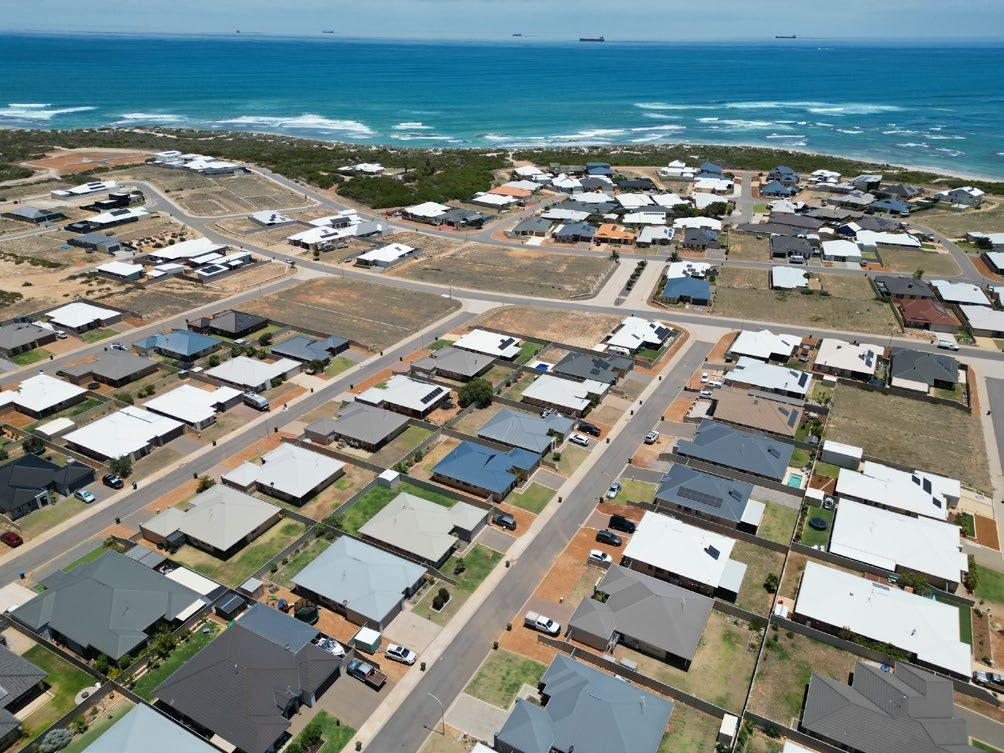
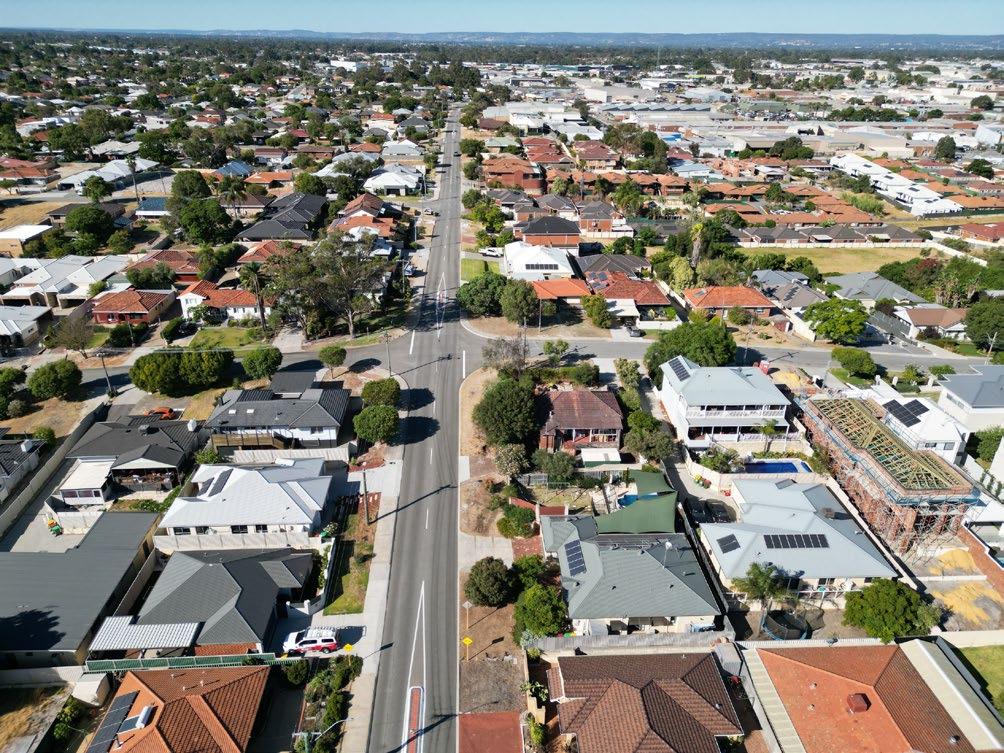
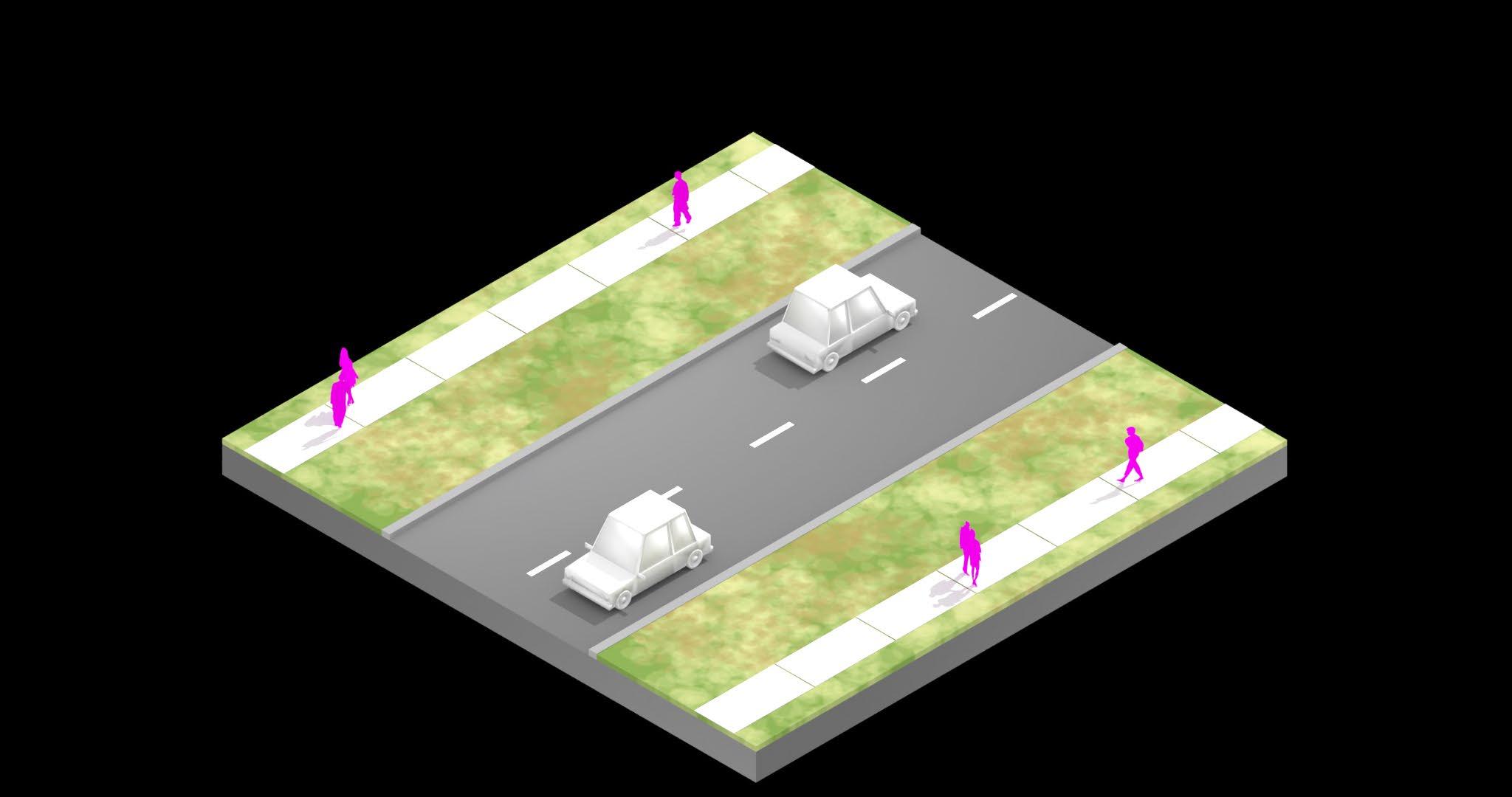
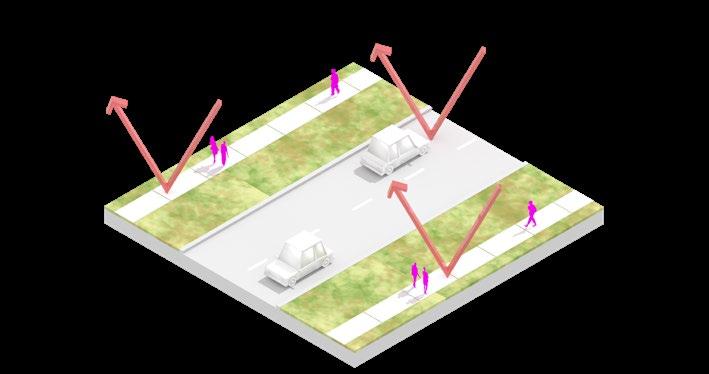
Compounding this situation is the increasing density of many new greenfield suburbs, in accordance with New Urbanist preference for urban compactness (Bolleter, 2017) – tends to provide much narrower street sections, which have less capacity for planting street trees due to narrow verges and constraints posed by service infrastructure. At the same time, the size of cars in Australia is surging, which has been nicknamed ‘mobesity’ (Haghani, 2025). The result of vehicular dominance (and the planning which enables it) and increasing urban compactness is streetscapes which are poorly adapted to hot climates (with minimal shade or evapotranspiration related cooling), which compounds car usage and greenhouse gas emissions, and diminishes active transport and public health (Park, 2024) (Figure 1).
Figure 1: A typical Local Road in a contemporary greenfield suburb in Australia displaying a poor level of adaptation to hot conditions.
2.3.2 Streetscape climate adaptation strategies
Despite this situation, streetscapes have the potential to provide a ‘refuge’ (Australian Government, 2024) or a ‘cool spot,’ where neighbourhood dwellers can find protection during extreme heat events (Barron et al., 2019). Such refuges could be of importance to vulnerable people, particularly those without effective air-conditioning in their homes (Dufty, 2022) or those with air-conditioning when the electricity grid is disrupted. Such disruption will become more common with climate change as bushfires and floods destroy poles, wires and transformers, or power is switched off even to safeguard the public and emergency service workers (Hamilton & Wilkenfeld, 2024) Urban planners and associated professionals are increasingly focussed on the potential role of parks as places of refuge (through offering Park Cool Island effects) (Sanda Lenzholzer, 2015). However, streetscapes also have potential to act as refuges because there is far more open space is bound up in streetscapes (and their verges) than in parks and this open space is much more accessible (Bolleter, 2016)
Climate-Sensitive Urban Design theory offers numerous strategies for adapting suburban streets to rising temperatures and aims to reduce climate risks and prolong periods of outdoor comfort (Oke, Mills, Christen, & Voogt, 2017). Such strategies include consistent treatments (e.g., lines of street tree planting) and intermittent climate shelters (e.g. bus stops with shade and mist jets to alleviate the heat) (MonteroGutierrez et al., 2023) (Table 1).
Table 1: Streetscape adaptation strategies for hot climates
Adaptation strategy name Type of solution Core microclimatic mechanism References
Plant street trees
Nature-based Shade/ evapotranspiration
(Cooperative Research Centre for Water Sensitive Cities, 2020) (Oke et al., 2017)
(Andrew M Coutts, Tapper, Beringer, Loughnan, & Demuzere, 2013) (Cooperative Research Centre for Water Sensitive Cities, 2020) (Shashua-Bar, Pearlmutter, & Erell, 2009) (Cox & Nield, 2015)
Construct shade structures Constructed Shade (Oke et al., 2017) (Rohinton, 2005) (Sanda Lenzholzer, 2015) (Montero-Gutierrez et al., 2023)
Install reflective materials/ coatings Constructed Longwave/ shortwave reradiation (Rohinton, 2005) (IPCC, 2022) (Nardino & Laruccia, 2019) (Kusumastuty, Poerbo, & Koerniawan, 2018) (Sanda Lenzholzer, 2015) (Oke et al., 2017)
Install rain gardens
Nature-based/ constructed
Evapotranspiration/ shade (Cooperative Research Centre for Water Sensitive Cities, 2020) (Andrew M Coutts et al., 2013) (Oke et al., 2017)
Install permeable paving Constructed Evapotranspiration (Oke et al., 2017) (Theeuwes, Solcerova, & Steeneveld, 2013)
Install misting systems Mechanical Evapotranspiration (Sanda Lenzholzer, 2015) (Oke et al., 2017) (Völker, Baumeister, Claßen, Hornberg, & Kistemann, 2013) (Montero-Gutierrez et al., 2023)
Reduce road surface area and increase planted area
Nature-based Evapotranspiration/ shade (Landcorp, 2014) (Cooperative Research Centre for Water Sensitive Cities, 2020)
2.3.3 The gap in the research
There is a significant body of literature on urban streetscapes, such as height versus width geometries and sky view factor (Cao, Sun, & Bardhan, 2024; Motazedian, Coutts, & Tapper, 2020; Oke et al., 2017; Tapias & Schmitt, 2014). However, less academic attention has been paid to the detailed microclimates that nature-based solutions (e.g., tree canopies) may provide in suburban streetscapes relative to constructed solutions (e.g., shade structures) and mechanical solutions (e.g., misting jets).
Moreover, there are no universal rules for Climate-Sensitive Urban Design, and solutions need to be tailored to local climates and cultures (Oke et al., 2017). Indeed, the bulk of the research relating to local places to climate change has been ‘top-down, from global toward local, rather than how adaptation can be locally initiated and adapted’ (Nouri & Matzarakis, 2019). The appropriate design of climateadapted streetscapes across climate zones relies on expertise informed by the lived experience of these regions and their climatic conditions. To draw on this local knowledge and address the gaps in our understanding, the central research question guiding this enquiry is:
What do planning experts think are the most effective and feasible strategies for minimising daytime heat stress in Urban Local Roads in Western Australian suburbs, and how does this vary by climate zone?
4. Results
4.1 Demographic characteristics
A total of 132 respondents completed the streetscape survey questions. Demographic data of respondents, including their professional area of expertise, is presented in Table 3 Respondents were able to report expertise across multiple areas.
Table 3: Caption: Demographic characteristics of survey respondents
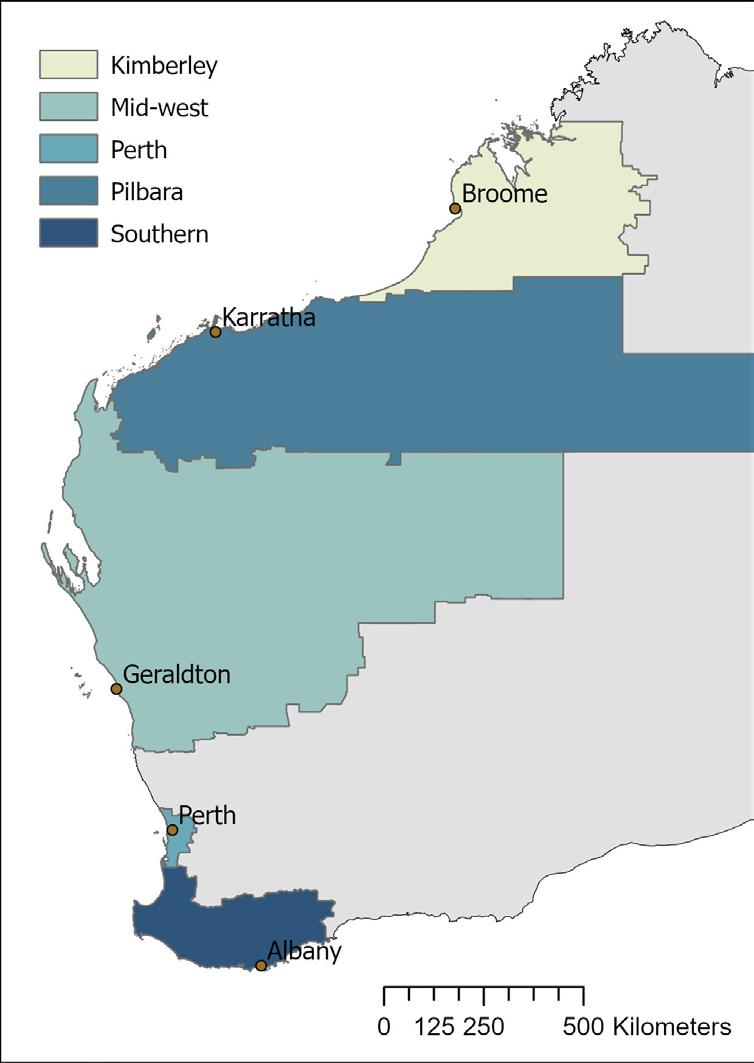
Climate zone
Mediterranean (Csa)
(60.6)
(84.8)
Hot Semi-Arid climate (Bsh)/ Hot Desert climate (Bwh) 18 (13.6)
Other (outside study area) 2 (1.5)
*Respondents could indicate more than one area of expertise
4.2 Respondent preferences for climate adaptation strategies in suburban streets
The table below (Table 4) presents the anticipated effectiveness of adaptation strategies for improving the thermal comfort of suburban street users in hot daytime conditions (~35°C) across zones, as assessed by survey respondents regarding suburban streetscapes.
Overall, respondents agreed on the effectiveness of the presented strategies across different climate zones; however, significant variation was found specifically in the perceived effectiveness of fixed shade structures (p=0.004).
Mediterranean (Csa) zone respondents regarded street trees on verges to be the most effective strategy to improve thermal comfort for pedestrians in hot daytime conditions (~35°C) in their region and ranked increasing areas of planting (and reducing road surface) second, trellis with climbing plants third and street trees in central medians fourth.
Notably, respondents in the Hot Desert (Bwh) and Hot Semi-Arid (Bsh) climate zones also ranked street trees on verges and increased planting area first and second but ranked fixed shade structures much or highly than Mediterranean climate zone respondents, placing them in third position.
Table 4: The effectiveness (agree and strongly agree) of streetscape adaptation strategies for suburban areas by climate zone
Mediterranean climate (Csa) n=114 Hot Semi-arid (Bsh)/ Hot Desert (Bwh) climate n=18
STREETSCAPES: SUBURBAN
Street trees on verges
with climbing plants
trees in central medians
gardens and permeable paving
materials/paint
Qualitative commentary from respondents is summarised below, in order of the relative popularity of each streetscape adaptation strategy among the numerically dominant cohort in the Mediterranean climate zone Unless otherwise noted, quotes are from Mediterranean climate zone respondents.
4.2.1 Street trees on verges
Street trees on verges were appraised as being the most effective adaptation strategy across all climate zones. Respondents stated such trees would be ‘located ideally for pedestrians’ and that this represented a ‘common sense approach’ which was ‘achievable’ and delivered numerous cobenefits. Survey participants further noted ‘trees bring shade and cool air temperature and are likely to improve the viability of other planting in the understorey, which would also bring cooling benefits.’ Nevertheless, some respondents noted that while the strategy ‘provides shade and comfort for pedestrians, it generally does not shade the road carriageway, which can absorb greater levels of heat.’
Numerous feasibility issues were also referenced. Firstly, that ‘the accommodation of trees within the verge is limited by any service infrastructure in the verge (pipes and cables) and access point to
dwellings on the street.’ Respondents noted that this was particularly the case in new compact greenfield developments, which have ‘very small road reserves and very small setbacks’ which would only allow ‘small trees.’ Nonetheless, another respondent explained that ‘services in verges could be in a vertical alignment or under the road pavement to give more room for tree planting.’ Secondly, that ‘residents are averse to the installation of trees adjacent to their properties’ and that ‘street trees require maintenance which residents aren't willing to do’ and that residents ‘do not want to use/pay for water to irrigate, resulting in a lot of deaths.’ At the same time, respondents were concerned about the capacity of Local Governments to cover the ‘maintenance costs’ required to ‘help the trees survive to maturity in the warming climate.’ Finally, respondents from the Bwh zone were concerned that ‘tall shady trees tend to be vulnerable during cyclones’ and such ‘pose a risk to property.’
4.2.2 Reduce road area and increase planted area
Reducing road area and increasing planted area were rated second highest for effectiveness across all climate zones, with respondents noting:
Unshaded, dark-coloured, high-thermal-mass materials between built-up areas create heat sinks and measurably contribute to the urban heat island effect. Reducing the width of these thermal masses will reduce their effect.
Other respondents noted that ‘many of our Local Roads are massively oversized’ and that this approach ‘would be effective mostly in the evenings when re-radiated heat would have its largest effect’ and that during the day it would be most effective if ‘implemented as part of broader strategies, for instance paired with verge trees.’ Indeed, other respondents noted that this strategy ‘does not shade pedestrian space or reduce radiant heat from the sun.’
Feasibility issues were also raised. As one survey participant noted:
Successful implementation would be entirely dependent on the type of resident abutting it. Most people in dense greenfield sites don’t manage their verge or don’t want soft landscaping due to maintenance and water costs, cultural background and parking requirements.
Others noted that the effectiveness of this strategy would also rely on the ‘use of suitable vegetation (including multistorey layering)’ and the ‘level of irrigation.’ Finally, one respondent explained that the ‘6-metre road pavement is designed to accommodate two vehicles passing easily; if the width was reduced, vehicles would have to slow down to pass’ which would cause congestion.
4.2.3 Trellis with climbing plants
Trellises with climbing plants were appraised as being the third most effective adaptation strategy in the Csa zone and fifth highest in the Bwh and Bsh zones. Respondents noted, ‘if trees can’t be grown, then structures with vines and climbing plants are a good second best’ and that ‘compared to simple hard shading, natural shadows seem to be more visually appealing’ and ‘deciduous vines would let sunlight in through winter ’ Moreover, another respondent noted that trellises with climbing plantings would be ‘less likely to interfere with service infrastructure.’
Nonetheless, numerous feasibility issues arose. As one respondent noted, the proposal would be ‘cost-prohibitive’ and as such could only be feasible on ‘some identified main streets’ or ‘bus stops
or crossing points’ in areas where other options are not available. As other participants noted, ‘from a liability perspective you can’t have structures on the verge due to issues of road safety, and service infrastructure,’ and conflicts with driveways. Moreover, ‘renewal and maintenance of the support structures would result in destruction of the established planting’ and that ‘it's very challenging to get climbing plants to provide full shade cover for many years’ and that the plants themselves would be ‘vulnerable to extreme heat.’ Finally, respondents worried that the vines ‘would also require watering and with bores already becoming saline, it wouldn't be an option.’
4.2.4 Street trees in central medians
Installing street trees in central medians was rated fourth highest for effectiveness in all climate zones, with respondents noting ‘shading the heatsink of the road would further reduce temperatures,’ that it would provide an important ‘refuge for pedestrians crossing roads,’ and that it ‘would cast greater shadows in the early morning and evenings, so protecting pedestrians on paths and cooling would be achieved. Respondents also noted this strategy offered feasibility benefits compared to trees on verges because planting in medians ‘would receive less resistance from residents as it does not impact them directly,’ are ‘Local Government maintained/ irrigated’ and ‘typically have no service infrastructure.’ For these reasons, one respondent noted, ‘median areas are the only opportunity to cultivate large growing trees.’
Nonetheless, respondents identified many issues associated with this scenario. Firstly, the strategy would fail to ‘shade pedestrian pathways’ during the ‘middle of the day’ and would ‘provide less benefit to nearby houses.’ Secondly, the strategy would result in a ‘harsher environment for trees to thrive’ and that as such the median would need to be ‘4m or bigger to fit a tree of any size’ and to stop ‘cars and buses clipping trees.’
4.2.5 Rain gardens and permeable paving
Installing rain gardens and permeable paving was rated fifth highest for effectiveness in the Csa zone and seventh highest in the Bwh and Bsh zones. Respondents noted that they are more ‘effective at cooling than dry vegetation due to evapotranspiration related cooling, providing other benefits such as increasing tree transpiration due to greater access to water, and stormwater management.’ Others noted vegetation in rain gardens was ‘more likely to survive, which is useful especially if it is creating lots of shade.’
Nonetheless, respondents worried that ‘the lack of rainfall across summer months means that as these dry out they lose their effectiveness’ and that ‘following a few days of heat, the water would evaporate, and the cooling effect would be lost.’ Many feasibility issues were also identified; ‘permeable paving is ineffective as it becomes clogged with fine sand and silts’ and ‘most rain gardens fill with sand and rubbish or are parked on.’ As with other strategies, there were concerns that the strategy would incur ‘additional cost to developers’ and councils would be unlikely ‘to accept this in a lot of cases due to maintenance costs.’ Residents were unlikely to assist with a respondent noting ‘residents do not maintain raingardens, and we found that a lot of raingardens are filled in by residents and therefore ineffective.’
4.2.6 Remaining
strategies
Installing reflective materials/ painting road surfaces was rated sixth for effectiveness in the Csa zone and ninth in the Bwh and Bsh zones. Many respondents were critical. As they explained, this strategy ‘would be ineffective at improving the thermal comfort for pedestrians as they would be exposed to
both the incoming and reflected shortwave radiation.’ As a result, one respondent surmised, ‘no one will walk a path like this, it ‘will be akin to being on the beach on a hot day.’ Maintenance and associated costs were also identified, with one respondent noting ‘tyre staining, a build-up of dust and the wearing of reflective materials is likely to impact effectiveness ’ A Bsh zone respondent also stated, ‘the surface would quickly become red from our dust and lose any albedo effect.
Installing fixed shade structures was rated third in the Bwh and Bsh zones and seventh for effectiveness in the Csa zone. In the Csa zone, a limited number of respondents noted that shade structures ‘would provide some cooling via shade’ and may be suitable ‘in areas where larger trees are harder to grow, and ‘on some streets where there is a lot of pedestrian traffic, at bus stops and crossing points.’ Others suggested that, relative to trees, ‘no watering is required, and no waiting for them to grow, and that they ‘could also support PV panels for solar energy production’ or ‘collect rainwater.’ Nonetheless, the strategy also received much critical commentary. The main critiques were that they lacked the ‘added benefit of transpiration effects to cooling the air’ offered by trees, would be ‘costly and disruptive to install, maintain and replace.’ Indeed, some respondents considered shade structures ‘ugly’ and noted ‘residents will not approve of the aesthetics.’ Other respondents worried that, ‘shade structures would not provide much benefit in terms of cooling the (broader) area, instead providing further hard surfaces to heat in the sun and re-radiate that heat.’
Installing removable shade sails was rated eighth in effectiveness in the Csa zone and sixth in the Bsh and Bwh zones. Nonetheless, a limited number of respondents noted that the strategy ‘provides shade for pedestrians, requires no watering, and eliminates the wait for growth’ and was ‘adaptable, which could allow the removal of shade sails during the winter season.’ Moreover, the strategy had ‘lower thermal mass (relative to fixed shade structures) will minimise thermal load of the structure itself.’ Nonetheless, critiques were numerous. Respondents noted the strategy ‘would create shade over footpaths, but it does not have a cooling effect on the wider streetscape’ because they would ‘provide no evapotranspiration related cooling from vegetation.’ Feasibility issues were also identified. As respondents explained, shade sails would be ‘disruptive to install, maintain and replace’, ‘maintenance needs to be considered for any moveable/motorised items (particularly in regions where there is dust)’ and ‘from a liability perspective you can’t have structures in the verge due to road safety and services.’ In the Bsh zone, the shade sails would need to be removed during cyclone season, which is the hottest part of the year.’
Installing misting systems was rated ninth for effectiveness in the Csa zone and seventh in the Bsh and Bwh zones. Positive commentary was limited, but some respondents noted misting systems can ‘effectively reduce the body temperature of people’ and ‘there is less impact on some residents who dislike having trees due to debris or leaf matter.’ Others noted the strategy would be ‘effective only for very local human comfort’ in ‘specific high traffic areas on really hot days.’ Feasibility issues with misting systems were extensive. Respondents noted, ‘many people could feel uncomfortable walking through misted environments,’ and that it would compound ‘water scarcity’ explaining ‘this appears to be an excessive use of water trying to mimic a system that vegetation can do in a much more efficient and waterwise way.’ The effectiveness of the strategy was also questioned in ‘humid climates’ where ‘it may further reduce the comfort levels.’ Others worried that even in suitably dry conditions, it would only have a ‘localised and temporary effect’, particularly in windy conditions. Moreover, other respondents not misting systems ‘can pose significant health risks if not properly maintained, as they can harbour and disperse harmful bacteria such as Legionella, which thrive in warm, stagnant water.’
4.2.7 Alternative strategies identified by respondents
Numerous alternative strategies were proposed to improve the thermal comfort of street users in hot daytime conditions. One respondent noted that ‘the performance of the street also depends upon building setbacks and height of buildings, and the ability of the buildings to shade streets and capture or restrict cooling breezes. As such, ‘taller buildings (three storeys) that are closer together’ could be used ‘to provide shade and air movement via directing predominant breezes.’ Others noted that the overall road reserve dimension should be increased to allow ‘spaces to grow large trees’ and that strict ‘controls on hard surfaces for private property landscaping adjacent to the street’ should be established. Taking this idea further, one respondent suggested ‘removing roads altogether’ or ‘creating more pedestrian-only network, separated from road network, in new greenfield developments.’ At a finer scale, survey participants suggested ‘drinking water fountains for internal cooling and reducing dehydration’ and ‘requiring effective design for bus shelters to provide shade and shelter.’
4.2.8 Tree-type commentary
The comparison of the virtues of endemic and exotic tree types received considerable commentary. Some participants felt that ‘native trees are adapted to heat stress, therefore providing more consistent shade.’ Nonetheless, others noted the better thermal comfort provided by exotic trees, ‘exotic trees like the London Plane provide amazing shade’ and identified that ‘native trees tend to transpire less in summer than exotic trees’ and hence ‘exotic trees (if suitably irrigated) are likely to provide more cooling benefits.’ The deciduous canopy of many exotic trees was noted as desirable as it allows ‘solar penetration in winter’ and they were reported as being more ‘suitable for an urban environment ’
Regardless of arguments for and against, the dominant theme in commentary, however, was that designers need to move beyond the simplistic binary of endemic versus exotic tree selection:
Native or exotic no longer matters. We need trees adapted to the changing climate (increasing temperatures and reduced water availability). Otherwise, the planted trees will not survive, and years of revegetation efforts will be lost.
As an example, other participants noted, ‘some native tree species are failing in areas where they have historically thrived due to lower rainfall, so considering species that are native to other drier areas is required to ensure tree survival’. In the Csa zone, it was noted that this could involve ‘adapting to climate change by bringing trees from more northern latitudes.’ Some felt that the binary logic of the appropriateness of endemic versus exotic trees overlooked other key considerations ‘family, genus, and Species diversity, quality tree stock, proper planting site preparation, effective tree establishment and maintenance practices.’ Moreover, other respondents noted the need for a ‘diversity of trees to be selected to increase resistance to environmental threats (pollution, pestilence). Planting combinations of endemic and exotic trees was regarded as:
The ideal approach... Exotic trees can provide excellent tree canopy; however, this should be balanced with native trees. A scatter of larger exotic trees where solar requirements are acute, supplemented with smaller native trees to improve urban ecology outcomes.
As another respondent neatly surmised, ‘the right tree, for the right reason in the right location.’
4.3 Combined adaptation strategies
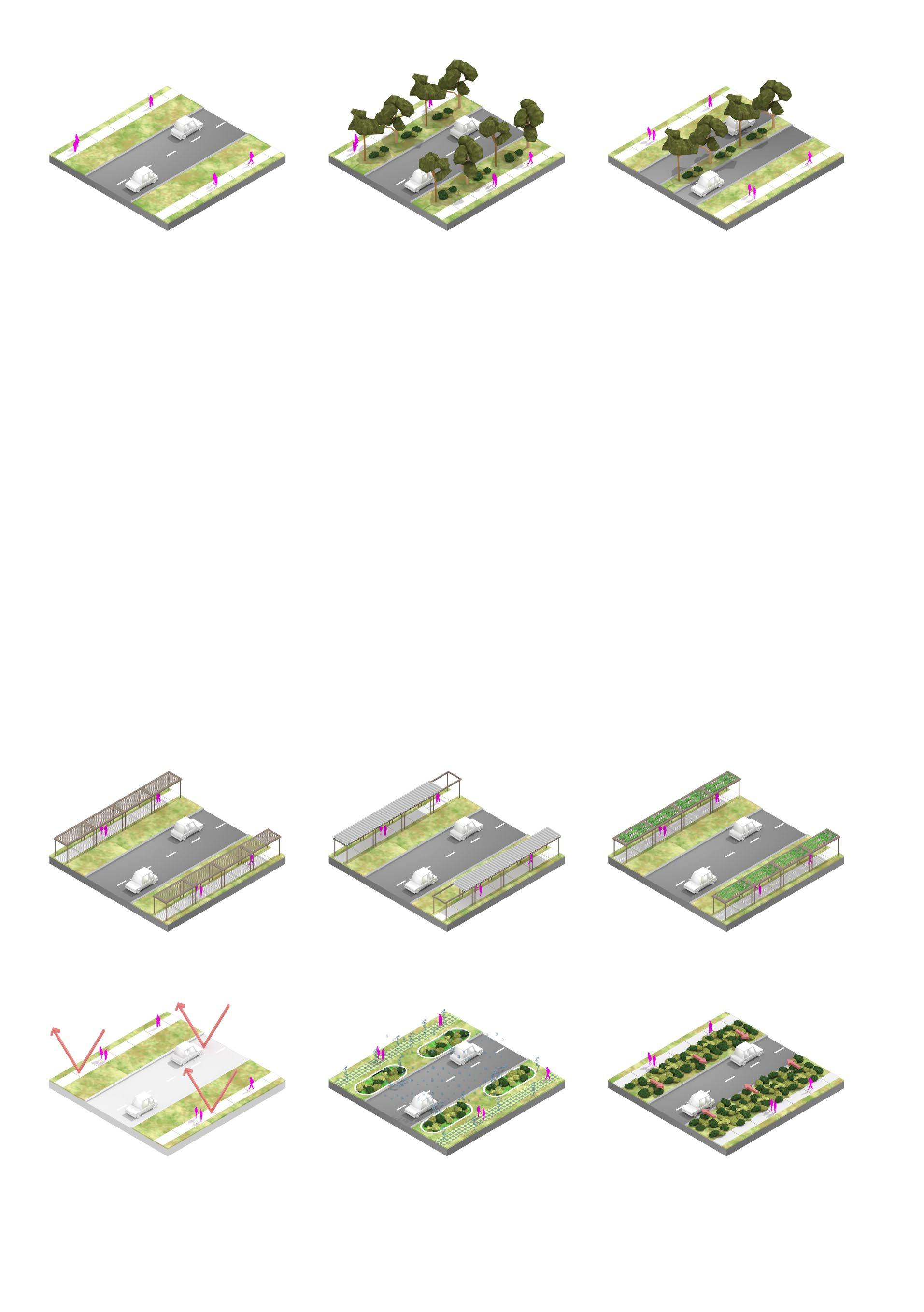
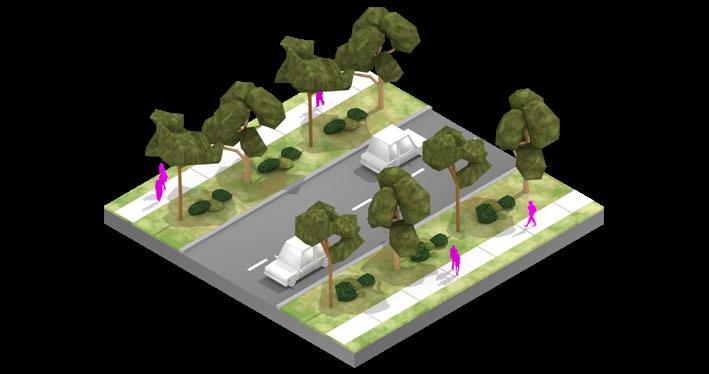
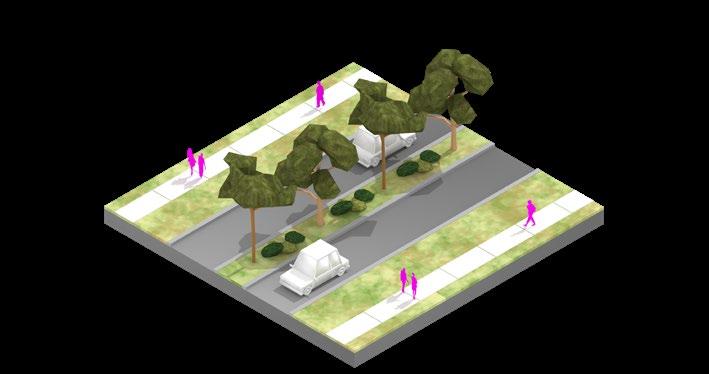
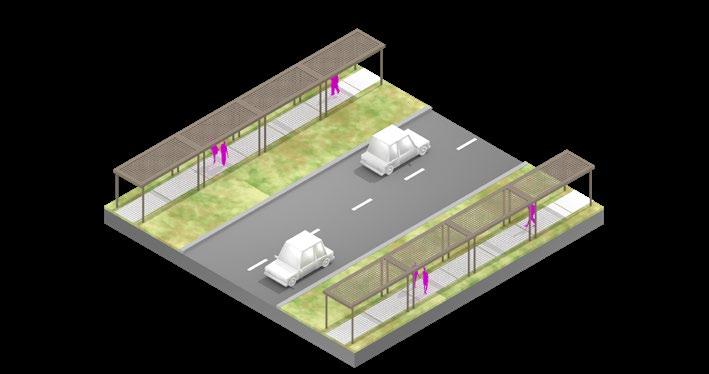
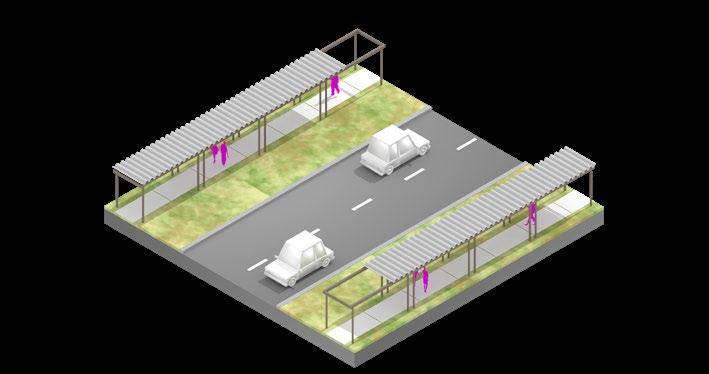
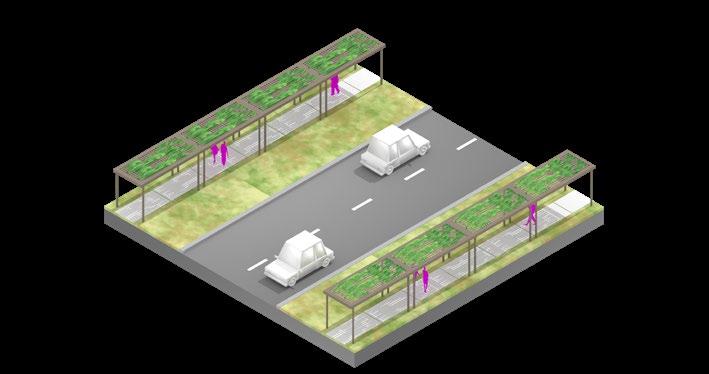
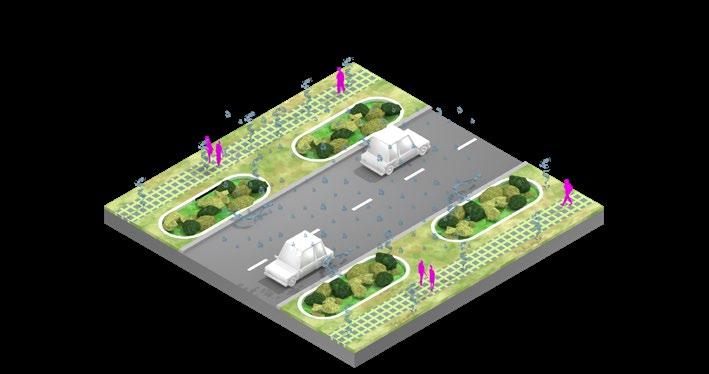
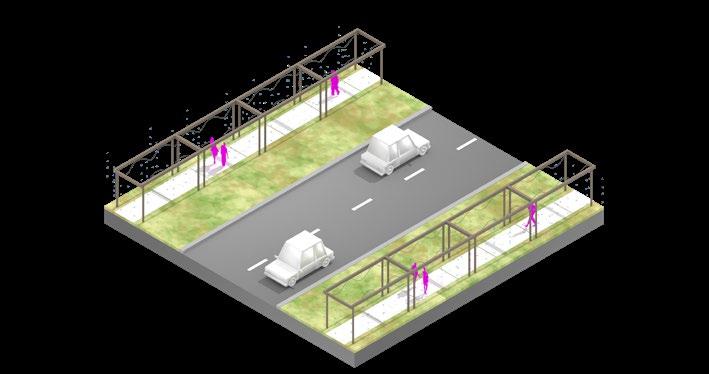
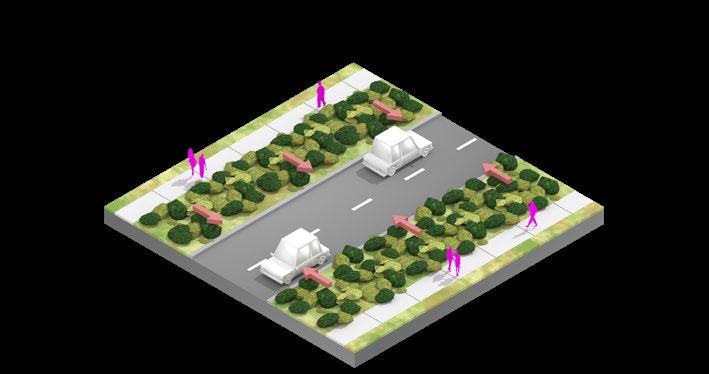
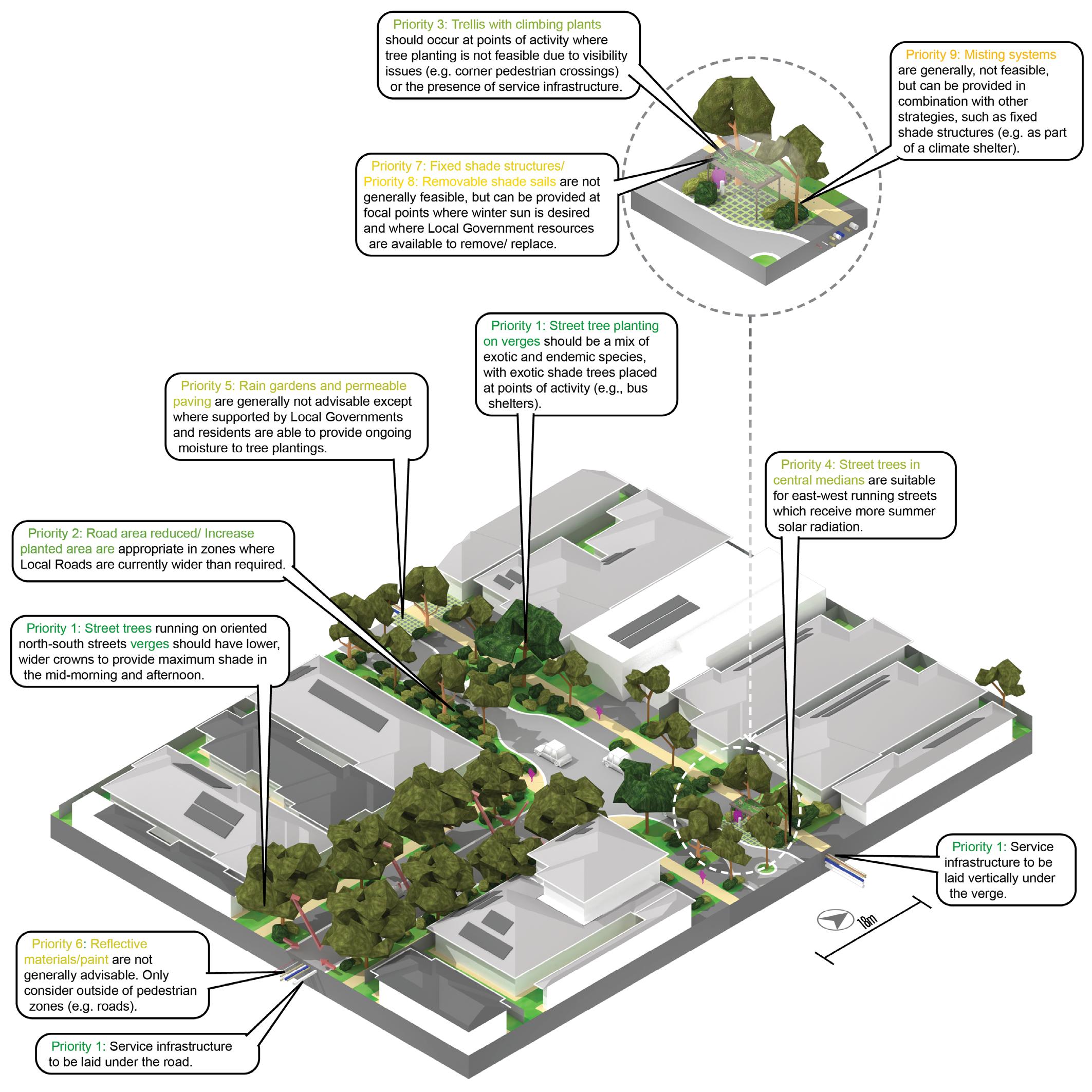
Numerous respondents noted that any effective strategy would require ‘the combination of a few of the options, for example, planting street trees on verges and installing rain gardens and permeable paving on street verges. Moreover, they noted that the effectiveness of adaptation strategies would depend on street orientation. For instance, in the Mediterranean climate zone street trees on northsouth running roads should have a lower and wider crown to provide maximum shade mid-morning and afternoon, while East-west streets receive more solar radiation in summer and therefore benefit from additional tree planting in a central median. As such, the figures and table below show a synthesis of the adaptation strategies preferred by our respondents (Figure 6 and Table 5) These visualisations represent streets with higher-than-average foot traffic (for example, connecting public transport, shops or schools), which our respondents indicated would justify the necessary investment in adaptation (Figure 7).
Table 5: Summary of streetscape adaptation strategies for Mediterranean (Csa) climate zones
Streetscape adaptation strategies
Priority 1: Street trees on verges
Priority 2: Reduce road / increase planted area
Priority 3: Trellis with climbing plants
Priority 4: Street trees in central medians
Priority 5: Rain gardens and permeable paving
Priority 6: Reflective materials/paint
Priority 7: Fixed shade structures
Priority 8: Removable shade sails
Summary
Appropriate for north-south and east-west running streets. Street trees on north-south streets should have lower, wider crowns to provide maximum shade in the mid-morning and afternoon Exotic shade trees should be placed at points of activity (e.g., bus shelters). Service infrastructure to be laid under the road or vertically under the verge.
Appropriate in areas where Local Roads are currently wider than required and where residents and Local Governments will maintain and irrigate. Best combined with verge tree planting.
Should occur at points of activity where tree planting is not feasible due to visibility issues (e.g. corner pedestrian crossings) or the presence of service infrastructure.
Suitable for east-west running streets which receive more summer solar radiation, where infrastructure is precluding tree planting on verges and where residents are unlikely to maintain or irrigate planting.
Generally, not advisable except where supported by Local Governments and residents and able to provide ongoing moisture to tree plantings.
Not generally advisable because of the reradiation of longwave radiation and associated issues for human comfort. Only consider outside of pedestrian zones (e.g. roads).
Not feasible over large areas, but can be provided at focal points (e.g. as a climate shelter) and where immediate shade is needed.
Not generally feasible, but can be provided at focal points where winter sun is desired and where Local Government resources are available to remove/ replace.
Priority 9: Misting systems Generally, not feasible, but can be provided in combination with other strategies, such as fixed shade structures (e.g. as part of a climate shelter) and where Local Governments can maintain.
Figure 6: A combination of the adaptation strategies preferred by our respondents applied to a typical Urban Local road in a new greenfield suburban development.
7. Streetscape adaptation efforts should focus on streets with higher-than-average foot traffic (e.g., those serving public transport, shops, or schools).
Figure
5. Discussion
Below, we discuss the survey findings in relation to the relevant literature, consider the challenges and risks that such strategies may face, and identify limitations and areas for future research.
Historically, it has been noted that relatively little of the large body of knowledge concerning urban climate has permeated through to working planners (Oke in Nouri & Matzarakis, 2019). In contradiction, our respondents have provided detailed and informed commentary regarding climate adaptation in their regions. The results of our survey clearly indicate an expert preference for nature-based solutions (e.g., trees on verges, increased planting areas, or climbing plants on trellises) to improve thermal comfort in streetscapes on hot days, and conversely, rated constructed (e.g., shade sails) or mechanical solutions (e.g., misting systems) typically poorly.
This preference resonates with the related literature which advocates for investing in nature-based solutions, particularly vegetation, because of its feasibility and effectiveness in reducing heat intensity and improving thermal comfort across the streetscape section more broadly (Australian Government, 2024; Andrew M. Coutts, White, Tapper, Beringer, & Livesley, 2015; Howe, Hathaway, Ellis, & Mason, 2017; S. Lenzholzer, 2016), as well as delivering a host of co-benefits (Georgiou, Morison, Smith, Tieges, & Chastin, 2021; Hoyer, Dickhaut, Kronawitter, & Weber, 2011; Wood, Hooper, Foster, & Bull, 2017). Nonetheless, respondents questioned the application of many well-established Climate Sensitive Urban Design strategies for hot climates, such as the effectiveness and feasibility of installing reflective materials (Kusumastuty et al., 2018; Sanda Lenzholzer, 2015; Nardino & Laruccia, 2019; Oke et al., 2017), the feasibility of rain gardens and permeable paving (Oke et al., 2017) and the feasibility of misting systems (Völker et al., 2013). This reinforces the dissonance that exists between generalised Climate Sensitive Urban Design strategies and local conditions and constraints (Nouri & Matzarakis, 2019)
5.1 Challenges to streetscape adaptation
Despite their evident appeal, nature-based adaptation solutions face challenges in application across Western Australian climate zones, including the management of road reserves, the cost of adaptation strategies, and an increasingly dry and hot climate (Australian Academy of Science, 2021)
5.1.1
Governance and cost-related challenges
Across Australia's three levels of government, planning to adapt to climate change is shambolic, and the obstacles to building resilience appear insuperable. To the extent that adaptation is underway, it is predominantly reactive rather than proactive, incremental rather than transformational (Hamilton & Wilkenfeld, 2024). While Local Governments are increasingly expected to deliver climate adaptation (IPCC, 2022) with more hands-on responsibilities than the Federal and State Government (The Western Australian Local Government Association, 2021) their views on the relative benefits, costs and risks of development differ widely and swing back and forth according to election outcomes (Hamilton & Wilkenfeld, 2024). Moreover, councils today are ill-equipped for climate change adaptation, often ‘barely having the resources to carry out their normal tasks’, let alone deliver and maintain complex adaptation solutions (Hamilton & Wilkenfeld, 2024).
Nonetheless, while Local Governments are responsible for the management of Urban Local roads, verges contain infrastructure such as power cables, gas pipelines, telecommunications lines, water
pipes and meters, and drainage systems to manage stormwater runoff and prevent flooding, while the roadways themselves have requirements for vehicular movement, including for garbage trucks. To complicate things further, different State Government departments and agencies manage other aspects of this service infrastructure (e.g., water, electricity and gas supply. The issue is that these various agencies have their own safety standards and priorities, so even an apparently simple change, such as installing service infrastructure vertically (rather than horizontally) to allow deeper soil for street tree planting, becomes impossible to implement due to bureaucratic hurdles. Moreover, the overarching policy documents which guide the design of Urban Local roads, AustRoads (2025), focus on road safety and the efficient movement of traffic rather than more place-based issues such as climate comfort.
In the present era of climate emergency, discretionary and flexible guidelines for tree planting may not be effective or in the public interest (Bhoge, Nolan, & Pojani, 2020). Rather, strong ‘design, execute, and maintain’ policies must be adopted at the Local Government level (Bhoge et al., 2020). In relation to streetscapes, these could stipulate a minimum level of shade in summer conditions (Hamilton & Wilkenfeld, 2024) relative to specific local settings, noting that it will be unfeasible to shade all suburban streetscapes and that generic percentage targets at a suburb level (For example City of Bayswater, 2015) don’t necessarily deliver tree canopy where it is most needed Moreover, there are no universal rules for Climate Sensitive Urban Design, and such statewide regulation of street design would need to respond to different regional priorities and climates (Oke et al., 2017)
This, nonetheless, raises the question of whether Local Governments can afford to fund the irrigation and maintenance of adaptation strategies. While private developers typically pay for the implementation of streetscapes in new suburban subdivisions, longer-term responsibility for streetscape maintenance reverts to Local Governments (Austroads, 2025). Nevertheless, local governments’ efforts to urgently provide more elaborate and climate-adapted streetscapes are limited by their capacity and financial sustainability (Boulton & Dedekorkut-Howes, 2024) Clearly, given existing constraints regarding Local Government capacity (Hamilton & Wilkenfeld, 2024) there is a role for the State Government to assist with the funding of adaptation strategies in key streetscapes, particularly in areas with low-income and marginalised communities (Lee et al., 2024).
Moreover, education of residents could encourage responsibility for maintenance of street trees and gardens. Nonetheless, how Local Governments can best engage the public in adaptation planning remains an open question (Hughes, 2015), and residents are often unable to draw linkages between their individual actions and adaptation initiatives undertaken by local or State Governments (Henrique & Tschakert, 2022)
5.1.2 Decreasing water availability for irrigation
Further to such streetscape cost and governance-related challenges, nature-based adaptation solutions will also increasingly confront climate-related challenges, and their effectiveness will decrease with increasing warming (Lee et al., 2024). Cooling an urban area with nature-based solutions can face a ‘bottleneck situation.’ If there is not enough water available in the soil for vegetation during a heat wave, the plants’ evapotranspiration will be limited, as will their contribution to cooling (Andrew M Coutts et al., 2013). Moreover, while drought-tolerant trees generally tend to have sparse crowns (Holdsworth, 2024), non-drought-tolerant trees, when water-
stressed, will also lose a proportion of their canopy coverage, reducing leaf area index (Hsiao, 1973) and transpiration, and become less efficient at providing shade (Shashua-Bar et al., 2009)
So, especially during heat waves, sufficient irrigation is needed (Sanda Lenzholzer, 2015), which can exacerbate water shortages (Rogers, Hammer, Werbeloff, & Chesterfield, 2015). Indeed, in the Mediterranean (Csa) zone around 2,000 litres of irrigation water is required per year over two years to maintain new trees, yet the vast majority of irrigation demand occurs in summer and thus does not coincide with the time when water is available, owing to winter rainfall (Grace, 2007). This means water harvested in winter needs to be stored for summer, which would incur high costs (Grace, 2007) Aquifer storage and recovery is likely the most feasible storage solution in these regions (Grace, 2007). However, such a program is expensive to roll out across major urban centres Such challenges will be compounded by climate change, with projections of declining rainfall and increasing evapotranspiration (Australian Academy of Science, 2021)
5.1.3 The time required for nature-based solutions to reach maturity
Another challenge for streetscape climate adaptation efforts that rely on tree canopy cover for shade is the time required for such canopies to mature (generally between one and four decades) across different tree species and conditions. This reinforces the urgency of climate-adapting streetscapes. Indeed, the pace at which the climate is changing and impacts are emerging is potentially at odds with the need to enable more effective and faster adaptation (Australian Climate Service, 2025). This is concerning because feasible and effective adaptation options today will become constrained and less effective as global warming intensifies. (Lee et al., 2024)
5.2 Limitations
The authors acknowledge the limitations of the report. Firstly, our survey questions (and related responses) typically focused on daytime conditions, such as providing shade through increased tree canopy cover. Nonetheless, we note that solutions such as extensive tree cover can inhibit nighttime comfort due to the reduced Sky View Factor (Cao et al., 2024; Rohinton, 2005) and the build-up of heat typical of the Urban Heat Island effect in buildings (Rohinton, 2005) Secondly, as our respondents noted, the selection of tree species and spacing of tree planting is vital, but the current understanding of the water use and climate performance of different tree species is patchy (Andrew M Coutts et al., 2013). Future region-specific research in this area is much needed. Finally, future study by the authors will test the cooling offered by the various strategies using ENVI-met microclimatic modelling as a way of testing judgments by respondents (ENVI-met, 2021).
6. Conclusion
This report presents a novel assessment of the effectiveness of nature-based, constructed, and mechanical Climate-Sensitive Urban Design strategies in improving thermal comfort in suburban streetscapes under hot daytime conditions across the Hot Desert climate (Bwh), Hot Semi Arid (Bsh) and Mediterranean (Csa) climate zones in Western Australia. The results indicate a consistent preference for nature-based solutions to improve thermal comfort on hot days. This preference raises questions about the Local Government's capacity to fund maintenance and deliver an integrated design solution within road reserves, given overlapping priorities for car movement, parking, service infrastructure provision, and residential amenity. Moreover, such challenges will be compounded by climate change, with projections of declining rainfall and increasing evapotranspiration, particularly in the Csa zone.
Despite these significant headwinds, Australia has the means and the obligation to make Australia much safer for the next generation and the generations beyond (Hamilton & Wilkenfeld, 2024) Adaptation options that are feasible and effective today will become constrained and less effective as global warming increases (Lee et al., 2024). Therefore, commencing such adaptation work is urgent. This report has been directed towards this end.
7. Next steps
Subsequent phases of the project will:
• Develop and evaluate the performance of design proposals to adapt urban precinct and housing case studies to projected climate change using micro-climatic, building energy, and water modelling (Phase 3)
• Develop CSUD principles for adaptation of WA urban precincts and housing to temperature and rainfall changes for inclusion in the revision of future state and local government policies and design guidance (Phase 4)
8. References
Alabi, A. T., & Jelili, M. O. (2023). Clarifying likert scale misconceptions for improved application in urban studies. Quality & Quantity, 57(2), 1337–1350.
Alberti, F. (2023). Regenerative Streets: Pathways towards the Post-Automobile City. Sustainability, 15(13), 10266. 10.3390/su151310266
Australian Academy of Science. (2021). The risks to Australia of a 3°c warmer world. Canberra. Retrieved from www.science.org.au/warmerworld
Australian Climate Service. (2025). Australia’s National Climate Risk Assessment: An Overview. Retrieved from https://www.acs.gov.au/pages/national-climate-risk-assessment
Australian Government. (2024). National Urban Policy: Consultation draft. Retrieved from https://www.infrastructure.gov.au/sites/default/files/documents/draft-national-urbanpolicy.pdf
Austroads. (2025). Publications. Retrieved from https://austroads.gov.au/publications?f.Subject+Area%7CsubjectArea=Road+Design
Bambrick, H. J., Capon, A. G., Barnett, G. B., Beaty, R. M., & Burton, A. J. (2011). Climate Change and Health in the Urban Environment: Adaptation Opportunities in Australian Cities. Asia-Pacific journal of public health, 23(2), 67S–79S. 10.1177/1010539510391774
Barron, S., Nitoslawski, S., Wolf, K. L., Woo, A., Desautels, E., & Sheppard, S. R. (2019). Greening blocks: A conceptual typology of practical design interventions to integrate health and climate resilience co-benefits. International Journal of Environmental Research and Public Health, 16(21), 4241.
Ben-Joseph, E. (2007). Changing the residential street scene: Adapting the shared street (Woonerf) concept to the suburban environment. Journal of the American Planning Association, 61(4), 504–515.
Bhoge, R., Nolan, H., & Pojani, D. (2020). Designing the subtropical city: an evaluation of climatesensitive policy effects in Brisbane, Australia. Journal of Environmental Planning and Management, 63(10), 1880–1901.
Bolleter, J. (2016). On the verge: re-thinking street reserves in relation to suburban densification. Journal of Urban Design. https://doi.org/10.1080/13574809.2015.1133229
Bolleter, J. (2017). Fringe benefits? A review of outer suburban development on Perth’s fringes in relation to state government goals concerning the natural environment and efficient transport connectivity. Australian Planner, 54(2). https://doi.org/10.1080/07293682.2017.1319395
Boulton, C., & Dedekorkut-Howes, A. (2024). How funding scarcity and ineffective governance tools inhibit urban greenspace provision: An exploration of municipal greenspace managers’ insights. Landscape and Urban Planning, 251, 105172. 10.1016/j.landurbplan.2024.105172 Bureau of Meteorology. (2025). Climate statistics for Australian locations. Retrieved from http://www.bom.gov.au/climate/averages/tables/cw_003003_All.shtml
Cao, B., Sun, M., & Bardhan, R. (2024). Measuring shaded bike lanes for heat stress mitigation with deep learning: A case study in Amsterdam, Netherlands. Urban Climate, 57. Retrieved from Jitlp,.1 ,d01.or)." I 0.1016/j.uchm.20:!4.l 0212l
City of Bayswater. (2015). Greening our garden city: City of Bayswater. Retrieved from https://www.bayswater.wa.gov.au/CityOfBayswater/media/Documents/Environment/FINAL_ Urban_Forest_Strategy_-WM-(1)-UPDATE-(002).pdf
Cooperative Research Centre for Water Sensitive Cities. (2020). Designing for a cool city–Guidelines for passively irrigated landscapes. Melbourne. Coutts, A. M., Tapper, N. J., Beringer, J., Loughnan, M., & Demuzere, M. (2013). Watering our cities: The capacity for Water Sensitive Urban Design to support urban cooling and improve human thermal comfort in the Australian context. Progress in Physical Geography, 37(1), 2–28.
Coutts, A. M., White, E. C., Tapper, N. J., Beringer, J., & Livesley, S. J. (2015). Temperature and human thermal comfort effects of street trees across three contrasting street canyon environments. Theoretical and Applied Climatology, 124(1), 55–68. 10.1007/s00704-015-1409-y
Cox, T., & Nield, L. (2015). Cooling a tropical city. Landscape Australia, 22–26.
Department of Sport and Recreation. (2012). Classification framework for public open space. Perth: Department of Sport and Recreation.
Dufty, N. (2022). Using heat refuges in heatwave emergencies. The Australian Journal of Emergency Management, 37(2), 38–44. Retrieved from https://search.informit.org/doi/10.3316/informit.20220606068145
ENVI-met. (2021). ENVI-met: decoding urban nature. Retrieved from https://www.envi-met.com/ Furchtlehner, J., Lehner, D., & Lička, L. (2022). Sustainable Streetscapes: Design Approaches and Examples of Viennese Practice. Sustainability, 14(2), 961. 10.3390/su14020961
Georgiou, M., Morison, G., Smith, N., Tieges, Z., & Chastin, S. (2021). Mechanisms of Impact of Blue Spaces on Human Health: A Systematic Literature Review and Meta-Analysis. International Journal of Environmental Research and Public Health, 18(5), 2486.
Giles-Corti, B., Bull, F., Knuiman, M., McCormack, G., Van Niel, K., Timperio, A., . . . Boruff, B. (2013). The influence of urban design on neighbourhood walking following residential relocation: Longitudinal results from the RESIDE study. Social science & medicine (1982), 77(1), 20–30. 10.1016/j.socscimed.2012.10.016
Grace, B. (2007). Sustainable Urban Living – a Perth Perspective. Australian Journal of Multidisciplinary Engineering, 5(1), 49–59.
Haghani, M. (2025). Australia’s roads are full of giant cars, and everyone pays the price. What can be done? Retrieved from https://theconversation.com/australias-roads-are-full-of-giantcars-and-everyone-pays-the-price-what-can-be-done-268212
Hamilton, C., & Wilkenfeld, G. (2024). Living Hot : Surviving and Thriving on a Heating Planet (1st ed.). Richmond: Hardie Grant Books.
Hassen, N., & Kaufman, P. (2016). Examining the role of urban street design in enhancing community engagement: A literature review. Health & place, 41, 119–132. 10.1016/j.healthplace.2016.08.005
Henrique, K. P., & Tschakert, P. (2022). Everyday limits to adaptation. Oxford Open Climate Change Holdsworth, C. (2024). Designing with trees. Retrieved from https://landscapeaustralia.com/articles/designing-with-trees/ Howe, D. A., Hathaway, J. M., Ellis, K. N., & Mason, L. R. (2017). Spatial and temporal variability of air temperature across urban neighborhoods with varying amounts of tree canopy. Urban Forestry & Urban Greening, 27, 109–116. https://doi.org/10.1016/j.ufug.2017.07.001
Hoyer, J., Dickhaut, W., Kronawitter, L., & Weber, B. (2011). Water sensitive urban design: principles and inspiration for sustainable stormwater management in the city of the future. Hamburg: Jovis.
Hsiao, T. C. (1973). Plant responses to water stress. Annual review of plant physiology, 24(1), 519–570. Hughes, S. (2015). A meta-analysis of urban climate change adaptation planning in the US. Urban Climate, 14, 17–29.
Institute for Transportation & Development Policy. (2013). TOD Standard. Retrieved from www.TODStandard.org
IPCC. (2022). IPCC Working Group II Sixth Assessment Report. Retrieved from https://www.ipcc.ch/report/ar6/wg2/
Klemm, W., van Hove, B., Lenzholzer, S., & Kramer, H. (2017). Towards guidelines for designing parks of the future. Urban Forestry & Urban Greening, 21, 134–145.
Kusumastuty, K. D., Poerbo, H. W., & Koerniawan, M. D. (2018). Climate-sensitive urban design through Envi-Met simulation: case study in Kemayoran, Jakarta. IOP Conference Series: Earth and Environmental Science, 129(1), 12036. 10.1088/1755-1315/129/1/012036
Landcorp. (2014). Kimberley Vernacular Handbook. Retrieved from https://developmentwa.com.au/documents/145-kimberley-vernacular-handbookpart1/viewdocument/145
Lee, H., Calvin, K., Dasgupta, D., Krinner, G., Mukherji, A., Thorne, P., . . . Ruane, A. C. (2024). Climate change 2023 synthesis report summary for policymakers. CLIMATE CHANGE 2023 Synthesis Report: Summary for Policymakers. Lenzholzer, S. (2015). Weather in the City: How Design Shapes the Urban Climate. Rotterdam: nai010. Lenzholzer, S. (2016). Weather in the City: How Design Shapes the Urban Climate. Hungarian Geographical Bulletin, 65, 198–199. 10.15201/hungeobull.65.2.10
Marx, P. (2022). Road to nowhere: what Silicon Valley gets wrong about the future of transportation. London: Verso Books.
McGreevy, M., Harris, P., Delaney-Crowe, T., Fisher, M., Sainsbury, P., Riley, E., & Baum, F. (2020). How well do Australian government urban planning policies respond to the social determinants of health and health equity? Land Use Policy, 99, 105053. 10.1016/j.landusepol.2020.105053
Montero-Gutierrez, P., Ramos, J. S., Delgado, M. G., Cerezo-Narváez, A., Amores, T. P., & Dominguez, S. A. (2023). Natural cooling solution for thermally conditioning bus stops as urban climate shelters in hot areas: Experimental proof of concept. Energy Conversion and Management, 296, 117627.
Motazedian, A., Coutts, A. M., & Tapper, N. J. (2020). The microclimatic interaction of a small urban park in central Melbourne with its surrounding urban environment during heat events. Urban Forestry & Urban Greening, 52, 126688.
Nardino, M., & Laruccia, N. (2019). Land use changes in a peri-urban area and consequences on the urban heat island. Climate (Basel), 7(11), 133. 10.3390/cli7110133
Nouri, A. S., & Matzarakis, A. (2019). The maturing interdisciplinary relationship between human biometeorological aspects and local adaptation processes: An encompassing overview. Climate (Basel), 7(12), 134. 10.3390/cli7120134
O'Sullivan, O. S., Holt, A. R., Warren, P. H., & Evans, K. L. (2017). Optimising UK urban road verge contributions to biodiversity and ecosystem services with cost-effective management. Journal of Environmental Management, 191, 162–171. 10.1016/j.jenvman.2016.12.062
Oke, T. R., Mills, G., Christen, A., & Voogt, J. A. (2017). Climate-Sensitive Design. In (pp. 408–452). United States: Cambridge University Press. 10.1017/9781139016476.016
Park, J. (2024). Slow Burn: The hidden costs of a warming world. New Jersey: Princeton University Press.
Rogers, B., Hammer, K., Werbeloff, L., & Chesterfield, C. (2015). Shaping Perth as a Water Sensitive City: Outcomes and perspectives from a participatory process to develop a vision and strategic transition framework. Melbourne.
Rohinton, E. (2005). An Urban Approach to Climate Sensitive Design: Strategies for the Tropics London: Taylor & Francis. Retrieved from http://ebookcentral.proquest.com/lib/uwa/detail.action?docID=200671
Salmond, J. A., Tadaki, M., Vardoulakis, S., Arbuthnott, K., Coutts, A., Demuzere, M., . . . Wheeler, B. W. (2016). Health and climate related ecosystem services provided by street trees in the urban environment. Environmental Health, 15(Suppl 1), 36–36. 10.1186/s12940-016-0103-6
Seamer, P. (2019). Breaking Point: The Future of Australian Cities. Melbourne: Nero.
Sharifi, E., Sivam, A., & Boland, J. (2016). Resilience to heat in public space: a case study of Adelaide, South Australia. Journal of Environmental Planning and Management, 59(10), 1833–1854. https://doi.org/10.1080/09640568.2015.1091294
Shashua-Bar, L., Pearlmutter, D., & Erell, E. (2009). The cooling efficiency of urban landscape strategies in a hot dry climate. Landscape and Urban Planning, 92(3-4), 179–186.
Sonta, A., & Jiang, X. (2023). Rethinking walkability: Exploring the relationship between urban form and neighborhood social cohesion. Sustainable cities and society, 99, 104903. 10.1016/j.scs.2023.104903
Sugiyama, T., Cerin, E., Owen, N., Oyeyemi, A. L., Conway, T. L., Van Dyck, D., . . . Reis, R. S. (2014). Perceived neighbourhood environmental attributes associated with adults recreational walking: IPEN Adult study in 12 countries. Health & place, 28, 22–30. SurveyMonkey. (2021). SurveyMonkey. Retrieved from www.surveymonkey.com
Tapias, E., & Schmitt, G. (2014). Climate-sensitive urban growth: outdoor thermal comfort as an indicator for the design of urban spaces. WIT Transactions on Ecology and the Environment, 191, 623–634. 10.2495/SC140521
The Australian Bureau of Statistics. (2022). Physical activity. Retrieved from https://www.abs.gov.au/statistics/health/health-conditions-and-risks/physical-activity/latestrelease
The Western Australian Local Government Association. (2021). WALGA Community Adaptation Action Plan Template. Retrieved from https://walga.asn.au/policy-advice-andadvocacy/environment/climate-change/templates-and-tools
Theeuwes, N. E., Solcerova, A., & Steeneveld, G. J. (2013). Modeling the influence of open water surfaces on the summertime temperature and thermal comfort in the city. Journal of Geophysical Research: Atmospheres, 118(16), 8881–8896.
Völker, S., Baumeister, H., Claßen, T., Hornberg, C., & Kistemann, T. (2013). Evidence for the temperature-mitigating capacity of urban blue space A health geographic perspective. Erdkunde, 355–371.
Wan Mohammad, W. S. N., Lokman, N. I. S., Hasan, R., Hassan, K., Ramlee, N., Mohd Nasir, M. R., . . . Abu Bakar, K. A. (2021). The implication of street network design for walkability: A review. IOP conference series. Earth and environmental science, 881(1), 12058. 10.1088/17551315/881/1/012058
Wood, L., Hooper, P., Foster, S., & Bull, F. (2017). Public green spaces and positive mental health–investigating the relationship between access, quantity and types of parks and mental wellbeing. Health & place, 48, 63–71.