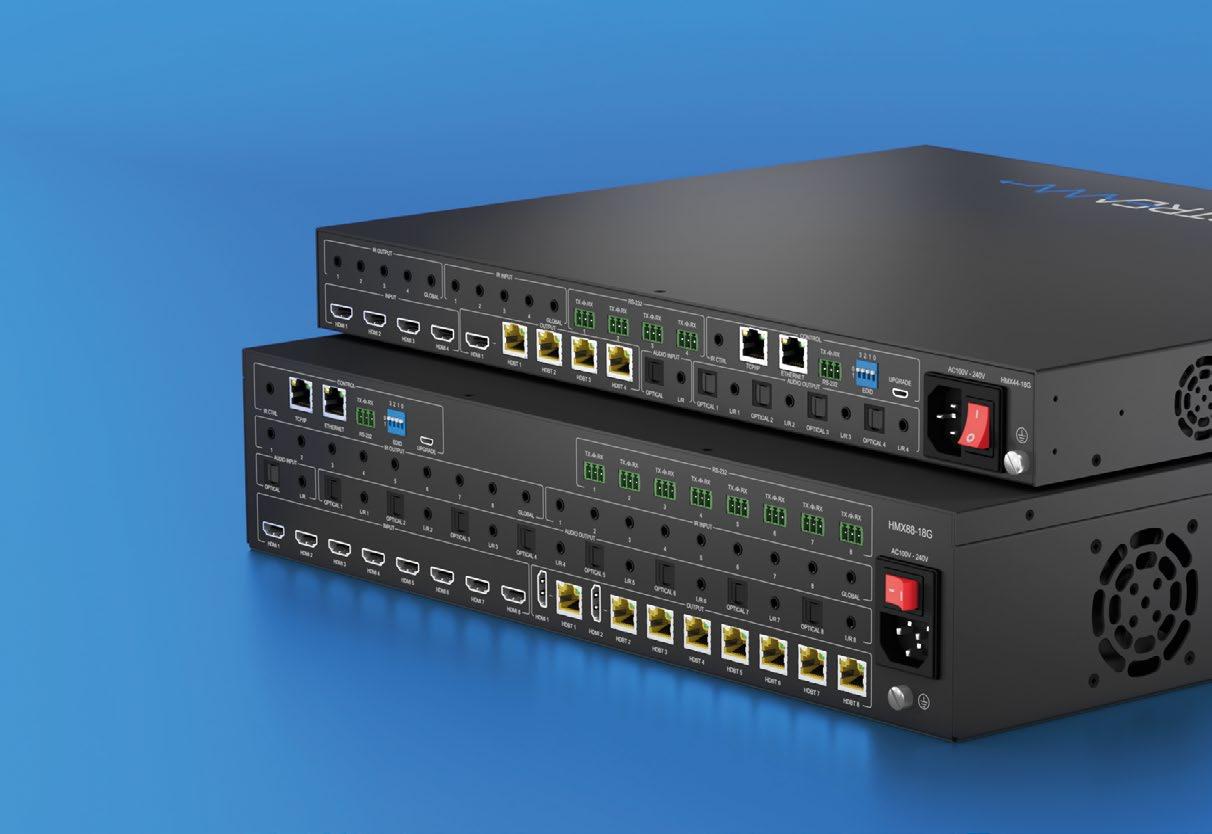
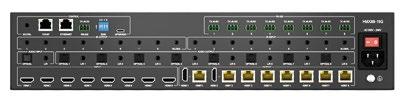
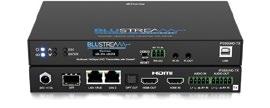
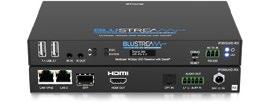
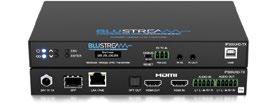
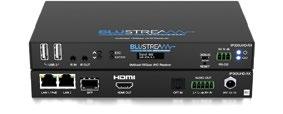
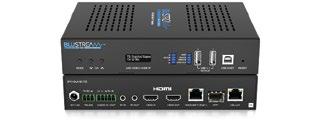
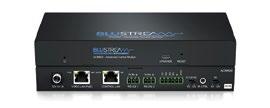
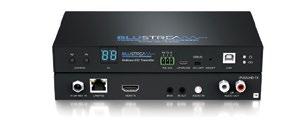
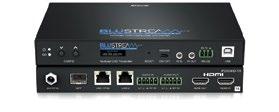
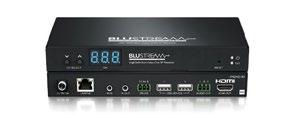
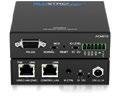
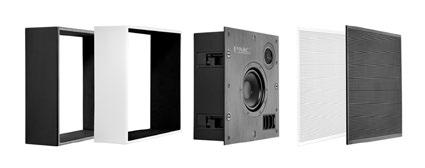
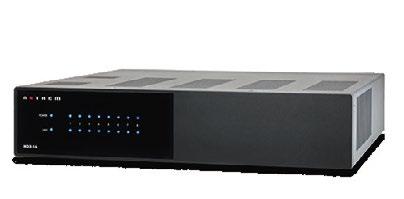
We are pleased to announce the launch of the first HDBaseT™3 matrix product to the market
Using HDBaseT™3 technology, these powerful HDBaseT™ matrix support uncompromised 4K 60Hz 4:4:4 resolutions over distances up to 100m over a CAT6A. The new HMX88-18G and HMX44-18G come into their own with advanced audio features specifically designed for maximising the integration of AV sources in the modern home. Enhanced audio routing is achieved through the integrated audio matrix. This enables the audio from displays (via HDMI ARC or Optical S/PDIF), and all other sources to be embedded and routed through the system at the users discretion. The inclusion of a 1Gb Ethernet channel allows for LAN serving to all HDBT outputs / zones as required, IR and RS-232 pass-through, advanced EDID management, and PoC provide the ultimate flexibility.
The combination of these technology features enable our installation partners the ability to create a truly immersive AV experience throughout the home.
NEW
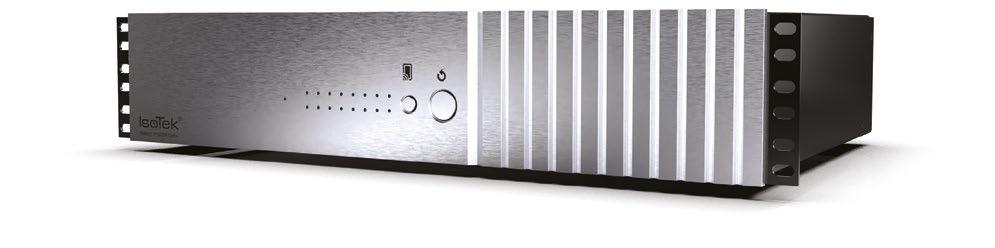
HMX88-18G
8x8 HDBaseT™3 AV Matrix
• Uncompressed / unconverted 4K 60Hz 4:4:4 to 100m
So the year is drawing to a close as the industry winds down for a brief festive pause, well at least in theory. Some installers EI speaks to still experience an end of year rush, others actively try to avoid one. Nevertheless, as we draw close to Christmas time EI has been reflecting on the old tradition of the Yule log. In centuries past, households in Northern Europe would select a great log and burn it slowly through the 12 days of Christmas. It wasn’t just a source of warmth; it was a symbol of endurance and light, a reminder that even in the darkest nights of winter, something steady and comforting could keep the cold at bay and keep people inspired and hold onto hope.
There’s a quiet poetry in that. In a world of constant updates, new product cycles and relentless change, the idea of something designed to last, to sustain and to glow consistently through the dark, feels almost radical. Our industry—filled with high-performance audio, cutting-edge control and cinematic wonder—is often caught between the fast burn of technology and the long burn of craftsmanship.
The Yule log teaches patience. It was chosen carefully, dried properly and placed with purpose. It didn’t roar into life, it caught slowly and gave its heat over time. In that sense, it feels like a perfect metaphor for how the best integrators, designers and engineers operate. The finest results don’t come from rushing. They
come from understanding materials, clients and performance—layer by layer, decision by decision.
BUILD THE BEST FIRE
While others might chase the flash of the moment, the long burn is about consistency. The Yule log didn’t have to prove itself against every spark and flare in the hearth— it simply did its job, beautifully and steadily, until it was done. There’s something deeply reassuring in that, particularly in a market that can sometimes feel like it runs on constant motion and novelty.
So perhaps the lesson this Christmas isn’t just to light the fire, but to tend it properly. To value the slow glow over the quick spark. To celebrate the projects and relationships that endure, rather than those that make the biggest noise. A great home cinema or perfectly tuned listening space doesn’t come alive because it’s new—it comes alive because it’s right. Because someone took the time to build something that lasts.
As we all take a moment to pause, reflect and hopefully enjoy a little warmth of our own, it’s worth remembering that the best parts of this industry aren’t about speed or size—they’re about quality, understanding and light that lasts long after the wrapping paper is gone.
So, here’s to a season of the long burn—to the clients who trust us, the craftspeople who build with care, and the quiet satisfaction of work that glows brighter the longer it’s tended.
Happy Christmas—and may your Yule log burn steadily into a bright New Year!
GETTING IN TOUCH
EDITOR-IN-CHIEF
Daniel J Sait, dan@allthingsmedialtd.com
MANAGING DIRECTOR
Ian Kitchener, ian@allthingsmedialtd.com
GROUP AD MANAGER
Steve White, steve@allthingsmedialtd.com
SALES DIRECTOR
Kelly Byne, kelly@allthingsmedialtd.com
CEO
David Kitchener, david@allthingsmedialtd.com
STUDIO MANAGER
Mark Weller, mark@allthingsmedialtd.com
ACCOUNTS
susan@allthingsmedialtd.com
Essential Install magazine, Suite 14, 6-8 Revenge Road, Lordswood, Chatham, Kent ME5 8UD
T: +44 (0)1634 673163
F: +44 (0)1634 673173 www.essentialinstall.com
SOCIALS /INSTALL_MAG /ESSENTIALINSTALL
The editors and publishers do not necessarily agree with the views expressed by contributors, nor do they accept responsibility for any errors in the transmission of the subject matter in this publication. Whilst we make every effort to ensure that everything is factually correct, we cannot be held responsible if factual errors occur.
In all matters, the editor’s decision is final. Editorial contributions to Essential Install magazine are welcomed, and the editor reserves the right to alter or abridge text prior to the publication. All articles are copyright and remain the property of Essential Install magazine.
23-24 SEPTEMBER 2026
BIG NEWS IN THE AV & SMART HOME SECTOR!
EI Live! the UK’s top trade show, teams up with ECN Live! for an all-new event experience. This unique collaboration promises unparalleled insights and opportunities in a unified venue.
The residential AV and home automation industries have relied on EI Live! as a primary event for 14 years, but as the market grows and overlaps with electrical contracting, there is an opportunity to bridge these industries. To address this, EI Live! is re-locating to the NEC Birmingham for its 2026 event and will run alongside ECN Live! This joint exhibition creates a collaborative space for AV and smart home professionals to engage directly with electricians and electrical contractors, fostering synergy across these interconnected markets.
LIGHTING & SHADING
HOMEWORKS
RADIORA 3
SHADING
EI Live! the UK’s only dedicated smart home, luxury AV and home cinema trade exhibition, is proud to announce its move to a brand-new venue: the NEC Birmingham. The show will take place on September 23-24, 2026, marking an exciting new chapter for the industry’s leading trade event.
After 14 successful years, most recently at Farnborough International Exhibition Centre, EI Live! is stepping up to the UK’s premier exhibition space to accommodate growth and deliver an even more powerful experience for exhibitors and visitors alike.
STRONGER TOGETHER: CO-LOCATING WITH ECN LIVE!
In 2026, EI Live! will share the NEC with a brandnew sister event, ECN Live! the new flagship exhibition aimed at UK electrical contractors and electrical professionals. This co-location recognises the increasing synergy between electrical contracting / electrical professionals and smart home technologies, from integrated lighting and energy management to EV charging and full-home automation. Visitors will benefit
from a broader experience, with access to both shows and an expanded mix of exhibitors, while brands can engage with a wider audience across complementary markets.
David Kitchener, Founder & CEO of All Things Media, parent company of the show, explains. “The connection between electrical contracting and smart technology has never been stronger. Co-locating with ECN Live! opens up new opportunities for collaboration, discovery and growth across both sectors.”
A NEW HOME FOR A PROVEN SUCCESS
EI Live! has built a reputation as the mustattend annual showcase for the smart home, AV and home cinema integration sectors. From cutting-edge demonstration spaces and live training, EI Live! has become the meeting point for innovation, education and connection across the smart home and home cinema industry.
The move to the NEC underlines the event’s continued evolution and ambition. Offering world-class facilities, exceptional accessibility and a proven track record as the home of major
trade events, the NEC provides the ideal platform for EI Live! to reach new heights.
“EI Live! has enjoyed years of growth and success, but it’s time to take the next step,” adds David Kitchener. “The NEC represents a venue worthy of the industry’s ambition and a space that allows us to expand the show, attract more exhibitors and deliver a truly national platform for the smart home and AV sectors.”
Securing space at the NEC signals both prestige and opportunity. Centrally located and easily reached by road, rail and air, the NEC offers exhibitors and visitors an unrivalled environment for business connection and brand visibility. The new venue will enable larger feature areas, enhanced demonstrations, and greater capacity for education and networking opportunities, all while maintaining the friendly, focused atmosphere that defines EI Live!
WHY EXHIBIT? WHY ATTEND?
For exhibitors, the move to the NEC means access to the UK’s most prestigious event platform and a larger, more diverse audience of industry professionals. For visitors, it promises an enhanced experience with more to see, more to learn and more opportunities to connect with the leading brands and innovators driving the future of smart home and AV technology.
Stand and sponsorship bookings are now open. For details, visit eiliveshow.com or contact the EI Live! team today: David Kitchener David@allthingsmedialtd.com; Ian Kitchener Ian@allthingsmedialtd.com.
EI Live! 2026 eiliveshow.com
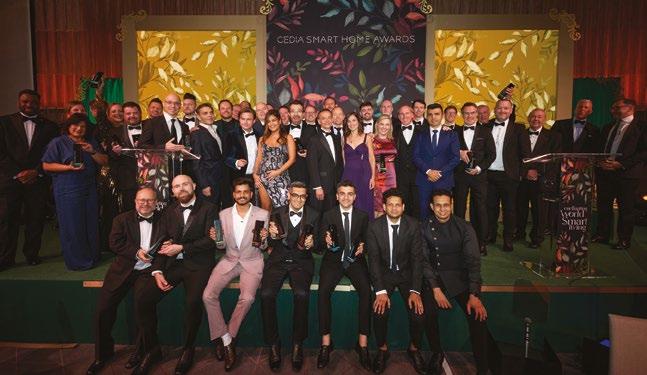
has announced the winners of the 2025 Smart Home Awards EMEA. The awards ceremony took place on Friday November 7 at The Londoner in Leicester Square, London, where guests from across the region gathered under the theme ‘The Enchanting World of Smart Living’ to celebrate the outstanding achievements in smart home technology.
The evening started with a drinks reception. After attendees took to their seats and the first handful of awards were announced, Daryl Friedman, Global President & CEO at CEDIA was on the stage to reflect on the success of the global Smart Home Day on November 3 and to thank CEDIA Foundation members for their support.
The evening then moved to the main event: the awards ceremony, recognising the achievements from across the smart home industry.
Sponsors for the evening included headline sponsor, Monitor Audio, Control4 as Drinks Reception Sponsor, NICE as After Party Sponsor and L-Acoustics, LG Electronics, Lutron and Perlisten as Associate Sponsors
Recipient: Nicky Moss, Cost of Cancer (UK) Advocacy Volunteer of the Year
Recipient: Paul Vivian (Australia)
Certification Volunteer of the Year
Recipient: Stuart Robertson (Australia) New Volunteer of the Year
Recipient: Jason Adam (Australia) Standards Volunteer of the Year
Recipient: Adam Keplinger (America) Volunteer of the Year
Recipient: Nathan Holmes (America) Workforce Volunteer of the Year
Recipient: Ron Callis (America) Fellows
Recipient: Patrick Hartman
Recipient: Joe Wallace
Lifetime Achievement Award
Recipient: Anthony Grimani
CEDIA cedia.org
CEDIA
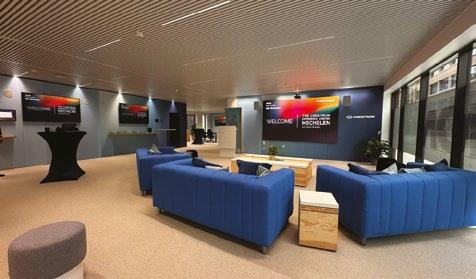
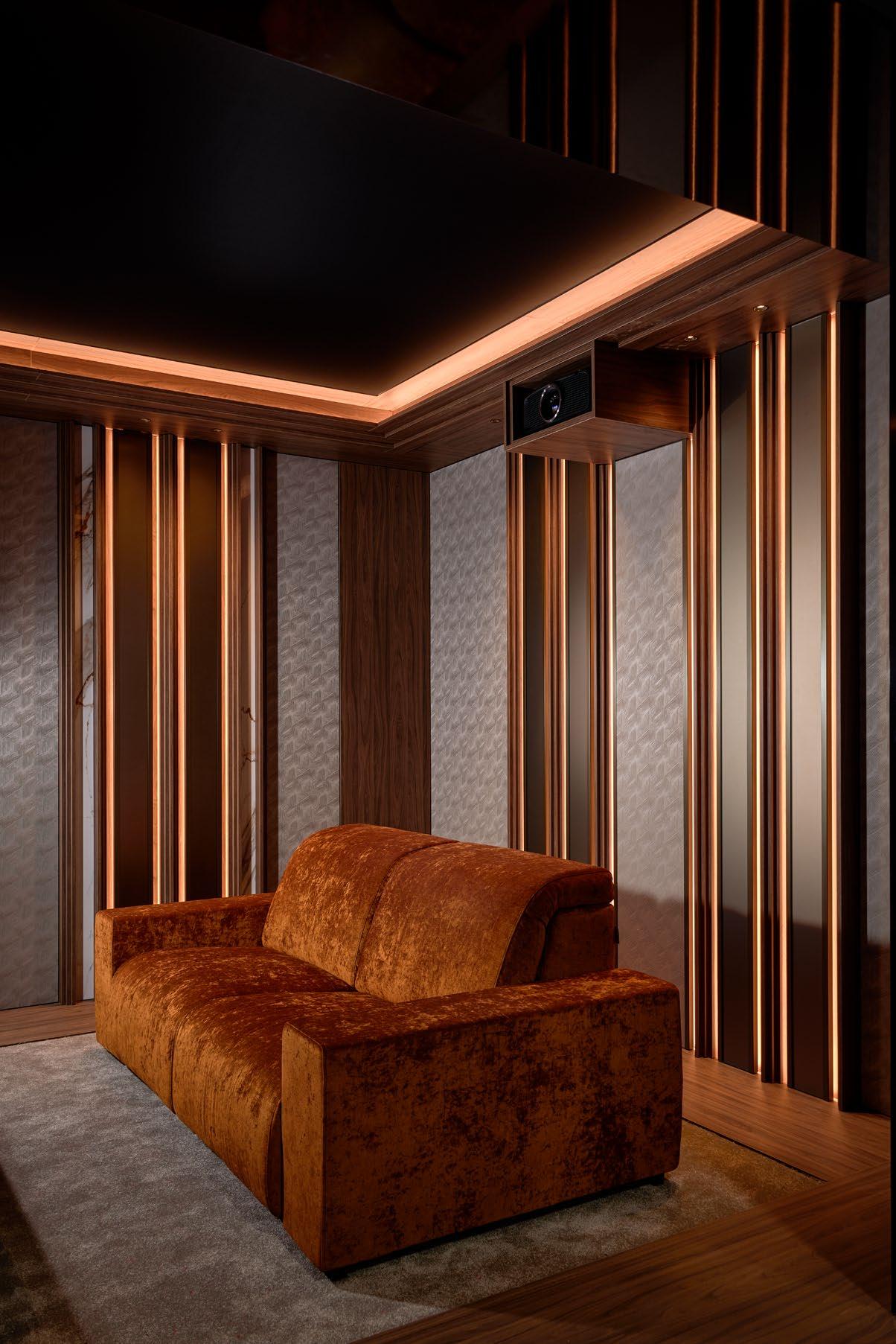
Crestron Electronics has announced the grand opening of its latest Crestron Experience Center at its EMEA Headquarters in Mechelen, Belgium. This new state-of-the-art facility provides an immersive environment where visitors can experience the latest innovations in residential and commercial technology firsthand.
Building on the success of Crestron’s flagship centres around the world, including New York and Singapore, the Crestron Experience Center Mechelen demonstrates continued investment in delivering exceptional customer experiences and deepening engagement with partners across Europe, the Middle East and Africa.
Crestron Home OS, which unifies entertainment, lighting, climate, shading and security.
“The Mechelen Experience Centre is more than just a destination, it’s an interactive journey that brings our vision for connected spaces to life,” said Brad Hintze, EVP of Global Marketing at Crestron. “This new centre reinforces our commitment to the EMEA market, giving our partners, customers and integrators an opportunity to explore the breadth of Crestron’s solutions in action and collaborate with us to create smarter, more humancentric environments.”
The Crestron Experience Center Mechelen integrates commercial and residential applications within a single dynamic environment. Visitors will experience hands-on demonstrations of Crestron’s most advanced systems, from Crestron’s DM NVX AV-over-IP platform, which delivers high-performance, scalable video and audio distribution across nearly any environment, to the
Guests will also experience Crestron Flex UC solutions for seamless hybrid collaboration, AirMedia wireless presentation systems and the latest innovations in control, automation and room scheduling – all working together to illustrate how Crestron technologies elevate both productivity and comfort in every setting.
The intelligent video portfolio is also on full display with content, collaboration and control coming together in a state-of-the-art boardroom with a fully equipped Crestron Sightline Experience demonstration.
Mechelen is strategically located roughly halfway between the cities of Antwerp and Brussels, making it an ideal transport hub for the region.
Crestron crestron.com
VIMAR’S EIKON SERIES ADD LUXURIOUS TOUCH TO RITZ-CARLTON IN SAUDI ARABIA
The Ritz-Carlton Reserve’s first resort in Saudi Arabia, Nujuma, a Ritz-Carlton Reserve, has installed Vimar’s Eikon series to meet the demands for sophistication and elegance.
Nujuma is nestled in an unspoilt corner of the Red Sea, among the natural islands north of Umluj, in a landscape accessible only by boat or seaplane.
Designed by the firm Foster and Partners, the architectural concept draws inspiration from the shapes of seashells, using natural materials in soft hues that echo the colours of the sea and sand. The 65 villas, shell-like in shape, emerge from the Ummahat archipelago: some
are set directly on the beach, while others are suspended over the water on stilts, linked by loop-shaped walkways, ensuring direct, private access to the sea.
Within this exclusive setting, Vimar’s Eikon series was selected to meet the demands. Specifically, the Eikon Evo and Exé models give each environment a unique personality for energy management.
The design of Eikon Evo, chosen in the brushed dark bronze finish in keeping with the warm tones of the sand, features a sleek, custom-made black frame, matching the controls.
To evoke the purity of the sea, the Eikon Exé series was indispensable, featuring a white total look finish.
A cover plate with squared and striking silhouettes provides the perfect combination of precision technology and impeccable craftsmanship. This is available in a variety of materials and prized finishes, from stone, to metal and glass.
With over 200 functions based on international product standards, Eikon Exé can offer numerous solutions for system customisation.
Conceived as a zero-impact resort, Nujuma, a RitzCarlton Reserve, was constructed using wood and rope, chosen not only for their sustainable nature but also for their ability to minimise waste and noise.
Vimar vimar.com
The Crestron Experience Centre is open to the public by appointment
The resort has been engineered to be completely dismantled without leaving a trace or causing damage to the ecosystem
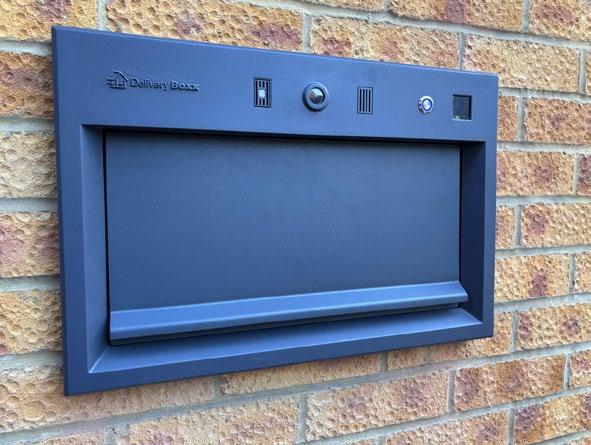
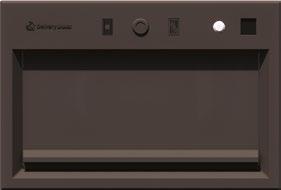
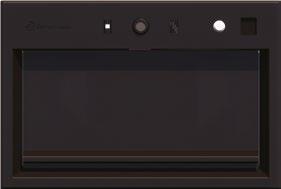
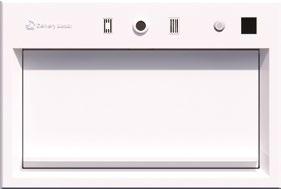
Welcome to the Future of Home parcel Deliveries. No more missed packages, no more parcel theft and no more trips to the local sorting office. DeliveryBoxx allows parcels to be delivered directly and safely into your home - fully integrated, smart controlled, and beautifully designed.
Scan the QR code to learn more.
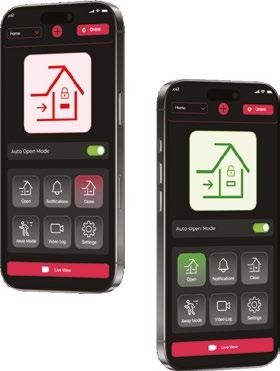
Smart App Control:
Manage deliveries, view live video, and unlock remotely via iOS/Android app.
Available Colours: Custom Colours available subject to quantity and additional fees.
Black Anthracite Grey White
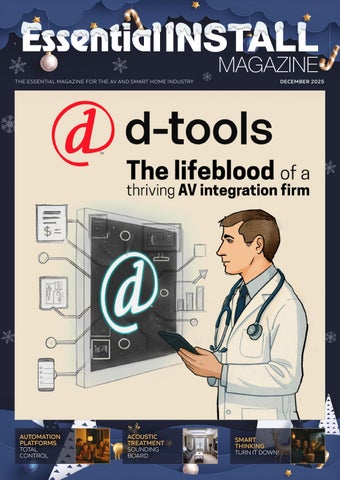
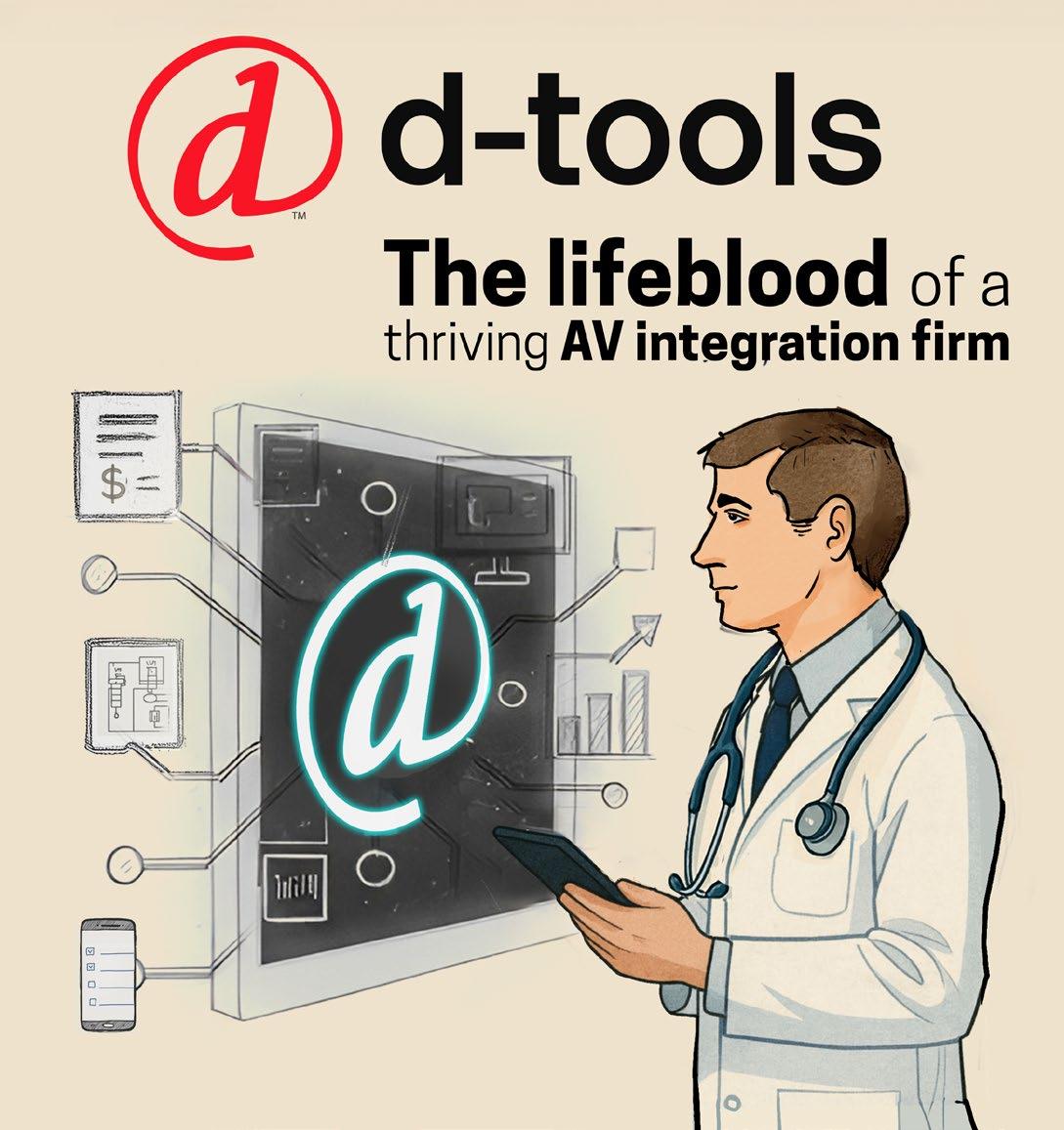
D-TOOLS’ SOFTWARE SOLUTIONS LEAD THE INDUSTRY
D-Tools’ award-winning software is partnered with 14 leading UK distributors to enable integrators to manage every aspect of their business.
For over 26 years, D-Tools has been a global leader in business management software solutions designed for system integration firms. The company’s on-premises software, System Integrator (SI), and its cloud-based platform, D-Tools Cloud, help integrators manage every aspect of their businesses — including sales, system design, project documentation, procurement, installation and service management. Today, more than 8,000 companies in over 90 countries rely on D-Tools’ award-winning software to streamline operations, improve efficiency, and boost profitability.
D-Tools offers the industry’s largest Product Library, featuring over 1,400 brands and more than 1.9 million products with integrator-level pricing. This enables the most accurate and profitable proposals. Over the past year, D-Tools has introduced exclusive pricing integrations with leading UK distributors, including Habitech, Invision, Pulse Cinemas, Avoke, DbM, ADIUK, Exertis, AWE, Northamber, Indigo, CAVD, Moss Technical and Ivory Egg. Additionally, Midwich will soon be onboard. Integrators can now create proposals and place orders in GBP (Pound Sterling).
PURPOSE-BUILT FOR UK INTEGRATORS
D-Tools Cloud is a powerful, web-based, end-toend business and project management platform, specifically well-suited to UK integrators. Easy to implement and use, it enhances communication, streamlines operations, and drives efficiency — empowering integration teams to secure more projects and improve their bottom line.
D-Tools Cloud’s features include CRM, interactive, multimedia proposal creation with visual quoting and design, in-app embedded communications, optimised payment processing and accounting integration, comprehensive reporting and analytics, project management, service management, change order management and inventory management.
EMPOWERING EVERY ROLE
D-Tools software is designed to make every team member more efficient — including Business Owners, Project Managers, Purchasing and Warehouse Managers, Field Technicians and Accounting Managers — in the following areas: Sales — The software allows integrators to optimise sales opportunities and close more business with less effort and friction. They can
manage leads in their sales pipeline and convert them to clients with multimedia proposals. Service plans can be included with every proposal to drive recurring revenue. Project approval and payment collection can even occur on site.
Design — D-Tools Cloud includes visual quoting tools, in-app drawing capabilities, wire calculations and markup options. Product placement is drag-and-drop, while advanced features include packages, accessories, allowances and alternatives.
Project Management — Integrators can deliver projects on time and on budget using the software to create and assign detailed tasks, schedule and dispatch field technicians and enable mobile status updates with on-thego time tracking. The software helps dealers plan installations, allocate resources, manage change orders and service calls, track actual versus budgeted labour hours and monitor project progress seamlessly from any webenabled device.
Service Management — D-Tools Cloud enables users to create, present and sell service plans as part of every client engagement, boosting customer satisfaction and generating
recurring revenue. Service requests can be managed by assigning resources, scheduling service orders and tracking progress.
Back Office & Inventory — D-Tools Cloud’s new inventory management features streamline procurement, reserve and allocate products to projects and locations, and monitor stock levels. Manual data entry is reduced, minimising human error.
INNOVATION THAT NEVER STOPS
Every month, D-Tools updates its dynamic software, adding dozens of new features, many based on user feedback.
Earlier this year, D-Tools Cloud introduced built-in Inventory Management capabilities. These provide integrators with a seamless way to manage inventory across purchasing, tracking, and allocation workflows — helping teams operate more efficiently and deliver projects with greater accuracy and confidence.
Recently announced improvements coming soon to D-Tools Cloud are:
D-Tools AI — D-Tools AI is a smart, embedded tool designed to enhance productivity and accuracy across quoting, design and documentation workflows. Fully integrated into D-Tools Cloud, its AI-powered capabilities allow users to quickly generate scopes of work, manipulate quote structures, search using natural language and apply financial logic such as margin adjustments — all in seconds. D-Tools AI empowers teams to work faster, with greater precision and less manual effort.
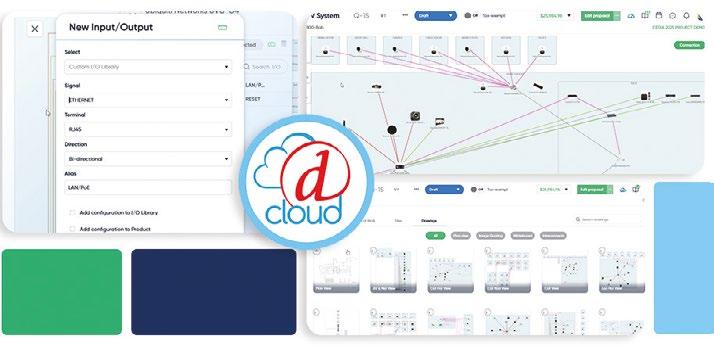
Interconnect Diagrams — The new Interconnects feature is an intelligent wiring
connectivity tool built directly into D-Tools Cloud. It provides a dynamic, visual and interactive environment for mapping how devices are wired across a project — by system, phase, or room. With full integration into your BOM and product catalogue, it ensures design intent flows clearly from sales through to installation.
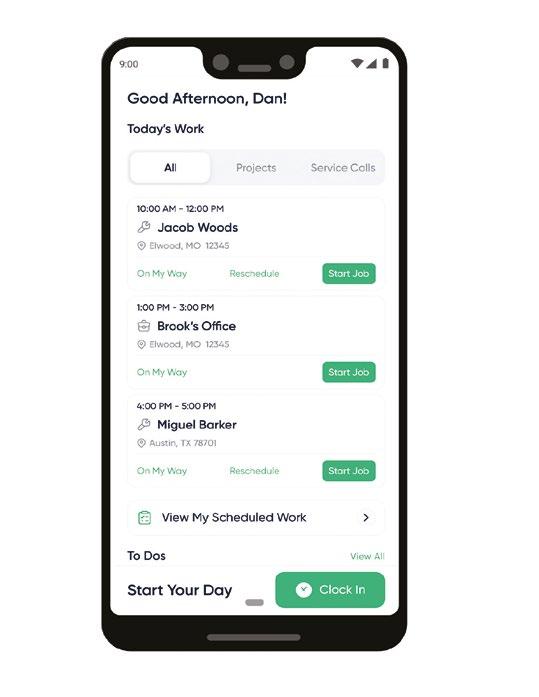
Native Mobile App — The new native mobile app for D-Tools Cloud, available for iOS and Android, enables project managers and technicians to manage schedules and tasks, inventory, job notes, sales opportunities, and clock in/out directly from their phones — even offline. With either Field User View or Office User View, teams can receive and push notifications and send SMS messages to customers.
CUSTOMER SUCCESS STORY: VISAVVI STREAMLINES AV INTEGRATION WITH D-TOOLS
Visavvi leverages the power of D-Tools to streamline and super-charge its ability to deliver excellence.
Tracing its lineage back nearly 90 years, Yorkbased Visavvi has grown into a premier provider of audiovisual integration across the UK. The company, now part of IT services giant SCC, handles large-scale corporate, educational, and government projects in locations such as auditoriums, boardrooms and town halls.
But it wasn’t always seamless. Before embracing D-Tools System Integrator (SI) software, Visavvi’s sales and operations ran on outdated Excel spreadsheets—a recipe for broken formulas and quoting errors.
“Quotes were going out with incorrect figures,” recalls Sandra Ruscoe, Sales Operations Manager at Visavvi. “It was how everyone used to do it, but it just wasn’t reliable.” Visavvi began using D-Tools SI about 10 years ago, initially drawn by its ability to centralize quoting and documentation.
D-Tools Cloud Mobile App
D-Tools Cloud Interconnect Diagrams
“We were first attracted to it by the ability to use this not only as a quoting tool, but also as a means to track projects and products and produce first-class documentation,” Sandra says.
D-Tools SI’s integration with Visio allows Visavvi to create schematics and elevations that can easily be converted to CAD—aligning perfectly with client expectations. The platform also became a centralised hub for all project documentation, enabling project managers to quickly access drawings, costings and supplier data.
SPEED, CONSISTENCY, FEWER STAFF & BUSINESS INTELLIGENCE
One of the most tangible benefits for Visavvi has been workforce efficiency.
Sandra notes, “We can run the sales support team with fewer members of staff because it’s so quick for us to produce quotations and turn around proposals.”
Where five or six people were once needed, now just three handle the load—an annual cost saving of approximately £60,000, according to Sandra. Templates are a major driver of this efficiency.
“We can quickly set up a template for various room sizes—small, medium, large, boardroom— and easily replicate that when a new building or room is needed,” she says. “We just update the costs and clone the whole thing over. It makes quoting much faster.”
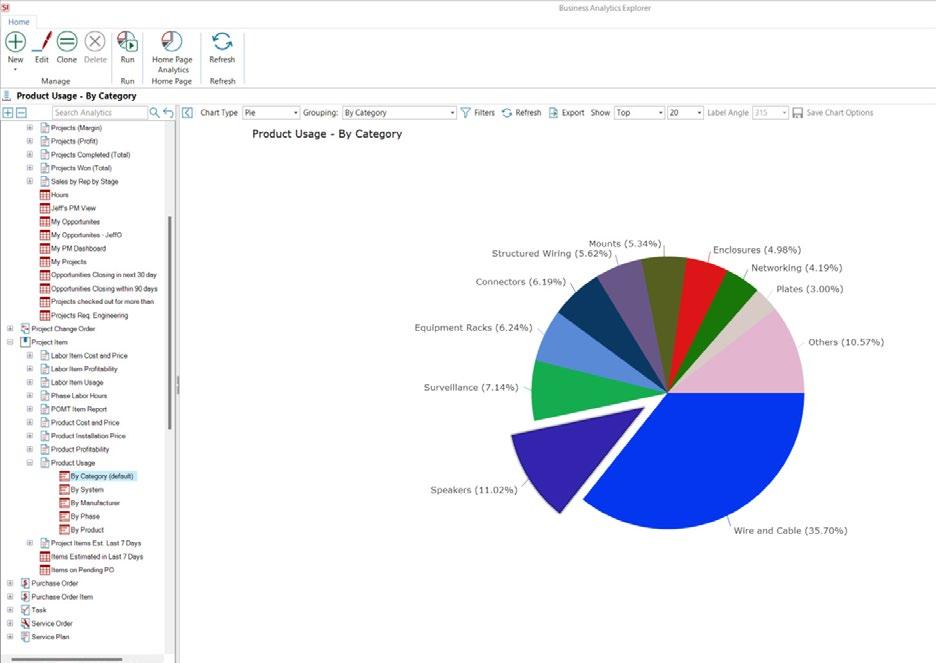
D-Tools SI has also empowered Visavvi with data-driven decision-making. The software’s Business Analytics tool lets the company track quotes, monitor margins and identify top-selling manufacturers and products. It even assists in inventory management—enabling staff to find unused or canceled stock and reallocate it to new projects.
And when it comes to international projects, SI’s multi-currency quoting features shine.
“We undertake numerous projects across Europe and further afield,” Sandra explains. “Being able to switch currencies quickly— whether GBP, USD, or AUD—is very useful.”
REAL-WORLD IMPACT: A £1.2 MILLION PROJECT SIMPLIFIED
D-Tools SI isn’t just about spreadsheets and stats—it shines in real-world, high-stakes projects.
“We had a £1.2 million project with lots of locations. The client needed the quote split by funding source. Instead of creating multiple quotes, we used the filter tool to break the project down by area, then ran reports for each. But the project stayed unified in D-Tools, so we could manage it as one job,” she explains.
That unified approach simplified everything—from matching purchase orders to project tracking and reporting. “At any one point, we can see where we are in the project lifecycle,” she adds.
ADVICE TO INTEGRATORS: PUT IN THE FRONT-END WORK
To companies evaluating D-Tools SI, Sandra’s advice is direct, “It’s a great tool and can offer many advantages—not only for quoting but for other project-related needs. Put in the work upfront. Make sure your product catalogue, customer data and contacts are accurate. That will make everything faster and more efficient.”
She also stresses the value of training.
“There are lots of shortcuts and tools—like the Gantt charts, resource charts and business analytics—you’ll only get the most out of it if you learn the system.”
Visavvi didn’t just replace spreadsheets—it gained a streamlined workflow, tighter resource management and substantial cost savings. With D-Tools SI, this AV integrator is building on a rich history with a sharp eye on the future.
D-Tools
d-tools.com
Visavvi visavvi.com
Sandra Ruscoe, Sales Operations Manager at Visavvi
FREE 30 DAY TRIAL
WHAT DOES BEING A PART OF TOGETHER FOR CINEMA INVOLVE?
Looking ahead to 2026, progress made, but lots more to do, how do you get involved?
With 2025 seeing another nine cinema rooms being installed into good causes, we are delighted to announce that we have now donated 60 cinema rooms with a value of over £1.5 million ‘had they been paid for’. As Together for Cinema looks ahead to 2026, we’ve spoken to a few of our Charitable Partners to highlight the value of being involved, their experience and the difference it can make.
‘Together For Cinema is special because you can truly see the results of everyone’s effort’
Justin Peyton Director of Sales EMEA & APAC AMETEK
Whether it’s as a Charitable Partner, a supplier, an installer or raising funds through sponsorship, the collaboration of the AV industry continues to make a difference to so many children, their families and their support team at what is a tough time for all.
But, we really do need the industry’s financial backing to keep on giving the cinema experience, an experience that we are all able to enjoy so easily, to those going through challenging times.
‘TFC is the vanguard of collaboration and goodwill within the AV world.’
David Parrett Director
Whilst opening ceremonies can vary, there is one very important takeaway for those involved as explained by Lee Harding, Technical Director at ALLTRADE.
Being a Partner of TFC has been a real pleasure. The fact that so many companies and individuals throughout the industry, who may be competitors in business, come together to do all they can to raise money for this great charity is really something special.
‘Seeing the joy and escape that these cinema installations bring to children and their families in hospices is incredibly moving and important’
Michael Johnson Global Marketing Director, Monitor Audio
Steve and I visited the installation in Arundel, West Sussex, and if I’m honest, I was expecting to enter a place that was full of doom and gloom. What I saw was an incredibly enjoyable environment for children, with an amazing amount of thought and consideration given to all the areas around the place. Everyone we met, including all the staff, were full of positivity. That in itself is amazing when you consider what they also have to deal with.
I’d encourage any company to join the journey with TFC, being a part of something that can lighten up the days of families that are going through some tough times is not only rewarding, but also very thought provoking, and certainly puts some perspective into your thoughts.’
With over 30 years in the industry, Ian Morrish was persuaded by industry colleagues
Chestnut Tree House - Opening Day
to commit fulltime to running Together For Cinema, 10 years after the first installation. He draws immense satisfaction from engaging with people and the environment in which they work and believes this fact has helped him to promote Together For Cinema and unify the AV industry in a shared goal of making a real difference in the community.
‘Together For Cinema also has a unique way of uniting the entire industry, both socially and professionally, to achieve and celebrate remarkable things together.’
Peter Broom, Director Rako Controls
It is this dedication that Gordon Dutch, CEO Re-Sauce, recognises when he spoke about why they are involved with Together For Cinema. ‘I have known Ian Morrish well for many years and when Ian decided to take on Together For Cinema as a full time project, Re-Sauce were extremely happy to support this amazing cause as a Charitable Partner. The work TFC undertakes is fantastic and I am so thrilled that all Ian’s hard work has paid off in terms of the delivery and installation of over £1.5 million worth of products and services to all the deserving causes TFC supports. We are very proud to be a Partner and associated with this awesome charity.’
‘We are proud to be a Gold Level sponsor of Together For Cinema. Frankly it just feels like the right thing to do and I just wish more companies would get involved in one way or another.’
Bob Griffin, Founder & CEO of Griffin 360
Tim Bigoness, CMO at D-Tools adds, “Together For Cinema elevates that mission to its highest calling by creating spaces that uplift
children and families in need. We encourage everyone across the custom installation community to connect with Ian Morrish and his remarkable team, so they can bring even more smiles to the faces of those who need them most.”
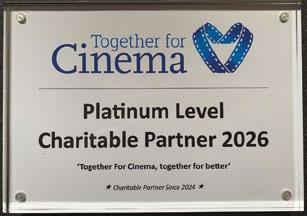
Should you wish to become a Charitable Partner for 2026, the options are outlined below. You will help further the difference that we, as an industry united, are making to those in need and your plaque to show your support can be proudly displayed by your company. Diamond £10,000
‘In truth, it’s us who should be thanking the Together For Cinema team for giving us the opportunity to contribute. Their passion, vision, and tireless efforts are what makes this all possible.’
Stuart Tickle, Managing Director, AWE Europe Ltd
As Jason Aldous of Aldous Systems explains, “It gives us an opportunity to give back and it is such a good cause. The way Together For Cinema has rallied our amazing industry to do something so special is incredible and we are proud to be part of it.”
Together For Cinema togetherforcinema.co.uk
LOVING LIFE WITH LEICA
A highly informative trip to the magnificent Leica HQ in Wetzlar, Germany, underlined the company’s ambition to transition from world-class image capture to also include equally impressive image reproduction via its range of home projectors.
For those not yet familiar with the brand, Leica is a world-renowned premium maker of cameras, lenses and other optics such as binoculars, with over 150 years of history. Over 100 years ago the company launched the compact Leica I to the public at the Leipzig Spring Fair, changing the world of photography forever with the first ever successfully mass-produced 35mm camera. Whilst continuing to introduce
some of the world’s best and most successful cameras, the company has also expanded into mobile imaging (smartphones), high-quality eyeglass lenses, watches and most significantly for integrators home cinema projectors. Other achievements include the Leica Summilux-C lenses being honoured with a Scientific and Engineering Award from the Academy of Motion Picture Arts and Sciences.
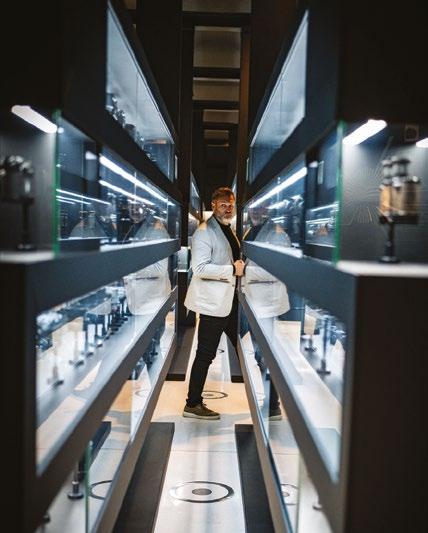
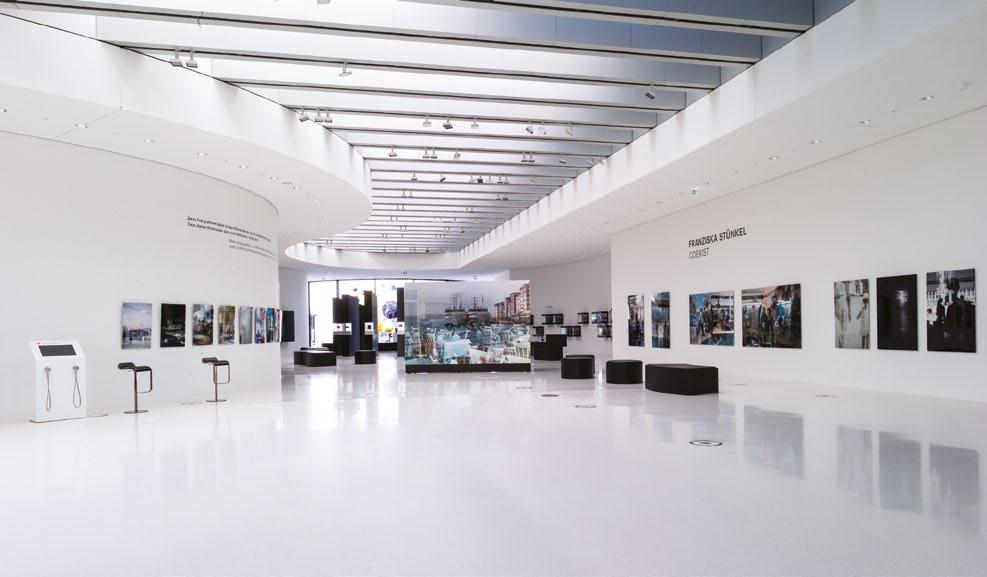
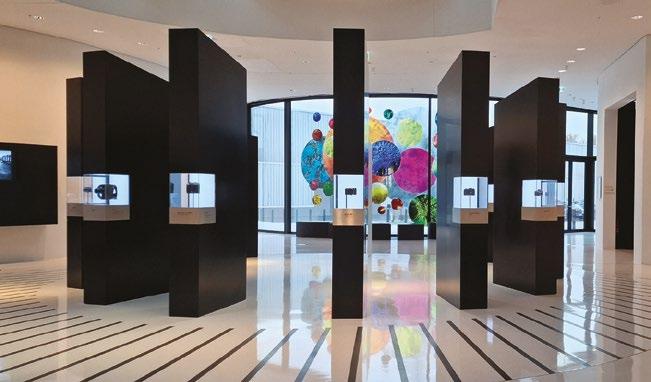
Leica HQ is no less impressive. The site is where the first 35mm camera was invented, and is made up of the Ernst Leitz Museum, company HQ with manufacturing facilities, offices, a café and the Leica Gallery. There is even a Leicathemed hotel all on the same campus. The Leica Gallery is particularly impressive, showcasing the work created with the brand’s products. Visitors will recognise many of the images on display capturing momentous world events and some of the planet’s most iconic figures.
Leica HQ is more than just a building to house the company’s activities, it underlines what the brand represents. The impressive architecture and interior design go beyond a statement piece and assure a level of quality and care, reflecting what inspires the brand to go further and keep pushing boundaries. It is an inspiring visit for anyone interested in imaging. The sweeping entrance is immediately impressive as the building’s appropriate colour scheme of black and white rolls away in front of visitors, inviting exploration of every aspect of what the company does.
WHY HOME CINEMA?
During the trip the brand’s leadership team led by Stephan Albrecht MD of Leica Smart Projection, were keen to point out that its move into home cinema projectors is no mere whim or ‘me too’ exercise. It is the result of careful planning and identification of market growth opportunities where the company feels it can make a difference and grow opportunities for itself and those working with the brand.
The short-throw-based Laser TV category, where products such as the Cine 1 form the centre of an all-in-one system housed in specialised furniture has been identified by Leica as a particular area of significance. As the desire for larger screens in the home accelerates (which data shows is the case), the ability of large-format TVs begins to struggle at very large screen sizes due to diminishing ROI for makers and installers. The Laser TV concept can keep delivering very large imaging over 100in and beyond while offering all the benefits of ease of installation and affordability.
The brand also believes there is a market for high-quality portable projectors such as the Cine Play 1, offering the required image quality with a more flexible installation palette where it can be fixed in place but also moved for convenience. This category is well suited to apartment living, smaller rooms and rental properties. The company presented its thinking to the group, explaining carefully where it feels it can add value and also revealing its ambition to keep developing new offerings along similar
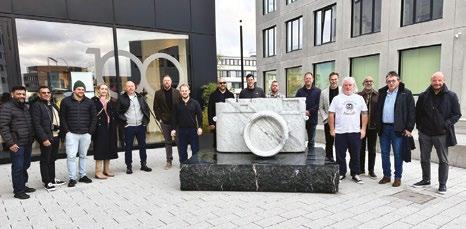
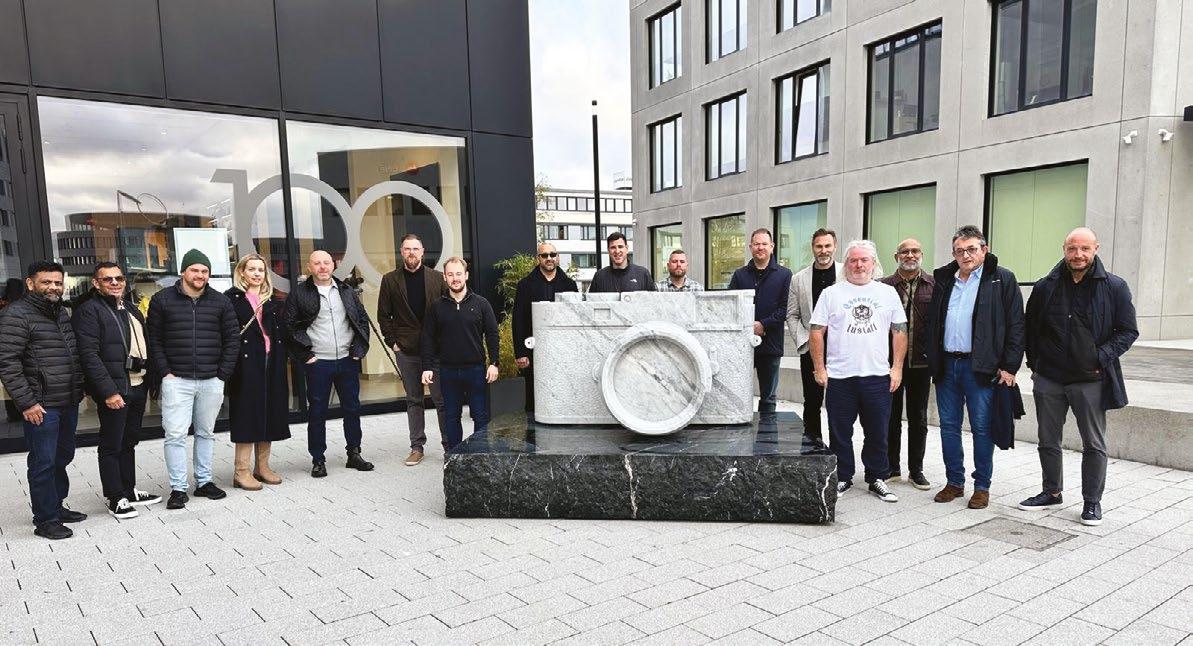
Nimish Shah, Kapes Patel, Rory Hackett, Juliet Samuel, Gez Drohan, Ryan Hughes, Martin Shaw, Amin Shafi, Ryan Saban, Frankie Rix, Tom Butler, Simon Gibbs, Dan Sait, Sohan Perera, Jonno Hill, Greg Howarth
lines to the categories already launched.
Kapes Patel, Business Development & Technical Director at Pulse Cinemas, remarks, “As well as being really informative about the company’s history, current offering and ambition to support the sector in the future, we were impressed with how collaborative the session was. The company’s leadership team clearly values feedback from those who will be working with the brand and that bodes extremely well for the future.”
Simon Gibbs, Head Of Projects & Sales at Pulse Cinemas, adds, “The package on offer from Leica will continue to evolve in terms of support from the brand. Discussions are ongoing to add dealers to Leica resources such as its Dealer Locator, a logical addition that exists for dealers in other countries the brand works with, so we will release details of how this will work and what is involved as discussions continue.”
THE PRODUCTS
On display at Pulse Cinemas HQ, the Leica home cinema range includes the Leica Cine 1, a premium 4K ultra-short throw projector delivering Dolby Vision, impressive colour depth and sharp contrast. Endowed with triple RGB-laser technology, Leica Image Optimization (LIO) and a Leica Summicron lens with brightness up to 3,000 ANSI Lumens, the Cine 1 delivers impressive performance even in rooms with significant ambient light. Intelligent functions, a smart TV interface and Filmmaker Mode provide other key abilities.
The Cine 1 is presented in the Pulse Cinemas Apartment cinema housed in a MaxLight LK620 UST Cabinet, partnered
with a Screen Innovations Short Throw Lift, a bottom-up motorised ambient light rejecting (ALR) screen. With SI’s ALR technology, the screen is designed to augment image quality in a range of lighting conditions. For audio, this package is supported by Paradigm Monitor SE Atom bookshelf speakers and an Essentials Sub 12. For processing, the Anthem MRX SLM delivers precise control while remaining discreetly hidden. In other parts of Europe other furniture brands are available to partner with the Cine 1 in a similar set-up. Kapes informed the group that discussions for a similar deal in the UK are under way, with more news to follow.
The other part of the brand’s offering, the Cine Play 1 gets its chance to shine in the foyer at Pulse, partnering a fixed Screen Research screen. The placement of the projector is offcentre to show the versatility of this projector. This partnership is enhanced with mood lighting
courtesy of Lutron, built into recently added ceiling cornicing to add drama and versatility.
Everyone is impressed with the level of quality this portable projector can deliver. Despite its diminutive size, it is backed up with some of the best lens technology in the world, able to operate even in high ambient light conditions, all from its very attractive and playful chassis.
All round a highly enjoyable and impressive experience, offering real insight into the culture of Leica and its ambition to develop new categories for the home cinema market and take the lead in delivering new opportunities for dealers and partners along the way. For more information on how to get involved in the world of Leica, contact Simon or Kapes.
The Leica Gallery displays some of the world’s most famous and iconic photographs all taken on Leica equipment
The brand has a storied history in imaging illustrated in the Leica Gallery
LIVING ON THE EDGE!
Trade-focused reviewer, Richard Stevenson, lends an ear to the Lyngdorf FR-2 line of loudspeakers.
Loudspeakers are often the most compromising or compromised part of AV system design. The layout dictates placement, the customer dictates aesthetics, and the project budget dictates both performance and how much wall area you can hijack and realistically make visually disappear. Then there is boundary gain, limited enclosure volume and trying to match tweeter height to ear height, all to end up hoping the customer is seven feet tall and likes sitting on a barstool.
Freestanding speakers can solve a whole lot of those issues, often simultaneously making a visual carnage of the finely-crafted decor brief.
It’s this conundrum that makes Lyngdorf’s new FR-2 such an interesting proposition. It’s a loudspeaker built for rooms where traditional
floor-standers are too intrusive on the aesthetic, in-walls are out of the question and clients still want the sort of full-bodied sound performance that makes their system feel ‘audiophile’.
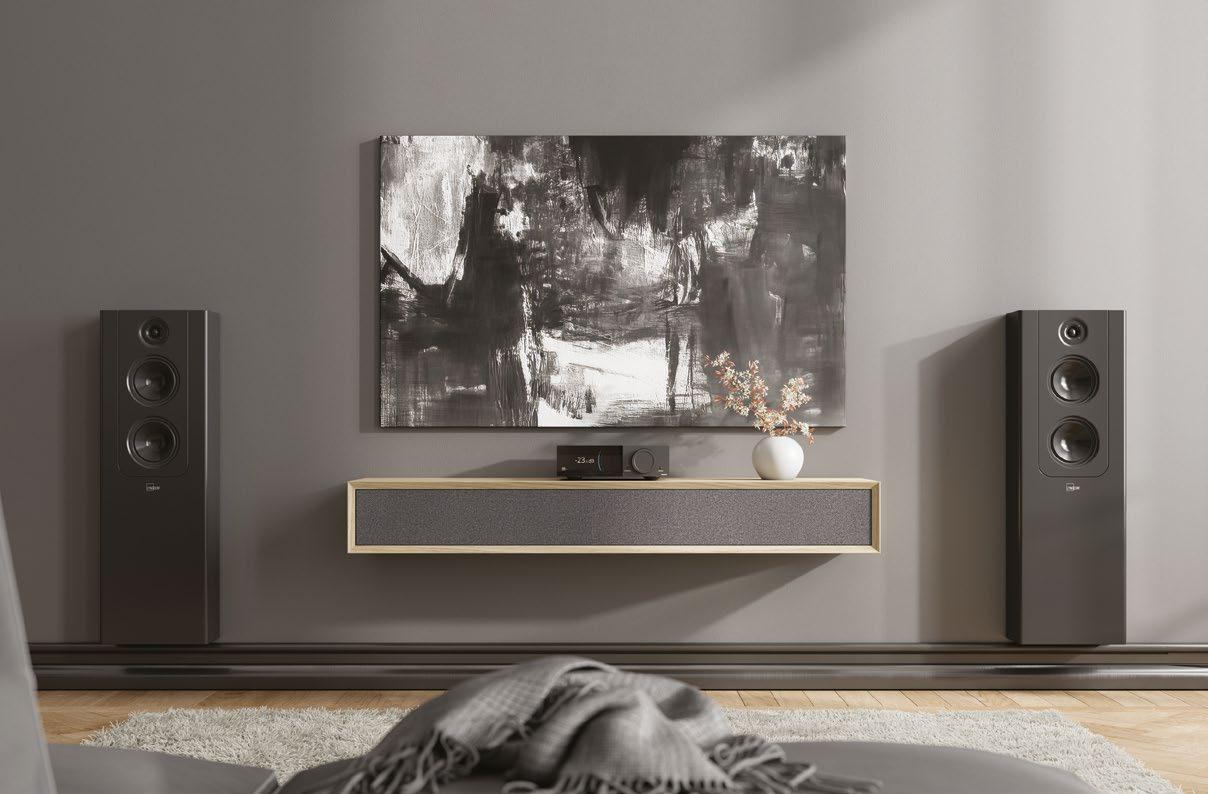
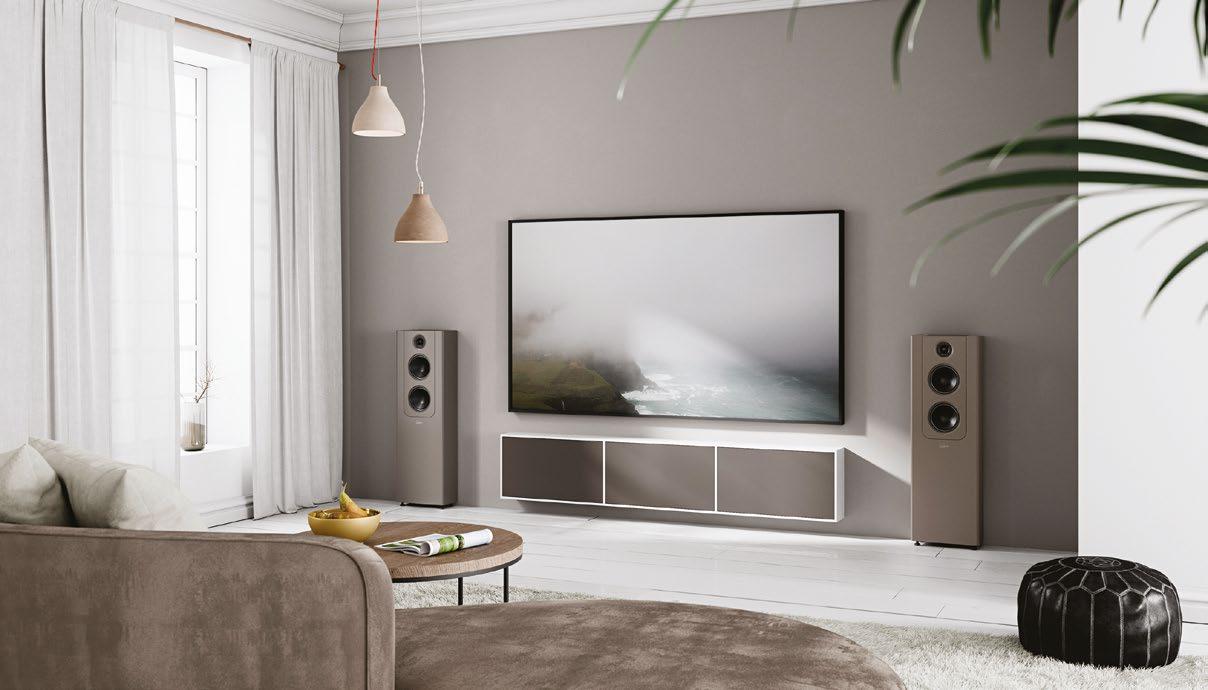
The FR-2 trump card here is that it is a sophisticated freestanding loudspeaker in a slim, décor-friendly form, engineered from the outset to perform its best almost flush to a wall. In fact, it can be pushed very close to a wall on its spiked feet, given a little more stability on its supplied metal outriggers or simply mounted to the wall.
Lyngdorf calls the FR-2 a ‘full-range on-wall loudspeaker,’ but that rather undersells the engineering. At just 16cm deep, the cabinet occupies a fraction of the ‘visual volume’ of a conventional floorstander and can sit at the very rear of a room without demanding any form of stud-wall recessing. For UK installers, where many media rooms have to double as living rooms, or if the walls are brick, it’s a very promising solution.
Aesthetically, the FR-2 runs with Lyngdorf’s Scandinavian heritage without leaning clinical, and it’s made and lacquer-finished in several standard colours in Denmark. The fit and finish reflect old-school attention to cabinet craft with clean lines and sharp edges softened
just enough to blend in. Exchangeable fabric inserts on the top panel and front grille give a wide range of colour combinations as standard. Lyngdorf has also teamed up with distributor Redline’s professional CI paint shop, which I can personally vouch for with my Q-Acoustics’ satin white Velodyne sub.
Installers can therefore offer customers specific RAL or car-paint options along with a draper’s shop range of grille cloth materials and colours. Our satin white sample with grey inserts looked sophisticated, although Ferrari Red with White grille cloth would have been on my personal order form.
Speaker set-up can be as simple as finding a suitable spot against a wall, connecting singlewired speaker cables to the amp and pressing play. The low terminal positions don’t make connection that easy with anything but smallergauge bare-end wire and the operation gets tight with chunky premium residential speaker cables or sticky-out banana plugs. Your mileage and connection choices may vary.
The FR-2’s ability to live right up against a boundary is only possible because Lyngdorf has voiced the entire speaker around that reality. Its low-frequency alignment, cabinet tuning and crossover contour are all shaped with the
expectation of boundary gain. While you could stop there, Lyngdorf is very keen to point out that its own RoomPerfect EQ system will aid further still and supplied our test pair of FR-2s with the equally fine-looking Lyngdorf TDAI2210 digital amplifier with its own calibration mic to prove the point.
While not specifically on review here, the TDAI-2210 and Lyngdorf’s control app get a solid 10/10 for ease of use, funky features, sophisticated looks and RoomPerfect doesn’t require separate PC software. It makes some very peculiar noises if you are used to typical Audyssey / Dirac / Arc test tones!
RESULT
The first notable result, made all the more obvious by switching from floorstanders in the room, is a dramatic increase in room floorspace. The floorstanders stood proud of the back wall, making the room feel significantly more spacious and practical. As I have an 85in TV on the wall, the whole system felt much more part of the room than my usual AV mash-up of test kit. Cool!
Sonically, the FR-2s and RoomPerfect create some serious magic together, that manages to all but eliminate the ‘claggy’ bass and two-dimensional soundstage that pushing normal floorstanders up against the back wall
creates. The speakers are bonkers–punchy in the LF without blooming, and the detail and soundstaging are right up there with some of the best floorstanders at the price.
The FR-2s and TDAI-2210 are a great double act overall. Smooth, punchy, sophisticated and a host of other phrases I usually reserve for Hi-Fi mags – they work so well together. Switching the RoomPerfect on/off reveals a lot about the FR-2s as the sound remains every bit as open and uncongested with the EQ off. The voicing on the FR-2s 100% stand up to their against-wall placement regardless of amplification, yet turning RoomPerfect back on simply polishes the sound and soothes out the last vestiges of bass-smearing from the boundary gain.
This makes the FR-2 possibly one of the most easily deployable loudspeakers I have ever had the pleasure to clap ears on. It will suit the widest range of client rooms with minimal disruption or additional stud-work, and I can see it working anywhere the client wants a big sound while maximising the spacious feel of the room. Switching back to traditional floorstanders in their usual spot, my 20sqm listening room felt immediately more compact and cluttered. Dammit.
In smaller rooms or even contemporary open-plan living spaces where floor space is at a premium, the FR-2 delivers grown-up Hi-Fi
without encroaching on furniture placement. In media rooms, I can easily see them delivering punchy TV sound and audiophile tunes as the content dictates, in something that is possibly one of the slickest, simplest stereo/ AV crossover systems I can think of. I did think a horizontal, wall-mount-only LCR version for positioning below the screen might add further to the system’s flexibility, but perhaps that is just re-complicating an issue that the FR-2s have so neatly uncomplicated.
For the high percentage of clients that say they want ‘good sound but nothing too big,’ the FR-2 is the perfect solution. It hits a sweet spot of performance and practicality that few loudspeakers genuinely occupy, delivering a high-performance, visually-unobtrusive, simple to install near-wall solution without the typical sonic penalties.
Mix in the great standard colour combinations of cabinet and grill, the fully custom finish options from Redline, the added magic of the TDAI-2210 and RoomPerfect, and this makes for a complete overall production. The fact that Lyngdorf has then managed to ice this cake with one of the best audio control apps on the market, is frankly showboating! Mind you, I think I might just be bitter and twisted as the listening room feels 25% smaller than it did when the Lyngdorf system was here.
Do these wall-flowers bloom or boom?
ADI | SNAP ONE AND HESTIA SMART LIVING ELEVATE ECO-LUXE LIVING AT WATERBANK
ADI | Snap One and Hestia Smart Living recently joined forces on a landmark development in Cheshire, harnessing the company’s innovative solutions to empower Hestia Smart Living in delivering a robust smart home foundation.
This partnership ensured that the project not only met the immediate requirements of modern living but was also designed with future expansion in mind, keeping the development firmly at the forefront of connected home innovation.
Waterbank is a 30,000 sq ft residential development in Prestbury that features six striking properties designed to combine luxury living with sustainability. Developed by Manchester-based developer, Altin Homes, these ‘eco-luxe’ five-bedroom contemporary homes have been designed to be a perfect aesthetic and lifestyle fit for today’s homebuyer.
A key element of this approach is the integration of home automation. Altin Homes wanted to incorporate an intuitive, customisable environment that seamlessly balances cuttingedge technology with timeless style and partnered with Hestia Smart Living, a firm that is renowned for its expertise in both interior design and smart home integration. Collaborating closely with the developer, the Hestia Smart Living team created a bespoke package that brought together interior design and technology, ensuring maximum convenience, comfort and style.
A core challenge for Hestia Smart Living was designing a smart home system that balanced the developer’s budget requirements with the flexibility and scalability expected by luxury homeowners. As these homes were intended for sale, the systems had to be cost-effective for the developer, yet easy to upgrade for future buyers. This would allow homeowners to add features such as extra lighting, speakers, TVs, or other smart home enhancements, without significant disruption or expense.
By planning for scalability from the outset, Hestia Smart Living ensured that buyers could effortlessly extend their smart home experience to suit their lifestyle, giving both the developer and the end clients confidence in the system’s longevity and value.
To achieve this goal, Hestia Smart Living partnered with ADI | Snap One, selecting a suite of industry-leading products to deliver a robust and scalable smart home system. Solutions from Control4, Strong, Araknis, Luma and WattBox were utilised to balance functionality and design, providing homeowners with intuitive control, discreetly integrated hardware and a premium finish throughout. This combination has resulted in a future-proof platform that is cost-effective for developers, while offering buyers the flexibility to expand and personalise their home as desired.
At the heart of the system is a Control4 Core Hub and Controller, which serve as the powerful backbone for the smart home ecosystem, providing both reliability and scalability.
For lighting, the system incorporates Control4 DIN-Rail 8-Channel Adaptive Phase Dimmers for flexible, precise control; Control4 DIN-Rail 8-Channel Relay V2 for seamless management of non-dimmable loads; and Control4 Terminal Block DIN-Rail 8-Channel Relay V2 for simplified wiring and enhanced installation reliability. Additional innovations like advanced DALI and DMX lighting systems further enhance the living experience, offering dynamic control, energy efficiency and design flexibility.
Security was a priority too and Hestia Smart Living addressed this need through a combination of Control4 and Luma solutions. The Control4 Chime Video Doorbell enables smart access with two-way communication, while the flush-mounted Control4 DS2 Door Station keypad in brushed nickel provides secure, stylish entry control with video and keypad access. Each property is protected by 20 Luma 8MP IP cameras for high-resolution security monitoring, supported by the Luma 420 Series 16-Channel NVR for secure storage and easy CCTV management.
Networking is another essential pillar of the smart home solution. ADI | Snap One provided Araknis Networks products, including the 510-Series Indoor Wireless Access Point for robust, high-speed Wi-Fi coverage throughout each property, and the 210 Series Websmart Gigabit Switch to ensure reliable, managed networking with PoE support.
For user control, Hestia Smart Living selected several products from the ADI | Snap One portfolio. The Control4 T4 Touchscreen In-Wall 8 in white offers intuitive, centralised control for homeowners, while Single Square Faceplates in white glass deliver a sleek, modern finish that complements the interior design.
Elsewhere in the properties are a pair of Triad InCeiling Bronze OpenRound for highquality, discreet in-ceiling audio; a Strong VersaBox to create a neat, hidden solution for housing equipment behind displays; and WattBox IP Power Strip & Conditioner to protect equipment while allowing remote power management.
ADI | Snap One’s comprehensive product suite, delivered through Hestia Smart Living’s integrated approach, has set a new standard for smart living – one where technology and design work hand in hand to enhance every aspect of the home.
The ADI I Snap One system allowed the integrator to deliver a reliable, high-quality solution that met the developer’s cost targets while leaving room for homeowners to personalise and upgrade their system as desired.
“When we bought our home at Waterbank, we decided to expand on the existing automation system, and Hestia Smart Living made the whole process effortless,” commented a recent homebuyer. “They designed and installed a completely new system for our garage, which we’ve transformed into a cinema room and it has quickly become one of our favourite spaces in the house. We also trusted Hestia Smart Living to support us with the interior design of our home, and their input has helped create a
space that feels both personal and beautifully put together.”
The collaborative approach between ADI | Snap One and Hestia Smart Living delivered tangible benefits for both developers and end
users. Developers gained a cost-effective, scalable platform that streamlined installation and reduced future upgrade complexity, while homeowners can enjoy intuitive control, elegant design, and the flexibility to personalise and expand their systems as their needs evolved.
“Working with Hestia Smart Living on the Waterbank development has been a seamless experience from start to finish,” adds the project director at Altin Homes. “Their team took the time to understand our objectives as developers, designing systems that delivered exceptional quality while allowing flexibility for future homeowners to expand and personalise. The process was smooth, communication was clear throughout, and the end result has been a huge success – delivering smart home systems that add real value for our buyers and set the development apart in the market.”
More information https://hestiasl.com. Existing ADI | Snap One customers can learn more https://dealer-emea.control4.com/. To find out more about ADI | Snap One and to apply to be an integrator, visit https://www. adiglobal.com/snap-one/emea.
Essential Kit List
• Control4 Core 5 Hub & Controller
• Control4 Chime Video Doorbell (Ethernet Satin Nickel)
• Control4 DS2 Door Station Flush Mount w/Keypad (Brushed Nickel)
DOMEX is a full automation platform; controlling lighting, HVAC, blinds, and appliances - in one unified system.
With the latest in wireless technology, allowing for fast, uninterrupted connection at all times, Domex offer the opportunity to retro fit or upgrade older systems in style
Match Distribution are the exclusive distributor of Domex to the UK & Ireland, contact us for system design and training, we are here to help with your next project.
DOES SIZE REALLY MATTER?
Jason Knott, EI’s resident number cruncher, former CE Pro Editor and data solutions architect at D-Tools underlines how smaller integrators can succeed by promoting their personalised customer service, agile decision-making and niche focus.
In a market where larger integration firms boast vast resources and wide reach, smaller home technology integrators might seem outmatched. But smaller size is often an edge. Agility, intimacy and specialisation make smaller AV integrators stand out, offering something the big players can’t replicate: personal connection with professional precision.
Here’s how small UK smart home companies can turn compact teams into competitive powerhouses.
AGILITY WINS EVERY TIME
When a new technology launches or a client changes their mind mid-project, small integrators can respond immediately. There is no red tape to wade through and no waiting for upper management approval. This nimbleness lets them adopt innovations faster and keep projects moving without delay.
Efficient quoting, purchasing and projecttracking software systems can make that agility even sharper, giving owners real-time visibility into jobs and budgets. The ability to make quick, informed decisions can be a big advantage.
THE POWER OF PERSONAL SERVICE
Small firms tend to excel at customer relationships. Clients aren’t account numbers… they’re names, homes and long-term partners. When systems need updates or expansions, smaller integrators already know the space, the preferences and even the client’s communication style.
BTW, this is where using a CRM or projecttracking tools can help by helping you log every interaction, request and note, ensuring continuity and consistency across the team. The heart of great service stays human, but smart organisation keeps it scalable.
OWN A NICHE
Rather than chasing every opportunity, smaller custom installers can dominate specific segments, such as smart lighting for historic homes, high-end cinema rooms, or whole-home automation for new builds. Specialisation breeds authority, trust and word-of-mouth referrals.
Again, a quality proposal solution can help produce quality quotes with transparent pricing that can go a long way toward reinforcing
that expertise. A tailored, visually appealing presentation shows professionalism and credibility that can outshine larger competitors’ generic bids.
CULTURE BEATS HIERARCHY
Company culture doesn’t appear on a balance sheet, but it drives every successful project. In smaller integrators, owners work side by side with their teams, mentoring directly and fostering loyalty that money alone can’t buy. The result is clear communication, accountability and pride in the finished product. It also means you have an advantage in hiring new employees.
When everyone operates within the same shared information system, collaboration happens naturally. That cohesion translates to smoother jobs and happier clients.
FLEXIBILITY FUELS GROWTH
Small integrators can pivot quickly when a product underperforms or a new technology catches fire. They can test, refine and move on without bureaucracy holding them back. Internally, communication flows faster; externally, clients can reach decisionmakers directly.
That transparency builds trust and keeps projects on track. Homeowners appreciate
responsiveness and small integrators can deliver it consistently because their structure allows it.
LOCAL INSIGHT, REAL ADVANTAGE
Smaller integrators tend to concentrate on local markets so they notice community shifts earlier, such as when a housing development breaks ground. This proximity helps them anticipate customer needs before the market at large catches on. By tracking job performance and analysing which services drive repeat business, small firms can turn community knowledge into strategic growth.
THE BIG ADVANTAGE OF BEING SMALL
In conclusion, smart home market success doesn’t always come from being the largest, it comes from being the sharpest. Smaller integrators thrive on faster decisions, personal relationships, tighter focus and stronger culture. With efficient systems and thoughtful organisation, as a smaller custom installer you can scale those strengths without losing what makes you special. Size may define your footprint, but not your impact.
POWER OPTIMISATION IN THE AUDIO AND AV INDUSTRIES
In professional audio and audio visual (AV) environments, power optimisation is crucial for maintaining signal integrity, system reliability and equipment longevity. IsoTek explains all.
As AV systems become increasingly complex— with high-definition displays, networked audio, and digital processing—the demand for clean, stable and efficient power grows. Effective power management strategies reduce noise, prevent ground loops and minimise energy waste while ensuring consistent system performance.
POWER SIZING
• Calculate shared appliance power draw and match to PDU output .
• Add power ‘headroom’ to avoid clipping and for further expansion.
• Employ fully shielded power cabling, whilst planning for future enlargement and minimising cable lengths.
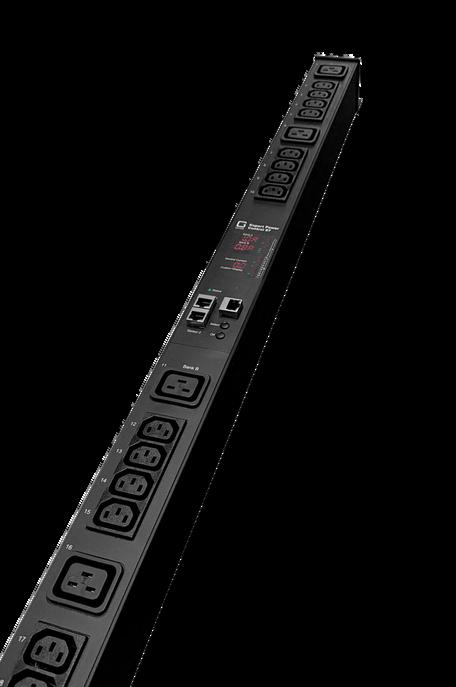
• Install and upgrade PDUs utilising IPcontrolled power management that feature reboot, sequential start-up and powercycling remotely.
• Ensure proper grounding with a single earth reference point.
• Power monitoring is essential to understand usage and potential problems.
CLEAN POWER AND SIGNAL INTEGRITY
Audio and AV systems are highly sensitive to power quality. Electrical noise, voltage fluctuations and harmonic distortion can introduce audible hums, visual interference and erratic device behaviour. Clean power ensures that sensitive components— such as digital-to-analogue converters (DACs), preamplifiers and display processors—operate within optimal parameters. All of IsoTek`s Power Conditioners clean the voltage, suppress radio frequency (RF) and electromagnetic interference (EMI). IsoTek’s unique proprietary technology isolates connected devices from mutual interference. By independently filtering each output socket, such systems prevent crosscontamination between digital processors, amplifiers and networked devices.
FLUCTUATING POWER DISTRIBUTION AND FILTERING
Power Distribution Units (PDUs) and intelligent filtering systems are essential tools for professional setups. Advanced units, such as IsoTek’s V5 Elektra, V5 Aquarius and V5 Sigmas, implement unique fast high power delivery to Power Amps, Subwoofers, TVs and all appliances with fluctuating power demands.
GROUNDING / EARTHING TECHNIQUES
Improper grounding is a common source of noise and safety issues in AV systems. Separating signal and power earths, using star-ground configurations, and employing differential signal paths help minimise hum loops. Shielded cables with correct termination, along with filtered power inputs, further enhance system stability and immunity to interference. All IsoTek products feature a ‘System Link Connection’ designed to connect multiple units together, maintaining a stared earth reference and preserving the need for multiple wall outlet sockets connection.
POWER SURGE PROTECTION
The IsoTek surge protection system uses an array of VDRs which offer a cascading level of protection, in some cases over 100,000A. These step in fast and sequentially dependent upon the severity of the encountered power surge or spike. The architecture of the protection circuit extends dramatically and almost instantly when required.
ENERGY EFFICIENCY AND SUSTAINABILITY
Beyond performance, energy optimisation is becoming a key priority. Modern AV systems integrate power-saving features such as standby management, load shedding and
event scheduling. IsoTek’s Smart PDUs can monitor energy consumption in real time, allowing facilities to identify inefficiencies and reduce operational costs. Events, timers and alerts can be configured with IsoTek’s Smart PDUs integration into Control4, Crestron and others for devices to switch on or off in groups or individually reducing both electrical consumption and expenditure, whilst reporting alert information to Tech Support Staff.
REMOTE MANAGEMENT AND AUTOMATION
IsoTek’s SMART PDUs remote power management enables diagnostics and power control over individual devices. Through secure web IP interfaces, technicians can schedule maintenance, reboot malfunctioning systems, or adjust power sequencing without physical access. Such control enhances system uptime, simplifies troubleshooting and aligns with modern integrated building management strategies. Sequential power-on functions and remote management through interfaces like RS232, Crestron, or Control4 allow integrators to automate startup, shutdown and reboot routines safely and reducing the number of onsite callouts.
CONCLUSION
Power optimisation is essential for reliable and high-performance audio and AV systems. Combining clean power delivery, robust grounding, intelligent filtering, superior surge protection and sustainable energy practices ensures consistent electrical power quality and long-term reliability.
IsoTek isoteksystems.com
WEAR YOUR MESSAGE WELL
Marketing can often feel like a sea of sameness. The same phrases, the same brand tones, the same claims about innovation, service and quality. How do you make your brand stand out? Make it personal!
Of course, there are certain truisms that apply universally, and anyone who has run a business for more than a few months will know them. But I’ve always believed that the most effective marketing comes from something much simpler — letting the personality of the company, and the people behind it, shine through in an authentic and creative way. Let me give you an example.
Anyone who knows me will tell you that sartorial elegance isn’t exactly my strong point. I’m not a ‘sharp suit’ kind of person. But when you run a magazine like Essential Install, you inevitably attend meetings, events and trade shows — situations where you need to look professional and present the brand in the right way. I needed a solution that didn’t involve raiding my wardrobe for something only halfsuitable, but also gave me a way to promote the company with some flair.
The obvious answer was to have a few branded shirts made — logo, name, job done.
But that’s not really my style. I wanted to find a way to make something as ordinary as a company shirt feel like an expression of both me and the brand.
That’s where the idea came from to take the Essential Install name and design a range of shirts that incorporated music and movie themes — the worlds our magazine covers through home cinema and entertainment technology. Each shirt uses a different graphic style, borrowing fonts and visual references from iconic films or rock bands — Jaws, Star Wars, AC/DC, Motörhead, Deep Purple and so on. These are always paired with a matching pair of Converse shoes, and often a jacket with matching pocket handkerchief.
It sounds simple enough, but the effect has been remarkable. Those shirts have become conversation starters everywhere I go. I’ve lost count of the number of connections, ideas and opportunities that began with someone saying, “I love your shirt,” or, “Aren’t you that AV guy?”
What’s interesting is that this isn’t some complex marketing strategy — it’s one of the oldest ideas in the book. Essentially, it’s a wearable advert, a modern-day sandwich board. But what makes it work is the way it combines different layers of meaning: the company name, the subject matter and the personality of the person wearing it. It’s marketing that doesn’t just
tell people what you do — it shows them who you are. I have also noticed that manufacturers who have a particular lean towards aesthetic and joined-up design appreciate the thought that has gone into the shirts and matching attire. It suggests to them in a modest way that the magazine will understand what they are trying to do as well.
That’s the kind of thinking I think more companies could benefit from. Marketing doesn’t have to be expensive or complicated to be effective. It has to be thoughtful. If you can find ways to reflect both the essence of your brand and the personality of the people behind it, you’ll create something that feels real, human and memorable.
The shirts have taken on a life of their own. People now ask where they can get one, and perhaps one day we’ll make them available. But for now, they serve their purpose perfectly — a walking shop window for Essential Install that tells people not just what we do, but what we love. And that, in my view, is the essence of focused marketing — understanding your audience, knowing yourself and finding the creative space where the two meet.
Sony Par tner Programme
Join the Sony Professional Displays & Solutions Par tner Programme, offering exclusive benefits and oppor tunities.
From special events that offer invaluable learning oppor tunities to exclusive pricing structures that ensure competitive advantage, our programme is crafted to suppor t your success Join us and unlock a world of possibilities, where collaboration and growth go hand in hand
Find out more at pro.sony/par tner-programme
SEEING THE LIGHT
Cliff Stammers, Founder of Clever Rooms, veteran Crestron programmer, smart home expert and EI regular, offers some thoughts on the future.
Control integration is definitely changing and it’s changing fast. A well-heeled engineer from one of the industry’s leading AV Integrators put it very succinctly recently, when he told me, “10 years ago we used to tell clients we mainly install AV systems, but we can offer a little bit of heating and lighting as well. These days we tell them, yes, we install heating and lighting systems and by the way, we can do a bit of AV if you want it! They rarely do. We might sell them Spotify. But that’s about it.”
I’m sure that this is something we can all recognise. To underline it, another engineer I spoke to, who runs his own successful integration company said, “Even the distribution of TV decoders is disappearing in homes these days. You might still see it in the corporate market, with the distribution of Digital Signage and news feeds sent to screens in reception and things like that, but in the home it’s all streaming services now. And of course every new TV has these features built-in, so the days of watching a Sky broadcast, pausing it and picking it up in another room is no longer viable. Which also saves the client an enormous amount of money.”
He went further and said that he feels companies like Sky and Virgin Media, unless they dramatically reinvent themselves, will soon become a thing of the past. It’s an interesting one. The main thing keeping companies like these going at the moment, he says, appears to be real-time sports broadcasts, and even that market is going to come under increasing threat to these guys from the streaming giants. In fact, it’s already started of course. Just consider Amazon and their grab for the rights to the Premier League. Streaming live events could spell very bad news indeed for the so-called ‘traditional’ broadcasters.
Virgin Media’s decision to introduce their new decoder without a physical hard-drive inside means that users will have to access their catch-up content from the cloud, and this content will be peppered with advertising breaks. I don’t think this is news to anyone. Neither is it a surprise. No more MotoGP or Formula 1 without ad breaks - unless you get up at 4am to watch the race live, or pay an ad-free fee, no doubt. I can see the future - and it’s filled with soap powder adverts.
The BBC has been dying a lingering death for a long time already. In fact, it feels more like a suicide if you pay close attention. The licence fee, surely now the most archaic imposition levied will soon have to be upon the TV-loving British public, has soon got to be either phased out completely – or raised to £500 a year in order to cover the cost of defending the current US President’s impending litigation procedure against our beloved Auntie Beeb! If the latter, no one will pay it. If the former, then to fund itself the BBC will have to rely on advertising and thus become like any other service provider. And not a very good one either. Who watches the BBC anymore? Anyone?
So, I think the point is made. Forms of visual entertainment are on shifting sands right now, possibly they’re on quicksand, in fact. And until their foundations settle, it’ll be hard for the rest of us to second guess how our clients want to consume these media.
WHAT’S THE FUTURE?
So this all points to how prescient our colleague’s view is in the opening paragraph of this piece. He’s right. We now are lighting and
heating systems providers. Aren’t we? Sure, there are pockets of resistance. I’m in one of them, so I certainly hope it’s true that there’s a vanguard of patience at work out there, sensible people who like to be cautious and ensure they get it right, but ultimately aren’t we just being a bit luddite in our thinking? Change is coming at us so fast that by the time we diversify the world has moved on to the next amazing thing. And diversification, of course, favours small and nimble companies, not the larger ones for whom the concept of any kind of change requires planning, by which time the ideas they’re having today are obsolete tomorrow. So it takes a true visionary to see the light(ing) and to be proactive instead of simply following the herd over the edge of the cliff.
Lighting and heating, and indeed other forms of building management systems will save us. Smart buildings will save us. Offering our clients renewable energy solutions as part of our product range will save us. I, for one, am up for all such forms of reinvention, so drop me an email if you think I can help.
Meanwhile, it falls to our wise colleague to have the last word. “Systems that have any form of intelligent lighting in them are not nearly as vulnerable to such extreme changes as systems that contain only AV. Heating as well. Light will always be light and heat will always be heat. And more importantly than that, they’re both essentials, and as such will be protected at all costs. Especially by our clients. If they can’t watch TV, they get pissed off. But if they can’t turn their lights on or off, it’s a completely different problem entirely. We have to embrace these services. It’s very important for our future that we do.”
Is the balance in smart homes shifting from entertainment to utilities?
SMART HOME CONTROL: THE AI QUESTION
Phillip Pini, Director of Residential Sales UK at Crestron, takes a look at the potential impact of AI and some other key trends.
The amount of copy that’s been written about AI is approaching levels that could fill one of the technology’s largest data centres. One thing that it hasn’t truly impacted, at least from the end user’s perspective, is the control system of the modern connected home.
Currently, AI cannot predict what music a homeowner wants to hear, or determine the different temperatures that different users might define as ‘warm’. To be sure, machine learning can glean patterns and execute automated functions based on those patterns, but AI can’t truly carry on the kind of back and forth conversation that might result in satisfactorily completing a task of some sort, a la Rosie, the Jetsons’ robot.
The backend of the control device is another matter, as AI can be helpful with coding and might even perhaps be called upon to help arrange button layout or choose pleasing colours. For Crestron, however, using AI for that purpose isn’t a pressing matter, as what we’ve built for the Crestron Home OS has been very well received. Any refinements to the UI are driven by good old-fashioned human feedback between our customers, dealers and engineers.
THE INTEROPERABILITY QUESTION
An area where AI might one day have an impact is interoperability among devices from different manufacturers. A system that could recognise and automatically adjust certain settings and parameters to allow for the seamless integration of a third-party device with little effort on the part of the installer is a noble goal but, again, it’s still a bit distant.
It’s why manufacturers like Crestron create as many solutions for our smart home networks as possible. It’s admittedly a challenge on occasion — we don’t make displays or projectors for example. However, by working closely with those who do and advising our dealers to use Crestron-built devices whenever possible, we can minimise the potential frustrations and expenses associated with a lack of interoperability.
THE QUESTION OF SCALE
A proper control system should be able to handle anything you throw at it — the best have the flexibility to run anything from a single room to a 60,000 square foot mansion. But the key to success is building an infrastructure
that’s already set up for that kind of expansion. The old adage of making something future-ready is that if there’s a wire there, we can attach something to it. The caveat? It has to be the right wire.
Fortunately, as home automation becomes ever more reliant on the home network, the ‘right wire’ has become nearly universal. If you have a speaker but no speaker cable, that’s not an insurmountable issue if there’s an Ethernet cable in that same space. A networked POE speaker can solve a lot of problems for the dealer looking to bring audio into any space and it’s a simple matter to plug a touchscreen into a POE injector and connect to your control system over Wi-Fi.
THE QUESTION OF CHOICE
The biggest developments in smart home control, however, are the control devices of choice and the end user’s ability to customise certain aspects of the connected home.
While there’s always a place for the on-wall touchscreen, the mobile device has become the ‘weapon of choice’ for many homeowners, especially when it comes to audio. That informs UI design: One needs to design and build an interface that’s intuitive and easy to read on the small screens of smartphones. That demands a human touch.
The other growing request from homeowners has been the desire for more backend control. This is especially true with lighting: Needs and preferences adapt with the comings and goings of users and seasons and the client wants to be able to change settings without getting a technician involved. That ask will only expand as more digital natives become homeowners. AI may one day become much more predictive and responsive when it comes to those types of wants — but right now, the people at the heart of these systems are quite comfortable performing those functions themselves, thanks.
What is the future for AI in the smart home universe?
PERSONALISED HOME CONTROL
X4 offers personalised control of smart devices for an experience that reflects how your customers live.
LEARN MORE
WIRELESS NETWORKS
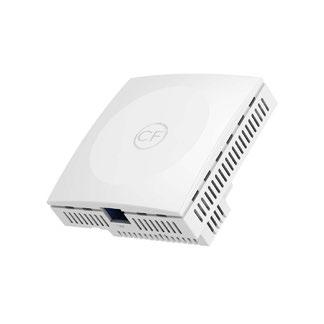
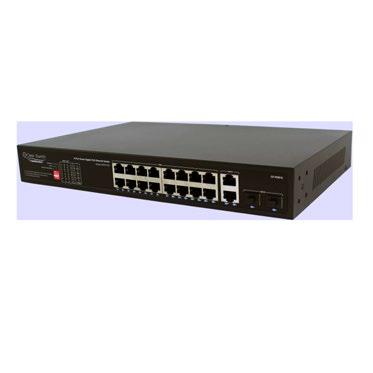
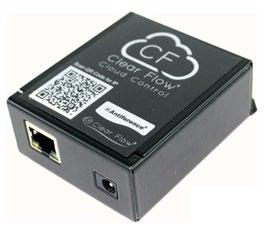
The range of Clear Flow wireless network products include a wide range of options for networking solutions. The wireless access points include dual band WiFi6 in-wall and ceiling mount options with Gb Ethernet. Clear Switch Gb Ethernet switches enable simple expansion with PoE & Non-PoE versions with output options from 4 to 24 ports. Also included in the range are wireless outdoor bridge CPE’s for wirelessly linking buildings or CCTV systems. The Clear Flow Coud Control device enables remote connectivity to Clear Flow networks or other network devices with an on-board GUI.
In-Wall Access Points
Gb Ethernet Switches
Cloud Controller
TRAINING THAT CHANGES HOW INTEGRATORS THINK, NOT JUST WHAT THEY KNOW
Theben takes an innovative and holistic approach to the vital subject of training in the smart home sector.
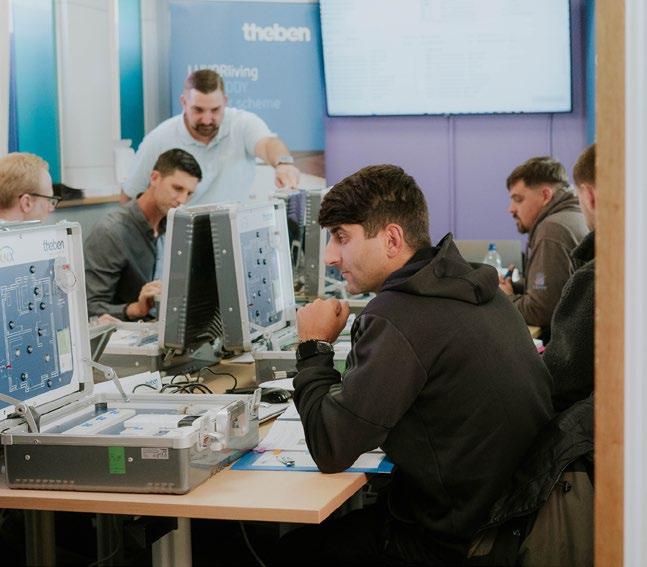
When an integrator steps into a KNX Basic Certification course at Theben Academy, something significant happens. They begin to see automation not as a collection of boxes, apps and gateways, but as a coherent architectural layer - something structured, clear and far more manageable than the sum of its parts.
There is a moment in every course when someone turns from a device to a laptop, links a sensor to a lighting circuit in ETS, loads the program, presses a button and the building responds exactly as expected. It is a small moment, but it changes everything. The intimidation disappears. The system becomes understandable. The logic reveals itself.
From there, doors open quickly. Integrators move from simple room control to multi-zone logic, from lighting scenes to environmental comfort strategies, from single-discipline thinking to whole-building design. And because Theben Academy pairs this with posttraining support and a growing community of professionals, the learning doesn’t end when the course finishes. It accelerates.
DESIGN NOW PLAYS A LARGER ROLE, AND OPEN STANDARDS SUPPORT IT
One of the more interesting developments in recent years is the increasing involvement of interior designers and architects in control specification. They are no longer passive observers. They have opinions about materials, visual language, interface consistency and spatial harmony. They want control points that feel like part of the design, not a necessary intrusion.
This is where modern KNX devices have made enormous strides. Theben’s iONprime range, for example, changes designers’ assumptions about what KNX looks like. With touch surfaces, custom backgrounds, proximitybased illumination and discreet sensing, the interface can be as considered as any piece of joinery or hardware.
This matters because it means open protocols now support aesthetic ambition rather than restrict it. Architects can specify KNX without compromising their vision. And
integrators can offer clients control systems that are engineered for performance but crafted for the space they inhabit.
THE NEXT FIVE YEARS: A DEFINING PERIOD
As we look towards 2030, it is clear that the buildings being designed today will demand far more integration than those of the past decade. Energy strategy, wellbeing, occupancy analytics, hybrid working, home electrification, EV integration: none of these can be served by isolated systems.
The professionals who understand how to design, deliver and maintain open-protocol infrastructures will be the ones shaping the next generation of smart environments. The ones who do not will still have work, but it will be in the margins, not the centre.
That is why the skills gap is not just a problem; it is an opportunity. The industry is calling for more KNX professionals. Developers are calling for them. Architects are calling for them. And Theben is committed to training them.
If you are an integrator, designer or specifier looking to strengthen your capability in open standards, this is your moment. The future of building automation will not be defined by products but by the professionals who know how to connect them. And that is exactly what Theben Academy exists to do.
ISE 2026: PUSH BEYOND – THE UNMISSABLE SMART HOME REVOLUTION
Integrated Systems Europe (ISE) 2026 makes its grand return from 3-6 February at the Fira de Barcelona, Gran Via, inviting attendees to ‘Push Beyond’ the boundaries of technology, production, and creativity.
This isn’t a show for the slow or the uncertain. It’s where visionaries, creators and innovators come together to shape what’s next. The continued growth of ISE 2026 reflects a community that thrives on collaboration and progress - a place where opportunities emerge, ideas evolve, and meaningful connections are made. When the industry’s leaders unite, the energy is real, and the possibilities are wide open.
RESIDENTIAL & SMART BUILDING TECH ZONE
Welcome to Halls 1 and 2 - a dynamic, showstopping Residential & Smart Building Tech Zone where intelligent environments come alive. Experience spaces that adapt to you: automated, responsive, and brilliantly efficient. From advanced building automation and energy management to integrated control, this is where comfort, performance, and sustainability converge.
Explore hands-on demos and uncover the technologies shaping tomorrow - smart lighting that transforms atmosphere, security systems that anticipate, and AV solutions that redefine connected living. Here, sustainability drives innovation, and creativity sets the standard. Whether you’re a consultant, integrator, or simply passionate about smart living, this is where your next idea begins.
SMART HOME TECHNOLOGY CONFERENCE
Curated by CEDIA, the Smart Home Technology Conference offers a world-class programme for smart home professionals committed to
staying ahead. From Tuesday 3 to Thursday 5 February, attendees can participate in a diverse range of expert-led workshops and courses designed to broaden knowledge, sharpen skills, and drive the success of integration businesses.
The conference covers a comprehensive array of technical and business topics across multiple CEDIA tracks, including Lighting & Wellness, Business Strategies & Project Management, Power Management, Energy & Sustainability, Home Cinema & Immersive Audio, AI & Tech Trends, Architecture, Design & Build, Control Systems & Assistive Technologies, and IT, Networking & Cybersecurity. Several sessions will also be delivered in Spanish, ensuring accessibility for a global audience.
Whether through hands-on workshops, forward-thinking keynotes, or trend-focused sessions, participants will leave equipped to lead in the evolving smart home industry. Here, deep knowledge isn’t optional, it’s the foundation for endless opportunity and growth.
SMART HOME TECHNOLOGY STAGE: THE PULSE OF INNOVATION
For those who value practical insight and up-to-date knowledge, The Smart Home Technology Stage is the place where new ideas emerge, futures are shaped, and professional connections are forged. Every day, stand 2D350 in Hall 2 will provide a dynamic setting with complimentary sessions and engaging discussions.
Open to all and featuring thought leaders as well as peer speakers, it’s the ideal venue to gain insider perspectives on technology, design, business strategy, people, and the evolving landscape of the smart home sector.
AI TRAILBLAZING
KEYNOTE, SOL RASHIDI
Sol Rashidi, the world’s first Chief AI Officer for enterprises, will headline ISE on Wednesday,
5 February 2026. Her keynote, ‘The AI Reality Check: What It Takes to Scale and the Future of Leadership,’ will expose the realities of AI beyond the hype, offering practical frameworks and highlighting the importance of AI governance and cybersecurity for successful scaling. She will also share how to assess AI initiatives and protect data, staff, and competitive edge.
NEW FOR 2026: SMART SPACES MEGATREND SESSIONS
From Tuesday 3 - Thursday 5 February in room CC5.3, the Smart Spaces megatrend sessions will explore the frontiers of efficient energy management, AI-driven automation, and cybersecurity for connected environments. Key topics include smart office technologies, adaptive learning tools, and sustainable building designs, all with a strong emphasis on data analytics, privacy, and user engagement.
HIGH-END LISTENING SUITES – ELEVATE THE EXPERIENCE
At ISE 2026, the newly refurbished CC2 at Fira de Barcelona will host immersive Listening Suites. Each suite is thoughtfully-designed to combine cutting-edge acoustics with innovative interiors, delivering every note with precision and clarity. It’s the perfect showcase for audio brands aiming to go beyond professional audio and create truly memorable sound experiences.
WHY ATTEND ISE 2026?
This is your chance to enjoy, learn, connect, and push beyond all expectations. Treat your senses, upgrade your knowledge, and join a community that’s going places. Don’t miss your chance to be at the forefront of industry transformation and ‘Push Beyond’ with ISE.
Register for FREE with the code ‘essentialinstall’ and secure your place at iseurope.org/welcome/registration.
BRIDGING THE GAP: UNITING DESIGNERS AND INTEGRATORS FOR FLAWLESS PROJECTS
Durgesh Sinh, Founding Director at CEDIA member Nucleus, shares how early collaboration with interior designers can transform both the process and the final result.
In an industry where design expectations are rising just as quickly as technological complexity, the line between technology and design has never been thinner. I believe this collaboration isn’t just a practical necessity – it’s a cornerstone of how projects are shaped, refined and ultimately delivered. As client expectations evolve, the need for integrators to work handin-hand with design professionals has become essential to achieving beautiful, intuitive and high-performing spaces.
Over the years, I’ve seen first-hand how a strong partnership between designer and integrator can transform the client experience. Designers bring their creative vision, shaping how a space feels, while integrators ensure that lighting, shading, audio, video and control systems enhance that vision rather than disrupt it. The best outcomes come from a genuine exchange of expertise, where both sides respect each other’s craft and priorities. I’ve learned that listening to a designer’s ideas and sharing my own technical insights leads to solutions that surprise and delight our clients.
Early engagement is key. By joining the conversation at the design concept stage, integrators can plan infrastructure intelligently and coordinate with the wider professional team. This avoids retrofits or technical
compromises later in the project and allows technology to be designed into the architecture from day one. For example, I’ve worked on projects where speaker placement, lighting keypad locations and cabling were aligned with joinery and finishes before construction even began. These details make a huge difference in the final result.
Communication between the trades is critical. Many designers are understandably focused on form, materials and proportion, while integrators speak in terms of circuits, data, and performance. Bridging that language gap takes effort. I find that visual tools and clear documentation – layout drawings, visuals and integration drawings – help designers see how the technology will live within their schemes.
An integrator’s role is as much about protecting the design intent as it is about delivering performance. Discreet speaker solutions, hidden control panels and fabric -matched shading all help technology blend into its surroundings. Collaboration also extends to lighting design, ensuring that the control system and lighting specification work together to deliver consistent scenes, moods and energy efficiency. I take pride in making technology intuitive while blending seamlessly, so it feels effortless for the people who use the space. It’s
always so rewarding to see their ideas come to life with the support of well-integrated systems.
Trust is another factor that cannot be understated. Designers and clients alike must have confidence that the integrator will respect the aesthetic integrity of the space while ensuring long-term reliability. This trust is built through consistent delivery, transparency, and technical competence across multiple projects.
When the collaboration is done well, it creates more than a successful installation – it builds a genuine partnership. The designer’s benchmark of what is possible evolves and it becomes far harder for another company to take your place on the next project. Shared success breeds loyalty and over time, these relationships become the backbone of a business.
At Nucleus, this unified approach continues to shape every project we take on. Ultimately, collaboration between integrators and interior designers is about combining two disciplines that share a single goal to create spaces that feel effortless for the people who live or work in them. When technology is invisible, intuitive, and in complete harmony with the design, the result speaks for itself.
BUILDING SMART HOMES FROM THE GROUND UP
Vimal Mohanan, Product Marketing Specialist – Smart Buildings, ABB Electrification, examines how to begin at the beginning.
Smart home technology is no longer a luxury extra. In 2025, nearly half of UK homeowners said they were interested in connected lighting, heating and security solutions. Across North America, more than 40 percent of households already have at least one smart home product. And globally, the market is growing at 23 percent a year.
As demand accelerates, developers and installers are waking up to a new reality: consumers expect intuitive technology from the moment they move in. Yet many developers of newbuilds still treat automation as a bolt-on,
leaving residents to link up half a dozen apps to their appliances after completion. With the help of ABB, Kent-based developer Hillstone Homes took a different route.
A CASE FOR DESIGN STAGE INTEGRATION
At The Bowers, four hillside homes were built with intelligent control specified from the very beginning, in partnership with electrical contractor Faulkner & Sons. Their brief was to deliver a seamless, flexible system for lighting, heating, blinds, intercoms and AV — all ready to run on day one.
Faulkner & Sons designed a hybrid backbone: hard-wired KNX bus cabling for stability and scalability, supplemented by nodes for wireless devices where they could become essential in future upgrades. The wiring was neatly contained within ducts, dramatically reducing cabling runs and simplifying future upgrades such as EV chargers or occupancy sensors.
Configuration used simple drag and drop logic, allowing functions like ‘Morning’, ‘All Off’, or ‘Away’ modes to be set up in hours rather than days. For the contractor, the advantages
were practical: lower installation time, fewer return visits and smoother coordination with other trades. As Director, Darren Faulkner, explains, “We could commission every function before handover and owners could use the system immediately. No programming support needed.”
SIMPLICITY DRIVES ADOPTION
Too many automation projects fail at the handover stage, when end users are overwhelmed by complex interfaces or multiple control apps. At The Bowers, a single interface via wall panels and smartphone covered everything, with a plan in place to give buyers a guided walkthrough showing real-time energy data and how room scenes worked to build confidence in the technology.
End user training may seem an afterthought, but it secures long-term satisfaction and protects the project’s sustainability credentials. Residents who understand their systems keep them active, share positive feedback and reduce callbacks. For developers, that means happier clients and fewer warranty issues.
A touch of smart design
Meet Niko: your experienced partner in intelligent home control.
In a world of constant noise, Niko creates smart technology that quietly makes life better. It naturally blends into every home.
More than a century ago, Niko started creating quality electrical solutions for every type of building. For more than 25 years we have been bringing smart control and elegant design to residential projects across Europe.
Niko is the trusted partner for installers and architects who value quality, reliability, and timeless design, offering not only products but also training and hands-on project support.
Build smarter. Work with Niko.
DESIGN & CONSULTING
With our experience of smart home integrations and BMS, we can bridge the gap between the AV and HVAC worlds, designing systems that take full account of how the client wants to use them. We offer a range of services from consulting to complete system design.
MONITORING & DIAGNOSTICS
All our solutions include advanced cloud-based monitoring for analysing system performance and fault reporting. Turn a reactive response into a proactive call to inform clients that their problem has been resolved, even before they knew they had one.
Multi-platform smart home integration tailors the experience to the client - whether that is elegant in-room controls, or virtually invisible sensors with App-based controls. All backed up with sophisticated installer tools.
ENERGY PERFORMANCE AND COMPLIANCE
Integrated control is also becoming an ally in developers’ efforts to meet increasingly tough sustainability targets. Smart zoning, automated shading and load scheduling can reduce operational energy use — critical under Part L and the Future Homes Standard. The Energy Saving Trust highlights smart tariffs and demand shifting as core strategies for cutting carbon while maintaining comfort. By linking devices into a single logic layer, new homes can respond dynamically to daylight, occupancy and energy tariffs, rather than relying on occupant behaviour alone.
BEYOND THE INDIVIDUAL HOME
As connected homes multiply, so does the digital workload behind them. Each property continuously exchanges data on temperature, lighting and usage. Scaled across large developments, like those being planned by the New Towns, Taskforce, this can create a new layer of infrastructure demand — on networks, cloud servers and, ultimately, data centre energy use. The International Energy Agency predicts global data centre consumption could double to 1,000 TWh by 2026.
For installers and developers, engineering resilience now via integrated smart systems means more than electrical reliability. It includes strong onsite networking, edge processing, secure gateways and cybersecurity built in from the start.
CHANGING THE DEVELOPER MINDSET
Developers face constant pressure from cost inflation and regulation, so it’s understandable that automation sometimes feels like a complication. But experience at The Bowers showed that integrating smart systems can
significantly increase buyer appeal. Digital readiness is rapidly becoming a baseline specification, and properties that deliver effortless control stand out immediately in a competitive market.
What began as a differentiator soon becomes an expectation. The lesson for engineers, installers and developers alike is clear: automation works best when it’s built in, not bolted on. Designing homes that are smart from the start saves time, safeguards compliance, and most importantly keeps homeowners engaged and confident in their technology.
Pressure will increase to include smart systems form the ground up
HVAC INTEGRATION – THE FUTURE OF CLIMATE CONTROL IN SMART HOMES
Andrew Taylor, Technical Sales Manager at HVAC specialist Consyst, underlines how HVAC will define next gen smart homes.
Smart homes have evolved far beyond connected lighting and voice assistants. Today, heating, ventilation and air conditioning (HVAC) systems sit at the core of truly intelligent living environments. As homeowners demand greater comfort, energy efficiency and wellness, HVAC integration is becoming a defining feature of next-generation smart homes.
Modern HVAC solutions incorporate air-quality monitoring, humidity optimisation and predictive maintenance. Smart thermostats and distributed sensors now enable dynamic adjustments based on occupancy patterns, weather forecasts and real-time energy tariffs — delivering improved comfort alongside measurable energy savings.
THE INTEROPERABILITY CHALLENGE
Users increasingly expect to monitor and control every smart device from a single interface. Yet despite advancements, seamless integration remains a challenge. HVAC systems often operate on proprietary communication protocols, limiting interoperability with wider smart-home ecosystems.
Installers are frequently tasked with aligning multiple control systems — sometimes from different manufacturers — while ensuring a unified and intuitive user experience. To achieve reliable performance, professional system integration and purpose-built HVAC gateways are essential. These devices ‘translate’ proprietary HVAC protocols into industrystandard building automation formats, enabling reliable and scalable smart home deployments.
Key Trends Driving Smart HVAC Adoption:
• AI-powered diagnostics anticipate failures before they occur, reducing downtime and extending equipment life.
• Unified ecosystems: Homeowners increasingly expect one app and one interface to control lighting, security, audiovisual, energy and climate systems.
• Energy integration: HVAC systems are now synchronising with solar panels, battery storage and smart grids to reduce carbon footprint and energy costs.
• Automation for efficiency: Intelligent scheduling and logic reduce waste and optimise comfort.
• Predictive analytics are rapidly evolving to continuously optimise environmental conditions.
• Cloud-based platforms enable remote monitoring, updates and control.
• Shift to sustainable systems, such as air-towater heat pumps, continues to accelerate.
• Cybersecurity standards including encryption and secure commissioning are increasingly essential as HVAC becomes part of larger connected environments.
WHAT’S NEXT?
Smart climate control is becoming a necessity rather than a luxury. It is central to building energy-efficient, healthy and future-ready homes. The next major step will be AI-driven autonomous climate management, where systems learn user behaviour and optimise themselves without manual intervention.
While voice and app-based control will remain part of the experience, predictive automation — where the system responds proactively rather than reactively — will define the next phase of the smart HVAC evolution.
WHAT SHOULD INSTALLERS DO?
Over the years, many manufacturers have released proprietary ‘closed’ smart-home platforms. However, these systems often become obsolete
quickly, leaving customers unable to upgrade or expand. More critically, finding trained installers can become difficult over time.
Open protocols — such as KNX, BACnet, and Modbus — have repeatedly proven their long-term value. Open architectures enable interoperability, ensure that infrastructure remains usable for years and allow incremental upgrades without redesigning entire systems.
Building the backbone of a smart home on open standards ensures flexibility. Installing a proprietary closed system is equivalent to building a house where the foundations must be rebuilt every time you refurbish a room — costly, unnecessary, and avoidable.
WHERE TO FIND HVAC INTEGRATION SOLUTIONS
Installers should look for suppliers with a proven record of reliability, forward-thinking design, and integration expertise. One example is the HMS-Intesis IN770AIR multi-brand gateway, compatible with eight HVAC manufacturers and four major protocols (KNX, BACnet, Modbus, and Home Automation).
Once connected, the system automatically detects compatible HVAC equipment and converts data to the selected control protocol, enabling rapid, reliable deployment across smart home platforms including Control4, Crestron, Savant and ELAN.
The platform continues to evolve — for example, MQTT support will be added via a free firmware update early next year, expanding compatibility to five protocols. The recent addition of Daikin VRF support demonstrates the product’s ongoing development. Combined with a three-year manufacturer’s warranty, it offers a future-proof and installer-friendly approach to HVAC integration.
WHAT IF YOU’RE NEW TO HVAC INTEGRATION?
Consyst Ltd proactively supports installers, helping specify the right products and providing hands-on assistance during configuration and commissioning. With extensive experience in smart buildings and integrated automation, we help ensure every project is robust, scalable, and delivered with confidence.
IP RATED CABINETS
The fortress for your data
• All-Rack built to last
• Built to protect
• Locking out the elements
• Locking in protection
01254 231 400 or contract your usual All-Rack distributor
TURN IT DOWN! IT’S TOO LOUD…
Ben Goff, award-winning cinema engineer, CEDIA RP32 Co-Chair and Technical Director at Cinema Lusso and Cinema Buro, takes on the essential topic of volume in home cinemas.
For as long as I remember, our industry has treated ‘reference level’ as something sacred.
Describe a system capable of replaying content at 85+20 dB as a reference level cinema and you’ll see heads nod because that’s how loud films should be played back to match the theatrical experience. Except… that isn’t strictly true for the typical residential environments we work in or the content our clients listen to.
Providing some clarity on this was the primary motivation behind the new CEDIA technical white paper, Reference Audio Level and SPL Capabilities. Existing CEDIA recommended practices give us the engineering framework for designing immersive audio systems. RP22 introduces four performance levels for audio system design while the soon-to-be-published RP1 aims to ensure we have the required engineering data.
Yet confusion still surrounds SPL levels and specifically ‘reference level’ which is closely tied to the RP22 Performance Level 3. There remains a common misconception that all content is created for 85+20 dB playback and needs to be reproduced at those levels to match the theatrical presentation. This misconception
leads to systems that are misspecified, miscalibrated or simply misaligned with how people actually watch films, TV and streaming content in their homes.
We need to update our thinking, starting by understanding that theatrical reference level does not equal consumer reference level.
THE MYTH OF A SINGLE UNIVERSAL ‘REFERENCE’
In commercial exhibition, the correct playback level is well defined:
• A -20 dBFS pink noise signal played through a single channel should measure 85 dB(C) at the reference seat, typically two thirds of the way into the auditorium.
• Digital headroom above the calibration signal accommodates peak output, which can theoretically reach RMS levels of 105 dB SPL or 115 dB SPL for the LFE channel.
• If the mixing stage, the dubbing stage and cinemas are all calibrated to the same level, the experience should correctly translate between them.
In home entertainment, none of this uniformity exists. For a lot of content our clients watch, there may never have been a theatrical mix produced. Much hugely popular direct-tostreaming content is likely to have been mixed in smaller rooms at lower monitoring levels, typically 72–79 dB depending on the studio, the format and the preferences of the rerecording mixer.
Additionally, the same film released on disc or streamed can have an almost identical audio mix but presented at very different output levels. When we analyse real-world content, as documented in the white paper, we can see unequivocally that the same scene from the same film is likely to be 6 decibels lower when streamed versus played from disc or disc-derived files. If we always calibrate our consumer systems in the same way as commercial equivalents and the client turns their volume dial to -0.00 dB every time they watch a film, are we really trying to say the intent is for them to watch it 6 dB louder on the disc version than on the streamed version? This fact alone should be enough to put the very idea of a universal replay level to rest.
LOUDNESS VS LEVEL: WHAT WE MEASURE ISN’T WHAT PEOPLE HEAR
Part of the challenge is that we design systems based on measurable sound pressure levels, but SPL is only half the story.
The other half is loudness, which unlike the uniformity of a microphone, is personal to each individual listener. The only way to know if something is too loud or not loud enough for an individual is to test and ask for feedback.
Our individual perception of loudness is impacted by a huge range of factors including frequency, room acoustics, distortion and screen size, as well as age, gender and ethnicity.
THE SAME MEASURED SPL CAN SOUND LOUDER IN A SMALLER ROOM
Small rooms produce earlier, stronger reflections, altering direct-to-reverberant ratios and increasing perceived loudness. It is well documented that 85 dB at two thirds back in a large cinema simply does not feel the same as 85 dB in a 5 x 4 m living room.
LOUDNESS PERCEPTION IS SHAPED BY DISTORTION
A playback system pushed close to its limits often sounds harsh and quickly feels “too loud”,
not because of the SPL itself but because rising harmonic distortion creates additional energy at frequencies we may be sensitive to.
Even in commercial cinemas, academic studies have found that many complaints of ‘the movie was too loud’ actually related to high distortion, not the measurable playback level.
THE BIGGER THE IMAGE, THE HIGHER THE PREFERRED LISTENING LEVEL
Cross-modal studies show that as absolute screen size and field of view increase, listeners naturally expect sound levels to be higher. Preserving a sense of scale is important psychologically, so the same sound pressure level can feel less loud when accompanied by a big image.
Anecdotally, we know these things to be true if we just stop to think about it. I tried to put some numbers to this and found the comfortable level to watch a movie on the TV in my kitchen was over 20 dB lower than the cinema at our office. The smaller screen size, poor acoustics and inbuilt speakers that quickly distort combine to make listening louder incredibly unpleasant on my TV… nobody would claim that room was designed to provide an immersive experience.
At the office, I found a smaller but still significant 3 dB difference in my own preference between different rooms. While both rooms have great acoustics, one is almost four times larger in volume than the other, with a 98 in TV compared to a 4.8 m wide projection screen. It will also surprise exactly nobody that in either room, my kids watch Bluey at a lower level than I’d watch the fantastic new 4K HDR release of Tron Legacy
RP22: A FRAMEWORK, NOT A COMMANDMENT
One of the most significant achievements of RP22 was creating the four performance levels where:
• Level 1 systems are great. These make up the majority of the rooms our industry creates or should be aiming to create in family homes.
• Level 3 systems meet or exceed commercial cinema performance.
• Level 4 systems represent the state of the art, ultimate performance across all parameters.
This structure acknowledges that not all rooms, budgets or expectations are equal. A family living room at Level 1 does not need to reproduce 105 dB peaks at the sofa. Conversely, a purpose-built Level 4 screening room absolutely should have that capability.
What RP22 doesn’t explicitly state, but you quickly discover as you balance performance between the parameters, is that there is inherently a minimum room volume which increases with level.
As the levels increase, so does the likelihood of a dedicated space with significant engineering. In the UK, the typical residential ceiling height would almost certainly prevent reaching Level 4, so it’s not something you could even consider dropping into an existing floorplan. The increase in required SPL level scales with typical room dimensions at each level.
Crucially, Levels 3 and 4 do not mandate calibrated playback at 85 dB. They simply specify that the system should have the capability to reproduce those levels, providing the client the option if they find it comfortable for any given piece of content.
WHAT SHOULD ‘REFERENCE LEVEL’ MEAN?
In the white paper, we put forward a more nuanced, human-centric approach:
1. The system should be capable of reproducing even demanding content without distortion or compression. This is why RP1 compliant mid-term RMS data (AES-75 / CTA-2034) is so valuable to designers.
2. Playback level should be determined by listener preference in their room with their content, rather than adherence to theatrical norms.
3. Headroom is essential, not optional. Even if a client never listens above an average 79 dB, their system should be able to reproduce transient peaks without unpleasant distortion.
4. Client comfort and enjoyment take precedence over numbers. Residential listeners are not bound by commercial cinema standardisation. It’s unlikely they need or want to listen at theatrical levels in their living room.
A HEALTHIER, MORE HONEST CONVERSATION
I hope the white paper and this comment piece help our industry move beyond the outdated idea that all residential systems require 85+20 dB playback. What matters is not forcing domestic environments to behave like theatrical dubbing stages but designing systems that are enjoyable when used at appropriate levels without strain or distortion.
For home cinema to flourish, we should stop insisting that everyone wants an actual cinema in their home while understanding how to create systems capable of that for the 0.1% who do.
ACOUSTIC TREATMENT: BALANCING PERFORMANCE, DESIGN AND INSTALLATION BEST PRACTICE
Mario
Inácio, Senior Acoustic Consultant at Vicoustic,
explains the expanding opportunity presented by
studied acoustic treatment schemes.
Acoustic treatment is no longer limited to purpose built, high end home cinemas. Media rooms, multi-use living spaces and open plan workplaces have made acoustic comfort a mainstream requirement. Clients may describe it in different ways: clearer dialogue, less harshness, fewer distractions and better privacy. The expectation, however, is the same: spaces should sound as good as they look.
For integrators and installers, success depends on more than adding absorption. The most reliable results come from a professional workflow that balances acoustic intent, design integration and practical installation details, then confirms the outcome on site. Start with a repeatable method.
STEP 1: DEFINE THE USE CASE
A media room, a living room with a serious audio system, and an open plan office can all suffer from ‘bad acoustics’, but they fail for different reasons. In residential listening spaces, common issues include early reflections (sound bouncing first off nearby surfaces) that blur imaging and reduce clarity, flutter echo (rapid pinging between parallel hard surfaces), and low frequency resonances that create uneven bass. In open plan environments, the priority is usually speech-related: excessive reverberation, distraction from intelligible speech travelling too far and poor acoustic separation between activity zones.
STEP 2: TRANSLATE GOALS INTO PRIORITIES
Once the goal is defined, the strategy becomes clearer. Media rooms typically benefit from prioritising early reflection control on walls and ceilings, managing late energy at the rear of the room, and addressing low frequency decay when subwoofers or small room modes are present. Open plan offices tend to benefit most from reducing overall reverberant build up with ceiling-based treatment, then using local measures to limit speech travel between work areas.
PERFORMANCE THAT LOOKS INTENTIONAL
A key industry shift is that acoustic treatment is expected to be part of the interior concept, not a technical add-on. This is where architectural formats and finish options matter. Well designed acoustic elements can function as visual features through rhythm, pattern and texture, allowing professionals to achieve targets with smarter placement and mixed approaches rather than visually intrusive, uniform coverage.
Examples of architectural solutions include feature wall systems and modular elements designed to blend into the interior scheme. In the Vicoustic portfolio, this design direction is represented by solutions such as Vicshape 3D, MidMod, Flat Panel VMT and Vicloud VMT, selected and placed according to the acoustic objective rather than applied as decoration.
Click bait
Introducing the Crestron Cevo Mini Remote — simply irresistible
In today’s technology-packed smart homes, simplicity is the definitive luxury. But simple doesn’t mean limited — it means focused. Our all-new Cevo Mini Remote delivers effortless entertainment and environment control in a smaller, ergonomically designed package you’ll want to hold onto. Experience the ease of fewer buttons, an intelligent layout, and direct access to the shortcuts you use every day. Try one and see what refined design feels like in your hand.
MATERIALS: SUSTAINABILITY, SAFETY, INDOOR AIR QUALITY
Material selection is increasingly influenced by sustainability, reaction to fire and indoor environmental quality. Recycled PET-based solutions are gaining relevance because they combine robust performance with recycled content and recyclability, while supporting low emission expectations in residential and workplace projects.
In practice, best specification means considering reaction to fire, emissions and durability early, not as last minute constraints. These factors often determine which solutions are viable in real projects, particularly in professional installations and higher value interiors.
TECHNIQUES THAT CONSISTENTLY WORK
In media rooms, three placement principles remain strong:
First reflection control
Targeted treatment on wall and ceiling reflection zones typically produces immediate improvements in clarity and imaging, often with less material than clients expect.
Rear wall strategy
Diffusion, or a hybrid approach combining diffusion with some absorption, can reduce problematic late energy while maintaining a comfortable sense of space.
LOW FREQUENCY MANAGEMENT WHERE REQUIRED
When bass decay is long or response is uneven, corner and perimeter control is often necessary. Modern practice increasingly focuses on integration so that performance gains do not dominate the visual outcome.
In open plan offices, wall coverage is often limited, so the ceiling is typically the main opportunity for acoustic control. A well-planned ceiling absorption strategy reduces reverberant build-up and improves overall comfort. This can be complemented with desk screens or other vertical dividers and a considered furniture layout to help limit distracting speech travel between work areas. As a simple verification step, it is good practice to check RT (reverberation time) and, where speech is critical, an intelligibility indicator after installation.
INSTALLATION BEST PRACTICE: WHERE OUTCOMES ARE DECIDED
Even strong designs can underperform if installation is treated as secondary. The practical determinants of success are consistent across projects.
COORDINATE WITH BUILDING SERVICES
Lighting, HVAC, sprinklers and AV must be integrated early so acoustic elements are not forced into leftover spaces and so access for maintenance is preserved.
CHOOSE REPEATABLE MOUNTING METHODS
Consistency matters. Confirm the substrate, choose appropriate fixings and follow clear alignment tolerances. Simple, well-documented mounting methods reduce variability between installers and protect both performance and aesthetics.
DOCUMENT PLACEMENT INTENT
Installers should not be asked to interpret acoustic strategy on site. Clear drawings, reference points and placement priorities protect the result.
MEASUREMENT AND VALIDATION: KEEP IT CREDIBLE AND COMMUNICABLE
Verification should be technically meaningful and easy to explain. Reverberation time by octave bands remains the most widely
understood indicator of overall comfort, typically expressed as T20 or T30 (reverberation time estimates). Speech intelligibility metrics such as STI can be particularly useful in meeting rooms and collaboration areas, especially where background noise and AV systems play a role, because they translate acoustic conditions into a clear speech clarity indicator.
For open plan offices, professionals often complement these with additional speech propagation and privacy related metrics defined in ISO 3382 part 3, using standardised assessment methods that reflect how far speech carries and how distracting it becomes in real work conditions. The key is not to overload reports with graphs, but to select a small set of relevant before and after indicators that match the space goals.
CONCLUSION
Balancing performance, design and installation is not a compromise when the process is correct. Define the acoustic goal, translate it into practical placement priorities, integrate treatment into the interior concept, install with repeatable best practice, and validate with simple measurements that relate to what users experience. With today’s architecturally integrated solutions, sustainable materials, and efficient installation methods, it is increasingly achievable to deliver spaces that sound as good as they look.
LIVING WITH SOUND
David Shevyn, Interim CEO, GIK Acoustics, underlines how acoustic treatment and tech go hand in hand to create the ultimate listening/living environment.
Most of us have a basic understanding of acoustics. We have all been in an empty house and heard the difference that having no soft furnishings makes. This ‘echo’ effect is reverb and occurs when sound waves reflect off flat surfaces, i.e. walls, floors, ceilings and hard surfaces such as kitchen units and worktops, creating the echo we are familiar with.
Throughout the frequency range, the sound travelling around the room interacts with the boundaries and ultimately with itself to create what is called ‘constructive’ and ‘deconstructive’ interference. In simple terms, it changes the sound that you hear and the quality of the sound you hear.
So how does that affect those living in the space? A well-treated home environment has so many advantages. Most importantly, it can make dialogue clearer and easier to follow, making it ideal for TV, films and video calls, plus it can bring a surround or Atmos audio system truly to life, with sound being distributed around the room as the creators of these systems actually intended.
The advantages of considering room acoustics when designing your next project are many.
Better sound clarity equals happier neighbours! Having a properly treated room will stop clients from turning that volume up every
time they are struggling to follow dialogue. Treating the wall and ceiling areas where sound first reflects from the speakers to the sofa gives the quickest, most noticeable improvement, whether the family is binge-watching a box set or listening to their favourite album.
Bass traps in the corners and on the back wall help to deal with low-end issues. Most people will recognise when the low end has too much ‘boominess’, and in some instances, this can be quite a distraction. The advantage of dealing with low-end problems is that it will stop this boominess and will tighten up the sound, so that low-end frequencies become clearer.
TREAT, BUT DON’T DEADEN THE ROOM!
It’s one of the key components for success, but it is worth understanding what this means, as it can be misleading. For example, in the low end, not hearing a frequency (often referred to as a null) doesn’t mean you need to remove bass traps from the room. It means you need to add more! This is because, as the sound travels around the room, the longer it remains in the room (the decay time of the frequency), the more it will meet itself and cause annoying interference. Adding more bass traps will reduce the decay time and stop the sound
from remaining in the room for too long. A ‘dead’ room means that, if you place too many broadband acoustic panels in a room, you can end up over-damping the higher frequencies to the point that the room will sound flat.
WORKING IN HARMONY
Room correction is an essential part of your acoustic tool kit. While apps and software EQ can help, they can’t stop what happens to the sound once it is released into the physical environment. Acoustic panels and other physical treatments fix the room, which software can then fine-tune.
Not all panels need to be fixed. While fixed panels are often common, GIK Acoustics offers a whole range of free-standing panels that can even be stored away for when they are not needed. They also come in over 20 different fabric colours, wood finishes and patterns that blend seamlessly with your décor, joinery, lighting and soft furnishings. This is ideal for renters or for multi-purpose rooms as well.
Not sure where to start with acoustic treatment? Take expert advice. We offer a free online acoustic design service. If the customer wants to invest a lot of money in their home AV and then put it into an untreated room, they simply won’t hear it at its best.
The ci series incorporates cutting edge technologies and audio quality from the world-renowned PMC studio monitors that have been responsible for the sound of countless movies, in the ultimate slimline, high-performance on-wall and in-wall loudspeakers.
• SLICK, EFFORTLESS INSTALLATION
• STUDIO SOUND QUALITY & RELIABILITY
• BEAUTIFUL BEZEL-LESS DESIGN
• NO DISTURBANCE TO ADJOINING ROOMS
• VAST, EVEN SOUND COVERAGE
• DEEP, PRECISE BASS AT ALL LEVELS The ci140 and ci140sub are on-wall designs. The other models are in or on-wall, thanks to the
Qikfire™ fittings, bezel-less grille and stylish cabinet sleeve.
We specialise in home cinemas and distributed audio systems that deliver exceptional quality and unparalleled performance.
Our complimentary design & specification service provides integrators with a customised, expertly designed, and integrated AV solutions.
We specialise in designing high-end audio-visual systems for luxury homes and residential spaces.
PROUD DISTRIBUTOR OF
AMBISONIC
COMMISSIONING AND CALIBRATION
Providing expert calibration and commissioning services, we ensure your systems are set up for optimal performance and user experience.
DbM - More than just a supplier
Going beyond traditional AV distribution, DbM empowers you to create experiences that stay with your clients. Built on a foundation of unparalleled expertise and an uncompromising approach to quality, DbM provides best-in-class brands to the most discerning integrators, ensuring that every installation delivers breathtaking performance.
SOUNDS LIKE A PLAN!
C-ATS is an innovative, specialised acoustic treatment solution designed for professional AV integrators engaged in high-end residential projects. Neil Davidson, Director at the SRND Group, explains the concept in full.
In the realm of luxury home installations, understanding the intricate relationship among form, function and value is vital to delivering a superior acoustic environment. The marriage of aesthetic appeal with effective sound management is crucial, ensuring a harmonious experience for the homeowner.
At the heart of C-ATS acoustic treatment products lies a comprehensive framework known as the 3Rs of Acoustics:
1. Resonance – This aspect concerns the long sound waves that significantly influence bass performance, ensuring a rich and immersive audio experience.
2. Reverberation – This deals with how sound decays in a given space, directly affecting clarity and intelligibility which is essential for enjoying music and dialogue without muddiness.
3. Reflection – This examines how sound interacts with various surfaces such as walls and ceilings, impacting how sound is perceived throughout the space.
By strategically addressing the 3Rs of acoustics, integrators can confidently deliver a highly effective, reliable acoustic solution backed by rigorous lab-tested performance data that demonstrates the product’s capabilities.
To further empower integrators in achieving optimal sound performance, C-ATS provides a design service tailored to suit diverse project needs along with a selection of standard room layouts. These layouts serve as invaluable tools for quickly determining the most effective setup for a wide range of room sizes, streamlining the decision-making process.
While enhancing technical performance is paramount, it is equally important to consider the aesthetic and spatial constraints of residential settings. Recognising that homeowners are often reluctant to sacrifice valuable floor space, all C-ATS panels are designed to be remarkably slim, fitting into spaces as shallow as 50mm. This space-saving design does not compromise performance; instead it ensures that the panels deliver exceptional acoustic results while seamlessly integrating into the home’s design.
A frequent oversight made by integrators is the presentation of visible acoustic treatment panels. While functional, these technical solutions often imply a utilitarian look that may be acceptable in a studio but is generally unappealing in residential environments. C-ATS offers a sophisticated alternative, with panels elegantly concealed behind stretch fabric. This approach allows clients to maintain a refined aesthetic without sacrificing the acoustic performance that C-ATS products deliver.
For AV integrators, the logistics involved in transporting acoustic panels and overseeing their installation on-site can represent significant challenges. To address this, C-ATS panels are engineered to be compact and easy to handle, simplifying transport while minimising the need for on-site cutting. The packaging is designed to be stackable and efficient, with minimal air, while the panels themselves are robust enough to support a quick, efficient installation.
Moreover, C-ATS panels are priced competitively, allowing integrators to achieve a healthy profit margin for their acoustic treatment solutions. Unlike some online offerings, C-ATS prioritises value for both integrators and clients, ensuring that quality and performance come first.
In summary, C-ATS offers a distinctive, elite acoustic treatment solution thoughtfully designed to meet the unique needs of AV integrators, enabling seamless integration into high-end residential projects while delivering superior sound quality and elegant design.
IT’S GRIN UP NORTH
EI presents a trip around North Lodge, an excellent project by installation firm Clarke Infinity that puts a big smile on the face of the customer.
Recognised as a finalist in the 2024 CEDIA Awards for Best Integrated Home (Level 4), ‘North Lodge’ stands as a showcase of smart home excellence. The project is an example of fusion between opulence and practicality, masterfully executed by the Clarke Infinity team. The project was driven by the family’s desire for a home that could provide entertainment, relaxation and stress relief in equal measure — a sanctuary as practical as it was luxurious.
The brief was ambitious, aiming to create a space where the family could engage in a variety of activities: from watching films together and
hosting guests, to exercising, working, relaxing, recharging, playing and praying. The challenge lay in weaving these diverse requirements into a cohesive, intuitive design that epitomised both style and functionality.
Entertainment spaces are a core element of North Lodge. The property boasts a luxurious cinema room, a dedicated space where the family can enjoy their movie nights together. Additionally, the family has direct access to a pool room and spa with an interconnecting feature: a luxurious folding wall that transforms the room from a function space into a fitness and leisure venue. This design maximises the
utility of the space while adding the vital wow factor. Clarke Infinity’s attention is apparent throughout the property, from the adaptable acoustics in the pool room to the high-tech gym and spa facilities that cater to the family’s health and wellness needs.
Energy efficiency was a key concern for this large property spread over four floors. The install team introduced a heating, ventilation and air conditioning (HVAC) automation system, capable of remotely sensing and adjusting temperatures throughout different zones. The lighting control system is equally advanced, utilising motion sensors, preset modes and timers to reduce energy consumption. Automated blinds and curtains serve a dual purpose in this setup, harnessing solar energy
during the day and providing insulation at night. These solutions ensure that North Lodge is both comfortable and environmentally conscious, aligning with the family’s commitment to sustainability where possible and available.
A WORKING HOME
The family’s professional requirements were also a priority. Equipped with a robust network and reliable Wi-Fi, North Lodge offers the ideal environment for home-based work and meetings. The dedicated home office space is seamlessly integrated with the home’s smart systems, providing an efficient workplace. This is a phenomenon the sector is seeing significant growth in.
The pool room has its own specially-designed audio system
Family movie nights are a big hit
Another standout feature of North Lodge is its ease of use. Clarke Infinity designed the solutions with user-friendliness in mind, ensuring that every aspect of the home is intuitive and accessible. Pre-programmed lighting options, automated blinds and security systems all tie into the family’s daily routines. For example, at sunset, all window treatments close and external lighting comes on, creating a warm and inviting ambience.
The heating system in North Lodge is also a significant achievement, constantly adjusting based on the time of day and temperatures within each independent heating zone. External sensors activate a trench heater to demist windows when temperatures fall too low, ensuring comfort and clarity at all times. Such meticulous attention to detail extends to the smallest touches, like automated towel rails that ensure warm towels are ready at precisely the right moment each morning.
In partnership with builder Woodstone Homes, Clarke Infinity has crafted a home that marries beauty with intelligence. North Lodge is a vivid illustration of how cutting-edge technology can be harmoniously integrated with thoughtful design to create a home that not only
meets a family’s varied needs but also enriches their daily living.
Clarke Infinity clarkeinfinity.com
Warm and skillfully designed lighting enhances the home
Essential Kit List
• Lutron HQP7-2
• Lutron Alisse Keypads
• Lutron Curtain Tracks and Blinds
• Lutron QSPS-10PNL
• Lutron LQSE-2DAL-D
• Lutron LQSE-4A1-D
• Lutron LQSE-4A5
• Lutron LQSE-4S10
• QSPS-DH-1-75
• Future Automation LCP Panels
• Faradite Motion Sensors
• Control4 CA10 Controller
• Control4 Core5 Controller
• Control4 8” T4 Touchscreens
• Control4 Halo remotes
• Control4 DS2 Intercom
• Control4 Chime Video Doorbell
• Triad 16 Zone Audio Matrix
• Triad 8 zone Amplifiers
• Araknis Network Switches
• OvrC Hub
• Wattbox PDUs
• Ruckus R350 Unleashed WIFI
• Furman UPS
• SurgeX Branch Circuit
• Sonance IS8 Invisible Speakers
• Sonance Omni-6T Speakers
• Bowers & Wilkins in-ceiling speakers
• Artison Sketch Speakers
• Monitor Audio In-Wall Speakers
• Monitor Audio In-Ceiling Speakers
• Monitor Audio Subwoofers
• Monitor Audio Amplifiers
• Denon AVR-X3800H
• HIK Security Cameras
• HIK NVR
ISE 2026
Fira de Barcelona I Gran Via I 3 - 6 February 2026
Ground-breaking. Show-stopping. Spine-tingling.
Step into out-of-this-world, for some serious playtime. The world-renowned annual tech show for the systems integration and audiovisual industry returns.
Join us for ISE 2026 and let’s Push Beyond.
GET YOUR FREE TICKET
Register with code: essentialinstall at iseurope.org
A joint venture partnership of
THE ART OF BASS YOU CAN FEEL
Artcoustic has unveiled the Sub 4-12 INFRA, a new infra-subwoofer designed to deliver exceptional low-frequency performance in professional cinemas, residential home cinema installations and performance spaces where space is at a premium.
Built around four in-house-designed 12in long-throw drivers and a precision 6th-order bandpass enclosure, the Sub 4-12 INFRA delivers genuine infrasonic extension, reaching below 20 Hz with remarkable control, efficiency and accuracy.
According to Artcoustic, the aim from the outset was straightforward: create an infra-subwoofer capable of effortless energy beneath 20 Hz while maintaining a footprint compact enough to sit behind a cinema screen. Rather than relying on a single oversized driver, the engineering team developed four perfectly phase-aligned 12in units. Combined, they offer the surface area and excursion of a 24in driver while delivering lower distortion, superior thermal headroom and greater longterm reliability.
KEF INCREASES INTEGRATION
KEF has introduced the Ci5120QLM-THX and Ci3120QLM-THX speakers, part of its Extreme Home Cinema range. Drawing on decades of acoustic innovation, the new models bring advanced technology from KEF’s premium lines to deliver detailed, immersive sound across a wide range of living spaces.
Setting a new standard for architectural loudspeakers, KEF says the Ci5120QLMTHX and Ci3120QLM-THX combine highperformance engineering, elegant design and straightforward installation. Designed for both dedicated cinemas and multipurpose rooms, the speakers offer strong sound quality in a compact form.
At the heart of both models sits KEF’s 12th generation Uni-Q driver array. Acting as a single point source, Uni-Q disperses sound evenly, ensuring consistent clarity and realism throughout the room. The speakers also incorporate KEF’s Metamaterial Absorption Technology (MAT), a complex maze-like structure that absorbs 99% of unwanted sound from the rear of the tweeter, resulting in cleaner, more natural treble reproduction.
The Ci5120QLM-THX and Ci3120QLMTHX both feature custom-designed 120mm bass drivers that deliver deep, controlled low frequencies with minimal distortion. The Ci5120QLM-THX includes four bass drivers, while the Ci3120QLM-THX uses two.
The result is a subwoofer designed to deliver extreme low-frequency extension with an installer-friendly build suited to modern DSPdriven amplification. Installers working in rooms where large enclosures are impractical gain access to the kind of infrasonic performance typically associated with much larger and more expensive designs.
Artcoustic says this makes the Sub 4-12 INFRA suitable for everything from highend home cinema systems to commercial environments where consistent, controlled lowfrequency energy is essential.
The Sub 4-12 INFRA has been engineered with versatility in mind, allowing it to be integrated into a wide variety of layouts. Its rigid enclosure and driver configuration mean it can be mounted vertically or horizontally on-wall or used as a compact floor-standing unit, with no compromise in performance.
The subwoofer is available in standard black or white, with full custom finishing in any NCS 1950/2050 or RAL Classic colour, ensuring discreet integration behind screens or within architectural spaces.
Artcoustic artcoustic.com
Aesthetics remain a key part of Artcoustic’s Scandinavian design ethos
Additional refinements include KEF’s Flexible Decoupling Chassis, which reduces unwanted vibrations, and a redesigned tweeter gap damper that enhances detail and precision. The three-way design and carefully tuned crossovers ensure each driver performs optimally, producing an impressively dynamic and natural sound.
Both models meet stringent THX certification standards for output, frequency response and distortion. The Ci5120QLMTHX achieves THX Certified Ultra status for large rooms, while the Ci3120QLM-THX
carries the THX Certified Select designation for medium-sized spaces. Together, they deliver cinema-grade audio performance suited to music, movies, gaming and television.
Designed to blend effortlessly into interiors, the Ci5120QLM-THX and Ci3120QLM-THX feature KEF’s Ultra-Thin Bezel (UTB) for a near-invisible rim and paintable magnetic grilles for integration.
KEF uk.kef.com
BANG & OLUFSEN BIRTHS A TITAN!
the coming months, four additional editions will be unveiled – each one a distinct interpretation of the Beolab 90
Bang & Olufsen has unveiled the new Beolab 90 Titan Edition, a bold reimagining of its flagship speaker, crafted to celebrate the brand’s 100-year anniversary.
Born from the visionary minds of Bang & Olufsen’s Atelier artisans, the Beolab 90 Titan Edition merges technical brilliance with sculptural elegance, says the maker.
At the heart of the Beolab 90 Titan Edition lies its bespoke 65kg aluminium cabinet, which has been hand-sandblasted using fine particles from crushed volcanic rock to produce a raw yet elegant texture. While the structural core of the speaker comes across as raw and exposed, the polished base panels give the illusion of levitation.
The Atelier artisans have imbued the Titan Edition with refined details. Every detail – from precision-engineered fittings to the delicate aluminium rings encircling each woofer – has been refined to highlight the contrast of matte and polished finishes.
The face mask atop the speaker is machined from a single block of solid aluminium, requiring 12 hours of precision milling to craft each finished piece and the fine machine grooves
D-TOOLS DELIGHTS IN DIAGRAMS
D-Tools has introduced Interconnect Diagrams in D-Tools Cloud, providing integrators with an interactive, visual way to design and document device connections with complete accuracy.
The new feature allows system designers to map out signal flow and wire connections on a dynamic canvas that is always in sync with the project’s bill of materials (BOM). This ensures that every team member, from sales to installation, is working with the same up-to-date information.
“Interconnect Diagrams represent the next step in accurately representing a system design and create a communication platform around which team members gain a common understanding of a system’s design intent,” says Randy Stearns, CEO of D-Tools.
surrounding every speaker are milled to radiate like sonic ripples, creating a visual echo of sound waves, while the top lid of the speaker is meticulously machined to evoke the glow of a lighthouse.
Even the fasteners are uniquely crafted and the front knots feature light-passing aperture holes. Laser-engraved details pay tribute to Bang & Olufsen’s centenary and the legacy of the original Beolab 90. Each fastener bears a commemorative engraving, while discreet inscriptions around the speaker drivers highlight the acoustic innovations that defined the original model.
The Beolab 90 Titan Edition is the first in a series of five exclusive creations handcrafted by Bang & Olufsen’s Atelier in celebration of the brand’s centenary. Crafted in very limited numbers, every set is accompanied by a certificate of authenticity underscoring its collectible stature.
Bang & Olufsen bang-olufsen.com
Interconnect Diagrams aim to change how integrators visualise, coordinate and execute projects. With quotes and device connections automatically synchronised, teams can collaborate more effectively, reduce errors and ensure projects are delivered exactly as designed.
The feature is fully embedded within D-Tools Cloud, requiring no additional setup or thirdparty software. Teams can connect devices
directly from the platform’s Product Library, streamlining communication and project execution from proposal through to installation.
Key features include Interactive Diagram Canvas, used to connect devices via an intuitive click-to-connect interface, and Flexible Layouts, filter by system, phase, or location for clear visibility. Other new additions include Catalog Sync, where connections remain linked to live product and BOM data, Connection Summary Report, instantly generating documentation for field teams and Dynamic Grouping and Filters,
allowing users to locate and organise devices within any project.
Benefits of the new functionality deliver replacements of scattered notes and drawings with a single, accurate visual reference and the elimination of redundant documentation to accelerate system design.
The addition also allows all stakeholders to work from a single, real-time data source.
D-Tools d-tools.com
ENHANCED ENTRANCE TECH WITH LEGRAND
Legrand has unveiled a new premium Bticino 2 wire entrance panel, enabling installers and specifiers to bring features more commonly found in IP products to buildings equipped with 2 wire cabling.
The Linea 5000 entrance panel features a 7in touch screen display, a high quality, wide angle camera and a modern and intuitive graphic interface. The range is available in five contemporary 60% recycled aluminium finishes, which can be customised with company logos or building numbers. The digital display allows users to add logos and addresses as well as messages for visitors and couriers using the Home + Security app.
Designed to offer installers and specifiers maximum flexibility, Linea 5000 is suitable for residential and commercial spaces, including apartment blocks and complexes.
The device also offers several building entry features more commonly seen in IP-based devices, including timed entry and mobile device
FYNE AUDIO’S AFFORDABLE F55E
Fyne Audio has expanded its F500E range with the new F55E compact floor-stander, bringing point-source precision and floor-standing-scale bass to an IsoFlare loudspeaker below £900.
This unique speaker brings the brand’s IsoFlare point-source technology and BassTrax diffuser system to its most accessible full-range design yet.
The F55E’s discreet footprint makes it ideal for smaller and medium-sized rooms where space is at a premium but musical ambitions are not. Despite its bijou proportions, the new model packs a serious punch, using a 5in IsoFlare driver and downward-firing port system with BassTrax Tractrix diffuser.
At the heart of every Fyne loudspeaker is its signature IsoFlare driver. In the F55E, this proprietary point-source driver integrates a multi-fibre mid/bass cone with a titanium dome compression tweeter, mounted concentrically to share a single acoustic centre. This ensures that all frequencies radiate outward from precisely the same point in space, producing a perfectly time-aligned wavefront for pinpoint imaging and natural coherence across the frequency spectrum.
The F55E’s IsoFlare driver is a bespoke 5in unit featuring Fyne’s multi-fibre paper cone for fast, natural midrange response, coupled to the brand’s FyneFlute surround. This undulating edge design effectively terminates cone energy, suppressing resonances that can colour the sound.
The titanium HF diaphragm is powered by a neodymium magnet motor and coupled to
a carefully shaped waveguide that optimises dispersion into the room. Together, these refinements ensure that the F55E delivers both the crisp transient response of a precision studio monitor and the musical depth and scale that underpin Fyne’s sound signature.
Complementing the IsoFlare driver, the BassTrax Tractrix diffuser system transforms the
entry options, all of which are configurable via the Home+ Project app.
Richard Hopkins, Lead Marketing Manager, Working & Living Spaces at Legrand UK & Ireland, says, “We are continuously expanding our catalogue to equip installers with the products they need to maximise the functionality and features they can offer their clients.
“Linea 5000 adds to the breadth and depth of our catalogue with a highly adaptable device, suitable for installation as part of a wide range of applications. What is more, Linea 5000 is part of a range of connected devices which enables off-site configuration that improves the efficiency of the installation, reducing the number of days installers need to be on site. End users can also manage their panel via an easy to use app designed for PC and mobile devices.”
legrand.co.uk
energy from the floor-firing port into a smooth 360-degree low-frequency wavefront. This patented design uses a conical diffuser shaped to a geometric Tractrix profile that naturally expands the bass energy evenly in all directions.
Fyne Audio fyneaudio.com
Legrand
2-wire options increased with Legrand
The F55E’s cabinet is constructed from high-density MDF with internal bracing and acoustic damping to reduce colouration and cabinet talk
LIVE AND DIRAC FROM NAD
the
C
and C
NAD Electronics’ C 700 and C 700 V2 BluOS Streaming Amplifiers are now officially certified by Dirac for Dirac Live Room Correction. This certification confirms that both models meet the stringent technical standards for Dirac and enables users to take full advantage of its room-correction technology.
Dirac Live is one of the most advanced digital room correction technologies available, using patented algorithms to analyse and correct for the unique acoustic properties of
any listening space. With Dirac Live, listeners experience improved imaging, tighter bass and more accurate sound reproduction – delivering a performance that rivals much larger and more complex audio systems.
First introduced in 2021, the NAD C 700 BluOS Streaming Amplifier was designed as a modern, compact amplifier for the streaming age. With a sleek aluminium case, highresolution colour display and intuitive operation via the BluOS app, the C 700 combines
BLUESOUND UNVEILS REDESIGNED PULSE FLEX SPEAKER
Bluesound has announced the launch and redesign of its most popular all-in-one speaker, the PULSE FLEX. The new model introduces a completely refreshed industrial design that makes it even easier to wirelessly bring highquality sound into any space in the home, says the company.
With its minimalist look, premium finish options, and flexible placement, the new PULSE FLEX is designed to blend seamlessly into
everyday spaces such as kitchens, bedrooms and offices. Inside, it features purpose-built components and supports the highest quality listening in both high-resolution and lossless formats, fully integrated into the brand’s BluOS multi-room streaming platform, says Bluesound.
The speaker supports high-resolution audio up to 24-bit/192kHz, along with MQA decoding
“With the new PULSE FLEX, we set out to make Bluesound’s acclaimed sound signature more accessible without compromising on detail and quality,” says Matt Simmonds, Product Manager at Bluesound. “We created a beautiful all-in-one speaker that can fit into spaces where people really live—kitchens, bedrooms, offices—while still delivering the kind of clarity and depth our customers expect from Bluesound.”
Engineered for versatility, the updated design features a compact footprint with rounded
audiophile-grade amplification with cutting-edge convenience. Its Hybrid Digtial UcD amplifier delivers 2 x 80W of power, ensuring musical dynamics and clarity even with demanding speaker loads. With built-in support for BluOS, Apple AirPlay 2, Spotify Connect, TIDAL and Qobuz, the C 700 has become a reference system for compact high-performance streaming components.
Released in 2024, the C 700 V2 builds on the legacy of the original C 700 with several key enhancements. In addition to Dirac Live Room Correction, the V2 model introduces an upgraded ESS SABRE DAC and circuitry design for improved resolution and soundstage, plus a phono input for vinyl playback. It also supports surround sound via BluOS, making it a uniquely versatile two-channel amplifier that can scale to immersive playback. These updates have established the C 700 V2 as a best-in-class solution for modern audiophiles who demand flexibility, performance and minimalist design.
NAD Electronics nadelectronics.com
edges and refined material finishes that complement modern interiors. Available in Black Charcoal, White Pebble Grey, and White Tan, the speaker can adapt to a wide range of home styles. Optional accessories include the WM100 Wall Mount, FS230 Adjustable Stand, and interchangeable fabric grilles in tonal weaves, offering personalisation in both placement and aesthetics.
“The new PULSE FLEX takes everything people have loved about our most popular speaker over the last 10 years—rich sound, intuitive control, and sleek design—and makes it even more accessible,” says Morten Nielsen at Bluesound. “It’s Living Hi-Fi without the high barrier, built for everyday music lovers who want to experience premium audio wherever they are in the home, with seamless control from their phone or tablet.”
A custom-designed SmartDSP amplifier powers a 4in woofer and 0.75in tweeter, producing 50W of total system power.
Bluesound bluesound.com
Both
NAD
700
700 V2 are now certified and compatible with Dirac Live Room Correction
Elevate your audio experience
• Built-in Anthem Room Correction (ARC® Genesis) - optimises sound for each zone with built-in speaker profiles for Paradigm speakers
• Efficient and powerful Class-D amplification delivers reliable, high-fidelity audio across multiple zones.
• Supports 8 zones with independent DSP control.
• Compatible with all leading control systems. Contact the Invision | Pulse Cinemas team for