NYC Council passes Clean Act
NEW YORK — The New York City Council passed the Clean Act (intro. 697) by a unanimous vote July 14, says a spokesperson for Council Member Ritchie Torres (D-Bronx).
Torres introduced the bill in February 2015 in response to allegations of unsanitary laundry practices within the city.
The legislation requires licensing for industrial laundries and establishes cleanliness standards when processing linens that restaurants, hospitals, hotels, and other businesses use.

Torres’ office says that the bill will be signed by Mayor Bill de Blasio within 30 days of the Council’s vote.
The bill will take effect 180 days after it is signed, according to Torres’ spokesperson. All industrial laundries that are currently not licensed by the city will have to apply to the Department of Consumer Affairs for a license when the law takes effect.
All currently licensed laundries will be grandfathered in and will not be impacted by the law until their current license expires.
The licensing fee and bond were kept the same as they have always been, the spokesperson says. Those amounts depend on the number of people a laundry employs. ALN
BY MATT POE, EDITOR
CHICAGO — Halifax Linen Service Inc. provides laundry services for major medical facilities and large corporations, as well as small businesses, throughout North Carolina, South Carolina, Virginia and surrounding areas.
That’s a lot of linen to take in, process and get back to the customers, and Preston McElheney, president of Halifax Linen, says the company is committed to supplying the products necessary to meet or exceed the industry standards
expected in today’s professional business environments.


With so much linen being processed, how can the company stay on top of it all, make sure that production is on track and performed properly, and the goods get to the appropriate places? Real-time reporting.
“With real-time technology, we have access to what is needed, at all times, in a manner using the least amount of labor and manual intervention to pull data,” says McElheney.

“In a non-real-time world, the consequences of inefficiency or the unexpected are noticed when they impact the customer or laundry, or the next day after the costs or pain have been felt,” says Simon J. Allen, senior vice president at

Process improvement, savings achieved in laundries through real-time technology Continuity in family business

these other shocks to the industry.”
BY MATT POE, EDITOR

ALEXANDRIA, Va. — The family business is the major player in the U.S. economy. According to the Family Business Review, 80% to 90% of all businesses in North America are family-owned.
That number includes many laundry operations.
The challenge is to keep the laundry business in the family.
Justin B. Craig, Ph.D., clinical professor of Family Enterprise, co-

director of the Center for Family Enterprises, Kellogg School of Management, Northwestern University, has dealt with many types of family business dynamics and transition issues.
“If anybody ever suggests to you that family businesses aren’t good at succession, I encourage you to go back to them and say there is a reason for that and the reason is we don’t do it very often,” he says. “The public companies, they rotate their CEOs every three to
five years. Here, you’re going at a much longer tenure and you stay around and you absorb the misery from these financial cycles and
During the Textile Rental Services Association (TRSA) webinar titled Family Business Dynamics: Innovation in the Family Suite, Craig discussed transition planning for family-run laundries and how to train up the next generation.
“There are a diverse range of issues you’ll be facing, depending on where you are in the life stage of the business and also the life stage of the family,” Craig says. “And, also, you’ll be at different levels of sophistication as far as your preparation for transition goes or your governance structures.”
Panel of Experts
The experts tackle employee health, motivation in the summer heat.
AUGUST 2016 Late News
www.americanlaundrynews.com Volume 42, Number 8 INSIDE [18] See
The Newspaper of Record for Laundry & Linen Management
PROCESS on Page 6
[4] See FAMILY on Page 10
training are key to keeping a laundry business in the family and successful, says family business expert [16]
laundry data means faster equipment, personnel corrections
Columnist at Large Eric Frederick shares skills managers, linen directors need.
Planning,
Instantaneous
“THERE ARE A DIVERSE RANGE OF ISSUES YOU’LL BE FACING, DEPENDING ON WHERE YOU ARE IN THE LIFE STAGE OF THE BUSINESS...”
reporting can give laundry management a valuable snapshot of the plant’s operations. (Image licensed by Ingram Publishing) LARGECAPACITY DRYERS PRODUCT SHOWCASE
—JUSTIN B. CRAIG, KELLOGG SCHOOL
OF
MANAGEMENT Laundry in Transition: Real-time
Clean 2017 opens exhibit sales
ATLANTA — Clean 2017 exhibit sales are open for the world’s premier exposition for the laundry, drycleaning and textile care industry, according to the show’s management company, Riddle & Associates.
Clean 2017 will take place June 5-8, 2017, at the Las Vegas Convention Center.
“Early indications from our Clean 2015 exhibitors are that Clean 2017 will be great,” says John Riddle, president of Riddle & Associates. “The Clean Show is where the industry comes together, and Las Vegas is always a popular destination.”
Companies can expose their equipment, products and services for the industry to thousands of attendees from around the world. The Clean Show is unique in that prospective buyers can see actual working equipment, giving them the best opportunity to compare products, according to Riddle & Associates.
According to the show’s management company, companies interested in exhibiting are encouraged to sign up early for prime locations on the show floor because booth assignments are made on a first-come, firstserved basis. The floor plan can be viewed online at www.cleanshow. com/floor-plan.html

Contracting early also gives exhibitors longer exposure with a listing on the show’s website. In addition, only exhibiting companies have the long-term marketing opportunity to advertise on the show’s website and in the Show Directory, says Riddle & Associates.
Prospective attendees will begin seeing Clean 2017 registration and hotel information in September. The registration fee includes entrance to the exhibit hall for the entire show and all educational sessions.
Clean 2015 in Atlanta featured over 430 exhibiting companies and more than 30 hours of classroom education. It drew 11,264 people representing all 50 U.S. states and 88 other countries.
The biennial Clean Show is
sponsored by five national industry associations: Association for Linen Management (ALM), Coin Laundry Association (CLA), Drycleaning & Laundry Institute (DLI), Textile Care Allied Trades Association (TCATA) and Textile Rental Services Association of America (TRSA).
In Memoriam
To obtain an Exhibitor Prospectus or to get more information about Clean 2017, visit its website at www.cleanshow.com, contact show management at 404-876-1988, or contact Riddle & Associates, 2751 Buford Highway, Ste. 100, Atlanta, GA 30324 USA.
ALN
Machine operator killed in accident at Pellerin
KENNER, La. — Police here in this New Orleans suburb responded June 23 to reports of an accident involving a machine operator at Pellerin Milnor Corp.
The victim, identified as 58-year-old “master operator” Dat Nguyen, apparently failed to lock out or shut down an Okuma Macturn 550-W multi-spindle lathe he was working on in the commercial laundry equipment plant before attempting to service it, according to a release from the Kenner Police Department.
Nguyen was pronounced dead at the scene.
Police say the machine is an automatic rotating tool machine with a turning lathe. It is electronically programmed and performs its functions on an automatic schedule.
At press time, an investigation into the incident was continuing.
In a prepared statement, Jim Pellerin, Pellerin Milnor Corp. president, described Nguyen as a seasoned, experienced operator who had worked on the machine for
Milnor Corp.
several years. However, for reasons unknown, the company says, on June 23 it appears that Nguyen failed to take the precautions necessary to protect himself from harm while working on the equipment.
Equipment checks showed that the machine’s safety systems were working but apparently were not deployed in this case, according to the company.
“As a master operator with years of experience with this machine, we just don’t know why he would have gone into the machine without employing the emergency stop—at the very minimum,” Pellerin says in the statement. “The emergency stop is the initial safety step prior to our mandatory lockout/tagout procedures.”
In addition to the police investigation, the company says it will conduct companywide meetings with groups of employees to reiterate existing safety protocols and procedures and to ensure that the company’s safety rules are strictly followed by all employees at all times.
Publisher
Charles Thompson
Phone: 312-361-1680
E-Mail: cthompson@ ATMags.com
Editorial Director
Bruce Beggs
Phone: 312-361-1683
E-Mail: bbeggs@ ATMags.com
Editor
Matt Poe
Phone: 231-740-2842
E-Mail: mpoe@ ATMags.com
Digital Media Director
Nathan Frerichs
Phone: 312-361-1681
E-Mail: nfrerichs@ ATMags.com
Advisory Board
Jim Buik • Richard Griffin
Greg Gurtler • Phil Hart
Janice Larson • Tom Marks
Gerard O’Neill
Richard Warren
Production Manager
Roger Napiwocki
National Sales Director
Donald Feinstein
Phone: 312-361-1682
E-Mail: dfeinstein@ ATMags.com
Main Phone: 312-361-1700 Fax: 312-361-1685
Subscriptions
630-739-0900 x100 www.americanlaundrynews.com
American Laundry News (ISSN 1091-9201) is published monthly. Subscription prices, payment in advance: U.S. 1 year $46.00; 2 years $92.00. Foreign, 1 year $109.00; 2 years $218.00.

Single copies: U.S. $9.00; Foreign $18.00.
Published by American Trade Magazines LLC, 566 West Lake Street, Suite 420, Chicago, IL 60661. Periodicals postage paid at Chicago, IL, and at additional mailing offices.

POSTMASTER, Send changes of address and form 3579 to American Laundry News, Subscription Dept., 440 Quadrangle Drive, Suite E, Bolingbrook, IL 60440. Volume 42, number 8. Editorial, executive and advertising offices are at 566 West Lake Street, Suite 420, Chicago, IL 60661. Charles Thompson, President and Publisher. American Laundry News is distributed selectively to qualified laundry and linen management and distributors in the United States.
© Copyright AMERICAN TRADE MAGAZINES LLC, 2016. Printed in U.S.A. No part of this publication may be transmitted or reproduced in any form, electronic or mechanical, without written permission from the publisher or his representative. American Laundry News does not endorse, recommend or guarantee any article, product, service or information found within. Opinions expressed are those of the writers and do not necessarily reflect the views of American Laundry News or its staff. While precautions have been taken to ensure the accuracy of the magazine’s contents at time of publication, neither the editors, publishers nor its agents can accept responsibility for damages or injury which may arise therefrom.
MEMBERSHIPS
2 AUGUST 2016 | AMERICAN LAUNDRY NEWS www.AmericanLaundryNews.com
INSIDE: August 2016 • Vol. 42 | No. 8 [8] Tools of the Trade [12] Three Benefits of Real-Time Monitoring In this month’s OPL 101, learn how constant connection and data can help improve on-premises laundry operations [18] ARTA Launches Educational Webinar Series Beginning this month, the American Reusable Textile Association will host the first of its “lunch hour” webinars [22] Career Track [26] Trade Ticker [27] Calendar of Events [28] Classified Advertising [29] Source Directory
ALN
Early indications that Las Vegas show will be ‘great,’ says head of longtime show management firm
(File photo: Bruce Beggs)
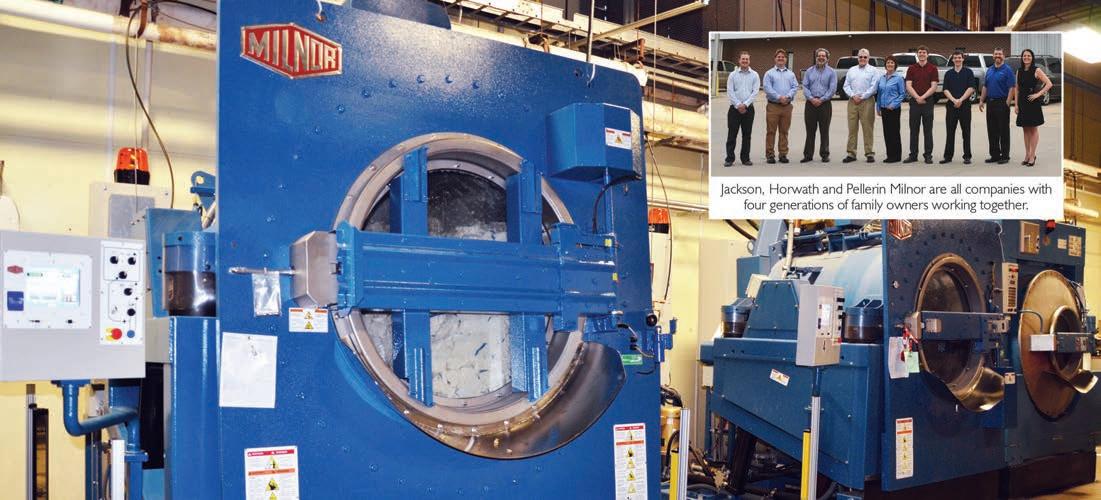
20-year old Milnor tunnel is still working so well, we couldn’t bring ourselves to replace it.”
Jackson has trusted Horwath Laundry Equipment, the local authorized Milnor distributor, for four generations. President Jim Horwath said, “We would not normally recommend opting out of replacing a 20-year-old workwear tunnel. Milnor’s ability to support their products (well beyond the life compared to most manufacturers), made us comfortable with this solution.”
Recently, Jackson Services installed four new 6464 pass-through dryers, one 48040 M7K 275 lb. capacity tilting washer-extractor, and a 68036 M5K 400-500 lb. capacity tilting washer-extractor. Milnor worked to update the veteran tunnel with new software and integrate it with the new Milnor M-series washer-extractors, pass-through dryers, and rail system. Jackson is proud to say that productivity is increasing steadily. “At times we’ve had to throttle the washroom to slow it down because production is so fast that the rest of the plant has to catch up!”
To find out how Milnor’s long-lasting machinery can save you money, contact an authorized Milnor distributor or call 504-712-7656.

To read about Jackson Services, scan this code.

www.milnor.com / pellerinmilnor
“Our
– Jesse Jackson, President, Jackson Services, Columbus, NE
Get real about ‘real time’
As I write this, Pokémon Go has just launched, and millions of people are trying to capture “species” of Pokémon in the real world.
I doubt you can avoid news about the smartphone app’s popularity, people going to places they most likely wouldn’t frequent, people walking into the street and being injured, etc.
The point is that people are using digital technology to “catch” these Pokémon—in real time. The “augmented reality” allows them to search for and find these virtual creatures now.
Technology is advancing at a breakneck pace. No longer must you wait for a web page or image to download, not to mention wait for a connection over a telephone line. No, technology is
The Director’s Chair BRUCE BEGGS
providing entertainment and information in real time.
It’s true in the laundry business as well. Software and equipment work together to provide instant operational information to personnel at the plant, or even at home, on a digital device.
Letter to the Editor
Editor Matt Poe spoke with laundry operators, equipment manufacturers and software designers to learn more about real-time technology for this issue. He offers a “101” on the technology and how the experts say it can be used to improve your operation and business.
Bill Brooks, North American sales manager for UniMac, looks at real-time reporting technology at the on-premises level in this month’s OPL 101 column. In his article, Brooks offers three important benefits of the technology for OPLs.
And there are plenty of other informative articles on other topics this month. So, put down Pokémon Go for a while and find out what’s going on in your industry. ALN
President of ozone company weighs in on healthcare laundry infection control


There have been many articles written about hygienically clean linens and the problems that plague healthcare and hospitality laundry services. A news release from the Association for Linen Management (ALM) and an article written by Lynne Sehulster, Ph.D., M(ASCP), reported an outbreak of zygomycosis in what they called a “substandard laundry.”
The death of three people aboard the Queen Mary was linked to this fungus found in and around the laundry. Therefore, handling of the contaminated linen spreads the fungus. This fungus, Rhizopus microsporus, was found in the linens.
There is also the Children’s Hospital in New Orleans, among other facilities that are also reporting cases of infection in children. Dr. Sehulster goes on to cite many other situations of this infectious disease causing sickness and death among healthcare and hospitality operations.
Some of the problems found in working laundries that contribute to this cross-infection of linen were listed. Our regular wash processes should definitely deal with these problems, but our regular wash processes do break down and require some monitoring or backup protection.
1. The temperature of the wash

liquor being too low is cited in many instances as a key to poor disinfection of washed linen.
2. There should be a clear separation (segregation) of linen, equipment and staff between clean and dirty areas to avoid cross-contamination.
3. Linen storage areas should be monitored for temperature and humidity conditions to alleviate a growth of contaminating products among those items in storage (moisture and fungus).
4. Linen consumption should
LETTER on Page 25
Skills operators need to succeed
•
•
•
•
•
OUR SISTER WEBSITES
From
•
From

•
•
B
ack in 1972 when I first started working in the laundry industry, I had a number of long talks with two seasoned veterans: Henry Palmer and Bill Hendricks. They painted a wonderful picture of the industry and the opportunities that were coming available over the next five years.
They did such a good job that I decided to take my bachelor of science degree and make management in the industry my chosen career. Now, many years later, I thought I would give some advice to the younger generation about the skills they will need to succeed.
The laundry industry continues to consolidate into larger, more complex laundries with ever-growing geographical service areas. This trend will continue until the cost of transportation requires smaller laundries with smaller service areas. So, in this environment, what skills does a good plant manager or linen service director need to succeed?
They must be articulate. Their ability to communicate verbally and in writing is extremely important. The world now runs on written proposals and reports. Often, you are reporting to someone who does not understand the laundry industry and you must be able to take “laundry speak” and be able to put it into plain English.
You will report to people with an MBA, a BS or an MHA, and the only way they will respect what you know is by how you say it. Poorly constructed sentences, misspelled words and incorrect word usage will speak louder than your intended message.
You are supposed to be the subject master when it comes to the laundry industry. This mandates that you stay up with the current trends and understand why they are important. I have spent 45 years in the industry and seen numerous changes.
It is also important to understand the changes going on in your customer’s business. What forces are behind the changes and how can your laundry better support their needs? You will never run out of things to learn. You will constantly be asked to learn more and adapt your current operations to new products or services needed by your customers.
I strongly recommend that a person who wants to have a career in the laundry industry get a college education. Currently, there is not a degree in laundry management, but there are numerous degrees that will help you prepare for this industry. I have a bachelor of science from Utah State University in recreational land management, with dual minors in business and sociology. My degree has helped me throughout my career. Study in the fields of communication, business, chemistry, textiles, psychology, sociology, computers, business law and ecology will give you a well-rounded perspective in your chosen field.
You need to develop good analytical skills. Being able to analyze data and spot trends and then determine the causes behind those trends will make you a leader in this industry.
The laundry industry is becoming more computerized and data-driven. There are wonderful computer programs out there to monitor production in real-time labor, pieces and equipment. These programs are designed to improve you as a manager and help you focus on the areas that need improvement. These programs and applications will only get more complex as the trend continues. Those that can adapt and make wise use of these resources will succeed.
Finally, I believe that to excel in this industry, you must have a strong background in laundry production. You need to have spent time working in every job in the laundry. I do not mean for three or four hours, or three or four days, but substantial time spent doing the actual production work.
I came out of college and took a temporary job loading and unloading 600-pound Washex washer-extractors. I spent three months in the washroom and then moved into a production supervisor role where I sorted soiled linen, fed sheets into the ironer, towels into the folder, small pieces into the ironer, packed carts and any other job in the laundry. The year I spent doing this
4 AUGUST 2016 | AMERICAN LAUNDRY NEWS www.AmericanLaundryNews.com
From
COLUMNIST AT LARGE Eric L. Frederick, RLLD
Top Stories Appearing on AmericanLaundryNews.com for the 30 Days Ending July 15 (WE) = WEB EXCLUSIVE NEWS • Machine Operator Killed in Accident at Pellerin Milnor Corp. • Fourth-Generation Laundry Chooses Rebuilt Flatwork Ironers • Invengo Acquires Tagsys’ Textile Services and RFID Business • TRSA’s EMI, Annual Conference to Incorporate Changes • Bryan Steam Celebrating 100 Years of Business in 2016
COLUMNISTS/FEATURES
Communicating Effectively for Success
What is in Store for Laundry Operations in the Future?
Eric Frederick: It’s the Small Things
Encouraging Women to Advance, and Thrive, in Textile Services
AmericanDrycleaner.com:
24-Hour Locker Store for the Go Crowd
Texcare International 2016 Breaks Records
AmericanCoinOp.com:
Store
Branching Out
Ownership:
Welcomes Four to Staff
Continental Girbau
See SKILLS on Page 25
See













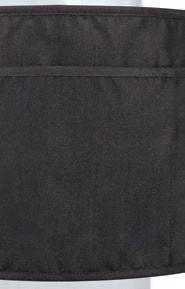


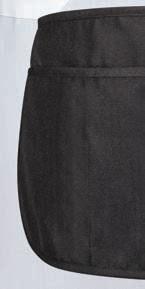
800 821 2221 | imagine@americandawn.com | americandawn.com BECAUSE PROFESSIONAL WAIT STAFF DESERVE CLEAN APRONS THE INDUSTRY’S FIRST RENTAL APRON FOR THE FRONT OF THE HOUSE The ADI Server Pro Collection M ade from Rental Friendly Spun Polyester Server Apron Has 3 Pockets For Straws, Pens, Checks Bistro Apron Has 2 Pockets (Available in Black or White) M ade With The Professional Waiter In Mind O2311BLKMTIM O7529BLKIM O7529WHTNWI
Spindle, a software management company. “Not to mention the inaccuracies of manually recorded, historical data.”

REAL-TIME 101
Simply put, real-time reporting technology is a flexible, simple solution that identifies and solves real-world problems, and the savings are real and can be large, says Bill Brooks, North American sales manager for UniMac.
“I’ve been in laundry for 27 years. I can go into a laundry and almost instantly find inefficiencies, this system helps to identify them,” he says. “It helps the operator measure to correct—identify and correct inefficiencies is really what it’s about. If you can measure process, you can improve it.”
Joe Gudenburr, president of G.A. Braun Inc., says that realtime technology affords operations and management personnel the ability to capture a “real-time” and accurate snapshot of performance.
“This allows floor operators and management the ability to know how they are doing ‘live’ and make timely business decisions that positively impact the financial bottom line,” he says. “It also affords the ability to query information within critical reporting periods so that the facility can perpetually ensure they are meeting or exceeding their defined performance objectives.”
Keith Ware, vice president of sales for Lavatec Laundry Technology, puts it this way: “Real time is allowing the management team access to data points they determine are critical to running their laundry operation. Whether it’s immediate production results or billing volume, it is available at the push of a button or visualized on screens or handheld devices or a printed report. Automating the process allows the operator to focus on key measurement, not data collection.”
Real-time technology provides actionable information that a worker within that system can use to modify their work to improve the system while in progress, according to Eli Cryderman, director of technical services for Gurtler Industries Inc.
“Thus, real-time technology allows for proactive process monitoring, control and adaptation where the process can be improved ‘on-the-fly,’ without having to wait for the process to be completed, which delays the improvement of the process,” he says.
Brad Thomas, systems architecture and programming with Textile Technologies, a software company that provides systems for textile rental operators, says that from the software developer standpoint, real-time technology is the integration of data across a laundry operation with carefully
designed presentation focused on helping users make informed decisions on-demand.
“A perfect example of a recent software system we’ve written that utilizes real-time updates between the production floor, service department and office is our new OrderManager online order filling system,” Thomas says. “This product can operate on traditional computers, tablets and smartphones to maximize flexibility and portability.”
He says the system draws on a common set of data but presents the information in different ways based on whether it is being used by a production worker, production management, route operators or office staff. It is real-time reporting that is intended to have carefully thought-out information presentation.
David Rinella, product managersoil room systems at Colmac Industries Inc., says that real-time reporting is a time-critical display or collection of data in a predetermined amount of time that reflects the current operation of the device in which the software is integrated.
“Colmac’s products mainly display piece counts, productivity and error condition messages,” he says. “Sometimes the data is further transmitted over a network in real time for access on managers’ PCs and for creating reports.”
other software monitoring the equipment; this may include radio frequency identification (RFID) systems, bar codes, etc. If not available, we next try connecting to a PLC, then the equipment’s existing sensors, then via relay or connection to a mechanical piece of the equipment (e.g., air pulse or mechanical movement). Finally, we can recommend and install after-market sensors to get the information.”
He says that all of the information is integrated with the data collected via employee interaction with direct labor login stations. These stations track who is working where, on what and for how long, and relate that to task standards, performance percentages and a multitude of other data.
In terms of the software, Thomas says that the majority of the systems his company develops are “equipment-agnostic,” but the company works with equipment manufacturers to pass data back and forth as needed.
Laundry operations need to define what the critical metrics are that they want to measure and report on, both on a real-time basis and from a performance basis, according to Gudenburr. This will then dictate what equipment data needs to be captured and how it is to be presented to equipment operators and management staff.
“Data and timely access to it is very important if used wisely, and aligned with the key performance measures that drive the business,” he says.

Ware says that almost any piece of equipment can be set up, if the device has the ability to provide data through input-outputs on the software, or a manufacturer installs data collection pieces onto the equipment to provide information.
EFFICIENT OPERATIONS
At the machine level, says Gudenburr, this information is captured within the programmable logic controller (PLC), and at the systems level this information can be captured, stored and used via a data reporting system.
“Lavatec utilizes our OS-Air product that is built directly into our equipment’s control systems and software,” Ware says. “It is an optional package that the enduser determines what they want to control, observe and track. It is also web-based to allow it to be viewed from any iPhone, Android phone, iPad or tablet. This lets the manager or owner to be able to view their plant’s latest results from anywhere in the world they have Internet access.”
Allen says his company has a variety of methods that enable data to be extracted from state-of-theart equipment to very old equipment, from any manufacturer.
“We start by looking to see if there is a data share that can be set up between the equipment or
As Brooks noted, the use of realtime reporting can help improve operational efficiencies and save money on a laundry’s bottom line. This improvement is achieved, according to Gudenburr, because the reports help maintain pace in a plant and challenge operators to constantly improve.
“It helps define variances immediately so that action can be taken, and it affords decision-makers critical data that influences important business decisions,” says Gudenburr. “Without it, you are always reacting, and often reacting with bad information. Both result in a negative impact to the financial performance of the business.”
Rinella says that management is able to react quickly and make faster decisions about critical production and downtime issues. Also, managers can make sure plant operations are operating normally at the present time.
“Charts and graphs are useful for summarizing data in a more understandable way to make quick reactions,” he says.
The obvious benefit, according
to Thomas, is giving visibility to the current state of the laundry operation.
“What is not as obvious, however, is real-time reporting in the hands of a skilled manager allows them to spot trends that are important to improving operations and, in some cases, predict what is about to happen and stay one step ahead,” he says.
“Since integrating our plant with real-time systems, we were able to build a new system where production requirements daily are compared to our supermarket inventories by all stock-keeping units (SKUs),” McElheney says. “A SKU is then assigned critical minimum levels they are not allowed to fall below. We measure this threshold daily and place orders to our vendors based on this data rather than someone manually deciding what we may need.”
Ware adds that by knowing production, products and customer data instantly, the laundry manager can react to the needs and demands of the operation.
“If you gather production data at the end of the shift, you cannot affect the efficiency or performance of that day’s operation, you can only react to the data the next day,” he says.
He also says that sometimes the performance of a plant is not related to employee performance, but the actual machine’s performance.
“If your real-time measurements display an anomaly, you can send engineering out to observe the machine and determine why it has not produced,” Ware says.
As an example, he relates an instance when a laundry was having problems with washdeck throughput and could not seem to improve the turnaround times. Formulas were checked and employee load/unload time was measured, but the amount of volume was not meeting the capacity of the washdeck. There was a software program that measured formulas, wash times and other key factors.
“It was not until they evaluated total time the washer was waiting for water that they discovered the issue,” says Ware. “When new equipment was added, the plant never enlarged the capacity for the water lines. When the measurements showed the washers were waiting on water and slowing the wash times by 15-25 minutes, that’s when they realized the problem was not operational but mechanical.”
New, larger water lines were installed and the washdeck began to meet its capacity goals. The information was in the real-time tracking system, but no one was looking at the correct information.
“Once they saw the data, it became a simple fix,” he says.
However, Ware notes that production tracking can be used for more than tracking “non-performance.” A real-time system can also help laundry managers recognize quiet performers who are exceeding goals.
“Most systems within our production operations are set up with real-time capabilities,” says McElheney. “At all times, production staff knows what requirements are needed to fulfill orders. Given the ever-changing dynamics of our business model, with lastminute orders, cancelled orders, etc., we are able to work quickly and efficiently as data determines what processes are required at any given time and not human, manual decisions.”
REPORT IN HAND, TAKE ACTION
But before managers can use the information to deal with machine issues or improve employee performance, they have to get their hands on the reports. How many measurements can real-time technology report on in a laundry operation?
Brooks says that his company’s program, TotalVue, can report more than 100 different measures
6 AUGUST 2016 | AMERICAN LAUNDRY NEWS www.AmericanLaundryNews.com
Continued from Page 1 Process See PROCESS on Page 14
“DATA AND TIMELY ACCESS TO IT IS VERY IMPORTANT IF USED WISELY, AND ALIGNED WITH THE KEY PERFORMANCE MEASURES THAT DRIVE THE BUSINESS.”
—JOE GUDENBURR, G.A. BRAUN INC.
Software designers use input from laundry personnel to improve their product. (Image licensed by Ingram Publishing)
LOOK BETTER. SPEND LESS.













Your clients expect the highest quality – and they should. Girbau Industrial washers and dryers provide a high-caliber clean while extending linen life. Add an Ironer to your equipment mix and linen is perfectly ironed straight from the washer. It feels soft and looks crisp, which is what your clients expect. Thanks to Girbau Industrial laundry equipment, you’ll heighten laundry productivity using less labor, while decreasing utility costs. Even better? Clients will thank you!











Contact Girbau Industrial for a FREE ESTIMATE to see how you can deliver more productivity to your laundry while increasing product quality! (800) 256-1073 • www.girbauindustrial.com INDUSTRIAL
Tools f the Trade
Expanded line of flame-resistant fabrics engineered for increased durability via abrasion resistance
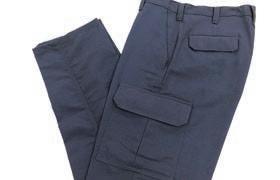
Mount Vernon FR has launched the newest additions to its Resilience® line of flame-resistant fabrics, the company reports. Purpose-built to deliver significantly higher abrasion resistance, according to the company, the new fabrics—Arapaho R, Hopi N2X and Navajo N2X—feature cotton blended with hightenacity nylon or Kevlar® for increased durability.
“Our survey of 400 environmental, health and safety (EHS) professionals found that the greatest challenge they experience is the need for more durable flame-resistant clothing,” says Mike Woods,
vice president of FR fabrics for Mount Vernon FR. “It is important that EHS professionals invest in flame-resistant clothing programs that ensure the maximum level of durability to better protect their employees and fully take advantage of the lifetime of a flame-resistant garment, which is what we aim to provide with our expanded collection of enhanced Resilience fabrics.”
Arapaho R is a 7.5-ounce cotton, nylon and Kevlar blend. Hopi N2X and Navajo N2X fabrics are cotton blends with 25% high-tenacity nylon, which contributes to more durable flame-resistant clothing that doesn’t sacrifice comfort, according to Mount Vernon FR. Also, Hopi N2X is an 8.5-ounce basket weave for high tear strength, making it ideal for industries that want lightweight, durable FR clothing with exceptional wear life.
These fabrics meet all industry standards, including NFPA 70E, NFPA 2112 and ASTM F-1506, the company says.
www.mvmfr.com 706-734-4815
High-efficiency front-load washer debuts
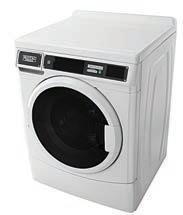
Maytag® Commercial Laundry has launched a new Single-Load, Front-Load Washer, the company reports.



The company says the new washer is powered by an enhanced drive system, so the high-efficiency machine uses approximately 10.71 gallons of water per cycle and delivers dependability.
“The machine’s enhancements help deliver outstanding efficiency, qualifying it for the ENERGY STAR® designation and making it an ideal choice for owners and route operators looking to boost their bottom line,” says Trey Northrup, general manager of Maytag® Commercial Laundry. “We are dedicated to manufacturing innovative products that deliver unmatched user experience, and this machine does just that.”
According to the company, top innovations found in the new washer include Advanced Spin
Technology combined with the machine’s six-point suspension, accelerometer, progressive spin logic and pump routine; a DuraCore Drive System, which increases the longevity of the machine; and Intelligent Controls with M-Series Technology to allow customized setup and provide flexibility.
www.maytagcommerciallaundry.com 800-662-3587
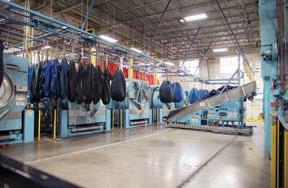
TC/American’s Monorail and Track systems are proven to utilize less floor space, less hand labor and less processing time, according to the company.
Using the latest technology, TC/American says it provides a customized overhead monorail system where lifting and routing heavy laundry loads maximize a laundry’s existing floor layout. Consisting of carefully planned straight rails, curves and switches, laundry loads can be automatically moved along a fixed route between pickup and delivery points, the company says.
Gravity flow designs, multiple elevations and routes through programmed stagings include accumulation and storage areas that ensure a quality and professional just-in-time laundering process, according to TC/American.
The company says a typical TC/American designed monorail system consists of four distinct sub-systems: an incoming bag system, a soiled-storage washer loading system, a washer-to-extractor-to-tumbler system and a finishing system.
According to the company, TC/American Monorail Systems incorporate a complete range of components designed exclusively for laundries and, where needed, customized for maximum operating efficiency. These components include long-life trolleys, suspension hangers, switches, curves and lift sections.
www.tcamerican.com 763-497-7000
Sunburst Chemicals offers several products that help prevent and fight against mold and mildew such as Aspergillus niger, the company reports.
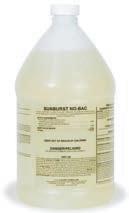
Sunburst NO-BAC is a multipurpose, hospital-strength germicidal that cleans, disinfects and deodorizes in one step, according to the company. The product is “mildewcidal” against Aspergillus niger and fungicidal against Trichophyton mentagrophytes—the athlete’s foot fungus, a cause of ringworm, Sunburst says.
The company also says the product is effective against a
wide variety of bacteria, including E. coli and viruses including the highly contagious norovirus.
In addition to being unsightly and foulsmelling, untreated mold and mildew can affect human health, Sunburst says. Health effects include infections and allergic reactions including congestion, rashes, wheezing and aggravated asthma. Mold/mildewprone areas such as locker rooms, showers and pool areas are especially vulnerable during the hot and humid summer months.
www.sunburstchemicals.com 800-899-7627
8 AUGUST 2016 | AMERICAN LAUNDRY NEWS www.AmericanLaundryNews.com
Reduced hand labor, shorter processing time and less space used are features of overhead monorail system
Prevent mold and mildew with multipurpose, hospital-strength germicidal
ALN_Tab_1-4_H.indd 1 6/30/16 4:41 PM
When dealing with laundry stains, your reputation rides on getting the outstanding results The Laundry Two deliver. RiteGo® laundry spray spotter quickly penetrates to absorb collar & cuff stains, perspiration, ground-in soil and more, all without brushing. Turn to Laundry TarGo® to remove any tough oil based stains that remain behind.
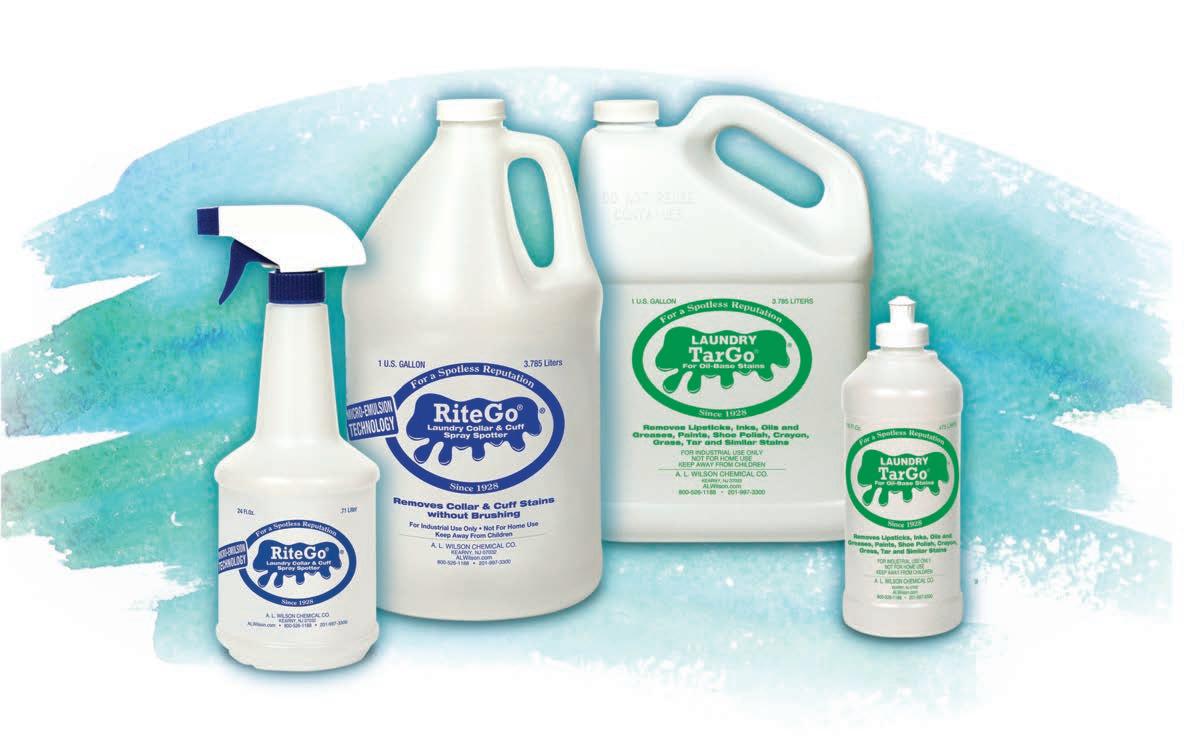
Use The Laundry Two with confidence on shirts, wedding gowns... anything you're washing or wetcleaning.
Both Laundry TarGo and RiteGo are chlorinated-solvent free, biodegradable, noncombustible and California 2013 VOC and Prop-65 compliant.
Use them to deliver stain-free laundry and wetcleaning. You'll build your reputation for quality - which is what keeps customers coming back.
FROM COLLARS AND CUFFS THE LAUNDRY T WO ™ ARE RIGHT FOR YOU! TO THE REALLY TOUGH STUFF... FROM COLLARS AND CUFFS THE LAUNDRY T WO ™ ARE RIGHT FOR YOU! TO THE REALLY TOUGH STUFF... To learn more, visit ALWilson.com or call 800-526-1188 A. L. WILSON CHEMICAL CO.
a STAIN WIZARD at ALWilson.com
Become
Family
‘EACH GENERATION NEEDS TO CONQUER THE BUSINESS’

Craig says the idea that “each generation needs to conquer the business” is relevant as the 21st century progresses, with the rate of technological change that’s going on.
“If you look from my point of view as I study family firms across the globe, each generation brings something new to the business,” he says. “But now we’re finding that each generation needs to conquer the business, bring more than one thing to the business, because with product life cycles and technology, there’s increased flux in the system.”
Innovation is needed in the business and in the family, according to Craig.
“We’re observing increasingly that there is significant innovation in how the leader of family firms are preparing the next generation,” he says. “They are truly being innovative. Your role as the leader of the business is coupled with your role as leader of the family or the incumbent, those who are leading the business now.
“They are driving change in the business, but as well as that, there is the increased necessity or increased focus on preparing family members for their roles, not only in the business, but roles as owners of family systems.”
Craig notes that family businesses, like all businesses, including public companies, have an ownership system and a business system. However, these systems are also coupled with the complexity of the family.
“This is exponentially more complicated when you look at involving the family and second generation of family,” he says. “It’s a network of families, and their expectations of what they will get from this business will vary, potentially considerably, so it’s a balancing act for that person who sits in the middle of this.”
FAMILY-OWNERSHIP-BUSINESS
To show the complexity of a family laundry business, Craig groups the people involved into three categories, or circles, that overlap: family, ownership and business.




“Some family members work in the business. There are some who don’t work in the business,” he says. “There are some who work in the business who are also owners. They
populate all three circles.”
When it comes to running the family business and looking at transition, the continuity of the business, Craig says that the leaders need to understand the perspective of people who are in other circles.
He says the family members not involved in the day-to-day operation of the laundry need to understand the business challenges. They need to be part of the conversation to grow the business in a complex, increasingly competitive landscape, including the technological side of the industry.
“That typically requires an understanding of commerce, what does it take to actually reinvest in technology, and the cost involved,” Craig says. “That’s a big conversation with people, and they’re not understanding business as much as they’re only in the family circle. They need to understand the intricacies, not in the details, but in the basic nuances of commerce.”
Members in both the family and business circles create another complex issue, Craig says.
“Oftentimes there’s an impatience to be owners, and that may mean you need to understand the perspective of the owners and the challenges that they face as they conduct their estate planning,” he says. “Look at the intersection between family and business, and the tension that occurs between those two systems, that’s where you next need to engage strategic human resource development so that you’re actually preparing the family for roles in the business.”
Craig says that the innovation in the family often means that family members understand that there is a role for them in the business and that those family members need to be equipped for that role.
“We need to make sure it’s not just an expectation that they will receive a job in the business,” he says.
The intersection of the ownership and the business circles is where the strategic planning needs to take place to ensure that the laundry is looking to the future, according to Craig. It’s the strategic planning that stakeholders, non-family business managers, need in order to understand where they fit in with the industry.
“We need to understand that we have objective measures and targets and that we do have a strategy in place,” he says. “That strategy may be to diversify, it may be to grow, it may be to consolidate.”
Finally, the intersection of owners and family is where the most “delicate” planning

10 AUGUST 2016 | AMERICAN LAUNDRY NEWS www.AmericanLaundryNews.com Save up to 70¢/dozen when you eliminate pre-washing and counting. You will also benefit by freeing up laundry capacity. These 32oz route ready bar mops are soft packed, optically white, and ready to use bundles of 25 each. Ask us about FREE personalization. ✓ PRE-SORTED ✓ PRE-WASHED ✓ READY TO GO ROUTE READY BAR MOPS $3.25 PER DOZ (800) 333-7247 monarchbrands.com
Continued from Page 1
Maintaining continuity in a family business can be difficult, but it is well worth the effort. (Image licensed by Ingram Publishing)
procedures takes place, Craig says. That’s the estate planning, with clear guidelines in place—what’s going to happen as the laundry transitions ownership from one generation to another.
“I would urge you to sit and see what planning have we got in place as far as the human resource development planning between the family and the business, the strategic planning between the ownership and the business and the estate planning between the ownership and the family,” says Craig. “If you collect those three plans together, they come under the umbrella of continuity planning.”
FAMILY IN TRAINING
A successful transition doesn’t just happen, it takes planning, according to Craig. It also takes training, and to prepare family members to be part of the business and potentially take over the business, first they have to learn about the laundry business.
“Typically, in a family-owned business, you will be working in that business in summer jobs, weekend jobs, listening to business talk/ speak from an early age,” says Craig.
After those types of learning experiences, some family members will go to college, business school or get some other type of technical training. At this point, according to Craig, the best practice is that those individuals don’t dive straight back into the family business.
“You go out and make some mistakes on other people’s money,” he says. “You actually go out and get some discipline from some other industry or in another position so that you get a broader perspective, a global perspective if possible—so you can bring something back to your particular business if you decide.”
If a family member decides to be part of the family laundry business, then it’s time for the next phase of training, Craig says. That’s in-depth education about the family business.
“I argue that this is most important,” he says. “The role is to learn your family business and to get credibility as who you are as a next-generation leader, not only within the industry and the company itself but also within the family.”
Craig says that up until this point, family members haven’t really been exposed to the difficult problems or challenges of running the laundry. They have been “shepherded” by
parents as leaders of the business, so they come back in and complete their apprenticeship.

“Here, you need to look at the industry in closer detail,” he says. “You need to look at how technology is influencing the company, where you fit, but also to continue differently.”
Craig says that the priority here is to “perpetuate the values” of the family business. The pathway to achieve that, he says, is to keep the philosophy, not the details, of the family-owned business.
“There is a market value for family values,” Craig says. “This is what distinguishes you in a crowded marketplace. Publicly traded companies do not have the same perspective or the same legacy, same long-term orientation and the commitment to continuity.”
A key part of this training, learning the family business, he says, is to have profit responsibility, some sort of bottom-line responsibility.
“As you move into a greater leadership role, that’s what will be required— to actually deliver profits,” Craig says. “It’s a steeper and more challenging learning curve than just budget concerns.”
After a family member learns the family business, and if he or she has the desire and aptitude to guide the business, then it’s time for them to jointly lead with the incumbent leaders, according to Craig.
“You need them to introduce you to their networks, to introduce you to the institutional knowledge that they have and the institutional memory that they have had for being leaders of the business for years,” he says. “You need them to lead with you for a period of time, understanding that you will take over complete leadership of the business and potentially of the family at some point in time.”
TRANSITIONS
Takeover. The word sounds hostile, but one family member taking over leadership of the laundry is a must if the business is going to remain family-owned. The current leadership, says Craig, needs to have the foresight that it will have to turn over the reins of the company.
“They need to have the foresight to understand that it is inevitable that they will be transitioning away from an operational leading role in the business and then preparing themselves for another role,” he says. “It could be an ambassadorial role where they will still be able to contribute, but not necessarily in a day-to-day role. Maybe more of a mentorship role. Here, this is where it becomes more difficult.”
Transitioning is difficult, Craig says, but the pathway to achieve a change in leadership in a family-owned laundry is to develop a timeline.
“Again, it’s inevitable that I’m not going to be around forever. It’s inevitable that this needs to be transitioned smoothly and that my stakeholders, my suppliers and my customers, my financiers, my long-term employees, all of these people are part of this conversation,” Craig says. “I need to signal to them well in advance that my transition to another role, it starts now and this is how I foresee it rolling out.”
He says this signals to the next generation
POCKET MOPS

ECONO WET MOPS

www.AmericanLaundryNews.com AMERICAN LAUNDRY NEWS | AUG UST 2016 11 Minimums apply Promote your brand 24/7 with FREE logo label embroidery! • Personalized microfiber products, terry towels and bar mops • Ultimate control over your inventory • Carry your own product line • Free advertising for your business CUSTOM SOLUTIONS (800) 333-7247 monarchbrands.com MICROFIBER CLOTHS • 16”x16” professional microfiber cloths • Use for wet or dry cleaning • Wide variety of colors 35¢
• Highly absorbent 18” side pocket mop • Industrial strength canvas backing • Matching hardware available $2.65
• Cut cleaning costs without sacrificing quality • Commercial quality microfiber looped flat mops • 18” long with Velcro backing 95¢
See FAMILY on Page 15
Family-run businesses should have a plan in place to educate the next generation when it comes to leadership transition. (Image licensed by Ingram Publishing)
Constant connection to improve laundry operations and costs
Three important benefits of real-time monitoring technology

 BY BILL BROOKS
With today’s advancements in real-time and remote-monitoring technology, gone are the days of estimating average cycle times and maximum water temperatures. Now, with the latest monitoring technology, laundry managers can stay up-to-date with minute-by-minute performance data that leads to increased efficiency throughout their entire operation.
Today’s industry-leading equipment control systems provide on-premises laundry (OPL) managers with advanced real-time monitoring capabilities, letting them remain constantly connected to their machines and laundry operation, which helps reduce overall operating costs and maximize throughput. Additionally, cloud-based technology provides easy-toaccess reports that allow managers to view information and dashboards that outline critical operation information, including machine errors or maintenance needs, productivity details and performance snapshots.
Interested in removing the guesswork from your laundry room? Here are three major examples of how this technology can advance your operation.
EXAMPLE 1: CONNECTIVITY LEADS TO INCREASED THROUGHPUT

Advanced controls provide OPL managers with complete visibility into all of the major components of the laundry room at the touch of a button, aggregating information on pounds of laundry completed, labor, utilities, equipment usage, types of cycles being programmed, and efficiency. This data can then be compiled into a comprehensive report for laundry managers to review and make improvements based on results, ultimately leading to increased throughput.
“Since installing our new UniMac® washers at the end of 2015, the reporting capabilities have helped tremendously with our overall production and workflow,” says John Massey, co-owner of Montgomery, Ala.-based Jim Massey’s Cleaners. “With our equipment’s control system, I am able to view the reports every morning on my laptop. I review multiple reports, but I really like the Snapshot Report, which gives a quick overview of a particular machine’s performance for that day. It tells me exactly how many cycles ran, how long the cycles were and how many minutes were between each cycle—critical information when it comes to throughput.”
Jim Massey’s Cleaners, a third-generation, family-owned dry cleaner, Laundromat and tuxedo rental business, washes more than 30,000 pieces a week for both residential and business clien-

teles at its central production facility. In December 2015, the business upgraded five of its washer-extractors, purchasing 65-pound machines with UniLinc® controls. In the short time since upgrading its washers, Jim Massey’s Cleaners has experienced a decrease in time between cycles and a more efficient workflow in the wash room overall.
“What has helped us decrease time between cycles and dramatically increase our throughput is the real-time TV monitors that wirelessly connect to the equipment,” says Massey. “The icons that illuminate on the screen are visible across the entire plant floor, alerting our employees when a load is in use, nearing completion or complete.”
EXAMPLE 2: REAL-TIME DATA SUPPORTS WELL-INFORMED BENCHMARKS
Real-time monitoring also helps OPL managers set, track and manage against benchmark standards, which can help save their operation time and money. The increased visibility and real-time data can help laundry room management make informed decisions on how to best allocate labor resources based on the expected volume of laundry during a specific time period. With labor representing one of the highest costs in a laundry’s operating budget, it’s critical to measure and optimize your labor process.
“Within my report settings, I’ve laid out benchmarks for fill time and drain time. I even set a specific goal for water temperatures,” explains Massey. “I’m then able to track and see if my goals were reached and determine the best method for process improvement if they weren’t.”
If you are just starting to implement real-time monitoring technology in your


operation, your equipment distributor can help you determine what cycles are best for your industry and specific business needs. Your distributor will also help you take a holistic look at your operation, including number of loads processed per shift, machine usage and types of cycles being used in order to set benchmarks that help increase efficiency.
“The entire technology implementation was great from start to finish,” says Massey. “From day one, we saw a major benefit from being able to view the reports, and our distributor has worked with us to ensure all of our equipment and monitoring needs were met.”

EXAMPLE 3: BETTER CONTROL OVER MAINTENANCE AND MANAGEMENT
With real-time monitoring reports offering a comprehensive overview of everything, including cycle times, water temperature, idle time and more, laundry room operators are able to better track when service is needed. For example, since machine bearings should be greased every 200 hours of operation, equipment with an advanced control system can send an alert when the 200 hours have been reached.
The advanced monitoring capabilities can also help indicate when a machine is experiencing a potential leak or fill problem. This technology can monitor everything from aborted cycles to rapid cycles to idle time between loads, which can all impact a laundry operation’s labor costs and bottom line. This gives OPL managers a better understanding of what’s happening in their laundry room.
“If a report shows a longer fill time than average, we’re able to look into it to determine if we have a potential valve or water line fill problem,” Massey says. “From a maintenance standpoint, this is huge
because we can address the issue right away, making sure the machine returns to running efficiently.”
In addition to alerting OPL managers to potential maintenance concerns, it also assists with monitoring employee production and workflow.
DECREASE YOUR BOTTOM LINE, INCREASE ROI WITH REAL-TIME MONITORING
Equipment with real-time monitoring technology not only removes the guesswork from your OPL operation, but it also has a significant impact on cost reduction. When OPL managers have access to machine usage data at all times, it helps them identify and address hidden inefficiencies. This crucial data helps keep machine downtime, labor and utility costs as low as possible, having an immediate impact on your bottom line.
As Massey explained, over the past six months this technology has been vital in providing an unprecedented look into his business’ laundry room. Real-time monitoring technology is the future of laundry room management and can bring many benefits to your operation.
If you haven’t upgraded your equipment recently, it might be time to start thinking about the advantages—and savings—new equipment with advanced controls can provide. ALN
Bill Brooks is North American sales manager for UniMac®, a provider of on-premises laundry equipment. To learn more about UniMac, visit www. unimac.com/opl101 or call 800-587-5458.
12 AUGUST 2016 | AMERICAN LAUNDRY NEWS www.AmericanLaundryNews.com OPL 101
Brooks
(Image licensed by Ingram Publishing)
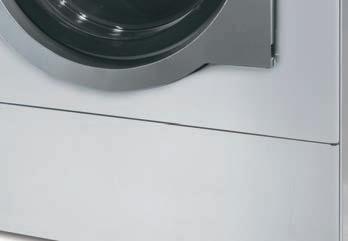
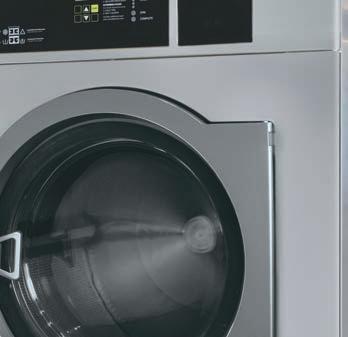
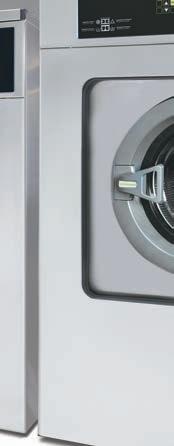
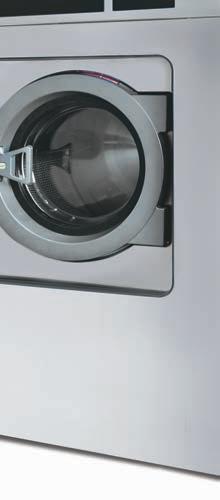
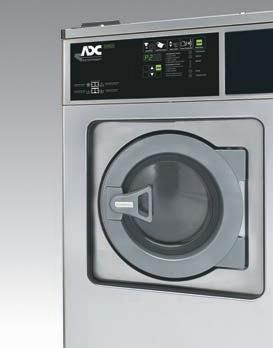
Selecting the right machines to speed up laundry and save labor is simpler with ADC. Turn to our EcoWash lineup for a range of equipment choices, including rigid and soft-mount machines with load capacities up to 60 lbs. and water-extracting performance up to 350 G-Force on most sizes. Plus, all EcoWash models feature full stainless-steel cabinets and the backing of a 3/5-year limited parts warranty.* Because we’re as serious about making things last as we are about making you productive. *See warranty for complete details.



Financing as low as 1.49% for 12 months. Low fixed financing rates, terms up to 60 months available. Subject to credit approval and individual’s credit profile. This promotion is valid through September 30, 2016. 508.678.9000 | sales@amdry.com | www.adclaundry.com
Simply reliable by design.





The EcoWash lineup delivers productivity-boosting options.
Get the labor savings you need. And the size you want.
in the laundry process. The issue is a matter of how the information is communicated and which one of those measures or what combination of those measures are important to laundry personnel.
Thomas says that with his company’s product, a laundry manager is able to pull up a single screen that shows orders that are running late, orders in the process of being filled and orders that are still in queue. Each order can be “drilled down” when the manager needs to see specifics on the processing of the order.
“The key concept is to provide an overview in a way that the manager can quickly determine if production is falling behind or keeping up at any moment during fulfillment,” he says.
“Information is key to the entire team, with the level of information for the specific job,” says Ware.
“I had a system that showed the workers in real time on ironer production. If you were making production, your workstation was green, falling behind and your workstation was yellow. Poor performers were shown in red. The entire department could see this monitoring station. Those that were falling behind often picked up their pace to not be identified as not performing.”
Systems such as the one Ware mentioned have levels of access based on responsibility. But the more information you provide your team, he says, the better understanding they have of your company’s success and their role in that success.
Gudenburr says that access to reports is something that needs to be established by the management of the facility. He says that data and information can always add value, but it is important that the data and focus is on information that impacts the business.
“Simply supplying lots of data/ information without any link to key performance measures has no impact on the business, and supplying the wrong information to the wrong groups only acts as a distraction from the priorities of the business,” he says.
Rinella says that about 20% of employees should have access to the information, which usually represents owners, managers, production supervisors and lead operators.
Thomas has a different view and says his company believes everyone in a laundry operation should have access to real-time information, whether it is in the front office, route operators or on the production floor.
“We believe this is critical at all levels of production,” McElheney says. “We display on large flatscreen displays critical load requirements, which updates
every minute.”
Brooks says that his company’s program can provide different reports that can be assigned to different users.
“Basically, we want the report to provide everyday solutions,” he says. “Let’s say you’re at the property level, then you’re responsible for just the operations of that property of the laundry process—a laundry manager at a hotel, for instance. We would give you reports that show how much production gets done and how much time and labor it takes to get that done. Quality reports that make sure that the temperatures are being met, the water fills are being met, the cycles are completed correctly.”
The goal, he says, is to provide simple snapshot reports so the operator in charge of the property’s laundry can get a quick vision and make sure everything is performing as it should.
“What we do is we assign the report, which can either be viewed online or just be e-mailed at a period of time, we assign a report to a user,” Brooks says. “We try not to have one user seeing all of those reports because that would be information overload. We’re trying to keep the vision only on what’s important to that customer.”
INFORMATION OVERLOAD
As Brooks mentioned, information overload is a potential drawback when it comes to real-time reporting.
“Given the data available to us through RFID tracking of textiles, we could become paralyzed by
be sharing it with, says Gudenburr. Once this is done, standards for performance can be put in place and real-time measurement against the standards can start.
“The reality is that this is basic blocking and tackling and operational 101,” he says. “Most industries have used data and leveraged real-time reporting and decision support tools for decades. Our industry still is a bit behind the times in doing so, but there are many operators who get it and have made good use of said tools. If you make good use of them, and have said processes in place, there is no reason why you can’t run a very successful business.”
“By working with our partner laundries, we identify the information that is most critical to their processes and tailor the real-time information to their needs, while still allowing in-depth analysis of less critical metrics,” says Cryderman. “In this manner, we try to mitigate the paralysis that can be caused by information overload while still providing an exceptional array of data reporting features.”
According to Ware, companies generate hundreds of pages of data, but the key is to roll this information up to simple, measureable data points.

“Does the laundry manager need to know kilowatt usage by the minute or hour? This is a tool that would be used by the chief engineer or GM, but not a key number for a floor manager,” he says. “By establishing each department’s key criteria to utilize, you can break out the information into manageable bites. But if the need arises for someone to drill down into the specifics of an item, these systems have the ability to do so.”
Ware cautions that the systems are not developed for the manager to sit in the office and look at screens all day, but rather to supplement hands-on management on the floor.
with the efficiency that results and we are happy because our products get more useful.”
According to Rinella, count data is most important to management, as this ensures goods are accounted for so that inventories are kept in place to ensure proper deliveries of clean items. After that, production data is important to know personnel are working at acceptable standards.
“The priority is determined by our partner laundries, as they usually have KPIs [key performance indicators] which they prefer to see in real time,” Cryderman says.
tion, the plant should always have a manual system to track and back up the system if needed.
“Every plant at one time or another used manual systems,” Gudenburr says. “If the process is well-defined, and the metrics are appropriate, the operator can still leverage the individual PLC data outputs to capture performance in the event of a malfunction. This will take a bit more work, and all of the real-time visual presentation of the information will be delayed as the data is collected, but this should not render the site inoperable.”
data analysis if we did not take a step back, often, to determine the best use of the data and what data we should ignore,” McElheney says. “Putting real-time systems in place can have tremendous benefits, but this same type of system can drive everyone crazy.”
Too much information can cause indecision on the part of managers, says Rinella.
“The managers think, ‘So what, we have this information, what do we do now?’” he says. “Too much information can also lead to endless hours of ‘curve fitting,’ where the plant operations are constantly adjusted, leading to some unhappy employees and staff.”
Management must first execute a comprehensive exercise to define what data is important, what metrics by job area need visibility and then how they want to report this information and who they should
“Too often we have been in plants that have a lot of data being collected, but when asked how have they used the data to improve their operations, there is no action plan for lack of performance,” he says. “For example, many plants like to track POH [pounds or pieces per operator hour] to compare to other laundries. They will often tout their numbers but then state they are not making money in the operation. POH is good information, but how can you use this to translate into financial improvement?”
Thomas points out that providing the wrong information at the wrong time, or making it difficult for a laundry manager to get the information they actually need, can make the manager less efficient.
“We encourage our customers to not be shy about telling us what information they need and how they want it presented,” he says.
“Our products get heavily shaped by the feedback from our customers, and we are grateful for that, because our customers are happy
“In general, we recommend that washer efficiency status monitoring, production poundage KPIs, tunnel/washer turn times and production efficiency monitoring be included as priority information, as these areas can have the most impact on laundry production in a plant.”
Ware adds that each manager will have specific measurements or data points that are key to their portion of the operation. He says laundry operators need to use the data to determine performance against established goals.
“Are you meeting or exceeding your goals? Is your department underperforming? Use the information as a tool to see if the action plans are working,” Ware says. “If not, readjust your plan to what works for your team. The best coaches do not stick to one game plan week after week, they adjust to the opponent, the situation and what works best for their team.”
IN EVENT OF MALFUNCTION
Of course, technology doesn’t work all of the time. When the real-time reporting fails, what is a manager to do?
Ware and Gudenburr agree that in the event of a system malfunc-
“We maintain redundant systems,” says McElheney. “We also go through regular training sessions where we act as if we lost the data. What steps do we take, how quickly can we move on getting the system back up, reloaded with the critical backups maintained on-site and off-site.”
Sensors and display messages are used to alert operators of a malfunction, says Rinella.
“During these times, there are usually mechanical backup counters, lighted indicators and automatic overrides,” he says. “These backup reporting devices usually require more human intervention and effort.”

Brooks says that any time the communication stops, it doesn’t stop any of the operations.
“None of the equipment is dependent on this, so it never shuts down your laundry,” he says. “The system itself is called ‘fault-tolerant,’ so if communication ever stops, a Wi-Fi goes down or cell goes down, the data is automatically backed up, and as soon as the system is back up, it repopulates. They don’t ever miss the information.”
Rinella points out that sometimes a laundry manager needs to
14 AUGUST 2016 | AMERICAN LAUNDRY NEWS www.AmericanLaundryNews.com
Continued from Page 6
Process
ENCOURAGE OUR CUSTOMERS TO NOT BE SHY ABOUT TELLING US WHAT INFORMATION
AND HOW THEY
IT
“WE
THEY NEED
WANT
PRESENTED.”
—BRAD THOMAS,
TEXTILE TECHNOLOGIES
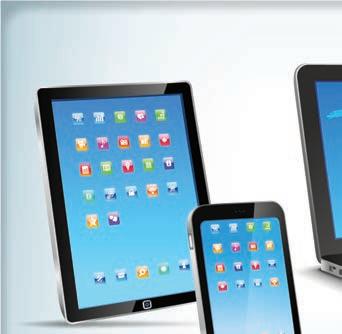
Real-time reporting can be accessed through many types of devices. (Image licensed by Ingram Publishing)
step back and do analysis the oldfashioned way to verify and fully understand the real-time technology installed.
“Sometimes a bad input is discovered,” he says. “An input can be a wrong type of sensor, a wrong method the operator is using to operate the machine, or complicated/misinterpreted reporting. This will skew the conclusions and create bad decisions by management.”
Ware adds that real-time reporting does not eliminate the need for good hands-on management. It is a tool to help find issues in a specific step being measured by the system.
“Having the information is good, but it takes teamwork, planning and dogged determination to implement improvements, changes in your team’s operating methods or practices,” he says. “Information itself is not the answer. For example: Many people try to lose weight in their life. The key measurements to being successful depend on the individual. Do you track how much you eat, how much you exercise, number of fat grams in your food, etc.?
“Measuring the information is a start, but developing your individualized plan and how you stick to the plan is key. If one individual tracked everything recommended but the results weren’t there, how do you adjust your plan to meet your goals? No one plan will work for everyone, and the same thing goes for each laundry operation.”
Cryderman agrees: “All the graphs, charts, indications and reports are useless if they’re not used to proactively manage the process and make it more efficient in real time.”
Real-time reporting is important, Gudenburr says, but it also does not release operations staff from having to maintain equipment, hold employees to performance standards or from establishing realistic metrics by which to manage the business.
“Data and information systems are only as good as the processes that have been put in place to leverage said systems,” he says. “This is no different than the implementation of a business ERP [enterprise resource planning] system. The salesman will tell you it can do everything—no, it won’t. It will still rely on sound human interaction, well-defined business processes and discipline to work as advertised.”
However, Allen says that without real-time reporting, a laundry is being left behind.
“Laundries can save 10-40% on their cost per pound produced by engaging the various portions of real-time information,” he says. “Laundry managers who use realtime information feel like they get their laundry back—they make informed decisions with their supervisors on real data (not assumptions or gut), and they guide a workforce that is engaged and knows what it feels like to do a good job.” ALN
that there’s a road for them to lead the business, that the incumbent leader is not “entrenched” and that they are making sure continuity is a topic of conversation on the table and is well-planned.
That plan, Craig says, has to take into account what the leadership structure of the laundry is currently and what it will be transitioning into. If a laundry is first-generation, then most likely one person is the
controlling owner. Next comes a sibling partnership. A third-generation ownership is usually a “cousin consortium.”
“You are changing the system as well as the people,” he says. “The challenge, and this is why you’ll hear so often that family businesses do not last more than three generations, is that we are changing systems and people in each of these transitions. If you get to this cousin consortium stage and are successful, it becomes simpler, because if you’ve put in proper governance in the family and the business, all you need to do is only change the people.”
The key in each of these transitions, says Craig, is that the family members need to understand the stage that they’re moving to, the structure that the company is moving to.
“If you’re a controlling owner now, spend as much time as you can understanding what a sibling partnership looks like,” he says. “If you’re a sibling partnership now, understand what a cousin consortium would look like or will look like.”
That, says Craig, is when the members of a family-owned laundry start to think that they need to be innovative in family structures.
UPGRADE
This has nothing to do with the business, he says, but in the family structures.
“We need to prepare siblings to be leaders,” he says. “We need to prepare and understand how cousins will work together to best facilitate continuity.
“I heard this from a group we had in a while ago: ‘Too many times we risk-proof the business, but we don’t risk-proof the family.’ The family organization has to be set to facilitate education, philanthropy, career planning, etc., in order to achieve a smooth transition, grow the business and keep it in the family.” ALN
www.AmericanLaundryNews.com AMERICAN LAUNDRY NEWS | AUG UST 2016 15
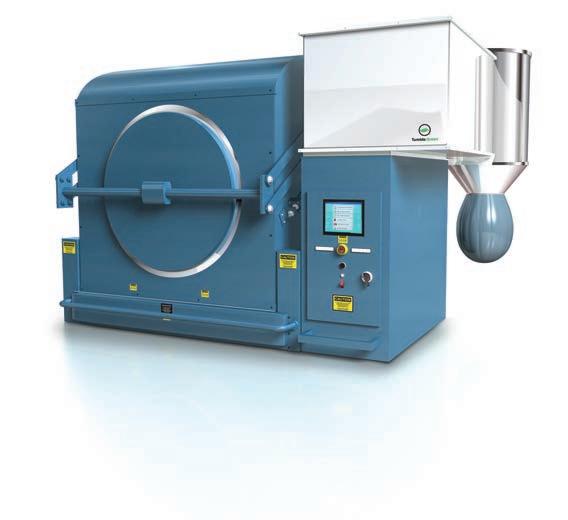
YOUR CHALLENGE PACESETTER CLM leads the way in dryer technology and provides an upgraded replacement for your old Challenge Pacesetter Our Model 165 fits the Challenge Pacesetter footprint perfectly and gives you technology that no one else o ers, including a fully integrated production management system. • Upgraded heat system with improved efficiency and lower emissions • Micro-Command III PLC upgrade with LAN and Blue Tooth communications • PLC now prepared for flow process management systems • 2-stage variable speed basket drive with 3-port load door. • Soft start to reduce component wear, lower utility use. • Heavy-gauge basket, includes removable steel basket panels • Long-lasting ceramic coating available on removable basket panels. • Configurable exhaust location • Configurable control/burner location Call CLM to replace your Challenge Pacesetter dryers, or for information on our broad range of industrial dryers. 323-232-2417 Model 165 shown with Tumble Green® configuration See Us at Booth 2560 at The Clean Show 211 Erie Street, Pomona, CA 91768 | T: (323) 232-2417 | www.clmco.com ALN_Jr Page.indd 1 11/18/14 2:36 PM 0515aln_CLM.indd 1 4/13/15 4:46 PM Continued from Page 11 Family
PANEL OF EXPERTS
Regain summer focus, motivate employees



line team members in the production, stockroom and service departments.

Having an ice cream truck stop by at break time or at the end of the day is always an event that is well-received.
As summer is upon us, people tend to have many competing priorities. Keeping employees focused on the job can be tough when the weather is so inviting outside.
I have learned that what motivates one person does not always motivate another person. Our organization has activities throughout the year for all employees to be involved in. A few recent ones include a picnic with grilled food held during the workday for all to participate in; theme days; and casual dress days.
On the theme days, we wear things like favorite baseball team shirts, neon colors on another, even Hawaiian day complete with a hula-hoop contest. Employees receive items like glow bracelets or leis to wear as part of the fun. The events do not have to cost a lot to make a big impact. Having everyone involved makes the work atmosphere exciting and energetic. Those types of events help break up the day-today work we all have.
I also feel people can be motivated by the work they do. Feeling a sense of accomplishment when they are done makes them want to do more of it.
Allowing employees to incorporate ideas they have on how to make a situation better can keep the motivation high.
Employees also feel motivated when they are able to be involved in decision-making. When a process is not quite right or equipment needs replacing, it is really important to get input from those who use it. People feel a sense of belonging, and that makes them feel valued.
So as we go through our summer, I think that taking time to share some fun at work as well as listening to your employees will make a better work environment for everyone.
Whether it’s your production employees in the plant or route service reps out in the field, summer heat is a challenge for any commercial laundry.

PRODUCTION EMPLOYEES


As far as internal production staff, I was once given a valuable piece of advice: “Keep buying and adding fans until the employees tell you they’re comfortable.” We always invested in large commercial fans that continually pumped out cool air at a maximum rate. Be careful of placement of the fans; don’t create a trip hazard or any other kind of hazard.
Try making your own “swamp cooler.” These evaporative coolers can reduce temperature by significant amounts. They range from the simple (e.g., a bowl of chilled water in front of a fan) to the semi-complex. It clearly paid
off and was a wise investment from a productivity perspective. It also showed a commitment to improve employee morale and safety.

Another investment is to provide hydration stations at as many areas as possible within the plant. This could be water fountains, water coolers or Gatorade coolers. Many employees like the ice chest cooler full of ice to dip in a towel to wrap around their necks to keep them cool.
Finally, remind your production management to be aware of visual signs of heat fatigue with production employees. Don’t be afraid to pull someone off the floor to take a heat fatigue break, or add an extra break for all production employees on hot days.
The key word is investment. Production employees need a comfortable work environment to meet productivity standards, and it’s also the right thing to do.
SERVICE EMPLOYEES
We know how important it is to consistently communicate the danger of summer heat fatigue and route service rep safety. Consistently drinking fluids should always be part
of your safety communication. So what else can you offer your service team to be more productive during the summer months?
1. Educate employees on the signs of heat stress (www. osha.gov/SLTC/heatillness/ index.html).

2. Invest in coolers for each delivery vehicle.
3. Have water bottles available for route reps in the morning before they leave.
4. Cool towels are a great way to dissipate heat and reduce body temperature. Check the Internet for information on “cooling towels” and other similar products.
5. Company logo hats and sunscreen can help keep route reps cooler and safer from dangerous UV rays.
6. Uniforms that are lighter and have moisture-wicking fabric properties can help assist in relieving common heat exhaustion.
The challenging summer months can also be an opportunity for boosting morale. Management handing out Popsicles® or providing cool, fresh lemonade can be viewed as a welcome gesture from the front-
Summer heat is a tough time to work in any situation, much less inside a laundry. Here are a few simple ideas that have worked well over the years: Lead with your sleeves rolled up. It’s really important that employees see their leaders beside them, involved in the success of the operation from their perspective. This doesn’t mean you have to fold linen, but it’s great for motivation when employees see the boss walking through the plant regularly to have a hand in production.
Have a good time when you do walk the floor. Be the smile—it’s contagious.
Make sure the hot areas of your operation have working fans and access to cool water at all times. Check how well they work as you walk through the operation. If you have to invest in a few extra fans, it’s a great motivation for all to see.

Keep the lunchroom cool, clean and bright. Some operators offer ice cream or Popsicles® during breaks. It’s inexpensive and shows you care. Celebrate making it through the hot days, and do it with them.
Offer flexible hours when possible. If you can move hotter production areas to start earlier and finish earlier, allow employees who can utilize earlier hours to get them out of the heat of the afternoons.
The heat of summer is tough for anyone inside an operation, but creating a team atmosphere and being immersed in it personally can certainly motivate employees.



16 AUGUST 2016 | AMERICAN LAUNDRY NEWS www.AmericanLaundryNews.com
“We’re into the dog days of summer, and my employees are lagging. How can I keep them motivated and doing good work? How can I motivate all of my employees?”
ALN
Long-Term Care Laundry
Kathrine Flitsch
Wheaton Franciscan Healthcare Brookfield, Wis.
(Image licensed by Ingram Publishing)
Consulting Services
Chris Mayer Performance Matters, Plymouth, Minn.
Textiles
Steve Kallenbach
ADI American Dawn, Los Angeles, Calif.
TOPEKA, Kan. — The American Reusable Textile Association (ARTA) is launching an educational webinar series this month, says Executive Director Nancy Jenkins.
“Webinars are another way for ARTA to share data and information that helps make the case for reusable textiles versus disposable single-use items,” says Jenkins.
The three scheduled webinars will take place Aug. 24, Nov. 16 and Jan. 18, 2017. The association says the webinars will begin at noon Eastern and last 45 minutes, with time for questions and answers afterward.

The first webinar is free for members, according to the association; nonmembers may participate as well, but for a fee.
topics. For more information,

onto ARTA’s website
 ARTA
ARTA
ARTA says it created a Webinar Task Force to implement the series. The task force members include ARTA President Brendan O’Neill, Janice Larson of Encompass, Dave Balliet of HCSC and Shelley Petrovkis of Lac-Mac.
ARTA’s Webinar Task Force has developed the topics for these sessions, as follows:
• Aug. 24 — Making the Case for Reusables, Angie O’Connor of Encompass
• Nov. 16 — Strategies for Reducing Linen Losses, Dave Balliet of HCSC


• Jan. 18, 2017 — How to Convert Clients to Reusables and Add Value, Shelley Petrovskis of Lac-Mac and Brendan O’Neill of London Hospital Linen
“Especially in the area of reusable medical textiles, our goal is to increase acceptance and demand for reusable textiles by clients.” Jenkins says.
www.AmericanLaundryNews.com AMERICAN LAUNDRY NEWS | AUGUST 2016 17
(Image licensed by Ingram Publishing)
log
at www.
She adds that based on industry and member response to this initial series, ARTA will evaluate whether to continue or expand its webinar program. The association and task force encourage suggestions for future webinar ALN
arta1.com.
“WEBINARS ARE ANOTHER WAY FOR ARTA TO SHARE DATA AND INFORMATION THAT HELPS MAKE THE CASE FOR REUSABLE TEXTILES....”
— NANCY JENKINS,
kannegiesser-usa.com 800.344.0403 THE LEADER IN LAUNDRY TECHNOLOGY Precision finishing, any way you fold it. Revolutionize your laundry and linen business with Kannegiesser flatwork finishing. Our system includes an efficient multi-station feeder and highperformance ironer that handles linens measuring up to 158” wide. And our precision folder is capable of single- and two-lane folding and stacking, for a precise, Kannegiesser finish you can count on – every single time. EMQ 40 Multi-Station Feeder HPM II 40 High-Performance Ironer CFM II 40 Precision Folder ALN_Jr Page.indd 1 7/5/16 3:54 PM Association will host ‘lunch hour’ webinars beginning Aug. 24
ARTA launches webinar series
PRODUCT SHOWCASE
LARGE-CAPACITY DRYERS
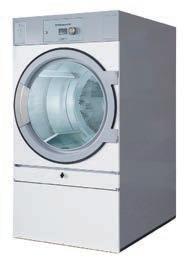

MAYTAG COMMERCIAL LAUNDRY
Maytag® Commercial Laundry’s 170-pound large-capacity dryer is the ideal solution for owners looking to increase throughput, save time and reduce energy costs, according to the company.
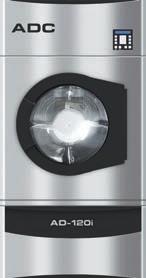
The reverse-tumble feature helps to reduce dry times on large items, such as sheets, blankets and comforters, Maytag says. The dryer also comes with flexible microprocessor controls, allowing operators to pre-program drying times, temperature and cool-down settings.
The Maytag® Sensor-Activated Fire Extinguishing (S.A.F.E.) System comes standard on the 170-pound model. The S.A.F.E. System is a controlled extinguisher that, if a fire is detected, douses it with water and alerts that the system has been activated.
The tempered glass door and solid dryer drum help keep warm air in the drum, which forces more heated air through the load and helps to reduce energy usage, according to the company.
In addition, the dryer is ergonomically designed for easy access and convenient selfservice, and the waist-high door opening allows for easy loading and unloading. Employees will appreciate the easy-to-use controls with a digital countdown display, Maytag says.
The company says that the

dryer comes standard with a three year limited warranty— all parts covered.
www.maytagcommercial laundry.com 800 662-3587
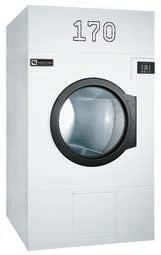
UNIMAC
UniMac® offers the UT120N, a 120-pound-capacity tumble dryer for on-premises laundries (OPL). The machine achieves the perfect balance between drying temperature, airflow pattern and usable cylinder space for optimal drying results, the company says, and features cutting-edge technologies that reduce operating costs and maximize throughput.
and linen costs, according to the company.
The UT120N’s enclosed heat system also helps boost efficiency and reduce energy costs as radiant heat from the stove top is used to preheat intake air before it enters the combustion chamber, the company says.
Additionally, UniMac says it offers a Combustion Auto Response Equipped (C.A.R.E.®) system that serves as a fire suppression system.


www.unimac.com 800-587-5458
PELLERIN MILNOR CORP.
Pellerin Milnor Corp. offers the M202 large (200-pound capacity) on-premises laundry (OPL) dryer, the company reports. The dryer features radial airflow, a rugged vertical steel door for easy loading/unloading, reversing basket and stainless-steel basket with removable panels.
The M202 also comes available in gas or steam heat and is equipped with a self-diagnostic microprocessor with patented auto-drying feature. It also features an easy-to-access lint compartment and a gasketless door glass panel that provides security and durability in comparison to rubber-type gaskets, according to the company.
Suppression System).
The company says that in addition to having the hardest surface and longest lasting finish in the industry, the M202’s large door opening, oversized capacity and four-point roller support and drive system make it an ideal stand-alone dryer for any commercial laundry.
www.milnor.com 504-712-7656
(RMC) prevents damage to garments caused by overdrying and reduces lint and wrinkles by automatically stopping the dryer when the exact pre-set moisture level is reached, the company says.



If the load is to be further processed by an ironer, RMC will shut the dryer off while there is still sufficient moisture for the ironer to work effectively. By not overdrying, laundries benefit from longer linen life and significant labor and energy savings, according to Wascomat.
www.laundrylux.com 800-645-2205
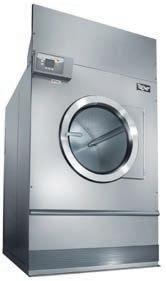
ADC
The durable 120-pound i-Series Dryer from ADC® offers onpremises operators a high-performing, energy-efficient machine that helps to shorten dry times and provides a safe, reliable operation, the company reports.
WASCOMAT
The UT120N’s UniLinc® control system allows OPL managers to gather machine performance and maintenance data, as well as access service history logs and receive error notifications, according to UniMac. Cloud-based management and reporting tool TotalVue® Powered by UniLinc provides complete visibility to operational costs across all machines so that operators can make immediate adjustments to achieve maximum efficiency.
Additionally, equipment technology such as OPTidry® Overdry Prevention Technology is designed to stop drying the exact moment ideal dryness level is reached, saving on utility, labor


The M202’s optional features include stainless steel front and cabinet, and F.S.S. (Fire
Wascomat commercial dryers, distributed by Laundrylux, are precision-engineered for efficiency, ease of use and superior drying results, the company says. They are available up to 135 pounds in capacity. The company says that there are 40-year-old Wascomats still going strong in laundries today.
The company says that the machines offer fast drying and low energy consumption with optimal combination of gas consumption and airflow. Large doors make loading and unloading easy, and they have convenient access to parts.
The dryers have large lint compartments for easy maintenance, quiet operation, and a reversing drum minimizes tangling and wrinkling, improves dryer efficiency and makes flatwork finishing easier, according to Wascomat.
Residual moisture control
The dryer comes standard with variable drum speed, transaxial airflow and a fully insulated cabinet with double-pane door glass. The sturdy steel-welded cabinet withstands tough laundry environments, and the time-tested, industrial-grade components contribute to machine longevity and reliability, says ADC.
The machine is equipped with customizable, easy-to-use Intuitive Micro Controls (IMC),
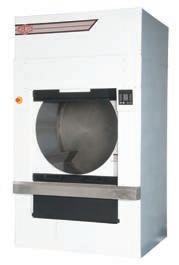
18 AUGUST 2016 | AMERICAN LAUNDRY NEWS www.AmericanLaundryNews.com
[ADC] [Maytag Commercial Laundry] [Pellerin Milnor Corp.]
COMPILED BY MATT POE, EDITOR
[UniMac]
[Wascomat]
providing an intelligent, onetouch program selection to enhance productivity. By creating a fully integrated drying system, users can utilize IMC to control all aspects of the drying process to minimize user error and maximize drying time and efficiency, according to the company.
In addition, ADC says owners can feel confident knowing the Sensor Activated Fire Extinguishing (S.A.F.E.) System comes standard on the 120-pound model, which helps to detect potential dryer fires—further protecting product investments and facilities.
www.adclaundry.com 508-678-9000
ELECTROLUX

Electrolux offers stack and singlepocket commercial dryers up to 135 pounds in capacity, the company says, and its dryers— distributed by Laundrylux— have unique features.
Autostop prevents overdrying and wrinkling by automatically calculating the correct time to turn on and off the burner, resulting in longer linen life and energy savings, Electrolux says. A reversing drum minimizes tangling and wrinkling and improves dryer efficiency. Sheets and towels dry faster, saving time and energy.
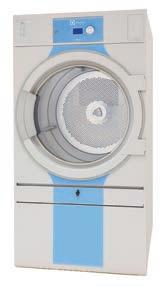
drying and simplifies unloading, and are available in steam, thermal fluid and natural gas.
Used in concert with the Girbau Industrial TBS-50 Continuous Batch Tunnel Washing System, or as a standalone tumbler dryer, the ST-100’s heating system effectively passes heated air directly through the load, removing moisture for a quicker dry, according to the company.
The stand-alone model
can also be paired with front-load washerextractors and an optional vacuum-loading system for improved ergonomics, flexibility and production.
The ST-1302—a stand-alone unit or used as part of the TBS50—dries up to 140 pounds of damp goods in less than 15 minutes, the company says.
Featuring a patented vacuum-loading system, the ST-1300 is one of
the most efficient and userfriendly drying tumblers on the market, says Girbau Industrial.
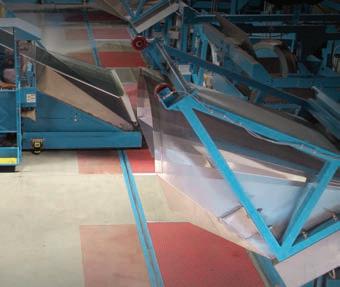

Its vacuum-loading system allows operators to quickly load items of all sizes into the dryer with minimal effort. A powerful suction pulls items inward, with no risk or hazard to the operator, according to the company. In less than a minute, operators can fully load the dryer.
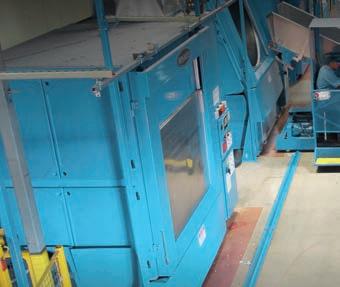
Both dryer models are engineered with Spirotilt, a system providing automated unloading without dryer tilting or air blasts, keeping more heat inside the ➢
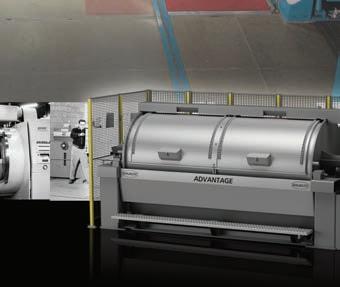
The company also says that residual moisture control prevents damage to linens caused by overdrying, and reduces lint and wrinkles by automatically stopping the dryer when the exact pre-set moisture level is reached. By not overdrying, laundries benefit from longer linen life and significant labor and energy savings.
Electrolux also says its dryers have the easiest-to-clean lint screens in the industry—just a quick swipe across the screen and it’s done.
www.laundrylux.com 800-381-7222
GIRBAU INDUSTRIAL
Girbau Industrial’s ST-100 and ST-1302 Dryers unbind, condition and dry up to 265 and 140 pounds of laundered goods, respectively, using less energy, the company says. Both models are engineered with Spirotilt-Girbau technology, which optimizes
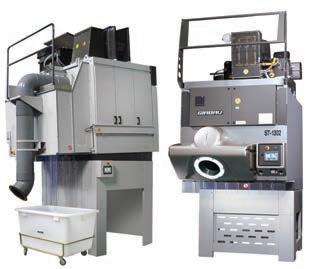

EXPERIENCE THE EVOLUTION OF CONVENTIONAL WASHROOM TECHNOLOGY
To
www.AmericanLaundryNews.com AMERICAN LAUNDRY NEWS | AUG UST 2016 19
OF SCIENTIFIC WASHROOM INNOVATIONS. From increased performance and durability to space-saving designs,
has been using our proven scientific data to lead the industry in safety, automation
data management washroom technology.
A HISTORY
Braun
and
see how our science stands the test of time, visit
ALN_Jr Page.indd 1 1/18/16 11:21 AM
www.gabraun.com/conventionalwashroom
[Electrolux]
[Girbau Industrial]
cylinder for the next load, the company says.
Boasting highly flexible, color touch-screen controls, the ST-100 and ST-1300 offer multiple programs and easy-to-use graphic icons.
www.girbauindustrial.com 800-256-1073
LAVATEC LAUNDRY TECHNOLOGY
Lavatec Laundry Technology says its TT756 dryer is a prime example of commercial laundry equipment manufactured to give customers outstanding performance and results for many years. At 460 pounds in capacity, this transferbatch gas or steam heating dryer is designed for efficiency, cleanliness and is maintenance-friendly, according to the company.
touch-screen terminal is included for easy operation and visualization of the drying process.
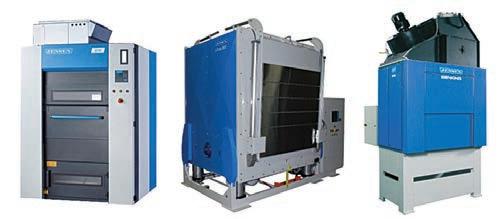
The PowerDry has diverse system integration possibilities, including shuttle loading, vacuum loading, tilt unloading and integration into monorail systems, according to the company.
www.kannegiesser-usa.com 972-641-3153
RAMCO
RAMCO says its DS/DG 450 Industrial Dryer is designed for large-capacity loads up to 450 pounds and is the largest model in a broad line of dryers with load capacities starting at 60 pounds.
ELLIS CORP.
Ellis Corp. offers three models of its energy-efficient WhisperDryer product line, the 450-, 675- and 800-pound-capacity dryers, the company reports.
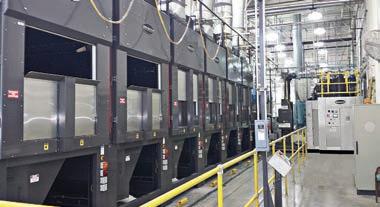
Ellis says variable-frequency drives on both the high-efficiency blower and friction roller basket allow for formulas to be tailored to the specific textile needs, thus reducing utility costs and increasing productivity.
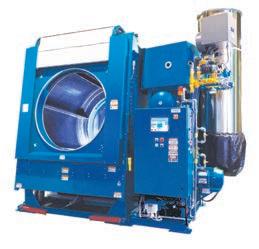
The patented WhisperDryer oversized blower design operates at 70 decibels, making it the quiet-
This greatly enhances space utilization, minimizes the amount of spare parts needed and enhances the productivity and efficiency within a tunnel system, according to Braun.
In the chute load configuration, the static chute on the front of the machine will allow for a seamless integration with a rail system, will improve turn times, and eliminates the moving parts and maintenance costs inherent with the use of cross conveyors for dryer loading, according to the company.
www.gabraun.com 800-432-7286
JENSEN USA
dryers—available in 125- and 175-pound capacities—are designed to escalate efficiency, production and safety.
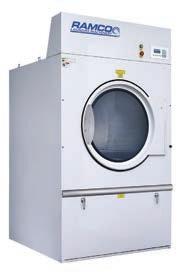
Designed for greater flexibility and easy operation, Continental’s new Microprocessor Control provides enhanced load management capabilities and cycle programmability and is equipped with Continental’s Linen Life Extension (LLE) system, the company says.
The TT756 dryer offers direct infrared measurement of linen surface temperatures. In tandem with the sophisticated dryer control and specially designed burner, the shortest possible drying times are achieved with low energy consumption, according to Lavatec. A sliding door provides for easy loading and unloading, which includes automatic air-assisted unloading through the lift door. In addition, the company says the dryer operates at extremely low noise levels and is available with automatic or manual lint screen cleaning.
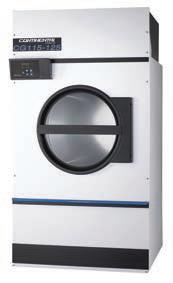
www.lltusa.com 203-632-8777
KANNEGIESSER USA
Kannegiesser USA says its PowerDry high evaporating capacity is achieved through the high-performance blower fan, wide burner assembly and dryer baskets with large diameter for optimum air circulation.
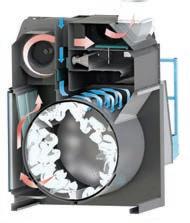
Eco Air Recirculation heat recovery assures energy savings while maintaining a constant high drying capacity, the company says. This allows a wide range of materials to be safely processed.
According to Kannegiesser, the separate air guidance design assures only cool air ends up in the inner cylinder during the cool-down phase, resulting in a faster cooling process without cooling the heating unit. A
The company says the userfriendly model features microprocessor controls, is fully automatic and is ideal for drying a variety of fabrics. Some of the main features offered on the model include the convenience of automatic control, front support rollers with optional forward tilt, timer drying and an automatic-reversal drum.
est machine in its class, according to the company. It is available as single door or pass-through doors with one- or two-way tilting.
The large 55-inch door opening is ideal for loading by sling, shuttle conveyor or hand, says Ellis. The removable basket panels allow ease of maintenance along with the hinged swing-out blower motor and wheel.
www.elliscorp.com 800-453-9222
G.A. BRAUN
G.A. Braun’s chute-load dryers feature a non-tilt design, which improves load and unload times, according to the company.
In a side-by-side configuration, there is no spacing required between the dryers; all dryers are identical. There are no left- or right-hand dryers because of the truly side-by-side design, says Braun.
JENSEN USA says it offers a full spectrum of tumbler/ dryers, ranging from the JTD series with capacities of 45 to 250 pounds, to the DTX series in 450- and 800-pound capacities, to the DT series batch system tumbler/dryers in 130- to 520pound capacities.
JENSEN says its tumbler/dryers can have features such as directdrive technology, frequencycontrolled basket speed, a modulating gas valve on the burner system, mirror-image design, a high basket volume, well-insulated and -sealed basket housing and builtin lint collection, all depending upon the series.
The combination of heat generation, air conduction, basket geometry and insulation results in an optimal heat distribution in the basket and the best possible air flow through the linen, while maintaining low radiant heat and noise levels, according to the company.
www.jensen-group.com 850-271-5959
The LLE system provides a moisture-sensing feature engineered to prevent over-drying, extend linen life and increase energy efficiency, according to Continental.
The DS/DG 450 also comes with a high/low-fire burner. Its large window, heavy-duty drive and door system cuts down on noise and allows the user to check on drying conditions, plus the lint drawer is easily accessible, RAMCO says. Safety switches throughout the dryer also provide protection for the operator.
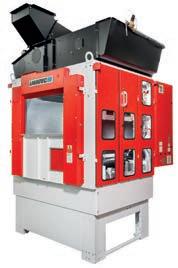
The company says the DS/DG 450 is available in steam or gas; lower-capacity dryers also come in electric.
www.ramcolaundry.com 800-878-5578
The company says the machines can be installed together in multiples, not just pairs.
CONTINENTAL GIRBAU
Continental Girbau Inc. says its Pro-Series II large-capacity
Featuring 12 programmable levels, LLE can target any dryness level from 0% to 40%. To ensure accurate moisture readings to the control, the company says the LLE system provides a large load-to-surface contact area. When the dryer attains its pre-set target level of dryness, it shuts off automatically—saving energy, time and resulting labor costs.
Pro-Series II Dryers also feature an optional Fire Suppression System (FSS), a sensing and extinguishing device designed to squelch dryer fires, says Continental. Additionally, the dryers offer a modular electrical system for added reliability and easy servicing, balanced airflow and heat input to effectively reduce energy costs, and a multiple-burner heat system to efficiently reach desired temperatures.
www.continentalgirbau.com 800-256-1073
20 AUGUST 2016 | AMERICAN LAUNDRY NEWS www.AmericanLaundryNews.com
ALN
[Lavatec Laundry Technology]
[Kannegiesser USA]
[RAMCO Laundry Machinery]
[Ellis Corp.]
[Continental Girbau]
[G.A. Braun]
[JENSEN USA]
California laundry revamps facility
Capital investment transforms Magic Laundry Services
MONTEBELLO, Calif. — With advances in technology and efficiency, many laundries are improving their process, throughput and energy-saving capabilities by upgrading their laundry equipment. While the capital investment can be substantial, the benefits can be substantial, as well.
Magic Laundry Services says it recently revamped its facility here, investing $4 million to renovate and expand to better serve its customers. The process wasn’t easy, but the results transformed Magic Laundry Services and its business, according to the company.
Harry Kertenian, CFO and COO of the company, and his staff toured several plants during the Textile Rental Services Association’s (TRSA) June 2015 European Laundry Tour in London. That event, coupled with the California water crisis, served as the spark for the laundry’s upgrade.
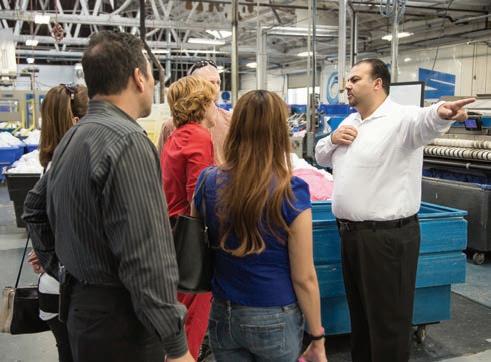
“What we saw touring laundries in London made us realize that investing in the future now was the right way to go, especially at such a crucial time with water,” Kertenian says. “Since we started the business, we’ve known that we’ve needed to steadily find ways to be more efficient.”
The process of updating Magic Laundry Services began with extensive conversations with the Kannegiesser design and engineering teams, who created CAD drawings of equipment layouts that would maximize space and achieve the facility’s production goals, the company says.


On-site visits were conducted to view the space and verify that the designs were appropriate for Magic Laundry Services’ needs. Once the layout was finalized, meetings with Magic Laundry Services’ staff, its contractors and Kannegiesser’s project management team defined responsibilities and determined the installation schedule, according to the company.
The Magic Laundry Services upgrade took a unique, phased approach, says Kannegiesser. Scheduled around the winter holiday season, Phase 1 of the upgrade—which included one 13-compartment, 132-pound batch tunnel washer; one 56-bar press extractor; and four double-batch system dryers—was scheduled to be installed and operating before Christmas.
Phase 2—which included the second 13compartment, 132-pound tunnel washer; 56-bar press extractor; and six additional double-batch system dryers—was scheduled to be installed immediately after New Year’s Day.
With the clock ticking, the Magic Laundry Services, Kannegiesser and construction teams needed a solid plan and good communication to get the job done. Kannegiesser provided four technicians and a project manager on-site to ensure that the upgrade process went off without a hitch, according to the company.
Each phase of installation went smoothly, the company says, and by the end of January, both tunnel washing systems were operating at full capacity.
With a tunnel system that can now wash a combined 7,200 pounds per hour, the throughput of the facility is greatly improved, says Kannegiesser. Magic Laundry Services also transformed its energy efficiency capabilities with water reuse tanks and ratiometric washing. Water and chemicals for cleaning are completely customized by batch weight, meaning that these items are conserved by the tunnel.
These efficiency gains have even resulted in an energy credit from Magic Laundry Services’ utility provider. In the competitive and eco-friendly market of Southern California, efficiency tends to draw new customers.
Thanks to its system upgrade, Magic Laundry Services says it has made vast improvements in its laundry capabilities. The facility now has equipment that is perfectly suited to its space and needs, and has made energy efficiency gains that will also result in valuable cost savings for the company. ALN

www.AmericanLaundryNews.com AMERICAN LAUNDRY NEWS | AUGUST 2016 21 Got Plastic in your Dryers? Get the SPO™ SOLUTION Super-Poly-Off ™ Teflon® coating is world’s most effective weapon against plastic build up in dryers. Currently being used in over 900 commercial laundries and hospitals, SPO™ Teflon® coatings have been THE INDUSTRY LEADER for over 35 years. Every day you postpone trying SPO™ Teflon® it is costing your company profits! Call today if you are: • Eliminates labor time to keep dryers clean • Saves your valuable natural gas costs • Increases productivity • Long lasting (8-10 years) • SPO coating can be applied to your removable panels • SPO coating sold in kits to convert your non-removable panel dryers into SPO treated removable panels, done right in your plant in just a few hours • Exclusive coating to several major OEM dryer manufacturers • Pays for itself in just a few months • Experiencing costly plastic plugging in your dryers • Seeing higher gas costs • Wasting your valuable maintenance labor time • Would like to try SPO™ Teflon® for FREE !! PCM Company has been a DuPont/Chemours Licensed Industrial Applicator specializing in applying Teflon® non-stick coatings since 1962, let us add your name to our list of SPO™ customers who once had a costly plastic problem. ! sales@pcmco.com 2 800-222-0317 www.pcmco.com/SPO-coating.html
DON’T TRY INFERIOR KNOCK-OFFS...
Unretouched photo with SPO™ Teflon® after 18 months of use
Harry Kertenian (right), CFO and COO, shows off Magic Laundry Services’ revamped facility during an Open House in May. (Photo: Magic Laundry Services)
Continental Girbau adds to support, management

OSHKOSH, Wis. —
Continental Girbau Inc. recently added Kim Loderbauer as Continental Creative Services (CCS) manager, Melissa Nygaard as Oshkosh Express Laundry Center manager, Brennan Pollnow as Girbau Industrial project and customer support specialist and Madisen Sagen as accounting associate, the company reports.
All of the new hires reside in Oshkosh, where Continental is headquartered.
“Continental, and its subsidiaries and brands, have experienced rapid growth in our quest to offer the highest-quality products, services and support to our distributor network and end-users,” says Continental President Mike Floyd. “We’re thrilled to welcome Kim Loderbauer, Melissa Nygaard, Brennan Pollnow and Madisen Sagen to our hardworking and productive family.”
Loderbauer has 20 years of













Track Career

graphic design, advertising and marketing experience. In her new role, she manages the planning and production of creative projects for CCS, a Continental subsidiary offering marketing, public relations and advertising services.
The company says she works closely with CCS and Continental team members to develop compelling and targeted marketing campaigns; design brochures, newsletters, advertisements, signage, direct-mail pieces and logos; and develop websites and web-based marketing tools.
Loderbauer, who works in concert with the CCS team, endusers and Continental distributors, earned a bachelor’s degree in graphic design from Mount Mary College in Milwaukee in 1996.
Nygaard, who is charged with the management of Continental’s Oshkosh Express Laundry Center—a card-operated laundry

offering Drop & Shop, Load & Leave and drop-off drycleaning services— holds eight years of office and retail management and inventory experience, according to the company. Nygaard earned a bachelor’s degree in psychology and music performance from Ripon (Wis.) College in 2008.

Pollnow, who first joined Continental in February 2016 as an inside sales and customer care associate, was recently promoted into a newly created position
responsible for supporting lead and prospect qualification and management for the company’s industrial laundry brand, Girbau Industrial (GI), the company says.
In this new role, he also handles development of equipment and services proposals, oversees sale and post-sale project management, innovates sales tools and works closely with, and supports, GI customers and distributors.
A 2016 graduate of University of Wisconsin Oshkosh, Pollnow holds a bachelor’s degree in economics.

As Continental’s accounting associate, the company says Sagen assists with general accounting functions, including accounts receivable and cash management for all Continental subsidiaries. She also handles customer accounts and questions regarding payments,


invoices and returns. Sagen has five years of internship and professional experience in accounting and related fields. She earned a bachelor’s degree in accounting, with a minor in Spanish, from University of Wisconsin Oshkosh in 2015.

Leonard Automatics names new plant manager
DENVER, N.C. — Leonard Automatics recently named Rafe Guill as it new plant manager, the company reports.

Guill brings 22 years of industrial maintenance and engineering management along with 12 years of production management experience to the team at Leonard, the company says, including lean manufacturing and the incorporation of ISO manufactur-
It’s not just print anymore.
maintenancestrategies, fatiguelife,andwearresistanceofbearingsinrelation totheapplication.































3 Laundry managers and opera-cient and productive can learn something from Editor Matt equipment manufacturing sources share several tips, fromeven in the right place make operations run as smoothly as experts at this year’s Clean Show discussed many topics continue to processed and delivered timely manner. could be what’s needed your Looking on-premises laundries, they have couple Brooks in OPL 101 keep up on maintenance by utilizing tackle any larger issues. Here’s hoping that 2015 has been productive for you, and Keep it lean, and plan ahead Eric L. Frederick, RLLD Ltile storage areas for each using area that holds the required inventory. The next key for excellent textile disrestocked and textiles are left in neat and orderly manner. This check should be performed withining level. No textile item should close to their desired stocking levels.main textile-distribution area is real key.the patients that they are responsible for have the textile product they need. They are not looking out for the unit as whole, or such, these alternate textile storage areas are creative, and only known that one person. amazing how many textile products nursing staff can place into alternative storage areas can deliver my unit all the products needs; we therewhere to be used only in the case of an emergency.” The only way to stop texmonths. Once the problem starts, is very difficult stop. Sometimes, the textile distribution personnel do not have suffi-products. The key is for laundry management to make sure these cases are rare and do not happen often. When they do happen, from area area make sure each piece used effectively as can be. They need to pass on the when and why the problem and the expected return to normal service. Eric Frederick director laundry services for Carilion Laundry Service, Roanoke, Va., and past president and manager the year Textile distribution PART 2: Case Progressing, Has Buyers AmeriPride Services Acquires TRSA’s Hygienically Clean Highlights Upcoming TRSA COLUMNISTS/FEATURES Expands Metro Areas Coyne business operations sales approved by U.S. Bankruptcy Court EXCELLEN EXTIL DIS-ODIC OSE CHECK TOET EEN PROPERLYTILES RE EF IN NEAT EXTIL USERS FROM IVE SPO S IS DE S, Enterprises Corp will sell its business operations three industrial laundry companies for total Margaret Cangilos-Ruiz of the U.S. Bankruptcy Syracuse. “Since filing for Chapter 11, we have focused our efforts on concluding this process in an efficienters—Cintas, Prudential Overall Supply and Clean Uniforms—are each good fit for providing the the sales by Nov. 30. and inventory in Bristol, Tenn.; Buffalo, N.Y.; Cleveland; London, Ky.; Syracuse; and York, Pa., for “As the premier uniform rental company in the industry, Cintas provides high-quality, innovative products and caring service to our customers. WeTodd Schneider, president and COO Cintas’ applications from current Coyne employees. “We are excited offer Coyne Textile Services on Page 17 ATMags.com E-Mail: mpoe@ ATMags.com E-Mail: nfrerichs@ Greg Gurtler Phil Hart Production Manager Roger Napiwocki E-Mail: dfeinstein@ ATMags.com Subscriptions Almost 90% of respondents agreed with the statement, “I’m thankful because our operation performing well.” Only 7.7% disagreed. “My team. They take pride what they do and the best group have had the privilege to work with in my 27 years in the industry.” “Over 40 years in the industry, and that has provided, through hard work, wonderful life for myself and my family.” am always thankful for our circumstances of plenty of work. “Maintenance, because we have made great strides in the past two years getting and keeping our equipment running in proper and consistent manner, dramatically reducing our downtime while do. have the chance to serve patients when they need most.” “The opportunity to interact with and educate our end-users, and ally) in the end product, and when even few people expect what you do and consider your role as vital, can make the differusers clients) appreciate our service.” More than 32% answered, “I However, there seems to be some equipment issues that need to be addressed, since equal shares of 10.9% remarked neither agree nor disagree” “I somewhat disagree.” Almost 5% of respondents comwith 53.1% completely agreeing and almost 30% agreeing somewhat. Only 3.1% completely disagreed with the statement, while 14.1% asking them identify the “biggest ‘turkey’—headache-causer” for their laundry, 45.2% answered “Employee(s).” More than 19% said Of the 14.5% of respondents who chose “Other,” responses included the government, linen loss, employees that aren’t committed, local points at particular moment, should not be considered scientific. Due to rounding, percentages may not add up to 100%. American Laundry News industrial laundries are encouraged to participate, as greater number of responses will help to better define operator opinions and identify industry trends. INSIDE: December 2015 Vol. 41 No. 12 benefits of regular closet checks textile distribution Staying on Top of Maintenance Needs Panel of Experts: The Right Formula Detergents, Chemicals Injection Systems Manufacturers highlight select products in their [18] Trade Ticker Classified Advertising [21] Source Directory Survey: Most managers thankful for 2015, look forward to 2016 Correction installation of tunnel washer at Midwest Laundry and instalMidwest Laundry was listed The correct period was 25 caused. somewhat agree.” Tools of the Trade [20] BYMATTPOE,EDITOR CHICAGO — Manufacturers continually strive to do more with less, and that includes usingfeweremployeestogetthe same, or more, amount of work done.Not just done, but done in a timely manner with high-quality results. For laundry operations, that means using as few employees as possible to get soiled linens washed,driedandpackagedproperly and on time, and shippedbacktotheend-usersorclients. wouldItmaysoundliketheendresult beemployeesworkingtheir fingers to the bone and burning out, but that’s not the case. The idea is to have employees and equipment functioning at highly effectivelevels. Graham Skinner, RLLD, generalmanageroflaundryservices, MissionHospital,Asheville,N.C., relatesthistotheconceptofrunninga“lean”operation.“WhenIthinkof‘lean’inmanufacturing,andespeciallyinlaundry,itismoreofamindsetand process that has to be embraced at all levels of an organization,” Skinner says. “As far as equipment, any equipment from any manufacturer can be made to operate in more of a lean manner. It’s more about how it ties into the adjacent equipment as itpertainstoscheduling,output, staffing and demand. It all starts withtrainingofmanagementand front-linestaff.Everyonehastobe onboard.”Sohowcanalaundrymanager helphisorheremployeesprocess textiles and linens at the highest level? That state of effectiveness can be reached through analysis, trainingandusingtherightequipment.VALUESTREAMANALYSIS For Skinner, creating a lean laundry operation is more about timingandcontrollingworkflow. Hesaysthateveryplantisdifferent,buttheyallperformthesame process.Therefore,it’simportant todo current-statevaluestream analysis(VSA)oftheplant,which he says helps managers see and visualizewherethewaittimesare thatcostmoneyandtime. “So many of us have been broughtuptopushthelinenout thedoor.Itisnotalwaysthebest DECEMBER2015 LateNews TheNewspaperofRecordforLaundry&LinenManagement www.americanlaundrynews.com Volume41,Number12 INSIDE [12] [14] See onPage6 BYMATTPOE,EDITOR ATLANTA — Emergencies, such as natural disasters, happen without warning. These disasters cansloworevenstopalaundry’s productionifanemergencyplan isn’tinplace.cationalDuringtheIndustryChatedusessionattheCleanShow hereearlierthisyear,threepanelists—Carolyn Christmas, executive director of environmental services, Wellstar Health System, Marietta,Ga.;BrynaMason,Walt Disney World Textile Services, Orlando, Fla.; and William Turner, environmental services director at the LaGrange (Ga.) MedicalCenter—discussedseveral audience-submittedtopics. However, the one topic that generated quite a bit of interest wasemergencypreparednessand the value of conducting tabletop exercises—discussion-based sessionsduringwhichteammembers meet in an informal classroom settingtodiscusstheirrolesduring anemergencyandtheirresponses to a particular emergency situation—in order for laundries to beaspreparedaspossibletokeep processing and delivering clean linens.MasonsaysthatbeinginFlorida means that hurricanes do come throughtheareaonceinawhile. OneofthethingsshesaysTextile Services looks at is redundancy with the options the resort has availableinthearea. “We are owned and operated byWaltDisneyWorld,andsowe have processes set up with other laundryfacilitiesthatifsomething is to happen with our plant that theywouldassistus,”saysMason. “We also, as a company, look at whatthatmeanstous.” establishedShenotesthatthecompanyhas all the necessary processeswithitsoutsidesources. “Because we’re such a large facility,wehavetobesurethey’re abletohandleit,orhandlesome
Panelof ExpertsIt’svitalthat laundriesusethe correctchemical formulas. Leanlaundriescreatemorevaluefor customerswhileusingfewerresources Emergencypreparednessforlaundriestakesplanning [4] SeeEMERGENCYonPage6 EmersonBearing Bostoncreates commerciallaundry divisionBearingBOSTON—Emerson Bostonhascreatedaspecialdivisionfor thecommerciallaundry industry,thecompany reports.EmersonBearing Bostonsuppliesbearingsandrelatedproducts,cateringtooriginal equipmentmanufacturers (OEM)andmaintenance, repairandoperations (MRO)markets.demandDuetoincreasedandafast-growingcommerciallaundry customerbasestretchingacrosstheU.S.and Canada,EmersonBearing Bostonsaysitestablished adedicatedCommercial Laundrydivisionledby marketingspecialistMike Quinn.Thecompanysaysthe newdivisioncatersto industriallaundries,includingthosethatlaunder uniforms,bedlinens,and restauranttablecloths, aswellason-premises laundryfacilitiesofhotels, hospitals,universitiesand otherorganizations.Accordingtothecompany,Quinnassistsclients indeterminingwhichbearingtechnologieswouldbe mostsuitablebytakinginto considerationthespecifications,recommendations,
ALN Columnist atLargeEricFrederick explorestheneed forclosetchecksin textiledistribution. Tabletopexercises
PRODUCTSHOWCASEDETERGENTS, CHEMICALS & DETERGENTS,INJECTION CHEMICALS & INJECTION SYSTEMS (ImagelicensedbyIngramPublishing) 1215aln_p01,06.FINAL.indd 11/17/15 American Laundry News can now be viewed on tablets and other mobile devices – great ways to stay
of
latest industry news and updates.
The Newspaper of Record for Laundry &
Management
of it,” says Mason. “To this day, knockonwood,wehavenothad touse[otherlaundriesformajor disasters],butifwedohavesituationswhereequipmentbreaksand soon,ouroutsidepartners,local
valuable,accordingto hospitality,healthcare linensources
on top
the
www.americanlaundrynews.com
Linen
0516aln_House Digital2_tab half.indd 1 4/11/16 3:31 PM
Pollnow
Loderbauer
Nygaard Guill 22 AUGUST 2016 | AMERICAN LAUNDRY NEWS www.AmericanLaundryNews.com
Sagen
ing standards. He has also been responsible for more than 400 process and quality improvement projects.

Guill plans to empower and build his team by allowing each employee to use his/her own ingenuity to continue to make improvements in the Leonard plant.
Guill has three daughters, one son and three grandsons, and loves to play golf, Leonard says.
Parker joins Gurtler Industries staff
SOUTH HOLLAND, Ill.
— Gurtler Industries Inc., a manufacturer of detergents and specialty chemicals for the commercial laundry industry, recently hired John Parker.
He joined Gurtler in April and is manager of market development in Utah, Idaho and nearby areas, according to the company.
Parker has an extensive background in electronics and computer
science and has been in the laundry industry for the past 12 years.
Tannert moves up in operations with Kannegiesser USA
GRAND PRAIRIE, Texas — Equipment manufacturer Kannegiesser USA has promoted Dave Tannert to director of operations, the company reports.
Tannert joined the company in 2012 as regional sales manager for the Western region of the United States.

Kannegiesser says his background in manufacturing engineering and his experience in industrial automation led to much success in the Western region for the company. The company says it intends to draw on Tannert’s background to drive the growth of its parts and service departments.
The company says it has had a strong focus on these areas in recent years, and that it will look to Tannert to further decentralize its service team in order to better support customers on a local level while providing customizable spare-parts support to fit every customer’s needs. He will con-
tinue to drive the success of its after-hours, weekend and holiday support line.

Tannert has recently relocated to the company’s U.S. headquarters, technical center and parts warehouse in Grand Prairie.

Tingue appoints Bridge regional sales manager
PEACHTREE CITY, Ga. —
Global laundry product supplier

Tingue has named Jamie Bridge regional sales manager, the company reports.

A former Tingue sales representative, laundry operator and laundry machinery company representative, Bridge brings nearly 30 years of laundry industry experience as both a manager with a proven track record and as a hands-on technician who understands how to keep laundry equipment up and running at peak performance,
the company says.
According to Tingue, Bridge is responsible for a team of six sales representatives covering territories from New England and eastern Canada to Florida, Puerto Rico and several Heartland states.
Bridge is to provide veteran leadership and ongoing training and support to his team on behalf of their customers while driving the overall growth and development of the region.
“Jamie was very highly regarded for his knowledge and understanding of laundry operations during his tenure as a sales representative,” says Ty Acton, Tingue vice president. “Customers have already called with congratulations about Jamie’s return, I’m very happy to have him back on the team, and I’m confident that our customers and staff are in good hands.”
Bridge resides in Dracut, Mass., with his wife, Michelle, and two children.
Encompass Group adds to clinical resources team
MCDONOUGH, Ga. — Kristy Goode, MSN/ED RN, has been hired as a member of Encompass Group LLC’s clinical resources and consulting team, the company reports.
Goode will be responsible for supporting Encompass’ field sales team and hospital and laundry customers with clinical knowledge and consulting expertise for the Encompass product lines.
The company also says that she will lead hospital linen utilization initiatives, develop clinical education and training, conduct product trials and in-services, write articles and deliver presentations on important industry topics from the clinical perspective.
Goode previously was a nurse manager in critical care at Florida Hospital in Winter Park, Fla. Encompass says she held positions of increasing responsibility at Florida Hospital in nursing education and the emergency department, and also has a bachelor’s degree in psychology from the University of Central Florida. ALN
Clean Indoor Air Lint Scrubbers

DON’T BLOW LINT AROUND, ENCAPSULATE AND ELIMINATE THE LINT
• True lint scrubbing vacuum. Captures the lint and dust contaminates from the air by capturing and eliminating dust and lint.
• No need to blow it around.
• Saves labor used to clean feeding, finishing and folding equipment.
• Employees work in a cleaner and safer environment.
• Assist with compliance to OSHA directive CPL 03-00-008 combustible dust explosions and fires act of 2008.

• Superior HP maximizes the lint suction in the production area.

• Arrives completely assembled, ready to hang, plug in and start collecting lint.
• Upward exhaust pulls lint, dust and hot air away from associates, expensive equipment and controls.
• Available with bacteria killing UV light for soiled or contaminated lint.

www.AmericanLaundryNews.com AMERICAN LAUNDRY NEWS | AU G UST 2016 23 www.energenics.com 800-944-1711 1470 Don St. Naples, FL 34104
RESULTING IN OPTIMUM
INDOOR AIR QUALITY
LINT SCRUBBER 6000 (lowest profile) LINT SCRUBBER 8000 (maximum coverage)
0416aln_Energenics Lint Scrubbers tab hlf.indd 1 1/28/16 3:35 PM
Tannert
Parker
Bridge
Study: Microfiber products help prevent spread of MRSA
 BY MATT POE, EDITOR
CHICAGO —Infection control related to textiles and laundry processing continues to be a major issue in the industry.
Textile providers are searching for fabrics that won’t spread bacteria, and laundry operations are looking for products that can stay clean even after processing—without the need of high heat and harsh chemicals.
A recent study showed that microfiber products can help prevent the spread of bacteria, particularly Methicillin-resistant Staphylococcus aureus (MRSA).
Murray Cohen, Ph.D., MPH, CIH, along with Jonathan Lawson, Ph.D., tested a range of textiles, from industry standard cotton products to microfiber products from Enviro-Linen, based in Ridgeland, Miss.
“We said let’s design kind of a quick study to see if this makes any

sense,” Cohen says. “Turns out that it did. What’s the significance of these lab tests? The significance is that they really do make a difference.”
The tests showed that MRSA on microfiber products, including gloves, napkins and towels, was reduced by nearly 100% two hours after initial contact. Poly-cotton textiles showed a 72% reduction rate, and cotton products displayed only 27% reduction.

“This means if a cotton product is exposed to MRSA, there is a 75% chance
it will transfer onto the next person to come in contact with it,” Cohen says. “With the Enviro-Linen fabric, there is less than a 0.25% chance of MRSA transferring to you or to others.”
The study was initiated by Enviro-Linen and its parent company, Medical Grade Innovations (MGI), because of the goals of founder and CEO Bert Rubinsky.

According to Allen Salvage, CIO and partner, Rubinsky, in his search for better washing, discovered fabrics with certain other benefits.
“That made him want to start exploring the world of how fabrics can change things in healthcare,” Salvage says. “He started finding all this information about how poor cotton is against bacteria and spreading infection in hospitals.”
He says Rubinsky started MGI to offer a system that can help reduce the spread of infection.

“That inevitably spawned into EnviroLinen,” says Salvage. “That’s how we got



into the study.”
The personal experience of company COO Kenny Perry helped move the study toward investigating whether or not microfiber products help prevent the spread of MRSA in particular. “The COO of our company got MRSA from a gym towel and almost lost his leg,” says Salvage.
Cohen says cotton is an organic material that actually serves as a nutrient for bacteria.
“Microfiber products aren’t organic,” he says. “It doesn’t provide a nutrient environment for the bacteria to grow, that’s one factor.”
Another factor that makes microfiber more bacteria-resistant is the finish.
“What this means is down on the cellular level of the bacteria is what we call substrate.
It has something to latch onto, to hold onto,” says Cohen. “Say in a hospital setting, where a sheet or a towel or a scrub worn by a healthcare professional gets contaminated with a bodily fluid, for example, that has the bacteria in it, it literally doesn’t roll off. Finish itself can make a difference for how long a bacterial colony can grow on a fabric.”
Cohen says that one of the ways that
24 A UGUST 2016 | AMERICAN LAUNDRY NEWS www.AmericanLaundryNews.com TC-35 FLX Refuse Handling Cart With Fire Suppression Lid M c C LURE INDUSTRIES, INC. 800-752-2821 • www.mcclureindustries.com email: kim@mcclureindustries.com Which Is Most Important? Answer: All of the Above The ONLY molded cart proven in independent testing as certified Class II Fire Retardant. Meets California Title 19. More than 80 Models available! A) Public Safety B) Code Compliance C) Durable Quality D) Ergonomic Design We sell direct 0216aln_McClure_Jr_half.indd 1 4/13/16 5:16 PM ALN_Jr_half.indd 1 5/6/16 4:10 PM ALN_Jr_half.indd 1 6/8/16 9:19 AM
Less than 0.25% chance of bacteria transferring from microfiber to people, researcher says Cohen Tests showed that microfiber products, such as towels, are much less likely to spread the
MRSA virus. (Photo: Enviro-Linen)
Salvage
superbugs get out of hospitals and into the community, like MRSA did some years back, is healthcare workers get it on their scrubs, patients get it on the towel and then the scrubs or towels get out of the hospital and to the home environment.
“The home environment has lesser conditions of laundering process and the bugs then establish themselves in the community and can spread from person to person,” he says.
Then, says Cohen, there is the weaving, the interstitial matrix, the particular way in which the fibers are oriented together.

“Within the textile industry, what those matrices are, how they are woven, that’s a real important factor or feature in the performance factor in whatever usage it’s going to be put to,” he says. “My looking at it as a microbiologist, what are the better or worse environments for bacteria to grow and thrive, and then contaminated fabric could cause and spread infection.”
The particular tests Cohen and Lawson conducted with microfiber displayed how well the fabric retains the bacteria as opposed to shifting it. One of the ways that contaminated garments can spread the infection during laundry processing, he says, is that lint from cotton can be spread in the environment.
“Our tests showed that once the bacteria are bound in those matrices in the microfibers, they just stayed there,” says Cohen. “You couldn’t shake them loose, which means once you put them in the laundry and subject them to heat and chemical laundry products that are designed to kill
the bacteria, it’s going to kill them.”
“That non-linting component of microfiber is a really big deal,” Salvage says.



“With cotton, you have to use really harsh chemicals and really crank up that heat to get it clean. With microfiber product, you don’t have to use as much heat. That’s why you save so much energy, not to mention they are lighter in weight.”
Letter to the Editor
follow the “First In, First Out” protocol.
“There’s an awful lot more textile research that should be done,” Cohen adds, “but right now we know that microfiber is a good idea.”
Skills
ALN
A June 2015 article written by Dr. Sehulster, appearing in Infection Control & Hospital Epidemiology, refers to regular testing practices exclusive of an outbreak as a means of monitoring and possibly controlling growth of these contaminants. Note: The article states that “microbiological testing” will not detect contamination where we have seen it occur most often. Not being able to detect the contamination perpetuates the spread of the contamination.


as well as eliminate any odors that might be coming from the linens due to some unseen wash problem. This airborne disinfection will control conditions to eliminate any fungus buildup.
prepared me to use my management skills when I was promoted.
It would be difficult to truly understand what the data is telling you if you have never spent time working in the laundry.
In conclusion, I still believe that the laundry industry is a great place to work and has an excellent future. Your success in this industry depends on the skills you develop and how well you learn to use them. I wish you all the best of luck. ALN
Eric Frederick is director of laundry services for Carilion Laundry Service, Roanoke, Va., and a past president and manager of the year of the Association for Linen Management. You can reach him by e-mail at efrederick@ carilion.com.
What is usually ignored are the benefits of an ozone system for the laundry and ambient air treatment in a linen storage room. The ozone, as infused properly into a standard wash formula, will improve the washing conditions, saving time, energy and utility costs while providing a return on investment (ROI), along with many health benefits. The ozone infusion will provide total wash disinfection during the wash process, whether there is a drop in wash liquor temperature or a drain leak, diluting the wash chemistry and setting up conditions for cross-contamination.
Another area for wash condition malfunctions is in the chemical application process. Chemical pumps do malfunction, or chemical supplies do run out during some point in the feed system, causing a wash formula protection system to be initiated. Ozone in the wash enhances chemical activity while providing a continuous disinfection quality.
An ozone air purifier placed in a storage area will disinfect the ambient air in the room
The production of hygienically clean linen is a start, but maintaining that hygienically clean status after the wash process is as important as providing a proper wash formula. The Centers for Disease Control and Prevention (CDC), the Joint Commission and other health organizations have certified the disinfection qualities of ozone in laundry processing. This can ensure a sense of security to a linen provider, feeling confident in delivering hygienically clean linens to their customers.
The laundry processing industry has come a long way in technological advances to stay on the cutting edge of providing hygienically clean, odor-free linens to their clients.

Textile care industry operators (hospitality, healthcare, industrial and commercial) should embrace the chemistry of ozone in the wash to maintain the health benefits provided through proper applications of ozone while it also provides an ROI.
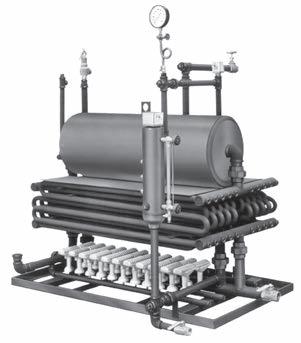

Ozone is part of the superstructure in a laundry providing healthcare and environmental benefits to the facility. Ozone, when properly applied and maintained, keeps on giving.
JackJ.Reiff,President WET-TECH,TheOzonePeople Worcester, Mass.
www.AmericanLaundryNews.com AMERICAN LAUNDRY NEWS | AUG UST 2016 25 Connect With Us PARISER INDUSTRIES, INC. www.pariserchem.com 91 Michigan Ave. info@pariserchem.com Paterson, NJ 07503 800-370-SOAP (7627) USA LAUNDRY CHEMICAL SOLUTIONS FOR YOUR EVOLVING INDUSTRY For over 40 years, Pariser Industries has been dedicated to providing our customers the best Quality Laundry Products, Value and Consistent Performance, Wash after Wash. Our Service and Expertise Spans the US, Canada and Caribbean in these industries: Hospitality • Resort/Cruise Ships • Hotels • Party Rental Companies Healthcare • Nursing Homes, Assisted Living • Surgical Centers • Hospital Scrubs and Clinic Linens • Veterinary Sports Athletic Garments • Athletic Team Uniforms • Health Club Towels Pariser has the products and reliable service to help you achieve clean, hygienic linens in an efficient and economical manner. For a Free Customized Estimate call 800-370-SOAP (7627) ALN_Jr_half.indd 1 11/9/15 9:37 AM A PARKER BOILER SHOULD BE THE LAST BOILER YOU EVER HAVE TO BUY Tel: (323) 727-9800 Fax: (323) 722-2848 5930 Bandini Blvd, Los Angeles CA 90040 103 Series Internal View Shown Never a Compromise for Quality or Safety sales@parkerboiler.com www.parkerboiler.com Steam Boilers 101-105 Series Indirect Fired Water Heaters 209-211 Series We expect 15 to 25 years from our interchangeable tube bundles, and 30 to 40 years of life our more out the boiler. We normally expect 10-25 years out of the copper heat exchanger, 30 to 40 years out of the boiler. Thermal Liquid Heaters 207 Series We expect 30 to 50 years out of our thermal fluid heater models We are asked by many new and existing customers on what is our projected life expectancy of our products. We are not always the lowest initial price but know we have one of the lowest cost of ownership of any boiler manufactured in North America. These facts are based on our 90 plus years of boiler manufacturing, feedback and experiences from our end users, service departments, and all of our representatives and dealers worldwide. These life spans are based on our boilers being installed properly, and do receive our minimal recommended care, are applied to the correct application, and include the proper maintenance and water treatment programs. A S M E S or H On all of the above units we have continued to build, and will
10x13.5 add-mar16.indd 1 3/4/2016 3:12:22 PM ALN_Jr_half.indd 1 3/7/16 9:10 AM
continue to have available any part of the pressure vessel, burners, cabinet, and controls meaning that for as long as a customer wants, they will be able to infinitely repair their equipment rather than replace the equipment.
Continued from Page 4
Continued from Page 4
Nemacolin Woodlands Resort selects InvoTech uniform management system
LOS ANGELES — InvoTech Systems Inc. has implemented its Uniform System at the Nemacolin Woodlands Resort in Farmington, Pa., the company reports.
InvoTech Systems provides linen management, laundry and uniform systems that integrate the latest radio frequency identification (RFID) technology, according to the company.
The InvoTech system installed at Nemacolin Woodlands Resort is for managing employee uniform inventory and accountability with employees and the laundry, the company says.
It will provide accurate and real-time inventory information of all staff uniforms to monitor and maintain uniform assignments to employees and ongoing purchases efficiently, according to the company.
The system, says InvoTech, is used to assign each uniform item to specific team members and track the daily uniform requirements for all divisions and departments. It provides functionality to manage the entire wardrobe room for approximately 800 team members.
Other InvoTech clients include MGM Resorts International, Ritz Carlton, Hyatt Hotels, Marriott, Hilton Hotels, Loews Hotels, Mandarin Oriental, Universal Studios Hollywood and Florida, Madison Square Garden, MSR-FSR Laundry and the Empire State Building.
Invengo acquires Tagsys’ textile services and legacy RFID tag business
SINGAPORE — Invengo, a radio frequency identification (RFID) technology provider, has acquired the textile services and legacy RFID tag business from Tagsys RFID, the company reports. Terms of the deal were not disclosed.
Through this acquisition, Invengo says it extends its global footprint and product development capabilities in high value-added markets, providing outstanding growth potential such as textile professional rental services, healthcare and medical tracking solutions, as well as manufacturing and logistics segments.
All new services will be managed from Invengo’s new textile and custom application services business unit based
in France.
The textile services business Invengo has acquired from Tagsys features RFID tags and stations and a fully integrated and scalable linen inventory visibility and management IoT platform called ACUITY, specifically designed to provide digital analytics and services to laundry groups and their clients, says Invengo.
Tagsys’ legacy RFID tag business also acquired by Invengo includes an array of tags and designs used in specialized applications such as airline baggage handling, document and asset management, pharmaceutical and healthcare applications.
“It is an exciting time for Invengo as this acquisition launches us into new markets with tremendous potential for innovative and robust RFID technology, specifically in the healthcare and hospitality textile services fields,” says Jiann Hsieh, CEO of Invengo International. “In addition to our already strong position in RFID services for the library, railway, retail verticals, it further enhances our offering and expertise in specialized RFID tag products. The acquisition of Tagsys’ textile services and legacy RFID tag business brings valuable resources and new talents to our global business and we are very excited about these European and global expansion opportunities.”
United Hospital Services celebrating 50th anniversary in 2016
INDIANAPOLIS — United Hospital Services (UHS) is celebrating its 50th anniversary this year, according to the company.
“We are proud to celebrate 50 years of providing customers with one of their most important supplies—clean linen and uniforms—every day, rain or shine,” says President and CEO Edward McCauley. “I attribute our success to the strong support of the business community, our hardworking employees and great relationships with suppliers.”
UHS says the laundry cooperative is the largest in Indiana and one of the largest in the country. The facility provides clean linen and uniforms for 55 hospitals and 700-plus clinics in the region. That translates to almost 42 million pounds of laundry each year.
A series of events are planned to commemorate the anniversary. A employee picnic took place in July and an
Open House for clients, suppliers and the community is scheduled for Sept. 14.
The company first opened its doors in 1966, when five Indianapolis-area hospitals pooled their resources to build the stand-alone, not-for-profit laundry cooperative, the company says. In return, each member hospital was guaranteed the delivery of fresh, clean linen and uniforms.
The five founding member hospitals include Community Hospital East, St. Francis Beech Grove Hospital, Winona Hospital, Indiana University Hospital and St. Vincent Fall Creek Hospital.
The original facility was located in downtown Indianapolis at the corner of Meridian and South streets. By 1994, UHS needed more space and moved to a larger, 116,000-square-foot building outside the metro area on Park Davis Drive.
In an era when infection control is a top-of-the-list priority for healthcare facilities, UHS says it has adopted the highest industry standards for processing healthcare laundry and is accredited by the Healthcare Laundry Accreditation Council (HLAC).
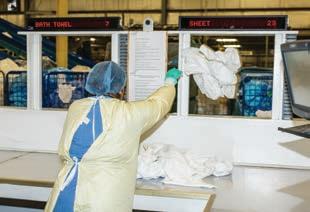
The new plant was built using the latest technology in the laundry industry, including a system of four continuous batch washers (or tunnels) to wash the bulk of the laundry, according to UHS. These four tunnels boost production while decreasing water consumption. An overhead rail

26 AUGUST 2016 | AMERICAN LAUNDRY NEWS www.AmericanLaundryNews.com
ALN_3rd Page.indd 1 7/7/16 10:23 AM Company Page Company Page INDEX OF ADVERTISERS A.L. Wilson Chemical Co. 9 ADI American Dawn 5 ADC 13 Consolidated Laundry Machinery 15 Direct Machinery Sales Corp. 28 Energenics Corp. 23 G.A. Braun 19 Girbau Industrial 7 IPA 24 The Griffin Group, Inc. 28 J.P. Equipment 28 Kannegiesser USA 17 Kemco Systems 26 LaundryCareers.com 28 Lavatec Laundry Technology 32 Leonard Automatics 28 McClure Industries 24 Monarch Brands 10, 11 Pariser Industries 25 Parker Boiler 25 PCM 21 Pellerin Milnor 3 PSP Industrial 28 Royal Basket Trucks 8 Stanco Industries 28 U.N.X. Inc. 28
United Hospital Services provides clean linen and uniforms for 55 hospitals and 700-plus clinics in the Indianapolis region. (Photo: United Hospital Services)
system transports laundry—both soiled and clean—eliminating the need to manually push carts from area to area in the plant.
In addition to increased operational efficiencies, the company says the high-tech laundry equipment allows it to minimize its impact on the environment through reduced utility and water consumption.
In 2005, UHS underwent a conversion to a for-profit, limited liability company and now serves the needs of both non-profit and for-profit hospitals and clinics. In 2013, the co-op merged with a small laundry in Kokomo, Ind.
Today, the company says plans are under way to lease a 10,000-square-foot depot in Bloomington, Ind., and five acres adjoining the present Park Davis location was recently purchased to accommodate future expansion.
Integrity Laundry Solutions expands to better serve customers

WALLA WALLA, Wash. — Integrity Laundry Solutions recently opened a new branch office in Kent, Wash., the company reports. The full-service distributor of laundry equipment, parts, ozone systems and chemicals is headquartered in Walla Walla and serves the on-premises, vended and multi-housing laundry markets throughout Oregon and Washington.
“Our service after the sale is what sets us apart,” says Greg Tompkins, president of sales and service. “The new office in Kent will allow us to fulfill service and parts requests
more quickly throughout Washington and Oregon.”
Tompkins expects to fully staff the Kent office within the year.
Dedicated to company growth and customer service, Integrity says it has grown considerably since its inception in 2005. Today, the one-stop shop handles every aspect of vended, on-premises and multi-housing laundry development; offers equipment programming and chemical cleaning solutions; touts a fully stocked parts department and quick delivery; and offers post-service care.
Integrity specializes in Continental and LG commercial washers, dryers and finishing systems; Express Laundry Centers®; Aquawing Ozone Systems; Sports Laundry Systems; and Anderson chemical cleaning and sanitation programs.
Moreover, Integrity says it also provides chemical products and services to the commercial housekeeping, hand care and kitchen markets. ALN
Calendar

August
7-11 Textile Rental Services Association Executive Management Institute (EMI) Alexandria, Va. Info: 703-519-0029
18 Association for Linen Management Webinar: Thinking Outside the Box: Saving Time, Money and Labor Richmond, Ky. Info: 859-624-0177

September
13-16 Universal Unilink LEADERSHIP16 San Antonio, Texas Info: 888-830-7872
19-21 Textile Rental Services Association Annual Conference Alexandria, Va. Info: 703-519-0029

21-22 Wisconsin Association of Textile Services Annual Fall Conference Greenfield, Wis.
Info: 414-529-4702
22 Association for Linen Management Webinar: Do’s and Don’ts of Sterile Room Processing Richmond, Ky. Info: 859-624-0177

28-30 Ellis Corp. Washer-Extractor Maint. Seminar Itasca, Ill. Info: 630-250-4848

28- Performance Matters Oct. 1 Coaches Clinic—Service Training Seminar (Bravo Class) Charlotte, N.C. Info: 704-277-6857
October
2-4 Textile Rental Services Association



European Laundry Tour Info: 703-519-0029 ALN

www.AmericanLaundryNews.com AMERICAN LAUNDRY NEWS | AUG UST 2016 27
Integrity Laundry Solutions opened a new branch office in Kent, Wash. (Photo: Integrity Laundry Solutions)
facebook/ americanlaundrynews Like our Facebook page Share our content Comment: Tell us what’s on your mind LIKE 0616aln_House Facebook jr_half.indd 1 5/5/16 5:19 PM SEPTEMBER Feature: Distributors Directory Our audience relies year-round on this annual directory issue listing distributors of laundry equipment, textiles, chemicals and other supplies. Editorial Submission Deadline — July 15 OCTOBER Feature: Hotel/Motel Laundering Preview the trade show called HX: The Hotel Experience: Rooms to Restaurants (formerly IHMRS) and get caught up on the latest hospitality trends. Product Showcase: Napery and Table Linen Editorial Submission Deadline — August 15 NOVEMBER Features: On Automatic Technology has advanced in the past few years, so we’ll look at what areas of your laundry can be—and perhaps should be—automated. Point of Contact Your drivers and route reps are the face of your company, but do their customer service skills represent you well? We look at ways to train your front-line staff to achieve the best results. Editorial Submission Deadline — September 15 DECEMBER Feature: En Route Efficiency Efficient routes can be achieved through route-planning tools and strategies, and by looking into alternative fuel or hybrid electric delivery vehicles. Editorial Submission Deadline — October 15 Want to send a press release or submit a story? Contact Matt Poe, Editor TODAY! Phone: 231-740-2842 • E-mail: mpoe@atmags.com DON’T MISS OUT HERE’S WHAT’S COMING UP IN AMERICAN LAUNDRY NEWS... DEPARTMENTS: • Tools of the Trade • Your Views Survey Results • Career Track • Trade Ticker • Panel of Experts • Upcoming Events • Source Directory • Classifieds &MUCH MORE! 2016aln_EditCal_JuniorHalf.indd 1 7/12/16 5:35 PM
PARTS, PARTS, PARTS












28 AUGUST 2016 | AMERICAN LAUNDRY NEWS www.AmericanLaundryNews.com Classified Advertising POSITIONS AVAILABLE For more classifieds visit: AMERICANLAUNDRYNEWS .com www. Call Craig Lloyd toll free at 877.295.5693 between 9 a.m. – 9 p.m. EST. Please visit www.laundrycareers.com to review current industrial/institutional laundry management openings. ADVANCE YOUR CAREER The Griffin Group, Inc. “Recruitment Specialist” Need to FILL a position? Call Deana Griffin 888-235-2365 www.thegriffingroup.cc deana@thegriffingroup.cc ® PARTS FOR SALE EQUIPMENT FOR SALE COMPLETE PLANT OF LAUNDRY EQUIPMENT FOR IMMEDIATE SALE For fastest service, call Ron Hirsch direct at 516-938-4300 Oceanside Laundry Facility closed! Direct Machinery is the exclusive dealer for all equipment in this sale. With the plant now closed, everything must go! HERE’S SOME OF THE SPECTACULAR EQUIPMENT: Senking CBW 20 Mod 110lb Tunnel (3) Senking CBW 12 Mod 110lb Tunnel (1) Colmac Steam Tunnel System 2100-2 Braun Folder/Crossfolders with Stackers Quincy & GD 200HP Screw Air Compressors Unipress Utility Press Braun 500lb Gas Dryers (8) Milnor 72072 500lb Gas Pass-Through System Dryers (2) American Hypro 8 Roll Ironers (8) Chicago Edge Maxx 2-Station Feeders (2) Chicago Edge Maxx Spreader Feeders (3) Challenge Pace Setter Gas Dryers (6) Challenge Pace Setter Steam Dryers (2) Braun Rear Discharge Small Piece Folders (10) Blanket System Edge Feeder & Skyline Folder (2) Jensen LTron 450lb Washers (3) Cleaver Brooks 400HP Boiler (1) Cleaver Brooks 400HP Dual Fuel Boilers (2) Norman Lift Tables Model 5 Ludell Heat Reclaimer Jensen 200 Pound L Tron (1) Sager Spreader Heat Reclaimer with two Stainless Steel 2500 Gallon Storage with Steam Bundle White Conveyors Jensen Single Stage CBW Extraction Press 20042007 (4) PLUS CONVEYORS, CARTS, LIFTS, SCALES AND MUCH MORE! CALL TODAY! CONTACT: CLASSIFIEDS@ AMERICANTRADEMAGAZINES.COM U.N.X. INCORPORATED“ ” grow & expand U.N.X.! U.N.X. INCORPORATED WASHEX
Hard-to-find Washex parts, on-site rebuilding, tech support. LAUNDRY PARTS CENTER
Fax: 305-827-3991
PARTS
800-352-4492
stock
parts
laundry
parts@steineratlantic.com www.steineratlantic.com EQUIPMENT FOR SALE AMKO AMERICA, INC. Remanufactured Finishing Equipment Delta Ironers, Omega Folders & Towel Folders PARTS, IRONER SUPPLIES & NEW EQUIPMENT ALSO AVAILABLE “NEW” SELF CONTAINED IRONERS Contact: (561) 863-9696 AmkoAmerica@gmail.com INTERNATIONAL EQUIPMENT GROUP Dealers in all Types, Makes & Sizes of pre-owned Laundry Processing Equipment & Supplies * buy * sell * liquidate * locate * * rigg & transport * email: loustanley69@hotmail.com Phone: 260 409-2547 EQUIPMENT FOR SALE We worry about it so you don’t have to Project Management, Consulting, Facility Planning, Rigging, Turn Key Installations, Equipment Appraisals & Reports. O ering turn key Laundry Solutions nationwide. IN STOCK EQUIPMENT FOR SALE: Qty Washex 480 LB & 700 LB W/X’s 2 Chicago Edge Maxx Feeders 3 Chicago King Edge & Kannegiesser Feeders 3 Chicago Skyline Sheet Folders 7 Lavatec TT745GU Gas Dryers 8 Braun Towel Folders 9 Challenge 400 LB Gas Tunnel Dryers 6 Rebuilt Milnor 170 LB W/X 1 Jensen EXPG-12 Self Contained Gas Ironer 1 Chicago Century 2 Roll x 42 Steam Ironer 1 www.pspindustrial.com Main: 1.800.517.1432 / 305.517.1421 Please visit our website for our complete inventory www.ineedjpequipment.com 800/925-3236 QUALITY IRONING LINES ~ READY TO GO • 135lb Milnor Washer, Ridge Mount, 2006 & 1992 (2) • 110lb Milnor Soft Mount, 1998 • 200lb Braun OP, non-tilting, single-motor drive, inverter • Chicago Pik Quik, 2008 • Jensen Logic Feeder, 2009 • Jensen Logic Feeder, 3 Station, 2005 • Jensen Self Contained Thermal Ironer, EXG-12, 2004, 48” Roll • Jensen Silverline Plus, 4 Lane, BNR Controls, 2006 • Inwatec Hurricane Mat Roll Machine, reporting capability of number and sizes of rolled mats, pass thru machine, 2015 • 400lb Braun OP Washer, single-motor drive, inverter • (4) 550lb Braun OP Washers, singlemotor drive, inverter • Braun Small Piece Folder, Meter wide, Return to Feed, B&R Controls, 2005 • 900lb Ellis Completely Reconditioned, new Controls by Ellis “Expect Excellence” JP Equipment, Inc. buys and sells used industrial laundry equipment. We have been in the used industrial laundry business since 1998 and sell equipment worldwide. What separates us from most of our competitors is that we own almost all of our equipment outright giving us the flexibility to sell equipment “as is”, cleaned and tested, or fully reconditioned. We also sell equipment on consignment. We provide unparalleled service whether you are buying or selling equipment, building a new laundry or upgrading an existing facility. EQUIPMENT FOR SALE ● Tunnel Finishers ● Cart Washers ● Pressing Equipment ● Garment Conveyors ph: 704.483.9316 sales@leonardautomatics.com http://leonardautomatics.com DISTRIBUTOR OFFERINGS Stanco Industries, Inc. Serving The Textile Trades Since 1970 800-932-3769 k for Mike or Deb KEEPING IT GREEN SINCE 1970 FOR SALE: 6-Huebsch 120# Gas Dryers 3-Braun 600# Gas Dryers 3-Braun 600# Open Pocket Washer/Extractors 2-Milnor 55# Washer/Extractors with EP Plus Wanted: Boilers 50-300hp WE BUY COMPLETE PLANTS / SINGLE ITEMS Stanco Industries, Inc. 800-932-3769 Ask for Mike or Deb or e-mail: stanco2626@aol.com www.StanCoInd.com americanlaundrynews www. .com
Huge
of
for most
equipment & boilers. Also traps, valves and lubricants. Overnight delivery. Steiner-Atlantic, 800-333-8883 Fax: 305-751-8390





















www.AmericanLaundryNews.com AMERICAN LAUNDRY NEWS | AUGUST 2016 29 Source Directory A convenient guide to sources of products and services APPAREL FINISHING CARTS, TRUCKS & BASKETS Source Directory listings in American Laundry News are sold on an annual basis at the following rates: All Major Credit Cards Accepted 2016 Listings Regular Boldface All Caps All Caps, Boldface Four Line Listing per Year $885 $1,110 $1,110 $1,175 Display and additional line rates available upon request CARTS, TRUCKS & BASKETS CARTS, TRUCKS & BASKETS AmericanLaundryNews.com More than unique visitors monthly! 5,250 CARTS, TRUCKS & BASKETS M c C LURE INDUSTRIES, INC. 800-752-2821 • www.mcclureindustries.com email: kim@mcclureindustries.com Sani-Trux is the only molded cart to pass rigorous independent laboratory testing for NFPA fire codes Made of durable fiberglass making the cart life at least twice that of a poly cart Easy to maneuver even in tight spaces Built with quality components to last years longer than other carts Visit our website for other models and avaliable options. We sell direct to all parties! DOBERMAN TUFF LAUNDRY CARTS www.dobermantuff.com 706-376-4793 ♦ RUGGED ♦ DURABLE ♦ QUALITY FINISHES TUFF STUFF, NOT TUFF PRICES Enclosed_Carts_6.25x3:Layout 1 6/18/14 4:23 PM Page 1 Call 800.829.4535|questions@MODROTO.com | MODRoto.com 54P-40E We Put More Into Our Carts So You Can, Too! SPRING-LOADED SAFETY TRUCKS Show your commitment to worker safety with ergonomic, spring-loaded carts and trucks from the spring-loaded technology leader. Our signature, rotationally molded and vinyl-covered spring platforms rise as goods are removed to keep work positioned at the right height. See action video at MODRoto.com and call for free quote. M.I.T. POLY-CART 211 CENTRAL PARK WEST, NEW YORK, NY 10024 800-234-7659, FAX: 212-721-9022 WWW.MITPOLYCART.COM Diversified Plastics, Inc. 1309 Highway 917 West, Latta, SC 29565 800-768-7636, www.dpirotocarts.com E-mail: sales@dpirotocarts.com Fax: 843-752-7798


















30 AUGUST 2016 | AMERICAN LAUNDRY NEWS www.AmericanLaundryNews.com Source Directory listings in American Laundry News are sold on an annual basis at the following rates: All Major Credit Cards Accepted 2016 Listings Regular Boldface All Caps All Caps, Boldface Four Line Listing per Year $885 $1,110 $1,110 $1,175 Display and additional line rates available upon request Source Directory A convenient guide to sources of products and services FLATWORK IRONERS FLATWORK IRONERS Knowhow In Action Your Tingue rep is a fully trained master of finishing equipment operation, maintenance and installation. Call for: • Pads, covers, belts, waxes, tapes and more • Carts, trucks, baskets and bags • Parts, rebuilds and repairs 800.829.3864 www.Tingue.com TalleyMachinery.com MODRoto.com TBR-Associates.com To website C & W EQUIPMENT (800) 443-3573 FLATWORK IRONER SPECIALISTS REMANUFACTURED IRONERS: Super Sylon Sylon Hypro’s Super Pro Jensen SS700 SS800 Ultima Lavatec UPGRADE KITS: Chain Drive Conversion Vacuum Systems Herringbone Conversion Canopies Inverters Side Covers Roll Springs Jensen Drives SUPPLIES: Aprons Pads Covers Belts Waxes Cleaners PARTS/REPAIRS: All Brands New/Refurbished/Hard to Find COMMITTED TO EXCELLENCE Pellerin Milnor Corp.
504-467-9591,
www.milnor.com DRYERS – 100 POUNDS OR MORE Pellerin Milnor
DRYERS – 100 POUNDS OR LESS CARTS, TRUCKS & BASKETS CART-WASHING SYSTEMS Sani Wash - McClure Industries, Inc. 9051 SE 55th Ave., Portland, OR 97206 800-752-2821, www.mcclureindustries.com, info@mcclureindustries.com DRYER BOOSTER & EXHAUST FANS ENVIRONMENTAL SOLUTIONS Gardner Machinery Corporation
Box
MATERIAL HANDLING / CONVEYORS americanlaundrynews www. .com www.energenics.com ENERGENICS KARTWASHERS FULLY AUTOMATIC KARTWASHER PREMIER W/TOUCHPAD 1470 Don St. • Naples, FL 34104 • 800-944-1711 Designed to wash and sanitize all popular laundry carts • Automatic two minute cycle • Dries and sanitizes • Minimum water useage Concentrates wash effectiveness on the cart interior Fast automatic washing, sanitizing and drying insure optimum cleaning • 15 second detergent wash and sanitizing rinse cycle • Adjustable automotive car wash style drying • Wash Temperature Reduction • Tunnel Washer Experts • EPA Regulations • Environmental Concerns • Infection Control • Waste Water Treatment New Horizons In Ozone Solutions, Inc 508-831-4229 wet-tech.com www.olekbelts.com 1-800-869-2683 Free www.olekbelts.com We’re your flatwork finishing and conveying O.E.M. Belt Match H.Q. Get the real thing for a Lot less $$$. O.E.M. Needlefelt Ironer Pads too! Better Belts, Better Prices, Better Service Visit our Website or Call 1-800-869-2683 For free, no obligation, price quotations and for your Free copy of our Product Catalog with over 40 samples. Ironer pads, covers, aprons, guide tapes, carts, slings, cleaners, waxes & more… FLATWORK SUPPORT Get Rolling with The Best 800.304.4600 www.FIBERTECHINC.net We Create Environmentally Responsible Solutions
P.O. Box 400, Kenner, LA 70063
Fax: 504-468-3094
Corp. P.O. Box 400, Kenner, LA 70063 504-467-9591, Fax: 504-468-3094 www.milnor.com
P.O.
33818, Charlotte, NC 28233 Ph.: (704)372-3890; Fax: (704)342-0758 www.gardnermachinery.com
Pellerin Milnor Corp.
P.O. Box 400, Kenner, LA 70063 504-467-9591, Fax: 504-468-3094 www.milnor.com
Pellerin Milnor Corp.



P.O. Box 400, Kenner, LA 70063 504-467-9591, Fax: 504-468-3094 www.milnor.com










www.AmericanLaundryNews.com AMERICAN LAUNDRY NEWS | AUGUST 2016 31 Source Directory A convenient guide to sources of products and services Source Directory listings in American Laundry News are sold on an annual basis at the following rates: All Major Credit Cards Accepted 2016 Listings Regular Boldface All Caps All Caps, Boldface Four Line Listing per Year $885 $1,110 $1,110 $1,175 Display and additional line rates available upon request PARTS PARTS PARTS & SUPPLIES • Door Handles • Door Locks • Print Boards • Bearing Kits • Drain Valves • Shocks • Heating Elements • Inlet Valves and more! QUALITY LAUNDRY PARTS, GREAT PRICES For questions and custom orders email info@FrontecStore.com (941)726-0808 • Door Handles • Door Locks • Print Boards • Bearing Kits • Drain Valves • Shocks • Heating Elements • Inlet Valves and more! For questions and custom ordersFrontecStore.com (941)726-0808 CINCINNATI LAUNDRY EQUIPMENT We stock all the parts you need! We have something for everybody! Parts for All Major Manufacturers 2648 Spring Grove Avenue Cincinnati, OH 45214 Phone: 513-542-5000 • Fax: 513-542-5022 www.cincinnatilaundry.com cle@cincinnatilaundry.com Your #1 AJAX Source! AJAX • CISSELL LAVATEC • ALLIANCE IPSO • HUEBSCH JENSEN HYPRO/SUPER SYLON HOFFMAN • VOSS PERMAC • Hotel • OPL • Coin Op • Dry Cleaners • Industrial • Commercial • Cruise Industry Dry or Wet Style Filters to Work with “ALL” Dryer Sizes or Multiple Situations, Fiberglass or Stainless and Custom for Unique Situations! Lint Filters Model Big and Small – We’ve got a model for you! In-line Duct” Models – the Lint Lasso and Lint Sock –in production since 2011 All manufacturing done on premise 800-826-1245 www.cleancyclesystems.com • ccsystems@tqind.com LINT COLLECTORS & FILTERS
WASHERS – CONTINUOUS BATCH WASHER-EXTRACTOR – 100 POUNDS OR LESS WASHER-EXTRACTOR – 100 POUNDS OR MORE SMALL-PIECE FOLDERS MAT ROLLERS
Milnor
Pellerin
Corp.
Pellerin Milnor Corp. P.O. Box 400, Kenner, LA 70063 504-467-9591, Fax: 504-468-3094 www.milnor.com PRESSES – EXTRACTION RFID GO TO: www.AmericanLaundryNews.com TO PLACE YOUR AD ONLINE MISSED OUR DEADLINE? www.energenics.com ENERGENICS CORPORATION TALK TO OUR DESIGN AND ENGINEERING STAFF ABOUT YOUR NEEDS 1470 Don St. • Naples, FL 34104 • 800-944-1711 ›› Our In-Line Lint Filter mounts inside, saves space! ›› OPL Duct Mounted Lint Filters 1,000 to 2,700 CFM ›› Fiberglass or Stainless Steel Dry Filters ›› Hundreds Sold Annually PACKAGING SYSTEMS & SUPPLIES
P.O. Box 400, Kenner, LA 70063 504-467-9591, Fax: 504-468-3094 www.milnor.com