Cintas collaborates with Google on smart garments

CINCINNATI — Cintas Corp. has entered a joint collaboration with Google’s Advanced Technology and Projects Group (ATAP) to explore advancing Project Jacquard into the enterprise space, the company reports.
Jacquard is a smart garment technology developed by Google’s ATAP team that enables conductive fibers to be woven into textiles, connecting interactive apparel wirelessly to devices, software platforms and cloud services, according to Cintas.
ATAP presented advancements in the technology at Google’s recent developers conference, Google I/O. Cintas says it and ATAP are collaborating to advance use cases in work environments, with the goal of developing Jacquard-enhanced uniforms.
“Cintas is excited to collaborate with Google ATAP. Together, we are developing use cases in the healthcare vertical in cooperation with a number of leading hospitals,” says Paul Jantsch, Cintas senior vice president of corporate strategy and development. “We see many applications for the technology to impact productivity, compliance, health and safety, not only in healthcare, but in virtually all industries.” ALN
Texcare International 2016 breaks records
CEO of Messe Frankfurt, opened the show from the steps of the Galleria, in between Hall 8 and the Hall 9 into which the fair expanded for the first time ever.
BY MATT POE, EDITOR
FRANKFURT AM MAIN, Germany — Texcare International 2016 was staged here June 11-15, and textile professionals from around the world had a lot to take in.
The 2016 edition of the World Market for Modern Textile Care was the largest in the trade fair’s 60-year history, officials say.
Messe Frankfurt, the show manager, said a record 15,700 textile services professionals from 112 countries around the world visited the trade fair over the five days.
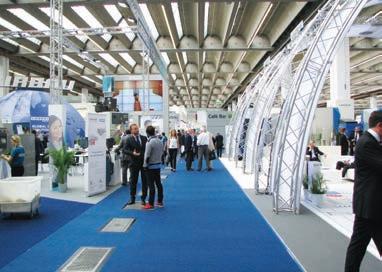
Texcare International also broke records this year in terms of vendors. A record 319 exhibitors from 28 countries displayed products and services, according to the show operator.
Wolfgang Marzin, president and

“For the first time, we are opening the fair in the middle of the exhibition, because vendors decided to expand their presence here,” Marzin says. “This goes to show that textile care is one of the biggest growth industries in the world.”
60TH ANNIVERSARY CELEBRATION
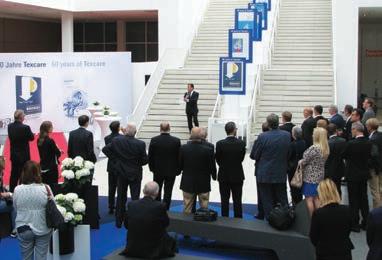
The opening of the trade fair in the Galleria featured something special: a celebration in honor of the event’s 60th anniversary.
The fair started in 1956 as the International Laundry Trade Exhibition, with 164 exhibitors. From 1968 to 1990, it was called the International Laundry and Dry Cleaning Exhibition (IWC). In 1994, the trade fair started using the Texcare name.
Of the original exhibiting companies, nine have attended the fair
every four years since its inception.
Representatives from each of the nine—Burnus, Cordes, Clayton, Kannegiesser, Kreussler, Miele, Polymark, Seibt + Kapp, Seitz and Gottlob Stahl—were honored during the anniversary celebration.
“Sixty years ago when the trade
fair began, the focus was on automation,” Marzin says. “That automation included labor-saving washers and dryers.”
The brief anniversary celebration concluded with champagne and
Healthcare laundry self-regulation goes under the microscope
the necessary protocols?
BY MATT POE, EDITOR
CHICAGO — Healthcare laundry standards have been a hot topic over the past few years.
Every time an infection outbreak occurs, and linen services companies are implicated in the outbreak, standards in the healthcare laundry industry go under the microscope.

What are the standards? Are the standards stringent enough?
And who verifies that laundries are observing
Industrywide, healthcare laundry professionals agree that self-regulation is appropriate and effective to meet accepted industry standards, along with meeting requirements of organizations such as the Occupational Safety and Health Administration (OSHA), the Centers for Medicare & Medicaid Services (CMS) and the Centers for Disease Control and Prevention (CDC).
Linda Fairbanks, executive director of the Association for Linen Management (ALM), says that her association supports efforts to improve practices and believes that voluntary laundry regulation programs can help to advance this aim.
“It’s recommended that each laundry research published best practices and follow

to the best ability,” says Nancy Jenkins, executive director of the American Reusable Textile Association (ARTA).
“Improving safety and compliance of every laundry facility improves service to our industry’s customers and raises the level of professionalism of the entire industry,” adds Joseph Ricci, CEO and president of the Textile Rental Services Association (TRSA).
Two programs have come to the forefront when it comes to healthcare laundry self-regulation: the Healthcare Laundry Accreditation Council (HLAC) program and TRSA’s Hygienically Clean Healthcare certification.
Both HLAC’s accreditation and TRSA’s certi-

Panel of Experts
Safety has to be the No. 1 priority of a laundry to be successful.
Uniform Systems
Healthcare facilities can use a uniform policy for safety and comfort.
JULY 2016 Late News
www.americanlaundrynews.com Volume 42, Number 7 INSIDE [21] See TEXCARE on Page 6
The Newspaper of Record for Laundry & Linen Management
[4] See H EALTH CARE on Page 10
Columnist at Large Eric Frederick discusses the small things that can cause big problems.
[16]
What industry standards programs are available, and what will happen in the future?
Largest version of trade fair since it began in 1956
Texcare International 2016 exhibitors filled Hall 8 from floor to ceiling. (Photos: Matt Poe)
Study: Towels play critical role for hotel guests
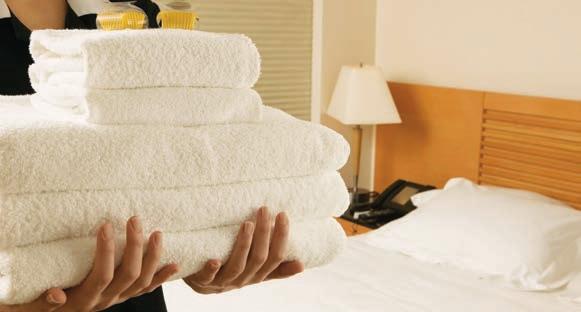
MANCHESTER, N.H. — The quality of towels is paramount in the increasingly competitive hospitality industry that has to operate within growing environmentally conscious parameters.
That is the overall finding of a study conducted by Xeros, which highlights how towels impact the overall quality of the hotel guest experience. The company produces a bead-based laundry system.
“The results of this study illustrate that travelers care quite a bit about the towels they use during hotel visits. Cleanliness, followed by softness, is top criteria for judging the quality of a towel,” says Jonathan Benjamin, global president, laundry, at Xeros. “The quality of the towels impact guest satisfaction, brand perception, as well as customer loyalty.”
TOWEL QUALITY ESSENTIAL TO GUEST SATISFACTION
The study revealed that 94% of all respondents believe that the quality of towels is important for overall customer satisfaction.
Also, the survey found that 73% of respondents believe that the quality of towels will influence their decision to return to a hotel brand for future visits, while 84% believe towel quality influences brand perception.
IMPORTANCE OF TOWEL CLEANLINESS
When asked about towel attributes, cleanliness was identified as the most important attribute followed by the softness of towels.
Surprisingly, high thread counts,
the attribute that is generally associated with expensive luxury towels, came in last.
ONLINE REVIEWS ARE VITAL
Customers love to read hotel reviews when making travel plans. The study found that 77% of travelers usually or always reference online reviews before selecting a hotel.
One-third of the respondents said that they would write a negative review on an online site if they were not satisfied with the towels. And 52% of the respondents said that they have already written a negative review due to poor towel quality.
ENVIRONMENTALLY CONSCIOUS TRAVELERS
Environmental concerns also play a major role in hotel selection. They reuse towels and want hotels to have eco-friendly laundry operations, and 85% of respondents reuse towels because they are concerned about the environment. When choosing a hotel, 77% of people said
they actively search for places that have eco-friendly laundry facilities.
“Savvy hoteliers should consider rethinking the role of towels in their overall brand story. Towels are a relatively unexplored branding touch point in the customer journey and has the potential to be an emotional tipping point, turning a visitor into
a loyal customer,” says Benjamin. The study was conducted by Xeros in February 2016 via an online survey to learn how towels impact the overall quality of the hotel guest experience. It was based upon responses from 1,160 business and vacation travelers in the United States and the United Kingdom. ALN
Commercial Laundry Specialist partners with Applied Silver
by imparting lasting antimicrobial properties to the items each time they are laundered, protecting them in transport, storage and use from infectioncausing bacteria and fungi.
HAYWARD, Calif. — Commercial Laundry Specialist (CLS), a specialty laundry service company, has partnered with Applied Silver, the maker of SilvaClean®, to co-market and supply treated textiles to healthcare facilities across Northern California, the company reports.
“Previous treatment options have fallen short of comprehensively ensuring hygienically clean textiles over time, and alternatives like disposables are extremely expensive and wasteful, finding their way into landfills. Adding SilvaClean to our certified and validated proprietary laundering processes offers unparalleled infection control with minimal environmental impact at significant cost savings,” says Chris Wanhsiedler, president of CLS. SilvaClean, according to the company, is a patented waterbased ionic silver treatment that provides the highest level of protection to laundered healthcare textiles. SilvaClean works on a wide range of fabric items
These fabric items include multiple key patient and healthcare worker touch points such as patient bedding, gowns, bath towels, worker scrubs and privacy curtain, says the company.
“SilvaClean reduces more than 99.9% of bacteria, virtually eliminating the risk that unhygienic textiles pose to healthcare environments,” says Sean Morham, CEO of Applied Silver. “We are pleased to partner with CLS to offer this new industry standard to healthcare facilities looking for the most cost-effective and persistent way to solve the challenge of textile cleanliness.”
Published research shows that one-third of the textiles in the hospital studied showed meaningful amounts of the superbug MRSA. Contracting MRSA can increase a patient’s chance of acquiring a staph infection within the following 12 months. The company says that treating hospital textiles with silver ions (used in SilvaClean) immediately following the washing process results in a significant decrease in microbial contamination, both before and after patient use.
Publisher
Charles Thompson
Phone: 312-361-1680
E-Mail: cthompson@ ATMags.com
Editorial Director
Bruce Beggs
Phone: 312-361-1683
E-Mail: bbeggs@ ATMags.com
Editor
Matt Poe
Phone: 231-740-2842
E-Mail: mpoe@ ATMags.com
Digital Media Director
Nathan Frerichs
Phone: 312-361-1681
E-Mail: nfrerichs@ ATMags.com
Advisory Board
Jim Buik • Richard Griffin
Greg Gurtler • Phil Hart
Janice Larson • Tom Marks
Gerard O’Neill
Richard Warren
Production Manager
Roger Napiwocki
National Sales Director
Donald Feinstein
Phone: 312-361-1682
E-Mail: dfeinstein@ ATMags.com
Main Phone: 312-361-1700 Fax: 312-361-1685
Subscriptions
630-739-0900 x100 www.americanlaundrynews.com
American Laundry News (ISSN 1091-9201) is published monthly. Subscription prices, payment in advance: U.S. 1 year $46.00; 2 years $92.00. Foreign, 1 year $109.00; 2 years $218.00.

Single copies: U.S. $9.00; Foreign $18.00.
Published by American Trade Magazines LLC, 566 West Lake Street, Suite 420, Chicago, IL 60661. Periodicals postage paid at Chicago, IL, and at additional mailing offices.

POSTMASTER, Send changes of address and form 3579 to American Laundry News, Subscription Dept., 440 Quadrangle Drive, Suite E, Bolingbrook, IL 60440. Volume 42, number 7. Editorial, executive and advertising offices are at 566 West Lake Street, Suite 420, Chicago, IL 60661. Charles Thompson, President and Publisher. American Laundry News is distributed selectively to qualified laundry and linen management and distributors in the United States.
© Copyright AMERICAN TRADE MAGAZINES LLC, 2016. Printed in U.S.A. No part of this publication may be transmitted or reproduced in any form, electronic or mechanical, without written permission from the publisher or his representative. American Laundry News does not endorse, recommend or guarantee any article, product, service or information found within. Opinions expressed are those of the writers and do not necessarily reflect the views of American Laundry News or its staff. While precautions have been taken to ensure the accuracy of the magazine’s contents at time of publication, neither the editors, publishers nor its agents can accept responsibility for damages or injury which may arise therefrom.
MEMBERSHIPS
2 JULY 2016 | AMERICAN LAUNDRY NEWS www.AmericanLaundryNews.com
INSIDE: July 2016 • Vol. 42 | No. 7 [8] European Infection Control Perspective International method of using barriers and complete cycle management helps avoid contamination in healthcare linen [14] Extending Linen Life in Healthcare Laundries In this month’s OPL 101, discover factors that increase the speed of linen deterioration and how to counteract them [18] Understanding the New Overtime Rule As of Dec. 1, part of the white-collar exemption will change, and it will impact businesses like laundry operations [22] Career Track [24] Trade Ticker [25] Calendar of Events [27] Classified Advertising [29] Source Directory
ALN
Cleanliness, quality affect satisfaction, brand loyalty
Effort to provide new standard for healthcare textile cleanliness, company says
(Image licensed by Ingram Publishing)
“
They have done everything they promised and more.”
– John Ambrose Magliocco, Arrow Linen, Garden City, NY
From

Arrow Linen first purchased their three Milnor CBW® tunnels two decades ago to replace conventional washer-extractors in their original laundry located in Brooklyn, NY. Since then, Arrow’s business grew to warrant a second laundry. In 2013, Arrow expanded operations–and raised their roof 11 feet! Arrow could have chosen any manufacturer to equip their new washroom, but they knew that would get longevity, durability, and accountability with Milnor.
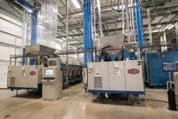
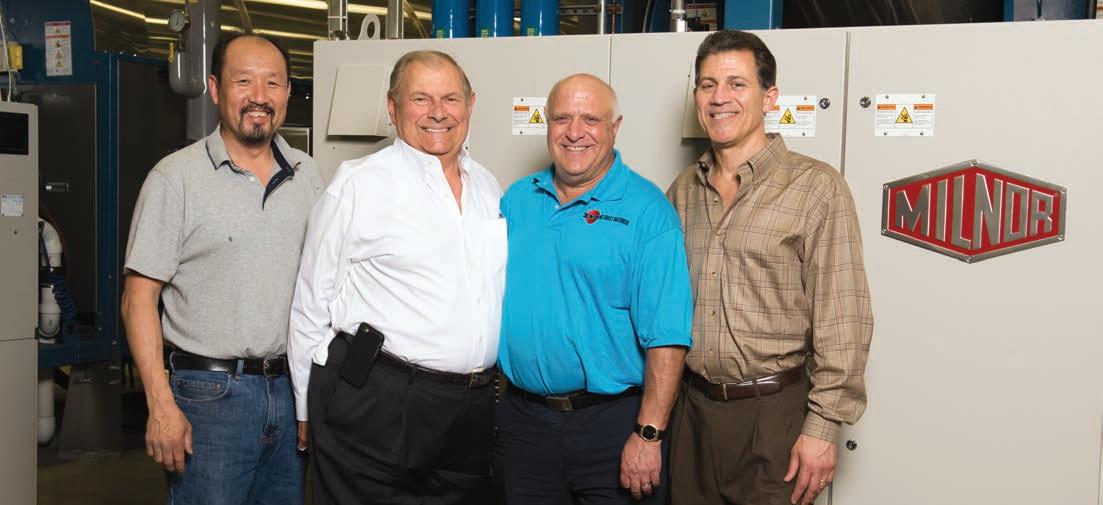
Arrow’s customers’ restaurant linen requires frequent color and soil change formulas, but the quality is not compromised. Corporate Engineer Frank Park boasted the tunnels “have increased our workload over 40% without increasing energy, water, or labor costs we experienced when we converted the conventional washers to CBW® tunnels over 20 years ago. The major improvements from the CBW® to PBW™ are far superior washing capability with only 50% water consumption.”
To find out how PulseFlow® can cut your water bill in half, contact an authorized Milnor distributor or call 504-712-7656.
www.milnor.com / pellerinmilnor
Scan to read Arrow’s success story.
left to right: Frank Park, John Ambrose Magliocco, Ron Hirsch, and John Anthony Magliocco
Safe to say, health is key
Call this edition of American Laundry News our “health and safety issue.”
Why health?
Because Editor Matt Poe investigated and wrote several articles related to healthcare laundry processing.
You’ve probably noticed his cover article on healthcare laundry self-regulation. Poe heard some “rumblings” in the industry, so he talked to various interested parties about the self-regulation options out there, along with bringing up the possibility of unifying the process.
He also got a look into the strategies of European healthcare laundries at the Association for Linen Management (ALM) Conference earlier this year and shares the barrier and laundrycycle management concept.
The Director’s Chair BRUCE BEGGS
Another issue in healthcare laundry is linen loss. So, Poe spoke with three experts in the field and uncovered 12 tips to help curtail disappearing linen. Why safety?
We posed the question of achieving a safe laundry to our Panel of Experts, and our experts
trumpeted the need for safety to protect employees and help operations run smoothly.
And former Panelist Scott Delin, Fashion Seal Healthcare, shares his thoughts on how a uniform program could help safety and comfort in the healthcare setting.
Healthcare laundry and safety were also among the topics discussed at the just-completed Texcare International 2016 in Frankfurt am Main, Germany.
Poe attended the event, which celebrated its 60th anniversary. He walked and talked his way through the trade fair halls and absorbed Texcare Forum lectures. You’ll find his complete report starting on the cover.
So, I hope you enjoy this issue and find it useful. Here’s to your health…and safety! ALN
OSHA: Repeat safety and health violator, chute manufacturer fails to correct hazards
Litchfield County company faces an additional $422k in OSHA fines
HARTFORD, Conn. — U.S. Chutes Inc., a manufacturer of galvanized chutes for laundry and trash conveyors, faces additional fines for uncorrected, repeat and new workplace safety hazards, reports the U.S. Department of Labor’s Occupational Safety and Health Administration (OSHA). After the OSHA cited and fined U.S. Chutes’ Bantam plant $94,428 for repeated and serious safety violations in January 2015, the manufacturer asked for time to correct the hazards completely.
After the company failed to submit verification of the hazards’ corrections, OSHA’s Hartford Area Office opened a follow-up inspection and, as a result, U.S. Chutes now faces an additional $422,680 in federal penalties.
“U.S. Chutes’ ongoing refusal to correct serious conditions that can sicken or injure its employees must stop. Every day it fails to correct hazards, it needlessly places its workers at risk of crushing and amputation injuries, dangerous chemical exposure, eye injuries, electric shock and exposure to a cancer-causing substance,” says Warren Simpson, OSHA’s area director in Hartford.
The uncorrected hazards encompass the company’s continuing failure to:
• Properly guard and inspect mechanical power presses.

• Update its respiratory protection program.
• Provide medical evaluations for employees required to wear respirators.
• Conduct monitoring to determine employees’ exposure to hexavalent chromium, a known carcinogen.
• Provide chemical hazard communication training chemical safety data sheets for employees.
• Provide a certified hazard assessment for each job task.
• Correctly use and install electrical equipment.
The recurring hazards included
See CHUTES on Page 14
It’s the small things
This year marks the start of my 46th year in the laundry business. It is hard to believe that I have been working in this industry that long.
I must confess that I did not originally set out to have a lifelong career in this business. I did not seek it out. I found it by accident and was smart enough never to leave it.
Early on, Bill Hendrix, a hard-working assistant manager with a strong maintenance background, took me under his wing and attempted to teach me the laundry business. Bill was great to work for if he liked you, and the devil to work with if he did not. He had little tolerance for politics in the work environment, or political correctness.
Bill liked to use object lessons in his teaching methods. When it came to problem solving, he always said to look for the simple things first and leave the most complicated possibilities till last. He said that 95% of our problems would be solved in looking at the simple factors.
This lesson was driven home by the following incident.
The laundry had quickly expanded to a three-shift operation, and a young, promising but inexperienced supervisor was placed in charge of the small third shift. Their goal was to help clear up any backlog left from the other two shifts and set the day shift up for maximum production.
Arriving for work one day, Bill found this supervisor and the third-shift maintenance man working on the small-piece folder on the back of one of our two ironers. They had worked for at least six hours trying to figure out why the folder would not fold.
This American small-piece folder had an old mechanical timer system that measured the items and managed the folds. They had the side panel off and were trying to understand how it was supposed to work and therefore determine what needed to be adjusted so it would work again.
Bill walked over, listened to their story and then looked at the discharge end of the folder. A broad smile came to his face. He called the two men over and pointed to a simple toggle switch, which read “on” or “off.” The switch was in the “off” position. Once flipped to the “on” position, the folder worked perfectly.
“LEARNING THE LAUNDRY INDUSTRY BY WORKING IN EACH JOB AND UNDERSTANDING THE SMALL DETAILS INVOLVED WITH EACH JOB IS GREAT PREPARATION FOR BEING ABLE TO LOOK FOR THE SMALL SIMPLE THINGS THAT CAUSE THE BIG PROBLEMS.”
The night shift lost six hours of small-piece production because a simple switch was in the wrong position.
Always look for the simple causes first before going into the complicated ones. No matter what challenge you are faced with in the laundry business, always look for the simple solutions and you will solve 95% of your problems.
Twice a year, we had a staffing shortage that happened to match up with a special reunion meeting held during the Church of Jesus Christ of Latter-day Saints Semiannual General Conference. A large portion of that work crew was from the South Pacific island of Tonga.
These twice-a-year Tongan Mission reunion meetings were extremely important to those members of my staff. The easy solution was to find out when the meeting was scheduled to take place and alter our work schedule so as not to conflict with it. We tried it the first time and our employees were most grateful. The added loyalty and happiness was worth the effort.
Learning the laundry industry by working in each job and understanding the small details involved with each job is great preparation for being able to look for the small, simple things that cause the big problems. Focusing on looking at the small details when problems arise will help us quickly solve our problems. ALN
Eric Frederick is director of laundry services for Carilion Laundry Service, Roanoke, Va., and a past president and manager of the year of the Association for Linen Management. You can reach him by e-mail at efrederick@carilion.com.

4 JULY 2016 | AMERICAN LAUNDRY NEWS www.AmericanLaundryNews.com
From
COLUMNIST AT LARGE Eric L. Frederick, RLLD
Top Stories Appearing on AmericanLaundryNews.com for the 30 Days Ending June 15 (WE) = WEB EXCLUSIVE NEWS • OSHA Standardized Labels and Employee Hazardous ... • Oceanside to Close Doors in June After 40 Years • New Hampshire Laundry Fined, Given Probation for Hacking ... • Largest Expansion in Alliance Laundry Systems History ... • Unitex to Open 12th Northeast Facility COLUMNISTS/FEATURES • Healthcare Scrubs Affect Patient Care Perception • Eric Frederick: Know What You Want from Textile Purchasing • Healthcare Facilities Moving to Microfiber Flat-Mop Systems • OPL 101: Innovative Tools Help Laundry Room Managers ... OUR SISTER WEBSITES From AmericanDrycleaner.com:
DLI Partners with Web-App Specialist Starchup ...
Nail Polish and You From AmericanCoinOp.com:
What’s Next? The Future of Vended Laundry
A ‘Little House’ of a Laundromat
•
•
•
•













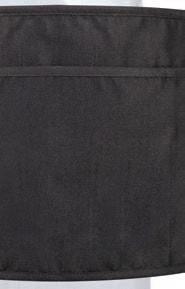


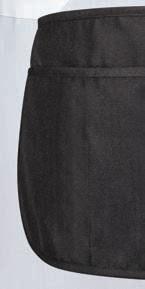
800 821 2221 | imagine@americandawn.com | americandawn.com BECAUSE PROFESSIONAL WAIT STAFF DESERVE CLEAN APRONS THE INDUSTRY’S FIRST RENTAL APRON FOR THE FRONT OF THE HOUSE The ADI Server Pro Collection M ade from Rental Friendly Spun Polyester Server Apron Has 3 Pockets For Straws, Pens, Checks Bistro Apron Has 2 Pockets (Available in Black or White) M ade With The Professional Waiter In Mind O2311BLKMTIM O7529BLKIM O7529WHTNWI
Texcare
EXPANDED TRADE FAIR FLOOR
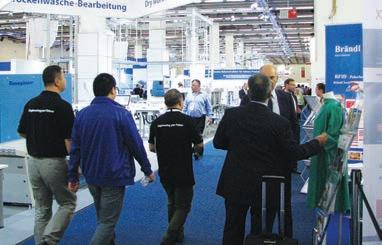
After the opening, attendees got to experience just how big the show was this year. Exhibit space displays reached for the ceiling in Hall 8, and large swaths of Hall 9.
The show obviously has a more European focus, but commercial and on-premises laundry companies with ties to the United States conducted brisk business as well.
Some of the companies with U.S. ties in attendance included Alliance Laundry Systems, Chicago Dryer Co., Colmac Industries, Dexter Laundry, Ecolab, Electrolux, Girbau, Image Laundry Systems, JENSEN, Kannegiesser, Lavatec Laundry Technology, Pellerin Milnor Corp. and Whirlpool.
The international focus made the trade fair a little easier for Keith Ware, vice president of sales for Lavatec, than what he usually experiences at shows.
“This is my first time here on the supplier side, but I don’t speak German,” says Ware. “I feel a bit out of place, but I answer any questions as they come up.”
Ware and the rest of the exhibitors answered plenty of questions about their equipment and services for the international crowd, because most of the exhibitors showed off new products and systems.
“The ultimate goal here is to show complete automation in the laundry process,” says Phil Hart, president of Kannegiesser USA. “The industry isn’t there, yet. What we’re trying to show here is a process that replicates quality every time.”
Kannegiesser’s attempt to show complete automation of a laundry, from sort to finish, took up a large portion of the expanded Hall 9. But not all exhibitors went big at Texcare.
“We didn’t bring a big booth,” says Antonella Favaro, marketing activation manager for Electrolux. “Our customers know our products, and we simply wanted to display our novelty items.”
Colmac also had a smaller booth, but it was effective for showing off the company’s boilerless tunnel finisher, according to Mike Harper, vice president of engineering.
“There is a need for small, boilerless models,” he says. “Some of our customers are two steps removed from a laundry. For example, Amazon has a facility with many photo areas to take pictures of models wearing the items. They needed to be able to press them for the models.
“And all of the products we’re showing here are available in the U.S.”
Some exhibitors from the United States don’t have a large presence overseas but were in the market
for distributors.
“We’re looking for distributors in Europe,” says Kevin Hietpas, director of sales and marketing for Dexter Laundry. “If we can go home with a couple distributors, it will have been a good show for us.”
Richard Trama, global manager of commercial laundry service for Whirlpool, the parent company of Maytag Commercial Laundry and ADC, was also looking for European distributors.
“We’re looking for a European salesperson who can sell our merchandise,” he says.
Trama also teased what the company has in store for the 2017 Clean Show in Las Vegas.
“Next year, our really new ‘new’ product will be ADC washers,” he says.
New was the focus of the JENSEN Group while in Frankfurt. The company debuted new products, including an ergonomic multi-sort platform and a high-production towel finisher.
“We’ve had a lot of interest in our innovations here,” says Gerda Jank, head of marketing for JENSEN Group. “We have been developing these innovations, and it is here for the laundries, finally.”
Not only were U.S. vendors represented in Frankfurt, some U.S.based textile services companies worked the trade fair halls as well.
One thing that attracted John Teyssier, director of operations for Virginia Linen Service Inc. in Petersburg, Va., was the fact that there were people and companies on the floor that he didn’t know.
“Unlike in America, where you know so many people at these shows, I don’t know many over
here,” Teyssier says. “I can go take a look at the machines. I like the variety of equipment.”
“As you can see on this floor, this is not a low-technology industry,” says Doug Waldman, president of Superior Linen Service in Tulsa, Okla. “It’s a very high-technology industry. The people on this floor represent the knowledge I need.”
TEXCARE FORUM

Knowledge was the focus of the educational side of the trade fair, known as Texcare Forum. Each afternoon during the first four days, two hours of lectures were offered to attendees on a variety of topics.



The first day’s lectures had a training focus, because the growth of the industry is making it difficult for companies to find skilled employees—around the world. Waldman,
who is also chairman of the Textile Rental Services Association (TRSA) board, along with President and CEO Joseph Ricci, conducted a lecture on how TRSA is helping companies train up employees.
“I was fascinated by the first presenter’s talk about getting people in the industry [in Germany]. It’s amazing how similar it is to the United States,” says Waldman. “There really is not a government
training program for people to come into our industry. It’s an issue; it’s a struggle for us to find individuals and recruit individuals in who have skills.”
Katrin Rasch with the Vocational Training Institute of the University of Cologne shared that training for employment at a laundry needs to become a “career-making concept.”
6 JULY 2016 | AMERICAN LAUNDRY NEWS www.AmericanLaundryNews.com
cake—and Marzin welcoming all to Texcare International 2016.
Continued from Page 1
See TEXCARE on Page 26
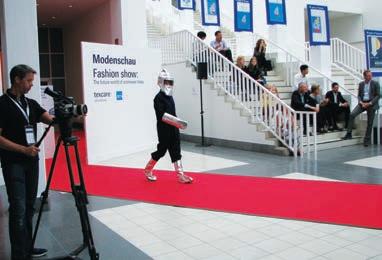
The Fashion Show featured protective clothing, workwear and professional wear.
Wolfgang Marzin, president and CEO of Messe Frankfurt, opens Texcare International 2016.
The trade fair’s 60th anniversary was celebrated with cake and champagne.
Doug Waldman, president of Superior Linen Service and chairman of TRSA, speaks during the Saturday Texcare Forum lectures.
Texcare International 2016 expanded into Hall 9 this year and signs circulated around the floor to remind attendees.
Hall 9, which was added for 2016, was busy throughout the trade fair.
Question-and-answer sessions followed each Texcare Forum lecture.
LOOK BETTER. SPEND LESS.













Your clients expect the highest quality – and they should. Girbau Industrial washers and dryers provide a high-caliber clean while extending linen life. Add an Ironer to your equipment mix and linen is perfectly ironed straight from the washer. It feels soft and looks crisp, which is what your clients expect. Thanks to Girbau Industrial laundry equipment, you’ll heighten laundry productivity using less labor, while decreasing utility costs. Even better? Clients will thank you!










Contact Girbau Industrial for a FREE ESTIMATE to see how you can deliver more productivity to your laundry while increasing product quality! (800) 256-1073 • www.girbauindustrial.com INDUSTRIAL
Solution for healthcare laundry
moves forward, dirty to clean.
BY MATT POE, EDITOR
CHANDLER, Ariz. — When it comes to delivering good hygiene in healthcare facilities, there is no one rule. There is a set of fundamentals. There are many different recipes.
That’s what Landry Guillochon, global manager of care institutions in the laundry business unit for Electrolux Professional, said when he presented European Perspective on Infection Control at the Association for Linen Management (ALM) conference here earlier this year.
“It’s up to you to choose the recipe that best fits your environment,” he says.
However, the international barrier concept solution and laundry cycle management system offer sustainability to healthcare facilities, according to Guillochon. Also, if the facilities put the laundry function back into the center of the care delivery package, then they are fulfilling the mission of giving patients a new life.
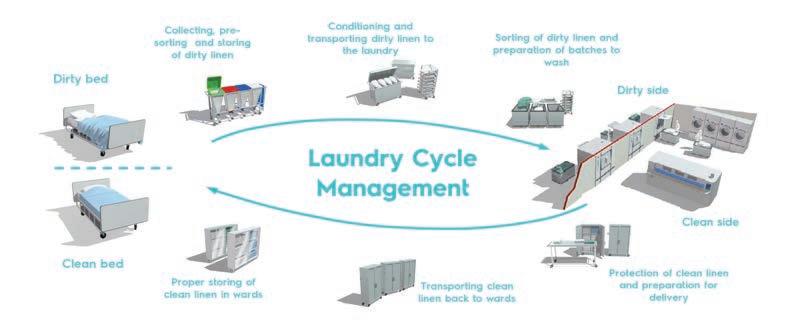
“The fact is that it is not just about the laundry room,” he says. “In many instances, we make a mistake about where does responsibility sit to deliver good hygiene? Not just about laundry. Everybody has a role to play. From dirty bed to clean bed, we’ll look at a holistic approach to good hygiene.”
BARRIER CONCEPT SOLUTION
“The barrier concept is the best way to prevent cross-contamination with physical separation,” Guillochon says. “You’ve got the dirty side of the laundry separated by a physical wall from the clean side.”
Washers are equipped with a double door system, he says, and
both doors can’t be opened at the same time. Operators and carts on the dirty side only touch dirty linen.
“There is no risk that on the other side an operator who has touched dirty linen comes in contact with clean linen, unless they are (David) Copperfield or Harry Potter,” says Guillochon. “That being said, the barrier concept is not the only solution. You can have good hygiene without barriers, but can you guarantee sustainability? Can you guarantee that at all times, people will do the right thing?”
He says that the international solution is all about making it easy. With the barrier concept, people cannot do wrong, because it is impossible.
If a healthcare organization and laundry want to deliver good hygiene, they need to have good organization, according to Guillochon. Good organization looks at a forward flow of linen. There is no coming back; it always
“The first thing you do is separate the entrance of your dirty from the exit of your clean,” he says. “And you try to position your equipment to where it’s going to end up in your laundry.”
Dirty linen comes into the dirty side and is stored there, waiting to be sorted, says Guillochon. Employees sort the linen and load the barrier washers, and the barrier washers are loaded according to where the items will be finished.
“Linen to be tumble-dried will be washed in line with the dryers,” he says. “Linen that goes through the flatwork ironer will be washed in line with the position of the ironers. And the linen that will be folded will be washed in the appropriate washers.”
But, the barrier concept is not just about the laundry, Guillochon says.
“The barrier concept is everywhere in a hospital and outside a hospital. You go to Japan and people who are sick, have colds, are educated to wear masks in order to protect their fellow citizens. That’s a barrier. The gloves people serving
food wear is a barrier to prevent cross-contamination. In a hospital, it’s a very common thing,” he says.
LAUNDRY CYCLE MANAGEMENT
Beyond the barrier concept in the laundry, international healthcare facilities engage in a holistic approach of laundry cycle management, from the dirty beds through to the laundry and back to the clean beds, says Guillochon.
In a hospital room with a dirty bed and a clean bed, an employee will pre-sort as they pick up the dirty linen. In Europe, hospitals use color-coded bags with a foot-pedal pop-up to avoid airborne contamination and odors.
“As we pick up the linen, we’ll set some rules. In Europe, for example, we put garments in one, small flats in one, linen to tumble-dry in another one,” says Guillochon. “Why is that? Why separate large flat from small flat? They’re both washed. They both go to the same dryer. You want to manipulate and segregate your linen once it’s dirty so when it’s clean there is mini-
mal manipulation, and if there are questions asked, you know where that load goes.”
In addition, the pre-sort helps in the laundry room. If an employee needs to find 100 pounds of white linen and has to open 500 pounds of dirty linen to find that 100 pounds, that dirty linen is consuming space, Guillochon says.
“Whereas, if you pre-sorted your linen in color-coded bags, you know that the large flats are in the yellow bags, and that a yellow bag is roughly 20 pounds. So, you just take 21/2 bags to find 50 pounds of flatwear and you put the rest in the bag,” he says. “It’s not messy, doesn’t smell.”
Before the dirty linen gets to the laundry, however, what is done with it?
“Where do we store it? Not in the room. We’ve got patients. We’ve got visitors. So we’ll see that the proper design of the facility as well is where there are proper places for storage,” says Guillochon. “The trolley doesn’t actually enter the
8 JULY 2016 | AMERICAN LAUNDRY NEWS www.AmericanLaundryNews.com
(Graphic: Electrolux)
See SOLUTION on Page 19
International method helps avoid contamination in healthcare linen process
ALN_Tab_1-4_H.indd 1 6/2/16 3:28 PM BARRIER CONCEPT AND CYCLE MANAGEMENT:
Notice Anything?























InkGo® Is Now Odor Free!






InkGo has been reformulated to remove its odor… and to improve its performance.

















InkGo is still the environmentally friendly,* safe way to remove ink stains from all types of fabric. It’s still great at removing autoclave tape and adhesives. And since it’s odor-free, InkGo is more pleasant to work with.






Does odor really matter? As more drycleaners position themselves as good environmental stewards, keeping chemical odors in the plant to a minimum can help them differentiate from their competition. And odor-free is a real plus if you’re working on ink for an extended period of time.



Now that’s worth noticing!



*InkGo is Biodegradable and is California Prop-65 and California VOC Compliant.












Become a STAIN WIZARD at ALWilson.com

To learn more, visit ALWilson.com or call 800-526-1188 A. L. WILSON CHEMICAL CO.


Healthcare
fication come at a cost to the company seeking to be approved.
HLAC ACCREDITATION
John Scherberger, president of the board of directors of HLAC, says that in 2005, a number of industry associations got together, pooled some money and decided to create standards that would meet all of the guidelines, regulations and codes of organizations such as OSHA, CMS and CDC.
According to Scherberger, the healthcare laundry industry was providing excellent, safe products at the time. The concern was one of governmental investigations.
“The industry decided that there was no regulatory body looking at the healthcare laundry industry itself,” he says. “Each laundry or sector was essentially monitoring itself, and that would lend itself to so much scrutiny that was unnecessary.”
In addition, the group wanted to look at the best, essential practices.
“There is a thing called best management practices, which are usually focused on things such as sustainability or chemical use or water output, but there was not anything that really brought the whole industry together as a standard or standards,” says Scherberger. “So, the HLAC was formed with a diverse board, and board members serve three years.”
Members come from the industry: textile manufacturers, machine manufacturers, distributors, consultants and hospital associations, he says.
“The board has changed over the years, from necessity, from primarily representing members of the healthcare laundry industry to looking at more of a broad spectrum in the healthcare industry, because we are focusing on the quality outcome for patients,” Scherberger says. “The one common thing that every patient has is healthcare textiles— be it an immune-compromised patient, a burn patient, or a patient with a hip replacement or a patient coming in for a gallbladder [surgery] or a tonsillectomy—they have textiles in common.
“With the Joint Commission and CMS saying we have to have quality patient outcomes, the ethical thing to do is that we contribute to those outcomes.”
Today, the board still includes industry representatives, but it also has infection preventionists and representatives from the healthcare industry who know what the industry should be looking at as far as how healthcare textiles contribute to quality patient outcomes, he says.
“What the HLAC standards do is take it from the time the textiles are delivered, some people use the term ‘soiled,’ I personally prefer the term ‘contaminated’ because you don’t know what is on the textiles when they come. It might just be dirt, but it might be a plethora of bacteria or even pathogens,” Scherberger says. “So we have to have one standard for treating the textiles. It maybe goes to a healthcare laundry, and there are a number of excellent ones out there. Sometimes it’s delivered to the hospital.”
He says that HLAC also looks at the safety of the environment for the worker.
“It’s not just looking at the textiles, the end result of textiles, we want to ensure the processes are in place, are followed, and the employees, the professionals, are working in a safe environment,” Scherberger says.
That’s one of the reasons he notes that HLAC incorporates so many OSHA guidelines in its standards.
Inspections, Scherberger says, are performed by employees of laundries, employees of hospitals, consultants or people who are members of boards from industry associations. The inspectors are independent contractors for HLAC.
“They take that check-off sheet to every facility,” he says. “We have different standards (must, should, may), and [laundries] have a certain percentage that they have to meet or that they can fail before they have to go on to remediation. It’s very objective; it’s not subjective.
“If they don’t meet the object of the inspection, they fail. It doesn’t come in where an inspector goes in and says, ‘Your plant looks good, you should have this done.
I understand it’s a hot day, you’ve got your doors and windows open, I’ll let that pass.’
That doesn’t work. We have standards that are there for everyone to follow. If we didn’t treat everyone the same, then there is no need for having a standard.”
According to Scherberger, many hospital organizations are saying that if a laundry wants to process its textiles, the laundry must be HLAC-accredited because the organization understands the accreditation process is through a third party.

“We set the standards based on the best outcome for our end-users, which is the hospital and the patients,” he says.
HYGIENICALLY CLEAN CERTIFICATION

The other program available is certification through TRSA—the Hygienically Clean Healthcare certification.
Ricci says that in the past six months, 16 plants have earned the Hygienically Clean Healthcare designation and dozens have recertified. During the past year, there has been a 50% increase in plants pursuing Hygienically Clean Healthcare, and since its inception only 31/2 years ago, nearly 100 plants have earned Hygienically Clean certification with another 40 plants in the application, inspection and testing phase.
“The program has taken off because it appeals to laundries and their customers,” Ricci says. “The standard was created by the laundry industry utilizing strict processes, and launderers are driving its improvement under advisement of healthcare professionals, as well as through collaboration during quarterly ‘user group’ teleconferences involving representatives from certified laundries.”
He says the program has an emphasis on best practices, operational standards, inspection and microbial testing to quantify results.
“The healthcare community appreciates the proven practices and quantification of results as they are asked to increase their same accountability for outcomes for patients, insurers, government and other stakeholders that demand improved quality and outcome-based testing,” Ricci says.
According to Ricci, Hygienically Clean Healthcare focuses on best practices, proven processes and quality controls, as well as quarterly random testing to ensure the standards are maintained.
“Hygienically Clean or any industry standard serves as the basis for self-regulation,” he says. “While it is important that customers have input regarding process improvements and other issues impacting the safety of patients and consumers, ultimately, selfregulation is critical to ensuring a balance of safety, value and performance.”
Ricci says that TRSA is best suited to help
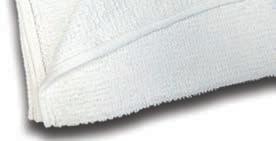
10 JULY 2016 | AMERICAN LAUNDRY NEWS www.AmericanLaundryNews.com Save up to 70¢/dozen when you eliminate pre-washing and counting. You will also benefit by freeing up laundry capacity. These 32oz route ready bar mops are soft packed, optically white, and ready to use bundles of 25 each. Ask us about FREE personalization. ✓ PRE-SORTED ✓ PRE-WASHED ✓ READY TO GO ROUTE READY BAR MOPS $3.25 PER DOZ (800) 333-7247 monarchbrands.com
Continued
from Page 1
the industry self-regulate, as the textile services industry has relied on TRSA for more than 100 years to develop, identify and communicate best industry management practices such as setting cleanliness standards and implementing microbial testing.
Conducting these tests, based on current proven and emerging European standards, of certified plants four times a year provides more opportunities for improvement than one inspection every three years, he adds.

“Certification, while an important and expanding aspect of the association, represents only a small fraction of our services to the industry, with all certification revenue reinvested into promoting the value of certification to textile services customers,” says Ricci.
MORE PROGRAMS, MORE CONCERNS?
With different programs available for laundries to be self-regulated, along with the requirements of federal and regional organizations, some concerns have arisen.
Fairbanks says that healthcare organizations are getting confused. She says that she has customers calling on a regular basis, unsure of what they need to do to meet standards.
“They’re saying their current laundry is saying they have to do it this way. I have another laundry saying, ‘No, that’s wrong, you have to do it this way. You have to have this accreditation. No, you have to be doing this on this basis. Plus, I’m a hospital, I’ve got the department of health telling me that in my state, I have to do X, Y, and Z,’” Fairbanks says.
“The industry had an agreed-upon standard overseen by the HLAC,” says Jenkins. “ARTA was a founding member of HLAC and still participates on its board of directors. ARTA has provided input and, in the beginning, provided some financial support along with other founding associations.”
In 2005, Scherberger says, those who came to the table agreed that the standards needed to be rigid, needed to be robust.
“They needed to set a high bar so that we would not have to have townships, counties, cities, or regional or federal governments coming in and saying we’re going to regulate you,” he says.
Scherberger says that all of the organizations have the niche in which they excel, and HLAC excels at standards.
As regulations, guidelines and science change, he says that HLAC will change its standards, just as the 2011 standard were
recently updated. He also emphasizes that the changes are put out for public comment, that the HLAC board doesn’t simply make changes based on what it thinks.
“We haven’t had that many people complaining about our standards, because our standards are primarily written by healthcare laundries,” says Scherberger. “We work with them. If somebody wants to have something changed, we need to understand why. It can’t just be because my individual laundry can’t meet that standard. It’s the industry can’t meet that standard.”
“We don’t believe there is any confusion,” says Ricci. “Launderers, particularly TRSA members, and their customers understand the differences.”
Ricci says that for almost four years, TRSA has explained Hygienically Clean through its news articles, webinars and conferences, as well as social media and exhibitions and speaking at the Association for the Healthcare Environment (AHE), ARTA and the Association for Professionals in Infection Control and Epidemiology (APIC).
“We also are continually developing videos and other resources to generate awareness and educate members on best practices such as training videos on lockout/tagout and precautions for bloodborne pathogens,” he says. “Most recently, TRSA distributed more than 1,500 flash drives with an industry- and healthcare community-driven Handling Soiled Linen in a Healthcare Environment training video and test, as well as information on the importance of hygienically clean linen.”
Other methods of communication he points to include a Hygienically Clean white paper published on the association website that has been promoted to healthcare professionals for almost three years.
“We welcome competition between programs. Our nation thrives on economic competition,” Ricci says. “It fosters improvement, ensuring all stakeholders benefit from the best products available.”
He uses the Medicare certification hospital administrators now do of their own facilities as an example. In 2007, Ricci says, the Joint Commission stood alone in this field. Then DNV Healthcare came along, emphasizing international standards such as ISO. By 2013, two more competitors joined the mix.
“The Joint Commission had become very heavy-handed, not focusing on collaboration. Today, the feedback from hospital
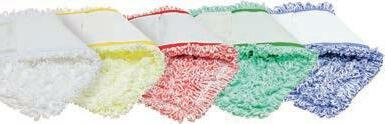
POCKET MOPS
ECONO WET MOPS
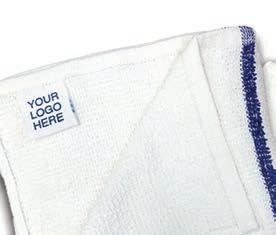
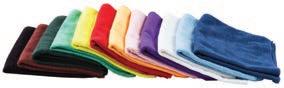
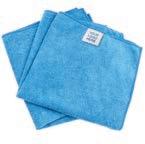
www.AmericanLaundryNews.com AMERICAN LAUNDRY NEWS | J ULY 2016 11 Minimums apply Promote your brand 24/7 with FREE logo label embroidery! • Personalized microfiber products, terry towels and bar mops • Ultimate control over your inventory • Carry your own product line • Free advertising for your business CUSTOM SOLUTIONS (800) 333-7247 monarchbrands.com MICROFIBER CLOTHS • 16”x16” professional microfiber cloths • Use for wet or dry cleaning • Wide variety of colors 35¢
• Highly absorbent 18” side pocket mop • Industrial strength canvas backing • Matching hardware available $2.65
• Cut cleaning costs without sacrificing quality • Commercial quality microfiber looped flat mops • 18” long with Velcro backing 95¢
See HEALTHCARE on Page 12
(Image licensed by Ingram Publishing)
Where did all the linen go?
devices that can be placed in linens that provide a unique identifier for the product. Using the system (tags and scanners), healthcare facilities can better keep track of where linens are in the building.
BY MATT POE, EDITOR
CHICAGO — Linen has a curious habit of disappearing from healthcare facilities.
Patients walk out the door with linens. Hospital staff throw away what they believe to be unwashable goods. Ambulances drive away with loads of linens owned by different facilities.
Whatever the reason, these disappearing healthcare textiles could lead to shortages of necessary linens—and it certainly results in higher costs for facilities and laundries.
American Laundry News contacted three healthcare laundry/ textile experts—Nathan Rivers, environmental protection specialist at Bay Pines VA Medical Center in Bay Pines, Fla.; Nicole Grubich, executive director of West Michigan Shared Hospital Laundry in Grand Rapids, Mich.; and Seth Gershman, director of marketing and communications for Unitex Textile Rental Services in New York—to learn some of their top tips for avoiding linen loss at healthcare facilities.
RFID TAGS
Radio frequency identification (RFID) tags are small electronic
“If funds allow it and the ROI dictates that using an RFID tag system would benefit the laundry from losing linen, then this is certainly something to look at,” says Rivers.
LOGOS
A logo, whether it’s from the hospital or the company providing the linen, can be a deterrent for textiles to “leave” a healthcare facility.
“If there is a big logo on linen stating where the linen is from, then customers and patients may not be so inclined to walk out the door with them,” says Rivers.
BAR-CODE DISTRIBUTION CARTS
The usage of bar codes on distribution carts goes along the same lines as RFID.
“If you know where you sent a cart, and the information that goes along with scanning the cart, then it can help narrow down an issue of where your linen is/was,” Rivers says.
STRATEGICALLY PLACE LINEN
Call this tip “removing temptation.”
A healthcare facility can make
sure to not place the more expensive linen in areas where it may not be deemed necessary or in areas that could have possible high linen loss, such as the emergency department, in-patient wards, the operating room, etc., according to Rivers.
He also suggests that off-site laundries might be able to work on linen placement with the healthcare facilities they service.
LINEN DISPENSING MACHINES
Utilizing linen dispensing machines can limit the amount of linen that one employee can pull from the dispensing unit at once— especially the machines that dispense scrubs.
There are also dispensing machines that will tell the personnel receiving the linen how much that linen costs to put into that machine, which hopefully makes the person conscientious of the fact that the linen is technically not free, Rivers says.
LINEN COMMITTEES
Linen committees allow the relevant stakeholders to come together periodically, usually once per quarter, to discuss issues with linen. Linen loss would certainly be one of the standing agenda items.
“At several big systems, I work directly with the marketing departments to do some co-branding of pieces where we’ll have our mes-
sage and the hospital logo and messages on the same pieces,” Gershman says. “The hospital will then circulate it internally, or use the local intranet to circulate slides on what we’re working on.”
MOU/CONTRACT WITH AMBULANCE COMPANY
Ambulance drivers can be one of the biggest culprits of linen loss out of the emergency department as they will need linen to ensure a patient is taken care of during transport.
Rivers suggests creating a memorandum of understanding (MOU) or contract (informal or formal) that states that the ambulance will provide replacement linen or bring linen back when they come.
“You could also purchase disposable linens for this very situation or provide a shelf with your less expensive linen to provide,” says Rivers.
ACCURATE PAR LEVELS FOR DISTRIBUTION SHELVES
Rivers suggest that healthcare facilities and laundries take the time to do a linen study in order to create par levels.
“If a facility has the right amount of linen, then there will be less to no linen that can be lost,” he says.
PRICING
Sometimes, it takes a pinch in the pocketbook to get a healthcare facility’s attention when it comes to disappearing linen.
“Setting linen replacement rates high enough that the hospital feels the pain of losing linen, that gets them engaged in helping to prevent it,” says Grubich.
Gershman agrees. “When bills reach six figures for lost linen, then [administrations] start really taking notice, and we’ve been able to help with the education process.”
administrators on certification options has been very positive,” Ricci says. “The creation of Hygienically Clean Healthcare was a direct request from the textile services industry, which believed that focusing on international standards, proven best practices and processes, as well as inspection and ongoing testing, raised the level of safety for patients. Hygienically Clean is obviously serving a market need based on its tremendous growth and expansion to food safety and foodservices markets, and soon the hospitality sector.”
“Competition is good, except when it comes to confusing standards or guidelines. I would like to see just one set, which is HLAC,” says Scherberger. “It’s not an either/ or, we’ll keep certification and get rid of accreditation, or we’ll keep accreditation and get rid of certification. My big concern is to get rid of confusion of the healthcare textile processors. There is confusion, and there shouldn’t be confusion.”
Scherberger admits that HLAC’s standards are stringent and robust, but they are such for a purpose: to make sure the employees at the plant are safe and the quality of the textile is safe, hygienic and will not cause any harm to a patient.
“I don’t believe in having two, three, four
different organizations, because it does cause confusion. We’ve had some laundries that say, ‘Look, your standards are tough and so high,’” he says. “Our question to them is don’t you want to have the higher standards for your employees and your production output?”
Ricci says that TRSA is always open to discussion with other organizations regarding collaboration if it results in improvements in safety and performance. As examples, he points to the association’s Safety Summit conducted in cooperation with the CSC Network and recent alliances with UniversalUniLink and the European Textile Services Association (ETSA), as well as developing and hosting the World Textile Services Congress in October 2016 with several international associations.
“We’re excited by our potential overseas, with interest in our programs in Europe and Asia,” he says. “We have an outstanding relationship with the ETSA, which keeps us in tune with research and standards development there.”
“The problem is that we fall under United States regulations, like the CDC and CMS guidelines or OSHA,” Scherberger says. “We don’t fall under the European standards or the Australian standards. And then we’ve also had a lot of people coming from European nations, Middle Eastern nations, Pacific Rim nations, and Mexico, they come to us and say, ‘Can we use your standards? We don’t have
standards like yours.’”
“I don’t see the two groups combining efforts at this point,” Jenkins says. “I don’t see TRSA shutting its certification programs down at this point.”
She believes that if HLAC were to include periodic bacterial testing as part of its standards, this would eliminate one point of contention between the two groups.
At the end of the day, she says that whether a laundry decides to secure certification or accreditation, it can and should be following best practices as outlined by ALM, TRSA or HLAC.
“The decision in selecting certification versus accreditation is an individual one,” says Jenkins. “Each laundry should decide which method is best for them. Many laundries undertake both certification and accreditation.”

THE FUTURE OF STANDARDS
Healthcare laundry standards and selfregulation are not going away, and no one in the industry wants them to go away. If anything, the feeling is that standards and practices, and the self-regulation programs, will become more stringent.
Jenkins says, “I see standards becoming stricter, as the issue of infection control will only grow larger in the marketplace.”
Ricci expects that experience and research findings are likely to lead to improved best practices in the future.
“We do not expect any increase in inci-
dents questioning existing practices, however,” he adds. “Trillions of pounds of linen have been processed over decades with no indication that clean laundry transmits infectious disease. Situations have arisen involving transportation or storage, but not the actual cleaning of the linen. Launderers need to remain diligent and vigilant, but patient safety has never been a problem, so it’s important not to overregulate. For certifiers, improving best practices and executing properly are essential.”
Scherberger hopes to keep the government from getting involved in the regulation process.
“We’re hoping that the government looks at what’s going on and says ‘HLAC, you’ve got a good standard, a good process, your accredited laundries are putting out quality products and safe products,’” he says.
“Accreditation can be an excellent tool for assessing the knowledge, skills and abilities of a laundry processing facility,” Fairbanks says. “However, it is important for hospitals to realize that properly processing/washing textiles is a process that should be continually measured and monitored, requiring necessary adjustments.
“One significant and important reminder to healthcare facilities utilizing a contracted (includes cooperative) laundry provider is that the customer themselves are ultimately responsible to CMS for the oversight of their laundry contractor and the quality of the services provided to the patient.”
12 JULY 2016 | AMERICAN LAUNDRY NEWS www.AmericanLaundryNews.com
ALN
A dozen ideas to help curb linen loss at healthcare facilities
See LINEN LOSS on Page 26 Continued from Page 11 Healthcare
(Image licensed by Ingram Publishing)
THE LESS ATTENTION OUR MACHINES NEED, THE MORE THEY SEEM TO GET.





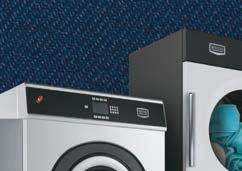
For over half a century, dependable Maytag® Commercial Laundry machines have stood up to daily use that would have lesser washers and dryers crying for a repairman. They’re also energy-efficient—increasing throughput, while lowering utility and labor costs. To learn more about our products and their comprehensive warranties, visit maytagcommerciallaundry.com comprehensive maytagcommerciallaundry.com

















®/™ ©2016 Maytag. All rights reserved. Financing as low as 1.49% for 12 months* * Low fixed financing rates, terms up to 60 months available. Subject to credit approval and individual’s credit profile. This promotion is valid through September 30, 2016.
Keeping linens off life support
Steps healthcare on-premises laundry facilities can take to extend linen life
BY BILL BROOKS
RIPON, Wis. — Extending linen quality and life is important for every on-premises laundry (OPL) facility, but the healthcare industry must do so while meeting its own unique challenges.
At any given time, hospitals, long-term care facilities and short-term acute care facilities will host hundreds of patients and residents, all with different illnesses and conditions. Throughout the day, linens will be taken from a patient’s bed, processed and put on another patient’s bed, and it is vital that healthcare facilities properly wash and dry their linens to maintain patient safety and stay compliant with sanitation guidelines, as well as improve throughput and processing times.
Unfortunately, due to tight budgets and understaffed facilities, linen care can sometimes take a back seat to saving a dollar in the short-term.
What is important for facility managers to understand, however, is a well-run laundry operation can not only prevent spreading of illness, but also produce savings in the form of utilities, labor and linen replacement costs.
REM Company Inc., a certified UniMac® laundry equipment distributor that operates in Kentucky and Tennessee, serves more than 1,000 healthcare accounts and manages contract laundry services for nursing homes across the United States from its Versailles, Ky., home office.
Given the company’s vast experience in the healthcare industry, REM Vice President Mark Moore knows just how big a role linens play in a facility’s day-to-day operation.
“Linen quality is extremely important in the healthcare setting because it’s the one thing that comes in contact with the staff and patients every day,” Moore says. “If you have issues with your linen, that can be detrimental to the care of the patient and linen itself.”
MAJOR PLAYERS IN SHORTENING LINEN LIFE
Linens, just like any piece of clothing, will deteriorate over time when laundered. However, there are several contributors that can cause linens to deteriorate more quickly and lead to the need for replacement: more use, inadequate rinsing, overdrying and improper execution.
“Today, the average linen produced per patient per day is higher than it was 10 years ago,” Moore says. “Insurance companies are shifting patients quicker from the hospital to nursing or short-term care settings. When this happens sooner, the patient is typically in worse condition, meaning more soiled linens. Accounts now need 20 to 30% more linen out of the same footprint.”
One of the first places staff look to improve processing times is often focused on shorter cycle times; however, the quality of the wash and rinse process must not suffer. By reducing rinse time on machines, there will be a good amount of residual chemicals left on the linen. Drying of the linen will not remove the wash chemistry, and if a high-pH residual chemistry remains, it can be detrimental to patient care.
The reasons for staff over-drying the linens vary, from improper training to not wanting management to walk in and see fresh linens sitting in the dryer instead of being folded and put back into rotation.
Proper training of staff is crucial to extend linen quality and life. If a facility is using older equipment with manual controls, staff will need to pay special attention to the selected settings on dryers and cycles on washers.
For tumble dryers, specifically, operators will need to select the temperature setting, heat time and cool-down time for each cycle.
This becomes especially tricky when several different types of linens are laundered throughout the day. Bed sheets, bed pads and towels all dry at different rates, so staff should switch the settings for each load. Constantly changing these settings increases the chances of a wrong cycle being selected, which can have negative effects not only on linen life, but throughput and utility costs as well.
BRINGING LINENS BACK TO LIFE
While these circumstances may be present in healthcare laundries, there are ways in which managers can take control of their operations and bring a higher quality of life to linens.
this technology, a facility can decrease the presence of residual wash chemistry by 22%,” he says.
Unlike bath rinses, which only dilute wash chemistry, spray-rinse technology pulls chemicals through the load and down the drain, instead of being left on the linen. In addition to the improved wash quality, facilities will experience as much as 39% less water consumption than competitor brands and decreased cycle rinse times by up to 12%.
To show one customer just how much time and money they were wasting by using outdated dryers and inappropriate wash settings, REM asked staff to accumulate lint out of the dryers for one week. In that short period of time, the account had enough lint to fill a large trash can.
REM then replaced the old dryers with new ones featuring over-dry prevention technology and set the washers to a more appropriate rinse. The team accumulated lint for another week and it was less than half of what was gathered before.
not fit-testing employees’ respirators, blocked access to electrical panels and unsecured compressed gas cylinders. New hazards involve lack of an emergency eyewash station, an eyewash station installed immediately below energized light
Moore says, “When you put a linen in contact with the patient, any moisture— sweat or bodily fluids—will activate the residual chemistry and get on the patient. A linen with a pH of 8 or higher can cause burns to the skin.”
A proper rinse cycle and process are needed to assure proper pH levels are reached to avoid the complications of discomfort and even bedsores that can be caused by high residual pH in linens.
In addition to causing potential harm to patients, when chemicals are present during the drying process, the heat will cause the linens to yellow or gray over time and will destroy the linen fibers.
Additionally, dryers in healthcare settings, specifically nursing homes, are often a bottleneck.
“The reason being is staff over-dry the linens,” Moore explains. “We have seen staff put a load in and set the timer for 45 minutes. The problem is, the load is typically done in 30 minutes, and the extra 15 minutes lead to severe over-drying.”
switches and inadequate insulation on a power cord, according to OSHA.
These conditions led OSHA to cite U.S. Chutes on May 9, 2016, for 10 instances of failing to abate previously cited hazards, as well as three repeat and three serious violations of workplace safety and health standards.
Headquartered in Boca Raton, Fla., U.S. Chutes had 15 business days from receipt of its failure to
One of the quickest ways to improve an operation is contacting a certified laundry equipment distributor. Distributors can not only perform regular maintenance and repairs on aging equipment, but they can also assist healthcare facilities in identifying laundry process improvements, including the correct equipment mix and new technology that can improve linen life.
If an operation is using the same equipment they were 10 years ago, before the amount of soiled linens produced per patient increased as indicated by Moore, they are not going to be able to keep up with appropriate benchmarks.
Facilities can confirm this by looking at the linen par. Moore explains, “The norm for healthcare facilities is three par, however that is rarely the case when old equipment is being used, especially in a nursing setting. It’s lucky if they have 1.5 par. Bed pads will be taken off in the morning, processed and then used again in the afternoon. This is another reason staff may look to short-cycle the machines.”
To reduce residual wash chemistry on linens, Moore suggests looking into washer-extractors that feature spray-rinse technology.
“By upgrading just one machine with
abate notices and citations and proposed penalties to comply, meet with OSHA’s area director or contest the findings before the independent Occupational Safety and Health Review Commission.


U.S. Chutes also failed to pay the $94,428 in fines assessed in January 2015 and has not responded to demand letters from OSHA. The Debt Collection Accountability Team in OSHA’s Office of Financial Management has now referred the
Over-dry prevention technology automatically stops the tumble dryer at the exact moment the ideal dryness level is reached. Implementing such technology can save hundreds and even thousands of dollars on utilities and labor costs, as well as help extend the life of the linens, as they will experience 31% less fiber loss.
Even if new equipment is not in a property’s budget, they should still consider making an appointment for a distributor to visit the facility, monitor their activity and provide recommendations on how to better improve the operation.
“If we were to come out to an account for eight hours, it’s safe to say we could easily save them two to three times the cost of our visit,” Moore says.
As pressure to process linens faster and with better results continues, laundry may seem like a never-ending battle in the healthcare industry, but when laundry managers take a step back, assess their operation and work with their distributor, they can bring new life to their linens and overall laundry process. ALN
Bill Brooks is North American sales manager for UniMac®, a provider of on-premises laundry equipment. To learn more about UniMac, visit www. unimac.com/opl101 or call 800-587-5458.
debt to the U.S. Department of the Treasury for collection.
American Laundry News made an attempt to contact U.S. Chutes, but did not receive a reply as of press time.
To ask questions, obtain compliance assistance, file a complaint, or report amputations, eye loss, workplace hospitalizations, fatalities or situations posing imminent danger to workers, the public should call OSHA’s toll-free
hotline at 800-321-OSHA (6742) or the agency’s Hartford office at 860-240-3152.
Under the Occupational Safety and Health Act of 1970, employers are responsible for providing safe and healthful workplaces for their employees. OSHA’s role is to ensure these conditions for America’s working men and women by setting and enforcing standards, and providing training, education and assistance.
14 JULY 2016 | AMERICAN LAUNDRY NEWS www.AmericanLaundryNews.com OPL 101
Brooks
ALN
Continued from Page 4 Chutes
“IF YOU HAVE ISSUES WITH YOUR LINEN, THAT CAN BE DETRIMENTAL TO THE CARE OF THE PATIENT AND LINEN ITSELF.”
—MARK MOORE REM COMPANY INC.
TRSA’s certification program is a Process AND Product certification.
• TRSA Hygienically Clean certification recognizes companies’ commitment to cleanliness through third-party, biological testing and inspection.

This process eliminates subjectivity by focusing on results that verify textiles cleaned in these facilities meet appropriate hygienically clean standards and established industry guidelines, policies and procedures.
• To attain certification, a laundry must follow best management practices, pass bacteriological tests and facility inspections.
• Linens are sent to one of three independent 3rd party labs for testing throughout the year. The linens are subjected to USP 62 (specified microorganism) and RODAC Plate tests to determine the total aerobic microbial count and yeast and mold levels.
• Products and process are tested and certified four times per year to maintain certification.


The International Standards Organization (ISO 9001:2008 and ISO 14001:2004) emphatically states that certifications of processes do not reflect product quality. Therefore, a laundered product cannot be considered hygienically clean just because the cleaning process is certified.
HLAC certifications reflect process quality, not product quality.
• The process of laundering, i.e., water temperature, chemicals, finishing, etc. may imply cleanliness but you can only infer the resultant product is clean.


• HLAC certification warrants that a laundry that processes healthcare linens has successfully passed an inspection of its facility, policies and procedures, training programs, and its relationships with its healthcare customers.
• Laundry facilities are inspected and accredited only once every 3 years.
We believe the time has come for product certification. For more information go to www.hygienicallyclean.org
PANEL OF EXPERTS
Safety: Every day, every shift
washers, dryers and folders, and the purpose of safety mechanisms, and how, where and why they are installed.
No laundry can ultimately be considered a successful operation unless worker safety is the No. 1 priority. Wash results, production efficiencies and profitability are all contingent upon the establishment of the protocols and disciplines necessary to ensure the health and welfare of the laundry’s personnel.
Employers and department heads can help employees be safer by means of a number of specific practices, but it is important to stress that worker safety is a team effort, and that all parties, inclusive of employers, managers, employees and related vendors, must contribute toward the goal of a safer workplace.

In order to appropriately address a safe work environment, concerted efforts must be made to educate personnel on the potential dangers that may exist in their respective workspaces. This includes provision of Right-to-Know information, incorporating chemical product Safety Data Sheets (SDS) and Procedural Guides, all of which should be posted on-site at point of chemical product and laundry equipment use. This documentation should also remain on file and current in the department head’s office.
Too often, this literature is only read after someone has been compromised by chemical contact or an equipment-related issue. SDS and related procedural postings should be supplemented with routinely provided inservice training sessions. Session content should include the safe and effective use of personal protection, the proper handling of each and every chemical item in use, and the remedial action that should be taken in the instance of physical contact or spillage.
Worker training should also cover the safe and proper use of
Chemical companies and equipment dealers should both be called upon to provide these in-service sessions on a quarterly basis, and employees should be required to sign off on their attendance at these meetings, and their understanding of the session’s subject matter.
Written acknowledgments from the employer attesting to the employee’s participation in the process go a long way in developing a workforce’s buy-in and the appropriate group mindset necessary to enhance this team endeavor.

Periodic and frequent quizzing of employees as to what they would do in an emergency situation is an effective way to raise consciousness and keep tabs on the workforce’s current informed status.
Accidents will happen, but a safe workplace is only achieved when all parties understand the importance and protocols necessary to minimize adverse conditions. It is made possible through education, discipline and the establishment of a culture that holds the welfare of all associates as its primary concern.
Done properly, a productive, efficient and effective laundry will be its outcome.
June 1, 2016, was the final implementation deadline for employer compliance with HazComm 2012.
labels and SDS. The new SDS are intended to replace the Material Safety Data Sheets (MSDS) previously in use.
Great question(s)! I am glad you are staying on top of the recent changes and ensuring your employees are working safely.
I have included some information on the new Occupational Safety and Health Administration (OSHA) standards as well as some tasks that should be completed if you have not already accomplished to ensure you are compliant and your workers are informed about safety.
As of June 1, 2016, employers are required to update any alternative workplace labeling of containers with covered hazardous chemicals. Also, employers are to update their hazard communication program as necessary, which includes making all required Safety Data Sheets (SDS) accessible to all workers. Finally, employers have to provide additional employee training for new program as well as newly identified physical or health hazards.
OSHA revised the Hazard Communication Standard (HCS) with publication of a Final Rule on March 26, 2012. The revisions aligned the HCS with the United Nation’s Globally Harmonized System of Classification and Labeling of Chemicals (GHS), creating new format and content requirements for chemical


Under the new rule (HazComm 2012), compliant
mat and content requirements call for a specific 16-section format, replacing the format and look of the now phasedout Material Safety Data Sheets. Additional information on new labels and SDS may be found at OSHA’s Hazard Communication Webpage: www.osha.gov/dsg/ hazcom
The harmonized format of the SDS will enable workers to access the information more efficiently, enhance worker comprehension of hazards (especially for low and limited-literacy workers), reduce confusion in the workplace, facilitate safety training, and result in safer handling and use of chemicals.
labels must include harmonized signal words (Danger or Warning), pictograms, and hazard statements for each hazard and category. Precautionary statements must also be included on the label. The new SDS for-
The Hazard Communication Standard in 1983 gave the workers the “right to know,” but the new Globally Harmonized System gives workers the “right to understand.” OSHA anticipates the HCS of 2012 standard will prevent 43 fatalities and



16 JULY 2016 | AMERICAN LAUNDRY NEWS www.AmericanLaundryNews.com
“I’ve recently read news about accidents at hotel laundries, OSHA with new standards, and chemical training. Safety is foremost on my mind. How can I help my employees be safer on the job? What recommendations do you have for safety training?”
(Image licensed by Ingram Publishing)
Chemicals Supply
Scott Pariser Pariser Industries Inc., Paterson, N.J.
Consulting Services
Chris Mayer
Performance Matters, Plymouth, Minn.
“THE HARMONIZED FORMAT OF THE SDS WILL ENABLE WORKERS TO ACCESS THE INFORMATION MORE EFFICIENTLY...”
—CHRIS MAYER PERFORMANCE MATTERS
585 injuries annually, with a net annualized savings of approximately $500 million a year.
QUIZ: ARE YOU COMPLIANT WITH REQUIREMENTS?
Do you have a designated person(s) responsible for obtaining and maintaining SDS?
If the answer is no, designate someone and ensure there is a process for accepting new chemicals in the building; all chemicals are documented in the SDS book, log or whichever forum your company uses.
How are the SDS in your workplace maintained?
If you do not know the answer, find out or create a process. Inform all involved parties of the process.
How do workers access the SDS when they are in their work area?
If you ask any worker at your facility, will they know where to find the SDS?
What procedures are followed when the SDS is not received at the time of shipment?
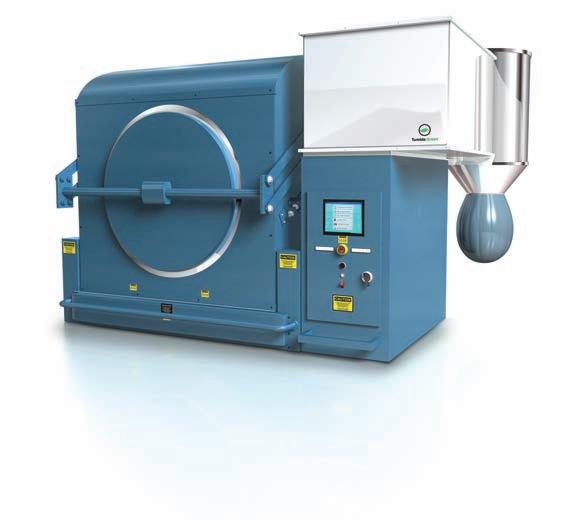
If you do not know the answer, find out or create a process. Inform all involved parties of the process.
Is there an SDS for each hazardous chemical used in the workplace?
Ask yourself this, do you have an SDS for gasoline? If a worker spilled gasoline in the plant and splashed it in their eyes, how would you treat the worker? How would you clean it up? Should they have been wearing PPE? The SDS will give you all this information and more.
Is the Hazard Communication program updated to include the new changes?
If not, you will need to update with the appropriate changes. You can find program templates online at OSHA.gov, your local Department of Labor and on various Internet search engines.
Are all employees trained for new program as well as any newly identified physical or health hazards?
Employees need to understand the program, where, why and how to find and use SDS, also the meaning of the signal words and pictograms. You can find training online at OSHA.gov, your local Department of Labor, and on various Internet search engines.
This quiz will let you know if you have additional work to do to be in compliance with the new standard. A lot of the items listed were required with the old HazCom standard but sometimes we all need a refresher to ensure
we are doing what is needed for the safety and health of our greatest assets—our employees.
I believe that this is one of the most important subjects we have ever reviewed. Safety should be of prime importance to all of us in the laundry industry. It is a subject that should be discussed and reviewed on a daily basis.
It’s somewhat like athletes who do repetitive motions.
Muscle memory and mind memory go hand-in-hand. Every day. Every shift. There are many positions within our laundry that can get quite monotonous. Our coworkers start to run on “auto-
pilot” and take things for granted. That is when things can and do go horribly wrong. Many of us have heard the same thing: “I know better than that. It was just a stupid mistake.” That mistake can ruin a person’s life and those of their loved ones.
How many of us have released a person from their employment due to not following safety procedures? It is difficult to think that you are doing them a favor by doing so.
Everybody within your organization, from the CEO to the line workers, needs to have con-

UPGRADE
stant training in all aspects of safety. Not just in how to avoid accidents, but also what to do and what is the prescribed procedure if and when an accident does occur.
Do you maintain at least one AED (automated external defibrillator)? How many people, no matter what language they may speak, have had full training in its proper use? The Red Cross offers free lessons in both mouth-to-mouth resuscitation and external heart massage. Is
www.AmericanLaundryNews.com AMERICAN LAUNDRY NEWS | J ULY 2016 17
See EXPERTS on Page 20
YOUR CHALLENGE PACESETTER CLM leads the way in dryer technology and provides an upgraded replacement for your old Challenge Pacesetter Our Model 165 fits the Challenge Pacesetter footprint perfectly and gives you technology that no one else o ers, including a fully integrated production management system. • Upgraded heat system with improved efficiency and lower emissions • Micro-Command III PLC upgrade with LAN and Blue Tooth communications • PLC now prepared for flow process management systems • 2-stage variable speed basket drive with 3-port load door. • Soft start to reduce component wear, lower utility use. • Heavy-gauge basket, includes removable steel basket panels • Long-lasting ceramic coating available on removable basket panels. • Configurable exhaust location • Configurable control/burner location Call CLM to replace your Challenge Pacesetter dryers, or for information on our broad range of industrial dryers. 323-232-2417 Model 165
Green® configuration See Us at Booth 2560 at The Clean Show 211 Erie Street, Pomona, CA 91768 | T: (323) 232-2417 | www.clmco.com ALN_Jr Page.indd 1 11/18/14 2:36 PM 0515aln_CLM.indd 1 4/13/15 4:46 PM • • • • • •
shown with Tumble
Rick
Laundry Plus, Bradenton, Fla.
Commercial Laundry
Rone
Overtime exemption rule changes Dec. 1
for
BY MATT POE, EDITOR
ALEXANDRIA, Va. — The Fair Labor Standards Act (FLSA) requires that almost every employer in the United States pay minimum wage for all hours worked and then pay overtime for hours worked in excess of 40 hours in a workweek.
There are dozens of different exemptions from those requirements. The most common are called the white-collar exemptions. As of Dec. 1, part of the whitecollar exemption will change, and it will impact most businesses, including laundry operations.
Alex Passantino, office leader for Seyfarth Shaw’s wage and hour litigation practice group in Washington, D.C., discussed the new rule during the Textile Rental Services Association (TRSA) webinar called Understanding the DOL’s Final Rule on Overtime
Besides working in wage litigation, Passantino is particularly knowledgeable on wage laws because he served as the deputy and acting administrator of the U.S. Department of Labor (DOL), Wage and Hour Division (WHD) from 2006 until 2009.
Last July, the DOL issued a notice of proposed rulemaking that allowed the regulated community to provide comment on the new overtime exemption rule. This gave everybody until September to make those comments. Passantino says there were 290,000 comments submitted, which the department reviewed.
“It turns out that the comments actually mattered,” he says. “The rule, when you print it out, turns out to be 500 pages. There are lots and lots of references to the comments that the employer organizations made and at the end of the day, the final rule is a little bit better than what was proposed.”
Examples of complaints included salary levels were going to be too high, adjusting the salary level annually was going to be too much, wanting to include bonuses in the salary level, and everyone was concerned the effective date was to be 60 days from notification of final rule.
Passantino says that the major change to the rule is that the minimum salary required to take advantage of the exemption has more than doubled.
Currently, an employee making $23,660 per year is exempt from being paid for overtime. As of Dec. 1, that salary level will go up to $47,476.
“The way this rule is applied, it is actually a salary on a weekly
basis of $913 per week. We’ve just been shorthanding it with $47,476 a year because that makes a lot more sense to people,” Passantino says. “The real requirement is that the employee receive at least $913 per week on a salary basis.”
The new requirement is about $3,000 less than what was originally in the proposal.
“It’s not as low as everyone hoped the department would go, but it is some relief,” he says.
The original “theoretical basis” for the department to set the salary level was by using the 40th percentile salary level on a national basis.
Passantino says the DOL switched that to the South because the South has a much lower salary level than the nationwide level.
One good development for employers, he says, is that for the first time ever, the salary level can be met with non-discretionary bonuses or commissions or other types of incentive pay.
It can be met in that way if those payments are made on at least a quarterly basis.
“If you have someone who receives those payments on a weekly, monthly or quarterly basis, you can use those amounts to satisfy the salary test and can go toward the $913 per week,” Passantino says. “These payments have always been permissible to salaried employees, exempt employees, but they have never counted toward the minimum salary level.”
He says the way this would work is the laundry would pay the employee 90% of the salary threshold, around $810 per week, and at the end of the quarter, if the individual didn’t earn enough to make up the difference in nondiscretionary bonuses, incentive pay, or commissions, the company would have to bring them up to $913 a week for the quarter.
“You look at it on a quarterly basis. It’s a look back, and you have one pay period to correct if they miss,” he says.
The next big change, according to Passantino, is the unprecedented decision to update the salary level. For the first time ever, the DOL decided to increase, or update, the salary level every three years, automatically.
Before the new rule, such a change in the level would have taken a notice of rulemaking.
“This would short-circuit the process and make it happen on an automatic basis starting in January of 2020,” he says. “Every three years after that, it’s simply going to increase automatically.”
Passantino says the DOL is going to keep the salary level set to the 40th percentile in the lowest wage region in the Bureau of Labor Statistics (BLS) data set. At this time, that is the South region. It could change to the Midwest, if the region’s salary average drops.
The new salary level will be posted in the Federal Register 150 days before it takes effect.

“The estimate is that the first increase on Jan. 1, 2020, will go from $47,476 to $51,168, then $55,108 [in 2023], then $59,351 [in 2026],” Passantino says. “Many economists out there believe this is a completely flawed analysis. It does not account for the fact that the salary increase in this year is going to significantly increase where the 40th percentile falls in subsequent years. This is going to be a much more dramatic increase, so we’re going to have to track this as it moves forward.”
Fortunately, laundries will know well in advance of Jan. 1, 2020, what the level will be, Passantino says. Experts will be tracking the salary data and have a good estimate before then.
Another change in the exemption involves the Highly Compensated Employee Provision.
This applies to employees who currently earn more than $100,000 per year, according to Passantino. This level going to jump from $100,000 to $134,004 per year.
“You still have to meet the $913 per week in salary, and then at the end of the year you would take a look and see if the salary, plus commission and non-discretionary bonuses, come out to $134,004 over the course of the year,” he says. “If they don’t, you have one month after the end of the year to make a catch-up payment to get the person to that level.”
A positive in the rule changes, according to Passantino, is that there are no changes to what is known as the “duties tests.” Employees in certain jobs must also perform certain duties in order to be exempt. These duties fall
under executive, professional and administrative categories.
“For the duties side, the employee who is performing functions that qualify for the exemption now will continue to performing functions that continue to qualify after Dec. 1,” he says. “The only thing you really need to worry about is the salary level. That may force you to come back around and look at the duties if you’re not willing to pay the new salary level.”
The salary basis test, which is the way a person is paid, the types of deductions that can be made, etc., didn’t change, either, Passantino says, only the amounts.
He says the Dec. 1 compliance date is another little piece of good news. Laundries will have about six months to come into compliance, which is obviously much better than 60 days.
“It would have been nice to have a year or more to make sure everyone’s budget cycles matched up and make any adjustments you need to make without destroying your current year’s budget,” Passantino says. “Unfortunately, this rule will need to be in place for political purposes in advance of a presidential transition.”
He says that employers need to be aware that Dec. 1 is a Thursday, so that means the week that includes Dec. 1 will have to include the new salary level.
“Given everything that can flip when you’re implementing these types of programs, I think it’s important that rather than you look at the Dec. 1 date, you’re going to want to look at October, maybe early November to have everything in order,” Passantino says.
He says that his firm has talked to some companies whose payroll providers need about a month’s
notice in order to make the changes that are required.
“If you’re switching people to non-exempt status in particular, you need to run through all the scenarios well in advance of that Dec. 1 date,” says Passantino. “This is not a last-minute issue; this is something that you need to be planning for well in advance, and you want to be as locked down as possible before Thanksgiving.”
In shorthand, he says, the new rule means that as long as someone is performing the job duties, if they make less than $47,476, they are non-exempt. Anyone making less than that amount, except for outside sales, has to be paid overtime. Anyone who makes more than that amount can continue to be exempt, provided that they perform the right job duties.
“So, in some cases, employers are going to increase the salary and continue to treat employees as exempt,” says Passantino. “That person that has a $45,000 salary, you may bump to $48,000 to remain exempt. That person who has a $45,000 salary and a $5,000 bonus potential, you may move to have a $48,000 salary and $2,000 bonus potential. It doesn’t mean that everything about their compensation package has to go up, but their salary does have to go above $47,476.”
In other cases, he says that employers are going to decide it’s too expensive and switch employees to non-exempt status, which means they will pay them overtime. Their job duties don’t necessarily have to change, but in many cases employers will choose to change those job duties.
“They may have two assistant managers, one more senior, and take some of the exempt functions the more junior person was performing, hand them off to the senior person and then increase the senior person up over the $47,476 level,” says Passantino. “And now you have an exempt assistant manager position, and you’ve made the other more junior person nonexempt, so you have a non-exempt assistant manager position.”
He says that laundries can have exempt and non-exempt employees within the same general classification. The company just has to make sure everyone is coded properly so they get paid properly.
The very first thing laundries need to do is to figure out who falls in the gap between the old level and the new level, he says. Next, model various compensation plans to determine the cost of raising salaries and the cost of reclassifying employees to hourly.
“There’s a lot to consider, whether it’s more expensive to pay somebody overtime or whether it’s more expensive to raise somebody up over the salary level,” Passantino says.
18 JULY 2016 | AMERICAN LAUNDRY NEWS www.AmericanLaundryNews.com
ALN
Salary level
white-collar worker exemption to increase
(Image licensed by Ingram Publishing)
room; it stays out in the corridor. That’s another infection control measure. Once we have a bag that’s full, we store it in a dedicated dirtylinen room.”


Why a dirty-linen room? Because there are “rules” about the laundry process with the international solution, he says, and there is an agreed upon time when the dirty linen comes to the laundry.
“The laundry is not an open store where you drop off dirty linen from 7 in the morning to 7 in the evening. It’s a production cycle,” Guillochon says. “The linen needs to be there by the time we’ve agreed to it. After that, we keep it there, wash it later.”
If the linen stays inside for transport, using the cart it’s on is fine. But if the linen goes outside, he points out, there has to be a different type of transport where the linen is protected from weather conditions, since water can affect poundage and processing.
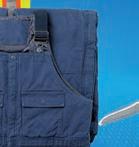
When the dirty linen gets to the laundry, whether on-premises or off-site, it needs to be sorted. Why sort if the dirty linen has been presorted? Guillochon says pre-sorting puts families of linen together. Sorting splits the families down even further.
“The other reason is sorting is the filter,” he says. “This is where you will find stickies, sharps. Or pens, markers, which can spoil a whole batch. This can help prevent a substantial amount of losses.”
For sorting in the international solution, employees use tables. Guillochon says that sorting on the floor is not the right way to do it. The bending and lifting can lead to strains and employees calling in sick.


“People will do the right thing if you give them the right tools,” he says. “Remember hand hygiene, when it all started, we started putting gels on walls so nurses and doctors would disinfect hands. But when it all started, there was one gel in the hall. First room, come out, gel … by the fourth room, the gel was so far away, they probably wouldn’t do it anymore. Now, there’s a gel dispenser at the door to each room. Provide the means, and people will do it. If you’ve got sharps, good gloves won’t let the needle go through.”
Another point Guillochon makes about sorting in the international solution is that employees only prepare the next load for the washer. Leave the dirty linen in the bags to keep it from the open air—another barrier in the system.

The washers separate the dirty side from the clean side of the laundry, but once the laundry is washed, Guillochon says, the clean laundry goes straight to the dryer. It doesn’t sit in a tub. “That’s a barrier to separate dirty from clean,” he says. “Then you will seek to
have a positive airflow from clean to dirty.”
There are also rules for dryers in the international solution. The dryer is performing thermal disinfection at a high temperature, according to Guillochon. The dryers remove the humidity, which is food for microorganisms.



“All clean, wet linen must be dried within a maximum of two hours,” he says. “There is no leaving clean, wet linen in a dryer overnight for first thing in the morning. There is no loading the washer last thing of the day, then go home so that load is ready to dry in the morning. Washers can be set with
delay wash so that the load finishes just before arrival in the morning so that can go into the dryer right away.”
After the dirty linen has been processed, the challenge is protection so that patients sleep in hygienically clean linen.

“We’ll seek to protect that linen from getting re-contaminated,” says Guillochon. “We’ve talked about humidity. You need to properly dry your linen. If you fear your linen is not completely dry, there are plastic covers that are microporous that will allow moisture to get out but avoid dust getting in.”
When the laundry is on the




premises, it is transported and stored in a separate area from dirty linen. If the linen is processed offsite, then the clean linen is brought to a laundry dock at the hospital.

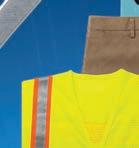



Guillochon says that the hospital and the laundry need to agree on when the responsibility of the clean linen transfers from the laundry to the hospital.

Finally, he says, once the clean linen is stored, the “first in, first out” principle must be practiced.

“What’s clean doesn’t remain clean very long,” says Guillochon. The international barrier concept and laundry cycle management is a holistic approach that











looks at the cycle from dirty beds through to the laundry back to the clean bed. Laundry cycle management saves lives and improves financials, he says. It puts linen hygiene back into the core of the care delivery package.
“If there is no clean linen, there is no hospital, shut the doors,” Guillochon says. “Only the barrier concept will guarantee sustainability. It’s not the only solution, but if you want to be sustainable, the barrier concept is the answer. It’s not about the laundry, but rather the complete cycle of dirty bed to clean bed, and everybody has a role to play.”
www.AmericanLaundryNews.com AMERICAN LAUNDRY NEWS | JULY 2016 19
Continued from Page 8 Solution kannegiesser-usa.com 800.344.0403 THE LEADER IN LAUNDRY TECHNOLOGY Infinite folding possibilities from one smart robot. Overalls, scrubs, isolation gowns, aprons – and the list goes on and on. The Kannegiesser FA-X Folding Robot automatically adapts to a never-ending range of workwear, including garments with reflective materials. It’s outfitted with a patented folding process, garment recognition sensors and advanced controls. Our manual model also comes with an ergonomically friendly feeding station, and our fully automated robot can be used with the XMT, the most energyefficient steam tunnel in the industry. Either way, there’s no limit to what it can handle. FA-X 900 Folding Robot FA-X M Folding Robot Tunnelfinisher XMT 5th Generation ALN_Jr Page.indd 1 4/1/16 3:15 PM
ALN
everybody’s training up to date?
When there is an accident, after the situation has been properly handled, is there a complete review of all aspects of it? Not just how it happened but what can be done to avoid the same thing happening in the future?
The review should also
include the steps that were taken after the accident. Were the appropriate agencies called, if necessary? Time is always of the essence. Were all aspects of the accident handled with professionalism and expediency?
One last thought: How many of us have asked OSHA to inspect our facility on a voluntary basis? Are you aware that in most cases, if you invite them in, they will not fine you?

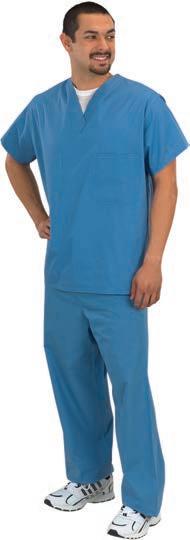
Instead of fearing OSHA, let’s utilize them as the means to a safer and healthier workspace.
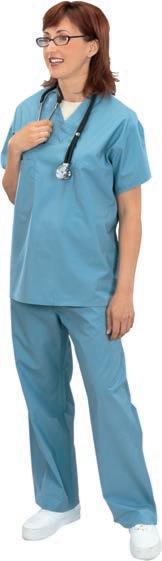
Much like our last discussion on quality, safety cannot be a department or a program but rather a culture. Additionally, any culture must be based in a common language. The best safety cultures have five key elements:
1) Management Leadership Partnered with Employee Involvement — For any culture to sustain, associates must see leadership’s commitment from the top down. As that is reminded daily, the actual “program” should be managed and driven by a body of employee associates from all levels and departments—all of whom have an equal voice in setting standards and addressing policies.



Communication about meetings, actions and outcomes should be given to all employees regularly. Policy and expecta-
tions, as well as measurements, should be posted for all to see, and kept current on a daily basis. Some companies offer group incentives for accident-free records. Live it.
2) Common and Simple Language — Just like quality, a culture of safety needs keywords that all associates can understand. S.A.F.E. can be an acronym for the words Safety-AttentionFocus-Education. Simply put, make safety your first cause, always. Give constant attention to your work environment. Focus on immediate correction where needed. Educate, continually, your entire organization on safe work practices. Live it.
3) Constant Continuing Workplace Analysis — While safety meetings tend to be reactive in nature, and certainly need to focus on known issues, it is of much more value to regularly audit each and every area of the operation (in cycle) with the entire governing group, so that all eyes can look at potential hazards.

It’s amazing what occurs when an hourly associate from one department spends a little time in another area. Think about any time a visiting GM has looked through your operation and shown you improvement opportunities that were right in front of your nose. Create this kind of environment, and your safety culture will thrive. Live it.
4) Hazard Prevention and Control — Bring in outside specialists in safety to continually update your associates and governing committee with hazard prevention practice. Find great customers who have effective safety outcomes, and bring key associates right into your meetings. Have associates visit their meetings. Lead your company to constant improvement in safety, but empower a truly open door. Live it.
5) Constant Continuing Education — Never, ever stop training. All meetings should start with a safety quote or reading or update. If you want to make safety first, as I’ve stated after every point, live it.
Continually and regularly hold training and retraining meetings. Assign your more experienced workers as safety mentors to help “train up” your newer associates. Safety is more than just equipment and workplace. It’s also about personal heath, from ergonomics to water consumption, stretching, etc. There is no question that you care about the safety and health of your workers. Who doesn’t? But living safely is a constant discipline, and should at the very top of leadership’s responsibility. Live it.
Our charge as owners, managers and participants in this great industry is to first protect the lives of our fellow workers. Talk it. Walk it.
20 JULY 2016 | AMERICAN LAUNDRY NEWS www.AmericanLaundryNews.com
Live it. ALN National Distributor Of These Additional Quality Products Towels • Sheets • Table Linen • Aprons • Uniforms • Healthcare Smarter Solutions for a Better World. www.venusgroup.com Scrubs New and Improved! Venus Group Healthcare introduces its updated scrubs. These unisex, reversible v-neck scrub tops and drawstring pants, with pocket, are made of a soft, durable 55/45 cotton/polyester blend. Scrub tops have set-in sleeves and scrub pants are made with four panel construction. Available in ceil blue and misty green, sizes XS through 5X. Two sizing color codes available for your convenience. Please contact 1-800-421-6599 or your Venus Regional Sales Manager for more information. C M Y CM MY CY CMY K VenusGroup_ALN_Healthcare_JULY2016_PRINT.pdf 1 5/20/16 7:41 AM ALN_Jr Page.indd 1 5/20/16 3:53 PM Continued from Page 17
Experts
Textiles Steve Kallenbach ADI American Dawn, Los Angeles, Calif.
Uniform solution can enhance safety

 BY SCOTT DELIN
When it comes to healthcare today, safety is on everyone’s mind more than ever. This issue is front and center in the minds of employees and also their customers, the patients.
When designing and developing uniform programs for healthcare facilities and talking with laundries across the country, improving safety is always a core focus. This is one of the key reasons branding or color by discipline has become such an important topic.
Think about this: If you have a newborn baby, you want to make sure that the person responsible for bringing your child to and from the NICU is easily identifiable by his or her uniform. Patients and their families want to know that those caring for their loved ones are actually who they say they are, and not just somebody off the street.
This branding or color by discipline introduces a new calm and sense of security with the patient and their family members to be able to identify their immediate caregiver and department they may work in, whether it is nursing, dietary, X-ray, pediatrics, etc.
have a major impact in safety today in the healthcare workplace. They impact not only the employees who wear the products, but also the patients—the customers.
Laundries have the opportunity to show their healthcare clients the power of uniforms and rental programs, enhancing safety for their patients and employees.
Laundry operators need to recognize that now more than ever,


the door once closed is now opening for newfound business.
Department heads, directors, infectious control departments as well as key administration personnel are realizing the importance of a uniform rental program and how it impacts safety all around in their facilities. There can be immediate impact on the safety of their employees, their employees’ immediate families and, of
course, their patients and their family members as well.
Obviously, this transformation is not going to happen overnight. Operators need to schedule meetings to proactively explain the benefits that uniform rental brings in terms of branding and the impact it will have on safety inside and outside their facilities.
By scheduling these meetings and constantly delivering the mes-



sage of the importance uniform rental plays within their facility, operators will immediately start seeing dollar revenues once lost are now starting to find their way back to the laundry, thus adding to the bottom line. ALN
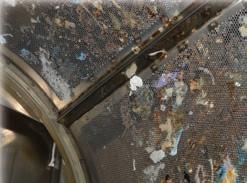
Scott Delin is vice president of sales for Fashion Seal Healthcare, 610-442-0880, sdelin@fashion sealhealthcare.com.
Laundries now have the opportunity to partner with their healthcare clients, educating them on the ease of improving safety within their facility by simply using the power of uniforms.
Uniform rental is also becoming a key point of contention and interest with healthcare employees. As the bacteria strains seem to be stronger in the healthcare environment today, studies show that more and more healthcare facilities are implementing rental programs that will prevent their employees from taking their work clothes home, thus reducing the chances of any bacterial crosscontamination.
These rental programs are being given another look as more and more healthcare facilities are concerned about the safety and wellbeing of their employees and their immediate families. This is opening the door for laundries now to offer programs to facilities that previously would not even consider uniform rental.
The uniforms we wear and rent
Improved Bottom Line
Decreased Dry Time
Long Lasting Performance
Free Test Panel
www.AmericanLaundryNews.com AMERICAN LAUNDRY NEWS | JULY 2016 21
DEPARTMENT HEADS, DIRECTORS, INFECTIOUS CONTROL DEPARTMENTS ... ARE REALIZING THE IMPORTANCE OF A UNIFORM RENTAL PROGRAM...
PLASTIC IN YOUR DRYERS CAUSING PROBLEMS? HAS YOUR SOLUTION From This... To This No more ice blasting and no more drilling holes DECC’s coating greatly reduces plastic buildup in your dryer. When plastic does stick - usually because it melts through the panel perforations and sticks to itself - cleaning takes minutes instead of hours...all you need is a plastic scraper. With the application of DECC’s internally reinforced, abrasion resistant release coating to your dryer panels, results are immediate. Reduced Downtime
energy
A dryer with clogged panels can experience a 3035% increase in drying times...or more. Coated panels allow for greater efficiency and air flow as it takes far longer for plastic and debris to build inside the dryer. As a result, production capacity is maintained and
costs are reduced
dramatically reduced down-time and labor
increased production capacity and lowered energy costs, your investment in coated panels could
returned
only
few months
As a result of
, combined with
be
in
a
that
DECC has been applying coating to dryer panels for four years and still have original panels in the field
have yet to fail, unlike some panel treatments that last less than half as long
We understand reading about a product doesn’t compare
and
will coat one of your dryer panels free of charge so you can validate
we
discounted
is
Visit www.DECC.com/dryer-panel-coating, email salesgroup@decc.com, or call 616-588-2850 for more information ALN_Jr Page.indd 1 5/26/16 1:36 PM
to seeing it in action. Mention this ad
DECC
performance…all you have to pay is shipping. DECC can coat dryer panels of any make or size...if they can be removed,
can coat them. We also offer
freight costs due to special negotiated LTL common carrier rates. DECC
the premier coating applicator of dryer panels for
Jackson takes on new role at Kannegiesser USA


GRAND PRAIRIE, Texas
— Tony Jackson has taken on the role of director of national accounts for Kannegiesser USA, the company reports.

Jackson joined the company in September 2010 and has been covering its Midwest territory as






Track Career
the regional sales manager. The company says that in the near term, he will continue to serve in this function.
Kannegiesser USA says Jackson is uniquely suited to the director of national accounts
because of his educational background at the University of Cincinnati and the work that he did in real estate planning/ development early in his career. According to the company, these design experiences provided

him the tools necessary to walk into a laundry and see the vision of the customer for their future equipment.

Kannegiesser USA says that with the experienced benefit of helping Midwest customers increase their production, Jackson will now have the ability to expand in a broader focus to continue providing efficient solutions.

As an additional portion of this new role, he will also be respon-







sible for marketing messages in North America, the company says. Jackson is now based at the corporate office in the Dallas–Ft. Worth area and recently relocated to Texas with his wife Angela and their son Will.
JENSEN USA welcomes industry veterans


PANAMA CITY, Fla. — JENSEN USA Inc. is expanding its sales force to handle increasing customer demand with the addition of Christy Perdue, Jeff LaPittus and Chris Healey, all as regional sales managers, the company reports.
Perdue is responsible for the Midwest region, supporting sales in Indiana, Illinois, Iowa, Michigan, Minnesota and Ohio. The company says Perdue brings more than 12 years of industry sales experience, most recently as a textile account manager with Medline. She holds three degrees from Miami University and has recently published a book.
LaPittus is responsible for the Southeast region, supporting sales in Alabama, Florida, Georgia and Mississippi.
JENSEN says that LaPittus has more than 20 years of industry experience, most recently serving as general manager of a large hospitality laundry operation in Orlando.
Healey is responsible for the South Central region, supporting the states of Arkansas, Kansas, Louisiana, Missouri, Oklahoma and Texas.
Healey has more than








23 years of industry sales experience, according to the company, with extensive knowledge in the healthcare segment, from manufacturing to distribution to direct sales. Healey most recently served as national account manager for Calderon Textiles, and was with Medline prior to that.
“All of these well-respected and seasoned veterans are a great addi-
 Jackson
Healey
Perdue
Jackson
Healey
Perdue
22 JULY 2016 | AMERICAN LAUNDRY NEWS www.AmericanLaundryNews.com It’s not just print anymore. BY MATT POE, EDITOR CHANDLER, Ariz. — What is the future of the laundry industry going to look like? A variety of factors will influence that future: the global economy, changes in the marketplace, workforces. But what might the future hold, and how can the industry make a difference? This was the topic of discusManagement (ALM) annual conference here in February during the session titled A Conversation Among Leaders Representatives from the Textile Care Allied Trades Association (TCATA), the International Association for Healthcare Textile Management (IATHM), the American Reusable Textile Association (ARTA) and ALM examined the future of the industry in five areas: the return of textile mills to the United States, government regulation, equipment leasing, automation, and countries. TO U.S.? The first topic of discussion was the possibility of U.S. textile mills returning operations to the home front. Textile manufacturers and processing industries have hinted that there is “swing” back here for the mills. Ed McCauley, president and Late News The Newspaper of Record for Laundry Linen Management www.americanlaundrynews.com Volume 42, Number INSIDE [22] See FUTURE on Page BY MATT POE, EDITOR ALEXANDRIA, Va. — Kelly Miller of Regent Apparel in San Francisco is part of the fourth generation of family leadership in the uniform and napery rental busiMiller is vice president of business development, and she and her two sisters represent the first generation of female leadership in the company. She quickly learned that female leaders in textile services aren’t common to find. “It was pretty early on that realized, going to different events, that was one of the few women at these events,” she says. The Textile Rental Services Association (TRSA) formed the Women in Textile Services Committee to get more women in industry leadership positions, and Miller is part of that committee. Miller and Camille Peters, president and CEO, Mobile Computing Corp. in Mississauga, Ontario, discussed this subject and what textile businesses, and women, can do about it during TRSA webinar called Encouraging Women Industry BENEFITS OF GENDER DIVERSITY The When Women Thrive 2016 report by Mercer found that women are perceived to have different, but critical, skills needed in today’s market, Peters says. Nearly 600 organizations were surveyed and see women to be much stronger in terms of flexibility and Panel of Experts There’s one tool necessary for success—effective communication.
in store
laundry operations
Encouraging women to advance, and thrive, in the textile services industry 4 WOMEN on Page 10 PROS Parts Inc. acquires Parts PROS MINNEAPOLIS — PROS Parts has completed the acquisition of competitor Parts Pros of Westport, Mass., the company reports. Terms of the deal were not disclosed. Parts Pros was formed in 2008 after Hoyt ceased manufacturing operations, according to the company. Before Hoyt closed, it had acquired Omega Cleaning Systems of Canada. “The acquisition of Parts Pros will allow us to better service the needs of Hoyt and Omega machinery worldwide and ensure owners of those brands a reliable source for replacement parts,” says Barry Victor, owner of PROS Parts. This acquisition is the third in a series of acquisitions aimed at improving the company’s ability to offer replacement parts for all laundry and drycleaning machinery, according to PROS Parts. The company says similar acquisitions of Imparts in 2010 and Amalind in 2005 improved its ability to support brands such as Vic, Bowe, Ama, Lindus and Suprema as well as other brands’ equipment. Toll-free numbers and fax numbers previously in use by Hoyt, Omega and Parts Pros will be automatically directed to PROS Parts sales staff, the company says. Columnist at Large Eric Frederick discusses the value of knowledge in textile purchasing. Companies shown to benefit from having women in leadership roles 18 Industry representatives discuss textile mills, government regulation, equipment leasing, automation and European advances (Left to right) Ed McCauley, Linda Fairbanks, Mike Dineen and Rocco Romeo discuss the future of the laundry industry. (Photo: Matt Poe) “IT WAS PRETTY EARLY ON THAT REALIZED, GOING TO DIFFERENT EVENTS, THAT WAS ONE OF THE FEW WOMEN AT THESE EVENTS.” —KELLY MILLER, REGENT APPAREL 0616aln_p01,06,10-12.FINAL.indd 5/18/16 7:12 PM American Laundry News can now be viewed on tablets and other mobile devices – great ways to stay on top of the latest industry news and updates. www.americanlaundrynews.com The Newspaper of Record for Laundry & Linen Management 2016aln_House Digital1_jr page_master.indd 1 6/10/16 10:30 AM
LaPittus
What is
for
in the future?
tion to the JENSEN sales team,” says Norbert Gittard, VP of sales and marketing.
Cintas’ Pollak retires; Mitchell, Jantsch take on roles
CINCINNATI — Dave Pollack, senior vice president of business strategy and marketing for Cintas Corp., has retired, the company reports.
Pollak joined Cintas in 1992 and served in a variety of executive roles, including group vice president for the rental division, vice president of corporate development, vice president of business strategy and chief marketing officer, the company says.
“I thank Dave for the tremendous contributions he has made during his 24 years with Cintas,” says Scott D. Farmer, Cintas CEO. “Since joining the company, Dave has provided strategic leadership that has helped Cintas grow from a $500 million company that was primarily in the business of renting and selling uniform programs to an almost $5 billion multibusiness services company.”
In other news, the company says that Bob Mitchell, currently senior vice president of sales, has been named chief marketing officer. Paul Jantsch, currently vice president of international development, has been named senior vice president of corporate development and business strategy.
officer, Airborne company commander for the Texas Army National Guard and founder of an educational small business, Lugo is responsible for providing laundry operators with the product specification guidance, maintenance support and installation services required to help keep their production rates and linen quality high and their facilities running as safely and efficiently as possible, says Tingue.
Lugo serves laundries in Arizona, Idaho, Utah and parts of Nevada.

“Jorge has proven experience
in managing large-scale operations and an entrepreneurial drive to identify the job and get it done,” says Jared Addis, regional sales manager.
According to Lugo, his logistics expertise has already begun paying dividends. To help customers avoid costly rush orders and machine downtime, Lugo
focuses on preventive maintenance and offers on-site education for laundry staffers.
“The best way to save is to keep everything up and running and avoid the high-stress, costly emergency situations where your job depends on another company’s logistics system,” says Lugo.
Lugo is a graduate of Texas State University, San Marcos, and earned a slate of commendations from the Army, including the Joint Service Commendation Medal, Army Commendation Medal (twice), Army Achieve-
ment Medal and the Military Outstanding Volunteer Service Medal.
He resides with his wife and two children in Phoenix, Ariz. ALN
SOUTH HOLLAND, Ill. — Gurtler Industries Inc., a manufacturer of advanced detergents and specialty chemicals for the commercial laundry industry, has hired Bob Raveill, the company reports.
Raveill joined Gurtler in March of this year and will be manager of market development in the Kansas and Missouri area.
Gurtler says that Raveill has 40-plus years of experience in the laundry industry, which includes experience in production, sales, tech support, management and also blending.
Tingue appoints Lugo to post of sales representative
PEACHTREE CITY, Ga. — Laundry product supplier Tingue has named Jorge Lugo sales representative, the company reports.
A former U.S. Army logistics

www.AmericanLaundryNews.com AMERICAN LAUNDRY NEWS | JULY 2016 23
Gurtler adds new manager of market development
Raveill NEXT GENERATION, INDUSTRY LEADING NPE-FREE TECHNOLOGY • Best-in-Class Cleaning Performance • Excellent soil removal on tough industrial and heavy food soils • Wide-ranging temperature e cacy • Maximizes wash-aisle e ciencies and plant productivity • Produces brighter, softer, longer-lasting textiles • Ultra-concentrated, multi-surfactant detergent system Spectrum TM Wash it Forward. 800.272.1974 WWW. WASHINGSYSTEMS .COM Delivering comprehensive technological innovations in the cleaning, processing and servicing of textiles. ALN_Jr Page.indd 1 2/12/16 11:24 AM FOR MORE CAREER TRACK, VISIT WWW. AMERICANLAUNDRYNEWS. COM!
Lugo
CHRISTUS health system honors Crothall Healthcare
DALLAS — CHRISTUS Health System, an international Catholic, faith-based, not-for-profit health system, awarded Crothall Healthcare one of its first Vendor of the Year Awards, the health system reports. Crothall provides healthcare support services, which includes laundry and linen services.
Other recipients included BD (Becton, Dickinson and Company) and Hospital Housekeeping Systems (HHS).
“These companies have provided an exemplary, innovative and collaborative relationship and service to CHRISTUS Health,” says Ed Hardin, CHRISTUS Health’s vice president of supply chain management. “The healthcare industry is truly changing and it is valuable to know that as we move forward, we have progressive and truly collaborative customer-supplier relationships.”
The CHRISTUS Health Partner Advisory Council (PAC) selected Crothall Healthcare, BD and HHS to receive the award from a group of 14 companies that work closely with CHRISTUS Health. Formed in 2013, PAC aims to support more cooperative and productive relationships with outside health vendors, CHRISTUS says.
Steve Carpenter, Crothall Healthcare president, says, “I’m unaware of any healthcare provider that has so substantively pushed for a more meaningful, productive and sustainable customer-supplier relationship. This unique relationship fosters an environment for greater collaboration and innovation, and we are a better company for it. For CHRISTUS Health to have culminated its efforts in an annual recognition opportunity gives the entire vendor community a performance to model.”
This was the first year CHRISTUS Health has recognized outside agencies for help in upholding the CHRISTUS Mission, to extend the healing ministry of Jesus Christ. CHRISTUS says that the three Vendors of the Year Award recipients have now been tasked to help develop a more formal selection process for future awards, including involving vendors outside the supply chain management scope.
“More than 400 associates from around the organization will play a role in nominating and selecting suppliers based on their demonstration of CHRISTUS Health Core Values, clinical and quality outcomes, operational performance, financial performance and innovation,” says Hardin. “The CHRISTUS Core Values are the foundation for building relationships with their vendors and patients: Dignity, Integrity, Excellence, Compassion, and Stewardship.”

Unitex to open 12th Northeast facility

LINDEN, N.J. — Unitex, a regional healthcare laundry company with locations throughout the Northeast, is opening its 12th facility here, the company reports.
Unitex says this will be the fourth facility it owns and operates in the state of New Jersey, where there is already a facility in Perth Amboy and two in New Brunswick.
The Linden plant was scheduled to open in June. With jobs ranging from production workers to mechanics and drivers, the Linden facility will provide opportunities for more than 200 full-time employees, the company says.
“We are ecstatic to be here in Linden and have bright plans for the future,” says David Potack, senior vice president of Unitex. “It is our goal to employ as many local residents as
possible and to give them the opportunity to work for a company that they respect and trust. Since we are a family-owned business, we are involved in every step of the process and want to ensure that our company works well on all levels.”

Unitex says it makes environmental stewardship a priority, and the more than 67,000-square-foot Linden plant is following that direction. The company says the facility has the capability to process 1.1 million pounds of linen per week and will primarily serve hospitals and nursing homes in New Jersey and New York.
“And aside from our team here in Linden, we want to reinforce the importance of community and our desire to work closely with the city to help support local events and programs,” Potack says. “Giving back is in our company’s DNA and we anticipate becoming a big part of the community of Linden, similar to the support we show in the other cities where our facilities are located.”
In memoriam: Lisa Gurtler Henry, Gurtler Industries Inc.
SOUTH HOLLAND, Ill. — Lisa Gurtler Henry, daughter of Gurtler Industries Inc. founder William, and the late Jean, Gurtler, died May 8 at her home in Indianapolis. She was 51.
Her funeral took place May 13 at Faith Church in Dyer, Ind., where she was a member.
Gurtler Henry spent the past 29 years working for Gurtler Industries, a laundry chemical manufacturer, and had served on its board of directors.
Born in Harvey, Ill., on March 8, 1965, she grew up in the greater Chicago area. She obtained her master’s degree in account-
24 JULY 2016 | AMERICAN LAUNDRY NEWS www.AmericanLaundryNews.com
For over 50 years U.N.X. INCORPORATED has been involved in the development of products that not only solve quality problems that exist at the moment, but also provide long term benefits to the customer and the environment in which we live. U.N.X. was built on the foundation of improving the industry in which we participate. U.N.X. prides itself on being an industry leader with state-of-the-art products and dispensing equipment, and our plans for the future are extraordinary. With a Research and Development team second to none, U.N.X. is in a position to provide the industry with the most technologically advanced products and dispensers as possible. U.N.X. INCORPORATED 707EArlingtonBlvd Greenville,NC27858 (252)756 8616 www.unxinc.com ALN_Tab_half 10/9/12 2:40 PM Page 1 See us at the Clean Show • Booth #2502 0513aln_UNX.indd 1 4/26/13 10:48 AM ALN_Tab_half.indd 1 8/6/13 11:38
ing from Governor’s State University.


Gurtler Henry was married to Raymond Henry and mother of two children, Tiffany and Billy. She was also sister to Greg Gurtler, who is the current president of Gurtler Industries.

Donations in Gurtler Henry’s memory may be made to the following organizations: Fortune School, 5626 Lawton Loop East Dr., Indianapolis, IN 46256, and Faith Church, 100 W. 81st Ave., Dyer, IN 46311.
The Pillow Factory named Intalere Choice partner
MCDONOUGH, Ga. — The Pillow Factory, a division of Encompass Group LLC, has been named the Intalere Choice partner for personal use and reusable pillows supplied by Encompass, the company reports.
Intalere Choice, which provides medical, pharmaceutical, office and environmental products, introduced The Pillow Factory as a partner during the Intalere Member Conference at the end of May.
“We are very pleased to be introduced as the Intalere Choice at this year’s conference,” says Michelle Daniels, Encompass director of marketing for The Pillow Factory. “Our personal use pillows provide additional safety for risk management programs, are fresh and clean for each patient, and ideal for patient comfort and propping. Our reusable pillows are also durable, comfortable and soft, stain-resistant, and easily
wiped down.”
The Pillow Factory provides more pillows to American healthcare facilities than any other industry resource, according to Encompass. The company began manufacturing pillows more than 30 years ago.
“We understand the challenges healthcare organizations face every day and are committed to partner with our customers in the selection of pillows, delivered on time and on budget,” says Daniels.
Bryan Steam celebrates 100 years of business
PERU, Ind. — Bryan Steam LLC will be celebrating its 100th year in business in 2016, according to the company.
Founded in 1916 as the Bryan Harvester Company by George Bryan, the company began by producing cars and steam-powered tractors. In 1922, the company stopped such production after the rise of the gasoline engine. Bryan Harvester then refined and marketed the bent water tube boiler that had powered the steam-powered vehicles and became Bryan Steam LLC, says the company.
Today, Bryan Steam says it offers a broad range of boilers, including gas, oil and gas/oilfired boilers, as well as electric, condensing, Low NOx and knockdown boilers. The “Flexible Water Tube” design provides fast, natural internal circulation for maximum heat transfer and operating efficiency, according to the company.
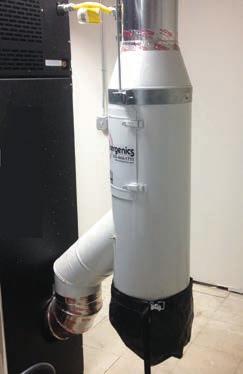
To celebrate its centennial, Bryan Steam is planning an open house in August for its employees, North American representatives, vendors, and local and state dignitaries. ALN
Calendar

July
12-14 China Laundry Expo 2016 China International Laundry Industry Exhibition Shanghai, China Info: 813-774-6664
21 Association for Linen Management Webinar: Top Tips for Transportation Management Richmond, Ky. Info: 859-624-0177
August
7-11 Textile Rental Services Association Executive Management Institute (EMI) Alexandria, Va. Info: 703-519-0029
18 Association for Linen Management Webinar: Thinking Outside the Box: Saving Time, Money and Labor Richmond, Ky. Info: 859-624-0177

September
13-16 Universal Unilink LEADERSHIP16 San Antonio, Texas Info: 888-830-7872
19-21 Textile Rental Services Association Annual Conference Alexandria, Va. Info: 703-519-0029
21-22 Wisconsin Association of Textile Services Annual Fall Conference Greenfield, Wis. Info: 414-529-4702
22 Association for Linen Management Webinar: Do’s and Don’ts of Sterile Room Processing Richmond, Ky. Info: 859-624-0177
28-30 Ellis Corp. Washer-Extractor Maint. Seminar Itasca, Ill. Info: 630-250-4848 ALN

www.AmericanLaundryNews.com AMERICAN LAUNDRY NEWS | JULY 2016 25
www.energenics.com Fully Automatic-Self Cleaning ENERGENICS OPL UTILITY FREE OPL DUCT MOUNTED LINT FILTERS 800-944-1711 DUCT MOUNTED AIRFREE LINT FILTER AF-1-S 1470 Don St. Naples, FL 34104 • No energy or utilities required • Cost effective (duct in-duct out) • Prevents damage to air handling equipment • Meets state and national EPA discharge standards • Self cleaning–eliminates labor • Eliminates the lint bypass up to 98% • Zero operating cost • Reduces lint build-up in ducts downstream, increasing fire safety • Optional fire suppression • Sizes Up to 2,700 CFM 0316aln_Energenics Lint Collectors tab hlf.indd 1 1/28/16 3:36 PM
Gurtler Henry
Linen Loss
EDUCATION
The last three tips all fall under the “education” umbrella, which is the most suggested strategy from the experts.
Overall linen use and loss education is vital because often the end-users have a complete lack of understanding, whether it’s about proper usage or that the textile is rented, if an outside source is used, according to Gershman.
In the case of rental, the product is owned by a textile rental company, and the users don’t understand that the cost to replace the item is significantly more than it is to rent the item.
Rivers says that if a customer will allow it, take the time to meet with their key stakeholders in regards to linen use and possible abuse to educate them on the importance of taking care of the linen and ensuring that it gets back to the laundry plant.
“Buy-in is huge in all of these things by the customer,” Rivers says.

Also along the lines of education is taking the time to educate the healthcare facility’s laundry distribution staff, he adds. Make sure they understand the correct ways to distribute the linen and also the importance of getting the linen back to the laundry plant.
“You need to have a strong linen utilization policy in place,” says Grubich.

Rivers adds, “These personnel can be your boots on the ground in a facility where you are not at all the time.”
REUSABLE MEANS REUSABLE
Many customers do not realize the power of an industrial laundry system in regards to getting out stains. Therefore, many linens just get thrown away—in particular, usage by housekeeping and nursing staff— when they get “too soiled” by body fluids, says Rivers. A big component of the education process is to reinforce that employees should not throw away dirty linen.
ENGAGE CUSTOMERS IN LINEN PROCESS





While a linen committee helps with utilization on the patient floor, it’s beneficial for healthcare facility officials to visit the laundry, according to Rivers.
“Write into your contracts that the customer must come and visit the laundry plant at least once a year, more would be recommended, so that they understand the full process of what it takes to put that linen where it needs to be in the end,” he suggests.
The hope is to create a partnership between distributor and customer that will trickle down to everyone in the customer’s system to understand that the linens just don’t magically appear on their shelves.

To go along with this, the laundry plant, if possible, should investigate linen loss and try to nail down specific areas of high linen loss. Once diagnosed, any number of the described steps could work to remedy the issue.
ALN

“We need to have theoretical and practical training,” she says. “Theoretical learning in the school setting and practical in the plant. We also need to make potential employees believe that the training will lead to a career.”
Udo Nagelschmidt, co-founder of the Munsterland Training Center for Textile Cleaning, summed up the day like this: “We can use a lot of machines, but if we don’t have the right people, it won’t work.”
Sunday’s Forum lectures looked at technological advances in materials and growth options, such as processing personal protection equipment (PPE), uniforms and healthcare linens, and marketing a laundry’s sustainability.
“In the next five to 10 years, American healthcare regulations will come over to Europe,” says Sven Schoppe, a consultant with LEO System, located in Germany, as he spoke on quality and hygiene.
Speaking on creating added value with textile innovations, Dr. ir. Henk Gooijer of TKT, the Dutch technical knowledge center, says, “Growth and demand will be met by polysynthetic fiber.”
Monday’s Forum focus continued the look at sustainability of the industry, along with resource efficiency, in a world with a growing population and shrinking resources. Topics covered included water reuse and heat recovery, sustainable fabrics and available sustainability tools.
Gianluca Mainolfi, vice president of the Asia-Pacific and Greater China regions, as well as global marketing, for Ecolab Europe, spoke on sustainability in terms of resource conservation and a competitive advantage for textile services companies.
“Trends tell us that resources will become more scarce,” he says. “They will be less available and more expensive.”
Martin Stokman, business development manager for Laundry Dashboard, based in The Netherlands, talked about using numbers
to maximize profitability and resource usage.


“You need business intelligence,” he says. “Technology provides that. You need it on all processes, like real-time information on detergent and energy usage. Soon, all laundries will be 4.0.”
“Laundry 4.0” was the focus of the final day of Texcare Forum, with topics ranging from automation to RFID technological advances.
One of the biggest costs for a laundry is labor, and many automation advances look to lessen that cost.
“Qualified personnel is expensive and difficult to find,” says Gunter Veit, managing director and owner of VEIT Group, as he spoke on the subject. “Automation decreases the level of dependency on skilled personnel and ensures constant quality.”
JENSEN’s Jank presented the “Triple P Approach in Sustainability for Heavy-Duty Laundries.” She says the Triple-P approach looks at people, the planet and profit—in balance.
“Productive working places are safe working places,” she says.
Industry 4.0 concluded with Mathias Schafer, product manager for Kannegiesser, taking a look at what a “Smart Laundry” is.
“It has consistent and continuous workflow with synchronization of data and materials,” he says.








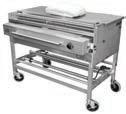

FASHION AND IRON
Texcare International 2016 hosted other events of interest to attendees in the various segments of the textile care industry.
Besides hosting the opening ceremony, the naturally lit, spacious Galleria was the perfect setting for the Fashion Shows that displayed the latest trends in work, protective and professional clothing. Saturday, Sunday and Monday, competitors faced off in ironing competitions at various exhibitor displays throughout the trade fair halls.
Exhibitors and attendees alike said Texcare International 2016 provided good business opportunities and education that will benefit the textile services industry.
Now everyone can rest, make use of the deals and contacts made at the trade fair— and look ahead to what’s in store in 2020, from June 20 to 24. ALN
26 JULY 2016 | AMERICAN LAUNDRY NEWS www.AmericanLaundryNews.com
e ve o you covered! Parts Mini Bundlers Laundry Wrap Minimize Contamination and Loss Simplify Content Identification and Delivery Enhance Your Delivery Presentation Laundry Wrapping Equipment & Supplies contact@davispackaging.net ▪ www.davispackaging.net 800-622- 3015 or 561- 290-0412 Dual Roll Consoles ALN_3rd Page.indd 1 5/26/16 2:02 PM ALN_Jr_half.indd 1 5/6/16 4:10 PM ALN_Jr_half.indd 1 6/8/16 9:19 AM Continued
from Page 6 Texcare
Continued from Page 12










www.AmericanLaundryNews.com AMERICAN LAUNDRY NEWS | JULY 2016 27 Classified Advertising facebook/ americanlaundrynews Like our Facebook page Share our content Comment: Tell us what’s on your mind LIKE 0616aln_House Facebook jr_half.indd 1 5/5/16 5:19 PM BUSINESS OPPORTUNITIES DISTRIBUTOR OFFERINGS DISTRIBUTOR OFFERINGS Stanco Industries, Inc. Serving The Textile Trades Since 1970 800-932-3769 k for Mike or Deb KEEPING IT GREEN SINCE 1970 -------- MILITARY BASE LAUNDRY FACILITY ------Milnor 10 Mod CBW, Press, Shuttle and 4 Gas Dryers 2-1993 Milnor 450# 2 pocket 6-1993 Milnor 135# EP-Plus 2-1993 Minor 50# 2-1993 Jenson General Ironers 2-1993 Central Silverline Folders w/Stkrs 6-Huebsch 110# Gas Dryers 1-120# 1-UniMac 120# Steam Dryer Felins Tying Machines Clamco, Felrapper and Malow Wrapping Mach 1993 Cleaver Brooks 200hp Gas/Return 2-1993 Ingersoll Screw Air Compressors --------- DON’T BE LEFT WITHOUT POWER -------Emergency Generators Available 50KW to 1000KW Natural Gas & Diesel Stanco Industries, Inc. 800-932-3769 Ask for Mike or Deb • www.StanCoInd.com Own Your Own Drycleaners— Managers, Spotters, Tailors, Pressers! 100% Financing. Plant or Drop, location of your choice. Call 1-561-302-5031 or 1-888-275-6637. EQUIPMENT FOR SALE EQUIPMENT FOR SALE The trusted source for quality pre-owned We Specialize in Used Industrial Laundry Equipment Sales, Service and Installations. IN STOCK EQUIPMENT FOR SALE: Qty Washex 480 LB & 700 LB W/X’s 2 Chicago Edge Maxx Feeders 3 Chicago King Edge & Kannegiesser Feeders 3 Chicago Skyline Sheet Folders 7 Lavatec TT745GU Gas Dryers 8 Braun Towel Folders 9 Challenge 400 LB Gas Tunnel Dryers 6 Rebuilt Milnor 170 LB W/X 1 Jensen EXPG-12 Self Contained Gas Ironer 1 Chicago Century 2 Roll x 42 Steam Ironer 1 We BUY & SELL all major brands. www.pspindustrial.com Main: 1.800.517.1432 / 305.517.1421 Much more in stock! Please visit our website for our complete inventory www.ineedjpequipment.com 800/925-3236
IRONING LINES
READY TO GO • 135lb Milnor
&
(2)
110lb Milnor
Braun
drive, inverter
Roll Machine, reporting capability of number and sizes of rolled mats, pass
2015 • 400lb Braun OP
drive, inverter • (4) 550lb Braun OP
motor drive, inverter • Braun Small Piece Folder, Meter wide, Return to Feed, B&R Controls, 2005 • 900lb Ellis Completely Reconditioned, new Controls by Ellis
JP Equipment, Inc. buys and sells used industrial laundry equipment. We have been in the used industrial laundry business since 1998 and sell equipment worldwide. What separates us from most of our competitors is that we own almost all of our equipment outright giving us the flexibility to sell equipment “as is”, cleaned and tested, or fully reconditioned. We also sell equipment on consignment. We provide unparalleled service whether you are buying or selling equipment, building a new laundry or upgrading an existing facility. AmericanLaundryNews.com More than unique visitors annually! 63,0000 Placeyourad americanlaundrynews.com ONLINE! Company Page Company Page INDEX OF ADVERTISERS A.L. Wilson Chemical Co. 9 ADI American Dawn 5 Consolidated Laundry Machinery 17 Davis Packaging 26 DECC Company 21 Direct Machinery Sales Corp. 28 Energenics Corp. 25 Girbau Industrial 7 IPA 26 The Griffin Group, Inc. 28 J.P. Equipment 27 Kannegiesser USA 19 LaundryCareers.com 28 Lavatec Laundry Technology 32 Maytag 13 Monarch Brands 10, 11 Pellerin Milnor 3 PSP Industrial 27 Royal Basket Trucks 8 Stanco Industries 27 TRSA 15 U.N.X. Inc. 24, 28 Venus Group 20 Washing Systems, Inc. 23 AMKO AMERICA, INC. Remanufactured Finishing Equipment Delta Ironers, Omega Folders & Towel Folders PARTS, IRONER SUPPLIES & NEW EQUIPMENT ALSO AVAILABLE “NEW” SELF CONTAINED IRONERS Contact: (561) 863-9696 AmkoAmerica@gmail.com
QUALITY
~
Washer, Ridge Mount, 2006
1992
•
Soft Mount, 1998 • 200lb
OP, non-tilting, single-motor
• Chicago Pik Quik, 2008 • Jensen Logic Feeder, 2009 • Jensen Logic Feeder, 3 Station, 2005 • Jensen Self Contained Thermal Ironer, EXG-12, 2004, 48” Roll • Jensen Silverline Plus, 4 Lane, BNR Controls, 2006 • Inwatec Hurricane Mat
thru machine,
Washer, single-motor
Washers, single-
“Expect Excellence”
Classified
PARTS FOR SALE
WASHEX PARTS
Hard-to-find Washex parts, on-site rebuilding, tech support. LAUNDRY PARTS CENTER 800-352-4492 Fax: 305-827-3991
PARTS, PARTS, PARTS
Huge stock of parts for most laundry equipment & boilers. Also traps, valves and lubricants. Overnight delivery. Steiner-Atlantic, 800-333-8883 Fax: 305-751-8390 parts@steineratlantic.com www.steineratlantic.com
INTERNATIONAL EQUIPMENT GROUP
Dealers in all Types, Makes & Sizes of pre-owned Laundry Processing Equipment & Supplies * buy * sell * liquidate * locate * * rigg & transport * email: loustanley69@hotmail.com Phone: 260 409-2547
Technical Support Engineer
Join The Ellis Corporation, the leader in the Laundry, Wastewater and Energy Recovery equipment industry. Our substantial growth has created the immediate need for additional Technical Support Engineers to support our customers in the US and abroad while maintaining the highest level of customer satisfaction.
Your Tasks:
• Working from your home office as a Technical Support Engineer, ensure that machine installation, corrective and preventative maintenance and warranty service is carried out in a professional manner
• Travel to customer locations to provide service, training and technical support
• Communicate clearly with customers to implement necessary actions
• Report daily progress to Service Coordinator
• Submit completed service call reports, expense reports, etc. on time as required
• Comply with established Ellis Safety and Code of Conduct standards.
Your Profile:

• Must be authorized to work in the US
• High School diploma or equivalent required; trade school experience a plus
• Previous mechanical/electrical experience is required
• PLC service and some project experience is helpful
• Ability to interpret engineering schematic documents
• Position requires 85% travel including nights and occasional weekends, sometimes with short notice
• Valid driver’s license and passport in good standing and be eligible to travel abroad
• Capable of critical thinking and problem solving
• Position requires regular bending and lifting in industrial settings

• Must have basic tool kit
We Offer:
Competitive base salary with potential bonus. Comprehensive health/dental/vision benefits. 401k. Life insurance. Short term and long term disability. Vacation and Holidays. Uniform provided.
Please send resume with salary requirements to:
Ellis Corporation
Attn: HR Manager 1400 W. Bryn Mawr Ave. Itasca, Il 60143 hr@elliscorp.com
(630) 773-5902 fax www.elliscorp.com

28 JULY 2016 | AMERICAN LAUNDRY NEWS www.AmericanLaundryNews.com
Advertising
POSITIONS AVAILABLE
Please
to
ADVANCE YOUR CAREER The Griffin Group, Inc. “Recruitment Specialist” Need to FILL a position? Call Deana Griffin 888-235-2365 www.thegriffingroup.cc deana@thegriffingroup.cc ®
POSITIONS AVAILABLE
Call Craig Lloyd toll free at 877.295.5693 between 9 a.m. – 9 p.m. EST.
visit www.laundrycareers.com
review current industrial/institutional laundry management openings.
•
EQUIPMENT FOR SALE COMPLETE PLANT OF LAUNDRY EQUIPMENT FOR IMMEDIATE SALE For fastest service, call Ron Hirsch direct at 516-938-4300 Oceanside Laundry Facility closing! Direct Machinery is the exclusive dealer for all equipment in this sale. Machinery can be seen in operation until JUNE when the plant closes, so call today! HERE’S SOME OF THE SPECTACULAR EQUIPMENT: Senking CBW 20 Mod 110lb Tunnel (3) Senking CBW 12 Mod 110lb Tunnel (1) Colmac Steam Tunnel System 2100-2 Braun Folder/Crossfolders with Stackers Quincy & GD 200HP Screw Air Compressors Unipress Utility Press Braun 500lb Gas Dryers (8) Milnor 72072 500lb Gas Pass-Through System Dryers (2) American Hypro 8 Roll Ironers (8) Chicago Edge Maxx 2-Station Feeders (2) Chicago Edge Maxx Spreader Feeders (3) Challenge Pace Setter Gas Dryers (6) Challenge Pace Setter Steam Dryers (2) Braun Rear Discharge Small Piece Folders (10) Blanket System Edge Feeder & Skyline Folder (2) Jensen LTron 450lb Washers (3) Cleaver Brooks 400HP Boiler (1) Cleaver Brooks 400HP Dual Fuel Boilers (2) Norman Lift Tables Model 5 Ludell Heat Reclaimer Jensen 200 Pound L Tron (1) Sager
PLUS CONVEYORS, CARTS, LIFTS, SCALES AND MUCH MORE! CALL TODAY! CONTACT: CLASSIFIEDS@ AMERICANTRADEMAGAZINES.COM U.N.X. INCORPORATED“ ” grow & expand U.N.X.! U.N.X. INCORPORATED -
Spreader Heat Reclaimer with two Stainless Steel 2500 Gallon Storage with Steam Bundle White Conveyors Jensen Single Stage CBW Extraction Press 20042007 (4)































www.AmericanLaundryNews.com AMERICAN LAUNDRY NEWS | J ULY 2016 29 Source Directory A convenient guide to sources of products and services APPAREL FINISHING CARTS, TRUCKS & BASKETS Source Directory listings in American Laundry News are sold on an annual basis at the following rates: All Major Credit Cards Accepted 2016 Listings RegularBoldface All CapsAll Caps, Boldface Four Line Listing per Year $885 $1,110 $1,110 $1,175 Display and additional line rates available upon request CARTS, TRUCKS & BASKETS CARTS, TRUCKS & BASKETS AmericanLaundryNews.com More than unique visitors monthly! 5,250 CARTS, TRUCKS & BASKETS Round-Tripper_6.25x3:Layout 1 6/17/14 12:04 PM Page 1 www.AmericanLaundryNews.com Get Rolling with The Best We Create Environmentally Responsible Solutions 2460-30 SPRING PLATFORM UTILITY CART M c C LURE INDUSTRIES, INC. 800-752-2821 • www.mcclureindustries.com email: kim@mcclureindustries.com Spring Platform Internal Mechanism FEATURES: • 1-piece molded construction • reinforced bottom • poly Hi-Tech casters • thread guards • 9 colors • spring platform • nestable • fire retardant We sell direct l-800-275-2436 l-800-275-2436 maxi-movers.com Email:sales@maxi-movers.com TURNABOUT TRUCKS ® Simply reposition the shelves to quickly convert a clean linen shelved delivery truck to a soiled linen bulk transport. Available in 18 attractive colors, up to 48 cu. ft. capacities. Powder coated welded steel bases. M8592 M9091 Chm #9792 ALN Turnabout Trks'16:Layout 1 6/1/16 2 DOBERMAN TUFF LAUNDRY CARTS www.dobermantuff.com 706-376-4793 ♦ RUGGED ♦ DURABLE ♦ QUALITY FINISHES TUFF STUFF, NOT TUFF PRICES


















30 JULY 2016 | AMERICAN LAUNDRY NEWS www.AmericanLaundryNews.com Source Directory listings in American Laundry News are sold on an annual basis at the following rates: All Major Credit Cards Accepted 2016 Listings Regular Boldface All Caps All Caps, Boldface Four Line Listing per Year $885 $1,110 $1,110 $1,175 Display and additional line rates available upon request Source Directory A convenient guide to sources of products and services FLATWORK IRONERS Knowhow In Action Your Tingue rep is a fully trained master of finishing equipment operation, maintenance and installation. Call for: • Pads, covers, belts, waxes, tapes and more • Carts, trucks, baskets and bags • Parts, rebuilds and repairs 800.829.3864 www.Tingue.com TalleyMachinery.com MODRoto.com TBR-Associates.com To website C & W EQUIPMENT (800) 443-3573 FLATWORK IRONER SPECIALISTS REMANUFACTURED IRONERS: Super Sylon Sylon Hypro’s Super Pro Jensen SS700 SS800 Ultima Lavatec UPGRADE KITS: Chain Drive Conversion Vacuum Systems Herringbone Conversion Canopies Inverters Side Covers Roll Springs Jensen Drives SUPPLIES: Aprons Pads Covers Belts Waxes Cleaners PARTS/REPAIRS: All Brands New/Refurbished/Hard to Find COMMITTED TO EXCELLENCE Pellerin Milnor Corp. P.O. Box 400, Kenner, LA 70063 504-467-9591, Fax: 504-468-3094 www.milnor.com DRYERS – 100 POUNDS OR MORE Pellerin Milnor Corp. P.O. Box 400, Kenner, LA 70063 504-467-9591, Fax: 504-468-3094 www.milnor.com DRYERS – 100 POUNDS OR LESS CARTS, TRUCKS & BASKETS CART-WASHING SYSTEMS Sani Wash - McClure Industries, Inc. 9051 SE 55th Ave., Portland, OR 97206 800-752-2821, www.mcclureindustries.com, info@mcclureindustries.com DRYER BOOSTER & EXHAUST FANS ENVIRONMENTAL SOLUTIONS Gardner Machinery Corporation P.O. Box 33818, Charlotte, NC 28233 Ph.: (704)372-3890; Fax: (704)342-0758 www.gardnermachinery.com MATERIAL HANDLING / CONVEYORS M.I.T. POLY-CART 211 CENTRAL PARK WEST, NEW YORK, NY 10024 800-234-7659, FAX: 212-721-9022 WWW.MITPOLYCART.COM Diversified Plastics, Inc. 1309 Highway 917 West, Latta, SC 29565 800-768-7636, www.dpirotocarts.com E-mail: sales@dpirotocarts.com Fax: 843-752-7798 www.energenics.com ENERGENICS KARTWASHERS FULLY AUTOMATIC KARTWASHER PREMIER W/TOUCHPAD 1470 Don St. • Naples, FL 34104 • 800-944-1711 Designed to wash and sanitize all popular laundry carts • Automatic two minute cycle • Dries and sanitizes • Minimum water useage Concentrates wash effectiveness on the cart interior Fast automatic washing, sanitizing and drying insure optimum cleaning • 15 second detergent wash and sanitizing rinse cycle • Adjustable automotive car wash style drying • Wash Temperature Reduction • Tunnel Washer Experts • EPA Regulations • Environmental Concerns • Infection Control • Waste Water Treatment New Horizons In Ozone Solutions, Inc 508-831-4229 wet-tech.com Call 800.829.4535|questions@MODROTO.com | MODRoto.com 54P-40E We Put More Into Our Carts So You Can, Too! SPRING-LOADED SAFETY TRUCKS Show your commitment to worker safety with ergonomic, spring-loaded carts and trucks from the spring-loaded technology leader. Our signature, rotationally molded and vinyl-covered spring platforms rise as goods are removed to keep work positioned at the right height. See action video at MODRoto.com and call for free quote.
Pellerin
P.O. Box 400, Kenner, LA 70063 504-467-9591, Fax: 504-468-3094 www.milnor.com
Pellerin Milnor Corp.

P.O. Box 400, Kenner, LA 70063 504-467-9591, Fax: 504-468-3094 www.milnor.com






www.AmericanLaundryNews.com AMERICAN LAUNDRY NEWS | JULY 2016 31 Source Directory A convenient guide to sources of products and services Source Directory listings in American Laundry News are sold on an annual basis at the following rates: All Major Credit Cards Accepted 2016 Listings Regular Boldface All Caps All Caps, Boldface Four Line Listing per Year $885 $1,110 $1,110 $1,175 Display and additional line rates available upon request PARTS PARTS PARTS & SUPPLIES • Door Handles • Door Locks • Print Boards • Bearing Kits • Drain Valves • Shocks • Heating Elements • Inlet Valves and more! QUALITY LAUNDRY PARTS, GREAT PRICES For questions and custom orders email info@FrontecStore.com (941)726-0808 • Door Handles • Door Locks • Print Boards • Bearing Kits • Drain Valves • Shocks • Heating Elements • Inlet Valves and more! For questions and custom ordersFrontecStore.com (941)726-0808 • Hotel • OPL • Coin Op • Dry Cleaners • Industrial • Commercial • Cruise Industry Dry or Wet Style Filters to Work with “ALL” Dryer Sizes or Multiple Situations, Fiberglass or Stainless and Custom for Unique Situations! Lint Filters Model Big and Small – We’ve got a model for you! In-line Duct” Models – the Lint Lasso and Lint Sock –in production since 2011 All manufacturing done on premise 800-826-1245 www.cleancyclesystems.com • ccsystems@tqind.com LINT COLLECTORS & FILTERS
Milnor Corp.
WASHERS – CONTINUOUS BATCH WASHER-EXTRACTOR – 100 POUNDS OR LESS WASHER-EXTRACTOR – 100 POUNDS OR MORE SMALL-PIECE FOLDERS MAT ROLLERS
Milnor Corp.
Pellerin
Pellerin Milnor Corp. P.O. Box 400, Kenner, LA 70063 504-467-9591, Fax: 504-468-3094 www.milnor.com PRESSES – EXTRACTION RFID GO TO: www.AmericanLaundryNews.com TO PLACE YOUR AD ONLINE MISSED OUR DEADLINE? www.energenics.com ENERGENICS CORPORATION TALK TO OUR DESIGN AND ENGINEERING STAFF ABOUT YOUR NEEDS 1470 Don St. • Naples, FL 34104 • 800-944-1711 ›› Our In-Line Lint Filter mounts inside, saves space! ›› OPL Duct Mounted Lint Filters 1,000 to 2,700 CFM ›› Fiberglass or Stainless Steel Dry Filters ›› Hundreds Sold Annually PACKAGING SYSTEMS & SUPPLIES
P.O. Box 400, Kenner, LA 70063 504-467-9591, Fax: 504-468-3094 www.milnor.com