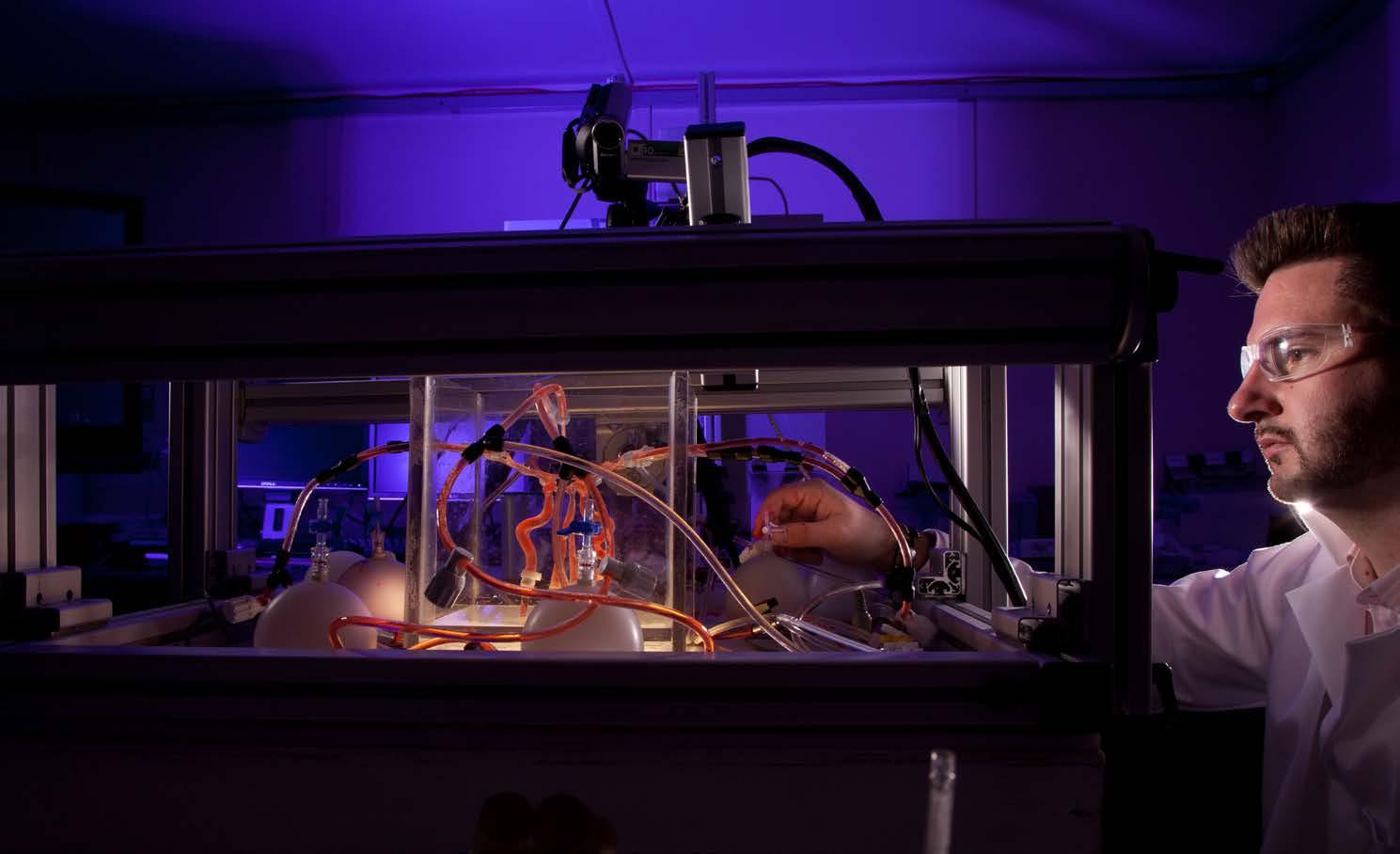
Photography: Conor Doherty, Alison Laredo, James Connolly, Jessica Priddy, Mike Shaughnessy, Clive Wasson, Aengus McMahon. Lauren Fitzgerald, Paul McGuckin, Brad Anderson, Katarina Rozvadska, Ugnius Brazdziunas, and ATU staff.
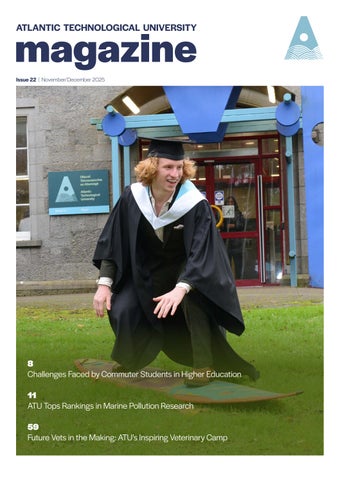
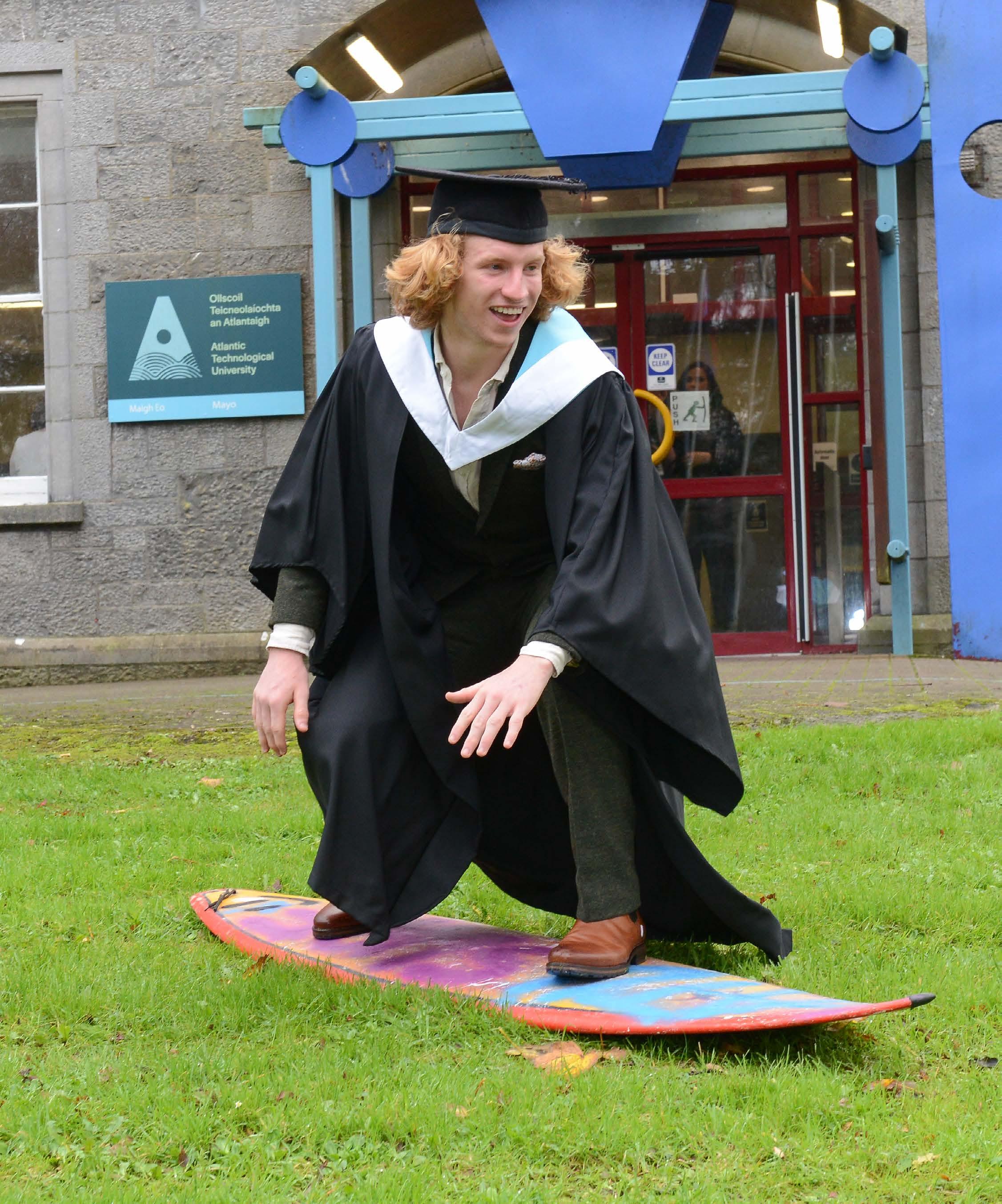
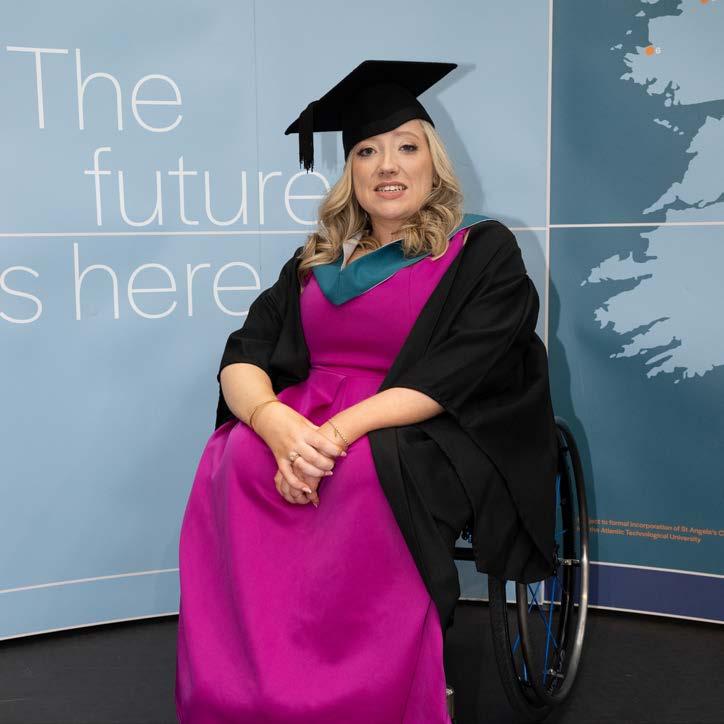
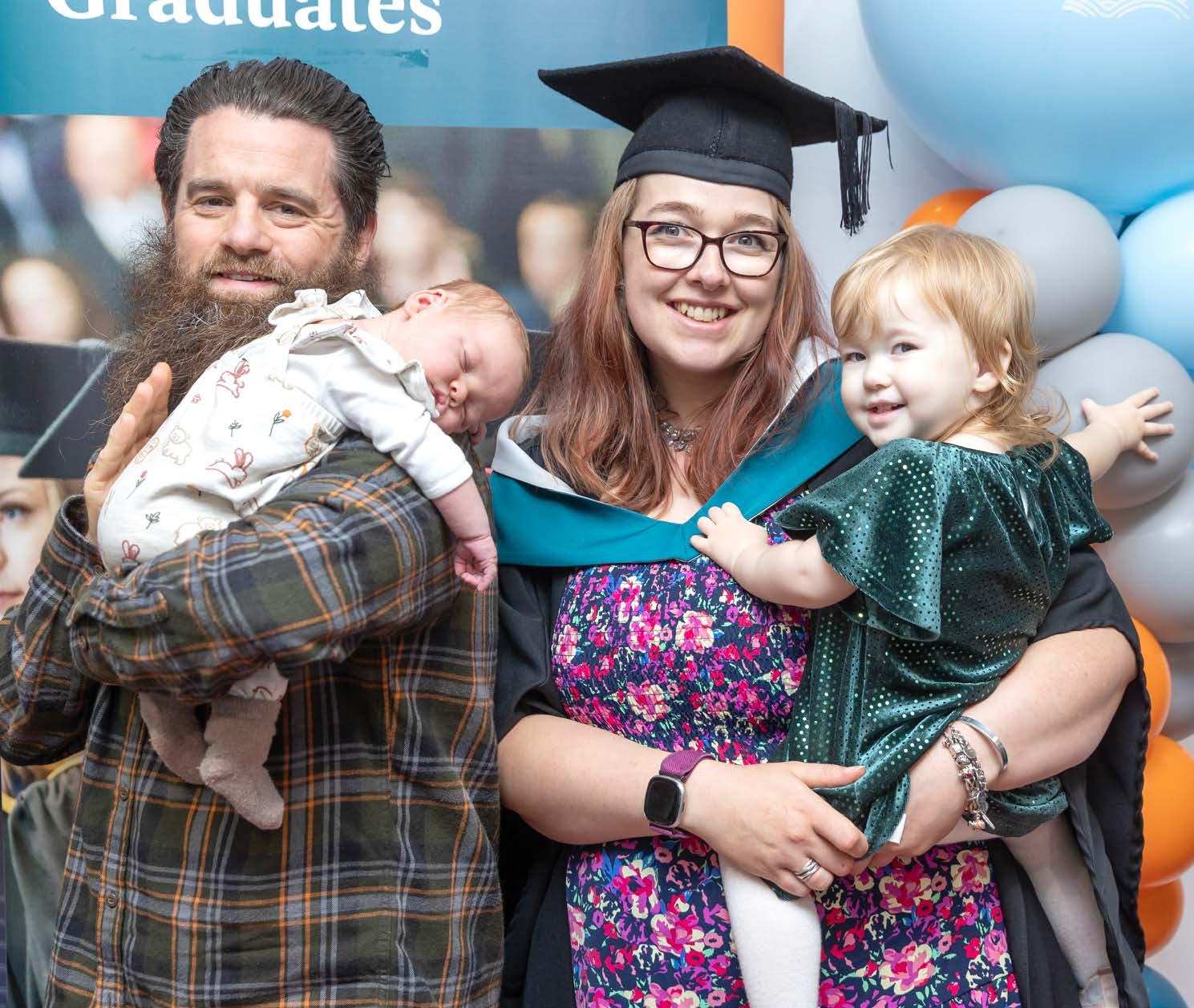
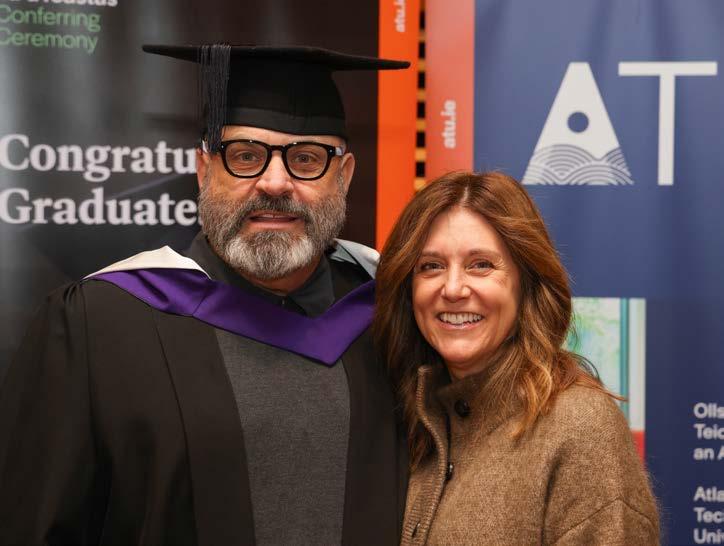
Cover photo: Zack Wright at ATU’s Mayo campus conferring ceremony. Zack graduated with a Bachelor of Arts (Honours) in Outdoor Education.
Contributors: ATU Communications team, Orlaith Ní Mheachair, Stephen Glennon, Dr Carina Ginty, Jorden McMenamin, Dr Mark McCarthy, Ivana Hanjs, Julia McMorrow, Mark Kelly, Keith Hopper, Monica Megraw, Dr Anthony Blake, Sinéad Ní Bhroin, Therese Montgomery, Deirdre Byrne, Dr Jose M. FariñasFranco, Dr James Britton, Dr Shane Conway, Bernie Larkin, Dr Jess Mannion, Daniel Caldwell, Paula Ryder and Fiona O’Donnell.
LET US KNOW WHAT YOU THINK: If there is anything you would like to see in future issues of this magazine, please email anne.donnelly@atu.ie
1
Welcome from the Editor
3
University Updates
- Memorable Moments at ATU’s Winter Conferring Ceremonies
- Five-nation Diplomatic Panel on the War in Ukraine and Europe’s Security
- Challenges Faced by Commuter Students in Higher Education
- ATU Graduate Design Competition to Honour the Ursuline Legacy
11
Research News
- ATU Tops Rankings Nationally and Globally in Marine Pollution Research
- RISE@ATU IDEAS Podcast
- Bioeconomy and Health-Tech Research Spotlight
- Posters in Parliament: A Showcase of Undergraduate Research
22
Equality, Diversity and Inclusion
- Say Yes to Respect: 16 Days of Activism
- #CountMeIn: Standing Together for Race and Ethnic Equality at ATU
- Rooted in Resilience, ATU Marks Black History Month
- European Down Syndrome Swimming Championships
- ATU Achieves its First Athena Swan Bronze Award
- Advancing Conversations on Disability and Sexual Citizenship
- Diwali Festival at ATU
28
Engagement and Innovation
- A Legacy of Region-wide Impact: Celebrating George McCourt’s Retirement
- Innovation Centre Companies win DTIF Funding
- Continuity, Collaboration, and Regional Growth: The Enduring Partnership Between ATU and the Chambers of Commerce
- North West Digital Futures conference at ATU
- New Free Online Courses in Forensic Toxicology, and Social Robotics
37
Sustainability
- ATU’s Emil Kindl Elected Inaugural President of EU GREEN Alliance Student Council
- Toward Net Zero: How European Universities Are Embedding Sustainability in Tourism Curricula
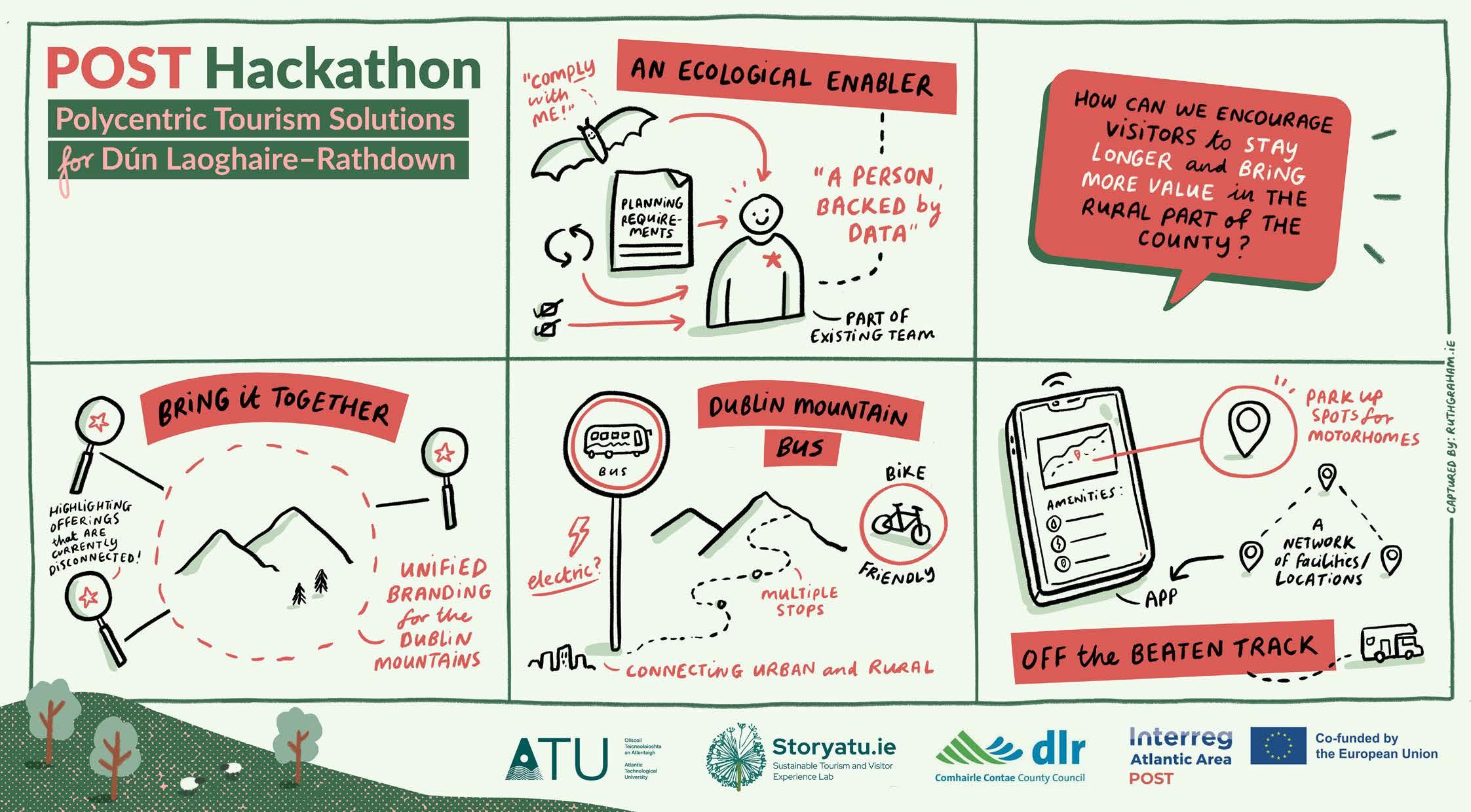
- Dún Laoghaire-Rathdown Hackathon 2025
- Carbon Literacy Programme for ATU Students
- How do Social Media Influencers Impact our Fashion Purchases?
43
ATU Celebrates
- ATU’s new Mental Health Action Plan to Promote Student Wellbeing
- Student wins Award at the Interior Educators National Student Awards
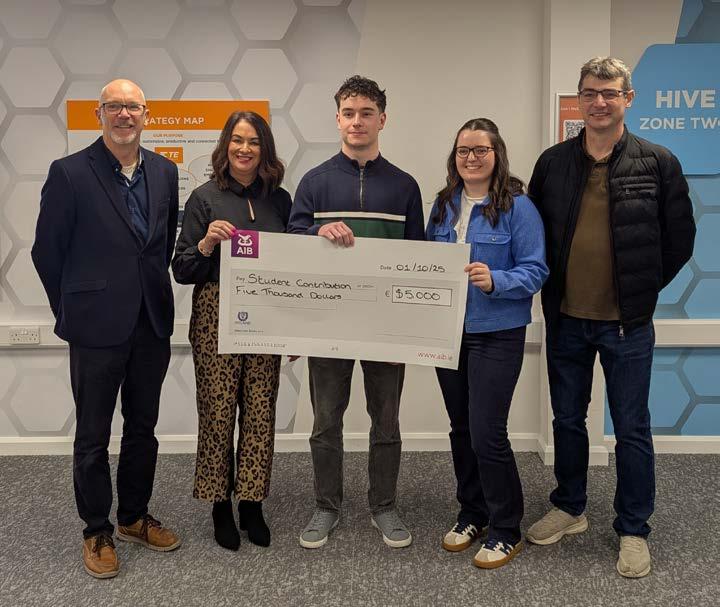
- Career Boost for Two ATU Students
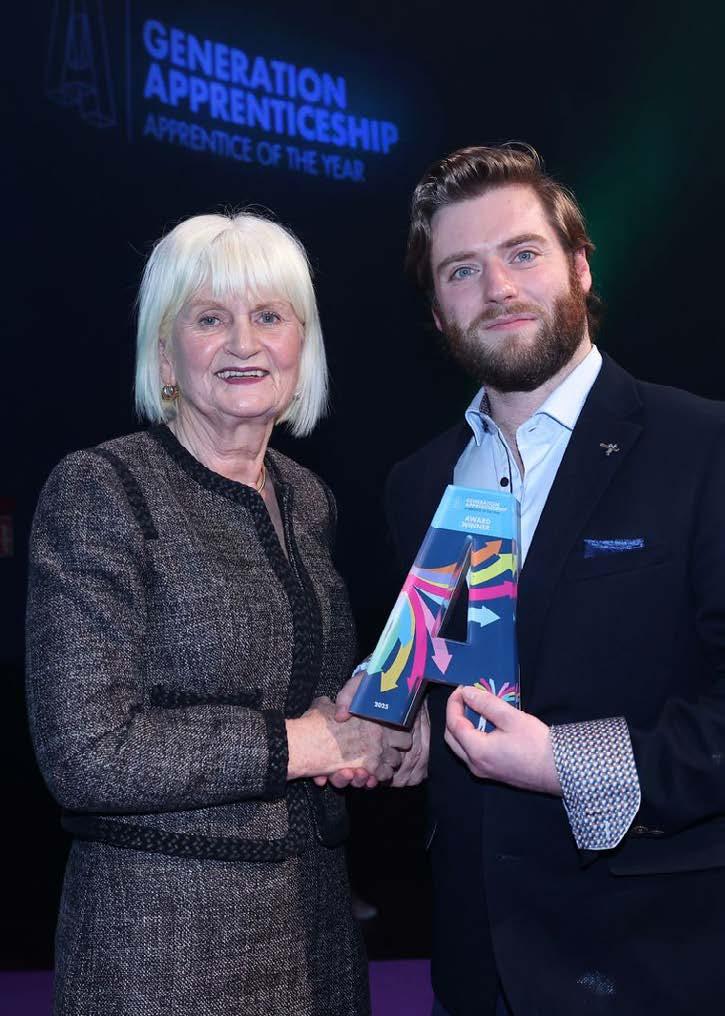
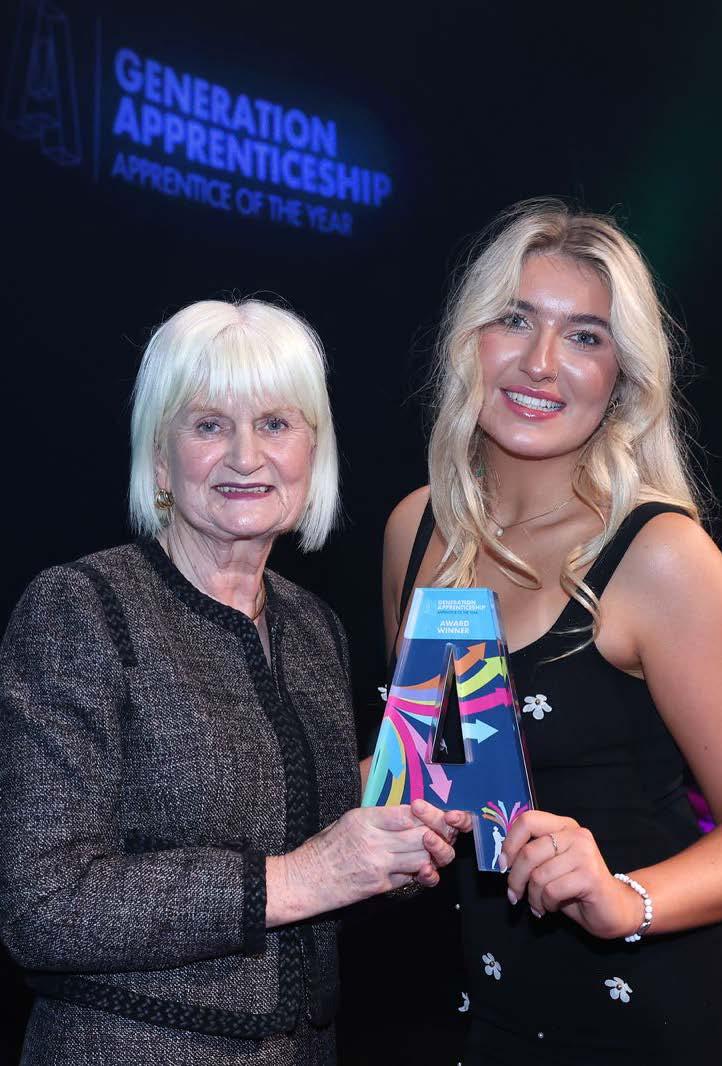
- Apprentice of the Year Award Winners
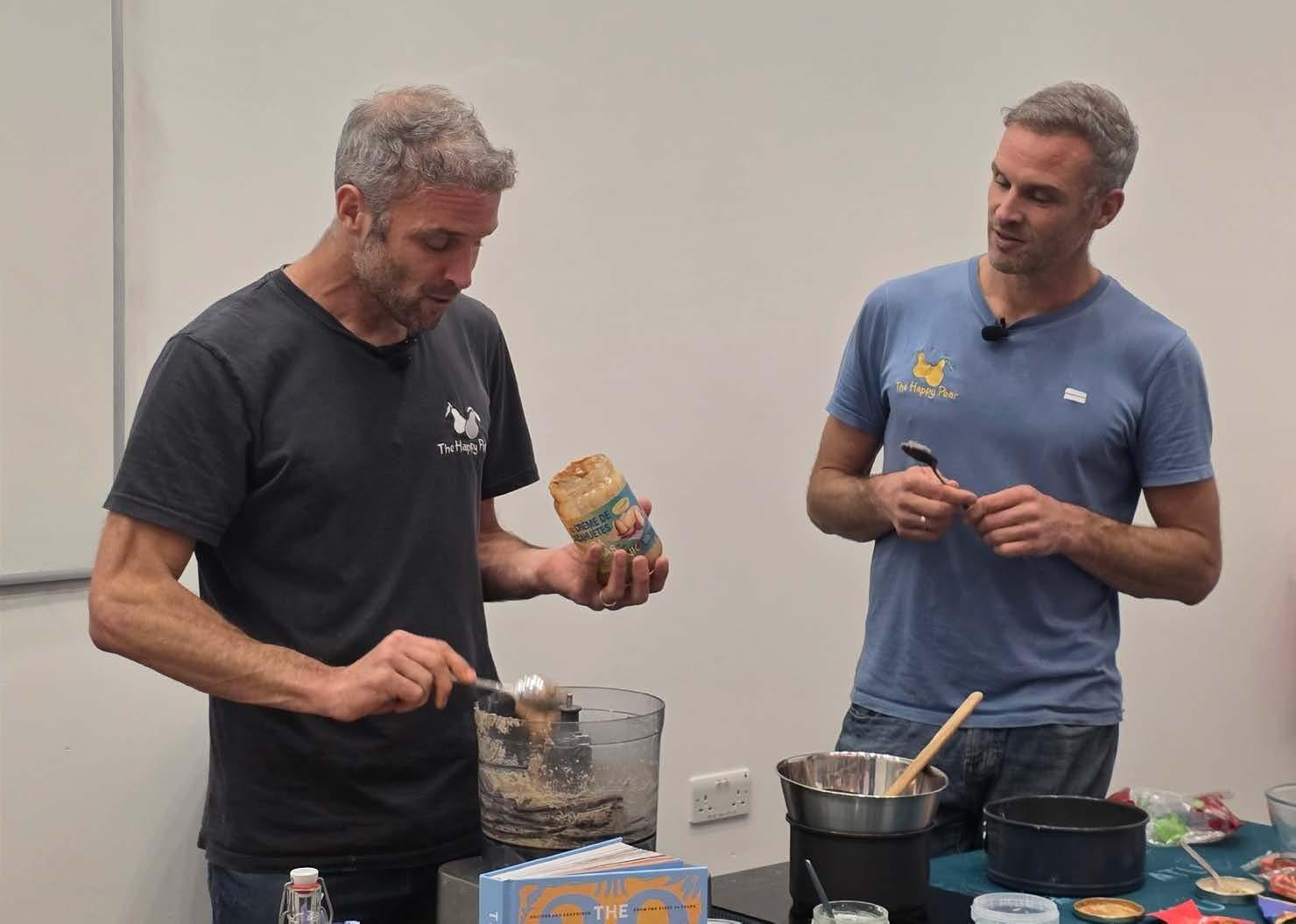
- The Happy Pear Twins Visit ATU
- Dr Anthony Blake wins Award for Outstanding Research in Geotechnical Engineering
- Forensic Science Lecturer Finalist in TrailblazHER™ Excellence Awards
- ATU Student Awarded Splash Swim School Bursary
- Six Wins at Worldskills Ireland 2025 for ATU
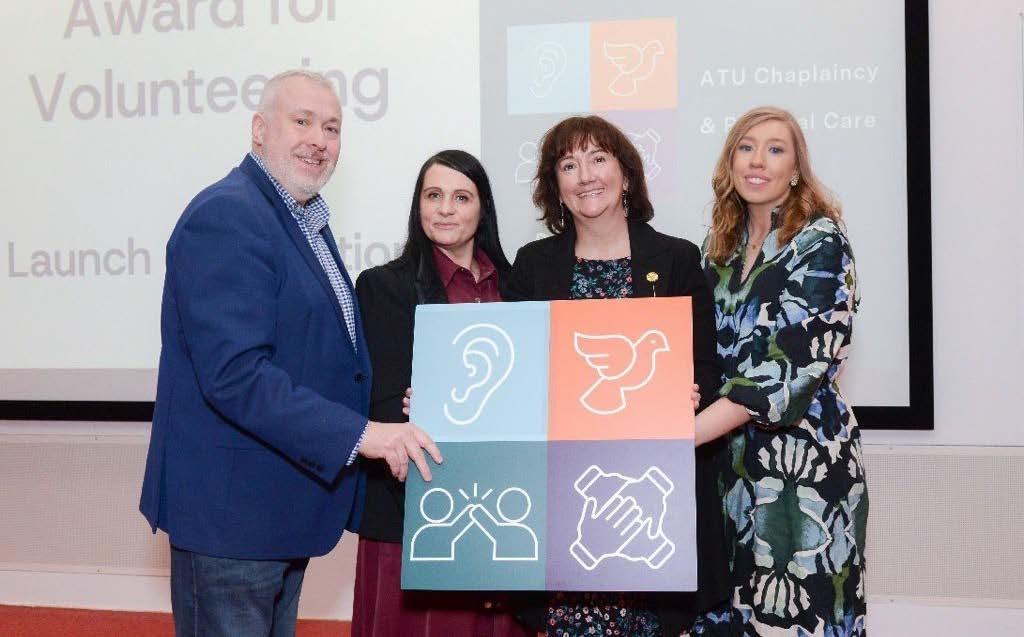
- Celebrating Service: ATU Launches President’s Award for Volunteering
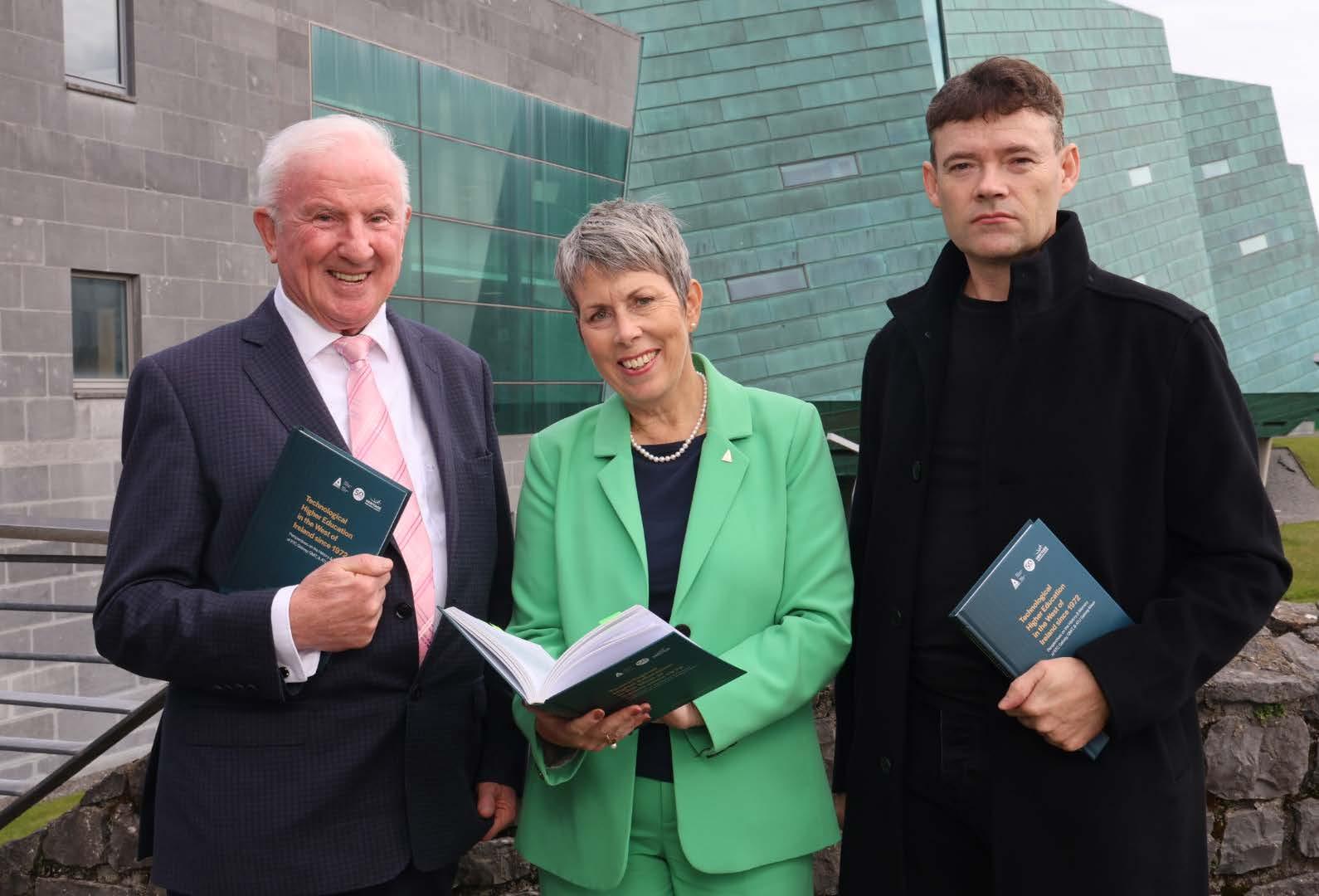
- New Book Chronicles the Evolution of Technological Higher Education in the West of Ireland
- Teaching and Learning Partners in Innovation Fellowship Awards 2025
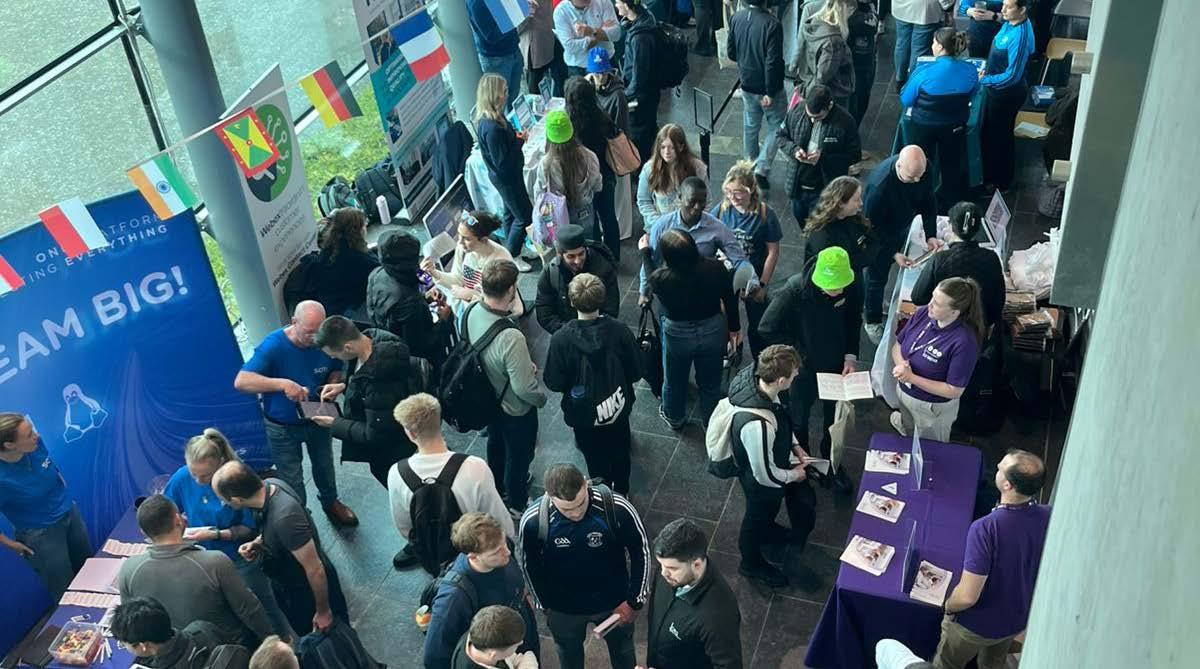
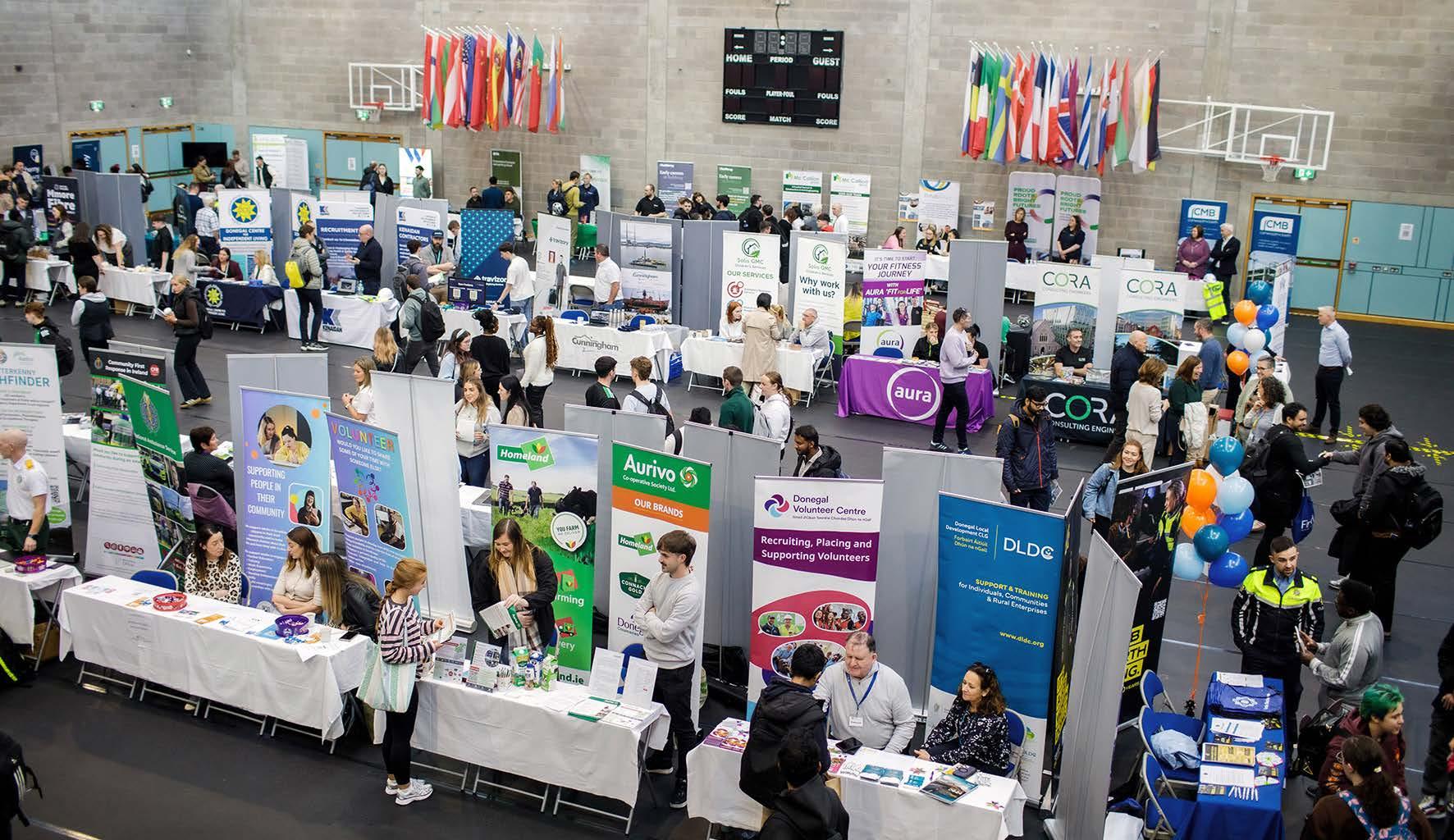
- Shaping Futures: ATU Careers Fairs Open Doors for Students and Graduates
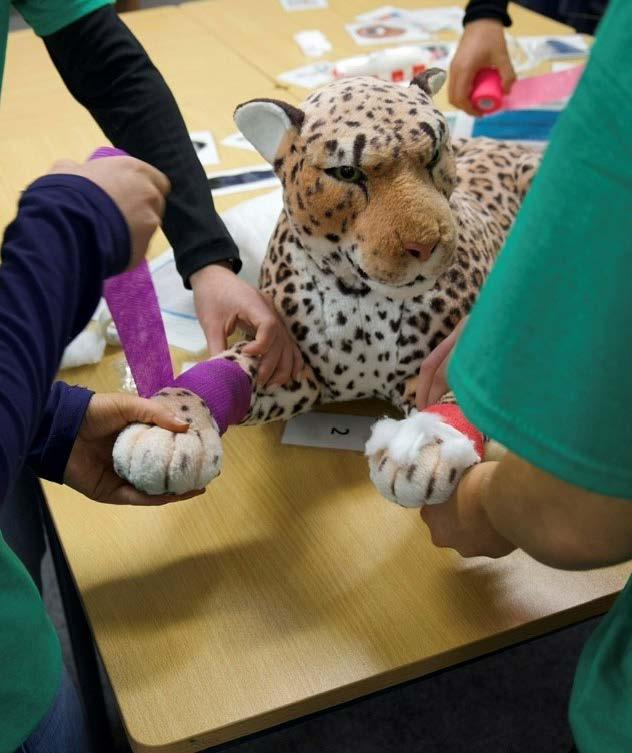
- Vet Camp Inspires Future Veterinary Students Ahead of New Degree Launch
61
ATU’s Artistic Life
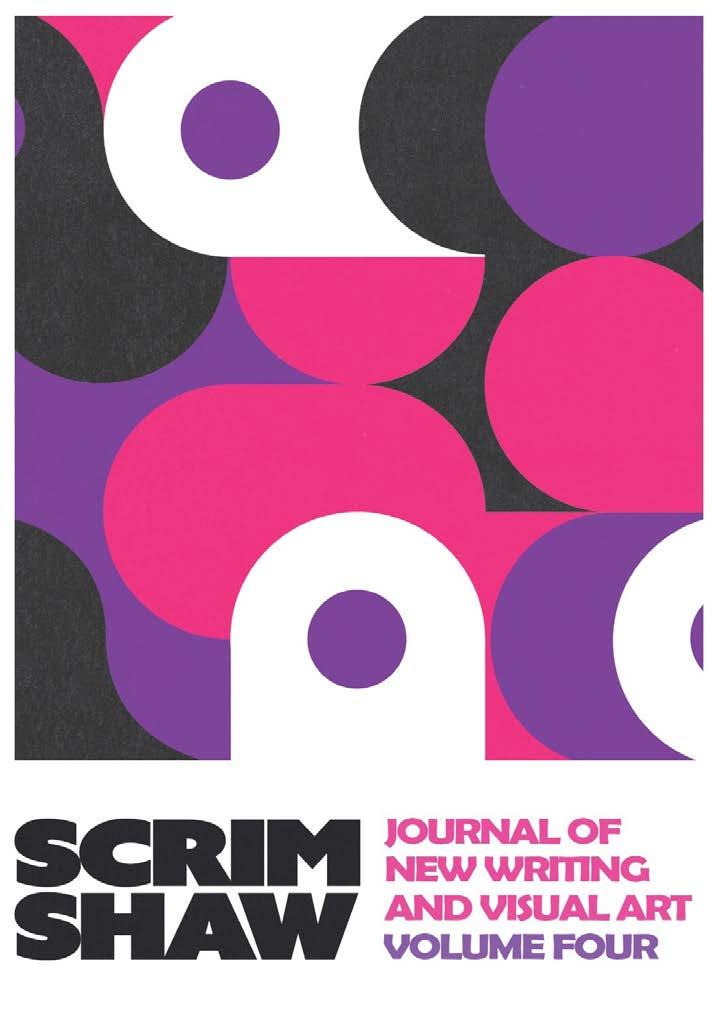
- Submissions for Scrimshaw, Journal of New Writing and Visual Art
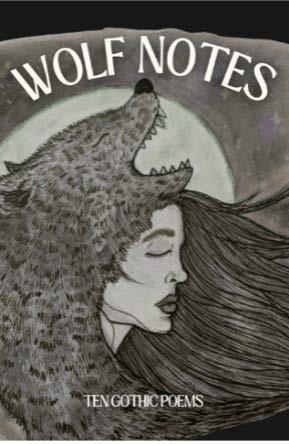
- Wolf Notes, a Poetry Collection by Karen Quinn
- ATU Writing and Literature Lecturers read at International Conference in Singapore
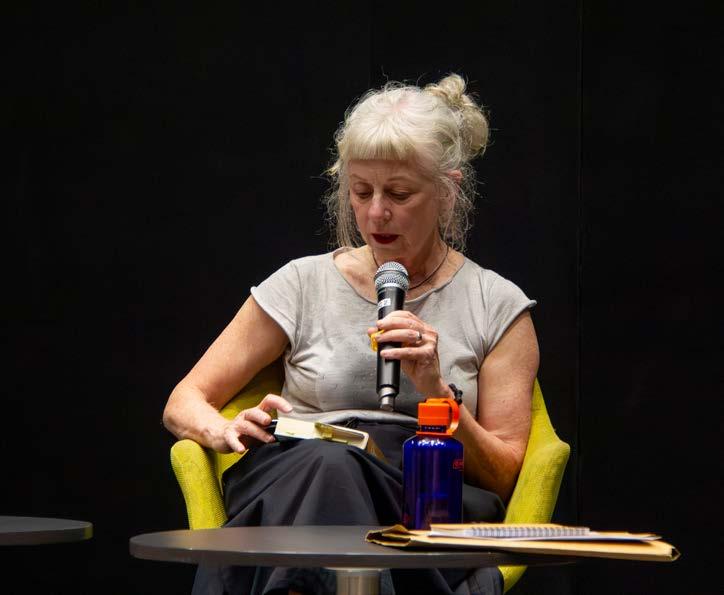
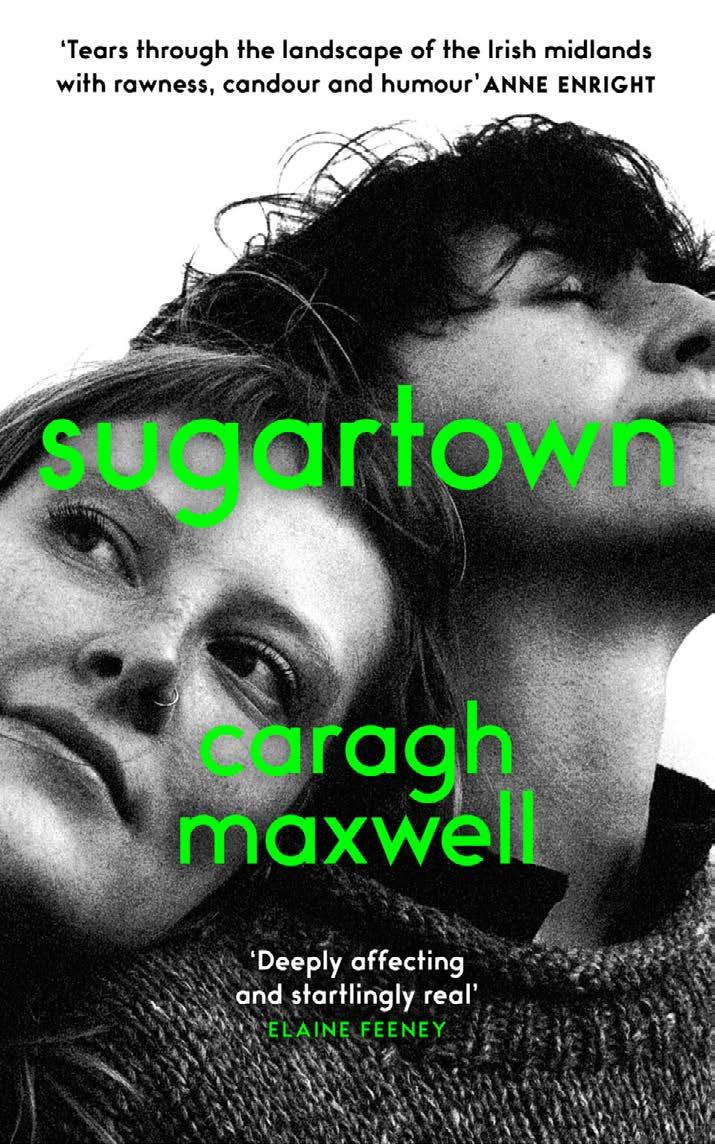
- Caragh Maxwell’s Debut Novel Shortlisted for an Irish Book Award
- Best Student Short at the Kerry International Film Festival
63
News in Brief
Welcome from the Editor
Dear Reader,
I’m delighted to welcome you to Issue 22 of our ATU Magazine. We open this issue with some proud moments captured at our Winter Conferring Ceremonies, a joyful occasion for our graduates as they embark on the next chapter of their lives.
One of the standout events this semester was the Five-Nation Diplomatic Panel on the War in Ukraine and Europe’s Security, hosted at ATU. It was a powerful and timely discussion, bringing together international perspectives and highlighting our university’s role in global dialogue.
We’re also delighted to share that ATU has topped national and global rankings in Marine Pollution Research. This recognition reflects the dedication of our research teams and the impact of their work on environmental sustainability.
Undergraduate research took centre stage at Ireland’s inaugural Posters in Parliament event, where ATU graduates joined peers from across the country to present their research under the theme, ‘Research for Change’.
We celebrated a significant milestone in our journey toward equality and inclusion — ATU’s first Athena Swan Bronze Award. This award recognises our efforts to advance gender equality and create a more inclusive university environment.
Our careers service hosted a series of careers fairs across the university in September and October. These events brought together more than 1,800 students and over 200 organisations, creating vibrant spaces for career exploration, networking, and professional development.
Finally, we turn to the creative heart of ATU. Submissions are now open for Scrimshaw, our journal of new writing and visual art, and we celebrate graduate Caragh Maxwell’s nomination for an Irish Book Award, a wonderful achievement that highlights the literary talent within our community. There’s plenty more to explore in this issue, from regional and national partnerships to sustainability projects, and not forgetting our student wellbeing initiatives.
One of the most rewarding aspects of my editorial role is gaining a deeper understanding of ATU’s activities across all nine campuses and the positive impact we have on people’s lives. I hope you too find something in these pages that informs, inspires, or simply makes you smile.
Best Wishes
Anne Donnelly
Focal ón Eagarthóir
A chara,
Tá an-áthas orm fáilte a chur romhat chuig an 22 eagrán d’Iris OTA . Is leis na chuimhneacháin bhródúla a gabhadh ag searmanais bronnta céime an gheimhridh a chuirfear tús leis eagrán seo, ócáid lán áthais dár gcéimithe agus iad ag tabhairt faoin gcéad chaibidil eile dá saol.
Ceann de na himeachtaí is suntasaí an tseimeastar seo ab ea an Painéal Taidhleoireachta Cúig Náisiún ar an gCogadh san Úcráin agus ar Shlándáil na hEorpa, a bhí ar siúl in OTA. Ba phlé cumhachtach tráthúil é, a thug le chéile peirspictíochtaí idirnáisiúnta agus a chuir béim ar ról na hollscoile i bplé domhanda.
Tá áthas orainn a roinnt freisin gur b’í OTA a bhí i mbarr na rangaithe náisiúnta agus domhanda i dTaighde ar Thruailliú Mara. Léiríonn an t-aitheantas seo tiomantas na bhfoirne taighde agus tionchar a gcuid oibre ar inbhuanaitheacht chomhshaoil.
Bhí taighde fochéime i lár an aonaigh ag Póstaeir sa Pharlaimint, an chéad ócáid dá chineál in Éirinn, áit ar tháinig céimithe OTA le chéile lena bpiaraí ar fud na tíre chun a gcuid taighde a chur i láthair faoin téama ‘Taighde ar son an Athraithe’.
Déanaimis ceiliúradh thábhachtach ar Ghradam Cré-Umha Athena Swan,
céim i dtreo comhionannais agus cothroime. Tugann an gradam seo aitheantas d’iarrachtaí na hOllscoile chun comhionannas inscne a chur chun cinn agus timpeallacht ollscoile níos cuimsithí a chruthú.
Chuir an Seirbhís Gairme sraith aonaigh gairme ar bun ar fud na hollscoile i mí Mheán Fómhair agus i mí Dheireadh Fómhair. Thug na himeachtaí seo níos mó ná 1,800 mac léinn agus breis is 200 eagraíocht le chéile, rud a chruthaigh spásanna bríomhara chun spléachadh a thabhairt ar ghairmeacha, líonrú agus forbairt ghairmiúil.
Ar deireadh, croí cruthaitheach OTA. Tá aighneachtaí oscailte anois do Scrimshaw, iris le haghaidh scríbhneoireachta nua agus ealaíne amhairc, agus déanann muid ceiliúradh ar ainmniúchán Caragh Maxwell, céimí de chuid na hOllscoile, do Ghradam Leabhar na hÉireann, éacht iontach a léiríonn an tallann liteartha atá inár bpobal.
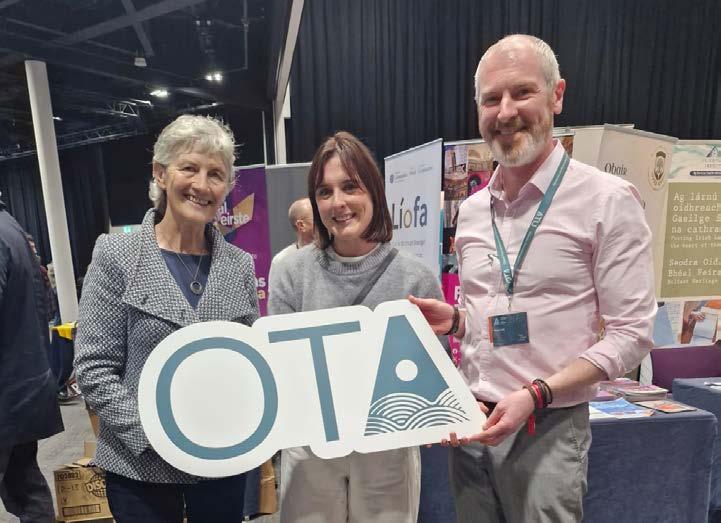
‘Ag croí na féile – Oireachtas na Samhna i mBéal Feirste. Catherine Connolly, Uachtarán na hÉireann, le hOrlaith Ní Mheachair, Oifigeach Forbartha Gaeilge OTA, agus Seán Kelly, Oifigeach Teagmhála Scoileanna OTA ag Oireachtas na Samhna – féile a dhéanann ceiliúradh bríomhar ar an nGaeilge, ar an gcultúr Gaelach, agus ar na Gaeil.’
Tá neart eile le feiceáil san eagrán seo, ó chomhpháirtíochtaí réigiúnacha agus náisiúnta go tionscadail inbhuanaitheachta, agus gan dearmad a dhéanamh ar na tionscnaimh atá dírithe ar fholláine na mac léinn.
Ceann de na gnéithe is tairbhí de mo ról eagarthóireachta ná tuiscint níos doimhne a fháil ar ghníomhaíochtaí OTA ar fud na naoi gcampas agus an tionchar dearfach atá againn ar shaol daoine. Tá súil agam go bhfaighidh tú rud éigin sna leathanaigh seo a chuirfidh le d’eolas, a bheidh mar inspioráid agat nó a chuirfidh ag gáire thú.
Le dea-ghuí
Anne Donnelly
University Updates
Memorable Moments at ATU’s Winter Conferring Ceremonies
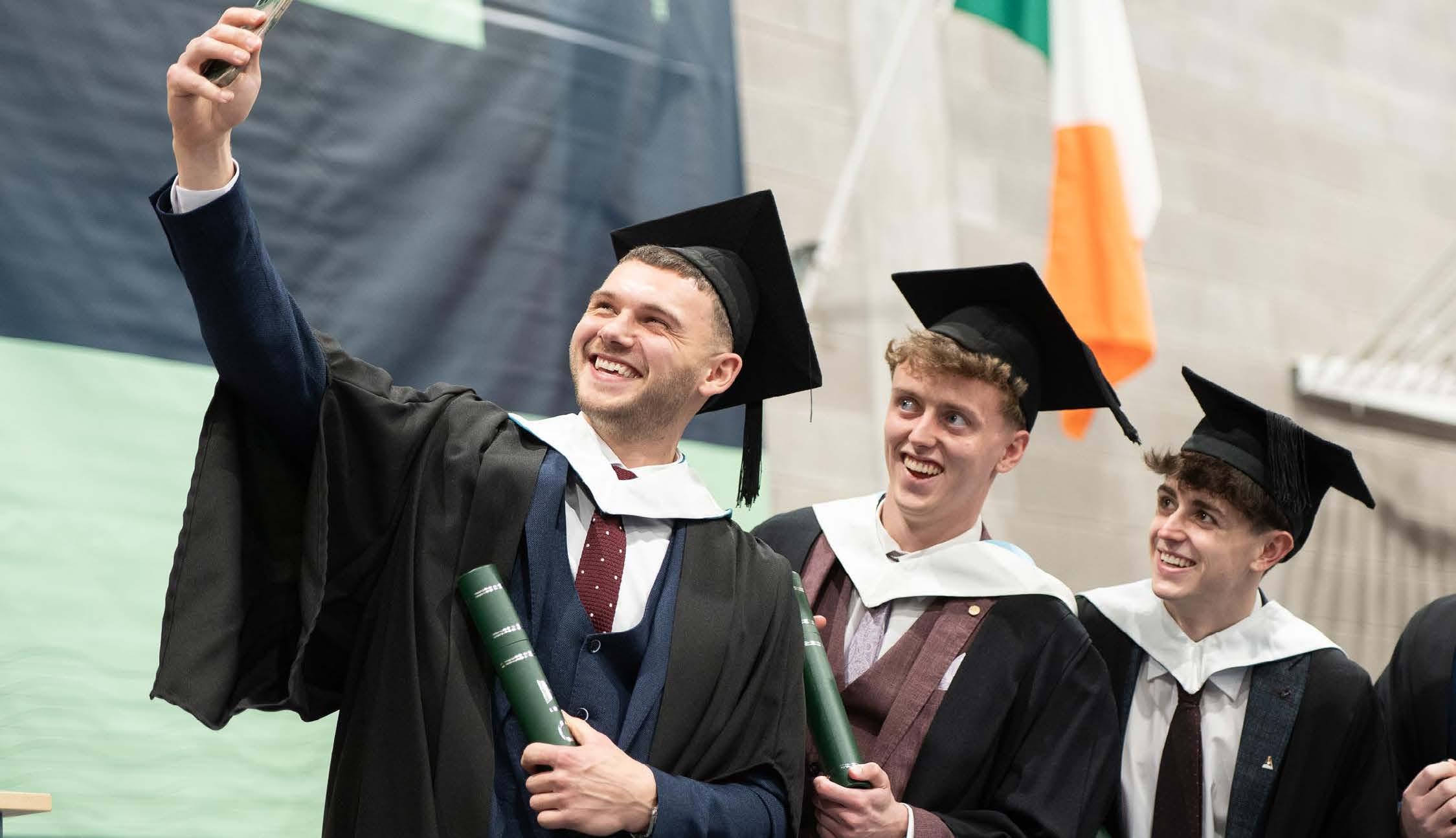
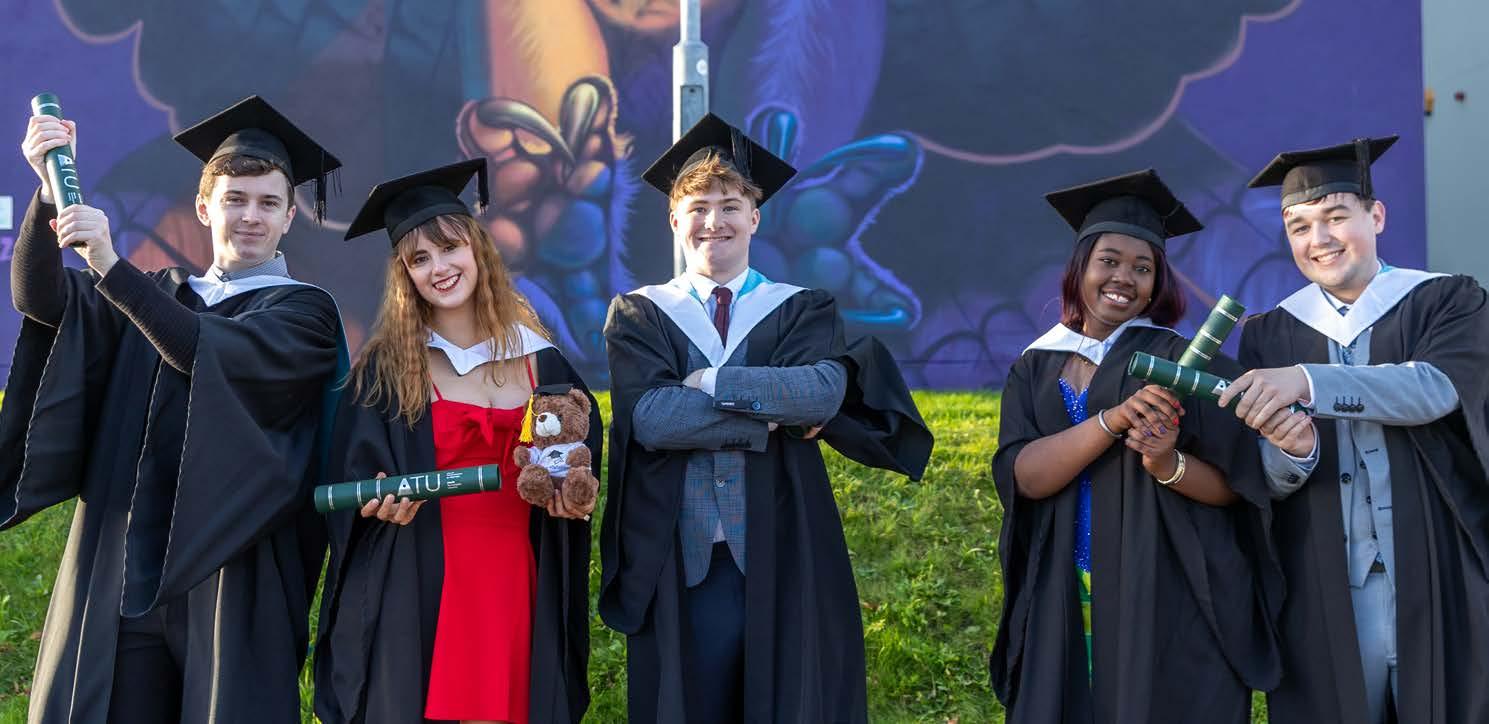
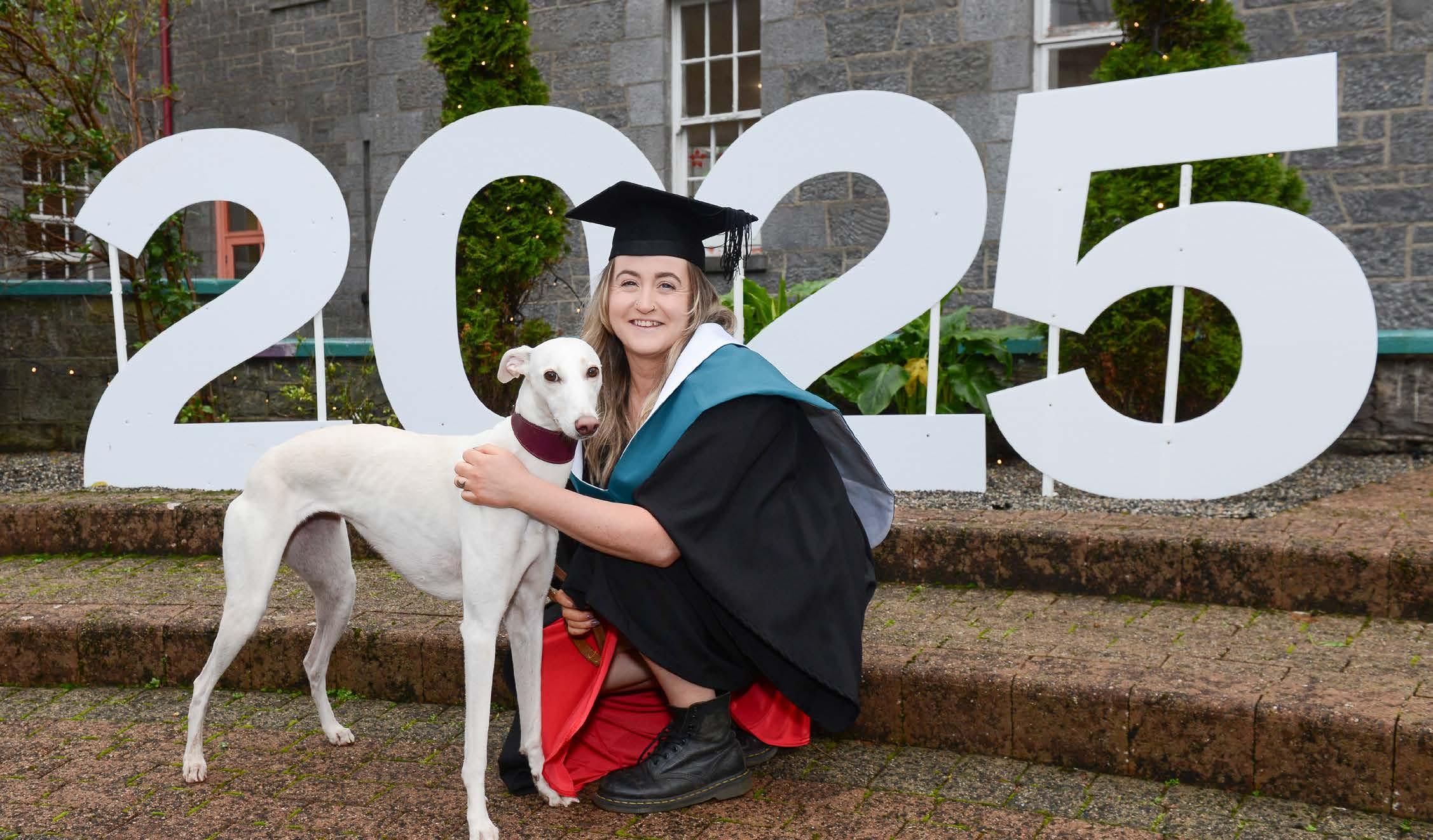
ATU’s Winter Conferring Ceremonies took place in October and November celebrating the achievements of over 5,000 graduates across a wide range of disciplines, from undergraduate certificates to doctoral degrees.
Fields as diverse as science, engineering, health, business, and the creative arts were recognised, in one of the most important events in the university calendar year. We celebrated a significant milestone this year with the graduation of the first cohort of Civil Engineering Apprentices, marking a new chapter in the development of Ireland’s next generation of engineering professionals.
“ Graduating from ATU means you leave us with a qualification of real distinction, earned to the highest academic standards. You also take with you; experiences, friendships and knowledge that will serve you well as you move forward. I encourage you to use these foundations with confidence, to set ambitious goals, and to make a positive impact on your chosen path "
Dr Orla Flynn, ATU President speaking to graduands at our Winter Conferring Ceremonies
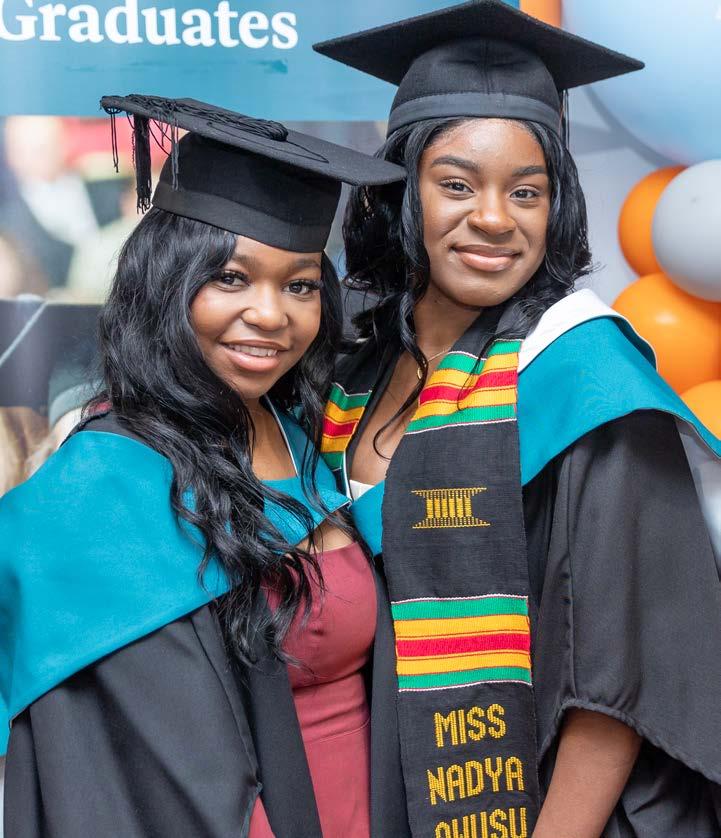
Abokoe Ngulube and Nadya Owusu Boateng at ATU Sligo’s conferring.
Dylan Woods, Caolan McConnell and Ethan Mc Alllistair at ATU’s Donegal conferring.
Louise Callaghan graduated from ATU with a Bachelor of Arts in Film and Media Production at ATU’s Donegal conferring.
Cian McCluskey and Luke Kelly both graduated with a Bachelor of Science (Honours) in Education (Design, Graphics and Construction) from ATU’s Connemara campus.
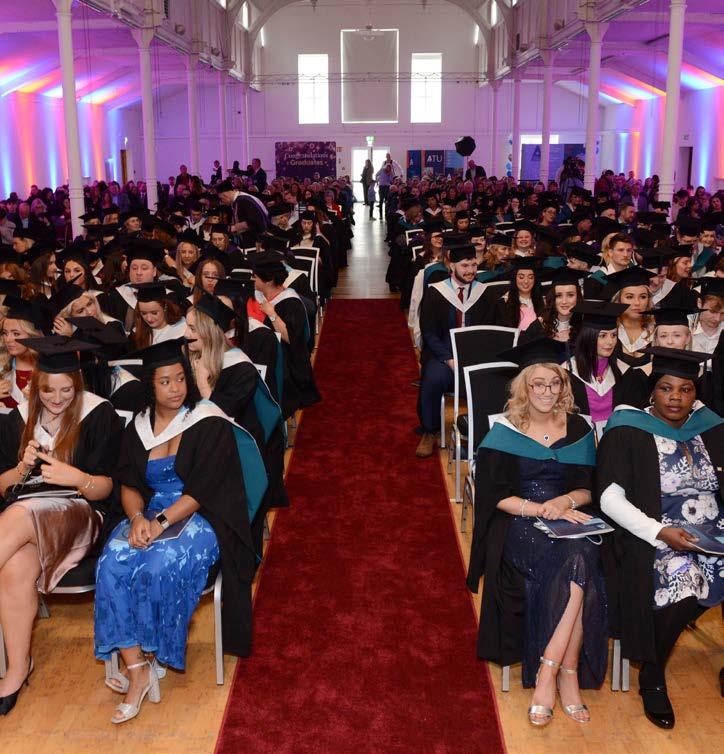
ATU Mayo’s conferring ceremony on campus in St Mary’s Hall.
Toni Sumner who graduated with a Bachelor of Science in Applied Data Technologies at ATU’s Donegal conferring.
Graduate Abigail Roberts with her partner Edward Harte and their children, Body and Poppy at ATU’s Sligo conferring.
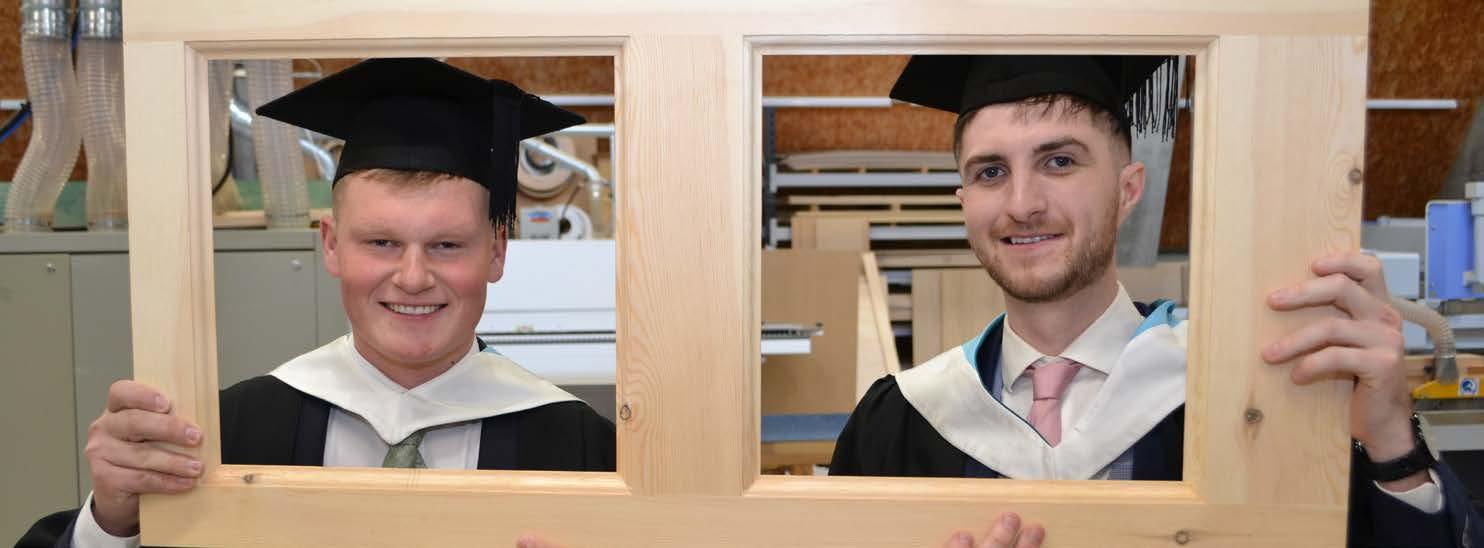
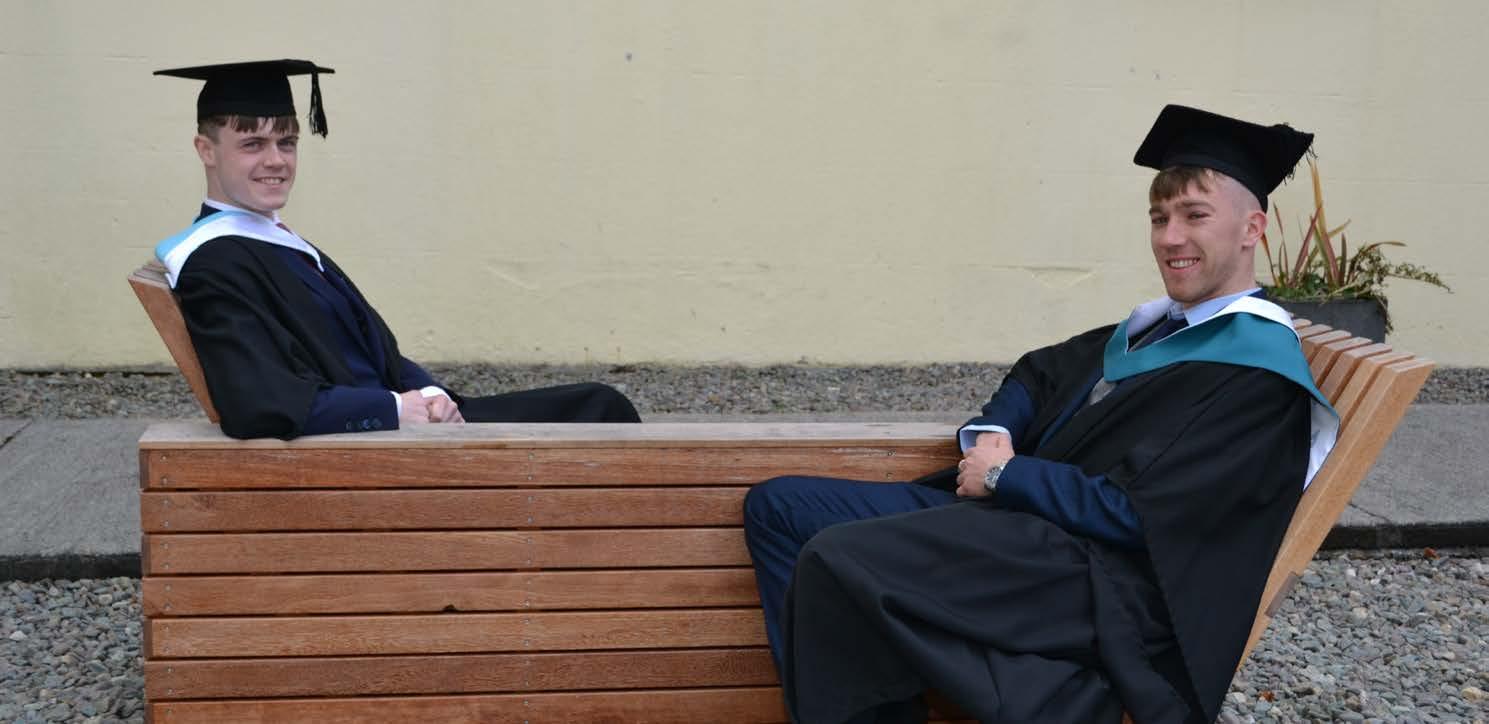
Patrick McCann and Emmet O Daibheid at their graduation on ATU’s Connemara campus. Emmet graduated with a Bachelor of Science in Furniture Making and Architectural Woodworking and Patrick graduated with a Bachelor of Science (Honours) in Furniture Making and Architectural Woodworking.
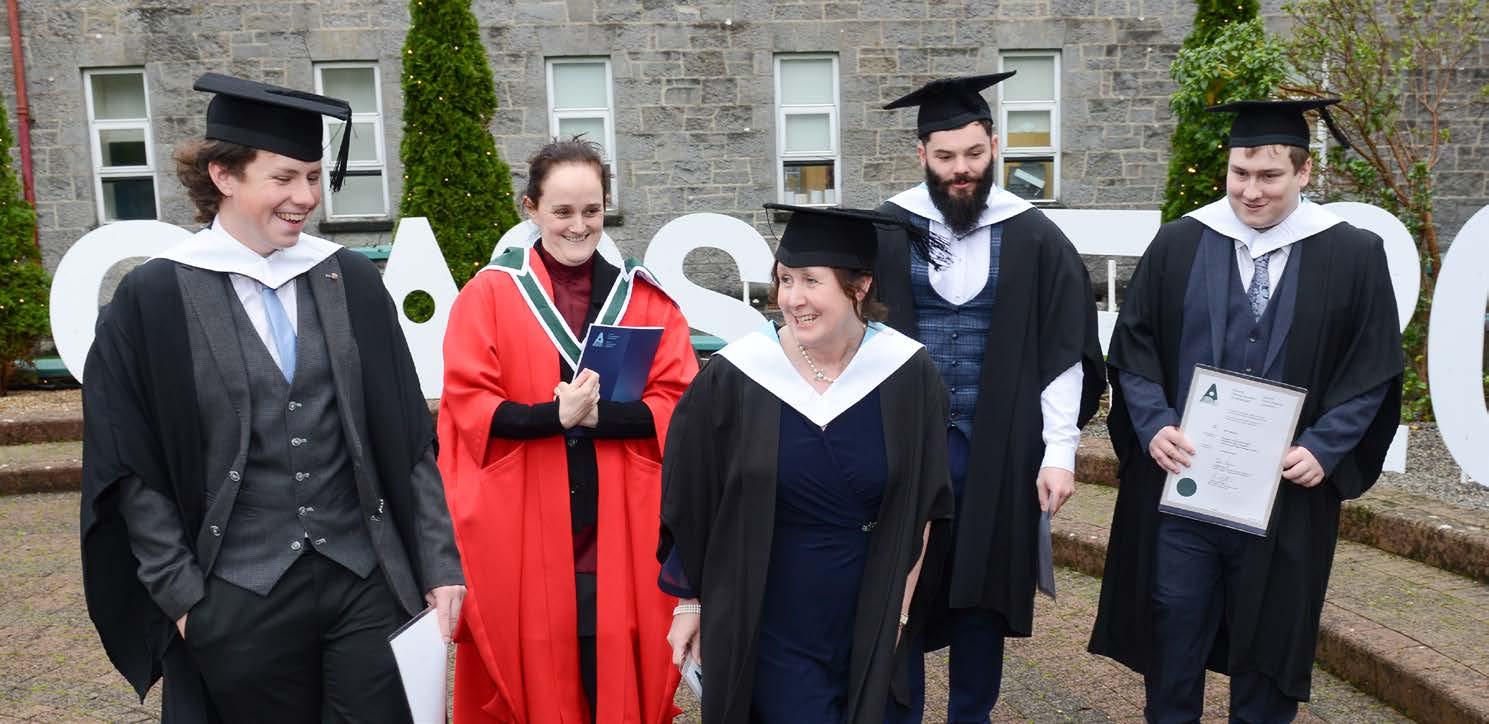
Pictured with their lecturer, Dr Yvonne McDermott are Sean Livesly, Caroline O’Connor, Sam Deane and Mark Morley who all graduated with a Bachelor of Arts (Honours) in History and Geography at ATU’s Mayo campus conferring.
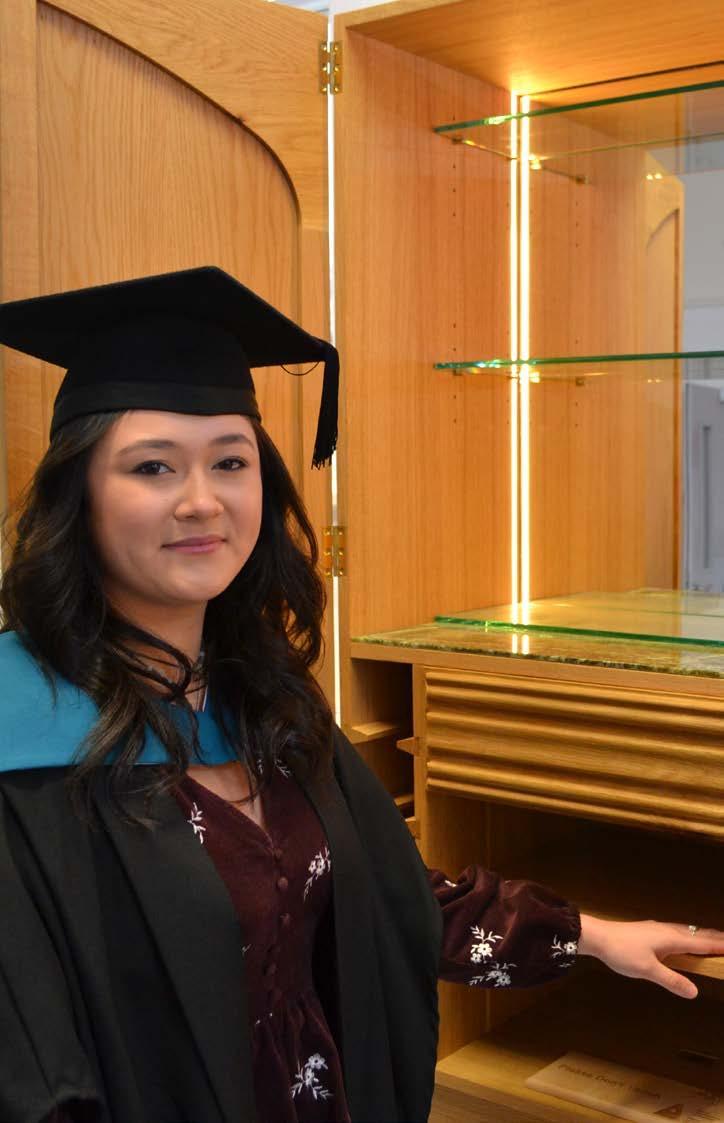
Zara Chambers at her graduation in ATU’s Connemara campus. She graduated with a Bachelor of Science in Furniture Design and Manufacture.
Twin sisters Radka and Rebeka Kotulakova at ATU Galway City conferring. Both of them graduated with a Bachelor of Science in Business Information Systems.
Graduates celebrate at ATU’s Sligo conferring.
Michael Lally, former RTE correspondent, at ATU Galway City conferring where he graduated with a Master of Arts (Research). His thesis title was: ‘The relationship between democracy, public service, media and regulation in an evolving Europe.’
Jennie Coughlan Green, with her dog Callie at ATU’s Mayo campus conferring.
Film producer, Michael Fitzgerald from the USA, graduating with a Master of Arts in Creative Practice; pictured with his wife Kristine at ATU Galway City conferring.
Tshoga Simbarashe and Paul Wynne at ATU Galway City conferring.
Five-nation Diplomatic Panel on the War in Ukraine and Europe’s security
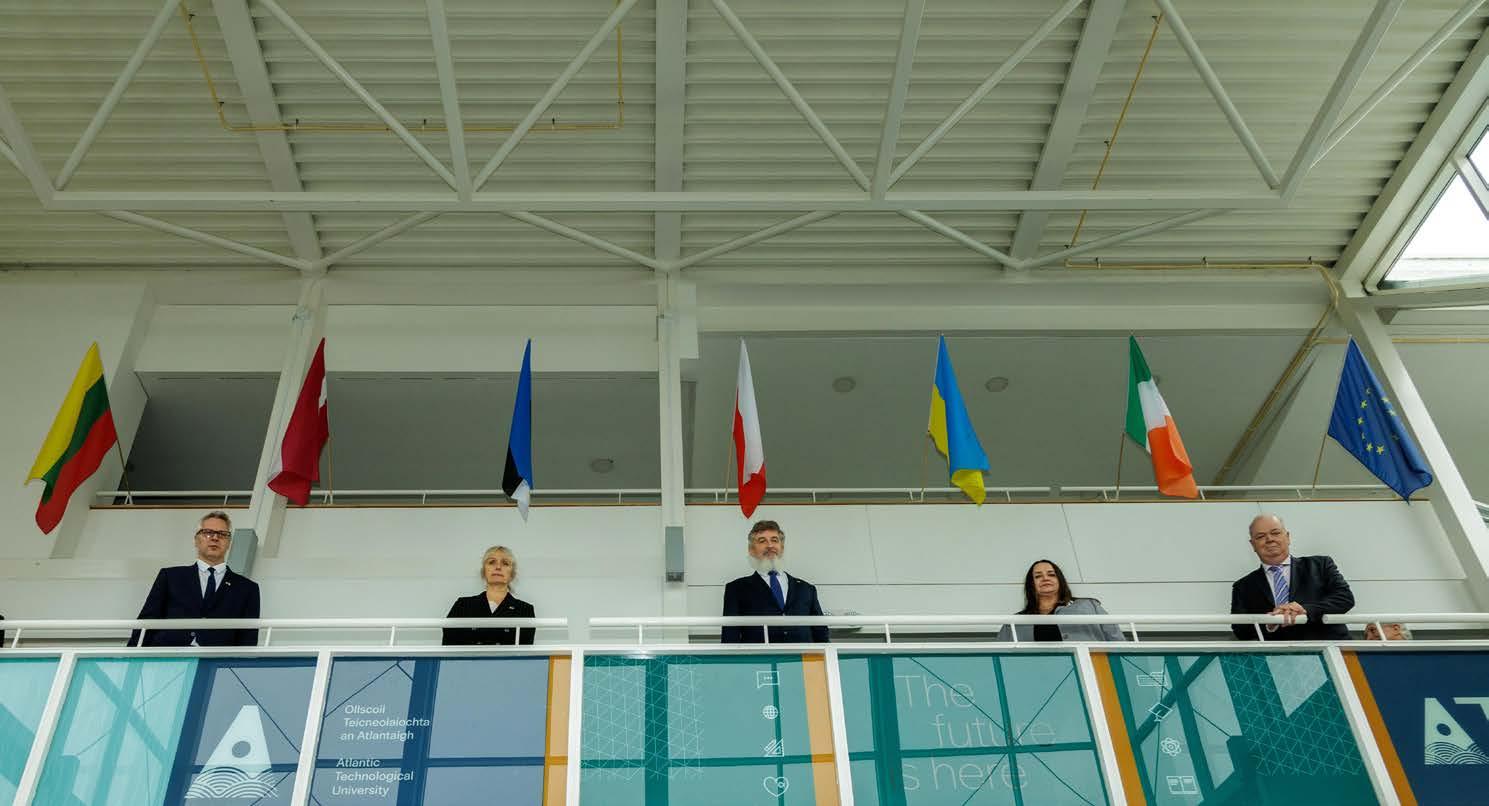
Štālmeistars, the Ambassador of Latvia, and Mr Artur Michalski, Chargé d’affaires a.i. of Poland.
The theme of togetherness and active defence was reinforced by the Polish Ambassador, who spoke warmly of Irish-Atlantic connections and the power of collective action.
Ms Larysa Gerasko, Ambassador of Ukraine, appealed for global vigilance and assistance, framing the war in Ukraine as a fight for democratic survival, at a panel discussion hosted in ATU Sligo in October.
The discussion, titled 'Conversations on Campus,' featured a delegation of high-level ambassadors and diplomats from Central and Eastern Europe, and brought critical geopolitical realities to the forefront of the university, engaging staff and students in a discussion focused on the three-year war in Ukraine and the future security of the European continent.
The panel included Ms Gerasko, the Ambassador of Ukraine, Mr Jonas Grinevičius, the Ambassador of Lithuania, Mrs Kairi Künka, the Ambassador of Estonia, Mr Juris
Addressing the critical query “Is another conflict in Europe on the horizon?”, the diplomats warned that the three-year war in Ukraine represents a daily threat to the entire European continent.
“We are fighting for survival; our people are facing lost lives and destruction every single day. We are doing everything possible to stop the war; no one wants this and needs this. We are ready for peace talks, but Putin has no intention to stop; he wants full occupation, not only of Ukraine, but everywhere in Europe,” said Ms Larysa Gerasko.
“ We are protecting Europe with our lives; we are paying the highest price. We need help, otherwise the rest of the EU will face the same. "
Ms Larysa Gerasko, Ambassador of Ukraine
Mr Michalski said that the word ‘Atlantic’ “triggers his imagination,” evoking lovely memories from his last visit to Sligo. He added: “We are here to share our understanding and experience of what is going on and to talk about the solidarity-a powerful tool.” He warned that the conflict in Ukraine “affects the entire European continent. “It is breaking and destroying, which is unacceptable as one cannot change order by force.” He concluded that Russia’s actions stem from a “colonial mentality, the mentality of the past,” and that Ukraine is “entitled to choose their fate and their future.”
Reinforcing the need for vigilance against the aggressor, Mr Staimeistars, Ambassador of Latvia, warned the audience against complacency.
“We must not be naive, thinking that our democratic system is safe. Putin is testing us all, and hybrid warfare can be done from everywhere,” he cautioned.
The panel concluded by reaffirming their commitment to peace rooted in strength and the eventual triumph of democratic principles.
Challenges Faced by Commuter Students in Higher Education
In Ireland, 40% of students live at home and commute to their higher education institution. A significant percentage, which begs the question — what impact does commuting have on their experience? A new study, titled ‘Commuter students: A studentcentred, whole provider approach to improve student experiences and outcomes in technological higher education in Ireland’, explores the academic, financial and wellbeing impact of long commutes on these students.
The study led by ATU and the University of York, in partnership with Dundalk Institute of Technology (DkIT) and the Technological Universities Association (TUA) reveals the significant challenges faced by commuter students in higher education across Ireland and calls for a whole institution approach to improving their college experience and outcomes.
Prof. Liz Thomas of the University of York led the study conducted in partnership with the N-TUTORR Student Empowerment leadership team (Dr Carina Ginty, ATU and Dr Moira Maguire, DKIT) and the Technological Universities Association (TUA). It calls for leadership, nationally and institutionally, to embed awareness of commuter student needs across higher education.
The key findings
Focus groups, carried out as part of the study, revealed that some students commute to campus frequently (typically four or five times per week). While some drove, the majority rely on public transport, and experience long commutes of between one and two hours, or more.
Students reported that these journeys create numerous challenges, including the length of time spent travelling, experience of poor connections and delays, and parking difficulties.
These factors, combined with academic and public transport timetables, led to students leaving home early and arriving back late, resulting in fatigue, less time for study or extracurricular activities, and a negative impact on their wellbeing.
Commuting was also found to be expensive, due to both the direct costs of transport and indirect costs such as buying food on campus.
“The experiences described by commuter students in this study point to a lack of awareness of the issues affecting commuter students, and the need for both organisational and cultural shifts in the higher education sector to address these issues,” said Prof Liz Thomas.
What is it like to be a commuter student in Ireland?
“[It] impacts academic success by having wasted hours each day stuck on a bus or waiting for buses that get delayed or don’t show up. By the time I get home I’ve no time or energy to do study.”
Student Focus Group Participant
“[Higher] Education is tailored to people who are close to the campus or who live on campus. They seem to forget that some people are commuting over two hours to get to class.”
Student Focus Group Participant
Impact on student life
Students who participated in the focus groups also discussed a lack of opportunities for informal socialising with friends and participation in organised activities such as sports clubs and student societies. Many activities take place during the evenings, and long commutes, reduced transport options, and the need to get up early the next morning impede participation. Students said they had either no social life or that it was severely impacted.
“ This study found that commuting is challenging, and many aspects of the
student experience are not inclusive for those students who commute.
"
Dr Carina Ginty,
ATU
Recommendations
The students made a range of recommendations relating to condensed timetabling, increased use of online learning resources, hybrid attendance, the timing of assessments and assessment deadlines, online provision of academic support, and the need for staff development to create a more ‘commuter compassionate’ academic experience.
Dr Moira Maguire of DKIT said: “While the student accommodation shortage in Ireland is challenging, it is possible for us to work together to substantially improve the commuter student experience”.
Dr Ross Woods from the Higher Education Authority (HEA) noted: “We know that a student’s sense of belonging is a significant contributor to their success in college. This report will raise institutional awareness of the issues facing students who commute and can guide HEIs in developing strategies to support them.”
The report and quick guides are available to view and download here The quick guides include:
• Commuter Students in Ireland
• Quick Wins for the Academic Year
• Teacher’s Tips
• What Commuter Students Want
For further information on the commuter student experience project in HE in Ireland, contact Dr Carina Ginty at carina.ginty@atu.ie, Prof Liz Thomas at liz.thomas@york.ac.uk and Dr Moira Maguire at moira.maguire@dkit.ie
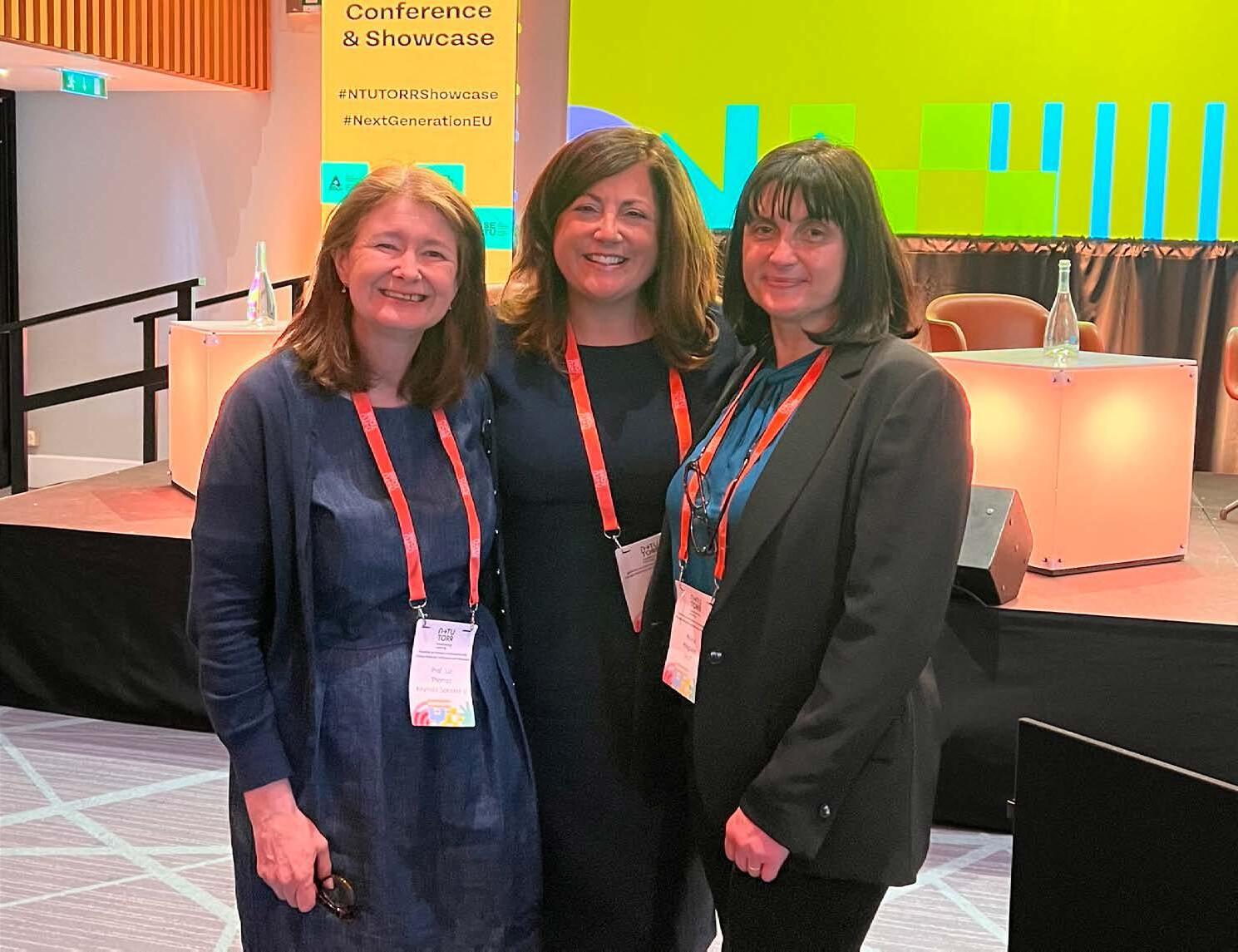
Left to right: Prof Liz Thomas (University of York), Dr Carina Ginty (ATU) and Dr Moira Maguire (DKIT).
ATU Graduate Design Competition to Honour the Ursuline Legacy
ATU has launched an open design competition inviting its graduates to imagine a pair of bespoke wooden chairs and a conversation table titled “Seats of Learning.” The pieces, when made, will symbolise the enduring relationship between ATU and the Ursuline Order, celebrating the educational legacy of St Angela’s College and its amalgamation with ATU.
Crafted from naturally fallen timber— including oak from St Angela’s grounds in Sligo and Oregon maple from Trinity College Dublin—the furniture will embody the values of education, sustainability, and heritage. The completed pieces will be gifted by ATU to the Ursuline Order in recognition of their gift of the St Angela’s campus to the University in November 2023.
Graduates from any ATU discipline are invited to submit an expression of interest outlining their skills, experience, and initial design concepts. Selected applicants will progress to phase two, where they will develop full proposals. Each shortlisted designer will receive €500 towards the preparation of their final submission, and the overall commission carries a project budget of up to €15,000.
Designs will be assessed on craftsmanship, symbolism, sustainability, and functionality. The chosen design will be fabricated using timber prepared and kiln-dried at ATU Connemara’s facilities, with the final unveiling to take place at ATU’s St Angela’s campus in 2026.
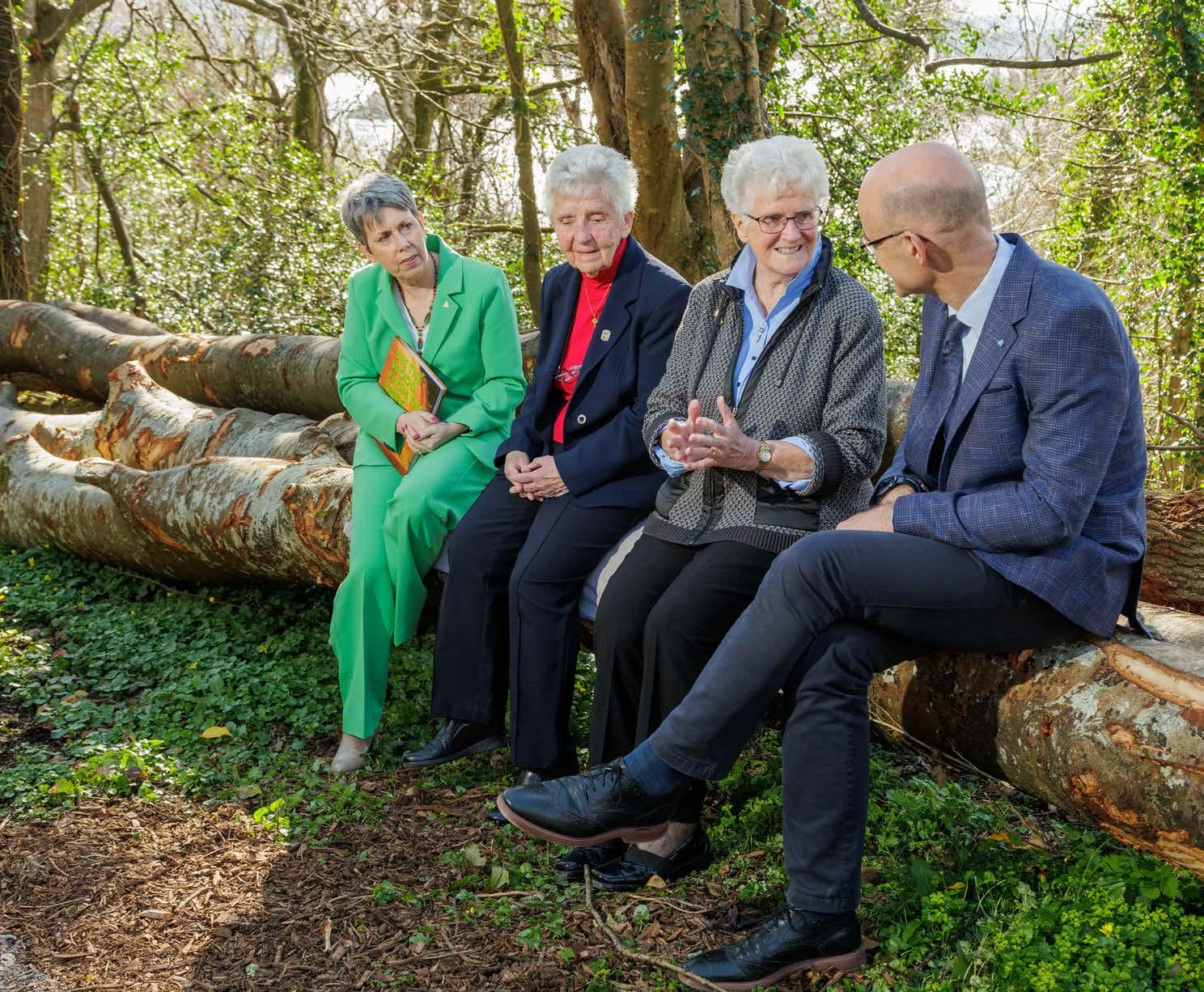
Dr Orla Flynn, ATU President with Paul Leamy, Head of Department of Furniture Design & Technology at ATU, discussing the “Seats of Learning” with Sr Moya Hegarty and Sr Marianne O Connor from the Ursuline Order, during a visit to ATU’s St Angela’s campus.
Dr Orla Flynn, ATU President said the project reflects ATU’s dual commitment to creativity and heritage: “The Seats of Learning project captures ATU’s values of education, sustainability, and connection to community. It is a celebration of how art and craftsmanship can tell the story of place and purpose, linking our new university’s future to the historic legacy of those who shaped education in the region. It is also a gesture of deep gratitude to the Ursuline Order for their gift to us.”
Key dates include:
• Phase One Submission Deadline: 9 January 2026
• Phase Two Submission Deadline: 30 March 2026
• Winner Announced: 15 May 2026
• Commission Commences: June 2026
Interested graduates should email alumni@atu.ie to receive an information pack and submission details. For further information please click here.
Research News
ATU Tops Rankings Nationally and Globally in Marine Pollution Research
ATU has achieved global recognition for its marine research according to the latest rankings by ScholarGPS, a leading international analytics platform that evaluates scholarly performance based on impact, productivity, and collaboration. ATU is currently ranked first in Ireland and third in the world in marine pollution as a result of the research contributed by ATU staff and students.
Dr Orla Flynn, ATU President acknowledged the achievement, saying:
“I am not surprised to see our marine research team delivering these truly world-class outcomes. This ranking reflects the level of excellence and dedication of our researchers over many years, whose work has already driven meaningful contributions to global and societal development across our marine and freshwater ecosystems. Their research will continue to support national and international changes, and deliver real impact in enhancing policy, governance, and, of course, our environment.”
This ranking places ATU among the world’s leading universities who are addressing the planet’s most pressing environmental challenges: pollution in our oceans, seas, and coastal waters.
With several campuses located across Ireland’s western and northwestern coasts, ATU has a growing influence in the Blue Economy. The coastal campuses and strong ties with industry, government, and community stakeholders together position the university as a centre for impactful research in the marine field.
ATU is currently aligned with supporting national and EU priorities on environmental protection, sustainable development, and climate action. The university’s marine research output directly contributes to the UN Sustainable Development Goals (SDG), particularly SDG 14 (Life Below Water), SDG 13 (Climate Action), SDG 7 (Affordable and Clean Energy), SDG 6 (Clean Water and Sanitation), and SDG 2 (Zero Hunger).
The work of our researchers and Marine and Freshwater Research Centre (MFRC) also highlights the university’s impact towards informing national and international legislation, conservation of marine species and habits, pollution monitoring, and teaching and outreach activities.
Dr Deirdre Brophy, Head of the Marine and Freshwater Research Centre at ATU, said: “This ranking reflects more than just output—it’s about the real-world relevance and reach of our work. We are proud to be developing tools and knowledge that help communities, policymakers, and industries make informed decisions to protect marine ecosystems.”
Leading research areas
This achievement is the result of a diverse programme of work contributed over the last 15 years by staff and students at ATU that have investigated:
• Pollution impact on our environment and organisms, including marine mammals, fish shellfish, and birds, and their behavioural changes.
• Public awareness and attitudes, including using citizen science to gather data and artwork to highlight the environmental impact of climate change.
• The development of monitoring tools and technologies to help identify the distribution and abundance of pollution sources.
ATU’s research community and its interdisciplinary teams also lead pioneering research to address some of the most critical threats to marine health including persistent organic pollutants, heavy metals, macro and microplastics, and ocean noise.
To view the listings of our highlight cited publications, please click here.
A sample of recent ATU marine pollution research activities
Underwater Noise Levels Survey
In October 2025, a team of 19 scientists led by ATU postdoctoral researcher Dr María Pérez Tadeo concluded its second major survey of underwater noise levels from the Strait of Gibraltar to Irish waters under an EU funded project (STRAITS), aimed at protecting and conserving habitats of sea animals and improving tracking in European waters.
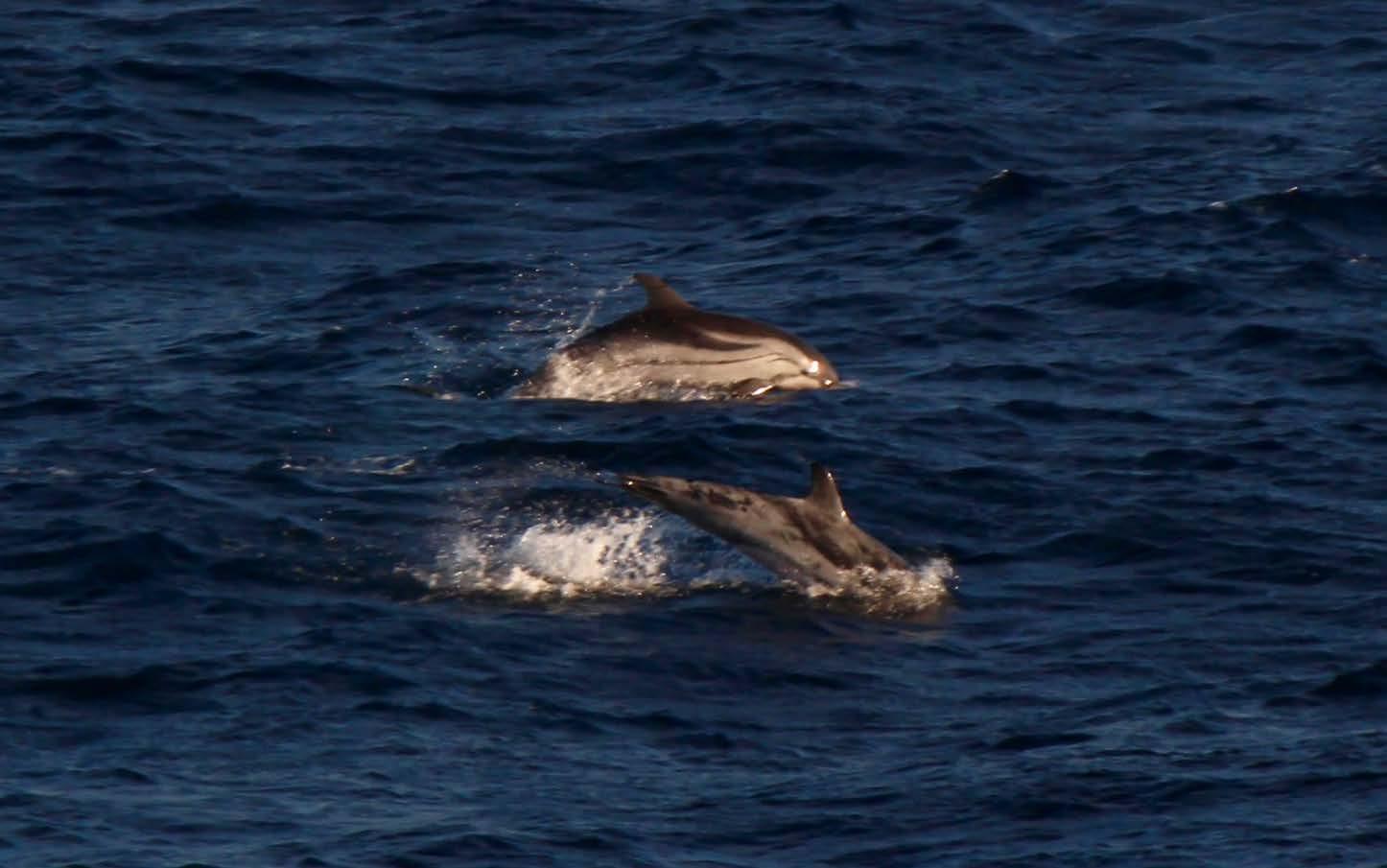
The Strait of Gibraltar is one of the most important European shipping lanes in Europe, being the connection between the Mediterranean Sea and the north Atlantic Ocean. The intense maritime traffic in the area overlaps with the presence of both resident and migratory cetacean species, including short-beaked common, striped, and bottlenose dolphins, long-finned pilot whales, sperm whales, killer whales, fin whales, and Cuvier’s beaked whales.
As cetaceans rely heavily on sound for communication, navigation and prey detection, they are especially vulnerable to anthropogenic ocean noise which can impair their hearing abilities and compromise their survival.
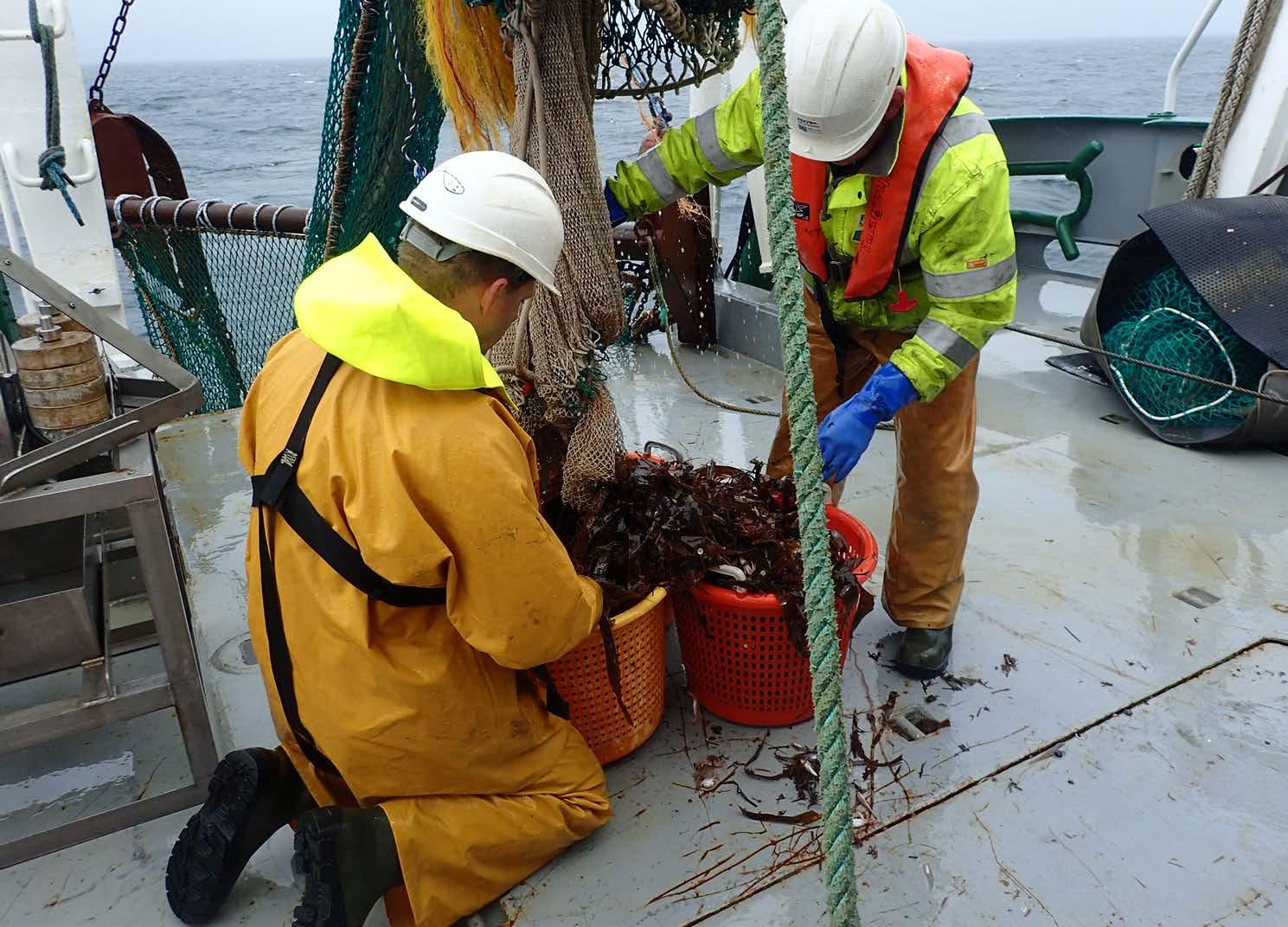
The scientists collected underwater acoustic data using a towed hydrophone and conducting acoustic stations by deploying acoustic devices such as SoundTraps and F-PODs to assess underwater noise levels and detect the presence of cetaceans.
They conducted visual surveys for marine mammals, other megafauna, and seabirds, while measuring oceanographic parameters such as temperature and salinity at different stations along the route.
A thermal camera was installed on the vessel as part of the Atlantic Whale Deal project, which aims to develop technology to reduce vessel collisions with cetaceans. In addition, two researchers from the Spanish Oceanographic Institute joined the survey to recover an array of acoustic receivers in the Strait of Gibraltar as part of the STRAITS project. These devices are used to track the movements of fish species that have been previously tagged.
Photo credit: Lena Lingenfelder
Native Oyster Reefs Restoration
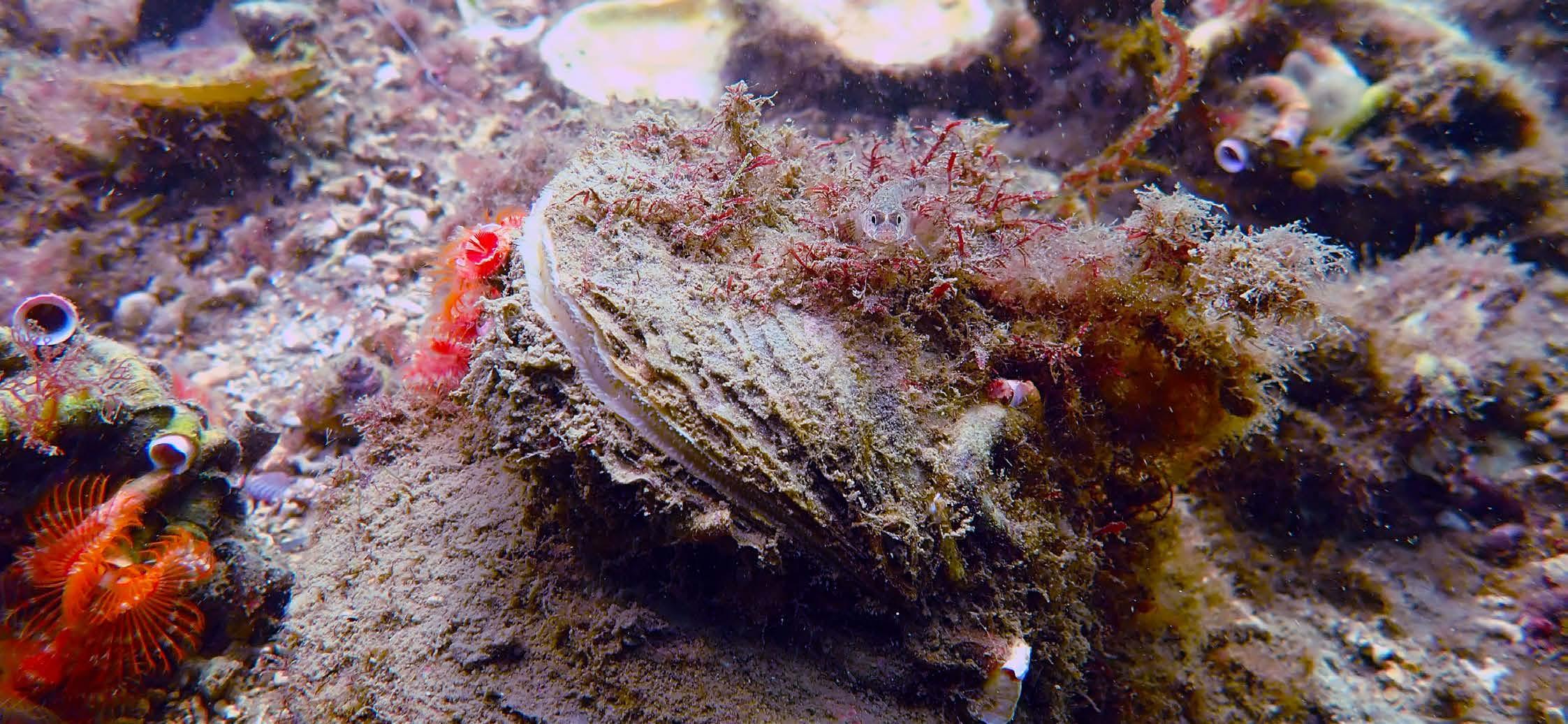
ATU is playing a leading role in a new €1.5 million research project to restore native flat oyster reefs and enhance coastal resilience in Ireland and Northern Ireland.
The project, ‘BRICONS’ (Building Resilient Irish Coasts through Oyster Restoration: A NatureBased Solution for Enhancing Marine Biodiversity and Ecosystems), is funded by the Marine Institute under its Marine Research Programme.
Over the coming months, researchers from ATU and partner universities will begin field assessments at pilot restoration sites in Connemara, Belfast Lough, and key coastal areas in Dublin to identify suitable habitats for oyster reef recovery.
The ATU team will deploy ecological monitoring equipment to study water quality, sediment stability, and continue their current studies on marine biodiversity and native oyster populations around these sites.
Drawing on methods developed through ATU’s earlier OISRE Conamara project, the researchers will trial innovative approaches for re-establishing self-sustaining oyster populations — including the use of locally sourced oyster seed and natural shell cultch to create reef structures that support rich marine life.
These restoration trials will contribute vital data to inform Ireland’s forthcoming National Restoration Plan under the EU Nature Restoration Law, demonstrating how communityled, nature-based solutions can deliver real ecological and social benefits for coastal regions.
The project let by University College Dublin (UCD), also includes researchers from Queen’s University Belfast (QUB), and Trinity College Dublin (TCD) in addition to ATU.
Oyster Clump. Photo credit: Dr Jose M. Fariñas-Franco
Testing to Protect Sligo’s Blue Spaces
Sligo’s blue spaces are a source of health, joy, and local pride. But beneath the waves, unseen bacteria and algae can threaten both wellbeing and tourism.
That’s why Beth Brown, a PhD researcher through the RISE@ ATU programme, is helping communities take water safety into their own hands.
Beth said: “My interest in water quality began at home in Chichester Harbour, where pollution became such a concern that many of my friends and family stopped swimming. Now, in Sligo, I want to work with communities to keep our blue spaces safe for people and wildlife.”
Beth is trialling rapid BactiQuick water test kits at popular bathing spots such as Strandhill, Gilbrater,
and Dorrin Strand. Unlike traditional lab tests, which can take days, these kits deliver results in just 15 minutes — detecting harmful bacteria like E. coli and Intestinal Enterococci.
“Water quality is complex, and one section of a river or beach doesn’t tell the whole story”, said Beth. “By testing, observing, and acting together, we can make Sligo’s blue spaces safer for everyone.”
At her recent Water Quality Workshop at the National Surf Centre, Beth demonstrated the kits to community locals, researchers, and environmental groups, showing how easy it can be to monitor and protect the coastline.
Through workshops and community partnerships, Beth hopes her research will help Ireland’s coastal communities safeguard both wellbeing and the waters that sustain it.
RISE@ATU IDEAS Podcast
Loneliness, isolation and digital health
ATU lecturer, Dr Valerie McTaggart talks with PhD researcher Chandler Tyrrell, who shares his inspiring journey from cruise ships to cuttingedge research on loneliness, isolation and digital health. Discover how technology can both connect and isolate, why “nothing about us without us,” matters for policy, and what it takes to leap into a PhD after a successful career. Please click here to listen.
The RISE@ATU: IDEAS Podcast, is a brand-new series exploring the people, research, and innovation shaping Ireland’s regions and beyond. RISE@ATU is co-funded by the Government of Ireland and the European Union through the ERDF Northern and Western Regional Programme 2021–27.
Is rural Ireland being left behind?
How effective is digitalisation as a tool for balanced regional development in Ireland? To help us unpack this, Farhan Ahmad, a PhD researcher at ATU discusses his work and delves into the role of digitalisation in shaping regional growth and equity. His perspective shines a light on both the opportunities and the challenges facing our region and communities. Please click here to listen.
The evolving employment landscape in Ireland
In this episode, we are joined by Niall Murray, Managing Director of Collins McNicholas for an insightful conversation on the evolving employment landscape in Ireland. Niall shares why having a clear purpose is essential if you're asking people to return to the office, explores the impact of AI on the workforce, and gives us a look into what the future holds for Collins McNicholas and the broader recruitment industry. Please click here to listen.
Bioeconomy and Health-Tech Research Spotlight
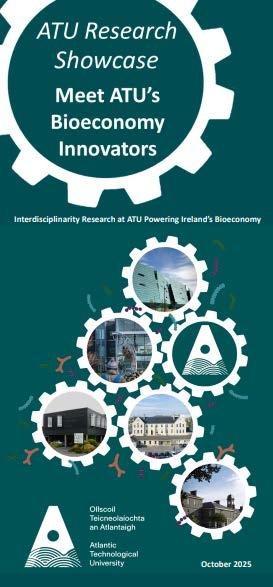
Drs James Britton and Shane Conway are producing an exciting series of booklets to showcase ATU’s outstanding researchers across all of our campuses. As research coordinators for ATU they see this series as a way to bring ATU’s research community closer together and give visibility and recognition to our researchers.
The first two booklets in the series highlight ATU’s Bioeconomy Innovators and ATU’s Health-Tech Leaders and each showcase the pioneering work of 12 researchers and innovators across ATU.
Explaining the purpose of the series, Drs Conway and Britton, said:
“ By showcasing just a sample of our colleagues’ work, we aim to strengthen ATU’s profile as a leader in this strategically important field, and connect our researchers with partners across Ireland, Europe and beyond... we want to showcase the breadth of expertise and commitment amongst the research community here at ATU. "
Meet our Bioeconomy Innovators
From valorising waste into new value chains to reimagining farming systems and advancing solutions in marine, energy, engineering, food systems and nanotechnology, this booklet illustrates how ATU research is delivering real-world impact for communities, industries and ecosystems.
As the technological university for the west and north-west of Ireland, ATU grounds its innovation in regional and national priorities. Through alignment with the Northern & Western Regional Assembly’s Smart Specialisation Strategy (S3), ATU contributes to strengths in Agri-Food & Agri-Tech, the Marine & Blue Economy, Renewable Energy & Climate Action, and the Circular Economy transition, while also connecting to emerging opportunities in biotechnology, nanotechnology and digital transformation.
ATU’s participation in national and European Bioeconomy initiatives
In July 2022, ATU researchers became members of BiOrbic, Ireland’s SFI-funded Bioeconomy Research Centre, a national collaboration of more than 100 researchers advancing the circular bioeconomy through interdisciplinary academia–industry partnerships.
At European level, ATU researchers lead and contribute to Horizon Europe Cluster 6 and ERA-NET BlueBio projects, positioning the university as a bioeconomy hub on the Atlantic coast.
The 12 researchers featured in the “Meet ATU’s Bioeconomy Innovators” booklet represent only a sample of ATU’s bioeconomy expertise. Their selection spans multiple campuses and faculties, demonstrating the university’s interdisciplinary strengths. Many other colleagues across ATU are also making significant contributions to the bioeconomy, and their work is equally valued.
In addition to its research and innovation efforts, ATU’s commitment to sustainability is reinforced through its role in the EU GREEN European University Alliance, a network of nine European universities dedicated to advancing sustainability, innovation, and societal responsibility.
You can view and download, ‘Meet ATU’s Bioecomony Innovators’ here
Meet ATU’s HealthTech Leaders
The second edition of the ATU Research Showcase Series, highlights the work of ATU researchers transforming healthcare through technology and innovation.
From optimising biopharmaceutical production to developing artificial intelligence platforms for novel diagnostics, and from advanced manufacturing of medical devices to digital therapeutics that enhance wellbeing among vulnerable populations, this edition illustrates how ATU research is delivering real-world impact for patients, practitioners, and communities across the west and north-west of Ireland, and beyond.
Through alignment with Ireland’s National Smart Specialisation Strategy (S3) for Innovation 2022–2027, ATU contributes to sectoral strengths in Life Sciences, MedTech, and Medical Devices, while also driving emerging opportunities in Advanced Manufacturing, Engineering, ICT, and Digital Services, reinforcing its role as a key innovation partner.
This booklet presents a selection of 12 researchers whose profiles reflect the breadth of ATU’s growing expertise in health-tech research and innovation. Their work spans multiple campuses and faculties, demonstrating the university’s interdisciplinary strengths and collaborative ethos, while reinforcing Ireland’s position as a global leader in health innovation.
The featured researchers represent a small sample of the research being carried out by ATU’s health-tech community to drive impact locally, nationally, and internationally.
You can view and download, ‘Meet ATU’s Health-Tech Leaders’ here.
The Research Coordinator team is inviting research-active staff from all nine campuses to take part in future ATU Research Showcase series. The next edition will spotlight research in Teaching Methods and Education, aligning with the United Nations International Day of Education on 24 January 2026. Submit your interest here.
Posters in Parliament: A showcase of undergraduate research
A needle-free alternative for blood sugar monitoring was one of four ATU undergraduate research projects recently showcased at Póstaeir san Oireachtas ((PsO), a new national initiative providing undergraduate researchers with the opportunity to present their work to politicians and policymakers in Ireland’s main parliamentary buildings, The Oireachtas in Dublin.
This year’s inaugural PsO event took place on 12 November under the theme, ‘Research for Change’. The initiative aims to strengthen the connection between academic research and public policy, highlighting how undergraduate inquiry can inform evidence-based decision-making and societal progress.
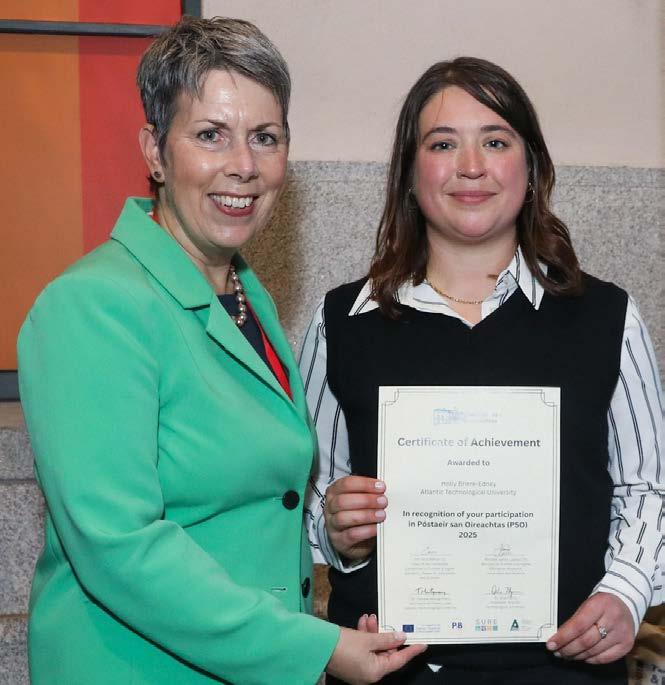
Four recent graduates from ATU were amongst the 30 students from 14 Higher Education Institutions (HEI’s) around the Island of Ireland who presented at the event. They were Dermott Harkin, Aoife Gillane, Holly Biere-Edney and Conor Cleary. 22 students from across ATU had been nominated to take part in PsO 2025 by academic staff and researchers in ATU. Dermott, Aoife, Holly and Conor were then selected by the national PsO committee to enter the training programme for the national event.
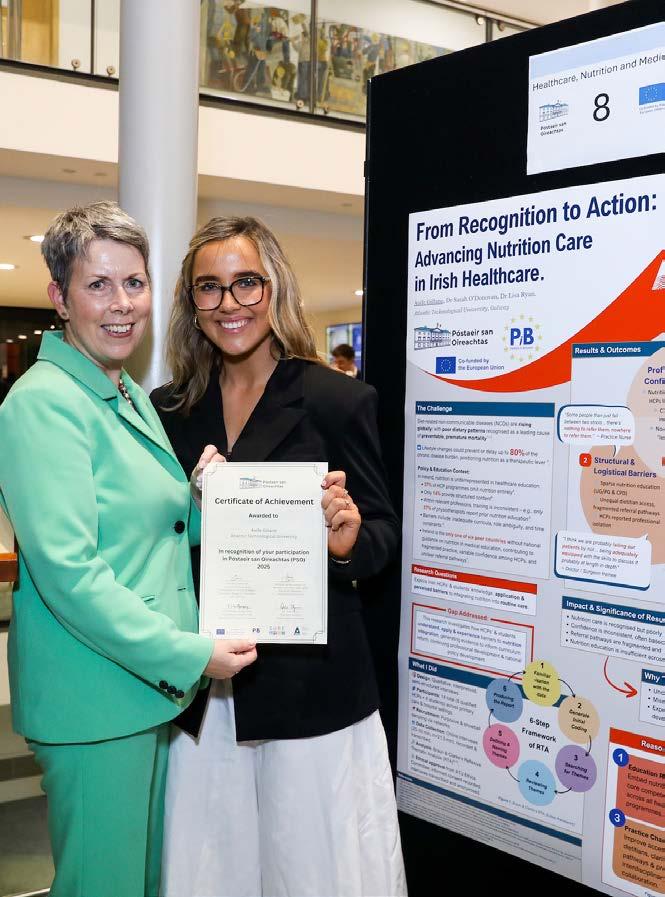
From Recognition to Action: Advancing Nutrition Care in Irish Healthcare
Aoife Gillane
Aoife is a recent BSc (Hons) Public Health Nutrition graduate and an AfN Registered Associate Nutritionist (ANutr) from ATU Galway. She is currently completing an MSc in Human Nutrition and Dietetics at the University of Limerick.
Passionate about bridging science and practice, Aoife aspires to a career as a clinical dietitian with specialist interests in gastroenterology and eating disorders, while continuing to integrate research into clinical practice to advance evidence-based multidisciplinary care.
Aoife describes her research as an exploration of: “how Irish healthcare professionals and students perceive and apply nutrition care in clinical practice. It highlights key barriers to integration, such as limited training, unclear referral pathways, and professional boundaries, and calls for stronger curriculum support and clearer collaboration with dietetic services.” Aoife’s project was supervised by Dr Sarah O’ Donovan and Dr Lisa Ryan from the School of Science.
Assessing Demand and Simulating Feasibility for Commuter Rail in Lagging Regional Areas
Holly Briere-Edney
Holly Briere-Edney is a first-class honours Civil Engineering graduate from ATU Sligo. Her research focuses on the potential of Ireland’s rail network to reduce emissions and improve regional connectivity. She developed a custom rail simulation tool and hosting website as well as survey analysis to evaluate a proposed commuter service into Sligo, highlighting strong public demand and technical feasibility.
Holly engaged with stakeholders and surveyed residents for her project. Her findings highlight the demand for a new pilot train service connecting Longford and Sligo on an existing track line. Her project demonstrates the lack of rail transport in the north-west of Ireland and the climate impacts this has due to reliance on private car use in this area. Holly’s project was supervised by Dr Brian McCann.
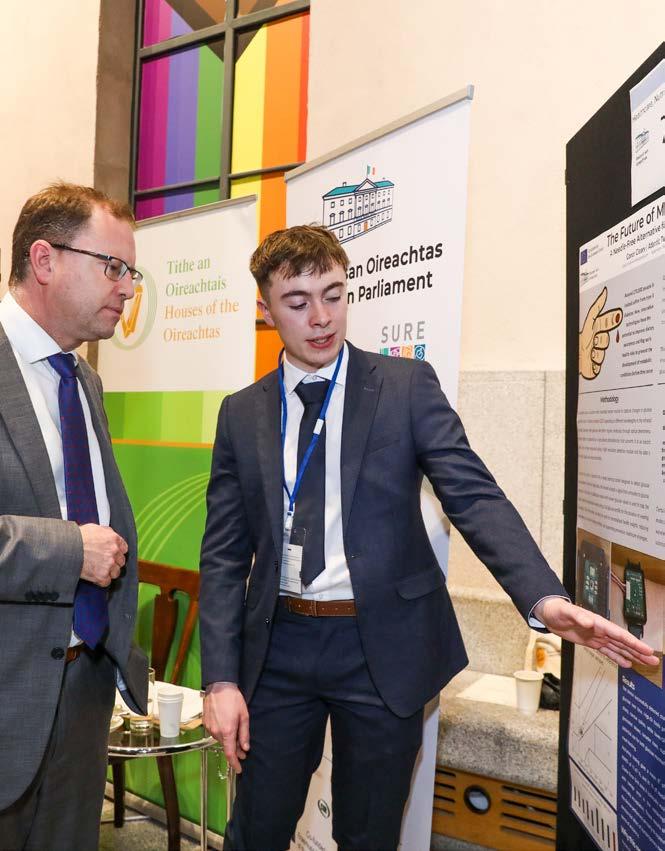
The Future of Metabolic Health: A Needle-Free Alternative for Blood Sugar Monitoring
Conor Cleary
Conor is a recent graduate of ATU Donegal who completed his honours degree in Embedded Systems Design in May of 2025. His project involved developing optical sensors for research into non-invasive blood sugar monitoring technology. He currently works as a graduate engineer for Seagate Technologies in Northern Ireland.
Speaking about his experience at ATU, Conor said: “Winning the ATU Student Entrepreneur Awards was a great achievement for me. It made me realise that my research project had the potential to go much further. It also made me realise the benefits of working on meaningful technologies with the ability to help improve people’s quality of life.”
Conor was delighted to present his research in the Oireachtas in November at PsO 2025 and said: “This is a major achievement for me — I likely would not have continued to pursue this path if not for my initial success at the ATU Student Entrepreneur Awards.” Conor’s supervisor was Dr Martin Bradley.
ATU student Conor Cleary explaining his research to Minister James Lawless T.D. during the Posters In Parliament event.
Posters in Brussels (PiB)
PsO is part of Posters in Brussels (PiB), an Erasmus+, Higher Ed, Cooperation Partnership program funded project dedicated to enhancing undergraduate research, dissemination, communication and civic engagement across Europe.
ATU is one of five universities across Europe working on this project. Each EU university partner is hosting a national Posters in Parliament event during the winter, prior to participating in one large multinational Posters in Parliament event in the European parliament in November 2026.
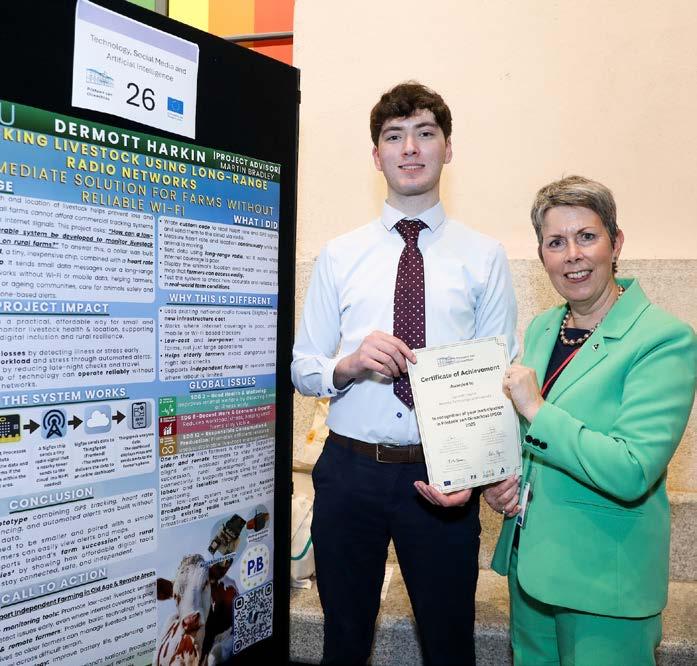
Tracking Livestock Heart Rate and Location Using LongRange Radio Networks - An Immediate Solution for Farms Without Reliable WI-FI
Dermott Harkin
Dermott is a recent graduate from ATU with a first-class Honours in Applied Computing.
His project tackles the challenges faced by small-scale farmers in monitoring livestock health and location due to high costs and poor rural connectivity. Dermott’s new system addresses these challenges with a low-cost, lowpower wearable using heart rate and GPS data.
Through internet independence and by avoiding expensive commercial equipment, Dermott’s system gives farmers a practical way to keep track of their animals. It helps spot issues earlier, reduce losses, and make monitoring easier in remote areas. This work supports national goals on farm succession and rural development by helping older and remote farmers stay independent through safer, data-driven livestock management. It also complements Ireland’s National Broadband Plan by providing a low-data alternative that works where mobile coverage is limited.
The system could be refined to be smaller and more accurate, with a simple phone app so farmers can check alerts easily. The device could also allow messages to be sent back to change settings remotely. This project proves that affordable farm technology is possible. Dermott’s project supervisor was Martin Bradley.
SURE Network
The Irish posters in parliament event (PsO 2025) has been developed in collaboration with members of the Irish SURE Network, a national partnership that promotes and supports undergraduate research opportunities across Ireland’s technological university and Institute of Technology sector.
The Network champions student research as a key component of higher education, encouraging curiosity, innovation, critical thinking, problem solving and engagement with real-world challenges.
National PsO and Posters in Brussels project lead, ATU lecturer Dr Therese Montgomery is chair of The Irish SURE Network. Her leadership has helped create platforms where students can connect with academic and industry audiences, gaining recognition for research that contributes to positive social and economic change.
“ PsO gives undergraduate researchers a voice in the national conversation, showcasing the quality, creativity, and impact of student research taking place across Ireland. Furthermore, PsO builds political awareness and promotes civic engagement within the student body, providing our students with the skills to build a better future. "
Dr Therse Montgomery
Minister James Lawless, Minister for Further and Higher Education, Research, Innovation and Science, has championed PsO 2025 and it was sponsored by deputy Erin McGreehan, Cathaoirleach of the Committee on Further and Higher Education, Research, Innovation and Science.
The PsO committee consists of eight academics working together to organise this event nationally, with membership from ATU, TUS, TUDublin, Dundalk IT and SETU. In addition to Dr Montgomery, ATU lecturers Dr Brigid Hooban, Dr Cormac Quigley and Dr Eva Campion also worked hard to bring this event to life. Dr Eva Campion will be leading the team behind the 8th national SURE undergraduate research conference when it comes to ATU Sligo in October 2026.
The success of these students, celebrated through initiatives such as the ATU Student Entrepreneur Awards and PsO 2025, reflects ATU’s continued commitment to empowering students to turn ideas into action, and to engage in research that shapes a better future.
Equality, Diversity and Inclusion
Say Yes to Respect: 16 Days of Activism
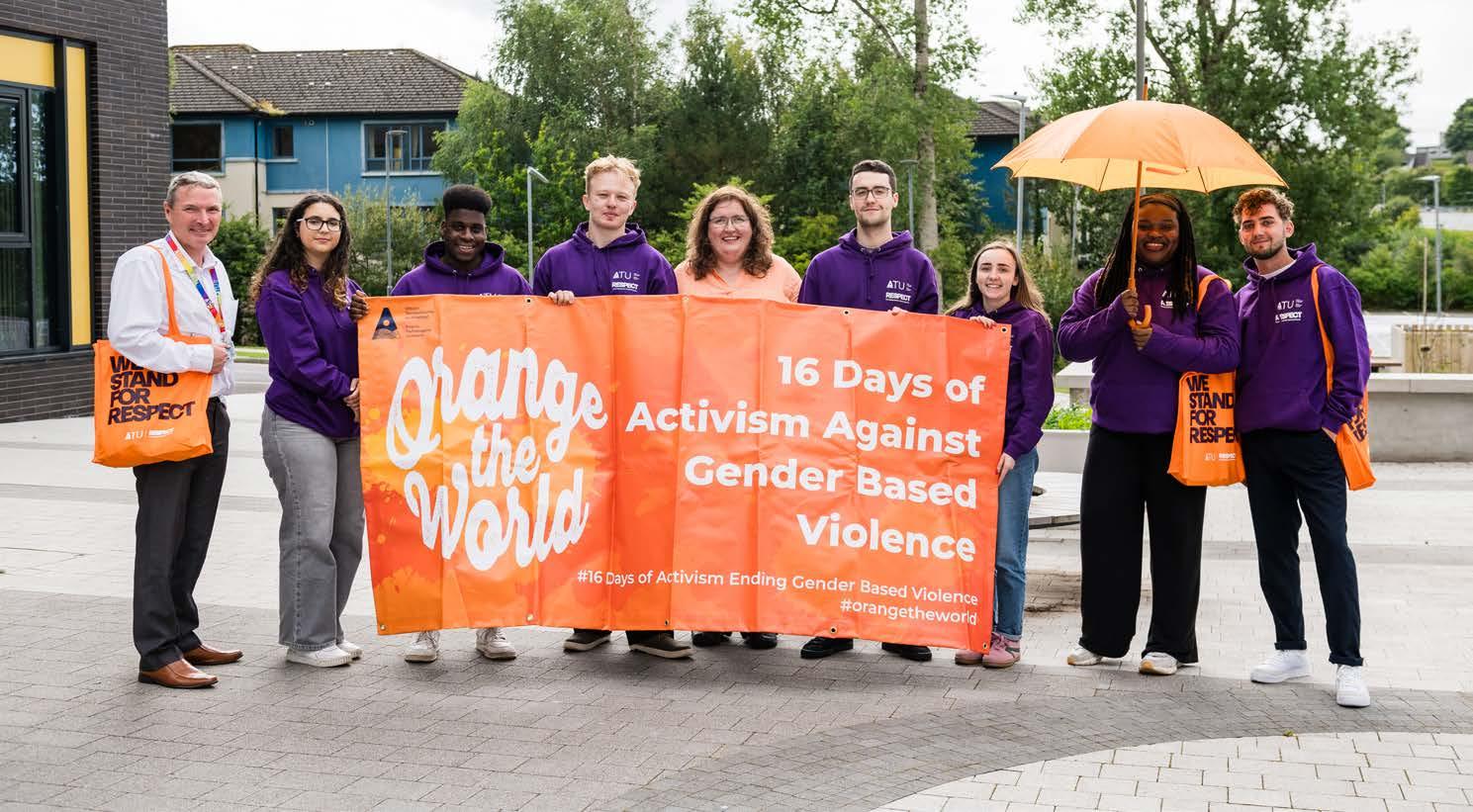
The UN 16 Days of Activism Against Gender Based Violence campaign returned to ATU on Tuesday, 25 November on the International Day for the Elimination of Violence Against Women and Girls, with all campuses raising the ‘Orange the World’ flag and illuminating buildings in orange. This year’s theme, “UNiTE to End Digital Violence against All Women and Girls” recognises this fastest growing form of abuse. Digital safety is central to gender equality.
The colour orange is used for the 16 Days of Activism because it represents a brighter future, free from violence against women and girls. As a bright and optimistic colour, it symbolises hope and a commitment to ending gender-based violence through global, unified action.
This annual campaign reminds us we must continue to act. Globally, violence against women and girls affects one in three women (UN Women, Nov 2024). In Ireland, the CSO’s 2022 Sexual Violence Survey found that 52% of women and 28% of men have experienced sexual violence in their lifetime.
In Ireland, Speak Out, an anonymous online report and support tool has been adopted by 17 higher education institutions (HEIs) to enhance safety for students and staff. The recent launch of the Speak Out National Report 2022 – 2024, presents new data which reveals a reluctance to report abuses in higher education. To encourage reporting and build trust,
ATU Students’ Union leaders from all campuses have come together to show their support for the 16 Days of Activism Campaign, left to right: Tom Reilly, Erica Visocchi, Jesus Quaye Saya, Emil Kindl, Caitríona Gleeson, Joseph Sweeney, Chrissie McGuiness, Nasya Mc Jyn Lgelige, and Patrik Berger.
HEIs (including ATU) across Ireland have shared aggregated data to improve understanding and response to the issues in higher education.
The national data shows that sexual violence and sexual harassment accounted for 25% of behaviours disclosed by students. Students made 55 disclosures of rape (5% of reports), 106 disclosures of sexual assault (10%) and 108 disclosures of sexual harassment (10%). Bullying and harassment were the most frequently reported behaviour experienced.
Funded by the Higher Education Authority, Speak Out’s dataset will be used to inform future responses to abuse and harassment in higher education, and to encourage formal reporting.
ATU’s Zero Tolerance Policy on Preventing and Responding to Gender Based Violence (Version 2.0) was approved by the Governing Body in December 2024, underscoring the university's commitment to eradicating gender-based violence in all its forms.
The ATU Respect team is led by Caitríona Gleeson, Sexual Violence Prevention and Response Manager, and you can contact the team anytime by emailing Respect@ATU.ie.
#CountMeIn: Standing Together for Race and Ethnic Equality at ATU
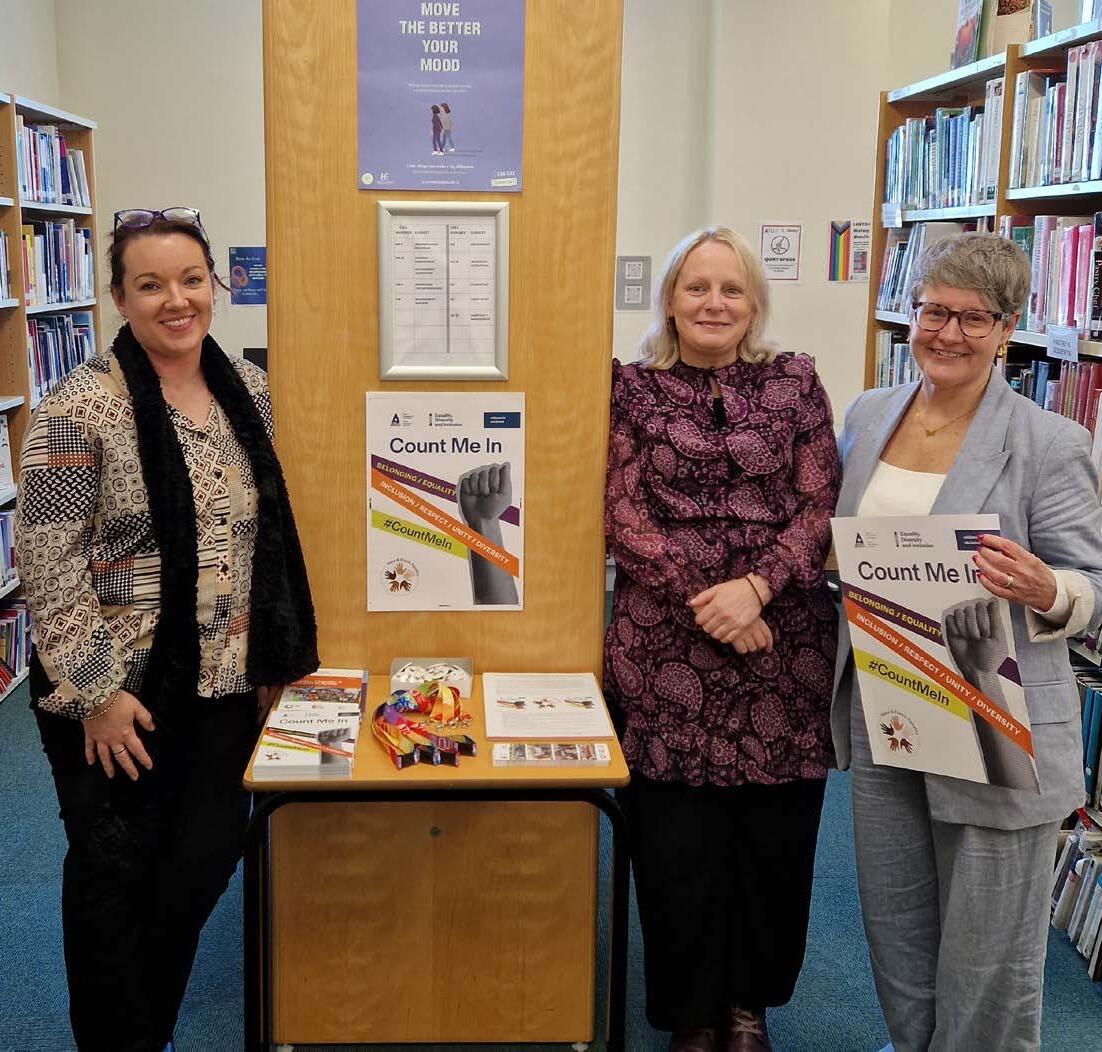
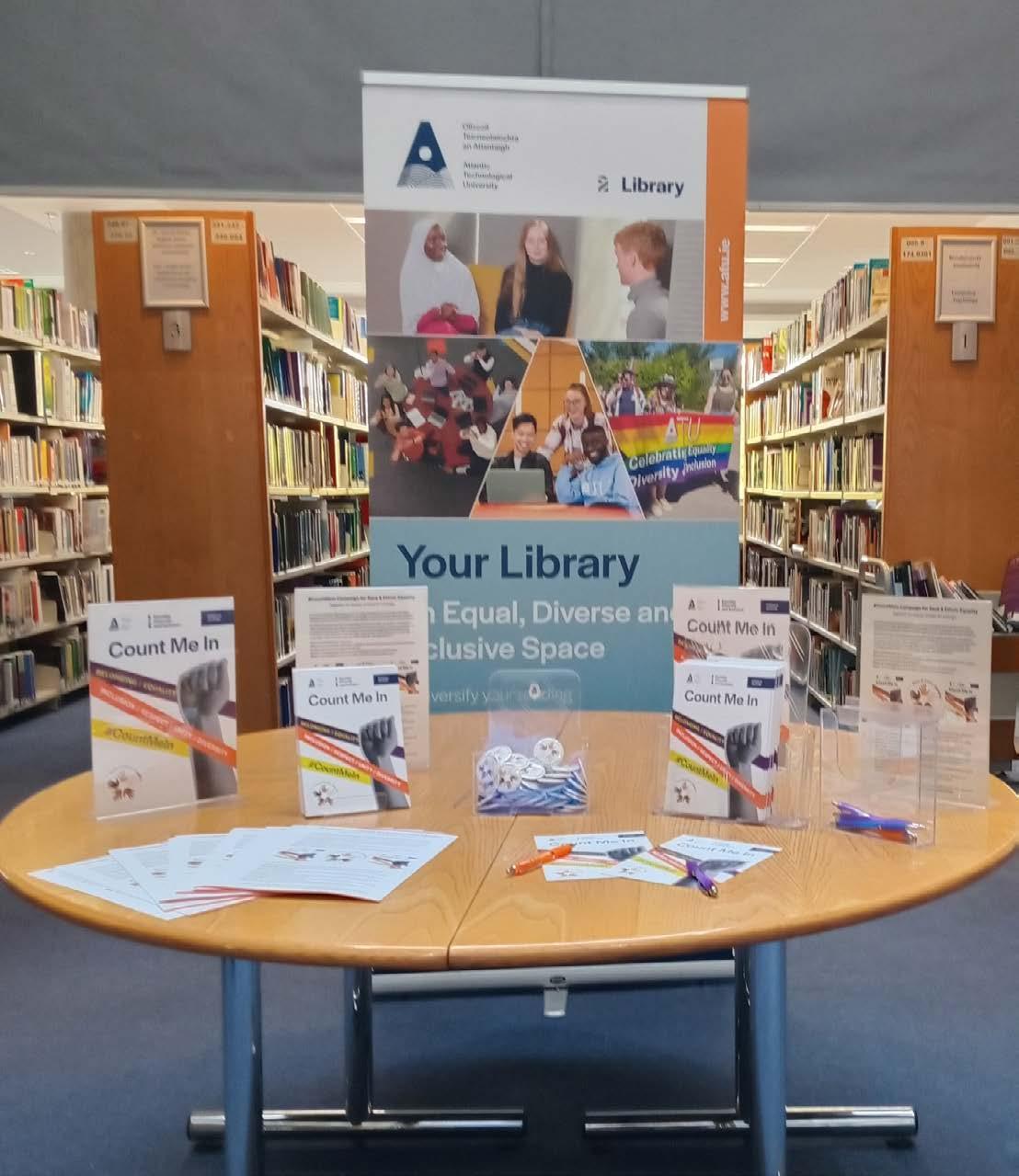
ATU has launched its #CountMeIn race and ethnic equality campaign, an initiative designed to foster belonging, promote equality, and stand united against racism in all its forms. Developed by the university’s Race Equality Working Group, the campaign will run throughout the current academic year with the support of ATU Library and all four Students’ Unions.
The campaign officially launched during the First 5 Weeks new student welcome programme with the Equality, Diversity and Inclusion (EDI) team hosting Drop-in Desks across ATU campuses. These spaces give students and staff the chance to learn more, share their views, and show their commitment to creating a fairer, more inclusive university.
#CountMeIn comes at a critical time. Over the summer, racist attacks and testimonies from minority communities remind us that racism is not a distant issue. It exists in our daily lives, in subtle and systemic ways as well as in overt acts of discrimination. By raising awareness and acting, ATU is making it clear that equality, respect, and inclusion are core values of our community.
Importantly, the campaign has been endorsed by ATU’s senior management team, whose active support underlines the university’s commitment to meaningful, long-term change.
Alongside the campaign, ATU is developing its first Race Equality Action Plan, ensuring that this work has impact well beyond the coming year.
Dr Sharon McLaughlin (EDI Lead ATU Donegal), Louise McMonagle (Assistant Librarian, ATU Donegal Killybegs) and Sinéad Ní Bhroin (EDI Team Administrator).
As part of #CountMeIn, campaign materials including posters, pledge cards, and button badges are being shared across campuses. Everyone in the ATU community is encouraged to take the pledge for race and ethnic equality, share support on social media, display pledge cards and posters in common spaces, and wear a badge to show visible commitment.
These actions may be small, but together they make a powerful statement that racism has no place at ATU. By standing together, we can create a culture where diversity is celebrated, inclusion is lived, and every student and staff member knows they truly belong.
Rooted in Resilience, ATU Marks Black History Month
In October, ATU marked Black History Month under the theme ‘Rooted in Resilience - Honouring our Past and Present, Powering our Future’.
To celebrate, ATU Library showcased books exploring Black history, art, literature, and lived experience. They included books like, ‘Ain't I a woman: black women and feminism’ by iconic writer bell hooks, ‘Notes of a Native Son’ by James Baldwin, and the wonderful memoir, ‘Twelve years a slave: a memoir of kidnap, slavery and liberation’ by Solomon Northup.
ATU’s Black History Month Library catalogue can be viewed here. We encourage you to take some time to explore the diverse titles available and learn more about Black history, creativity, and culture.
On 16 October, ATU’s Equality, Diversity and Inclusion (EDI) team launched a pop quiz marking the anniversary of Tommie Smith and John Carlos’s iconic solidarity fist at the 1968 Olympic Games. Aligning with this year’s theme, ‘Rooted in Resilience: Honouring our Past and Present, Powering our Future’, the initiative invited students and staff to reflect on how solidarity, courage, and resistance can challenge power and spark change.
The quiz offered a moment to pause and consider how simple gestures on the Olympic podium transformed into an enduring symbol of defiance and hope, and how the legacy of this historic moment lives on in human rights and social justice movements across the globe.
European Down Syndrome Swimming Championships
ATU WAVE student, Anna Hennessy from Letterkenny recently represented Ireland at the 8th European Down Syndrome (DS) Swimming Championships in Albufeira, Portugal.
She competed in six events and achieved six personal bests reaching the finals in the 50m backstroke and 50m butterfly. She won two silver medals in the Masters category (over 25yrs).
Anna said: "I was very proud to swim for Team Ireland at the European DS swimming championships. It was an amazing experience"
Anna is affiliated with Swilly Seals ASC, Letterkenny and Nemo Special Olympics Swim Club.
ATU’s Project WAVE, gives individuals with intellectual disabilities the opportunity to attend university. It provides a comprehensive programme, addressing students’ social, academic, and vocational needs. The programme is designed specifically to ensure an integrated student experience so that students in Project WAVE experience university life at ATU by attending classes and participating in clubs and societies with students without disabilities.
Nasya Mc Jyn Igelige, ATU Donegal Students' Union Vice President for Welfare and Equality.
ATU Achieves its First Athena Swan Bronze Award
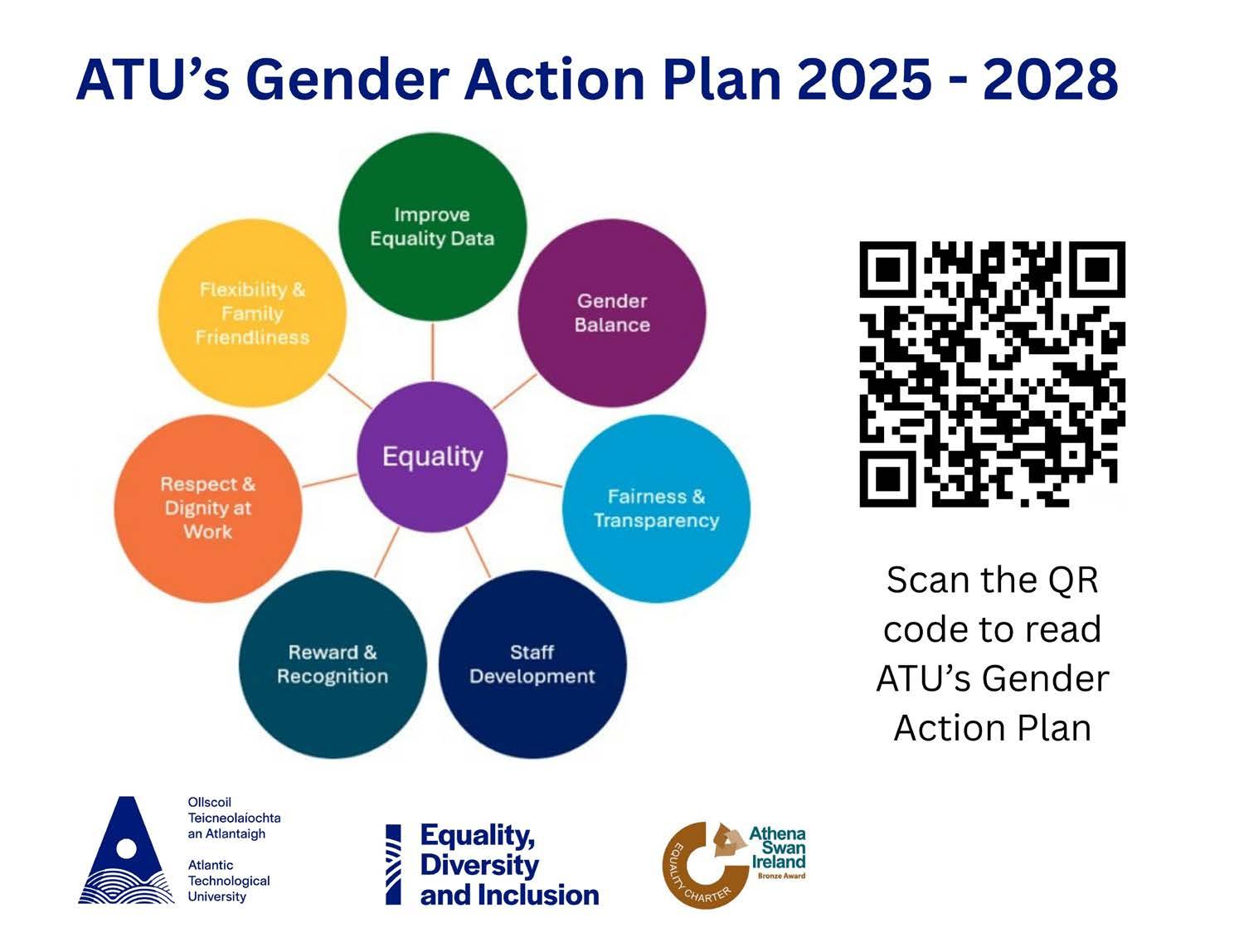
ATU is proud to announce that it has been awarded its inaugural Athena Swan Bronze Institutional Award. This globally recognised honour affirms ATU’s strong commitment to equality and celebrates a culture built on trust, collaboration, and respect for all. The award marks a milestone in our equality, diversity and inclusion journey and is underpinned by ATU’s new Gender Equality Action Plan 2025–2028. This plan sets out more than 20 actions, including a mentoring programme for staff, improving gender balance on committees and in leadership, supporting career development and research funding, ensuring transparency in workload allocation, introducing a flexible working policy, and committing to zero tolerance of sexual violence and harassment.
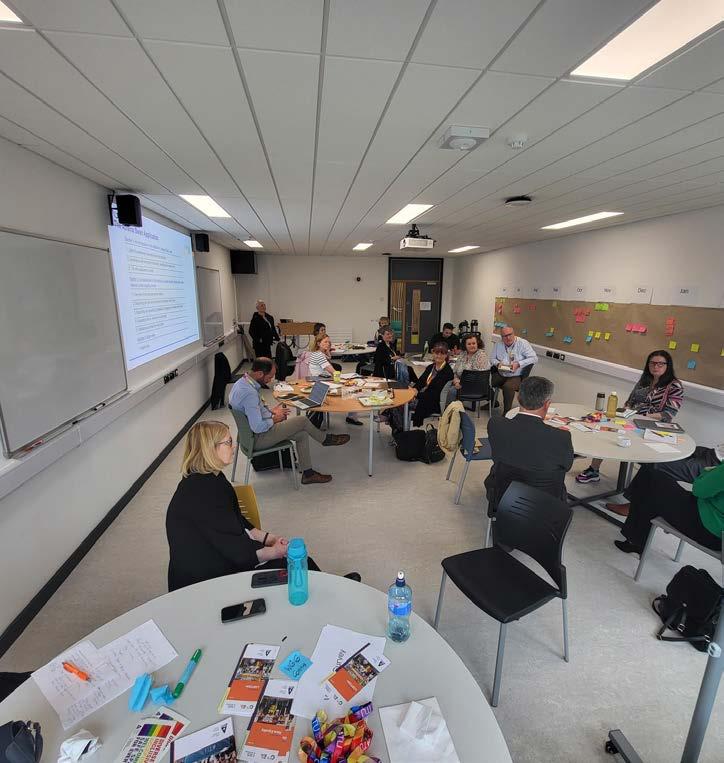
This achievement is the result of the efforts of many people across the university. From the dedicated SelfAssessment Team and the EDI office to Equality Champions, academic and professional staff, students, and senior leadership, the award reflects a truly collective endeavour.
President Dr Orla Flynn welcomed the news, noting that achieving the Bronze Award is an important recognition of ATU’s efforts so far, while also marking just the first stage of a longer journey. She emphasised that the real goal is to create an environment where everyone feels welcome, included, and able to thrive.
Looking ahead, ATU will continue to support faculties and schools towards their own departmental awards, with the ultimate ambition of securing a Silver Institutional Award in the years ahead.
“ The Athena Swan Bronze Award is more than a symbol of recognition; it is a call to action, ensuring that ATU continues to drive sustainable change and advance gender equality for all. "
Advancing Conversations on Disability and Sexual Citizenship
The rights of people with intellectual disabilities to have relationships, access sexual health education, get engaged and married, and have children was explored at a conference on 4 October titled ‘Paving our Path Together: A Family Journey of Vision and Legacy’.
The event was hosted by Inclusive Living Network and Inclusion Ireland Disabilities Without Borders, an international and interdisciplinary research team of researchers with intellectual disabilities and neurodivergence, and academics, presented their research findings at the conference.
The research team are based jointly in the School of Social Sciences at ATU Sligo, and the College of Education, Criminal Justice, Human Services, and Information Technology at the University of Cincinnati, USA. They are led by Co-Principal Investigators Dr Jess Mannion (Ireland) and Dr Lori Vincent (USA).
Building on earlier research on sexual citizenship, the team now focuses on sexual health education and inclusive research practice, driving innovation and inclusion in global collaborative disability research.
Their earlier research highlighted that people with intellectual disabilities experience systematic restriction and denial of their rights. Their right to sexual citizenship, encompassing autonomy, bodily integrity, and the freedom to make independent choices about relationships and sexuality, is frequently violated.
Protective and paternalistic attitudes from families, professionals, and wider
Dr Jess Mannion from ATU, presenting at the ‘Paving our Path Together: A Family Journey of Vision and Legacy’ conference.
society often override individuals’ consent and decision-making, reinforcing inequality and exclusion.
These findings highlight the urgent need for accessible and inclusive sexual health education, comprehensive training for professionals, educators, and families, and stronger policy frameworks that protect autonomy, privacy, and the right to relationships, marriage, and family life for people with intellectual disabilities.
The event opened with a lively trumpet performance of "New York, New York" by researcher and musician Oisín Daly and following the research team’s presentation, Rhena Daly (researcher) shared her moving story of resilience and independence after leaving a group home where her rights were restricted and denied.
She said: “I met Oisín on a dating app. He proposed to me, and I said yes. We had a wonderful wedding last July and celebrated with our closest family and friends. We now live together.
We are best friends and are in love. We are planning our future together and are very happy about it. Despite having a disability, it hasn’t stopped me from living the life I want and being independent. People with disabilities can have relationships, live together, get engaged, and get married - just like me.”
The research team shared new, creative, and accessible research methods they had designed, including Collaborative Sandboxing and Creative Collaborative Data Analysis, which they used alongside short films and comic zines.
The event concluded with a Conversation Café, where individuals with intellectual disabilities, their families, and professionals discussed the barriers, supports, and social changes necessary to ensure equal rights and inclusion. The conference delegates praised the session for its honesty and impact, noting the importance of education and media representation.
Diwali Festival at ATU
Diwali, also known as Deepavali, is one of the most significant festivals in India and is celebrated by millions of people around the world. It symbolizes the triumph of light over darkness and good over evil and usually lasts five days and includes lighting oil lamps (called diyas), decorating homes, sharing sweets, and enjoying fireworks.
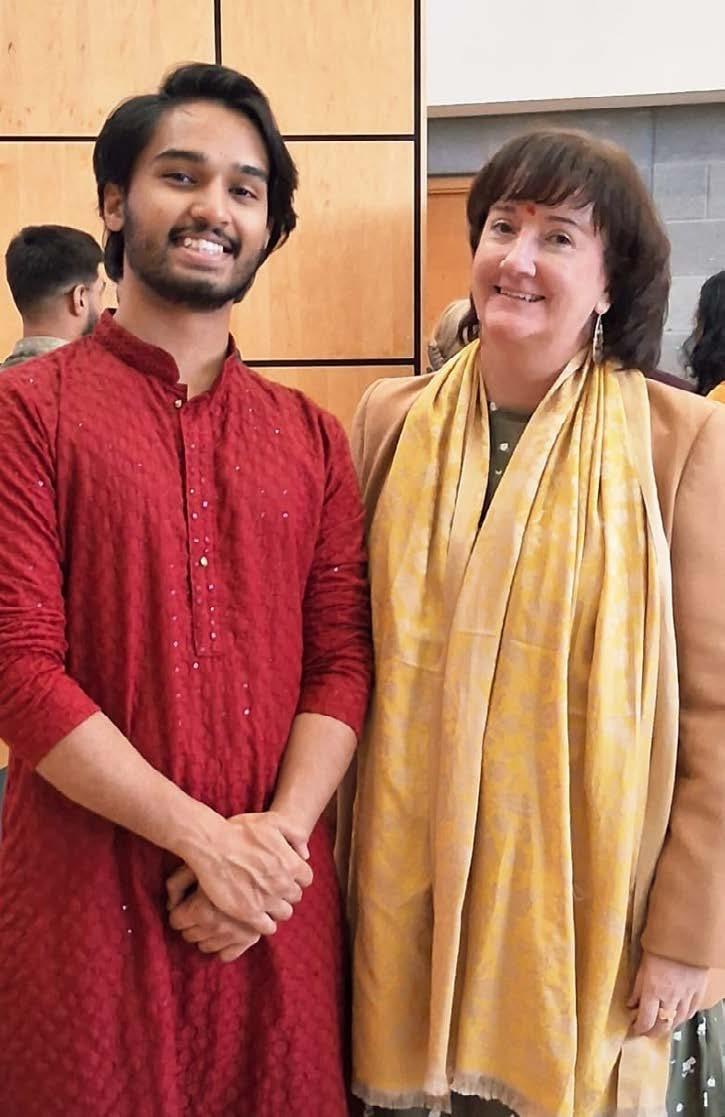
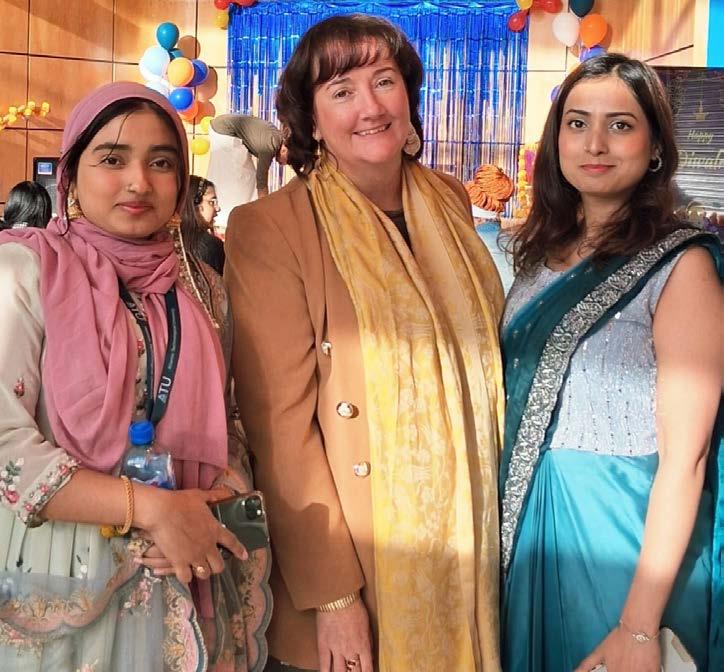
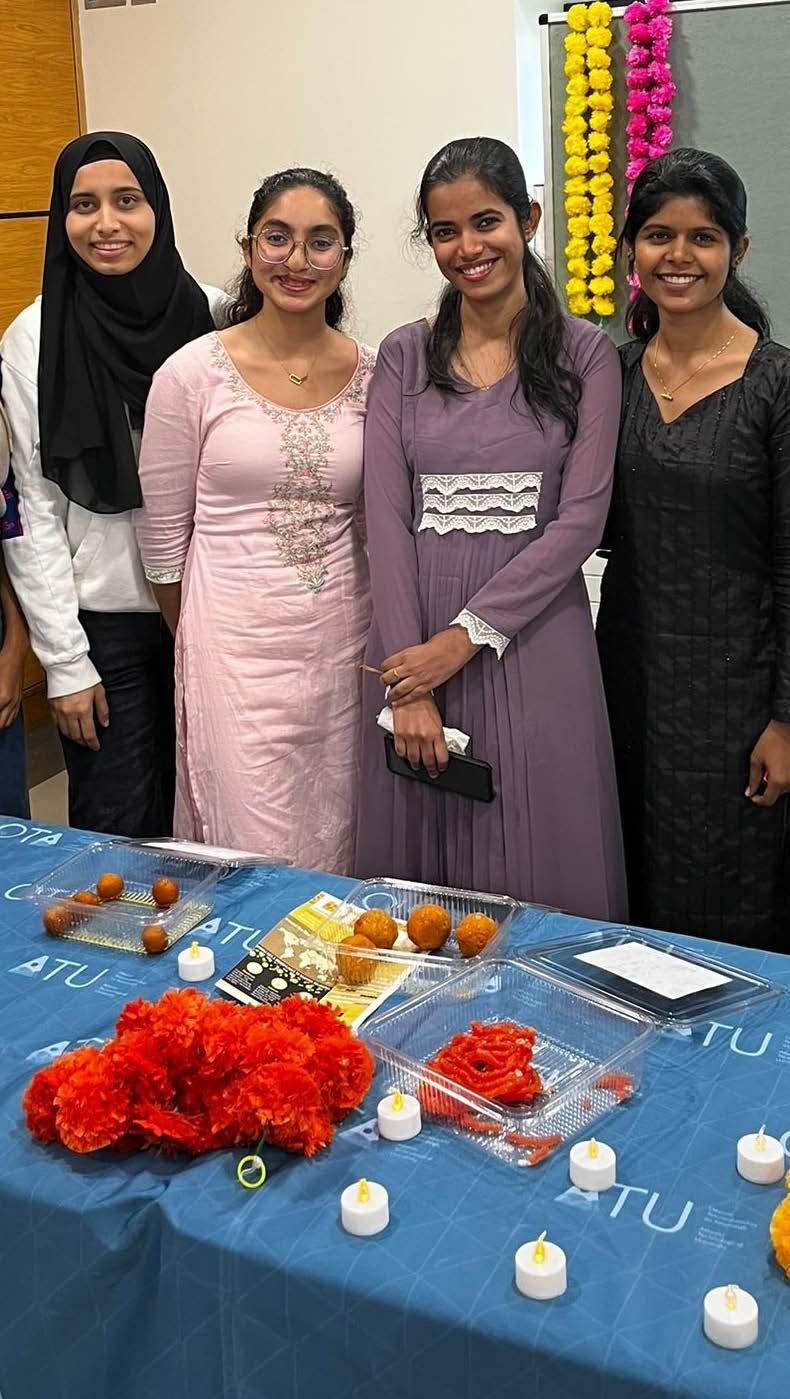
Here are some snapshots from ATU’s celebration of Diwali.
Engagement and Innovation A Legacy of Region-wide Impact: Celebrating George McCourt’s Retirement
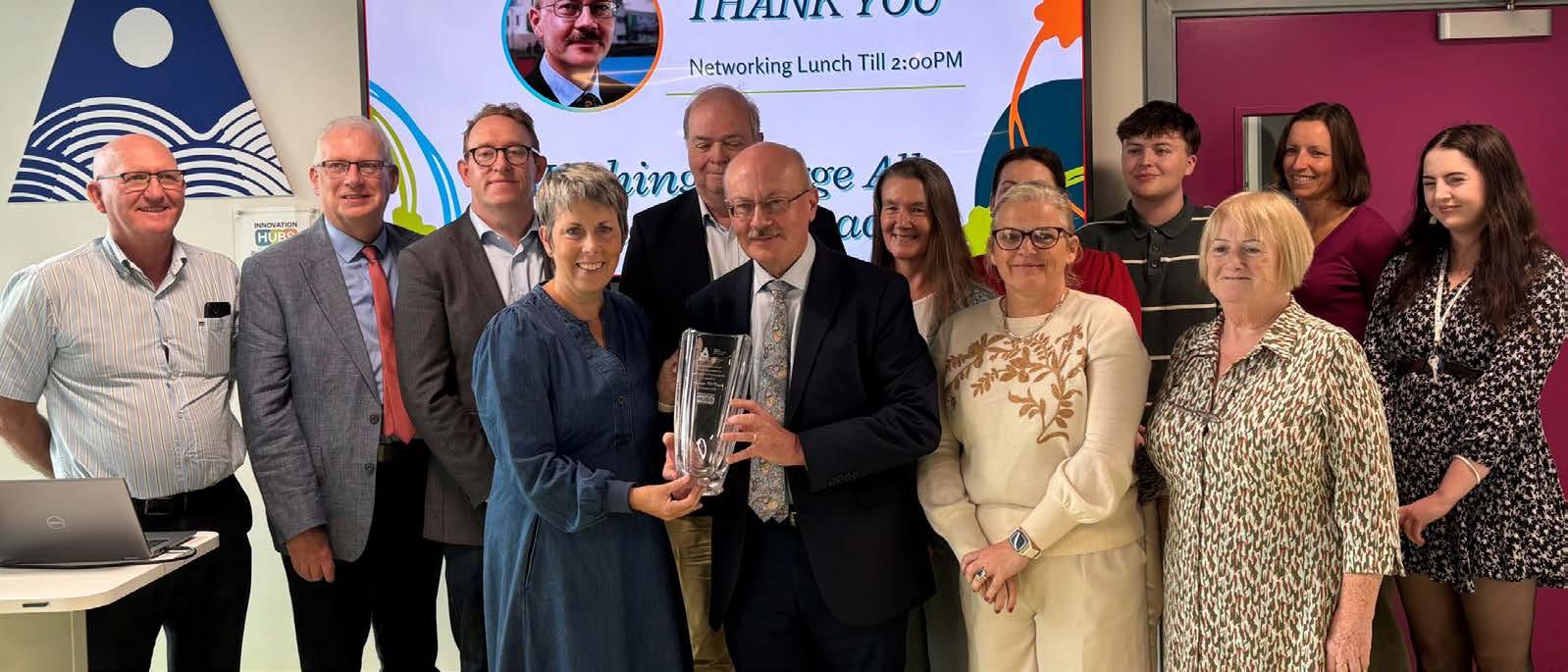
George McCournt recently retired from his position as Head of Innovation and Enterprise at ATU. His retirement celebration was marked by an inspiring opening address from Orla Flynn, ATU President, which set the tone for the heartfelt tributes to follow. Surrounded by colleagues, current iHub Clients, entrepreneurs, and iHub alumni, who came together not only to bid farewell but to reflect on the incredible legacy George leaves behind, a legacy that spanned 20 years of building a thriving innovation community in the west of Ireland.
From his early days at Galway-Mayo Institute of Technology (GMIT) to his pivotal role in Atlantic Technological University (ATU), George’s leadership has left an indelible mark on the entrepreneurial landscape.
When George first took the helm in 2004, the Innovation in Business Centre (IiBC) in Galway was little more than a concept. The building was unfinished, the idea of a dedicated innovation hub within GMIT was untested. But under his leadership, the centre quickly found its footing. By 2005, it welcomed its first start-ups, guided by a clear vision: a focus on technology, export potential, and job creation.
George's approach has been defined by congeniality, vision and persistence. He didn't just build facilities: he built relationships, ecosystems and opportunities.
Stories shared at his retirement celebration included some from those whose entrepreneurial journeys George helped champion, his leadership while guiding at every stage of growth. Even during the pandemic when many programmes faltered, George and his team ensured that every initiative from training, mentoring to funding support, continued seamlessly online.
Many alumni provided heartfelt tributes to the personal attributes of the man known to all as ‘George’. His methodical approach, keen eye for detail and quiet persistent nature.
One alumnus spoke of George’s profound belief in people. He recalled arriving with nothing more than a draft business plan and leaving that first meeting with an office, two mismatched chairs, and a sense of belonging.
Another entrepreneur highlighted how the environment in the iHub provided the perfect ecosystem offering guidance, connectivity, funding routes and encouragement.
Colleagues spoke of George’s personal warmth, his ability to share good practice across campuses, his generosity in supporting entrepreneurs, including those who were navigating early-stage growth and academic partnerships.
These stories reflect the living legacy of George’s work. His trademark warmth and action: no hesitation, only encouragement and practical help. Under his guidance, entrepreneurs flourished, confidence took root, and collaboration became second nature within the iHub community.
As George steps into this next chapter of life, we pay tribute to his legacy of building institutions, networks and possibilities. He leaves a mark not only on the immediate Galway region, but on the whole west of Ireland innovation landscape and beyond. Though the work he initiated will carry on, there is no doubt his leadership and vision will be deeply missed.
We wish George a retirement filled with adventure, joy and fulfilment, confident that he leaves us stronger, wiser and energised for what comes next.
Major Innovation Centre milestones during George McCourt’s time at ATU
• Branding of the IHub which helped elevate ATU’s incubation centres to national prominence and integrate them into a growing network of innovation hubs across Ireland.
• A €3 million expansion of the Galway iHub, which doubled its capacity and introduced R&D laboratories, larger units, and a dedicated events space. This development proved instrumental in supporting high-potential start-ups, particularly in the MedTech sector, and strengthened ties with ATU research centres such as the MET Gateway.
• Merging the four ATU innovation centres across Galway, Mayo, Sligo, and Donegal under his leadership and developing the building blocks for a unified ecosystem that has the potential to transform the region’s entrepreneurial capacity.
• More recently, George spearheaded international collaborations, forging partnerships with the University of Illinois in Chicago and LifeTech Global.
• Under his watch, companies incubated within ATU’s innovation centres have raised over €300 million in investment, created more than 1,700 jobs, and achieved remarkable milestones including FDA approvals, acquisitions, and European Innovation Council Accelerator wins.
Innovation Centre Companies win DTIF Funding
Four companies based in ATU iHub Galway have received funding from the Disruptive Technologies Innovation Fund (DTIF) fund , highlighting the centre’s pivotal role in nurturing globally competitive med-tech innovation in the west of Ireland. Together, these companies will lead projects with a combined funding value of over €30.5 million.
The Disruptive Technologies Innovation Fund (DTIF) is a €500 million fund established under the National Development Plan (NDP) in 2018. The Department of Enterprise, Tourism and Employment manages the DTIF with administrative support from Enterprise Ireland.
AuriGen Medical, La Nua Medical, CroíValve, and Endowave Ltd have been selected as lead partners in their respective projects.
AuriGen Medical- PIONEER Project (€6.3m)
AuriGen Medical develops innovative cardiac devices for patients with atrial fibrillation (AF). Its flagship product, the Zenith left atrial appendage occluder, aims to reduce stroke risk in high-risk AF patients. ATU’s MET Centre is the academic partner associated with this funding award.
PIONEER will focus on developing a next-generation, repositionable left atrial appendage occluder for highrisk atrial fibrillation patients.
La Nua Medical- ECORE Project (€6.0m)
La Nua Medical specializes in imageguided endovascular technologies. Its ECORE™ device enables targeted therapy delivery while blocking blood flow to specific tissue, reducing side effects. ECORE will develop and clinically validate an embolisation device that delivers targeted therapies for vascular disorders and cancers.
CroíValve-
DUO MAX Project (€7.1m)
CroíValve, based in Dublin and Galway, develops transcatheter solutions for severe tricuspid regurgitation. DUO MAX will be developed for patients unsuitable for tricuspid valve repair/ replacement, including older high-risk individuals (75+), those with poor right ventricular function, and those with existing tricuspid devices.
Endowave – SensABLATE Project (€11.1m)
Endowave is a R&D driven company focused on delivering the best-inclass microwave ablation technology. They will lead out on the SensABLATE project which will develop ablation, shape-sensing and tissue sensing technologies which will enable the removal or destruction of unwanted tissue in the body, such as tumours or areas causing irregular heartbeats, without major surgery.
Dr Chris O’Malley, Vice President, Enterprise & Engagement at ATU said: “This ongoing success combines with the announcement this summer of the €34m in funding for the Health Technology Commercialisation Hub in Galway led by University of Galway and ATU to hugely enhance the region’s innovation ecosystem.”
ATU's MET Centre is the academic partner associated with some of these funding awards. Dr Jamie Meehan, MET Technology Gateway Manager said: “This success is a direct result of the exceptional, collaborative expertise of the MET and ATU industry-driven and research excellence leadership teams, unlocking disruptive solutions and nurturing open collaboration with our industry partners.”
ATU’s MET Technology Gateway is cofunded by the Government of Ireland and the European Union through the ERDF Northern & Western Regional Programme 2021-27.
Dr Meehan concluded: “MET acts as a catalyst for systemic change as the technical engine, providing the strategic RD&I support that transforms the breakthrough concepts from industry innovators into fundable, market-ready realities.”
Continuity, Collaboration, and Regional Growth: The Enduring Partnership Between ATU and the Chambers of Commerce across the Western and Northwestern Region
The long history between ATU and the enterprise community continues to shape regional development across the west and northwest of Ireland. This enduring collaboration nurtured through the Chambers of Commerce across the Galway, Castlebar, Sligo and Letterkenny regions, highlights how education and enterprise can work hand in hand to strengthen local economies. Its roots run deep, reflecting decades of leadership continuity with ATU and the Chambers.
Among those who have bridged both worlds are ATU President, Dr Orla Flynn, formerly a member of Galway Chamber of Commerce; Jim Fennell, past President of the Galway
Chamber; former GMIT Registrar Bernie O’Hara, who also served as Chamber President; and Michael Margey, former Letterkenny Chamber President.
This strong connection is further reflected in current and former memberships, including Michael Gill, Head of Department at the School of Business, current member of the Castlebar Chamber; Finola Howe, Head of Enterprise and Engagement, current member of Sligo Chamber and Úna Parsons, former Head of College in Sligo and formerly a member of the Sligo Chamber. Their involvement exemplifies the enduring tradition of partnership that continues today through active participation of ATU staff in Chamber leadership across the western and northwestern regions.
One of the ways ATU continues to play a pivotal role in regional economic development is through these collaborative relationships. Over the past year, the following staff have held Chamber Board positions: Anne Conlon, former President 2023 – 2025 Castlebar Chamber; Maria Staunton, President of Castlebar Chamber; Cáit Noone, President of Galway Chamber, and Fintan Kennedy, former President of Sligo Chamber. To further strengthen this collaboration, ATU’s External Engagement Office has hosted a series of informal meetings between Chamber Presidents, providing a shared platform for learning, alignment, and cooperation across the region.
ATU and the Chambers: Shared Vision, Common Goals
Across all four Chambers of Commerce, a consistent theme emerges: collaboration with ATU strengthens business resilience, nurtures innovation, and ensures the educational system is responsive to industry needs.
Maria Staunton, President of Castlebar Chamber of Commerce, describes this partnership as central
to fostering entrepreneurship and aligning business needs with educational opportunities. Building on the work of her predecessor, Anne Conlon, Maria emphasises three key areas of collaboration: supporting start-ups through business incubation, bridging education with workforce development, and engaging youth to inspire the next generation of entrepreneurs.
Maria Staunton and Anne Conlon
Her role as head of ATU Mayo Innovation Hub brings direct experience to her Chamber leadership, allowing Castlebar to benefit from proven models of enterprise support and talent development.
Cáit Noone, President of Galway Chamber of Commerce, echoes this synergy. She says: “ATU’s membership in the Chamber not only offers access to valuable insights and networks but also strengthens the collective voice shaping Galway’s economic future.”
Collaboration with the Chambers enables ATU to contribute on policy discussion, promote innovation, and ensure the region remains competitive on a national and international stage. Cait along with predecessors Jim Fennell and Bernie O’Hara, exemplifies how shared leadership between the university and the Galway Chamber generates tangible results for both students and businesses, creating a vibrant culture of innovation across sectors.
Fintan Kennedy, outgoing President of Sligo Chamber of Commerce and part-time lecturer at ATU, brings a practical perspective from the northwest.
He points to initiatives like the AIM Centre, a collaborative project that drives innovation and supports start-ups. He also highlights joint work on the Chamber’s Annual Business Awards and student mentorship programmes, where the connection between students and industry leaders fosters mutual growth. For Fintan, the partnership is “dynamic and genuine,” linking skills development with enterprise opportunity in meaningful ways.
From Letterkenny, Michael Margey, former President of its Chamber (2021), emphasises how close cooperation between ATU and local business groups has strengthened regional and cross-border collaboration. During his presidency, he steered the development of a memorandum of understanding with the Derry Chamber, fostering research partnerships with Ulster University in the form of a researchled Masters programme, advancing projects such as the FinTech cluster development. His leadership highlights how ATU’s reach extends well beyond its campuses, catalysing research-driven collaboration that benefits the entire northern and northwestern region.
Strengthening Regional Impact Through Shared Leadership
The common thread among all these perspectives is one of partnership and alignment. Each Chamber recognises ATU as an anchor institution, a catalyst for regional growth, innovation, and talent development. Together, they are building a networked approach to economic advancement that bridges local business insight with academic excellence.
Through these collaborations, ATU and the regional Chambers of Commerce are not just responding to the changing demands of business, they are shaping the future trajectory of the west and northwest regions. By combining their resources, expertise, and shared vision, they ensure that regional development remains inclusive, sustainable, and driven by both education and enterprise.
Michael Margey
Cáit Noone
North West Digital Futures conference at ATU
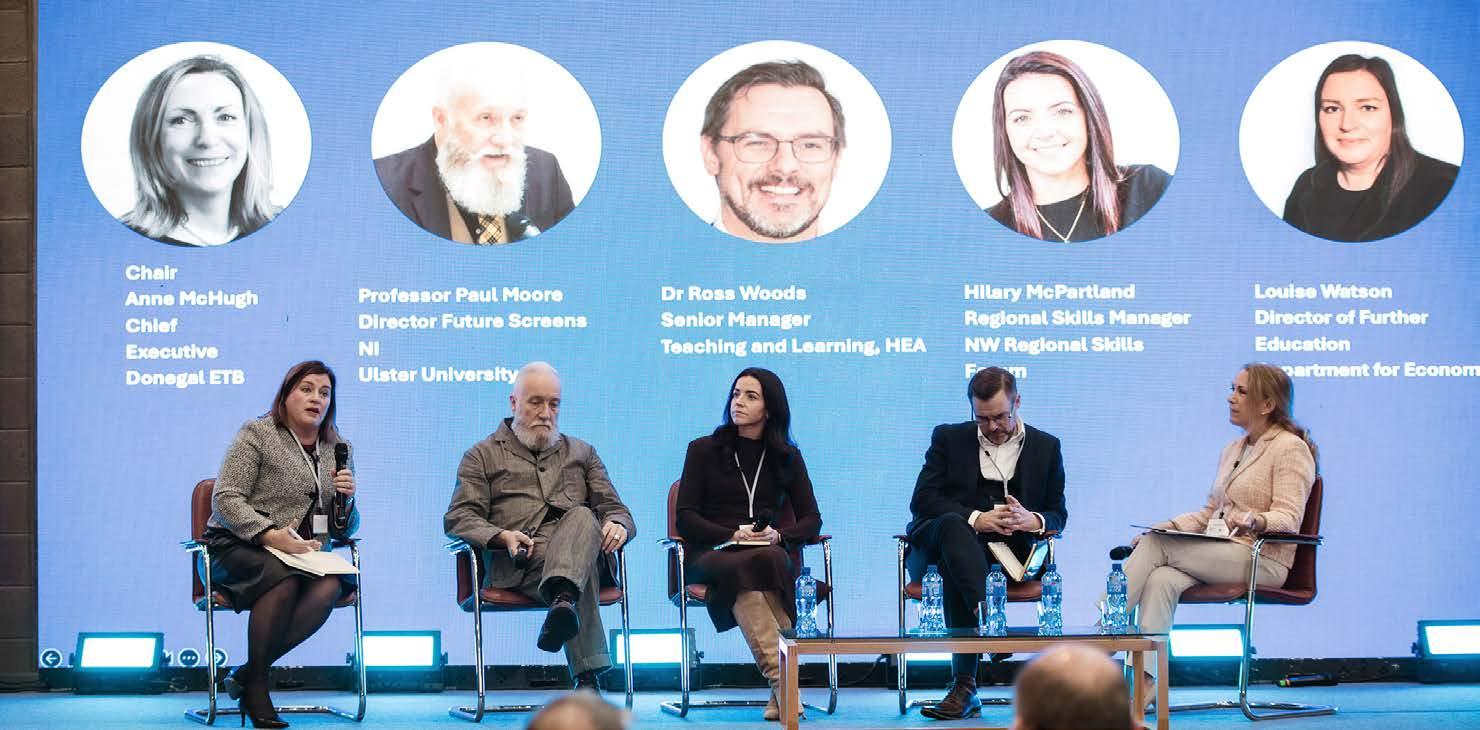
Digital innovation, artificial intelligence, skills development, and cybersecurity were just some of the topics explored at the NW 2025: Shaping Our Digital Futures conference in ATU Donegal Letterkenny on 23 October. Experts from across Ireland, Northern Ireland, and Canada participated, sharing insights on emerging technologies, ethical frameworks for AI, and the growing need for cross-sectoral collaboration.
Minister for Further and Higher Education, Research, Innovation and Science, James Lawless TD, officially launched the inaugural event that brought together leading voices from education, industry, and government to examine how digital transformation is reshaping the North West crossborder region.
Hosted by ATU on behalf of the North West Tertiary Education Cluster (NWTEC), the conference explored the opportunities and challenges associated with the rapid pace of technological change. The event formed part of the North West Digital Employment Pathways Training Hub (NW DEPTH) project, supported by the PEACEPLUS Programme which is managed by the Special EU Programmes Body (SEUPB.
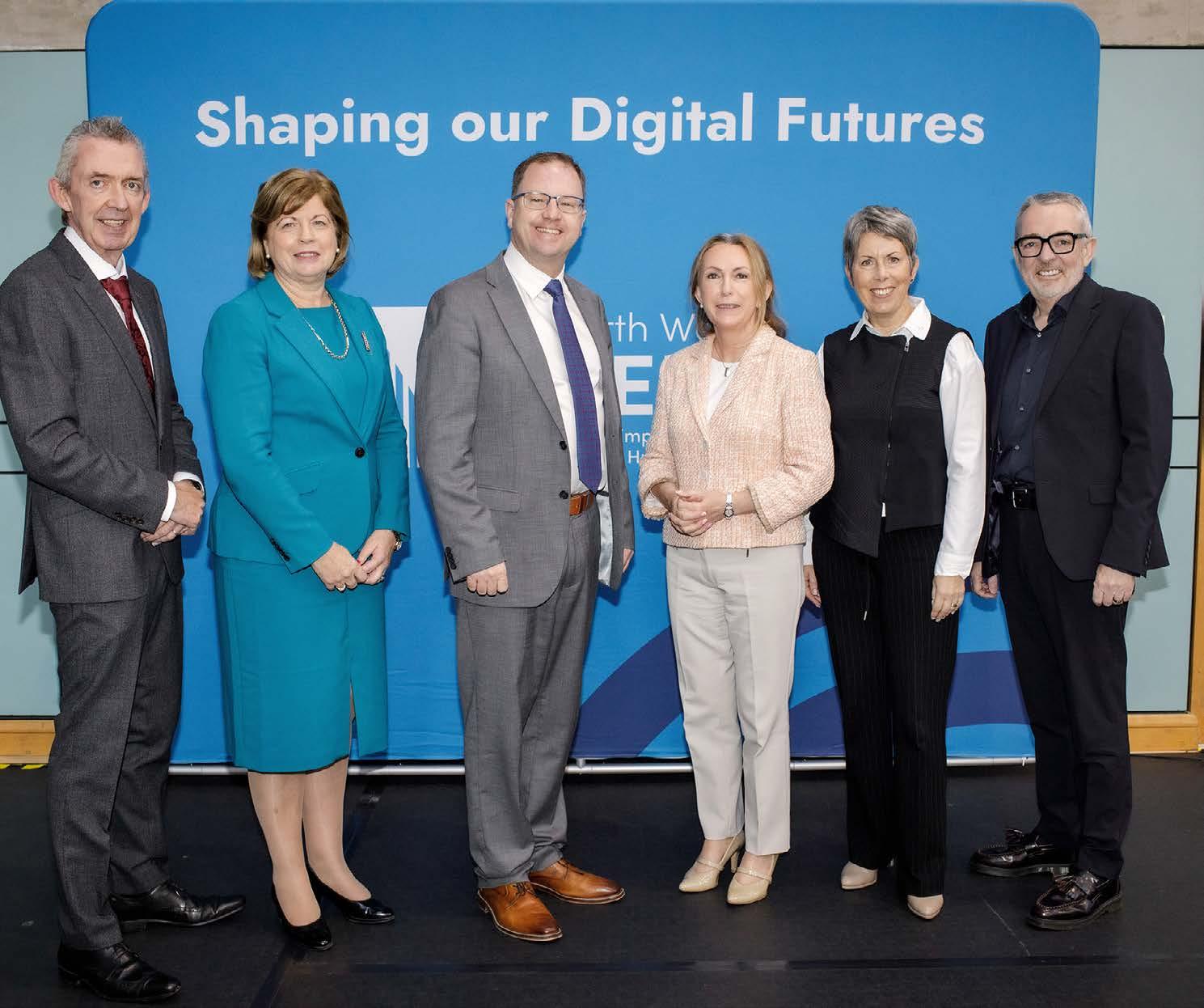
Left to right: Paul Hannigan, VP for Cross Border Engagement and Head of College, ATU Donegal; Dr Catherine O’ Mullan, NWRC Director of Curriculum and Academic Standards; Minister James Lawless, TD; Anne McHugh, Chief Executive, Donegal ETB; Dr Orla Flynn, President ATU; Professor Paul Seawright OBE, Deputy Vice Chancellor, Ulster University.
Acknowledging the work of the NWTEC, Minister Lawless said: “The NWTEC partnership is delivering real impact across the North West, supporting upskilling, reskilling, research, and innovation to meet the evolving needs of employees, employers, and the wider economy. In a world of rapid technological change, the ability to adapt and align education with industry demands is not just valuable, it’s a strategic advantage.
“ The inaugural NW2025 Shaping Our Digital Futures Conference was a powerful platform to share best practice, showcase innovation, and engage directly with the opportunities and challenges ahead, particularly in areas like AI and cybersecurity. "
Minister for Further and Higher Education, Research, Innovation and Science, James Lawless
Dr Orla Flynn, ATU President opened the conference, welcoming the Minister and delegates and highlighting the university’s role in supporting innovation across the North West: “At ATU, we see digital transformation as both a regional and national imperative. Events like NW2025 demonstrate the strength of partnership across the North West in addressing shared challenges and
building a skilled, adaptive workforce. By aligning education, research, and enterprise, we are helping to position this region at the forefront of Ireland’s digital future.”
The day’s proceedings, chaired by broadcaster Seán O’Rourke, included contributions from national and international speakers. Matt Cooper, CEO of Volta in Nova Scotia, Canada, delivered the morning keynote address, Exploiting AI to Build New Innovative Enterprises, which examined how artificial intelligence is transforming industries and creating new business opportunities, with real lessons for the NW region from similar challenges faced in Nova Scotia.
“ The success of today’s event reflects a deep commitment across institutions and sectors to work together in a practical and sustained way. The North West has a unique opportunity to leverage its cross-border ecosystem to drive digital innovation and employment. Collaboration at this level ensures that the benefits of digital progress are felt throughout our communities and economies. "
Paul Hannigan, ATU Vice President for Cross Border Engagement and Head of College, ATU Donegal
New Free Online Courses in Forensic Toxicology, and Social Robotics
ATU’s Higher Education 4.0 project, which is funded by the Human Capital Initiative (HCI) Pillar 3, recently announced that it is to create two more free, short, online courses to add to the 50 already available on freecourses.atu.ie
Forensic Toxicology
Dr Geraldine M. Dowling is to build a new free course – or MOOC (Massive Open Online Course) – around the subject area of toxicology while Drs John Pender and Perry Share will develop their third free course in social robotics.
Higher Education 4.0 has supported over 20 of the 50 plus free courses available on the platform, including Introduction to Lean Construction, Health & Safety, Introduction to Marketing, Ocean Pollution, the Sustainable Development Goals (SDGs), and the Fundamentals of Garden Design.
Welcoming the establishment of two more free courses, Head of Innovation at ATU’s Online, Flexible & Professional Development and Lead
for Higher Education 4.0’s Innovation Projects, Gavin Clinch, said: “These new MOOCs demonstrate how ATU continues to open up access to specialist knowledge for learners everywhere.
Dr Dowling is an academic at ATU for the past eight years. Among her many roles, she is heavily involved in developing forensic toxicology professional body training and conferences, seminars and knowledge exchange for practitioners.
Boasting a wealth of experience of over 20 years, Dr Dowling aims to develop an industry-focused MOOC that will appeal to professionals, including law enforcement, government, industry, clinicians and private and public laboratory staff, students and academics along with the general public.
Dr Dowling said: “This Global MOOC will provide free accessible, high-quality, international standard training and, we hope, will position ATU as a leader in online, flexible, professional development surrounding cutting edge online MOOC practice and knowledge collaboration in the field of forensic toxicology.”
Social Robotics
Drs John Pender and Perry Share are set to develop their third social robotics free course over the coming academic year. Earlier in 2025, their BA (Hons) Social Care Practice final-year students who enrolled on the elective module, ‘Futures of Care, Society and Welfare’, got the opportunity to build a robot named Blossom.
This was the first time in Ireland that social care practice students were afforded such a learning opportunity, as they joined ATU MakerSpace on the Sligo campus to build the social robot, which was developed by Cornell University and Google, and simplified for easier and cheaper construction by the University of Southern California.
Drs Pender and Share have undertaken extensive research on the possibilities of humanrobot interactions in the delivery of future care, having joined an Interreg Europe-funded project (TechSocialCare) that will explore ways to regulate assistive technologies in care, including social robotics. Dr Perry Share said: “In our first two MOOCs we explored the development and application of social robots. In this third MOOC
we look to the future, as robotics converges with AI and exciting new potentials open up.”
Dr John Pender added: “With our new MOOC, Context, Foresight and Implementation, we want to bring learners into the heart of the debate
on how social robots, humanoids, VR and AI are shaping health, social care and education today, and how futures thinking can help us navigate what comes next. This is not just about technology, but about values, ethics and human priorities.
Sustainability
ATU’s Emil Kindl
Elected inaugural President of EU GREEN Alliance Student Council
Emil Kindl, President of ATU Sligo Students' Union, has been elected as the first-ever President of the EU GREEN Alliance Student Council. This appointment marks a major milestone for student governance, establishing formal representation for the Alliance's expansive student body, which totals more than 158,000 students across nine European universities.
The new student council will act as a platform to strengthen crossborder cooperation, celebrate European values, maximise student opportunities, and ensure that student perspectives are embedded in the EU Green Alliance’s future strategy.
Reflecting on his new role, Emil Kindl acknowledged the significance of his election: “It will be a very busy year ahead, and many new systems and connections will need to be established. I am looking forward to collaborating with all the universities and to bringing more and better opportunities to all our students.”
“Students are at the heart of any higher education institution, and our job is to make sure that this statement is interpreted correctly, reflects the reality of students on the ground, and is acted upon.”
Emil Kindl
Kindl also paid tribute to his newly elected team, whose dedication he noted will be essential in building a strong foundation for the Council’s work.
Dr Orla Flynn, ATU President, congratulated Emil on his appointment, saying:
“We are really proud of Emil’s achievement. This is a fantastic personal achievement for him but also a reflection of ATU’s strong culture of student leadership and international collaboration. I want to wish Emil all the best in this role, and I know he will be up for the challenge!”
Looking forward to the valuable contributions Emil and the Student Council will make, ATU lead for the EU GREEN University Alliance, Professor Frances Lucy said:
“Student voices are central to the Alliance’s strategy in terms of both university and regional sustainability goals, and Emil’s appointment will shape how students engage with sustainability, innovation and collaboration and create impact across the EU Green Alliance and more broadly to its European regions.”
ATU are also delighted to share the news of Professor Lucy's appointment as EU GREEN Senate President. Dr Lucy is the ATU Lead for EU GREEN University Alliance. ATU collaborates with eight other universities from Spain, France, Italy, Poland, Romania, Sweden, Germany and Portugal in the EU GREEN Alliance, led by the University of Extremadura, to form a 'super campus' with more than 158,000 students and 18,000 staff.
Toward Net Zero: How European Universities Are Embedding Sustainability in Tourism Curricula
More than two-thirds of the 65 European universities recently surveyed who offer tourism and hospitality degrees are embedding sustainability into their teaching. That’s the standout finding from a new survey by the EU GREEN “NOTES” project, which shows how higher education is preparing the next generation of professionals for the global shift toward reducing greenhouse gas emissions to net zero.
Universities Leading the Change
Tourism is one of Europe’s most important industries, but it is also among the most carbon intensive. With the EU’s Corporate Sustainability Reporting Directive (CSRD) requiring organisations to measure and disclose their environmental impacts, the sector faces growing pressure to reduce emissions. Universities, in turn, are playing a vital role in shaping the workforce that will deliver on these goals.
The “NOTES” project (funded by EU GREEN) surveyed 65 universities across Spain, Ireland, Romania, Portugal, and France to explore how tourism and hospitality programmes are responding to this challenge. The results show that these universities are already making significant strides.
Survey Highlights
On 19 September 2025, the EU GREEN NOTES Project team held a productive meeting with the Directorate-General for Mobility and Transport at the European Commission headquarters in Brussels. Led by Dr James Hanrahan and colleagues from ATU, Université d'Angers, Universidade de Évora, and the University of Galve, the project team reported on the latest findings of their research into the challenges and opportunities in transitioning Europe’s tourism sector to Net-Zero emissions.
The findings reveal a growing commitment to sustainability within tourism education:
• 68% of universities align their tourism and hospitality programmes with the UN Sustainable Development Goals (SDGs).
• 51% specifically link their curricula to SDG 13: Climate Action.
Speaking after the meeting, Dr James Hanrahan said: “We are delighted with the engagement and support of the European Commission. This project demonstrates that education and research are central to achieving NetZero goals, and universities play a vital role in preparing the next generation of professionals to lead the change.”
Upskilling in Decarbonisation
The research also highlights a clear and pressing need for upskilling in decarbonisation practices across all universities, particularly within tourism and hospitality programmes. Despite growing awareness of climate action imperatives, only 48% of these programmes currently provide education on tourism decarbonisation.
This gap is further underscored by the fact that 78% of tourism and hospitality educators in higher education institutions (HEIs) expressed a desire for training in this area. These findings point to an urgent need for targeted professional development and curriculum enhancement to support sustainable tourism education.
For insights into effective climate action and decarbonisation strategies in tourism, please view the STORY@ ATU webinar which showcases good practices and innovative approaches in the field.
Building Skills for a Greener Industry
The survey's findings point to an increasing commitment by universities to prepare graduates for the future of tourism. By incorporating climate action and decarbonisation into their curricula, universities are equipping students with the skills to:
• Help the tourism industry reduce its carbon footprint.
• Drive operational efficiency and profitability.
• Ensure tourism delivers positive impacts for local communities and destinations.
European universities are not waiting for change—they are actively leading it. By aligning education with sustainability goals, they are laying the foundations for a greener, smarter, and more resilient tourism industry.
The EU GREEN NOTES Project team with representatives of the Directorate-General for Mobility and Transport, European Commission, Brussels.
About the EU GREEN NOTES Project
The EU GREEN NOTES Project is a collaborative initiative supported by the EU GREEN Alliance, bringing together leading European universities to explore sustainability, tourism, and education. By identifying skill gaps and providing evidence-based recommendations, the project aims to accelerate the tourism industry’s transition to Net-Zero emissions while contributing to stronger, more resilient communities across Europe.
Dún LaoghaireRathdown Hackathon 2025: Exploring how to encourage visitors to stay longer and bring more value in the rural parts of our county.
On 30 September 2025, the Interreg Atlantic Areas POST projects Dún Laoghaire-Rathdown (DLR) Hackathon was held at Airfields Estate, Dundrum, Dublin. This half-day event brought together stakeholders from across the region to explore the key tourism challenges for the rural parts of the county. Councillor Jim O’Leary elected Cathaoirleach of DLR County Council opened the proceedings, hosted by ATU and DLR County Council.
Polycentric Sustainable Tourism
Dr James Hanrahan from ATU, presented on the POST (polycentric sustainable tourism) project. The partners in POST recognise the importance of developing new approaches to tourism development that create a more sustainable approach.
Overtourism or mass tourism is a growing global issue impacting both tourism destinations and their surrounding regions. The Atlantic Area is no exception, and Spain has been particularly vocal about its negative effects of mass tourism on local communities and residents' quality of life. Meanwhile, inland and non-coastal areas in the Atlantic region face challenges like population aging, lack of skilled workers, and limited innovation due to uneven tourism distribution.
To address this, the POST project proposes a strategy based on Polycentric Tourism— an innovative approach aimed at redistributing tourist flows from overcrowded coastal areas to underdeveloped inland regions. This strategy promotes sustainable territorial development by making tourism more balanced and inclusive.
Effective Tourism Management in Dublin
From an Irish context Dublin is experiencing many of the typical overtourism issues and Fáilte Ireland is already working on this, pushing to spread tourism out beyond the city centre.
The POST project is providing the Dun Laoghaire Rathdown (DLR) area with effective tourism management ideas for the redistribution of tourism flows into their inland and mountain territories. ATU is working closely with DLR who despite their proximity to Dublin city struggles with low overnight stays—offering only 11 registered accommodation properties with around 1,285 hotel rooms, the lowest supply in the Dublin region.
The DLR Tourism strategy aims to redistribute flows away from Dublin’s congested centre, enhance sustainable mobility, and promote family and activity-oriented tourism. The challenge lies not in attracting visitors but in retaining them, extending stays, and increasing local spend. From a polycentric perspective, DLR can serve as a strategic intermediary to relieve tourism pressure on Dublin city while enhancing access to natural assets along the coast and uplands.
During the ideation sessions (at the Hackathon), the invited DLR stakeholders generated many ideas, which were captured by visual practitioner Ruth Graham. The stakeholders highlighted key challenges, including the need
for improved transport, stronger branding and networks, more diverse accommodation options, and streamlined bureaucracy to better support sustainability.
The other presentations on the day included: Colleen Savage from M-Co shared the top line findings from Dublin Mountains Alternative Accommodation value research; Fiona McKenna ATU PhD candidate and Sustainable Destination Development Officer for Clare County Council presented on County Clare's experiences of polycentric tourism; and Louise McGauran, Senior Planner for DLR talked about planning considerations in the region.
Carbon Literacy Programme for ATU Students
The ATU Education for Sustainable Development (ESD) Academy in collaboration with the department of Building and Civil Engineering at ATU Galway recently rolled out accredited training and a professional development programme for second-year students across four undergraduate programmes as well as students on the Civil Engineering Apprenticeship programme, and the final year Construction Management students.
150 second-year students from Architectural Technology, Quantity Surveying and Construction Economics, Civil Engineering, and Construction Management completed Carbon Literacy training. In addition, year two of the Civil Engineering Apprenticeship programme hosted an immersive in-person week in September, where 37 students completed the ‘Introduction to the SDGs’ digital badge (available on MyDigitalBackpack.ie), and participated in the ‘SDGs to 2030’ game. The 2030 SDGs Game is a multiplayer, in-person, card-based game that simulates taking the real world into the year 2030.
Carbon Literacy training fosters climate-conscious behaviours and drives systemic change. A key contribution of the ATU ESD Academy training experience is a focus on a multi-level approach to Carbon Literacy. Dr Mark Kelly explains: “The training with ATU student engineers explored how Carbon Literacy enhances understanding of climate issues, equips participants with the skills to take meaningful action, and supports the development of lowcarbon practices both personally and professionally.
“The training also highlights adaptable teaching resources and assignments designed to integrate Carbon Literacy into diverse learning environments. Research findings indicate embedding this approach in education experience significantly improves climate knowledge, shifts attitudes towards sustainability, and encourages carbon reduction initiatives.”
In addition to the Climate Literacy training, Dr Jan Gottsche, a member of the Climate Fresk facilitator team in the ATU ESD Academy, facilitated a Climate Fresk Workshop with the final-year Construction Management students in October. This group and the final-year Quantity Surveying and Construction Economics cohort are also completing the Carbon Literacy training in November and December. Climate Fresk is a powerful tool for providing quality climate education.
This collaboration is an example of transformative educational experiences at ATU, and it evolved with the support of ATU colleagues, Dr Shane Newell and Breda Joyce, who both completed the Carbon Literacy training programme facilitated by the ATU ESD Academy in the Teaching and Learning Centre in June 2025.
The National Strategy on Education for Sustainable Development (ESD) to 2030 calls on higher education to transform learning environments, build capacities of educators, empower, and mobilize young people to become agents of change, and accelerate and support local-level actions. The ESD academy aligns with this strategy focusing on integrating sustainability across all learning environments. Key priority areas include transforming learning environments, building educator capacity, mobilising young people, and accelerating local-level actions. You can find out more about ATU’s ESD academy here.
How do Social Media Influencers Impact our Fashion
Purchases?
Fashion is one of the most wasteful industries. Globally, less than 1% of textiles are recycled into new clothes, while 42,000 tonnes end up in landfill every year (Environmental Protection Agency, 2025). In Ireland alone, we each buy about 53 kilograms of new textiles per year (EY insights, 2025), but most of it is discarded long before it needs to be.
By looking at how social media influencers impact our purchasing habits, ATU PhD researcher, Madiha Rubeel, is investigating if fashion influencers can drive meaningful change.
Madiha’s research targets ‘digital natives’, people born between 1997–2012, who grew up with social media and online shopping. This generation is highly active in fashion consumption and possesses significant purchasing decisions which are shaped by the content they engage with.
Excessive consumption has created a throwaway culture, with labour exploitation, harmful materials, and environmental damage. Reports by the BBC (2024) reveal that workers undertake 75-hour workweeks with minimal pay for fast fashion retailer, Shein.
Through her four-year PhD project titled ‘Harnessing the Power of Digital Influencers for Socially Sustainable Businesses’, Madiha is examining how influencer characteristics such as authenticity, trustworthiness, and relatability shape the attitudes and behaviours of young generations.
“When influencers show how to re-wear, swap, or repair clothes, it doesn’t feel like a lecture — it feels inspiring. And that’s what helps close the gap between caring about sustainability and acting on it.”
Madhia says: “My work considers how social media influencers can help shift this culture. Young people trust influencers because of their authenticity and relatability. When they promote re-wear, swapping, or repairing clothes, it inspires action, helping close the gap between caring about sustainability and living it”
Madiha’s research and local businesses are bringing awareness to ways fashion can work in circles — not waste. One Donegal-based social enterprise helping put these ideas into practice is the Circular Dress Collaborative, founded by Sheila Clancy O’Donnell in Letterkenny.
Motivated by the growing issue of excessive clothing consumption, Sheila created The Circular Dress Collaborative initiative to show how fashion can be reimagined, not discarded, through resale, repair, and repurposing. Sheila says:
“The biggest challenge I see as CEO of a sustainable fashion social enterprise is the lingering perception that second-hand means second-rate, many people still fear what others will think if their clothes aren’t ‘new,’ instead of recognising the quality, value, sustainability, and sheer coolness in the benefits of resale.”
“Changing this mindset requires education and stronger government support, but that support must come from strong, experienced advocates — not as a tick-the-box exercise”.
This PhD project is being carried out under the supervision of Dr Vicky O’ Rourke, Dr Sarah Diffley, Dr Gabriella Gliga and Prof Peter Kawaleck, and is part of the IDEAS Postgraduate Research Training Programme, which is funded under the RISE@ATU scheme.
ATU Celebrates
ATU’s new Mental Health Action Plan to Promote Student Wellbeing
ATU marked World Mental Health Day, on 10 October 2025, with the launch of its new Mental Health Action Plan 2025-2029, ‘Your WellBeing Matters’. This university-wide initiative reflects ATU’s commitment to creating a compassionate campus community that fosters and supports the mental, emotional and social wellbeing of students, enhancing both their success and their sense of belonging.
With a student population of over 30,000 learners across nine campuses, ATU serves a diverse community that includes students from a wide range of economic,
cultural, social, and educational backgrounds. The Mental Health Action Plan recognises and responds to this diversity by promoting inclusive supports and a wholecampus approach to wellbeing.
Building on the momentum of the university’s first mental health action plan, which concluded in 2024, this new plan continues ATU’s implementation of the HEA 2020 National Student Mental Health and Suicide Prevention Framework. The plan outlines a whole-system and whole-campus approach to student mental health and wellbeing.
ATU’s Mental Health Action Plan 2025-2029
Key Themes
B – Build mental health skills and awareness within the ATU community through training and health promotion
E – Empower students to embrace all learning and social opportunities while at university
L – Learn collaboratively in a supportive and compassionate environment
O – Offer an open, respectful, and safe university experience
N – Nurture emotional wellbeing through studentcentred supports and services
G – Grow a connected and resilient campus community that supports well-being for all
“ATU is committed to enabling students to thrive and succeed while at university and enhancing students’ sense of belonging is key to this. This mental health plan sets out our pledge to students as we continue to progress a whole campus approach to student mental health and wellbeing”.
Dr Michele Glacken, ATU Vice President for Students
Caroline Mahon, Higher Education Authority (HEA) Healthy Campus Coordinator, welcomed the launch saying: “The HEA would like to congratulate Atlantic Technological University on the launch of their Mental Health Action Plan 2025 to 2029, ‘Your Well-Being Matters’. The publication of this action plan demonstrates ATU’s leadership in advancing the National Student Mental Health and Suicide Prevention Framework and in promoting student wellbeing across higher education.”
The Mental Health Action Plan is a key part of ATU’s ongoing work to support student wellbeing across all nine campuses. It reflects the university’s belief that mental health and a sense of belonging are central to student success, and that building a compassionate, inclusive environment benefits the entire ATU community.
You can read ATU’s Belong Mental Health Action Plan 2025-2029 here
Student Health, Wellbeing and Counselling, ATU; Dr Michele Glacken, VP for Students, ATU; and Caroline Mahon, HEA Healthy Campus Coordinator.
Left to right: Kristen Venianakis, HEA Healthy Campus; Nasya Mc Jyn Lgelige, VP Welfare and Equality, ATU Students’ Union Donegal; John Meehan, HSE Assistant National Director, Access and Integration, and Head of the National Office for Suicide Prevention (NOSP); Dr Maura Finnegan, Head of
Student wins Award at the Interior Educators National Student Awards
ATU Interior Architecture student, Lui Ann Dam recently won an award at the Interior Educators (IE) Awards. Lui, a second-year student on the BA (Hons) Interior Architecture and Design programme was successful in the “Creative Re-Use 2025 (Progressing Student)” category, which recognises outstanding projects that demonstrate a strategic and thoughtful approach to transforming an existing building. The winners were revealed at the awards event in Clerkenwell, London on 10 July.
The judges were impressed with Lui Ann Dam’s Courtyard Hostel design which envisions a thoughtful restoration of the Old Savoy Cinema site in Sligo, to reimagine it as a vibrant hostel that not only provides comfortable accommodation for all but also a dynamic cultural space for a new generation.
Once the beating heart of the neighbourhood, The Old Savoy has long been a place where people came together to share a singular passion-the movies.
Built in the 1890s, the historic venue served as a vibrant hub of social connection and artistic expression. More than just a building, the Savoy was a gathering place where stories came to life and friendships were formed in the flickering glow of the screen.
Interior Educators (IE) is an organisation established by academics representing several wellestablished Interior Design / Interior Architecture programmes. Founded by Graeme Brooker at Manchester School of Art in 2006, IE now represents more than 50 Higher Education institutions, teaching almost 3,000 students across the UK and Ireland.
The annual IE National Student Awards shine a spotlight on the achievements of undergraduate Interior Design programmes, showcasing exceptional work produced in 2025. As in previous years, the awards align with IE’s core values of social equity, inclusivity, diversity, sustainability, craft, writing for design, and collaboration.
Speaking from Taiwan where she is currently on her student placement, Lui Ann Dam said:
"The Hostel+ project encompasses the celebration of connection, creativity, and inclusivity. Designed with flexibility, natural materials, and open layouts, the hostel accommodates diverse users and balances social interaction with personal retreat. Central features such as the courtyard and double-height function hall provide greenery, openness, and dynamic spaces for cultural events and communal activities; transforming the Old Savoy Sligo into a welcoming place where culture and community can thrive."
Delighted to hear of Liu’s success, Claire Lorusso, Programme Chair Interior Architecture and Design at ATU said:
"We are incredibly proud of Lui's success at this year’s Interior Educators awards. A significant achievement for a second-year student, which is a testament to Lui's hard work and all those who helped guide her."
Lui Ann Dam’s new Courtyard Hostel design.
Career Boost for Two
ATU Students Thanks to TE Connectivity
Two talented ATU students have been awarded €2,500 bursaries from TE Connectivity, a global industrial technology company that designs and manufactures connectivity and sensor solutions essential for a wide range of industries, including automotive, aerospace, industrial equipment, energy, and communications.
The bursaries mark a significant step forward in students’ career journeys, recognising their potential and supporting their future development. Kate Rooney is studying Biomedical Engineering and Shane Finnerty is studying Manufacturing Engineering Design. Both students are entering into their final year of their undergraduate studies in the Department of Mechanical and Industrial Engineering in ATU Galway.
TE Connectivity is also supporting all the department’s engineering students with the Formula Student project. Formula Student is an educational motorsport competition run by the Institution of Mechanical Engineers (UK) at Silverstone and rolled out in ATU with TE Connectivity’s support who are contributing €5,000 towards the project this year.
Kate Rooney, TE Connectivity Bursary Recipient
“I have always had a keen interest in figuring out how things work and will happily solve problems for fun. This trait of mine, coupled with my interest in the world of medicine, ultimately led me to biomedical engineering. I was fascinated by the integration of engineering principles with science to create solutions to help people.
One of my biggest worries when choosing engineering was that I would be stepping into a maledominated field. I thought I might feel out of place, but I am happy to say that from day one I have been welcomed in ATU Galway and supported, both in college and during my time on placement in industry. I hope this will serve as an encouragement for other girls like me who are considering entering this field.
The bursary will make a very positive significant impact on my life and will alleviate some of the financial worries associated with college life and allow me to focus on my studies and enjoy my final year of college.
I would like to thank TE Connectivity for sponsoring this generous bursary and investing in our engineering futures. It is a great encouragement for myself to see the work I have put into my studies thus far being recognised.”
Left to right: Eamon Walsh, Mechanical and Industrial Engineering Head of Department, ATU Galway; Ailish Conway, Talent Attraction Specialist – HR Coordinator TE Connectivity; Shane Finnerty, Manufacturing Engineering Design – bursary recipient; Kate Rooney, Biomedical Engineering – bursary recipient; and Oliver Mulryan, Engineering Lecturer and ATU Community Ambassador.
Shane Finnerty, TE Connectivity Bursary Recipient
“I grew up on a farm and have always seen my father take on projects around the house, and as a child this sparked my engineering interest.
This interest grew in secondary school with the completion of different technical projects which led me into Common Entry Engineering in ATU Galway. Ever since I’ve enjoyed gaining a deeper knowledge and love the engineering discipline I’m pursuing.
Receiving this bursary will be a massive help financially, but more importantly it will increase my motivation to continue to work hard on my degree as I prepare to enter the engineering industry.
I would like to sincerely thank TE Connectivity for this bursary which I am honoured to receive.
I’m excited for the opportunity to have an engineer from TE Connectivity guide me with my major project which will no doubt be invaluable. Thank you again for this generous sponsorship and support.”
Apprentice of the Year Award Winners
ATU student Gavin Monaghan and ATU Alumna Emma McCann both won ‘Apprentice of the Year’ in their respective categories at the National Apprentice of the Year Awards 2025.
Over 300 apprentices were nominated for an award this year, with 12 category winners on the night. The awards ceremony was held at Mansion House, Dublin on 21 October.
Gavin is a second-year apprentice on the BA (Hons) in Insurance Practice (Life) in ATU’s Sligo campus and won the Insurance and Recruitment ‘Apprentice of the Year’ Award. His apprenticeship employer is Walfrid Private, Co Dublin
Congratulating the winners, Dr Marie Moran, Head of Department of Business at ATU, commented on Gavin’s success: “Gavin, who was one of several Insurance Practice nominees from a variety of employers, has shown exceptional dedication, passion, and promise in his insurance career.”
Emma who completed Phase 4 of the Electrical Apprenticeship at ATU’s Killybegs campus last year, won the Electrical ‘Apprentice of the Year’ award. Her apprenticeship employer is Microsoft Ireland Operations Limited, Dublin.
Mark Grumley, Head of Department of Engineering Apprenticeship at ATU, said: “Emma’s award is a fantastic recognition of her talent, drive and technical expertise. Having completed her apprenticeship training at ATU’s Killybegs Campus, she has shown outstanding commitment and enthusiasm for her trade. Emma is an excellent ambassador for ATU and for women in the electrical industry, and we wish her continued success in her career with Microsoft.”
The Happy Pear Twins
Visit ATU
Identical twins David and Stephen Flynn, better known as The Happy Pear, brought their enthusiasm for sustainable living to ATU's St Angela’s Campus on 20 October 2025, for a lively session on healthy eating and making probiotics from everyday ingredients.
The event, which drew an audience of over 100 staff and students, featured a hands-on demonstration, engaging discussion and plenty of fun. The brothers prepared a no-bake cake using dates, coconut oil, and peanut butter, topped with flaked sea salt, and demonstrated a simple fermentation technique.
Audience joined in the conversation, answering questions about health and nutrition, receiving plenty of goodies in return.
“Food is the most intimate relationship we have with a landscape,” said Dave Flynn, “What we eat affects not only our bodies but the world around us. We need to regenerate what we have and make choices that sustain us and the planet.”
Reflecting on how food culture has changed over time, the brothers noted how “forty years ago at Halloween, you might have come home with five sweets, and now it’s 140 chocolate bars.”
They highlighted how the modern diet has shifted toward ultraprocessed foods (UPFs) and how returning to natural, minimally processed food can improve both personal and planetary health.
Drawing inspiration from Blue Zones, regions where people live longer and healthier lives, the twins shared five lifestyle factors associated with longevity, encouraging everyone to focus on five simple daily takeaways:
• Eat more vegetables
• Move regularly- movement is tonic
• Build strong connections
• Spend time in nature
• Seek satisfaction and joy - hugs count too!
“Cooking is an opportunity to express yourself,” said Steve Flynn. “And when you eat better, you feel better- it’s as simple as that!”
The brothers were full of praise for ATU’s St Angela’s Campus, describing it as “the nicest campus in Ireland” where “walking around the woodland feels like being in a movie”.
Founded in 2004, The Happy Pear began as a small fruit and veg shop and has since grown into a wellknown movement promoting healthy, plant-based living. Their portfolio includes cookbooks, a popular YouTube channel, online courses and a range of healthy food products.
Steven and David Flynn from The Happy Pear at ATU St Angelas
Dr Anthony Blake wins Award for Outstanding Research in Geotechnical Engineering
Over the summer, ATU’s Dr Anthony Blake received the 2025 British Geotechnical Associations Case Histories Award. The award was presented for his outstanding contribution to the knowledge and experience of the United Kingdom geotechnical engineering profession. His research has directly led to changes in Network Rail standards by providing a design methodology for railway overhead line equipment mast foundations. This has had a significant impact on the UK economy with the Technical Director of the Railway Industries Association (RIA) estimating that it resulted in savings to the UK economy of £0.6Bn over a three-year period and will continue to provide benefits to UK railway electrification long into the future.
The research was published in the world's premier geotechnical engineering journal Géotechnique in 2023.
Dr Blake’s research has also been recognised through other awards, including the Institute of Civil Engineers (ICE) Geotechnical Research Medal in 2023 and the American Society for Testing and Materials (ASTM) C. A. Hogentogler Award in 2017.
Dr Blake graduated with a BEng (Hons) in Civil Engineering from ATU Sligo in 2008 and was awarded the inaugural ‘Tom Garry Memorial Award’ for his final year project. He currently coordinates the Civil Engineering by Apprenticeship Programme at ATU Sligo.
ATU Forensic Science Lecturer Second Place in TrailblazHER™ Excellence Awards
Dr Geraldine M. Dowling, a forensic science lecturer at ATU and Senior Fellow of the Higher Education Academy (SFHEA), won second place in the inaugural TrailblazHER™ Excellence Awards, hosted by Technological University Dublin (TU Dublin).
She was the runner-up for the Trailblazing Alumna Award, one of twelve categories celebrating exceptional women, changemakers, and allies shaping Ireland’s futurefrom science and education to entrepreneurship, technology, the arts, and community leadership.
Dr Dowling said: “As the first in my family to attend college and now based in the west of Ireland, I’m truly honoured to be recognised alongside so many remarkable women making a difference both at home and abroad. This recognition is a reminder that the sacrifices made along the way were worthwhile. TrailblazHER™ represents empowerment, resilience, and gratitude, which are the values I strive to bring into my work every day.”
Dr Dowling also holds visiting academic positions at leading international institutions, including the National University of La Plata, Argentina, King’s College London, and Queen Mary University of London.
The TrailblazHER™ Excellence Awards form part of TU Dublin’s flagship gender equality programme, honouring individuals whose determination, creativity, and leadership are paving the way for a more inclusive and innovative Ireland.
ATU Student Awarded Splash Swim School Bursary
Applied Sport with Business student, Caitlin Kelly has been awarded the inaugural Splash Swim School Bursary in recognition of her outstanding performance in the Aquatic module, with distinction in the Assistant Swim Teacher Training element.
The bursary, designed to reward firstyear students for their engagement and commitment, acknowledges excellence in areas such as teaching development, attendance, planning and organisation, and dedication to high-quality instruction.
Speaking about the significance of the bursary, Paula Ryder, who delivers the module, explained: "It inspires students, most of whom do not come from a swimming background when they join our course, to develop personally and professionally. It opens the doors to other coaching opportunities and really gives them confidence. Working in a swimming pool is a challenging environment, and students hone their coaching skills while integrating what they are learning in the classroom with handson practice."
The bursary is generously supported by Splash Swim Schools, which operate across ten locations in Sligo, Roscommon, Galway, Limerick, Cork and Waterford. Representing the organisation, Brid Graham highlighted the ethos of Splash Swim Schools, where “a focus on personal customer care, small class sizes, and personalised feedback reports ensures each individual swimmer receives the highest level of attention and support in their development.”
Beyond their support of the bursary, Splash Swim Schools also offer ATU students part-time employment
and work placement opportunities across a wide variety of areas, including Bookkeeping, Digital Marketing, Customer Service, Strength and Conditioning, Sports Organisation and Development, Communications and Lifeguarding and Swim Teaching.
These opportunities provide valuable hands-on experience and enable students to develop a broad skill set that complements their academic studies, supporting both their career readiness and personal growth.
Six Wins at Worldskills Ireland 2025 for ATU
19 students and apprentices from ATU participated in WorldSkills Ireland 2025, held at the RDS, Dublin from 17-19 September, with six competitors achieving category wins across a range of disciplines.
WorldSkills Ireland is a national event that brings together learners and apprentices from across the country to compete in skills-based challenges aligned with industry standards. ATU’s representation included participants in areas such as electrical installations, carpentry, joinery, cabinetmaking, culinary arts, and industrial control. You can read more about the winners here
Celebrating Service: ATU Launches President’s Award for Volunteering
Piloted by ATU’s Chaplaincy and Pastoral Care team in September, the ATU President's Award for Volunteering was officially launched by President Dr Orla Flynn on 6 November. ATU are the first technological university to partner with studentvolunteer.ie to offer this award to students.
Kelley Hestor, Pastoral Care Worker, ATU hosted the event and Dr Michele Glacken Vice-President for Student Experience at ATU spoke of her own experience of volunteering. She also encouraged students to recognise the value of volunteering in their personal and professional development.
Dr Lorraine Tansey, Programme Manager of student volunteer.ie introduced the volunteer platform. Staff can publish their volunteer opportunities and students can sign up for these by registering on the platform using their ATU email and password. Once registered, they can apply for opportunities and log hours. When they reach ten hours, they are eligible for an award from the University.
Kim Matthews, Pastoral Care Worker, ATU outlined some early data in relation to the platform. She was followed by two student volunteers who spoke about their experience. It was particularly exciting to hear how volunteering with the breakfast club has helped student Roisin Conlon connect policy to people. McGeorge Nkazi spoke with passion and enthusiasm about his desire to support his fellow students by volunteering with Pobal Bia (Student pantry).
ATU graduate, Sinead Mueller, now Head of Camp in Barretstown emphasised the importance of volunteering and the impact it can make on the volunteer. Her journey as a volunteer began as the result of a volunteer fair she attended when she was a student at ATU Mayo. Everything comes full circle.
Dr Orla Flynn launched the award and shared her experience of volunteering in sport. She highlighted the importance of the award, in particular how volunteering can play a role in creating inclusive, engaged, future-focused learning environments.
Volunteering provides ATU students with meaningful opportunities to develop skills and contribute to society which in turn builds leadership, empathy, and resilience, key graduate attributes. You can read more about ATU student volunteering here.
Kyle Hayden, winner in the Industrial Control category at Worldskills Ireland 2025.
speaks about his experience of volunteering at the launch of ATU’s Presidents Award for Volunteering.
The Chaplaincy and Pastoral Care team, left to right: Daniel Caldwell, Kelley Hester, Rosalynn Bovaird and Kim Matthews.
Student McGeorge Nkazi
New Book Chronicles the Evolution of Technological Higher Education in the West of Ireland
The emergence of regional technical colleges (RTCs) in the 1970s initiated one of the most significant developments in the history of third level education in Ireland. By bringing a strong technical orientation and widening access to higher education for citizens, the RTCs contributed significantly to economic, social, and cultural development across the country. So too did the institutes of technology that emerged from the RTCs in the late 1990s, with most going on to become technological universities in the late 2010s and early 2020s.
The phases of these developments are explored in a new book, titled ‘Technological Higher Education in the West of Ireland since 1972: Perspectives on the History & Memory of RTC Galway, GMIT, & ATU Galway-Mayo.’ The book, which is edited by Dr Mark McCarthy, Senior Lecturer and Programme Chair in Heritage, ATU, and Bernard O’Hara, former GMIT Registrar, was launched by Dr Orla Flynn, ATU President at the ATU Galway City, Dublin Road campus on 19 September.
The 249 pages hardback book is the flagship legacy initiative arising from the commemorations that ATU held throughout 2022–2023 to mark the 50th anniversary of the foundation of Regional Technical College, Galway (RTC Galway) in 1972.
Following a detailed outline of the early years at the Dublin Road campus in Galway city, the book explores how the college expanded its presence in the region from the mid-1980s onwards, by offering courses in Mountbellew and Letterfrack, Co Galway. Further expansion occurred in the mid-1990s, with the opening of campuses at the former St Mary’s Hospital in Castlebar, Co Mayo and the former Redemptorist Fathers’ seminary at Cluain Mhuire on the Wellpark Road, Galway city.
The book opens with a special message from the President of Ireland, Michael D Higgins and a foreword by Dr Orla Flynn. Following an introduction by the editors, the main chapters include the following: ‘An Outline History of RTC Galway & GMIT in the Context of Irish Public Policy’ (by Bernard O’Hara), ‘Musings on the History, Personality, Memory, & Heritage of RTC Galway, GMIT, & ATU Galway-Mayo’ (by Dr Mark McCarthy), and ‘Reflections on the Golden Jubilee Anniversary of 50 Years of Technological Higher Education in the West of Ireland’ (by Dr Mark McCarthy).
In the final chapter, entitled ‘In Memoriam’, Bernard O’Hara pays tribute to former staff members who have died since the Golden Jubilee commemorations, including Dr Gay Corr (1938–2024) – who was appointed as the first Principal of RTC Galway in 1972 and retired as Director of GMIT in 2002. The volume also contains short reminiscences by the former RTÉ correspondent, Michael Lally (an RTC Galway graduate), and Bernie Lally (a retired Deputy Librarian).
In the following extract, Michael Lally writes about the Speakers’ Club and the conference it organised from 25–27 October 1974, which brought Northern and Southern politicians together for a weekend of lively debate.
“Coming from an active debating background in secondary school, I quickly gathered a group of likeminded debaters in the infant college. Regular debates were held on campus with packed attendances. The debating society known as the Speakers’ Club competed in many national debating competitions with other third level colleges around the country, but it was the guest speakers at the fortnightly debates that turned out to be the real success of the club. Politicians of all persuasions North and South featured in the RTC. No topic was ‘off limits’ for debate in the club at a time when the Northern conflict dominated our everyday life.
In 1974, the club decided to organise a weekend of debate involving a slew of Northern and Southern politicians to discuss in public and debate the topic ‘Can Irishmen Find a Solution to Their Own Problems?’. The speakers included: Provisional Sinn Féin President, Ruairí Ó Brádaigh; Harry Murray, the former loyalist leader and Chairperson of the Ulster Workers’ Council (UWC);
Ulster Defence Association (UDA) Spokesman, Sammy Smyth; Frank McManus, the nationalist Westminster MP; Neil Blaney, the former Fianna Fáil government Minister dismissed over allegations of arms smuggling; and Kevin Boland, also an ex-Fianna Fáil government Minister and then leader of the breakaway Aontacht Éireann party. Representatives also attended from the Northern Ireland Civil Rights Association, the British Labour Party as well as all of the main Dáil parties.
It was a huge undertaking with great staff support from people like Bernard O’Hara, Nollaig Ó Gadhra, and Fr Noel Mullen.
It was also a security headache for the Gardaí, which involved sealing off the campus for the weekend.
For an entire weekend, the discussions took place both in public and private. While no new initiatives emerged, contacts were established and dialogue was opened between people of polar opposite viewpoints. That was the success of the weekend. There was no rancour or bitterness, but serious listening to diverse viewpoints at a time when this was far from the norm. It was the year of the Dublin and Monaghan bombings which killed 33 people. It was also the year when the UWC brought the North to a standstill over the then Sunningdale Agreement.
Bomb attacks continued in the North and had spread to London, where the King’s Arms pub in Woolwich was bombed by the IRA. It was a dark time in our history.
It took another 24 years of death and destruction before the Good Friday Agreement was signed. Events like Conference ’74 helped show that dialogue was possible and in that way it was worthwhile. Whether it is Gaza, Ukraine, or Northern Ireland, dialogue built on respect is always the eventual solution and the way forward, what a shame that it takes so long!"
The book is available to purchase in the libraries at ATU Galway-Mayo, the Students’ Union shop at ATU Galway City’s Dublin Road campus, Charlie Byrne’s Bookshop, and Kennys’ Bookshop.
Left to right: Bernard O’Hara, former GMIT Registrar and co-editor/contributing author; Dr Orla Flynn, ATU President; and Dr Mark McCarthy, Senior Lecturer and Programme Chair in Heritage, ATU and co-editor/contributing author.
Teaching and Learning Partners in Innovation Fellowship Awards 2025
The ATU Teaching and Learning Centre led by Dr Carina Ginty and Dr Niamh Plunkett focuses on transformative education, sustainable learning futures and advancing excellence in learning and teaching. The centre team collaborates with academic and professional services colleagues (2,500+ staff) across ATU’s nine campuses in Galway, Mayo, Sligo and Donegal.
The Teaching and Learning Centre supports university staff in developing their capabilities in teaching, learning, and assessment design. It guides the development of the curriculum, promotes excellence in teaching practices to enhance the student experience, and ensures robust academic standards.
In March 2025, the Teaching and Learning Centre (TLC) awarded 16 Teaching and Learning (T&L) Partners in Innovation Fellowship awards, supported by the National Forum for the enhancement of T&L in Ireland under the HEA National Forum T&L SATLE funding.
This new annual TLC award involves staff working with students as partners across ATU campuses on a variety of transformative education initiatives. Case studies and outputs will be presented at a special all staff T&L Showcase event planned for February 2026. The next award call for proposals will be announced in 2026. You can keep up to date on
ATU Teaching and Learning Centre’ activities here and you can read the list of the 16 Innovation Fellowship Awards here
Spotlight
on an ATU T&L Innovation Fellowship Path Finder Award Project led by Dr Marie Finnegan, School of Business, ATU Galway with the ATU Teaching and Learning Centre
Use of Generative Artificial Intelligence by Undergraduate Finance and Economics Students for Learning Support
Students, as key stakeholders, must be involved in continuous dialogue around the integration of AI into their academic practices. In particular, understanding student attitudes and uses of AI in higher education is key to improving effective guidance for students in the use of AI.
This study conducts a cross sectional analysis of students’ use in one ATU undergraduate programme, the Bachelor of Business in Finance and economics across all years. The primary objective is to explore the ways in which students leverage AI tools to facilitate their learning.
The research design is a mixed methods case study, and the initial findings of the study noted the benefits of AI for the students and its challenges as follows:
Benefits of using AI
AI can assist with:
• Generating ideas
• Structuring work
• Writing
• Referencing
• Visualising data
• Analysing data
• Coding
• Generating exam practice questions
• Summarising Challenges of using AI
• Confusion on how to use Al effectively
• Confusion on what is/is not appropriate
• Over reliance can detract from learning
• Academic integrity conflict
• Uneven access and practices
• Undermining confidence in one’s own ability
Shaping Futures: ATU Careers Fairs Open Doors for Students and Graduates
ATU hosted careers fairs on our Donegal, Galway and Sligo campuses in September and October, attracting 1,800+ students to engage with representatives from more than 200+ organisations from a range of sectors such as Accounting, Business, Construction, Engineering, Finance, Nursing, Science, Social Sciences, and Technology. As always, it was a privilege to welcome back our alumni, who were representing their companies, recruiting new talent from across the university.
ATU’s career fairs give students the opportunity to gain tailored career insights, get direct access to industry professionals and meaningful networking opportunities.
But it’s not only the student that benefit, ATU staff take full advantage of the fairs to strengthen employer relationships, crucial to arranging site visits, industry presentations, and professional development initiatives. Employers, in turn, were able to connect with a diverse and motivated talent pool, promoting their vacancies and sharing insights into the skills they value most.
Attendees at the fairs this year learned about the hiring process, receiving firsthand guidance from recruiters and industry experts. Students connected with companies, learned about specialist roles, and had the opportunity to discuss the skills employers value in students and graduates, helping
them to make more informed decisions about career paths, work placements, and graduate roles.
Employers commented on how impressed they were with the calibre of students they met this year and noted speaking with relevant students as a highlight.
Careers Fairs' Highlights
ATU Donegal
ATU Donegal hosted its annual careers fair on 20 October at the Letterkenny campus, with over 70 employers engaging with prospective students, current students, and our much-missed alumni. The event provided a platform for career exploration, networking, and professional development, fostering meaningful connections between attendees and leading industry professionals. The fair attracted a diverse range of employers from various sectors, offering participants valuable opportunities to explore placements, graduate programmes, post graduate courses, and full-time employment. It featured interactive booths, oneon-one discussions, and informative presentations, allowing participants to gain a deeper understanding of career pathways and employer expectations.
Harish Sampath Kumar, an ATU postgraduate student said: “Thank you for organising this event, I have made so many connections with employers.”
ATU Galway-Mayo
ATU Galway-Mayo hosted their annual Business, Accounting, Technology and STEM Careers Fairs, welcoming 65 companies on campus, bringing together students, employers, alumni, and professionals.
“The ATU careers fairs offer a more focused and meaningful way for students to explore employment opportunities and gain deeper insights into their chosen field of study. For employers, these tailored fairs provide access to motivated candidates who already have the relevant skills needed.”
Workshops and drop-in sessions offered in advance of the fairs also proved popular, helping students to tailor their CVs, build confidence, practise interview skills, and learn how to stand out in a competitive job market.
Natasha Rohan, lecturer, Electronic, Software and Advanced Manufacturing Engineering, ATU Galway praised the careers fairs and said: “The careers fairs are an invaluable opportunity for students to engage and connect with employers helping them understand the soft and technical skills required to secure work placement and graduate roles. It gives them a great understanding of the industry locally and further afield and offers them an opportunity to network.”
ATU Sligo
“Be Career Curious” is an annual series of small careers fairs held at ATU Sligo, which welcomed 70 companies to campus, in September and October 2025. These in-person events provide valuable benefits for students, staff and employers.
“We were delighted to be part of the “Be Career Curious” [event] this year. As a local employer, our partnership with ATU, its students and alumni is so important to us and being able to speak with students directly about a career in Social Care with Orchard Care Group is invaluable. We look forward to being part of next year’s events too!”
Yvonne Brannigan, Director of Human Resources at Orchard Care Group.
Aisling Healy, Policy and Communications at The Teaching Council noted: “Attending in-person events, such as ATU Sligo’s recent “Be Career Curious” event, represents an unmatched opportunity for us to meet with students and answer their queries directly. It’s great to meet so many students who are interested in teaching but need more information before making the commitment to engage in further study.”
These in-person careers fairs hosted across ATU, encourage focused discussions and strong engagements, with many students meeting their future employers for the first time. These events underscore ATU’s commitment to bridging the gap between education and employment, and to preparing students for successful, fulfilling careers.
The ATU Careers Services extends their gratitude to all employers, students, alumni, student ambassadors, and staff who contributed to making the careers fairs a remarkable success. The university looks forward to building on this achievement in future events, continuing to support its community in achieving professional excellence.
For more information contact the ATU Careers Service via:
As anticipation builds for the launch of the Bachelor of Veterinary Medicine and Surgery (BVMS) in September 2026, a special one-day Vet Camp was held on 31 October at Mountbellew Agricultural College to give aspiring young vets a first-hand glimpse into the profession.
Organised by FutureVets in collaboration with ATU, Mountbellew Agricultural College, and with support from colleagues at the South East Technological University (SETU), the event brought together students aged 15 to 18 who are considering a career in veterinary medicine. The immersive experience offered participants a full day of practical learning and engagement.
Speaking about the camp, Dr Karen Gardiner, founder of FutureVets, said:
“FutureVets Camp was set up to inspire the next generation of vets and vet nurses who dream of joining the profession. The camp allows them to meet other young people their own age from across the country who share the same dream and make friendships to last a lifetime. The camp provides an insight into what being a vet is like and also gives them tools for life as a vet. This was the first FutureVets camp in Ireland and the staff at Mountbellew were truly outstanding to work with. We are extremely grateful to all the staff from ATU and SETU who gave their time and expertise to help run the camp. Mountbellew, led by Dr Edna Curley, created a really positive, friendly and
welcoming environment with great facilities for these 61 aspiring young people.”
Dr Edna Curley added: “It was a privilege to host such an inspiring event. Seeing the enthusiasm and curiosity of these young people reminded us why initiatives like this matter. We want them to leave not only with practical skills but with confidence that veterinary medicine is a rewarding and achievable career.”
Throughout the day, students took part in a range of dynamic sessions — from animal rescue and handling to clinical skills demonstrations, team challenges, and interactive problemsolving games. They also attended admissions talks delivered by staff from both ATU and SETU, providing clear insight into the academic pathways, entry processes, and expectations for future veterinary students in Ireland.
One participant, summed up the experience by saying: “Highlight of the camp? Realising that I really loved it, and that this is definitely the career for me.”
Professor Patrick Pollock, Head of ATU Veterinary Medicine and Surgery, said:
“This camp captures exactly what we’re trying to achieve through ATU Veterinary — opening the doors of the profession and showing young people what a life in veterinary medicine truly involves. Ireland’s new veterinary school is being built around people, community, and purpose. We want future vets who understand not only animals, but also the people, farms, and environments they serve.
Events like this are how we start that journey — by inspiring confidence, curiosity, and compassion in the next generation of veterinary professionals.”
The camp offered a rare opportunity to experience the realities of veterinary work beyond the classroom, helping participants develop a deeper understanding of the skills, empathy, and resilience required in the profession.
This initiative marks an exciting step in building awareness and interest in veterinary education ahead of the programme’s inaugural intake next year. It also reflects a growing spirit of collaboration across Ireland’s veterinary schools, committed to inspiring and preparing the next generation of veterinary professionals.
ATU’s Artistic Life
The creative spirit is alive and well in ATU, as students and staff continue to contribute to the literary and artistic landscape both locally and internationally. Whether through ATU’s annual literary and visual art journal, attendance at international festivals, or published works, our community continues to inspire and connect through the power of words and art.
Callout for Submissions to ATU’s Scrimshaw, Journal of New Writing and Visual Art
Scrimshaw is an annual journal, featuring creative work from ATU staff and students, past and present, from all campuses. With every volume, Scrimshaw gains recognition, and this year the editors are aiming to push the boundaries with the variation of work published. They are encouraging submitters to be expressive and let their creativity shine.
The editors welcome poetry, photography, fiction, creative nonfiction, scéalta Gaeilge, visual art, videos, music, and screenplays submissions. The submission form and everything you need to know is available on the Journal’s website.
Submissions are open until Wednesday, 31 December 2025, at midnight. The journal will be published in late April 2026.
Scrimshaw’s 2025/2026 team is being led by third year writing and literature students. The executive editors are Melissa Breen and Emily James, with editing assistance from Tara-Fay Ní Ríaín, Dean McMorrow, and Natalia Grobelska. Social media, communications, and PR are being led by Gemmaclaire Haverty.
Please email editorial@scrimshaw. ie if you have any questions. You can read last year’s volume four by clicking here.
\Wolf Notes, a new poetry collection by Karen Quinn
Wolf Notes is a short Gothic poetry collection written by writer and lecturer Karen Quinn, ATU Donegal and are inspired by folklore and ghost stories from Ireland.
Karen is currently completing her PhD in Creative Writing; these pieces were inspired by stories that, did not have a place in her research, but highlighted the haunting power of storytelling. She therefore wanted to create a collection to showcase the enduring nature of Irish folklore and its uncanny ability to tap into Ireland’s rich cultural landscape – one that refuses to fade.
The collection is designed by artist Aoife Gallagher and photographer Lauren Carroll, and is funded by Donegal County Council Artists' Bursary Scheme.
ATU Writing and Literature Lecturers read at International Conference in Singapore
Dr Alice Lyons, lecturer in writing and literature at ATU Sligo, was one of the guest writers at an international conference entitled ‘Reconfigurations: 20th- and 21stCentury Literature and the Arts,’ hosted by Nanyang Technological University, Singapore, from 3-5 October 2025.
Alice read from her work and was joined by ATU colleague Dr Keith Hopper, who delivered a paper on Irish literature and photography. They also facilitated workshops with some of NTU’s Arts and Humanities postgraduate students.
Keith and Alice explored the possibility of future cultural collaborations between ATU Sligo and NTU Singapore (which is one of the highest ranked Technological Universities in the world).
Caragh Maxwell shortlisted for an Irish Book Award
ATU Sligo graduate Caragh Maxell’s debut novel, ‘Sugartown’ was recently shortlisted in the Sunday Independent Newcomer of the Year Category in the Irish Book Awards
The novel tells the story of Saoirse, who after her five-year relationship goes south, realises she’s out of options. And so, she finds herself trudging back to her mother Máire’s house, and her three younger sisters, all hidden up a side road on the outskirts of Irish civilisation.
Caragh started writing ‘Sugartown’ during her time at ATU Sligo on the Writing and Literature programme and she credits the programme for kickstarting her writing career.
Best Student Short at the Kerry International Film Festival
In October, ATU Film and Documentary graduates won Best Student Short at the Kerry International Film Festival for "The Time You Felt Like Your Parents Died."
Directed by Jamie Costello, the short film explores parental loss using haunting abstract imagery and intimate personal vignettes.
News in Brief
Construction starts on new buildings at ATU Letterkenny and Galway City
Minister for Further and Higher Education, Research, Innovation and Science, James Lawless TD, turned the sod to mark the commencement of construction on the new Library, IT and Education Building at ATU’s Letterkenny campus on 23 October and on 10 November he visited ATU’s Galway City campus to officially mark the commencement of construction on the new STEM (Science, Technology, Engineering and Mathematics) Building.
The new building in Galway city will comprise approximately 5,500 m² and will provide state-of-the-art teaching, learning, and laboratory spaces in STEM disciplines, predominantly serving Engineering, Science, and Computing.
The new building in Letterkenny (approx. 5,100m2), will consist of a library and various learning resource spaces, general and specialised teaching spaces, ICT laboratories, administration space and ancillary space.
New apprenticeship training facility
Minister James Lawless visits apprenticeship building in ATU’s Killybegs campus in October
Donegal Education Training Board (ETB) and ATU Donegal have combined their strengths to create a single, purpose-built hub for high-quality apprenticeship training located close to both the ATU Letterkenny campus and the ETB campus.
The building, which spans over 1,600 square metres together with an additional external compound and associated parking, will accommodate more than 200 apprentices annually. The facility will house advanced workshops and learning environments for apprenticeships in Metal Fabrication and Refrigeration and Air Conditioning. Click here to read more about this new venture.
€9.45 Million Cross-border Innovation Project to support SMEs
ATU in partnership with Ulster University (UU), Queen’s University Belfast (QUB), and Catalyst, has received funding for a project supported by PEACEPLUS, a programme managed by the Special EU Programmes Body for an SME Development and Transition project. This major €9.45 million investment has the potential to transform small and medium enterprises (SMEs) across the Border Region of Ireland and Northern Ireland over the next four years. Click here to read more about the project.
ATU student Yevis Gallagher recently won the University Category in the World Mental Health Day 2025 Poster Competition. The National World Mental Health Day Poster Campaign is a collaborative initiative between Mental Health Matters and An Post. It aims to promote mental health awareness through inclusive creative expression.
Yevis’s winning entry was selected from submissions across Ireland for its powerful message and visual impact.
This work isn't just art: it's a reminder to breathe, feel, and move forward, no matter how dark the past seems.