
RUSSIA T OMORR OW : NAVIGATING A NEW PA R ADIGM
RUSSIA T OMORR OW : NAVIGATING A NEW PA R ADIGM

Atlantic Council
EURASIA CENTER
Atlantic
EURASIA CENTER
EURASIA CENTER
Russia’s full-scale invasion of Ukraine in February 2022 challenged much of the common Western understanding of Russia. How can the world better understand Russia? What are the steps forward for Western policy? The Eurasia Center’s new “Russia Tomorrow” series seeks to reevaluate conceptions of Russia today and better prepare for its future tomorrow.
This report is written and published in accordance with the Atlantic Council Policy on Intellectual Independence. The authors are solely responsible for its analysis and recommendations. The Atlantic Council and its donors do not determine, nor do they necessarily endorse or advocate for, any of this report’s conclusions.
Atlantic Council
1400 L Street NW, Suite 200 Washington, DC 20005
For more information, please visit www.AtlanticCouncil.org.
ISBN: 978-1-61977-529-9
December 2025
Design: Donald Partyka and Amelie Chushko
Cover: Aleksander Cwalina, Donald Partyka, Amelie Chushko
Atlantic Council
EURASIA CENTER
Atlantic Council
EURASIA CENTER
Atlantic Council
EURASIA CENTER
RUSSIA T OMORR OW : NAVIGATING A NEW PA R ADIGM
Elina Ribakova and Lucas Risinger
In the three and a half years since Russia launched its full-scale invasion of Ukraine, its economy has continued to grow, supported by increased militarization. This resilience is a far cry from Western governments’ prognosis in the early days of the war that sanctions would crash the Russian economy. Sky-high energy prices and hesitation on the part of Western leaders to push for stronger enforcement of sanctions kept the Russian economy afloat in 2022. Meanwhile, deepening economic integration with China has helped supplant the void left by the loss of the European Union (EU) as a market. Overall growth, however, is slowing markedly in 2025 as Russia is increasingly feeling the pressure of “guns versus butter,” the inherent tension between military and social spending.
Fortunately for Ukraine and its Western partners, topline gross domestic product (GDP) figures tell only part of the story. The Russian economy has been overheating—demand is outpacing supply and economic activity is growing at an unsustainable rate—since late 2023. Stubbornly high inflation has forced the Central Bank of Russia (CBR) to raise interest rates to a peak of 21 percent.1 In part, higher inflation (and growth) figures have been driven by Moscow’s wartime spending spree, often described as military Keynesianism. This has been exacerbated by an exceptionally tight labor market by Russia’s standards. The unemployment rate sits at just above 2 percent, less than half of its pre-pandemic levels—which, in addition to boosting inflation even higher, betrays the economy’s limited room left to grow. Demand has been pushed up by government spending beyond the point at which supply can keep up, whether through investment, labor, or productivity gains.
The sanctions landscape has, rather unsurprisingly, become more fractured since President Donald Trump’s return to the White House in 2025. While Ukraine’s partners in Brussels and London have applied additional economic pressure on Moscow, Washington had entirely refrained from doing so until October, when Trump announced sanctions on Russia’s two largest oil producers, Rosneft and Lukoil. On one side of the Atlantic, sanctions—which require constant monitoring and updating to remain relevant—have seemingly been reduced from a tool of economic statecraft designed to inflict costs for and deter bad behavior to a bargaining chip. On the other, the European Union and United Kingdom have continued to expand their sanctions regimes, including by lowering the price cap they impose on Russian oil, but are unable to replicate the reach that the United States Treasury Department has thanks to the dominance of the US dollar and the US ability to enforce secondary sanctions.
The Russian economy is, therefore, in a precarious but manageable position. Its growth has slowed, its oil and gas revenues have slid, and the latest US sanctions on Rosneft and Lukoil directly challenge the prevailing assumption that geopolitical risks and sanctions threats subsided. Nevertheless, the economy might yet be saved by fickle White House policy. Unless the new sanctions escalation
is genuinely sustained, or global oil markets see a further downturn, the current slow downward trends are likely to hold as Russia appears to have hit supply-side constraints in the labor market and investment. This makes a better understanding of where the Russian economy currently stands all the more important. The following sections explore three key wartime developments: the growing role of China, the prioritization of the defense sector, and the positive effects of the war on poorer regions.
When Russian President Vladimir Putin launched a full-scale invasion of Ukraine, he gambled his country’s future on a quick victory. When that goal proved elusive, he doubled down. Two developments helped make this economically feasible. The first was the spike in energy prices, particularly for natural gas, which was precipitated by the uncertainty that Putin had wrought upon global markets. The second was Russia’s burgeoning trade relationship with China and its role in helping Russia circumvent sanctions.
Economically and politically, Russia’s relationship with China is simultaneously deeply asymmetrical and mutually beneficial. While Moscow has not become Beijing’s vassal—at least not to the extent that it would attack NATO purely to distract the Alliance from a war for Taiwan—Russia is certainly the junior partner in the “no limits” partnership. China has served as a lifeline for Russia, while Russia has supplied China with cheap energy and raw materials.
On one hand, China has easily overtaken the EU to become Russia’s largest trading partner. On the other hand, Russia accounts for just 3 percent of China’s exports and 5 percent of China’s imports as of 2024.2 Russia’s economic importance to China, to be sure, is not fully reflected in these figures; it became China’s top supplier of crude oil in 2023. But even in the case of oil, China buys from an intentionally diversified set of suppliers, in which Russia accounts for less than one-fifth of imports. With an economy nine times the size of Russia’s, China has the same leverage in market power over Russia as the EU, without the structural dependencies on Russian energy.3 Many EU members (including Germany, the bloc’s largest economy) grew structurally dependent on cheap Russian oil and gas for their economic growth in the twenty-first century.4 The Nord Stream 1 and 2 natural gas pipelines from Russia to Germany via the Baltic Sea, which together cost €18 billion to build, best symbolized the relationship.
Even Russia’s energy exports to China are comparatively far more important to Russia. Oil and gas revenues account for nearly one-third of Russia’s budget inflows. Until 2023, Europe was the most lucrative export market for Russian energy and, thus, for Russian state coffers. Nonetheless, by invading Ukraine, Russia slayed its irreplaceable golden goose, leaving it reliant on new partners. And China, well aware of Russia’s lack of alternatives, purchases both oil and gas at a steep discount.
Russia’s trade to and from China could hardly be more different. It sells oil, gas, coal, and raw materials to China, while it buys machinery, vehicles, and electronics (see Figure 1).5 In other words, Russia exports what it can extract from the ground and imports what it lacks the technology and industrial capacity to build itself—highlighting the deep asymmetry in the relationship. This is a complete and embarrassing reversal in the relationship compared to the 2000s, when Russia exported higher value-added goods to China.
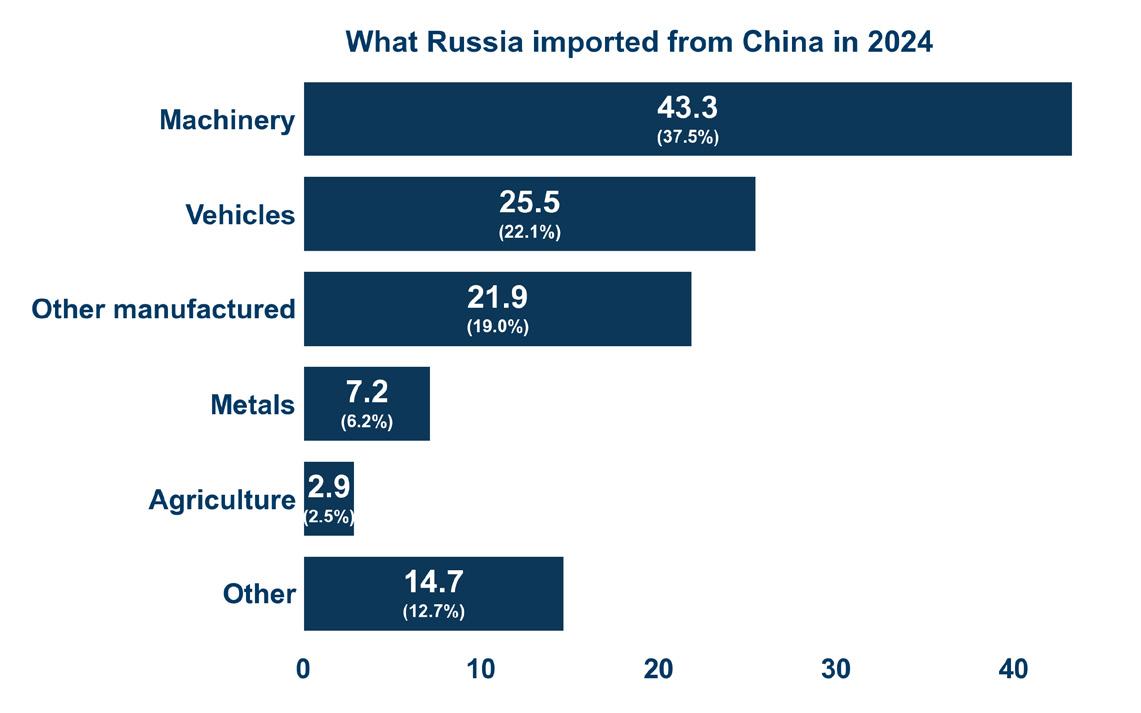
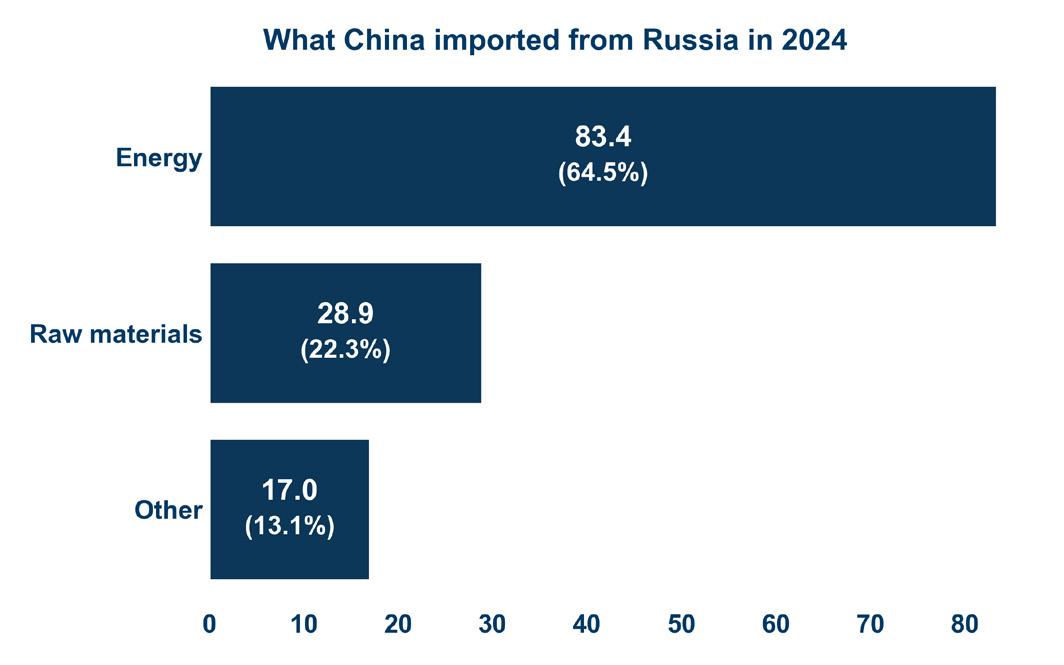
Source: General Administration of Customs of People’s Republic of China.
Automobiles have become a bellwether of China’s presence in the Russian consumer market and a rare case of the Russian market’s importance to Chinese industry. Before the full-scale invasion in 2022, Russia imported cars from a range of countries—including Japan, South Korea, Germany, China, and the United States—and a number of countries established production facilities in Russia, creating productivity spillovers. The West’s sanctions regime upended the market so thoroughly that Russia, although wary of provoking its more powerful neighbor, even increased duties on car imports in an attempt to slow the Chinese takeover 6 Chinese brands’ market share surged from below 10 percent in 2021 to above 60 percent in 2023, and they allegedly accounted for the vast majority (about 90 percent) of revenues in 2024.
Russia had become the largest export destination for Chinese cars, which filled the void left by Western brands exiting the country—and though Russia’s protectionist measures might have chipped away at this, the Chinese automotive industry is among the largest beneficiaries of the expanded Sino-Russian trade relationship. The industry produces far more than the Chinese consumer market can absorb, so markets like Russia—which is both large and absent of Western competition—are highly beneficial. In contrast, China’s smartphone industry, which has taken over the Russian market in a rather visible manner (86 percent of sales in 2024), is hardly dependent on Russia
China’s manufacturing industries—which are purposefully designed for overcapacity—need international markets, and Russia has become an increasingly important destination for them to sell their products. But automotive exports are the exception that proves the rule; even mutually beneficial exchanges are far more important to Russia than to China. This conclusion is not as trivial as it might sound—the European Union, with a combined GDP that surpasses China’s, was so reliant on Russian energy that the bloc is still working on phasing it out. In other words, structural dependencies on Russia were ingrained in European economies, making it more painful to cut off the trading relationship than key economic figures would have suggested; Russia does not have this leverage with China.
But from an economic point of view, China is not a better trading partner for Russia than the European Union was. It buys oil and gas at lower prices, it invests far less in Russia, and its products are often technologically inferior. Nor is China’s relationship with Russia equivalent to the West’s relationship with Ukraine; whereas Ukraine has received billions of dollars in grants and in-kind contributions from the West, Russia pays in full for its imports from China. But with no alternatives to speak of, China has served as an economic lifeline for the Russian economy.
China has also been central to Russia’s efforts to evade Western sanctions. Following the exodus of Western countries and the imposition of a strict export control regime in 2022, Russian importers turned to increasingly complex sanctions-evasion supply chains to continue buying prohibited products and components. This was particularly urgent for the military-industrial complex, as Russia sourced more Common High Priority Items List (CHPL) items—a set of fifty export-controlled products that the sanctioning coalition jointly determined to be key to Russia’s military industry—from the EU than from anywhere else. A look at Russia’s 2023 imports of these goods reveals China’s new centrality: In value terms, 90 percent of CHPL imports were facilitated by a Chinese firm in some way. Over time, China’s role in providing sensitive goods to Russia has also tilted from facilitator to manufacturer—by 2023, 49 percent of all CHPL imports were made by Chinese companies in China. Goods as complex as computer numerical control (CNC) machines and as simple as ball bearings are now sourced from China instead of the West, making export controls less effective or, at the very least, more difficult to enforce.7
Chinese machinery and components are predominantly supplied to the military-industrial complex while domestically produced alternatives usually go to civilian firms. Moreover, shipments of domestically produced machinery and components have declined during the full-scale war, indicating that Chinese imports have supplanted Russian competition. In other words, despite all of the resources that have gone into import substitution programs—and the restrictions that sanc-
tions have imposed—Russia’s machinery and components supply chains are more import dependent now than they were in 2021. With the Russian economy on a war footing, manufacturers have merely swapped out their European dependencies for Chinese ones.
Russia’s turn from Europe to China raises the question: Did the sanctions regime backfire? After all, Russia has continued its war against Ukraine and is now closer to China than it was at any other time in the post-Soviet period.
Economically, sanctions have neither backfired nor achieved maximalist goals. The sanctions regime has ensured that every drone, artillery shell, and missile aimed at Ukraine is more expensive or more difficult to produce. Supply chains have needed to be reoriented, introducing friction costs and quality concerns—the lengths to which Russian firms have gone to acquire export-controlled technologies and machinery effectively reveal the inferiority of alternatives. Disappointment with the fact that sanctions have not brought about the collapse of the Russian economy has more to do with overzealous expectations combined with lax enforcement than it does with the failure of sanctions themselves.
However, the tightening Sino-Russian relationship carries weightier consequences for the practice of economic statecraft. Financial sanctions against Russia—including the disconnection of some major banks from the Society for Worldwide Interbank Financial Telecommunication (SWIFT)—have driven the country out of the dollar-dominated global financial system and toward its (much smaller) Chinese alternative. China and Russia now settle the vast majority of their trade in renminbi, which could theoretically pave the way for a Chineseled, anti-Western global financial system. Combined with the Trump administration’s trade policies, risks of de-dollarization have grown, particularly in Asia This remains hypothetical, however, and it is unclear whether Beijing is willing to bear the costs associated with taking up such a role. In reality, the Russian economy’s resilience is more of a wake-up call than a cautionary tale for Western governments.8 A sanctions regime that allows energy export revenues to continue to flow and leaves an economy the size of China’s as a safe haven is destined to disappoint.
In the push and pull between civilian and military priorities, never has post-Soviet Russia so clearly veered toward the latter. In part, this is reflected in Moscow’s larger ambitions to revive its status as a regional hegemon in Eurasia, and in all the costs it is already bearing in pursuit of this goal—it sacrificed its most lucrative oil and gas customers in the name of dominating Ukraine. But Moscow’s priorities are more straightforwardly revealed by its wartime federal budgets.
The Russian federal budget is both convoluted and secretive, with almost one-third of all allocated funds classified, including more than 80 percent of the defense budget. Even classified expenditures are attributed to broad budget chapters (e.g., national defense), and some categories are easier to ascertain than others—Ministry of Defense’s classified social support, for example, is likely made up of payments to families of soldiers killed or wounded in the war. Spending on the war has been immense (pegged at or above 8 percent of GDP) but not entirely straightforward to measure. Not all defense expenditures go to the war, while some large civil expenditures, such as investments in occupied territories, are directly related to it. Nevertheless, a few observations can be made about how the budget reflects today’s Russian economy.
First, direct military spending is likely to plateau, if not decrease, in real terms this year. As spending grew well above inflation since the full-scale invasion, further increasing spending would need to come at the cost of noticeable cuts to social spending, as liquid reserves in the country’s National Welfare Fund (NWF) have been depleted substantially (down 59 percent), and military spending accounted for almost half of budget revenues in the first half of 2025. 9 As is the case with much of the Russian economy, 2025 has shown that growth cannot continue forever.
Second, while budget deficits are well above expectations, Russia has not had difficulties financing its deficits. Russia’s federal budget nearly exceeded the planned target for 2025 in just the first six months of the year. The shortfall, which was driven by a drop in oil and gas revenues and a 20-percent rise in expenditures, is far bigger than previous wartime deficits. Nonetheless, Moscow has managed to finance the deficit thanks to strong demand for bonds from Russian banks. This is particularly important to maintain, as domestic banks are effectively the only remaining buyers of the government’s bonds.10
Third, much depends on the price of oil. A bit less than one-third of the federal budget is funded by oil and gas income, and the Ministry of Finance based its budget projections on a forecasted $69.7 per barrel average export price in 2025. The extent of the budget shortfall that falling oil revenues create will depend on two factors: global oil prices, which have been weighed down by sluggish global growth, and how steep a discount on Russian oil prices the Group
of Seven’s (G7) oil price cap sanctions can create. With its eighteenth sanctions package in July 2025, the European Union both lowered the price cap for crude oil (from $60 per barrel to $47.6 per barrel) and introduced an automatic mechanism to adjust the cap to market conditions. While this is a welcome change, its effect will still depend on enforcement, which has been subverted by Russia’s shadow fleet of old and uninsured oil tankers.
Besides defense expenditures as a share of GDP, one of Russia’s most-watched financial statistics has been the bonuses that the government pays those who sign up to join the “special military operation.” To entice men to join the war effort despite the risks, regional and local governments have offered sign-on bonuses that far exceed annual salaries. By early 2025, more than 60 percent of Russia’s regions offered bonuses that exceeded 1 million rubles (about $12,000). In Sverdlovsk Oblast in the Urals region, prospective soldiers are offered about 3 million rubles—2.5 million rubles from the regional government, 400,000 from the federal budget, and more from individual municipalities—which is nearly three times the median annual wage. In Mari El, a poor ethnic republic 400 miles east of Moscow, a stunning 10 percent of the region’s total budget is spent on sign-on bonuses.
In Russia’s poorer regions, the combination of sign-on bonuses and killed in action (KIA) payouts has created a system of “deathonomics” in which dying on the battlefield in Ukraine can be more profitable than living to retirement age. The system is particularly appealing to men who are not economically productive—whether due to a lack of training and education or a poor local economy—and effectively acts as local stimulus. From a macroeconomic perspective, these payouts must be viewed in the context of a tight labor market and an overheated economy, in which employers in the civilian sector compete for workers with the army, a military-industrial complex that receives favorable treatment from the government, and each other. Moreover, they are indicative of a larger trend: Russia’s resources are being directed away from the civilian economy and toward the war. Every working-aged man who joins the army is one fewer factory worker or local business employee, and every government ruble spent on incentivizing his choice is one fewer ruble for social spending.
It is no coincidence, then, that war-related industries have substantially outperformed the rest of the economy. While war-related industries have boomed—their combined output has increased by around 50 percent—the rest of the economy has been largely stagnant. Much of Russia’s investment, which is already low, is directed to supporting the war. Because Russia has long struggled to translate its military-industrial complex spending to durable civilian-sector growth, this leaves few opportunities for medium- to long-term spillovers. And as Russian workers move to the military-industrial complex or leave for the front, they are not being replaced by migrant labor, which is at its lowest level in a decade .
There are some areas that allow for direct, “apples to apples” comparisons between the fates of the civilian and military sectors. Though both sides are impacted by sanctions, restrictions on military-industrial complex entities are more stringent. Nonetheless, it is the military-industrial complex that comes out ahead.
Russia’s aviation industry, historically reliant on Western planes and technology, has been hit hard by sanctions. Even before the full-scale invasion, Russia’s commercial aviation industry was so reliant on Western supply chains that it resorted to smuggling parts and components from the United States to get around sanctions, as nominally Russian-made airplanes still rely on foreign components. Sanctions forced Russian airlines to quickly seize jets that had been leased from the West and cannibalize older aircraft for spare parts. But measures have clearly been insufficient, as civil aviation incidents hit a record high in 2024 and plans to build more than one thousand commercial aircraft by 2030 are merely a fantasy. In talks with the Trump administration, Russia specifically brought up the aviation industry as a pain point and proposed a scheme to purchase Boeing planes with frozen state assets.
Military aviation—which is a top-heavy sector led by companies Yakovlev, United Aircraft Corporation, and United Engine Corporation—has not suffered the same fate. Military aviation manufacturers have rapidly expanded their production capacity since the full-scale invasion, with Chinese imports playing an ever-increasing role in their supply chains. While the commercial aviation fleet steadily degrades, military aviation is continuing to produce both fighter jets and helicopters for the war effort. The diverging performance of the civil and military aviation industries, despite the substantial overlap in companies active in them, is further evidence of how Russia has prioritized military production at the expense of the civilian economy.
An indefinite expansion of the military-industrial complex, however, is not feasible. Moscow does not appear willing to make the sacrifices necessary to truly militarize society—for example, to direct the resources to defense that the Soviet Union did during the Cold War—which would be unavoidable during a broader economic slowdown. The more it spends on military-industrial manufacturing and infrastructure, the less the civilian economy can compete for labor and financing (i.e., the military-industrial complex is crowding out the rest of the private sector). Russia has now pushed the limits of how much the civilian economy can be neglected before it is forced into stagnation.
In the first two years of the full-scale war, the Kremlin was not forced to face the trade-offs it is facing today. Military-led economic expansion was not at odds with broader economic growth for a number of reasons that no longer hold true.
First, high inflation has forced the CBR to raise interest rates substantially as it attempts to pump the brakes on the overheated economy. With a key policy rate of 16.5 percent (down from a high of 21 percent), fewer businesses can afford debt-fueled growth. Furthermore, a significant share of economic actors receive subsidized interest rate loans; one-sixth of all new loans issued in 2023 were subsidized at below-market rates. Russia’s subsidized mortgage program made up a majority of these funds and was more distortionary than preferential loans to the corporate sector, but it ended in July 2024. The remaining portfolio of subsidized loans, held primarily by large banks, ranges from innocuous recipients— the agricultural sector, small and medium-size enterprises, and strategic industries—to defense contractors and the military-industrial complex writ large, which the Kremlin funds with “hidden war debt.”
The bottom line is that these preferential loan programs force the CBR to hike rates more than it would need to otherwise, hurting the broader economy’s growth prospects in the process. This has led to open infighting among regime elites, with defense executives like Rostec’s Chief Executive Officer Sergey Chemezov repeatedly lashing out at CBR Governor Elvira Nabiullina for her stewardship of the Russian economy.11 Nabiullina and the CBR have been critical of these programs, noting that the subsidized loans are paid for by all the individuals and corporations that must pay market rate. Thus far, the Kremlin seems to have sided with the bank. But the longer rates remain high, the more difficult the balancing act becomes.
Second, the external environment has deteriorated significantly. In Russia’s case, this is first and foremost a question of oil and gas exports. Soaring energy prices— and the delayed application of key measures such as the G7’s oil price cap—supported the Russian economy, the ruble, and the government budget in 2022. Natural gas prices were particularly crucial in 2022 because Russian oil has been sold with a risk premium (i.e., with a discount) ever since the full-scale invasion. Russia’s gas revenues more than doubled between 2021 and 2022—from $64 billion to $130 billion—but fell precipitously below pre-war levels thereafter. Now, three and a half years into what was envisioned as a three-day war, energy revenues have structurally changed (see the analysis above). Depressed oil prices amid a global oil glut, China’s unwillingness to import more Russian natural gas via stalled projects like the Power of Siberia 2 pipeline, the EU’s measures targeting India’s refining of Russian crude oil, and Washington’s sanctions against Rosneft and Lukoil all represent real challenges for Russia’s economic prospects.12 Regular Ukrainian strikes on hydrocarbon processing facilities have also hit Russia’s bottom line and show no sign of letting up. None of these challenges are insurmountable or even permanent, but they compound on each other in the absence of other key buffers—most notably, liquid reserves and a large and stable current account balance.
Third, Russia has burned through the reserves that it built prior to its full-scale invasion. Russia’s most important buffer has been the NWF, its sovereign wealth fund. Moscow has heavily relied on the NWF for budget financing—withdrawing more than 7.5 trillion rubles ($93 billion) for fiscal financing, while more than $300 billion of CBR reserves were immobilized in sanctions coalition countries. The NWF’s liquid funds, holdings of foreign currency and gold, have dropped by nearly 60 percent and now consist of just renminbi and gold, as Russia sold all hard currency assets in 2022. Once again, this is not an existential threat to the Russian economy, as the government’s ability to fund its deficit with debt issuance has been consistent. However, the depleted NWF is a lost buffer that creates new trade-offs for the Kremlin. If Moscow continues its war-related spending spree, it must fund its deficit by selling even more debt to domestic banks; if it does not continue its fiscal expansion, it no longer has the NWF to cushion the fall for the general population.
The reality is that the Kremlin spent the first two years of the full-scale war kicking the can down the road, avoiding the trade-offs inherent to its policies. Fiscal expansion, a supportive external environment, and large buffers had the economy growing but running on fumes. At least in the economic sphere, the war was all carrots and no sticks. In 2024–2025, when the situation deteriorated significantly on all three fronts, the Russian economy did not collapse, to be sure, but
the Kremlin began to face the trade-offs that it had long put off. Interest rates climbed, real wages fell, and subsidized mortgage programs were scrapped. Fears of looming stagflation—the combination of high inflation, low growth, and high unemployment—have been (perhaps prematurely) in the ether for quite some time.
What does this mean for the most fundamental trade-off of all: guns versus butter? It is difficult to imagine a scenario in which the Russian government can sustain its current defense expenditures without social spending cuts that are pervasive and visible to the general population. Moreover, the broader economy can no longer support growth (in output and real wages) in both the military-industrial complex and the civilian sector simultaneously. This does not spell disaster, but it will likely chip away at the gains that the country’s poorer regions and citizens have seen during the war.
Parts of the civilian sector have benefited immensely from the wartime spending bonanza, and it has helped reshape the economy in surprising ways. In some cases, the war has served as an equalizer, injecting cash into poorer regions through army recruitment and casualty payments. Selfreported well-being and financial security measures have generally increased In other ways, wartime spending has reinforced existing structural inequalities that favor privileged groups and areas, such as ethnic Russians, large cities, and regions with a strong military-industrial base.
The benefits that poorer regions have enjoyed during the full-scale war come at a cost, and they are unlikely to be permanent. Household incomes rise in exchange for killed and wounded men and high inflation; investment into the military-industrial complex crowds out more efficient investment into the civilian economy. Moreover, casualty payouts and defense spending are hardly sustainable drivers of economic growth. Regardless of their permanence, it is worth understanding the regional dynamics associated with Russia’s war.
Both before and during the war, Russia’s economy has been centered around a few economic centers: Moscow, St. Petersburg, Ekaterinburg, and regions with oil and gas extraction industries such as the Nenets, Yamalo-Nenets, and KhantyMansi autonomous okrugs.
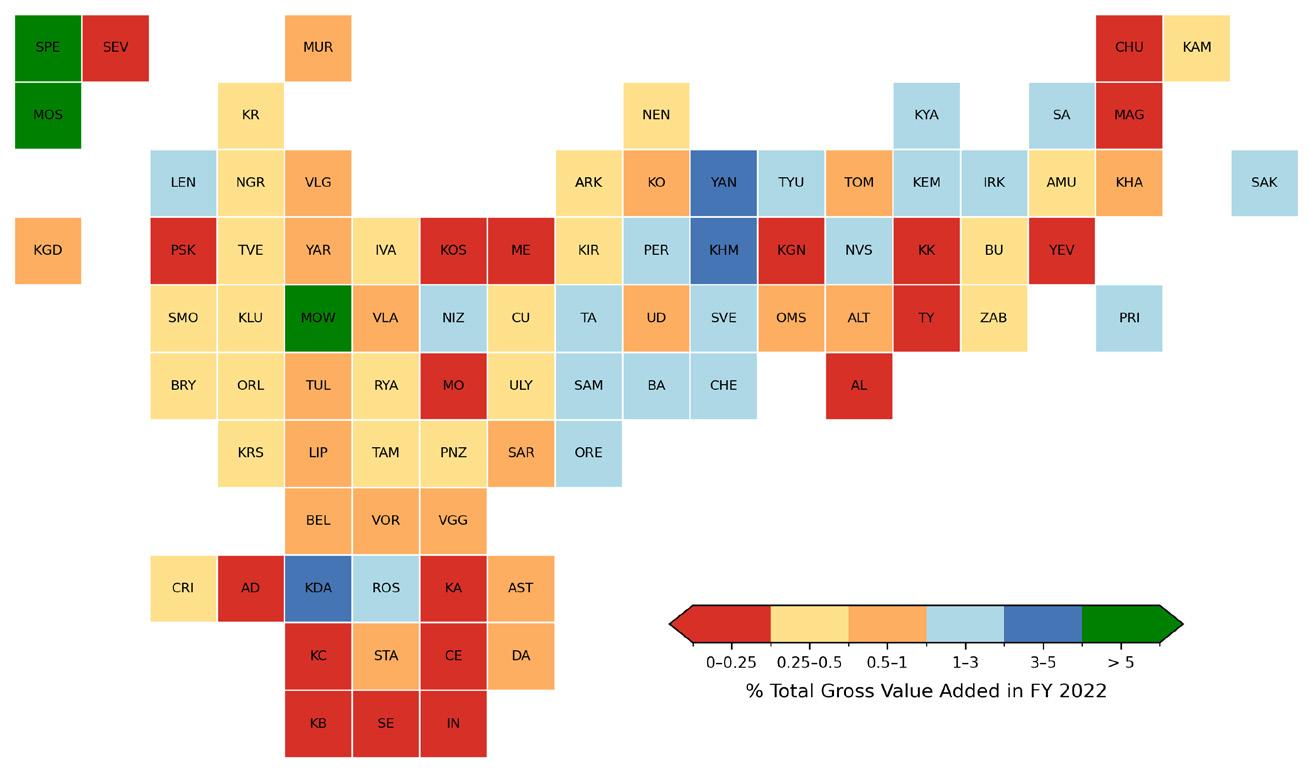
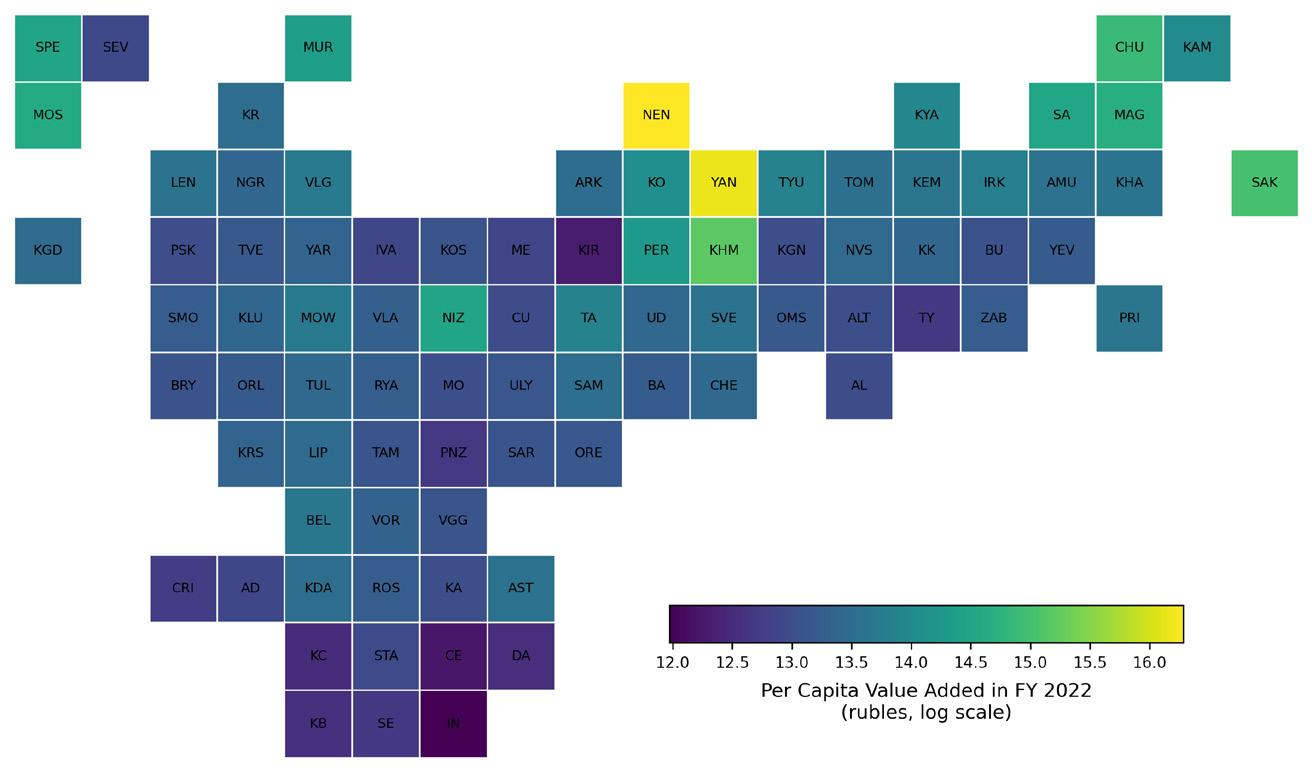
But the war has brought unprecedented investment and income to Russia’s poorer regions. Two indicators—fixed investment and retail turnover—exemplify the geographic nature of wartime growth. Fixed investment, which includes assets that range from machinery to factories, has shown explosive growth in Russia’s poorer and far-flung regions. The Republic of Tyva, a small ethnic republic on the Mongolian border, has seen 190-percent growth in fixed investment and 74-percent growth in retail turnover—some of the highest in the nation. However, income is not evenly distributed within the region, with military-related incomes not trickling down to the rest of the population. In other words, the fiscal stimulus (from recruitment and KIA payouts) and demand in the military-industrial complex have not dispersed across the entire economy.
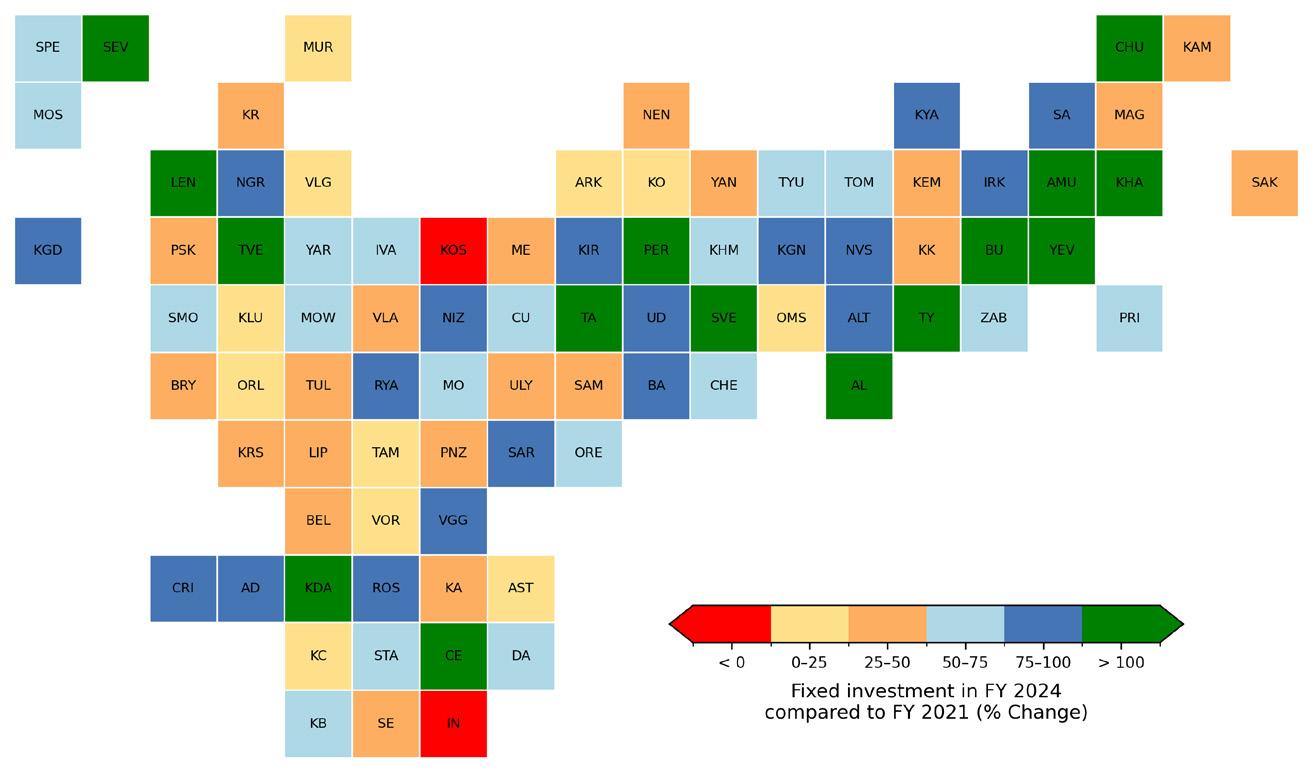
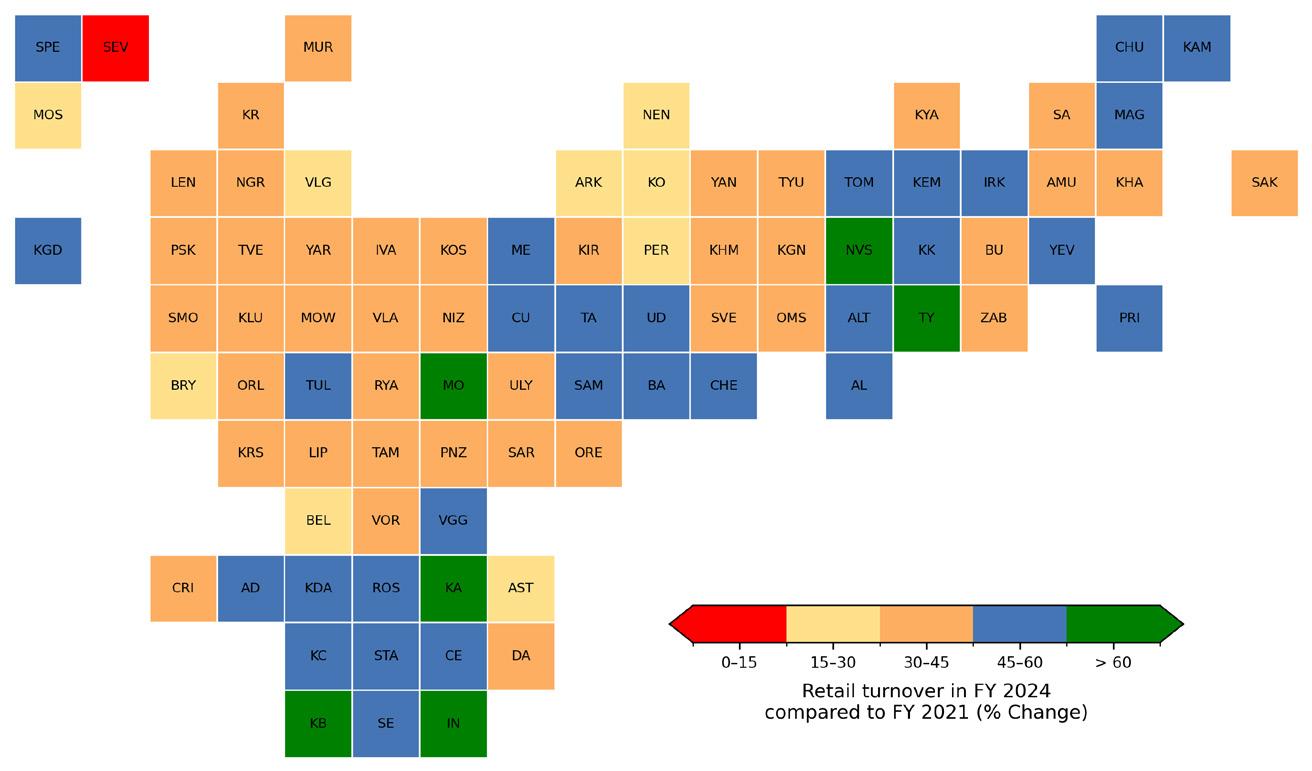
Tyva also tops the charts in a less desirable metric; it has the highest number of confirmed war deaths per capita of any region in the country. While Tyva’s sign-up bonuses are some of the lowest in the country—the region merely matches the federal government’s 400,000-ruble payout—it is worth remembering that these bonuses are generally dwarfed by the payments to soldiers’ families when they are killed in action. Consequently, the growth of household bank deposits in Tyva has massively outpaced national averages.
Households are generally faring better in regions that have contributed more soldiers to the war. The growth in household bank deposits is so visible, in fact, that it has even been used as a proxy to measure regions’ mobilization results. Notably, trends in household incomes and household expenditures somewhat diverge. While regions like Tyva show only relatively middling growth in household income despite strong employment growth, their household expenditures have risen just like their bank deposits. In other words, deposits and expenditures have risen precipitously—but not necessarily from standard income sources.
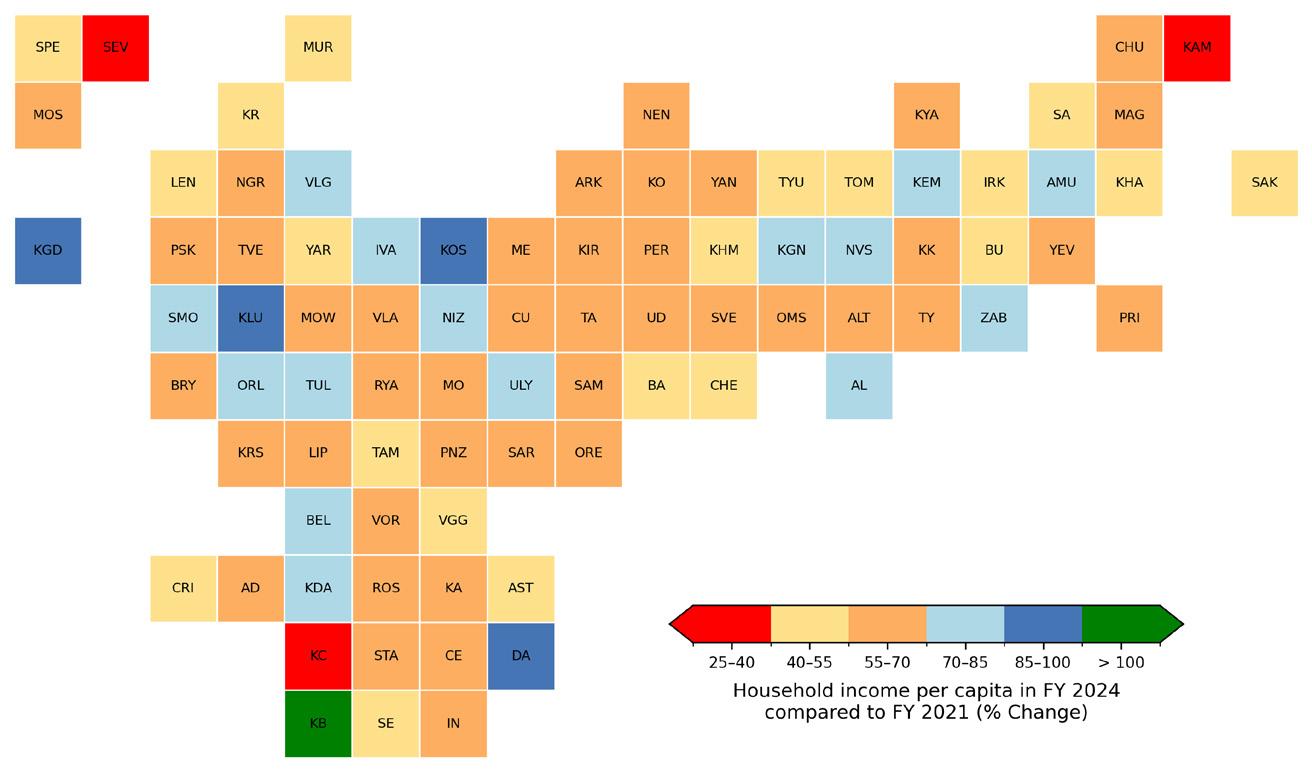
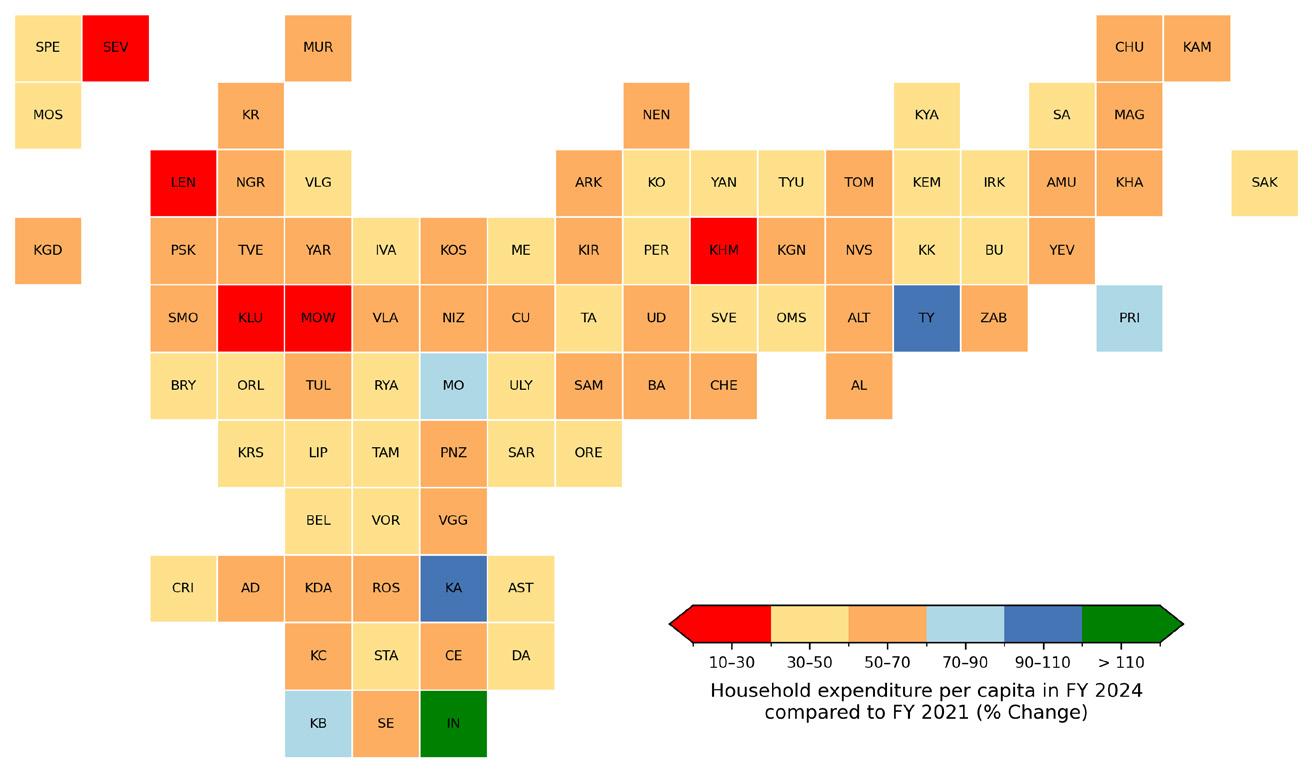
Of course, these poorer regions have had help. In late 2024, the federal government implemented a program to allow lower-income regional governments to write off up to two-thirds of their debt, provided that they spend the freed-up funds on social and communal expenditures or, in some cases, national projects. This effectively means that some regions’ exorbitant spending on the war in Ukraine, including sign-up bonuses and benefits for families of soldiers wounded or killed in action, has been subsidized by Moscow. The program exemplifies the difficulty of assessing how much the Russian government has spent on the war; the Kremlin uses arcane budget maneuvers to funnel money to the war through programs that are ostensibly designed for economic development in poor regions.
Another key development during the war is the renewed convergence between regions’ average wages.13 Between 2000 and 2014, as commodity prices and the market economy helped Russia grow substantially, the differences in wages across regions declined. This trend stagnated between 2014 and 2021 but then reemerged with the full-scale war. More important than the convergence itself, however, is what has driven it.
The dispersion of wages across Russia’s regions is visible in two distinctions— between the rich and middle-income regions, and between the middle-income and poor regions. Between 2000 and 2014, the convergence of average wages was primarily driven by the poorest regions catching up to middle-income regions. Since the full-scale invasion in 2022, the driver of convergence has been on the other end of the wealth distribution, with middle-income regions catching up to rich ones. Geographically, this means that the strongest wage growth does not extend much further east than the Urals.
Trends in investment betray a more complex and less optimistic picture. At face value, fixed investment has increased dramatically in some poorer parts of the country, including in the archetypal region of the Republic of Tyva. But while growth figures are useful metrics, they can obscure differences in scale. In reality, Russia’s poorer regions entered the war so far behind on fixed investment that these large increases (above 100 percent since 2021, in many cases) are dwarfed in scale by those in major metropolitan areas and export-driven (i.e., resource-
rich) areas. In fact, dispersion of fixed investment per capita between regions has increased considerably since the full-scale invasion. This suggests that the wage gains in poorer regions relative to the rest of the country are unlikely to become a permanent feature of the economy.
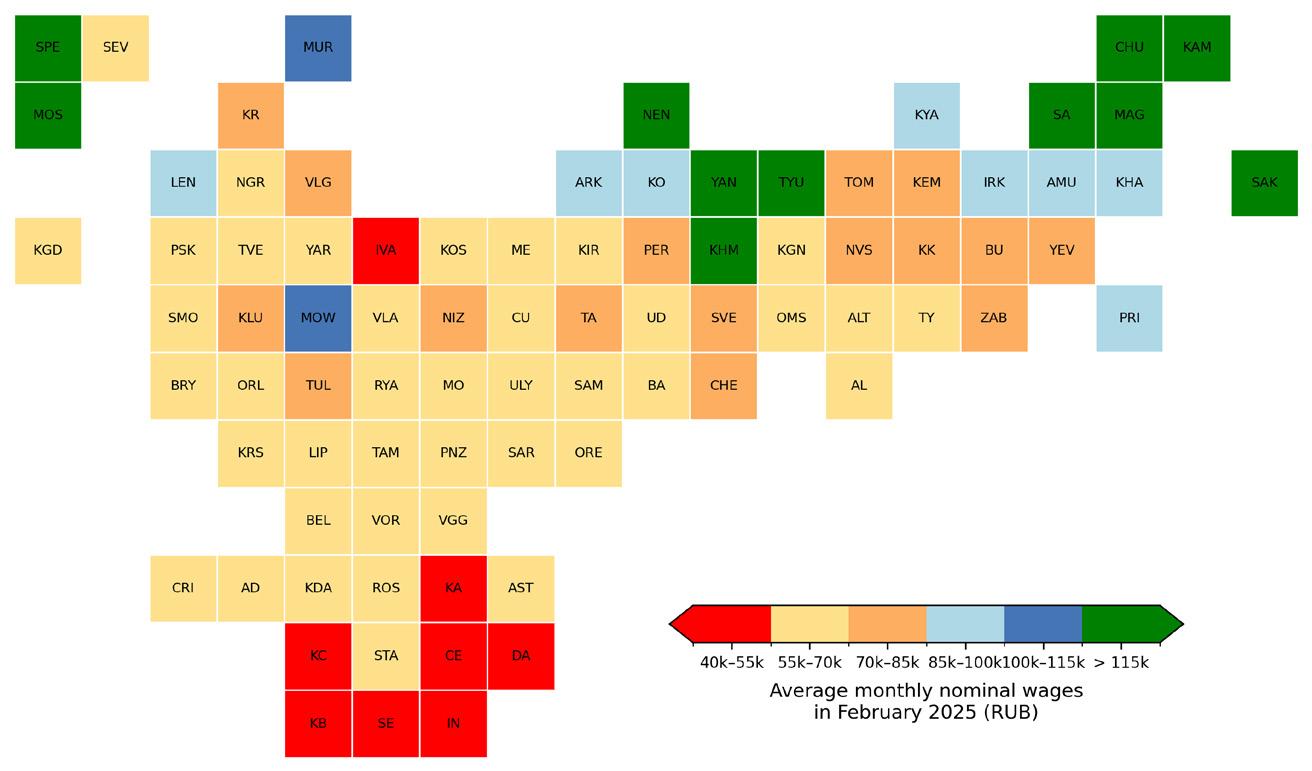
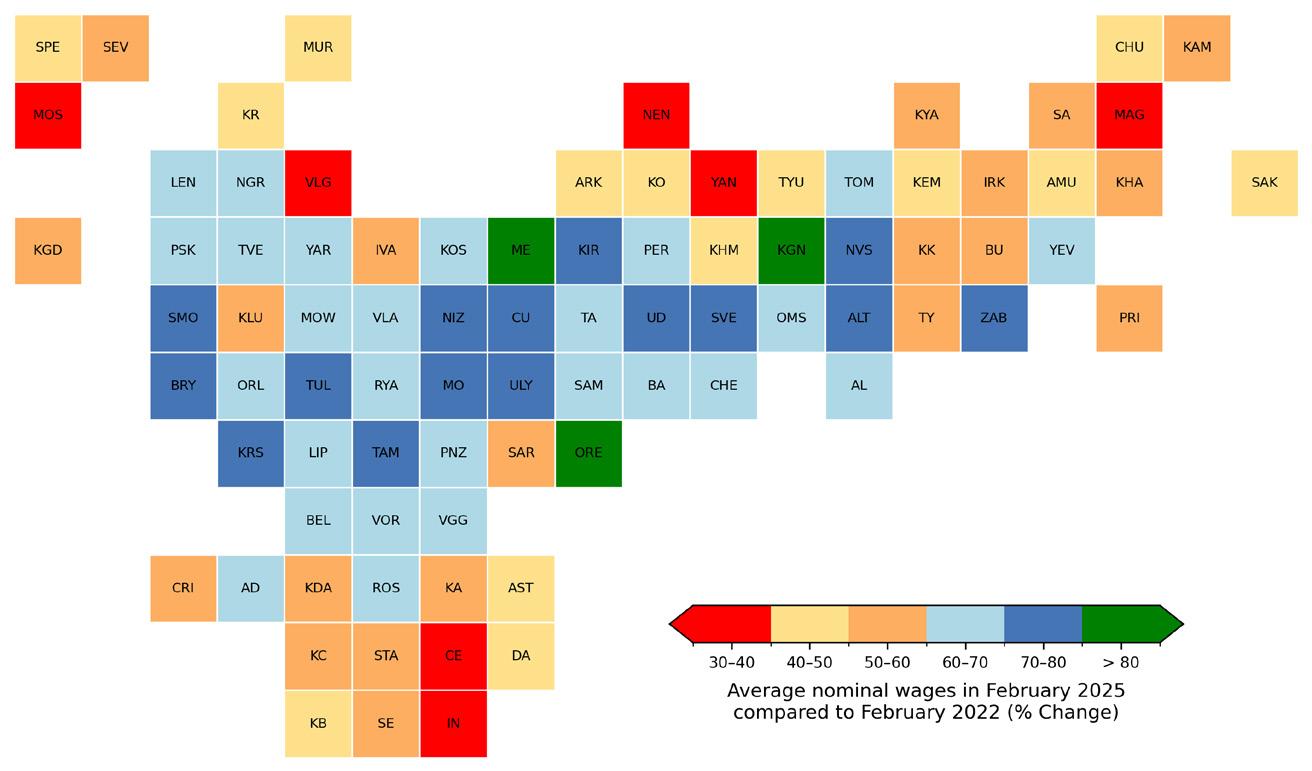
Much of this post-2022 divergence can be attributed to regions with a heavy military-industrial presence; most of these regions fall into the Central, Ural, and Volga federal districts. Regional manufacturing growth is, of course, strongest there, and weakest where production relied on Western export markets.
Sverdlovsk oblast, which hosts key heavy industry manufacturing hubs, saw fixed investment rise by more than 100 percent since 2021. Russia’s premier tank-producing facility, Uralvagonzavod, is based in Sverdlovsk oblast’s Nizhny Tagil. The Nizhny Tagil industrial cluster has doubled down on military-industrial production, including by ramping up hiring (and wages) for skilled and unskilled workers. It faces macroeconomic headwinds, including a shrinking workforce, but has been buoyed by defense procurement orders (gosoboronzakaz) and debt-fueled investment. Thanks to the expansion of production and the tight labor market, manufacturing wages in Sverdlovsk oblast increased by 78 percent between February 2022 and February 2025 (compared to 70-percent growth in all sectors).
While the convergence of economic prospects across Russia’s regions might not be permanent, the inefficient allocation of resources—particularly to the military-industrial complex at the expense of the civilian sector—is likely here to stay for the foreseeable future. After the sign-up and war casualty payments stop flowing to the country’s poorest regions, the investments in the war machine will remain, fed by Moscow’s aggressive posture toward NATO.
Unfortunately f or those (the present authors included) who wish for Russia’s aggression to end as soon as possible, the bill is not yet coming due for the Kremlin's war economy. Rather, we have argued in favor of a different lens through which to view the Russian economy—one of increasing trade-offs—as costs have mounted but remain manageable.
Slowing growth, depressed oil prices, harsher sanctions, and high inflation are the key macroeconomic challenges that the Kremlin and CBR face in late 2025. However, they are not the only trends worth considering. We have examined three structural shifts that Russia’s full-scale war against Ukraine has wrought upon the country’s economy: an external sector pivot from West to East, a clear prioritization of guns over butter, and a convergence of regional economic trends. Among these, regional convergence is the least likely to persist beyond the war.
Prescriptions for hindering the Russian economy vary depending on the specific goals and risk tolerances of sanctioning states. The United States and EU, for example, have long held the contradictory goal of reducing Russia’s oil and gas revenues without pushing up global market prices—hence the price cap—so as to avoid domestic and international backlash. With the current oil market glut, however, it is feasible to impose sanctions on Russian oil majors without spiking global prices. The true test of this theory will come only in time, as we wait to see what waivers the Treasury Department’s Office of Foreign Assets Control (OFAC) issues to potential customers of Rosneft and Lukoil (particularly India and China) and whether these sanctions remain in place for the foreseeable future.
The Trump administration’s punitive measures against China and India for their support of Russia, be they secondary sanctions or secondary tariffs, have thus far largely been half-hearted and inconsistently applied. This leaves policymakers, particularly in Europe, in a tricky situation. When Washington strikes a more conciliatory tone toward Moscow, sanctions enforcement is tougher. EU and United Kingdom efforts to sanction shadow fleet tankers have continued without the United States, and a growing willingness to interdict law-breaking vessels also put downward pressure on Russia’s oil export revenues, but they are less effective without the Treasury Department’s help. And in the only case in which Washington has imposed new restrictions—on Rosneft and Lukoil—it did so without coordination.
Economically, the two fundamental goals of the post-2022 sanctions regime have been to make it harder for Russia to produce materiel for its war and make it harder for Russia to pay for its war. Both come with their own costs and chal-
lenges—the former is hard to enforce, while the latter threatens to boomerang costs back to the sender—that reduce the coalition’s resolve.14 Nonetheless, we see no reason to deviate from these two guiding principles.
Reducing Russia’s industrial production for its war can and should be accomplished in various ways.
First, the sanctions coalition’s existing export controls regime must be better enforced and expanded. This would require more resources for investigations and a willingness to target third-country intermediaries that help Russian firms access export-controlled goods.15 As we have detailed, this will inevitably focus on China.
Second, Chinese and North Korean supply chains to the Russian military-industrial complex must be disrupted. Chinese manufacturers sell dual-use goods and machinery to a wide range of firms in the military-industrial complex, while North Korea has been supplying Russia with more than half of its artillery shells. Targeting Chinese supply chains could entail sanctioning the logistics providers that facilitate the transactions on the Russian side or imposing secondary sanctions on the manufacturers and banks that do so on the Chinese side. Targeting North Korean supply chains, while more difficult due to the country’s international isolation, could entail sanctioning Russian or Chinese banks that facilitate trade with North Korea.
Third, many entities in the Russian military-industrial complex remain unsanctioned, particularly those that maintain civilian pretenses . Rosatom and Roscosmos, two state-owned enterprises that have heavy ties to the military-industrial complex, are prime examples.
Reducing Russia’s ability to finance its war effort is, for all intents and purposes, a question of reducing its energy export revenues. Despite the fact that the United States has little direct role in the generation of these revenues, it might indeed have more leverage than Europe in the situation by virtue of its more powerful sanctions (and secondary sanctions) toolbox. In either case, the sanctions coalition can target the price of Russian energy exports or the volume of the exports; thus far, sanctions have almost exclusively targeted the former. Rosneft and Lukoil sanctions do appear to be the first major attempt to remove some Russian oil from the market entirely.
Once again, there are multiple paths that the sanctions coalition can take. The simplest step would be to align and expand sanctions against shadow fleet oil tankers, which circumvent the oil price cap. While US sanctions against shadow fleet tankers have generally been the most effective, Brussels and London should continue their efforts to force Russian oil off the shadow fleet and back to the mainstream fleet, where the price cap applies. Washington adopting the EU’s new, lower oil price cap would also hurt Russia’s oil revenues. More severe options could target Russian export volumes by embargoing a specific port, deciding not to grant waivers for Rosneft and Lukoil sanctions, or even applying secondary sanctions on buyers of Russian oil.
Whether by hitting Russia’s military-industrial capacity or its energy revenues, the United States and its European allies can surely hinder Russia’s ability to continue prosecuting its war against Ukraine economically. What is less clear, particularly in Washington, is whether the political will exists to do so.
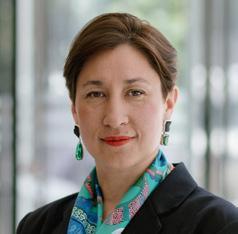
Elina Ribakova has been a nonresident senior fellow at the Peterson Institute for International Economics since April 2023. She is also a nonresident fellow at Bruegel and a director of the International Affairs Program and vice president for foreign policy at the Kyiv School of Economics. Her research focuses on global markets, economic statecraft, and economic sovereignty. She has been a senior adjunct fellow at the Center for a New American Security (2020–23) and a research fellow at the London School of Economics (2015–17).
Ribakova has over twenty-five years of experience with financial markets and research. She has held several senior level roles, including deputy chief economist at the Institute of International Finance in Washington, managing director and head of Europe, Middle East and Africa (EMEA) Research at Deutsche Bank in London, leadership positions at Amundi (Pioneer) Asset Management, and director and chief economist for Russia and the Commonwealth for Independent States (CIS) at Citigroup.
Prior to that, Ribakova was an economist at the International Monetary Fund in Washington (1999–2008) working on financial stability, macroeconomic policy design for commodity-exporting countries, and fiscal policy.
Ribakova is a seasoned public speaker. She has participated in and led multiple panels with leading academics, policymakers, and C-level executives. She frequently collaborates with CNN, BBC, Bloomberg, CNBC, and NPR. She is often quoted by and contributes op-eds to the New York Times, Wall Street Journal, Financial Times, Washington Post, The Guardian, Le Monde, El Pais, and several other media outlets.
Ribakova holds a master of science degree in economics from the University of Warwick (1999), where she was awarded the Shiv Nath prize for outstanding academic performance, and a master of science degree in data science from the University of Virginia (May 2023).

Lucas Risinger is an economic analyst and non resident research fellow at the Kyiv School of Economics (KSE) Institute. His research focuses on the macroeconomics and military industrial complexes of Russia and Ukraine, as well as the Western sanctions regime against Russia.
Prior to joining KSE Institute, Risinger received his master’s degree from Harvard University’s Davis Center for Russian and Eurasian Studies, where his research centered around Ukraine’s modern economic development. He has studied and worked in Kyrgyzstan, Kazakhstan, Poland, Georgia, and Russia, and is fluent in Ukrainian and Russian.
1 Rates remained at 21 percent for the first half of 2025 before the CBR entered a rate-cutting cycle in June. As of December, it has cut rates three times, down to 16.5 percent.
2 Source: General Administration of Customs of People’s Republic of China.
3 Using 2025 data in current US dollars (USD) from the International Monetary Fund’s World Economic Outlook.
4 In 2021, Germany imported 65 percent of its natural gas from Russia, whereas the EU as a whole imported 41 percent of its natural gas from Russia. Europe’s dependence on Russian energy has declined considerably since 2022 but has not disappeared entirely. A number of countries (including Germany) still import Russian liquefied natural gas, while Hungary and Slovakia remain the primary holdouts from the EU’s plan to phase out Russian oil.
5 Another stark visualization of the imbalance can be found at the Atlas of Economic Complexity
6 It is also worth noting that the flood of Chinese cars into Russia has not been led by China’s booming electric vehicle (EV) industry—only about 10 percent of Chinese car sales in Russia are EVs.
7 Chinese firms also likely export CHPL items to Russia via Belarus and Central Asian countries, albeit at a smaller scale.
8 These costs include looser capital controls, opening up the yuan to speculative attacks and upward pressure from international capital flows, as well as the necessity of running a current account deficit.
9 Before the full-scale invasion, the Russian government abided by budget rules that were designed to be counter-cyclical: excess revenues (from oil and gas or from standard revenue sources) would be held in the NWF in foreign currencies, which could be converted back into rubles during downswings. This served to keep the ruble stable. These budget rules were temporarily abandoned after the full-scale invasion, however, and the NWF has been used to plug fiscal holes in the federal budget. A resumption of the budget rule saw deposits of renminbi and gold into the NWF, most recently in June 2025.
10 Large domestic banks are also the main facilitators of the large corporate credit expansion that has occurred during the full-scale war, prompting concerns that they are enabling the Kremlin to funnel money to the military-industrial complex.
11 Rostec is a state-owned military industrial behemoth that, for what it is worth, is one of the beneficiaries of the Kremlin’s subsidized loan programs.
12 Claims of progress on the Power of Siberia 2 project in September 2025 should not be overblown, as the two sides have yet to agree on three critical aspects: the price, the duration, and the take-or-pay level (the minimum amount of gas that China would purchase each year, regardless of demand). Without these three elements, any agreement is largely symbolic.
13 This section draws from a forthcoming working paper for the Peterson Institute for International Economics (PIIE) co-authored by Yuriy Gorodnichenko, Iikka Korhonen, and Elina Ribakova.
14 Enforcing energy sanctions is no easy task either.
15 For example, the US Department of Commerce’s Bureau of Industry and Security, which handles export controls, is dreadfully under-resourced.

CHAIRMAN
*John F.W. Rogers
EXECUTIVE CHAIRMAN EMERITUS
*James L. Jones
PRESIDENT AND CEO
*Frederick Kempe
EXECUTIVE VICE CHAIRS
*Adrienne Arsht
*Stephen J. Hadley
VICE CHAIRS
*Robert J. Abernethy
*Alexander V. Mirtchev
TREASURER
*George Lund
DIRECTORS
Stephen Achilles
Elliot Ackerman
*Gina F. Adams
Timothy D. Adams
*Michael Andersson
Ilker Baburoglu
Alain Bejjani
Colleen Bell
Peter J. Beshar
*Karan Bhatia
Stephen Biegun
Linden P. Blue
Brad Bondi
John Bonsell
Philip M. Breedlove
David L. Caplan
Samantha A. Carl-Yoder
*Teresa Carlson
*James E. Cartwright
John E. Chapoton
Ahmed Charai
Melanie Chen
Michael Chertoff
George Chopivsky
Wesley K. Clark
Kellyanne Conway
*Helima Croft
Ankit N. Desai
*Lawrence Di Rita
Dante A. Disparte
*Paula J. Dobriansky
Joseph F. Dunford, Jr.
Joseph Durso
Richard Edelman
Oren Eisner
Stuart E. Eizenstat
Mark T. Esper
Christopher W.K. Fetzer
*Michael Fisch
Alan H. Fleischmann
Jendayi E. Frazer
*Meg Gentle
Thomas H. Glocer
John B. Goodman
Sherri W. Goodman
Marcel Grisnigt
Jarosław Grzesiak
Murathan Günal
Michael V. Hayden
Robin Hayes
Tim Holt
*Karl V. Hopkins
Kay Bailey Hutchison
Ian Ihnatowycz
Keoki Jackson
Deborah Lee James
*Joia M. Johnson
*Safi Kalo
Karen Karniol-Tambour
*Andre Kelleners
John E. Klein
Ratko Knežević
C. Jeffrey Knittel
Joseph Konzelmann
Keith J. Krach
Franklin D. Kramer
Laura Lane
Almar Latour
Yann Le Pallec
Diane Leopold
Andrew J.P. Levy
Jan M. Lodal
Douglas Lute
Jane Holl Lute
William J. Lynn
Mark Machin
Marco Margheri
Michael Margolis
Chris Marlin
William Marron
Roger R. Martella Jr.
Judith A. Miller
Dariusz Mioduski
*Richard Morningstar
Georgette Mosbacher
Majida Mourad
Mary Claire Murphy
Scott Nathan
Julia Nesheiwat
Edward J. Newberry
Franco Nuschese
Robert O’Brien
*Ahmet M. Ören
Ana I. Palacio
*Kostas Pantazopoulos
David H. Petraeus
Elizabeth Frost Pierson
*Lisa Pollina
Daniel B. Poneman
Robert Portman
*Dina H. Powell
dddMcCormick
Michael Punke
Ashraf Qazi
Laura J. Richardson
Thomas J. Ridge
Gary Rieschel
Charles O. Rossotti
Harry Sachinis
C. Michael Scaparrotti
Ivan A. Schlager
Rajiv Shah
Wendy R. Sherman
Gregg Sherrill
Jeff Shockey
Kris Singh
Varun Sivaram
Walter Slocombe
Christopher Smith
Clifford M. Sobel
Michael S. Steele
Richard J.A. Steele
Mary Streett
Nader Tavakoli
*Gil Tenzer
*Frances F. Townsend
Melanne Verveer
Tyson Voelkel
Kemba Walden
Michael F. Walsh
*Peter Weinberg
Ronald Weiser
*Al Williams
Ben Wilson
Maciej Witucki
Neal S. Wolin
Tod D. Wolters
*Jenny Wood
Alan Yang
Guang Yang
Mary C. Yates
Dov S. Zakheim
James A. Baker, III
Robert M. Gates
James N. Mattis
Michael G. Mullen
Leon E. Panetta
William J. Perry
Condoleezza Rice
Horst Teltschik