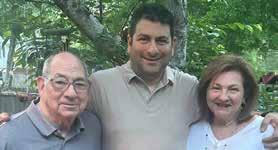















PUBLISHER
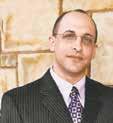
MICHAEL A. MORRIS michael@atljewishtimes.com
EDITOR & MANAGING PUBLISHER
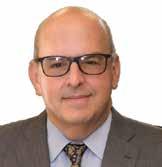
KAYLENE LADINSKY kaylene@atljewishtimes.com
Execuitive Assistant
RONIT FRANCO-PINSKY ronit@atljewishtimes.com
EDITORIAL
Managing Editor
SASHA HELLER sasha@atljewishtimes.com
Staff Writer & Proofreader
FRAN PUTNEY fran@atljewishtimes.com
Interim Online Content Coordinator
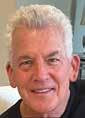
ROBERT GARBER robbie@atljewishtimes.com
CONTRIBUTORS THIS ISSUE
BOB BAHR
CHANA SHAPIRO
DAVE SCHECHTER
DAVID OSTROWSKY
HANNAH L.
RABBI HARVEY WINOKUR
MARCIA CALLER JAFFE
TESSA SCHARFF
ADVERTISING
Senior Account Manager & Team Supervisor
MICHAL BONELL michal@atljewishtimes.com
Account Manager ILYSSA KLEIN ilyssa@atljewishtimes.com
CREATIVE & DESIGN
Creative Director
LILLI JENNISON lilli@atljewishtimes.com
COMMUNITY ENGAGEMENT
Events Director
JACQUELINE MORRIS jacqueline@atlantajewishlifefoundation.com
Atlanta Jewish Connector Coordinator DIANA COLE diana@atljewishtimes.com
GENERAL OFFICE
ROBIN FREEDMAN info@atljewishtimes.com 404-883-2130
Distribution Manager LOU LADINSKY lou@atljewishtimes.com


By Marcia Caller Jaffe
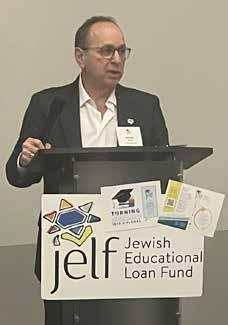
The Distillery of Modern Art in Doraville was the backdrop on Dec. 2 for the Jewish Education Loan Fund (JELF) event celebration of “Turning Dreams into Diplomas.”
Event co-chair, Warren Binderman, declared, “JELF ensures that the cost of education doesn’t stand in the way of Jewish students with over $2 million in interest-free loans this year,” noting there was still a huge gap in what’s needed.
JELF CEO Jenna Shulman announced an anonymous $20,000 donation for “matched gifts” that was recently called in remotely from someone visiting from England and wanted to be represented. Shulman was also praised for her dedication to JELF, “devoting practically every minute of every day to her job.”
Outgoing board chair, Emily Sauerteig, recalled celebrating a record in 2018 that $1 million was raised to benefit 200 students, “and here we are today helping 700 students with $2.3 million.”
She also recognized Josh Schaier,
JELF chief development officer, for his 10-year employment at JELF; and that the past seven JELF chairs were also present.
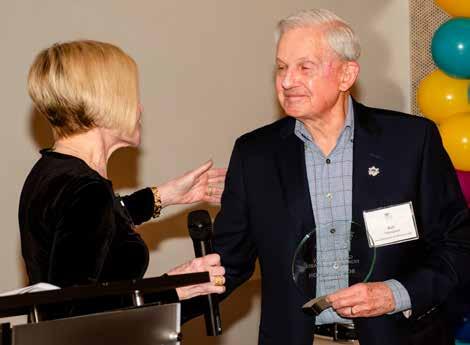
Dr. Marianne Garber, JELF vice president and past board chair, presented the Garber Family Award to Bob Thompson, whom she described as, “a really nice, quiet, and humble guy who contributes his calm wisdom.”
Founded in 1979, Dermatology Associates of Atlanta, P.C. (DAA) has been helping the metro Atlanta area with all of their skin care needs for over 45 years. Their mission since opening has been to provide comprehensive skin care from head to toe. This means covering all aspects of both general and cosmetic dermatology. Their staff of board-certified dermatologists, physician assistants, and additional dermatological experts are dedicated to delivering the most professional and personal level of care to every patient they treat.
Led by their three partners including Dr. Scott Karempelis, Dr. Joseph Payne, and Dr. Ashley Curtis, the providers at Dermatology Associates of Atlanta have over 250 years of combined experience in their fields. Their licensed and experienced team of providers stay on the cutting edge when it comes to adopting and mastering new treatments and technologies for their patients. Each provider has a different specialty, allowing for treatments to be directly tailored to each patient’s unique skin. Dr. Karempelis and Dr. Curtis have been recognized as Top Doctors in Atlanta

for many years.
Dermatology Associates of Atlanta specialize in the diagnosis and treatment of the most common conditions and issues pertaining to the skin, hair, and nails. This includes providing a wide variety of safe and effective skin cancer treatments including Mohs skin cancer surgery, cryosurgery, photodynamic therapy (PDT), laser treatments, and more. They have comprehensive expertise in helping patients who experience acne, eczema, psoriasis, rosacea, age spots, sun damaged skin, nail fungus, spider veins, unwanted
body hair, warts, moles, hair loss, and so much more.
Dermatology Associates of Atlanta is a comprehensive practice that features nine specialty centers within one location, all dedicated to promoting healthy skin, hair, and nails. This includes Skin MedicsTM Medical Spa, the Laser Institute of Georgia, and The Center for Non-Surgical Hair Loss, as well as an on-site surgical suite for any dermatological surgery procedures. This adds an additional element of convenience for all of their
patients, regardless of their specific needs. All laser treatments performed at the Laser Institute of Georgia are done so by boardcertified dermatologists or physician assistants, adding an additional level of safety for their patients.
The goal at Dermatology Associates of Atlanta remains providing the best possible skin care using the most advanced treatments and techniques available, while also making sure that each appointment is as comfortable, pleasant, and convenient for their patients as possible. For more information or to schedule an appointment today, contact Dermatology Associates of Atlanta by phone (call or text) at (404) 256-4457. And find them online at DermAtlanta.com.

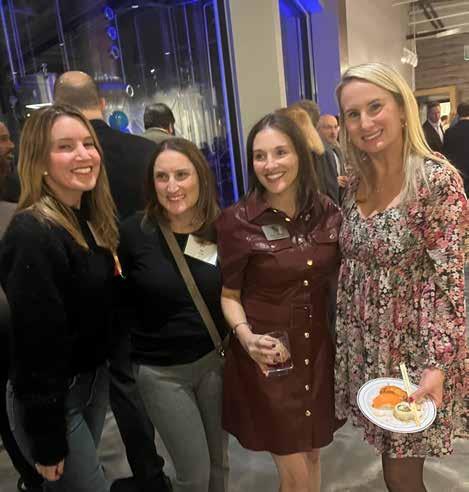
A video of Thompson’s extended family showcased his children and grandchildren sending “mazel tovs” and good wishes. Garber referred to her own family’s involvement nearly 100 years ago when her father-in-law, Al Garber, and his sisters were in the Hebrew Orphan’s Home in Atlanta and received loans to attend college.
Eydie Koonin, past board member, presented the Koonin Family Service Award to Ross Linzer (board member who lives in Ft. Lauderdale), Aaron Lipson (outgoing board member), and Eitan Ovadia (board member from Boca Raton, originally from Atlanta) and coincidentally, all attorneys and “three good men.”
She explained that leadership measures visible impact and heart, “not just resources and ideas.”
Note that the local JELF chapter includes South Carolina, North Carolina, Virginia, Florida, and Georgia. A video was shown featuring fast moving panels of youthful JELF recipients expressing gratitude.
The final speaker was incoming board chair Richard Peretz (past UPS executive), who shared that in 1980 he was a recipient of a Hebrew interest-free loan in another state, though not specifically JELF. In accepting the honor to lead the organization for the next two years, he
labeled JELF loans as “a gift that doesn’t just change one life but also removes financial barriers and cycles positively into future generations.”
Earlier in the pre-function hour, a variety of specialty cocktails was served alongside High Roller Sushi choices, and a latke/lox buffet. JELF supporters, Brian and Alice Wertheim, who had previously served on the loan review committee, recalled that her father, growing up in New Orleans, had received a scholarship to Tulane University which was a really important factor.
Diana Margolis, Liz Kahan, and Shulman chatted with Amy Wait, the new JELF manager of engagement for South Florida. JELF supporters, Aaron Danzig, Steve Pepper, and Amy and Jeff Rubin, told the AJT of the value that JELF brings forward. Past board chair Stan Lowenstein said, “JELF is certainly fortunate to have Peretz taking over as the new chair. Someone with his acumen will be able to continue on our growth path.”
JELF loans have a 99 percent repayment rate. With student loan debt at an all-time high, inflation also raises the cost of higher education. Of JELF’s applicants, 31 percent have a household income of under $50,000. The Jewish community is not immune to hardship nor the problem of mounting debt. ì

By Bob Bahr
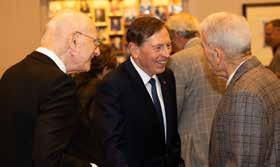
The distinguished retired Gen. David Petraeus led his audience at this year’s Eizenstat Lecture through a master class in the past, present, and future of warfare and strategic military thinking.
It was another brilliant program for a series that, for the past 36 years, has brought some of America’s most important leaders to Ahavath Achim Synagogue. This year’s program was skillfully led by Ambassador Stuart Eizenstat, who has served almost continuously at the highest levels of government since the presidency of Jimmy Carter.
Among the subjects he tackled was the changes brought about in the Middle East since Oct. 7, 2023.
Petraeus is a former commander of U.S. forces in Iraq and Afghanistan. He’s a former director of the Central Intelligence Agency and teaches at Yale University.
Among his many interests is being a partner of the New York investment firm of Kohlberg Kravis and Roberts where he is the lead of their Middle East practice.
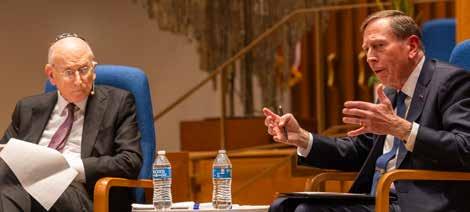
He believes that Israel has made a fundamental shift in its national security strategy, As a result of its experience in the past two years, Israel has a new military doctrine against its foes.
“They will never again allow a force to build up, not just on their borders,” Petraeus says, “but in the region again in the way that they have. And, if they see it happening where Lebanese armed forces are unable to disarm Hezbollah, the Israelis are insisting they’ll just continue to
keep them degraded.”
As a result of that policy, Israel recently killed Hezbollah’s chief of staff, Haitham al-Tabtabai, in an air strike on an apartment building in a suburb of Beirut, Lebanon’s capital. The attack came despite a ceasefire worked out by the United States and France between Israel and the Lebanese terrorist group. Israel has accused the group of trying to rearm itself with smuggled weapons and a renewed attempt to rebuild its force of
explosive drones.
Israel’s Prime Minister, Benjamin Netanyahu, in a statement after last month’s attack said the renewed threat of military force will not be tolerated.
Petraeus described Israel’s plan to decimate Hezbollah operatives though the simultaneous explosion of pagers and walkie talkies in Lebanon was described as “sheer genius.”
“That episode,” Petraeus maintained, “started Hezbollah down the road


to enormous degradation, the greatest intelligence supply chain operation in history, greater than the Trojan horse.”
That operation and the elimination of 18 of Hezbollah’s top leaders not only took a human toll on the group but made it impossible for them to use the estimated 150,000 missiles and drones they had amassed against Israel.
Petraeus was equally impressed by Israel’s campaign against Iran and its nuclear capabilities. He believes Israel and the United States will not allow the Iranians to attempt to rebuild that capability.
“If Israel sees Iran reassembling certain threatening capabilities, particularly the missiles, they’ll go after them again. Certainly, if they try to enrich uranium they will go after that as well.”




In contrast to what happened in Iran and in Lebanon, Petraeus called the failure to predict the success of Hamas’ Oct. 7 attack, “the worst intelligence failure in Israel’s history.” Israel mid-level intelligence analysts failed to believe warnings that Hamas was preparing to destroy Israel’s electronic monitoring system along the border with Gaza before sweeping into the country from the south, with little resistance from the IDF.

“They made a terrible assessment that this was not possible, but it was also worse than that, really. It was also a terrible military readiness failure.”
Despite all these successes and failures in Israel, Petraeus believes that what is happening in Ukraine is rewriting the battle plans of the future. On the front lines between the Ukrainians and the Russians, traditional combined arms warfare there is a thing of the past. In this deadly no man’s land, conventional manned weapons such as tanks and artillery are useless against much cheaper, and smarter weapons such as unmanned drones.
Petraeus has made seven trips to the battlefield there. The latest was in September, to visit a battle zone where the Ukrainians are using up to 9,000 drones each day. They are expected to manufacture 3.5 million of them in the coming year and they will be smarter than ever, controlled not by individuals on the ground but by artificial intelligence in a computer program.
“I think within a year, you will start to see a transition from remotely piloted air assets to algorithmically piloted ones, and that is the future of warfare.”
He envisions swarms of drones on the attack, no longer limited by the need for individual control that can respond to algorithms without human intervention. ì





By Tessa Scharff
If you had asked Ben Pargman a year ago to describe his life, he would have told you he was an investor sales broker and a proud father of three healthy, happy, goodlooking boys, Syd, Max, and Manny, surrounded by hundreds of friends. His life, he said, was “all about the blessings.” And if someone had invited him to a mental health event back then, he would have politely declined and thought to himself, “Not my problem.”
Today, he knows he was wrong. “Parents have to wake up to the fog of naivety,” Pargman said. “Suicide can happen to anyone.” He compares that instinct to how people react to car accidents. “It’s very natural when you see a car accident to want to understand what caused it so you can say, “that’s why, and that’s different.” Your brain wants to make you feel OK — to protect you from the horrible thought that this could happen to you or your kid.”
After losing his son, Manny, to suicide, Pargman attended parent support groups and learned a painful truth: even when someone has experienced trauma, you nev-
er fully know the reason they choose to end their life.
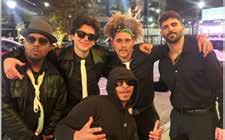
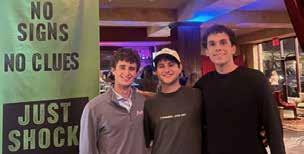
On Nov. 26, exactly one year after Manny’s passing, the Atlanta community gathered at the Buckhead Theatre for a night that blended grief, joy, and action. The firstever Manny’s Band Foundation Concert looked like a rock show but carried a deeper mission: to get people involved in suicide prevention in meaningful, accessible ways.
The event’s design made engagement
While Southern hospitality and charm seem hard to find in some parts, you’ll experience them every day at Somerby Sandy Springs Senior Living. Let us take care of the daily chores while you explore the best of nearby north Atlanta. Or stay home and enjoy our beautiful, multi-lifestyle community with a recent multi-million dollar renovation. Best of all, you can enjoy engaging events, endearing neighbors, and a chef prepared meal that’ll remind you of how charming life can be at Somerby.
Experience a superior level of hospitality and attention to detail that some have all but forgotten. Call (256) 579-0001 to schedule your personal visit.
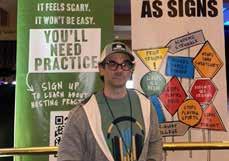
easy. Volunteers held signs with QR codes linking attendees to resources and ways to help. A merch table lined the lobby, with all proceeds benefiting the foundation. A photo booth featuring a drum set and backdrop encouraged supporters to celebrate Manny’s love of music. There were even wristband giveaways that included QR codes that opened doors to further involvement.
As guests exited the theater, volunteers, and even Pargman himself, handed out souvenir guitar picks featuring another QR code for donations. Every detail served


a purpose.
According to Pargman, Manny was “a super, super kid,” who was a musician, DJ, and the life of the party. The concert reflected that energy, bringing together family, friends, and community members who simply wanted to support the cause.
Performers included Gus Glasser, The Stews, and Manny’s best friend, Ian Maman. Between sets, Pargman stepped onstage to lay out four ways attendees could turn the night into action: fund the foundation to help support fi-


nancially; host Manny’s Band practice sessions in their home; bring Manny’s Band to school campuses; and share the foundation’s QR code to spread awareness.
Community Stepping Forward
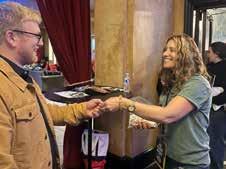
Many volunteers signed up to work the event, including family friend Aaron Gordon, who first learned about the foundation after Manny’s passing and immediately joined the mailing list. Another volunteer, Ari Feingold, said the concert showed “how much Atlanta really loves Manny” and expressed hope that the foundation continues hosting concerts like this.
Friend Jonathan Lalli said the night was about more than music.
“It brings everyone in Atlanta who cared about Manny and who cares about the cause together to remember him and honor his life,” Lalli said. “But not only that. It’s to take action, to ensure you won’t ever have to do something like this again. What Ben and the foundation did was assemble all these amazing resources that will actually have an impact on families and communities.”
Performer Gus Glasser echoed that sentiment. “I’ve never seen someone attack suicide like this,” he said. “I have four people in my life who have died from suicide. This is the first time I saw someone tackle the problem this way, and I am 100 percent on board.”
Suicide prevention messaging is everywhere today, including NFL commercials, college posters, social media campaigns, and November’s Men’s Mental Health Month online push. But Pargman believes awareness alone isn’t enough. “The stigma behind suicide not being socially acceptable to talk about in your inner circle is the bigger problem,” he said.
That belief led to the creation of Manny’s Band Practice: the foundation’s core call to action.
The program offers small, in-home QPR suicide prevention training sessions. QPR (Question, Persuade, Refer), founded in 1999, is one of the most widely used and scientifically supported suicide prevention training models. Volunteers host 10 friends in their home, and the foundation sends a certified QPR trainer to lead the session.
Pargman said the impact comes from practicing difficult conversations in a safe environment. “Having difficult and painful conversations with people you love and care about -- that’s something entirely different, and it’s hard,” he said. “Because it’s new and hard and scary, you need to practice. That’s what Manny’s Band Practice is all about.”
Pargman said he knows exactly how Manny would react to seeing hundreds of people come together in his honor. Laughing, he said Manny would respond with: “Oooh, alright. I gotchu. Lit. Bet.” ì



By Marcia Caller Jaffe
Fuego Mundo, the long-standing, AKCcertified meat restaurant in Sandy Springs just inside I-285, has been taken over by youthful exuberance and a heartfelt commitment to not only keep the operation humming, but also step it up a notch in ambiance while making meaningful menu adjustments. The original Fuego Mundo was known for its Latin American woodfire grill menu and catering business.
New owner, Bez Avtzon, said, “Our goal was to re-launch Fuego Mundo with more affordable price points, in a more fun atmosphere, not just ‘the only kosher meat place in town,’ but a destination for couples and families.”
Ever humble, Avtzon noted that much of his motivation was “rescuing Fuego Mundo from closing under the previous ownership and as a service to the Jewish community.”
Marketing consultant, Shmaya Friedman, added, “Bez’s goal really was based in philanthropy in keeping Fuego Mundo operational by providing finan-
cial and moral support.” Note also that community stalwarts, Jeff Stein and Ian Ratner, are silent partners.

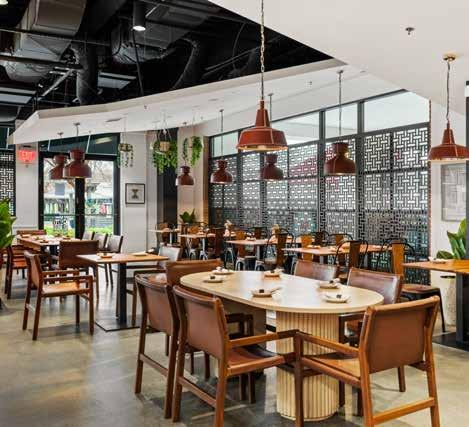
On Oct. 27, the newly modernized, spiffy décor by local designer Candice Keilin opened with the new menu. They
kept the same mashgiach and used the next few weeks to get their bearings, study data analytics, and get a footing on
good service so as not to have customers waiting in line, all before reaching out with a social media campaign.
Avtzon stated, “One of the more creative things we did was redesign our packaging, paper goods, and take out components.”
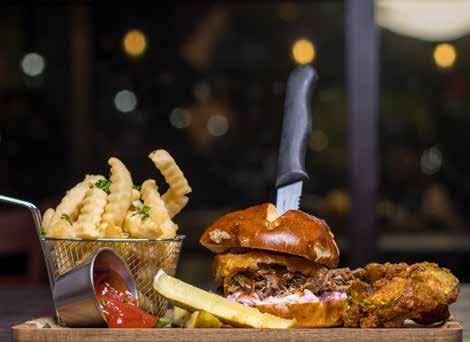
They even curated the music playlist to appeal to couples on date nights, business meetings, and families all with a fun vibe. Avtzon explained, “The packaging was indeed elevated as we do a good bit of business on Grubhub and DoorDash. In store, the fries and burger containers also have that ‘fun feel.’”
Avtzon, who also runs a healthcare business and is the son of the Chabad Rabbi of Hong Kong, remarked, “We even rearranged the wine and beer menu with varieties from Israel, California, and France … and there were certainly no kosher restaurants growing up in Hong Kong!”
Avtzon reports that the most popular menu items are the Popcorn Chicken Bites ($13) in sauce as “insanely good,”
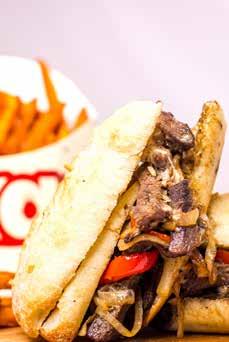
Loaded Potato Skins ($15), along with wings, burgers, onion ring tower, crispy fried pickles, black bean chili, chicken and waffles, wraps, sandwiches (BBQ brisket as fav), Grilled Fish Sandwich, Philly Steak and Pepper Sandwich, Chicken Ceasar Wrap, Grilled Portabella Sandwich, and sides like roasted veggies, sweet potato fries, garlic truffle fries, black eyed pea salad, and honey dill roasted carrots. Desserts are peach cobbler, challah bread pudding, warm
brownies, peanut chocolate chip cookies, deep fried Oreos, and blueberry apple crumble, ranging from $8 to $12. There’s a full kids menu including hot dogs and scrambled eggs.
The updated interior has new lighting, lamps, tables, chairs, wallpaper, and lattice work. Designing team Candice Keilin and sister, architect Narissa Bonnet, quickly got to work and elaborated, “Our initial stage was finding a mural that would work for the space. We moved away from a typical style logo design into something that was more unique, working with this being a meat restaurant, so keeping with leathers, wood texture, and the fabrics bringing in the flame of the logo as a subtle nod to it. We wanted multiple layers that would stand out and showcase a restaurant that Sandy Springs as a whole can be proud of and support because it’s both delicious and has a great social vibe. We eat with our eyes.
“So, in 3 1/2 weeks, yes, weeks, we sourced materials and shopped for furniture that was all in stock. We went straight to ordering before the holidays and prayed everything would arrive on time … a few hiccups along the way. Otherwise, everything was manageable by working with the incredible Zalmy Kafka from ZK Builders.”
The new interior seats around 55. Hours are 11 a.m. to 9 p.m., Monday, Tuesday, Wednesday, Thursday, and Sunday. On Friday, they close at 3 p.m. and are closed on Saturday. 470-264-9430. ì








By Bob Bahr
The museum at the Center for Puppetry Arts has added Lamb Chop, the popular television puppet star, along with some of its costumes and an Emmy Award to its permanent Global Gallery display. The simple hand puppet was created by Shari Lewis, the beloved American television entertainer. It made its first appearance on the CBS television network’s children’s series, “Captain Kangaroo,” in March of 1956.
Lamb Chop. which is not much more than a white knitted sock with some basic facial features, became what Lewis readily admitted was her alter ego, even surprising her sometimes by the feisty comments from the creature that came to life in her hand.
It made its first appearance when Lewis was only 23 and it was with her during her last appearance on a PBS children’s show in 1998. Earlier in that decade, the puppet starred in “Lamb Chop’s Play Along,” which was also a public television production. That series won six Emmy Awards to cap her four decades as a beloved children’s entertainer.
The manager of the puppet museum’s collections, Micah Walsh, is a big fan of

Lewis’ work particularly for what she accomplished in the early days of black and white television.
“When you watch some of the early video of her when she’s younger and starting out, it’s just mind boggling,” Goodman said. “The way she brings Lamb Chop to life
is a sight to behold.”
Lewis was born Phyllis Naomi Hurwitz. Her father was from Vilnius, Lithuania, which was a center of Jewish life before the Holocaust. He later became professor of education at Yeshiva University and was named New York City’s “Official Magician”

during the Depression when he performed before audiences in the public schools. Her mother was a music educator. Both of them played important roles in guiding their daughter’s early career.
Last year, the Atlanta Jewish Film Festival screened a documentary about Lewis,
Jewelry and Watch experts will be in Atlanta January 20-21. Schedule an appointment to find out what your jewelry and watches might sell for at auction
entitled “Shari and Lamb Chop” as its closing night presentation. The film is now available for purchase as a DVD and was recently added to several streaming rental platforms.
It features an extensive series of performances, including those which made her a national star when she replaced “The Howdy Doody Show” on NBC in 1960. According to Walsh, her ambition and her creative ability fueled her early rise.
“There weren’t a lot of women in puppetry at that time, and so she sort of filled the gap there with determination,” Walsh said. “She was just a force to be reckoned with, I think, and was very driven, obviously, in making a career out of what she loved and was good at.”
Children’s television in the medium’s infancy was produced live, mostly in the network’s New York City studios and, during the 10 years from 1953 to 1963, was a popular presence on the tube. In addition to Lamb Chop, she created in those early years a stable of characters like the shy and goofy Hush Puppy and the sarcastic Charlie Horse that would remain with her for the next four decades.
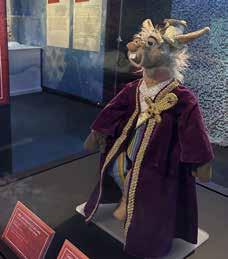
Later in her career, she created a pair of home video presentations built around the Jewish holidays of Chanukah and Passover. During the year-end holiday season this month, the Puppetry Museum included the Charlie Horse puppet in his costume as King Antiochus, the villainous ruler in the traditional Chanukah story.
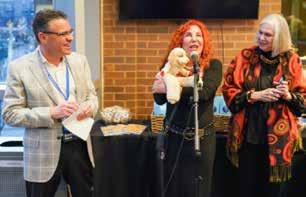
All of the Shari Lewis puppets were a recent donation by Mallory Lewis, her daughter. She has carried on her mother’s work as a puppeteer after her mother’s death in 1998. At the AJFF last year, she helped introduce the documentary about her mother. She returned in February of this year for a show at the puppetry center with Lamb Chop, whom she describes as her younger sister. According to Walsh, Lewis’ daughter has developed a strong relationship with the museum.
“As part of her donation process, she had a program here which was very successful,” Walsh points out. “She continues to be a big supporter of us and involved in the center in different ways. As part of the donation, we did conservation on Lamb Chop, and that’s one of the reasons why Mallory selected the center as a home for Lamb Chop and Hush Puppy and Charlie Horse.”
There’s a touching scene that’s mentioned in the Lewis documentary that centers on the relationship between Lewis and her daughter. It comes on the set of the PBS program, “The Charlie Horse Music Pizza,” just after Lewis has been told she is going to die of cancer. As it is later recalled, her daughter reached for her mother’s puppets and said, “I’ll take her now.”




In so many ways that’s what she has done. ì


By Marcia Caller Jaffe
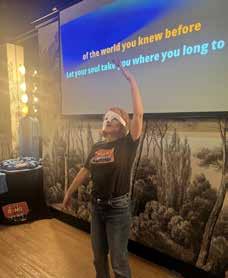
Hildee Isaacs and Lisa Reich launched their melodious new concept, Gotta Sing Events —Broadway! on Wednesday, Nov. 19, at the highly touted Reunion Kitchen/Bar in East Cobb. Seventy joyous and expressive attendees gathered at 7 p.m. to sing (karaoke style) their favorite Broadway show tunes in front of a screen with large lyrics. The Reunion rafters were shaking with favs from “Les Miserables,” “Phantom of the Opera,” “Gypsy,” “Oklahoma,” and “Evita,” just to name a few. Some were performing chorus kicks and expressive wide arm movements, too.
The seed for Gotta Sing Events was planted after years of Isaacs noting how music brings people together, whether at a table, a party, or a charity event.
She said, “Lisa and I have both always loved Broadway and group experiences and realized there was a space between karaoke and concerts — a space where everyone could sing out loud together without fear of judgment. We thought: why not create a social event where the
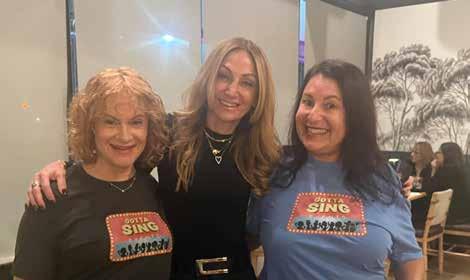
audience becomes the cast?”
The two met back in the 1990s when Hildee owned a restaurant, and Lisa worked for her. They clicked instantly and have been close friends for more than 25 years. Hildee is a lifelong lover of music and theater but is not formally
trained. She grew up in New York and graduated from NYU’s Film School, later building a career in promotional marketing and experiential events — helping companies use creative branding and memorable moments. She also teaches mah jongg.
Lisa, who started as a performer, was formally trained in musical theatre at Boston Conservatory and Emerson College. She now lives in New York and has owned her own production company for 18 years, working in theatre and on Broadway. She brings performance experience,

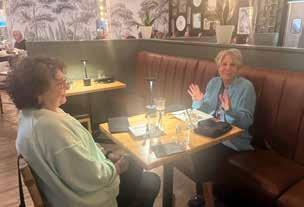
business insight, creative flair and professional polish. At the event, she donned a white Phantom mask, a red curly Annie wig, and anything else she could get her hands on. Hildee tossed feather boas to jazz the crowd.
After this first event at Reunion, the duo plans to partner with multiple restaurants, venues, and corporate teams, ideally on “off nights” when they want to fill their dining rooms with something special. Each event will have its own theme — Broadway Night, Girl’s Night Out, Yacht Rock, Country Classics, etc.
Reich said, “The ultimate goal is to make Gotta Sing Events a turnkey entertainment experience that can travel anywhere — a pop-up sing-along that’s part show, part party, and all heart. We’ve already received inquiries from across the U.S. and plan to expand nationally to fulfill these exciting opportunities. Beyond restaurants, we plan to offer paid flat-fee performances for memory care centers, 55-plus communities, country clubs, and corporate events. For these audiences, the sing-along becomes a shared experience that promotes joy, memory, and connection — something that can uplift and unite people of all ages.”
Singles, couples, friends, and co-workers were on hand at Reunion, though their events are especially designed for adults 40 and over. Hildee added, “We keep it light, fun, and completely judgment-free. There’s no microphone-hogging or solos; it’s all about the shared experience of singing together.”
This first November night had no entrance fee, but future tickets will range from $20 to $45 per person, depending on the venue and theme.
Reunion owner/hostess, Ilene Kapper Oxman, was on hand as many chose to order food and snacks to make it a real evening out. She relayed, “I’ve loved Broadway and musical theater since I was a little girl — the magic, the storytelling, the way a song can make you feel seen. Hosting a Broadway Night felt like the perfect way to share that joy with our community and celebrate the art form that has inspired me my whole life.”
Participant Amy Fineman Cohen said, “I’ve been singing show tunes with my mom, Judy, since I was 4 years old.”
Dorothy Carillo added, “Broadway songs represent magic and fantasy to me. My fav was “Don’t Cry for Me Argentina,” from, “Evita.”
Want to come to the cabaret, old friend? The next sing-along is Sunday, Feb. 1, 2026, at Red Light Café — 553-1 Amsterdam Ave.
For more information, please contact lisa@gottasingevents.com or hildee@gottasingevents.com, or visit GottaSingEvents.com. ì


By Marcia Caller Jaffe
Buckhead Village features a unique and experiential art installation made possible by the connections of local gem Hope Cohn, an award-winning independent curator, artist, and educator dedicated to fostering unions between art, artists, and audiences.
Because of her personal and professional relationship with the late Frank Stella, Cohn rescued and restored the colorful sculpture, “K.3” (large version), which was created in 2007 and weighs 650 pounds, and composed of fiberglass, foam, and urethane. The sculpture was placed in storage until current owner Jamestown LP supported its move to Buckhead Village to share with the public until the end of 2025.
Cohn said, “My goal now is to find a permanent home … as this is just a temporary space.”
Stella, who died in 2024, was noted for his work in minimalism and postpainterly abstraction. He developed a reductionist approach stating that he wanted to demonstrate that “every paint-
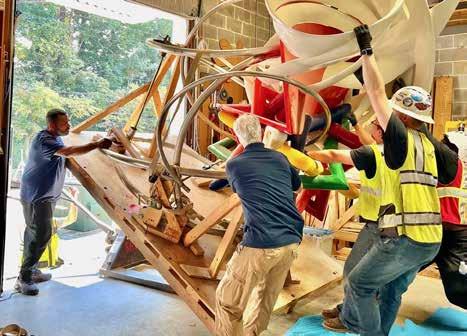
It took a structural engineer and 12 men to design and install the mounting and literally inch the sculpture through the door.
ing was a flat surface with paint on it -nothing more.”
Cohn, who worked closely with Stella and remained friends, shared, “I met
Frank Stella over 30 years ago and had no idea that working for him would take me on such an incredible journey. It was like living in an art history textbook and was
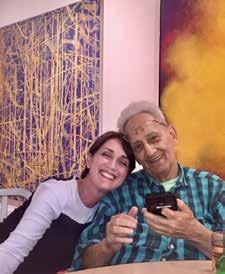
Cohn describes Frank
instrumental, pioneering artist who changed the trajectory of art by forging a new and innovative way of painting and making us question how we look at art: but, to me, he was simply my friend and a big part of my life.”
literally like being inside a Frank Stella painting. Everything was constantly in motion. Art being made, projects being planned, chaos needing calm and puzzles
Visiting aging loved ones over the holidays offers a great opportunity to look for any changes in their health or behavior since you last saw them. There may be signs that it’s time to enlist extra help and care for their wellbeing.
Checklist of What to Look for When Visiting Older Loved Ones
Changes in Appearance. How your loved one looks can provide important clues about possible underlying conditions, including illness, disease, depression and dementia. Look for:
Lapses in personal hygiene or body odor.
A disheveled or ungroomed appearance.
Dirty clothing.
Unexplained weight loss.
Changes in Physical Abilities. A visit is a good time to look for changes in balance and mobility, which may be signs of joint, muscle or neurological problems. If unsteady on their feet, they may be at risk of falling, which can cause severe injury and poor health in the future. Look for:
A reluctance to walk.
Difficulty getting up from a chair.
Changes in gait or how they move around.
Obvious pain during movement.
Mental or Emotional Changes. Keep an eye out for changes in your loved one’s moods and behavior. Emotional disorders can affect their quality of life by causing stress, insomnia, fatigue and pain, which in turn can affect memory, concentration and decision-making. Look for:
Signs of depression and anxiety.
Withdrawal from social activities.
Changes in sleep patterns.
A loss of interest in hobbies.
Apathy.
Odd behavior, such as confusion or agitation.
Changes in the Home Environment. If your loved one’s home is not maintained to its usual standards, it could indicate a problem. Look for:
Clutter or dirty conditions.
Unpaid bills or stacks of unopened mail.
Scorched cookware, which could
indicate that your loved one forgets that food is cooking.
An overflowing hamper, which could mean they don’t have the strength or desire to do laundry.
Expired food, an empty cupboard or refrigerator, or meager supplies of only convenience food.
Expired or unused medications they’ve neglected to take.
Household hazards that increase the risk of falling, including poorly placed furniture and electrical cords, slippery rugs and dim lighting.
Getting proper support for a senior loved one usually starts with an honest assessment of their current situation. If you feel that your loved one could benefit from personal home care, Kadan Homecare would be happy to share our knowledge and experience with you and your family. We have more than 40 years of experience “Caring for Families as Only Family Can.”
Our extensive referral network includes other senior care experts, safety specialists, physical therapists and specialized providers. As Certified Dementia Practitioners, we also know when it’s time to seek an escalated level of care for your loved one.
To talk with our team or to schedule a complimentary in-home senior care consultation, please call 770-396-8997 or email info@kadan.org.

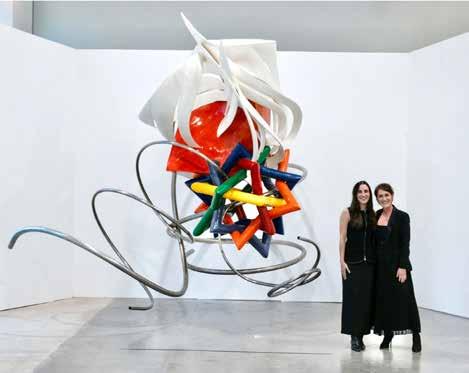
to solve. He was always experimenting and expanding his visual language. His work took many changes over his career, yet there is still a thread that connects it all.”
Cohn further describes “K.3” as “a striking masterpiece, celebrated for its vibrant colors, bold geometric forms, and dynamic presence.” This artwork is part of Stella’s “Scarlatti Kirkpatrick” series, featuring fluid shapes that vividly capture the lively sounds and rhythms of Italian composer Domenico Scarlatti’s harpsichord sonatas. The series’ title also pays homage to Ralph Kirkpatrick, a Yale musicologist and harpsichordist, who significantly contributed to the popularity of Scarlatti’s works and compiled the definitive catalog of his sonatas in 1953. The piece is lyrical, gestural, colorful and playful.”
Moving the sculpture from storage to the gallery space was a challenging feat, requiring a team of more than a dozen to transport it with a structural engineer and builders to design the supporting wall. They moved it in the middle of the night, closing streets and just “barely made it through the door with less than an inch to spare.”
In addition to the Stella masterpiece, Art in the Village showcases some of Atlanta’s local artists displayed on two levels, and while visually distinct, carry the memory of Stella’s vision.
Cohn has curated numerous exhibitions for Hartsfield-Jackson Atlanta International Airport, including, “Selections from the Museum of Contemporary Art of Georgia,” E-Merge Contemporary Atlanta Artists. She conceived and curated, “SCORE: Sports + Art,” for
MOCAGA, and “Beyond Words,” for the Swan Coach House Gallery. She was the director of the Spruill Gallery and led exhibitions such as, “Nelson Mandela: Man of the People,” “Katrina: Five Years of Reflection,” and “Breaking New Ground: Intersections at the Crossroads of Art and Technology.”
She taught at SCAD Atlanta, Georgia State Ernest Welch School of Art & Design, Harvard University Graduate School of Design, Pratt Institute, The School of Visual Arts NYC, and the High Museum of Art. She received her master’s degree in painting from Pratt Institute and her BFA from the Atlanta College of Art. As an artist, Cohn was represented by Fay Gold Gallery and her work is included in various private and corporate collections, including The Neiman Marcus Corporation, King and Spalding, Alston and Bird, Highland Group, Kilpatrick Stockton and others.
Cohn works with developers throughout the city including Alliance Residential, Edens, and Jamestown Properties to educate and encourage companies to support and understand the impact art can have on the community. Originally from New York, Cohn is married to architect John Schneider with whom she raised three children.
Art consultant, Micaela Robinson, was Cohn’s project assistant.
Art in the Village is located at 3035 Peachtree Road, at the corner of Buckhead Avenue and Peachtree Road. Hours are from 12 p.m. to 5 p.m., Thursday to Sunday. The exhibition is free and will run until the end of the year. For more information, please visit Artinthevillageatl. com. ì
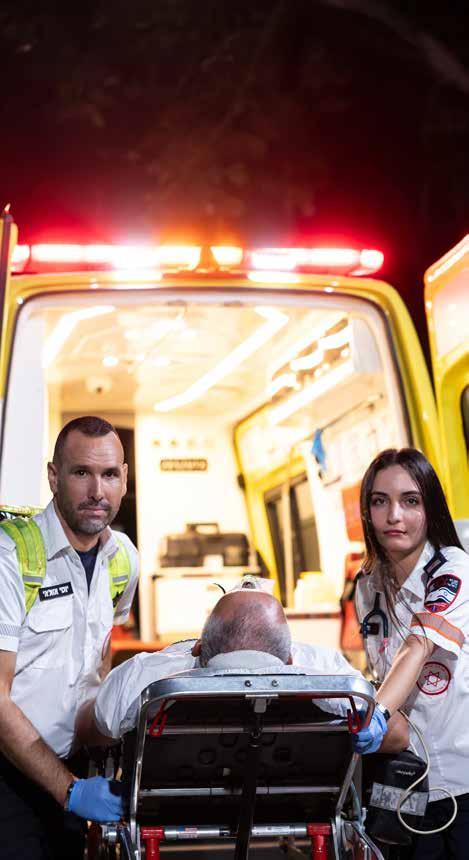
There are many ways to support Israel and its people, but this Chanukah, no gift is more transformative than one to Magen David Adom, Israel’s emergency services system. Your support of MDA isn’t just changing lives — it’s literally saving them — providing critical care and hospital transport for everyone from victims of heart attacks to rocket attacks, and every emergency in between. Donate today at MagenDavidAdom.org or call 866.632.2763.
Congregation Dor Tamid (CDT) Early Learning Academy is proud to announce that it has been named a Best of Georgia Child Care Center by Georgia Business Journal. The recognition, part of the 2025 Best of Georgia Education & Childcare program, places CDT among the top child-care providers in the state.
Since its founding by Congregation Dor Tamid, the Academy has combined high-quality early education with a nurturing, community-centered environment. Known for a holistic approach that integrates academic readiness with social, emotional, and creative development, CDT Early Learning Academy fosters a foundation for lifelong learning.
“This honor reflects our team’s commitment to every child’s growth and potential,” said Rabbi Jordan Ottenstein, the congregation’s Senior Rabbi. “We believe each child is unique, and we strive to support their development in a warm, inclusive community.”
CDT Early Learning Academy serves children from infancy through pre-K and emphasizes creativity, exploration,
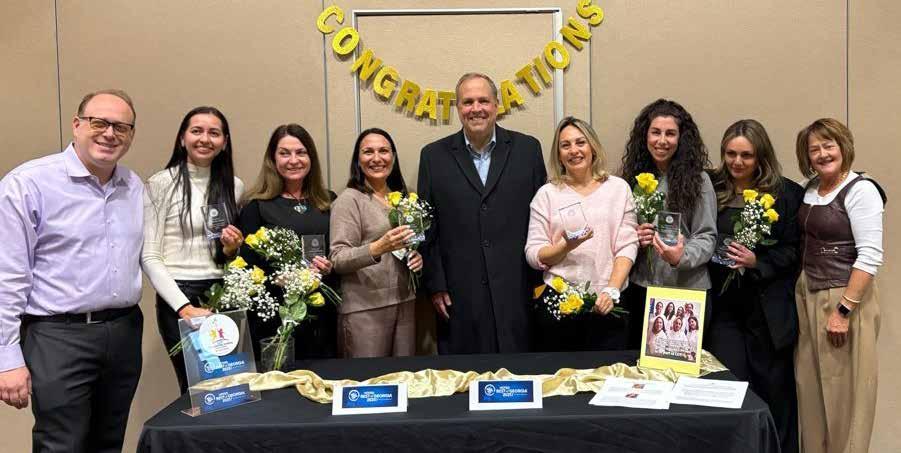
and respect for individuality. The Best of Georgia sward underscores the Academy’s dedication to excellence and high-
quality childcare.
For more information or to enroll, visit the CDT Early Learning Academy

By Sasha Heller
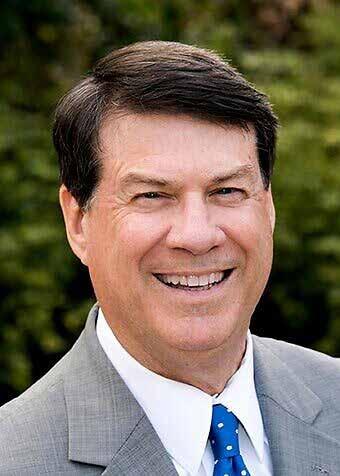
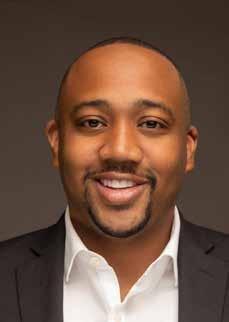
Incumbent Sandy Springs Mayor Rusty Paul handily defeated challenger Dontaye Carter in a runoff election on Dec. 2.
Paul received 69.27 percent of the votes (10,298) with Carter garnering 30.73 percent (4,568) with 14,866 total votes cast.
“I’m very gratified by the clear bipartisan nature of my victory,” Paul said. “It shows that we can transcend the partisan divide that afflicts so much of our political discourse and focus on uniting our community in a shared vision for our future.”
Paul then gave special recognition to the Sandy Springs Jewish community for their support in getting him reelected.
“I’m extremely gratified by my very strong support within our Jewish community. Our Jewish community knows I’ve strongly and clearly stood with them both in good and bad times,” he said.
Paul added that he left his victory party to attend the Mayors Summit Against Antisemitism in New Orleans,
which was sponsored by the Combat An tisemitism Movement where Paul serves on the Mayors Advisory Committee.
None of the four candidates received a majority of the vote in the Nov. 4 elec





By Marcia Caller Jaffe
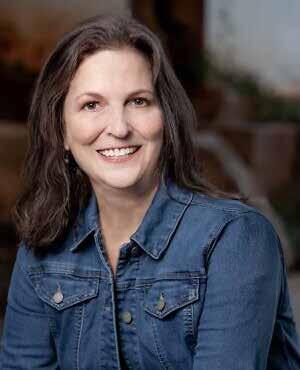
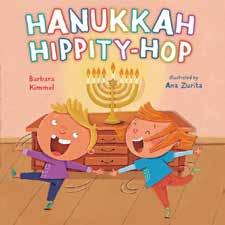
Barbara Kimmel, children’s book author, will appear at libraries, bookstores, and community events across Atlanta in the days leading up to Chanukah. Her seasonal book, “Hannukah Hippity Hop,” which was featured in the Atlanta Jewish Times in 2024, is back to thrill the young ones. Equally exciting is her advancement into other formats and seasons like Purim and the gold standard, Highlights Magazine, with Fun with a Purpose, featuring her take on Sukkot. Her lively, interactive programs combine story time, songs, and crafts to engage young readers.
Kimmel’s upcoming book, “Purim Possibilities,” follows a child deciding what costume to wear for Purim that best expresses the many parts of themselves.
The book has already received the 2026 Grinspoon Jewish Story Award and will be sent to more than 30,000 three-yearolds across North America as a PJ Library selection for February 2026. The interac tive board book includes reusable stickers so children can mix and match costumes.
“I grew up on Colorforms, so I love that PJ is featuring reusable stickers in ‘Purim Possibilities,’” Kimmel said. “Kids can design their own costumes, encour-





Kimmel produces short stories for




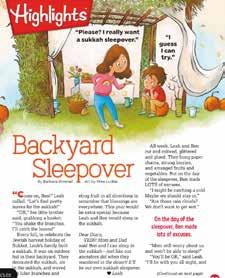
children’s magazines, like High Five. Her Sukkot story, “Backyard Sleepover,” appeared in the October 2025 issue of Highlights. Its cover teases, “Please? I really want a Sukkot sleepover.” She said, “It meant a lot to see Jewish content in a mainstream magazine. This kind of representation helps Jewish children feel seen and gives non-Jewish readers a window into our culture.”
Kimmel’s lively, interactive programs combine story time, songs, and crafts to engage even the youngest readers. Kimmel’s 2025 “Hanukkah Hippity-Hop” schedule includes confirmed events at Barnes & Noble stores, public libraries, and community gatherings throughout metro Atlanta, with additional venues to be announced.
Chanukah begins Sunday evening, Dec. 14. Kimmel’s “Hanukkah Hippity-Hop” is a lively rhyming board book that invites toddlers to move from spinning like dreidels to marching like Maccabees as they learn
about Chanukah. The book received glowing reviews from The Horn Book and School Library Journal and was named a Best Jewish Holiday Children’s Book by the Association of Jewish Libraries, which also selected it in their 2024 Holiday Highlights.
Kimmel’s 2025 Chanukah appearances include:
10:30 a.m.., Wednesday, Dec. 10 –Kirkwood Library (Storytime & Craft) 11 a.m., Wednesday, Dec. 17– Sandy Springs Library (Storytime & Craft)
Kimmel and her husband, playwright Hank Kimmel, are active members of The Temple and have three adult children. She said, “Hank is such a supportive partner! During the holiday season, I call him ‘Hanukkah Hank,’ and he assists me at my events. Kids love his playful energy!”
Families can learn more or sign up for free monthly Jewish children’s books at pjlibrary.org. ì

Hungarian budget airline Wizz Air announced it plans to build a hub in Israel in 2026 // Photo courtesy of Wikipedia
Hungarian budget airline Wizz Air announced that it plans to build a hub
Dec. 15, 1999: San Francisco-based venture fund Aqua International Partners buys a 25% stake in Israeli bottled water company Mayanot Eden (Eden Springs) for $47.5 million, financing the company’s expansion into Europe.
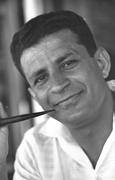
Abie Nathan, shown in 1961, launched an international fundraising campaign for famine victims after visiting Ethiopia in November 1984.
// By Hans Pinn, Israeli Government Press Office, CC BY-SA 3.0
Dec. 16, 1984: Israeli peace activist Abie Nathan arrives in Ethiopia with $300,000 worth of supplies, funded through global Jewish giving, to relieve a drought-driven famine that kills an estimated 1.2 million people over two years.
Dec. 17, 1975: U.S. Secretary of State Henry Kissinger tells Iraqi Foreign Minister Saddun Hammadi in Paris that Israel’s existence is not negotiable, but the United States is willing to see Israel “reduce its size to historical proportions.”
Dec. 18, 1911: At the urging of Berl Katznelson, a special convention of Jewish agricultural workers in Ottoman Palestine approves a proposal to create Kupat Holim Clalit (General Sick Fund) to handle immigrants’ health care.
in Israel beginning next spring. Aviation experts suggest the move could enhance competition and decrease fares for travelers.
“We are fully committed to put the idea of a Wizz base into effect here in Israel,” said Wizz Air CEO József Váradi. “We want to be seen as a good corporate citizen embedded in Israeli society.”
Váradi met with Transportation Minister Miri Regev while visiting Israel, according to the Times of Israel.
“We had a great meeting with tremendous progress made in understanding the opportunity from all angles, understanding what the needs are in the country, understanding what we can do in terms of operations and putting the issues on the table to seek ways of resolving them,” Váradi said. “Some of the challenges being technical, business or regulatory type of issues.”
Compiled by AJT Staff
Dec. 19, 1936: Avraham B. Yehoshua, who becomes one of Israel’s most acclaimed writers, is born in Jerusalem. He leads a new wave of Israeli writers with novels including “The Lover,” “Mr. Mani” and “The Late Divorce.”
Dec. 20, 1936: New York Philharmonic Symphony Orchestra conductor Arturo Toscanini arrives to conduct the opening performance of the Palestine Philharmonic six days later before a sold-out crowd of 3,000.
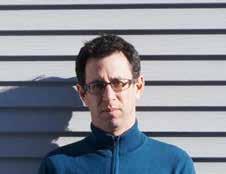
Assaf Gavron, shown in 2014, has taught creative writing in college and led a soccer team of writers. // By Howard Romero, CC BY-SA 3.0
Dec. 21, 1968: Assaf Gavron, a writer and musician, is born in Arad. After working as a newspaper food writer in the 1990s, he publishes his debut novel, “Ice,” in 1997. He is a singer-songwriter for the band The Foot and Mouth.
Dec. 22, 1948: A cable to the State Department from a U.S. envoy recounts British Foreign Secretary Ernest Bevin’s concerns about the likelihood of Israel becoming a Communist state and threatening the Suez Canal.
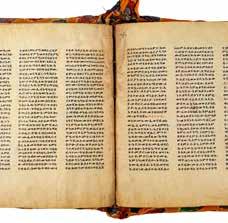
The Orit was transported for the first time from the National Library of Israel to the Western Wall for a special Sigd prayer.
One of the oldest sacred books of the Beta Israel community — the Orit — was
Dec. 23, 1907: Avraham Stern, one of the most wanted members of the Jewish underground in Palestine, is born in Poland. After breaking from the Haganah and Irgun, he forms Lehi, known as the Stern Gang, to fight the British in 1940.
Dec. 24, 1969: Israel uses a fake shipping company as a front to purchase five military boats and sneaks them out of Cherbourg, France, defeating a French arms embargo enacted by Charles de Gaulle after the June 1967 war.
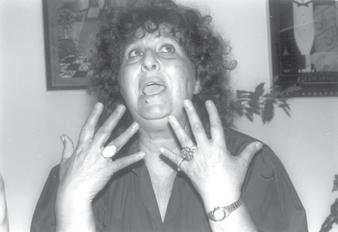
Geulah Cohen speaks about an upcoming election during a press conference in Tel Aviv in 1988. // By Vered Peer, National Library of Israel
Dec. 25, 1925: Geulah Cohen is born in Tel Aviv. She fights with the Irgun and Lehi. She is elected to the Knesset with Likud in 1973, then breaks away over the treaty with Egypt and forms a nationalist party that becomes Tehiya (“Revival”).
Dec. 26, 1968: Two members of the Popular Front for the Liberation of Palestine attack an El Al flight with grenades and guns during a layover in Athens between Tel Aviv and New York. Israeli engineer Leon Shirdan is killed.
transported for the first time from the National Library of Israel to the Western Wall for a special Sigd prayer ceremony. This marks the first time the 300-year-old manuscript has left the library since being deposited in 2016.
The Orit was brought to Israel in 1982 by Kes Isaac Yaso (“Yitzhak the Teacher”) during his arduous journey from Ethiopia to Israel through Sudan that included harrowing events in which the book was saved from bandits. Following his passing, and in accordance with his wishes, in 2016, the family donated the manuscript to the library for preservation.
Written in the ancient language of Ge‘ez on parchment, the Orit is the most important holy text of the Beta Israel community. It is an Octateuch, the traditional name for the first eight books of the Bible, comprising the Five Books of Moses, along with the books of Joshua, Judges, and Ruth.
Dec. 27, 1925: Moshe Arens, a Likud member who serves as the defense minister three times and foreign minister once, is born in Lithuania. He immigrates to the U.S. in 1939, fights in World War II, then makes aliyah in 1948.
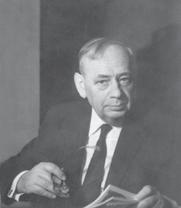
Ze’ev Ben-Chaim served as the second president of the Academy of the Hebrew Language. // by Hebrew Language Academy
Dec. 28, 1907: Ze’ev Ben-Chaim is born in Galicia. He is regarded as one of the greatest scholars of Hebrew and Aramaic. His research reveals that the Samaritans maintain a Second Temple-era tradition of reading Hebrew texts.
Dec. 29, 1946: Angry that the British government administered 18 lashes to Irgun member Benjamin Kimkhi, the Irgun abducts British soldiers in Netanya, Rishon LeZion and Tel Aviv and flogs them 18 times each in the streets.
Dec. 30, 1990: Prime Minister Yitzhak Shamir removes Science Minister Ezer Weizman from the Cabinet after accusing him of meeting with a senior PLO official in 1989 and corresponding with PLO head Yasser Arafat.
Items are provided by the Center for Israel Education (israeled.org), where you can find more details.

By Marcia Caller Jaffe
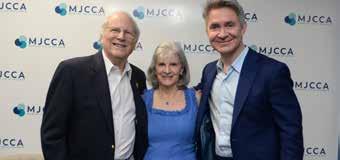
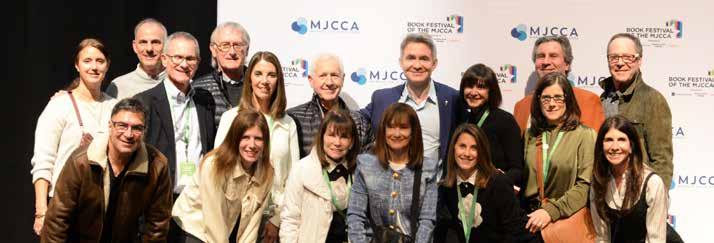
Known as “one of Israel’s best friends,” British journalist, essayist, public intellectual, and political analyst Douglas Murray appeared at the Book Festival of the MJCCA on Nov. 15.
Through the sponsorship of philanthropist and a minority owner of the Atlanta Falcons, Ed Mendel, Murray was in conversation with Atlanta Journal-Constitution journalist Greg Bluestein and discussed Murray’s book, “On Democracies and Death-Cults.”
Most important were his insightful, broad sweeping observations of Israel post-Oct. 7, antisemitism, the ignorance of today’s youth vis a vis college manipulation, and his overall understanding of the positioning of the Western world and how and why we got to this point.
Bluestein admired the standing ovation pre-interview, as Murray appeared relaxed, yet crisp with his British accent, while explaining that he had been living in New York for the past five years. His first topic was his grasp on Oct. 8 of the scope of the horrid events, and why something so appalling would promulgate Canada, Australia, and the U.S. to align with the Gazan underdogs in joining this “death cult.”
Murray said, “The young people are being misled about real history, Israel and antisemitism with biased views … about white supremacy, colonialism also leveled at the U.S., Great Britain … with this pressure, something is going to burst when you are blamed for a crime that you did not commit.”
He then “dissed” Instagram protests by people like “gays in gold lame with purple hair with comic book activism claiming that it would be easier to be queer in Palestine than in the U.S.”
Not letting up on the effete elements of college education, Murray related, “Bear in mind college kids are fed up and don’t want to be told what to do as Israel is over emphasized,” noting the absurdity of them spending four years of their parents’ hard-earned money, litigating a country they have never been to.
Bluestein then queried Murray’s references to “pink washing.” Murray’s response, “Everything Israel does is used against it. Like going into the U.N. where the dice is loaded … free countries are messy. How can there be a genocide in Gaza if their population doubled from 2005 to 2023?”
He then eschewed false narratives like Gaza being akin to the Warsaw Ghet-

to. “It’s coming from both the far right and the far left.”
Murray stated that he wants to bear witness to what he himself observed, like Hamas glorifying death, parading and celebrating evil.”
He shared, “It’s hard to unsee a father being shot in front of his sons, heroes being maimed intercepting grenades by hand.”
Murray subsequently visited some of those very terrorists in prison and hopes they never get traded or freed.
Bluestein noted that polls show how U.S. support of Israel has deeply declined as “not being an integral part of U.S. policy.”
Murray offered that “Egypt gets the same amount of aid as does Israel, and we don’t hear how they control [us], plus arm sales benefit our economy.”
On an optimistic note, Murray heralded the resilient Israeli people and their plan to build back.
“And for those who thought the young Israelis were soft and wanting to just hang out on the beach, they were wrong. I saw a cocktail maker serving one night, then the next day joining an IDF combat unit. I saw an Alpine unit in the desert learning to fight in the snow.
What? With all the heroic retaliation by Israel, the confidence is back! In Israel, I witnessed a funeral and wedding all at the same time. With this tenacity, Israel is back!”
Marcus Jewish Community Center of Atlanta CEO Jared Powers introduced Mendel and praised his deep commitment to Jewish community service and philanthropy. In introducing Murray, Mendel had just the right measure of hu-
mor and content.
He stated, “Douglas was quoted as saying ‘Jews are taught not to gloat over someone else’s misery, but I’m not Jewish.’”
In seeking advice about doing a short introduction about himself, Mendel said, “I am not Douglas Murray, but I am Jewish. Remember, if you live long enough, every victory turns into a defeat … as Hamas recently found out.” ì
The following is an index of Israeli hostages with the most current information available as of press deadline.
Atlanta Jewish Times will update this hostage tracker with current news of the next round of hostage transfers. Bring Them Home.
Israeli hostages remaining: one hostage is either believed to be dead or his death has been confirmed: Ran Gvili, 24 (murdered in captivity)
David Ostrowsky
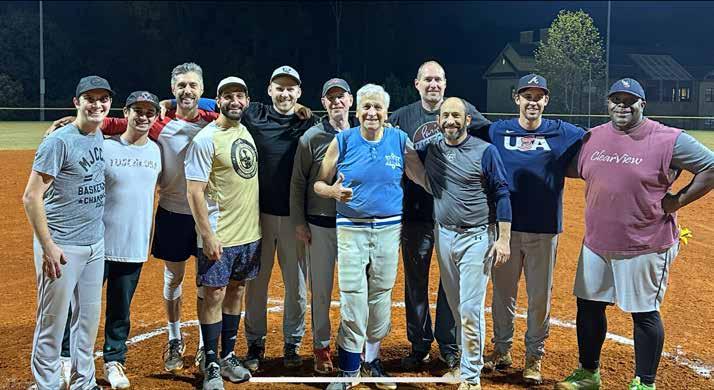
WhenGene Benator began playing in the Harris Jacobs MJCCA Modified Fast Pitch Softball League, Richard Nixon was in the Oval Office, Hank Aaron was enjoying his last monster season, and “The French Connection” was all the rage at cinemas nationwide.
From his 1971 rookie season, which preceded his senior year at University of Georgia, to last month’s official retirement as a player, Benator’s 55-year/100season career included over 1,200 games and 8,500 innings pitched, 54 All-Star Game appearances, and 709 wins. A left fielder-turned pitcher, Benator had 74 different catchers as batterymates and played under 15 league commissioners. He competed against a handful of grandfather-father-son trios. He took the field with his primary care physician. And later his chiropractor.
A preposterously long career that culminated with an emotionally charged ceremony prior to the Fall 2025 All-Star Game on Nov. 23 at the Marcus JCC in Dunwoody was even more remarkable given that the 76-year-old Benator kept his over half-century streak alive while battling cancer three times and undergoing open heart surgery.
Many men’s recreational league softball players are one-time high school baseball greats trying to relive their glory days. Not Benator. The genesis for his softball career/lifelong obsession came as a teenager tagging along with his mother for Wednesday night bowling league matches, during which he honed his duckpin ball skills, ones that were easily transferable to the softball diamond. After cutting his teeth as a softball player in church league games and later in UGA intramurals, Benator joined the MJCCA league, and as he says, “the rest is history.”
Benator’s decadeslong dedication to the Harris Jacobs MJCCA Modified Fast Pitch Softball League is nothing short of historic. In addition to tossing five onehitters, Benator had a no-no in 2005. In 1981, he carried his team to a 23-1 start before becoming the first pitcher in league history to fire a shutout in a regular season championship game. In the 1983 AllStar Game, he struck out the side swing-
After 55 years and 100 seasons in the MJCCA Modified
has finally decided to leave the diamond — as a
ing (fast-pitch softball, indeed). A string of rainouts forced his 1992 squad to play — and ultimately sweep — five postseason tournament games in 36 hours, all of which he served as the starting pitcher. If softball players had baseball cards, the back of Benator’s would require the smallest font size imaginable.
“While all the stats are great, the friendships and acquaintances and memories and fun times are the treasures that I will always value the most, especially the opportunity to play a couple of seasons with my son, Brian, catching me, which was surreal!,” shared Benator when speaking to the AJT last week.
Brian, now a high school basketball coach in Columbia, S.C., along with his sister Jaime, and mother, Patty (herself a five-time cancer survivor), have been unfailingly supportive of Gene’s softball endeavors. Patty, in particular, has stayed invested in her husband’s relentless passion for softball, once even agreeing to postpone their October 1984 honeymoon to Europe by a day so as to accommodate a playoff scheduling change.
During a warm weekend morning the following September, Benator came home from a game to find Patty experiencing early contractions; later that evening, a future softball teammate, Brian Benator, came into the world. “Everybody seems to have just worked around my softball league,” added Benator, who,
yes, does have a day job, working in real estate, and has even participated in other rec league sports including football and basketball.
Not all the anecdotes are so lighthearted. There was the time when he was diagnosed with Stage 4 prostate cancer in spring 2019; six weeks after his operation he was back pitching in a tourney game. More recently, Benator underwent open heart surgery on Oct. 9, 2024 — but not before pitching the first inning of the fall season back in late August and then returning post-surgery to toss the opening frame of the spring 2025 season. As Benator proudly noted, “we kept the streak alive.”
When Benator decided to make the 2025 autumn season his final go-round, largely because of his uncooperative knees, league commissioner Josh Tolchin knew he had to do something. The pre-Thanksgiving farewell sendoff, to the complete surprise of the man of the hour, featured a scoreboard paying homage to Benator’s longevity, milestone years and numbers inscribed in the field, the presentation of a “Mazel Tov Gene” cake and commemorative signed pitching rubber, and some thoughtful remarks from Tolchin. Before he pitched to the game’s first — and his final — batter, Benator struggled to stay dry-eyed while addressing the dozens of league participants lined up along the perimeter of the diamond.
However, the rawest display of emotion came earlier this year after the final out of his last regular season game. In a scene reminiscent of Hall of Famer George Brett kissing home plate at Kauffman Stadium after his final home game in 1993, Benator got down on all fours and pecked the Dunwoody diamond’s pitching rubber, one that, by his estimation, he had toed for more than 8,500 innings.
“I said to myself years ago I was going to do that. I was grateful that I was able to play 55 years and 100 seasons from that spot.”
Benator’s playing days may be over, but he plans on remaining involved as a recruiter and coach, two roles he has long assumed while cementing his legacy as the league’s all-time most accomplished player. Though he will serve as a proud ambassador of MJCCA softball, essentially the forever face of the league, there was a tinge of ambiguity in the decision to step aside. Contrary to baseball hurlers, softball pitchers can withstand serious mileage on their arms. Even though Benator’s delivered well over 200,000 pitches in his illustrious career, his less-than-100 percent knees make fluid landings difficult. With his family nudging him to the sidelines, Benator felt it was time.
“That’s a good number — 55 and 100. I’ll take it.” ì
By David Ostrowsky
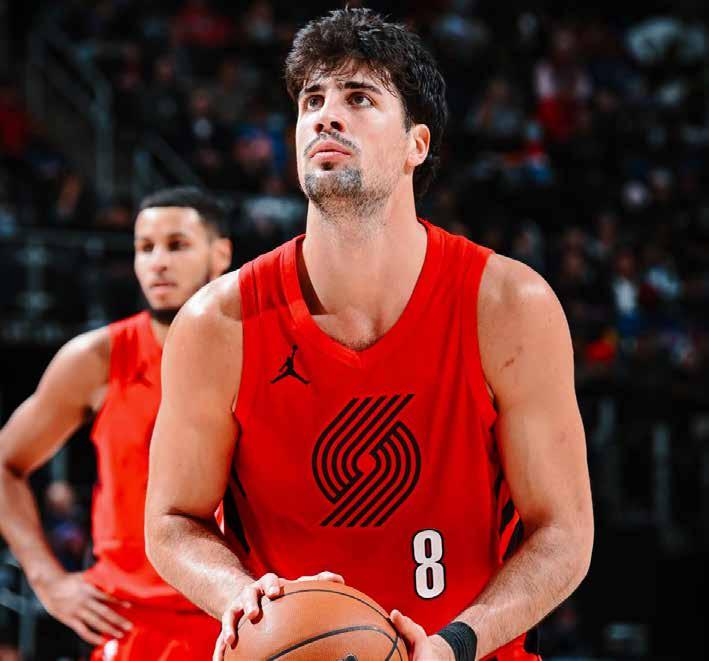
Deni Avdija first became a household name among Jewish sports fans two years ago in the wake of the Oct. 7 attacks when, as a member of the Washington Wizards, he was engaging with fans across NBA arenas in postgame renditions of the Israel national anthem, “Hatikvah.” Since then, the 24-year-old native of Kibbutz Beit Zera in northern Israel has become a household name among all sports fans by rocketing up the ranks of NBA scoring leaders.
Now in his second year with the Portland Trail Blazers, Avdija, who started playing for Maccabi Tel Aviv when he was 16, is having a breakout NBA season, averaging over 26 points and seven rebounds per game. Though the Blazers, who haven’t been a serious title contender since falling to the Michael Jordan/Scottie Pippen Chicago Bulls in the 1992 NBA Finals, are well below .500, their unquestioned best player is the clear favorite to be the NBA’s Most Improved Player at season’s end. Should Avdija participate in February’s NBA All-Star Game at the new Intuit Dome in Inglewood, Calif., he would not only represent the Blazers, but also Israel, as the first-ever Israeli NBA All-Star.
Following a solid start to his NBA career with Washington, Avdija took off last spring for Portland and has continued scoring at a prolific rate in his second year in the Pacific Northwest. The season’s nearly one-third of the way through and Avdija’s points-per-game average is higher than those of perennial All-Stars Kevin Durant, Devin Booker, and Karl-Anthony Towns. He has scored more than 30 points seven times, already has two triple-doubles, and has bumped his 3-point shooting percentage up to a respectable 37 percent.
The sudden ascension to NBA stardom has translated to Israeli basketball history: last Friday night, Avdija etched his place as Israel’s all-time NBA scoring king by pouring in 35 against the Detroit Pistons to eclipse countryman and former Sacramento Kings forward Omri Casspi’s career tally of 4,642 points.
Going into his sixth NBA season, no one, including Avdija, saw him blossoming into Portland’s primary ball-handler, No.1 scoring threat, and lockdown perimeter defensive stopper before the calendar flipped to 2026.
“My role on this team is to continue where I left off [last season] being vocal with everyone, be a leader, help everybody be in the best position possible, and
maximize the team potential,” Avdija commented during his team’s media day earlier this autumn. “Just compete, do what I do, be aggressive, set the tone defensively, offensively.
“I do want to add a lot of stuff to my game, but I’m doing it with a lot of patience. But I think the next step for me is to take care of the ball a little bit better, control the game a little bit better, slow down sometimes when I need to. Other than that, I think I’m in a good path.”
In blazing his own path for a Portland team that has experienced great turmoil in the early going — erstwhile head coach Chauncey Billups was indicted on federal charges of money laundering and wire fraud conspiracy and swiftly replaced with Tiago Splitter — Avdija has carved out a league-wide reputation
for fearlessly driving to the rim on fast breaks and absorbing bruising fouls. In establishing himself as a well-rounded offensive player who’s now more of a threat from behind the arc, Avdija is constantly being double and even triple teamed while on the other end of the floor is often tasked with the most taxing defensive assignments. Naturally, he’s also never been on the court for so long without a breather on a night-to-night basis.
“When I play, I do get fatigued because I’m trying so much and doing 100 percent on the floor,” Avdija acknowledged in his press conference, some of which was conducted in Hebrew, following Portland’s 123-115 loss to the defending champion Oklahoma City Thunder on Nov. 30. “I feel like as a team, that’s
our identity. I’m a little fatigued sometimes, but sometimes it’s just in your head. You’ve got to keep going. You’ve got to keep making the right plays. Nobody cares that you’re a little tired
“Now coming here and really finding my groove, I’m just having fun and I’m trying to do the best I can to make the right decisions even if I get double teamed or triple teamed. It definitely gives you a little boost of confidence that you hurt teams.”
Avdija and the Blazers make their only trip of the season to State Farm Arena on the evening of Sunday, March 1. By then, fans should know whether the Hawks are bound for postseason play. They will definitely know if this trailblazing Israeli basketball player just made NBA All-Star Game history. ì
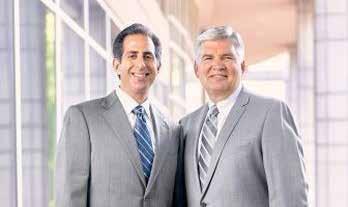
MendenFreiman LLP was recognized in the inaugural Chambers and Partners Georgia Spotlight Guide 2026.
MendenFreiman LLP was recognized in the inaugural Chambers and Partners Georgia Spotlight Guide 2026, highlighting the state’s leading boutique law firms. The firm was ranked in Trusts & Estates, reflecting its depth of expertise advising ultra-high-net-worth families, individuals, and closely held businesses across Georgia and the Southeast.
Founded nearly 30 years ago with a focus on private wealth, MendenFreiman delivers integrated, multidisciplinary solutions across estate, business, and tax law. Unlike larger firms, private client services remain at the center of the firm’s practice, ensuring direct access to senior attorneys who understand each client’s story, goals, and legacy.
Co-founding partner Lawrence H. (Larry) Freiman was also recognized for the seventh consecutive year in the prestigious Chambers High Net Worth Guide,
honoring his work advising clients on complex wealth transfer, business succession, and legacy planning.
“We are honored to be recognized in the inaugural Chambers Georgia Spotlight,” said Freiman. “These acknowledgments reflect our commitment to delivering sophisticated, high-touch legal solutions that help clients protect and grow wealth across generations.”
MendenFreiman’s Private Wealth team of eight attorneys serves families with combined assets exceeding $7.5 billion, providing seamless solutions in estate planning, business succession, tax strategy, and philanthropy. This recognition underscores the firm’s position as a trusted leader in private wealth law in Georgia and beyond.
Learn more at www.mfcounsel.com.
Compiled
by
AJT Staff

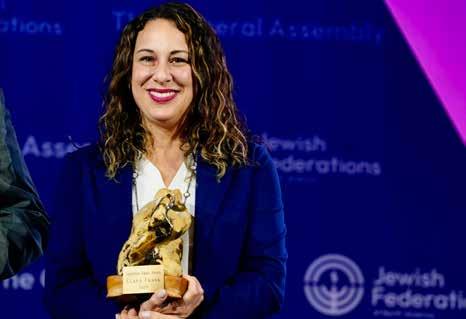
Five outstanding professionals who have made exceptional contributions to the Jewish world will receive the first ever Grinspoon Amber Awards at the annual Jewish Federations of North America General Assembly. The Awards honor professionals whose leadership and dedication have strengthened Jewish life in meaningful and enduring ways, celebrating individuals whose work shapes and uplifts the Jewish community. The inaugural Awards, first announced at the 2024 General Assembly, reflect both organizations’ shared commitment to celebrating and supporting the professionals who sustain Jewish communal life.
Each 2025 Grinspoon Amber Awards recipient will receive a $10,000 prize and the opportunity to “pay it forward” by selecting two individuals they know whose work shapes Jewish life to receive Peer Recognition Grants of $2,500 each. This distinctive feature is intended to foster a ripple effect of gratitude, mentorship, and shared celebration across the Jewish communal field.
The 2025 Grinspoon Amber Awards honorees are:
Elana Frank, founder and CEO, Jewish Fertility Foundation (Atlanta, Ga.)
Rabbi Ana Bonnheim, founding executive director, Jewish Learning Collaborative (Charlotte, N.C.)
Jeremy Burton, CEO, JCRC Boston (Boston, Mass.)
Jonathan Falk, vice president, Israel Action and Addressing Antisemitism Program, Hillel International (Denver,
Colo.)
Michelle Koplan, chief executive officer, BB360 (Portland, Ore.)
Upon finding out she had been selected, Frank shared, “[I was] stunned and honored — and immediately aware that this recognition belongs to many. I thought first of our clients and our staff — the heart of JFF — who show up every day with compassion and excellence. I also thought of our volunteers (Fertility Buddies who serve as mentors for people currently experiencing infertility), support group therapists, fertility doctors, and community partners who walk with families through vulnerable moments.”
Frank continued about what her selection means for the Jewish Fertility Foundation and its community.
“Awards matter only if they widen the circle of support; my first instinct was to use the visibility for impact, not applause. I’m especially grateful to the philanthropic partners and individual donors who have sustained our work,” she said.
Know someone who’s making an outstanding contribution to Jewish communal life? Nominations for the 2026 Grinspoon Amber Awards will open on Jan. 1, 2026, and extend through the end of February. Eligible nominees will then be invited to apply. For details on eligibility and the nomination process, visit www.amberawards.org or email amberawards@hgf.org.
Compiled by AJT Staff
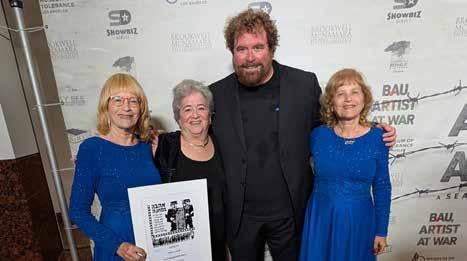
Clila Bau, Lee Tanenbaum, director Sean McNamara, and Hadasa Bau at the Los Angeles premiere of “Bau, Artist at War,” at the Museum of Tolerance on Sept. 21.
Most people know Joseph Bau from “Schindler’s List,” which immortalized the moment he and fellow prisoner, Rebecca Tennenbaum, secretly married in 1944 inside the Plaszów concentration camp. With scraps of cloth for a veil and witnesses standing watch, their whispered vows were an act of resistance against Nazi brutality.
But Joseph Bau’s life was far more than a single cinematic scene. The documents he forged saved Jewish lives in the Krakow Ghetto, in the Plaszów labor camp, and at Oskar Schindler’s ammunition factory in Brünnlitz.
After the war, Joseph became one of Israel’s pioneering animators and graphic artists, using creativity and humor to help rebuild Jewish cultural life. Known as the Israeli Walt Disney, he became a typographer, poet, satirist, inventor, author, and publisher — all guided by the singular belief that joy is an act of resistance.
In 1960, Bau opened his art studio in Tel Aviv, a cultural laboratory of humor, design, poetry, and ideas. Today, that studio is the Joseph Bau Museum, preserving the life, art, and legacy of a man who brought laughter and creativity to a world recovering from tragedy. For more than 20 years, his daughters, Clila and Hadasa Bau, have directed the Joseph Bau Museum, one of more than 200 officially recognized heritage sites in Israel. However, today, the museum’s future hangs in the balance. The building that houses Bau’s original studio has been sold. Without a new home, this treasure — intimate, original, unrepeatable — could vanish.
Lee Tennenbaum was honored to join Clila and Hadasa at the Sept. 21 pre-
miere of Paramount’s feature film, “Bau, Artist at War,” at the Museum of Tolerance in Los Angeles. “Seeing Joseph and Rebecca Bau’s extraordinary story of survival, courage, and love come alive on the big screen was an unforgettable experience. It reminded me of why preserving the Joseph Bau Museum is so important. Joseph Bau’s legacy must continue to inspire future generations,” Lee Tennenbaum said.
“Bau, Artist at War” was released in the U.S. and Canada on Sept. 26, and premiered in Australia in November through the Jewish International Film Festival, and the film began streaming this month on Paramount and will be available for purchase or rental on major digital platforms — including Apple TV, Prime Video, and Fandango at Home — making Joseph and Rebecca’s story accessible to audiences around the world.
The building that houses the Joseph Bau Museum has been sold and is slated for demolition. As a first step to secure the museum’s future, the Bau family has launched an urgent global crowdfunding campaign to raise $200,000. The funds will support a museum relocation feasibility study and business plan with Gallagher & Associates, a world-leading museum planning and design firm, as well as other essential relocation expenses. To donate, please visit www.causematch. com/josephbaumuseum
For more information about Joseph and Rebecca Bau, the film, view the virtual tour, sign up for the newsletter, learn how to host the traveling exhibition, and more: www.linktr.ee/JosephBauHouse
Compiled by AJT Staff
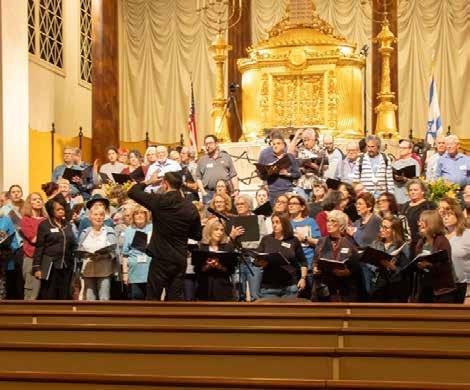
In a moving display of unity, resilience, and shared humanity, more than 180 singers and instrumentalists gathered at The Temple on Sunday, Nov. 9, for, “Kristallnacht: Beyond the Broken Glass – A Concert of Healing and Light,” a multi-faith, multi-city, musical commemoration of Kristallnacht.
The event marked the 87th anniversary of the “Night of Broken Glass,” when synagogues, Jewish businesses, and homes across Germany and Austria were shattered in an eruption of state-sanctioned antisemitic violence. Voices from Chicago, Toronto, and the greater Atlanta area came together.
The performance featured The Temple Singers and members of the Atlanta Symphony Orchestra (ASO), joined by choirs from Congregation Bet Haverim, First Presbyterian Church, and St. Luke’s Episcopal Church in Atlanta; Holy Blossom Temple in Toronto; and Kol Zimrah Jewish Community Singers of Chicago. Together, they offered a program that blended sacred and secular works from Jewish and Christian traditions, weaving a musical tapestry of reflection, mourning, and inspiration.
One of the afternoon’s most stirring moments came with Dmitri Shostakovich’s, “String Quartet No. 8,” a somber
and haunting composition that conveys the composer’s despair at the devastation wrought by war and fascism. The performance by ASO instrumentalists stood as a reminder that the wounds of the past continue to reverberate — and that music remains one of our most powerful tools of expression.
The combined choirs also presented pieces centered on light, healing, and spiritual resilience, including Leonard Cohen’s, “Anthem,” with its enduring message: “There is a crack in everything; that’s how the light gets in.” Throughout the program, the theme and melodies affirmed the idea that light is not confined to any one faith or people, and that the work of healing is a shared human task.
“We gathered not only to remember the destruction, but to affirm the resilience of the Jewish people; to recognize that though the glass was broken, the human spirit endured,” said The Temple’s cantor Tracey Scher, concert organizer. “Music has the power to speak where words fall short. Harmonies can be created even in times of deep darkness. Music reminds us that our shared humanity is stronger than that which seeks to divide.”
Compiled by AJT Staff
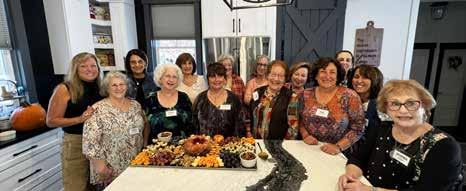
Hadassah members gather around the beautiful charcuterie board they helped create while learning about Hadassah’s Every Bite Counts program for healthy eating.
On Nov. 16, Hadassah Greater Atlanta’s Ketura Group and guests gathered at Sweet Apple Farms, the home of Michele Weiner-Merbaum, a Hadassah leader and accomplished chef. She graciously provided her kitchen and expertise to demonstrate the preparation of a charcuterie board of tantalizing tidbits with the help of the afternoon’s participants. The board could serve as a perfect complement to Chanukah cuisine or any festive occasion one may be hosting.
The event highlighted Hadassah’s nutrition program, Every Bite Counts, the third phase of Every Beat Counts, Hadassah’s heart health program. The nutrition program’s goal is to promote heart health and features delicious and healthy recipes. Launched a few years ago, Every Beat Counts educated more than 10,000 women nationwide that 90 percent of women have one or more risk factors for heart disease.
Weiner-Merbaum explains, “When it comes to your health, Hadassah believes it starts with what we put into our bodies, and truly, every bite does count. I am honored to share this healthy journey
with Hadassah members today as we cook our way to a healthier and more wonderful life.”
Rosalie Agrow, HGA Ketura president added, “The hand-held bites Michele presented were not only beautifully presented, delicious and healthy, but were exactly the kind of thing you can serve when you want people to think you worked very hard … even if you didn’t! That’s the true spirit of Jewish cooking.”
Simone Wilker, advocacy chair for Hadassah Greater Atlanta, says, “Hadassah calls for increased funding for women’s health research, encouraging more women to enroll in clinical trials and enter the biomedical field. Hadassah supports health equity, ensuring women are not charged more or denied coverage because of gender. Our passionate community is 300,000 strong, individuals united behind our powerful mission of healing the world.”
For more information, go to www. hadassah.org.
Compiled by AJT Staff



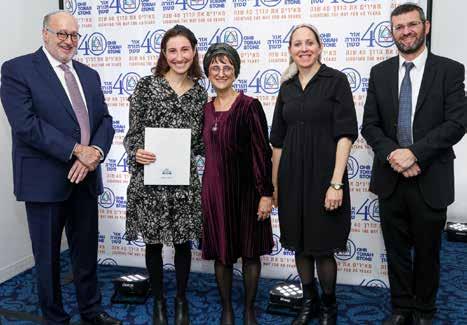
Ohr Torah Stone (OTS) recently celebrated its Annual Dinner, honoring Natan Sharansky and Robert M. Beren z”l, two figures whose leadership, courage, and generosity have strengthened Jewish communities around the world. They are the inaugural recipients of the Rabbi Shlomo Riskin Legacy Award, created to recognize individuals who embody Rabbi Riskin’s lifelong commitment to Jewish identity, education, and impact.
The evening also marked a significant milestone for Ohr Torah Stone’s International Halakhic Scholars Program, which celebrated the graduation of its first cohort – 19 graduates who completed four years of intensive halakhic study, chavruta learning, and rigorous exams in the laws of shabbat, kashrut, mourning, and niddah under the direction of program director, Rabbanit Dr. Hannah Hashkes, and senior faculty member, Rabbi David Brofsky. These extraordinary scholars are already strengthening Jewish communities around the world.
Dr. Rebecca Winter, one of the graduates, and currently the high school Judaics principal and teacher at Atlanta Jewish Academy, delivered the evening’s Dvar Torah after being introduced by Rabbanit Chamutal Shoval, director of OTS’s Susi Bradfield Women’s Institute of Halakhic Leadership (WIHL).
“I began this program as a way to bring organized, high-level Torah learning into my week,” Winter said. “The structure of weekly chevrutah learning,
together with a Sunday shiur, framed my entire week around Torah. Now that we’ve finished, many of us feel both a deep sense of accomplishment and a real loss of that consistency. In fact, one cohort member has already organized a monthly halacha shiur so we can continue learning together.”
Winter continued about the impact the Halakhic Scholars Program has had on her.
“Studying halacha has truly been a gift,” she said. “I’m now better versed in the concepts and language of our halakhic system, and I have a much greater respect for its depth and nuance. Professionally, this learning has enabled me to engage more confidently with students and faculty when halakhic questions arise. Studying halacha has also sharpened my thinking. Even in my psychology practice, I find myself analyzing data and patterns with greater precision because the program strengthened my habits of close reading and structured reasoning.”
The dinner brought together lay leaders, educators, philanthropists, rabbis, and community members, including Eric Fingerhut, president & CEO of Jewish Federations of North America, and Eric Goldstein, CEO of UJA, who share OTS’s mission to strengthen Jewish identity, empower the next generation, and build vibrant Jewish communities in Israel and around the world.
Compiled by AJT Staff
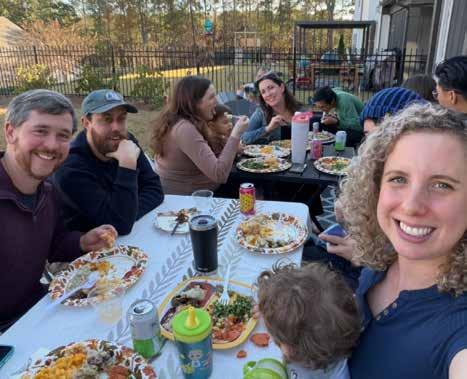
Alexandra Toren, service ambassador with Repair the World Atlanta, hosted a Friendsgiving centered on meaningful Jewish service amid SNAP disruptions.
Alexandra Toren, service ambassador with Repair the World Atlanta, hosted a Friendsgiving centered on meaningful Jewish service amid SNAP disruptions. Toren mobilized a local network to join a potluck and food drive, where they collected pounds of canned and dry food for local Syrian families facing the impacts of disrupted food stamps.
The group of friends discussed how their service connects to the Jewish value of repairing the world, tikkun olam, the very value that inspired Toren to serve with the Syrian refugee community almost a decade prior. Toren shared, “I felt overwhelmed learning about the Syrian

civil war but felt very connected to refugee families, as my Jewish ancestors have been refugees in many generations. My grandmother, who I am close with, was a refugee from Czechoslovakia as her family escaped the Nazis in 1939. That history led me to develop a relationship with a few Syrian refugee families in pursuit of tikkun olam, and it meant a lot for my friends to donate today to help these families during this particularly difficult time. It was a really fulfilling experience to blend something so personal with a community gathering that had greater impact beyond just our group.”
Compiled by AJT Staff








I was raised on newspapers. I was a news geek at a young age. My mother says I traced newspaper headlines as a 4-year-old.
Growing up, the Chicago Sun-Times landed in our driveway every morning. (The Chicago Tribune, the other morning paper, was less popular in the Jewish community, as its publisher, Colonel Robert R. McCormick, was viewed, with good reason, as antisemitic.)
My father brought the New York Times home from work. At our local public library, I read the Chicago Daily News, an afternoon paper, along with newspapers from elsewhere in the country.
I wrote for my mimeographed junior high school newspaper and for my high school and college papers. During
a graduate school semester, I reported from Washington, D.C., for newspapers in Iowa and Montana.
There was little question what I wanted to be when I grew up.
My professional career began at a newspaper that covered cities, towns, and rural areas of Iowa and Illinois along the Mississippi River.
I started as the nightside police reporter, working a shift that began at 5 p.m. and ended at 1 a.m., or later. Those hours meant that I could go down to the press room, usually standing on the stairs, and watch as the first editions of the morning paper — perhaps with my byline on the front page — rolled off those high-speed, deafening machines, and were bundled for delivery.
(An older generation of those presses starred in the last scene of the 1952 blackand-white film, “Deadline — U.S.A.,” in which Humphrey Bogart, as the crusading editor of a newspaper about to be sold at auction, delivers one of my favorite closing lines. You can find it online.)
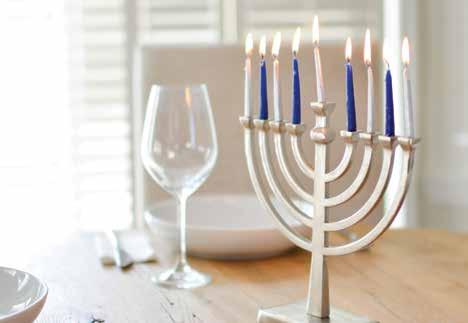


After being caught in a layoff, I succumbed to entreaties to “cross the street” to television news, where I remained for more than 30 years.
Six months after we married, Audrey and I left television news jobs in Kansas City for a study program in Israel. I quit to work freelance as CNN’s Jerusalem bureau producer. Audrey came on board after completing the program. When we moved to Atlanta 38 years ago, to work for the network, one of the first things we did was to subscribe to the Atlanta Journal-Constitution.
Reading the AJC has been a daily course in Southern history, politics, and culture. Its reporters and columnists have expanded my understanding of a region that — to a Jewish boy raised in the Chicago area — was, in some regards, a foreign country.
Now the paper in that newspaper is going away. As of Jan. 1, 2026 — 157 years after the Atlanta Constitution was founded in 1868 — the AJC will be digital only.
We are among the dinosaurs on our block, where the number of houses with a newspaper in the driveway, daily or Sunday, can be counted on one hand. The AJC has about 115,000 total subscribers, of whom 75,000 are online only. As the latter figure has increased steadily, the number of print subscribers has plummeted, to less than half what it was five years ago.
The economics of the newspaper business, to put it mildly, suck. According to the Medill Local News Initiative at Northwestern University, more than 3,400 print newspapers have closed in the past 20 years. Of the remaining 4,800-plus newspapers, 80 percent are weeklies. Only one-third of the 1,033
daily newspapers remaining in 2024 still printed seven days a week.
The Medill Local News Initiative also counted 650 digital-only news sites. In the past decade, Atlanta has seen a proliferation of digital outlets focusing on local and state news.
The AJC will be the largest metropolitan daily to go digital only, at least for now.
The paper is thrown from a car onto our driveway around daybreak. At breakfast, I read the sports section first, with my plate on the paper. I thumb through the other sections, looking for items of interest, stories I may have overlooked in my online perusal of various news sources.
I have been reading newspapers online for nearly 30 years, but I will miss the tactile sensation of holding the AJC broadsheet. There will be no more fingers smudged with traces of printer’s ink.
The AJC offered long-term subscribers an iPad and a commemorative book as thank you gifts.
In a letter published in the AJC, one such reader said: “I’ll accept the iPad with much appreciation, but I am not sure how easy it will be to share the reading at the breakfast table. Although coffee spills may have made a morning mess, the newspaper always did dry; I am not so sure the iPad will be as forgiving.”
As I contemplate the cessation of the AJC’s print edition, I close with a nod to the AJC’s legendary sportswriter, Furman Bisher, who habitually ended his columns with a word found in the Book of Psalms, a Hebrew word whose various translations include “stop and think about that.”
“Selah.” ì


In recognition of the Atlanta Jewish Times celebrating its 100th year from its first edition in 1925, the AJT will re-publish articles from the Southern Israelite from editions dating as far back as 1929, the earliest edition available through the Digital Library of Georgia. All of the Southern Israelite editions, from 1929-1986, can be viewed at gahistoricnewspapers.galileo.usg.edu/lccn/sn78003973/
Please enjoy this retrospective of Jewish journalism in Atlanta and across Georgia, and thank you for supporting the Atlanta Jewish Times for the last 100 years.
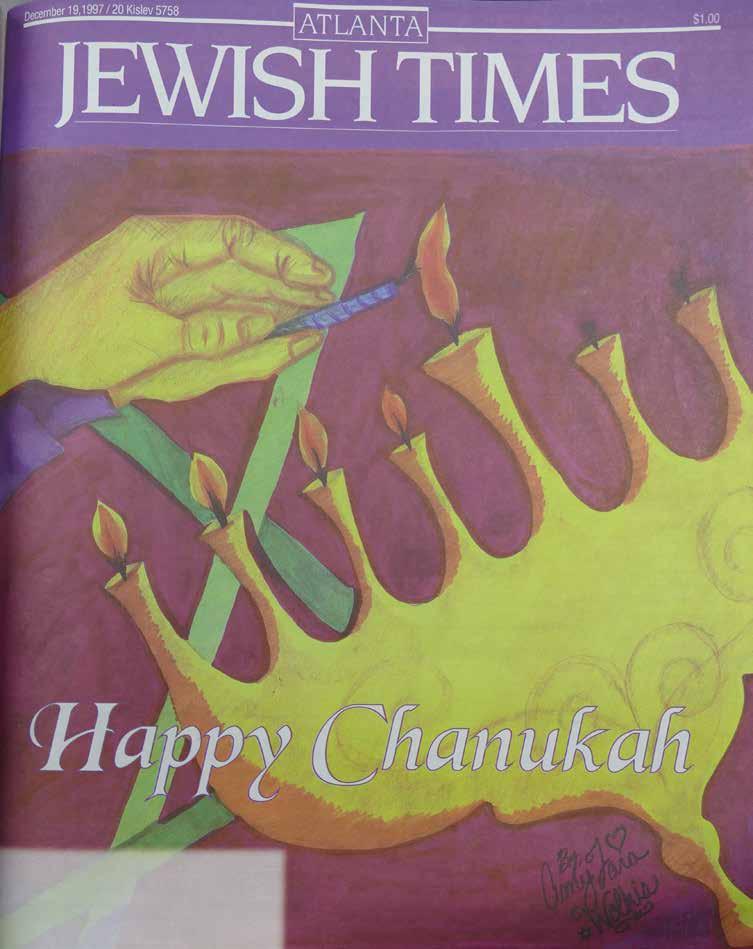
By Bob Bahr
Although Chanukah latkes don’t require expert kitchen skills, for those who want to make it easy for themselves, there’s always the frozen, ready-to-heat packages from Trader Joe’s or the mixes from Manischewitz or Streit’s. But if you want to go first class for $40 plus shipping, the Goldbelly website will send you a dozen from Russ and Daughters on New York City’s Lower East Side.
They are big sellers. An estimated 40,000 of the latkes are sold during the Chanukah holiday in the local New York store and by mail order. They are also available year-round and sell, even on a slow day, about 800 to hungry New Yorkers.
In 1914, Joel Russ packed up his pushcart on the streets of the mostly Jewish neighborhood in Lower Manhattan and opened his own small store. What he named Russ’s Cut Rate Appetizing sold herring, smoked whitefish, and pungent Polish mushrooms called borowic. Two years later, he moved to 179 East Houston St., and they’ve been in business there for
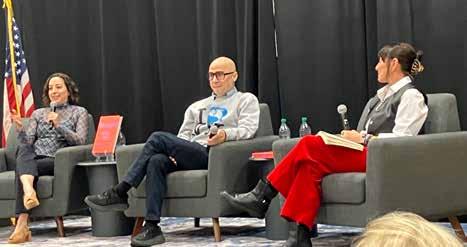
nearly 110 years.
He and his wife, Bella, had three girls and they all worked together in the store. In 1935, he renamed the business Russ and Daughters, one of the nation’s first establishments to acknowledge the female members of the enterprise.
Last month, during the waning days
of the Book Festival of the Marcus Jewish Community Center, two members of the fourth generation of the Russ family showed up with a new cookbook they have written.
Niki Russ Federman and Josh Russ Tupper have just published, “Russ and Daughters - 100 Years of Appetizing.” In
this case, appetizing is not an adjective, but a noun.
In the kosher world of the turn-ofthe-century Lower East Side, stores that sold fish and dairy products were called appetizing businesses, to distinguish them from delicatessens, which sold smoked and cured meats. Keeping milk
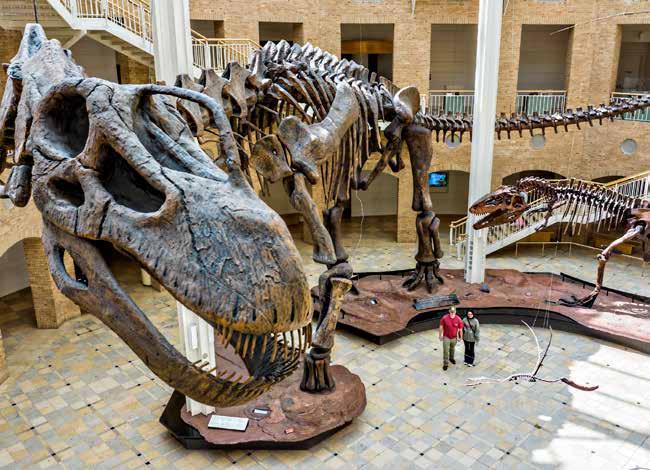
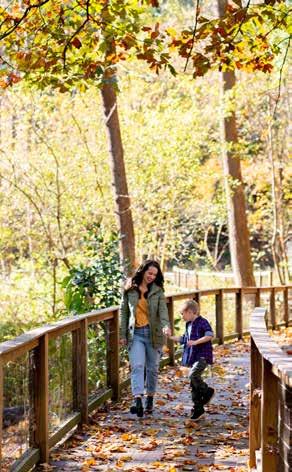
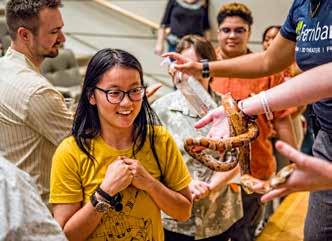
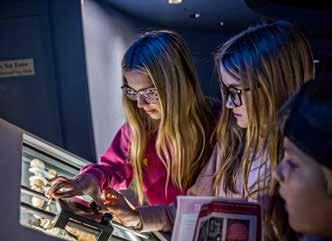
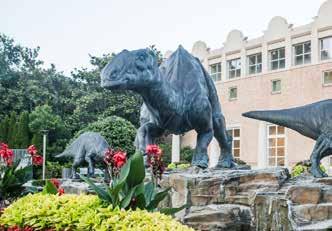


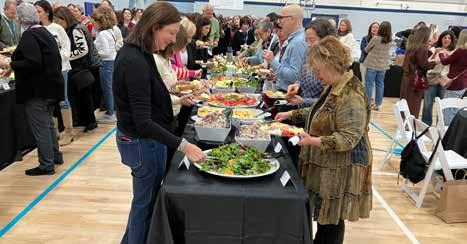
and meat items separate from one another was part of the kosher tradition. The book is a tribute not only to the centuryold family business but to the largely disappeared world of appetizing.
There are more than a dozen chapters in the book devoted to everything from soups and caviar to noshes and salads and finally to drinks and sweet baked goods. The crowd attending the MJCCA Book Festival was treated to a lavish brunch, mostly prepared locally from the cookbook’s recipes by Added Touch Catering.
The book appeared in September and is already a bestseller in the very competitive food segment of the publishing business. Amazon has made it an editor’s pick as a best book of the year.
It’s not the first time Russ family members have written about the food and recipes of their family enterprise. Over ten years ago, Mark Russ Federman
2 1/2 pounds russet potatoes, peeled
1 medium onion. peeled
2 large eggs
1/2 cup finely chopped scallions
1/2 cup matzo meal
3 tablespoons unsalted butter, melted
2 teaspoons kosher salt
1/2 teaspoon ground black pepper
1/2 teaspoon baking powder
3 cups canola oil for frying
wrote a volume with the help of the firstrate writing talent, Calvin Trillin.
And, about the same time, Julie Cohen put together a documentary about the store, called, “The Sturgeon Queens.” It featured Trillin as well as other celebrity fans of the store such as actress Maggie Gyllenhaal, the “60 Minutes” reporter Morley Safer, and Supreme Court Justice Ruth Bader Ginsberg. A highlight of the production was interviews with two of the original Russ daughters, for whom the business is named.
The two present-day authors of the Russ cookbook also make an appearance in the video work. Cohen went on to make a documentary of the Supreme Court Justice, “RGB,” which was nominated for two Oscars and was a critical and big box office success.
If you’d like to try making a dozen Russ and Daughters latkes, here’s the recipe adapted from this year’s best seller:
Wishing you a joyful Hanukkah!

Coarsely grate the potatoes and the onion. Put them in a fine mesh strainer over an empty bowl and press them to remove as much liquid as possible. Allow them to continue to drain for another three to five minutes. Pour off the potato and onion water but leave the potato starch in the bowl.
Combine the potatoes and onion with the starch, add and mix in the remaining dry ingredients. Shape into patties three inches wide and an inch thick. In batches, brown them, about two minutes a side, in a half-tablespoon oil.
Let them rest on a paper towel while you heat the remaining oil to 375 degrees. Fry them for an additional four to five minutes, without crowding, until golden. Drain on paper towel and serve hot with the usual accompaniments. For a more lavish presentation, a dollop of salmon roe atop creme fraiche is also suggested. ì


Wishing you a Hanukkah filled with light, hope, and possibility
Jewish Fertility Foundation supporting the miracle of building Jewish families."
By Robert Garber
Bustling with holiday music and community spirit, more than a thousand visitors gathered on a November Sunday at the new home of Light Up Dunwoody –the Donaldson-Bannister Farm. The free annual event, which welcomes in the holidays with a tree and menorah lighting, has been held since 1996, but has moved from its prior home in Dunwoody Village just this year. The transition has allowed for some truly impressive growth.
“As you can see, the turnout is gigantic,” said State Rep. Long Tran. “You couldn’t hold this many people at the location last year. And I think there’s a quaintness to being at a farm, and so it’s been absolutely fantastic.”
“Selfishly, it’s much closer to my house,” joked State Rep. Esther Panitch, who expressed her enjoyment of a local event like this, even if not in her personal district. “I think it’s great. This is one of the more fun things that we get to do together as a community, to bring in the holiday season for everybody. And it’s great to be a community with our friends and neigh-
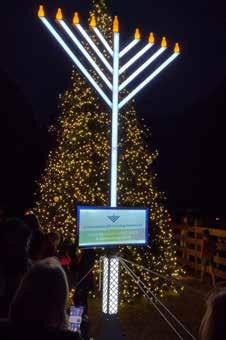
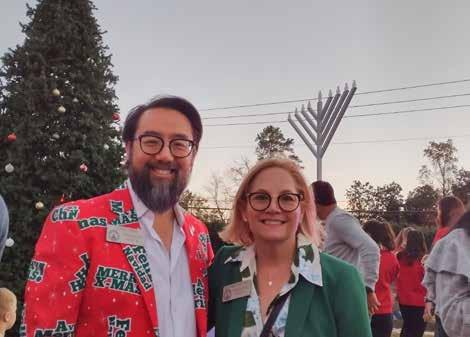
bors and elected officials and get to see the whole community coming together for something good. And especially with the music, and the dancers – it’s lots of fun.”
Bright lights and blow-up decorations adorned the farm, which featured traditional holiday activities and local vendors. There were also several perfor-
mances, including the North Georgia School of Ballet and the Dunwoody High School Marching Band – which tributed the late Coach Nash with a performance

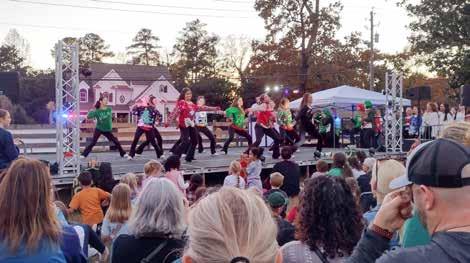
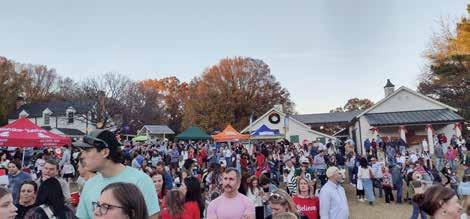
of
“Lovely Day” by Bill Withers.
Toward the end of the evening, sponsors of the event thanked the gathered crowd, and the volunteers, officials, and other sponsors who made it possible.
“The Light Up Dunwoody event is a true community event, and this year it is being brought to you by two nonprofit civic organizations – one being my organization, Dunwoody Homeowner’s Association (DHA), and the Dunwoody Preservation Trust (DPT). Everything we do at DHA is for the community,” said DHA President Tim Brown. “I cannot get off of this stage without giving a heartfelt thanks, and almost ferklempt thanks, if you will, to two people – those being Jimmy Economos and Leah Economos. We’re almost in our 20th year of doing this event, and this event would not be what it is for you without the blood, sweat, and tears of those two people, so thank you.”
“Thank you, DHA, thank you, DPT, for letting us use the Donaldson-Bannister Farmhouse,” said Jimmy Economos. “This event is beautiful and ladies and gentlemen, this is our forever home, so get comfortable: we’re going to start doing more shows here.”
“Sometimes, change is hard,” said Dunwoody Mayor Lynn Deutsch, right before the final performances. “And moving this from Dunwoody Village to the
Donaldson-Bannister house was a leap of faith, but you have shown us how willing you are to take a chance on something new, and this is fantastic!”
Just before the lighting ceremony was a series of rapid-fire, holiday-themed performances from the dance troupes of Dan & Company, from their youngest group up to their most experienced. After they finished, in the short break before the tree-lighting, several young children across the farm slowly filtered onto the stage and started dancing. As their spontaneous disco came to an end, everyone gathered around the tree and the menorah that was dedicated last year to the memory of Sgt. Rose Lubin, and began shouting out the countdown. As the crowd reached zero, both the tree and menorah burst into light.
Amidst the crowd, Tran spoke on what the event meant for the community.
“Just look at Dunwoody’s complete diversity of life here,” said Tran. “You have everyone of different religious backgrounds, cultural backgrounds, different races – to just come together and celebrate and have fun. When the nation is getting split apart, it’s very important that a community like Dunwoody has something like this.”
The tree and menorah will remain on display through the end of the month. ì
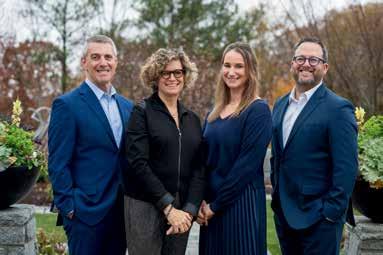

By Hannah L. with Rabbi Harvey Winokur
Chanukah tells of a small band of Jews — the Maccabees — who rose up against the mighty Greek empire after it desecrated the Holy Temple. Against all odds, they reclaimed their sacred space, restored what had been defiled, and lit a small jar of oil whose flame miraculously lasted eight days.
For many who struggle with addiction, this story is not ancient history but a mirror. Our bodies and souls are our inner temple. Addiction — whether to substances, technology, food, or destructive habits — acts like an occupying force, pulling us off our intended path and corrupting what is most holy within us: our values, our integrity, and our spirit.
Yet the Maccabees live on in us. Mussar wisdom teaches that we can find our way back by cultivating our inner strengths — our soul traits (middot). Ometz lev, courage of the heart, is what allows a person to journey toward recovery, just as the Maccabees stepped into a ruined temple and began clearing away

the rubble, stone by stone.
The tiny jar of oil is a reminder of bitachon — trust. Staying on the path of change requires that we light whatever faith we have, even if it feels like only enough for today. We move forward one day at a time, trusting that tomorrow’s strength will come when tomorrow arrives.
And through it all, Chanukah teaches netzach — resilience. Our ancestors overcame darkness and desecration before; their spiritual stamina lives in us as we confront our own inner battles.
The miracle of Chanukah is not only that the oil lasted. It is that human beings, fragile and outnumbered, found
the courage, trust, and resilience to begin again. Recovery is that same miracle, replayed in the sacred temple of the human heart — one step, one day, one small light at a time.
Hannah L. is the author of, “Mussar in Recovery-A Jewish Spiritual Path to Serenity and Joy.” ì
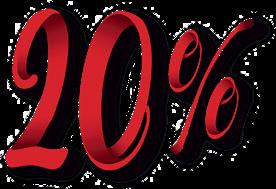

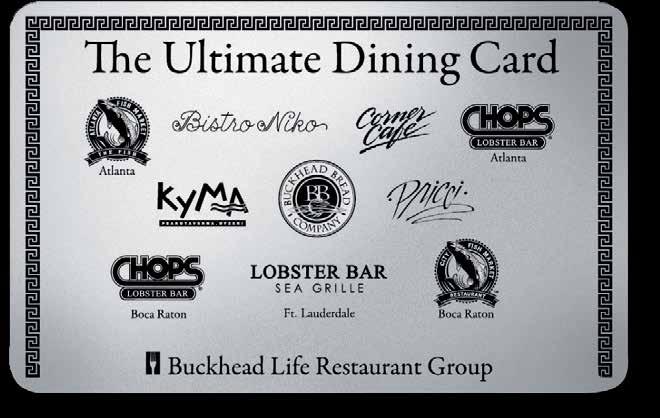
This Chanukah, eight new Olim will gather around their menorahs for the first time as Israeli citizens. In a year when light has felt particularly precious, the festival of lights carries new meaning for those who chose to begin their lives anew in the Jewish homeland, through Nefesh B’Nefesh in cooperation with the Ministry of Aliyah and Integration, The Jewish Agency for Israel, Keren Kayemeth LeIsrael, and Jewish National Fund-USA.
For many, the most striking difference is simply being surrounded by the holiday rather than explaining it. Etty Wiener, who moved from New York to Jerusalem this summer with her husband and two children, still marvels at seeing menorahs in store windows and hearing her son come home from school excited about what he learned about Chanukah.
“In New York, Chanukah was beautiful, but always overshadowed,” she said. “Here, it feels like the whole country is celebrating with us.” Her family plans to adopt the custom of placing their menorah outside, something people in the Diaspora often can’t do. “Chanukah is about showing the miracle of the Jewish people. Being in Israel for that, it feels like the light at the end of the tunnel. It’s Jewish pride illuminated.”
That sense of belonging also resonates deeply with Nicole Horne, who moved to Tel Aviv from Washington, D.C. in May. “Elsewhere, you sometimes feel like an outsider for being Jewish,” Nicole said. “But here? Chanukah isn’t the alternative holiday, it’s just part of life.” She laughed remembering how early her workplace in Israel began decorating, and she admitted she is “unreasonably excited” for sufganiyot. “Seeing so many menorahs everywhere is something I’ve never experienced before. It feels special. It feels like home.”
In Ra’anana, Irving Safdieh, who made Aliyah recently from New Jersey, noticed his children embracing their new sense of independence, something he and his wife hoped Aliyah would offer them. “Our kids take the bus on their own now. They have made so many friends. They’re thriving,” he said. Celebrating Chanukah in Israel has only amplified that joy. Instead of Christmas décor, their outings are filled with glowing Hanukkiot, and they’ve turned sampling sufganiyot into a family-wide ranking competition. Irving said, “going to public menorah lightings with Israelis, really makes you feel part of something bigger.”
Yaffa Troodler, a Bat Sherut (Na-
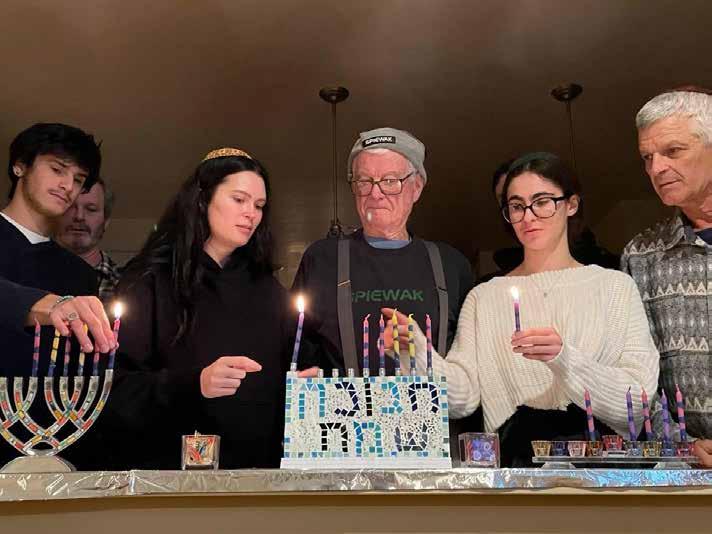
tional Service Volunteer) that made Aliyah from Philadelphia, has spent her sherut leumi (volunteer service) working in schools for children with disabilities.
“Doing anything in my power to give back to the country is my way of bringing more light into Israel as an Israeli,” Yaffa explained. “After making Aliyah, I finally felt a sense of belonging,” she reflected. Celebrating Chanukah in Israel has only strengthened that feeling. “You really feel the presence of Chanukah here, it’s warm, it’s home,” she said. For Yaffa, lighting the menorah this year isn’t just a personal milestone, it’s the beginning of a legacy. “Because of me, my future generations will celebrate Chanukah here,” Yaffa said.
For Daniel Friedman, who moved from New Orleans to Tel Aviv this summer, Chanukah brings his Aliyah experience full circle. His first visit to Israel was during Chanukah a few years ago and returning as a citizen feels symbolic. “Rededicating myself to Judaism, returning to the land, it mirrors the Chanukah story. You get eight nights instead of one. Now I am here, and that alone feels like
a miracle.”
Just a few months into her life as an Israeli, Adina Spiewak is looking forward to building her own traditions. After years of celebrating Chanukah in the U.S. with events, gifts, and obligations, she’s embraced the quieter, more intentional rhythm she’s found in Israel. “I want to bring light to other people,” she said. “Each of us is a vessel for our neshama (soul), and when our lights come together, they shine brighter.” A former campus Chabad president who helped guide students through the turmoil of Oct. 7, she said her move feels deeply right. “There’s no time like the present.”
In the northern city of Maalot Tarshiha, Scott Friedman and his family, who joined a cohort of English-speaking families that also made Aliyah, are preparing to celebrate Chanukah in a tightly knit, warm community in Israel’s periphery. “Growing up in the States, the holidays sometimes felt like a third-person story,” Scott explained. “Here, it feels like first-person. It feels like ours.”
Their daughter has already integrated into school, and the community even
created a special Chanukah program for the new Olim. “We finally get to use a pey on our dreidels,” he laughed. “And we’re even looking for a box so we can put our menorah outside like everyone else.”
For Dr. Talia Sudai, a family physician from Toronto now working in a kupat cholim (health clinic) in the center of Israel, Chanukah brings a sense of warmth during a challenging transition. “In Canada, the holiday could feel isolated,” she explained. “Here, I feel connected, even to people I don’t know, the sense of community is so strong.” She hopes to organize a candle-lighting with her brother, who also made Aliyah, a small gesture of the light she wants to bring to her new home.
As these eight new Israelis prepare for the holiday, their journeys reflect the story of Chanukah. A story of resilience, renewal, and an unwavering belief that even in difficult times, light endures. This year, their candles burn not only for ancient miracles but for the modern miracle of coming home. ì
Compiled by AJT Staff


Harmony and coexistence refer to the ability of diverse individuals and groups to live together peacefully in the same space. As Chanukah draws closer, describe the meaning of harmony and coexistence, and its importance to you.
For our Chanukah holiday issue, we invited members of our community to share their responses.
As a parent, Hanukkah gives me a chance to show my kids what kindness looks like in everyday life. The holiday reminds us that even a small light can grow stronger, and I want them to see that their actions can do the same. When they watch me speak kindly to others, help someone who needs support, or take an extra moment to be patient, they learn through my example—not just my words. Like the menorah that becomes brighter each night, I hope they learn that kindness grows when we keep practicing it. Even small choices like sharing toys, saying thank you, including a friend—teach them that they have the power to brighten someone’s day.
Giving back during Hanukkah is another way I try to nurture this in them. I volunteer with The Sandwich Project, where every Wednesday volunteers make sandwiches for people experiencing homelessness or food insecurity. It’s simple work—bread, ingredients, and caring hands—but it matters. There are people in our community who are hungry, and sharing our blessings is one way to show them they are not forgotten. When I involve my kids, even in small ways like packing bags or talking about why we volunteer, they begin to understand that generosity is not about being older or having more; it’s about caring enough to help.
I want my children to know that not everyone has a warm home, a holiday meal, or a family gathering full of laughter. When we share a meal, offer kindness, or give our time, it can bring real comfort to someone who needs it. To me, that is one of the miracles of Hanukkah—not just the oil that lasted eight days, but how small acts of goodness can last longer and reach farther than we expect. If my kids grow up seeing kindness as something natural, something we do without hesitation, then I know I’m passing on the values that matter most.
Marni Bekerman is the Middle School Program Manager & Alumni Coordinator at The Epstein School and owner of Marni Mahj.
As we gather around our chanukiyot this Chanukkah, I’m reminded once again that the miracle we celebrate was not only about oil that burned longer than expected. It was about a people who refused to let their light go out — who believed, even in the dimmest moment, that holiness and hope could still flourish.
Chanukkah arrives at the darkest time of the year, and perhaps not coincidentally, during a moment when many in our community — and our world — are searching for strength. The act of lighting each candle, one night after the next, is a quiet but profound declaration: darkness is not the end of our story.
Our tradition teaches that the light of the chanukiyah must face outward, toward the public square. It is not merely a private ritual but a public statement of who we strive to be. Each flame challenges us to push back against cynicism, division, and despair. Each flame calls us to widen our compassion, deepen our gratitude, and lift up those whose spirits have grown dim.
When the Maccabees entered the Temple, they didn’t know if their small jar of oil would be enough. They acted anyway. That is the heart of the miracle. Not certainty— courage. Not perfection—faith.
This Chanukkah, may we find the strength to bring our own light into the world, even when we feel we have only a small amount to give. May our homes, our synagogues, and our community shine brightly with the values that have sustained us for generations: justice, kindness, resilience, and hope.
And may each candle remind us that miracles often begin with the simplest human act—choosing to kindle a flame.
Chag Urim Sameach. May it be a season filled with warmth, peace, and enduring light.
Rabbi Berg is the Senior Rabbi of The Temple.

It’s difficult to talk about harmony and coexistence while we still have one hostage left in Gaza, Sgt. Ran Gvili (as of 12/8/25), who was murdered by a terrorist group. Knowing he is the only one still there makes it even more painful, but it also reminds us how important it is to hold on to hope and strength. We must stay positive and believe that he will be brought back home soon for a proper, respectful burial, so his family and our whole community can honor him the way he deserves.
As Chanukah approaches, harmony and coexistence take on a different meaning for me. I think about the bright light we create when we stand together, support one another, and refuse to let darkness take over. Even the smallest light can push away so much darkness, and that is what gives us strength during times like these.
This holiday reminds us to respect one another, embrace our differences, and build a community where everyone feels safe and valued. Let’s choose kindness, understanding, and unity, even when we come from different backgrounds or have different beliefs.
This Chanukah, as we light the candles, may we remember that small moments of goodness matter. We know our actions can’t bring Sgt. Ran Gvili home, but the light of hope and unity keeps us strong as we wait for his respectful return and the closure his family deserves.
And if by the time this is read Sgt. Ran has already been brought home, may his memory be honored with dignity, and may his family and all of us find comfort, healing, and a measure of peace.
Delilah Cohen is a community volunteer and advocate committed to supporting Israel, Jewish life, and strengthening the Atlanta community.

When people talk about harmony and coexistence, I tend to picture something big and abstract. But in my house, it shows up in much smaller moments… usually in the kitchen.
I grew up Jewish in Atlanta. Chanukah meant the blessings I learned by heart, candle wax dripping onto the kitchen counter, and family bets on which candle would burn out last. And, of course, potato latkes that somehow tasted better every year my mom made them. The holiday felt familiar in all the right ways… the light, the laughter, and the simple ritual of gathering around the menorah together.
My wife grew up Catholic in Puerto Rico. Her family celebrates December with a rhythm I didn’t know as a kid… loud, late nights, full of cousins sitting on the back porch, passing around coquito. Different melodies, same feeling of warmth and belonging.
So, December in our house looks like two holidays running in parallel, and it works better than you’d think. The menorah sits right next to the tree. One minute, I’m singing the Chanukah blessings and frying latkes, the next we’re shaking up a batch of coquito. Our kids move between traditions like it’s totally normal. They know none of it competes. It just layers.
And then there are the traditions you definitely don’t see in Hallmark specials. In Puerto Rico, parrandas are a thing, which I now understand means a very enthusiastic group of friends showing up at your house well after midnight with instruments, zero warning, and the energy of a college marching band.
The first time it happened, I opened my in-laws’ front door half-asleep, wearing mismatched PJs, while friends and family poured in with percussion instruments, singing at full volume. My español es muy malo, so I still don’t know what the songs were. The menorah flickered politely in the background, doing its best to keep up with the chaos. It was loud, joyful, a little disorienting, and honestly the best kind of coexistence I could ask for.
As Chanukah draws closer, I keep thinking about how easy it is to assume that harmony means everyone shares one story or one way of celebrating. My life has taught me the opposite. Harmony is what you get when you stop trying to merge traditions and just let them coexist honestly. You don’t lose anything. You gain a deeper appreciation for what each one brings, and the confidence that two traditions can stand side by side and still feel whole.
Jay Cranman is the CEO at Jewish Family & Career Services.


Convenient satellite office in Sandy Springs Marion Bodner has 25 years of experience as a clinical esthetician.
Treatments are cutting edge specializing in natural and pure modalities to achieve healthy skin.
Your skin will be:
Hydrated | Toned Facial muscles | Extractions from blackheads and impurities | Smooth brighter and glowing skin | Look years younger



Have the lights of Hanukkah begun flickering for you? Mine have, despite the fortitude and resilience I’d like to think I have relied upon for the past several decades.
Being Jewish these days is not easy. I remember my mother telling a story of how she told an elementary school classmate one time that she was Baptist, not wanting to be questioned during the 1940s in Atlanta. I listened with discomfort as my grandmother told the story of her family moving to Birmingham for several years during the Leo Frank trial. My father spoke of his family leaving Latvia in the 1920s, not entirely certain of what had happened to his extended family during the Holocaust. I later found relevant information through an elderly cousin and Yad Vashem, but that story is for another day.
So, here we are in 2025, at a time that follows what many have called the “golden age of American jewry.” Yet for many Jewish people, including my father, they never fully trusted that antisemitism had gone away and would not rear its ugly head again. Despite my childhood protestations that “it’s not like that anymore and that the world had changed,” I’m afraid to say he may have been on to something.
Despite how different our world looks now, the patterns feel disturbingly familiar. The stories I once heard sounded like distant echoes from another lifetime, warnings from a harsher era. But lately, those echoes have grown louder. We see the news where Jewish students on college campuses are told to stay inside “for their own safety,” on social media where old stereotypes return with frightening speed, and in the uneasy silence of people who claim they oppose hate but look away when the target is us. The lessons many of our family members carried across continents and decades have come back into sharp focus: antisemitism does not disappear. It simply waits until the right moment.
What we are watching unfold now is hateful and often ignorant rhetoric. The language used today includes anti-Zionist slogans, as well as the old tropes. The platforms have changed to become digital, embracing the latest technology to reach people across the globe. Yet the strategy is ancient -- isolate the Jews, question their belonging, and blame them for problems they did not create. You do not need a history book to recognize the pattern.
Hanukkah just feels different to me this year. The holiday has never been about grand miracles so much as it has been about human courage and the desire to bring light into the world. The Maccabees did not wait for the darkness to lift. They lit the oil in the menorah, expecting it to last one day. Instead, the light they brought into the Temple lasted eight days and was declared a miracle. And while I don’t subscribe to simply waiting for a miracle to turn around society, there is value in trusting that the Universe or Hashem has a grand plan in mind. Just as the Maccabees refused to let fear dictate their identity, we can gain strength in studying Torah, taking a Judaics class, or showing up at Shabbat services.
This year, our family will be lighting our menorahs with intention -- not just to remember the past, but to push back against the shadows creeping into the present. I’m hoping others will do the same in their own way. Speak up when you hear antisemitism dismissed as a misunderstanding. Encourage your Jewish friends and family to proudly wear their Stars of David. Refuse to accept silence where moral clarity is needed.
If Hanukkah teaches us anything, it’s that a single flame can illuminate the dark, and many flames together can change it. So, light your menorah, open your windows, and let the world see who we are. Show up, speak out, and stand tall in a time that would prefer we shrink. The Maccabees did not wait for permission to be visible. Neither should we.


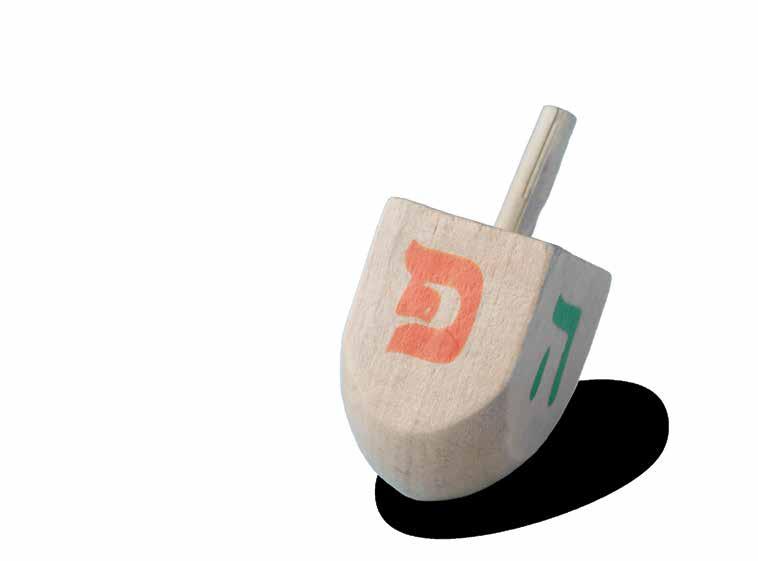

Hanukkah is, in many ways, my favorite Zionist holiday. Hanukkah itself is the story of Jewish resilience, sovereignty, true beautiful light and miracles.
We are all indigenous to the Land of Israel. Though we’ve been scattered across the world, the Festival of Lights continues to unite us … bringing warmth, hope, and connection into our homes generation after generation. It reminds us that our ancestors fought not only for survival but to remain Jewish, to preserve their faith, their culture, and their identity.
Here in the United States, many of us have grown comfortable and that’s not a criticism, it’s simply reality. But Hanukkah calls us to remember that comfort was never our defining story…courage was. The light of the menorah reminds us that our Judaism burns bright no matter where we live, no matter how far we may seem from Jerusalem.
That light is our link to our past, to our people, and to our homeland. It’s a reminder that even in times of darkness, we carry within us the spark of continuity and hope.
So, this Hanukkah, may the light fill your home, your heart, and your life. May it reconnect you to the land and the legacy that have always been ours.
Happy Hanukkah! May your candles burn bright, and may your spirit shine even brighter.
Cheryl Dorchinsky is Executive Director Of Atlanta Israel Coalition and founder of the Kosher Duck Revolution.

This year, do not be afraid to let the light go out.
We can recall the words of the most famous Chanukkah song written by Peter, Paul, and Mary that charge us to preserve the light, because it has lasted for so many years.
But is keeping a light alive simply for the sake of keeping it lit doing us any favors?
In the weeks leading up to Chanukkah, I came across an interesting passage during the Daf Yomi Talmud cycle in tractate Zevachim that speaks about the fire of Moses. The fire that came down in Moses’ time and was used in the tabernacle was eternally stoked and kept lit for generations. This is the origin of the expression Ner Tamid, the eternal flame.
Then King Solomon built the Temple in Jerusalem. The copper altar that had served a generation on the move became obsolete. It was replaced by a permanent stone altar in the Jewish peoples’ home in Jerusalem. The Talmud claims that at this moment the fire was also replaced. Yet Rav Pappa recalls that it was the fire from the old copper altar that sent sparks toward the new stone one.
As Jewish families, we sometimes hold on to rituals and traditions as if they can never be changed. Over time, as we try to keep the original fire alive, we risk doing ourselves a disservice. Chanukkah at Bubbe and Zaydee’s can be special. But what happens when we never draw down our own altars to make space for new ones and new fires to be lit?
This year, ask your children or grandchildren to host the first night of Chanukkah. Light sparks. Volunteer to bring the latkes. Or, better yet, bring the ingredients and make latkes with them in their kitchen. Let them take pride and ownership of our tradition. Breathe new life and kindle new lights as we pass these traditions from one generation to the next.
Our lights will all eventually extinguish. But when we make space for the lights that come after us, this is how we truly keep the miracle alive.
Rabbi Daniel Dorsch is the senior rabbi of Congregation Etz Chaim in Marietta, Ga. and the immediate past president of the Atlanta Rabbinical Association.
Every Sunday school child is taught the basics of the Hanukkah story, celebrating the victory of the Jewish freedom fighters the Maccabees, who forced the Syrian-Greeks from the Holy Land and restored the Temple service. A small bottle of oil, only enough to fuel the Temple menorah for a day, miraculously burned for eight instead.
The Hanukkah story is the ultimate illustration of how light can conquer darkness. The Jewish people, of course, know this equation well, recurring as it does throughout the pages of our brave history.
The light of hope was resilient even during one of modern civilization’s darkest chapters, the Holocaust.
“I see the world gradually being turned into a wilderness, I hear the ever-approaching thunder, which will destroy us, too,” Anne Frank, 13, wrote in her diary in 1944 while hiding from the Nazis in Amsterdam. “I can feel the sufferings of millions and yet, if I look up into the heavens, I think that it will all come right, that this cruelty too will end, and that peace and tranquility will return.”
This year, at the 60th Annual Community-wide Yom HaShoah (Holocaust Remembrance Day) Commemoration at Greenwood Cemetery, I heard echoes of that mix of foreboding and optimism in speeches by eight Holocaust survivors. Even those too fragile to stand gave strong voice to the light in response to the dark face of reemerging antisemitism.
“It isn’t easy to be a survivor but it’s a great joy being able to be one,” said Czechoslovakia-born Ilse Reiner, “because it means you survived, you’re alive, and that’s the greatest gift.”
Light isn’t limited to Holocaust survivors, of course. Other Jews feel it, too. Atlanta actress Galen Crawley shared in a recent ArtsATL story that the Alliance Theatre-Atlanta Opera fall coproduction of “Fiddler on the Roof,” in which she appeared, “closely mirrors” the story of her mother’s family.
Performing in the play, she said, made her “reflect on the lessons of Yiddishkeit and the need for Jews to foster vibrant, joyful communities wherever we live in the world. Where I am, I belong. L’chaim!”
For Hanukkah 5786 in Atlanta, I second that “l’chaim” -- cheers to rejuvenating light, an essential part of our Jewish story!
Leslie Gordon is Executive Director of The Breman.
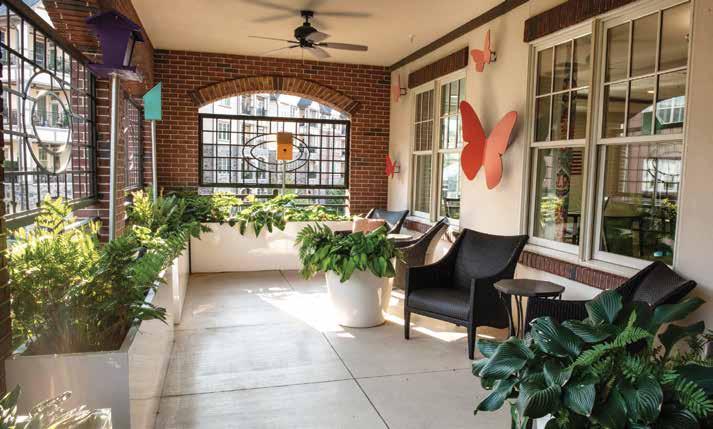

In American society, Hanukkah is often portrayed as a holiday of religious freedom and coexistence. Its observance is frequently blended into a generic, homogenized “winter holiday” season, where all religions mean more or less the same thing, or perhaps nothing at all.
However, the core theme of Hanukkah is actually the opposite, standing up and standing out. The Hellenist Greeks desired a world where Judaism was just like every other faith. e would have idols that stand in peaceful coexistence with those of every other belief, in a harmonious pantheon. Any distinctive observances of Judaism, starting with kosher, shabbat and circumcision, would be eroded away.
The Maccabees rose up in rebellion against that idea. They argued that Judaism was meant to be distinctive, and could not coexist with the paganism of its day. The sight of a menorah in the town square next to a Christmas tree would probably have led Judah and his brothers to raise their hackles, and their swords as well! They wanted to protect their people not only from the coercive policies of Antiochus, but even from the temptations of the gymnasium. They were victorious, and established the Hasmonean dynasty, but within a few decades attitudes had changed to that of accommodation. Hasmoneans maintained faithfulness to Jewish practices and traditions, but took on Greek names, held elections in the Greek style, and adopted other aspects of Hellenistic culture. The new society spawned competing visions of Judaism, like the Pharisees, Sadducees and Essenes, living side by side.
In that sense the Maccabees were not so different from America’s earliest founders. The Puritans came to the New World fleeing persecution in England, and sought to create a society where there was freedom of religion, in the sense that there was freedom to worship in the Puritan way. Only the course of the next century did the idea emerge that different faith traditions could live in harmony (though to be fair that only extended as far as different flavors of Protestantism).
As we light our Hanukkah candles this year, we understand there is a natural desire to fit in, but there is a limit to how far we can stretch and still remain true to who we are. To the extent that the Maccabee vision allows for harmony, it comes not from homogeneity, but from an understanding that our identity, and our ability to relate to others, comes from our distinctiveness.
It’s hard to believe it’s already December and Chanukah is almost here. Around this time of year, I always find myself thinking about a song I loved as a little girl; its message has stayed with me: each of us is a small light, but together we are a strong light.
I see that light in so many different corners of Jewish Atlanta.
I see it in the light of caring: in the twinkle in the eye of a resident at the Jewish Home when someone comes just to visit; in the new smile of a person treated at the Ben Massell Dental Clinic; in the lit-up faces of brand-new parents who finally have a child with the help of the Jewish Fertility Foundation.
I see it in the light of Jewish learning and growth: in the beam of a first grader who has just received their first siddur; in the joy of a middle schooler reunited with a camp friend after eleven long months apart; in the sense of awe on a high school graduate’s face during a gap year in Israel, standing at the Kotel and feeling part of something much bigger.
I see it in the light of global connection: in the spark when an Atlanta student connects with one of our Schoenbaum Shinshinim; in the wonder of a young adult visiting Israel for the first time on a RootOne summer trip or on Birthright; in the relief of a homebound elderly woman in Belarus when a caregiver visits and she knows the world has not forgotten her.
I see it in the light of Jewish home and neighborhood life: Shabbat candles kindled because a family received PJ Library books; neighbors gathering for a Shabbat dinner made possible by a Gather Grant; young adults lighting candles at a Moishe House dinner in a small apartment that suddenly feels like a holy space.
And I see it in the light of courage and security: in the way we continue to show up strong to synagogues, schools, and other Jewish spaces, refusing to let fear of antisemitism dim our Jewish pride.
Each of these moments is a single small light. Together, they make our community shine. As you shop for gifts and plan your celebrations this Chanukah, I hope you’ll think about one more light you can add, kindness, connection, a bit of tzedakah, or a simple show of support, to help our shared flame burn even brighter.
Renee Kutner is President & CEO, Jewish Federation of Greater Atlanta.
As Chanukah approaches, I find myself thinking deeply about harmony and coexistence—not only as concepts that shape our community, but as values that begin at home, around our own tables, with the people we love most. Harmony is not simply the absence of conflict; it is the intentional act of creating space for each other. It is choosing compassion over judgment, patience over frustration, and presence over distraction. Coexistence is the belief that there is room for all of us to shine, just as each candle on the menorah stands distinct yet contributes to one unified light.
The menorah is one of the most powerful symbols in Judaism because its message is timeless: light grows when we share it. We don’t hide light—we pass it on. We don’t diminish someone else’s flame by igniting their candle; instead, the world becomes brighter.
For me, this is the heart of harmony and coexistence. Each of us carries a spark—our character, our kindness, our faith, our resilience. But the true beauty emerges when these individual sparks come together. The candles don’t compete; they illuminate. They remind us that every soul has value, every person has purpose, and every generation has a responsibility to the next.
And this begins with family — the foundation of our community and the guardians of our traditions. I always say: little eyes are watching, little ears are listen- ing. Every step we take reflects back to the younger generation like a mirror. They learn not from what we tell them, but from what we model. We have a responsibility to live by example, to show them what it means to walk with dignity, courage, and kindness.
Chanukah teaches us to invest in what truly matters: caring deeply for the people we love, strengthening our inner light, and building a future grounded in unity and empathy.
As we light the menorah this year, may we remember that harmony is created one flame at a time. And may we each commit to being a source of light—within our homes, within our community, and within the world.
Eti Lazarian is the Managing Partner at Insignia LLC, where she leads strategic growth and oversees a diverse portfolio of commercial real estate assets. Beyond her work in the industry, Eti is deeply committed to community service. She actively supports food security initiatives, partners with local leaders to strengthen neighborhood resources, and dedicates her time to uplifting families throughout Atlanta. Her work reflects a belief that successful business and meaningful community impact must go hand in hand.
As of this writing, 249 of the 250 living and deceased hostages have been returned to their families. We Jews are accustomed to counting up — to increase holiness and light in our world. Yet with our beloved hostages, we have found ourselves counting down, longing for the day when the number reaches zero. I pray that by the time these words appear in print, that sacred count will be complete.
To reach zero would mean that we could fully, with all our soul and all our might, rejoice in the growing light of our menorot this year. The Talmud records the famous debate between Beit Hillel and Beit Shammai: should we begin Chanukah with eight lights and decrease, or begin with one and increase? Beit Hillel’s view prevailed and so today we add light each night. This sacred call to increase light, reminds us that joy begets joy, and that we possess the power to expand Jewish light and hope at this season. In the year ahead, may we be a people who count upward: in the glow of our Chanukah candles, in the days from Pesach to Shavuot, and in the mitzvot that bring joy to ourselves, our communities, and our world.’
Rabbi Rachael Klein Miller is an Associate Rabbi (and part-time Tot Shabbat rockstar) at Temple Emanu-El in Sandy Springs.
As I thought about my Chanukah reflection during my morning run, it dawned on me that this holiday season marks the fifth anniversary of the first December of the pandemic. Thinking back to the dark and lonely days of the COVID holiday season, when so many of us were separated from loved ones during what should be the most joyous days of the year, I felt a rush of gratitude.
Though there may be innumerable problems affecting society--locally, regionally, nationally, globally-at this hour, most of us can at least take solace in the fact that we are celebrating Chanukah and New Year’s with our family and friends in person. Five years ago, we were left wondering when we could enjoy our next “normal” holiday season. Now, in 2025, the pandemic-induced isolation and boredom have largely receded, but I think it’s important to remember that we faced such barriers to celebrations only five short years ago.
In this spirit, I would like to express my sincere gratitude for being able to celebrate the holiday season with my relatives and friends. I hope all our readers are able to experience similar joy in the coming days and weeks. The happiest of Chanukahs to everyone!
David Ostrowsky is the Sportswriter for Atlanta Jewish Times.





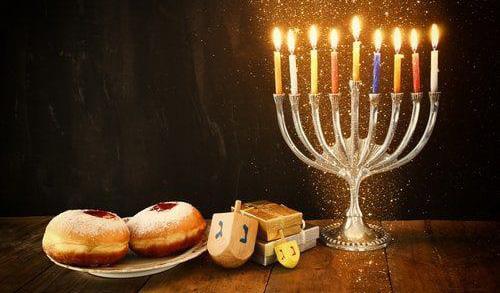




The Value of Multicultural Unity
One would think growing up in New York I’d have many Jewish friends. But we lived in an area of Long Island where we were the only Jews in our neighborhood, surrounded by Catholic families.
My best childhood friend was (is) Catholic, and I was often at her home during Christmastime.
Admittedly jealous of the mountains of gifts, the festive food, music and lights, I still learned about Christianity through her family. In turn, my family invited hers to light the menorah at our home, play dreidel with M&Ms, sing Chanukah songs, and eat latkes.
To find other Jews, we attended a small Jewish congregation in Ronkonkoma and later Hauppauge, where we lived. We also schlepped to the city to spend holidays with my maternal grandparents and extended family in Rego Park, Queens.
Fast forward to today. My husband and I are the only Jews in the neighborhood yet again. We are the minority, not only as Jews, but Caucasians. Most of our neighbors are Indian or Asian.
Several months ago, one of our Hindu neighbors invited us to their celebration of Ganesh Chaturthi, which is a time to reflect and pray for divine blessings and new beginnings, similar to our high holidays a few weeks later.
I also have found common ground with a Southern Catholic girl I met at the local gym. Unlike in New York, Catholics are considered minorities in the South. Her church and my shul often partner on joint Holocaust and interfaith programs.
While she and I literally spin our wheels, burning calories at the gym, we discuss our shared beliefs. For example, we both repent our sins, whether more regularly in confession or once a year during the high holidays. Breaking or blessing bread (challah) is a communal ritual for both faiths, which also value family unity and social justice.
These days I’m not the only minority – or token Jew – in all of my friend groups. Jews make up half of one group of mom friends who walk regularly for exercise and therapy in a shared neighborhood. One of the non-Jewish moms is from Cuba and another, India. We embrace our diverse cultures, cuisines, and rituals.
There are those who seek to divide us by our differences. With an open mind to new experiences, faiths and customs, I hope you recognize in your own communities this holiday season what unites, rather than what separates.
Roni Robbins is a journalist and author of, “Hands of Gold: One Man’s Quest to Find the Silver Lining in Misfortune.”
Festival of Lights Illuminates Path to Harmony Chanukah commemorates the rededication of the Second Temple in Jerusalem, but its deeper message resonates powerfully today. The holiday celebrates the triumph of the right to religious freedom and cultural identity — principles that form the foundation of harmony among different peoples.
Harmony and coexistence mean more than simply tolerating our neighbors who pray differently, speak different languages, or celebrate different traditions. Coexistence requires engagement: understanding that our communities grow stronger when we create space for everyone’s light to shine.
The menorah itself embodies this principle. Each night, we add another flame, yet no candle diminishes the others. Instead, the collective light grows brighter, illuminating more of the darkness. As such, everyone, each community adds their unique light to create something greater than the sum of its parts.
Today, Chanukah’s message feels especially urgent. The Maccabees fought for the freedom to practice their faith openly, a freedom that remains precious and, in many places, precarious. When we champion coexistence, we honor that struggle by ensuring such freedom extends to all people, regardless of their beliefs.
Coexistence means recognizing that our neighbor’s presence enriches rather than threatens. It means my children learning about Diwali alongside Chanukah, understanding that Ramadan’s spiritual discipline shares common ground with Yom Kippur’s reflection. This extends beyond our religious communities. Ethnic communities, people from different countries who come here for a better life, in fact, make our lives better.
The Chanukah miracle—oil lasting eight days instead of one—reminds us that small acts of faith and courage can have outsized impacts. Similarly, each gesture toward understanding, each conversation across difference, each moment of choosing curiosity over judgment contributes to a more harmonious world.
The commandment of Chanukah is to place the Chanukiah by the front door or in the window to publicize the Nes, the miracle. Today, the miracle isn’t that we show the light, but that anyone will notice it. The lesson of Chanukah is a reminder to see each other, to shine light on the humanity of the others, to illuminate the holiness in the stranger, and to bring those who are shrouded in darkness out into light.
As families gather to light candles this season, the glow in our windows sends a message beyond our homes: we celebrate the light of freedom, the warmth of community, and the enduring promise that diverse peoples can not only coexist but flourish together.
Rabbi Laurence Rosenthal, Rabbi at Ahavath Achim Synagogue, Chair of GIPL, Past President of the ARA


Hanukkah: What It Means to Me, and the Meaning of Light and Darkness
Hanukkah, the Festival of Lights, is more than eight nights of candles, song and celebration. For me, it’s a time to reflect on identity, resilience, and sparks of hope that guide us when the world feels uncertain. The story of the Maccabees — who stood up for their beliefs against overwhelming odds — lies at the center of Hanukkah. After reclaiming the Temple, they found only enough oil for one night, yet it miraculously lasted for eight. That miracle is foundational, but the meaning extends beyond history. Hanukkah teaches that even the smallest light can push back darkness, and hope can survive in unlikely places.
To me, the holiday reminds us that strength is not always loud or dramatic. Often, it’s quiet persistence - the willingness to keep going and show up as your true self. Lighting the menorah symbolizes gradual growth. Each night adds another candle, and with it, more light. It’s a simple act, yet deeply symbolic: hope builds slowly, and every step matters.
The contrast between light and darkness in Hanukkah is powerful. Darkness can represent fear, uncertainty, or overwhelming moments - times of self-doubt or challenges that feel too big. Hanukkah reminds me that darkness isn’t something to avoid; it’s something to meet with light. And that light doesn’t need to be perfect. A single flame is enough to begin.
Light represents hope, courage, and community. It’s the comfort of traditions passed down and the connection I feel to Jewish people around the world lighting their own menorahs. But it’s also personal - the inner strength that guides me even when I don’t feel brave.
Hanukkah challenges me to ask: What light am I bringing into the world? How can I be a source of kindness, understanding, or resilience for others? The holiday teaches that we are not only receivers of light but carriers of it. When we choose compassion over anger or hope over despair, we add another flame to the world.
Hanukkah celebrates miracles - both historic and everyday ones. It reminds me that resilience is a virtue, identity is a strength, and choosing light over darkness is the best choice. Each year, as the candles burn low, I’m reminded of the spark worth protecting. That spark is what Hanukkah means to me.
Ray Alyssa Rothman is a commercial real estate broker who focuses on land. Her side business is Kibbitz & Konnect, the premier in-person social network for Atlanta’s Jewish singles community (www.kibbitzkonnect.org).
Our world is filled with so many different voices, and yet it can still be difficult for us to show compassion toward beliefs and backgrounds that are not our own. Life is already hard enough—with everything moving so quickly and changing, sometimes for the better and sometimes for the worse. But even in all that uncertainty, small acts of kindness, simple efforts to listen, and moments of genuine friendship can make all the difference. My hope is that we can each be a source of light, just like our Chanukah candles, choosing harmony and compassion over conflict and anger.
Let’s light the darkness together and celebrate the miracle of Chanukah with open hearts, hopeful spirits, and a renewed commitment to bringing more goodness into the world.
Chag Chanukah Sameach.
Gayle Rubenstein is with Balloons Over Atlanta/Event Visions, proudly working with AJLF to create the Atlanta Kosher BBQ and the Atlanta Jewish Life Festival.

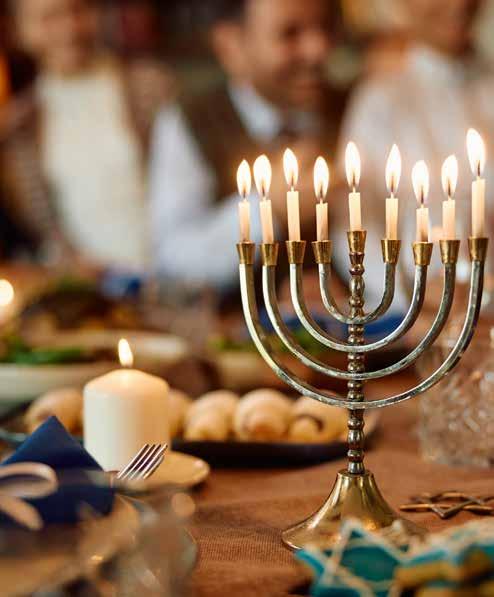
I used to love my “four – eyes” conversations with Rabbi Arnold Goodman, of blessed memory, when he would return to Atlanta as Senior Scholar of Ahavath Achim Synagogue. We could hardly have had conversations like these when I was Rabbi Gooddman’s teens – old congregant in Minneapolis.
This particular conversation took place a few years prior to my own retirement. We were talking about the “big retirement question” – What do you plan to do in retirement? Rabbi Goodman taught me something that day, something I have never forgotten. Retirement, he said, amounted to a redirection in energy.
Sure, a new time with the possibility of new opportunities would invariably lead to new outcomes – both interests and activities. But even more so, this new period called “retirement” enables us to discover something new and perhaps challenging about what we have previously been doing for a long time.
I thought about the notion of “redirection in energy” when I considered the candles of the Chanukiyah. For some people, the multi – colored candles symbolize the great variety of people who kindle the Chanukiyah. Not only do their personalities differ from each other. Their priorities and interests also differ from each other. In the sense of sheer beauty, it takes all kinds (or colors) of people to fully share the greatest brilliance of the Chanukiyah when we light all eight candles on the last night of the holiday. On the other hand, it takes very little variety of candle colors to light the Chanukiyah on the earliest nights of the holiday. Those nights may bring much excitement as our children and grandchildren focus on the gifts they will soon receive, but the few candles in the Chanukiah are often the drabbest.
Reflect on the words of Hillel as he explained why he felt we should light all eight candles on the last night of Chanukah (parallel to the duration of the holiday) and not just one candle (parallel to the smallest amount of oil left in the Temple Menorah). Hillel said, “We increase (the awareness of) holiness and do not decrease it. When we light the eight candles of the Chanukiyah on the final day of the holiday and see it illuminated in its variety of brilliant colors we can most value the variety of people those different – colored candles represent. And be we of retirement age or not, we may recognize an important task – to redirect energy toward recognizing richness in the variety of people we meet and in the ways we and they illuminate our world.
Chag Urim Sameach from Susan and me, our children, Ariel and Jamie, Aliza and Matt and Josh and Rachel and our grandchildren, Remi, Avery, Bennett, Caleb and Noah!
Rabbi Neil Sandler is Rabbi Emeritus of Ahavath Achim Synagogue and Rabbi of the Fitzgerald Hebrew Congregation.
Each year, as I celebrate the miracles of Chanukah, I celebrate the courage, faith, and resilience of the Maccabees. For me, it is another opportunity to celebrate our Jewish heritage, our Jewish identity, our Jewish history. It is also an opportunity to consider the candles on the chanukiah and that the smallest acts of kindness can illuminate the world.
Shaindle Schmuckler is a freelance writer for Atlanta Jewish Times.
“Harmony” and “coexistence” recall the 1968 Broadway musical, Hair. Its iconic counterculture, shock value against the morals of the time, depicted nudity, drug use, and profanity, but also highlighted ideals of harmony and coexistence. It spoke to a nation, divided, over the Vietnam War, specifically, the lyrics of Aquarius, with the dawning of a New Age of “harmony and understanding, sympathy and trust abounding.” It sent a love arrow of hope and possibility right to our hearts.
Musically, harmony is a complex creation of individual voices or instruments that, when grouped together, form a cohesive whole. With a synergy of differing opinions and perspectives we can enhance a baseline melody of peace.
Ideally, toward a vision of peace, can we fine-tune our individual thoughts, words, and deeds, to express those that promote harmony and coexistence? Build a movement, as individuals, with that shared purpose.
A single candle lights the darkness. Envision a fully lit menorah, reflected in a window. Each person is a candle, with its own color, texture, height, yet with that sole purpose of illumination.
Recently, I fell asleep pondering what’s needed to transition away from hatred and division. I awakened to whisperings from angels, in response. What follows, is my journal entry from that morning.
The trail from our breath of words can either warm or scorch the souls of others.
Breathe words of comfort and love.
Grow roots and branches in your verdant green heart.
Don’t let it turn to stone and crack into rubble.
Neither have a glass heart that can shatter into shards of pointed daggers and bleed you and others dry.
Build a crystallized sugar ladder of sweetness that extends from the earth to the heavens.
Climb it each morning and retreat from it each night as you slumber into worlds beyond.
For there is where we travel to places far and wide and dance with those who are here no more.
Whisper prayers of love on the wind and let them form a vortex of light that illuminates the world and all who inhabit it.
Go to that dark place where you last lost your smile and reclaim it.
Widen it with laughter.
Fill your pockets with sparkling joy and scatter it everywhere.
Like tiny specks of glitter that glint in the sun, it will shine throughout all eternity.
And because we can’t share gifts that we don’t have, become love.
Dr. Terry Segal is a licensed psychotherapist with a Ph.D. in Energy Medicine, author, and mixed media Judaic artist.
The Shamash Candle as a Metaphor We’re all familiar with the progression of lighting the Chanukah menorah; however, we do not light the candles directly. We first light the “shamash,” the worker candle by which all the other candles for the eight nights are lit.
I think of the shamash as a useful metaphor. One candle is tasked with lighting the others, and as the eight nights progress, the shamash has a greater responsibility and a greater impact.
In these fraught times, we Jews seek a shamash. We are like candles waiting to be lit. How can we “be a light unto the nations” if we don’t shine? We need leaders who see all of us as one people, regardless of our affiliations or traditions.
The divisions among us are destructive in every way. Let’s follow only the leaders -- rabbis, teachers, heads of organizations, social media influencers, people in power -- who enLIGHTen us, who emphasize our peoplehood, the ones who teach us respect, the ones who don’t judge, disparage or make jokes about other Jews.
But if we can’t find a shamash who will light our flame, we can step up ourselves. As the Talmud says, “Kol Yisrael arevim zeh la zeh”: each of us is responsible for one another, a fundamental principle of our people. We are all connected. We are obliged to respect, show kindness, and help other Jews. We’re all in this together.
Chana Shapiro is an educator, author, and illustrator. She is a freelance writer for Atlanta Jewish Times.
I’m writing this from a small town in Texas, and it seems that Christmas is everywhere. I don’t think there are any Jews in this lovely small town in Texas. There are, however, Christmas trees, bearded Santas, ornaments, tinsel, sleighs, fake snow, and holiday music on repeat in every coffee shop. Texas is swell, but there’s no Hanukkah here. While I enjoy visiting Texas, I couldn’t live here.
The lack of religious diversity is stifling. This season, I’m grateful to live in the metro Atlanta, where there’s a plethora of cultures and faiths almost everywhere you look. I’m grateful for Buford Hwy, with its variety of cuisines; I’m grateful for Dunwoody with its quantity of synagogues; I’m grateful for almost every place in our city that has made me and my family feel welcome and included for many years.
Happy Hanukkah to everyone who celebrates, and especially to any Texas Jews! Come visit us in the ATL.
Alla Umanskiy is a mother, wife and writer, living, working, and raising a family in the Atlanta area.

Chanukah, the Festival of Lights, feels especially poignant this year. As Jewish communities around the world face a troubling rise in antisemitism, the holiday’s ancient message of courage and enduring light carries deeper significance. Rooted in the story of the Maccabees, Chanukah carries a message of remarkable courage. The Maccabees fought valiantly to reclaim the Temple and restore their freedom to worship. In doing so, they revived the spiritual heart of their people against overwhelming odds. Chanukah reminds us that even in challenging times, hope has the power to shine brightly.
The miracle of the oil — burning for eight nights when there was only enough for one — resonates in a way that feels almost personal this year. Each menorah placed in a window becomes not just a symbol, but a heartbeat: a quiet, unwavering declaration that Jewish light will not dim, no matter how strong the winds outside may blow.
Families turn to traditions that feel like anchors. The scent of latkes frying in oil, the sweetness of sufganiyot, the laughter of children spinning dreidels, these small, familiar moments become acts of comfort, love, and continuity. They remind us that Jewish life is not only surviving; it is still filled with joy, warmth, and connection.
As antisemitism rises, Chanukah’s call to bring more light into the world feels more urgent than ever. Standing together, speaking out against hate, educating others, supporting Jewish organizations, showing up at community events, and calling out misinformation all become meaningful ways to fight back. Acts of kindness, solidarity, and advocacy each send a clear message that hatred will not define us, and that the Jewish community will continue to shine with strength and pride.
This year, the glow of the candles feels almost like a prayer—gentle yet fierce. A promise that identity, faith, and love will outshine darkness. As the menorah’s light spills into homes and windows, it carries a message that is both ancient and urgent: the Jewish spirit endures, and it will continue to shine. Chanukah invites all of us to carry that light forward.
May your Chanukah lights surround you with love and glow with the promise of brighter days ahead. Chag Sameach.
Renee Werbin is the President, SRI Travel; Publisher and Co-Founder, Travelgirl Magazine.
Chanukah has always been more than candles and songs for me. Growing up in this community, the holiday was a reminder that even in the darkest moments, a small light can make a real difference. That message feels especially meaningful today, when so many people in our community are carrying worry, grief, or uncertainty into the holiday season.
For me, the most powerful part of Chanukah is what happens around the menorah. My entire family gathers, we take a moment to breathe, to laugh, to tell stories, and to remember the people who shaped us. Watching the younger kids’ excitement from the gifts, the games, the simple joy reminds me how important it is to pass traditions forward and to create memories that last.
But I also know that for some, this time of year can feel heavy. If that’s you, I hope Chanukah offers even a small spark of comfort. The holiday teaches that light doesn’t have to be overwhelming to be meaningful. One candle is enough to begin pushing back darkness. One act of kindness. One phone call. One moment of connection. My hope for all of us is that we carry that message with us and that we look for ways to be a light for one another, especially for those navigating hard moments quietly.
Wishing the entire community a season filled with warmth, connection, and brighter days ahead.
Michael S. Wilensky is an attorney with The Law Firm of Michael S. Wilensky, LLC.



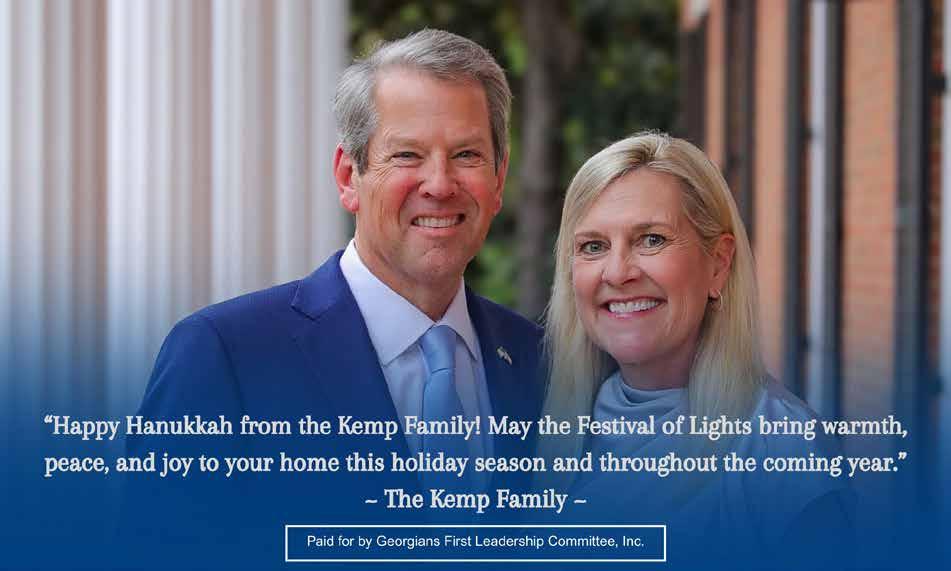
Harmony & Coexistence — The Heart of Our Tradition
Harmony and coexistence are not passive achievements. They are built — choice by choice, encounter by encounter — like the oil of Chanukah, sustaining light drop by drop. Harmony is not sameness. Coexistence is not the absence of conflict. They are practices of courage: the willingness to remain whole while honoring the holiness in someone who is not like us.
This is the heartbeat of our tradition.
The Prophets understood that ritual alone could not sustain a world. Micah taught a moral sequence — do justice, love mercy, walk humbly — as though justice without compassion fractures community, and compassion without humility loses balance. Isaiah urged us to defend the vulnerable because a society survives only when its people learn how to live with one another — not in uniformity, but in dignity.
The Rabbis carried this vision into lived relationships. They taught that to save a life is to save a world, and to diminish a life is to diminish a world — because every person is unique, irreplaceable, stamped with the Divine. They taught that welcoming guests, comforting mourners, visiting the sick, and making peace are pillars that sustain the world. And they warned us with painful honesty: a city can fall even while law is upheld, if compassion is absent.
And then comes a moment in the Talmud that changes everything. After years of sharp conflict between two schools of thought, a heavenly voice declares:
“These and those are the words of the living God.” (Eruvin 13b)
Disagreement is not failure — it is another face of truth. Halakhah follows one opinion, yet the other remains Torah, honored and spoken aloud. Conviction and humility stand side by side.
This is where Mussar becomes essential. It names the traits required to hold difference with love.
Chesed moves us beyond obligation.
Anavah makes room for another’s truth.
Rachamim helps us imagine another’s pain.
Shalom is not peace without conflict — it is coexistence strengthened by generosity.
Harmony is not uniformity.
Coexistence is not surrender.
They are forms of courage — the courage to remain whole while recognizing holiness in someone who is not like us.
The Light We Keep Alive
For much of Jewish history, our survival depended more on endurance than on power. For centuries we lived at the mercy of others — enduring expulsions, persecution, and catastrophe. That long vulnerability has shaped us deeply. But it’s not the whole story.
More than two thousand years ago, the Maccabees proved that Jews were not destined to only suffer and wait. They reclaimed their homeland and rededicated the Temple. It was a defiant, improbable victory.
And yet, what most Jews remember about Hanukkah isn’t the battlefield—it’s the light. The Talmud’s story of a single cruse of oil lasting eight days eclipsed the military triumph. Our sages were uneasy with glorifying Jewish might, so they shifted the focus: “Not by might, not by power, but by My spirit,” the prophet Zechariah taught. Jewish strength, they insisted, is something deeper than force.
That message hits very differently these days. Over the past decade — especially since October 7th, 2023 — we’ve seen a resurgence of antisemitism that many of us thought belonged to another era. Jews around the world have been jolted back into a sense of precarity. Our synagogues require guards. Our students face hostility on campuses. The sense of safety many American Jews took for granted has been shaken.
For a time, it felt as if the darkness was closing in.
But Hanukkah teaches that despair is not destiny. Even in the most uncertain moments, light can return—but only if we insist on kindling it. The fact that we continue to persevere doesn’t erase the years of pain and uncertainty. But they are a reminder that flickers of hope and light can break through and illuminate the darkness of our world.
Jewish life is not disappearing. The fact that you are reading this is proof of that! We are showing up — in synagogues, in classrooms, and online — to assert not only our identity, but our pride and strength of spirit. We are still teaching our children. We are supporting one another. And we are affirming, in countless small ways, that being a Jew is not something to hide.
This is the heart of the Hanukkah story: Jewish strength is not measured by domination, but by determination—our readiness to rebuild, to hope, and to bring light into a darkened world. The Maccabees kindled the menorah before they knew the oil would last. Their courage wasn’t a response to certainty; it was an act of faith.
Ours must be the same. The Jewish people have endured for four millennia not by shrinking from darkness, but by lighting candles anyway.
And we’re still lighting them to this day.
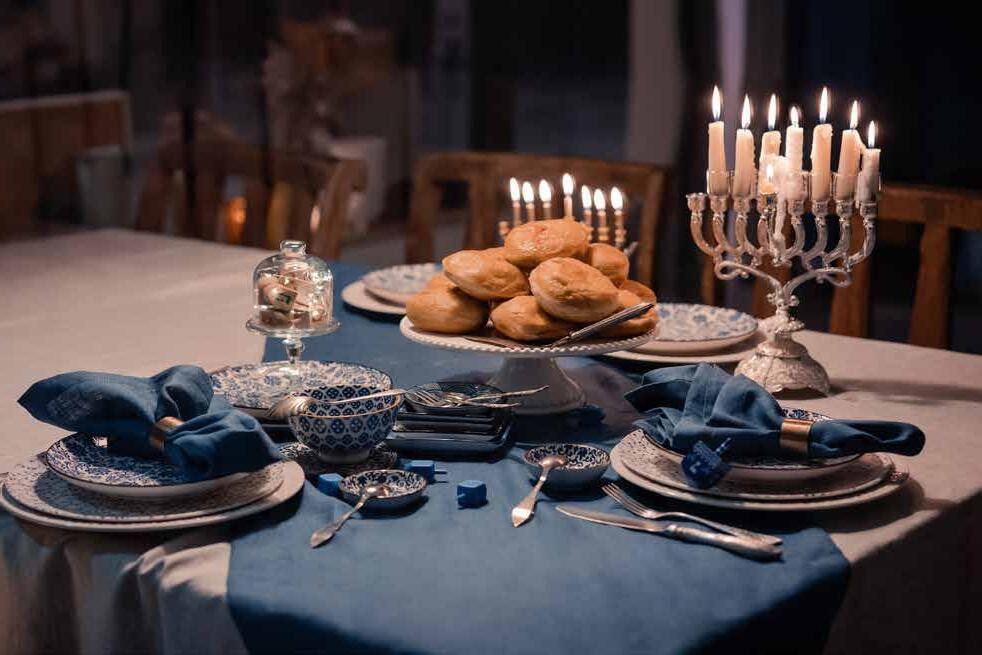
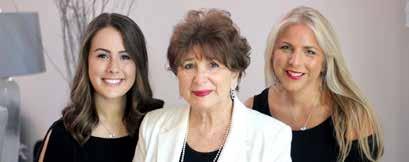
This Chanukah, I’ve been reflecting on the beau ty of new beginnings — those that touched my fam ily, my friendships, and the ways I choose to spend my time.
The most meaningful new beginning was the birth of my perfect niece, Riley. She is pure love and light, and we thank G-d for her every single day. When she smiles, the whole world melts. There is something truly magical about a baby laughing and smiling at you — it’s a kind of joy that settles right into your heart.
Another special beginning this year was launching my crys tal business. After 15 years of reselling on eBay, I decided this past spring to try some thing new: live crystal sales on TikTok. I’ve always been a collector with more crystals than shelf space, so selling them felt like a natural next step — and it blossomed into a real business. I now have over 2,000 followers, go live every week, and even had the opportunity to sell at the Atlanta Kosher BBQ Festival and the Chattahoochee Nature Center Holiday Market. One of my favorite moments was meeting a young girl who was so excited to buy one of my crystals — her smile reminded me exactly why I love what I do. I’ve built a wonderful little crystal community and made many virtual friends I genuinely look forward to seeing each week.
I also embraced a craft I’d been wanting to try for ages: needlepoint. I started in November and just finished my second project. It reminds me of cross-stitching, which I haven’t done since high school. There’s nothing more relaxing than putting on “Jeopardy” in the evening and stitching away.
Another beautiful new beginning came when my best friend of 20 years asked me to be her maid of honor for her wedding next year. I was over the moon. Even though we don’t live close anymore, she has always been my ride-or-die, and I’m so grateful to stand beside her on her special day.
These days, my life is full of everything I love — being creative director at AJT, spending time with my family and especially the baby, sourcing crystals, hosting live sales, packaging orders, and winding down with “Jeopardy” or a movie while I needle point. It all makes my days feel full, meaningful, and wonderfully my own.

Chanukah invites us to pause amid the noise of daily life and remember the power of small lights to transform great darkness. At its heart, the holiday is not only about ancient victories but about the ongoing work of building harmony — within ourselves, within our communities, and across the diverse world we share. The flickering flames of the menorah remind us that even a single act of kindness, courage, or compassion can illuminate more than we expect.
Harmony begins with recognizing the dignity of every person. During Chanukah, as families gather and communities celebrate, the message of coexistence becomes especially meaningful: we honor our own traditions while making room for the stories and experiences of others. The miracle of the oil lasting eight days becomes a symbol of resilience, patience, and the possibility of renewal — qualities needed for peaceful relationships.
In a time when division often feels louder than unity, Chanukah encourages us to kindle light in places of misunderstanding. Reaching out to neighbors, listening generously, and offering support where it’s needed most can all be modern expressions of the holiday’s spirit. Coexistence is not about erasing differences but appreciating

Chanukah has always been a special time of year for me. While not the holiest of days, it symbolizes celebration and family togetherness. As a child, Chanukah was always one of my favorite holidays. My sister and I would take turns lighting the menorah and delight in whatever goodies our parents generously gifted to us each night. My favorite night was always the one we spent with our extended family: grandparents, aunts, uncles, and cousins all feasting on latkes, spinning dreidels, and singing Chanukah songs.
Now, as an adult, it is a gift to be able to carry those traditions forward with my own children. Watching their excitement as they light the candles, recite the blessings, and spend time with extended family just as we did is profoundly meaningful. Through these moments, I feel deeply connected not only to my own childhood but to generations before us, each adding their own layer to this beautiful chain of tradition.
Chanukah is, at its core, a celebration of light — light that endures, light that brings us together, and light that we pass from one generation to the next.
Wishing you and your families a very Happy Chanukah.
The story of Hanukkah is the story of a tragedy and two miracles. We know the story well, but recently I’ve begun to think about it slightly differently – as the story of failure, return, and recovery. After the temple is captured by the forces of Antiochus, it is desecrated and dedicated to pagan gods. A complete tactical and spiritual failure, I can only imagine the pain and fear this tragedy provoked. It was four centuries since the fall of the first temple, and, though they did not know it, only a century or two before the destruction of the second. In this moment, I’d presume the average Jew of the time expected such destruction was already at hand.
The return was precipitated by the zealotry of Judah Maccabee, who, by a generous reading, was a complicated figure. His defeat of the larger Greek army is often forgotten as the first miracle of Hanukkah, and I think for good reason: It was a tactical victory that provided some sense of short-term safety, but could not erase the tragedy the people had just suffered, nor heal their pain, nor provide any great comfort in a still-unstable region.
Which is why the miracle of the oil is by far the more remembered one. In the midst of the shattered temple and its people, it was clear, more than ever, that a light was needed. They did not, could not, wait to have enough oil to last. They had to light the lamps now, and hope G-d would provide. Modern scholars suggest that the true reason for the holiday was as a delayed Sukkot, which the Jews had been unable to celebrate with the Temple in enemy hands, and I hold this no less miraculous. Because either way, the community gathered at the tail end of tragedy, and, in an act of faith, began the long processes of consolidating and of resolving their collective trauma
As we approach the end of 2025 and the holiday of lights, Hanukkah, I find myself reflecting on this past October — right around the High Holy Days — when our hostages finally returned home. Twenty living hostages were released, and the outpouring of relief and celebration in Israel was immense and unanimous. In those moments, it didn’t matter whether one leaned right or left politically, or whether one supported or opposed President Trump’s Gaza and Middle East policies. The joy felt by Israelis, by Jews in the diaspora, and by countless non-Jewish friends around the world was universal — because it touched something deeply human.
Moments like these remind us that harmony and coexistence are possible. People with diverse backgrounds, identities, and beliefs can live together peacefully in the same space.
The political divisions we see today — both in the United States and in Israel — between right and left, Democrats and Republicans, must somehow find a way to coexist. We can disagree passionately, but we must also listen, respect one another, and remember that differences do not have to turn into hatred. We already face enough enemies from the outside; we must not become enemies to one another from within.
We must also stay vigilant against radical extremism. History has shown us the dangers, whether it comes from extremist Islamist movements and their proxies in the Middle East, or from radical political figures in the United States and abroad who may incite violence. Events like October 7 are reminders of how urgent it is to stand against hatred, ignorance, and bigotry. Education, compassion, and courage are the tools that allow light to overcome darkness.
I am deeply grateful that I was in Israel on the day the hostages returned home. The joy in the air was indescribable. This Hanukkah, the freed hostages will finally be able to light the candles, eat latkes, enjoy sufganiyot (Israeli donuts), and celebrate with their families. Simply living and being free is so often taken for granted — but now feels like a true miracle — how symbolic! It reminds us of the Miracle of the Hanukkah oil that lasted eight full days.
I wish our entire community here in Atlanta a warm, festive holiday season filled with blessings, joy, and meaningful gatherings with your loved ones. May your Hanukkah celebrations shine brightly with hope, unity, and peace.
Ronit Franco-Pinsky is the Executive Assistant for Atlanta Jewish Times.
Every Chanukkah, I am always reminded of how much I have to be thankful for and not everyone has the same opportunities that I have.
So, a few years ago, I started doing eight things for others during the holiday season in honor of the eight nights of Hannukah. These are things that I go out of my way to do. I prepack nutritional bags of food in my car so I can pass them out to people asking for food on the street. I have helped someone at a restaurant in the middle of my meal to help jump their car. I have taken someone homeless outside of a grocery store and paid for him to have as much food as he could carry. I have helped wrap presents at a homeless shelter for their holiday party. I have helped water a neighbor’s outside plants when they were away for the holidays. I have paid for an emergency surgery for someone’s dog who couldn’t afford it. I have gotten out of bed and driven an hour in the dead of night to feed someone’s dog because their flight was cancelled and it was another 18 hours till they got home and the dog sitter already left. I have given work to someone asking on the street, we hung up all my Chanukah decorations for hours, he left with a full meal, extra food, and, of course, paid for his help. I met a woman who just moved here and hadn’t gotten any clients yet for her dessert catering business yet, so despite being a baker myself I had my fist ever holiday dessert party, that I have now had for the last seven years, and she got two other clients from that evening that used her baking for their events later.
In this message, I have written the word “I” many times, in the future I hope they will be “you.” I challenge everyone who reads this article to help others during this is not the word for charity but for justice and we should all strive to bring justice into this world for G-d
As a child growing up, Hanukkah was such a special holiday to me. I celebrated it with so much excitement - the glow of the candles, the smell of latkes, and the joy of gathering with family. My parents, brothers, and I would get together with my grandparents, aunts, uncles, and many cousins, usually on a Sunday afternoon during the holiday, and I did not want the celebration to end. I was the youngest in my family and loved being around everyone.
As I got older and raised a family, the tradition of celebration was carried on to my children and although some of my family was no longer with us, I made sure that my children got to experience that same warmth and tradition, and it was incredibly meaningful to pass it on to them. I told my children that Hannukah is not only about receiving presents but also about family, friends, and the big and small miracles in life. Try to see the good in all and be kind and giving to those that may be less fortunate and not have others to be with. During Hanukkah this year as in every year, I plan to celebrate with my family. It may be a smaller group, but it will still be meaningful and the memories from the past will be in my heart as well as making new memories with them and with friends. I wish you all a warm, light-filled, and joyous Hanukkah - may the candles bring

As the Maccabees taught us, some things are worth fighting for. They fought for freedom and the right to reclaim the Holy Temple. In our day, the eight days of Chanukah can serve as a reminder that sometimes inner and communal strength are needed for change. What’s important to each of us? What’s important to all of us? What kinds of changes are worth fighting for to make our world a better place?
This year when we light the Chanukiah, let the brightness of the candle flames, increasing each night, remind us that complacency may be the path of least resistance, but often won’t bring us closer to what is right and just in our lives or in our communities.
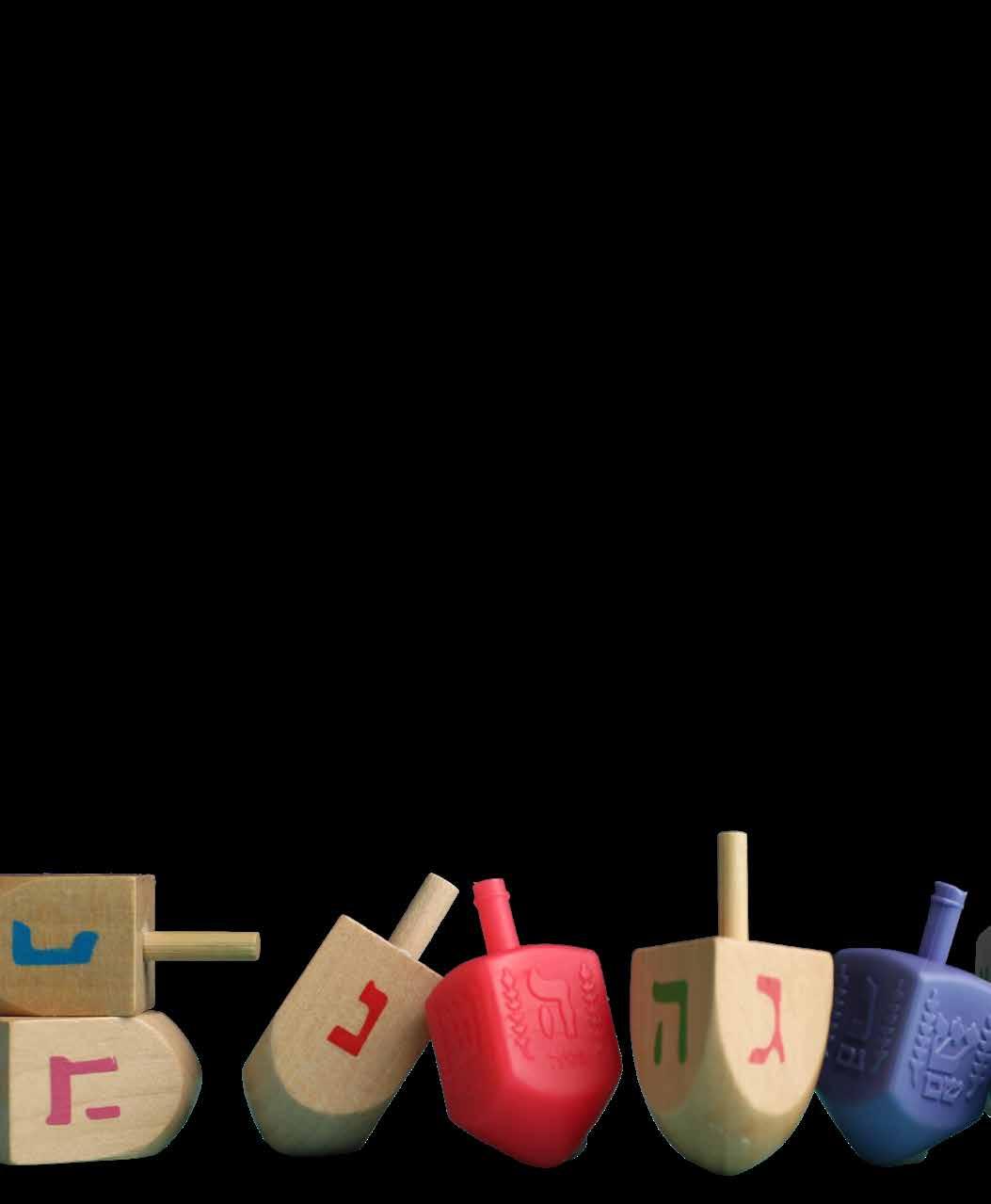
Every person, no matter who they are, deserves to feel seen, safe, and respected. From the time my children were little, I taught them to treat everyone with kindness and love. I truly believe that when we live with compassion for others, our lives become richer and more meaningful.
Hanukkah reminds me of this so beautifully — it’s a celebration of light in the darkness, of hope, strength, and the freedom to be who you are. As each candle is lit and the light grows brighter, it reminds me that even the smallest acts of kindness and respect can bring more harmony into our world.
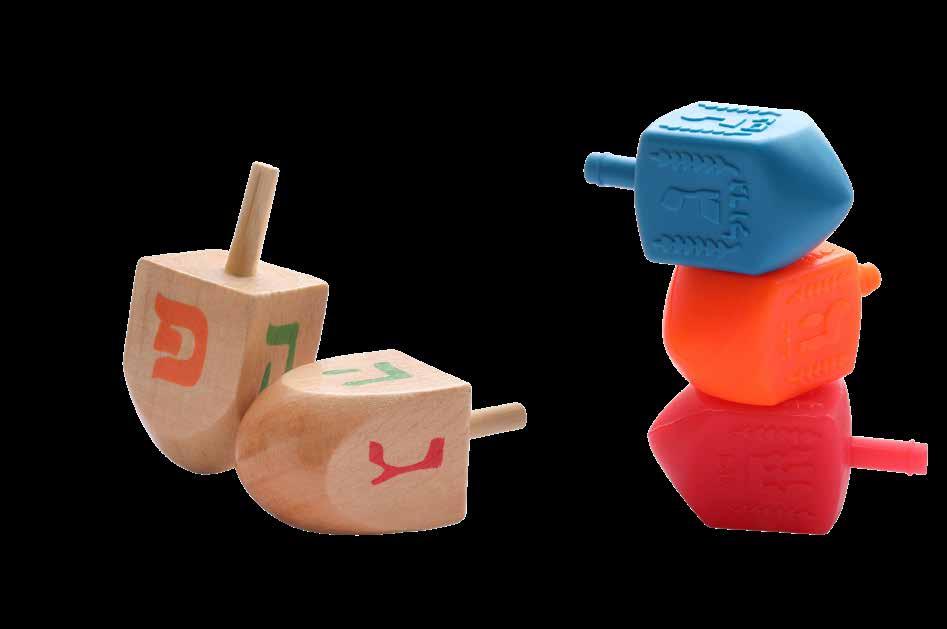




Thank you to all who entered this year’s Chanukah art contest. In this special section we spotlight the winners and directors' choice images. All of the submissions will be available to view online. We had two age groups: adult (13 +) and children, with first second and third place winners in each age group.
Winners will recieve gift cards from our contest sponsor, Binders Art Supplies and Frames.

Sponsored By:
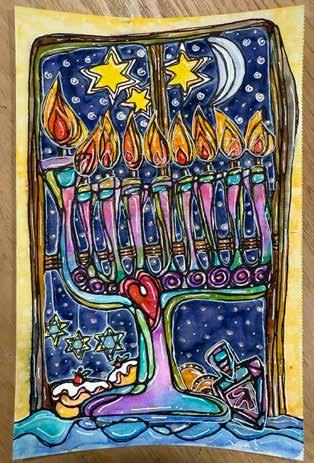
CHILD FIRST PLACE

ADULT SECOND PLACE WINNER
CHILD SECOND PLACE WINNER
ADULT THIRD PLACE WINNER
THIRDCHILDPLACE WINNER
Brynn Davis
Parents: Stacey and Darren Davis
Age: 13
Artwork Title: Happy Hanukkah


Parents: Traci and Jeff
Age: 13
Artwork Title: Helping Hands
Age: 73

Ages: 9


Sreeram Atthi
Parents: Neelima
Age: 12
Artwork Title: The adoration of the Magi
Age: 8



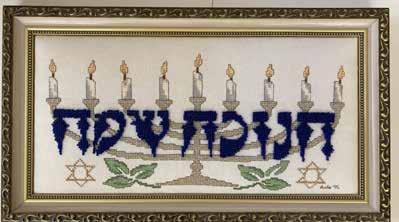


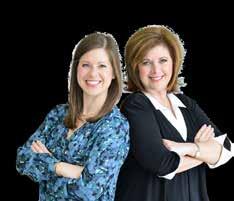




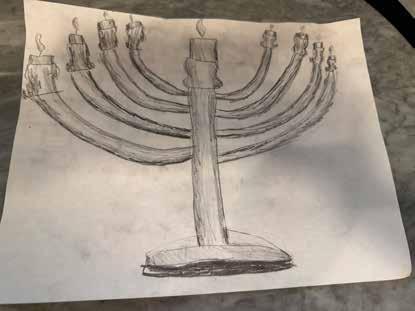
Age:
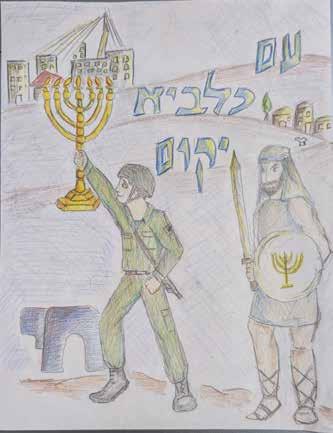
Age: 8
Age: 53
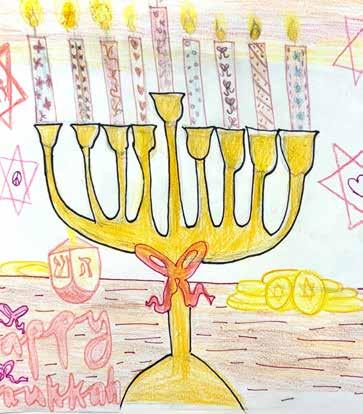

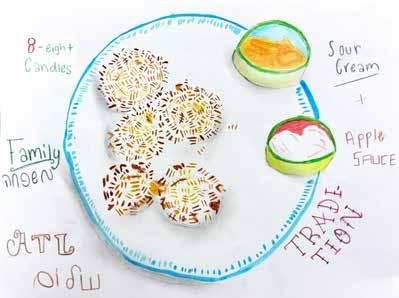
By Marcia Caller Jaffe
Think of a night out in Manhattan -- dinner and a show or symphony. Either way, make room for Elise, the first restaurant partnership for the Woodruff Arts Center, created to complement the visual and performing arts programming across the Midtown campus.
The restaurant benefits from steady traffic generated by Atlanta Symphony Orchestra concerts, Alliance Theatre productions, and High Museum visitors, lending a built-in audience. On the one hand, Elise adds a culinary touch point that fits naturally in the Arts Center; and on the other hand, gives suburbanites a reason to try some impressive, upscale dining without the pretense.
The name is a nod to the famous Beethoven composition, “Fur Elise,” and is further inspired by the space itself which was imagined by world famous architect Renzo Piano’s original space, then reinterpreted by Smith Hanes Studio with lighter wood floors, a warm white palette and bold use of color. The bar features strong scarlet tones and artwork from Chrissy Reed’s “Blobbies” series, giving an energetic and playful feel. The main dining room uses natural green tones for a calm and elegant atmosphere, anchored by a large Tommy Taylor abstract painting soaked in American modernism. The entrance has a sculptural work by Sonya Yong James made of coarse horsehair, adding exotic texture. Elise’s design features a visual connection to the courtyard and surrounding campus. The menu is seafood driven, described as “light, airy, pure in quality, simple yet impactful.”
The Atlanta Jewish Times (“Flavors of Spain and Italy” June 29, 2012) praised Layla Lila, also the brainchild of Elise’s chef, Craig Richards. At Elise, he blends French and Italian influences. The menu includes delicacies accented by crudo with melon and bronze fennel, strawberry hibiscus jam, charred Persian cucumbers with pistachio chili butter or fennel pollen butter. The wine list features a hundred selections with a strong focus on French producers, from classic appellations to lesser-known winemakers. The cocktail program blends familiar ingredients with some unique twists and house made elements. The vermouth menu, for example, includes five to six artisanal choices. Some gourmet touches on entrees include polenta verde, poached apricots, Tokyo turnips,
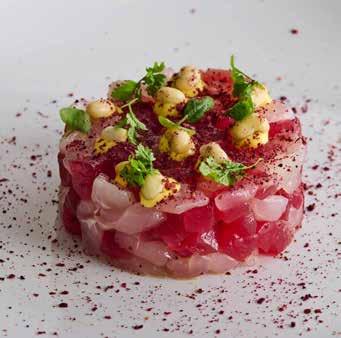
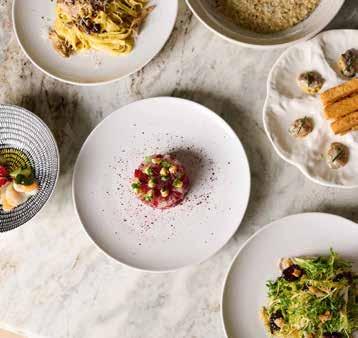

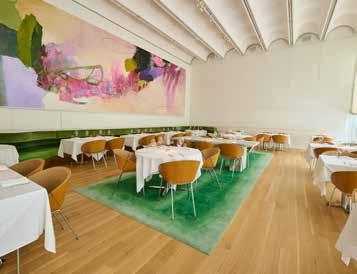
blackberry dashi, Madeira porcini jus, and pomme puree.
The menus are “a trip” in themselves on 8” x 10” notecard stock: two mint green, one peach with the bold “Elise” logo at the bottom. Ours was labeled “early autumn, evening.” The green ones are libations, and the latter caught our focus, the food. All in lower case -- “to begin together, a breeze, a touch of sun, to swirl and spoon, a fulfillment, and a grounding,” were the headings.
What we sampled:
Sourdough and cornbread, French butter, sea salt ($9)
Snapper and tuna tartar, saffron aioli, sumac, pickled field peas ($25)
Anchovies, sherry butter, tomato powder, basil, bruschetta ($25)
The table favorite was the gazpacho ($17) due colori, roasted parmigiano ice cream, and crispy basil. Although it’s hard to fathom this mélange, the server poured it tableside, so that the ice crystals provided a surprise takeover of the darker tomato base.
Risotto cacao e pepe ($37) was rich and just spiky enough.
Halibut, fermented field peas, potatoes, butter lettuce, ginger beurre blanc, caviar ($53)
For next time: Snapper, green romenescu, preserved tomatoes, avocado, and petite herbs ($49) sounds just divine.
Recommended desserts were a warm lemon tart, house made gelati and sorbetti, and a chocolate mousse finished with olive oil, sea salt, and zaatar, better
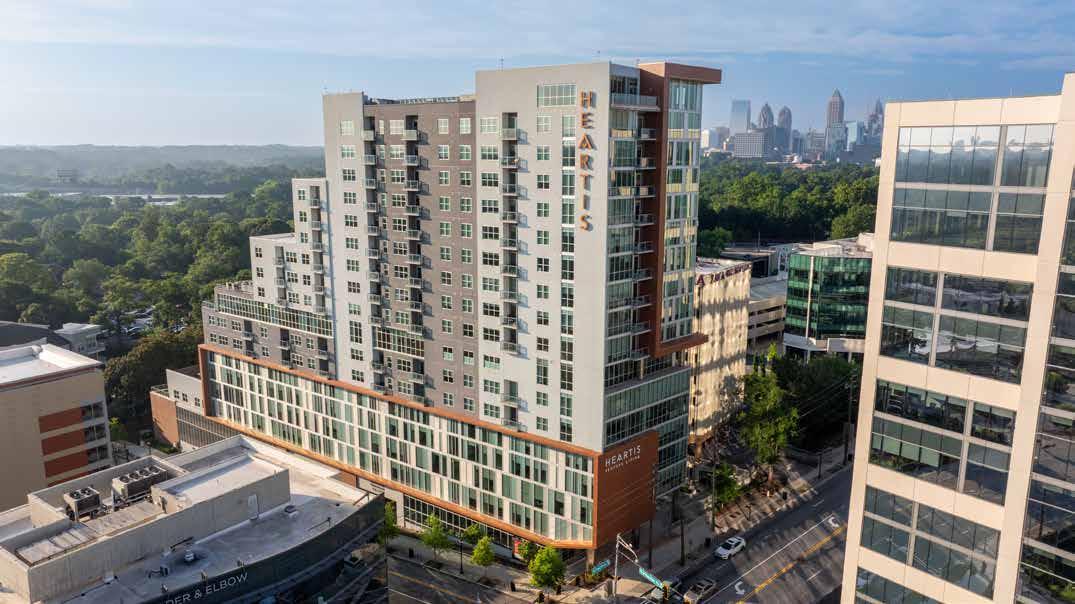
known for its Israeli roots.
Chef Richards explained, “My evolution in cooking seafood began at St. Cecilia and continues at Elise. Opening Elise is a full circle moment, recalling dining in the same space in 2005, and being inspired by its architecture and atmosphere.”
Coincidentally, seen dining on our night at Elise, Emory University professor Matthew Bernstein, chair of the Film and Media Department, shared, “We really enjoyed our meal and will be returning.”
Dinner service lines up with evening performance schedules. Lunch service is from 11:30 a.m. to 2 p.m., Wednesday to Saturday, perfect for museum guests and neighbors. Elise is located at 1280 Peachtree St. NE. 404 540-7572. ì
D i s c o v e r W h a t M a k e s U s
D i f f e r e n t
Sunkissed Swimming Pool
Sensations Dining
Health & Fitness Center Art Studio
v i t i e s a n d e v e n t s t o i n d u l g e n t i n r e s o r t - s t y l e
a m e n i t i e s , w e p r i o r i t i z e y o u r c o m f o r t b y o f f e r i n g
a l l e s s e n t i a l s e r v i c e s , a c t i v i t i e s , a n d c a r e i n o n e
c e n t r a l i z e d l o c a t i o n A t H e a r t i s B u c k h e a d , w e
r e d e f i n e s e n i o r l i v i n g , c r e a t i n g a h a v e n w h e r e
e v e r y m o m e n t i s t a i l o r e d t o e n h a n c e y o u r
w e l l b e i n g , a l l o w i n g y o u t o l i v e a l u x u r i o u s l i f e o n
y o u r t e r m s .



Monday, December 15
Community Hanukkah Candle Lighting - 5:15 to 5:30 p.m. Join MJCCA for a daily Hanukkah candle lighting in the Halpern Plaza Courtyard. We’ll light the candles, sing a song, share a blessing, and bring a little warmth to the evening. All ages and backgrounds are welcome — come for the glow, stay for the joy! Find out more details at https://tinyurl.com/3hsm963v
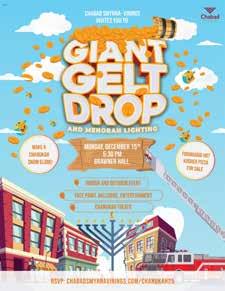
Giant Gelt Drop and Menorah Lighting – 5:30 p.m. Join the Chabad of Smyrna-Vinings and the Smyrna Fire Department for their Grand Chanukah Celebration with dropping hundreds of chocolate coins in the grand gelt drop! Hot kosher Formaggio Mio pizza for sale, kids’ crafts, face paint and balloons, and lighting the menorah together on night No. 2! Find out more at https://tinyurl.com/bd69ma95.
Outdoor Menorah Lighting Ceremony- Suwanee City Hall – 6 p.m. Join the Chabad Enrichment Center of Gwinnett for a menorah lighting, Chanukah gifts, and joyous Chanukah songs. RSVP at https://tinyurl. com/5yy8avp6.
Menorah Lighting – 6 to 7 p.m. Join the City of Kennesaw, in partnership with Chabad of Kennesaw, for the menorah lighting. This event is free and open to the public. Get more information at https://tinyurl.com/yc3zjb85.
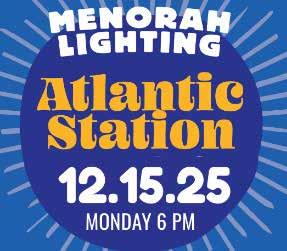
Atlantic Station Menorah Lighting – 6 to 7:30 p.m. Join Chabad in celebrating Chanukah at our annual menorah lighting in Atlantic Station! Enjoy music, entertainment, dreidels, doughnuts, hot latkes, crafts for the kids and more! Find out more at https://tinyurl. com/29xd7ayt.
Community Hanukkah Candle Lighting - 5:15 to 5:30 p.m. Join MJCCA for a daily Hanukkah candle lighting in the Halpern Plaza Courtyard. We’ll light the candles, sing a song, share a blessing, and bring a little warmth to the evening. All ages and backgrounds are welcome — come for the glow, stay for the joy! Find out more details at https://tinyurl.com/3hsm963v
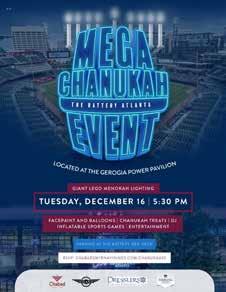
Chanukah at the Battery Atlanta –5:30 p.m. Giant LEGO menorah lighting, inflatable sports games, Chanukah treat, special entertainment, and so much more at the Battery Atlanta on night No. 3 of Chanukah. Join Chabad of Smyrna-Vinings for a one-of-a-kind celebration as we light up the home of the Braves. Sign up at https://tinyurl. com/3u9pmebf.
2025 – Menorah Lighting at Dunwoody Village – 5:30 to 6:30 p.m. Join the Mitzvah House for our fourth annual event! Community menorah lighting and holiday. Learn more at https://tinyurl.com/tyb4ptse.
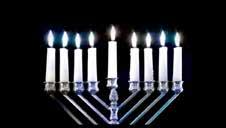
Outdoor Menorah Lighting Ceremony- Lawrenceville City Hall – 6 p.m. Join the Chabad Enrichment Center of Gwinnett for a menorah lighting, Chanukah gifts, and joyous Chanukah songs. Register at https://tinyurl. com/95vz7ekn.
Bingo Night at Temple Beth David6 to 8 p.m. It’s time for family-friendly bingo again! Join us for fellowship, great refreshments, and a good time. This fundraising event is open to the public. Your registration fee includes six bingo cards, refreshments, and the chance to win gift cards and great prizes (Holiday time! Use them for gifting!) Register at https://tinyurl. com/36zecumm.
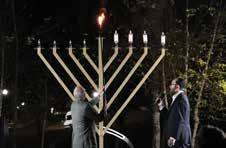
Annual Acworth Menorah Lighting6 to 8 p.m. Acworth invites everyone to Doyal Hill Park for the 13th Annual Menorah Lighting Ceremony. Rabbi Zalman Charytan from the Chabad Jewish Center will officiate the lighting with Mayor Tommy Allegood. Find out more at https://tinyurl.com/bdf9etfa.
Hadar Atlanta Jewish Professionals
Lunch N’ Learns @ The Dupree – 12 p.m. Join us for Chabad at The Dupree, a new monthly lunch and learn series offering meaningful Torah study, good food, and community connection. Open to men and women, each session features a different Chabad rabbi from across Georgia, sharing Torah insights and inspiration. “Unthink What You Think: The Art of Radical Open-Mindedness. Jewish Learning” with Rabbi Ayal Robkin for Jewish non-profit professionals. Explore the teachings of the 20th-century Rabbinic master Rabbi Shlomo Wolbe (Alei Shur), who developed the practice of Hitlamdut — the “Apprentice Mindset.” This approach invites us to shed assumptions, cultivate curiosity, and encounter life as perpetual learners. Together, we’ll discover how Hitlamdut trains us in the art of radical open-mindedness — challenging us to see the world, others, and even ourselves with fresh eyes. Bring your own dairy lunch. RSVP at https://tinyurl.com/5n8yywjr.
Community Hanukkah Candle
Lighting - 5:15 to 5:30 p.m. Join MJCCA for a daily Hanukkah candle lighting in the Halpern Plaza Courtyard. We’ll light the candles, sing a song, share a blessing, and bring a little warmth to the evening. All ages and backgrounds are welcome — come for the glow, stay for the joy! Find out more details at https://tinyurl.com/3hsm963v.
Thursday, December 18
Community Hanukkah Candle
Lighting - 5:15 to 5:30 p.m. Join MJCCA for a daily Hanukkah candle lighting in the Halpern Plaza Courtyard. We’ll light the candles, sing a song, share a blessing, and bring a little warmth to the evening. All ages and backgrounds are welcome — come for the glow, stay for the joy! Find out more details at https://tinyurl.com/3hsm963v.
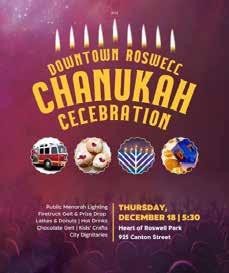
Roswell Chanukah Celebration –5:30 to 6:30 p.m. Join the Chabad of Downtown Roswell for a public menorah lightning and firetruck gelt and prize drop. Sign up at https://tinyurl. com/fvnh3y26.
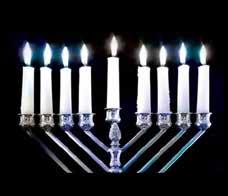
Outdoor Menorah Lighting Ceremony- City of Sugar Hill – 6 p.m. Join the Chabad Enrichment Center of Gwinnett for a menorah lighting, Chanukah gifts, and joyous Chanukah songs. Register at https://tinyurl.com/ y4u9838h.
Torah Reading: Mikeitz
Friday, December 19: Light Shabbat Candles: 5:14 PM
Saturday, December 20: Shabbat Ends: 6:13 PM
Torah Reading: Vayigash
Friday, December 26: Light Shabbat Candles: 5:18 PM
Saturday, December 27: Shabbat Ends: 6:17 PM

VAHI (Highland Park) Menorah Lighting – 6 to 7:30 p.m. Celebrate Chanukah with Chabad Intown! Enjoy music, live entertainment, Chanukah treats, dreidels, music and more with the wider VaHi community at Chabad Intown’s annual Virginia Highlands Menorah Lighting! RSVP at https://tinyurl.com/bdfrwxun.
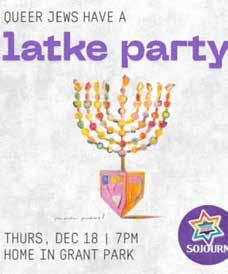
Queer Jews Have a Latke Party – 7 to 8:30 p.m. QueerHillah, SOJOURN’s Atlanta-based social group for queer 20s/30s Jews, will gather to celebrate Hanukkah. Pack up your apple sauce, menorah, and/or holiday spirit for an evening of queer, Jewish Hanukkahing! Come for the Jake Cohen recipes, stay for friendship. Sign up at https:// tinyurl.com/5ab87x5b.
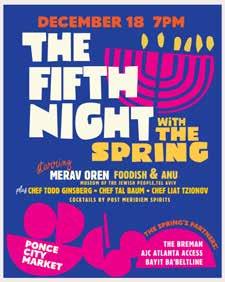
Hanukkah Party with The Spring, AJC, ANU, and Food-ish – 7 to 10 p.m. Join the Atlanta Jewish Committee for The Fifth Night — A Hanukah Party. Great food, great cocktails, great music — and a special guest from Foodish and the ANU Museum of the Jewish People, Tel Aviv. Learn more at https://tinyurl.com/35cfdmjk.
Music and Play – 11 a.m. to 12 p.m. Let’s spark joy and curiosity through the magic of music and play! Jumpstart your morning with an upbeat, interactive music and movement class led by Here We Grow, where little ones can dance, wiggle, and sing their hearts out. Afterward, Nurture invites children into a world of themed sensory play and hands-on adventures — perfect for curious minds and messy fingers. Come ready to move, create, and make memories together! Learn more at https://tinyurl.com/mr2ezpwp.
Community Hanukkah Candle Lighting - 5:15 to 5:30 p.m. Join MJCCA for a daily Hanukkah candle lighting in the Halpern Plaza Courtyard. We’ll light the candles, sing a song, share a blessing, and bring a little warmth to the evening. All ages and backgrounds are welcome — come for the glow, stay for the joy! Find out more details at https://tinyurl.com/3hsm963v.
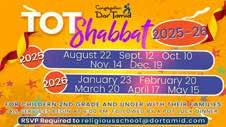
Tot Shabbat - 6 to 8 p.m. Tot Shabbat from Congregation Dor Tamid is a Shabbat program geared for children (second grade and younger) to laugh, meet new children, make new friends, and explore the wonders of Judaism in an exciting fun way! The service is filled with songs, prayers, blessings, stories, snacks, and a place where a kid can be a kid when they pray to G-d. This service meets on selected Friday nights throughout the year at 6 p.m. Each service is followed by a pot-luck Shabbat dinner. Parents are encouraged to model the behavior they would like to see in their own children. So, remember: come to Tot Shabbat ready to dance, sing, pray, and have fun. Tot Shabbat is geared toward children 4 and under. Learn more at https://tinyurl.com/w94ra3de.
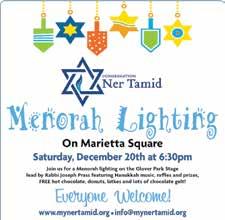
Menorah Lighting at Marietta Square – 6:30 to 7:30 p.m. Join Congregation Ner Tamid for a menorah lighting on the Glover Park Stage in Marietta Square led by Rabbi Joseph Prass, featuring Hanukkah music, raffles and prizes, and free hot chocolate, donuts, latkes, and chocolate gelt! Discover more at https://tinyurl. com/36snmnke.
Donuts, Drinks & Dinks – Hanukkah Party – 11 a.m. to 12 p.m. Celebrate the last day of Hanukkah at Cadranel’s Café while enjoying donuts, drinks, and Hanukah songs with Rabbi G. Free jelly donuts and hot chocolate for all! Additional drinks (alcoholic & non-alcoholic) and food are available for purchase. Find out more at https:// tinyurl.com/2ck6nyy3.
JBaby Brookhaven Neighborhood Small Group – 3:30 to 4:30 p.m. A fiveweek, small group series for local families to bond over music, education, support, and playtime. Designed for babies ages 0–12 months and their parent(s). In this warm, welcoming space, neighborhood families come together for playful learning and meaningful support. You’ll connect with other parents, learn from developmental experts, and share new experiences with your little one — building friendships and a deeper connection to your community along the way. Register at https://tinyurl.com/2sc8dtwz.
Ponce City Market Menorah Lighting – 4:30 to 6 p.m. Join Ponce City Market and Chabad Intown for a traditional menorah lighting ceremony. Enjoy music, entertainment, dreidels, doughnuts, hot latkes, crafts for the kids and more! RSVP at https://tinyurl. com/3ttp9yh3.
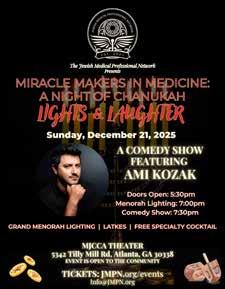
Miracle Makers in Medicine: A Night of Chanukah Lights & Laughter – 7:30 p.m. Join the Jewish Medical Professional Network for an unforgettable Chanukah celebration. In the spirit of Chanukah — a celebration of hope, perseverance, and light, this heartfelt gathering will unite hundreds of medical professionals and their families for an evening filled with warmth, joy, and meaningful connection. It is a well-deserved respite from the relentless demands of work; offering a moment to recharge and honor the miracles you perform daily. Join us in illuminating the lives of these extraordinary individuals who dedicate themselves to greater good. Together, we can foster a brighter, more supportive future for those who heal our communities. Purchase tickets at https:// tinyurl.com/53uxbhc2.
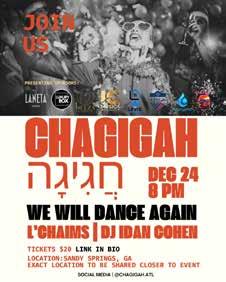
Chagigah – 8 p.m. An unforgettable Jewish party to unite the community with connection, laughter and vibes! No work the next day. No excuses. Just CHAGIGAH (celebration)! Register at https://tinyurl.com/3k6n3htr.

Be A 2025 Pinch Hitter on December 25th! – 8 a.m. to 5 p.m. Do a mitzvah and join us on Thursday, Dec. 25, as a volunteer! B’nai B’rith International – Achim/Gate Lodge (Atlanta) is delighted to announce that we are going to serve the community with the Pinch Hitter Program again this year! Sign up at https://tinyurl.com/4ft45572.
Volunteer: Engage with a Purpose, Family Fun Day - 9:30 a.m. to 12 p.m. and 11:45 a.m. to 2:30 p.m. We’re excited to welcome volunteers for Family Fun Day when the MJCCA transforms into a Winter Wonderland filled with activities, joy, and community spirit. Activities include bounce houses, games, winter activities, a mitzvah project, and more — bringing smiles to families all day long! Open to Georgia residents of 5 years or more and pass a background check. Sign-up at https:// tinyurl.com/7dtjbpn3.
Family Fun Day - 10 a.m. to 12 p.m. Join us for Family Fun Day at the MJCCA! Enjoy a day full of games, crafts, activities, and winter-themed fun for the whole family. It’s the perfect way to spend time together and make lasting memories. This event is free and open to the community! Learn more at https://tinyurl.com/3n6yyj5e.

Chinese Dinner – 6:30 to 8 p.m. Enjoy a deliciously curated dinner, familyfun entertainment, and great company. Rabbi Schusterman will call an exciting game of Bingo, and we’ll have a raffle with great prizes to top off the evening. RSVP at https://tinyurl. com/3wy7mavz.
Winter Break Family Camp – Experience the magic of camp with the whole family and ring in the New Year surrounded by friends. RSVP at https:// tinyurl.com/mtsncayx.


technology and artistry to create exceptional dentistry. As a comprehensive dental office that goes above and beyond our specialty in Cosmetic Dentistry, our patients believe Dr. David Mastro is the right choice for all your family dentistry needs!
When it comes to your smile and oral health, Dr. Mastro has a proven 30 year track record of providing quality cosmetic and family dental care for families in our local community and around the world.
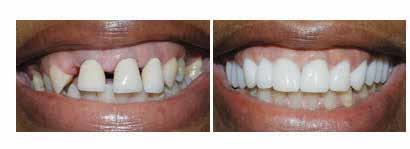

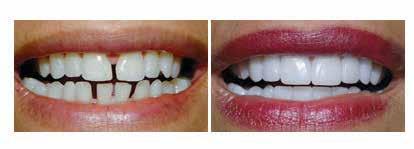

Ingredients
1 and 1/4 cups Gefen Almond Milk
1/2 cup sugar
1/4 cup margarine or butter
4 cups Glicks Flour
2 eggs
1 cup active sourdough starter
1 teaspoon salt
Tuscanini Light Olive Oil or avocado oil, for frying cinnamon and sugar, for topping
Directions


1. In a small saucepan, heat milk, sugar and butter over low to dissolve the sugar and melt butter.
2. Put the combined mixture in the bowl of a mixer fitted with a dough hook. Add two cups of flour. Add starter, eggs, the rest of the flour, and salt. Knead on low until the dough is smooth and elastic and pulls away from the side of the bowl, about 10 minutes. Dough will be somewhat sticky. If needed, add 1/3 to 1/2 cup additional flour.
3. Remove dough from mixer bowl and place in a large plastic or glass bowl. Cover bowl with plastic wrap and leave in a warm place to rise for five to six hours.
4. Place dough in the fridge overnight to bulk rise.
5. Prepare a sheet of Gefen Parchment Paper and spray or brush with oil.
6. Gently remove dough from bowl onto parchment and roll out to half an inch thick.
7. Use a donut cutter with a center cut-out to cut the doughnuts. Cover with a damp tea towel or plastic wrap for one and a half to two hours to rise. Cut the parchment into pieces around each doughnut to help lift and place in hot oil.
8. In a medium Dutch oven or wide pot, heat three inches of oil to 360 degrees Fahrenheit on a deep fry thermometer. Lift a donut with the parchment and put into hot oil. Use tongs to gently remove the parchment paper. Fry two or three at a time. Don’t overcrowd the pot.
9. Fry two to three minutes and flip to fry the other side until puffy and golden brown. Use a spider or skimmer to remove from oil. Drain on a cooling rack. Allow to cool five minutes.
10. Combine cinnamon and sugar and toss donuts to coat.
Recipe by The Peppermill kosher.com
Rabbi Levy had to spend time in a Catholic hospital. He became friends with the sister who was a nurse there.
One day, she came into his room and noticed that the crucifix on the wall was missing.
The nurse asked Rabbi Levy good-naturedly, “Rabbi, what have you done with the crucifix?”
“Oh sister,” he replied, “I just figured one suffering Jew in this room was enough.”
n. Old-fashioned and long-winded humor. For example, the endless, detailed, and nuanced jokes told at Catskill resorts in the mid-20th century.
“Uncle Morty is doing his after-dinner slapshtick again. It’s kinda fun if you have a spare hour or two.”
From the Yiddish, “shtick,” meaning, “comic routine,” and “slapstick,” meaning, “physical comedy.”
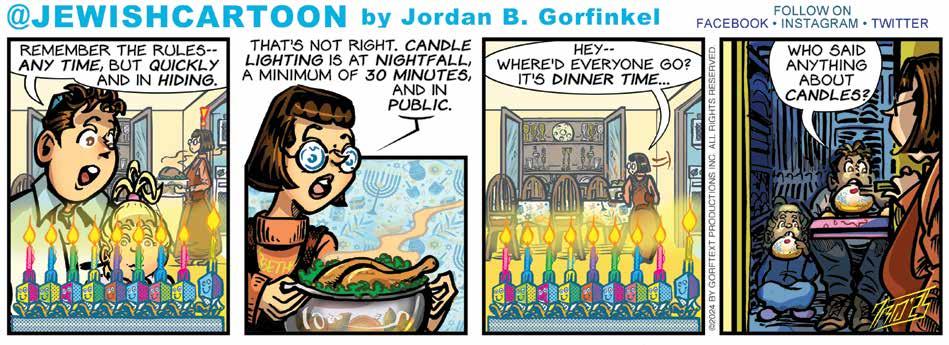
By: Yoni Glatt, koshercrosswords@gmail.com
ACROSS
1. Jordan’s capital
6. Acts like a chicken
11. Library sounds
14. ___ HaMikra (Hebrew cantillation)
15. “Go this way” sign
16. Condo grp.
17. Bothers
18. Sebastian’s twin, in “Twelfth Night”
19. “Enchanted” actress Adams
20. What might be seen on two chanukiyot on the seventh night of Chanukah? (1984)
23. Bread box, for short?
24. Irish boy
25. Margarine, by a less common name
26. Bodega owner, e.g.
28. Assassin who provides a need for oil lamps? (2014)
32. Tough item to get upstairs, often enough
33. Where the floor is always wet?
34. One igniting the first flame of Chanukah? (1984, 2022)
39. Stanley of “The Devil Wears Prada”
40. AKA Rabbi Moshe Isserles
43. Time when a chanukiyah might be set up? (2008)
46. Evil Nasrallah

This week, 100 years ago
48. Loveable cartoon bear
49. The Raptors, on the scoreboard
50. Use a crowbar
51. It’s figuratively heard while singing Maoz Tzur? (2023)
57. Salute in stanzas
58. “Burn” singer Goulding
59. Doughnuts and latkes, to dieters
61. “The Legend of Zelda” console, for short
62. Cook’s strainer
63. Build up, as a collection
64. Vietnam War protest gp.
65. What the devout might fall on
66. Oscar winner Spacek
1. Beach buggy, briefly
2. Baton waver
3. Last name of Marvel witch Wanda
4. “Don’t leave home without it” card, briefly
5. Toll House cookie dough maker
6. Covered with concrete
7. Sportscaster Andrews
8. Nile creature, for short
9. Coke nut
10. Graceful avian swimmer
11. “Need me to do that?”
12. Class for cooking, sewing, etc.

Southeast Jewish Religious School Union Convention held in Columbus, Ga. Dec. 29-31
National Council of Jewish Women publishes book, “Daily Readings in Human Service,” by Estelle Sternberger, its Executive Secretary.
This week, 75 years ago
Admiral Lewis L Straus, former member of the U.S. Atomic Energy Commission, speaks at opening of celebrations for the 200th anniversary of Charleston’s Jewish community.
Beulah Leiter, prominent Atlanta attorney, is elected Secretary of the Georgia Association of Women Lawyers.
Rabbi Joseph Rosthein becomes spiritual leader of B’rith Sholom Synagogue in Charleston.
The Synagogue Council of America announces that recently reclaimed religious ceremonial objects
Some of the cast of “Hershel and the
looted by the Nazis will be distributed to synagogues throughout the U.S.
This week, 50 years ago
Journalist and author Frank Gervasi speaks at the Temple-Israel Dinner of Solidarity
Conductor Dennis Russell Davies and Israeli violinist Pinchas Zukerman perform with the Atlanta Symphony Orchestra.
Keith Franco, son of the late Charlie Franco, has his Bar Mitzvah ceremony at Or VeShalom Synagogue.
This week, 25 years ago
12 Oak Barbecue, Atlanta’s first all-kosher barbeque restaurant, is set to open.
13. Gives approval
21. Piece of corn
22. They’re a drag
23. Merrick Garland and Edward Levi, for short
27. Major (first) name in women’s sports
28. ___ down (take notes)
29. Edible South American tuber
30. Every other hurricane
31. Met or Phillie rival
35. Laker Hachimura
36. Heart chart, for short
37. MIT or MTA, e.g.
38. Answers
41. Burrowers found at the Grand Tetons
42. Some quantity of
43. Cicely and Mike
44. Full of 49-Down
45. “Yeah, maybe”
46. Weed-removing tool
47. Big acts play them
49. Plains generally lack them
52. Anchorman’s spot
53. Lena who has played both a Holocaust survivor and a nazi
54. Get out of Dodge
55. Total sons of Esau
56. Half of a Friday night standard
60. Bean option
Ilan Reisman, son of Paul and Zippi Reisman, celebrates his Bar Mitzvah at Congregation B’nai Torah
The AJT interviews renowned photographer Annie Leibovitz.
Jewish Theatre of the South presents a teen-starring play, “Hershel and the Hanukkah Goblins.”
Dr. Dean and Leslie Dobbin of Great Neck, N.Y., and Marty and Judy Kogon of Atlanta, announce the engagement of their children, Laurie Dobbin and Michael Kogon.
Jason Chalif, son of Dr. Michael and Marla Chaliff, celebrates his Bar Mitzvah at Temple Emanu-El.
Laura Labovitz, daughter of Steven and Sheri Labovitz, celebrates her Bat Mitzvah at Temple Sinai.
Issues of the AJT (then Southern Israelite) from 1929-1986 can be found for free online at https:// gahistoricnewspapers.galileo.usg.edu/lccn/sn78003973/
Isadore “Doe” Cohen passed away on Nov. 17, 2025, at the age of 89. Doe was born in Atlanta on March 25, 1936, to Harold and Annie Cohen. He had two older brothers who predeceased him, Gilbert and Aaron. Doe graduated from Grady High School and was a member of the 1953 AA state champion football team, which was coached by Erk Russell, whom Doe admired and respected throughout his life.
Doe worked as a sales representative at Alterman Food for 16 years, and then started his own successful business, Cohen Food Service, in 1972.
Doe was a man of great integrity, whose word was his bond. He changed the outcome of many lives by giving his gift of wisdom and time. He was a lamplighter for those he mentored.
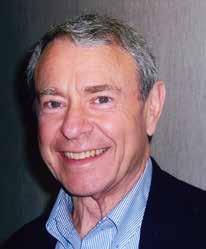
Doe will be remembered as a loving husband, father, grandfather, brother, uncle, and true friend to so many.
Doe is survived by his wife of 34 years, Susan, his children, Rodney (Terri) and Lori, from his previous marriage to Patricia Cohen, and his granddaughters, Allison, Erin, and Sara. Doe’s daughter, Brenda, passed away in 2010, as did a child at birth, Bruce. He is also survived by his stepchildren, Greg Alterman and Scott (Leslie) Alterman, and step-grandchildren, Quentin, Gabe, Rhys, Oscar, Dylan, Leta, and Milena. Arrangements by Dressler’s Jewish Funeral Care, 770-451-4999

Howard Halpern, 85, passed away on Thursday Nov. 20, 2025.
Howard was born in Lakewood, N.J., on Nov. 15, 1940. As a teenager, Howard moved to Miami where he began his career in the food industry selling produce to the original Burger King.
In 1966, Howard moved to Atlanta and, in 1972, started Halpern’s Gourmet Grocer, a firstof-its kind bustling restaurant and butcher shop that set the course for mall food court concepts nationwide.
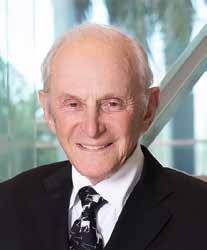
In 1983, Howard pivoted from retail to wholesale and started Buckhead Beef with only five butchers and a dream. He grew the company to one of the nation’s top privately owned meat purveyors supplying major restaurants and events, including the 1996 Atlanta Olympics. Buckhead Beef was acquired by Sysco in 1999 but Howard was not done yet.
He founded Halpern’s Steak and Seafood in 2005 which focused on white tablecloth fine dining and customer service unlike anything in the industry before. Howard was one of the first adopters of new technology to increase quality and efficiency, setting the industry standards of today. Halpern’s was acquired by Gordon Food Services in 2015. Howard tried to retire but always found himself drawn back and continued to work for Halpern’s until his final weeks and will live on as a legend in the industry.
Howard was also a prominent philanthropist in the Atlanta and Boca communities. Some of his major causes were the Lynne and Howard Halpern Chair in Head and Neck Cancer Research at Emory Winship Cancer Center, The Lynne and Howard Halpern Endowment at The Temple, which led the charge for the restoration of their organ, and JARC Florida, an organization that provides supported independent living for adults with developmental disabilities. Howard was a strong believer that it is not enough to simply donate money, he championed the Atlanta Meals on Wheels program over 30 years ago, served as the president of JARC for two years, and, most recently, was awarded a multimillion dollar grant to provide scholarships to residents at JARC.
Howard is predeceased by his parents, Sydelle and Herman, and his sister, Elizabeth.
Howard is survived by his wife Lynne, children, Wendy (Adam), Kirk (Lori), Doug, and Tiffany (Darren), grandchildren, Harris (Skyla), Adam, Erica (Ryan), Ben (Carlin), Allison, and Jesse, his great-granddaughter, Jollie, his sisters, Lorriane and Rowena, his goddaughters, Lucy (Chadwick) and Maddy (Alan), his great-godchildren, Chadwick, Harper, Collier, Lucy, Bo, and David, his devoted friend, Knox, and many cousins, nieces, nephews, and friends.
In lieu of flowers, memorial donations can be made to The Lynne and Howard Halpern Endowment at The Temple or to JARC Florida.
The funeral was held on Monday, Nov. 24, 2025, at The Temple at 11 a.m., followed by a burial at Arlington Cemetery with Rabbi Peter Berg officiating. Arrangements by Dressler’s Jewish Funeral Care, 770-451-4999
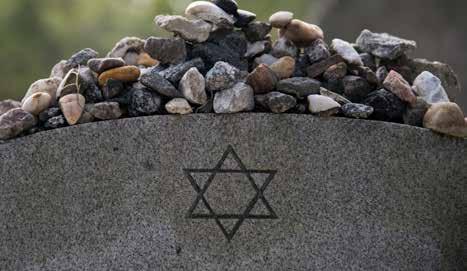
Mary Wool Leader, beloved wife, mother, grandmother, great-grandmother, and dedicated therapist and nurse, passed away on Nov. 18, 2025, peacefully and surrounded by the love of her family. She was born on May 5, 1936, in The Bronx, N.Y., to Barbara (Cohen) and Ruben Wool.
Mary attended the Bellevue School of Nursing in New York City, where Edward Leader, a medical student at NYU who predeceased her in 2024, fell in love with her and married her soon after. They built a life marked by devotion, adventure, and service. When Edward was drafted into the United States Army, Mary embraced their move to Fort Sam Houston in San Antonio, Texas, where they lived from 1966 to 1968. She met each stage of life with resilience, determination, and commitment to her family. She completed an R.N. at Bellevue, a B.S. at Oglethorpe University, and both a master’s and Ph.D. at Georgia State University.
Mary will be remembered for her 67-year marriage to Edward Leader, her deep faith in G-d, her observance of Jewish traditions and her wise guidance, and the many ways she expressed care through her hands — knitting beautiful sweaters, sewing matching outfits and baby blankets, and repairing appliances and cars. Her nursing skills and her calm, commanding presence during moments of crisis made her a source of strength and reassurance to all who depended on her.
Mary is survived by her siblings, Carl Golub; Martin Rosenberg; Jack and Laura Wool; and Steven and Pamela Wool, as well as her close friend, Marla Netzel. She is also survived by her children, David and Susan Leader, Barbara and Barry Nicolaou, Jane and Marc Ripps, and Ivy Leader and husband, Ben Newton. She was the cherished grandmother of Jessica and David Fortin; Andrew Leader and wife, Gillian Wallace; Allison Leader and husband, Nick Zylkuski; Julie and Todd Orlansky; Frances Newton and husband, Spenser Gould; Crow Newton; and Dorothy Ripps. She delighted in her great-grandchildren, Natalie, Teddy, Miles, Ilya, and Lincoln, each of whom brought her immense joy. Her beloved nieces and nephews include Robert and Arianne Golub, Adam Rosenberg, Karen and Eric Menzie, Midori Gail, Joel Wool and wife, Rabbi Laura Bellows, and Clara Rose. The family extends heartfelt gratitude to the devoted caretakers who viewed Mary as a mother figure.
The family is asking for donations to be made to the Chabad Enrichment Center of Gwinnett, https://www.chabadofgwinnett.org/templates/donate_cdo/aid/4970020/ jewish/Donate.htm

Fea Rose Kondor Raizes passed away on Friday, Nov. 14, 2025, in Johns Creek, Ga. Fea (known to many of her friends as Fefe) was born in Kono District, Sierra Leone, on Nov. 10, 1995. She came to the United States in October 2000 after being adopted, along with her brother, David (no relation at the time) by Beth and Elliot Raizes through the All as One Orphanage in Freetown, Sierra Leone. Her first cousin, Satta, later came to the family and became her sister in early 2002.
Growing up, Fea especially enjoyed competing for the St. Ives Country Club Swim Team, and the Atlanta Jayhawks Competitive Cheerleading Team. She also developed a love of painting and other artistic endeavors. Along with her brother, David, and sister, Satta, she became a bat mitzvah at Congregation Dor Tamid in March 2009. Following graduation from Northview High School, she continued to develop her artistic talent using a variety of media while traveling around the United States and Jamaica. She also had the opportunity to visit her home country of Sierra Leone and to work as an intern assisting in the rehabilitation of elephants at the African Elephant Research Unit in South Africa.
Fea was loved for her memorable hugs, her infectious laughter, her fashion sense, and empathy for friends and family members suffering from physical and mental illness.
Fea is predeceased by her grandmother, Joyce Ruus Martin, and her grandfather, Maurice Raizes, along with her devoted dog, Molly. She is survived by her loving parents, Beth and Elliot Raizes, grandmother, Sandy Raizes, sisters, Shannon Anderson (Andy), Carrie Thompson (Christopher), and Satta Wolak (Christopher), her brothers, Tradd Raizes (Merissa) and David Raizes, by seven nieces and nephews: Alexis, Hailey, Greyson, Emma, Wyett, Charley, Rhys, and her loving dog, Jagger. She also will be remembered by numerous loving aunts, uncles, and cousins.
Her funeral took place on Nov. 20, 2025, at Congregation Dor Tamid in Johns Creek, Ga., with Rabbi Jordan Ottenstein, Rabbi Ari Kaiman, and cantorial soloist Mike Zuspan officiating. In lieu of flowers, the family requests donations in memory of Fea Raizes to Center for Black Equity or sponsor an elephant in South Africa.
May her memory be a blessing to all who were touched by her beauty. Arrangements by Dressler’s Jewish Funeral Care, 770-451-4999




Fran Kulick Travis passed away on Monday, Nov. 17, after a long illness with dementia. She was 81 years old.
Born in Stamford, Conn., to Sarah and Paul Kulick, Fran grew up in Savannah, Ga., before moving to Texas as a teenager. She graduated from the University of Texas at Austin, forming lifelong friendships and strengthening the commitment to community service instilled by her parents. Her father’s work with Jewish Federations in Connecticut, Georgia, and Texas deeply shaped her values and sense of responsibility to others.
After college, Fran made Georgia her home where she met and married Bob Travis. They lived for many years in Lilburn, where their children were born, and later in Roswell. These communities became the backdrop for Fran’s family life, career, and decades of civic engagement.
From a young age, Fran was drawn to leadership and service. In high school, she was extremely active in B’nai B’rith Girls (BBG), and she carried that passion forward throughout her life. She became a dedicated member of the National Council of Jewish Women (NCJW) and ultimately served as chair of its Advocacy Committee. In that role, Fran spent countless days at the Georgia State Capitol lobbying for issues she believed in — including women’s rights, education, and social justice. She was known as a progressive and passionate voice, and she took great pride in her long-standing relationship with Congressman John Lewis, whom she deeply admired.
Professionally, Fran was a creative and entrepreneurial spirit. She ran a successful tchotchke business selling items to schools and sports organizations, taught at the Art Institute, and earlier in her career, managed a retail clothing store. Her warmth, creativity, and ability to connect with people were at the heart of everything she did.
LUNCH & LEARN
THURSDAY, JANUARY 15th • 12:00-3:00PM
RSVP, please call 470.681.9849 or visit our events page on our website.


Fran was predeceased by her beloved husband, Bob Travis, and by their children, Scott and Julia, who both tragically died as young adults. She is survived by her brother, Gil Kulick, and his life partner, Anita Altman, who provided steadfast love and support. Fran also leaves behind an extended family of many dear friends who will remember her humor, generosity, and fierce dedication to justice and community.
Fran lived a life of purpose, conviction, and heart. Her legacy lives on in the lives she touched, the students she taught, and the countless people she inspired through her advocacy.
In lieu of flowers, donations may be made to the National Council of Jewish Women or the Dementia Society of America. Arrangements by Dressler’s Jewish Funeral Care, 770-451-4999
Obituaries in the AJT are written and paid for by the families; contact Editor and Managing Publisher Kaylene Ladinsky at kaylene@atljewishtimes.com or 404-883-2130, ext. 100, for details about submission, rates and payments. Death notices, which provide basic details, are free and run as space is available; send submissions to editor@atljewishtimes.com.

My maternal antecedents had faith in “folk cures” and “folk practices,” phenomena that cannot be scientifically or naturally explained, and I have become a true believer, myself. Herewith, I relate two inexplicable events.
Years ago, when I worked at Beth Jacob, I misplaced $300. A generous congregant had handed me three $100 bills early that morning to anonymously help subsidize an upcoming Empty Nesters dinner. I wasn’t used to receiving cash donations, and I had no secure office place to hide the money until I could give it to the bookkeeper who came in at the end of the day. I had to rush to a committee meeting, so I hurriedly and absentmindedly hid the cash in the safest spot I could think of.
After the long committee meeting, I brought M.R., the Empty Nesters chairman, to my office to show him the donated money, but I couldn’t remember where I had hidden it. M.R. and I searched my office, emptying the desk drawers, bookshelf, and trashcan. When it seemed totally hopeless, I offered to replace the $300 myself, but M.R. wanted to keep looking. The money had to be there.
A favorite Holocaust survivor congregant stopped by, and I told her about the missing money. “I think I can help you,” she said. She asked if I had a few dollars. I did. She told me to drop the dollars into my desk tzedakah box. I obeyed. Then she led me through a Hebrew incantation which I repeated word by word. Confused and flustered, I banged clumsily into a chair, upon which we’d stacked a shaky pile of books cleared from the shelf. The books dropped and scattered. A few fell open, and the three bills fluttered out from between their pages, where I’d absentmindedly hidden them. The satisfied woman left, and M.R. and I were stunned. What had just hap-


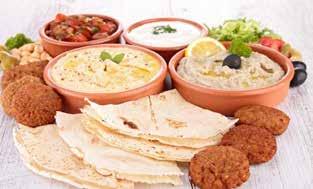
pened?
The woman had led me through a Hebrew incantation for a lost object. I’d verbally declared that I gave tzedakah in the merit of the soul of Rabbi Meir Baal Haness (Rabbi Meir the Miracle Worker), a sage known for his legendary acts of charity. (A recent Internet search related that Rabbi Meir, a student of Rabbi Akiva and a brilliant scholar, is known as a spiritual protector for those who call upon him in times of need.)
Last week, my husband, Zvi, misplaced his new pair of special eyeglasses, essential for his driving and reading, and he was understandably distraught. We looked everywhere in the house, cars, and carport. We rechecked the places where he habitually rests his eyeglasses. We retraced his entire day’s movements. Our detail-oriented daughter, Rachel, came to help, but her methodical “search and rescue” wasn’t proving successful.
I recalled the incident of the missing $300, but I didn’t remember the exact prayer words, and the woman who guided me was no longer alive. Zvi was ready
to order a duplicate pair of eyeglasses, and I decided to see if the Internet could help me find the complete Hebrew incantation. But first, I considered who might know the Rabbi Meir incantation.
Maybe my friend, Meta, could help. I called her because she is familiar with a lot of Jewish folk wisdom and, like me, she does not doubt the power of paranormal phenomena. She didn’t know the prayer, but she advised, “Turn a glass over.” I had never heard of the glass-turning practice, but I went into the kitchen, took a glass, turned it upside down, and waited.
Minutes later, Rachel ran into the room. “I found the glasses!” she declared. The spectacles had been hiding among a jumble of wires, nowhere near any of Zvi’s usual reading spots. He had no idea how his glasses had fallen there. Something paranormal, inexplicable, and mysterious had just occurred; when I told Meta, she wasn’t surprised. We had just experienced an event we couldn’t rationally understand or explain, yet we knew with certainty that paranormal phenomena are real. ì