to Work in the World
The Public history program at Arizona State University is housed in the School of Historical, Religious, and Philosoiphical Studies within the College of Liberal Arts and Sciences
The Public history program at Arizona State University is housed in the School of Historical, Religious, and Philosoiphical Studies within the College of Liberal Arts and Sciences
Over the past several years, our ASU public historians have put history to work in an extraordinary number of ways and also reconceived the Public History Program’s workings, including its mission and values. Our big-tent approach to public history includes an expanding group of scholars, community partners, and students. It includes a new Public History Certificate.
In 2019, the Public History Committee reimagined itself through a visioning process facilitated by Dr. Faye Farmer’s team at Knowledge Enterprise at ASU. The Committee established a mission statement to help it manage the program and more deeply embed it into the work of History, SHPRS, the College, and ASU. The committee has focused on expanding student training, building community partnerships, and supporting a wide range of facultydriven program activities. This renewed vision is evident in the hiring of Program Coordinator Erin Craft, who manages the program and oversees the SHPRS Helios Foundation Endowment. It is also embodied by the development of the Public History Certificate and a range of graduate course offerings. Graduate students now build professional experience training with partners across the United States. The undergraduate research seminar has seen undergraduates collaborating on public history projects with partners such as Banner Health, the Arizona Jewish Historical Society, Boyce Thompson Arboretum, the Tempe History Museum, and the Salt River Project.
Importantly, the Public History Program has become more deeply enmeshed in the work of SHPRS and the College as it fulfills the ASU Charter. The Public History Committee has used the Public History
Endowment to support students, faculty, and the community through an active program of grants, reviewed on a rolling basis. Committee members have helped SHPRS allocate scholarships, the Lorig Public History Scholarship, and the Public History Fellowship. Committee meetings have become a venue for integrating public history practice into the unit’s everyday work, including various collaborations across the university, such as those with the Humanities Institute and the Desert Humanities Initiative. The committee has fostered an active, student-centered publication program through its blog, Spark, which primarily features student projects, accomplishments, awards, and activities.
The committee’s energy has deepened our community engagement with key partners in the university, the region, and beyond, including the Tempe Historical Society, the Scottsdale Museum of the West, and the Arizona Historical Society. Indeed, our students contributed to creating an international traveling exhibit in collaboration with the Humanities Action Lab at Rutgers University and sixteen university partners worldwide, and the School for the Future of Innovation in Society. The exhibit traveled to Arizona in 2021 for a year-long run at the Arizona Historical Society that included a keynote speech by renowned environmental historian William deBuys. Finally, program faculty are collaborating with the World War II Studies Program and the National World War II Museum to conduct the program’s first “study away” field school.
Mark Tebeau, Ph.D. Associate Professor of History Director of Public History
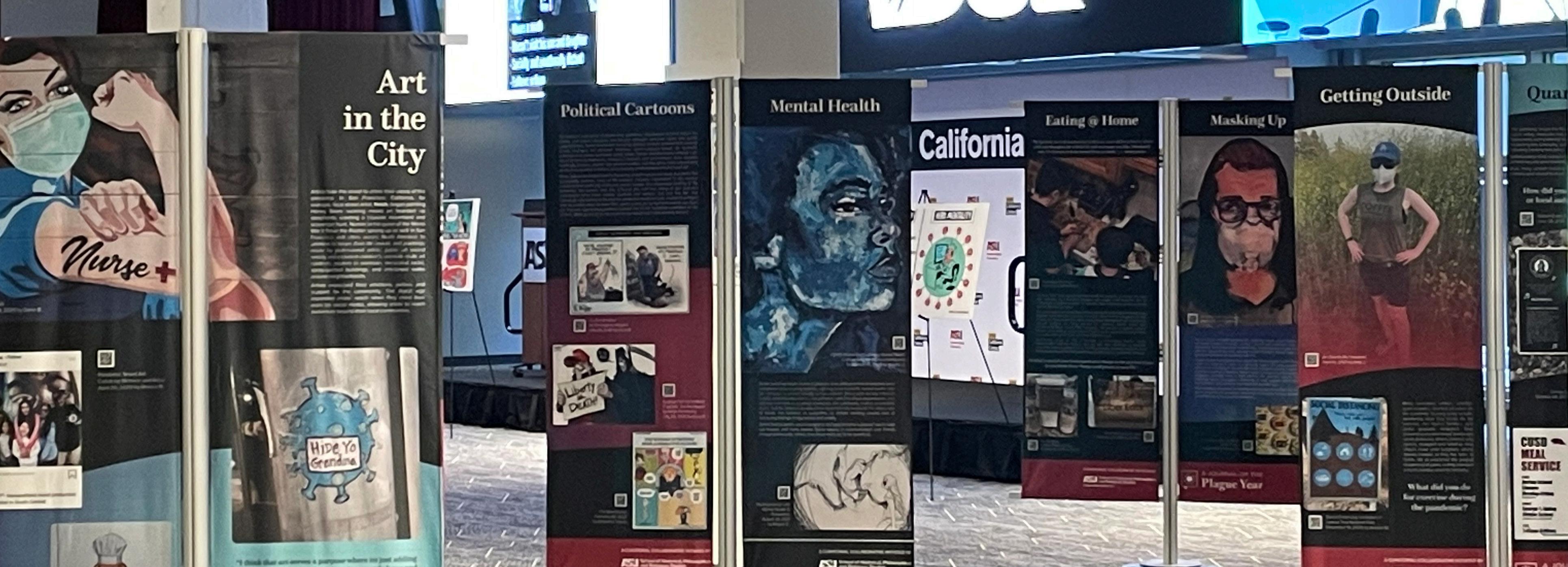
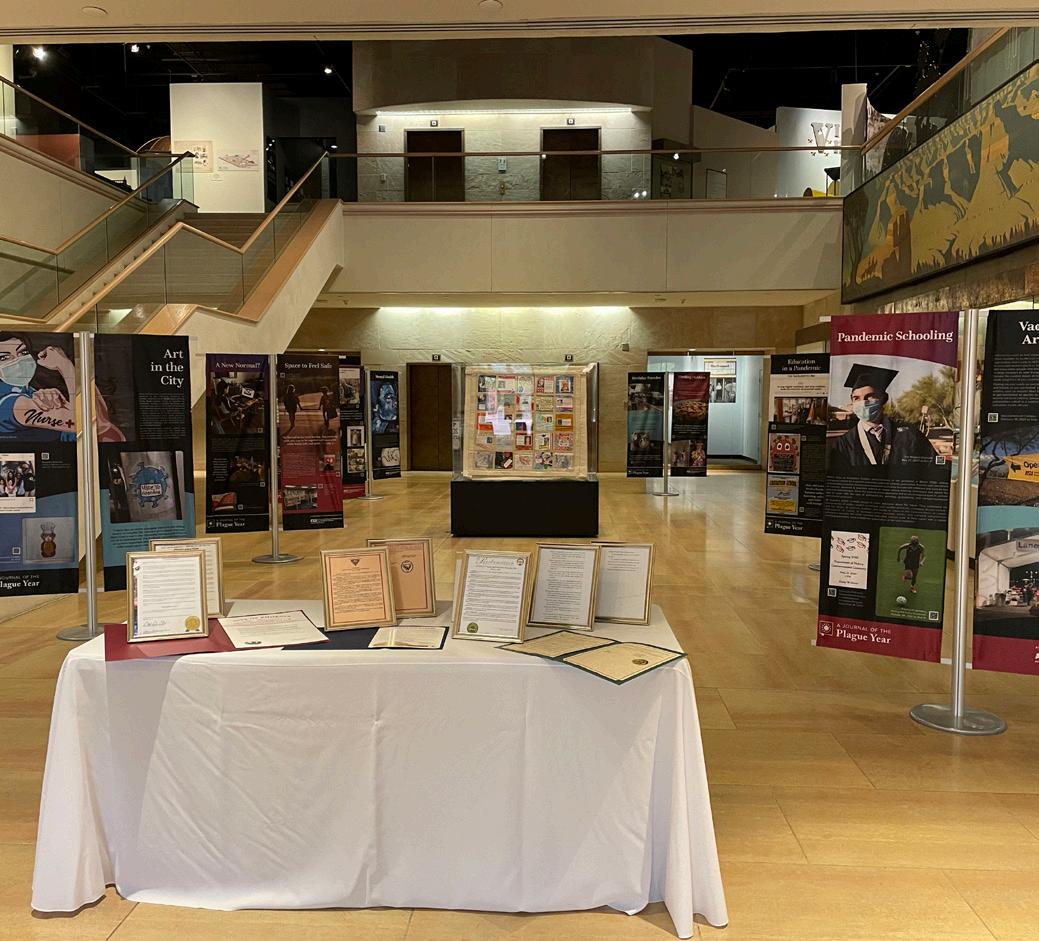
The pandemic became a defining moment for the public history program and its renewed energy. The Public History Program launched and led the world’s largest born-digital archive of the pandemic, A Journal of A Plague Year: An Archive of COVID-19, or JOTPY as we fondly called it. Conceived as a way to take stock of the rapidly-changing moment, the archive quickly went global. More than 300 curators from dozens of partner universities and communities worldwide collected, deposited, and assigned metadata to over 20,000 stories about the pandemic. Much of that work happened online, through digital tools such as Slack, weekly curatorial meetings of graduate students and faculty, and in public history laboratory courses.
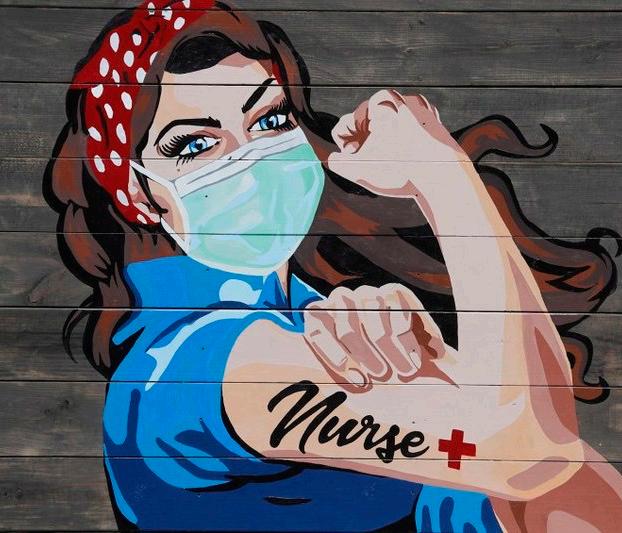
Public History students developed the curatorial practices, trained project partners, and led the consortium of partners.
Students involved in the project went on to jobs with the Arizona Historical Society, the North Carolina State Archives, and Ford Motor Company archives.
Support for the project came from a variety of sources including the Dean of Humanities , the Humanities Institute , the American Council for Learned Societies , and the Arizona Humanities Council , not including additional monies that partners raised to support their participation in the archive.
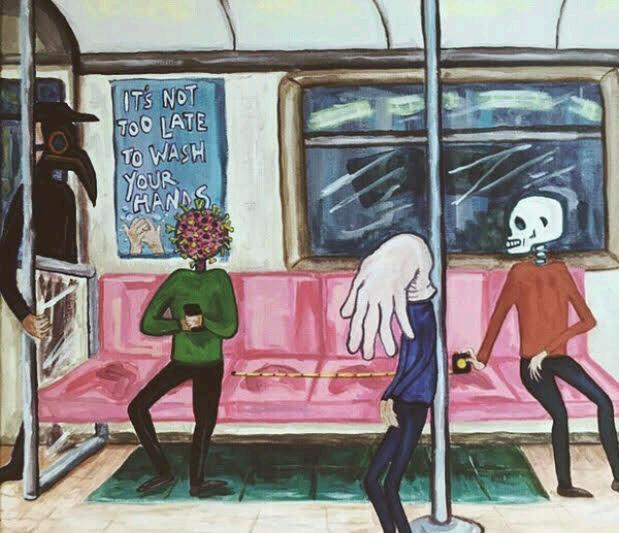
Artwork captured the general mood of many during the early days of the pandemic.
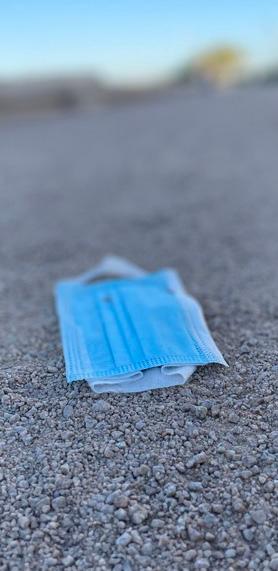
Images in JOTPY captured the impact of the pandemic, including mask trash in public spaces.
covid-19archive.org/s/archive/item/40590
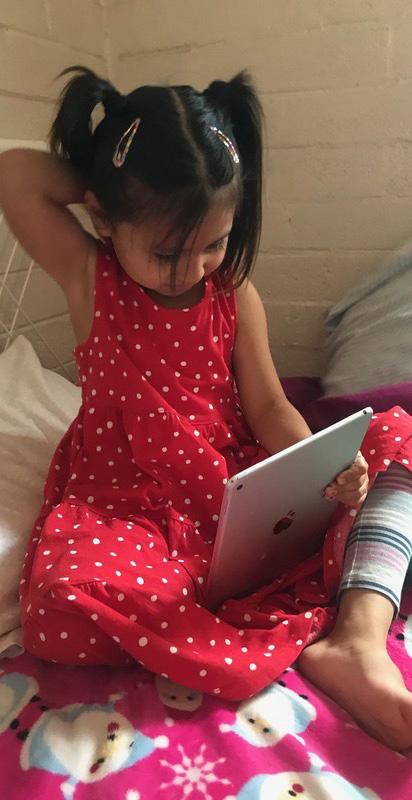
A five year old resumes classes via Zoom weeks after the initial shutdown.
covid-19archive.org/s/archive
covid-19archive.org/s/archive/item/28289
covid-19archive.org/s/archive/item/10020
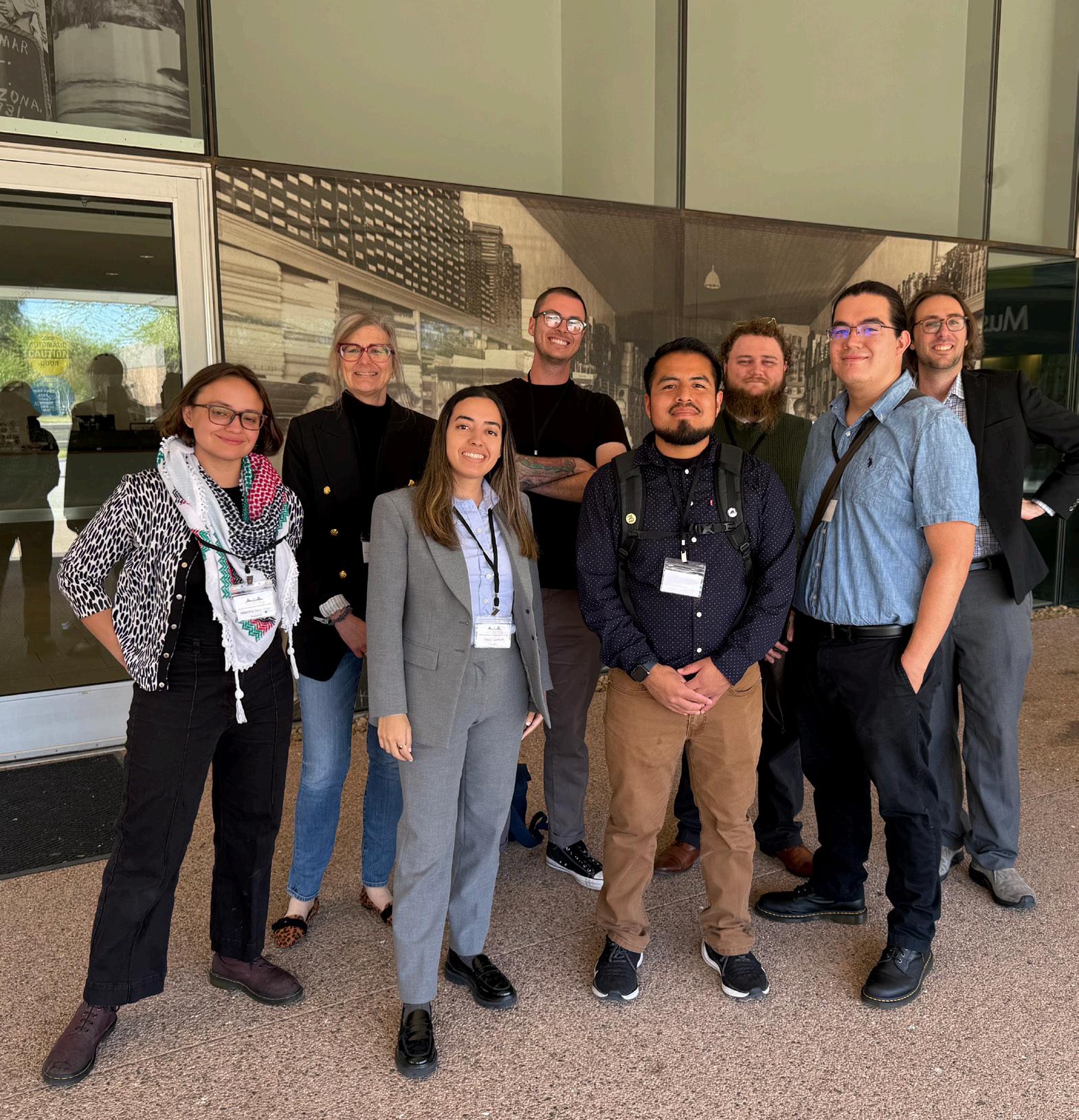
Students at the Arizona History Convention. Three students presented their work on panels, and five presented posters at the conference.
The Public History Committee guides the program’s goals, expenditures, and student opportunities. Members of the committee regularly collaborate with students and the public in various projects, putting history to work in the world in creative and meaningful ways. The committee also supports student work by hosting an annual poster session, mentoring student projects, and evaluating student applications for graduate travel to conferences. The public history program is a big tent that extends from affiliated faculty and staff to the broader community of historians from across the university and region, who often join the work of the committee as well.
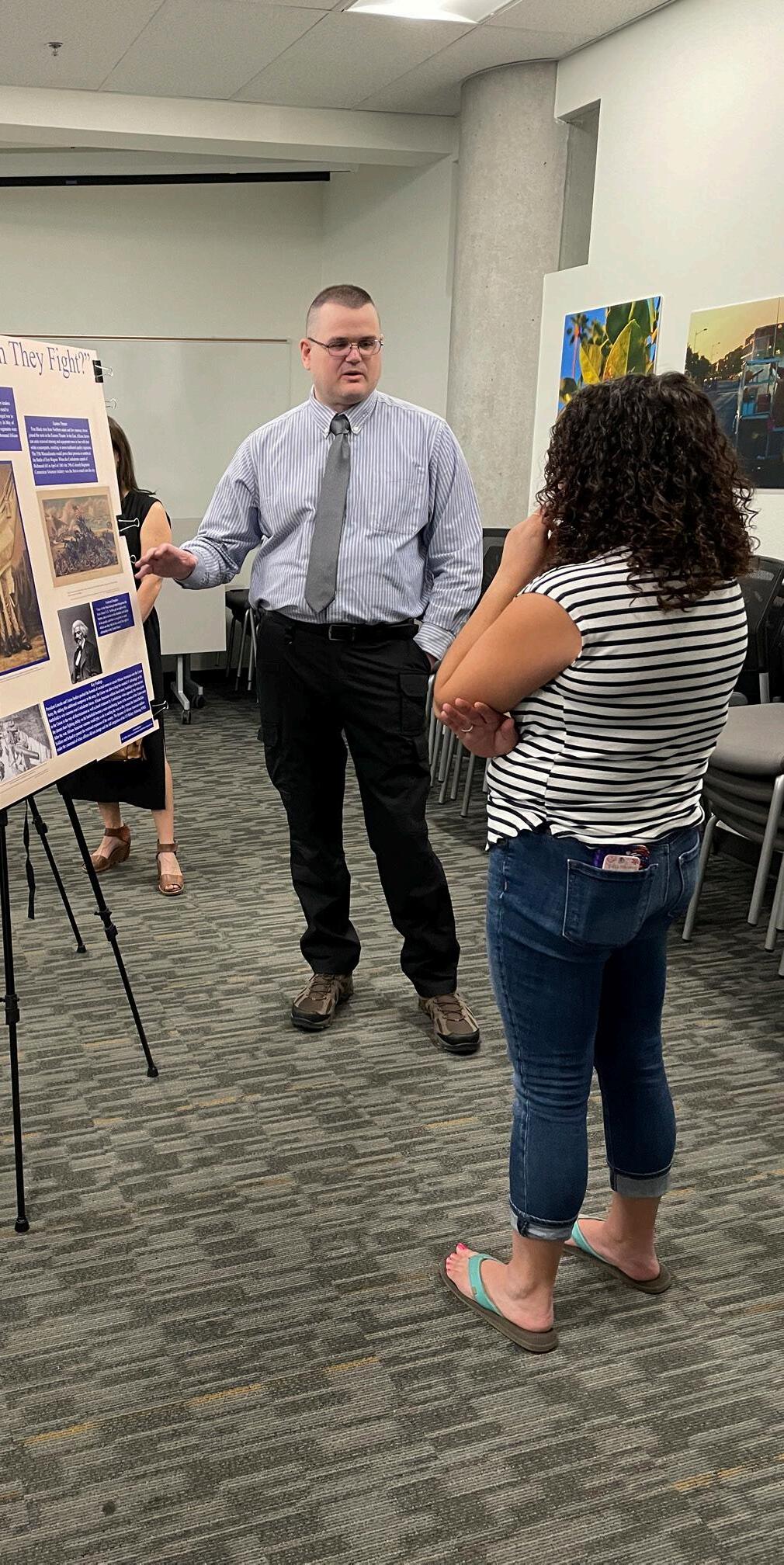
Alum Jonathan Sweitzer discusses his poster with Dr. Katherine Bynum at the 2023 Humanities Week Poster Session.
Curtis Austin
Volker Benkert
Katherine Bynum
Maurice Crandall
Erin Craft
Mònica Espaillat Lizardo
Celena Gammon
Glen Goodman
Jill Horohoe
James Hrdlicka
Katy Kole de Peralta
Manisha Master
Laura Smith
Mark Tebeau
Pete Van Cleve
Summer Cherland (SMCC)
Michelle Martin (MCC)
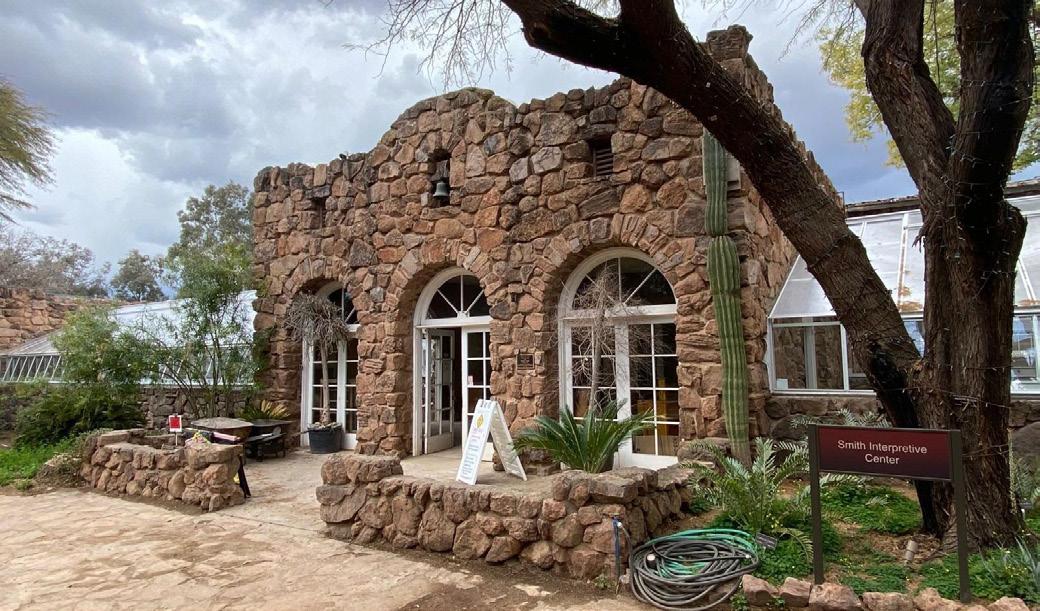
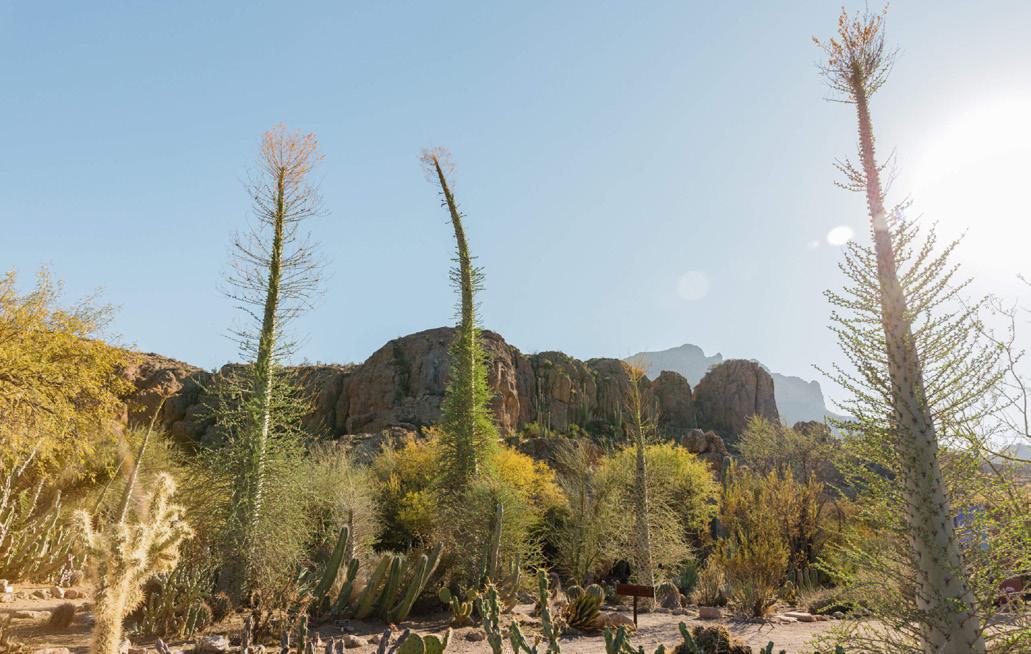
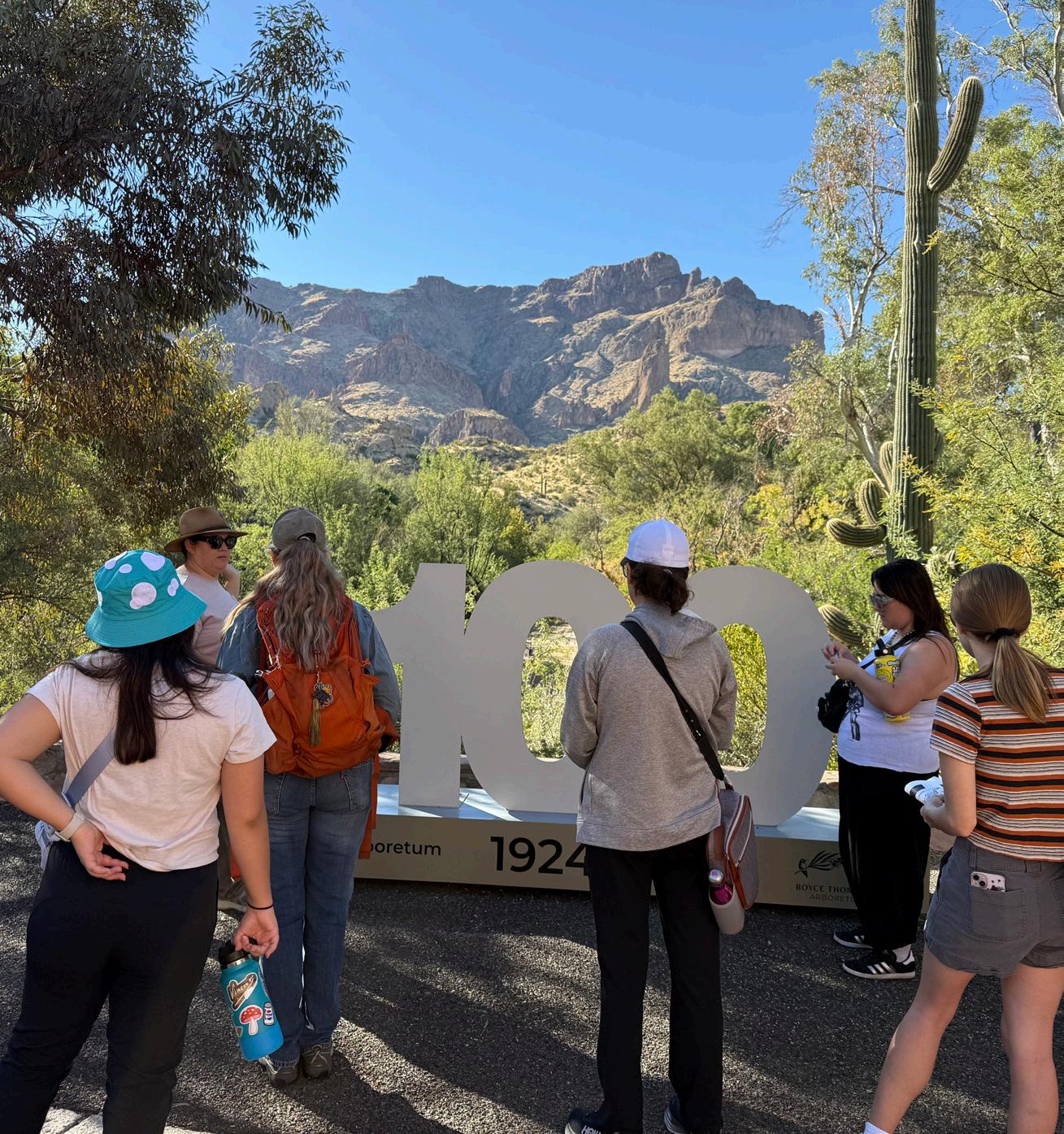
Boyce Thompson Arboretum is Arizona’s oldest and largest botanical garden, housing thousands of desert plants within its 135 acres. Located in Superior, Arizona, the Arboretum has been a leader in researching and teaching about desert environments for over 100 years. The Arboretum has deepened its relationship with ASU in recent years, especially with the College of Liberal Arts. The Desert Humanities Initiative invited the Public History Program to help document the Arboretum’s history through collecting oral histories and evaluating its archives. The archives, housed in an
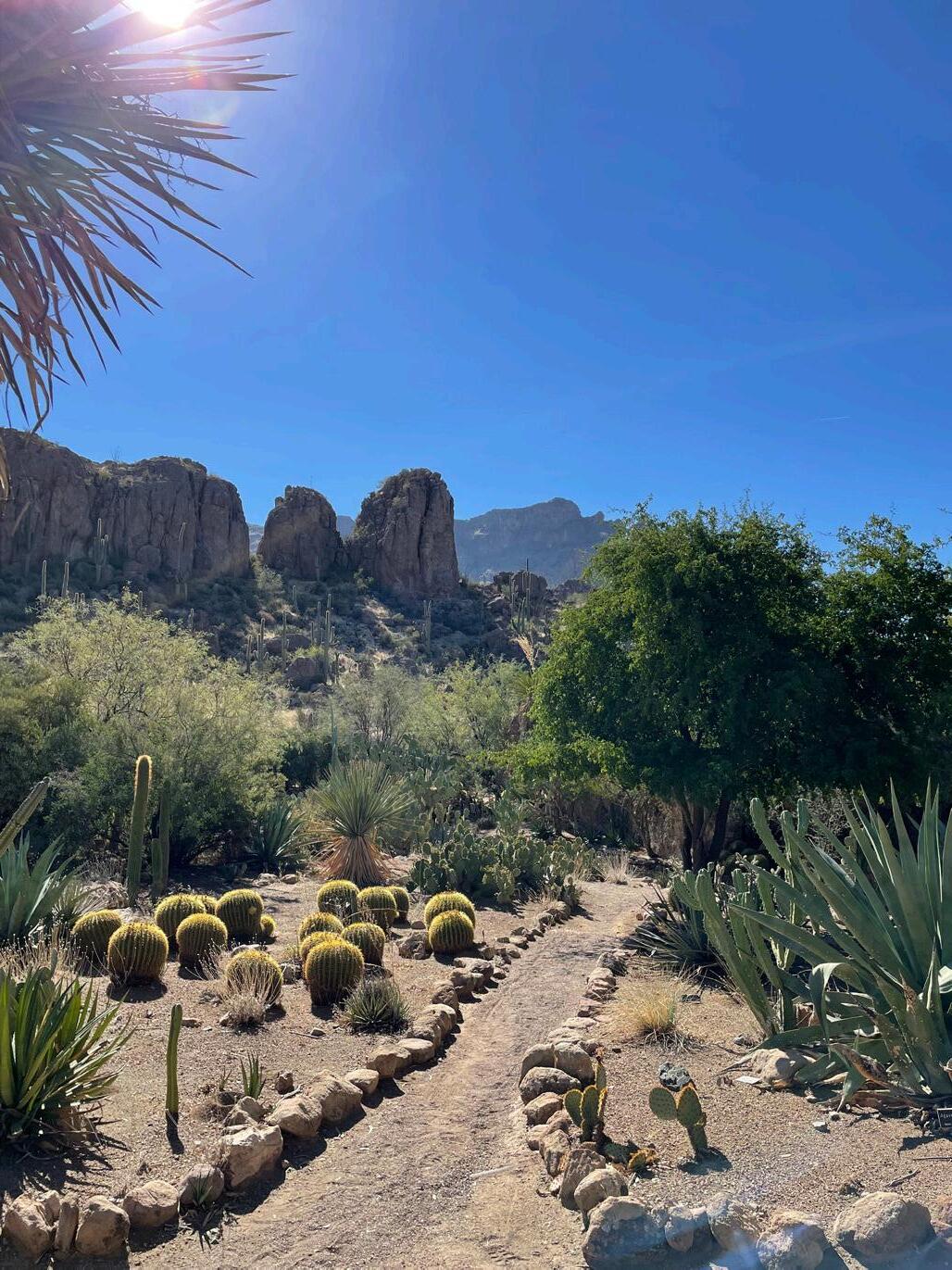
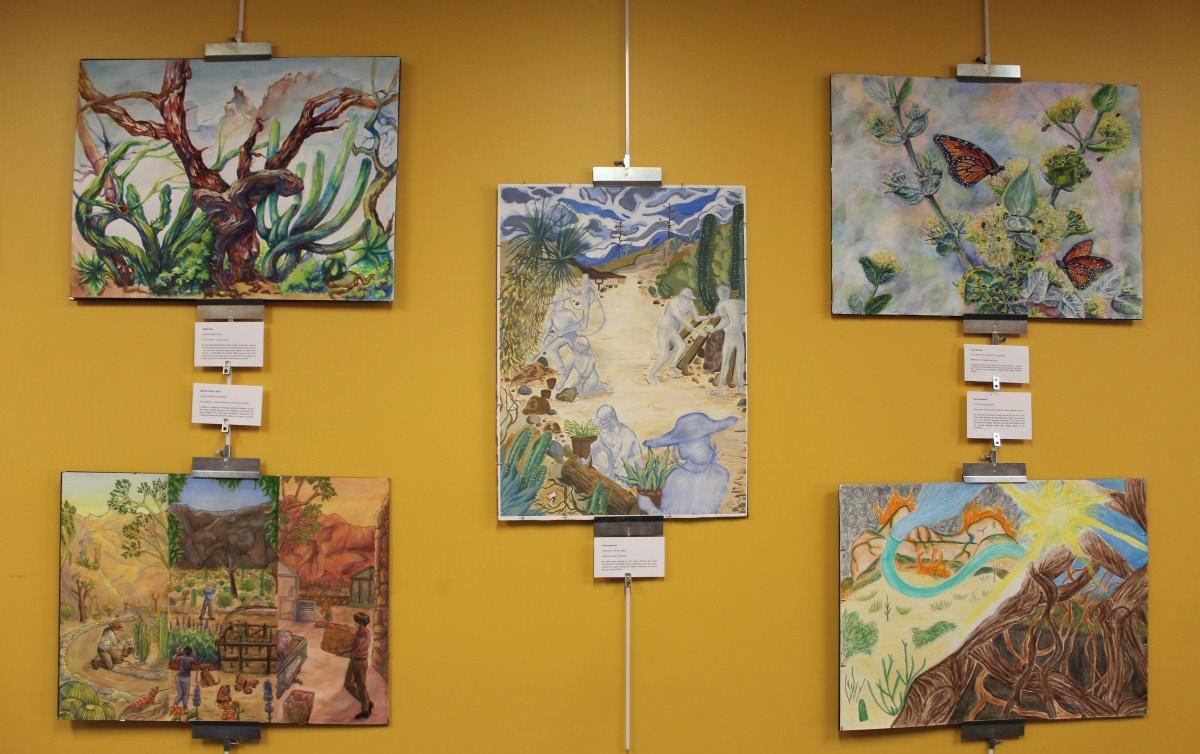
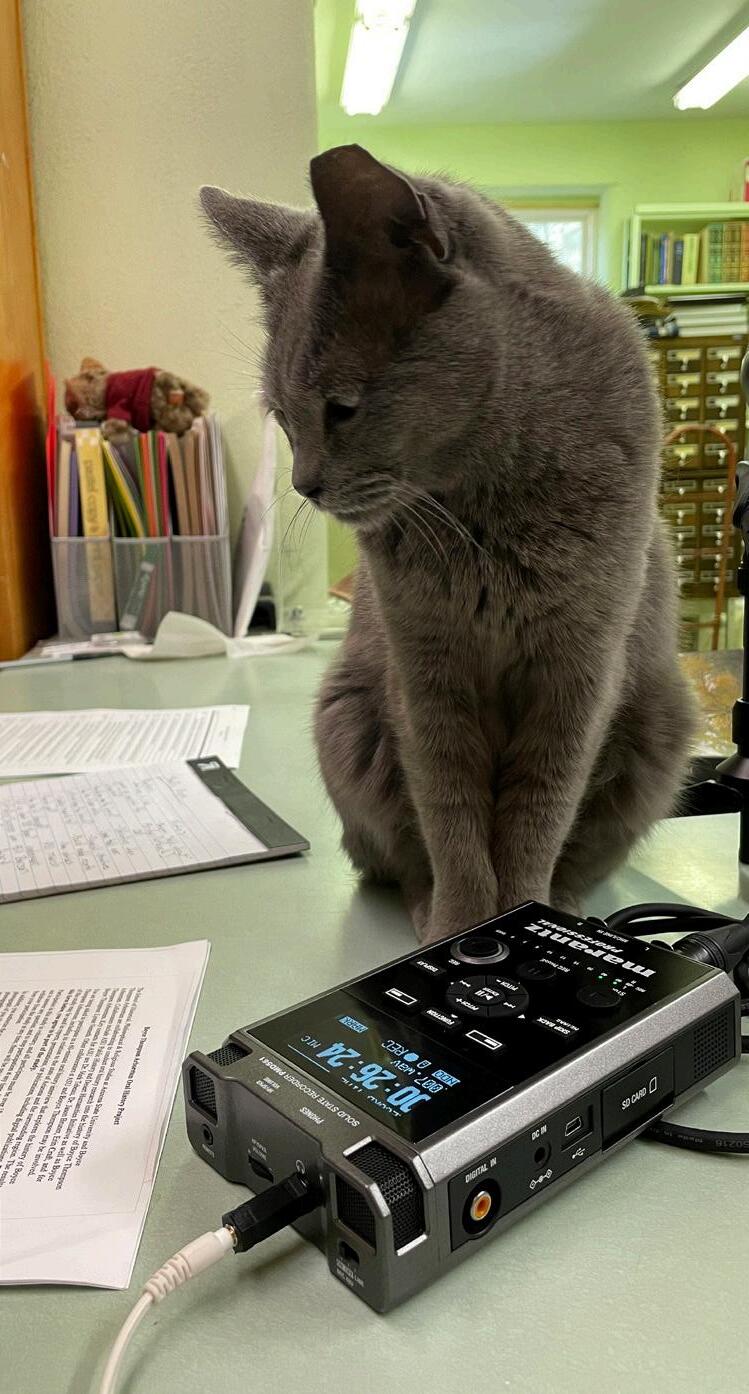
old banking vault, contain the records dating back over 100 years. Dr. Mark Tebeau led graduate and undergraduate students on the project, in which they evaluated the archive collection, created a finding aid and a digital repository, and collected oral histories from dozens of employees, visitors, board members, and volunteers. Work culminated in Fall 2024 with a project in conjunction with Professor Ellen Meissinger of ASU’s School of Art. Senior-level art students used the oral histories as a starting point to interpret these histories and create a sense of place within the arboretum.
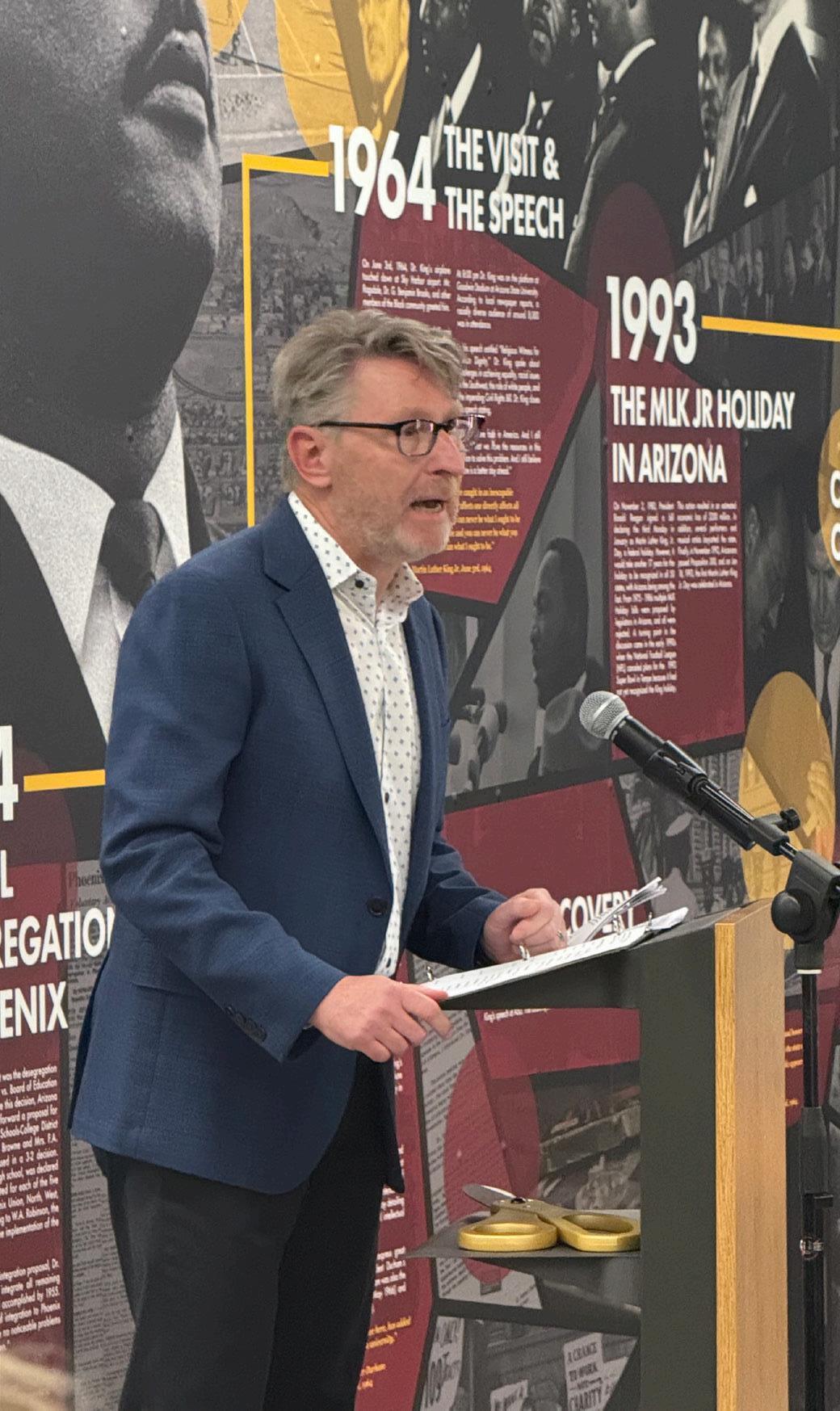
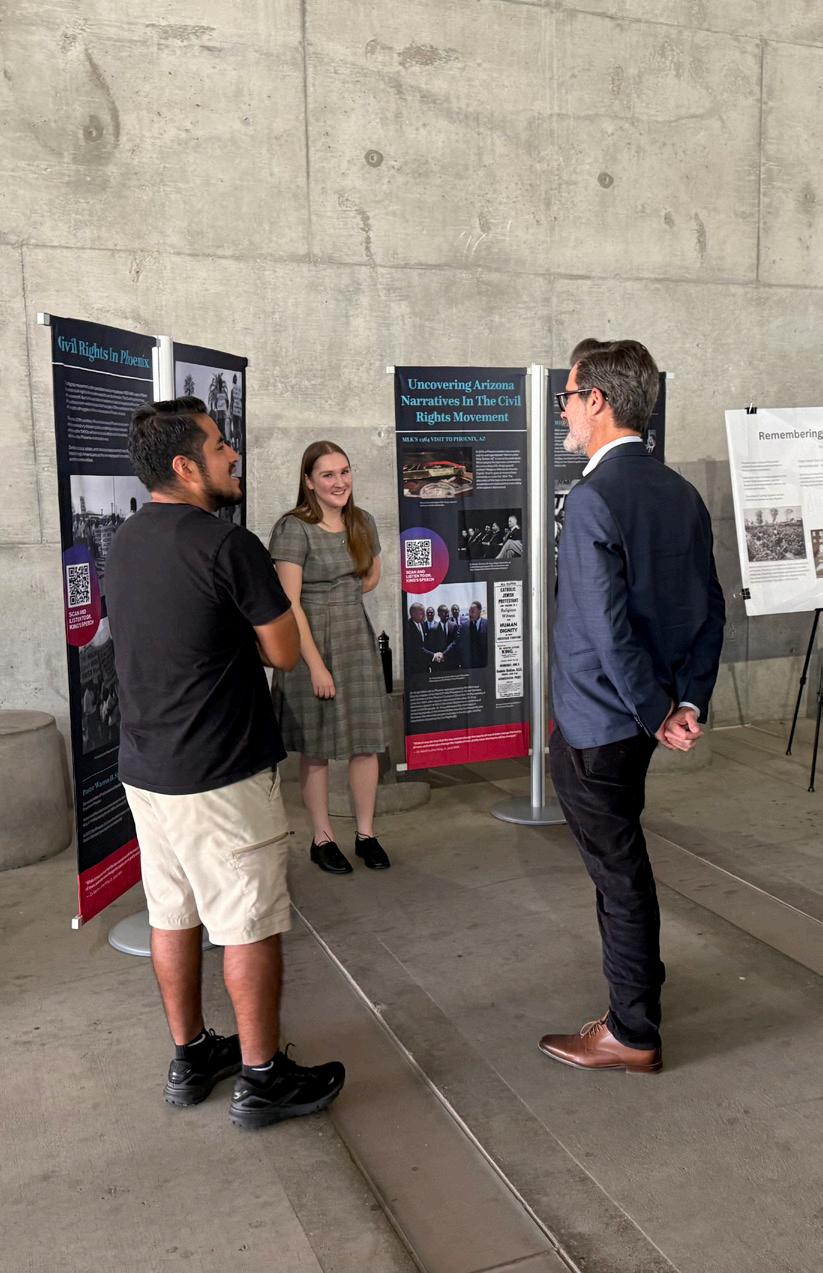
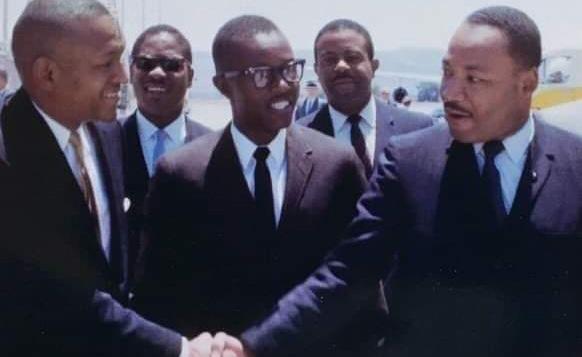
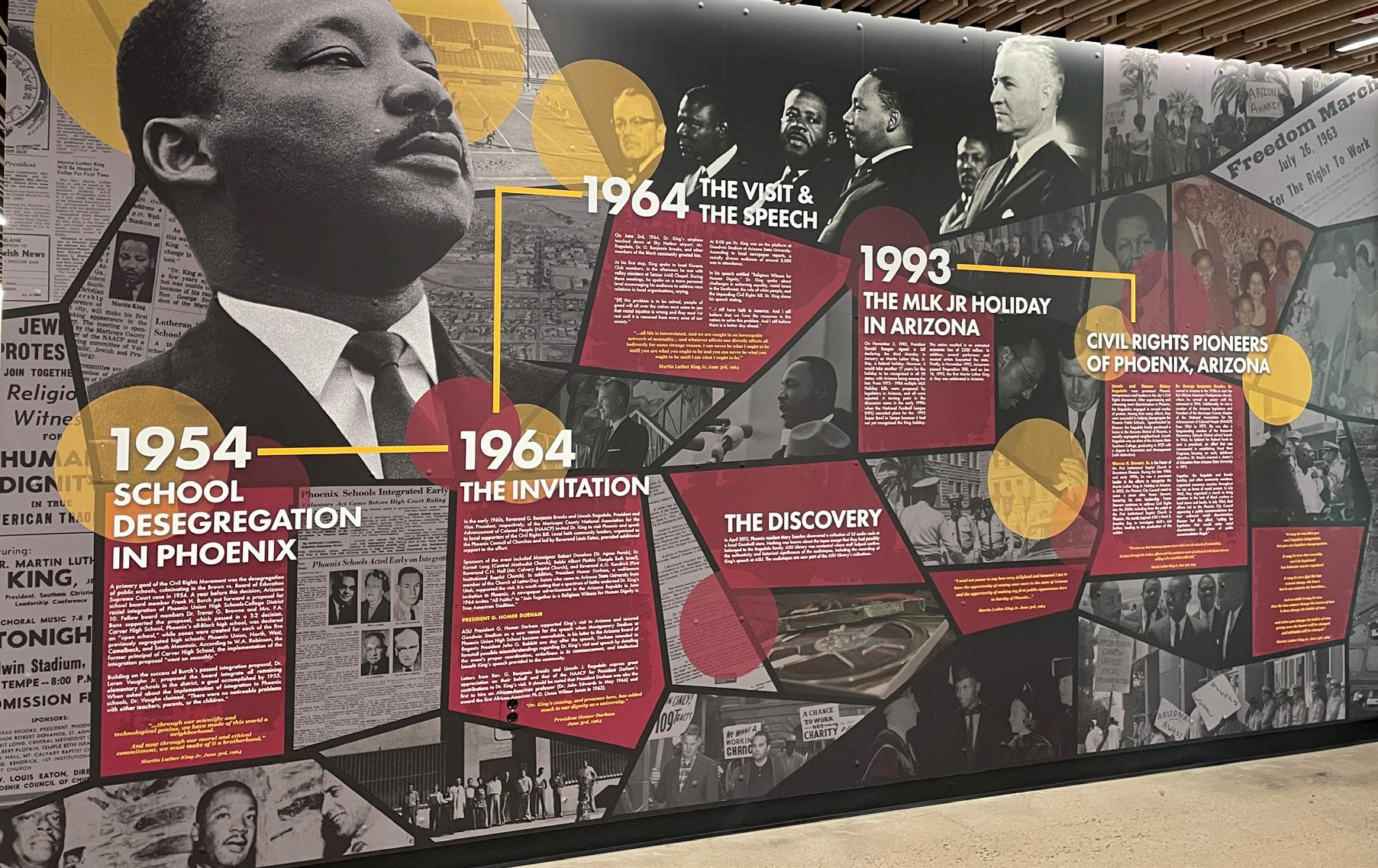
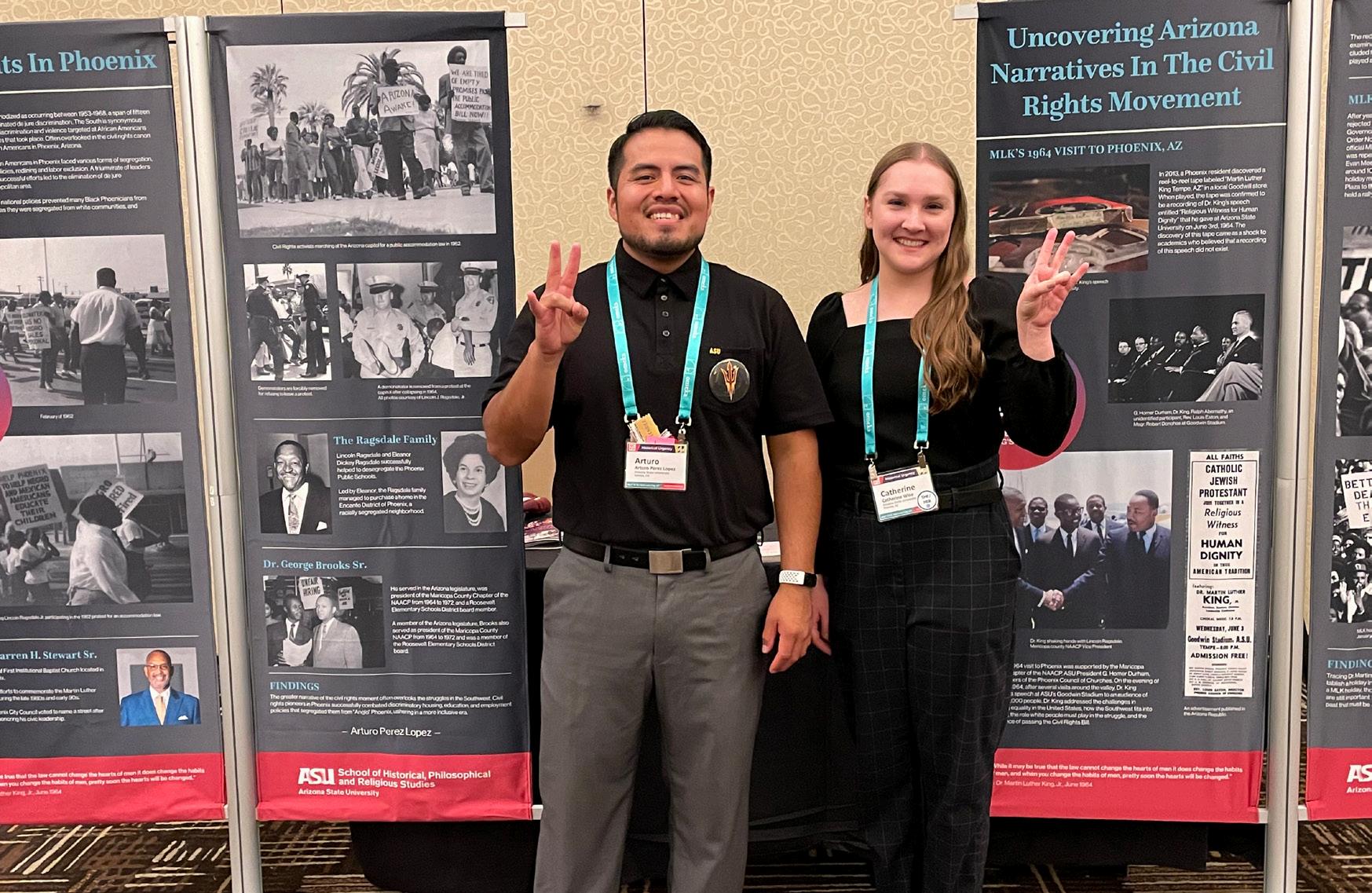
In June, 1964, a coalition of religious leaders in Phoenix invited Martin Luther King, Jr. to give a series of speeches supporting the Civil Rights bill, including a speech at ASU’s Goodwin Stadium to a crowd of over 8,000 people. There was no record of this speech until a recording found at a Goodwill store was donated to ASU Libraries . In 2020, Mark Brantley, Esq., Assistant Director of Operations of the School of International Letters and Cultures (SILC), envisioned a permanent exhibit honoring Dr. King’s visit to ASU, and assembled a team to create the exhibit, which Desert Financial Credit Union financially supported. Shannon Walker and Jessica Salow, both Assistant Archivists at ASU Libraries Community-Driven Archives, reached out to the Public History program for research assistance and expertise. Dr. Katy Kole de Peralta guided graduate student Arturo Perez Lopez and students Catherine Wise and Nicholas West as they researched the visit and the broader issue of civil rights in Arizona for a permanent exhibit. Dr. Katherine Bynum taught an Oral History Graduate course focused on collecting stories of Civil Rights in Arizona, which provided context for the project. The exhibit officially opened in Durham Hall in October 2024 , with a gathering of key players. Erin Craft and Dr. Tebeau consulted with the project leads and supported the students’ research.
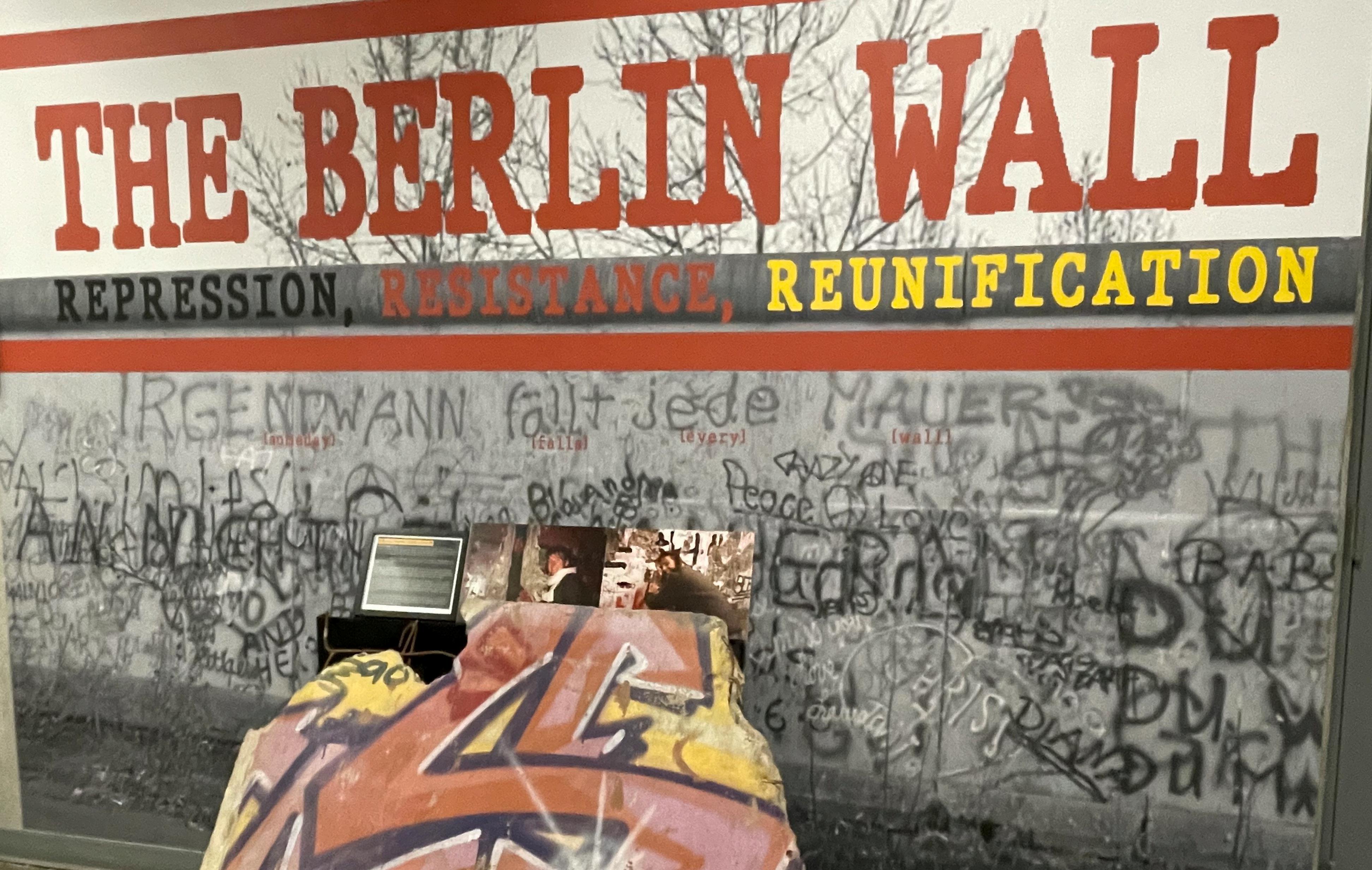
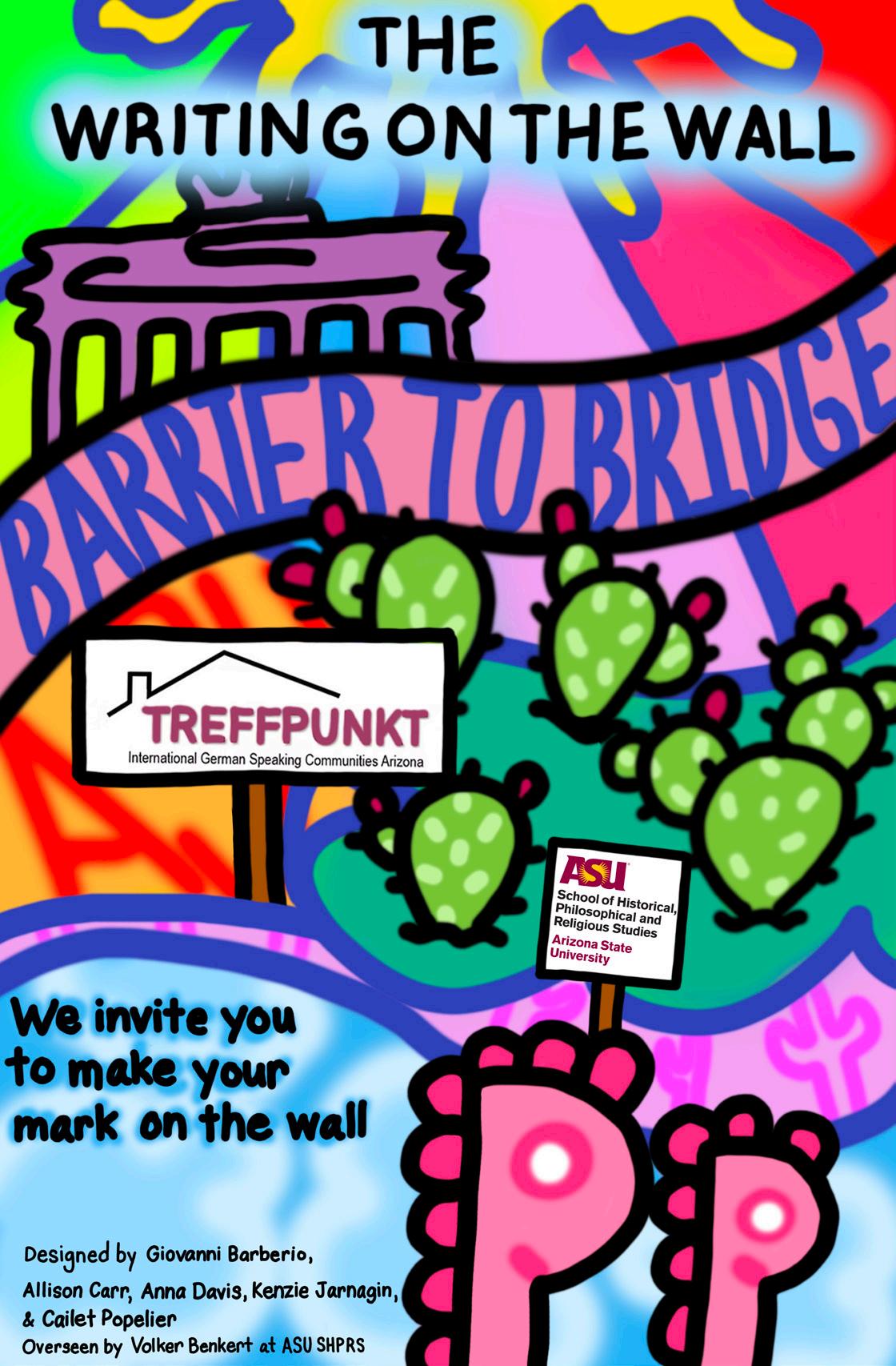
Public historians shape how communities understand themselves and innovate by bringing ASU into those conversations. For example, Dr. Volker Benkert involves students in hands-on public history projects by connecting undergraduates to their neighbors.
In Spring 2021, Benkert arranged for a longterm loan of a section of the Berlin Wall, now permanently displayed on the 4th floor of Coor Hall at ASU. He collaborated with Dr. Henry Thomson (SPGS) and Dr. Christiane Reves (SILC) to lead a student research team in creating an exhibit that
provides context for the artifact. In 2025, he led a similar project with an additional piece of the wall, creating an exhibit at Treffpunkt a German Cultural Center for Arizonans.
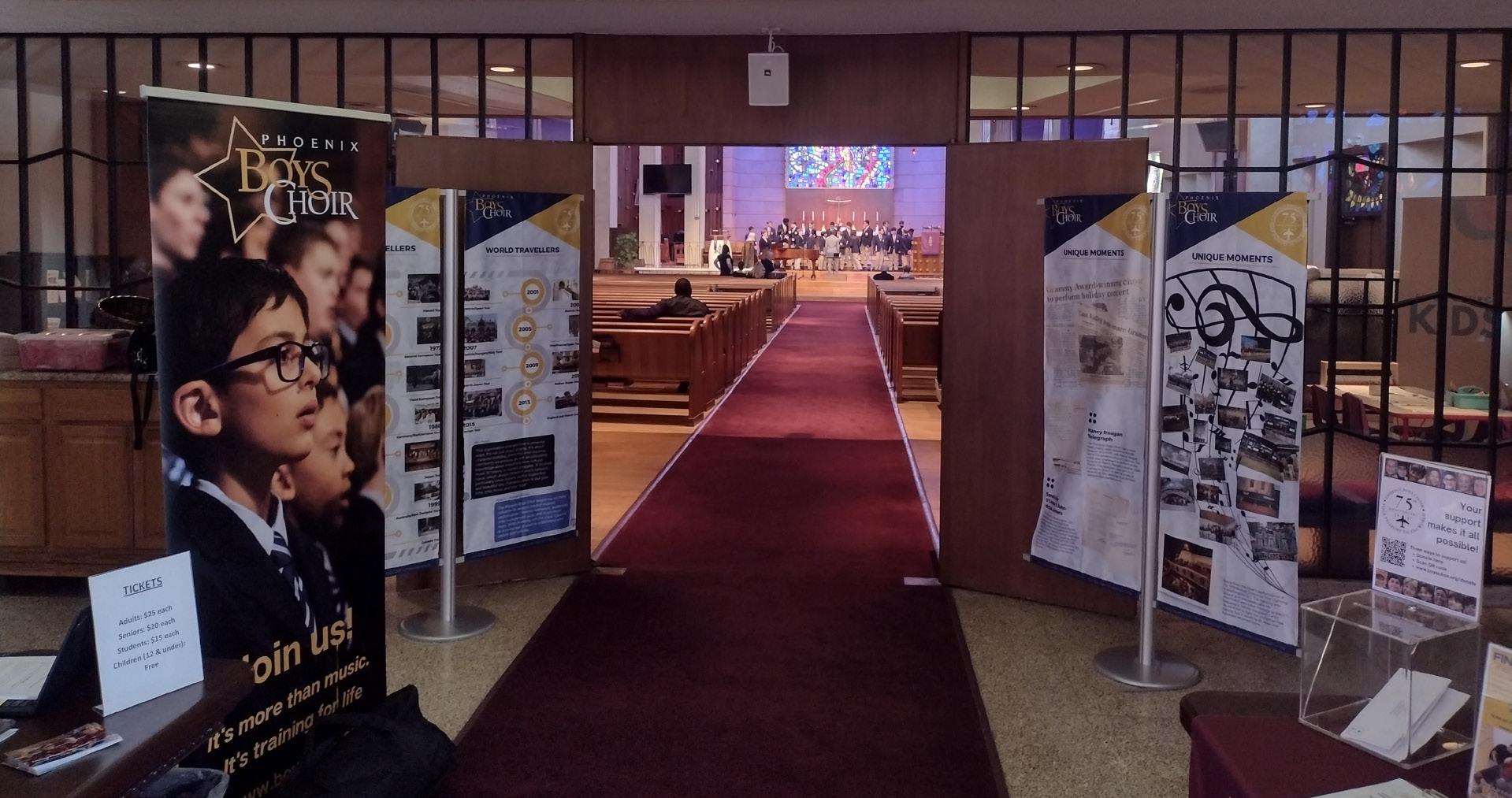
Benkert also mentored students on two additional public history exhibits using equipment from the Journal of the Plague Year project. For the Phoenix Boys Choir’s 75th anniversary in Spring 2023, SHPRS student Connor Donovan conducted archival research, developed a digital archive, and created a physical exhibit that traveled to various choir concerts. In Spring 2024, during
Genocide Awareness Week, Dr. Benkert supervised another student-led effort: “Through Young Eyes: A Holocaust Survivor’s Story Today.” This temporary exhibit told the story of Rise Stillman, who survived Auschwitz-Birkenau and BergenBelsen as a teenager. Through these initiatives, Dr. Benkert creates opportunities for students to apply their historical knowledge in real-world settings, developing skills in research, digital humanities, exhibition curation, and public engagement.
Benkert brought his history undergraduates to the process of planning Phoenix’s Holocaust Museum, The Hilton Family Holocaust Education Center The Center is under construction at the Cutler Plotkin Jewish Heritage Center, home of the Arizona Jewish Historical Society. The AZJHS supports our program by hosting students who conduct professional experiences or undergraduate research, and co-hosts an annual Educators’ Conference on Genocide and the Holocaust each fall.
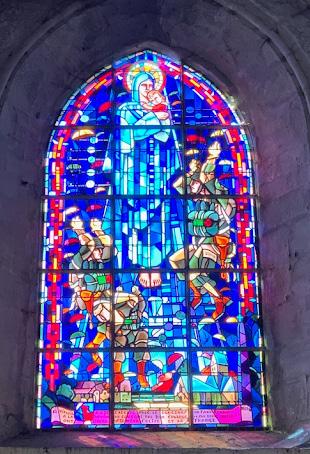
The stained glass window in the Church of Sainte Mére-Église, a small village in Normandy, France, honors the members of the 82nd Airborne Division that liberated the village during the Allied D-Day landings of June, 1944. The World War II Monuments site documents how the war is remembered and memorialized throughout the world.
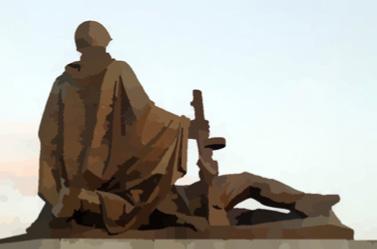
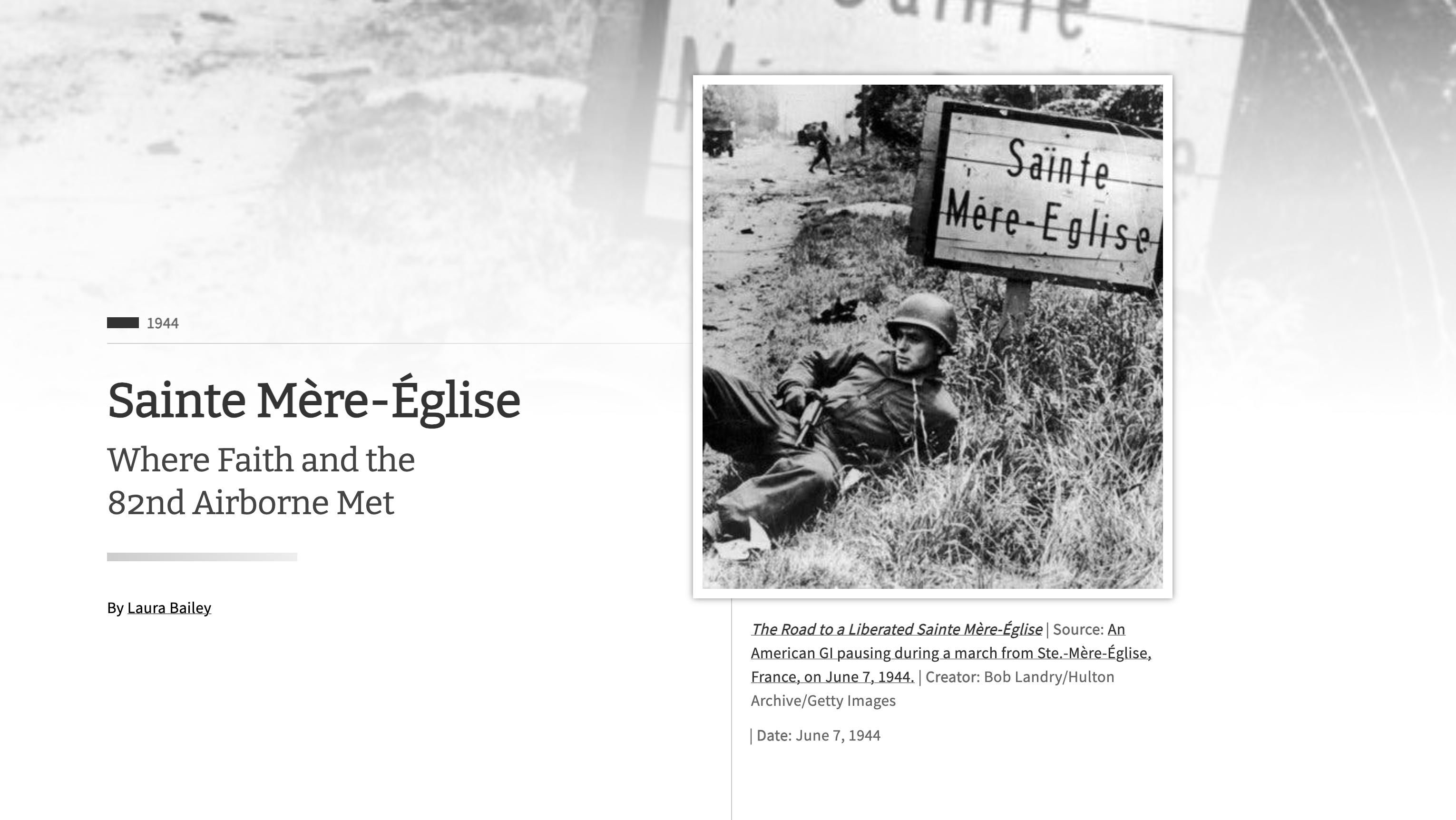
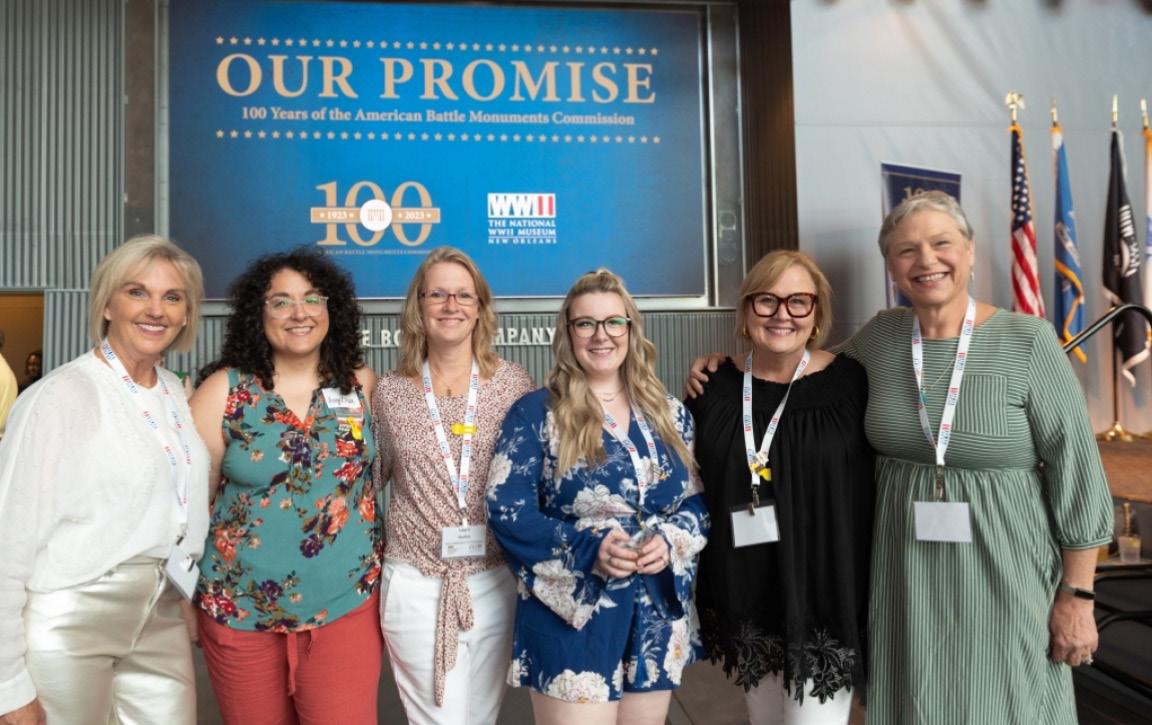
Public History benefits from the collaboration with the World War II Studies Program. “The Riveting Rosies” formed a bond during their time in the program, and were instrumental in creating the WWII Monuments and Memorials site. Julia Gimbel, Angèlica Cordero, Laura Bailey, Carys Caffarel, Robin LaCorte and Mary Ellen Page. Photo courtesy Frank L. Aymami III
As part of the Monuments and Memory course in the World War II Studies Program, students research the history of World War II and its commemoration in monuments. In collaboration with the public history team, two World War II studies students (now alumni) initiated the development of the Global World War II Monuments web application, which publishes the stories developed by students. Laura Bailey graduated in the first cohort of the World War II Studies M.A. program. She and fellow alumnus Robin LaCourt approached Mark Tebeau about creating a website to feature the stories developed in the monuments
course. Bailey spearheaded the project for over two years. Under her leadership, the project published more than forty well-crafted stories. Bailey enjoys “focusing on the obscure and off-beaten path moments- as they even take historians on journeys of places and events relatively unknown.” Bailey also uses her knowledge to speak at local events on the effects of World War II on communities, and is a founding member of the World War S.H.E podcast. Students within the WWII and History M.A. programs will continue to add stories to the World War II Memorials each semester.
For more than a decade, undergraduate and graduate history students have curated the region’s history by telling over 200 stories about the region’s past through the Salt River Stories mobile and web application. Through creating thematic and placebased digital tours of the region’s history, students learn how modern digital curation works. Most obviously, this involves learning how to develop interpretive public-facing historical stories, and it includes learning research methods, metadata assignment, and the content-management tools
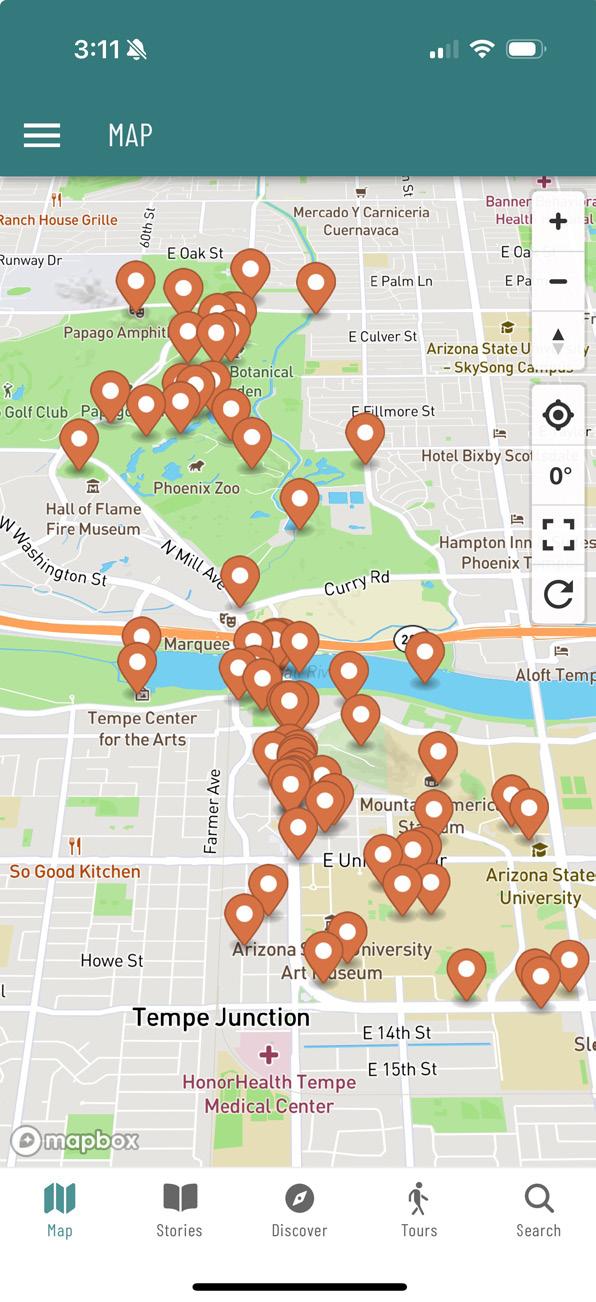
used by contemporary librarians and archivists. Salt River Stories uses the Curatescape digital platform (developed by Mark Tebeau) and builds from a collaboration between the public history program and the Papago Salado Association. Students add stories every semester, usually in partnership with local historical partners. For example, the Tempe History Museum partnered with the Apache Avenue tours, which also resulted in a temporary exhibit at the museum. The public history team has begun expanding the scope of Salt River Stories to include the entire state.
As ASU has reimagined the future of online learning, so too has the program created new models for online training of history and public history students.
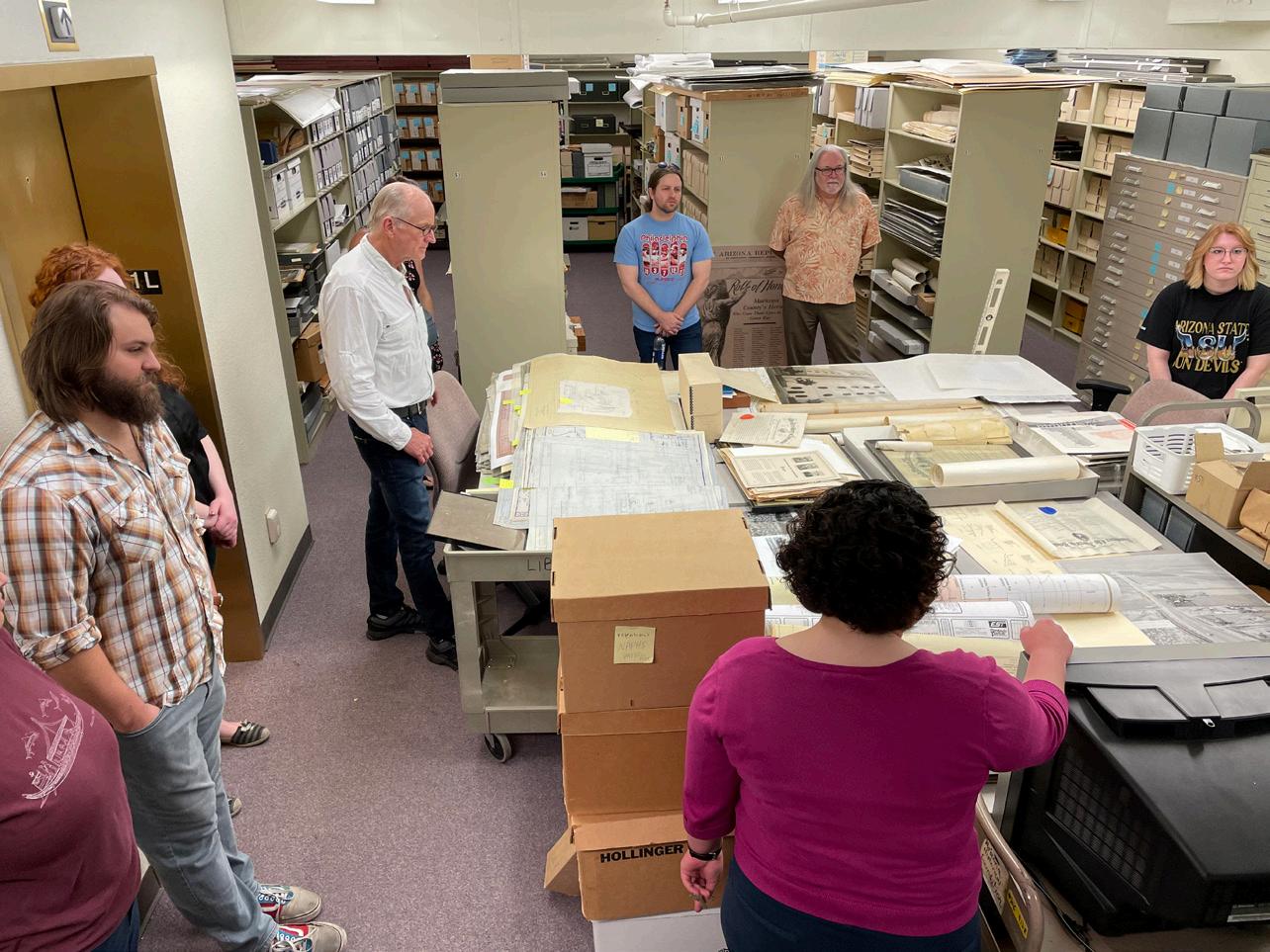
Online undergraduates from around the nation develop research and curatorial skills by coming to campus through the College of Liberal Arts’ OURS (Online Undergraduate Research Scholars) Programs each fall. Developed by Dr. Pete Van Cleve, Erin Craft, and Dr. Kole de Peralta, Dr. Pete Van Cleve, Erin Craft, and Dr. Kole de Peralta, the program originated as a pilot project funded by the OURS initiative and is now supported by SHPRS
and the Public History Endowment. Students have explored the archives at the Arizona Historical Society, the Tempe History Museum and the ASU Library Distinctive Collections . Online students have studied the economic impact of dude ranches on Arizona, the internment of Japanese American Citizens during World War II, and the history of copper mining. Students have presented papers and posters at conferences, been inspired to take internships at their local or regional history museums, and parlayed their training into careers, such as conducting qualitative research in private industry.
at Coor Hall and Treffpunkt Cultural Center, curating JOTPY, researching and writing Salt River Stories, creating a digital archive for the Cartwright Heritage House and Museum, and more. This unique opportunity provides undergraduates with professional experience that can lead to graduate degrees or future employment.
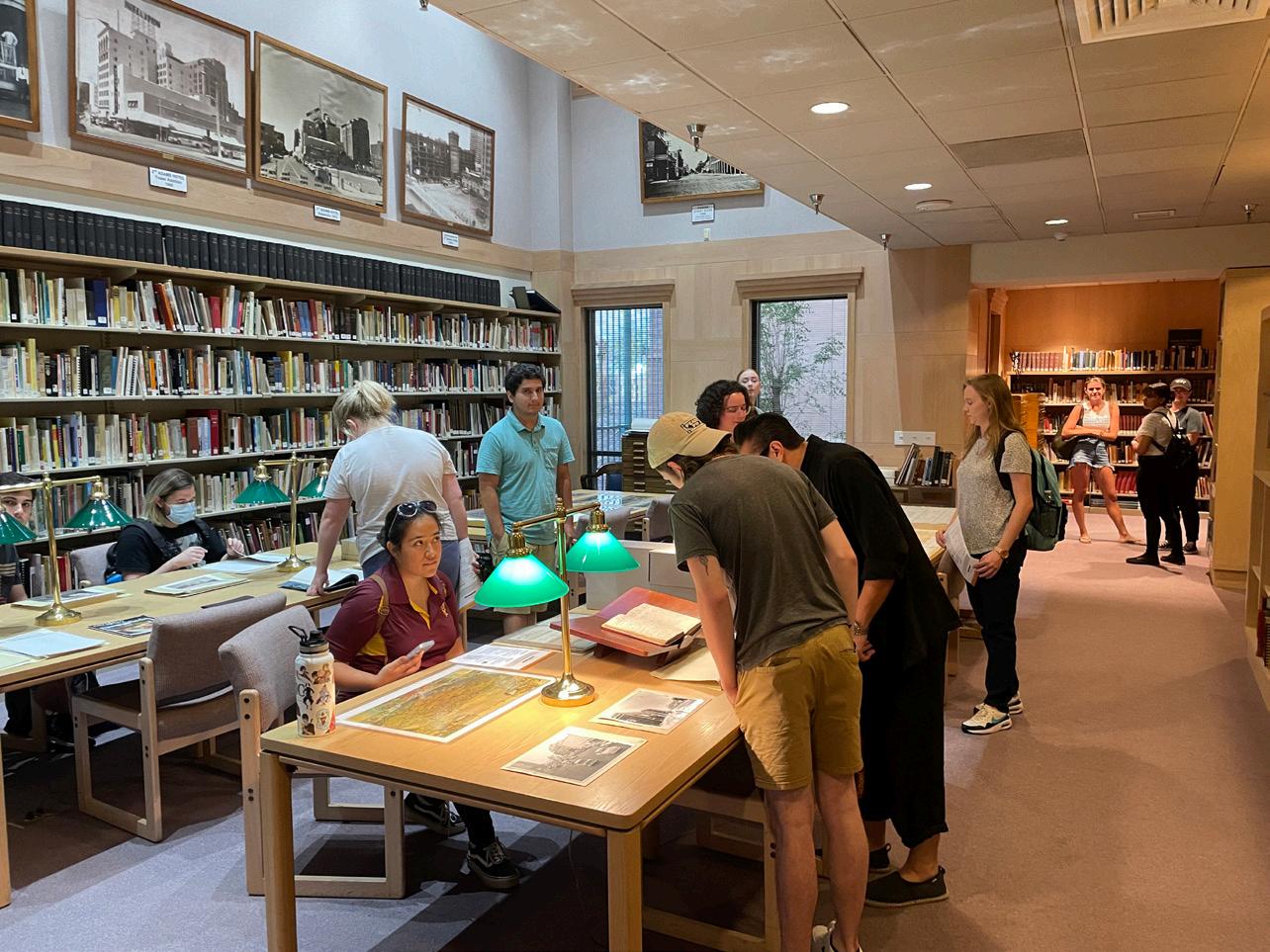
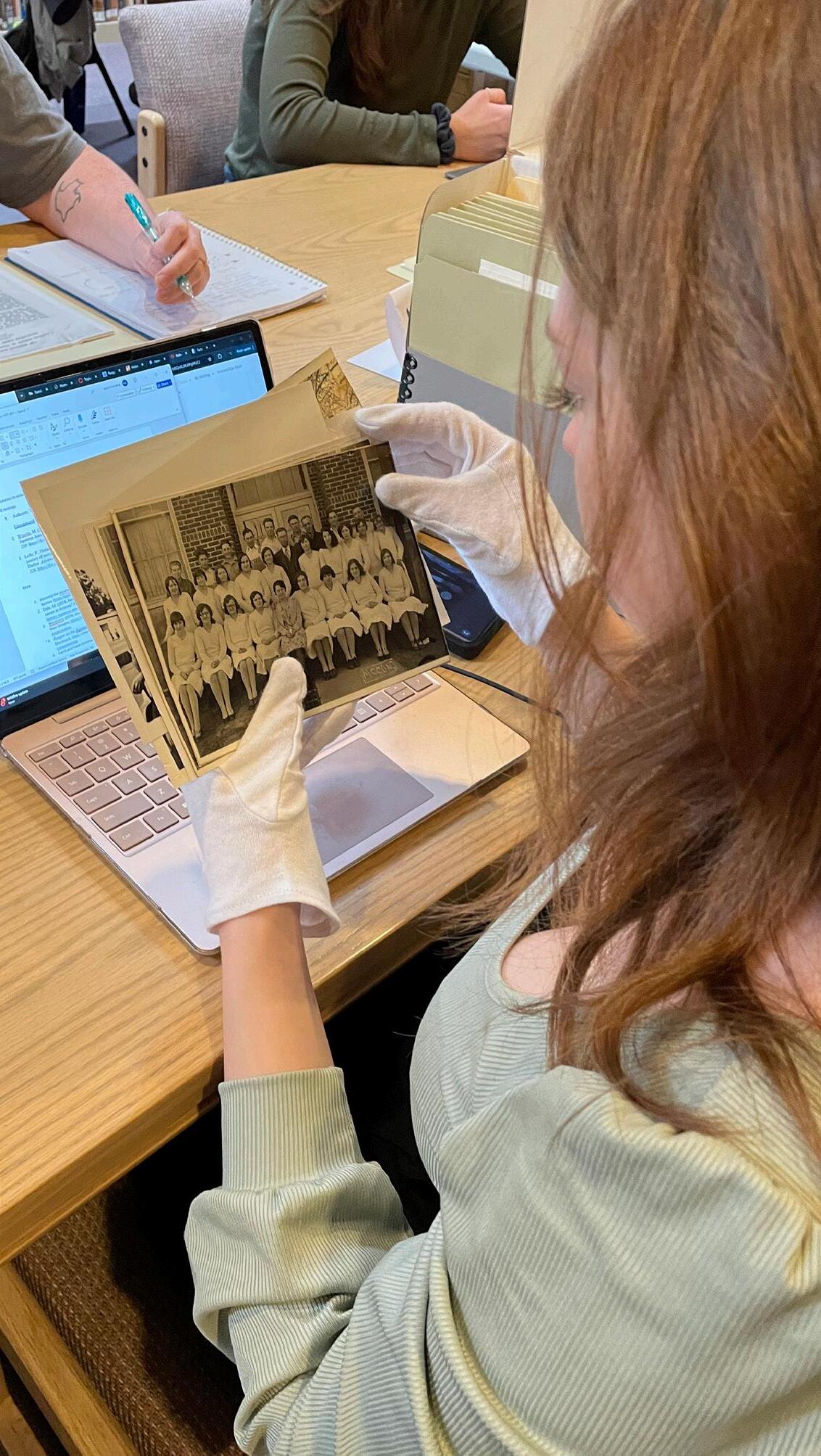
As part of the public history program, undergraduate and graduate students work with partners to develop historical projects and professional training experiences.
Undergraduates develop public history projects through the Undergraduate Research Experience (URE) led by Erin Craft. Each URE asks students to address a public historical problem, leading to exhibit plans, community tours, and curatorial work with community partners. URE options include working on the Martin Luther King, Jr. Exhibit, creating the Rise Stillman exhibit for Genocide Awareness Week, creating the Berlin Wall exhibits
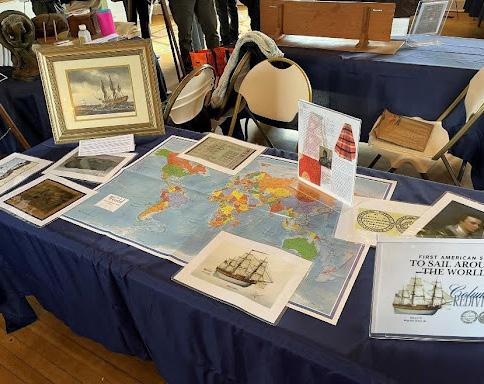
A pop-up museum exhibit about the Columbia Rediviva, created by Megan Depontbriand during her professional experience at the Hanover Historical Society.
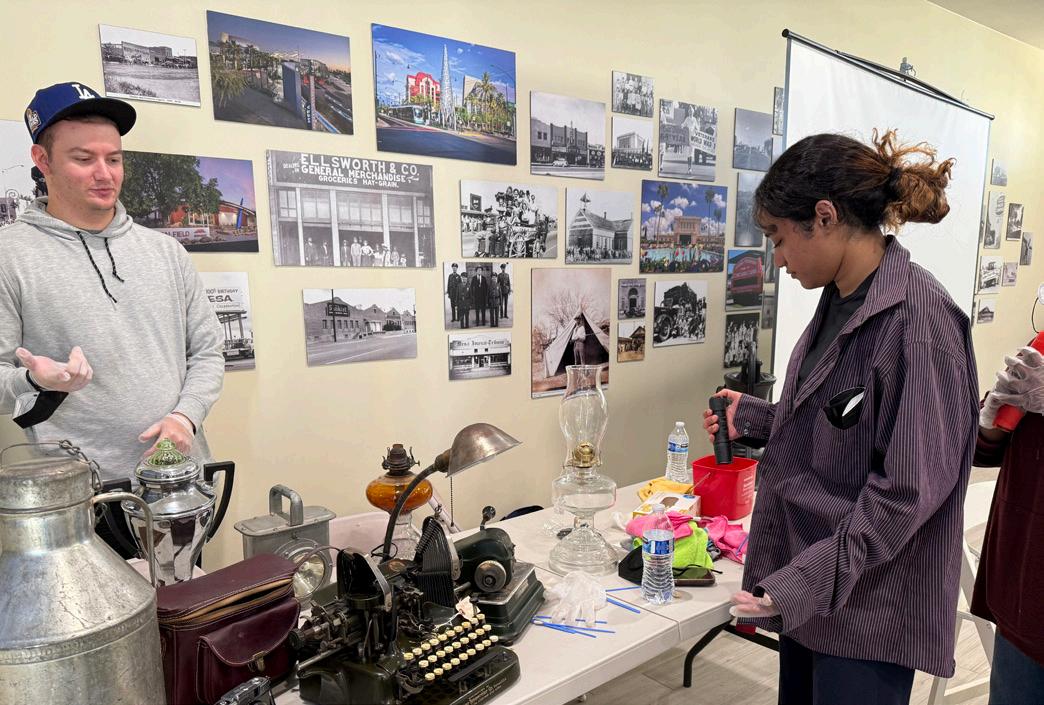
Students get hands-on experience with physical collections at the Mesa Historical Museum as part of the Public History Undergraduate Research Experience.
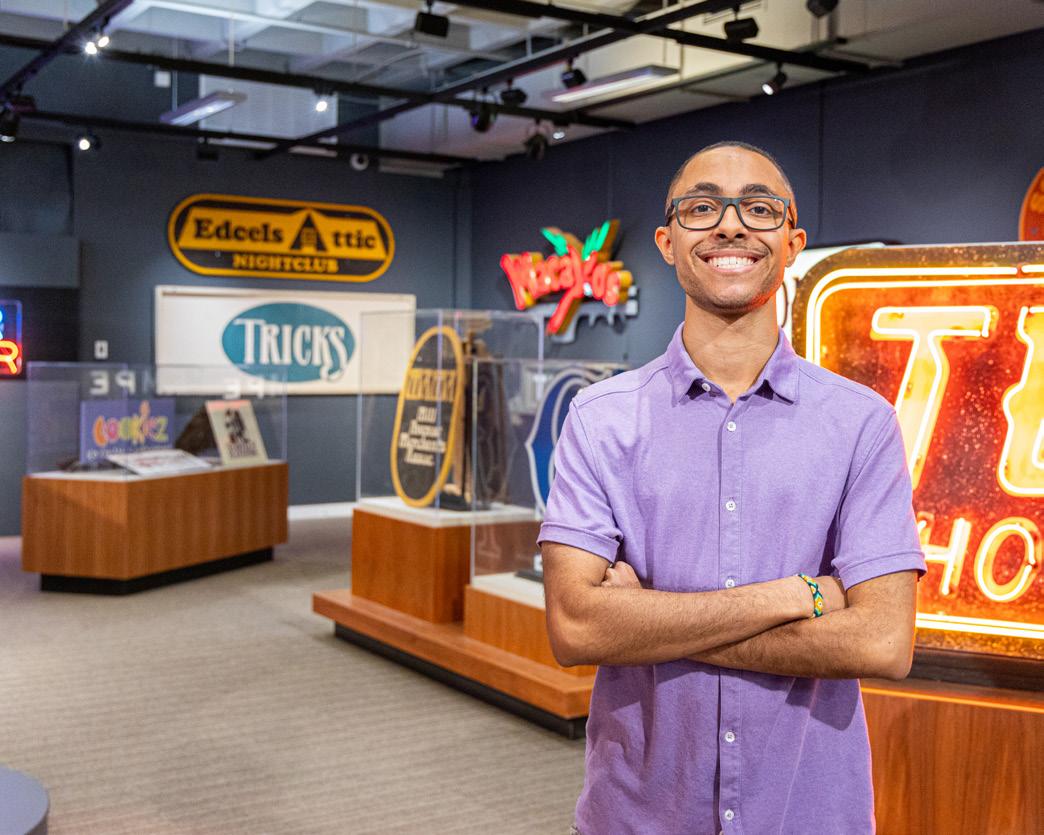
helped curate and create the exhibit “Tempe Signs” at the Tempe History Museum during his Professional Experience.
Graduate training in public history at ASU requires that students develop a professional experience, or internship. Students develop their professional training plan with a historical organization and work with public history faculty to establish the experience. Our geographically-diverse partners reflect the program’s online presence and students’ initiative, and we are grateful to the professionals that mentor and host them.
Recent partner organizations have included:
- Chandler Museum (Chandler, Arizona)
- Arizona Historical Society (Tempe, Arizona)
- Tempe History Museum (Tempe, Arizona)
- National World War II Museum (New Orleans, Louisiana)
- Hanover Historical Society (Hanover, Massachusetts)
- Church History Library of the Church of Latter-day Saints (Salt Lake City, Utah)
- The San Francisco History Library (San Francisco, California)
- The Frank Lloyd Wright Foundation (Scottsdale, Arizona)
- US Air Force (Creech AFB, Nevada)
- Arizona Jewish Historical Society (Phoenix, Arizona)
- Holocaust Awareness Museum and Education Center (Elkins Park, Pennsylvania)
- The Mob Museum (Las Vegas, Nevada)
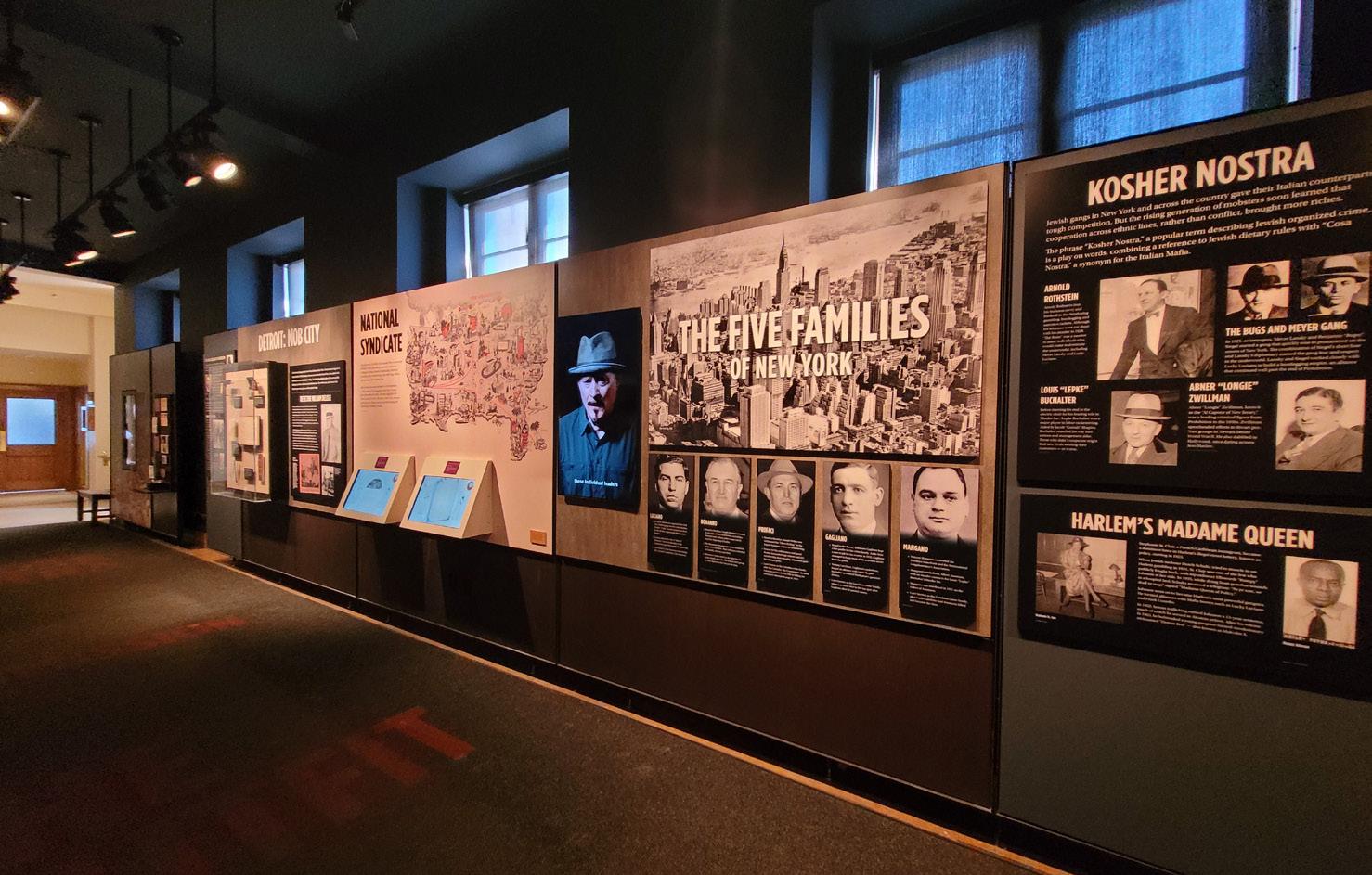
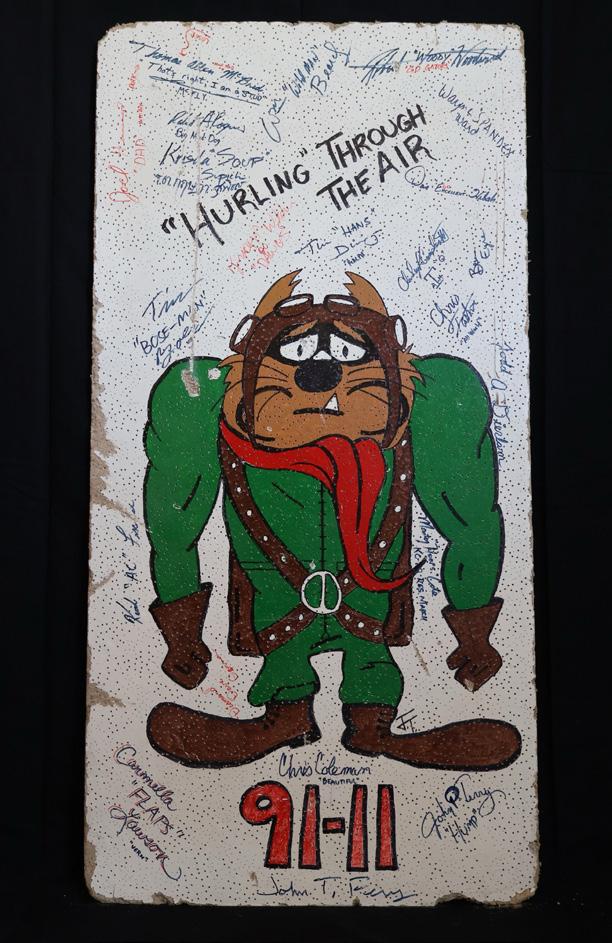
Hannah Boese helped the Chandler Museum collect items for and curate an online exhibit, “High Flying Humor at Williams Field Air Force Base.” John Rizley created a topical resource guide for the Latter-day Saints Historian’s office on the church’s relationship with the Indigenous peoples. Zach Jenson is currently processing new collections for the Mob Museum. Each experience provides unique professional growth opportunities for students.
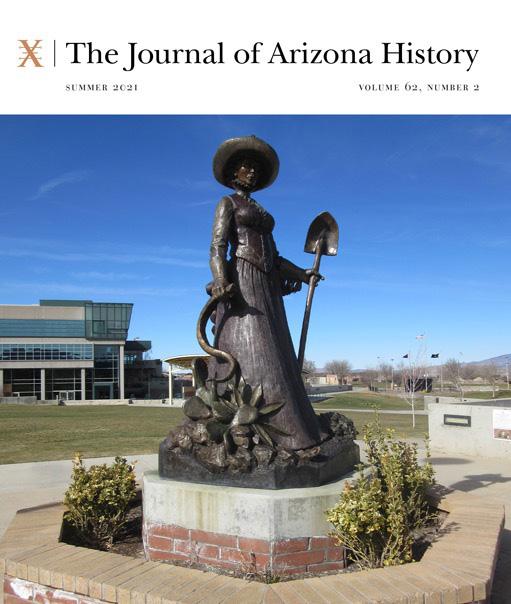
The Public History Program’s partnership with the Arizona Historical Society has deepened in recent years thanks largely to Dr. David Turpie, the Society’s Vice President of Outreach and Publications. This has taken many forms. In 2020, Dr. Tebeau challenged a seminar of History Graduate students to “look at the landscape anew,” and explore how monuments and historical site preservation efforts reflect Arizona’s history. A special issue of The Journal of Arizona History emerged from the seminar, with five essays from students included in the issue.
The Arizona Historical Society has been a key partner by hosting guest speakers at the Arizona Heritage Center and co-convening programs and workshops for Arizona educators. This included hosting the Climates of Inequality Exhibit and A Journal of a Plague Year Exhibit, which derived from an Arizona Humanities Grant.
Our students benefit from a close relationship with AHS through undergraduate hands-on experiences, researching in the library and archives, and graduate student Professional Experience opportunities. The professionals at AHS have been indispensable in supporting our students in these ways. Doctoral candidate Chris Bradley currently serves as an associate editor of the Journal, a position initially supported by the Public History Endowment.
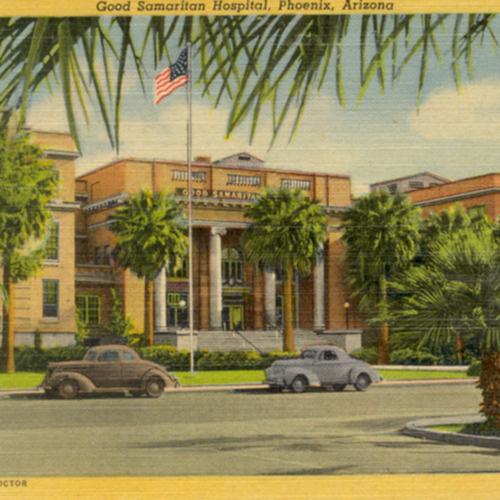
In 2021, the Arizona Historical Society initiated a project with Banner Medical Center to document the hospital’s history, in support of its ongoing construction plans that adhere to federal and state historic preservation guidelines. AHS reached out to the public history program, hiring seven graduate and undergraduate students to conduct oral histories and report on the history of Banner University Medical Center Phoenix campus and surrounding area. The project explored the development and significance of the former Good Samaritan Hospital and its present-day campus.
Led by Dr. James Burns (then director of the Arizona Historical Society), Dr. Marissa Rhodes, and Erin Craft, the student team recorded 30 interviews and created a small digital archive to house both the interview and research.. The students created a valuable analysis of the history and impact of Good Samaritan Hospital and Banner University Medical Center on its neighboring community, as well as on the greater Phoenix area over the past 100 years.
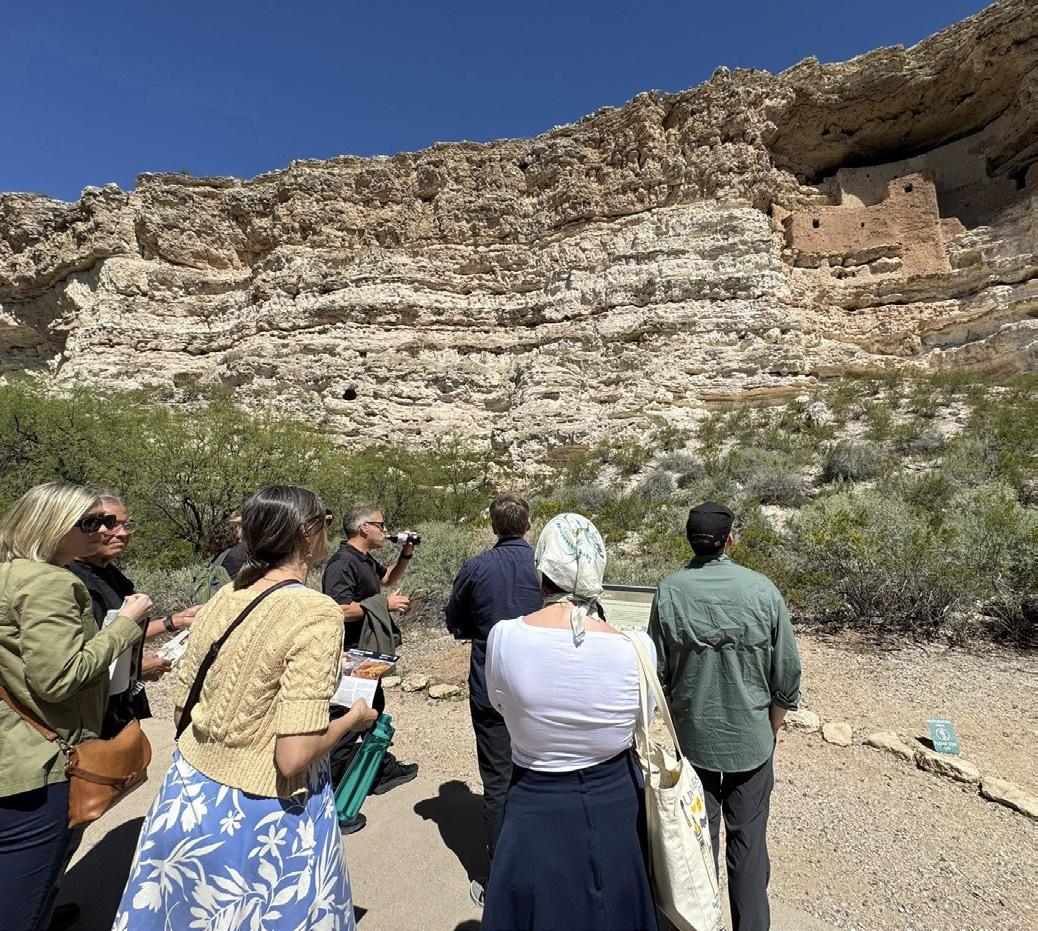
In Spring 2025, Dr. Maurice Crandall co-convened a group of scholars to continue their Symposium on Rethinking the ‘Indian Wars’. These scholars were part of the Clements Center for Southwest Studies at Southern Methodist University. The program supported the workshop by planning a field trip for the group to the Verde Valley to visit sites of the Arizona Indian Wars, provided a public reception following a public roundtable, and hosted a culminating dinner for the participants. The results of the workshop will be a published in a volume that encourages historians and the public to reevaluate and reimagine the Indian Wars around the United States and the world.
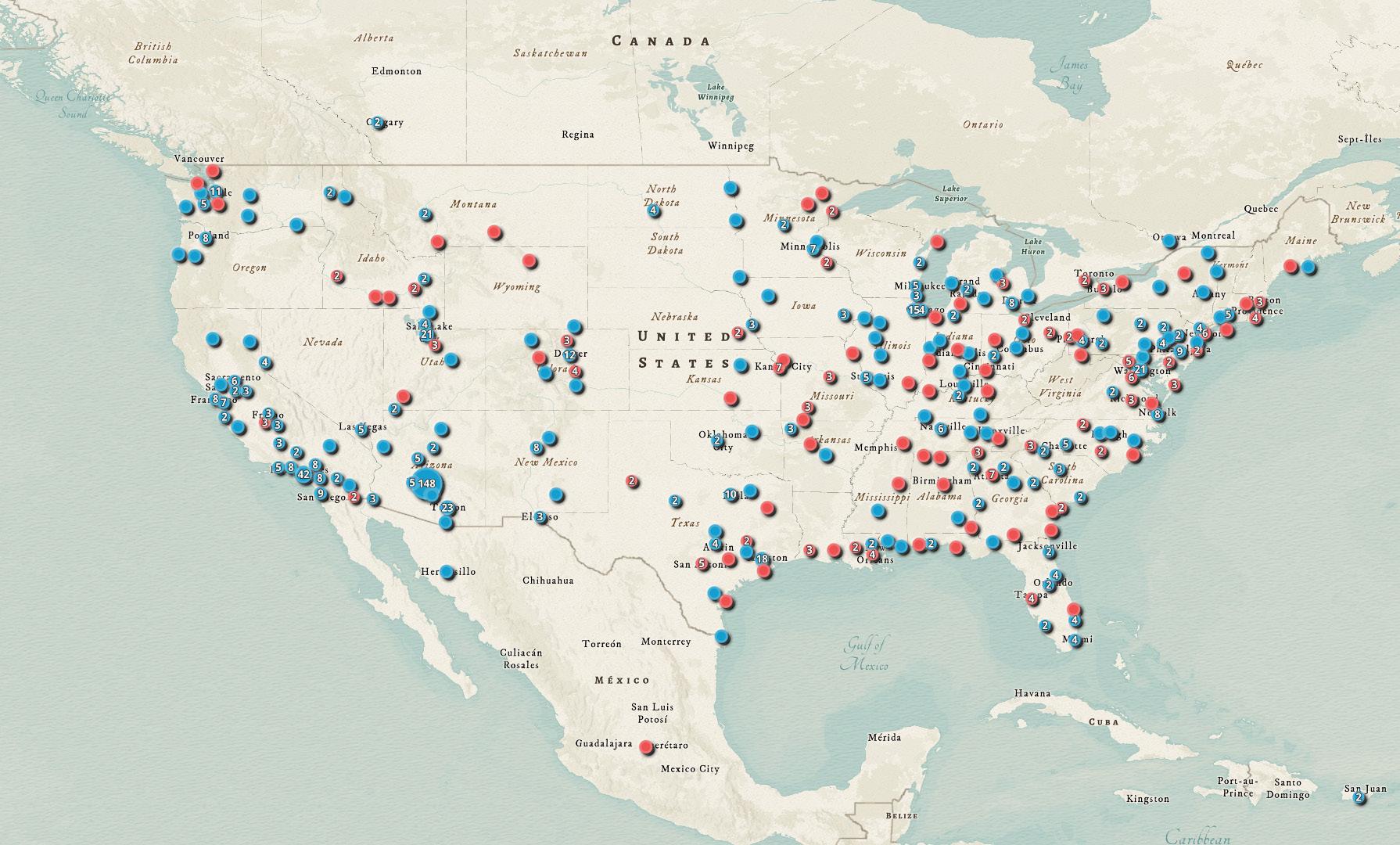
More than 900 students have studied in the History MA or World War II Studies programs over the past four years. Public history is deeply embedded in the History MA curricula, featuring a required public history methods course taken by all History graduate students, as well as electives in the study of memory cultures, archives, historic preservation, oral history, and historical landscapes. The World War II Studies program, a partnership with the National World War II Museum, introduces students to material culture, oral history, memorialization, and the curation of the war in multiple contexts across the globe. In 2024, SHPRS launched the Public History Certificate, which currently has twenty-six students enrolled. It also established a graduate certificate in Holocaust and Genocide Studies, which now enrolls x students.
Students don’t just come from North America. They reside in countries worldwide, including China, Japan, Belgium, France, Germany, Portugal, and Italy, among others. The program also serves active military members stationed globally. Many of these students, who receive mail through Army Post Office boxes, are also not shown on the map.