Overview
Roles for Students
Case Background
Evidence Sheets
Scripted Role Cards .......
Mock Trial Structure .......
Student Note Page .........
Reflection Questions

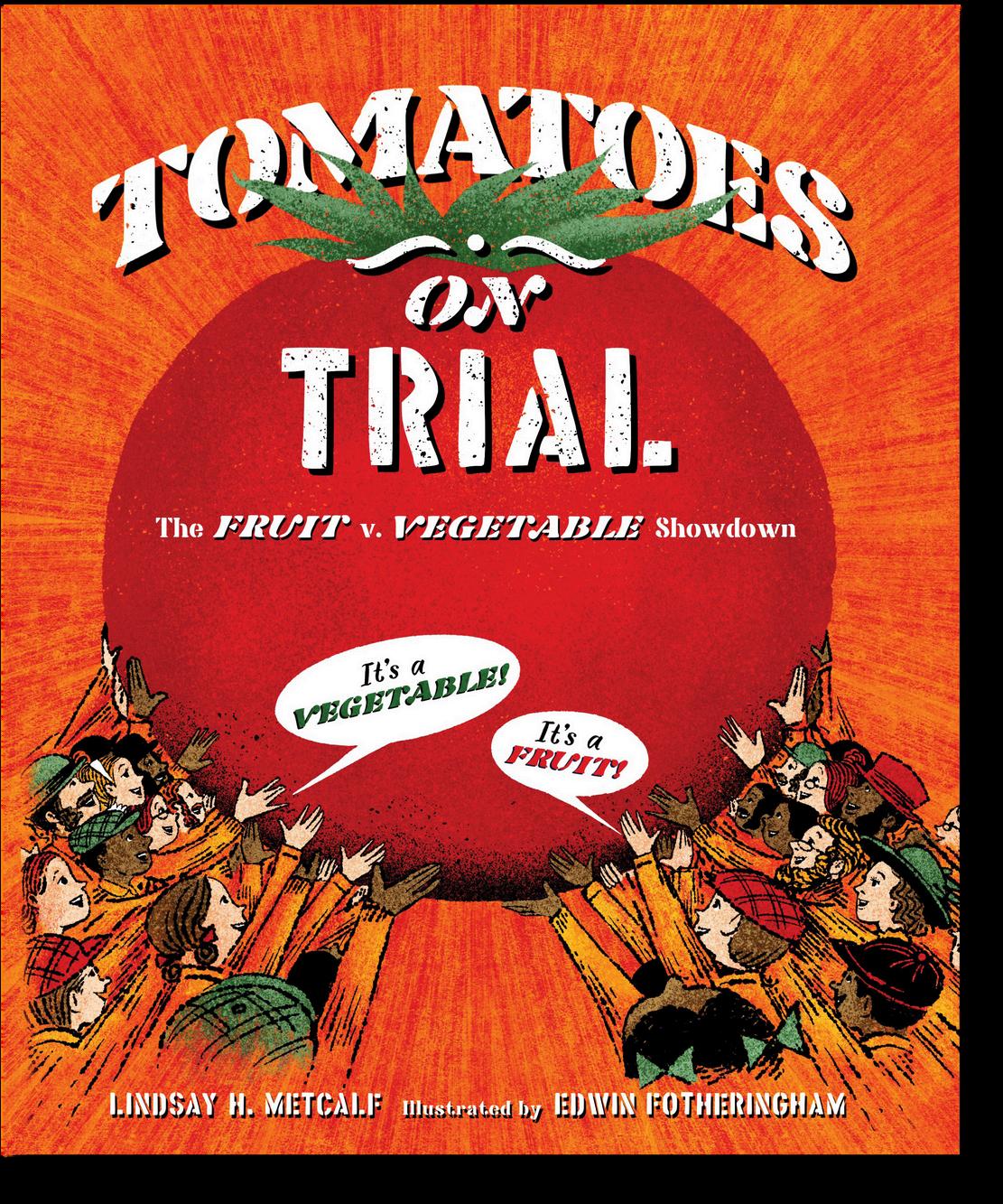
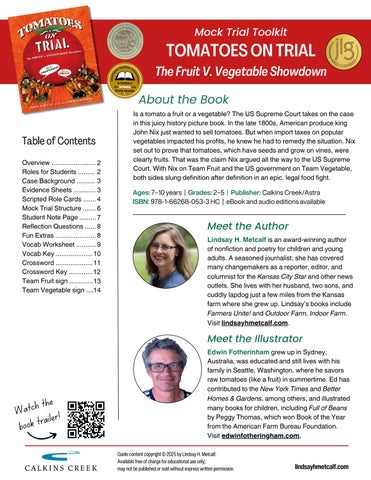
Is a tomato a fruit or a vegetable? The US Supreme Court takes on the case in this juicy history picture book. In the late 1800s, American produce king John Nix just wanted to sell tomatoes. But when import taxes on popular vegetables impacted his profits, he knew he had to remedy the situation Nix set out to prove that tomatoes, which have seeds and grow on vines, were clearly fruits That was the claim Nix argued all the way to the US Supreme Court With Nix on Team Fruit and the US government on Team Vegetable, both sides slung definition after definition in an epic, legal food fight
Ages: 7–10 years | Grades: 2–5 | Publisher: Calkins Creek/Astra ISBN: 978-1-66268-053-3 HC | eBook and audio editions available


Lindsay H. Metcalf is an award-winning author of nonfiction and poetry for children and young adults A seasoned journalist, she has covered many changemakers as a reporter, editor, and columnist for the Kansas City Star and other news outlets She lives with her husband, two sons, and cuddly lapdog just a few miles from the Kansas farm where she grew up Lindsay’s books include Farmers Unite! and Outdoor Farm, Indoor Farm Visit lindsayhmetcalf.com.
Edwin Fotherinham grew up in Sydney, Australia, was educated and still lives with his family in Seattle, Washington, where he savors raw tomatoes (like a fruit) in summertime. Ed has contributed to the New York Times and Better Homes & Gardens, among others, and illustrated many books for children, including Full of Beans by Peggy Thomas, which won Book of the Year from the American Farm Bureau Foundation Visit edwinfotheringham.com.

Time Needed: 1–2 class periods (45–90 minutes)
Objective: Students use evidence, critical thinking, and oral presentation skills to argue whether a tomato is a fruit or a vegetable—just like the real Supreme Court case Nix v. Hedden (1893).
1.QuickTeacherOverview
This mock trial helps students:
• Learn the difference between scientific classification and everyday usage
• Practice persuasive speaking and listening
• Collaborate in teams
• Understand basic trial roles
• Have fun debating a silly but real historical question
Assign roles based on class size:
Core Roles (minimum)
• Judge (1)
• Bailiff (1)
• Attorneys
Team Fruit: Lead Attorney + 1–2 helpers
Team Vegetable: Lead Attorney + 1–2 helpers
• Witnesses
Fruit Scientist
Vegetable Farmer
Chef or Grocer
Botanist
Optional Roles (larger classes)
• Jury (6–12 students)
• Court Reporter
• Timekeeper
• Additional “expert” witnesses
• News reporter who writes a short article afterward
3.CaseBackground
The Question:
Is the tomato a fruit or a vegetable?
What’s at stake?
In 1893, the Supreme Court had to decide this question for tax reasons
Scientists classify tomatoes as fruits (they grow from flowers and have seeds).
But most people cook and eat tomatoes like vegetables
Your classroom will re-argue the case!
4.EvidenceforEachSide
Team Fruit Evidence
Tomatoes grow from the flower of a plant. They contain seeds a key trait of fruits. Scientifically, tomatoes are berries Other seeded produce cucumbers, peppers, squash are also fruits. Categories in science don’t depend on flavor
Team Vegetable Evidence
In the kitchen, tomatoes are treated as vegetables.
They are served in salads, soups, and sauces, not desserts.
People buy tomatoes in the vegetable section of stores.
The 1893 Supreme Court ruled tomatoes are vegetables for everyday use, not science.
Keep order. Listen to both sides.
Allow objections (“Objection—irrelevant!”).
Ask clarifying questions.
Remind the jury to decide based on the evidence.
Open the trial: “All rise!”
Swear in witnesses: “Do you promise to tell the truth?”
Keep time and help maintain order.
Witness:Botanist
Describe plant anatomy. Prepare 3–5 talking points supporting your side.
Witness:FruitScientist
Explain seed-bearing fruits. Prepare 3–5 talking points supporting your side.
Attorneys:TeamFruit
Prepare opening statements.
Ask your witnesses strong questions. Cross-examine the other side’s witnesses. Deliver closing arguments.
Attorneys:TeamVegetable
Prepare opening statements.
Ask your witnesses strong questions. Cross-examine the other side’s witnesses. Deliver closing arguments.
Witness:Farmer
Describe how tomatoes grow. Prepare 3–5 talking points supporting your side.
Consider all evidence, then decide:
We find the tomato to be a FRUIT / VEGETABLE. (circle one)
Use a timer to keep track of the following:
Fruit Attorneys (1 minute)
Vegetable Attorneys (1 minute) Attorney questions a witness (1–2 minutes) Opposing side cross-examines (30 seconds)
Witness:Chef
Explain how tomatoes are used in cooking. Prepare 3–5 talking points supporting your side.
Explain how people shop for tomatoes in markets. Prepare 3–5 talking points supporting your side.
On a piece of notebook paper, write a short news article about the trial after it concludes.
My assigned role:
1. Opening the Court
Bailiff: “All rise! The Court of Food Classification is now in session.”
Judge: Gives a brief welcome and explains the question: “Is the tomato a fruit or a vegetable?”
2. Opening Statements
Fruit Attorneys (1 minute)
Vegetable Attorneys (1 minute)
3. Witness Testimony
For each witness:
1. Attorney calls the witness
2. Bailiff swears them in
3. Attorney questions the witness (1–2 minutes)
4 Opposing side cross-examines (30 seconds)
4. Closing Arguments
Each side summarizes why their classification is strongest.
5. Jury Deliberation
Jury discusses for 2–3 minutes and votes.
6. Verdict
Judge announces the verdict: “We find the tomato to be a FRUIT / VEGETABLE. ” (Optional twist: Let the class vote as citizens too!)
Do tomatoes belong on Team Fruit or Team Vegetable?
Consider the facts that support each argument, then decide.
What evidence supports tomatoes as a “fruit”?
What evidence supports tomatoes as a “vegetable”?
What did you learn about evidence?
Did your opinion change? Why?
How can something be one thing scientifically and another in everyday life? Why did this case matter in real history?
Have students create lawyer name tags or badges Use real props: a gavel, folders, witness stand sign. Let students design a trial poster or courtroom seal: “The Great Food Court of Justice”
Hold a post-trial press conference with student reporters. Create a “Tomato Case” bulletin board showing both sides’ evidence.
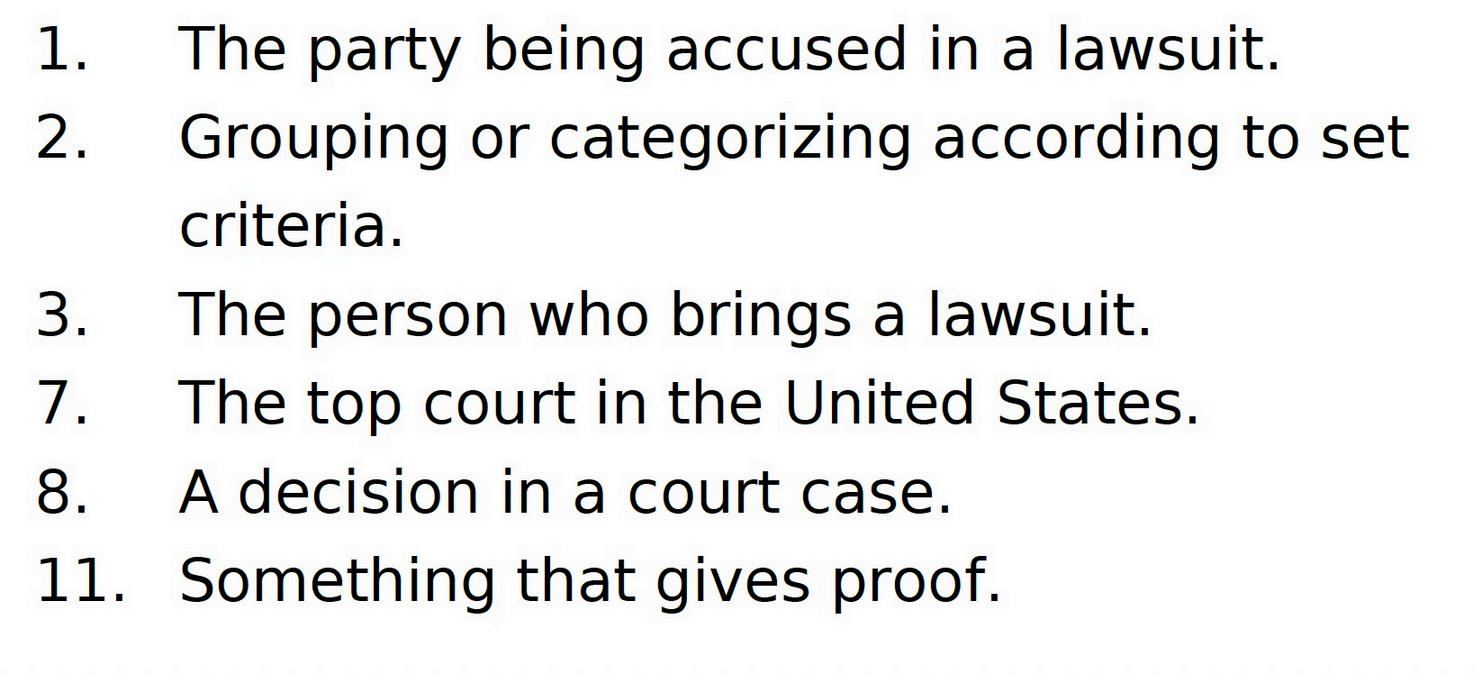
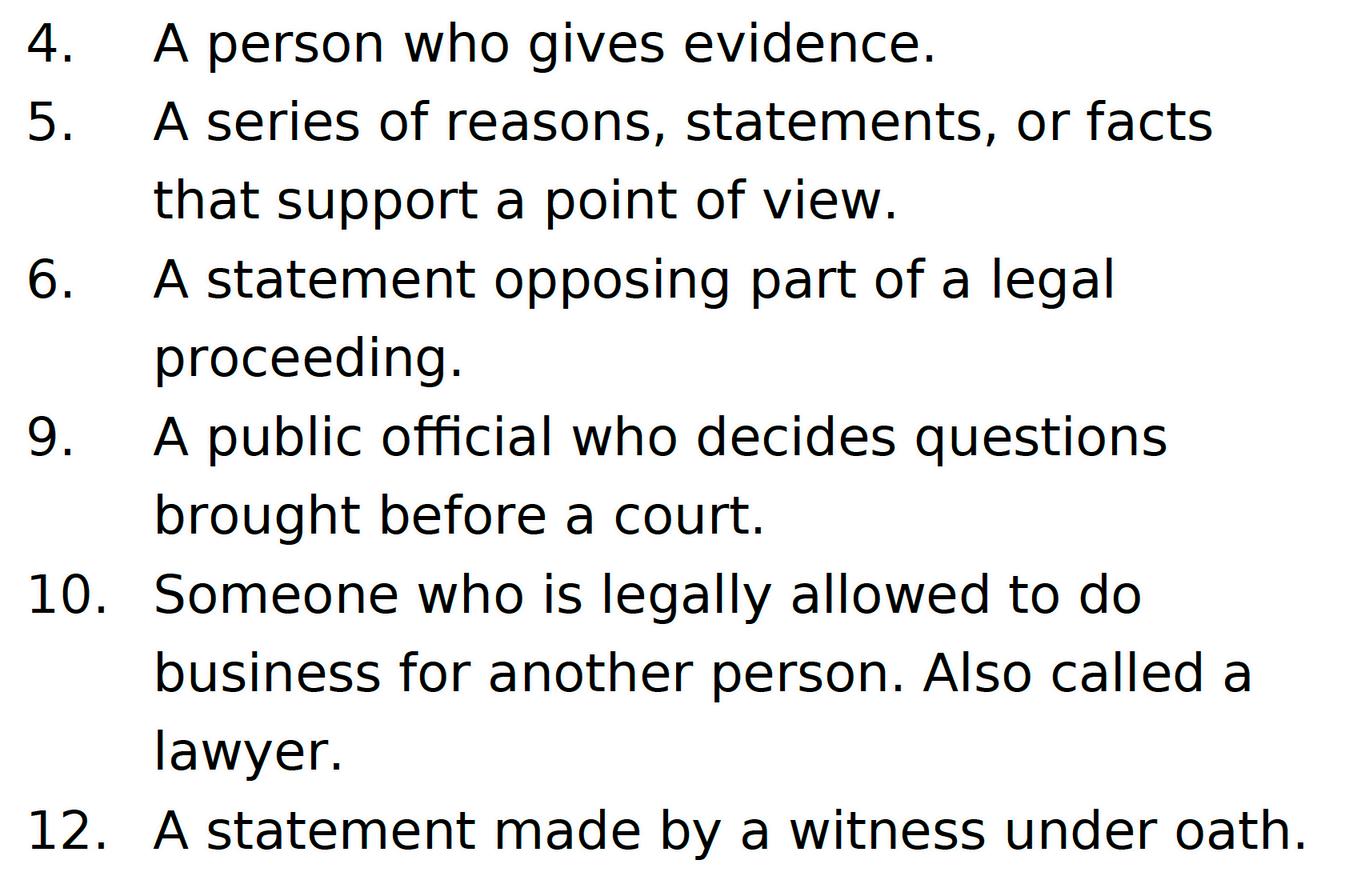
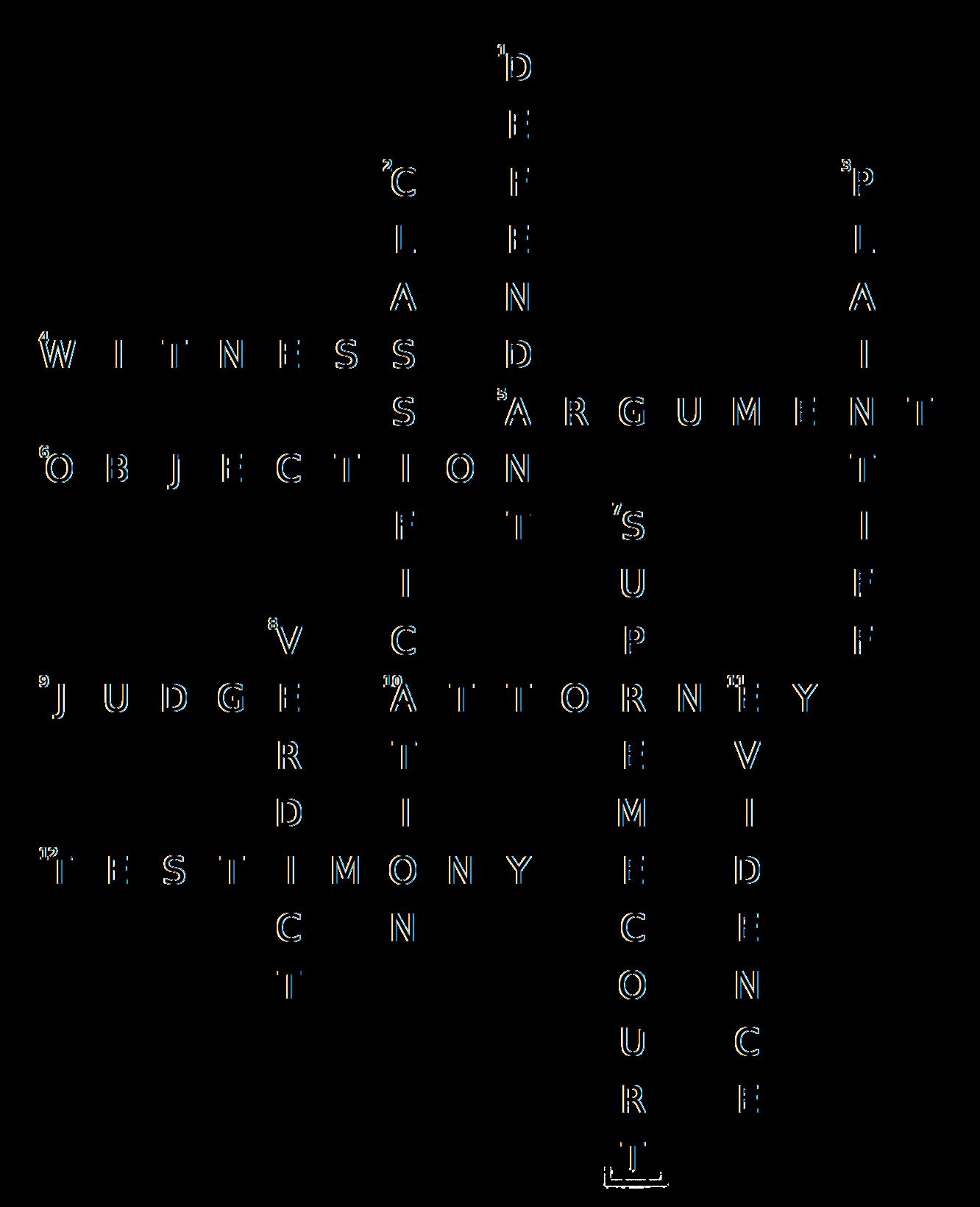
Match the mock trial vocabulary word to its definition.
1 The party being accused in a lawsuit:
2. The top court in the United States:
3 Something that gives proof:
4. A series of reasons, statements, or facts that support a point of view:
5. Grouping or categorizing according to set criteria:
6. A public official who decides questions brought before a court:
7. A statement made by a witness under oath:
8. The person who brings a lawsuit:
9. A decision in a court case:
10. A person who gives evidence:
11 A statement opposing part of a legal proceeding:
12. Someone who is legally allowed to do business for another person, also called a lawyer:
Match the mock trial vocabulary word to its definition.
1 The party being accused in a lawsuit:
2. The top court in the United States:
3 Something that gives proof:
4. A series of reasons, statements, or facts that support a point of view:
5. Grouping or categorizing according to set criteria:
6. A public official who decides questions brought before a court:
7. A statement made by a witness under oath:
8. The person who brings a lawsuit:
9. A decision in a court case:
10. A person who gives evidence:
11 A statement opposing part of a legal proceeding:
12. Someone who is legally allowed to do business for another person, also called a lawyer: