INSTALLATION GUIDE
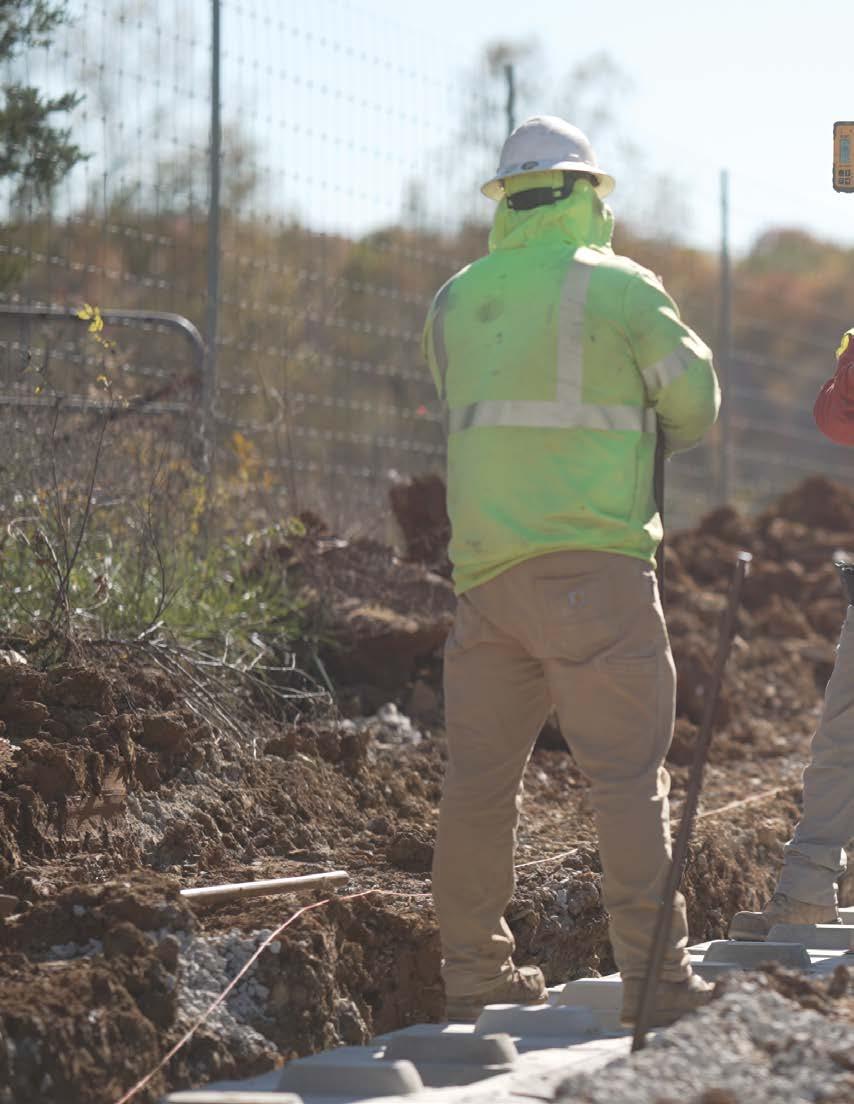
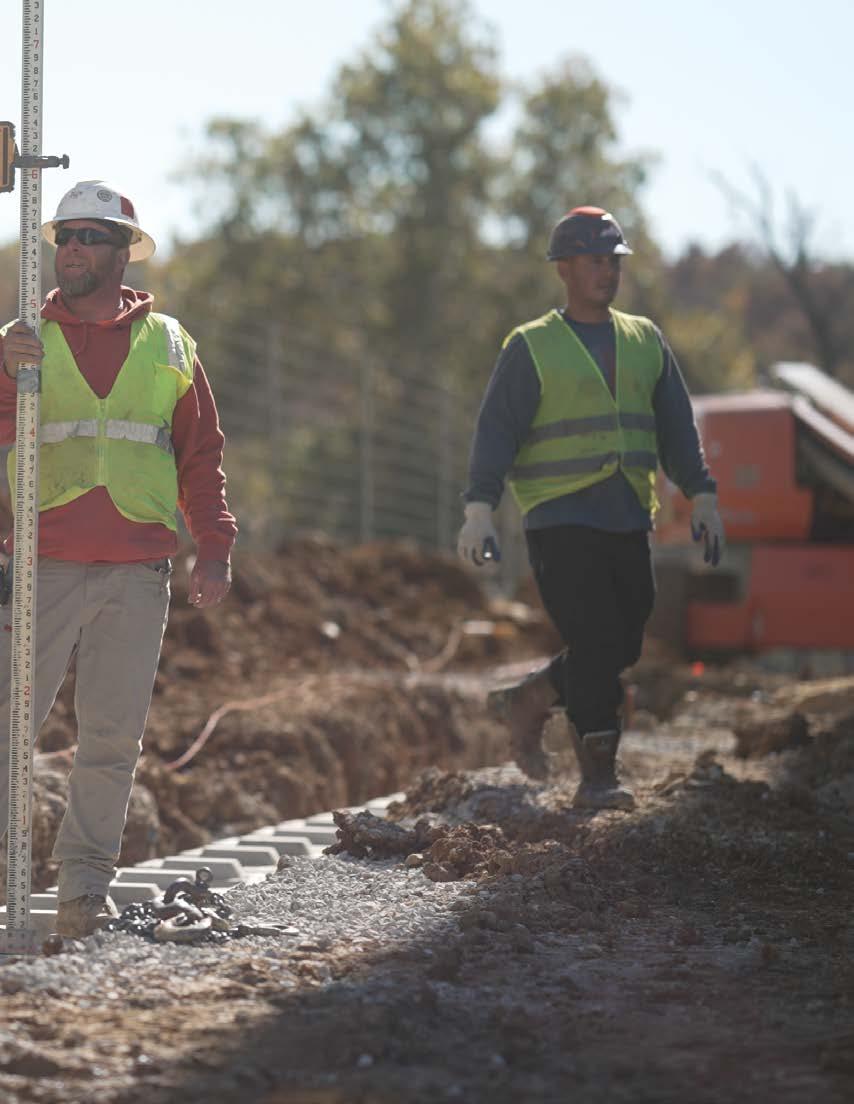
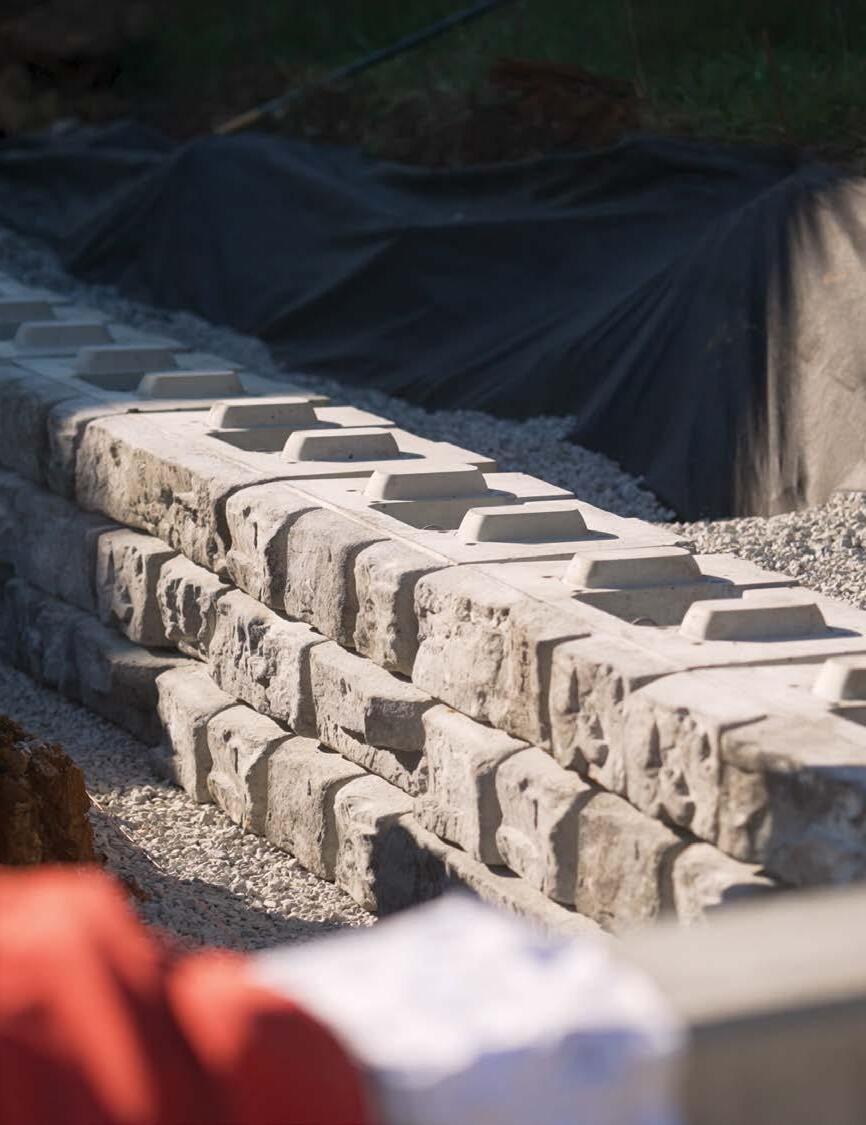

This manual is intended to serve as a guide for the proper installation and construction of a Novum Wall® retaining wall. The recommendations and guidelines presented here are intended to supplement detailed construction documents, plans, and specifications for the project.
Novum Wall supports a Total Quality Management approach to Quality Assurance and Quality Control (QA/ QC) in the planning, design, manufacture, installation, and final acceptance of a Novum Wall. This approach requires the responsible party at each stage of the project ensure that proper procedures are followed for their portion of the work. The responsible parties during the construction phase of a Novum Wall include the Contractor, Engineer or Owner’s Representative, and Novum Wall licensed manufacturer. Their specific responsibilities for compliance are as follows:
The Contractor is responsible for providing construction according to the contract documents, plans, and specifications for the project. The Contractor shall ensure that employees engaged in construction of the Novum Wall understand and follow the project plans and specifications, are familiar with construction methods required, and have adequate safety training.
The Engineer or Owner’s Representative is responsible for construction review to assure that the project is being constructed according to the contract documents (plans and specifications). The representative shall fully understand the project plans and specifications and shall perform adequate field verification checks to ensure construction is in conformance with the project requirements. The presence of the Engineer or Owner’s representative does not relieve the Contractor of their responsibilities for compliance with the project plans and specifications. Construction Inspectors may also fall under this category.
Novum Wall blocks are produced by independently-owned licensed manufacturers. The manufacturer is responsible for the production and delivery of Novum Wall units to the job site in accordance with published material quality, size tolerances, construction documents, plans, and specifications. The licensed manufacturer is responsible for adherence to any project specific QA/QC requirements for the production of precast concrete retaining wall units. Often, additional services—such as installation training classes—are available through the Novum Wall manufacturer.
Before starting the construction of a Novum Wall, take the time to complete necessary planning and preparation. This process will help ensure a safe, efficient, and quality installation. It will also help avoid costly mistakes.
The Contractor is responsible for providing construction according to the contract documents, plans, and specifications for the project. The Contractor shall ensure that employees engaged in construction of the Novum Wall understand and follow the project plans and specifications, are familiar with construction methods required, and have adequate safety training.
Obtain the necessary engineering and permits for the project. The local building department is an excellent resource to help determine the requirements for a specific project. This installation guide is intended to supplement a detailed, site-specific wall design prepared for a project by a Professional Engineer. Construction documents for a project supersede any recommendations presented here.
Take the time to review and understand the project plans and specifications. Make sure that the plans take into account current site, soil, and water conditions. Pay close attention to silty or clayey soils and ground water or surface water on the site as these can significantly increase the forces on the wall. A pre-construction meeting with the wall design engineer, construction inspector, wall contractor, and owner or representative is recommended.
Make sure to have underground utilities located and marked on the ground before starting any construction. Call 8-1-1, go online to www.call811.com, or contact the local utility company to schedule utility marking for the project site.
Develop a plan to coordinate construction activities on the site. Make sure the plan specifically addresses how to control surface water during construction.
Store Novum Wall blocks in a location close to the proposed wall. Blocks should be kept clean and mud free. Blocks should also be stored in a location which will minimize the amount of handling on the project site. Store geogrid in a clean, dry location close to the proposed wall. Keep the geogrid covered and avoid exposure to direct sunlight. Be careful where excavation and backfill material is stockpiled. Do not stockpile material over buried utility pipes, cables, or near basement walls which could be damaged by the extra weight.
Material planned for use as drainage aggregate between and behind Novum Wall blocks and structural backfill material proposed for use in the retained soil zone of a gravity wall or in the reinforced and/or retained soil zones of mechanically stabilized earth walls must be inspected and verified to comply with requirements of the construction documents, plans, and specifications.
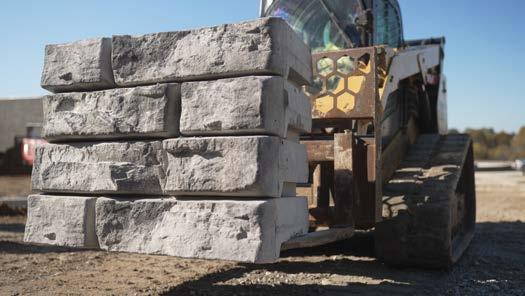
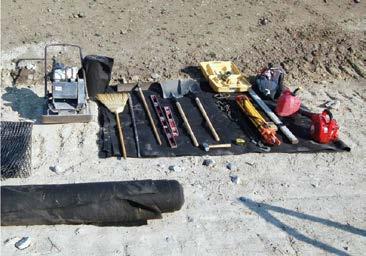
Make sure the site has the proper equipment to handle Novum Wall blocks and install the wall. Novum Wall blocks are large and heavy. Make sure excavators and other construction equipment are properly sized to handle the blocks safely. (Figure 1) Hand-operated equipment should include, at a minimum: shovels, 2 ft (610 mm) level, 4 ft (1.22 m) level, broom, hammer, tape measure, string, spray paint, laser level, pry bar, walk-behind vibratory plate compactor (capable of delivering a minimum of 2000 lb (8.9 kN) centrifugal force), and a 16 in (406 mm) concrete cut-off saw. (Figure 2) Personal protective equipment should include, at a minimum: appropriate clothing, steel toe boots with metatarsal protection, eye protection, hard hat, gloves, hearing protection, fall protection rigging, and other items as necessary to ensure a safe working environment.
Proper base preparation is a critical element in the construction of a retaining wall. Not only is it important to provide a stable foundation for the wall, but a properly prepared base will greatly increase the speed and efficiency of the wall installation. Proper base preparation starts with the subgrade soils.
Existing soils must be removed to the bottom of the leveling pad elevation for the retaining wall.
The base and back of excavation should expose fresh, undisturbed soil or rock. Remove all organic, unsuitable, and disturbed soils that “fall-in” along the base of the wall or the back of the excavation. Always provide safe excavations in accordance with OSHA requirements.
The subgrade soil (below the leveling pad) should be evaluated by the Engineer or Owner’s Representative to verify that it meets the design requirements and to determine its adequacy to support the retaining wall. Any unsuitable material shall be excavated and replaced as directed by the on-site representative and per the requirements of the contract drawings, plans, and specifications.
Subgrade soils must be compacted to a density as specified in the contract documents, plans, and specifications but not less than 90% maximum density at ± 2% optimum moisture content as determined by a modified proctor test (ASTM D1557). (Figures 3 and 4)
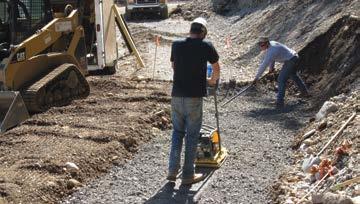
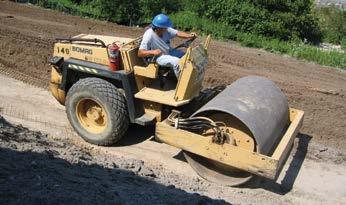
Base preparation continues with proper leveling pad construction. Novum Wall retaining walls are designed with an open-graded crushed stone, dense-graded crushed stone, graded aggregate base (GAB), or concrete leveling pad, which supports the bottom row of blocks. The choice of which type of leveling pad to use is made by the wall design engineer and depends on several factors including the bearing capacity of the native soil, location of the drain outlet, and conditions at the base of the wall.
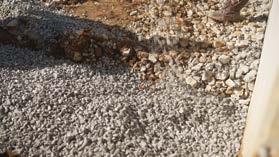
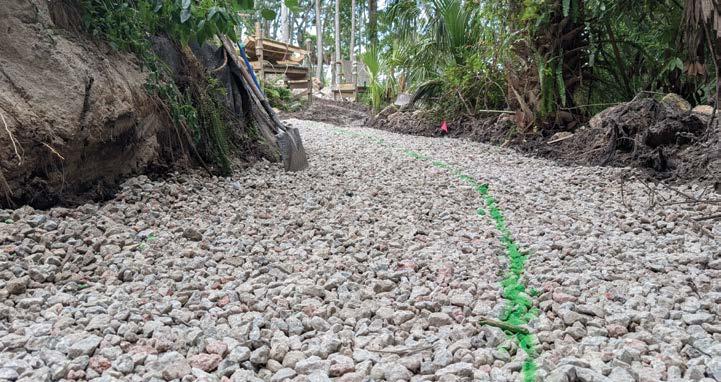
Open-graded crushed stone is typically used in cases where the wall drain can outlet to daylight (by gravity) somewhere below the elevation of the bottom of the leveling pad. (Figure 5) The material should be 1 in (25 mm) diameter and smaller stone. A crushed stone meeting the gradation requirements of ASTM No. 57 (20 mm) with no material passing the No. 200 (74 μm) sieve is preferred. The leveling pad thickness shall be as designed by the wall design engineer. A minimum thickness of 6 in (150 mm) is common. The leveling pad should extend at least 6 in (150 mm) in front and 12 in (305 mm) behind the bottom block. Make sure to check the construction documents for details.
Dense-graded crushed stone or graded aggregate base (GAB) material is typically used in cases where the wall drain can only outlet to daylight somewhere above the bottom of the leveling pad. The material should be dense-graded crushed stone with between 8 and 20% “fines” which will pass through a No. 200 (74 μm) sieve. The leveling pad thickness shall be as designed by the wall design engineer. Minimum dimensions are the same as those for an open-graded crushed stone leveling pad.
The leveling pad material should be placed and compacted to provide a uniform, level pad on which to construct the retaining wall. Proper elevation can be established with a laser level or transit. Two 20 ft (6.10 m) long grade (screed) pipes can also be set to the desired grade and screed the crushed stone material between the pipes.
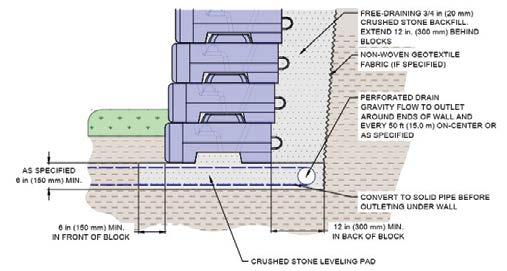
Place the stone leveling pad in uniform loose lifts a maximum of 6 in (150 mm) thick. Compact the stone with a minimum of three passes with a 24 in (610 mm) wide walk-behind vibrating plate compactor capable of delivering at least 2000 lb-force (8.9 kN). This should achieve 85% relative density of the stone determined in accordance with ASTM D-4253 and D-4254. In-place density of the stone fill should be confirmed using ASTM D-6938. If a minimum of 85% relative density in not achieved, place the stone in smaller lifts or apply more compaction effort until the desired density of the stone is achieved.
Unless specifically included in the design calculations, do NOT place a thin layer of sand between the leveling pad and bottom block. This layer will reduce the sliding resistance between the leveling pad and bottom block.
In some cases, the wall design requires the construction of a concrete leveling pad. Construct the leveling pad according to the detailed plans for the project. Some designs require a shear key in the bottom of the footing and/or a lip in front of the Novum Wall blocks. These items would be shown in the project plans. If steel rebar is to be placed in the footing, secure the bars together with wire ties in the pattern shown in the construction documents. Use rebar supports to hold the rebar structure in the proper position in the footing. Place wood formwork at the front and back of the concrete leveling pad or footing. The top of the formwork should be placed at the elevation of the top of the concrete footing so that the top can be screeded smooth in preparation for block placement. It is important that the top surface be smooth and level for full contact of the retaining wall blocks. Place concrete as specified in the wall design. Once the concrete has been allowed to cure to the minimum specified strength, place the bottom blocks and continue construction of the retaining wall.
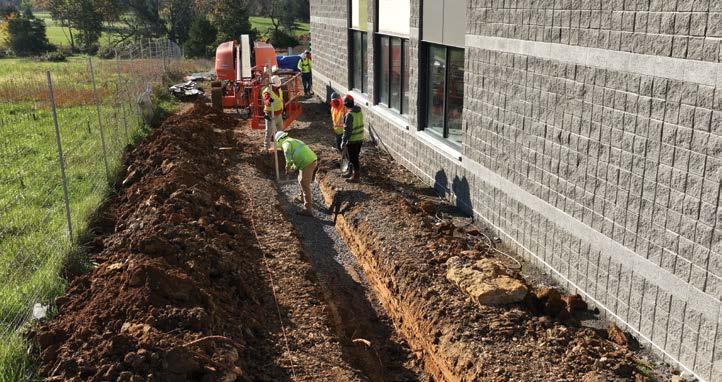
In order to ensure proper layout of the wall construction, staking the location is an essential step. Refer to “Corners” on page 24 and “Curves” on page 22 of this manual for additional considerations.
Stake the proposed retaining wall layout at the face of the wall, including horizontal location, finished elevation at the top of and bottom of the wall, wall stationing and any offsets from project baseline stationing. (Figure 7)
A string line or offset stakes are typically used to establish horizontal and vertical alignment. When offset stakes are used, the stakes should be placed at least 5 ft (1.52 m) but no more than 10 ft (3.05 m) in front of the face of the retaining wall. A stake should be provided at every elevation change and at a maximum of 50 ft (15.2 m) apart. Wall construction should start at a fixed point such as a building wall, 90° corner, or at the lowest elevation of the wall. Wall stationing should be taken from the lowest elevation block in the wall profile. Any block step ups from this elevation will result in setback from wall stationing and should be noted on the offset stakes.
Mark any pipe penetrations through the retaining wall including type and material, diameter, and invert elevation of pipe. Locate any other existing or proposed utilities (including water, sanitary sewer, storm sewer, electric, fiber optic, cable, gas, irrigation, etc.) near the vicinity of the retaining wall.
Label distance to buildings or any other structures, property lines, construction limits, and offsets of these instances if located near the retaining wall.
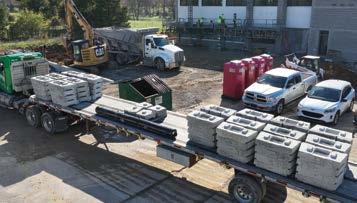
Novum Wall blocks are typically delivered to the construction site using a flatbed trailer or boom truck. (Figure 8) Rubber tired backhoes, loaders, skid steers, or excavators are used to place the retaining wall blocks. (Figure 9) Make sure to use the proper sized equipment to handle the large blocks. All lifting chains, rigging, or slings must be OSHA compliant and safety rated for proper working loads.
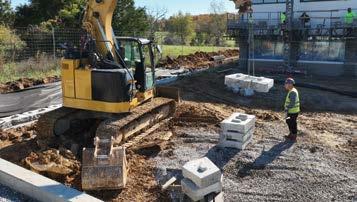
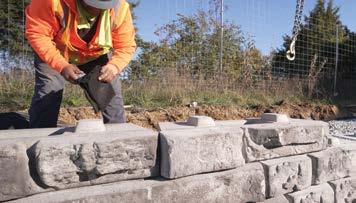
Place the blocks on the prepared leveling pad. Blocks shall be placed in full contact with the leveling pad and other immediately adjacent block units (Figure 10). Block alignment should be established by lining up the “form line” where the face texture meets the steel form finished area at the top of the block, approximately 5 in (127 mm) back from the front face (Figure 11). Novum Wall Blocks provide onsite convenience since they are all the same size, 46 ⅛ in (1172 mm) long with a 9 in (229 mm) height. However, attention should be paid to the difference between retaining, corner, and top blocks when placing the rows.
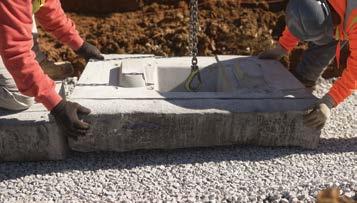
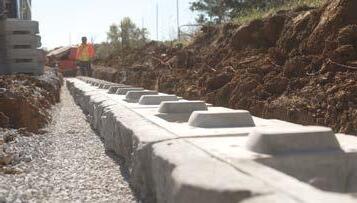
Check all blocks are level and aligned as they are placed. Small adjustments to the block location can be made with a large pry bar. Proper installation of the bottom block course is critical to maintaining the proper installation of all subsequent block courses within acceptable construction tolerance. It also makes installation of the upper rows of blocks much easier and more efficient.
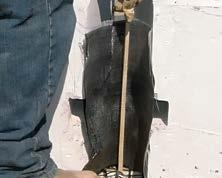
Place and compact backfill behind the bottom block course prior to placement of subsequent block courses or backfill. This will keep the blocks in place as drainage aggregate and backfill are placed and compacted. If specified in the retaining wall plans, place a 9 in x 12 in (229 mm x 305 mm) piece of non-woven geotextile fabric in the vertical joint between the blocks to prevent the drainage aggregate and backfill material from migrating through the vertical joints between blocks. (Figure 12)
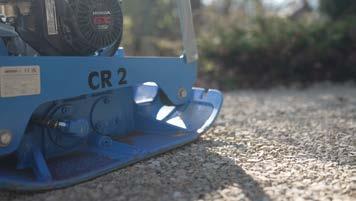
Place washed drainstone or open-graded crushed stone backfill between blocks, in the vertical core of the block, and at least 12 in (305 mm) behind the wall. Stone meeting the gradation requirements of ASTM No. 57 (or regional equivalent) with no material passing the No. 200 (74 μm) sieve is preferred. Place the stone in uniform loose lifts a maximum of 6 in (157 mm) thick. Consolidate the stone with a minimum of three passes with a 24 in (610 mm) wide, walk-behind, vibrating plate compactor capable of delivering at least 2000 lb (8.9 kN) of centrifugal force. (Figure 13) This should achieve 85% relative density of the stone determined in accordance with ASTM D-4253 and D-4254. In place density of the stone fill should be confirmed using ASTM D-6938. If a minimum of 85% relative density is not achieved, place the stone in smaller lifts or apply more compaction effort until the desired density of the stone is achieved.
Place non-woven geotextile fabric between the drainstone and the remaining backfill material if specified. (Figure 14)
Backfill behind the drainage aggregate with material as specified in the project construction documents. Place the lifts as specified, but not to exceed 9 in (229 mm) maximum. Granular backfill shall be compacted to a minimum of 90% maximum density at ± 2% optimum moisture content as determined by a modified proctor test (ASTM D1557). Use proper equipment to ensure complete compaction of the backfill material. It may be necessary to dampen or dry the backfill material, place the material in smaller lifts, and/or apply more compaction effort to reach 90% maximum density. Do not use any organic, topsoil, frozen, soft, wet, or loose soils when backfilling the wall.
Re-check all units for level and alignment and sweep the top of each course of blocks clean before starting construction of the next course.
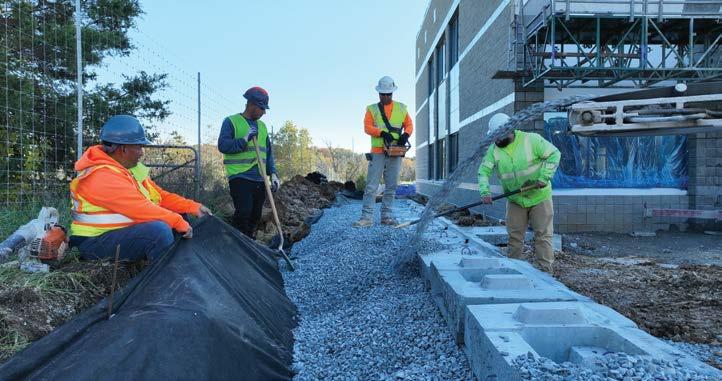
A drain is placed behind the Novum Wall wall blocks at the lowest elevation where the pipe can safely outlet to daylight. Drainage aggregate should be placed to the bottom of the drain as shown in the construction documents. A 4 in (102 mm) perforated drain is commonly used for the drain pipe. Often the drain is encapsulated with drainage aggregate which is then wrapped with a non-woven geotextile fabric. The drain should run the entire length of the wall and needs to have proper outlets on the ends and at regularly spaced points along the wall. (Figure 15) Solid pipe should be used for weep hole outlets through the face or under the retaining wall. Care needs to be taken during installation to avoid crushing or damaging the drain pipe or outlets.
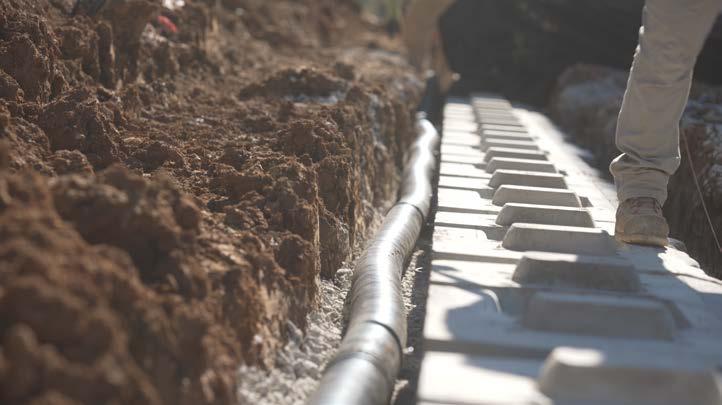
Once the backfill is fully placed and compacted for the block course below, place the next row of blocks in a running bond configuration where the vertical joint of the lower block units centered under the midpoint of the block units above. If needed, a half block can be used at the end of every other row to maintain a running bond. (Figure 16)
Push the Novum Wall blocks forward until the groove on the bottom of the block comes in full contact with the knobs on the blocks below. This sets the wall batter. Standard Novum Wall blocks create a 5° from vertical wall batter scenario. Specialty Novum Wall blocks can be produced to create 0° wall batter options. Adjacent blocks shall be placed with their front edges tightly abutted together.
Place non-woven geotextile fabric in the vertical joint between the blocks as specified in the retaining wall plans, and place and compact the drainage aggregate and backfill material the same way the bottom row is installed.
Never install more than one course of blocks without placing and compacting drainage aggregate and backfill to the full height of the block units. Placing multiple courses of blocks without backfill will prevent the proper
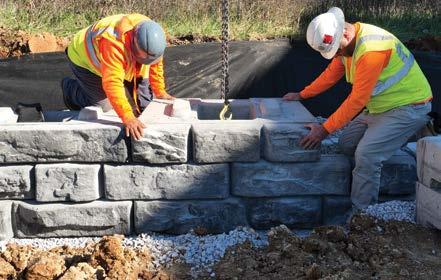
placement and consolidation of the drainage aggregate between the blocks.
Novum Wall blocks are designed to allow the construction of shorter non-reinforced (gravity) walls which use the weight of the blocks to provide stability. However, for some projects it may be necessary to build taller walls. In these cases, mechanically stabilized earth (MSE) retaining walls can be built with the Novum Wall Friction Connection System. (Figure 17)
The geogrid reinforcement used in Novum Wall Friction Connection System walls are full lengths of PVC coated polyester geogrid that are placed between the blocks and extend the full reinforcement length into the reinforced soil zone as shown in the project design plans.
When it comes to installing Mechanically Stabilized Earth (MSE) walls, all steps up to this point remain the same. The main difference with MSE walls is the step of including geogrid reinforcement as the wall is installed.
Verify the correct geogrid material and strength is selected and then cut the reinforcement roll to the required length. Geogrid reinforcement is uniaxial, meaning it only has strength to withstand loading in one direction. Ensure the Contractor installs the geogrid reinforcement in the “strong direction” perpendicular to the wall face. The distance the geogrid must extend into the reinforced soil zone (design length) is measured from the form line of the block to the end of the geogrid.
Inspect the Novum Wall blocks for any concrete flashing or sharp edges on the knob and groove on the block. Remove any flashing and grind smooth any sharp edges which could damage the geogrid reinforcement. Place the geogrid reinforcement on top of the Novum Wall block beginning at the form line and over the shear knob. Measure to and mark the required design length and install the geogrid reinforcement to that location. Pull the geogrid tight to remove any slack, wrinkles, or folds and secure the end of the geogrid using staples, stakes, or other appropriate methods. Install all sections of geogrid abutting each other to create complete coverage of the reinforcement layer prior to placing next block layer and backfill material. (Figure 18)
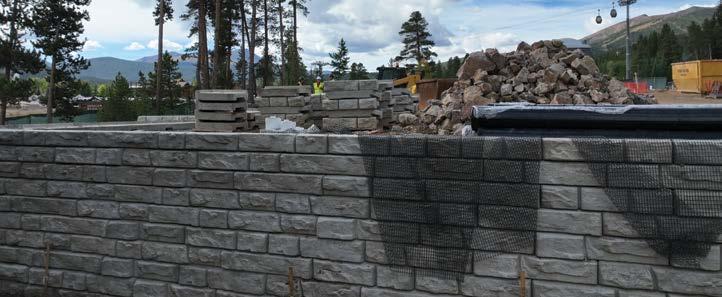
Place drainage aggregate in the vertical core slot, between, and behind the blocks. Place the stone in uniform loose lifts as required in the project plans and specifications. Compact the stone in the vertical core slot and between the blocks by hand tamping. Consolidate the stone behind the blocks with a minimum of three passes with a 24 in (610 mm) wide walk-behind vibrating plate compactor capable of delivering at least 2000 lb (8.9 kN) of centrifugal force. Provide further compaction if needed to meet the density specified in the contract documents, but not less than 85% relative density of the stone determined in accordance with ASTM D-4253 and D-4254.
Place a strip of non-woven geotextile fabric between the drainage aggregate and the reinforced soil zone if specified. Place the reinforced soil zone material in uniform loose lifts as required in the project plans and specifications. Reinforced soil zone material must be compacted to a density as specified in the contract documents, plans, and specifications but not less than 90% maximum density as determined by a modified proctor test (ASTM D1557).
Begin compaction at the back of the wall blocks and proceed to the embedded end of the geogrid using care to maintain the reinforcement in a level, taut condition oriented perpendicular to the back of the block unit to which it is placed upon.
Use hand operated compaction equipment within 3 ft (914 mm) of the back of the blocks. Heavier equipment can be used beyond 3 ft (914 mm) away from the blocks. Tracked construction equipment must not be operated directly on the geogrid reinforcement. A minimum fill thickness of 6 in (150 mm) is required for the operation of tracked vehicles over the geogrid. Turning of tracked vehicles should be kept to a minimum to prevent displacement of the fill and the geogrid reinforcement. Rubber-tired vehicles may pass over the geogrid at a slow speed of less than 5 mph (8 km/hr). Sudden breaking and sharp turning should be avoided. Do not operate a walk behind vibratory plate compactor on top of the Novum Wall blocks.
Place retained soil immediately between the end of the reinforced soil zone (identified as the embedded end of the geogrid reinforcement) and the back of the excavation. Compact retained soil to a density as specified in the contract documents, plans, and specifications but not less than 90% maximum density at ± 2% optimum moisture content as determined by a modified proctor test (ASTM D1557). Maximum differential elevation between the reinforced fill and the retained soil fill should never exceed 9 in (229 mm).
Continue construction in a similar fashion to the top of the wall. (Figure 19)
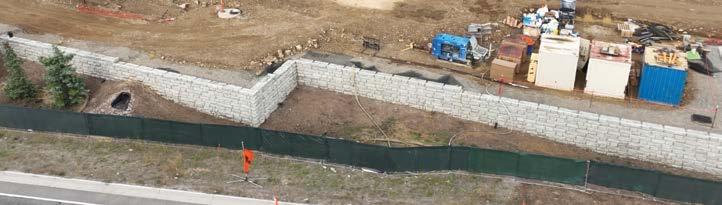
Novum Wall freestanding wall blocks have facing texture on two or three sides. They are used in applications where multiple sides of the wall are visible. Freestanding blocks can be installed as “stand alone” walls, such as perimeter walls or fences. They can also be designed and installed as the finishing top courses on a Novum Wall retaining wall.
Freestanding wall installation is similar to that for Novum Wall retaining walls. The main exception is that there is typically no backfill material behind the freestanding walls. Even though there is no backfill acting on the walls, freestanding walls need to be properly engineered. They require adequate stability at the base of the wall and they need to resist any applied forces such as wind loads or forces from railings or fences. If a “stand alone” freestanding wall is being constructed, prepare the subgrade soils and leveling pad as described previously. Place bottom blocks on the leveling pad. A 6 in (150 mm) minimum bury on the bottom block is typical. Extra bury may be required for some projects. Middle and top blocks are placed directly on top of the bottom blocks with no batter.
When building a freestanding wall on the top of a Novum Wall retaining wall, end the last row of retaining blocks with a Novum Wall Retaining Block (NW-R) cast without knobs. The freestanding blocks should be installed instead of Novum Wall Retaining Top Blocks (NW-R-T) to achieve a zero degree batter.
Begin and end freestanding walls with full or half Corner blocks. Freestanding walls are installed plumb with no batter. Colored foam “Backer Rod” can be used to fill any small gaps which may occur between the blocks when installing walls. Backer rods can be purchased from concrete supply centers. Call the local Novum Wall manufacturer for help locating foam backer rods for the project.
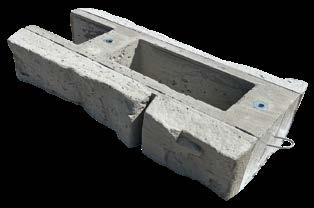
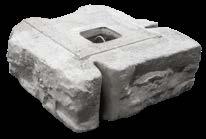
Cap units are commonly used on top of freestanding walls to provide a finished look. (Figures 21 and 22)
Mark the center of the freestanding blocks to monitor the correct running bond spacing. Secure the cap with construction adhesive appropriate for wet-cast concrete in outdoor environments.
Adhesive should be applied in two rows at the top of the freestanding blocks at 8 in (203 mm) on center. Caps can be cut as needed for proper alignment. If desired, grout the joints between cap blocks after installation with a non-shrink grout.
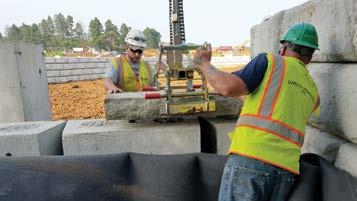
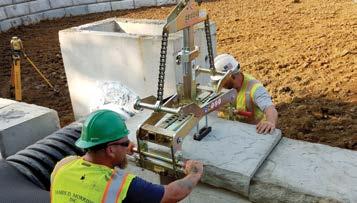
Few Novum Wall walls are perfectly straight. Most walls include curves and corners to meet project requirements and improve appearance. For this reason, Novum Wall units incorporate features that simplify construction of curved and cornered wall segments.
Inside corners built with Novum Wall units are not usually limited by a strict physical minimum radius because adjacent units typically touch at only one point near the face. However, the primary concern is appearance. Novum Wall units are fixed in size and create a faceted curve. If the radius is too tight, the wall may look excessively faceted and unfinished surfaces or non-textured areas may become visible.
The side taper of the units controls how closely adjacent units can be placed and therefore defines the minimum achievable radius. The block-to-block setback must also be included in the layout. Due to the setback, each successive course has a slightly shorter radius than the course below, similar to the inside lanes of a racetrack. Designers must select a sufficiently large base radius so that units continue to fit together properly at the top of the wall.
Shown below are the minimum bottom-row radii, organized by number of courses, for both concave and convex walls under gravity and geogrid conditions.
MINIMUM RADIUS FOR BOTTOM ROW - GRAVITY
MINIMUM RADIUS FOR BOTTOM ROW - GEOGRID
On both concave and convex curves, Novum Wall units will naturally drift in and out of perfect running bond. This becomes critical where the wall:
• Turns a corner, or
• Ties into a fixed feature (e.g., building wall, end of wall, or structure).
To manage this, implement the following strategies:
1. Start at fixed points - Begin installation at the fixed feature (corner or wall end) and build away from it. Any drift from perfect running bond becomes less noticeable as the wall extends away from the fixed point.
2. Use Novum Wall Half Blocks - Half Blocks can be used to gradually bring the pattern back into running bond.
3. Field cutting (as needed) - If required, units may be cut in the field to achieve proper alignment. Proper planning and use of Half Blocks will reduce the amount of cutting needed while maintaining an attractive pattern and the required geometry.
WALL SEGMENT 2
WALL SEGMENT 1
Similarly to curves, corners require additional advance planning and/or specialized corner blocks to achieve a sharp, functional look.
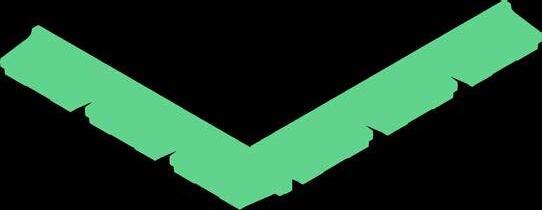
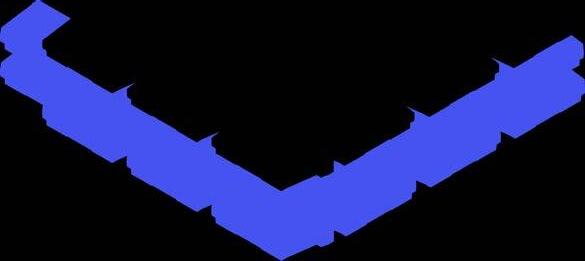
Inside corners can often be built without dedicated corner units. To do this, one wall segment is extended past the corner, and the intersecting wall is then built flush to the face of the first wall (Figure 23). Depending on the design, the walls may simply abut, or units may be placed so the inside corner is constructed with interlocking units for improved alignment and performance (Figure 24). When available, half blocks can also be used in place of abutting full blocks to create the same look.
ABUT WALL SEGMENT 2 INTO WALL SEGMENT 1. TRIMMING OF BLOCK TEXTURE OR SLIGHT OFFSET OF BLOCK ALIGNMENT MAY BE NECESSARY.
INTERLACED
NOT TO SCALE
CONSTRUCT WALL SEGMENT 1 FIRST
WALL SEGMENT 1 BUILT INTO EARTHEN BACKFILL
PLACE NON-WOVEN GEOTEXTILE FABRIC IN BETWEEN LOCATION OF WALL SEGMENT 2 ABUTTING WALL SEGMENT 1
FRONT VIEW
REAR VIEW
Figure 23 – One wall extends corner, the other wall built flush with first wall
This drawing is for reference only. Determination of the suitability and/or manner of use of any details contained in this document is the sole responsibility of the design engineer of record. Final project designs, including all construction details, internal and external stability, and drainage, shall be prepared by a licensed professional engineer using the actual conditions of the proposed site.
DRAWN BY:
APPROVED BY: LBH
DATE:
SHEET:
06-MAY-2024 DJC 1 of 1
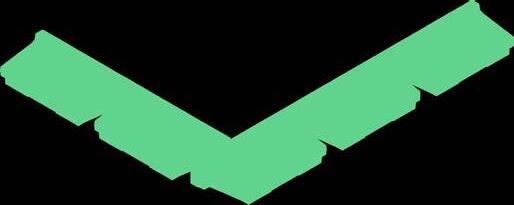
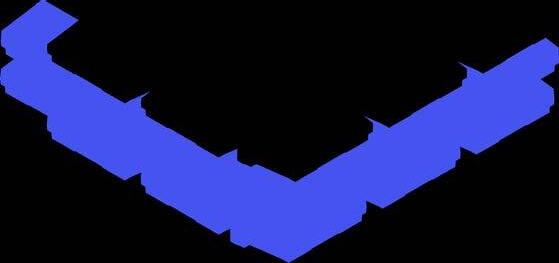
Figure 24 – Interlace alternating rows at inside corner
REAR VIEW
This drawing is for reference only. Determination of the suitability and/or manner of use of any details
document is the sole responsibility of the design engineer of record. Final project designs, including all construction details, internal and external
DRAWN BY:
Outside corners typically require special Novum Wall corner units that provide finished texture on two faces, and integrate structurally and visually with the standard retaining units. Design and construction details must consider the wall batter (in both directions), the specific geometry of the project, and any field modifications required (e.g., trimming alignment knobs or similar features). These modifications are generally acceptable when done per Novum Wall details and do not affect structural performance.
Novum Wall Blocks for outside corners are either “Corner A” or “Corner B” blocks. Corner A and B Blocks are mirror images of each other, and allow for outside corners to be accomplished while seamlessly keeping the running bond pattern. At the location of the outside corner, these blocks should be alternated as each course is added such that the texture is exposed on the end side of the Corner Block as shown in Figure 25
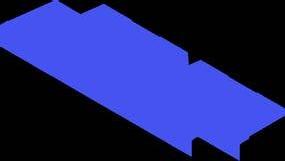
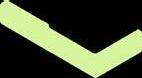
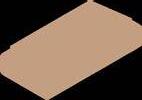
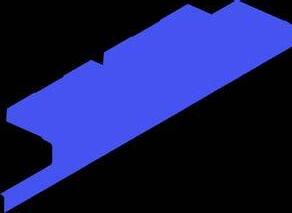
ALTERNATE RETAINING CORNER A AND B BLOCKS AS NECESSARY SUCH THAT THE TEXTURE IS EXPOSED ON THE END SIDE OF THE CORNER BLOCK.
More complex configurations can be arranged to accommodate multiple corners within a wall as well as allowing for geogrid to be incorporated into corner and curve layouts. Recommended resources for selecting appropriate corner units and guidance for common corner conditions can be accessed at www.novumwall.com/engineering/
Best practice dictates that wall construction should be continuous without interruption or delays on a project. This will help expedite timeline and minimize the time any excavation is open.
The construction site should be graded and maintained to direct surface water runoff away from the retaining wall throughout the entire construction process.
Do not exceed the allowable construction tolerances specified in the contract documents, plans, and specifications.
At no time should tolerances at the wall face exceed 1 degree vertically or a 1:200 ratio deviation with a maximum 2 in (50 mm) from staked location horizontally.
Immediately report the following site conditions, if encountered, to the Engineer or Owner’s representative to determine the corrective action needed:
• Any observed groundwater seepage.
• Surface water run-off directed toward the retaining wall during construction.
• Erosion or scour of material near the wall.
• Ponded water near the wall.
• Wet, soft, or easily compressible soils in the foundation zone.
• Existing rock that differs in location from that shown on the project plans or rock located above the elevation of the bottom of the leveling pad.
• Existing or proposed toe or crest slopes that differ from typical cross-sections shown in the project plans.
• Any other items not specifically mentioned which raise questions or cause concerns during wall construction.
Immediately implement any corrective action before resuming wall construction.