
Report: PDC Place Malaysia 2022

Page 1

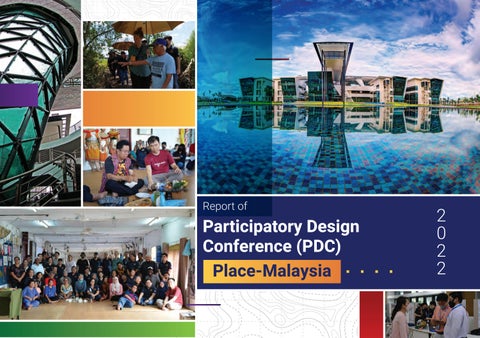
Report of Participatory Design Conference (PDC) Place-Malaysia
Table of Contents Executive Summary.................... 10 Highlights PDC-Place Malaysia................................................. Conference at a Glance............ About PDC Place Malaysia.... Host Destination............................ MOU & MOA Exchanges........... Pre-Conference Workshops. Policy Dialogue............................... Recommendations.................. IPID-Asia Forum...................................... Pluriversal Fair......................................... Post-Conference Visit to Long Lamai........................................... Participants List...................................... Newspaper Clipping............................ Programme Committee (PDC Place) Malaysia......................... Welcoming PDC 2024....................... Sponsors & Co-Organisers 27-32 33-39 40-44 45-46 47-52 53-55 56 1 2-5 6 7-9 10-13 14-15 16-17 18-23 24-26

Executive Summary

The Participatory Design Conference (PDC-Place) Malaysia was hosted by the Advanced Centre for Sustainable Socio-Economic and Technological Development (ASSET) in the University of Technology (UTS) from August 17 to 25th, 2022. The “PDC Places” are smaller in-person events and activities running in different locations around the world alongside the main PDC conference, which was hosted by the Newcastle University in Newcastle upon Tyne, UK. Yet another successful event and our first fully physical conference since the lockdowns, PDC-Place Malaysia welcomed 109 participants from 9 countries, including Malaysia, Singapore, Canada, Colombia, India, Pakistan, Australia, Nigeria and Sweden. The speakers and participants include ministerial-level officials, various international and regional organisations, academicians, postgraduate students, researchers, development practitioners and representatives of local indigenous communities. Malaysia PDC-Place saw greater gender diversity, regional parity, and diversification of stakeholder groups. The event was co-organised by UTS, Yayasan Sarawak (the Sarawak Foundation), Sarawak Digital Economy Corporation Berhad (SDEC), Business Events Sarawak, Association for Progressive Communications and the International Network for Post-Graduate Students in the Area of ICT4D (IPID).

109 Participants

Countries

9
1
10 Highlights 01 A network has been established for Participatory Design (PD) community in Malaysia. The event was attended by 109 registered participants. We hosted sessions at 4 different locations including 3 off-campus venues, Sibu Digital Innovation Hub, World Fuzhou Heritage Gallery and the Iban Longhouse of Bawang Assan. To promote understanding of indigenous epistemologies and local contexts of our research partnerships, Pluriversal Fair is organised as part of the conference. 2
3

A total of 24 local, regional and international rorganisations were represent-

The PDC-Place Malaysia hosted 5 workshops, 5 Keynotes, a policy dialogue, a panel discussion, a mentor-mentee session for postgraduate students and an exhibition covering key areas of conversation and action that cut across the program, including digital inclusion.

The participants of the Policy Dialogue laid out 10 recommendations for the State to design inclusive,impactful, long-term and sustainable digital inclusion policies and solutions for Sarawak based on the local community needs.

The IPID-Asia Fund provided travel bursaries and free conference registration to 12 IPID Fellows, the postgraduate students in the area of ICT4D to attend PDC-Place Malaysia.

4

PDC Place Malaysia in numbers

Registered Participants Speakers Regional Diversity 5 56% 44% 32% 68% 70% 18% 12% Male Female Local (Sarawak) National (Malaysia) International Legend
Conference at a glance Sibu, Sarawak 17th - 25th August 2022 University of Technology (UTS) 6

Malaysia

Participatory Design (PD) has a focus on enabling communities to take charge of and as such is a relevant approach for ICT4development (ICT4D). In Malaysia, the ICT4D community has strong academic roots and acknowledges the importance of “participation” and “community-based” approaches in designing safe, inclusive, and equitable technologies. Participatory Design (PD), as an aspiration, reflects in the practices; however, PD as a field of research is often implicit and could not emerge as an academic discipline in Malaysia.

About 7
What could the emergence of Participatory Design and ICT4D mean to Malaysia, specifically in Sarawak? How to design and establish alternative spaces and opportunities to decolonise development practices and produce shared knowledge? And How can the guiding principles of PD influence the action and reflection processes of ICT4D initiatives? Therefore, PDC-Place Malaysia aimed to create awareness of PD practices and brought together academia, industry, government officials and local indigenous communities to develop a shared understanding of: 8
Conference Activities Sessions Policy Dialogue Pre-Conference Workshops Exhibition Post-Conference Visit to Long Lamai IPID-Asia Forum Pluriversal Fair 9

Destination Host

The host for PDC Place Malaysia is the University of Technology Malaysia (UTS). The Policy Dialogue and IPID-Asia Forum is held at the UTS campus in Sibu. The Pluriversal Fair is hosted by the UTS’ long term partner communities, the Bawang Assan longhouse, World Fuzhou Heritage Gallery and Sibu Digital Innovation Hub.

University of Technology Sarawak (UTS)
10
2.317584909305581, 111.67735039985237 Rumah Jimbun, Bawang Assan Long House Bawang Assan is an Iban settlement and is approximately 30km away from Sibu town. It is located along the Rejang river and is home to nine longhouses that house around 3,000 dwellers. 11
2.2639250894518512, 111.8649347543683 World Fuzhou Heritage Gallery, Sibu The Fuzhou World Heritage Gallery (the world’s biggest Fuzhou heritage collection with over 600 exhibits) is located at Jalan Salim, about a 10-minute drive from the Sibu town and housed in the Centennial Building for Sibu Fuzhou Settlement along with the head offices of the Sibu Fuzhou Association, the Sarawak Federation of Fuzhou Associations and the World Fuzhou Association. 12
2.308866464453503, 111.82114527340649 Sibu Digital Innovation Hub Sibu Digital Innovation Hub (SDIH) is establish on 3rd June 2020 as a platform for Start Up, Creative Industries, SMEs, social enterprises, and the local community in Sibu to start, grow, and expand their business. SDIH is located at 1st Floor, Lot 1251, Lorong Kuda 2, Kampung Nangka, 96000 Sibu, Sarawak. 13

MoU/MoA Exchange

A ceremony was held to establish two partnership that allows UTS and partner institutes to exchange their knowledge and resources with the local community and organisations.

The first memorandum of agreement has been signed between the University of Technology Sarawak and Malmö University Sweden, aiming to increase cooperation in conducting joint research, establishing a students and staff mobility program and organising joint academic seminars, conferences, summer schools, field trips, and internships. Another partnership agreement is signed between the University of Technology Sarawak and the Sarawak Development Institute to develop a digital platform Crowdsourced Heritage Automation Mapping Platform for Sarawak, or CHAMPS.

14
15
Amy
Managing Community-Based Participatory Service Learning Pre-Conference Workshops Hybrid 16 Cornell University, USA

Preserving Indigenous Knowledge

through A Meeting of Design, Craft, Technology 17 Malmö University, Sweden Sibu Digital Innovation Hub

Policy Dialogue:

Community Voices and Challenges of Rural Connectivity and the Way Forward

PDC-Place Malaysia hosted a one-day policy dialogue as a follow up of the IDECs Forum held in June 2020. The policy dialogue brought together local community representatives, policymakers, practitioners, and international panellists to discuss digital access, Internet services sustainability, and the critical role of local community participation in developing long-term and sustainable digital inclusion policies for the state of Sarawak. The policy dialogue resulted in a constructive discussion and present a way forward (10 recommendations) to address the digital inclusion challenges in the region.

18 August 2022 Date
University of Technology Sarawak
Venue
18

and

Keynotes Speeches

Information
Communication
Technology for Development: By the People, for the People
Professor Datuk Dr. Khairuddin Ab Hamid Vice Chancellor, University of Technology Sarawak (UTS) Khazanah Research Institute (KRI)
19
Dr. Sarbani Banerjee Belur
20
Head of Research and Product Development, Sarawak Digital Economy Corporation (SDEC) Digital Connectivity Policy to Empower the Digital Economy Digital Inclusion and Meaningful Connectivity in Sarawak: Free Wifi Initiative at Sibu Active Youth Space Park Innovation and Talent Development, Sarawak YB Dr. Annuar bin Rapaee eBario onwards: Digital Connectivity, Issues and Opportunities in the Kelabit Highlands (Labour, Immigration and Project Monitoring), Sarawak YB Dato’ Gerawat Gala The Status of Digital Inclusion in Sarawak Dr. Khairul Hafiz Sharkawi 21

Capacity-Sharing to Support Indigenous Broadband in Canada

Associate Professor, University of Alberta, Canada

22
Center for Renewable Energy & Appropriate Technology (CREATE) Malaysia Community Experience Sharing of Digital Inclusion in Sarawak Adrian Banie Lasimbang Marcathy Anak Gindau 23 Economic Planning Unit (EPU) Sarawak & Peoples Action for Development and Education of Penan (PADE) Bawang Assan Community Member Ezra Uda

Recommendations

24
Purposefully engaging community representatives in the development and implementation of digital inclusion policies and plans.1 Ensuring indigenous and local communities' representation in the state and national level policy forums to fill the implementation gaps, such as the National Council of Digital Economy and Fourth Industrial Revolution (MED4IR) or Sarawak Multimedia Authority (SMA). 3 Implementing timely and robust indicators for measuring and monitoring the quality of service (QoS) and quality of experience (QoE) in Sarawak in order to ensure meaningful universal service and access. 5 Empowering local community representative organisations such as Jawatankuasa Kemajuan dan Keselamatan Kampung (JKKK), with the ability to elect their representatives to the policy formation processes and contribute to decisions about digital inclusion projects in their territories. 2 Enhancing current internet performance indicators and expanding them to include user experience (Quality of Experience) and achievement of broader development goals for remote and rural communities. 4 25
Enabling robust policy frameworks that promote the emergence and flourishing of community-based solutions for meaningful connectivity (such as Community Networks) while also focusing on other pertinent areas such as innovative tools and business models for small-scale solutions. 6 Establishing an indigenous-led institutional structure and consortium to inform telecom policies and select, maintain, and operate existing and new physical and technological infrastructure in their territories. 8 Supporting internet affordability for marginalised groups and subsidised internet connectivity and digital devices at the point of purchase.10 Developing mechanisms and automated tools to measure, report, monitor, and collect feedback from the users of the digital inclusion project. 7 Policy and regulatory factors should enable community networks to succeed include: innovative licensing, funding opportunities that can include, but are not limited to traditional universal service funds (USF), and access to spectrum. 9 Upskilling both grassroots and organisational digital capacities in areas such as data governance, privacy, and security. 11 26

IPID-Asia Forum:

Emerging Spaces for ICT4D and PD Communities

The International Network for Postgraduate Students in the area of ICT4D (IPID) strives to connect and create a platform for researchers and practitioners to share ideas, enhance collaboration and increase research innovations.

In conjunction with the theme of Malaysia PDC Place, the IPID-Asia brought together the ICT4D and PD communities to discuss and reveal valuable insights on the common grounds of action and reflections for PD and ICT4D in Asia. The Forum comprised of Keynote speeches, two parallel sessions and an IPID-Asia Postgraduate Mentor Mentee session.

27
28
Dr. Cat Kutay
29
Dr. Cat Kutay
30

The Mentees

Universiti Malaysia Sarawak (UNIMAS) Universiti Malaysia Sarawak (UNIMAS) University of Technology Sarawak (UTS) Universiti Malaysia Sarawak (UNIMAS) Universiti Teknologi Malaysia (UTM) Universiti Teknologi Malaysia (UTM) University of Technology Sarawak (UTS) Universiti Kuala Lumpur (UniKL) University of Technology Sarawak (UTS) Ajibola Victor Omoniyi Fathin Shah Welma Qasheeda Rizwan Ullah Mohammad Nazrul bin Mornie Mohamed Adnan Samuel Tham Keat Hao Tony Ting Shi Yuan Suhaili Din Lim Aik Sen Mohd Ariff Majmi Zaaba Dennis Cheng Haw Yih Jackson Ting Wei Feng Lim Kah Soon
31 University
of Technology Sarawak (UTS) Universiti Kuala Lumpur (UniKL) University of Technology Sarawak (UTS) University of Technology Sarawak (UTS)
University
of Technology Sarawak (UTS)
32
33
USA Sweden
University of Technology Sarawak (UTS)
Boleh! We can do this together. Storytelling as a tool for Participatory Design Pluriversal Fair:
Amy Somchanhmavong
34
35

Design Probe Workshop on Local Knowledge and

Sweden Dr. Lizzette Reitsma
Climate Change Pluriversal Fair: University of Technology
Sarawak (UTS) Dr. Tariq Zaman
36
4 37

Fair:

University of Technology Sarawak (UTS) Workshop on Co-Design Community Networks
Pluriversal
University of Technology Sarawak (UTS) Ts. Gary Loh Chee Wyai
38
39

Post-Conference

40
41

As a visiting researcher from Canada who studies digital equity and inclusion, and community-led technology development, the visit to Long Lamai after the PD Places conference hosted by UTS in Sibu was an incredible experience. During the conference, I joined discussions about digital inclusion policy and practice in Sarawak, and had the opportunity to present on work I've been part of with Indigenous peoples in Canada. I heard about digital inclusion (and inequalities) in Sarawak from researchers, government officials, and Indigenous leaders. The trip to Long Lamani following the conference brought home the reality of both the challenges experienced by the Penan people and the local innovations they are involved in, from helping build 'off-grid' electrical infrastructure to farming, educational and cultural activities. The trip itself, which involved an 8-hr 4X4 trip by truck plus a 1-hr boat journey, illustrated the geographic remoteness of the communities and the reasons why 'traditional' approaches to infrastructure deployment do not work in those contexts. We met many community members who generously shared information about the community and their desires for environment, cultural, and language preservation. I had the opportunity to observe a participatory design exercise conducted by one of my colleagues, as well as discuss the potential of a community networking project with Long Lamai. While the visit was relatively short, I am still thinking about the learning and conversations that took place today. I thank my hosts at UTS and in Long Lamai for the opportunity to visit that special place and hope to have a chance to return.

Dr. Rob McMahon
42

The visit to Long Lamai, and to Malaysia in general, at least for me, relates to my interests about how design exists, as a discipline,in what some people call the Global South. I wanted to see, with my own eyes, if the Global South is something that works as a generalisable notion. After visiting Long Lamai, I've realised that, grouping everyone under the same umbrella could be problematic. In this sense, the conference, and all its associated events, including the visit to Long Lamai, gave me a better sense about some of the things that Malaysia and Colombia have in common, as well as how different both countries are. So, in terms of research, there's still a lot to be done, there's still a lot to learn, and I thank the conference, and all the people involved, for their generosity in this respect.

43

Taking part in the PDC Place in Malaysia was a joy. Through its setup we got to experience some of the richness of Sarawak’s cultures in a playful and casual way. It was small enough to feel intimate, yet big enough to be inspiring.

Dr. Lizzette Reitsma

44

Participants List

Leonardo Parra Agudelo Adrian Wan Tariq Zaman Rob Mcmahon Gary Loh Adrian Banie Lasimbang Marcathy Ak Gindau Ezra Uda Khairul Hafiz Bin Sharkawi Gerawat Gala Annuar Rapaee Khairuddin Abdul Hamid Sarbani Banerjee Belur Lizette Reitsma Cat Kutay Zalizah Awang Long Masitah Ghazali Rachel Gong Peter Tinggom Ajibola Omoniyi Victor Ghazala Tabassum Rizwan Ullah Muhammad Farhan Jalil Shah Mohammed Adnan Mohammed Hasan Mohd Ariff Majmi Bin Zaaba Kelvin Hii Sieng Wan Daniel Chia Wei Fung Helena Ak Entingi

Mohammad Nazrul Bin Mornie Ahmad Lutfee Bin Mohdlasa Ling Pok Kuong Mohamad Suffian Bin Abdul Kadir Jaibi Sabian Tan Wei Jun Lau Poh Yew Nicky Sharif Kee Kwong Hui Teng Wei Yuan Ting Siong Heng Mohammad Noor Aiman Bin Isymael Eddy Ting Tiew Suong Bryan Hii Chang Wui Lee Alan Ting Muhammad Asraf Bin Zulkarnain Alan Cheng Yong Wei Jackie Ting Tiew Wei Tang Tze Lee Ralph Balan Daniel Tan Yong Wen Liew Kah Soon Jackson Ting Wei Feng Naqib Izzuddin Bin Hussien Adrian Lau Hui Yi Lau Poh Chen

Siah Tuong Chuan Vanden Ak Michael Ryan Siu Fang Yong Samuel Tham Keat Hao Cheng Haw Yih Ernest Hii Qi Shun David Lim Michelle Tang Sing Ying Syafiq Ismail Wan Mohd Syahmi Bin Wan Rushdi Agustine Ak Ngalai Shaista Boon Nyuk Phin Suhaili Binti Din Nurul Fathihin Mohd Noor Shah Marcella Peter Jane Labadin Fetylyana Nor Pazilah Nur Atiqah Binti Zaini Esther Ting Kiu Pey Ing Eta Ting Ming Na Doreen Ting Su Lin Jia Ing Wee Luly Ak Ganayang Numi Josephine Teo

Barbara Ak Dieo Ong Sing Ling Rosalind Wong Lelia Sim Ah Hua Khairunnisa Ramli Welma Qasheeda Binti Halek Serena Sa-Or

Lavienna Jannie Anak Kolin Phang Ee Wei Amelia Chong Wan Ni Ashleigh Tu Yi Ting Sarah Sorfina Binti Omar Ali Kua Rachel Wong En Lin Lilian Lau Zhi Ting Aderline Song Ke Xin Khatijah Binti Hanapi Cherry Ling Yieng Siang Tipah Ak Lihong Salmia Binti Anuar Yiiong Siew Ping Hartini Norma Ak Naga Susana Ak Panyau Farida Ak Sutan Libau Ak Nunong Arjun Ak Sabang Khairunnisa Binti Ibrahim

45
46
47
The Borneo Post 13th August 2022 https://www.pressreader.com/malaysia/the-borneo-post/20220813/281857237316385 48
The Borneo Post 20th August 2022 https://www.pressreader.com/malaysia/the-borneo-post/20220820/281891597068375 49
Utusan Borneo
18th August 2022 https://www.utusanborneo.com.my/2022/08/18/uts-metrai-mou-degan-universiti-malmo-sweden-dan-ips 50
Sarawak Tribune 17th August 2022 https://www.newsarawaktribune.com.my/uts-to-host-participatory-design-conference-in-sibu/ 51

SWOT analysis of the conference

OT

52 SW

Programme Committee (PDC Place) Malaysia

53

General Co-Chairs

Professor Datuk Dr. Khairuddin Ab Hamid Vice Chancellor, University of Technology Sarawak (UTS)

Assoc. Prof. Ts. Dr. Alan Ting Huong Yong Dean of the School of Computing and Creative Media (SCM), University of Technology Sarawak (UTS)

Program Co-Chairs

Assoc. Prof. Dr. Tariq Zaman Director ASSET, University of Technology Sarawak (UTS)

Ts. Gary Loh Chee Wyai Senior Lecturer (SCM), University of Technology Sarawak (UTS)

Publicity Chair

Jackie Ting Tiew Wei Lecturer (SCM), University of Technology Sarawak (UTS)

Track Co-Chairs

Chang Wui Lee Lecturer (SCM), University of Technology Sarawak (UTS)

Ts. Daniel Tan Yong Wen Senior Lecturer / Director of DRAC, University of Technology Sarawak (UTS)

Nuraini Binti Daud Lecturer (SCM), University of Technology Sarawak (UTS)

Exhibition Chairs and Art Track Co-Chairs

Student Volunteer Co-Chairs

Eileen Ong Sing Ling Senior Lecturer (SCM), University of Technology Sarawak (UTS)

Cheng Haw Yih Project Coordinator, ipid-Asia Logistic

Khairunnisa Binti Ibrahim Lecturer (SCM), University of Technology Sarawak (UTS) Marcella Peter Lecturer (SCM), University of Technology Sarawak (UTS)

Barbara Anak Dieo Lecturer (SCM), University of Technology Sarawak (UTS)

Committee Khairunnisa Binti Ramli Executive (SCM), University of Technology Sarawak (UTS)

Salmia Binti Anuar Clerk (SCM), University of Technology Sarawak (UTS)

54

Student Volunteer

Liew Kah Soon

Lavienna Jannie anak Kolin

Sarah Sorfina binti Omar Ali Kua

Naqib Izzuddin Bin Hussien

Tan Wei Jun

Kee Kwong Hui

Ashleigh Tu Yi Ting

Adrian Lau Hui Yi

Samuel Tham Keat Hao

Phang Ee Wei

Kelvin Hii Sieng Wan

Ryan Siu Fang Yong

Mohammad Noor Aiman bin Isymael

Technical Team

Muhammad Asraf Bin Zulkarnain

Alan Cheng Yong Wei

Nicky Sharif

Jaibi Sabian

Vanden Michael

55
University
of technology Sarawak
(UTS) Looking ahead: See you in Sibu 2024! The 18th edition of PDC will take place in Sibu, Sarawak, Malaysia. Conference Theme Reaching Out: Connecting Beyond Participation www.pdc2024.org 56

Sponsors

Co-Organisers 57

Address

Advanced Centre for Sustainable Socio-Economic and Technological Development (ASSET)

University of Technology Sarawak (UTS) 96000 Sibu, Sarawak, Malaysia Contact Us

Tel: (+6) 084-367520

Fax: (+6) 084-367301 Email: asset@uts.edu.my

Video

https://asset.uts.edu.my/pdc-conference-videos/

proceedings of the conference can be accessed from

Turn static files into dynamic content formats.
Create a flipbook