• Route 66 maintenance ahead of centennial
• Best practices for rear mount screeds
• More tips for plant spring startup
• Retrofit burner performance
• Workforce development
• Route 66 maintenance ahead of centennial
• Best practices for rear mount screeds
• More tips for plant spring startup
• Retrofit burner performance
• Workforce development
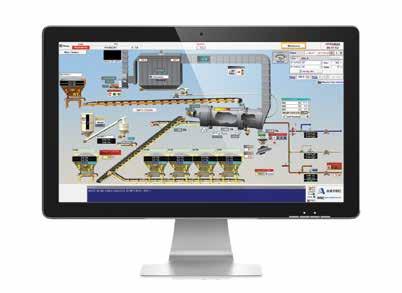
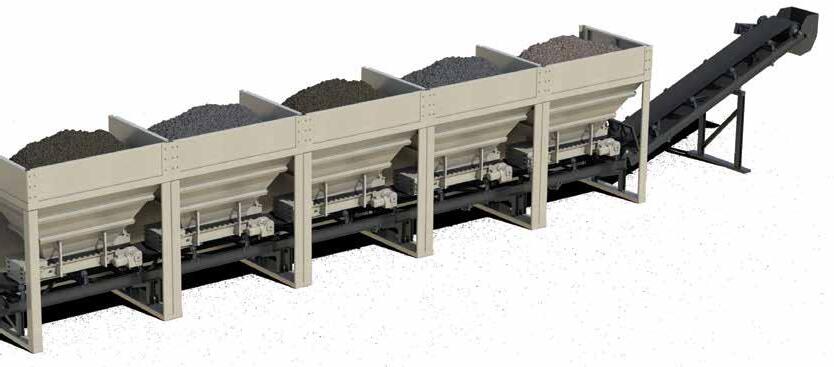
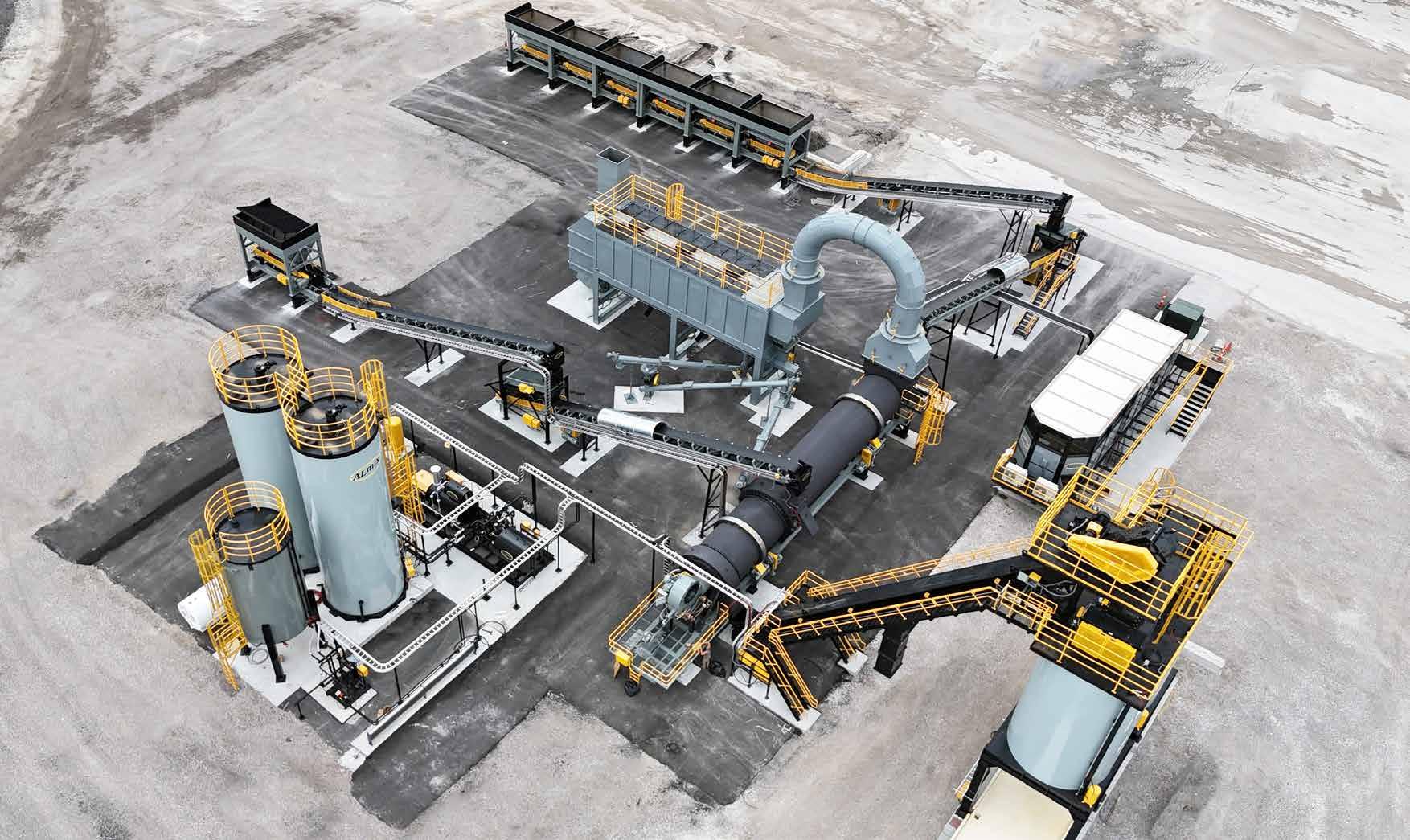
Astec paves the way for sustainable, innovative asphalt plants. The new IntelliPac Moisture System is a revolutionary solution that integrates seamlessly with Astec control systems. This provides unparalleled, real-time visibility into virgin aggregate moisture content. IntelliPac empowers operators to optimize mix design, minimize energy consumption, and reduce environmental impact. With Astec, you get superior asphalt production – better for the environment, better for your business.


CWMF DELIVERS MORE THAN JUST ASPHALT PLANT EQUIPMENT. WE ENGINEER FULL-SCALE, CUSTOM SYSTEMS AND SOLUTIONS — BUILT FOR YOUR GOALS AND BACKED BY THE CREW WHO KNOWS EVERY BOLT AND WELD.




8 – Sharing History By Sandy Lender
10 – Not Every Upgrade Is Worth It— These Were By Bill Stanley
14 – Using the Screed Effectively: Part 2 When it’s best to use the rear mount vibratory screeds By Benjamin Everett
18 - Haskell Lemon Preserves Route 66, With Incentive By Sandy Lender
22 - Mills Construction Accelerates Project, Transforming an Aging Asphalt Site in Austin By Jordan Fontaine
26 – Meet a Family of Women of Asphalt: The Ladies of Primavera Grading and Paving By Sandy Lender
54 – International Crushing From Terex
56 – Product Gallery Opens with an Anniversary From Sripath Technologies OFF THE MAT
65 – How to Start and Maintain a Professionally Run Paving Business—Part 2 By Scott Jennings, P.E.
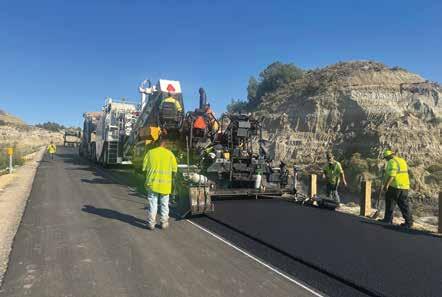
48 – Find Asphalt Information Amid a Crowded Schedule
Discover the information and education most relevant to your asphalt business at CONEXPO-CON/AGG 2026 From AsphaltPro Staff
52 – Celebrating Richard Warren’s Retirement Highlights Workforce Warning By Sandy Lender
32 – Northern Improvement Smooths Out National Park Paving Challenge By Sandy Lender
40 – Start Your Plant Engines Asphalt plant start-up tips to begin the 2026 construction season By Mike Devine
42 – Brandon McCranie Shares Career Steps to Encourage Others on the Paving Ladder By Sandy Lender
46 - FOCUS ON PERFORMANCE Burner Retrofit By Jim Feese, P.E.
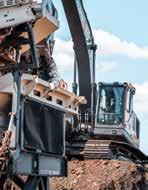

ON THE COVER
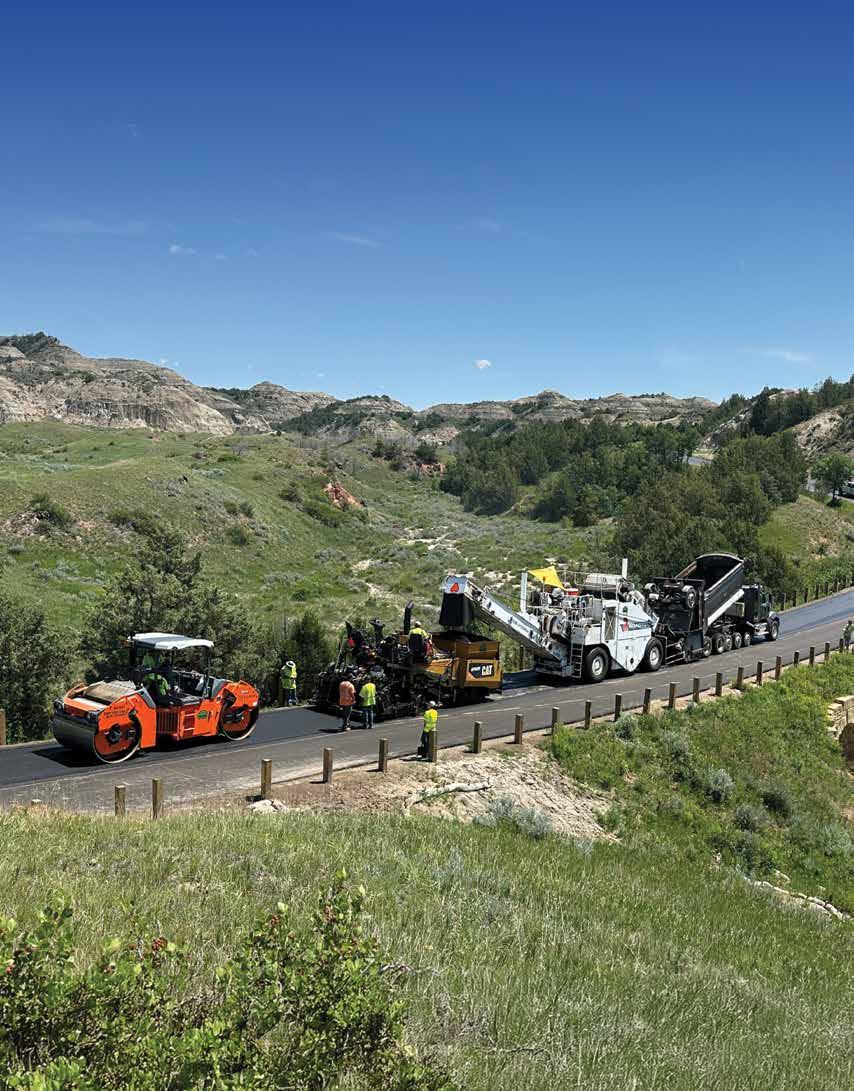
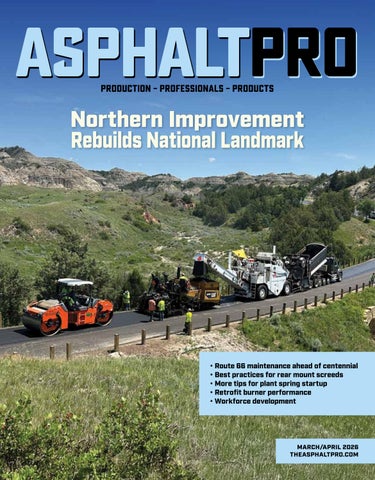
As our nation celebrates its 250th birthday in 2026, projects like this challenge in the Theodore Roosevelt National Park take on greater significance. See related article on page 32. Photo courtesy of Northern Improvement Co.



The asphalt industry will be surrounded by significant events this year. If you’ve picked up this issue while in Vegas, you’re already standing amid one: CONEXPO-CON/AGG 2026.
The tradeshow takes place over five days and 2.9 million square feet of space. OEMs and service providers have traveled from around the globe to bring their tried-andtrue and new innovations to a central location for display and discussion, so you might select the technology that will best improve your bottom line. We dive into some of the social and educational aspects of the show on page 48.
A gigantic tradeshow isn’t all 2026 offers. The United States has two milestone birthdays in motion throughout the year. Let’s start with the obvious: Our nation was officially founded in 1776, and its 250th birthday is off to a roaring start. That matters to me for more reasons than my addiction to liberty.
George Oliver (my sixth great grandfather) fought for our independence in the American Revolution and attended church in St. Paul’s Parish, Stafford County, Virginia, where General George Washington attended on several occasions with his brother Samuel Washington. Four of my ancestor’s sons fought in the war. George’s son John (my fifth great grandfather) was with him and three brothers (Charles, James and George Jr.) at the Battle of Guilford County Courthouse in North Carolina. There’s more to the research, but you get the idea: I have a proud family heritage and am honored to celebrate this nation’s 250th anniversary alongside other Americans this year.
Using our incredible highway system, PragerU is taking a family-friendly America 250 Mobile Museum full of digital and real-life displays with historical artifacts and exhibits around the country. Visit https:// www.prageru.com/freedom-trucks-mobile-museum for more information.
Speaking of our highway system, we celebrate the Mother Road’s 100th anniversary throughout the year. Route 66 afficionados will host car shows, re-openings of historical venues along the famous highway, and many more events. In honor of this momentous piece of American engineering
history, AsphaltPro Magazine wants to hear your stories of pavement preservation on the famous roadway. Check out the Haskell Lemon Group installment on page 18 this month and send your memories of working on Route 66 to sandy@theasphaltpro.com.
Other entities observe milestones this year. The team at Geneva Construction Company, Geneva, Illinois, celebrates its 100th year and will share information in our pages this spring.
Another Illinois company, W.R. Meadows, Inc., based in Hampshire, was founded in January 1926 with a single product— Asphalt Expansion Joint, sold under the Sealtight name. One hundred years later, W.R. Meadows is a fourth-generation, family-owned company offering more than 350 products globally.
The team at Meeker Equipment Co., Belleville, Pennsylvania, marks 40 years in 2026 and is already planning to expand the annual company picnic this summer in celebration. Sripath Technologies® LLC, Mahwah, New Jersey, marks its 20th anniversary and you can read more about that on page 56.
The Associated Equipment Distributors Foundation (AEDF) celebrated the success of its 10th Annual Gala & Live Auction, held Jan. 19 in Dallas. The event brought over 650 industry leaders from across the equipment industry to raise over $485,000 to fund critical initiatives such as workforce development and technical training.
And as 2026 closes, your own AsphaltPro Magazine will begin its 20-year anniversary.
Members of the asphalt industry recognize the pursuit of greatness within longevity and resilience. Community members congratulate one another when a milestone is reached or a goal achieved. It’s this kind of shared legacy our construction industry observes, not just with a 100th birthday of Route 66, but with the recognition of one nation, under God, built on liberty and justice for all. I look forward to bringing you stories of this shared greatness all year.
602 W. Morrison, Box 6a Fayette, MO 65248 (660) 728-5007 • www.theasphaltpro.com
GROUP PUBLISHER
Chris Harrison chris@theasphaltpro.com
EDITOR
Sandy Lender sandy@theasphaltpro.com (239) 272-8613
DIGITAL EDITOR
Sarah Redohl sarah@theasphaltpro.com (573) 355-9775
MEDIA SALES
Cara Owings cara@theasphaltpro.com (660) 537-0778
ART DIRECTOR
Kristin Branscom
BUSINESS MANAGER
Susan Campbell (660) 728-5007
OPERATIONS
Natasha Nivens natasha@theasphaltpro.com
AsphaltPro is published 11 times per year. Writers expressing views in AsphaltPro Magazine or on the AsphaltPro website are professionals with sound, professional advice. Views expressed herein are not necessarily the same as the views of AsphaltPro, thus producers/contractors are still encouraged to use best practices when implementing new advice.
SUBSCRIPTION POLICY: Individual subscriptions are available without charge in the United States, Canada and Mexico to qualified individuals.
One year subscription to non-qualifying Individuals: United States $90, Canada and Mexico $125.00. For the international digital edition, visit theasphaltpro.com/subscribe/

Stay Safe, Sandy Lender


Hard-won know-how for the next generation
With trade shows full of new tools and features, it can be hard to sort out what’s worth investing in. Bill Stanley shares the technologies that earned their keep in the field—delivering results on real job sites, not just looking good on the show floor.
BY BILL STANLEY
Walk a trade show like CONEXPO-CON/AGG and you’ll see no shortage of technology. Some of it looks great on the floor. Some of it never really holds up once it gets out on a real job site. And some of it is a complete game changer.
At American Pavement Specialists, when we look back at what’s actually made us more profitable over the years, it’s not hard to spot the pattern. The technology that’s worked for us is the technology that tightened up the basics and took guesswork out of the job. These are the tools that made the biggest difference.
If you want to talk about technology that actually moved our bottom line, it starts with grade. Nothing else even comes close. You can have the best mix, the best crew, the best roller on the job, but if the grade is wrong, it all falls apart. That hasn’t changed. What’s changed is how we get there.
Years ago, getting grade right took a lot of experience. The grader or dozer operator was the guy. He read stakes, ran a transit or laser, and knew how to make water move left or right. That skill took decades to learn. If you didn’t have it, you paid for it later—in drainage problems, callbacks, and pavement that didn’t perform the way it should.
Today, we have technology that backs that experience up. On new construction, 2D and 3D grade control systems—whether it’s GPSand laser-guided setups or systems from Trimble and Topcon—are total game changers. At American Pavement Specialists, that means running Topcon controls that come integrated directly from the factory on our equipment. The machine is reading the grade and helping the operator hold it. You still need someone who knows what they’re looking at, but you don’t need a 30-year veteran just to hit a 2% slope anymore. The guesswork is gone, and the work gets done faster and more consistently.
On existing construction, the payoff shows up in profiling and milling. Instead of cutting a flat two or three inches everywhere, the machine can adjust on the fly. It can take nothing in a low spot and more where it actually needs it, while still holding crown and slope. That matters, because every inch you don’t over-mill is asphalt you don’t have to buy back. That’s real money—material, trucking, and time.
Grade isn’t about making it look pretty. It’s about drainage and performance. Water that doesn’t move becomes a problem fast, especially in freeze-thaw climates. Puddling turns into ice. Ice turns into liability. Getting the grade right from the start avoids all of that, and today’s technology makes it a lot easier to do that consistently.
The machine doesn’t replace experience. It backs it up. You still need judgment, especially on older sites where there are no plans and nothing is documented. But when you combine experience with the grading and profiling technology that’s built into equipment today, you get better results with less waste. That’s why getting the grade right is still the foundation of everything we do—and the first place technology really started paying us back.
We’ve always had to hit specs. That hasn’t changed. What has changed is how those specs affect pay. They’re no longer just pass-fail. Today, performance is tied directly to money. Hit the numbers and you can earn incentives. Miss them and you lose money.
The way contractors get paid has also changed the way contractors talk. Years ago, success was measured by the size of the work you did. Now the bragging rights come from hitting the numbers. Quality shows up on the check, so quality is what gets talked about.
Technology made that shift possible. For example, the grading and profiling tools we talked about earlier set a higher standard for smoothness before we ever pave. Truck-tracking software makes it easier to keep material moving, prevent stops at the paver, and reduce screed settlement. Paver-mounted thermal profiling helps catch temperature issues early, reduce segregation, and support better density. Those tools all help put us in a better position to achieve our incentives.
But for us at American Pavement Specialists, the biggest impact has come from intelligent compaction. Veteran operators finally get confirmation of what’s happening under the drum instead of relying only on feel, and many realize they’ve been over-rolling or missing areas they never would have questioned before. For younger operators, the technology reinforces proper rolling patterns faster and more consistently, without lowering expectations. Either way, density gets tighter across the mat, with fewer surprises when testing starts.
Experience still runs this industry. Always will. What’s changed is that now we can back that experience up with information, and we can get that feedback while the job is still happening instead of after the fact.
Years ago, you paved, you rolled, and you moved on. If there was a problem, you might not find out until cores came back or someone called weeks—or years—later. Today, a lot of that information is available in real time. Tools like GSSI’s PaveScan technology, now being incorporated directly into OEM equipment, allow crews to see density-related data across the mat instead of waiting for cores to come back.
That instant feedback matters because it lets you make decisions on the job site. If something isn’t right, you can fix it while the mat is still workable instead of hoping it passes later. That might mean adjusting rolling patterns, changing timing, or stopping the job and making a call before the problem gets locked in.
It also changes how we communicate with owners, inspectors, and engineers. Instead of explaining why something should be right, we can show them. We’re not defending a gut feel. We’re backing up experience with information.
Some of the biggest technological improvements we’ve seen over the years are also the least flashy. Ergonomics, machine control, things like that don’t get a lot of attention, but they matter because they make it easier on the people running the equipment.
Older equipment was hard on operators. No suspension. No real climate control. Fighting steering and controls all day. By the end of a shift, you weren’t just tired—you were worn out. A lot of guys didn’t make it to retirement because their bodies gave out first.
Today’s machines are completely different. Better seats. Better visibility. Climate control that actually works. Push-button controls instead of muscling joysticks all day. Pavers that stay straight with the touch of a button instead of the operator fighting the machine while the truck pushes. That doesn’t just make the job nicer—it makes the work better.
When an operator isn’t exhausted, the machine runs smoother. Screeds stay steadier. Joints stay straighter. Transitions are cleaner. A paver that tracks straight feeds the screed better, and that shows up immediately in the mat. Small things add up fast.
Ergonomics also changes who can do the work and how long they can do it. Younger operators get comfortable in the seat faster. Older operators stay productive longer. That reduces turnover, protects experience, and keeps skilled people where you need them—on the machine.
Safety technology today is better than it’s ever been, and a lot of it doesn’t get talked about because it isn’t flashy. But it matters. It matters because one mistake, one bad moment, can shut a job down or put a company in a bad spot fast.
Basic things have gotten a lot better. Braking systems on machines and trucks. Visibility. Defrosters that actually work. Mirrors you can see out of. But newer technology takes it a step further. For example, machines that can automatically stop if something is detected in front of them.
On the trucking side, we’ve begun using dash cams and backup cameras to protect our drivers and the company. They’re not there to spy on anyone. They’re there because when something happens, it’s usually assumed the truck is at fault. Video changes that conversation quickly and keeps bad situations from getting worse.
At the end of the day, safety technology is really about risk. Keeping people from getting hurt. Keeping jobs moving. Keeping insurance and liability from blowing up. It doesn’t replace awareness or common sense, but it helps limit the damage when things don’t go perfectly.
One of the biggest changes for us didn’t happen behind the screed. It came from simply knowing what our equipment is actually doing. Not guessing. Not assuming. Knowing.
Most machines today come with tracking built in. We can see hours worked, idle time, service intervals, and fault codes without walking across the yard. If a machine runs eight hours and half of that is idle, we see it right away. That changes behavior and conversations fast.
Maintenance is where this really pays off. Instead of waiting for something to fail, we know when a machine needs service. In some cases, the manufacturer will call us before the operator even knows there’s an issue. That keeps jobs moving and avoids small problems turning into big downtime.
Truck tracking fits into that same visibility. We can see routes, speed, braking, and idle time right on a phone. That’s not about babysitting drivers. It’s about safety, wear and tear, and liability. How a truck is driven shows up later in maintenance costs and risk, whether you track it or not.
Technology has streamlined the office side of our business. With today’s apps, things like mileage tracking, fuel tax reporting, and job documentation are push-button instead of paperwork and guesswork. An owner or project manager can see what they need right on their phone, without a big office staff chasing numbers.
You don’t have to invest in every new technology that comes along. Technology is coming so fast right now that if you chase every new button or upgrade, you’ll either go broke or end up being the guinea pig testing out the bugs.
At American Pavement Specialists, we’ve tried to be smart about it. Sometimes we wait. Sometimes we invest in new machinery not because the old stuff is worn out, but because we know the new features on the equipment are worth it. When a technology is ready to earn its keep in our fleet, that’s when we buy it.
As technology continues to advance, we plan to apply that same thinking. But no matter how far it goes, I know technology will never replace the experience on our crew. To us, the value of these tools is that they support the people in the seat, strengthening the crew you have instead of substituting for it.


BY BENJAMIN EVERETT
Starting with the February issue, we began a bit of a review on the three most common types of screeds we use in asphalt paving. The first installment included an overview on the three most common types of hydraulically extendable asphalt screeds, along with a bit of a deep dive on the European style tamping screed versions (which are always going to feature rear mount extenders) that are very common in Europe and certain other regions in the world. The tamping screed is rarely used in the United States and Australia for the thinner asphalt overlays, mill and inlays, and generally thinner single layer asphalt passes that differentiate the U.S. approach to asphalt paving versus that of Europe.
To recap, Europe tends to pave much thicker layers in a single pass than the United States and relies very much on imparting a significant proportion of compaction to the asphalt layer early in the process, directly at the paver screed in the form of single or duo-tamp high compaction screeds.
These high compaction European style tamping screeds have a relatively limited presence in the U.S. market other than in specialist, niche
applications such as roller compacted concrete and cement-treated base or very thick layers required to be placed in a single pass.
As most asphalt paving in the United States and Australia is usually placed in 2- to 3-inch compacted layers at a time, a vibratory screed is usually the most used tool in these regions. It is most often capable of delivering acceptable and achievable levels of density.
Let’s look at the first of two common versions that we see on most any U.S. paving site—the rear mount (extenders are behind the main screed unit) vibratory asphalt screed.
These typically feature on a lot of high specification work such as airports, racetracks, and mainline or interstate paving where density and a consistent mat texture are important.
Because a U.S.-style rear mount vibratory screed is generally a heavily built, strong and stable unit, it usually places a homogeneous and tight mat texture across the entire screed width even at fully extended widths. The extender units are frequently attached to the main screed assembly with massive, 4- or 5-inch-diameter chrome guide tubes
with solid guide tube bushes to help prevent flex in the extenders at maximum width and when additional screed sections are installed to increase the overall paving width. Generally, a rear mount vibratory U.S.-built screed is seen in heavy highway applications where paving runs are of a fixed or constant width, and which are less variable in width than those typically encountered in commercial type paving and inner-city streets.
In this application, they typically perform well at lifts of 2 to 4 inches thick. Most often the screed plate widths of both the main and extenders are symmetrical. For example, an 8-foot basic width, rear mount vibratory unit can usually hydraulically extend out to double its closed width to 16 feet at the flick of a switch (before bolting on additional screed sections). This is kind of convenient and pretty nice to be able to do on the fly.
Further, because of the design of a rear mount screed, as the paver moves along, the material being augured out from the ends of the main screed naturally flows into the void created with the extendable sections located behind the main screed. This essentially means you can most often get away with not having to install additional bolt-on auger extensions and tunnel guards. However, the drawback is you end up carrying a fairly large head of material versus a front mount design, and as we will discuss further on, this can create some operational challenges.
Another feature the rear mount vibratory U.S. screed often offers is the main screed plate depth (front to back dimension) in relation to that of the extenders. Most heavy highway rear mounts seem to have


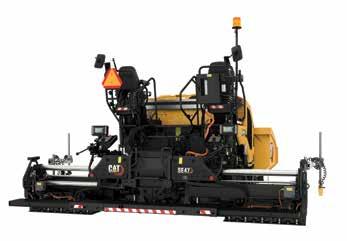
This newer SE47 V vibratory screed from Cat, mounted on an AP455 paver, offers a low-profile design as a commercial class rear mount screed. It features a 12.8-inch main and extender screed plate depth measurement, which should mean it is a lot easier to manage the volume of material on commercial work and require shorter take off pads. Photo courtesy of Caterpillar
at least 16 inches deep main and extender screed plates, with the majority tending to be in the 18-inch or even 19-inch range. There are advantages and disadvantages with this design. Having a heavy, solid and very stable platform with deep screed plates invariably
Our dedicated employees provide solutions to filtration an fabrication challenges, including design recommendations.
We provide consistent quality in the manufacturing of dust collector bags and wet filtration products. We maintain a 100% inspection rate to ensure customer satisfaction.
We manufacture filters across the full spectrum of temperature and efficiency ranges.
Our staff works with customers to assist in innovative and creative applications.
We recognize the importance of having dust collector bags and filters. Immediate response to customer needs is our number one priority.
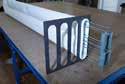
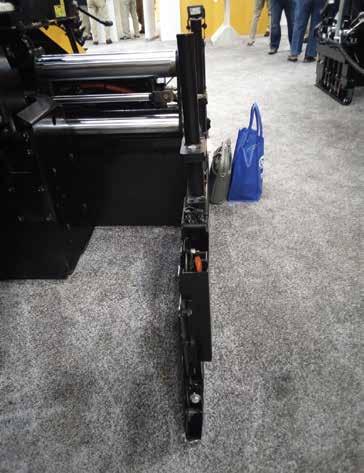
leads to a very tight, dense and pleasing “ironed” mat texture across the full width of the screed, with generally consistent mat densities at all widths.
The downside of deep screed plates is the longer they are (front to rear), the more volume of excess material you end up carrying. Once you have created a large amount of material, it becomes difficult to quickly (or effectively) reduce the size of this pile of mix on the fly.
For example, if you were paving along quite happily, doing a great job, then encounter an obstruction such as a narrowing from a concrete pedestrian refuge or traffic calming measures approaching an intersection where the available width to be paved is reduced, it is simply not very easy, quick or practical to somehow “get rid of” that large pile of mix sitting in front of the extenders. It wasn’t really causing too much of an issue on the constant-width sections of work. It’s not so easy to reduce that pile by turning off the conveyor feed to the side affected by the obstruction, as what usually happens is the outer corner of the main screed and even the main screed will become starved of material well before you have made much of an impact in reducing the extender pile.
Not only that, given that it’s a fundamental rule of thumb in proper paving practices to maintain a consistent, balanced head of material across the full width of the screed at all times, compromising that known requirement is basically a cardinal sin and doesn’t do
much for both your overall mat quality, nor the ability for you to control the screed. Remember our golden rule from the January issue: “Control the feed, and you control the screed.”
Another problem issue for commercial paving contractors trying to use a rear mount highway class design screed on jobs with a lot of short runs is, by design a rear mount requires quite a lot of additional material in the area outside the ends of the main screed and the extenders. It’s a void. Basically, it takes quite a lot of material to be carried in that area just to float the extenders. If you have to keep stopping every 100 feet to pick up and set up adjacent to that short pull to place a series of consecutive passes, it becomes time consuming and labor intensive to continually pick up a substantial pile of mix at the end of each pass. That’s usually why you won’t see too many highway class rear mounts in commercial work.
There is a further peculiarity unique to all rear mount screed designs that doesn’t predispose them particularly well to tricky sites that feature a lot of obstacles to navigate or sites with sharp curves and concrete work. This is the fact that because the extendable sections are located behind the main screed, the length of the side plates (or end gates) is typically around twice the length of a front mount screed.
What this means in practical terms is that you are not able to trace an end gate around a sharp radius particularly well with a rear mount on account of its overall length. There’s going to be a lot more hand work required around obstructions such as light poles and the like. This is not a dig at or a criticism of the rear mount design. In the right application, these screeds shine and can deliver excellent outcomes when set up and operated correctly in their “natural habitat.” As we discussed in the February installment, we want to select the right screed for the right project at the right parameters.
Constant width, wide open highway or interstate work, placing multiple lane widths at a time, and high spec airport work is where the rear mount vibratory unit really shines and is most in its element.
There are a number of very capable and popular U.S.-made rear mounts out there that deliver, such as Caterpillar’s SE50 V, SE60 V, SE60 V XW, Carlson’s EZR2 08 and 10, Dynapac’s Mat Master 16R and 20R along with the identical Bomag U.S.A. Stretch 16E and 20E well proven Cedarapids design legacy model, as well as Vogele’s VR 600 and newer 8-foot VR 500-3 V (which I got to inspect at World of Asphalt in March 2025 and was pretty impressed with). In my opinion, these are all fairly well proven, solid platforms that could be considered industry standards.
Further, Astec/Carlson have recently released a new 8-foot and 10-foot heavy highway class rear mount platform—the EZR3 08 and EZR3 10. Given that both Astec/Roadtec and Caterpillar have both had the inventor of the modern day fully floating asphalt screed as we know it through the Barber-Greene line in their respective history, it is sure to have proven design philosophy in its pedigree. (Astec acquired the Barber-Greene brand in 1986, then on-sold it five years later to Caterpillar in 1991, who still hold ownership of Barber-Greene paver branding).
But as always, there can be an exception to the rule, and I’m going to touch on that next.
Recently, I have noticed an interesting new commercial type rear mount platform Caterpillar has designed and built for its new medium
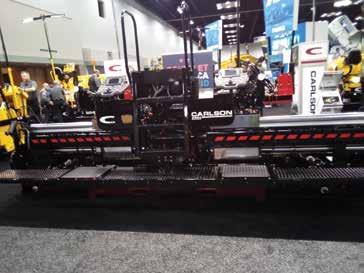
sized commercial class 8-foot AP455 and 555 models. The platform seems to have been intentionally conceived to try and address many of the issues I alluded to earlier that typically disqualify most rear mounts from being the screed of choice or at least seriously considered by commercial contractors.

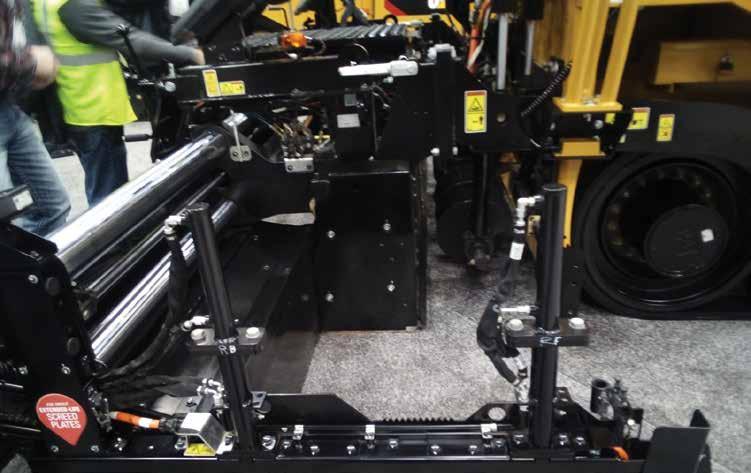
The new model SE47 V is an impressive looking, compact and low-profile design, 8-foot commercial class rear mount screed. It has quite a short 12.8-inch main and extender screed plate depth measurement, which should mean it is a lot easier to manage the volume of material on commercial work and require shorter take off pads. Plus it has quite a low overall operating height compared to most typical highway class rear mount designs. This should mean it is better for screed operators to see into the auger chamber, making it easier to monitor and manage the all-important head of material. It would currently appear to be the only purpose built, compact rear mount design oriented toward commercial paving, from what I can see. I’d be interested in seeing how it performs, and I will be watching with interest.
Did you pick this up while you’re at the CONEXPO-CON/AGG show? I’d be happy to talk more about these positives, negatives, and best use cases, as well as other asphalt paving topics during my Ask the Expert session at the AsphaltPro Magazine booth GL30901. I’ll be at the booth on Wednesday, March 4, from 1:30 to 3:30 p.m.
In the next installment of this short series, I’ll drill down on that traditional North American commercial paver contractor’s weapon of choice: the front mount vibratory hydraulically extendable screed.
Benjamin Everett is the owner of About Asphalt Ltd., and has worked in the asphalt industry for nearly four decades. For more information, contact him at bjeverett@aboutasphalt.co.
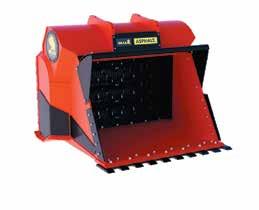
The ALLU Asphalt Screening Bucket is built for screening and crushing cold-milled asphalt and reclaimed asphalt pavement (RAP). It crushes clumps, screens fine material, and separates oversized particles in a single pass. The hybrid blade setup delivers the right crushing power with efficient screening. It reduces the need for impact crushers, cutting fuel use, wear part costs, and operating hours.
Whether you’re processing 100 or 250 tons per hour, ALLU helps you optimize your recycled asphalt handling.


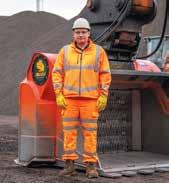
“The ALLU Asphalt Bucket is much more efficient, productive and less expensive than bringing a mobile crushing plant on to the work site, essentially it does the same job for less than a top-ofthe-range mobile crusher. They are easy to use and much easier to maintain and they enable us to access restricted sites where we might not be able to bring in a separate crusher unit.”
Tom Chapman, Director MRD Plant, United Kingdom
BY SANDY LENDER
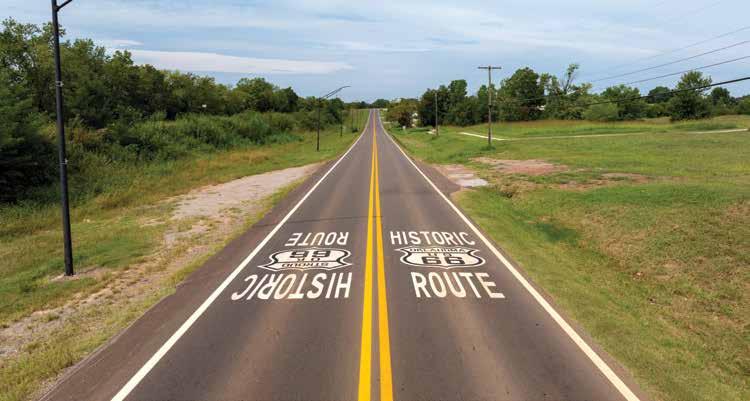
As our nation celebrates its 250th birthday, its most famous highway celebrates its 100th. To recognize both, AsphaltPro Magazine is proud to highlight a 2025 pavement maintenance project on Route 66 near Chandler, Oklahoma, in which Haskell Lemon Group, headquartered in Oklahoma City, received a smoothness incentive for their good work. Here’s how they improved conditions on that stretch of the Mother Road.
Oklahoma Department of Transportation (ODOT) District 3 let the patching, leveling and surfacing project in spring 2025 to preserve 12 lane miles of a section of Route 66 outside Chandler. This involved milling part of the project, placing a ¾-inch leveling course and 1 ¼-inch surface course over all of
it, and installing guard rail. None of this work was foreign to Haskell Lemon crews, which have performed maintenance and preservation along this historic roadway for decades.
Jay Lemon, president of the company and this year’s chair of the National Asphalt Pavement Association (NAPA), shared that they’ve been proud to work on sections of Route 66 within the state for as long as he can remember. In 2015, for example, they handled a project on the business road near Hydro and Weatherford.
A significant project he’s proud of took place in 2001 near Geary. For that one, the crews did more than repair the original concrete highway; they contributed to the nation’s history about this road.
“We removed six concrete slabs to be installed in the Smithsonian,” Lemon said. “We had to be gingerly with the process.” He explained that the team cut and removed the slabs, lifting them onto flatbeds
for transport to Washington, D.C., where they are on display today.
For the Main Street of America, crews go where the road takes them. In 2022, Haskell Lemon performed a mill and overlay in the middle of a town. In 2020 and again in 2023, they worked on a section designated
Has one of your asphalt crews worked on Route 66? Share that with the wider asphalt audience!
Reach out to Sandy Lender at AsphaltPro Magazine so we can write about your project and what that project meant to you. Email sandy@ theasphaltpro.com
And if you’re reading this while at CONEXPO-CON/AGG, stop by booth GL30901 to chat in person.


66 north of Oklahoma City. It’s a proud moment to win a bid on the famous route.
Lemon explained that maintenance of Oklahoma’s stretch of Route 66 in the past typically consisted of bringing the highway up to new traffic conditions. “It was a 20-foot-wide, original concrete-paved road, and some sections are still that. But that’s way too narrow for today’s traffic. The majority is widened and replaced, so it’s a more durable product. Maintenance and widenings add 3 to 5 feet to either side and overlay it with asphalt.”
And that’s the structure his team worked on in 2025; a 24-foot-wide asphalt surface.
“In addition to the pavement patching and overlays, we installed widenings for approximately 40 locations to add guard railing, as a safety improvement,” Lemon shared.
In all, they placed about 19,700 tons of ODOT Type S-5 mix, which requires a PG64-22 binder. They included reclaimed asphalt pavement (RAP) for the ¾-inch leveling course. They produced this in their stationary CMI drum mix plant, averaging production temperatures of 320°F, located about 40 miles from the project.
“We call it our East Plant,” Lemon shared. It’s rated for 300 tons per hour, and for this project, “We averaged 150 tph.”
For paving, the crew used a CAT 1055F machine. “We utilize a CAT conventional paver with an Integral Spray Paver system added
to it,” Lemon said. “The spray paver has been used on other US-66 projects, but this one was conventional paving with tack coat applied by distributor truck. We were able to maximize the smoothness incentive on this contract thanks in part to the grade/slope automation.”
“We didn’t consistently utilize thermal mapping on this project, but did use a transfer vehicle for best quality and consistency throughout the whole job. We were seeing 290-310 degrees F behind the screed.” He reported the mix behaved normally at those temperatures for them.
To get compaction and build the joint, they used industry best practices.
“We paved two each, 12-foot-wide lanes. We would match centerline joints within one to two days to ensure that we could provide the best joint possible, before degradation could potentially occur. We utilized a combination of CAT double drum and Dynapac double drum rollers in our rolling train.”
The rolling team was exemplary in their work.
“No intelligent compaction technology was used. We utilized portable density measuring devices to monitor and ensure quality compaction. Our gauges were showing acceptable, and no cores were required as the lifts were too thin to utilize that practice.”
Instead of cores, the gauges used by Haskell Lemon and ODOT proved the team’s success. Lemon shared that they used an “ODOT-approved rolling pattern
with verification occurring every day. This was successful for both teams.”
“They completed all of this work with zero accidents, internally or to any of the motoring public,” Lemon said proudly. “This is huge considering the tight working conditions and the rural nature of the project,” which included flagging operations on the two-lane interstate. “We were pleased with how the project was planned and performed.”
Considering the high-profile nature of the historic roadway, having a successful project executed with no accidents is its own reward. Add to that receiving an incentive for its smoothness, and the Haskell Lemon team has even more to be proud of when pointing to their participation in the Mother Road’s centennial celebrations this year.
Celebrate Our Shared History Route 66 celebrates its 100-year anniversary in 2026 with live events, history lessons, music, restorations and more. While AsphaltPro Magazine can only brush the surface of what this civil engineering landmark has meant to the asphalt industry, the American Society of Civil Engineers (ASCE)—along with historians and automotive afficionados— is striving to highlight the incredible importance of this highway on the economic development of our nation.
Visit the official Route 66 Centennial website for events, birthday party club membership (both free and paid levels) and to see how ASCE is honoring the Mother Road through its National Historic Civil Engineering Landmark Program, which is designed to recognize historically significant civil engineering projects, structures, and sites, whether they are local, national, or international.
The website states: “Designating Route 66 a National Historic Civil Engineering Landmark, places it in the distinguished company of the Hoover Damn, the Panama Canal, the Statue of Liberty, the Eiffel Tower, the Golden Gate Bridge, and more. With the designation secured, a series of dedicatory plaques will be installed in each state through which Route 66 runs.”
Here’s the events link: https://www. route66centennial.org/index.php/ calendar/upcoming-events-all
Since 1986, HCSS has provided customers with solutions that support the entire life cycle of construction projects. The company stands behind its products with 24/7 instant support from its HQ in Sugar Land, TX.
Highlights
• 42 of the ENR Top 50 Heavy Civil Contractors use HCSS*
• 18 of the ENR top 20 tranportation users use HCSS*
• HeavyBid customers submitted 60% more bids than contractors using other software**
• 95% of HeavyJob projects close on or under budget**
• Equipment360 users had 65% fewer breakdowns**
At HCSS, we don’t just develop technology for technology’s sake–every action we take is rooted in solving real problems for real contractors.
-Kishan Patel Chief Product Officer
This is a paid advertisement

For 40 years, heavy civil and infrastructure contractors have turned to HCSS to win more bids and boost efficiency. Trusted by more than 4,000 contractors, HCSS is the gold standard for safer, more profitable jobsites. The HCSS platform bridges the gap between field and office, giving you the real-time data you need to bid more accurately and finish every job on time and on budget.
Start with HeavyBid, the industry’s leading estimating software, designed to help contractors win more work at the right margins through a standardized process that boosts speed and accuracy. By streamlining how bids are built and submitted, HeavyBid lays the groundwork for project success before the first shovel hits the dirt.
After the bid is won, carry that momentum into the field with HeavyJob. This powerful software gives field teams an easy way to track labor and materials in real time while keeping everyone aligned on plans and safety. Digital time cards and easy field entry bring clarity and control, without the annoying paperwork.
Optimize your fleet with HCSS Fleet Telematics and Equipment360, a proven way to automate maintenance, track usage and fuel costs, and reduce downtime to get the most out of every machine and every dollar.
HCSS Copilot is the first natural language AI tool in the civil construction marketplace. This high-powered digital assistant can automate repetitive and administrative tasks allowing users to focus on complex and value-added work.
Built by construction pros for construction pros, it all boils down to the HCSS platform being field-first, jobsite-ready, and designed to scale with your business. When your crews, equipment, and data work together, you win.
Attending ConExpo? See it in action: Stop by our booth or scan to discover how HCSS software can transform your next project. Booths N11251 and W43515
*Calculated using internal HCSS performance data and historical benchmakrs.
**Based on the Top 400 list publisheed by ENR (May 2025 publication).

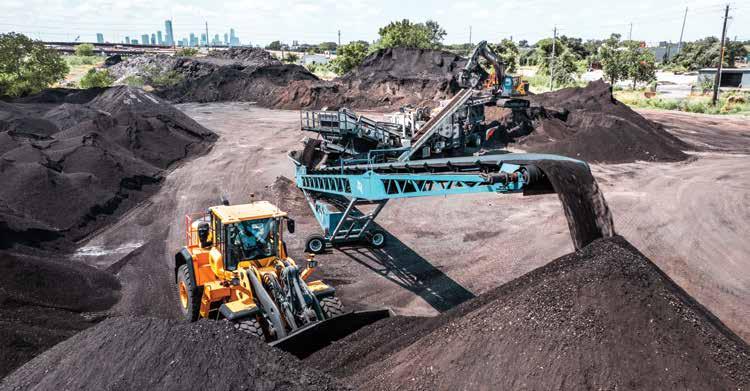
Mills Construction used the Cedarapids CRH1111R portable, closed-circuit crushing and screening plant to process recycled asphalt pavement (RAP) at the Texas Materials South Plant on Bolm Rd., from January to June of 2025, finishing the cleanup project ahead of the anticipated schedule and providing sized product for contractors in the area.
BY JORDAN FONTAINE
Mills Construction has undertaken a major cleanup project focused on reclaiming and processing recycled asphalt from an old asphalt plant site in Austin, Texas. Leading the operation was Steven Muse, site operations manager, who oversaw the daily workflow, production goals, and equipment performance onsite. The mission was to crush and transform the existing recycled asphalt into a clean, uniform material that is being resold and reused across the region into March 2026.
To accomplish this, Mills Construction rented a Cedarapids CRH1111R, a portable closed-circuit plant known for its impact crushing power and screening capabilities. They also used their MGL 836 stacking conveyor. Both pieces of equipment were sourced through Powerscreen Texas. The combination allowed the company to streamline the process of turning weathered, inconsistent material into something refined, usable and sought after.
They were working at the Texas Materials South Plant on Bolm Rd., which has been shut down now. Typically, recycled asphalt comes in with oversized chunks that are difficult to reuse in their initial form. However, once fed into the Cedarapids CRH1111R, the transformation is dramatic. According to Muse, the material went through the machine efficiently and emerged as a clean, consistent 1-inch minus product, which was exactly the size the team was targeting.
Muse shared that “the CRH1111R chews up the material pretty good,” emphasizing how effective the machine was at breaking down even the toughest recycled asphalt chunks. From the first weeks of operation, the team noticed that the output was not only consistent but also ready for sale immediately upon discharge.
“We are very pleased with the high production rates we are seeing with the CRH1111R,” he noted. The machine’s integrated screen and recirculation system ensured that the final material was uniform, clean and ready for distribution to customers who needed asphalt for driveways, country roads and small construction jobs in the region.

o h n D e e re O p e rati o n s Ce n t e r ™
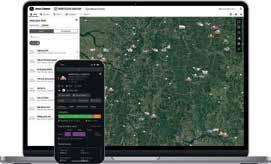

THE FUTURE OF CONSTRUCTION SITE MANAGEMENT. John Deere Operations Center™ provides tools to Including sites construction your on chain process entire the analyze and monitor data, collect plan, you help data-driven recommended courses of action and integrated maintenance schedules. The user-friendly dashboard can be accessed as a web-based tool or as an app on a mobile end device at any time. For more transparency, efficiency, and productivity
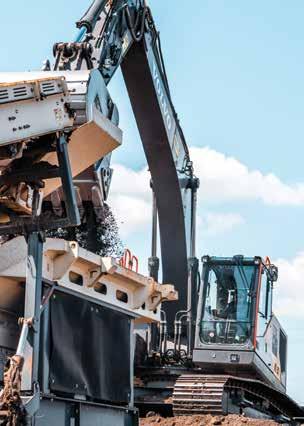
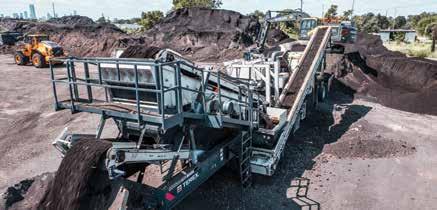
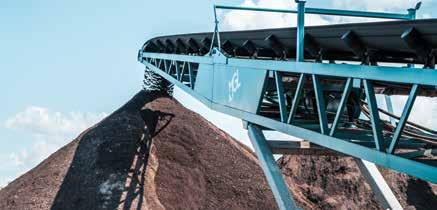
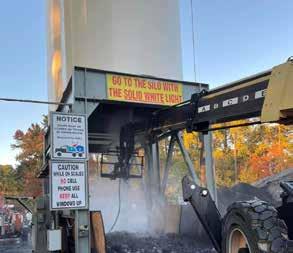
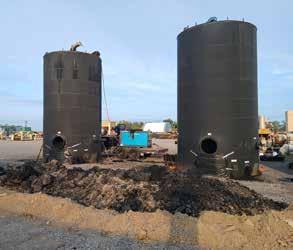
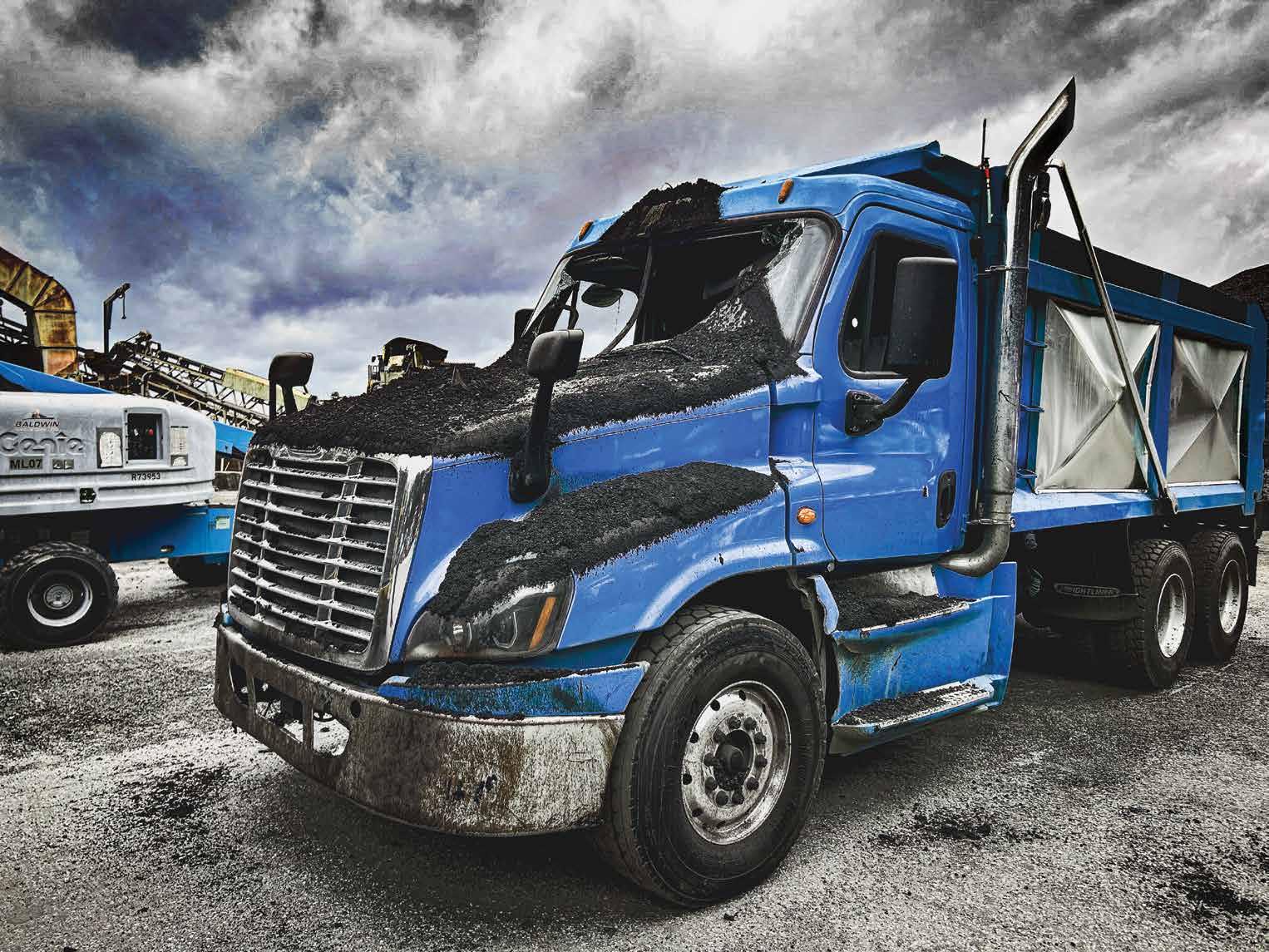
LEFT: Workers fed RAP of various sizes into the Cedarapids CRH1111R for processing. TOP RIGHT: The plant features a large 5-foot x 16-foot, twodeck inclined screen for precise separation and sizing of material. The integrated recirculating conveyor is designed to maximize screening capacity, thus allowing the machine to deliver a more consistent finished product without requiring additional handling. BOTTOM RIGHT: The Cedarapids CRH1111R proved to be exceptionally capable in producing clean and consistent 1-inch minus product, which was exactly the size the team was targeting. Here the product comes off the MGL 836 stacking conveyor.
When Mills Construction originally estimated this cleanup project, they projected a longer timeline than actual. However, just two and a half months into the job, the team found themselves ahead of schedule.
A spokesperson shared: “We started crushing in January 2025 and completed crushing in June 2025. We will be selling material through March 2026.”
The speed and consistency of the CRH1111R played a major role in accelerating their progress, reducing the expected duration of the entire operation.
The ability to complete the work months earlier than anticipated not only saved time but also reduced costs and opened the door for Mills Construction to take on additional projects sooner than expected.
For Muse and his crew, the increased production is one of the most valuable benefits the Cedarapids plant has delivered.
Several features of the CRH1111R have stood out to Muse and his team during this project. The machine’s strong impact crushing capabilities gave it the ability to break down recycled asphalt effectively, while the large 5-foot x 16-foot, two-deck inclined screen ensured precise separation and sizing of the material. The integrated recirculating conveyor maximized screening capacity, allowing the
machine to deliver a more consistent finished product without requiring additional handling.
Muse was impressed by the plant’s low maintenance requirements, which were essential in maintaining steady production. Throughout the duration of the project, Powerscreen Texas played a key role in supporting Mills Construction. Muse shared that their rental experience was excellent, emphasizing the flexibility Powerscreen Texas offers in both equipment availability and rental terms.
Muse expressed strong confidence in the support team, stating, “I would absolutely recommend Powerscreen Texas to anyone. It’s been great. Whenever we have an issue, they have been quick to get back to us and sending a mechanic. Parts are easily accessible… we haven’t had a lot of downtime with these machines, and we are pleased overall.”
One of the standout results of this project was the consistent quality of the final product. Mills Construction’s project in Austin showcases how the right equipment, combined with reliable support, can dramatically improve productivity and outcomes. With the Cedarapids CRH1111R and the trusted backing of Powerscreen Texas, Muse and his team have turned a lengthy cleanup into a success story, delivering high-quality recycled asphalt faster than anticipated and with exceptional consistency.


BY SANDY LENDER
In the November 2025 edition of AsphaltPro Magazine, we introduced you to Primavera Grading and Paving, headquartered in Phoenix, Arizona. The family contractor began patching potholes and has grown to larger contracts including significant roadway paving projects. As the project responsibilities have grown over the years, so has the family involvement.
What began with Oscar Estrada, Sr., has become a family legacy of quality workmanship and pride. Of course, there are male members of the family doing their part to excel and grow the business. For this feature, we highlight the women who have joined.
From the second generation, Priscilla Estrada serves as a public works estimator. From the third generation, Nicole Estrada manages financial operations and Adrianne Estrada has joined the office to assist estimators. Even a younger member of the third generation, Daniella, works where she’s allowed. To encourage other women in our industry, two of these ladies shared their experiences. Let’s hear first from Priscilla, who joined the industry in 2010 and can detail the requirements of an estimator for those interested in that role.
AsphaltPro: What do you find interesting or fulfilling about being an estimator with Primavera Grading and Paving?
Priscilla Estrada: What I find fulfilling about being an estimator is knowing that my work contributes to improving roads and communities. I take pride in collaborating with engineers and project managers to develop accurate, efficient estimates that help bring essential infrastructure projects to life. Seeing those projects completed and know-

ing I played a part in making them possible is what truly motivates me.
AsphaltPro: What do you think about this role would be attractive to other women joining the industry?
Priscilla Estrada: This role uses critical thinking, attention to detail and problem solving—qualities many women excel in and enjoy applying.
AsphaltPro: Could you share with the readers what your job as an estimator for Primavera Grading and Paving requires of you? What are some of your daily responsibilities?
Priscilla Estrada: My daily responsibilities are to review plans and specs for city and county jobs, figure out what materials and equipment are needed, and calculate the cost that goes into grading and paving work. It requires a good mix of math, construction knowledge and common sense to make sure everything adds up.
AsphaltPro: Why did you become an estimator? What about that position is “most cool” to you?
Priscilla Estrada: I became an estimator because I enjoy figuring out how a job comes together, from the first set of plans to seeing the finished road. What’s “cool” about estimating is that it gives me that behind-the-scenes role where I can help projects succeed before the crews even hit the ground.
AsphaltPro: What is the most important skill you’ve brought to your position as an estimator? And how would you encourage other women entering the industry to hone a similar skill?
Priscilla Estrada: The most important skills I’ve brought to my role are attention to detail and field experience. In this line of work, you must be precise—understanding quantities, specs and costs. My field experience has helped me build the project in my head and execute a project in a smart financial way.
For other women entering the asphalt industry, I’d say: Don’t underestimate the power of curiosity and confidence. Ask questions, learn the process and trust that your perspective adds value. Whether you’re estimating, managing, or out in the field, mastering the details while staying collaborative will help you grow into any role you want in this industry.

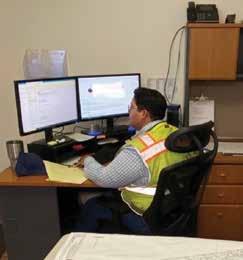
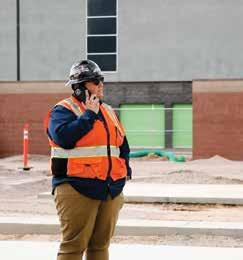
Estimating takes time in the field gathering data as well as time in the office pouring over the specs. Priscilla shared that the most important skills she’s brought to this role are attention to detail and field experience. “In this line of work, you must be precise—understanding quantities, specs and costs.”
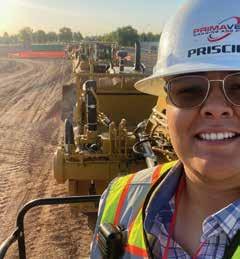
Both Priscilla and Adrianne shared an exuberance for the industry as well as for their family business.
AsphaltPro: What is the most rewarding aspect of being in the asphalt industry?
Priscilla Estrada: The most rewarding part of being in the asphalt industry is seeing the impact of your work in the community. There’s something really satisfying about driving down a road you helped bring to life—knowing that my estimates, planning and teamwork turned into something people use every day.
Adrianne Estrada: The most rewarding part of being in the asphalt industry is growing
around it and now becoming part of the work myself. I’ve watched my family put passion into every project, and now I get to carry that forward. Seeing roads and projects come to life and knowing I contributed, even at my age, is something I’m proud of.
AsphaltPro: How has growing up with parents who worked in the asphalt industry affected or influenced your perception of the industry? How did your family business influence your career track?
Priscilla Estrada: Being part of a family business has helped shape my path. I learned the importance of precision, accountabil-
ity and reputation—because, in this line of work, your name is on every project. Watching my family build strong relationships with cities, contractors and crews inspired me to find my own place in the industry. Estimating felt like the perfect fit—it combines the technical side I enjoy with the legacy I grew up around.
AsphaltPro: What about working with family has made this career most satisfying for you?
Priscilla Estrada: What is satisfying is seeing how everyone brings something different to the table. We each have our own strengths, and that mix of experience, trust and teamwork keeps things running smoothly. There’s a lot of pride in knowing we’re continuing something meaningful together and that the work we do leaves a mark on the community.
AsphaltPro: Growing up with your dad and grandfather leading Primavera Grading and Paving, did you always feel drawn to the company?
Adrianne Estrada: Growing up with my dad and grandfather leading Primavera Grading and Paving, I was always surrounded by the industry, but I didn’t fully realize how much it meant to me until I got older. I watched how dedicated they were and how much pride they took in their work. Somewhere along the way, I found myself drawn to that same sense of purpose. I decided I wanted to work in the industry when I realized I wanted to continue the legacy they built and be part of something that truly impacts our community.
AsphaltPro: What advice or training ideas would you offer to a young lady who is considering additional learning opportunities before diving into this industry?
Adrianne Estrada: My advice to a young lady interested in this industry is to start with the basics and take your time learning takeoffs first. It’s an amazing way to begin because it helps you understand what the industry is about and how projects come together from the very start. Pair that with safety training, equipment awareness and learning job site expectations. Those fundamentals give you a strong foundation and help you feel confident early on. And don’t be afraid to ask questions; most people in this industry are more than willing to teach if they see you’re eager to learn.
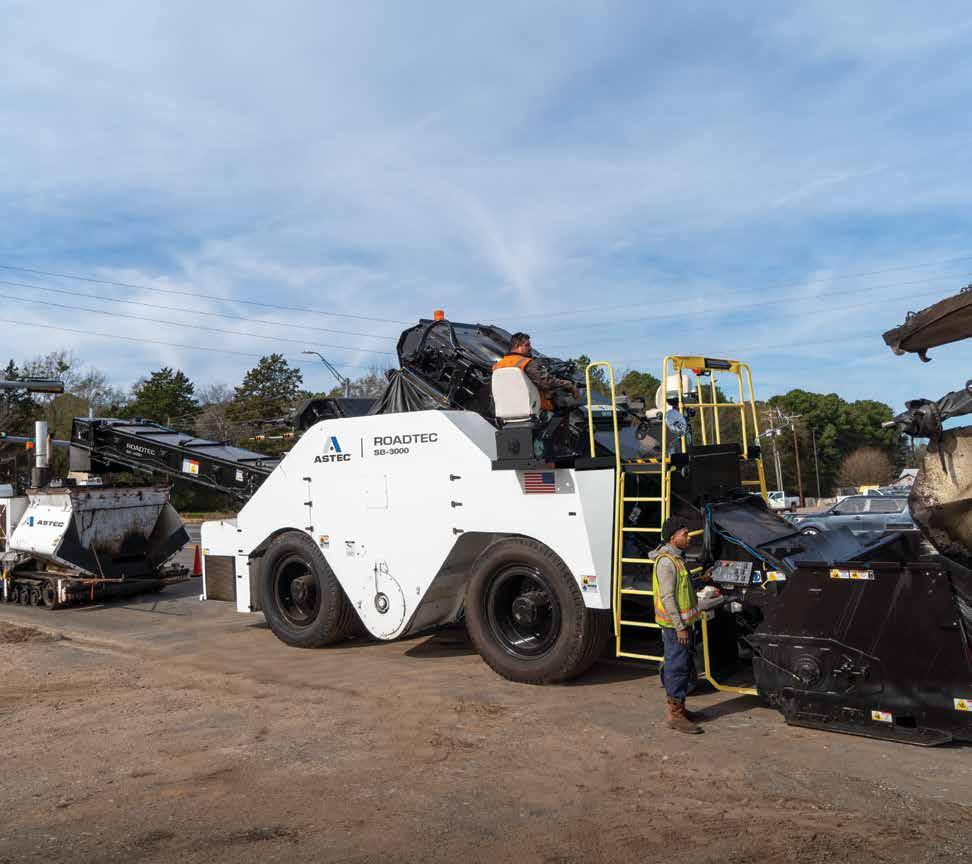
Astec revolutionized the paving industry with the introduction of the Shuttle Buggy, and now the SB-3000 sets a new standard in material transfer vehicles. Effortless maintenance, unmatched performance, and four steering modes for ultimate agility keep paving seamless. Experience groundbreaking innovation with the patented Ground Crew Control Station for the ultimate user experience and protection. The SB-3000 isn’t a machine, it’s a revolution in material transfer, built on Astec’s legacy of industry firsts.
BY SANDY LENDER
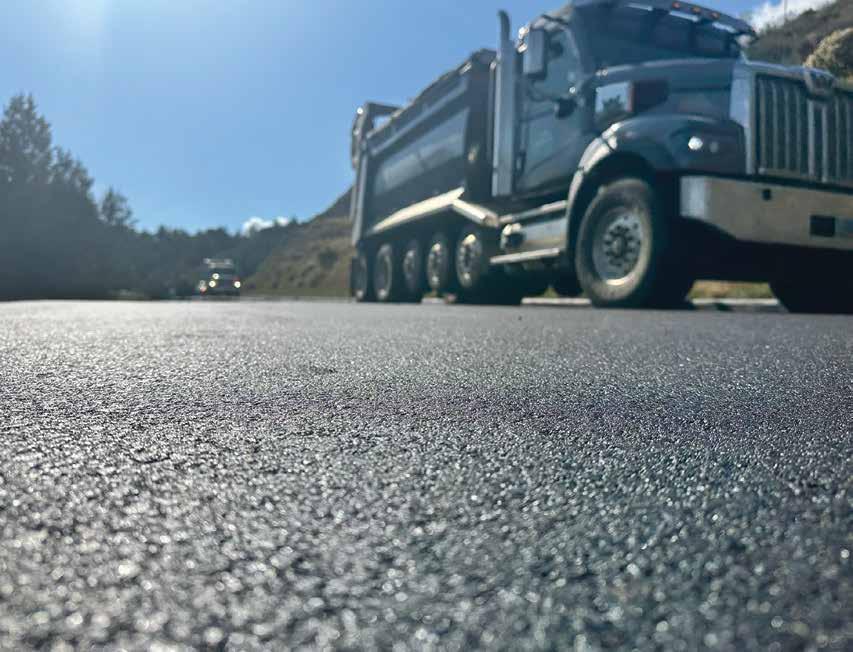
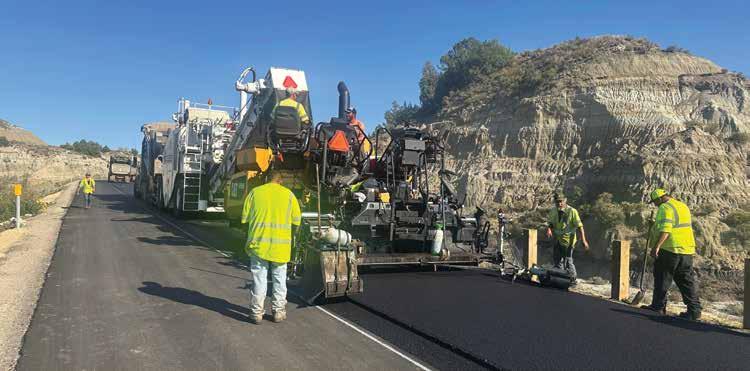
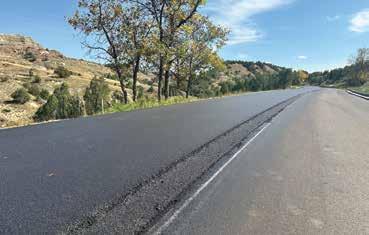
FFrom accommodating a prairie dog town to discovering soft subgrades, the team at Northern Improvement Company, Dickinson, North Dakota, had their work cut out for them when they got the go-ahead to pave a winding path up and down 6 miles of South Unit Scenic Loop. With incredible patience and skill, they put down two 2-inch lifts of Superpave mix with 1% lime to provide a new road for visitors to the Theodore Roosevelt National Park.
As our nation celebrates its 250th birthday this year, it’s an honor to highlight a challenging yet successful project in one of our national parks. Congratulations to the Wagner and Northern Improvement Company teams for making the South Unit Scenic Loop in the Theodore Roosevelt National Park a lovely and safer route for visitors.
The project was let in 2022 with Wagner taking the role of prime contractor. The scope of the project included, but was not limited to, widening, adding slope, and performing soil-cement treatment (CTB) and fulldepth reclamation (FDR) of the base in many areas, according to Bryce Wuori, CEO of Pavewise Inc., Bismarck, North Dakota. Wuori served as a consultant to Northern Improvement on this project.
“The cement-treated base was 4 inches thick in most areas but needed to be more than 6-7 inches, which halted everything,” Wuori said. “The base lift became a patching project. It didn’t turn into a mainline paving project. We put in a change-order for a prime coat on top of the gravel on the hills.”
“The soils in the Badlands are very challenging,” Cassandra Tobin said. She’s the quality control manager at Northern Improvement and worked from Day 1 on the project, preparing the mix design and seeing it placed. “Retaining walls had to be built to hold up the road structure.”
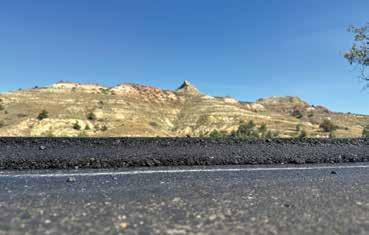
She explained that shortly after Wagner began work in 2022, the project became complex. “They encountered weather challenges; wet winter, wet spring, so the road collapsed in a couple places,” Tobin said. “The original paving plan didn’t happen during 2024 because of the subgrade issues.”
When it came time for Northern to begin paving in 2025, their plan was thwarted again by subgrade issues. “We started paving in June and started encountering issues with the subgrade almost immediately.”
They demobilized before the July 4 holiday, so the prime could repair a section of the cement-treated base. Northern returned to pave in August 2025.
“A lot of it was only 4 inches of CTB, and it just wasn’t enough structurally to hold up construction traffic, especially with those types of soils,” Tobin said. The first section of roadway had thicker portions of CTB and FDR, she explained, but the paving crew ran into a problem when they got past that first section.
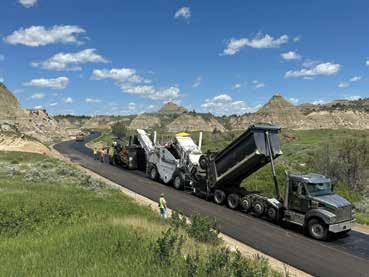
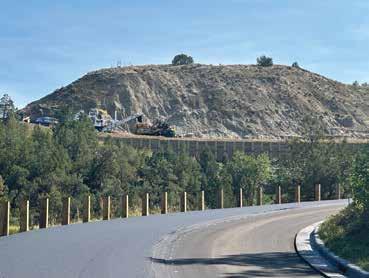
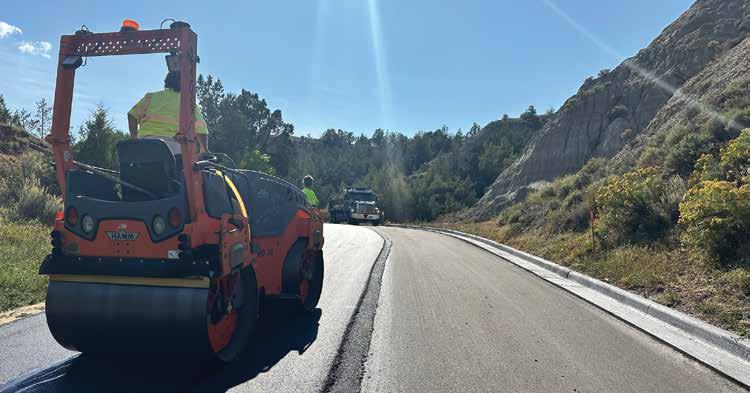
Paving the bottom lift took time as the Northern Improvement crew ran into soft spots that needed to be addressed or areas that needed patching before the lift could be completed. Photo courtesy of Northern Improvement RIGHT: Prime Contractor Wagner built retaining walls in addition to treating the subbase prior to turning the project over to Northern Improvement for paving. Here we see the paving train, which included a Shuttle Buggy to deliver material to the tracked paver. Photo courtesy of Bryce Wuori
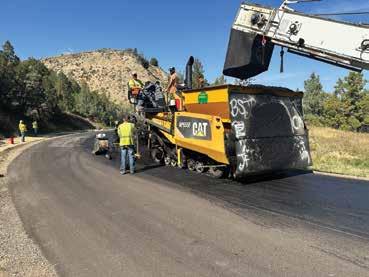
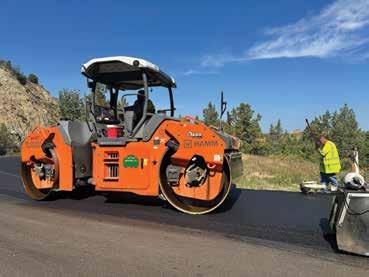
LEFT: The Shuttle Buggy delivers material to the paver, helping the crew maintain smooth production around tight curves and hills. Photo courtesy of Bryce Wuori RIGHT: Due to the terrain, the rolling train didn’t use intelligent compaction with the Hamm HD 120i V10-2 breakdown roller. Cassandra Tobin shared, “With jumping around so much, it just wasn’t feasible. We used Density+ by Pavewise to track our density results from our nuclear and non-nuclear density gauges.” Photo courtesy of Bryce Wuori
“Once we got to the top of the first hill, we found soft spot after soft spot. Our equipment would sink. Wagner would dig down, put fabric in, rework it. We ended up putting some asphalt in the patches in the subgrade itself. We had to do a lot of skipping around and changing where we were going to pave that day...”
She described the first lift’s execution as paving a quilt, rather than one ribbon of highway.
“We had different sizes of patches spread out all over the place.”
As you can imagine, this start-and-stop patching was frustrating for a paving crew who planned to get in and pave. “It was very hard on our crew. We’re very quality oriented. It does wear on you, day in and day out to skip a section, or we’d try a section, and it would fail.”
Because of the initial approach they had to take, “a lot of the days were patching days,” she said. “There were multiple patch areas that we ended
up having to pave multiple times. That type of paving is labor-intensive. It tied up our plant at the same time. This is a lime mix design. A lot of the projects wouldn’t approve that same mix.”
To create the Superpave ½-inch virgin mix with 58S-34 asphalt binder and 1% lime, the parallel flow hot-mix asphalt (HMA) plant needed some modification. “We had to add a lime silo and pugmill to our normal set up for this project,” Tobin said.
But there was a light at the end of the tunnel.
“Once we got that bottom lift down, everything started looking a lot better. Once it was covered in asphalt, the top lift went so much easier.”
The mobile plant providing the specialized mix was set up at Northern Improvement’s South Heart, North Dakota location. Plant Operator






Paul Byron, who has worked for the company for almost 25 years, was averaging 180-200 tons per hour at production temperatures of 318-335°F.
This location gave the haul trucks a travel time to the beginning of the project of just over an hour. But their journey at that point was far from over.
“Our plant site is fairly close, but it takes the trucks about an hour to get in there,” Tobin said. “It was peak season for tourists, and you never knew when you’re going to come around a corner and someone’s going to be standing in the middle of the road taking a picture.”
The terrain, coupled with tourist and pedestrian traffic, meant coordinated communication was essential for mix delivery. Due to the sharp buttes and twisting curves, radio signals were often interrupted, making it difficult to get messages back and forth. To combat this, the team set up a relay system for communication. Tobin called it “traffic control for our construction traffic only.” They placed one person at the front of the construction zone, someone in the middle, and someone at the moving paving train to keep the one-way truck traffic in motion. Tobin explained that the team would plan ahead to have enough trucks deliver material to let them pave through winding sections when it was obvious space would be tight.
“Sneaking trucks by the paver was sometimes not possible,” she said. “There’s nowhere to turn around. Radio traffic was difficult because of the terrain, so we were keeping track of where everything was at all times. Some areas did have curb-and-gutter. We had to plan out to have enough trucks to get us through an area of curves if we knew we couldn’t get trucks past the paver.”
It came down to communication, caution, and planning. “It was an existing low-speed road, but the amount of coordination it took was like a racetrack project,” Wuori said.
“There was a lot of walking—you parked where you started the day— there’s not much for parking, not much for turning around, not much room for extra,” Tobin said.
When trucks reached the paving train, they fed a Roadtec SB-2500e material transfer vehicle (MTV), which fed a CAT AP655F paver equipped with the notch wedge joint maker from Willow Designs. They placed two 2-inch lifts across the total top roadway width of 22 feet in 11-foot pulls.
The mix temperature coming off the screed averaged 280-300°F and performed well for the crew. “The mix was easy to work with, but challenging in areas that were difficult to roll (tight curves, steep grades),” Tobin shared.
To achieve compaction, the team used a Hamm HD+ 120i VIO-2HF with both drums in oscillation mode in the breakdown position. Tobin reported average densities of 89-90% in the breakdown zone, which was essential for achieving the percent within limits (PWL) spec on the project.
“The PWL density spec was challenging,” Tobin shared. “We had to achieve similar densities on the base lift and top lift, as well as the edges and center of the mat. Generally, you see a lot of variability in density on tight curves and up/down hills. We were able to keep consistent density throughout the project using a combination of technology and technique. We had a quality control technician, Kim Bumgardner, monitoring density with a nuclear density gauge throughout the project. She is a great roller operator herself, and using her experience and the data she was collecting, she was able to see when any changes needed to be made to the rolling operation.”
One technology, intelligent compaction (IC), wasn't feasible on the project due to the terrain, thus good equipment, best practices, and other technologies came into play.
“The big part of technology was that Hamm roller itself,” Tobin explained. “We could adjust the drums if we needed to either oscillate or vibrate, and the settings can easily be swapped around if needed. It is kind of like having several rollers in one. We didn’t set up Intelligent Compaction on this project because of the terrain.

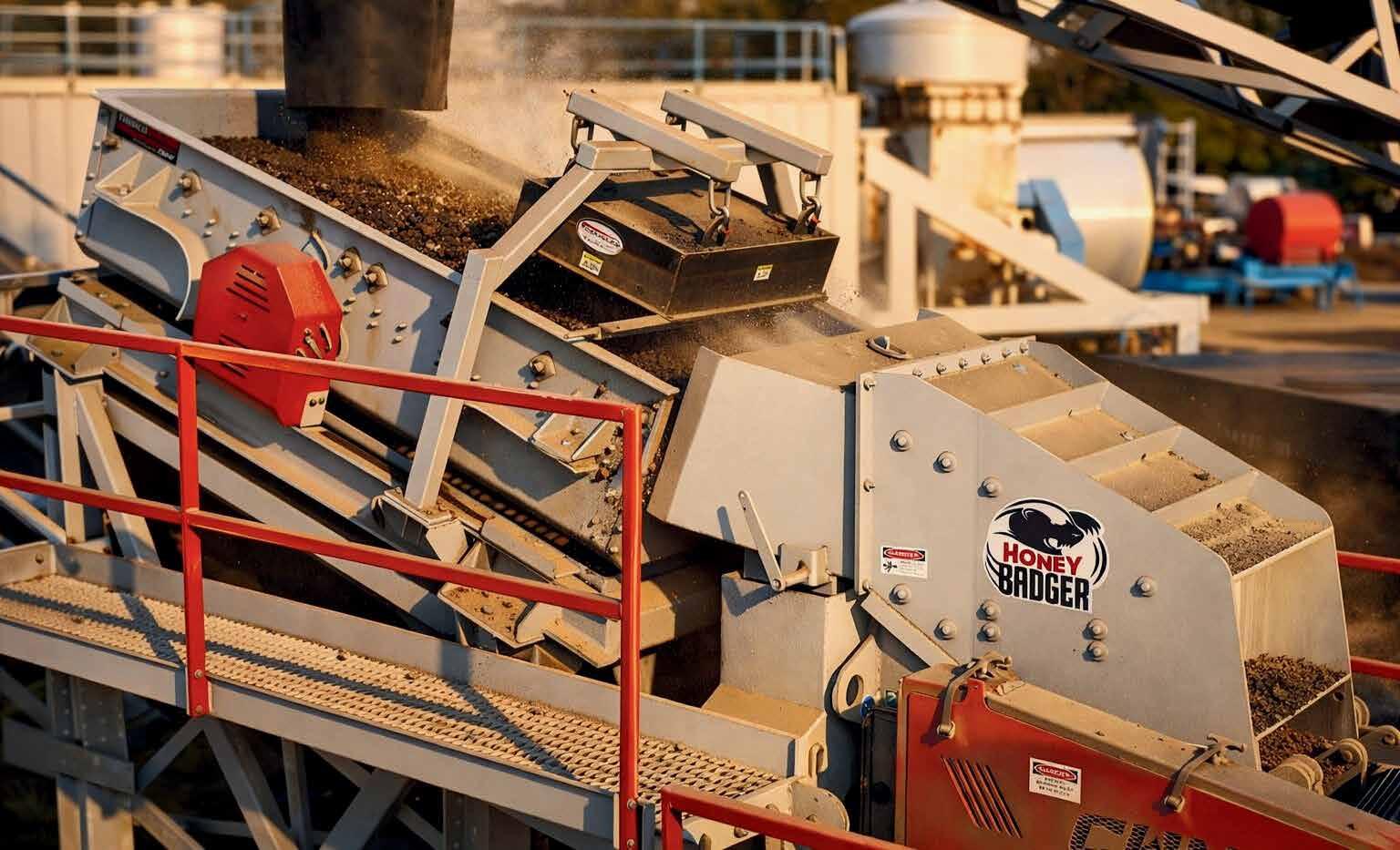
Recycle the road with the fiercely reliable Honey Badger RAP Crusher. From replaceable, abrasion-resistant steel wear liners to a 1/2” steel pulverizing hopper, this machine is built for wear and tear.
Fully equipped for maximum power, reliable operation, and easy maintenance, the Honey Badger is ready to crush it. www.cwmfcorp.com

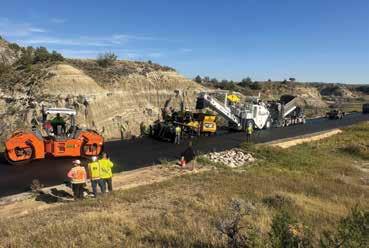
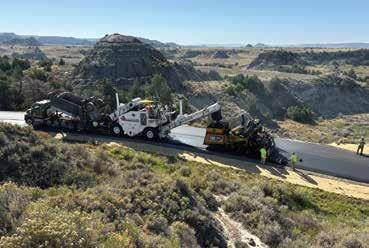
coming up on an area where they recognized trucks wouldn’t be able to drive past the paver. Conditions were often tight. Photos courtesy of Northern Improvement
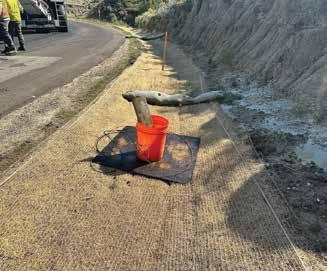
Wagner, the prime contractor for the project, placed a rodent barrier along the shoulder at the outset of the project, for the crew from Northern Improvement Company, Dickinson, North Dakota, to pave over; the goal of this system is to keep the prairie dog population from burrowing under the road, thus causing damage. When rolled out, the netting is quite flexible, making it a challenge to place an asphalt lift on top of.
Northern Improvement Quality Control Manager Cassandra Tobin described it as a “flexible wire, folded back across the shoulder.”
She explained that even though the mesh was fastened down, it tended to flex when being paved over. “It flexed and that caused some cracks. The top lift covered that.”
The flexible netting also impeded the paving sensors. “They picked up some of that chatter,” Tobin said.
But the professional crew understands paving basics and could guide the CAT AP655F smoothly through the beginning of the project. In the end, the rodent barrier was successfully installed and covered for both the pavement system’s and the prairie dog town’s protection.
With jumping around so much, it just wasn’t feasible. We used Density+ by Pavewise to track our density results from our nuclear and non-nuclear density gauges.”
A combination, smaller, intermediate roller with rubber tires on the back was used in the intermediate position; a smaller, steel drum was in the finish position.
“The Hamm oscillation in breakdown was key in this terrain,” Tobin said. “It was still challenging getting up close to the curbs on such tight curves. The guys had their work cut out for them...The smaller rollers were very beneficial to us in this terrain.”
In addition to the PWL spec, the team had a two-part ride spec to consider and random core sampling to arrange.
“The ride spec for this job was especially difficult considering it is a 25-mph road with very tight curves and a lot of curb transitions,” Tobin shared. “That was further complicated by all the soft spots and subgrade repair areas. The spec includes two parts. One for the overall ride and the other for localized roughness (each bump). The use of the [MTV] helped immensely with improving the ride results.
“The asphalt sampling for testing was truly a group effort that required quick coordination,” she continued. “The inspectors would give us short notice when coming up on a sample. The logistics of getting the testers and the people needed to be able to pull the sample from the mat behind the paver was very difficult given the challenging terrain, lack of cellular coverage, and the congested narrow roadway with extremely limited parking. Terracon had a QC team made up of multiple testers, which were always on site or transporting samples back to the lab during paving to make this happen. It was an impressive, coordinated team effort.”
“They did a really good job, especially with the level of difficulty,” Wuori said. “They held to all FHWA specs of density and ride.”
The result was approximately $200,000 bonus on material and density for Northern Improvement, and a fresh new road for the National Park Service and the visitors to the Badlands National Park.
If you're in Vegas, meet with Bryce Wuori during his Ask the Expert session, Thursday, March 5, from 9:30-11:30 at Booth GL30901 during CONEXPO-CON/AGG.


BY MIKE DEVINE
TTo keep the hot-mix asphalt (HMA) plant in top operating condition, it’s important not to rush or skip start-up steps. Here’s a quick guide to supplement the longer pre-check article found in the January issue and to walk your team through getting your asphalt plant running properly for a profitable summer.
First and foremost, think safety. It’s easy to get complacent after a long hiatus. Refresh yourself and your team on safety procedures before getting back to work.
Take the time for a thorough inspection. Visually inspect the components, looking for worn cables, broken water lines, damaged refractory tubes, and loose or missing shields. Work your way through the plant, checking for anything that’s worn, damaged, loose or missing after it’s been sitting idle during the winter:
☐ Start with the drive belts, looking for frayed spots and cracks, as well as checking the tension and alignment. Ensure it matches the owner’s manual.
☐ Then move to the sheaves, checking for cracks, chips or broken edges.
☐ Also look over the conveyor belts to ensure there’s no stretching, cuts or excessive wear. Also check that the drive pulley’s lagging is intact.
Change the oils. If you didn’t change oil in all of the gearboxes when shutting down at the end of 2025’s season, do that now. Pay attention to any signs of water or metal shavings, which indicate damage. Also replace the air compressor crankcase oil and any airline oils.
Keep all the parts moving with some testing. When moving parts don’t do what they should, the whole operation will suffer:
☐ Test the venturi gates, watching that they close completely.
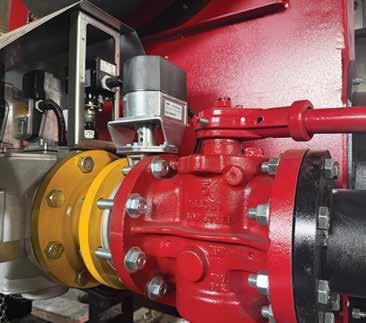
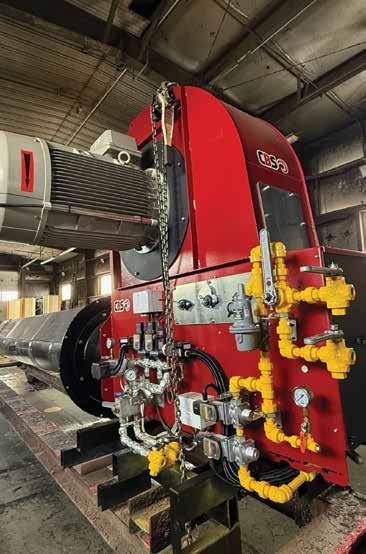
While many start-up maintenance items can be handled by ground personnel and in-house technicians, know when to call a professional for assistance. Have a qualified service tech come in to tune the burner. This is something you want to do at least once, if not twice a year, as routine maintenance. This is the new ADM EX 300 burner.
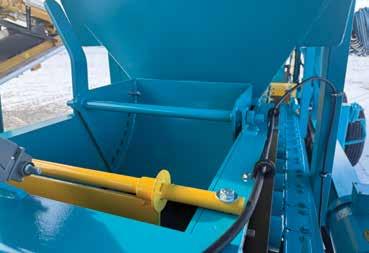
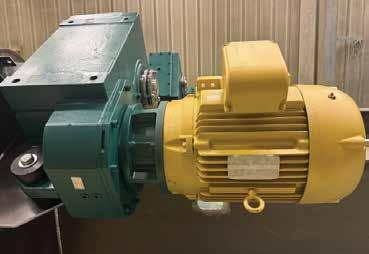
LEFT: Run through all of the gates, such as the cold feed gates pictured here, ensuring correct operation for silo gates, gob hopper gates and drag conveyor bypass gates, etc. RIGHT: If you didn’t change oil in all of the gearboxes when shutting down at the end of 2025’s season, do that now. Pay attention to any signs of water or metal shavings, which indicate damage.
☐ Check the spray nozzles and, if they’re clogged or broken, clean or replace them.
☐ Run through all of the gates, as well, ensuring correct operation for the silo gates, cold feed bin gates, gob hopper gates and drag conveyor bypass gates.
☐ Test the limit switch paddles and then move on to the controls, making sure the indicators and switches all operate properly.
Also check the alignment of the plant frame. If necessary, level it to ensure the least amount of trunnion wear.
Finally, know when to call a professional for assistance. Have a qualified service tech come in to tune the burner. This is something you want to do at least once, if not twice a year, as routine maintenance.
Mike Devine is the president of ADM FAYAT Group. For more information, please visit https://www.admasphaltplants.com/ex-series/
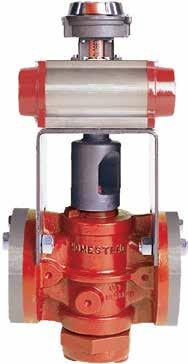
Since 1892, Homestead continues to be the most reliable manufacturer of asphalt valves. With cast iron and ductile iron material options, we offer a complete source of valves for any liquid asphalt application.
Our full line of hot-jacketed 2-way shutoff & 3-way diverter valves provide a ready solution to meet your flow requirements.
Homestead’s cutting-edge actuation design allows you to easily add actuators to your existing Homestead valves, in-line, without modification
Our fully stocked warehouse of valves and actuators offers you security in knowing that the valve you need is only a phone call away.
BY SANDY LENDER
NNot every asphalt paving crew member comes from the same background and Brandon McCranie, paving foreman for CWR Contracting, headquartered in Tallahassee, Florida, proves you can make it up the ladder with hard work and dedication to your craft. McCranie graduated from high school in 2004 and knew he was done with that institution. By 2005, he was working for the City of Tallahassee (COT), Florida, as a laborer on a resurfacing crew.
“When I was young, I remember my dad getting a job with the electric department at the City of Tallahassee,” McCranie said. “He always told me the COT had the best benefits and that if I wanted to make money, it would be in the electric department. In 2005, I got a job as a laborer to get my foot in the door with the COT. I was hired onto a resurfacing crew and was immediately handed a lute rake and never looked back.”
Just because McCranie had finished formal, sit-down education didn’t mean learning had stopped for him. He worked to get his commercial driver’s license (CDL) and to advance in his career.
“Over the years, I learned to operate equipment and obtained my CDL in 2012. I knew with a CDL I would always have a job. In 2015, I became a lead man on a patch truck with the COT. We specialized in patching utility service repairs and some very intricate work. In my opinion, I became one of the hardest-working rake men in Northwest Florida.”
That’s not an idle compliment. McCranie wanted to excel, and today he leads an asphalt paving crew that he also encourages to do the same.
Nowadays, McCranie uses those skills, and more he’s honed over the past two decades, as a paving foreman for CWR Contracting. He first joined the Midsouth Paving family in 2018 as a concrete laborer. He explained that CWR Contracting bought Midsouth Paving in Pensacola in 2020, and he was promoted to paving foreman in 2024.
“I was originally hired as a laborer on a concrete crew,” McCranie said. “I was moved to the low boy after about six months. Once all of my
equipment was moved to the job site, I would help the crew operate various equipment and assist with raking. I drove the low boy for a few years, and moved into QC for a year, and then was promoted to paving foreman.”
“Brandon’s enthusiasm in his approach to challenging paving projects and his dedication to excellence made him the clear choice when searching to fill the role of paving foreman,” Area Manager Kyle Pilgrim said. “These traits were evident in his previous role of QC technician and provided the solid foundation needed to take the next step.”
John Ball III, the proprietor of Top Quality Paving & Training, Manchester, New Hampshire, first worked with McCranie in the summer of 2024 when consulting for CWR Contracting, and found the young man eager to learn all he could from the two weeks of hands-on training.
“He’s of the younger generation, but he cares,” Ball said. “He wants the project to be the best it can be. He questions his workers and what they do to get the job done better, but he asks in a way that doesn’t upset anybody. Some of the crew members are older than him, veter-
an operators, and some are newer guys, younger than him. As I spent a couple weeks with him and gave him a checklist, he knew how to talk to both types of workers to encourage them to try a new way of working or getting something done.”
The work his crew accomplishes varies from day to day.
“Right now, my crew is doing a lot of site work,” McCranie said. “We have paved on some FDOT projects such as I-10, Hwy. 98 and Hwy. 87, to name a few, but in 2026 we will be moving to a mainline crew paving the FDOT roadways.”
“He has a great attitude,” Ball said. “He comes to work happy. It’s his attitude, his look at the job to do it right, and his desire to advance.”
To move up and advance, Ball said, McCranie must train someone to step up into his current position. And that’s true for most of the workers in our industry today. To move from a laborer position to an equipment operator, the laborer must show the next person how to do their job correctly. To move from the screed operator position to the paver operator position, the screed guy must show someone how to work the controls and help lay a smooth, consistent mat.
Pilgrim stated that the company’s goal with any hire is to identify and maximize talent. “Our people are our most valuable asset, and we are committed to providing opportunities for growth and success so that they can build a life for themselves and their families,” he said. “Excellence is embedded in our culture, driving us to continuously learn, grow, and excel. We are committed to continuous improvement, setting high standards, and going above and beyond to achieve excellence in every project we build. Job excellence and career progression, we believe, are the most rewarding to both the employee and the company.”
“As far as training goes, we offer on-thejob training for anyone willing and looking to move up,” McCranie said. “In this industry, you’ve got to have the ‘want to.’ You’ve got to want it. You’ve got to want to move up. You have to want to do better for yourself. With learning a new piece of equipment or any aspect of this job, there is usually a merit raise associated with learning the new piece of equipment.”
With all this education and training already under his belt, McCranie has a true understanding of the different back-
grounds fellow laborers and equipment operators bring to his crew and how to train them for the job.
“At the time [2004], I knew school wasn’t for me,” McCranie said. “I wasn’t the classroom type. I wanted to be outdoors working with my hands, where every day was a new day. It’s not nearly as monotonous as sitting at a desk all day.”
When a new employee joins the workforce fresh from high school or a trades program, McCranie knows exactly how to communicate
with that person, and how to spot the skills that person brings to the team.
“You have to learn your people,” McCranie said. “You have to learn their personalities and what motivates them. My job is to learn what makes each crew member tick. You then use those tools to help them keep going.”
Of course, McCranie uses multiple tools to encourage and motivate the workers that CWR Contracting assigns to his crew.

women.
Shaping the asphalt industry.

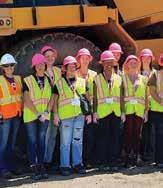
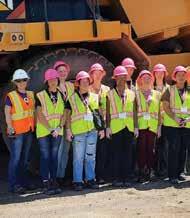
Discover how Women of Asphalt is empowering women in the asphalt industry across the United States and Canada. Connect with industry leaders, share knowledge with peers, and join a growing community shaping the future of paving in your region.
Join Our Community! Scan the QR code to connect with Women of Asphalt and get involved with your local branch. MEMBERSHIP IS FREE!

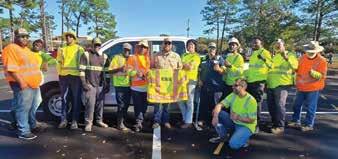

“He will give a younger guy the chance to run the roller, and that’s great because it gives the chance to teach them without having to train out bad habits,” Ball said. Sometimes it’s difficult to speak up and correct someone older, but taking a new worker by the hand and showing them the correct way to roll the mat is, as Ball puts it, like painting on a blank canvas. “You don’t have to fix someone who’s set in their ways when those ways are making a mess of the mat. You get to start fresh and teach it right.”
McCranie is also learning to give direct orders to make sure every task gets done. He has a meeting with the crew every morning and stays afterward to keep everyone on the same page. “He’s got the ‘wanna be,’” Ball said. “I know he wants to be the best he can be. He catches on really well and he makes notes. He takes pictures so he can show exactly what he expects from the crew for each task.”
What McCranie’s looking for in his workers is a work ethic like his own.
“Things that stand out to me in an individual are, number one, dependability,” McCranie said. “Are they at work every day?”
He’s also looking at how they carry themselves, and this extends to the attitude they project. If an individual has an aloof, arrogant, or argumentative attitude, that person probably won’t be willing to learn or grow with the team.
But arrogance is different from pride, and he wants to see if his workers have pride in themselves, from the way they dress to their appearance to the way they work. “Do they ask questions? Do they follow directions? So many things make a person stand out from the rest.”
The attitude McCranie projects is one of gratitude and energy.
“I would just like to say to anyone in this industry, just show up every day,” he said. “Not every day will be sunshine and rainbows, but show up and make the best of it. Learn something new every day. Try to keep a positive attitude and ask questions. Remember that you’re paving the roadways and travel ways that keep friends and family connected.”
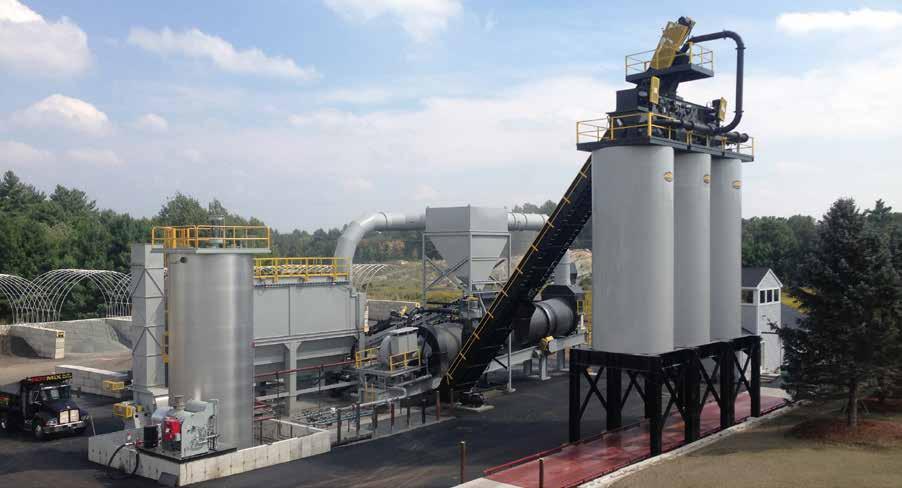
Your first stop in the FAYAT GROUP road lifecycle, ADM makes the plants that make the hot mix. When it comes to North American roadbuilding, FAYAT Group brands including ADM, BOMAG, Dynapac, LeeBoy, and Mecalac have you covered.
See a totally new EX Series asphalt plant at CONEXPO-CON/AGG March 3-March 7.


BY JIM FEESE, P.E.
Editor’s Note: The Focus on Performance series from AsphaltPro Magazine allows OEMs and service providers in the industry to highlight asphalt professionals who have improved efficiencies and the bottom line through best practices and performance. This month’s installment, featuring a producer in the Northeast, dives specifically into efficiencies gained through a burner retrofit.
When a Maryland producer was looking to upgrade their dated burner system to improve reliability and energy efficiency, Detroit Stoker Company, Monroe, Michigan, responded with a HADES burner and HBC burner control system.
The customer operates a 400 tph, dual drum plant, which includes a counterflow dryer and separate mixing drum. The burner replaced a dated 100 MBtu/hr sealed in burner, which had proven to be difficult to service and maintain. Detroit Stoker with partner, Meeker Equipment Company LLC, Belleville, Pennsylvania, provided a new HADES-100 (100MBtu/ hr) dual fuel burner capable of firing natural gas (primary fuel source) with No. 2 and/or recycled fuel oil backup fuel.
The original burner system included:
• Direct drive fan with 1,800 rpm 100-Hp motor.
• Single control actuator with linkages driving a fan outlet damper (airflow control) and fuel control valve(s) for gas and fuel oil. The new burner system features include:
• A direct drive, 1,800-rpm fan; however, due to the energy efficient design of the burner, only a 60-Hp motor was required to achieve the same burner rated capacity. In addition, a variable frequency drive (VFD) is now used for precise combustion air flow control via the HBC panel.
• Independent (gas and fuel oil) direct coupled fuel actuators controlled by the HBC panel.
• More compact footprint/package as a result of smaller combustion air fan and reduction in ancillary dampers/drives/linkages. This improved design results in higher reliability and maintainability.
These features offer numerous advantages, such as precise combustion air/fuel ratio
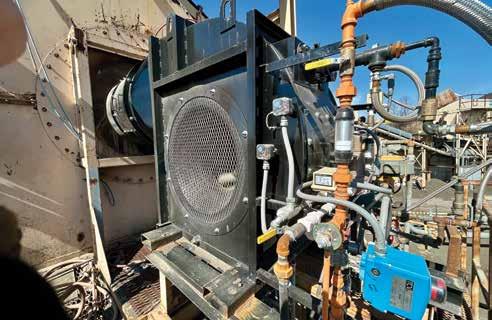
control across the entire burner input range (low to high fire). This means maximum fuel efficiency can be achieved regardless of plant production rate.
Additional benefits include enhanced safety as the HBC panel is continuously monitoring both air and fuel demand versus feedback and “cross-limiting” the air/fuel ratio such that the burner cannot go rich. In a linkage-based system, when the linkage slips or fails, the burner can literally be firing at any ratio, and the writer has seen burners firing in extremely rich and potentially explosive conditions as a result.
VFD savings are well documented. The motor horsepower is proportional to the speed cubed, resulting in significant energy savings by adjusting the motor’s speed to match the required load, instead of running at full speed constantly. A small speed reduction results in large energy savings. VFDs also improve efficiency with a better power factor and can extend motor life by reducing startup current.
Final tuned CO emissions were well under 200 ppm corrected to 7% O2 dry across multiple firing rates. Burner tuning is not only much more precise but far easier to accomplish with the use of fully characterizable air/fuel tuning curves in a burner control panel like the
HBC. Tuning is accomplished with the simple change of combustion air VFD speed and/ or the fuel valve(s) position electronically with the push of a button. This is of course accomplished while monitoring emissions, burner and overall plant performance.
This burner retrofit provides the producer with a future-proof, energy-efficient combustion system designed for decades of reliable operation. By replacing an outdated, maintenance-intensive burner with the HADES-100 and HBC control platform, the plant now benefits from significantly reduced electrical energy consumption, precise and repeatable air/fuel ratio control, lower emissions, and a streamlined mechanical design with fewer wear components.
The VFD, independent fuel actuators, and modern cross-limiting combustion logic all contribute to sustained fuel savings, extended equipment life, and enhanced operational safety. Together, these improvements ensure that the plant will continue to operate at peak efficiency with lower operating costs and reduced environmental impact—delivering long-term sustainability for both production and energy management.


That’s why we bring more than just tools, we bring the fire.
From retrofits and relocations to maintenance, parts, and plant upgrades, Motion Engineering keeps your plant running hot and smooth. With over 30 years in the asphalt industry, we’ve seen it all and solved it all.
Let’s talk about how to make your next project faster, cleaner, and more efficient.

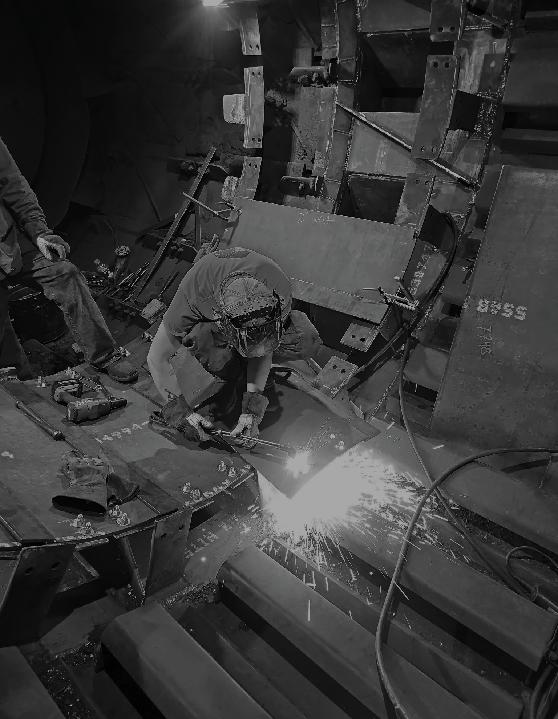






Discover the information and education most relevant to your asphalt business at CONEXPO-CON/AGG 2026
BY ASPHALTPRO STAFF
WWith this month’s publication of AsphaltPro, it’s time for North America’s largest tradeshow. The Construction Exposition and Construction Aggregates (CONEXPO-CON/AGG) and the International Fluid Power Exposition (IFPE) co-locate with a comprehensive education program this March 3-7, 2026, at the Las Vegas Convention Center (LVCC) in Las Vegas, USA. The principal sponsors are Association of Equipment Manufacturers (AEM), National Ready Mixed Concrete Association (NRMCA), and National Stone, Sand & Gravel Association (NSSGA). The show sponsor is Associated General Contractors of America (AGC). AEM is a show producer.
CONEXPO-CON/AGG is recognized as a gathering place for the worldwide construction and construction-materials industries. The show’s website claims hundreds of industry events are held in conjunction with it. In the February edition, we shared a guide to asphalt-specific exhibitors to help you navigate the 2.9 million square feet of space that 2,000 exhibitors are sharing around the LVCC.
This month, we focus on the education and special moments you don’t want to miss, as they relate to your asphalt business and bottom line. It’s not fair to say, “Go look at the website,” and leave you to the overwhelm of that. Instead, let’s discuss and break down a few key tabs you’ll want to visit.
One of the special events we want to draw attention to is the Workforce Development Signing Ceremony, taking place Wednesday, March 4, at 9:30 a.m. in the Reliable Asphalt Products, Inc., booth C32804. Make sure the central hall is your first stop that day, so you can learn how Rogers Group Inc., Nashville, Tennessee, (RGI) is celebrating new workers, advancing workers and retiring workers. AsphaltPro Magazine is proud to work alongside Reliable Asphalt and RGI to bring this event to the show floor.
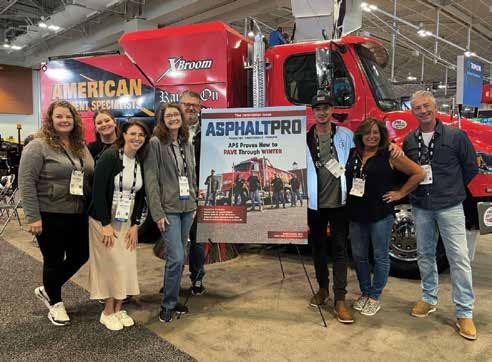
The AsphaltPro
CONEXPO-CON/AGG. Bill
in
Another special event is the expansion of the “Ask the Expert” sessions that take place in the AsphaltPro Magazine booth. During large events like CONEXPO-CON/AGG or World of Asphalt, we invite experts who contribute information to our pages to bring their knowledge to you—live and in person. You can walk up to the booth GL30901 in the grand lobby during set times to ask questions and “talk asphalt” with paving, production, technology and business experts. Here’s that schedule so far, with Bill Stanley’s time soon to be confirmed.
SHOW HOURS:
Tuesday, March 3 – Friday, March 6: 9 a.m. - 5 p.m. Saturday, March 7: 9 a.m. - 3 p.m.
WEDNESDAY, MARCH 4
Paving Expert John Ball 9:30-11:30 a.m.
Paving Expert Ben Everett 1:30-3:30 p.m.
THURSDAY, MARCH 5
Paving Expert, John Ball 9:30-11:30 a.m.
Technology Expert, Bryce Wuori 9:30-11:30 a.m.
Asphalt Expert, Bob Kluttz 1:30-3:30 p.m.
FRIDAY, MARCH 6
Business Expert, Ed Wallace 1:30-3:30 p.m.
WE’VE COMPILED A GUIDE THAT IS RELEVANT TO YOUR ASPHALT BUSINESS TO HELP YOU NAVIGATE THIS ENORMOUS EVENT.
Also in the AsphaltPro booth, we’ll have a free sticker sheet for you to pick up as well as information about our online training course and quick-n-easy ways to sign up for the free weekly Toolbox Tips.
Of course, AsphaltPro isn’t the only entity hosting cool stuff at a booth. You have companies like Stansteel Hotmix Parts & Service and ALmix (among others) that will have interactive displays in their booths. Volvo and Caterpillar (among others) will have equipment simulators you can operate.
The team at Steelwrist will have live demos in their 6,600-square-foot booth in the festival lot every hour, starting at 10 a.m. each day.
ALLU USA Inc. is launching a new concrete screening and crushing bucket alongside its ALLU Asphalt Bucket, which you can check out during the booth party Thursday, from 4 to 8 p.m. in booth W42974.
Command Alkon will have multiple sessions in booth N12513 showcasing its Command Cloud for Asphalt and Command Cloud for Aggregates, among other software solutions.
CASE Construction Equipment in booth W40701 and Wirtgen Group in the silver lot (among others) are unveiling and debuting new equipment.
This is just a quick handful of the booth activities you’ll see throughout the show. Some exhibitors are keeping special events “under wraps” and only giving invitations to attendees who visit their booths early in the show. As you visit OEMs and service providers, you’ll see placards announcing contests, demos, site visits and more. Don’t be shy about asking questions. This is your chance to kick the tires, sit in the seat, and in some cases (like the Astec booth C30236), take a virtual reality test-drive or walk-through of equipment.
The opportunities to engage with information and socialize abound on a show map this broad. As you visit each booth, remember the education-specific element to the event, as well. To find a list of asphalt-related seminars offered amid the 150 AEM has on tap this year, click on the “asphalt” square at this link:
https://www.conexpoconagg.com/show-experience/education.
A new-this-year event designed for women in construction is the EmpowerHER Workshop, which begins Friday at noon and continues Saturday. Visit EmpowerHER Workshop for details and registration.
AEM has also added a Ground Breakers Keynote Stage in the west hall where a list of events, including press conferences, are scheduled. Unlike the education sessions, there’s no extra fee to show up to west hall section 108110 to see the general topics of “AI at Work,” “The New Sustainability Playbook” or “Smarter Tools, Smarter Sites.” The stage will also be used for the American Foundation for Suicide Prevention’s “Suicide Prevention: Science into Action” discussion on Friday, from 11:00-11:45. Check out the stage’s full schedule at this link: https://www.conexpoconagg.com/ ground-breakers-stage
If you took the “Top 10 Tips for Prepping to Survive CONEXPO ’26” guide from the February issue to heart, then you have your good walking shoes on and your plan in mind already. You know what booths you need to visit, and you’ve registered for the sessions that you anticipate will feed your mind for the upcoming paving and business season. But if you skipped the quick little survival piece from February, don’t panic. With a show the size of CONEXPO-CON/AGG, you’re going to pick up bits and pieces that will be helpful to you everywhere you turn.
No matter what you need to help you start, maintain or grow your asphalt business, you can find it at a show this size. You are most welcome to stop by the AsphaltPro booth to talk asphalt at any time you need to escape from the overwhelm. We look forward to visiting with readers during the show and to sharing the updates and overview with the entire audience in the next edition.
If you’re already subscribed to the Toolbox Tips, watch your email for the AsphaltPro Show Daily each morning! Get tips and highlights on what’s going on!
Don’t Miss Out!
A handful of sessions AsphaltPro wants to draw your attention to include:
Wednesday, 9:30-10:00
Workforce Development Signing Ceremony—Central Hall booth 32804
Speakers: Chris Harrison—AsphaltPro Magazine; Mike Mauzy—Reliable Asphalt Products; Rogers Group Inc.
Wednesday, 9:30-11:30
Ask the Expert: Paving—Grand Lobby booth GL30901
Speaker: John Ball—Top Quality Paving & Training
Wednesday, 10:45-11:45
Smarter Paving: Real-World Lessons in Intelligent Compaction and Emerging Technologies
Speaker: Bryce Wuori—Pavewise
Wednesday, 1:30-3:30
Ask the Expert: Paving—Grand Lobby booth GL30901
Speaker: Benjamin Everett—About Asphalt Ltd.
Thursday, 9:30-10:15
Relational Leadership
Speaker: Ed Wallace—AchieveNEXT® Relational Capital
Thursday, 9:30-11:30
Ask the Expert: Paving—Grand Lobby booth GL30901
Speaker: John Ball—Top Quality Paving & Training
Thursday, 9:30-11:30
Ask the Expert: Technology—Grand Lobby booth GL30901
Speaker: Bryce Wuori—Pavewise Inc.
Thursday, 1:30-3:30
Ask the Expert: Asphalt Production— Grand Lobby booth GL30901
Speaker: Bob Kluttz—Asphalt Technology Consultant LLC
Thursday, 2:30-3:30
Accelerating Business Relationships
Speaker: Ed Wallace—AchieveNEXT® Relational Capital
Friday, 1:30-3:30
Ask the Expert: Business—Grand Lobby booth GL30901
Speaker: Ed Wallace—AchieveNEXT® Relational Capital
Since its introduction, the Weiler P385 has set the standard for commercial pavers. The P385C raises that standard.
Increase to 120 hp with the Cat® C3.6 Tier 4F/Stage V engine.
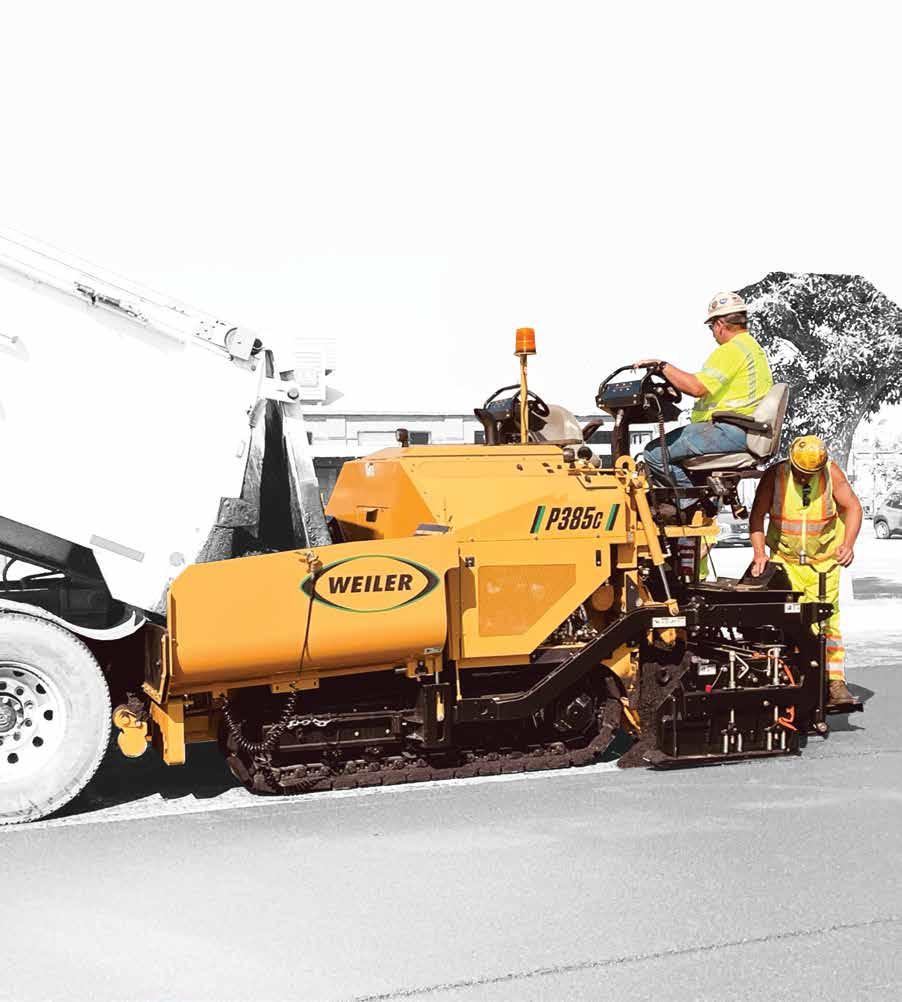
Variable speed and reversible conveyors and augers and a 25% increase in tunnel height provide optimal material output.

Modular conveyor drive and sealed chain case increase feeder system reliability and life.
Enhanced heat system performance with direct-drive hydraulic generator and elimination of GFCI breakers.
BY SANDY LENDER
GGone are the days when mechanically inclined laborers lined up outside the main office of Pike Industries or Luck Stone to fill out an application for one open job. The asphalt industry has adapted over the years to attract individuals whom we then teach a variety of skills for the most basic of positions. Even when bringing skilled labor to the industry, asphalt companies put time and money into training and molding these new workers into powerhouses for their companies and crews.
Then comes the day when the worker we’ve invested in will retire, taking years of institutional knowledge out of the company and industry. When we’re paying attention, we can encourage new hires, younger workers and less-experienced employees to work alongside these veterans to learn and hopefully capture some of the knowledge base before they go.
According to the Associated Builders and Contractors (ABC) analysis of data released Jan. 9 by the U.S. Bureau of Labor Statistics, the construction industry lost 11,000 jobs on net in December. On a year-overyear basis, industry employment grew by 14,000 jobs, which is an increase of 0.2%. One might look at these numbers as less indicative of the industry’s employment health than numbers reported in a month like June, but the fact is unemployment for the industry was hovering near 2024’s.
ABC Chief Economist Anirban Basu shared, “the industry’s unemployment rate remains relatively low, down 0.2 percentage points from the same time last year.” Basu had more to break down for different sectors of the construction workforce, and you can see all of those on the ABC press site.
While unemployment numbers in December can be attributed to far more than retirement figures, this gives us an opportunity to visit this aspect of workforce development. The asphalt industry is facing a loss of key individuals who take with them vital institutional knowledge, and Mike Mauzy, sales manager of Reliable Asphalt Products, Inc., Shelbyville, Kentucky, spoke of the predicament.

“Retiring long-tenured industry professionals are leaving a knowledge void that is nearly impossible to replace,” Mauzy said.
At this year’s CONEXPO-CON/AGG tradeshow at the Las Vegas Convention Center, Reliable Asphalt Products is stressing the importance of bringing new workers to the asphalt community while also recognizing the value of what we have in place. The company will host a workforce development signing ceremony on the stage in its booth in the central hall—booth C32804— to do just that at 9:30 a.m. Wednesday, March 4. The original equipment manufacturer (OEM), alongside AsphaltPro Magazine, will welcome the Rogers Group Inc. (RGI), Nashville, Tennessee, to highlight and honor a new worker joining our industry, a current worker who is being promoted within the industry, and a retiring worker who is willing to share some of his institutional knowledge right here.
The new hire being signed during the ceremony will be announced from stage. The worker being advanced is the February
issue’s Women of Asphalt feature and newly promoted Assistant Corporate Asphalt Plants Manager Brianna Overstreet. The worker retiring after 49 years in the asphalt industry is Richard Warren, the asphalt plants manager for the southern half of Middle Tennessee.
As Mauzy stressed, bringing new workers to our industry in time to let them train alongside our veteran workers is key to our industry’s survival. “Finding qualified industry newcomers to learn as much as possible from long-tenured industry veterans before they retire is the priority,” Mauzy said. “Retaining and training existing employees throughout their careers is a key workforce development component. Lastly, recognizing employees’ accomplishments throughout all career phases not only yields retention dividends, but it also is the right thing to do and communicates respect and appreciation. Recognizing retiring professionals is respectful, while at the same time, creates a culture of appreciation.”

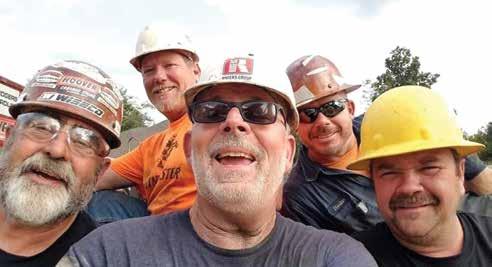
Warren is in a position today to highlight the advantages the asphalt industry can offer to a new worker that a corporate desk job cannot. He’s also seen the industry, as a whole, transform and grow through concepts that make it more attractive to the modern worker. He listed human resources ideas first and foremost.
“Safety and benefits,” Warren began. “When I started my career after high school in 1977, safety wasn’t in the forefront as it is today. Most hourly employees didn’t get vacations or holiday pay, no 401-K. There wasn’t a work-life balance as it is today.”
What the industry did offer back then, and still does today, is something with multiple career paths and options. It offers something that could be, or could be beyond, an indoor 9 to 5.
“Not everyone is attracted to construction or being a construction worker,” Warren explained. “I wasn’t an inside type of person or into doing the same thing day after day. Around the asphalt plants, you learn many different skills, metal work, concrete, woodworking, mechanical and electrical skills, operating equipment and operating asphalt plants. The skill level of many trades, plus with Rogers Group, you have benefits like vacations, 401-K, paid holidays for all employees, along with the assurance of a safe working environment at all times, with the training you need to do your job to the best of your ability.”
He suggested that if he were starting an asphalt business in 2026, he’d place top priority on those same elements. “Have a strong safety culture, hire seasoned employees in key positions, and have a strong training program for new employees without experience in the industry.”
During his nearly five decades in the industry, Warren has been a part of the changes and growth around him. He described the challenges and opportunities to problem-solve with the team as the most exciting parts of his career.
“New adventures,” he said. “I have, over my career, been asked to do special projects outside my area. For example, I went to Lacey Springs to install an Astec Double Barrel asphalt plant. We rebuilt the drag and transverse conveyors, installed a trunnion on the dryer, and installed flights in the dryer. I had local employees there to help. We got the plant maintenance complete, plant erected and didn’t have anyone get hurt.
“Another adventure, or should I say challenge, was in Mississippi. I went there to help the local employees get the plants in order. With the skills I’ve learned over the years, we got most problems solved.”
After 49 years, there are a lot of memories and lessons Warren can share with the team before he retires. One of his favorite memories is of recognition, like we’re discussing today, proving the importance of this mission for other companies. He shared the importance of Randy Butler—who was the division vice president over Northern Middle Tennessee, Southern Middle Tennessee and north Alabama for RGI—trusting him and his skills to assign him such projects as the ones in Lacey Springs and Mississippi.
“There were a lot of hard, long hours in both of those projects, but I guess Mississippi was the most memorable because I, along with Joan Knowis were called to come to Nashville one day for a meeting. We didn’t know why or what for, but upper management gave each one of us the President’s Performance Award. We were very humbled by this award.”
Industry professionals like Warren aren’t grown on trees. Companies do well to grab onto these workers and let them know how much they’re valued. Assigning them a mentor hasn’t been the industry’s standard operating procedure for the past five decades, but we’re lucky that construction lends itself to a mentorship mentality. For Warren, that started close to home.
“First, my dad. He told me when I was still in high school, ‘Son, when you get out on your own and get a job, whatever the job is, stick with it. Don’t do like I have done and move from job to job. Every time you move from one job to another, you have to start over again.’ After 49 years in the same field and 48 in the same location, I can say that was good advice.
“Another mentor was Arley Howell. He taught me to put God first in my life. Most all of my trade skills come from working with him at a young age.
“Howard Nutt had a big influence on dealing with people from day to day—employees and customers.
“Randy Butler also made an impact on me. Randy was stern but fair. I always told him he might not always agree with me, but he would listen. Randy taught me a lot about the P&L side of the business.”
To visit with a veteran of the industry is to give yourself a chance at an education that’s not a formal, classroom-based lecture. By visiting with the RGI honorees during the Reliable Asphalt Products’ workforce development signing ceremony in Vegas, you offer yourself not only the opportunity to discuss ideas for your career and company, but also the opportunity to learn from individuals with the institutional knowledge we’re blessed to have for just a little while longer.
MAGNA™, a Terex brand specializing in large-scale crushing and screening solutions, celebrated its official European launch at the Terex Coalville facility in collaboration with UK distributor Blue Machinery in Q4 2025. The event welcomed over 60 attendees. The day began with an introduction to the MAGNA brand and overview of the Terex Coalville facility, with attendees learning about the site’s history and recent investments in robotics, advanced tooling, boring and milling machines, and cutting-edge chamber technology. A guided plant tour and walkaround gave guests the opportunity to see finished MAGNA products, including the 135-tonne MT130J Jaw Crusher and the MT400C Cone Crusher.
The MT130J is the largest tracked jaw crusher in the MAGNA lineup to date, designed for large-scale operations with a 13,000 mm x 1,000 mm opening, high-powered electric drive and split-transport capability. The MT400C is a high-output mobile cone crusher offering large reduction ratios, automated metal detection, hydraulic adjustment and fuel-efficient transmission.
Terex Financial Services (TFS) was also present to explain its flexible finance options.


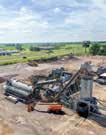


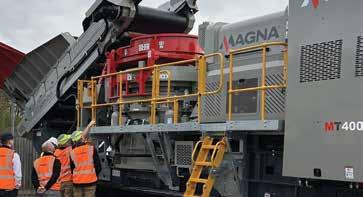
Blue Machinery, the authorized distributor for MAGNA across Great Britain, will lead sales and support for the brand’s extensive product line in the region, which includes crushers, screening solutions such as horizontal, trommel and scalping screens, and heavy-duty conveyor systems for material processing industries.
Sean McGreary, sales director for Blue Machinery, said, “Hosting this event at Terex Coalville was a fantastic opportunity to bring our customers closer to the heart of manufacturing for the MAGNA brand. Seeing the scale of the facility, meeting the engineering teams, and experiencing the MAGNA range firsthand gave our customers real confidence in the quality and innovation behind these products. It’s not just about introducing a new brand—it’s about building trust and showing the depth of expertise that supports every machine.”
Neil McIlwaine, business line director for MAGNA added, “Building on our successful U.S. introduction earlier this year, this launch represents a major milestone in our global growth strategy. Bringing MAGNA to the UK and European market, supported by Blue Machinery’s extensive parts network and tailored financing solutions, gives customers the confidence and capability to scale their operations. Together, we’re creating a foundation for sustainable, high-volume production.”
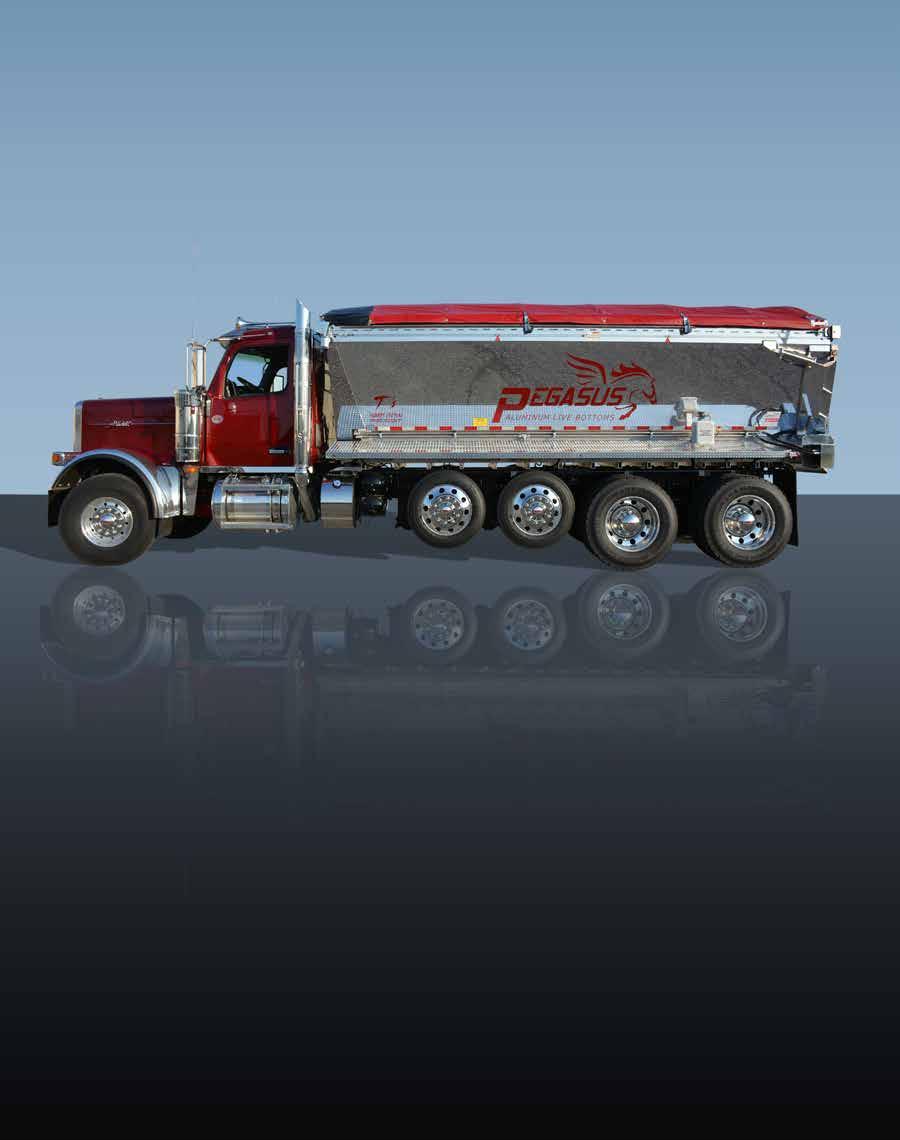
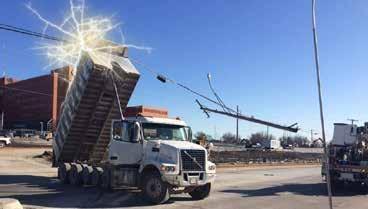
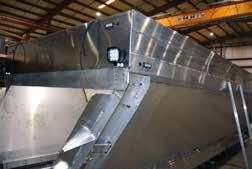
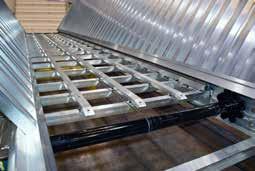
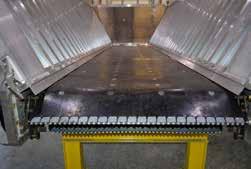
Sripath Technologies® LLC, Mahwah, New Jersey, proudly marks its 20th anniversary, celebrating two decades of innovation, collaboration and commitment to a more sustainable future for the asphalt industry. Since its founding in 2006, Sripath Technologies has been at the forefront of developing advanced additives and products that enhance pavement performance, extend service life and promote environmental responsibility. The company’s legacy is built on the pillars of developing and marketing innovative products; developing longterm partnerships with customers, transport agencies, industry experts and academia; and delivering sustainable science-backed solutions.
“For 20 years, Sripath Technologies has remained true to its mission to deliver innovative, reliable, sustainable, and cost-effective technologies and products that help our customers build better, longer-lasting roads and roofs,” said Krishna Srinivasan, PhD, president. “This milestone is not only a celebration of our company’s growth but of the trust and collaboration we’ve built with our partners around the world.”
Sripath’s product portfolio embodies the company’s ongoing dedication to delivering data and science-driven, practical technologies that help asphalt producers meet evolving performance, sustainability and regulatory goals. Sripath additives are also used to help restore the quality and reduce the variability of bitumen from around the world. ReLIXER® is a rejuvenator for recycled asphalt pavement (RAP). PGXpand® is a bitumen-friendly polymeric-additive for paving and roofing applications. PHALANX® is a warm-mix additive. ButaPhalt® is an innovative crosslinking additive, specially engineered to improve performance of PMBs, help reduce hydrogen sulfide emissions, improve thermal stability of PMB blends and more. NuMIXER® and ReNUBIT® are advanced bitumen softeners.
Over the past two decades, Sripath has cultivated lasting relationships with customers, suppliers and research institutions worldwide. Through active engagement in industry associations, technical conferences and educational initiatives, the company has helped shape global dialogue around best practices and innovation in asphalt performance.
“Our success has always been supercharged by our industry collaborations,” said Deepak Madan, COO. “We’re proud to work alongside our partners to solve real-world challenges, drive continuous improvement, and ensure the next generation of roads and roofs deliver the desired performance and are more sustainable.”
As Sripath enters its next chapter, the company remains committed to advancing sustainable solutions through continuing innovation, rigorous research and global collaboration. With a growing product portfolio, an expanding international presence and continued investment in product development, the company continues to pave a path toward a more resilient and sustainable future.
For more information, visit www.sripath.com or contact info@ sripath.com.
Ammann Group, Langenthal, Switzerland, launched its ARR 1585-2 trench roller in January. The ARR 1585-2 offers an all-wheel drive and skid-steering system. The articulated steer trench roller is equipped with four independent drive motors—one for every drum side. This innovative configuration enables 360° on-the-spot turning capability, which is similar to that of a compact skid-steer loader, according to the manufacturer.
The machine’s centralized vibratory system, positioned between the drums, delivers uniform compaction. A high-performance, single-stage vibratory system generates compaction output of 75kN with amplitude of 0.063 inch (1.6 mm). The system also provides consistent vibration frequency of 33Hz.
Two working widths enable the roller to fit into tight spaces or work in open areas, too. The reduced base operating width is 25.2 inches (640 mm). For larger or less constrained job sites, optional drum extension kits expand the working width to 33.5 inches (850 mm), increasing surface coverage and compaction output. The ARR 1585-2 is engineered with a robust four-motor drive system that delivers maximum traction and control across all terrains, according to the manufacturer.
Ammann developed a technologically advanced remote-control system for operation, designed to protect the operator, other workers and the machine itself. The system uses two main control signals: infrared and 3D-LF technology. The remote control is powered by an exchangeable battery that can be charged on-board or externally. A full charge lasts for at least 16 hours of intense machine operation.
It features a water-cooled Kubota D1105, 12-horsepower, diesel engine that meets EU Stage V and U.S. EPA Tier 4f emissions standards. Other key features of the new ARR 1585-2 include:
• A fully welded frame for protection of components.
• Hoods that shield powertrain components, then open toward the center of the machine for improved access.
• A shift from a mechanical throttle to electronic RPM control for precise load management and smoother operation.
• A water-cooled engine that reduces the volume of hydraulic oil required by 62% when compared to the previous generation.
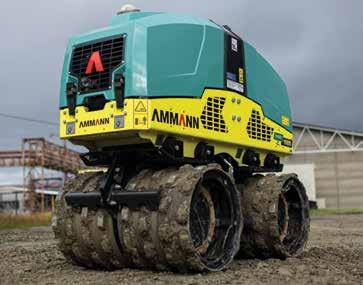
Each Ammann ARR 1585-2 can utilize optional Ammann Compaction Expert (ACE) technology to increase productivity during the compaction process. ACE is a proprietary, relative measuring device that provides continuous information about compaction levels and displays progress in real time, indicating when maximum compaction has been achieved.
For more information, visit ammann.com
Astec Industries Inc., Chattanooga, introduced in fourth quarter 2025 the EZR3 screed, a rear-mount screed engineered to deliver enhanced stability, which you can see in the Astec booth C30236 at CONEXPO-CON/AGG. Its rear-mount design minimizes the need for frequent adjustments, holding settings longer and reducing downtime.
The manufacturer states the key features of the EZR3 screed include:
• Balanced Design: Enhances tractor balance while boosting strength and durability.
• Optimized Mat Quality: Maintains angle of attack even during fullwidth applications.
• Material Visibility: Lower profile improves visibility of material flow for better control.
• Class-Leading Endgate: Free-floating design with narrow or widewidth options and four runner configurations to suit diverse applications.
For more information, visit https://www.astecindustries.com/products/ details/ezr3-highway-class-screed

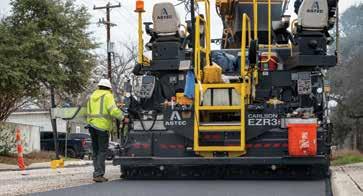
Astec Industries has launched the EZR3 screed, which features multiple rows of screed plate adjustment points for perfect leveling and heating elements that can be replaced without removing the screed plate.
In December, Caterpillar, Irving, Texas, announced every Cat® Customer Value Agreement (CVA) will have an opportunity for an upgraded services commitment for customers, starting in 2026. CVAs that include dealer labor provide a two-day repair commitment on common repairs to get the equipment back to work, or the customer gets paid. Additionally, parts next-day availability with the new services commitment includes maintenance, wear and repair parts, available for pickup at the customer’s requested dealer location.
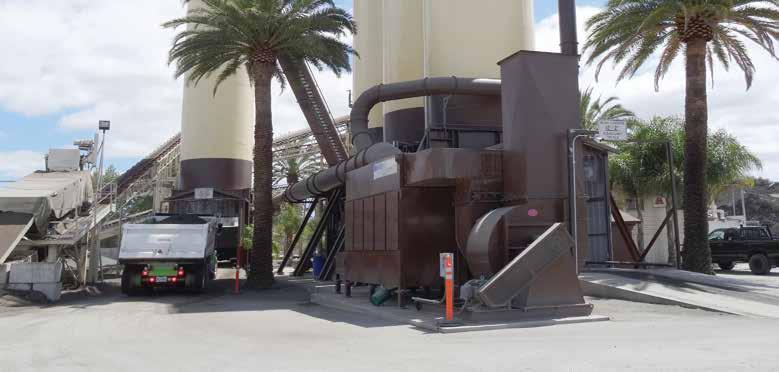
The Blue Smoke Control and X-VOCS systems from Butler-Justice, Inc., capture and filter blue smoke and odors from emission points in your plant — with 99.9% overall efficiency. We can incorporate this system into new plants or retrofit your existing plant with minimal modification.
www.bluesmokecontrol.com 714-696-7599 mikeb@butlerjustice.com
Cat also announced in late December, the addition of a joystick option to new next generation Cat 140® motor graders. As of early 2026, customers globally will have the option of choosing either joystick (JOY) or lever/steering wheel (LVR) controls for the new 140. Pablo dos Santos, the Global Product Application Specialist for Cat, said: “Rather than having separate JOY or LVR models for the next generation 140, customers will choose between joystick or lever steering configurations similar to other options like tandem or all-wheel-drive, technologies and attachments.”
In early January, Caterpillar Inc. (NYSE: CAT) unveiled Cat AI Assistant. With Cat AI Assistant, Caterpillar is making it easier for customers to buy, maintain, manage and operate their equipment no matter where they are. Cat AI Assistant unifies Caterpillar’s diverse portfolio of digital applications and vast amounts of data into one conversational experience. It operates against the entire Caterpillar knowledge base and serves as a proactive partner for customers, providing personalized data and insights, and enabling faster, smarter decisions.
For fleet managers and business owners, Cat AI Assistant is an extra set of eyes on their equipment—evolving alongside their operations, continually refining insights and recommendations to help turn unplanned incidents into planned maintenance.
For a technician, Cat AI Assistant is a partner that can, with a voice command, and without interrupting the task at hand, access the right section from a library of thousands of instruction manuals. It provides step-by-step guidance on repairs, highlights common issues and suggests additional parts needed to complete the job.
For an operator, Cat AI Assistant connects every step of the workday from machine startup to shift handoff. It can function as a coach in the cab, providing operators with information to work smarter and safer without switching screens, returning to the yard or losing focus. Cat AI Assistant leverages the NVIDIA Jetson Thor platform to run speech recognition and advanced AI models and can even assist with directing the machine.
With industries facing talent and skills gaps, and customers managing increasing job site complexity, Cat AI Assistant can help a less experienced operator improve productivity.
Caterpillar plans to bring the off-board Cat AI Assistant live in the first quarter of this year and was in the final stages of validation for incab applications in January.
For more information, visit your local Cat dealer.
CM Labs Simulations, Montreal, Quebec, announced in December that it had acquired GlobalSim Inc., Salt Lake City, Utah. CM Labs also broadens its U.S. presence with the addition of GlobalSim's Salt Lake City, Utah, location, which offers expanded manufacturing resources.
“This is a natural evolution for two organizations that have decades of proven safety, precision and performance outcomes in port operations,” said Robert Weldon, CEO of CM Labs. “CM Labs and GlobalSim are uniting to deliver unmatched quality, value and support to our port customers worldwide.”
Denso Inc., offers Densoband, a hot asphalt bituminous sealing strip designed for sealing joints between asphalt, concrete and steel. Densoband is composed of a polymer-modified bitumen strip to enhance flexibility and durability, and to accommodate movement caused by heavy traffic
loads and thermal changes. Its flexible seal is designed to prevent water ingress, reducing erosion and deterioration of joints over time.
Densoband simplifies the installation process with its integrated adhesive system, which eliminates the need for flame application. The product can be applied by hand or machine.
Densoband has been shown to perform reliably across a wide range of climates, with an application temperature range of +41 to +113°F. Furthermore, its cold bend behavior ensures no cracking occurs at 0°C, making it dependable even in extreme cold conditions, according to the manufacturer.
Jetstream of Houston, LLP, will have its 5200Q Series UNx™ Bareshaft pump on display in booth S60358 in the South Hall of the Las Vegas Convention Center during CONEXPO-CON/AGG 2026. Designed to pair with engines up to 700 horsepower, the 5200Q offers maximum flow capabilities of 25.6 gpm at 40,000 psi. The 5200Q Bareshaft pump has a quintuplex design for reduced pulsation and vibration. With five plungers, pressure spikes are lower, allowing for a more consistent, smoother pressure profile compared to a standard three-plunger design. The 5200Q comes with interchangeable UNx fluid end technology, which allows converting from 8,000 to 40,000 psi in minutes. This provides flexibility to run a full variety of tools with a single unit for industrial cleaning. The Jetstream 5200Q Series is available as a bareshaft pump or as part of a full integrated trailer waterblast unit. The 5200Q comes with global service and support, and is also available through ten rental locations across the United States.
In a speech in Clive, Iowa, in January, President Donald J. Trump announced two new John Deere facilities based in the United States. This includes a new parts distribution center in Hebron, Indiana, and the expansion of the campus in Kernersville, North Carolina.
“Our investment in these new facilities underscores John Deere’s dedication to strengthening the backbone of American industry and supporting local economies,” said John May, chairman and chief executive officer of John Deere. “We believe in building America, and these projects represent our intent to continue driving innovation and job creation in the United States.”
John Deere recently broke ground on the new distribution center near Hebron, Indiana, strategically located to enhance its supply chain capabilities nationwide. This facility will be designed to streamline operations and ensure timely delivery of equipment and parts. The Indiana project is anticipated to generate significant employment opportunities with approximately 150 jobs, contributing to the state’s economic growth.
The new $70M factory in Kernersville, North Carolina, will bolster John Deere’s manufacturing capabilities, leveraging advanced technologies to produce excavators for the construction market. The North Carolina factory will assume production of future generation excavators previously produced in Japan.
This facility will employ over 150 people and will help meet equipment demand and strengthen the company’s commitment to U.S. manufacturing innovation.
In other news, Deere & Company (NYSE: DE), Moline, Illinois, entered into an agreement in December to acquire Tenna, New Hope,
Pennsylvania, which is a construction technology company, and a holding of The Conti Group, that offers mixed-fleet equipment operations and asset tracking solutions.
Tenna offers an integrated construction technology platform (“Tenna”) designed to automate and optimize construction operation workflows. The platform gives contractors a near real-time, full-picture view of their equipment operations and a greater understanding of equipment trends and maintenance needs, while also improving visibility, planning, and job site coordination.
Tenna will continue to operate as an independent business marketed directly to construction customers under the Tenna tradename and will focus on scaling and growing the business through its mixed-fleet business model.
This acquisition is pending regulatory approval and is expected to close in February 2026.
Recycling Enterprises Inc. (REI), Towanda, Kansas, announced the acquisition of Cutler Repaving Inc., Lawrence, Kansas, effective Jan. 12, 2026. The transaction effectively places Cutler Repaving and Dustrol Inc., Towanda, Kansas, under the REI umbrella, creating what the company refers to as the world’s largest hot in-place recycling contractor. This acquisition strategically provides both companies with greater opportunities to serve their individual customers in their geographic markets.
Dustrol serves department of transportation (DOT) and county customers in Oklahoma, Kansas, Texas, Minnesota, Iowa, Wiscon-
sin, Tennessee, Arkansas, New Mexico, Wyoming, Utah, Nebraska, North and South Dakota, Colorado, and Montana. Cutler Repaving serves city, county and state DOTs in Florida, South Carolina, Kansas, New Mexico, Texas, Arizona, Colorado, and Utah. Both companies will continue operations from their current locations in Towanda and Lawrence, Kansas.
SmithCo Mfg. Inc., Le Mars, Iowa, was awarded in January a nationwide cooperative purchasing contract for Public Works Equipment by the Houston-Galveston Area Council (H-GAC) Cooperative Purchasing Program (HGACBuy). This contract award allows local governments, districts, counties and state agencies across the nation to purchase SmithCo side dump trailers at pre-negotiated, favorable terms.
“This partnership with HGACBuy should streamline the procurement process for government agencies,” said Todd Karolczak, SmithCo’s director of sales & marketing. “This contract eliminates the need for agencies to duplicate the competitive bidding process, allowing for easier access to the most popular SmithCo trailers.”
The HGAC Buy program allows the collaboration with local governments to provide the best value in goods and services through cooperative purchasing. The organization currently serves 49 states and over 9,800 members. These members include local governments as well as some non-profit organizations.
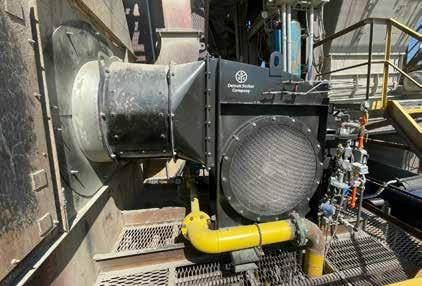

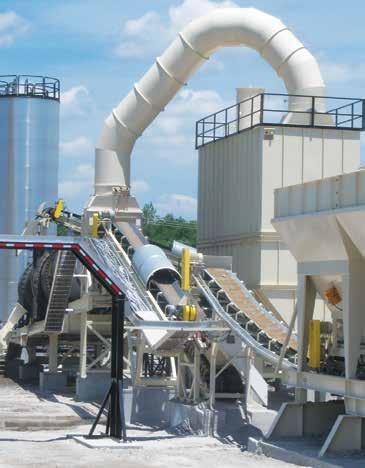

Trimble®, Westminster, Colorado, announced in January, West Side Tractor Sales Co. as the newest Trimble Technology Outlet. West Side Tractor will now sell Trimble grade control, site positioning systems and correction services technology directly to customers using John Deere earthmoving equipment, including dozers, excavators, motor graders, mini-excavators and compact track loaders. Founded in 1962 on Chicago’s west side, West Side Tractor is a third-generation family business. Today, five active members of the Benck family, alongside a team of over 300 dedicated employees, proudly continue the 60+ year partnership with John Deere construction equipment. West Side Tractor has 11 full-service facilities spanning 80 counties in Illinois and Indiana.
Weiler offers the P385C paver in the commercial class paver category, now with improvements to the conveyor drive system and more. The P385C features a Cat® C3.6 Tier 4F/Stage V engine with an increase to 120 horsepower (90 kw). The undercarriage features 90-inch (2,286-mm) track length, 68 inches (1,727 mm) of ground contact and 140-mm track chain pitch to provide smooth ride and excellent flotation with automatic track tensioning, according to the manufacturer.
The improved conveyor drive system features a sealed chain case, hydraulic motor with heavy duty bearings and splined shaft.
An updated hydraulic system with proportional valving provides variable speed and reversible conveyors and augers. The larger tunnel height allows for lower conveyor speeds without loss of material output.
The Weiler-designed 3,700-pound (1,678-kg) screed features a paving range of 8 feet to 15 feet, 8 inches (2.2 m to 4.8 m). The redesigned heating system eliminates GFCI breakers and utilizes insulation monitoring.
Three different operating positions allow for optimal visibility and control with the adjustable, magnetic-resistance steering system. Optional screed mounted control panels give operators additional function control from screed level.
Weiler equipment is sold and serviced exclusively at Cat® dealers across North America, with factory trained technicians and readily available parts for unmatched service and support.
For more information, visit weilerproducts.com


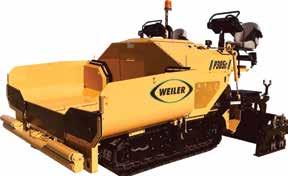

First released in 2013, the CMS-1625 is CSI’s newest generation specifically engineered for performance and built for reliability. From startup to shut down, on existing or new burners the CMS-1625 gives operators clear visibility, precise control, and peace of mind resulting in:
TOTAL CONTROL. TOTAL CONFIDENCE.

Powered by an Allen Bradley Compact Logix PLC, Red Lion 15” Graphite Series high resolution touchscreen and a Honeywell Programmable flame relay the CMS-1625 becomes a fully integrated operating system delivering a burner control like no other in the asphalt industry.
• 21 point valve characterization program allows for the combustion air and fuel outputs to be configured for maximum fuel efficiency and emission compliance from low to high fire.
• 16 point first out annunciator indicates the safety switch status and will display which safety faulted during operation.
• Automatic or manual control of the burner, exhaust fan and drum speed.
• FGR and water injection control loops for Nox reduction.
• Single fuel or dual fuel control modes
• Optional baghouse burner and pulse control
• Gas pressure, gas flow, drum draft, baghouse pressure drop, oil pressure, oil flow and atomizing air pressures are displayed and trended on the touchscreen. Tons per hour pulse input can be used with a fuel flow input to display and trend btu’s per ton in real time.
• Flame shape output for the Webster HDRA burner.
• CMS-1625 is specifically designed for maximum versatility with over 60 installs from coast to coast on Astec, Cedar Rapids, Gencor, Hauck, Vulcan and Webster burners.
With over 30 years of experience, CSI Combustion Services brings hands-on expertise to every project. Asphalt producers benefit from a partner who understands burners, controls, and plant operations-not just panel assembly. From panel integration, troubleshooting and system optimization, start up and commissioning support, upgrade and retrofits, to burner tuning for upcoming source testing. Combustion Services delivers control you can rely on-plant after plant.
TOTAL CONTROL. TOTAL CONFIDENCE





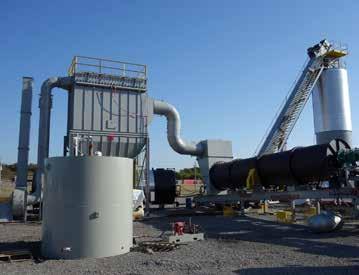












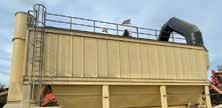
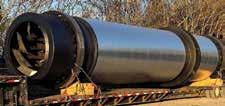


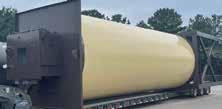
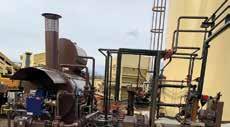

This installment of starting and maintaining a professionally run asphalt company looks at the systems that protect and grow your paving business.
BY SCOTT JENNINGS, P.E.
In Part 1 of this series, we talked about setting up the framework for your new paving company with licenses, bonding, insurance, and building relationships that help you thrive. Now that you’re officially “open for business,” the real work begins. You may think your biggest challenge is finding jobs. It’s not. Your biggest challenges are keeping those jobs profitable and maintaining a positive cash flow. These are different functions.
A paving business isn’t won by your good looks and having the shiniest equipment. It’s won by decisions based on good data. Although luck can sometimes play into profit, it’s much better to engineer systems into your business. Let’s dig into the systems of job costing, asset management, risk control, and forecasting. These are the tools that can turn a good operator into a long-term success story.
If you can’t measure it, you can’t manage it. That’s as true for asphalt as it is for accounting.
One of the biggest stumbling blocks for new paving contractors is job costing, or the art of bringing in more than you spend. On paper, it’s simple math. In practice, it’s where empires rise and fall. Understanding your assets, and how to keep them earning instead of idling, is key.
A paving machine that sits for a week between jobs isn’t an asset, it’s a contributor to a slow leak in your bottom line. The same goes for trucks, compaction equipment, and even that pile of leftover mix you never used because it got cold or you ordered too much from the plant. Every piece of iron and every ton of material is money in some state of being. If it’s not moving, it’s costing.
Think of your assets as what you own (equipment, cash, and receivables), and your liabilities as what you owe (loans and payables). The difference between those two numbers (your equity) tells you if you’re building wealth or digging a hole.
Even when your crew is waiting on trucks, those hours cost you money. Idle time is invisible profit erosion. Track it, measure it, and minimize it. Telematics—the tech that lets you inventory and monitor your equipment remotely—is a modern paver’s secret weapon. It tells you where your rollers are, how many hours your trucks have run, and whether that “borrowed” skid steer ever made it back from another site.
And remember: Software, people, and processes are assets, too. The right systems and well-trained teams add value to your balance sheet, just as surely as a new paver.
Now for the other side of the ledger: what you owe. Liabilities aren’t inherently bad. Every growing company uses leverage. The danger comes when you take on risk without understanding it.
In paving, risk hides in the fine print. Contracts, cash flow, and lessthan-perfect quality are where many small firms lose their footing. You can be the best asphalt paver in the county and still go broke because of one clause buried in a general contractor’s agreement. (See the sidebar for some clauses to watch out for.)
Common pitfalls include weather delays, poor subgrades, vague scopes, schedule disruptions, and slow-paying clients. Each of these problems has a common cure: strong processes and documentation.
A winning contractor doesn’t just train for skill, you train for culture. It teaches muscle memory. Training is more than safety videos and toolbox talks. It’s your best investment in quality, consistency, and morale. It keeps people safe, yes, but it also keeps them at your company.
A paving crew is a living organism. When every operator knows not only how to run their machine but why their role matters to the project’s success, you’ve created a professional culture that’s hard to beat.
Professionally run crews follow repeatable processes: pre-job briefings, equipment checklists, and handoff protocols. When your crews know your system, they can focus on the work. That’s how you turn average labor into high-performing teams—through consistency, clarity, and pride. An established system that works can be the difference between bad attitudes and poor attendance, and a well-oiled machine whose parts all work seamlessly to turn out quality work.
Most small paving companies don’t fail because they run out of work; they fail because they run out of cash between jobs.
Forecasting isn’t just about predicting the future. It’s about giving yourself time to act before problems become emergencies. Build a rolling 90-day plan that includes off-season cashflow projections, maintenance schedules, and bid calendars. Schedule the latter to buffer the former.
Get out ahead of your competition by learning to use artificial intelligence (AI) tools, which can now analyze your bid history and job data to highlight patterns you might miss. AI doesn’t replace your experience; it amplifies it. But remember, AI won’t fix bad data. Feed it right, and it’ll feed you valuable insight.
Speaking of AI, the construction industry is embracing digital tools, and paving is no exception. Scheduling software, GPS-controlled graders, and drone site surveys are no longer futuristic. They’re how the best firms stay efficient and accurate.
And you don’t have to take giant leaps to create big results. Start small. You can implement a fleet management app that tracks fuel use or a shared folder with daily photos. Try out a time-tracking system
your foremen can actually use. Each step builds digital habits in your organization.
Then, when you’re ready, AI-driven platforms can assist with scheduling, material predictions, and identifying which bids align with your target margins, so you’re not wasting time chasing work you shouldn’t be doing. The key is to integrate technology into your workflow, not bolt it on.
Professionalism isn’t a phase, but is an ongoing process. The day you stop improving is the day your competitors start catching up, and the buffer zone for that catch-up is increasingly short. You want to stay on top of your business evolution.
Conduct quarterly reviews of your systems. Ask your field leaders what’s working and what’s not. Review your job cost reports. Update your training materials. Pick one system at a time—whether that’s job costing, scheduling, safety, or customer follow-up—and ask, “How can this be 10% better next month?” Incremental improvement is the mantra of the asphalt contractor who will eventually own their market.
You can’t control the weather, but you can control your systems. When rain delays, equipment failures, or late payments hit, the companies with structure survive. So put your time and effort into continually improving your operational systems.
If Part 1 was about starting right, this part is about staying right. Running a paving company that lasts means treating your systems with as much care as your mat. Tight tolerances, constant monitoring, and the discipline to improve every pass.
When your balance sheet is healthy, your team is trained, and your systems hum along even when you’re not there, you’ve crossed the line from owner-operator to paving professional.
There are lots more tips and immediately applicable instructions for field-tested best practices for starting your asphalt paving business in my newest book, Starting a Successful Construction Business: Proven Advice from the Trenches, available now on Amazon.com.

Scott Jennings, P.E., is a construction consultant and author of Starting a Successful Construction Business: Proven Advice from the Trenches.
1. Pay-if-paid or pay-when-paid — This clause shifts liability to you, despite your lack of control about what happens in other people’s processes. Negotiate clearer terms or price in the risk.
2. Liquidated damages — As pavers are usually one of the last subcontractors on the job, they often get dragged into financial penalties for a late finish. Know the rate, know the contracts, and calculate in any buffer you may need to fight this nonsense.
3. Scope creep — This is the bugaboo for every contractor in every job in every industry, but for an asphalt paving company it can hurt bad, based upon schedule changes. Number your mobilizations in your contract, cost out the price per mobilization, and specify minimum tonnage per mobilization. Don’t rely on a client saying, “It’s all good, we’ll make sure we keep you efficient.” If it’s not in writing, it’s not included. Period.
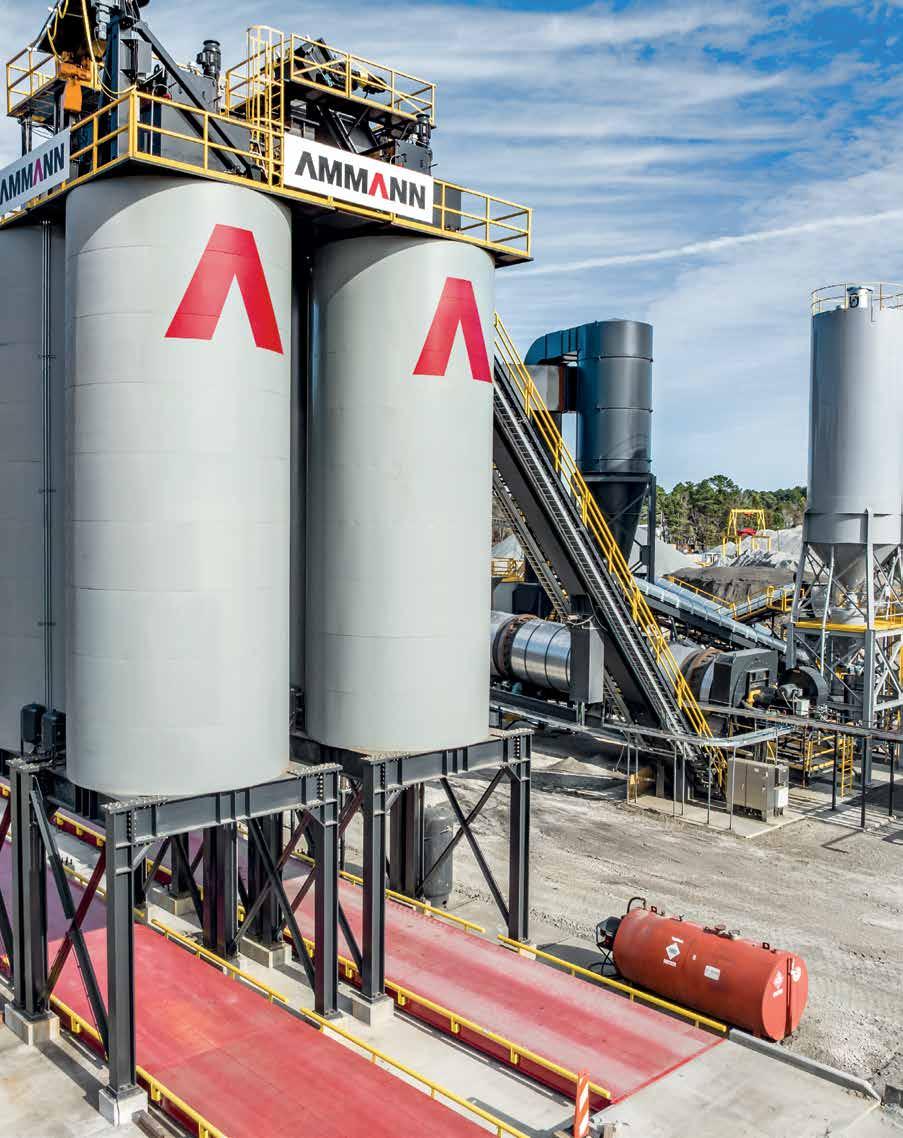




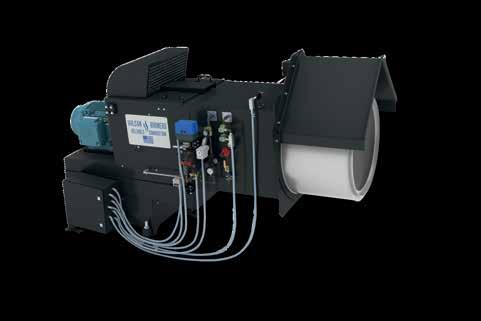
24/7 Direct
Control Systems
Fully Customizable and Configurable
Industry
Operator Friendly Design and Function
Direct Customer Support
Integrated Multi-Profile Burner Control
Advanced Diagnostics and Reporting
Capabilities
Easy Plant Calibrations

DIRECT
ALTERNATIVE
MINIMAL