Advanced Research in Computational Sciences & Artificial Intelligence
ASOF’s Initiative in Sciences & Technology for Armenia

ARCS.ai Governance
Governance Model & Operations

Teaching & training programs
Research programs

ASOF Council Appoints Educational & Research Institutions
Grant writing ❖ Seminars & Workshops ❖ Visitor program ❖ Tech transfer office Board Financial Partners and Patrons ASOF Advisory Groups Advise
Long Term Goals
As Determined by the Council on an Ongoing Basis
Armenia has the potential to become a regional powerhouse in certain areas of science and technology that can provide for its security and wealth.
Key Directions in the Sciences & Technology for Armenia
Key to achieving this is to make use of the extensive network of professional Armenians at universities and research centers around the world.
These directions require relatively modest resources for infrastructure, but a highly educated and skilled workforce that is internationally networked with centers of excellence around the world.
The strategy is to start with local capacity building through education and training.
ARCS.ai Strategy
Building towards regional & international prominence in key high-tech disciplines
Teaching & Training
❖ Delivering classes to undergraduate and graduate students, teaching the fundamentals while training for new high-tech skills.
❖ Involving students across multiple universities while facilitating cross-institutional collaborations.
❖ Bringing scholars from outside Armenia to teach classes and interact with local students.
❖ Organizing international conferences and schools to position Armenia as a regional hub for high-tech and science.
❖ Organizing advanced training visits to centers of excellence outside Armenia for local talented students from Armenia.

Robotics
For a new workforce, to help Armenia transition to increasingly automated and autonomous industry. Courses will equip students with the fundamentals of robotics — to design, control, and coordinate robots in many different settings, including manufacturing, environmental monitoring, precision agriculture, infrastructure inspection, and many other applications. Instruction will focus on wheeled robots and drones, with practical laboratory implementation focusing on multi-copter drones. Students will have opportunities in startups and in well established companies, and will also be prepared to start their own companies.
Artificial Intelligence
Offering students an opportunity to learn about a rapidly evolving research discipline. In addition to fundamental/ theoretical knowledge, the program will allow students to obtain hands-on experience by participating in practical, interactive sessions with leading experts in the field. The approach will serve in particular companies and research groups focusing on in-house core technologies developing new A.I. models — an area not being currently well served. In addition, some of the course offerings in robotics and the life sciences are also targeted at students studying A.I. to help bridge the interdisciplinary gap.
50-55 students per year
Research
❖ Seeding research collaborations between Armenian scientists and scholars in centers of excellence outside Armenia, leveraging the Diaspora and beyond.
❖ Developing cutting edge interdisciplinary areas that position Armenia at the front of emerging new technologies — straddling Artificial Intelligence, Robotics, the Life Sciences, and Aerospace Engineering.
❖ Developing consulting services for Armenian science and academia to apply for collaborative research grants to funding agencies in Europe and beyond.
Life sciences
Providing fundamental knowledge for understanding why and how experimental biology research takes place. The courses offer practical course work providing technical skills and at the masters and doctoral levels in bioinformatics and beyond. The program is also to develop core laboratories/facilities, which would provide and develop experimental techniques. Students will feed into these core labs: Computational, Advanced Imaging, and Tissue Culture. This will also serve a burgeoning private fi eld of life sciences translational and applied research in Armenia.
25-30 students per year

Aerospace Engineering
Armenia has an opportunity to revive its tradition of excellence in aerospace engineering and space sciences in a manner that can contribute signi fi cantly to its economy and security. The niche focus area of loworbit satellite technology, involving engagement in rocket propulsion engineering as well as electronics design for satellites, is key to this. This direction is meant to function more as a seed for the future and has longer term vision. The current focus is on education and basic training as we build up the necessary infrastructure on the ground over multiple years.
10-15 students per year
The ARCS.ai Council, 2025-26
Appointed by the ASOF Executive Board
Armen Aghajanyan
FAIR (Meta)
Deep Learning, Large Language Models, NLP
Artur Alaverdyan
Co-Founder, Member of Board, Foundation for Armenian Science and Technology
Applied Physics, Entrepreneurship, High-Tech
Armen Askijian
Chief Technology Officer, Airbus U.S. Space and Defense
Aerospace Engineering, Space and Satellites, Mechanical Engineering
Diane Barber
Professor, Department of Cell and Tissue Biology, University of California San Francisco
Cell biology
Justin Du Bois
Henry Dreyfus Professor of Chemistry, Professor of Chemical and Systems Biology, by courtesy, Stanford University
Chemical Biology, Chemistry
Naira Hovakimyan
Professor, Department of Mechanical Science and Engineering, University of Illinois at Urbana-Champaign
Control Theory, Optimization
Adam Kablanian
High-Tech Executive, Entrepreneur, and Investor Founder of Alexandrea Winery
Electrical Engineering, High-Tech
Ann Karagozian
Distinguished Professor, Department of Mechanical and Aerospace
Engineering, University of California, Los Angeles
Combustion, Fluid Mechanics, Propulsion
Council on Sciences & Technology
A Committee of the Armenian Society of Fellows
Sarkis Mazmanian
Luis and Nelly Soux Professor of Microbiology, California Institute of Technology
Microbiology, Neuroscience
Alexandre Persat
Global Health Institute and Institute for Bioengineering, Ecole
Polytechnique Fédérale de Lausanne (EPFL)
Biology, Biophysics, Microbiology
Ardem Patapoutian (Nobel Laureate)
Professor, Department of Neuroscience, The Scripps Research Institute Biology
Neuroscience
Vahe Petrosian
Professor of Physics and Applied Physics Departments, Chair of Astronomy Program, Stanford University
Astrophysics, Cosmology
Dork Sahagian
Professor, Department of Earth and Environmental Sciences, and the Environmental Initiative, Lehigh University
Climate Change, Geophysics, Science and Society, Volcanology
Armen Zakarian
Vice Provost for Research, Professor and Chair, Department of Industrial and Manufacturing Systems Engineering, University of Michigan Dearborn
Data Analytics, Digital Manufacturing, Systems Engineering
Representatives from the Armenian Government (Ex-Of fi cio)
Ministry of ESCS
Ministry of HTI
Parliament of the Republic of Armenia
The ARCS.ai Armenia Board 2025-26
Appointed by the ARCS.ai Council
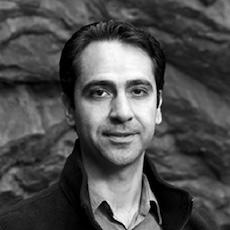
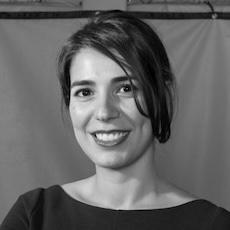
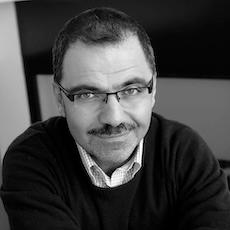
Haig Alexander Eskandarian
Department of Systems Biology, Harvard Medical School Biology, Medicine, Microbiology
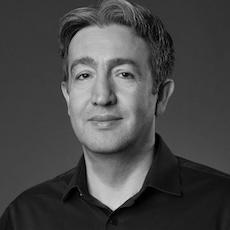
Aram Galstyan
University of Southern California, Amazon Artificial Intelligence, Computer Science
Ivan Aprahamian Professor, Chair of the Chemistry Department, Dartmouth College Organic Chemistry, Adaptive Materials
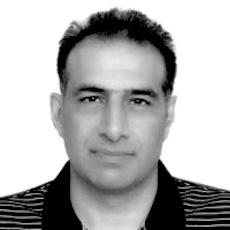
Oshin Peroomian (Treasurer)
CTO Metacomp Technologies, Inc. and Adjunct lecturer at AUA
Computational Fluid Dynamics, Computational Multi-Physics
Nora Ayanian (chair)
Professor, Brown University
Computer Engineering, Computer Science, Robotics
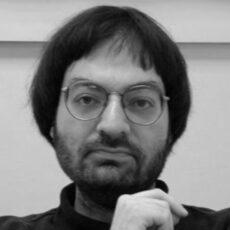
Karen Eguiazarian (Vice-Chair)
Professor in Signal processing, Tampere University, Finland, and CEO of Noiseless Imaging Ltd
Computational imaging & optics
Vatche Sahakian (Secretary)
Burton Bettingen Professor in Theoretical Physics at Harvey Mudd College


Patrons


The Armenian Society of Fellows
Société Savante Arménienne Bibliothèque Nubar, 11 Sq. Alboni, 75016 Paris, France
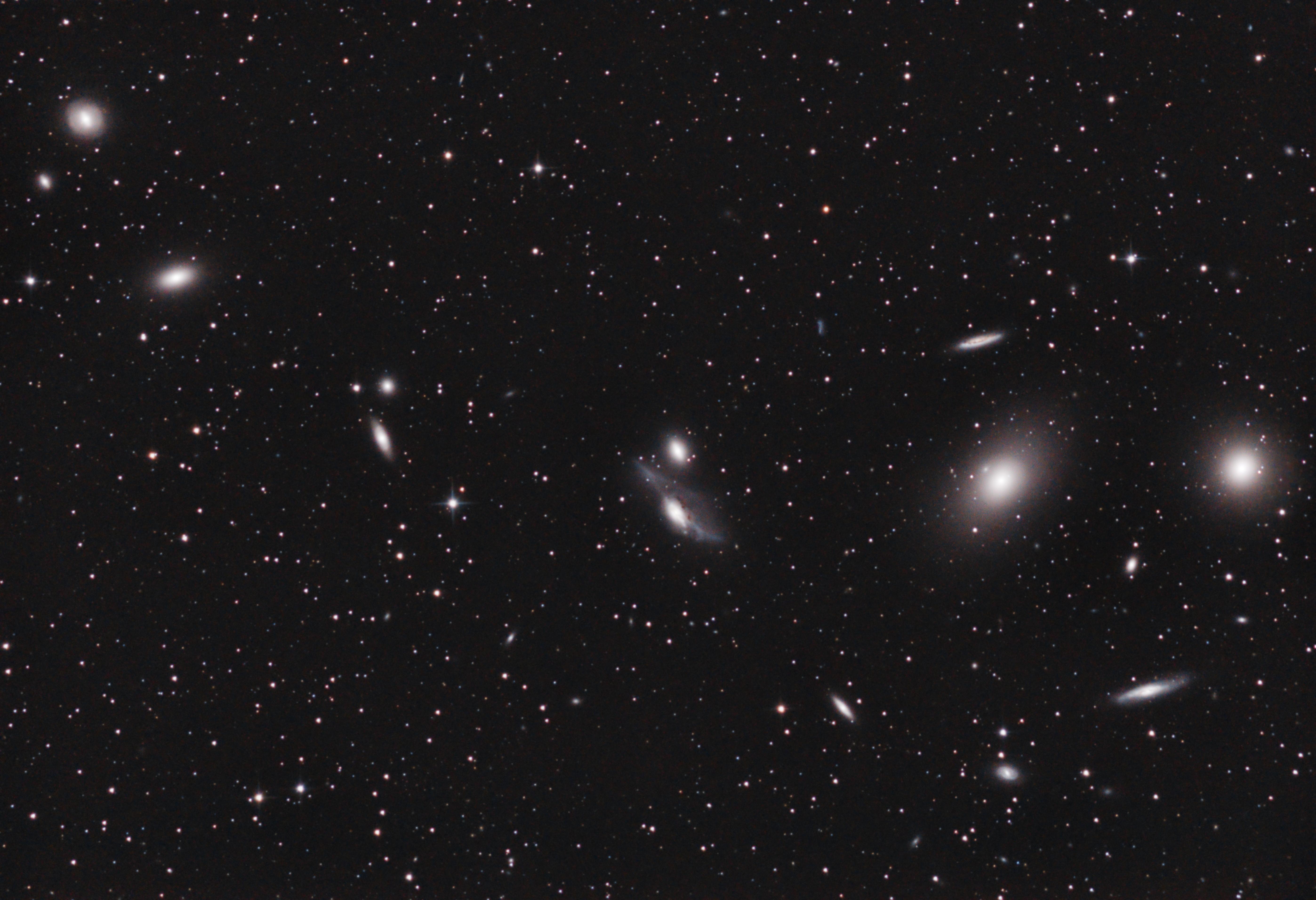
The Markarian chain of galaxies