No portion of this magazine may be reproduced without prior written permission from ASJ Publishing LLC.
Happy New Year!
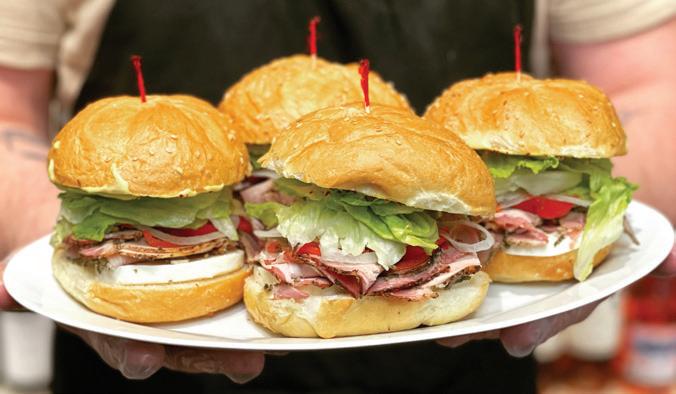
We’re excited to bring you our Eats & Drinks issue. While you may think about hibernating during the winter months, we encourage you to instead fill your days (and belly) with food and drink from your favorite businesses and to explore new ones.
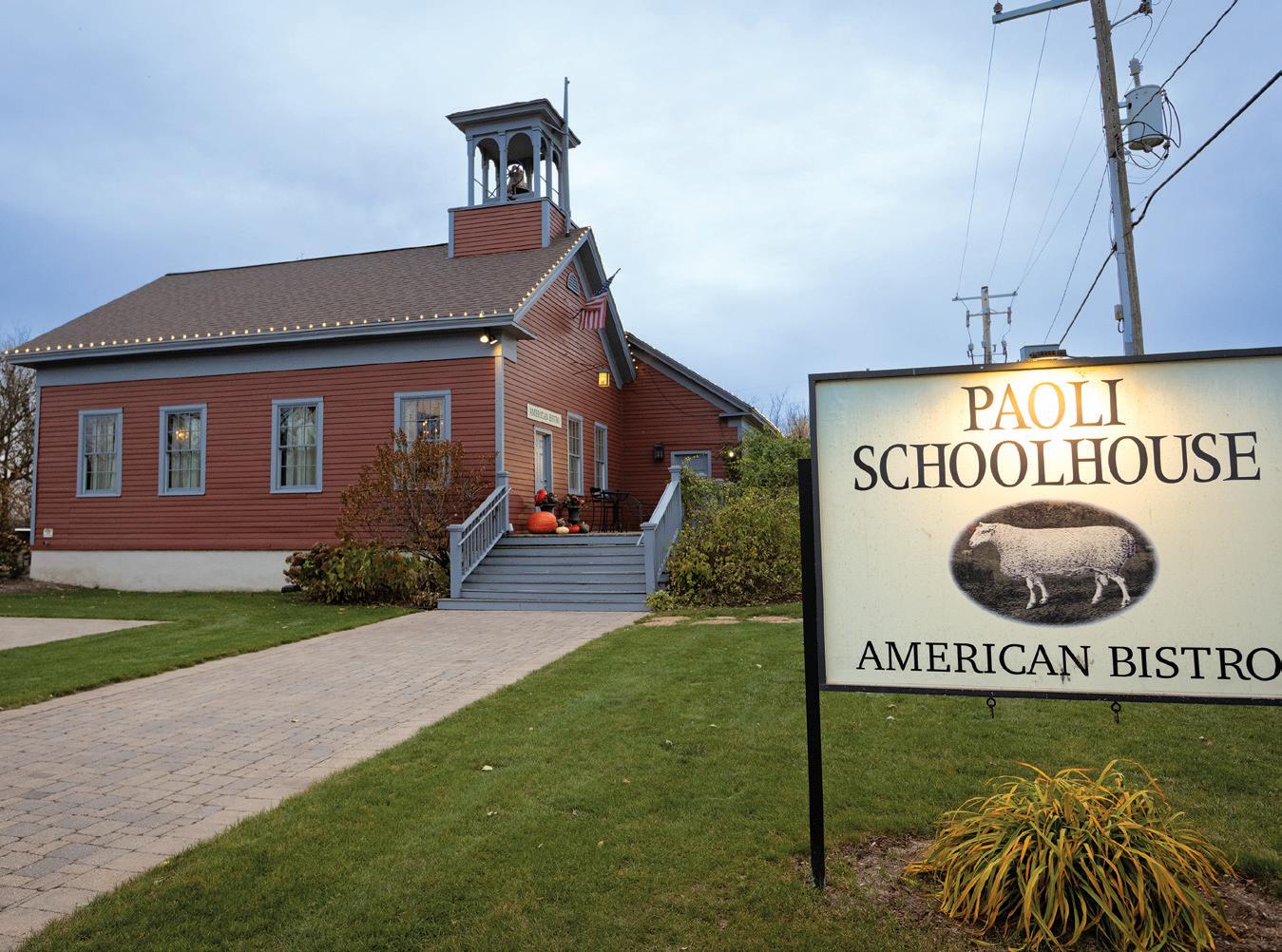
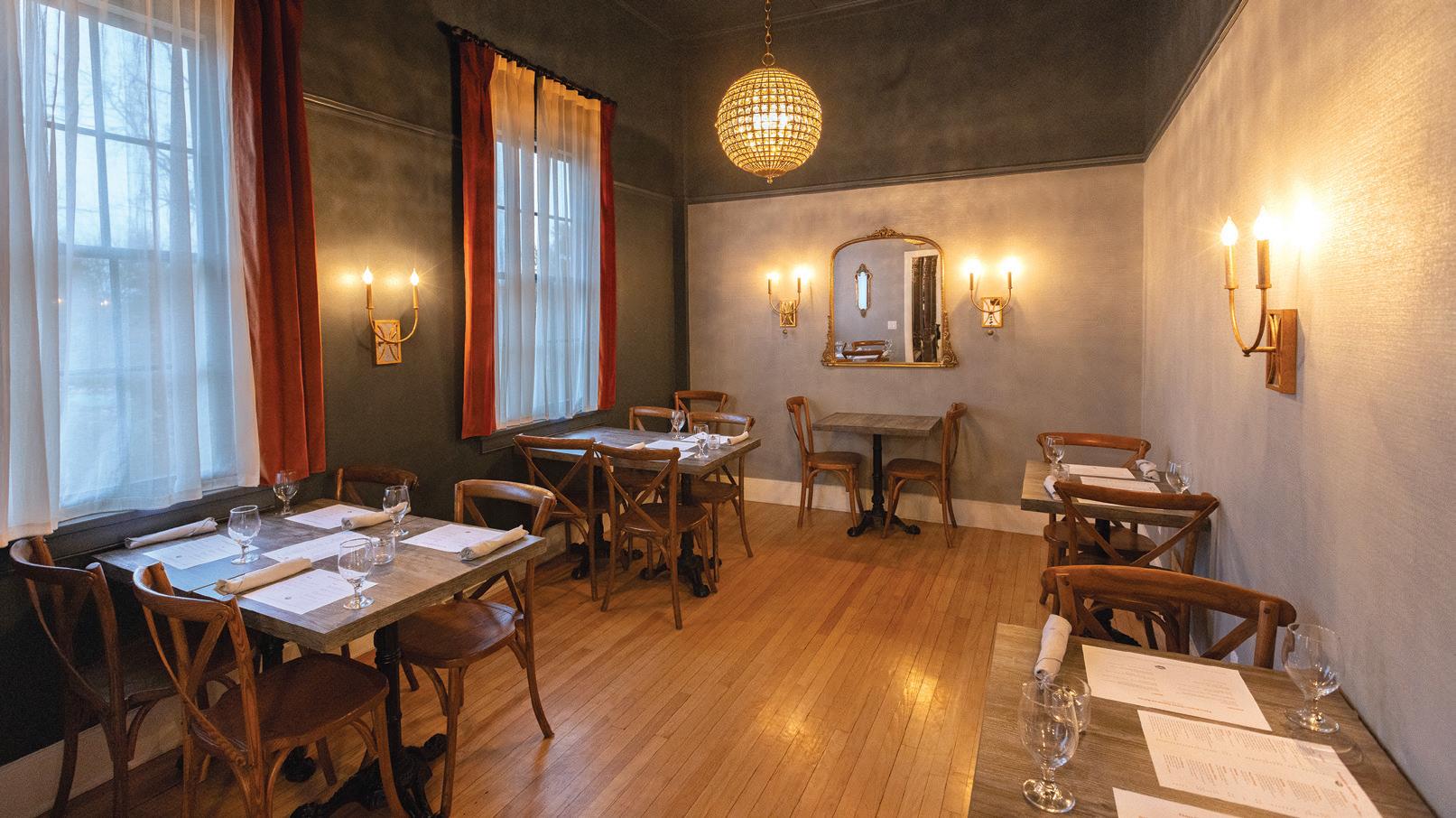
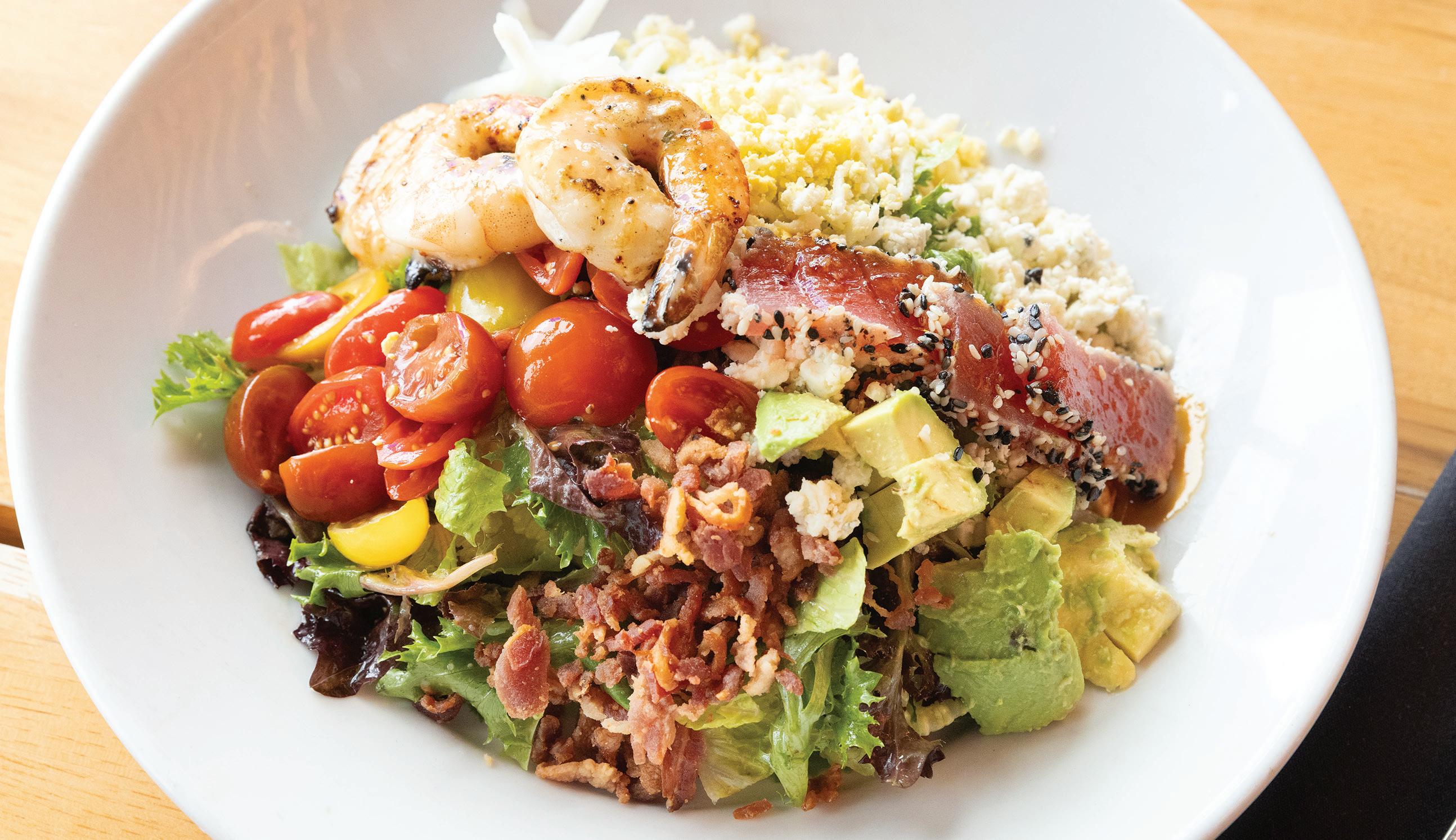
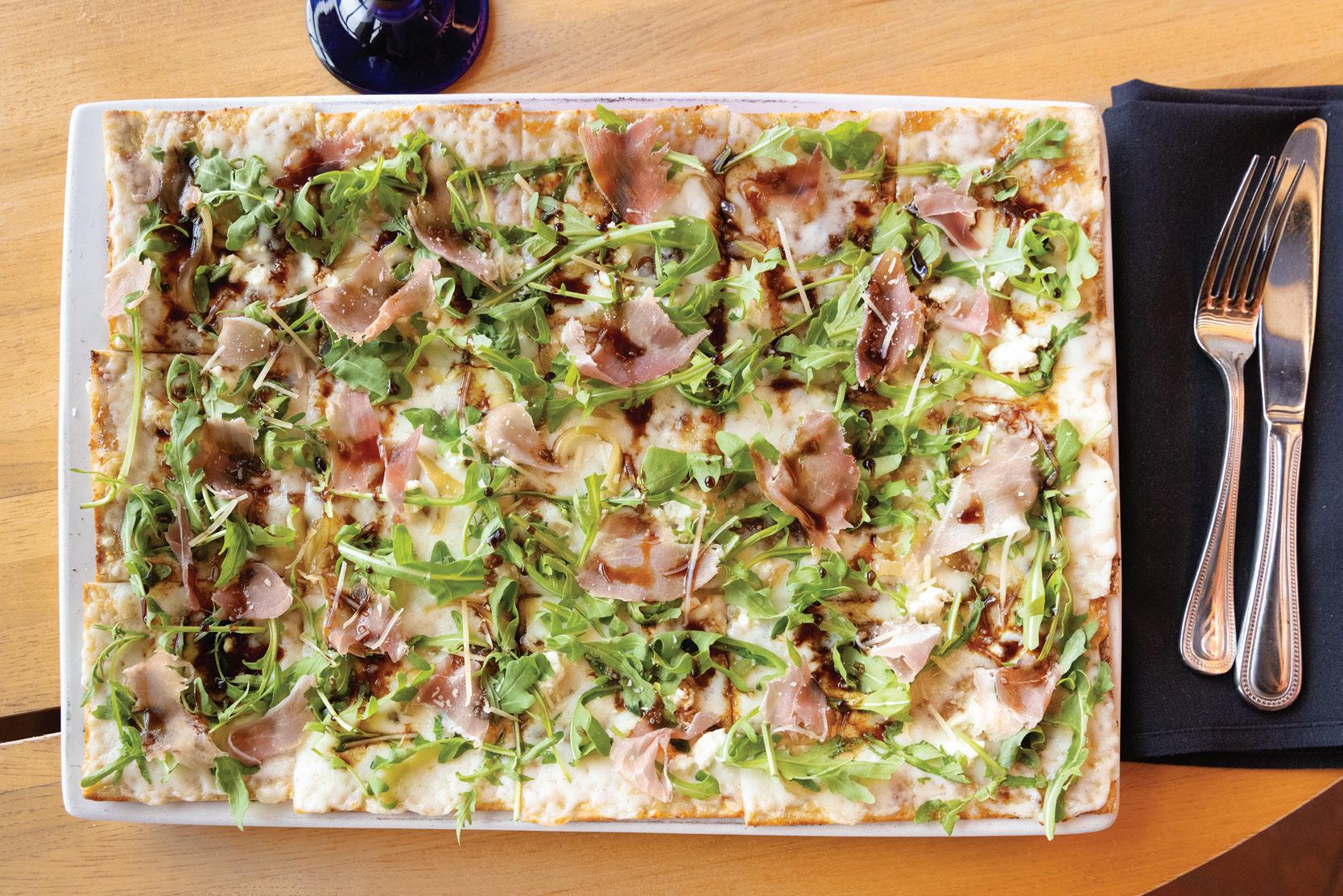
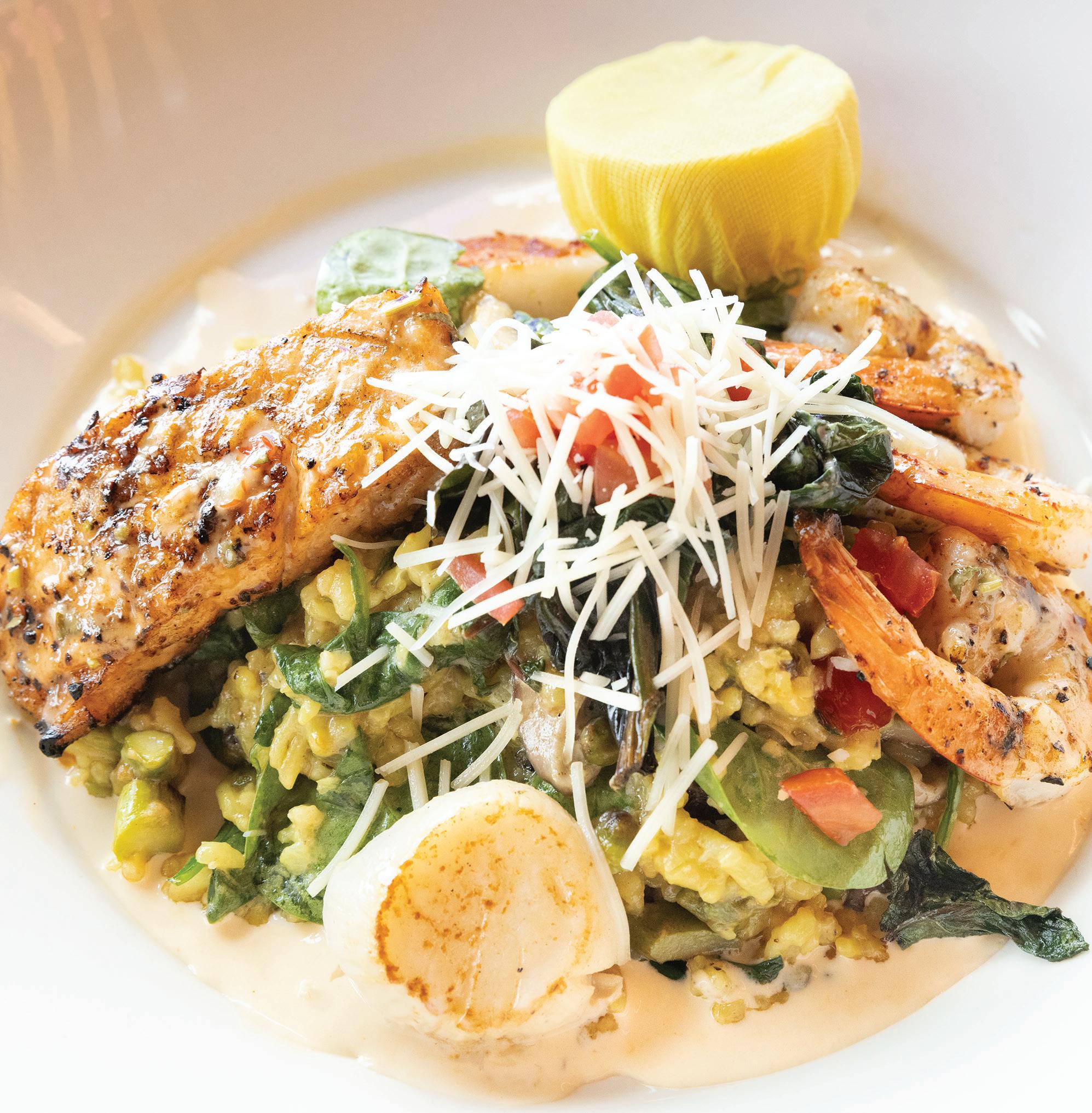
Paoli Schoolhouse American Bistro is a favorite of mine. While I first visited because of my family’s Paoli history, I return because of the food, service, and atmosphere. If you go for lunch, allow time to visit the shops within walking distance. And in case you’re wondering about the name, yes, it really used to be a schoolhouse!
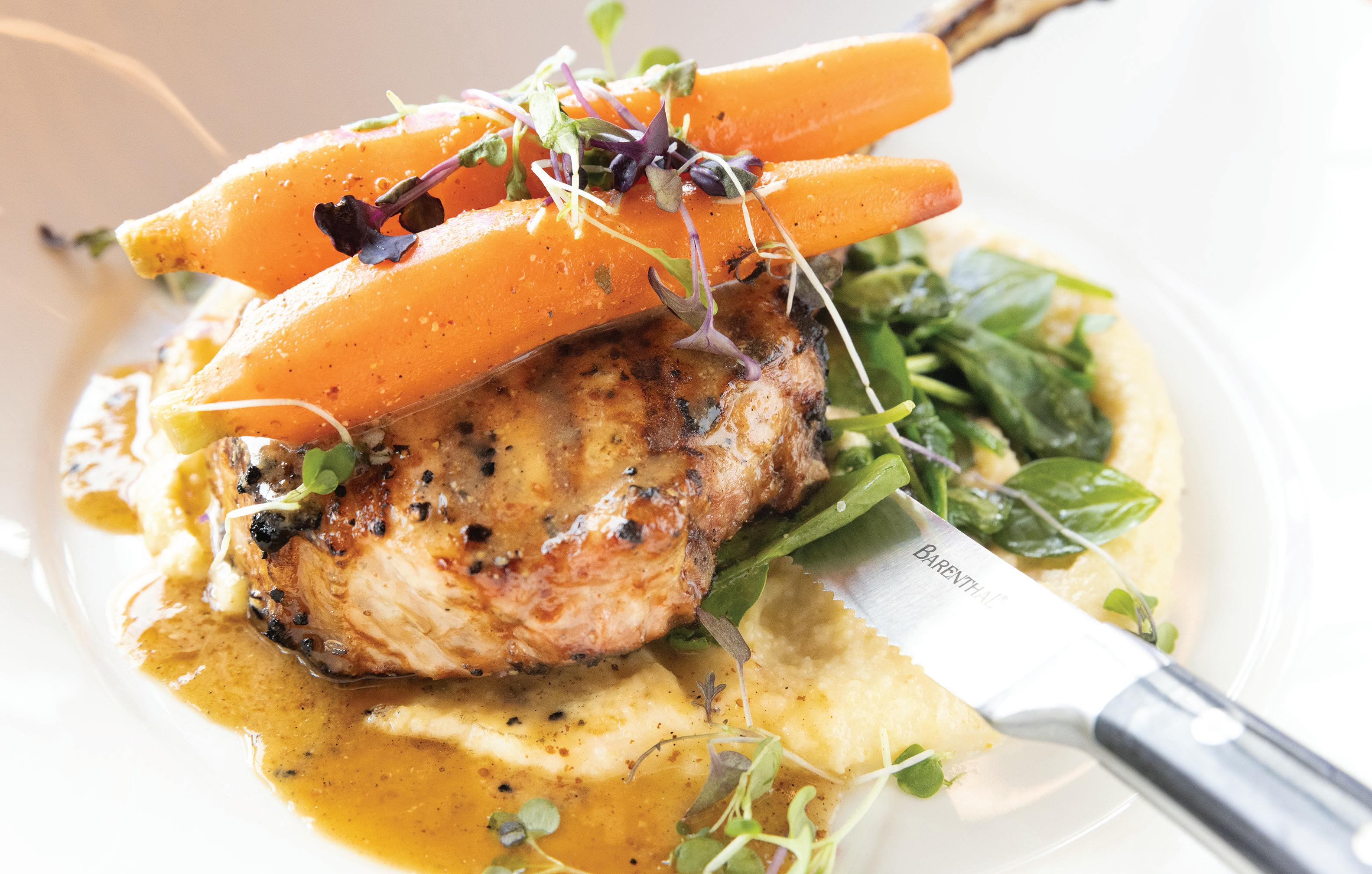
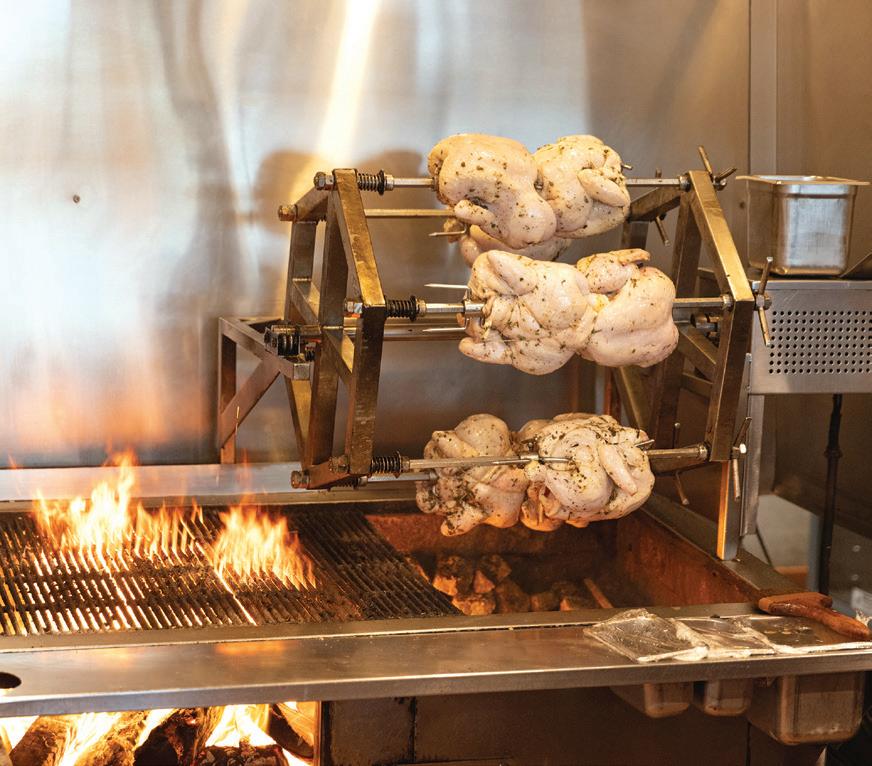
It’s easy to drive by Bonfyre American Grille while traveling on Madison’s Beltline, but don’t do it! Join the many, many diners who’ve stopped for a delicious meal and discovered why Bonfyre is going into its 17th year. The rotisserie chicken is a personal favorite.
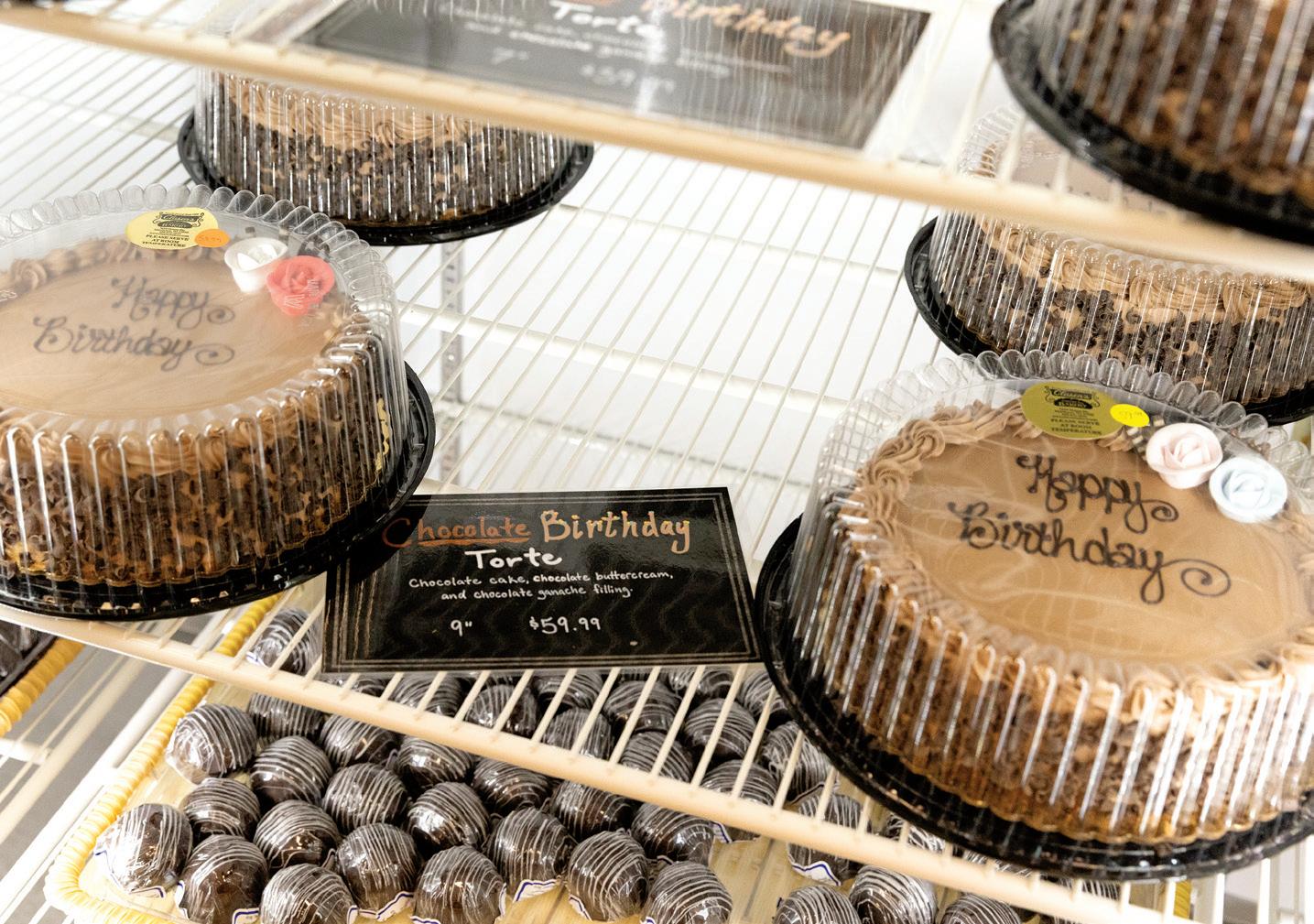
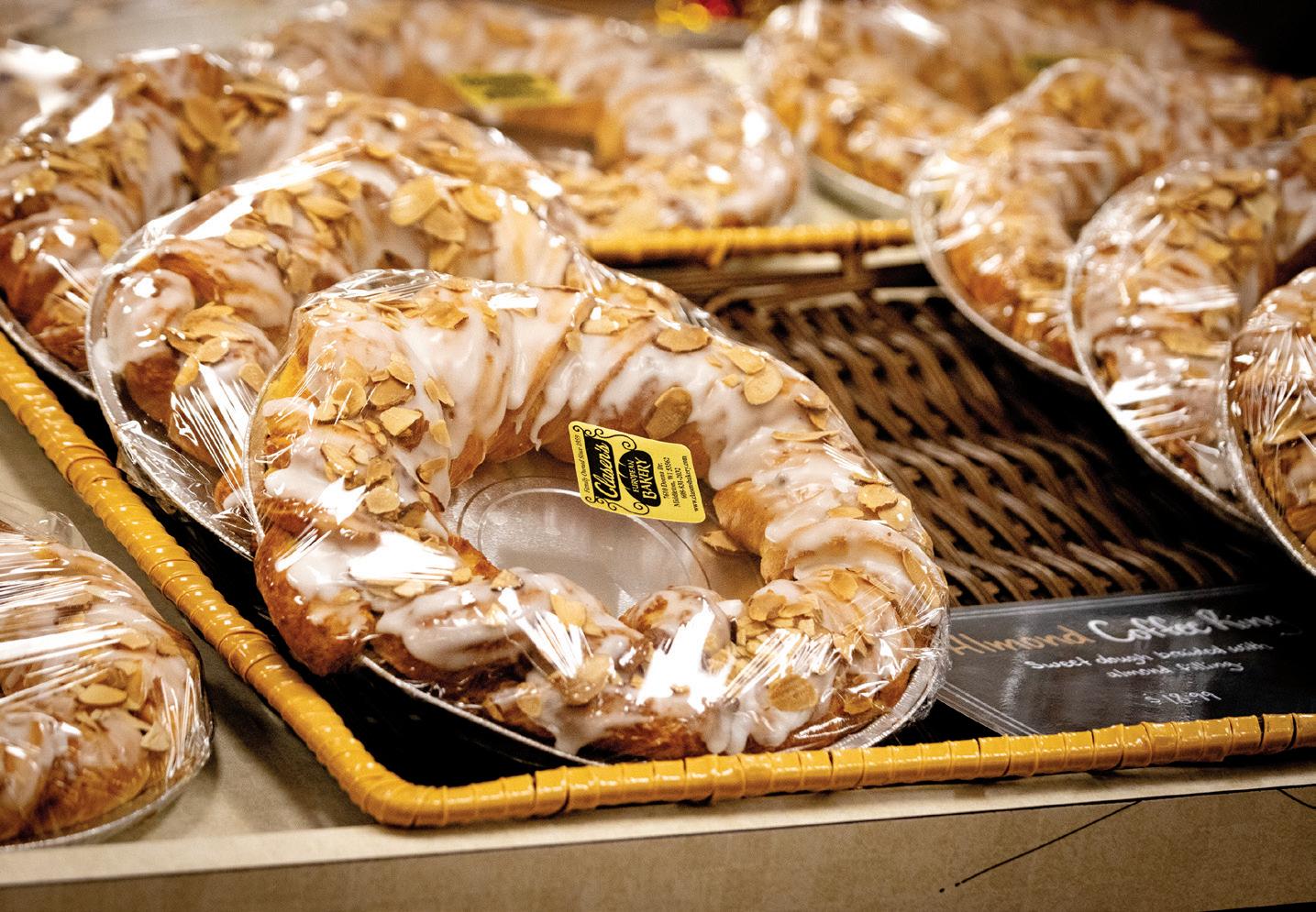
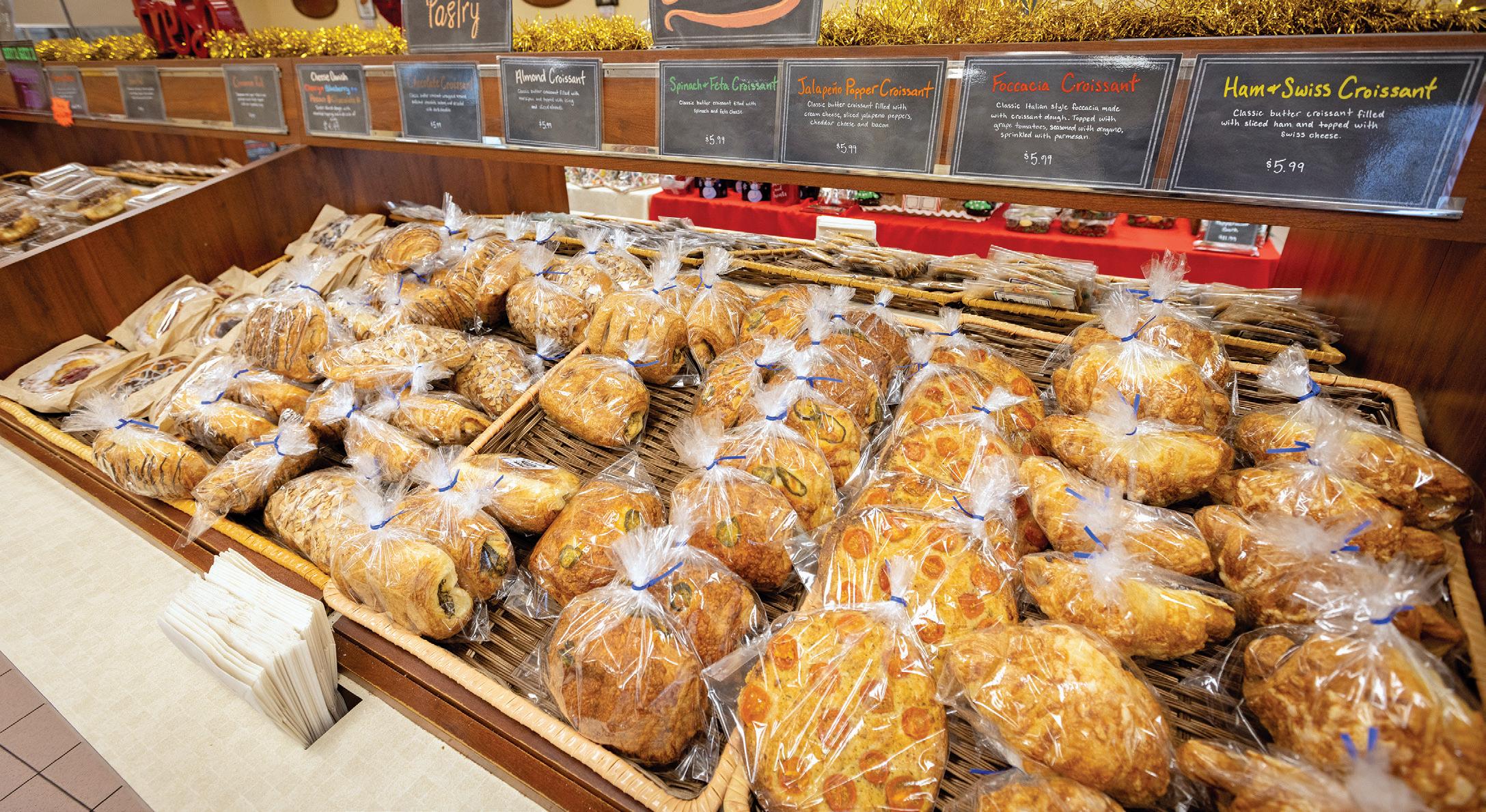
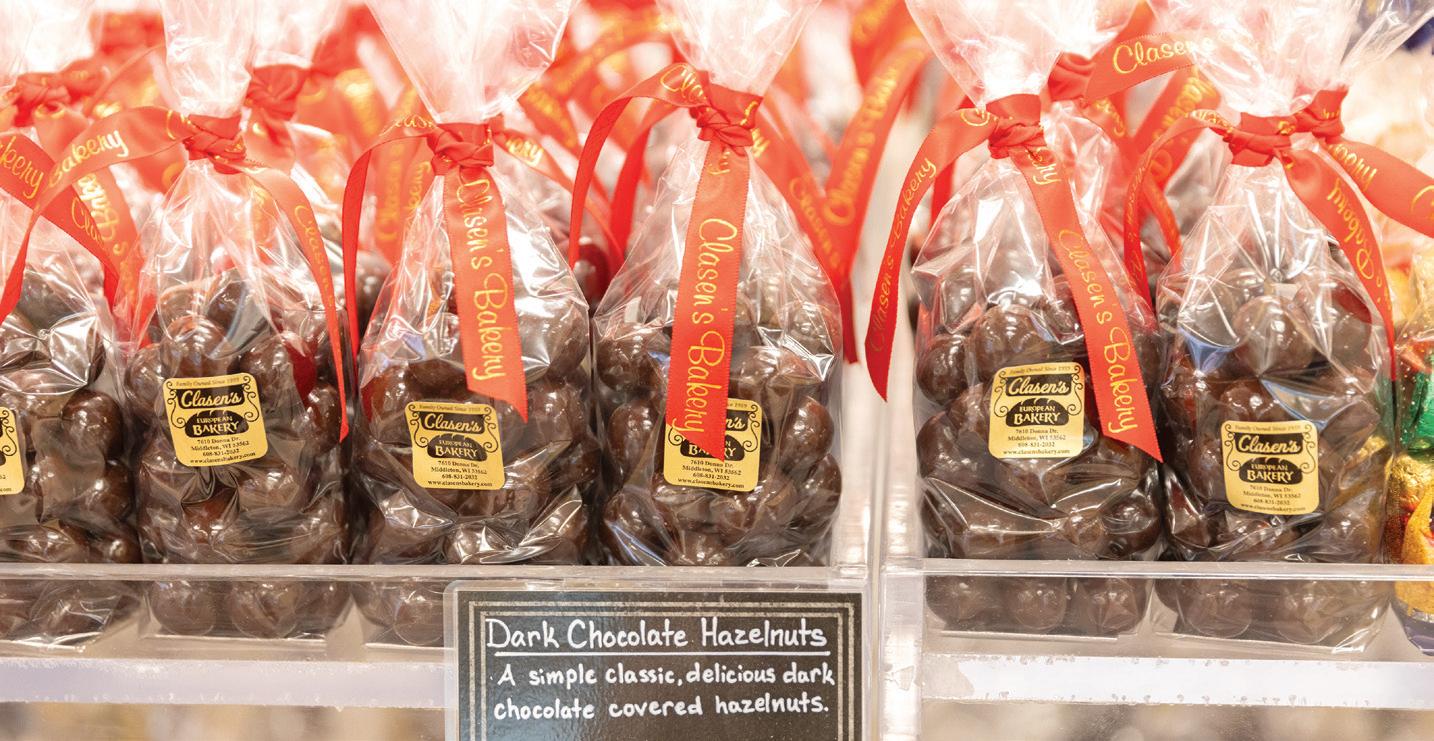
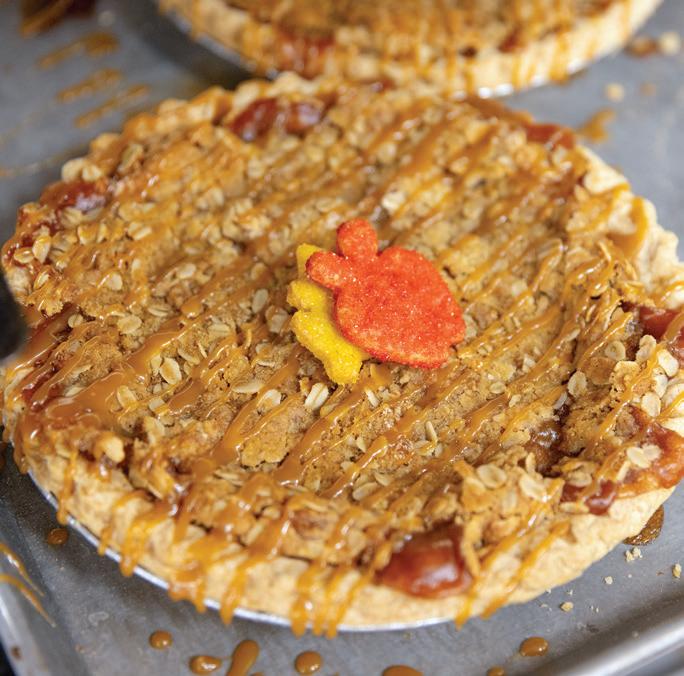
On the subject of deliciousness and history, Clasen’s European Bakery has likely been part of your life experience with its all-natural European breads, cakes, pastries, and confections. You can visit their Middleton location or your local grocery store for scrumptious treats.
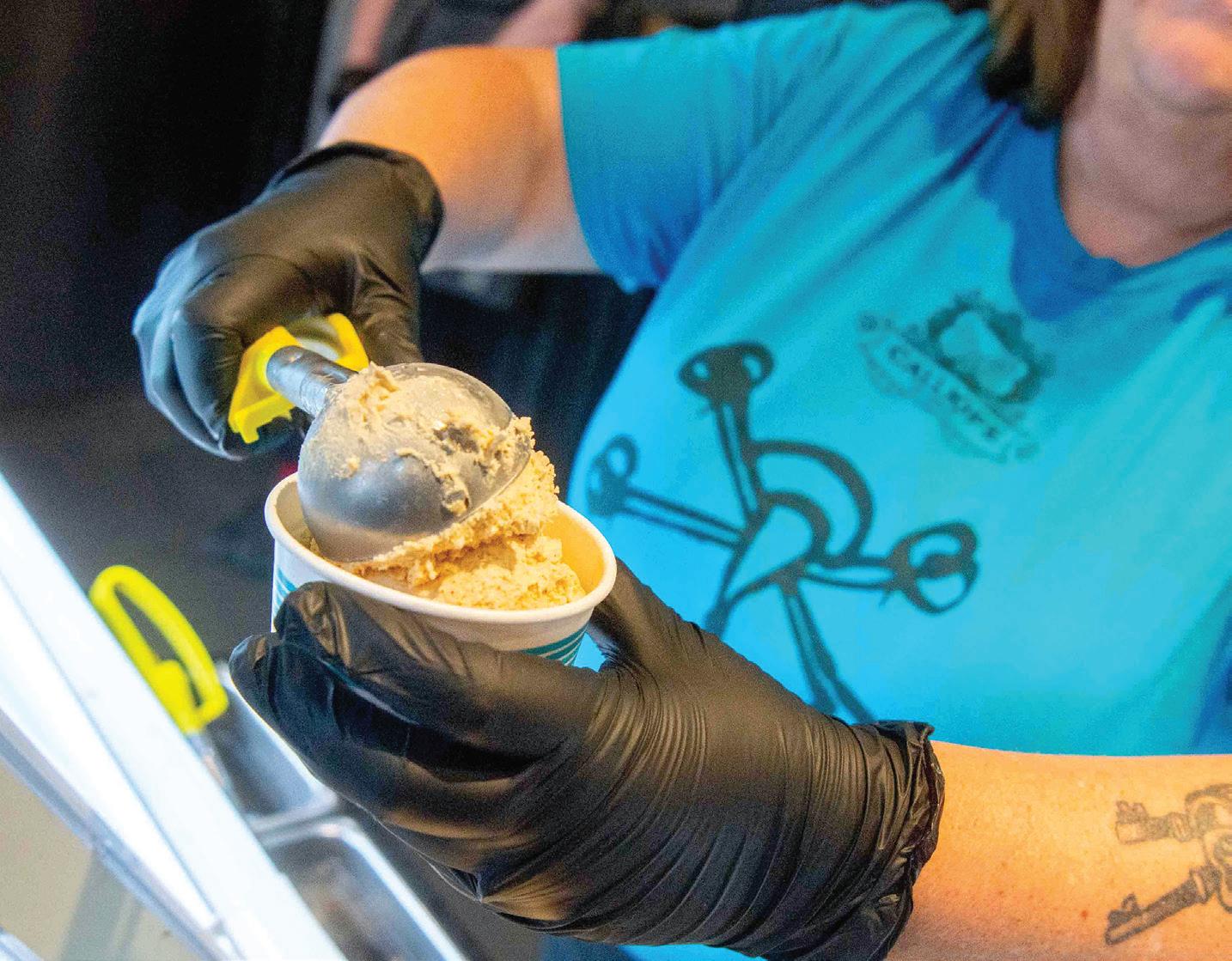
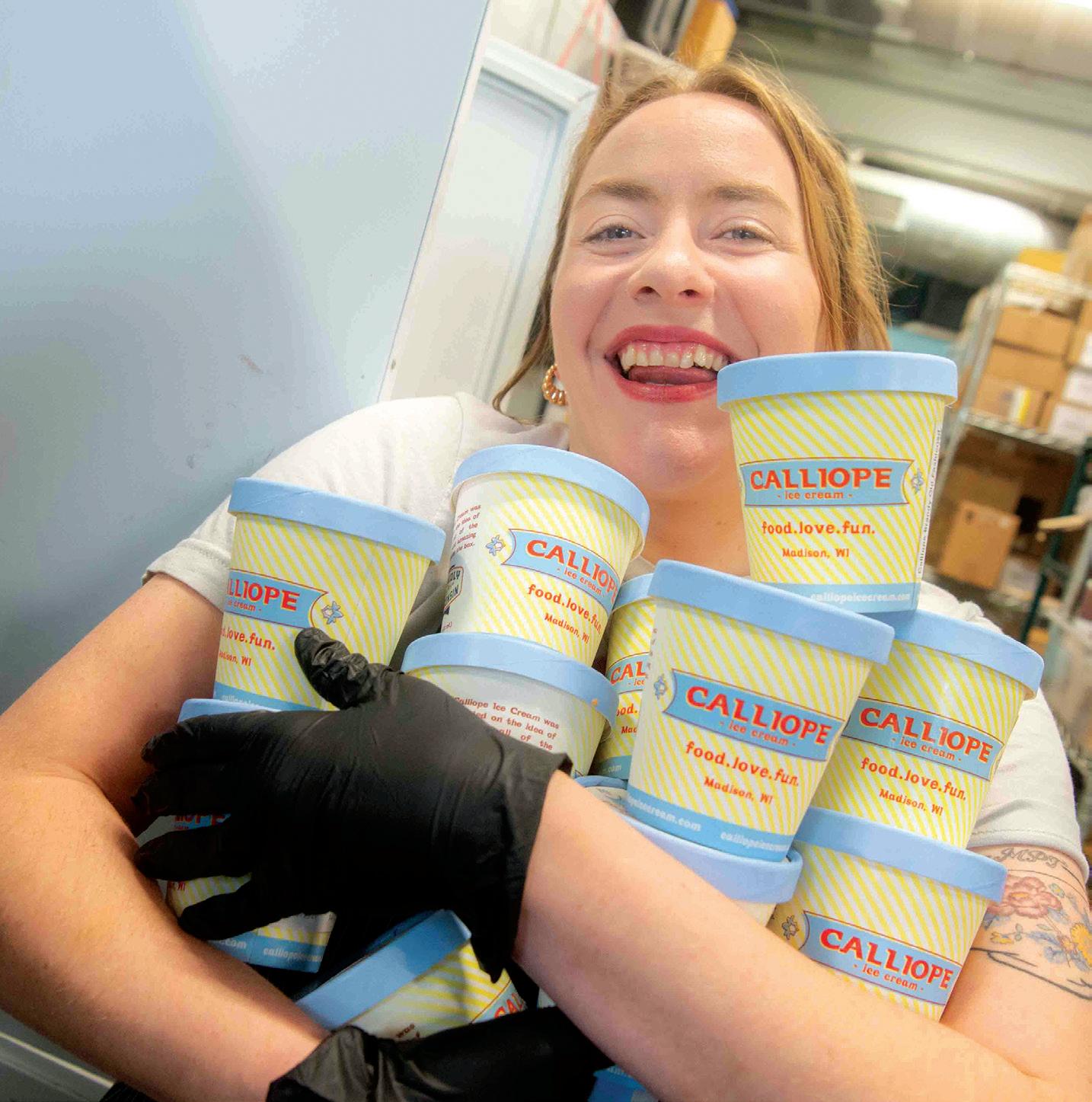
On the subject of treats, Calliope Ice Cream’s extraordinary flavor creations should be part of your exploration. To give you an idea of their creativity, I just looked at their current ice cream list: Tomato, Strawberry Coffee, Negroni, and Mango Chamoy Sorbet. The list is ever changing, so plan to visit often. You can also find them in select local grocery stores.
cover photograph
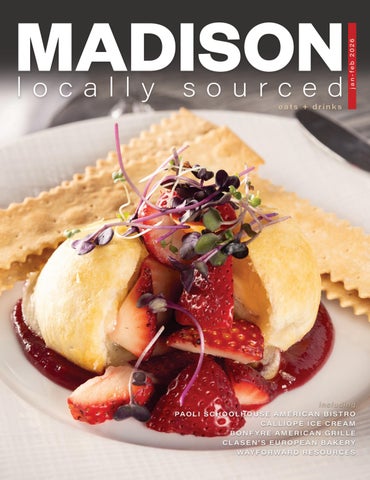
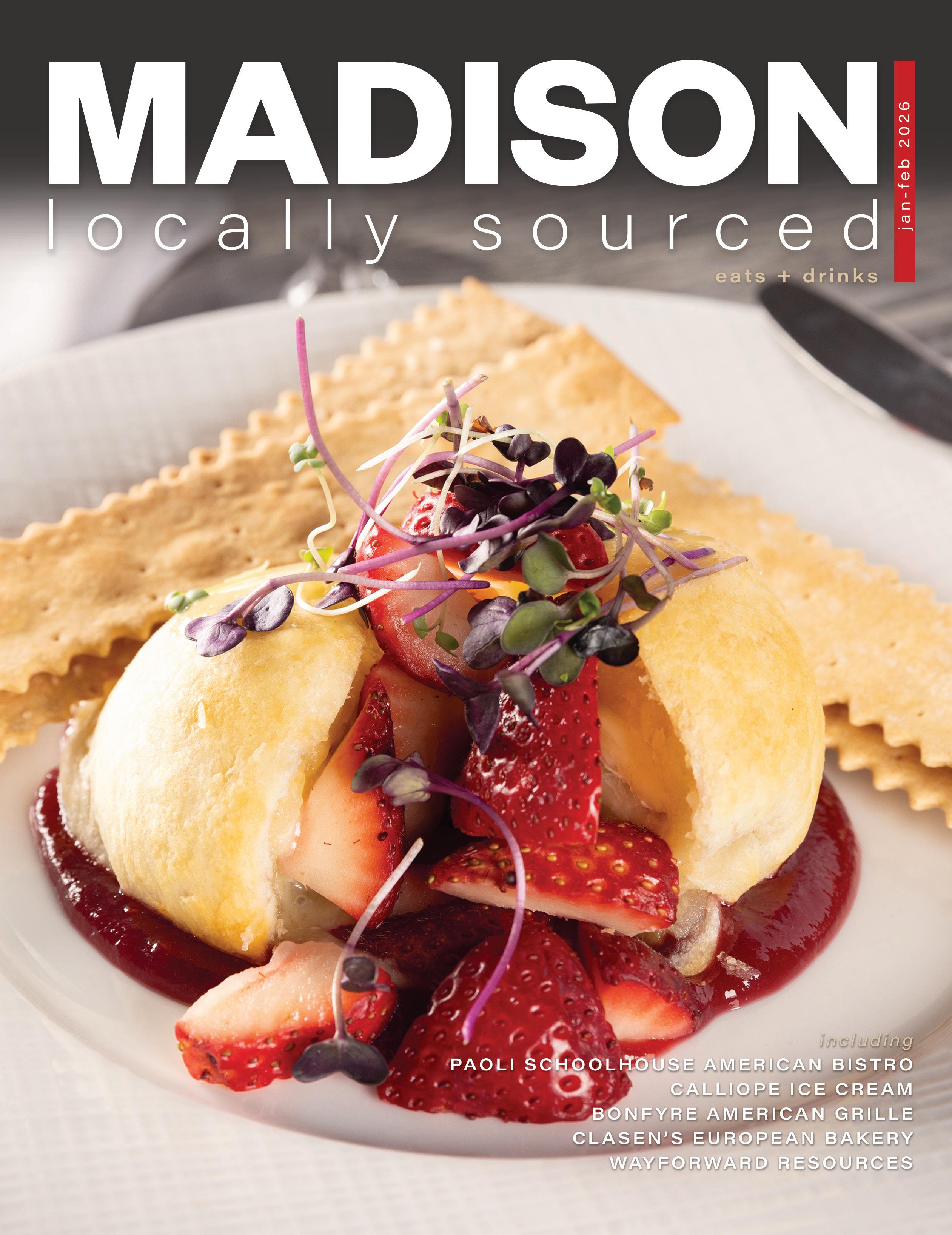
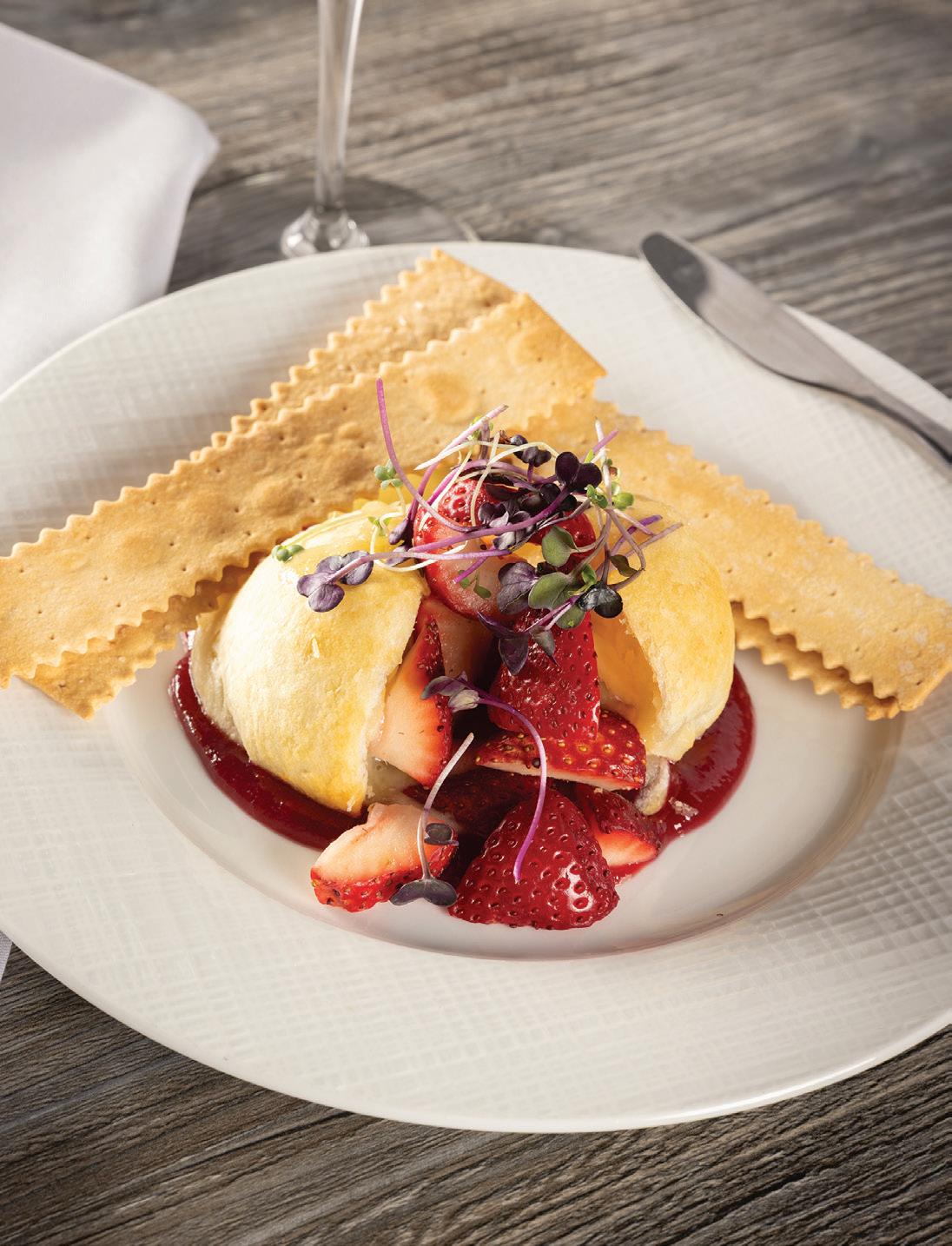
Brie En Croute taken at Paoli Schoolhouse American Bistro by Eric Tadsen
photographs on page 3 (top left to right)
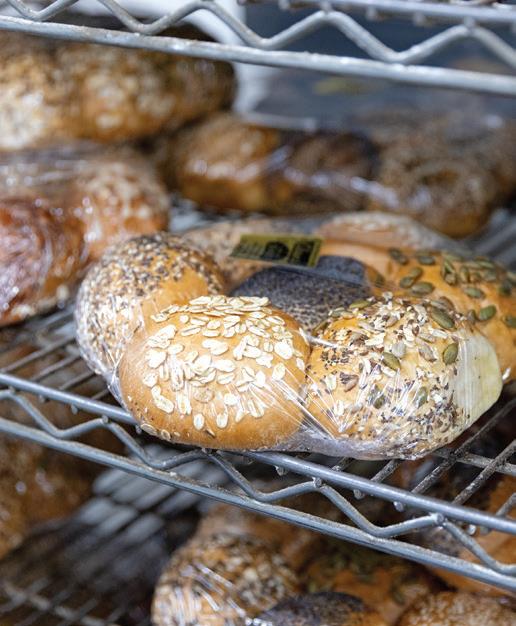
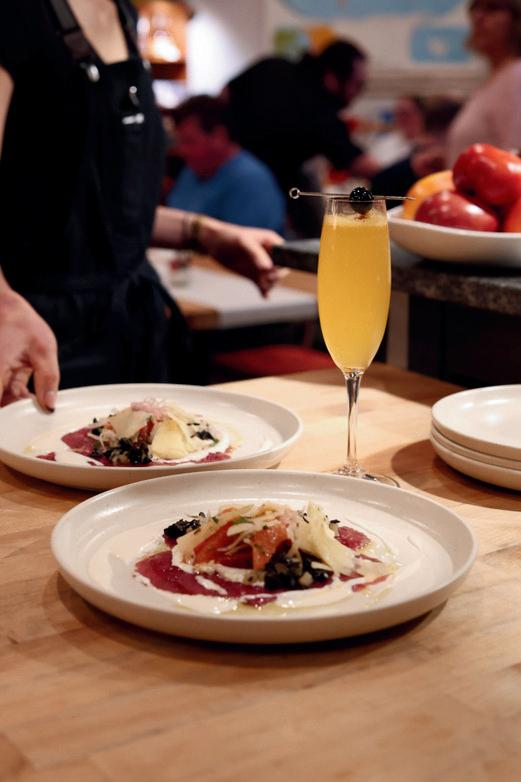
Taken at Clasen's European Bakery by Eric Tadsen
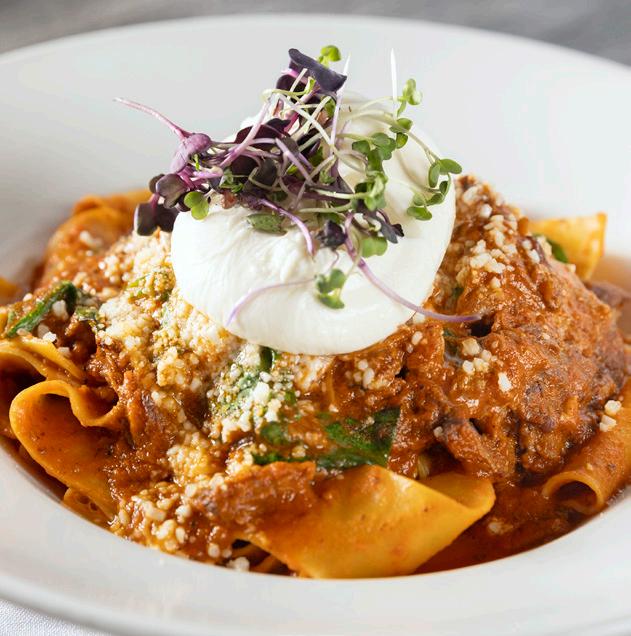
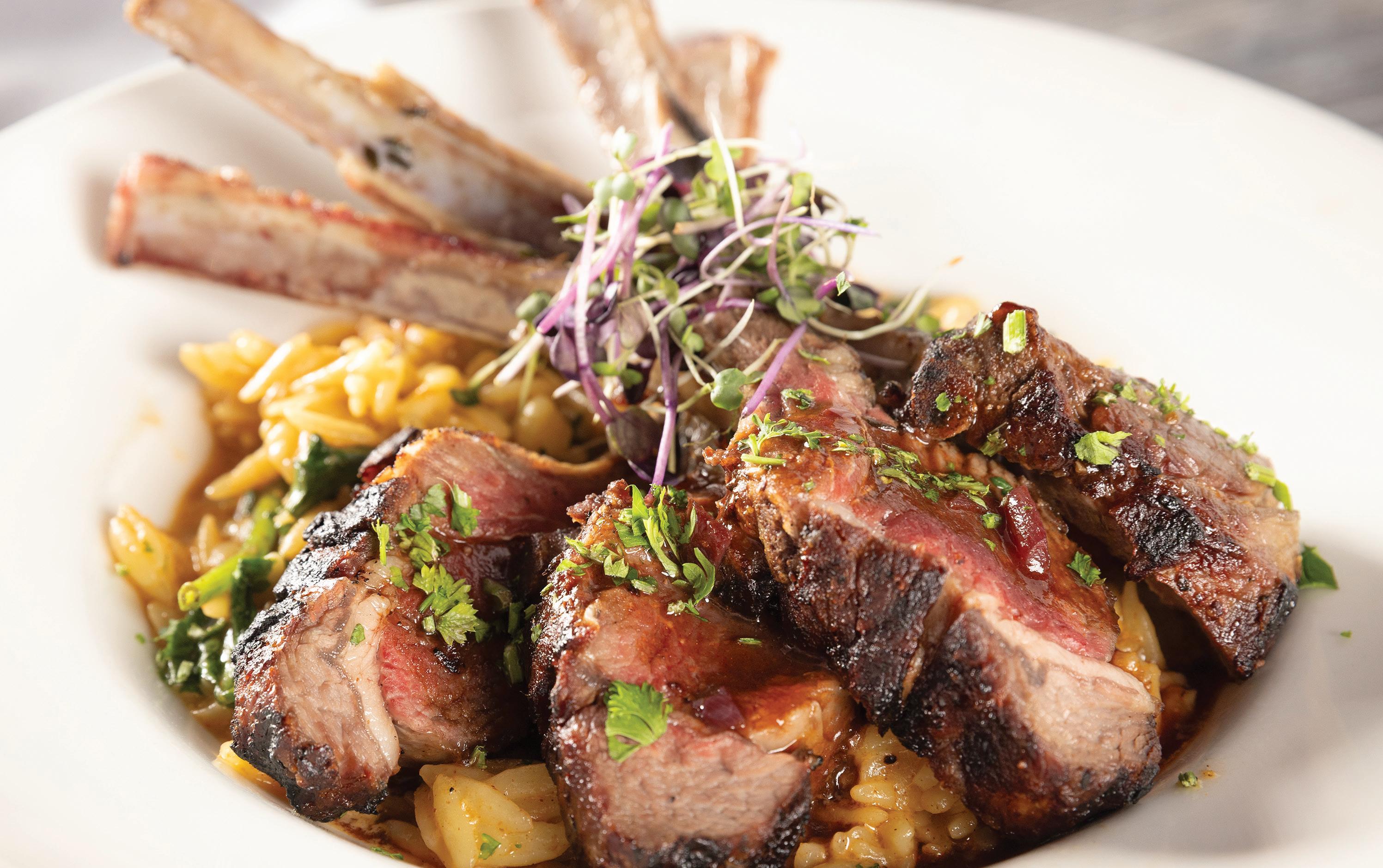
Lamb Ragu Pappardelle taken at Paoli Schoolhouse American Bistro by Eric Tadsen
(bottom left to right):
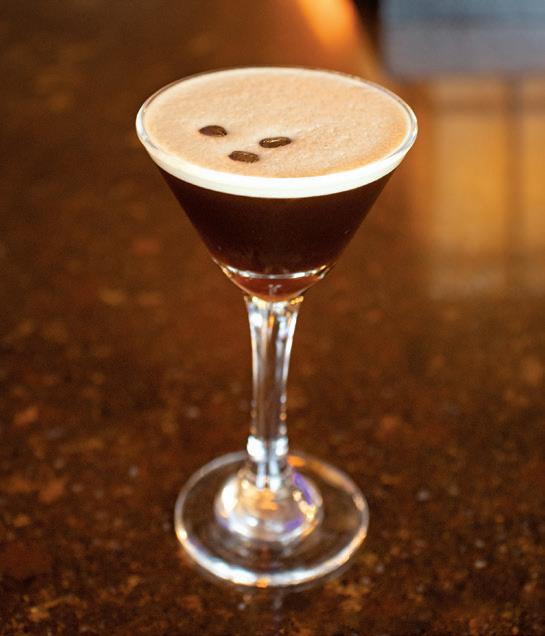
Taken at Bonfyre American Grille by Eric Tadsen
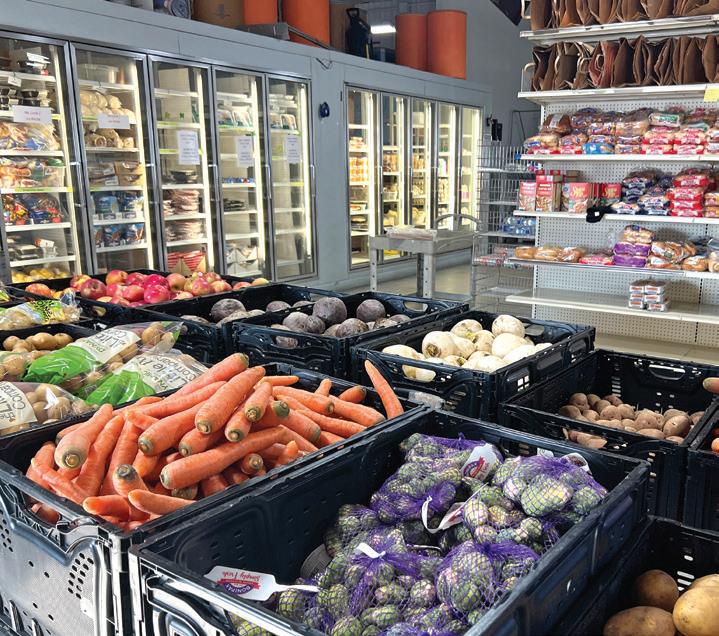
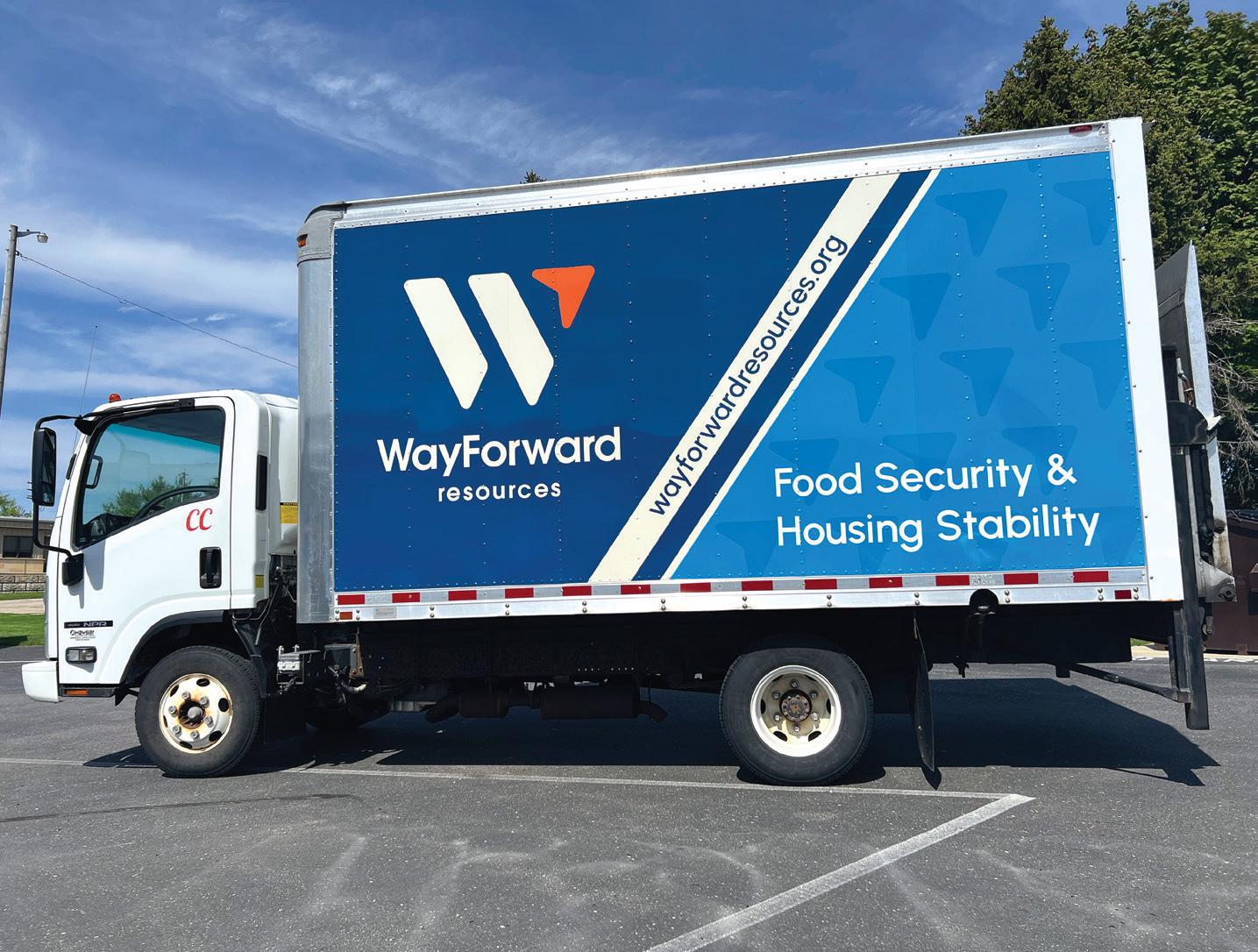
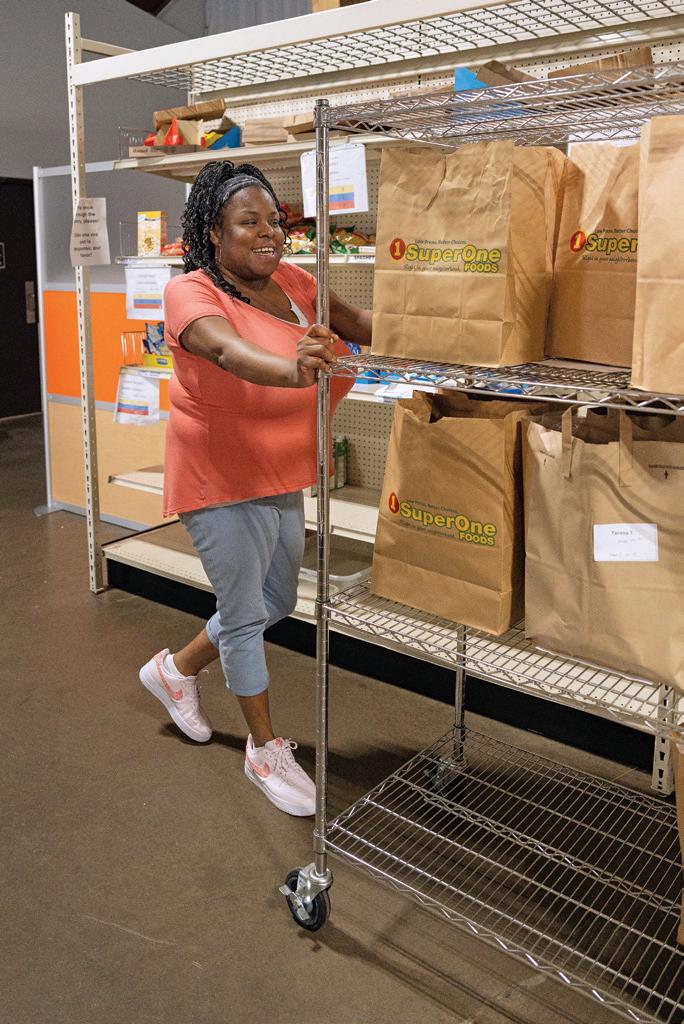
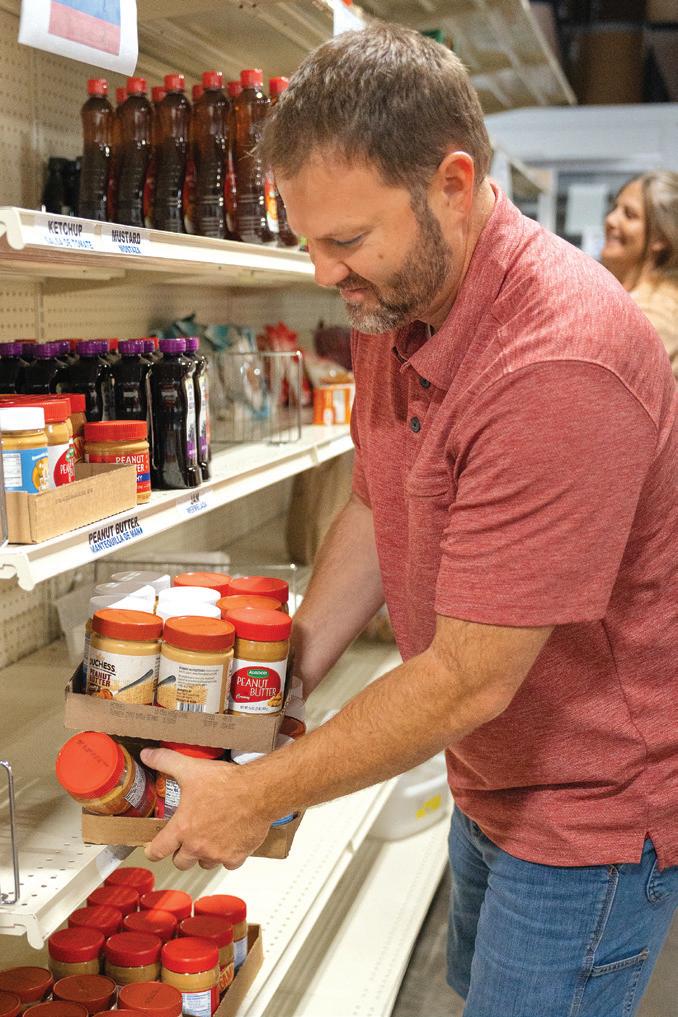
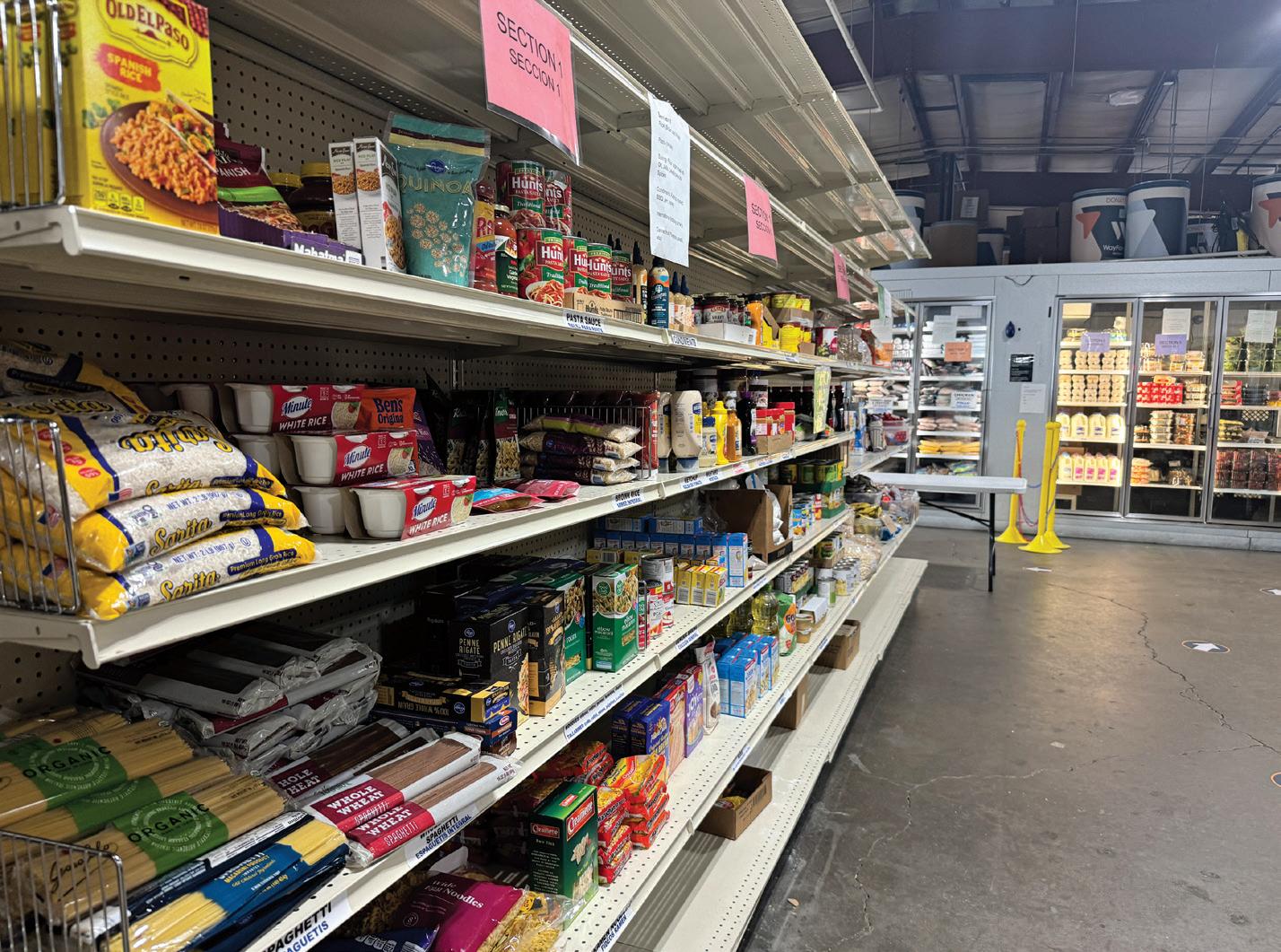
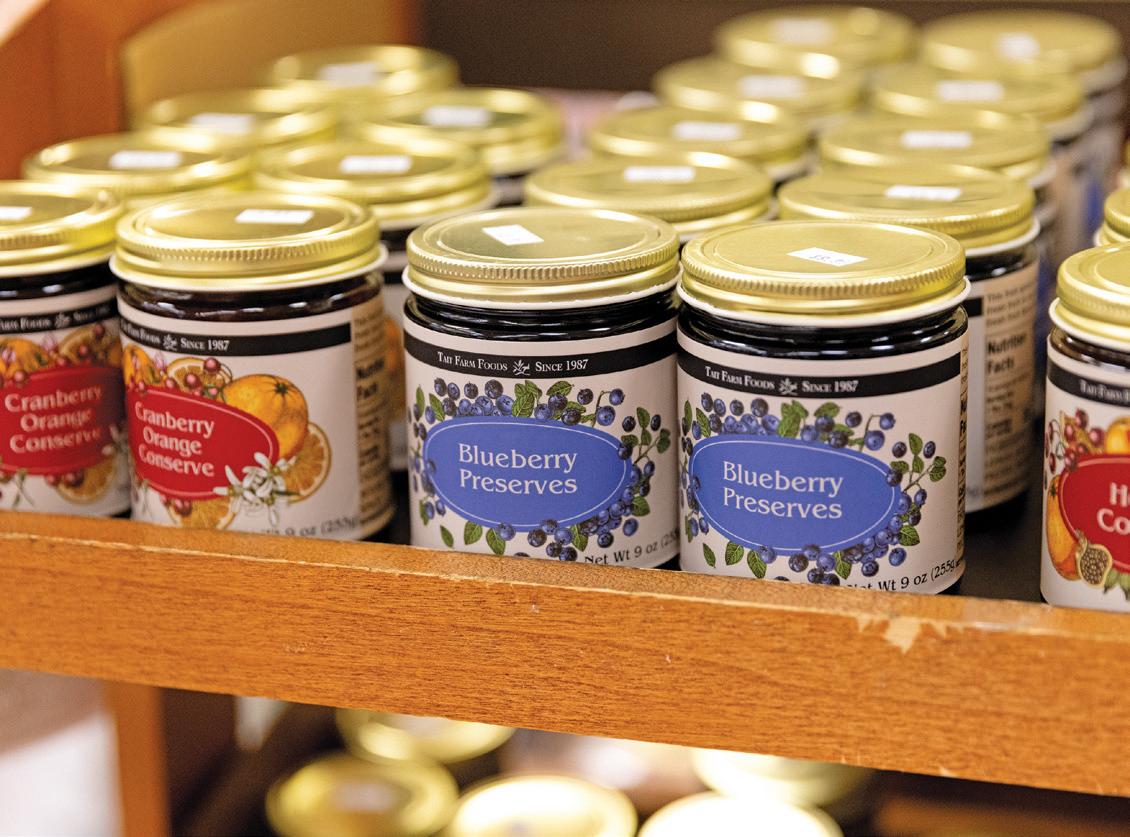
Provided by WayForward Resources
While we encourage you to have fun and visit these wonderful local businesses (and more), we hope you also recognize that not everyone in our community has the means to do so. WayForward Resources’ mission says it all: to bring our community together to create food and housing security through action and advocacy. They envision a community where everyone has the stability to thrive. Read our article to churn out some ideas for how you can support community members and WayForward’s work.
And while it may not be food themed, artist Ariana Vaeth’s paintings will also fill you—with intrigue and joy. We feel fortunate to show you some of her pieces and share her story with you.
Wishing you glorious winter adventures, including experiences with those we’re featuring inside. And we hope the first two months of 2026 leave you excited for what the rest of the year has to offer!
Paoli Schoolhouse
AMERICAN BISTRO
by Kyle Jacobson
In what she believes will be the final chapter of her career, Debbie Schwartz has been learning new lessons inside Paoli’s 1854 schoolhouse, built two years before Paoli itself came to be. The building has been her project, classroom, and teacher since 2001. By 2019, as Debbie settled into her 60s, she found a sense of calm in knowing she was exactly where she was meant to be— serving casual fine dining to the Greater Madison area.
Debbie’s journey was heavily influenced by the people in her life—a kind of synchronicity, as she sees it. It starts with her children. “I’m a nurse by profession,” says Debbie. “But I stopped working
when I had a family. In the late ’90s I just took up this hobby making things out of dried flowers because I just liked to do it. I had no thought of trying to sell these things, but people would encourage me.”
One of those people was Francie Cotter, Debbie’s right hand for the last 24 years. Debbie is very straightforward in saying that without Francie, the story doesn’t even begin. Francie has a knack for design, turning Debbie’s crafted goods into beautiful arrangements. “She had a wonderful eye for visual merchandising, and people loved it,” says Debbie. Through Francie, Debbie’s confidence grew into seeing her work as more than merely a hobby.
Operating outside Debbie’s periphery was a man by the name of Bill Hastings, once dubbed the unofficial mayor of Paoli. Bill is credited by everyone in the community for saving the downtown. Decades ago, when many of the buildings were for sale, he bought what he could and preserved the town’s history. One of those buildings was the old schoolhouse, which became a place where various makers could rent space to sell their wares.
Debbie was one of those makers, bringing her handcrafted floral arrangements to the east half of the schoolhouse. In 2001, Debbie “offered to buy the building from Bill because I wanted to establish my business here.” The building had developed many layers, including the west room, added around 1900 and serving as an apartment while Bill owned
it. Over the next several years, Debbie took advantage of having full access to the space to run it strictly as a retail business. As for the apartment, “I gutted that. Took off the false ceilings. Took up the carpeting, and there was a beautiful original floor from back in the 1850s. I took down the wall, opened everything up, and started the restaurant in 2008.”
The initial concept was to have a little café for soups, sandwiches, and coffee. People would come in, look at the retail side of things, then stick around for a small plate while enjoying a view of the Sugar River. “We did that for a year or two, and what happened is the restaurant kind of kept growing,” says Debbie.
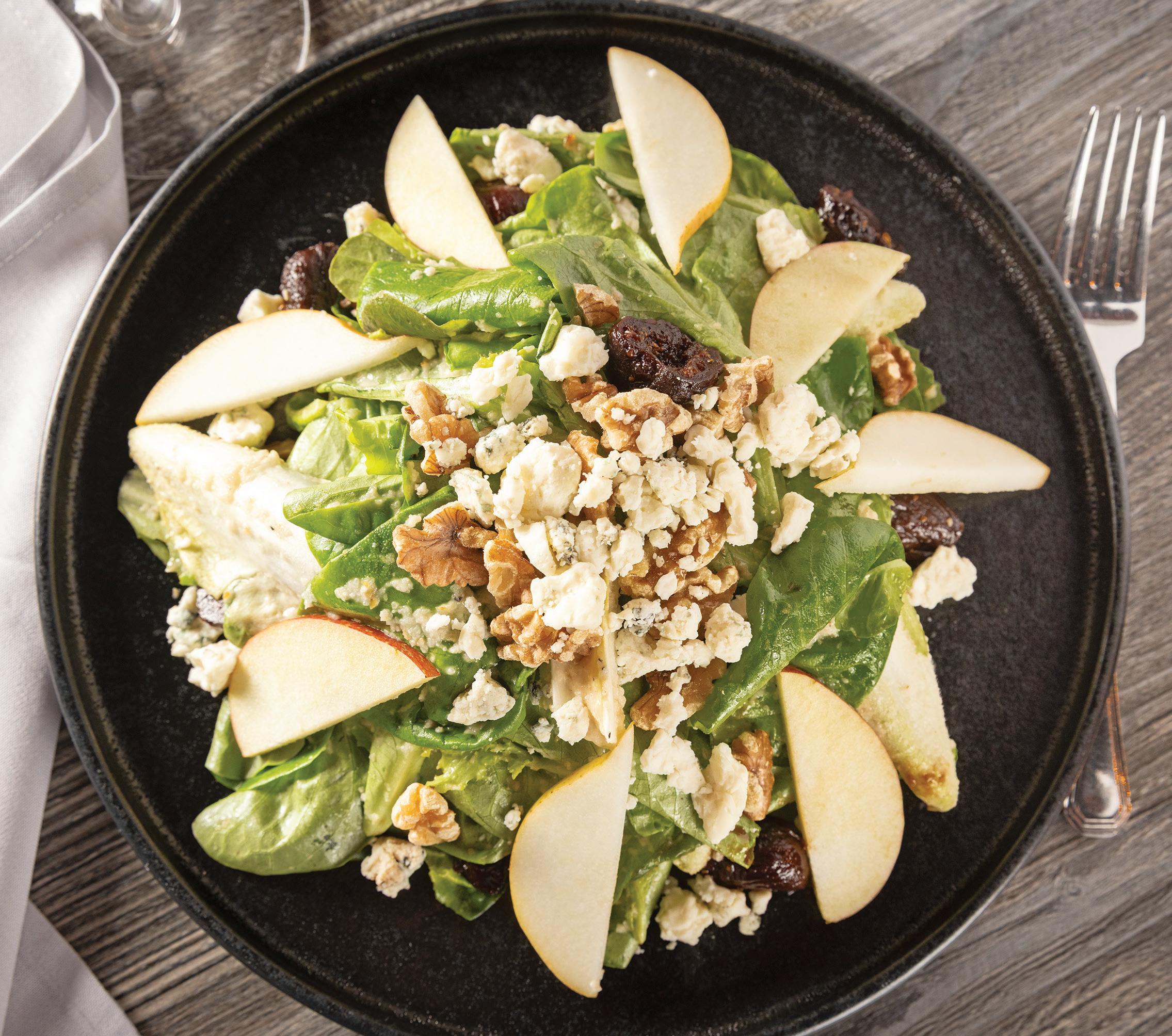
Even as the restaurant has grown, primarily serving lunch and dinner, lighter fare remains a menu staple. “A favorite of mine is the Bleu Bib,” says Debbie. “Local bib lettuce, lardons, radishes, cherry tomatoes, pickled shallots, bleu cheese, and crème fraîche. It’s very good.” The Honey Hill Farm
Brie En Croute
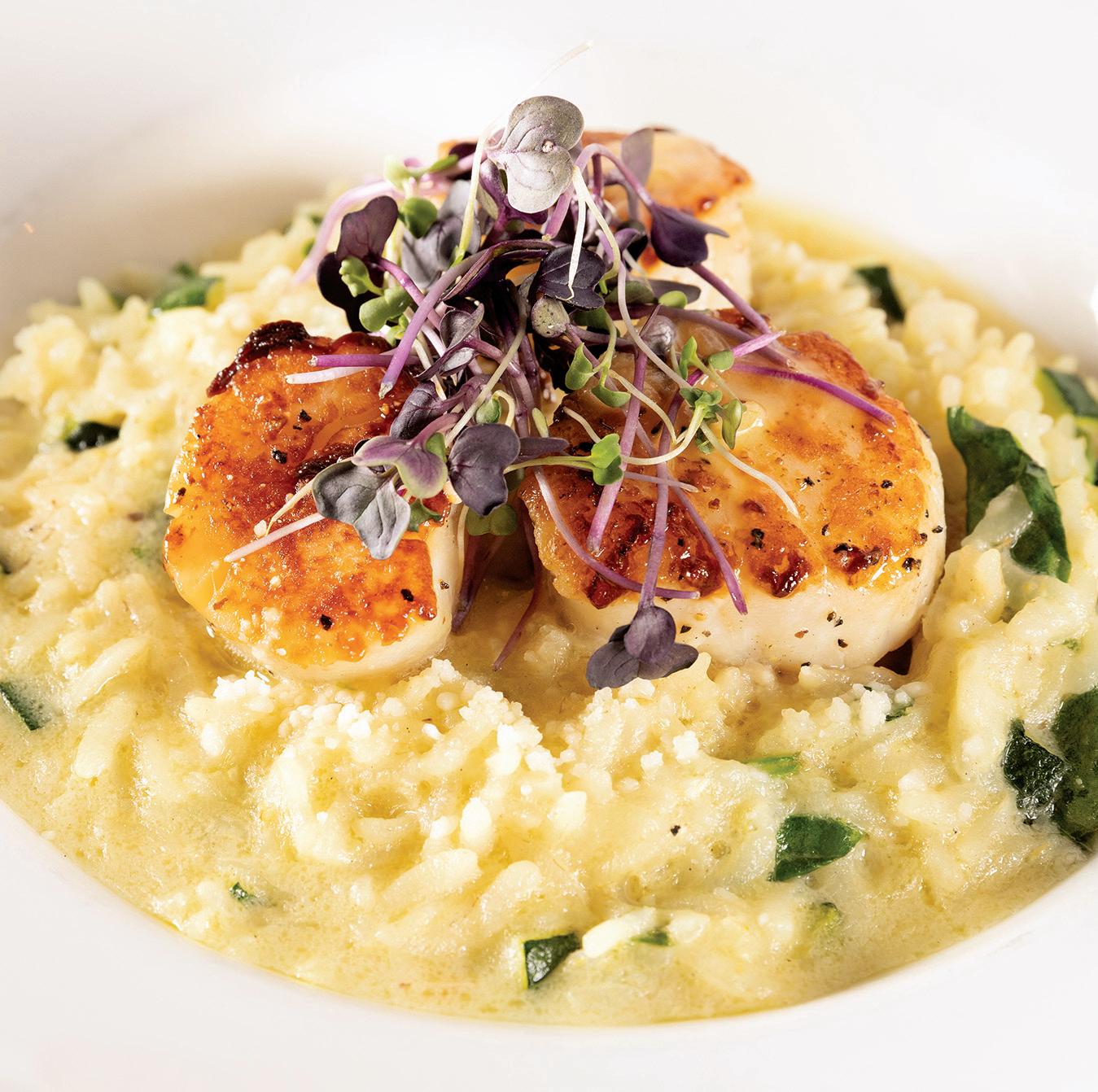
Seared Scallop with Lemon Risotto
Everyone who stops in finds an experience as welcoming as it is delicious.
Spinach is another standout, featuring local spinach and a warm maple-bacon dressing.
In 2019, right before COVID, Debbie made the biggest move of her business: she ditched the retail. It was also one of the healthiest decisions she made for Paoli Schoolhouse and her own wellbeing. She says, “Retail is hard. I didn’t enjoy it anymore.” Instead of having to travel to shows, she could be around family every day, her kids and grandkids living close by.
While much of the day-to-day stress of retail went away, COVID introduced new challenges, and the people in her professional life were there to help see it through. Her manager at the time, Ashley Petersen, was paramount to keeping the restaurant afloat. “She did an excellent job getting us through that time, but by June 2021, she was burnt
out. She left on very good terms. Then I got fortunate that another gentleman, Bryan Tropke, came along. ... He’s been great, and since he’s come on board, the business has really taken off.”
Today, Paoli Schoolhouse American Bistro rounds out Paoli’s burgeoning food scene. One offering that truly sets
Debbie’s restaurant apart from not just other restaurants in Paoli, but across nearly all eateries in Greater Madison, is the Beef Wellington: a prime filet with mushroom ragout, bone marrow demiglace, whipped potatoes, and seasonal vegetables—a signature dish from former Paoli Schoolhouse chef Luis Garcia. “We’re all different,” says Debbie. “It’s not like every restaurant is a clone of the next. If you want an outdoor fish fry, you can go there. If you want bar food, that’s great. People love it. Or if you want a more sit-down dinner, you can come over here. It all works together. We support each other.”
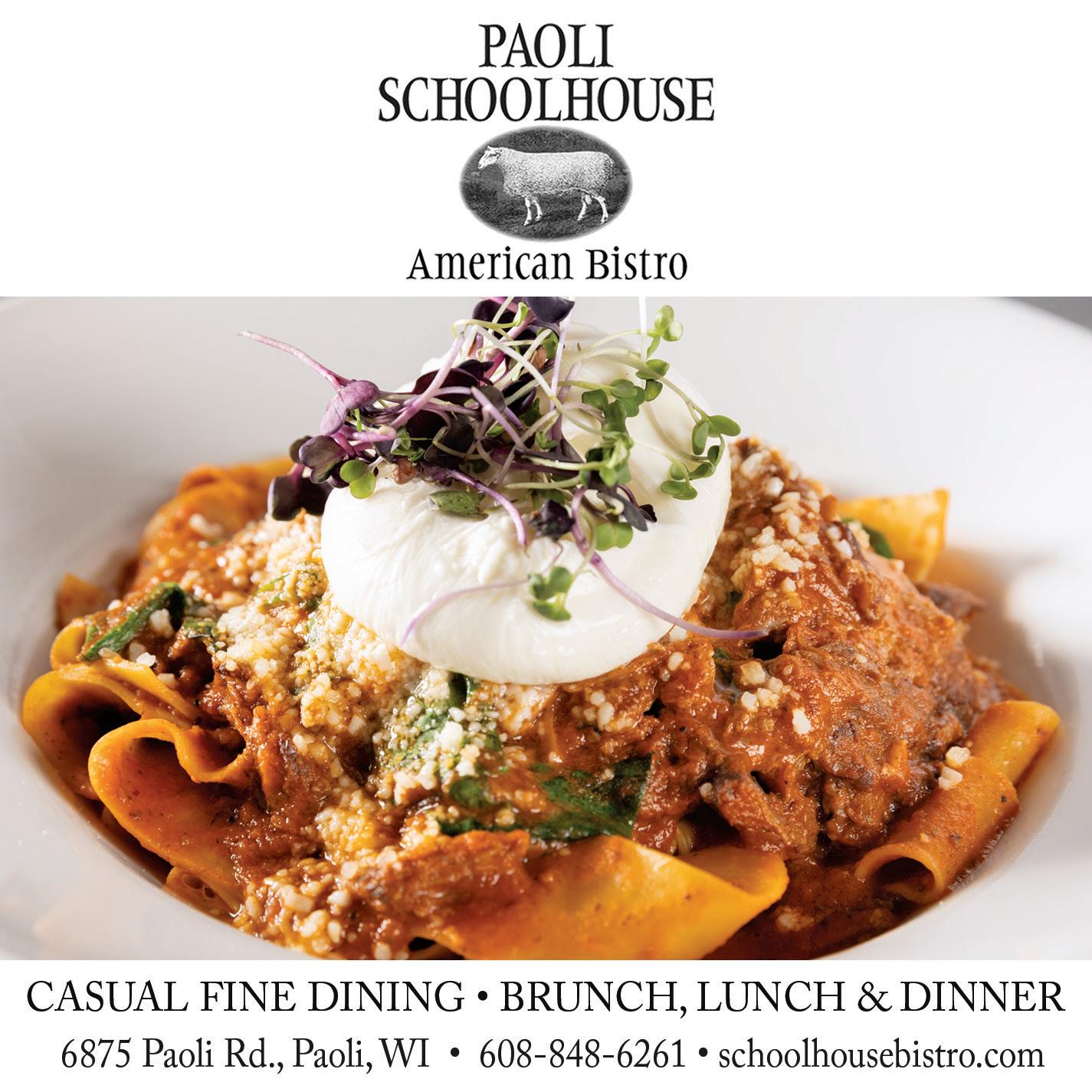
Another must-try dish comes from the heart of Paoli Schoolhouse, Dominga Montes. Dominga comes in when the restaurant is closed to do a lot of the prep needed to keep the small kitchen oiled for the next lunch or dinner rush. Part of that involves making pasta from scratch, which provides the foundation for their refined Lamb Ragu Pappardelle: slowbraised lamb, San Marzano marinara, braised greens, salsa verde, pecora, and burrata.
For Debbie, as important as it is for her to source Paoli Schoolhouse’s ingredients locally, the people come out on top. She always seems to bring the right person in at the right time, saying “It all works the way it’s supposed to.” Over time, the restaurant has grown into its own entity, run by a team she trusts to take the reins when needed. As a result, everyone who stops in, whether it’s kayakers, bikers, tourists, or neighbors, finds an experience as welcoming as it is delicious.
Kyle Jacobson is a writer whose vivid imagination lacks chronology and context.
Photographs by Eric Tadsen
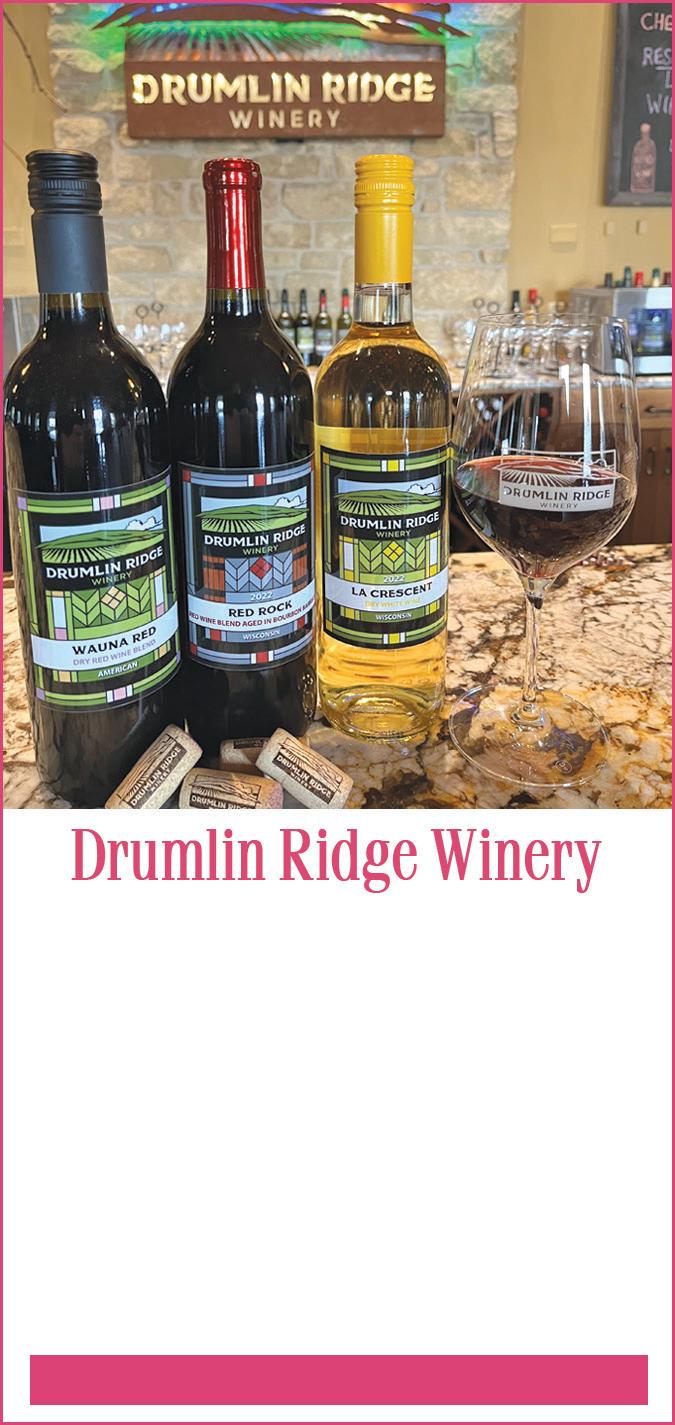
Drumlin Ridge, located just outside Madison, offers a private rental space for small gatherings. Guests can relax with a glass or a custom flight of locally produced wine while overlooking the hillside vineyard. Enjoy small plates or browse the gift shop.
6000 River Rd., Waunakee 608-849-9463
DRUMLINRIDGEWINERY.COM
Photograph by Barbara Wilson
Kyle Jacobson
ICE CREAMCalliope
Well, I need more than chocolate. And for that matter, I need more than vanilla. I believe that we need freedom and choice when it comes to our ice cream, and that is the definition of liberty.
–Nick Naylor, Thank You for Smoking
Since the mid-1900s, Greater Madison has established itself as a haven for fans of frozen treats. What’s shaping today’s trend of cream and custard is just how much variety there is. One innovator continues to draw adoration from its followers while inspiring other makers to take a chance on flavor: Calliope Ice Cream, where unconventional is the convention.
The origins of Calliope’s first flavors, Brandy Old Fashioned, Graham Cracker, Hot Peanut Butter, and Mexican Hot Chocolate, go back to the fall of 2011. Staci Fritz, now co-owner of Calliope, says
there wouldn’t be a Calliope Ice Cream without the wizardry of its creator, Jason Borgmann. “He was making eight pints at a time in the basement of The Weary Traveler.”
BY KYLE JACOBSON
A little backstory: Staci has been working at Ian’s Pizza—known for its innovative and over-the-top flavors—since 2006, a few years before the pizzeria moved into its current 100 State Street location.
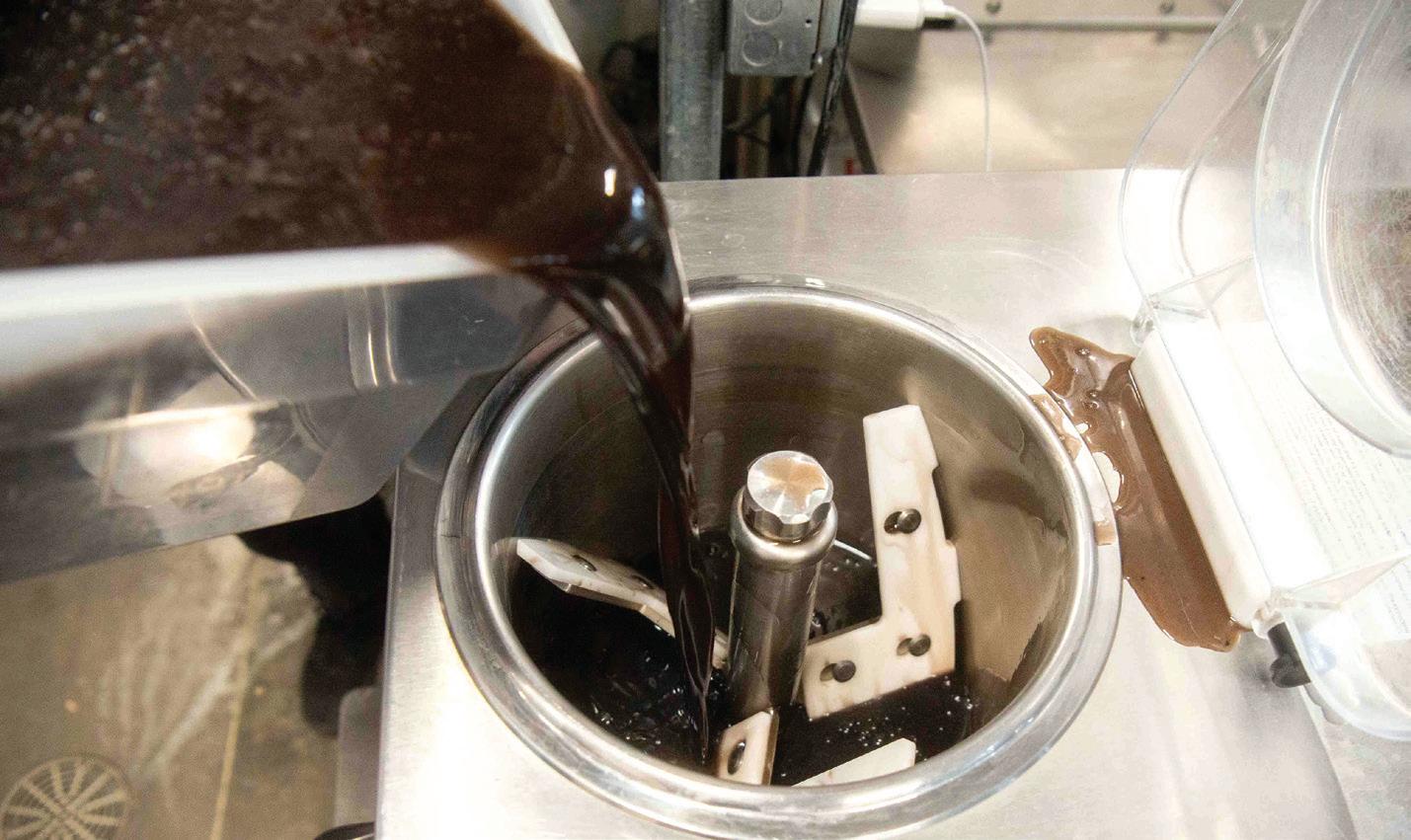
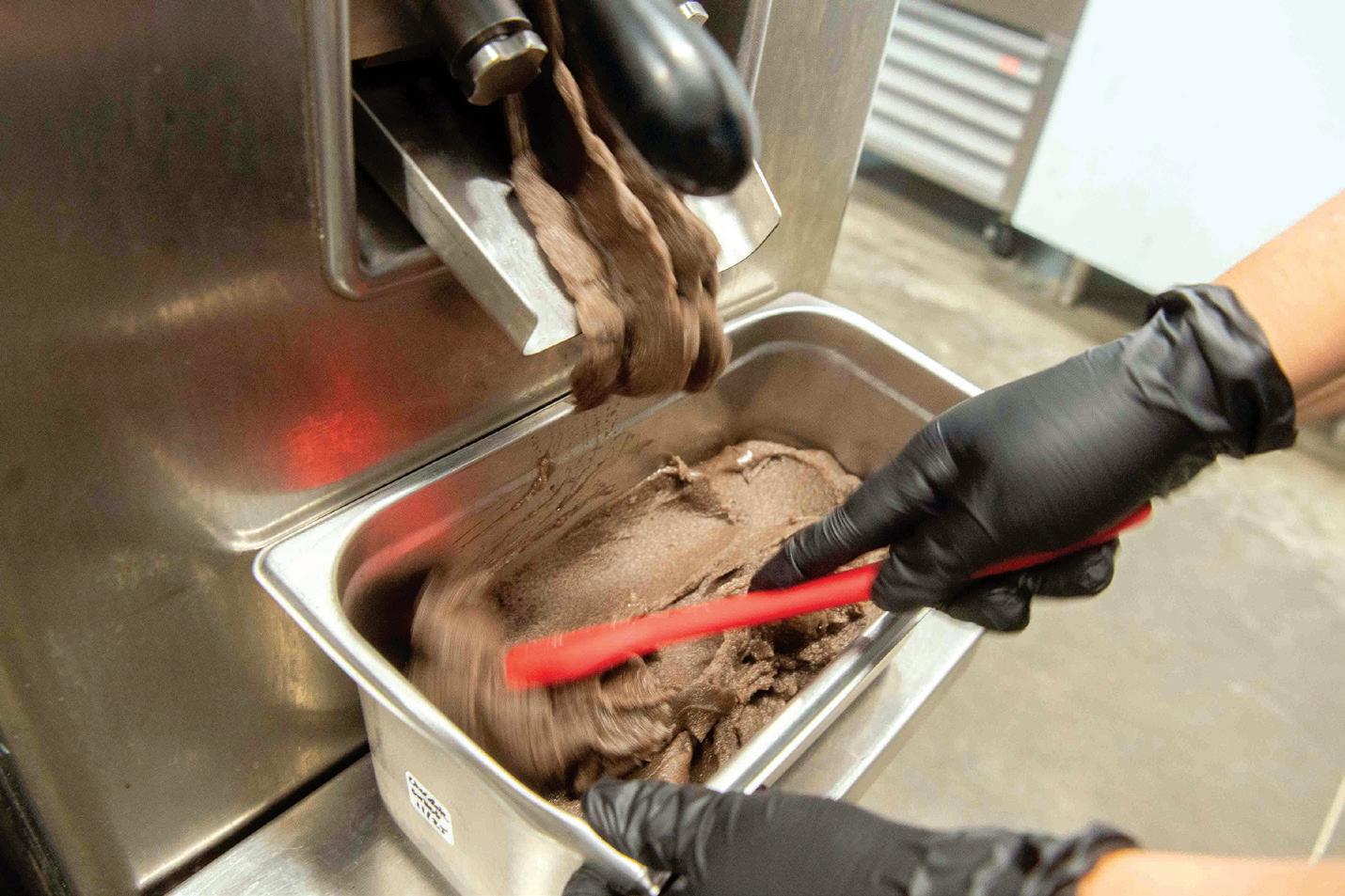
Adding sorbet to the batch freezer.
…THE CHAOTIC MAD SCIENTIST OF flavor.
“We were going to get a freezer, and we’d go and eat at The Weary. We were like, ‘Who is making this crazy-good ice cream?’ It was 2012, and I was given the task to find out who is making that ice cream and see if we could buy it from them and sell it. Turns out, that’s highly illegal. So I set up a meeting with Jason, and then a bunch of us went over there and ate ice cream. Jason was like, ‘Yeah, I can sell you guys ice cream, but what I’m really looking for is a business partner.’”
Perfect! Staci had been explaining mac and cheese pizza to people for six years. “I saw this dude doing the same thing with ice cream,” she says. “I was like, I could sell the hell out of this.”
So Staci and Jason, along with Nick “Marty” Martin, owner of the Madison cluster of Ian’s Pizzas, were ready to take Calliope to the next level...well, after a
few logistical hurdles, like who would make the quantity of ice cream needed for distribution. On the production side, the team would work with Chocolate Shoppe Ice Cream, who have long aided smaller ice cream makers in achieving their sweet dreams. To nail down potential vendors, Staci went to local shops and grocers to develop relationships with those who might carry their product. Jason was left with relatively little to do over that year, so after getting a job as a head chef, he decided he was done. Marty and Staci bought him out in 2015.
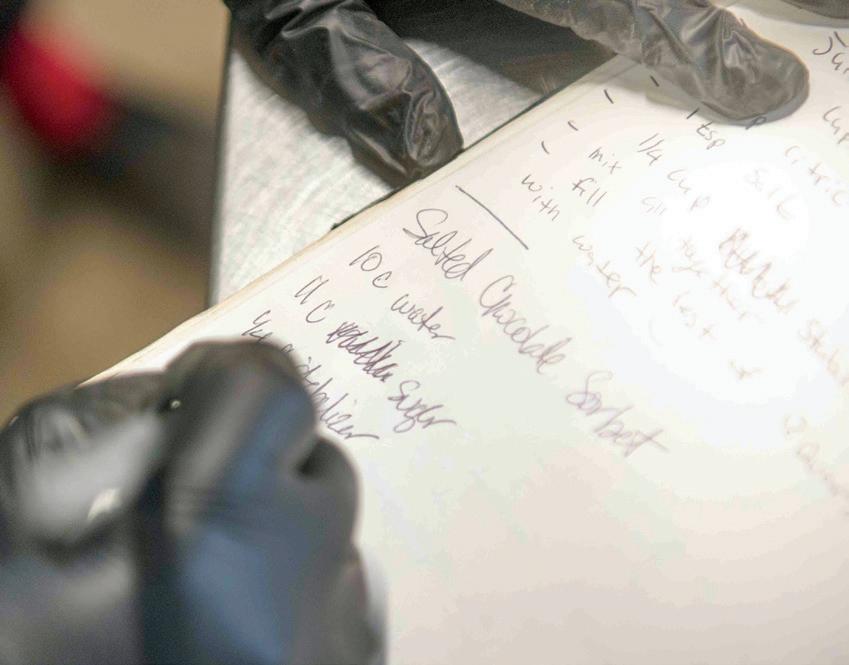
With Calliope losing its flavor wizard, Staci surprised herself by how readily she filled the role. Having a background in marketing versus cooking, she operates more as the chaotic mad scientist of flavor. “Things that I make, I don’t necessarily have recipes for,” says Staci. “One of the first things I made was Blueberry Jalapeño. Jalapeño in fruit ice cream, so good.”
Some of the flavors are self-explanatory... as much as they can be. Tomato Soup ice cream served with a mini grilled cheese, sure; French Onion Soup ice cream, why not; the fan-favorite Lemon Lavender, yes please. But then there are the flavors that, at the very least, raise some eyebrows. Most recently, that would have to be the Bagels and Lox ice cream, which uses fish from Sitka Salmon. In that vein, Staci has had “this idea for a while of making gravlax, like the salt and smoked cured salmon with dill, and putting it into a cream-cheesebased ice cream and then adding capers, red onions, and sesame seeds.”
If it isn’t clear by now, Staci has a bit of an issue with pigeonholing ice cream as a dessert. She’s gone to lengths to prove it works just as well as an appetizer, something that prepares the palate rather than closes a meal. During a fundraiser for the chamber orchestra, one of the swankier affairs Calliope is a part of, she served a Tom Kha Gai Soup ice cream: bright, savory, layered,
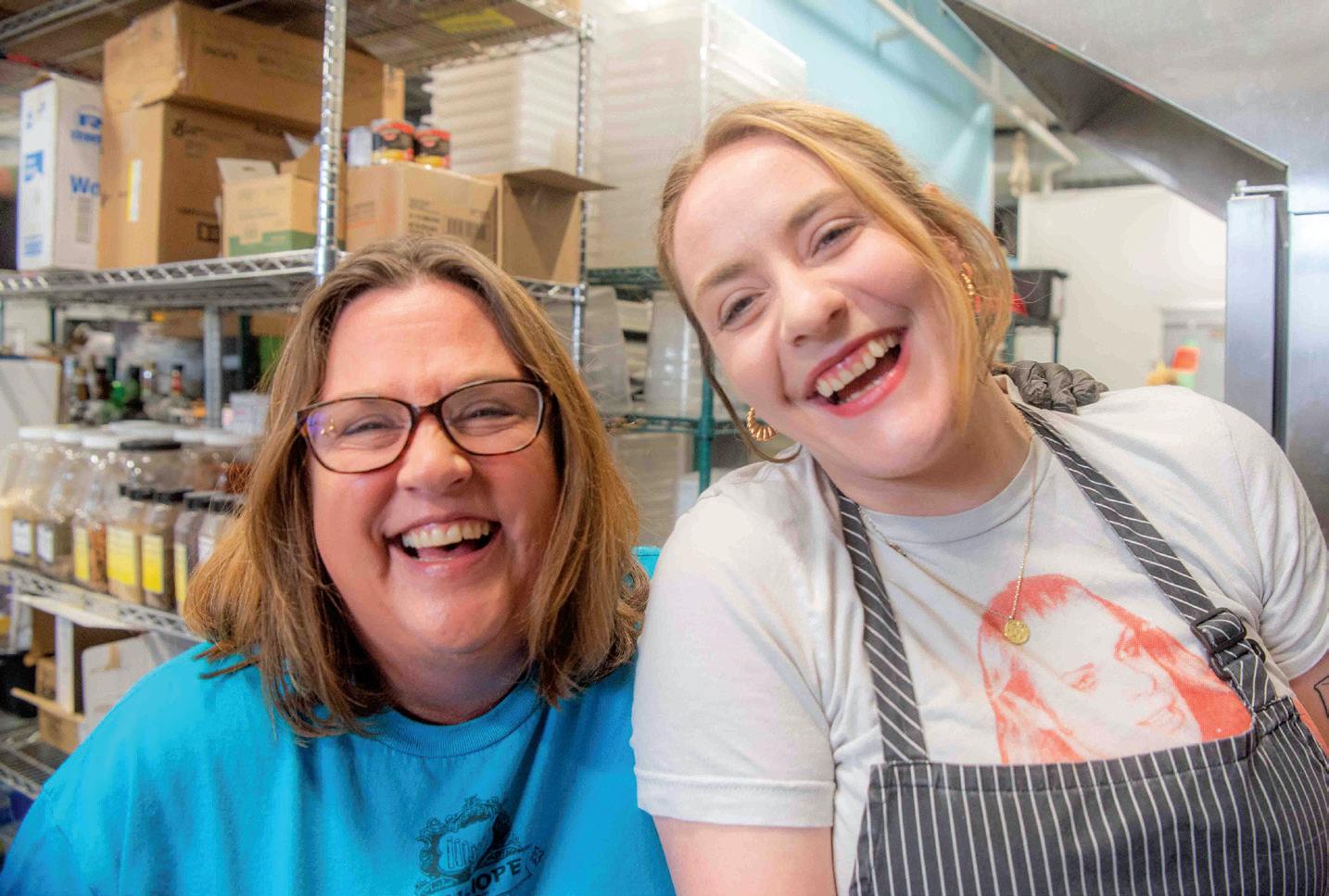
Staci Fritz (left) and Danielle Tucci (right)
and unapologetically not a sundae. The flavor is the brainchild of Danielle Tucci, who has recently joined Staci in developing new flavors, like the Lychee Sorbet. At the end of the event, awards are given out for each category. Danielle was a little disheartened when her ice cream didn’t win, but Staci reassured her, saying, “We’re never going to win for dessert. We should be under appetizer.”
The future of Calliope is looking to once again break the mold, but this time, it’s their own. With Ian’s Pizza opening a location in Verona, Staci says, “We can’t bring in Chocolate Shoppe’s ice creams since we’re too close to one of their scoop shops, so we’re wondering what we do for
the norm-y flavors. ... This winter, we’re tasked with coming up with a vanilla and coming up with a chocolate that are vanilla-y and chocolate-y enough to satisfy those people, but Calliope enough to not just be another vanilla. It’ll be fun. I’m excited.”
Fresh Chocolate Sorbet
Working outside the box with a handful of parameters is where Staci feels most comfortable. “I don’t know what I can’t do or what I’m not supposed to be able to do, so I try it. To hell with common sense.” She’d rather be in the kitchen making mistakes than at the drafting table second-guessing measurements. As we’re having our conversation, the owner of Ledger Coffee came up and asked us to evaluate some experimental flavors. He mentioned wanting to do a collab with Staci, and she smartly said, “You just give me the stuff and then I turn it into things.”
Originally from Iowa, Staci has long had a crush on Wisconsin, embracing winter as cozy season with tea in her mug and a cat on her lap. She’s not trying to change the world through her ice cream; she’s silently proving that being the best isn’t as important as being yourself. There’s plenty of room for all in Greater Madison’s ice cream arena, and Calliope begs people to “just try it. You don’t have to like it. Be open to ideas. ... You can end up in the greatest places and, sometimes, the stupidest places.” Staci challenges us to celebrate doing something different because there’s a chance we’ll love it.
Kyle Jacobson is a writer who believes if I scream and you scream that’s just too much screaming
Photographs by Cullen Granzen .
Photograph by Barbara Wilson
Kyle Jacobson
Bonfyre AMERICAN GRILLE
by Kyle Jacobson
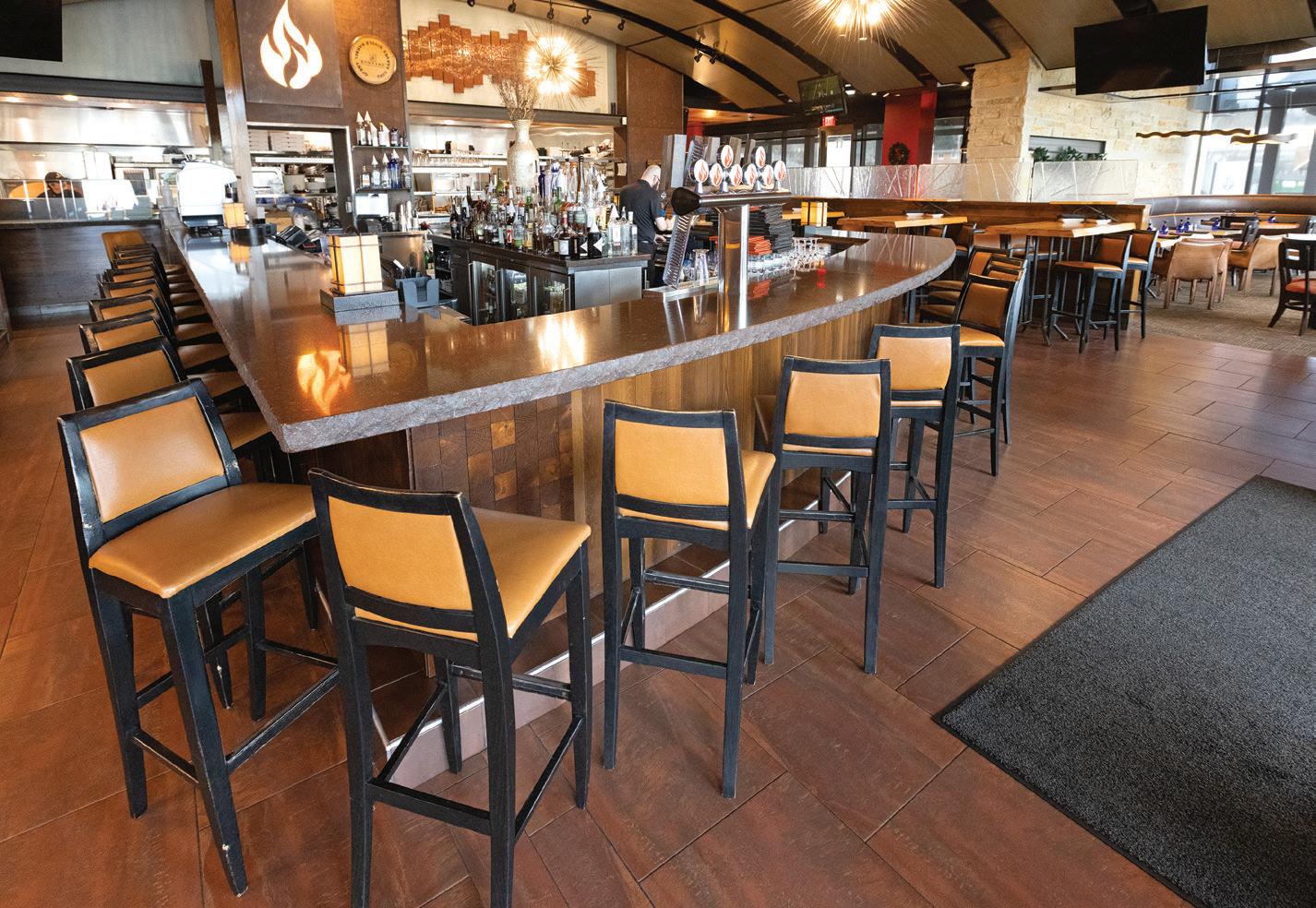
Upon arriving at Bonfyre American Grille, you’re struck by the neighboring clinic’s imposing wall of mirrored windows above the Bonfyre fascia. But the restaurant itself glows at street level, where calming yellow and orange lights outline its stylish fixtures. You enter the vestibule, and muffled laughter from a bartender serving cocktails to a peninsula of patrons rises above the hum of Beltline traffic. After moving through the final set of doors, you’re hit by the warmth of well-seasoned meats cooking over a woodfire, and it's clear you’re somewhere special.
Owner Alfredo Teuschler, the veteran restaurateur behind Eno Vino, Cloud 9 Grille, and notable Houlihan’s franchises in Wisconsin, has put a lot of thought into how each patron’s experience should begin. Going on 17 years with Bonfyre, he has witnessed many evolutions in
dining firsthand. “Before it was location, then the service, now it’s ambiance and food. People are more sophisticated now. People want to experiment a little bit.”
And for a restaurant that defines itself as polished casual, that spirit of experimentation is reflected in a rotating menu featuring local ingredients. Wintertime features heavier food, like pot roasts and carbonara, while summertime is lighter fare, like ceviche and seafood. Alfredo has also made the shift from overcrowded plates to smaller portions, a more curated affair meant to leave diners feeling like they don’t have to commit to one entrée.
One thing Bonfyre does particularly well is providing a variety of seating options so patrons can choose their preferred atmosphere. Want a quiet corner away from the hustle and bustle of the
kitchen? A warm spot by the fireplace? Something outdoors on a warm summer night? Or maybe just a spot at the bar to enjoy the game? It’s all there, and it’s all thoughtfully designed, with furniture sourced from nearby Don’s Home Furniture.
That said, the heart of Bonfyre is the woodfire grill, and the bar offers the best vantage to take in the full effect. The unobstructed aroma from the boldness
of Alfredo’s spices whets your palate before you’ve even cracked the menu.
Add the sizzle of rotisserie chicken that’s been marinating for 48 hours in oil and herbs, and your appetite doesn’t stand a chance.
Of course, part of the smell is also the woodfire: a combination of oak and ash for heat and hickory to impart flavor.
“You get a little buttery, nutty taste,” says Alfredo. This infuses itself enticingly
into not just the chicken, but also the steaks—from filet to bone-in ribeye to strip—grilled shrimp, baby back ribs, and lamb chops.
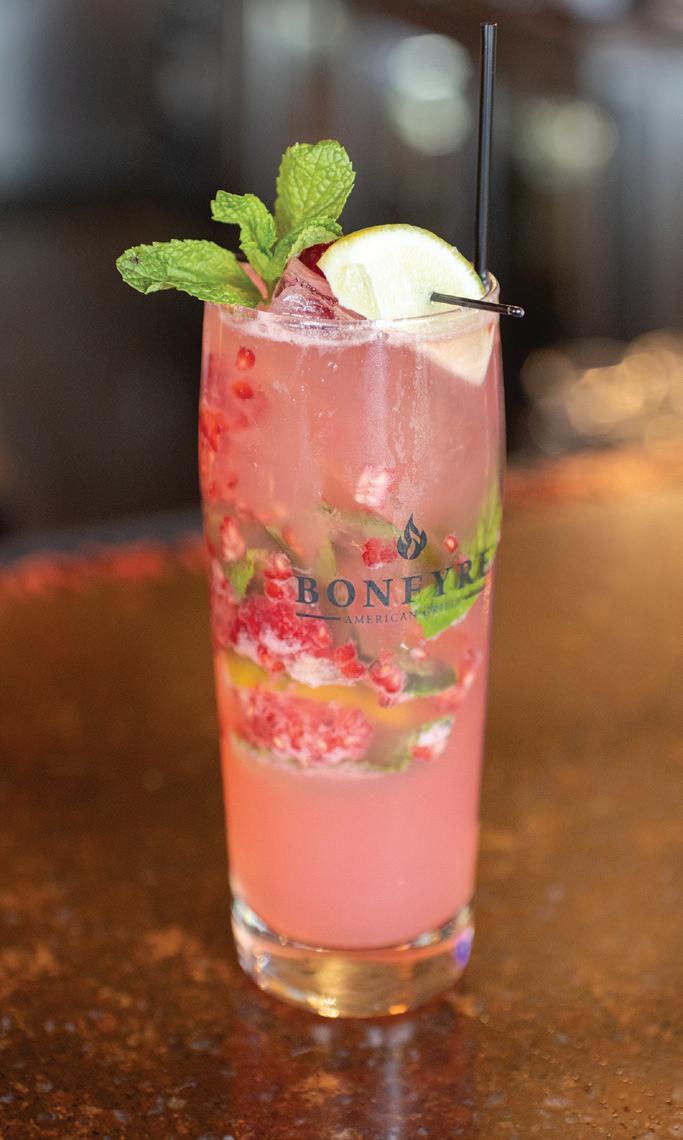
And what’s a signature entrée without a signature drink? The experience Alfredo provides is meant to come in waves. “Like in Europe, you have your aperitifs, you have your wine. At the end of it, you have your digestifs. If the server is good, it should hit on all three of those things.”
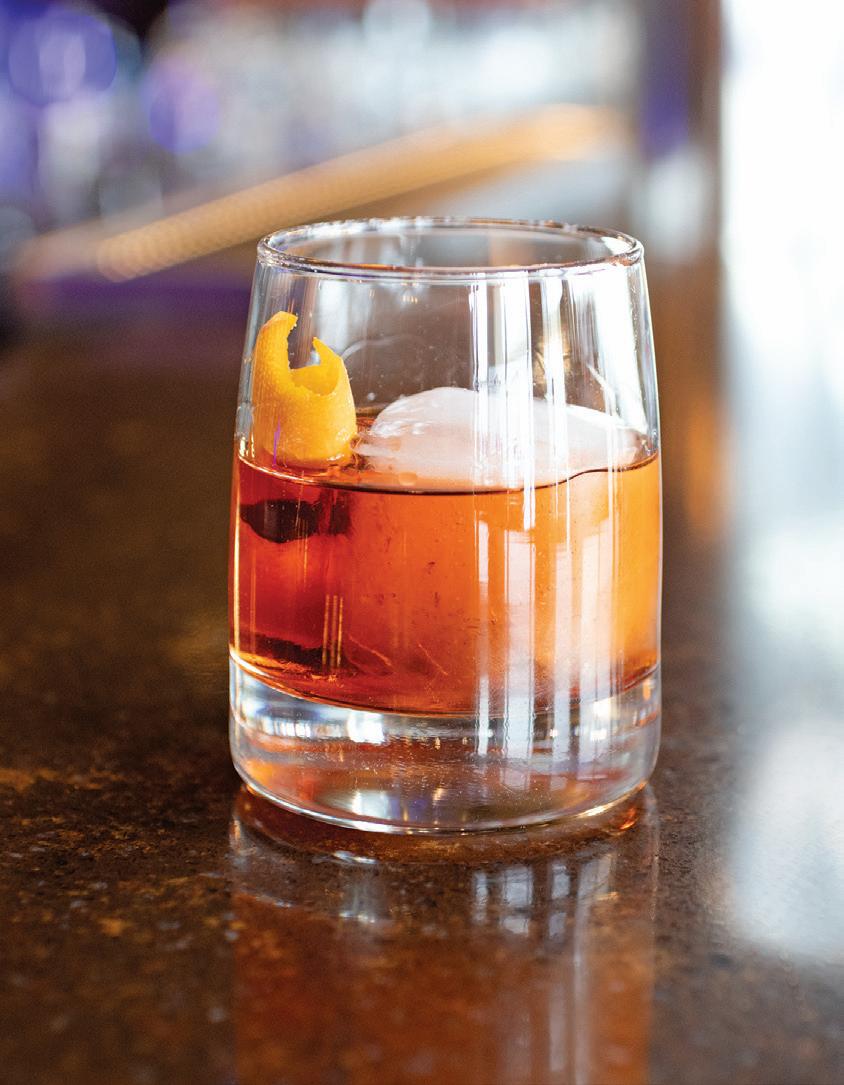
You might start with a more traditional aperitif, like the Aperol Spritz or the Bonfyre 75, an effervescent ginbased cocktail. Or perhaps you opt for a signature martini, likely an ode to Alfredo’s Long Island roots. But he’s been in Wisconsin for too long to overlook the cocktail that has come to define Wisconsin bars, supper clubs, and dining establishments: the brandy old fashioned.
“When I opened my first restaurant in Wisconsin, we’re doing the initial liquor order, the bar manager comes in, and I’m reviewing the order before he puts it in. He had two cases of Korbel brandy. I said to him, ‘Why are you ordering two cases? We’re going to have this thing for the whole year.’ It was gone in a week.”
True, Bonfyre’s house old fashioned defaults to Evan Williams bourbon, but brandy lovers won’t face resistance when asking for the traditional Wisconsin spirit.
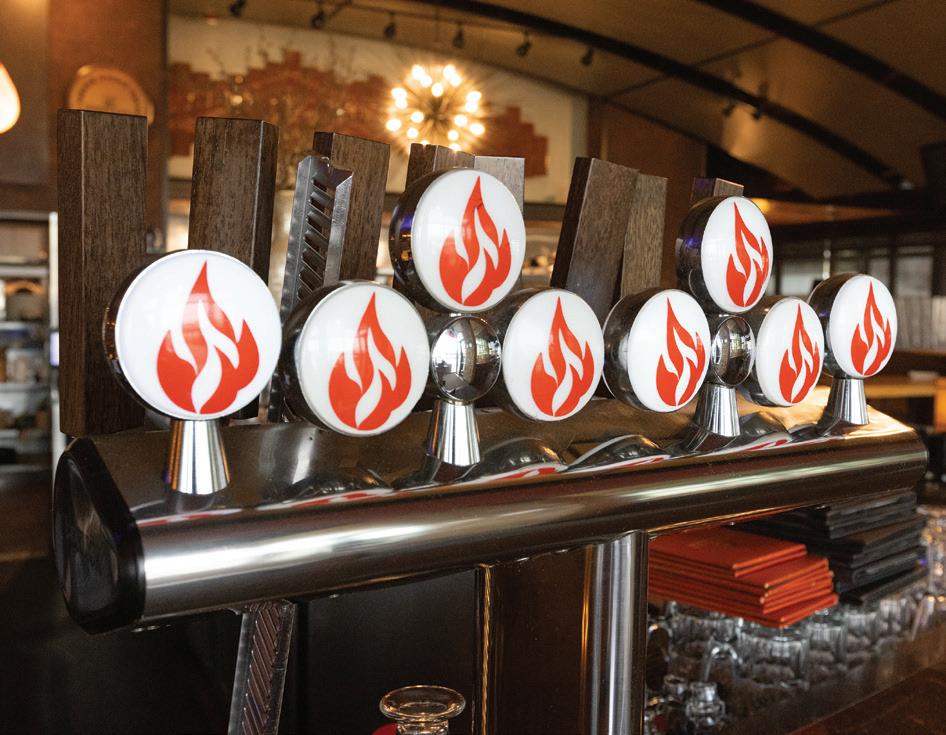
Alfredo and his crew also host a variety of spirit tastings, helping diners understand the nuances of tequilas, bourbons, and other liquors while exploring their own palates. Wine tastings are a major focus
as well. “We’re big into wine,” says Alfredo. “We even have wine lockers people can rent for the year.” It fits right into the restaurant’s emphasis on creating an experience.
In a very real sense, Bonfyre is responding to the environment created by people seeking to be more educated about their food, teaching them why a particular wine from a particular region pairs well with Bonfyre’s chicken parmesan, panfried walleye, or pot roast. Creating a restaurant that, as Alfredo puts it, “feels warm—not stuffy—but just a little elegance” means providing diners opportunities to engage with their food beyond consumption: to put together the chef’s decisions on their plates and in their glasses and come away with new layers of appreciation.
And there are plenty of reasons to come back and try new flavors. How many menus feature octopus alongside chicken wings? Coconut curry mussels alongside carpaccio? Jambalaya alongside pistachio-crusted halibut? Alfredo’s life has exposed him to so many great foods, and Bonfyre works to bring some of those things together. “I grew up in New York, and then I was a road warrior with a couple of the chains and worked all over the country. Worked in the South. Worked in New Orleans. Worked in
Texas and California. I’ve been around the block.”
As the meal winds down, you savor a warming cognac and either a slice of rich chocolate cake or a delicate crème brûlée. The bar, the exhibition kitchen, the fireplace, whatever captured your attention, it all culminates in a final moment of discovery: one last thoughtful pairing that accentuates the polished, yet approachable, philosophy used to guide Bonfyre. The best restaurants leave departing diners imagining what they’ll try on their next visit, and Bonfyre is no exception.
Kyle Jacobson is a writer whose wood-fire cooking prowess is limited to hotdogs and marshmallows.
Photographs by Eric Tadsen .
Trained
and
specialize
Photograph by Barbara Wilson
Kyle Jacobson
WayForward RESOURCES
The test of a free society is not how it treats its rich, but how it treats its poor.
—John Stuart Mill
As the months grow colder and purse strings tighten, I often think about those people struggling to find shelter and food— the single parent working three jobs, the renter priced out of a longtime apartment, and the senior trying to stretch a fixed income. Much of Madison feels the same way, seeing
by Kyle Jacobson
these challenges as an opportunity to do better. WayForward Resources, formerly Middleton Outreach Ministry (MOM), has long supported neighbors in need and is now better positioned to address root causes of these hardships.
“Our goal is to address housing stability and food insecurity in the community, and we do that through action and advocacy,” says Meghan Sohns, senior director of programming for WayForward. “Really our goal is to bring the entire community together because these are community issues. We have a lot of volunteers and staff working with all our different referral partners and engaging all our guests and clients in programming and program design—just getting a lot of feedback from them in what they’re looking for.”
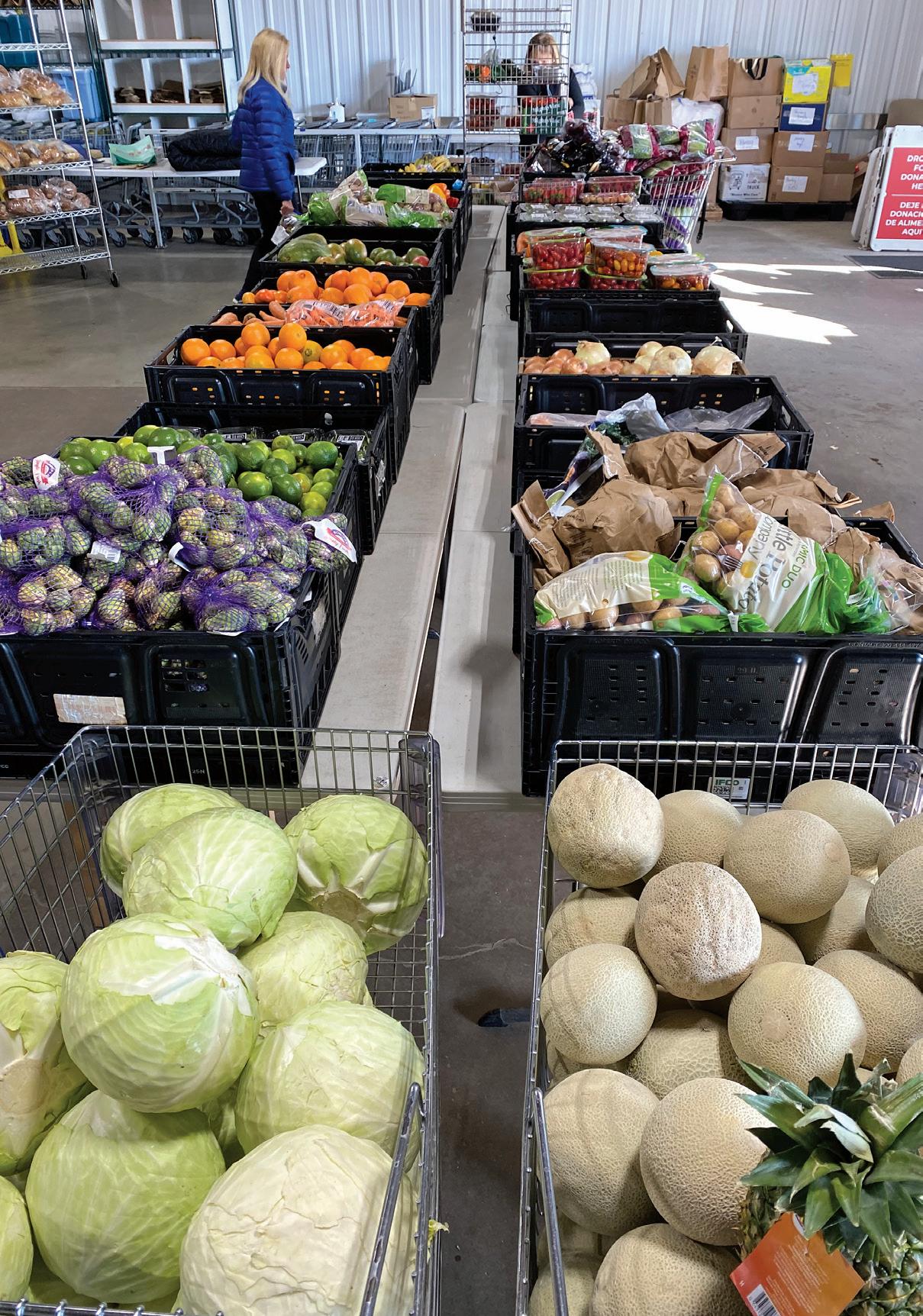
WayForward is distinct from many other food pantries in several ways, including the scale of its operation, the addition of a delivery service, and how often people can access the pantry. Food-rescue
Photograph by Ashley Hicks Media Co.
Photograph provided by WayForward Resources
partnerships, such as the next-door Kwik Trip, Metro Market, and Costco in Middleton, account for 34 percent of the food coming in. The rest comes from nonprofit partners, like Second Harvest Foodbank of Southern Wisconsin; food donations from community members, businesses, and organizations; and purchased foods funded by donor dollars. Every contributor plays a crucial role in ensuring food access, which builds a strong community. Thanks to the reliability of these resources, families come to the food pantry without fear of being turned away.
“Our food pantry has really grown,” says Meghan. “In the last four years, we’re seeing four times as many people. We have about 125,000 visits every year. That’s our largest program, open five days a week. We don’t limit how often people come. We really looked at studying how people shop and tracking that data. A few households come every week. A few even come a couple times a week, but they maybe are walking, so they carry a bag of groceries. Then you have households who come two times a month.” WayForward also has mobile pantries, bringing food to Voss Haus and Segoe Terrace, where transportation and mobility are real barriers for many residents.
While the organization’s capacity is impressive, Meghan acknowledges that WayForward is fortunate to have access to so many incredible partners in the Middleton area. It’s an advantage not every community shares. Their partnership with UW–Extension has long provided nutrition education and cooking guidance in communities across Wisconsin, though it’s worth noting that recent federal funding cuts have ended the FoodWIse program. Every community feels the ripple effects of what happens when food insecurity isn’t addressed in a meaningful way.
“If people have the food and the means to live their lives, we find that we have better employee retention rates just everywhere in the United States,” says Meghan. “So it’s a benefit to companies to support programs like this because some of their employees may be struggling in ways they don’t know.”
Photograph by Ashley Hicks Media Co.
Photograph by Ashley Hicks Media Co.
Photograph provided by WayForward Resources
Another key factor for families struggling with food insecurity is simply staying on top of rent and utilities. As Meghan says, “The rent eats first.” When housing costs consume most of the family’s budget, parents and grandparents start skipping meals or rationing groceries, but WayForward doesn’t consider this an acceptable normal. “We believe people deserve to have shelter and food.”
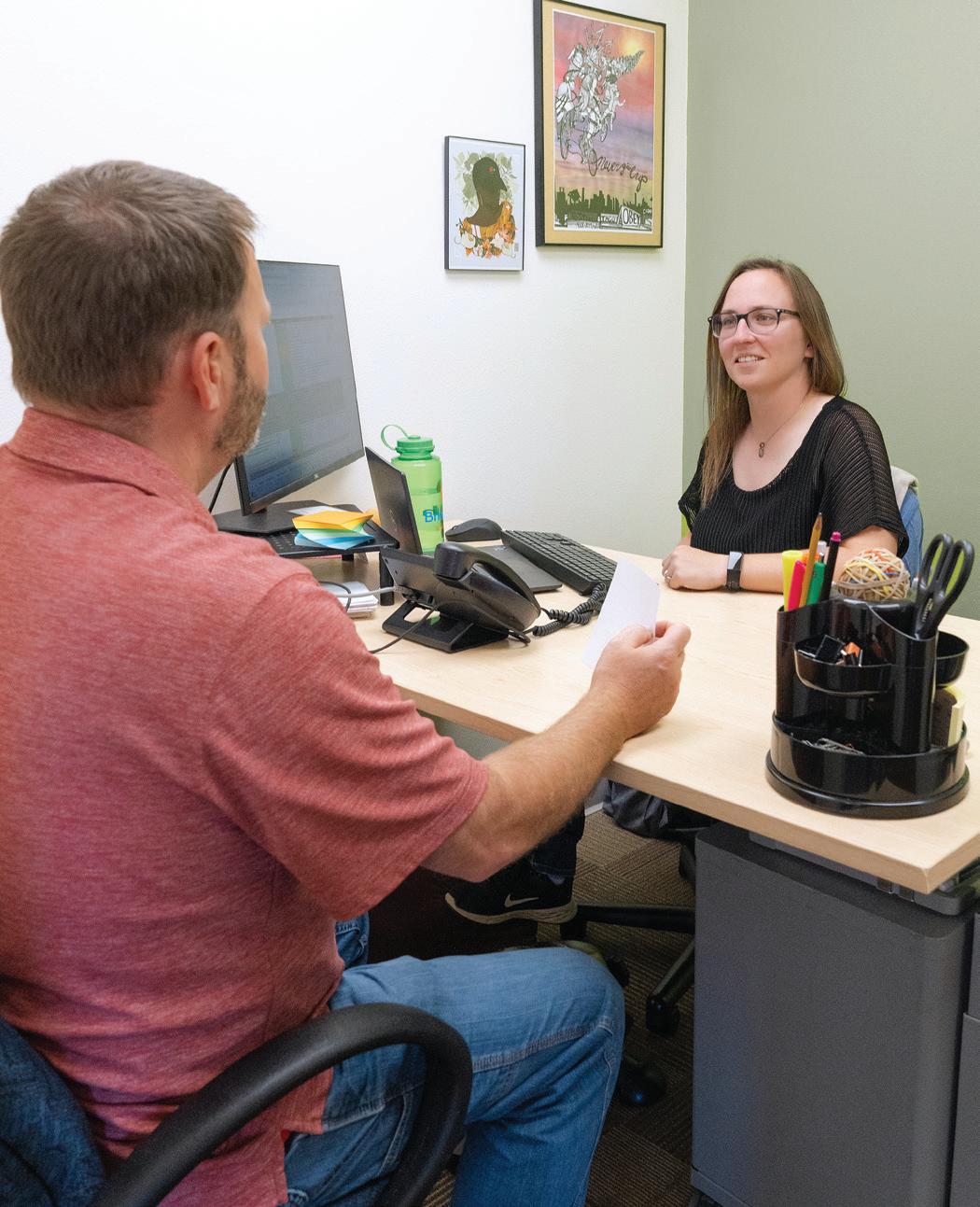
Since WayForward has the resources to take on housing and food insecurity, they’re able to take a holistic approach, relieving financial pressures on a caseby-case basis to create housing stability. “Our goal with these programs is really prevention—preventing homelessness. Oftentimes in our program, people have a home, an apartment, and they’re struggling to keep up on rent and all the bills. Our goal is to help not only with direct financial assistance, but also that education piece of budgeting. Doing a deep dive.” An example of this is a planned partnership with UW Credit Union to provide financial literacy tools that help people understand why their budgets no longer stretch the way they once did, especially for those on fixed incomes.
Meghan points out that along with more affordable housing, senior housing, and mixed-income housing, Madison also needs more high-end housing. Without it, higher-income residents end up
renting or buying units that were once considered modest or middle income, driving up costs at the lower end of the market. When that happens, the entire affordability picture shifts. More highend options help ease that pressure by keeping competition where it belongs.
And to those who see WayForward’s work as a bunch of handouts, Meghan believes they’re simply not seeing the whole picture. “Nobody is actually sitting down and talking to the people who often have two jobs, three jobs. There are individuals I see in their work uniforms, those in construction or maybe in their scrubs, coming in. I think there’s a big misconception that individuals are just lazy, not working, and I would say
Photograph by Ashley Hicks Media Co.
Photograph provided by WayForward
everyone we talk to in all of our programs, they have jobs. One of the requirements for housing stability is to have income. That’s part of our prevention work.”
Meghan mentioned that the goal is to prevent homelessness, which also means helping people develop agency and self-advocacy. WayForward’s Connections program, designed for doubled-up families, lasts 12 months and helps participants stabilize quickly by removing those first hurdles, like locating an apartment or covering the security deposit and first month’s rent. Over time, the financial support tapers as participants improve their budgeting skills and learn how to stretch food through meal planning. “It’s that holistic wraparound we use,” says Meghan.
WayForward also has programs that often fly under the radar, like the Clothing Center, where anyone can walk in and take what they need, free of charge. It only exists because someone saw a need and thought to address it. Then there are the bigger programs, which have become lifelines for so many Madison households. WayForward started by collecting canned food in a church basement, and now, decades later, it’s helping create stability for nearly 15,000 people annually throughout Greater Madison communities.
Kyle Jacobson we’re building too many fences.
DANE COUNTY HUMANE SOCIETY
Photograph by Barbara Wilson
Kyle Jacobson
LEARN MORE AT
by Kyle Jacobson
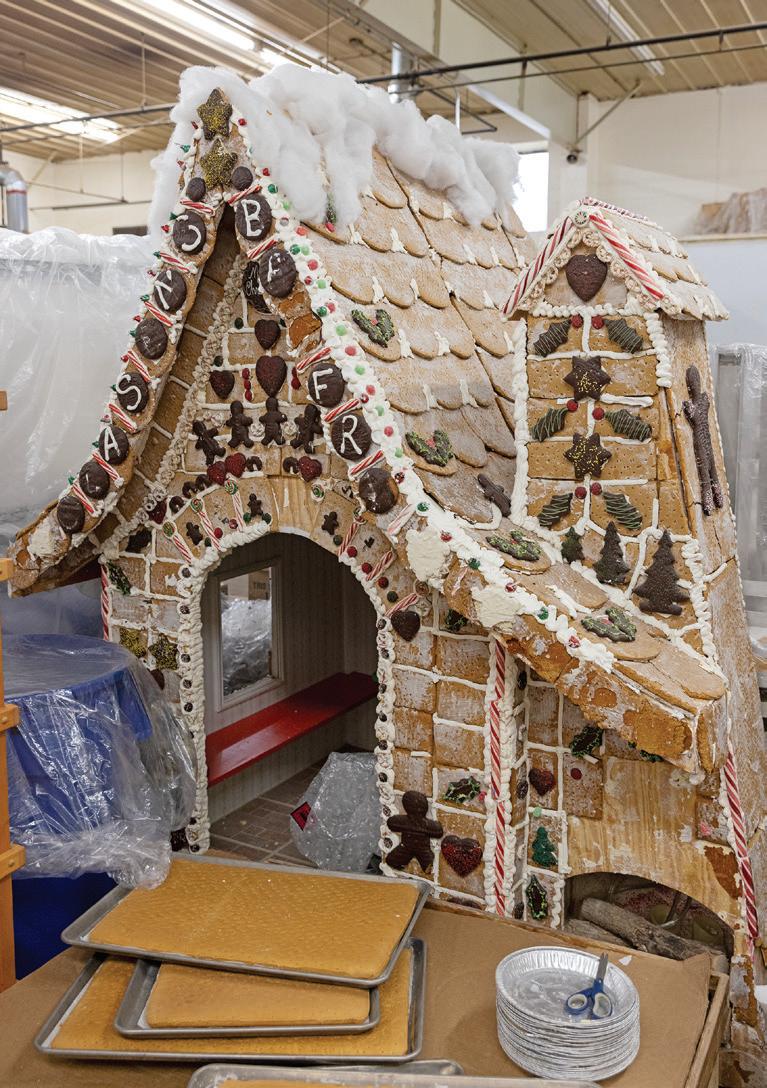
Is it a stretch to say most family traditions start with local small businesses? Yes, but I’m going to say it anyway. How we celebrate might come from what we grew up with, but it’s often our neighbors and community businesses providing the means to keep those traditions alive. My family cuts down our holiday tree every year, and it’s thanks to some family-owned tree farms that we’re able to continue this tradition. For many Madison families, the holidays don’t start until they’ve visited the life-size gingerbread house at Clasen’s European Bakery.
Third-generation owner Tony Clasen says some of his friends even have childhood pictures of themselves in the large gingerbread
Clasen's European Bakery
house. I guess that’s not surprising considering Clasen’s is in their 67th year. “My grandfather Ralph started the business just down the road,” says Tony as he points to the building, clearly visible outside his office window. After immigrating from Cologne, Germany, Ralph and his brother, Ernst, who passed just this last year, opened a bakery and chocolate shop in Middleton.
“The chocolate shop was the bulk of the business,” says Tony. “The bakery was the craft end. My mom [Michelle Clasen] grew up, had an interest in the business in baking, and she took over when she was 25 years old after she went to culinary school in Europe.”
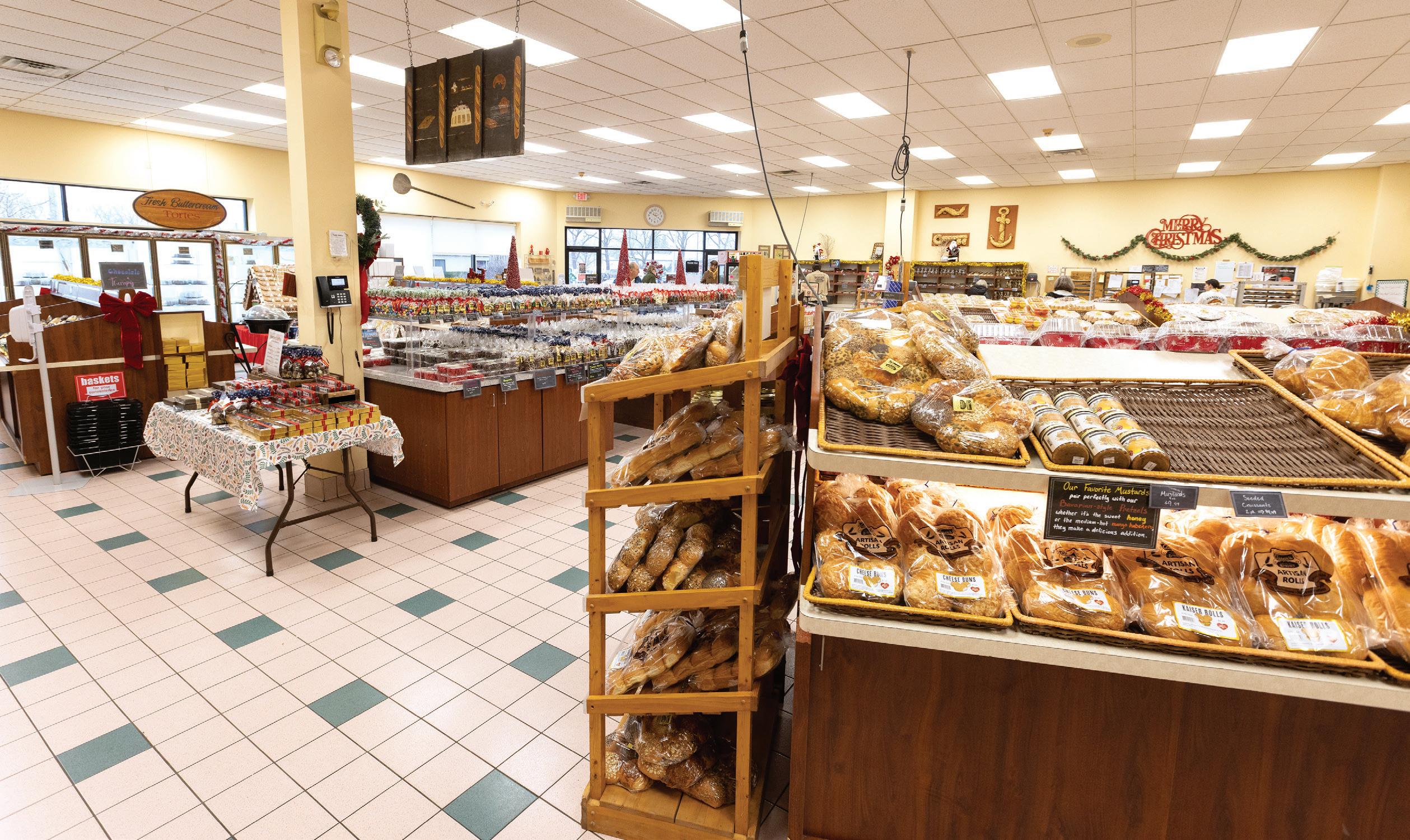
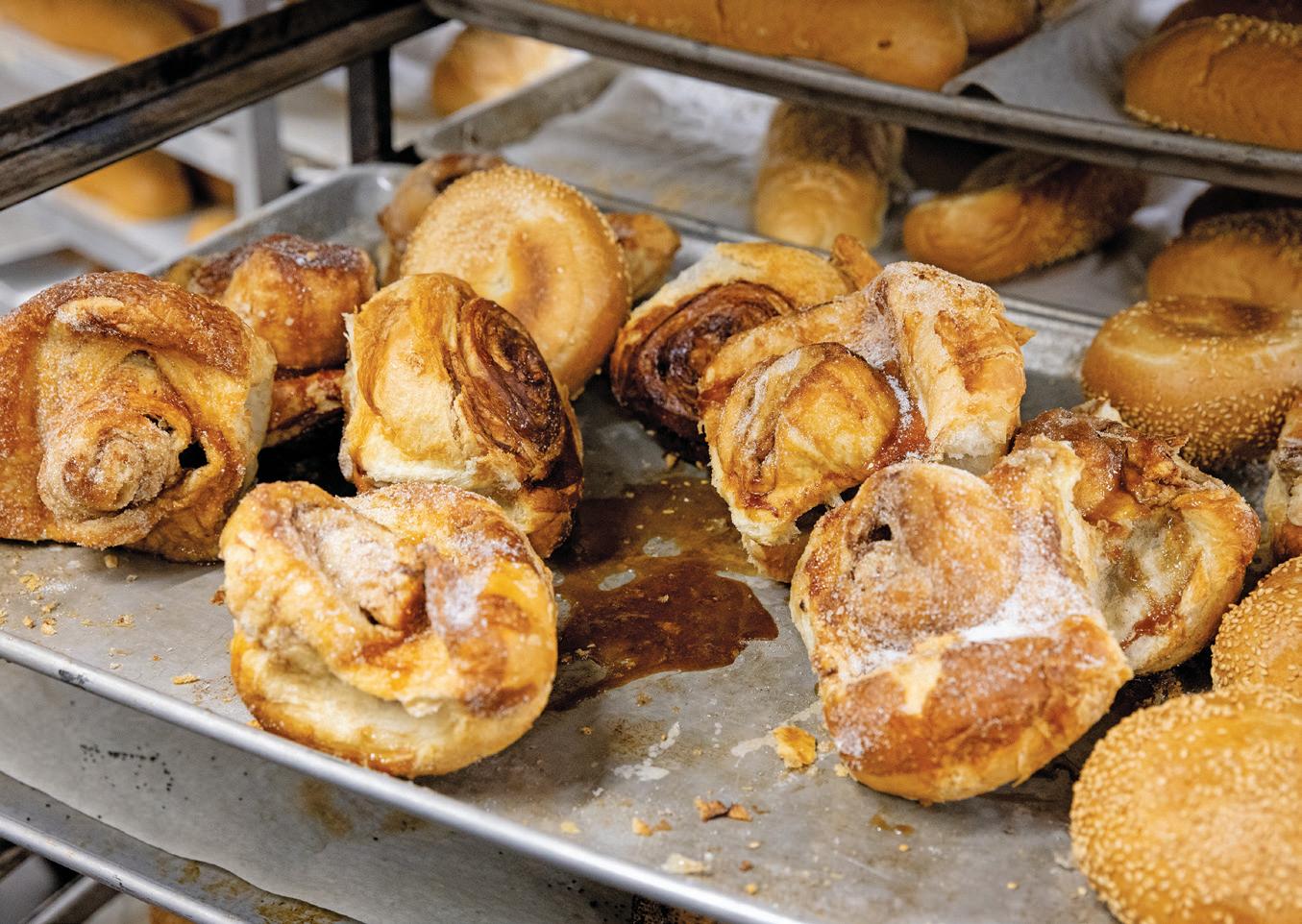
Michelle deserves the credit for growing Clasen’s to the level it is today. It was her ambition that quadrupled the size of the bakery and brought the storefront to its current location. Her goal was “to maintain our German tradition,” says Tony. “But we’re in America, and we have cultures here that aren’t just German. Now we have American-style cookies, American-style chocolate products, cinnamon rolls, French pastries, croissants, baguettes, sourdough bread. She brought that in.”
Following in his mother’s footsteps, Tony went to culinary school and came back to take over when he was 25, a fitting coincidence. But where Michelle expanded to create the bakery Greater Madison knows and loves, Tony is intent on ensuring the quality and character that have made Clasen’s special over
the decades remain intact. He spent his first years as owner learning everything he could from his mother and grandfather, which gave him a stronger sense of what growth and success should look like for Clasen’s—and where to draw the line for its future.
As Tony explains, keeping tradition at the forefront defines how he runs the bakery today. “My goal is to reinforce the values my family has always had: tradition, quality, and an overall respect for the craft and the employees that we have. I hired new accountants a year ago, and they’re talking about growth and putting me in a position to open two new locations. I was like, ‘Whoa, whoa, whoa. You gotta know what my goals are.’ My goals are to maintain this healthy foundation that we have. Small businesses like this are getting harder and harder to operate each day.”
When it comes to supporting local, Greater Madison is sort of unique in just how passionate people are; for many, it’s a lifestyle. The importance for Clasen’s having the weight of the community behind them isn’t something they take for granted. Success here is more than a crowded storefront; it’s connecting with local partners, lifting each other up, and giving people a reason to shop at a local grocery store. Each year, over the holidays, large gingerbread houses are on display at 20 local grocery stores featuring Clasen’s cookies. When I asked why he doesn’t do these displays at the larger stores, Tony told me this
all happened organically. Local stores are better to do business with because they seek out doing business with local makers.
Clasen’s is so ingrained in Greater Madison that for “a lot of people, even if they haven’t been here, they’ve eaten a Clasen’s bun at a restaurant without knowing it. They’ve eaten a Clasen’s pretzel if they’ve ever been to Biergarten at Olbrich Gardens. People may not even know when they’re having a Clasen’s product, but that’s half, if not more of our business.”
In store, there are over 200 products you’d be hard-pressed to find anywhere else, let alone all in one place. Even items that don’t fly off the shelves or that Clasen’s takes a loss on are made simply
because Tony takes pride in them. I asked how old some of these recipes are, and Tony pulled out an heirloom recipe book. Some of the pages were faded, handwritten notes nearly illegible, but there’s magic in there. Every so often, Tony asks his grandfather to translate some less-obvious German words.
Clasen’s is a testament to what can be achieved when efficiency happens exclusively behind the scenes. Where customers shop, things happen at the pace of the individual. “You walk into our bakery, it’s not a counter-service bakery. I will never change that. I think that’s something that’s really strong and really unique. You don’t wait in line behind a counter and then it’s your turn. You don’t get this sense of panic. You don’t leave there and feel like you should’ve gotten
more and you didn’t have a chance to look. You can come in here and, almost like a grocery store, shop around. Take as long as you want filling up a cart, looking at things, trying free samples, picking out your own product.”
I don’t know if I’d call it a bit of old-world charm or simply a breath of fresh air, but walking into a business that has finely woven itself into the fabric of Greater Madison has a warmth to it you won’t find just anywhere. That’s why some employees have been around since Tony was a toddler, why Ralph still comes by almost every day to do his shopping, and why so many customers insist on coming back time and time again. Tony says, “You never really retire as a Clasen.” At Clasen’s, community is tradition.
Kyle Jacobson is a writer on a know-carb diet.
Photographs by Eric Tadsen
Photograph by Barbara Wilson
Kyle Jacobson
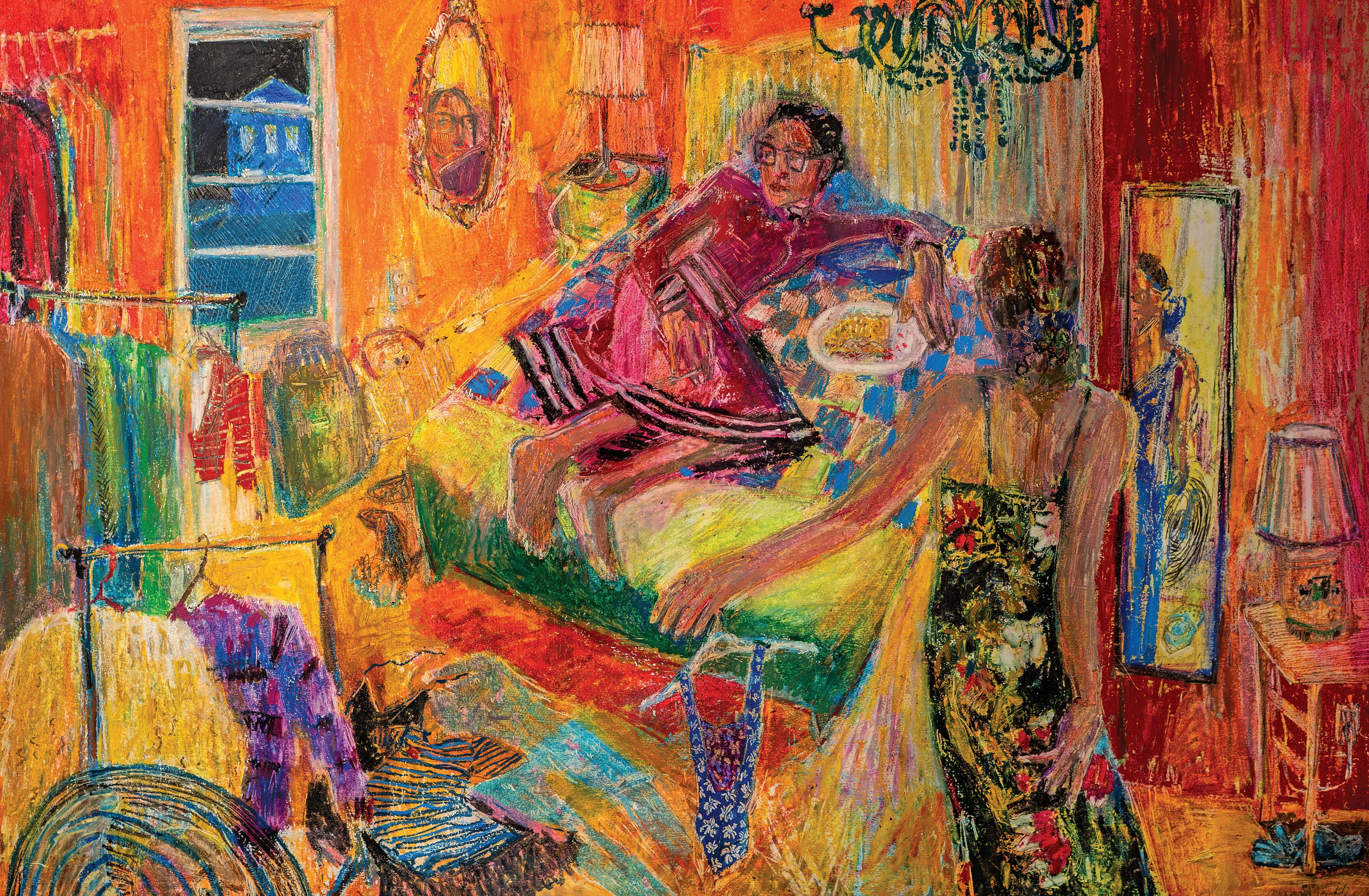
Mrs Kwanza's Closet, 2023 oil pastel on gessoed paper 32x44 inches
Ariana
by Efrat Koppel
Ariana Vaeth, a contemporary painter in Milwaukee, reflects on Terry McDaniel Shovlin, the woman who introduced her to oil paints at 15 and who’s been teaching for over 50 years now. “She’s definitely an icon to me,” Ariana says. “She instilled a passion for the romance of painting.” Laughing, Ariana drags out the syllables, “Big everything to Ms. Shovlin. Yeah, everything.”
Ms. Shovlin isn’t alone in Ariana’s heart. Over the two hours we spoke, she mentioned multiple teachers who shaped and empowered her. “The people I admire the most in many ways are the teachers in my life.”
Those teachers, combined with her talent and devotion, brought Ariana to where she is today. At 30 years old, she has already established herself as one of Milwaukee’s premier contemporary
VAETH
painters, transforming intimate domestic moments into rich canvases that honor the spaces and people she loves.
Growing up in Baltimore, she was "poured into" from a young age by her parents and her daycare provider, Jean Tillman, who gave her projects and covered the walls with her artwork. At 13, Ariana experienced her first “flow state,” spending five hours on a still life her parents later framed. Her journey would come to reveal an artist deeply committed to both technical mastery and narrative authenticity.
Ariana went on to attend Carver Center for Arts and Technology, where she met Ms. Shovlin and completed her first oil painting. It took 12 hours, but it was revelatory. Compared to charcoal and graphite, oil’s richness captivated her. She recalls thinking, "This is it. This is
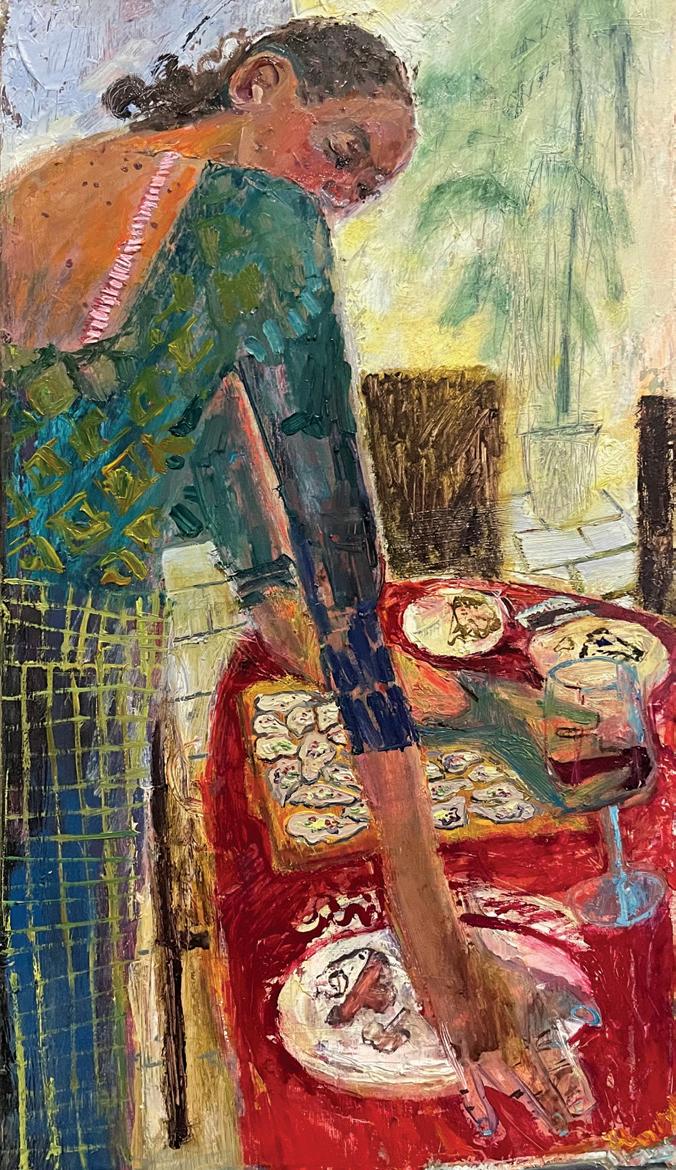
Appetizers, 2025 oil on canvas, 24x12 inches
Photograph by Rachel Lukas
Photograph by Ariana Vaeth
the thing forever; this is the thing that I'm going to do because this color is so much more. I can hyperfixate on it."
That hyperfixation and rigorous study brought Ariana a full scholarship to Milwaukee Institute of Art & Design (MIAD). After graduating, she received the Mary Nohl Emerging Artist Fellowship and stayed in Milwaukee. The following years brought her acclaim. She became one of the region’s most successful emerging portrait painters, earning, among other awards, the gener8tor Art accelerator program grant and a spot in the inaugural residency at the Dome House in Door County.
Ariana’s approach has evolved significantly, particularly during the pandemic. Before COVID, she utilized a highly controlled, photo-composite process. When she moved in with her mother for three months in 2020 and her mother wouldn’t be photographed, her method needed to shift. "Now my practice literally needs to change because it's not inclusive," she reflects.
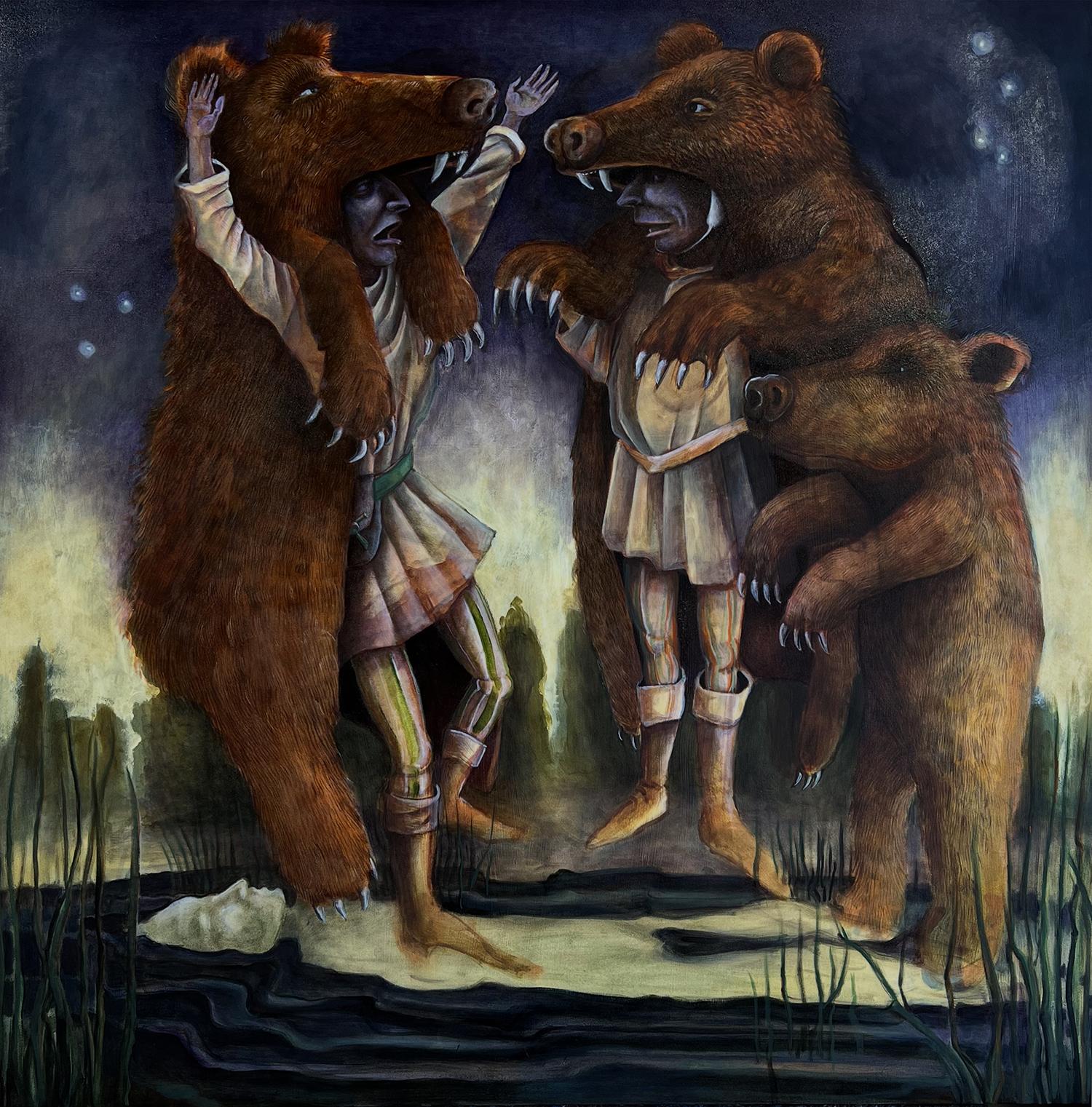
She began working more from observation and imagination, letting paintings unfold organically. The shift set her up for an approach she’d carry for years: where privacy roots as a core principle in her work while holding a simultaneous commitment to narrative honesty, where proportion wraps around a subject’s needs, and where perspective warps with distance and memory—painting homes away from home.
Photograph by Ariana Vaeth
"That's how I feel about painting. It's a stage."
From that moment, Ariana’s work broke open. Perspective stretched. Color exploded. Her mark-making grew layered and vibrant.
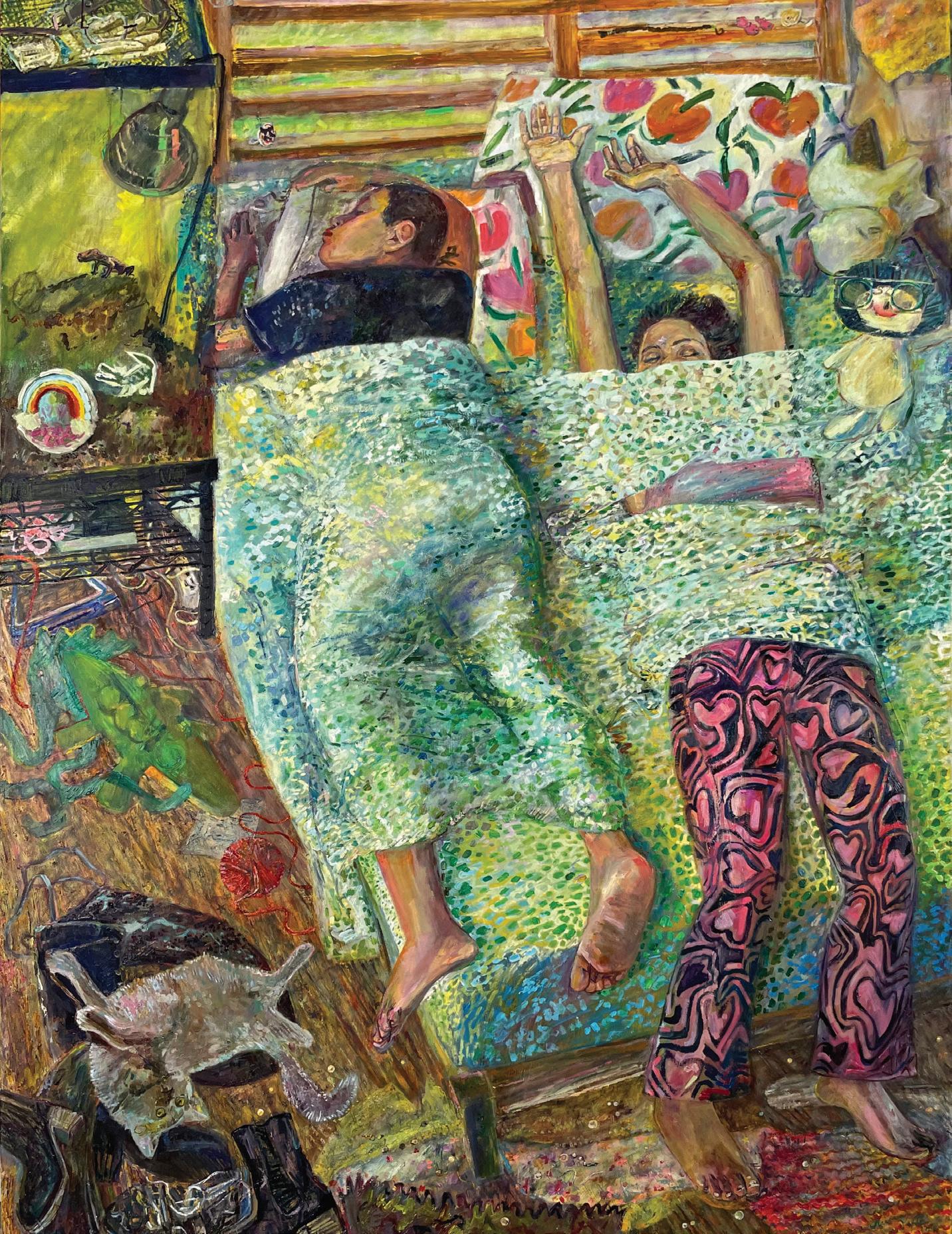
Perhaps no aspect of Ariana’s current work is more singular than her devotion to and masterful use of texture. One of her most recent pieces, Stuffed animals with toppings (Fruit Basket) (2025), is an ode to the technique. The painting’s centerpiece is the lush bedding draped over two slumberers. The bedding is an unexpected landscape, a celebration. “Textures are for me what helps me create the form a lot better—that specificity about that object, about that place. Textures help me figure out a world.”
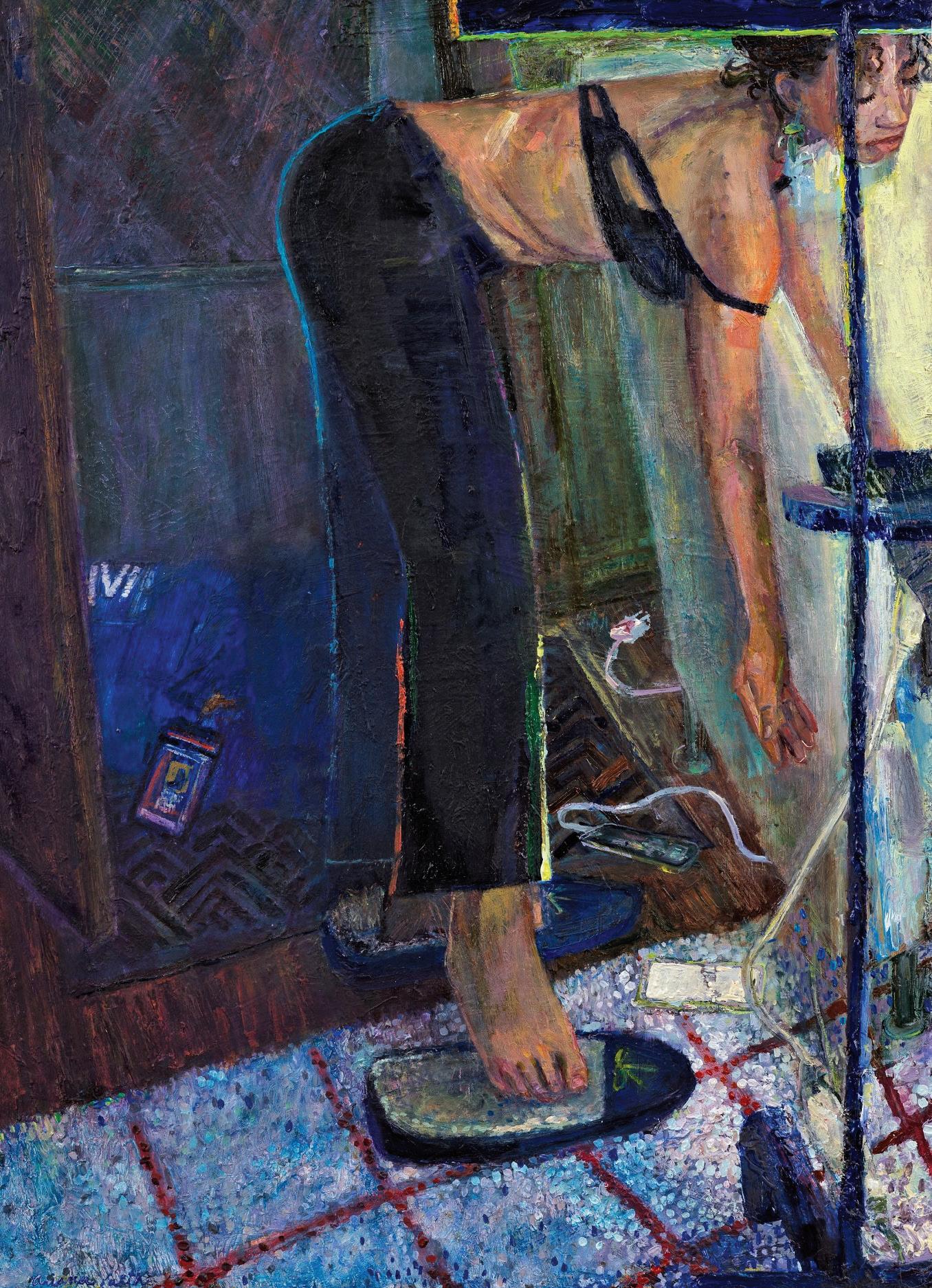
Along with texture, Ariana’s pieces in recent years glow with rich color and generous storytelling details—qualities featured in Mrs. Kwanza's Closet (2023). “Just holding onto these little bits of clothing and of our lives being intertwined, her mom's things, my mom's things,” she says. “I’m very emotionally supported by my friendships, and that pours into the work.”
Every detail comes from something Ariana holds close. “It feels like a natural thing to do—I want to memorialize this part. I want to honor this part.” Ariana has spent her artist life painting loved ones, their spaces, meals, rest, and connection. For her, every painting is a proposal to the subject for future collaboration. It’s clear the people are the most cherished piece of her.
For all her sentimentality, listening to Ariana is also a feast in hearing a highly skilled technician deconstruct and rebuild the material of her work. She speaks about corrupting the surface and allowing the “moves in the painting” to be reactive to one another. When she can’t solve a given problem herself, she turns to art museums, which she visits "constantly, as much as I can,” she says. “I plan trips around going. Those adventures turn into paintings. ... It’s very very necessary for me. I think it’s my biggest love of life.”
Juliette Balcony, 2024 oil on panel 24x18 inches
Beyond museums, Ariana orients her time in Milwaukee around being present for artists. Her community energizes and cultivates her. “I want to make better paintings all the time. There's just a lot more learning to go.”
That community extends to her students as well. An instructor at MIAD, she describes teaching as hard, always humbling, and special. It inspires her, enough that she sees graduate school in her future, alongside expansion into larger dimensions. A 6- by 13-foot piece of canvas awaits in a studio at her mother’s home in North Carolina. She’ll stretch it this winter so it’ll be ready for paint come summertime. It could be the beginning of a new chapter, as Ariana talks about paintings as dimensional spaces figures inhabit, ones where her subjects need both privacy and “wiggle room.”
When asked about the future, Ariana’s answer has remained consistent over the years: she just wants to make more paintings. Between her home and those of her loved ones, canvas is where she can honor their sacredness through curation and craft. “I feel like
Photograph by Green Gallery
that history lives with me. That's how I feel about painting. It's a stage.”
You can learn more about Ariana’s work at arianavaeth.com, and you can see it in person at Abel Contemporary Gallery in Stoughton (abelcontemporary.com) and Ayzha Fine Arts Gallery and Boutique in Milwaukee (ayzhafinearts.com). See Ariana’s next solo exhibition, May this love find you , February 7 through April 11 at the University of Wisconsin–Oshkosh.
Efrat Koppel is an arts writer and lifelong arts lover and practitioner. Efrat writes about local artists, creative process, and the role of place in shaping artistic identity.
Efrat Koppel
Image: Jean Roberts-Guequierre
Abel Contemporary Gallery
INDEX advertiser
association
Dane County Humane Society 21
Discover Real Baraboo 32
dining, food & beverage
Cambridge Market Cafe 12
Chocolate Shoppe Ice Cream 27
D’Vino 13
The Deliciouser 5
Dinotto 13
Drumlin Ridge Winery 9
Fraboni’s Italian Specialties & Delicatessen 17
Lombardino’s 5
The Old Feed Mill Restaurant 24
Paoli Schoolhouse
American Bistro 9
Soup's On! 25
Sugar River Pizza Company 20
Teddywedgers 9
Tempest 5
Tornado Club Steak House 5
entertainment & media
Children's Theater of Madison 21
Our Lives Magazine 27
services
Edgerton Hospital and Health Services 17
Four Lakes Veterinary Clinic 19
Madison Gas and Electric 2
Monroe Street Framing 29
Stoughton Health 25
shopping
Abel Contemporary Gallery 29
Anthology 8
Cambridge Market Bookstore 12
Deconstruction Inc. 13
Goodman’s Jewelers 17
Rubin's Furniture 31
contest
Win a Bergamot Massage Signature 60-Minute Massage ($95 value)
question:
“Who were the founders of Clasen’s European Bakery?”
Enter by submitting your answer to the above question along with your name, mailing address, phone number, and email online at madisonlocallysourced.com, by email (mls@madisonlocallysourced.com), or by mail:
Madison Locally Sourced c/o ASJ Publishing LLC PO Box 559 McFarland, WI 53558
All entries with the correct answer will be entered into a drawing. Contest deadline is February 1, 2026.
good luck!
winners
Thank you to everyone who entered our previous contest. The answer to the question “What are the names of the initial five people who came together to start WORT?” is Pat Ryan, John Ohlinger, Mike O'Connor, and the Deveraux-Webers. A Bergamot Massage & Bodywork gift card was sent to our winner, Johanna Schmidt of Middleton, WI.
Please support our sponsors!
congratulations!
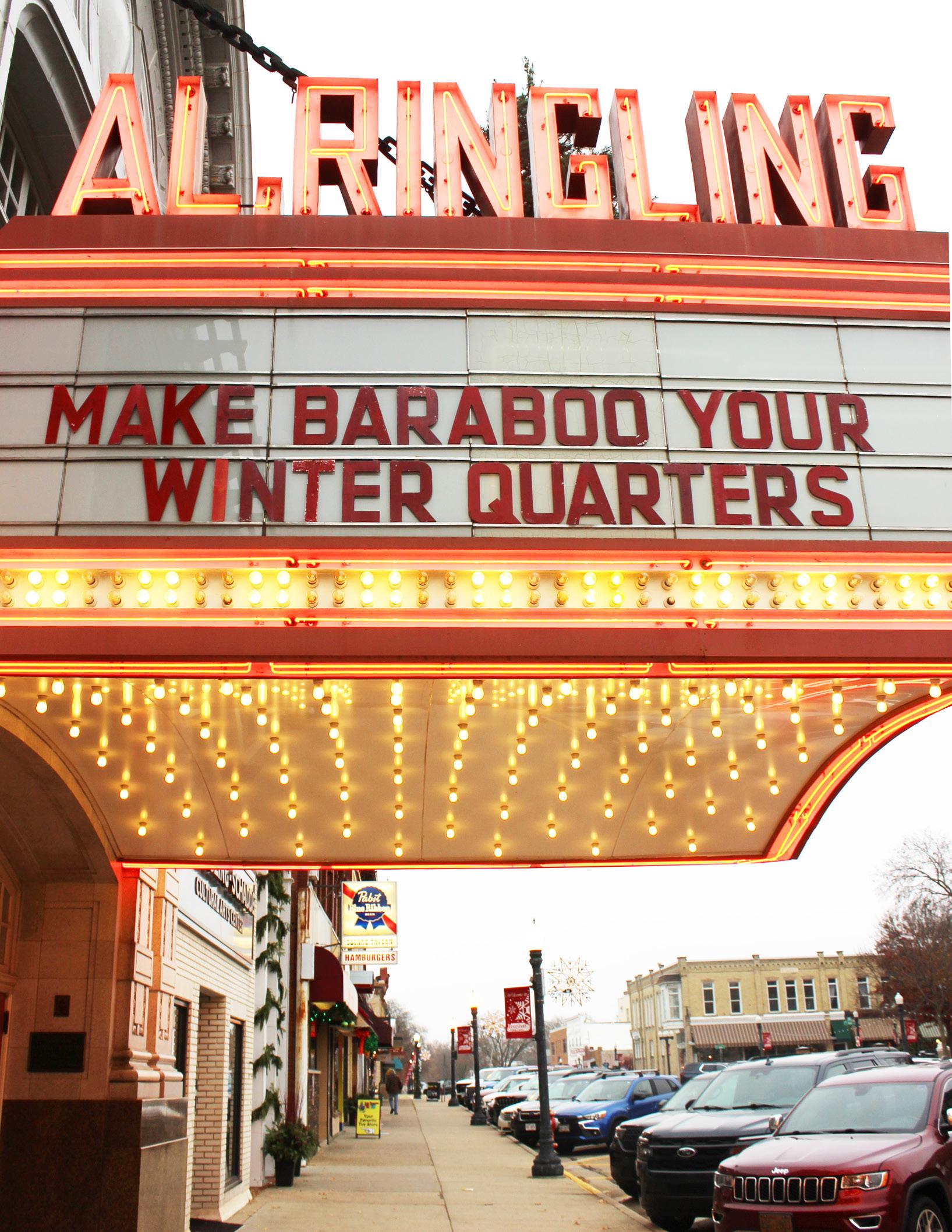
Baraboo is “Circus City” because the Ringling Brothers Circus began here in 1884 and made its “Winter Quarters” on the riverfront until 1918.
Now you can make Baraboo your “Winter Quarters” and visit Circus World, the Al. Ringling Theatre, the Al. Ringling Mansion and Brewery, Ringling House B&B and the International Clown Hall of Fame!
Visit over four January and February weekends to enjoy lodging discounts, special events and tours of historic circus sites.