







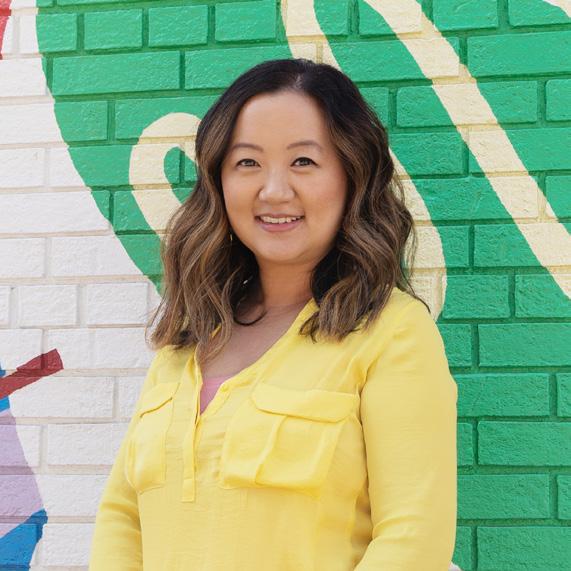
Annie Guo VanDan, President Asian Avenue magazine
Connect with us! asianavemag@gmail.com @asianavemag
As we prepare our special 20th Anniversary Issue, we want to hear from you. Please send your photos and memories of Asian Avenue to AsianAveMag@gmail.com.
We will feature a selection of reader reflections in our upcoming print and digital editions to celebrate the community that made these 20 years possible.
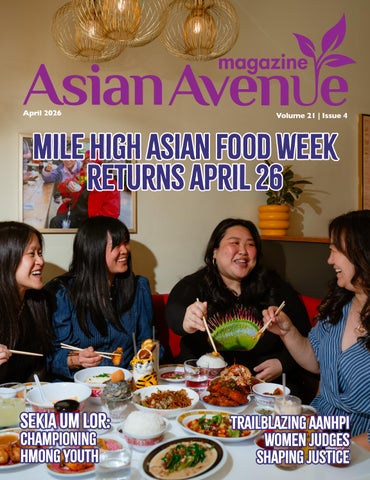
This month, we’re counting down the days until Mile High Asian Food Week returns on April 26 to kick off AANHPI Heritage Month. With 75 participating vendors, it continues to grow as a vibrant celebration of the diverse flavors and culinary talents that define our community.
This year marks a major milestone for Asian Avenue Magazine—our 20th anniversary. For two decades, this publication has been a platform to uplift voices, share stories, and celebrate the richness of our community—and we couldn’t have done it without you.
I’m excited to invite you to our 20th Anniversary Celebration on July 18 from 11am to 2pm at Social Fabric Hub. This family-friendly event will feature Asian bites, cultural performances, music and dance, and activities for kids. It will be a special opportunity to bring our community together, reflect on how far we’ve come, and celebrate the people and stories that have shaped Asian Avenue over the years. We will present our plans as we look ahead in this new chapter of digital and social media.
As part of this transition, we would like to share that we have made the decision to sunset the Editorial Director role, and as a result, Mary Schultz is no longer with the magazine. I am personally grateful for the time, energy, and heart that Mary dedicated to this work and to our community. We thank her sincerely for all she has given to Asian Avenue and wish her continued success and fulfillment.
Moving into this next decade, we remain committed to storytelling, connection, and community. Thank you for being part of this journey.
With gratitude, Annie Guo VanDan

Please contact us at asianavemag@gmail.com for special sponsorship and advertising opportunities in our June and July 2026 commemorative


VONG on the cover
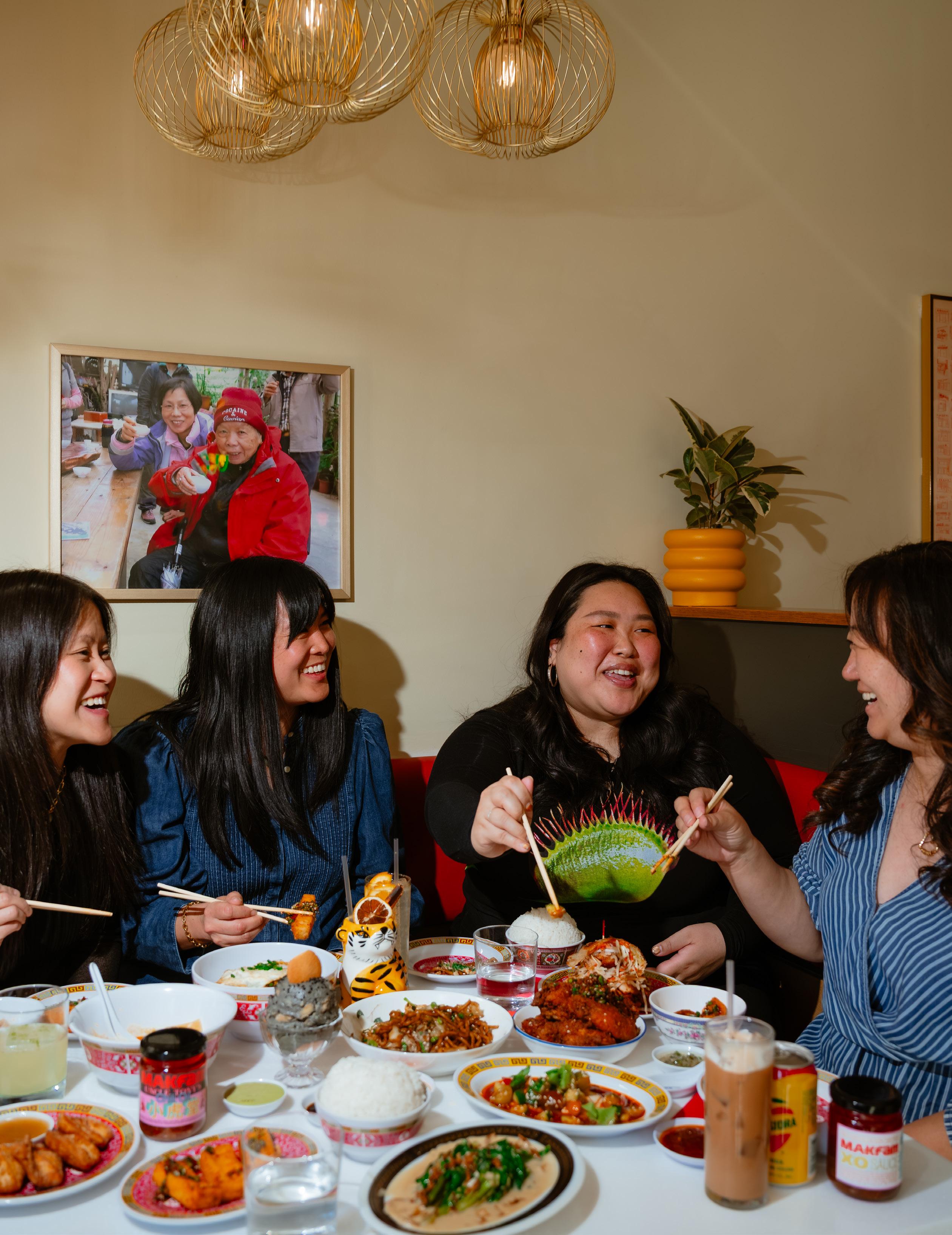
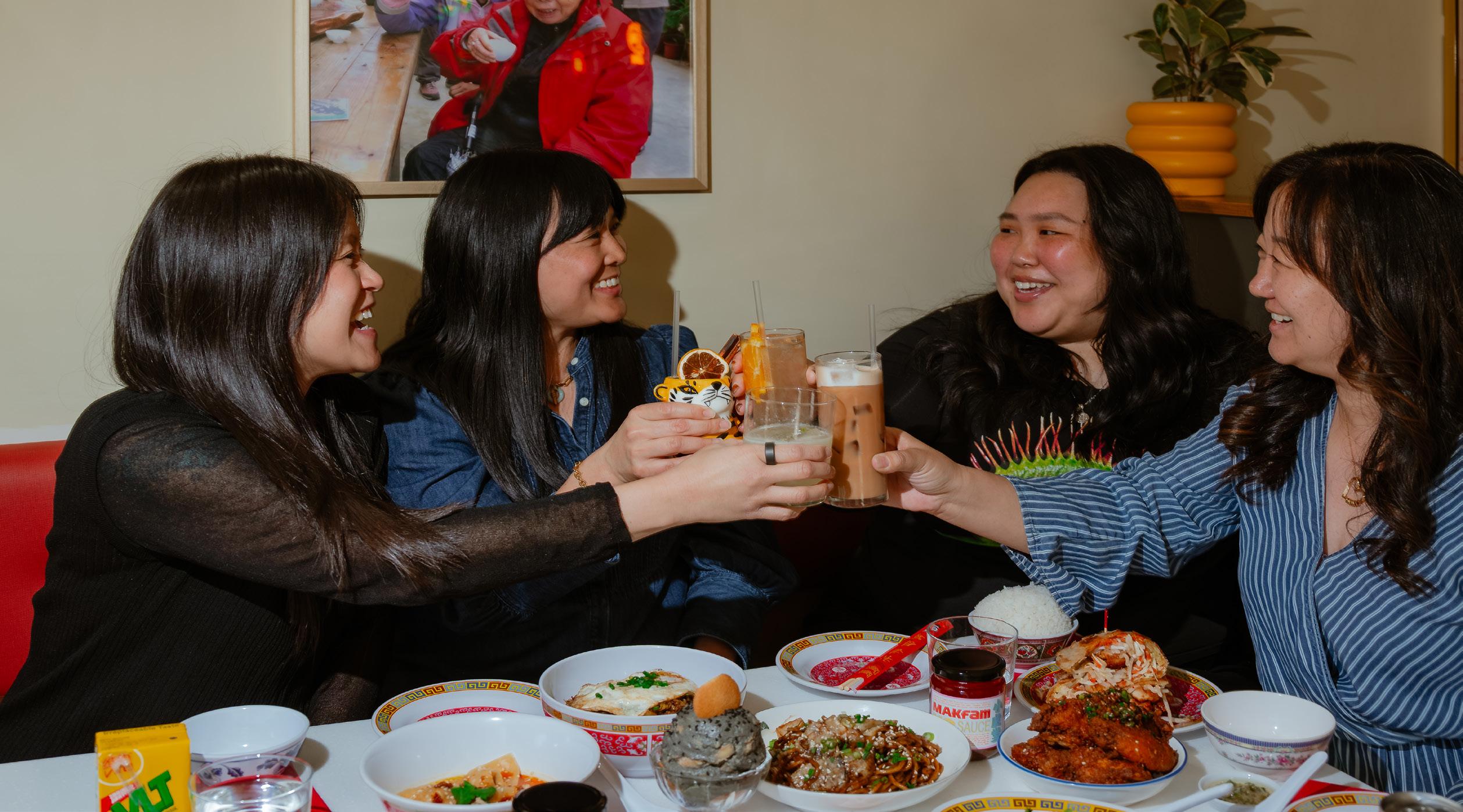
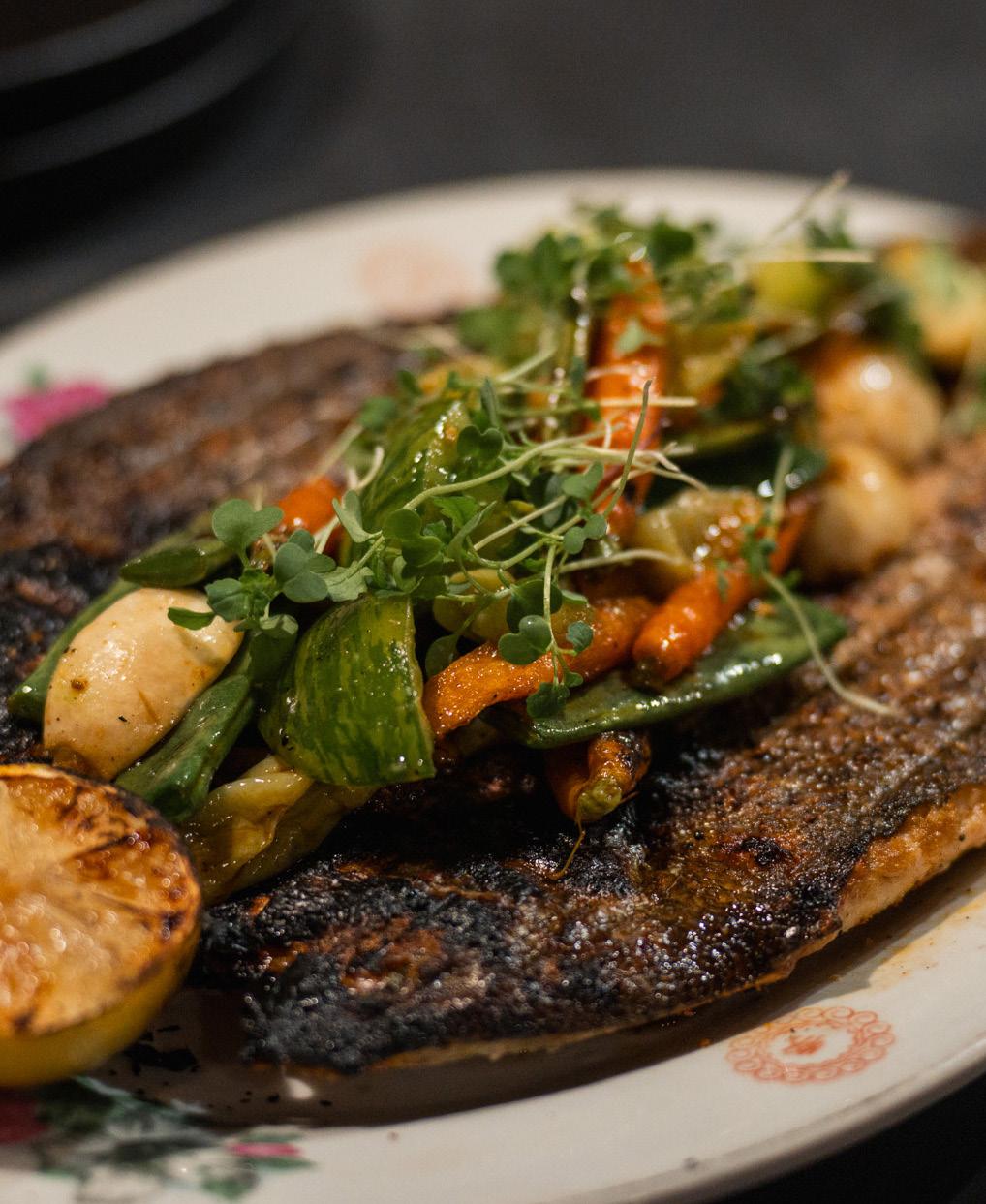
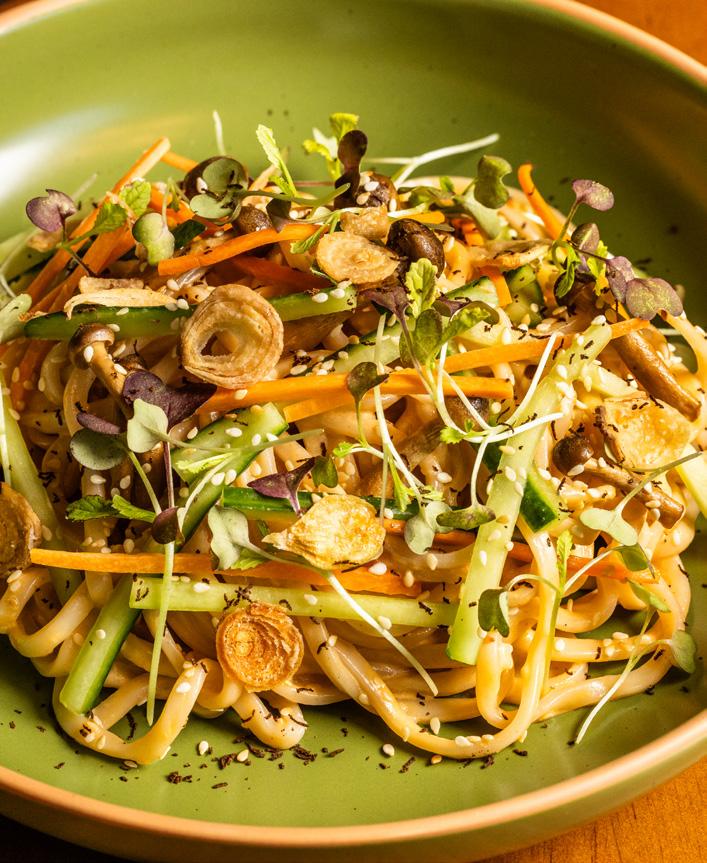
The fourth annual Mile High Asian Food Week (MHAFW) is back (April 26 to May 3) with 75 participating vendors offering unique specials and discounts in celebration of Asian cuisine.
Cover Photo: MHAFW team at MAKfam Credit: Lucy Beauregard (@lucybeauregard_)
Asian Avenue magazine (ISSN 1932-1449) reserves all copyrights to this issue. No parts of this edition can be reproduced in any manner without written permission. The views expressed in articles are the authors’ and not necessarily those of Asian Avenue magazine
Looking to promote your business? Asian Avenue magazine offers businesses a costeffective way to reach consumers in the Denver/Boulder metro areas and beyond. For more information, call 303.937.6888 or e-mail us at asianavemag@gmail.com for our media kit and ad rates. Send story ideas to asianavemag@gmail.com.
Asian Avenue magazine is in association with the Colorado Asian Culture and Education Network.
4 PRESIDENT’S
8 SPOTLIGHT: Finding Ourselves: Dr. Esther Park on Identity and Healing
10 SPOTLIGHT: How Sekia Um Lor took initiative to lead the next generation of Hmong youth
12 COVER: Mile High Asian Food Week is back for fourth year April 26 to May 3
14 INSIDE STORY: Boxtastic brings the excitement of blind boxes to all three concourses at the Denver airport
15 INSIDE STORY: Heritage in Motion displays share Nepalese culture with travelers near and far
16 Cafe Peek: 3456tea serves Korean drinks – and Korean culture as it moves to Havana Street in Aurora
18 Feature: A generation of women judges represent Colorado’s AANHPI community
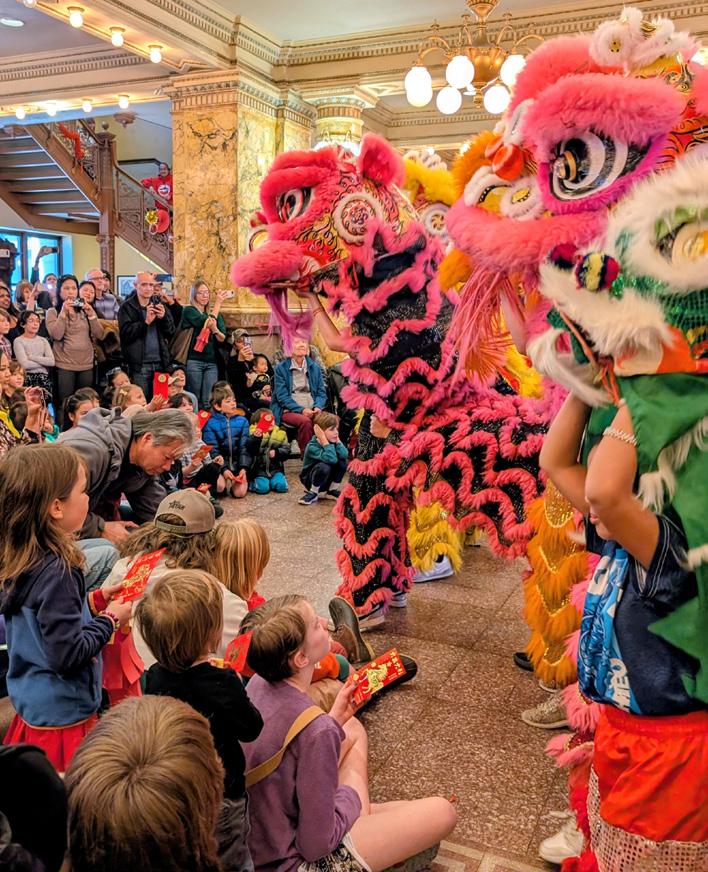
21 ON SCENE: Ringing in the year of the fire horse: celebration in Colorado Springs unveils historic exhibit
22 WELLNESS COLUMN: What is emotion regulation? And how to learn it if it’s never been modeled to you?
23
AMBASSADOR64: Notes from Mesa County - Rocky Mountain Public Media

关节置换, 对医护团队的信心至关重要. 在我们的中心, 我们的专家专注于膝关节和髋 关节疾病, 从关节炎到关节置换, 均能提供先进的治疗, 帮助您自由活动.
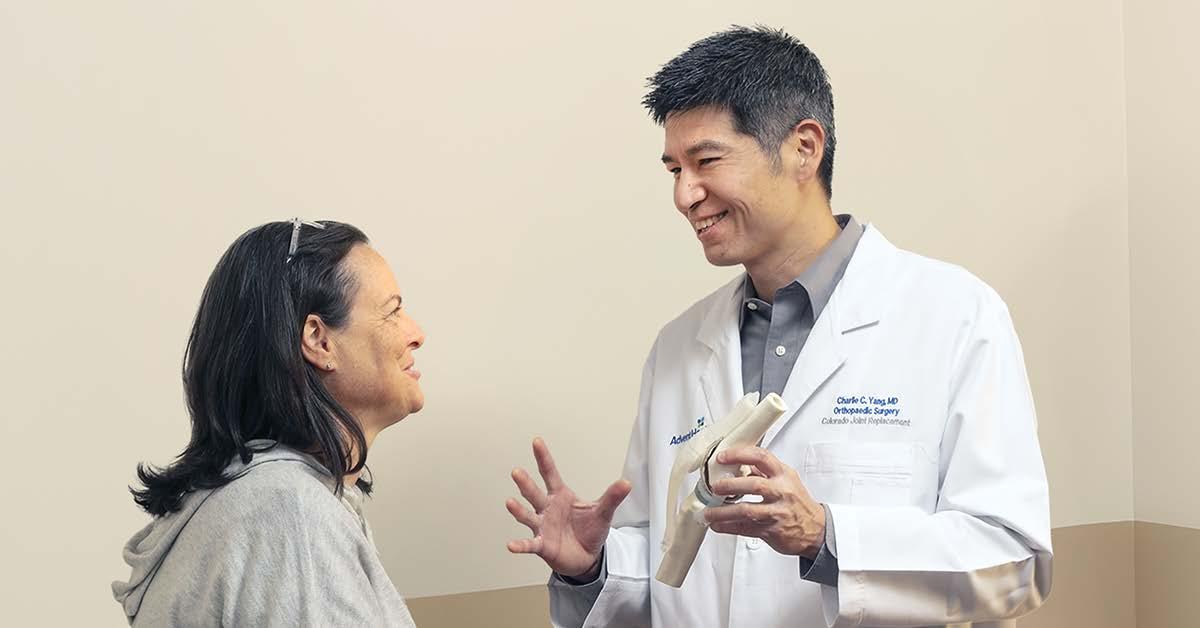
C Charlie Yang博士确保每位患者在就医过程中都能感受到理解、支持和妥善的照料。

Colorado Joint Replacement at Porter
••唐宁街 2535 ••
100 ••••间
科罗拉多州丹佛市 80210 720-524-1367
扫描二维码了解更多信息
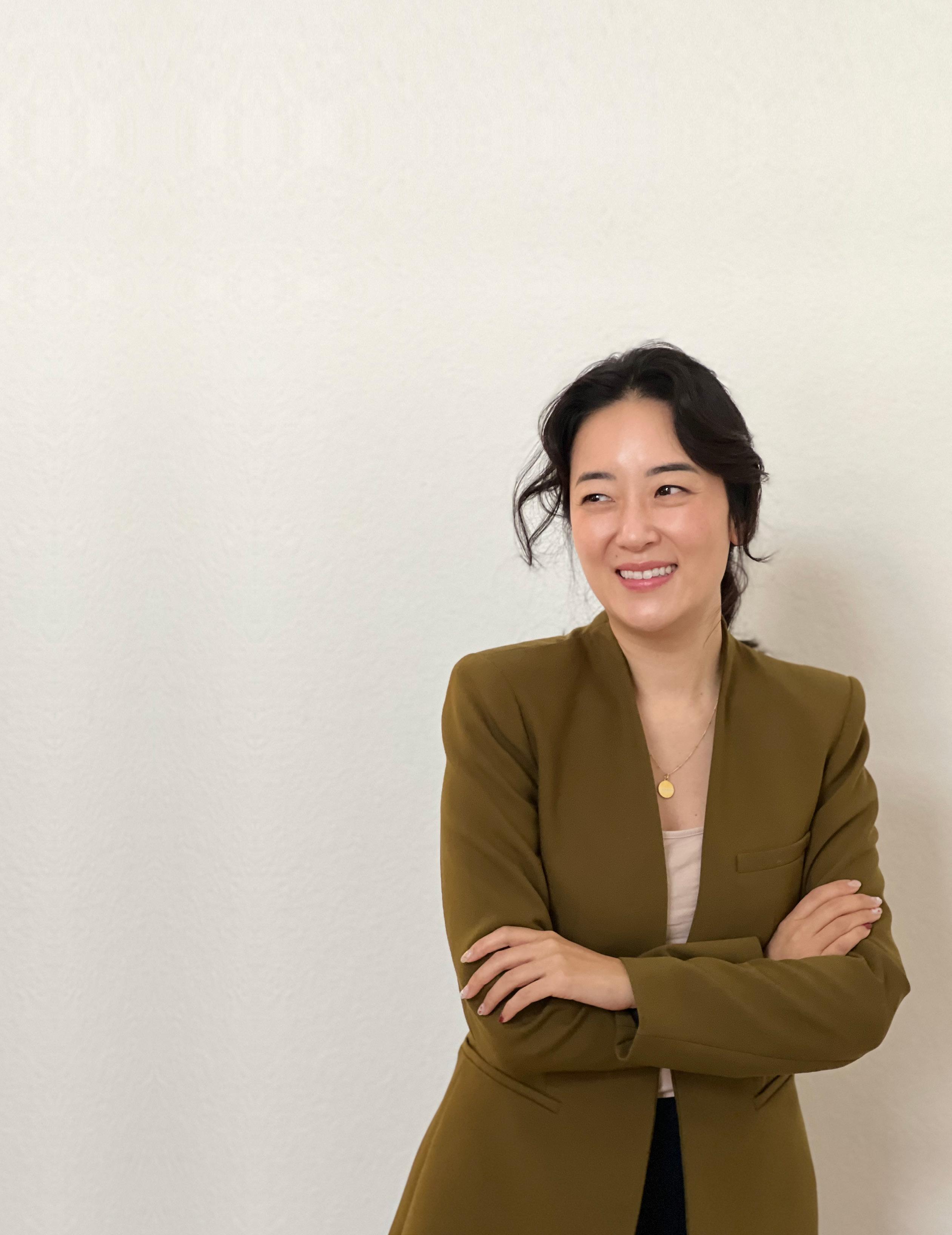
For Dr. Esther Park, the path to becoming a psychologist wasn’t linear—it was deeply personal. Like many children of immigrants, she grew up with a clear expectation: become a doctor or a lawyer. “For a while, I believed I would be a pediatrician,” she recalls. “But on the first day of organic chemistry in college, I quickly realized medical school wasn’t for me.”
What followed was a quiet but powerful shift. Park gravitated toward psychology, initially without a clear end goal. “Looking back, I can see that I was drawn to it for deeply personal reasons,” she says. “There was something I wanted to understand about myself, my upbringing, and the dynamics that shaped me.” That curiosity eventually led her to earn a doctorate in clinical psychology and continue her training at the Denver Institute for Psychoanalysis.
Dr. Park describes her identity as a 1.5 generation Korean American as central to her work. “I understand, intimately, what it feels like to belong and to feel ‘other’—sometimes in the very same moment,” she explains. Holding both Western and Korean values has created what she calls a “dual identity,” shaped by autonomy and self-definition on one hand, and sacrifice, duty, and collective identity on the other.
This duality brings both gratitude and grief. “I carry gratitude for the immense sacrifices my parents made… But I also carry a lot of grief. The grief of recognizing that my freedom is, in many ways, built on their limitation.” These layered emotions inform how she approaches her patients—with nuance, curiosity, and compassion. “I don’t see mental health symptoms in isolation. I see them within cultural systems, generational trauma, and the psychological weight of belonging.”
Dr. Park emphasizes that many mental health challenges— like anxiety, depression, and perfectionism—are often rooted in intergenerational experiences. “We do not start from scratch,” she says. “We are shaped not only by our own experiences, but by the emotional histories of the generations before us.” In immigrant families, survival stories often translate into internal pressures: achieve, don’t fail, make it worth it.
“These messages are often rooted in love,” she adds, “and yet, they can become internal pressures that shape identity in profound ways.”
Starting her own private practice was another intentional step in reclaiming autonomy. “I wanted the freedom to build a practice that reflected my values,” Park says. “My parents immigrated to this country without the luxury of time… Because of that, I’ve come to see time as one of the most valuable forms of wealth.”
Her work, grounded in psychodynamic and psychoanalytic therapy, goes beyond symptom relief. It invites deeper selfexploration and lasting change. “Many of the individuals I work with are interested in understanding themselves at a deeper level—not only to improve their own lives, but to change patterns that may have existed across generations.”
It gives Dr. Park hope that “more individuals are beginning to ask deeper questions about themselves—not just what they feel, but why.” She hopes more people can see selfunderstanding not as a weakness, but as courage.

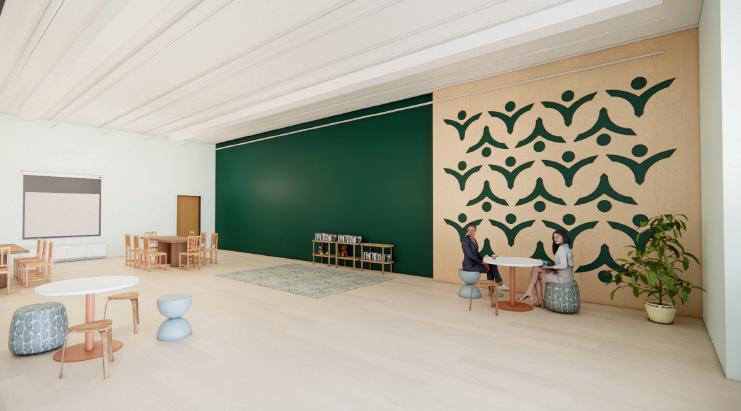
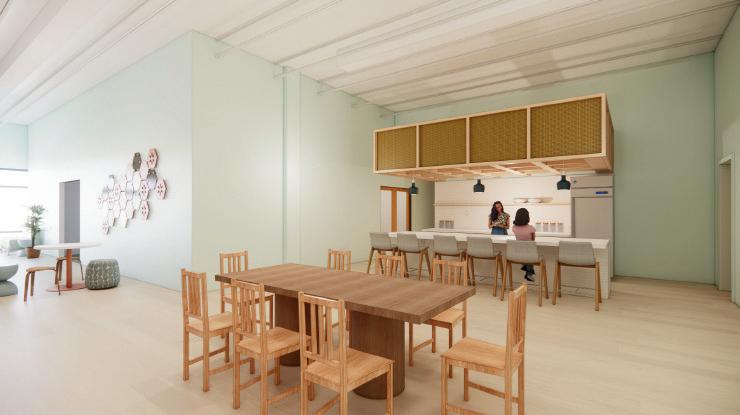
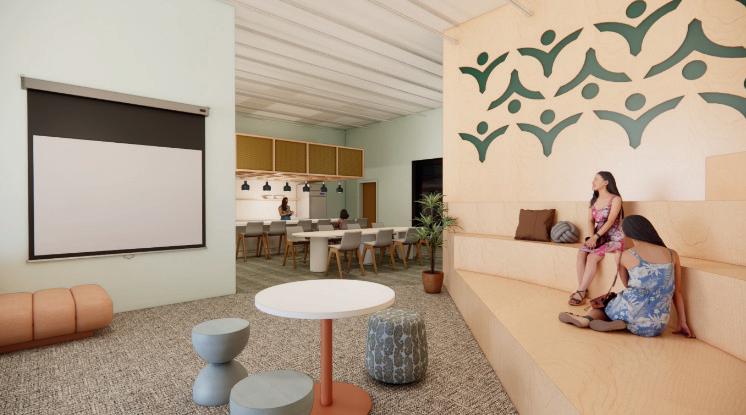

• Reserve offices (175-205 sq feet) or shared desks monthly, weekly, or daily, which include a mailing address, utilities, internet, and other benefits
• Check out books from the community library featuring AANHPI books and authors, and join a book club
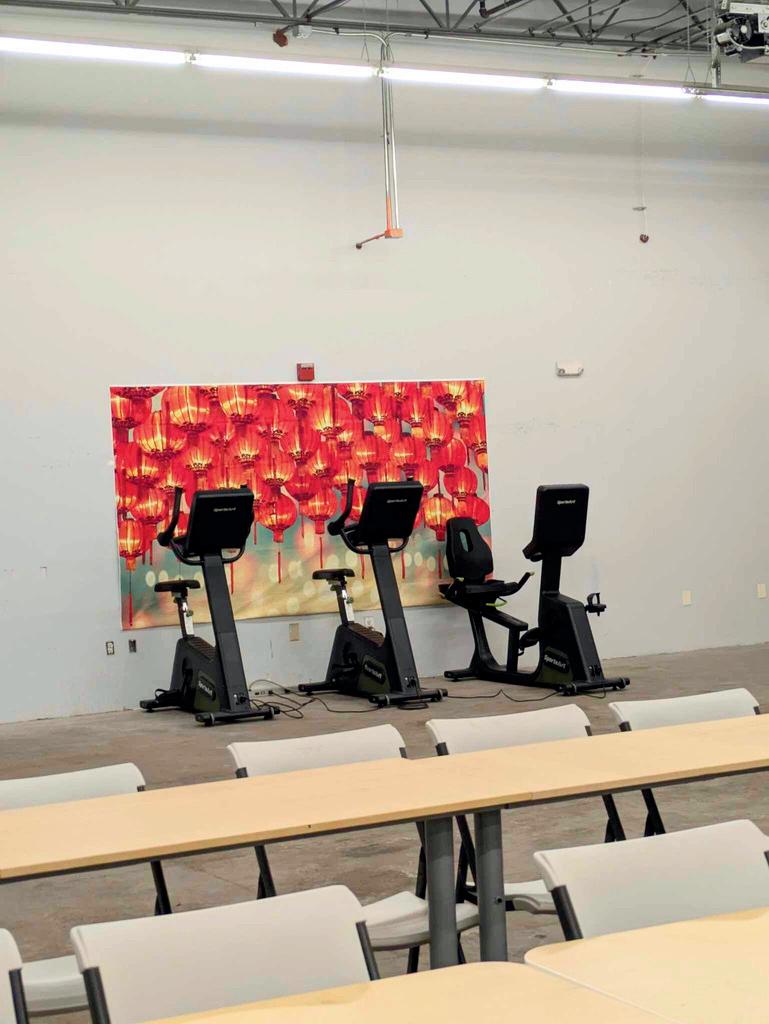
• Sign up for wellness activities (tai chi, yoga, martial arts), or ride bicycles that help power the building
• Join as a member to enjoy access to solo pods (for meetings/calls) and conference rooms, discounts to local restaurants/vendors, discounted Social Fabric events and space rentals, and giveaways ($50/month)
• Book event space for gatherings of all sizes such as meetings, conferences, and markets/festivals
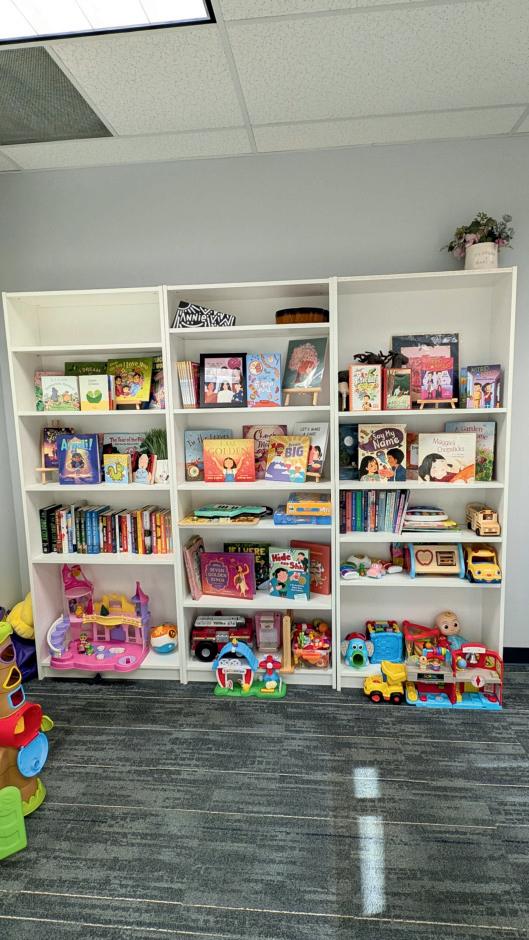
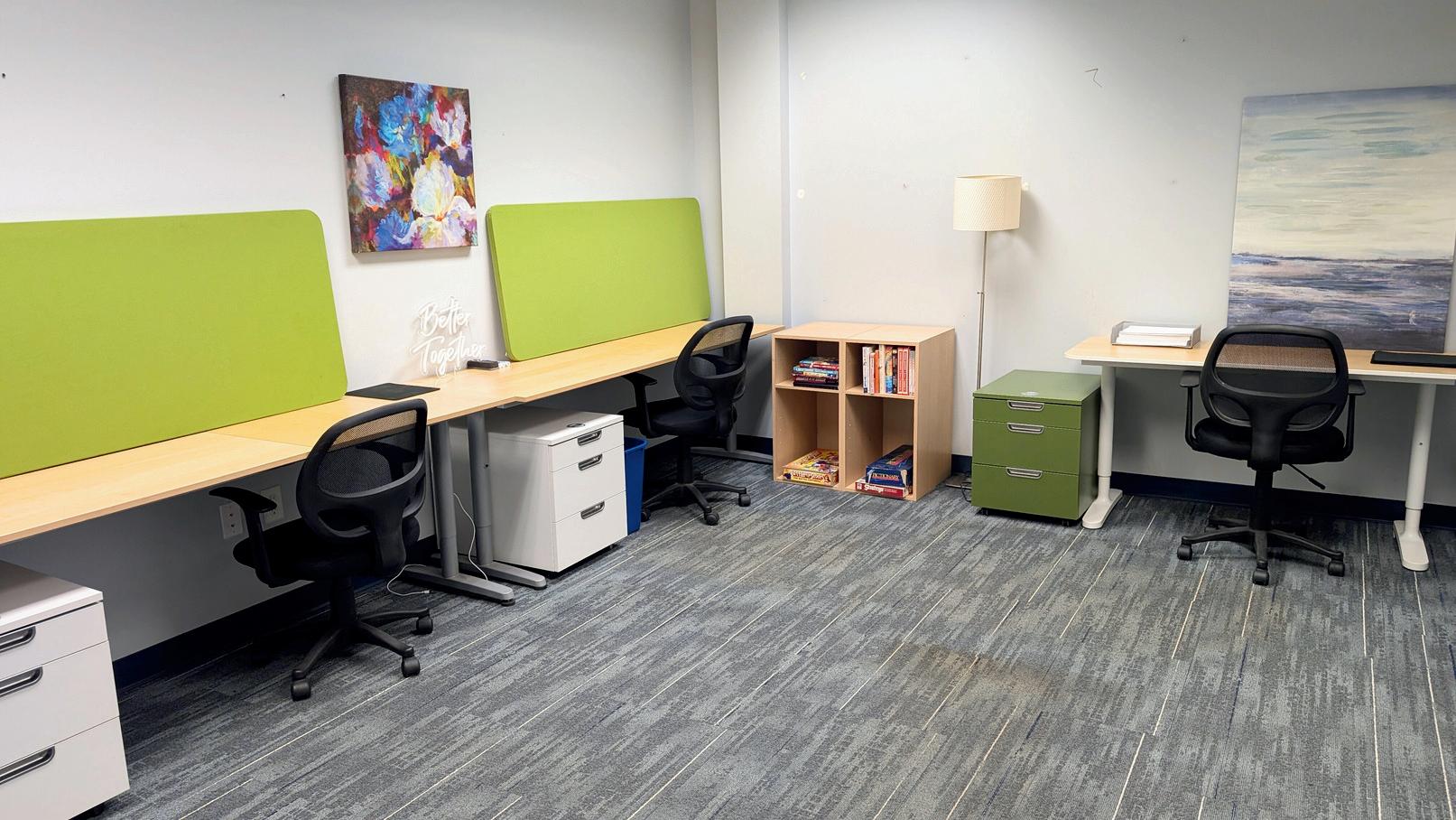
Social Fabric Hub is operated by Colorado Asian Culture and Education Network (CACEN), a 501c3 organization that serves Colorado’s AANHPI communities.
We could use support with funding for our renovation costs, donations (furniture, books, supplies, etc.), and getting the word out about the hub! Volunteers are also needed!
Learn
or schedule
By Jadyn Nguyen
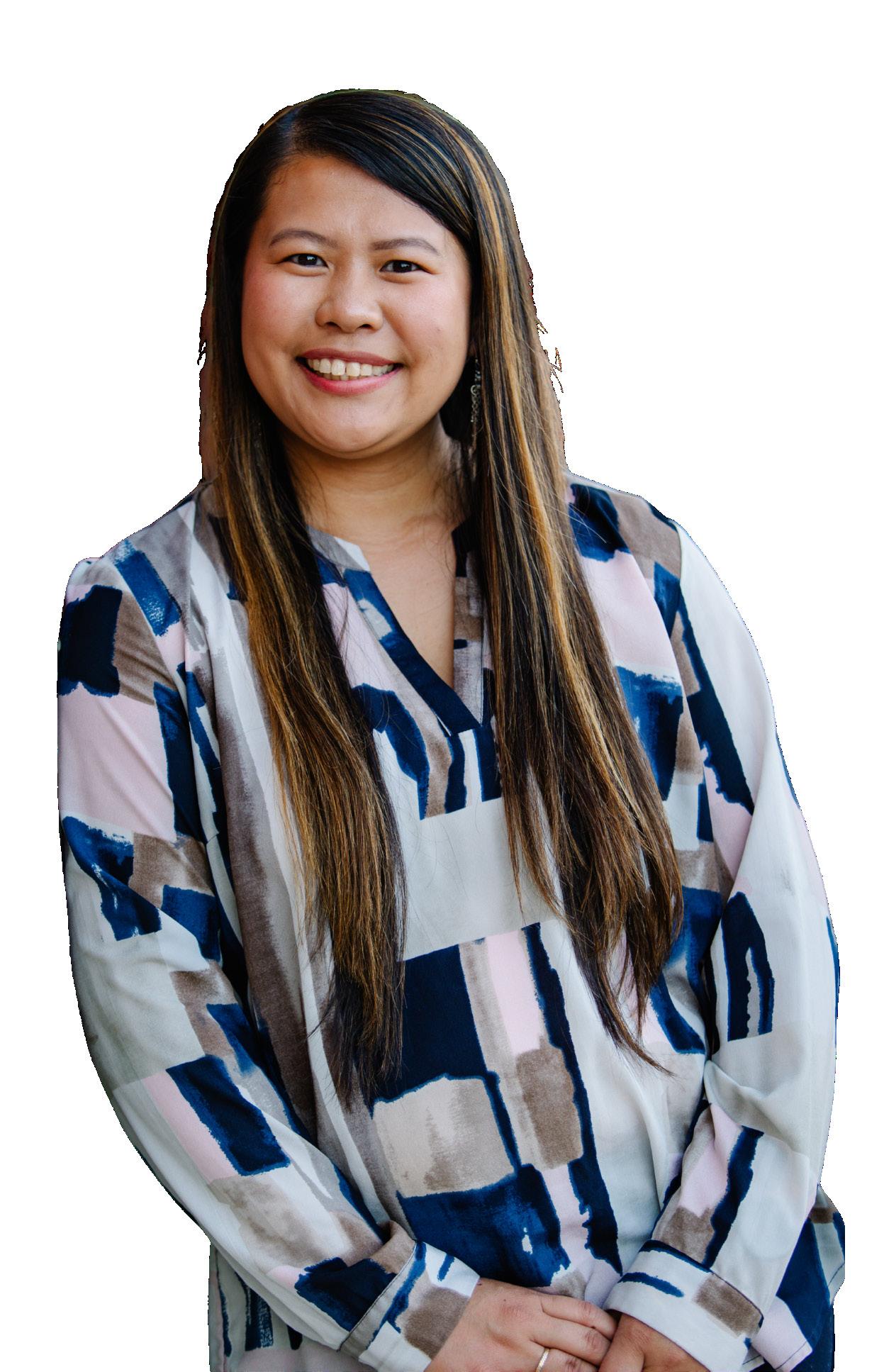
Sekia Um Lor, M.A., is a Hmong American, the third oldest of ten siblings, and a recent Moonshot Fellow. Before launching her own balloon-making business and a commu nity initiative for Hmong youth, she built a strong foundation of volunteerism and a deep pride in her Hmong roots.
With no official independent country, the Hmong are considered a stateless ethnic group. Though, their roots can be traced to China. According to the Minnesota Historical Society, in the early 1800s because of ongoing conflicts with Imperial China there was a “mass exodus by the Hmong into the mountainous regions of Southeast Asia—areas known today as Laos, Myanmar (Burma), Thailand, and Vietnam.”
Then around 1965, during the Vietnam War, the CIA conducted a secret war in neighboring Laos by recruiting Hmong people to aid US forces fighting Communists there. This later made them the targets of Communists in South east Asia, forcing Hmong people to seek refuge in America and elsewhere.
In Colorado, Hmong people have since resettled in Adams County in cities such as Westmin ster, Thornton, and Brighton with intentional government support to integrate Hmong people into American communities.
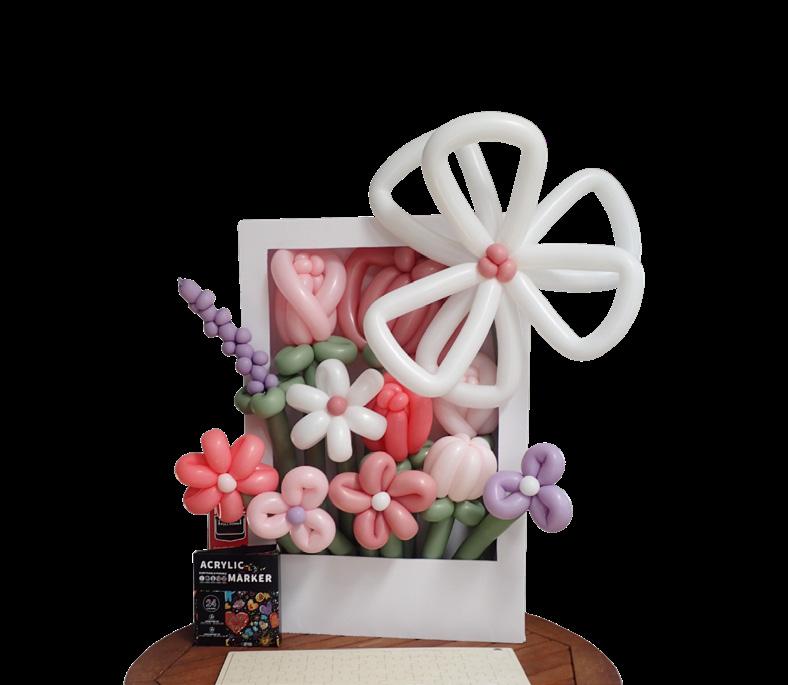
Sekia, founder of Miss Bubbly Balloons, is the only Hmong balloon twister in Colorado
Sekia is an accomplished leader with a persistent mindset. She was president of Thornton High School’s National Honor Society, which required that students complete volunteer hours. At first, Sekia thought this meant helping or planning prom. Then, when her friend offered to drive her to the Butterfly Pavilion for a volunteer day, she was hooked! Spending the day at the Butterfly Pavilion revealed she could help the community outside of her school and earn
Her passion for volunteering stems from her drive to be a strong role model as an older sister, as she spends much of her time caring for her family. During the COVID-19 lockdowns in 2020, she noticed her younger siblings were increasingly isolated, spending more time on screens, and missing out on social interactions.
She reflected: “If middle schoolers are already so isolated, when they go to high school, that isolation can continue—and there’s no real sense of community.”
Inspired to make a difference, she created a flyer for a community field day. She said: “I thought back to something I enjoyed as a kid, and field days were the first thing that came to mind!”
She set out to create a field day for elementary kids, with middle and high schoolers as volunteers.“
When I was in high school I always went back to volunteer at the elementary school for their field days, so the model is not new but I wanted to focus on the Hmong community!”
Sekia hoped to foster a stronger sense of connection among young people, especially those who identify as Hmong which inspired Hmong Roots Rising, a cultural enrichment for Hmong youth.
Through her participation in Moonshot, she has been able to expand her vision for Hmong Roots Rising. Moonshot is a Denver nonprofit most known for their Innovation Space Fellowship, “a nine-month fellowship where individuals explore the idea of designing and launching a solution to community-identified problems.”
As Kat Ling, CEO of Moonshot, explains, “supporting work like this is about backing leaders who are deeply rooted in their communities and building spaces that reflect the real lives of the young people they serve. Approaches like Sekia’s expand the idea of education by treating identity, relationships, and healing as part of how young people learn, not as something separate from it.”
The fellowship has allowed Sekia to co-create her initiative with the community.
“Moonshot gave me the foundation to re-evalulate my programming and make it with the community, and it’s cool because what I came in with has vastly changed with what I’m leaving with,” she said.
Through the fellowship, Sekia hosted two pilot events to test what resonates most with the community and the youth she hopes to serve. Across both pilots, 31 youth participated in Hmong Roots Rising.
One student, Thao, has stood out from the beginning. She has been volunteering with Sekia for the past four years, first helping at field days and assisting with balloon-making at the annual Hmong New Year celebration each November.
Over time, Thao took the initiative to deepen her understanding of Hmong history and culture. When Sekia launched her pilot events, Thao supported once again—this time as both a participant and a leader among her peers.
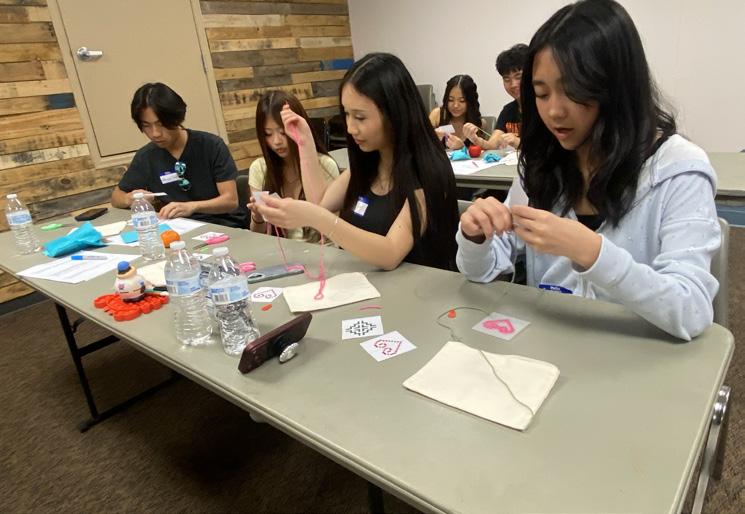
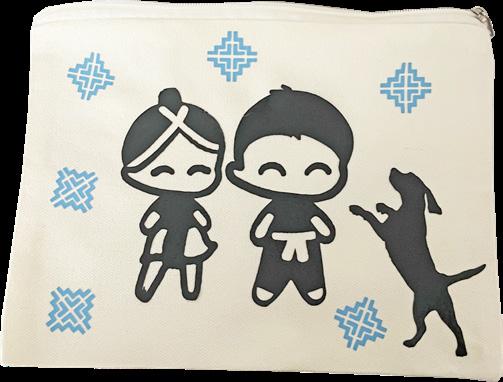
For the pilot, Sekia chose a story cloth cross-stitching workshop, drawing from the Hmong tradition of storytelling through textiles. The workshop was intentionally open-ended, allowing youth to explore and learn at their own pace. Thao quickly picked up the technique and completed her piece, demonstrating both skill and focus.
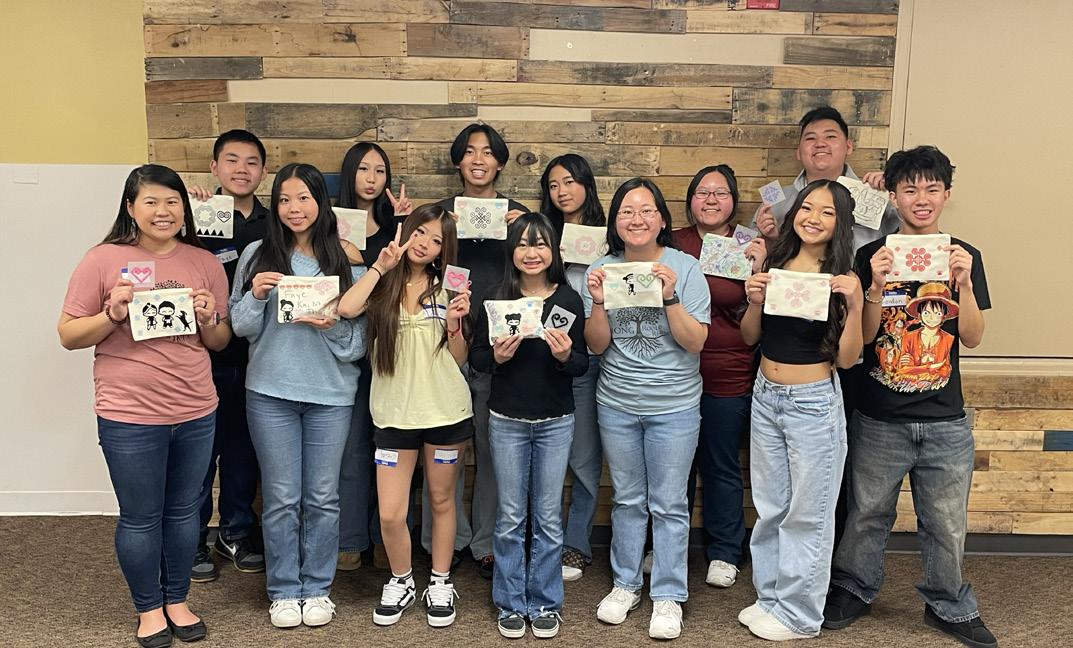
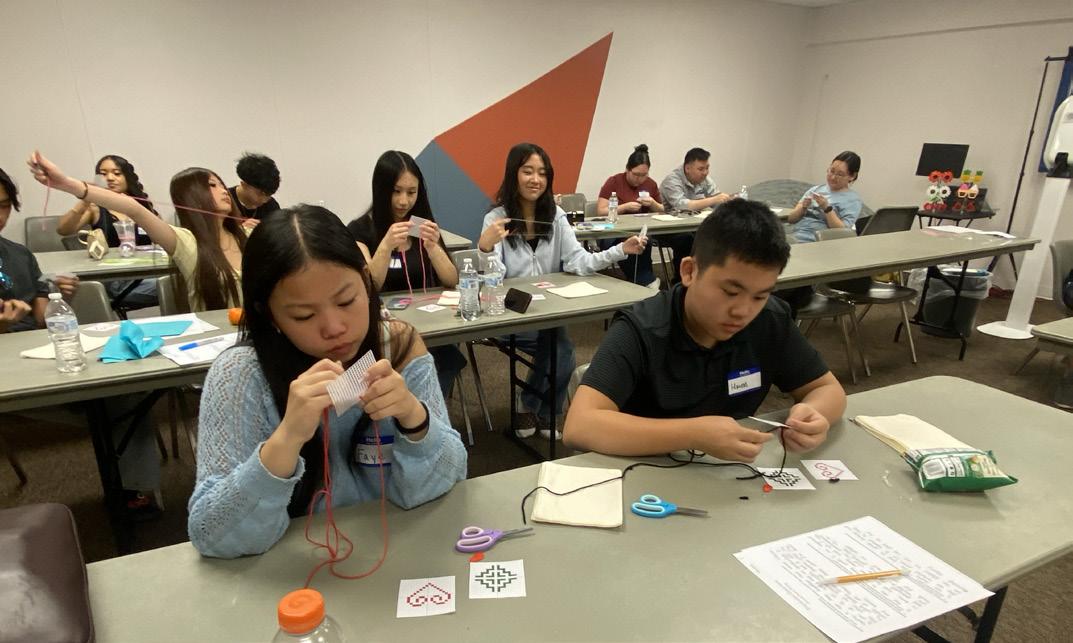
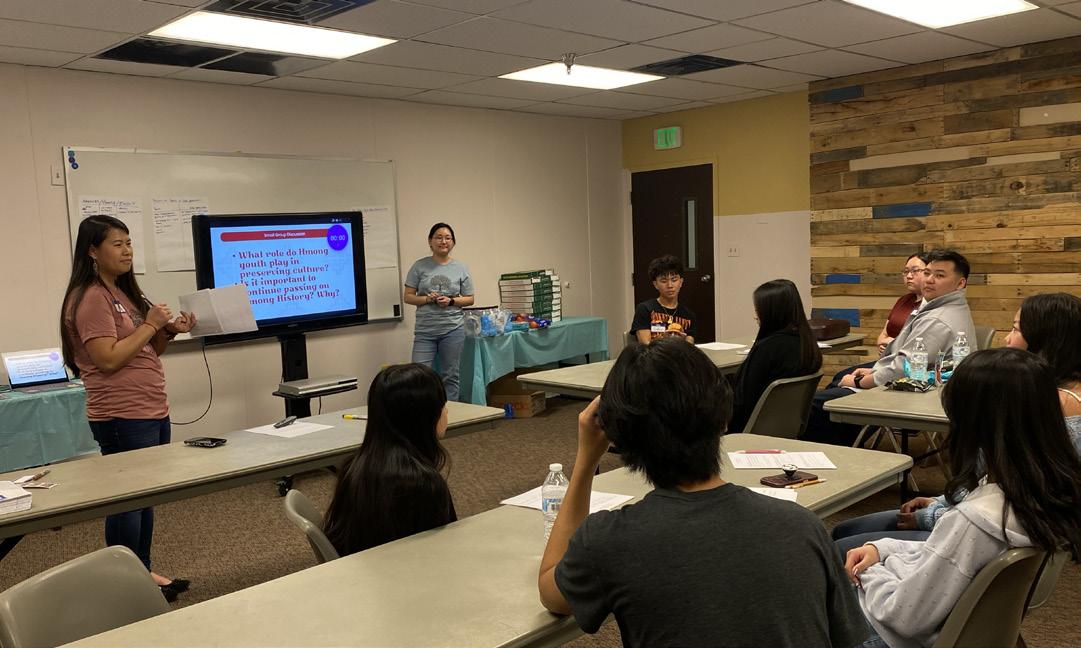
At the end of the workshop, one student reflected, “It’s our job to keep telling people who Hmong people are.” Moments like this affirmed Sekia’s vision.
Since then, Thao has asked Sekia to serve as her reference for college—something Sekia considers a profound honor and a reflection of the trust and connection they’ve built.
Sekia Um Lor is a homegrown community leader who leads with genuine care and pride in her Hmong heritage. Leaders like Sekia—who embrace their cultural identity and bring young people along in that journey—are what strengthen and sustain our communities.
Through Sekia’s participation in Moonshot, she co-created programs with Hmong youth for her initiative Hmong Roots Rising.
Programs like Hmong Roots Rising are especially vital for the Hmong community, whose history of displacement has made the preservation and passing on of their culture and identity both a challenge and a powerful act of resilience. Sekia carries the same spirit into her work as the founder of Miss Bubbly Balloons, where she brings joy through balloon animals and other creative designs as the only Hmong balloon twister in Colorado.
Learn more about leaders like Sekia at Moonshot’s annual Showcase event on Thursday, May 14th, 2026 at Upper Larimer from 5 p.m. to 8 p.m., where Fellows will share their stories, insights, and lessons from the program with the broader community. Learn more at: moonshotedventures.org
The 4th Annual Celebration of AANHPI-Owned
Runs April 26–May 3 across the front range
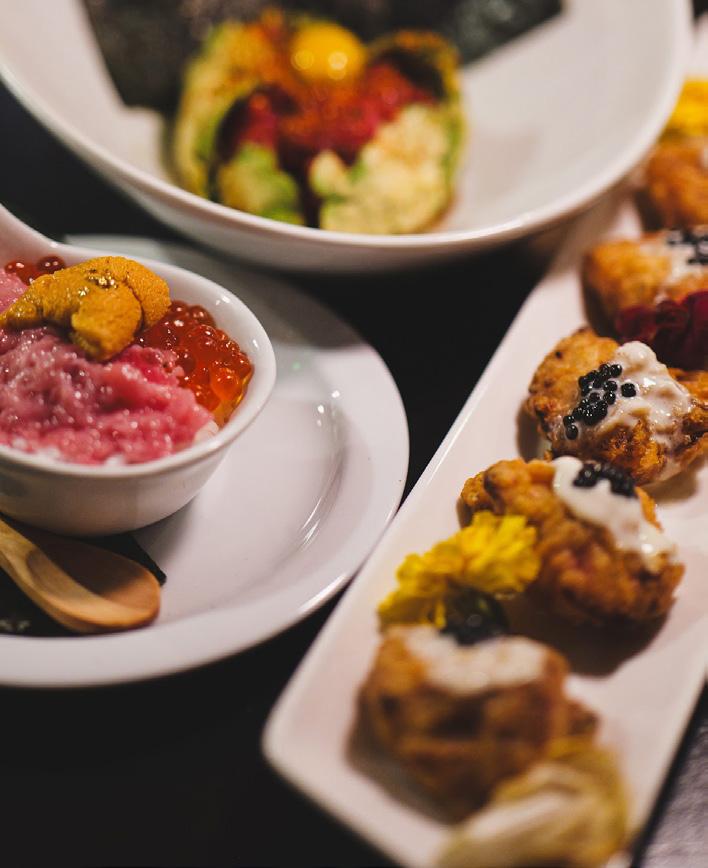
The wait is over. Mile High Asian Food Week (MHAFW) has officially unveiled its full lineup of exclusive restaurant specials and promotions, now live on the website. Running April 26–May 3, 2026, the fourth annual food week invites foodies to explore and support Asian American, Native Hawaiian, and Pacific Islander (AANHPI)-owned restaurants, food trucks, pop-ups, and beverage makers through eight days worth of oneof-a-kind culinary experiences.
This year’s event features 75 participating vendors from Aurora to Colorado Springs, each offering insider perks available for one week only—from secret menu items and specialty menus to exclusive discounts and themed dining experiences.
Highlights from this year’s specials include:
• Kokoro is celebrating its 40th anniversary in delicious fashion, offering 40% off during Mile High Asian Food Week. This is a once-in-a-generation deal from one of Colorado’s most
beloved Japanese restaurants!
• Chopstix Fusion is rolling out an impressive six-course tasting menu featuring standout dishes including Beer Chow Fun, Seafood Tofu in Clay Pot, and Dried Scallop Fried Rice, among others
• Wild Taco is crossing culinary borders with a Bulgogi Chopped Cheese Torta, a Korean-Mexican mashup that’s not to be missed
• Tum Yumz Food Truck brings a Vietnamese twist to a beloved birria tradition with Bo Kho Tacos, a banhmi-meets-quesabirria experience
• Tea Street Parker is hosting a MHAFW book reading with co-author Beatrice Tebbe for her children’s book Shapes at Dim Sum, complete with yum cha-style dim sum pastries and tea from Tea Street—the ultimate literary brunch
• Wellness Counter, a brand new sushi and Chef’s Counter opening in Boulder, is welcoming guests with a complimentary dessert during the
food week
• Sweet Thu-th Desserts is serving up a vibrant array of cake pops in flavors including Ube, Pandan, Thai Tea, Mango, and Vietnamese Coffee
• Lilac Coffee is satisfying curious palates with a Korean Cereal Latte
These are just a taste of what’s in store. The full list of participating vendors and their exclusive MHAFW promotions is now available at www. milehighafw.com.
Mile High Asian Food Week is a program under the Colorado Asian Culture & Education Network (CACEN), a 501(c) (3) organization dedicated to elevating AANHPI communities through cultural exchange and education. MHAFW is proudly supported by Visit Denver, FirstBank/PNC Bank, Comrade Brewing Co., 5280, Asian Avenue Magazine, and Indie Creative Co.
Visit www.milehighafw.com and follow @milehighafw on Instagram for more information.
3456tea (Centennial)
ADOBO Restaurant & Bar (Denver)
Aloy Modern Thai (Denver)
Aloy Thai Cuisine (Boulder)
Bad Peach Cafe (Aurora) - New
Baon Supper Club (Pop-up)
CÀ PHÊ, Vietnamese Coffee and Banh Mi (Thornton)
Chaatwala (Pop-up)
Carbon Coffee (Aurora)
Chi Lin Asian Eatery (Aurora)
Chopstix Fusion (Denver)
Coffeegraph (Denver)
Coffee Sarap (Denver)
Colorado Cocoa Pod (Pop-up)
Comrade Brewing Co. (Denver)
CôNu’s Corner (Denver)
Dae Bak Korean Restaurant (Aurora)
Die Die Must Try (Denver)
GetRight’s (Wheat Ridge)
Hop Alley (Denver)
Hotpot Den (Littleton) - New
Isan Thai Food Truck (Food Truck)
Kids Table (Pop-up)
Kokoro Restaurant (Arvada and Denver)
Kuluka Boba + Sweets (Westminster)
Le Colonial (Denver)
Lilac Coffee (Denver - E. Colfax and 19th St. locations)
Little Ogre (Pop-up)
Lucky Noodles (Denver)
Lucky Three (Pop-up)
MAKfam (Denver)
Mama Kim Malaysian Fusion (Greenwood Village)
Ma’s Kitchen | Dim Sum & Bar (Denver) - New
Ma’s Kitchen | Next Door (Denver) - New
Mecha Noodle Bar (Denver)
Momo Dumplings (Aurora) - New
Mukja (Food Truck)
Ninja Ramen (Food Truck)
Now Pho (Denver)
Olive & Finch (Denver - Cherry Creek, Denver Performing Arts Complex, Union Station locations)
Onto Coffee (Lakewood)
Origami Den (Denver) - New
Paborito (Denver)
Panda Bao (Pop-up)
Pig & Tiger (Denver) - New
Pokeworks (Greenwood Village)
Red Bus Coffee (Lakewood) - New
Rising Tiger (Pop-up)
Rocky Mountain Momo (Greenwood Village)
Saigon Noodle Club by PKR (Edgewater) - New
sắp sửa (Denver)
Sesame Sandwiches (Denver)
Sweet Thu-th Desserts (pop-up) - New
Taeko San Takeout (Pop-up)
Teahee (Denver)
Tea Street (Parker)
The Sen Cafe (Greenwood Village)
The Sweet Life Culinary Productions (Pop-up)
Ti Cafe (Denver)
TropiTai Delights (Lakewood)
Tum Yumz (Food Truck)
Wild Taco (Denver)
WongWayVeg (Food Truck)
Yomie’s Rice x Yogurt (Denver)
Yong Gung (Aurora)
Yuan Wonton (Denver)
By Gil Asakawa
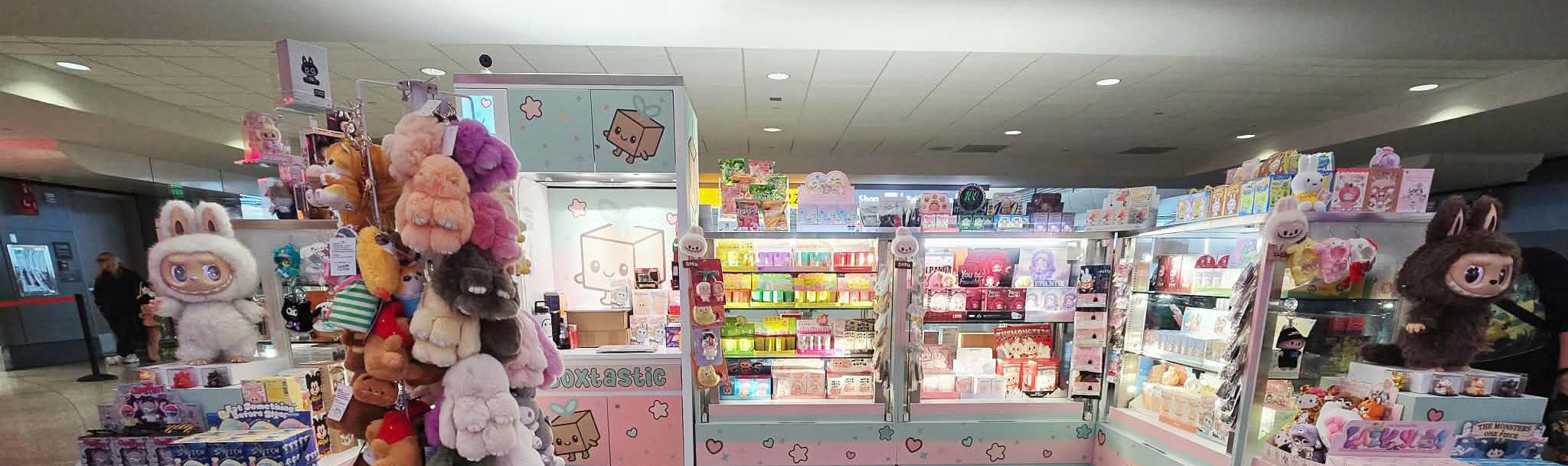
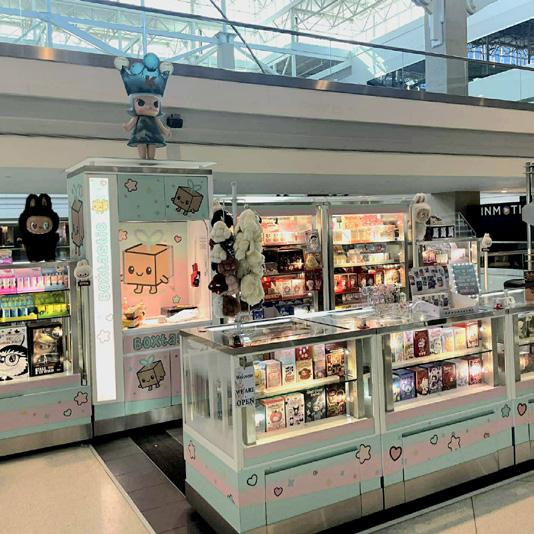
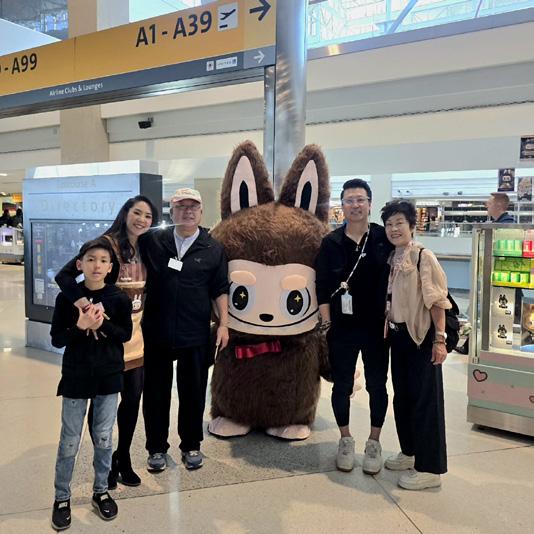
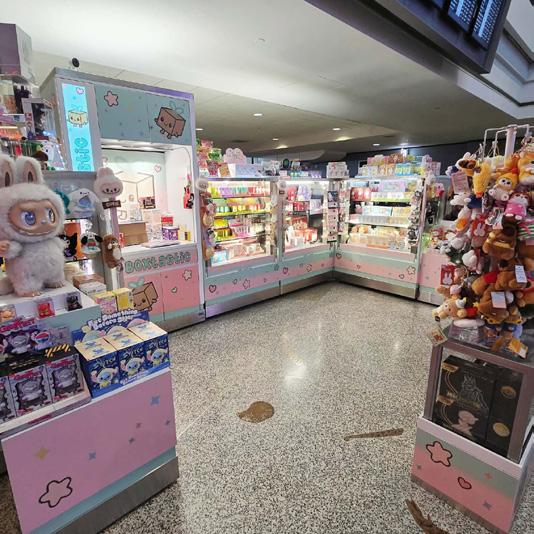
When people discover Boxtastic at Denver International Airport, they’re often drawn in by the bright displays, colorful characters, and the excitement of opening a “blind box.”
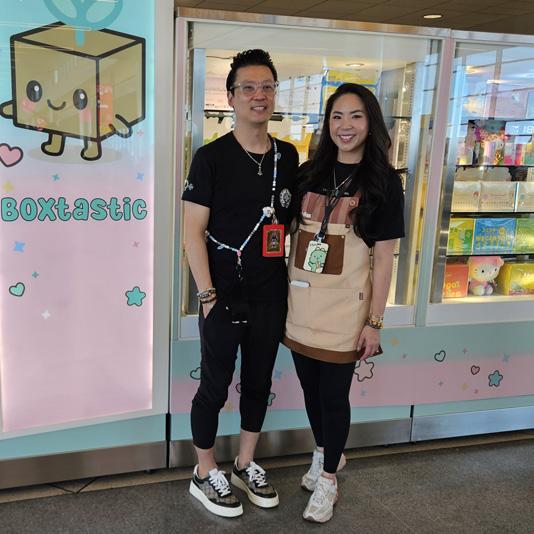
Behind that experience is Michael Ye, quietly building and shaping the vision of Boxtastic alongside his wife, Mimi Luong Ye. While Mimi is often the face of the brand—connecting with the community, sharing stories, and bringing energy to events— Michael is the one carefully crafting what Boxtastic is becoming.
In 2024, he noticed a growing trend while running their family gift shop, Truong An Gifts, in Denver. Labubu dolls made by Pop Mart, a Beijing-based toy company, had become an explosive fad. Pop Mart sells the line of various Labubus in a “collect them all” ethos of blind boxes, in which the exact item inside is a surprise until it’s open. Then consumers keep buying them to collect the other ones. Labubus became Pop Mart’s biggest worldwide hit.
After Truong An’s Labubu popularity and long lines waiting outside their gift shop door caught the attention of Denver International Airport, the Ye’s came up with Boxtastic, which was more open-ended and not tied to just the Labubu fad.
Like a spinoff for a hit television show, Boxtastic, is inspired by the blind boxes that generate repeat purchases.
“It’s kind of become the thing that I love,” Ye says of the Truong An-inspired world of retail. “And Boxtastic is just a version of that. It’s a spin-off.”
And it’s a spin-off with potentially many seasons ahead, one that could span generations, as the Ye’s two sons continue to grow up with the family business and could carry on their legacy. “It’s not just Truong An anymore. It’s going to be a fleet of stores,
with day-to-day management of a company.”
The first Boxtastic opened last November in Concourse B; the second location in December in Concourse C; and a third spot right at the top of the Concourse A escalators as travelers get off the trains and come up to the gate level to head for their flights, opened in February this year.
The small shops are attracting curious shoppers who see the Labubus and other character-driven products like Hello Kitty and Pokemon, and other game cards and paraphernalia.
Ye, who studied business at the University of Denver, has carefully mapped out plans to expand beyond DIA. From blind boxes and collectible figures to trading cards and playful gifts, the stores continue to evolve with what people love. Ye understands that trends will come and go, but the feeling Boxtastic creates, that excitement of unboxing and collecting, is what brings them back.
“It’s not about just one item,” he shares. “It’s about always having something that people are excited to find.”
Ye says he knows how to run a store, but his next goal is building a brand. “When people think of blind boxes, Pokémon cards, toys, gifts—anything like that—I want them to think of Boxtastic.”
Find Boxtastic at Denver International Airport
• Concourse A – Center Court
• Concourse B – B22
• Concourse C – C48
Open daily: 7:00 AM – 9:00 PM
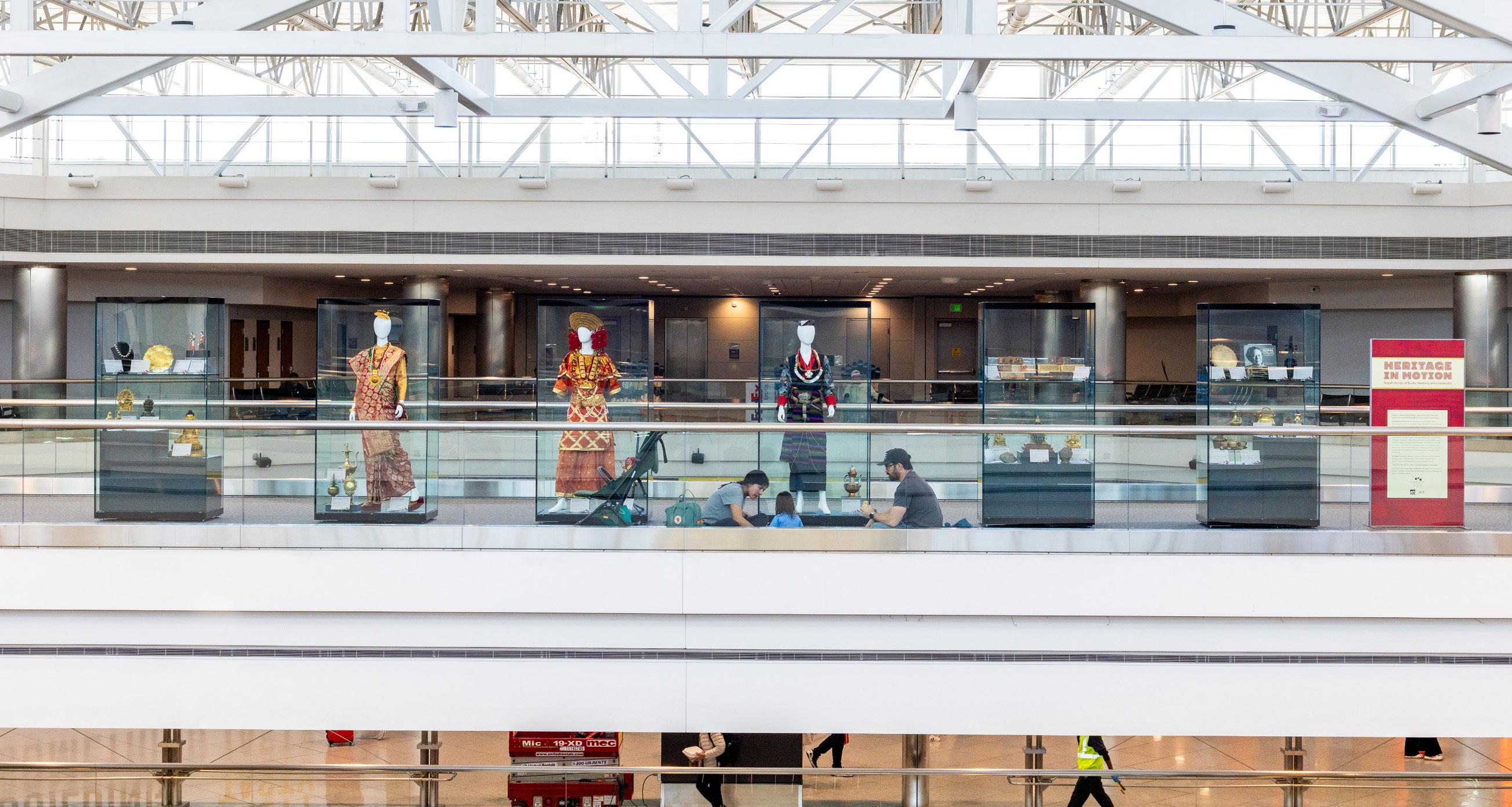
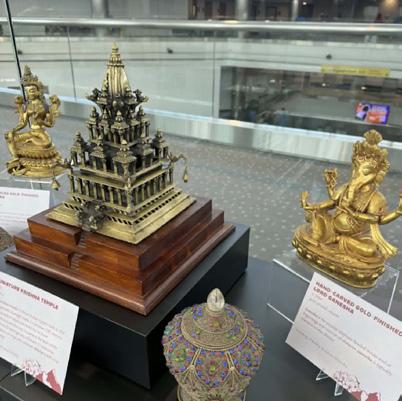
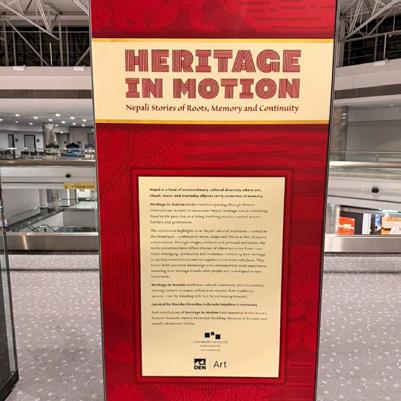
Denver International Airport (DEN) opened Heritage in Motion: Nepali Stories of Roots, Memory and Continuity last month. The exhibition highlights how Nepali cultural traditions—rooted in the Himalayas—continue to move, adapt and thrive within diaspora communities, and includes more than 30 Nepalese objects highlighting traditional arts and culture.
The exhibition, which invites travelers to encounter Nepali heritage as a living, evolving practice carried across borders and generations, was curated by Binisha Shrestha, founder of the Colorado Nepalese Community. Past installations of Heritage in Motion have appeared at the Aurora History Museum, Aurora Municipal Building, Museum of Boulder and Nepal’s Aksheswor Vihara.
Heritage in Motion: Nepali Stories of Roots, Memory and Continuity is on view now through August 10, 2026, and is located on the Mezzanine, level 3, of the C Concourse.
The mission of DEN Arts is to engage, educate and entertain the public audience with an aim to connect a local and global audience to the environment and culture of the vibrant City of Denver and the unique State of Colorado. For more information, visit www.flydenver.com/art
Through Heritage in Motion, I wanted to bring that same feeling into the space. Not just to display objects, but to share presence. To offer a glimpse of Nepal before a traveler even steps outside the airport. To let someone encounter our culture in an unexpected, intimate way.
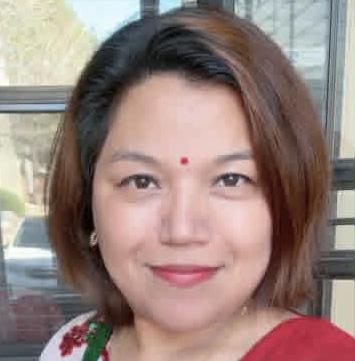
I think about my younger self often. The one who would quietly wander through museums, taking it all in. Some people thought it was strange. But maybe I was never just visiting museums. Maybe I was always preparing for this. Years of listening to my community, understanding what we carry, what we miss, what we want our children to see, this is what led to this moment. Standing in one of the busiest airports in the world, watching people pause in front of our stories.
And now, as I stand there, watching both the exhibits and the reunions, the art and the hugs, I feel something settle inside me. This is what belonging looks like. Standing in an airport… and seeing home.
Heritage in Motion: Nepali Stories of Roots is located at the Denver International Airport in Concourse C
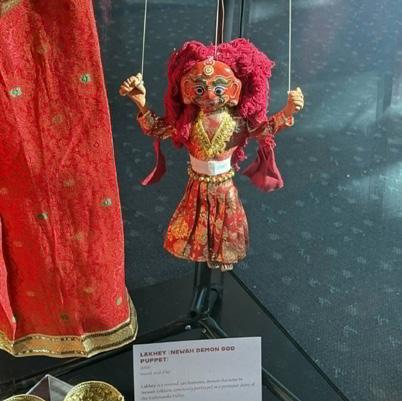
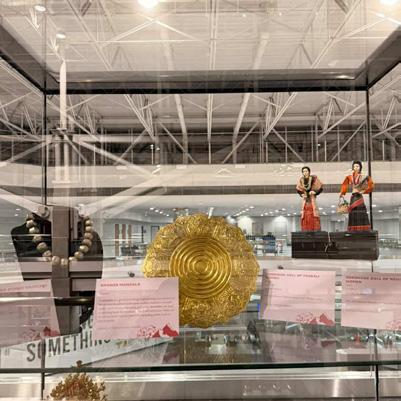
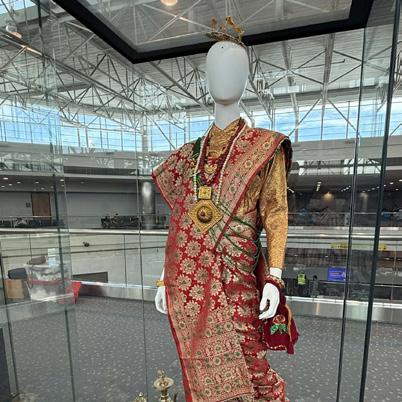
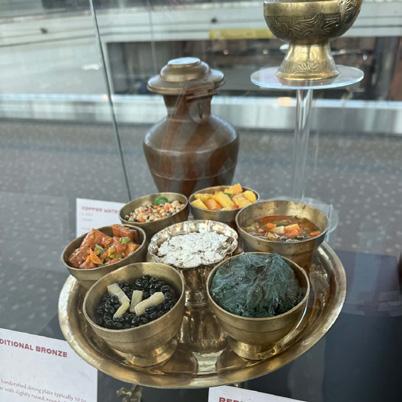
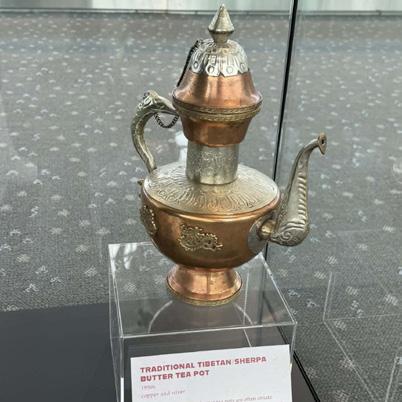
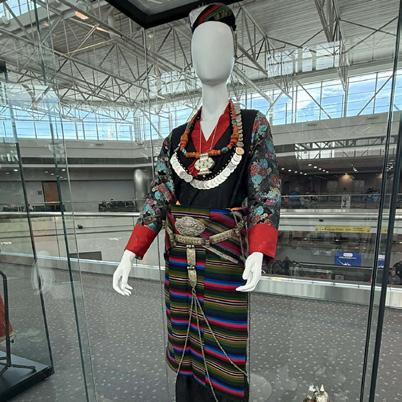
By Gil Asakawa
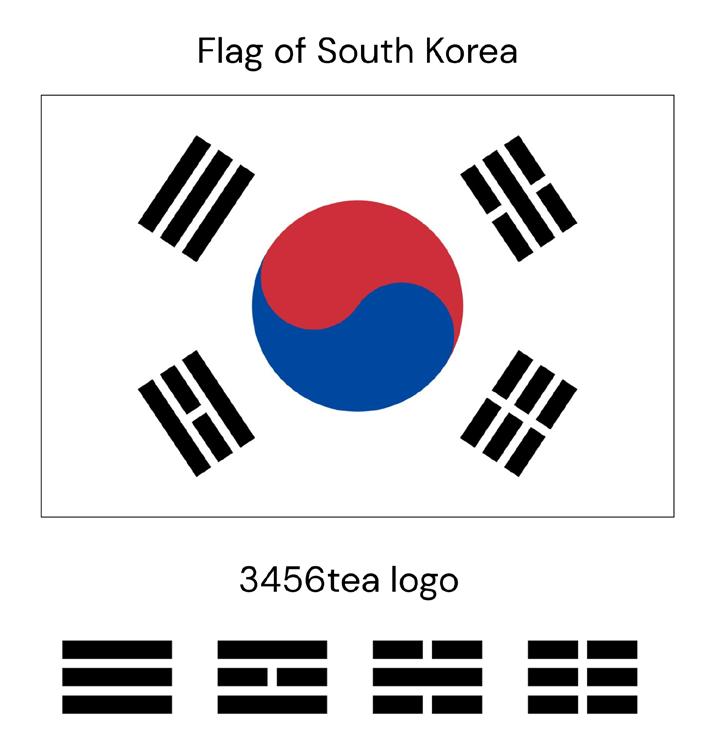
To understand the passion that owner Sean Choi of 3456tea has for the drinks he serves, first you have to understand the shop’s logo: four symbols of three horizontal black bars, with some broken into two pieces. The symbols represent three, four, five and six. To understand the logo, look at the flag of South Korea.
The same black bars, or trigrams, adorn the flag, surrounding a red and blue symbol that’s known to us in the West as “yin and yang” – representing opposites but also great duality, equality. It’s about accepting that opposing forces can be complementary, interconnected, and interdependent. The flag was designed in the 1880s during the Joseon Dynasty, but became the official flag of South Korea in 1949. The flag represents deeply historical Asian philosophy and tradition.
For Choi, who is 43, the trigrams represent multiple meanings like the four seasons, the sky, sun, moon and earth or the four points of the compass, and virtue, righteous, wisdom and morals. He chose the name 3456tea to bring in “unification to our community and allowing good and righteous morals to be fed into the current crazy world.” And his shop does this by serving traditional Korean beverages and desserts.
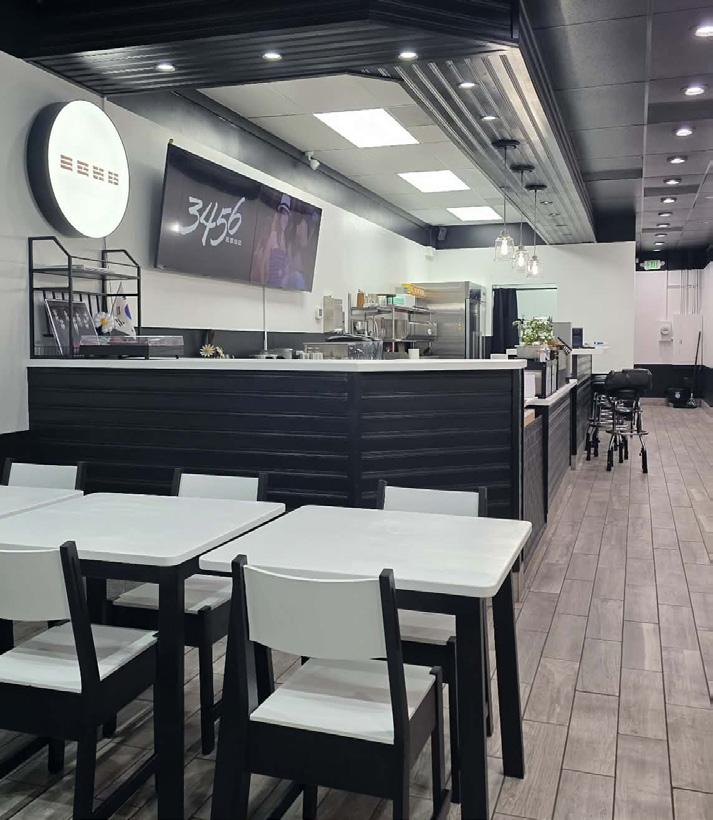
Choi has the symbols on his store merchandise like hats and t-shirts, and even has the four tattooed on his arm. He is more than proud of his Korean heritage: he’s passionate about it.
To share his passion with a growing base, he recently moved 3456tea from the Coark Korean food hall to the heart of Koreatown off Havana Street near HMart.
He dreamed of bringing his drinks closer to the community, but it took time to find a location. When a boba shop closed, Korean community leaders recommended him for the location. “I was trying to see what the options were, and then, community leaders around here were saying we need to be in this perfect spot.”
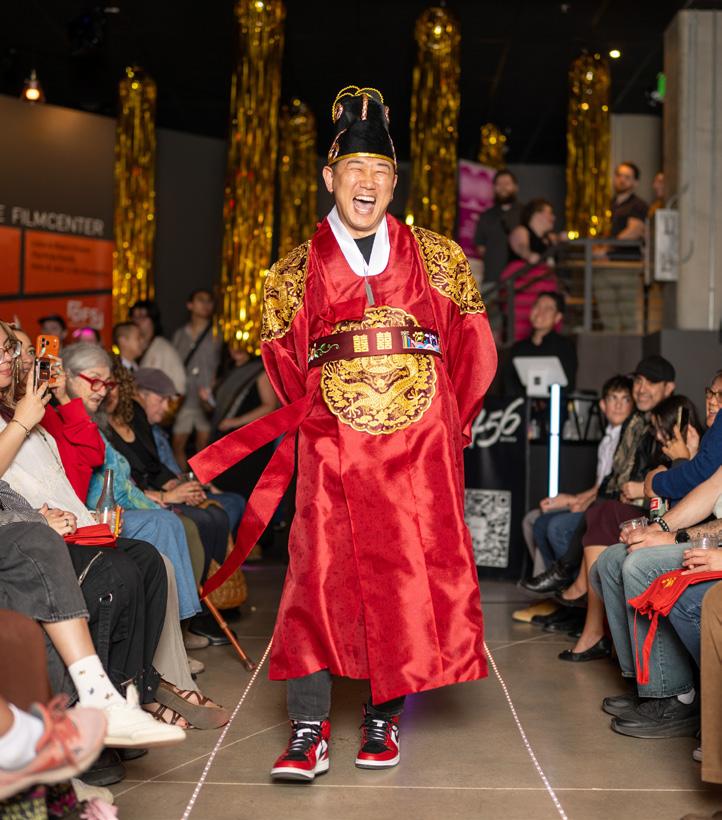
His goal is to bring his communitybased, “collaborative vibe into this plaza.” In the new location, he plans to continue hosting community events like the popular K-pop parties that bring in families.
Choi and others on his staff are experienced DJs so customers can expect more than just drinks and desserts when they come in the door, or in the parking lot as summer arrives.
“We do a lot of community events,” Choi says proudly. “Smaller scale would be hosting K-pop themed events, which we can do a lot of those here. We have also participated in night markets, Aurora Global Fest, Dragon Boat Festival, the Dragon Boat Film Festival, all the programs that go on at the Social Fabric Hub. That’s our people, so we help out with stage music, emcee and participate as a vendor.”
People would ask him why he spent so much time organizing community events for free. “But honestly, I enjoy it. I love seeing people come together and have a good time at these events,” he said.
He believes his connection to community is shaped by his upbringing. Born in Korea, he moved to the U.S. as a child—first to Arizona, then to Colorado

at 13—attending several high schools across the Denver area. “Having that background of growing up and moving every year influenced me to get to know communities. I had to learn how to communicate better as a new person, getting to know each new community.”
His people skills led him into studying design and then working in marketing for the tech industry, which had him traveling constantly. During his journeys, he discovered that no city had a place that served the fruity tea drinks he remembered from his childhood in Korea.
“I couldn’t find a Korean drink shop, and I always like to make tea. So I was looking for that, but I couldn’t find any. In New York, there’s a very sit-down and authentic type of traditional hot tea drinking, and there are similar ones in Chicago and LA, but not something like this quick pick up, like a boba type of concept.”
He started planning a Korean drink space, and trained by working for restaurants after his day job. He is careful
to note that although boba drinks are now iconic Asian treats, his drinks do not include boba.
His drinks are made with traditional teas and Korean ingredients such as Wolfberry (goji berries) and familiar plants like plums, yuzu citrus, Asian pear, ginger and coix (roasted jobs tears, a type of grain). He also serves the most well known traditional drinks: a rice drink (Shik-hye) and a cinnamon drink (Soojung-gwa).
He knows he has to educate people about the drinks he offers. “We have a whole pitch, but we’re not just selling a drink we are selling a cultural experience. And our drinks are a little bit healthier and made with real fruits.”
3456tea will also serve Korean desserts including one like a pancake pastry. “It’s one of the most traditional desserts of Korea. So that’s the concept we’re trying to push, and making it kind of like crepes.”
Choi is determined to connect people to Korea through his passion. “I want to be the bridge. I want to be the bridge
because, like, the people who want to go to Korea and, you know, visit, they need a little bit of training before they go. So get familiar with the community and culture, and then you can really explore it over there.”
And for newcomers from Korea, he adds, “We could be that community that helps connect the people, because that’s important. That’s the role that we want to play, whether it’s food, music, or just like, hey, where do I go to get my license?”
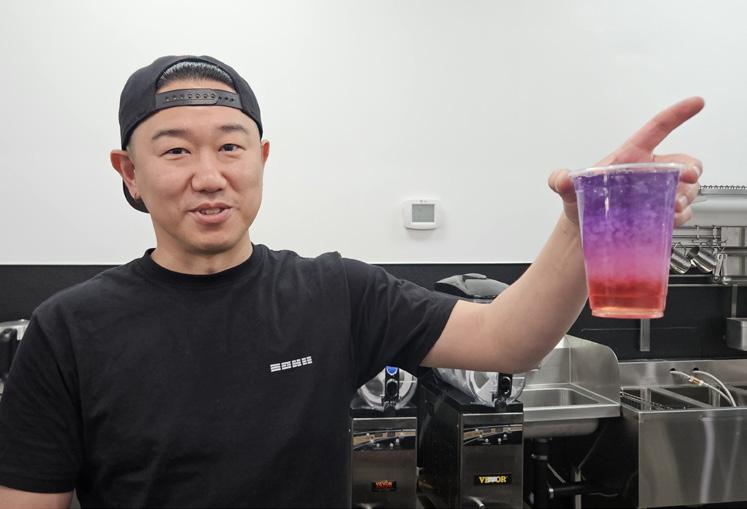
And, he knows one of the most effective ways to bridge those two worlds is through pop culture. So 3456tea has two menu items that will attract old and young, curious and obsessed fans… of Kpop Demon Hunters. He has created Huntrix and Saja Boys drinks that blend sweet fruity bases with natural hues that he mixes on the counter for people to see that they transform colors. And they taste pretty great.
Learn more about 3456tea at 3456tea.com or follow them on Instagram @3456tea.

By Gil Asakawa
Once upon a time, Denver was not known as a hotbed of AANHPI attorneys. The post-WWII influx of Asian immigrant communities (especially the growth of the Japanese American population) led to just a smattering of Asian American attorneys.
Minoru Yasui, one of the four Japanese Americans who argued against the wartime incarceration of JAs, was an attorney and settled in Denver after the war, serving the JA community, sometimes in trade for chickens. He was the City of Denver’s first head of what’s now named Agency for Human Rights & Community Partnerships, and Yasui was a legendary (if salty-tongued) leader in civil rights and social justice who is known to have prevented race riots in the wake of the assassination of Martin Luther King Jr., because of the relationships he had built with the African American community.
A few other Asian American attorneys put out their shingles in the decades since the civil rights era, and in the 1980s, the Colorado chapter of the Asian Pacific American Bar Association (CAPABA) was formed. In 1977, Mariko Tatsumoto, an author who now lives in Pagosa Springs in southwest Colorado, was the first Asian woman attorney in Colorado, after receiving her law degree from CU and settling in Denver.
And with the growth of the area’s Asian communities it was inevitable that AANHPIs would eventually rise to sit on the bench as judges in the area’s many courts. Min Yasui was never a judge, but Mel Okamoto, another Japanese American, now retired, was appointed a judge in the 1990s.
Most notably, the first female Asian American judge appointed in Colorado is Chelsea Malone, who serves on Denver County Court.
“I wasn’t even 100% sure of that statistic when I was applying,” Malone says. “I was trying to do research and I couldn’t find any Asian female judges. And even after I got the appointment, I wasn’t 100% sure, because you never know until I got a letter from an organization in Denver that
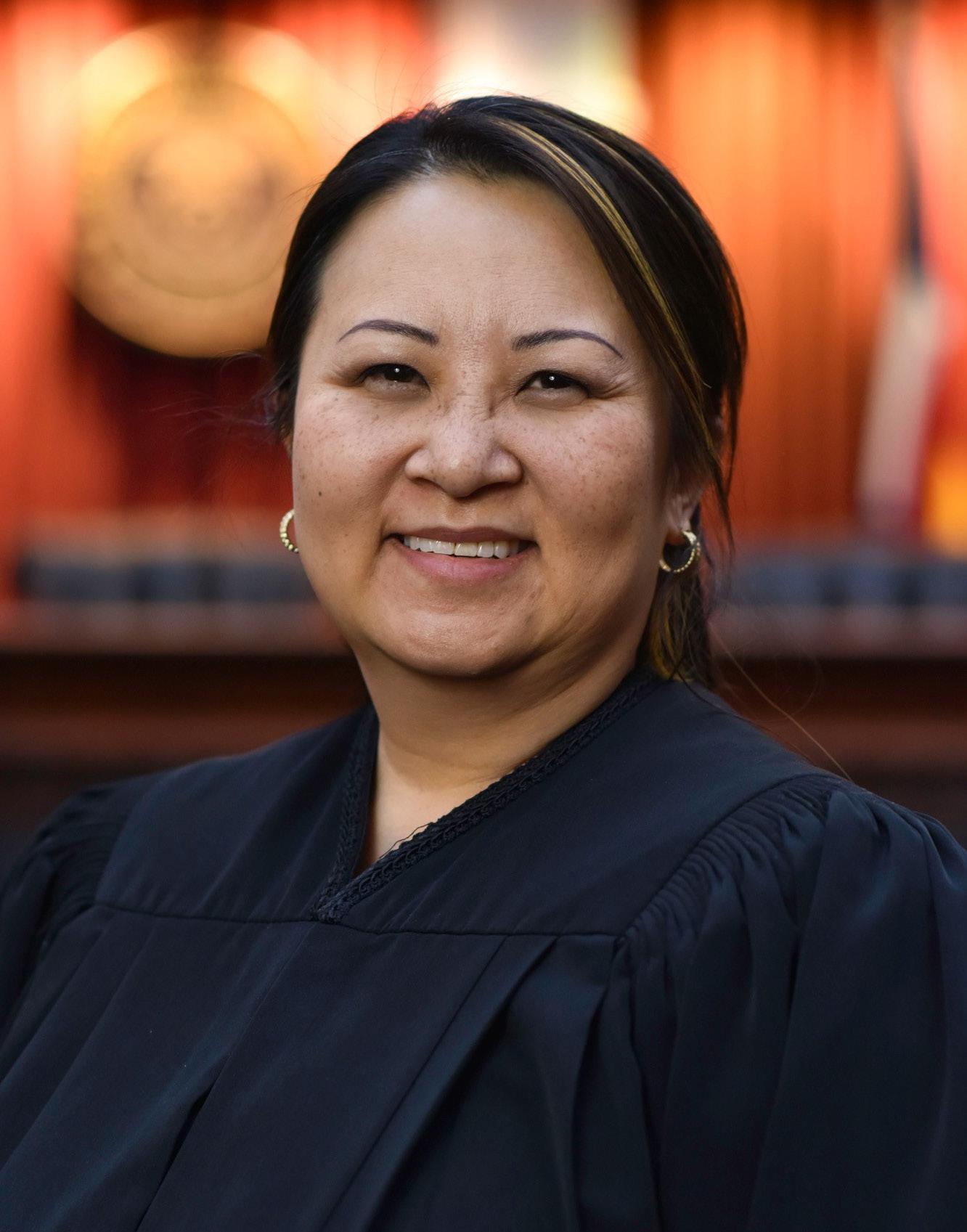
said ‘congratulations on being the first Asian female judge in Colorado.’ And I was like, wow.”
That almost makes Colorado seem... well, backwards.
But we’re catching up. The state’s APABA organization doesn’t list the number of its members, but a list provided by a Colorado APABA member of the state’s Asian American judges as of last year included almost 20 AANHPI jurists, and out of those, 14 are women.
Chelsea Malone is no longer alone.
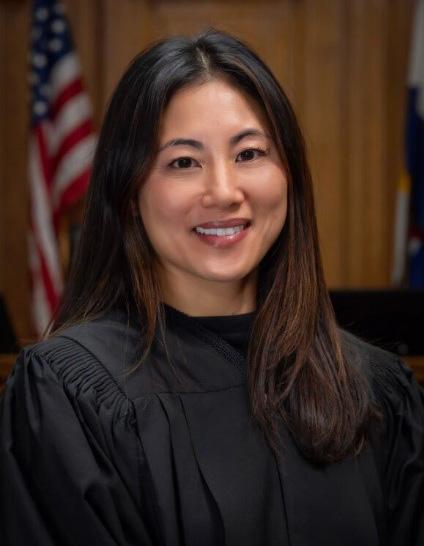
Cindy Dang is one of the women who is a colleague of Malone on the bench. Dang has been, since 2022, a senior judge for Denver County Court, which means she’s mostly based in the Lindsay Flanagan courthouse, covering for other judges. The courthouse is on West Colfax, just a couple blocks from the Denver jail.
Before arriving in Denver County Court, Dang was a judge for Adams County Courts from 2016 to 2022, and from 2013 to 2016 she was a district court magistrate for the 17th Judicial District, which includes Adams County and the City and County. There are many judges, serving in a multitude of courts. “Yes, and I’m still learning about different judicial positions, even though I’ve been a judge for over twelve years,” she admits.
Dang, who is Vietnamese American, attended law school at the California Western School of Law in San Diego and came to Colorado in 1997 for an internship at the DA office in the fourth Judicial District in Colorado Springs. When she decided to start her own business, Dang says, “I decided to
open my private practice in Denver because there’s a much larger Vietnamese community.”
She opened her office near the Little Saigon business district. Her goal was to work with the community of her heritage. “I speak Vietnamese fluently, so it’s easier for me to communicate with Vietnamese clients, although I ended up practicing immigration law and I had clients from all over the world,” she says.
But after practicing for 12 years as a private attorney, she was urged by the Colorado Women’s Bar Association to become a magistrate. “I wanted to be a judge in order to further my life mission of helping others pursue their American dream,” Dang explains.
“I always had the desire to help in that way, and that’s why I loved being a lawyer. And then being a judge just furthered that for me, because I would be in the position to ensure that all of the litigants, all of the parties, had access to justice and have their day in court, would be treated fairly in court. For me, it just furthered my life mission. Yeah, that’s why I really enjoy it.”
Neeti Pawar, a South Asian judge, enjoys her work too. She’s been a judge for seven years. But she also has an identity outside of court that keeps her centered and focused on not just justice, but also on culture.
Like other judges, she was an attorney and public defender -and she never actually thought of a future as a judge. “It was not something I aspired to, because I never perceived it as something that was available for me,” she recalls. “Those are not the things that people like me do.”
American convention in Colorado in 2025 for the first time, with around 500 attendees. (Coincidentally, national APABA also held its convention in Denver in 2025.)
She became a trial attorney for people who need help the most, representing clients and consulting as a problem-solver when a judge position came open on the Colorado Court of Appeals in 2019.
It’s been the right choice. “I’m enjoying it. In seven years there has been a tremendous learning curve, growth and now a place of like, not comfort, like complacency, but comfort, like appreciating when the difficulties are because it’s a difficult job, as opposed to, it’s difficult because I don’t have any footing.”
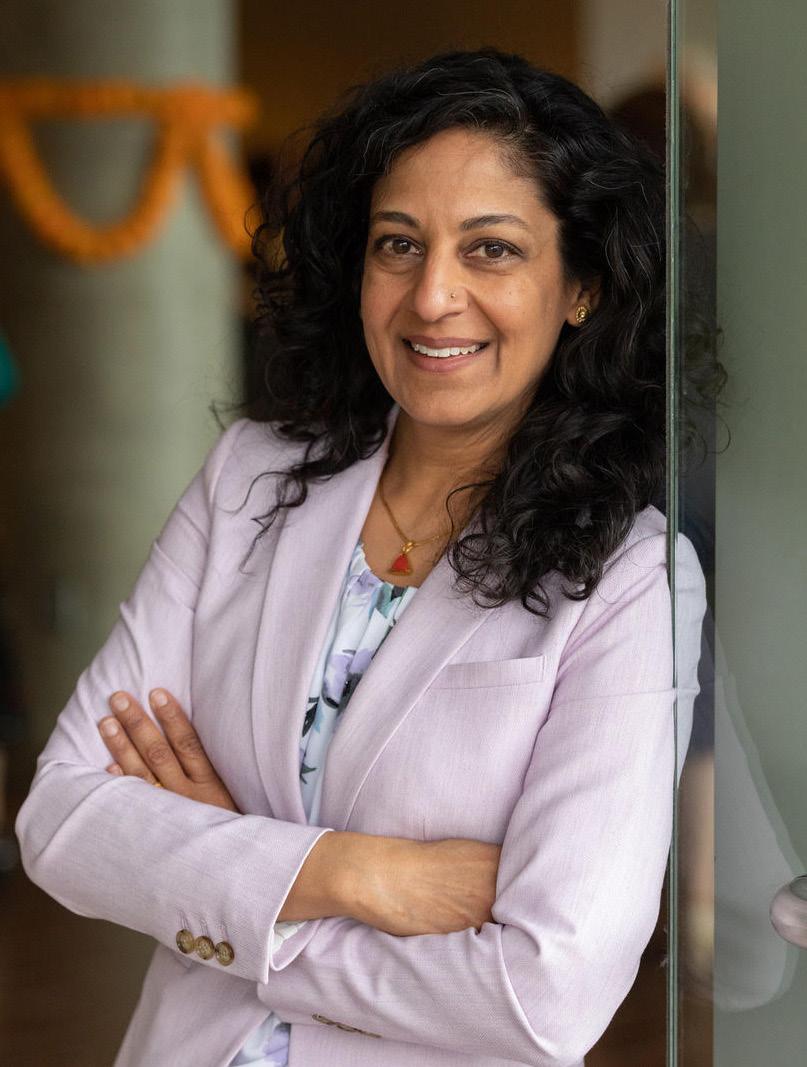
Her ethnicity was one reason. “South Asians were not allowed in the country until the 1965 Immigration Act, which, yeah, which nullified the Chinese Exclusion Act, which excluded Indians as well.” It’s true, the Chinese Exclusion Act of 1882 was used to keep out immigration from across Asia, including the “Hindus” as they were called, from India. The 1965 Immigration Act abolished strict quotas and opened immigration from Asia for doctors, engineers, scientists, students… and eventually lawyers.
Pawar’s family came to Carthage, Illinois, where her father was a doctor.
Neeti, who’s now 56, chose the path of law, and settled in Denver. She started the local chapter of the South Asian Bar Association in 2009. SABA even held its annual North
And one way she has found her footing is as a dancer in Mudra Dance Studio, a South Asian dance troupe that has been the heart and soul of the Colorado Dragon Boat Festival and other cultural celebrations.
What began as a simple dropoff turned into something more.
“I was dropping my niece at an Indian dance workshop, and they asked, ‘Where are you going?’” she recalls. “I said, ‘I’m just dropping her off—I have to go to work.’ And they said, ‘No, you have to stay.’”
She stayed—and got hooked.
“So here, 15 years later, I’m part of a company, teaching, performing, you name it,” she says with a laugh. People ask her how she has time for dance, but it really is the dancing that has given her the “bandwidth and the balance” continue doing her job.
“On Sundays, when I’m at the studio, it really allows my left brain, the processing, thinking part of the brain, to just turn off and defragment, because I’m so focused on dance. And then when I go back, that part is refreshed and I can dial in. So it keeps me connected to culture, to community, to myself.”
Back to Colorado’s first woman Asian American judge: Chelsea Malone has an entirely different life journey and experience as an Asian American.
She was born in Seoul, South Korea in 1977, and adopted when she was just three months old. “My mom was a nurse in the army, and she was stationed in Seoul, and she said at the time, there was a lot of push for the military folks to adopt Korean and there were a lot of Koreans and orphanages. And so she was only 25 and she was single, and she just felt compelled to help out so, and it was apparently
It’s really important to have a diverse judiciary, not just how we look, but where we come from.
very easy, very little red tape, very little paperwork. So she just walked in, and I don’t know if the same day or the next day walked out with me,” Malone explains.
Her mother brought her back to the U.S. and moved to a Crow Indian reservation in Montana. Not South Asian Indian, but indigenous American Indian. Her mother wanted to work where healthcare was needed most. She eventually met and married a Crow, and they still live on the reservation. Malone is now married to an attorney in Denver and has two daughters who are nine and eleven, but she returns to the Crow reservation every summer for her community’s annual Crow Fair traditional cultural festival, where 1,000 teepees cover the landscape.
Although she appreciates her upbringing on the reservation, Malone wanted to go to a city, and she knew as a student that she was interested in the legal profession. “My dad was really into Native American Rights and kind of the politics on the reservation. And he always thought that I could become a lawyer and then go back and fight for water rights and things like that. That would be an interesting thing to do.”
But she didn’t return to the reservation. She went to college in Wyoming on a music scholarship, then moved to Denver to live with her grandparents and attend DU’s Sturm College of Law.
Like Pawar, she didn’t think of being a judge as a career goal. There were simply not many role models she could see. “There were no Asian female judges. So it just wasn’t something that seemed like a natural path that could happen for me.” But colleagues urged her to apply for the bench.
“It’s really important to have a diverse judiciary, not just how we look, but where we come from. And the reason that I wanted to be on the county
familiar feeling for many people raised with immigrant or “foreign” cultures. She never learned Korean, and wasn’t raised with much Korean culture or even food.
“My mom brought stuff back from Korea when we moved here, and she still has a friend from Korea who would visit us and make Korean food. My mom tried to keep me connected to the Korean culture. But it does feel a little like, I’m looking it up in an encyclopedia or Google trying to learn about it. So I think culturally, I identify much more as native. I’ll go to a powwow, like the Denver powwow, and I feel so happy.”
That sense of belonging shifts depending on the space she’s in. Around Asian communities, she feels a different kind of comfort— less about cultural familiarity and more about simply fitting in.
She accepts her dual cultural role, and she’s trying to raise her two daughters to balance their heritages too. “So it’s really a mind trip being adopted, to be ethnic and in an ethnic community, but not fit into that ethnic community.”
Despite the current divisive times, she is upbeat about the future of the Asian American judiciary.
She worked in a big law firm at one point, but wasn’t happy. “When I went to work for the public defender’s office doing indigent defense, I was like, this is it. It really connected me to my roots and working with poor people and working with people from different cultures and languages and rooting for the underdog. And I loved criminal law, so then that’s what I ended up doing. I started off as a public defender.”
court, and not the district court, is we have a lot of unrepresented people, and I think if you have a jurist who can’t relate to them, or you don’t understand where they’re coming from, you’re going to judge them in a different way. And so I think coming from a culturally rich but poverty stricken area where English isn’t everyone’s first language gives me a different perspective that I use every day in the courtroom.”
She wants to make sure the people who appear before her court fit in. Yet, that feeling of “fitting in” is elusive. She suffers from “imposter syndrome,” a
“I’ll tell you something that does make me feel inspired and hopeful. When I first started as an attorney in 2004 there was like one other Asian that I would see, and she was a prosecutor,” she said.
“When I would go into the courtroom, people just assumed I was an interpreter, and then when I took the bench, not infrequently, people would come into the courtroom and do a double take and say things like, ‘Oh, you weren’t what I was expecting.’ And that doesn’t happen anymore. Now we have Asian attorneys, and we have Asian judges, and so good things are changing.”
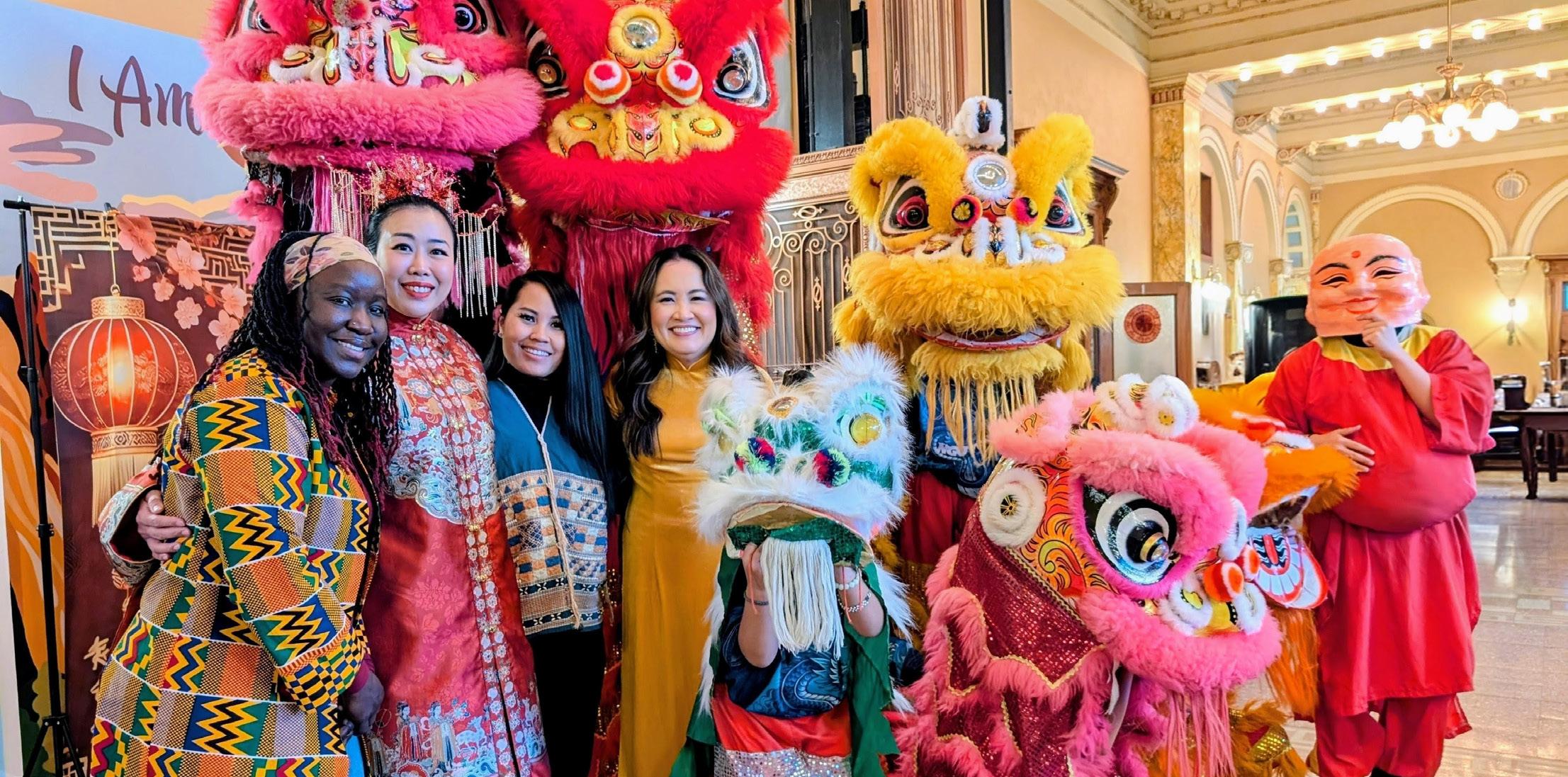
Refugees + Immigrants United (RIU) co-hosted with the Colorado Springs Pioneers Museum (CSPM) and Filipino American Community of Southern Colorado (FACSC) for the Pikes Peak region’s largest Lunar New Year celebration, ringing in the Year of the Fire Horse with vibrant culture, community, and celebration that welcomed over 700 attendees.
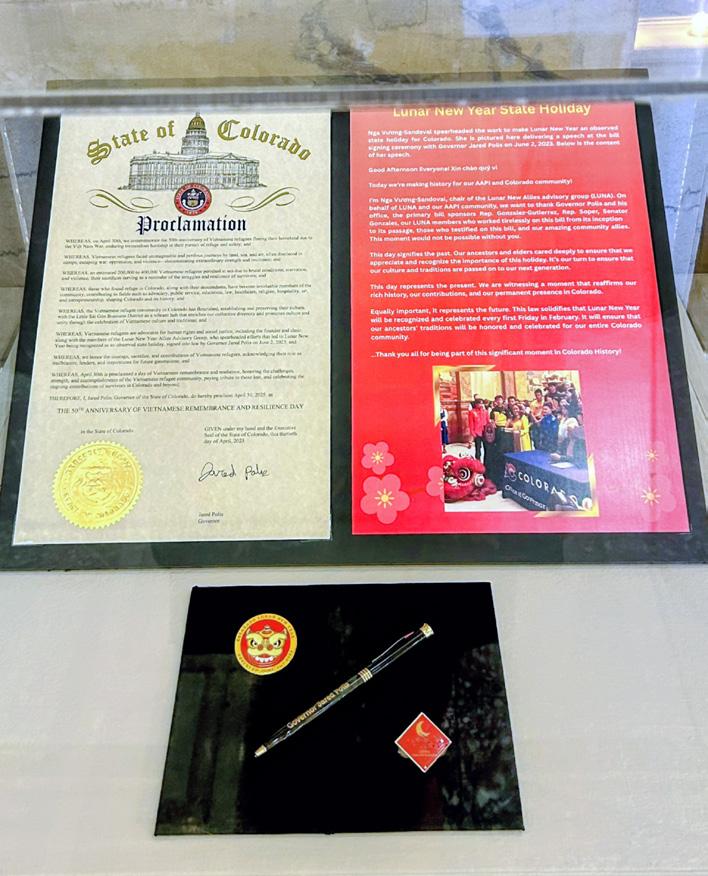
The event also marked a historic moment: the unveiling of a new exhibit honoring the journey that made Lunar New Year an official Colorado state holiday, the second in the nation. The display highlights the leadership of Nga
Vươ
ng-Sandoval, Founding Executive Director of Refugees + Immigrants United, who spearheaded the effort as Founder and Chair of Lunar New Year Allies Advisory Group (LUNA). Artifacts on display include her bill-signing remarks, the pen used by Colorado Governor Jared Polis to sign the legislation, and limited edition commemorative pins from its passage on June 2, 2023 and a special edition pin for LUNA members, preserving this significant milestone for AAPI communities and future generations.
Vương-Sandoval also emceed the event and delivered an interactive presentation
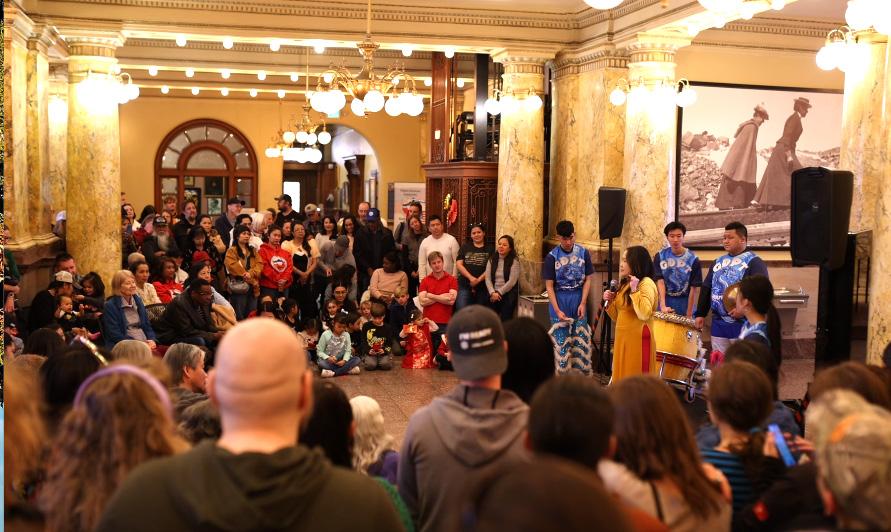
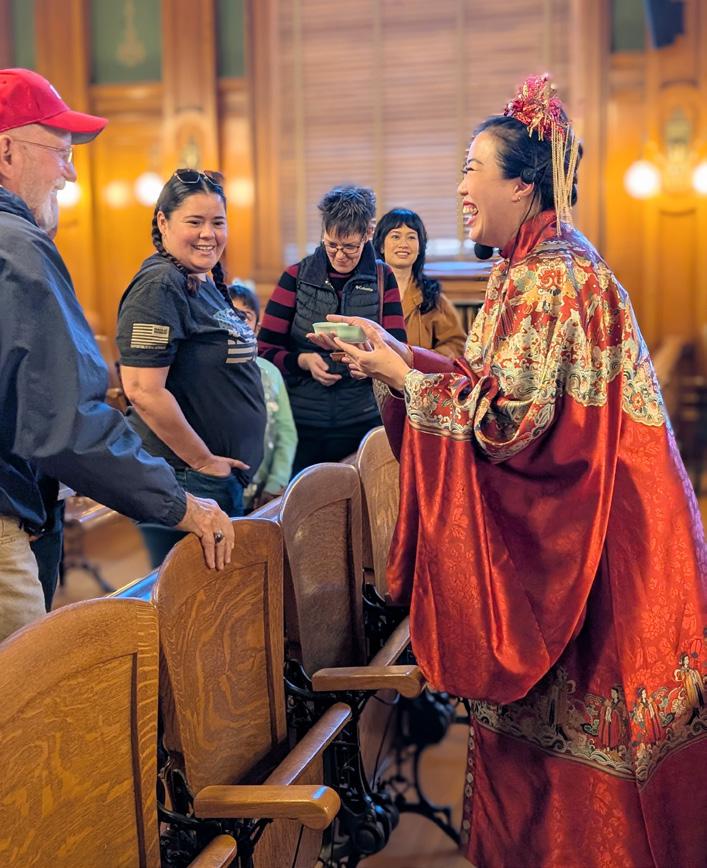
on the origins, symbolism, and significance of Lunar New Year, highlighting the Asian countries that celebrate it. The program featured a traditional Chinese tea ceremony led by RIU Board Chair Magdalene Mok-White, Vietnamese youth dances from Gia Đình Phật Tử Nguyen Thieu, and a Filipino cultural showcase including Polka sa Nayon and Tinikling bamboo dance. Together, the performances and stories created a dynamic celebration uniting the community to welcome the Year of the Fire Horse.
Learn more about RIU at riucolorado. com and on Instagram @riu_colorado
Dear Dr. Amy,
I hear so much about “emotion regulation” when I’m reading about mental health. Is it that useful? I didn’t really learn it as a child, but now it seems that all parenting content talks about “emotional regulation.”
How do I learn to “regulate” if I’ve never seen it modeled?
When most of us hear the word regulation, we think about emotional control: don’t cry in public, don’t get angry, stay composed. For many AAPI folks, especially those raised in immigrant households, emotional restraint was framed as maturity, respect, or survival. But regulation is much broader—and much more powerful—than simply managing feelings.
Regulation begins with the skill of noticing your internal state and adjusting it intentionally. That includes emotion regulation, yes—but also energy regulation, attention regulation, and even social battery regulation
Emotion regulation is the ability to identify what you’re feeling and respond in a way that aligns with your values. It’s not suppression or explosion, but flexibility. For example, allowing yourself to feel disappointment without spiraling into shame. Or to feel angry without
engaging in an outburst. Emotion regulation requires you to notice how you feel and then consciously choose a response. Some choices exacerbate the negative emotion, while others help soothe and ground.
Energy regulation is about recognizing when you’re depleted versus resourced. Many AAPI adults were taught to push through exhaustion—prioritizing productivity, achievement, or family duty. But sustainable performance requires cycles of effort and recovery. Nutrition, movement, rest, and realistic workload boundaries increase energy regulation. Overcommitment, people-pleasing, and internalized pressure to “just achieve” drain it.
Social battery regulation is rarely discussed, yet it’s crucial. Some of us feel obligated to show up for every family gathering, professional networking event, or community function. AAPI folks can struggle with disappointing others,

sometimes at the expense of our own well-being. But knowing when to engage and when to recharge is not selfish—it’s strategic. Healthy regulation might mean leaving early, declining invitations, or scheduling recovery time afterward. Social burnout often happens when we override our limits to maintain harmony.
In many AAPI households, we were taught to regulate externally—to maintain peace, save face, and meet expectations. What we weren’t often taught was how to regulate internally: how to check in with our nervous systems, how to set boundaries without guilt, how to differentiate between obligation and capacity.
Developing regulation skills is foundational for preventing burnout, sustaining activism, navigating intergenerational conflict, and maintaining mental health. It allows us to respond rather than react. It supports clearer boundaries. It protects our longterm well-being.
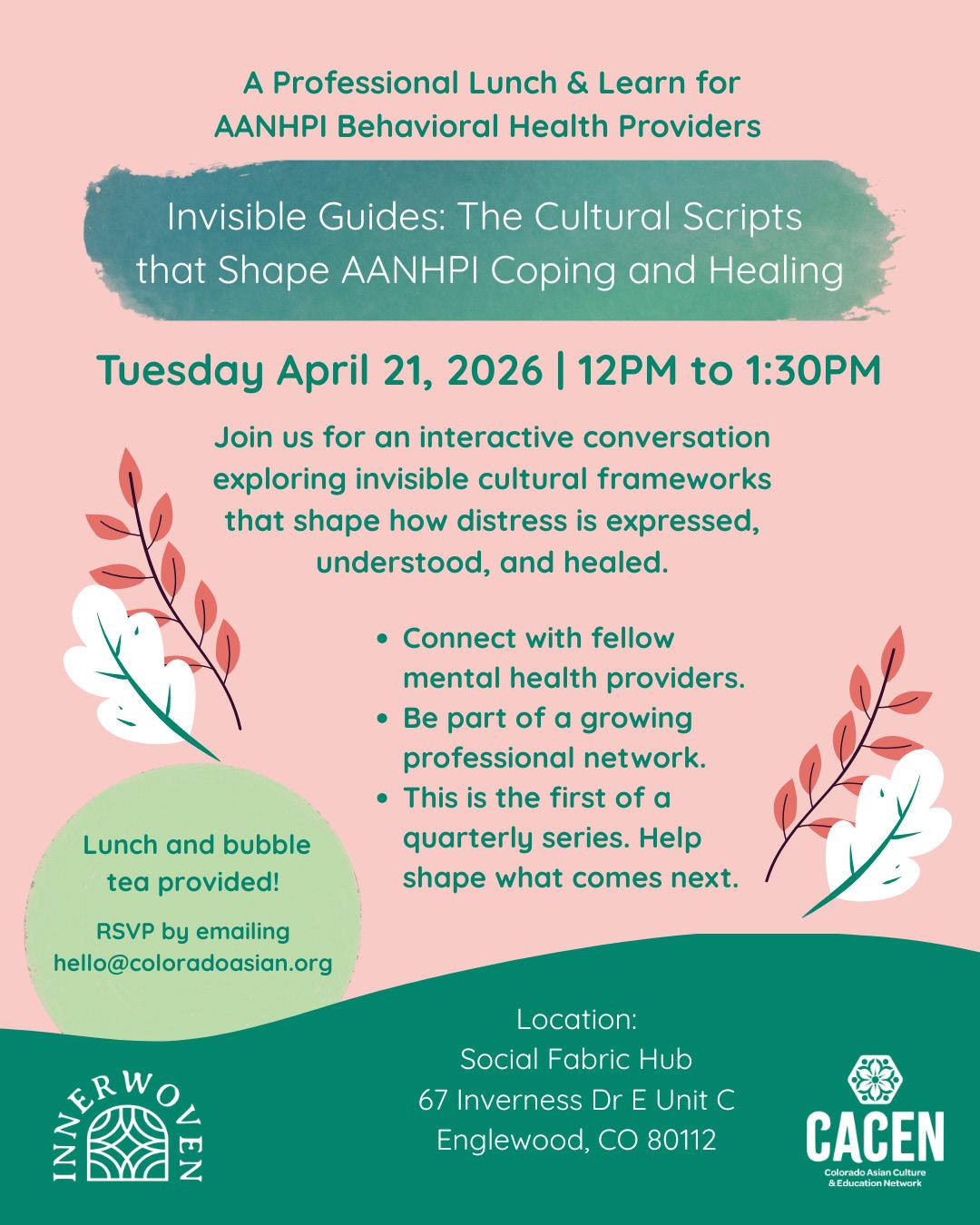
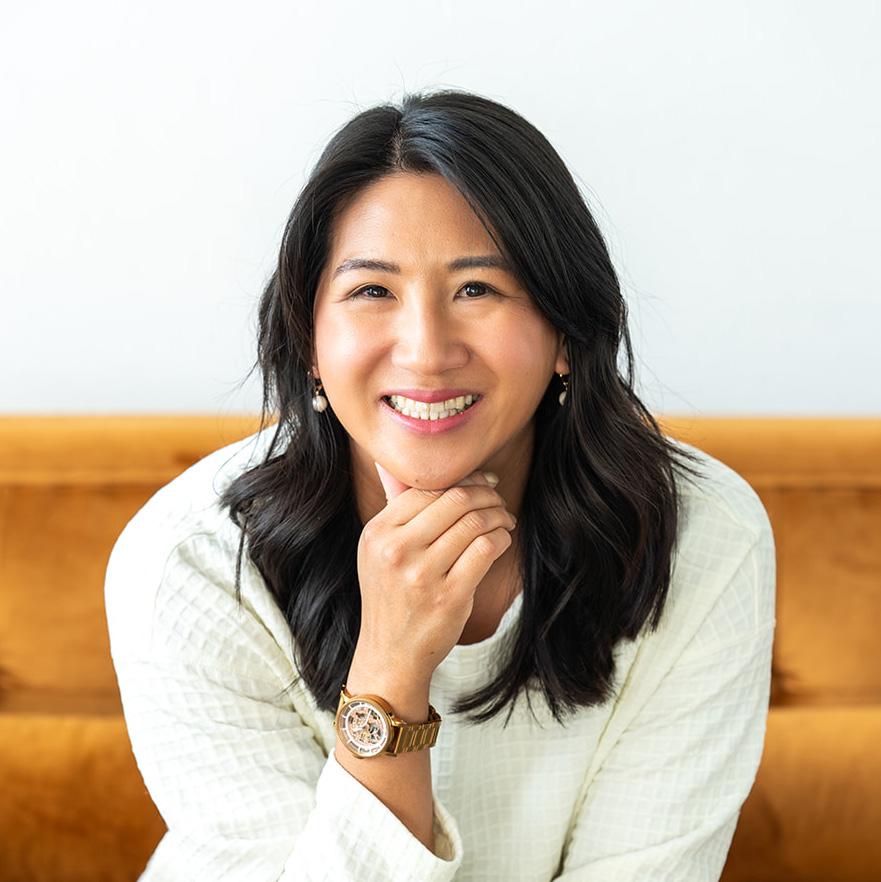
Dr. Amy King is a clinical psychologist and founder of InnerWoven Therapy, a Colorado-based group practice specializing in Asian mental health.
In this column she answers your mental health questions—readers are invited to submit their own for future features.

I was born and raised in Grand Junction, Colorado, being the third generation from the Western Slope. Growing up, my sister and I spent countless hours exploring connected lakes, wandering the riverfront trails, creating imaginary worlds in our backyard, and tending a garden that fueled our annual salsa-canning tradition.
We were raised with strong values placed on appreciating simple days at home, local concerts, walking the farmers’ market, and fully embracing the vibrancy of the Grand Valley.
Being homeschooled K-12 gave us the freedom to learn through nature, cooking, adventures, and community classes which led me to my career in ceramics. I was immersed in the pottery world at a young age, beginning my journey with clay at The Art Center of Western Colorado (TAC) under the mentorship of Terry Shepherd at the age of thirteen.
Growing up in a community studio at TAC, I valued learning from a welcoming group of potters who quickly became lifelong friends and mentors. I soaked up every opportunity I had to learn and be a part of the art community.
I was captivated by the way potters gather—pairing handmade dishes with homemade food and bringing people together. This intersection of cooking and ceramics inspired my pursuit of functional ceramics.
Through making functional ceramics I have gained an appreciation for creating work that will be integrated into daily life
Rocky Mountain Public Media, the home of Rocky Mountain PBS, KUVO Jazz, and TheDrop303 has a partnership with Colorado Ethnic Media Exchange to launch this monthly essay series, as part of our vision to co-create a Colorado where everyone feels seen and heard.
These stories are sourced from community members across the state—told in their own words and selected from our 64-county community ambassador program. They are not editorial products of our journalism team, but are first-person reflections on life in Colorado - building bridges through empathy. Learn more about all of our brands and content at rmpbs.org/about
By Ashtonn Means
through the simple moments of morning coffee and sharing a meal together with the hopes of creating work that fosters the appreciation of community and the present moment.
Seeing the friendships and collaboration within clay studios, I knew that this was where my passion would lead me.
I met my husband, Matthew Jones, at Colorado Mesa University in 2012 in Beginning Hand Building class. We were both ceramics majors and shared the same vision of one day opening a studio space of our own.
Sixteen years after I first walked into the clay studio at TAC, that vision became real when a new arts marketplace opened in Fruita and we were able to start teaching pottery classes there. What began with a small group of students has grown into a vibrant clay community in the heart of downtown Fruita.
We have watched students reach personal goals, form close friendships, collaborate, find solace, and build the kind of community connection I grew up admiring in clay studios.
There is a beauty in sharing a meal after unloading the kiln at the end of a class session. Those gatherings hold a special place in my heart, often reminding me of the childhood potlucks at TAC, the moments that shaped me into the artist and person I am today.
As I embarked on my motherhood journey in 2024, I found a whole new appreciation for our community and the beauty of nature that surrounds us.
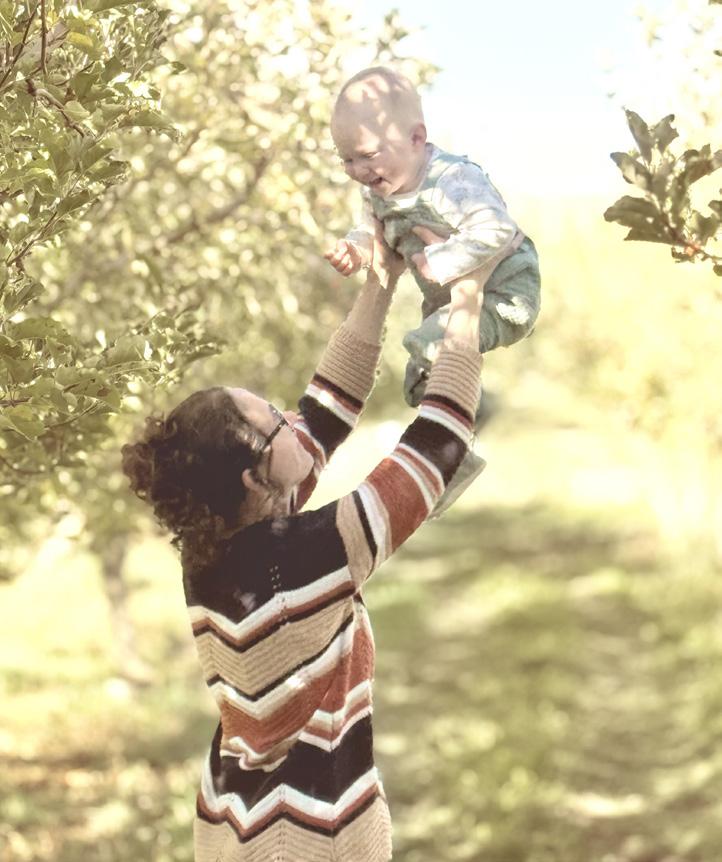
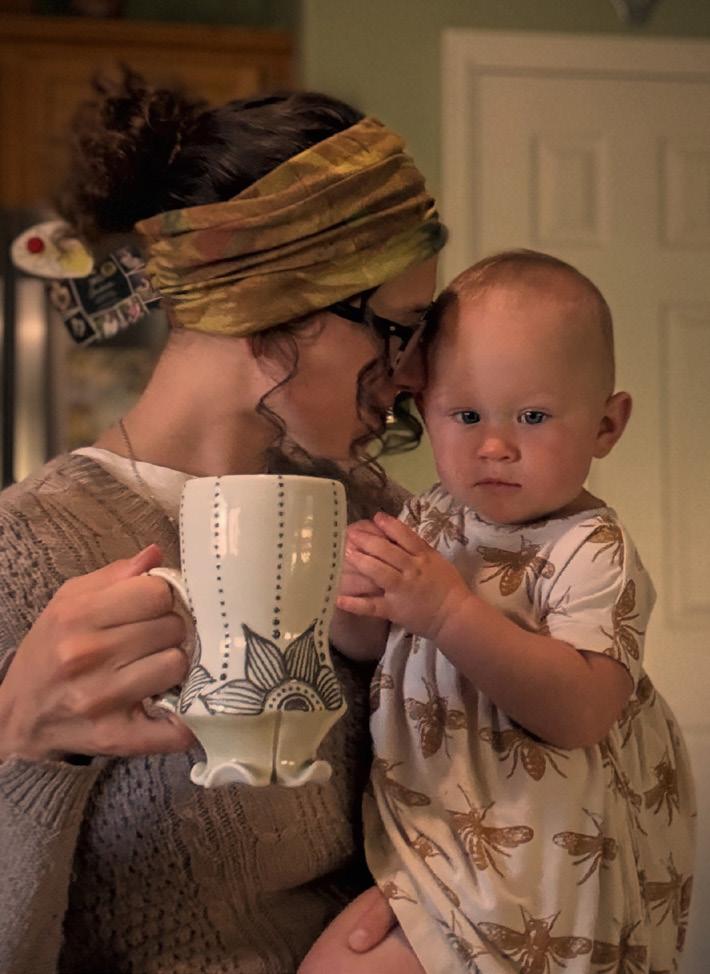
My now 18-month-old daughter, Astrid has a fiery spirit with a deep love of being outside, rain or shine. We spend many hours tending to our garden and playing in the dirt, helping at the clay studio and making friends with all the students, taking walks in McGinnis Canyon and admiring our neighbors “cluck clucks” (chickens) and “neigh neighs” (horses).
Seeing the world we’ve built through her eyes, I’ve found a deeper appreciation for the beauty of a slower pace and the warmth of our local community. It is a profound honor to raise the fourth generation to cherish the Western Slope. I hope she appreciates the depth of small-town friendships, growing up in clay studios, and finding beauty in gardening, cooking, and the simple moments that life has to offer.



Ex perie n ce a n unforge t tabl e afterno o n celeb rati n g the vib rant cu l tu r es o f A sian A m erica n , Nati ve H a waiia n , and Pa c i fic Islande r c o mmunities.
E V E NT H IG HL IG HT S
• Capt i vati n g l i v e pe r f orm a n ce s
• De l i ci ous c u lt u ra lly in sp ir ed b i te s
• & mu c h m o r e!
FE ATUR ED FI L M
B E S T P I C TU R E Os c a r ® Wi nne r
E V E R Y TH I N G
E V E R YW H ER E
AL L AT O N C E


may3 3:00 PM - 6:30 PM PACE Center