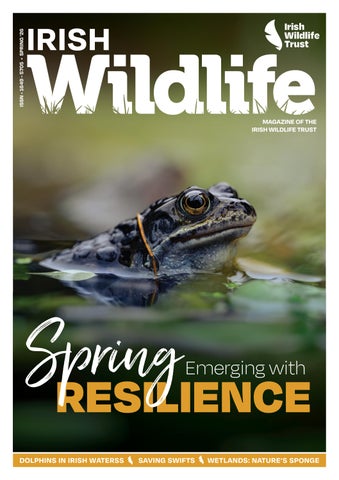
IWT Spring_2026

Page 1


Spring

SUPPORT OUR WORK: Become a member

iwt ie/support-us/ become-a-member/

njoy this magazine? Become a member and we will send a copy to your door each season! Plus, you will gain access to members-only competitions and events.

Image Credit: Mike Brown

Contents page credits:

Frog

Dusty the lone bottlenose dolphin off the Clare coast. Photo: George Karbus

Common Swift in flight over Bull Island.

Photo: fluffandshutter, iStockphoto Water Horsetail (Equisetum fluviatile).

Photo: iStockphoto

Red-crested pochard - Netta rufina stock.

Photo: iStock

Buff-tailed Bumblebee collecting pollen from Lavender. Photo: Nigel Harris, iStockphoto Crossbill. Photo: Mike Brown

All articles © 2026 No part of this publication including the images used may be reproduced, stored in a retrieval system or transmitted in any form or by any means without written permission from the publisher. Opinions and comments expressed herein are not necessarily those of the publisher. While every effort has been made to ensure that all information contained in this publication is factual and correct at time of going to press, Ashville Media Group and the Irish Wildlife Trust cannot be held responsible for any inadvertent errors or omissions contained herein.

Chairperson’s Comment

Dear Members of the Irish Wildlife Trust,

Spring, An tEarrach, is one of those Irish words that carries its meaning gently. You can almost feel the softness in it. Our ancestors marked this turning of the year with Imbolc, when the first stirrings of life broke through winter’s stillness. It is the season of light stretching out again, of lambs finding their feet, of sap rising quietly in the trees. There is anticipation in it.

For me, one of the great joys of spring is hearing the birdsong return in Killarney National Park. After the hush of winter suddenly the mornings are alive with sound. It lifts the spirit. The music spills out from hedgerows and woodland edges, reminding us that nature moves in cycles far older and wiser than any human timetable.

Of course, spring also brings its frustrations. It is the season of hedgerow butchery, as trees and bushes are cut back ahead of the March ban. We hosted a webinar on this last year, which you can still watch on our YouTube channel. And please remember the Paw Ireland app, available in your app store, which allows you to report any wildlife crimes you witness. Data collection is essential.

On a much more uplifting note, we were thrilled with the response to our recent members-only writing competition on the theme of nature connection. Thank you to everyone who took the time to enter. The depth of feeling and honesty in your words was extraordinary. We always knew our members cared deeply about nature, but the talent on display was something else. Some entries had us in tears. Choosing a winner was not an easy task. Every single piece spoke to the powerful, personal bond

between our members and our natural world. You can find the top three short essays published in this issue of Irish Wildlife.

Spring also signals new beginnings within the Trust. Our recruitment drive for a Terrestrial Advocate is progressing well, and once again we have been struck by the calibre of applicants. At times, the fight for nature can feel relentless, with attacks on habitats, rollbacks in protection, pressures from all sides. It is easy to feel overwhelmed. But then you see the energy, intelligence and commitment of the next generation stepping forward, and it restores your faith. There are well-educated, passionate people ready to do the work. That gives me real hope.

Spring insists on resilience. Buds burst. Migrants return. Life pushes up through soil and stone. And alongside that renewal stands our community of advocates, scientists, volunteers and members who simply refuse to give up.

Your continued support sustains this work more than you may realise. You are part of a movement that believes Ireland’s wild places are worth defending, not just in principle, but in practice.

As An tEarrach unfolds, I hope you take a moment to pause. Listen for the birds wherever you are. Notice the first wildflowers. Feel the light strengthening day by day and enjoy the bounties of spring. I look forward to speaking with you all again in summer.

Warm regards,

Pass it on. If you’re finished with your Irish Wildlife don’t throw it in the bin. Pass it on to someone who you think may enjoy it – or ask your local library or doctor’s office to leave it in the reception. You’ll help the environment and the IWT while you’re at it. Irish Wildlife is 100% recyclable, so if you do choose to throw it out, please put it in the green bin.

Common
Photo: Liam Reddall

Nature-Based Solutions for Flood

Earwigs: The Unsung Heroes of Motherhood

Ancient

Ireland’s Fern Allies

From Ireland to Spain: Casting a different light on remaining fenlands

How the collections of the Natural History Museum inform critical biodiversity research

Have comments?

Editorial Team: Kieran Flood, Marion Jammet & Charlotte Salter-Townshend

Magazine queries email: editor@iwt.ie

Snail mail: The Irish Wildlife Trust, Coleraine House, Dublin 7, D07 E8XF

Web: www.iwt.ie

Social media: facebook.com/IrishWildlifeTrust twitter.com/Irishwildlife instagram.com/irishwildlifetrust/

Registered Charity Number: 20010966

About Us

The Irish Wildlife Trust was founded in 1979. Our mission is to protect and restore biodiversity in Ireland by motivating and supporting people to take action for nature.

The IWT is dedicated to creating a better future for Ireland’s wildlife through:

Motivating and supporting people to take action for wildlife.

Education and raising awareness of all aspects of Irish wildlife and conservation issues.

Research of the natural environment. Acquiring and managing nature reserves to safeguard species and habitats.

Lobbying decision-makers at all levels to promote policy in Ireland that provides a sustainable future for wildlife and people. Working in partnership with other organisations to achieve results that matter for conservation.

Irish Wildlife is published quarterly by the IWT.

How can you help?

You, our members, make the IWT what it is. Through your subscriptions and support we can undertake the projects that are benefiting Ireland’s wildlife. If you would like to help more, here’s what you can do:

• Make a one-off donation to the IWT.

• Give IWT membership as a gift.

• Volunteer – we are always looking for people to help out. There are lots of ways to get involved, from helping with important admin work in our office to helping us increase membership by volunteering at public events. See our website www.iwt.ie for details or contact the office directly.

The IWT encourages action at a local level and has a number of branches around the country:

Dublin: dublinbranch@iwt.ie

Facebook @ DublinBranchIrishWildlifeTrust

Kerry: iwtkerry@gmail.com

Facebook @ KerryIWT

Limerick: limerickbranch@iwt.ie

Facebook @ IWTLimerickBranch

Monaghan: monaghanbranch@iwt.ie

Facebook @ iwtmonaghan

Waterford: waterfordbranch@iwt.ie

Facebook @ Irish Wildlife Trust

- Waterford Branch

• Do you have land that you would like used for conservation? We are always on the lookout to establish new sites to enhance wildlife or provide education opportunities.

• Remember us in your will. Why not leave a lasting legacy towards conserving Ireland’s natural heritage? The IWT uses all funds towards our campaigns, managing reserves and our education programmes. Please visit www.mylegacy.ie.

• Set up a branch. Are you passionate about wildlife and are in a county that does not have an IWT branch? Contact the office and we can give you the support you need to get up and running.

5 Fir Clubmoss (Huperzia selago).
Photo: Noeleen Smyth
6 Artichokes in the organic garden at National Botanic Gardens, Glasnevin.
Photo: Charlotte Salter-Townshend

IWT STRATEGY UPDATE

Emerging with RESILIENCE

Spring is here and the cycle of life begins again on our island at the edge of the Atlantic. The warming ocean has washed us with countless days of rain of late, hiding the warmth of the sun and flooding the drains we once knew as wild rivers. Our damp island can be a hard place in winter for many of the creatures that make up the web of life here (except maybe the fern allies, as featured in our A Closer Look column). Resilience is important for Irish wildlife and it is with resilience that the Irish Wildlife Trust network starts the yearly cycle again. It is more than just the weather that presents a challenge in these times, yet we continue in hope that our actions can bring about an Ireland where wild nature thrives and our natural heritage is protected and restored.

Building Communities for Nature

We start the spring with more IWT members than at this time last year. This growth is welcome. Every new member adds strength to our voice and resilience to our organisation. If you are reading this as a new member, we welcome you to our network and thank you and all existing members for your support. Building communities that are engaged with nature is a core pillar of our work. In 2025, we delivered 62 nature events across Ireland in counties: Clare, Cork, Down, Dublin, Kerry, Kilkenny, Laois, Limerick, Monaghan, Waterford, Wexford, and Wicklow. These in-person nature events are a key to our goal of connecting people with nature and increasing our communities ecological literacy. We maintained 5 active local branches in 2025, and in 2026 we are beginning work to increase activity in our network, to reach our goal of having in-person nature connection

events locally available for all our members across the country. If you feel you have the skill and interest help lead or organise nature walks or talk please let us know on network@iwt.ie

Advocacy for Nature

2026 was a strong year for our marine advocacy through our partnership with the Fair Seas campaign and our work on sustainable fisheries. Through the latter we produced IWT’s first documentary film, Trawling for Answers, which we will begin screening this spring. Our advocacy got off to a strong start this year with two appearances as expert speakers in front of the Joint Oireachtas Committee for Fisheries and Maritime Affairs, where we spoke about the importance of establishing Marine Protected Areas as well as on the plight of the critically endangered Angel Shark. This spring we are building our advocacy capacity by hiring a land

use advocate to work alongside our Marine Advocacy Officer strengthening our ability to act as a voice for nature on terrestrial issues such as forestry & agriculture policy and wildlife crime enforcement.

Rewilding in Ireland

The third pillar of our work, Rewilding in Ireland, is progressing steadily with the delivery of a very successful Rewilding Seminar Series in late 2025, now available to view on our YouTube channel. The year ahead will see us increase our activity in rewilding through more work to promote this inspirational practice to Irish audiences as well as by documenting nature bouncing back on our own small reserves network.

We look forward to seeing you in 2026 and working together to protect and restore nature.

New IWT logo animations

Untangling Marine Pressures MARINE

PROTECTION

A LOOK AT THE RECENT ANALYSIS OF THE STATUS OF PROTECTED HABITATS AND THE PRESSURES THEY’RE FACING

Habitats Directive Reporting

You may have already seen the devastating contents of the recent Article 17 report for the EU Habitats Directive. Every 6 years, Member States must report on the status of protected habitats and species under the Habitats Directive. Ireland’s most recent report was released in December and the results paint a dire picture for the state of Ireland's habitats on land and sea.

Focusing on the marine side of things, fourteen marine habitats are assessed as part of our Habitats Directive reporting. Out of these fourteen only two were found to be in favourable condition. Seven are in bad condition and five are in unfavourable condition. This is a major decline since the last report in 2019, when only three habitats were in bad condition. There are a range of reasons why these habitats are not in favorable condition, including

nutrient enrichment from agricultural run-off, invasive species and unmonitored fishing activities.

Fishing activity in protected areas should undergo a risk assessment process and if the activity poses a risk to the protected habitats or species within the area then the fishing activity should be controlled through a Fishery Natura Declaration. No new Fishery Natura Declarations were released in 2025 and

only four have been released since 2019. These declarations only cover a small area and it’s hard to imagine how they could possibly ensure the protection of the marine environment across Irish waters.

Currently protected areas do not appear on nautical charts and fishing permits are given for a specific purpose, not a specific area, so it’s hard to monitor what activities are occurring where. But it's clear given the recent analysis on the state of the marine

"The Government regularly declares on EU and global stages that Ireland has 9.8% of its waters protected and are planning to reach 30% by 2030. This is unfortunately not accurate, as the 9.8% is currently not effectively managed and that has been proven by the Article 17 Habitats report"
The Critically Endangered Angel Shark.
Photo: Luis Miguel Estevez, Shutterstock.

environment that what we are doing is currently not working and we are still in breach of our obligations under the Habitats Directive. Aside from that, the Irish inshore fishing sector is struggling. Small boats are self employed and so receive no income support from the state. There are also issues around quota allocation at national and EU level. Ireland does not receive a large share of quota at EU level and nationally a small number of large vessels receive the majority of the pelagic quota. All these issues combine and put huge pressure on the inshore fleet. As marine habitats decline and then impact on commercially valuable fish populations this will only get worse. Currently our ‘protected areas’ at sea don’t work for the environment and they don’t work for coastal communities.

IWT at the Joint Oireachtas Committee

We recently attended the Joint Oireachtas Committee for Fisheries and Maritime affairs alongside colleagues from Fair Seas to discuss the upcoming amended Marine Protected Area Bill. We were joined by representatives from the larger fish producer organisations as well as civil servants from the Department of Environment in charge of drafting the Bill. We wanted to take this opportunity to point out the issues with our current network of protected sites at sea as well as put pressure on the Government to release National Marine Protected Area legislation as soon as possible. The Government regularly declares on EU and global stages that Ireland has 9.8% of its waters protected and are planning to reach 30% by 2030. This is unfortunately not accurate, as the 9.8% is currently not effectively managed and that has been proven by the Article 17 Habitats report. Current protected Natura sites (which includes Special Areas of Conservation and Special Protection Areas) are designated without public consultation. Many stakeholders generally have no idea this is happening until there is a Government announcement. There are no legal obligations under the Habitats Directive to engage in public consultation so what the Government is doing is completely legal, but we believe this is one of the reasons why these areas have not worked for

"There should be public buy-in for a Marine Protected Area and a management plan should be designed with all those involved, including environmentalists, researchers and those who use the area to make a living"

nature or people. There should be public buy-in for a Marine Protected Area and a management plan should be designed with all those involved, including environmentalists, researchers and those who use the area to make a living. The State needs to start prioritising support for fishing communities to ensure they can make a sustainable livelihood and pass on a business to their families while also ensuring we don’t allow vulnerable habitats and species to disappear. There will be difficult conversations as some activities, if they are not managed or stopped, will degrade the environment and that means the ‘Marine Protected Area’ is effectively pointless.

One of these difficult conversations was held in February at another Joint Oireachtas Committee involving the National Inshore Fishing Association, the Marine Institute, the Department for the Marine, researchers from UCD and TCD and the Irish Wildlife Trust. The Marine Institute recently released a report showing the high levels of bycatch of ‘protected’ and critically endangered species caught in the tangle net fishery between 2021 and 2024 and the numbers are harrowing. Most of the data on catch and bycatch in the report were obtained in the area from Kerry Head south to the Blasket Islands. Smaller amounts of data were collected further south close to Castletown Berehaven. The report also makes it clear that these numbers are severely underestimating the true extent of the damage. Estimates made use of actual numbers of species caught and by raising those to take into account the entire fishing fleet and fishing effort show that an estimated 81 critically endangered Angel Sharks were caught as bycatch. The report specifically states that this level of bycatch 'increases the risk of extinction for this species.' As well as that, 1,712 critically endangered Flapper Skates and 1,161 protected Grey Seals were caught. Even without these estimates, the actual

number of critically endangered species is too high. 22 Angel Sharks and 444 Flapper Skates were observed being caught. While some were released alive, there is no way of knowing whether these animals survived post release. Flapper Skates skin is very delicate and it’s easy for them to obtain internal injuries from fishing gear and handling.

There was a previous study between 2017 and 2020 on this fishery so this isn’t a new issue. Potting is a viable fishing method other than tangle netting and this would also help to prevent the ‘boom and bust’ cycle of this fishery. The number of licences approved for tangle nets has increased from 30 to around 100 in the last few years and it’s clear this fishery needs fast management measures in place to keep Crayfish numbers stable. Why has the Department allowed such a large increase in licences being approved, knowing that there was a study being conducted at the time looking at the damage being caused? Surely, there should have been a pause on new licences while an assessment was ongoing?

The fishing industry proposed several measures which were discussed during February's meeting. We appreciate the industry’s work on this and agree with some of their recommendations such as introducing mandatory v-notching for Crayfish. Unfortunately, none of the measures put forward effectively tackle the issue of bycatch. This will be an ongoing debate between environmentalists and the fishing industry, meanwhile the longer this carries on the more damage will be done to extremely vulnerable populations of marine species. We are asking for a transition to a lower impact fishing method, such as potting, alongside engagement with the industry and financial supports for those whose livelihood is affected. We believe this is the only way to protect critically endangered species and support a sustainable inshore fishery.

Brick by Brick

SAVING SWIFTS IN SCOTLAND AND IRELAND

 Common Swift in flight over Bull Island.
Photo: fluffandshutter, iStockphoto

BY CHARLOTTE SALTER-TOWNSHEND, IWT COMMUNICATIONS & NETWORK OFFICER

One of the most joyous sounds on a summer evening must be the highpitched “sree-sree” of the Common Swift. These sociable and acrobatic little birds, which migrate here in late April/May from subSaharan Africa, spend virtually all their lives airborne. They feed on insects and spiders caught in mid-air, drink by skimming the surface of water, and even mate and sleep while on the wing. Their scientific name Apus is Greek for "without feet," as their legs are tiny and designed for clinging to vertical surfaces, not walking on the ground.

Throughout their lifetime of 15-20 years, Swifts prefer to return to the exact same nesting site annually, where they gather in numbers. Natural nesting sites do exist in trees and cliffs, but the species has evolved over time to nest mainly in buildings. Swifts are more common in urban areas, where they build bijou, cupped nests in small crevices in buildings, as well as on the eaves of houses. Unfortunately, modern housing design and insulation has seen the tiny gaps they once utilised sealed up, leading to a plummet in the Swift population. In the UK and Ireland alike, nearly 2 out of 3 birds have been lost since the mid-1990s, placing them on the Red List of Birds of Conservation Concern.

Fortunately, there is something we can do to address the Swift “housing crisis”. Conservation efforts emphasise that because Swifts are so faithful to their nest sites and nest in colonies, providing secure and permanent nesting opportunities is key to their recovery. A Swift brick is

a special, hollowed-out brick (often made of concrete and wood fibre) that fits directly into a building's outer wall, providing a safe, maintenance-free, low-cost, and permanent nesting space.

In what RSPB Scotland has hailed as a major “turning point” for nature conservation, it is now a legal requirement for nesting bricks for Swifts to be included in new buildings in Scotland. While primarily for Swifts, these bricks also provide nesting sites for other birds of conservation concern, including House Sparrows, Starlings, and House Martins.

In Ireland too, significant efforts are underway. Swift Conservation Ireland provides extensive advice on installing nest boxes, attraction call systems, and use of nest bricks in new developments. A survey by Swift Conservation Mayo in

2024 found that 38% of Mayo’s population of nesting Swifts were using nest box compartments, indicating a rapid and successful uptake in use.

Some years ago, Swifts at Trinity College Dublin lost their nesting sites following renovation works on the iconic Museum Building. In 2019, Jamie Rohu, now a member of the IWT Board, worked with Lynda Huxley of Swift Conservation Ireland to organise the installation of both nest boxes and a sound system to play the calls of breeding pairs. As Swifts prefer established nesting sites, calls are a crucial step in attracting them back. A similar development was installed at the Dublin Bus Broadstone Depot in conjunction with Swift Conservation Dublin and Phibsboro Tidy Towns.

While not a universal legal requirement in Ireland, Swift bricks are rapidly becoming standard in planning conditions for new developments in many regions.

Fortunately, there is something we can do to address the Swift “housing crisis"

SOURCES:

BirdWatch Ireland strongly encourages the integration of Swift bricks or boxes in all new developments. For more on how you can help Swifts, see their online booklet Saving Swifts. Best practice guidance for building-in nest boxes can be found at www.swiftconservation.ie/ nest-box-advice/

Scotland becomes first UK country to put Swift bricks into law, RSPB

Building nest boxes for the swift into cement block, brick and externally insulated walls: Guidance on best practice, Lynda Huxley (Swift Conservation Ireland)

County Mayo Swift Survey 2024, Lynda Huxley & Jarek Majkusiak

Saving Swifts, Ricky Whelan, Will Hayes, Brian Caffrey (BirdWatch Ireland)

5 Built-in Swift nest boxes at Lough Lannagh Leisure centre, Co. Mayo.
Photo: Lynda Huxley.

Hope on the High Seas

THE UN HIGH SEAS TREATY HAS ENTERED INTO FORCE

Making up two-thirds of the world’s ocean, the high seas refers to international waters, beyond the 200-nautical-mile exclusive economic zones (EEZ) of any coastal nation. One of the least understood ecosystems on Earth, the deep sea is home to extraordinary lifeforms and unique habitats that have a ripple effect on planetary health as a whole. Numerous scientific studies have highlighted this richness of biodiversity but also the vulnerability of it. Particularly fragile ecosystems in the high seas include submarine mountains, hydrothermal vents, and cold water coral reefs.

The high seas have been described as a “Wild West”: a "last frontier" environment that allows for overfishing, exploitation, and human rights abuses (including slave labour). Add to this emerging threats like deep-sea mining and the call to introduce and enforce legislation becomes ever more urgent.

Thankfully, the UN High Seas Treaty officially entered into force on 17 January 2026, marking a historic milestone in global ocean protection. Ratified by the prerequisite 60 countries and counting (85 at time of writing), this Treaty represents the first legally binding

framework dedicated to protecting marine life in areas beyond any single nation’s control. It establishes the tools to create Marine Protected Areas (MPAs) in international waters and mandates environmental impact assessments for activities that could harm fragile ecosystems. It also addresses the fair sharing of benefits from marine genetic resources and provides for the transfer of technology to developing nations.

The Treaty is crucial to meeting the Global Biodiversity Framework target of protecting 30% of the ocean by 2030. At the moment, about 8% of the world's ocean is designated as MPAs (with only about 2.4%-3% is considered fully protected). The first Ocean Conference of the Parties (COP) under the Treaty is expected by late 2026. At the Ocean COP, governments will meet to formally propose and designate high-seas sanctuaries based on scientific, indigenous, and local input.

The breakthrough proves that

The

international cooperation for the ocean is possible. It will enable, for the first time, comprehensive protection of the high seas, as it covers the entirety of areas beyond national jurisdiction and provides a space for coordination between existing bodies (e.g. Commission for the Conservation of Antarctic Marine Living Resources, International Maritime Organisation).

The greatest challenge will be ensuring high seas MPAs actually protect the ocean, rather than becoming paper parks existing only in name. While conservation groups have welcomed this breakthrough, they also caution that the real work begins now. Rebecca Hubbard of the High Seas Alliance reminded governments that “achieving 60 ratifications is not the finish line – it’s just the starting block.”

SOURCES: highseasalliance.org

greatest challenge will be ensuring high seas MPAs actually protect the ocean, rather than becoming paper parks existing only in name

5 A Masked Booby flying over international waters in the South Atlantic.
Photo: Charlotte Salter-Townshend

REGULATION AND USE ACROSS THE UNION

Pesticides

Spring is my favourite time of the year, when nature awakens and everything feels full of hope. Yet spring also marks the season when snails and slugs start to multiply, so-called “weeds” reappear in our gardens, and— before long—pesticides begin to fill shop shelves. But what exactly are pesticides

and herbicides? What does EU legislation say about their use? And what can Member States, local authorities, and we as individuals do to reduce their use and minimise their impact?

Pesticides: What They Are — and Why We Should Care

The United Nations Food and Agriculture Organisation (FAO) defines pesticides as “any substance or mixture of substances of chemical or biological ingredients

The earth's vegetation is part of a web of life in which there are intimate and essential relations between plants the the earth, between plants and other plants, between plants and animals

intended for repelling, destroying or controlling any pest”. Ancient civilisations were already using natural substances, such as arsenic and plant extracts, to control pests over 4,000 years ago. However, it was only in the 19th century— and more significantly after the Second World War—that the use of synthetic pesticides became widespread. Global pesticide usage has continued to rise over recent decades, driven by the intensification of agricultural practices to meet the growing food demand. According to the FAO, global agricultural pesticide use increased by roughly 50% between 1990 and 2022, reaching 3.7 million tonnes in 2022. A figure which does not include pesticides used in non-agricultural contexts, such as public health and landscaping. While pesticides have increased

3Buff-tailed Bumblebee collecting pollen from Lavender. Photo: Nigel Harris, iStockphoto

agricultural yields, their use (and misuse) poses significant risks to both the environment and human health. These substances inadvertently harm non-target species and contaminate ecosystems, including water bodies and soil, leading to adverse effects on flora and fauna (1). A 2025 study assessing the impacts of pesticides across all types of species in land and water habitats, shows that pesticides are inadvertently causing overwhelmingly negative effects on over 800 species of microbes, fungi, plants, insects, fish, birds and mammals (2).

“The earth's vegetation is part of a web of life in which there are intimate and essential relations between plants the the

earth, between plants and other plants, between plants and animals. Sometimes we have no choice but to disturb these relationships, but we should do so thoughtfully, with full awareness that what we do may have consequences remote in time and place.” Rachel Carson, Silent Spring

In 2023, 444 pesticides were authorised for use in the European Union (EU), while 954 were banned or not approved and 43 were under evaluation (3), but what does the legislation say?

Pesticides and EU Law: What Does the Legislation Say?

Numerous pesticide policies have been introduced to mitigate the risks of

FOCUS ON THE EU DUAL APPROVAL PROCESS FOR PESTICIDES

To be granted approval, an active substance has to meet a number of cut-off criteria, without which it cannot be approved, namely, it may not be classified as carcinogenic, mutagenic or toxic to reproduction, and may not be considered an endocrine disruptor; a persistent, bio-accumulative and toxic substance; a very persistent, very bio-accumulative substance; or a persistent organic pollutant.

To receive an authorisation, a plant protection product must then satisfy a number of criteria, including that its active substances are approved; it is sufficiently effective in realistic conditions of use; it does not have any (direct or indirect) harmful effects on humans or animals; and it does not have any unacceptable impact on the environment.

pesticide use in Europe, and the EU has among the most stringent pesticide regulatory processes in the world (4).

The Plant Protection Products Regulation (Regulation (EC) 1107/2009) is the core legislation governing the authorization and placing on the market of plant protection products (PPPs) in the EU. It sets rules for the authorisation of pesticides used in agriculture, horticulture, parks and gardens. Pesticides are subject to a dual approval process: active substances are approved at EU level and commercial products (incorporating one or more active substances) are subsequently authorised at Member State level.

In addition, the Sustainable Use Directive (Directive 2009/128/EC) mandates the development of national action plan setting objectives and timetables to reduce pesticide risks, training for professional users, as well as the implementation of general Integrated Pest Management (IPM) principles, prioritizing non-chemical methods, by professional users.

Despite these safeguards, the legislation continues to face regular criticism from scientists and environmental NGOs. These criticisms relate, among other things, to the fact that chemical effects documented in laboratory tests may not represent what happens when these chemicals are

 Artichokes in the organic garden at National Botanic Gardens, Glasnevin.
Photo: Charlotte Salter-Townshend

used in the environment at industrial scale. They focus on the short-term (often 48-hour) effects of exposure in healthy test animals, while in reality, exposure may last for weeks, or even years, and its effects may be cumulative. Furthermore, tests focus on exposing subjects to a single pesticide, when wild organisms are exposed to complex mixtures of pesticides, potentially acting synergistically (5).

As of January 2026, the EU has not yet delivered on its 2020 pledge to stop producing and exporting chemicals that are banned within its territory for health or environmental reasons. In 2024, the EU exported nearly 122,000 tonnes of 75 pesticides currently banned in the EU to third countries, including the US, Brazil, and many low- and middle-income countries, where regulations are weaker (6).

While the EU’s "Food and Feed Safety Omnibus" published in December 2025 could lead to the introduction of more flexible and faster, potentially indefinite, approvals of pesticides, the last section of the articles look at some additional actions taken across Europe to reduce pesticide use and exposure.

Minimising Pesticide Use: Learning from Europe

Beyond the EU common rules, there are differences between Member States in how strongly pesticide use is regulated and implemented as “best practice”, with many countries having stricter national and local laws, implementation measures, and reduction targets.

For instance, Denmark banned pesticide

Denmark banned pesticide use in public spaces in 2007 and promotes sustainable practices across society through its National Action Plan, including taxes that favor low-impact plant protection products

use in public spaces in 2007 and promotes sustainable practices across society through its National Action Plan, including taxes that favor low-impact plant protection products. In 2025, the Danish Environmental Protection Agency withdrew authorization for 33 polyfluoroalkyl substances (PFAS)-containing pesticides due to environmental persistence and groundwater risks (7). Similarly, Luxembourg has banned pesticides in public areas since 2016 and has strongly restricted glyphosate use, including a ban for home gardeners (8). France is another example of a country that has gone beyond EU minimum requirements. While the EU has largely banned the outdoor use of three major neonicotinoids—imidacloprid, clothianidin, and thiamethoxam—because of risks to pollinators, France has adopted stricter measures by banning all five major neonicotinoids and prohibiting their use in both open fields and greenhouses. In addition, the law prohibits state and local authorities from using synthetic pesticides to maintain green spaces, forests, and walking paths. Since 2019, restrictions have also been in place on the sale of pesticides to private individuals for garden use.

Action does not have to be limited to the national level, and many municipalities are leading the way. More than 550 German cities and municipalities, alongside many towns and cities in Austria, the Netherlands, and the UK have so far decided to manage their urban greenery without pesticides.

In Ireland, information on the exact amount of pesticides used by individual

local councils is scarce, compared to general agricultural usage data. A 2022 series published in the Journal showed that at least 28 out of Ireland’s 31 local authorities were still using chemical herbicide, of which at least 19 were using glyphosate-based weedkillers (8). Encouragingly, a 2024 survey on pesticide alternatives released by the All-Ireland Pollinator Plan showed a growing level of engagement in seeking alternatives to chemical controls, and some Tidy Towns groups are taking action to eliminate pesticide use (9).

USEFUL RESOURCES

The All-Ireland Pollinator Plan website includes useful information on pesticide alternatives - See https://pollinators.ie/ pesticide-alternatives/.

REFERENCES

1. Wei Zhou, Mengmeng Li, Varenyam Achal, A comprehensive review on environmental and human health impacts of chemical pesticide usage, Emerging Contaminants, Volume 11, Issue 1, 2025.

2. Wan, NF., Fu, L., Dainese, M. et al. Pesticides have negative effects on nontarget organisms. Nat Commun 16, 1360 (2025). https://doi.org/10.1038/s41467025-56732-x

3. Conde Cid M., Our study analysed pesticide use and residues across Europe. Here’s what we found, The Conversation, September 10, 2025

4. Möhring, N., Ingold, K., Kudsk, P. et al. Pathways for advancing pesticide policies. Nat Food 1, 535–540 (2020). https://doi.org/10.1038/s43016-02000141-4

5. For more information on these criticisms see Goulson, D., Pesticides: farming chemicals make insects sick at nondeadly doses – especially in hot weather, The Conversation: October 28, 2024. Available at: https://doi.org/10.64628/ AB.ma6u5kjtv.

6. Public Eye. (n.d.). Sharp rise in EU export trade in banned pesticides despite European Commission promises. Retrieved [03.02.2026] from https:// www.publiceye.ch/en/topics/pesticides/ sharp-rise-in-eu-export-trade-inbanned-pesticides-despite-europeancommission-promises.

7. Government of Denmark (2022), Plant Protection Products Strategy 2022-2026.

8. A. Lacchia (2022), the Journal, 'It was sprayed in the playground': Widespread use of chemical weedkillers by councils. Available at: https://www.thejournal.ie/inthe-weeds-councils-5864546-Sep2022/

9. All-Ireland Pollinator Plan (2025), https:// pollinators.ie/pesticide-free-towns/

 Pesticide-free zone sign. The All-Ireland Pollinator Plan criteria for pollinator-friendly areas is no use of pesticides. Image: pollinators.ie https://pollinators.ie/wp-content/uploads/2021/03/Pesticide-free-zone-sign-template-JB.pdf

Left to nature, Alder would dominate the treescape, as this is part of the Fearn mhaigh (Alder plain) of south Ulster

Places to connect: Dartrey forest, Co Monaghan

Crossbill.
Photo: Mike Brown

BY BRIAN MAC DOMHNAILL

Spending time outdoors in nature can benefit your wellbeing and develop your understanding of your local environment. In this new series of articles, we share recommendations of nature reserves and wild areas where you can go to encounter biodiverse ecosystems. At the IWT we want to support our community to reconnect with nature and we hope this series of articles will inspire you to get out and explore. In this issue Brian Mac Domhnaill from our Monaghan Branch explores Dartrey Forest in County Monaghan.

A walk of the wild side

Only an editorial deadline (and badgering from my son) could have persuaded me to venture out on what was a damp, grey morning in February for a tramp in Dartrey forest.

Named for the pre-Christian Dartraige tribe, the estate is bounded to the north by the road from Rockcorry, County Monaghan to Cootehill, County Cavan (10-kilometres approx.). The Dromore river system forms its southern boundary, flowing gently towards its confluence with the Annalee and the wider Erne catchment.

As with virtually all Coillte-owned properties, Dartrey is more Sitka-spruce plantation than actual forest, but it has its charms. Recently-improved pathways take you past four loughs, all of which feature large stands of Alder, Hazel, Downy Birch and Willow.

Left to nature, Alder would dominate the treescape, as this is part of the Fearn mhaigh (Alder plain) of south Ulster. No tree is better suited to life in the floodplains of the Dromore. My favourite parts of Dartrey are those where lichen-coated native trees predominate.

There are stands of Pendunculate Oak and the occasional massive Beech also, a legacy of the 17th and 18th centuries when this area comprised two large post-Cromwellian demesnes; the Corry estate of Fairfield and the Dawson estate of Dartrey. These amalgamated in the early 19th century when the Dawsons purchased the Corry lands.

Close to where the two former estates merge [54°05'55.2"N 7°03'13.1"W] is my destination tree; what I call Bile Dartraighe. Bile is the Irish word that describes an outstanding and, perhaps, sacred tree in the druidical tradition. An ancient oak, one side of which has lost virtually all of its branches over the centuries, the other side of the Dartrey bile appears to be supported by long fingers, branches that reach down into the water of the Inner (Dartrey) lough. Hart’s Tongue, ferns, mosses and lichens have colonised each finger.

what we fear to touch.

Bile is the Irish word that describes an outstanding and, perhaps, sacred tree in the druidical tradition

For birders, Dartrey has plenty to offer. On my tramp, I encountered, amongst others, the shy Goldcrest, Common Crossbill, Goldfinch, Little Grebe, Treecreepers, Moor-hens, Long-tailed tits, Mistle Thrush and the Great Spotted Woodpecker. On other days I’ve seen Jays, Common Buzzards and Cormorants, but ongoing clear-felling operations by Coillte – following the destruction of huge swathes of Sitka Spruce in the storms of last year – may have persuaded these species to find temporary homes elsewhere.

If it is bad news for some species, the leveling of the Sitka Spruce has opened up large parts of Dartrey for the first time in 25 years and I can’t wait to see the explosion of wildflowers and insects that inevitably follows forest clearing.

The population of Fallow and Sika Deer has greatly declined in recent years, but there are still a fair few of the former. Red Squirrels have recolonized Dartrey, which suggests that the Pinemartin is active in the area, as are other mammals that stay hidden amongst the trees and increasingly dense stands of Rhododendron.

Sadly, the Cuckoo that was common in this area when I moved here in 1998 is heard no more.

Approaching the County Cavan boundary at Cootehill, a few acres of the woodland has been reconfigured as a magical space for children, a memorial to Erika, a wee girl who tragically died from cancer in 2016. In life she adored this woodland as it fired her imagination. Today her legacy fairy forest is amongst the most visited sites in the region as tens of thousands of children, their parents, grandparents, aunts and uncles experience the beauty and the wonder of our natural environment.

YOUR RECOMMENDATIONS

For those with an interest in lichens and fungi, Dartrey is well worth a visit. Come autumn, our East European friends converge on the area to harvest

If you have a recommendation of a favourite place to connect with nature, please let us know? We do not want to put pressure on sensitive habitats, so we ask that you share suggestions of places that have an existing path network. Please send your suggestions to editor@iwt.ie with the subject: Connecting with Nature.

 Dartry Bile Dartraighe with its branches that reaching down into the water of the Inner lough. Photo: Brian Mac Domhnaill

These were the smaller Common Dolphins (Delphinus delphis), who will approach your boat and ride on the bow for a time before disappearing through either boredom or seeking something else.

Dolphins in Irish waters

Iwas 11 the first time I saw a dolphin. Several dolphins actually, beautiful Bottlenose Dolphins leaping out of the water seemingly playfully, disappearing for a time before emerging again. I cheered loudly, as did the few hundred people around me in the aquarium on the south coast of England. It was a family holiday and our aunt and uncle brought us to see “wild” dolphins playing in a swimming pool. There was even a boy my age who got to swim on their backs, I was envious, but came home enthralled by dolphins.

Our understanding of dolphins was only reinforced by TV shows like Flipper, about two boys and their dad who lived in a Florida marine park and had a friendly dolphin on their doorstep. The younger boy was able to call Flipper, who’d come and play with the boys and give them rides on his back. There was nothing Flipper couldn’t do. The continual narrative of the show was how much smarter than people Flipper was and how difficult it was for them to understand his often life-saving messages - ‘there’s a scientist trapped in a submersible who’s been stung by a poisonous scorpion fish, the anti-venom to save him is in that bottle on the beach. Why can’t humans understand me’. I kid you not, that is the story of episode one! In researching our recent dolphins documentary for RTÉ, I got access to the Flipper back catalogue on MGM. “Wow, Flipper was amazing”, I cheered at the end of each episode, it was absolutely fantastic TV. But nonetheless a lot of rubbish.

About 20 years ago a lone Bottlenose Dolphin (Tursiops truncatus) showed up near my homeplace in Clare, and locals called her Dusty after the singer Dusty Springfield,

IRELAND DOLPHINS WITH DOCUMENTARY FILM MAKER KEN O’SULLIVAN

whose dying wish was to have her ashes scattered from the Cliffs of Moher. I had been trying to learn the craft of underwater cinematography at the time and now I had a most amazing subject. For a while I had what I felt were amazing experiences diving and holding my breath and trying to film this animal. Then lots of other people came too. This inspired me to venture further out into the ocean in search of more wild dolphins. One beautiful summer evening, on our tiny rib somewhere west of Mutton island off Quilty, we encountered a pod of dolphins. I was surprised at how small they were in comparison to Dusty. They had beautiful cream and brown pigmentation, these were the smaller Common Dolphins (Delphinus delphis), who will approach your boat and ride on the bow for a time before disappearing through either boredom or seeking something else. This area and further west would become a rich area for marine wildlife over the following years.

To date, nine species of dolphins (animals in the Delphinidae family) have been recorded in Irish waters, plus the Harbour Porpoise (Phocoena phocoena), our smallest cetacean, but not actually in the Delphinidae family. Confusingly, three species of whales are also included in this family: Pilot Whales (Globicephala melas), Killer Whales (Orcinus orca) and False Killer Whales (Pseudorca crassidens), though as far as I’m aware, the only records of False Killer Whales in Ireland are of dead animals washing up. In our inshore waters, we most often see Bottlenose, Common and sometimes the slightly more elusive Risso’s Dolphins (Grampus griseus). The latter have a magnificent appearance, they are born grey in colour, though over time from scratching and rubbing off each other, much of which is social interaction, they become largely white in colour, a very enigmatic species. Further offshore, Atlantic white sided (Lagenorhynchus acutus), Striped (Stenella coeruleoalba), and White-beaked Dolphins (Lagenorhynchus albirostris) can be seen as they live in these deepwater habitats, which are also favoured by pilot whales who can hunt down to 600 m depth for squid and fish.

Dolphin Encounters

In the deep waters of the open North Atlantic some years ago, while I was filming a group of Risso’s Dolphins, there

Common dolphins in the clear, blue waters of the open Atlantic.
Photo: George Karbus

were mothers with very young calves present. I noticed one animal was carrying something in its mouth and after a couple of encounters and later reviewing the footage it transpired to be a small dead calf. A very sad scene to witness, it is something that has been seen many times with cetaceans, and I guess these being intelligent sentient beings who are always on the move, this may be some form of funereal ritual where the mother does not feel she can just abandon the corpse of her newborn immediately, but that’s just my interpretation.

Most days when we go to sea in Ireland we encounter Common Dolphins, but then again I’ve spent many years trying to find the fertile areas through lots of trial and error. It’s been my great privilege to be able to document incredible feeding activity with pods of common dolphins. One November a few years ago, perhaps 10km west of county Clare, not far from where I’d first seen common dolphins many years earlier, I noticed dolphin blows circling in the same area, a little odd as these animals are normally on the move. As we got closer I could see some small baitfish breaking the surface, this didn’t look like much until I got in the water. There was a massive shoal of juvenile scad mackerel being herded into a tight ball by 40 to 50 common dolphins. Diving down to about 10 metres depth, I was able to get under the feeding activity at a point where the animals appeared no longer conscious of my presence and carried on feeding so I was able to film. What an incredible sight to see the animals working collaboratively, picking off fish as the shoal became concentrated. In my peripheral vision I noticed the shoal suddenly split apart and then Moses-like, a Minke whale burst through pumping its tail, mouth agape and throat pleats fully expanded within a few metres of my camera. As the feeding became more frenzied, I then noticed some other animals arrive… in the fleeting moment you have to make visual sense of what you’re observing, I thought the animals’ upright tails might be those of a shark, until they began violently smashing into the shoal of scad. These were bluefin tuna, monstrous animals, some probably 400 or 500 kg and moving terrifyingly quickly. One slowed as he passed and I could see his eye scan me, but I have to say at no point did the animals seem interested in me. Water visibility was clear enough for me to keep some distance and still film the action. The whole thing lasted about 45 minutes though I can tell you it took me 10 years to find these fertile areas and literally hundreds of days at sea. But what’s that they say about hard work and luck.

Fisheries Interactions

In 2013 I produced a documentary piece for RTÉ about dead dolphins washing up on our West coast in January and February, mostly all Common dolphins. Over the years, the Irish Whale and Dolphin Group recorded up to several hundred dolphins washing up dead around this time each year, which seemed to coincide with the presence of a large pelagic fleet fishing along the shelf edge to the West of Ireland.

That year, a number of cetacean scientists were flown in from the UK Natural History museum to conduct postmortems on these animals. I believe six were examined. Most of the dolphins had fresh fish present in their upper intestines, and also had evidence of interaction with fisheries, for example some had net marks, some had green ropes tied around their tails and some had their fins cut off, which I believe happens when fisherman want to push the carcass out through porthole on large trawlers.

Perhaps naïvely I thought at the time that showing this on national TV, along with the work of many others in highlighting the matter, would lead to Government action. I understand there was a post-mortem scheme for dead dolphins for a number of years but that came to an end and I don’t believe any action was taken to look at the source of the problem. On-board neutral observers would be a good help.

Over the last 2 to 3 years while we produced our dolphins documentary for RTÉ, I spent a lot of time researching the issue of dolphin deaths. I travelled to La Rochelle on France’s

In my peripheral vision I noticed the shoal suddenly split apart and then Moses-like, a Minke whale burst through pumping its tail, mouth agape and throat pleats fully expanded within a few metres of my camera

Most of the dolphins had fresh fish present in their upper intestines, and also had evidence of interaction with fisheries, for example some had net marks, some had green ropes tied around their tails and some had their fins cut off Atlantic Coast, where I met a brilliant cetacean scientist Hélène Peltier at the University of La Rochelle. Heléne’s life’s work has been studying cetacean deaths. She developed a drift model to ‘reverse track’ the path of dolphin bodies that wash ashore. The model works by taking into account local sea conditions, tidal flow, wind, current etc. and can then calculate the path of travel of the dead animal over the previous days. Crucially, the model also arrives at a ratio multiplier figure of the likely number of dolphins that

actually died based on the number that made it to shore. In other words, the carcasses of many animals will sink or be depredated, and thus only a fraction of those who died make it to shore. The multiplier number that Hélène arrived at is between 4 and 8, depending on sea conditions and the distance from land where the fisheries interaction occurred. That is to say, if 100 dolphins wash ashore, then somewhere between 400 and 800 dolphins died at sea.

In the winter of 2023/2024 several thousand dolphins washed up on France’s Atlantic coast along the Bay of Biscay. Based on these numbers and local sea conditions, Hélène’s model showed that there were likely 7,000 Common Dolphins killed in interactions with fisheries in just a few months. There was a public outcry and the French Government reacted by closing France’s entire Atlantic coast to fishing. Although this is not a sustainable response because fishing is crucial to the country, it did massively reduce the number of dolphin deaths.

In Ireland, Stephanie Lavesque from the Irish Whale and Dolphin Group strandings scheme, told me that 240 Common Dolphins washed up dead last year. There were a further 50 animals who were either Common or Striped Dolphins (the carcasses were too decomposed to identify clearly). Meaning that close to 300 dolphins died in Irish waters in a relatively short time. Consider also that many dead animals will strand on inaccessible shores or places people don’t visit, so this number is certainly conservative.

The fact that much of the fisheries that are happening at the same time as these deaths are occurring in Irish offshore waters, meaning a longer sea journey for dolphin carcasses to reach the shore, scientists I have spoken with feel a multiplier figure of 8 or even more is more realistic for our waters. This would indicate that more than 2,500 Common Dolphins are being killed by fisheries in a single year.

Strange Dolphin Behaviour

After spending time with Common Dolphins, particularly in the water, it is striking how much bigger and indeed more aggressive, bottlenose dolphins can be. Most of the animals that I’ve seen, particularly from in the water, have significant rake marks on their bodies, inflicted by the teeth of other dolphins. Indeed much of this seems to be caused by animals from within their own pod. The bottlenose dolphins in the Shannon Estuary have been studied for several decades now by local scientists, however, in recent years they have been seen frequently foraging off the West Kerry coast. This may be down to changes in the availability of prey or perhaps some other climate change drivers such as changing water temperature.

Having seen aggressive behaviour between animals I was intrigued by certain behaviours documented by researchers on sexual interactions between male and female bottlenose dolphins. My friend Dr. Joanne O’Brien, a hugely respected cetacean researcher, sent me a book titled Sex in Cetaceans. The flashing red light was clearly going off at Google HQ that day as I searched for some of the key terms … necrocoitus, hmmm. Dolphins do indeed have ‘complex’ sex lives.

Whilst filming in the water allows me to record the wonderful sound of these animals and also document them in the place where they spend 97% of their lives, it has also allowed us to document behaviours that we simply couldn’t see before. We spent 63 days at sea over 2.5 years filming

 Dusty the lone bottlenose dolphin off the Clare coast. Photo: George Karbus

bottlenose dolphins off West Kerry. Whilst we had often seen aggressive splashes between animals it was only when we got our drone into position we were able to film what would certainly appear to be multiple males chasing most likely a single female for extended periods of time. In this case, three males with exposed penises chased and harassed a single animal for almost an hour and could then be seen copulating in turns. This has been documented in other parts of the world and indeed is not unknown within the animal kingdom, but I can tell you it was a disturbing behaviour to witness. Of course we shouldn’t judge all of this within a human context and remember that cetaceans have existed in their current form for tens of million years, and have likely been behaving in this way during all that time.

Towards a Deeper Understanding

Over a couple of decades, my own understanding of dolphins has changed dramatically. It wasn’t long before I pulled away from Dusty, as I witnessed many folks coming to touch, rub and even try and ride on her back. At an emotional level it felt wrong to me, and I can say that I felt the interactions were more about the people than the animal who was clearly seeking some kind of social interaction having been isolated from her family group. The advent of social media has had a multiplier effect on this, and the posts and comments about love and beauty and indeed envy, continually worry me.

We can now say that most captive dolphins lived and continue to live horrendous lives. Many were captured in the wild, even killer

whales, and kept in small swimming pools. Whistle-blowing trainers would later state that many were starved and only fed when they performed tricks. All of this as we cheered along. Although captive dolphins are being phased out across Europe, depressingly dolphin shows are actually on the rise across Asia.

Some years ago a man called Ric O’Barry who was one of Flipper’s trainers came out and unveiled the awful truth about Flipper. There were actually three Bottlenose Dolphins used in the show, two of whom died in captivity. As breathing is a voluntary activity for dolphins, that is to say, they can decide whether or not to breathe, Rick is of the opinion that these two animals simply stopped breathing. This is something well documented, when attempts were made to keep Common Dolphins in captivity. They simply could not survive in the prison cell of a small concrete swimming pool.

As with all my work, however naïve my outlook, I believe that education and awareness are the only way forward, that if we learn to love our marine world and understand it, we will have the empathy to begin to protect it more and allow species to recover. A few years ago I donated all of my work to the formal education system in Ireland, and it is now on the Junior cycle geography and business studies curriculum. Now every teenager in Ireland can see dolphins, sharks and humpback whales etc. off the coasts of Clare, Kerry and Cork and hopefully that resonates within a local context.

than thirty countries.

As with all my work, however naïve my outlook, I believe that education and awareness are the only way forward, that if we learn to love our marine world and understand it, we will have the empathy to begin to protect it...
About the Author: Ken O’Sullivan is an underwater cameraman and documentary film maker. He has produced more than 20 natural history documentaries for RTÉ, BBC and TG4 and his work has been broadcast in more
Common dolphins off Clare.
Photo: Ken O’Sullivan

THE WINNING ENTRIES OF THE MEMBERS-ONLY WRITING COMPETITION

Nature Connection

IWT MEMBERS

MEETING AT THE HIDE by Anthea Lacchia

At 8pm, a special sense of calm descends upon the hide. Deep in the marsh, where the forest meets the sea, all is quiet, save for the faint rustle of birch and alder branches in the breeze.

As dusk gives way to moonless night, the marsh starts to stir. A flash of red passes through the reeds, and a water rail peers out.

“The coast is clear,” he squeals.

Two moorhen, followed by a coot, waddle across the wet mud, making their way to the

hide. Little egrets follow suit, followed by grey herons. Then, songbirds. Long-tailed tits perch on the boardwalk’s edge, waiting for the raven to appear.

“Evening,” he croaks. Unpicking the latch with ease, he nudges the door open with a flick of the beak. The birds enter and proceedings can begin.

“No two ways about it. Too many humans,” grumbles the grey heron.

“Aye. Our usual patch is empty this year. No

Meeting at the Hide by Enagh Farrell (watercolour and pencil)

Two moorhen, followed by a coot, waddle across the wet mud, making their way to the hide

voles to be had. Another hungry month… How am I to feed my young’ins?” cries the marsh harrier.

The kestrels clamour in assent. The greenfinches start to screech, declaring “too many huuumans” with aplomb, and, soon, the water rails join in, in deafening unison.

“Order! ORDER!” bellows the bittern.

“Shhhhh! Everyone! Who goes there?” hoots the barn owl, as he slowly turns his head to face the hide door.

Suddenly everyone goes quiet. A red paw gingerly opens the door and two yellow eyes stare inside. It is a fox, followed by two badgers, a red squirrel, and a hare.

Fluttering gasps fill the air.

“What are you doing here?” asks the grey heron. “This meeting is for birds only.”

The little egrets start to jitter nervously towards the back of the hide, as the rest of the birds stare warily at the new arrivals.

“Let’s hear what they have to say,” croaks the jay.

All eyes are on the hare, who has stepped forward.

“My friends,” he says, “we may be different, but we are all united by a common purpose – to live in harmony.

“I bring you tidings of hope: we believe humans are finally seeing the light. I come from the north, where new nature reserves are allowing us to move freely. And to the south, our red squirrel comrades tell me that more forests and hedgerows are providing food and shelter.”

“Rewilding is bringing life back to the lands we once roamed. Insects are multiplying, local streams are filling with minnow, and many soils are full of worms.”

The red squirrel smiles and nods. The long-tailed tits start to chatter excitedly.

The kingfisher flies forward with a flash of blue.

“Thank you, dear hare” she says. “It will take time, but, with our help, humans can recover too. Actually, I have a suggestion, non-avian friends: will you join our future meetings? In time, we can invite a human representative too.”

“Now, that is a vision of hope,” croaks the jay.

TWENTY-FOUR HOURS ON THE BOG by Margaux Pierrel

With a timeless magic, the dewdrop turns the bog alive.

Particles of water, delicately taking shape on a spider web, weaved by ancestral skills. The arachnid approaches, trembling on her frail palace. She drinks and returns to her long wait. As the horizon cloaks itself in a gold-laced cape, the birds awake and the heather shimmers, in an explosion of noise and glitters. The cuckoo, the lark, the stonechat, the curlew. The plover, the warbler. And the most magnificent of all, the hen harrier. A tear drops down my cheek, fusing with the dew, as she rises over the marsh. She prepares for her hunt, eyes of gorse, feathers of heath. Her glide is impeccable, an ephemeral beauty, a reminder of hope for my heavy heart. She dances with her partner for a minute, or a century, agile, acrobatic, astonishing.

Midday comes and with it a new splendour. The zenith sun melts the bog into a glary dream. Perfumes elevate – myrtle, sphagnum, bedstraw. I gaze afar for a while. A graceful hare suddenly materialises himself, wise elegant silhouette of bronze, only two large ears breaking the line of the land. A crack. A twitch. A bolt. Gone forever. The place grows quieter, as if taking an afternoon nap. I lift my head and look up. Imperceptible winds move thin clouds north, outside of view. Tiny passerines

crisscross the blue sky at irregular intervals, from invisible perch to invisible perch. Nothing interrupts the silent torpor, except perhaps the buzzing of bees in the nearby woodland, foraging nectar off the willow catkins.

The afternoon stretches, slowly turning into evening. The ground feels colder, and with it I. The dusk chorus eventually starts, gentle, soft, grateful, thanking the day that’s been rather than welcoming it in fanfare. I have always preferred that time of day, when the wind falls, the scents linger and the eyesight looks for familiar shapes in the increasing darkness. The full moon rises as the last lights fade. It shines its gloomy rays on the bog, reflecting on every pond, puddle and droplet. A ghostly shadow hovers the land, talons out, all ears for who may lay under the dry heather branches. I cannot hear a single rustle of its pale cotton wings. Glimpses of swooping bats soon become the only thing I can distinguish against the stellar deep blue. A snipe drums in the distance. Then all is hushed, a peaceful, late-night perfection.

[The dogs’ bites had cut deep in my side and leg. My matted red fur is encrusted with dry blood. Streams of the scarlet liquid, now a dark cobalt under the moonlight, had flowed to a nearby bog pool. As the dewdrop begins to form on my shivering coat, I lay my head on my paws, finally at rest.]

As the horizon cloaks itself in a gold-laced cape, the birds awake and the heather shimmers, in an explosion of noise and glitters

NATURE CONNECTION by Helen Wallace

My Dad is not a very ecological man, but he loves wildlife of all kinds, even if he can’t remember the names. One of his daily joys is to feed the birds, or any visitor to the garden: foxes or stray children. When I was 8 or 9, feeding the birds was added to my list of morning jobs, it was only then I started to note the birds that appeared each day on their own schedule to fill up – and so began my first nature ritual. Slowly the number of birds and feeders grew, then they had to be refilled after lunch. My parents had a fight about the cost of bird food, but as it was “less than the cinema” it could go on. So Dad continued to share with me his ways of caring for nature: buying dog food for a hedgehog and building it a little log pile. Planting nettles in the corner for butterflies. Leaving out dead mice for the kestrels.

A few years later, a pheasant appeared by the feeders, pecking over the leftovers on the ground. The next day a special pile was left for this wild gent. From there the ritual evolved, the pheasant would sit on the ditch and call, Dad would hurry out with a handful of seed to deposit before retreating to watch ‘his friend’. Some weeks into this dance of call and feed. The call went out, the food was deposited, but looking out the window, it was not just Mr. Pheasant in the garden. There perched elegantly on the swing set were 3 fledglings and the father strutting around as if to say “look what you helped rear”. They continued to visit sporadically, before disappearing as most wild animals do. Dad kept the gap in the hedge clear, should they return.

Sometimes the rituals were less happy; when we were driving down a road and a sparrowhawk darted out of the hedge, hitting the car. We stopped, Dad found it lifeless, he tenderly placed it in the ditch. “Didn’t see it coming” and that was it, till Sunday when an extra candle was lit at mass. A year on, in spring, a pond was constructed. At first only birds came. Then a nebula of frogspawn bobbed to the surface. Their progress was monitored and a ramp for safe exit created. As they hopped about perhaps the strangest of Dad’s nature rituals was born: getting my mother to walk in front of the lawn mower brushing the grass with a stick to frighten the froglets away. Now I still have the morning job of feeding the birds. I build the log piles. I notice the fledglings in the spring. For sure there are lots of ways to connect with nature; you can count and list, travel to see rarities. It can be as simple as making your own little caring rituals and nature will slowly grow into your way of going about it all.

It can be as simple as making your own little caring rituals and nature will slowly grow into your way of going about it all
After the fox hunt by Enagh Farrell (watercolour and pencil)

It is extraordinary how many civilizations have a flood in their origin myth. By far the best-known is that described in Genesis; wherein God gave Noah the heads-up that there was a mighty flood coming and advice on how he and his family might survive it. This wasn’t really friendly and free advice; Noah also had the task of bringing with him all the beasts of the field etc. (in heteronormative pairs) and by the way, had to build his ark to a terribly exacting set of dimensions that might remind the reader of a somewhat odd e-tender with a very meaningful deadline.

There’s more to great floods than just Noah and family (and beasts), of course. There is the great Mesopotamian flood that is set out in the Epic of Gilgamesh (c. 7,000 BCE). In Indian mythology, Manu was the Noah of his day – the sole survivor of a god-sent flood of which he was warned by a fish – and also built a boat to ride it out. Eerily similar is how the Greeks recorded that Zeus set out to destroy humankind with a cataclysmic flood but Deucalion and his wife survived this. Again, by building an Ark. Across the Atlantic, similar myths were told. The Aztecs believed that the world had been destroyed by natural disasters many times over. One of these was a flood that lasted 52 years. And so on…

Despite all of these independently evolved myths, there is not believed to be a known single flood event that might credibly be the common source of all these. Rather, it seems that the concept of a giant flood that dashes all before it has existed wherever humanity has put down roots. What does emerge as a commonality is the notion of a great flood being a punitive event, sent by a deity or deities angered by the behaviour of humankind. This might be Sodom/Gomorrah-adjacent, disrespect to a capricious god or sheer violence between men. Whatever, an expiation by water was needed to renew the face of the earth, always with an opportunity for humans to redeem themselves, whether by taking with them an ark full of all creatures or casting rescued stones that became ‘new’ men or women, depending on who cast them onto the newly cleansed earth.

All of the above might appear to be out of place in a wildlife magazine but please bear with me a little longer. Our recent (January,

NATURE-BASED SOLUTIONS FOR FLOOD RISK MITIGATION

TUILE

February 2026) experiences with flooding might have already made the relevance clear and besides which, floods are nothing new.

Listening to some of the commentary on the effects felt by Enniscorthy, Rathfarnham or Aughrim this last month, you’d be forgiven for thinking that these were entirely unexpected. Keep listening and you’ll hear that Enniscorthy has been flooded multiple times in recent years and has been awaiting a flood defence scheme for decades. Listen on yet and you might

hear that it’s a very, very small native animal that has prevented this scheme from progressing and is to blame for the extreme damage to homes and loss of businesses in this Wexford town. All of the above is true, or sort of true.

Working in the environmental field, and sometimes working in areas where the aforementioned small animal – the Freshwater Pearl Mussel – is known to occur, I get asked questions on this topic. ‘Is this snail [sic] more important than people, then?’, is one. ‘Why do people build towns in

Listening to some of the commentary on the effects felt by Enniscorthy, Rathfarnham or Aughrim this last month, you’d be forgiven for thinking that these were entirely unexpected

areas prone to flooding?’, is another. Long answers to these are usually avoided by this author by shaking of head and changing the subject.

They do require addressing, though. So, briefly: 1. There is no metric for the relative importance of native species 2. These areas weren’t always prone to flooding. We need to look back further.

Our large human settlements are all built in close proximity to water. This includes all

Here’s the good news part: The naturallyoccurring mechanisms that once buffered us from the worst of the flooding can be put back

Historic bridge over the River Nore near Inistioge. The Nore holds a critically endangered, unique population of Freshwater Pearl Mussels.

Photo: Balberts, iStockphoto

6An earthen bund (bank) can temporarily pond field runoff water and sediments.

Photo: Darragh Murphy

seasonally flooded were drained and built upon. Less fertile lands in the uplands that contained the watersheds of the cities’ river tributaries became valuable now as grazing for livestock to feed the growing populations. Bit by bit, humans removed the natural safeguards and buffers that had evolved along with the river as it formed. Now in 2026, buildings and streets that were once safe and dry in medieval times are now in danger of flooding. Now we are building in floodplains that didn’t previously exist and dealing with the consequences of deliberately removing the natural safeguards that had kept our settlements safe and dry.

of our cities: Waterford, Cork, Dublin, Galway, Limerick and Kilkenny. This was a necessity in the era before mains water supplies and what we now know as drainage and sewerage systems. Such places had fertile soils for cultivation, rivers for transportation of people and goods and of course a ready supply of water as well as a means of disposal of waste. As these population centres grew, walls to contain the water grew up. Lands that once

Here’s the good news part: The naturallyoccurring mechanisms that once buffered us from the worst of the flooding can be put back. Not only that but this is already being done in flood-affected catchments in several parts of the world. Our nearest neighbours have shown what can be done with the Wild Ennerdale project in the Lake District with a process that has been dubbed passive rewilding. The naturally restored vegetation communities help to reduce and slow runoff through improved root structures, increasing interception and evapotranspiration. Even vulnerable upland peat soils in this catchment can be turned from a source of watercourse siltation to ‘sponges’ that attenuate the higher rainfall that climate change is bringing. Even more exciting is work that is going on here at home. Research by scientists such as Darragh Murphy is leading to the development of what are termed nature-based solutions. Naturebased solutions can reduce flood risk by restoring and recreating the natural functions of catchments, floodplains and rivers. Not only do these mitigate against the worst of the flooding but they actually create habitats - such as wet woodlands and swamps, join these up with other habitats, and act as carbon sinks too.

As they mature they become not only improved habitats for biodiversity but they can also offer spaces for passive recreation. This is an inspiring and achievable vision. Upland communities could become proud trustees of areas that are of enhanced value for nature, the landscape and everyone in it.

THE UNSUNG HEROES OF MOTHERHOOD

Earwigs

Earwigs, everyone seems to have a dislike of earwigs, either due to the mistaken belief that they are bad for the garden, or that they have a habit of crawling into ears. Neither is true and in actual fact earwigs are beneficial in the garden, don’t crawl into ears (at least no more than any other insect) and are a rather interesting insect. Whilst they would once be commonly encountered among plant pots, falling out of sun umbrellas in the garden or found hanging out on plants at nighttime, today they don’t seem as common.

Earwigs belong to the order Dermaptera (which comes from the Greek derma, meaning skin and Greek pteron, meaning wing). This roughly translates as “skinwing” in reference to the skin-like appearance of the wings. The English name is thought to originate from the Old English “ēarwicga” from ēare (meaning ear) and wicga (meaning insect).

The name earwig came from an ancient superstition that earwigs would burrow through the ear to lay eggs or eat a sleeping person's brain! However, this is an ancient myth that has endured, or at least the ear part has. There is one documented case of an earwig being found in an ear (Jeong H. et al, 2021), but this is no more strange than other objects that get into ears and require medical intervention to be removed.

So fear not! Earwigs will not crawl into your ear to eat your brain.

Earwigs often are disliked by gardeners as they are believed to do some damage to plants. This is partly true as earwigs are known to feed on flower petals, young leaves and some fruit. However, they are hugely beneficial as they also prey on small insects such as aphids, so small holes in the petals of flowers such as Dahlia and Chrysanthemums are a small price to pay.

Earwigs are one of the distinctive insects to be found with a long flattened body, thin antenna and their most distinctive feature; modified abdomen

 Inverted flowerpot filled with straw to attract earwigs. Photo: Serge Lapouge / Biosphoto, Alamy

parts into cerci; the pincers that make them recognisable.

Common Earwig or European Earwig, Forficula auricularia.

Photo: GlobalP, iStockphoto

Believe it or not, earwigs have quite large wings which are kept under their elytra (wing cases which are modified wings). The mechanism of folding the wings to fit under such a small cover explains why they are reluctant to fly, preferring to run if in danger.

Their pincers have three uses, defence, which they will arch their backs so that the pincers face their attacker. They also use their pincers in courtship and fighting other males. The males generally have larger, more curved pincers than females, but this can vary among species. The other use of their pincers is for hunting prey. They can grab potential prey in their pincers to subdue them. Despite this they are not strong enough to pierce skin, but may pinch skin if handled (and it also depends on how tough your hands are). Their pincers can freak people out, but they are completely harmless!

Earwigs are nocturnal, being active mostly at night. During the day they shelter under logs, bark, stones and other dark crevices. Their flattened bodies help them in this regard.

But why the unsung heroes of motherhood?

When we think of social insects we imagine bees and ants with their complex interactions. However, some earwig species (not all though) demonstrate some social interactions. The courtship of earwigs can be complex with complex behavioural actions lasting for a few minutes to a few hours before mating occurs. After mating the male is chased off by the female and the female builds a single or double chambered nest to lay her eggs. Depending on temperature the eggs hatch within around seven days,but possibly longer. During this time the female guards the eggs, keeps them clean and may assist with hatching. While she tends the eggs she does not forage, though may gain some nutrition from cleaning fungi growing on the eggs. Once hatched the mother still cares for the young both defending them and providing food until they are old enough to fend for themselves, and remain in the nest. However, care is not limited to maternal care. Earwig siblings also interact behaviourally with each other in the form of feeding each other and passing gut microbes mouth to mouth. They also groom each other forming social bonds as well as performing an hygienic function. (Meunier. J. 2024)

Earwigs can be encouraged in the garden by providing shelter for them to hide during the day, but one useful idea is to get a clay (or natural fibre) plant pot, fill it loosely with straw or dry grass and keep this in place with either wire or string over the opening

As adults, earwigs can live solitary or in groups, though in groups individual fitness is more important than in the collective group. The social interactions of earwigs at adulthood is not fully understood.

Globally there are around two thousand species of earwig. The greatest diversity of earwigs is found in tropical areas and this decreases towards the Northern Hemisphere. In the UK 7/8 species are present, with a couple considered rare. In Ireland only three species are recorded.

The Common Earwig (Forficula auricularia) is widespread and cosmopolitan, being able to adapt to most habitats where shelter and food can be found. Both the Lesne's Earwig (Forficula lesnei), and the Lesser Earwig (Labia minor) are rarer (or at least under-recorded) and mostly found in the South and along coasts. The Lesser Earwig is found in dung heaps (so may also be possibly found in compost heaps, an underrated area for underrecorded invertebrate species). Lesne’s Earwig has so far only been found around Waterford.

The decline in insects in general is well known, and a cause for concern. Earwigs are no different. For over 30 years John Murray has been systematically monitoring earwigs at Marshalls Heath in Herts, UK using a Light Trap for counting and releasing earwigs. In 1996, 282 earwigs were trapped in one night attributed to warm dry summers. In 2024, 31 adults were trapped that year. Low numbers may be associated with late transition from first instar to second instar (periods of moulting). This decline also appears to be due to late frosts indicating an environmental/climatic change cause for decline (Murray J. 2025). One thing is sure though, we definitely don’t see as many earwigs as we once did.

Earwigs can be encouraged in the garden by providing shelter for them to hide during the day, but one useful idea is to get a clay (or natural fibre) plant pot, fill it loosely with straw or dry grass and keep this in place with either wire or string over the opening. This can be placed on the ground or hung in a shady area from a bush or tree (with the pot at least making contact with a branch or trunk to allow the earwig to climb in. This may also encourage earwigs to help defend your favourite tree or bush against aphids (but I make no guarantee).

So rather than a creature to be feared or hated we should respect the earwig, and perhaps, each Mother's Day give it a nod in respect.

RESOURCES

Jeong H, Shin J, Kim C (May 03, 2021) Earwig Crawling in the Ear: Myth or Truth. Cureus 13(5): e14827. DOI 10.7759/cureus.14827

Joël Meunier. 2024. The Biology and Social Life of Earwigs (Dermaptera). Annual Review Entomology. 69:259-276.

Murray, John. 2025. Recent Drop In Numbers Of The Common Earwig, Forficula Auricularia Sensu Lato Linnaeus 1758 (Dermaptera) In Britain. The entomologist's record and journal of variation. 137. 163.

IRELAND’S FERN ALLIES

Ancient SURVIVORS

Imagine a prehistoric Irish landscape from 300 million years ago — forests and humid wetlands filled with towering plants. Although the landscape of the Devonian and Carboniferous periods is long gone, Ireland still provides a home for a few ancient plant species from that time.

Among the survivors over millennia are modern-day plants known as fern allies, an often-overlooked group that includes clubmosses (Lycopodaceae), horsetails (Equisetaceae), and quillworts (Isoetaceae). The modern versions of

these once-dominant plants are much smaller than their ancestors but they have an important role in the evolution of the modern plants.

Evolutionary Importance

Before flowering plants evolved, the land was covered in spore-producing plants. The term fern allies indicates an informal grouping, or clade, of several types of non-flowering vascular plants. Although classification signifies a relationship to ferns, they are not true ferns themselves. But like ferns, these plants do not produce seeds or flowers, but rather, disperse or shed spores.

As early examples of vascular plant life, fern allies help illuminate the origins of land-based plant evolution. For example, studies show that lycophytes (including

Although classification signifies a relationship to ferns, they are not true ferns themselves. But like ferns, these plants do not produce seeds or flowers, but rather, disperse or shed spores

clubmosses) diverged early in the evolution of vascular plants, separate from other lineages that gave rise to ferns and seed plants. According to Spencer and colleagues, “lycophytes are the living clade most similar to early vascular plants of the fossil record, but lycophytes once comprised a prolific and abundant part of the biosphere, massively impacting biodiversity, soil production, and CO2 sequestration.”

Irish Allies

In modern Ireland, the remaining fern allies include several native and a few introduced species.

Clubmosses. From outward appearances, clubmosses could be mistaken for true mosses. Internally, they are quite different. Although superficially moss-like, clubmosses are vascular and more closely related to other ancient vascular plants. Clubmosses belong to an ancient family, Lycopodiaceae, which include about 500 species worldwide. Ireland is home to four species, all of which are protected.

Water Horsetail (Equisetum fluviatile).

Clubmosses thrive in a range of damp or wet habitats, from the exposed mountainsides favoured by the rare Alpine Clubmoss (Diphasiastrum alpinum) to the moist bog margins and marshes favoured by more common species such as the Fir Clubmoss (Huperzia selago) and Marsh Clubmoss (Lycopodiella inundata). In addition to marshes and other damp areas, Lesser Clubmoss (Seliganella selaginoides) is found in low-lying areas within dune systems. These areas are fed by rainwater and are generally low in nutrients. The rare Stag’s-horn Clubmoss (Lycopodium clavatum) was once commonly found, but its range is now limited to northern uplands. Kraus's/Mossy Clubmoss (Selaginella kraussiana) is a naturalised non-native that lives in damp, shaded areas. The Botanic Gardens’ 2011 survey of Irish clubmosses “highlighted that each species is responding differently to environmental pressures with some becoming extremely rare in Ireland.”

Horsetails. Once one of the dominant residents of the prehistoric landscape, Horsetail (Equisetaceae) grew to heights of 30 to 60 feet and is considered one of the oldest living plant genuses. They were so prolific that many of the modern coal deposits were formed from stands of horsetails and other plants during the Carboniferous period.

Today, several smaller horsetail species survive in Ireland’s marshes and wetlands. Marsh Horsetail (Equisetum palustre) is found commonly in damp grasslands and marshes. The Great Horsetail (Equisetum telmateia) is easily spread via rhizomes. This common horsetail forms large clusters that can take over if uncontrolled. Branched stems distinguish the Wood Horsetail (Equisetum sylvaticum) from other species. The Water Horsetail (Equisetum fluviatile) has a smooth stem and, as its name suggests, thrives near freshwater ponds, lakes and rivers. The Field Horsetail (Equisetum arvense) is more tolerant of drier habitat.

Horsetails are easily recognised by their hollow stalks, topped with a bulbous cone. Each joint on the stalk is circled by small, scale-like leaves. The stems are rough to the touch because the tissue is embedded with silica, which acts as a deterrent to hungry animals. This roughness also had a practical use for households, as some horsetail species were used as a scouring material for cleaning pots and pans. Quillworts. Water-loving quillworts are

true evolutionary relics, the only remaining genus in the family Isoetaceae, order Isoetales. As of 2016, there were about 200 recognized species worldwide. Ireland hosts two species: Spring, or Spiny Quillwort (Isoetes echinospora) and Lake Quillwort (Isoetes lacustris). Noted for their long slender leaves, quillworts live primarily in aquatic habitats, occasionally in large masses.

Allied Contributions

Although smaller and less dominant than their giant ancestors, modern fern allies contribute significantly to the health and function of Irish ecosystems. These plants often signal high-quality, undisturbed habitats, especially in bogs and upland areas where few vascular plants can persist. For example, Marsh Clubmoss thrives on bog pools and swampy lake margins, sensitive to water table changes and peatland drainage. Fir Clubmoss is commonly found in acidic upland heaths and bogs, where it reflects long-term habitat stability.

In bogs and fens, clubmosses and horsetails contribute to ground cover and soil structure, helping retain moisture and stabilise organic layers. By spreading across the surface (as in the case of Stag’s-horn Clubmoss), these plants may protect against erosion. The plants do contribute to overall diversity and their presence supports complex wetland and upland communities.

Many fern ally populations are declining. “Despite their previous abundance and success in geological history,” Spencer and colleagues note that, “lycophytes now represent a small proportion of plant diversity, and it is thought that glaciation events, prolonged drought, and

subsequent out-competition by tree ferns and conifers contributed to their demise.“ Some species, like Stag’s-horn Clubmoss, have seen serious range reductions over the past century, reflecting broader ecological degradation due to habitat destruction, especially peatland drainage and agricultural practices. As such, fern allies are useful bioindicators; their presence or absence can highlight habitat quality and changes in land use.

RESOURCES

Botanic Gardens. Conservation and Monitoring of Legally Protected Fern Allies in Ireland. https://www.botanicgardens. ie/2011/01/10/conservation-andmonitoring-of-legally-protected-fernallies-in-ireland/. Accessed January 29, 2026.

Botanical Society of Britain & Ireland. https://fermanagh.bsbi.org/. Accessed January 29, 2026.

Conaghan, J., Douglas, C., Grogan, H., O’ Sullivan, A., Kelly, L., Garvey, L., Van Doorslaer, L., Scally, L., Dunnells, D., & Wyse Jackson, M., Goodwillie, R., Mooney, E. 2000. Distribution, Ecology, and Conservation of Blanket Bog in Ireland. Commissioned by Research Branch, National Parks and Wildlife Service, Dúchas, The Heritage Service, Dublin. Spencer, V., Nemec Venza, Z., Harrison, C.J. 2021. What can lycophytes teach us about plant evolution and development? Modern perspectives on an ancient lineage. Evolution & Development, 23(3), 174-196.

Seawright, J. Irish Wildflowers. https:// www.irishwildflowers.ie/more/fern-allies. html. Accessed Jan 30, 2026 Webb D.A., Parnell, J., Doogue, D. 1996. An Irish Flora. Dundalgan Press (W. Tempest) Ltd. Dundalk.

Photo: iStockphoto
Fir Clubmoss (Huperzia selago).
Photo: Noeleen Smyth

Flooding Fenlands

FROM IRELAND TO SPAIN: CASTING A DIFFERENT LIGHT ON REMAINING FENLANDS

The disastrous flooding of the late winter has, once again, brought into sharp focus the insidious implications of climate change. Far from alleviating the problem, the historical drainage of catchments, tributaries and the rivers themselves, has put increasing pressure on many downstream riverside towns and villages. Associated wetlands

have been so reduced by the Arterial Drainage schemes of the mid 19th and 20th centuries (400,000ha impacted, under each Act), that they are now mere vestiges of formerly extensive natural features - an ironic state of affairs in a country as wet as Ireland.

Numerous placenames such as Corcach, Curragh, Seskin, Riasc, Meelick, testify to the former abundance of fenlands in Ireland.

Prior to the arrival of mechanical diggers accompanied by universal ‘drain the swamp’ zeal in the early 19th century, fens were widespread, particularly alongside rivers and on the fringes of raised bogs. Remarkably, though 50,000 ha of remaining fenland (1,660 sites) is thought to be of conservation value as potential Special Areas of Conservation (SPAs) - only a few hundred hectares across 37 sites, currently have statutory protection.

In this context, a visit to the 2000ha fen, the Tablas de Daimiel, in the heart of Spain, was a revelation. A concerted plan to drain

Pockets of fenland that survive remain vulnerable. While some have statutory protection in this country - the vast majority do not
6Red-crested pochard - Netta rufina stock. Photo: iStock

Numerous placenames such as Corcach, Curragh, Seskin, Riasc, Meelick, testify to the former abundance of fenlands in Ireland

and convert the Daimiel for agriculture in the 1960’s and sporadic attempts up to the 1980’s, ultimately failed due largely to its capricious hydrology. Designation under the Ramsar Convention and establishment as a National Park in 1973 heralded change, to the extent that future conservation now looks assured. In an increasingly droughtstricken region however the Daimiel retains its challenges; the demands of La Mancha cereal growers, who share the fluctuating water table of the Tablas, continue to keep it at the centre of agricultural controversy. Recent biblical-scale rain events, causing catastrophic flooding in many parts of Spain, are casting fenlands such as the Daimiel in a different light. Their capacity as natural alleviators of flooding - acting as ‘holding reservoirs’, slowing down the impact of excess river-flow, is now being recognised as an important factor in dealing with the consequences of climate change.

The Daimiel lies at the confluence of two rivers: the 800km-long Guadiana and the smaller, brackish Cigüela. It is also watered by spring-like upwellings known as Ojos. The net effect is a vast wetland - a mosaic of reedbeds, open water and seasonal floodland. The fen proper is flanked by a grassy buffer-zone, a protected area of a further 1,000ha. Though dominated by reedbeds, the vegetation also comprises stands of reedmace, bulrush and great fen-sedge (the most extensive in western Europe). The Daimiel is famous for its incredible biodiversity, particularly birdlife. I counted 68 species in my two-day visit alone. Hordes of waterfowl are attracted in winter to the rich feeding afforded by the abundant aquatic vegetation and invertebrates. I watched prodigious numbers of familiar species, such as mallard, shoveler and teal, accompanied by rarities such as marbled teal (unknown in Europe outside Spain) and gorgeous red-crested pochards dabbling in the shallows. These were kept alert by the attention of marsh harriers which cruised

casually over the wetland in search of prey. However, it took the dramatic appearance of a golden eagle (well away from its Sierra breeding site) to expose the sheer quantity of the Daimiel’s avifauna. As it passed low over the reedbeds, waterfowl exploded into the air in mesmerising numbers, panicking beneath the shadow of the raptor. Grey-lag geese, storks, flamingos and cranes contributed to the mayhem. It wasn’t until dusk however, with the dramatic arrival of skeins of cranes (close to 3,000 in total), that the fen demonstrated its importance as a safe roost for myriad vulnerable waterbirds; more than 500,000 overwinter in the Daimiel.

Access for the general public is understandably restricted. However, cleverly designed elevated walkways, several kilometres long, connecting no fewer than eight unobtrusive bird hides, enable overviews for visitors. 200,000 annually enjoy the extraordinary Daimiel experience.

Given their current paucity in this country, it might seem inconceivable that Ireland once had fenlands comparable to the Daimiel. However, the original Ordnance Survey maps show extensive undrained examples - still extant in the first half of the 19th century. One of the last to survive the comprehensive drainage under the 1842 Drainage Act was in County Laois near Durrow. Here, a 600ha fenland, watered by overflow from the Erkina River remained relatively intact until after the foundation of the State. Drainage took place between 1929 and 1933, despite the entreaties of the land owner, Lord Castletown. Though lacking in scientific documentation, we know something of its ecological richness from passing references. The ornithologist D. A.

Ussher, aware of its importance, referred to breeding marsh harriers and bitterns before both became extinct in Ireland.

While agonising over lost glories might now seem pointless, it is surely worthwhile reflecting on former expedience with a view to a more considered approach in the future. Pockets of fenland that survive remain vulnerable. While some have statutory protection in this country - the vast majority do not.

Given their potential to act as ‘safetyvalve reservoirs’, is it time for a re-evaluation of fens? Could those that remain be considered for protection and even reinstatement in conjunction with the widely endorsed programme of rewilding and rewetting our cut-away bogs? While re-establishing the drained fenland in Durrow is now out of the question due to radical agricultural transmogrification, many locations where core fenland still exists adjacent to flood-prone rivers could now be considered as candidates.

The recent ‘Room for the River’ programme in the Netherlands, permitting the River Rhine to flood out over converted former wetland, significantly reduces the pressure on towns and villages downstream. Similar programmes have been undertaken along the Mississippi and the Red River in the USA. In these and other cases, landowners have naturally been compensated for seasonal losses incurred.

The success of these projects has been due to a sea-change, not only in government policy, but in a climate of cooperation with riverside landowners. Spain’s Daimiel is a glowing example of what is possible.

Is Ireland ready for such a futuristic plan?

'Cranes', watercolour by G. D'Arcy

HOW THE COLLECTIONS OF THE NATURAL HISTORY MUSEUM INFORM

CRITICAL BIODIVERSITY RESEARCH

THE DEAD Live science at ZOO

When people think of the Natural History Museum (or Dead Zoo if you prefer), they often picture the Victorian building and mahogany cases packed tight with stuffed or pickled specimens in jars. But this public face of the Museum is just the tip of an enormous iceberg, a small visible example of biodiversity to illustrate the richness of life on our planet - or at least the zoological part of it. Right now, there’s less than usual to see, as our main site on Merrion Street is closed for major renovations, although the Dead Zoo Lab in Collins

Barracks still offers a glimpse. However, behind the scenes there are around two million other specimens that might not be as immediately iconic as a Giant Deer or Giraffe, but they play an essential role in our understanding of life.

The collections in the Natural History Division of the National Museum of Ireland represent almost everything from singlecelled organisms to vast whales. There are

 View of the old Irish Room in the Natural History Museum, Merrion Street. © National Museum of Ireland
Asian Hornet captured in Clontarf in April 2021 (NMINH:2021.2.1). © A. O’Hanlon, National Museum of Ireland

wasps and flies collected by Charles Darwin in 1832 during his time as naturalist aboard the Beagle, butterflies collected by Roger Casement during his trips to Peruvian rubber plantations to investigate and expose human rights abuses, and many thousands of Irish beetles collected from Killarney by hotelier Edwin Bullock. Each specimen provides evidence to help us build an understanding of a global historical biodiversity baseline – offering a point of reference against which our changing environment can be compared and better understood.

While the historic collections provide a tangible piece of the past that would otherwise be impossible to access without a time-machine, the small team that cares for the collections is also actively engaged with current biodiversity with an eye to future use. A large part of this is about keeping track of species that occur in Ireland – both long term residents and new arrivals. Examples of the latter type come in different varieties; some are transitory visitors to Ireland, some are inoffensive additions to the Irish Fauna that reflect a shift in natural ranges in response to the changing environment, but others are more problematic forerunners in a potential invasion.

Invasive alien species can pose significant threats to biodiversity, the economy, and human and animal health. In recent years these impacts are becoming better recognised and invasive species more closely managed. The Museum plays an important role in this process, as an interface between the public and the scientific community. While professional biologists will usually be the ones called upon to respond to invasive species threats that are reported, the reports themselves can often come from members of the public with an interest in wildlife. For example, the first record of a live Asian Hornet in Ireland came from an enquiry from a member of the public in Clontarf, Dublin who contacted the Museum in April 2021. This Asian Hornet was donated to the collections (now identifiable with the unique number NMINH:2021.2.1) and because the physical specimen was kept there was the opportunity to remove one of its legs for DNA sampling, allowing the population the individual was from to be identified.

Unfortunately for Irish bees, the source population was not somewhere in Asia, perhaps with the individual stowing away on an international flight or shipping container. The genetics revealed that it was from a population that has been sweeping through

The collections in the Natural History Division of the National Museum of Ireland represent almost everything from single-celled organisms to vast whales

Europe in recent years, causing sleepless nights for apiarists in France and England. Since that first specimen arrived, more sightings of the Asian Hornet have been reported and last year our Entomology Curator Dr Aidan O’Hanlon helped in the emergency response to sightings in Cork that eventually led to a nest being recovered. This success was a result of collaboration between the National Parks & Wildlife Service (NPWS), National Biodiversity Data Centre (NBDC), National Museum of Ireland Natural History (NMINH), and Department ofAgriculture, Food & the Marine (DAFM), demonstrating effective cooperation between the organisations. The nest that was recovered, along with a second from Cobh, now resides in the Museum where it has been dissected by Aidan in order to assess the stage of development of the colony. Fortunately, the nest had not quite reached the stage of producing males or reproductive females, which was able to be determined by studying the developmental stages represented in the nest.

The Asian Hornet is just one example, but there are plenty of other invasive species where the vigilance of the public is essential in managing the threats represented. Reporting sightings to the NBDC is hugely beneficial (you can do this through the invasives.ie website), but some reports are picked up through the Museum enquiries service, especially where identifications are uncertain and people are seeking confirmation of what they’ve discovered.

This role in supporting identifications is where collections really play their part, as they provide examples of known species for comparison against new discoveries – this is very useful when dealing with species that look similar.

This role of the collections goes deeper than you might expect, with the Museum holding thousands of Type specimens. These are the examples of new species that have been described and named for the first time, making them the ultimate point of reference for a shared understanding of what defines a particular species. This makes them an essential resource for taxonomists, and they underpin our knowledge of biodiversity. As a result, we deal with hundreds of researchers every

year, who access the collections to work on a wide variety of different organisms, both extant and extinct.

While most of our collections are represented by physical specimens, there are aspects of our work that make use of advances in technology. I’ve already mentioned the use of sampling from whole specimens to allow DNA work, but sometimes the DNA is the main focus of what we collect, as we don’t have space for the entire animal – particularly if that animal is a whale.

Unfortunately, whales and dolphins strand on Irish shores all too regularly. Each is a loss, but each also holds information that can contribute to understanding the conservation needs of their species. While we do have whale specimens in the collections (I’ve had the privilege of being very hands-on with the 20m long Fin Whale skeleton that used to hang from the roof of the Dead Zoo for example), we only have a limited amount of space to house these giants, and we have no way of storing every individual that washes up. We can however store a tiny sample of their skin in alcohol, so that we can make it available for use in genetic research. This approach means that two lab fridges are able to hold samples from around 2,000 whales and dolphins, with plenty of space for more. This simple setup is the Irish Cetacean Genetic Tissue Bank, managed by our Aquatic Zoology Curator Dr Amy Geraghty, a resource that has steadily grown over the last 19 years thanks to the work of volunteers in the Irish Whale and Dolphin Group Stranding Network.This valuable collaborative resource helps feed into research on cetacean populations in Irish waters and is another example of the value to be found in collaboration between organisations and the public in order to understand our shared natural world.

About the author: Paolo Viscardi is the Keeper of Natural History at the National Museum of Ireland (NMI). Previously he worked as a curator at the NMI, the Horniman Museum, and the Grant Museum of Zoology.

1. Kestrel by Brian Hannon
2. Red Squirrel by Andrew Goggin
3. Barn Owl by John Raftery
4. Chaffinch by Donal Martyn
5. Irish Hare by Shane Oakley
6. Red Fox by Paul Lowen

COMPETITION

For this season’s members-only competition, you have a chance to win a copy of Stories from the Deep by Ken O’Sullivan

STORIES FROM THE DEEP

Spun from the author’s first-hand experience as an underwater cameraman and filmmaker, from memory, natural history and the culture of Ireland’s coastal communities, Stories from the Deep is a profound and lyrical exploration of Ireland’s ocean waters through narrative and poetry.

From encounters with its rarest and most striking fauna, like the Blue Whale and Basking Shark, to the broader considerations of its impact on language, on history, and our shared sense of place, this genre-defying work is an eloquent and urgent tribute to the enduring beauty of our natural heritage.

Ken O’Sullivan is a documentary filmmaker and ocean conservationist. He returned to his native Clare after thirteen years of living in the United States, England and mainland Europe, and in 2006 founded Sea Fever Productions. His most recent work includes the 2023 documentary series North Atlantic – The Dark Ocean for RTÉ, featuring deep-ocean exploration. He is currently touring with a live show, “Stories from the Sea,” which explores his 25-year career, and is filming a new project on Blue Whales in the North Atlantic. You can follow his latest work on his YouTube channel “Ken O’Sullivan’s Undersea Journeys”. In this magazine issue’s feature he takes us on a deep dive into his work filming dolphins in Ireland.

Entry Instructions

To enter the competition just answer this question:

Name one of the three species of dolphins found in Irish waters.

This is an IWT members only competition. To enter the draw send your answer, name and address to magazinecomp@iwt.ie by 1st May 2026.

SUPPORT OUR WORK: Make a Donation

If you believe in our good work, please support us in any way you can. Your generosity allows us to work to protect Ireland’s wild life and habitats. Thank you!

iwt ie/donate/

Image Credit: Mike Brown

Turn static files into dynamic content formats.

Create a flipbook
IWT Spring_2026 by Ashville Media Group - Issuu