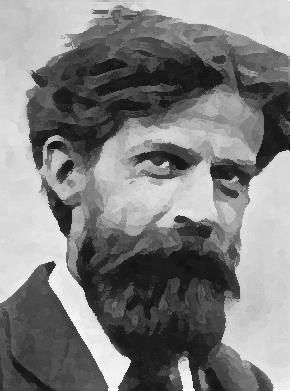
Patrick Geddes (1854- 1932)
Prepared By: Asha Mohan
About Sir Patrick Geddes
• He was a Scottish biologist, sociologist, geographer and pioneering town planner.
• He is known for his innovative thinking in the fields of Urban planning and sociology.
• Also known as “ Father of Modern Town Planning”
• He introduced the concept of “Region” to architecture and planning and coined the term “ Conurbation” Conurbation= an extended urban area, typically consisting of several towns merging with the suburbs of a central city.
• He saw the city as a series of common interlocking patterns “an inseparably interwoven structure”
• First man to speak of “ The New Humanism” which is comprehensive philosophy aiming at the coordination of man and his environment and also responsible for linking social theories with modern Town and country planning.
Planning Philosophies:
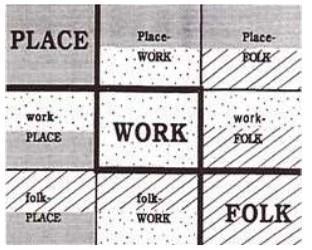
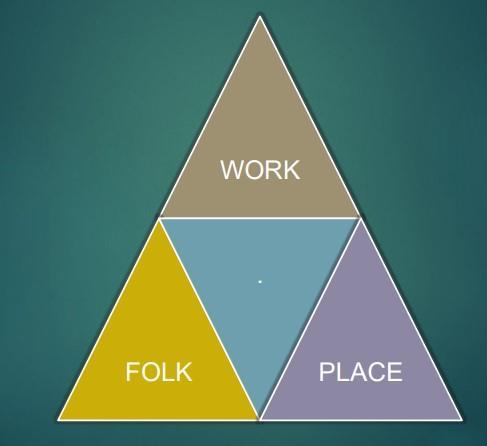
1. The concept of “ Place, work, and Folk”
2. The outlook tower and public participation in planning
3. Section Principles
4. Classification of settlements and emphasis of regional planning of view in planning .
1. The Concept of “Place, Work and Folk”
• Work, place, and folk mean Economics, Geography, and Sociology. The Geddes had the importance of Socio-economic surveys while improving a town or planning entirely a new town.
• Geddes was concerned with the relationship between people and cities and how they affect one another.
• He emphasized that people do not merely need shelter, but also food and work, recreation, and social life.
• Geddesian triad of Organism, function, and environment.
• What was the need for this philosophy?
• The task was to find the right places for each sort of people, places where they will flourish.
2. The Outlook tower and Public Participation in Planning
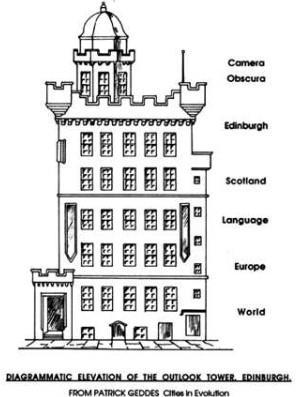
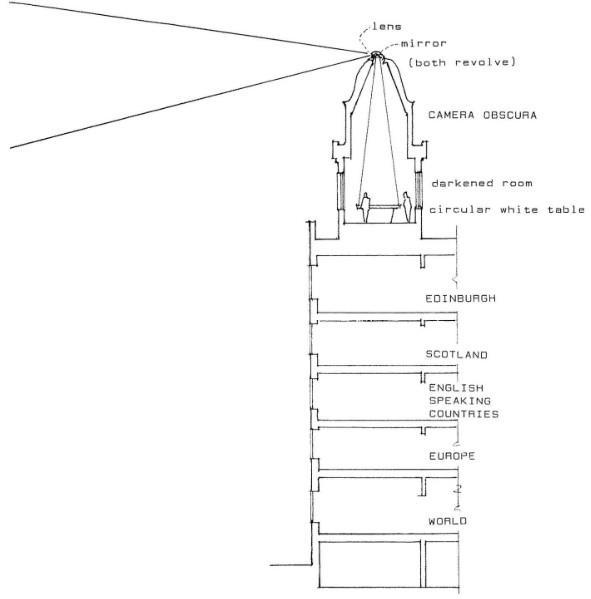
• Patrick Geddes took over the building formerly known as “Short’s Observatory” in 1892.
• Positioned at the of Edinburg’s High Street, it still holds the camera obscura, which refracts an image onto a white table within, for study and survey. A mirror at the top of the dome picks up images and reflects them through a lens which in turn focuses the picture onto a white surface as on a film in a camera.
• This tower was conceived as a tool for regional analysis and is the world’s first sociological laboratory.
• What was the need for this philosophy?
• This tower is home to Patrick Geddes center for Planning Studies, where an archive and exhibition are housed
• He believed that there is a need to conceive life as a whole, to see its many sides in their proper relations, but we must have a practical as well as a philosophical interest in such an integrated view of life.
3. The Valley Section principles
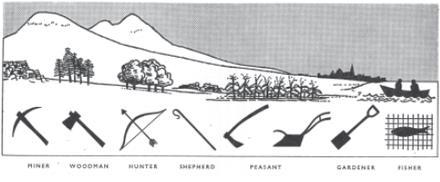
• Patrick Geddes first published his idea of the valley section in 1909 to illustrate the idea of the ‘Region city’.
• Geddes said that “it takes a whole region to make the city”
• The valley section is a complex model which combines physical condition-geology and geomorphology and their biological associations with so-called natural or basic occupations such as miner, hunter, shepherd, or fisher, and with the human settlements that arise from them.
• The geographical form and features, the contour, and relief are associated with the primitive occupation of man.
• What was the need for this philosophy?
• He believed that violation of these principles will not only result in daily economic waste but also end in aesthetic ruin.
4. Concept of regional planning
• Patrick Geddes advocated the civic survey as indispensable to urban planning: his motto was “Diagnosis before treatment”.
• The survey should include at a minimum the geology, the geography, the climate, the economic life, and the social institutions of the city and the region.
• The sequence of planning to be followed is:
1. Regional survey
2. Rural development
3. Town planning
4. City design
• What was the need for this philosophy?
• Geddes championed a mode of planning that consider “primary human needs” in every piece of intervention, engaging in “Constructive and conservative surgery”.
• Conservative surgery: In 1886 Geddes purchased a row of slum tenements in James Court, Edinburgh making it into a single dwelling. This concept involved weeding out the worst of the houses, widening the narrow closes into courtyards, and thus improving sunlight and airflow. The good houses were kept and restored. He believes that this was more economic and humane
5. Conurbation
• The term was coined in his book “Cities in Evolution”
• The term “Urban Agglomeration” is often used to convey a similar meaning to Conurbation.
• A conurbation is a region comprising a number of cities, large towns, and other urban areas that through population growth and physical expansion, have merged to form one continuous urban and industrially developed area.
• He drew attention to the ability of then new technology of electric power and motorized transport to allow cities to spread and agglomerate together.
6. Constellation theory
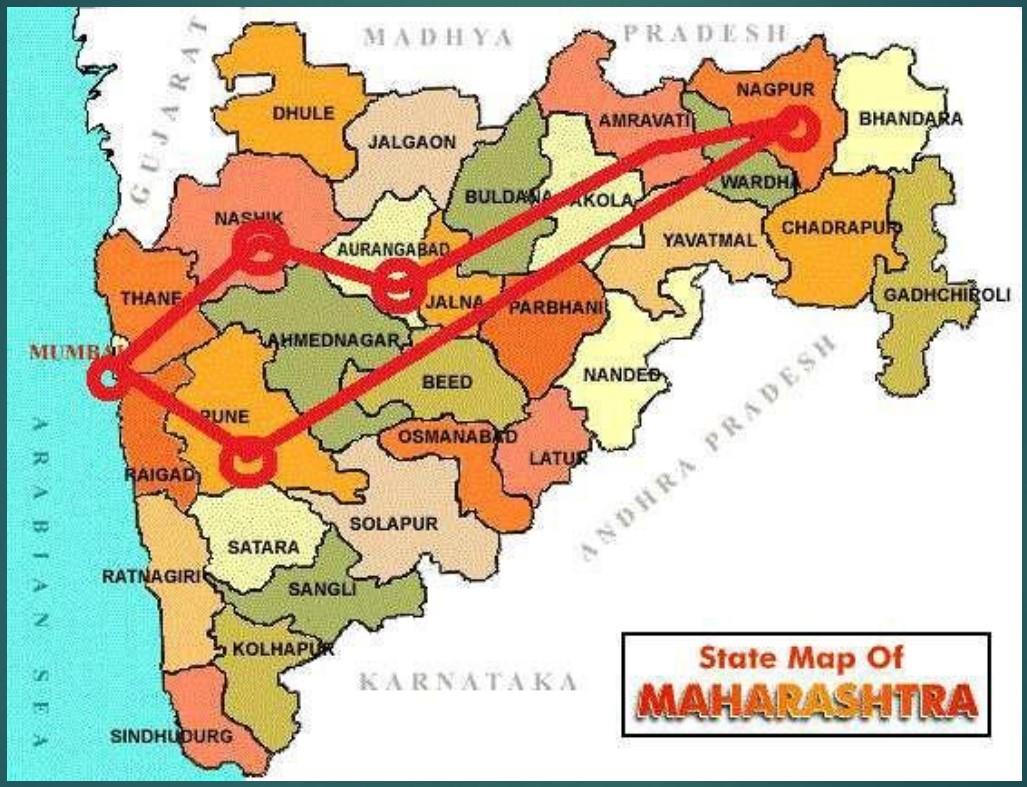
• 4 or more cities that are not economically, politically, or socially equal come together in developing a whole region.
• This theory is mostly used for administrative purposes in all countries.
• And it’s used because planning cities in a particular shape are not possible in Today’s time.
• Mumbai- Economic and Capital city
• Nashik- Religious city
• Aurangabad- Administrative city
• Nagpur-Political city
• Pune- Educational Importance
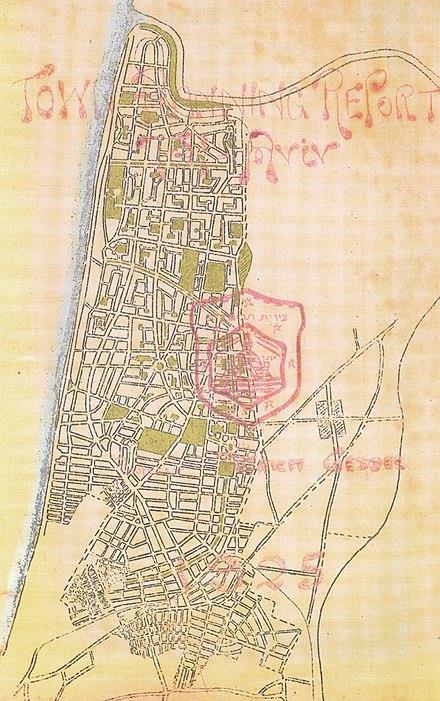
Tel Aviv (Israel)- Master plan(1925-1929)
• First master plan for Tel Aviv by Patrick Geddes.
• The program designed the center of Tel Aviv and the area is now known as “ Old North” which is approximately 7.5% of the current day municipality of Tel Aviv.
• It turned out to be the only example of one of Geddes’s plans being built largely as he envisaged and is a good example of an early planned city.
• It was designed to be an extension of the older neighbouring Arabic port town Jaffa to the south and a home for the increasing population of Jews emigrating from other parts of the world(Predominantly Eastern Europe)
• The principle he employed for the city is now known as New Urbanism ideas of planning- an emphasis was placed on pedestrians as opposed to motor car traffic, and a sense of community and civic life was encouraged through the use of town squares and abundant planting of greenery provided significant focus on minimal environmental footprint. The city was envisaged on a pedestrian scale.
Patrick Geddes in India
• He came to India in 1915 at the invitation of Lord Pent land, then Governor of Madras.
• He gave his expert advice for the improvement of about eighteen major towns in India.
• He laid emphasis on “ Survey before plan” that is diagnosis before treatment. And the surveys are Physical and socio-economic surveys.
• His principles for Town planning in Bombay demonstrates his views on the relationship between social processes and spatial form(“ Bombay Town Planning Act of 1915”)
o Preservation of human life and energy, rather than superficial beautification
o Purchasing land suitable for building
o Promoting trade and commerce
o Developing a city worthy of civic pride, not an imitation of European cities.
o Control over future growth with adequate provision for future requirements.
“The environment acts, through function, upon the organism and conversely the organism acts, through function, upon the environment.“ (Cities in Evolution, 1915).
In human terms this can be understood as a place acting through climatic and geographic processes upon people and thus shaping them. At the same time people act, through economic processes such as farming and construction, on a place and thus shape it. Thus both place and folk are linked and through work are in constant transition
Thank You
