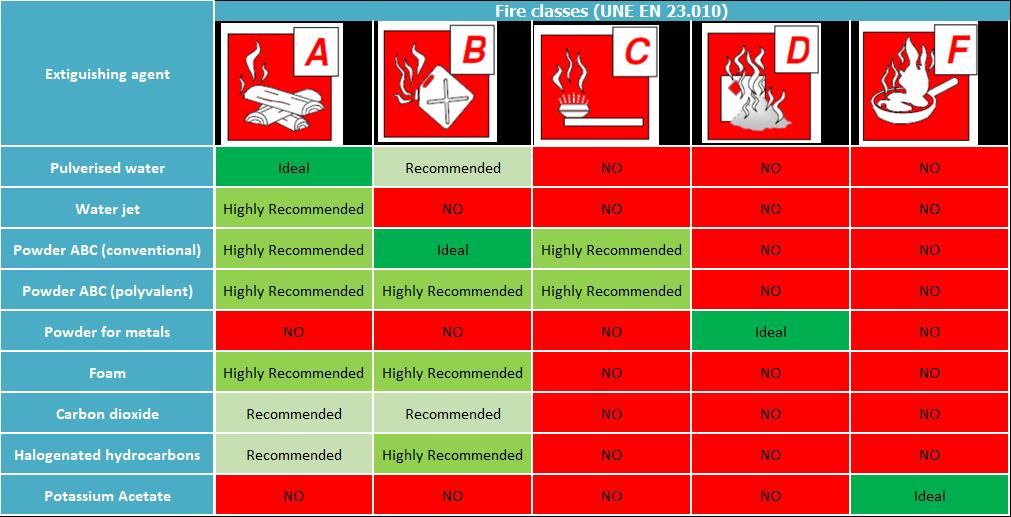
Classification of fire
CLASS A
B CLASS C CLASS D CLASS K CLASS
These are fires in Ordinary Combustibles such as wood, paper, cloth, Rubber and many plastics.
These are fires in flammable liquids such as gasoline, petroleum greases, tars, oils, oil based paints, solvents, alcohols. It also include flammable gases such as propane and butane.
Classification of materials according to fire:
1. Non Hazardous
2. Hazardous
3. Extra Hazardous
These are fires involving energized electrical equipments such as Computers servers, motors, transformers and appliances.
The materials having abnormal fire risk and their storage is not governed by bye laws but by Indian explosive rules 1983.
These are fires in combustible metals such as magnesium, titanium, zirconium, sodium, lithium and potassium.
These are fires in cooking oils and greases such as animal and vegetable fats.
K
*Minimum size for main pipe in all 3 system should have 100 mm internal diameter
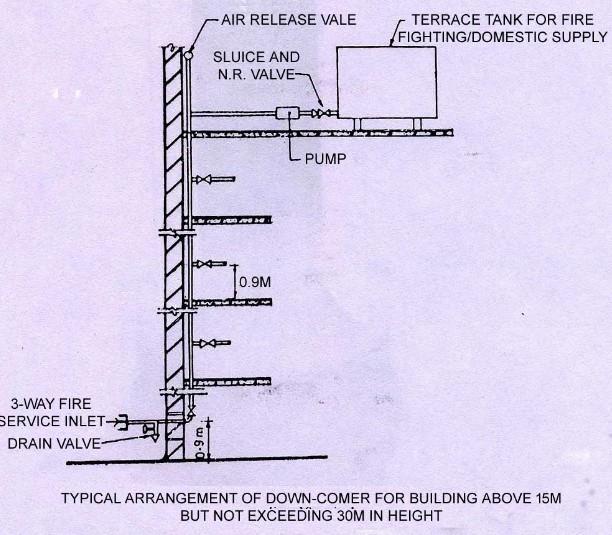
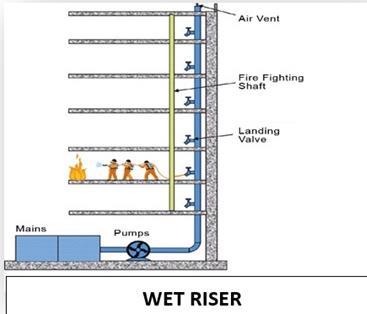
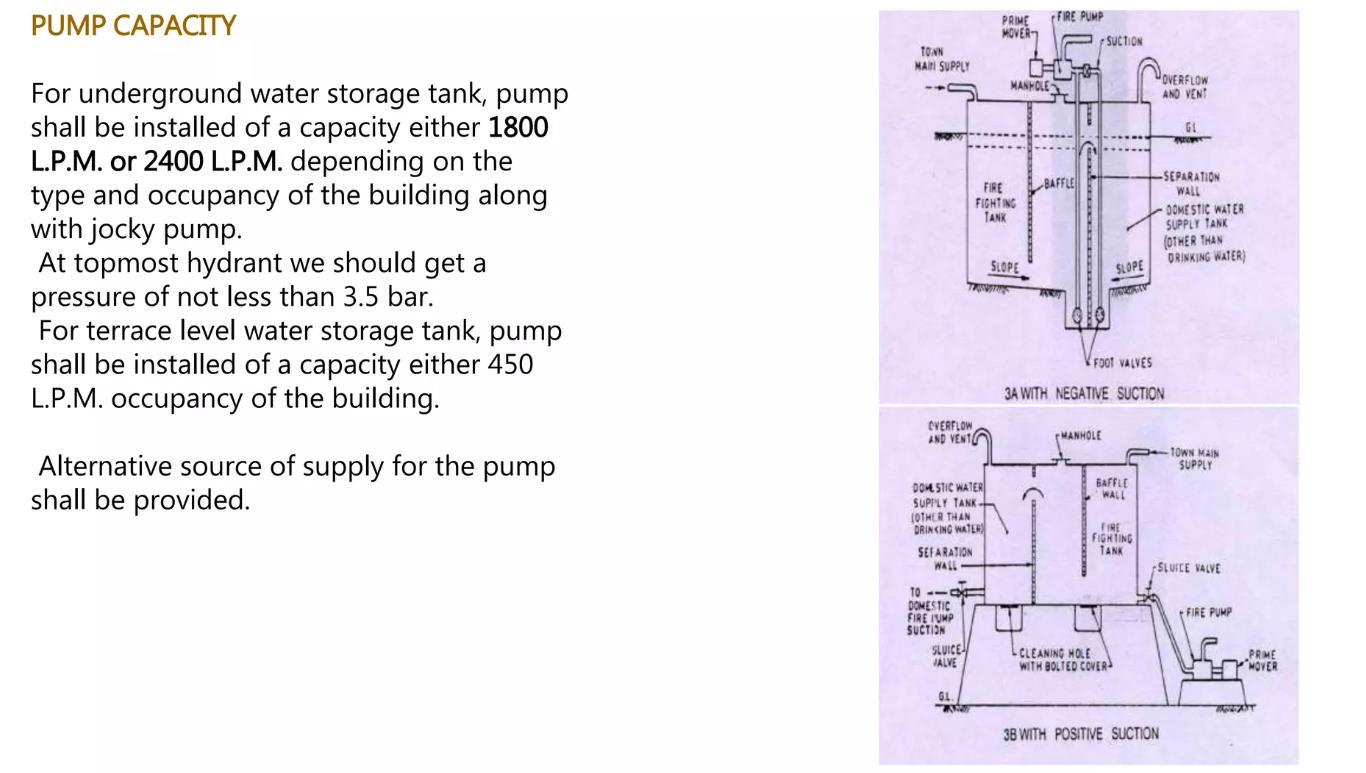
Fire safety storage provided on terrace. Fire safety storage provided underground.
Advantages:
•No requirement of Pump or gravity.
•No electricity consumption.
Disadvantages:
•Concrete load, maintenance to avoid stagnant water.
Advantages:
•No structural load.
Disadvantages:
•Dependency on water pump.
•Maintenance, Electric pump + an extra pump(In case of power loss)
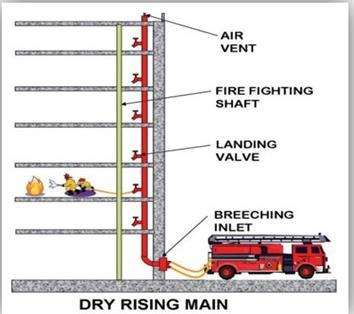
No Tanks/storage provided,just a inlet to get connected to a water supply during fire. Used only during fire accidents.
Advantages:
•No maintenance of storage tanks.
•Water and energy efficient.
Disadvantages:
•Dependency on water supply & time factor.
Types of Fire Fighting systems for Multi storeyed Buildings
Classification of buildings based on Occupancy (for fire):
GROUP A: Residential
GROUP B: Educational
GROUP C: Institutional
GROUP D: Assembly
GROUP E: Business
GROUP F: Mercantile
GROUP G: Industrial
GROUP H: Storage
Group J: Hazardous
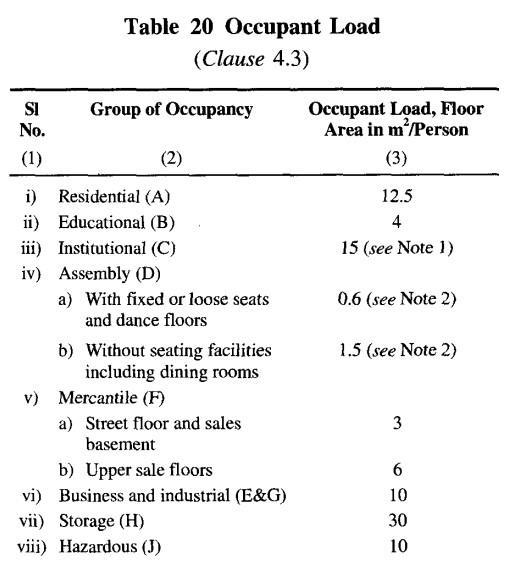
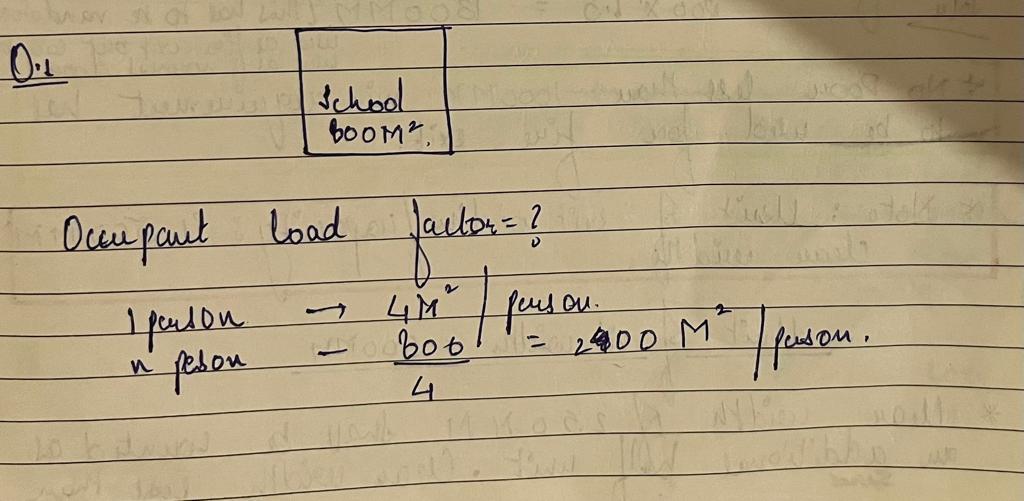
A) Based on this OCCUPANT LOAD is calculated: For determining the exit area required, the number of persons within any floor area.
B) Exit Width per person: For Stairs, Ramps, Doors & Cooridors.
Standards of Fire Protection (Based on NBC)
Standards of Fire Protection (Based on NBC)
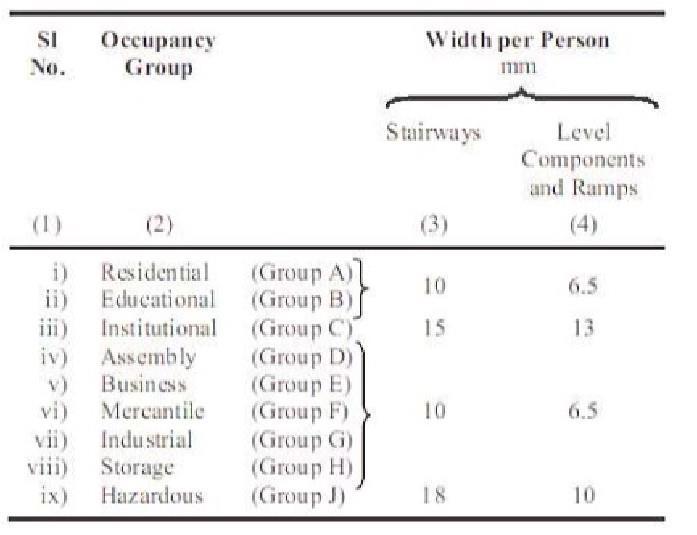
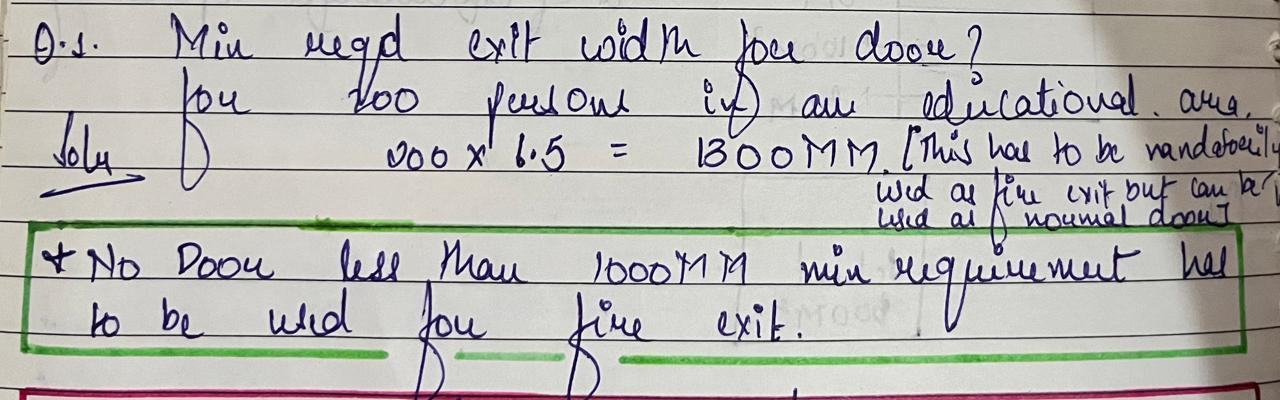
•The unit of Exit width, used to measure the capacity of any Exit shall be 500 mm. A clear width of 250mm shall be counted as an additional half unit. Clear widths less than 250mm shall not be counted for Exit width.
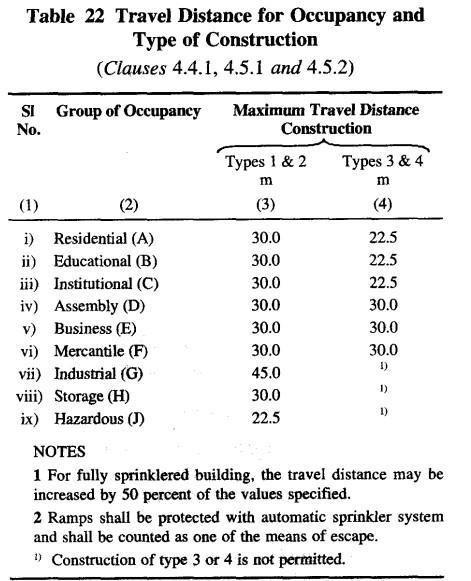
C) Travel Distance: For determining the exit area required, the number of persons within any floor area.
•Dead end of a Co-orridor length in Exit shall not exceed 6M for Educational, Institutional & Assembly Occupancies.
•For other the same shall be 15 M
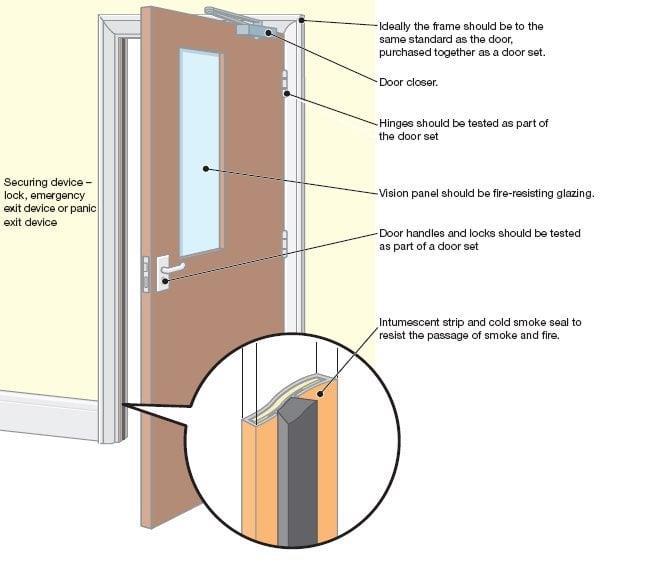
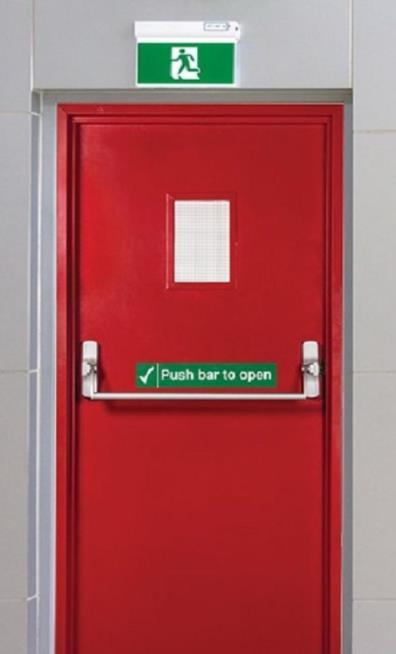
D) Doorways: No fire Exit Doorway shall be less than 1000 mm in width in all Occupancies except for assembly building.
• Min exit door width for assembly building is 2000 mm.
•Doorway shall not be less than 2000 mm in Height.
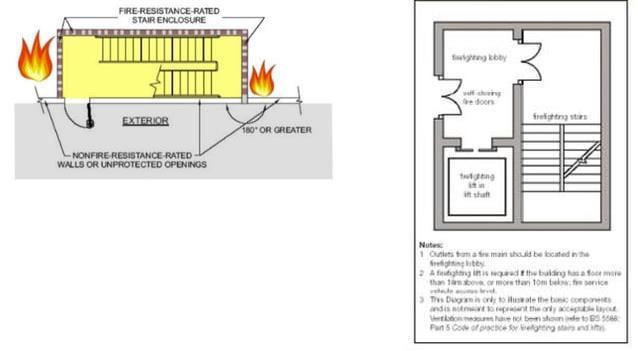
E) Staircase: Fire escape staircase in the mercantile, business, assembly, hotel buildings above 24 m. height shall be a fire tower and in such a case width of the same shall not be less than the width of the main staircase.
No combustible material shall be allowed in the fire tower.
• No. of Risers shall be limited to 12 per flight of Staircase.
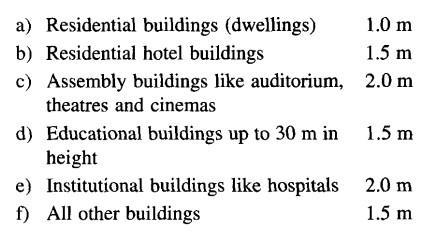
•Min Width of Staircase:
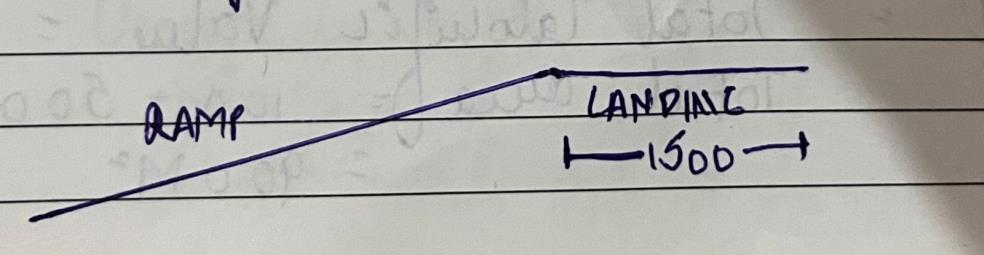
F) Ramps: Slope of Ramp shall not exceed 1:12(8%)
• Every landing in ramp shall not be less than 1500 mm in the direction of travel.
Standards of Fire Protection (Based on NBC)
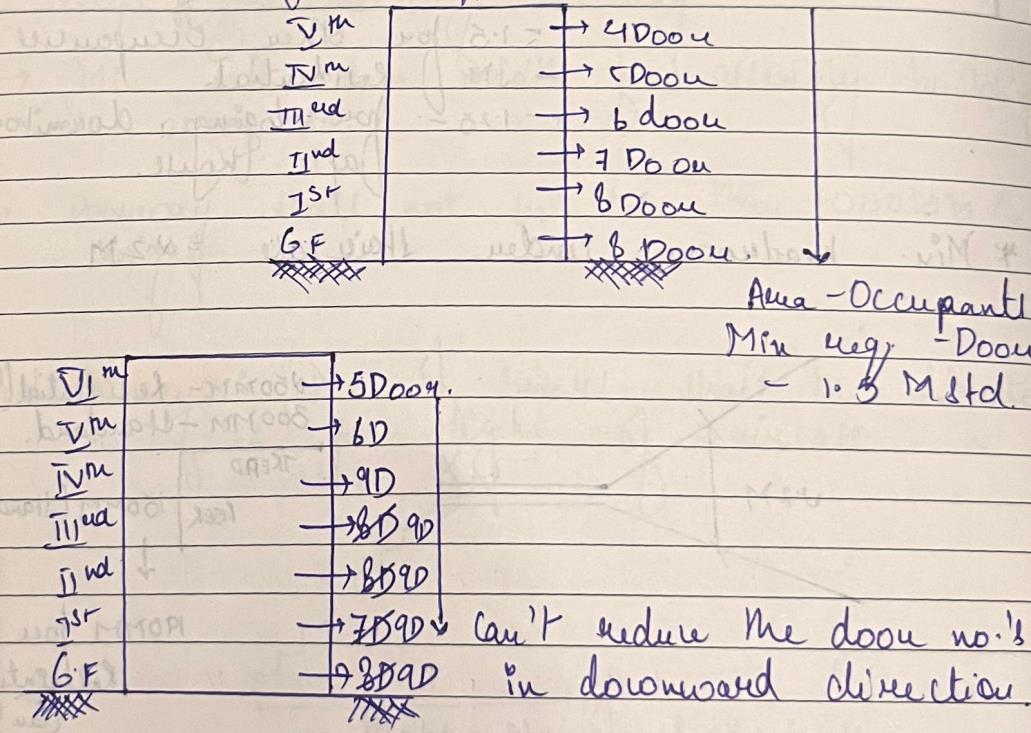
G) Multi-storeyed Building: “ Exit width/ Door” cant be reduced in the downward direction.
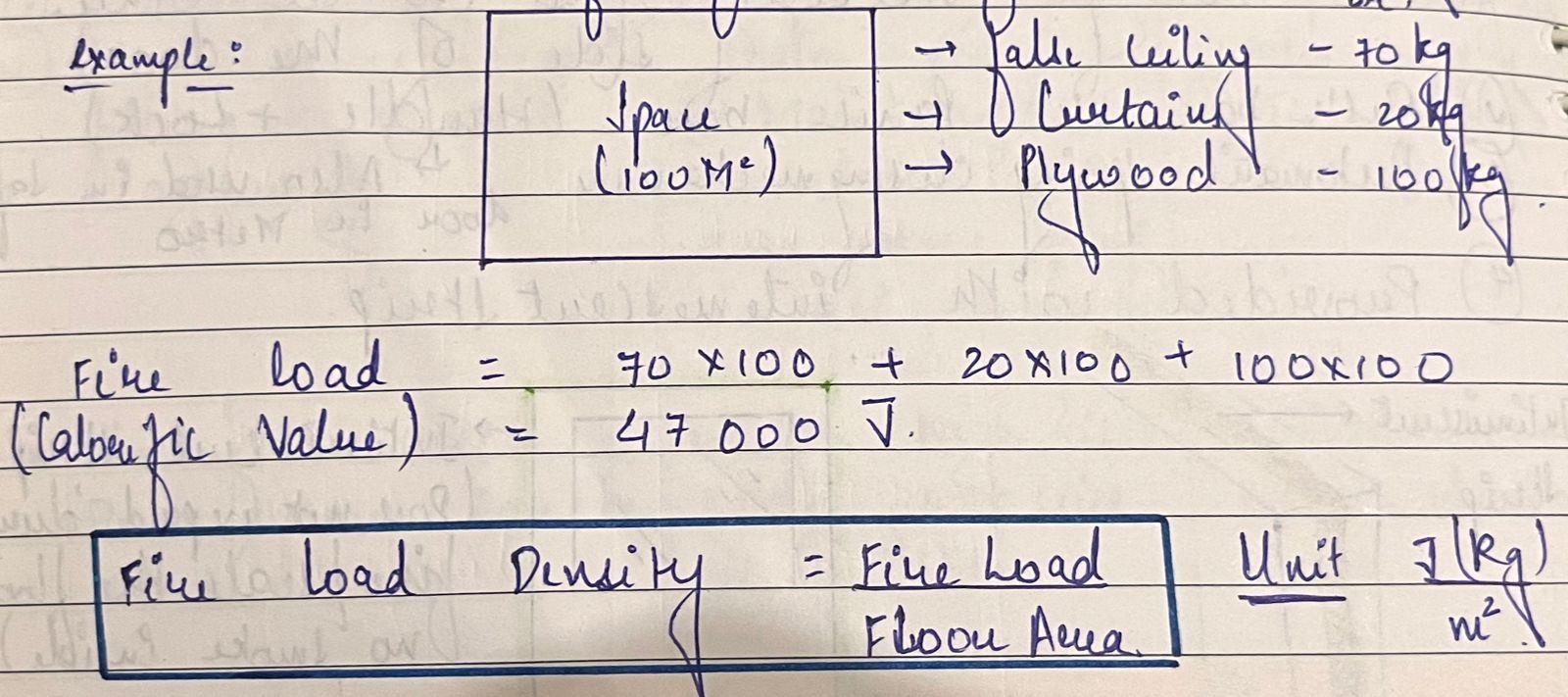
Fire Load( Calorific Value): “ Calorific Energy” of the whole contents contained in a space including facings of wall, floors, ceiling, partition etc. is called fire load. Fire load by floor area is called “ Fire load density”. Unit: Joules/kg
Standards of Fire Protection (Based on NBC)
Standards of Fire Protection (Based on NBC)
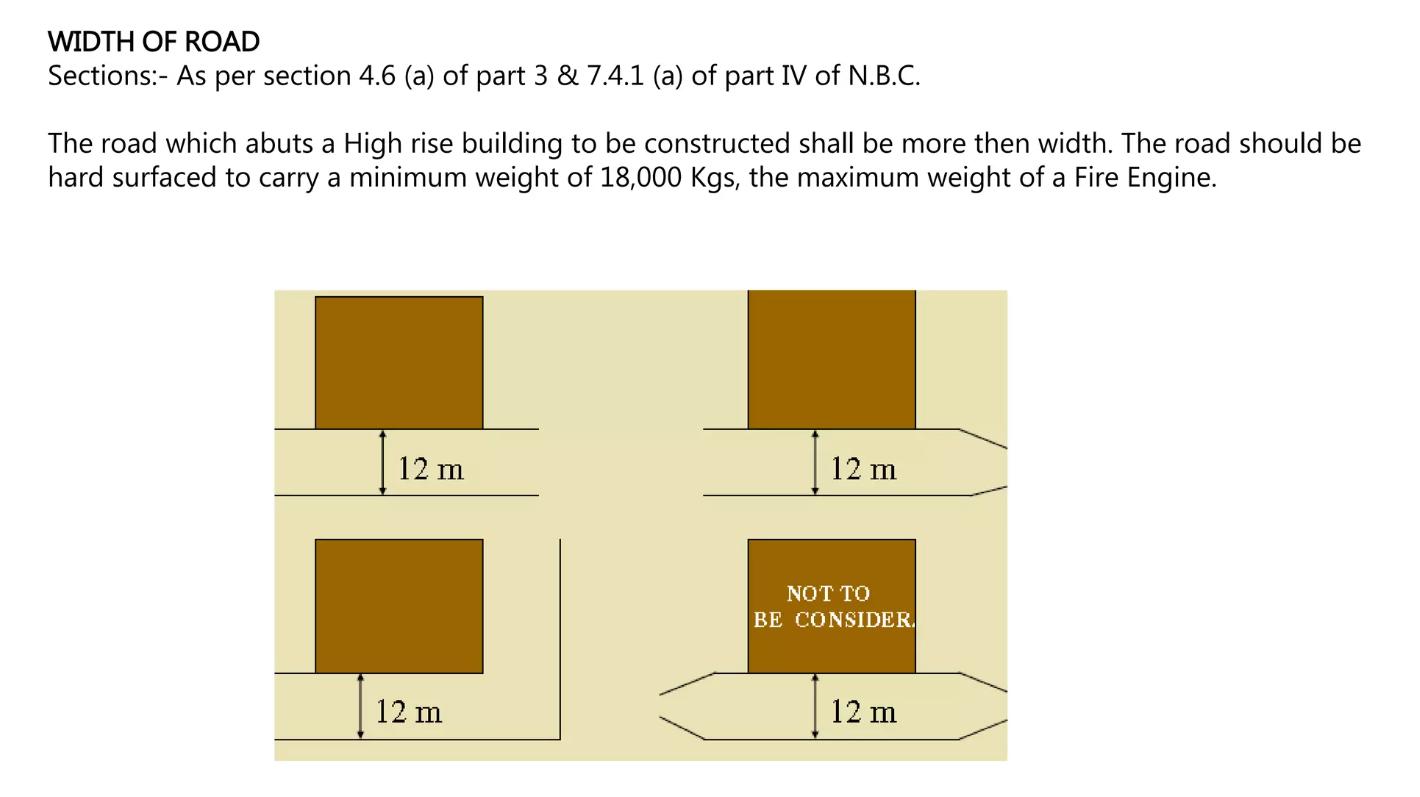
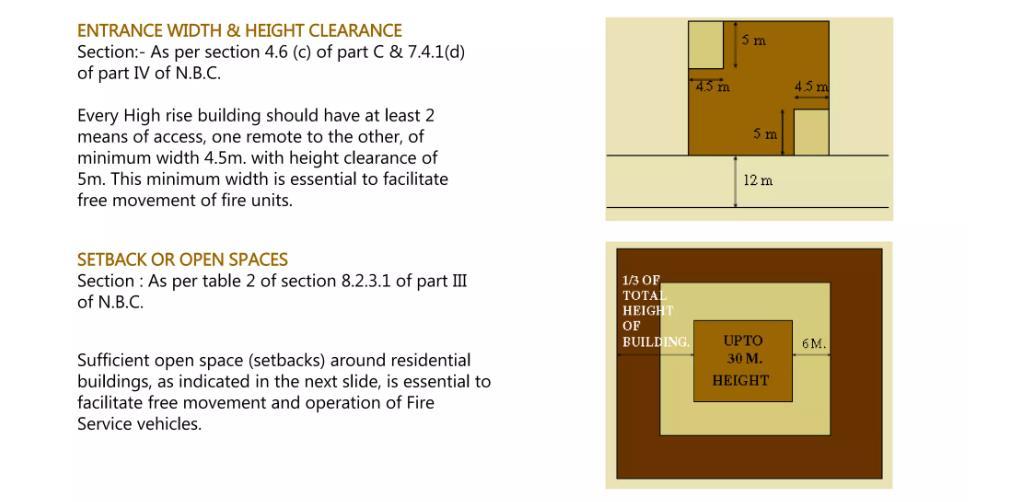
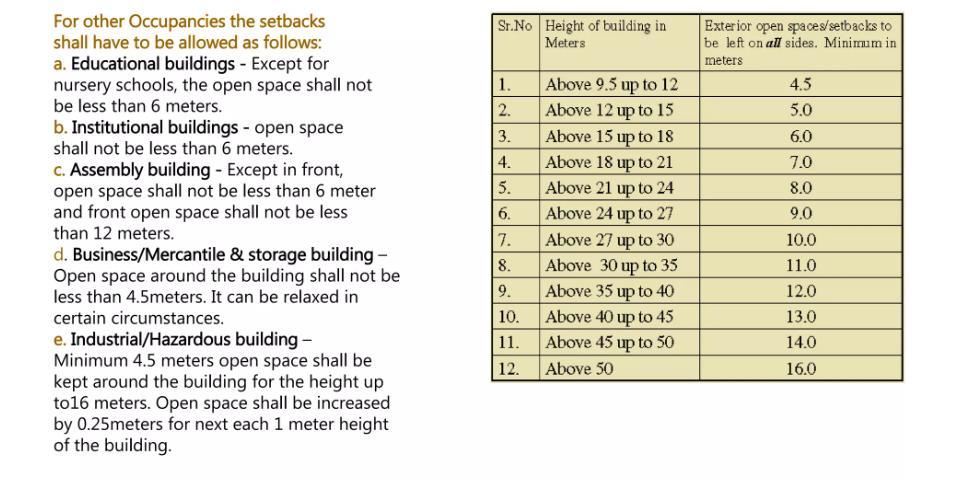
Fire Safety at Planning Level
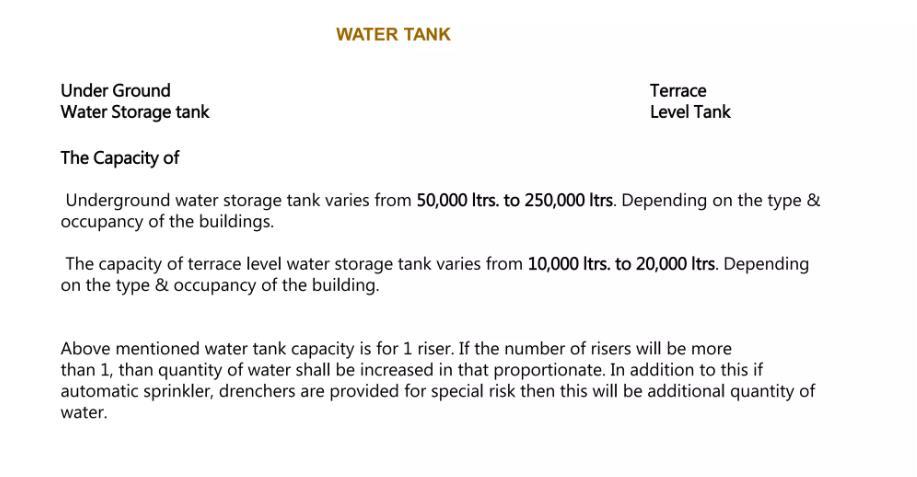
Fire Demand
It is the amount of water required for fire-fighting purposes if in case a fire breaks out in an area. This water is required to be available at a pressure of about 100 to 150 kN/m^2 or 10 to 15m head of water. Fire demand is not calculated for smaller towns where the population is less than 50,000. For larger cities, fire demand is calculated using various formulas which are discussed further.
Fire Demand Formulas
1. Kuichling's Formula
Q = 3182 * √P, where,
Q - water required in litres/minute
P - population in 1000s (i.e., if population is 1,00,000 then P = 100)
2. Freeman's Formula
Q = 1136 * [(P/10)+10], where,
Q - water required in litres/minute
P - population in 1000s
3. National Board of Fire / Underwriter's Formula / National Fire Insurance of America
Q = 4637 * √P * [1 - (0.01*√P)], where,
Q - water required in litres/minute
P - population in 1000s (valid for population of less than 2,00,000)
4. Buston's Formula
Q = 5663 * √P, where,
Q - water required in litres/minute
P - population in 1000s
5. According to Indian Standard IS 9668: 1990
Q = 1800 litres/minute, For every 50,000 population up to 3,00,000 population, Above 3,00,000 population, extra water shall be 1,800 lit/min for every 1,00,000 population.
Fire safety
1.Constitutional Provision: Fire Services is a State subject and is included as a Municipal function in the XII Schedule of the Constitution of India under Article 243 (W).
2.National Building Code of India 2016 (Fire and Life safety): The National Building Code of India covers the detailed guidelines for construction, maintenance and fire safety of the structures.
•The National Building Code (NBC) of India is published by the Bureau of Indian Standards (BIS) of India and it is a “recommendatory document”.
•Guidelines are issued to the States to incorporate the recommendations of National Building Code into their local building bylaws which makes the recommendations of National Building Code of India as mandatory.
•The advisories are issued to all the State Governments to incorporate and implement the latest National Building Code of India 2016 Part – IV “Fire & Life Safety” in their building bye-laws, by the office.
The BIS broadly covers the three areas:
• Fire prevention: Covers aspects of fire prevention caused due to the design and construction of buildings and describes the various types of building materials and their fire rating.
• Life Safety: Covers life safety provisions in the event of fire and similar emergencies, also addressing construction and occupancy features that are necessary to minimise danger to life from fire, smoke, fumes or panic.
• Fire Protection: Covers important components and guidelines for selecting the correct type of equipment and installations meant for fire protection depending upon the classifications and type of buildings.
1.National Disaster Management Authority (NDMA): It has laid down requirements for fire safety in public buildings, including hospitals, which incorporate elements of the NBC. This also includes design guidelines on maintaining minimum open safety space, protected exit mechanisms, dedicated staircases, and crucial drills to carry out evacuations.
2.Oil Sector Safety Institution (OISD): Oil Industry Safety Directorate (OISD) under the Ministry of Petroleum and Natural Gas formulates and coordinates the implementation of a series of self-regulatory measures aimed at enhancing the safety in the oil & gas industry in India.
3.The Model Building Bye Laws, 2016: Devised by the Ministry of Urban Development it states the regulatory mechanism and engineering parameters to keep in mind before starting any construction project in India. It also mentions that point-specific responsibility for all fire-related clearance rests with the Chief Fire Officer(CFO).
Fire safety
Occupational Safety Hazard Act, OSHA has adopted ANSI standard Z535.1-2011 for the design of accident prevention signs (Safety signs), and the color codes of this standard can be used in OSHA Compliant signage.
• Yellow(with Black): for caution tags; stumbling against hazards or physical dangers
• Orange (with white): for warning tags; traffic
• Fluorescent orange or red- orange : Biological hazards
• Purple or magenta (with Yellow) : Radiation hazard
• Red: Fire protection equipment
• Black: Housekeeping and aisle marking
• Green(with white) : safety and first aid
• Blue (With white): Defective Machinery
FIRE PROTECTION
Fire protection within a facility relies on system components to detect and prevent fires and mitigate their consequences. Licensed and reputable life safety providers install the proper devices to make sure the building is in the best possible posit ion to fight a blaze should a fire break out.
Monitored fire alarm systems signal the alarm monitoring center in the event of fire and provide early detection for quick action.Fire suppression devices, such as sprinkler systems and extinguishers, stop the spread of fire.
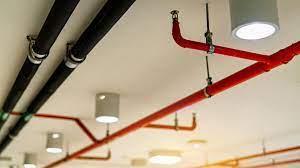
A full-fledged fire protection system includes:
• Fire Suppression Sprinkler Systems (wet, d1y, preaction, deluge., antifreeze., and fire pumps)
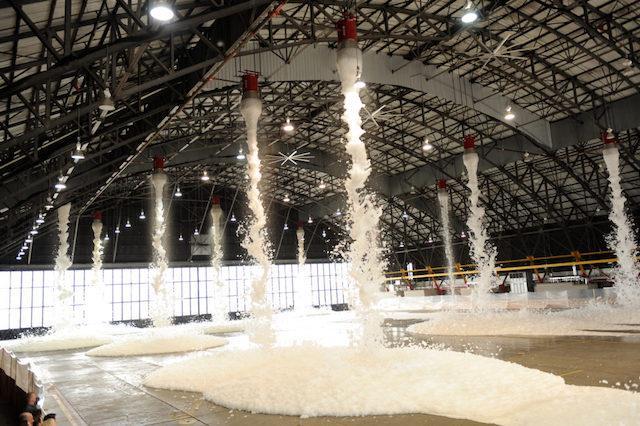
• Special Hazards Fire Suppression Systems (foam, low and high pressure C02, as well as dean agent systems)
• Fire alarm detection system (control panel, flame detectors, heat detectors, smoke detectors, carbon monoxide detectors)
• Mass notification (notification appliances, pull stations/call box points) Fire extinguisher, fire hydrants, and backflows
• Fire alarm monitoring
• Integfated security, access control, and ,·ideo surveillance systems for appropriate actions from each system
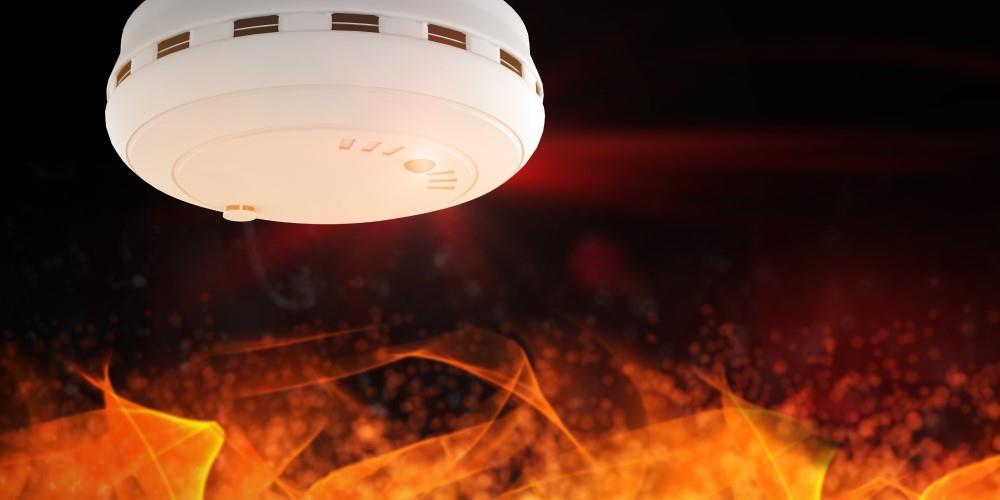
Active fire protection systems include features such as automatic fire sprinklers and fire alarm systems. In general, they work to contain the spread of the fire with the action of dispersing water or other compounds water or alerting occupants to its presence. These features are crncial to a building's safety, and often required by local codes as a precautionary measure in any office or public space.Passive fire systems contain fires without taking action by utilizing building compartmemalization through the use of fire-resistant walls, doors, and coatings.
.
Automatic Fire Sprinklers
One of the most important components of a fire protection system is the automatic fire sprinklers.In general, a sprinkler is activated by the heat put off by the fire once it reaches a certain temperature at the ceiling around that particular head. A common misconception is that every sprinkler head in a system will go off at once after the first sprinkler has acti,·ated. While systems that beha,·e someone like this exist (deluge type systems) it is pretty uncommon and used in special situations like certain types of aircraft hangers. In most cases, the fire sprinklers that activate only do so around and over the fire. These systems are most effective in the fire's initial growth stage, as they work to spread a continuous flow of water over the fire, ideally dampening it enough to be fully put out.
There are several types of fire sprinklers. Wet Pipe sprinkler systems are filled with water at all times, allowing for quick-fire suppression. They are the most common type of sprinkler and are both cost-efficient and low maintenance. Dry Sprinkler systems use pressurized air in the pipe which exits before water escapes. Pre-Action sprinkler systems are filled with air and water passes through if the smoke alann or detector goes off. They are best used in locations looking to avoid accidental and unnecessary water damage such as libraries or data centers. Deluge Sprinkler systems feature open nozzles and are common to industrial parks as they respond to hazards including flammable liquids spilling across a floor.
Automatic fire sprinklers are installed during the initial constrnction of a building but can be updated in the case of a faulty system or in response to new codes regarding fire safety. then installing initially, the building's risk factors and layout are taken into consideration to ensure that safety is maximized regardless of the specific and unique challenges brought about from a building's design plan.
Standpipes
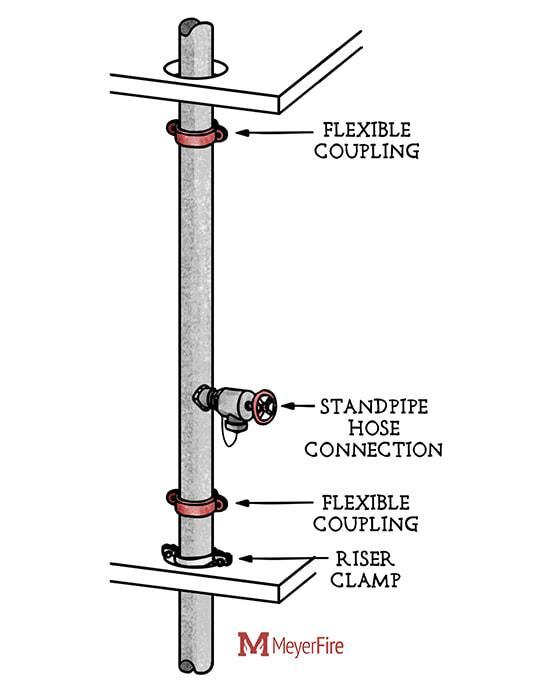
Much like automatic fire sprinklers, standpipes are built into the initial construction of a building. They are installed in the stairways of buildings that exceed a certain height or size, but can sometimes be located throughout the walls of the entire structure, providing co,·erage on every floor. These standpipes provide water flow to hose valves, which, much like fire hydrants, firefighters can connect fire hoses too. Much like fire hydrants, firefighters can utilize this to spray water from the building's main water source from any floor they may need to.
Fire Department Connections
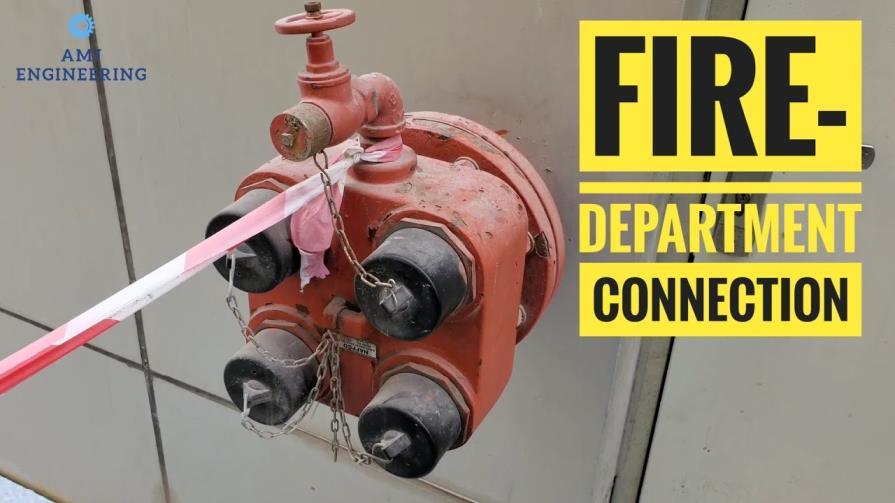
Fire department connections are utilized by the firefighters on the scene to either supply water to the standpipes or supplement the building's already existing water supply. This additional water can be sourced from the fire truck itself or from a hydrant that can tap into the water the building's standpipes may not have access to. These are usually included in the initial creation of the standpipes in order to provide an extra source of water to the building.
Fire Alarm Systems
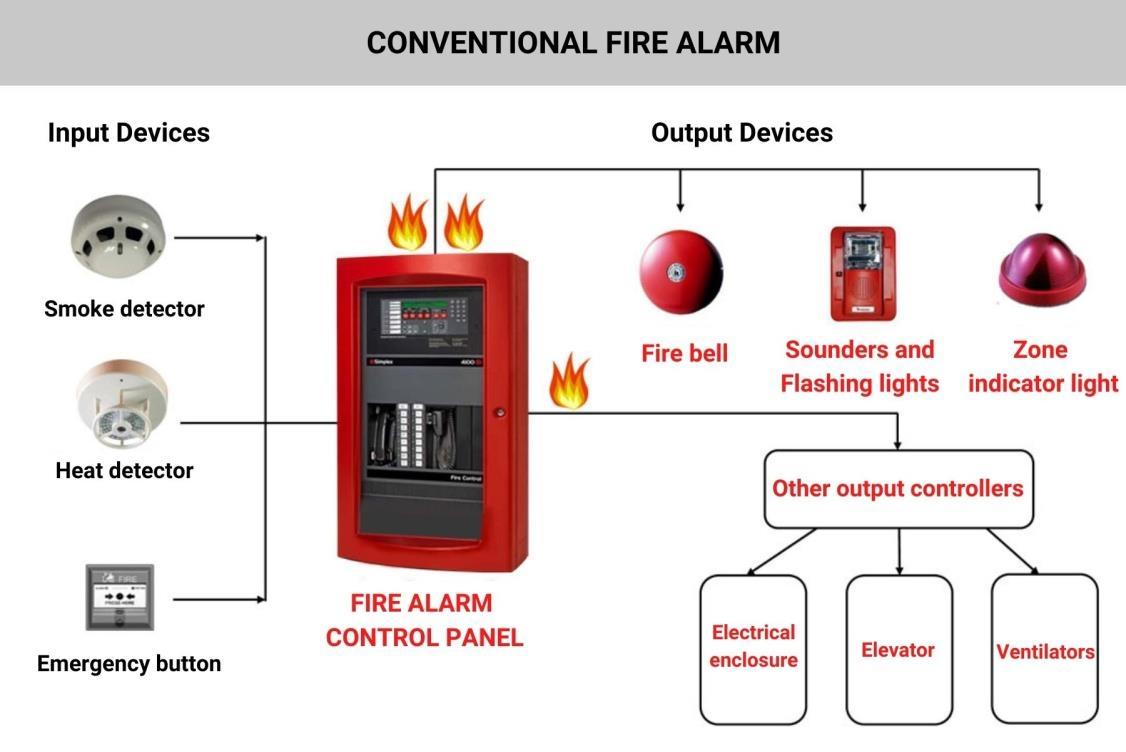
Fire alarm systems are put in place in order to alert a building's occupants in the event of a fire.These are installed in e\·ery room of a building and are highly regulated by fire safety laws. Generally, these can be automatic or manual alarm systems. Automatic alarm systems can detect heat or smoke and emit a high-pitched alarm throughout the building. Manual alarms must be pulled by a building's occupants, and include simple instructions on how they can be used. Both types of alarms can emit a visual cue as well, seen as a bright flash every few seconds.
Smoke Control Systems
Through the application of both physical barriers and mechanical systems, smoke control systems work to limit the spread of smoke through a bui lding, ideally limiting the amount of damage the smoke can do to both the building and its occupants.
The mechanical systems of smoke control include fans, dampers, doors, and shutters that all work together to isolate and contain the spread of smoke.These are generally installed in the initial constmction of a building as well, and work in conjunction with sprinkler systems to prevent as much damage as possible to the stmctural integrity of a building.
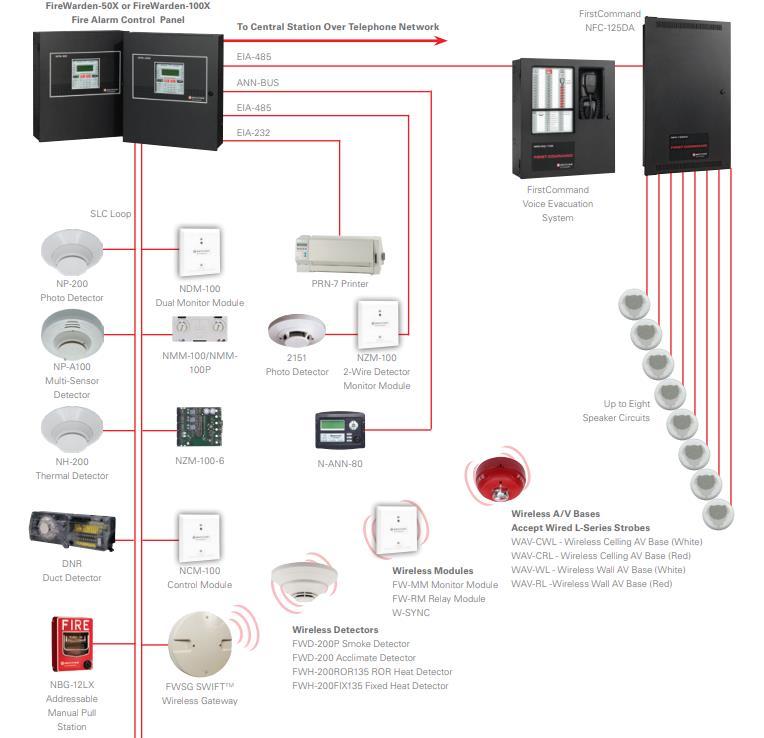
Fire Command Systems
In order to achieve unity and a systematic approach to the contairunent of a fire, many buildings utilize a fire (or incident) command system. These systems are highly beneficial in evaluating, maintaining, and communicating the vital aspects of the fire, as well as providing updates in real-time. Incident command systems are used in more than just fires, and emergency services generally use them to communicate and understand a number of different emergency-type situations outside of fire control.
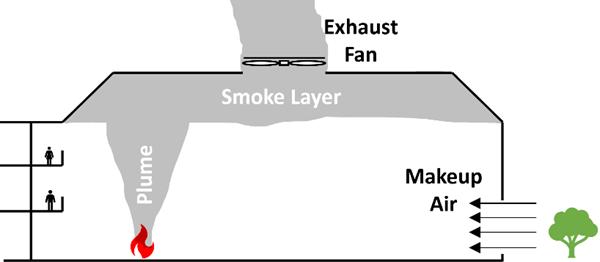
Post Fire Smoke Purge
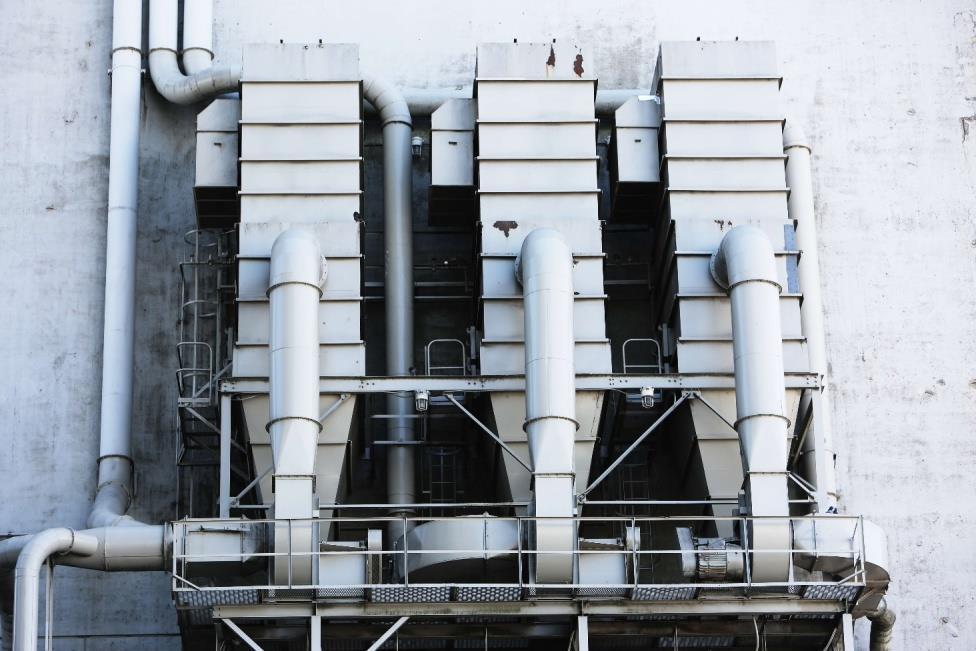
Similar to smoke control systems, the post-fire smoke purge invoh·es a series of fans and shutters that help to eliminate the smoke from a building and can include automatic ventilation from windows and doors to flush smoke from a building, pre, enting fu11her damage. Although the fire has been extinguished, smoke can still cause harm to a building, making it unfit for occupancy, so post-fire smoke purge systems are j ust as vital as other fire protection systems.
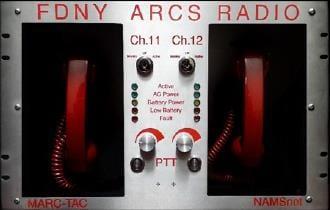
Auxiliary Radio Communication Systems {ARCS)
An auxiliary radio communication system (ARCS) provides clear, reliable communication for firefighters who may be separated by smoke, thick walls, or other standard radio interferences. These systems are installed within a building, including a base station, radio consoles, radiating cables and power supplies. ARCS include two very distinct features: they need to be both wireless and bidirectional. They also operate continuously, i.e in power outages, to ensure that the firefighters on the scene are able to effectively commuinicate even if the fire has damaged the electrical integrity of the building.
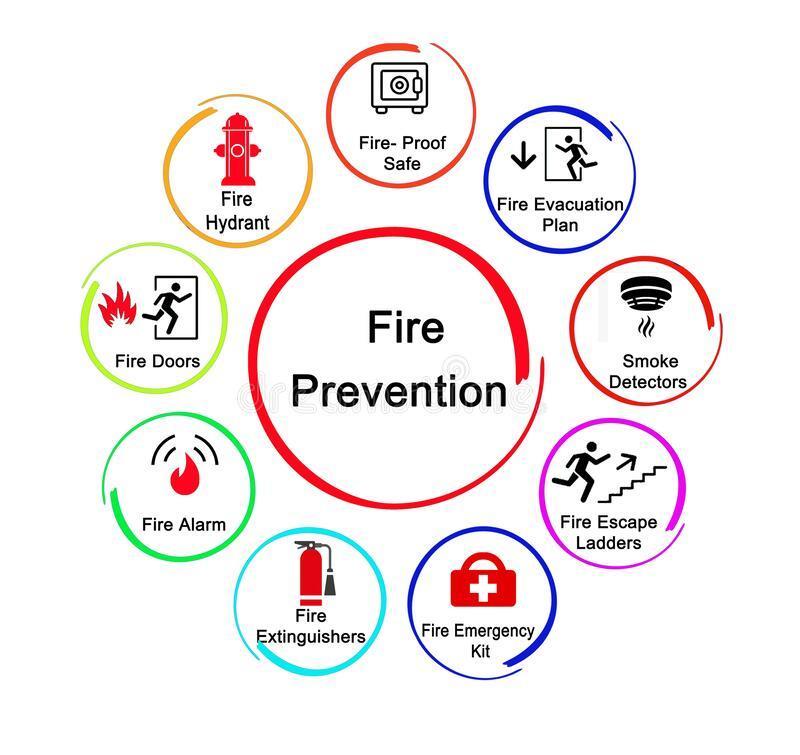
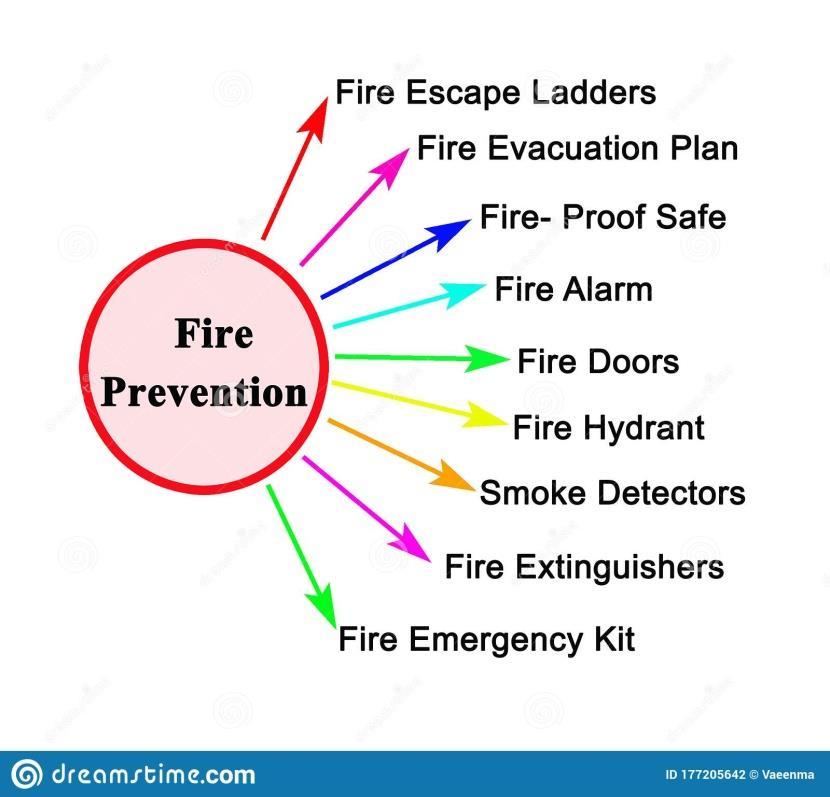
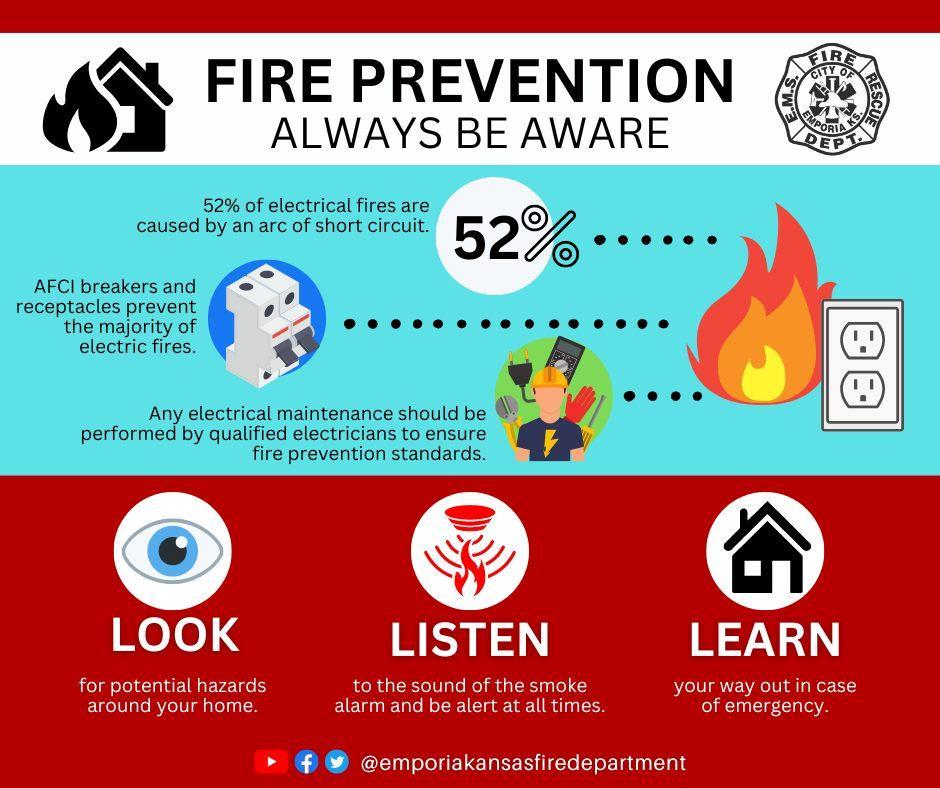
Fire Prevention
Fire prevention requires inspection, testing, and maintenance of systems to ensure they are operating properly and they are effective during a fire. Systems need to be periodically inspected for mechanical deficiencies, proper function, water flow, sprinkler clearances, etc., Fire prevention also involves eliminating the risks that may cause fire to occur.
• These steps are guidelines to overall fire prevention:-
a) Perform regular risk assessments, and identify the weak areas to improve safety.
b) Identify and resolve deficiencies sources within the facility that emit heat or are combustible, flammable, or make the building more susceptible to fire.
• Adhere to fire regulations and NFPA standards.
• Perform regular fire drills. Keep building owners, operators, occupants, and emergency personnel up to date regarding operation of fire protection systems.
• Regularly train staff on fire prevention practices .
• Keep systems in top working order with preventive maintenance contracts.
• Utilize diagnostics and system analytics that can help predict trouble before it occurs.
ELECTRICAL SERVICES
Electrical Services shall conform to the following:
a) The electric distribution cables/wiring shall be laid in a separate duct shall be sealed at every floor with noncombustible material having the same fire resistance as that of the duct. Low and medium voltage wiring running in shaft and in false ceiling shall run in separate conduits.
b) Water mains, telephone wires, inter-com lines, gas pipes or any other service lines shall not be laid in ducts for electric cables.
c) Separate conduits for water pumps, lifts, staircases and corridor lighting and blowers for pressuring system shall be directly from the main switch panel and these circuits shall be laid in separate conduit pipes, so that fire in one circuit will not affect the others. Master switches controlling essential service circuits shall be clearly labeled.
d) The inspection panel doors and any other opening in the shaft shall be provided with airtight fire doors having fire resistance of not less then 1 hour.
e) Medium and low voltage wiring running in shafts, and within false ceiling shall run in metal conduits. Any 230 voltage wiring for lighting or other services, above false ceiling should have 660V grade insulation. The false ceiling including all fixtures used for its suspension shall be of noncombustible material.
f) An independent and well-ventilated service room shall be provided on the ground floor with direct access from outside or from the corridor for the purpose of termination of electrical supply from the licenses service and alternative supply cables. The doors provided for the service room shall have fire resistance of not less than 1 hour
g) MCB and ELCB shall be provided for electrical circuit.
Fire Service Week
To prevent such fire explosions in the future, and increase awareness among civilians and school children, several organizations conduct training, drills and rehearsals to ascertain the preparedness to fight fire emergencies. Additionally, fire service week is observed from April 14 to April 20 throughout India to spread awareness among the public regarding fire safety.
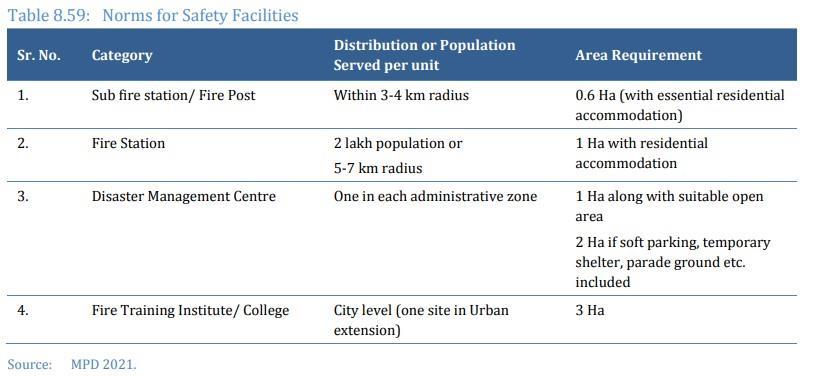
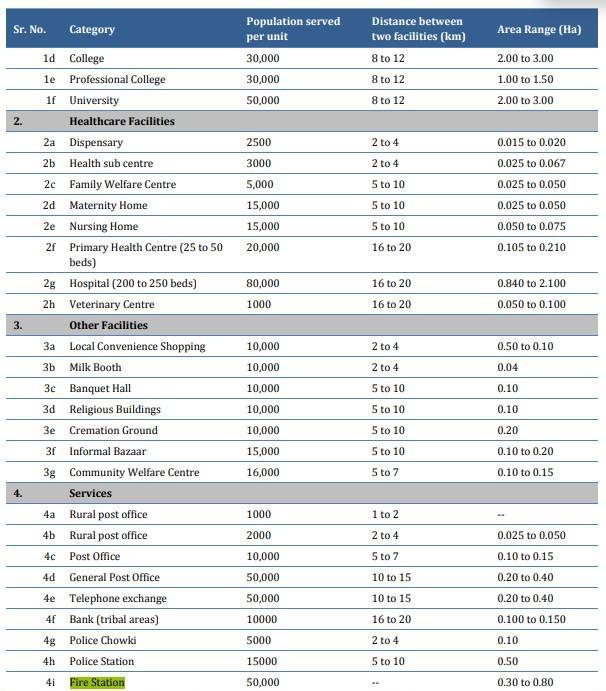
Fire station (URDPFI Guidelines)
Guidelines for locating fire stations and other fire fighting facilities (As per MPD)
➢Fire stations should be located so that the fire tenders are able to reach any disaster site within 3‐5 minutes
➢Fire stations should be located on corner plots as far as possibl e and on main roads with minimum two entries.
➢In the new layouts, concept of underground pipelines for fire hy drants on the periphery exclusively for fire fighting services should be considered.
What Should be the Way Forward?
• Fire Safety Legislation and Audit: India needs strong fire safety legislation with an effective time to time audit mechanism to reduce the vulnerability of urban fires.
• Corporate Safety Responsibility: Building corporations need to ensure proper vulnerability assessments before construction and maintain basements free of obstructions to maintain proper escape channels.
• Fire Hazard Response Plans: It is imperative that every Urban Local Body develops a fire hazard plan in partnership with administration, fire brigade, and health department and conduct regular mock drills in public spaces to facilitate awareness among the people and swift recovery from unforeseen fires.
• Modernization of Fire Safety Equipment: Finances and assistance should be provided by the government to bolster and modernize fire departments with equipment like smoke detectors, fire hose cabinets and automatic sprinkler systems.
