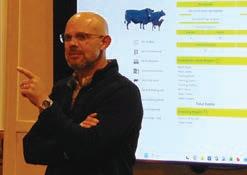
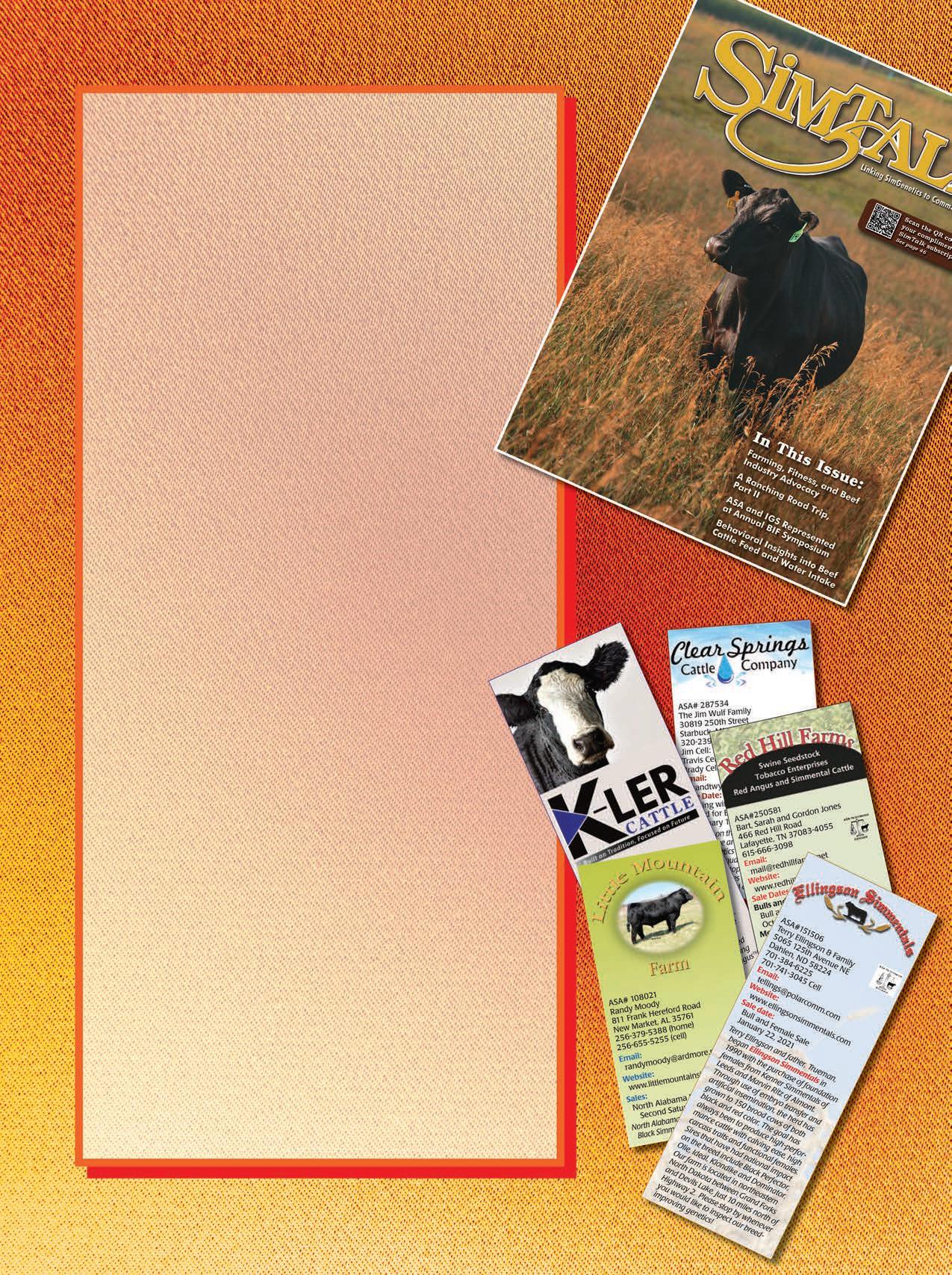
The entire website has a new look highlighting cattle sales, industry events, ASA’s programs, marketing opportunities, and breeders’ resources. simmental.org makes it easy for you. Breeders’ resources include information on:
In the beef cattle industry, we are big on using abbreviations, whether we are talking about EPD, industry groups, or a variety of other things. However, one of the ones I run into the most often is AI. In my world the abbreviation AI can have multiple meanings, and who I am talking to helps me gain context on which AI we are referring to. The first and most obvious is artificial insemination, which can claim the throne of the first implementation of the AI abbreviation in the beef cattle industry. The second use of abbreviation AI is artificial intelligence. This application of AI is starting to become a bigger part of daily life across the globe. Sometimes you are aware that you are interacting with it and other times you may not be aware. For example, going to a specific website like ChatGPT is an obvious interaction with artificial intelligence. However, many companies are using it to form recommendations for content or when online shopping.
Bringing it back to genetic evaluation, artificial insemination has been one of the cornerstones that has allowed breed-wide genetic evaluations to be feasible. The use of sires across different herds allows for a linking of information from each of these herds to one another. As we expand this in the context of IGS, this linking is not just limited to one breed but across different breeds and different continents. In fact, around one-third of animals included in the evaluation have a half-sibling that is from a different database than the one they are registered in. Pooling data not only allows us to create more accurate genetic predictions for those commonly used sires, but also for all the animals and pedigrees that are compared in contemporary groups for every trait we evaluate. The linking of this information is vital for the data structure that makes genetic evaluation work.
The newer “AI” is also something that is becoming increasingly important to genetic evaluation. The IGS genetic evaluation has been using a form of artificial intelligence known as neural network in the evaluation for over five years now. While it is impossible to know, this is likely one of—if not the first—implementation of artificial intelligence in routine beef cattle genetic evaluation. Nowadays, artificial intelligence also helps with the process of developing genetic evaluations. All the tools that I use on a day-to-day basis have artificial intelligence tools included in them to help make writing code for the genetic evaluation easier. While I don’t claim to be an expert on the topic, I believe that we are just on the tip of the iceberg where this technology can be implemented. We have been exploring other ways that this technology can be added to the evaluation and some of those projects are showing some real promise.
While these are the ways that I interact with this technology currently, I also think that there will be new innovations in this space that will help with many aspects of raising cattle in the future. Likely, there will be implementations that help with data collection and phenotype formation in different traits that we may currently be recording or haven’t been able to record previously. I can also see where this technology can be implemented to help with managerial decisions for individual animals. Admittedly, there are a whole host of other possible applications that may prove to be beneficial. Both technologies that use the abbreviation AI have been and will continue to be important to improving many aspects of beef cattle production. .
TRUSTEE VIEWPOINT
by Greg Walthall, South Central Region
Stockmen, scientists, promoters, and marketers
As of this Viewpoint, spring has made its appearance for most of the country. With that, the tasks are changing from calving to breeding, feeding to planting, and keeping an eye on the development of this year’s calf crop. Did that sire group meet our expectations? What do we change to make next year even better?
As Simmental breeders and as an Association, what are our long-term goals? And how do we look at our place within the industry? Just like the view of a calf crop, crop production, and hay production, those of us in agriculture are always looking down the road as to how to make better choices to increase productivity and profit!
As a member of the ASA Board of Trustees, it’s always in the back of my mind as to what the ASA can do or develop to the benefit of the membership. Without a doubt, all of us are experiencing record sales, for both registered and commercial cattle. The responsibility, and expectations, may have changed because of this. Marketing doesn’t have to be the main focus, as it’s been in the past. The Simmental breed’s significance within the American cow herd is the highest level it’s ever been. My goal — and I know I speak for the Board as well — is to focus on serving you
better than before. Faster, better service, and the development of new, better EPD for you to utilize in your program!
A new heifer pregnancy EPD was just introduced, which is another tool for you to adapt into your operation, if applicable. It has just been announced that our past provider of genomics services, Neogen, is being sold to Zoetis. This is of course a significant change, and our focus will always be to streamline the process with the goal of having a quicker turnaround, easier process, and ensuring that testing is as economical as possible. As this change materializes, the ASA Board of Trustees will prioritize keeping the membership informed.
As of the publishing of this Viewpoint, the Board will have just met in Bozeman for our annual April meetings. It’s routinely the busiest meeting we have — our sleeves get rolled up and we do our most work. I’m sure many of you are receiving eNews in your emails. You will be aware of the Board’s work soon after! It’s been a great way of keeping the membership as current as possible.
As per the title of my Viewpoint, the ASA membership is made up of people who either share those roles in the operation, or for some, an individual is responsible for all of them. The ASA, since its formation, has been a great place for great cattle and great people to achieve the optimum.
Whatever hat you wear, and whatever your requirements, this Board of Trustees is working for you! .
Fall Focus Sponsorship Opportunities
Gold Sponsor ($2,500 and above):
Includes all Silver-level benefits, plus:
• Opportunity to deliver a three-minute address to attendees on Saturday during Fall Focus
Silver Sponsor ($500 – $2,499):
Includes all Bronze-level benefits, plus:
• Opportunity to host a vendor booth on Saturday during Fall Focus
Bronze Sponsor (Under $500):
• Recognition in the official event program
• Inclusion in select pre-event promotional materials
• Name or logo listed on event signage
• Recognition in the sponsor slideshow during the event
Support of Fall Focus may also be extended through the donation of frozen genetics (semen or embryos), to be sold during the Recognition Dinner auction.
*Individuals who donated to the ASF Cash Cow fundraiser during 2025 Fall Focus in Columbia, MO, will be recognized as 2026 sponsors.
RThe American Simmental Association is delighted to announce that registration for Fall Focus 2026 is free. However, it is essential for planning purposes that all attendees register in advance. To ensure a smooth event experience, we kindly ask that all attendees register by August 10.
Registration is available at www.fallfocus.org.
AHost Hotel
Best Western Plus GranTree Inn 1375 N 7th Ave Bozeman, MT 59715
The GranTree Inn will serve as the official host hotel and the main location for most Fall Focus sessions. The group rate and room block expire on July 24, so be sure to make your reservation early. An additional room block is available at My Place Hotel. Hotel contact information and other accommodation details can be found at www.fallfocus.org.
I t i n e r a ry
Friday, August 28
Montana Simmental Showcase
The Montana Simmental Association’s day will offer attendees a well-rounded look at Montana’s cattle industry, combining education, hands-on experiences, and valuable networking opportunities throughout the day:
v Gain firsthand insight into the Montana cattle industry and the factors shaping production in the region
v Tour the Montana State University campus and learn about its agricultural programs and research efforts
v Conclude the day with an evening dinner at the American Simmental Association headquarters
*Schedule is subject to change.
Saturday, August 29
Educational Symposium
The 2026 Educational Symposium will center on the role that genetics play in today’s evolving beef industry, with two complementary sessions designed to address both maternal and terminal priorities. The maternal-focused session will explore the importance of strategic female selection and building long-term efficiency as the industry moves into a period of herd rebuilding. The terminal session will highlight traits that drive carcass merit and end-product value. Bridging the two sessions, the IGS Science Team will share the latest updates in the genetic evaluation and new trait development. The program will include many opportunities for discussion and engagement, providing attendees with practical, real-world takeaways. Featured speakers include:
v Dr. Troy Rowan, University of Tennessee
v Dr. Ryan Rathmann, Texas Tech University
v Dr. Dale Woerner, Texas Tech University
v International Genetic Solutions Science Team
v And more!
Recognition Dinner
The 2026 Lifetime Promoter and Golden Book award recipients will be recognized at the Recognition Dinner and Celebration. The Golden Book award is the Association’s highest honor, and each year is awarded to up to three individuals or organizations that have made significant contributions to the development of the Simmental and Simbrah breeds. All are welcome to attend dinner and celebrate those being recognized.
The American Simmental-Simbrah Foundation will also hold their annual fundraiser. Proceeds from the fundraiser support future Fall Focus events. A huge thank you to those who participate.
Sunday–Tuesday, August 30–September 1
Interested attendees are invited to stay and join the ASA Board of Trustees to discuss critical issues within the Activities and Events, Breed Improvement, Growth and Development, Policies and Procedures, and Simbrah Committees. Throughout these meetings, attendees will gain insights from staff presentations and committee reports. The board meeting continues on Monday and Tuesday.
L o
a l A t t r a c t i o n s
Bring the family and extend your trip to visit some of the great local attractions.
Outdoor & Scenic Must-Sees
v Hyalite Canyon Recreation Area
v Gallatin and Madison Rivers
v M Trail
Day Trips & Big Attractions
v Yellowstone National Park
v Local Hot Springs (Bozeman Hot Springs, Norris Hot Springs, Yellowstone Hot Springs, Chico Hot Springs are all within close proximity of Bozeman!)
v Museum of the Rockies
Adventure & Recreation
v Whitewater rafting or ziplining
v Mountain biking & hiking trails
v Fly fishing
Check out www.visitbozeman.com for more ideas.
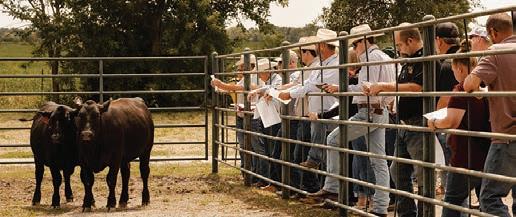
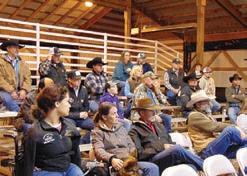
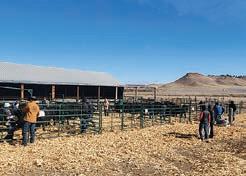
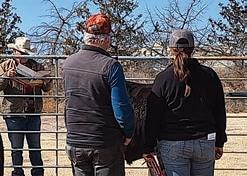
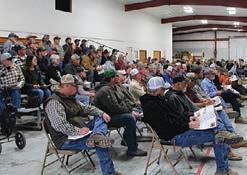
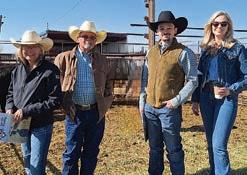
Attendees at the 2025 Fall Focus during an evaluation at the Cattle Visions facility in Missouri.
ASA headquarters in Bozeman
Record Prices, Historic Opportunity:
by Dr. Jon DeClerck, ASA EVP
If there is one word that defines the cattle business right now, it is opportunity. After several years of drought-driven liquidation and supply chain disruption, the US beef cow herd now sits below 28 million head, the smallest inventory since the early 1960s. At the same time, cattle prices are not just strong, they are setting records. The signal from the marketplace is clear: there is real opportunity for expansion.
But this rebuild will not look like the last one. Elevated interest rates and drought uncertainty are slowing expansion, but they are also creating an opportunity to rebuild more deliberately. Producers now have the tools to make smarter genetic decisions than ever before.
Over the last six decades, carcass weights have climbed by roughly 4.8 pounds per year, enabling three steers to now generate the amount of red meat that once required four. But mature cow size has also climbed roughly 7.7 pounds per year, bringing higher maintenance requirements and long-term cost implications (Peel, 2024).
The next rebuild will not be about replacing numbers. It will be about producing more beef with fewer cows. That means capturing growth where the market rewards it while maintaining cows that fit real-world production systems.
The sustainability of the next cattle cycle is being written in the breeding decisions made today, and those are exactly the conversations that will take center stage at Fall Focus 2026.
Efficiency Still Pays
The appeal of larger cows is understandable. In many seedstock systems, bigger cows often generate the growth-oriented sires that command a premium on sale day. But for commercial cow-calf producers operating in forage-based environments, the economic reality can be very different.
Research helps quantify that trade-off. Lalman et al. (2019) reported that each additional pound of mature cow weight produced only about 0.06 lb. more calf weaning weight. In practical terms, a cow that weighs 100 pounds more at maturity may wean just six additional pounds of calf, often not enough to offset the added annual forage required to maintain the larger female, even during historically strong calf markets.
Larger cows consume more forage, increase winter feed costs, and reduce management flexibility during drought cycles. Moderate-framed cows, by contrast, frequently wean a higher percentage of their body weight and tend to remain in production longer.
This balance between performance and long-term efficiency is precisely what the All Purpose Index ($API) was designed to address. During herd rebuilding, selecting replacements that convert forage into pounds of calf, rather than simply increasing mature cow weight, becomes a critical driver of sustainable profitability.
The US cow herd inventory is currently at its lowest level since the early 1960s. Efficiency is more important than ever, with cows being asked to produce more with the same resources.
The Pressure for Growth Is Not Going Away
Meanwhile, downstream market forces continue to reward added performance. One of the most consequential shifts in modern beef production has been the rapid rise in fed cattle carcass weights. With hot carcass weights increasing more than 20 pounds in 2024, and another 24 pounds in 2025, the industry has effectively added nearly one billion pounds of beef annually, the equivalent of harvesting roughly two million additional cattle without expanding the national cow herd (LMIC, 2024).
But added pounds come with biological trade-offs. Genetics that drive carcass performance can also increase mature cow size and long-term maintenance costs if selection is not managed intentionally.
New Traits Allow More Intentional Selection
Today’s breeders have more tools than ever to manage the balance between performance and long-term cow herd efficiency. The release of Mature Weight (MW), Cow Energy Requirement (CER), and Heifer Pregnancy (HP) EPD provide producers with clearer insight into how growth genetics translate into real-world production outcomes.
To learn more about the new Mature Weight (MW), Cow Energy Requirement (CER), and Heifer Pregnancy (HP) EPD please scan the QR code.
While growth traits and mature size remain strongly correlated, the relationship is not absolute (Smith et al., 1994). This creates opportunity. The goal is not to avoid selecting for performance, but to manage its long-term consequences more strategically.
Sex differences often matter in how traits are expressed phenotypically. Biologists refer to this as sexual dimorphism. In cattle populations, some lines of genetics may generate more growth in male calves, adding pounds and market value, while producing heifers that develop into more moderate, cost-efficient cows.
In practical terms, this reinforces the importance of balanced selection. Tools like the Terminal Index ($TI) allow producers to emphasize growth and carcass merit where the market rewards it, while MW and CER help ensure retained females remain functional within foragebased production systems. At the same time, HP strengthens the ability to build fertility and longevity into the next generation of cows, critical advantages during a rebuilding phase.
Cattle that rank favorably for both $API and $TI may represent the kind of “curve-bending” genetics needed in today’s industry. Strategic use of these tools allows producers to generate pounds where they are paid for without building cows that outgrow their environment.
Few strategies can improve whole-herd productivity as quickly as structured crossbreeding. At its core, the International Genetic Solutions (IGS) philosophy recognizes that breeds are not competitors — they are crossbreeding partners. When breed strengths are combined intentionally, heterosis becomes a true game-changer.
(Continued on page 14)
Record Prices, Historic Opportunity: Balancing GrowthEfficiencyRebuild
(Continued from page 13)
Research from the US Meat Animal Research Center shows that crossbred cows can produce 20–25% more lifetime pounds of calf than straightbred females, driven by improvements in fertility, calf survival, and longevity (Cundiff et al., 1992; Ritchie and Troxel, 2007).
High cattle prices make rebuilding easier, but they can also make mistakes more expensive. The replacements retained in this cycle will likely still be in production when the market softens. Producers who leverage heterosis, building herds around reproductive efficiency and longevity, will be positioned to remain profitable, while others may simply be trying to survive.
A Strategic Reset for the Cow-Calf Sector
The drought conditions affecting large portions of cattle country may slow the pace of herd expansion compared to previous cycles. Higher interest rates and forage uncertainty are already encouraging more cautious rebuilding decisions. That may ultimately prove beneficial. This time, producers have better tools and better genetics to rebuild with intention.
The heifers retained over the next several years will shape herd efficiency and profitability for the next decade. Producers who focus on balanced selection, using tools like Mature Weight (MW), Cow Energy Requirement (CER), Heifer Pregnancy (HP), $API, and structured crossbreeding can position their operations to excel in an environment that demands more production from fewer cows.
Rebuilding the national cow herd is largely inevitable. The real question is whether it rebuilds better. That discussion will shape the agenda at Fall Focus 2026, which will be held at ASA Headquarters in Bozeman, August 28 to September 1. .
CattleFax. 2025. Market outlook and price trend commentary. CattleFax, Centennial, CO.
Cundiff, L. V., R. Núñez-Domínguez, G. E. Dickerson, K. E. Gregory, and R. M. Koch. 1992. “Heterosis for lifetime production in Hereford, Angus, Shorthorn, and crossbred cows.” Journal of Animal Science 70:2397–2410.
Lalman, D. L. 2019. “Balancing scale: Matching genetics to forage resources.” Drovers
Livestock Marketing Information Center (LMIC). 2024. “U.S. fed cattle carcass weight trends and beef production implications.” LMIC, Lakewood, CO.
Peel, D. S. 2024. “Why bigger cows aren’t the only reason for record carcass weights.” Drovers
Ritchie, H. D., and T. C. Troxel. 2007. “Crossbreeding systems for beef cattle.” Michigan State University Extension.
Smith, G. M., L. V. Cundiff, and K. E. Gregory. 1994. “Characterization of biological types of cattle. II. Postweaning growth and puberty of heifers.” Journal of Animal Science 72:1962–1977.
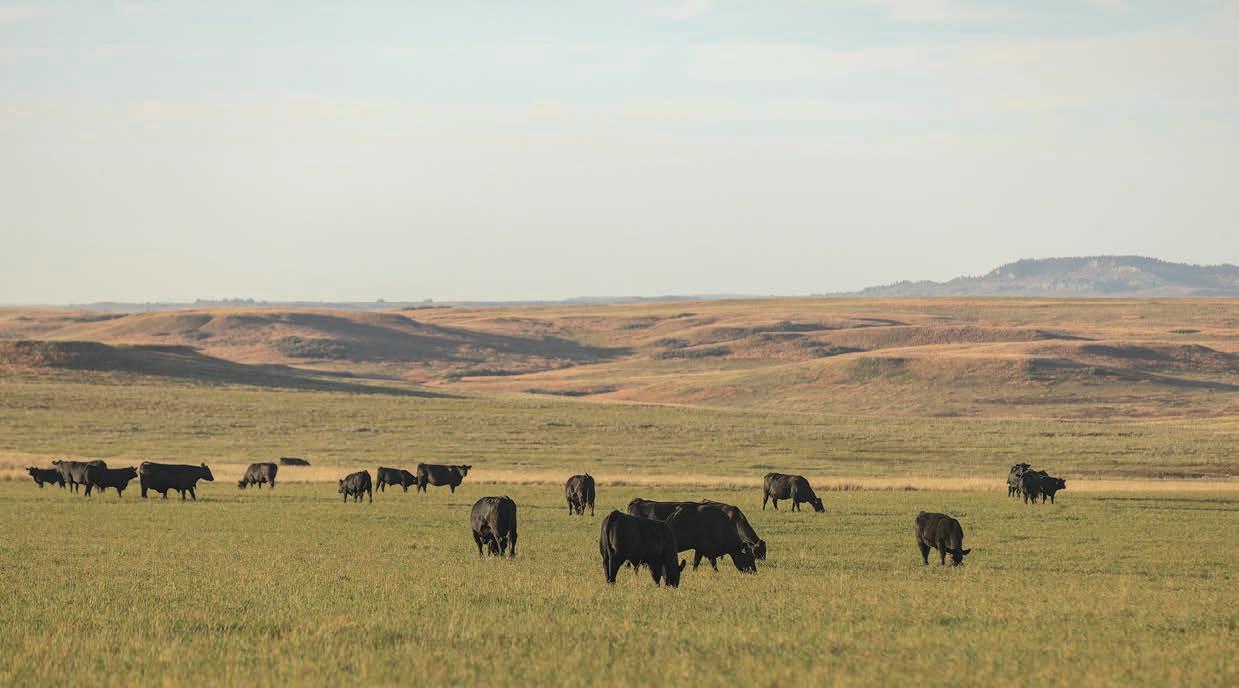
Crossbreeding will play an important role in future herd rebuilding. Photo by Chris Nicholson.
Heifer Pregnancy EPD Research Release Format
by Dr. Elizabeth Dressler, ASA Lead Geneticist
Replacement heifer development represents a significant financial investment in a cow-calf operation. A heifer that fails to conceive during their first breeding season is a significant economic investment that returns substantially less value to the operation compared to a productive female. Improving fertility in replacement females is therefore one of the most effective ways to improve long-term herd profitability.
Expected progeny differences (EPD) for heifer pregnancy (HP) have been released by the American Simmental Association (ASA) in a research release format. This EPD is designed to help producers select sires whose daughters are more likely to conceive during their first breeding season as heifers.
To view the research release of HP EPD on high-use sires and high-accuracy HP EPD animals, please scan the QR code below. As a research EPD, HP will not yet be evaluated weekly or published on an animal page on Herdbook.org.
The HP EPD is expressed as the percentage of daughters that become pregnant during their first breeding season as heifers. The HP EPD predicts differences among individuals (typically sires) in the percentage of their daughters that will conceive and subsequently calve at two years of age. A greater EPD is favorable. For example:
Bull A = 10 HP EPD
Bull B = 5 HP EPD
Difference = 5%
Daughters from bull A are expected to have a 5% greater chance of becoming pregnant during their first breeding season compared to Bull B’s daughters. In other words, you can expect an average of five more pregnant daughters as heifers out of 100 from Bull A compared with Bull B, assuming daughters were managed similarly.
ASA’s Total Herd Enrollment (THE) program is pivotal to the collection and reporting of data for the HP EPD. The phenotypic dataset is based on calving and productivity information reported by breeders enrolled in THE. A heifer’s phenotype is categorized as either a success or failure of becoming pregnant over an entire 90-day breeding season.
The HP EPD was developed by International Genetics Solutions (IGS). The research release of HP reflects IGS and ASA’s commitment to the development of genetic tools for economically relevant traits.
This EPD has undergone an extensive validation process as part of its development. Membership is encouraged to review the research release predictions for HP. Members that have feedback or any questions should contact Dr. Elizabeth Dressler, ASA Geneticist, at edressler@simmgene.com. .
To learn more about the Heifer Pregnancy EPD, please scan the QR code.
the from the
by Chloe Tolar
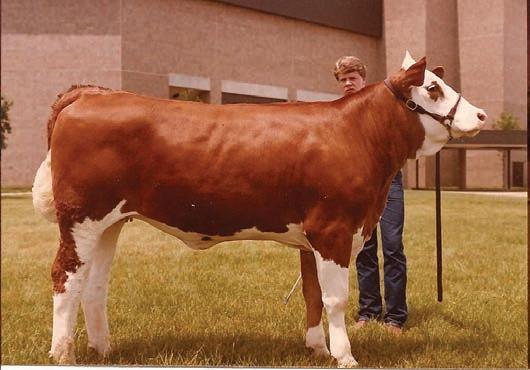
Chris Ragland grew up showing Simmental cattle in Magnolia, Kentucky. He served as president on the AJSA Board of Trustees and was heavily involved in 4-H and FFA. Pursuing a career initially in pharmaceutical sales and most recently in data and analytical services, Ragland has continued to use and expand on the skill set he built at a young age.
Editor’s note: This is the fourth article in a series highlighting the significance of the AJSA in Simmental breeders’ lives.
Tolar: How did your time with the AJSA inform your career decisions?
Ragland: My original plan was to pursue a career in leadership at ASA. I attended the University of Kentucky, studied agricultural economics and finance, planned to attend law school, and then head to Bozeman, but a family bankruptcy occurred, and I needed to get a job. I had taken an internship with a pharmaceutical company the summer of my senior year, so instead of going to law school, I pursued a full-time position in animal health sales. I took a territory in Nashville, thinking I would do that for a couple of years and then go back to school and ultimately pursue my plans to work in Bozeman. But, as they say, life happened, and I wound up on an entirely different path that ultimately kept me close to animal agriculture, but in the role of a supplier rather than as an Association executive as I had planned.
What makes the AJSA unique?
What I enjoyed most about all my youth experiences within 4-H, FFA, and AJSA was the competition, teamwork, and meeting people all over the country. But truly, the best part was always the cattle. Working with and being around cattle, and particularly Simmental cattle, for me was always the most rewarding part of that experience, and I suspect that may have been true for a lot of other youth as well. That said, the opportunities to travel were very impactful. Participating in AJSA allowed me and my family to travel to Kansas City; Columbus; Springfield; Tulsa; Bozeman; and even Pasco, Washington, in one year. As a teenager, these were very special learning opportunities to experience new places and to navigate the challenges associated with traveling. The AJSA was the first board position I ever held, and I appreciated being exposed to that type of responsibility. The time on the board was an excellent learning environment. As a young person put in the position to think about how to drive membership and engage with youth across the country, we worked together to accomplish something on a national scale. It was a formative experience for me and something I believe can be very valuable for teenagers interested in building those types of life skills and experiences.
What was most memorable about your experience?
The first National Classic I attended was in Kansas City in 1978. I believe that was the first year for the event, so the format was something new for everyone, and we didn’t really know what to expect. As I recall, the basic competitive events were all there: heifer show, showmanship, the herdsman’s quiz, and a judging contest, all of which I really enjoyed. At the banquet, they began calling out winners, and I was fortunate to have done pretty well and take home some hardware that evening. The whole experience was great for my family and me, so we kept going back, and I decided to get more involved in the organization, including board participation. Over the six years from 1978 to 1983, I was fortunate enough to win the overall a couple of times, including 1983 in Louisville, which was the year I concluded my term as AJSA president. That was the same year I received my FFA American
Ragland grew up showing Simmental cattle, attending many AJSA National Classics.
Farmer Degree, so those two events really made that a very special way to bring my “youth” career to an end. What is great, however, are the things you learn, and the lasting relationships you make; they continue through adulthood and your professional life. One example for me occurred 30 years later in 2013 in Portland, Maine. I was conducting an industry overview with about 15 executives for a pharmaceutical company, and there was one person on the other side of the room that I was certain I knew, but I did not know how or from where. When the meeting wrapped up, I walked over to speak with her, and she quickly cleared up the mystery. We met in Louisville in 1983 at the AJSA National Classic. Her family was from Pennsylvania, and she had pursued a career first in veterinary medicine and then moved over to the pharmaceutical sector. It was a very happy accident, and we’ve been good friends ever since.
Of my time in AJSA, I would say we always had great experiences at those events. We were very lucky to have had Patsy Houghton as our youth director. She did a fantastic job putting the Classic and other events together, and always made sure those programs offered both fun and excellent learning opportunities. Patsy led our board meetings, and I believe she deserves credit for building a very strong youth program. I am still impressed today when I think about how well things were run and how much I enjoyed my time in the organization.
What are some skills you gained in your time as a junior?
The ability to speak publicly, to advocate for yourself and your ideas, and the ability to influence a group of people or move them in a certain direction in support of an idea or concept are essential life skills. The AJSA and other youth organizations offered me very valuable opportunities to develop those skills. Today, I believe many young people do not feel comfortable advocating for themselves or speaking publicly, and I hope this is still part of what the AJSA experience offers to its members.
Teamwork was another important element of our AJSA experience. We were lucky to have strong adult leaders and coaches to help us understand that while team dynamics are not always easy, there is a lot of satisfaction and power that comes from working together to achieve a common goal, something bigger than just you and what you can accomplish alone.
Another valuable lesson is that life isn’t fair. Life is just life, and you will always be competing against someone who is a better speaker, has more money, more resources, or some other type of advantage. Finding ways to compensate for those disparities is important. If you want to compete and you know public speaking is a weakness, practice, train, and find ways to test and challenge yourself. You can be better. You just have to decide what you want and then make it happen. It’s good to understand this sooner rather than later in life. These are each valuable lessons and experiences that I took from my time with the AJSA.
Do you have any advice for a young person who is stepping into their first job or career?
One of the most important aspects of my professional career has been the ability to speak publicly, and again, I believe this should be a major focus for anyone beginning their career track. If public speaking makes you uncomfortable, you need to put yourself in situations where you force yourself to become not only comfortable, but confident. If you can, you need to develop that skill. Being able to go into any room and have an intelligent conversation and be comfortable doing it is extremely important for career advancement in many different types of professions.
(Continued on page 20)
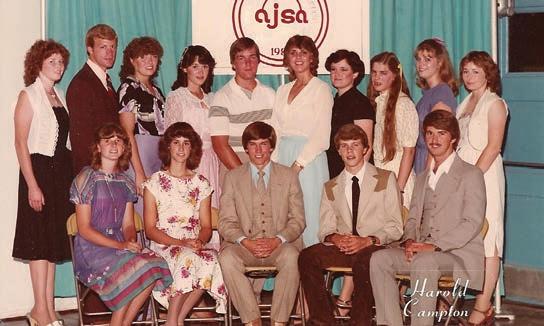
Ragland served as President of the AJSA Board of Trustees.
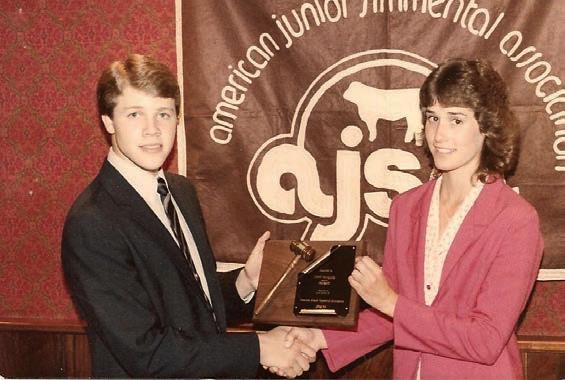
Ragland had many accomplishments throughout his time in the AJSA.
SimmentalStart: Chris Ragland
(Continued from page 19)
Also, when you join a company, learn everything you can about that business and the industry you’re in. I was fortunate to have had the opportunity to take on several different assignments with my original employer. I took on a variety of challenges and different areas of responsibility, which allowed me to learn about the business from several unique perspectives. In those roles, I looked for and found different ways to be helpful and contribute. This knowledge and experience created a variety of opportunities for advancement, including overseas assignments and ultimately executive and C-suite positions in multiple companies.
In your career and in your life, you want to create degrees of freedom, options from which to choose, to build the best life you can for you and your family. The more you learn, the more challenges you take on, and the more robustly you build your skill stack, the more degrees of personal freedom you will create. Be sure to do this with a plan. Don’t spend all your time jumping from place to place. Look for an environment where you feel challenged, where you are actively learning new skills, and, ideally, a place where you feel the management has a genuine interest in your professional development. If you find this setting, dig in and make the most of that opportunity.
Another point I would share is the need to have an honest and realistic assessment of your strengths and your weaknesses. People can fool themselves into thinking they’re better or worse at certain things than they really are. People can be overly critical of themselves and ultimately walk away from all types of opportunities because they were too harsh on themselves. The opposite can also be true. You have to find that balance of being not too hard and not too easy on yourself. Finally, try new things. My career path changed drastically in 1989 when I became the first person in my pharmaceutical division to be assigned a laptop computer. When I asked my boss why me, he said: “Because you’re the only one in the marketing team that can type.” Because I had taken a typing class ten years earlier, I was handed a piece of equipment that would change my life. Fast forward 37 years, and I am now an owner and CEO of one of the largest animal health data and insight services companies in North America, all made possible because I learned to type in the tenth grade. It’s a perfect example of how you never know what skills will open the door for your next great opportunity. .
Mean
YOU
by Dr. Elizabeth Dressler, ASA Lead Geneticist
Docility isn’t just about convenience. From reducing risk in the chute to improving handling efficiency, docility plays a bigger role in operations than ever before.
As part of an ongoing series of updates to the genetic evaluation, updates to the Docility evaluation were implemented into production, beginning the week of April 13, 2026.
Why does Docility matter?
Cattle operations are often a family business involving multiple generations, from children being raised to take over the ranch, to aging grandparents passing down their ranching wisdom. For that reason, safety and reducing handler risk is of the utmost importance. No one wants to be run up the side of a fence while handling their cattle. Docile cattle often lead to more efficient handling by reducing stress and working through facilities with fewer issues.
Docility isn’t just a learned behavior or temperament. Docility is a measurable trait, and is heritable (h2= 0.23), which means it can be improved through genetic selection.
What changed in the Docility genetic evaluation?
The International Genetic Solutions (IGS) genetic evaluation has been undergoing a series of updates over the past couple of years. The updates are being implemented for each group of traits one at a time. These updates have allowed the IGS genetic evaluation to run efficiently and maintain a weekly return of EPD. These updates can be thought of as the routine maintenance necessary to keep the genetic evaluation running most effectively, just like an oil change is necessary maintenance to keep your vehicle running.
The updates are the same as those that were applied to the previously updated evaluations including carcass weight/ribeye area, growth (weight traits), and calving ease.
1. Breed by decade interaction effect: In genetic evaluations, other variables are included in the model as effects, which helps further break down the differences in phenotype (docility). Previously, breed and decade were fit as an interaction effect, meaning
those variables were grouped together (e.g., Simmental x 1970). Some of those combinations of effects did not have many animals representing them, which was causing the evaluation to solve slower. They are now fit as two separate effects: one for breed and one for decade (e.g., Simmental is a breed effect and 1970 is a separate decade effect).
2. External EPD incorporation: External EPD are any EPD reported to IGS that was calculated by an entity outside of IGS. The statistical methodology for how those external EPD get incorporated in the IGS evaluation has been updated, allowing the impact an external EPD has on an animal’s IGS EPD to be more easily assessed.
The average change across the entire Simmental database was +0.52, or an increase of about half a Docility EPD unit. As seen in Figure 1 below, the majority (68.1%) of animals changed by less than one Docility EPD unit (in either a positive or negative direction).
distribution
population by absolute DOC change. Categories represent absolute change (magnitude, not direction).
In general, members should see minimal re-ranking of animals’ DOC EPD. As always, members are advised to use the most current percentile ranking tables, which are available on Herdbook.org (go to Data Search, % and Epd Avrgs).
Figure 1: Percentage
of Simmental
Why should I report Docility phenotypes?
Phenotypes are the backbone of genetic evaluations. The data that members report is crucial to the ability of IGS to return reliable EPD results. Although more cattle producers have expressed interest in Docility in recent years, Docility still remains a relatively lowly reported trait. Recording and reporting Docility phenotypes will provide you with more accurate Docility EPD for your animals.
To record a Docility phenotype, assign each animal a chute score (1–6 scale). Docility can be assessed at weaning or yearling, but the entire age group of cattle should be scored at the same time and by the same person. Scoring consistency is key to measuring a trait like Docility.
Docility Description Score
1 Docile. Mild disposition. Gentle and easily handled. Undisturbed, settled, somewhat dull. Stands and moves slowly during processing. Does not pull on the headgate when in a chute. Exits the chute calmly.
2 Restless. Quieter than average, but may be stubborn during processing. May try to back out of the chute or pull back on the headgate. Some flicking of the tail. Exits chute promptly.
3 Nervous. Typical temperament. Is manageable, but nervous and impatient. A moderate amount of struggling, movement, and tail flicking. Repeated pushing and pulling on the headgate. Exits chute briskly.
4 Flighty (Wild). Jumpy and out of control; quivers and struggles violently. May bellow and froth at the mouth. Continuous tail flicking. Defecates and urinates during processing. Frantically runs the fence line and may jump when penned individually. Exhibits long flight distance and exits the chute wildly.
5 Aggressive. May be similar to score 4, but with added aggressive behavior, fearfulness, extreme agitation, and continuous movement, which may include jumping and bellowing while in a chute. Exits the chute frantically and may exhibit attack behavior when handled alone.
6 Very Aggressive. Extremely aggressive temperament. Thrashes about or attacks wildly when confined in small, tight places.
Key Takeaways
• Producers are increasingly recognizing the importance of Docility in managing cattle.
• Updates to the Docility evaluation are necessary to keep it running as efficiently as possible.
• Members may see changes in Docility EPD, but animals will generally rank similarly to how they did prior to the update.
• Phenotypes reported by members are the foundation of IGS’s ability to provide accurate genetic selection tools.
• Members are strongly encouraged to collect Docility phenotypes on all calves at weaning or yearling.
Members who have questions about the updates and/or specific animals are welcome to reach out to Dr. Elizabeth Dressler, ASA Lead Geneticist. .
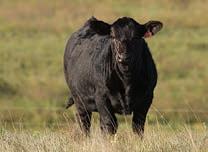
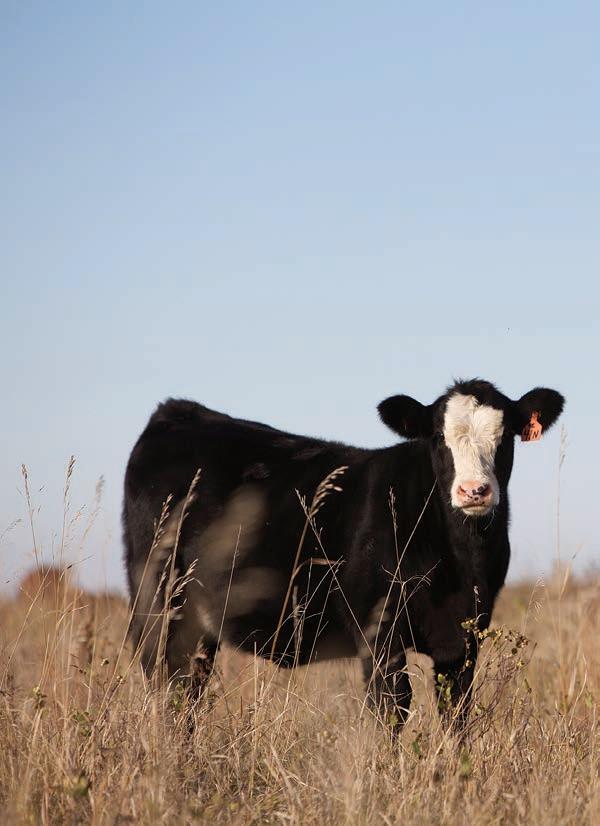
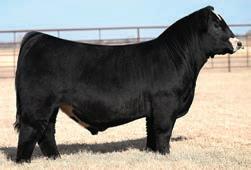
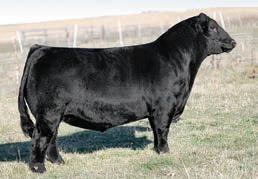
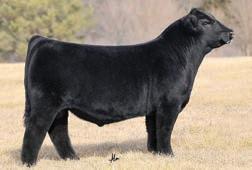
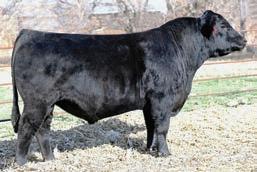
How would you rate the docility score of this cow upon first glance?
IGS TV Launches New Video Series
by Lilly Platts
Events like Fall Focus and the National Cattlemen’s Beef Association (NCBA) convention bring together experts and industry leaders from across the country. ASA and International Genetic Solutions (IGS) harness this opportunity to capture educational content, sharing it with the membership and beyond.
The ASA and IGS team collaborated with the Grant Company during the 2026 NCBA Cattle Convention in Nashville, Tennessee, to capture a new series of educational videos. From the basics of DNA to market opportunities, Dr. Jon DeClerck, ASA EVP, and Dr. Ben Crites, ASA and IGS director of Commercial and Industry Relations, lead these experts through topics that are relevant to SimGenetics breeders and the entire commercial industry. The following videos are coming to IGS TV, and will be released in the order of the following summaries. Please scan the QR code below, or go to internationalgeneticsolutions.com to watch the full videos and more.
Dr. Elizabeth Dressler
Expected Progeny Differences and Selection
Indexes
Dr. Elizabeth Dressler, ASA Lead Geneticist, covers the basics of what an Expected Progeny Difference (EPD) is, selection indexes, and how to use each tool. Seedstock producers are often tasked with explaining how these tools are used in their own operations, as well as how their customers can utilize these figures. Dressler breaks down an example of an EPD, and what it means in a real-world scenario.
Selection Indexes are one of the most useful tools for commercial producers, combining economically important EPD into one simple figure. Dressler also covers accuracy, which is the range of confidence or reliability around an EPD or index. Percentile ranks are another tool for evaluating an animal’s EPD profile, which allow a producer to evaluate an animal on an individual basis. Dressler explains how the IGS Multi-breed Genetic Evaluation supports crossbreeding systems, and what that means both for commercial producers and seedstock providers.
Dr. Ryan Boldt
The Importance of the IGS Multi-breed
Genetic Evaluation
Dr. Ryan Boldt, IGS Lead Geneticist, explains the power of having data from multiple breeds in one centralized evaluation. One of the overarching goals of IGS is to bring simplicity to the larger industry. Traditionally, breeds would have individual evaluations, which meant EPD were often on a different base. IGS has changed that, making the data from IGS partner breeds comparable across the board. The IGS evaluation also supports crossbreeding, allowing producers to not only choose the best breeds for their operation, but also directly compare EPD. Boldt explains the power of pooling data, and the longterm benefits of this for producers and the larger industry. This benefit is cumulative, improving genetic prediction over time. The commercial industry is a primary focus of IGS, and Boldt explains the focus on economically relevant traits. Genomics has become an important tool for producers, and Boldt explains both the importance of adding this data to the system, and also why it is still important for producers to continue collecting actual phenotypic data.
Molly Diefenbach and Dr. Elizabeth Dressler
The Power of Genetics and Tips for DNA Submission
Molly Diefenbach, ASA DNA Lead, and Dr. Elizabeth Dressler, ASA Lead Geneticist, cover the role DNA plays in the industry, and share tips for a successful DNA collection and testing process. One of the early benefits of DNA testing was parentage, which allows producers to correct pedigree errors. Since then, genomics have become
an important tool for producers to further support EPD prediction. Genomic testing significantly advances the accuracy of an animal’s EPD profile, allowing producers to have more confidence in their selections. Dr. Dressler explains how DNA testing supports the genetic evaluation.
Diefenbach shares the methods for DNA collection, what the preferred method is, and the process that follows collection. DNA testing is an investment, so understanding how to collect and store samples is essential. A sample that fails because of improper handling not only delays the process, but also adds cost for producers. Submission timelines are also important for producers to consider. Producers may choose to only test their best animals, and Diefenbach and Dressler both explore the value of collecting data and DNA and whole calf crops.
Dr. Mark Anderson and Luke Lind
The Value of Collaboration
Dr. Mark Anderson, executive director of the North American Limousin Foundation (NALF), and Luke Lind, Five Rivers Cattle Feeding, discuss why they have found value in the IGS Multi-breed Genetic Evaluation. The NALF has been an IGS partner for many years, and Anderson explains the value Limousin breeders have seen from pooling data with other breed partners. Progress is faster with more data and broader comparisons, and Anderson has seen significant genetic progress in the Limousin breed. Like other IGS partners, Limousin producers are focused on improving traits that are valuable to the commercial industry.
Lind shares about the progress he has seen in the endproduct quality of beef in the US. Even with the lowest cow herd inventory in decades, more pounds of beef are being produced at the highest quality in history. Prime and choice grade carcasses have been increasing steadily, offering a higher quality product to the consumer. Anderson and Lind cover why being able to predict this quality is so important in the modern-day market. The cost of feeding cattle is high, and margins can be low, so knowing that an animal is going to perform and grade is more important than ever.
Dr. Ken Odde
The IGS Feeder Profit Calculator
Dr. Ken Odde, a longtime Simmental breeder and ASA partner, explains what the IGS Feeder Profit Calculator (FPC) is, and the value it brings to the industry. Dr. Odde has real-world experience using this tool and helping producers harness its value. The FPC’s overarching goal
is to capture the real value of feeder cattle. This is difficult to do in a traditional market setting — a calf with superior genetics and management likely won’t bring more than its counterparts unless there is record of this added value.
Dr. Odde explains that the FPC can be used as a marketing tool by producers, and that it adds confidence for buyers. Producers input known genetics of a group of calves, like sire registration numbers and cow herd breed composition. More information is always better, but this tool was created with commercial producers in mind, and the information being asked for is with real-world expectations in mind. Management practices, like vaccination, are critical in the future success of feeder cattle. This information is submitted, and an FPC certificate is returned, which can be shared at sale time, or used to determine how much additional value should be placed on a group of feeder calves. .
IGS TV shares educational content relevant to seedstock and commercial producers throughout the industry.
AJSA CONNECTION
Developing leaders through friendship, networking, and communication skills!
by Conley Schick
As we head back to Grand Island, Nebraska, this summer for the 2026
AJSA National Classic, I can’t help but reflect on my journey in the AJSA and the road that led me to becoming a trustee. The National Classic in 2021 was the first time I truly saw the effort I put into contests, my family’s show cattle, and the relationships I’d built within the breed pay off. That year marked several firsts for my family and me: our first top-five finish in the owned show, my sisters and I all placing in the top ten in showmanship, and my first time ringing the coveted Swiss bell. While these successes were thrilling, it was the journey to get there, and the people who helped along the way that I will always value most. I owe a tremendous amount of gratitude to the mentormentee program for setting me on the trajectory I’m on today.
My first National Classic was in St. Paul, Minnesota, in 2018. My family brought three calves, and I was eager to dive into the contests, the shows, and especially the Fourth of July barn dance. On the first day, my parents insisted I participate in the mentor-mentee program and find an older AJSA member to guide me through the week. I was nervous and
unsure of what to expect. What I didn’t know yet was that I’d connect with someone who would change everything for me. I was partnered with Kara Cloud, an AJSA Trustee, who immediately helped me feel at ease. She patiently answered my countless questions, ensured I was prepared for every contest, and most importantly, was a comforting, friendly presence whenever I felt nervous. Simply having Kara tail my heifer around the ring at Junior Nationals calmed my nerves and gave me confidence throughout the week.
Over the next few years, my bond with Kara and the other trustees deepened. Their guidance nurtured my love for our Association and inspired me to run for the board. Until I was old enough, the closest I could get to being a trustee was volunteering in the mentor-mentee program. Each year, I helped juniors prepare for contests, supported them throughout the week, and served as a friendly face ringside.
Getting involved in the AJSA has been one of the best decisions I’ve ever made for my personal growth, networking, and sense of fulfillment. Whether you aim to serve on the board or start by participating in the mentormentee program, you’ll be investing in yourself and your future. As you enter cattle in the National Classic this summer, do yourself a favor and sign up for the mentor-mentee program. The experience might just change your journey like it did mine. .
2025–2026 American Junior Simmental Association Board of Trustees
Ella Fischer Missouri 816-261-5991 ellafischer24@gmail.com
Anna Sweat Arkansas 870-200-7600 anna.sweat.06@gmail.com
Anna Webel Illinois 309-351-9223 anna.g.webel@gmail.com
by Larry H. Maxey, founder, NAILE Fullblood Simmental Shows
Our Pioneers — “Ike” Part 3
“The proudest thing I can claim is that I am from Abilene.”
As we concluded the March 2026 edition, “‘Ike’ Part 2,” Eisenhower was at a really low point in his military career at the end of World War I. Failing to be dispatched to the war zone was an irreconcilable fact he was hard pressed to understand, given his enormous set of leadership skills. As Stephen E. Ambrose described in his biography, Eisenhower Soldier and President , “Eisenhower was deflated and depressed. He could hardly believe it had happened to him — he was a professional soldier who had missed action in the greatest war in history. He had never heard a shot fired in anger and now did not expect to in his lifetime.”
As in the lives of many great people, the heavy hand of fate can often be found. No one could have known or predicted that fate was at work as Eisenhower’s West Point class of 1915 was assembled. The 1915 class became known as the most famous class in West Point history — “the class the stars fell on.” Of the 164 graduates, 59 rose to the rank of brigadier general or higher, three to the rank of full general, and two to the rank of general of the army. Ike and his friend Omar Bradley share that distinction.
When World War I ended, Eisenhower was 28 years old. With no wars to fight, the US began dismantling its military. In fact, by 1935, the Army didn’t have a single combat unit of any size and ranked 16th among the world’s armies. It was described as more of a school than an army. Ike took the “schooling time” as an opportunity. He became close friends with George S. Patton, Jr. Their assignment was to study the use of tanks for the next war. Eisenhower and Patton were strong on military history. The Eisenhower-Patton friendship would serve both men and the nation well down the road. Patton told Eisenhower, “victory in the next war will depend on execution, not plans.”
What seemed like endless years of studying — war gaming, multiple assignments within the War Department, and the years between the two great wars — proved invaluable in readying Eisenhower for the unthinkable, horrific war to come. It also proved invaluable to Eisenhower in allowing him to work with or for those who would become the greatest leaders of World War II, most notably Generals Douglas MacArthur and George C. Marshall. Eisenhower spent 14 of his 37 years in the Army working directly under these two men — ten with MacArthur, and four with Marshall. Each general liked and respected Eisenhower. MacArthur said of Eisenhower in a fitness report in the early 1930s: “This is the best officer in the Army. When the next war comes, he should go right to the top.” In 1942, “Marshall showed that he agreed with that assessment by implementing the recommendation,” Ambrose recounted.
By 1935, Eisenhower had been in Washington, DC, for six years. In his assessment, he had very little to show for it. No promotions had come to him. He and many other officers had been unable to persuade the government to rebuild the nation’s defenses. “He had had no service with troops and seemed fated to be forever a staff officer,” Ambrose said.
In September 1935, Eisenhower and his family joined MacArthur, bound for the Philippines. He would remain there until the end of 1939. “Nothing that he did there met any of the
criteria he himself had set down for a happy life. His work was neither necessary nor suited to his age or abilities. It was also terribly frustrating and, when the test came, proved to be worthless, as the Japanese in 1941 conquered the Philippine Army he had labored to help create,” Ambrose shared.
In September 1939, World War II began in Europe. By Christmas of 1939, Eisenhower was back in the States with his family, who had endured the hardships of life in the Philippines for four long years. Eisenhower’s son John was now 17, and was considering going to West Point, so he wanted to make sure his son knew what he was getting into.
Finally, to Eisenhower’s great relief, he was back with troops. In Washington state, “he did not just enjoy being with troops, he relished it, reveled in it,” Ambrose said.
At age 50, he was in excellent physical condition. By the fall of 1940, he was robust again after the stressful heat of the Philippines had worn him down “a bit,” as he recounted. He now looked ten years younger. “He walked with a bounce in his step, swinging his arms, eyes darting, missing nothing,” shared Ambrose.
The war in Europe was raging. Through the winter of 1940–1941, the Army expanded. New recruits came in by the thousands. At every Army post, construction was in a fevered pitch. Even though the US was not a party to the European war, astute observers knew that it was just a matter of time. Eisenhower’s organizational, planning, and administrative skills were put to use in full force. Eisenhower led a war gaming exercise in August and September 1941 in Louisiana under General Krueger. It was the largest maneuver held by the US Army before America entered the war. Krueger’s 240,000 men prevailed in their invasion of Louisiana that was defended by General Lear’s 180,000 troops. Eisenhower’s performance earned him a promotion to brigadier general (temporary). Eisenhower, in his typical manner, was embarrassed at being singled out. “His insistence that others, not he, really deserved the praise, became one of his best known characteristics, something millions of people found irresistibly appealing,” Ambrose said.
On Sunday morning, December 7, 1941, Eisenhower got the news that Pearl Harbor had been attacked. Five days later, he was summoned to Washington, DC, by General Marshall. Bad weather prevented his travel from his base in San Antonio to Washington, DC, by air. He was forced to travel by train. Passing through Kansas City, he was now on the same tracks he had traveled on 30 years prior on his way from Abilene to West Point. He could never have imagined the reason he was swiftly summoned to Washington, DC, and what role it would play in leading our great nation in its darkest hour. To be continued… .
Editor’s note: This is the fifty-second in the series Our Pioneers.
Is there a Simmental pioneer who you would like to see profiled in this series? Reach out to Larry Maxey or the editor to submit your suggestions: larryhmaxey@gmail.com • editor@simmgene.com
BULLETINS
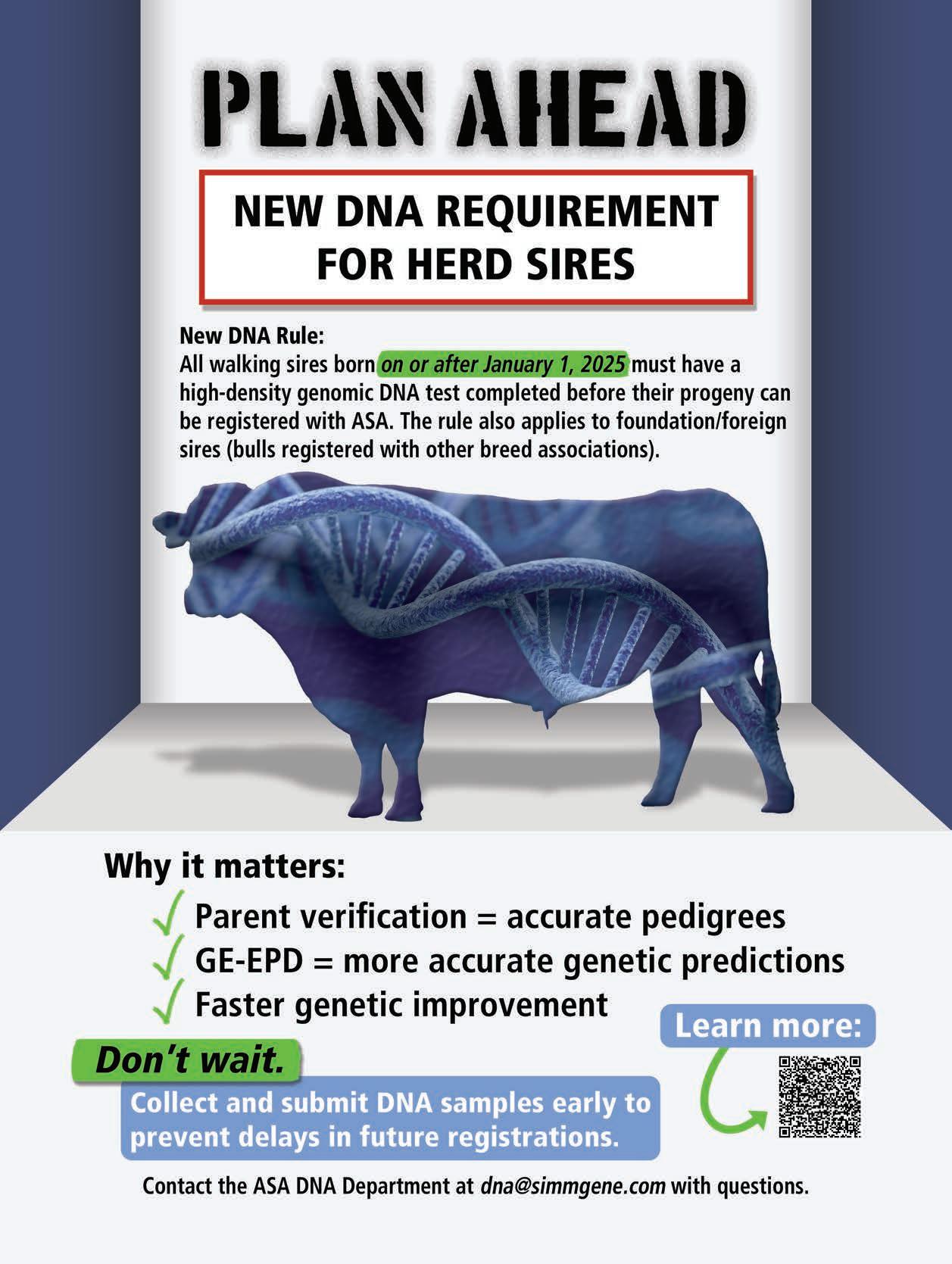
DNA Testing Requirements for Herdsires
In January, ASA membership voted to require a DNA test (GGP-100K genomic panel) on all herd bulls/natural service sires born on or after January 1, 2025. This new rule mimics the current DNA requirement for AI sires and donor dams.
Although the rule change isn’t immediately affecting membership, it is never too early to prepare. By collecting and submitting DNA samples on bull calves born this spring and beyond if they'll go on to sire registered calves, producers can avoid future issues.
ASA Conducts Internal Parentage Audit
As part of our ongoing commitment to industry’s best practices and continuous improvement, ASA is conducting an audit of its DNA parentage verification processes. This effort includes a review of historical parentage records to ensure consistency and reliability as our database continues to evolve with additional testing over time.
Through this audit, we identified a small number of parentage inconsistencies affecting a limited fraction of DNA-tested animals. These cases primarily stem from historical practices in which parentage was verified at a single point in time, often against only one parent, and subsequent additions of a second parent’s DNA did not automatically trigger re-verification. Importantly, this review has no impact on other DNA-based services. Genomically enhanced EPD and trait testing remain unaffected.
If any of your animals are involved in this review, you will be contacted directly by the ASA DNA team with specific information and recommended next steps. The vast majority of these cases are straightforward and can be resolved through standard collaboration, and we are confident in reaching appropriate outcomes.
Members are encouraged to ensure their contact information is current, including email address, mailing address, and phone numbers on all associated accounts, so that ASA staff can communicate efficiently if needed. Keeping this information up-to-date helps ensure timely and accurate communication. If you have questions, please feel free to contact the ASA office at 406-587-4531 and select Option 1.
DNA Test for Bovine Congestive Heart Failure (BCHF) Risk Now Available
A test estimating a genomic prediction for risk for development of Bovine Congestive Heart Failure (BCHF) is now available as an add-on the GGP100K ($9.50) or a standalone test ($19.50). This is not an IGS prediction but molecular breeding value based on the Simplot and Neogen partnership studying heart failure in feedlot cattle. Because this is a molecular breeding value, results will be based solely on the DNA marker information and will not include other pertinent information that goes into EPD like pedigree, breed, and performance records. The test returns a molecular breeding value for risk of progeny developing heart scores correlated to BCHF (lower number is better). The average accuracy of animals tested is 0.32 (standard deviation 0.09). At this time the results will be reported through an email but not uploaded to Herdbook. Please contact Jackie Atkins at jatkins@simmgene.com with any questions.
Seeking Sire Nominations for CMP
Looking to test your top young sire across different environments? Want to enhance accuracy and gain valuable data on your young sire? The Carcass Merit Program (CMP) is for you! Since 1997, the CMP has relied on select cooperator herds to test sires; however, ASA recently added a new CMP testing avenue, which will allow for MORE SIRES to be tested annually. CMP collects vital carcass data on calves, which improves carcass trait predictions and DNA marker predictions for all cattle in the IGS genetic evaluation, and supports breeders in evaluating their young sires and advancing their genetic programs. If you’re interested in nominating a sire, fill out the nomination form at simmental.org (Programs, ASA Programs, CMP).
Sale Catalog Resources Added to ASA Website
Looking to add some information about EPD and indexes, genomics, the IGS multi-breed genetic evaluation, or the benefits of participating in ASA’s programs to your sale catalog? Look no further! ASA has compiled a folder with various resources like logos, camera-ready ads, and answers to frequently asked questions that can be used in sale catalogs or other marketing materials. Visit www.simmental.org and click on “Sale Catalog Resources” under the Marketing tab to view the material.
Hydrops Update: TraitTrac and a Recommended Marketing Statement
ASA has been investigating a developing genetic condition that causes Hydrops pregnancies in a certain line of Simmental genetics. Here are some updates in relation to this research and ASA’s actions/suggestions:
Hydrops has been added to Herdbook’s TraitTrac with WS All Aboard B80 listed as a documented carrier. At this time there are no genetic holds placed on his descendants as there is not a DNA test available yet. Once there is a test, then Hydrops will follow the same policy as other genetic conditions.
Female progeny who are descendants of or are directly sired by WS All Aboard B80 (ASA# 2852207) are at risk for carrying a genetic abnormality called Hydrops. Daughters may develop a serious condition during late gestation that results in excess fluid in the fetal membrane, which typically causes the loss of the calf and occasionally the dam. There is no current test at this time to identify animals carrying this mutation. Research is ongoing regarding the transmission of the abnormality, and to develop a genetic test. Helping our producers navigate this issue is of the utmost importance to us. Therefore, given that there is neither a full understanding of this condition nor a test, careful consideration should be given regarding the question of whether to breed WS All Aboard B80 descendant females until more information is available to breeders.
For questions regarding established WS All Aboard B80 genetics, Hydrops symptoms, reporting an active case, or additional information, please visit the Hydrops Information Center at www.simmental.org or reach out to Jackie Atkins at jatkins@simmgene.com.
July 15 Deadline Approaching for State Association Programs
With the end of the fiscal year approaching, state associations have until July 15 to submit final cost share and check-off dollar requests. All state association forms and program information can be found at simmental.org. Contact the state association liaison at stateassoc@simmgene.com with questions.
2026 Year-Letter is P
In accordance with the Beef Improvement Federation guidelines, the year- letter animal identification for 2026 is P, and will be followed by R in 2027, and S in 2028. The letter N was the year-letter designated during 2025. Per BIF guidelines, the following letters are not used: I, O, Q, and V.
Office Holiday Schedule
Monday, May 25
Memorial Day
Friday, July 3
Fourth of July
Monday, September 7
Labor Day
Thursday, November 26 & Friday, November 27
Thanksgiving
Wednesday, December 23, Thursday, December 24 & Friday, December 25
Christmas .
CORPORATE REPORT
JBS USA Breaks Ground on $150 Million Expansion at Cactus Beef Production Facility
In February, JBS USA officially broke ground today on a $150 million expansion project at its beef production facility in Cactus, Texas. The project includes construction of a new, state-of-theart fabrication floor and an expanded ground beef room. This major investment is designed to increase operational efficiency, enhance production capacity, and create new opportunities for cattle producers, customers, team members, and the surrounding rural communities. Construction is underway, with expectation of being completed by early 2027.
“This groundbreaking marks an exciting moment for JBS USA, our team in Cactus, and cattle producers,” said Wesley Batista Filho, CEO of JBS USA. “The investment reflects our long-term commitment to the US beef industry and the rural communities where we live and work. By modernizing and expanding our Cactus facility, we are ensuring that our business, and the thousands of families who depend on it, remain positioned for success now and in the future.”
The Cactus facility, located in the Texas Panhandle, currently employs more than 3,600 team members, and partners with local cattle producers, purchasing approximately $3.3 billion in livestock annually. Elected officials say the reinvestment marks a major step forward for the region, highlighting its economic significance and benefits for Texas producers:
“I commend JBS for their investment right here in Cactus,” said state Representative Caroline Fairly. “This transformational project sends a clear message that they believe in the Texas Panhandle, in our workforce, and in the long-term future of this area. We are proud to see JBS continue investing in our community and in American agriculture.”
JBS Workers Strike in Colorado
Workers at JBS’s Greeley, Colorado, facility, recently walked out on strike. Workers are asking for wages that are in line with the current cost of living and inflation, and also claim that JBS uses a portion of their income to pay for masks and other personal protective equipment required for the job.
The Greeley plant is responsible for around 7% of the total beef processing capacity in the US, and has been running a partial shift during the strike. As of the first week of April, JBS plans to resume negotiations with the union. The union says since late 2021, workers have had to increase their healthcare contributions by as much as 37%. Meanwhile, wages increased just 7% over the same period.
“Workers remain united and will continue to fight until JBS fully ends its unfair labor practices and gives workers a contract offer that protects them, shows workers the respect they deserve, and pays them a livable wage,” UFCW Local 7 President Kim Cordova said in a statement. .
Delivering High-Quality Semen
by Sandy Johnson, Kansas State University Extension
High-quality semen is a critical component of artificial insemination (the original AI) programs. Collecting and packaging semen is a routine job performed by highly trained professionals. Once it leaves the collection site, its quality is maintained only through proper handling as it makes its way to the cow. A 20-liter liquid nitrogen (LN) tank can hold up to 720 0.5-cc straws of semen, making its contents a significant investment.
An LN tank can be thought of as a large thermos with a vacuum between the inner and outer walls. The vacuum must remain intact to maintain the proper storage temperature. If frost is seen on the outside of the tank, action must be taken immediately as the seal has been lost.
Tank management guidelines
• Store in a cool, well-ventilated area, out of direct sunlight, and not in direct contact with concrete.
• Avoid dents and scratches, and inspect regularly for signs of wear.
• Replace bad stoppers, and keep the stopper and dust cover in place to reduce the chance of a frozen stopper.
• Monitor tank LN level on a regular basis.
When transporting LN tanks, they should not be in the same vehicle compartment as people. As liquid nitrogen vaporizes, it displaces oxygen. A study by ABS Global placed two newly filled LN tanks in a crew cab pickup, and within three minutes, the oxygen level in the cab was unsafe for people.
There is a temperature gradient in the neck of the tank. The temperature below the frost line can range from -40 to -120 °C, depending on the tank model and the level of LN in the tank. Damage to sperm cells can occur at temperatures as low as -80 °C. Once the damage occurs, it is permanent.
Items that decrease the risk of handling damage
• Tank inventory system.
• Have the tank filled near the start of the breeding season.
• Ensure the semen handler can see the print on top of canes.
• Avoid multiple sires in the same canister with similar codes.
• Use tweezers rather than fingers to pull straws. Touching more than one straw can raise the temperature of adjacent straws, and larger fingers may force the cane to be raised higher in the neck.
• Work below the frost line and lower the canister if the straw cannot be removed within eight seconds. If vapors appear when you lower the canister, you have held it too high for over ten seconds.
Tips
for
thawing semen
• Check thaw bath temperature before starting, and maintain 95–98°F during use.
• Thaw for 30 to 60 seconds based on provider recommendations.
• Only thaw as many straws as you can inseminate in 15 minutes.
• Do not let straws touch while thawing more than one at a time.
• Load straw into a warm gun and maintain warmth.
We often focus on factors that might impact cow fertility when evaluating an AI program. Just as important is the male contribution. Review your process to ensure that semen quality does not limit the outcome.
Soil Fertilization after Warm, Dry Winter
Montana State University Extension
According to Clain Jones, Montana State University (MSU) Extension soil fertility specialist and a professor in the Department of Land Resources and Environmental Sciences, most of Montana is considered to be abnormally dry or in moderate drought. And, some places in north-central Montana are in severe or extreme drought, according to the National Weather Service’s drought monitor. Most of the northern part of the state, east of the Continental Divide, has received less than 25% of normal precipitation from January 1, 2026, to March 2, 2026, according to drought.gov. Only a small portion of central Montana has received about normal precipitation. The Montana Climate Office reports temperatures were well above average across the state for most of the winter.
“In general, drier conditions will result in less soil nutrient release and availability, though warmer conditions might have counteracted this to some degree,” Jones said. “The question is how these conditions have affected soil nutrient levels and whether it’s worth re-sampling soil if it was sampled last fall.”
In general, phosphorus, potassium, and sulfur levels aren’t expected to change much from last fall, as dry conditions have likely prevented leaching of sulfur and likely slowed any release of these three nutrients from soil organic matter and plant residue, Jones said.
Nitrogen could have a bigger change because it can increase or decrease substantially over winter, according to Jones’ research. Microbes can release substantial amounts of nitrate, the plant-available form of nitrogen, from soil organic matter and plant residue if the soil is warm and moist enough. Even though it has been warmer than normal, Jones said that soil temperatures at two to four inches are still generally below 40 degrees, which is a temperature where microbial activity is very low, likely minimizing nitrogen release.
In addition, low rainfall in most areas has likely prevented nitrate leaching, except on very shallow soils. Considering all factors, Jones predicts that spring nitrate levels won’t be substantially different from fall levels, and that re-testing soil this spring for those who sampled in the fall may not be necessary.
Given relatively high nitrogen fertilizer costs, low commodity prices, and below-average soil moisture, Jones suggests applying conservative nitrogen rates this spring. Nitrogen could be applied in-season if spring has average-to-above-average precipitation. In-season nitrogen application can be especially helpful at increasing wheat grain protein, but equipment, time, or weather constraints often minimize its use.
A calculator on MSU Extension’s soil fertility website can be used to determine nitrogen rates that maximize profit. Overfertilizing nitrogen can lead to soil acidity problems, water contamination, and reduced profit, so it is important to only apply what is necessary, Jones explained. Because urea fertilizer can be lost to the air as ammonia, urea should either be applied two inches or more below the surface, or surface-applied before a predicted large rain event of at least a half inch.
Recent research by Jones and his colleagues on sulfur fertilizer has found that yellow mustard needs about 2.5 pounds of available sulfur per 100 pounds of grain, and canola needs approximately 0.65 pounds of available sulfur per bushel. Wheat and peas need about 0.3 pounds of available sulfur per bushel. Available sulfur equals the amount of sulfur fertilizer plus the amount of plant-available soil sulfur in the top two feet of the soil, expressed in pounds per acre. Not all sulfur soil tests produce the same results, so individuals are invited to contact Jones with any questions on sulfur tests.
Minimal phosphorus and potassium fertilization is necessary if a soil test shows that soil phosphorus is above 16 parts per million or that potassium is above 250 parts per million. If phosphorus or potassium levels are below these thresholds, it is recommended that additions of these nutrients be made to the soil.
Jones noted that fertilizer applied in the seed row can impact seedling emergence more when soils are dry, especially in coarse soils. He recommends contacting a crop adviser, MSU Extension agent, or Jones himself to determine seed-safe fertilizer rates.
Jones said producers or crop advisers should scout crops early for signs of nutrient deficiencies, as rescue nutrient applications can be made if deficiencies are spotted early enough. “Nitrogen deficiency is likely if the older leaves are uniformly light green or yellow. Sulfur deficiency symptoms are similar but show up on the newer leaves first,” Jones added.
Lesser Prairie-Chicken Delisted NCBA
In March, the US Fish and Wildlife Service (FWS) finalized removal of the Northern and Southern Distinct Population Segments (DPS) of lesser prairie-chicken from the Endangered Species Act (ESA) list. The National Cattlemen’s Beef Association (NCBA) and the Public Lands Council (PLC) filed litigation to remove this listing when the lesser prairie-chicken was first listed in 2022 due to the protections being both legally and scientifically flawed.
This listing took effect on March 27, 2023, impacting all states in the species’ range, including Colorado, Kansas, New Mexico, Oklahoma, and Texas. In 2025, the US Federal District Court of Western Texas vacated the lesser prairie-chicken’s 4(d) rule, holding that the bird should no longer be protected as “threatened” under the ESA because FWS failed to consider the economic implications of issuing the listing. Today’s action by FWS aligns agency action with an existing federal court mandate and is long overdue.
“Ranchers are the primary caretakers of a wide variety of landscapes that provide important habitat for species like the lesser prairie-chicken through voluntary conservation work. Federal agencies recognize that this work is the best way to provide long-term stability for habitat for these species,” said PLC President and Colorado rancher Tim Canterbury. “When the lesser prairie-chicken was listed with two separate designations, the ability to effectively carry out that voluntary conservation work was seriously constrained, and PLC took legal action to ensure livestock producers would continue to be able to maintain these working lands. This delisting is welcome news for ranchers across the region, and we will continue to work with our state and federal partners to create and conserve habitat.” .
Mexican Border Basics
by Derrell S. Peel, Oklahoma State University Extension
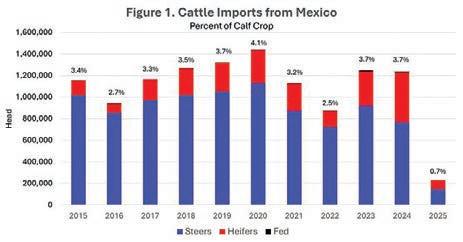
Prior to the border closing in November 2024, US imports of Mexican cattle had averaged 1.18 million head annually in the previous decade (Figure 1) and 1.12 million head per year in the previous 35 years. Mexican cattle imports equaled 3.4% of the total US calf crop from 2015–2024, and 3.1% since 1990. The brief border opening in 2025 allowed about 230,000 head to cross, which was 0.7% of the 2025 calf crop.
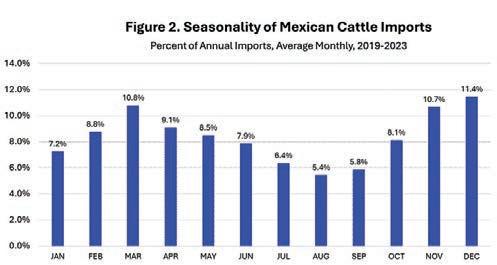
Figure 2 shows the average seasonal pattern of Mexican cattle imports from 2019–2023. The typical pattern is bimodal with peaks in March and again in November and December. Calves carried over from the previous year are typically exported in the first half of the year, with relatively few exported in the heat of the summer. New crop calves start to be exported in the final months of the year, carrying over into the next year.
The last year with a fully open border was 2023. The largest port cattle came through was Santa Teresa, New Mexico, which accounted for nearly 43% of cattle crossing. Along with the Columbus port, New Mexico accounted for over 53% of total cattle imports. The ports at Nogales and Douglas in Arizona represented another 27.5% of cattle crossings. The six ports in Texas accounted for a total of 19.2% of total Mexican cattle imports. The largest Texas port is Presidio/Ojinaga, accounting for 7.7% of the total.
Rumors are currently swirling that the border could open soon, probably with the phased plan to open ports from west to east over time. How much and how fast can cattle imports recover? The answer is: not very. It will take several weeks for border facilities to restaff, and have USDA-APHIS personnel in place to inspect and clear paperwork for crossing cattle. It takes time (and money) for Mexican producers to prepare cattle and the paperwork needed for crossing. It’s not clear how aggressive
Mexican producers will be initially, until they have a sense of how stable the border situation might be. By the time cattle can begin crossing, it will be close to the heat of summer, which is likely to limit crossings. If it starts relatively soon, numbers of cattle imports could begin to recover significantly by fall.
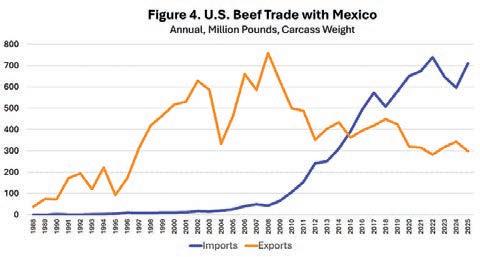
Exactly what that recovery looks like, and the numbers expected, is uncertain. Mexico has continued to adapt since the border has been closed, utilizing previously exported cattle in domestic markets. Mexico has developed significant cattle feeding and packing infrastructure in the past 25 years. More infrastructure investment is underway. Mexico is the eighth largest beef producing country, and the seventh largest beef consuming country. The country is the number eleven beef exporting country, and beef exports have grown more than tenfold in the past 20 years.
US imports of Mexican cattle are part of an increasingly integrated cattle and beef trade relationship between Mexico and the US. Mexican cattle imports have been important for many decades. In the 1980s, Mexico became a significant beef export market for the US, and is currently the number three beef export market (Figure 4). More recently, after 2010, Mexico has become a significant source of US beef imports, and is currently the number four source of beef imports (Figure 4). Cattle and beef trade between the US and Mexico are interrelated markets, so the current disruption in cattle movement across the border may have a variety of impacts in the future.
US-Indonesia Trade Deal
US beef exports will now have duty-free access to Indonesia. Gaining access to the Indonesian market, where US beef has faced significant barriers, has been a priority for organizations like the National Cattlemen’s Beef Association (NCBA) for many years. As part of the trade deal, Indonesia will purchase at least 50,000 metric tons of US beef annually and now recognizes USDA authority on food safety and animal health, opening more opportunities for exports.
“US beef exports to Indonesia have faced numerous tariff and non-tariff trade barriers, which has made it incredibly difficult to develop any type of market presence. With this agreement, American cattle producers now have access to the fourth most populous country, the largest halal beef market in the world, and more opportunities for producer profitability,” said NCBA President and Virginia cattle producer Gene Copenhaver. “When combined with the Taiwan trade deal signed last week, US cattle producers now have more market access than they have had in decades.” .
Photos are samples of auction items from the 2024 Silent Auction. Thank you to all who made donations.
Are you looking for a way to support the American Simmental-Simbrah Foundation?
We will again be hosting a Silent Auction during the National Classic in Grand Island, Nebraska, July 4-10, 2026. All proceeds go directly to the Foundation. So, you want to contribute but aren’t sure what to bring? In the past, we have had some unique handmade items as well, which we love. We encourage individuals as well as state associations, junior and adult, to participate. Items will be displayed for bidding throughout the week and the auction will end prior to the close of the event. Have an idea for an auction item? Reach out to Jill!
CUTTING EDGE
Challenges to Beef Packing Infrastructure
by Derrell S. Peel, Oklahoma State University Extension
Recent announcements of facility closures from the beef packing industry highlight the continuing challenges that low cattle inventories pose for the beef industry. Beef packing represents large investments in facilities and a long-term perspective. Adjustments in packing capacity occur slowly and are not just the result of current cattle inventories but the cumulative impacts over time. Figure 1 shows how average cattle inventories have decreased over time.
The majority of beef packing capacity was built from the 1960s into the 1980s, when average cattle inventories were 20–30 million head larger than today. Adjustments to packing infrastructure occur slowly and abruptly with different regional impacts. The numbered boxes in Figure 1 correspond to the major adjustments to fed packing capacity in the past 26 years.
1. ConAgra plant burned, 2000, Garden City, Kansas (unplanned reduction; plant not rebuilt)
With both plant numbers and capacities fixed in the short run, Saturday slaughter is the principal source of flexibility for the packing industry to adjust to short-run changes in cattle numbers. Figure 2 shows Saturday slaughter as a percentage of total slaughter for the past 30 years (red symbols correspond to plant closures). When cattle numbers are insufficient, the Saturday slaughter percentage decreases. The previous cyclical low in cattle inventories prompted generally low Saturday slaughter rates from 2009–2015. The one-year bump in 2013 was likely the result of the plant closure that year.
Low Saturday slaughter rates since 2023 show the impact of current low cattle inventories on the packing sector. The 2025 Saturday slaughter rate of 1.2% is the lowest in the past 30 years. The recent plant closure and reduction by Tyson will provide some relief in 2026. With cattle inventories unlikely to grow much, if any, in the next couple of years, it is not clear whether additional packing sector adjustments will be needed.
GLP-1 Use Reshapes Conversations around Beef and Nutrition
by Chevy-Lynn Vaske, Kansas State University Extension
As people’s use of GLP-1 weight-loss medications continues to rise, K-State experts say the conversation around nutrition, protein intake, and beef’s role in a healthy diet is evolving for both consumers and the cattle industry.
In a recent Cattle Chat podcast from the Kansas State University Beef Cattle Institute, specialists discussed how these medications — designed to reduce appetite and promote weight loss — are changing how and what people eat. “While overall calorie intake may decrease, maintaining proper nutrition remains a top priority,” said Abby Heidari, a registered dietitian with the Kansas Beef Council.
Experts emphasized that beef continues to offer important nutritional value, particularly as a high-quality protein source that supports muscle maintenance during weight loss. “As people eat less, every bite matters more,” Heidari said. “Foods (like beef) that deliver essential nutrients — like protein, iron, and vitamins — become even more important.”
For consumers using GLP-1 medications, this shift means focusing on nutrient-dense foods in smaller portions. Balanced diets that include appropriate servings of beef can help meet protein needs while aligning with updated dietary recommendations.
Experts noted that beef producers may benefit from understanding these shifting preferences and communicating beef’s nutritional advantages more effectively. Transparency, education, and alignment with consumer health goals will be key in maintaining trust and demand, they said.
The discussion also highlighted that dietary guidelines continue to support flexibility, allowing beef to be part of a healthy eating pattern when consumed in moderation and alongside other nutrient-rich foods.
Ultimately, specialists say the intersection of GLP-1 medications and dietary guidance underscores a broader trend: Consumers are becoming more intentional about their food choices. “Whether someone is using these medications or not, the focus is shifting toward nutrient density and overall diet quality,” Heidari said. “That’s an important message for both consumers and the beef industry moving forward.”
Add Value, Manage Market Volatility by Selling Beef Directly to Consumers
University of Missouri Extension
Despite cattle prices being near all-time highs, marketing beef direct-to-consumer still adds value to beef operations. Two updated University of Missouri (MU) Extension guides help producers understand the numbers and methods behind marketing your beef to consumers.
“Low cattle inventory has widened the gap between a finished animal’s live value and the total value of its retail cuts,” said Jake Hefley, MU Extension agriculture business specialist in Taney County. “Direct marketing gives producers an opportunity to capture part of that value rather than leaving it entirely to downstream segments of the supply chain.”
Producers can examine the revenue potential and additional costs of selling freezer beef with “Evaluating Direct-to-Consumer Marketing Opportunities for Local Beef in Missouri” and look at their cost of production to feed out their calves with “On-Farm Beef Finishing Planning Budget.” Both publications are available for free download at https://extension.missouri.edu/publications.
“Using both publications together helps producers compare the retail value of a processed animal with the cost to bring that animal to finished weight,” said Drew Kientzy, MU Extension senior research analyst. “Grocery store beef prices are front-of-mind for many consumers. Knowing your breakeven and offering competitive pricing for a high-quality product can earn long-term customers.”
Producers are encouraged to use the accompanying spreadsheet tools to help estimate the cost and revenue potential of their own direct-to-consumer beef sales.
Direct sales can provide price stability
Strong markets draw attention, but producers know conditions can change quickly. When prices are high, it can be tempting to market everything through the sale barn, yet freezer beef doesn’t have to be an all-or-nothing decision, said Jennifer Lutes, MU Extension agricultural business field specialist in McDonald County. Many farms can operate in both markets by selling more calves into today’s strong auction market while finishing a smaller number for direct customers (or at minimum not expanding direct-market commitments). The key is protecting your freezer-beef customer base now, Lutes said. Those relationships take time to build and will be the stabilizing income stream you’ll want in place when prices eventually ease.
“Consumers value quality and relationships, making the prices they are willing to pay less volatile than prices received at the local sale barn,” she said. “An established freezer beef business can help customers manage costs during high grocery prices and support farm income when cattle prices drop.”
How is Artificial Intelligence Enhancing Cattle Health Monitoring?
by Maddy Krueger, Bovine Veterinarian
Artificial intelligence (AI) has made its way into agriculture in various ways, providing new technologies to enhance production agriculture. At the University of Arkansas, researchers developed a tool, the CattleFever system, that uses AI and thermal and RGB color cameras to detect cattle body temperature.
Traditionally, cattle temperatures are taken rectally. With the CattleFever system, this can reduce labor required to track herd health. Temperature is a key symptom for many diseases, so this system allows for faster detection and treatment.
Research Background
The University of Arkansas is equipped with an Artificial Intelligence and Computer Vision Lab, directed by Ngan Le, associate professor in the Department of Electrical Engineering and Computer Science. She explains one of her key research
directions is precision agriculture with artificial intelligence and computer vision.
Previous projects have focused on poultry, but broader agriculture-related projects, including cattle welfare, are on the horizon. Le says, “This motivation led me to initiate collaborations with colleagues in the Department of Animal Science, including Dr. Kegley, Dr. Powell, and Dr. Zhao, to combine their expertise in cattle with our strengths in AI and computer vision.”
This project initiative was closely supported and funded by the University of Arkansas Division of Agriculture.
Platform Construction
To build CattleFever, researchers needed data. However, the existing data for cattle only provided overhead rather than thermal images. So, the group built their own dataset using thermal images of calves. Collaborating with the Savoy Research Complex at the university, calves were recorded with synchronized RGB cameras, technology that captures images with red, green, and blue light, and thermal cameras.
Rectal temperatures were also recorded for a base in the dataset. Technical team members, Trong Thang Pham and Ethan Coffman, along with several undergraduate students, developed a semi-automated annotation and data processing system. More than 600 recorded frames were used to train the system in what to look for. This data all served as a benchmark for the CattleFever system.
All images gathered were linked to thermal and RGB images. Landmarks in 13 different places, such as eyes, ears, muzzle, and mouth, on the animal were established. “These landmarks allow the system to localize individual facial regions, and the thermal camera then measures the temperatures in those regions,” Le says.
The eyes and nostrils read closest to the rectal temperatures, so these landmarks were established as focus areas for thermal image readings. A machine-learning approach was used to predict data results. These technology trainings resulted in CattleFever being able to automatically detect animal temperature within one degree of the rectal reading. Le explains that as more data is collected in real-life environments, the more accurate the system will become.
Project Outlook
In these studies, all cattle were directly facing the thermal cameras. “We probably need to take more photos of them in the real-world settings, such as running around, to capture their motion in the field,” Pham explains.
Teaching the cameras how to recognize and interpret a cow’s face in real-world environments is the next step. Le explains further features like environmental and audio sensors will be added to increase animal welfare monitoring accuracy and lead to more developments of indicators like common symptoms or early signs of illness. At this point, additional funding is being sought to continue more research on this project.
Eventually, the goal is for producers to have access to technology like this. This could look like a monitoring system of cameras that are synced to a mobile interface or app.
Le says, “While the current work represents an important first step, we are excited about continuing to develop technologies and expanding its capabilities to support the real-world agricultural applications.” .
State Marketplace
Cow Camp Ranch
Kent, Mark and Nolan Brunner 3553 Upland Rd. • Lost Springs, KS 785-466-6475 Kent 785-466-1129 Nolan 785-258-0173 Mark nolan@cowcampbeef.com
South Dakota’s Source for Outcross Performance Simmentals!
– Specializing in Hard to Find Red Breeding Stock – 36220 257th St., Kimball, SD 57355 clayekstrum@midstatesd.net • ekstrumsimmentals.com
Long’s Simmentals’
6th Annual Production Sale
February 2, 2026 • Creston, IA
Auctioneer: Jered Shipman, TX
Sale Manager: Innovation AgMarketing LLC, KS
Marketing Representatives: Graham Blagg, Tim Anderson, Mitch Armitage, Gregg Miller, Mike Sorenson, Bryce Farmer, and Brice Conover.
Representing ASA: Bert Moore
High-Selling SimInfluenced Lots:
$37,000 – PB SM Bull, “Longs In Charge K28,” s. by SO Remedy 7F, sold to Brix Cattle, IA.
$27,000 – PB SM Bull, “Longs In Charge N228, s. by SFI Longs In Charge K28, sold to Bill Sloup, NE.
$18,000 – 3/4 SM Donor, “Longs F12,” s. by LLSF Pays To Believe ZU194, sold to Cole Dickey, IA.
$17,000 – PB SM Bull, Longs In Charge N409,” s. by SFI Longs In Charge K28, sold to Mike Thompson, IA.
$17,000 – PB SM Bred Female, “Longs Patriot M201,” s. by LCDR Patriot 8K, sold to Adcock Land and Cattle, IL.
$16,000 – Flush out of “Longs Carmen,” s. by LLSF Pays To Believe ZU194, sold to Jesse Kohl, IA.
$14,000 – 5/8 SM Bull, “Long’s Salem N57,” s. by ES/Longs Salem HW46-1, sold to Mike Thompson, IA.
$12,000 – PB SM Open Female, “Long’s In Charge N429,” s. by SFI Longs In Charge K28, sold to ZWT Agnus, TN.
$11,500 – PB SM Bull, “Long’s/TSC In Charge N70,” s. by SFI Longs In Charge K28, sold to Pam Haley, OH.
Comments: Also selling was one flush lot for $16,000; and 26 embryos at an average of $1,642. Cattle sold to seven states.
Auctioneer: Jered Shipman, TX
Sale Manager: Innovation AgMarketing LLC, KS
Marketing Representatives: Graham Blagg, Tim Anderson, Thomas Lundy, Will Bollum, Mitchell Armitage, Jeremie Ruble, Tom Rooney, DVAuction, and CCiLive.
Representing ASA: Bert Moore
Bar CK Cattle’s Profit Sharing Sale
February 12, 2026 • Culver, OR No. Category
Auctioneer: Eric Duarte, OR
Sale Managers: Crystal Bishop and Katelyn Farley
Marketing Representatives: Makayla Hoffman, Superior Livestock; Jake Pickering, Western Ag Reporter; Jed Hutchinson, Zoetis; and Kevin Murnin, Western Livestock Journal
Representing ASA: Bill Zimmerman
February 5, 2026 • St. Charles, MN
Welcome.
Sale crowd.
Sale block with Graham Blagg, Jered Shipman, and Creed and Seth Kaehler.
Marketing Representatives: Jared Murnin (AGR); Marty Ropp (AGR); Jared Patterson, Western Livestock Journal; Rod Wesselman; Wesselman Livestock, LLC; and Mark Frisbie, Special Assignment. Representing ASA: Bill Zimmerman
Meyring Cattle Company’s 2nd Annual Sale
February 26, 2026 • Alliance, NE
Auctioneer: Jered Shipman, TX
Sale Manager: Innovation AgMarketing, KS
Marketing Representatives: Western Ag Reporter, Western Livestock Journal, and DVAuction.
Representing ASA: Susan Russell
High-Selling Lots:
$25,000 – PB SM Yearling Bull, “MCC Anthem R933,” s. by LCDR Anthem 33K, sold to Werning Cattle Co., SD.
$19,000 – 1/2 SM 1/2 AN Age Advantaged Bull, “MCC Right Time 0840M,” s. by ES Right Time FA 110-4, sold to Shorter Ranch, KS.
$19,000 – PB SM Yearling Bull, “MCC Anthem B977N,” s. by LCDR Anthem 33K, sold to Windy Creek Cattle Co., SD.
$16,000 – 3/4 SM 1/4 AN Bred Femalae, “Miss MCC R830M,” s. by WINC All Right 213K, sold to Garrett Parsons, KS.
Comments: Also selling were nine embryos at an average of $883.
Emmons Ranch’s Bull Sale
February 28, 2026 • Olive, MT
Auctioneer: Charlee Kuhbacher, MT Representing ASA: Andy Roberts
Looking over offering on a beautiful winter day.
Klein Ranch’s 8th Annual Heart of the Herd Sale
March 3, 2026 • Atwood, KS
Auctioneer: Charly Cummings, KS
Sale Manager: Allied Genetic Resources, IL
Marketing Representatives: Allied Genetic Resources, Kansas Stockman, The Stock Exchange News, and LiveAg. Representing ASA: Susan Russell
on
Enthusiastic buyers on a rainy day.Active buyers in person, online and on the phone.
Tyler Barker and Auctioneer, Kyle Shobe with pre-sale introductions.
Sale hosts Tom Ottley and Tyler Barker visit with Lance Westmoreland after the sale.
Looking over the offering in the display area adjacent to the new sale facilities.
Potential buyers view the offering.
Jay and Shauna Meyring visit with buyers.
Watching sale lots on video screens.
SALE RESULTS
(Continued from page 49)
Klein (continued)
High-Selling Lots:
$36,000 – PB SM Bull, “Klein 146,” s. by LBRS Logan L254, sold to Diamond H Ranch, KS.
$16,000 – 3/8 SM Bull, “Klein 402M,” s. by GAR Transcendent, sold to Mike Bartush, TX.
Comments: Guest consignors included Toby Kechter, CO; Roger Holste, KS; and Remmington Ranch, KS.
over
Keller Broken Heart Ranch’s Annual Production Sale
March 5, 2026 • Mandan, ND
No. Category Average
78 Yearling SM Bulls
Auctioneer: Tracy Harl, CO
$10,814
Marketing Representatives: Kelly Klein, Tri-State Livestock News; Tony Heins, Western Ag Reporter; Scott Ressler, ND Stockmen’s Association; Logan Hoffmann, DVAuction; and Jeremie Ruble, Ruble Cattle Services.
Representing ASA: Dr. Ken Odde and Russ Danielson
High-Selling Lots:
$90,000 – SimInfluenced Bull, “N161,” s. by GAR Fireproof, sold to Lazy C Diamond Ranch, Kintyre; and C Diamond Simmentals, Dawson.
$40,000 – PB Bull, “N146,” s. by KBHR Discipline L046, sold to Larson Lost River Livestock, Clearbrook, MN.
$29,000 – PB Bull, “N275,” s. by KBHR Discipline L046, sold to Forster Farms, Smithfield, NE.
$27,500 – SimInfluenced Bull, “N131,” s. by GAR Fireproof, sold to King Cattle Company, Perrysville, IN.
$26,000 – SimInfluenced Bull, “N235,” s. by GAR Fireproof, sold to Bar CK Cattle Company, Culver, OR.
$22,000 – PB Bull, “N115,” s. by Bridle Bit Galaxy L361, sold to Cody Pitt, Hotchkiss, CO.
Eichacker Simmentals and JK Angus Bull and Female Sale
March 6, 2026 • Salem, SD
Auctioneers: Tracy Harl, CO; and Dustin Carter, SD Sale Manager: Eberspacher Enterprises Inc., MN
Marketing Representatives: Jim Scheel, Randy Rasby, Jeff Kapperman, Kent Snowden, Chris Effling, Kadon Leddy, Marty Ropp, Tom Hook, Jeremie Ruble, Justin Dikoff, DVAuction. Representing ASA: Dr. Ken Odde High-Selling SimInfluenced Lots:
$55,000 – Cow/Calf Pair, “ES M145,” s. by TJ 50K 485H, Heifer Calf, s. by WBF Patton K059, sold to ZWT Ranch, Crossville, TN.
$50,000 – Cow/Calf Pair, “ES M124,” s. by LCDR Reserve 210J, Heifer Calf, s. by KBHR Kota L175, sold to Hofer Farms, Bridgewater; and Windy Creek Cattle Co., Spencer.
$45,000 – PB Bull, “ES NH39,” s. by LRS Dutton 611K, sold to Brad Hart, Frederick.
$35,000 – 3/4 SM Bull, “ES N109J-1,” s. by KBHR Global J138, sold to Mohnen Simmental, White Lake.
$32,000 – Cow/Calf Pair, “ES M15,” s. by LCDR Progressive 106G, sold to Brock Nicholson, Kintyre, ND.
$28,000 – 3/4 SM Bull, “ES NK61,” s. by GW Medicine Man 200K, sold to Tyrell Rousey, North Platte, NE.
$26,000 – 3/4 SM Bull, “ES NK46,” s. by KRJ Dakota Outlaw G974, sold to Tanner Garrison, Hinton, OK.
$25,000 – PB SM Bull, “ES NK17,” s. by ES Tornado LH129-3, sold to Windy Creek Cattle Co., Spencer.
Comments: Also selling were 40 Angus herd bull prospects at an average of $12,200.
Ken Higley and daughter, Gracie Simminger, look
the offering. Capacity crowd on hand.
Sale partner Toby Kechter took bids by phone.
Frosty welcome to KBHR on the breaks of the Missouri River.
Morning background of display area.
National anthem prior to the sale.
Cason’s Pride and Joy Bull Sale
March 7, 2026 • Albia, IA
No. Category Average
60 Bulls
Auctioneer: Dustin Carter, SD
Sale Manager: Eberspacher Enterprises, Inc. MN
Marketing Representatives: Mike Sorenson, Curt Peterson, Tom Rooney, and Mariah Miller, LiveAuctions.tv
High-Selling Lots:
$8,900
Hornung Livestock’s 6th Annual Sale
$19,000 – “Cason’s Mr Progressive N393,” s. by KBHR Bold Ruler, sold to Cory Hindman, IA.
$18,500 – “Cason’s Mr Reno M13J,” s. by TSN Eagle G618, sold to Steffensmeier Farms, IA.
$14,500 – “Cason’s Mr Boulder N13LH,” s. by KBHR Bold Ruler H152, sold to Pat Wynn, IA.
$14,250 – “Cason’s N82” s. by Hook’s Galileo 210G, sold to Hopewell View Simmental, MO.
$12,500 – “Cason’s Mr Lincoln M438K,” s. by TRIF Guardian 215X, sold to Pat Wynn, IA.
$12,000 – “Cason’s Mr Campbell N24,” s. by TRIF Guardian 215X, sold to Danny Burck, IA.
$11,500 – “Cason’s Mr Oakton N851,” s. by TSN High Road K028, sold to Brandon DeBruin, IA.
$11,000 – “Cason’s Mr Baldwin M13FU,” s. by KBHR Bold Ruler H152, sold to Heartland Simmental, IA.
March 11, 2026 • Stratton, CO No. Category Average 24 SimGenetic Bulls
Auctioneer: Cody Lowderman, IL
$10,104
Marketing Representatives: Western Ag Reporter, Western Livestock Journal, The Fence Post News, and DVAuction.
Representing ASA: Susan Russell
High-Selling SimInfluenced Lots:
$15,500 – 1/2 SM 1/2 AN Yearling Bull, “SAVR Mr Kindred N556,” s. by KA Kindred, sold to Day & Night Cattle, CO.
$14,500 – 1/2 SM 1/2 AN Yearling Bull, “HLSS Mr Far Out N015,” s. by FOCR Mr L317, sold to Gary Queen, CO.
Comments: Also selling were 75 Angus bulls at an average of $9,127; and 34 commercial Angus pairs at an average of $5,353.
(Continued on page 52)
Hosts Gaston and Kelsey Hornung.Ron Schilling, KS, walks through the bull display pens.
Brock and Kerry Elsen evaluate the offering.
Successful buyers (L–R): Paul Mitchek, Todd Tagmeyer, and Macy John Sexson.
Alan and Elica Rieker, NE, added prime ES genetics to their program.
Adam Eickacker and Ross Hoelker, junior members of the annual Eichacker Simmental and JK Angus Production Sale.
Steve Eichacker, host firm, welcomes the crowd.
Kent McCune assisted buyers.
Lanny Cason visits with Drew Daniels about the sale offering.
Longtime customer Cory Hill attended the Cason annual bull sale.
Kirk Lynch visits with 91-year-old veteran Donald Lucas at the Cason sale.
Senior member of Cason’s Pride & Joy Simmentals welcomes the overflowing crowd.
Gonsior Simmental’s “In the Heartland” Production Sale
March 15, 2026 • Fullerton, NE
Auctioneer: Tracy Harl, CO
Sale Manager: Eberspacher Enterprises Inc., MN
Marketing Representatives: Derek Vog, NE; Buddy Robertson, OK; Tim Burke, NE; Braden Benes, NE; Rob Pischel, NE; Jeremie Ruble, IA; Chris Beutler, Livestock Digital; and Jason Hansen, Livestock Digital.
High-Selling Lots:
$28,000 – Open Female, “Gonsior Essentially F801 N57,” s. by Gibbs 9114G Essential, sold to James Wetovick, NE.
$20,000 – Open Female, “Gonsior Time After Time M914,” s. by Five Star Jackson J10, sold to Shoal Creek Land and Cattle, MO.
$16,000 – Yearling Bull, “Gonsior Dynamite N64,” s. by B A R Dynamite N64, sold to Scott Patrick, NE.
$16,000 – Yearling Bull, “Gonsior Westwood N100,” s. by TRIF Western Feel 242K, sold to Terry Oliver, OK.
$15,500 – Yearling Bull, “Gonsior The Anthem N29” s. by LCDR Anthem 33K, sold to Colynn Beaver, CO.
$15,500 – Cow/Calf Pair, “Gonsior Onyx Magnolia M59,” s. by LCDR Anthem 33K, Heifer Calf s. by W/C Doctor’s Order, sold to Stephanie Jaeger, NE.
$15,000 – Yearling Bull, “Gonsior American Anthem N22,” s. by LCDR Anthem 33K, sold to Sloup Simmental, NE.
$14,000 – Cow/Calf Pair, “Gonsior Here’s Johnny M29,” s. by CLRS Johnny Walker 1049J, Bull Calf s. by G A R Fireproof, sold to Tim Mason, NE.
$14,000 – Cow/Calf Pair, “CTN/GS Lilly L001,” s. by HPF Quantum Leap Z952, Heifer Calf s. by Cast CC 343L, sold to Sloup Simmental, NE.
Carlson Land and Cattle and Halde Cattle’s Inaugural Bull Sale
March 20, 2026 • Stoneham, CO
No. Category Average 23 SimAngus Yearling Bulls
Auctioneer: Ken Holzworth, CO
Marketing Representative: DVAuction
Representing ASA: Susan Russell
High-Selling SimInfluenced Lot:
$6,815
$9,500 – 3/4 SM, “917 Carslon Cadillac,” s. by KBHR Bold Ruler H152, sold to Kokes Cattle Co., CO.
Comments: Also selling were 19 Angus and commercial bulls at an average of $6,297. Glenn Carlson and son-in-law, Parick Halde, and their families hosted the sale.
Colorado Select Bull Sale
March 21, 2026 • Fort Collins, CO No. Category Average 128 SM and SimAngus Bulls
Auctioneer: Shawn Silverberg, CO
$8,263
Marketing Representatives: Jared Murnin, Allied Genetic Resources; Justin Warren, Wyoming Livestock Roundup; John Clatworthy, Ring Services; and Ryan Larges, DVAuction.
Representing ASA: Susan Russell
High-Selling Bulls:
$24,000 – 1/2 SM 1/2 AN, “651N,” s. by Tehama Patriarch F028, sold to Hinton Ranch Simmentals, CA.
$22,500 – PB SM, “1010N,” s. by CDI/NF Honor Guard 267H, sold to John Van Winkle, CO.
Comments: The CO Select Sale is a cooperation of Triangle J Ranch and Altenburg Super Baldy Ranch.
Tracy Harl “studying” prior to the sale.Mike Gonsior, senior member Gonsior Simmentals, visits with neighbor Gregg Sounderup.
Scott Gonsior welcomes the good-sized crowd who braved the wintry weather.
Junior member of Gonsior Simmentals, Gage Horacek, talking to customers on the phone.
Potential buyers sorted through this pen.
Porter Halde sang the National Anthem to kick off the day’s events.
Carlson and Halde’s sale, held at the Stoneham Community Center.
Patrick Halde and Glenn Carlson move bulls around for prospective buyers.
Rockin H Simmental’s
12th Annual Production Sale
March 21, 2026 • Canby, MN
$8,961
$6,731
$5,950
$8,262
All Terrain Bull and Female Sale
March 23, 2026 • Walsh, CO
Auctioneer: Dustin Carter, SD
Sale Manager: Eberspacher Enterprises, Inc., MN
Marketing Representatives: Chance Ujazdowski, WI; Kelly Schmidt, MN; Jason Hansen, Livestock Digital; Kipp Julson, SD; and Kyle Hunt, Purina.
High-Selling Lots:
$30,000 – Yearling Bull, “Rockin H Millenium N107,” s. by WINC All Right 213K, sold to Robert Cooper, Canada.
$19,000 – Yearling Bull, “Rockin H Mr Alpha N101,” s. by M4 Alpha 267K, sold to ODR Simmentals, IL.
$16,000 – Yearling Bull, “Rockin H Nash N56,” s. by OMF/DK KRJ Jawbreaker 15J, sold to Gilliland Livestock, CA.
$15,500 – Yearling Bull, “Rockin H Nickelback N23,” s. by OMF/DK KRJ Jawbreaker 15J, sold to Goeken Cattle, SD.
$14,000 – Yearling Bull, “Rockin H Navigator N80,” s. by OMF/DK KRJ Jawbreaker 15J, sold to Randy Gronke, SD.
$14,000 – Yearling Bull, “Rockin H Nightmoves N74,” s. by OMF/DK KRJ Jawbreaker 15J, sold to Michelson Ranch, SD.
$13,000 – Yearling Bull, “Rockin H Mr Jawbreaker N31,” s. by OMF/DK KRJ Jawbreaker 15J, sold to Casey Renaas, SD.
$12,000 – Yearling Bull, “Rockin H Nitro N06,” s. by OMF/DK KRJ
Jawbreaker 15J, sold to Double R, SD.
$10,500 – Yearling Bull, “Rockin H Medicine Man N26,” s. by GW Medicine Man 200K, sold to Hunter Schlosser, ND.
Auctioneer: Tracy Harl, CO
Sale Manager: Allied Genetic Resources (AGR), IL
Marketing Representatives: Marty Ropp (AGR); Corey Wilkins (AGR); Jared Murnin (AGR); Superior Auction; and DVAuction.
Representing ASA: Susan Russell High-Selling Lots:
$50,000 – PB Bull, “Bridle Bit Mr N5103,” s. by LBRS Genesis G69, sold to Cow Camp Ranch, KS; and Rydeen Farms, MN.
$36,000 – 3/4 SM 1/4 AN Bull, “Bridle Bit Mr N544,” s. by BSUM Summit 303L, sold to Wilkinson Simmental Farms, ND.
$25,000 – PB Bull, “Bridle Bit Miss N523,” s. by LBRS Genesis G69, sold to Russell Smith, KS.
Comments: Sale hosts include Bridle Bit Simmentals and Far Out Cattle Ranch. ASA’s Dr. Elizabeth Dressler highlighted new EPD as the keynote speaker at a Sunday night educational dinner.
(Continued on page 54)
Bridle Bit host Chad Cook welcomes the crowd.
Terry and Cathy Schlenker, Wilkinson Simmental Farms, ND.
Scanlon and Luke Daniels, TX, successfully bought three bulls.
Sale hosts Darby and Dillon Line pause between greeting customers in the display pens.
Joining in the reciting of the Pledge of Allegiance prior to the sale.
DeeJay Smith and son JT, a thirdgeneration bull buyer of Triangle J Ranch and Altenburg Super Baldy Ranch.
Sam Mickelson, Mickelson Ranch, added a top herd bull prospect to his bull battery.
Marketing representatives Kipp Julson (left) and Chance Ujazdowski.
Matt Hoffman welcomed the overflowing crowd.
Chuck and Lorie Hoffman, the senior partners in the Rockin H operation.
(Continued from page 53)
All Terrain (continued)
7L Diamond’s 6th Annual “Focus on Quality” Sale
March 27, 2026 • Monte Vista, CO No. Category Average 16 SimGenetic Yearling Bulls
Auctioneer: Elie Malouff, CO
Marketing Representative: DVAuction
Representing ASA: Susan Russell
High-Selling Lots:
$9,400 – 3/4 SM, “SLD 534N,” s. by GW Lucky Break 504J, sold to Tracy Hildreth, CO.
$7,044
$9,100 – 5/8 SM, “SLD 509N,” s. by GW Triple Crown 018C, sold to Warren Collins, CO.
Comments: Cattle sold into four states including, CO, KS, NM, and TX.
In jest but likely true, the ringside crowd doubled the population of Walsh.
Potential buyer looking over the offering.
Sale host Wyatt Clark and buyer Bob Peterson view the offering.
Buyers Ernesto and Antoinette Garcia.
7L Diamond hosts (L–R): Leah, Peter, Wyatt, and Renee Clark.
Leah Clark discusses EPD and PAP scores with a potential buyer. .
NEW MEMBERS
CALI FORNIA
Basin View Ranch LLC 9290 Co Rd 108 Tulelake, CA 96134
COLORADO
Bronson, Chad 1761 10 Road Mack, CO 81525
Bronson, Shawn 1496 O Rd Loma, CO 81524
FLORIDA
Carter, Jackie Wayne 3990 Peanut Road
Cottondale, FL 32431
Pierson, Landi 9827 SE 22nd St Webster, FL 33597
GEORGIA
Sheridan Farms 127 West Drive Lula, GA 30554
ILLINOIS
Rich, Justin 12369 E 400th Ave Flatrock, IL 62427
INDIANA
Thrasher, Cole
343 S St Rd 63 Merom, IN 47861
Welch, Peyton 7104 E 550 N Lafayette, IN 47905
McFatridge Cattle Co 7477 E 825 N Otterbein, IN 47970
Hoosier Beef Cattle 466 S 300 E Valparaiso, IN 46383
Holderly Land and Cattle 2337 West 350 South Chalmers, IN 47929
IOWA
Boyert Show Cattle/ Mount Storm Farms LLC 888 92nd Ave
Evavold Cattle Co 18264 275th Avenue Fergus Falls, MN 56537
MISSOURI
3 E Ventures LLC
736 W Division Rd Clinton, MO 64735
Taylor, Fronnie 871 Susanna Rd Niangua, MO 65713
Taylor, Justin
8930 Hunters Creek Rd Niangua, MO 65713
MONTANA
Miller, Tennyson & Noel 298 US Highway 12E Garrison, MT 59731
NEW YORK
English Bros. LLC 413 Stage Rd Buskirk, NY 12028
Blackies Wish Farm 243 Pope Hill Road Argyle, NY 12809
NORTH CAROLINA
Butcher Branch Land & Cattle LLC 11142 NC Hwy 49 N Mount Pleasant, NC 28124
OHIO
Eckurd Family Mini Farm LLC 6126 Calland Road Urbana, OH 43078
Reed Farms 3000 West Rd Saint Paris, OH 43072
OKLAHOMA
Glascock, Thomas 14864 State Hwy 32 Marietta, OK 73448
Carlson, Case 10976 N 1890 Rd Sayre, OK 73662
Ballard, Danielle 3677 Old Highway 81 Rush Springs, OK 73082
Lucky 7 Cattle Company 216830 East County Road 39 Mooreland, OK 73852
Centerview Genetics 56571 Moccasin Trail Prague, OK 74864
OREGON
Ridgway Agron Svcs LLC/ Ridgway Cattle 6874 SE Ruger Rd Prineville, OR 97754
Saddle Mountain Cattle Co 90461 Highway 202 Astoria, OR 97103
Davis, Hunter 42000 Fish Hatchery Dr Scio, OR 97374
PENNSYLVANIA
Hull, Alexis 130 Seatontown Road New Salem, PA 15468
SOUTH DAKOTA
Upright Cattle 19441 US Hwy 12 Lemmon, SD 57638
Poppen, James 19742 429th Ave De Smet, SD 57231
TEXAS
McAnally, Thomas 7958 NW CR 4060
Blooming Grove, TX 76626
Constantine Ranch LLC 1910 County Road 2307 Cleveland, TX 77327
Smith & Boldt PO Box 330
Giddings, TX 78942
M Harlien Farms 5837 CR 101 Sandia, TX 78383
UTAH
Arrow Ranch LLC 770 E 9000 N Neola, UT 84053
Bryce Canyon Simmental Box 122 Tropic, UT 84776
Slash U L/S Box 271 Minersville, UT 84752
Oelke, Karl 520 W 1500 N Ogden, UT 84404
WA Cattle 380 S 400 E Trenton, UT 84338
WASHINGTON
Stephen, Axel 601 S Pioneer Way, Ste F 371 Moses Lake, WA 98837
Ramirez, Osiel 214418 E Game Farm Rd Kennewick, WA 99337
Lone Cross Cattle 141 Loomis Oroville Rd Tonasket, WA 98855
WISCONSIN
Ross, Kimberly 510 Savannah Trail Pardeeville, WI 53954
The Hogan Family Farm 708 Main Street
Junction City, WI 54443
Reichert Land & Cattle
N6972 County Road JM Sheboygan Falls, WI 53085 .
ASA FEE SCHEDULE
DNA Services (Contact ASA For Testing Kits)
Genetic Conditions Panel.
(Must run with GGP-100K)
Arthogryposis Multiplex (AM)
*Add-on tests available Stand-alone Add-on SNP Parental Verification
STR Parental Verifi
Charlie.
Horned/Polled.
PMel (Diluter).
Oculocutaneous Hypopigmentation (OH).
Bovine Congestive Heart Failure (BCHF) . .
$29
Neuropathic Hydrocephalus (NH)
Developmental Duplication (DD)
Tibial Hemimelia (TH)
Pulmonary Hypoplasia with Anasarca (PHA)
Osteopetrosis (OS)
Contractural Arachnodactyly (CA) (Individual defect tests can be ordered for $29.)
**Research Fee charged at $1.00/min – Includes but is not limited to: DNA re-checks to more than 2 additional parents, multi-sire pastures, excess time spent to confirm parentage, mis-identified samples, and samples arriving at lab without proper ASA paperwork.
***Prices are subject to change
Spring 2026 THE Enrollment — (dams calve January 1–June 30) —
Early enrollment open October 15 through December 15, 2025.
Late enrollment available until February 15, 2026.
Fall 2026 THE Enrollment — (dams calve July 1–December 31) —
Early enrollment open April 15 through June 15, 2026
Late enrollment available until August 15, 2026.
A re-enrollment fee of $35.00 applies to any dam that is removed from inventory and re-enters the herd at a later date.
A member who has dropped out of THE and wishes to return, may do so for the next enrollment season. Re-enrollment fee is $35 per animal (maximum of $350) plus enrollment fees. Non-THE registration fees will apply to the calendar year when a member did not participate in THE.
*After January 1: $105 for Adults and $40 for Juniors Annual Service Fee (ASF)*:
SimTalk
DATE BOOK
MAY
2 Stars and Stripes Sale — Hummelstown, PA
9 7P Ranch’s Herd Dispersal Sale — Winona, TX
16 Mississippi/Alabama Simmental State Sale — Cullman, AL
18 Red Hill Farms’ Maternal Monday Online Sale — www.redhillfarms.net
23 7th Annual Back to Grass Sale — Henderson, TX
JUNE
10–13 AJSA Eastern Regional Classic — Lebanon, IN
17–20 AJSA Western Regional Classic — Filer, ID
JULY
4–10 AJSA National Classic — Grand Island, NE
SEPTEMBER
5 North Carolina Fall Harvest Sale — Union Grove, NC
OCTOBER
2 Birk Genetics’ Fall Production Sale — Jackson, MO
10 Trinity Farms’ Fall Female Sale — Ellensburg, WA
17 Fred Smith Company’s Extra Effort Sale — Clayton, NC
17 Sloup Simmentals’ New Direction Sale — Seward, NE (pg. 43)
24 Clear Choice Female Sale — Milan, IN (pg. 42)
31 Red Hill Farms’ “Bulls of Fall XII” Sale — Lafayette, TN
NOVEMBER
1 Triangle J Ranch’s Annual Female Sale — Miller, NE (pg. 43)
7 Cason’s Pride and Joy Female Sale — Albia, IA (pg. 42)
7 Irvine Ranch’s Annual Production Sale — Manhattan, KS
14 Lazy C Diamond Ranch’s Annual Production Sale — Kintyre, ND
16 Bichler Simmentals’ 22nd Annual Production Sale — Linton, ND
DECEMBER
1 Reflected R Ranch’s Complete Female Dispersal — Sugar City, CO
5 Legacy of the Big Sky Simmental Sale — Billings, MT
11 NDSA’s Simmental Classic Sale — Mandan, ND
13 Trauernicht Simmental’s Nebraska Platinum Standard Sale — Beatrice, NE
18 Buck Creek Cattle’s Grand Event Sale — Yale, OK
JANUARY 2027
8 Diamond Bar S’s Annual Bull Sale — Great Falls, MT (pg. 43)
22 Double J Farms’ 53rd Annual Bull and Female Sale — Garretson, SD (pg. 45)
22 Ellingson Simmentals’ Annual Production Sale — Dahlen, ND (pg. 44)
23 Cow Camp Ranch’s Annual Spring Bull Sale — Lost Springs, KS (pg. 42)
30 J&C Simmentals’ Annual Bull Sale — Arlington, NE (pg. 43)
31 Triangle J Ranch’s Annual Bull Sale — Miller, NE (pg. 43)
FEBRUARY 2027
3 Begger’s Diamond V Big Sky Genetic Source Bull Sale — Wibaux, MT (pg. 43)
4 Genetic Edge Production Sale — Mandan, ND
4 K-LER Cattle’s Annual Production Sale — St. Charles, MN (pg. 42)
4 Stavick Simmental’s Annual Sale — Veblen, SD (pg. 45)
5 Silver Dollar Simmentals’ Annual Bull Sale — Rugby, ND
6 Klain Simmental Ranch’s 45th Annual Production Sale — Ruso, ND
8 Bell Simmentals’ Annual Bull and Female Sale — Fordville, ND
8 Nelson Livestock Company’s Production Sale — Wibaux, MT
9 Kaelberer Ranch’s Production Sale — Mandan, ND
10 Quandt Brothers Cattle Company’s Annual Production Sale — Oakes, ND (pg. 44)
10 River Creek Farms’ Annual Production Sale — Manhattan, KS (pg. 42)
12 Bred For Balance Sale — Clear Springs, MN
12 TNT Simmentals’ Annual “Explosive Difference” Sale — Lehr, ND
14 Trauernicht Simmental’s Nebraska Platinum Bull Sale — Beatrice, NE
15 Bulls of the Big Sky — Billings, MT (pg. 43)
19 Dakota Xpress Annual Bull and Female Sale — Mandan, ND (pg. 44)
19 Sandy Acres Simmental’s Bull Sale — Creighton, NE (pg. 43)
20 The Right Choice Production Sale — Aberdeen, SD (pg. 45)
24 Price Cattle Company’s Annual Sale — Stanfield, OR
6 Cason’s Pride and Joy Bull Sale — Albia, IA (pg. 42)
13 Carcass Performance Partners Annual Bull Sale — Lucedale, MS
13 Clear Choice Bull Sale, Milan, IN (pg. 42)
19 3C Christensen Ranch and NLC Simmental Ranch 56th Annual Production Sale — Wessington, SD (pg. 45)
20 Red Hill Farms’ “More Than a Bull XXII” Bull Sale — Lafayette, TN
22 Bridle Bit Simmentals’ All Terrain Bull Sale — Walsh, CO (pg. 42)
24 Diamond H Ranch’s Annual Production Sale, Victoria, KS (pg. 42)
27 T-Heart Ranch’s High-Altitude Bull Sale, La Garita, CO (pg. 42)
APRIL 2027
3 The Gathering at Shoal Creek, Excelsior Springs, MO (pg. 7)
24 Clear Choice Customer Sale, Milan, IN (pg. 42)
JUNE 2027
23–26 AJSA Eastern Regional Classic — Bloomsburg, PA
JULY 2027
17–23 AJSA National Classic — Louisville, KY .
RATES & POLICIES
Serving as American Simmental Association’s (ASA) official publication, the Register is mailed nine times annually, has a circulation of 5,500+, and is focused primarily on ASA’s paid membership.
the Register is an 81/8 x 107/8 inch glossy, full-color publication that provides a direct and consistent line of communication to the ASA membership.
Ad Sales Staff
Rebecca Price 406-587-2778 rprice@simmgene.com One Genetics Way Bozeman, Montana 59718 USA 406-587-2778 • Fax 406-587-8853 register@simmgene.com For All Your Advertising Needs
Advertising rates are for camera-ready ads only. Additional design charges will apply to any ad that is designed by ASA Publication, Inc.
the Register Deadlines for Publication:
July/August ’26 May 22 May 27
5
6–11 September ’26 July 31 August 4
13 Sept 10–15 October ’26 August 17 August 19
28 Sept 26–Oct 1 November ’26 Sept 28 Sept 30 Oct 9 Nov 7–12
2027 Calendar Oct 25 Oct 27 Nov 5 Dec 10–15
Dec ’26/Jan ’27 Oct 26 Oct 28 Nov 10 Dec 10–15
February ’27 Dec 18 Dec 22 Jan 4 Jan 30–Feb 4
March ’27 Jan 29 Feb 3 Feb 11 March 11–16 April ’27 Feb 26 March 3 March 11 April 8–12 Sire Source 2027 March 2 March 3 March 12 April 10–15
*USPS delivery varies
Send all ad materials to: register@simmgene.com
A non-refundable fee of $50.00 will be assessed if a client does not meet deadlines or if the client commits to advertising and cancels after the deadline or if the ad must be dropped to ensure on time publication.
Advertising materials (including photos) must be in the Register office by the dates listed above. the Register, which mails by periodicals rate, assumes no responsibility for actual receipt date.
Digital Advertising
The ASA offers a variety of digital advertising options. For more details, visit simmental.org.
Layouts & Proofs
Every effort will be made to provide proofs on all ads — if all ad material arrive in the Register office prior to the deadline and a correct email address or fax number is provided.
Advertising Content
the Register and its staff assume no responsibility or obligation to verify the accuracy and truthfulness of advertising copy submitted to the Register. However, the Register reserves the right to reject any advertising copy or photo which the Register deems unsuitable for publication for any reason, including copy or photographs which are false or misleading.
the Register assumes no responsibility for the accuracy and truthfulness of submitted print ready ads. Advertisers shall indemnify and hold harmless the Register for any claims concerning advertising content as submitted. Advertising containing pedigrees or statements regarding performance must conform to records kept by the American Simmental Association. Copy deviating from official records may be changed as necessary without advertiser consent.
Editorial Policy
Opinions expressed are the writers’ and not necessarily those of the Register. Photographs are welcome, but no responsibility is assumed for material while in transit or while in the office.
Terms
All accounts are due and payable when invoiced. Interest charges of 1.5 percent per month (18 percent APR) will be added to accounts 30 days past due. If an account becomes 60 days delinquent, all ASA Publication, Inc. work may be suspended until full payment is made. After review by the ASA Executive Committee, ASA privileges may be denied to those with accounts over 90 days delinquent.
To learn more about the CMP visit www.simmental.org, then click Carcass Merit Program under the ASA Programs tab.
Questions, contact cmp@simmgene.com for more information regarding this program.
The American Simmental Association Carcass Merit Program (CMP) is the beef industry’s most demanding and informative young sire test. The program is a hallmark of ASA breed improvement for economically relevant carcass traits. Commercial producers play an integral part in this project.
Participants receive:
u $200 for each AI-sired calf with carcass information
u Free semen on top young herdsires
u Free ASA Genetic Evaluation on your cow herd
u Free genotyping on terminal progeny
u Keep any or all replacement females
Become a Carcass Merit Program test herd today
*The CMP is a structured young sire progeny test. Participating cooperator herds will random sample their cow herd with CMP semen, and the resulting male (or female) progeny will be harvested with individual carcass data gathered. ASA Staff will work with cooperator herds to provide bulls that fit the general criteria of your management program; however, only bulls nominated into the CMP program may be used. Producers are encouraged to be somewhat proficient in Microsoft Excel for accurate and consistent record-keeping.