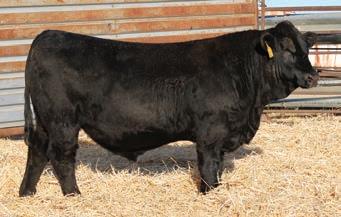
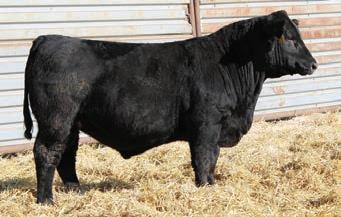
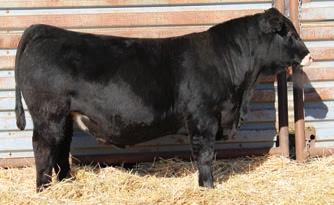
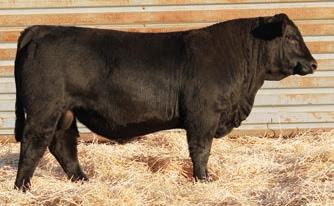
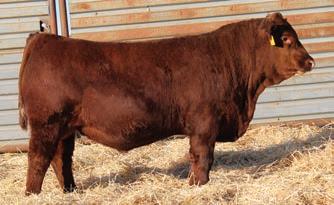
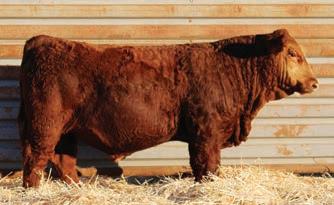
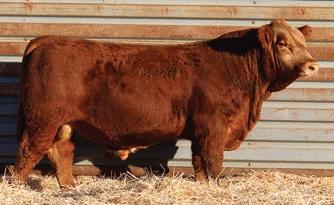
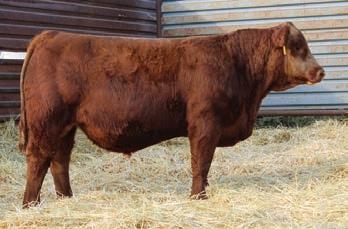
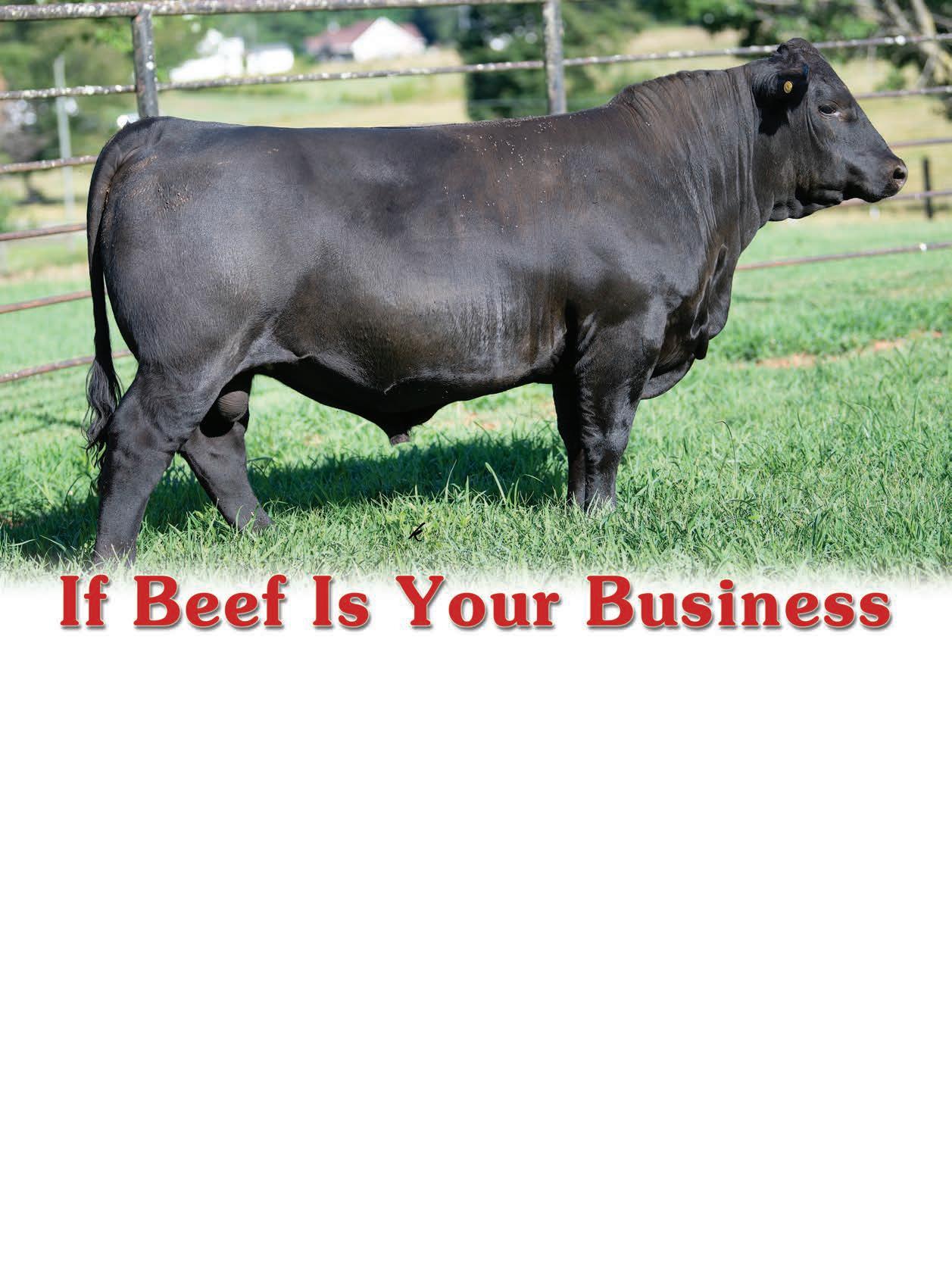
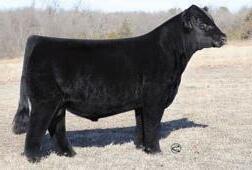
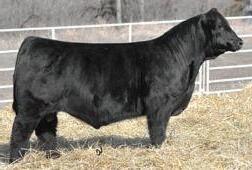
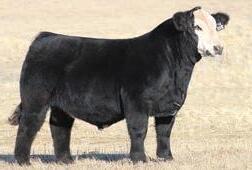
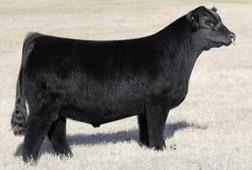
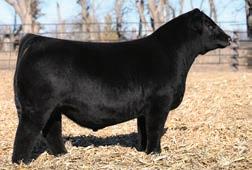
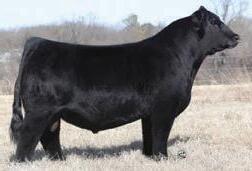
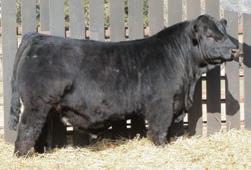
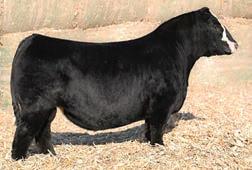
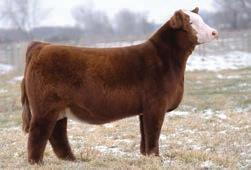
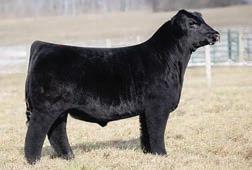
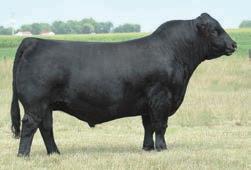
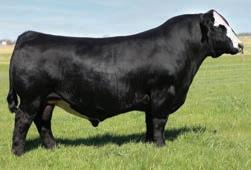
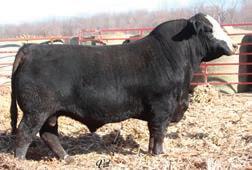
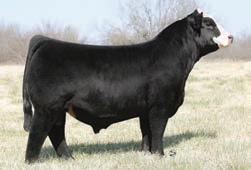
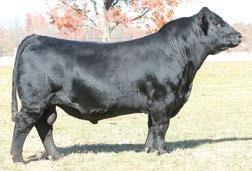
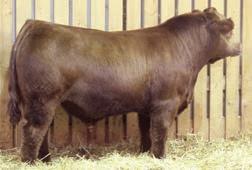
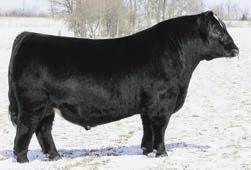
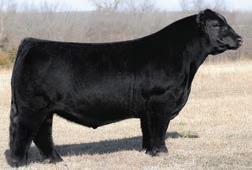
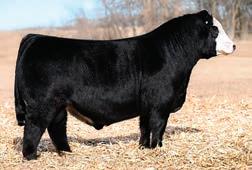
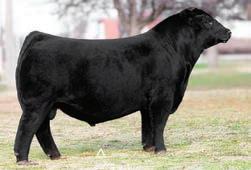
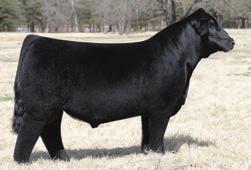
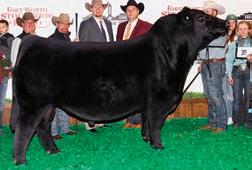
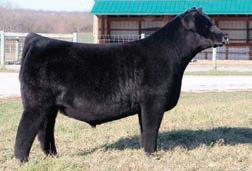
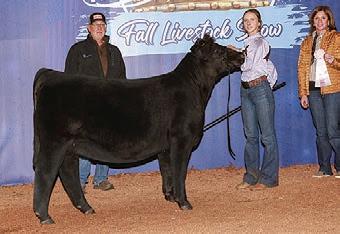
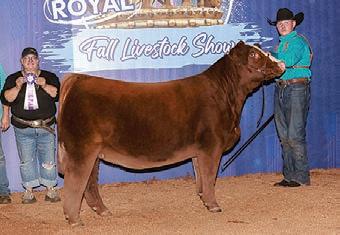
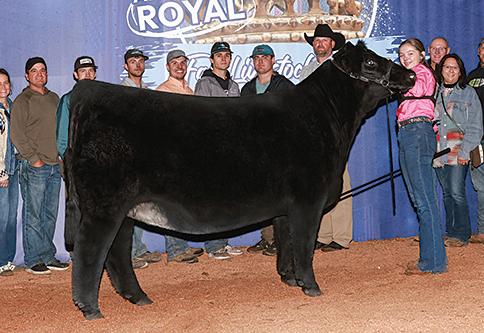
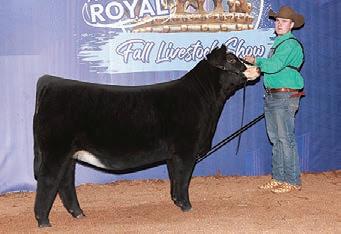
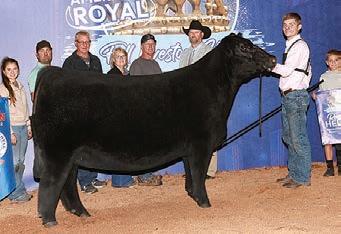
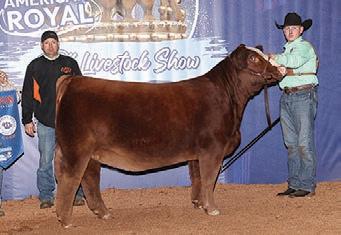
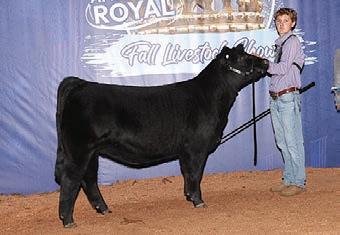
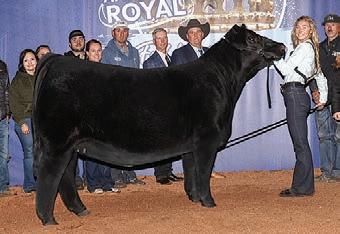
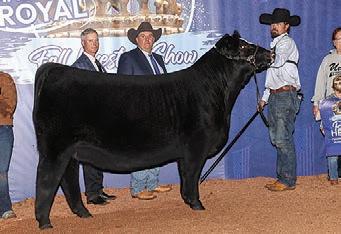
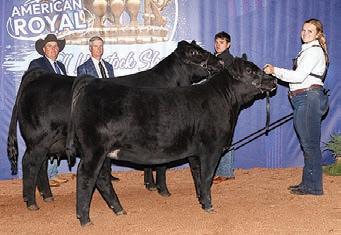
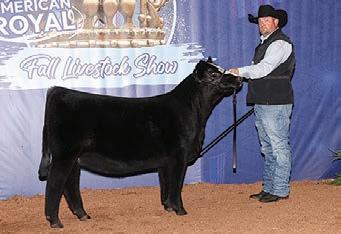
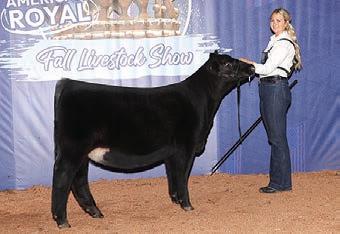
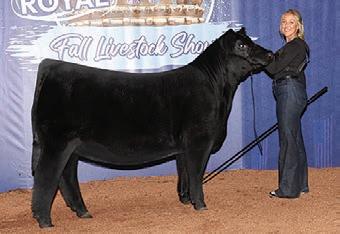
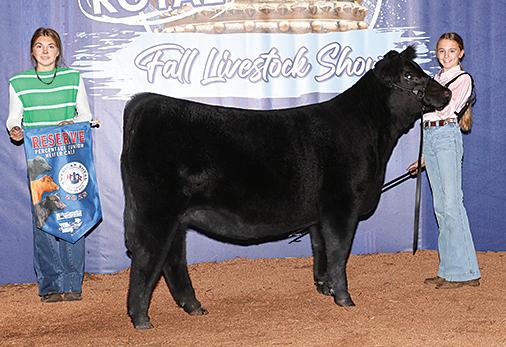
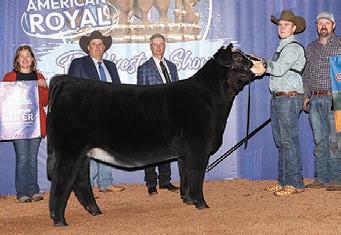
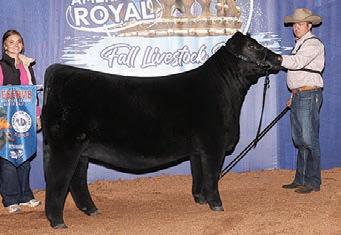
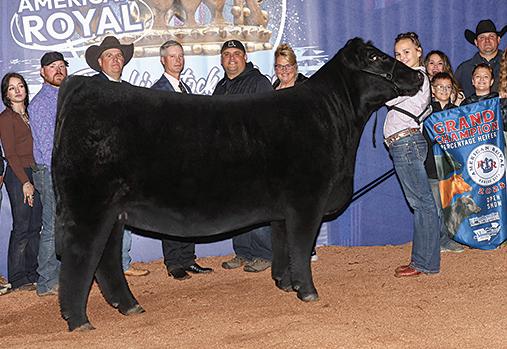
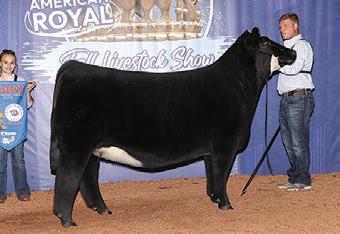
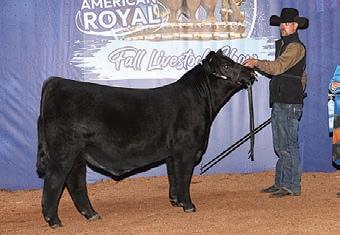
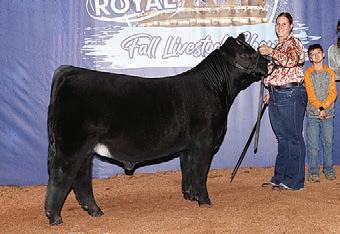
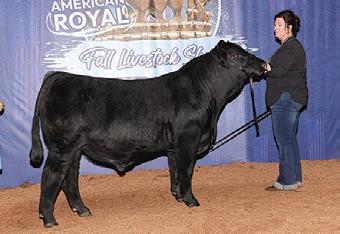
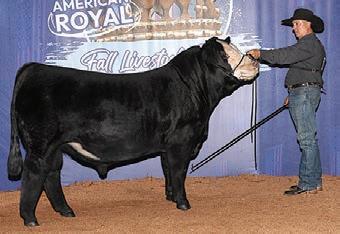
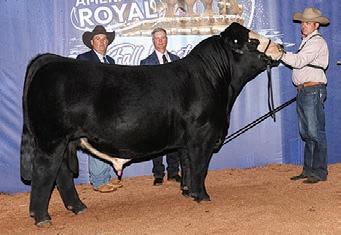
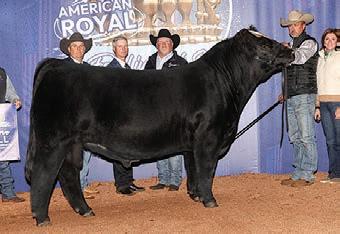
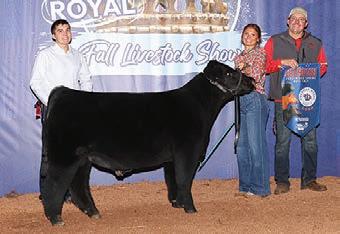
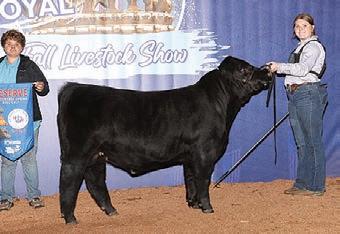
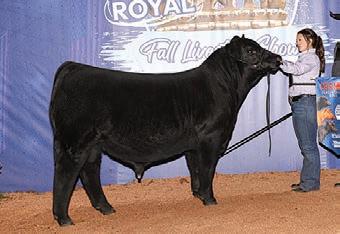
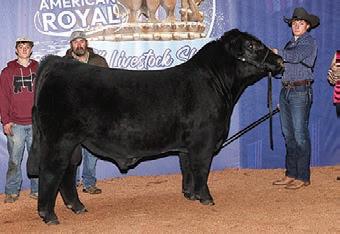
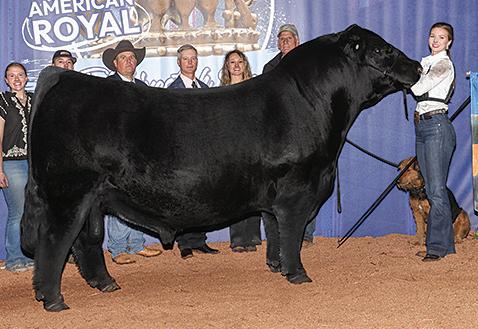
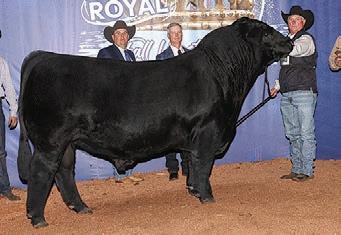
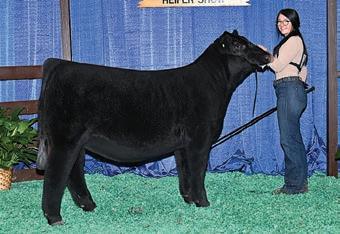
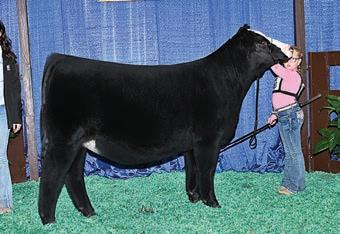
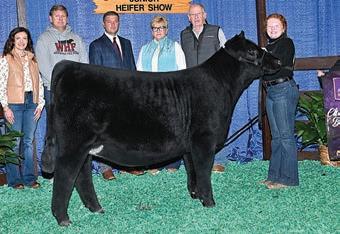
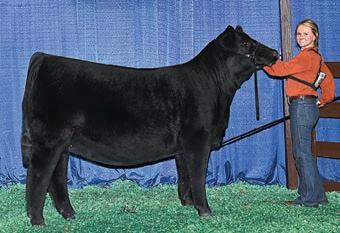
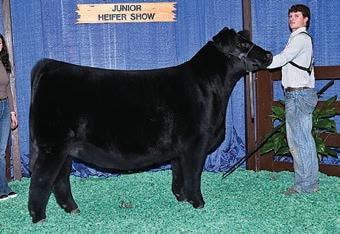
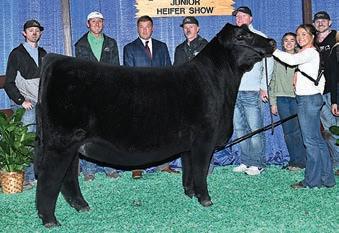
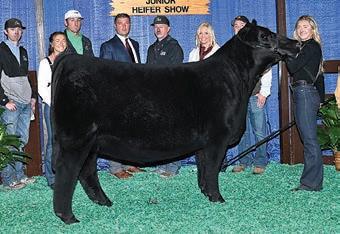
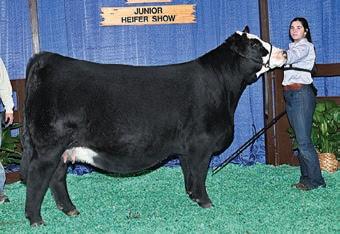
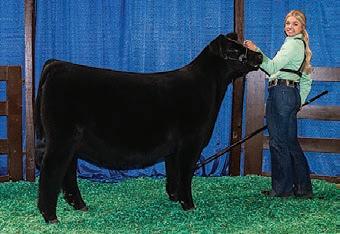
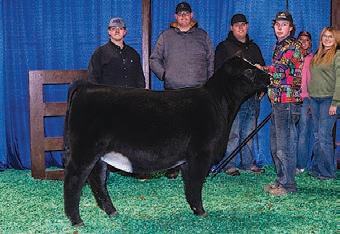
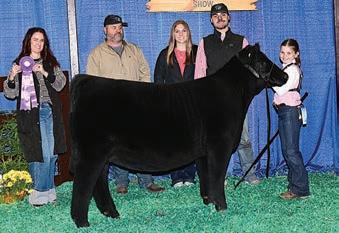
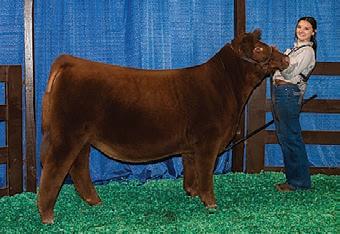
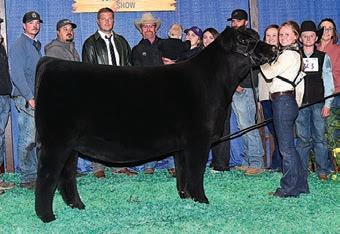
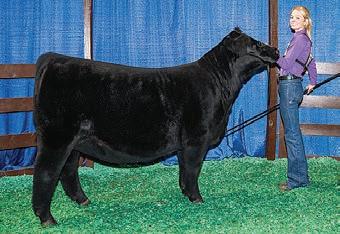
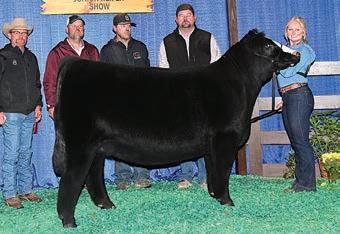
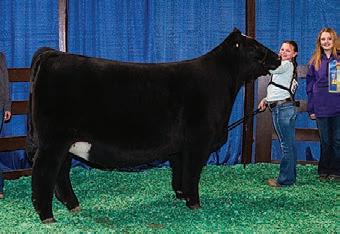
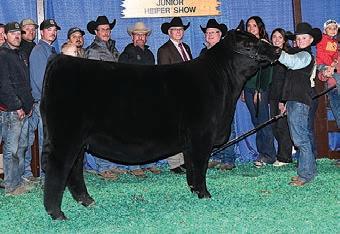
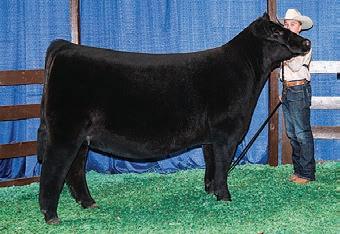
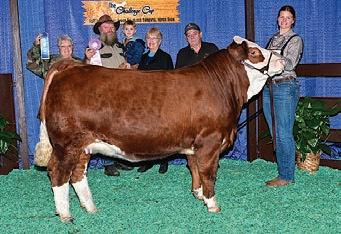
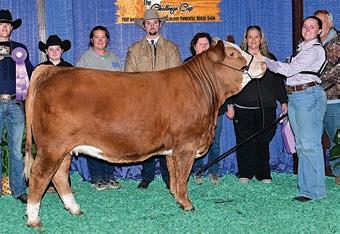
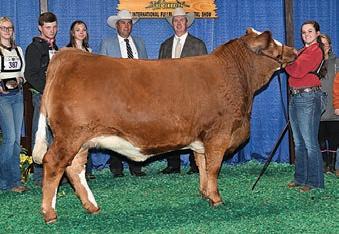
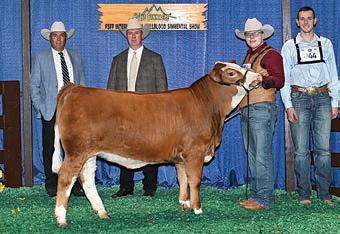
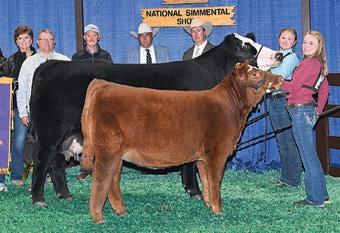
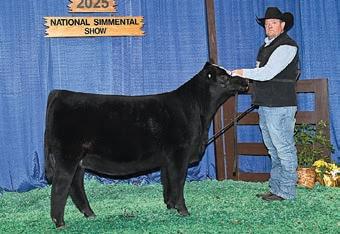
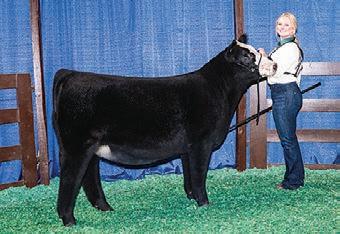
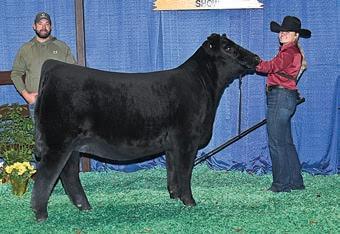
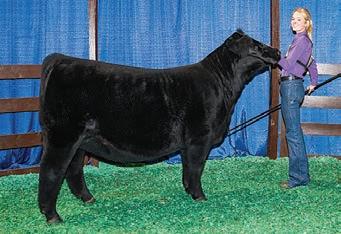
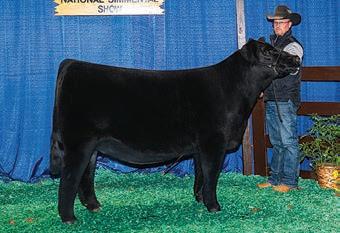
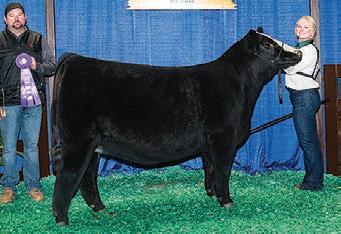
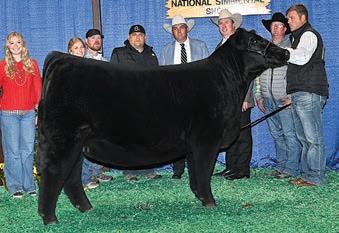
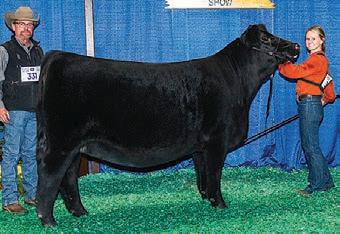
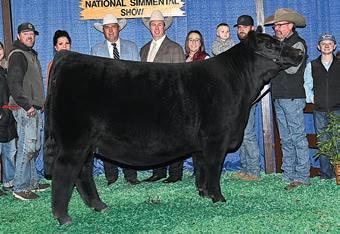
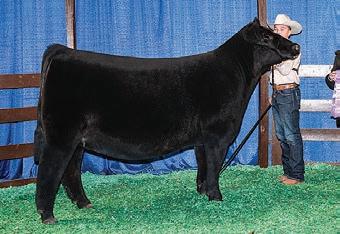
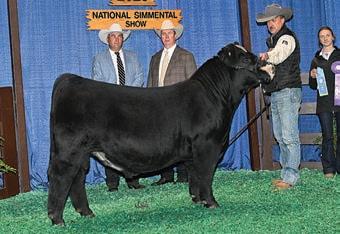
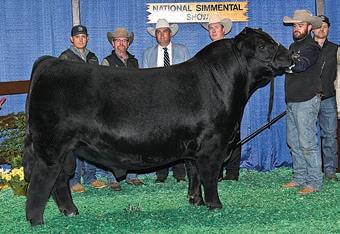
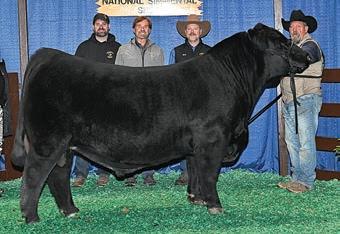
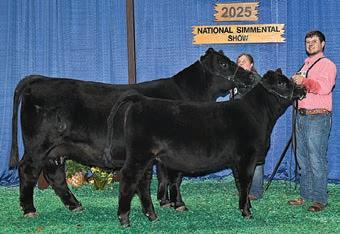
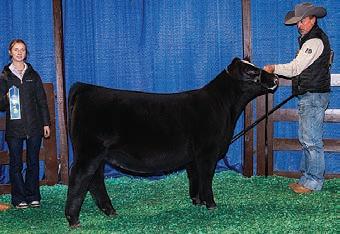
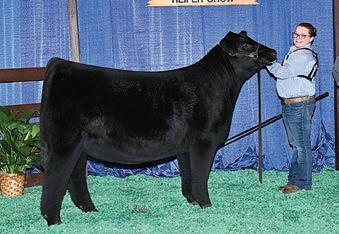
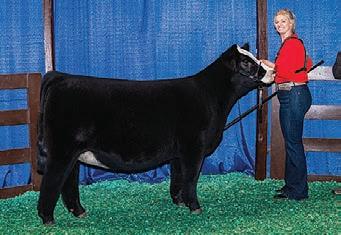
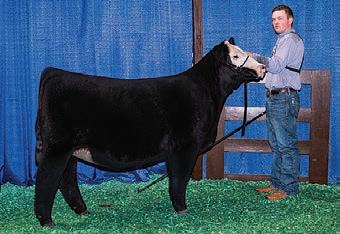
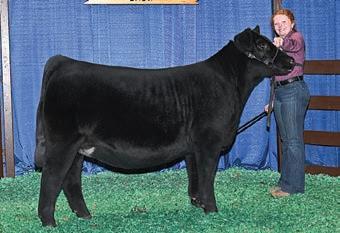
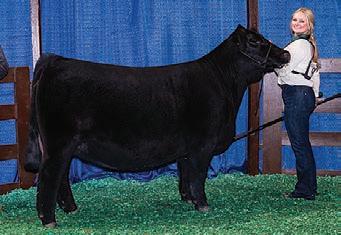
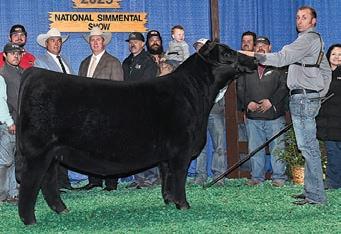
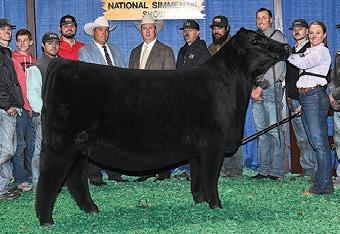
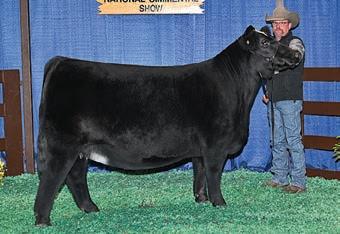
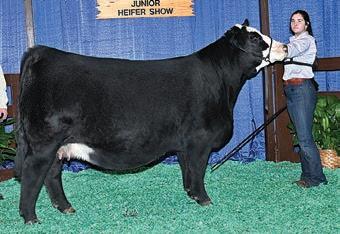
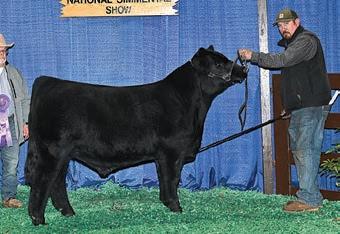
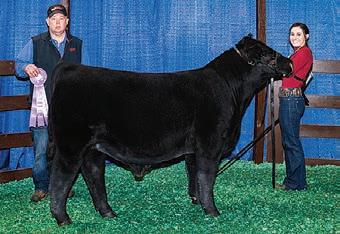
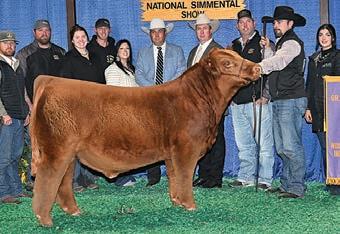
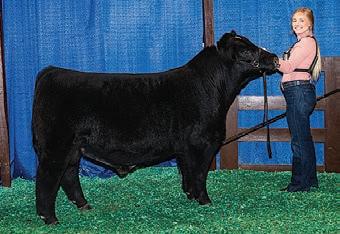
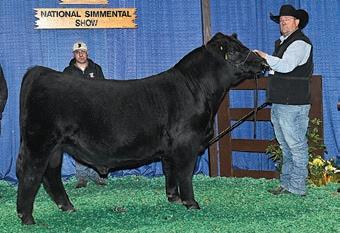
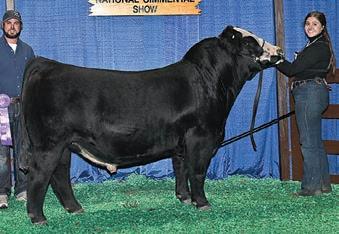
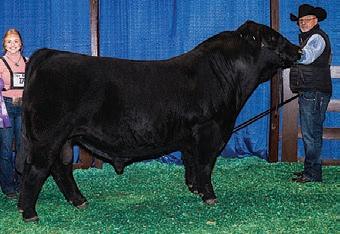
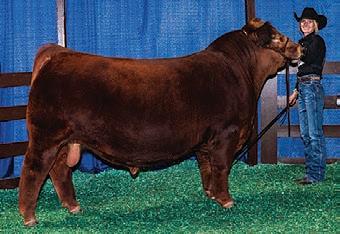
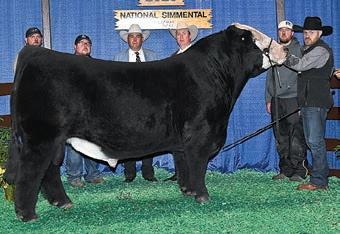
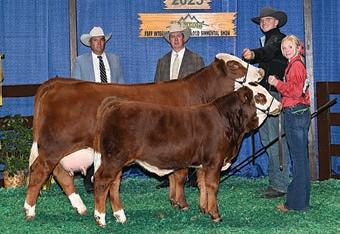
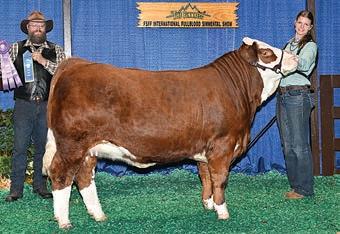
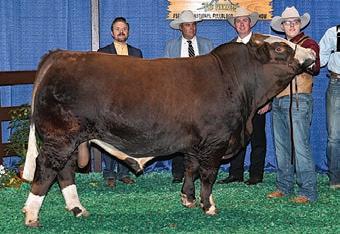
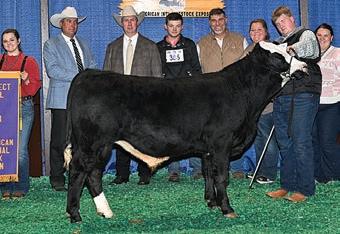
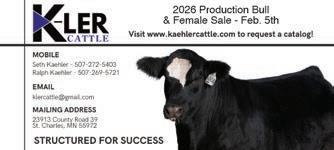
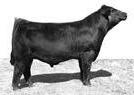
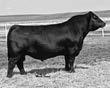
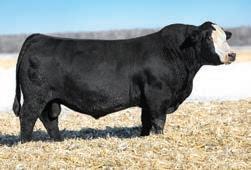
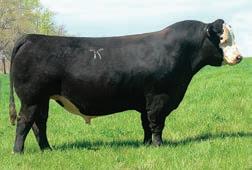
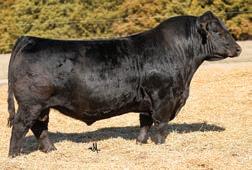
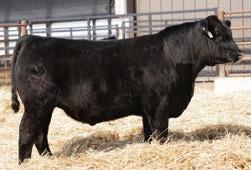
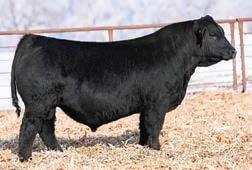
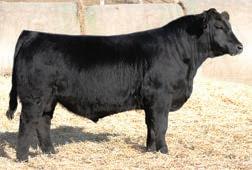
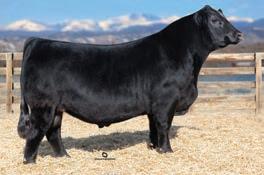
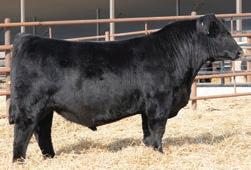
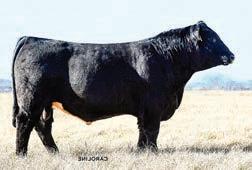
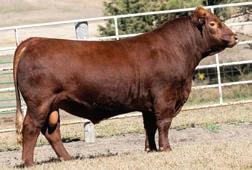
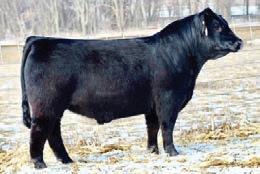
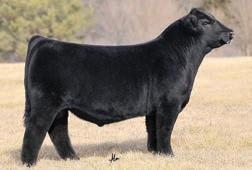
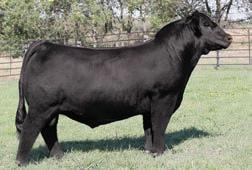
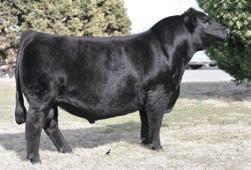
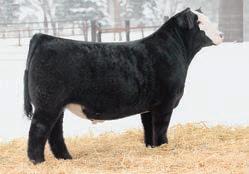
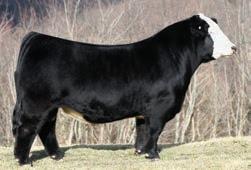
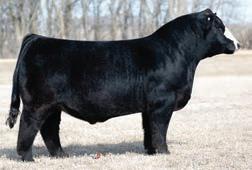
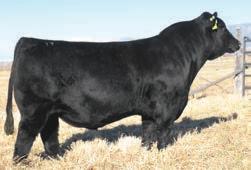
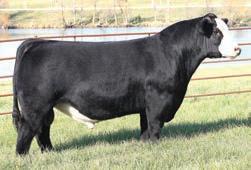
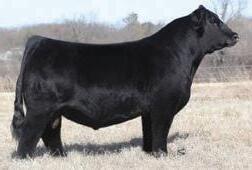
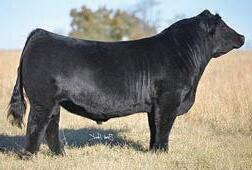
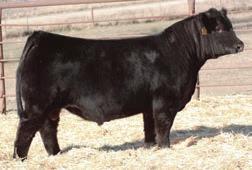
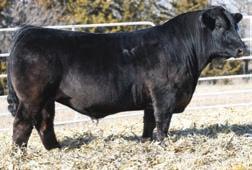
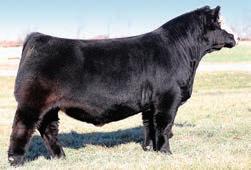
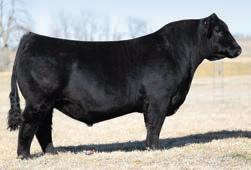
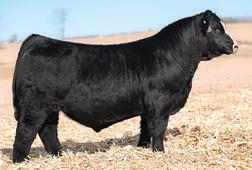
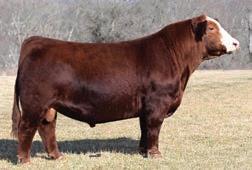
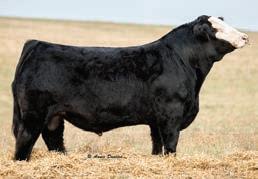
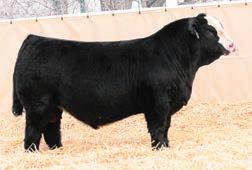
BD: 3/8/2025 • Red • Homozygous Polled Adj. 205 WT: 851 lbs. • WWR: 109 Sire: Redhill Burley 99J • Dam: DCR Ms U302 Red Deputy J160 ET
BWWWYWMilkMWW$API$TI 2.188130277114290
FROM THE HEADQUARTERS
by Dr. Ben Crites, ASA and IGS
Director of Commercial and Industry Relations
My first few months with the American Simmental Association have flown by, and I have been fortunate to travel, meet, and interact with members and breeders across the country. During a visit in December, a breeder shared a story with me about a scholarship interview they had with a junior member. When asked, “Why Simmental?” the junior member simply responded with, “because of the people.” On the way home I reflected on that junior’s answer and realized just how accurate that statement is. It is people like you, the members and breeders, that make the American Simmental Association such a powerful and impactful organization. The visionary founders of the past, today’s leaders, and junior members who represent the future of the organization, will continue to grow the demand for SimGenetics for the betterment of the commercial beef industry. Which poses the question, how do the decisions we make today impact our herds moving forward?
The beginning of the year can be a great time to develop a management plan for your operation. An important early step in the process is to determine how these cattle will be marketed and how their value will be captured. Will calves be sold at weaning,
backgrounded before entering a feedlot, selected for the replacement pen, or developed for next year’s bull sale? These are just a few examples that could be considered. These answers will vary for each producer and perhaps multiple strategies might be utilized. Your marketing endpoints help guide the decisions you make throughout the year. The decisions to be made on breeding, feeding, health, and grazing programs can all be impacted by how and when cattle will be marketed.
Determining the marketing outlet and formulating a management plan is just the tip of the iceberg. For the plan to be effective, it must be implemented! Like many things in life, clear communication is key and ensures that all team members understand the necessary steps needed to reach the goals of the operation in an efficient and profitable manner.
Regardless of the marketing strategy, SimGenetics can be matched to best fit your environment. The adaptability of the breed has allowed Simmental genetics to be the performance sire you can build a cow herd around in any environment. The ASA is proud to offer programs and genetic tools to help producers facilitate their success. The diverse set of genetic predictions available provides the opportunity to select the relevant traits to guide mating decisions, boost performance, and increase genetic progress. The expected progeny differences and economic indices provided by the Association for breeders to utilize are powered by the International Genetic Solutions Multi-breed Genetic Evaluation. These data are backed by 23+ million animals, 750k+ genotypes, from 25+ breed associations across the globe, making it the largest multi-breed genetic evaluation in the world. The talented team of geneticists continue to enhance the evaluation to ensure the most accurate genetic predictions are available for producers to incorporate into their mating decisions.
As we move forward into 2026, I would encourage you to determine if the decisions you are making today align with your marketing goals. It’s never too late to adjust our strategy and incorporate changes made today to set ourselves up for success in the future. Perhaps we just need to use a different tool in our toolbox.
While we are all in the cattle business, it’s really a people business. Regardless of our goals, marketing outlets, or where we call home, the reason that the demand for SimGenetics continues to grow is simple — it’s “because of the people.” .
by Tim Clark, North Central Region
We have all heard the saying, “change is inevitable, progress is optional.” No truer words have been spoken for the current beef industry, and the American Simmental Association as well. Life is full of changes; it is up to us as individuals to deal with them as they present themselves.
The ASA has seen a number of
changes over the past year, with a new EVP in place, new ASA Geneticist, and new Director of Commercial and Industry Relations. All of that plus several new and updated EPD. How do you as an individual want to look at these changes? Is the sky falling? Are we doomed for failure? Or do we look at it as progress? Is there a brighter future? Are there new and exciting ideas going forward? We also have changes in Trustees year after year, so nothing stays constant in this ever-changing world of Simmental.
The Simmental breed is in a tremendous spot, no matter what segment of the industry you look at. We hear of the industry updating the current yield grade system. The update will increase the accuracy of predicting the overall red meat yield vs. the current system. Simmental again will be in the driver’s seat, because of the muscle and red meat yield we provide the beef industry.
Over the past year, the ASA has introduced the Dry Matter Intake EPD, along with the $Gain index. More recently, Mature Cow Weight and Cow Energy Requirement EPD were released in research format. In late November, we saw an update in Calving Ease and Maternal Calving Ease. From the beginning, we have been a breed based on science. As an Association we will continue to strive to use data and science to lead this breed forward. Do we look at these as new opportunities or as more data to shed a bad light on our genetics? New EPD give us additional tools to evaluate individuals on what they offer us as breeders and to the beef industry. Updates are needed as science develops tools to evaluate more data and incorporate data in a more efficient way. With these updates we provide our members with more reliable data along with more accurate EPD.
Let me leave you with some additional words on change. First, from John F. Kennedy shared, “Change is the law of life. And those who look only to the past or present are certain to miss the future.” Benjamin Franklin contributed this cogent observation: “When you’re finished changing, you’re finished.” And finally, Warren G. Bennis claimed, “In life, change is inevitable. In business, change is vital.” .
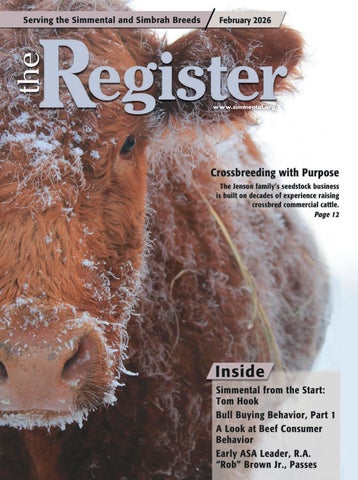
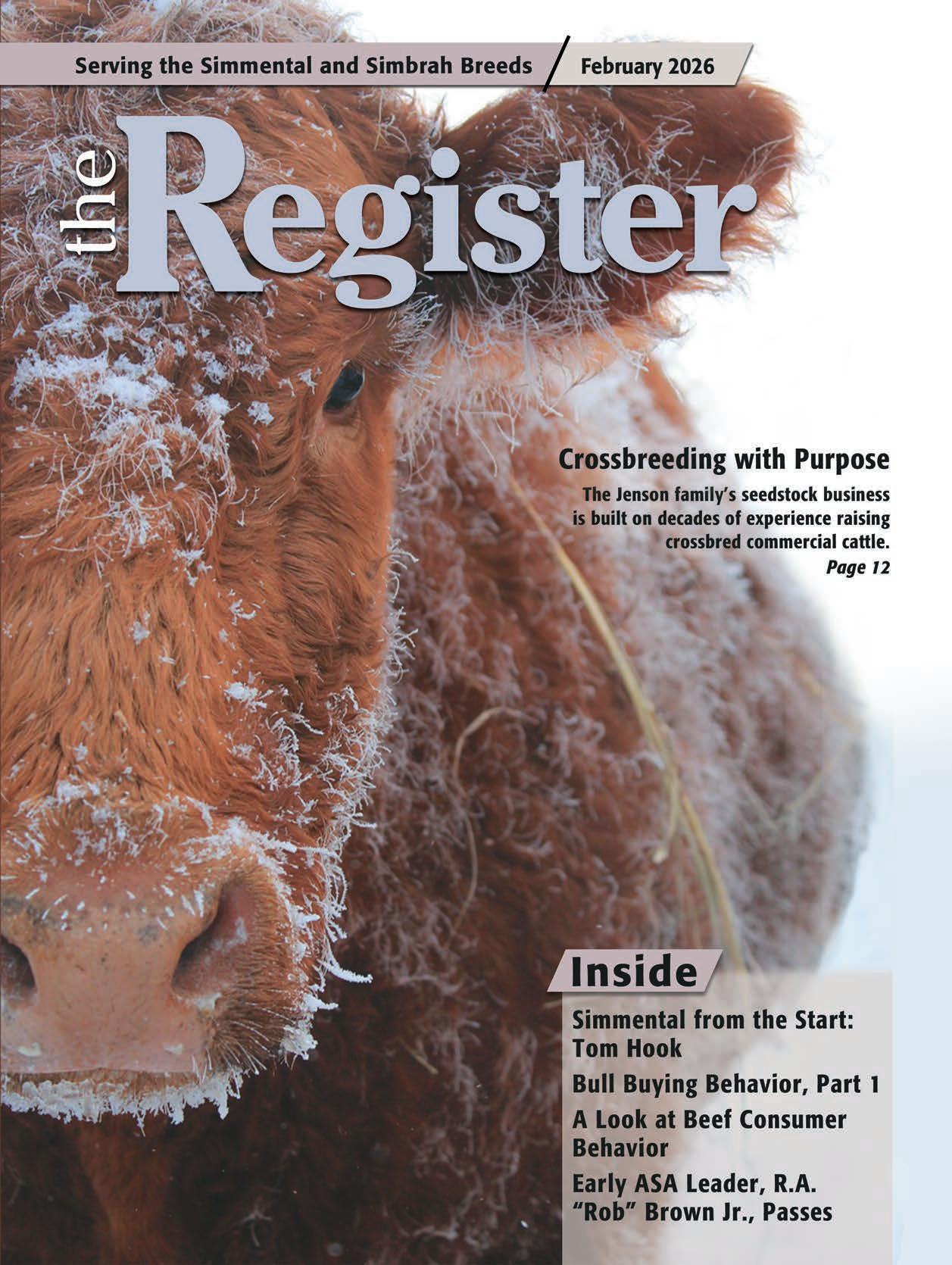
Crossbreeding with Purpose
by Lilly Platts
The Jenson family operates an up-and-coming SimGenetics, Angus, and Gelbvieh seedstock business, built on decades of experience running commercial cattle. Crossbreeding is a foundational element of the Jenson Ranch program, which focuses on raising seedstock that will work for the commercial producer. Jace Jenson’s grandfather and father both built the family operation, and he has since taken the lead alongside his family.
Editor’s note: The Jenson family was featured by the Grant Company in the Stand Strong Simmental Series. To watch, please scan the QR code.
South Dakota Roots
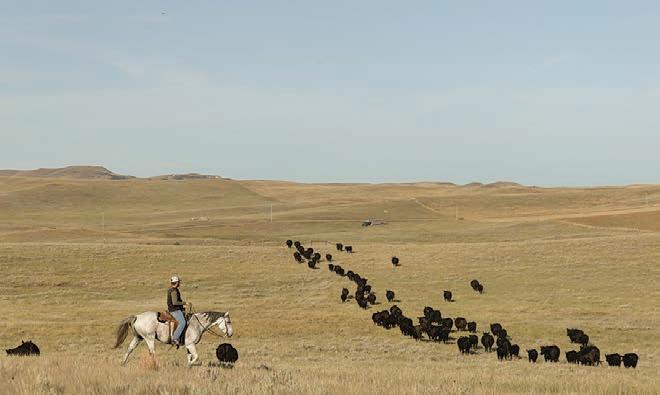
Like many commercial operations, the Jenson family first ran Hereford cattle, which transitioned to an Anguscross, and eventually, a primarily black-hided herd. Located near the unincorporated community of Ralph, South Dakota, the Jenson family is close to eastern Montana, as well as southwest North Dakota. The open, Western prairie is productive grassland, and can also experience long, cold winter conditions. The Jenson family has homesteading roots in the Ralph area, with the current homeplace just three miles from the original family plot.
Jace Jenson grew up ranching. His grandparents, Jean and Louise, started the Jenson ranch, which was passed onto his parents, Ron and Starla. Today, Jenson and his wife, Cammy, along with their two young boys, are the
third and fourth generations of the family business. “The goal for us is to continue making this generational. We hope to give it to our children someday,” Jenson shared.
With decades of experience in the commercial business under their belt, the Jensons had the opportunity to purchase registered females from Dave Graff and Wayne Wilson, which kickstarted their journey in the seedstock business. They have since built their registered cow herd, alongside the commercial operation.
The Jenson family’s registered herd has been built on their Angus cow herd, with the addition of Simmental and Gelbvieh. The Angus cow herd is used as the base, with Simmental and Gelbvieh crosses adding two crossbred options. “We try to keep an Angus base, and then stem off of that in both directions,” Jenson said. “That’s our main goal is to comprise the perfect combination of those breeds.”
These three breeds are balanced to make up their sale offering each year. The Gelbvieh breed was added to cater to a customer base, and Simmental has further expanded their offering. “Simmental was something we really wanted to get into, for the same reasons we like the Gelbvieh-cross cattle,” Jenson shared.
A Commercial Foundation
The Jenson family continues to run a group of commercial females, which not only diversifies their own operation, but also informs the decisions they make as seedstock producers. “The whole thing started with a commercial herd, and a lot of these cows are still commercial,” Jenson said. “We do the same thing as everyone else — we’re trying to sell pounds of calf off the cow without giving up maternal traits.”
“We do the same thing as everyone else — we’re trying to sell pounds of calf off the cow without giving up maternal traits.”
The registered cow herd is run alongside the commercial females, which means they are required to meet the same standards of productivity and self-sufficiency. Crossbreeding has enhanced both the commercial and registered herds. The advantages of heterosis are top of mind. “There are a lot of things that come from it. There is added performance, fertility, and it makes a good commercial cow or seedstock animal,” Jenson explained.
Building a Business
Starting a seedstock business is no small feat, but the Jenson family is steadily building a dedicated customer base. “Everyone knows how hard it is to get into selling
bulls,” Jenson shared. “It’s very stiff competition, and a tough market.”
Their sixth annual sale will be held in 2026. Dave Graff served as a guide to the Jensons in their early years. “We were fortunate to have Dave there for a year. He really helped us get through that first sale,” Jenson shared. “From then on, it’s been a live-and-learn situation. You’re always going to find things that could have been better, and things you shouldn’t have done. There’s a lot to learn in the business.”
(Continued on page 14)
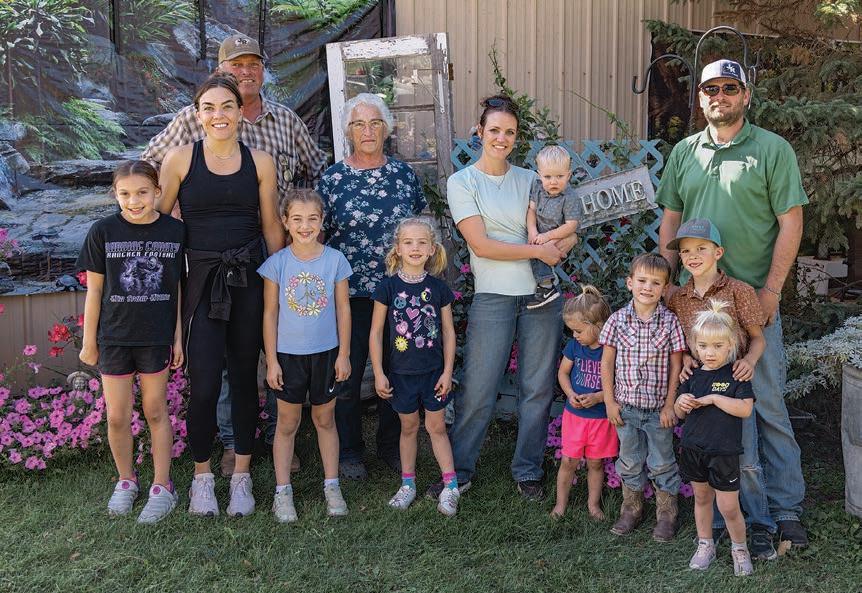
Four generations of the Jenson family.
The Jenson family will hold their sixth bull sale in 2026.
CrossbreedingPurpose
(Continued from page 13)
A high-quality, diverse offering has helped build this customer base. With Gelbvieh, Angus, and Simmental, there is something for everyone. “We’re able to offer a wider range of genetics to our customer base,” Jenson explained. “The quality has gotten better, and we are always trying to evolve and make the next generation better every year.”
The addition of SimGenetics to their seedstock offering has expanded their customer base, and also added diversity to their own operation. “The Simmental cattle bring a lot of good traits to the table,” Jenson said. “First and foremost, there is the performance side. I also think there are a lot of maternal traits that come along with those. The breed has evolved to really make phenomenal cattle, and for us specifically, crossbreeding makes the cattle that we like to run out here. Those cattle do really well.”
Like many in their region, the Jenson family is largely focused on the commercial customer. The area is productive, but can also pose environmental challenges like drought or extreme winter conditions. Because the Jensons run their cattle in the same environment, bulls are ready-made to go out and succeed. “They [our customers] ranch in a similar way to us. They’re striving for the genetics that we are striving for. Most are selling pounds one way or another,” Jenson said. “We try to make the best cows that we can. The bulls are somewhat a byproduct of making those females.”
The Jenson family works with cooperators, utilizing AI and ET work to expand on their offering. With both spring- and fall-born bulls, they are able to offer a select group of older bulls for customers who require a more mature sire.
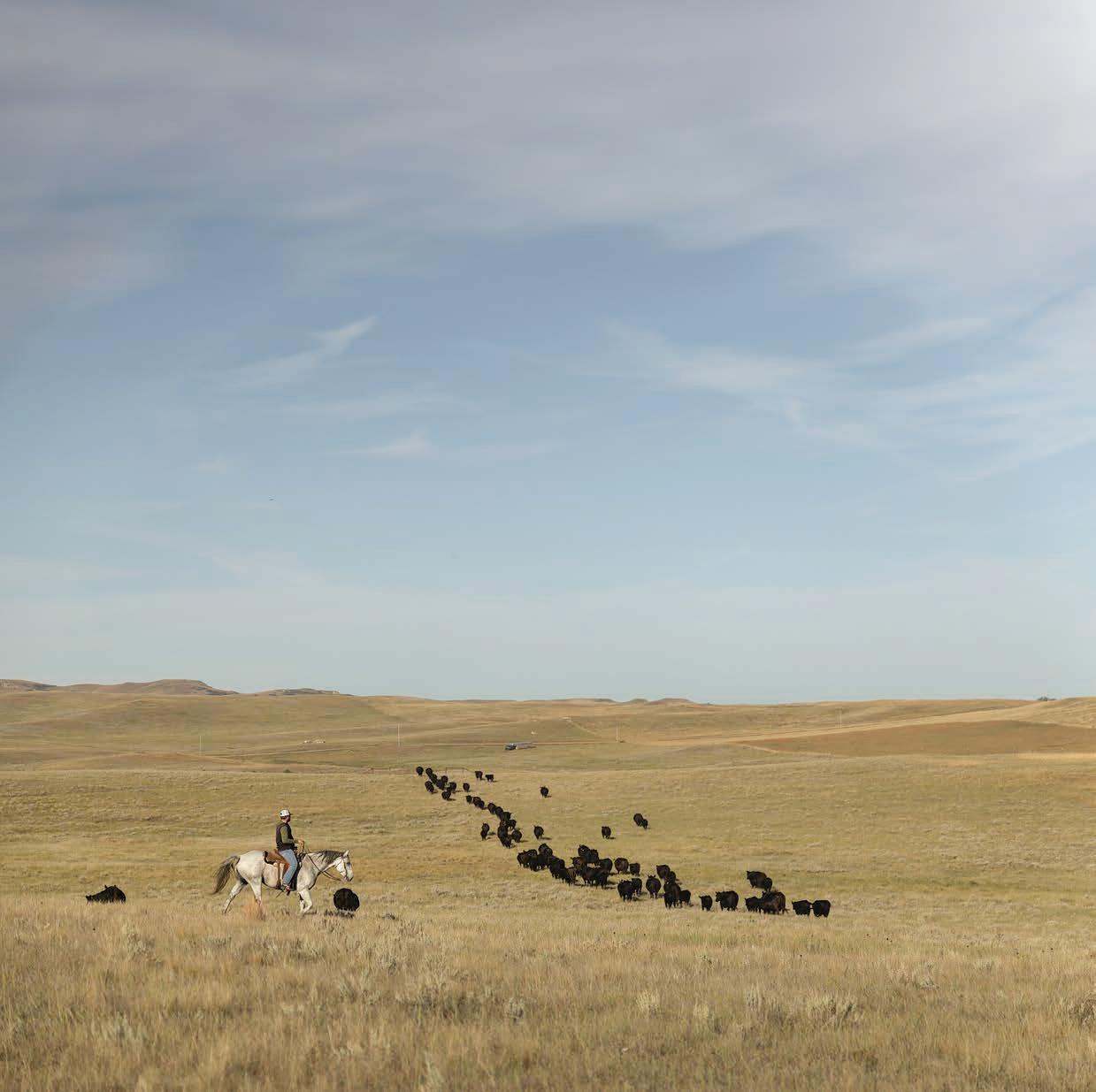
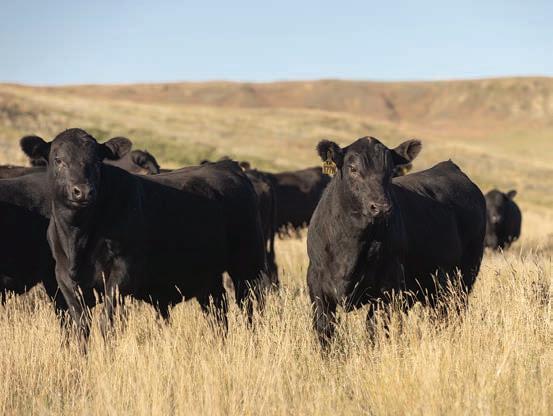
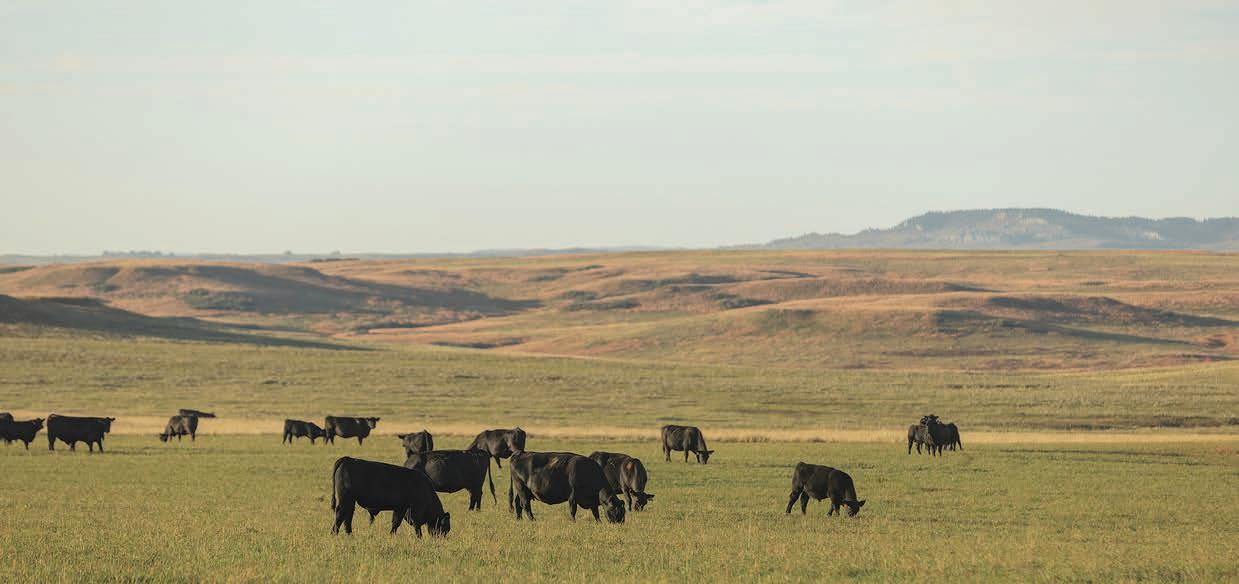
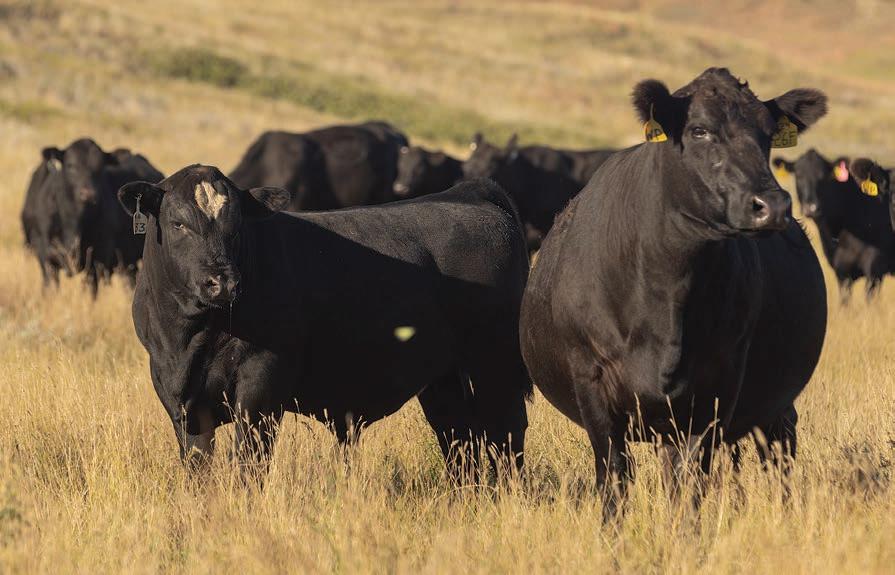
Above: Females at the Jenson ranch are required to be hardy and self-sufficient.
Left: The Jenson family continues to run a commercial cow herd, and values the benefits of crossbreeding both for themselves and their customers.
Opposite: SimGenetics were added to the Jenson program to diversify their seedstock offering.
The Cow Comes First
As seedstock producers, the Jenson family keeps a finger on the larger trends of the industry, and endproduct demand. Their commercial customers are simultaneously working to optimize cow profitability, while also raising the kind of cattle that will succeed in the feedlot. Crossbreeding helps to balance this demand both for the Jensons and their customers. “Crossbreeding in general is going to increase the overall performance of an animal,” Jenson shared. “In our operation, there is a fine line because we have to make females that will get us as much performance as possible without giving up the functionality of the cow herd.”
In southwest South Dakota, a cow that fits this bill has to be hardy and efficient. “She has to be able to go out in our part of the world and cover country, maintain her condition, and do a good job,” Jenson said.
Consistent, accurate recordkeeping helps the Jenson family track this cow herd performance. With the help of Data Genie, data is recorded and submitted to ASA through Total Herd Enrollment. Collecting and submitting both pedigree information and data on both the commercial cow herd and registered females helps the Jensons ensure that their genetics will work for their commercial customers. “I want to evaluate our cow herd all in one. I don’t care if they’re registered or commercial. I want to see how they’re stacking up against each other,” Jenson explained.
“I want to evaluate our cow herd all in one. I don’t care if they’re registered or commercial. I want to see how they’re stacking up against each other.”
DNA collection and genomically enhanced EPD have also spurred this progress. “Getting genomically enhanced EPD on the whole herd — not just the registered cattle — gave us a baseline we can work off,” Jenson said. “What intrigued us the most was finding out where we were at, and actually using numbers in the selection process to improve in areas we are lacking, or seeing where we can give in other areas, to try and build the most balanced cow herd we can.”
The benefit of genomic testing gets passed on to Jenson Ranch customers, with more accurate EPD predictions. “It stems down to our customers,” Jenson explained. “We are able to make improvements in our herd, which helps our customers.”
The Jenson family is focused on improving the next generation of the cow herd, as well as their family’s future. “The whole operation is very family-oriented,
and our vision is to keep this thing going until we have the opportunity to pass it on to the next generation. That’s what all parents want, is for someone to come back and have an interest in what we’re doing,” Jenson said.
“The people who are in this industry are very optimistic. You’ll succeed if you put the work in.”
Working in the beef industry is challenging, but overwhelmingly rewarding for the Jenson family. “The beef industry is not always the easiest. It’s ups and downs, and can be a roller coaster. But the people who are in this industry are very optimistic, and there is a reason people do this. It can be very rewarding,” Jenson concluded. “It’s your willpower, and what you want to do. You’ll succeed if you put the work in.” .
by Chloe Tolar
the from the
Tom Hook has been involved in SimGenetics from a very young age, participating in AJSA events that helped shape his values, career, and future.
Editor’s note: This is the second article in a series highlighting the significance of the AJSA in Simmental breeders’ lives.
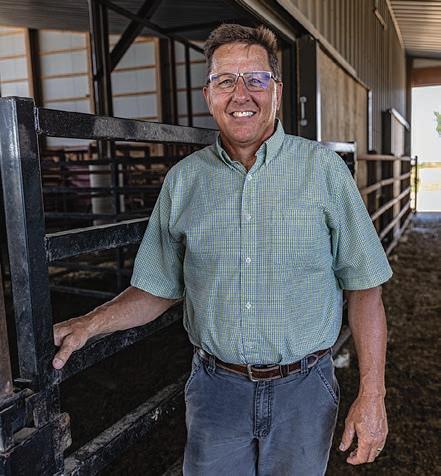
Tom Hook grew up in Tracy, Minnesota, and has lived there his entire life. His family has run a diversified crop and livestock farm since 1900, and his grandchildren are the seventh generation of the family operation. Hook participated in the AJSA, and later served on the ASA Board of Trustees. Today, through his work with Allied Genetic Resources, Hook is staying involved with Simmental cattle.
Tolar: What was most memorable about your experience in the AJSA?
Hook: From a personal standpoint, it was probably receiving one of the early Gold Merit scholarships, which helped with my college tuition. It furthered my interest in the breed, and we were all in. We’ve all been involved for over 50 years now, supporting the breed not only as breeders, but by hosting events, and I served on the ASA Board of Trustees. I think it served to launch my interest, as well as encouraged us to raise cattle and improve the beef industry.
One of the greatest blessings is the network that you build at a young age. People come and go, but in the cattle business, it seems like you continue to work with them for a lifetime and become great friends as well as customers. Looking at those friendships and fellow Simmental enthusiasts, it’s hard to believe that we’ve worked together for over 50 years.
What’s really neat is some of those youth members that I met back in the ’70s or back in college in the early ’80s, I still work with today. I think as long as you conduct business with integrity and treat each other like you’d like to be treated, those friendships go very well.
Why are youth agricultural organizations like the AJSA important?
I don’t think there’s any question that whether it’s the AJSA, 4-H, or FFA, learning to care for and raise animals gives you discipline and perspective on life that you can’t get anywhere else. You learn about life and death. You learn about responsibility, and that if you don’t care for them, they won’t thrive. There are some valuable life lessons that the AJSA can develop, and especially in its current format. I know that showing is a big part of it, which I loved to do when I was young, as well as into our younger adult life of selling seedstock, but there are so many other programs, from public speaking to networking with other breeders, that are a part of the AJSA beyond showing.
It’s a really good training ground for youth to be ambassadors, for not only the beef business but agriculture in general, because the number of participants in the agriculture community is really small in relation to the larger population. Without an understanding of production agriculture, we don’t have good advocates, and I think the junior associations, as well as the FFA, provide training ground to be great ambassadors for production.
How do the skills young people gain in the AJSA reach beyond agriculture?
It’s no different than any kind of youth development — from decision-making skills, learned from livestock judging, to impromptu speaking skills learned from sales talk presentations, and critical thinking from the herdsman and Sire Summary quizzes, all provide essential
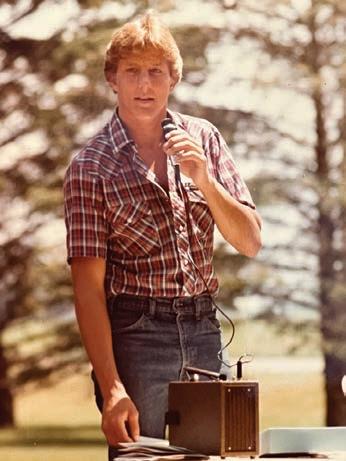
Hook speaking at a Minnesota Field Day in the early ’80s. Hook credits the AJSA with building his public speaking skills.
skills that will be used your whole life. The AJSA membership and activities help you learn how to interact and understand livestock practices from different regions of the United States.
I think one of the biggest things that you have to learn is how to compete fairly. It’s okay if you get knocked down, but you’ve got to get up and try again. Don’t disparage those who beat you from the standpoint that they won. If winning is a goal of yours, work hard to achieve that in the future, but I would say to win humbly and lose with grace.
How did your experience in the AJSA inform your career decisions?
I wanted to farm at a very young age. I was one of those who just loved it. I guess I knew what I wanted to do, and I like the diversity of crop production as well as livestock production. And so I went to college and grad school to get degrees to help further that.
My best mentors were my parents, my grandparents, and the multi-generational farm. They were the biggest part of the education that I got growing up, but the AJSA definitely furthered that interest. It’s been a real blessing to be a part of it.
What impact did the Simmental breed have on your breeding program and on your career?
I have been blessed to work with several people who were mentors to me during my early years of breeding Simmental seedstock: Steve Reimer in South Dakota; Bob Dickinson in Kansas; Roy Wallace in Ohio, and Dr. John Edwards in Texas. I still use and implement today principles inspired by these individuals who were kind enough to share their wisdom and life experiences in the beef industry with me. Simmental came through some really rough times based on breeding decisions that, even as a young breeder, I was a part of, and the cattle just didn’t fit the industry. I find great personal satisfaction in seeing how we survived that, we have come through, and actually now play a vital role in the genetic makeup of the cow herd and the beef industry in North America.
I also take great satisfaction in the success that breeders have enjoyed over the last five years. For the early breeders, the foresight they had to set up the Association, the way they did, was crucial to survive some really rough times where the Association, as well as the breeders, were really struggling to be profitable. To come through the other side and be where we’re at now, it’s so cool to see how ASA and the breeders have done.
Do you have any advice for a young person who is stepping into their first job or career?
A couple of things that always hold true are to always conduct business with integrity. Your word is your bond, and you should surround yourself with the best mentors and colleagues that you can. It’s so much more fun doing it together with a team and having success than it is to do it by yourself. I love working with people, doing things together, and winning together. My lifetime has been so much more satisfying doing things as a team. .
Hook grew up on his family’s diversified beef cattle and farming operation, which started in 1900.
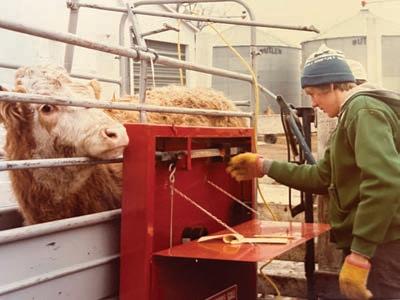
Hook recording weights on yearling heifers with a scale he purchased as a part of his AJSA and FFA beef proficiency project in 1980.
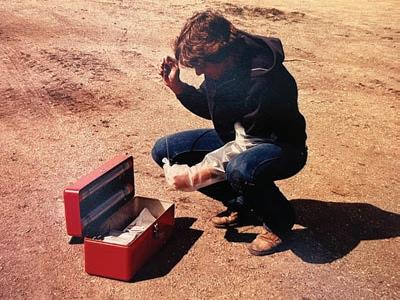
Hook attended AI school when he was 16 years old.
Your Customers Really are What Thinking?
by Lilly Platts
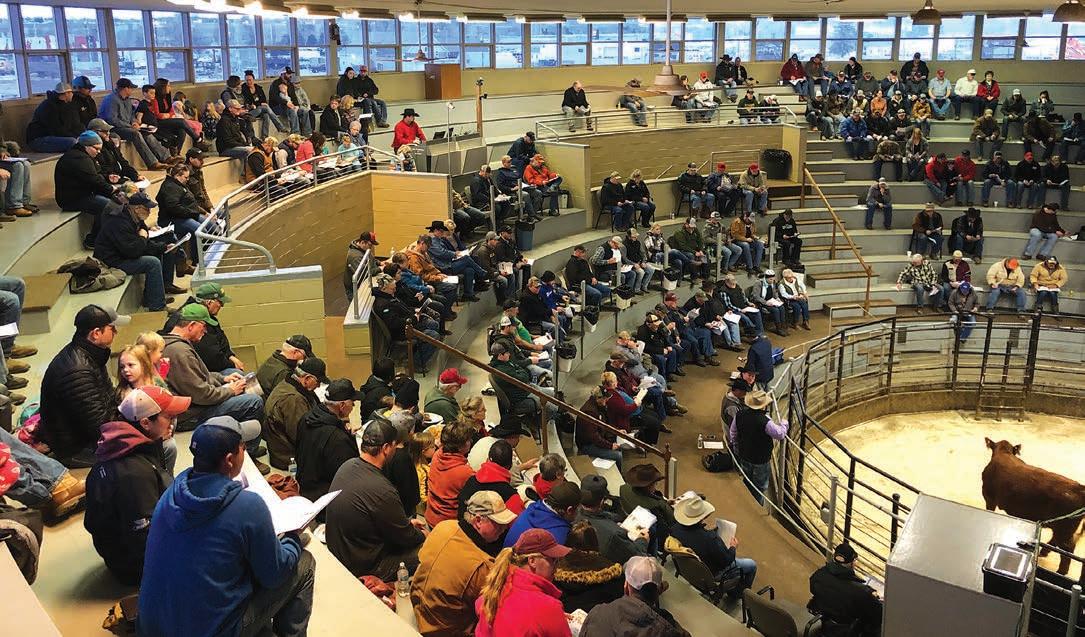
DSeedstock producers work consistently to make sure catalogs present the most pertinent information to commercial customers. With the ever-expanding suite of EPD, deciding what to put in a catalog can be challenging, especially considering the fast-paced nature of many bull sales. Dr. Charley Martinez studies bull-buying behavior through the use of eye-tracking software. He presented his work and findings during Fall Focus 2025 in Columbia, Missouri.
r. Charley Martinez grew up in the American Junior Simmental Association, and went on to receive his PhD from Texas A&M. Today, he teaches agricultural and resource economics at the University of Tennessee. Martinez became interested in the factors that influence a bull-buying decision, with the goal of removing bias. When asked to speak about decisions, a producer may feel compelled to say they put more emphasis on EPD evaluation than they actually do, or oversell the importance they place on economic indexes, for example. Visual appraisal often takes place in-person, but how a bull is pictured, and how that picture is presented in a catalog, also matters.
Martinez and his team first started working on this research in 2021. Martinez ran his idea by Dr. Troy Rowan to formulate experiments in Alabama and Tennessee, which evaluated whether or not producers were using EPD to make sale selections, and tested the ability
to predict value. “We were just trying to elicit their belief about what a bull is worth,” Martinez shared.
Next, Martinez purchased state-of-the-art eye-tracking equipment, which uses movement and heat tracking technology to reveal where a person’s eye goes first, how long their attention is focused on a single thing, and other behaviors. Martinez and his team published their first study, which posed the question, “do EPD matter?” After finding that the answer was yes, their next question was, “what EPD matter?”
EPD systems have developed drastically since their introduction. The earliest EPD were for the basics: birth weight, weaning weight, yearling weight, and milk, for example. In the early 2000s, percentile rankings became a part of the system. During this same time, researchers started developing economic selection indexes, which provide a single monetary measure. Over time, more EPD and selection indexes have been added.
Economic selection indexes are typically placed at the far right-hand side of the overall EPD profile. Martinez shared that this decision may have had an unintended effect on behavior. “Visual cognition literature supports the idea of ‘what comes first is seen first,’ which is known as the primacy effect,” Martinez shared.
Under this assumption, the first EPD that producers see are not the indexes, which have been developed to simplify decisions, and have been proven to improve selection decisions. Instead, they are likely taking in those foundational EPD like Milk, and potentially missing the indexes entirely. Recent eye-tracking studies suggest that people often skip information on the far-right, especially when the information is dense or busy. “If we can’t get people to look at or understand them [indexes], then how are they supposed to use them?” Martinez said.
The objectives of Martinez’s latest study were: 1.) To understand the influence of different EPD profile layouts on buyers’ accuracy of seedstock bull price prediction; 2.) To understand producers’ characteristics that affect accurate decision-making when buying a bull; 3.) To understand producers’ accurate decision-making across different states and breeds; and 4.) To understand the factors that affect accurate prediction of qualitydifferentiated bulls by producers.
The team collected data through “lab in the field” experiments, using the eye-tracking computers and software. Participants were paid a small amount to participate, with an extra incentive for answering all of the questions correctly. Across several states, 208 participants looked at 18 bulls, with the challenge of predicting value. These bulls had been sold, which gave the researchers a baseline for the actual real-world value of the animals.
The participants looked at a looping video of each bull, as well as an EPD profile. There were three treatment groups and a control. The bulls were Angus, Simmental, and Hereford, and were chosen to represent high, average, and low EPD profiles. The “control” group saw what is typically presented in a bull sale catalog. The treatment groups either saw the EPD in the typical order with percentile ranks, the EPD in the typical order without percentile ranks, the EPD in the reverse order with percentile ranks, or the EPD in reverse order without percentile ranks.
The participants were given minimum and maximum values to keep their estimation within, and challenged with predicting the value of the bulls. The participants were also surveyed on things like their involvement in the beef industry, the breeds used in their own operation, age, income, comfort with risk, and other general measures. The survey also asked if the participants used EPD in real life, or genomically enhanced (GE) EPD. Just over 80% said they use EPD, and around 50% said they use GE-EPD. Around 90% said they use phenotype in making selections.
Below: A
(Continued on page 24)
Opposite: Economic selection indexes can help producers simplify their selection decisions on sale day. Where these figures are placed in a sale catalog is important. Photo by Susan Russell.
Above: Data shows that phenotypic appraisal is a top priority for most producers. Photo by Liv Stavick.
significant amount of information is available for registered cattle, which can easily lead to information overload. Photo by the Grant Company.
This study showed that participants were most successful at predicting value when the EPD were presented in an “inverted” or opposite order, and when percentile ranks were displayed, with the index measures on the left. The study also showed that participants who said they utilize GE-EPD were better at predicting the price of the bulls. People who reported being more risk-seeking were also more likely to be wrong on the bull predictions. The study also measured a person’s relationship to delayed gratification. The participants who reported being more ok with delayed gratification were more likely to accurately predict the value of the bulls. “The folks who are thinking of and tolerant of setting aside something to have a bigger gain at the end are better off,” Martinez said.
The eye tracking technology used in the study creates a heatmap based on the amount of time a person spends looking at one area. For example, if someone looked at the CE EPD for five seconds, and the bull’s head for one second, the CE EPD area would be a more red color, while the bull’s head would be green. These “areas of interest” reveal what people are actually looking at and considering when evaluating animals and EPD profiles. The aggregate map of this data shows the percentage of time that people spend “fixated” on an area (spending more time), or simply “gazing” (a passing glance).
This data shows that people overwhelmingly spend more time looking at an animal’s phenotype, versus EPD
and indexes. Only 11% gazed at the indexes, with 10% fixating. The opposite was true for phenotype, with over 97% gazing, and 100% fixating. Martinez shared that this data shows that more education is needed on indexes, as well as how to differentiate the measures across breeds.
The results of this study also bring up the important question of how producers should be laying out their bull sale catalogs. With the number of EPD and data points available today, choosing what to include is a challenge, and it’s easy to create information overload. This is especially true for producers who cater to the commercial industry. “Information overload has been proven to cause confusion, and uncertainty in decisionmaking,” Martinez said.
If less is better, the challenge becomes choosing which measures matter the most. EPD ranks and percentiles, as well as having the economic indexes appear on the left, improved the ability to accurately predict bull value, and Martinez suggests that producers should consider better placement of these numbers. “Our study suggests that emphasizing economic selection indexes in catalogs can enhance producers’ evaluation accuracy by better helping them connect merit with economic value,” Martinez shared.
Martinez and his team set up a similar study for Fall Focus participants. The results of that study will be shared in Part 2 of this article. .
Ensuring that customers have the most important information in front of them on sale day is a priority for seedstock producers. Photo by Kelly Finke.
To learn more about the CMP visit www.simmental.org, then click Carcass Merit Program under the ASA Programs tab.
Questions, contact cmp@simmgene.com for more information regarding this program.
The American Simmental Association Carcass Merit Program (CMP) is the beef industry’s most demanding and informative young sire test. The program is a hallmark of ASA breed improvement for economically relevant carcass traits. Commercial producers play an integral part in this project.
Participants receive:
u $200 for each AI-sired calf with carcass information
u Free semen on top young herdsires
u Free ASA Genetic Evaluation on your cow herd
u Free genotyping on terminal progeny
u Keep any or all replacement females
Become a Carcass Merit Program test herd today
*The CMP is a structured young sire progeny test. Participating cooperator herds will random sample their cow herd with CMP semen, and the resulting male (or female) progeny will be harvested with individual carcass data gathered. ASA Staff will work with cooperator herds to provide bulls that fit the general criteria of your management program; however, only bulls nominated into the CMP program may be used. Producers are encouraged to be somewhat proficient in Microsoft Excel for accurate and consistent record-keeping.
A Look Beef Consumer Behavior
by Lilly Platts
Beef is one of the most popular proteins in the US, with demand remaining strong despite a higher per-pound price. Increased interest in protein intake and nutrient density has helped keep beef on dinner plates, as individuals cook more at home, and seek to maximize their diet. The modern consumer’s decisions surrounding food are far from simple, and always evolving.
Dr. Mandy Carr Johnson shared about the factors that affect consumer behavior, trends, and what the industry needs to consider during the 2025 Beef Improvement Federation Symposium in Amarillo, Texas.
Who is eating beef?
Age demographics show who is buying the most beef, and which group will be the most important in the near future. Currently, Millennials (born 1981–1996) and Gen Z (born 1997–2012) make up the largest segment of the US population. Millennials are one of the largest-consuming populations influencing spending and buying habits across all foods, including beef.
Despite this, buying power still lies with Gen X, born from 1965 to 1980. “What distinctly differs is buying power,” Johnson said. “If you look at the ones with the greatest buying power, it’s Gen X. Most of their children are out, or close to being out of the home, but they are still working, so they have more disposable income.”
With the Millennial generation being the largest age group in the US, their buying power will be especially strong once they reach this same life stage. “Today, there are consumers in more distinct categories in the marketplace than ever before,” Johnson explained.
The National Cattlemen’s Beef Association and Beef Checkoff regularly survey consumers about the key things
that make up the decision to purchase or not purchase beef. Eating experience is consistently a top priority. “If you have a bad eating experience with any product, particularly beef, then for a consumer it might cause them to not eat it the next time,” Johnson said. “It is still one of the most critical factors influencing consumer decision to buy and consume beef.”
Convenience and versatility are priorities for consumers. Price is also a consistent factor in consumer choice, and Johnson emphasized that while producers have very little say in the price of beef on grocery store shelves, they can help promote the value of the product. “What we can do is help consumers know how to utilize beef so they feel that the price they paid is worth it,” she said.
How beef is raised and grown, and nutrition are also top priorities among consumers in these surveys. Consumers have shown a steady increase in knowledge about how the food they eat is raised. Ounce per ounce, beef is the most nutritionally dense protein on the market, which continues to support demand.
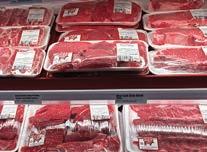
Above: Most consumers source their beef in traditional grocery stores. Opposite: Consumers continue to put the most trust in those who deal with the raising of beef cattle, as opposed to the media.
What are consumers choosing?
Chicken continues to outperform beef, with 43% of consumers saying it’s their number one choice compared to 36% saying they reach for beef first. Other proteins, including fish, pork, and plant-based fall far below at 13%, 4%, and 4% respectively.
The low price of chicken, convenience, and knowledge of how to prepare the protein all contribute to this preference. When surveyed about weekly choices, 83% of consumers said they eat chicken weekly, and 71% said they eat beef every week.
Data shows that consumers generally prioritize variety in their protein choices, which bodes well for beef. “Consumers want choice,” Johnson explained. “They choose all of the different proteins across the week.”
Meat alternatives remain a topic of conversation within the industry, but consumer data puts this influence in perspective. Lab grown meats are not readily available to consumers in retail or food service, but many plant-based alternatives including alternative hamburger patties, chicken nuggets, breakfast sausage, and more can be found on most grocery store shelves. Around 25% of consumers surveyed said they eat a meat alternative each week. Among this 25%, most also ate chicken, pork, beef, or another animal protein as well. Again, Johnson emphasized that choice and variety are a priority.
From the perspective of market share, alternative proteins take up less than a percentage point of the overall market. “We often hear a lot about plant-based proteins and taking market share, but I think it’s important to understand and have perspective,” Johnson said.
Why are consumers choosing beef?
As the most expensive protein on the market, consumers who choose beef have to place real value in their decision, especially when choosing higher-end cuts. The dollars consumers spend on beef have grown fairly steadily since 2010, and were up a full 100% by 2024. This means that the eating experience is more important than ever. “One thing we do know is that now more than ever, consumers are spending more money on protein, particularly on beef. We have to be aware of that. It does provide a great opportunity as producers, and value for the animals we raise,” Johnson explained. “However, for consumers, we have to be cognizant of the money they are spending on proteins, including beef, being more of their budget. We have to be worth it.”
Eating experience can mean a lot of things. Johnson explained that as a meat scientist, her analysis of a cut of beef is going to differ greatly from that of the average consumer. Taste is a fundamental part of eating experience, and when asked to pick their favorite protein based on this single factor, beef wins by 25 percentage points over chicken.
Consumers who choose beef have to place real value in their decision, especially when choosing higher-end cuts.
(Continued on page 28)
A LookBeef Consumer Behavior
(Continued from page 27)
Tenderness became a major topic of conversation in the 1980s and early ’90s. The National Beef Quality Audit, and National Beef Tenderness Survey were born out of the realization that beef needed to be more tender to improve consumer experience. At the time, consumers said one out of every four steaks they consumed were not satisfactory. Today, that has improved dramatically, with 85–95% of consumers reporting a favorable eating experience both at home and in restaurants.
Where are consumers eating beef?
The Covid-19 pandemic shifted eating habits dramatically, with at-home cooking no longer being optional. This trend has stuck since, with 94% of consumers reporting that they are preparing more meals at home.
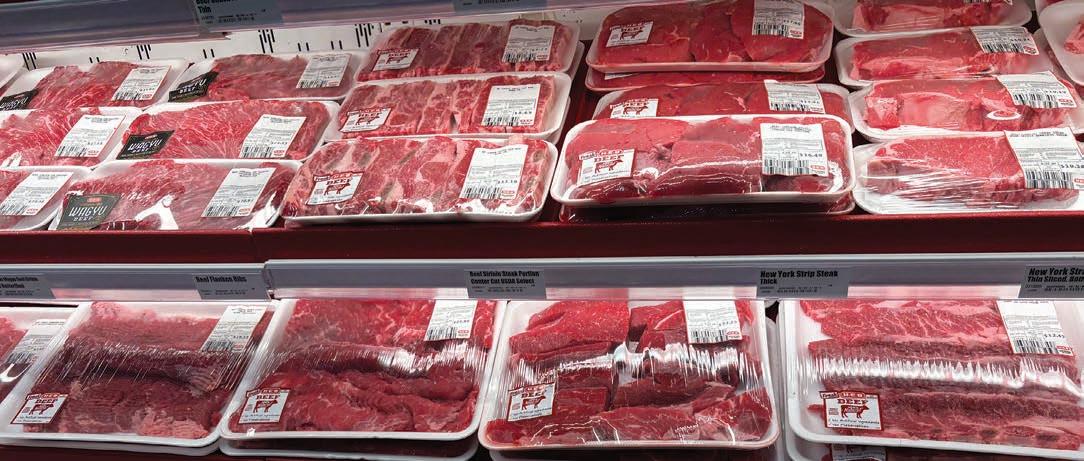
Where consumers purchase beef is also an important consideration. Most consumers (73%) primarily purchase beef at a traditional grocery store. Mass merchandisers like Walmart account for 38%, and club stores like Costco are the primary choice for 24% of consumers. Only 3% of consumers report primarily purchasing their beef directly from producers.
Online shopping, including grocery pickup or delivery, has increased steadily. Data shows that the younger the consumer is, the more likely they are to purchase their groceries online. Across all age groups, the majority of consumers shop mainly in-store, and partly online. “As you move toward metro areas, online grocery shopping is more and more a part of everyday life. We want to be there for consumers,” Johnson explained.
How much are consumers spending and why?
In terms of dollars, beef occupies the majority of retail fresh meat sales. The price is higher, and consumers are also purchasing more beef. “Consumers want beef, and they are willing to purchase any that we have that we are not exporting,” Johnson said.
The gap that is appearing between consumer willingness to pay and average price needs to be monitored.
This is good news for the industry, but Johnson warns that the gap that is appearing between consumer willingness to pay, and average price needs to be monitored. Higher beef prices have caused shifts in the cuts consumers are choosing, with many moving to lower-priced cuts.
“They still want beef, but they may not pick steak as
often and trade to another beef item. What we don’t want is them trading out of the beef category for another protein,” Johnson shared.
Consumers report increased measures to help with their budget, including looking for deals and coupons, less dining out, finding more ways to use leftovers, stocking up, and buying store or private labels instead of name brand.
Other proteins, with the exception of plant-based, are also trending upward. Mediterranean, keto, and other diets that prioritize protein have become increasingly popular. The increased use of GLP-1 medications is also contributing to increased protein intake, with doctors encouraging patients to also focus on hydrating, eating vegetables, and consuming protein.
Many consumers are reaching for beef while following these diets, but chicken continues to be perceived as the most healthy. Studies in the 1980s and ’90s, which encouraged low-fat diets, did damage to consumer perception of beef that still has an effect today. “They [consumers] still believe chicken is a healthier protein, which goes back decades,” Johnson explained.
Do consumers trust beef?
How beef is raised matters to many consumers, and this interest has increased steadily over the years. Animal husbandry and environmental impact are considered by some consumers, which has led to the increase in “raising claims” on beef products, from grass-fed and sustainable, to antibiotic-free.
How beef is raised matters to many consumers, and this interest has increased steadily over the years.
The news and media have a major influence on consumer interest in this area. Data analyzed by the NCBA and Beef Checkoff showed that the sentiment of the traditional news media, including TV and print, was overwhelmingly neutral, with positive mentions outweighing negative. On social media, these mentions were still overwhelmingly neutral, but negative narratives outweighed the positive.
Once again, chicken outperforms beef in public perception, with 70% viewing beef as positive, and 81% viewing chicken as positive. When specifically asked about production, 43% viewed beef as positive, with 37% being neutral, and 19% negative. Johnson explained that this large swath that reported being neutral either wants to know more information, or does not care.
Animal welfare was the top priority reported by consumers, with two-thirds claiming to consider how the animal was raised when purchasing meat. One-quarter of consumers reported that they are familiar with how cattle are raised for food. Among Gen Z consumers — the youngest group with buying power — 89% claimed to consider animal welfare.
Farmers and ranchers, veterinarians, and federal agencies were chosen as the most trustworthy sources by surveyed consumers. “Consumers have more trust in individuals who are actually engaged with the animals,” Johnson said.
When presented with information about Beef Quality Assurance, consumer perception of the program was good, with positive perceptions of the overall industry improving by 26 points after exposure to the program. Johnson concluded that being open to questions is the number one thing producers can do to close this gap in understanding among consumers. “When we look at those things, the most important thing we can do to alleviate those concerns is talk about the care we give to cattle under our purview,” she said. .
Key Takeaways
Beef demand remains strong, but buyers are more diverse and selective than ever—spanning multiple generations with different expectations for taste, convenience, and values.
Taste and eating quality drive purchases, with beef maintaining a strong lead in flavor satisfaction, though price sensitivity may cause some consumers to “trade down” within the beef case.
Shopping habits are changing in that younger generations increasingly prefer online grocery options. This means beef must be easy to find and buy digitally as well as in-store.
Health and nutrition trends favor protein, positioning beef well if producers and marketers clearly communicate its lean, nutrient-rich qualities and modern trimming standards.
Trust and transparency are crucial, as consumers want to know how cattle are raised. Programs like BQA and authentic storytelling from producers build confidence and keep beef relevant for future generations.
How cattle are raised, and husbandry, are top concerns for consumers.
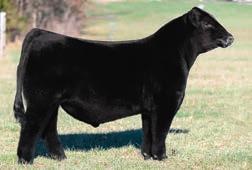
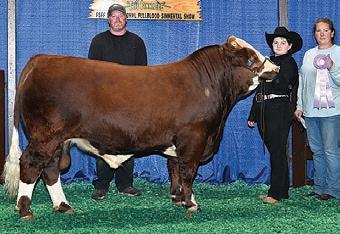
TJSC H-Town 131L
$API: 106
$TI: 72
STCC Tecumseh 058J x TJSC Diamond 312H
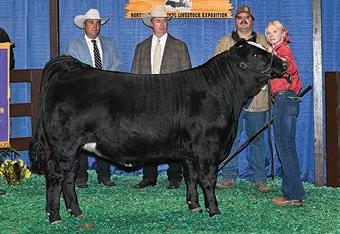
ASA# 4274275 • Black • Polled
2024 NWSS Champion Bull by STCC Tecumseh
$API: 90 $TI: 68
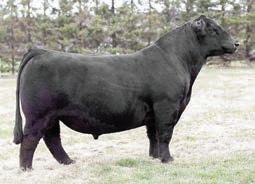
RJ Trust Fund 212K
OMF Journeyman J24
WHF/JS/CCS Woodford J001 EGL
$API: 174
$TI: 102
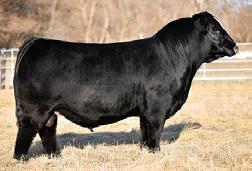
LCDR Affirmed 212H
EGL Firesteel 103F x WS Miss Sugar C4
ASA# 3812282 • Homo Black • Homo Polled
Use him to make those next generation Purebreds. Excellent foot shape and depth of heel.
$API: 129 $TI: 83
SAS Black Majic L334
ASA# 4147173 • Black • Polled
W/C Bankroll 811D x Hara`s Kim Kardashian 1C
Exciting, NEW, 3/4 Bankroll x Broker x Harietta for elite type!
$API: 116 $TI: 74
$API: 97 $TI: 71
Herbster Dynamic 451M
4/B Dynamo x FRKG Countess 924J
ASA# 4450609 • Homo Black • Homo Polled
2025 Hartman Sale Feature to Bailey, ND! Ultrasound with wild phenotype! Dam was $225,000 Freking record-seller.
WHF/JS/CCS Double Up G365
SRH Hannibal x Silver Lake Gold Digger
ASA# 4265277 • Hetero Black • Homo Polled
$55,000 high-seller at Springer Simmentals 2024.
Add mass & outcross pedigree.
Walsh Against The Odds Bet on Red x WLE Big Deal
ASA# 4256400 • Red • Homo Polled
ATO has foot size, excellent design & body dimension! His dam was a popular champion for Walsh, WI.
Revelation 2K
$API: 133 $TI: 86
LLSF Point of Proof M741
WHF Point Proven H45 x HPF Rite 2 Luv 398D
ASA# 4443743 • Hetero Black • Homo Polled
Improving calving ease, build, and eye appeal!
Brand New Man 001H
joints with awesome design!
GOE
ASA# 4153090 • Black • Polled
TL Revenant 35 x CSCX Bandwagon 513A
$200,000 exciting outcross to improve all!
$API: 106
$TI: 72
TJSC Coping with Destiny 9K
WLE Copacetic E02 x TJSC Diamonds Destiny 134C
ASA# 4103854 • Black • Polled
2023-2024 dominante Grand Champion!
$API: 145 $TI: 87
$API: 130 $TI: 88
RP/BCR Eminence H005
Clear Advantage H4G
$API: 136 $TI: 71
Rocking P Private Stock H010
WLE Copacetic E02 x Rubys Wide Open 909W
ASA# 3775641 • Homo Black • Homo Polled
Private Stock was the 2022 Fort Worth Champion Bull and the 2021 NAILE Champion Bull.
$API:
JWC Engage 144M
KJK1 38 Special 801J
R Dialed In L111
Mr Hoc Broker x Miss Werning 8543U
ASA# 4389117 • Hetero Black • Hetero Polled
$230,000
$API: 101 $TI: 75
son who was Reserve Champ at NAILE & Cattlemen’s Congress!
$API: 103 $TI: 71
R/C SFI Creedence 417J
SAM x SFI Love Me Later A9X
ASA# 3980387 • Homo Black • Homo Polled 2023 Cattlemen’s Congress Grand Champion Purebred Simmental Bull!
2/F JWC Unassisted 675K
W/C Double Down xW/C RJ Miss 8543 6105D ASA# 4154132 • Homo Black •Homo Polled
Exciting calving ease 3/4 blood in the top 2% for
BW. $40,000 second top seller in JWC’s 2024 Bull sale.
R.A. “Rob” Brown Jr.,
by ASA Staff
R.A. “Rob” Brown Jr. of Throckmorton, Texas, passed away peacefully Friday, November 7, 2025. Brown was an early leader in the Simmental breed, serving as president of the ASA Board of Trustees in 1974.
Rob was born on April 4, 1936, to Valda (Thomas) Brown and R.A. Brown Sr. He was the fourth generation raised on the family’s R.A. Brown Ranch, where his love of the land and livestock began. His children and grandchildren loved hearing him reminisce of his childhood adventures of cowboying, hunting, and fishing.
He graduated from Throckmorton High School in 1954, where he enjoyed athletics, stock showing, and rodeoing. At the age of 15, he met the love of his life, Peggy Donnell. Rob and Peggy pursued their degrees at Texas Tech University in the 1950s, where they were both active leaders in multiple student organizations. They married in 1957. Rob earned his BS in Animal Husbandry in 1958 while battling dyslexia before much was known about its challenges. He attributes his diploma to the help of his beloved Peg. Their love and service to Texas Tech has been passed down through generations and recently earned the family the inaugural Texas Tech Davis College Family Legacy Award.
After graduation, they returned to the family ranch and raised their four children. Over the decades, Rob cemented the diverse legacy of the R.A. Brown Ranch with a Quarter Horse breeding program focused on meeting a cowboy’s needs; seedstock herds of various cattle breeds, including SimGenetics; commercial cow-calf herds; as well as stocker, cattle feeding, and wheat farming operations. While they were busy running a ranch and raising a family, they modeled service and leadership. Rob was a leader and innovator in the ranching industry, holding national roles including American Quarter Horse Association (AQHA) President and Director, National Cattlemen’s Beef Association Director, Texas Southwest Cattle Raisers Association Director, and American Simmental Association Board president, among others. Rob received industry honors, including being inducted into the Livestock Industry Hall of Fame Saddle and Sirloin Club, the AQHA Hall of Fame, honored as the nation’s top rancher with the Golden Spur Award, and many other recognitions in the agriculture industry. He helped establish the Texas Ranch Roundup, the world’s first ranch rodeo, as an effort to maintain the traditions of cowboys and working horses, while raising money for local charities.
Rob was an avid outdoorsman and had many memorable hunting and fishing adventures with family and friends. He shared this love with his children, grandchildren, and great-grandchildren, leaving them with many special memories and life lessons. Always a dog lover, Rob raised many ranch terriers and bird dogs. Rob was passionate about the ranch, and “making a circle” in his red Ford pickup was a daily necessity even in his later years. Checking his mares and foals was his favorite circle to make, proudly pointing out his prized gray horses.
He is survived by his wife of 68 years, Peggy Brown, and children Betsy Bellah and husband Jody of Throckmorton; Rob A. Brown and wife Talley of Stinnett, Texas; Marianne McCartney and husband Todd of Throckmorton; and Donnell Brown and wife Kelli of Throckmorton. He is also survived by 17 grandchildren, 26 great-grandchildren, brother-in-law George Donnell, and many beloved nieces, nephews, and friends. .
R.A. “Rob” Brown Jr. and his wife, Peggy.
Developing leaders through friendship, networking, and communication skills!
by Audrey Redalen
For many, the calving season is in full swing! As our family’s herd is just getting started here, I am anxiously awaiting the arrival of new calves. These calves are the result of time spent deliberating on how to best mate our cows and heifers, carefully critiquing, analyzing, and weighing all the options as bulls are selected. With all the time spent in preparation, it made me question: is it the excitement of the new calf crop that gets us out of bed to check cows, fight frozen fingers when the drinkers are frozen, or tolerate our cheeks being bitten by the windchill in the air when feeding cattle? (This may be the Midwest perspective, but we all battle the elements when raising livestock.) Or is there something more driving us to do what we do?
Some might say you have to have a lot of grit in this industry. There are certainly ups and downs when you have livestock. Author Angela Duckworth is well known for her thoughts on
grit, how long-term success depends more on perseverance than on talent alone, and that people persist when their work feels meaningful or has a purpose. This surely resonates with us as stewards of the land and cattle in our care. I believe we are called to serve with purpose. We know that our actions have purpose both as we seek to work toward short-term and long-term goals. We know that what we do matters. We find purpose in our contributions to something meaningful and bigger than ourselves because what we do really does matter.
As you take a moment to think about how, at its core, what we do really matters, I’d challenge you to think about how reflecting on your purpose can continue to guide your actions. Maybe there are goals you’ve set for yourself this year, or maybe there are dreams and aspirations that you have and would like to achieve a few years from now. Your actions matter! Through the meaningful relationships, shared experiences, and purpose that occur through involvement with the AJSA, there is a lot to be optimistic about both in the year ahead and in the years to come! .
“At its core, the idea of purpose is the idea that what we do matters to people other than ourselves.” - Angela Duckworth
2025–2026 American Junior Simmental Association Board of Trustees
Ella Fischer Missouri 816-261-5991 ellafischer24@gmail.com
Anna Sweat Arkansas 870-200-7600 anna.sweat.06@gmail.com
Anna Webel Illinois 309-351-9223 anna.g.webel@gmail.com
by Larry H. Maxey, founder and superintendent, NAILE Fullblood Simmental Shows
Our Pioneers — “Ike” Part 1
“The proudest thing I can claim is that I am from Abilene.”
The September 2025 Fleckvieh Forum was titled “Cattle Town.” As I noted, the young cattle merchant Joseph G. McCoy came up with the concept of a town near a railroad that would receive and ship cattle by rail to points east. It was in 1867 that he located and selected a “small Kansas hamlet” and stage station named Abilene, which only had a dozen or so dirt-filled log huts which he later described as a “very small dead place.” Abilene would be the location for this bold venture.
While Abilene formed the basis for that highly successful cattle business concept, no one could have predicted that it would also serve as the foundation for molding arguably one of the most important people of the 20th century. He is credited with the opening quote. He was Dwight D. Eisenhower, 34th President of the United States and the Supreme Allied Commander in Europe during World War II.
Eisenhower was born in Denison, Texas, on October 14, 1890, to David and Ida Stover Eisenhower. Both of his parents were born during the American Civil War. Eisenhower was the third of seven sons. Before his second birthday, the family moved to Abilene, Kansas. His father found work at the Belle Springs Creamery. David only had $10, even though he was well educated and engineering was his profession.
By the time the Eisenhower family arrived in Abilene, that “small Kansas hamlet” had grown to a population of about 4,000. Twenty-four years had passed since that first “Cattle Town” was formed. However, thanks to the businesses that followed the cattle boom years, Abilene was growing at a steady pace. While the Eisenhowers were respected around town, they were not prominent and were not involved in community leadership. Still, they were content even though they lived frugally out of necessity.
His parents were devout Christians and their sons were introduced to Christianity at an early age. Home life revolved around worship. David and Ida taught the “simple virtues of honesty, self-reliance, integrity, fear of God, and ambition,” as described by Stephen E. Ambrose in his book, Eisenhower Soldier and President . Every day, morning and night, the family members got down on their knees to pray. David read from the Bible before meals, then asked for a blessing.
The boys were raised to be competitive, inside and outside the family. Eisenhower said, “Mother was by far the greatest personal influence in our lives.” David encouraged his sons to stand up for themselves. Eisenhower recalled that his father never wanted to see his sons beaten by their playmates in anything, least of all in a fight.
The work ethic and deep Christian faith were a normal part of everyday life for residents of Abilene. Everyone in Abilene worked. Most of the work was hard physical labor. There was virtually no unemployment, even among children. “There was a strong sense of community, a feeling that the world was divided into ‘us,’ ‘them,’ the rest of the world. A man was judged by how hard he worked and whether he paid his bills on time, a woman on how well she ran her household,” said Ambrose.
In his early years, Eisenhower picked up the nickname “Little Ike.” His older brother, Edgar, was called “Big Ike.” The friendly moniker for Eisenhower would remain with him his entire life. As Little Ike, he was loved by his Abilene extended family and he in turn loved Abilene and all that it represented. His proficiency in his schooling depended upon his interest in the subject. He proved highly adept in history and math. His grades were good to excellent without extending himself. He became particularly interested in the American Revolution, and George Washington “excited his admiration.” His senior yearbook proclaimed that he would become a professor of history at Yale. It also predicted that Edgar would become a two-term president of the United States. Eerily that prescient prediction proved to be 50% correct with the right surname but the wrong Eisenhower.
“It was in sports that he first discovered his talents as a leader and organizer,” said Ambrose. He organized football and baseball teams as well as the Abilene High School Athletic Association, which operated independently of the school system. He also organized camping and hunting trips. “The central importance of sports and fishing to Little Ike cannot be overemphasized. He literally could not imagine life without them,” said Ambrose.
In 1909 Ike graduated from Abilene high school. He had worked at a multitude of odd jobs common to small rural towns. His first real job was as a fireman for the Belle Springs Creamery where his father worked. He toiled at this work seven days a week from six at night to six in the morning. From his earnings, he supported his brother Edgar through two years of college at the University of Michigan. The plan was for Edgar to do the same for him but that never happened. The very athletic Ike planned to go to Michigan and play football.
Everything changed in September 1910. Events would set in motion Eisenhower’s career path that would not only change a nation, but the world as well. One must seriously consider that preordained fate, or perhaps divine intervention itself, was at work and Eisenhower was the instrument chosen to confront the most dreadful, sinister, and pure evil period the world has ever known. Baked into his personal chemistry were the values and teachings he acquired from his parents and a “small Kansas hamlet” and its humble inhabitants. No one could ever have imagined that Little Ike would be front and center and an integral part in shaping the world we have today. Stay tuned for part two. .
Editor’s note: This is the fiftieth in the series Our Pioneers.
Is there a Simmental pioneer who you would like to see profiled in this series? Reach out to Larry Maxey or the editor to submit your suggestions: larryhmaxey@gmail.com • editor@simmgene.com
OUR ROOTS
Remembering the history of the Simmental breed and its people.
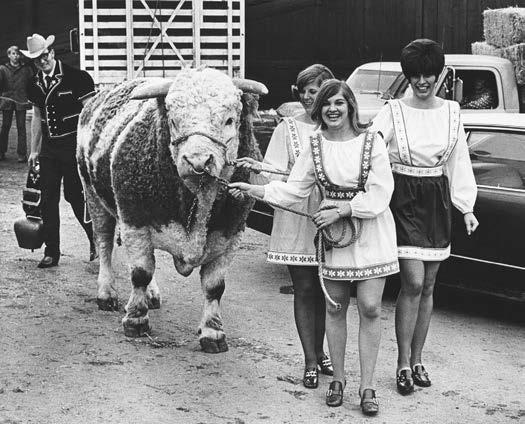
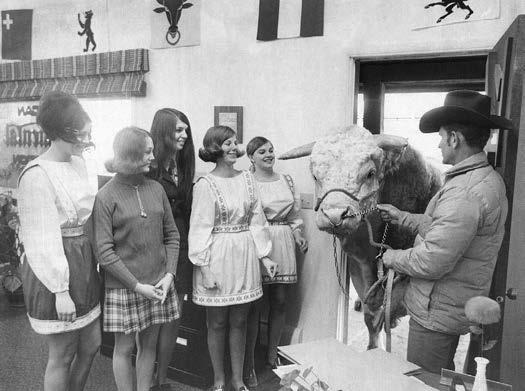
Introducing Simmental to North America
Parisien, the first Simmental bull imported to North America, not only served as a genetic start for many breeders, but also as an ambassador for the breed. Travers Smith went to great lengths, traveling by all modes of transportation, to get the bull from Europe. Thanks in part to his good nature, the bull traveled
to many events, introducing people to Simmental. Here he is pictured in Denver during the 1971 National Western Stock Show, and at the original American Simmental Association office in 1974. .
Parisien in Denver.
ASA staff meet Parisien at the office.
STATE SCENE
Colorado Simmental Association Holds
Annual Meeting
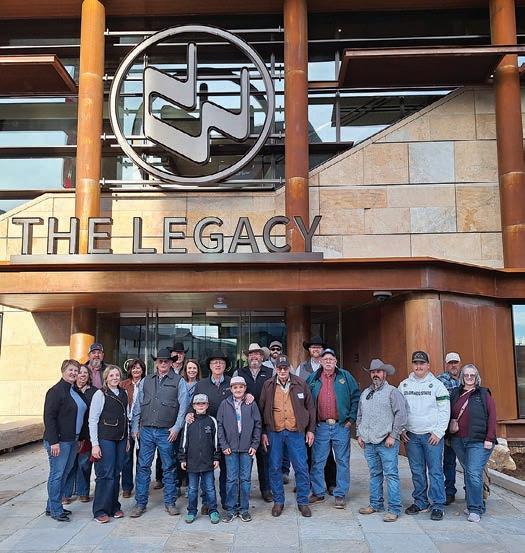
Tours, honors, and networking were part of the Colorado Simmental Association’s (CSA) 55th annual meeting on November 9, 2025. Members toured the refurbished historic Livestock Exchange Building, courtesy of Colorado Cattlemen’s Association, the nearly completed Legacy building, and peered into the huge livestock show arena, both courtesy of National Western Stock Show (NWSS) staff.
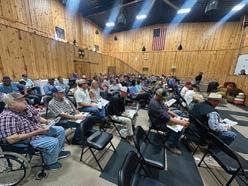
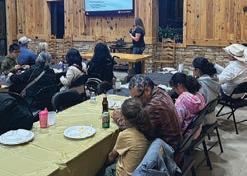
Following the early glimpse of the National Western campus changes, CSA members heard reports, including Chad Cook of Walsh giving an American Simmental Association update, and the group planning for upcoming events, including the 2026 NWSS. President Paul Hill of Nunn presented awards. Hill noted the long-term efforts of outgoing director Willie Altenburg of Fort Collins. Altenburg, who was term-limited in his most recent stint on the board, has served on CSA leadership for 26 years. Hill stated: “Willie continues to dream up ideas to make strides for CSA and our part of National Western. He pushes the rest of us to be better and think harder. To thank him for his service, we present this award, noting his exceptional role as Simmental’s leader, promoter, and innovator.”
CSA also recognized two outstanding youth with $500 scholarships to pursue their studies. Jason Dias, a Colorado State student from Fort Morgan, and Jayme Gittlein of Wauneta, Nebraska, who will be heading to Murray State, both received CSA Youth Education Grants. Gittlein, who is current Colorado Junior Simmental president, also was named Youth of the Year. Leah Clark of Monte Vista was elected to her initial three-year term as
director, with Jolynn Midcap of Wray, and Susan Russell of Sugar City, re-elected to third terms on the seven-member board. Officers were all retained. They are: Hill, president; Cody Pitt of Hotchkiss, vice-president; and Russell, secretary/treasurer. .
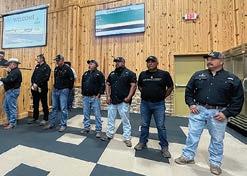
Members of the CSA gathered for their 55th annual meeting. The group toured the newly built Legacy building.
BULLETINS
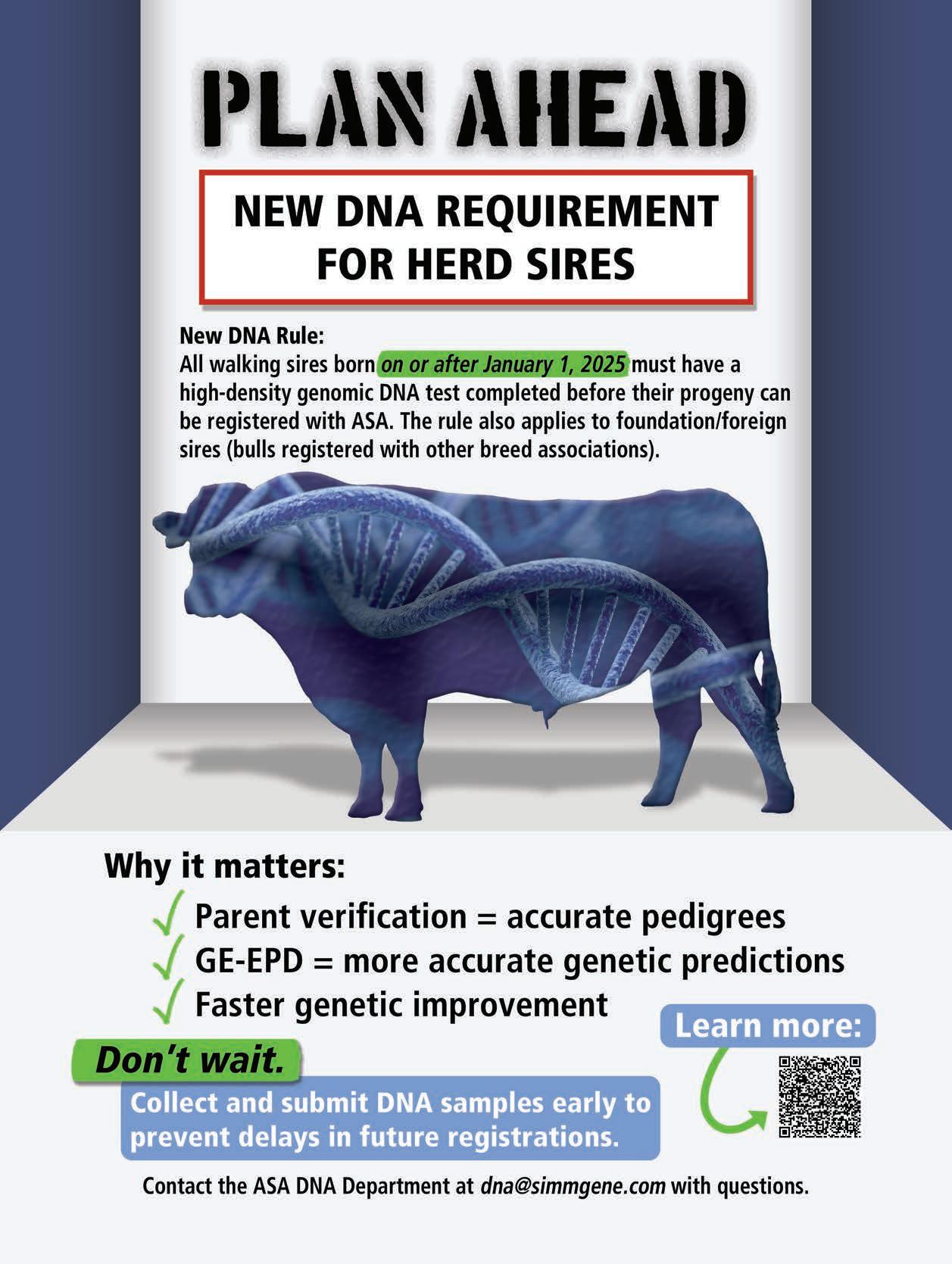
DNA Testing Requirements for Herdsires
In January, ASA membership voted to require a DNA test (GGP-100K genomic panel) on all herd bulls/natural service sires born on or after January 1, 2025. This new rule mimics the current DNA requirement for AI sires and donor dams.
Although the rule change isn’t immediately affecting membership, it is never too early to prepare. By collecting and submitting DNA samples on bull calves born this spring and beyond if they'll go on to sire registered calves, producers can avoid future issues.
DNA Test for Bovine Congestive Heart Failure (BCHF) Risk Now Available
A test estimating a genomic prediction for risk for development of Bovine Congestive Heart Failure (BCHF) is now available as an add-on the GGP100K ($9.50) or a standalone test ($19.50). This is not an IGS prediction but molecular breeding value based on the Simplot and Neogen partnership studying heart failure in feedlot cattle. Because this is a molecular breeding value, results will be based solely on the DNA marker information and will not include other pertinent information that goes into EPD like pedigree, breed, and performance records. The test returns a molecular breeding value for risk of progeny developing heart scores correlated to BCHF (lower number is better). The average accuracy of animals tested is 0.32 (standard deviation 0.09). At this time the results will be reported through an email but not uploaded to Herdbook. Please contact Jackie Atkins at jatkins@simmgene.com with any questions.
W/C Double Down 5014E (ASA 3336150) Pedigree Update
The American Simmental Association has completed a pedigree correction for the bull W/C Double Down 5014E (ASA 3336150) following parent-verification DNA testing on his dam, W/C Miss Werning 5014C (ASA 3211676), which resulted in a change to her recorded sire. This adjustment has altered W/C DOUBLE DOWN 5014E’s pedigree and breed composition, which in turn affects the breed composition and pedigree of his progeny. All impacted records were automatically updated in the ASA database immediately following his dam’s pedigree change. For questions regarding affected animals, please contact the ASA DNA Department at dna@simmgene.com, or 406-587-4531.
Seeking Sire Nominations for CMP
Looking to test your top young sire across different environments? Want to enhance accuracy and gain valuable data on your young sire? The Carcass Merit Program (CMP) is for you! Since 1997, the CMP has relied on select cooperator herds to test sires; however, ASA recently added a new CMP testing avenue, which will allow for MORE SIRES to be tested annually. CMP collects vital carcass data on calves, which improves carcass trait predictions and DNA marker predictions for all cattle in the IGS genetic evaluation, and supports breeders in evaluating their young sires and advancing their genetic programs. If you’re interested in nominating a sire, fill out the nomination form at simmental.org (Programs, ASA Programs, CMP).
Sale Catalog Resources Added to ASA Website
Looking to add some information about EPD and indexes, genomics, the IGS multi-breed genetic evaluation, or the benefits of participating in ASA’s programs to your sale catalog? Look no further! ASA has compiled a folder with various resources like logos, camera-ready ads, and answers to frequently asked questions that can be used in sale catalogs or other marketing materials. Visit www.simmental.org and click on “Sale Catalog Resources” under the Marketing tab to view the material.
Hydrops Update: TraitTrac and a Recommended Marketing Statement
ASA has been investigating a developing genetic condition that causes Hydrops pregnancies in a certain line of Simmental genetics. Here are some updates in relation to this research and ASA’s actions/suggestions:
Hydrops has been added to Herdbook’s TraitTrac with WS All Aboard B80 listed as a documented carrier. At this time there are no genetic holds placed on his descendants as there is not a DNA test available yet. Once there is a test, then Hydrops will follow the same policy as other genetic conditions.
Female progeny who are descendants of or are directly sired by WS All Aboard B80 (ASA# 2852207) are at risk for carrying a genetic abnormality called Hydrops. Daughters may develop a serious condition during late gestation that results in excess fluid in the fetal membrane, which typically causes the loss of the calf and occasionally the dam. There is no current test at this time to identify animals carrying this mutation. Research is ongoing regarding the transmission of the abnormality, and to develop a genetic test. Helping our producers navigate this issue is of the utmost importance to us. Therefore, given that there is neither a full understanding of this condition nor a test, careful consideration should be given regarding the question of whether to breed WS All Aboard B80 descendant females until more information is available to breeders.
For questions regarding established WS All Aboard B80 genetics, Hydrops symptoms, reporting an active case, or additional information, please visit the Hydrops Information Center at www.simmental.org or reach out to Jackie Atkins at jatkins@simmgene.com.
Due to increased costs from ASA’s contracted laboratory, ASA will be raising the price of the ultra-Low Density (uLD or 9K) genomic panel and the processing fees for semen samples, effective immediately. Due to increased costs from the manufacturer, ASA will be raising the price of TSUs from $22/box to $23/box, effective immediately. These price adjustments are essential to cover rising expenses and production costs, and we thank you for your understanding.
If you have any questions, contact the DNA department at dna@simmgene.com. To view the current DNA testing prices visit simmental.org.
Second Quarter Check-Off Dollars
Available
December 31, 2025, marked the end of the second quarter in ASA’s fiscal year. State associations wishing to claim their second quarter check-off dollars can do so at any time by visiting simmental.org and completing the “Promotional Checkoff Dollars Request Form” found in the Membership/State Association section. Remember that cost share reimbursement requests can be sent at any time. For the complete cost share program guidelines and reimbursement request directions, visit ASA’s website. Contact Callie Cooley at stateassoc@simmgene.com with any questions.
2026 Year-Letter is P
In accordance with the Beef Improvement Federation guidelines, the yearletter animal identification for 2026 is P, and will be followed by R in 2027, and S in 2028. The letter N was the year-letter designated during 2025. Per BIF guidelines, the following letters are not used: I, O, Q, and V.
Office Holiday Schedule
Friday, April 3
Spring Holiday
Monday, May 25
Memorial Day
Friday, July 3
Fourth of July
Monday, September 7
Labor Day
Thursday, November 26 & Friday, November 27
Thanksgiving
Wednesday, December 23, Thursday, December 24 & Friday, December 25
Christmas .
CORPORATE REPORT
Elanco Animal Health Shifts Focus to US, Redefining Livestock R&D and Manufacturing
by Andrea Bedford, Bovine Veterinarian
Elanco Animal Health is restructuring its global operations, shifting investment toward the US, while reducing parts of its overseas footprint. During its 2025 Investor Day, the company announced plans to close its German animal health R&D facility and implemented targeted reductions to parts of its manufacturing workforce. Elanco plans to boost investment in US-based innovation and manufacturing, pointing to greater clarity around tariffs and accelerated USDA regulatory times central factors.
“We made some big announcements,” says Jeff Simmons, Elanco CEO. “We rolled out a very strong growth agenda. A portfolio of historical innovation serving farmers, veterinarians, pet owners, livestock, and industry. And it really leads to this growth agenda: a $400 million investment in American manufacturing and R&D.”
Consolidation Abroad, Investment at Home
As part of the restructuring, Elanco will shut down its German R&D site and reduce certain manufacturing operations abroad. According to the company, these actions are designed to streamline operations and consolidate resources where regulatory processes and market access are more predictable. At the same time, Elanco is redirecting capital toward its Innovation Laboratories at the company’s Indiana headquarters, a move intended
to bring discovery, development, and regulatory preparation under a unified roof.
For livestock veterinarians and producers, this consolidation could translate into more efficient development and approval of animal-health products. Shorter regulatory lead times and centralized R&D could improve the company’s ability to respond to evolving disease threats and to deliver vaccines, biologics, or therapeutics in a more timely and consistent manner.
“Elanco is focused on delivering innovation into the farm animal space and creating more value for producers and veterinarians,” says Colleen Dekker of Elanco. “Farmers and veterinarians should expect Elanco to continue to focus on bringing innovation designed to meet their biggest challenges, supported by a team of technical experts.”
Building the One Health Innovation District in Indiana
Beyond the R&D and manufacturing shifts, Elanco is laying down physical roots in Indiana. In late August, the company announced the purchase of a 56-acre parcel of state-owned land, part of a former GM stamping plant, for $27 million. This plot sits adjacent to previously acquired land already earmarked for its new global headquarters campus. Together, these parcels form the foundation for a planned One Health Innovation District.
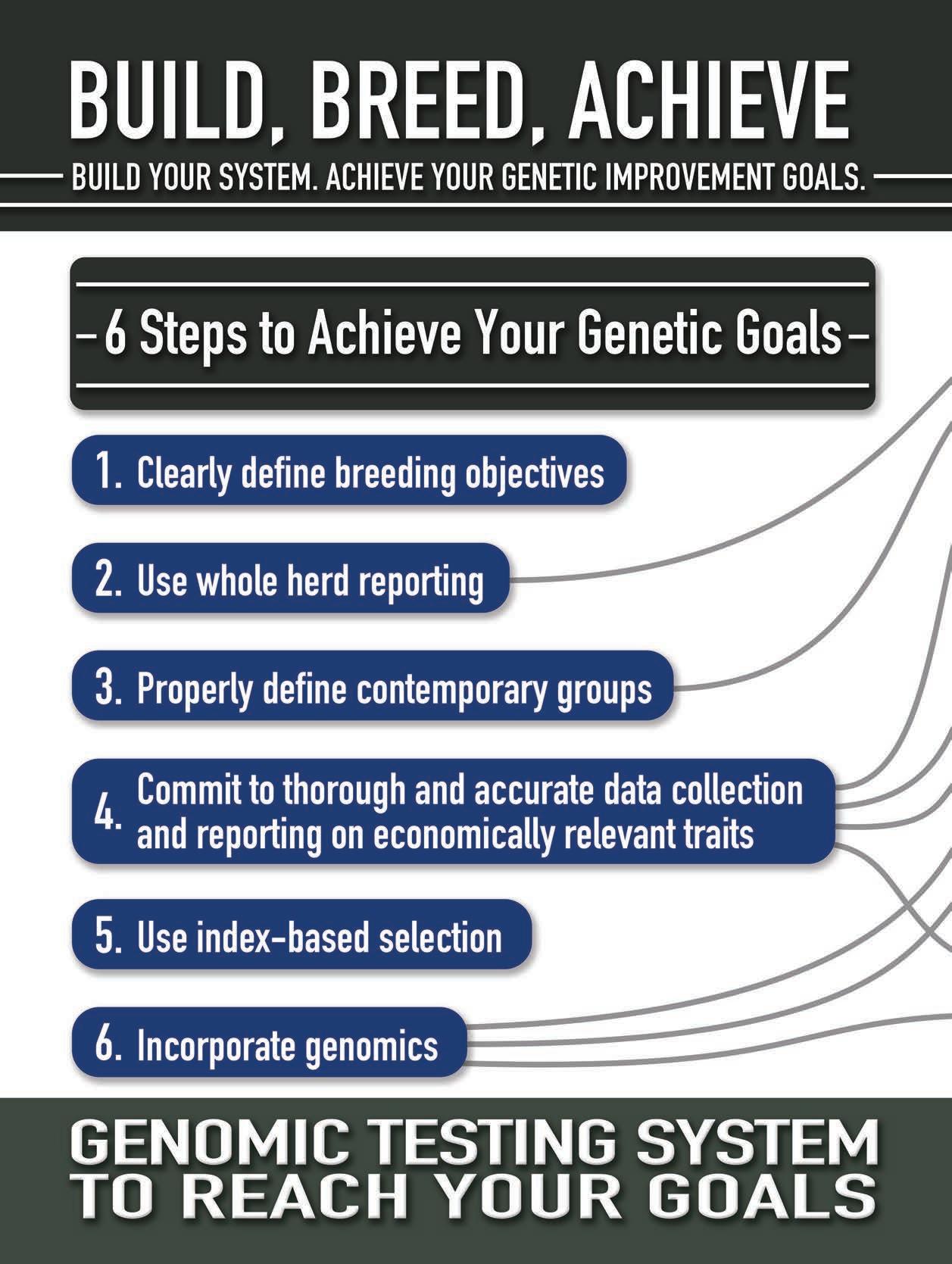
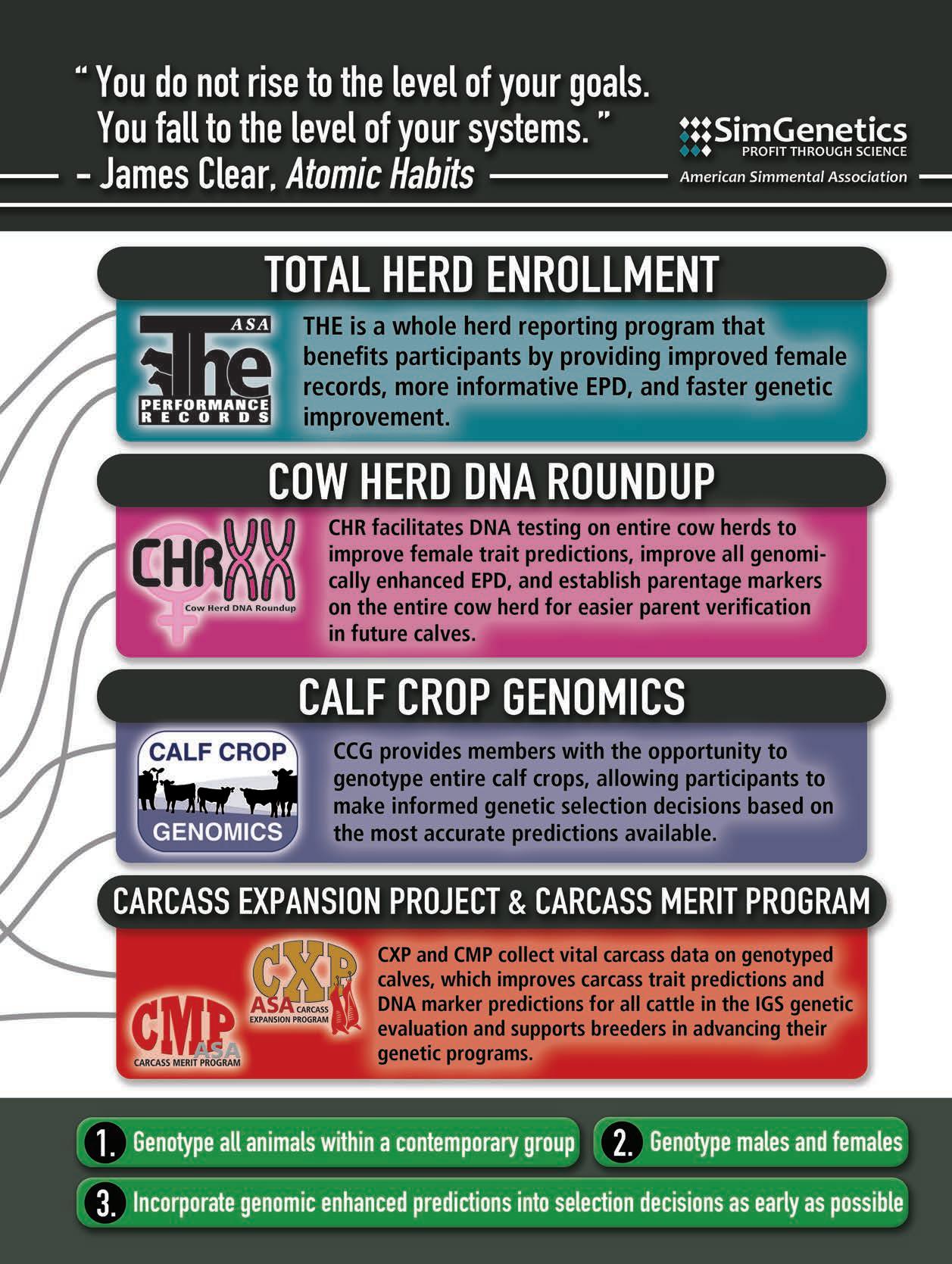
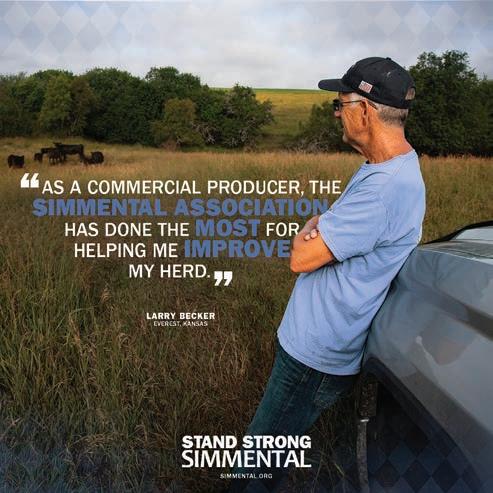
Scan this QR code to learn how Larry Becker uses genetic selection tools and carcass data to make continued improvement to his herd.
This district is envisioned to house research facilities, diagnostic and pilot-scale labs, clinical animal care facilities, and collaboration spaces linking industry, academic researchers, and other partners. In partnership with Purdue University and the state of Indiana, the development aims to foster a research ecosystem bridging animal, human, and environmental health. For those in food animal health, the district offers closer collaboration between academic science and industry application. That proximity could accelerate development of herd-level solutions for disease management, biosecurity, and animal welfare.
What it Means for the Product Pipeline
At Investor Day, Elanco laid out an expectation of five to six major differentiated product approvals between 2026 and 2031. Much of the public focus to date has been on the company’s companion-animal pipeline, including immunotherapeutics and monoclonal antibodies. Elanco also flagged a potential first-inclass pet immunotherapy, with a projected market launch within the next two to three years, aided by regulatory acceleration under USDA.
While these disclosures emphasize pets, the broader platforms and infrastructure supporting them could also benefit livestockfocused research and development. Biologics, immunemodulating technologies, and vaccine platforms developed for companion animals often inform approaches for food animals. The experience gained in those platforms could translate to cattle or swine health solutions.
Implications for Livestock Veterinarians and Producers
Elanco’s shift reflects a transition in how and where food-animal health work gets done. By consolidating R&D and manufacturing in the US, the company aims to improve coordination among product development, regulatory preparation, and supply chain logistics, factors that affect availability and reliability of herd-health tools.
This transition is worth watching as Elanco’s expanded US infrastructure supports future livestock product development within a more centralized regulatory and manufacturing framework. New product launches and regulatory activity will provide insight into how these investments translate into vaccines, parasiticides, and therapeutics relevant to production animal medicine..
Beef × Dairy Crossbred Management to Enhance Profitability, Resource Efficiency, and Sustainability in Beef Systems
Paul Beck, Oklahoma State University Extension
The US beef cow herd is at historic lows, increasing the need for reliable sources of high-quality beef, reducing feeder cattle availability, and making challenging break-evens for cattle feeders. One of the most promising solutions is the growing use of beef-on-dairy crossbred calves, made possible by advances in reproductive technology that allow dairy producers to create replacement heifers from elite cows and breed the remainder to beef sires. The resulting crossbreds consistently show better growth, efficiency, carcass quality, and health than traditional dairy-type calves, providing value for dairies and cattle feeders.
To help producers understand how to best manage these calves and evaluate their economic potential, our team launched a coordinated research and Extension program following beef-ondairy steers from birth through harvest. Studies at both research and commercial scales evaluated how preweaning nutritional level, post-weaning management programs, and finishing systems affect gain, feed efficiency, carcass traits, profitability, and greenhouse gas emissions. Economic modeling showed that dairy-beef steers can be as profitable as native beef, even with slightly higher feed costs. A Life-Cycle Analysis showed that calffed management reduced carbon footprint by 4.6% to 11.3% compared with yearling-fed systems. When emissions of the dairy cow were allocated primarily to milk production, the overall greenhouse gas intensity of dairy-beef systems was lower than that of native beef.
Extension outreach played a major role in delivering these findings to producers. Information was shared through field days, fact sheets, the Ranchers Thursday Lunchtime Webinar Series, and regional programs such as the Five States Beef Conference. More than 10,000 producers, educators, and industry professionals have participated in program events or used the online resources. Peer-reviewed publications, public datasets, and media coverage further expanded the program’s reach.
The results are already influencing production decisions. Follow-up evaluations show improved producer confidence and adoption of recommended feeding and management strategies, especially in feedlots across Oklahoma and Texas. The work has improved cooperation between the beef and dairy sectors and increased understanding of how to raise crossbred calves efficiently while reducing their environmental footprint.
How to Manage Coccidiosis Risk in Weaned Calves: What Producers Need to Know
by Maddy Kruger, Bovine Veterinarian
A ranch weans four groups of calves, all from separate pastures and breeding groups. They are placed in the same dry lot to be fed, and three weeks later, some calves are dealing with bloody diarrhea. With the time of year and situation described, coccidiosis is high on the list of possible issues.
In the most recent episode of the “Bovine Science with BCI” podcast, Kansas State University veterinarians Bob Larson and
Brad White look at this case of potential coccidiosis in weaned calves. Larson explains there are other issues that can cause bloody diarrhea, like Salmonella or any other intestinal disease that cause damage to the intestinal lining.
One of the first factors to investigate is feed rations. In this case, these calves were being fed a corn, corn-gluten, and soy hull mix with free-choice hay. Larson explains this is a rather fibrous diet with less starch, therefore acidosis and other related digestive tract issues can be eliminated.
The Prognosis
Studying the feces is another way to analyze the situation. Typical signs of acidosis include runny feces, sometimes containing gas bubbles, according to Larson. But he also adds that this is never a perfect test and to keep your options open when determining the prognosis.
To further understand feces tests, Larson explains that frank blood, often appearing bright red in color, indicates the damaged gut is further back in the digestive tract and the blood hasn’t been digested. When the blood is digested, like with abomasum ulcers or earlier tract issues, it appears black in color with a tar-like texture. In this ranch’s case, calves are presenting frank blood.
For more diagnostics, Larson says fecal floats are an option. There are different types of Coccidia organisms that infect cattle in varying strengths. He warns these protozoa of the Coccidia organisms will invade into the cells that line the intestine and then destroy the intestine as they multiply. But sometimes these protozoa do not show up in a fecal float, so it is important to not rule out coccidiosis if that is what is suspected, and the fecal float is negative.
White adds most calves will have Coccidia organisms in their systems already. Larson explains it is common for most mammals to have these organisms present in their systems, and the Coccidia are specific to animal species. So, a high number of these organisms would confidently indicate coccidiosis, but smaller numbers should not be overlooked either.
Larson and White both agree coccidiosis seems to be the issue with this ranch’s case, so the next item to address is where or how the calves contract it.
Control and Prevention
“They had it themselves — it’s not that they got it from somebody else necessarily,” Larson explains.
But he notes cattle can still get sick if they encounter calves carrying a Coccidia species they haven’t been exposed to. Young cattle like these are more susceptible to Coccidia protozoa because they haven’t had time to build an immunity to them like older cattle would. However, there are a variety of populations of Coccidia, so they cannot build an immunity to all types.
“There’s some challenges there keeping everybody on track nutritionally, and I’m mixing cattle from different sources, which probably means they are bringing in different types of Coccidia,” Larson says.
White adds Coccidia can be spread by fecal or oral contamination, and this setting is ideal for it. However, he also mentions their ration has an ionophore in it that should help control the contamination.
Rumensin or Bovitech are common ionophore products that provide control, but Larson says we should think of them as ways to control the multiplication of organisms. If cattle are at high levels of protozoa already, these additives are ineffective. But they are a crucial part of control and prevention.
For early precautions, Larson recommends feeding ionophore products like Decoquinate or Amprolium as they “will do a better job of killing those organisms at other stages in the life cycle.”
Once calves are settled from weaning and their stress levels decrease, then they can be switched to other ionophores in their daily rations. Larson says these treatments can be administered in feed or water, but it is often better to treat individual animals. Then, the whole group can be started on the ionophores for further prevention.
Managing environments and their conditions and limiting nutritional and weaning stress is also beneficial in the prevention of coccidiosis. Larson reminds producers: “It takes consistent attention to the details to try to keep these problems at bay.”
The Impact of Tyson’s Closure on Beef Slaughter Capacity Utilization
Southern Ag Today
This year, there have been several Southern Ag Today articles discussing the impacts of tight fed cattle supplies on prices, cattle on feed, slaughter weights, and total beef production (Anderson 2025a, Anderson 2025b, Maples 2025). On November 21, 2025, Tyson announced that they would be closing their Lexington, Nebraska, plant in January 2026. Following the announcement, there have been a lot of questions revolving around the impact of the closure on national slaughter capacity utilization (CU).
The Lexington, Nebraska, plant had an approximate daily capacity of 5,000 head. That equates to approximately 20% of Tyson’s daily capacity (25,800 head/day) as a company. In Martinez et al. (2023), we showed a measure of national slaughter capacity utilization, which measures the ratio of operational cattle slaughter capacity over total physical capacity. To estimate the impact of the closure on the national CU, we use 2025’s monthly slaughter with an adjusted 2025 slaughter CU. The adjusted CU is simply adjusting the national CU with the daily 5,000 head taken out. Figure 1 displays the monthly national federally inspected (FI) slaughter capacity utilization with the previous five-year average (thick blue line), 2024 (orange dotted line), 2025 (grey thin line), and 2025-Adjusted (green dashed line).
The adjusted capacity utilization is closer to the previous five-year average. Evaluating data through November, the average for the five-year average was 90.1%, while the 2025 and 2025-adjusted average through November are 83.1% and 87.7%, respectively. In November, slaughter capacity utilization averaged 83.5%, which was lower than November 2024
(88.4%), the previous five-year average (89.8%), and the 2025adjusted (87.8%). Overall, 2025 has seen declining fed cattle numbers in the cattle on feed reports and higher fed cattle prices, leading to low or negative packer margins. While the supply chain is offsetting tight cattle supplies with larger carcasses, the closure of the Lexington plant certainly signals there is excess capacity at this time.
This is the first large-scale plant to close since 2013, when Cargill closed their Plainview, Texas, plant, which was also during a time when cattle supplies were tight. There have been reports that Tyson is looking to buy that Plainview plant. Additionally, there are some plants that are reported to come online in 2026 and 2027. It is fair to question if the adjusted capacity utilization is a new norm, or simply a short-run adjustment by the supply chain.
References:
Anderson, David. “Fewer Marketings, Tighter Beef Supplies.” Southern Ag Today 5(26.2). June 24, 2025.
Anderson, David. “Working Less on Friday!” Southern Ag Today 5(21.2). May 20, 2025.
Maples, Josh. “Cattle Prices Hit New Highs and Carcass Grading Trends Over Time.” Southern Ag Today 5(19.2). May 6, 2025.
Martinez, C., Li, P., Boyer, C. N., Yu, T. E., & Maples, J. G. (2023). Beef price spread relationship with processing capacity utilization. Journal of the Agricultural and Applied Economics Association. https://onlinelibrary.wiley.com/doi/full/10.1002/jaa2.48 .
INTERNATIONAL
What’s Driving Canada’s Veterinary Drug Shortage and Why it Matters
by Andrea Bedford, Bovine Veterinarian
In Canada, the veterinary community is ringing alarm bells. In late November, the national body representing veterinarians, the Canadian Veterinary Medical Association (CVMA), issued a stark warning: Veterinarians across the country are facing severe shortages of essential drugs, including antibiotics, sedatives, vaccines, and other core animal-health products.
Tracy Fisher, president of the CVMA, warns that without reliable access to these medications, veterinarians cannot properly do their jobs, and animals suffer. They are asking both federal and provincial governments to address the issue. This is not a problem confined to one sector of the profession. According to the CVMA, shortages are affecting companion animal and livestock practices alike, raising concerns not only about animal welfare but also about food safety and stability.
Regulatory Forces behind the Drug Shortage
Medications that once formed the backbone of routine veterinary care are now increasingly unavailable, disrupting treatment decisions across species and practice types. Antibiotics, anesthetics and sedatives, vaccines, and other foundational drugs are among those becoming difficult or impossible to source.
(Continued on page 48)
INTERNATIONAL
(Continued from page 47)
Regulatory changes appear to be a central driver. In 2017, Health Canada imposed new inspection standards requiring manufacturing facilities in other countries to be inspected by Canadian officials. This has increased the burden on companies supplying the Canadian market. For some manufacturers, the cost of these inspections has outweighed the benefit of maintaining approval in a relatively small market.
As a result, Canada has seen a steady erosion of veterinary drug availability. CVMA estimates suggest up to 40% of medications previously accessible to Canadian veterinarians are no longer on the market. While some of these products remain available in the US and elsewhere, Canadian clinics are unable to legally source them, leaving practitioners with fewer and often less-ideal options.
“We’ve lost 40% of the medications that we used to have in the 1980s,” Fisher says. She believes Canada should license products if they have been approved in two other reliable countries with strong safety regulations. “[The drugs] already have the standards met in Europe, Great Britain, and the US. Eliminate some of the red tape and bureaucratic processes that are holding up some of these things.”
Why Canada’s Crisis Matters to Global Veterinary Medicine
For veterinary professionals outside Canada, this offers a cautionary example of how quickly a stable system can unravel when regulatory pressure, economics, and global supply chains collide.
Veterinary pharmaceuticals rely on multinational manufacturing networks and imported active pharmaceutical ingredients. When compliance costs rise or markets shrink, manufacturers might quietly exit. Once a supplier disappears, alternatives are
often limited or nonexistent. Canada’s experience shows how vulnerable veterinary medicine can be when redundancy is low.
Drug shortages also create clinical consequences. When firstline therapies vanish, veterinarians must adapt protocols, rely on substitutions, or delay treatment entirely. In livestock systems, these gaps can ripple outward, affecting herd health, productivity, and food supply chains. Sustained shortages risk broader impacts beyond the clinic, including public confidence in animal health systems.
What US Veterinarians Should Take from This
The US might not have experienced shortages on Canada’s scale, but the underlying pressures are familiar. Many veterinary drugs already come from a limited number of manufacturers, and global supply-chain disruptions have shown how quickly availability can change.
Canada’s situation is not a prediction of what will happen elsewhere, but it is a reminder of what could happen if market forces and regulatory frameworks drift out of balance. Monitoring availability trends, maintaining contingency plans for essential medications, and engaging in discussions around regulatory flexibility could help prevent similar disruptions.
Canada’s veterinary drug shortages are more than an inconvenience. They represent a systemic failure that developed gradually. For the broader veterinary community, the lesson is clear: Access to essential medications cannot be taken for granted. Paying attention now might be the best way to ensure shelves do not go bare elsewhere. Information on US animal drug shortages and how to report them can be found on FDA’s website. .
CUTTING EDGE
The Effects of Thawing Method on Consumer Palatability Ratings of Beef Strip Loin Steaks
Kansas State University Extension
The objective of this study was to determine palatability differences in beef strip loin steaks among various US Department of Agriculture-approved thawing methods, and those commonly utilized by consumers.
Paired Low Choice beef strip loins (n=15) were collected and fabricated into six sections. Each section was fabricated into oneinch steaks, and assigned one of six thawing methods, including: countertop, cook from frozen, cold water, hot water, microwave, and refrigerator. Steaks were cooked to an internal peak temperature of 160°F and consumers were given samples which they evaluated for juiciness, tenderness, flavor liking, overall liking, attribute acceptability, and perceived level of quality. Samples were rated on a 100-point scale with 0 indicating dry, tough, or dislike extremely, and 100 indicating extremely juicy, extremely tender, or like extremely.
For beef demographic data, consumers reported that the most important beef palatability trait was flavor with 56.7% of consumers indicating it as the most important. Tenderness was rated as the most important by 33.3% of consumers. Additionally, consumers reported the trait they experienced the most variability with was tenderness. Results of consumer sensory evaluation indicated that there were no differences (P>0.05) among the six thaw methods for juiciness, tenderness, flavor, and overall liking. However, all treatments had an average rating of at least 57 for overall liking, indicating a high level of eating satisfaction. For all thaw methods, at least 82% of steaks were rated as overall acceptable. Additionally, for all thaw methods, consumers rated at least 79.1% of steaks acceptable for juiciness, tenderness, and flavor liking. Furthermore, the thaw method did not have an impact (P>0.05) on the perceived level of quality of samples.
In conclusion, beef strip loin steak palatability was not impacted by thawing method, and therefore consumers should use whichever thawing method is most convenient, or best suits their needs.
Truck Driver Stops Meat Heist
In late November, a Tyson Foods truck driver chased off around ten masked men who were stealing meat from the back of his truck while he slept. The burglary took place in Northeast Philadelphia in the early hours of the morning. The driver reported four separate vehicles being involved in the incident. The driver was sleeping, and reported waking up to noise. Once he felt the trailer behind his truck moving, he knew something was happening and got out to investigate. Once he walked to the back of his truck, the thieves started running away, dropping meat and boxes across the parking lot. In total, they made off with four pallets. Cargo theft, and stealing meat products, has been on the rise across the country. In December, a man in Central Texas stole almost $2,000 worth of briskets from several grocery stores.
House Passage of NEPA Modernization Provides Regulatory Relief to Ranchers
In December, the Standardizing Permitting and Expediting Economic Development (SPEED) Act, modernizing the National Environmental Policy Act (NEPA), passed the House. House Natural Resources Committee Chairman Bruce Westerman (R-AR) and Rep. Jared Golden (D-ME) originally sponsored this bill to speed up NEPA permitting processes. The National Cattlemen’s Beef Association (NCBA) and Public Lands Council (PLC) have consistently pushed to modernize NEPA to allow livestock producers to be able to quickly carry out critical conservation work.
“Many livestock producers rely on federal permitting under NEPA to make range improvements and carry out other voluntary conservation work to maintain working lands and prevent degradation. Unfortunately, outdated NEPA processes have made permitting for livestock grazing much more difficult and costly, which limits the amount of conservation work that can be done and leaves working lands in much worse condition,” said NCBA Executive Director of Natural Resources and PLC Executive Director Kaitlynn Glover. “This legislation speeds up federal permitting by reducing bureaucratic red tape and not letting NEPA be weaponized by frivolous litigation. NCBA and PLC thank Chairman Westerman and Rep. Golden for their work on this important legislation.”
Grazing Crop Residues with Excess Downed Grain
by Sandy Johnson and Jason Warner, Kansas State University Extension
Each year, utilization of corn or grain sorghum residues following harvest by beef cattle represents an excellent opportunity to extend the grazing season into the winter, thereby reducing the need to feed harvested forages. This year, for various reasons, there have been reports across the state of downed grain in residue fields at levels greater than typically seen. While it does require us to change our management approach, residue fields with high levels of grain on the surface of the field can still be grazed safely and economically. The degree to which grain in the field poses a risk is dependent on many factors, but if you are faced with determining how to best use a field that has downed grain, keep the following things in mind.
The grain sorghum or milo kernel has a very hard outer coating, and it also has a slower rate and lower extent of digestion than corn. Thus, the relative level of risk of acidosis or founder is lower for grain sorghum compared to corn. In order for the starch in either grain to be fully available to the microbes in the rumen, the kernels must be cracked or processed. While the rumination, or “cud chewing,” activity allows this to happen, the process of starch digestion is generally slower when the animal masticates the grain to break the kernel and is also consuming some forage from the plant at the same time. So, situations in which there are piles of loose grain on the field surface if the truck was overfilled or when cows unintendedly have access to grain that flows out of a silo bag at the edge of the field pose a much greater risk of animal losses than corn grain still in the ear or milo still attached to the head.
How Much Is a Lot?
A sound estimate of the amount of grain down on the field surface can be challenging to assess, but it is very important. A field with 10 bushels per acre down is a much different situation than one with 75 bushels per acre on the field. In general, levels greater than 10 to 15 bushels per acre require additional caution and management. Estimates from yield maps in the combine can be helpful to identify areas in the field of concern. A simple method from colleagues at the University of Nebraska for determining the amount of downed corn is to measure out three different 100’-long strips in the field, add up the number of eightinch ear equivalents and divide the number of ears by two to get approximate bushels per acre. For example, if strip one contained four 8” ear equivalents, strip two contained two and a half 8” ear equivalents, and strip three contained one and a half 8” ear equivalents, then it would equate to four bushels per acre (4 + 2.5 + 1.5 ÷ 2).
Cattle Experience Matters
There are research data that suggests grazing is a learned behavior. Beef cows that have previously grazed crop residues will seek out and consume any grain present first before the husk, leaf, and stalk material. Heavily grazing (i.e., flash or mop grazing) fields with high amounts of downed grain with naive
animals such as weaned calves first before turning in more experienced cows can be a method to lessen the risk to those animals. Likewise, consider grazing cull cows or bulls ahead of pregnant cows and heifers.
Animal and Field Management
Consider strip-grazing fields with more than 10 to 15 bushels per acre rather than allowing access to the entire field. While this does increase the need for fence material and labor to move the fence, it does reduce the risk of acidosis/founder because the increased stocking density reduces grazing selectivity. Fill animals up with hay prior to turning them into the field to avoid them being hungry and grazing aggressively upon turnout. Consider supplementing grain, starting at 0.25% and gradually increasing up to 0.5% of body weight, for at least 10–14 days prior to grazing high-risk fields to help animals adapt to grain they will encounter during grazing. Supplementing a palatable source of hay to cattle while grazing high risk fields can help offset risk by substituting grain intake. Protein supplementation, particularly with a source of non-protein nitrogen such as urea or biuret, as well as providing an ionophore are both sound management strategies to improve cattle utilization of crop residue fields with excess downed grain. .
American Royal 2025
Dates: October 23–26, 2025
Location: Kansas City, MO
Junior Judge: Ryan Dunklau, NE
Open Judges: Joe Seale, TX, and Michael Allen, TX
Junior Show
Purebred Simmental Females
Grand Champion Bred and Owned and Junior Calf Champion
“KATZ Ms Secret N54,”
s. by W/C Relentless 32C, exh. by Luke Katz, Beatrice, NE.
Reserve Junior Calf Champion
“PMTM ECS XTB Nostalgic N73,” s. by STCC Tecumseh 058J, exh. by Tylee Elmore, Waukomis, OK.
Senior Calf Champion
“NXT Sammi M428,”
s. by Holtkamp CLAC Change Is Coming, exh. by McCoy Landwehr, Enid, OK.
Reserve Senior Calf Champion
“SLVR Look My Way M124,” s. by WLE Copacetic E02, exh. by Jocephine Mahar, Frankford, MO.
Intermediate Champion
“FLKN LRCC Victoria 026M,” s. by W/C Double Down 5014E, exh. by Calla Higbie, Quenemo, KS.
Reserve Intermediate Champion
“LFTZ BB Becky 426M,” s. by W/C Right Now 1198J, exh. by Riley Schafer, Stroud, OK.
Grand Champion and Junior Champion
“JMSC Revlon 408M,” s. by Revelation 2K, exh. by Chloee Clark, Muldrow, OK.
Reserve Grand Champion and Reserve Junior Champion
“RVCC Roxie 1878M ET,”
s. by WHF/JS/CCS Double Up G365, exh. by Brylie Benes, Pierce, NE.
Senior Champion
“ERV SBSC Cindy 502L,” s. by WLE Copacetic E02, exh. by Brek Colantonio, Moscow, KS.
Reserve Senior Champion
“S&S She’s A Flirt 3915L,” s. by W/C Relentless 32C, exh. by Jhett Schafer, Stroud, OK.
Grand Champion Cow/Calf Pair
“OZPF Miss Kitty Up J30 L36,”
s. by WHF/JS/CCS Double Up G365; Calf, “OZPF Miss Duchess L36 N14,” s. by Rocking P Private Stock H010, exh. by Emma Chamberlin, Cole Camp, MO.
Percentage Females
Junior Calf Champion
“S&S BTOM Beautiful Things,” s. by Revelation 2K, exh. by Hadley Hendrickson, Farmland, IN.
Reserve Junior Calf Champion
“HDY Oh Darlin 251N,” s. by GEFF County O, exh. by Cora Hardy, Sunset, TX.
Senior Calf Champion
“Rubys Rosetta M4108,” s. by WHF/JS/CCS Double Up G365, exh. by Dalton Lukavsky, Russell, IA.
Reserve Senior Calf Champion
“CMFM Reba M284,” s. by Mr HOC Broker, exh. by Connelly Ward, Oak Grove, MO.
Intermediate Champion
“Rose EK Double Love 40M,” s. by WHF/JS/CCS Double Up G365, exh. by Kaden Camerlinck, Leonardville, KS.
Reserve Intermediate Champion
“DMCC Maggie 38M,”
s. by Remington Secret Weapon 185, exh. by Braelynn Reed, Louisburg, KS.
Grand Champion, Junior Champion, and Grand Champion Bred and Owned
“BRB4 Card Cece 463M,” s. by Revelation 2K, exh. by Breckyn Bloomberg, Secor, IL
Reserve Grand Champion and Reserve Junior Champion
“JSUL Reba’s Fancy 4100M,” s. by Harkers Unleashed, exh. by Kiptyn Felton, Huntington, IN.
Open Show
Editor’s Note: PTP Data for the National SimGenetics Show at the American Royal are in the following order: Calving Ease EPD, Weaning Weight EPD, Yearling Weight EPD, Maternal Calving Ease EPD, Milk EPD, Maternal Weaning Weight EPD, STAY EPD, Marbling EPD, Backfat EPD, REA EPD, $API, and $TI. EPD as of 10/23/25.
Purebred Females
Spring Calf Champion
“Diamond J Remmy 44N,” s. by TL Revenant 35, exh. by Morgan Jackson, Kaufman, TX. 11.6/61/82/5.2/16.7/47/9.8/.04/-.094/.90/108/67
(Continued on page 54)
(Continued from page 53)
Reserve Spring Calf Champion
“CCS/JS Gucci 25N,”
s. by Harkers Medicine Man, exh. by JS Simmentals, Maxwell, IA. 8.4/83/126/3.8/19.7/61/8.9/.06/-.083/1.02/109/77
Junior Calf Champion
“Bar O Sheryl 201N,”
s. by SO Remedy, exh. by Bar O Cattle Company, Oskaloosa, KS. 11.1/87/138/5.2/21.2/64/12.5/-.08/-.098/.84/116/78
Reserve Junior Calf Champion
“JSUL Rosie’s Dream 5475N,” s. by JSUL Something About Mary 8421, exh. by Claire Dorsey, Moro, IL. 11.0/76/116/2.3/14.8/53/10.8/.02/-.078/.94/113/74
Senior Calf Champion
“NXT Sammi M428,”
s. by Holtkamp CLAC Change Is Coming, exh. by McCoy Landwehr, Enid, OK. 9.0/84/126/3.3/13.7/56/8.1/-.02/-.096/.97/104/76
Reserve Senior Calf Champion
“Miss Revival 411M,” s. by STCC Tecumseh 058J, exh. by Ryker Turner, Kansas City, MO. 6.9/77/107/2.6/19.8/58/12.3/.22/-.075/.95/118/77
Intermediate Champion
“XTB Glitter M96,” s. by SO Remedy 7F, exh. by Megan Brown and XTB Cattle Co., Greenville, TX.
11.3/82/126/4.5/17.2/58/9.5/-.14/-.103/.82/105/73
Reserve Intermediate Champion
“ROLF Wild Side,” s. by EGL Ammunition 035J, exh. by Rolfes Simmentals, Sibley, IA. 16.0/74/106/8.6/24.2/61/14.5/.25/-.077/.70/143/82
Grand Champion and Junior Champion
“JSUL Rosie 4288M,” s. by WLE Copacetic E02, exh. by Carlee Clark, Muldrow, OK. 10.9/80/121/4.4/12.2/52/8.2/.11/-.102/.91/114/78
Reserve Grand Champion and Reserve Junior Champion
“UDE BRTN Hayleigh 220M,” s. by TJSC Coping With Destiny 9K, exh. by Barton Cattle and Lilly Logan, Spring, TX. 12.0/77/112/6.4/14.6/853/12.6/.04/-.076/.73/119/74
Senior Champion
“ERV SBSC Cindy 502L,” s. by WLE Copacetic E02, exh. by Brek Colantonio, Moscow, KS. 10.4/68/96/5.6/13.3/47/8.8/.17/-.093/.79/112/72
Grand Champion Cow/Calf Pair
“OZPF Miss Kitty Up J30 L36,” s. by WHF/JS/CCS Double Up G365, Calf, “OZPF Miss Duchess L36 N14,” s. by Rocking P Private Stock H010, exh. by Emma Chamberlin, Cole Camp, MO. 11.9/85/115/5.2/12.3/55/14.8/-.08/-.050/.87/120/76 12.9/80/116/5.3/9.3/49/14.2/.14/-.047/.92/133/80
Reserve Grand Champion Cow/Calf Pair
“JSUL America 303L,” s. by SO Remedy 7F, Calf, “ROLF Liability,” s. by ZTGC Just Cuz 52K, exh. by Rolfes Simmentals, Sibley, IA.
Cow/calf data is listed on the two lines per entry with the cow listed first.
Percentage Females
Spring Calf Champion
“CCS/JS Summer 22N,” s. by Harkers Unleashed, exh. by JS Simmentals, Maxwell, IA.
7.6/82/124/4.7/16.4/57/11.0/.15/-.063/.66/103/73
Reserve Spring Calf Champion
“CCS/JS Summer 4N,” s. by Harkers Unleashed, exh. by JS Simmentals, Maxwell, IA.
7.6/82/124/4.7/16.4/57/11.0/.15/-.063/.66/103/73
Junior Calf Champion
“S&S BTOM She’s All That 5001N,” s. by Revelation 2K, exh. by Schaeffer Show Cattle and Brace Saucier, Hagerstown, IN.
9.0/73/108/3.8/17.6/54/8.8/.09/-.040/.71/94/67
Reserve Junior Calf Champion
“Durham Phyllisity N5,”
s. by JSUL Something About Mary 8421, exh. by Addison Durham, Slater, MO.
10.1/78/122/2.9/14.5/54/8.9/.02/-.043/.64/96/69
Reserve Grand Champion and Senior Calf Champion
“Rubys Rosetta M4108,” s. by WHF/JS/CCS Double Up G365, exh. by Dalton Lukavsky, Russell, IA.
7.6/82/113/3.8/21.7/63/13.3/-.07/-.064/.73/92/66
Reserve Senior Calf Champion
“GCC Sweet Diamond M122,” s. by GCC Genoa 2118K, exh. by Garrett Griswold, Stillwater, OK. 10.5/66/97/3.3/17.5/51/10.1/-.02/-.050/.96/92/62
Intermediate Champion
“Rose EK Double Love 40M,” s. by WHF/JS/CCS Double Up G365, exh. by Kaden Camerlinck, Leonardville, KS. 8.8/79/110/4.1/15.1/55/12.2/-.01/-.070/1.06/99/70
Grand Champion and Junior Champion
“BRB4 Card Cece 463M,” s. by Revelation 2K, exh. by Breckyn Bloomberg, Secor, IL. 8.1/75/105/3.6/19.6/57/9.6/-.08/-.054/.73/85/64
Reserve Junior Champion
“JSUL Who Dat 4117M,” s. by W/C Bankroll 811D, exh. by Breckyn Bloomberg, Secor, IL. 12.3/70/104/7.1/20.6/56/6.7/.23/-.042/.79/105/73
(Continued on page 56)
(Continued from page 55)
Purebred Bulls
Spring Calf Champion
“Bar O Nightcap 506N,” s. by STCC Tecumseh 058J, exh. by Bar O Cattle Company, Oskaloosa, KS. 10.1/83/117/4.6/21.0/62/11.8/.16/-.05/.98/124/81
Junior Calf Champion
“GRAJ Thor 13N,” s. by WLE Copacetic E02, exh. by AJ Grimm, Deep River, IA. 11.5/79/115/5.1/11.5/51/8.2/-.08/-.087/.83/103/72
Reserve Junior Calf Champion
“MFED Cool Change 222N,” s. by Holtkamp CLAC Change Is Coming, exh. by Moody Farms, Maxwell, IA. 9.0/83/121/4.7/18.3/60/10.7/.07/-.092/.92/115/78
Senior Calf Champion
“New Trend Top Tier 17M,” s. by Next Level, exh. by New Trend Cattle Co., Boley, OK. 9.1/77/112/2.1/25.9/64/14.1/-.06/-.098/1.17/111/72
Reserve Senior Calf Champion
“JSUL On The Rock 461M,” s. by WHF/JS/CCS Woodford J001, exh. by JS Simmentals, Maxwell, IA. 11.4/79/110/4.6/15.4/55/15.9/.23/-.079/.72/136/81
Grand Champion and Junior Champion
“BR Lakota Sioux 92M,”
s. by KRJ Dakota Outlaw G974, exh. by Griswold Cattle, Stillwater, OK. 7.0/90/132/3.0/22.7/68/14.3/.11/-.089/1.07/124/83
Reserve Grand Champion and Reserve Junior Champion
“4/B Motion 40M,” s. by 4/B Dynamo, exh. by Elmore Cattle Services, XTB Cattle Co., 4/B Land and Cattle, Waukomis, OK. 11.5/85/128/4.2/28.9/71/7.6/.18/-.062/.78/122/86
Percentage Bulls
Spring Calf Champion
“Change It Up 510,” s. by Holtkamp CLAC Change Is Coming, exh. by Reece Kusgen, California, MO. 9.6/76/111/4.6/15.9/71/10.9/.07/-.104/.82/112/74
Reserve Spring Calf Champion
“Brownlee Koe,” s. by ZTGC Just Cuz 52K, exh. by Teegin Brownlee, Leon, IA. 10.9/79/118/4.4/17.9/57/11.7/.30/-.049/.77/119/78
Junior Calf Champion
“New Trend Now You See Me 1N,” s. by SCC SCH 24 Karat 838, exh. by New Trend Cattle Co., Boley, OK. 6.3/83/124/1.8/25.0/66/11.3/.03/-.027/.95/95/71
Reserve Junior Calf Champion
“Para Ranch Bull N5,” s. by TJ Chief 460G, exh. by Blain Kusgen, California, MO. 10.7/68/96/5.4/29.8/64/15.5/.09/-.058/.55/111/68
Senior Calf Champion
“First Up,”
s. by Mr HOC Broker, exh. by Brek Colantonio, Moscow, KS.
5.8/67/98/2.5/16.9/50/10.0/-.13/-.079/.49/76/56
Junior Champion
“Conley Stallion 430M,”
s. by R/C SFI Creedence 417J, exh. by JS Simmentals and Conley Cattle, Maxwell, IA.
12.8/77/115/7.3/17.1/56/10.5/.25/-.010/.66/113/74
Reserve Junior Champion
“PLK Something To Prove 524M ET,” s. by GCC Genoa 2118K, exh. by AJ Pospichal, Atkinson, NE.
9.3/74/111/2.1/19.9/57/7.8/.08/-.065/.90/102/71
Grand Champion and Senior Champion
“MKL Boy Named Sioux 3218L,” s. by WLE Copacetic E02, exh. by MKL Cattle Company, Kingsdown, KS. 8.4/87/135/3.0/10.0/53/5.1/.19/-.091/.74/99/78
Reserve Grand Champion and Reserve Senior Champion
“FBFS Ledson 536L,” s. by STAG Good Times 201 ET, exh. by Foster Bros Farms, Lockney, TX.
13.5/87/132/6.2/25.6/69/11.7/.02/-.021/.82/110/76
Special Awards
Premier Exhibitor
JS Simmentals, Maxwell, IA.
Premier Breeder
Sara Sullivan, Dunlap, IA. .
View complete Junior Show result information here
View complete Open Show result information here
North American International Livestock Exposition
Junior Show
Date: November 15–16, 2025
Location: Louisville, KY
Judge: Jake Bloomberg, IL
Purebred Simmental Females
Division I Champion
“S&S Naudia 5038N,”
s. by Revelation 2K, exh. by Addison Fenning, Coldwater, OH.
Reserve Division I Champion
“JSUL Honey Butter 5291N,”
s. by RJ Trust Fund 212K, exh. by Clayton Landis, Pennsylvania Furnace, PA.
Division II Champion
“TRCC Pridettte 505N,”
s. by WLE Copacetic E02, exh. by Glennys McGurk, Kingman, IN.
Reserve Division II Champion
“MMK AG Sheza Sweet Deal 288N,”
s. by Mr HOC Broker, exh. by Myla Mills, Vanderbilt, PA.
Grand Champion Bred and Owned and Division III Champion
“WHF Delilah 456M,”
s. by WHF/JS/CCS Woodford J001, exh. by AnnLawrence Allen, Versailles, KY.
Reserve Division III Champion
“JSUL Stunner Rose 4774M,”
s. by TJSC Coping With Destiny 9K, exh. by Josie Phillips, Maysville, KY.
Division IV Champion
“B C R Time To Shine M123,” s. by Reckoning 711F, exh. by Bret Pembrook, Fairview, OK
Reserve Division IV Champion
“MGI Countess 33M,” s. by SO Remedy 7F, exh. by Kael Chapman, Tipton, IA.
Grand Champion and Division V Champion
“JMSC Revlon 408M,” s. by Revelation 2K, exh. by Chloee Clark, Muldrow, OK.
Reserve Grand Champion and Reserve Division V Champion
“JSUL Rosie 4288M,” s. by WLE Copacetic E02, exh. by Carlee Clark, Muldrow, OK.
Division VI Champion
“JSUL Proud Mary 365L,” s. by Reckoning 711F, exh. by Josie Phillips, Maysville, KY.
Reserve Division VI Champion
“FSCI Donna L332,” s. by SO Remedy 7F, exh. by Gina Sheets, Jefferson, OH.
Percentage Females
Division I Champion
“S&S BTOM Beautiful Things,” s. by Revelation 2K, exh. by Hadley Hendrickson, Farmland, IN.
Reserve Division I Champion
FLKN LRCC Miss Nova 507N,”
s. by LRCC Hidden Treasure 117K, exh. by Trace Falkenstein, Oswego, KS.
Division II Champion
“JSUL Who Dat 5234N,”
s. by JBSF Berwick 41F, exh. by Blakely Thom, Janesville, IA.
Reserve Division II Champion “Bachman Farms Malibu N3,” s. by Next Level, exh. by Hadlee Heald, Gambier, OH.
Reserve Grand Champion and Division III Champion
“RP/CMFM Built To Love M257,” s. by Mr HOC Broker, exh. by Josie Phillips, Maysville, KY.
Reserve Division III Champion
“OAKP Audi 106M,” s. by Second Chance 601H, exh. by Conley Schick, Clinton, IL.
Division IV Champion
RP/CMFM Blackcap M086,”
s. by Circle M Tejas, exh. by Laura Franklin, Blountville, AL.
Reserve Division IV Champion
“MINN Mamacita 488M,” s. by W/C Bankroll 811D, exh. by Hannah Thome, Adams, MN.
(Continued on page 60)
(Continued from page 59)
Division V Champion
“Ott’s Miss Samantha,”
s. by JSUL Something About Mary 8421, exh. by Gabriella Habig, Lewisville, OH.
Reserve Division V Champion
“JSUL Whoa 4310M,”
s. by JBSF Berwick 41F, exh. by Reid Utterback, Elwood, IN.
Grand Champion, Grand Champion Bred and Owned, and Division VI Champion
“RP/CMFM Wildfire M06,”
s. by SCC SCH 24 Karat 838, exh. by Wyatt Phillips, Maysville, KY.
Reserve Division VI Champion
“JSUL Who`s Darlin 4151M,”
s. by JBSF Berwick 41F, exh. by Brock Studer, Creston, IA.
FSFF Fullblood Simmental Show
Date: November 16, 2025
Judge: Will Banks, KY
The Challenge Cup Junior Show
Reserve Grand Champion and Division I Champion
“Rafter 4T Ms Zaviera 127N,”
s. by KSL Kilipso 25K, exh. by Amber Morris, Marengo, IN.
Reserve Division I Champion
“Prostock Mona Lunelle 552N,”
s. by Rugged R Bellagio 5057C, exh. by Caroline Jones, Tom Bean, TX.
Division II Champion
“TBCO Justice,”
s. by JB CDN Captain Call 1948, exh. by Payton Klein, Charleston, AR.
Reserve Division II Champion
“TNTS Samantha,”
s. by WJS Junior HP 46J, exh. by Mackenzie Sullens, Dahlonega, GA.
Grand Champion and Division III Champion
“SBV Choice 280M,” s. by Silver Lake Jackson 24J, exh. by Amber
Reserve Division III Champion
“TCBO Tillie,”
s. by JB CDN Captain Call 1948, exh. by Payton Klein, Charleston, AR.
Morris, Marengo, IN.
Grand Champion Bred and Owned
“GLC Ms Paige 678N,” s. by JMH Humberto, exh. by Garrett Jones, Anna, TX.
Open Show
Date: November 19, 2025
Lead Judge: Kyle Pérez, NM
Associate Judge: John McCurry, KS
Editor’s Note: PTP data for the National SimGenetics Show at the North American International Livestock Exposition are listed in the following order: Calving Ease EPD, Weaning Weight EPD, Yearling Weight EPD, Maternal Calving Ease EPD, Milk EPD, Maternal Weaning Weight EPD, STAY EPD, Marbling EPD, Backfat EPD, REA EPD, $API, and $TI. EPD as of 11/14/2025.
Percentage Show
Females
Grand Champion Cow/Calf Pair
“HLVW Bankroll Lady 1045,”
s. by W/C Bankroll 811D, Calf, “RGM Hardwire Sugar Lady 610,” s. by W/C Fort Knox 69H Hardwire, exh. by Rileigh Mears, Cleveland, AL. 12/71/106/7.5/20.6/57/10.2/.21/-.027/.94/110/72
12.7/68/102/6.3/23.3/57/11.1/.29/-.032/.92/118/74
Cow/calf data is listed on two lines with the cow first.
Division I Champion
“CCS/JS Summer 22N,” s. by Harkers Unleashed, exh. by JS Simmentals, Maxwell, IA.
7.6/83/125/4.8/17.2/58/11/.16/-.064/.64/103/73
Reserve Division I Champion
“OAKP RJ Lizzo 5113N,” s. by W/C Bankroll 811D, exh. by Laura Franklin, Blountsville, AL 11.6/73/107/5.5/17.6/54/11/.23/-.020/.76/112/73
Division II Champion
“JSUL Lizzo 5585N,” s. by W/C Relentless 32C, exh. by Vance Henritz, Petersburg, WV. 9.6/71/96/3.6/16.7/52/8.5/.20/-.049/.88/99/69
Reserve Division II Champion
“Lakeview BF Fendi 06N,” s. by SCC SCH 24 Karat 838, exh. by Cohen Berry, Rockville, IN. 8.3/77/118/4.3/22.5/61/10.7/.08/-.029/.99/99/70
Division III Champion
“OAKP Audi 106M,”
s. by Second Chance 601H, exh. by Schick Chicks Cattle Co., Clinton, IL. 10.2/72/103/4.1/17.8/54/11.1/.21/-.021/.70/107/70
Reserve Division III Champion
“RP/CMFM Built To Love M257,” s. by Mr HOC Broker, exh. by Circle M Farms and Rocking P Livestock, Maysville, KY.
7.3/75/104/3.2/17.2/55/10.6/.19/-.043/.31/100/70
Division IV Champion
RP/CMFM Blackcap M086,” s. by Circle M Tejas, exh. by Laura Franklin, Blountsville, AL. 10.4/72/112/6.2/19.1/55/16.4/.28/-.024/.44/124/73
Reserve Division IV Champion
“APB/SCC Phyllis 1469M,”
s. by EC Rebel 156F, exh. by Addison Bartlow and Adcock Land and Livestock, Monticello, IL.
8.5/66/100/3.3/19.3/53/13.8/.29/-.027/-.01/112/67
(Continued on
(Continued from page 61)
Reserve Grand Champion and Division V Champion
“BRB4 Card Cece 463M,” s. by Revelation 2K, exh. by Breckyn Bloomberg, Secor, IL.
8.1/75/105/3.5/19.6/57/9.4/-.08/-.054/.77/85/64
Reserve Division V Champion
“RP/CMFM Time To Shine M13,” s. by Reckoning 711F, exh. by Circle M Farms and Rocking P Livestock, Maysville, KY.
8.7/79/110/4.3/18/58/14.6/.28/-.014/.93/116/74
Grand Champion and Division VI Champion
“RP/CMFM Wildfire M06,”
s. by SCC SCH 24 Karat 838, exh. by Circle M Farms and Rocking P Livestock, Maysville, KY.
5.5/93/142/1.8/21.4/68/8.3/.28/-.028/.94/106/82
Reserve Division VI Champion
“JSUL Who’s Darlin 4151M,” s. by JBSF Berwick 41F, exh. by Brock Studer, Creston, IA.
9.7/74/112/5.8/21/58/6.5/.23/-.034/.61/99/71
Bulls
Division I Champion
“Mr CCF Natural Instinct,” s. by STCC Tecumseh 058J, exh. by C&C Farms, Jefferson, GA.
8.3/80/117/3.1/16.4/57/9.6/.07/-.081/.91/109/75
Reserve Division I Champion
“Ace of Spades,”
s. by Captain Hook, exh. by CMCA Farm, Marietta, OH.
10.9/56/77/4/16.5/45/6.7/.18/-.084/.69/95/63
Division II Champion
“4KSC Sorry For The Wait N125,” s. by Holtkamp CLAC Change Is Coming, exh. by Kris Kosal, Deckerville, MI.
9/81/122/3.8/14.3/55/6.3/.05/-.089/.64/92/72
Grand Champion and Division III Champion
“BKC Redeemed M89,” s. by Second Chance 601H, exh. by Kylie Callis, XTB Cattle Co., and Elmore Cattle Services, Waukomis, OK.
9.5/73/106/2.9/17.3/54/8.9/.08/-.054/.93/95/67
Reserve Division III Champion
“Carlos,” s. by LMJJ County Whiskey, exh. by Jeff Miller, Cutler, IN.
13.1/61/90/5.2/20.1/51/10.1/.13/-.060/.78/109/66
Reserve Grand Champion and Division IV Champion
“C-4 Recall 600M,” s. by C-4 Juan Recall H400, exh. by Circle M Farms and Red River Farms, Rockwall, TX.
9.1/71/100/3.3/20/56/15.4/.21/.018/.54/114/70
Reserve Division IV Champion
“TPHT Talking Smack M2H,” s. by STCC Tecumseh 058J, exh. by Golden J Farms, Top Hat Simmentals, and Talking Smack Group, Tupelo, MS. 6.4/69/103/2.7/22/58/13.3/.23/.045/.75/106/69
Division V Champion
“Wildydale Stoli On Ice,” s. by THSF Lover Boy B33, exh. by Bella Wildermuth, Wildydale Simmentals, and Classic Farms, Granville, OH. 13/84/127/7/29.9/72/13.1/.34/-.044/.36/130/84
Division VI Champion
“TKCF SSF/BS Apollo Creed,” s. by Holtkamp CLAC Change Is Coming, exh. by Grant Meyer, Sedgewickville, MO. 9/81/121/5.7/14.2/55/7.8/.33/-.045/.51/109/78
Special Awards
Premier Exhibitor Circle M Farms and Rocking P Livestock, Maysville, KY.
Premier Breeder Josie and Wyatt Phillips, Maysville, KY.
Purebred Simmental Show Females
Grand Champion Cow/Calf Pair
“M-R Sassy Sister 070H,”
s. by THSF Lover Boy B33, Calf, “Mr W/P Stacked Deck 555N,” s. by W/C Bet On Red 481H, exh. by West Point Cattle and Bella Wildermuth, Granville, OH.
8.5/90/129/5.9/26/71/10.1/.27/-.062/.64/123/86
10.7/82/121/4.9/25.8/67/10.7/.24/-.053/.83/126/83
Reserve Grand Champion Cow/Calf Pair
“CLO How To Do It Rite 56FH,” s. by CDI Innovator 325D, Calf, “AKS Do It Rite Remmi,” s. by SO Remnant 418J, exh. by Orchard Acres, Brandon, WI.
10.7/86/125/4.3/24.7/68/10.1/.25/-.076/.83/128/86
11.8/87/129/4.3/23.1/66/8.6/.01/-.075/.88/114/81
Cow/calf data is listed on two lines with the cow first.
Division I Champion
“JSUL Roxi 5521N,” s. by TJSC Coping With Destiny 9K, exh. by Circle T, XTB Cattle Co., and Elmore Cattle Services, Waukomis, OK.
10.4/80/121/4.4/16.5/56/10.6/.08/-.064/.63/117/77
Reserve Division I Champion
“S&S Naudia 5038N,” s. by Revelation 2K, exh. by Addison Fennig, Coldwater, OH. 8.8/73/99/3.8/19/55/10/-.25/-.091/.73/90/64
Division II Champion
“JSUL Rosie 5358N,” s. by JSUL Something About Mary 8421, exh. by Blake Kitzmiller, Keyser, WV. 11.2/76/116/2.1/13.6/52/10.6/.03/-.079/.93/113/73
Reserve Division II Champion
“JSUL Special Rosie 5491N,”
s. by JSUL Something About Mary 8421, exh. by Reid Utterback, Elwood, IN. 11.2/76/116/2.2/13.6/52/10.6/.03/-.079/.93/111/72
Division III Champion
“WHF Delilah 456M,”
s. by WHF/JS/CCS Woodford J001, exh. by AnnLawrence Allen, Versailles, KY. 10.7/95/134/5.2/19.2/67/14.3/.22/-.078/.81/135/89
(Continued on page 64)
(Continued from page 63)
Reserve Division III Champion
“JSUL Stunner Rose 4774M,” s. by TJSC Coping With Destiny 9K, exh. by Circle M Farms and Rocking P Livestock, Maysville, KY.
9.3/80/120/2.3/12.7/53/9.2/-.02/-.086/.79/107/75
Division IV Champion
“B C R Time To Shine M123,” s. by Reckoning 711F, exh. by Bret Pembrook, Fairview, OK. 7/82/115/2.9/16.4/58/11.3/.36/-.060/.86/125/82
Reserve Division IV Champion
“Miss 3Aces TL Stella 504M,” s. by WHF/JS/CCS Double Up G365, exh. by Laura Franklin, Blountsville, AL. 10.7/80/113/6/17.7/58/14.4/-.09/-.060/.65/115/73
Grand Champion and Division V Champion
“JSUL Rosie 428M,” s. by WLE Copacetic E02, exh. by Carlee Clark and Tim Schaeffer Show Cattle, Muldrow, OK.
11.3/80/122/4.7/12.5/53/7.4/.11/-.102/.90/113/78
Reserve Grand Champion and Reserve Division V Champion
“JMSC Revlon 408M,” s. by Revelation 2K, exh. by Chloee Clark and Tim Schaeffer Show Cattle, Muldrow, OK.
11.8/63/80/4.1/17.2/49/10.4/.12/-.085/.63/114/70
Division VI Champion
“JSUL Proud Mary 3654L,” s. by Reckoning 711F, exh. by Circle M Farms and Rocking P Livestock, Maysville, KY.
10.3/77/108/3.5/14.6/53/11.8/.02/-.011/.80/111/72
Reserve Division VI Champion
“FSCI Donna L332,” s. by SO Remedy 7F, exh. by Ginaveve Sheets, Jefferson, OH.
9.7/80/122/3.1/21.6/62/10/-.14/-.090/1.07/101/71
Bulls
Division I Champion
“CLO Nobleman 74FN,” s. by SO Remedy 7F, exh. by CLO Simmentals, Lebanon, PA.
14.1/69/101/6.5/22.3/57/9.7/-.10/-.081/.81/109/70
Reserve Division I Champion
“Bates’ Private Native 507N,” s. by Rocking P Private Stock H010, exh. by Dalaney Bates, Sebewaing, MI. 13.3/73/108/5.5/12.8/50/8.9/.31/-.063/.59/129/81
Reserve Grand Champion and Division II Champion
“Horstman Fire Away 513N,” s. by GCC Bold Move 136J, exh. by Horstman Cattle Co., Trennepohl Farms, 3 Aces Show Cattle, Diamond J Simmentals, and Knapper Cattle, West Lafayette, IN.
9.5/75/111/2.1/17.9/55/11.4/-.11/-.069/.86/104/69
Reserve Division II Champion
“STCC-PSCS Viking 130N,”
s. by RP/CMFM John B J104, exh. by Trennepohl Farms and Parks Show Cattle, Middletown, IN.
9.4/90/138/4.4/14.8/60/6.4/.08/-.078/.87/109/82
Division III Champion
“JSUL On The Rock 4651M,”
s. by WHF/JS/CCS Woodford J001, exh. by JS Simmentals, Maxwell, IA.
11.5/80/111/4.5/15.6/55/15.7/.23/-.077/.72/136/81
Reserve Division III Champion
“Wildydale Big Red,”
s. by W/C Red Bird 269J, exh. by Bella Wildermuth, Wildydale Simmentals and West Point Cattle, Granville, OH. 15.3/78/121/7.9/25.2/64/11.7/.15/-.038/.94/133/82
Division IV Champion
“Mr CCF Dirty South,” s. by SO Remedy 7F, exh. by C&C Farms, Jefferson, GA.
12.7/79/123/5/17.9/57/7/-.08/-.096/.94/106/74
Division V Champion
“STCC Bluegrass 114M,” s. by SO Remedy 7F, exh. by Trennepohl Farms, Clapp Farms, Haugh Cattle, Golden J Farms, Sleepy Hollow and Twin Creek, Middletown, IN.
Cow/calf data is listed on two lines with the cow first.
Supreme Champion, Grand Champion Heifer, and Junior Champion
“GJC Ms Paige 678N,”
s. by JMH Humberto, exh. by Garrett Jones, Anna, TX. 11.4/64/93/7.4/30/62/15/-.22/-.121/.72/102/61
Reserve Junior Champion
“TCBO Maggie Mae,”
s. by Estes Top Gun J42E, exh. by Jayda Peppers, Dawsonville, GA. 9/65/88/1.1/34/67/13.9/.06/-.121/.97/112/69
Intermediate Champion
“TNTS Samantha,”
s. by WJS Junior HP 46J, exh. by Mackenzie Sullens, Dahlonega, GA. 6/77/109/5/32.6/71/14.5/-.11/-.121/.90/100/67
Reserve Intermediate Champion
“TCBO Justice,”
s. by JB CDN Captain Call 1948, exh. by Payton Klein, Charleston, AR. 3.1/66/98/1.1/35.6/69/17.1/.12/-.102/.99/115/69
Reserve Grand Champion and Senior Champion
“TCBO Tillie,”
s. by JB CDN Captain Call 1948, exh. by Payton Klein, Charleston, AR. 3.9/77/106/1.2/31.1/69/12.9/.07/-.080/.82/104/71
Reserve Senior Champion
“SBV Choice 280M,”
s. by Silver Lake Jackson 24J, exh. by Amber Morris, Marengo, IN. 5.3/79/108/4/33.6/73/16.8/-.17/-.114/.99/102/68
Bulls
Reserve Grand Champion and Junior Champion
“Jones and Sons Ace,” s. by Rugged R Cavill, exh. by Caroline Jones, Tom Bean, TX. 15.9/73/104/10/31/67/16.2/.02/-.127/.86/131/75
Reserve Junior Champion
“AMC Captain Morgan 30N,” s. by LFE Camero 510B, exh. by Amber Morris, Marengo, IN. 5/81/116/3.5/35.1/76/17.3/-.09/-.115/.97/108/70
Grand Champion and Intermediate Champion
“GJC HR Maximilian 201M,” s. by Logland Arrow L03E, exh. by Garrett Jones, Anna, TX. 10.5/73/105/7/31.2/68/15.6/-.11/-.104/.79/111/69
Reserve Intermediate Champion
“Jones & Sons Origin Story,”
s. by Logland Arrow L03E, exh. by Caroline Jones, Tom Bean, TX.
7.3/68/95/6/31.5/66/12.9/-.08/-.085/.98/101/66
Senior Champion
“AKGO Steve Harvey 183M,”
s. by Logland Double Dare 233K, exh. by Ashlyn Ohlde, Williamsburg, KS.
6.5/63/87/4.9/33.5/65/13/-.06/-.139/1.05/108/68
Special Awards
Premier Exhibitor
Payton Klein, Charleston, AR.
Premier Breeder
TCBO Farms, Charleston, AR.
Fleck Effect XI
Grand Champion Heifer
“JWFF Lucy 4037,” s. by Rugged R Bellagio 9070G, exh. by Ashlyn Ohlde, Williamsburg, KS.
4.4/78/118/.0/25.9/65/10/.26/-.046/.49/101/73
Grand Champion Bull
“Logland True North 510M,” s. by LLW Card True North G71, exh. by Shawn Hertlein, Subiaco, AR.
7.5/78/107/2.8/22.4/61/9.2/-.06/-.092/.99/85/66 .
View complete Junior Show result information here
View complete Open Show result information here
SALE RESULTS
Kentucky Simmental Association’s Fall Simmental Sale
September 27, 2025 • Lexington, KY
$4,737
6
56
Auctioneer: Cody Lowderman, IL
Sale Manager: Haefner Marketing, IL
High-Selling Lots:
$4,892
$15,000 – Cow/Calf Pair, “Byers Crystal Gale L71,” s. by W/C Relentless 32C, cons. by Ben and Mike Byers, sold to Lapp Brothers, Maysville, MO.
$12,000 – Open Female, “H6S Wilder Heart M42B,” s. by OBCC CMFM Deplorabull D148, cons. by Happy 6 Simmentals, sold to Brandon Jones, Jonesville, VA.
$11,500 – Bred Female, “RP/CMFM Built To Love M112,” s. by Circle M Tejas, cons. by Rocking P and Circle M Farms, sold to Wayn Linton, Inwood, WV.
$8,000 – Cow/Calf Pair, “WHF 751J,” s. by WHF/JS/CCS Double Up G365, cons. by Wayward Hill Farms, sold to Erica Caswell, Horse Cave.
Comments: Cattle sold into 11 states, including CA, GA, IL, IN, KY, MD, MO, NE, VA, WI, and WV.
Lucas Cattle Company’s Fall Bull Sale
October 4, 2025 • Cross Timbers, MO
99 SM and SimAngus Bulls
4 SM and SimAngus Open Heifers
Auctioneer: Tracy Harl, NE
Sale Manager: Allied Genetic Resources (AGR), IL
$7,533
$9,000
Marketing Representatives: Marty Ropp (AGR); Corey Wilkins (AGR); and Jared Murnin (AGR).
Representing ASA: Dr. Michael Smith
High-Selling SimInfluenced Lots:
$20,000 – PB SM Bull, “Lucas Money Man 414M,” s. by WS Enhancement 25H, sold to Cole Cattle Company, Pinedale Farms and All Beef LLC, IL.
$16,000 – PB SM Bull, “Lucas Major League 441M,” s. by Hook’s Galileo 210G, sold to Double T Simmentals, ND.
$16,000 – SimAngus Bull, “Lucas Main Man 432M,” s. by 44 Victory, sold to Anderson Cattle, Company, MN.
MadLuke Cattle Company’s Crossroads Sale
October 11, 2025 • Arcadia, IN
Auctioneer: Tommy Carper, IN
Sale Manager: Haefner Marketing, IL
High-Selling Lots:
$17,000 – Fall Cow/Calf Pair, “Shawnee Miss L612,” s. by Reckoninbg 711F, cons. by Purdue University, sold to Smith Genetics, TX.
$13,000 – Fall Cow/Calf Pair, “Shawnee Miss L111,” s. by THSF Lover Boy B33, cons. by Purdue University, sold to james Clutinger, IN.
$10,500 – Heifer Calf Pregnancy out of “4/B Miss Honey Buns 50H,” s. by SO Remedy 7F, cons. by Purdue University, sold to Justin Stone, ON.
$10,000 – Heifer Calf Pregnancy out of “JBSF Proud Mary,” s. by WHF/JS/CCS Woodford J001, cons. by Purdue University, sold to Trennepohl Farms, IN.
$9,500 – Fall Cow/Calf Pair, “IAH Miss L13,” s. by WLE Copacetic, cons. by Double Image Cattle Company, sold to Smith Genetics, TX.
$8,000 – Heifer Calf Pregnancy out of “JSUL Mary 2432K,” s. by TL On the Run 106K, cons. by Purdue University, sold to Rincker Simmentals, IL.
$8,000 – Heifer Calf Pregnancy out of, “JSUL Mary 2432K,” s. by 4/B Dynamo, cons. by Purdue University, sold to Rocking H Cattle, IN.
$7,250 – Open Heifer, “J&J Miss Nessa N93,” s. by GBC XTB Legend S12H, cons. by J&J Simmentals, sold to Erin Hesters, IN.
Comments: Cattle sold into nine state and Canada.
New Day Beef Genetics’ Fall Bull Sale
October 11, 2025 • Salem, MO
$6,056
Auctioneer: Matt Printz, NE
Sale Manager: Allied Genetic Resources (AGR), IL
Marketing Representatives: Marty Ropp (AGR); Corey Wilkins (AGR); and Ted Cunningham (New Day)
Representing ASA: Dr. Michael Smith
High-Selling SimInfluenced Lots:
$13,000 – 3/4 SM 1/4 AN Bull, “BC/C Bedrock M29,” s. by CCR Bedrock 5171J, sold to Brooks Stephens, KY.
$13,000 – SimAngus Bull, “5GF Magnum 402,” s. by S A V Magnum 1335, sold to Tony Friga, MO.
Fred Smith Company’s 9th Annual Extra Effort Sale
October 18, 2025 • Clayton, NC
Auctioneer: Dustin Rogers, NC
Sale Manager: Allied Genetic Resources, IL
Representing ASA: Dr. Ashby Green
High-Selling Lots:
$16,000 – SimAngus Bred Female, “FSCR L071 Princess,” s. by FSCR Riverwood F041, bred to FSCR L334 Freedom, sold to Gibbs Farms, AL.
$12,500 – SimAngus Bull, “FSCR M053 Honor,” s. by KBHR Honor H060, sold to Moss Cattle Company, NC.
$10,000 – SimAngus Bull, “FSCR MO47 Flagship,” s. by YON Flagship, sold to Rocking W Cattle Company, AL.
Comments: Cattle sold to 69 buyers from eight states, bidders were inperson and online.
Cason’s Pride and Joy Simmental Female Sale
November 1, 2025 • Albia, IA
Auctioneer: Dustin Carter, SD
Sale Manager: Eberspacher Enterprises (EE) Inc., MN
Marketing Representatives: Val Eberspacher (EE); Tom Rooney, IA; Mike Sorensen, IA; Curt Peterson, IA; Mariah Miller, LiveAuctions.TV.
High-Selling Lots:
$10,000 – Bred Heifer, “LCDR Reserve 210J,” s. by Cason’s Miss Paisley, bred to Gibbs 9114G Essential, cons. by Cason’s Pride and Joy Simmentals, sold to Audrey Hill, Bloomfield, IN.
$9,000 – Open Spring Heifer, “Cason’s Miss Denali N410,” s. by GCG Night Owl 3104L, cons. by Cason’s Pride and Joy Simmentals, sold to Lee Simmental Farm, Columbia, MO.
$8,500 – Bred Female, “Cason’s Miss Sophie M13F,” s. by Hook’s Eagle 6E, cons. by Cason’s Pride and Joy Simmentals, sold to Adalynn Hill, Bloomfield, IN.
$7,500 – Open Fall Heifer, “Cason’s Miss Florence M78Y,” s. by TSN Eagle G618, cons. by Cason’s Pride and Joy Simmentals, sold to Cade Hill, Bloomfield, IN.
$6,750 – Bred Female, “Cason’s Miss M13,” s by Redhill Burley 99J X, bred to KBHR Charger K102, cons. by C-K Cason’s Simmental, sold to Maggie Smith, Bloomfield.
$6,750 – Open Fall Heifer, “Cason’s Miss Laurens M29H,” s. by TSN Eagle G618, cons. by Cason’s Pride and Joy Simmentals, sold to Cade Hill, Bloomfield, IN.
$6,500 – Bred Female, “Cason’s Miss M29C,” s. by TSN Eagle G618, cons. by Cason’s Pride and Joy Simmentals, sold to J&K Etter Simmentals, Chariton.
Fred welcomed everyone after dinner with an explanation of his Evergreen philosophy and progress he has enjoyed while working with Gordon Hodges and the full support of Marty Ropp and Corey Wilkins, Allied Genetics. He introduced NCSU grad and North Carolina native, Dr. Jamie Courter, now Extension Beef Specialist with the University of Missouri–Columbia, for the educational program.
$6,500 – Open Fall Heifer, “Cason’s Miss Monroe M95B,” s. by TSN Eagle G618, cons. by Cason’s Pride and Joy Simmental, sold to Cody Hindman, Albia. (Continued
Fred Smith continued the “all in” family atmosphere as he kicked off the sale by introducing his entire staff and “farm family” to an enthusiastic crowd.
Auctioneer Dustin Rogers took charge from there with ringmen Bryan Blinson and Will Thompson took FSC to their highest-grossing sale to date.
Dr. Ashby, Bryan (black lab), Fred Smith, and Gordon Hodges.
Landon Cason visited with Ashlynn Red and her father before she made her purchase.
Denny Cason welcomes the crowd to his new sale facility.
Dan Kuhns, Timber Ridge Farms, MN, added females to his operation.
Fellow Simmental breeder Scott Sandeen and son.
(Continued from page 69)
Triangle J Ranch’s Harvest Select Sale
November 2, 2025 • Miller, NE
No. Category
287 SM and SimAngus Females
Auctioneer: Tracy Harl, CO
Sale Manager: Allied Genetic Resources, IL
Representing ASA: Susan Russell
High-Selling Lots:
Average
$5,530
$20,000 – Open 3/4 SM Heifer, “150N,” s. by BAS Mega Million K2801, sold to Matt Beach, MO.
$15,000 – Open PB SM Heifer, “93N,” s. by KBHR Bold Ruler H152, sold to Hairpin Cattle, NE.
$15,000 – Bred PB SM Heifer, “TJ 52,” s. by HA Justice 30J, bred to TJ Bengal, sold to Hadwiger Cattle, NE.
Heartland Simmental and Angus Fall Female Dispersal Sale
November 9, 2025 • Bloomfield, IA
Auctioneer: Phil Schooley, IA
Sale Manager: Eberspacher Enterprises (EE) Inc., MN
Marketing Representatives: Jared Ruter, IL; Greg Miller, WI; Jason Hanson, NE; Roman Schooley, IA; Jeremie Ruble, IA; and Amanda Hilbrands, LiveAuction.TV, MN.
Representing ASA: Bert Moore
$5,550 – Cow/Calf Pair, “HL Ms Sleep Tight J9,” s. by NLC Sleep Tight 17E, Calf, “HL Money N9,” s. by BAS Money Maker J801, sold to Rob Reiling, IL.
$5,000 – Cow/Calf Pair, “HL Dolly,” s. by GLS New Direction, Calf, “HL Kong N19,” s. by THSR Kong F848, sold to Thill Cattle Co., IL.
$5,000 – Herd Bull Prospect, “HL M179,” s. by HL Thunderstruck, sold to Joe Fischer, IA.
$5,000 – Cow/Calf Pair, “HL Revolution,” s. by Ford’s-WMCC Revolution 60E, Calf, “HL Mr N1,” s. by Bar CK C154 1401J, sold to Thill Cattle Co., IA.
$4,900 – Cow/Calf Pair, “HL Ms Meyer D840,” s. by Meyer Ranch 734, Calf, “HL Miss Gold N840,” s. by LHT Mr Gold 06K, sold to 4 Winds Cattle, IA.
$4,800 – Cow/Calf Pair, “HL Ms Sandy H49,” s. by Gunn Sandy GF, Calf, “HL Gold N49,” s. by LHT Mr Gold 06K, sold to Schooley Cattle Co., IA.
$4,700 – Cow/Calf Pair, “HL Ms Judge H019,” s. by SFG The Judge D633, Calf, “HL Gold N019,” s. by LHT Mr Gold 06K, sold to Brad Johnson, WI.
$4,600 – Cow/Calf Pair, “HL Ms Carver G50U,” s. by TKCC Carver 65C, Calf, “HL Miss Tommy N50U,” s. by HL Tommy Boy K65, sold to Schooley Cattle Co., IA.
Lazy C Diamond Ranch’s Production Sale
15, 2025 • Kintyre, ND
Auctioneer: Tracy Harl, CO
Marketing Representatives: Scott Ressler, ND Stockmen’s Association; Will Bolum, Special Assignment; and Logan Hofman, DVAuction. Representing ASA: Russ Danielson
High-Selling Lots:
$50,000 – PB SM Bull, “LCDR Trending 25M,” s. by LCDR Anthem 33K, sold to Tostenson Family Cattle and Eagle Pass Ranch, Highmore, SD.
$30,000 – PB SM Bull, “LCDR Marshall Dillon 23M,” s. by KBHR Gunsmoke J31, sold to Select Sires, Plain City, OH; and Triangle J Ranch, Miller, NE.
$25,000 – PB SM Bred Heifer, “LCDRMs Magnolia 155M,” s. by LCDR Anthem 33K, bred to Bridle Bit Resource, sold to C Diamond Simmentals, Dawson.
Jake and Janice Wolfinger, Hairpin Cattle.
Connie and Don Hansen, River Lane Simmentals.
Todd Williams, VA, looks over the open offering.
Duane Yearous, CO, looking over the bred females.
Kirk Lynch, Heartland Simmentals and Angus, welcomed the crowd to his fall dispersal sale.
Roman Schooley, Schooley Cattle Co., was among the buying crowd.
Greg Miller, GEMS Consulting, purchased several lots for his customers.
Doug Thole, Echard Farms, attended the dispersal sale.
$25,000 – PB SM Bred Heifer, “LCDR Ms Millie 272M,” s. by KBHR Gunsmoke J31, bred to KBHR Keynote K22, sold to Brock Nicholson, Kintyre.
$20,000 – PB SM Bull, “LCDR Dominion 20M,” s. by Mader Walk The Line 92J, sold to Duck Creek Simmentals, Dickinson.
$18,000 – PB SM Bred Heifer, “LCDR Ms Mei 227M,” s. by LCDR Anthem 33K, bred to KBHR Keynote K229, sold to Patrick Taylor, TN; and Williams Brothers Simmentals, Milan, MO.
$17,500 – PB SM Bull, “LCDR 68M,” s. by LCDR Anthem 33K, sold to Williams Brothers Simmentals, Milan, MO.
$17,000 – PB SM Bred Heifer, “LCDR Ms Maren 184M,” s. by LCDR Anthem 33K, bred to KBHR Keynote 229, sold to SS Agri-Solutions, McCook, NE.
Next Step Cattle Company
November 15, 2025 • Livingston, AL
No. Category Average
72 SM and SimAngus Bulls
Auctioneer: Chad “Cracker” Johnson, FL
Sale Manager: Allied Genetic Resources (AGR), IL
$7,177
Marketing Representatives: Marty Ropp (AGR); Corey Wilkins(AGR); Jared Murnin (AGR); and Tommy Brown, AL.
High-Selling Lots:
$24,000 – SimAngus Bull, “C-3 M921,” s. by C-3 Next Up, sold to JC Simmentals, MI; and All Beef LLC, IL.
$20,000 – PB SM Bull, “C-3 M953,” s. by Gibbs Essential, sold to Sullivan Farms, AL.
$18,000 – SimAngus Bull, “C-3 M746,” s. by BAS Mega Millions, sold to Heflin Farms, AL.
Bichler Simmentals Production Sale
November 17, 2025 • Linton, ND
Auctioneer: Tracy Harl, Wellington, CO
Sale Representatives: Scott Ressler, ND Stockmen’s Association; Vern Frye, Special Assignment, and Justin Dickoff, DVAuction. Representing ASA: Russ Danielson
Stanley Martins’ Mature Cow Herd Dispersal Sale
November 22, 2025 • Decorah, IA
Auctioneer: Mike Williams, MO
Sale Manager: Eberspacher Enterprises (EE) Inc., MN
Marketing Representatives: Val Eberspacher (EE); Jerry Lehmann, MO; Bob Nayor, IA; Mike Sorenson, IA; and Jodee Nohner, DVAuction, MN.
High-Selling Lots:
$25,000 – “Golden Dawn Ms Moses 179M,” s. by Skywest Fonzie, bred to Golden Dawn HP Cavill, sold to Jeff Sorensen, SD.
$23,000 – “Golden Dawn Maggie,” s. by FGAG Magnum 901Z, bred to Golden Dawn HP Cavill, sold to Jeff Sorensen, SD.
$17,000 – “Southseven Miss Adonis 135F,” s. by BLCC Mr Adonis 30X, bred to Sibelle Pol Synergy, Heifer Calf s. by Classic, sold to Clay Neel, TX.
$15,000 – “Golden Dawn Susan,” s. by Southseven Mr Adonis 96Z, bred to Sibelle Pol Synergy, sold to Jeff Sorensen, SD.
$14,500 – “Golden Dawn Nicoel,” s. by Golden Dawn Axel, bred to Golden Dawn HP Cavill, sold to Wesley Doyon, Canada.
$13,000 – “Golden Dawn Lila 308M,” s. by NAC Battle Cry 4F, bred to Golden Dawn HP Cavill, sold to Kurt Endrs, WI.
Jared Murnin, Allied Genetic Resources.
Sunny skies outside the sale facility.
Taking bids.
Good-sized crowd on hand.
Welcome to Bichler Simmentals. Auctioneer Tracy Harl and buyer Paul Smith.
Kevin and Wyatt Hansen purchased a top bull prospect.
SALE RESULTS
(Continued from page 71)
$12,500 – “Keato PLD Artistry 41H,” s. by Skywest Fonzie, bred to Sibelle Pol Synergy, sold to Kade Meyer, IA.
$12,500 – “Golden Dawn Anna,” s. by Golden Dawn Bonus, bred to Sibelle Pol Synergy, sold to Jeff Sorensen, SD.
C&C Farms’ Clear Vision Production Sale
December 6, 2025 • Winder, GA No. Category Average
74 Total Lots
Auctioneer: Eddie Burks, KY
Sale Manager: Dwyer Cattle, IL Representing ASA: Gary Burns
$6,382
Jewels of the Northland Sale
December 6, 2025 • Clara City, MN
Auctioneer: Jered Shipman, TX
Sale Manager: Eberspacher Enterprises (EE) Inc., MN
Marketing Representatives: Mitch Armitage, Special Assignment; Jared Ruter, Lee Agri-Media; and Amanda Hilbrands, LiveAuctions.TV.
High-Selling Lots:
$16,000 – Bred Heifer, “HILB/Jass Level of Love 18M,” s. by Next Level, bred to WHF Point Proven H45, sold to Osborn Cattle Co. LLC, OK.
$14,000 – Fall Cow/Calf Pair, “HILB Vintage Treasure L327,” s. by W/C Bank On It 273H, Calf s. by THSF Lover Boy B33, sold to Toby Noble, Canada.
$12,500 – Bred Heifer, “HILB/Jass Love Is the Ticket M9575,” s. by SO Remedy 7F, bred to WHF Point Proven H45, sold to Ryan Belgum, NE.
$10,500 – Fall Cow/Calf Pair, “HILB Pixie Dust L28B,” s. by W/C Executive Order 8543B, Calf s. by WINC All Right 213K, sold to Rincker Bros., IL.
$10,500 – Bred Heifer, “HILB/Jass Reckless Romance,” s. by Reckoning 711F, bred to WHF Point Proven H45, sold to Braden Henricks, OK.
$10,000 – Bred Heifer, “HILB/Jass Next 2 Love M9J,” s. by Next Level, bred to WHF Point Proven H45, sold to Brian Otto, MN.
$10,000 – Fall Cow/Calf Pair, “HILB/WWS Scarlett Moon L709,” s. by W/C Password 28E, Calf s. by THSF Lover Boy B33, sold to Schmidt Show Cattle, IA.
$10,000 – Bred Heifer, “HILB/KHH/WWS Daleigha M196F,” s. by WLE Copacetic E02, bred to WHF Point Proven H45, sold to Kinslee Hilbrands, MN.
Comments: Guest partners included Jass Simmentals, Elm Mound Farms, Thesing River Ranch, Willow Creek Cattle, White Wing Simmentals, and Latzig Cattle.
There are a lot of road miles in these four guys! Mike Sorensen, Frank Kaehler, Jerry Lehmann, Val Eberspacher.
Mackenzie Stout, Canada; Stanley Martins and Bayan Ghanim, Canada.
Jeff Sorenson, SD, made several top purchases. Steve Smith, UT, made the trip to for the sale.
Welcome to C and C Farms. Visiting prior to the sale.
Good crowd on hand. The auction block.
Repeat customer, Kevin Hackett, Willow Creek Cattle.
Mark Hilbrands, host for the Jewels of the Northland, welcomes the crowd and leads opening prayer.
Eric Thesing, Thesing Riverside Ranch, was a guest breeder.
Darin Johnson, Elm Mound Farms, long-time guest partner.
T-Heart Ranch’s High Altitude Female Sale
December 6, 2025 • La Garita, CO
Auctioneer: Charly Cummings, KS
Sale Manager: Allied Genetic Resources, IL
Representing ASA: Susan Russell
North Dakota Simmental Association’s Classic Sale
December 12, 2025 • Mandan, ND
Auctioneer: Tracy Harl, CO
Sale Manager: Logan Hoffmann, ND
Sale Consultant: Kelly Schmidt, MN
Marketing Representatives: Scott Ressler, ND Stockmen’s Association; Tony Heins, Western Ag Reporter
Representing ASA: Perry Thomas and Ken Odde
High-Selling Lots:
$17,000 – PB Bred Heifer, “QB MS432,” s. by QB Special OPS K11, cons. by Quandt Brothers, Oakes; sold to Klain Simmentals, Turtle Lake.
$11,500 – PB Bred Heifer, “Miss GD M464,” s. by GQ Highmark H23, cons. by G&D Simmentals, Calvin; sold to Mike Kegley, Casselton.
$11,000 – 3/4
Blood Bred Heifer, “SYS Ms Outlaw M49,” s. by KRJ Dakota Outlaw G974, cons. by Sys Simmental, Douglas; sold to Silver Dollar Ranch, Lawton.
$11,000 – PB Bred Heifer, “TRAX Miss LHT Right Now M433,” 3/16/24, s. by LHT Mr Right Now 424J, cons. by Trax Simmental, Houghton, SD; sold to Ashton Hokana, Ellendale.
$10,500 – PB Bred Heifer, “DCR Ms Structure M103,” s. by BH1 Structure J111, cons. by Doll Simmental, New Salem; sold to Ashton Hokana, Ellendale.
$10,500 – 3/4 Blood Bred Heifer, “HRS Ms Freightliner M568,” s. by SYS Freightliner H34, cons. by Hanson Simmental, Ryder, ND; sold to Klain Simmental, Turtle Lake.
$10,500 – PB Open Heifer, “4E Living It,”, s. by JWC 2/F Living Proof 283L, cons. by 4E Simmental, Plaza; sold to Troy Marple, Westmoreland, KS.
$10,000 – 3/4 Blood Bred Heifer, “SRF Miss 437M,” s. by Bridle Bit Resource G9117, cons. by SRF Simmental, Berthold; sold to Klain Simmental, Turtle Lake.
$9,000 – 3/4 Blood Open Heifer, “TT Miss 521N,”s. by CLRS King James 616K, cons. by Double T, Turtle Lake; sold to Biechler Simmentals, Linton.
Comments: Also selling were 30 embryos at an average of $905.
Trauernicht Simmentals’ Nebraska Platinum Standard Female Sale
December 14, 2025 • Wymore, NE
Auctioneer: Tracy Harl, CO Sale Manager: Eberspacher Enterprises (EE), Inc., MN Marketing Representatives: Chris Beutler, Livestock Digital; Rady Rasby, Special Assignment; and Mariah Miller, LiveAuctions.TV.
High-Selling SimInfluenced Lots:
$9,000 – Bred Female, “W-C Ms Mae M004,” s. by Gateway Follow Me F163, bred to Rocking P Private Stock H010, sold to Daniel Crawford, Beatrice.
$8,750 – Bred Female, “LHT Ms Fire Power 92M,” s. by CCR Fire Power 8081J, bred to BAS Money Maker J801, sold to 5 N Farms, Sutton.
$8,750 – Cow/Calf Pair, “LHT Ms All Aboard 70J,” s. by WS All Aboard B80, Calf s. by RFS Electrify L46, sold to Pingel Blue River Simmentals, Steele City.
$8,500 – Cow/Calf Pair, “LHT Ms Tecumseh 245M,” s. by STCC Tecumseh 058J, Calf s. by WINC All Right 213K, sold to Hanzlik Simmentals, Niobrara.
$8,250 – Bred Female, “LHT Ms Gold Strike 127M,” s. by TJ Gold Strike 506J, bred to GW Medicine Man 200K, sold to 5 N Farms, Sutton.
Wintry day.
Moving down the road.
Inside the sale facility.
Good-sized crowd on hand.
The auction block.
(Continued from page 73)
$8,000 – Cow/Calf Pair, “TLLC Ms Margin H2,” s. by BFJV Margin D9040, Calf s. by LHT Mr Boogeyman 200N, sold to Ayden Wolken, Diller.
$7,500 – Cow/Calf Pair, “LHT Ms Excusine 15J,” s. by LSF Rab Exclusive 2793Z, Calf s. by EFS Electrify L46, sold to Deon Gocke, Waco.
$7,500 – Bred Female, “LHT Ms Gold Strike 446L,” s. by TJ Gold Strike 506J, bred to BAS Money Maker J801, sold to Natalie Trauernicht, Wymore.
$7,500 – Bred Female, “LHT Ms Essential 30M,” s. by Gibbs 9114G Essential, bred to BAS Mega Millions K2801, sold to 5 N Farms, Sutton.
Cable C-Cross Ranch’s Sale
December 19, 2025 • Kimball, SD
Auctioneer: Chisum Peterson, SD
Sale Manager: Eberspacher Enterprises (EE), Inc., MN
Marketing Representatives: Chris Effling, SD; Jim Scheel, SD; Jason Hanson, Livestock Digital; Justin Dikoff, DVAuction.
High-Selling Lots:
$16,000 – Bull, “Cable Pontiac 662N,” s. by JC Mr Pontiac D114K, sold to Chris Christensen, SD.
$12,000 – Bull, “Cables Sugar Ray062N,” s. by ES Sugar Ray JE37, sold to McManus Cattle, SD.
$12,000 – Bred Heifer, “Cables Ms Iconic 47M,” s. by DB Iconic C95, bred to EX Maxx MK11, sold to Pavlenko Simmentals, ND.
$11,500 – Bred Heifer, “Cables Ms Proclamation 45M,” s. by WS Proclamation E202, bred to BSUM Summit 303L, sold to P/T Livestock WY.
$11,000 – Bred Female, “ES K156,” s. by ES Right Time FA110-4, bred to ES Maxx MK11, sold to Joseph Krisne, SD.
$10,500 – Bull, “Cable Summit 961N,” s. by BSUM Summit 303L, sold to Rose L7 Ranch, SD.
$10,500 – Bred Heifer, “Cables Ms Iconic 406M,” s. by DB Iconic G95, bred to CCR Bedrock 517J, sold to Pavlenko Simmentals, ND.
$10,000 – Bull, “Cable Sugar Ray 007N,” s. by ES Sugar Ray JE37, sold to Jeremy Woeppel, NE.
$10,000 – Bred Female, “Cables O Factor J149,” s. by Vin-Mar O’Reilly Factor, bred to Cables Krown Royal 051M, sold to Skoglund Farms, SD.
Harley Cable welcomes the crowd.Dawn Cable is an integral part of the Cable C-Cross Ranch program.
Fellow Simmental breeders Jeremy & Bethany Lehrman, Windy Creek Cattle Co., and Chris Effling, CK Cattle, view prior to the sale.
Doug Nielsen and Rod Johnson took a trailer load of Cable females back to Nebraska. .
It takes a village. Scott Trauernicht welcomes the large crowd.
Repeat customer, Dean Gocke, added females to his program.
Kade Christensen is a member of the LHT crew.
Marketplace
Cow Camp Ranch
Kent, Mark and Nolan Brunner 3553 Upland Rd. • Lost Springs, KS 785-466-6475 Kent 785-466-1129 Nolan 785-258-0173 Mark nolan@cowcampbeef.com
Bull Sale –Saturday, January 23, 2027 Spring Turn-Out Sale – Saturday, April 25, 2026
5606 57th St. NE Leeds, ND 58346 Phone 701-466-2800 Erika 406-581-1188 erika.kenner@gmail.com Fax 701-466-2769 Roger, Jeanette, & Erika Kenner www.kennersimmental.com
Quandt Cattle Company Jason Quandt 701-710-0080 Gabe Quandt 701-408-9154 Oakes, ND 14th Annual Bull Sale February 17, 2026 5065 125th Ave. NE • Dahlen, ND 58224 tellings@polarcomm.com • www.ellingsonsimmentals.com
Contractural Arachnodactyly (CA) (Individual defect tests can be ordered for $29.)
**Research Fee charged at $1.00/min – Includes but is not limited to: DNA re-checks to more than 2 additional parents, multi-sire pastures, excess time spent to confirm parentage, mis-identified samples, and samples arriving at lab without proper ASA paperwork.
***Prices are subject to change
Spring 2026 THE Enrollment — (dams calve January 1–June 30) —
Early enrollment open October 15 through December 15, 2025
Late enrollment available until February 15, 2026.
Fall 2026 THE Enrollment — (dams calve July 1–December 31) —
Early enrollment open April 15 through June 15, 2026
Late enrollment available until August 15, 2026.
A re-enrollment fee of $35.00 applies to any dam that is removed from inventory and re-enters the herd at a later date.
A member who has dropped out of THE and wishes to return, may do so for the next enrollment season. Re-enrollment fee is $35 per animal (maximum of $350) plus enrollment fees. Non-THE registration fees will apply to the calendar year when a member did not participate in THE.
$110
DATE BOOK
FEBRUARY
1 Hartman Cattle Company’s 12th Annual Simmental Bull Sale — Tecumseh, NE
17 Trennepohl Farms’ Turn-Out Time Sale — Middletown, IN 18 New Day Beef Genetics’ Bull Sale — Salem, MO
25 Clear Choice Customer Sale — Milan, IN (pg. 76)
25 Cow Camp Ranch’s Spring Turn-Out Sale — Lost Springs, KS (pg. 76)
25 Heartland Simmentals’ Annual Bull Sale — Bloomfield, IA
MAY
2 Stars and Stripes Sale — Hummelstown, PA
16 Mississippi/Alabama Simmental State Sale — Cullman, AL
18 Red Hill Farms’ Maternal Monday Online Sale — www.redhillfarms.net
JUNE
10–13 AJSA Eastern Regional Classic — Lebanon, IN 17–20 AJSA Western Regional Classic — Filer, ID
JULY
4–10 AJSA National Classic — Grand Island, NE
SEPTEMBER
5 North Carolina Fall Harvest Sale — Union Grove, NC
OCTOBER
10 Trinity Farms’ Fall Female Sale — Ellensburg, WA
17 Fred Smith Company’s Extra Effort Sale — Clayton, NC
17 Sloup Simmentals’ New Direction Sale — Seward, NE (pg. 77)
24 Clear Choice Female Sale — Milan, IN
31 Red Hill Farms’ “Bulls of Fall XII” Sale — Lafayette, TN
NOVEMBER
1 Triangle J Ranch’s Annual Female Sale — Miller, NE (pg. 77)
7 Irvine Ranch’s Annual Production Sale — Manhattan, KS
14 Lazy C Diamond Ranch’s Annual Production Sale — Kintyre, ND .
RATES & POLICIES
Serving as American Simmental Association’s (ASA) official publication, the Register is mailed nine times annually, has a circulation of 5,500+, and is focused primarily on ASA’s paid membership.
the Register is an 81/8 x 107/8 inch glossy, full-color publication that provides a direct and consistent line of communication to the ASA membership.
Ad Sales Staff
For All Your Advertising Needs
9 insertion
9 insertions
Advertising rates are for camera-ready ads only. Additional design charges will apply to any ad that is designed by ASA Publication, Inc.
Space and four-color rates for the Register: the Register Deadlines for Publication:
’26
’26
’26
’26/Jan ’27 Oct 26
Nancy Chesterfield 406-587-2778 nchesterfield@simmgene.com Send all ad materials to: register@simmgene.com
Rebecca Price 406-587-2778 rprice@simmgene.com
Subscriptions
• Domestic $50/year
• First Class $100/year
• All International $150/year (US)
Fax 406-587-8853 register@simmgene.com
A non-refundable fee of $50.00 will be assessed if a client does not meet deadlines or if the client commits to advertising and cancels after the deadline or if the ad must be dropped to ensure on time publication.
Advertising materials (including photos) must be in the Register office by the dates listed above. the Register, which mails by periodicals rate, assumes no responsibility for actual receipt date.
Digital Advertising
The ASA offers a variety of digital advertising options. For more details, visit simmental.org.
Layouts & Proofs
Every effort will be made to provide proofs on all ads — if all ad material arrive in the Register office prior to the deadline and a correct email address or fax number is provided.
Advertising Content
the Register and its staff assume no responsibility or obligation to verify the accuracy and truthfulness of advertising copy submitted to the Register. However, the Register reserves the right to reject any advertising copy or photo which the Register deems unsuitable for publication for any reason, including copy or photographs which are false or misleading.
the Register assumes no responsibility for the accuracy and truthfulness of submitted print ready ads. Advertisers shall indemnify and hold harmless the Register for any claims concerning advertising content as submitted. Advertising containing pedigrees or statements regarding performance must conform to records kept by the American Simmental Association. Copy deviating from official records may be changed as necessary without advertiser consent.
Editorial Policy
Opinions expressed are the writers’ and not necessarily those of the Register. Photographs are welcome, but no responsibility is assumed for material while in transit or while in the office.
Terms
All accounts are due and payable when invoiced. Interest charges of 1.5 percent per month (18 percent APR) will be added to accounts 30 days past due. If an account becomes 60 days delinquent, all ASA Publication, Inc. work may be suspended until full payment is made. After review by the ASA Executive Committee, ASA privileges may be denied to those with accounts over 90 days delinquent.