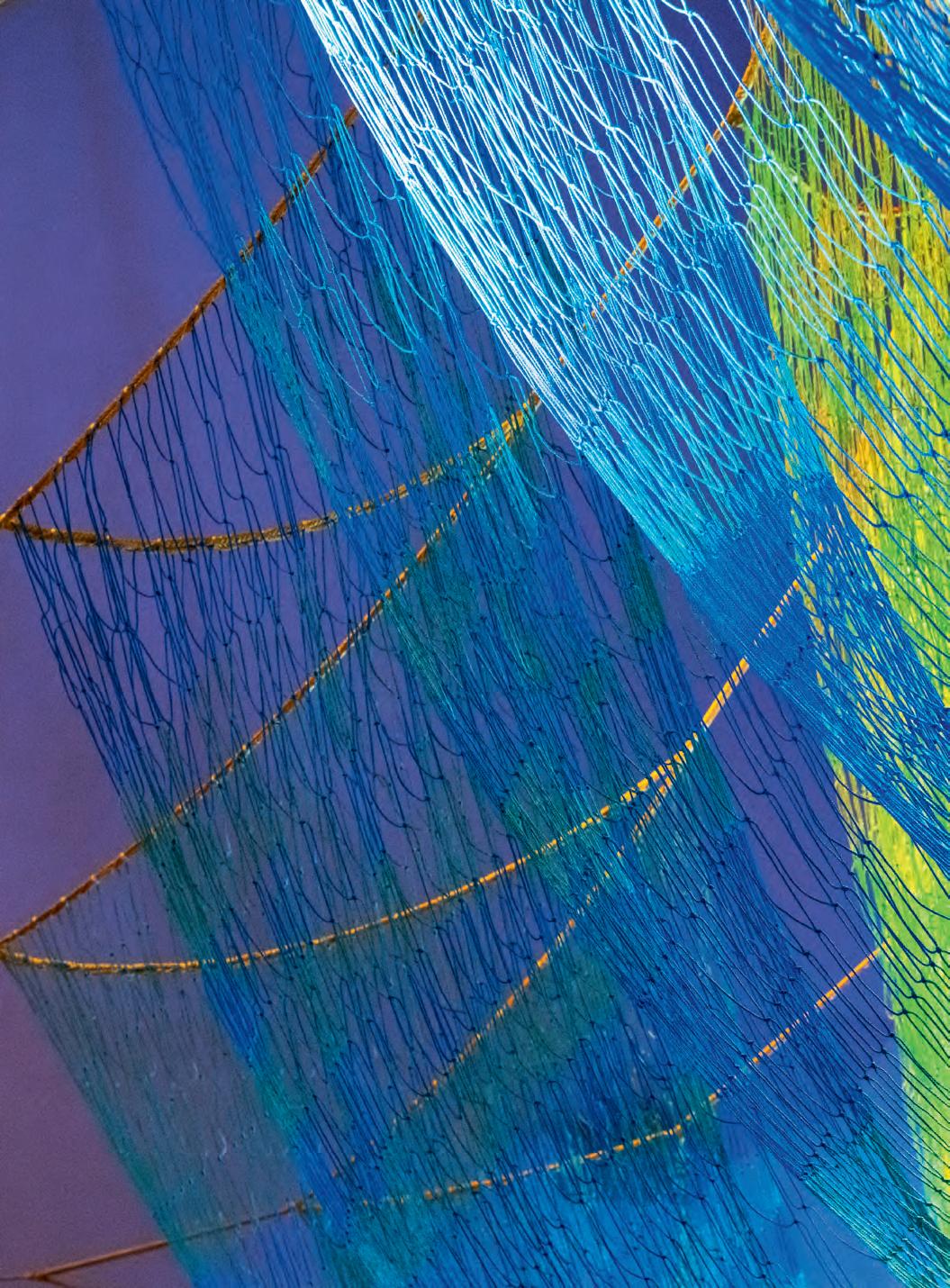
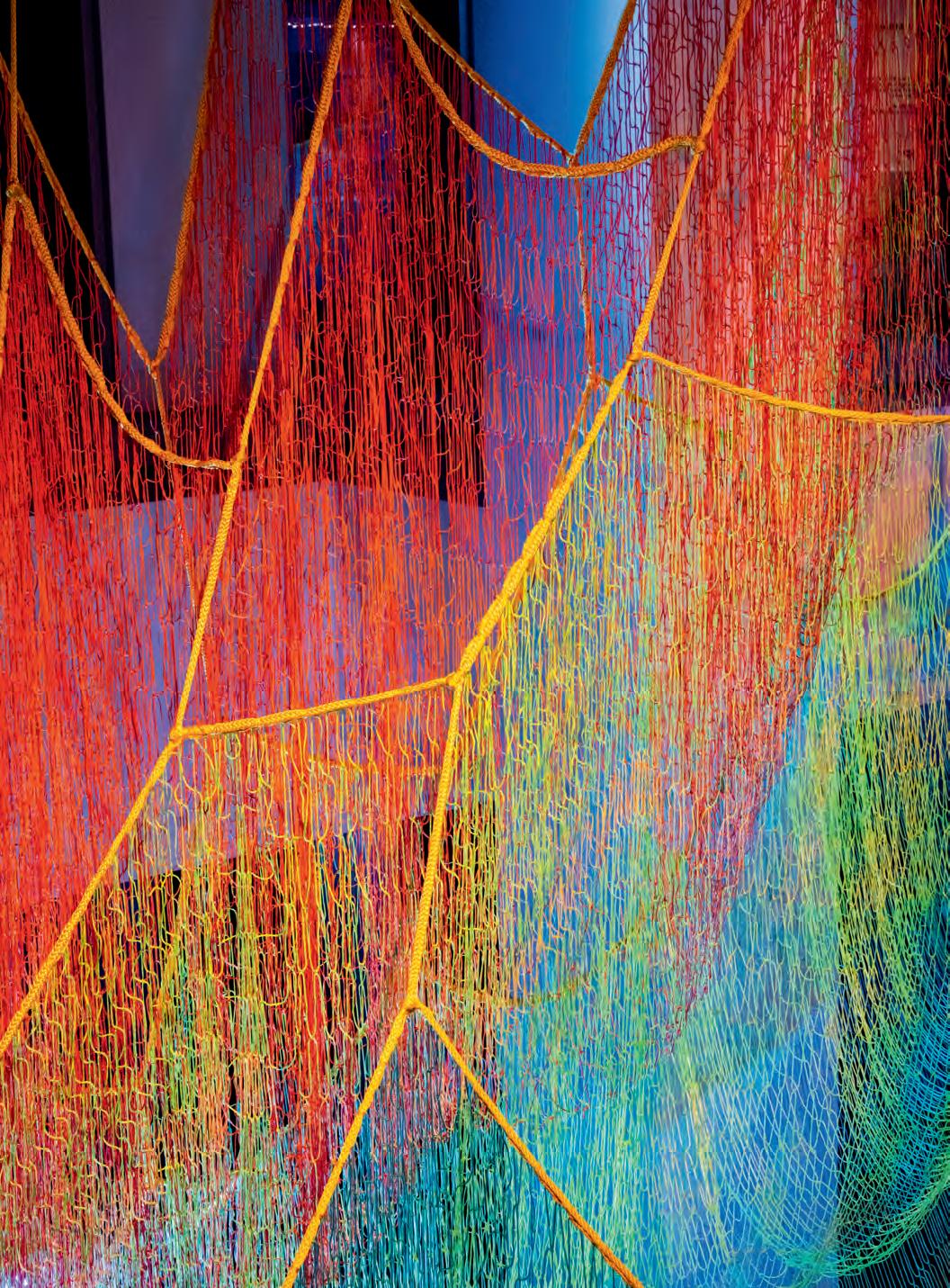
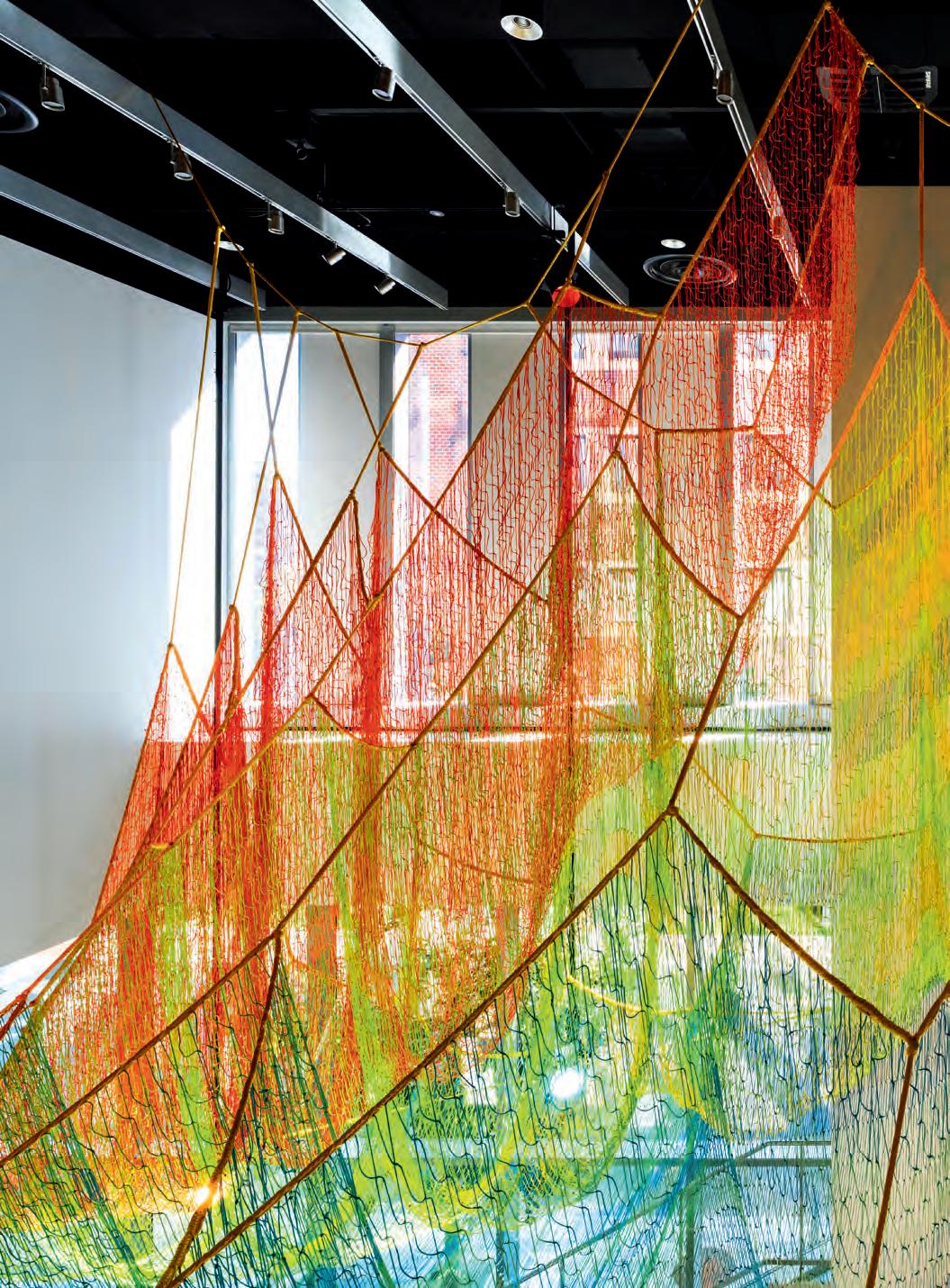
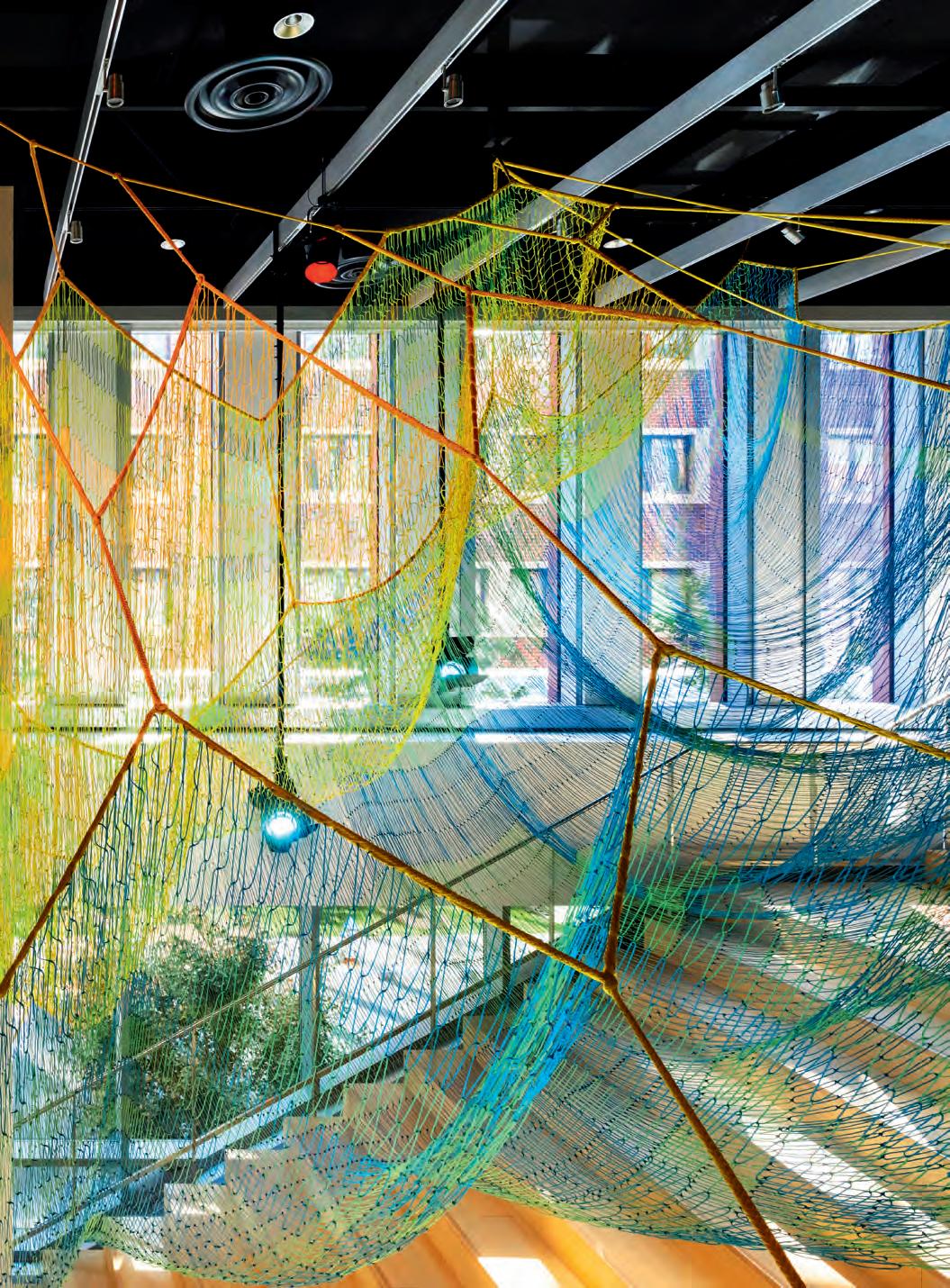
Remembering the Future is presented at the MIT Museum in collaboration with the MIT Center for Art, Science & Technology (CAST) as part of the CAST x MIT Museum partnership, a series of co-produced interdisciplinary arts installations and programs. The exhibition is on view September 2025 through August 2027.
Massachusetts Institute of Technology 77 Massachusetts Avenue, Cambridge, MA 02139
mitmuseum.mit.edu arts.mit.edu/cast
Edited by Leah Talatinian and Anya Ventura
Copyedited by Linda Walsh
Designed by Heidi Erickson
Installation photography by Anna Olivella
Exhibition team led by Ann Neumann
Printed by Puritan Press
ISBN 979-8-218-79068-4
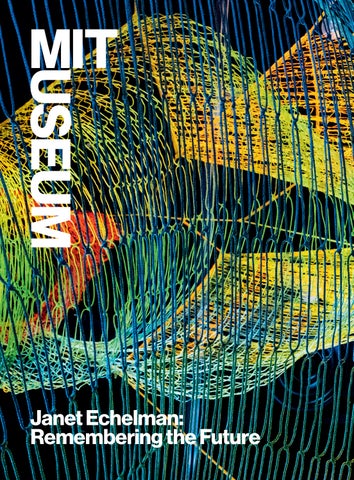
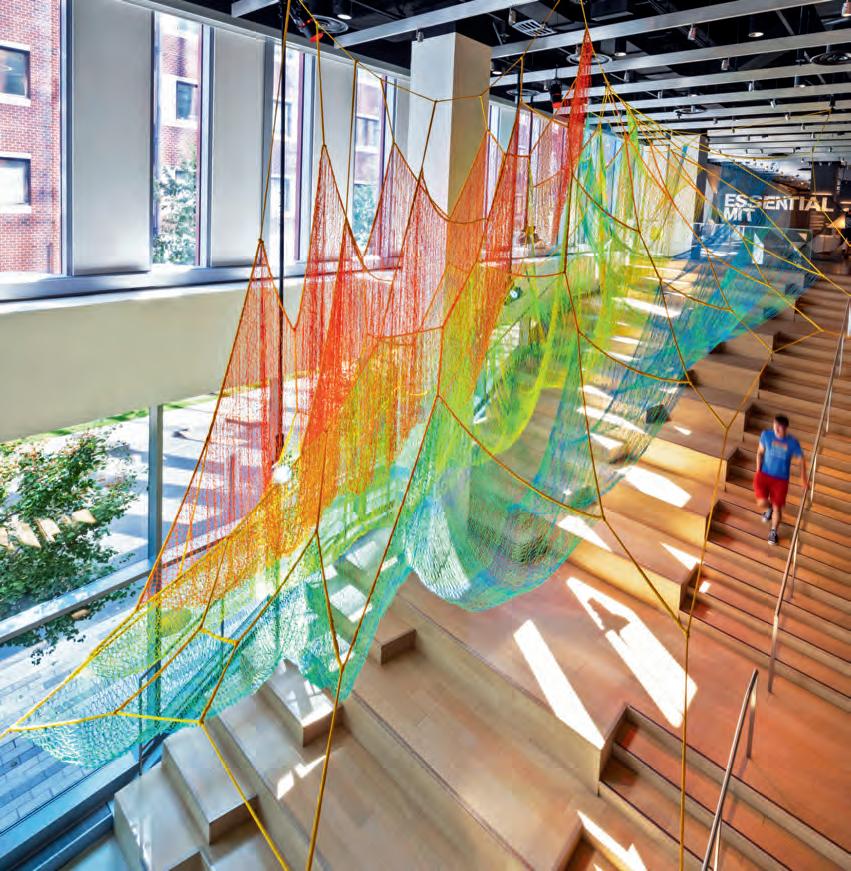
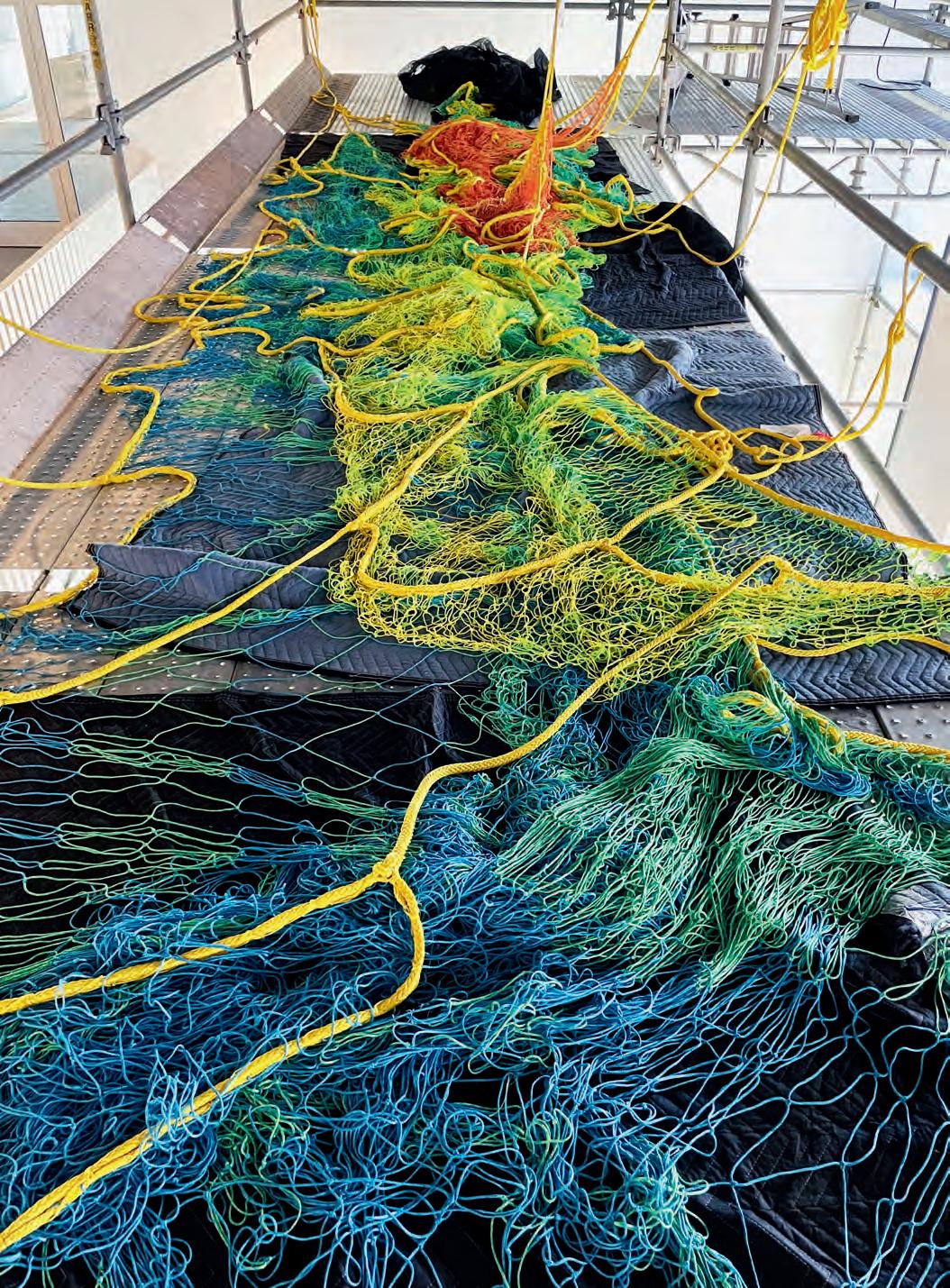
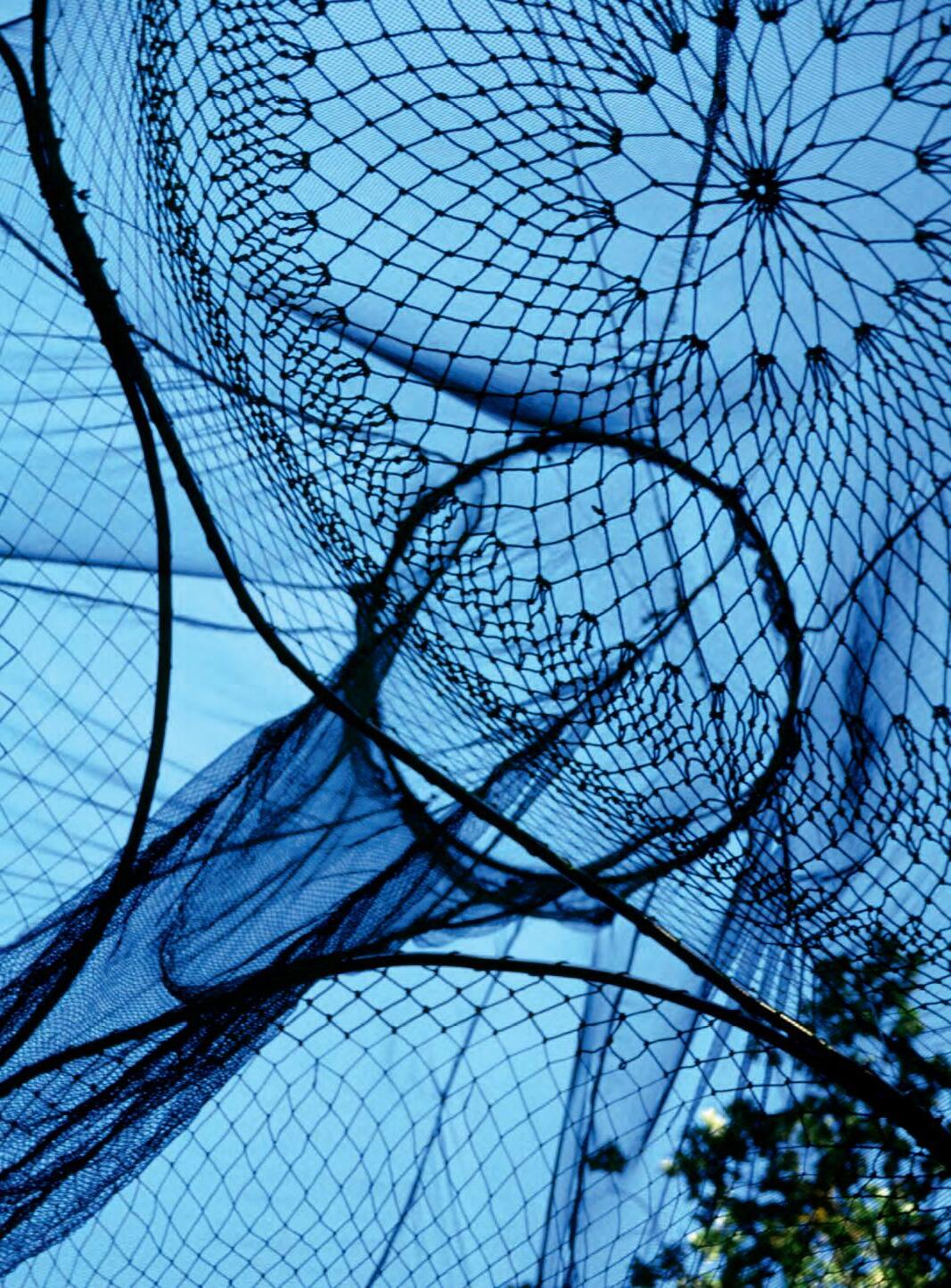
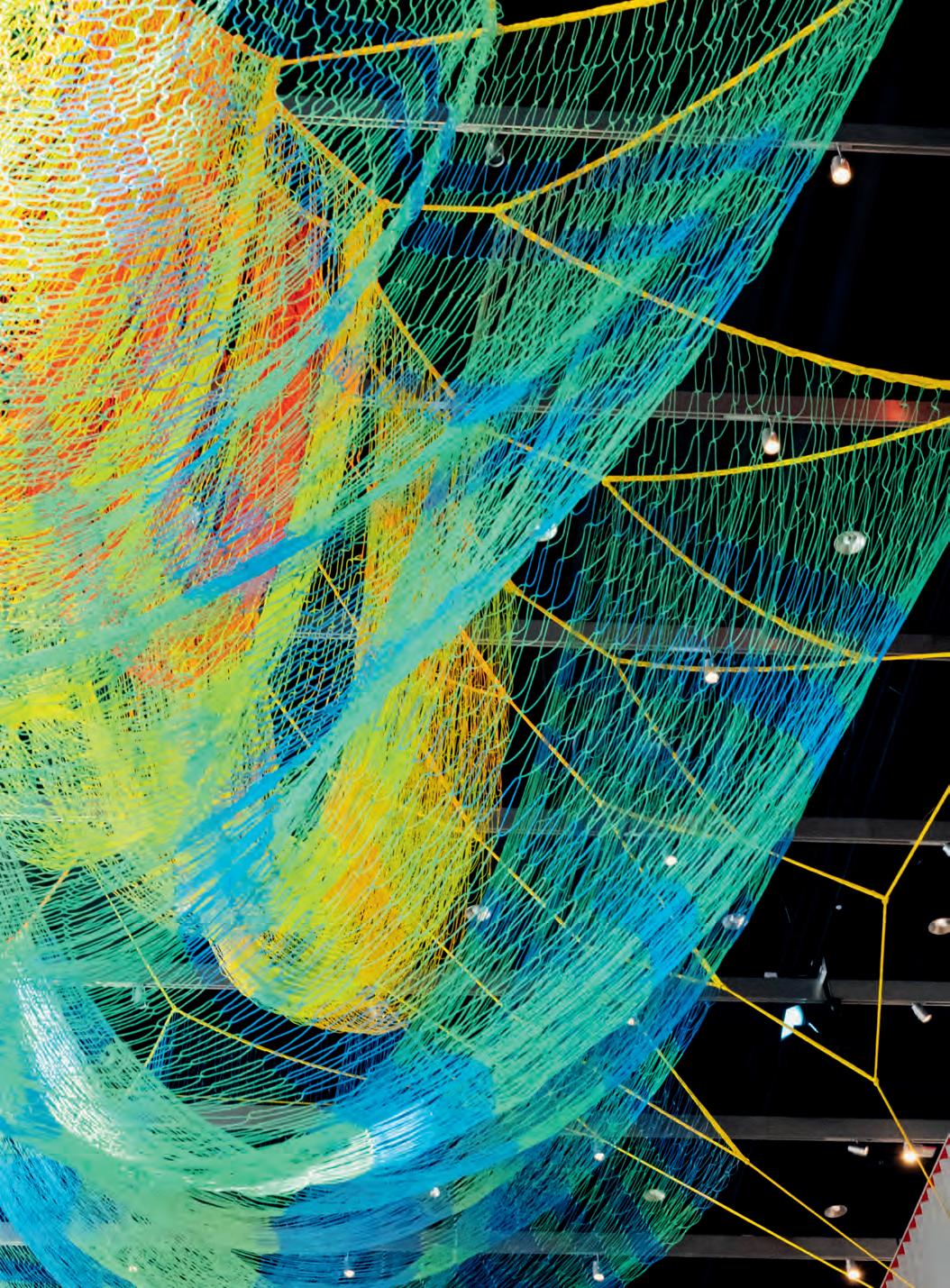
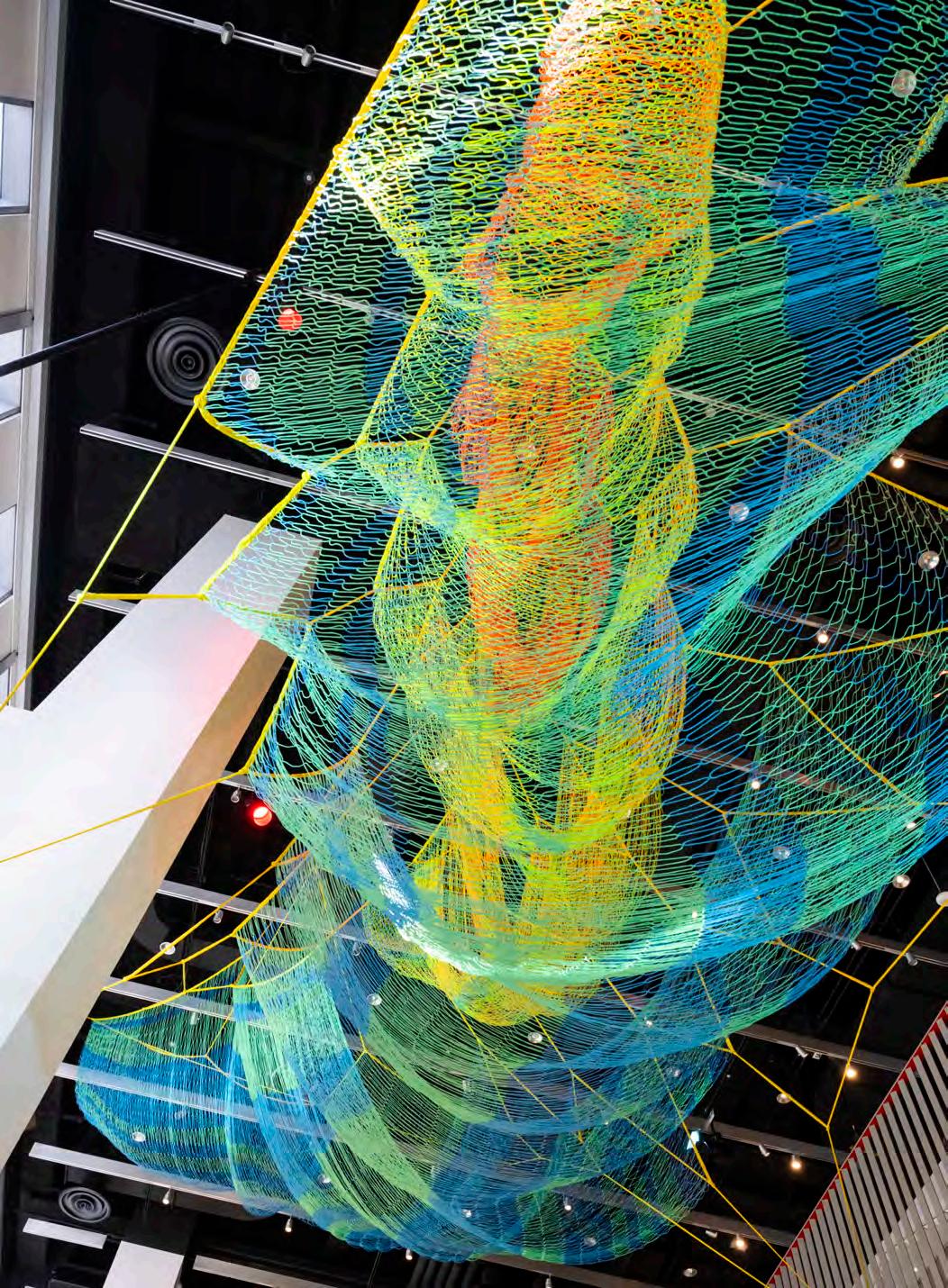
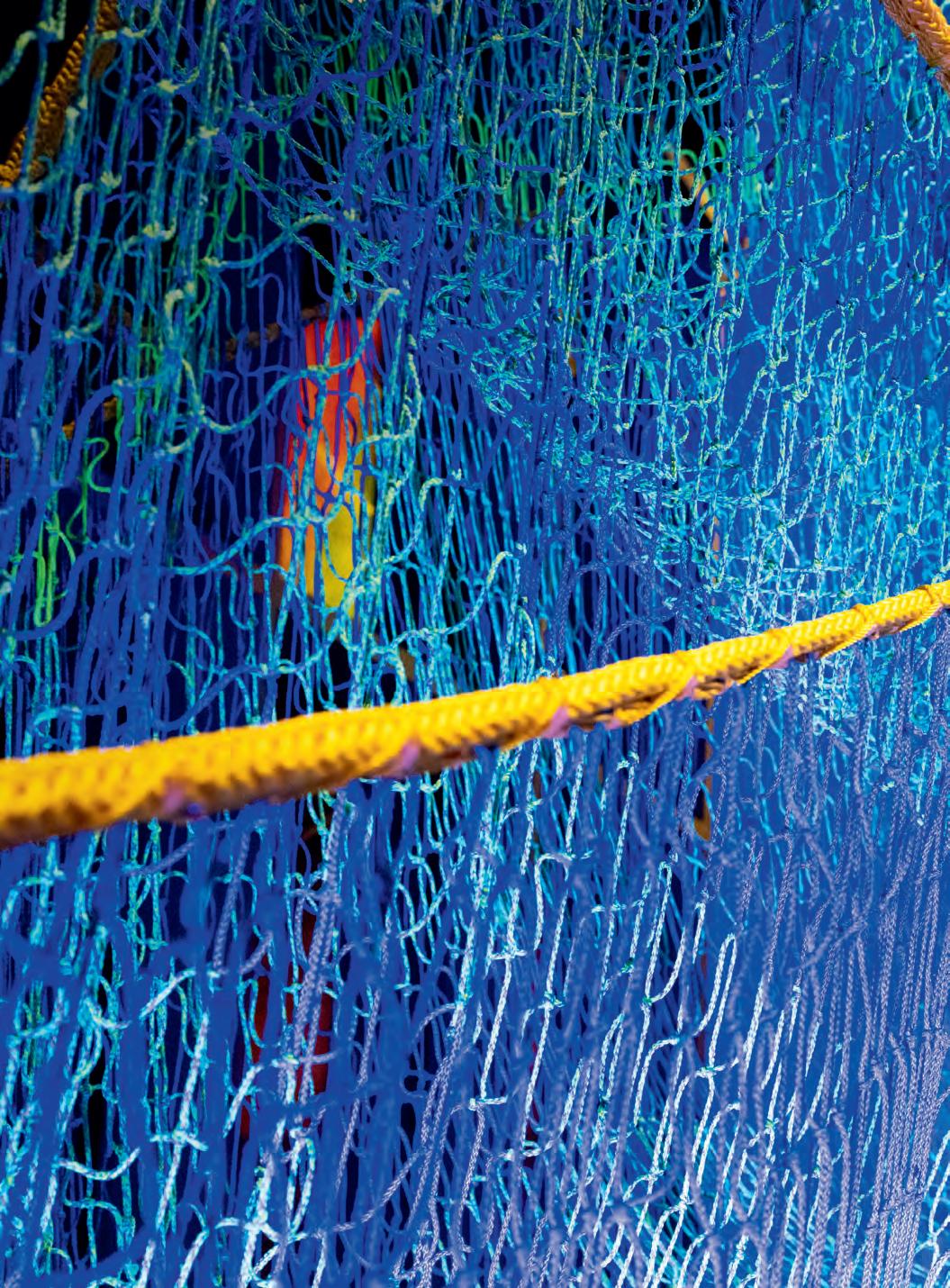
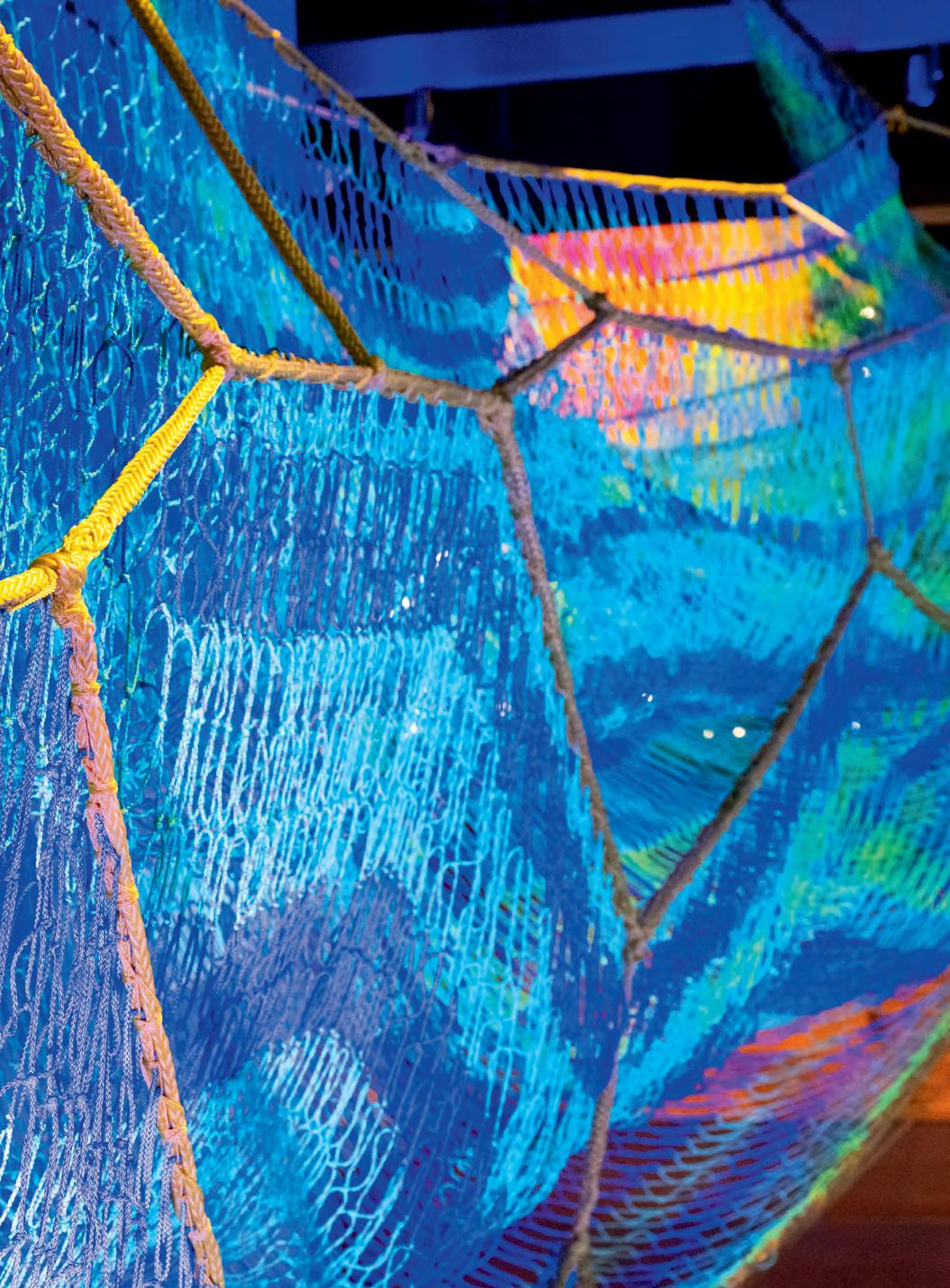
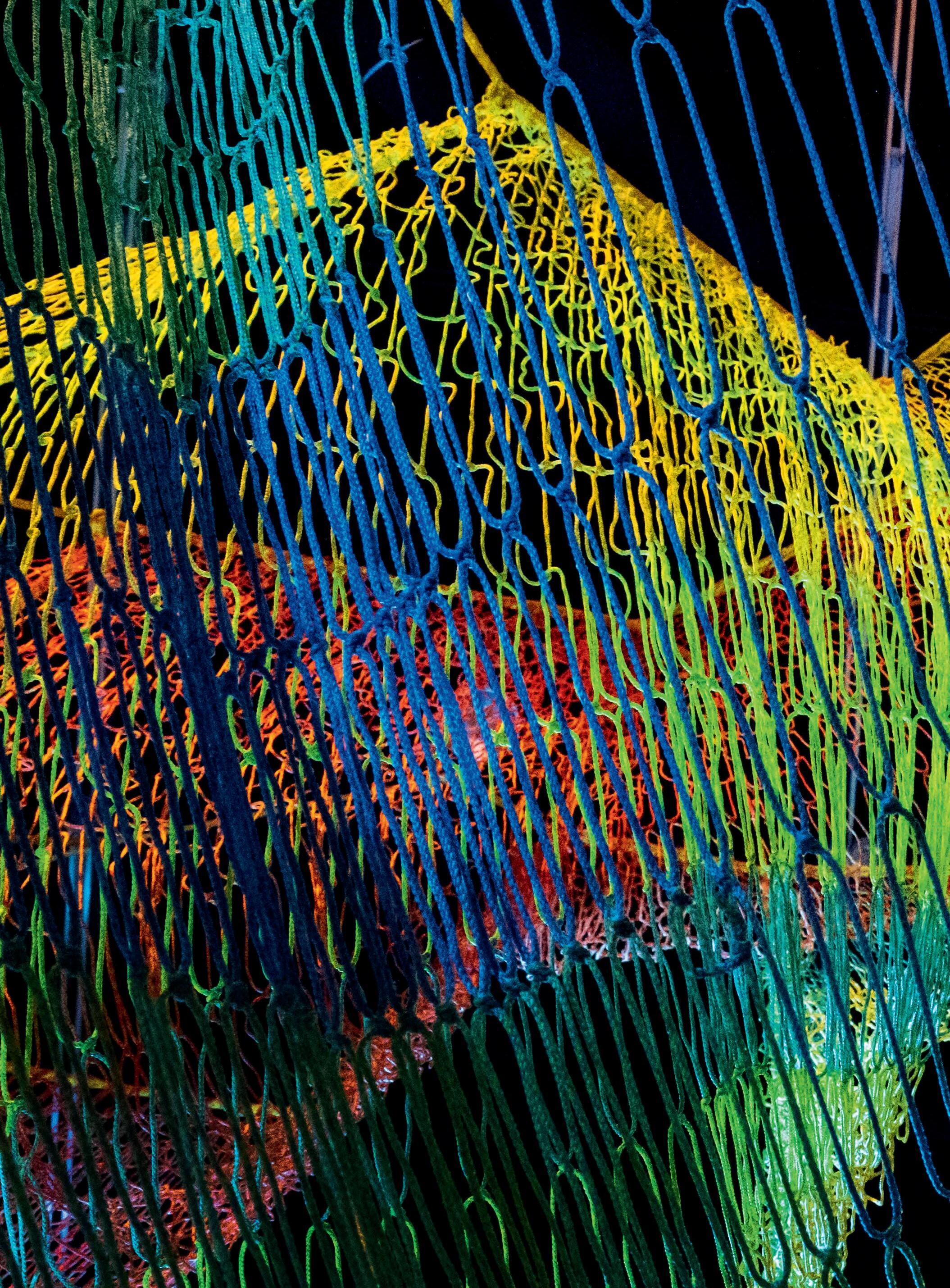
Cover: Installation view of Janet Echelman: Remembering the Future, MIT Museum.
Foreword
Acknowledgments 1 5 21 37 43 49 53 63 67
Janet Echelman: Remembering the Future
Michael John Gorman
Mark R. Epstein (Class of 1963) Director, MIT Museum and Professor of the Practice, Science, Technology, and Society, MIT
Building a Network of Collaboration
Leila W. Kinney
Executive Director of Arts Initiatives and the Center for Art, Science & Technology, MIT
Soft Suspension: Janet Echelman on Knotting 20,000 Years of Planetary Change
Janet Echelman
2022–24 CAST Mellon Distinguished Visiting Artist, MIT
Scaling Softness
Caitlin Mueller (MIT SB ’07, SM ’14, PhD ’14)
Associate Professor, Department of Architecture and Department of Civil and Environmental Engineering, MIT
Adam Burke, (MIT SMArchS BT ’24)
Computational Designer and PhD Student, MIT
Expressing Equilibrium
Caitlin Mueller (MIT SB ’07, SM ’14, PhD ’14)
Associate Professor, Department of Architecture and Department of Civil and Environmental Engineering, MIT
The Science Behind Remembering the Future
Raffaele Ferrari
Cecil and Ida Green Professor of Oceanography, Department of Earth, Atmospheric, and Planetary Sciences, and Co-Director of the Lorenz Center, MIT
Janet Echelman’s Flexible Logics at the MIT Museum
Caroline A. Jones
Rudge (1948) and Nancy Allen Professor, History, Theory, and Criticism Program, Department of Architecture, and Associate Dean for Strategic Initiatives in the School of Architecture + Planning, MIT
Biographies
Installation view of Janet Echelman: Remembering the Future, MIT Museum.
Foreword Janet Echelman: Remembering the Future
Michael John Gorman
Why do we remember the past but not the future? The fundamental laws of physics are fully symmetrical between past and future; nevertheless, our memories appear to go in one direction, remembering the past rather than the future. Consider a tree’s rings, where the experiences of the tree over the years (a summer drought, a forest fire) are visibly inscribed on its annual patterns of growth. Now imagine that time is running backwards: the tree starts out large and majestic, and gradually shrinks into a sapling. The mature tree would include inscriptions in its rings related to events that have not yet occurred in this scenario—it would “remember the future.”
Similarly, Stephen Hawking hypothesized in his popular book, A Brief History of Time, that if the universe were one day to cease its expansion and then gradually start contracting under gravity towards a “big crunch,” everything would run backwards, including (at the appropriate point in the timeline) people’s lives. Not only would people “remember the future,” having memories related to events that have not yet happened, but they also would perceive that the universe was still expanding. From a subjective point of view, the expansion would be completely indistinguishable from the contraction. Yet, the second law of thermodynamics suggests that time does indeed have an arrow, and that the amount of entropy or disorder in a closed system is always increasing.
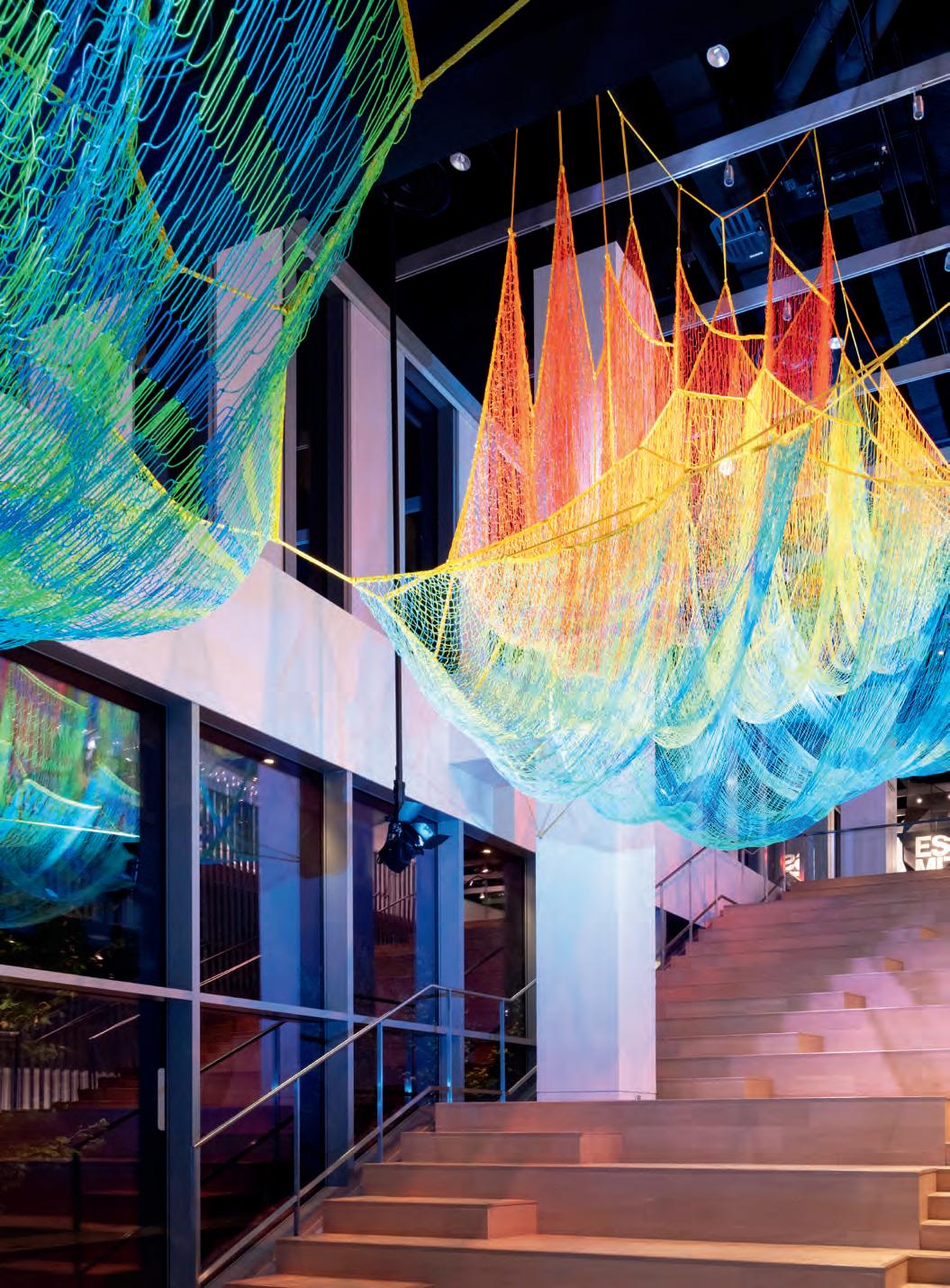
Left and right: Installation views of Janet Echelman: Remembering the Future, MIT Museum.
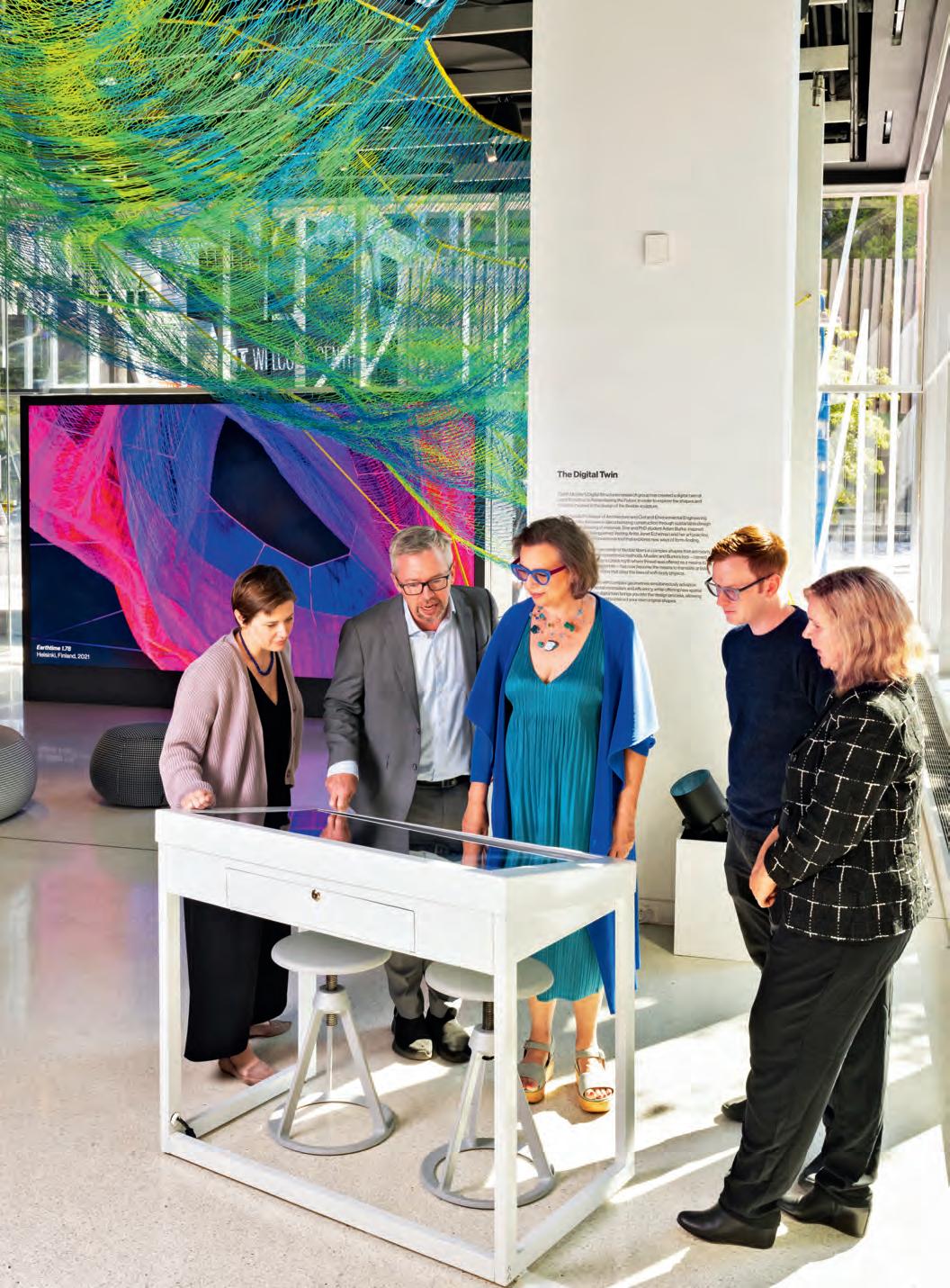
(Left to right) Maggie Scott, Michael John Gorman, Janet Echelman, Adam Burke, and Caitlin Mueller.
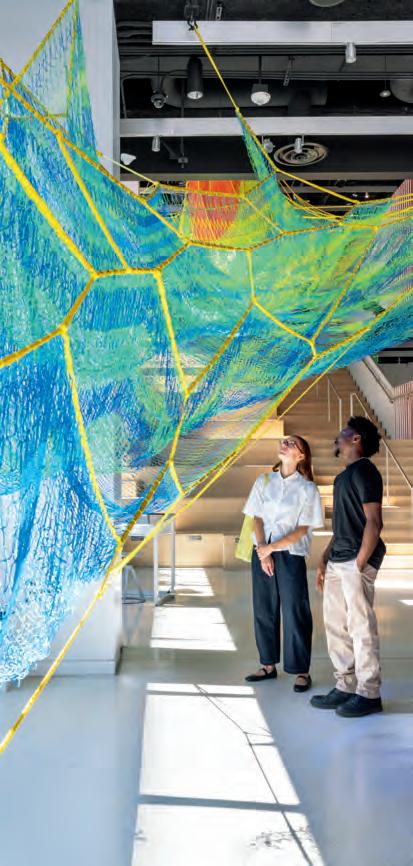
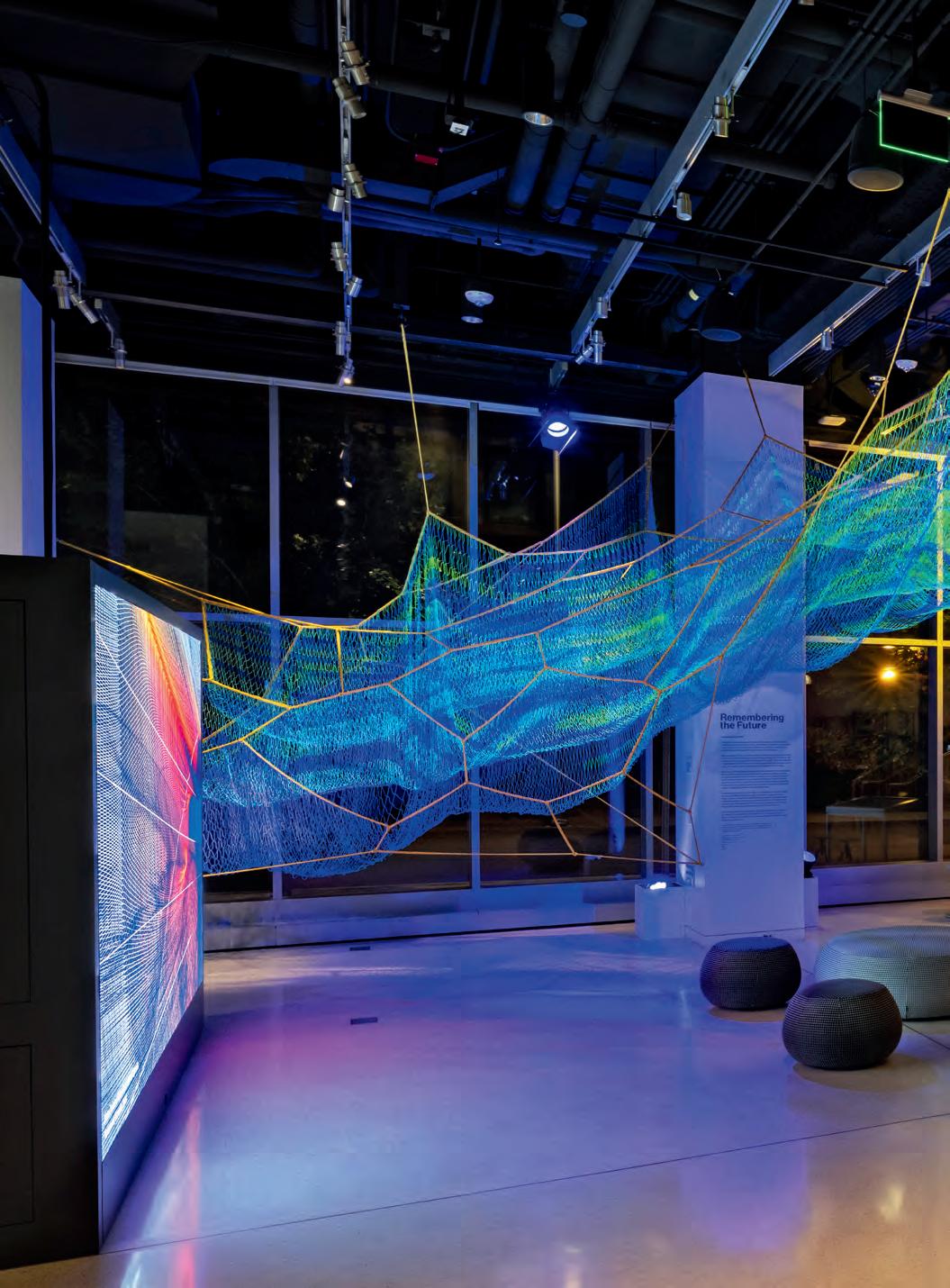
In inviting us to remember the future, with her new gossamer-like sculpture suspended over the lobby of the MIT Museum, Janet Echelman is provoking us to contemplate possible climate futures for the Earth, drawing poetically on data from MIT’s En-ROADS project, which calculates different future climate scenarios consequent on policy decisions—in relation to carbon pricing, nuclear energy, renewable energies, and fossil fuel subsidies. The work, designed with the aid of MIT Associate Professor Caitlin Mueller’s extraordinary soft structural engineering, is a subtle yet pressing invitation to contemplate our own agency in shaping possible climate futures at a pivotal moment for our planet. Do we really want to remember the future that we will never have? The work invites us to cross the threshold into designing more sustainable futures.
The MIT Museum itself, in its new Kendall Square incarnation, is conceived as a threshold—a liminal space that draws the public into new conversations about big ideas that shape our possible futures, a connective tissue between the playground for ideas and solutions lab that is the MIT campus and broader societal questions and concerns. In commissioning renowned artist Janet Echelman to create this new work, the outcome of a deep collaboration supported through the MIT Center for Art, Science & Technology (CAST), we were conscious of aiming to begin a conversation rather than to end it, to invite people to dive into a culture of problem-solving and creative solutions rather than to provoke despair and paralysis about the climate crisis. As MIT President Sally Kornbluth put it in launching the Climate Project at MIT in February 2024, “The goal is
for MIT to become, within the next decade, one of the world’s most prolific and collaborative sources of technological, behavioral, and policy solutions for the global climate challenge.”
Janet Echelman’s work, and collaboration with engineer Caitlin Mueller and MIT climate scientist Raffaele Ferrari, exemplifies the transdisciplinary approaches that will be essential in navigating the future.
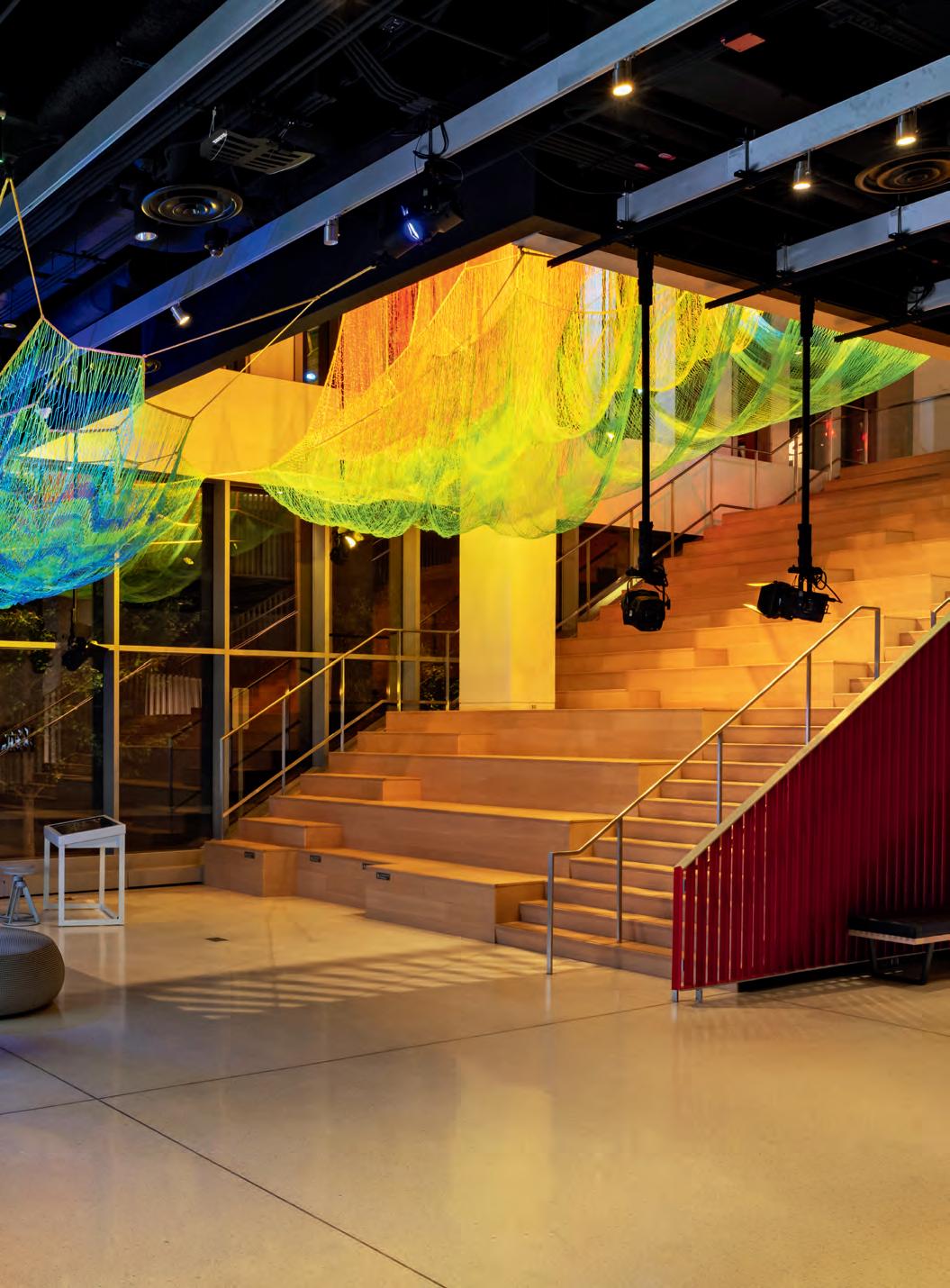
As the project took form, in collaboration with our exhibitions team led by Ann Neumann, we were excited to see how it used our museum architecture as its canvas, playing with the grand staircase in the lobby of the Museum and the opportunity for a visual connection with the world outside. The unveiling of the installation Remembering the Future, drawing on climate data going back to the end of the last ice age, also coincides with the launch of a yearlong focus on time and temporality at the MIT Museum, exploring spacetime and circadian rhythms, wormholes, time measurement, and time travel through a series of exhibitions and events. I would like to thank Janet Echelman, Caitlin Mueller, Raffaele Ferrari, Leila W. Kinney, Ann Neumann, Adam Burke, Caroline A. Jones, and all those who have worked so hard to bring this beautiful new work to life and have shared their insights in this booklet. I hope that this installation will spark many conversations about possible, probable, and desirable futures. The clock is ticking …
Michael John Gorman
Mark R. Epstein (Class of 1963) Director, MIT Museum and Professor of the Practice of Science, Technology, and Society, MIT
Caitlin Mueller, Nicole Wang, and participants in the 2023 In Tension workshop. Photo: Sham Sthankiya.
Building a Network of Collaboration
Leila W. Kinney
What lies behind the ethereal form that floats above the MIT Museum staircase? More than a decade of interactions between artist Janet Echelman, her studio, MIT data reflecting millennia of climate change, and a series of custom-designed software tools. The mesh network of collaborators enabling the artwork in the Museum’s lobby is as intricate and interconnected as the three-dimensional fiber structure that is Remembering the Future.
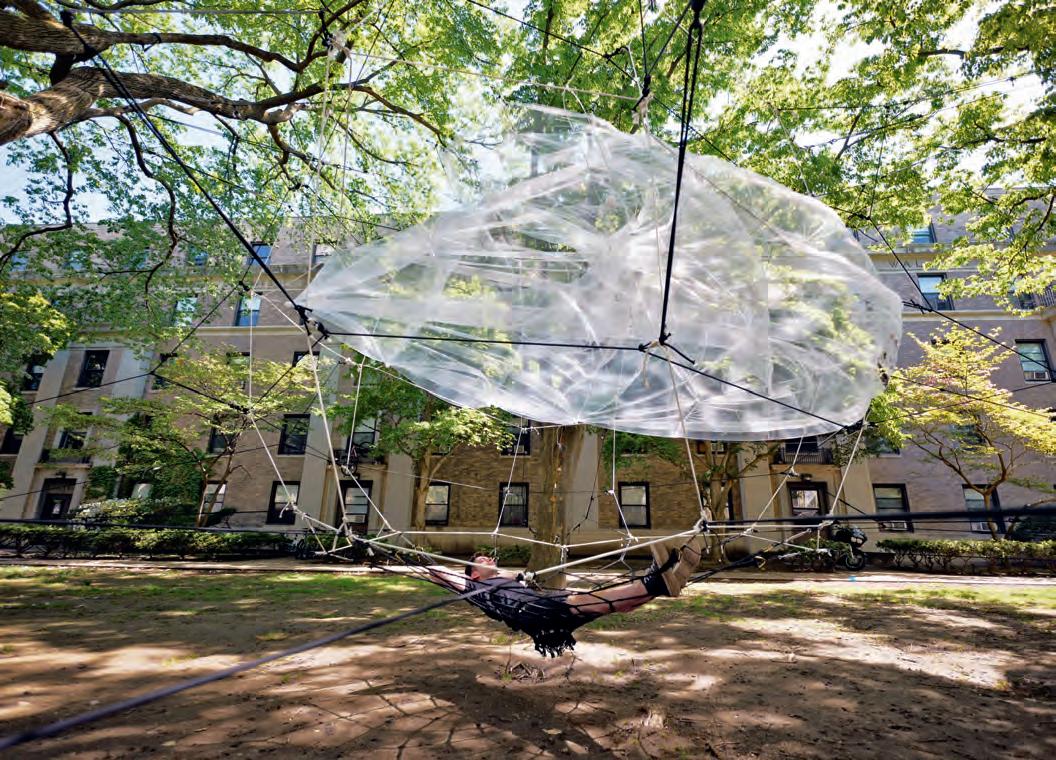
Caitlin Mueller, an MIT associate professor working at the interface of architecture and structural engineering, proposed Janet Echelman as a Mellon Distinguished Visiting Artist at the Center for Art, Science & Technology (CAST), who was appointed from 2022 to 2024. Previously, they had co-taught a studio in the School of Architecture and Planning (SA+P), together with technologist David Feldman 1 , entitled Soft Structure Meets the Glass House (2017), and wanted to deepen their exploration of the design, simulation, and prototyping of tensile structures. They share a commitment to an aesthetic of softness and transparency, a minimalist material footprint, and a search for that elegant, elusive solution revered by scientists and artists alike, where the simplest answer is also the most beautiful.
As part of this collaboration, Echelman shared with Mueller the desire for a new tool to rapidly design her spliced-rope structural layers. Adam Burke, who was the Studio Echelman Fellow at the time, turned out to be a linchpin for developing the new tool.
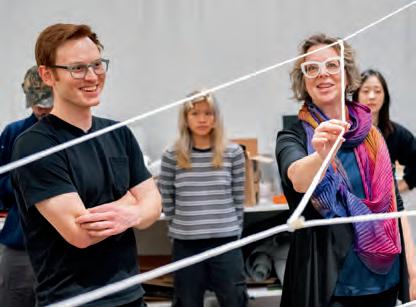
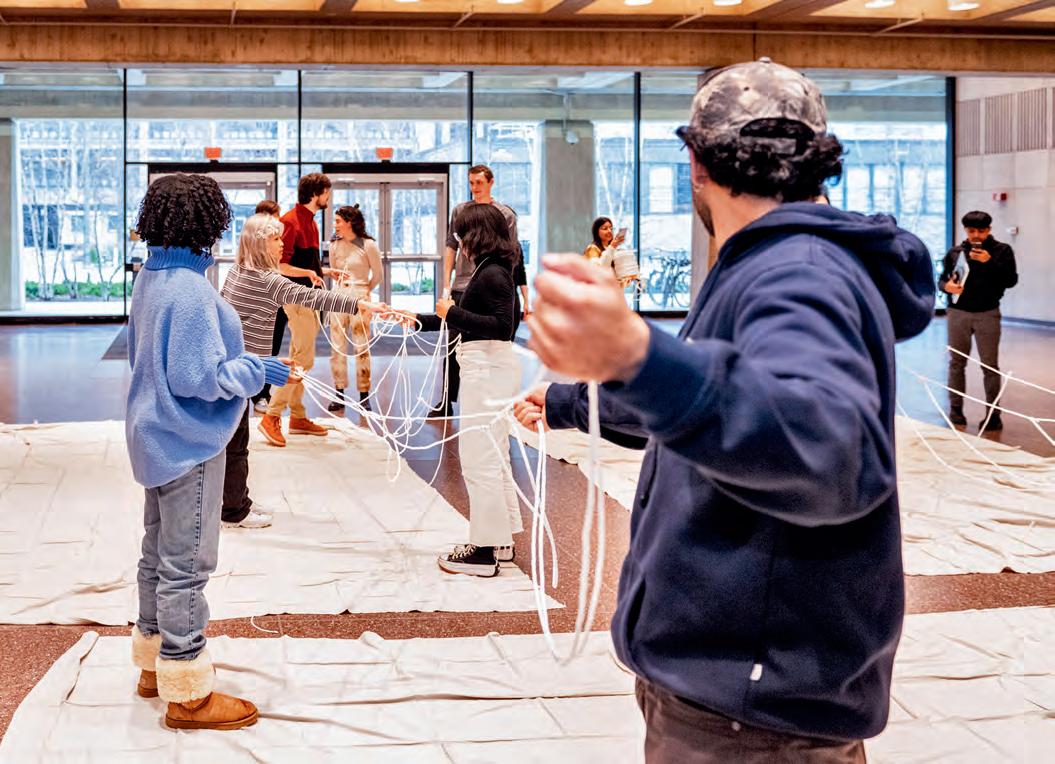
Adam Burke and Janet Echelman instruct students in the 2023 In Tension workshop. Photo: Sham Sthankiya.
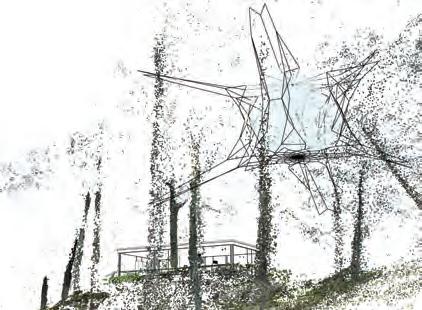
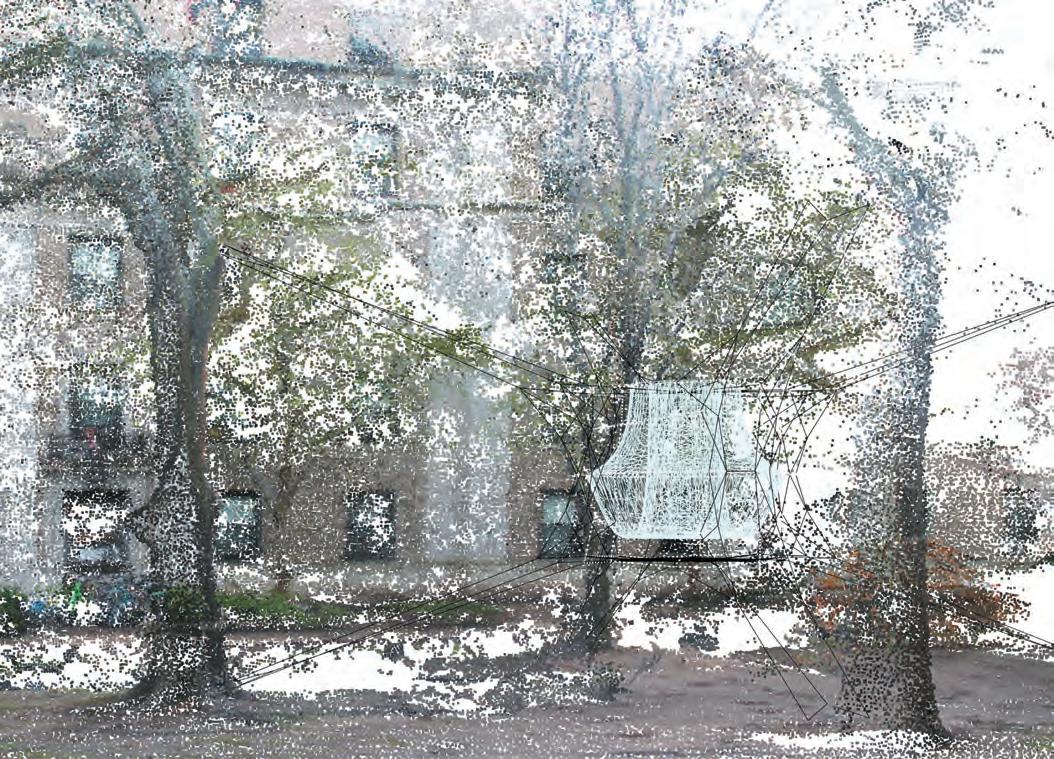
Photogrammetry scan of 3D environment with integrated soft structure design simulation produced by MIT students with David Feldman and Caitlin Mueller for Philip Johnson’s Glass House.
Integrated 3D scan and design concept for
soft structure prototype on MIT campus produced by MIT students with David Feldman and Caitlin Mueller.
Built prototype by MIT students in the Soft Structure Meets the Glass House studio, 2017.
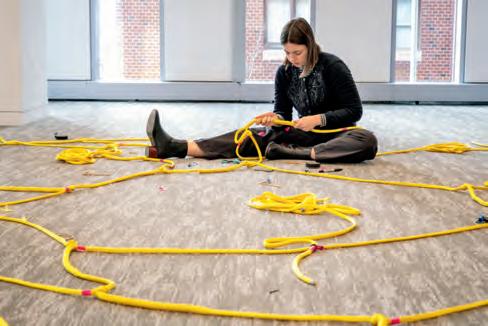
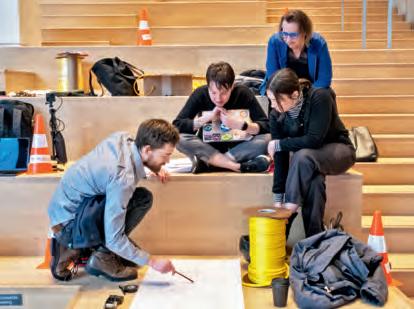
Participants in the 2023 In Tension workshop assemble a net they designed using the new computational tool. Photo: Sham Sthankiya.
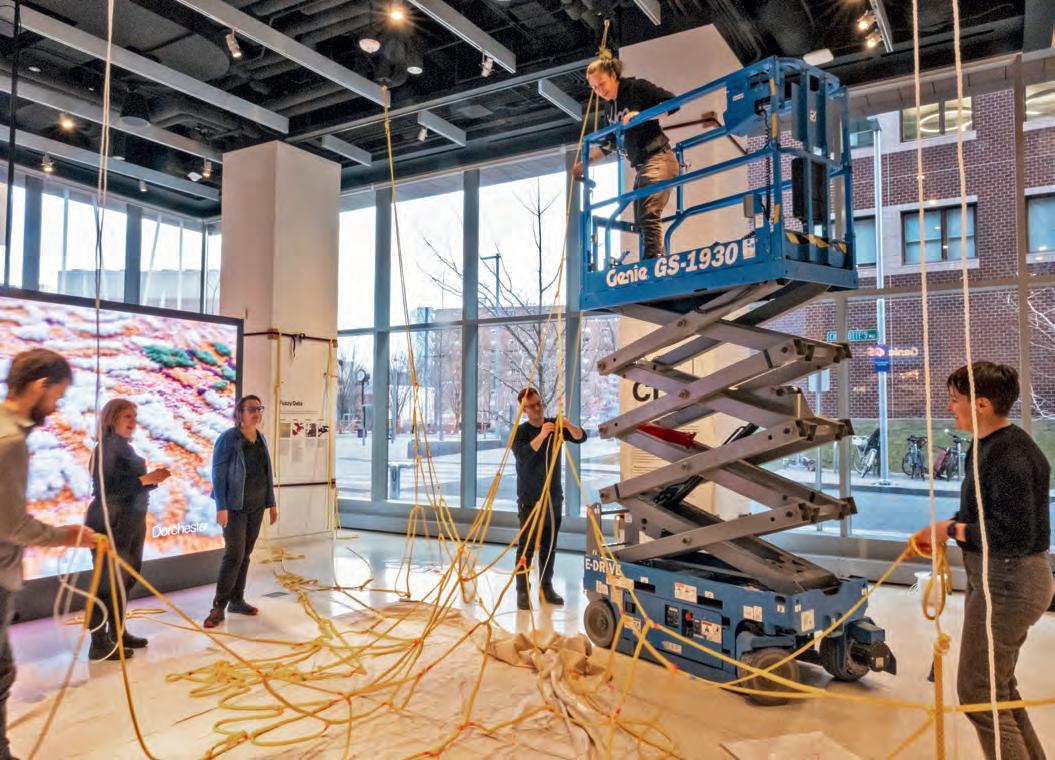
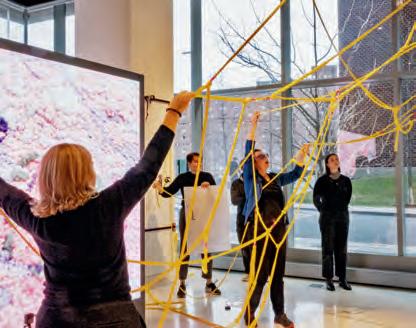
(Left to right) Daniel Smith, Caitlin Mueller, Janet Echelman, Adam Burke, Bianca Mauro, and Jessica Stringham install a prototype during the 2025 Crafting Softness workshop. Photo: Heidi Erickson.
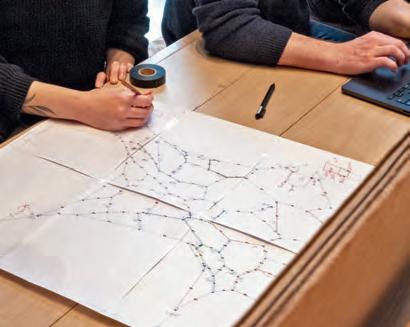
Plans for a prototype of Remembering the Future, created using the Ariadne and Theseus software. Photo: Heidi Erickson.
Caitlin Mueller, Jessica Stringham, Janet Echelman, and Coco Allred install a prototype during the 2025 Crafting Softness workshop. Photo: Heidi Erickson.
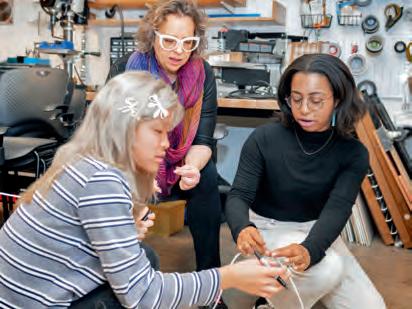
Daniel Smith, Jessica Stringham, Janet Echelman, and Coco Allred review the prototype plans during the 2025 Crafting Softness workshop. Photo: Heidi Erickson.
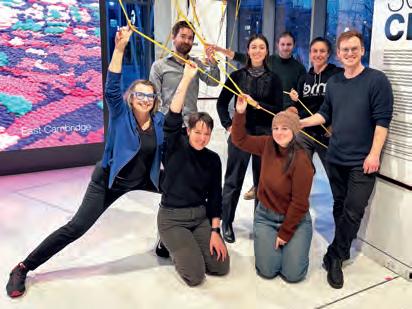
The 2025 Crafting Softness workshop participants and prototype installation team in the MIT Museum, January 2025. Photo: Heidi Erickson.
Trained as an architect, he had worked as a technician in the MIT Museum Studio (a hybrid art studio, teaching, and learning space), advising students on projects for Vision and Art in Neuroscience—one of the longestrunning cross-disciplinary classes initially sponsored by CAST. Echelman and Feldman had engaged Greg Pintilie, an MIT doctoral student, to develop the first form-finding digital application for Echelman’s net sculptures in 2009; one could say that Burke was continuing this work when he matriculated at MIT as a master’s student in Mueller’s Digital Structures research group, with the goal of developing a sophisticated computational design tool for soft structures. Dubbed “Ariadne and Theseus,” the software allows an artist or an engineer to rapidly iterate through computationally enabled simulations, in a process described as “inverse form finding.” Its first trial run was in the January 2023 workshop associated with Echelman’s CAST residency. 2
Meanwhile, as this groundbreaking new tool was being developed under Mueller’s supervision, Echelman was searching for an on-campus site to install a sculpture that would realize the flexible, generative possibilities that it afforded. The high ceilings and dramatic staircase in the new MIT Museum in Kendall Square would prove the perfect location, and Echelman’s site-specific artwork commissioned by the Museum is now the most ambitious installation in its ongoing collaboration with CAST, which showcases outstanding interdisciplinary work. The project thus returned home to the Museum,
figuratively speaking, bringing with it climate data encountered along the way—from MIT professor Raffaele Ferrari and the creators of the climate futures simulator En-ROADS— which informs the contours, colorways, and temporal narrative of Echelman’s installation.
Just as the network of people, research, institutions, software, and materials gave rise to Remembering the Future, this companion guide to the artwork also branches out in several directions. It is part oral history, part sourcebook, and part art historical contextualization. CAST is gratified to have provided a platform for the highly successful collaboration that has produced this richly layered, exquisite installation and to have deepened a very productive partnership with the MIT Museum. We look forward to the possibilities that lie ahead for Ariadne and Theseus, both at MIT and in Studio Echelman. This flexible design tool continues to be deployed by Mueller and Burke for new material processes, such as fiber reinforcement systems that could lighten the carbon footprint of concrete. For Echelman, the tool opens up new pathways in the evolution of more complex three-dimensional structures, expanding her artistic practice to reveal our interconnectedness with environmental forces and the fragility of life on this precious planet.
Leila W. Kinney
Executive
Director
of Arts Initiatives and the MIT Center for Art, Science & Technology (CAST)
1 David Feldman was a Distinguished Visiting Technologist at the MIT Center for Art, Science & Technology, 2022–23.
2 For a detailed account of the studio’s in-house software development, see: Caitlin Mueller, Adam Burke, and Andrew Sageman-Furnas, “Advancing Sculptural Form Finding through Computer Software in Studio Echelman,” in Gloria Sutton, ed. Radical Softness: The Responsive Art of Janet Echelman (New York, NY: Princeton Architectural Press, 2025), 211–219.
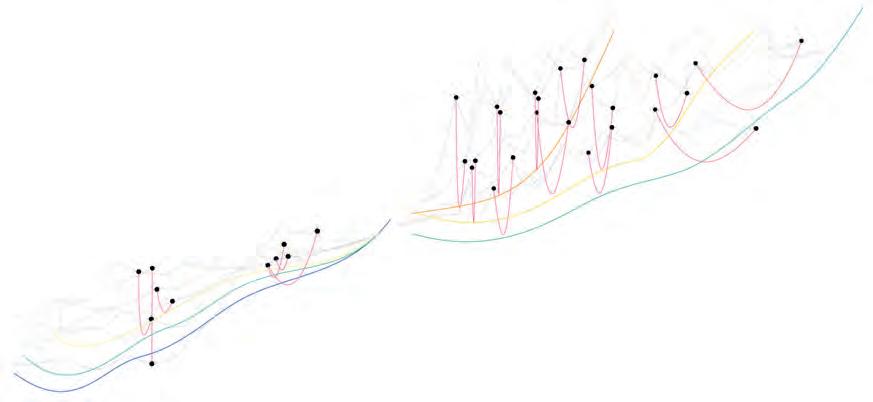
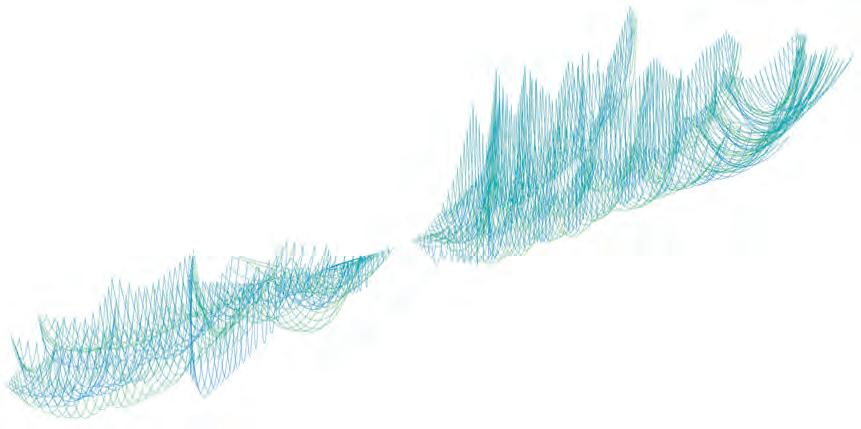
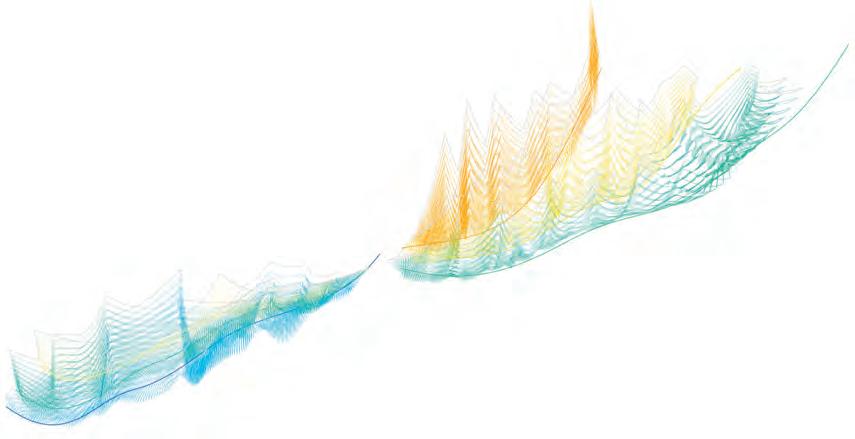
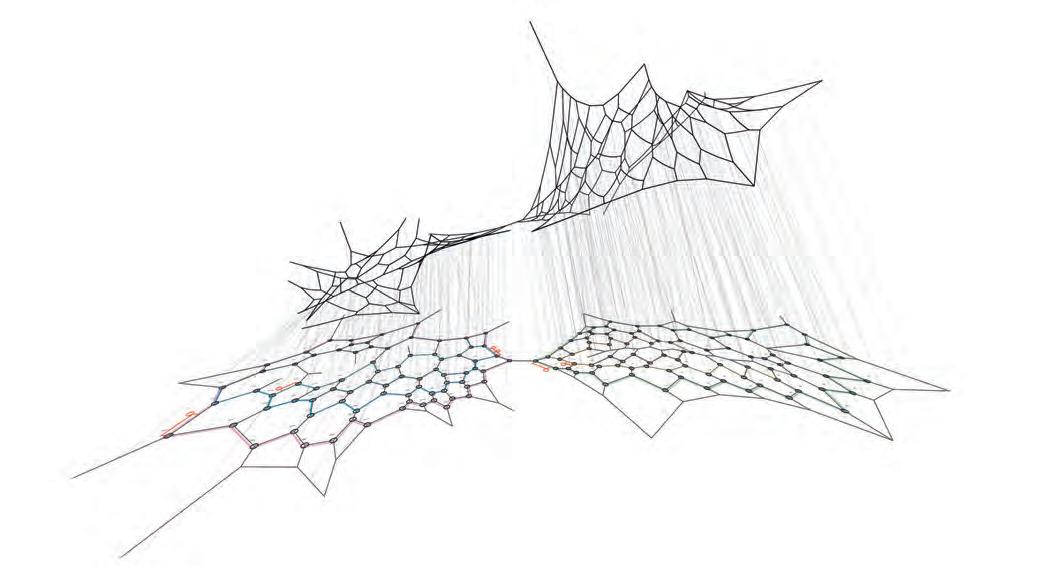
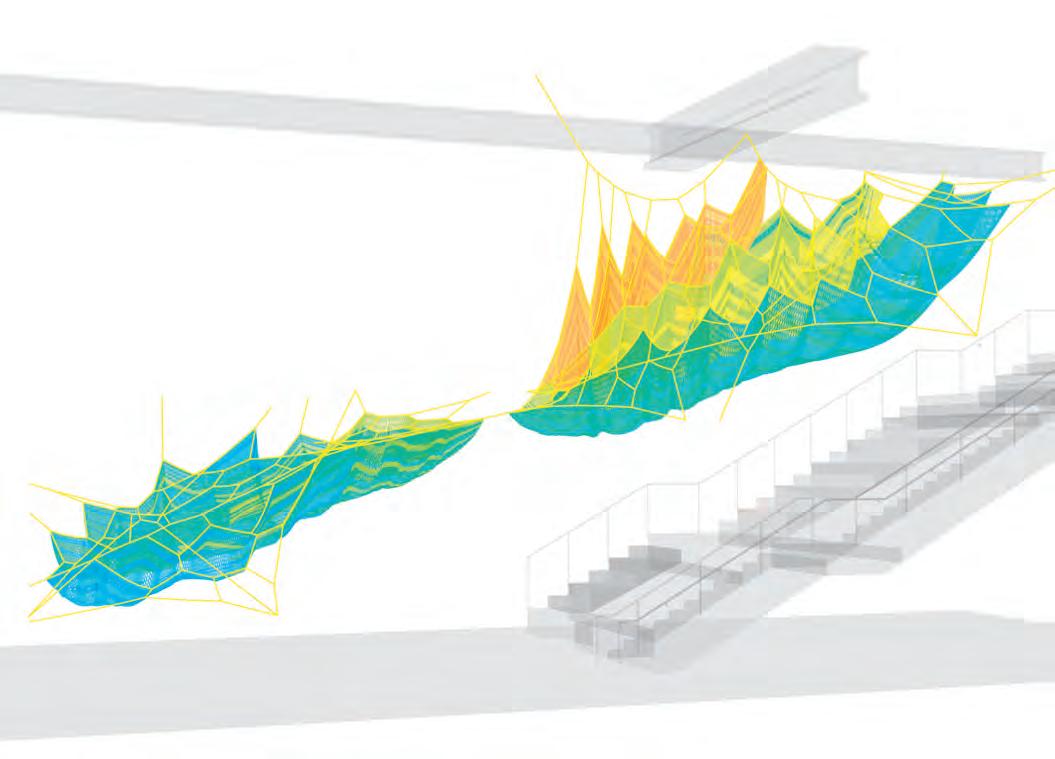
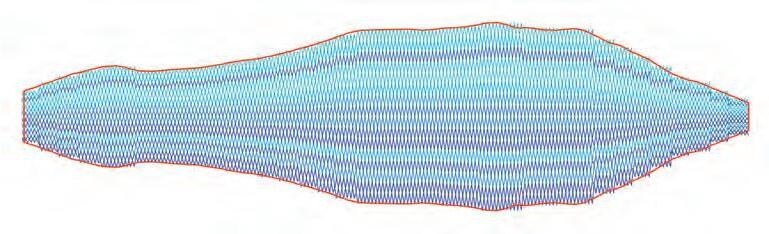
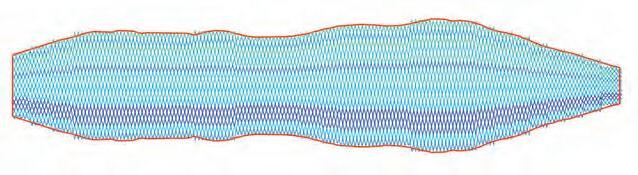
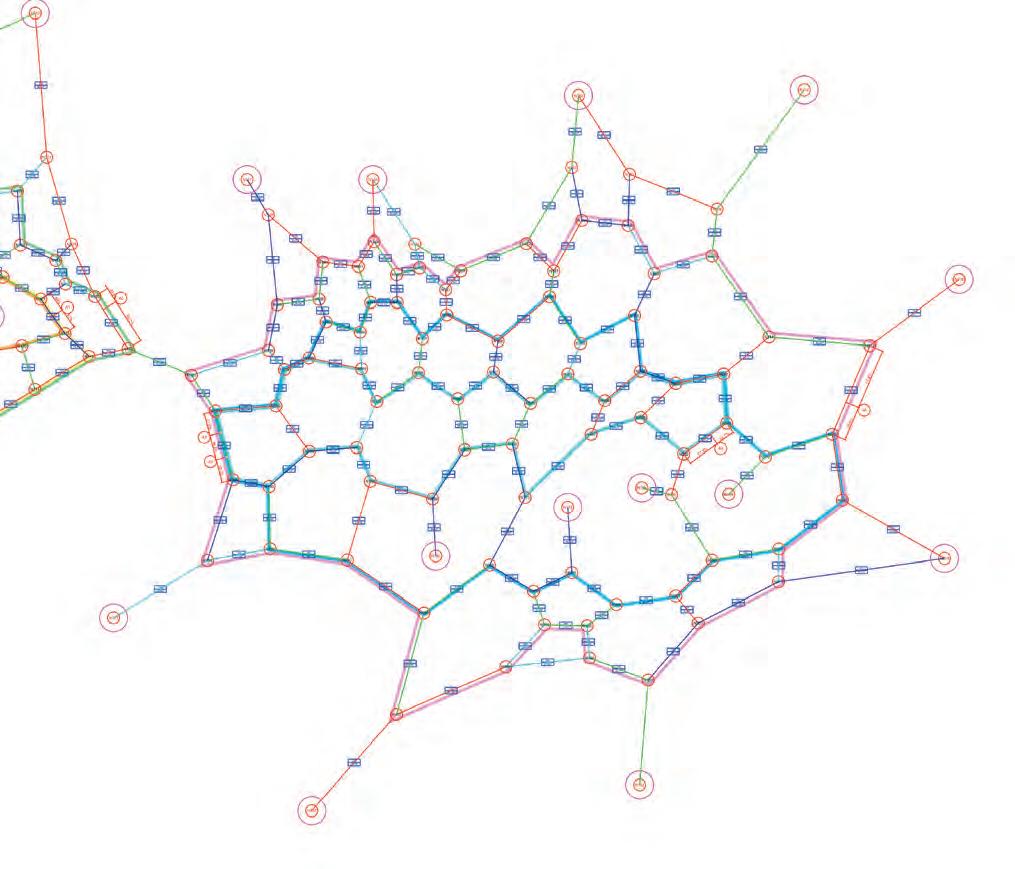
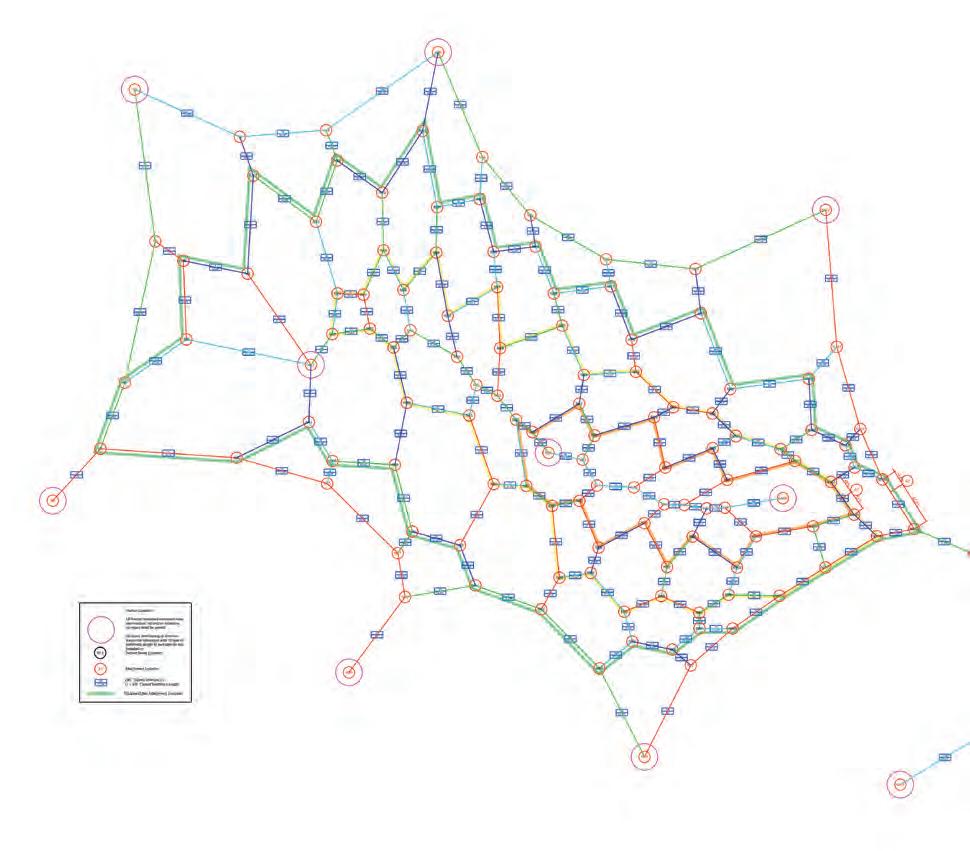
Janet Echelman used an inverse form-finding program developed in her studio, created with Daniel Smith, to translate sketches for Remembering the Future into specific material parameters. Top to bottom: drawing inspired by climate data; schematic map of net panels and rope attachments; location of all continuous twines within the sculpture; estimated locations of all knots within the sculpture.
Top: 3D structure projected to flat assembly drawings. Bottom: Simulation of complete sculptural assembly. Credit: Janet Echelman with Daniel Smith.
Installation view of Janet Echelman: Remembering the Future, MIT Museum.
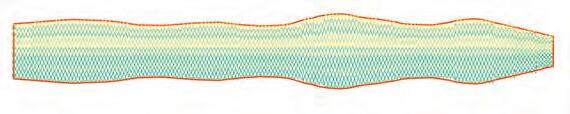
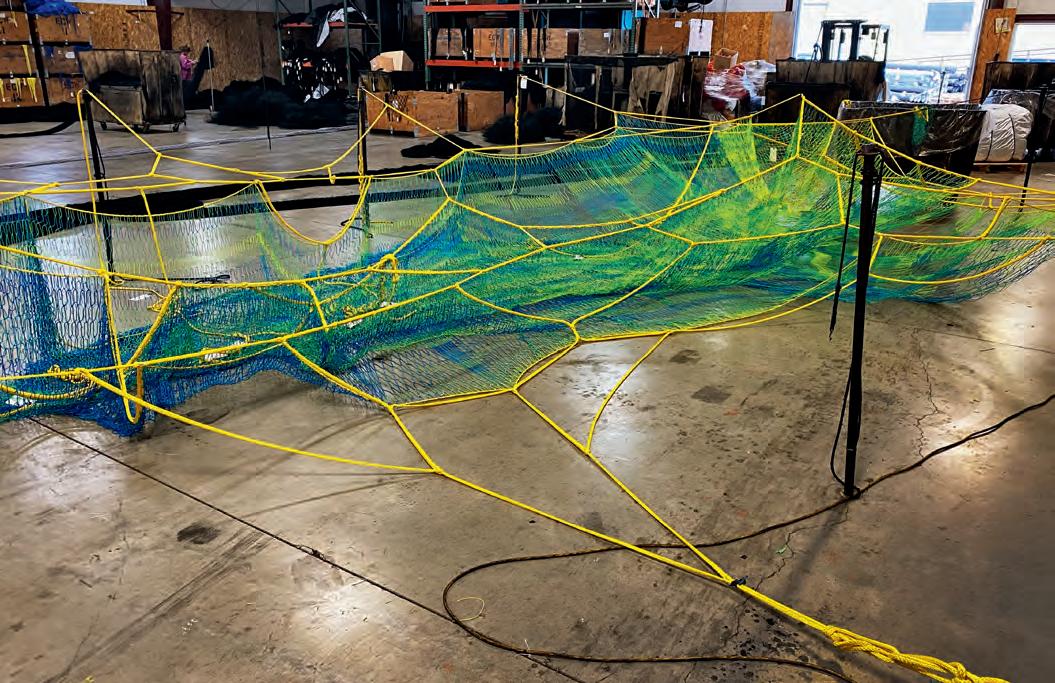
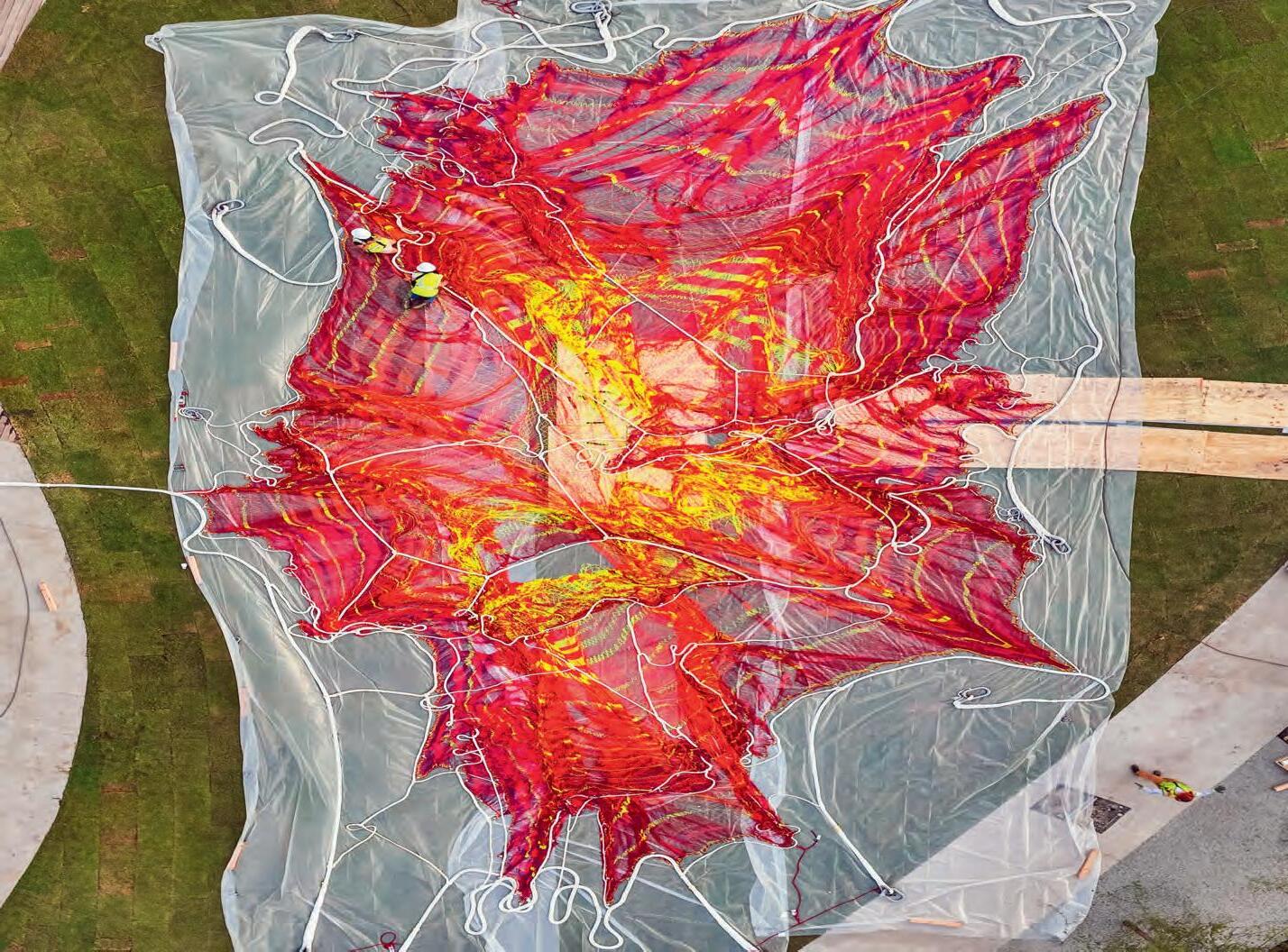
Top: Variable dimension net panels, tailored to form. This is how the sculpture would appear laid on the floor, prior to assembly. Bottom: Structural rope assembly diagram.
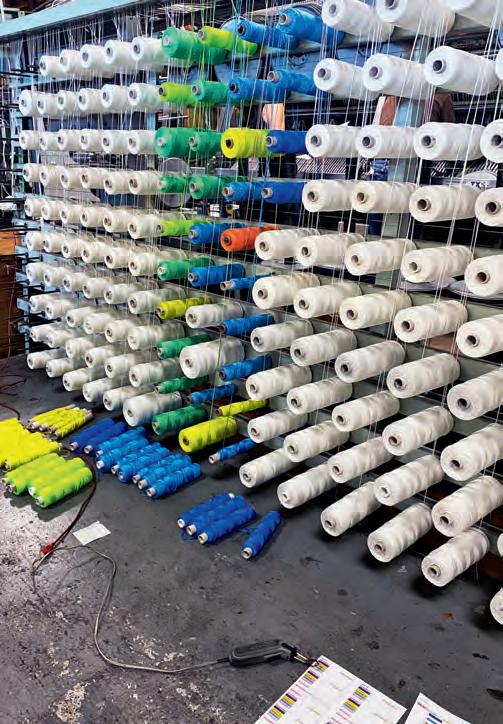
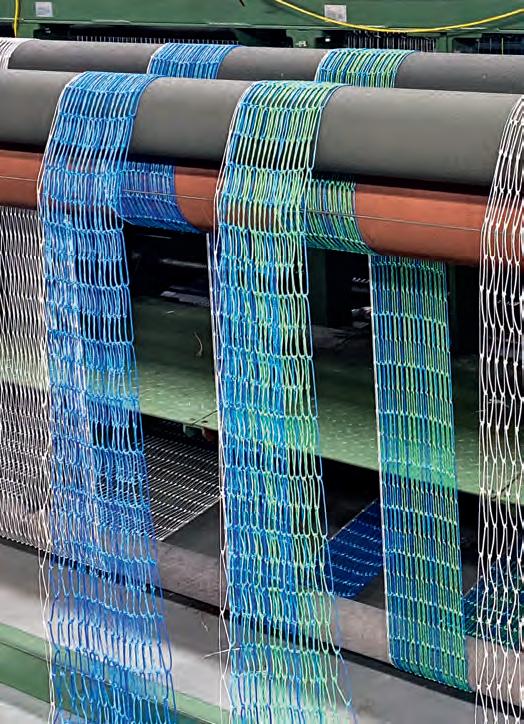
Top: Spools of twine loomed into netting. Bottom: Attachment of loomed netting to structural ropes. Credit: Studio Echelman.
Top: Variable dimension net panels, tailored to form. This is how the sculpture would appear laid on the floor, prior to assembly. Bottom: Structural rope assembly diagram.
Attachment of loomed netting to structural ropes. Credit: Studio Echelman.
Soft Suspension: Janet Echelman on Knotting 20,000 Years of Planetary Change
Janet Echelman
Janet Echelman arrived at MIT with a question: How can we let softness shape the future? Featuring hand-spliced, braided, and knotted high-tenacity polyester and nylon, the sculpture Remembering the Future combines craft and computing, folk knowledge and algorithmic precision, as it maps the past and future of planetary transformation. In the process, the sculpture invites audiences into an experience of continual recalibration in a changing, delicate, endangered world.
Why are you drawn to this type of work?
Echelman : At age five, I was already assisting my mother in teaching macramé classes. So craft was a part of my language, my native tongue. I see craft processes like weaving, dyeing, resist methods like batik—and handcrafted textiles in general—as bearers of culture and meaning, passed down through the generations. I understood early on that these traditions themselves, as the holders of wisdom, could be my teachers.
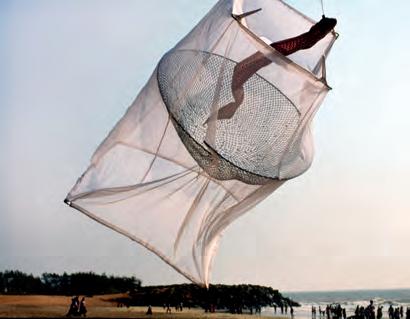
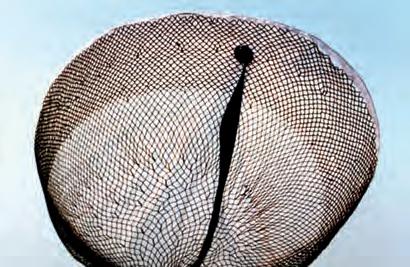
In my twenties, I applied to seven leading art schools. I was rejected by all of them, so I realized that I’d have to educate myself, and decided to apprentice with artisans in different parts of the world. I first learned to paint using batik in Indonesia. When Robert Rauschenberg saw my batik-dyed canvases, he asked to curate the first solo exhibition in the US. Then I went on a Fulbright to India as a young painter. I was in the fishing village and my paints had gone missing, so I learned knot-making techniques from fishermen to make my first sculptures. Next, I was invited to Lithuania and met old ladies who made
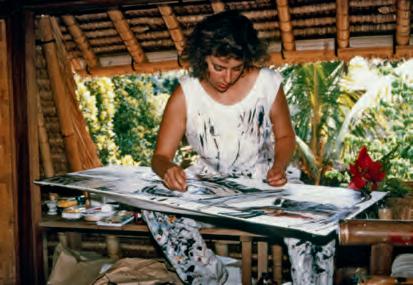
Janet Echelman, Ubud, Bali, 1989.
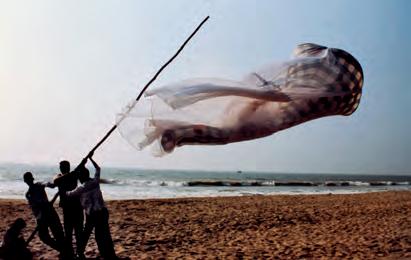
More Than You Can Chew, Bellbottom Series by Janet Echelman, Mahabalipuram, India, 1997.
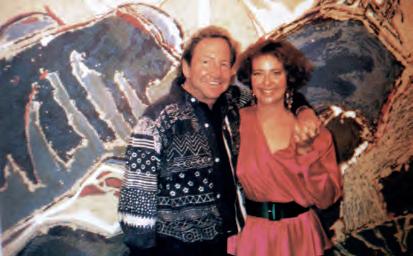
Artist Robert Rauschenberg curated the first American exhibition of Echelman’s art in 1989. At the opening, he wore a batik jacket in celebration of Echelman’s use of that craft tradition.
Trying to Hide with Your Tail in the Air, Europos Parkas, Vilnius, Lithuania, 1998.
Installation in process for Butterfly Rest Stop, Kaleidoscope Park, Hall Park, Frisco, Texas, 2024.
Courtesy Studio Echelman.
money through the various wars by making lace doilies, and I discovered it was the same knot. Central Europe and South India have separate traditions, yet these distinct cultures seem to have independently developed the same knot. That’s not a result of cultural exchange; it’s wisdom that evolved through working with that material.
We, as human beings, have worked with many kinds of fiber for thousands of years, developing different methods of twisting, braiding, rope making, and splicing. These technologies didn’t develop for their aesthetics—they developed because they enabled us to survive. If you could catch a fish and get protein, that made a difference. I am drawn to craft that stems from need. Caitlin and I are both drawn to the search for elegance in design: jettisoning all extraneous material reveals the form’s innate beauty—the elegance of only that which is essential.
How has collaborating with the MIT Digital Structures group influenced this work?
Echelman : My goal for the residency was the creation of a new tool that would enable me to rapidly design tensioned rope geometries in equilibrium. Previously, I’d been sketching designs and sending them off to our engineers, then waiting a week to get feedback for every iteration. Caitlin and her graduate student, Adam Burke, created the tool I’d imagined, and named it Ariadne. I enjoy its reference to the Greek myth of Ariadne giving Theseus a ball of thread to navigate the labyrinth; she offered the thread as a way to solve the unsolvable problem. For us, the tool has been helping to solve the very difficult problem of finding equilibrium in complex tensioned geometries. Now we can continuously iterate, adjusting the design a dozen times in a single afternoon.
This enables my new artwork to have greater three-dimensional complexity in its rope structure than any prior work.
After you modeled the form with this new tool, how was the work then fabricated?
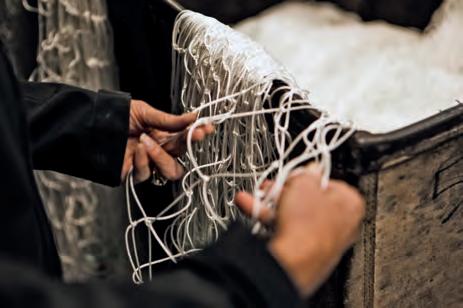
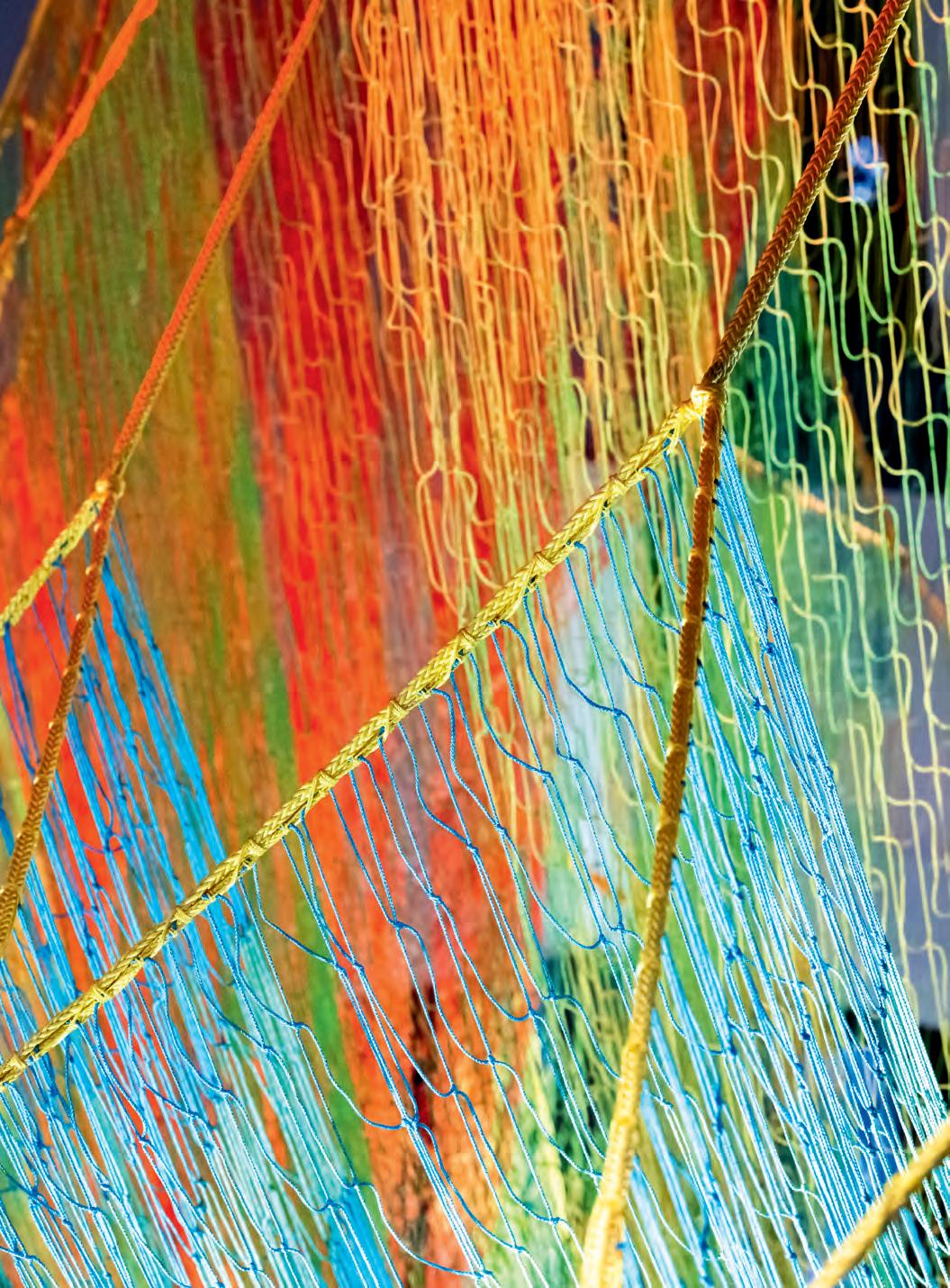
Echelman : We custom braided and hand spliced rope into a new complex geometry network. I’m using bright yellow for the structural ropes to shine a light on this new structure that the MIT residency made possible. For the netting, I blend multiple colors into each of the braided twines; these are loaded onto bobbins and inserted into our looms to knot panels of diamond nets, which we hand lash to our hand-spliced structural ropes. This work unfolds in a clean fabrication loft in Puget Sound, an area which has a historic fishing net tradition. I’ve been working with the same artisans there for 25 years. When I first reached out, I had contacted every net factory in the United States—and they’re the only ones who replied.
It speaks to one of the powerful things about your work, which is braiding together these ancestral technologies with new computational tools.
Echelman : Yes, and to bring the MIT community into the process, Caitlin, Adam, and I held two workshops. The first year, we taught dozens of undergraduate and graduate students the craft of rope splicing, and had each of them create their own designs with the new Ariadne tool. Then we picked one to build together, which enabled us to test and evaluate the tool through the construction of real-world prototypes. The second workshop toward the end of my residency utilized a refined version of Ariadne, and we were able to hand splice a fullscale prototype of Remembering the Future and test it in the final space at the MIT Museum.
It’s now having a critical reevaluation, but you were working with craft early on.
Echelman : Yes, the truth of the matter is that we’re living in a time when people are hungrier than ever for materiality and craftsmanship, because our screen time and the digital quality of life today have diminished our proximity to physical touch. Now, very little is handcrafted. Even our architecture is industrially produced. In every aspect of our lives, we’ve lost the feel of the human hand and the warmth of materials like fiber and wood. My art is a response to our built environment, which today has greater distance from handcraft and which I experience as a kind of isolation.
You were part of the inaugural cohort of the Council on the Uncertain Human Future, a series of conversations that first began convening around the climate crisis in 2014, and now has a chapter at MIT. These questions now find expression in your installation. Can you discuss the concept behind Remembering the Future?
Echelman : This work springs from my personal response as a layperson trying to understand the implications of climate science. Reading the news about climate feels like getting a million texts in all caps all at once. I feel inundated by the sheer quantity of information that I am unable to evaluate, which leads to my sense of being overwhelmed. This sculpture is my response to that problem. I’m seeking a chance to see our climate, past and future, from a wider perspective. And just sit quietly with it.
Studio Echelman, Brookline, MA.
Net construction in process. Credit: Studio Echelman.
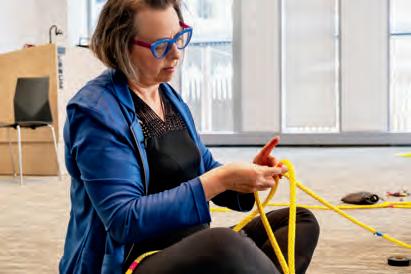
Janet Echelman during the 2025 Crafting Softness workshop. Photo: Heidi Erickson.
Installation view of Janet Echelman: Remembering the Future, MIT Museum.
Your installation, going back 20,000 years in the deep past, helps us experience a time scale that is hard to grasp, but is necessary for us to understand the consequences of our actions and survive as a species.
Echelman : Yes, and we need help to understand these different time frames all at once—to hold the micro and the macro in our minds simultaneously. This artwork provides an environment where it’s possible, for once, to take it all in without averting your gaze. No one’s yelling at you. Nothing’s in all caps. This is just the world as it has been and how it could be. It offers a rare chance to sit with this broader view, and whatever truth it holds. In the center of the installation, there’s a single straight line, which represents the moment of now, held taut between the past and the future. That part of the installation explores what it’s like to attempt to walk when the ground is not solid. To walk on a line where the mere fact that you, as a human being, placing your weight on that rope changes it.
The performance work Noli Timere (Don’t be afraid) on the video monitor at the MIT Museum is a continuation of my artistic exploration of how we adapt when the
ground is unstable, and how we humans are learning to move or dance in a precarious environment. In my early painting, the figureground relationship dissolved. I’ve been exploring these questions in collaboration with choreographer Rebecca Lazier, workshopping in five cities over six years. This has led to building sculptures that become a world for dancers to navigate. Noli Timere features eight professional dancers plus four backstage professionals who manipulate the sculpture like a marionette. It tells a visual story of our human dance with our physical world, exploring how we mutually impact one another, just not as equals.
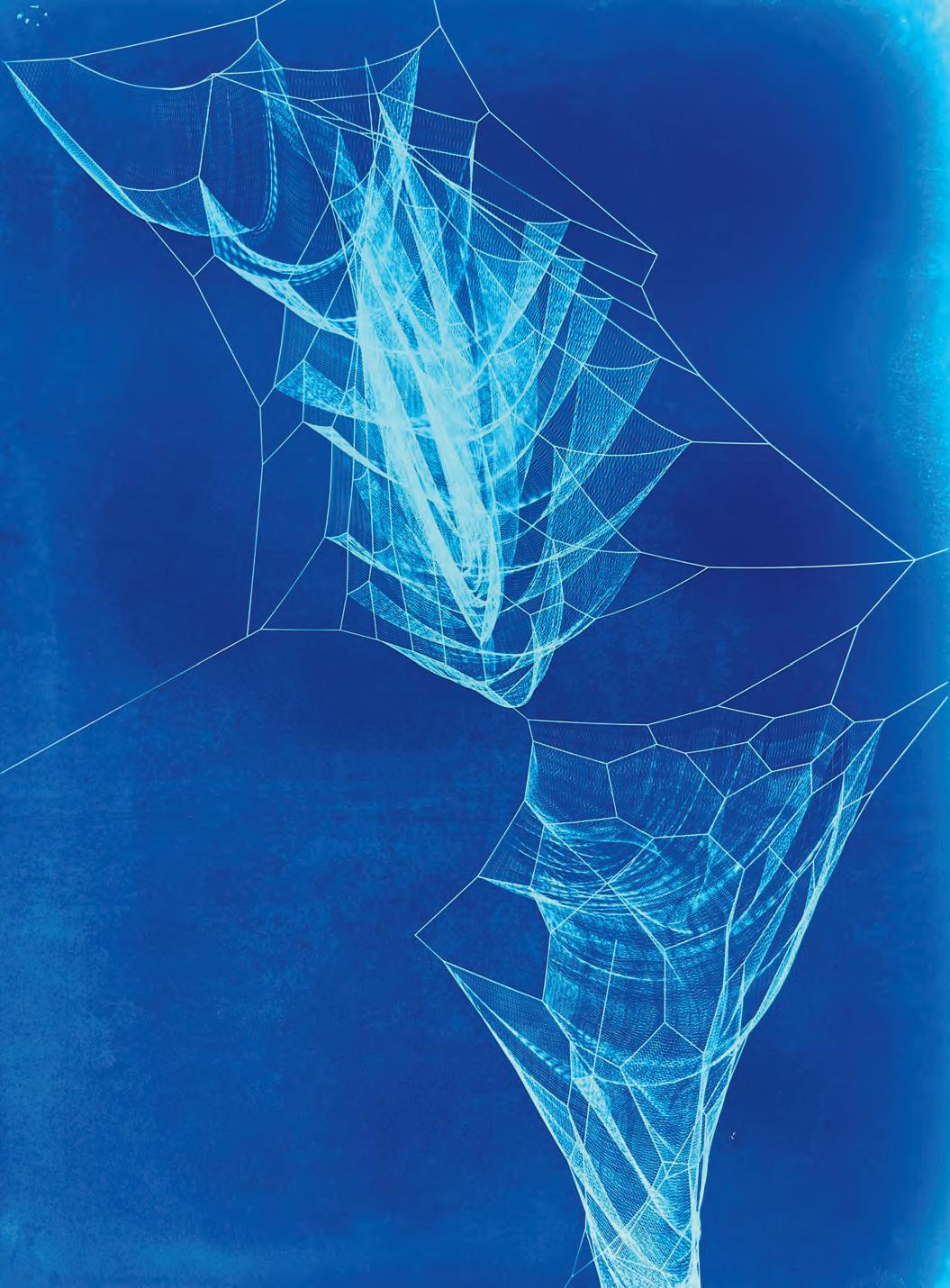
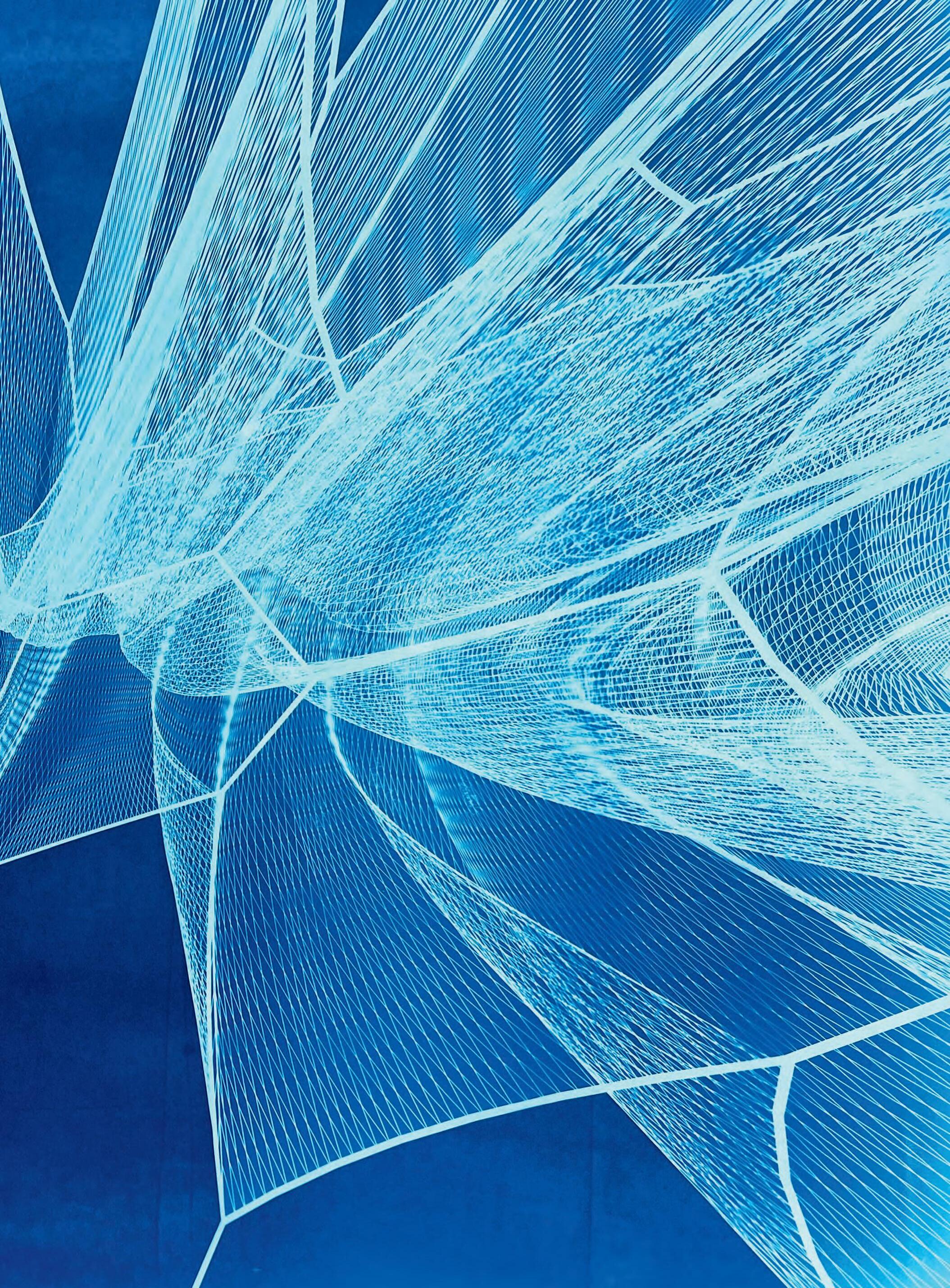
Precarity is at the center of Noli Timere and this sculpture at MIT. The single line at the center of the sculpture represents the present moment, held between the past and multiple potential futures. And it feels like the charged energy one feels in the Sistine Chapel as the hands of God and Adam approach. This same energy is expressed in my new cyanotype series created from the digital 3D models of this sculpture. I create the images in permutations of blue by directly exposing light-sensitized paper to ultraviolet light—pure energy itself.
Noli Timere performance at McCarter Theatre Center, Princeton, New Jersey. Choreographed and directed by Rebecca Lazier; created in collaboration with Janet Echelman, 2025. Photo: Julie Lemberger. Courtesy Studio Echelman.
Your work is a model of responsiveness and resilience. The sculpture avoids imposing a human will on the material, trying to force a certain shape, but instead lets the conditions dictate the form.
Echelman : What I make represents the way I wish that I could be in the world. It’s always 10 strides ahead of me. Composed of knotted networks of interconnectedness, it responds to changing conditions like a typhoon wind with infinite resilience. That’s ripe with metaphor and meaning for me. I think anybody encountering the work would understand that it has its own kind of strength, but not a brute strength. It’s not made of steel. It’s soft. It’s malleable. Something that is fluidly moving can adapt and change. For this installation, your eyes are dancing through the past into the future as you ascend the stairway into the museum.
It’s interesting that there is flexibility in terms of the material and its construction, but also a temporal flexibility, as the sculpture branches off into these possible futures. This brings us to the title.
Echelman : When I was reading texts commonly attributed to the Danish philosopher Søren Kierkegaard, I felt that those words speak to this project: “The most painful state of being is remembering the future, particularly the one you’ll never have.” On a personal level, it also spoke to me. During the MIT residency, I unexpectedly lost my partner of 26 years to an incurable cancer. I’ve come to realize that coming to terms with the implications of climate science has a relationship to grief and loss.
This grief is very much a communal experience, felt by many human beings living on our planet right now. It is painful to take in the truth of the potential futures which are no longer possible, and the truth of what has already happened on our planet. At the same time, we are contemplating our agency in creating other possible future outcomes. Both are true. It’s easier to focus on our agency and harder to take in the truth that many of the outcomes once available are no longer even possible.
Individual and communal grief are woven into the piece, and this installation encompasses both of these scales—the micro and the macro.
Echelman : As a culture, we need opportunities to contemplate and hold loss. Because without that holding, it would be overwhelming. Through the experience of being able to hold the loss, only then can we fully embody our agency to create the future we want.
Janet Echelman
2022–24 CAST Mellon Distinguished Visiting Artist at the Massachusetts Institute of Technology. Her piece Janet Echelman: Remembering the Future is on display for the first time at the MIT Museum.
and next page:
Left
Cyanotype created from the digital 3D models of Remembering the Future by Janet Echelman.
Left and right: Installation views of Janet Echelman: Remembering the Future, MIT Museum.
Caitlin Mueller’s work bridges architecture, structural engineering, and computational design to create more environmentally friendly and efficient built environments. Most recently, Mueller’s Digital Structures research group, with graduate student Adam Burke, invented a computational tool to model form-found structures in real time. From the plunging clear membranes of Frei Otto’s Munich Olympic Stadium to Antoni Gaudí’s canopy of stone vaults in the Sagrada Família, these form-found structures are less about foisting a geometric order than working in concert with the quiet intelligence of physics itself. In the collaboration with Janet Echelman, Mueller and her team have demonstrated how this new tool has opened new possibilities in sustainable design.
Tell us about this new tool, which you’ve named Ariadne and Theseus.
Mueller: This tool was developed with Janet’s work as an inspiration. What’s incredible about Janet’s tensile fiber structures is their demonstration of lightness, motion, flexibility, and softness—and yet they behave very differently from typical structures that are made from rigid materials like steel, concrete, or wood. But almost all the tools that we have for understanding structures, be it hand calculations or simulation tools, are meant for modeling these rigid structures. Soft structures are very hard for us to simulate and understand mechanically. Sometimes, they’re called form-found structures because the form is not dictated by a drawing but comes from the interactions of gravity and the materials. The tools that a typical architect or structural engineer works with are not capable of representing these geometries. What makes them so intriguing, soft, and pliable is also what makes them hard to model.
Scaling Softness Caitlin Mueller and Adam Burke
But computation has changed how we can model these complex shapes.
Mueller: Before computation, we had to follow a very narrow range of known geometries. Arches, vaults, and domes are repeated forms that we see throughout history. Part of that is because we didn’t fully understand the full spectrum of design possibilities—everything had to be figured out through trial and error and through mathematics. Before, you were crossing your fingers and hoping that your project didn’t get destroyed by the physical simulation process. The ability to bring in the computer has dramatically expanded that design space and allowed for a much wider range of forms to be understood, explored, designed, and engineered. The special part of this tool is the ability to describe an artistic vision, and for the tool to instantly return a version of that vision that obeys the laws of physics and gravity— bridging the gap between what you want to do and what’s physically possible.
Burke: Ariadne is generally available for people to use. A lot of the reason that people don’t design these form-found structures is because they are technically challenging to incorporate into the design process. Frei Otto used to build these insanely elaborate physical models to develop the designs for his buildings, and so did Gaudí. They are super time-intensive and laborious to set up and to modify, and there’s a limited number of people who have the resources and skills for that. During my time at MIT, we had a workshop where a group of around 16 students used a prototype of the tool to learn how to do some computational form finding, and play around with developing their own designs. They each came up with their own tensile network designs, and then one of them was fabricated by the students
Installation view of Janet Echelman: Remembering the Future, MIT Museum.
Antoni Gaudí (1852–1926) used hanging chain models to design complex structures including the Church of Colònia Güell and the Basílica i Temple Expiatori de la Sagrada Família in Spain. Photo: Public domain.
over the course of a four-day workshop. It was cool to see people go from learning about form-finding techniques to creating a fabricated, realized structure in just a couple of days. One of my interests is if you can create computational tools that are a little bit more accessible, then there might be more people who are interested in deploying them out in the world.
Mueller: Theseus is the fast engine that we developed, and Ariadne is the interface. That’s the interesting thing about form finding. You can’t exactly say what the form should be, but ideally you want to give some sense of what you would like the form to be. I think Adam’s tool is the most sophisticated, in that it really allows one to express desires about, “I want all the edges to be similar in length,” or “I want all the forces to be similar throughout the network; or this anchor has to be here, but this other anchor could move if it improves the behavior of the structure,” or “I want the overall form of the structure to have this shape; can you find something as close as possible that’s in equilibrium?” All those types of questions are things that can now be asked of the tool because of this interface he developed.
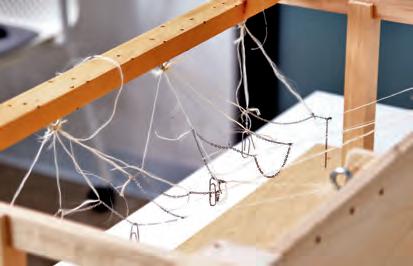
Chain model to test Ariadne output, by Manolo Barroso and Adam Burke.
Photo: Heidi Erickson.
Aerial view rendering for Janet Echelman: Remembering the Future. Credit: Janet Echelman, Caitlin Mueller, Adam Burke, and Daniel Smith.
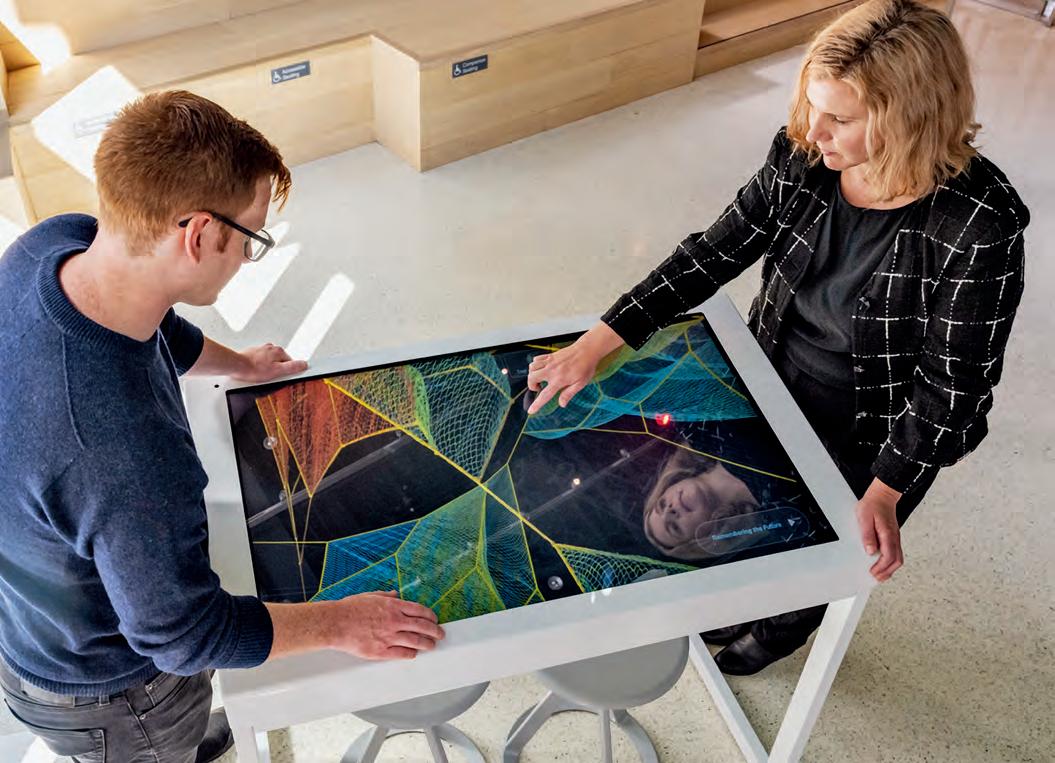
Adam Burke and Caitlin Mueller engage with the interactive digital twin of Remembering the Future, MIT Museum.
How did you become interested in working with these kinds of structures?
Mueller: As an architecture student, you’re constantly wowed by form, complexity, and the strangeness of new shapes. But what I’ve learned is so much of that is enabled by a huge waste of material and effort. These shapes, especially these tensile structures, are unique in that they are formally incredible, adventurous, and otherworldly, but they’re also extremely efficient. So, it’s a way to simultaneously advance the goals of environmental minimalism and cost-effectiveness, while at the same time creating new spatial visions. There’s often a worry that yielding your vision to others compromises it, but constraints or other inputs lead to more interesting results. I’m interested in how you not only maintain artistic intent but also bend to accept the requirements of reality. Our tool is trying to enable that compromise in an interactive, intuitive, and friendly way.
It offers a model of architecture that’s not based on novelty and endless growth but instead adapts and has a much lighter footprint.
Mueller: A major strand of my research has been decarbonizing construction. I know from my work that, quantitatively, the impact of doing things differently could be tremendous. I’ve modeled thousands of buildings around the world to understand how their climate impact could be reduced through automated and algorithmic approaches. I’ve also looked at common construction techniques like reinforced concrete. How can we use things like intelligent shaping of the material to
substantially reduce the amount of it that we need? So, through shape optimization of reinforced concrete structures, which are used everywhere in housing globally, I’ve shown that we can reduce the embodied carbon— the carbon associated with the construction materials—by 70–80 percent, in many cases. That’s important because concrete is the most ubiquitous material on Earth.
How has the collaboration shaped this research?
Mueller: Now we’re working on ways to use form finding, pure tension structures, to not only design reinforcement networks for concrete, but also manufacture them in new ways. And a lot of that is directly informed by the work that we’ve done with Janet, because we’ve gained a lot more confidence about our ability to design and construct complex tensile systems. Many of the methods that I’m developing are not yet part of the main conversation right now. A lot of people think about sustainability as a question of energy or maybe a question of materials, but, at least in terms of embodied carbon, it’s really a question of design and form.
Caitlin Mueller (MIT SB ’07, SM ’14, PhD ’14)
Associate Professor at the Massachusetts Institute of Technology’s Department of Architecture and Department of Civil and Environmental Engineering, in the Building Technology Program, where she leads the Digital Structures research group.
Adam Burke (MIT SMArchS BT ’24)
MIT PhD student, computational designer, and toolmaker whose work focuses on developing tools for complex design.
manner. The large-scale sculptures of American artist Janet Echelman behave in a fundamentally different way due to the softness created by the thin and flexible fibers that compose them. Working in tension, they involve forces of gravity and wind as collaborators; their exact form is an equilibrium arrived at through large geometric transformation.
Left: Installation view of Janet Echelman: Remembering the Future, MIT Museum.
Rendering for Remembering the Future. Credit: Echelman, Smith, Mueller, and Burke.
This softness also transforms the artistic design process. With conventional tools of sketching and computer-aided drawing, it is nearly impossible to predict the shape that a complex, interconnected set of nets will take once loaded by gravity or stretched across anchor points. Historical designers who worked with tensile systems therefore turned to physical models to simulate the effects of gravity as they developed larger-scale pieces. For example, Barcelona-based architect and engineer Antoni Gaudí (1852–1926) designed the complex compressive surfaces of the stone Sagrada Família cathedral with inverted hanging chain models, following the theory of tension-compression symmetry first articulated by English scientist and architect Robert Hooke (1635–1703).
The Pritzker Prize-winning German architect Frei Otto (1925–2015) demonstrated the expansive architectural potential of working directly with tension through large-scale works, such as the German Pavilion at Expo ’67 in Montreal, creating new spatial and formal languages with incredible lightness. Otto’s approach relied heavily on precise physical models to explore the relationships of form and force, but also motivated the development of computational methods to simulate soft and tensile structures accurately and rapidly.
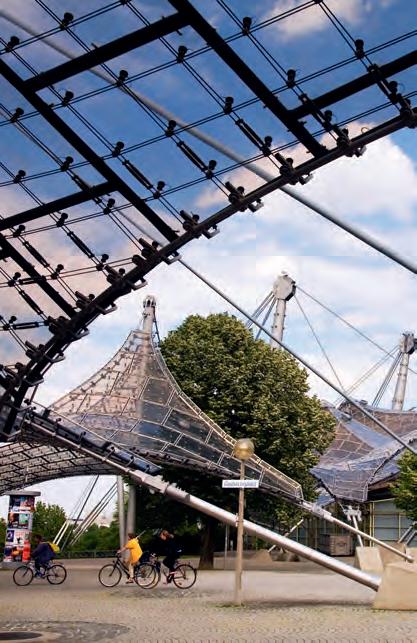
In the 1970s, Klaus Linkwitz (1927–2017) and Hans-Jörg Schek (b. 1940) invented the force density method (FDM) for simulating the shapes of prestressed tensile networks, such as spider webs or the Munich Olympic Stadium roof structure, a process now often called “form finding.” This new method offered a major advance, distinct from the finite element method (FEM) developed around the same time, in its ability to simply and quickly find the equilibrium position of all the nodes in the network, and thereby the overall form, in a single computational step. This approach has since become widely used in the structural design of cable net and membrane structures, including more long-span roofs, cable-based bridges, and net-based formwork for complex concrete shells.
The key to the computational speed of FDM also presents a challenge to its use as a creative design tool: it requires that a user pre-specify a “force density” value, often called q, for every line in the simulated network. The q value is defined as the internal force in an element divided by its final stressed length, and can be understood conceptually as a kind of stiffness. The q values (along with a network’s topology, applied loads, and anchor locations) are inputs of the FDM algorithm; the resulting shape of the tensile structural
system is highly sensitive to these unintuitive, opaque quantities. Because of this, FDM has spent many decades as a niche tool of experts, such as structural engineers who specialize in cable nets. It has been critical in the detailed engineering and fabrication of such structures, but has been less relevant in their creative conceptual design.
The work of Studio Echelman has offered a compelling catalyst to reinvent form finding of tensile structures to support more open-ended and design-driven workflows that prioritize artistic intent while operating within the laws of physics. Echelman’s netbased sculptures are typically constructed with structural networks of high-strength spliced ropes that support softer and more flexible draped nets. The design and simulation of both parts have driven innovation in software tools and numerical approaches. Studio Echelman has developed custom computational programs to precisely model the draped nets at the resolution of individual fibers, allowing for sophisticated visualizations and a direct connection to manufacturing.
Roofing for sports facilities used in the 1972 Munich Summer Olympics designed by Frei Otto. Photo: Jorge Royan.
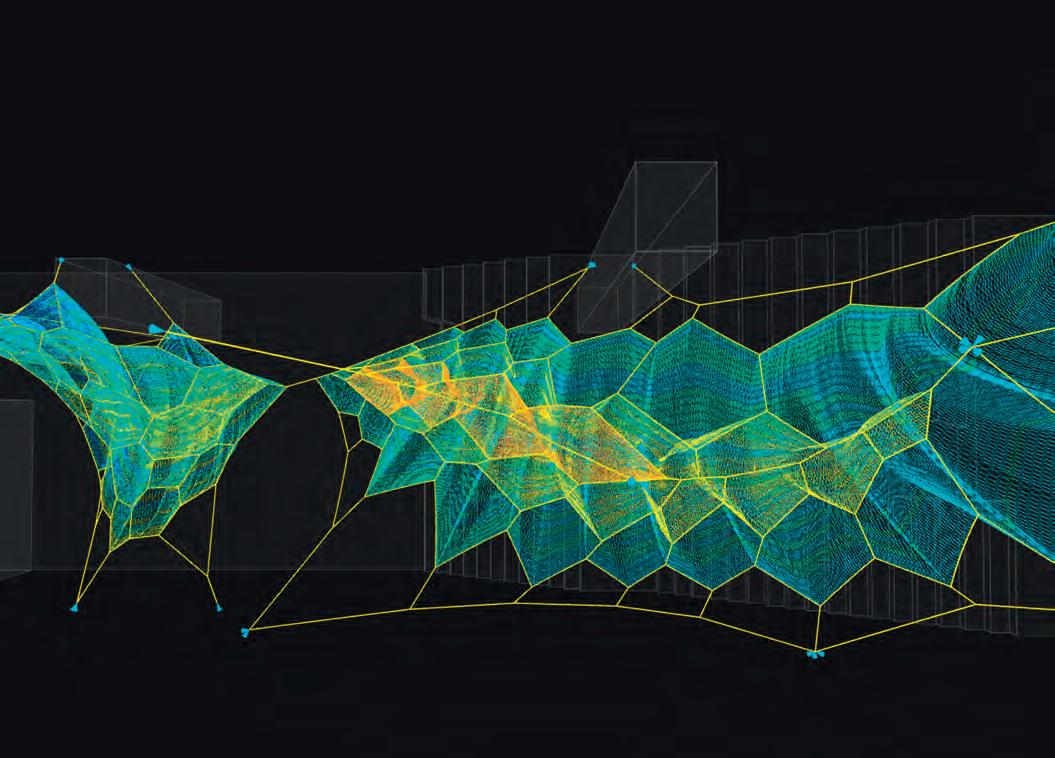
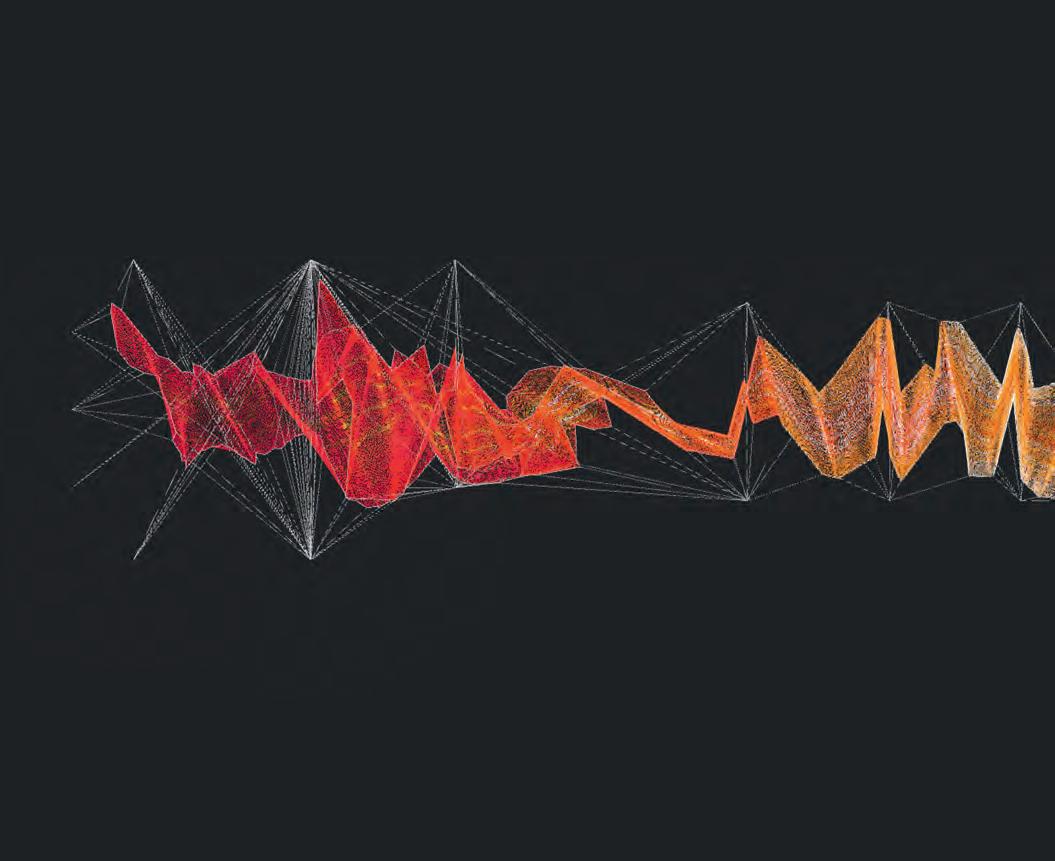
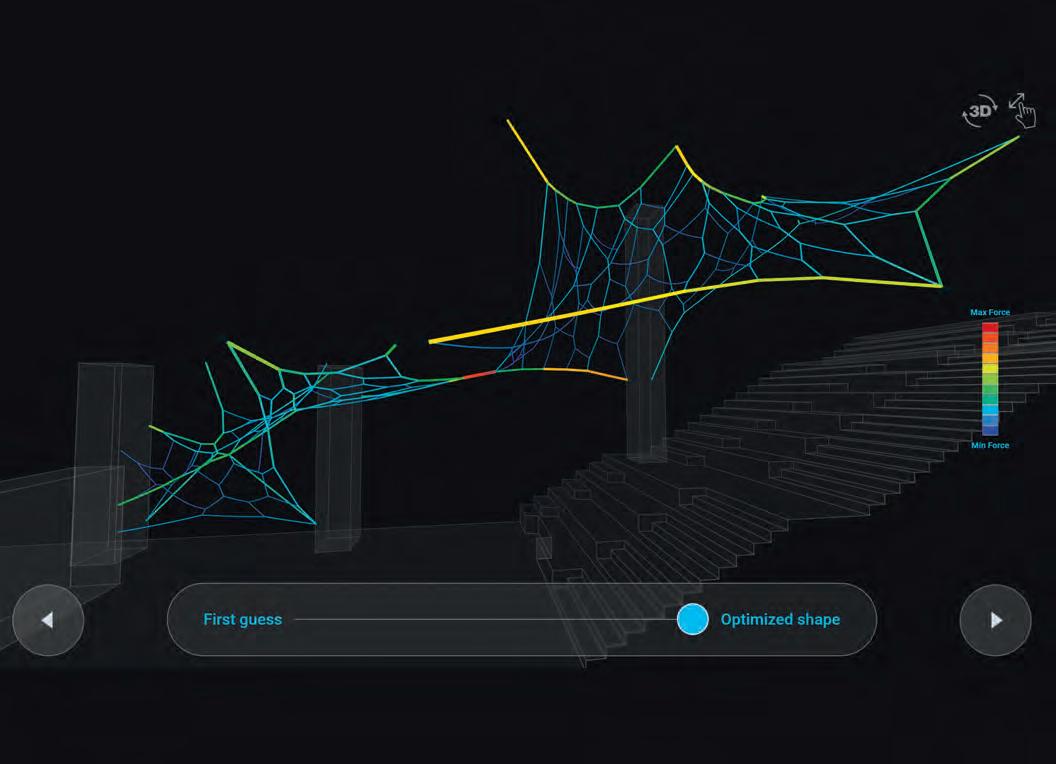
Visualization showing the distribution of force density values in an optimized form of Remembering the Future.
Credit: Echelman, Mueller, and Burke.
“My original artistic intent was to create physical and metaphorical tension with the line suspended tautly between the past and potential futures. The new tool confirmed that the truth of physics matched my intuition. The line representing our present moment is bright red, charged with our communal power to shape the future.”
–
Janet Echelman
For the past 10 years, the MIT Digital Structures research group and Studio Echelman have collaboratively experimented with new computational design processes for the structural support nets, which are critical to both the engineering and overall formal gestures of these works. Our work together started with a design studio, co-taught by Janet Echelman, David Feldman, and Caitlin Mueller, in which MIT students imagined, simulated, and prototyped tensile installations for the grounds of Philip Johnson’s Glass House. Most recently, this collaboration has culminated in a software tool that brings FDM-based form finding into their creative practice, and was used in the design of Remembering the Future at the MIT Museum.
Through a method called “inverse form finding,” the conventional linear approach of simulating soft structures is inverted: the designer starts with an intended form, and the algorithm finds the distribution of force density values to arrive at the closest equilibrium structure to that intent. Where traditional form finding starts with forces to discover form, inverse form finding starts with a desired form to determine the forces that will sustain it. Other intents, goals, and constraints can also be expressed by users to drive the form-finding process, including target element lengths, internal forces, geometric relationships, and anchor reactions. It is also possible to express goals through more abstract inputs, such as gestural lines or text descriptions, although such potentials are still under experimental development. The resulting designs are guaranteed to honor the requirements of equilibrium while also responding to the aspirations of the user.
This new tool, created during Echelman’s residency at MIT, and the workflows it enables support a creative design process that embraces softness not only as a structural condition but also as an authorial stance. With the ability to engage precisely yet intuitively with equilibrium structures in a digital environment, designers can develop formal and conceptual visions in direct conversation with the physics that govern their realization. The resulting works are collaborations within this design space, negotiated algorithmically. In Remembering the Future, this new approach has empowered Studio Echelman to achieve a finely tuned sculptural gesture, inspired by scientific models of the Earth’s climate history and possible trajectories, with an extraordinary material minimalism. In its form and footprint, the sculpture demonstrates how art can model a lighter, more flexible way of inhabiting the world.
Caitlin Mueller (MIT SB ’07, SM ’14, PhD ’14)
Associate Professor at the Massachusetts Institute of Technology’s Department of Architecture and Department of Civil and Environmental Engineering, in the Building Technology Program, where she leads the Digital Structures research group.
The Science Behind Remembering the Future
Raffaele Ferrari
Scientists are quite certain that human emissions of greenhouse gases affect Earth’s climate. This belief rests on three main pillars of evidence. First, the laws of physics and chemistry indicate that greenhouse gases such as carbon dioxide and methane trap heat in the atmosphere, causing the planet to warm. This has been known for a long time due to the pioneering work of scientists Eunice Foote and John Tyndall. Second, bubbles trapped for millennia in ice sheets in Greenland and Antarctica show that the planet’s temperature has fluctuated in sync with the concentration of greenhouse gases. Third, thermometers around the globe agree that the planet has warmed by about 2°F over the last 100 years as greenhouse gas emissions have increased.
Communicating all three messages through a single installation felt daunting for a scientist but not for an artist. Collaborating with Janet Echelman to communicate through art how Earth’s climate has changed in the past and may change in the future has been a wonderful journey. We used the online simulator En-ROADS, in addition to output from more quantitative climate models, to visualize how decisions regarding our future energy consumption, environmental actions, and policy choices may impact the planet’s temperature until the end of this century. En-ROADS is an educational tool that allows the public to interactively explore how we may affect future climates with adaptation and mitigation interventions. For instance, what would happen if we made all our buildings more energy efficient, decarbonized the electric grid, or reduced vehicular transport emissions? Our three-year collaboration has led to the Remembering the Future installation, which seeks to inspire the public about the delicate interactions between our planet and ourselves. As you approach the installation, you embark
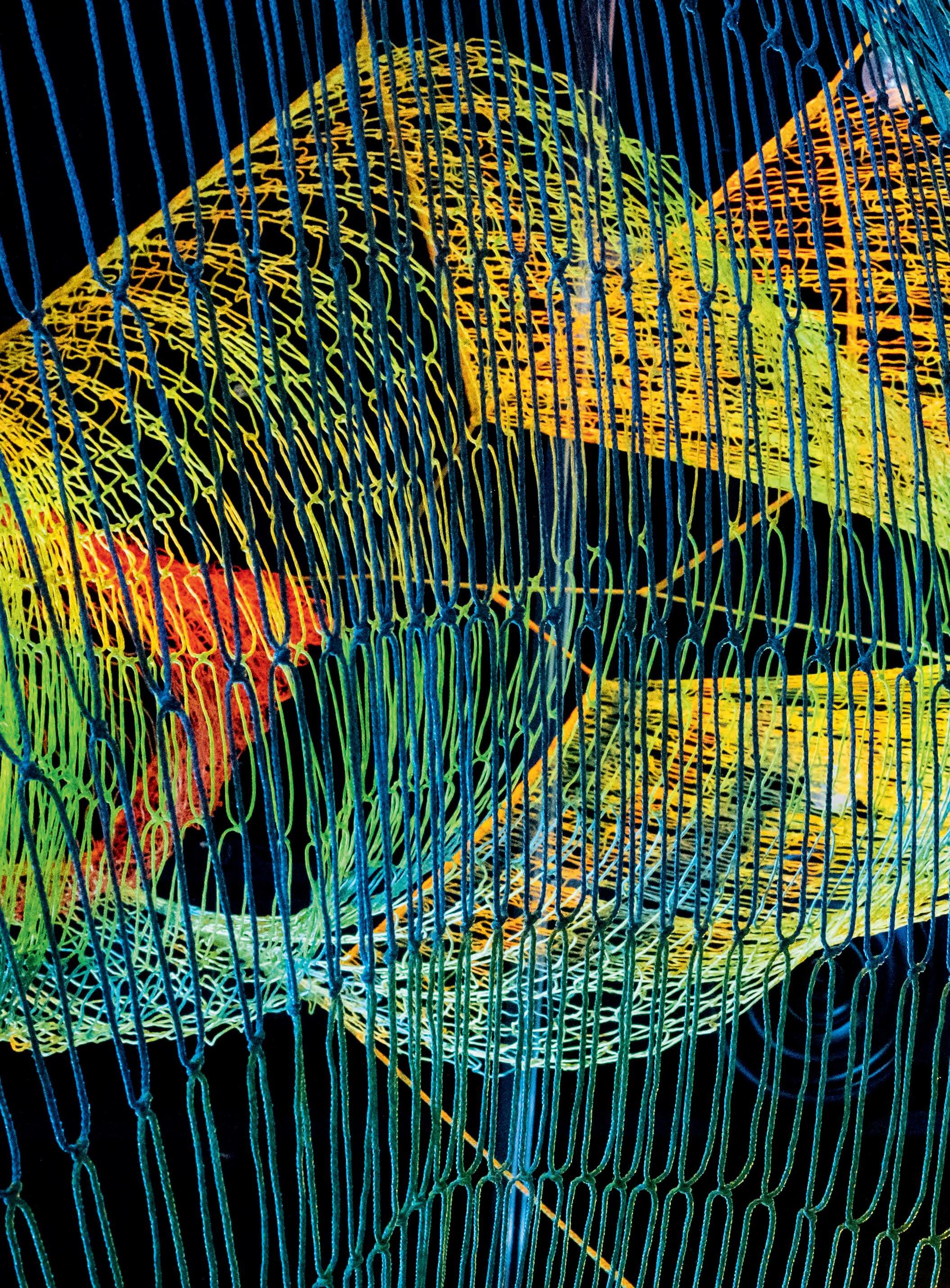
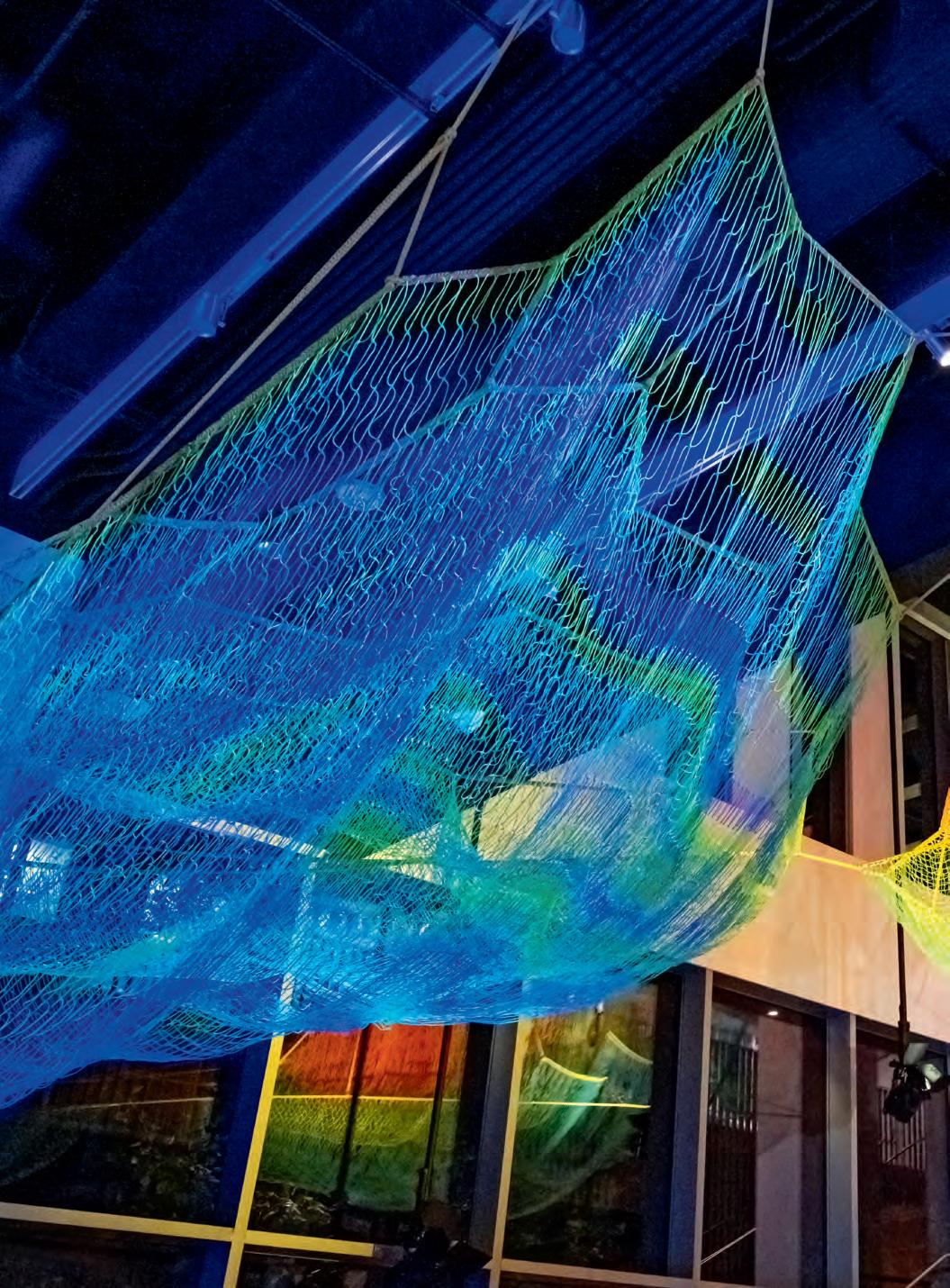
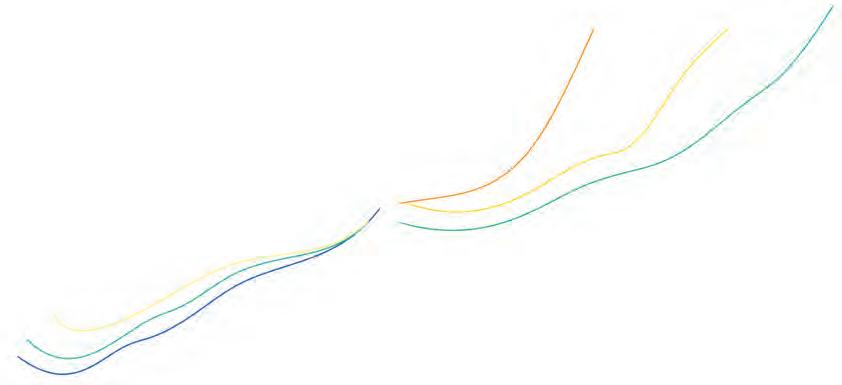
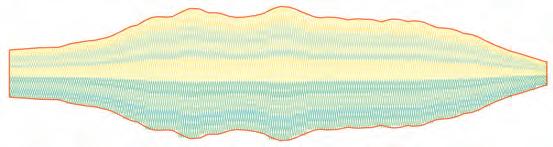
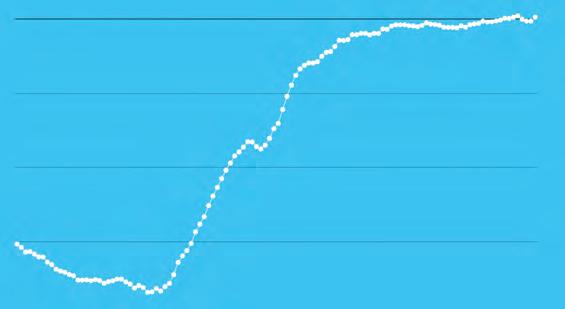
on a journey that began approximately 20,000 years ago at the peak of the last ice age, when carbon dioxide concentrations were 30 percent lower than they are today, the global temperature was about 10°F cooler, and a one-mile-thick ice sheet covered Boston. The section of the display in the lobby represents the first 19,900 years, highly compressed, starting from the cold temperatures of the last ice age up to the warmer, preindustrial temperatures of the last century (see Panel 1).
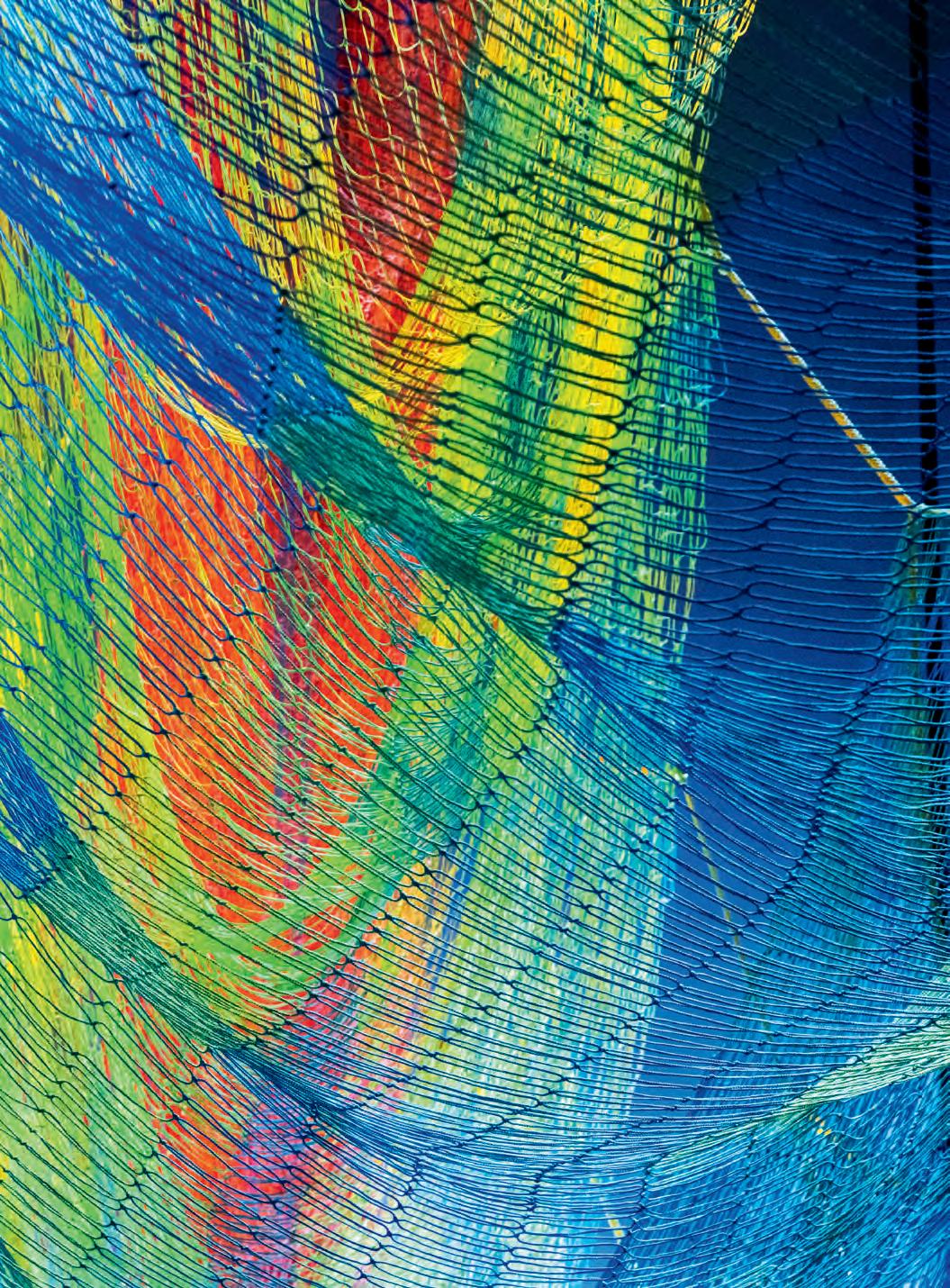
As you enter the lobby, moving from left to right, you leave behind the cold blue temperatures of the ice age and enter a period known as “deglaciation.” Deglaciation began when changes in Earth’s orbit caused the melting of sea ice in high-latitude regions and the release in the atmosphere of carbon that had been trapped in the ocean for millennia. Carbon is a potent greenhouse gas that acts as a warm blanket in the atmosphere. Its increase warmed our planet by about 10°F from approximately 20,000 to 10,000 years ago. During this transition, human civilization emerged. As you continue your walk toward the stairs, the warmer colors indicate that you have now entered the last 100 years. The temperature continues to rise because, by burning fossil fuels, we release carbon that had been locked away underground for millions of years.
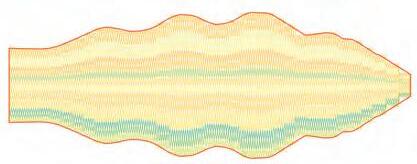
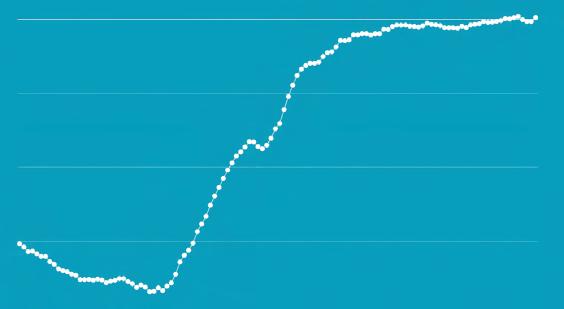
Over the last 100 years, the global mean temperature has increased by about 2°F. The waves are designed to capture the idea that the temperature rise is not a smooth journey; rather, it resembles a rollercoaster, where each year can be somewhat warmer or colder than the previous one (see Panel 2).
Panel 1: Globally averaged surface temperatures since the Last Glacial Maximum based on data published by Matthew B. Osman et al. (Nature, 2021).
Panel 2: Globally averaged surface temperature since 1880 based on the National Aeronautics and Space Administration (NASA) Goddard Institute for Space Studies (GISS) Surface Temperature Analysis (v4) product provided by the National Oceanic and Atmospheric Administration (NOAA).
Panel 3: Globally averaged surface temperature projected throughout the end of the 21st century under three different emissions scenarios: high, medium, and low.
Panel 3 illustrates potential futures based on the amount of carbon dioxide and other greenhouse gases emitted until the end of this century. The greater the future emissions, the higher the temperature expected by the century’s end. The specific curves are inspired by real numerical simulations conducted at modeling centers worldwide under three possible future emissions scenarios. Interested readers can refer to the Intergovernmental Panel on Climate Change (IPCC) Sixth Assessment Report for more details.
Finally, as you approach and ascend the stairs to gaze upon the installation from above, you peek into the future, where the outcome hinges on our collective decisions in the years to come. The goal of Remembering the Future at the MIT Museum is not to provide answers, but rather to inspire you to become an informed steward of this marvelous planet we all share.
Raffaele Ferrari
Cecil and Ida Green Professor of Oceanography, Department of Earth, Atmospheric, and Planetary Sciences (EAPS), and Co-Director of the Lorenz Center, MIT
Left: Installation view of Janet Echelman: Remembering the Future, MIT Museum.
Janet Echelman’s Flexible Logics at the MIT Museum
Caroline A. Jones
In the art world of 2025, fiber is in the air. 1 This is, of course, literal—when you enter the MIT Museum, Janet Echelman’s Remembering the Future will unfurl above you, its colorful open mesh made of custom-braided high-tenacity fibers billows from the ceiling, undulating slightly with passing gusts of air. But fiber arts are also “in the air” metaphorically, finally ascendant in art world discourse thanks to decades of feminist agitation on their behalf. This legacy begins with Anni Albers and Gunta Stölzl at the Bauhaus in the 1920s, but Echelman’s flexing logics are more proximate to the fibrous rebellions staged by women artists emerging in the late 1950s. Artists such as Lenore Tawney, Ruth Asawa, and Sheila Hicks labored insistently in the 1960s, using threads, wires, ropes, yarn, and string to lasso the white cube. Taking up their quiet legacy, but becoming more visible in a noisy crowd of New York Minimalists, was Eva Hesse.
Hesse’s work provides a powerful context for Janet Echelman’s “radical softness.” 2
This comparison is salient, because both artists explore the drape and pull of gravity on soft materials, and because Hesse, like Echelman, refuses to stay in the “minor art” lane allotted to weaving and fiber (as interior design). 3 Of course, Hesse had nothing like Echelman’s burden at MIT, where the artist has responsibility for revealing 30,000 years of climate data in her installation! For Echelman, this is not a daunting task; she is used to dancing with computation—both in her own calculations mapping the complex tensegrity of her structures 4 and in working with the datainfused practices of MIT professors, such as climate scientist Raffaele Ferrari and structural engineer and building technologist Caitlin Mueller (who praises Echelman’s innovative software approach to catenary curves). 5
So, while Echelman’s work at the MIT Museum is legible to computational designers, engineers, and climate scientists, this essay argues for Remembering the Future’s importance within art history. After all, the art world is one of humans’ primary venues for
1 Most significant in recent art history is Julia Bryan-Wilson’s Fray: Art and Textile Politics (Chicago, IL: University of Chicago Press, 2017). Other notable events in the assertive rise of fiber art include the major retrospective given to weaver and fiber artist Sheila Hicks at the Centre Pompidou in Paris (2018), for which see Julia Halperin’s “A Tangled Web: Fiber Art is Finally Being Taken Seriously,” T Magazine of The New York Times (Sept. 24, 2023): 60. In 2025, the traveling exhibition curated by Lynne Cooke for the National Gallery in DC arrived at the New York Museum of Modern Art: “Woven Histories: Textiles and Modern Abstraction” (May–September 2025).
2 Gloria Sutton, ed. Radical Softness: The Responsive Art of Janet Echelman (New York, NY: Princeton Architectural Press, 2025).
3 This is a reductive claim, but if we use the lens of the administration of collections at the Museum of Modern Art as a window onto this history, we find that Sheila Hicks’s work was collected at MoMA (as early as 1960) through an affiliation with the furniture firm Knoll Associates, for the department of Architecture and Design. Only in this millennium has Hicks’s woven and other fiber work been taken out of the design collection and exhibited as art, presumably in part because of the artist’s Pompidou retrospective (2018). Indeed, Hicks moved to Paris and found its art world more receptive. Even so, a work from 1960 such as Amarillo has a Centre Pompidou acquisition year of 2017, now secured in the category of “contemporary plastic art.”
imagining alternative or future worlds. In this context, fiber is a surprisingly powerful new form in “high art” discourse. Art institutions from the Metropolitan Museum of Art to the National Gallery of Art to The Museum of Modern Art (MoMA) are currently insisting that fiber arts be taken seriously—admitted to the implicit “Paragone” or competition between painting, poetry, and sculpture that still organizes our museums.6 Which is the pre-eminent art? The answer has varied since medieval times, but the “distaff” arts of fiber have only made it onto the list in post-feminist times. The claim for their importance is still “radical,” as Echelman knows—and Hesse is crucial to that art historical argument. The paradigm shift she instigated in the mid-1960s required thinking about fiber as a material liberated from domestic drudgery (not spinning, not embroidering, not stitching, not quilting, not upholstering, not knitting/crocheting/tatting nor making fabrics). As in Echelman’s art, Hesse wanted to confront the viewer with fibrous abstraction—contemporary and conceptually rigorous, beautiful and strange.
4 “Tensegrity” was a word coined by design polymath R. Buckminster Fuller, who is an important precursor for devising structures that have integrity-under-tension (e.g., geodesic domes) and that surface Earth energies as design partners.
5 CAST presentation with Caitlin Mueller and Janet Echelman, moderated by Gloria Sutton: Scaling Softness: The Art and Science of Janet Echelman and Caitlin Mueller (October 24, 2024).
6 On the enduring Paragone, see Rensselaer Lee, “Ut Pictura Poesis: the Humanistic Theory of Painting,” The Art Bulletin, Vol. 22, No. 4 (Dec. 1940): 197–269. It was Leonardo da Vinci who insisted that painting surpasses all other arts, in 1500. For the titanic shift allowing fiber arts into the pantheon, see Sebastian Smee, “Why textiles are all the rage in the art world right now,” Washington Post, May 3, 2024, reviewing two exhibitions at the Metropolitan (NY) and National Gallery (DC): “Weaving, that’s to say, is not some peripheral subject, off to the side of culture. It’s one of the most extraordinary, sophisticated things humans have ever managed to do. It’s connected not just to survival tools (clothing, blankets, baskets, traps), but also to the human capacity for abstract thought, and of course to beauty and art.” Yet Smee notes how partial is this revolution: “Hicks is the most accomplished living American artist never to have been granted a fullblown retrospective by a top-tier American museum. […] it’s a scandal.” The curator Lynne Cooke has been a galvanic force in the fiber revolution in her 2025 Woven Histories exhibition.
Wide Hips, Bellbottom Series by Janet Echelman. Mahabalipuram, India, 1997.
More Than You Can Chew, Bellbottom Series by Janet Echelman. Mahabalipuram, India, 1997.
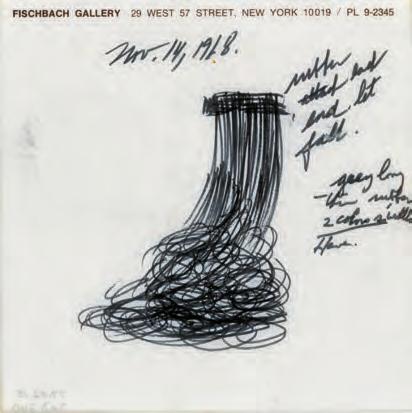
No title by Eva Hesse. November 14, 1968, as reproduced by Fishbach Gallery, NY. Ink on paper. 18.4 x 18.4 cm (7 1/4 x 7 ¼ inches). Dated and inscribed, upper middle: “Nov. 14, 1968” and middle right: “rubber / attach each end. let fall. / Grey long / thin rubber / 2 colors 2 (...) / have.”
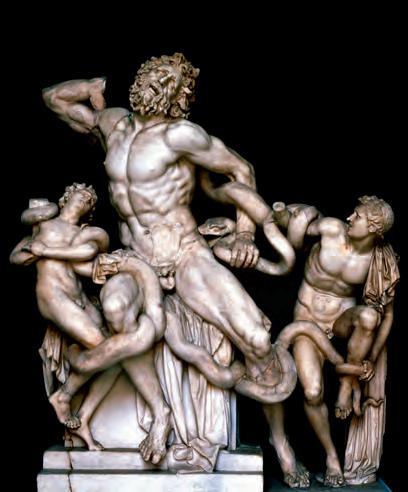
Who was Eva Hesse? An émigré carried out of Nazi Germany as a child, Hesse eventually found her way to the New York art scene, forging deep friendships with Minimalist artists such as Sol LeWitt. Yet Hesse compulsively questioned their industrial, prefabricated logic with soft, eccentric forms that had to be assembled in situ, often indeterminate in shape or extension from installation to installation. Laocoön (1966) set the stage for her argument with New York art critic Clement Greenberg, whose 1940 “Towards a Newer Laocoön” essay had revisited centuries of aesthetic theory to plump for a critically enforced medium-specificity in American art.7 For Greenberg, painting was the unquestioned pinnacle of artistic achievement, best when it acknowledged its flatness and directed itself to “eyesight alone.” It thereby became superior to sculpture, accused of harboring a theatrical ambition in its spatial confrontation with a perambulating body. 8 In this polemic that dominated the 1960s, critics were following 18th century German aesthetic arguments by Johann Joachim Winckelmann and Gotthold Ephraim Lessing, who set up preferences for restraint, control, and “quiet grandeur” as they encountered the ancient sculptural group Laocoön in Rome. These ideas had been given further momentum in the United States by American literary theorist Irving Babbitt in his 1910 book titled The New Laokoon, which castigated “confusion in the arts” and targeted the heightened emotions of Romanticism as a “priapism of the soul.” 9
7 Hesse was explicit about her truth to materials, but didn’t fetishize any “rules” about what they wanted to do or be: “[I want to be] true to whatever I use, and use it in the least pretentious and most direct way . . . I don’t want to add color or make it thicker or thinner. There isn’t a rule. I don’t want to keep any rules.” Cindy Nemser, “Interview with Eva Hesse,” Artforum International, May 1970, p. 60. Greenberg made rules.
8 For a book-length version of this argument see Jones, Eyesight Alone: Clement Greenberg’s Modernism and the Bureaucratization of the Senses (Chicago: University of Chicago Press, 2006). The dangerous “theatricality” of Minimal Art sculpture was articulated by art historian Michael Fried, deeply influenced by Greenberg at the time, in his “Art and Objecthood” essay of 1967, originally in Artforum 5:10 (Summer 1967), since anthologized in M. Fried, Art and Objecthood: Essays and Reviews (Chicago, IL: University of Chicago Press, 1998).
9 Irving Babbitt, The New Laokoon: An Essay on the Confusion of the Arts (Boston, MA: Houghton Mifflin, 1910), p. 106.
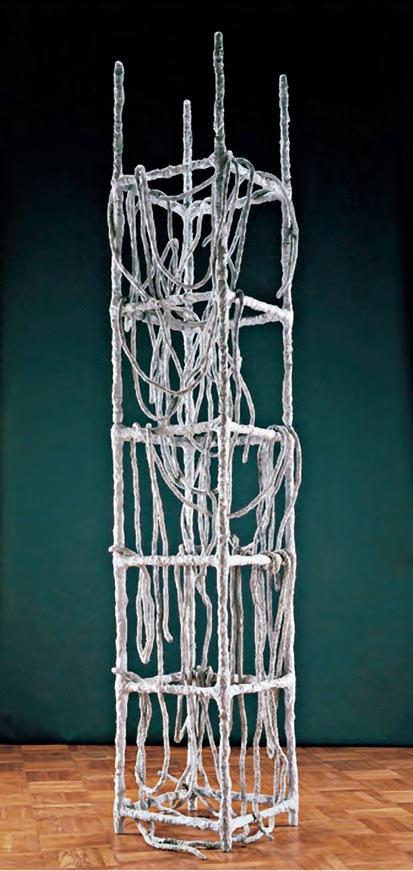
All of these men relied on the centuries of discourse around a Hellenistic sculpture of the dying priest Laocoön to argue for stillness and repose in high art. Art works best, it was argued, when emotions are held in check, not spilled all over the ground. Whether “let fall” on the floor (as Hesse commanded for a 1968 work), or draped seductively from the ceiling, fiber defies these stony prohibitions. Yet its traditional links to the body, decoration, and adornment are also elevated beyond those categories by both Echelman and Hesse (to be decorative was “the only art sin” in Hesse’s day, whereas Echelman invites bodies into her meshwork, notably in the 2023 collaborative work Noli Timere).10 The rubber work Hesse envisioned in 1968, and the disheveled 1969 piece she designed to hang from the ceiling, all pushed with maddening softness against centuries of marmoreal high aesthetics. In Hesse’s 1966 Laocoön, the retributive snakes sent by the gods have taken over entirely, becoming “parasitic, downward-pulling ropes.” 11 Strongly contrasting with the Greek marble’s muscular, writhing, venomous agents of divine justice, Hesse’s snaky things are pathetic and exhausted. Their main job is done: they have succeeded in queering the geometries of the cubic scaffold that takes this ambitious sculpture to well above Hesse’s own height. Unlike the clean, closed squares of a LeWitt sculpture, Hesse’s strut work is open at the top, as if reaching to infinity but always in dialectic with an earthbound pull from the amorphous world of fiber.
10 Hesse to Nemser, p. 60. Echelman’s Noli Timere (Don’t be afraid, 2023) is a recent sculptural work that dancers can inhabit and transform, the result of a multi-year research collaboration between Echelman, choreographer Rebecca Lazier, and engineer Sigrid Adriaenssens. Per Echelman’s website, Noli Timere explores the question of “How do we move through an unstable environment? And how can we navigate precarity without fear?” The voluminous net is occupied by eight performers in Lazier’s choreography. See: https://www.echelman.com/dance-performance
11 Ellen H. Johnson, professor of Modern Art at Oberlin College, was a friend of Hesse’s. Her words about the 1966 sculpture Laocoön are quoted in the Allen Memorial Art Museum “Classroom Resource Sheet,” https://amam.oberlin.edu/files/resources/19hesse.pdf Accessed 26 April 2025.
Laocoön and His Sons by Agesander, Athenodoros, and Polydorus. 25 BC. Sculpture on marble. Vatican Museums. Vatican City. Photo: PHAS/Universal Images Group via Getty Images.
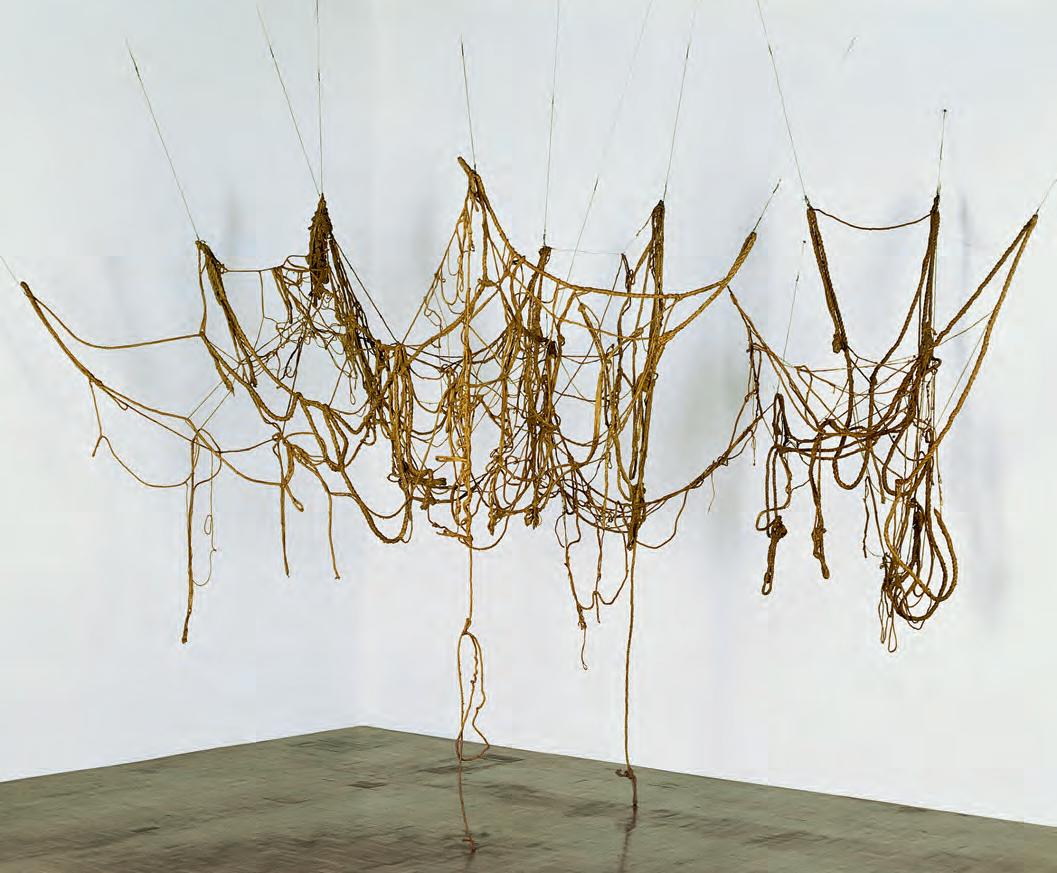
Hesse’s 1969 draped ceiling work makes the epistemological continuity with Echelman’s flexible logics even clearer. It rhymes with Echelman’s commitment to radical softness, imagining spatial volumes that allow air and light to proceed with minimal interruption. In business-speak, the relation between “soft logic” and the mandatory dependencies of “hard logic” are clarified this way: both are tasks that must be done in relation to other tasks, but softness allows timing or sequencing to become more relaxed. In the art world context, it is space that becomes relaxed, only gently shaped, forms suggested not imperative, open to their environment.
Such is the continuity between Echelman and what is now art history: Hesse’s equally radical gestures, reliant on the softness of fiber and the indeterminacy of its ultimate form (flexible to a fault). These commitments continue to unhinge the mostly cubic geometric obsessions of architecture (as they did Minimal Art). The right-angled stairway/theater of Höweler + Yoon’s MIT Museum lobby meets Echelman’s profusion of curves. Similarly, there is no longer any strut work to fight against in Hesse’s untitled draped work from a few years after Laocoön, just as Echelman’s structure floats. Fibers don’t pull down, they soar up—the feminist critique of angles is complete. The organization comes for both artists from the pull of gravity, in dialogue with their delight in defying it—the choice of where to affix the fibers’ supports on the ceiling.
Laocoön by Eva Hesse. 1966. Acrylic, paint, cloth-covered cord, wire, papier-mâché over plastic plumbers’ pipe. 130 x 23 ¼ x 23 ¼ inches. Collection Allen Memorial Art Museum, Oberlin, Ohio.
Echelman’s installation at the MIT Museum nonetheless sifts data to materialize an argument. Much more organized than Hesse’s intentional scrawl in space, Echelman’s knotted forms are calculated and precise. Yet they achieve a type of persuasion that is beyond mensuration—it resides in the messy, affective space of human emotion. Rather than the hard facts of temperature, carbon loads, and greenhouse gases measured in precise percentages is the terrible beauty of our softness—our vulnerability in this dire predicament we have created, made material in art. Color choices (as climate scientist Raffaele Ferrari explains) take us from the blue frigidity of the ice age as we enter, into the temperate Holocene where we evolved, to an indeterminate set of future possibilities, some of which shift to red—the universal color of warning for the volatility and warming that certain combusting human societies have caused.
Will we act on the attention drawn to our planetary dilemma by Echelman? Like the ancient Incan quipu whose knots stored memories and defined the path ahead, these
seemingly diaphanous knots and cords could point toward future actions, if we read them correctly: we have made the heating-up colors of this progression. We should take up the responsibility to mitigate those harms in the future, based on the “memories” stored by this data.12 Softness defines us, beyond our calcareous skeletons. Protein-sheathed sacs of water, we are subject to gravity and intuitively relate to Echelman’s draped catenary curves. Unlike them, however, we are utterly dependent on a planet that has been domesticated and terraformed by life for countless millennia. We would do well to adopt the flexing mindset Echelman brings to our climate predicament, and take up the thread, following all that we already know (those stored memories) to limn a better future—in relaxed but purposeful ways.
Caroline A. Jones
Rudge (1948) and Nancy Allen Professor, History, Theory, and Criticism Program, Department of Architecture, and Associate Dean for Strategic Initiatives in the School of Architecture + Planning, MIT
Left: Installation view of Janet Echelman: Remembering the Future, MIT Museum.
12 Possibly alluding to the quipu that she admired, Anni Albers said: “Threads were among the earliest transmitters of meaning.” Quoted by the Museum of Modern Art as the introduction to the Woven Histories exhibition on view in spring 2025. https://www.moma.org/calendar/exhibitions/5733
Installation view of Janet Echelman: Remembering the Future, MIT Museum.
Biographies
When artist Janet Echelman arrived in Mahabalipuram, a coastal town in India where she had come on a Fulbright grant, her paints failed to appear. She began working with bronze casters in the village—the town was famous for its sculpture—but soon found the material too heavy and expensive. At the same time, she would walk the beach daily, watching fishermen bundling their nets into mounds on the sand. She had witnessed this sight every day, but one time saw the nets differently: their forms shifting, catching light, and moving like softly breathing things. It was a new approach to sculpture, a way to make volumetric form without heavy, solid materials. What if these nets, suspended, could be more than tools? What if they could float, stretch, transform—and hold space the way a brushstroke holds meaning?
Her first fully realized sculptures were handcrafted in collaboration with those fishermen. Hoisting them onto poles, she discovered that their delicate surfaces revealed every ripple of wind in constantly changing, mesmerizing patterns. In the decades since, Echelman’s epic large-scale installations, sculpted on the scale of buildings, have grown to occupy skies around the world. Massive, diaphanous volumes of woven fiber, suspended above city streets, these works hover between installations and infrastructure. Using unlikely materials from atomized water particles to engineered fiber, Echelman combines ancient
craft with computational design software to create artworks that have become focal points for urban life on five continents, from Singapore, Sydney, Shanghai, and Santiago to Beijing, Boston, New York, and London.
But for all their light ethereality, Echelman’s works are feats of rigorous engineering and computational design. Her studio, which spans the globe, is an interdisciplinary laboratory: artists and architects working alongside aeronautical and mechanical engineers, software developers and lighting designers next to fabricators and traditional rope splicers. The materials are cutting-edge—custom-dyed fibers 15 times stronger than steel by weight— yet the techniques often hark back centuries. Nets are still knotted by hand.
In an era defined by bombast and hard edges, Janet Echelman offers something radical: softness. Her art doesn’t resist the forces of nature—it collaborates with them. Fibers dance with the wind. Colors fluctuate with time. The art is always transforming, each designed according to its unique site, as the soft surfaces billow and adapt their shape in response to the ever-shifting patterns of wind and sunlight. And in doing so, Echelman’s art reminds us that not all built forms are made of stone. Some can be crafted from air, held together by the grace of tension, embracing the beauty of constant change.
Caitlin Mueller is a researcher, designer, and educator working at the interface of architecture, structural engineering, and computation. She is currently an Associate Professor at MIT in the Departments of Architecture and Civil and Environmental Engineering, Director of the Building Technology Program, and Associate Director of the MIT Climate and Sustainability Consortium. Since 2014, she has led her research group, Digital Structures, whose work focuses on new computational design and digital fabrication methods for innovative, high-performance buildings and structures that empower a more sustainable, equitable, and beautiful future.
Her current projects focus on multi-physics design, optimization, and fabrication of lowcost, low-carbon structures in reinforced concrete and undervalued timber. She also develops methods that leverage machine learning and computational geometry for human-centric design processes. She is the author or co-author of over 150 peer-reviewed scientific publications and winner of seven best paper awards, and actively collaborates with industry partners and policy leaders to disseminate her research. She was named Innovator of the Year by Architectural Record in 2025. Mueller holds three degrees from MIT in Architecture (2007), Computation (2014), and Building Technology (2014), and one from Stanford in Structural Engineering (2008).
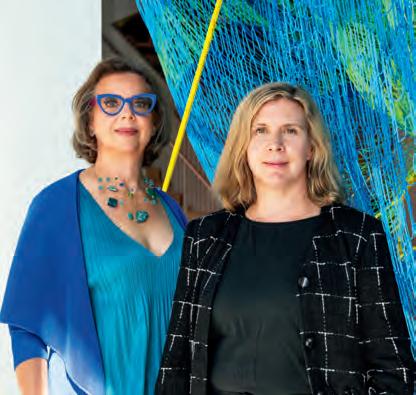
Janet Echelman and Caitlin Mueller, MIT Museum. Photo: Anna Olivella.
Adam Burke is a computational designer whose work focuses on developing digital tools for complex design. Throughout his career, he has collaborated with artist Janet Echelman on numerous largescale sculptural projects. First as a Studio Echelman Fellow and subsequently in graduate studies supported by Studio Echelman he uses his computational expertise to bring these intricate installations to life. He also has worked as a designer in the architecture office of Machado Silvetti in Boston, Massachusetts, and as a technician at the MIT Museum Studio and Compton Gallery, where he assisted students in developing electromechanical artworks.
Burke continues to explore the intersections of design, technology, art, and architecture, pushing the boundaries of computational design in various contexts. He holds a BArch from Virginia Tech and an SMArchS in building technology from MIT. Currently, he is a PhD student at MIT.
Burke specializes in tensile network simulation, computational design, and machine learning for design applications.
Raffaele Ferrari is the Cecil and Ida Green Professor of Oceanography at the MIT Department of Earth, Atmospheric, and Planetary Sciences (EAPS). His research focuses on how the ocean influences past, present, and future climates.
Ferrari’s main contributions include the study of ocean and atmospheric turbulence, the ocean carbon cycle, and currents in the Southern Ocean. He currently co-leads a collaborative project between MIT and Caltech aimed at improving the accuracy of climate models through advances in AI. Ferrari is the co-director of the MIT Lorenz Center, a think tank established to gather a community interested in the fundamentals of climate science.
Caroline A. Jones is the Rudge (1948) and Nancy Allen Professor, History, Theory, and Criticism Program, MIT Department of Architecture, where she teaches art history and serves as the Associate Dean for Strategic Initiatives in the School of Architecture + Planning. She studies modern and contemporary art, focusing on its technological modes of production and distribution, urban reception, and interface with science.
Jones has also curated exhibitions with publications, most recently Symbionts: Contemporary Artists and the Biosphere (2022), and earlier Hans Haacke 1967 (2011), Video Trajectories (2007), and Sensorium (2006)—all at MIT/with MIT Press.
Her solo-authored publications include Machine in the Studio (1996–98), Eyesight Alone (2005–08), and The Global Work of Art (2016). Jones has edited or co-edited Picturing Science, Producing Art (1998) and Experience: Culture, Cognition, and the Common Sense (2016). Her current research includes bio-art and planetary symbiosis, GenAI/technoshock, and monuments, memory, and media in the Anthropocene.
Acknowledgments
“The most painful state of being is remembering the future, particularly the one you’ll never have.”
– Commonly attributed to Søren Kierkegaard
Remembering the Future is a project that springs from a desire to respond to this current moment in time, where we face the enormity of scientific data about the history and projected futures of the climate of our communal planet, as well as the humbling human challenge to take in this sobering truth.
This exhibition is the culmination of my MIT residency. As such, it reflects a personal need to step back and view a larger cycle of time from a wider perspective—an essential foundation for thoughtful action.
A dedicated team of talented collaborators is responsible for bringing this work to fruition. I want to express my heartfelt appreciation and utmost gratitude to each contributor:
Caitlin Mueller, the catalyst, whose extraordinary intellect and insatiable curiosity combined with environmental purpose to guide and nurture this unfolding multi-year collaboration; Adam Burke, the exceptionally talented Studio Echelman Design Research Fellow who later joined Caitlin’s graduate research team and created a new computational design tool (in collaboration with Keith J. Lee, Ous Abou Ras, and Kaleed Tayfour) that has opened possibilities for increased three-dimensional geometric complexity and is being exhibited for the first time here;
Studio Echelman, the inspired and dedicated team led by Daniel Alexander Smith with Danielle Efrat, Melissa Henry, Eleanor Reyelt, Beckett Brueggemann, and Keith Hartwig, whose tireless efforts enabled this work; our brilliant engineers Clayton Binkley, Nicole Wang, Alessandro Beghini, and Bill Baker; and our diligent artisan partners in Puget Sound with whom I have been collaborating for a quarter century, especially Steve Gregory, John Neal, and Chris Dunn, who continue to keep alive the revered traditions of hand splicing, braiding, and knotting fiber;
The MIT Center for Art, Science & Technology, directed by the inspired leadership of Leila W. Kinney with Leah Talatinian, Heidi Erickson, Anya Ventura, Katherine Higgins, David Colfer, Isaac Tardy, Yari Wolinsky, and Bruce Petschek; Vice Provost Philip S. Khoury; the Council for the Arts at MIT; and all the MIT students who participated in our workshops, especially graduate students Jessica Stringham and Coco Allred for their work on the full-scale prototype during development of the artwork;
The MIT Museum’s visionary director Michael John Gorman with the inspired team of Ann Neumann, Emily Cheeseman, Sasha Wallinger, Kate Silverman Wilson, Keelin Caldwell, Kathryn Wysocki Gunsch, Maggie Scott, Lindsay Bartholomew, Rob Gainfort, and Tyler Derryberry; our fearless installation team led by Bianca Mauro and Lily Leonard; and the lighting design team at Available Light, led by Steven Rosen and Yvonne Chang;
MIT climate scientist Raffaele Ferrari, for helping us navigate the overwhelming quantity of data and guiding us to frame the time period from the last ice age; and Professor John D. Sterman and the entire En-ROADS team for creating the online simulator that enabled us to envision multiple futures;
The Andrew W. Mellon Foundation, for supporting the CAST Mellon Distinguished Visiting Artist residency at MIT, and the Rockefeller Foundation Bellagio Center, where these words are being written;
Diana Chapman Walsh, MIT Corporation Life Member Emerita and co-founder of the Council on the Uncertain Human Future, and fellow members of the council, who have guided and sustained me since 2014 in search of understanding a path toward preserving the future;
and to David Feldman, who started this residency alongside me as the MIT Distinguished Visiting Technologist, and who dreamed of its trajectory even though he did not live to see this manifestation unfold.
Janet Echelman , 2025
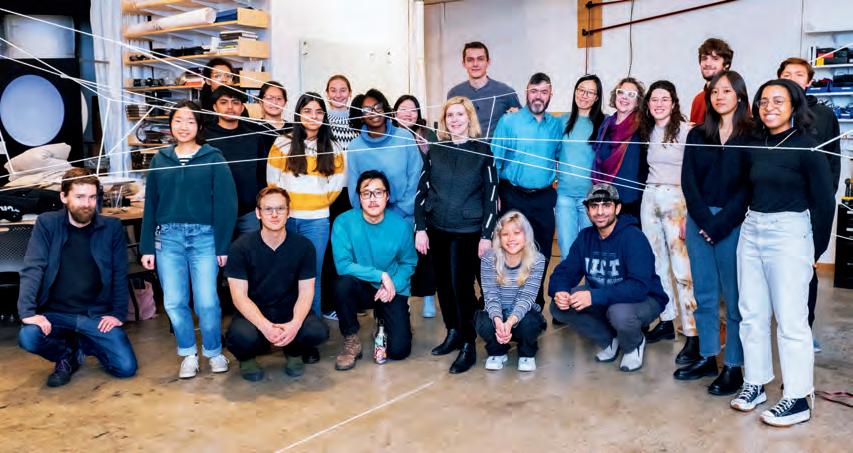
Participants in the 2023 In Tension workshop led by (left to right) Daniel Smith, Adam Burke, Keith J. Lee, Caitlin Mueller, David Feldman, Nicole Wang, and Janet Echelman. Photo: Bruce Petschek.