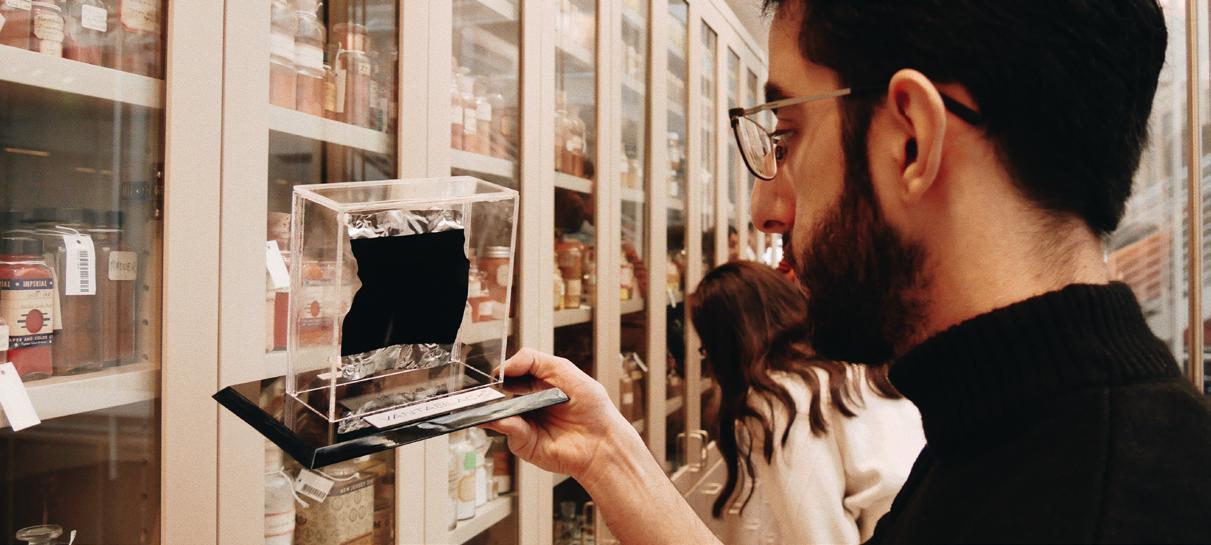
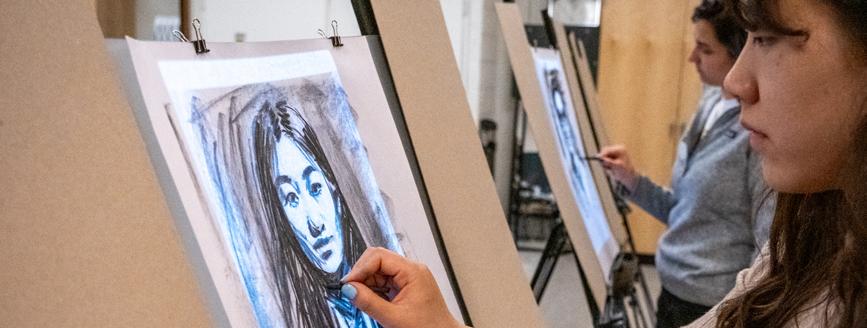
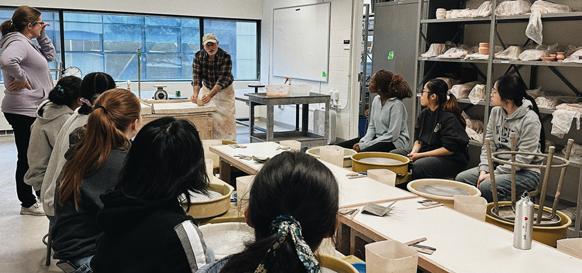
Massachusetts Institute of Technology 77 Massachusetts Avenue, Cambridge, MA 02139
arts.mit.edu
Written by the Future of the Arts Committee
Edited by Peter Fisher and Leila W. Kinney
Copyedited by Linda Walsh Design by Heidi Erickson
Project Management by Isaac Tardy
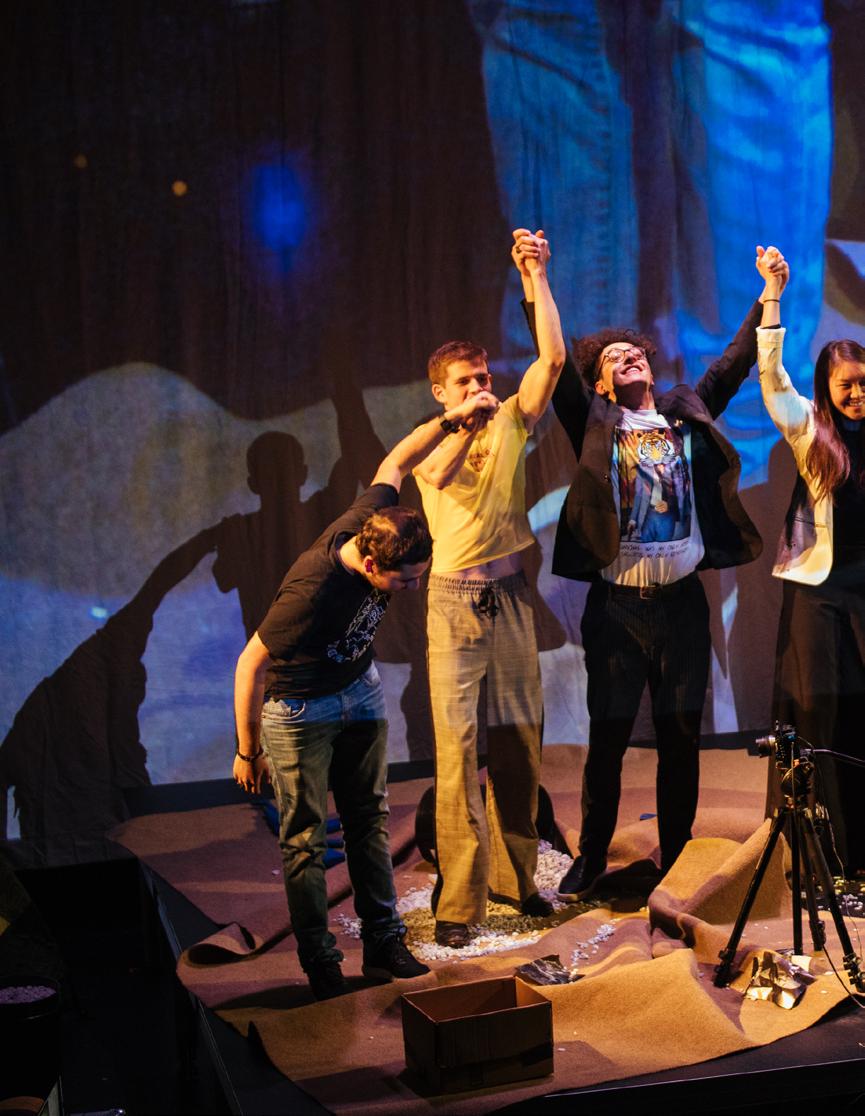
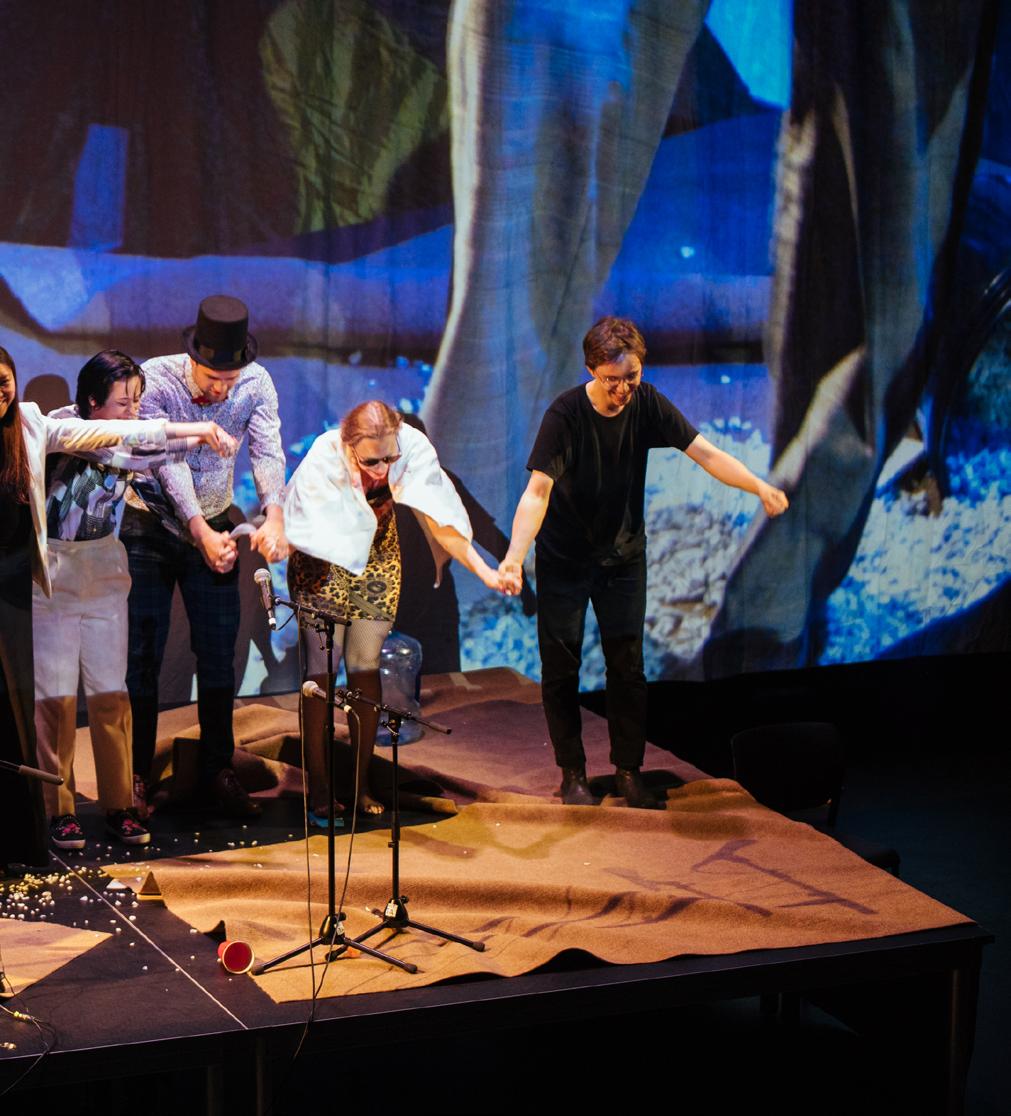
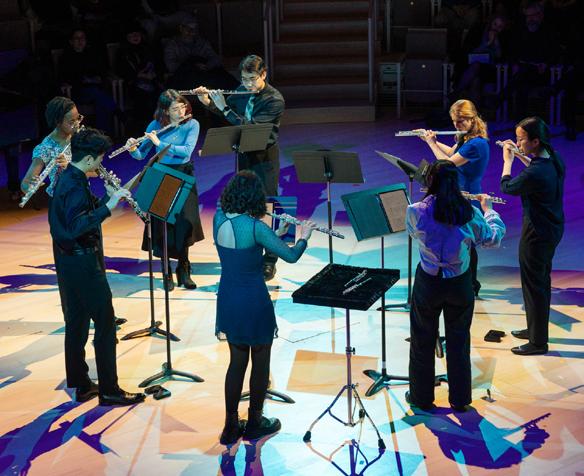
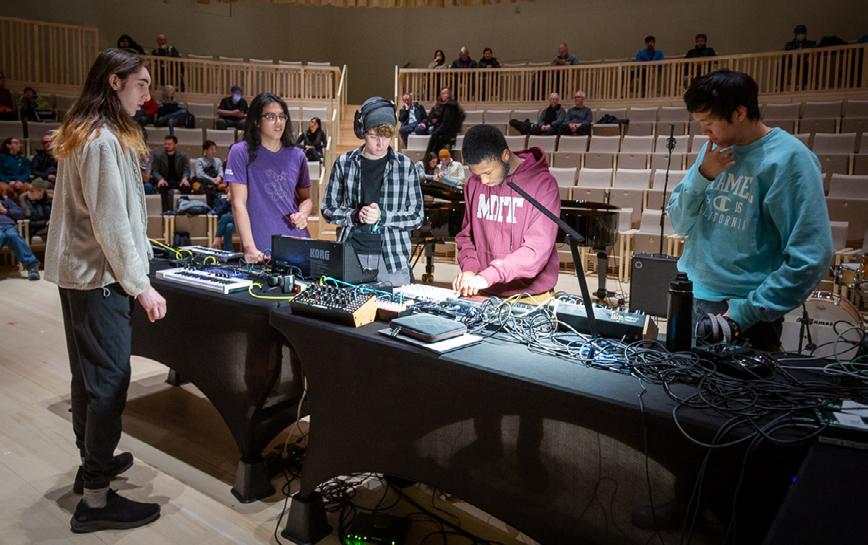
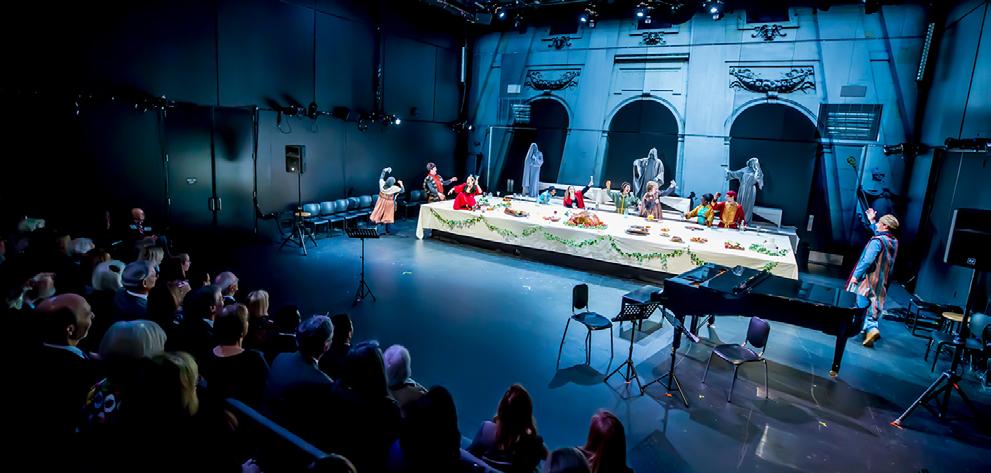
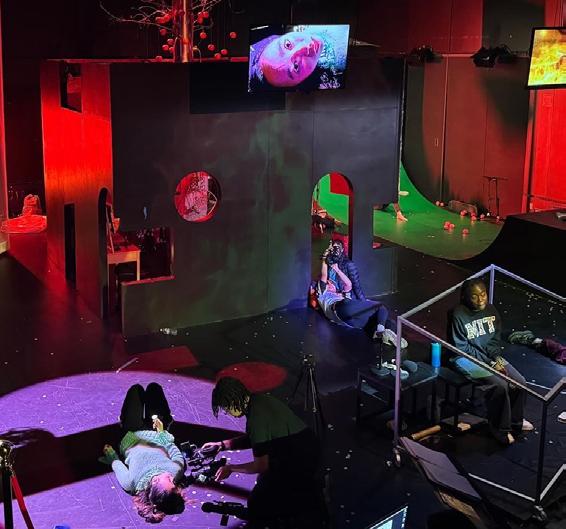
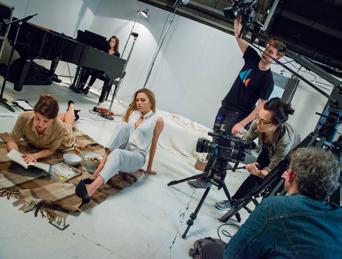
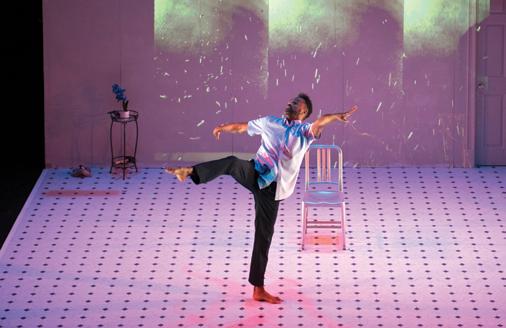
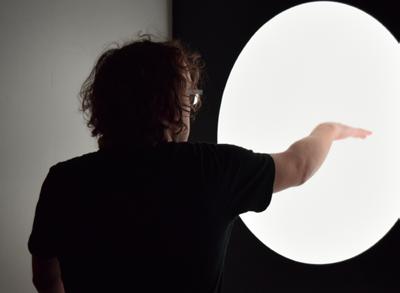
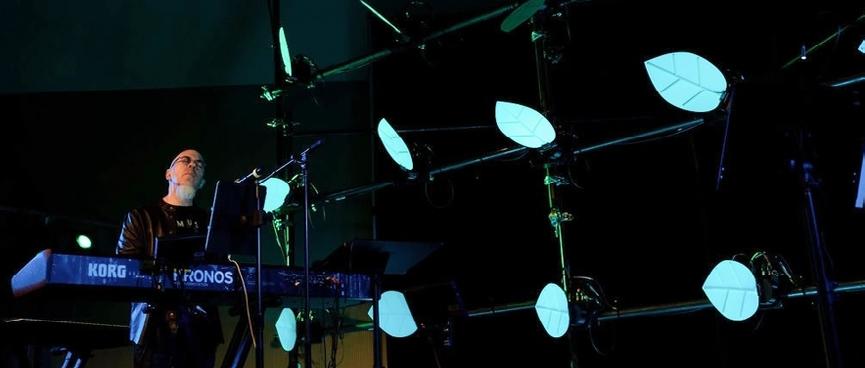
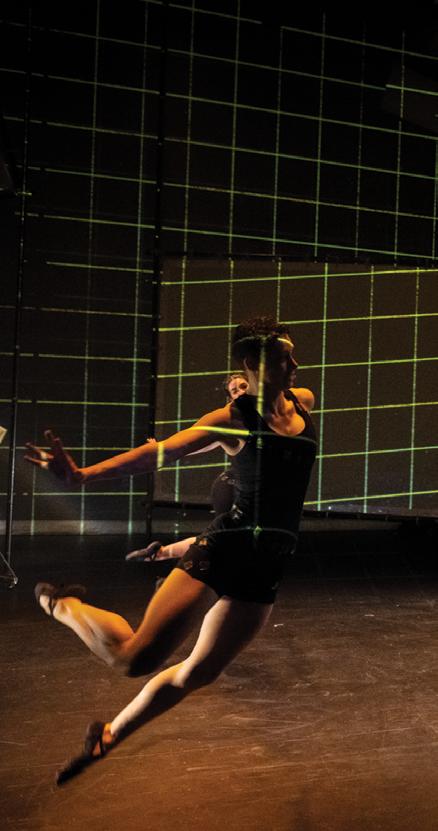
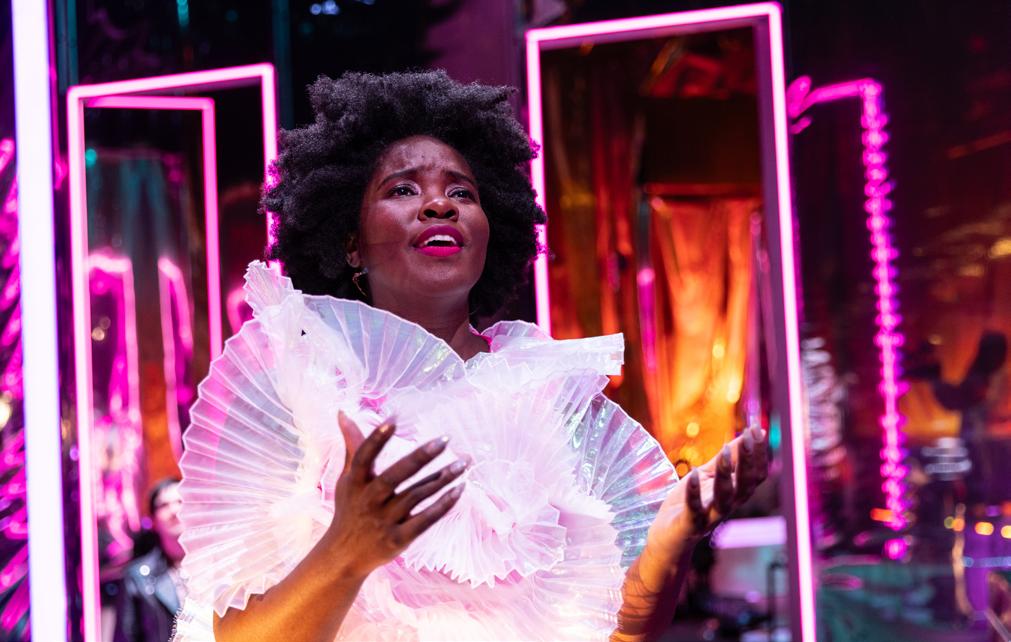
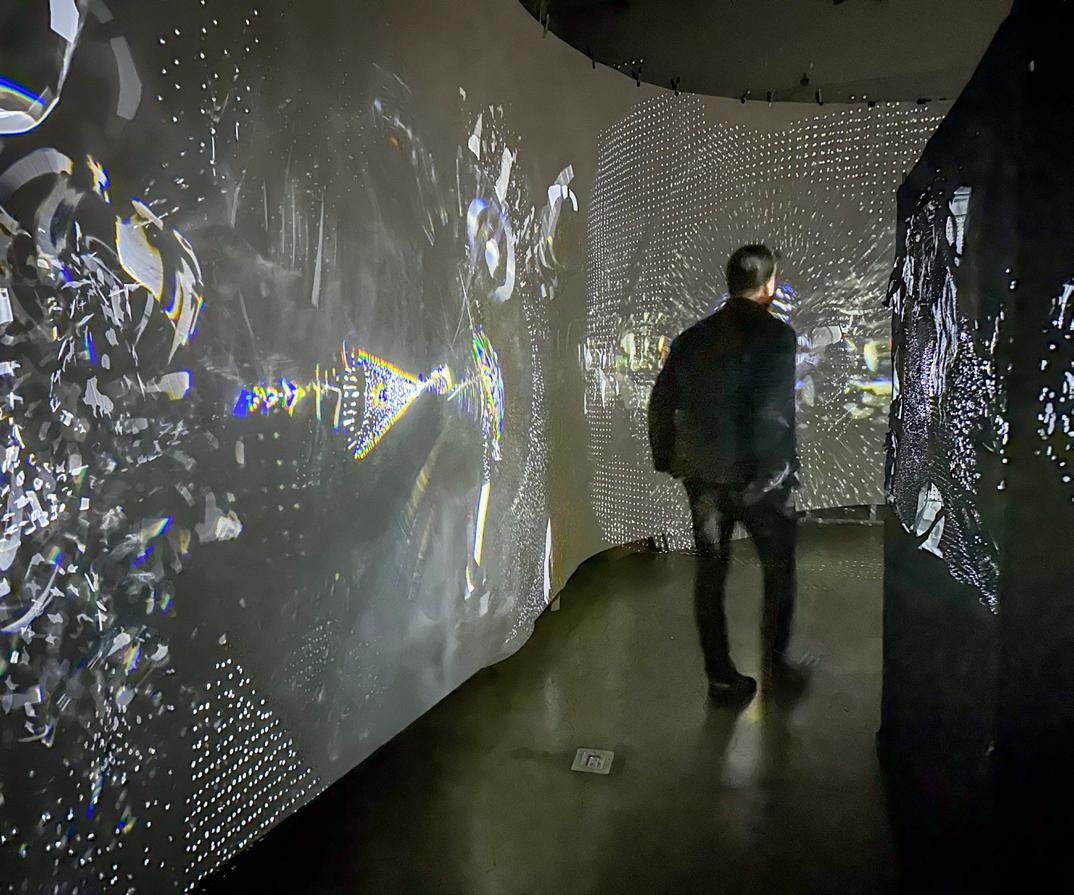
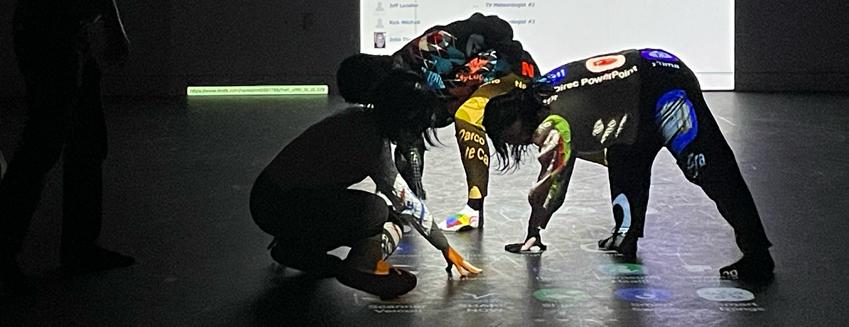
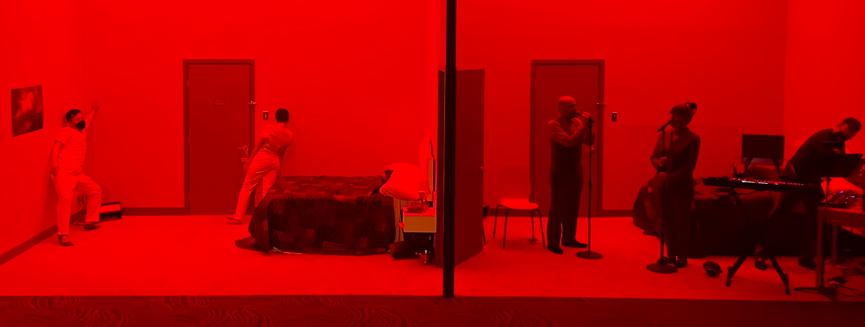
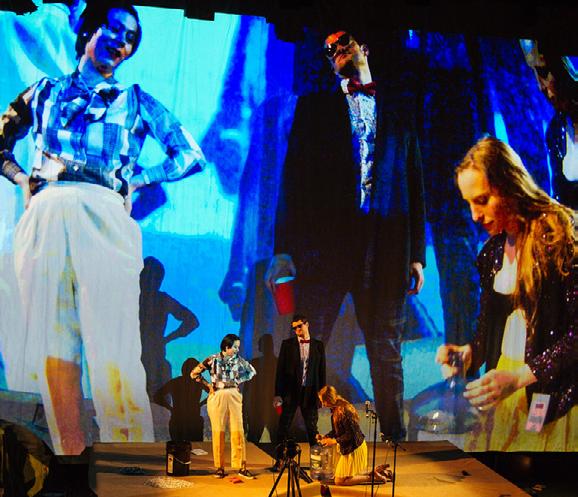
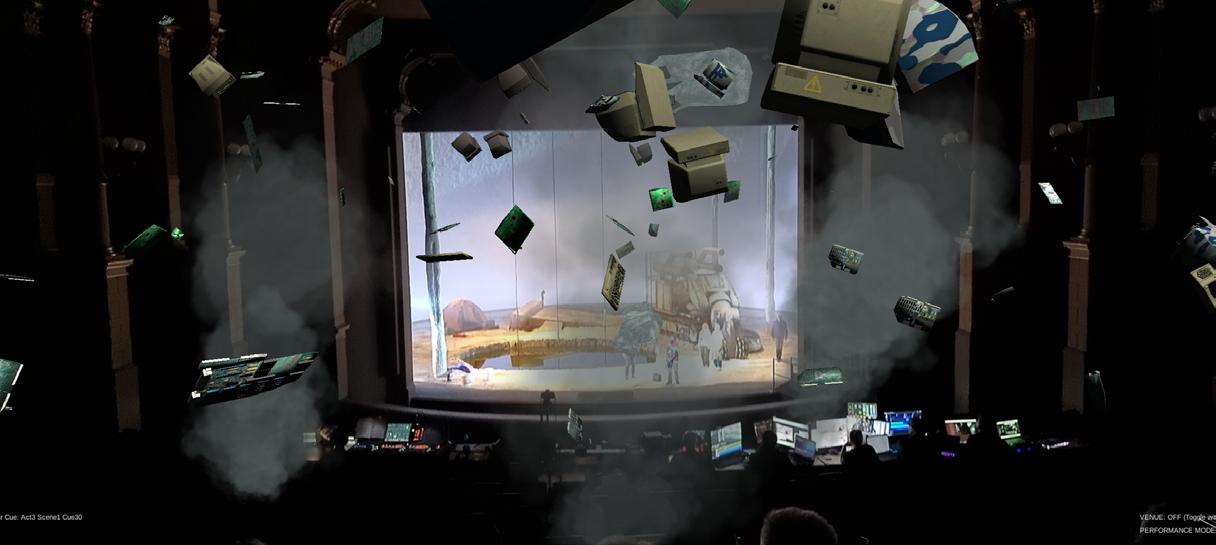
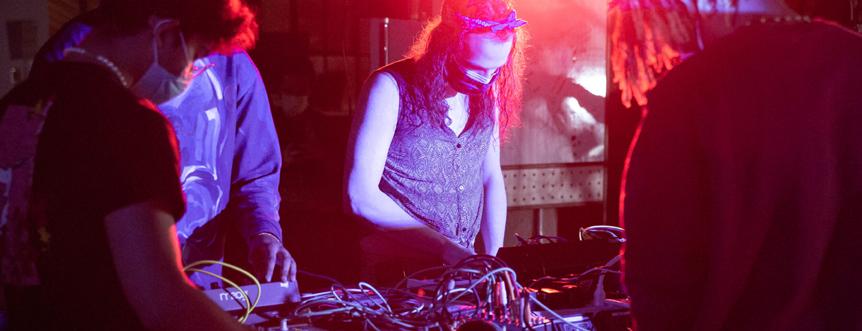
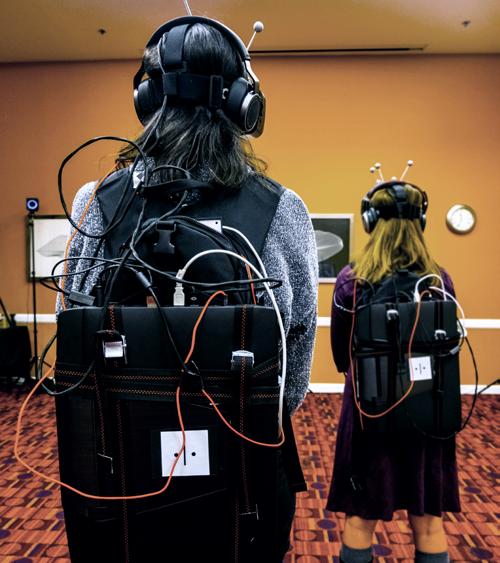
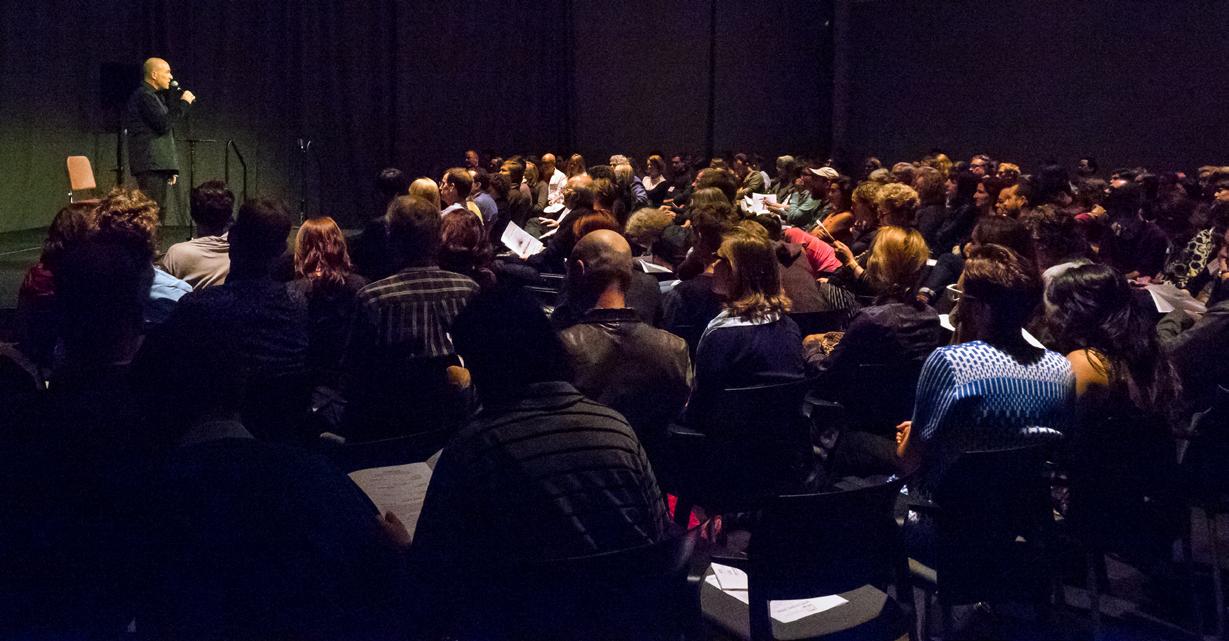
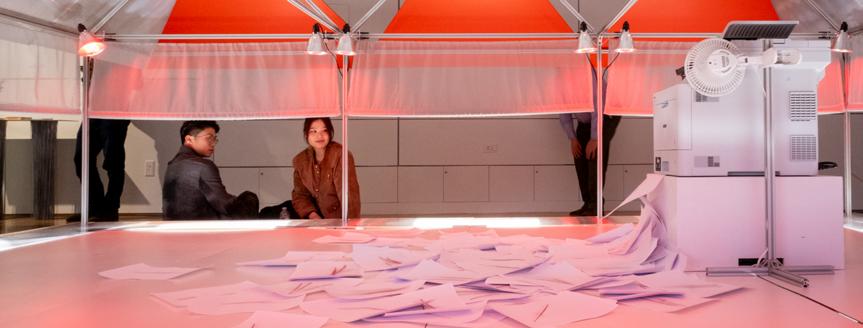
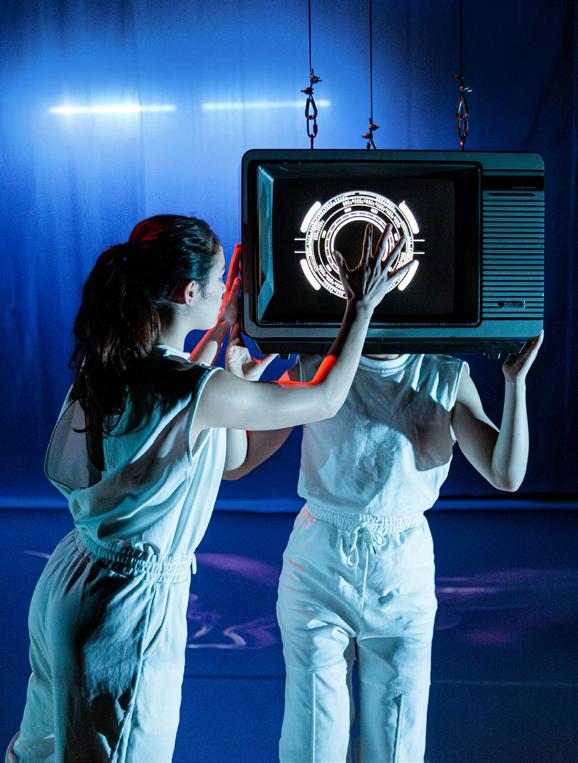
Image: 21M.842 Live Cinema Performance students perform In the Jungle of Cities as part of MIT Performing in 2019, a prototyping and presenting series curated by Class of 1949 professor of theater arts Jay Scheib, presented by the MIT Center for Art, Science & Technology, and supported in part by the Council for the Arts at MIT Photo: Juliet Dombrowski.
The Future of the Arts at MIT Committee Report
September 15, 2025
Future of the Arts at MIT Committee
Executive Summary
Guiding Principles
Recommendations
I. Introduction
Charge and Process Why Now? Context and Opportunity
Strategic Value to MIT
II. Guiding Principles for the Arts at MIT
III. The Artistic Enterprise at MIT: Scope, Scale, and Transformation Since 1987
IV. Taking the Arts Enterprise to the Next Level: Recommendations for Action
V. A Vision for MIT as the Global Center of Art-Infused Innovation
VI. A Final Word
VII. Appendices
Elements of the Artistic Enterprise at MIT
Office of the Chancellor
Office of the Provost
MIT Libraries
School of Architecture + Planning (SA+P)
School of Engineering (SOE)
School of Humanities, Arts, and Sciences (SHASS)
SHASS and School of Engineering (SoE)
Vice Provost for the Arts (VPA)
Meeting Agendas
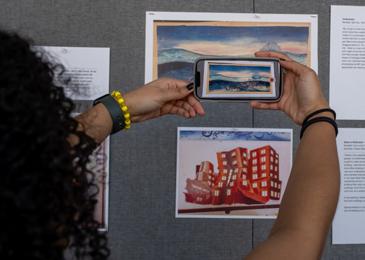
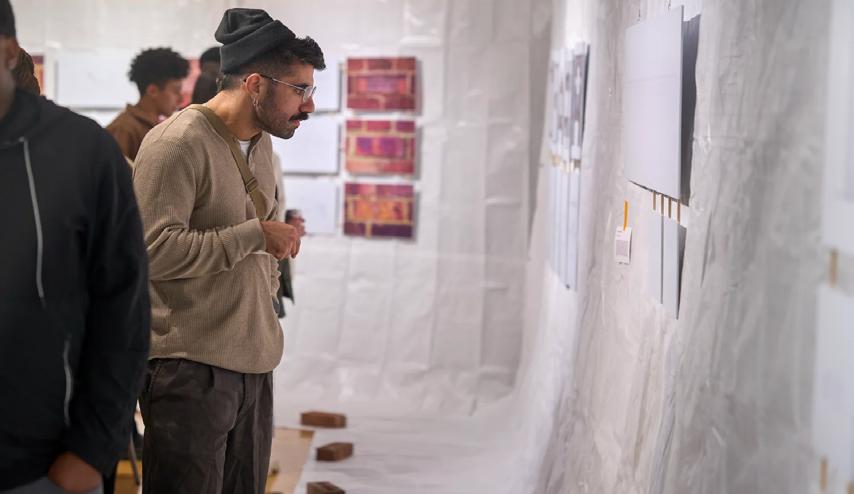
Image: An MIT Arts Scholar enjoys The Great Learning, the first US solo institutional exhibition for artist Pedro Gómez-Egaña, presented by the MIT List Visual Arts Center, 2025. Photo: Rayna Yun Chou.
Future of the Arts at MIT Committee
Peter H. Fisher (chair)
Vice Provost and Associate Vice President for Research; Thomas A. Frank (1977) Professor of Physics
Azra Akšamija Professor and Director, Art, Culture, and Technology Program
Sandy Alexandre
Associate Professor and Co-Head of Literature
Paola Antonelli
Senior Curator, Department of Architecture and Design, Museum of Modern Art
Marcel Botha ’06 SMArchS
Chair, Council for the Arts at MIT; Chief Executive Officer, 10xBeta
Martha Eddison
Special Assistant and Senior Communications Strategist, Office of the President
Erin Farrell
Senior Associate Dean, Student Engagement and Campus Activities
Paul Ha Director, List Visual Arts Center
Caroline A. Jones
Associate Dean for Strategic Initiatives, School of Architecture + Planning; Rudge (1948) and Nancy Allen Professor, History, Theory, and Criticism, Department of Architecture
Paul L. Joskow
Elizabeth and James Killian Professor of Economics, Emeritus
Michael M. Kaiser ’77 SM
Chair, DeVos Institute of Arts Management, University of Maryland
Leila W. Kinney
Executive Director of Arts Initiatives and the Center for Art, Science & Technology
Keeril Makan
Associate Dean for Strategic Initiatives, School of Humanities, Arts, and Social Sciences; Michael (1949) and Sonja Koerner Music Composition Professor, Music and Theater Arts
Nicholas de Monchaux
Weber-Shaughness Professor and Head of Architecture; Professor of Urban Studies and Planning; Affiliate Faculty, Program in Science, Technology, and Society
Nick Montfort
Professor of Digital Media, Comparative Media Studies/Writing
Perry Naseck
Graduate Student, MIT Media Lab Responsive Environments Group
Suzy Nelson
Vice Chancellor, Dean for Student Life
John Ochsendorf
Class of 1942 Professor; Founding Director, MIT Morningside Academy for Design
Katharina Ribbeck
Andrew (1956) and Erna Viterbi Professor of Biological Engineering
Daniela Rus
Andrew (1956) and Erna Viterbi Professor of Electrical Engineering and Computer Science; Director, Computer Science and Artificial Intelligence Laboratory
Jay Scheib
Class of 1949 Professor of Theater Arts; Head, Music and Theater Arts
Nida Sinnokrot
Ford International Career Development Professor; Associate Professor of Art, Culture, and Technology
Susan Whitehead
Life Member, MIT Corporation; Founding Lifetime Trustee, Whitehead Institute for Biomedical Research
Isaac Tardy (staff to committee)
Assistant to the Executive Director of Arts Initiatives
Executive Summary
In 2025, Times Higher Education ranked the Massachusetts Institute of Technology #1 globally in the Arts and Humanities.1 That may strike some as counterintuitive, but this milestone reflects decades of strategic investment and the Institute’s distinctive model: at MIT, the arts thrive as a constellation 2 of recognized disciplines while penetrating and illuminating countless aspects of the Institute’s scientific and technological enterprise. This unusual integration fuels creative problem-solving and interdisciplinary discovery, supports student well-being and personal growth, and enriches MIT’s global impact.
To build on this momentum, in spring 2024 the provost convened the Future of the Arts at MIT Committee to take on a three-part assignment:
1. To review the current state of the arts at MIT, including the legacy of the 1987 Joskow Report.
2. To develop guiding principles for institutional decision-making and campus-wide engagement.
3. To articulate a forward-looking vision for the future of the arts at MIT.
The Complete Charge appears in Section I of this report.
Guiding Principles
Over the course of a year, the committee held more than 30 meetings, heard from over 60 voices across the arts ecosystem, and explored vanguard practice inside and outside MIT. Based on this research, the committee sets forth three foundational ideas gleaned from the work of our committee—guiding principles that should inform the Institute’s thinking and action about the future of the arts at MIT:
Artistic Thinking
Because the arts cultivate cognitive flexibility, creative problem-solving, and emotional intelligence, they are catalysts for education and innovation; MIT arts faculty should be central to strategic campus planning, research, and curricular decisions.
Artistic Excellence
The Institute’s current excellence in visual, literary, theater, and musical arts ensures that these fields are taught in their highest forms, as rigorous sites of inquiry, expression, and scholarship. This pre-eminence gives us a competitive advantage in attracting talent and amplifying MIT’s visibility—and should be communicated clearly.
Artistic Community
The arts shape the ethical and human-centered future and are already crucial to the well-being, expression, and sense of belonging for the entire MIT community. This should be appreciated for the resource that it is.
2 The committee debated whether to refer to all arts activities at MIT as the arts enterprise or the arts constellation. By emphasizing the parallels with the research enterprise or the educational enterprise, arts enterprise reflects its seriousness and importance; arts constellation sets the arts apart, and is an apt description of how the arts are arranged at MIT. Enterprise has corporate and organizational connotations. Constellation evokes depth, illumination, and navigation—humans finding their way. Both express important truths about the arts at MIT, so this report uses the two terms interchangeably.
Recommendations
After surveying the current state of MIT’s arts enterprise, the committee made the top-level recommendations shown below. (Section IV contains our full set of recommendations.) While our recommendations have time horizons referring to their completion date, we defer to the administration and the constellation on when to start them.
Top Recommendations: Immediate
The most urgent challenges to the arts enterprise stem from where the arts sit in the institutional hierarchy, and our top recommendation addresses this. Other efforts that need immediate attention are staffing and fundraising.
Leadership
Proactively include the vice provost for the arts (VPA) in all top-level strategic planning, development of Institute initiatives, and fundraising at MIT.
Staffing
Develop a prioritized set of staffing, both administrative and academic, including adequate staffing of new buildings that will enable the arts enterprise to fully realize the potential across arts organizations and the curriculum.
Sara
For all these recommendations, we assume the VPA takes a leading role, unless otherwise specified.
Education
Take action to ensure that there are enough arts instructors in place to avoid the growing problem of oversubscription in HASS-A classes and that the administration develops a clear plan for returning the enterprise to where it stood before the twin emergencies of COVID-19 and the 2025 budget cuts.
Fundraising
Work with the provost and resource development to integrate the arts enterprise into the Institute’s fundraising plans, including the upcoming campaign, for both immediate and long-term needs.
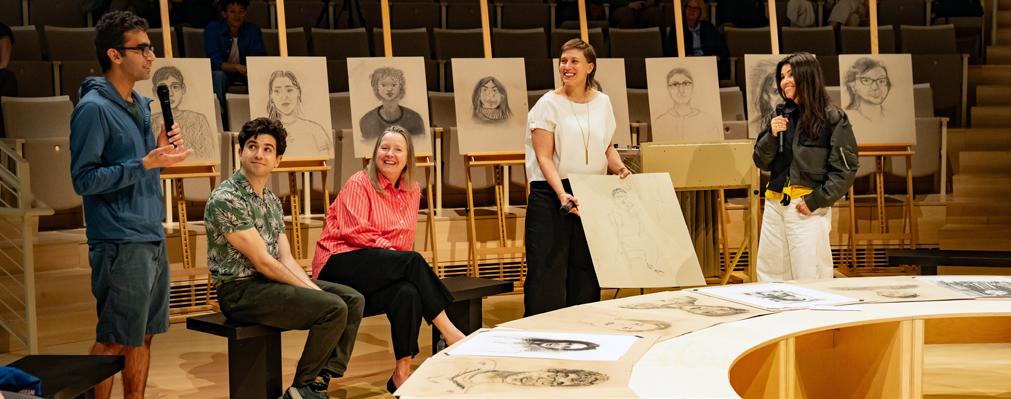
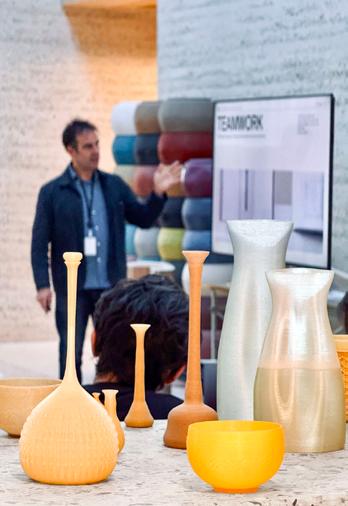
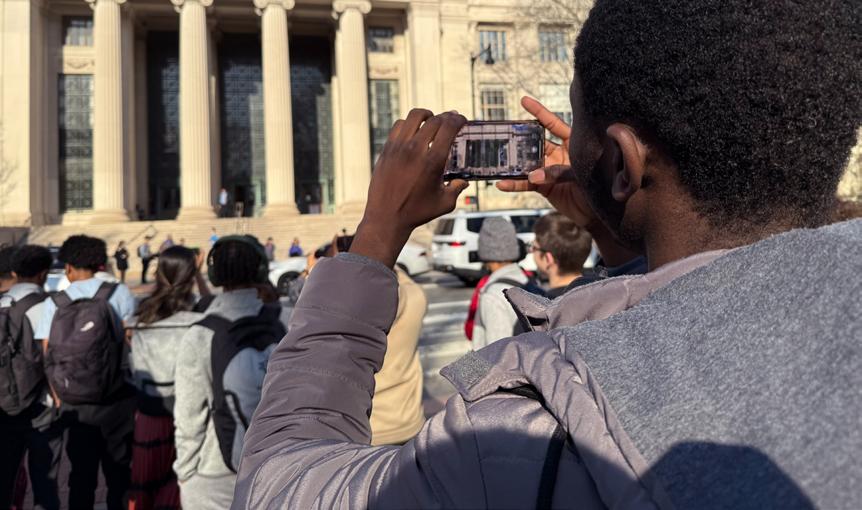
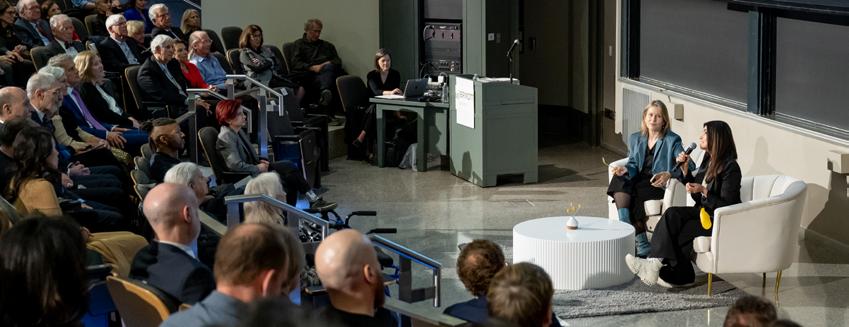
Image: Participants in MIT Face to Face discuss their experience with the project leads, associate professor in music and theater arts
Brown and 2025 recipient of the Eugene McDermott Award in the Arts at MIT Es Devlin. Photo: Kataram Studios.
Top Recommendations: Medium Term (1–3 years)
Access
In concert with the vice president for campus space management and planning, facilities, and other units charged with creating guidelines for public space and gatherings, work to lower the barriers and streamline the approvals for creating art installations on campus.
Student
Life
Work with the Division of Student Life (DSL) to assess the support needed for non-curricular student arts programs and activities.
Education
Work with the deans of the School of Humanities, Arts, and Social Sciences (SHASS) and the School of Architecture + Planning (SA+P) to expand curricular offerings where need is greatest, ensuring tenured lines for new hires. Study expanding Music Technology and Computation (MTC) to a PhD program.
Visibility
Work with the vice president for communications to develop the means, both external and internal, to communicate more effectively about the arts at MIT. Address the Institute-wide issue of events promotion and advertising getting lost in the deluge of other announcements. Finally, work to develop the means for the arts to become an integral part of the MIT brand.
Research
Study the value and feasibility of creating an interdisciplinary research center for the arts.
Top Recommendations: Long Term (1–5 years)
Faculty
Develop plans to add faculty lines and permanent funding for teaching and administrative staff for both music and theater arts.
Education
Build upon the success of the master’s programs in Architecture; Arts, Culture, and Technology (ACT); Media Arts and Sciences (MAS); and MTC. Create an interdisciplinary master’s program with theater fields, such as performance technologies and embodied interactive design.
Funding
Stabilize funding across the arts as an endowed commitment to fund all aspects of MIT’s arts enterprise.
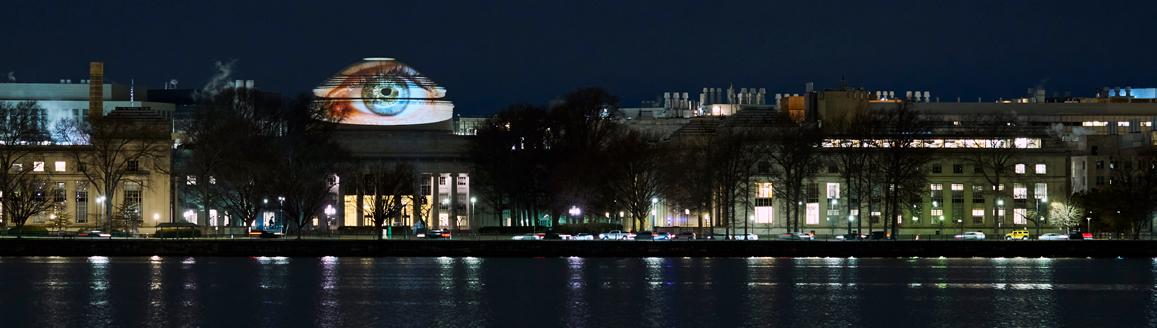
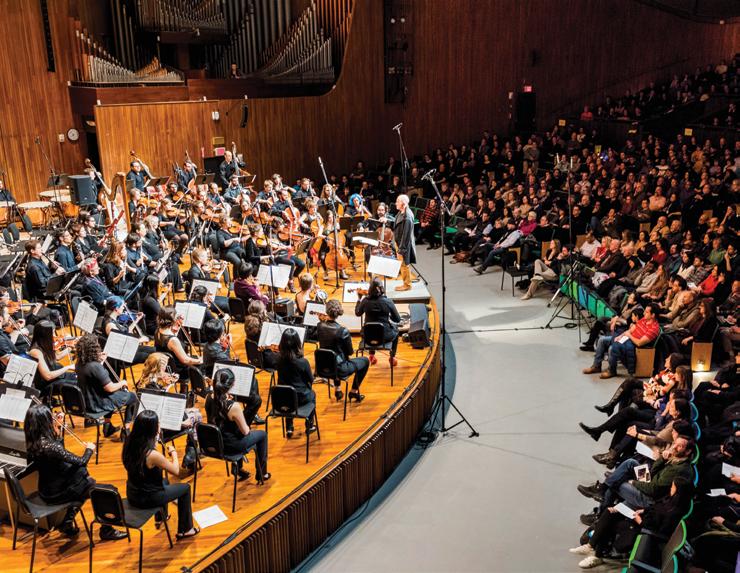
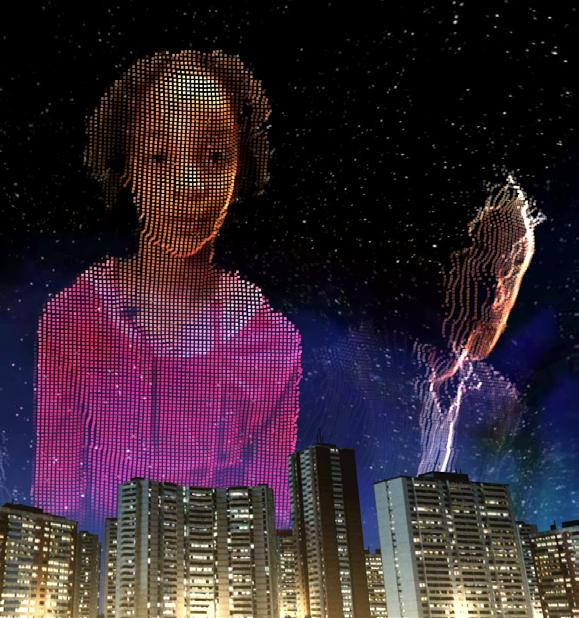
Images: (top) Assistant professor of media arts and sciences
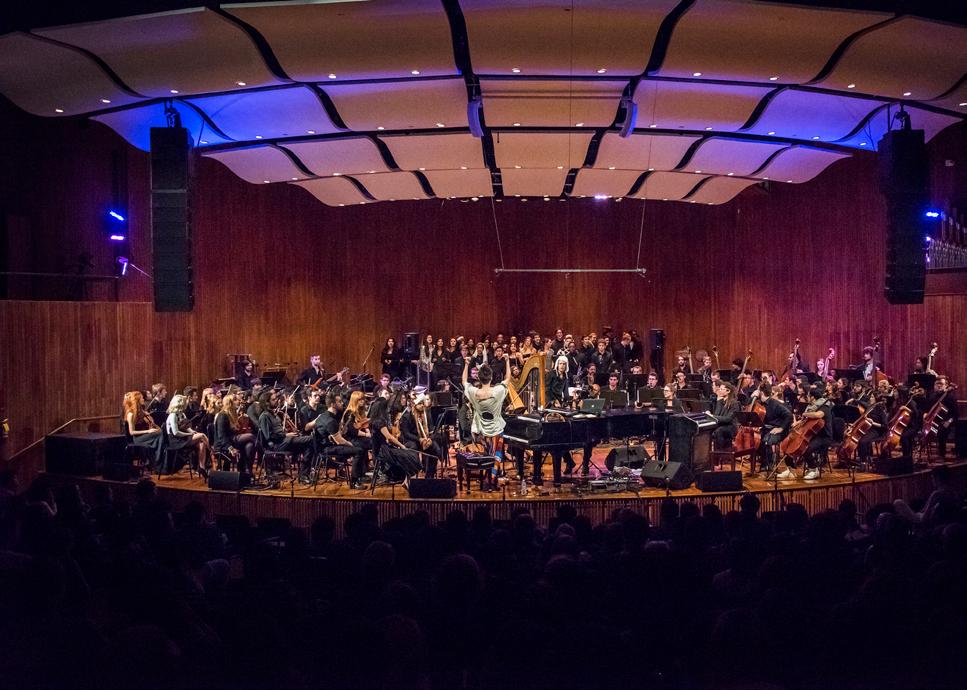
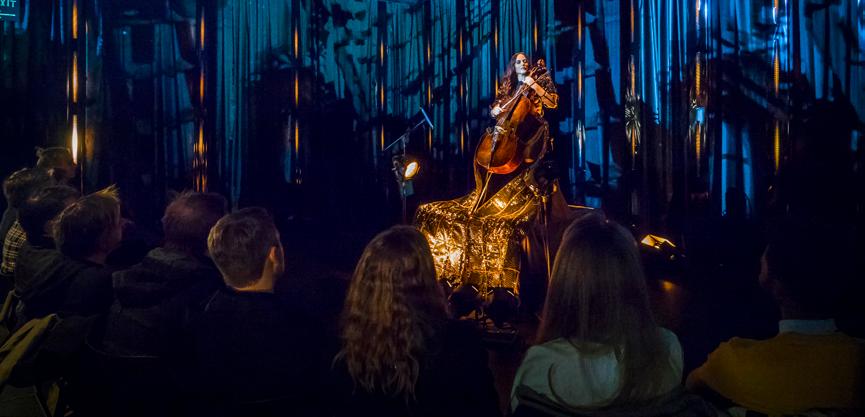
Behnaz Farahi’s Gaze to the Stars projected on the MIT Dome, 2025. Photo: Courtesy of the artist. (right) CAST faculty director and Kenan Sahin (1963) Distinguished professor of music Evan Ziporyn conducts the 60-piece Ambient Orchestra and cellist Maya Beiser, 2016–18 CAST Mellon Distinguished Visiting Artist, in his arrangement of David Bowie’s Blackstar, 2017. Photo: Justin Knight.
Art is Essential
MIT’s distinction has never come from following the expected path—it has come from blending the rigorous and the imaginative, the analytical and the expressive. The arts at MIT are not an afterthought. They are foundational to what MIT is and what it can become.
This report offers not only a vision, but also a road map. Our students are already living this integration, our faculty are already leading it, and the global recognition is already here. Now is the time to respond to the blossoming present with bold, strategic action to ensure a fruitful future.
As one of our external visionaries observed: “Art is the oldest technology.”
– Museum Curator 3
It is not optional. It is essential.
3 Presentations and discussions provided the main source material for this report. Our meetings were recorded and transcribed over Zoom, and the committee and participants were made aware of this. However, as we did not obtain written permission, we will not attribute these quotes at this time.
Image: Memory Still by 2025 Schnitzer Prize in the Visual Arts recipient Chenyue “xdd44” Dai, SMArchS ’26, features digitally animated still photographs printed as film stills and projected in a continuous loop. Funded by the Council for the Arts at MIT (CAMIT), it examines cycles of stagnation and progress. Photo: Courtesy of the artist.
I. Introduction
Our report responds to the charge outlined below and is organized as follows: Section I covers our charge, meeting process, and the larger context in which we wrote this report. Section II contains the guiding principles that our committee developed over the course of our meetings. Section III lays out the breadth of the artistic enterprise, how it evolved from the 1987 Joskow Report, and the key strengths and challenges the enterprise faces at this moment. Section IV presents a tiered set of recommendations for responding to the challenges of Section III.
Most importantly, however, the committee talked of the future. Section V captures many ideas and visions for the long-term course of the arts at MIT, including the programs, units, and infrastructure that could result from sustained attention to the arts over the coming decades. The report concludes with some final words of wonder at the marvelous constellation we encountered and our hopes for its future.
We have included a set of appendices with information and descriptions of the artistic units and our meeting agendas.
Image: Architecture students take part in the CAST-supported project See Us Seesaw Together, 2022. Generated by professor of architecture Ana Miljački as part of a series of design objects requiring collaboration through distribution and negotiation of weight, it enables both a physical and a visual confirmation of togetherness. Photo: Ana Miljački and the MIT Critical Broadcasting Lab.
Charge and Process
The provost announced the formation of the Future of the Arts at MIT Committee on June 3, 2024, with three charges:
1. Conduct a broad review of the creative arts at MIT, focusing on curricular and program elements. Assess the changes implemented following the Joskow Report (1987), the current standing of the arts, and how they intersect with science and technology.
2. Develop guiding principles for the arts at MIT that the administration and faculty can use for future decision-making about activities that cut across campus, reinforce MIT’s curriculum, support student well-being, and serve the broader Boston and Cambridge communities.
3. Outline a vision for the future of the arts at MIT.
All members invited to serve on this committee enthusiastically agreed. The Future of the Arts at MIT Committee (FOA) first convened on April 17, 2024, and met four times in the spring of 2024 to organize its work. During the summer of 2024, members contributed their thoughts on how to structure the assessment of current activity (curricular and non-curricular), and how to educate all committee members about the state of vanguard practice in the arts outside MIT.
With this structure in place, the committee held 16 90-minute meetings in the fall of 2024 to hear from key practitioners in the visual arts, design, and performing arts, as well as MIT-based students, faculty, and leadership in the arts units and presenting organizations. (A roster of these meetings can be found in the Appendices.) The committee heard from more than 60 people across the arts enterprise. Energized by these presentations, committee members had a two-day retreat in January 2025, and held 11 one-hour sessions during the spring 2025 term to discuss and draft this report, which we transmitted to the provost on April 15, 2025. We spent the remainder of the spring 2025 term socializing the report and incorporating comments and suggestions from the respondents to the initial draft in this final report. A lacuna: the press of time did not allow us to fully explore the opportunities for MIT to engage with the broader communities of Boston and Cambridge.
The committee thanks Leila W. Kinney and Isaac Tardy for flawlessly organizing this extensive process, as well as all the invited speakers who engaged with us.
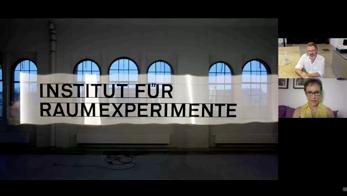
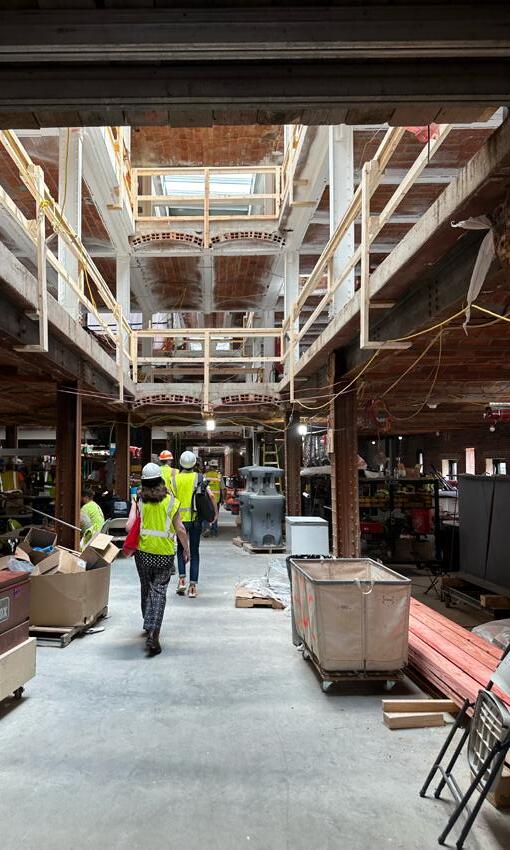
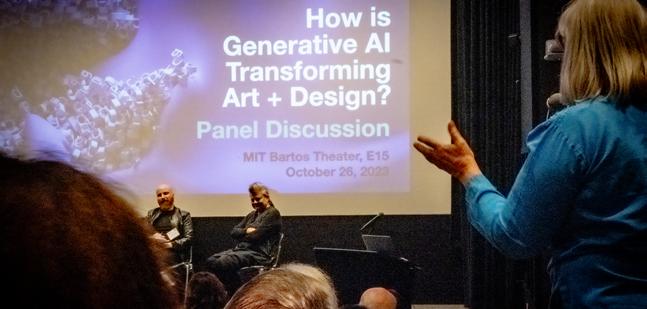
Images: (top) The Future of the Arts Committee sought insight from experts outside of the Institute, including Olafur Eliasson, artist and founder of the Institut fur Raum Experimente and 2012 recipient of the Eugene McDermott Award in the Arts at MIT. (above) Future of the Arts Committee members tour construction of the Metropolitan Warehouse. Photo: Heidi Erickson.
Why Now? Context and Opportunity
As of the spring semester of 2025, we are in a moment of great uncertainty for the future of our nation and US universities. MIT finds itself in a potentially grave situation resulting from a federal government that shows little understanding of education, research, and artistic practice. We expect MIT will ultimately prevail, but likely by engaging in retrenchment and reorganization, some of which is under way even now.
A cut to the General Institute Budget for fiscal year 2026 along with other changes to resources available to finance adjunct instructional staff has already stressed the arts enterprise—significantly reducing the number of students it can serve—and demonstrating its fragility. Yet, every crisis comes with opportunity. Can MIT emerge from this moment stronger, by leaning into its unique culture and by making its artistic enterprise a partner to our research enterprise?
Though realizing this vision might take a decade (or two), this report recommends a resilient approach to the future of the arts at MIT. Better integrating and strengthening our artistic culture will give MIT a unique ability to engage the nation and the world in a way no other university can—by opening new methods of research and practice and new channels of communication. The case we make is not simply for the arts as an enhancement to MIT’s strengths in science and engineering, but for the arts as an indispensable pillar of MIT’s future leadership.
Strategic Value to MIT
The advancement and integration of the arts are not cultural indulgences—they are strategic investments. In a rapidly changing world, the ability to imagine, to empathize, to communicate across differences, and to synthesize complexity is what defines leadership. The arts cultivate exactly these skills, making them mission-critical to MIT’s future.
The time to embrace MIT’s artistic enterprise is now: MIT has everything it needs—world-class faculty, ambitious students, a culture of handson experimentation, and a history of breaking paradigms. We need a strategic leap: the full institutional embrace of the arts as a central force for invention, education, and leadership.
By taking such a leap, MIT can help define what a university must be in the 21st century: not only a crucible for knowledge, but also a catalyst for imagination. Not only a builder of systems, but also a storyteller of futures. Not only a generator of tools, but also a cultivator of meaning.
Let MIT be the place where art—both as independent disciplines and as an integrative force—converges with technology to imagine and build the world ahead.
Images: (top) Still from The Invisible College: Color Confinement, a film by 2018–21 CAST Distinguished visiting artist Matthew Ritchie inspired by developments in artificial intelligence and a multidisciplinary team of MIT faculty and students. (left) Sonic Jubilance: The Public Opening of the Edward and Joyce Linde Music Building featuring nine performing arts groups and 15 Music and Theater Arts (MTA) faculty members, 2025. Photo: Caroline Alden.
II. Guiding Principles for the Arts at MIT
This section responds to Charge #2 by outlining three guiding principles, each of which affirms why MIT should prioritize the arts across education, research, community, and institutional strategy, which will translate creative momentum into structural strength. We created these principles through discussions with MIT’s practicing artists, leadership in the artistic constellation, students, and others. Some of our principles have a scientific basis, but we decided not to make a scientific argument in favor of letting our community speak for themselves through quotes from our meetings.
Artistic Thinking
Because the arts cultivate cognitive flexibility, creative problem-solving, and emotional intelligence, they are catalysts for education and innovation. MIT arts faculty should be central to strategic campus planning, research, and curricular decisions.
Artistic Excellence
The Institute’s current excellence in visual, literary, theater, and musical arts ensures that these fields are taught in their highest forms, as rigorous sites of inquiry, expression, and scholarship. This preeminence gives us a competitive advantage in attracting talent and amplifying MIT’s visibility—and should be communicated clearly.
Artistic Community
The arts shape the ethical and human-centered future and are already crucial to the well-being, expression, and sense of belonging for the entire MIT community. This should be appreciated for the resource that it is.
Artistic Thinking
MIT students are inherently creative. To foster this spirit, to help our graduates solve the world’s most complex challenges, and to support their thirst for innovation, MIT must feed the creativity that comes with every admitted student. We must train students and researchers not only in technical expertise, but also in the habits of mind that allow for agility, empathy, and expansive thinking. The arts cultivate precisely these skills and are highly synergistic with scientific and technical discovery. Artistic engagement strengthens ambiguity tolerance, lateral thinking, and creative risk-taking—capacities essential for tackling issues in AI, climate science, and biomedicine. Just as the scientific process values experimentation, iteration, and resilience, so too does artistic practice.
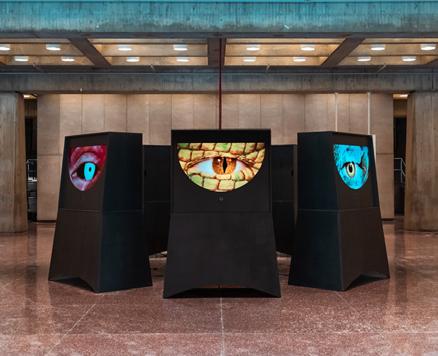
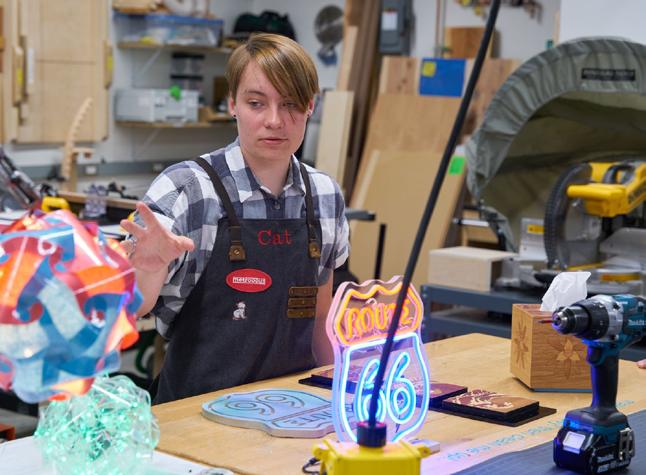
Images: (top) Public Eyes installation by Vinzenz Aubry, SMACT ’25, exhibited during the 2025 Artfinity festival.
Photo: Courtesy of the artist. (bottom) Makerspace mentor through Project Manus and MechE PhD Candidate Cat Arase. Photo: Jade Chongsathapornpong.
today is hybridity....”
– Producer and Theater Director
Contemporary artistic thinking looks at boundaries in order to work across them. This hybridity is often conceptual as well as technical. Data shows that innovation frequently happens at the intersection of disciplines, where seemingly unrelated fields come together to generate new insights.4 Throughout history, the fusion of art, science, and technology has functioned in this way, leading to major advances—from Leonardo da Vinci’s anatomical studies to Galileo Galilei’s use of artistic shading to understand moon topography, to modern innovations such as photography, recorded sound, and Technicolor ®, to contemporary applications of AI in performance, robotics, and interactive storytelling.
Unexpected synergies are the real benefits of making the arts available (and excellent!) at MIT. Already, scientific visualization, datadriven art, and design-based research have yielded breakthroughs in fields as varied as climate modeling, materials science, urban planning, neuroscience, and protein discovery. Embedding the arts in research infrastructure, experimental design, and the STEM curriculum—while also championing the arts as an engine of discovery in their own right— will amplify the benefits of artistic thinking and create fertile ground for frontier discoveries.
“It’s got to be a place where things just happen that we don’t expect....”
– Arts Faculty Member
The arts not only spark innovation at disciplinary intersections, but also actively shape and are shaped by disciplinary knowledge itself. Across history, perspective in physics has influenced how artists depict dimensionality, just as artistic experimentation has helped expand scientific visualization and theory. Anatomical studies in medicine have guided and been provoked by artists’ imaginative renderings of the human form. Mathematical structures like symmetry and fractals have inspired visual and musical works that, in turn, help mathematicians grasp abstraction more vividly. 5 In computing and environmental science, the reciprocal exchange with the arts continues to foster breakthroughs that are emotionally resonant, ethically grounded, and accessible to broad audiences.
4 See Regina Moirano, Marisa Analía Sánchez, Libor Štěpánek, “Creative interdisciplinary collaboration: A systematic literature review,” Thinking Skills and Creativity, Volume 35, March 2020, 100626, ISSN 1871-1871, https://doi.org/10.1016/j.tsc.2019.100626
5 See mathematician Benedict Gross’s collaboration with new media artist Ryoji Ikeda, https://www.ryojiikeda.com/project/VL/
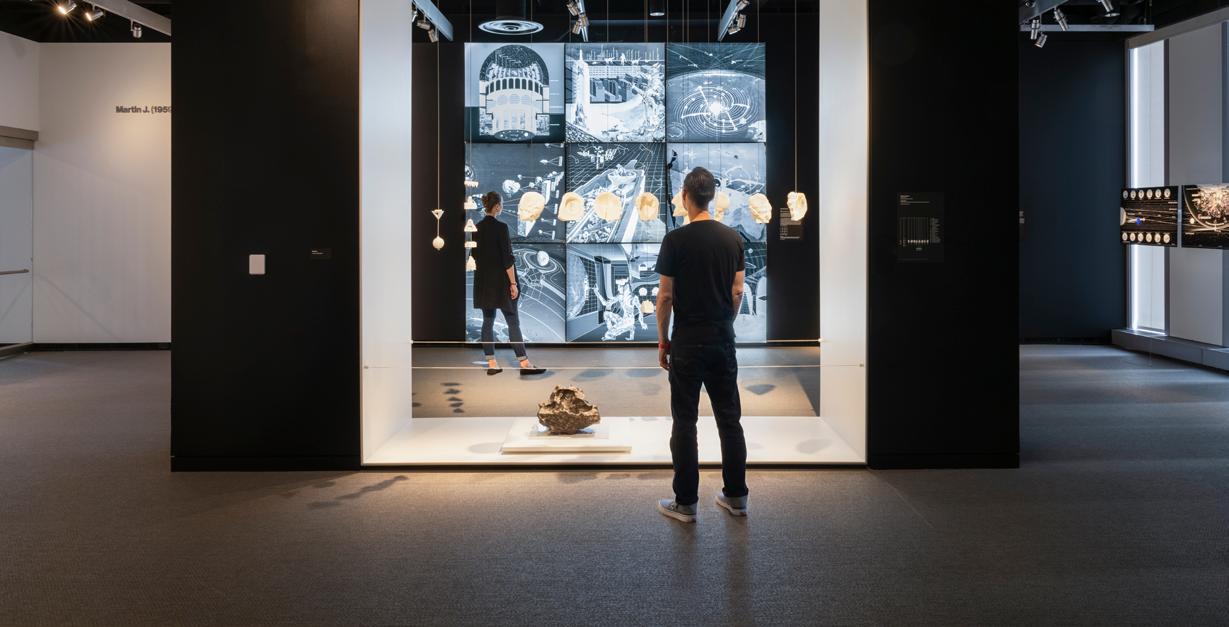
Image: Cosmograph: Speculative Fictions for the New Space Age by DESIGN EARTH, created by professor of architecture and urbanism Rania Ghosn, has been exhibited at MIT Museum since 2024 as part of the CAST x MIT Museum collaboration. The work offers an artistic perspective on challenging issues in an era where outer space is both a frontier for human exploration and a new territory for exploitation and development by private enterprise. Photo: Anna Olivella.
Artistic Excellence
If our students are inherently creative, then providing them with training and insight into the highest forms of artistic expression (both in traditional forms and contemporary interdisciplinary practice) becomes crucial to MIT’s future. Leading universities are investing heavily in the arts as they recognize the central role of creativity in the future of education and innovation. Institutions such as Harvard, Stanford, and Carnegie Mellon have expanded their arts-tech initiatives to attract top faculty, researchers, and students who are looking for holistic, interdisciplinary environments. MIT, in particular, has an opportunity to enhance its academic stature by expanding Music Technology and Computation (MTC) to a PhD program, which would at inception be #1 in the world. Faculty excellence in design, visual arts, media arts, and theater can also be enhanced through thoughtful collaborations to develop cutting-edge graduate programs.
“Graduate students... are choosing MIT if they’re artists because of what goes on here.”
– Senior Lecturer in the Arts
MIT must act decisively to maintain its leadership position. The arts help attract a new generation of learners and educators who value cultural engagement, aesthetic rigor, and emotional intelligence. Rather than taking resources from science, technology, engineering, and mathematics (STEM), the arts unlock new avenues for philanthropic, corporate, and government funding—particularly from sectors focused on design, AI, storytelling, and interactive media. A strong, visible arts ecosystem—including robust disciplinary and interdisciplinary arts programs—will enhance MIT’s global reputation and ensure that it remains a magnet for excellence.
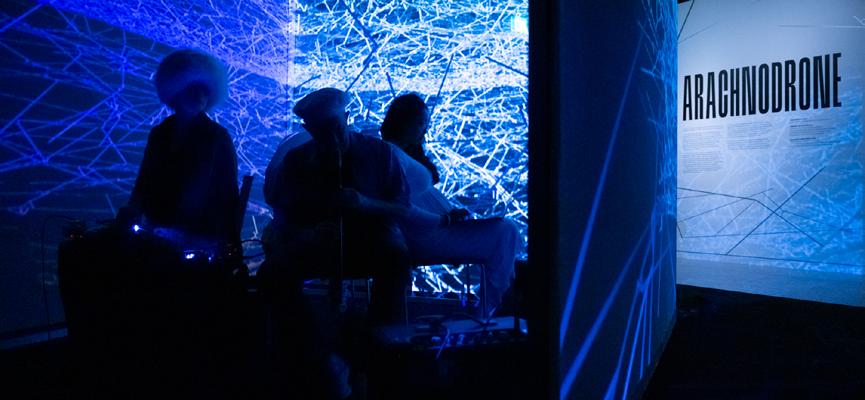
Image: 2023 Arachnodrone performance in the MIT Museum presented as part of the CAST x MIT Museum collaboration. The multimedia installation was created by lecturer in music technology Ian Hattwick, composer/visual artist Christine Southworth ’02, spider researcher Isabelle Su, CEE PhD ’21, and composer, CAST faculty director, and Kenan Sahin (1963) Distinguished professor of music Evan Ziporyn. Inspired by collaborations with CAST visiting artist Tomás Saraceno and Markus Buehler, Jerry McAfee (1940) professor in engineering and civil and environmental engineering. Photo: Sham Sthinkiya.
Artistic Community
In an era increasingly shaped by artificial intelligence, automation, and biotechnologies, it is not enough for technology to be efficient and productive—it must also be responsible, inclusive, and meaningful. The arts offer the frameworks and practices necessary to ensure that MIT’s technological advances align with humanistic values. They also engage the MIT community in experiencing what those values are, together.
“[The arts are] not just so that students can feel better.... It’s part of what humans should do.”
– Arts Adjunct Faculty Member
The arts are sites of inquiry for existential and cultural questions. Artistic practice engages humility—good art is conceptually and technically difficult to achieve. As such, the arts foster emotional intelligence, awakened senses, and communication skills—core traits of ethical leadership and effective collaboration. By embedding artistic inquiry throughout the MIT experience while supporting the arts as a standalone intellectual pursuit, the Institute ensures that its graduates are not just capable engineers and scientists, but also visionary problem-solvers equipped to lead across domains.
“From my service on a visiting committee, I learned that the performing arts, including both theater and music, fostered students’ confidence in their ability to perform in front of groups and express themselves. The ability to present yourself... and understand your effect on people is absolutely central for any leader, and all of our graduates are potential leaders in their fields. Many students told me this was the core (and unexpected!) value they were receiving from their arts experience.”
– MIT Corporation Member
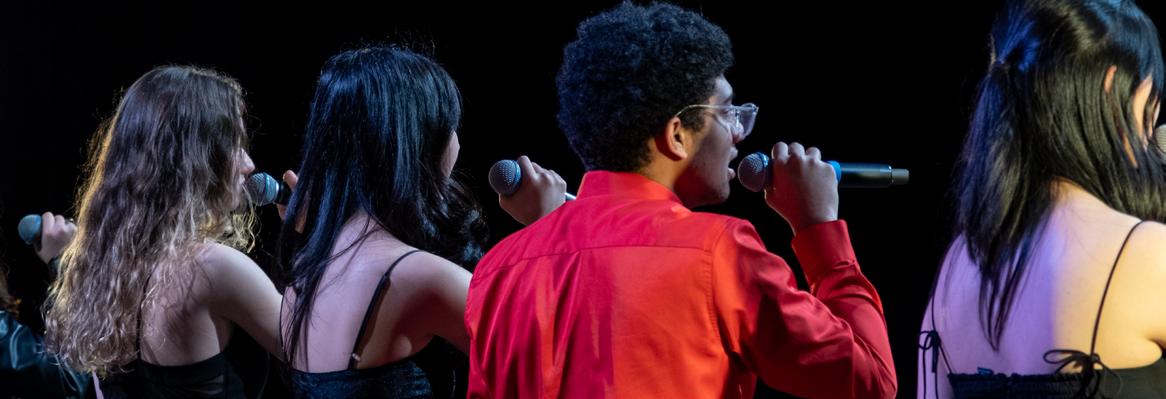
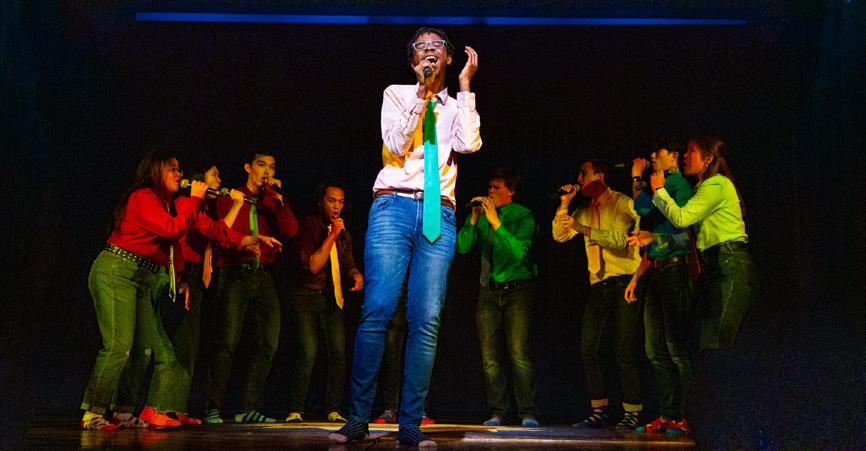
Image: 2025 performance by The Chorallaries, MIT’s oldest mixed-voice, competitive a cappella group founded in 1977.
Photo: Heidi Erickson.
Through analyzing compelling works of art, attempting their own storytelling, and engaging in speculative design and participatory installations, students learn to adapt to unintended consequences. Critical evaluative skills taught in MIT’s arts curriculum foster dialogue, and interdisciplinary explorations deepen students’ awareness of how to cultivate societal engagement with science, technology, and the issues they raise. Artistic perspectives are essential for imagining alternative futures, identifying ethical blind spots, and designing emotionally intelligent systems. As MIT continues to lead in the development of AI, biotech, and immersive systems, we must also lead in shaping students’ ethical horizons, informed by both interdisciplinary integration and deep disciplinary expertise within the arts.
Artistic communities are alive and well at MIT— how can we connect and enhance them? The guidelines in this report suggest the imperative of removing barriers, increasing integration, and improving support, because the artistic community is crucial to our collective wellbeing. The MIT experience is defined not only by intellectual rigor, but also by the personal growth, creativity, and social connection that sustain excellence and feed the whole student. The arts support all of these dimensions. Participation in the arts offers vital outlets for emotional expression and reflection, reduces stress, and improves mental health. Artistic engagement cultivates a sense of belonging and helps foster a more inclusive and vibrant campus culture.
“Students at MIT find a ‘language’ in the arts—often unspoken—that is otherwise unavailable to them, and that animates their core being.”
– MIT Corporation Member
Performances, exhibitions, concerts, and workshops also create shared experiences— joyful, reflective, ecstatic, exhilarating, sobering, sublime—that bring people together across disciplines and backgrounds. In doing so, they reinforce community, connection, and collaboration. Investing in a thriving, accessible, and integrated artistic ecosystem, including dedicated support for the arts as autonomous disciplines, will make MIT not only a stronger academic institution, but also a more humane and holistic one.
“The arts are in MIT’s DNA and origins.”
– MIT Corporation Member
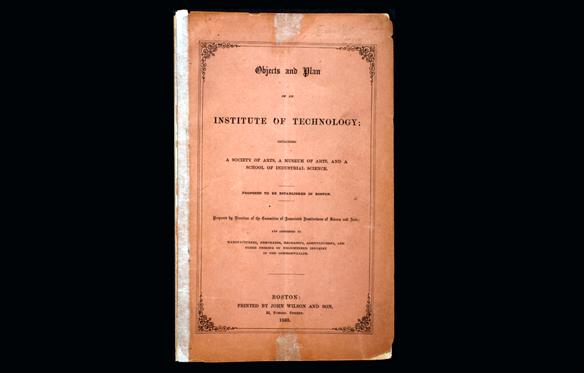
Elevating the arts at MIT is not an embellishment—it is a necessity. Design (in the form of the nation’s first architecture school) was always seen as core to the Institute’s objectives; founder William Barton Rogers aspired to an art museum in addition to envisioning a technical training institute. 6 The arts are foundational to the intellectual, cultural, and ethical life of the Institute. They drive discovery, foster human connection, and expand our capacity to imagine and shape the future.
“The arts are quintessentially MIT, embodying as they do the seamless collaboration between mens et manus uniting to create meaning, beauty, and inventive expression.”
– MIT Arts Faculty Member
6 Objects and Plan of an Institute of Technology including a Society of Arts, a Museum of Arts, and a School of Industrial Science 1860, Boston, Massachusetts https://cdn.libraries.mit.edu/ dissemination/diponline/AC131/AC131_objectsPlan1860.pdf
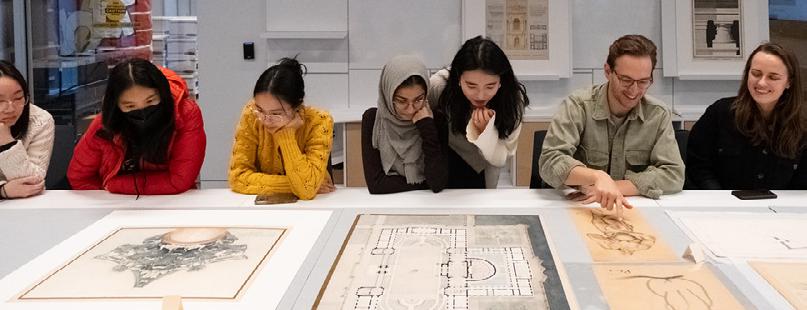
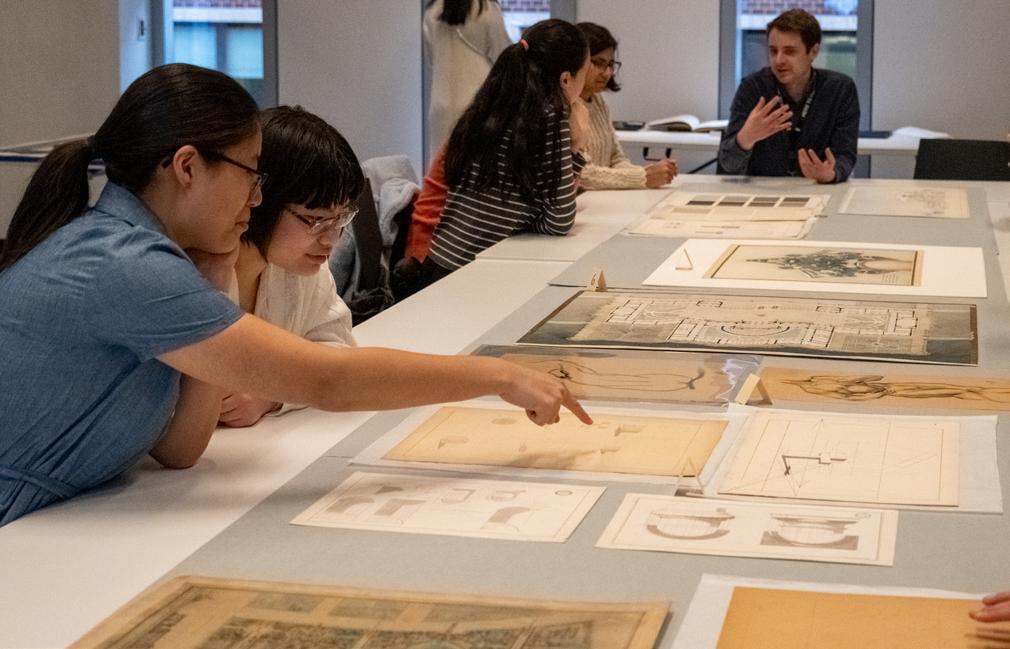
Images: (top) The MIT Arts Scholars, a group of students who share a deep passion for the arts, explore the drawing collection at the MIT Museum, 2024. Photo: Heidi Erickson. (left) Cover of Objects and Plan of an Institute of Technology, 1860. Photo: Courtesy of Institute Archives and Special Collections.
III. The Artistic Enterprise at MIT: Scope, Scale, and Transformation Since 1987
The arts at MIT today are thriving, multifaceted, and deeply embedded across the Institute. This review, in response to Charge #1, provides a comprehensive look at MIT’s current arts ecosystem—its scope, scale, and evolution— while assessing key developments since the influential 1987 Joskow Report. That report emphasized the need to integrate the arts more fully into the life of the Institute. In the decades since, MIT not only has embraced the arts as essential to its mission, but also has redefined what a science- and technology-centered research university can be when it invests seriously in creativity, cultural production, and aesthetic inquiry.
Today, the arts at MIT foster innovation, critical thinking, civic engagement, and interdisciplinary experimentation. They extend across the curriculum, faculty research, student life, presenting organizations, and physical infrastructure. The following sections map this landscape, highlighting both achievements and persistent challenges.
Scope and Scale of the Arts at MIT Today
While this report focuses on the arts, we affirm the critical role of the humanities in MIT’s creative and intellectual life. The humanities and arts are deeply interwoven, both cultivating interpretive insight, historical awareness, and cultural literacy. Our recommendations are made with the understanding that support for the arts should be in alignment with the humanities, reinforcing a broader vision for creative inquiry and humanistic understanding at MIT.
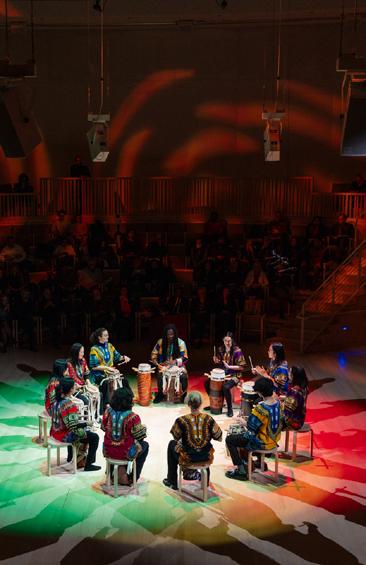
Image: Rambax MIT, an ensemble composed of MIT students, staff, faculty, and alumni dedicated to learning the art of sabar, a vibrant drum and dance tradition of the Wolof people of Senegal, West Africa, performs in the Thomas Tull Concert Hall in the Edward and Joyce Linde Music Building (W18), 2025. Photo: Caroline Alden.
Curriculum
MIT offers a comprehensive arts curriculum. The School of Humanities, Arts, and Social Sciences (SHASS) is home to robust academic programs in Music and Theater Arts (MTA), Literature, and Comparative Media Studies/Writing (CMS/W). The School of Architecture + Planning (SA+P) offers parallel depth through its Architecture program (Courses 4 and 4B); Art, Culture, and Technology (ACT); and the Media Arts and Sciences (MAS) program housed in the Media Lab.
The Center for Art, Science & Technology (CAST), which serves all of MIT, has expanded curricular reach through co-developed classes and course grants, supporting integration of the arts into engineering, computing, and science coursework. The Undergraduate General Institute Requirements (GIRs) include the HASS-A requirement to take at least one class in the arts, and our students increasingly seek out arts-infused pathways in areas such as music technology, interactive design and performance, dance and embodied practices, and media storytelling.
Joint and interdisciplinary offerings—such as those in CMS/W, the Media Lab, the MIT Museum Studio/ Compton Gallery, and design-focused programs like the MIT Morningside Academy for Design (MIT MAD)—blend creative practice with technical and societal inquiry. Across the Institute, artistic creativity is no longer siloed in arts departments; it is increasingly embedded in how students learn to think and make.
Images: (top) Music Technology students demonstrate digital instruments, 2025. Photo: Courtesy of MTA. (left) Students in associate professor of design research Skylar Tibbits’s 4.022 Architectural Design Fundamentals class arrange their “Generative Drawing” projects for a critique, 2015. Photo: L. Barry Hetherington.
Images: (top) VALIS, composed by Muriel R. Cooper professor of music and media sciences and director of the Media Lab’s Opera of the Future Group Tod Machover, directed by Class of 1949 professor of theater arts Jay Scheib, and developed in the MIT Theater Arts Building (W97) performance space, 2023.
Photo: Maria Baranova. (right) ACT Professor Emerita Joan Jonas’s They Come to Us Without a Word, US Pavilion at the 2015 Venice Biennale. Photo: Moira Ricci. (below) Tod Machover’s Opera of the Future.
Photo: Courtesy of the artist.
Faculty
Our research revealed something that may not be obvious to casual observers: MIT’s arts faculty includes some of the world’s most distinguished creators, performers, designers, writers, theorists, historians, and technologists. Many faculty and MIT practitioners hold international reputations as practicing artists or curators, such as those in ACT, MTA, the MIT Museum, and the List Visual Arts Center (the List Center). Others work at disciplinary intersections—pioneering new forms of artistic research, critical making, and cultural production.
Faculty in the Media Lab, MTA, CMS/W, and Architecture routinely collaborate across disciplines, producing research that is not just adding aesthetics, but also leading to innovation—from speculative design to interactive media and urban visual culture. ACT faculty lead artistic research labs like the Future Heritage Lab and Climate Visions Lab, while faculty in CMS/W produce creative work across documentary, game design, and computational literature.
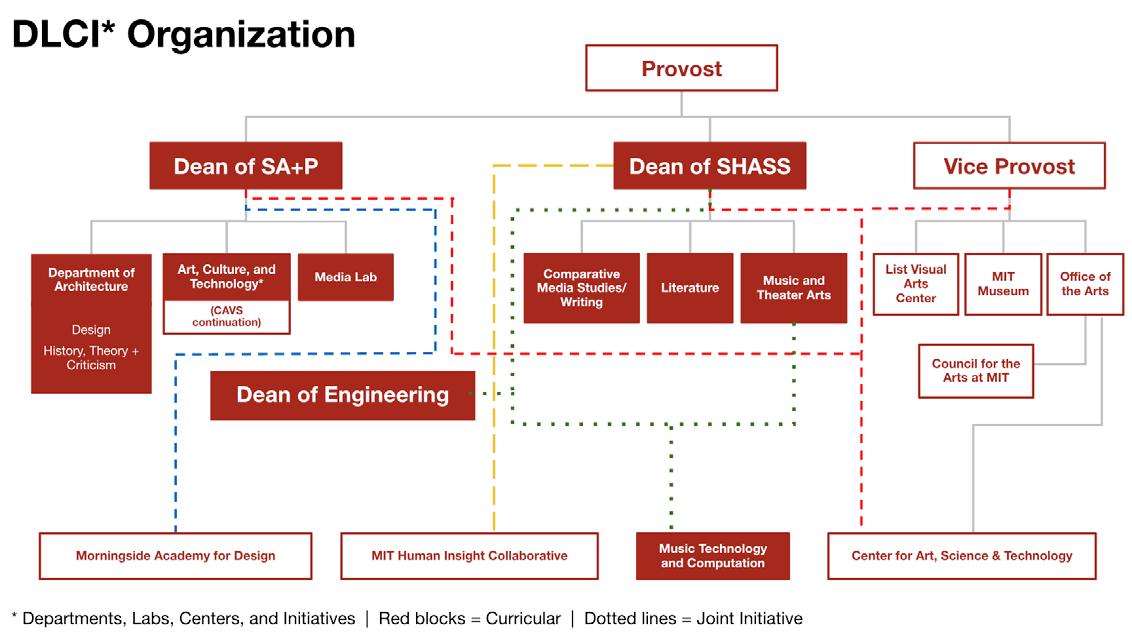
Since the Joskow Report, the size of the arts enterprise has grown, especially in architecture, design, music, theater, and media. However, concerns remain about workload, space, and programming support (see Figs. 1 and 2).
1 – Organization of the Creative Arts at MIT proposed by the Joskow Report (Published in 1987)
PROVOST PRESIDENT
SA+P Dept. of Architecture HTC Visual Studies
MEDIA LAB MAS CAVS
LIST VISUAL ARTS CENTER
Friends of the Center Advisory Board
ASSOCIATE PROVOST CREATIVE ARTS COMMITTEE
OFFICE FOR THE ARTS SHSS Music & Theater Arts
EMS
COUNCIL FOR THE ARTS
2 – Current Organization of the Arts at MIT (2025)
Fig.
Fig.
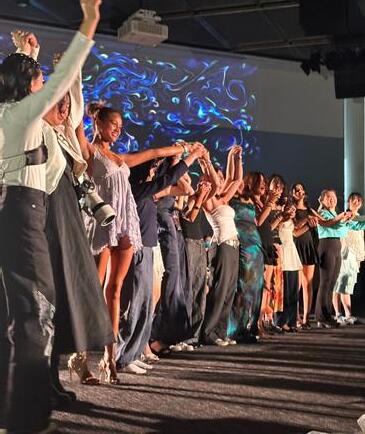
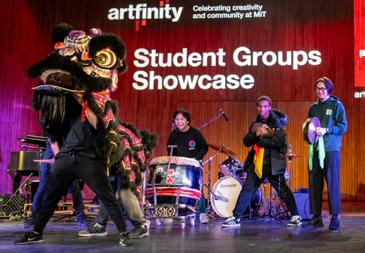
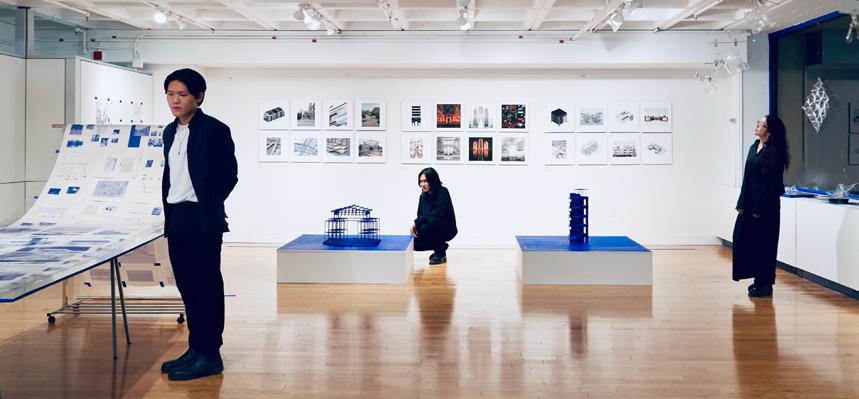
Images: (top right) Installation view of Damp Skin by Cheng-Hsin Chan, SMArchS ’24; Ina Wu, MArch ’25; and Zhi Ray Wang, SMArchS ’25, in the MIT Wiesner Student Art Gallery, 2024. Photo: Courtesy of the artists. (top left) The 2025 MIT Gala fashion show organized by the Infinite student group featured designs created and modeled by MIT students. (middle) The Lion Dance Group performs during the 2025 Artfinity Student Group Showcase. Photo: Heidi Erickson. (bottom) The Borderline project extends the experience of student artwork using augmented reality. Photo: Heidi Erickson.
Student Engagement
MIT students seek out ways to engage in the arts through both curricular and co-curricular channels. In 2024, about 7,300 undergraduate and graduate students enrolled in subjects in the arts. The Division of Student Life (DSL), particularly through Student Organizations, Leadership, and Engagement (SOLE), supports more than 60 recognized arts-focused student groups, including the MIT DanceTroupe, Musical Theatre Guild, and DAAMIT (Digital Art and Animation at MIT), to name a few. A recent renovation of W20 introduced new dance studios on the 4th floor, which are widely used by our dancefocused student organizations. The Glass Lab has been heavily oversubscribed for years.
Students exhibit and perform their work through the MIT Wiesner Student Art Gallery, the W20 Student Art Studios, MIT Museum and MIT Museum Studio, W97, W18, and other performance and exhibition venues. Many pursue artsrelated opportunities through the Undergraduate Research Opportunities Program (UROP), mentored by faculty across SHASS and SA+P. MIT’s undergraduate residences feature a variety of creative spaces, including makerspaces for crafting and woodworking, music practice rooms with pianos, and dedicated dance spaces, while graduate residences primarily offer music practice rooms. To further support student artmaking, DSL oversees initiatives like the Panelized Art System, which allows students to create and curate artwork within their residence halls, with implementations ranging from smaller-scale projects in Next House and New House to larger installations in East Campus and Burton-Conner.
Student demand continues to outpace available spaces and teaching staff, and the hunger for creative outlets—especially in design, dance, music, and media—remains a defining feature of student life at MIT. We learned from our meetings with students that they increasingly see the Arts at MIT as integrated with their studies in science and engineering, placing greater demand on our offerings. They see the arts as an integral part of what they want to do with their lives and not a diversion or pastime.
Research and Creative Practice
MIT has become a leader in artistic research—a category that has gained legitimacy globally and is now a key pillar of MIT’s creative ecosystem. Centers such as CAST, the Media Lab, ACT, Music Technology, and the Open Documentary Lab lead interdisciplinary inquiry that brings together artistic expression, cultural critique, and technological invention. The MIT Museum Studio, which provides a connection between neuroscience, anthropology, and the visual arts, provides another example.
Topics range from embodiment and performance to climate visualization, critical computation, and public storytelling. CAST has supported more than 97 faculty-led projects and has hosted over 475 visiting artists since 2012. Meanwhile, CMS/W’s labs in game development, teacher education, and digital storytelling integrate critical theory and creative design.
Research outputs span performances, publications, software tools, urban installations, films, and soundscapes—positioning MIT at the cutting edge of global arts-based inquiry.
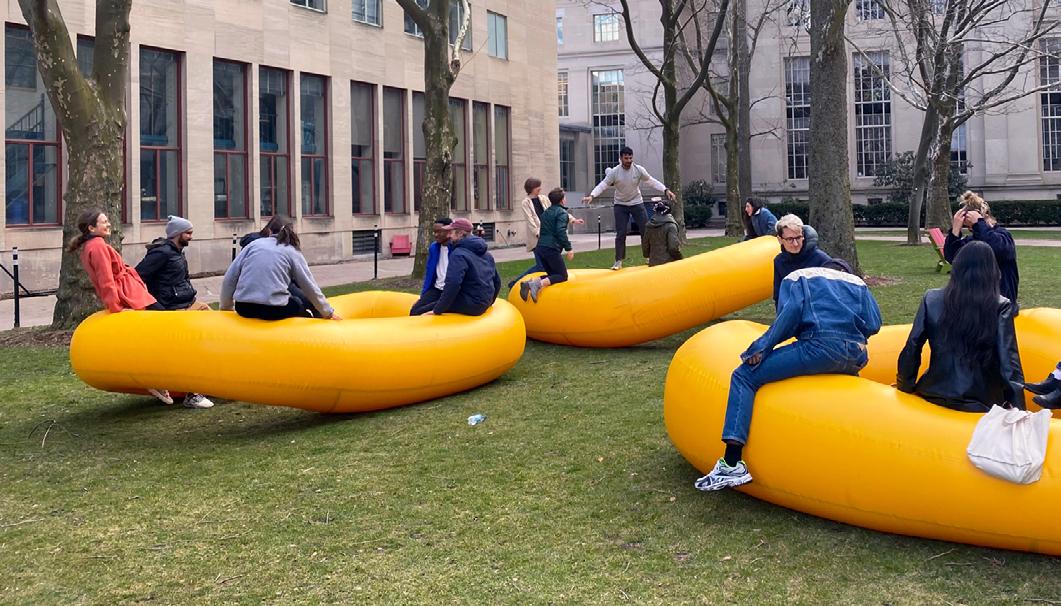
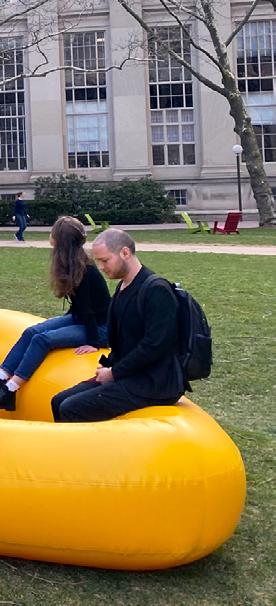
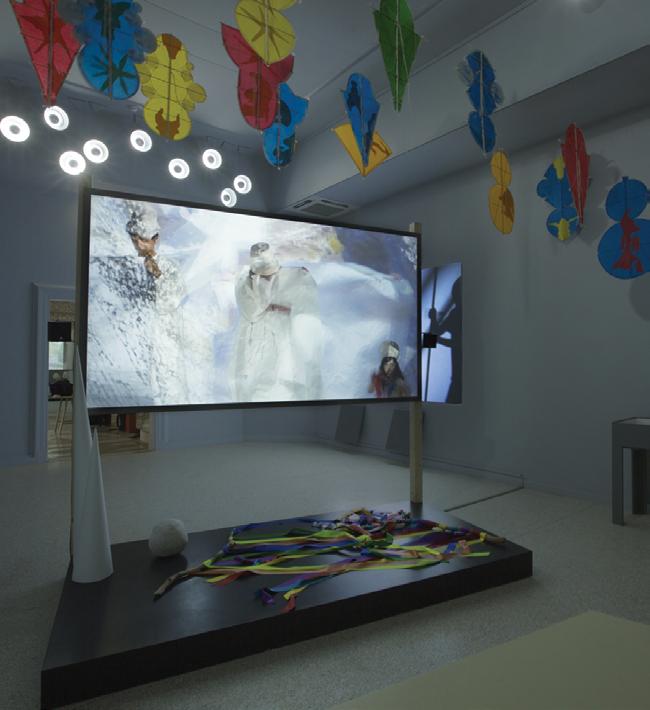
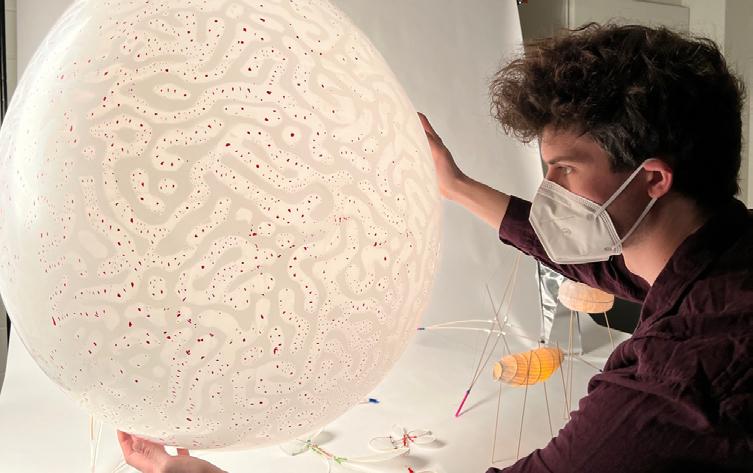
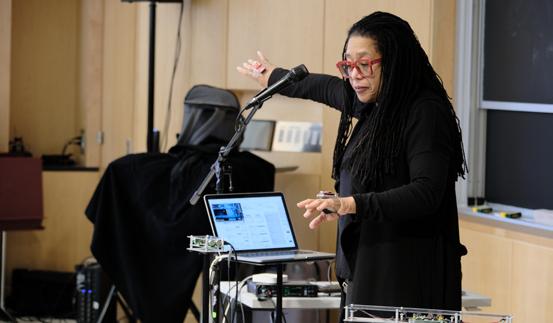
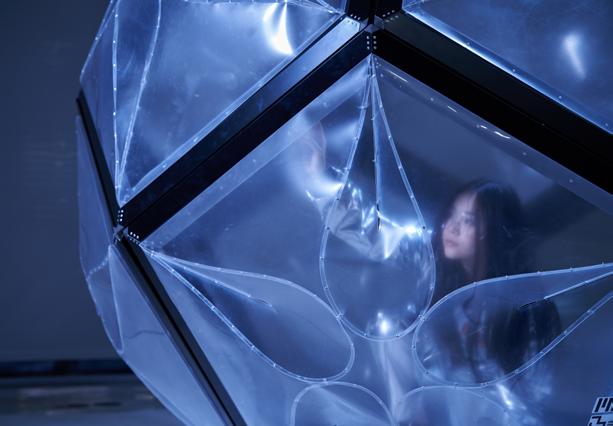
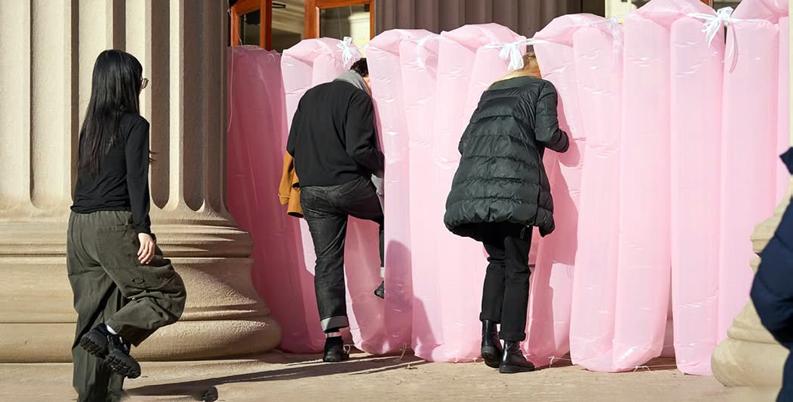
Images: (top) Benjamin Tasistro-Hart, SMArchS ’23, explores temporal processes in biological and geologic morphologies for an inflatable form developed as part of ACT class Kites, Cameras, and Kaleidoscopes, 2022. Photo: Nida Sinnokrot. (middle) CAST visiting artist Chloe Bensahal works with Lingdong Huang in the MIT Media Lab Future Sketches group, 2024. Photo: Heidi Erickson. (below) 2022 McDermott Award recipient Pamela Z demonstrates an interactive music system during professor of the practice in music technology Eran Egozy’s 21M.385/21M.585/6.4450 Interactive Music Systems class, 2024. Photo: Heidi Erickson.
Presenting and Producing Organizations
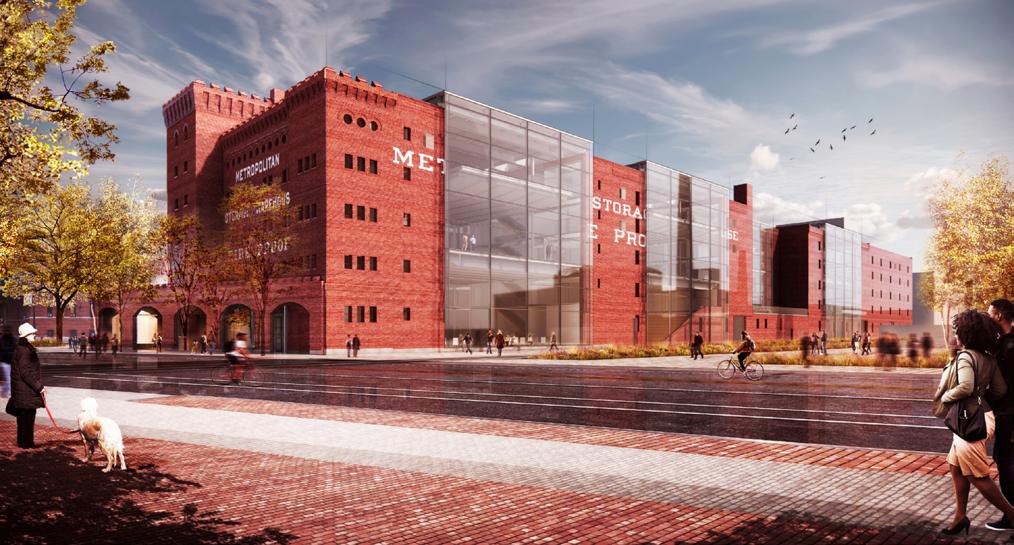
MIT’s robust infrastructure for public presentation and performance includes institutions such as the List Center, the MIT Museum, MTA, ACT, and CAST. Coming on line in 2027 will be the Metropolitan Warehouse (the Met) with multiple exhibition spaces on the Vassar “student street.” These organizations host public exhibitions, performances, symposia, festivals, and artist residencies.
The List Center presents museum-quality exhibitions on campus that frequently mark the first solo shows for emerging artists, while also managing MIT’s acclaimed public art collection and student art-lending programs.
The MIT Museum, recently relocated to Kendall Square, curates exhibitions and programs that explore the intersection of art, science, and technology to more than 150,000 annual visitors. It stewards world-class collections in photography, architecture, holography, and design. Currently, the MIT Museum is undergoing its own strategic planning, which should be considered in conjunction with this report.
The MIT Libraries play an important curatorial role in the arts enterprise with the Lewis Music Library, the Rotch Library, and the Hayden Library and adjoining Nexus. Lastly, STUDIO.nano, located in MIT.nano, has a programmable presentation space.
Meanwhile, CAST curates a dynamic program of visiting artists, performances, and cross-campus collaborations, helping to connect audiences across disciplines and the broader community.
Images: (top left) MIT Media Lab alum Andy Cavatorta’s Whale on display at the MIT Museum, 2024. (right) Students enjoy an exhibition of work available to take home for a year for free via the List Visual Arts Center’s Student Lending Art Program, 2018. Photo: Cassandra Rodriguez. (bottom) View of the Thomas Tull Concert Hall in the Edward and Joyce Linde Music Building (W18), 2025. Photo: Courtesy of MTA.
Physical Infrastructure
Significant progress has been made in expanding and upgrading arts infrastructure since 1987. Notable developments include the creation of the Media Lab (E14/ E15), the W20 Student Art Studios, the MIT Theater Arts Building (W97), the MIT Museum (E28), the new Music Building (W18), the upcoming Metropolitan Warehouse (the Met), and venues like Killian Hall and the ACT Cube. These spaces host exhibitions, performances, and experimental production.
Despite these gains, challenges persist. Demand for rehearsal studios, fabrication spaces, and performance venues exceeds supply. Arts groups in DSL report the need for additional practice rooms and storage. ACT, the Media Lab, and CAST note a lack of centralized presentation space and faculty studios. The Met presents an opportunity to address some of these infrastructure gaps by creating a new hub for interdisciplinary art and design on campus. MIT’s extensive collections, including its art collections, lack a permanent storage facility.
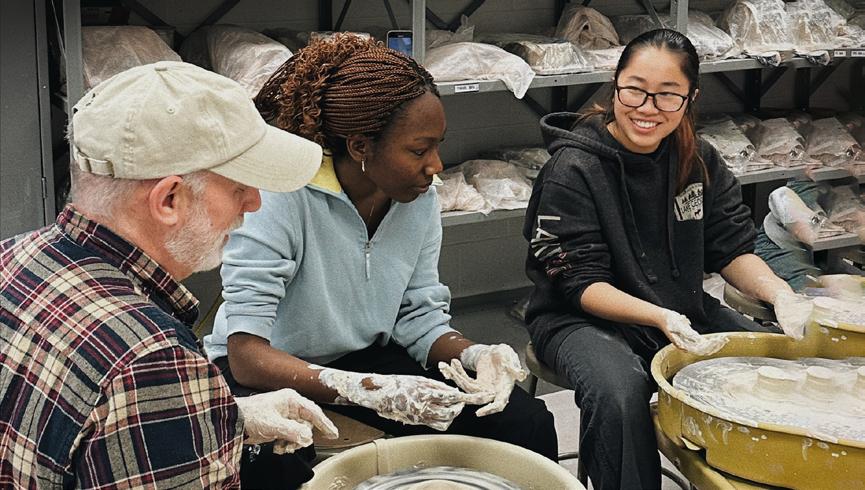
Images: (top) Everybody, directed by senior lecturer in theater arts Anna Kohler, was the first MIT theater production to be designed, rehearsed, built, and staged in the purpose-built space in the MIT Theater Arts Building (W97), 2017. It enabled MIT students to be far more immersed in creating and making, and featured a floor-to-ceiling projection of Salzburg Cathedral. Photo: Jonathan Sachs. (right) Students enrolled in the FirstYear Advising Seminar Arts Program (FASAP) enjoy the newly renovated ceramics studio in the W20 Arts Studios, 2023. Photo: Rayna Yun Chou.
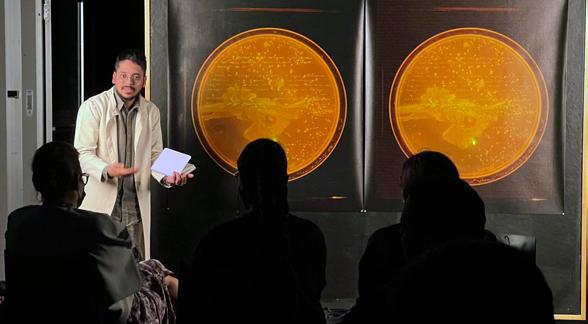
Images: (left) Lunar habitat prototype designed by students in MAS. S66/4.154/16.89 | Space Architecture, a design studio that brings together students from across MIT to imagine, design, prototype, and test the future of Space Architecture, 2024. Photo: xdd44. (right) Ishraki Kazi, SMACT ’23, performs Bacterial Consent, a multimedia work that envisions bacterial intelligence and interspecies negotiation as metaphors for consent, governance, and care, 2022. Photo: Nida Sinnokrot.
Cross-Institutional Impact: The Role of the Arts Across MIT’s Schools
The arts at MIT extend beyond traditional disciplinary boundaries and are woven into the fabric of every school and the Schwarzman College of Computing. This cross-institutional presence reflects a growing recognition of the arts as essential to knowledge creation, technological inquiry, and societal impact.
In the School of Architecture + Planning (SA+P), the arts are deeply embedded through its Architecture programs, the Art, Culture, and Technology (ACT) program, and the Media Arts and Sciences (MAS) program at the Media Lab. These units have built a culture where creative practice is inseparable from research in design, urbanism, and media expression. Students and faculty alike are engaged in producing speculative, critical, and socially responsive work that integrates new materials, spatialized multimedia, and experimental aesthetics.
The School of Engineering (SoE) has increasingly embraced the arts as a tool for invention and exploration, and has collaborated with SA+P to create the MIT Morningside Academy for Design (MIT MAD) and with Music and Theater Arts (MTA) to create the Music Technology and Computation (MTC) graduate program. Collaborations between artists and engineers are evident in fields such as robotics, humancomputer interaction, haptics, materials, and bio-inspired design. Makerspaces have become hybrid environments where aesthetic and technical experimentation converge, encouraging a new generation of engineers to think as designers, performers, and storytellers.
In the School of Science (SoS), the arts can, in the future, play a critical role in visualizing complex data, exploring phenomena in cognitive science and physics, and enhancing public engagement with scientific knowledge. Projects involving interactive installations, multimedia communication, and datadriven storytelling have allowed scientists to convey their work to broader audiences in accessible and imaginative ways.
The School of Humanities, Arts, and Social Sciences (SHASS) has long served as a stronghold for traditional and experimental artistic thinking. Home to MTA, Literature, and CMS/W, SHASS offers a space where students engage with the arts as both creative practice and critical inquiry. These programs foster deep cultural awareness, ethical reflection, and emotional intelligence—skills that are increasingly recognized as vital for leadership and innovation in a complex world.
The Sloan School of Management (Sloan) can, in the future, explore the intersections between innovation, creativity, and entrepreneurship. Courses could examine how artistic thinking drives leadership, product development, and business model innovation. Students are encouraged to think creatively and to apply artistic methodologies to solve strategic and organizational challenges. There are opportunities to expand the arts startup incubator in collaboration with Sloan and the Martin Trust Center for MIT Entrepreneurship to encourage the launch of businesses in the creative industries.
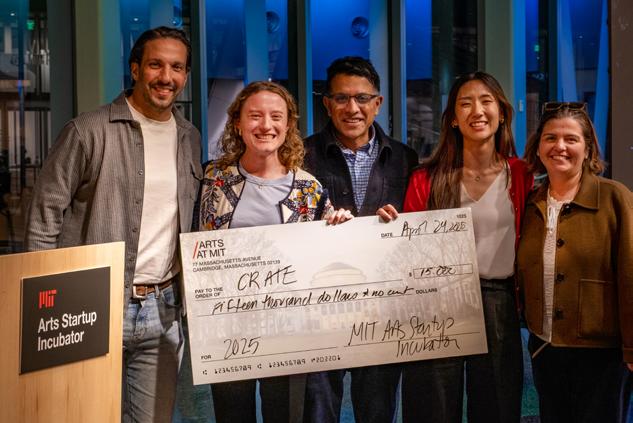
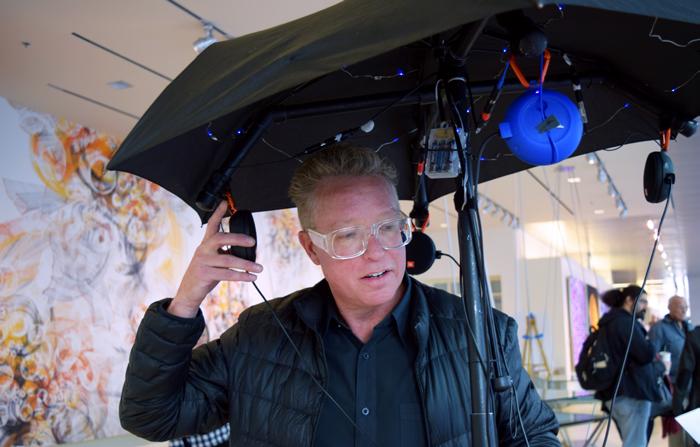
Image: (above) CRATE, a B2B platform that enables gallery owners to better forecast costs before making business decisions, claimed the $15,000 top prize during the 2025 MIT Arts Startup Incubator. The company was founded by Sloan MBA students Jane Booth and Michelle Kang. Photo: Heidi Erickson. (right) Professor and cultural anthropologist Ian Condry, who has a dual appointment in CMS/W and Anthropology, tests a sound installation at the Schwarzman College of Computing launch exposition, 2019. Photo: Heidi Erickson.
Finally, the Schwarzman College of Computing represents a significant frontier for the arts at MIT, with shared hires in CMS/W, the Media Lab, and MTC. With the rise of generative AI, interactive media, and algorithmic creativity, the college is uniquely positioned to host new forms of code-based artistic practice. Courses and projects across MIT now explore the ethical, aesthetic, and cultural dimensions of computation, placing artists and computer scientists in productive dialogue.
Together, these diverse engagements demonstrate that the arts are not confined to a single domain or school. They animate the intellectual life of the Institute, fostering interdisciplinary innovation across all schools.
Key Strengths
MIT’s arts ecosystem is built on a foundation of extraordinary people, programs, and institutional ambition. The Institute is home to world-class faculty who are both celebrated creators and rigorous educators, as well as globally engaged visiting artists who bring fresh perspectives and experimental practices into the classroom and studio. Students from every school bring a remarkable passion for creative work, whether through academic study or co-curricular exploration, and consistently seek out opportunities to fuse the arts with their disciplinary training.
In 2024, the estimated enrollment in subjects offered by the enterprise stood at 7,300 undergraduate and graduate students, well over half of MIT’s student body. Another 519 students participated in noncurricular studio subjects in W20, and additional students participated in our more than 60 student art groups. While some fraction of the enrollment consists of students filling HASS-A requirements, this high level of enrollment tells us that students choose to engage in the arts when given the opportunity.
The Center for Art, Science & Technology (CAST) has emerged as a catalytic force for interdisciplinary work, providing seed funding, public programming, and a high-profile platform for collaboration. CAST’s flexible, faculty-led model has helped embed the arts into research, teaching, and public engagement at scale.
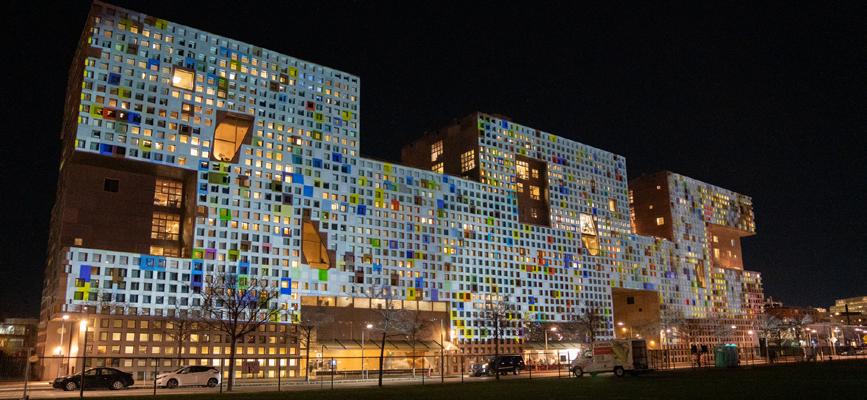
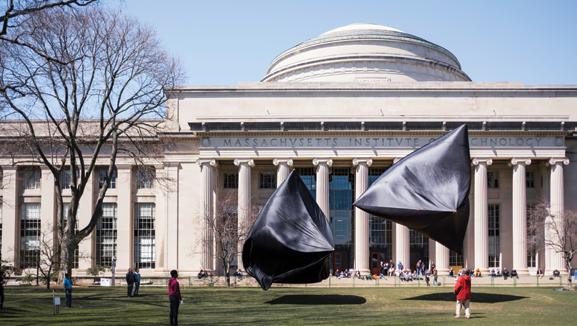
Images: (top) 116x61 Live Projection Installation on MIT Simmons Hall was supported by a CAMIT grant and created by Karyn Nakamura, Art and Design ’23, 2022. Photo: Yoshi Saito. (middle) Students enjoy Arts on the Radar, an annual event co-presented by multiple arts entities to launch each new academic year. Photo: Cassandra Rodriguez. (below) Testing on MIT Killian Court of Aerocene, a collaborative project of CAST visiting artist Tomás Saraceno and MIT researchers, 2018. The project envisions a future beyond the Anthropocene where fossil-free flight is accomplished using air-fueled sculptures held aloft by heat from the sun and infrared radiation from the Earth’s surface. Photo: Sham Sthankiya.
Images: (top right) The Circle Constant: Experiencing Pi by JD Hagood, EECS ’26, and Mehek Gosalia, EECS ’25 and EECS MEng, commemorates one of MIT’s most significant dates while demonstrating the magnitude of this fundamental number by projecting Pi, calculated to 105 trillion digits, onto the pillars in MIT Lobby 7, 2025. Photo: Lydia Brosnahan. (top left)
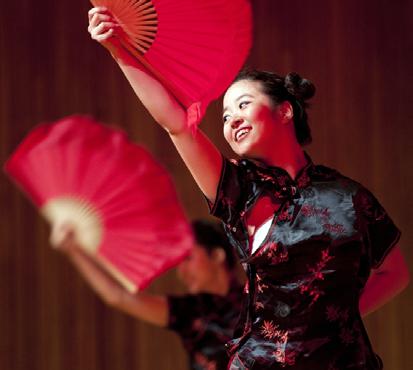
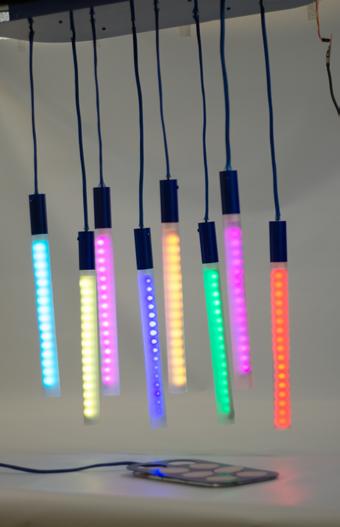
MIT Asian Dance Team’s 2025 showcase performance was supported by a CAMIT grant and featured traditional Chinese dances, contemporary and fusion pieces, and covers of k-pop performances. Photo: Courtesy of the artists. (bottom left) The interactive light installation Kinetic Chandelier—created by architecture graduate student C Jacob Payne with support from a CAMIT grant—responds to hand movements by adjusting the position and color of a grid of light tubes, 2024. Photo: Courtesy of the artist.
For over 50 years, the Council for the Arts at MIT (CAMIT) has supported the Institute in developing broadly based and highly participatory arts programming. CAMIT provides grants to arts projects (primarily students), tickets and memberships to arts experiences in the Greater Boston area, and support for MIT’s core arts units. A dedicated, loyal base of more than 70 supporters is adding members who are more demographically representative of the MIT alumni body in terms of diversity, age, profession, and affiliation. A renewal and revitalization of CAMIT’s mission is underway: to serve the arts at MIT as a partner providing significant funding that aligns with MIT leadership’s priorities for the arts.
MIT’s reputation as a place where art and technology intersect meaningfully is increasingly recognized internally (with some challenges) and externally. This reputation is supported by a robust curriculum that integrates the arts across disciplines, as well as General Institute Requirements that ensure broad student exposure to artistic inquiry. Finally, MIT’s distinctive culture of hands-on experimentation—its ethos of “mind and hand”—finds a natural partner in the arts, where making is a method of thinking.
Enduring and Emerging Challenges
to financial instability. These financial pressures, combined with current budget cuts, present the most pressing problem: cuts in funding for MTA will result in significantly fewer classes, exacerbating student frustration with the already long waitlists for these subjects. SHASS leadership should prioritize efforts to satisfy student demand for MTA subjects in a sustainable way.
In the spirit of this report, and considering its key findings regarding the importance of the arts at MIT, we understand that some changes may be necessary in response to the evolving situation in higher education. In our survey of the enterprise, we found that the units generally believe that they are in the right place organizationally, and the committee believes that reorganization may produce new challenges. We understand that such organizational changes are unlikely. By strategically leveraging the Institute’s international renown, there is a unique opportunity to engage donors and alumni, encouraging their financial support to help address our fiscal concerns. In addition, as compared with other elements of MIT, the financial needs of the arts enterprise are comparatively modest; individual donors could make a decisive and permanent difference.
CAST visiting artist
Faculty workloads in arts disciplines are heavy, often exacerbated by small numbers of tenure-track appointments to handle the high demand for student contact with arts faculty. Undergraduate teaching relies heavily on lecturers and visitors. Physical infrastructure remains a pressing concern: dedicated rehearsal spaces, studios, and performance venues are insufficient to meet current demand, limiting the capacity of both student groups and academic programs to grow. And while the arts enterprise is benefiting from outstanding new spaces for theater and music, insufficient staffing for these facilities is keeping them from being used to their full potential.
Image:
Jacob Collier performs with the MIT Festival Jazz Ensemble and the JC Project Orchestra. Imagination Off the Charts, MIT Kresge Auditorium, 2016. Photo: L. Barry Hetherington.
Coordination across arts units can be improved, leading to greater collaboration, decreased siloing, and increased opportunities for synergy. While the arts are visible in some parts of the Institute and there are many successful collaborations, the arts often remain peripheral and underrecognized. With improved coordination, access to resources and participation can be made less uneven.
CAST has provided critical momentum over the past decade, but its continued success is not guaranteed without sustained institutional commitment and permanent funding mechanisms.
We heard from different quarters that support for the arts detracts from MIT’s “core’’ mission of research and teaching in science and engineering and, especially in these financially difficult times, that support for MIT’s artistic enterprise should be reduced to adequately support the science and engineering efforts. We do not believe funding for MIT is a zero-sum game—the past two decades of increasing fundraising have demonstrated that the arts add to the “menu’’ of philanthropic opportunities and frequently bolster the effort to raise funds for the humanities, science, and engineering as well. Further, science and engineering have developed to include the humanistic component that arts training brings, and our students increasingly come to expect training in the arts as something they need for success. Finally, the artistic practices at MIT have developed since 1987 as a component of MIT’s mission, as the Joskow Report presciently discusses.
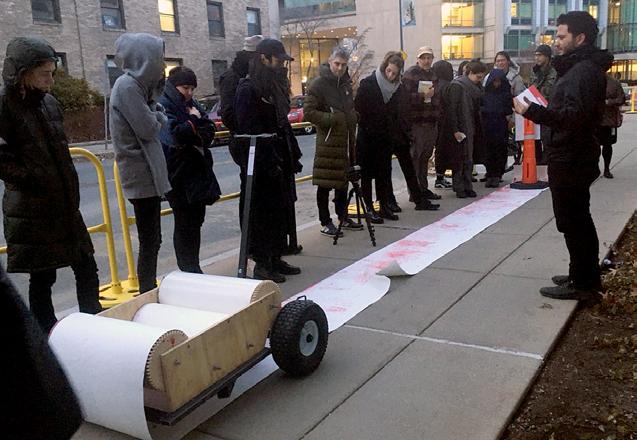
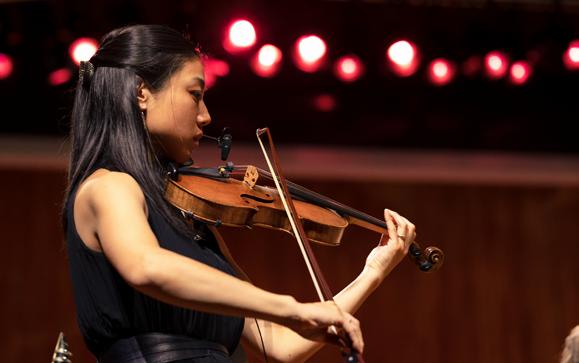
Images: (top) Jesus Ocampo, SMACT ’21, leads a performative procession across the MIT campus, dragging a customfabricated transcription device that transforms the sidewalk into a scroll of imprinted memory in an act of walking as writing, 2019. Photo: Nida Sinnokrot. (below) Associate professor of music and violinist Natalie Lin Douglas performs in Hearing Amazônia—The Responsibility of Existence, a multi-year project launched in 2021 by Frederick Harris, Jr., director of the Wind and Jazz Ensembles at MIT, which focuses on both the music and ecosystems of Brazil. Photo: Caroline Alden.
From across the enterprise, we heard concerns about the difficulty in mounting events and artworks in public spaces on campus. At MIT, the display of art and performance outside the studios, galleries, or concert halls runs into a miasma of difficulties, largely because not enough people in the administration have an incentive to say, “Yes, go ahead,” or “How can we help make this happen?” Surmounting these obstacles requires faculty and staff time, already in short supply.
More broadly, MIT should continue to address issues of physical access by differently abled individuals, as well as the inclusion of those with physical limitations within the arts, ensuring that the benefits of creative practice are available to all members of the community.
“It has been administratively arduous to get the permissions. We have installations that have been moved three or four times, because of all the new rules and regulations.”
– Arts Administrator
Changes
Since the 1987 Joskow Report
arts into its core academic and research mission. The expansion of infrastructure (e.g., W18, W97, and the Met), institutionalization of support through CAST, and the recognition of the arts as central rather than peripheral, all represent important milestones.
To assess how far MIT has come, we revisit the Joskow Report’s original objectives. The following section traces each of these goals and highlights key institutional achievements that have advanced MIT’s artistic enterprise over the past three decades.
The 1987 Joskow Report laid the foundation for a more ambitious and integrated approach to the arts at MIT. The report called for strategic investments in academic programs, infrastructure, and leadership to ensure that the arts could thrive within MIT’s scienceand technology-driven culture. Over the past three decades, many of the report’s key recommendations have been realized—often thanks to significant institutional commitment and alumni support.
Below, we summarize eight broad objectives from the Joskow Report (pp. 16–17), alongside major milestones that reflect progress toward each goal:
1. Maintain MIT’s outstanding undergraduate academic program in music. While the Music section has long been recognized for its excellence, the Joskow Report identified the need for expanded space and long-term investment. Since then:
• The Emerson/Harris Program for private music instruction was endowed in 1997.
• The Edward and Joyce Linde Music Building (W18), a state-of-the-art facility, opened in spring 2025.
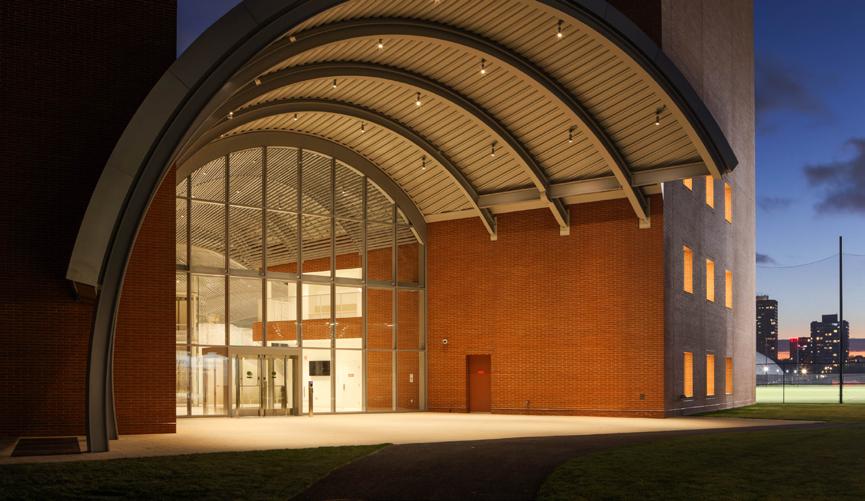
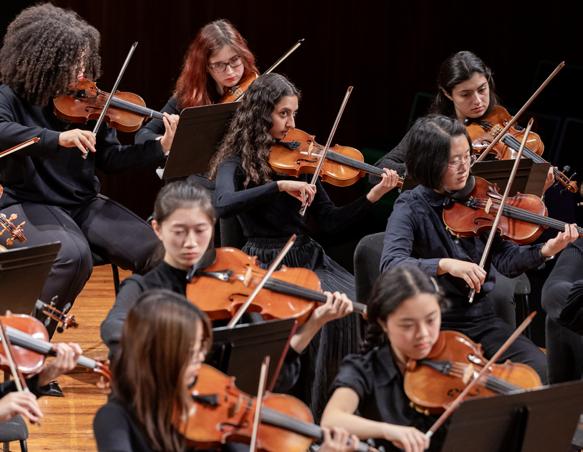
Images: (top) The Edward and Joyce Linde Music Building (W18), 2024. Photo: Ken’ichi Suzuki. (left) MIT Symphony Orchestra, 2025. Photo: Courtesy of MTA.
2. Develop stable, high-quality undergraduate academic programs in drama, dance, and the visual arts. The Institute has taken major steps to establish and support these disciplines:
• The combined section of Music and Theater Arts (MTA) was formed in 1989 with two dedicated faculty lines in Theater.
• A major in Theater Arts was established in 2015, and the new course number 21T was designated in 2024 to distinguish Theater from Music (21M).
• W97, a purpose-built Theater Arts facility, opened in 2017 with rehearsal studios, a black box theater, and fabrication spaces.
creative arts where opportunities for excellence emerge. MIT has created several new graduate initiatives that reflect this recommendation:
• The Art, Culture, and Technology (ACT) program was launched in 2009, offering the SMACT degree.
• In 2019, a pilot for Transmedia Storytelling was launched and successfully catalyzed transmedia production and pedagogy at the graduate level.
• The MIT Morningside Academy for Design (MIT MAD) was created in 2022 through a joint effort between the School of Architecture + Planning (SA+P) and the School of Engineering (SoE).
• In 2024, a master’s program in Music Technology and Computation (MTC) was established as a collaboration between the MTA section in the School of Humanities, Arts, and Social Sciences (SHASS) and the SoE. Faculty for the program share appointments between the MTA section, the Department of Electrical Engineering and Computer Science (EECS), and the Schwarzman College of Computing.
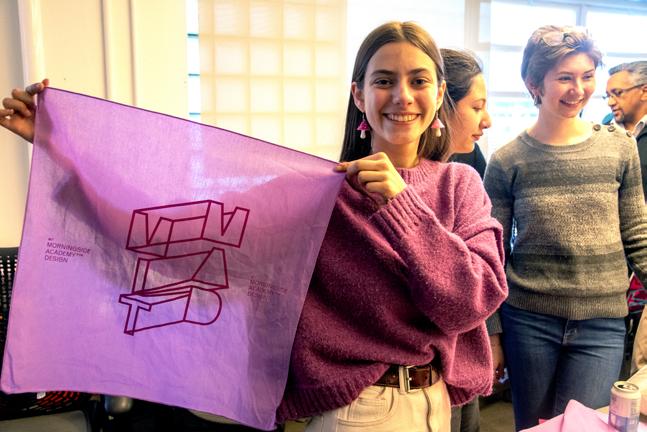
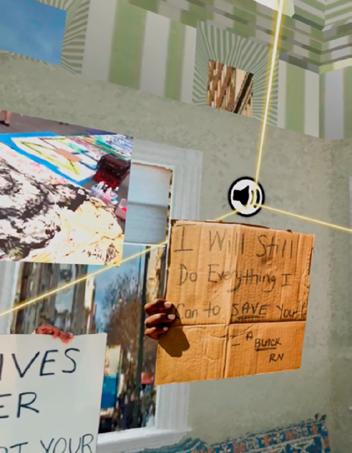
Images: (top) Lights the Lights, adapted and performed by the students of 21M.812 Theater Arts Production, 2023. (middle left) Haydn Long, History ’26, holds up a screenprint created during an MIT MAD workshop, 2024. Photo: Courtesy of MIT MAD. (right) Still image from Embodying a Narrative, an augmented reality project by MIT students Megan Prakash, Kwan Queenie Li, Wonki Kang, and Wuyahuang Li, created in the Fall 2020 Virtuality and Presence Course 4 class, funded by the Transmedia Storytelling Initiative, and later adapted for a group exhibition at MIT’s Wiesner Gallery in fall 2021.
Photo: Courtesy of the artists.
4. Provide opportunities and recognition for creative arts faculty to pursue their professional interests.
• The creation of the Center for Art, Science & Technology (CAST) in 2012 addressed this need directly by offering competitive research grants, seed funding for new classes, and a robust visiting artist program.
5. Encourage—but not mandate—interdisciplinary education and research that leverages MIT’s strengths in science and engineering.
• CAST has been a primary catalyst for such connections, funding over 90 faculty-led art-science-technology projects and dozens of interdisciplinary courses.
• The design major established in 2015 also reflects this ongoing commitment to integrative education.
6. Provide opportunities for students, faculty, and staff to engage in the arts outside of academic programs.
• The Council for the Arts at MIT (CAMIT) has significantly expanded extracurricular and co-curricular engagement, offering student grants, free access to local arts organizations, and platforms for creative work across campus.
7. Develop high-quality spaces and facilities for both academic and co-curricular arts activities. MIT has made major investments in artistic infrastructure over the past decade:
• W97 and W20 have been renovated to support theater, dance, student studios, and rehearsal space.
• The MIT Museum moved to a more centrally located new state-of-the-art facility in 2022, providing new visibility for MIT at a refurbished Eastern Kendall Gateway.
• The ongoing renovation of the Metropolitan Warehouse (the Met, expected in 2027) will provide expanded spaces for SA+P, including galleries, studios, and a commons for art and design activity.
Images: (top) Dance-theater work History of Empires created by senior lecturer in dance and theater Dan Safer and technical instructor in sound design Christian Frederickson was supported with a CAST grant, 2022. Photo: Sham Sthankiya. (middle) Persona, a chamber opera composed by professor of music composition Keeril Makan, conducted by Kenan Sahin (1963) Distinguished professor of music Evan Ziporyn, and with direction and libretto by Class of 1949 professor of theater arts Jay Scheib, received funding from CAST, the National Education Association, and the Guggenheim Foundation, 2015. Photo: L. Barry Hetherington. (bottom) MIT students enjoy a meet-and-greet with Boston Ballet assistant conductor Alyssa Wang after a performance of Swan Lake, 2024. Photo: Rayna Yun Chou.
8. Leverage the arts to foster engagement with the broader Cambridge, Boston, and global community.
• CAMIT’s ticket and museum access programs serve over 10,000 community members annually.
• MIT’s Public Art Collection, exhibitions at the List Center and the MIT Museum (offering free entry to Cambridge residents), and performances through MTA ensure that MIT continues to contribute meaningfully to cultural life both on campus and beyond.
• Temporary funding for a director of exhibitions and commons (3 years) for the Met enables a direct focus on artistic commons for the community, inside and outside MIT.
In addition to these thematic objectives, the Joskow Report also proposed organizational changes (p. 83) to support the arts at a structural level. These included:
• The appointment of an associate provost for the arts (now called the vice provost for the arts), a role now filled by a senior faculty member with oversight of the Office of the Arts, the List Center, the MIT Museum, and strategic arts initiatives.
• The creation of a Creative Arts Committee, which evolved into the current Creative Arts Council, a cross-campus body that meets 2–3 times per semester to coordinate arts efforts.
• The formation of an Office for the Arts, now a well-established unit staffed by professionals who manage campus-wide programming, grants, residencies, and cross-departmental collaboration.
Together, these milestones represent not only follow-through on the Joskow Report recommendations, but also MIT’s sustained commitment to building an artistic ecosystem that is world-class, interdisciplinary, and increasingly central to its research and educational mission.
A comparison of organizational charts from 1987 and 2025 shows the scope of these changes (see Figs. 1 and 2 , Section II).
Images: (top) The 60+ works in the MIT Public Art Collection include artist Alicja Kwade’s Against the Run and Agnieszka Kurant’s The End of Signature installed in the Kendall Open Space, 2022. Photo: Courtesy of the List Center. (left) CAST visiting artist Jacob Collier performs with a custom 12-note vocal harmonizer app created by Ben Bloomberg, PhD in Media Arts and Science ’20, that allowed him to play the MIT Festival Jazz Ensemble like a harmonizer, 2016. Photo: L. Barry Hetherington. (bottom) Signal, a volume of uniform light changing in brightness and color explores how the eye and the mind perceive was created for the crossdisciplinary class Vision in Neuroscience and Art, 2017. Photo: Heidi Erickson.
The arts at MIT today are flourishing in ambition, diversity, and depth. Sustaining and growing this success will require deliberate action. As this review makes clear, the momentum is real—but the current circumstances threaten its continuation.
Strategic investments in leadership, space, faculty, and programming will be essential to fully realize the arts’ potential. Enhanced coordination and visibility across schools and units can help mitigate fragmentation and unlock new collaborations. Most importantly, a long-term renewed institutional commitment is needed—one that recognizes creativity not as a supplement to science and technology, but rather as an equal partner.
With its unique combination of intellectual rigor, hands-on exploration, and cultural imagination, MIT is poised to lead globally in the integration of education in the arts with that of science and engineering. The next section of this report offers a foundation for that future—one in which the artistic enterprise continues to grow as a core strength of the Institute and a catalyst for the next generation of discovery.
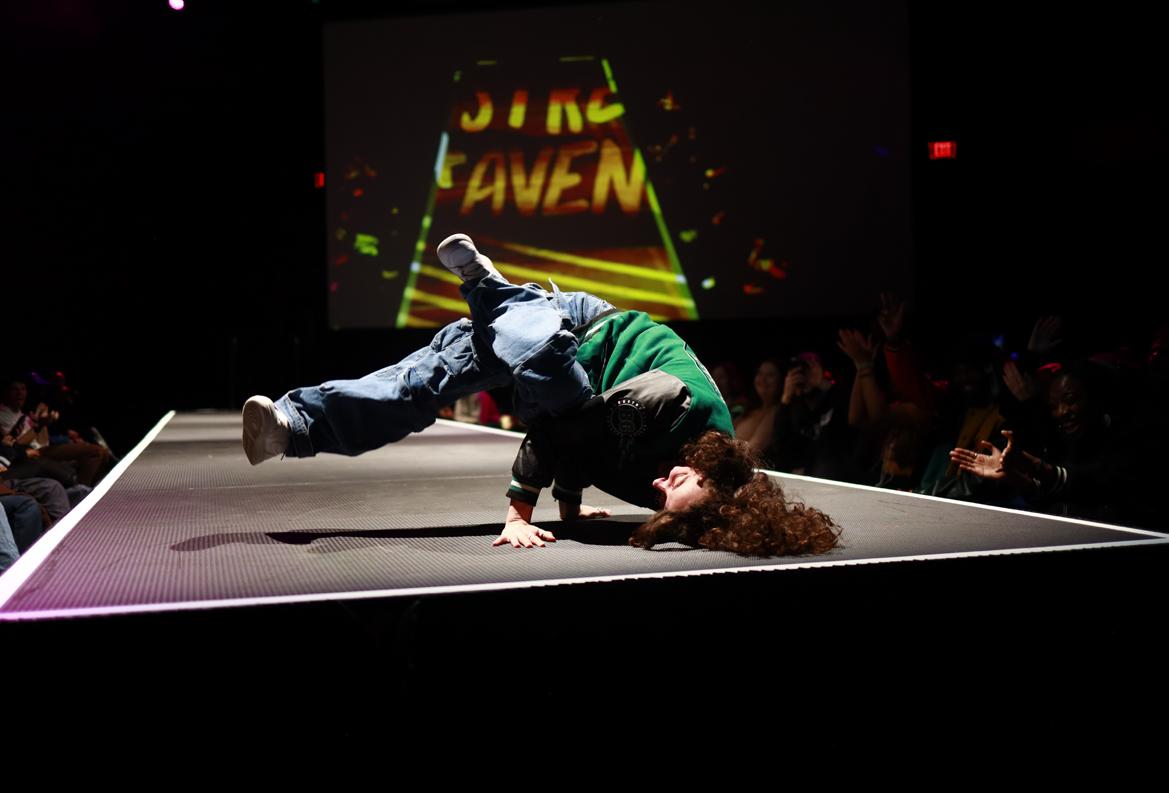
Image: Streets and Avenues, a hip-hop workshop and performance in the MIT Theater Arts Building (W97), featured work by some of the greatest street fashion designers in the state and a set by Sobek, a Roxbury-based graffiti, muralist, and street artist, 2024. Photo: Andrew J. Okyere.
IV. Taking the Arts Enterprise to the Next Level: Recommendations for Action
To realize the vision laid out in this report, MIT must pursue institutional change. The following recommendations are designed to align infrastructure, leadership, and resources with the depth and potential of the arts enterprise. Those working to fulfill these recommendations should make use of the strong units such as CAMIT, CAST, and the Office of the Vice Provost for the Arts, working closely with the arts’ academic units. Our recommendations have both a priority level and a time horizon, recognizing that some of the ambitions may take longer than others. Meeting the top near-term priorities as soon as possible will relieve some stress on the enterprise, allowing better planning for everything else to come.
Top Recommendations – Immediate
The most urgent challenges to the arts enterprise come from where the arts sit in the institutional hierarchy, and our top recommendation addresses this. Staffing and fundraising form other efforts that need immediate attention.
Leadership
As currently constituted, the vice provost for the arts (VPA) acts as a coordinator, fundraiser, and advocate for the artistic enterprise. We recommend that the administration proactively include the VPA in all top-level strategic planning, development of Institute initiatives, and fundraising at MIT. This will ensure that MIT’s artistic enterprise has a presence in determining MIT’s future trajectory in all ways—not only in those times where the arts are explicitly involved.7
Staffing
Develop a prioritized set of staffing needs, both administrative and academic, including adequate staffing of new buildings, that will support the arts enterprise to fully realize the potential across the arts’ organizations and curriculum.
Education
For all the following recommendations, we assume the VPA role alongside the deans, unless otherwise specified.
Take immediate action to ensure that there are enough arts instructors in place to attend to the growing problem of oversubscription in HASS-A classes. We understand that MIT is in an environment of high financial uncertainty and recommend that the administration develop a clear plan for ultimately returning the enterprise to where it stood before the twin emergencies of COVID-19 and the 2025 budget cuts.
Fundraising
Work with the provost and resource development to integrate the arts enterprise into the Institute’s fundraising plans, including the upcoming campaign, for both immediate and long-term needs.
7 This recommendation does not imply a title, reporting, or budgetary change to the VPA position.
Image: Introduction to Physical Computing for Artists, MIT W20 Student Art Studios, 2023. Photo: Sarah Bastille.
Other Near-Term Priority Recommendations (1 year)
Space
Develop a space inventory and a prioritized list of space needs for the enterprise.
Arts Staffing and Infrastructure
Develop a prioritized list of infrastructure needs: address current shortfalls, maintenance of musical instruments and other equipment, and repairs to important infrastructure. Professional and administrative staffing needs should also be listed and prioritized.
Top Recommendations – Medium Term (1–3 years)
Access
Work with the vice president for campus space management and planning, facilities, and other units charged with creating guidelines for public space and gatherings to lower the barriers and streamline the approvals for creating art installations on campus.
Student Life
Work with DSL to assess the support needed for non-curricular student arts programs and activities.
Education
Work with the deans of SHASS and SA+P to expand curricular offerings where need is greatest, ensuring tenured lines for new hires. Study expanding Music Technology and Computation (MTC) to a PhD program.
Visibility
Work with the vice president of the communications office to develop means, both external and internal, to more effectively communicate about the arts at MIT. Address the Institute-wide issue of events promotion and advertising getting lost in the deluge of other announcements. Finally, work to develop means for the arts to become an integral part of the MIT brand.
Research
Study the value and feasibility of creating a research center for the arts at MIT, analogous to other research labs on campus. Artists in different schools on campus can become members of the research center and receive support for their creative practices.
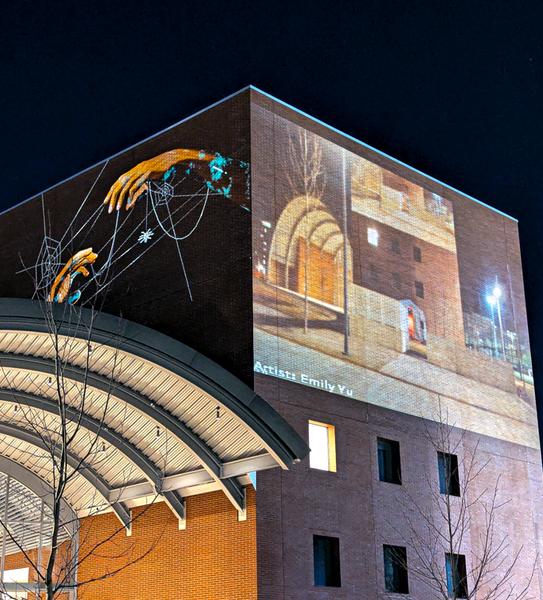
Images: (top) Final meeting of the CAST-funded Drawing Human Experience class taught by associate professor of anthropology Graham M. Jones and artist and founding manager of the MIT Museum Studio Seth Riskin, 2023. Photo: Philana Brown. (left) Creative Lumens, a series of projections of student work on the exterior of the new Edward and Joyce Linde Music Building (W18) presented as part of the 2025 Artfinity festival. Photo: Danny Goldsfield.
Other Medium-Term Priority Recommendations – (1–3 years)
Education
Work with the deans and heads on HASS-A implementation and funding to continue the excellence of the arts undergraduate curriculum, and identify ways to strengthen and expand graduate arts programs. The provost and dean of SHASS should work with MTA to create an actionable plan to address the section’s leading role in supporting the HASS-A requirement and overall undergraduate enrollment in the arts, with consultation of SA+P where the HASS-A curriculum is also taught.
Top Recommendations – Long Term (1–5 years)
Faculty
Develop plans to add faculty lines and permanent funding for teaching and administrative staff for both music and theater arts.
Education
Build upon the success of the master’s programs in Architecture; Arts, Culture, and Technology (ACT); Media Arts and Sciences (MAS); and Music Technology and Computation (MTC). Create an interdisciplinary master’s program with theater fields, such as performance technologies and embodied interactive design.
Funding
Stabilize funding across the arts as an endowed commitment to fund all aspects of MIT’s arts enterprise.
Recommendations – (1–5 years)
Education
Explore options for larger enrollment, introductory arts classes that span multiple units, and creating “Common Ground Subjects” classes in the arts with non-arts fields.
Education
Conduct an analysis of which units teach film and other timebased media in various parts of the Institute; additional faculty leaders and consolidation are needed to make this visible and coherent as a student/graduate path of study.
Presenting
Create and fund a recurring festival of the arts, learning from 2025’s Artfinity. Given the recent investment in buildings for music and theater, create a new performing arts presenting organization, with adequate professional staff, that reports to the VPA, analogous to the List Visual Arts Center (the List Center).
Together, these recommendations aim to embed the arts into the strategic core of MIT—making them an engine of inquiry, expression, and connection for the next century of the Institute’s life.
Images: (top) Emerson/Harris Scholar Valerie Chen, EECS ’22 and EECS MEng ’23, performs during the Funeral for Tiny Griefs in the MIT Chapel during the Artfinity festival, 2025. Photo: Heidi Erickson. (middle) Architecture graduate student and choreographer Lina Bondarenko leads participants through her project for Monuments /\ Memory, a Norman B. Leventhal Center for Advanced Urbanism supported subject in Architecture and ACT. Photo: Courtesy of the artist. (bottom) Emotional Beast by Guillermo Bernal, MAS ’22, is a head-mounted system that captures and transforms the wearer’s facial movements, heart rate, electrodermal activity, brain signals, and respiration into emotive expressions in their avatar. Photo: Heidi Erickson.
V. A Vision for MIT as the Global Center of Art-Infused Innovation
Our committee’s discussions focused on the future and consequently generated many visions for how the constellation may evolve. This section captures these ideas—some of which overlap with the recommendations of Section IV—but does not present recommendations.
Not on Any List
In recent years, MIT has ranked as the best college in the world overall, and first in many disciplines, including the arts. How should MIT respond to accolades such as this? We cannot stand still and bask in the glory of rankings, and MIT always wants to evolve in some way: Could we imagine becoming a world center for something that is not yet on the list?
MIT already has need-blind admission, large tuition subsidies, the Undergraduate Research Opportunities Program (UROP), and other best-in-class, rare, or unique features, and we are waking up to our strength in the arts. We can imagine MIT as a place that prioritizes research and teaching in science and engineering, but infuses its work with humanistic values and thinking.
Image: MIT MAD students collaborate with associate professor in architecture and civil and environmental engineering Caitlin Mueller and colleagues at ETH Zurich, commissioned by the Venice Architectural Biennale, 2025, to produce a structure for a brick column in the Arsenale. VAMO (Vegetable Animal Mineral Other) is designed to be entirely compostable, with panels made from coffee waste, mycelium, and other upcycled materials suspended on a computerdesigned tensile structure of hemp. The structure will be sent to a forest in Switzerland to decompose, following the exhibition. Photo: Lloyd Lee.
Images: (top) Curator at the List Visual Arts Center Natalie Bell gives 2025 Eugene McDermott Award in the Arts at MIT recipient Es Devlin a tour of The Great Learning by Pedro Gómez-Egaña.
Photo: Heidi Erickson. (middle) Here... NOW by Ana Schon invites audiences to voyage through the Media Lab and listen to a live ensemble, drawing audience attention to the special qualities of each place and the deep connection between everyone present, 2025.
Photo: Danny Goldfield. (below) CAST Visiting Artist Jordan Rudess performs an improvisational duet with jam_bot, a machine learning model trained on his playing style and technique created by Lancelot Blanchard and Perry Naseck, graduate students in the Responsive Environments group in the MIT Media Lab, 2024. Photo: Caroline Alden.
To make this vision concrete, we offer a few short scenarios that illustrate what an artinfused MIT might look like:
• A mechanical engineering student collaborates with theater artists to create expressive robotic performers, applying motion capture and real-time AI choreography.
• A biological engineering student composes music using live data from cellular processes, translating scientific rhythms into soundscapes to better understand the lifecycle of that cell.
• A chemical biologist and digital artist codevelop an immersive VR simulation of molecular structures, attracting attention from biotech and cultural institutions.
• A computational music student composer teams up with geologists and climate scientists to bring abstract data into song (for human and computer voice).
• A media studies and computer science duo builds an adaptive storytelling platform trained on Afrofuturist literature, exploring speculative futures through AI.
• A climate specialist collaborates with a dance company and uses AR technology to depict how art in current public spaces will be impacted by rising tidal waters.
• A pair of aging professors stops by the List Gallery to look at the pole in Pedro GómezEgaña’s The Great Learning, slowly gaining insight while calming themselves for the grinding day ahead.
These are not just thought experiments—they are well within reach and, in some cases, already underway. MIT’s strength in art, science, and technology makes it uniquely positioned to bring them to life.
The CAST Opportunity: A Central Hub for Art-Science-
Technology Innovation
MIT already has the organizational infrastructure to lead. The Center for Art, Science & Technology (CAST) has proven itself as a dynamic, cross-Institute engine for interdisciplinary creativity. With over a decade of success in seeding innovative courses, supporting faculty research, hosting visiting artists, and producing world-class public programming, CAST has earned its place as the natural institutional hub for MIT’s future in the arts—both as a driver of interdisciplinary innovation and as a steward of artistic excellence in its own right.
We envision CAST 2.0 as a fully empowered platform with an expanded mandate, operating in close collaboration with initiatives such as the MIT Human Insight Collaborative (MITHIC), the MIT Health and Life Sciences Collaborative (MIT HEALS), the MIT Morningside Academy for Design (MIT MAD), the MIT Museum, and the Office of the Arts. This expanded CAST would house fellowships, coordinate interdisciplinary teaching and research, and serve as a public-facing center for MIT’s arts, science, and technology collaborations.
To strengthen CAST’s leadership role, MIT must provide dedicated funding, establish sustainable faculty governance, and formalize cross-school collaboration to ensure that CAST continues to serve as a bridge between disciplines. With dedicated leadership, enhanced funding, deeper faculty involvement, and cross-school governance, CAST can anchor a new era of creativity at MIT—one that is not project-based, but mission-driven.
Image: A participant in the beta tests for CAST Visiting Artist Matthew Ritchie’s The Invisible College: House of Strangers, 2020. Photo: Caroline Alden.
Images: (top) BRICK X BRICK:
Drawing a Particular Survey, an exhibition supported by a CAMIT grant, featured work by MIT architecture students who surveyed historic buildings at Tuskegee University designed by Robert R. Taylor—MIT Class of 1892 and the country’s first accredited Black architect—reimagining traditional documentation methods to capture the labor and craftsmanship of early Black students who built their own school, 2024. Photo: xdd44. (left)
The Amphibian SCUBA Diving Simulator, a CAMIT grant funded research project from the MIT Media Lab, lets users experience the underwater world through a highpresence virtual reality system, 2016.
Photo: James Day. (bottom) Onur Yüce Gün, SM ’06 and PhD ’16, and professor of architecture and director of the SMArchS and SMArchS Art and Design programs Ana Miljački take questions from the audience at a panel discussion presented by CAMIT exploring how art and design will be impacted by artificial intelligence, 2023. Photo: Heidi Erickson.
tradition, supporting projects that drive social change and amplify diverse voices. From speaking to arts professionals with experience at leading museums and other arts institutions, we know that new donors favor direct engagement, digital storytelling, and funding interdisciplinary work that blends art with technology, climate action, and social justice. Reflecting this shift, the Council for the Arts at MIT (CAMIT) is evolving from a membership model to a more institutionally impactful fundraising leader.
The Vision for an Arts Endowment at MIT aims to establish the world’s leading arts program by raising $200 million through a multiphase campaign. Beginning with a quiet phase to secure transformative leadership gifts, the campaign would expand publicly to engage alumni, corporate partners, and arts patrons, emphasizing MIT’s unique blend of creativity, science, and technology. Sustaining momentum through early impact stories, strategic partnerships, and strong donor stewardship will be key to embedding the arts deeply into the MIT experience for future generations.
CAMIT’s endowment aspirations constitute one element of fundraising for the arts. MIT’s currently successful efforts to raise funds to support curricular and other programs will continue alongside CAMIT’s new effort, and we hope that the VPA can coordinate and enhance fundraising across the enterprise.
Major Directions for Action
We see four major paths that MIT could take by following our Guiding Principles (Section II) and Recommendations (Section IV).
Curricular Innovation
MIT has a unique opportunity to reimagine the role of curriculum in fostering creativity across disciplines and deepening artistic rigor within disciplines. One immediate avenue is the expansion of “Arts-X” courses—classes that intentionally merge technical learning with artistic inquiry. These offerings encourage students to explore how artistic thinking enhances design, systems thinking, and computational logic, while empowering them to apply their engineering or scientific knowledge in expressive, human-centered ways.
Building on this, one could imagine a “Leonardo Sequence”—an undergraduate curricular thread, inspired by the integrative genius of da Vinci, which ensures that every MIT student engages in at least one interdisciplinary creative-technical experience. Such a sequence would be woven across existing requirements, emphasizing the value of creativity in addressing open-ended problems and understanding complex systems.
Further, interdisciplinary capstone projects could offer seniors a culminating experience where students from across fields—engineering, architecture, media studies, science, and design—collaborate to solve problems situated at the intersection of art and technology. These projects would model the kind of integrative work students will face in their future careers, while also validating the arts as a robust foundation for creative problem-solving across domains.
Image: Working in teams, students of associate professor of design research Skylar Tibbits and teaching fellow Adriana Giorgis pursue “Soft Systems of Support” in 4.021, How to Design, Fall 2024. The exercise challenged students to confront the limitations and possibilities of pneumatic fabrication—or breath—by designing inflatables that infused each project with a sense of life, temporality, and the need for regular maintenance. Photo: Courtesy of SA+P.
Images: (top) Setup underway of Argus Installation, a collaboration between members of the MIT Glass Lab, MIT Museum Studio, Media Lab, and Edgerton Center that explores the stunning interplay of light and hand-blown glass, 2025. Photo: Courtesy of the MIT Museum Studio. (middle) Participants with their projects created during a welding and neon workshop in Project Manus, 2023. Photo: Courtesy of MIT MAD. (right) Azra Akšamija’s MIT Future Heritage Lab created Displaced Empire in collaboration with displaced Syrian refugees, humanitarian workers, and host communities in Jordan. A T-Serai tent made of humanitarian textiles and discarded clothes, the project was exhibited at the section of the 17th International Architecture Exhibition – La Biennale di Venezia, curated by SA+P Dean Hashim Sarkis, 2021. Photo: Courtesy of the MIT Future
Research and Faculty Collaboration
MIT already has a strong tradition of collaborative, boundary-crossing research. Building on this strength, the Institute could invest in new models that foreground artistic research—both as a standalone mode of inquiry and as a driver of discovery across disciplines. Providing seed funding for experimental faculty collaborations would allow researchers from different departments and disciplines to pursue new directions, develop proof-of-concept prototypes, and generate novel frameworks for inquiry. The MIT Museum Studio could provide a template to build on.
Longer term, MIT could establish a series of hybrid research labs that unite faculty from Architecture, Biological Engineering, the Computer Science and Artificial Intelligence Laboratory (CSAIL), Music and Theater Arts (MTA), and Digital Media. These labs would explore pressing themes—such as humancomputer creativity, climate storytelling, generative design, and sensory augmentation—through cross-pollination between scientific, artistic, and technological methods.
To sustain these efforts, MIT should explore establishing joint faculty appointments between arts and other departments, creating a faculty cohort whose work advances both artistic inquiry and technological innovation. Shared faculty lines and co-teaching incentives should be formalized to foster long-term interdisciplinary research and student engagement. These positions would not only enrich student learning, but also foster lasting communities of interdisciplinary research.
Infrastructure and Campus Identity
MIT’s physical campus should reflect its intellectual ambition. The Metropolitan Warehouse (the Met) presents a singular opportunity to anchor the next generation of interdisciplinary work in a space that fosters crosspollination and visibility. We envision the Met not simply as a building, but as a living innovation commons—a space for performance, public programs, exhibitions, digital fabrication, and studio-based collaboration.
In addition to the Met, MIT could adapt spaces within existing research centers or the MIT Museum to expand and enhance art-science experimentation, outfitting them with flexible infrastructure for installation, prototyping, rehearsal, and display. Prioritizing space for interdisciplinary collaboration, including hybrid art-science labs and makerspaces, will ensure that physical infrastructure supports the arts enterprise at all levels. These creative nodes would act as satellites across campus, amplifying the reach of the Institute’s artistic enterprise. MIT also should secure permanent facilities to house our vast and important collections.
Finally, interactive installations placed throughout MIT’s public spaces—created by students, faculty, and visiting artists—could reflect ongoing interdisciplinary research and signal that art is integral to the Institute’s mission. These installations would turn MIT’s campus into a living gallery and reinforce its identity as a place where aesthetics, ethics, and engineering meet.
Images: Rendering and concept model for the MIT Metropolitan Warehouse illustrates the surgical interventions saw-cut into the building that expose cross sections through its anatomy. In addition to introducing light and views, the design has a pedagogical objective to expose layers of history and allow students to experience firsthand the possibilities of breathing new life into a structure previously considered uninhabitable, 2023. Credit: Diller Scofidio + Renfro (DS+R).
Student
Fellowships and Visibility
To support students whose work spans disciplines, we envision the creation of a new MIT Arts-ScienceEngineering Fellowship program, administered through CAST in collaboration with MITHIC. These fellowships would fund immersive, student-led research at the intersection of fields—whether in the form of AI-generated music, bio-integrated installations, or speculative narrative systems.
Each year, a cohort of fellows could present their work at a newly established MIT Interdisciplinary Arts & Innovation Symposium—a convening that brings together leaders in biotech, computing, performance, urban design, and creative media. This gathering not only would elevate MIT’s reputation, but also would serve as a platform for showcasing student and faculty collaborations on the world stage.
A young participant engaged
To document and amplify these efforts, MIT could launch a digital archive—MITHub—that goes beyond exhibiting final products to illuminate the processes, relationships, and methods behind interdisciplinary creativity. This platform would serve students, researchers, and external audiences alike, offering a rare window into the human dimensions of innovation at MIT. MITHub would support collecting select and seminal artworks for the Institute and the MIT Museum. For example, the Center for Advanced Visual Studies (CAVS) period housed significant experiments and achievements in art and technology at MIT, but the art that resulted is not well represented in our collections.
Potential for K–12 Impact
MIT can demonstrate national leadership in K–12 education by advancing arts-infused learning for children everywhere. The MIT community is actively engaged in designing hands-on, minds-on, hearts-on learning experiences for K–12, offering a broad array of creative enrichment and educational programs. For instance, the MIT Responsible AI for Social Empowerment and Education (RAISE) initiative has developed innovative AI and arts curricula, and hosts K–12 student showcases at esteemed venues, such as the Museum of Fine Arts, Boston (MFA) and the Museum of Modern Art (MoMA). MIT could expand its existing science, technology, engineering, arts, and mathematics (STEAM) education efforts and launch new ones, such as incorporating STEM+Arts learning into the new MIT for America program to reach more K–12 schools nationwide.
Images: (top) Schnitzer Prize-winning kinetic sculpture The Dancer by Nicole l’Huillier, MAS ’22, moves across space and “draws” through movement in time, generating an unstable and irregular vibrational dance triggered by sounds emerging from its own body, 2020. Photo: Nicole l’Huillier. (bottom)
with a demonstration at the Cambridge Science Festival. Photo: MIT Museum.
Institutional Support and Oversight
As the arts enterprise grows, it will require additional support, assessment, and curation of its work. These needs frequently go unconsidered in launching initiatives, and we suggest building them in here.
Accountability and Outcomes
A bold vision demands accountability. To measure progress, MIT could implement a regular review of interdisciplinary arts metrics, including:
• The number and variety of faculty and student collaborative projects.
• Student participation in creative fellowships, UROPs, and public showcases.
• Interdisciplinary courses launched, co-taught courses offered, and enrollment data gathered
• National and international partnerships, exhibitions, and media recognition.
• Alumni trajectories in creative industries and cultural leadership.
These metrics should be integrated into MIT’s institutional performance review, ensuring that the arts enterprise remains aligned with the Institute’s broader strategic goals. By collecting and reporting this data, MIT will be able to assess impact, improve practice, and communicate success to internal and external stakeholders.
Image: (top) The Thrilling Adventures of Lovelace and Babbage was an opera composed by research affiliate in music theory Elena Ruehr that turned the real-life inventors of modern computing into crimefighters and was presented by MIT CAST and the Guerilla Opera, 2023. Photo: Sham Sthankiya. (right) Participants collaborate to build a prototype of a site-specific sculpture during Crafting Softness: a hands on splicing workshop with CAST visiting artist Janet Echelman and associate professor in architecture and civil and environmental engineering Caitlin Mueller held in the MIT Museum, 2025. Photo: Heidi Erickson.
Images: (top) The offsite pavilion at the 19th International Architecture Exhibition Palazzo Diedo, Venice features work by Department of Architecture students and faculty in the exhibition Climate Work: Un/ Worlding the Planet, 2025, made possible through support from the Berggruen Institute, Berggruen Arts and Culture, MIT Department of Architecture, SA+P, and CAST. Photo: Courtesy of the MIT Department of Architecture. (above left) The MITdesignX workshop at biomaterial laboratory Atelier LUMA in Arles, France, was focused on testing unexplored ways to bring research to the industry, with projects spanning algae, solid salt, clay, wool, biopolymers, and more, 2025. Photo: Olivier Faber.
Partnerships and Philanthropy
intersection of disciplines. We recommend formal partnerships with research institutions such as the MIT-IBM Watson AI Lab, the Stanford Institute for HumanCentered Artificial Intelligence, and the Wyss Institute at Harvard. At the same time, alliances with cultural institutions like Ars Electronica, the Serpentine Galleries, and The Shed can extend MIT’s reach into global arts networks. SA+P’s recent launch of the MIT-LUMA Lab collaboration offers one model. MIT should also pursue targeted industry partnerships that align with priority research areas, such as computational creativity and climate storytelling.
Industry collaborators—from Adobe, Autodesk, and OpenAI to Unity Labs, Meta Reality Labs, and Ginkgo Bioworks— are eager to support hybrid research in generative art, computational storytelling, and bio-integrated design.
To attract philanthropic and corporate support, MIT could:
• Establish an Arts & Emerging Technologies Fund, seeded with contributions from technology leaders, to support student and faculty-led innovation.
• Launch branded industry-sponsored fellowships and residencies, such as an MIT-Autodesk Generative Design Lab or a DeepMind Creativity Initiative.
• Convene a biennial MIT Arts, Science & Technology Summit, bringing together donors, partners, alumni, and thought leaders to advance a shared vision.
These strategies not only will provide sustainable funding, but also will signal that MIT is serious about leading in this space.
celebrated, and shared. MITHub, the envisioned platform for
This commitment to the creative process could also take a physical form. Every 10 years, MIT could publish a collectible volume—The Art of the Hack—curated and designed as a work of art in itself. This book would feature visual art, performance stills, essays, interviews, and student reflections, and could become a touchstone of MIT’s evolving culture. Interactive versions could be developed in collaboration with design studios and faculty in paper engineering, extending MIT’s reputation for innovation into the world of publishing and the book arts.
Such cultural artifacts would serve multiple functions: as a legacy for students and faculty, as a symbol of MIT’s commitment to the arts, and as a tool for fundraising and engagement.
Images: (top) MIT Arts Scholars observe artifacts from the MIT Museum’s architectural drawings collection, 2024. Photo: Heidi Erickson. (below)
Unbounded: Transmedia Storytelling @ MIT, 2019–21, an exhibition of virtual productions by students across MIT engaged with the Transmedia Storytelling Initiative from 2019–21 installed in the MIT Wiesner Student Art Gallery. Photo: José Alejandro Medina Bickford.
VI. A Final Word
Our committee included many of MIT’s practicing artists and others who love the arts from the audience.
We found ourselves astonished and, early on in our work, at times overwhelmed by the scale, complexity, and variety of MIT’s arts constellation, and captivated by its electrifying creativity. Our fall meetings frequently left the committee energized and hopeful, and sometimes confused and uncertain, but never disappointed.
The guiding principles, descriptions, and recommendations in this report represent our best effort to capture and convey the nature and needs of MIT’s arts enterprise. But we want to say out loud that we fell in love with it, and our overriding recommendation is that everyone should fall in love with it, too. In the hard numbers, algorithms, nuts and bolts of MIT, and despite the terrible uncertainties and cruelty of our time, in our arts constellation there is something grand and glorious that says, “Look at me! I can help you!” The coming years will be difficult, and small investments in the arts can pay outsized returns in pursuing truth and sustaining our community.
VII. Appendices Elements of the Artistic Enterprise at MIT
Installation, a collaboration between members of the MIT Glass Lab, MIT
Studio, Media Lab, and Edgerton Center that explores the stunning interplay of light and hand-blown glass, was exhibited as part of the 2025 Artfinity
Image: Argus
Museum
festival. Photo: Heidi Erickson.
Division of Student Life (DSL)
Student Organizations, Leadership, and Engagement (SOLE)
Overview
Core Arts Function: Foster creativity and community, develop skills and critical thinking, promote social awareness and civic engagement, enhance event planning and career development, support well-being and reflection; IAP classes in Hobby Shop
Opportunities:
• Technology-driven and interdisciplinary creativity.
• Global engagement and hybrid spaces.
• Well-being, leadership, and professional development.
Administrative/Reporting Structure: Vice Chancellor for Student Life, Division of Student Life (DSL)
Leadership: Paul Murphy, Associate Dean and Director
Subsidiary Programs/Entities: Hayami Arakawa, Director (Hobby Shop)
Makerspace/Studio Facilities: Two new dedicated dance studios, a multipurpose space, office/storage space for 20 arts-related groups in W20. New Hobby Shop in N51.
Description: Student Organizations, Leadership, and Engagement (SOLE) in the Division of Student Life (DSL) provides support, resources, and development opportunities to students involved in organizations, governing boards, programming boards, and leadership programs at MIT. There are more than 60 student-led arts and cultural groups at MIT, which are advised by SOLE.
• Sustainability and inclusivity.
Challenges:
• Event support, organizational training, and advising.
• Increased access to dance and musical group practice spaces.
• Shop space relocation.
Images: (top) The MIT Logarhythms have entertained audiences since 1949 with their unique mix of harmony and humor. Photo: Courtesy of the Logs. (left) MITap performs during the 2025 Artfinity Student Group Showcase. Photo: Heidi Erickson.
Facts & Figures (2023–24)
Total Participation: Supports more than 60 recognized arts-focused organizations (43+ undergraduate/6 graduate); 425 (including Hobby Shop)
Total Funds Distributed: Total undergraduate allocation over 3 years: $371,364.93; average annual funding: $123,788.31; highest funding year: FY24, $121,704; total graduate allocation over 3 years: $59,915.17; average annual funding: $19,971.72; highest funding year: FY24, $27,186.17
Staff: 78, plus 2 teaching staff
More information at: studentlife.mit.edu/campuscommunities/student-leadershipopportunities/
Overview
Core Arts Function: Collection development and preservation, research support, digital scholarship, exhibitions, programming and workshops, makerspaces and studios, and educational outreach across all arts disciplines
Administrative/Reporting Structure: MIT Libraries, reporting to the Office of the Provost
Leadership: Chris Bourg, Director of Libraries
Research Labs/Groups: Center for Research on Equitable and Open Scholarship, Wunsch Conservation Lab, Aga Khan Documentation Center
Makerspace/Studio Facilities: 2
Galleries and Other Presenting Spaces: Maihaugen Gallery (14N-130), Rotch Library Gallery (7-238), Hayden Library Loft exhibit case (14S-1M), Lewis Music Library (14E-109), and the Libraries’ online exhibits platform
Description: MIT Libraries functions as a vital hub for arts scholarship, providing the foundational resources and services that enable artistic inquiry, creative research, and cultural engagement throughout the Institute. Through comprehensive collections, specialized services, and innovative programming and digital scholarship initiatives, the Libraries enable discovery, preservation, dissemination, art-making, and connection to artistic knowledge and cultural heritage.
The Libraries’ arts collections span visual arts, architecture, design, music, media arts, and interdisciplinary fields, providing both historical depth and contemporary relevance. Special strengths include architectural drawings and plans, experimental music scores, digital art documentation, documentation of historic and modern architecture in the Islamic world, and unique materials, such as archives, which document MIT’s pioneering role in arts and technology integration.
Beyond traditional collection stewardship, MIT Libraries actively advances arts scholarship through digital humanities projects, researchintegrated exhibits and biannual showcases like Books and Bites, collaborative research partnerships, and makerspaces and studios in the Lewis Music Library and Wunsch Conservation Lab. The Libraries’ exhibition program transforms research collections into public engagement opportunities, while specialized instruction and consultation services support faculty research and student learning across all arts disciplines.
Images: (top) Opening of Afrofuturism and Otherworldliness exhibit at the Lewis Music Library at MIT, 2025. Photo: Bryce Vickmark.
By bridging historical preservation with cuttingedge digital scholarship methods, MIT Libraries positions itself as an essential partner in the Institute’s arts ecosystem, ensuring that artistic knowledge remains accessible, discoverable, and relevant for current and future generations of researchers, artists, and scholars.
Opportunities:
• Enhanced digital scholarship infrastructure for arts research.
• Expanded programming partnerships with arts units across campus.
• Development of unique collections documenting MIT’s arts and technology legacy.
• Integration of emerging technologies for collection access and presentation.
Challenges:
• Staffing and space constraints limiting exhibition and programming support and capacity.
• Balancing preservation requirements with access needs for fragile arts research materials.
• Coordinating collection development across distributed arts programs.
• Need for increased staffing to support growing digital scholarship and exhibit demands.
Facts & Figures (2023–24)
Arts-Related Collections: 80,000+ items and 1,300+ archival collections, including scores, recordings, visual materials (e.g., photographic materials and drawings), rare books, artist books, art objects, and digital archives
Total Arts-Focused Exhibitions: 17 exhibitions across libraries, galleries, and spaces
Total Arts-Focused Events: 80 artsfocused lectures, workshops, and performances
Staff: 153
Specialized Staff: 10 librarians and specialized staff with arts subject expertise
libraries.mit.edu
Image: The Exploring Technovernacular Creativity exhibition in Rotch Library featured selections from the MIT Libraries' collection that highlight marginalized communities’ contributions to art, science, and technology, 2025. Photo: Lydia Brosnahan.
School of Architecture + Planning (SA+P)
School of Architecture + Planning
The School of Architecture + Planning (SA+P) is almost as old as MIT itself. The school has three academic units: Architecture (Course 4, which includes the Art, Culture, and Technology (ACT) program and the History, Theory, and Criticism of Architecture and Art (HTC) program; see below), Media Arts & Sciences (MAS) (subjects listed as MAS.xx), and the Department of Urban Studies and Planning (DUSP) (Course 11). Many of its centers (such as the Leventhal Center for Advanced Urbanism/LCAU) or labs (Critical Broadcasting Lab, Future Heritage Lab) and initiatives (Transmedia Storytelling Initiative) produce media, artworks, installations, or exhibitions. Faculty maintain professional careers as makers (as well as critics and curators), exhibiting internationally. Multiple subjects foster undergraduate understanding of the visual arts, media, and architecture; the school is top-ranked for its graduate professional degrees in these fields. Students can progress in coursework that fully engages “mind and hand” through innovative spatialized multimedia productions, data visualizations, and expressive use of new materials—always within human-centered inquiries embracing social and ecological concerns.
Opportunities
• The future Commons of the Met, slated to open in 2027, will present a new hub for events, community, gathering, and making on the student street.
Challenges
• Temporary funding for the director of the Exhibitions and Commons needs to become permanent.
Image: Associate professor of architecture J. Yolande Daniels’s Black City Astrolabe: A Constellation of African Diasporan Women, Venice Biennale 2023. Photo: Claudia Rossini.
School of Architecture + Planning (SA+P)
Department of Architecture
Overview
Core Arts Function: Degree-granting, presenting
Administrative/Reporting Structure: School of Architecture + Planning
Leadership: Nicholas de Monchaux, Head
Faculty Groups: Art, Culture, and Technology (ACT); Aga Khan Program in Islamic Architecture (AKPIA); Architecture + Urbanism (A+U); Building Technology (BT); Design and Computation; and History, Theory, and Criticism of Art and Architecture (HTC)
Research Labs/Groups: Critical Broadcasting Lab, Digital Structures Lab, DIS-Assemblies Lab, Livable Spaces Lab, Local Code Lab, POP Lab, Self-Assembly Lab, Sustainable Design Lab, Urban Metabolism Lab, Urban Risk Lab, and, within ACT, the Future Heritage Lab and the Transmedia cluster.
Makerspace/Studio Facilities: 5 shared graduate architecture studios, 6 shop spaces (five in Building 7, one in N51), and shared lab/ faculty making spaces (Buildings 8, 5, and N10).
Galleries and Other Presenting Spaces: Architecture has one dedicated gallery, the Keller Gallery. In addition, the department has access to school-wide review and exhibition spaces, including Long Lounge (7-429), the Dean’s Office Gallery, Gallery 9, and the Head’s Office Gallery (7-337). Additionally, exhibitions by architects on the faculty have been shown at the MIT Museum and throughout campus during Artfinity, the Festival of Art, Science & Technology (FAST), and other open opportunities.
Description: In a letter dated April 27, 1865 to MIT’s president John Daniel Runkle, Course 4’s founding head William Robert Ware proposed that the nascent Institute’s courses of study be extended from three to four and include a dedicated course in Architecture, or “Design.” The case made by Ware echoes today; the course would develop from the existing strengths of MIT and would give all these fields “direction and immediate purpose.” Since MIT’s inception, the department’s models of collaborative studio teaching and the integration of diverse modes of creative thought have been fundamental to MIT’s excellence and creativity across disciplines.
Today, the Department of Architecture is both the oldest professional department of architecture in the United States and consistently ranked first globally in contemporary architectural research. It is currently home to undergraduate courses in design and architecture, to a highly selective professional MArch program, to researchfocused master’s degrees in art, architecture, and building technology (SMACT, SMArchS, SMBT), and to a PhD program with separate curricula and concentrations in Design and Computation, the History, Theory and Criticism of Art and Architecture, and Building Technology. It is the home to faculty-led research groups in these areas, as well as in Art, Culture, and Technology (ACT), the Aga Khan Program in Islamic Architecture,
Climate Work: Un/Worlding
Image:
the Planet curated by professors Ana Miljački and Nicholas de Monchaux, and Calvin Zhong, at Berggruen Arts & Culture Palazzo Diedo, Venice, May–November 2025. Photo: Joan Porcel.
and its largest faculty group in Design (Architecture + Urbanism). In the last three years, the department has entered a structural collaboration with the MIT Morningside Academy for Design on outreach and goals for its undergraduate Design major and minor, created in 2016 and consistently one of the top-ranked minors amongst undergraduates at MIT—as well as a new First-Year Learning Community, DesignPlus.
Much of the department’s current focus is on climate and resilience, addressing the built environment’s role in nearly 40% of global emissions and its vulnerability to climate change. Recent “climate studios” integrate design and research across faculty expertise; this work and over 35 faculty projects related to climate and design are featured in a dedicated exhibit at the 2025 Venice Architecture Biennale.
Opportunities:
• An expanding role in undergraduate education at MIT in partnership with MIT MAD.
• The move to the Met Warehouse in 2026–27 will bring more exhibit space and improved studio, fabrication, and research space.
• Continued leadership in the profession and Architectural/Design research globally.
Challenges:
• Stabilize funding for design education (70 undergraduates were turned away from DesignPlus this year, and the interest in undergraduate design continues to grow).
• Create better opportunities for making the campus a laboratory for installations and experiments that bridge art, architecture, design, and climate impact.
• Work to grow graduate funding to expand scholarship and access to the profession.
Fellows and Affiliates: 8 (includes nonarts groups)
More information at: architecture.mit.edu
School of Architecture + Planning (SA+P)
Art, Culture, and Technology Program at MIT (SMACT)
Overview
Core Arts Functions: Within the Department of Architecture, degree-granting, presenting (lecture series, exhibitions, etc.)
Administrative/Reporting Structure: Department of Architecture (SMACT); School of Architecture + Planning (CAVS—Center for Advanced Visual Studies)
Leadership: Azra Akšamija, Director
Research Labs/Groups: Art, Science, Agriculture; Climate Visions Lab; Future Heritage Lab; US: the Urbonas Studio
Makerspace/Studio Facilities: Luna Lab, Mars Lab, Transmedia Lab, Venus Lab
Galleries and Other Presenting Spaces: ACT Gallery, Bartos Theater, ACT Cube, ACT Student Gallery
Description: The Art, Culture, and Technology (ACT) program at MIT is a research-driven academic program for artistic creation and critical inquiry, housed within the School of Architecture + Planning (SA+P). ACT offers undergraduate and graduate courses that integrate rigorous artistic practice with scholarly research, providing students with hands-on experience to critically engage diverse media and forms of expression and examine the cultural dimensions of technology.
Through a curriculum that encompasses introductory and advanced classes in artistic creation, alongside studio work, experimentation, public events, exhibitions, and publications, ACT builds a community of artist-thinkers committed to interdisciplinary collaboration. The program supports contemporary artistic practices that span material, spatial, temporal, and performative forms, while advancing speculative and socially responsive approaches grounded in experimental aesthetics and emerging technologies.
By engaging the evolving relationships between art, culture, and technology, ACT positions artistic research as a distinct and necessary form of investigation—one that cultivates new conceptual and experiential perspectives beyond conventional disciplinary frameworks.
Opportunities:
• Artistic research facilities
• Staff producers and RAships
• Undergraduate programs and transmedia minor
• Fellows program (Center for Advanced Visual Studies—CAVS model)
Challenges:
• No faculty studios
• Desire to increase programming
• Arts offerings by other units create confusion
• Campus presence is limited by lack of access to display spaces in central areas
Images: (top) Culture of Automation in Biotechnology Through Art and Data, an IAP workshop and exhibition in the ACT Gallery exploring the aesthetic dimensions of microfluidics and biotechnology, 2025. Photo: Matej Vakula. (right) Luca Senise, SMACT ’23, presents a series of clay vessels designed to collect atmospheric water and emit wind-activated whistles. Developed during the 2022 ACT Art and Agriculture course, these forms support plant life through passive hydration systems while exploring sonic interactions with the environment. Photo: Nida Sinnokrot.
Facts & Figures (2023–24)
Total Enrollments: 205
Minors: 1
Concentrators: 8
Masters: 8
Faculty Appointments: 5
Teaching Staff: 2
Lecturers: 7
Fellows and Affiliates: 5
More information at: act.mit.edu
School of Architecture + Planning (SA+P)
History, Theory, and Criticism of Architecture and Art (HTC)
Overview
Core Arts Function: Degree-granting, presenting (lectures), publishing design work; faculty act as curators
Administrative/Reporting Structure: School of Architecture + Planning, Department of Architecture
Leadership: Timothy Hyde, Director
Research Labs/Groups: n/a
Makerspace/Studio Facilities: n/a
Galleries and Other Presenting Spaces: n/a; exhibitions curated by this group have been shown at Venice Biennale, the MIT List Visual Arts Center (the List Center), Harvard Art Museums, and other venues.
Description: The History, Theory, and Criticism of Architecture and Art (HTC) program was founded 50 years ago as the first PhD-granting program within a school of architecture. Encompassing both art history and architectural history, the faculty produces a collaborative environment for interdisciplinary work in which artistic and architectural forms make sense within social and intellectual contexts. While history (as “precedent”) had always been part of architectural instruction, with HTC the Institute committed itself to scholarly research in this area, allowing for the production of new histories, while training future professors who can now be found in research universities and schools of architecture all over the world.
Opportunities:
• With support for non-teaching stipends, we could develop practica for graduate students with the MIT Museum and/or the List Center.
• The renovated Met may offer new opportunities for experiments in exhibitions and display.
• A well-funded Center for Arts and Humanities could enlarge the small scholarly component in HTC through collegial exchange and collaboration across schools.
Challenges:
• The need to expand coursework to include practica in public humanities (e.g., museums, publishing, or other sites beyond the academy for scholarly work).
• The need for spaces and support for exhibitions curated from this historical research.
• The continuing need for student research support.
Image: Professors of architecture Arindam Dutta and Caroline A. Jones brought students from the 4.647 Technopolitics architecture course to the 2011 Hans Haacke 1967 exhibition at the MIT List Visual Arts Center—curated by Jones and revisiting a landmark 1967 show originally held at MIT. Photo courtesy of HTC.
Facts & Figures (2023–24)
Total Enrollments: 263
Masters: 3
PhDs: 27
Faculty Appointments: 9
More information at: architecture.mit.edu/history-theorycriticism
School of Architecture + Planning (SA+P)
MIT Media Lab/ Program in Media Arts and Sciences (MAS)
Administrative/Reporting Structure: School of Architecture + Planning
Leadership: Tod Machover, Faculty Director
Research Labs/Groups: Camera Culture, Center for Bits and Atoms, Center for Constructive Communication, City Science, Fluid Interfaces, Future Sketches, Lifelong Kindergarten, Opera of the Future, Personal Robots, Responsive Environments, Space Enabled, Tangible Media (plus 11 more that are not arts related). Formed in 2025: Critical Matter and Multisensory Intelligence.
Makerspace/Studio Facilities: E14/E15 Buildings
Galleries and Other Presenting Spaces: E14 Lobby Galleries, Multipurpose Room, Silverman Skyline Room, 3rd Floor Atrium
Description: The mission of the MIT Media Lab is to create transformative technologies, experiences, and systems that enable people to reimagine and redesign their lives toward a more interconnected, responsible, and flourishing future.
Opportunities:
• Constitutionally interdisciplinary, allowing easy and natural hybrid research and production merging art, design, engineering, and science.
• Can build on the historical foundation of blending highest-end art-making with cultivating creativity for the general public.
• Without the constraints and preconceptions of a traditional “art school,” it can be a powerful incubator for expanding definitions of what art is, who can make it, and what it is for.
Challenges:
• Insufficient acceptance by—and integration with (structurally as well as financially)—the Institute to support our arts-related initiatives.
• Need more graduate student support (RAs, fellowships, etc.) for students with heavily arts-related backgrounds.
• Would benefit from several endowed professorships in arts-related fields with strong MIT Media Lab/MAS interdisciplinary components.
Image: MIT Media Lab researchers Irmandy Wicaksono and Gabriela Bìlá Advincula’s Living Knitwork, a customized and modular textile shade structure consisting of 3D-knitted optically and electrically active yarns that sense activities and dynamically change color and light up through the day and night, installed in the MIT Media Lab Lobby, 2023. Photo: Irmandy Wicaksono.
Administrative/Reporting Structure: School of Architecture + Planning
Leadership: John Ochsendorf, Founding Director and Maria Yang, Associate Director
Research Labs/Groups: n/a
Makerspace/Studio Facilities: N52 3rd Floor, The Deep (37-072), Metropolis (6C-006B)
Galleries and Other Presenting Spaces: Atrium in N52, N52 3rd Floor (and its classrooms)
Description: The MIT Morningside Academy for Design (MIT MAD) is an interdisciplinary hub that celebrates the transformative power of design at MIT and beyond. MIT MAD exists to foster innovation, empower individuals, and reshape the way we learn.
Opportunities:
• n/a new program
Challenges:
• n/a new program
Images: (top) Professor of architecture John Ochsendorf and designers from across the Institute work together. Courtesy of MIT MAD. (middle) Incoming undergraduates can apply to join DesignPlus, a First-Year Learning Community that explores how design shapes the world—and our place within it. Photo: Courtesy of MIT MAD. (below) Student project created for DesignPlus. Courtesy of MIT MAD.
Core Arts Function: Interdisciplinary research, fellowship program, education (courses, RAships, workshops, guest lectures in MIT courses), convenings (public lectures, symposia, workshops, exhibitions, etc.)
Administrative/Reporting Structure: Housed in the Department of Urban Studies and Planning (DUSP), School of Architecture + Planning (SA+P)
Leadership: Professor Ceasar McDowell, PI; Sarah Wolozin, Director, Co-PI; Katerina Cizek, Artistic Director, Co-PI Co-Creation Studio; Professor Emeritus William Uricchio, PI and founder (2012–2022); Professor Vivek Bald (2022–2025)
Description: Drawing on MIT’s legacy of media innovation, the MIT Open Documentary Lab is an interdisciplinary research hub composed of a world-renowned fellowship program and researchers at the intersection of documentary, technology, co-creation, and civic design. The lab studies, innovates, and critiques new documentary forms, practices, and ecosystems that use old and new technologies, with a particular focus on interactive, collective, and co-creative methodologies and their impact on place-making, climate change, human rights, and democracy.
The lab’s Co-Creation Studio researches interdisciplinarity and alternatives to a singular authorial vision, including a constellation of media methods that occur within communities, across disciplines, and with algorithms to transform the systems that perpetuate inequality. The studio’s book, Collective Wisdom: Co-Creating Media for Equity and Justice (MIT Press, 2022), serves as a framework for the studio’s work and is foundational in the field.
Images: (top) The Fovnder’s Pillars by OpenDocLab fellows Meghna Singh and Simon Wood created for the 2025 Artfinity festival as part of the OpenDocLab’s Layers of Place project. Reimagining MIT’s campus as a tapestry of dialogues across time and space, Layers of Place uses augmented reality (AR) to reveal hidden histories, stories, and perspectives where physical sites meet digital spaces through three featured projects. Photo: Courtesy of OpenDocLab, 2025. (below) Screenshot of Universe Within by artistic director Katerina Cizek that reveals the hidden digital lives of highrise residents around the world: from Guangzhou to Mumbai to New York and beyond, 2013. Courtesy of the artist.
Opportunities:
• Interdisciplinary research collaborations between MIT faculty, researchers, students, and lab/studio members.
• An interdisciplinary research consortium at the intersection of documentary, technology, community, and co-creation that is funded externally and internally and brings high-level visibility to MIT artistic innovation and ethical practices.
• More lab/studio staff and fellows participation in curricular and non-curricular teaching, design, and mentorship.
Image: Installation view of Kanien’kehà:ka multimedia artist and CAST visiting artist Jackson 2bears’s Ne:Kahwistará:ken Kanónhsa’kówa í:se Onkwehonwe at the 2RO MEDIA Festival in Ohsweken in October 2023. Photo: Courtesy of Jackson 2bears Leween.
Challenges:
• Visibility and awareness of the lab and studio within MIT.
• Structures for more robust collaborations within and across schools including co-fundraising.
• Communication between departments and schools and outside MIT about research, grant, and exhibition opportunities, events, and output.
Facts & Figures (2023–24)
Fellowships: 12
Undergraduate Research Opportunities Program (UROP): 2
Faculty Support: 5 (ACT, Sloan, Media Lab, DUSP)
Convenings: 1 symposium, 1 incubator, 6 public lectures, and 2 film screenings
Courses: 2 in CMS/W, 1 in ACT, 1 in Anthropology
Partnerships: International Documentary Film Festival Amsterdam DocLab, Indigenous Screen Office (Canada), Royal Shakespeare Company, Onassis ONX, Processing Foundation, Witness, CPH:LAB
Total Presentations/Exhibitions: 6
More information at: opendoclab.mit.edu
School of Engineering (SOE)
Overview
Glass Lab
Core Arts Function: Non-curricular glass blowing classes open to the entire MIT community
Administrative/Reporting Structure: Department of Materials Science and Engineering (DMSE), School of Engineering
Leadership: Michael Cima, Faculty Director; Peter Houk, Instructor/Artistic Director
Research Labs/Groups: n/a
Makerspace/Studio Facilities: 4-003
Galleries and Other Presenting Spaces: n/a
Description: The MIT Glass Lab was started in 1972, initially as a credit-bearing class in the Department of Materials Science and Engineering (DMSE), and then, in 1986, as an extracurricular activity still sponsored by DMSE and open to all members of the MIT community.
A hands-on lab where students learn the ancient art of glass blowing through direct manipulation of molten glass, the teaching approach stresses building teamwork and communication, valuable skills that are transferrable to science/engineering settings. Because the lab is open to students and staff across the Institute, it has been a breeding ground for such interdisciplinary efforts as G3DP, the first hot glass 3D printing platform; the MIT Glass Band; and Virtual Glass, a software modeling tool.
The MIT Glass Lab provides an annual student scholarship to the Pilchuck Glass School summer program, as well as the annual Page Hazlegrove Lecture in Glass Art and the MIT Great Glass Pumpkin Patch (both open to the public). Student and instructor work is displayed for sale twice a year in Lobby 10.
Opportunities:
• An endowment—or partial endowment— would allow the MIT Glass Lab to be less financially dependent on making 2,000+ pumpkins to sell every year.
• A smaller endowment for the Pilchuck Partner Scholarship would guarantee the continuation of this opportunity for MIT students.
Challenges:
• We cannot meet the demand for the beginning glass blowing course due to insufficient space and staffing.
• The space for storing and processing pumpkins for the annual fundraiser is inadequate.
• It is difficult to maintain peak staffing levels in an environment with constant turnover as roughly half our teaching staff are current students.
Image: (top) Artistic director Peter Houk and students work in the MIT Glass Lab.
Photo: Courtesy of the MIT Glass Lab.
Facts & Figures (2023–24)
Total Enrollments: 52 students per semester
Total Classes Offered: 8 (4 beginning glass seminar classes and 4 intermediate classes)
Exhibitions: 2 annually
Teaching Staff: 21
More information at: glasslab.scripts.mit.edu
MIT
School of Engineering (SOE)
Overview
Core Arts Function: Connecting the arts with cutting-edge scientific research; facilitating the production of student and faculty projects; convening art-science-engineering-design communities through shared working spaces, lecture series, and gallery exhibitions.
Administrative/Reporting Structure: MIT.nano
Leadership: Vladimir Bulović, Tobias Putrih, Samantha Farrell
Research Labs/Groups: MIT.nano
Makerspace/Studio Facilities: 4-003
Galleries and Other Presenting Spaces: MIT.nano Immersion Lab, Fab.nano, Characterization.nano, Tec de Monterrey Prototyping facility (with additive manufacturing)
Galleries and Other Presenting Spaces: MIT.nano video display gallery; MIT.nano Innovation Gallery (with 200 linear feet of wall space, located next to the MIT Great Dome)
Description: MIT.nano is a global leader in supporting science and technology advancements, and we know that innovation is as much cultural as it is technical. In 2021, we launched STUDIO.nano, a program at MIT.nano designed to ensure that as we invent the future, we also reflect, inspire, and imagine through the arts.
While 97 percent of MIT.nano users come from science and engineering, a small but growing 3 percent of our users represent the arts and humanities. We are deeply committed to this interdisciplinary engagement as it elevates all of us. The same advanced toolsets that enable breakthroughs in understanding DNA or reinventing materials at the nanoscale can become extraordinary instruments in the hands of artists: transforming into chisels, brushes, or conceptual platforms for rethinking what is possible.
STUDIO.nano creates pathways for artists to collaborate with scientists, access cutting-edge research environments, and explore materials and methods ranging from nanofabrication to XR media. Our artists and engineers co-teach interdisciplinary courses, co-creating to help bring story and imagination into the research ecosystem. For every breakthrough in data, health, or energy technology, there is a parallel breakthrough in creative imagination that can be captured and equally celebrated.
Image: Creating Art, Thinking Science class taught by lecturer Tobias Putrih with Ardalan SadeghiKivi, SMArchS ’22, in collaboration with Vladimir Bulović, the founding director of MIT.nano and Fariborz Maseeh Chair in Emerging Technology, and Samantha Farrell, the manager of STUDIO.nano, who positioned the facility as an open-access resource for the class, 2023. Photo: Heidi Erickson.
Facts & Figures (2023–24)
Total Enrollments: Of the 1,500+ users of MIT.nano, 50+ are directly engaged in STUDIO.nano activities
More information at: mitnano.mit.edu/studionano
STUDIO.nano
School of Humanities, Arts, and Sciences (SHASS)
Comparative Media Studies/Writing (CMS/W)
Overview
Core Arts Function: Degree-granting, presenting (lectures, readings, screenings, literary publications)
Administrative/Reporting Structure: School of Humanities, Arts, and Social Sciences
Leadership: Seth Mnookin, Head
Research Labs/Groups: Imagination, Computation, and Expression Laboratory (ICE Lab), MIT Game Lab, Scheller Teacher Education Program/The Education Arcade, Spatial Sound Lab, Teaching System Lab, The Trope Tank
Makerspace/Studio Facilities: n/a
Galleries and Other Presenting Spaces: n/a
Description: CMS/W’s studio and workshop curriculum combines approaches from the humanities, arts, social sciences, and science communication to teach its graduates how to work and interact with contemporary media. Students learn both theory and practice, and can specialize in areas such as creative writing, game development, and filmmaking.
Opportunities:
• Although our SM in Comparative Media Studies/Writing closed during the pandemic for funding reasons, our capable and diverse faculty could sustain a graduate program with a strong arts aspect.
• Connect our work in the computational arts with other arts activity on campus.
• Connect our work in the computational arts with other computing activity on campus.
Challenges:
• Even our clear and traditional creative writing engagements are not seen as core to the arts (compared to the performing arts and visual arts), and our many engagements beyond that (music, games, documentary, literary translation, artists’ books) are much less recognized.
• We know about how some majors and some others transformed themselves into artists, but much less about how creative practice informs alumni who are mainly working as engineers, entrepreneurs, etc.
Image: The Desktopia Workshop, led by artist @lbert Figurt, was a full-immersion theater workshop centered around our multifaceted relationship with screen-based devices. Figurt came to MIT in 2023–24 as a CAST visiting artist, a lecturer in CMS/W, and a residential scholar at MIT’s New Vassar residence hall. Photo: Lydia Brosnahan.
Core Arts Function: Funding (grants for faculty in SHASS and/or in collaboration with other schools)
Administrative/Reporting Structure: Provost, Dean of the School of Humanities, Arts, and Social Sciences
Leadership: Keeril Makan, Faculty Lead
Research Labs/Groups: n/a
Professionally Led Ensembles and Private Instruction: n/a
Rehearsal Spaces: n/a
Performance and Exhibition Spaces: n/a
Description: The MIT Human Insight Collaborative (MITHIC) will unlock the power of human insight to expand humanity’s horizons, to educate tomorrow’s leaders, and to unite top scholars in the human-centered disciplines with colleagues across the Institute to address the world’s greatest challenges.
Opportunities:
• Connecting arts fields in SHASS with disciplines across the Institute.
• Presidential priority ensures high visibility.
Challenges:
• No dedicated arts fund.
Image: Researchers at MIT.nano’s Immersion Lab study the biomechanics of movements made by expert dancers and pianists, hoping to make discoveries that will reduce injuries, increase efficiency, and improve teaching and learning methods for athletes, musicians, and workers. Photo: Courtesy of MITHIC.
Facts & Figures (2023–24)
Total Grants (Arts): 5 of 31
Total Funds Awarded (Arts): $568,000 out of $3.5 million
Total Public Programs: 1
Total Exhibitions: None to date
Staff: 2
More information at: shass.mit.edu/human-insightcollaborative
Literature (21L)
Overview
Core Arts Function: Degree-granting, lectures, poetry readings
Administrative/Reporting Structure of Humanities, Arts, and Social Sciences
Leadership: Sandy Alexandre, Co-Head; Stephanie Anne Frampton, Co-Head
Research Labs/Groups: The MIT Global Shakespeares Initiative (Diana Henderson, anchor)
Makerspace/Studio Facilities: n/a
Images: (top) MIT’s Literature Section celebrates student poetry and prose at Lit Tea, featuring readings, refreshments, and a multimedia presentation of literary work by students connected to the section, 2025. Photo: Hanley Valentin. (below) Student in Brain and Cognitive Sciences Samantha Holler recites her ekphrastic poem, “Bring me the sunset in a cup, 2023,” inspired by artist Spencer Finch’s Bring me the sunset in a cup, during the Moonmedicin performance presented during the 2025 Artfinity festival. Photo: Meg Elkinton.
courses across time periods, international cultures, and languages. Literature courses at MIT examine how multiple expressive forms, such as novels, poems, plays, films, and visual art, not only make imaginative and critical sense of history and the present, but also project us into a range of possible futures.
Opportunities:
• Encourage co-teaching and other experimental forms of teaching by re-activating or re-animating the department’s “Special Subjects.”
• Offer opportunities and actual physical spaces where disciplines can show and tell the public about their interconnectedness.
• Studying literature offers students “Pilates for the attention span” and a way to find their bearings in a world of misinformation.
Facts & Figures (2023–24)
Total Enrollments: 704
Majors: 5
Minors: 6
Concentrators: 35
Faculty Appointments: 18
Teaching Staff: 24
More information at: lit.mit.edu
School of Humanities, Arts, and Sciences
(SHASS)
Music (21M)
Overview
Core Arts Function: Degree-granting, presenting (performances, etc.), eight professionally led ensembles, private instruction
Administrative/Reporting Structure: School of Humanities, Arts, and Social Sciences
Leadership: Jay Scheib, Head, Music and Theater Arts; Patricia Tang, Associate Head, Music
Research Labs/Groups: N/A
Professionally Led Ensembles and Private Instruction: Chamber Chorus, Chamber Music Society, Festival Jazz Ensemble, Gamelan Galak Tika, Laptop Ensemble, MIT Concert Choir, MIT Symphony Orchestra, MIT Wind Ensemble, Rambax MIT, Vocal Jazz Ensemble (total of 304 students)
Rehearsal Spaces: Practice Rooms in Buildings 4, W18, and W97
Performance and Exhibition Spaces: W18, The Edward and Joyce Linde Music Building, includes Thomas Tull Concert Hall, the Jae S. and Kyuho Lim Music Maker Pavilion, and the Beatrice and Stephen Erdely Music and Culture Space; Killian Hall; Kresge Auditorium (periodically, under Campus Activities Complex, CAC)
Description: The Music program develops students’ creativity, talent, research ability, and aesthetic sensibility through performance, composition, history, culture, technology, and analysis. The understanding of the various facets of music is cultivated through both the making and the study of music, in close contact with professors, performers, conductors, coaches, and scholars. The scope of musical investigation and experience incorporates classical, vernacular, and experimental traditions from a wide range of eras and cultures, Western and non-Western.
Classes are tailored to the prior experiences of students who take them, from introductory classes assuming no previous background to advanced seminars, private lessons, and performance opportunities for musicians ready to work at near-professional levels. The program integrates and deepens connections between music and technology, science, society, and other humanities disciplines, creating an experience that is intensely rich and uniquely MIT.
Image: MIT Wind Ensemble performs in the MIT Kresge Auditorium, 2024. Photo: Courtesy of MTA.
Opportunities:
• Realize the potential of the new music building (W18).
• Realize the potential for music technology to connect music to the rest of the Institute and to become the top program in the world.
• Add professors in popular music scholarship, Western music performance, and music theory.
• Add Professors of the Practice in popular music and world music.
Challenges:
• Additional permanent lecturers to meet enrollments and lessen dependence upon temporary lecturers.
• Additional staff and resources for the new music building (W18).
• Equity concerns for instructional staff and imbalance with faculty.
Facts & Figures (2023–24)
Total Enrollments: 1,887 (3,118 total in Music and Theater Arts)
Majors: 17
Minors: 35
Concentrators: 209
Faculty Appointments: 12 + 1 Professor of the Practice
Images: (top) MIT Wind Ensemble clarinets perform “Corta Jaca” with CAST faculty director and Kenan Sahin (1963) Distinguished professor of music Evan Ziporyn in the Thomas Tull Concert Hall, 2025. Photo: Caroline Alden. (left) Frederick Harris, Jr. conducts student performers in As Stars, Our Sacrifices, 2025. Photo: Caroline Alden.
School of Humanities, Arts, and Sciences
(SHASS)
Theater Arts (21T)
Overview
Core Arts Function: Degree-granting curriculum; first-year advising; presenting and producing seasons of performances, exhibitions, lectures, etc., with professionals side-by-side with students; and support of independent students and student groups
Administrative/Reporting Structure: School of Humanities, Arts, and Social Sciences
Leadership: Jay Scheib, Head, Music and Theater Arts; Joshua Higgason, Associate Head, Theater
Research Labs/Groups: Performance Scenography Studio (Jay Scheib)
Professionally Led Performance
Opportunities: Two fully produced student productions and two workshop productions are core to the curriculum, as is the festival of student-written full-length plays presented as staged readings with professional actors and directors, and a fully produced dance concert. Adjacent to the curriculum is an array of artistic residencies, performance prototypes, lectures, and guest performances that offer diverse seasons of events, enabling student participation at every stage of the production process.
Rehearsal and Production Spaces:
Three rehearsal studios in W97, a design studio, a scenic fabrication shop, a costume and wardrobe studio, a greenroom, and dressing rooms.
Performance and Exhibition Spaces: W97-160 Studio Theater, W97 Theater 110-black box, W97 Lobby used as gallery/exhibition space, W97-165 Performance Scenography Studio.
Description: The program in Theater Arts at MIT invites students to explore theater as a contemporary artistic practice within an intellectually rich continuum of traditions in the performing arts. The program engages the performing arts as a mode of inquiry into self and society with the intention that it can become the vehicle for transformation of one or both. Theater Arts at MIT is process in action, interdisciplinary at its core, and committed to a rigorous and innovative course of study across a diverse spectrum of creative practices—acting, choreography, scenography, lighting, interactive design and real-time effects processing, dramaturgy, playwriting, dance, and directing.
Images: (top) Slow Violence dance-theater piece was directed, devised, and choreographed by senior lecturers Dan Safer and Ken Urban, co-created and performed by an ensemble of 16, with live music by the electropop band Occurrence, 2023. Photo: Courtesy of MTA. (below) 21M.842 Live Cinema Performance students perform In the Jungle of Cities as part of MIT Performing, a prototyping and presenting series curated by Class of 1949 professor of theater arts Jay Scheib, presented by CAST, and supported in part by CAMIT, 2019 Photo: Juliet Dombrowski.
Opportunities:
• Develop a graduate program.
• Add Professors of the Practice.
• Build a formal curriculum as a leader in performance technology innovations.
• Our public-facing programming is generally sold out. We could play a stronger role in the performance landscape in the Boston area with funding to present more expansive seasons and increase our ability to publicize events.
Challenges:
• Low number of faculty and very high enrollments.
• Underfunded on the curricular front—not enough permanent teaching staff to meet demand.
• Space and equipment limitations prevent growth in specific research areas, such as virtual production and other immersive design developments.
• Students want dance! Currently, there is no permanent faculty practice in this key area.
Facts & Figures (2023–24)
Total Enrollments: 1,231 (3,118 total in Music and Theater Arts)
Majors: 4
Minors: 10
Concentrators: 167
Faculty Appointments: 3 + 1 Professor of the Practice
Teaching Staff: 1 Technical Instructor
Lecturers: 2 Senior Lecturers, 5 Lecturers
Administrative Staff: 1 Administrative Assistant
Production Staff: Director of Production, Head of Lighting, Technical Director
Image: Director and Class of 1949 professor of theater arts Jay Scheib’s production of Wagner’s Parsifal opera at the Bayreuth Festival in Germany features an apocalyptic theme and augmented reality headsets for the audience, 2025.
Photo: Courtesy of Jay Scheib.
Music Technology and Computation (MTC)
Overview
Core Arts Function: Graduate-degree granting; cross-school initiative
Administrative/Reporting Structure: Music and Theater Arts/School of Humanities, Arts, and Social Sciences, School of Engineering
Leadership: Eran Egozy, Director
Research Labs/Groups: Music Technology Principal Investigators (PIs) have shared appointments between MTA (home department) and Electrical Engineering and Computer Science (EECS): Anna Huang, Computer Science and Artificial Intelligence Laboratory (CSAIL); Mark Rau, Research Laboratory of Electronics (RLE); and one more hire TBA.
Professionally Led Ensembles and Private Instruction: MIT Laptop Ensemble
Rehearsal and Performance Spaces: Laptop Ensemble currently rehearses (and occasionally performs) at Voxel in iHQ, 3rd floor. Music technology applied research involves rehearsals and performances related to new music performance technologies. This work can happen in several spaces in W18: Production Studios, Music Research Lab and Makerspace, and Recording Studio.
Description: The master’s program in Music Technology and Computation is a joint program of the School of Engineering and the School of Humanities, Arts, and Social Sciences. The degree bridges music and scientific curiosity to develop musical expertise that guides technical inquiry, and to develop technical excellence that guides musical inquiry.
Opportunities:
• The new program offers a tremendous opportunity to shine a spotlight on music technology at MIT, raising awareness and increasing opportunities for donor engagement.
• Music technology is highly relevant to today’s focus on multidisciplinary work, has very broad appeal, and presents well (lots of fun gadgets, applications, and demos to play with, and innovative performances to see/hear).
Challenges:
• n/a (new program)
Facts & Figures (2023–24)
Total Enrollments: (counted in Music)
Majors: n/a
Minors: Music Technology 2024: 2; 2025: 8 (administered through MTA undergraduate program)
Concentrators: n/a
Masters: 5 SM thesis track in 2026, the inaugural year (open to MIT 5th years only); 10 anticipated MASc when opens to all in 2027; 15–20 anticipated in 2028
PhDs: not admitted through this program, instead through EECS
Faculty Appointments: 4 (1 Professor of the Practice, MTA; 1 Junior Faculty, SCC, shared MTA + EECS; 1 Junior Faculty, SoE, shared MTA + EECS; 1 Senior Faculty, Schwarzman College of Computing shared MTA + EECS, starts June 2025)
Lecturers: 1
musictech.mit.edu
Image: MIT Laptop Ensemble members perform in the MIT Voxel Lab, 2023. Photo: Courtesy of Ian Hattwick.
Vice Provost for the Arts (VPA)
Creative Arts Council*
*Creative Arts Committee in Joskow Report
Overview
Core Arts Function: Convening faculty, students, and arts leaders from across the Institute
Administrative/Reporting Structure: Vice Provost for the Arts
Leadership: Vice Provost for the Arts
Research Labs/Groups: n/a
Makerspace/Studio Facilities: n/a
Galleries and Other Presenting Spaces: n/a
Description: The Joskow Report (1987) recommended the creation of the Creative Arts Council to convene the deans of the SA+P and SHASS, leaders of the arts units, along with science and engineering faculty, student and staff representatives (e.g., communications, development). Their purpose is to advise the VPA on arts policy.
Opportunities:
• Develop policies, procedures, and recommendations for the arts.
• Assess progress on strategic plans for the arts.
Challenges:
• The Creative Arts Council is not a governing body and has no specific mandate beyond internal communication about the arts at MIT.
• The name is too similar to and continuously confused with the Council for the Arts at MIT (CAMIT), a volunteer group that also reports to the VPA.
Facts & Figures (2023–24)
Total Membership: 39
Image: Vice Provost for the Arts and Ford International professor of history Philip S. Khoury addresses attendees at the 2025 Eugene McDermott Award in the Arts at MIT public lecture. Photo: Kataram Studios.
Vice Provost for the Arts (VPA)
List Visual Arts Center
Overview
Core Arts Function: Presenting (exhibitions, lectures, tours, workshops, publications), public art (commission/conservation), and artwork lending (students, MIT offices, labs, Gray House); MIT graduate students give art criticism/interpretation
Administrative/Reporting Structure: Vice Provost for the Arts
Leadership: Paul Ha, Director
Research Labs/Groups: n/a
Makerspace/Studio Facilities: n/a
Galleries and Other Presenting Spaces: E15 (Hayden, Reference, and Bakalar Galleries), campus (public art)
Description: The List Visual Arts Center (the List Center), MIT’s contemporary art museum, champions groundbreaking art and artists to inspire people at MIT and around the world. As the contemporary art museum at MIT, the List Center presents six to nine contemporary exhibitions annually. Typically, the List Center offers an artist their first museum solo presentation. Exhibitions are accompanied by a broad range of educational programs for the MIT community and the public, special events, and scholarly publications. Beyond exhibitions and programs, the List Center maintains MIT’s permanent art collection, which includes the Institute’s Public Art Collection, the Student Lending Collection, and the Campus Lending Collection.
Images: (top) Installation view of the Student Lending Art Program Exhibition, 2023. Photo: Gwyneth Jackman. (middle) MIT 2025 graduates pose by Sanford Biggers’ Madrigal, 2024. Photo: Gwyneth Jackman. (right)
Installation view: List Projects 31: Kite at the List Visual Arts Center, 2025. Photo: Meg Elkinton.
Opportunities
:
• Currently, the List Center has strong student participation. With additional support, the List Center can engage more faculty and administration at MIT, fostering broader involvement across departments while continuing a history of interdisciplinarity.
• 2025 marks the List Center’s 40th anniversary. Through digital storytelling and media coverage, the List Center will highlight how MIT long been a vital hub for the arts, serving as a laboratory for contemporary art while remaining a world-class center of innovation.
• MIT distinguishes itself from other colleges and universities through its groundbreaking architecture and public art, and visitors to campus immediately experience this vibrancy. The List Center can position MIT's campus as a free and open sculpture park for all to experience.
Challenges
:
• MIT's outstanding public art collection requires ongoing maintenance and conservation. Current endowment funds and allocations do not fully meet conservation needs, necessitating deferments.
• The physical infrastructure of the galleries and the offices—now 40 years old—require major renovation. Coextensively, staff numbers and the collections have grown, creating a need for additional office space and art storage space.
• The List Center strives for radical accessibility in its program, however, the physical accessibility of the building needs improvement. The building envelope also requires reasseessmet to prevent significant energy waste and ensure the List Center's commitment to sustainability.
Facts & Figures (2023–24)
Total Attendance (FY24): 12,258
Total Exhibitions: 8
Total Programs: 21 (553 in person and 394 virtual attendees)
Total Tours (Public Art and Exhibitions): 69 (939 attendees)
Total Campus Loans: 1,799
Student Loan Art Programs: 475 (842 entries in lottery)
Staff: 21
Image: Northwest Passage, a site-specific installation by artist and founder of the Institut fur Raum Experimente and 2012 recipient of the Eugene McDermott Award in the Arts at MIT Olafur Eliasson, is situated on the ceiling of the breezeway of MIT.nano Building 12, 2018. Photo: Anton Grassl.
Vice Provost for the Arts (VPA)
MIT Museum
Overview
Core Arts Function: Presenting/collecting/ teaching/commissioning: art-science exhibitions and programs, art-neuroscience courses taught at the MIT Museum Studio, CAST x MIT Museum installations
Administrative/Reporting Structure: Vice Provost for the Arts
Leadership: Michael John Gorman, Mark R. Epstein (Class of 1963) Director
Research Labs/Groups: MIT Studio collaboration with Brain and Cognitive Sciences (BCS); director is Professor of the Practice at Science, Technology, and Society (STS); programmatic collaborations with research groups throughout MIT
Makerspace/Studio Facilities: MIT Museum Studio, Maker Hub in Gambrill Center, Building E-28
Galleries and Other Presenting Spaces: MIT Museum Building E-28, MIT Museum Studio and Compton Gallery (10-150), Hart Nautical Gallery (5-126)
Description: Realized through an investment of $110 million, the MIT Museum is a key piece of the arts and cultural infrastructure at MIT, which is now housed in a prominent new building in Kendall Square at the Eastern Gateway to MIT. While the museum is an important piece of infrastructure for the “non-curricular” arts at MIT, its breadth of scope goes far beyond the arts. Embracing all areas touched by MIT in its exhibitions and programming, the museum brings the arts into constant dialogue with science, engineering, technology, design, architecture, and the humanities.
Opportunities:
• Expansion of MIT Museum collaboration with CAST through securing a new curator position and support for joint projects.
• Identifying themes of mutual interest with the List Visual Arts Center, Music, MIT Morningside Academy for Design, and other arts/design areas.
• Opportunity to secure a permanent shared collections research and storage facility serving not only the museum, but also other collecting entities at MIT.
Challenges:
• Following successful capital funding for the Kendall Square facility, the museum now needs to secure long-term funding and endowment to support ambitious exhibitions, programs, education, and digital development.
• Building up art-science expertise in the museum’s curatorial team.
• Securing a permanent home for collections; the Medford Collections Research site is currently leased for 12 years.
Facts & Figures (2023–24)
Total Museum Attendance (FY24): 150,965
Total Attendance at Arts-Focused Events (excluding exhibitions): 17,727
Total Arts-Focused Events: 104
Total Arts-Focused Exhibitions: 9 Staff: 74
More information at: mitmuseum.mit.edu
Image: Installation view of the Essential MIT exhibition in the MIT Museum, 2022. Photo: Anna Olivella.
Vice Provost for the Arts (VPA)
Office of the Arts
Overview
Core Arts Function: Supports the vice provost for the arts (VPA); connects arts entities across the Institute; facilitates community-wide access to resources for art creation and engagement; presents and promotes the arts at MIT on campus and beyond; administers grants for faculty, students, and staff; produces visiting artist residencies and faculty-led performances and exhibitions (CAST, the Center for Art, Science & Technology); offers non-curricular art instruction (W20 Student Art Studios) and other student arts programs; supports the Council for the Arts at MIT (CAMIT), a volunteer group of up to 100 alumni and other donors to the arts at MIT; and organizes special projects in the arts (e.g., the biennial Eugene McDermott Award in the Arts at MIT; and Artfinity, the spring 2025 campus-wide arts festival.
Administrative/Reporting Structure: Philip S. Khoury, Vice Provost for the Arts
Leadership: Leila W. Kinney, Executive Director
Research Labs/Groups: n/a
Makerspace/Studio Facilities: W20 Student Art Studios
Galleries and Other Presenting Spaces: Wiesner Gallery
Description: The Office of the Arts was established as a recommendation of the 1987 Joskow Report. It absorbed the employees of the Council for the Arts at MIT (CAMIT), which had operated since 1972 as a semiindependent foundation for the arts, in close alignment with the office of President Jerome B. Wiesner through his special assistant for the arts. It became MIT’s primary non-curricular arts administrative unit and reports to the associate provost for the arts (now vice provost for the arts).
Beginning in 2009, an executive director was appointed to lead the office. It staffs the Center for Art, Science & Technology (CAST), CAMIT, and the following programs: Arts Scholars, Arts Startup Incubator, Arts Convening Events (Arts Showcase, Arts on the Radar, etc.), a First-Year Advising Seminar in the Arts, and the biennial Eugene McDermott Award in the Arts at MIT. It offers non-curricular arts instruction at the W20 Student Art Studios and curates the Wiesner Student Art Gallery.
Facts & Figures (2023–24)
Total Participation: 1,208 (Arts Scholars, Arts Startup Incubator, Arts Showcase exhibitors, CAMIT and CAST Grant applicants, CAMIT members, First-Year Advising Program seminar students, W20 Student Art Studios students)
Total Extracurricular Classes/ Workshops Offered: ~50
Total Exhibitions: 10 (6 in Wiesner Student Art Gallery, 3 in MIT Museum, 1 Student Arts Showcase)
Staff: 16 (includes CAMIT director and 5 W20 Student Art Studios part-time instructors)
More information at: arts.mit.edu
Image: Conversation between senior curator at MoMA Paola Antonelli and artist and designer Es Devlin, 2025 recipient of the Eugene McDermott Award in the Arts at MIT, an honor presented biennially by CAMIT and produced by the Office of the Arts. Photo: Heidi Erickson.
Vice Provost for the Arts (VPA)
Center for Art, Science & Technology (CAST)
Overview
Core Arts Function: Facilitating the making of art and the presence of art on campus through a combination of curation (in collaboration with faculty and students); production (on-the-ground presentation of lectures, performances, master classes, symposia, workshops, etc.); planning and programming visiting artist residencies; and funding (grants for faculty projects, international exhibitions and performances, seed funds for untenured faculty and lecturers, course development, and visiting artist residencies).
Administrative/Reporting Structure: Cross-Institute Initiative launched by the Dean of the School of Architecture + Planning (SA+P), the Dean of the School of Humanities, Arts, and Social Sciences (SHASS), and the Vice Provost for the Arts.
Leadership: Evan Ziporyn, Faculty Director; Leila W. Kinney, Executive Director
Research Labs/Groups: Collaborations across all schools
Makerspace/Studio Facilities: n/a
Galleries and Other Presenting Spaces: CAST x MIT Museum collaboration
Images: (top) Cellist Maya Beiser, the Inaugural Mellon Distinguished Visiting Artist, performed Stillness Moves featuring works deconstructed and reimagined in a reactive environment where lighting designs by professor of the practice in theater design Joshua Higgason and structural experiments for the body designed by Chromat respond to, and interact with, her music, 2017. Photo: L. Barry Hetherington. (right) The Enemy VR experience, a collaborative project by professor of digital media and artificial intelligence D. Fox Harrell and CAST visiting artist Karim Ben Khelifa combines interviews and photography to explore technology’s potential not only to engender empathy but also to make participants more self-aware, 2016. Photo: Lenny Martinez.
Technology was established in 2012 to create new opportunities for art, science, and technology to thrive as interrelated, mutually informing modes of exploration, knowledge, and discovery. CAST’s multidisciplinary platform presents performing and visual arts programs, supports research projects for artists working with science and engineering labs, and sponsors symposia, classes, workshops, design studios, lectures, and publications. CAST has funded more than 97 faculty projects in the last 12 years. A robust Visiting Artists program is a cornerstone of the center’s activities, which has brought 475 artists to campus through 139 residencies. In collaboration with the new MIT Museum at Kendall Square, CAST presents exhibitions and installations in their galleries. CAST has brought in more than $8 million in new funding for the arts, two-thirds of which has been distributed to faculty and arts units. Visiting Artists programs are endowed.
resources to offer a comprehensive grant program for faculty, students, and staff; streamline application processes; and raise a larger permanent endowment for the program.
• CAST has created the foundation for a research center for the arts at MIT, analogous to other research labs on campus.
• The staff has established a high professional standard for production and communication of arts events that could become the catalyst for other presenting programs in the arts on campus.
visiting artists.
• Lacking a physical space and presenting facilities, but responsible for presenting more than 20 public events annually, logistics are difficult.
• CAST has established a significant international and national track record, as demonstrated by the number of incoming requests for informational visits and invitations to collaborate, but this reputation is not matched by internal support and recognition.
Facts & Figures (2023–24)
Total Faculty Grants: 32
Total Visiting Artist Grants: 13 (60+ individual artists brought to campus)
Total Funds Awarded: $433,800 ($103,800 for faculty projects + $250,000 for visiting artists + $150,000 for classes)
Total Public Programs: 35 (2,250 attendees)
Total Exhibitions: 2 (CAST x MIT Museum); 1 in progress opens fall 2025
Staff: 11 (includes Office of the Arts staff)
More information at: arts.mit.edu/cast
Image: CAST faculty director and Kenan Sahin (1963) Distinguished professor of music Evan Ziporyn welcomes attendees to the 2014 CAST SEEING / SOUNDING / SENSING Symposium. Photo: L. Barry Hetherington.
Vice Provost for the Arts (VPA)
Council for the Arts at MIT Overview
Core Arts Function: Recruit volunteers who provide financial support through bundled donations from up to 100 members; advocate for the arts at MIT, in general; fund grants programs, admissions to Boston-area arts organizations for the MIT community; present the biennial Eugene McDermott Award in the Arts at MIT.
Administrative/Reporting Structure:
Executive Director of Arts Initiatives (staff); Vice Provost for the Arts (oversight)
Leadership: Marcel Botha, Chair (volunteer member appointed by the Vice Provost for the Arts); Emily Peckham, Director (staff)
Research Labs/Groups: n/a
Makerspace/Studio Facilities: n/a Galleries and Other Presenting Spaces: n/a
Description: The Council for the Arts at MIT (CAMIT) was founded in 1972 by MIT President Jerome B. Wiesner to support the arts. With its enthusiastic advocacy for all the arts at MIT, the council’s mission is to act as a catalyst for the development of a broadly based, highly participatory program in the arts, firmly founded on teaching, practice, and research at the Institute, and to conduct artsrelated fundraising activities on behalf of MIT. Council members are alumni and friends with a strong commitment to the arts and serving the MIT community, and the council’s programs are funded by the annual contributions of its members. Through bundled donations, they contribute ~$400,000 annually to the arts and another $350,000+ biennially through the McDermott Award gala.
Images: (top) CAMIT grant funded exhibition of ROOMS: Forms of Belief, Belief in Forms in the MIT Wiesner Student Art Gallery by HONMI (Namhi Kwun, SMArchS ’25, with Bryan Hon Ting Wong SMArchS ’24), 2025. Photo: Heidi Erickson. (below) CAMIT grant recipient Volta dance concert choreographed by visiting artist Janessa Clark, 2025. Photo: Courtesy of MTA.
Opportunities:
• Transforming a legacy organization into a key pillar of fundraising for the arts at MIT writ large.
• Annual contributions from members and proceeds from the biennial McDermott Award gala provide unrestricted funding for the core arts units; there is room for growth in each of these fundraising efforts.
• Offering a broadly based entry point to supporting the arts at MIT for alumni, partners, parents, and friends of MIT.
Challenges:
• Rebalancing demographics by recruiting a new cohort of members.
• Confusion among members about the role of volunteers in making funding decisions.
• Aligning the organization with MIT’s priorities for the arts.
Facts & Figures (2023–24)
Total Members: 68
Total Grants Awarded: 58 (118 applications)
Total Grant Funds Awarded: $102,427
Total Subsidy for Arts Access Program: $75,365
Total Annual Allocations to Core Arts Units: $195,000
Total Registered Boston Symphony Orchestra College Cards: 732
Total Tickets Offered (Boston Ballet, Boston Philharmonic Orchestra, etc.): 1,800
Total Museum Visits (MFA, ISGM, ICA Boston): ~ 11,000
Staff: 1 (dedicated) + 11 Office of the Arts staff, as needed, to support programming
More information at: arts.mit.edu/camit
Image: The MIT Arts Scholars, a group of students who share a deep passion for the arts, enjoy a private tour and rare access to the Forbes Pigment Collection—a kaleidoscopic archive of more than 2,700 pigments, 2024. Photo: Rayna Yun Chou.
Vice Provost for the Arts (VPA)
W20 Student Arts Studios*
* Formerly Student Art Association (SAA)
Overview
Core Arts Function: Non-curricular instruction
Administrative/Reporting Structure: Executive Director of Art Initiatives; Vice Provost for the Arts
Leadership: Stacy DeBartolo, Financial and Operations Manager
Research Labs/Groups: n/a
Makerspace/Studio Facilities: W20 2D Studio, Ceramics Studio, Dark Room, Digital Studio, meeting space for student art clubs/ groups, Spatial Sound Lab (Ian Condry)
Galleries and Other Presenting Spaces: Wiesner Student Art Gallery
Description: The W20 Student Art Studios were established in 1968 as the Student Art Association (SAA) to provide extra-academic, hands-on instruction and studio experience in the arts for all levels in a range of media in four terms per year, including Independent Activities Period (IAP) and summer. The studios are financially self-sufficient (fees cover the salaries of the instructors), and also offer tuition waivers for students as needed through a subsidy from the Council for the Arts at MIT. Students registered for classes have 24-7 key card access to the studios, which they value enormously.
Opportunities:
• With larger facilities, the studios could meet student demand.
• Several student groups (e.g., Borderline, The Infinite Magazine, MIT gala, DAAMIT=Digital Art and Animation at MIT, Art Club) meet and work regularly in the W20 Student Art Studios. These opportunities for student groups could be expanded.
• Closer alignment with Student Organizations, Leadership, and Engagement (SOLE) and other student organization leadership opportunities.
Challenges:
• Impossible to meet demand, when three times the number of students who can be enrolled are on the waitlist annually.
• Periodic requests to release the space for student organizations.
• Lack of clarity about the studios’ relationship to the Campus Activities Complex and governance in W20 and Division of Student Life (DSL).
Facts & Figures (2023–24)
Total Enrollments: 519 (1,507 on waitlist)
Total Classes Offered: ~50 Exhibitions: 6
Teaching Staff: 6
More information at: arts.mit.edu/studios
Images: (top) Participants in MIT Face to Face create a communal portrait, 2025. Photo: Heidi Erickson. (left) Students develop their ceramics wheel-throwing skills in a class led by instructor Darrell Finnegan, 2024. Photo: Rayna Yun Chou.
Meeting Agendas
Theater & Dance Area Perspective
Tuesday, September 10, 9:30–11:00am
Jay Scheib, Class of 1949 Professor of Theater Arts; Head, Music and Theater Arts
Daniel Safer, Senior Lecturer in Theater Arts
Contemporary Practices in Music Panel
Friday, September 20, 2:00–3:30pm
Frederick Harris, Jr., Director and Senior Lecturer in Music
Evan Ziporyn, Kenan Sahin (1963) Distinguished Professor; Professor of Music; CAST Faculty Director
Mi-Eun Kim, Lecturer in Music
Contemporary Practices in the Performing Arts
Tuesday, September 24, 9:00–10:30am
Laura Anderson Barbata, Lecturer in Art, Culture, and Technology
Meiyin Wang, Director of Producing and Programming, Perelman Performing Arts Center (PAC NYC)
Robert J. Orchard, Founding Managing Director and Executive Director of the American Repertory Theater (A.R.T.); Founder and Creative Consultant of ArtsEmerson: The World on Stage
Music Area Perspective
Friday, October 4, 2:00–3:30pm
Patricia Tang, Associate Professor of Music; Associate Head, Music Program
Keeril Makan, Associate Dean for Strategic Initiatives, School of Humanities, Arts, and Social Sciences; Michael (1949) and Sonja Koerner Music Composition Professor, Music and Theater Arts
Eran Egozy, Professor of the Practice in Music Technology
School of Architecture + Planning Area Perspective
Tuesday, October 8, 9:00–10:30am
Nicholas de Monchaux, Weber-Shaughness Professor and Head of Architecture; Professor of Urban Studies and Planning; Affiliate Faculty, Program in Science, Technology, and Society
John Ochsendorf, Class of 1942 Professor; Founding Director, MIT Morningside Academy for Design
Joseph A. Paradiso, Alexander W. Dreyfoos (1954) Professor in Media Arts and Sciences; Associate Academic Head, Media Arts and Sciences Program
Contemporary Practices in Design Panel
Friday, October 18, 1:30–3:00pm
Skylar Tibbits, Associate Professor, Department of Architecture; Founder and Co-Director, Self-Assembly Lab, MIT
Sara Brown, Associate Professor in Music and Theater Arts
Sarah Williams, Associate Professor of Technology and Urban Planning; Director, Norman B. Leventhal Center for Advanced Urbanism; Director, Civic Data Design Lab; Member, MIT Institute for Data, Systems, and Society
Contemporary Practices in Virtual Media Panel
Friday, November 1, 2:00–3:30pm
Lauren Lee McCarthy, Professor at UCLA Design Media Arts
Joshua Higgason, Professor of the Practice of Theater; Associate Head, Theater Arts Program
Ana Miljački, Professor of Architecture
ACT, HTC, CAST Area Perspective
Friday, November 15, 2:00–3:30pm
Azra Akšamija, Professor and Director, Art, Culture, and Technology Program
Caroline A. Jones, Associate Dean for Strategic Initiatives, School of Architecture + Planning; Rudge (1948) and Nancy Allen Professor, History, Theory, and Criticism, Department of Architecture
Evan Ziporyn, Kenan Sahin (1963) Distinguished Professor, Professor of Music, CAST Faculty Director
DSL and Extracurricular Student Arts Program Area Perspective
Tuesday, November 26, 9:30–11:00am
Suzy Nelson, Vice Chancellor, Dean for Student Life
Erin Farrell, Senior Associate Dean, Student Engagement and Campus Activities
Paul Murphy, Associate Dean, Student Organizations, Leadership, and Engagement
Leila W. Kinney, Executive Director of Arts Initiatives and the Center for Art, Science & Technology
Karyn Nakamura, Alumna, SB 2023, School of Architecture + Planning
CMS/W & Literature Area Perspective
Friday, December 6, 1:30–3:00pm
Nick Montfort, Professor of Digital Media, Comparative Media Studies/Writing
Sandy Alexandre, Associate Professor of Literature; Co-Head of Literature
Contemporary Practices in Language Arts Panel
Friday, December 6, 1:30–3:00pm
Diana Henderson, Arthur J. Conner Professor; Professor of Literature
Contemporary Practices in Visual Arts Panel
Friday, December 13, 1:30–3:00pm
Behnaz Farahi, ABC Career Development Assistant Professor of Media Arts and Sciences; Assistant Professor of Media Arts and Sciences
Nida Sinnokrot, Ford International Career Development Professor; Associate Professor of Art, Culture, and Technology
Lucia Pietroiusti, Head of Ecologies, Serpentine, London
MIT.nano Area Perspective
Friday, February 14, 2:00–3:00pm
Vladimir Bulović, Director of MIT.nano; Fariborz Maseeh (1990) Professor of Emerging Technology; Professor of Electrical Engineering
Samantha Farrell, Manager, STUDIO.nano
Tobias Putrih, Lecturer, Art, Culture, and Technology
Student Panelists
Vinzenz Norbert Pierre Aubry, Matt Caren, Perry Naseck, Alayo Oloko, Nina Petulla, Paola Romero, Gloria Zhu