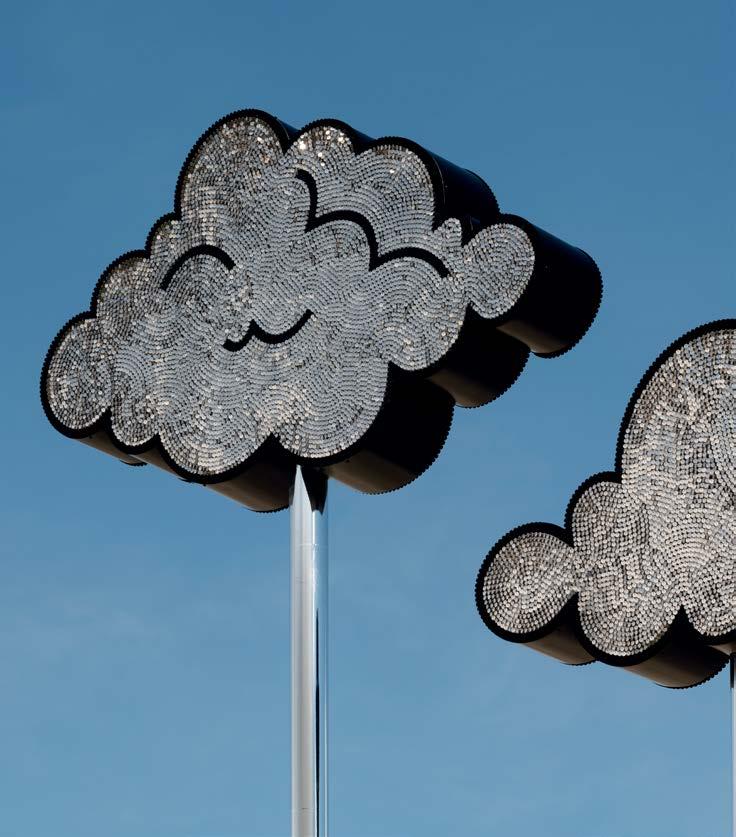
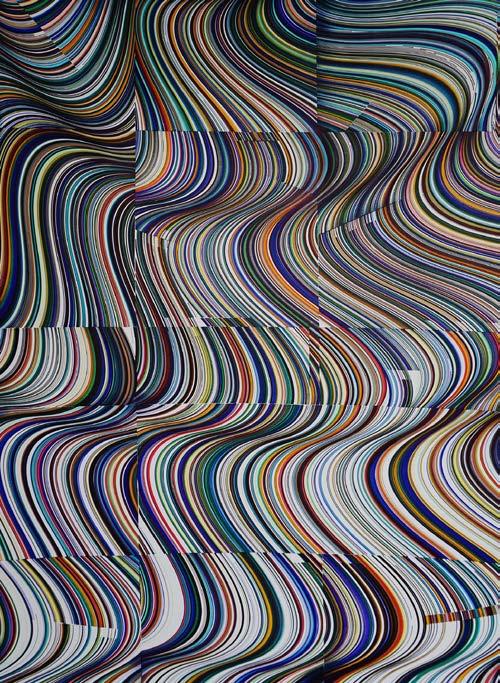
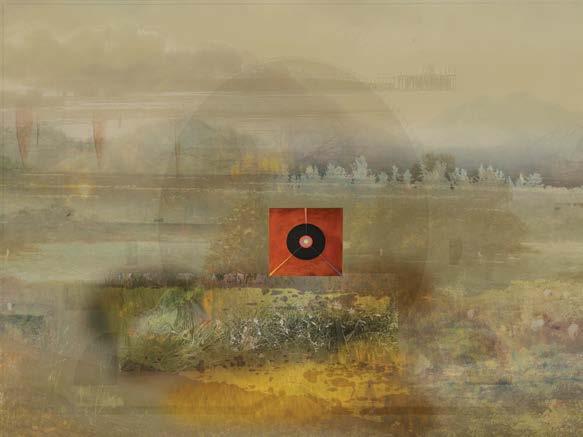
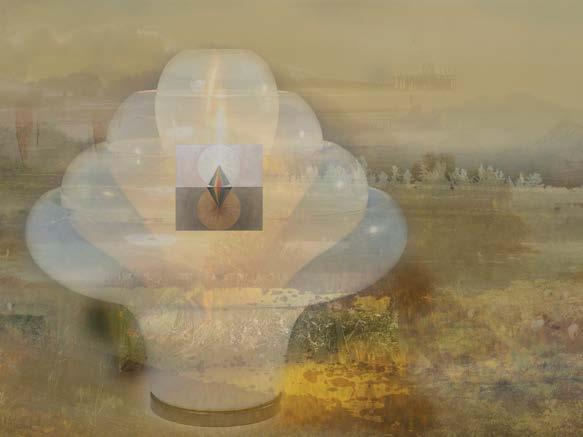
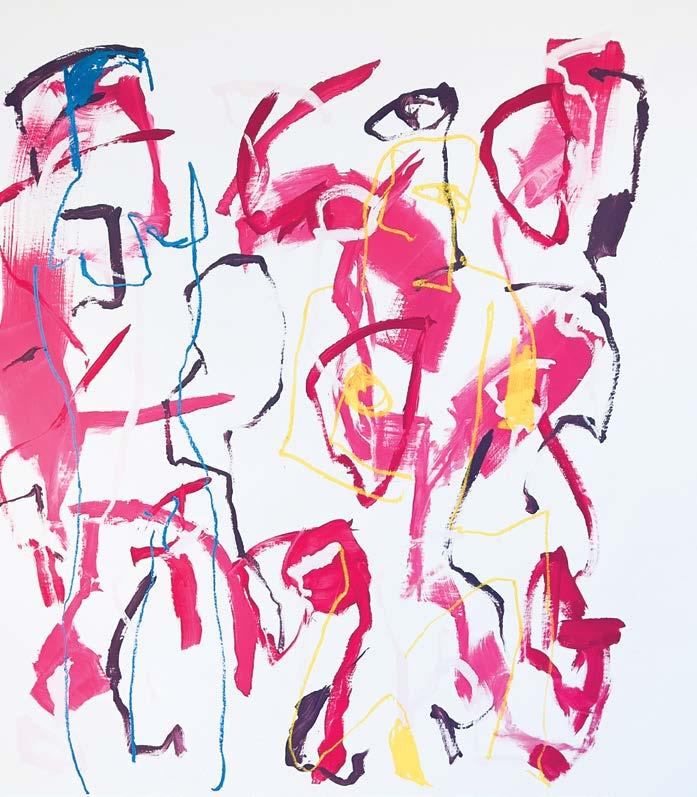
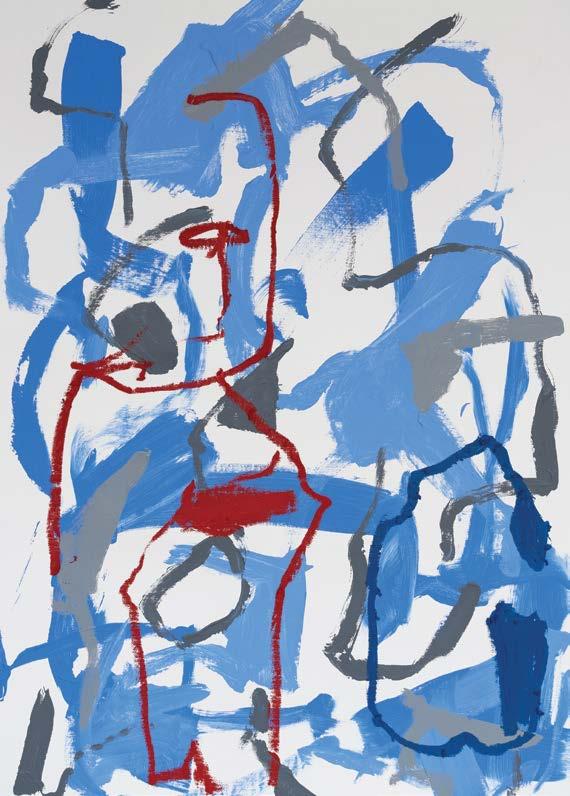
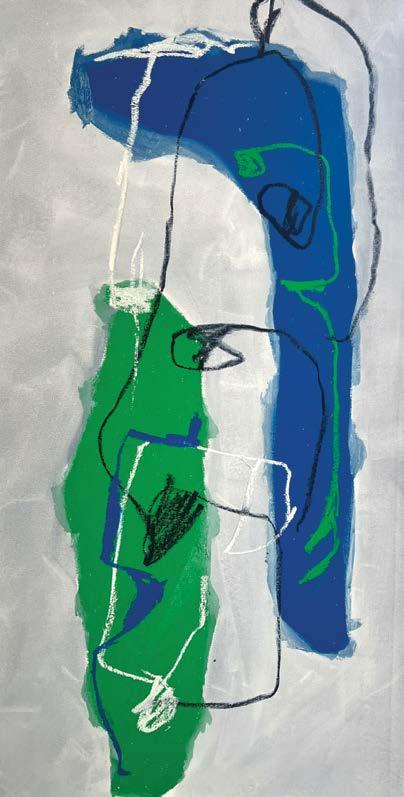
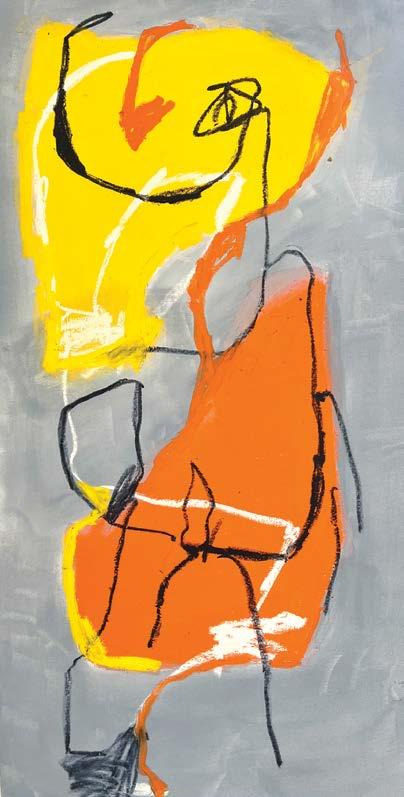
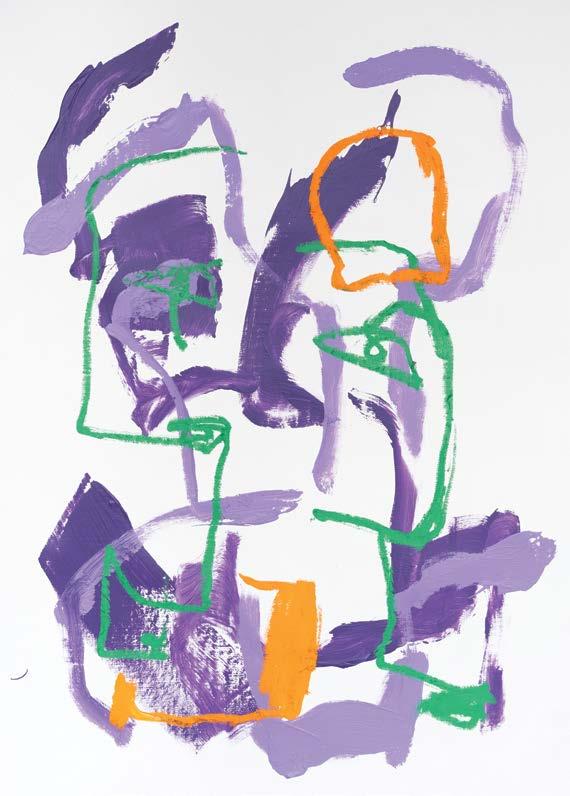
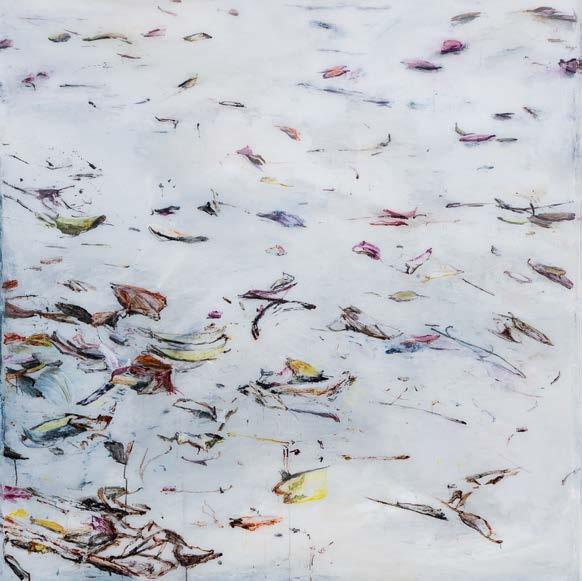
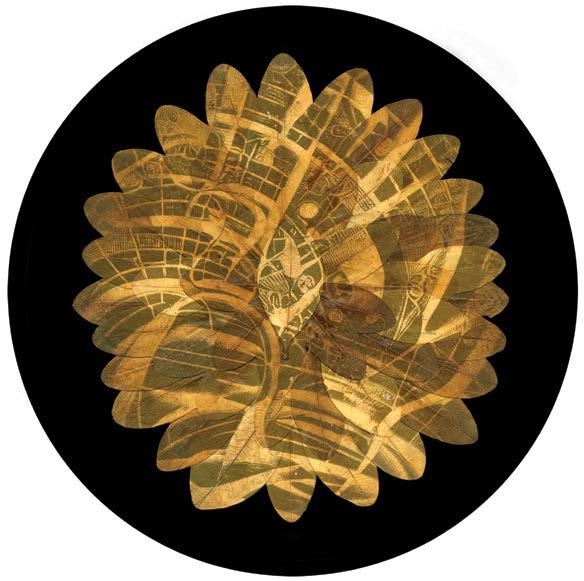
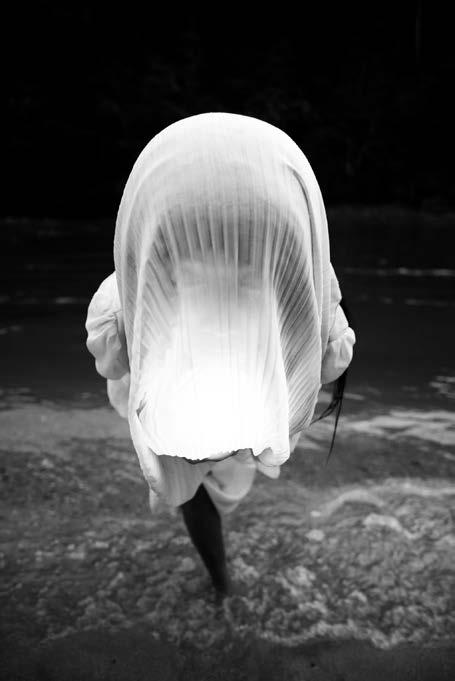
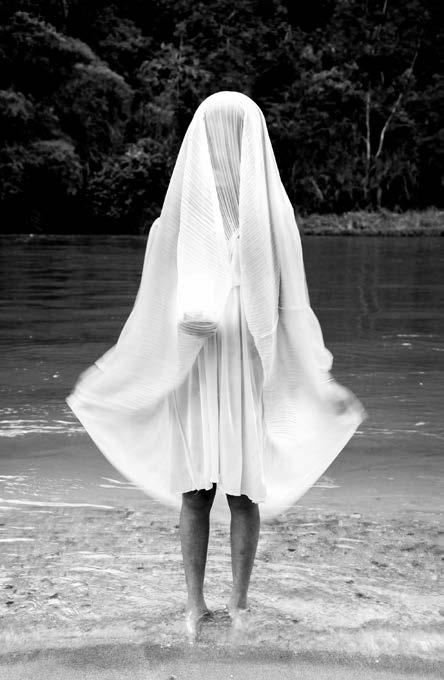
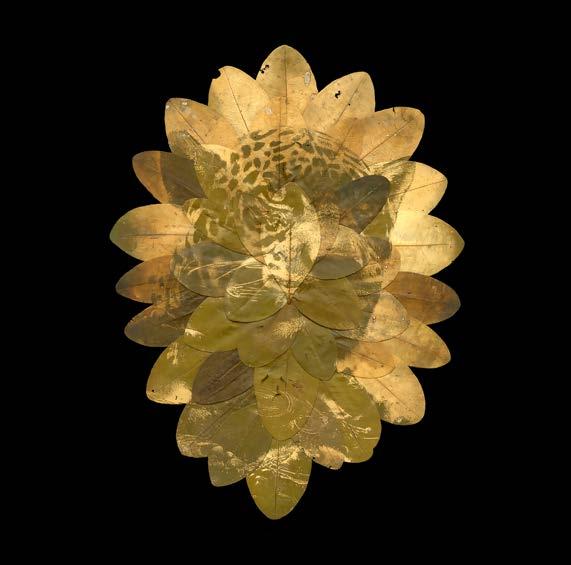
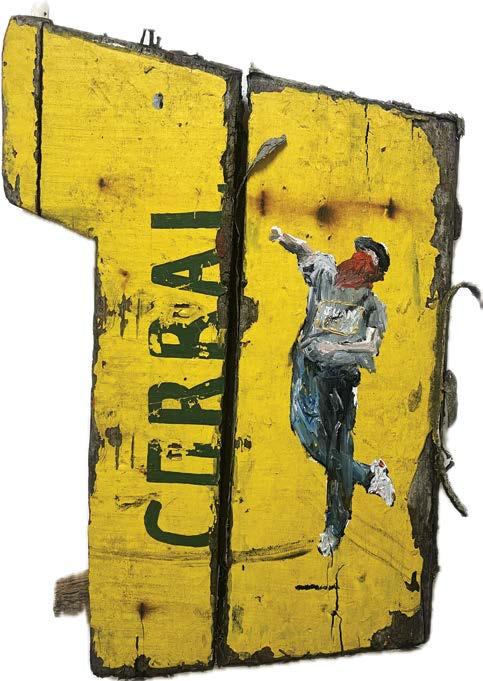
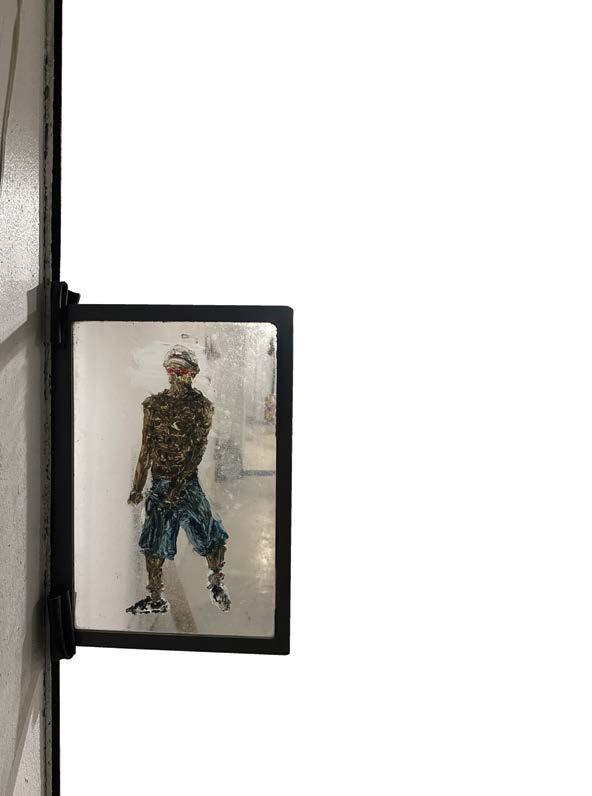
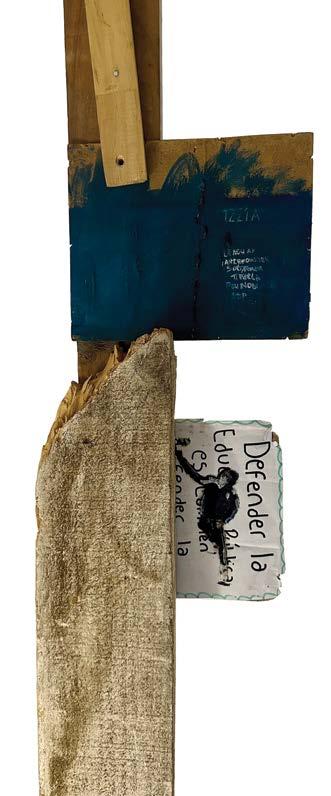
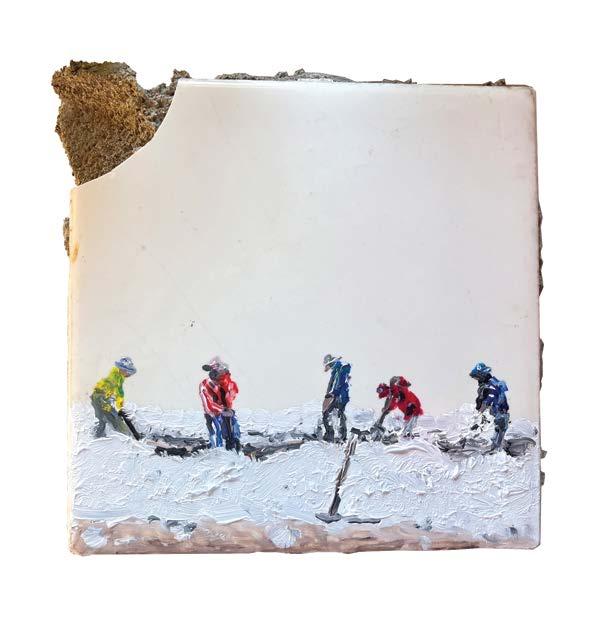
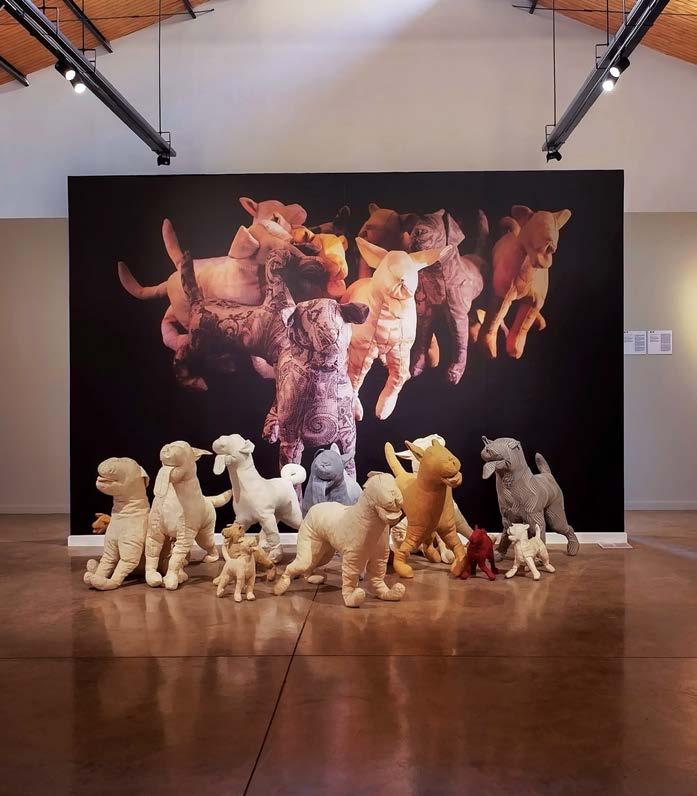
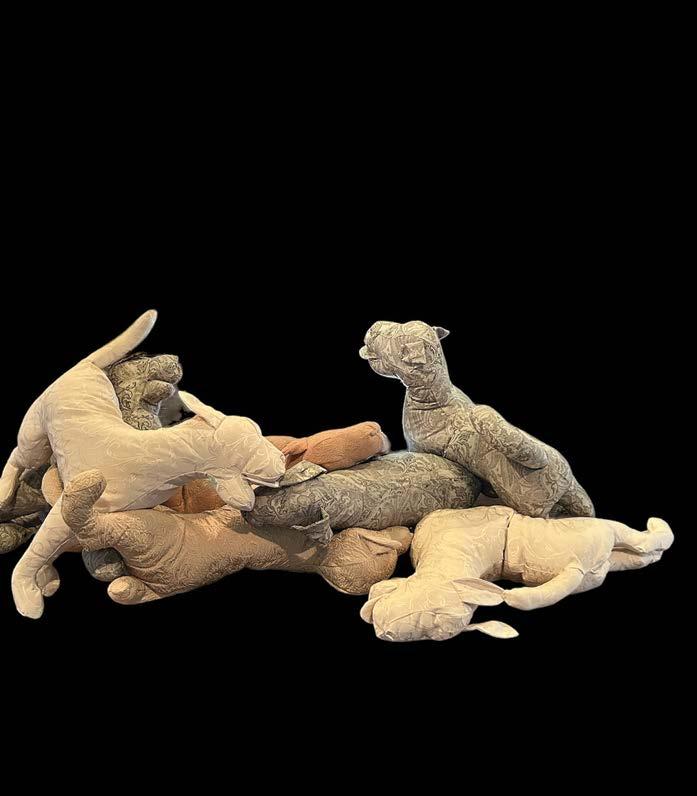
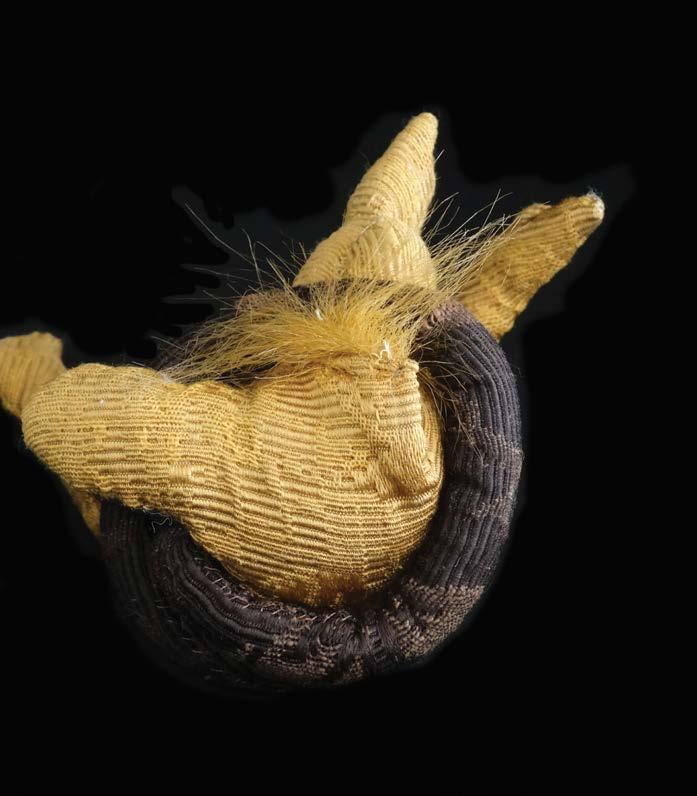
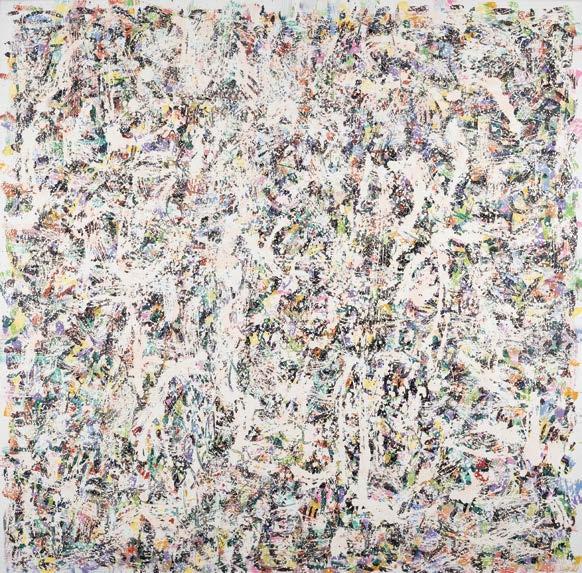
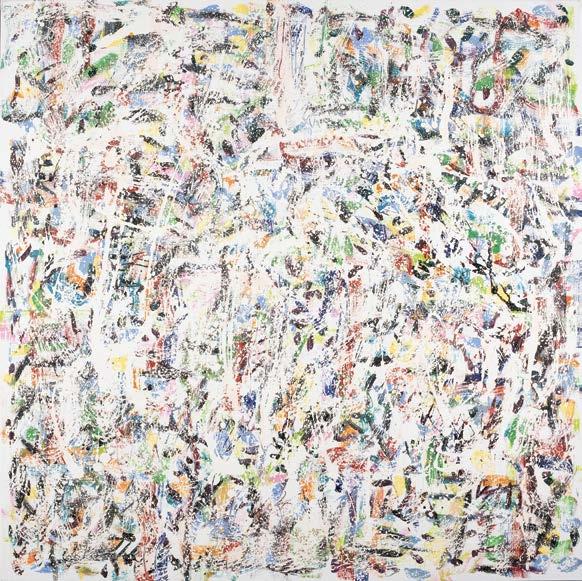
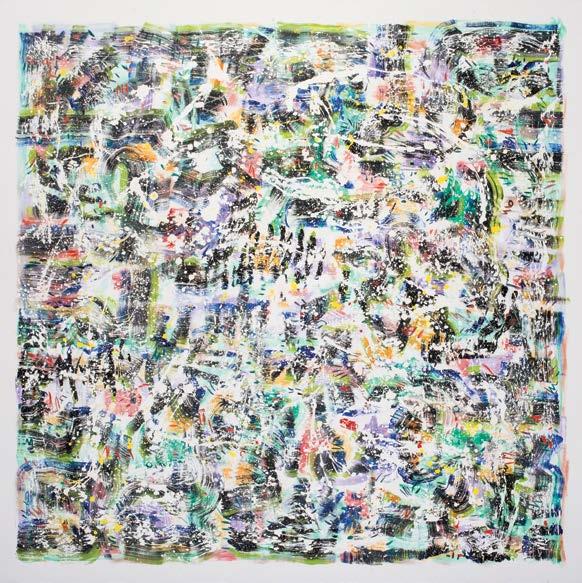
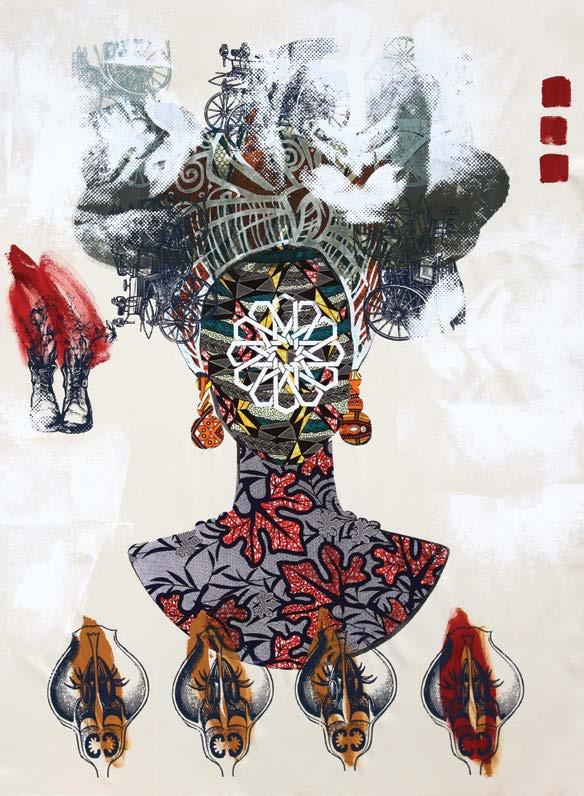
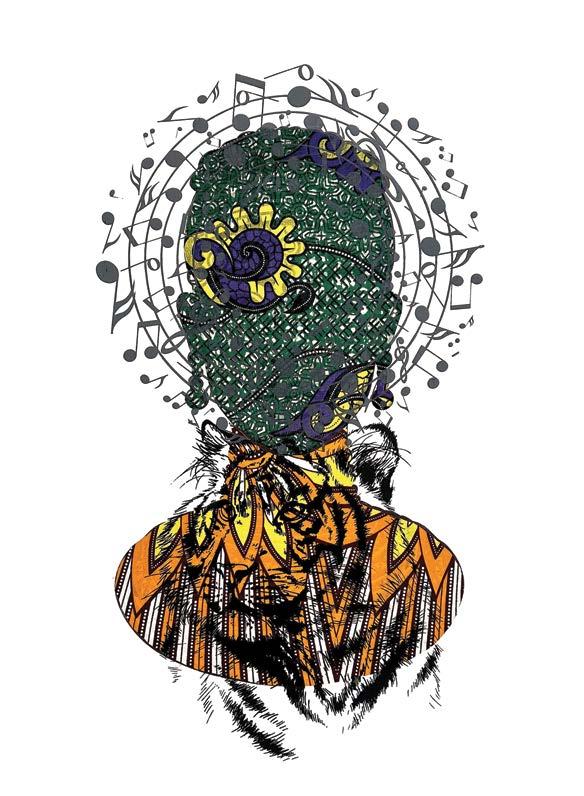
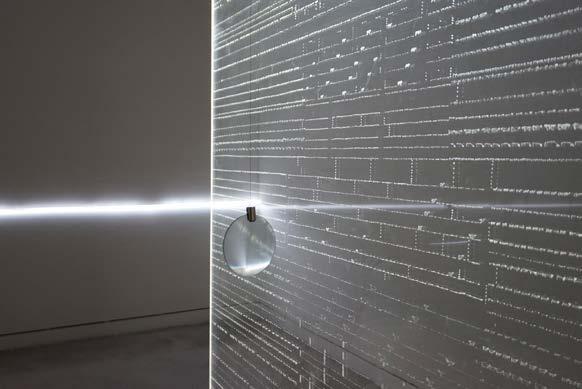
Courtesy of the artist and Marianne Boesky Gallery, New York and Aspen.
EDITORIAL
el calendario del mundo del arte inicia la temporada 2026 entre ferias y bienales donde estaremos presentes. Miami, México y Madrid se preparan para sus semanas más intensas, cada una con una escena propia y en plena efervescencia. La semana del arte en Miami se proyecta como un punto de convergencia donde el arte latinoamericano gana cada vez más terreno; mientras que ZONA MACO consolida a México como eje continental; y ARCO Madrid reafirma su papel en Europa. Además, las ferias de Estados Unidos, LA Art Show y Art Palm Beach abren realmente el año, marcando el pulso del mercado internacional entre propuestas experimentales y un coleccionismo cada vez más sofisticado.
En Latinoamérica, las recientes ediciones de ArtBo y Un_Fair —ambas en Bogotá—, junto con ArteBa en Argentina, marcaron la antesala de una temporada diversa y dinámica. En este mismo espíritu, la Bienal de Bogotá se consolidó como un espacio de reflexión sobre los cruces entre arte y comunidad, desplegando una gran logística para hacer partícipe a la ciudadanía del arte contemporáneo.
Sin embargo, en medio de esta efervescencia y los miles de preparativos que acompañan cada feria, surge una pregunta inevitable: ¿qué pasará con la seguridad de las obras? La reciente vulneración del Museo del Louvre —con el robo de las joyas de Napoleón— reactivó las alertas sobre la seguridad patrimonial a nivel global. Si una institución de tal envergadura puede ser vulnerada, se hace evidente la fragilidad de los sistemas de resguardo y la urgente necesidad de revisar las estrategias de protección que sostienen a museos, colecciones y espacios culturales.
Pero volviendo a los eventos de arte, desde el sur del continente, la Bienal de Cuenca emerge como un espacio de pensamiento crítico que dialoga con los desafíos ambientales y sociales de nuestro tiempo. Su enfoque curatorial que entrelaza arte, territorio y memoria, refuerza la importancia del arte como herramienta de reflexión y resistencia en América Latina.
Arte Al Límite participa como medio oficial de la Bienal, reafirmando su compromiso con la difusión del pensamiento artístico regional. Además, hemos publicado entrevistas exclusivas en nuestro sitio web con los 17 curadores asistentes, quienes abordan los desafíos de la práctica curatorial y los nuevos modos de entender el arte contemporáneo en contextos latinoamericanos.
En esta edición ofrecemos una pincelada de esas miradas y procesos: una selección de artistas del continente que, desde diversas estéticas y discursos, nos recuerdan la importancia del arte visual como lenguaje vivo, capaz de cuestionar, transformar y abrir horizontes en tiempos de cambio.
the art world’s calendar for 2026 begins with fairs and biennials in which AAL will take part. Miami, Mexico, and Madrid are gearing up for the most intense weeks, each with its own vibrantly effervescent scene. Miami Art Week is expected to serve as a hub where Latin American art has increasingly gained more ground, while ZONA MACO solidifies Mexico’s position as a continental powerhouse, and ARCO Madrid strengthens its role in Europe. Moreover, the fairs in the States, such as the LA Art Show and Art Palm, will truly kick off the year, setting the tone for the international art market with experimental proposals and increasingly sophisticated art collecting.
In Latin America, recent editions of ArtBo and Un_Fair, both in Bogota, along with ArteBa in Argentina, served as a prelude to a diverse and dynamic season. In the same spirit, the Bogota Biennial was consolidated as a space for reflection on the intersections of art and community, unfolding great logistics to make the citizens active participants in contemporary art.
However, amid this lively scene and the thousands of arrangements that come along with all fairs, an unavoidable question arises: What will happen to the safety of the artworks? The recent Louvre heist, resulting in the theft of jewelry that belonged to Napoleon, raised alarming concerns about the safety of cultural heritage around the world. If an institution of such magnitude can be compromised, the fragility of security systems and the urgent need to review the protection strategies for museums, collections, and cultural spaces become evident.
Returning to art-related events, in the southern part of the American continent, the Cuenca Biennial promises to emerge as a space for critical thinking that reflects on the environmental and social challenges of our time. Its curatorial approach, which brings together art, territory, and memory, reinforces the importance of art as a tool for reflection and resistance in Latin America.
Arte Al Límite will participate as an official media partner of the Biennial, reaffirming its commitment to promoting regional artistic thought. Additionally, we will publish exclusive interviews on our website with the 17 participating curators, who will discuss the challenges of curatorial practice and explore new ways of understanding contemporary art in Latin American contexts.
In this edition, we offer a glimpse of those perspectives and processes, featuring a selection of Latin American artists who, using diverse aesthetics and discourses, remind us of the significance of visual arts as a living language, capable of questioning, transforming, and opening new horizons in changing times.
Ana María Matthei Ricardo Duch Matthei
Chile |
Chile
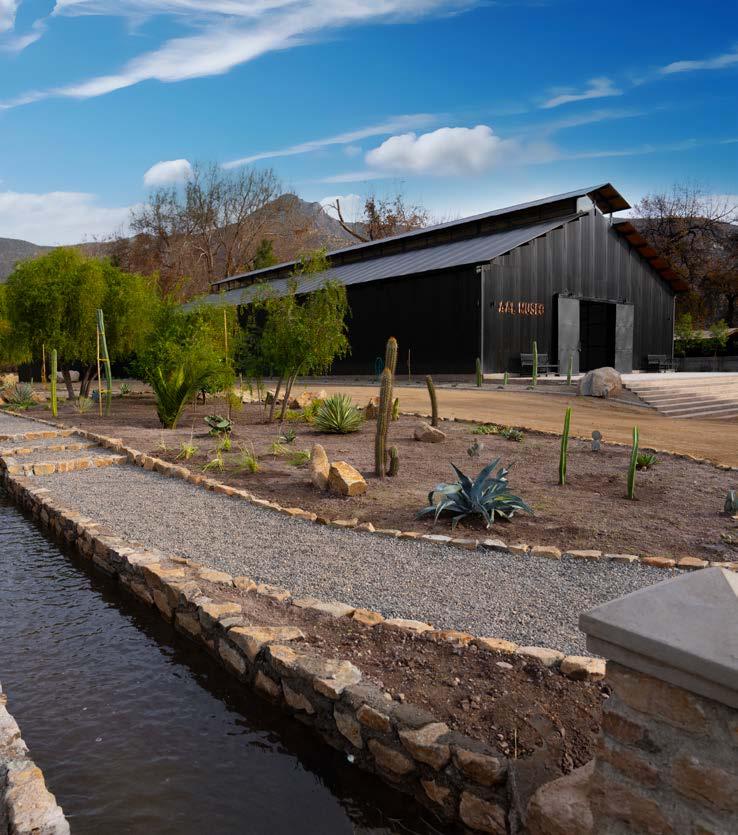
MUSEO ARTE AL LÍMITE
El rostro como medio y reflejo: La rebelión biométrica.
e n un mundo donde la tecnología redefine la percepción de la identidad, esta exhibición invita a una reflexión profunda sobre la relación entre los rostros humanos, la privacidad y el poder en la era digital. Con el enfoque y la mirada en la colección permanente del Museo Arte Al Límite y enriquecida con la participación de artistas invitados, se propone un diálogo crítico y multifacético a través de obras en pintura, escultura, dibujo, fotografía y video, complementadas con experiencias inmersivas e interactivas.
Desde tiempos históricos, los artistas han trabajado con el rostro casi como un acto premonitorio, manipulando y transformando su imagen para explorar identidad, poder y vulnerabilidad. Desde retratos que cuestionan la apariencia y la percepción hasta obras que anticipan las implicaciones del control visual, estos creadores han sido pioneros en el uso del rostro como medio de expresión y subversión.
The Face as Medium and Reflection: The Biometric Rebellion
i n a world where technology redefines the perception of identity, this exhibition invites a deep reflection on the relationship between human faces, privacy, and power in the digital age. With a focus on and dialogue with the permanent collection of the Museo Arte Al Límite, and enriched by the participation of guest artists, it proposes a critical and multifaceted conversation through works in painting, sculpture, drawing, photography, and video, complemented by immersive and interactive experiences.
Since historical times, artists have worked with the human face almost as a premonitory act—manipulating and transforming its image to explore identity, power, and vulnerability. From portraits that question appearance and perception to works that anticipate the implications of visual control, these creators have been pioneers in using the face as a medium of expression and subversion.
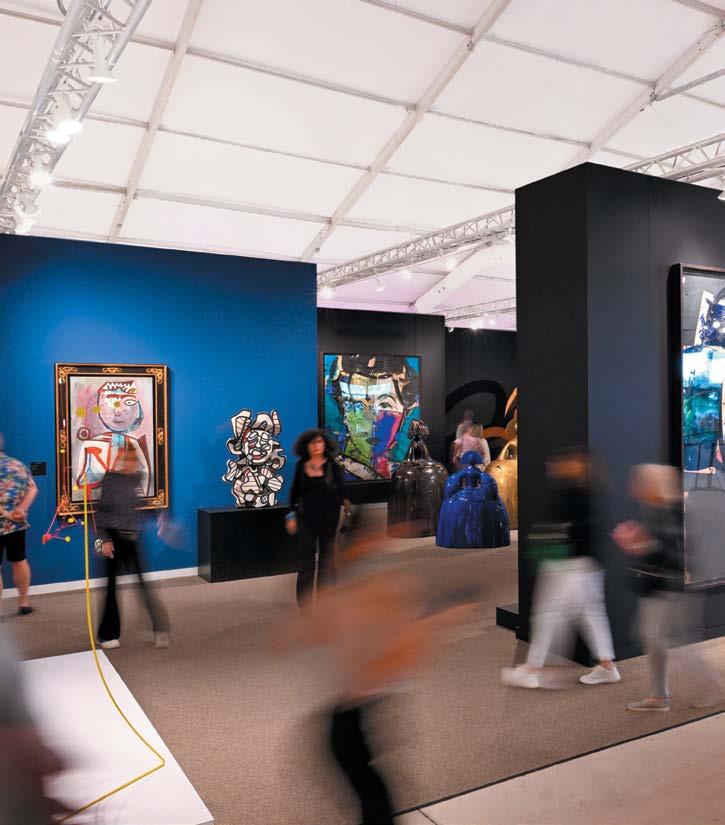
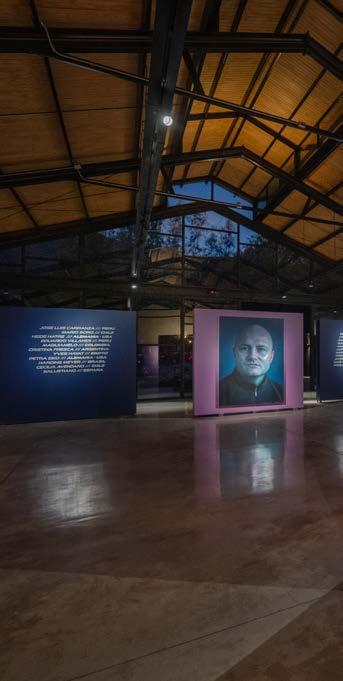
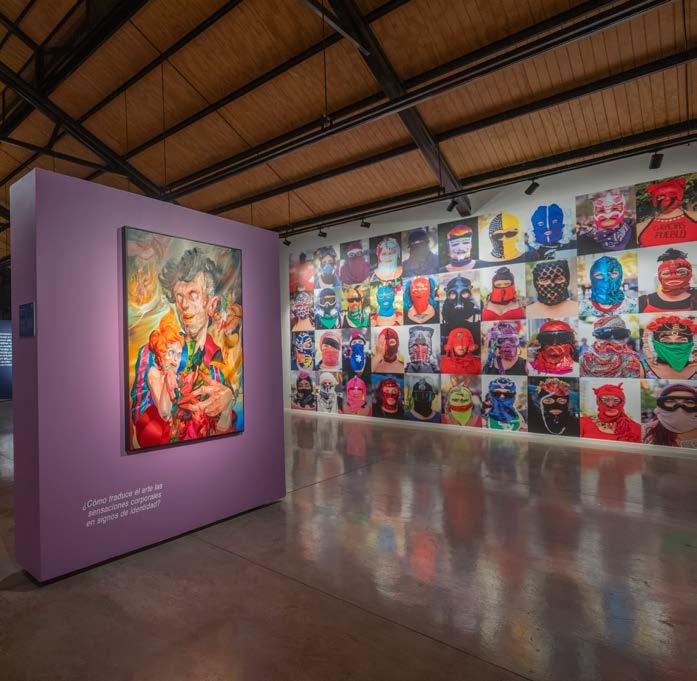
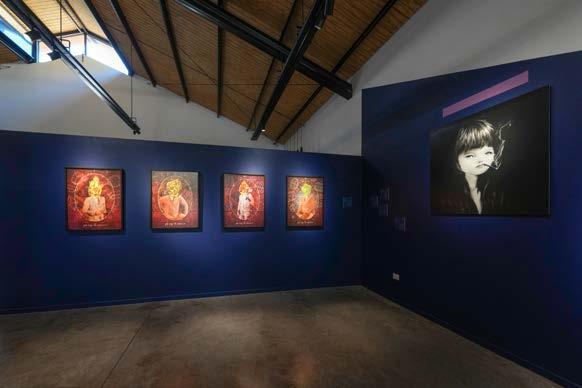
Roberto Mardones, 2025, vista de exposición Museo Arte Al Límite.
En la actualidad, esta tradición se encuentra en tensión con los avances tecnológicos, que permiten la recopilación y manipulación masiva de datos biométricos, poniendo en riesgo nuestra privacidad y autonomía.
La muestra confronta al espectador con las preguntas esenciales acerca de la autenticidad, la autorepresentación y la vulnerabilidad en un entorno donde los datos biométricos —reconocidos como los identificadores más íntimos y reveladores—, son utilizados tanto para empoderar como para controlar.
Desde los rostros que identifican y delimitan hasta los algoritmos que los interpretan y manipulan, la exhibición revela la ambivalencia del rostro como arma de poder y espejo de nuestra verdadera naturaleza.
La exposición busca estimular la reflexión sobre qué significa una “identidad real” más allá de los marcadores biométricos, invitando al público a cuestionar las implicaciones éticas y sociales de la tecnificación de la identidad.
“El rostro como medio y reflejo”, es una provocación artística y social que busca empoderar a los visitantes para que cuestionen su propia relación con su identidad biométrica, promoviendo un pensamiento crítico sobre el futuro que estamos construyendo en la intersección entre humanidad, tecnología y poder. Y el poder personal de preservar al máximo nuestra privacidad e identidad.
Marisa Caichiolo, curadora.
Today, this tradition is in tension with technological advances that enable the massive collection and manipulation of biometric data, putting our privacy and autonomy at risk.
The exhibition confronts viewers with essential questions about authenticity, self-representation, and vulnerability in an environment where biometric data—recognized as the most intimate and revealing identifiers—are used both to empower and to control.
From faces that identify and define to algorithms that interpret and manipulate them, the exhibition reveals the ambivalence of the face as both a weapon of power and a mirror of our true nature.
The exhibition seeks to stimulate reflection on what a “real identity” means beyond biometric markers, inviting the public to question the ethical and social implications of the technologization of identity.
“The Face as Medium and Reflection” is an artistic and social provocation that aims to empower visitors to question their own relationship with their biometric identity, promoting critical thinking about the future we are building at the intersection of humanity, technology, and power—and about the personal power to preserve, as much as possible, our privacy and identity.
Marisa Caichiolo, curator.
Roberto Mardones, 2025, vista de exposición Museo Arte Al Límite.
SUMARIO
DIRECTORES
Ana María Matthei
Ricardo Duch Marquez
DIRECTOR COMERCIAL
Cristóbal Duch Matthei
DIRECTORA DE ARTE Y EDITORIAL LIBROS
Catalina Papic
PROYECTOS CULTURALES
Camila Duch Matthei
EDITORA
Elisa Massardo
DISEÑO GRÁFICO
María Nestler
CORRECCIÓN DE TEXTOS
Javiera Fernández
ASESORES
Benjamín Duch Matthei
Ricardo Duch Matthei
Milagros Duch Matthei
Felipe Duch Matthei
REPRESENTANTES INTERNACIONALES
Julio Sapollnik (Argentina)
REPRESENTANTE LEGAL
Orlando Calderón
TRADUCCIÓN
Adriana Cruz
SUSCRIPCIONES
info@arteallimite.com
IMPRESIÓN
A Impresores
DIRECCIONES
Chile / Francisco Noguera 217 oficina 30, Providencia, Santiago de Chile. www.arteallimite.com
PORTADA
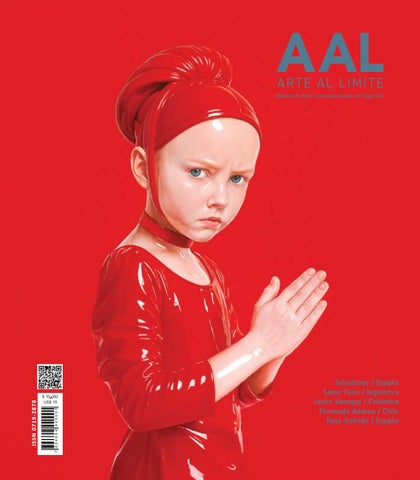
Love shines so bright (Jorge), 2025, óleo sobre tela, 134 x 134 cm.
CONTRAPORTADA
Roberto Mardones, 2025, vista Museo Arte Al Límite.
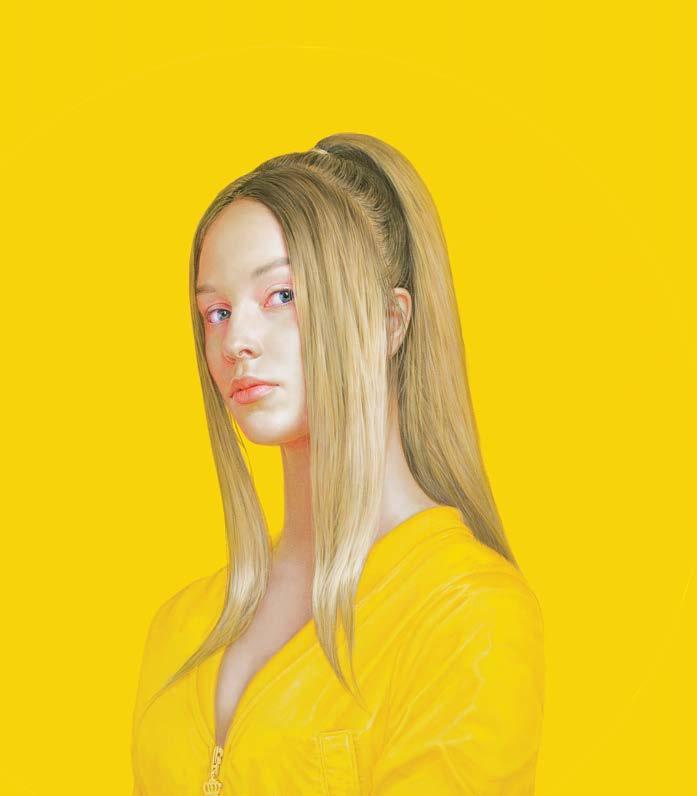
Brucken (Zahara con fondo amarillo) , 2020, óleo, pgimentos naturales y resina acrílica sobre tela, 80 cm. de diámetro.
El acontecimiento de la mirada
The event of the gaze
n 2024, el Centre Pompidou-Metz presentó la exposición “Lacan, cuando el arte se encuentra con el psicoanálisis”, conmemorando cuatro décadas de la muerte de Jacques Lacan. La muestra se propuso reinscribir la potencia de su pensamiento en el campo estético, evidenciando cómo sus conceptualizaciones sobre la mirada, el deseo y el objeto pueden operar como marcos de lectura de las prácticas artísticas contemporáneas.
Lacan mantuvo una relación estrecha con el arte de su tiempo y al mismo tiempo, elaboró una reflexión que desbordó los límites cronológicos del siglo XX. Su aproximación a las obras no se redujo a la descripción iconográfica ni al análisis formal: introdujo un giro conceptual que situó a la obra de arte como un dispositivo activo, capaz de interpelar al sujeto espectador. Como expresó en sus seminarios: No es el ojo del contemplador el que se dirige a la obra de arte, sino que es la obra de arte la que atrae la mirada del contemplador. En esta formulación se condensa una de las operaciones más fecundas de su pensamiento: desplazar el eje de la experiencia estética desde la intencionalidad del sujeto hacia la agencia del objeto.
Esta perspectiva ofrece un marco especialmente fértil para aproximarse a la obra de Salustiano García, cuya poética visual parece materializar con precisión ese diálogo silencioso.
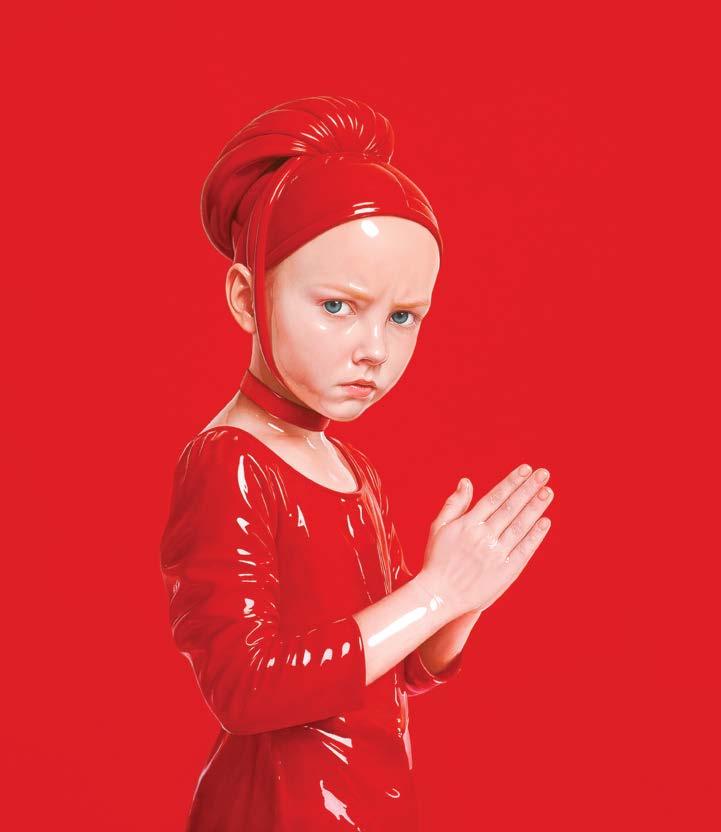
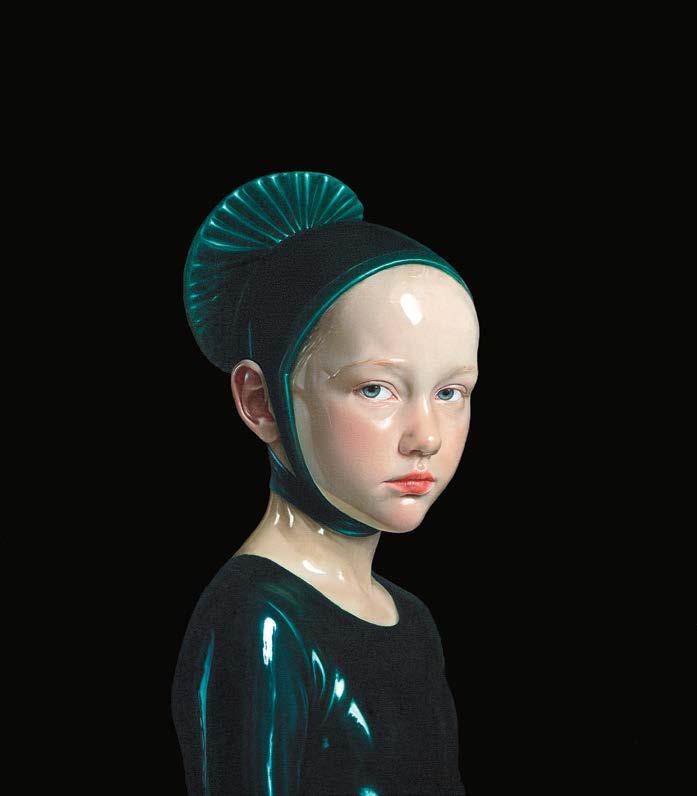
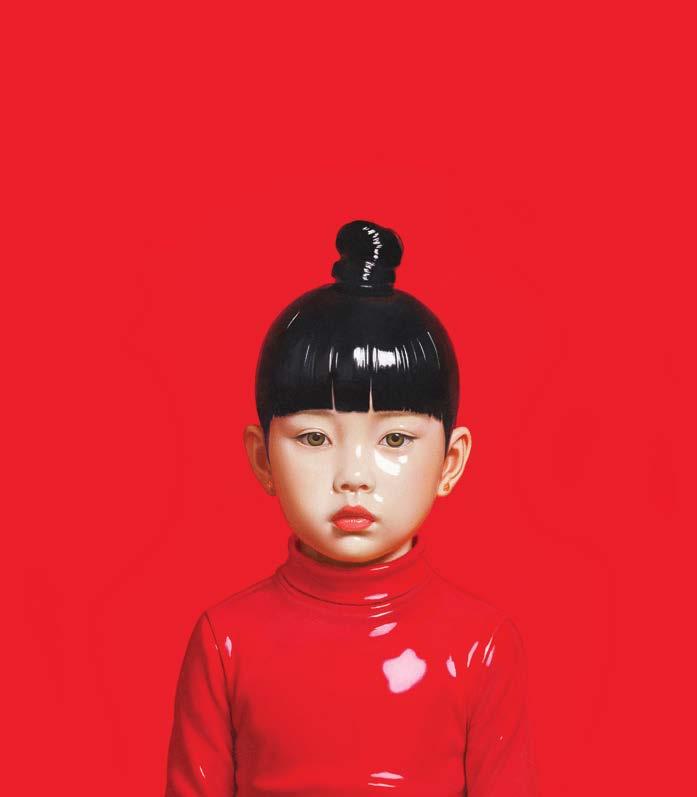
Las imágenes de Salustiano se caracterizan por un equilibrio perturbador entre belleza formal y tensión afectiva. Las figuras, aisladas sobre fondos monocromáticos intensos, revelan una interioridad que no se enuncia explícitamente, pero que se impone con fuerza a la mirada del espectador. Esta potencia expresiva está indisolublemente ligada a un proceso técnico riguroso: el característico fondo rojizo de sus obras proviene de la aplicación sucesiva de más de cuarenta capas de pintura. Esta construcción técnica no solo genera profundidad visual, sino también densidad simbólica, otorgando a la superficie pictórica un espesor temporal que remite a la lenta sedimentación de un afecto.
i n 2024, the Centre Pompidou-Metz hosted the exhibition “Lacan: When Art Meets Psychoanalysis” to commemorate four decades since Jacques Lacan’s death. The exhibition aimed to reaffirm the significance of Lacan’s ideas in the realm of aesthetics, illustrating how his concepts of the gaze, desire, and the object can serve as a framework for interpreting contemporary art practices.
Lacan had a deep relationship with the art of his time, and his ideas about it have transcended the constraints of 20th-century history. His approach to artwork went beyond simple iconographic descriptions or formal analyses. Instead, he introduced a conceptual shift that positioned art as an active device capable of challenging viewers. In his seminars on the gaze, Lacan argued that it is not simply the eye of the beholder that turns toward the work of art; rather, the artwork itself has the power to draw and structure the beholder’s gaze. This formulation summarizes one of the most fertile insights of his postulates: shifting the focus of aesthetic experience from the subject’s intentional act to the agency of the object.
This perspective provides a particularly effective framework for analyzing Salustiano García’s work, in which his visual poetry seems to embody this silent conversation.
Salustiano’s images are notable for their unsettling balance between formal beauty and emotional tension. The figures, set against bold monochromatic backgrounds, expose an inner world that does not overtly pronounce itself, but firmly compels the viewers’ gaze. Such expressive power is inextricably tied to a rigorous technical process. His signature reddish backgrounds are created through the successive application of over forty layers of paint. His technical construction not only generates visual depth, but also symbolic density, giving the pictorial surface a temporal thickness that evokes the gradual settling of an emotion.
Love shines so bright (Jorge verde) , 2025, óleo, pigmentos naturales y resina acrílica sobre tela, 90 cm. de diámetro.
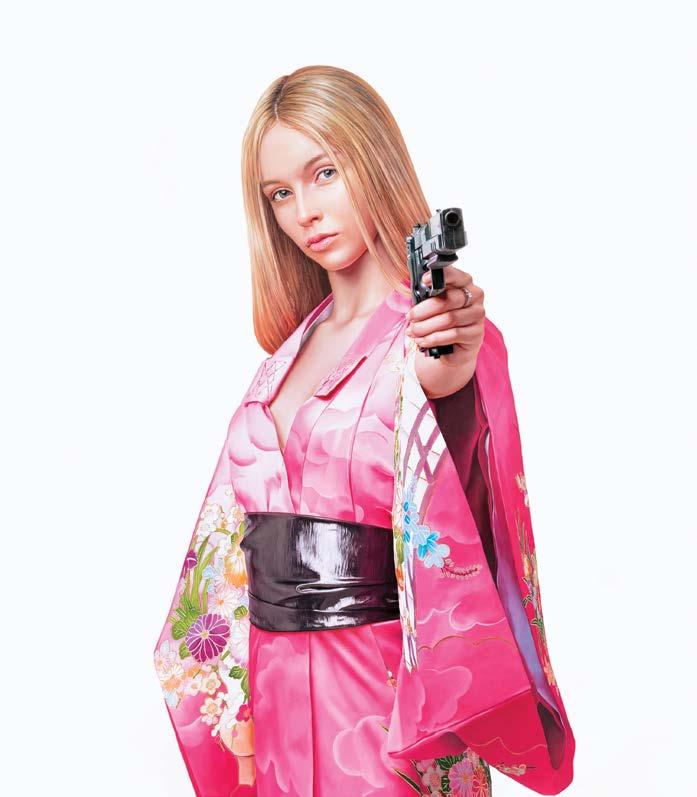
Love is pop (Zahara con kimono y pistola), 2024, óleo sobre tela, 138 x 138 cm.
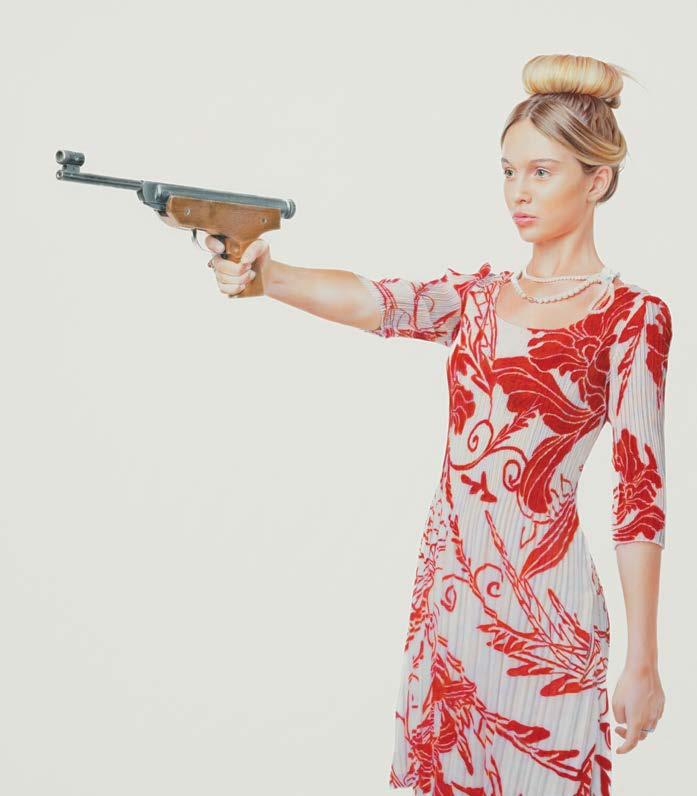
_Love is pop (Zahara con collar y pistola) , 2024, lápiz sobre tela, 150 x 150 cm.
Para Salustiano, el rojo no es simplemente un color: “es la metáfora visible de la energía vital. Es el color del cuerpo, del calor, de la respiración. Cuando lo aplico sobre el lienzo no pienso en una simbología abstracta, sino en algo profundamente físico: en la piel iluminada por dentro, en la vibración que hay antes del movimiento, en el temblor que antecede al gesto. Es un color que respira y que hace respirar a quien lo mira. Por eso no lo uso como fondo, sino como atmósfera: el espacio donde la figura vive, donde la carne y la piel tienen un sentido concreto. En español decimos rojo o colorado, y ambas palabras provienen del latín coloratus, de colorare, ‘dar color’. En cierto modo, el rojo encarna el acto mismo de pintar: el instante en que la materia cobra forma”.
Podemos imaginar que este “nuevo colorado” surge del blanco pleno de la tela o de la superposición de panes de oro: una asociación libre que sugiere la transmisión vital que simboliza “el ardor, la belleza, la fuerza impulsiva y el eros libre y brillante”, como señalan Jean Chevalier y Alain Gheerbrant.
Uno de los elementos recurrentes en su pintura es la presencia del círculo, símbolo que desde la antigüedad ha estado asociado con la necesidad de amparo. El círculo protector ha adoptado la forma de sortijas, brazaletes, collares, cinturones o coronas; objetos que, más allá de su dimensión ornamental, actuaban como estabilizadores que mantenían la cohesión entre el alma y el cuerpo. Salustiano define esta forma de manera poética: “una línea que se repliega sobre sí misma hasta encontrarse. No hay límite, sino plenitud; no encierra, sino que contiene y acoge. Es la manifestación de una armonía que se renueva sin cesar, la expresión de un optimismo profundo y silencioso”.
Y agrega: “cuando este formato comenzó a aparecer en mi obra, coincidió —y no por casualidad— con el nacimiento de mi hijo Horacio. Comprendí entonces que aquella forma perfecta se había revelado también en mi vida: la línea de mi existencia, tras un largo recorrido, parecía unirse por fin consigo misma. Entendí que tanto el arte como la vida se miden por su capacidad de contener amor, una forma verdaderamente perfecta donde se integran la emoción y el orden”.
Cuando trabaja con la temática floral, Salustiano se distancia deliberadamente de su carga simbólica tradicional: “Las flores que represento poseen una textura mineral, casi petrificada. Son como plantas
For Salustiano, red is not merely a color, it is a “visible metaphor for vital energy. It is the color of the body, heat, and breathing. When I apply [red] on a canvas, I am not thinking of an abstract symbolism, but something profoundly physical: skin lit from within, the vibration that comes before movement, the tremor that precedes a gesture. It is a color that breathes and makes everyone who see it breathe as well. Therefore, I do not use it as a background; I use it as an atmosphere—the space where figures live, where skin and flesh hold specific meaning. In Spanish, we say rojo [red] or colorado [lit. ‘colored’, often used to describe red tones]. Colorado comes from Latin coloratus, the participle of colorare, meaning ‘to give color’. So, in a way, red embodies the act of painting, the moment that matter takes shape.”
We can imagine that this ‘new red’ emerges from the pure white of the canvas or from the overlapping layers of gold leaf. This free association suggests a vital transmission that symbolizes ‘ardor, beauty, life force, and free and brilliant eros’ as Jean Chevalier and Alain Gheerbrant would argue.
A recurring element in his paintings is the presence of circles, which have been associated with the need for protection since ancient times. Protective circles take the forms of rings, bracelets, necklaces, belts, and crowns, objects that, beyond their ornamental value, serve as stabilizers to maintain the cohesion between body and soul. Salustiano has a poetic definition for this shape: “A line that folds back on itself until it meets. There is no limit, only fullness; it does not enclose, but rather contains and welcomes. It is the manifestation of an ever-renewing harmony, the expression of a deep and silent optimism.”
He further adds: “When this format began to appear in my work, it coincided—and not by chance—with the birth of my son, Horacio. I realized then that this perfect shape had also revealed itself in my life: the line of my existence, after a long journey, seemed to finally come together. I understood that both art and life are measured by their ability to contain love, a truly perfect form where emotion and order are integrated.”
When he works with floral motifs, Salustiano deliberately departs from their traditional symbolic meaning: “The flowers I represent have an almost petrified mineral texture. They are like prehistoric
Love shines so bright (luz nº 2), 2025, óleo, pigmentos naturales y resina acrílica sobre tela, 80 cm. de diámetro.
prehistóricas detenidas en el tiempo, que buscan perpetuarse más allá de la vida orgánica. En ellas hay una voluntad de eternidad silenciosa, la misma que habita en los rostros tallados de la Isla de Pascua, en las esfinges egipcias o en un insecto inmovilizado dentro de una gota de ámbar”. El artista detiene en la imagen una apariencia de eternidad que él define: “como si no pasara el tiempo”.
En otras obras, la figura de una adolescente empuñando un arma tensiona el campo interpretativo. Una lectura superficial podría proyectar violencia o amenaza. Sin embargo, el gesto pictórico no busca clausurar el sentido ubicándose como espejo iconográfico, sino abrir un espacio de connotaciones inquietantes. No se trata de un significado unívoco, sino de la presentación de un instante suspendido, un “significante cero”: algo que ha ocurrido o que está por ocurrir.
Esta potencia expresiva se refuerza con la elección de modelos únicos, en contraposición a la tradición de retratos colectivos encarnada en obras paradigmáticas como La familia de Carlos IV de Francisco de Goya o Las Meninas de Diego Velázquez. La unicidad del modelo intensifica la escena de interpelación: frente a la figura, el espectador carece de mediaciones y se enfrenta directamente a la mirada de la obra. El resultado no es una relación empática ni narrativa, sino un encuentro asimétrico en el que el sujeto queda, en cierta medida, desposeído de su posición dominante para permitir que la imagen inscriba emociones con una nueva caligrafía interior.
Desde esta perspectiva, la pintura de Salustiano puede entenderse como un espacio privilegiado para explorar la eficacia estética de la mirada. La obra no es objeto de contemplación pasiva, sino agente de un acontecimiento subjetivo. Su potencia no reside únicamente en la destreza técnica ni en la belleza formal, sino en su capacidad de instalar una escena en la que el espectador se ve implicado como partícipe involuntario.
En tiempos en que la imagen circula a gran velocidad y se consume en la inmediatez, la pintura de Salustiano propone un gesto radical: detener, intensificar y devolver la mirada. Como formuló Lacan, no somos nosotros quienes observamos la imagen: es ella quien —desde su silencio cargado de tiempo y deseo— nos observa y nos constituye.
plants frozen in time, seeking to hold on beyond organic life. In them, there is a desire for silent eternity, the same that dwells in the carved faces of Easter Island, in the Egyptian sphinxes, or in an insect immobilized inside a drop of amber.” The artist captures in the image an appearance of eternity that he defines as: “as if time were not passing.”
In other works, the figure of a teenage girl wielding a weapon creates tension in the interpretive field. A superficial reading could intuit violence or threat. However, the depiction does not seek to constrain meaning by acting as an iconographic mirror. Instead, it aims to open up a space filled with unsettling connotations. It is not a matter of presenting a single meaning, but rather a suspended moment, a ‘zero signifier’ that suggests something has happened or is about to happen.
This expressive power is enhanced by the choice of unique models, contrasting with the tradition of group portraits found in iconic works such as The Family of Charles IV by Francisco de Goya or Las Meninas by Diego Velázquez. The uniqueness of the model heightens engagement with the scene: confronted by the figure, the viewer lacks mediation and is directly confronted by the gaze of the piece. The result is not an empathetic or narrative relationship, but an asymmetrical encounter in which the subject is, to a certain extent, dispossessed of their dominant position. This shift allows the image to convey emotions with a new inner expressiveness.
From this perspective, Salustiano’s painting can be understood as a privileged space for exploring the aesthetic effectiveness of the gaze. Artwork is not an object of passive contemplation, but rather the agent of a subjective event. Its power lies not only in technical skill or formal beauty, but in its ability to create a scene in which the viewer is involved as an unwitting participant.
In times when images circulate at a high speed and are immediately consumed, Salustiano’s painting proposes a radical gesture: to pause, intensify, and return the gaze. s Lacan would put it, it is not we who observe the image: it is the image that—from its silence laden with time and desire—observes us and constitutes us.
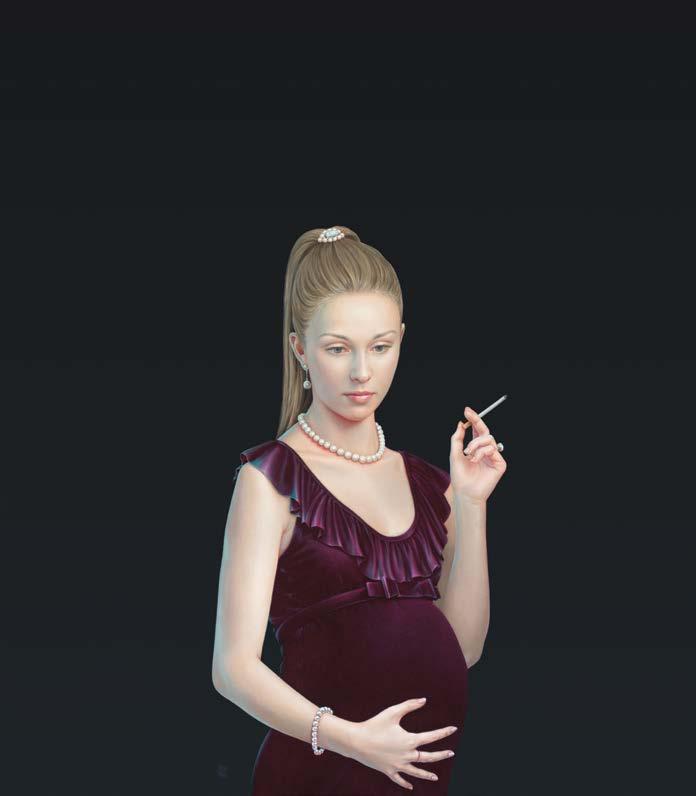
Presente pluscuamperfecto (Zahara embarazada) , 2024, óleo, pigmentos naturales y resina acrílica sobre tela,
150 cm. de diámetro.
EE.UU. | USA
DEANNA MIESCH
Por Nicole Ahumada. Lic. en Artes Visuales (Chile)
Imágenes cortesía de la artista.
Represantada por Normal Royal.
Entre la intuición y el riesgo
l a artista y terapeuta Deanna Miesch explora en su obra fotográfica la memoria, la percepción y el tiempo a través de la superposición de imágenes.
Su práctica, enraizada en la intuición y el riesgo, vincula el gesto artístico con la experiencia terapéutica, revelando una mirada que concibe la fotografía como un espacio de tránsito entre el cuerpo, la emoción y la imagen. En esta conversación, Miesch reflexiona sobre la dimensión simbólica del error, la relación entre técnica y azar, y la forma en que la práctica artística y la clínica se entrelazan en una misma búsqueda de sentido y presencia.
¿Qué rol simbólico tiene la figura de la superposición fotográfica en tus temáticas?
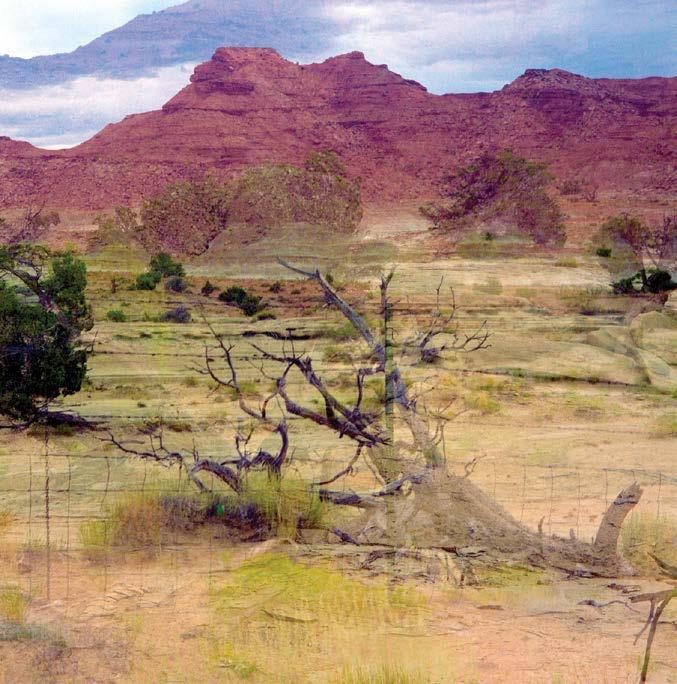
Las exposiciones múltiples a menudo permiten que me haga una idea más clara de un lugar o de un individuo. Se sienten más como memorias o el proceso de recordar, similar a los sueños. Pueden sentirse como portales, ventanas que no podemos ver, pero quizás sí sentir. Claro está que en una fotografía de exposición simple se detiene el tiempo. En cambio, las exposiciones múltiples parecen más bien revelar el tiempo. Me hacen sentir más. Solía dedicarme a la fotografía urbana, pero después de leer un artículo sobre la creencia de las tribus de nativos estadounidenses de que una fotografía puede robar una parte del alma, empecé a alejarme de esa práctica. En los últimos veinte años, me he centrado más en los paisajes, pero también abordo otros temas, dependiendo de dónde me encuentre. Los retratos dentro de un paisaje—literalmente dentro de un paisaje gracias al uso de las exposiciones múltiples— dan la sensación de que una persona ha absorbido un lugar, o viceversa. Los lugares históricos me entusiasman y, aunque a veces fantaseo con tener el lugar para mí sola, muchas veces disfruto que haya gente en esos espacios. Creo que este tipo de imágenes en particular se asemejan a cómo me imagino que se siente viajar en el tiempo.
Between intuition and risk
artist and therapist Deanna Miesch explores memory, perception, and time in her work through overlapping images.
Her practice—rooted in intuition and risk—ties artistic gestures to therapeutic experiences, revealing a perspective that regards photography as a transitory space between the body, emotions and images. In this conversation, Miesch reflects on the symbolic meaning of mistakes, the relationship between technique and randomness, and how artistic and technical practices intertwine in the pursuit of meaning and presence.
What symbolic role does the figure of photographic superposition play within your themes?
Multiple exposures often give me a better sense of a place, or a person. They feel more like memory, the process of remembering, akin to dreams. They can feel like portals, windows we can’t see, but may feel. A single exposure photograph, of course, stops time. Multiple exposures seem to reveal time itself. They make me feel more.
I used to do street photography but after reading an article that discussed the Native American view that a photograph can steal a part of one’s soul, I began to pull back. I have focused more on landscape in the last twenty or so years, but other subjects come into play, depending on where I am.
Portraits within a landscape—literally within a landscape in multiple exposures—feel like a person has absorbed a place, or vice versa. Historic places are exciting to me, and while I may fantasize about having a place all to myself, I often enjoy having people in the spaces as well. Those sorts of images, in particular, can feel like what I imagine time travel might be like.
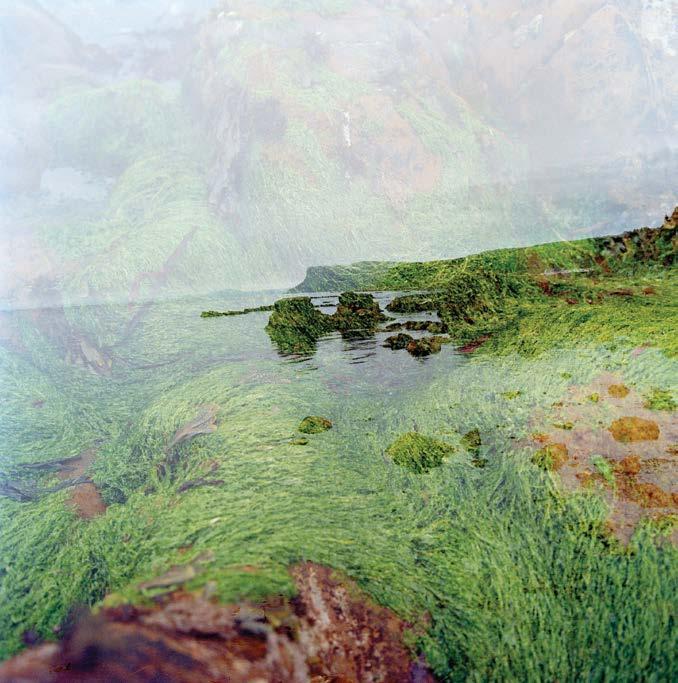
Ballycastle In My Veins, 2018, Ballycastle, Norte de Irlanda, Reino Unido.
¿Cómo abordas la selección de lo que consideras “fotografiable”?
¿Hasta qué punto te importa el procedimiento técnico o tecnológico que acompaña a esta decisión?
Una de las cosas sobre el uso de la película fotográfica es que es cara y, por ende, se siente más valiosa. Con una cámara de formato medio (una Hasselblad 500C/M durante las últimas dos décadas), estoy limitada a solo 12 exposiciones. Es decir, realmente tengo que querer tomar una foto. La cámara es pesada y voluminosa, tengo que sacarla del bolso. Cualquiera que esté conmigo tiene que tenerme mucha paciencia, ya que hay muchos factores que juegan en mi contra. Así que espero hasta que mi voz interna me hable lo suficientemente fuerte como para superar esos obstáculos. Puede ser que traiga mi cámara, pero eso no necesariamente significa que la vaya a sacar del bolso. A veces, incluso los lugares más bonitos no ameritan ni una sola foto.
Hace poco comencé a fotografiar con una cámara panorámica Linhof Technorama 617S III, una cámara preciosa, tan solo un poco más pesada que mi Hasselblad, aunque es más grande. También utiliza película de formato medio o 120 mm, pero cada foto equivale a tres fotos en una cámara de formato medio. Por lo tanto, estoy limitada a cuatro fotos. Estoy increíblemente entusiasmada con esta cámara, pero también tiene sus limitaciones. Una de las ventajas es que a menudo puedo terminar un rollo de una sola vez. Eso significa que es menos probable que olvide qué tipo de película hay en la cámara. Puedo hacer unas cuantas fotos y luego cambiar el rollo de color a uno blanco y negro, o cambiar fácilmente el ISO de la película.
Siempre me ha gustado la idea del “panorama global”, utilizando la misma horizontalidad elongada de las pinturas. Poder conseguir esto en fotografía es emocionante. Además, puedo hacer tantas exposiciones dobles como quiera, simplemente eligiendo no avanzar. La Hasselblad requiere más esfuerzo: hay que colocar una placa obturadora, quitar la parte trasera de la cámara, avanzar, todo para engañar a la cámara.
En términos generales, ¿cuál es el principio rector que subyace a tus obras?
Quiero que el espectador pueda vislumbrar otro mundo, que se detenga y se esfuerce un poco. Quiero que sienta y que experimente, aunque sea solo un poco, lo que yo experimento.
La fotografía análoga requiere más esfuerzo y dinero, pero me recompensa mucho más. Hay más de mi mano en el proceso. A veces la gente se pregunta por qué no utilizo la fotografía digital y, sin duda, podría conseguir resultados similares. Supongo que parte del atractivo reside en el hecho de que creo un objeto, un objeto mágico. Para mí, tiene más esencia de vida y deseo de vivir.
How do you approach the choice of what is ‘photographable’? To what extent is the technical or technological procedure that accompanies this decision important to you?
One thing about using film is that it’s expensive so it feels more precious. With a medium format camera (for the last two decades it’s been a Hasselblad 500C/M), I am limited to 12 exposures. I really have to want to take a picture. The camera is heavy and bulky, I have to take it out of the camera bag. Anyone I may be with has to have a great deal of patience with me. There are all these elements playing against me, so I wait until the voice inside me is strong enough to overpower those elements. I’ll carry my camera, but that doesn’t mean it’s coming out of the bag. Even quite lovely places won’t necessarily warrant a single shot.
I recently began shooting with a Linhof Technorama 617S III Panoramic camera. It’s the most beautiful camera, and only slightly heavier than my Hasselblad, though it is bigger. It also uses medium format or 120 mm film, but each shot is the equivalent of three shots on a medium format camera. So, I am limited to 4 shots. I am incredibly excited by this camera, but it has limitations as well. One of the perks is that I can often finish a roll in one sitting. That means I’m less likely to forget what kind of film is in the camera. I can take a few shots, and then switch from color to black and white, or change film speeds easily.
I have always been into the idea of “the big picture”, using the wide, elongated formats in painting. Being able to achieve this in film is thrilling. I can also take as many double exposures as I like, simply by not advancing. The Hasselblad requires more effort—putting in a film slide, removing the back of the camera, advancing, all to trick the camera.
Broadly speaking, what is the main guiding principle behind your pieces?
I want the viewer to get a glimpse of another world, I want the viewer to slow down and work a bit. I want the viewer to feel, and I want them to experience even a little bit of what I experience. Analog photography takes more effort and expense, but it gives me so much more reward. There is more of my hand in the process. Sometimes people are confused why I don’t shoot digitally, and, certainly, I could achieve similar results. I suppose part of the lure is the fact I am creating an object, a magical object. It has more essence of life and living to me.
Criss Cross, 2018, Ballycastle, Norte de Irlanda, Reino Unido.
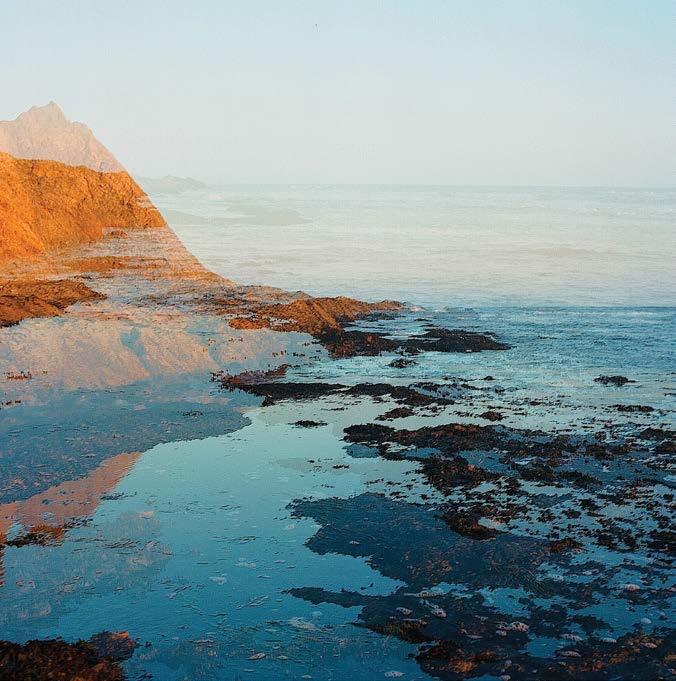
High Tide #2, 2014, It Goes On Forever, Duxbury Reef, Agate Beach, Bolinas, California, EE.UU.
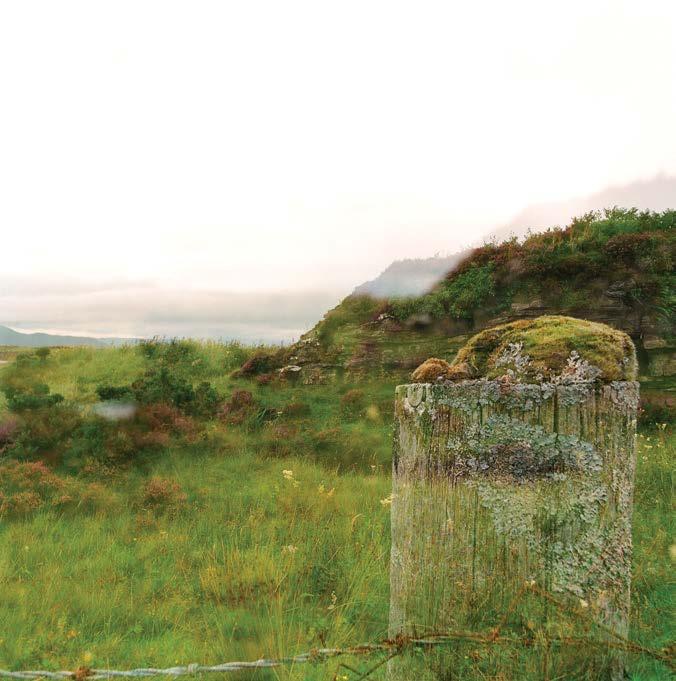
Breakish Border, 2018, Skye, Escocia, Reino Unido.
Teniendo en cuenta las otras disciplinas en las que participas, ¿cómo se relaciona la práctica terapéutica con las claves visuales que sustentan tus composiciones? Me he centrado en la resolución de traumas de una forma u otra durante treinta años: arteterapia, EMDR (desensibilización y reprocesamiento por movimientos oculares) y CRM (modelo integral de recursos). En la última década he utilizado CRM en lugar de EMDR, ya que considero que es más fácil de aplicar para mis clientes y más eficaz y eficiente. El CRM es más intuitivo y resuena mejor con mi enfoque hacia el arte y la arteterapia como procesos intuitivos. Creo que una buena terapia ayuda a las personas a aprender a escucharse a sí mismas, a escuchar su instinto, a distinguir entre la voz de la sociedad o la familia y la propia voz. Asumir riesgos suele ser parte del proceso y de la creación artística. Es una forma de dejarse llevar, jugársela, dejar una huella, arriesgarse. La fotografía análoga acepta tanto la perfección como la imperfección, la causa o el efecto, la naturaleza versus la crianza como parte de las experiencias de vida. He aprendido mucho de mi práctica de arteterapia y de mi práctica artística. Hay belleza y beneficios en el difícil trabajo de asumir riesgos emocionales y artísticos. Quiero que el espectador experimente algo del riesgo, la liberación, la aceptación y la alegría de mi práctica artística. En la fotografía análoga, al menos para mí, siempre hay un riesgo. Con las exposiciones múltiples intento que el espectador vea más. El trauma limita la perspectiva; literalmente te da una visión de túnel. No puedes ver el “panorama general”. O me siento mal o me siento bien; no hay término medio. Los modelos de procesamiento del trauma te ayudan a conectar con tu cuerpo para que puedas sentir todas tus emociones. Ayudan a aceptar la paradoja y realmente te dan una perspectiva más amplia. Exteriorizan lo que ocurre en tu interior. Es muy difícil sentirte centrado cuando tu mente no para de dar vueltas. Los seres humanos somos criaturas complejas, somos falibles. No podemos evitar el dolor: ocurrió, sigue y seguirá ocurriendo, pero no tiene por qué definir quiénes somos. Somos un todo, somos todas las partes. Trabajo con muchos medios y cada uno de ellos parece llevarme en una nueva dirección. Es otra capa de quién soy, nunca he sido de las que se quedan con una sola cosa. Ensamblaje, escultura de bronce, escultura de cerámica, collage, dibujo, fieltro, pintura, fotografía. Trabajo con lo que me apetece. Crear arte me mantiene cuerda, lo cual es claramente importante si quiero ayudar a los demás. Es importante que practique lo que predico. Escucharme a mí misma, a mi instinto, es fundamental. Encontrar formas de soltar el control, salir de mi cabeza, ser libre en mi vida, todo esto me ayuda a funcionar en el mundo, a funcionar en la sociedad y también es lo que hace que el arte sea bueno. Es un ciclo, uno alimenta al otro. Siempre que he cometido un error en mi vida ha sido inevitablemente porque no me he escuchado a mí misma, he dudado. Así que cuando pienso en sacar la cámara del bolso, lo hago.
Considering the other disciplines you’re involved in, how does therapeutic practice connect with the visual cues that sustain your compositions? I have focused on trauma resolution in one way or another for thirty years: art therapy, EMDR (Eye Movement Desensitization Reprocessing), and CRM (Comprehensive Resource Model). I’ve used CRM versus EMDR in the last decade as I feel it is both easier for my clients to do and it’s more effcient and effective. CRM is more intuitive and resonates more with my approach to art making and art therapy as intuitive processes. I believe good therapy helps people to learn to listen to themselves, listen to their gut, distinguish between a societal or familial voice and one’s own voice. Risk taking is often a part of art making, and art processes. It’s a way of letting go, rolling the dice, making a mark, taking a shot. Film accepts perfection or imperfection, cause or effect, nature or nurture as part of the experience of living. I have learned a great deal from my art therapy practice and artistic practice. There is beauty and benefit in the diffcult work of emotional risk and artistic risk taking. I want the viewer to experience some of the risk, release, acceptance and joy in my artistic practice. In analog photography, at least for me, there’s always a risk. With multiple exposures, I’m trying to get the viewer to see more. Trauma limits one’s perspective; it literally gives you tunnel vision. You can’t see the “big picture.” It’s either, I feel bad, or I feel good; there’s no middle ground.
Trauma processing models help you to get in your body so you can feel your feelings—all of them. They help you to accept the paradox, they literally give you perspective. You are externalizing what’s happening inside. It’s really hard to feel grounded when your head is reeling. We are complex creatures, humans. We are fallible. We can’t avoid pain: it’s happened, it’s happening, and it will happen, but it doesn’t have to define who we are. We are all of it, we are all the parts.
I work with many mediums, and each one seems to take me in a new direction. It’s another layer of who I am. I’ve never been one to stick with one thing. Assemblage, bronze sculpture, ceramic sculpture, collage, drawing, felting, painting, photography, I’ll work with whatever I feel like. Art making keeps me sane, which is clearly important if I want to help others. It’s important that I practice what I preach. Listening to myself, my gut, is crucial. Finding ways to let go of controls, get out of my head, be free in my life, all of this helps me to function in the world, function in society, and it is also what makes good art. It’s a cycle, one feeding the other.
Whenever I have made an error in my life it has inevitably been when I didn’t listen to myself. I second guessed myself. So when I think, take the camera out of the bag, I do.
Inglaterra | England
SAMIR FARIS
Por Elisa Massardo. Lic. en Historia y Estética (Chile)
Imágenes cortesía del artista.
Representado por Normal Royal.
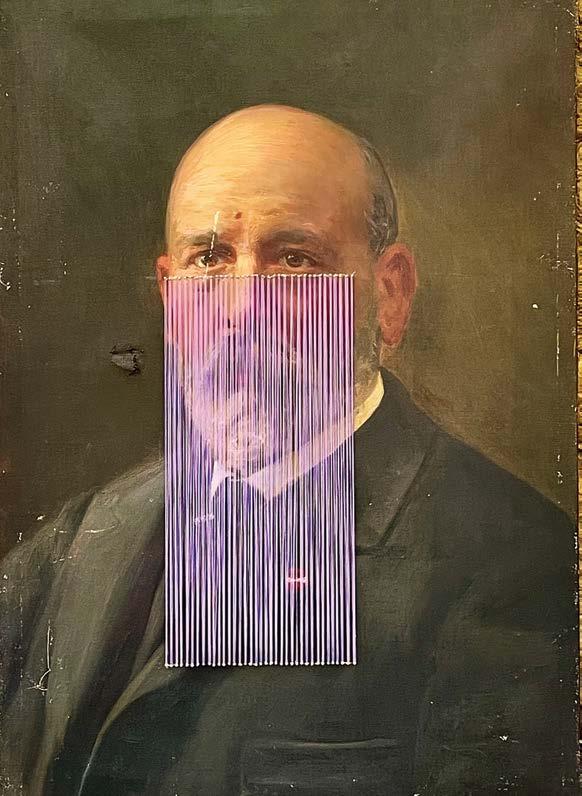
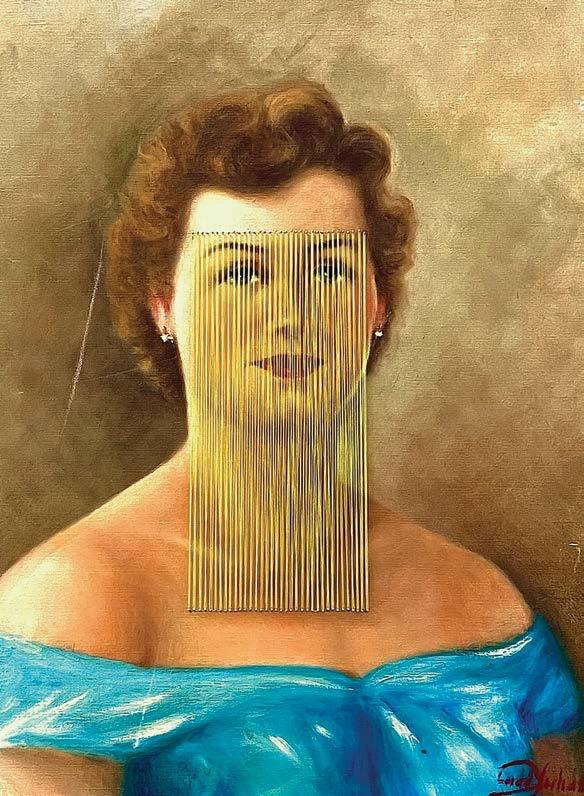
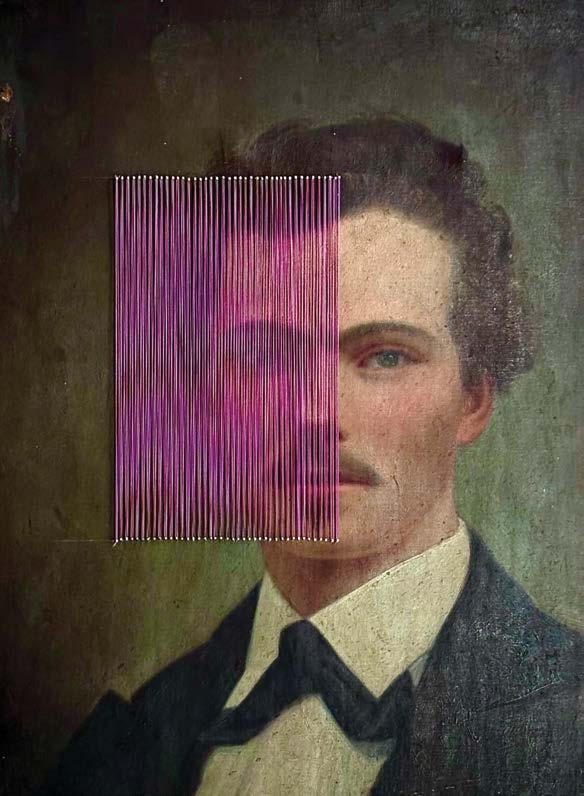
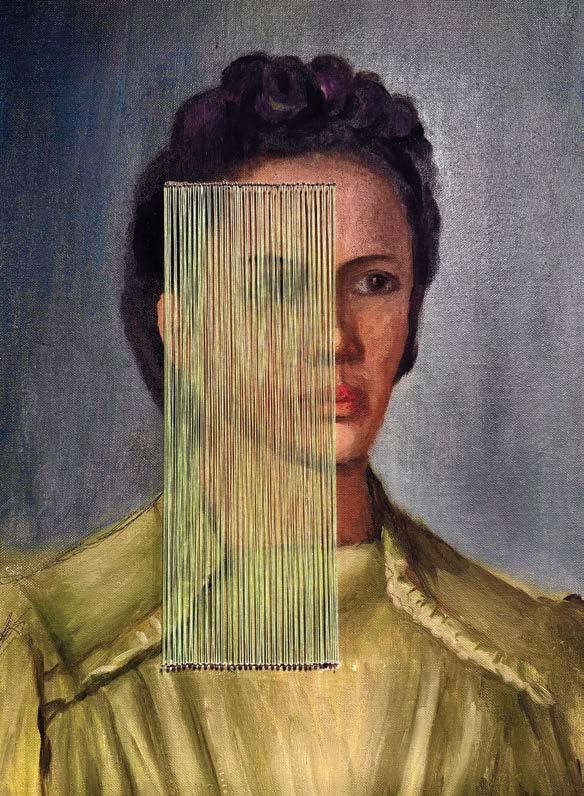
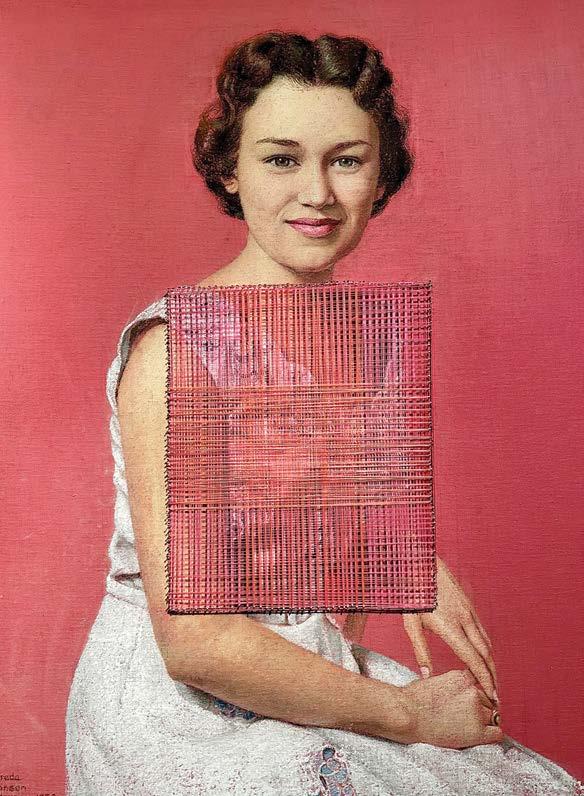
Magenta Gentleman , 2023, técnica mixta, objeto encontrado, hilo y aguja, 36 x 43 cm.
“Quiero que los espectadores se detengan a contemplar más de cerca”
anivel familiar no existen recuerdos sobre la primera persona que empezó a trabajar con ropas y cestas, siempre creadas en forma artesanal, con el cuidado y el tiempo que amerita cada pieza. En este entorno creció Samir Faris, con una herencia cultural proveniente del Líbano e Inglaterra. Así, a pesar de haber estudiado Historia, para el artista la creación manual era algo inevitable y este conocimiento técnico lo fue mezclando con una reinterpretación del lenguaje visual del arte, ya sea a través de pinturas, dibujos y objetos de arte. “Me interesa más el componente espiritual de lo que observo. No pretendo que mis obras tengan un énfasis político o conceptual. Me interesa mucho más la estética”.
En sus obras, el uso de la perspectiva es fundamental, la variación de la imagen de acuerdo al lugar desde donde la mires; el manejo de los hilos; la imaginación alterada por el movimiento. Trabaja con paisajes, pero también con retratos y diversos elementos que van demostrando este interés por la armonía del color, la intensidad de la mirada y la potencia que se obtiene de las técnicas mixtas.
En Ambient Scapes, hay tensión entre la naturaleza tangible del hilo y la inmaterialidad de la imagen. ¿Qué te interesa explorar en esta dualidad entre lo físico y perceptual?
Cuando alguien observa mis obras, quiero que tenga una experiencia 3D, en vez de solo una 2D. Quiero que la percepción de mi arte cambie a medida que el espectador se mueva en la sala. Me fascina cómo funciona la perspectiva. Al trabajar con hilos físicos, puedo hacer que la imagen se levante del papel; puedo hacer que luzca como si flotara.
Esta idea de la perspectiva, ¿cómo se incorpora dentro de la dimensión performativa del proceso creativo?
En definitiva, la percepción lo es todo para mí y para mi obra. A medida que el espectador se mueve en la sala, quiero que vea cómo cambia la imagen en función de la perspectiva. Desde distintos ángulos, la imagen puede parecer un fantasmagórica o un bloque sólido. Además, la forma en la que creo capas con diversos hilos de algodón hace que la imagen cambie de color o tono según la posición. Quiero que las imágenes cambien de aspecto físico cuando el ángulo cambie porque me parece que las hace cobrar vida.
¿Qué relación estableces entre tus obras y la tradición de pintar paisajes? ¿Crees que tu obra dialoga o reinterpreta ese género desde otra perspectiva?
Creo que constantemente dialogo con los paisajistas del pasado. También creo que modernizo ese lenguaje visual, tal como mi lengua hablada se relaciona con un idioma antiguo, pero lo actualiza. Este es un componente importante de la historia del arte: trabajar con las tradiciones y métodos del pasado y buscar brindarles una nueva dirección. Respeto mucho a los artistas del pasado. Y, cuando es posible, incorporo obras físicas mediante imágenes antiguas, como en mi serie titulada Portrait Structures.
La descripción de tu trabajo menciona la influencia del impresionismo y el campo del color. ¿Cómo interactúan esas referencias históricas con tu propio material y lenguaje contemporáneo?
¿Puedes creer que los impresionistas franceses emergieron hace aproximadamente 150 años? Hoy en día, los impresionistas franceses y su obra constituyen lo que yo denomino un “destino turístico”. Sin embargo, cuando ganaron protagonismo hace muchos años, eran bastante radicales con sus métodos y conceptos. Representaron un cambio extraordinario en la historia del arte.
“I want my viewers to stop and take a closer look”
i n his family, no one remembers who began working with tapestry looms and basket weaving, crafts that have always been made artisanally, with the care and time each piece deserves. Samir Faris grew up in this environment, rich in cultural heritage from both Lebanon and the UK. Despite studying history, the artist feels an unavoidable connection to manual crafts. He has merged this technical know-how with reinterpretations of art’s visual language through painting, drawing, and the creation of art objects. “I am more interested in the spiritual element of anything I look at. I do not intend for my artwork to have any political or conceptual emphasis. I am much more interested in aesthetics.”
In his works, shifting viewpoints are fundamental, as images change depending on the angle and the way he manipulates the threads, transforming imagination through movement. He works with landscapes and portraits, incorporating elements that evince his fascination with harmony and color, with the intensity of perspective, and the depth that can only be achieved through mixed media.
In Ambient Scapes, there is a tension between the tangible nature of the thread and the immateriality of the image. What interests you about exploring this duality between the physical and the perceptual? When someone looks at my artworks, I want them to have an experience that is associated with the 3D rather than only the 2D. I want the perception of my art to change as the viewer moves around the room. I am very interested in the idea of how perspective works. By working with the physical threads, I can raise the image away from the paper; I can make the image look as if it is floating.
How does this idea of perspective fuse into the performative dimension of your creative process?
Of course, perception is everything to me and my artwork. As the viewer moves around the room, I want them to see how the image changes with the perspective. From different viewpoints, the image can appear as if it is ghostlike in one position and from another position it can appear to be a solid block. Also, the way that I create layers using various cotton threads will change the color or tone depending on the viewpoint. I want the image to physically change as the viewpoint changes. I believe that it makes the image alive.
What relationship do you establish between your pieces and the tradition of landscape paintings? Do you feel your work dialogues with or reinterprets that genre from another perspective?
I believe that I am constantly dialoguing with the landscape artists from the past. I also believe that I am modernizing that visual language also, just as my spoken language relates to the language of the past, but updates it. That is an important component to Art History: to work through the traditions and methods of the past and look for new directions. I have much respect for the artists of the past. And, whenever possible, I actually incorporate the physical artworks by using vintage and antique images in my series Portrait Structures.
The description of your work mentions the influence of impressionism and color field painting. How do these historical references interact with your own material and contemporary language?
Can you believe that the French Impressionists first came to attention approximately 150 years ago? Today, the French Impressionists, and their artworks, are largely what I call a ‘tourist destination’. However, when they first came to prominence all those years ago, they were quite radical with their methods and concepts. They really represented an extraordinary change in the history of art.
Green Matron , 2024, técnica mixta, objeto encontrado, hilo y aguja, 38 x 50 cm.
The Melancholy Gent , 2025, técnica mixta, objeto encontrado, hilo y aguja, 38 x50 cm.
Señorita Verde , 2025, técnica mixta, objeto encontrado, hilo y aguja, 36 x 43 cm.
El movimiento impresionista se caracterizó por trazos visibles, el énfasis en los cambios de luz en sus representaciones y la convergencia de diversos puntos de vista, solo por mencionar algunas de las cosas que alteraron con la nueva dirección que propusieron. En particular, me interesaba centrarme en cómo creaban una crudeza visual al hacer que sus trazos se tornaran evidentes a la vista. Sin embargo, también introdujeron una forma nueva de representar efectos visuales y tonales con capas de colores. Por primera vez, el público general podía ver cómo el color y el tono se construía gradualmente ante ellos. La magia de la contemplación se desarrollaba paso a paso, frente a sus ojos. Evidentemente, quería encontrar una manera de interpretar esa habilidad que desarrollaron los impresionistas. Por ello, si un espectador promedio contempla mis obras en persona, se puede dar cuenta de que no uso un solo color para crear un efecto. Tal como los impresionistas, agrego hilos en capas, de forma tal que creo una nueva estética de color, incluso trabajando con colores contrarios. Por ejemplo, para lograr un tono de verde específico, superpongo capas de hilos cafés, amarillos y azules, ya que combinándolos puedo obtener el verde que busco. Luego, dependiendo del punto de vista, ese verde puede lucir más azulado o café según el ángulo. De esta forma, puedo emular el mismo efecto visual en mis obras que los pintores impresionistas franceses descubrieron hace muchos años. Me parece que ese tipo de concepto es muy interesante. No pretendo ser tan talentoso como los impresionistas famosos, pero me enorgullece haber encontrado una forma de introducir la superposición de hilos de colores de la misma manera en que estos artistas de antaño superpusieron capas de pintura.
¿En qué punto decidiste incorporar cuerpos y rostros en tus obras y por qué se produjo este cambio?
Como soy un gran aficionado de la historia del arte, naturalmente tiendo a buscar y coleccionar pinturas y dibujos antiguos, así como fotografías de otras épocas. Llamo a estas obras “fantasmas”, y algunas veces me hablan de una forma especial y me tienden un puente de contacto con épocas lejanas. Empecé a incorporar algunas de estas imágenes en mi obra hace unos seis o siete años. Me emociona trabajar con antigüedades y objetos antiguos para reinterpretar ese lenguaje visual. Sin embargo, no todas la imágenes antiguas se pueden reinterpretar de esta forma. He arruinado algunas intentándolo, pero de momento los éxitos superan con creces los fracasos.
¿Crees que el bordado mejora o anula la existencia del cuerpo en tu obra?
En Portrait Structures, busco crear una especie de velo estético. Quiero que los espectadores se detengan a contemplar más de cerca. En ese sentido, creo que estoy mejorando los retratos. No busco anular o negar nada, ya que me parecería una falta de respeto con las imágenes originales.
Por último, ¿qué papel crees que tiene el tiempo en tu proceso, tanto en la repetición del bordado o en la forma en que tu obra se revela gradualmente ante los espectadores?
Siento que si te tomas el tiempo de crear una obra de arte, ese esfuerzo se repaga en el tiempo que toma contemplarla y considerarla. Si produces algo con un espíritu meditativo, el resultado exudará la misma cualidad. Nunca puedes ser responsable de la interpretación de tu obra por parte del público, pero siempre espero que los espectadores, como yo, busquen algo más profundo y gratificante, que entiendan mis métodos y respeten el posible tiempo que toma desvelar la maravilla tras la propuesta visual. Soy romántico por naturaleza, así que espero que la audiencia pueda disfrutar el respeto y la admiración que infundo en mis obras, tal como yo admiro las creaciones de los artistas de la historia.
The impressionist movement was characterized by visible brush strokes, an emphasis on the effects of changing light in their depictions, and their concentration of varied points of view, to name just a few things they altered with their new direction. In particular, I was interested in focusing on how they created a new visual rawness by allowing their brushstrokes to show. However, they also introduced a new way of presenting visual effects and tonal effects by layering color. For the first time, the average viewer could see how color and tone were built right before their eyes. The magic of viewing was developed step by step in front of you. Naturally, I wanted to find a way to interpret that ability that the impressionists developed. So, if the average viewer sees my artworks in person, they can witness that I do not just use a single color to create an effect.
Much like the Impressionists, I layer my threads in such a way as to create a new kind of color aesthetic sometimes by working with opposing colors. For example, to make a particular green tone for my artworks, I layer a brown thread, a yellow thread, and a blue thread. Combined, these threads can create the type of green I seek. Then, depending on the angle of the view, that same green might look bluer from one angle, or browner from another angle. In this way I can emulate the same visual effect in my artwork that the French impressionist painters first discovered in their work many years ago. I find that kind of concept very exciting. I do not pretend to be as talented as the famous French impressionists, but I am proud of myself that I figured out a way to introduce the layering of colored threads in the same way that those painters of yore layered their brushed paints.
At what point did you decide to incorporate bodies or faces into your work, and what is the reason for this variation?
Because I am a big aficionado of art history, I have a natural tendency to seek out and collect old paintings and drawings, as well as photographs from other eras. I refer to all of these paintings, drawings, and photos as ‘ghosts’. These ghosts can sometimes speak to you in a special way and bridge a contact from many, many years. I started to incorporate some of these actual objects about 6 or 7 years ago. I find it exciting to work with antiques and vintage things and reinterpret that visual language. Not every antique image can be reinterpreted in this way. I have ruined some antiques in this way, but so far, the successes outweigh the failures.
Do you think embroidery enhances or nullifies the existence of the body in your work?
I seek to create a type of aesthetic veil with regard to my Portrait Structures . I want my viewers to stop and take a closer look. So, in that regard, I think I am enhancing a portrait. I do not seek to nullify or negate anything, as I would consider that a disrespect to the original.
Finally, what role does time play in your process—both in the repetition of the embroidery gesture and in the way the work slowly reveals itself to the viewer?
I feel that if you take time to make a work of art then it repays you in the amount of time it takes to consider something. If you make something in a meditative spirit, then the end result will exude something meditative. You can never be responsible for how someone will view your artworks, but I always hope that those viewers, like myself, who seek something deeper and more fulfilling, will understand my methods and respect the amount of time it takes to possibly unveil the wonder behind the visual concept. I am an old romantic by nature, so I hope my viewers will also enjoy the respect and wonder that I infuse in my artworks, just as I wonder and respect the creations of those artists in history.
Lady Pink , 2023, técnica mixta, objeto encontrado, hilo y aguja, 76 x 102 cm.
Colombia | Colombia
WILMER USECHE
Por Lucía Rey. Académica e investigadora independiente (Chile)
Imágenes cortesía del artista.
Representado por Adrián Ibáñez Galería.
Sin título , 2024, marcadores y bolígrafos en papel
Arches
300 gm. 75 x 56 cm.
Inmanencia y ritualidad para una temporalidad contemplativa
“Como
está fuera del tiempo, se trata de lo que los griegos llamaban lo eterno, lo a-ídion, entendido no como una realidad abstracta que reposa en sí misma y está separada de nosotros, sino como esa tensión, que hace que la realidad (lo ente) se desoculte”
E. Grassi
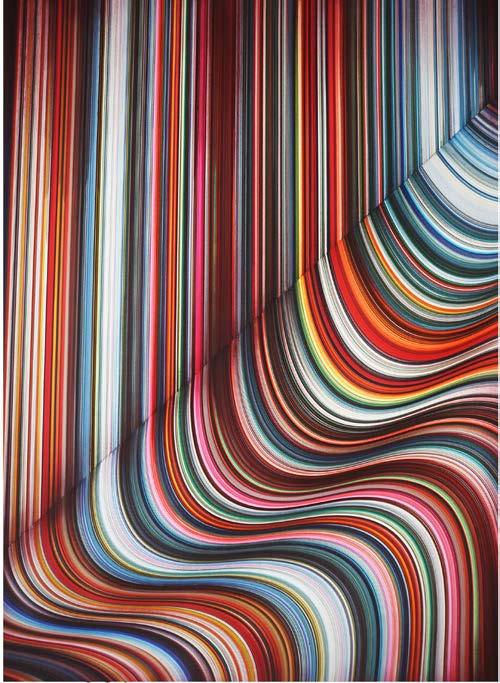
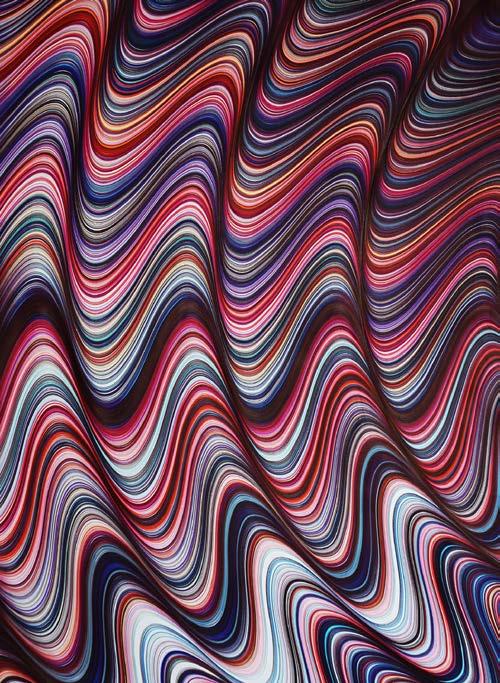
l as obras de Wilmer Useche contienen sutilmente la cita de una tensión contemporánea entre la creación con materialidades manufacturadas en el oficio disciplinar y la tentación visual de percibirlas como productos digitales, algorítmicos. En el acercamiento a las obras se va desplegando una profundidad cromática tramada entre horas reflexivas cargadas de una potencia proveniente de un ojo arquitectónico. Esta visión entrenada del artista es lo que le permite componer, entre lo micro y lo macro, imágenes que pueden señalizar fenómenos ópticos de la fotográfica urbana acelerada, muchas veces no captable con una visión corriente. Así, las imágenes que emanan de sus obras pueden llegar a formar figuras simbólicas, abstracciones geométricas como también transportarnos a la física cuántica y la teoría de cuerdas.
Su cuidadosa elaboración técnica, transporta al artista, entre papeles de algodón, telas, reglas, patrones y plantillas a investigaciones sensibles que van impregnando la obra y que van tomando forma en las intensidades con las que el artista permite la fluidez del error y de lo imprevisto, en equilibrio con su meticuloso trabajo gráfico, entre bolígrafos, rapidógrafos, rotuladores y/o acrílicos.
Esta escena del taller comparte muchos elementos con un taller de costura, lo que no es algo intrascendente, pues el emplazamiento del espacio creativo del artista da cuenta de sus coordenadas compositivas. Se encuentra así en esa intimidad del tiempo del hacer creativo, entre materiales similares a los de la costura, pues trabaja desde el valor de la manufactura textil, indicando la fuerza de lo artesanal. Puede verse como una metáfora, ya que su confección va hacia la abstracción imaginal de los tejidos y urdimbres, elaborando figuraciones de hilos que componen unidades simbólicas.
En su trayectoria ha investigado colores textiles precolombinos con la intención de aportar creativamente al rescate de esa memoria ancestral, muy inspirada en patrones geométricos y mundos míticos fuera del tiempo lineal. Posiblemente, esta investigación del arte textil haya trazado en lo invisible puentes hacia un imaginario cromático contemporáneo. Muchas veces, lo contemporáneo parece una novedad, pero lo que se verifica en el estudio es que en los fondos de las más diversas culturas palpitan las mismas inquietudes y figuraciones vivientes en la psique, reapareciendo temporalmente, pero revestido de lenguajes técnicos específicos. Aquí, Useche añade intensidades lumínicas que citan la luz y la óptica digital, y compone figuraciones sutiles, casi transparentes, de hilos que unen vibratoriamente la realidad en lo imperceptible.
Immanence and rituals for a contemplative temporality
“Since it is outside of time, it is what the Greeks called the eternal, the a-ídion, understood not as a static abstraction apart from us, but a tension in which reality (beings) come into unconcealment”
E. Grassi
wilmer Useche’s artwork subtly references a contemporary tension between creating with materials from traditional crafts and the visual temptation to perceive them as digital or algorithmically produced. Engaging with his work reveals a rich depth of color woven over hours of careful reflection, showcasing the strength of an eye informed by architectural know-how. This trained sensitivity of the artist allows him to compose images that, at both micro and macro scales, evoke optical phenomena found in fast-paced urban photography, which are often difficult to capture with a more traditional view. The images that emerge from his work range from symbolic figures to geometric abstractions, but they are also reminiscent of quantum physics and string theory.
His thoughtful and technical creations guide the artist through sensory explorations among cotton papers, canvases, rules, patterns, and templates. These elements immerse his work and allow the artist to embrace the intensity in the fluidity of mistakes and unforeseen factors, balanced with his meticulous graphic work among pens, stylographs, fine liners, and acrylics.
This studio setting resembles a sewing workshop, which is significant because the environment in which the artist creates enhances the understanding of his compositions. In the intimacy of his creative process, surrounded by materials akin to those used in sewing, he celebrates textile production and highlights the importance of manual craftsmanship. This method of creation can be seen as a metaphor, because his confections embody an imaginative abstraction of textiles and warps, creating figurations of threads that build symbolic units.
Throughout his career, he has researched pre-Hispanic textiles to, through his artistic contributions, salvage ancestral memories—traditions that are heavily inspired by geometric patterns and mythical worlds that transcend linear time. Perhaps this examination of textile art has erected an invisible bridge towards more contemporary chromatic imagery. Oftentimes, the contemporary seems like a novelty, but upon further analysis, the foundations of the most diverse cultures resonate with the same latent concerns and vivid representations of the psyche. These themes might reappear temporarily, but disguised in different specific technical languages. In this regard, Useche adds luminous intensity to hint at light and digital optics, and builds subtle, almost transparent, figurations of threads that sync the vibrations of reality to the imperceptible.
Sin título , 2024, marcadores y bolígrafos en papel
Arches
300 gm.
100 x 70 cm.
Al ser un autor formado antes de la expansión de la digitalización, tiene la posibilidad de crecer y conocerse artísticamente a través del oficio disciplinar, que es un bagaje atesorado como conocimiento artesanal, proveniente del dibujo arquitectónico, que luego logra desplazar hacia el campo de las artes. Este desplazamiento le permite construir un lenguaje propio, en cruce estético con diversas disciplinas. El tejido visual de estos hilos de color son testimonio de las posibilidades de la sensibilidad y la imaginación “profundamente humana”, estableciendo un punto de inflexión, creativa y crítica hacia los procesos de generación de imágenes digitales construidas con algoritmos. En este sentido, lo que pulsa en estas obras son mensajes que atraviesan la temporalidad lineal acelerada del progreso tecnológico. Son obras que toman tiempo en su realización, mismo tiempo que simbólicamente puede transportar hacia una desaceleración contemplativa, a un horizonte abstracto de sentido cuántico, tan trascendente como inmanente, mismo que ha sido testimoniado desde lo múltiple a través del arte ritual de los pueblos originarios de América y que sigue pulsando transgeneracionalmente.
El acto repetitivo del trazado cromático a través de plantillas puede ir abriendo un estado hipnótico, no solo en quien “contempla” la obra, sino también en quien la realiza. Recordando que la contemplación no es lo mismo que la observación habitual de la cultura visual contemporánea. La contemplación (en su etimología de raíz latina contemplatio , que viene de templum : un espacio para la observación o un lugar sagrado) se refiere a la comprensión de la realidad viva, a detenerse para permitir que la obra hable y entregue conocimiento sobre sí misma. Simbólicamente, este trazo marcado por la repetición milimétrica transporta mnémicamente a una determinada actitud ritual inspirativa en el artista. Pues no es una máquina quien las “genera” e “imprime”, es un cuerpo sensible, que se permite en la creación artística habitar un mundus imaginalis (H.Corbin), un mundo intermedio entre el cielo y la tierra, entre lo visible y lo invisible, trayendo sincrónicamente de este espacio, que podríamos llamar “sagrado”, la inspiración creadora, como furor que inmanentiza la obra, dándole sentido y fundamento poietico que traslada el no ser al ser.
As an artist trained before the surge of digitalization, he had the opportunity to grow and develop artistically through his disciplined craft—a treasure trove of artisanal knowledge derived from architectural drawing—which he then managed to transfer to the field of the arts. This movement has allowed him to develop a language of his own that aesthetically merges different disciplines. The visual tissues of the colored threads are proof of the possibilities of ‘profoundly human’ sensitivity and imagination, thus constituting a turning point for creativity and criticism of last-gen digital image creation through algorithms. In this sense, his artwork pulsates with messages that question the accelerated linear time of technology-driven processes. These are works that take time to complete, the same time that can symbolically transport us toward a contemplative deceleration, to an abstract horizon of quantum meaning, as transcendent as it is immanent, which has been witnessed from multiple perspectives through the ritual art of the indigenous peoples of America and continues to pulsate transgenerationally.
The repetitive act of tracing colors through templates can induce a hypnotic state, not only in those who contemplate the work, but also in those who create it, noting that contemplation is not the same as mere observance of contemporary visual culture. Contemplation (from the Latin root contemplatio , which comes from templum : a space for observation or a sacred place) refers to the understanding of living reality, to pausing to allow the work to speak and impart knowledge about itself. Therefore, symbolically, these lines, defined by millimeter-precise repetition, imply a specific, inspirational, ritualistic attitude in the artist. It is not a machine that ‘generates’ and ‘prints’ these images; it is a sensitive body that allows itself, through artistic creation, to inhabit a mundus imaginalis (H. Corbin), a liminal space between heaven and earth, visible and invisible, bringing creative inspiration to this time-space, which we might call ‘sacred’. In this frenzy , his artwork becomes immanent, filled with meaning and a poietic foundation that transforms non-being into being.
Sin título , 2024, marcadores y bolígrafos en papel Arches
300 gm.
100 x 70 cm.
Cuba - EE.UU. | Cuba - USA
ANTONIA WRIGHT RUBÉN MILLARES
Por Ivón Figueroa Taucán. Magíster en Teoría e Historia del Arte.
Imágenes cortesía de los artistas.
La valla metálica como símbolo de nuestro tiempo
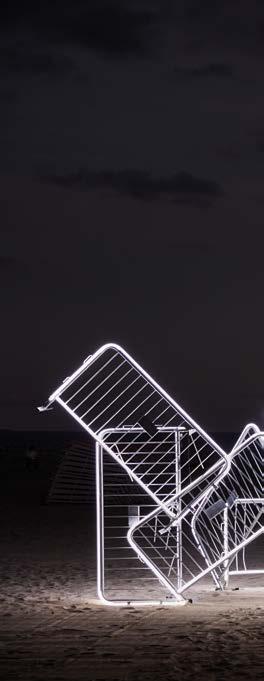
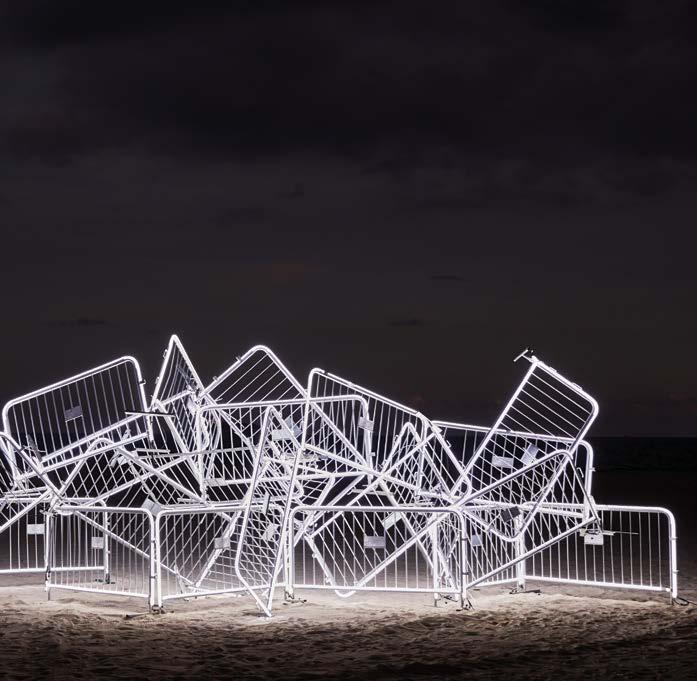
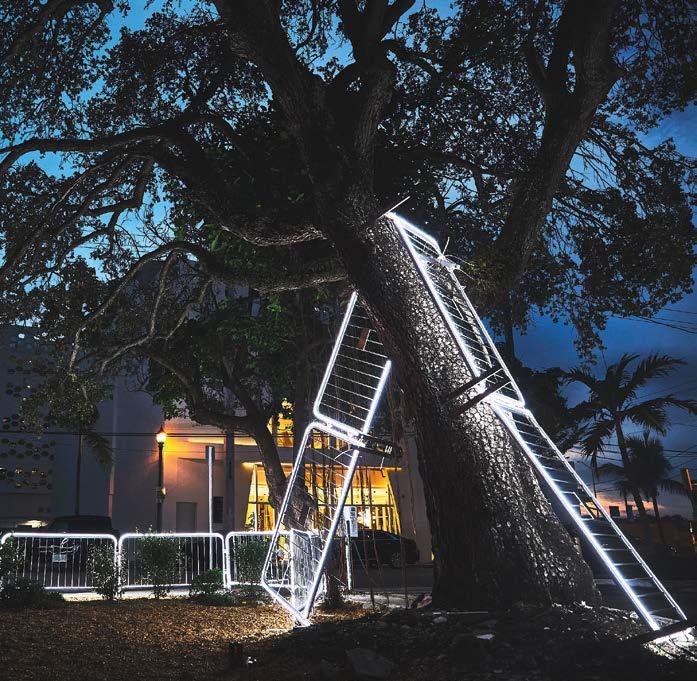
desde hace 15 años, Antonia Wright y Rubén Millares desarrollan una práctica artística en común, a pesar de que sus formaciones artísticas son muy diferentes. Antonia inició su carrera a través de la poesía y la performance, a la que se dedicó por casi una década, abordando problemáticas sobre género y la autonomía del cuerpo. Rubén Millares creció tocando guitarra y batería, estudió contabilidad y finanzas, y se propuso buscar el balance entre ambas áreas, trabajando con el sonido, la luz, la música, el video y la serigrafía. Su colaboración parte desde una trayectoria biográfica compartida: tienen padres cubanos y crecieron en la misma área de Miami. En consecuencia, sus temas de trabajo recurrentes son la crisis de la migración a nivel global y la defensa del derecho a la protesta. Las vallas de acero iluminadas con LED, instaladas tanto en el espacio público como al interior de museos y galerías, son elementos centrales que caracterizan una serie de su producción visual.
The barricade as a symbol of our time
antonia Wright and Rubén Millares have worked together for over 15 years, although their backgrounds in artistic training differ greatly. Wright began her career in poetry and performance addressing gender issues and bodily autonomy for nearly a decade. In turn, Rubén Millares grew up playing guitar and drums, and later studied accounting and finance. Resolved to find balance between both worlds, he utilizes sound, light, music, video and screen printing in his work. The collaboration between these two artists stemmed from their shared life experience: their parents are Cuban and they brought up in the same area in Miami. Consequently, the most recurrent themes in their work are the global migration crisis and their advocacy for the right to protest. Steel barricades lit with LEDs –installed in both public spaces and within galleries and museums– are the central elements of one of the series they produced together.
Patria y Vida, 2022, 25 barricadas de acero, luces led, bridas de acero, 111.76 x 213.36 x 58.42 cm.
¿Cómo llegaron a la idea de trabajar con vallas de acero?
Crecimos asistiendo constantemente a protestas con nuestros padres. Aprendimos que la protesta es un derecho esencial, y ambos mantuvimos esta práctica en nuestra vida adulta. Hemos notado, además, que ahora las manifestaciones son más prevalentes que nunca. Algunas de las manifestaciones más grandes están teniendo lugar en países donde protestar es ilegal. Cuando estallaron las protestas de Black Lives Matter en los Estados Unidos, comenzamos a analizar las imágenes de prensa de estos sucesos y nos dimos cuenta que casi todas las fotos mostraban vallas metálicas. Casi todo el mundo asocia estas vallas con conciertos o desfiles y, por ende, se les percibe como parte de festividades. Sin embargo, en el contexto de protestas, es cada vez más común que la policía las utilice.
Por este motivo, investigamos las vallas metálicas y examinamos los manuales de la fuerzas policiales para entender su uso previsto. Descubrimos que están diseñadas para camuflarse con el entorno, lo que explica su apariencia de acero sin lacar, pues se tornan inconspicuas. A pesar de su robusta apariencia, son livianas y fáciles de transportar. Su principal función es pasar desapercibidas mientras controlan y conducen las multitudes. Decidimos iluminarlas para hacer obvia su presencia y así demostrar lo generalizado que se ha vuelto su uso en espacios públicos. Nuestro objetivo es dirigir la atención a lo que hemos observado y concientizar al público sobre estos mecanismos de control tan comunes. ¿Podrían profundizar en la discursividad asociada al uso de la luz en sus esculturas?
En general, las barricadas se utilizan para generar una noción de orden. De hecho, al leer los manuales policiales, siempre se hace referencia a esto. No obstante, al ser tan livianas, a menudo las toman y se arrojan a la policía. Entonces, creo que su función es ambigua. ¿Nos protegen o nos controlan? ¿Será que provocan más violencia en las protestas?
How did you land on the idea of working with steel barricades?
We grew up attending demonstrations constantly with our parents. We learnt that protest was a crucial right, and we maintained this practice into adulthood. We’ve observed that protests are now more prevalent than ever. Some of the largest demonstrations are occurring in countries where protesting is illegal. Then the Black Lives Matter protests emerged in the U.S. We began closely examining news images of these events and noticed that nearly every protest photo contained steel barricades. Most people associate barricades with concerts or parades. They’re seen as part of festive activities. But in protest contexts, police are increasingly deploying them.
We researched barricades, reviewing police manuals to understand their intended use. They’re designed to blend into the environment, which explains their unpainted steel appearance. This makes them inconspicuous. Despite their sturdy appearance, they’re lightweight for easy transport. Their primary function is to remain unnoticed while controlling and directing crowds. We decided to illuminate them, making their presence obvious and demonstrating how pervasive they’ve become in public spaces. Our goal was to draw attention to what we had observed, to make the public aware of these ubiquitous control mechanisms.
Could you elaborate on the idea behind the use of lighting in your sculptures?
Normally, barricades will be used to create an idea of order. If you read the police manuals, it’s always about it. But they’re very light and oftentimes, they can be used and thrown back at the police. I think their purpose is ambiguous. Are they protecting us, or are they controlling us? And are they causing more violence in protests?
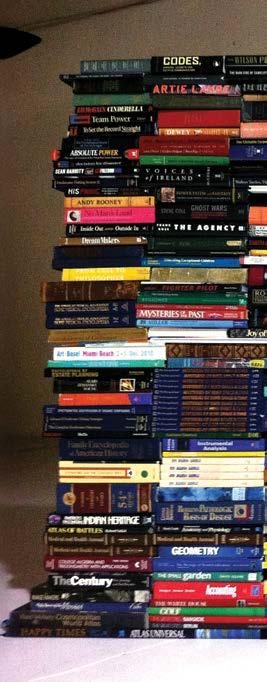
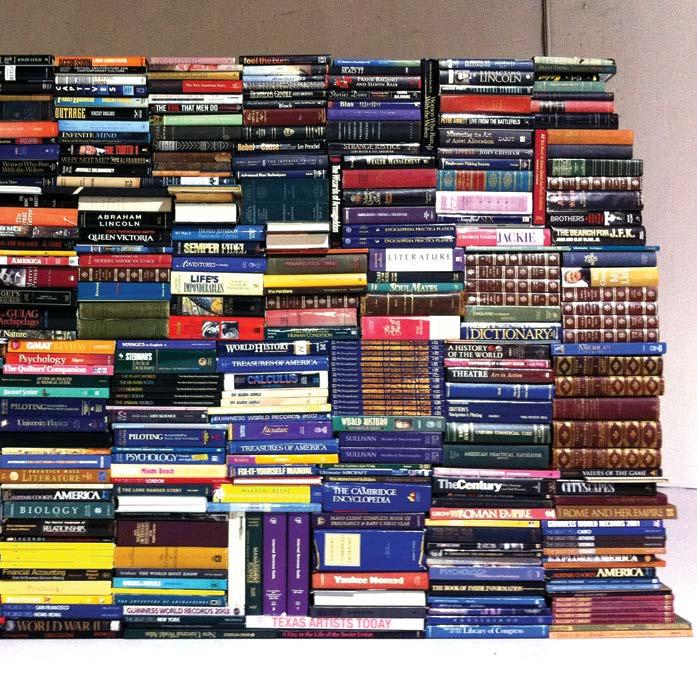
Job Creation in a Bad Economy, 2010, un video monocanal, duración 2.08 minutos; un estante de libros (2011), dimensiones variables. Colección: Hadley Martin Fischer.
Vimos una imagen de las manifestaciones en Hong Kong donde los protestantes usan a su favor las vallas metálicas que coloca la policía. Las atan y arman estructuras para protegerse. Subvierten el uso previsto de las vallas, que es controlar los cuerpos en una protesta. Así, tomamos una imagen y en una de las piezas comenzamos a trabajar con la iluminación, cubriendo las vallas con luces LED. Una vez iluminadas, se vuelven tan brillantes que verdaderamente revelan la frecuencia con la que se usan en las calles. Es como si la luz las hiciera casi inevitables.
¿Qué contextos políticos específicos dialogan con esta serie? Creo que es una muestra bastante atemporal. Comenzamos a trabajar en estas obras en el 2020, cuando emergieron grandes manifestaciones en América Latina. En ese marco, nuestra obra se volvió muy relevante de súbito. Tuvimos instalaciones en la playa, en el mar, por ejemplo, lo que transmutó el contexto de las barricadas después de que ya habíamos trabajado en esta obra. El arte tiene el potencial para prolongar esta conversación más allá del ciclo de noticias. En cuanto a si estas obras provocan un nuevo tipo de protesta, es ambiguo, y cuantificarlo resulta difícil. Sí son generativas, en el sentido que suscitan conversaciones en torno a estas problemáticas. Eso es lo que puede engendrar el arte; puede detener el tiempo y originar debates que lleven a alguien a protestar, donar dinero, o participar en la política. Es una especie de portal diferente. Tratamos de enfocar esta noción, y las vallas representan objetos inanimados que la condensan. Se pueden aplicar a cualquier situación de protesta. Se nos ha acercado gente de todo el mundo, gente que usa las vallas a su modo. Casi todos los países tienen su propia versión. Siempre
We saw an image from the Hong Kong protests. And there, protesters use the barricades that are put up by the police. They’ll zip tie them together and will create a structure to protect themselves. They subvert this intended use of what the barricades are supposed to be, which is to control bodies in protest. So, we took one image. One of the pieces that we started working with light was that we would take the barricades and cover them with LED lights. With the light, they become so bright that they really talk about how often they’re used on our streets. The light almost makes them unavoidable.
What specific political contexts interact in this series?
I think it’s a very timeless piece. We started making these works in 2020. There were big demonstrations in Latin America. Suddenly, our piece became very relevant. We did it out on the beach, on the water, for example, changing the whole context of these barricades after we had already been working on this piece. Art has this potential to continue the conversation longer than a news cycle. In terms of whether these works cause a new type of protest, it’s ambiguous, quantifying that is difficult. But it’s generative in that it causes more conversations about these issues. That’s what art can do. It can stop time and create these conversations that may lead someone to protest, donate money, or get involved politically. It’s a different type of portal.
We try to shift to a point, and the barricades do that by using this inanimate object that condenses the idea down. It can be applied to any protest situation. People from all over the world have come up to us and applied it on their own. Almost every country has had their form
Mighty oaks from tiny acorns grow, 2023, 12 barricadas de acero, luces led, bridas de acero, 360.7 x 35.6 x 38.1 cm.
se ven barricadas. Incluso hoy, con la situación migratoria, con las deportaciones en Estados Unidos, hay protestas en todas partes. Las vallas son muy relevantes; pensamos que son un símbolo de nuestro tiempo. Hablan de seguimiento y control, pero también de resistencia. Asimismo, es importante la subversión de este objeto: algo concebido para usarse contra ti se invierte y se usa en contra de la autoridad.
¿Consideran las cargas simbólicas e históricas de los lugares donde instalan sus esculturas al momento de decidir trabajar en ellos?
Absolutamente. Siempre que nos invitan a realizar una instalación investigamos la historia de las protestas en esa zona. Nuestras instalaciones son in situ. Cuando nos invitan, encontramos el mejor uso y diseño para la obra, dependiendo de la arquitectura del espacio. Luego, estudiamos la historia del lugar o lo que ocurre con la política del entorno. A veces, surgen temáticas medioambientales. En una oportunidad creamos una obra en la que emergieron problemas sobre el medioambiente y nos subimos a un árbol con las barricadas. Eso fue articulado como respuesta a las protestas en Atlanta. Siempre analizamos la arquitectura para crear una obra específica para el espacio. Después, tratamos de usar las imágenes que hemos visto en las protestas y las aplicamos en el espacio. Por ejemplo, realizamos una instalación en Museo Lowe de la Universidad de Miami, donde tenían una viga enorme a 4,5 metros de altura. Como a menudo los protestantes usan las vallas metálicas como escaleras, apilándolas, nosotros replicamos esta disposición en el edificio para demostrar cómo se usan las vallas en protestas reales. Esta obra celebra nuestro derecho a protestar dado que, ahora mismo, nos lo están quitando.
of this. Every time, you will see a barricade. Even today, with the migratory situation, with deportations in the US, protests are happening everywhere. It’s very relevant. We think of the barricade as a symbol of our time. It’s about surveillance and control, but also resistance. The subversion of that object is important—an object supposed to be used on you is turned around and used against the authority.
When a location is decided, do you take into account the history and symbolism of the sites for your installations?
Absolutely. Whenever we’re invited to do one of these, what we’ll do is research the history of protests in that specific area. They are site-specific works. When we’re invited, we figure out what the best use and the best design is for the work, depending on the architecture of the building. Then the history of the place and what is going on in that moment politically. It could be environmental. We had one we did that brought in environmental issues, and we went up into a tree with the barricades. That was in response to the Atlanta protests.
We always look at the architecture of each space to make it site-specific. Then try to use the imagery that we’ve been seeing in protests and apply it to a space. For example, we did one at the Lowe Art Museum at the University of Miami, and they had a big column that was up 15 feet in the air. The protesters used these barricades as stairs a lot of times. They stack up this way like a ladder. We went up and over the architecture of the space to show how they are used in actual protests. This piece is about celebrating our right to protest because as we speak, they’re taking it away.
Under the Water was Sand, then Rocks, Miles of Rocks, then Fire, 2016, performance para video y fotografía.
Argentina | Argentina
GLORIA MATARAZZO
Por Julio Sapollnik. Crítico de Arte (Argentina)
Imágenes cortesía de la artista.
Representada por Galería Imaginario.
El arte de la mirada
gloria Matarazzo realiza una operación poética con la imagen: la transforma, la reinventa, la libera de sus ataduras representacionales. Sus fotografías, intervenidas digitalmente, ejercen una atracción hipnótica que detiene el tiempo. No es posible recorrerlas con ligereza: exigen permanecer. Invitan a una contemplación activa, donde la mirada, en un inicio confiada, es pronto interrumpida por un elemento inesperado que reconfigura el conjunto. Esa dislocación no produce desconcierto, sino un goce estético: el espectador deviene explorador, constructor de sentido.
Matarazzo cultiva una estética de la lentitud. En un mundo saturado de imágenes instantáneas y consumo visual acelerado, su obra propone lo que Shōzō Uchida llama “estética del intervalo”, donde la belleza surge de la pausa, de lo que no se dice, de lo que no se muestra del todo. De este modo, la artista se inscribe en una tradición contemporánea que, como defiende Byung-Chul Han, reclama una “política del cuidado” frente a la hipertransparencia y el exceso de positividad visual: “Contemplar es resistir al imperativo de producir”.
The art of contemplation
gloria Matarazzo performs a poetic operation with images, transforming, reinventing, and liberating them from traditional representational restraints. Her digitally altered photographs exert a hypnotic pull that freezes time. It is not possible to take her images in lightly: they compel us to linger. They encourage active contemplation, where initial impressions of the eye are disrupted by unforeseen elements that reshape the entire scene. This dislocation is not disconcerting; instead, it produces an amusing aesthetic exercise in which viewers become explorers and builders of meaning.
Matarazzo embraces slow-paced aesthetics. In a world overwhelmed with instant images and rapid visual consumerism, her work introduces what Shōzō Uchida refers to as “interval aesthetics”, which emphasizes the beauty in pauses, unspoken elements, and aspects that are not fully revealed. The artist adheres to a contemporary tradition of care and cultivation as a political gesture against the transparency culture and excess of visual exposure, as postulated by ByungChul Han: contemplation counters the imperative of constant production.
Buscando Una Nube, 2024, fotografía digital bajo acrílico 3mm Epson V7000 camaplana, 55 x 41 cm. Edición 1/3.
Este modo de ver, de demorarse en la imagen, despliega capas simbólicas y poéticas. En muchas de sus obras se insinúa la presencia del horizonte, no como simple elemento geográfico, sino como metáfora de la tensión entre opuestos: lo celestial y lo terrenal, lo sagrado y lo profano. Como escribió Aristóteles en su “Retórica”, “la metáfora nos hace ver”, y en la obra de Matarazzo, el horizonte es esa línea que nos permite imaginar más allá de lo que se muestra.
En El suave viento (2024), un paisaje se abre hacia el infinito. El cielo, vasto y masculino, domina la escena con una potencia que evoca la trascendencia; mientras que la tierra, fecunda y receptiva, se ofrece como matriz originaria. “La tierra no es un objeto, sino un cuerpo”, ha señalado la artista contemporánea Ana Mendieta. En esta obra, la tierra y el cielo no se oponen, sino que se fecundan mutuamente en un diálogo cósmico. En el centro, un jarrón —objeto doméstico, íntimo— introduce un misterio. No es solo una forma: es un símbolo. Remite al útero, al refugio, a aquello que se protege y se contiene. El contenedor es una metáfora del alma, dice Gastón Bachelard en “La poética del espacio”.
This notion of lingering on images unfolds layers of symbolism and poetry. Many of Matarazzo’s works hint at the presence of a horizon, but not as a mere geographical feature; rather, as a metaphor for the tension between opposites: celestial and earthly, sacred and profane. As Aristotle wrote in Rhetoric, “metaphor makes us see”. In Matarazzo’s artwork, the horizon constitutes the line that allows us to imagine what lies beyond what is shown.
In El suave viento (The Soft Wind, 2024), a landscape unfurls to infinity. The sky—vast and masculine—dominates the scene with a power evocative of transcendence, while the earth—fertile and receptive—is given as the original womb. “The earth is not an object, but a body,” states contemporary artist Ana Mendieta. In the piece, the earth and the sky are not opposed; they fertilize each other in a cosmic interaction. In the center, a vase—an intimate domestic object—introduces a mystery. It is not solely a figure: it is a symbol. It alludes to a uterus, a refuge, something that protects and holds us. Containers are metaphors for the soul, said Gaston Bachelard in “The Poetics of Space.”
Un Paisaje en Camino, 2024, fotografía con edición digital, bajo acrílico 3mm, Epson V7000 camaplana, 41 x 55 cm. Edición 1/3.
La obra de Matarazzo es rica en estos desplazamientos simbólicos: paisajes que se pliegan sobre sí mismos, espacios que contienen otros espacios. En Una imagen concreta (2025), la arquitectura se vuelve signo. El espectador ingresa en un gran salón de diseño racionalista, cuya geometría funcional —puertas, ventanas, muros revestidos con chapas perforadas— sugiere una lógica de control, de cálculo. Aquí, el detalle técnico es notable: el uso de CNC (control numérico por computadora) se integra a la dimensión visual como un guiño a la precisión industrial. Pero esa lógica se quiebra, se interrumpe, cuando se abre una ventana e introduce otra realidad: una estampa japonesa, posiblemente un ukiyo-e, irrumpe como un recuerdo flotante.
La oposición entre lo tecnológico y lo ancestral no es un simple contraste: es una conversación. Como diría Hito Steyerl, la imagen contemporánea es un campo de batalla. En esta obra, el mundo digital y el mundo pictórico del periodo Edo (1603–1868) se encuentran en un mismo plano. La vibración cromática de lo antiguo resiste la uniformidad digital. La imagen japonesa — con su nieve detenida y sus figuras diminutas en la inmensidad del paisaje—, se convierte en una grieta por la que entra el tiempo, otro tiempo.
Matarazzo’s work is rich in this symbolic device: landscapes unfurl on themselves, becoming spaces that contain other spaces. In Una imagen concreta (A Concrete Image, 2025), architecture becomes a symbol. Viewers enter a great hall of rationalist design with functional geometric features such as doors, windows, and walls covered with perforated screens that suggest a controlling and calculated logic. The technical details are noteworthy: the use of computer numerical control (CNC) merges into the visual dimension, hinting at the piece’s industrial precision. However, that logic is interrupted and crumbles when a window opens to introduce another reality: an ukiyo-e—traditional Japanese art—bursts in as a floating memory.
The juxtaposition of technology and ancestry is not merely a contrast; it is a conversation. As Hito Steyerl would say, contemporary images are a battlefield. In this work, the digital worlds and the visuals of the Edo period (1603-1868) meet in the same plane. The chromatic vibrations of the ancient resist before the uniformity of digital devices. The Japanese image—with its stationary snow and minute figures within the vastness of the landscape—serves as a crack that leaks another time into the piece.
Tendría una Definición, 2025, fotografía con edición digital bajo acrílico 3 mm, Epson V 7000, camaplana, 41 x 55 cm. Edición 1/3.
En Un Viaje Imprevisto, fotografía con edición digital de 2024, Gloria Matarazzo nos convoca a una contemplación detenida. La imagen se estructura alrededor de un horizonte central, como una línea de equilibrio inestable entre lo real y lo imaginado. Las capas de imágenes que se superponen —sello distintivo de la artista—, no solo invitan, sino que exigen una mirada que atraviese lo aparente, que se atreva a buscar sentido entre las transparencias y los velos visuales.
En palabras de Paul Cézanne, hay que ver la naturaleza como si fuera la primera vez. Matarazzo parece recordárnoslo al desorientar nuestra percepción inicial y obligarnos a reconfigurar nuestra relación con lo visible. Como una suerte de palimpsesto digital, la obra nos interpela desde lo ambiguo, lo múltiple y lo inestable.
En medio de esa niebla visual —una bruma digital que evoca la fugacidad del recuerdo o el misterio de lo onírico— emerge, con precisión quirúrgica, una tetera. Este objeto cotidiano, ornamentado con una escena doméstica japonesa, aparece como ancla simbólica. Su nitidez contrasta con la atmósfera etérea del resto de la imagen, instaurando un diálogo entre lo tangible y lo intangible, lo íntimo y lo abstracto.
In Un Viaje Imprevisto (An Unforeseen Trip), a 2024 digitally edited image, Gloria Matarazzo calls for thoughtful contemplation. The image is structured around a central horizon, a line that creates an unstable balance between real and imagined. The layers of juxtaposed images—the artist’s signature—do not invite mere glances; they demand piercing and inquisitive eyes to dare find meaning in the transparencies and visual veils.
Paul Cézanne might refer to the need to always see nature as if it were the first time. Matarazzo seems to remind us of this notion by disorienting our initial perception and forcing us to reconfigure our relation to what we can see. As a sort of digital palimpsest, the piece appeals to us in its ambiguity, multiplicity, and instability.
Amid that visual fog—a digital haze that evokes the fleeting nature of memories or the mystery of dreams—a teapot emerges with surgical precision. This daily-life object, adorned with a domestic Japanese scene, appears as a symbolic anchor. Its sharpness contrasts with the ethereal atmosphere of the rest of the image, thus contraposing tangible and intangible, intimate and abstract.
Verificando la Intensidad, 2024, fotografía con edición digital bajo acrílico 3mm, Epson V 7000, camaplana, 41 x 55 cm. Edición 1/3.
La tetera no es solo una figura decorativa: es también un contenedor de significados. En la cultura japonesa, el acto de servir té no es meramente funcional, sino ritual, casi filosófico. Como escribió Gastón Bachelard, “la casa es nuestro rincón del mundo… es nuestro primer universo. Es, realmente, un cosmos”. La tetera se convierte entonces en una casa en miniatura, una cápsula de tiempo y afecto, donde pueden habitar la amistad, las confidencias, los relatos compartidos, y también, los momentos solitarios que nos devuelven a nosotros mismos.
En esta imagen, lo cotidiano se torna símbolo; lo simple, revelación. Un viaje no planeado, más que un desplazamiento geográfico, parece ser una travesía interior, una meditación visual sobre la memoria, la intimidad y los intersticios entre realidad y ficción.
La obra de Gloria Matarazzo no sólo produce imágenes: provoca experiencia. Nos devuelve a un ver comprometido, lento, contemplativo. En un gesto sutil, convierte al espectador en un artista de la mirada, un habitante de las imágenes que no teme perderse en sus múltiples niveles. Como sostuvo John Berger: lo que vemos no está simplemente ahí, sino que se construye en el acto de mirar. Quizás se trate de eso: de volver a mirar como forma de convivir con el misterio.
The teapot is not only a decorative figure; it is a container of meaning. In Japanese culture, serving tea is not a mere functional act; it is an almost philosophical ritual. As Gaston Bachelard wrote, “Our house is our corner of the world. As has often been said, it is our first universe, a real cosmos in every sense of the word.” The teapot thus becomes a miniature hose, a time capsule holding the affections of friendship, trust, shared stories, and the solitary moments that bring us back to ourselves.
In this image, daily elements become a revealing symbol for simplicity. The unforeseen journey is not about moving through geographic territories; it seems to be an inner journey, a visual meditation about memory, intimacy, and the interstices between reality and fiction.
Gloria Matarazzo’s artwork is not solely about creating images; it creates experiences. It brings us back to engaged, slow-paced, and thoughtful contemplation. In a subtle gesture, the transforms viewers into artists versed in observation, inhabitants of images who fear not getting lost in their layers. As Berger would argue, what we see is produced in the act of seeing. And perhaps that is what it is all about: going back to seeing things as a way of coexisting with mystery.
El Paseo, 2024, fotografía con edición digital bajo acrílico 3 mm, Epson V 7000, camaplana, 41 x 55 cm. Edición 1/3.
Colombia | Colombia
JUAN PABLO MIER
Por Julio Sapollnik. Crítico de Arte (Argentina)
Imágenes cortesía del artista.
Representado por Galería Adrían Ibáñez.
Found in Translation Pink , 2024, óleo sobre lino, 170 x 170 cm.
El impulso de un lenguaje interior
v ivimos en un mundo que intuimos cercano a un próximo desastre. La propia etimología de la palabra —dis-astrum, “sin estrellas”—, sugiere una pérdida de orientación, un extravío del sentido. Sin embargo, el arte, en su expresión más auténtica, ofrece todavía la posibilidad de encontrar una luz. En este sentido, como sugiere Georges Didi-Huberman, el arte tiene la capacidad de restituir las estrellas a un mundo oscuro. Cuando un artista logra plasmar su emoción, no sólo comunica su mundo interior, sino que comparte con otros un modo de arraigar la existencia. Como escribió Giorgio Agamben, la tarea del arte es volver habitable lo inhabitable.
La obra pictórica de Juan Pablo Mier se inscribe en esta línea de resistencia sensible. Con más de treinta años de experiencia en la música y las artes visuales, Mier se aproxima a la creación como un ejercicio de apertura: no pretende abarcar el todo, sería imposible hoy día, por eso ofrece fragmentos. Pero esos fragmentos contienen lo esencial: una apuesta por el humanismo, por lo íntimo, por aquello que hace que la vida, incluso en su precariedad, aún merezca ser vivida.
Lo primero que se destaca en su trabajo es la pasión por la pintura. Es una pintura fuerte, intensa, vigorosa, que no replica lo que ve, sino que propone mirar desde una nueva realidad plástica. Contemplar sus pinturas es asomarse a una forma de pensamiento visual que se expresa con intensidad, sin mediaciones racionales, siguiendo un automatismo psíquico que libera lo inconsciente. El óleo fluye a través de amplios pinceles en superficies vastas que se tensan en un diálogo con los grafismos delicados de la tinta. En ese encuentro entre materia y trazo, entre energía y contención, la obra de Mier construye una visualidad que no imita lo real, sino que propone otra realidad, radicalmente plástica, libre. Mier no pinta desde una lógica de representación, sino desde el impulso de un lenguaje interior. El gesto es su principal fuerza expresiva: amplio, rítmico, visceral. Hay en sus trazos un dejar-hacer, una entrega al fluir de la materia.
Así como en la música —disciplina en la que Mier también se expresa—, el silencio es tan elocuente como el sonido. En su pintura el color vibra en contrapuntos: una mancha azul se equilibra con un fragmento verde, dos sonoridades de colores marinos suspendidos sobre un fondo gris. Y del mismo modo, los tonos cálidos, como el anaranjado y el amarillo, irradian una presencia solar que encuentra su justa tensión en el ambiente neutro que los sostiene. En esta dinámica, el fondo gris sobre el que flotan los tonos fríos o cálidos funciona como una atmósfera de suspensión, como si en la obra habitara un intervalo entre lo visible y lo latente.
The pulse of an inner language
we live in a world we believe is on the verge of disaster. The etymology of the world—disatrum, meaning ‘without stars’—suggests being adrift, a loss of direction and meaning. However, art in its most authentic expression offers the possibility of finding a guiding light. In this sense, as Georges Didi-Huberman suggests, art can restore stars to a dark world. When an artist manages to capture their emotions, they not only convey their inner world but also offer others a way to ground reality. As Giorgio Agamben would say, the mission of art is to make the uninhabitable habitable.
Juan Pablo Mier’s artwork adheres to this line of resistance of the senses. With over 30 years’ experience in music and visual arts, Mier approaches creation as an introductory exercise that does not aim to capture everything—which would be impossible in today’s world. Instead, he offers fragments. Those fragments, however, hold the most essential elements: a commitment to humanism, intimacy, and the aspects that make life worth living, even in its most precarious moments.
The first thing that distinguishes his artwork is a passion for painting. His works are strong, intense, and lively. They do not replicate what he sees; instead, they propose a new visual reality. Contemplating his paintings is offers a glimpse into a visual way of thinking that features intense expression and no rational mediations, as his work follows a psychic automatism that liberates the subconscious. Oils flow through wide brushes across vast surfaces, tense up the interaction with the delicate ink graphics. In that encounter between matter and brushstroke, energy and contention, Mier’s work builds a visual universe that does not imitate reality but proposes another reality—one that is radically visual and free. Mier does not paint to satisfy a logic of representation; he paints yielding to the pulse of an inner language. Gestures are his primary expressive strength: wide, rhythmic, and visceral. There is a laissez-faire in his strokes, a complete surrender to the flow of matter.
Just like in music—a discipline in which Mier also expresses himself—silence is as eloquent as sound. In his paintings colors vibrate in harmony: a blue blotch balances out with a green fragment, two shades of marine hues suspended in a gray background. Similarly, warm tones like orange and yellow radiate a solar presence that finds proper tension in the neutral environment that holds them. In this dynamic, the gray background, where warm and cold tones float, serves as the atmosphere for suspension, like an interval of the visible and latent inhabited the piece.
Found in Translation 024
, 2023, óleo sobre tela, 169 x 85 cm.
Found in Translation 025 , 2023, óleo sobre tela, 169 x 85 cm.
Como escribió Byung-Chul Han, el arte auténtico es aquel que todavía es capaz de conmovernos, de desgarrar la superficie del mundo para hacernos sentir algo verdadero. Las pinceladas de Mier —rápidas, saltarinas, a veces feroces— conservan la huella de ese instante primigenio, ese gesto vital que propone intuir el Big Bang que dio comienzo a la imagen. Como escribe Henri Bergson, el arte nos da acceso a la esencia del tiempo, al momento en que se escapa el instante, en su irrupción más pura.
El artista plasma una tensión, una contraposición. La forma abierta activa en el espectador una imaginación proyectiva: ¿qué emoción late en ese movimiento? ¿Qué impulso vital se revela allí?
En la serie Ravel , el color no ilustra, no representa, sino que acontece. La línea y la mancha no son elementos decorativos, sino intensidades que causan apego. El color deviene gesto emocional. En palabras de Merleau-Ponty, “el cuerpo es nuestro medio general para tener un mundo”, y en esta serie, el cuerpo se expresa como acto, como vibración cromática. Mier pinta como si el color fuera una extensión de su pulso vital. Cada trazo parece una respuesta corporal a un entorno incierto, una forma de afirmar su experiencia de vida dentro de los límites que propone la superficie de la tela.
La obra de Juan Pablo Mier no representa el mundo: lo transforma en una práctica sensible. Propone una experiencia hipnagógica -en la frontera entre la vigilia y el sueño-, entre el caos del mundo y la posibilidad de un orden sensible. Es una práctica de resistencia lírica ante un tiempo que amenaza con anestesiarnos. En tiempos de polarización, fragmentación y aislamiento emocional, esta pintura ofrece una forma de hospitalidad afectiva, un espacio donde los matices encuentran un modo de coexistir sin fundirse. No busca convencer, sino conmover.
Mier nos invita a habitar ese umbral entre lo real y lo onírico, donde la emoción se vuelve forma y la forma se convierte en experiencia compartida. Su lenguaje visual, cargado de emoción y silencio, nos recuerda que aún en el desastre es posible el arte y por tanto, aún es posible la vida.
Byung-Chul Han would argue that authentic art still has the power to move us, to tear the surface of the Earth to make us feel something truthful. Mier’s brushstrokes—quick, bouncing, sometimes fierce—preserve traces of a primal instinct, a vital gesture intended to evoke the ‘Big Bang’ that gave rise to the image. Henri Bergson suggests that art can open access to the essence of time. Through artistic experience, we understand its fleetingness—the way the instant escapes measurement and appears in its purest emergence.
The artist captures a tension, a contrast. The open shapes stimulate the viewers’ imagination, prompting them to wonder: What emotion beats in that movement? What vital pulse is revealed there?
In the series Ravel , color does not illustrate or represent; it simply happens. Lines and blotches are not mere decorative elements, but attachment-forming intensities. Colors become emotional gestures. In the words of Merleau-Ponty, “the body is our general medium for having a world”. In the series, the body is expressed as an action, as a chromatic vibration. Mier paints as if color were an extension of his vital drive. Each brushstroke seems like a bodily response to an uncertain environment, a way of affirming his life experiences within the confines of the canvas surface.
Juan Pablo Mier’s work does not represent the world; it transforms it into a sensory practice. He proposes a hypnagogic experience at the border between wakefulness and sleep, between the chaos of the world and the possibility of a sensible order. It is a lyrical resistance practice in an era that threatens to anesthetize us. In times of polarization, fragmentation, and emotional isolation, these paintings bring affectionate hospitality, a space where nuances find a way of coexisting without merging. His artwork does not seek to convince, but to move.
Mier invites us to inhabit the threshold between the real and the oneiric, where emotions become shapes and shapes become shared experiences. Loaded with emotion and silence, his visual language reminds us tha t even in disaster, art is possible and, therefore, life is still viable.
España | Spain
64 ROSA GALINDO
Por Javiera Fernández. Magíster en Estéticas Americanas (Chile)
Imágenes cortesía de la artista.
Representada por Pigment Gallery.
La fuerza de todo sentir
cuando Rosa Galindo comenzó a pintar en Barcelona, su tierra natal —antes de ampliar sus estudios de arte y diseño en Milán y Bologna—, el realismo fue su primera vía para expresar su visión del mundo. Con el tiempo, ese camino la condujo hacia lo que hoy caracteriza su obra: un delicado universo abstracto que se ha convertido en su lenguaje principal y que le otorga una libertad creativa sin metas previstas. “Creo que este camino tiene mucho sentido, más que empezar directamente en la abstracción. La pintura va derivando lentamente hacia allí”, señala.
Como resultado de la técnica de pintura inversa en plexiglás —es decir, en una placa de acrílico trabajada por el revés del soporte—, Rosa Galindo nos ofrece una amalgama de pinceladas estridentes y suaves al mismo tiempo, desplegadas en distintas texturas, luminosidades y volúmenes. Surge así una gestualidad plástica muy propia, que permite reconocer de inmediato uno de sus cuadros. En ellos, su sensibilidad se percibe en cada movimiento del pincel: aunque aflora una fuerza táctil, ésta convive con un ritmo cadente y calmo, como en una dualidad. “Para mí, pintar es una forma de expresar emociones: fuerza, entusiasmo, misterio, que forman parte de nosotros. Por ello los trazos deben ser de diferentes intensidades. Las obras son un proceso largo, superponiendo capas, añadiendo, rehaciendo. La obra se va haciendo sola, te gana”.
Con una formación interdisciplinar en diseño, artes plásticas y ciencias sociales, Rosa Galindo ha escogido —al tomar el pincel y pensar en una obra acabada— distanciarse de las normas y abrirse a la intuición. “Una pintura debe hacer lo que ella quiere”, sostiene. En ese ejercicio concluye obras sin saber de antemano qué ocurrirá. Lo que sí permanece fuera de cualquier margen es siempre su emoción.
The power of feeling everything
when Rosa Galindo started painting in her hometown, Barcelona, before broadening her studies of art and design in Milan and Bologna, realism was the entry point for expressing her vision of the world. In time, that path led her to her current signature work: a delicate abstract universe that has become her primary language and allows her creative freedom, unrestricted by set goals. “I think this journey makes a lot more sense, more so than starting with abstraction immediately. Painting slowly moves towards it,” she states.
Through her technique of reverse painting on plexiglass—working from the back of an acrylic plate— Rosa Galindo presents a blend of brushstrokes that are both bold and gentle. This approach results in a variety of textures, luminosities, and volumes, creating a unique artistic style that makes her work instantly recognizable. Her sensitivity is palpable in every brushstroke, where a tactile strength coexists with a smooth, calming rhythm, embodying a sense of duality. “For me, painting is a way of expressing my emotions: the strength, enthusiasm, and mystery that are part of all of us. This is why brushstrokes need to have varying intensities. Creating these works involves a lengthy process: layers are overlapped, things are added and redone. In the end, the work creates itself; it wins.”
Trained in multiple disciplines, including design, visual arts, and social sciences, Rosa Galindo has decided to break away from rules and embrace intuition when she takes up a brush and thinks about her finished works. “A painting should do whatever it wants,” she declares. Through this approach, she creates pieces without setting predetermined outcomes. However, her emotions always remain free from any constraints in the process.
Gems 1, 2023, pintura inversa sobre metacrilato, 150 x 150 cm.
Gems 2, 2023, pintura inversa sobre metacrilato, 150 x 150 cm.
Yugen 5,2024, pintura inversa sobre metacrilato, 150 x 150 cm.
¿De qué manera tus estudios en psicología se entrelazan con tu universo pictórico?
No influyen de manera directa en mis obras, pero sí en mi vida y en la forma en que entiendo y aprecio las cosas. Todas las experiencias te transforman. Creo que fueron fundamentales mis estudios de Arteterapia a través de la Psicología de la Gestalt. Me ayudaron a comprender que el arte es una manera de descubrir quién eres y qué quieres decir. Nuestras imágenes revelan mucho de nosotros mismos: a través del arte podemos hablar de sentimientos y emociones. El pintor plasma lo que lleva dentro, incluso aunque no sea consciente de ello. El arte da sentido a la realidad del artista.
¿Qué significa para ti expresar tus sentires o tu manera de ver la vida desde la abstracción? ¿Qué tipo de lenguaje abre esta vía?
Cuando empiezo un cuadro intento no pensar y abrir las puertas a la intuición: esa es la esencia de la abstracción. A través de ella puedo ir probando y trabajando sin saber exactamente qué ocurrirá. Para mí, no seguir normas y darme libertades es fundamental. Busco reflejar con “manchas” la belleza que yo encuentro en muchas cosas, no necesariamente lo que otros consideran “bello”. También puedo descubrir lugares inesperados, incluso oscuros, que podrían resultar feos o desagradables. Trato de traducir en pintura esa poesía que se me presenta y la abstracción es el mejor medio para lograrlo. No busco reflejar la realidad, sino hablar de la influencia que ejerce en mí.
En tus obras se percibe una dualidad: un movimiento fuerte, que deja la huella del gesto y, al mismo tiempo, una suavidad, como si cada trazo tuviese un temple consciente, una interioridad que se filtra ¿Cómo ves esta tensión?
Para mí, pintar es una forma de expresar emociones. Por eso los trazos deben tener distintas intensidades. Las obras son un proceso largo: se superponen capas, se añade, se rehace… y al final la obra se va haciendo sola, te gana. El color y la pincelada no pueden estar predeterminados, porque de ser así serían algo “colocado” y nada “inesperado”. La pintura es mi forma de expresarme y por ello cambia de intensidad según el momento.
Existe también un diálogo con la naturaleza en tus pinturas ¿Cómo surge y qué lugar ocupa en tu proceso creativo?
De algún modo la naturaleza, aunque no lo haya buscado expresamente, me ha ayudado a expresarme. En ella observamos todo tipo de belleza y de caos, y es lógico que el artista se nutra de eso para crear. Yo no pretendo hablar directamente de la naturaleza, pero al observar el mundo —un objeto, un color, un paisaje—, se despierta en mí la necesidad de expresar lo que se mueve en mi interior. Mi intención no es mostrar lo que veo, sino transmitir lo que siento.
¿Tu vínculo o manera de pensar lo abstracto se ha mantenido en el tiempo o ha ido transformándose?
¿Abstracción? ¿Realismo? En realidad no busco marcarlos como opuestos. Algunos motivos en mis obras pueden parecer realistas, pero no es mi intención. Lo que sí puedo decir es que la pintura, como suele suceder, me fue llevando del realismo hacia la abstracción. Y hoy, por ejemplo, me sitúan dentro del “expresionismo abstracto”, pero en realidad no me preocupa cómo se lo denomine.
In what way do your studies in psychology intertwine with your pictorial universe?
They do not directly influence my work, but they do affect my life and how I understand and appreciate things. All experiences transform you. I think my studies of art therapy through Gestalt psychology were fundamental. They helped me realize that art is a way of discovering who you are, what you want, and what you want to say. Our images reveal a lot about ourselves: we can speak on emotions and feelings through art. Painters capture what they carry within, even if they are not aware of it. Art gives the artist’s reality meaning.
What does it mean for you to express your feelings or your views on life through abstraction? What type of language does this pathway open? When I start a painting, I try not to think, opening the door to intuition— the essence of abstraction. Through it, I experiment and work without knowing exactly what will happen. For me, not following rules and having freedom is fundamental. I try to reflect with ‘marks’ the beauty that I find in many things, not necessarily what everyone else finds ‘beautiful’. I can also go to unexpected places, even dark ones, which others might consider ugly or unpleasant. I try to translate the poetry that comes to me into paintings, and abstraction is the best means to accomplish that. I do not seek to capture reality, but to speak on the influence it had on me.
There is a notable duality in your work: a strong movement that leaves the trace of the gesture, and, at the same time, a softness, as if each stroke had a conscious character, an inner quality that filters through. How do you see this tension?
For me, painting is a way of expressing my emotions. This is why brushstrokes need to have varying intensities. Creating these works involves a lengthy process: layers are overlapped, things are added and redone, and, in the end, the work creates itself; it wins. Color and brushstrokes cannot be predetermined because if they were, they would be ‘placed’ there, and nothing would be ‘unexpected’. Painting is my way of expressing myself, and the intensity can change depending on the given moment.
There is also a dialogue with nature in your paintings. How does this arise, and what place does it hold in your creative process? Although I did not intentionally seek it out, nature has helped me express myself. There are all kinds of beauty and chaos in it, and it is only logical that artists feed off it to create. I do not pretend to have a direct conversation with nature. Still, in observing the world—objects, colors, landscapes—a need arises to express what stirs within me. My intention is not to show what I see, but to convey what I feel.
Has your connection to or conception of abstraction remained stable over time, or has it changed?
Abstraction? Realism? I really do not attempt to pin them as opposites. Some of the motifs in my works might seem realistic, but that is not my intention. What I can say is that painting guided me from realism to abstraction, as it often happens. Now, for instance, I am regarded as an ‘abstract expressionism’ painter, but I am not really concerned with the label.
Yugen, 2024, pintura inversa sobre metacrilato, 150 x 150 cm.
Chile | Chile
ESTEFANÍA LEIGTHON
Por Javiera Fernández. Magíster en Estéticas Americanas (Chile)
Imágenes cortesía de la artista.
Cuerpo y resistencia en el espacio público
estefanía (STFI) Leigthon es una artista autodidacta que ha hecho del muralismo una herramienta de expresión política, cultural y personal. Su obra, influenciada por el muralismo chileno, ha construido un imaginario visual que honra la cosmovisión latinoamericana, plasmando con especial fuerza la figura femenina y la naturaleza como símbolos de resistencia, diversidad y espiritualidad.
Con obras en distintos rincones de América Latina y Europa, caracterizadas por un trazo firme y figuras planas cargadas de color, STFI ha plasmado en sus murales una visión del mundo donde la riqueza cultural latinoamericana se muestra libre de los estereotipos de género y étnicos que han marcado el imaginario colectivo del continente. Su trabajo busca resonar en quienes transitan frente a sus muros, sin importar de dónde vengan.
La calle, entendida como espacio de tránsito, conflicto y encuentro, es para STFI Leigthon un soporte fundamental. Desde allí ha desplegado un discurso visual que defiende la presencia y agencia de las mujeres en el espacio público, desafiando los roles de género impuestos y reivindicando el derecho a habitar, transformar con su voz y hacerse visibles. Su experiencia como viajera y pintora en solitario —habiendo participado en diversos festivales de muralismo en América Latina, el primero de ellos en Cochabamba, Bolivia, en 2015— ha sido también un proceso de autoconocimiento, aprendizaje técnico y construcción de comunidad. En este recorrido, el arte mural se convierte en una forma de activismo, pedagogía y memoria, así como en un espacio de encuentro y conversación que jamás cesa.
Body and resistance in public spaces
estefanía (STFI) Leigthon is a self-taught artist who has made muralism a tool for political, cultural, and personal expression. Her work, influenced by Chilean political mural art, has constructed visual imagery that honors Latin American worldviews, highlighting the figures of women and nature as symbols of resistance, diversity, and spirituality.
With works in different corners of Latin America and Europe, featuring her signature firm strokes and flat yet colorful figures, STFI has captured visions of a rich Latin American culture free from the racial and gender stereotypes that have traditionally shaped the collective imagery of the continent. Her artwork seeks to resonate with those who pass by her murals, regardless of where they come from.
The streets, understood as a space for transit, conflict, and encounters, are a fundamental support for STFI Leighton. On them, she unfurls a visual narrative that defends the presence and agency of women in public spaces, challenging imposed gender roles and reclaiming women’s right to inhabit these spaces, transform them with their voices, and make their presence visible. Her experience as a solo traveler and painter—which led her to participate in several muralism festivals in Latin America, the first of which was in Cochabamba, Bolivia, in 2015—has also been a journey of self-discovery, lessons on technique, and building community. In this journey, mural art became a way of activism, pedagogy, and memory, as well as a meeting space for never-ending conversations.
La música como musa inspiradora, 2018, esmalte al agua, muro de 7 pisos. 900 x 2.100 cm. Facultad de arte de la Universidad de Chile.
Uno de los hitos más relevantes de su carrera es el macro mural Igualdad, realizado en 2021 en el corazón del Barrio Yungay, en Santiago de Chile. Con una extensión de 780 metros cuadrados, la obra representa a dos figuras unidas en un círculo de luz que simboliza la transformación social a partir de la igualdad de género y racial. Encargado por la marca Converse, como parte de su campaña Breaking Barriers for Equality in Gender y producido por Lira Arte Público, el mural dialoga directamente con su entorno: un barrio marcado por la multiculturalidad, la migración y la convivencia de identidades diversas. Para Stfi, preservar esa idea de unión latinoamericana sigue siendo una de sus búsquedas más persistentes.
A lo largo de tu carrera has destacado la importancia de apropiarte del espacio público desde el arte, en tu opinión, ¿qué implicancias tiene que las mujeres ocupen espacios donde aún se cuestiona su presencia o accionar?
Implica tener mucha valentía. También conlleva un trabajo constante y profundo de amor propio, de autoconocimiento, que te entregue las herramientas necesarias para resistir esta lucha permanente por recuperar espacios que nos han sido negados por el sistema patriarcal en el que vivimos. Abrir caminos como mujer en espacios donde aún se cuestiona nuestra presencia requiere mucho coraje. Y decidir seguir ese camino es, para mí, una gran responsabilidad.
También significa vivir un poco en rebeldía, en desobediencia, porque todo nos indica cuáles son los roles de género que “debemos” tomar. Cuestionar eso es un acto político, que demanda convicción y valentía. Sin duda no es fácil. Puede ser agotador. Puedes sentir miedo. Por eso creo que la valentía es algo que celebro en las mujeres que habitan los espacios que desean en libertad: espacios que nos pertenecen, que merecemos y que nos han hecho creer que no.
Pintar en el espacio público ha sido fundamental para construirme, primero como persona y luego como artista. Me volví pintora durante un viaje que hice sola por Latinoamérica, donde pinté en muchos países, ciudades, barrios, comunidades y pequeños pueblos. Ese recorrido fue clave para comprender el contexto en el que vivo, para desarrollar empatía. Por primera vez me sentí cómoda con mi cuerpo, con mi forma de ser. Me encontré en ese viaje con tanta belleza, con tanta diversidad y maneras distintas de ser mujer, fuera de los estándares con los que crecí.
¿En qué momento descubriste que querías dedicarte al muralismo?
¿Qué recuerdos conservas de tu primer mural?
Desde muy pequeña, creo que desde los diez años, era muy consciente y disfrutaba ver los muros de mi barrio. Aún sin saber que eso se llamaba grafiti o mural, reconocía estilos, sabía cuáles eran nuevos, cuáles habían sido tapados y conocía los nombres de algunos escritores o muralistas. Me apasionaba. Durante más de diez años fui una observadora entusiasta de la práctica.
Antes de dedicarme al muralismo, trabajé en otros oficios que me prepararon para este camino. Hasta que un día decidí viajar por Latinoamérica. Me dedicaba al vestuario teatral y partí con la intención de hacer una investigación textil. Pero al llegar a Bolivia, esa investigación no fluyó. En cambio, pintar muros sí: mis contactos pintores me facilitaron materiales, espacios y amistades. Pintar se volvió una posibilidad de vida. Durante los primeros años de viaje, la pintura fue también mi moneda de cambio: podía hacer un mural a cambio de alojamiento, comida o materiales. Me abrió a otras formas de vivir.
One of the most important milestones in her career is Igualdad , a 2021 mural created in Barrio Yungay, Santiago, Chile. Spanning 780 m2, the work depicts two figures coming together to hold a sphere of light that symbolizes social transformation through racial and gender equality. Commissioned by Converse as part of their Breaking Barriers for Equality in Gender campaign, and produced by Lira Arte Público, the mural directly interacts with the surroundings, as it is located in a neighborhood shaped by multiculturalism, migration, and the coexistence of diverse identities. For STFI, preserving the idea of Latin American unity remains one of her persistent quests.
Throughout your career, the importance of appropriating public spaces with art has been highlighted. In your opinion, what are the implications of women occupying spaces where their presence or actions are still questioned?
It implies a lot of bravery. It also entails constant and profound work on self-love and discovery to provide you with the necessary tools to resist the constant struggle to reclaim spaces that have been denied to us by the patriarchal system we live within. As a woman, breaking into spaces that still question our presence requires a lot of courage. And continuing on that path constitutes a great responsibility for me. It also implies living in a sort of rebellion, in disobedience, because everything points us towards the gender roles that we “must” assume. Questioning those roles is a political act that demands conviction and bravery. It certainly isn’t easy. It can be exhausting. You might feel afraid. For that reason, I celebrate the bravery of women who inhabit the spaces they seek to liberate: spaces that belong to us, spaces we deserve, despite being made to believe otherwise. Painting in public spaces has been essential for my personal growth, and subsequently, for my development as an artist. I became a painter during a solo trip across Latin America. I painted in many countries, cities, neighborhoods, communities, and small towns. That journey was key to understanding the context where I live and to developing empathy. For the first time, I felt comfortable in my body, in my character. During that trip, I discovered a wealth of beauty, diversity, and unique ways of being a woman, beyond the standards I was raised with.
When did you discover you wanted to pursue muralism? What memories do you still hold of your first mural? When I was a young girl, ever since I was ten years old, I have really noticed and enjoyed the murals in my neighborhood. I still didn’t know they were called murals or graffiti, but I recognized styles, I knew which ones were new, which ones were painted over, and I knew the names of some of the authors or artists. I was passionate about them. For over ten years, I was an enthusiastic onlooker of the practice. Before I pursued muralism, I worked in other crafts that prepared me for that path, until I decided to travel across Latin America one day. I worked in theater costumes at the time, and I set out to research textiles in Bolivia. However, once there, the research didn’t go as planned. The painters in my network gave me materials, spaces, and friendship. Painting became a significant opportunity in my life. For the first few years of my trip, painting also served as my currency: I could trade it for housing, food, or materials. It allowed me to explore different ways of living.
y Greta
Project Chile-Suecia. La Calero, región de Vaparaíso, Chile.
Artificio , 2023, pintura para piso de alto tráfico, “suelar” o “mural de piso”, 2.000 x 3.200 cm. Colaboración con artistas suecos
Mi primer mural importante lo hice en Cochabamba, Bolivia, como parte de una extensión de la Bienal de Arte Urbano organizada por el mARTadero, un espacio artístico al que le tengo muchísimo cariño. Esa experiencia fue el inicio de un camino: conocí a artistas que organizaban festivales en Perú, así que me fui para allá, luego a Ecuador, después fui invitada a Colombia, Panamá, hasta llegar a México.
¿Qué ha significado para ti plasmar tu mirada como artista —tu concepción de la feminidad, el erotismo, lo latinoamericano, entre otros—, en contextos culturales tan diversos?
Pintar en diferentes sociedades y países ha enriquecido profundamente mi obra. Me ha permitido encontrarme con otras mujeres desde nuestras diferencias, además de comprender que mujeres y naturaleza —los ejes principales de mi trabajo—, viven y resisten las mismas violencias, en todas partes del mundo.
Cada lugar tiene sus particularidades, pero la naturaleza es devastada y explotada en todo el mundo y las mujeres vivimos algo similar. Por eso mi obra, sin importar el lugar, se vuelve pertinente. Siempre hay alguna mujer que se siente representada, más allá de su origen, edad o identidad. Hay una naturaleza profunda que compartimos al ser mujeres y habitar este cuerpo, con todo lo que implica política y culturalmente.
Mi mural se transforma en un espacio de encuentro. Ahí se puede conversar y debatir. El erotismo en mi obra, por ejemplo, es una forma de reconectar con nuestra naturaleza más profunda. Observar la naturaleza me ha llevado a observarme, a conocerme. Y en ese proceso también están el placer, el deseo, el autoconocimiento. Todo eso, que muchas veces se nos ha negado para vivir en libertad. Pintar en distintos contextos solo reafirma que los temas que trabajo no tienen fronteras. Son transversales, urgentes y comunicarlos en el espacio público es clave: ahí provocan reflexión, acompañan sentires y hacen que muchas no se sientan solas. Pintar en diferentes lugares me ha permitido entenderme mejor, entender a otras y nutrir mi obra desde esos intercambios. Siempre se abre una conversación.
En relación con lo anterior, ¿qué implica para ti marcar las calles de países occidentales con símbolos que remiten a la historia y cultura latinoamericana?
Al volverme pintora en Latinoamérica, mi obra quedó profundamente inspirada e influenciada por esa Latinoamérica diversa que marcó mis primeros años en la pintura. Me nutrió —como persona y como artista— con sus colores, aromas, sabores, con la posibilidad de conocer tantas formas distintas de ser, de habitar, de luchar. Las facciones, los tonos de piel, las personalidades, las resistencias y fortalezas de tantas mujeres, sin duda marcaron mi vida y la manera en que hoy decido vivirla a través del arte. Todo esto está atravesado por la cosmovisión de los pueblos originarios latinoamericanos, para quienes la armonía con la naturaleza es un principio fundamental. La belleza de Latinoamérica la vi con mis propios ojos, pero también a través de los ojos de muchas personas que la protegen: amigos, familia, guardianes de semillas, activistas por la tierra y por la cultura. Con mucho respeto, comparto esas creencias y las complemento con mi contexto contemporáneo, con mis propias luchas. Y lo hago a través del color y del mural, con toda la inspiración que me dio ese viaje inicial por América Latina.
My first important mural was created in Cochabamba, Bolivia, as part of an extension of the Urban Art Biennial organized by mARTadero, an art space I am very fond of. That experience marked the beginning of a journey, as I met artists who organized festivals in Peru, which led me to visit. Then it was Ecuador, followed by an invitation to visit Colombia, then Panama, and finally Mexico.
What did it mean for you to capture your vision as an artist—your idea of femininity, erotism, Latin American identity, etc.—in such diverse cultural contexts?
Painting in different societies has profoundly enriched my work. It has allowed me to meet other women and understand our differences, to understand that women and nature—the principal axes of my work—experience and endure the same violence everywhere in the world.
Each place has different peculiarities, but nature is devastated and exploited everywhere, and a similar thing happens with women. That is why my work is relevant, no matter the place. There is always a woman that can relate, regardless of her origin, age, or identity. Women share a deep nature by just inhabiting female bodies, with all their political and cultural implications. My mural art transforms into a meeting space. There, we can talk and debate. The erotism in my work, for instance, is a way of reconnecting with our deepest nature. Contemplating nature has led me to pay attention to and learn about myself. That process also includes pleasure, desire, and self-discovery—all things that have often been denied to us to live freely.
Painting in different contexts only reaffirms that the subjects that I address have no borders. They are transversal and urgent, and communicating them in public spaces is key: they spark reflection, relate to women’s feelings, making them not feel alone. Painting in different locations has allowed me to gain a deeper understanding of myself and other women, enriching my work through these exchanges. It always opens up a debate.
I n that same line, what does it mean to you to mark the streets of Western cities with symbols of Latin American history and culture?
By becoming a painter in Latin America, my work was profoundly inspired and influenced by the diverse Latin America that molded the first years of my career. It nurtured me—as a person and as an artist—with colors, aromas, flavors, with the possibility of knowing many different ways of being, inhabiting, and fighting. Facial features, skin colors, personalities, the struggles and strengths of many women undoubtedly shaped my life and the way I have decided to live it today through art.
All of this is also imbued in the worldview of native Latin American peoples, for whom harmony with nature is a fundamental principle. I witnessed beauty in Latin America with my own eyes, but also through the eyes of many people who protect it: friends, family, the guardians of the seeds, and the activists for the land and culture. I share these beliefs very respectfully, complementing them with my contemporary context and my own struggles. I do it through color and mural, with all the inspiration that my initial journey across Latin America gave me.
Colaboración con Mono González , 2023, esmalte al agua y spray, mural de 4 pisos, 500 x 1.200 cm. Villa Queronque, Limache, Chile. Parte del Museo a Cielo abierto del Mono González.
JAVIER VANEGAS
Por Felipe Forteza. Curador y gestor de arte (Chile) Imágenes cortesía del artista. Colombia | Colombia
www.javiervanegas.art @javiervanegas.art
Desde las raíces From the roots
su trabajo visual cuestiona la mirada colonizada en la actual sociedad, a partir del entendimiento y reconocimiento de los saberes ancestrales de los pueblos originarios, como ocurre en su premiada muestra IAluna 2.0 con el retorno del jaguar, protector del corazón de la tierra.
Este proyecto reflexiona cómo la cosmogonía Kogui ha sido transformada fuertemente debido a los dispositivos móviles, incorporándolos y adaptándolos a sus propios sistemas de creencias. La hibridación de esta herramienta digital les ha permitido configurar nuevas formas de autorepresentación y percepción del mundo natural. Esta investigación nace en el Parque Nacional Sierra Nevada de Santa Marta, fundado en 1977, una reserva natural de complejo entendimiento geográfico, debido a los intereses políticos, sociales, económicos y militares que lo atraviesan. La obra busca restituir el valor simbólico y ancestral del Jañú (hoja de coca), planta milenaria del pueblo Kogui y Arhuaco, la cual ha sido estigmatizada y afectada por la violencia generada por el narcotráfico en Colombia.
Las imágenes que conforman este proyecto pretenden amplificar el mensaje sagrado y divino de los “Hermanos Mayores”, quienes como propósito de vida abogan por el equilibrio y la armonía entre el hombre y la madre naturaleza. El proyecto representa el tejido social y la memoria histórica de esta comunidad, en función de comprender el inmenso patrimonio inmaterial que alberga en sus saberes ancestrales, más aún tras ser declarada por la UNESCO en 2022, como patrimonio inmaterial de la humanidad.
¿De dónde nace el interés por la fotografía y qué quieres comunicar a través de ella?
Mi práctica artística se ha desarrollado en estrecha relación con el análisis crítico del dispositivo fotográfico y de los regímenes escópicos que configuran y transforman nuestras percepciones de la memoria, el cuerpo y el territorio. Me interesa explorar en profundidad cómo la fotografía incide en la construcción de las nociones de identidad y cómo, en ese proceso, transforma el tejido social, evidenciando de qué manera reconfigura nuestras afectividades y las formas en que habitamos la experiencia humana. Mi trabajo visual problematiza el parergon, término desarrollado por Jacques Derrida, que alude a aquello que se sitúa en el límite entre la obra (ergon) y lo que no lo es, como el marco, la firma o el título del dispositivo fotográfico, al cuestionar los umbrales y límites de la imagen fotosensible y ampliar los horizontes de comprensión del medio visual como un lenguaje cargado de metáforas, implicaciones políticas y resonancias sensibles. Asimismo, mi propuesta interpela las lógicas de la mirada colonizada que persisten en la actual sociedad del rendimiento, articulando un proceso situado que favorece el reconocimiento, la valoración y la enunciación de los saberes ancestrales de los pueblos originarios. De este modo, se propone un diálogo crítico, orientado a descolonizar las formas de ver, representar y narrar el territorio, al cual se busca restituirle su complejidad ontológica y epistémica, así como reconocer la pluralidad de mundos y conocimientos que lo configuran.
¿En un mundo sobrecargado de imágenes y estímulos visuales, en qué se diferencia tu trabajo para dejar una huella en la sociedad? Busco recuperar la potencia afectiva y simbólica de la imagen. Las fotografías que realizo surgen de relaciones situadas, encarnadas y profundamente implicadas con los territorios y las personas con las que dialogo. Cada imagen se convierte en un espacio de encuentro y de reflexión, donde la mirada no solo representa, sino que transforma y resignifica la realidad. Para mí, la fotografía es una herramienta de pensamiento y de escucha; permite un giro epistemológico que nos invita a reconocer otras formas de habitar el mundo. Si una imagen logra ralentizar la mirada, despertar la empatía y abrir un espacio de consciencia frente al otro, entonces esa imagen tiene sentido y razón de ser creada.
his artwork challenges the colonized perspectives prevalent in our society by recognizing and honoring the ancestral knowledge of native peoples. This is evident in his award-winning exhibition, IAluna 2.0 and the return of the jaguar, the guardian of the heart of the land.
The project explores how the Kogui worldview has been heavily transformed by mobile devices, leading them to adopt new ideas and adjust their belief systems. The hybridization of this digital technology has allowed the Kogui people to set up new methods of self-representation and perception of the natural world. The research originated in the Sierra Nevada National Park in Santa Marta, Colombia, which was established in 1977. This natural reserve has been the subject of geographic disputes due to the political, social, economic, and military interests surrounding it. The work aims to restore the symbolic and ancestral value of jañú (coca leaf), a millenary plant of the Kogui and Arhuaco peoples, that has been stigmatized and affected by the violence caused by drug trafficking in Colombia.
The images in the project seek to amplify the divine and sacred message of ‘Elder Brothers’, whose life purpose is centered around advocacy for balance and harmony between humanity and Mother Nature. The project represents the social fabric and historical memory of this community, and aims to understand the great intangible heritage of their ancestral system of knowledge, especially since it was inscribed on UNESCO’s List of Intangible Cultural Heritage in 2022.
Where does your interest in photography come from, and what do you want to convey through it?
My artistic practice has evolved alongside a critical analysis of photographic devices and the visual frameworks that shape our perceptions of memory, the body, and territory.
I am deeply interested in exploring how photography influences the construction of notions of identity and, in that process, transforms the social fabric, revealing how it reconfigures our relations and the ways we inhabit the human experience. My visual work problematizes the notion of the parergon, a concept developed by Jacques Derrida to designate that which occupies the threshold between the work (ergon) and what lies beyond it—such as the frame, the signature, or the title attached to the photographic apparatus. In addressing these thresholds and limits of the photosensitive image, I seek to broaden how the visual medium may be understood, approaching it as a language saturated with metaphor, political implication, and emotional resonance. Likewise, my proposal challenges the logic of the colonized gaze that persists in today’s performance-oriented society. It articulates a situated process that favors the recognition, appreciation, and expression of the ancestral knowledge of indigenous peoples. Thus, my work proposes a critical dialogue aimed at decolonizing the ways we observe, represent, and narrate the territory, seeking to restore its ontological and epistemic complexity, and to recognize the plurality of worlds and knowledge that shape it.
In a world overwhelmed by images and visual stimuli, how does your work differ in terms of leaving a mark on society?
I seek to restore emotional and symbolic power to images. My photographs arise from relationships that are situated, embodied, and deeply involved with the territories and people that I engage with. Each image becomes a space for encounter and reflection, where the gaze not only represents reality, but also transforms and re-signifies it. For me, photography is a tool for thinking and listening; it allows for an epistemological shift that invites us to recognize other ways of inhabiting the world. If an image manages to slow down the gaze, awaken empathy, and open a space for awareness for others, then that image holds significance and a purpose in its creation.
IAluna Clorotipia # 7 , 2023, fotografía revelada en hoja de coca, 50 cm. de diámetro. Ed. 3/5.
Aluna blanco y negro # 23 , 2022, fotografía digital, 90 x 60 cm. Ed. 1/5.
¿Qué significado tiene para ti el cuerpo humano, como por ejemplo los rostros de los niños que capturaste en la Sierra Nevada de Santa Marta? En el proyecto IAluna 2.0, los cuerpos —particularmente los de los jóvenes de la comunidad Kogui— son representados desde una mirada respetuosa y contenida, buscando preservar su integridad y su dimensión espiritual. En muchas de las imágenes, la luz que emiten las pantallas de los teléfonos móviles con los que interactúan genera una sobreexposición que envuelve sus rostros en un resplandor casi espectral. Esa luminosidad difumina la identidad individual, convirtiendo los cuerpos en presencias liminales, en umbrales entre lo visible y lo invisible. Esa suerte de anonimato no borra al sujeto, sino que amplía la lectura simbólica de la imagen: los rostros se transforman en espejos de un tránsito cultural, en metáforas de un diálogo entre la ancestralidad y la tecnología.
¿Cuál es el sentido o mensaje que le das al ser presentada en su estado original e intervenida artísticamente?
Uno de los principales propósitos de IAluna 2.0, es precisamente visibilizar la diferencia entre la hoja de coca —jañu en lengua Kogui— y el estupefaciente conocido como cocaína, dos sustancias con naturalezas y sentidos completamente diferentes. Mientras la cocaína es el resultado de un proceso de extracción y despojo propio de la lógica colonial y capitalista, la hoja de coca es una planta sagrada, milenaria y guía espiritual de los pueblos originarios del Abya Yala desde hace siglos. En mi trabajo, al presentarla en su forma original e intervenida artísticamente, busco restituir su dignidad y su sentido ancestral: devolverle la palabra y reconocerla como un dispositivo de comunicación entre el ser humano, la naturaleza y los guardianes del territorio.
¿En esta serie buscas dar a conocer a este grupo social por alguna razón en particular?
Durante más de quinientos años el pensamiento colonial ha silenciado, censurado y borrado buena parte de las voces y saberes de los pueblos originarios del territorio del Abya Yala. Frente a ello, el arte se convierte en un dispositivo insurgente, en un acto de insurrección simbólica que nos permite imaginar y construir nuevas narrativas. Mi intención no es representar a la comunidad Kogui, sino dialogar con ella desde el respeto y la reciprocidad, reconociendo sus ontologías y formas propias de habitar el mundo. IAluna 2.0, busca contribuir a la creación de un horizonte civilizatorio distinto, donde el pluriverso y la interculturalidad sean los pilares de una relación mutualista y equivalente entre el ser humano y el sistema natural.
¿Cuál es la técnica que ocupas para desarrollar estos trabajos?
La técnica que utilizo se llama clorotipia. Es un proceso fotográfico completamente natural y ecológico, basado en la fotosensibilidad de la clorofila contenida en las hojas. Esta metodología, además de su belleza material, establece una profunda correspondencia simbólica con los principios de la Ley de Origen Sé, que orientan el ordenamiento espiritual y territorial del pueblo Kággaba en la Sierra Nevada de Santa Marta.
¿De qué forma utilizas la IA en tu trabajo, sin que este pierda autenticidad y se “coma” tu creatividad e identidad?
La inteligencia artificial es, ante todo, una herramienta tecnológica. Como toda tecnología, su valor y sentido dependen de la conciencia y la intención con que se utiliza. En mi práctica artística, la IA no sustituye la creatividad humana, sino que amplía el campo de posibilidades de la imaginación. La autenticidad no se pierde cuando el creador mantiene una relación consciente y ética con el medio: lo importante no es la herramienta, sino el espíritu que la orienta y el propósito que la guía en el acto de creación.
What does the human body mean to you, for example, the faces of the children you captured in the Sierra Nevada de Santa Marta?
In the IAluna 2.0 project, bodies—particularly those of young people from the Kogui community—are depicted through a respectful and restrained lens, seeking to preserve their integrity and spiritual dimension. In many of the images, the light emitted by the cellphone screens they use creates an overexposure that envelops their faces in an almost spectral glow. This luminosity blurs individual identity, turning bodies into liminal presences, thresholds between the visible and the invisible. This kind of anonymity does not erase the subject, but instead broadens the symbolic reading of the image: faces are transformed into mirrors of cultural transition, metaphors for a dialogue between ancestry and technology.
What meaning or message do you give to coca leaves when presented in their original state and artistically altered?
One of the main purposes of IAluna 2.0 is precisely to highlight the difference between the coca leaf—jañu in the Kogui language—and the narcotic known as cocaine, two substances with completely different natures and meanings. While cocaine is the result of a process of extraction and dispossession typical of colonial and capitalist logic, the coca leaf is a sacred, ancient plant that has been a spiritual guide for the indigenous peoples of Abya Yala for centuries. In my work, by presenting it in its original and artistically altered form, I seek to restore its dignity and ancestral meaning, to give it back its voice, and to recognize it as a means of communication between humans, nature, and the guardians of the land.
In this series, are you trying to raise awareness about this social group for any particular reason?
For more than five hundred years, colonial thinking has silenced, censored, and erased a lot of the voices and knowledge of the indigenous peoples of the Abya Yala territory. In response to this, art becomes an insurgent device, an act of symbolic insurrection that allows us to imagine and construct new narratives. My intention is not to represent the Kogui community, but to engage in dialogue with it, grounded in respect and reciprocity, recognizing its ontologies and unique ways of inhabiting the world. IAluna 2.0 seeks to contribute to the creation of a different civilizational horizon, where the pluriverse and interculturality are the pillars of a mutually beneficial and equal relationship between human beings and nature.
What technique do you use to develop these works?
The technique I use is called chlorotype. It is a completely natural, ecological photographic process based on chlorophyll’s photosensitivity in leaves. In addition to its material beauty, this methodology establishes a profound symbolic correspondence with the principles of the Law of Origin, which guide the spiritual and territorial order of the Kággaba people in the Sierra Nevada, Santa Marta.
How do you use AI in your work without losing authenticity and allowing it to stifle your creativity and identity?
Artificial intelligence is, above all, a technological tool. Like all technology, its value and meaning depend on the awareness and intention with which it is used. In my artistic practice, AI does not replace human creativity, but rather expands the field of possibilities for imagination. Authenticity is not lost when the creator maintains a conscious and ethical relationship with the medium. What matters is not the tool, but the spirit that guides it and the purpose that drives it in the act of creation.
IAluna Clorotipia # 1 , 2023, fotografía revelada en hoja de coca, 50 cm. de diámeetro, Ed. 4/5.
Chile | Chile
FERNANDO ANDREO
Por Ricardo Rojas Behm. Escritor y Crítico (Chile)
Imágenes cortesía del artista.
Representado por Judas Galería.
Un artista que rompe los márgenes An artist who breaks boundaries
“La tempestad si no es sublime aburre. Estoy harto del dios y del demonio”
Nicanor Parra
transitar en los bordes trae consigo un inesperado viaje, en el cual queda la sensación de que existen creadores que perseveran en allanar el camino para que otros insistan en romper el molde, abriendo un espacio a la disidencia. En este gesto, la exploración del cuerpo y el deseo sean parte de su indagatoria, la que plantea en primera instancia una mirada referida a la identidad y a un conjunto de experiencias que desafían las normas tradicionales de género y sexualidad. Un hecho vital desplegado por el artista visual Fernando Andreo Castro, quien nos incita a una reflexión plural sobre la diversidad y sexualidad humana.
“The storm, if not sublime, is boring. I’m sick and tired of God and the devil”
Nicanor Parra
walking along the sidelines brings an unexpected journey, evincing that there are still creators who insist on paving the way for others to break the mold and make room for dissident voices. Explorations of the body and desire are part of Fernando Andreo Castro’s research, which he approaches from a perspective of identity and life experiences that challenge traditional gender and sexuality norms. This vital aspect of his artistic practice unfurls and encourages a nuanced reflection on diversity and human sexuality.
Si tiras piedras , 2024, óleo sobre parte de bote pesquero, Corral, 90 x 75 cm.
Pero en su obra también se aborda la resistencia, tanto local como universal, expresada en las historias que rescata, que van desde el crecimiento de la natalidad en Chile impulsado por las madres migrantes, a los pobladores de una toma protestando en Viña del Mar, o el “baisano”, que mediante un “rotacismo fonético” retrata al hincha del club deportivo Palestino en reconocimiento a ese pueblo que está sufriendo un genocidio. Una obra que se graba en esa plancha de lata recogida en la escalera del periódico nacional El Mercurio; una pala hechiza encontrada en Valdivia; o el envase de cloro encontrado en Las Torpederas, e incluso en un vidrio quebrado y recogido en la Shell de la calle Urriola, ambos en Valparaíso. Todos significativos soportes que refuerzan en gran medida su idea de hacer arte desde el desecho, que rinde tributo a aquellos que subsisten al margen y que forman parte de una funesta estadística donde quienes están en las esferas del poder los ven sólo como guarismos.
Fernando nos explica cómo recolectar materiales de desecho significa vincularse con el mundo: “Me interesa lo que ha sido descartado, lo que fue útil y ya no lo es, lo que quedó expuesto a la intemperie. Hay algo muy político en recoger lo que otros dejan, porque ahí aparecen las capas del sistema: el desecho, el abuso del entorno, los residuos de una sociedad que produce sin pensar. Trabajo con puertas viejas, ramas secas, alambres torcidos, plantas que brotan en lugares olvidados. No solo por una estética precaria, sino porque ahí hay historia, hay memoria. Lo que recojo muchas veces viene de zonas rurales, de calles, de bordes de canchas o terrenos baldíos. Son materiales que ya tienen una vida, y yo intento hacer dialogar esa vida con otras formas posibles de mirar”.
¿Existe alguna relación entre tu infancia en Linares, Chile, y convertirte en un recolector de metáforas?
Mi infancia en Linares, luego en Chaihuín y Mancera, me marcaron profundamente. Viví entre lo rural y lo costero. Lo bello siempre convivía con lo hostil. Aprendí a observar objetos, caminos, rastros de lo que pasa. Tal vez por eso mi obra está hecha de fragmentos: cada cosa que recojo me recuerda que todo está en tránsito, como lo viví yo mismo. Hay una nostalgia que no es triste, sino reflexiva. Ese gesto de caminar y mirar el suelo, de encontrar algo que de pasar desapercibido se transforma en importante, viene de ahí. De una infancia donde la belleza no surge en las vitrinas, sino en el barro, en lo torcido, en el olor del mar o en una conversación cualquiera al borde del camino.
¿Qué artistas o hechos significativos han sido determinantes en tu desarrollo? Uno de los actos más importantes y conmovedores de mi vida ha sido el matrimonio performático con Cheril Linett, un gesto que fue un rito de amor, una intervención pública y una alianza política. Una obra colaborativa y profundamente afectiva, donde trabajamos junto a otrxs artistas que nos acompañaron desde distintos roles como Leandro Garrido y Wincy Oyarce, porque no fue sólo una performance, sino un acto vital que sigue latiendo en la forma en que habitamos el arte y lo disidente.
¿Existen otros proyectos donde el tejido social y la naturaleza se unan a un cuerpo en movimiento co-creando una composición plástica y coreográfica, como lo realizado con Francisco Bagnara?
Maleza/Danza nació desde la urgencia de trabajar con cuerpos vivos: cuerpos que respiran, que transpiran, que se incomodan y que no pueden permanecer quietos. Francisco Bagnara es un gran amigo y un apoyo constante en mis creaciones, logramos hacer dialogar lo escé-
His work also addresses resistance—on both local and global scales—expressed in the stories he salvages. These anecdotes range from themes of growing birth rates in Chile, driven by migrant mothers, to the protesting squatters in a settlement in Viña del Mar, and the term ‘baisano’ (from ‘paisano’, lit. compatriot), often used to designate fans of Club Deportivo Palestino (a football club based in the city of Santiago), but now employed to honor a people that is currently subjected to genocide. His works are captured on tin plates scavenged from the stairs of the Chilean daily El Mercurio, a shovel found in Valdivia, a bleach container found in Las Torpederas beach, or even broken glass found at the Shell gas station on Urriola street, both in Valparaíso. All these supports are significant and they largely reaffirm his creation of art with waste materials, paying homage to outcasts—those who subsist on the sidelines and are part of grim statistics, regarded as mere numbers by people in positions of power.
Fernando explains that collecting waste materials is a way of connecting to the world: “I am interested in discarded items, things that were once useful and are no longer, things that were left out to the elements. There is something very political in salvaging what others discard, because the layers of the system become clear: waste, abusing the environment, the scraps of society with a thoughtless production. I work with old doors, dry branches, twisted wires, and plants that grow in forgotten places. I do not just choose them because I want to capture an aesthetics of precariousness, but because there is history and memory within them. The elements I collect often come from rural areas, streets, the edges of sports fields, or empty lots. They are materials that have had a life before, and I try to engage with that life and other possible perspectives.”
Is there any relation between your childhood in Linares, Chile, and becoming a scavenger of metaphors?
My childhood in Linares, then in Chaihuín and Mancera Island, deeply shaped me. I lived in the countryside and on the coast. Beauty always coexisted with hostility. I learned to observe objects, paths, traces of the past. Perhaps that is why my work is made up of fragments: all the things I gather remind me that everything is in transit, just like I experienced. There is a nostalgia that is not sad; it is reflexive. The practice of walking while looking at the ground, of finding something that goes from unnoticed to important, comes from there. It comes from a childhood where beauty was not in display cases, but in the mud, in the twisted, in the smell of the sea, or a conversation on the side of a road.
What artists or events were crucial to your development?
One of the most important and most moving events in my life was the performance of a wedding with Cheril Linett, a gesture that constituted a ritual of love, a public intervention, and political alliance. It was a collaborative and profoundly emotional piece. We worked alongside other artists who had different roles like Leandro Garrido and Wincy Oyarce. It was not just a performance, but a vital act that still pulsates in the way we inhabit art and otherness.
Are there other projects where the social tissue and nature merge with a moving body in a visual and choreographic composition, like the one you cocreated with Francisco Bagnara?
Maleza/Danza (Weeds/Dance) was born from the need to work with living bodies, bodies that breathe, sweat, become uncomfortable, and cannot remain still. Francisco Bagnara is a great friend and a constant support for me in my creations. We are able to establish a dialogue between the the-
medidor encontrado
El Wachito , 2024, óleo sobre tapa
recogidos
de
de
en Valparaíso, 45 × 30 cm. Vista de instalación Hechizo / Petróleo, columnas hechas a partir
materiales
en la ribera del río Mapocho y pinturas, (última semana 2020; respuesta a la ley base 2024 y salida cité haitianos 2021).
nico con lo instalativo y armar una tensión entre ambos lenguajes. Maleza/Danza es un cruce donde todo está en tránsito y eso lo hace vital. Recoger plantas que han sobrevivido en lugares abandonados, para luego integrarlas a una escultura, es una manera de hablar de resistencia. Esas plantas no son decorativas: están vivas, se mueven, exigen agua, espacio y luz. En ese gesto hay algo corporal, algo político que aparece en lo que no encaja, en lo que no se puede domesticar. En los postes chuecos, en las estructuras hechizas, en los cuerpos que ocupan el espacio de forma incómoda. Lo mismo pasa en Sopaipillas por arte: hay ternura, pero también crítica. Hay fiesta, pero también protesta. Y creo que esa mezcla es esencial en cómo habito el arte.
En ese habitar el arte, cómo Hechizo /Petróleo , 200 disparos , y Tengo miedo de llegar y que no est é s , rompen los esquemas de proyectos autorregulados. Hay una tensión constante entre cultura y naturaleza en todo lo que hago. No porque quiera oponerlas, sino porque conviven de forma incómoda. En Hechizo/Petróleo, las estructuras construidas con puertas, bastones o materiales encontrados dialogan con símbolos de poder, pero desde lo hechizo, lo torcido. En 200 disparos, el gesto repetitivo de pintar sobre un soporte abandonado habla de la insistencia, del daño y el residuo, y en Tengo miedo de llegar y que no estés, realizada en colaboración con Pablo Ortiz Severin, el cuerpo aparece como territorio vulnerable, afectado por el entorno. Todas son fisuras: entre el orden impuesto y lo que crece en los márgenes, entre lo que la cultura quiere disciplinar y lo que la naturaleza resiste.
En tu trabajo, ¿existen metáforas vinculadas al capitalismo y su intervención en los ecosistemas o la explotación cotidiana?
No busco representar el desastre capitalista de forma literal, sino evidenciarlo a través de sus huellas. La explotación deja marcas: objetos abandonados, construcciones hechizas, zonas arrasadas donde solo crecen malezas. Recojo esos rastros, para recomponer una escena del daño. Pero no desde el lamento, sino desde la posibilidad de hacer con lo que queda. Trabajo con residuos no sólo como denuncia, sino como forma de vida: una forma que resiste, que inventa, que se rehace una y otra vez en medio del colapso.
¿Qué valor tiene situarte en los márgenes, si es un paisaje fragmentado y residual?
El margen no es sólo un lugar simbólico, es un modo de estar. Mi trabajo nace de caminar, de observar lo que no fue pensado como arte, de escuchar lo que se calla. Me siento más cerca de una sopaipilla intercambiada por una obra en una feria, que de un objeto en vitrina. El margen, para mí, no es una carencia, es una posibilidad: de hablar desde otro lugar, de torcer los formatos, de habitar el arte sin solemnidad. Por eso muchas de mis obras se construyen con elementos que el sistema desecha, con historias que se dicen al oído, con amistades que se convierten en método.
Así, alejado de la normada simbiosis artística, Fernando Andreo Castro realiza sus obras en procesos que implican producir obra in situ, caminar nuevos territorios, vincularse con comunidades LGBTIQA+ locales, y seguir explorando el cruce entre instalación y acción, mediante esculturas vivas en las que incorpora cerámica y sonido, pero también profundizando sus colaboraciones artísticas, como ha hecho con Leandro Garrido. Aunque su desafío es no repetirse, sino abrir nuevas grietas dentro de las problemáticas sociales que aborda.
atrical and the installation, creating tension between those two languages. Maleza/Danza is an intersection of all things transitory, and that makes it vital. Picking plants that have survived in abandoned places to incorporate them into sculptures is a way of talking about resistance. These are not decorative plants. They are alive, they move and demand water, space, and light. There is something corporeal about that gesture, something political that appears within things that do not fit in, things that cannot be domesticated, in crooked lampposts, handmade structures, bodies that awkwardly occupy the space. That is also the case for the work Sopaipillas por arte: there is tenderness in that piece, but also criticism. There is a celebration, but also a protest. I think that combination is essential in the way that I inhabit art.
Speaking about inhabiting art, how do the works Hechizo/Petróleo, 200 disparos, and Tengo miedo de llegar y que no estés break the mold of less rule-bending projects?
There is a constant tension between culture and nature in everything I do. It is not because I want to oppose them, but because they coexist in an awkward fashion. In Hechizo/Petróleo (Spell/Oil), the structures built with doors, sticks, and found materials interact with symbols of power, but from the lens of spells and distortions. In 200 disparos (200 Shots), the repeated gesture of painting on an abandoned support speaks about perseverance, damage, and waste. In Tengo miedo de llegar y que no estés (I Am Scared of Coming Back and that You Are Gone), created in collaboration with Pablo Ortiz Severin, the body emerges as a vulnerable territory affected by the environment. All the pieces represent fissures: between the imposed order and things that grow in the sidelines, between rules the culture exerts and nature’s resistance.
In your work, are there metaphors linked to capitalism and its impact on ecosystems or daily exploitation?
I do not seek to represent the disaster of capitalism literally, rather evince it through its effects. Exploitation leaves traces: abandoned objects, handmade structures, devastated areas where only weeds grow. I scavenge those traces to recompose a scene of the damage. However, I do not do it from lens of pity, but in keeping with the possibility of working with what is left. I work with waste as both a means of denunciation and a lifestyle: a way of life that endures, reinvents, and rebuilds over and over again amidst the ruins.
What importance is there to positioning yourself on the sidelines, if the landscape is fragmented and residual?
The sidelines are not just a symbolic place, they are a way of being. My work stems from walking and observing things that were not conceived to be art, listening to what is unsaid. I feel closer to a sopaipilla—a Chilean fried quick bread—exchanged for a work of art in a flea market, than an object on a display case. For me, the sidelines are not scarcity, they are a possibility of speaking from another place, of subverting formats, inhabiting art without solemnity. For that reason, a lot of my works are built on elements that the system discards, whispered stories, friendships that become methods.
Removed thus from the normative symbiosis of art, Fernando Andreo Castro creates his artwork in processes that lead him to build in-situ, navigate new territories, bond with local LGBTIQA+ communities, and continue exploring the intersection of installation and action through live sculptures featuring pottery and sound. Additionally, he welcomes collaborations with other artists, as he has done with Leandro Garrido. His work leaves a perpetually open invitation to spread new cracks in the social issues he addresses.
No quiero explotación de litio , 2022, óleo sobre cerámica de casa demolida, Barrios Bajos, 17 × 16 cm.
Argentina | Argentina
MARIELA LEAL
Por Ricardo Rojas Behm. Escritor y Crítico (Chile)
Imágenes cortesía de la artista.
Cuando lo suave lacera más que la llaga
palpar el dolor con hechos que se intensifican a partir del daño o aquello que es inherente a la malsana costumbre que esta sociedad naturaliza y oculta, es lo que suele representar Mariela Leal, quien desarrolla una serie de esculturas blandas, confeccionadas en brocato y rellenas con vellón siliconado, alcanzando un simbolismo que guía su compromiso artístico y se sitúa en los confines de la afectación o el silente dramatismo, pero siempre cobijada por una sombría metáfora.
Como dice el poeta Juan Gelman: “La poesía le sucede”, expresión que interpreta lo que ella aclara, al decir: “cuando pones un peluche, lo obvio se confunde en lo suave. Y es terrible. De alguna manera dirijo un mensaje a través de una operación más sutil. Es como hacer un pequeño psicodrama a través de la obra. En el peluche está la representación de lo que somos”.
Mullida rompiente que propicia un diálogo con el espectador en el cual lo inanimado invita a pensar y pensarse. Así, los objetos devuelven la mirada del público y las formas incitan con sus colores y texturas, que en su quietud se muestran blanquecinos, neutros y contenidos en la suavidad del brocato. Una pasividad que no es tal, ya que al paralizar te hace partícipe, y te convierte en uno más de esos seres inanimados que coexisten en la duplicidad del cómplice, resistiendo la fragilidad de la víctima. Un precario equilibrio donde el desequilibrio también está, pero de manera sublimada y subrogada. Puesto que Mariela Leal no ceja ante nada, y hace del arrojo su consigna. Por lo mismo, su obra está an-
When softness hurts more than wounds
palpable pain that worsens with damage and with the inherently unhealthy habits that this society normalizes and conceals is what Mariela Leal often depicts. In symbolic gestures guiding her artistic endeavors that lie somewhere between the confines of affect or silent dramatism, she creates a series of soft sculptures in brocade fabrics and polyester fiberfill cloaked in a somber metaphor.
As poet Juan Gelman said: “Poetry just happens [to you]”. Leal interprets this expression: “When you put a stuffed animal down, the obvious gets lost in the softness. And it is terrible. In a way, I convey a message through a more subtle operation. It is like creating a small psychological drama through the piece. The representation of what we are is in the stuffed animal.”
This fracturing softness fosters audience interaction, the inanimate objects inviting viewers to think and reflect, while the objects look back upon them with their inciting colors and shapes—calm in their whitish tones, neutral and contained in the softness of the brocade. Their passivity is misleading, as they compel viewers to participate while they pause in contemplation. This dynamic transforms viewers into those very inanimate beings that they observe, highlighting a complex relationship between complicity and the resistance against the fragility of victimhood. Within this precarious balance, there is also an imbalance—but more exalted and subrogated because Mariela Leal never yields
Los perros de la calle, 2025, esculturas blandas confeccionadas en tela de brocato y rellenas con algodón siliconado, 120 x 70 cm, cada una. Vista de exposición Bienal NOmade “Selecta II”, Museo Arte Al Límite, Chile.
clada a un eterno racconto del cual resurge un pasado colectivo: “Al colocar los cuerpos de los objetos blandos por el espacio de la sala, recurro al acto de voluntad con que uno dota de vida a los objetos de la infancia. A eso se añade que mi abuela me enseñó a coser. Amaba a mi abuela. No me planteo el rol de la costura desde lo femenino, pero seguramente está. Allí hay una sensibilidad personal, tal vez una sensación con la que empatizo, al sentir la infancia como un momento de la vida de total vulnerabilidad, y eso no necesariamente tiene que ver con un episodio en particular, o con haber vivido algo, sino con una emotividad especial respecto a la infancia y una conciencia sobre lo que en ese período puede suceder y muchas veces ocurre... y elijo denunciarlo o nombrarlo a través de las obras”.
En ese interpelar aflora la sutileza. Un modulado distinto en el que resuena la obra de Egon Schiele, artista que Mariela reconoce como un importante referente. Al igual que Duchamp, por lo inspirador y osado, al sacar de contexto un objeto y colocarlo en un museo. Jugar con eso, tratar de darle la vuelta a las obras en ese sentido. Es como poner el relato del animal, del peluche en el gran campo del arte. Esto es precisamente, lo que esta artista propone al instalar temas de gran relevancia como la situación que se evidencia en Mala Leche, un proyecto de videoarte donde revela mediante la ironía, lo ocurrido con la realidad macro-económica de ese campo sobreexplotado, que ella ejemplifica con gran clarividencia: “La gente dejó de tomar leche de vaca, empezó a reemplazarla con leches vegetales y las vacas se ahogaron en su propia leche”.
Nombres como Pan y sangre, o Pedacito de cielo dejan entrever que la sensibilidad de esta artista está en constante estado de latencia, pero basta que algo la estimule para que de inmediato emerja una nueva obra que, dependiendo de la propuesta que le hagan y el impacto que le produzca, será la imagen que trabaje como creación de nuevas figuras. Este proceso se construye a partir de ese primer efecto con la emoción que moviliza y el lenguaje que sus manos expresan con la potencia exhibida en esa dramática blandura donde la puerilidad no explícita, transgrede tanto o más que una daga o la propia llaga que se rebana a sí misma. Ocupando un lugar preferente, toda vez que se representa a través de estos peluches, mudos testigos que subvierten la realidad, perturbándola aún más.
No obstante, es muy significativo que en su quehacer artístico no existan imágenes preconcebidas, ya que como ella indica, tienen que ver con la expresión de la emoción, que va siendo modificada por el entorno, por las situaciones y por la vivencia, y dependiendo del devenir de la vida será la expresión que busque plasmar en los siguientes trabajos. Dicho de otro modo, la artista está entre vulnerable y al acecho de lo que ocurra, pues de ahí surgen los nuevos lenguajes, las nuevas ideas y formas, donde por supuesto no se restringe. Porque en su elección existe un espectro tan extenso e
to anything, and she makes boldness her motto. For this reason, her work is anchored to an eternal retelling of a collective past: “By placing the bodies of the soft sculptures in the hall, I resort to the act of will that brings childhood objects to life. Additionally, my grandmother taught me to sew. I loved my grandmother. I don’t think of sewing as a traditionally feminine act, but there is surely something to it. There is a personal sensibility, a feeling I empathize with because I believe childhood is a completely vulnerable moment in life. This doesn’t necessarily have to do with any specific episode or experience, but rather a special emotional connection to childhood and an awareness of the things that can happen during it, which often do... And I choose to name and to denounce them in my works.”
Subtlety blooms in this condemnation. This proposal resonates differently from Egon Schiele’s artwork, whom Leal reveals as a significant influence for her, as is Duchamp, for his inspiring boldness in taking objects from their traditional contexts and displaying them in museums. It is with this notion in mind that one should attempt to interpret her work: taking the tales of these animals—stuffed animals—into the great field of art. The artist uses this notion to bring light to relevant issues, as is evident in Mala Leche (Spoiled Milk), a video art project where she addresses, through irony, the overexploitation in macroeconomic milk production. She remarks with great foresight about the piece: “People stopped drinking cow’s milk and replaced it with plant-based milk, cows drowning in their own milk.”
Titles such as Pan y sangre (Bread and Blood) or Pedacito de cielo (Piece of Heaven) suggest that the artist’s sensitivity is ever-latent, waiting for a trigger to immediately drive her to create new artwork. Depending on the concept and its effect on her, this sensitivity serves as the motivation to develop new figures. This process is built upon that initial effect, with the emotion that moves her and the powerful language expressed by her hand. It unfolds in the dramatic softness of her figures, where implicit childishness transgresses as much or more than a dagger or a self-inflicted wound. It thus occupies a privileged place, insofar as it is represented through these stuffed animals, silent witnesses that subvert reality— and disturb it even further.
However, another significant aspect of her artistic practice is that there are no preconceived images. As the artist states, her work deals with the expression of emotions, and, as the environment, situations, and life experiences change, so does the expression she seeks to convey in her pieces. In other words, she is open and alert to what happens around her, because therein lie new languages, ideas, and shapes. Of course, she imposes no limitation on herself in this process because her choices fall within such a vast and never-ending spectrum. Today she
Lazos textiles, 2023, esculturas blandas confeccionadas en tela de brocato y rellenas con algodón siliconado, 120 x 70 cm. cada una. Vista de exposición Pan y Sangre, ECA, Mendoza.
incesante que perfectamente hoy la podemos ver imbuida entre brocatos y costuras, y mañana puede ser el dibujo, la fotografía, o quizás nuevos medios que retraten de manera más fidedigna esa pléyade de situaciones que están en entredicho, y que ella denuncia detonando una profunda introspección, que saca a la luz parte de esa infamia.
O acaso no creen que a ratos su obra simula un eterno bucle en el cual van girando tanto lo encriptado como lo percibido, y que forma parte del inconsciente, pero es Mariela Leal quien lo hace palpable, y ese es su mayor mérito. Dado que nos hace experimentar sensaciones que están, y que reaparecen como una pulsión o un vibrato de eso que muchas veces negamos. En pocas palabras, y en eso soy taxativo, ella crea un contrarrelato, con el que logra emancipar los fantasmas que rondan en nuestra historia colectiva, pero al igual que un espanta cuco, logra alejarlos. Manteniendo una distancia que sólo la da la poesía evidenciada en cada una de las metáforas visuales creadas por esta artista que dota de significados a estos seres inanimados, pero no incautos, sino muy por el contrario, ellos son la muestra fehaciente de que la suavidad lacera más que la propia llaga, y en eso radica su valor. Que no es simple de entender, porque rompe con la lógica, poniendo tanta suavidad como escudo.
Porque querámoslo o no, al hacer un paneo de lo que representa su obra, y por cierto su sólida trayectoria, es que es maravillosamente arrolladora, dado que sabe conjugar de forma magistral la sutileza y su contracara, recurriendo a una confluencia de elementos que gran parte de las veces son vistos como algo decorativo y efímero, pero que encierran en ese mullido cuerpo toda una transferencia de significantes y significados que se entremezclan. Convirtiendo al peluche en un símbolo inequívoco de la puerilidad, pero también de la furia de aquel monstruo que está contenido en su interior. Un doble protagonismo que termina dando pie un psicodrama que está presente y palpita en silencio, sin hacer ruido. Aunque grita un rotundo padecimiento, que apela por un urgente auxilio. Eso es lo que plantea esta lúcida artista en su obra. Una inquietante reflexión que enjuicia y cuestiona, y pone en vilo a los millares de hechores que gozan de perpetua impunidad, ya que se ven como “buenas personas” y modelos a seguir. Aunque son precisamente ellos quienes han dado forma a esta sociedad malformada que naturaliza aquello que una artista con la valentía de Mariela Leal desafía, y por así decirlo sin que le tiemble la aguja. Porque como afirma Ronnie Radke – “Si Dios es una mujer, entonces Dios es un arma”. Y en el caso específico de esta artista, puede interpretarse que cada uno de sus proyectos es un golpe directo contra quienes aprovechan sus plataformas de poder para dominar a otros, sin miramientos.. Al concluir, entiendo que es un arte profundamente deliberado, pero infinitamente reflexivo, que a nadie deja impávido, sino todo lo contrario, ya que nos remece hasta el tuétano.
might be immersed in brocade fabrics and seams, but tomorrow she might explore drawing, photography or even new media to more accurately convey the plethora of situations she questions and denounces, sparking a profound introspection that brings part of that infamy to light.
Don’t you think her artwork sometimes simulates an eternal loop where encrypted and perceived elements of our subconscious spin around? But it is she, Mariela Leal, who makes them palpable, at that is her greatest accomplishment. She makes us experience feelings that appear and reappear as heartbeats or the vibrato of things we often deny. In brief, she can certainly create narratives and manage to banish the ghosts that haunt our collective history, but her work—just a night light— manages to cast them away. Keeping a distance only the poetry of her visual metaphors can bestow her, the artist instills meaning into these inanimate beings, who, far from unsuspecting, are the undeniable proof that softness hurts more than wounds, and that is why it is so valuable. This notion is not an easy one to grasp, because using softness as a shield defies all logic.
But whether we want it or not, a broader perspective on both what her work represents and her certainly impressive career reveals how wonderfully overwhelming her artwork is. She skillfully blends subtlety with its opposite, bringing together elements that are often regarded as decorative and fleeting. Yet, within the soft form of her figures lies a complex interplay of interconnected symbols and meanings. She transforms stuffed animals into an irrefutable symbol of childhood, while also hinting at the wrath of the monster that lies within. This dual role opens the door for a psychological drama that represents a silent presence, palpitating without uttering a sound, although it screeches in deep pain, calling out for urgent help. That is the proposal that this lucid artist brings forth in her artwork. It prompts an unsettling reflection that questions and denounces, and puts thousands of perpetrators— those who see themselves as “good people” and role models—to shame. These individuals, who enjoy perpetual impunity, have shaped this deformed society that normalizes behaviors that the artist bravely challenges, which she does without fear or hesitation in order to move the needle. As Ronnie Radke states, “if God is a woman, then God is a weapon”. And in the specific case of this artist, it can be interpreted as each of her projects being a direct critique of those who exploit their platforms of power to dominate others without consideration. In conclusion, her work is a deeply deliberate art form, but infinitely reflective, which leaves no one unmoved, quite the contrary, as it shakes us to the core.
Metáforas de piel y tela, 2015, esculturas blandas de varios tamaños, confeccionadas a partir de trozos de peluches, 20 x 50 cm. aproximadamente. Vista de exposición en Museo de Arte Contemporáneo de Rosario, Argentina.
Chile | Chile
JUAN ASTICA
Por Julio Sapollnik. Crítico de Arte (Argentina)
Imágenes cortesía del artista.
T19010 , 2019, óleo sobre tela, 150 x 150 cm.
La rebelión en cada pincelada
j
uan Astica, nacido en Santiago de Chile y radicado en Buenos Aires, encarna en su pintura una resistencia consciente frente a la imposición de la “tiranía de lo nuevo”. Rechaza la caducidad impuesta por la moda donde lo nuevo reemplaza velozmente a lo anterior, sin tiempo para sedimentarse ni ser plenamente vivido.
Su pintura, rica en capas de significado, no solo dialoga con la poesía, sino que encuentra también eco en la música contemporánea, donde la experimentación, la superposición de sonidos y el manejo de la temporalidad son esenciales. Al igual que en la pintura y la poesía, en la música actual los artistas exploran nuevos territorios expresivos a partir de la fragmentación, la repetición y la combinación de elementos aparentemente dispares. En este sentido, Astica, con su meticulosa superposición de capas pictóricas, evoca a los compositores que buscan expandir los límites de la composición tradicional.
Uno podría pensar, por ejemplo, en Steve Reich o Philip Glass, representantes del minimalismo que se basan en la repetición y variación de patrones, creando una especie de trance hipnótico a partir de la acumulación sutil de sonidos. Así es como Astica trabaja con la acción de gestos y pinceladas que se superponen hasta llegar a una saturación armónica de la superficie. La música de estos compositores emplea una estructura cíclica, donde el significado se construye gradualmente a través de pequeñas variaciones y desplazamientos; una técnica de patrones rítmicos, equivalente al modo en que Astica, aplica diferentes capas de pintura aún fresca, creando una dinámica de movimiento y cambio que moldea la sensibilidad.
De forma similar, podemos encontrar en la obra de Astica una afinidad con las composiciones de artistas contemporáneos como Brian Eno, quien en sus obras propone un tipo de escucha contemplativa que invita a una inmersión lenta y profunda. Las capas de sonido en la música de Eno, como las capas de pintura en las obras de Astica, generan una atmósfera en la que el tiempo parece dilatarse. En ambas prácticas artísticas hay una voluntad de crear una experiencia envolvente que trascienda la inmediatez. La pintura de Astica, con las pinceladas que dialogan en múltiples direcciones, ofrece una experiencia análoga a la música: el espectador, al igual que el oyente, se sumerge en un espacio de emoción donde el tiempo se suspende, permitiendo una conexión más profunda con la obra.
A rebellion with every brushstroke
j
uan Astica, native to Santiago, Chile, and resident of Buenos Aires, embodies a deliberate defiance towards the imposition of the ‘tyranny of the new’ in his painting. He rejects the obsolescence of trends, where new things quickly replace the old, leaving no time for them to settle or to be fully experienced.
His painting, rich in layers of meaning, does not only relate to poetry, but also resonates with contemporary music, where experimentation, overlapping sounds, and managing timing are essential. Much like in painting and poetry, current music artists explore new fields of expression through fragmentation, repetition, and combining seemingly disparate elements. In the same line, Astica evokes composers seeking to expand the limits of traditional compositions in his meticulous overlap of pictorial layers.
Proponents of minimalism Steve Reich or Philip Glass might come to mind, who base their work in pattern repetition and variation to create a sort of hypnotic trance through the subtle amassing of sounds. Thus, Astica works with gestures and brushstrokes that overlap until attaining a harmonic saturation of the surface. These composers’ music uses a cyclical structure, where meaning is gradually built through small variations and shifts: a technique of rhythmic patterns reminiscent of the way Astica applies different fresh layers of paint to create dynamic movements and shifts that shape sensibility.
Likewise, Astica’s work holds similarities with compositions by contemporary artists like Brian Eno, who proposes a contemplative listening exercise in his work that encourages a slow and deep immersion. The layers of sound in Eno’s work, like the layers of paint in Astica’s, create an atmosphere where time seems to dilate. Both art practices feature a will to build an all-engulfing experience that transcends immediacy. Astica’s painting, with brushstrokes interacting back and forth, delivers and experience similar to music: viewers, just like listeners, delve into an emotional space where time is suspended, allowing for a deeper connection with the piece.
T19011 , 2019, óleo sobre tela, 150 x 150 cm.
El uso que Astica hace del color, también puede compararse con las exploraciones sonoras de músicos como Arvo Pärt, quien con su “tintinnabuli” (campanillas) crea una sonoridad profunda y resonante, donde cada nota parece desplegar un eco infinito. Las pinturas de Astica generan un efecto similar: cada gesto pictórico resuena con los demás, creando una vibración visual que se percibe en la interacción entre el color, la forma y el ritmo del trazo. En este sentido, su pintura, es no solo un espacio visual, sino también sensorial, evocando la manera en que la música puede envolver y transformar al oyente. La relación entre la pintura de Astica y la música contemporánea, entonces, es una relación de afinidad en términos de proceso, de exploración y de sensibilidad. Tanto en la música como en la obra de Astica, hay un intento por romper con las formas tradicionales, para abrir nuevos caminos a través de la repetición, la superposición y la improvisación controlada.
La pintura de Juan Astica encuentra también resonancias en la poesía, no por una mera coincidencia temática o formal, sino porque ambas disciplinas se enfrentan a las mismas tensiones del mundo moderno: la lucha contra la superficialidad, el anhelo por lo profundo, y la necesidad de explorar las múltiples capas de la experiencia humana. Astica, con su paleta multicolor y el manejo de una variada pincelada, no busca impactar de inmediato. Como un poema que necesita ser releído, su obra requiere una mirada sostenida para percibir las diferentes velocidades de los trazos, la densidad cambiante del material, y el equilibrio entre lo caótico y lo armónico. La idea de no descartar lo encontrado es también esencial para la poesía y la pintura contemporánea; allí se reciclan voces, se reescriben mitos y se dialoga con la tradición, no para repetirla, sino para resignificarla.
El trabajo pictórico de Astica se impone contra el olvido que caracteriza la velocidad de lo moderno, ofreciendo en su lugar la posibilidad de alcanzar una profundidad sostenida, una experiencia inmersiva que activa el duelo entre lo estructurado y la improvisación; el susurro de una rebelión en cada pincelada.
Astica’s use of color can also be compared to sound explorations of musicians such as Arvo Pärt, whose ‘tintinnabuli’ (bells) create a profound and resounding sound, with every note seemingly unfolding in an infinite echo. Astica’s paintings create a similar effect: every gesture resonates with the others, creating a visual vibration perceived in the interaction between color, shape and the rhythm of brushstrokes. In that sense, his painting is not only a visual space, but also a sensory one that evokes the way that music can surround and transform listeners. The relationship between Astica’s painting and contemporary music is akin in terms of process, exploration and sensibility. Both in music and in his work, there is an attempt to break away from traditional methods to open new paths through repetition, overlapping and controlled improvisation.
Astica’s painting also echoes poetry, not for a mere thematic or formal coincidence, but because both disciplines face the same tensions of the modern world: the fight against superficiality, longing for depth, and the need the explore the multiple layers of human experience. With his multicolored palette and mastery of diverse brushstrokes, Astica does not seek to achieve an immediate impact. Like a poem that requires rereading, his work demands sustained contemplation to perceive the different speeds of his brushstrokes, the shifting density of the materials, and the balance between chaos and harmony. The idea of not discarding what has been found is also essential to contemporary poetry and painting, where voices are recycled, myths are rewritten, and dialogue with tradition takes place, not to repeat it, but to give it new meaning.
Astica’s artwork stands out amidst the fast-paced nature of modernity, providing an opportunity for sustained depth and an immersive experience. It activates the duel between structure and improvisation with a whisper of rebellion in every brushstroke.
T1801021 , 2019, óleo sobre tela, 150 x 150 cm.
102
Marruecos | Morocco
MOSTAPHA ROMLI
Por Lucía Rey. Académica e investigadora independiente (Chile)
Imágenes cortesía del artista.
Representado por Building Bridges Los Angéles.
De la serie
W.A.X , 2022, técnica mixta sobre papel y tela WAX, 100 x 70 cm.
Cuerpos y territorios: una crítica visual a la colonialidad de la memoria y la identidad
“Pero lo que le daba al mundo oriental su inteligibilidad e identidad, no era el resultado de sus propios esfuerzos, sino más bien la compleja serie de manipulaciones inteligentes que permitían a Occidente caracterizar a Oriente”
E. Said 69
Bodies and territories: A visual critique of colonizing memory and identity
“Yet what gave the Oriental’s world its intelligibility and identity was not the result of his own efforts but rather the whole complex series of knowledgeable manipulations by which the Orient was identified by the West”
E. Said 69
e n esta selección de obras del artista marroquí Mostapha Romli se reúnen imágenes correspondientes a dos series mayores. Una titulada 20-21, que tiene como centro temático la problemática del matrimonio infantil en Marruecos, aludiendo críticamente a la legalidad de una edad precoz del matrimonio forzado de niñas. La segunda serie pertenece a un grupo de obras tituladas Wax, de 2023 y 2024, que apuntan al nombre de un conocido textil creado en Holanda, que posteriormente se haría parte de una relativa identidad africana a través de su comercio.
En ambos proyectos, de gran formato y trabajados con técnicas mixtas con pintura acrílica, serigrafía y collages de tela y papel, el artista plantea situadamente asuntos relativos al territorio árabe- musulmán, que en el primer caso, indica tensiones ético-legales desde principio del siglo XX, plasmadas como denuncia contemporánea, ante el abuso y la esclavitud sexual infantil, encubierto legalmente como matrimonio; y, en el segundo, muestra las contradicciones sígnicas que puede generar la construcción de la identidad de un territorio en extremo explotado, como es África, donde esta identidad es articulada desde una operación estética mercantil colonial.
Así, el artista muestra su interés por presentar, desde los contrastes, las persistentes tensiones culturales en relación al dominio, sumisión y explotación de territorios, ya sean estos territorios corporales, en el caso de las niñas, o territorios del imaginario cultural, en el caso de las telas. Produciendo visualmente una constelación de índices, símbolos y archivos que, en su juego sígnico, funcionan como denuncia y también como pregunta en torno a la actualidad de lo identitario, desde lo cual emergen señaléticas de cicatrices y heridas de un pasado latente. Para esto realiza cruces, aparentemente aleatorios, de imágenes cliché de lo que supuestamente caracteriza a África, encontrando por ejemplo figuraciones serigrafiadas de la flora y fauna, de siluetas de los característicos peinados femeninos, de carros coloniales del siglo XIX, conectados a través de machas y espacios vacíos.
this selection of works by Moroccan artist Mostapha Romli feature pieces from two major series. The first, entitled 20-21, is centered around the issue of child marriage in Morocco, critically alluding to the legality of forced marriages for girls at an early age. The second series belongs to a group of artworks created between 2023 and 2024 entitled Wax, referring to the well-known textile developed in the Netherlands, which later became part of African identity through its introduction in the continent via trade.
In these projects, both large-scale and mixed-media with fabric and paper acrylic paints, printmaking and collages, the artist conveniently brings forward issues relating to the Arab-Muslim territory. In the case of the former, he points at the ethical-legal tensions reigning since the 20th century as a means of contemporary denunciation of child abuse and sex slavery disguised as marriage. For the latter, he showcases the symbolic contradictions that can arise from building an identity in an extremely exploited territory such as Africa, where identity is articulated by a colonial and mercantile aesthetic transaction.
The artist thus shows an interest in conveying, through contrasts, the persistent cultural tensions in terms of the domination, submission and exploitation of territories, whether bodily territories, as it pertains to the young girls, or territories of cultural imagery as is the case of the textiles. He creates a visual constellation of indexes, symbols and archives that, in their symbolic interplay, serve as tools for denouncing and questioning identity nowadays, which shows evident scars and wounds from a still latent past. To do so, he crosses seemingly random cliché images of things that supposedly distinguish Africa, such as prints with its flora and fauna, with silhouettes of traditional colonial 19th century hairstyles and carriages, connected through spotting and blank spaces.
De la serie
W.A.X , 2022, técnica mixta sobre papel y tela WAX, 100 x 70 cm.
De la serie
W.A.X , 2022, técnica mixta sobre papel y tela WAX, 100 x 70 cm.
En el caso de las obras del grupo de 20- 21, se ocupan imágenes que proceden, como dice el autor, de “archivos fotográficos tomados a principios de siglo, cuando los franceses llegaron a Marruecos y al norte de África”, que, queriendo éstos, forzar una cierta visión occidental de la vida local en Magreb, documentan, sin embargo, y a la luz de la historia, el resultado estético y fetichista del abuso de las jóvenes fotografiadas, sometidas a una exposición erótica, para nada espontánea. Por el contrario, con el paso de las décadas, se hizo saber que estas jóvenes sufrieron abusos por parte de los fotógrafos. De manera que estas obras, que agrupan y conectan contemporáneamente el sufrimiento y la negatividad de una historia colonial y patriarcal, es un ejercicio visual mnémico que quiere empujar al espectador a ingresar en esa memoria archivada, en torno a una trayectoria colonial de abuso de territorios, como cuerpos femeninos, que naturaliza e impone su verdad fácticamente.
En el segundo grupo de obras que remite a la trayectoria estético/comercial del textil holandés llamado Wax, se establece un diálogo irónico, en donde se cuestiona la construcción identitaria que, desde occidente, se ha elaborado en torno a la realidad cotidiana de los territorios africanos (como “orientalismos”), y que ha arrastrado fuertemente a una universalización fetichista de lo que excede a la comprensión racional y dualista de occidente. En este sentido, la silueta de la figura de un rostro femenino afro es vaciada de su imagen como retrato para ser rellenada, en formato collage, con trozos de tela Wax. Esta operación de invisibilización de rostros es confrontada con diferentes signos, que cuestionan el límite de lo cliché como definición de lo propio. Así, estas obras nos hacen reflexionar: ¿Hasta qué punto de la historia occidentalizada nos seguiremos permitiendo recubrir la alteridad con la idea que tenemos de ella?, ¿por qué no vamos hacia los archivos de las memorias suprimidas para nutrirnos de sus saberes y conocimientos?
In the case of the pieces from 20-21, the featured images come from, as stated by the author, “photographic archives from the beginning of the century, when the French arrived to Morocco and Northern Africa”. These archival images document how the French wanted to impose their Western vision in local lifestyles in Maghreb. However, with the hindsight of history, the aesthetic and fetichizing result of the abuse of the young females portrayed, subjected to erotic exposure, was not at all spontaneous. On the contrary, as decades went by, it came to light that these young women were abused by the photographers. Therefore, these works gather the suffering and negativity of a colonial and patriarchal history and connect them to the present. They are a visual and remembrance exercise that seeks to push viewers to enter an archived memory of a long-standing road of abusing territories and female bodies that normalizes and imposes its truth de facto.
The second collection of pieces, which addresses the aesthetic/ commercial history of Dutch Wax textile, establishes an ironic conversation questioning a construction of the identity that has been built around daily realities in African territories, regarded as “orientalisms” by the West, which has in turn inexorably led to a fetichizing universalization of something that surpasses the West’s rational and dualistic understanding. In this sense, the silhouette of a female African face is extracted from its original image to be filled as a portrait in a collage using wax prints. This action of making faces invisible is confronted with different symbols that question the limits of clichés as definitions of identity. Thus, the pieces make us wonder: How much longer in Westernized history will we continue to allow hiding otherness with our own idea of it? Why don’t we go to the archives of suppressed memories and become enriched with their knowledge and know-how?
De la serie
W.A.X , 2022, técnica mixta sobre papel y tela WAX, 100 x 70 cm.
ALEJANDRA BARROTTO
la obra de Alejandra Barrotto surge de una arqueología tecnológica: un intento por traducir la memoria del territorio cordobés al lenguaje del presente. Sus instalaciones rescatan lo desaparecido y lo convierten en pulsos electrónicos. Entre lo rural y lo digital, su práctica traza una poética de resistencia frente al olvido y la homogeneización del paisaje.
Barrotto desmaterializa la memoria hasta volverla luz. Sus figuras suspendidas habitan un tiempo entrecruzado, donde lo visible y lo ausente se confunden. Lo que antes fue ganado o melodía, hoy aparece como reflejo, transparencia o destello. Su obra no busca recuperar el pasado, sino evocarlo desde el presente: una alquimia entre nostalgia y tecnología, entre lo real y su fantasma.
alejandra Barrotto’s work stems from technological archaeology: an attempt to translate the memory of the Cordoba region into present-day language. Her installations reclaim what has disappeared and transform it into electronic pulses. Somewhere between rural and digital, her practice traces a poetry of resistance against oblivion and the homogenization of the landscape.
Barrotto dematerializes memory until it becomes light. Her suspended figures exist in a time where an intersecting time, where the visible and the absent merge. What was once livestock or melody now emerges as a reflection, transparency, or gleam. Her work does not seek to salvage the past, but rather to evoke it from the present: an alchemy between nostalgia and technology, between the real and its ghost.