Art + Object
Art + Object
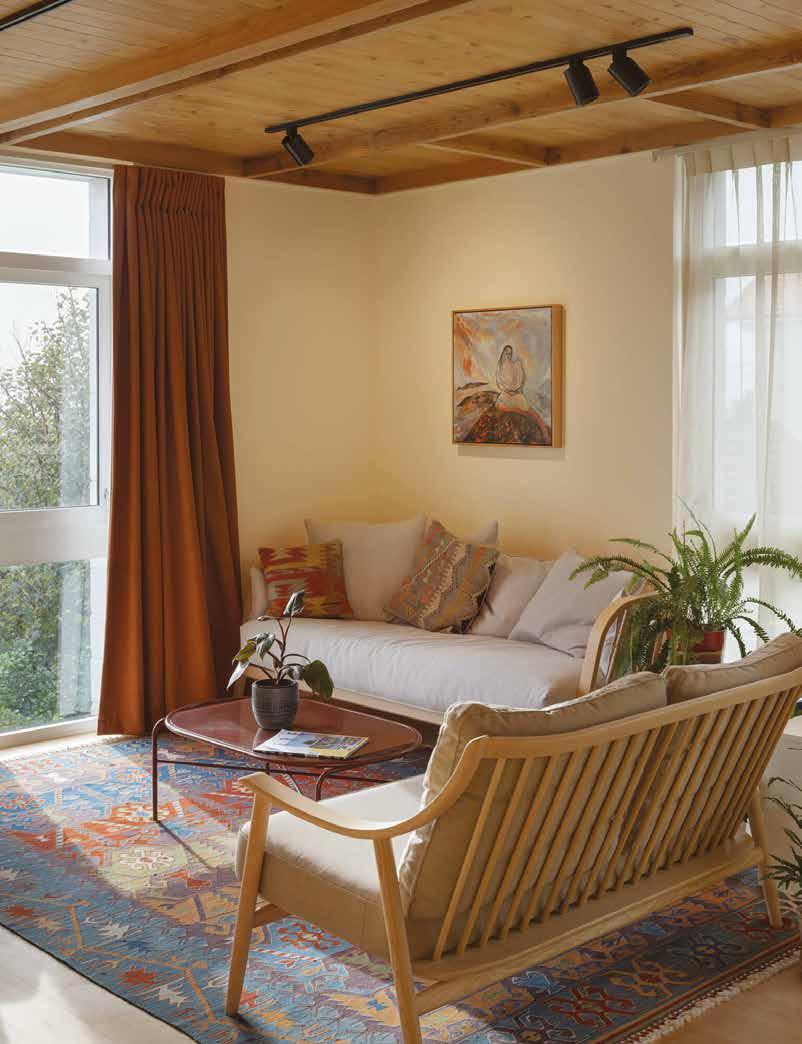
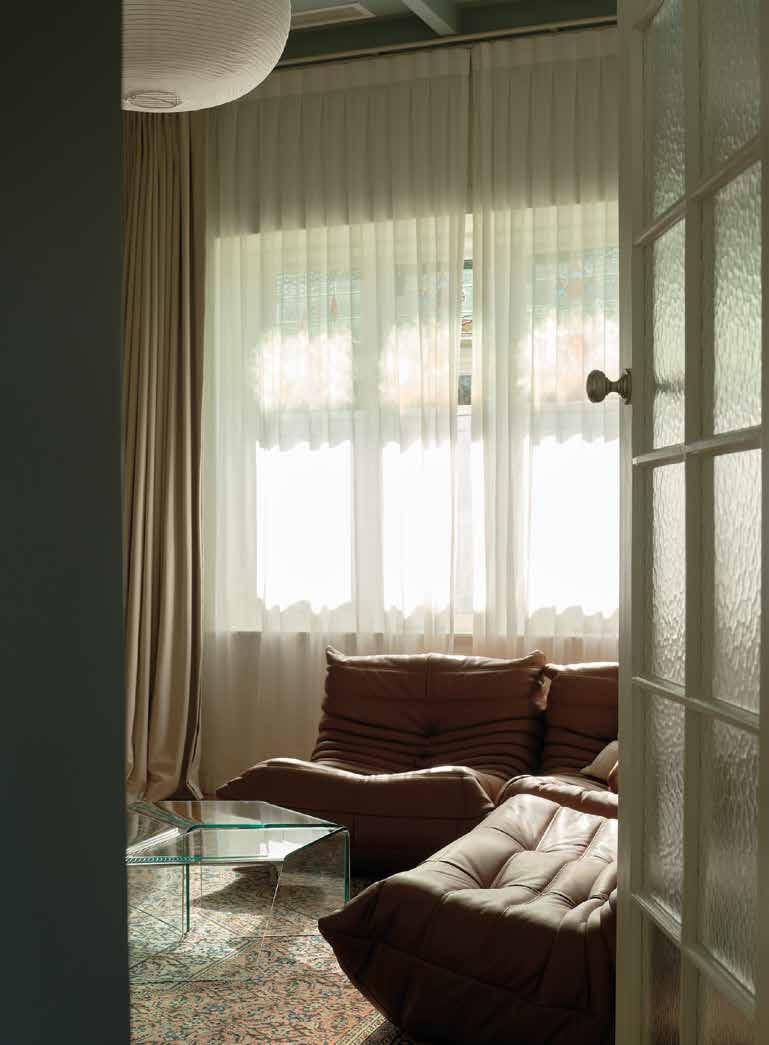
Pac Studio
Architecture
Interior Design 09 973 5050 hello@ pacstudio.nz pacstudio.nz
Pac Studio Architecture Interior Design 09 973 5050 hello@pacstudio.nz pacstudio.nz
Open Day 21 March 2026




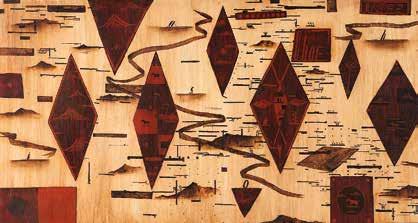
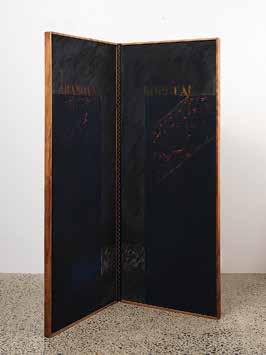
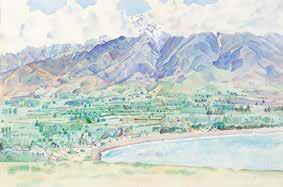
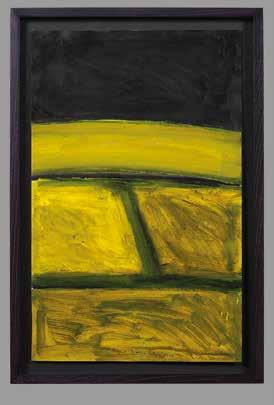
$153 591 Sales by Value 84% Sales by Volume
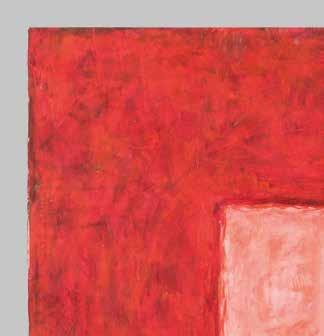
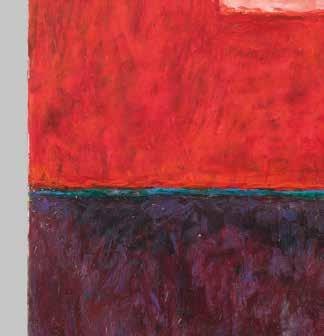















Welcome to Art+Object’s first Important Paintings and Contemporary Art catalogue of 2026. While this is the first major catalogue to be produced for the year, it follows our previous auction of New Collectors Art, which included works from one of New Zealand’s pre-eminent object makers, Greer Twiss (1937–2025). With a celebrated career spanning over six decades, Twiss was a pivotal figure in the development of 20th Century sculpture and image-making in Aotearoa New Zealand; it was wonderful to meet so many admirers and long-time fans of the artist and his work during the viewing, and to see the works go off to appreciative new homes. Thanks to the many bidders who took part in the auction and to the Twiss family.
The present catalogue contains a wonderful survey of fine New Zealand art from the early 1900’s to more recent times. Including three magnificent paintings by Charles Goldie, a rarely-seen Thorndon painting by Rita Angus, significant bronze sculptures by Paul Dibble, Jim Allen, Barry Lett and Terry Stringer, together with paintings and photography by this country’s leading practitioners, this is a catalogue that we believe is not to be missed!
Along with superb photographs by Ans Westra, Laurence Aberhart and Peter Peryer, this auction includes two fine artworks by Dr Fiona Pardington (Kāi Tahu, Kāti Mamoe, Ngāti Kahungunu, Clan Cameron of Erracht), who will present Taharaki Skyside at the Aotearoa New Zealand national pavilion for the 61st International Art Exhibition of La Biennale di Venezia. In this new exhibition, the artist continues her practice of drawing together local and international histories, creating connections between time and place. In Taharaki Skyside, Pardington forges a metaphorical link between Aotearoa and Venice through the idea of a shared horizon, viewed from opposite ends of the world. Around 150 New Zealand arts patrons and supporters will join Dr Pardington for the vernissage in early May and Art+Object sends our warmest good wishes to Fiona and her team for a successful exhibition.
We look forward to seeing you at the viewing for this auction which opens on Thursday 19 March.
Ngā mihi nui,
Leigh Melville
PREVIEW
Thursday 19 March, 5–7pm
3 Abbey Street, Newton, Auckland
Wednesday 25 March at 6pm
3 Abbey Street, Newton, Auckland
Thursday 19 March
Friday 20 March
Saturday 21 March
Sunday 22 March
Monday 23 March
Tuesday 24 March
Wednesday 25 March 9am–5pm 9am–5pm 11am–4pm 11am–4pm 9am–5pm 9am–5pm 9am–2pm
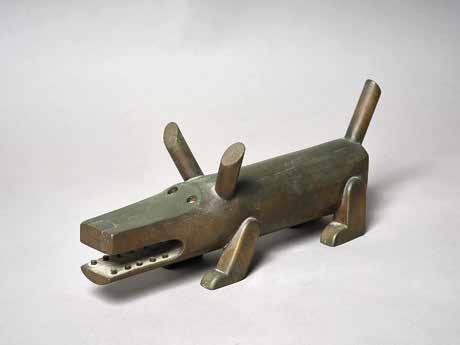
1 Barry Lett
Dog
cast bronze, 3/10 signed and dated ’02
200 x 430 x 125mm
$6000 – $10 000
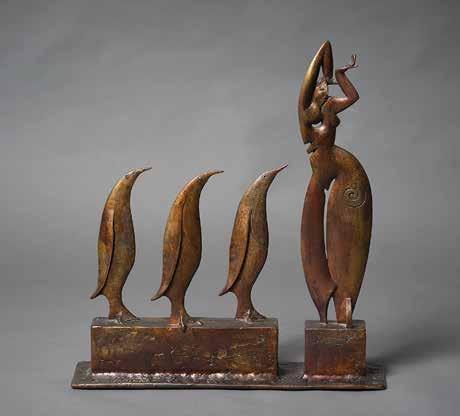
2 Paul Dibble
The Performance Model
cast bronze, 2/3 signed and dated ’98 500 x 445 x 112mm
Exhibited
‘Paul Dibble’, Gow Langsford Gallery, Auckland, 18 November – 5 December 1998.
Provenance
Private collection, Hamilton.
$14 000 – $20 000
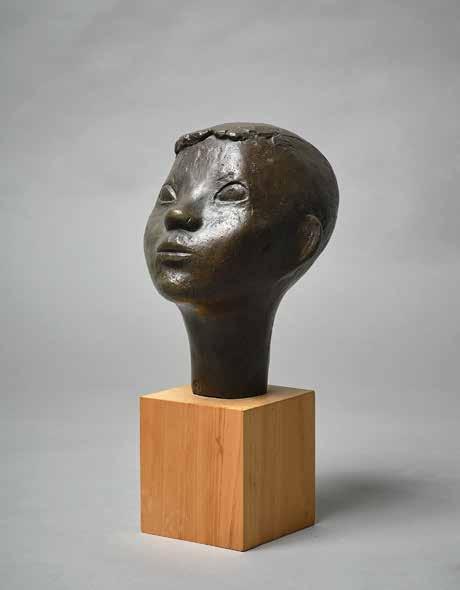
Jim Allen
Portrait of the Artist’s Son, Tony
cast bronze on timber base (1950)
200 x 120 x 160mm: excluding base
Exhibited
‘Jim Allen’, The Royal Academy, London, 1951.
Illustrated
Gwynneth Porter (ed), Jim Allen: The Skin of Years (Auckland, 2014), p. 46.
Provenance
Private collection, Auckland.
$20 000 – $30 000
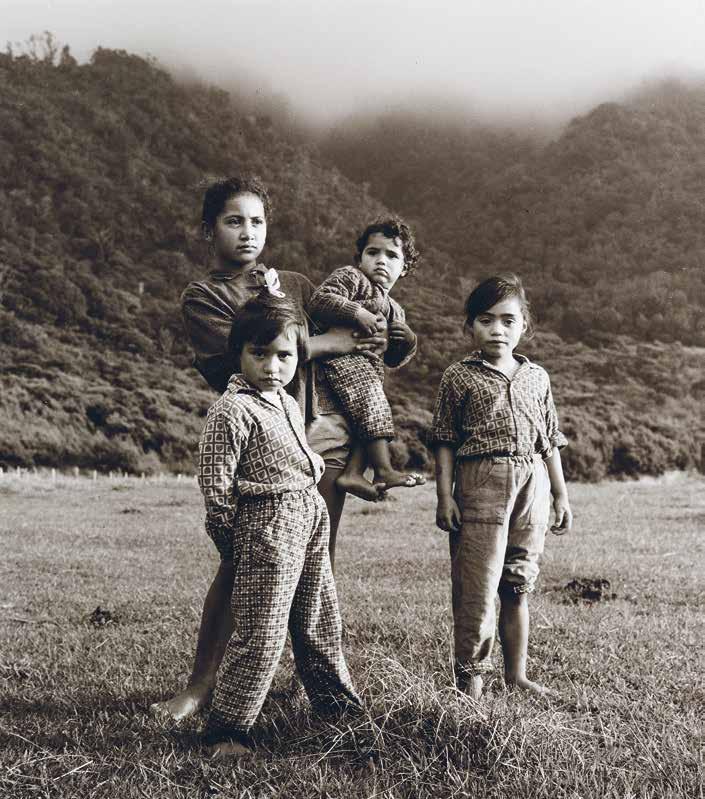
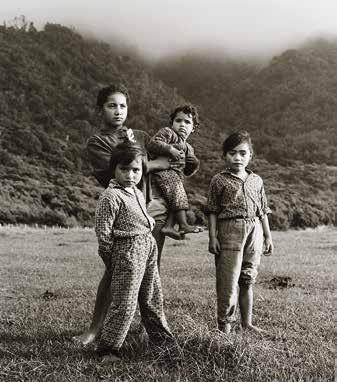
Ans Westra Dusk, Whanarua Bay, East Cape, 1964
vintage gelatin silver print
300 x 280mm
Illustrated
Lawrence McDonald (ed), Handboek: Ans Westra Photographs (Wellington, 2004), p.145.
Provenance
Private collection, Auckland. Purchased from FHE Galleries, Auckland.
$4000 – $6000
5 Ans Westra Untitled
vintage gelatin silver print
300 x 280mm
Provenance
Private collection, Auckland. Purchased from FHE Galleries, Auckland.
$3500 – $5500
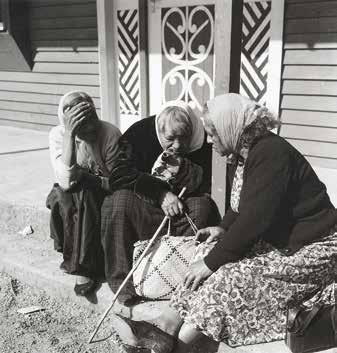
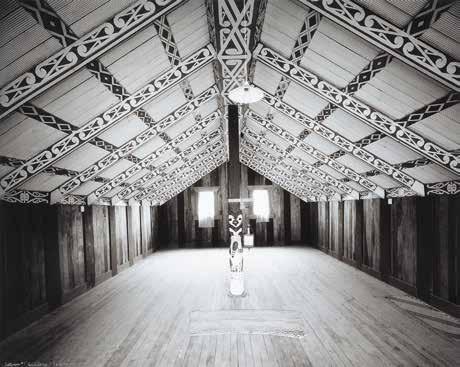
Laurence Aberhart
Interior No. 1, ‘Eripitana’, Te Whaiti, Urewera, North Island, 18 June 1982
gold and selenium toned gelatin silver print
title inscribed, signed and dated 190 x 240mm
Provenance
Private Collection, Auckland.
$6000 – $9000
7
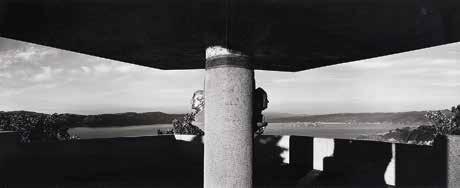
Laurence Aberhart
Panorama, Mount Victoria, Wellington, 20 January 1990
gold and selenium toned gelatin silver print
title inscribed, signed and dated under the mount 235 x 525mm
Provenance
Private Collection, Christchurch.
$4000 – $7000
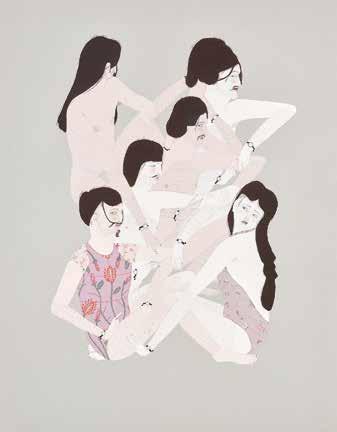
Kushana Bush
Lurking Tension No. 10
gouache and ink on paper
482 x 378mm
Provenance
Private collection, Auckland.
$6000 – $9000
9
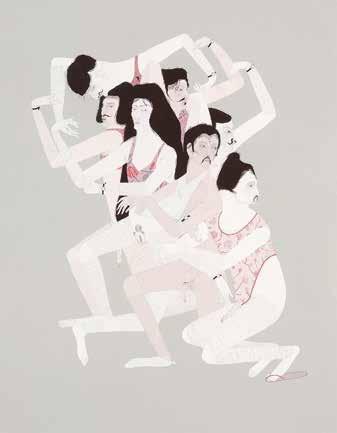
Kushana Bush
Lurking Tension No. 12
gouache and ink on paper 482 x 378mm
Provenance
Private collection, Auckland.
$6000 – $9000
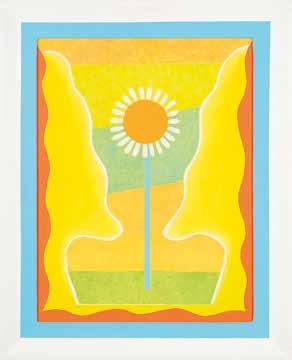
Saskia Leek
Untitled No. I
oil on aluminium and wooden frame signed and dated 2020 verso 510 x 400mm
Exhibited
‘Ups’, Ivan Anthony Gallery, Auckland, 24 June – 18 July 2020.
Provenance
Private collection, Auckland.
$4000 – $7000
11
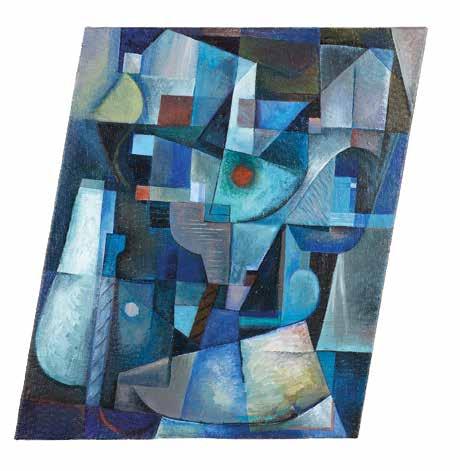
Imogen Taylor Blue Fires
acrylic on hessian title inscribed, signed and dated 2016 1080 x 1000mm
Exhibited
'Imogen Taylor: In & Out', Michael Lett, Auckland, 13 July – 13 August 2016
Provenance
Private collection, Wellington.
$8000 – $12 000
12
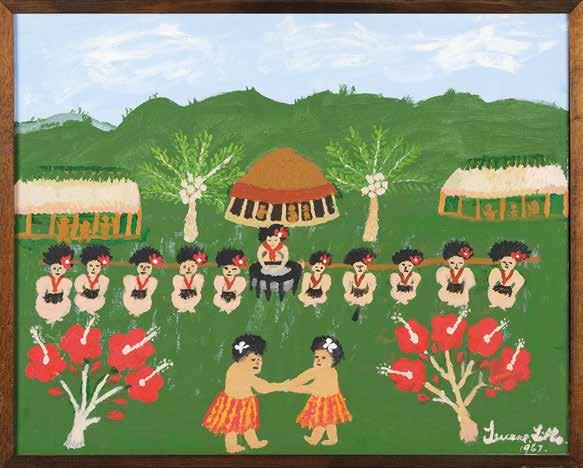
Teuane Tibbo Kava Ceremony, Fiji oil on canvasboard signed and dated 1967; title inscribed and signed verso 600 x 757mm
Provenance
Purchased by the current owner from Webb’s, Auckland, 23 September 2003, Lot No. 120. Private collection, Auckland.
$15 000 – $25 000
A PRIVATE COLLECTION OF THREE PAINTINGS BY TEUANE
13
Teuane Tibbo Panga Island, Fiji oil on canvasboard
title inscribed and signed verso; inscribed Cat No. 51, 1991 on original Noosa Regional Gallery exhibition label affixed verso; inscribed Purchased Barry Lett Gallery, Feb 1979 verso 595 x 750mm
Provenance
Private collection, Auckland.
$15 000 – $25 000
14
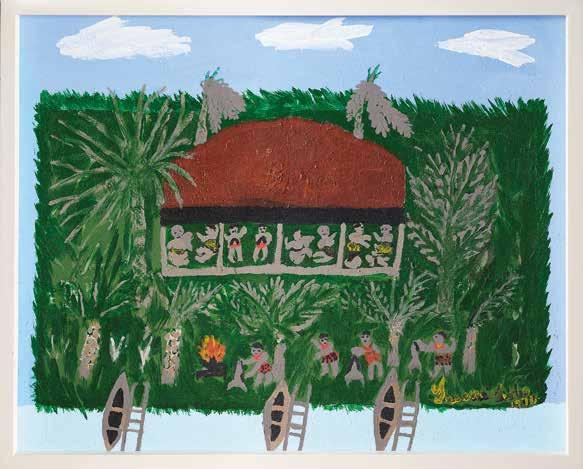
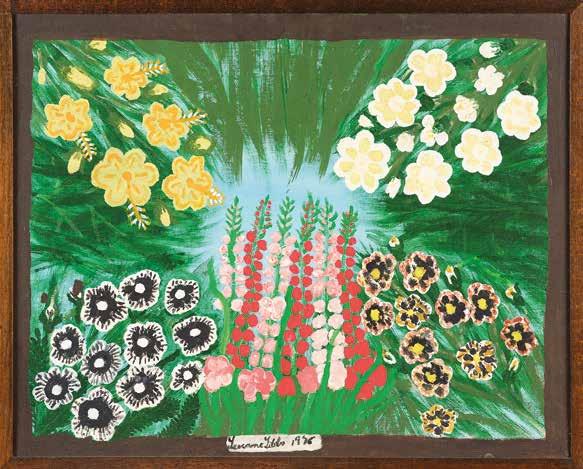
Teuane Tibbo Garden Flowers No. I oil on canvasboard signed and dated 1967; title inscribed verso 600 x 754mm
Provenance
Purchased by the current owner from International Art Centre, Auckland, 17 March 2005, Lot No. 102. Private collection, Auckland.
$10 000 – $15 000
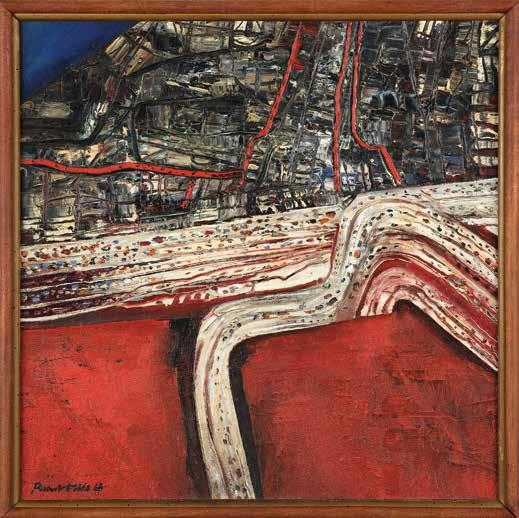
Robert Ellis
Motorway/City No. 7
oil on board
title inscribed, signed and dated 1969 and inscribed ‘Auckland Festival’ verso 440 x 438mm
Provenance
Private collection, Auckland.
$20 000 – $30 000
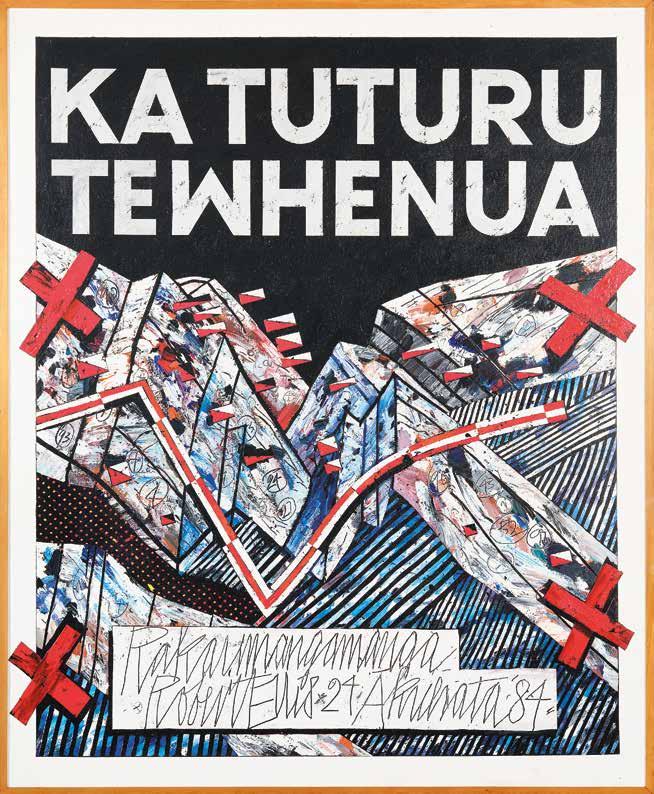
Robert Ellis
Ka Tūturu Te Whenua
oil on canvas
title inscribed, signed and dated ‘24 Ākuhata ’84’ and inscribed Rakaumangamanga; original National Art Gallery ‘Pacific Parallels’ touring exhibition label affixed verso 2000 x 1680mm
Exhibited
‘Pacific Parallels: Artists and the Landscape in New Zealand’, Memphis, Ceda Rapids, Lawrence, Washington, Evanston, San Diego and Honolulu, 5 May 1991 – 28 February 1993.
Illustrated
Hamish Keith and Elizabeth, Hana and Ngarino Ellis, Robert Ellis (Ron Sang Publishing, 2014), back cover, p. 142.
Charles C. Eldredge and Jim and Mary Barr, Pacific Parallels: Artists and the Landscape in New Zealand (The New Zealand – United States Arts Foundation, 1991), p. 74.
Provenance
From the Collection of Greer and Dee Twiss, Auckland.
$30 000 – $50 000
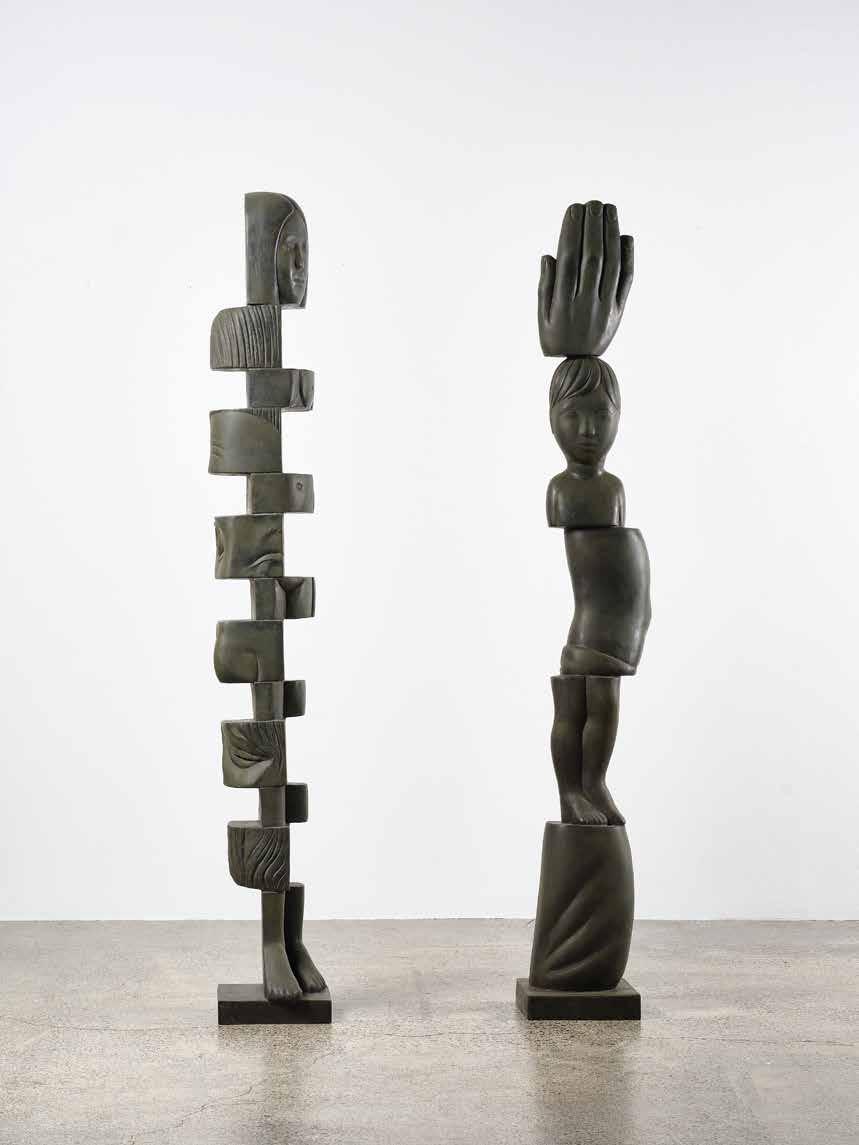
Terry Stringer
Intercut Artist and Model and Intercut
Child and Reaching Hand
cast bronze, two parts 1/1
signed and dated 2007
2100 x 285 x 310mm: each part
$50 000 – $80 000
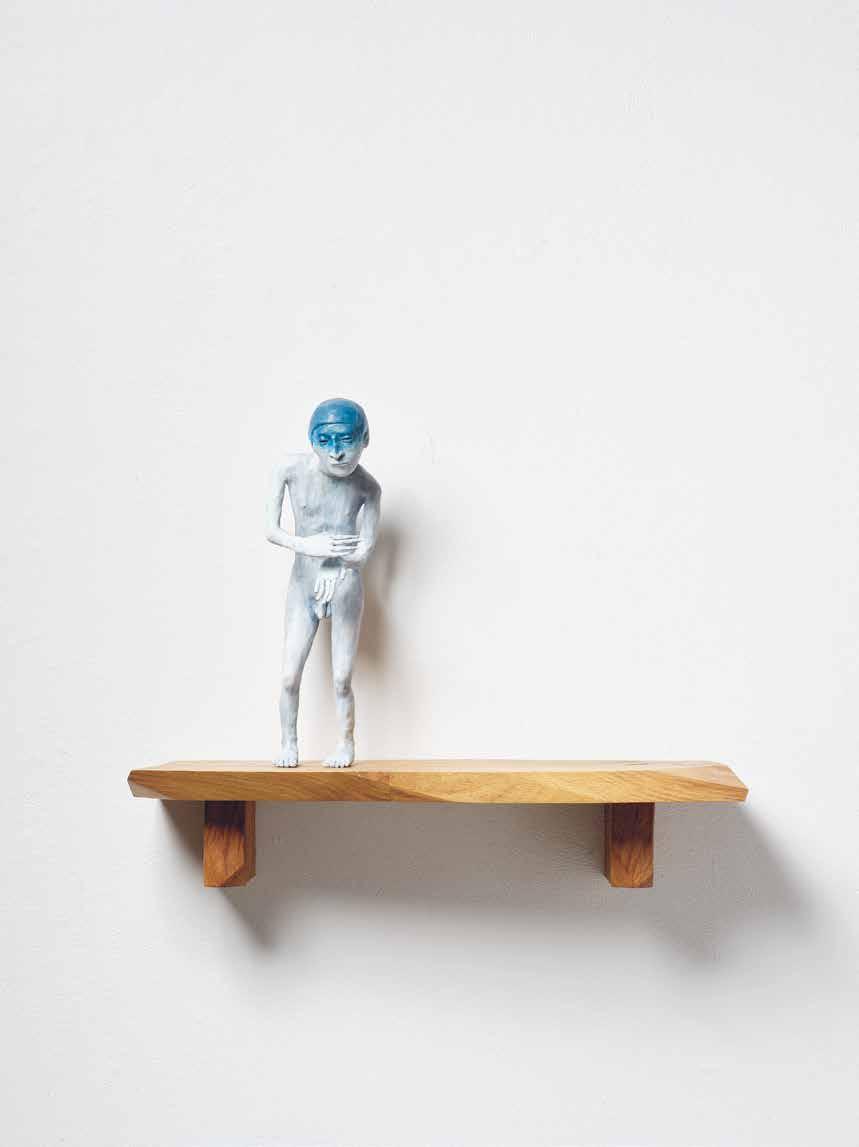
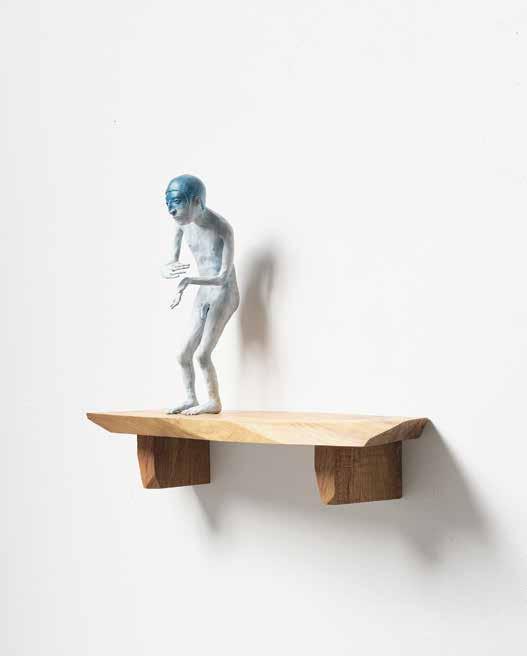
Francis Upritchard
The Thinker
modelling material, wire and paint on original Martino Gamper cantilevered wall shelf (2009)
430 x 130 x 180mm: figure
560 x 700 x 230mm: including shelf
Provenance
Purchased by the current owner from Kate MacGarry Gallery, London.
$25 000 – $40 000
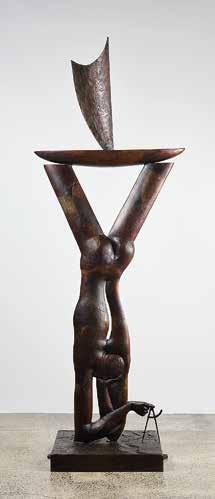
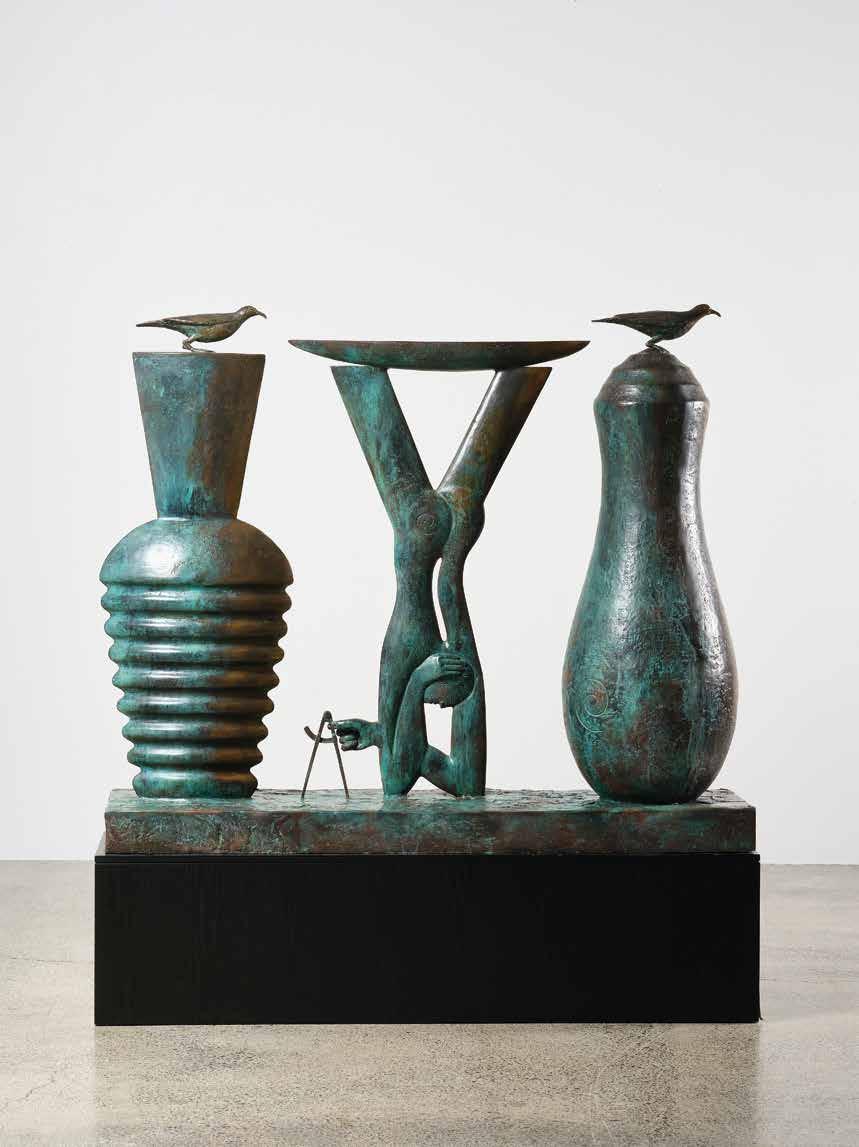
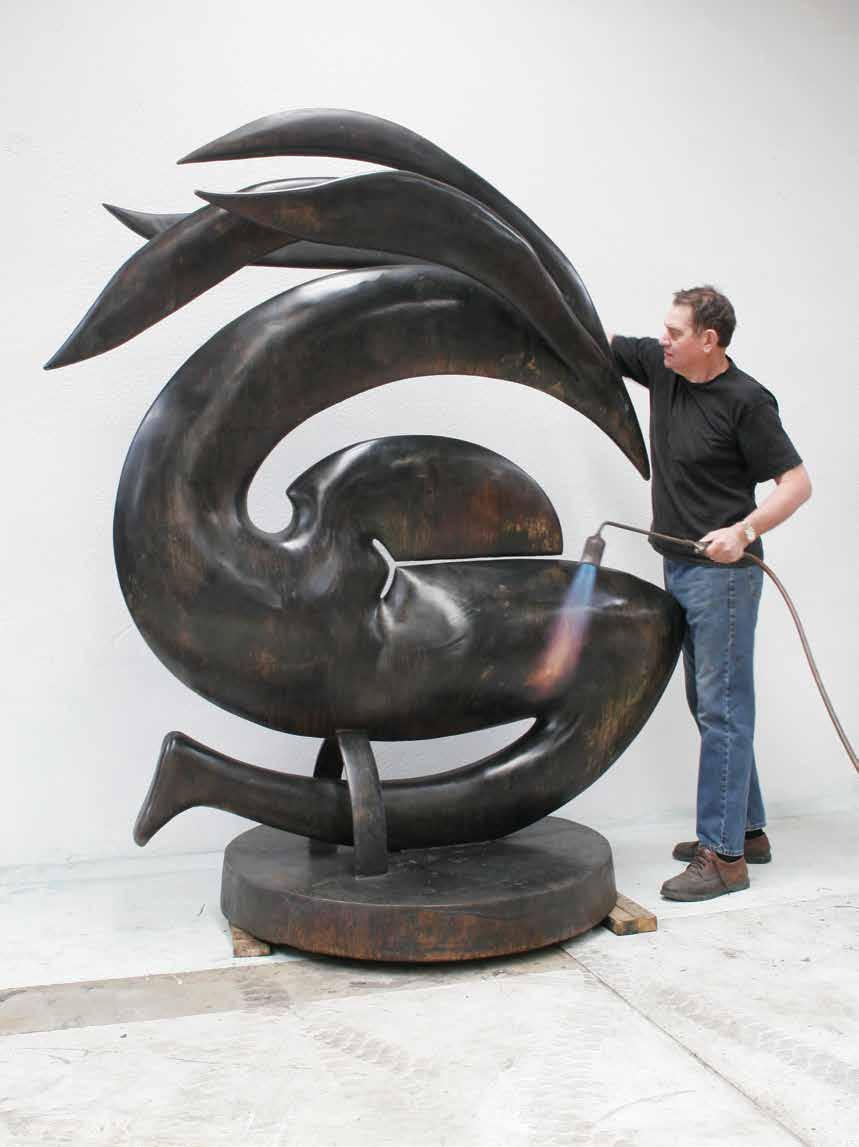
Paul Dibble
Between Two Islands
cast bronze, edition of three signed and dated 2002 1320 x 1540 x 400mm
Exhibited
‘There the Owl Sits on the Water: The Tableaux of Paul Dibble’, Gow Langsford Gallery, Auckland, 8 October – 2 November 2002.
$140 000 – $200 000
The formative years growing up in rural New Zealand had a profound effect on Paul Dibble’s oeuvre. He came from Waitakaruru, a small community on the Hauraki Plains set close to the waters of the Firth of Thames, with its open access to islands of the Hauraki Gulf/ Tīkapa Moana. Waitakaruru sits amidst a tidal estuary, so the community of the 1950s was naturally geared around the ebb and flow of water along drainage canals that facilitated farming flat land that is barely above sea level. His was a naturally bicultural community, run with country pride at heart, well before the bicultural term became a strong political belief in the 1990s. Waitakaruru loosely translates as ‘the land where the owl sits on the water’—an image dense with associations.
And so, the scene is set for Dibble’s bronze tableaux Between Two Islands, 2002, that was shown in a solo presentation There the Owl Sits on the Water: The Tableaux of Paul Dibble, at Gow Langsford Gallery in Auckland in 2002. This is a work that is redolent of the sea and changing tides. This is a work of a young man holding court with his daydreams, plotting his course across the open sea to distant islands. The central inverted figure is this dream of youth, cast characteristically like a flattened wall drawing that invites the viewer to circumnavigate, to interrogate the flatness, to take in smaller details. The figure cradles navigational callipers that must have straddled many ancient European charts. The figure’s inversion is completed by a balanced waka, perched strongly heading into the wind and is accompanied by two frigate birds pointing the way.
The narrative shifts. The figure navigates between two islands symbolised by the bronze sentries, solidly holding their cultural positions at the extreme ends of the tableau. The first is reminiscent of a Māori stone flax pounder (kōhatu), perhaps more sleek than those that show years of constant threshing, but faintly inscribed with the umbilical curl of a koru motif. At the other end of the tableau stands a culturally formal plinth of European modernism. It carries weight, reminiscent of a decorative plum bob weight that hangs at the base of a builder’s plumbline. This would have been precious cargo in a 1950s farming community that built its own buildings. There was no-one else to do it.
The dramatic changes in scale create tension in the work, to keep the narrative open, and to hold the viewers’ attention. The eye moves from the callipers to the figure, to the waka and guiding birds, rescaling each piece in real time as the work is scanned. But all these elements are held tightly in a tableau by Dibble’s love of geometry. A perceptual quiet joy springs from the repeated growing triangles that spring from the small scalene triangle under the figure’s arms, to the callipers, to the strong inverted triangle at legs’ end. We have to constantly remind ourselves that this is a heavy cast bronze sculpture, yet those springing triangles are negative spaces. They are nothing but air.
Peter James Smith
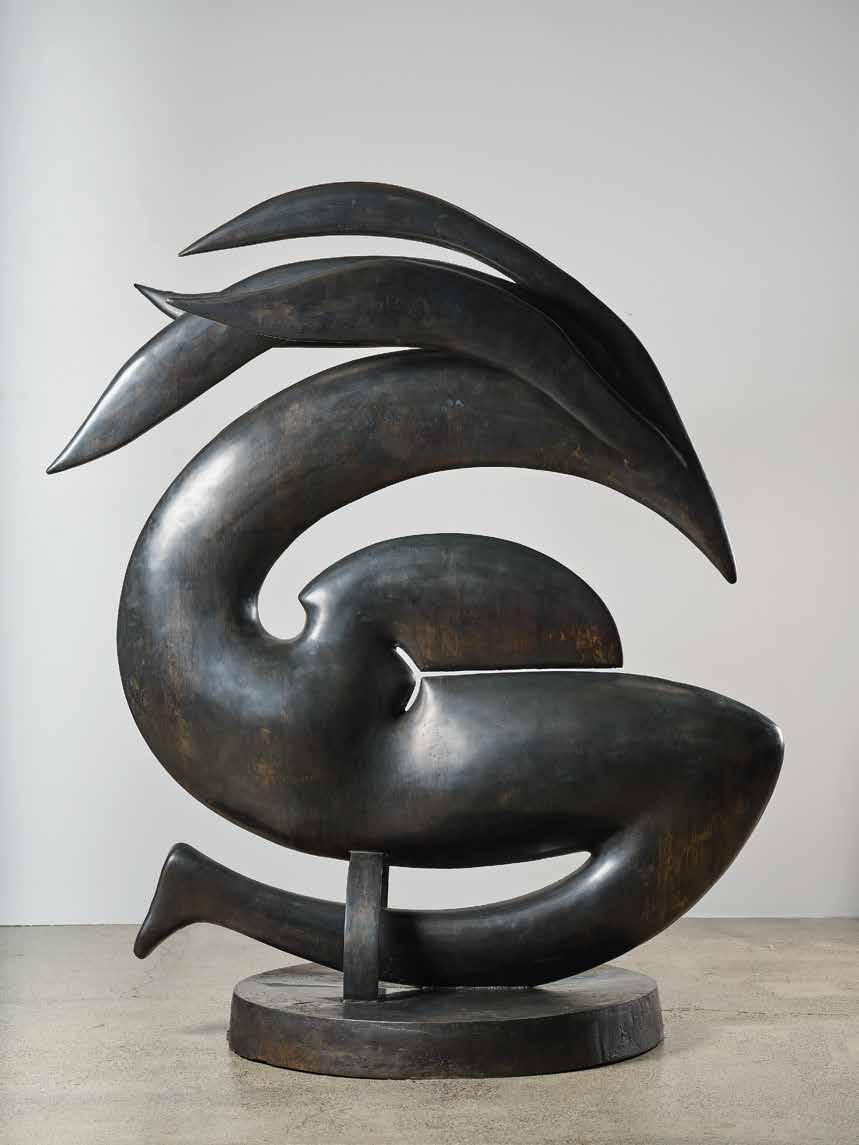
Paul Dibble
The Unfolding
cast bronze, unique edition 1/1 signed and dated 2004
2600 x 2000 x 1300mm
Exhibited
‘Unfolding Model: Paul Dibble’, Gow Langsford Gallery, Auckland, 11 May – 6 April 2004.
$300 000 – $500 000
When a bean seed is planted, tiny roots take hold. Then, with enormous resilience, a stem forms, loops and curls, finally bursting through the soil to grow its first leaves from the very seed itself. Why the shoot does not push straight up through the soil is hard to say definitively. But the strength of the curved stem, unfolding from a circle and pushing through the soil is a miracle of science. The curvature is more likely designed to protect the essence, the heart, as new life struggles against the weight of soil. This unfurling of new life lies at the spiritual heart of New Zealand, for the koru motif represents the unfurling of a frond from the native silver fern. That sense of curved unfolding is but one moment in the circle of life.
This is the moment that Paul Dibble captures in his Unfolding Model, 2004; the moment on that endless axis when life unfolds. And he drags fragments of culture into the unfolding. His model has human form with arms, thighs and streamlined head reminiscent of a mermaid, emerging from the waves, gleaming with a smooth patina to the bronze surface. The positive space formed by the curvature of a female thigh is set against the negative space of an absent curving koru motif and kōwhaiwhai pattern of repeated arcs. When viewed head-on, the positive forms dominate giving the impression of enormous weight to the sculpture. But this solidity dwindles when seen from the edge, as the tapering seduces the viewer into a feeling of lightness; ironically this now seems to be a work that could float—or at least emerge from the sea. This is a form that Maui may have fished from the sea after he had landed New Zealand as a brand-new country replete with cultural imagery intact.
Unfolding Model, 2004, represents a milestone in Dibble’s output, being an edition 1 of 1, and standing some 2.6 metres tall it is essentially beyond human scale and is one of the largest pieces that he produced from his Palmerston North foundry. Its construction follows his highly developed process of working from dual canvas templates, that are sewn together along the edges, then filled with plaster. This becomes the armature on which wax is fashioned, the whole then covered in a ceramic shell. When the molten bronze is poured in the wax is lost and the bronze sculpture is born.
The work is the culmination of a period focusing on what Dibble termed soft geometry. This approach introduced a curvature to forms that had previously been based on more rigid triangles, cones and spheres during the early 2000s. The original dual canvas templates are what gives the final sculpture its flattened appearance and allows Dibble to focus on the positive and negative spaces that govern the final form. His approach retains a spontaneous lightness. It is as if he is creating a two-dimensional drawing, not in graphite, pencil or paint, but in bronze.
Peter James Smith
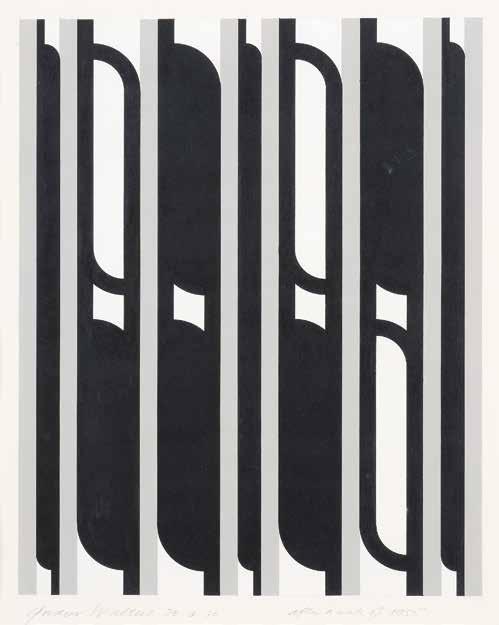
Gordon Walters
After a work of 1955
acrylic on paper title inscribed, signed and dated 26.4.80 415 x 340mm
Provenance
Private Collection, Auckland.
$25 000 – $35 000
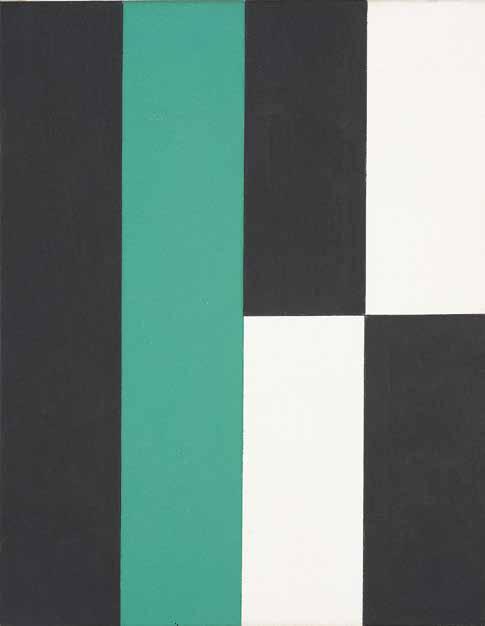
Gordon Walters Black/White/Green
acrylic on canvas title inscribed, signed and dated ‘94 verso 455 x 355mm
Provenance
Private Collection, Auckland
$30 000 – $40 000
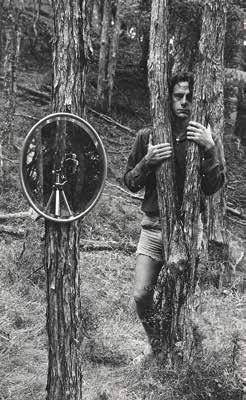
Peter Peryer
Self Portrait
gelatin silver print title inscribed, signed and dated c. 1975 verso 150 x 100mm
Illustrated
Photo-Forum, No. 22, October – November 1974.
Provenance
Collection of Grant Kerr. Purchased from the artist.
$4000 – $7000
24
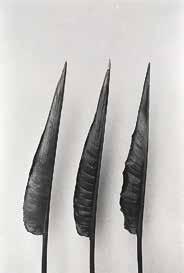
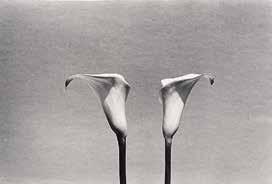
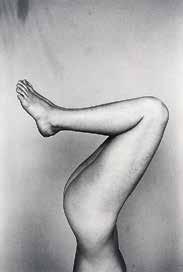
Peter Peryer
The Alphabet Series (Leaves, Lillies, Legs)
gelatin silver prints, triptych title inscribed, signed and dated 1980 verso 300 x 450mm; 450 x 300mm; 450 x 300mm
Provenance
Collection of Grant Kerr. Purchased from the artist.
$12 000 – $20 000
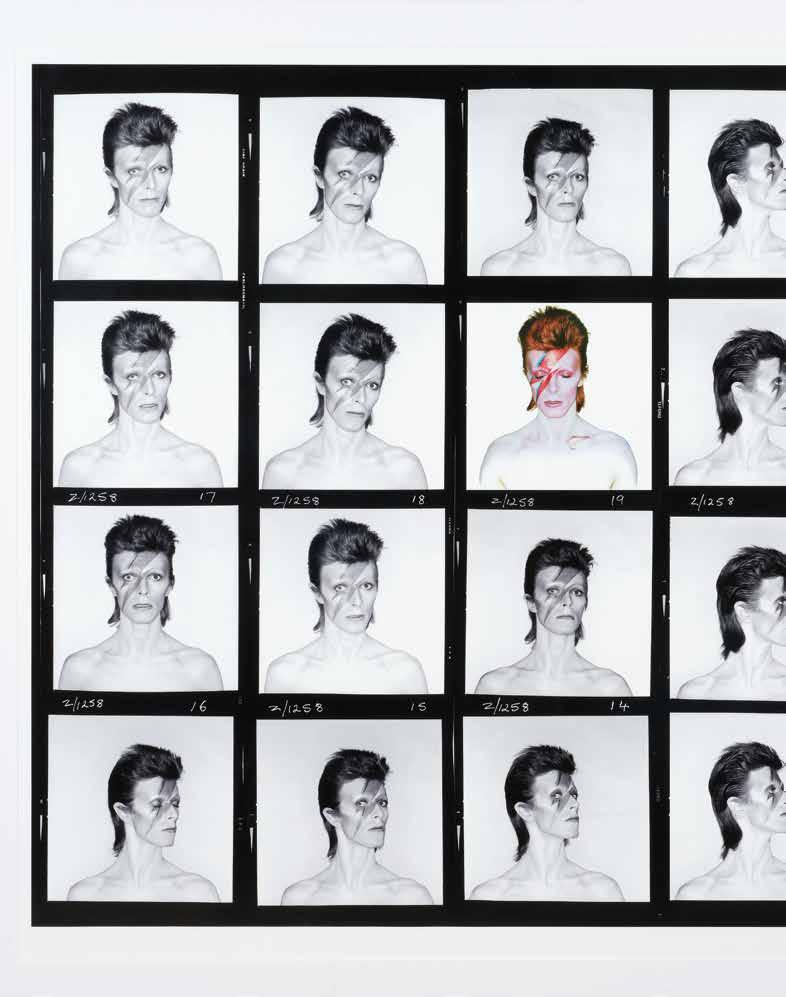
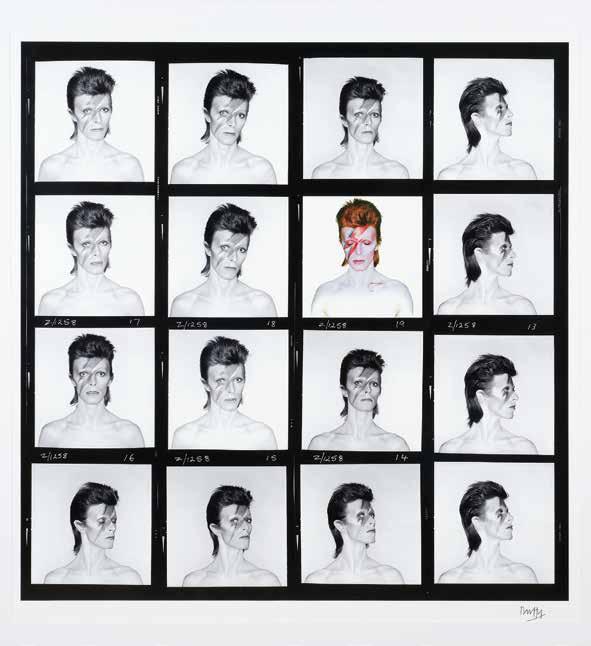
Brian Duffy (United Kingdom, 1933–2010)
David Bowie, Aladdin Sane, 1973 (Contact Sheet)
archival pigment print, edition of 25 signed 1020 x 1020mm Provenance
Private collection, Auckland. Purchased by the current owner from Proud Galleries, London, 8 May 2012.
$25 000 – $40 000
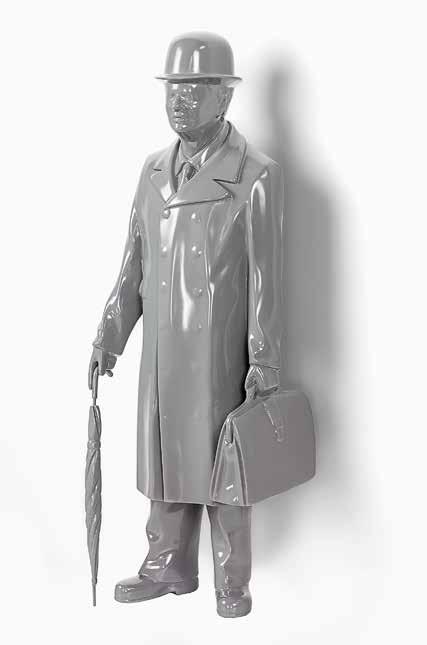
Michael Parekōwhai
Rainbow Servant Dreaming
automotive paint on fiberglass
420 x 180 x 100mm
Provenance
Private collection, Christchurch.
$25 000 – $40 000
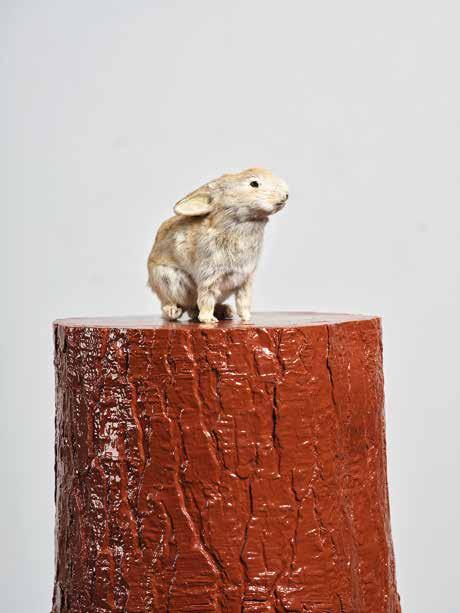
Michael Parekōwhai
Driving Mr Albert
taxidermied rabbit, polyurethane and two-pot paint (2005)
1630 x 250 x 250mm
Provenance
Private collection, Auckland.
Exhibited
‘Michael Parekōwhai: Driving Mr Albert’, Michael Lett, Auckland, Auckland, 27 July – August 2005.
$18 000 – $26 000
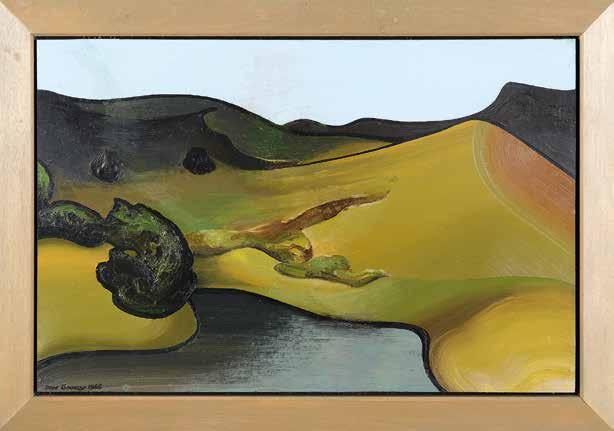
Don Binney Lake Wainamu
oil on board
signed and dated 1966
395 x 603mm
$45 000 – $65 000
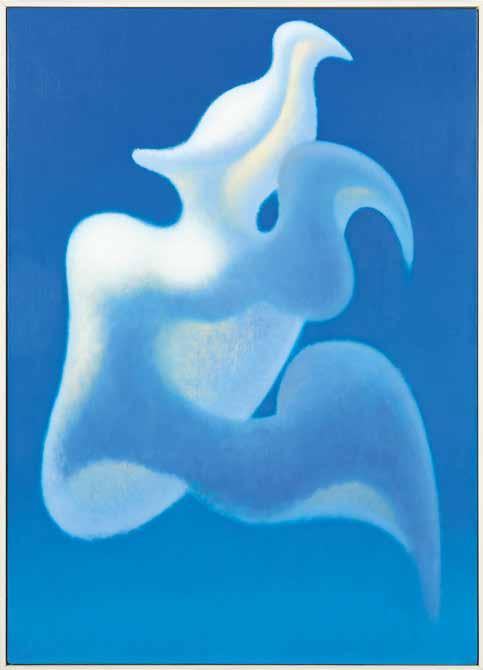
Michael Smither
I’m Coming Henry
oil on board
signed and dated 2003 verso 1200 x 860mm
Provenance
Private collection, Hamilton. Purchased directly from the artist.
$70 000 – $90 000
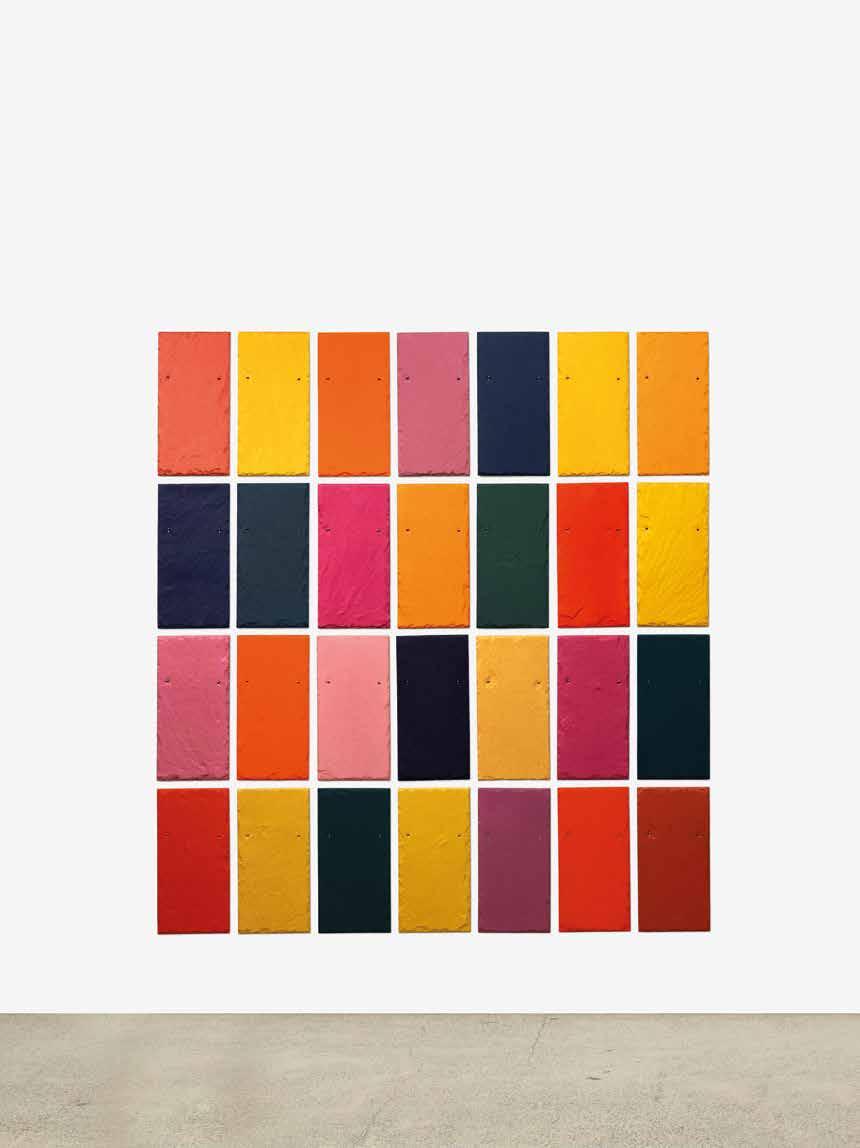
Winston Roeth (America, 1945– ) Forever and a Day
tempera on slate, 28 panels title inscribed, signed and dated 2019 verso
2120 x 1930mm
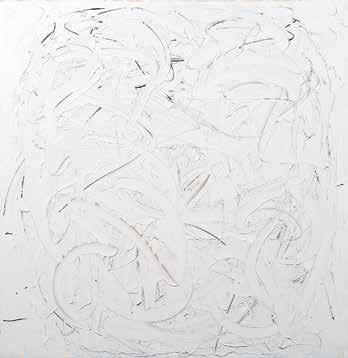
$100 000 – $150 000
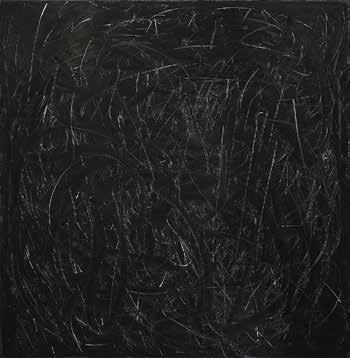
Liat Yossifor
Nothing is black, nothing is grey
oil on linen canvas mounted to board, diptych signed and dated 2019 verso 2040 x 1780mm: each panel
Exhibited
‘Wet, Wet, Wet: Erin Lawlor, Aida Tomescu, Liat Yossifor’, Fox Jensen Gallery, Auckland, 14 February – 22 March 2019.
$30 000 – $50 000
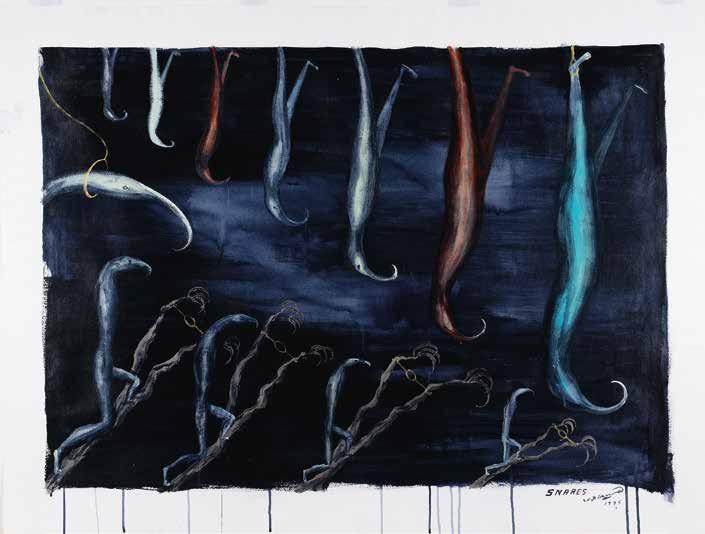
In 2021, asked about his 1989 visit to Auckland Island, Bill Hammond said: ‘It’s bird land. You feel like a time-traveller, as if you have just stumbled upon it. It’s a beautiful place, but it’s also full of ghosts, shipwrecks, death.’ The bird people he began painting subsequently, and continued to paint for the rest of his life, shared human and avian characteristics. Most often, they were bird-headed humanoids, sometimes with wings and / or arms, sometimes without either. There were precedents: bird people occur in Polynesian iconography, notably on Rapanui but also in Aotearoa and other parts of the Pacific. Further back, there are the animal and bird headed gods of Ancient Egypt, amongst whom the ibis-headed Thoth, god of writing, bears the strongest resemblance to Hammond’s figures. Then there are the beings in Alistair Te Ariki Campbell’s poem ‘The Return’, set to music by Douglas Lilburn: Their heads finely shrunken to a skull, small / And delicate, with small black rounded beaks; / Their antique bird-like chatter…
Those which appear in the painting Snares — one of a series under that title exhibited at the Gregory Flint Gallery in Auckland in 1995 — lack both arms and wings. Seven, increasing in size from left to right, seem to progress upside down across the top of the picture. It is only when you realise that the seventh and largest of the figures has its left leg encircled by a rope that you understand you might be seeing something different from a procession. You can’t see the left feet of any of the six other figures: perhaps all of these bird people are trapped and suspended upside down the way carcasses used to be hung on the chain in the Freezing Works. This sinister possibility is confirmed, or at least supported, by the incipient fate of the four bird people at the bottom of the picture, each of which is climbing up towards another snare set in what look like the branches of a tree, but which also, and eerily, resemble birds’ claws. The twelfth and last figure protrudes, head only, almost eel-like, from the left into the picture plane with a veritable noose around its neck.
The drama enacted by these figures unfolds before a deep blue abyss at the heart of the picture, in which dim shapes can be intuited but not quite identified. Is it a night sky with clouds passing? Moonlight reflected from the waters of the sea? The atmosphere sometimes glimpsed between trees in the bush at dusk? Or something more definitively abstract? The bird people themselves are painted in pale luminous shades of red, aqua, blue, grey and white and seem to emit a soft radioactive glow. Wherever they are going and why they are going there, you cannot help but suppose it is to their doom. And while they seem acquiescent, if not oblivious, to their fate, at the same time there is a kind of splendour to their passing: the transient splendour, perhaps, of the march to extinction.
Who placed the snares is another question. The short answer is of course Bill Hammond himself; but that is not the way to understand the picture. According to one account, when Hammond was asked where he got his ideas for his paintings, he replied that he painted everything carried in the air between his finger and his thumb as he walked along. An inscrutable but also a magnificent reply. ‘What Hammond actually intended is hard to say,’ wrote Allen Smith in his essay ‘Bill Hammond’s Parliament of Foules’, ‘but what an apt alibi for a painter of aerial visions that contract and expand between the miniaturizations of petite decorative friezes and the epic scale of panoramic prospects. Hammond’s cryptic analogy is also a way of affirming an implicit assumption of his art: that the fantastic is always close at hand, and that whimsical metaphors are endemic.’ In other words, with Snares, as with so many of Hammond’s works, there is no prescribed reading; contemplating its enigmatic glory you are free to imagine anything you like.
Martin Edmond
Bill Hammond Snares
acrylic on paper title inscribed, signed and dated ’95 1000 x 1335m
Provenance
Private collection, Northland. Purchased by the current owner from Gregory Flint Gallery, Auckland.
$80 000 – $120 000
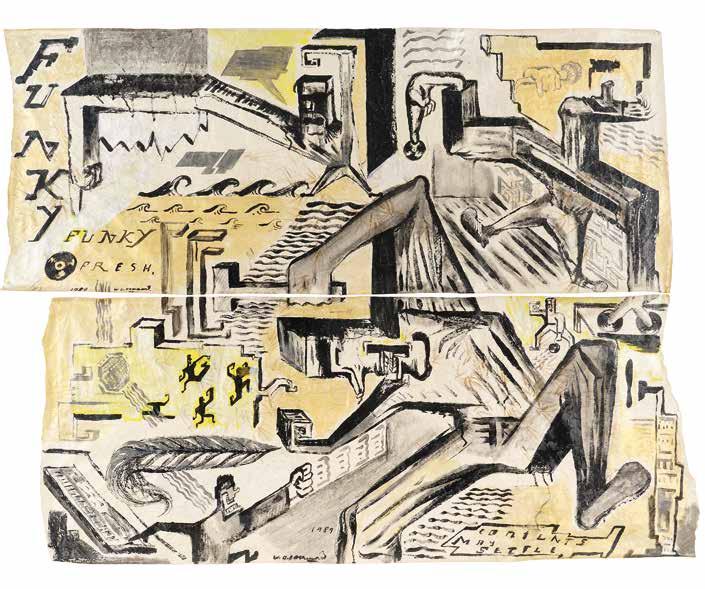
Bill Hammond
Funky Fresh
acrylic on wallpaper, two panels title inscribed, signed and dated 1989 1030 x 1300mm: overall
Exhibited
'Bill Hammond: Serenading Imagined Worlds', Te Uru Contemporary Gallery, Auckland, 7 December 2025 –22 February 2026.
Provenance
Private collection, Manawatu.
$50 000 – $75 000
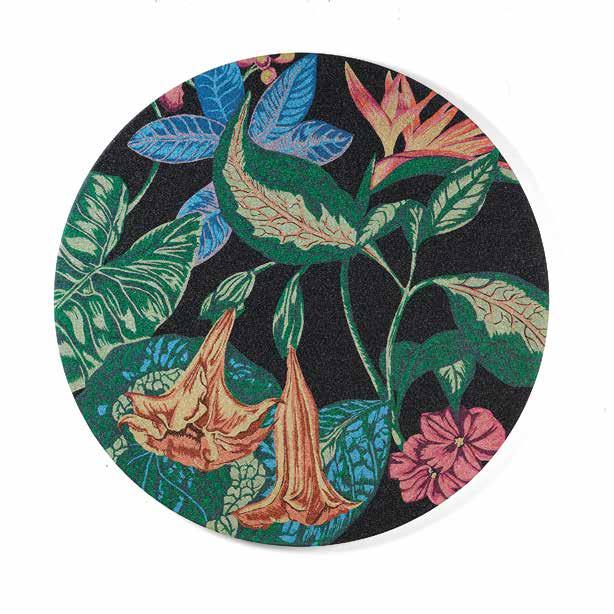
Reuben Paterson
Awhi Mai Awhi Atu
glitter on canvas title inscribed, signed and dated 2016 verso
1200mm: diameter
$13 000 – $18 000
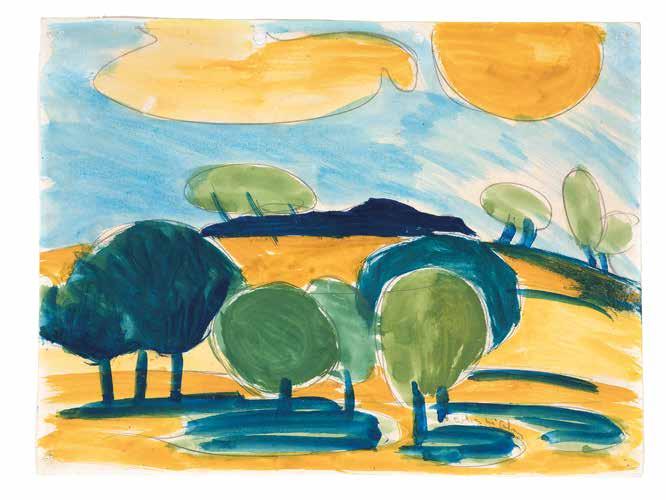
Colin McCahon
Willows, Oturehua, Central Otago
watercolour and gouache on paper signed; title inscribed verso 225 x 295mm
Provenance
Private Collection, Auckland. Gifted to the current owner.
$30 000 – $45 000
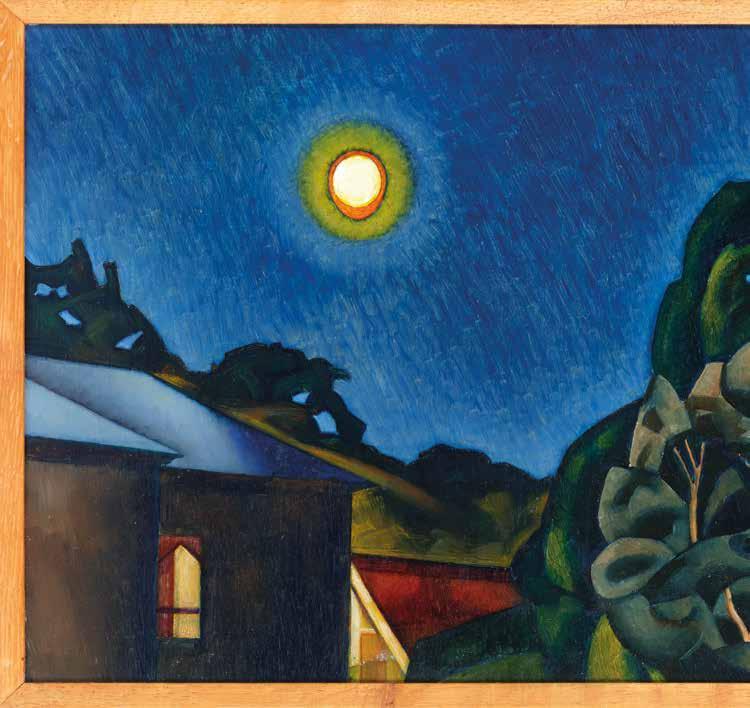
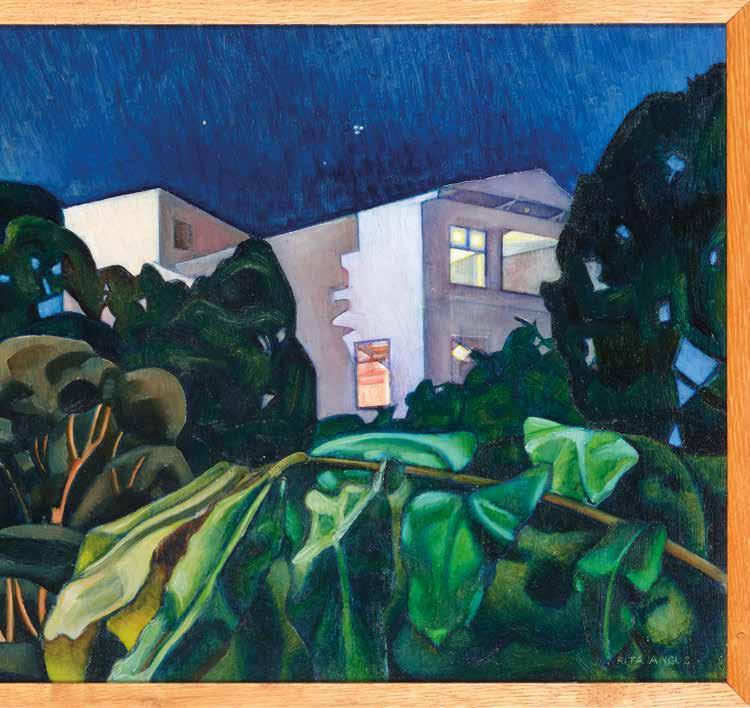
It’s all about the moon—a glowing egg-shaped orb, casting an eerie glow over the suburb of Thorndon. Rita Angus settled here in 1955, purchasing a small weatherboard cottage in Sydney Street West. Her friend Frederick Page described it as ‘a hidden house with a magnolia tree, one of those places that could turn up in a story ... There was a touch of magic about it, mystery even, as though one day you could go and it wouldn’t be there.’1
There’s a touch of magic in this painting, too, a marvellous example of Angus’s late work. Using radiant colour, brilliant light, and uncanny shifts in scale and perspective, she evokes the powerful life force in nature, from the moon to her own backyard. We sense her delight in her solitary vision, while her neighbours, oblivious, go about their lives indoors.
Angus’s interest in depicting the night sky began in London in the late 1950s, when she lived in a series of tiny attic rooms and painted the moon above a silhouette of rooftops. Back home in Te Whanganui-a-Tara Wellington, she began to visit the National Observatory in Kelburn to learn more about astronomy.
During the winter of 1965—the coldest in years—Angus became obsessed by the changing form of the moon as it passed a series of planets. She rang friends in excitement — ‘Go and look at the moon!’2 Every night she ventured out to document its colour, form and atmospheric effects in crayon drawings.3 On 9 July she wrote to her sister Jean Jones, ‘Last month the moon was encased in a red orange egg. The Observatory told me the moon had passed near Mercury … (Mercury throws a red orange light) ...’4
This unusual sight was the impetus for several paintings, and Angus exhibited four moon subjects at The Group in Christchurch that year. One, Moon, August (1965) was purchased by John Money and is now in the Eastern Southland Gallery in Gore; another was sold to her friends Tanya Ashken and John Drawbridge.
This arresting, untitled painting may be the work exhibited as Moonlight, Thorndon at The Group, priced at 18 guineas. It shows the view looking north from Angus’s garden. The distinctive form of ‘The Moorings’ in Glenbervie Terrace looms over the scene, a ghostly silver pile in the moonlight. Angus’s property bordered the wilderness below the Edwardian mansion, and it appears in other paintings of the period, including an undated watercolour entitled Fireworks, The Moorings, Thorndon.
The distinctive moon Angus documented in the winter of 1965 evidently had a special personal resonance. When she came to paint the forceful Selfportrait of the following year, in which she wields a paintbrush and easel like a warrior, it was this same moon, encased in an orange egg-like form, that she featured in the sky above her, balancing the form of her star sign, Pisces, on the left.
Jill Trevelyan
1 Frederick Page, ‘Rita Angus: Recollections by some friends’, Art New Zealand 3, December-January 1976–77, p.17.
2 Tanya Ashken in conversation with the writer, 3 Oct. 2006.
3 Now held in the Rita Angus Loan Collection at the Museum of Te Papa Tongarewa, and exhibited in Pages of Mercury: Rita Angus, Andrew Beck, Séraphine Pick, City Gallery Wellington, 4 December 2021–27 March 2022.
4 Letter to Jean Jones, 9 July 1965, quoted in Janet Paul, ‘Biographical Essay’, in Janet Paul et al., Rita Angus, National Art Gallery, Wellington, 1982, p.34.
Rita Angus
Moonlight,
Thorndon
oil on board (circa 1965) signed 290 x 634mm
Provenance
Private collection, Auckland.
$220 000 – $320 000
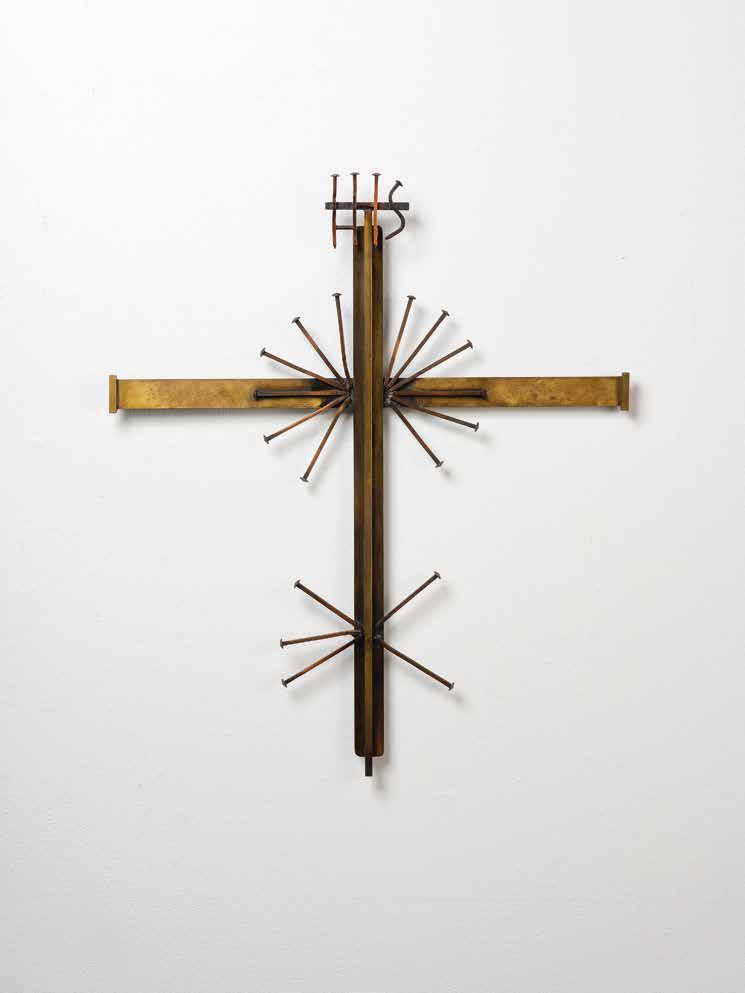
brass, copper and polyurethane signed and dated December 1966 and inscribed Varnished with polyurethane verso 650 x 555 x 30mm
Exhibited
‘Christian Art’, New Vision Gallery, 16 January – 29 January 1967.
Provenance
Gifted by the artist to Jeffrey Harris and Joanna Paul on the occasion of their marriage, September 27, 1971. Thence by descent to the current owner.
$55 000 – $75 000
Peter Simpson 37 Colin McCahon Cross
Some artists appear to move easily between painting and sculpture. Examples from the history of art which spring quickly to mind are Michelangelo, Degas, Matisse, Picasso, Giacometti, de Kooning, Rauschenberg, or, in the New Zealand context, Len Lye, Russell Clark and R.N. Field. But Colin McCahon (like many others) seldom worked in three dimensions. The number of times he moved beyond painting, drawing and print-making during his long career can be numbered on the fingers of one hand. One such occasion was in the mid-1960s when he briefly adopted metal for three dimensional works explicitly Christian in subject, including this splendid crucifix (one of two similar works) in copper and brass from 1966.
In 1965 McCahon began a fruitful partnership with the modernist architect James Hackshaw to provide painted or coloured glass windows for about a dozen buildings he designed mostly for Roman Catholic church schools, churches and chapels. In preparation McCahon immersed himself in Catholic iconography and symbolism. In some early collaborations with Hackshaw McCahon utilised metal as well as glass as in a window in a Franciscan chapel in Otara (now demolished). He described this window to Charles Brasch as ‘set alone on a high wall with a cross surrounded by a crown of thorns (copper nails, painted)…[and] surmounted with an IHS in nails set on gold and ruby glass’ (quoted in Bridget Hackshaw, The Architect and the Artists, 2021, p. 108).
Simultaneously McCahon participated in an exhibition of Christian art at Auckland’s New Vision Gallery in 1967 to which he contributed a painting on three wooden panels (The Way of the Cross) and 2 Crosses –including the present work – made from copper and brass. He told Ron O’Reilly: ‘Working again in metal is good. I’ve done two crosses in brass & copper for a Christian week Ex[hibition] organised by the R.C. Church… Very splendid – commercial brass strip & rod & copper nails’. He added a small sketch then commented: ‘… based on the same symbolism as the Otara screens – crosses, nails, in series of 3s and 5s – very Franciscan as is right & proper in this particular instance’ (Ibid., p. 107). Elsewhere he described the crosses as ‘magnificent’.
In form the two crosses vary slightly. In the present instance (the other is Illustrated on the McCahon website) the work consists of two rectangular pieces of brass placed at right angles as to form a Latin cross. At the point where the horizontal and vertical pieces cross is a circular arrangement of fifteen long copper nails radiating from the centre. At the top of the cross the letters IHS (a Christogram signifying IHSUS – the Latin version of the Greek name for Jesus) also fashioned from copper nails are attached to a long brass rod laid along the vertical (technically the ‘stipe’). Further down the stipe another cluster of five nails appears. These nails allude to the nailing of Christ’s hands and feet to the wooden cross, as traditionally rendered. This adds a powerful expressionist element of cruelty and suffering to the symbolism of the cross.
A PRIVATE COLLECTION OF THREE PAINTINGS BY
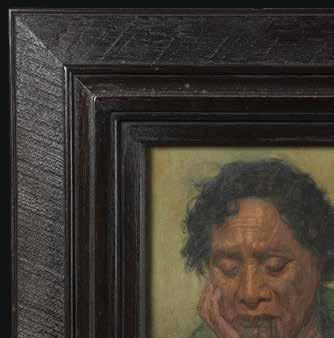
Charles Frederick Goldie
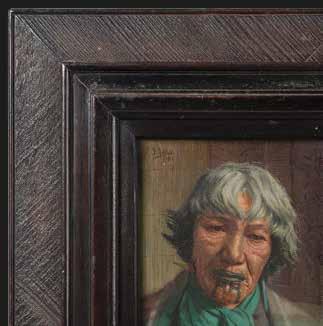
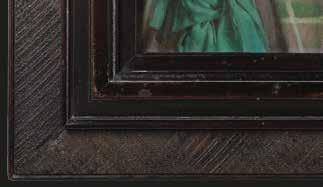
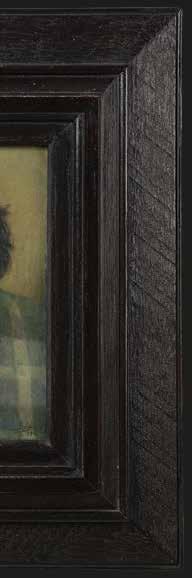
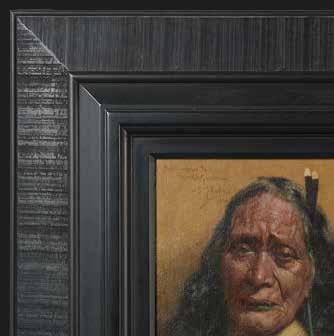
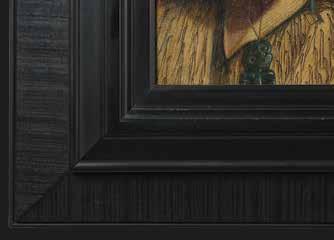
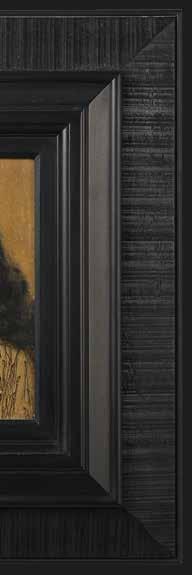
Memories: Harata Rewiri Tarapata, a Ngāpuhi Chieftainess oil on panel in original frame signed and dated 1911; title inscribed and signed on original label affixed verso 200 x 155mm
Provenance
Acquired from Cordy’s, Auckland, 26 March 1975. Private Collection, Auckland. Purchased from Dunbar Sloane, Wellington, 21 August 1975. Private collection, Wellington.
Literature
Alister Taylor and Jan Glen, C. F. Goldie, His Life and Painting (Martinborough, 1977), p. 222.
The Dominion Post, Wellington, 16 July 1975.
The New Zealand Herald, 26 July 1975.
Exhibited
New Zealand Academy of Fine Arts, Annual Exhibition, 1911.
$550 000 – $700 000
A PRIVATE COLLECTION OF THREE PAINTINGS BY
CHARLES FREDERICK GOLDIE OF MĀORI KUIA
Goldie called his portraits of Māori sitters “ethnographs”, and he focussed on prominent men and women of his day whom he knew and paid to sit for him. Scholar Roger Blackley would have considered this work a contemporary history painting, since it depicts the reverie of Hārata (Charlotte) Rēwiri Tarapata (1831–1913) fashionably attired in modern clothing rather than wearing Māori dress. Although she is a septuagenarian here, as a teenager she was renowned for her bravery, slipping past British forces to deliver musket balls to fellow Ngāpuhi defending Ruapekapeka near Kawakawa in January 1846. After the death of her husband, Ngāti Whātua leader Paora Tūhaere in 1892, she lived in the Waipapa Māori hostel at the bottom of Constitution Hill with her cousin Ina Te Papatahi (Te Ngahengahe, Ngāpuhi), (another one of Goldie’s favourite sitters) for a further 21 years.
The two cousins are memorialised in the so-called Ranfurly portraits: Hārata in The Widow (1903) and Ina in Darby and Joan (1903). This pair of paintings was chosen by the Countess of Ranfurly, wife of the 15th Governor of New Zealand from 1897 to 1904, and the artist’s price of 100 guineas apiece was raised by public subscription as a parting gift in recognition of seven years of Vice-Regal service to this country. The paintings were later repatriated from Ireland and subsequently purchased controversially by the National Art Gallery in 1991 for $900,000. They now form the centrepieces of the Te Papa Goldie collection in Wellington. Another Goldie painting of Hārata as A Māori Chieftainess (1906) is still installed in the Yellow Room at the Russell-Cotes Art Gallery and Museum in Bournemouth, where she depicted wearing a korowai and a large hei tiki.
Goldie may have supplied that taonga as he did the emerald-green silk scarf and matching woollen blanket which this kuia wears as a shawl (her cousin Ina wears an identical one in Auckland Art Gallery’s Memories), but the body adornment on display is Hārata’s own. No one can remove the moko kauae and ngutu which are chiselled into her chin and around her mouth to colour her lower lip. They represent the importance of her ancestral lines (she was the descendant of two signatories to Te Tiriti) as well as her strength. In her left ear is a long pounamu pendant earring, and from the hole in her right ear lobe, a mako (shark’s tooth) hangs, attached to its binding with red sealing wax. She wears these same earrings in the oval version of her portrait which Goldie painted in 1908 where the background is reed thatching from the exterior of a wharenui. The same long piece of pounamu, accompanied by a tied black ribbon, is also evident in Goldie’s profile portrait of her, Serenity (1904) where she smokes a briar pipe, while the ribbon was in her right ear lobe appears behind the very prominent shark’s tooth in the larger version of this composition, Memories (1903).
Māori admiration for the ferocity and power of sharks is indicated by the whakataukī, Kaua e mate wheke, me mate ururoa (Don’t die a feeble death like the octopus, it is better to die like the hammerhead shark). Like the shark, this kuia possessed strength and courage, reinforced by her moko kauae which signifies her mana and whakapapa.
Linda Tyler
Charles Frederick Goldie
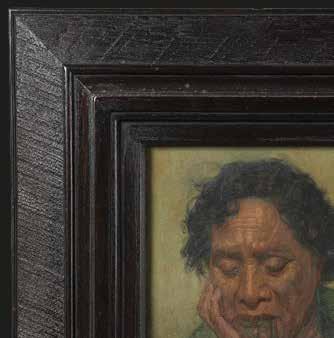
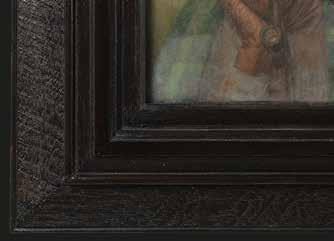
Sad Memories: Ngaheke (An Arawa Chieftainess)
oil on canvas in original frame signed and dated 1916; title inscribed, signed and inscribed £15 – 15 – 0 on original label affixed verso 250 x 200mm
Provenance
Acquired from Cordy’s, Auckland, 7 May 1972. Private Collection, Auckland. Private collection, Wellington. Purchased from Dunbar Sloane, Wellington, 21 April 2021, Lot No. 30.
Literature
Alister Taylor and Jan Glen, C. F. Goldie, His Life and Painting (Martinborough, 1977), p. 241. The Dominion Post, Wellington, 19 May 1972.
Exhibited
Auckland Society of Arts, 1971.
$590 000 – $750 000
This portrait of Pirira Te Kahukura (known as Ngāheke of the Tūhourangi iwi within the Te Arawa confederation) is one of nine that Goldie made of this kuia between 1913 and 1940. The first three paintings of her are titled The Widow and show her wearing the hei tiki inscribed with her name which was auctioned with some of Goldie’s other personal effects in 1974. This large hei tiki with red sealing wax around the eyes is prominent in three other early portraits – Grief, Perira te Kahikura (An Arawa Chieftainess) (1917), Portrait of Ngaheke (1920) and “At The Tangi” The Chief is Dead, His Widow Mourns (1920). These works seem to be based on a photograph he made of her in Rōtōrua (he made repeated trips there from 1901 onwards) where she has shoulder-length hair and downcast eyes, but no moko kauae.
There is one other Goldie portrait of her which shows her smoking tobacco in a briar pipe as she does here, and it is in the collection of the Aigantighe Art Gallery in Timaru. Titled An Anxious Moment – The Last Match (1938) it is a “conversation piece” which makes a joke of her emotional expression. In contrast to this, in Sad Memories and the last portrait he made of her, Perira te Kahikura or Ngaheke (1940), he has posed her with her right palm held to her face. This amplifies her sadness by deploying the age-old symbol of grief from art history: a hand to the cheek or chin to suggest that the subject’s heart is so heavy she needs to prop up her head. The presence of this motif reveals Goldie’s European academic training, his close study of the portraits of Rembrandt and his interest in portraying emotion. From ancient Egypt through the Renaissance to the modern era, the hand-to-face gesture has been used to signify mourning, distinguishing the grief-stricken from other figures included in a painting, and indicating the deeply personal and isolating experience of loss.
In 1973, following the theft of two other Goldie paintings from the National Art Gallery, a 1939 portrait of this same kuia titled The Dignity of the Māori (gifted by Eliot R. Davis who had been Goldie’s classmate) was stolen from high on the wall in Auckland Grammar School’s hall. Inscribed on the back in Goldie’s handwriting was “Perira te Kahukura or Ngaheke, lived at Ohinemutu”. In that work, Ngaheke again has no moko but does have the same furrowed brow as in this portrait. Rather than bowing her head in sorrow, her chin is up to emphasise the beauty of her high cheekbones, and she connects directly with the viewer through rheumy eyes. With a korowai over her shoulders and a huia feather in her hair, she exudes mana and regality.
On the same day that The Dignity of the Māori was reported missing from Grammar, it was delivered, wrapped in newspaper, to Canon N.T. Te Hau of St Faith’s Anglican Church in Ohinemutu. Handing it over to Police later that day, Canon Te Hau remarked that this was a painting of a kuia who was much revered by her whānau and iwi and still mourned.
Linda Tyler
A PRIVATE COLLECTION OF THREE PAINTINGS BY
A PRIVATE COLLECTION OF THREE PAINTINGS BY
40
Charles Frederick Goldie
At the Tangi, The Chief is Dead, His Widow Mourns. Portrait of Ngaheke (Perira te Kahukura), A Chieftainess of the Tūhourangi Tribe
oil on canvas
signed and dated 1936 and inscribed Best Wishes to Mrs E.B Gunson; inscribed The Chief is dead, the widow mourns at Tangi, NGAHEKE, A Chieftainess of Tutea Taoi of the Tūhourangi Tribe, Rotorua in graphite on stretcher verso; inscribed ‘Perira Te Kahukawa/commonly know as Ngaheke. A Chietainess of the Tutea Toai (hapu or subtribe) of the Tūhourangi tribe; Title of picture
“At the Tangi” The chief is dead, his widow mourns on facsimiles of original labels affixed verso 475 x 223mm
Provenance
Private collection, Auckland. Acquired from Cordy’s, Auckland, 23 June 1972. Private Collection, Wellington.
Private collection, Wellington.
Purchased from International Art Centre, Auckland, 10 November 2011, Lot No. 51.
Literature
Alister Taylor and Jan Glen, C. F. Goldie, His Life and Painting (Martinborough, 1977), p. 276.
The New Zealand Herald, 24 June, 1972.
$620 000 – $800 000
Some time after the turn of the twentieth century, but before 1915, Goldie travelled down to Rotorua with his small half plate camera and took a photograph of a woman called Perira Te Kahukura, more usually known as Ngaheke. She was affiliated with two of the iwi of the Arawa Confederation, Tūhourangi and Ngāti Whakaue; however, the name Goldie gives for her hapu is, unfortunately, incoherent. At the time he photographed her she was in mourning for her husband; the occasion may in fact have been his tangi; but his name was not recorded by the artist. Even so, those who can recite the whakapapa of the relevant iwi will surely know who he was.
A copy of the photographic print survives, in the Auckland Museum, and it is a remarkable image. Ngaheke is looking down, to her left, with her eyes closed. She wears a high-topped white shift, closed at the throat, and her hair is long, loose, luxuriant, and falls to her shoulders. There are deep lines either side of her nose, her wide mouth is also closed and you can see the corded sinews of her neck. It is the eyes and the mouth that are most eloquent, giving her the aspect of one contemplating the life and character of someone she has known well, someone who will not come again.
Goldie would have sketched her at the same time as he photographed her. Subsequently, he painted a number of portraits of her. The first we know of is from 1915; this one was made more than twenty years later, in 1936, and carries a dedication to Mrs E B Gunson. She was born Mary Elizabeth Carmichael, a nursing-sister, who married the eminent cardiologist Edward Burton Gunson, brother of James Henry Gunson, for ten years (1915–1925) mayor of Auckland. The Gunsons were active in the Auckland Art Society, which is no doubt where Goldie met Mary Elizabeth.
Goldie’s portrait of Ngaheke is the reverse of the image in the photograph, a mirror image perhaps, in the sense that the subject’s posture is inclined towards the right not the left. Her eyes are not closed either but open and, although they are looking out of the picture, her gaze does not seem quite to meet ours, falling, contemplatively, somehow short. Goldie was an expert at this particular technique, it is one of his signature achievements and gives the viewer, as here, a powerful sense of simultaneous mystery and disclosure. Ngaheke has two white-tipped feathers in her hair, a pounamu earring in her left ear, a large hei tiki hangs from her neck and she wears a korowai. These artefacts may well have been from Goldie’s own studio collection.
Perhaps the most striking aspect of the painting is its capture of the privacy of grief expressed in a public setting. In the photograph from which the portrait is taken, Ngaheke’s emotion is profound but occluded, a matter for herself alone, certainly not something to be shared with anyone else. The painting, while it preserves her reticence and her privacy, nevertheless, primarily through the medium of those dark, depthless, wide open eyes, does also allow us, if not exactly to partake of her emotion, a glimpse, at least, a window perhaps, into her heart.
Martin Edmond
Ralph Hotere
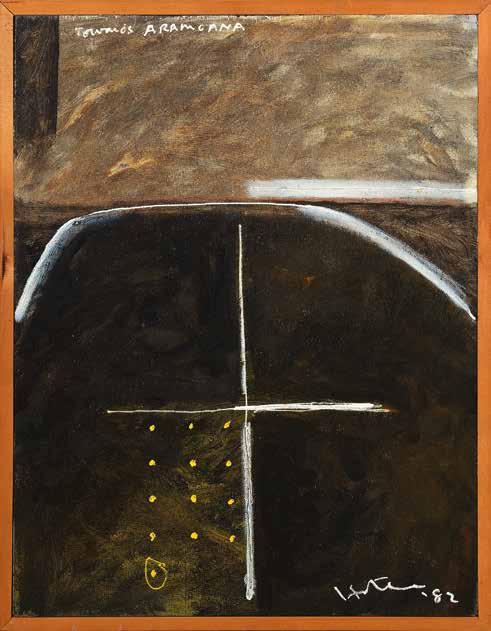
Towards Aramoana
acrylic on board title inscribed, signed and dated ’82 495 x 384mm
Provenance
Private Collection, Wellington.
$60 000 – $85 000
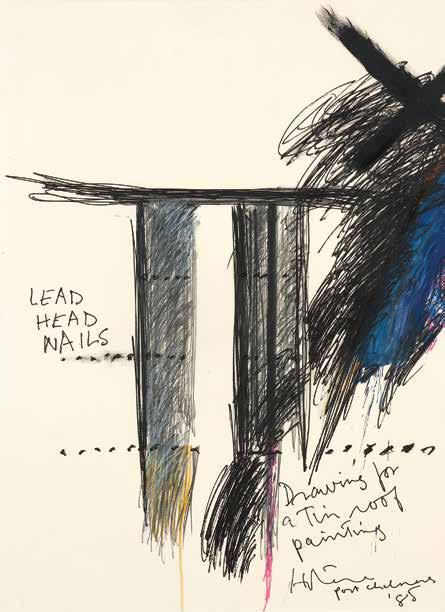
Ralph Hotere
Drawing for a Tin Roof Painting
mixed media on paper title inscribed, signed and dated ‘Port Chalmers ’85’ 745 x 530mm
Provenance
From the Collection of Greer and Dee Twiss, Auckland.
$18 000 – $28 000
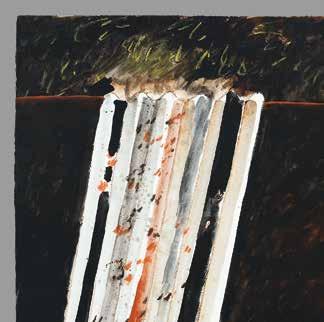
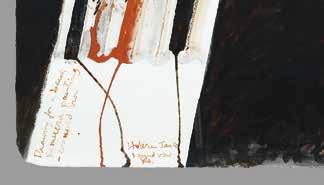
Ralph Hotere
Drawing for a Black Remuera Painting
watercolour and acrylic on paper title inscribed, signed and dated Jan ’80 and inscribed –corrugated iron. 1 Grand View Rd. 705 x 500mm
$20 000 – $30 000
Ralph Hotere
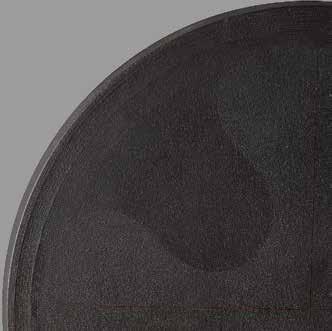
Black Painting
acrylic on shaped canvas title inscribed, signed and dated ’71 verso 750mm: diameter
Provenance
From the Collection of Greer and Dee Twiss, Auckland.
$35 000 – $55 000
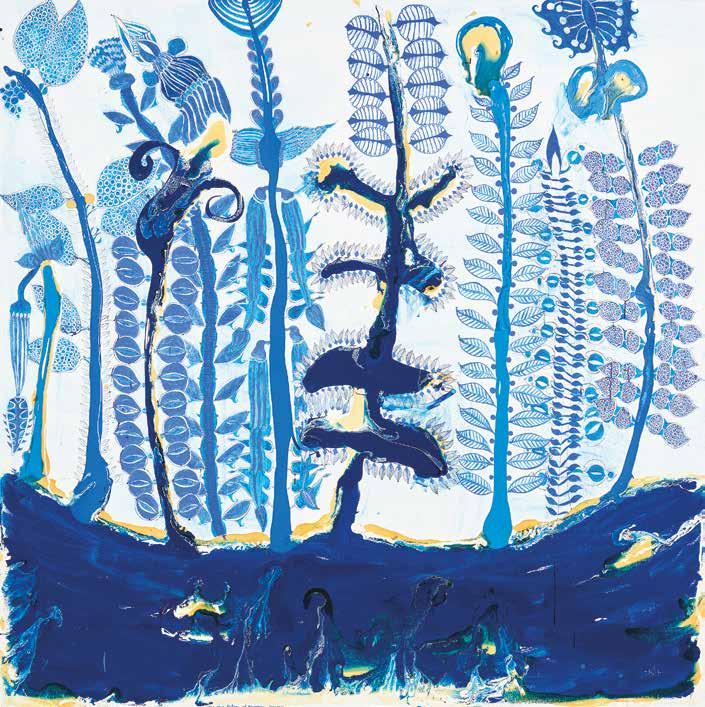
In the early 2010s a seismic shift took place in the paintings of John Pule. It wasn’t the first time the artist had undertaken a seemingly abrupt departure from a greatly admired and successful visual language in favour of something radically different. A similar break occurred in his works at the beginning of the millennium when his hiapo-inspired and largely monochromatic unstretched canvases gave way to vast open spaces punctuated by red clouds tenuously connected by rickety scaffolding. This time the shift was precipitated by a return to living in Niue, the country of his birth and his ancestral homeland. These new paintings were set against the backdrop of the Pacific Ocean and were marked by the fecundity of nature and island life. Lush and extraordinary paintings such as The Blue Plateau of Polynesian Memory (2012) are dominated by gigantic botanical forms, fleshy and over ripe, on the verge of erupting. If Pule’s new paintings continued to tell stories, they now seemed to be more about the present than the past, and more about the natural world than culture.
Another shift was also apparent in the aesthetic of these new paintings. They witnessed the artist moving away from acrylics and inks in favour of the glossy seductiveness of enamel paints. This was a shift the artist had signaled a few years previous when he started using enamels to depict his floating clouds. In The Blue Plateau of Polynesian Memory the artist utilises enamel paints to newfound and unprecedented effect to create an abstract maritime world in which the ocean is the source of all life. As Dr Maia Nuku has written of these works: “(they) embrace an atmosphere suggestive of ancient landscapes, a primordial Polynesia… Verdant and glossy, these latest works seem to pulse with the energy of burgeoning life, from the thick undergrowth of the forest to the glassine sanctum of underwater rock pools… They speak eloquently to the flourishing life brough on by atea, the light: the brief but crucial spark, conceived as consciousness, that evolved into the layered canopies of the sky and drew the cosmos out of the darkness.”
Rich and saturated, The Blue Plateau of Polynesian Memory presents us with a fantastical abstract realm. Both worldly and other-worldly, it draws the viewer into a vast and open expanse where nature is omnipotent. At a time when climate change continues to encroach at a rapid pace on island life in the Pacific, it serves to remind us of the interconnectedness of the cosmos, the oceans and seas, the lands and its peoples together with its histories and mythologies.
Ben Plumbly
John Pule
The Blue Plateau of Polynesian Memory
enamels, oil, oil stick, ink, varnish and polyurethane on canvas title inscribed 2000 x 2000mm
Exhibited
‘The Blue Plateau of Polynesian Memory’, Gow Langsford Gallery, Auckland, 11 July – 4 August 2012.
Provenance
Private collection, Auckland.
$60 000 – $80 000
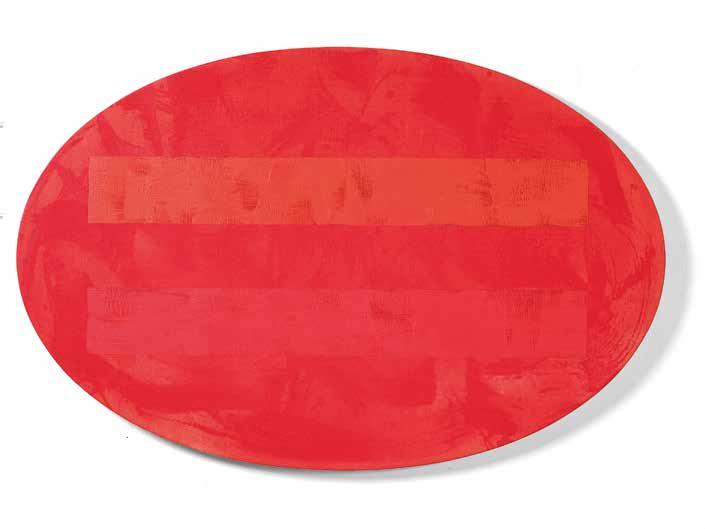
Gretchen Albrecht
Corolla (Pohutukawa)
acrylic on shaped canvas title inscribed, signed and dated 2004 verso 980 x 1510mm
Provenance
Private collection, Wellington.
$35 000 – $50 000
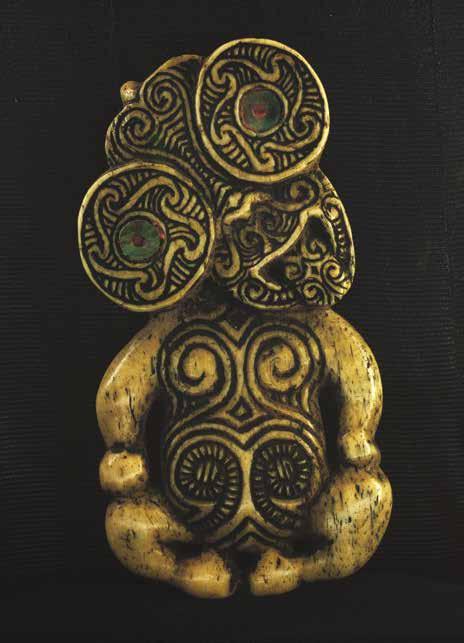
Fiona Pardington
A76460
pigment inks on Hahnemuhle paper, A/P title inscribed, signed and dated 2019 verso 1760 x 1400mm
Exhibited
‘Fiona Pardington,Tiki: Orphans of Māoriland’, 12 June – 11 July 2019.
$25 000 – $40 000
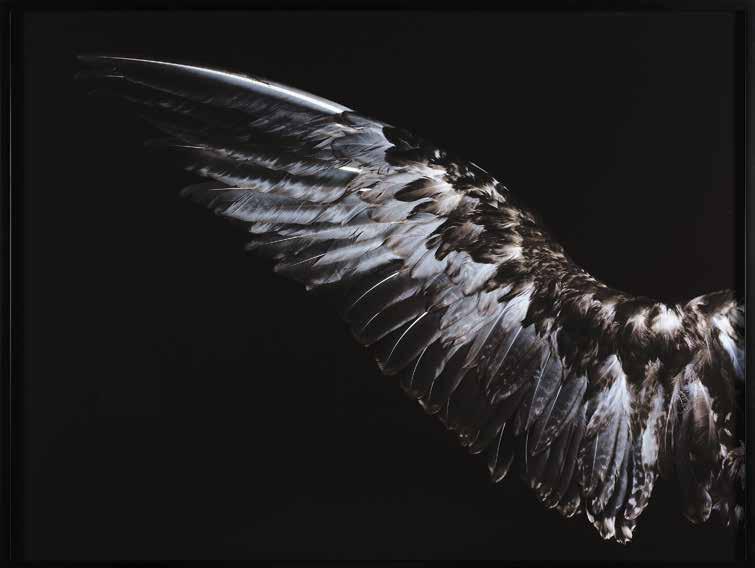
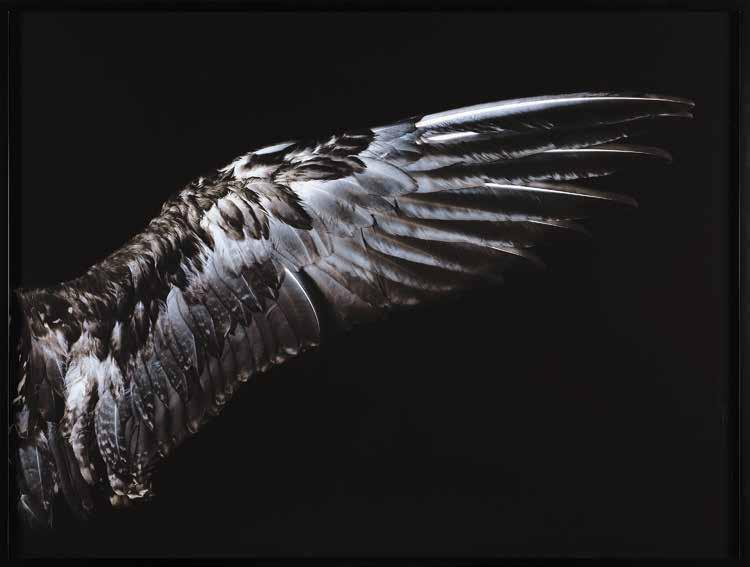
Fiona Pardington
Silver Winged Gull (below), Hunter pigment inks on Hahnemuhle paper, 6/10 title inscribed, signed and dated 2022 verso 955 x 1280mm: each panel
$40 000 – $60 000
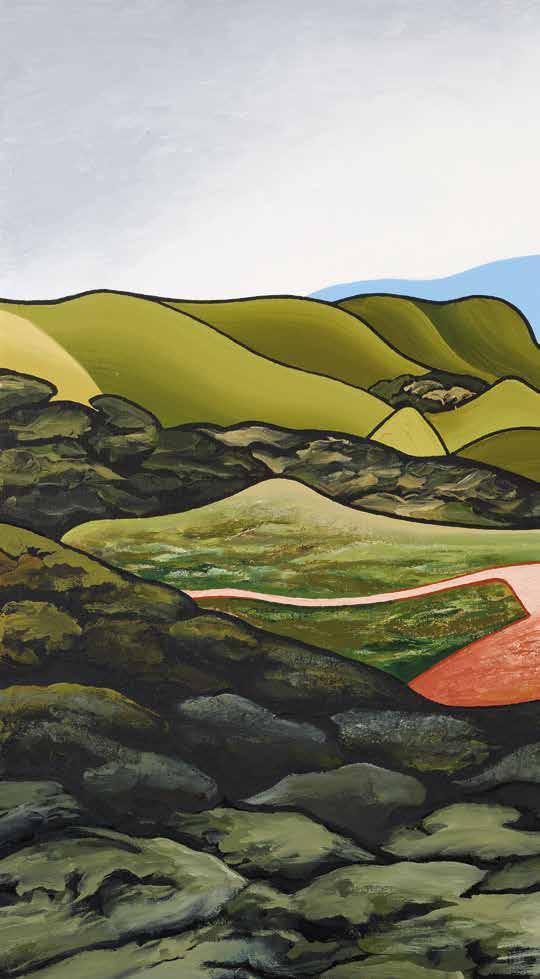
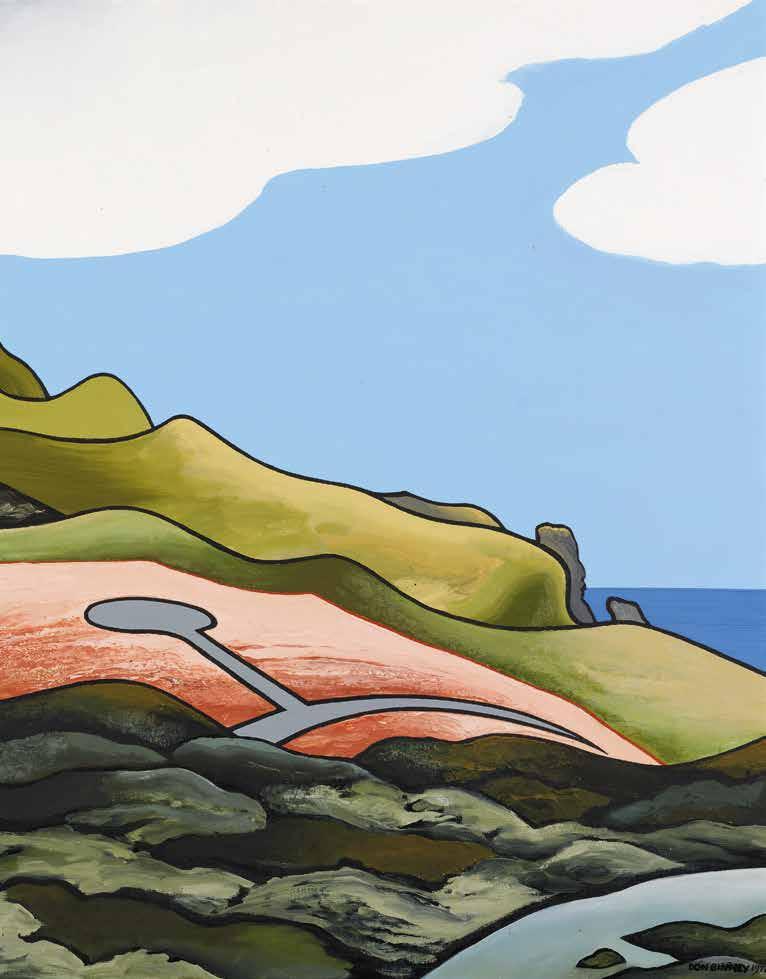
Don Binney
Fell Swoop, Te Henga
oil and acrylic on canvas signed and dated 1976; artist's name, title and date inscribed on label affixed verso 760 x 1015mm
Provenance
Private collection, Central North Island. Thence by descent to the current owner.
$150 000 – $220 000
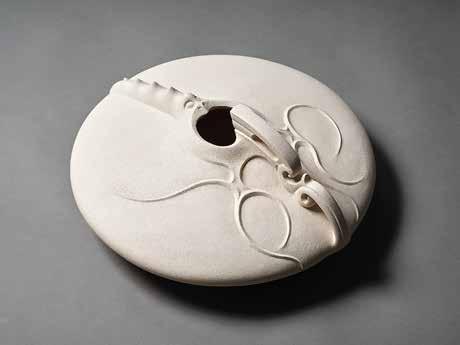
Manos Nathan Tunatahi
ceramic title inscribed and signed to underside
150 x 400 x 400mm
Provenance
Private collection, Auckland.
$3000 – $5000
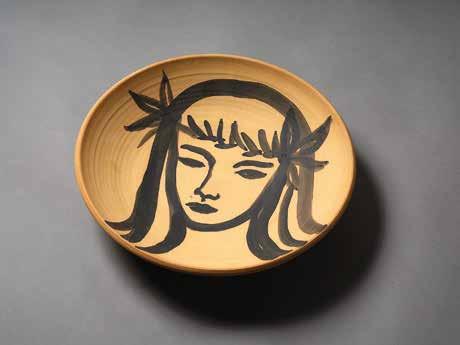
51 Star Gossage Untitled acrylic paint on Tony Sly ceramic bowl signed and dated 2019 to underside
80 x 340 x 340mm
Provenance
Private collection, Auckland.
$2000 – $3500
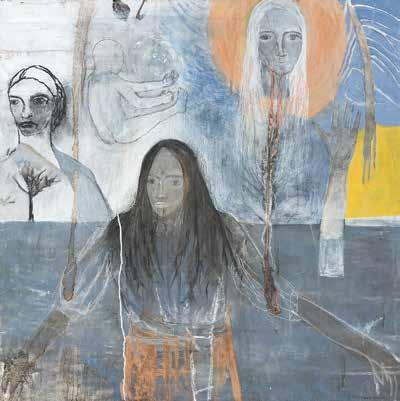
Star Gossage Moemoa
oil on board
title inscribed, signed and dated 2000 verso 1200 x 1200mm
Provenance
Private collection, Auckland.
$17 000 – $28 000
53
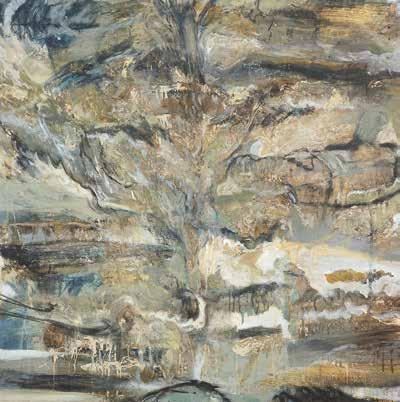
Star Gossage
The Willow oil on board
title inscribed, signed and dated 1999 – 2000 verso 1200 x 1200mm
Provenance
Private collection, Auckland.
$12 000 – $20 000
Dick Frizzell
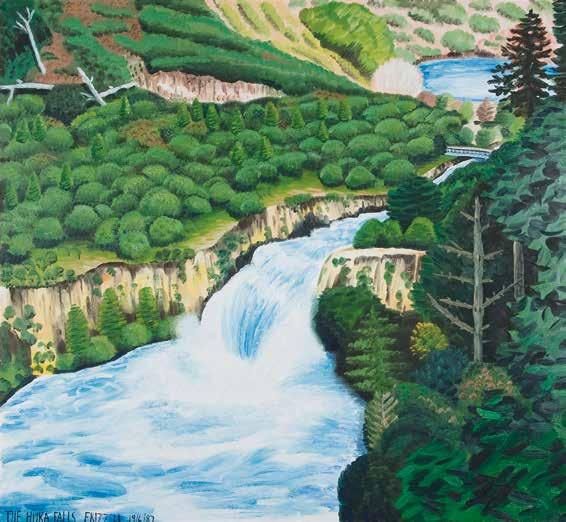
The Huka Falls
oil on board
title inscribed, signed and dated 19/6/87
1205 x 1296mm
Provenance
Private collection, Auckland.
$55 000 – $75 000
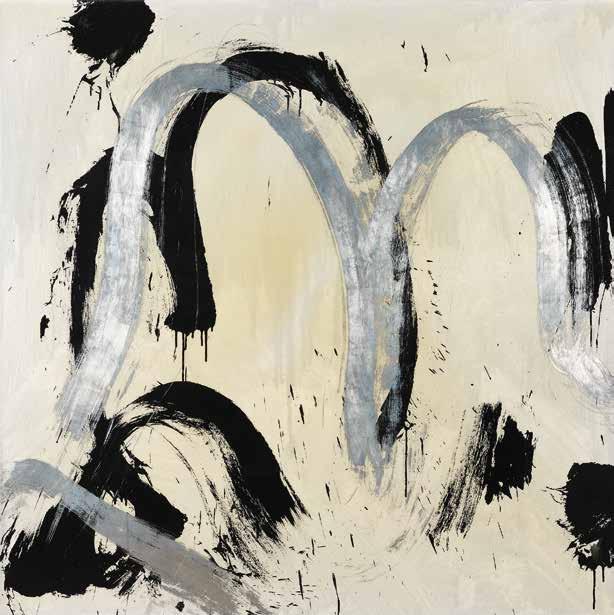
Max Gimblett
Endlessness – After Shih T’ao
gesso, acrylic and palladium on canvas signed and dated 2016 verso 1520 x 1520mm
Provenance
Private collection, Wellington.
$55 000 – $85 000
56
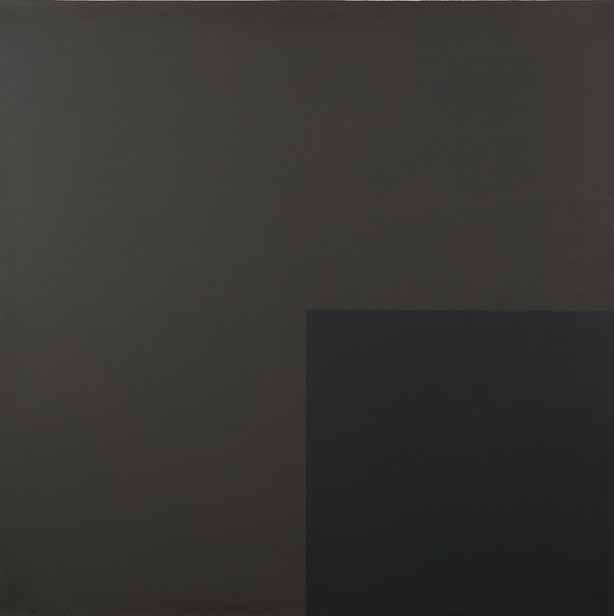
Milan Mrkusich
Untitled – Dark I
acrylic on canvas
title inscribed, signed and dated 1984 verso 1600 x 1600mm
$65 000 – $95 000
57
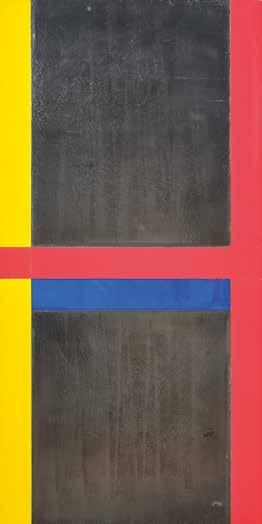
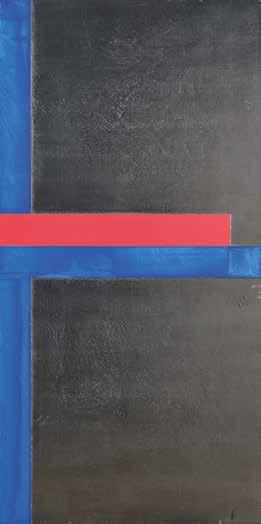
Stephen Bambury
“Differentiated, Transvalued, Disproportioned” (Primary)
graphite and acrylic on two aluminium panels title inscribed, signed and dated 1992 verso 1325 x 1250 x 27mm
$25 000 – $35 000
58
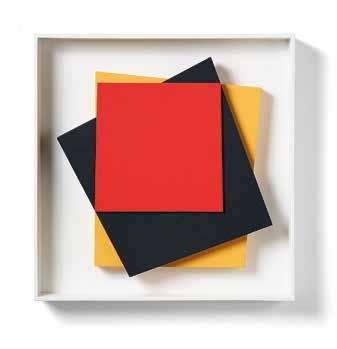
Geoff Thornley
Untitled – Construction
oil on canvas laid onto boards signed and dated 8.81 verso 490 x 470 x 70mm
Provenance
Private Collection, Auckland.
$6000 – $9000
59
Geoff Thornley Voice of Mimesis
oil on canvas title inscribed, signed and dated #19.2000 – 1 verso 1235 x 1035mm
Provenance
Private Collection, Auckland
$7000 – $10 000
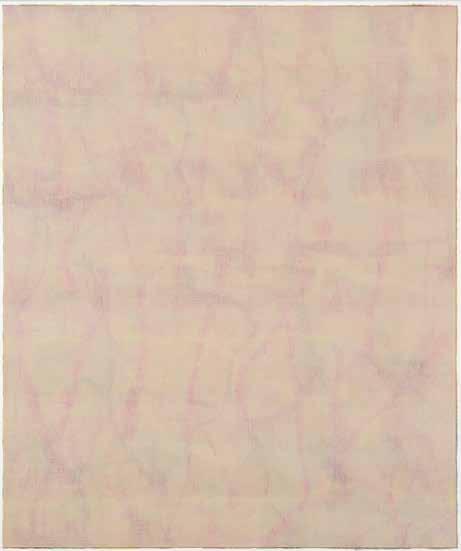
Mervyn Williams Shimmer
acrylic on canvas title inscribed, signed and dated 1996 verso 975 x 825mm
Provenance
Private collection, Auckland.
$8000 – $14 000
61
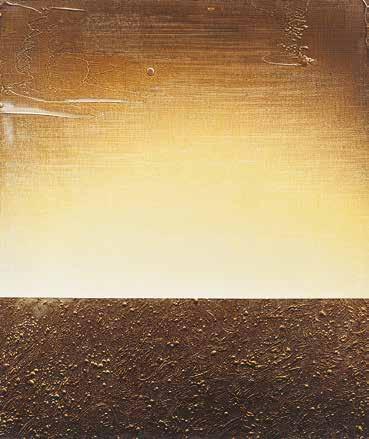
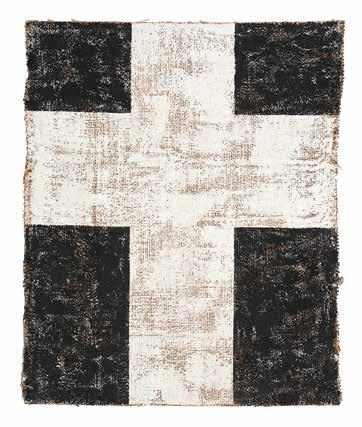
John Nixon (Australia, 1949–2020) Untitled
acrylic on hessian (1983)
750 x 620mm
$3000 – $5000
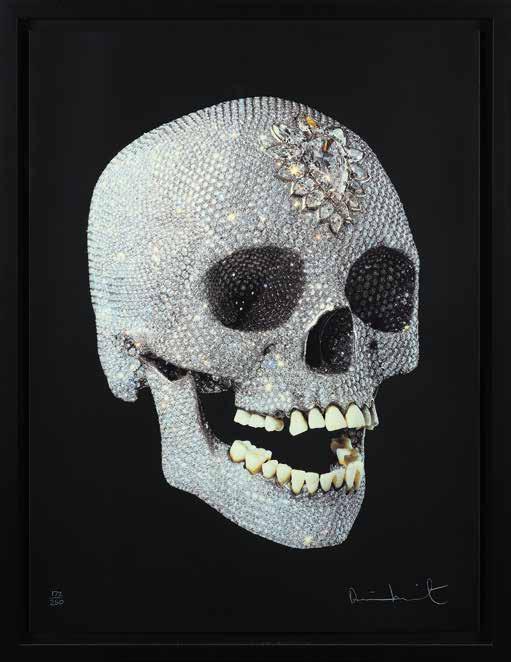
62
Damien Hirst (United Kingdom, 1965– )
For the Love of God, Enlightenment
screenprint with glaze and diamond dust (published by Other Criteria), 172/250 signed 1010 x 745mm
Provenance
Private collection, Auckland.
$16 000 – $25 000
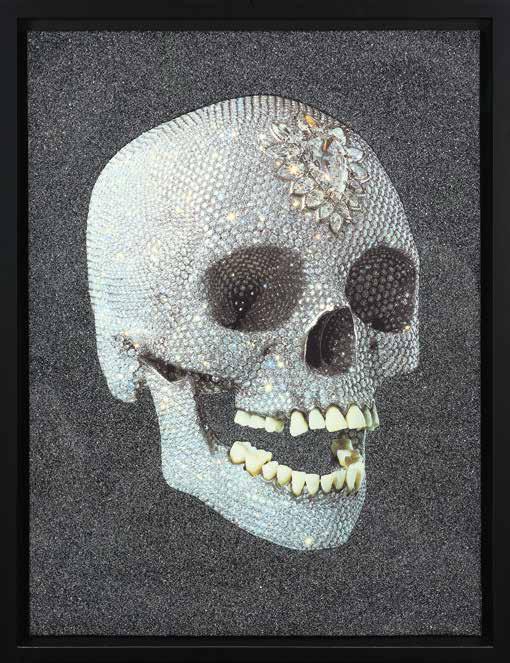
Damien Hirst (United Kingdom, 1965– )
For the Love of God, Laugh screenprint with glaze and diamond dust (published by Other Criteria), 64/250 1010 x 745mm
Provenance
Private collection, Auckland.
$16 000 – $25 000
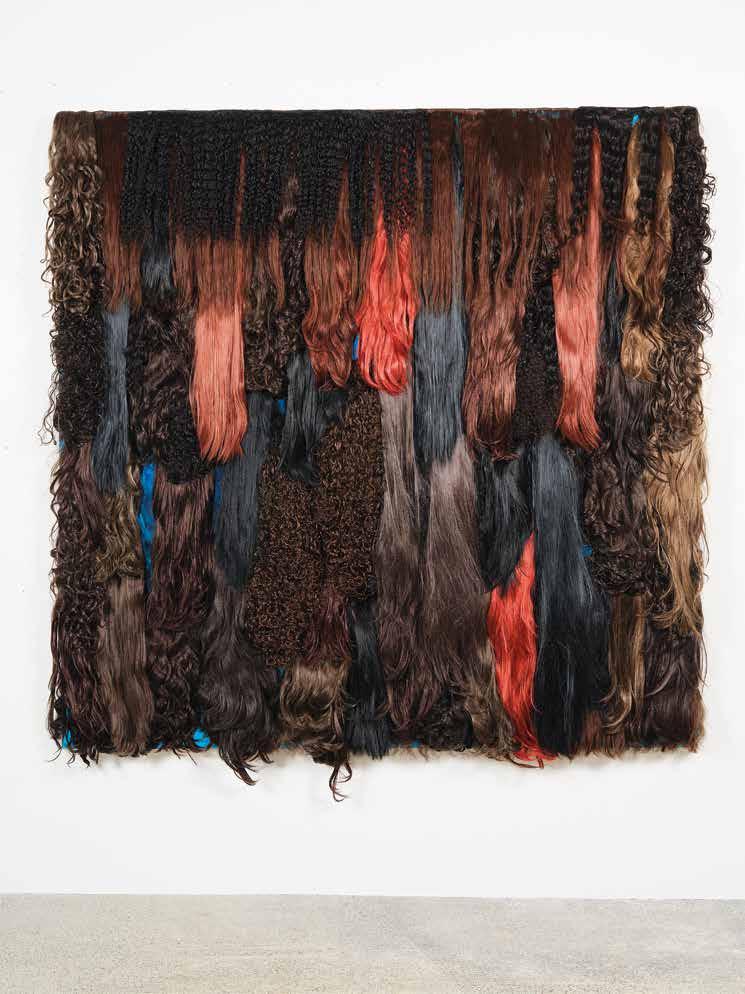
Dale Frank (Australia, 1959– )
Tel Aviv
wigs and anodised Euromir perspex signed and dated 2016 verso 2000 x 2000 x 200mm
Provenance
Private collection, Auckland.
$40 000 – $65 000
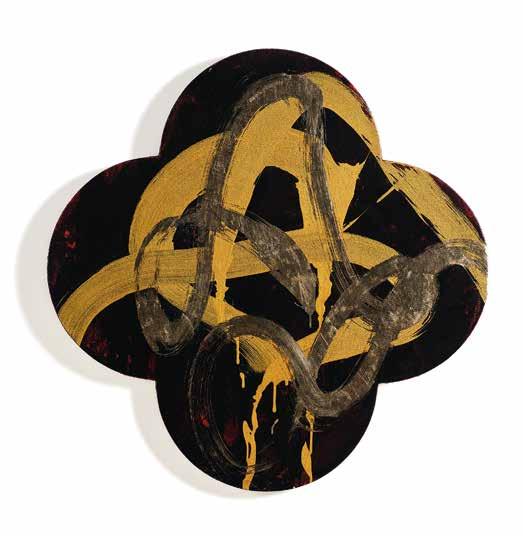
Max Gimblett
Golden Throne
acrylic, aquasize, moon gold leaf, resin and MSA on quatrefoil shaped canvas title inscribed, signed and dated 2018 verso 1016 x 1016mm
Provenance
Private collection, Christchurch. Purchased from Nadene Milne Gallery, Arrowtown.
$22 000 – $28 000
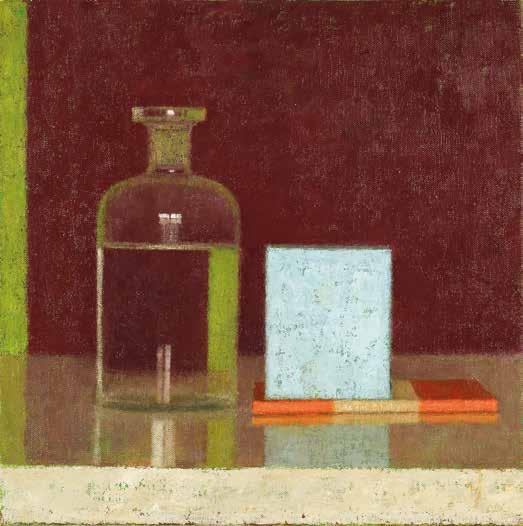
Jude Rae SL 307
oil on linen title inscribed, signed and dated 2019 verso 560 x 560mm
Provenance
Private collection, Auckland. Purchased from Two Rooms, Auckland.
$20 000 – $30 000
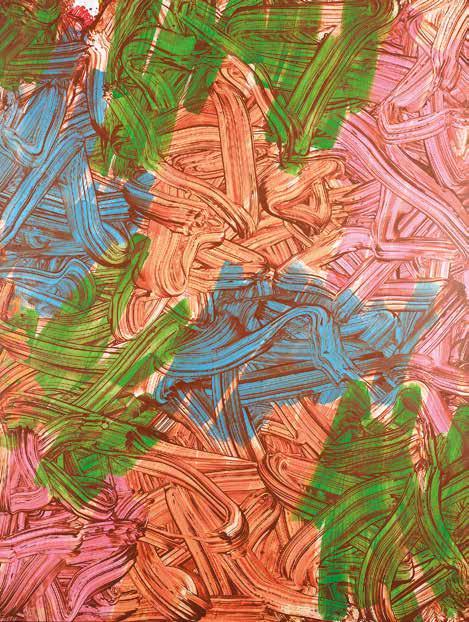
Judy Millar
Untitled
acrylic and oil on canvas title inscribed and signed verso 2485 x 1890mm
Provenance
Private collection, Manawatu. Purchased from Gow Langsford Gallery, Auckland in 2004.
$27 000 – $40 000
68
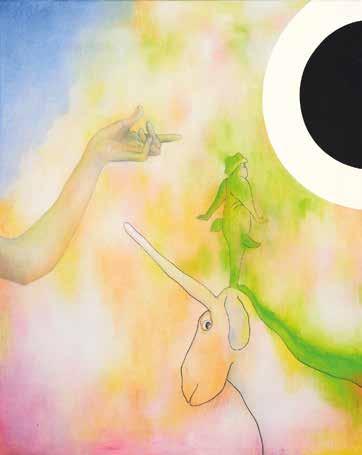
Brent Harris
Blue Dreamer
oil and charcoal on linen title inscribed, signed and dated 2014 –2015 verso
920 x 730mm
Provenance
Private collection, Auckland.
$10 000 – $16 000
69
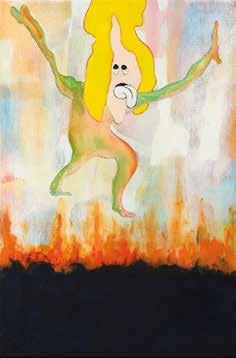
Brent Harris
No. 28 (Suddenly I was Right There)
gouache and charcoal on board title inscribed, signed and dated 2010 verso
420 x 280mm
Provenance
Private collection, Auckland.
$5000 – $8000
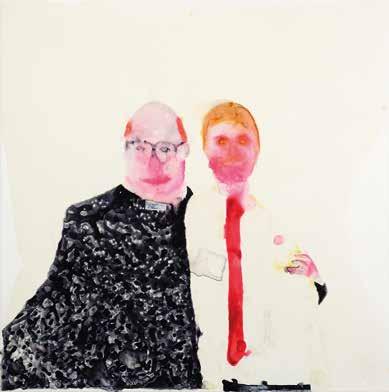
Richard Lewer
We are Praying for you Brother
PVA and watercolour on canvas (2005) 805 x 805mm
Provenance
Private collection, Auckland.
$6000 – $9000
71
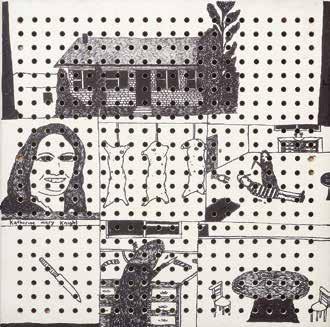
Richard Lewer
Katherine Mary Knight (Australian Crime Series)
acrylic on pegboard title inscribed; signed verso 300 x 300mm
Provenance
Private collection, Auckland.
$3000 – $5000
72
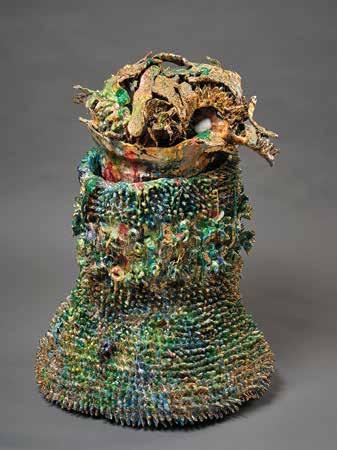
Virginia Leonard Blue and Gold
clay, resin, lustre and gold (2021)
800 x 470 x 470mm
Provenance
Private collection, Auckland.
$12 000 – $20 000
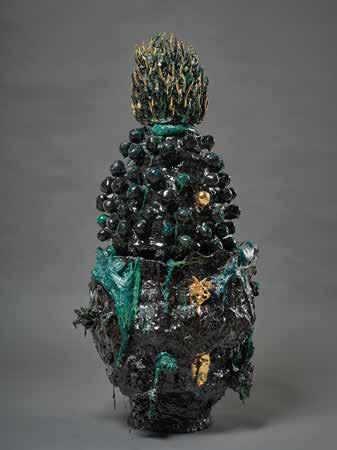
73 Virginia Leonard Gangrene
clay, resin and gold lustre (2016)
900 x 340 x 480mm
Provenance
Private collection, Auckland.
$7000 – $10 000
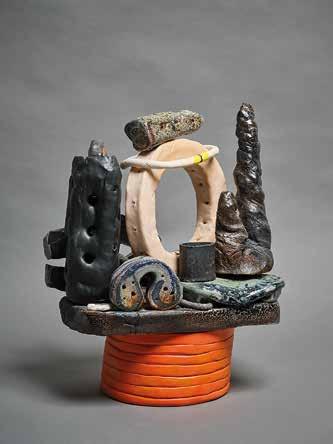
Peter Hawkesby
Rashington Palace I
stoneware and glazes (2019) 470mm: height
Provenance
Purchased by the current owner from Anna Miles Gallery, Auckland, 2019. Private collection, Auckland.
$4000 – $6000
75
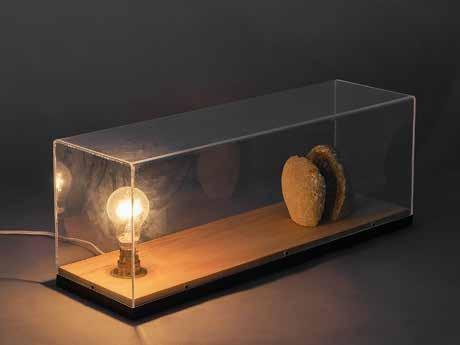
Bill Culbert
Moonlight Creek No. I
electrical fitting, wood and rocks title inscribed, signed and dated 1978 to underside 230 x 620 x 185mm:
$7000 – $12 000
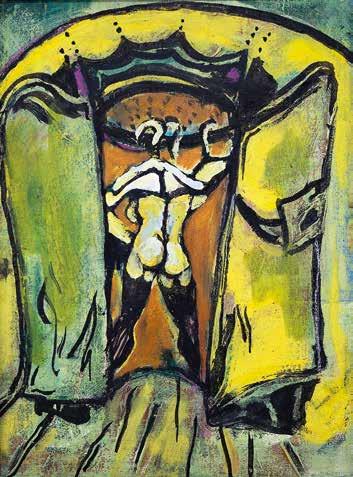
Philip Clairmont
Small Wardrobe with Coat Hanger and Nude
oil on board
title inscribed verso; original Ferner Galleries label
affixed verso
400 x 300mm
Provenance
Private collection, Auckland.
Purchased from Ferner Galleries, Auckland.
$13 000 – $18 000
77
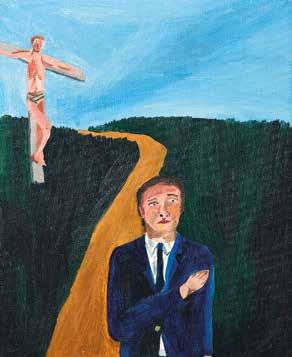
Jeffrey Harris Man before Crucifixion
oil on canvasboard
title inscribed, signed and dated May 1972 verso
300 x 240mm
Provenance
Private collection, Auckland.
$7000 – $12 000
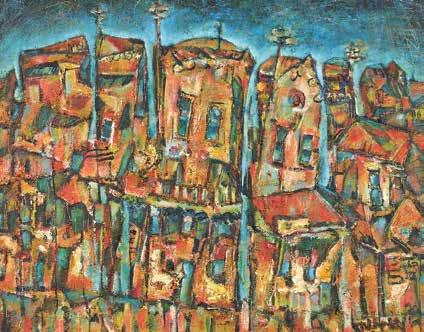
Selwyn Muru Cityscape
oil on board signed 510 x 660mm
Provenance
Private collection, Auckland. $10 000 – $16 000
79
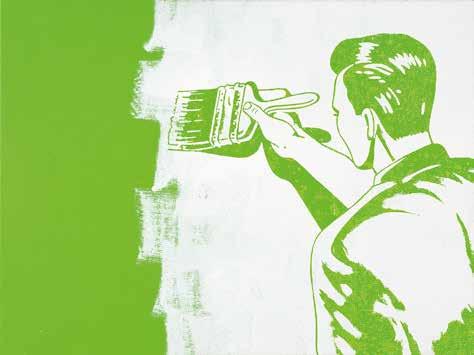
Ian Scott The House Painter
acrylic on canvas title inscribed, signed and dated March 1972 verso 765 x 1015mm
Provenance
Private collection, Auckland. $8000 – $12 000
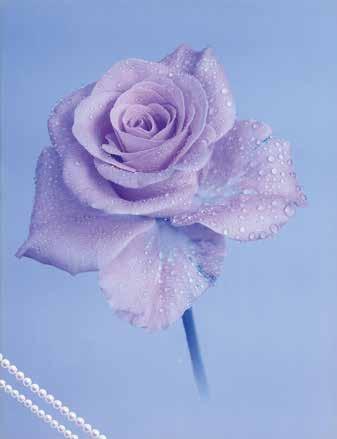
Yvonne Todd
Asthma and Eczema
C type Print from 4 x 5” transparency, 2/3 title inscribed, signed and dated 2001 verso 580 x 455mm:
Exhibited
‘The Walters Prize’, Auckland Art Gallery Toi o Tāmaki, 8 June – 25 August 2002.
$6000 – $9000
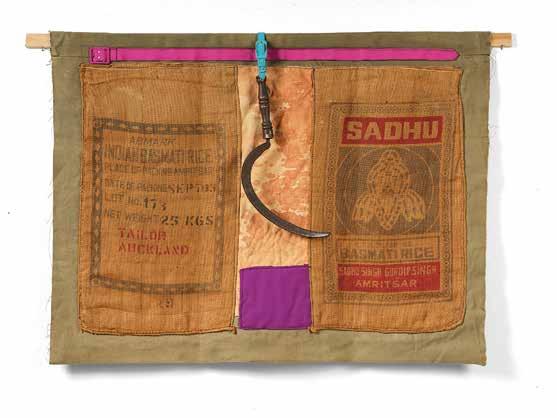
81 Don Driver Basmati
found objects and collage title inscribed, signed and dated 1984 verso 885 x 1220 x 60mm
$4000 – $7000
PLEASE NOTE: it is assumed that all bidders at auction have read and agreed to the conditions described on this page. Art+Object directors are available during the auction viewing to clarify any questions you may have.
1. REGISTRATION: Only registered bidders may bid at auction. You are required to complete a bidding card or absentee bidding form prior to the auction giving your correct name, address and telephone contact and supplementary information such as email addresses that you may wish to supply to Art+Object.
2. BIDDING: The highest bidder will be the purchaser subject to the auctioneer accepting the winning bid and any vendor’s reserve having been reached. The auctioneer has the right to refuse any bid. If this takes place or in the event of a dispute the auctioneer may call for bids at the previous lowest bid and proceed from this point. Bids advance at sums decreed by the auctioneer unless signaled otherwise by the auctioneer. No bids may be retracted. The auctioneer retains the right to bid on behalf of the vendor up to the reserve figure.
3. RESERVE: Lots are offered and sold subject to the vendor’s reserve price being met.
4. Lots offered and sold as described and viewed: Art+Object makes all attempts to accurately describe and catalogue lots offered for sale. Notwithstanding this neither the vendor nor Art+Object accepts any liability for errors of description or faults and imperfections whether described in writing or verbally. This applies to questions of authenticity and quality of the item. Buyers are deemed to have inspected the item thoroughly and proceed on their own judgment. The act of bidding is agreed by the buyer to be an indication that they are satisfied on all counts regarding condition and authenticity.
5. BUYERS PREMIUM: The purchaser by bidding acknowledges their acceptance of a buyers premium of 19% + GST to be added to the hammer price in the event of a successful sale at auction.
6. ART+OBJECT IS AN AGENT FOR A VENDOR: A+O has the right to conduct the sale of an item on behalf of a vendor. This may include withdrawing an item from sale for any reason.
7. PAYMENT: Successful bidders are required to make full payment immediately post sale – being either the day of the sale or the following day. If for any reason payment is delayed then a 20% deposit is required immediately and the balance to 100% required within 3 working days of the sale date. We accept payment
via Eftpos, cash (under $5000.00) and direct credit. Visa and MasterCard credit cards are accepted, however a surcharge of 2.5% will be added. Payments over $10,000.00 must be made by direct credit to our bank account. Our bank details for deposits are 12–3107–0062934–00. Please use your buyer number as transaction reference. Please refer to point 7 of the Conditions of Sale in the catalogue for a detailed description of payment terms.
8. FAILURE TO MAKE PAYMENT: If a purchaser fails to make payment as outlined in point 7 above Art+Object may without any advice to the purchaser exercise its right to: a) rescind or stop the sale, b) re offer the lot for sale to an underbidder or at auction. Art+Object reserves the right to pursue the purchaser for any difference in sale proceeds if this course of action is chosen, c) to pursue legal remedy for breach of contract.
9. COLLECTION OF GOODS: Purchased items are to be removed from Art+Object premises immediately after payment or clearance of cheques. Absentee bidders must make provision for the uplifting of purchased items (see instructions on the facing page).
10. BIDDERS OBLIGATIONS: The act of bidding means all bidders acknowledge that they are personally responsible for payment if they are the successful bidder. This includes all registered absentee or telephone bidders. Bidders acting as an agent for a third party must obtain written authority from Art+Object and provide written instructions from any represented party and their express commitment to pay all funds relating to a successful bid by their nominated agent.
11. BIDS UNDER RESERVE & HIGHEST
SUBJECT BIDS: When the highest bid is below the vendor’s reserve this work may be announced by the auctioneer as sold ‘subject to vendor’s authority’ or some similar phrase. The effect of this announcement is to signify that the highest bidder will be the purchaser at the bid price if the vendor accepts this price. If this highest bid is accepted then the purchaser has entered a contract to purchase the item at the bid price plus any relevant buyers premium.
The following information does not form part of the conditions of sale, however buyers, particularly first time bidders are recommended to read these notes.
A. Bidding at auction: Please ensure your instructions to the auctioneer are clear and easily understood. It is well to understand that during a busy sale with multiple bidders the auctioneer may not be able to see all bids at all times. It is recommended that you raise your bidding number clearly and without hesitation. If your bid is made in error or you have misunderstood the bidding level please advise the auctioneer immediately of your error – prior to the hammer falling. Please note that if you have made a bid and the hammer has fallen and you are the highest bidder you have entered a binding contract to purchase an item at the bid price. New bidders in particular are advised to make themselves known to the sale auctioneer who will assist you with any questions about the conduct of the auction.
B. ABSENTEE BIDDING: Art+Object welcomes absentee bids once the necessary authority has been completed and lodged with Art+Object. A+O will do all it can to ensure bids are lodged on your behalf but accepts no liability for failure to carry out these bids. See the Absentee bidding form in this catalogue for information on lodging absentee bids. These are accepted up to 2 hours prior to the published auction commencement.
C. TELEPHONE BIDS: The same conditions apply to telephone bids. It is highly preferable to bid over a landline as the vagaries of cellphone connections may result in disappointment. You will be telephoned prior to your indicated lot arising in the catalogue order. If the phone is engaged or connection impossible the sale will proceed without your bidding. At times during an auction the bidding can be frenetic so you need to be sure you give clear instructions to the person executing your bids. The auctioneer will endeavour to cater to the requirements of phone bidders but cannot wait for a phone bid so your prompt participation is requested.
D. NEW ZEALAND DOLLARS: All estimates in this catalogue are in New Zealand dollars. The amount to be paid by successful bidders on the payment date is the New Zealand dollar amount stated on the purchaser invoice. Exchange rate variations are at the risk of the purchaser.
Auction No. 214
Important Paintings and Contemporary Art 25 March 2026 at 6.00pm
Description
This completed and signed form authorises Art+Object to bid on my behalf at the above mentioned auction for the following lots up to prices indicated below. These bids are to be executed at the lowest price levels possible.
I understand that if successful I will purchase the lot or lots at or below the prices listed on this form and the listed buyers premium for this sale (19%) and GST on the buyers premium. I warrant also that I have read and understood and agree to comply with the conditions of sale as printed in the catalogue.
Bid maximum in New Zealand dollars (for absentee bids only)
Art+Object will advise me as soon as is practical that I am the successful bidder of the lot or lots described above.
I agree to pay immediately on receipt of this advice. Payment will be by Eftpos, cash (under $5000.00) or direct credit. I understand that there is a 2.5% surcharge for payment by Visa or MasterCard credit cards. I understand that payments over $10,000.00 must be made by direct credit to Art+Object’s bank account as shown on the invoice.
I will arrange for collection or dispatch of my purchases. If Art+Object is instructed by me to arrange for packing and dispatch of goods I agree to pay any costs incurred by Art+Object. Note: Art+Object requests that these shipping arrangements are made prior to the auction date to ensure prompt delivery processing.
Please indicate as appropriate by ticking the
Mr/Mrs/Ms:
To register for Absentee or Phone Bidding this form must be lodged with Art+Object by 2pm on the day of the published sale time in one of three ways:
1. Email a printed, signed and scanned form to Art+Object: info@artandobject.co.nz
2. Fax a completed form to Art+Object: +64 9 354 4645
3. Post a form to: Art+Object, PO Box 68345 Wellesley Street, Auckland 1141, New Zealand
Aberhart, Laurence 6
Albrecht, Gretchen 46
Allen, Jim 3
Angus, Rita 36
Bambury, Stephen 57
Binney, Don 28, 49
Bush, Kushana 8, 9
Clairmont, Philip 76
Culbert, Bill 75
Dibble, Paul 2, 19, 20
Driver, Don 81
Duffy, Brian 25
Ellis, Robert 15, 16
Frank, Dale 64
Frizzell, Dick 54
Gimblett, Max 55, 65
Goldie, Charles F 38, 39, 40
Gossage, Star 51, 52, 53
Hammond, Bill 32, 33
Harris, Brent 68, 69
Harris, Jeffrey 77
Hawkesby, Peter 74
Hirst, Damien 62, 63
Hotere, Ralph 41, 42, 43, 44
Leek, Saskia 10
Lett, Barry 1
Leonard, Virginia 72, 73
Lewer, Richard 70, 71
McCahon, Colin 35, 37
Millar, Judy 67
Muru, Selwyn 78
Mrkusich, Milan 56
Nathan, Manos 50
Nixon, John 61
Pardington, Fiona 47, 48
Parekōwhai, Michael 26, 27
Paterson, Reuben 33, 34
Peryer, Peter 23, 24
Pule, John 45
Rae, Jude 66
Roeth, Winston 30
Scott, Ian 79
Smither, Michael 29
Stringer, Terry 17
Taylor, Imogen 11
Thornley, Geoff 58, 59
Tibbo, Teuane 12, 13, 14
Todd, Yvonne 80
Upritchard, Francis 18
Walters, Gordon 21, 22
Westra, Ans 4, 5
Williams, Mervyn 60
Yossifor, Liat 31