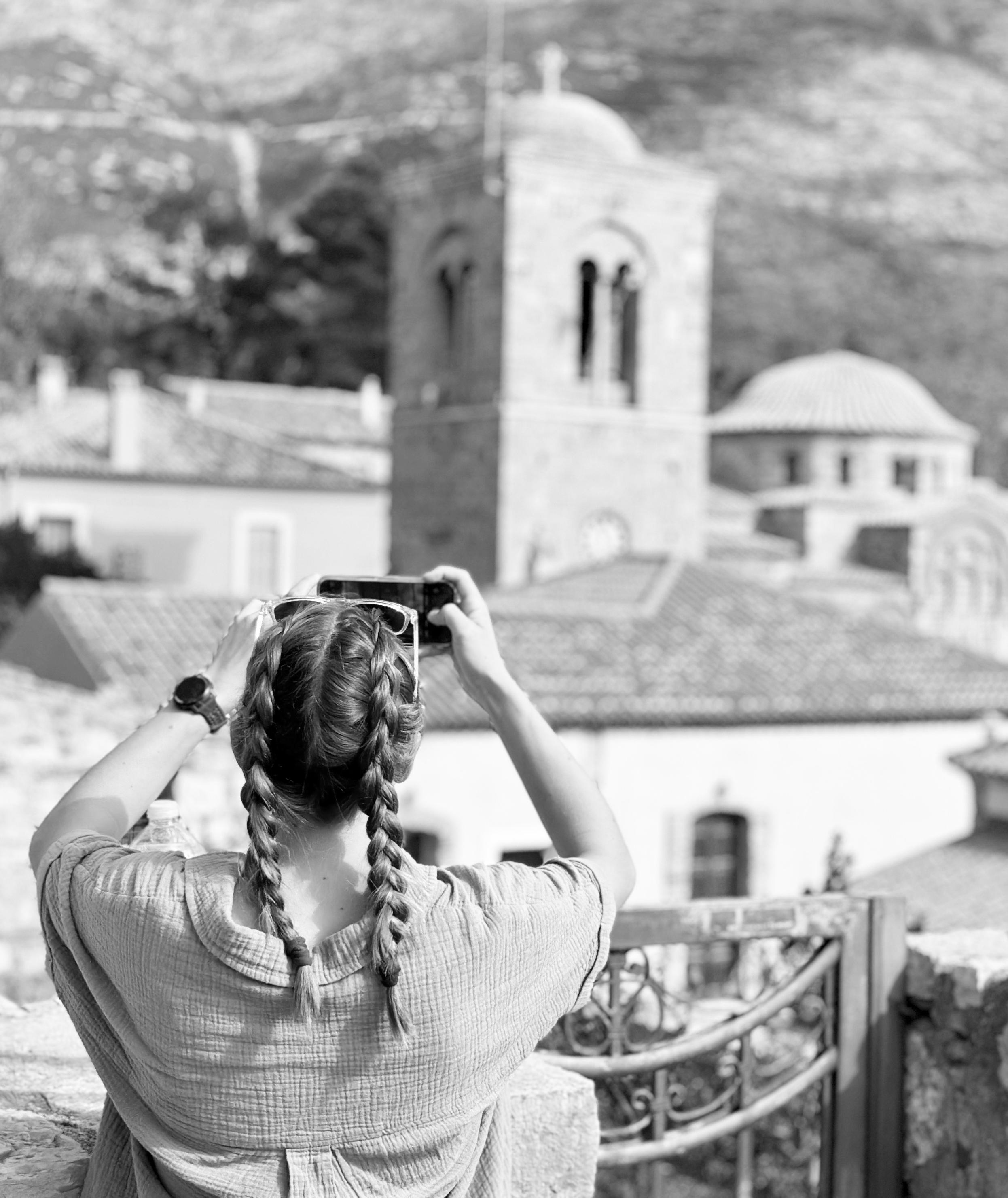
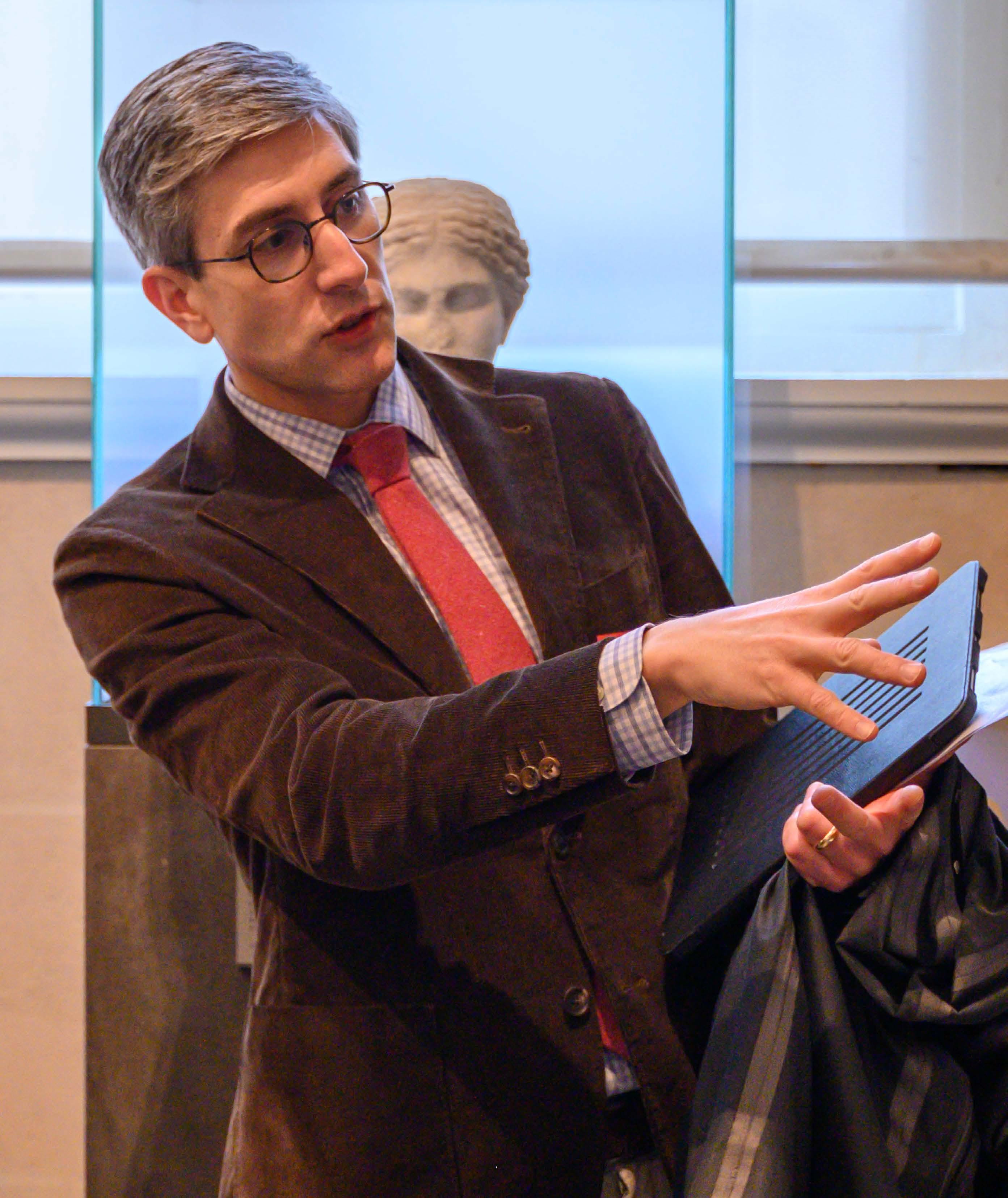
Professor Nathan Arrington teaches a seminar at the Musée du Louvre
(Photo/ Stéphane Richard)
It has been another rich year in the Department of Art & Archaeology, full of lectures, workshops, conferences, and more. Learning here happens in myriad ways, from large lecture classes to one-on-one advising, from the Princeton classroom to the museum storeroom. Students are doing well, winning awards and grants and landing tenure-track jobs and curatorships. I am also proud of those students who choose non-art and non-academic paths, while maintaining a lifelong interest in books and museums. The Department of Art & Archaeology is a place where any student interested in the liberal arts can find an intellectual home that challenges and supports them.
We made two outstanding hires this year: John Sigmier, in the area of Roman art and archaeology, and Fatima Quraishi, in South Asian art history. They bring exciting research
agendas, outstanding pedagogy, and solid service experience. At a time when other universities froze hires, we were fortunate to be able to make these critical appointments. Meanwhile, Irene Small was promoted to full professor, and other faculty members continue to flourish.
The department conducted a comprehensive review of its curriculum, ensuring that core courses as well as an appropriate range of large and small courses are offered. This exercise prompted the faculty to revise the way in which geographical and chronological areas are visible to students, so as to foster greater exploration of a wide range of periods and places.
We announced a promising partnership with the École du Louvre, which will allow the exchange of graduate students and facilitate the participation of undergraduate students in
winter and summer courses. This collaboration builds on arrangements we have with other institutions, such as the Freie Universität Berlin, to deepen and expand our international profile and to increase opportunities for our students.
While we have much to celebrate this year, the joy is moderated by the need for sobriety in the face of recent or anticipated changes to policies and norms that impact higher education. Our department and our university have responsibilities in these times to steward our resources for the future while fostering the vitality of our disciplines in the present. As we pare down some of our expenses in the next year, I see no reason why we cannot continue to excel in our core missions of pedagogy and scholarship and in our support of students. To

Nathan Arrington, Chair
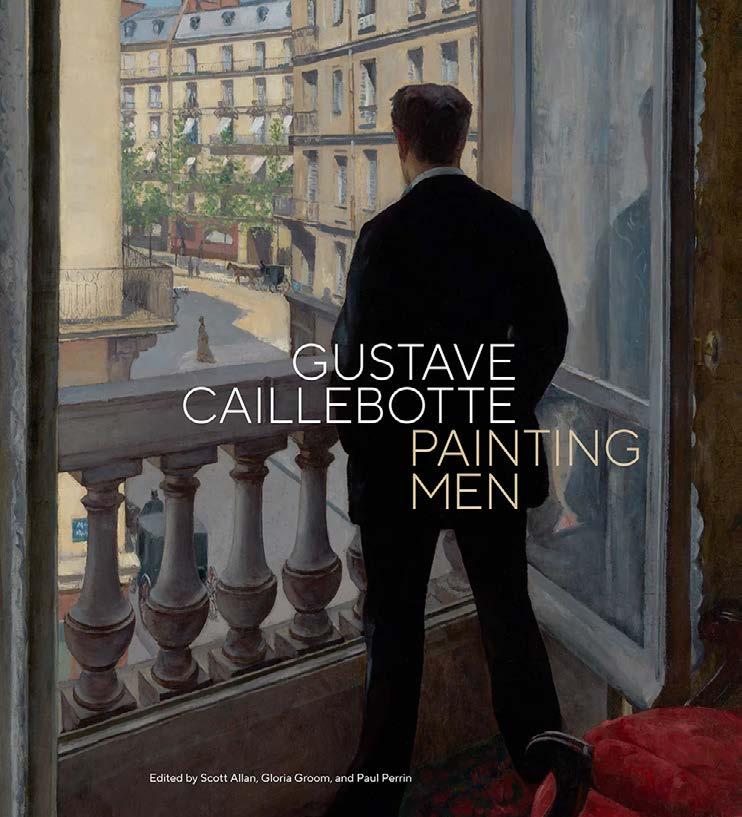
Bridget Alsdorf published “Game of Suits,” a chapter in Gustave Caillebotte: Painting Men (Getty Publications, 2024), the catalogue accompanying an exhibition at the Musée d’Orsay, the J. Paul Getty Museum, and the Art Institute of Chicago. She continued working on her book Love and Collaboration in Modern Scandinavian Art, under contract with Princeton University Press, and delivered an invited lecture on this project at Tulane University. She gave a more focused talk, “Vilhelm Hammershøi and the Morality of SelfPortraiture,” for a panel titled “The Morality of Pictures” hosted by the Association of Historians of Nineteenth-Century Art. With Hans Halvorson (philosophy), she organized an international symposium and workshop, “Georg Brandes and the Modern Breakthrough in Denmark,” held at the Søren Kierkegaard Research Centre, University of Copenhagen, at which she gave a talk exploring Brandes’s multifaceted impact on, and representation in, late 19th- and early 20th-century Danish art. This event was the first in a multiyear series of workshops organized by Alsdorf and Halvorson that is building an international research network around “The Modern Breakthrough in Scandinavia: Philosophy, Science, Art,” funded by a Magic grant from the Humanities Council. With Carolyn Yerkes, Alsdorf enjoyed diving deeper into their research on the extraordinary collection of over 900 prints and drawings by the 17th-century artist Jacques Callot in the Princeton University Art Museum. This
research will result in a multiauthored book, Jacques Callot: The Human Scale (Princeton University Press), and a major exhibition at the PUAM in 2029.
Teaching highlights from the year include an undergraduate seminar, ART 450/FRE 408 “The Invention of Impressionism,” that took students to the Metropolitan Museum of Art, New York, and the National Gallery of Art in Washington, where the exhibition Paris 1874: The Impressionist Moment opened in September after its summer run in Paris. Alsdorf gave a related lecture titled “The Impressionists’ First Impression” at the Princeton Adult School. She also enjoyed teaching in the Western Humanities Sequence as part of a team of professors with expertise in art, literature, philosophy, history, and political theory. Lastly, Alsdorf served as the department’s graduate placement officer, organizing professional development workshops and providing one-on-one mentoring for graduate students applying for jobs and fellowships.
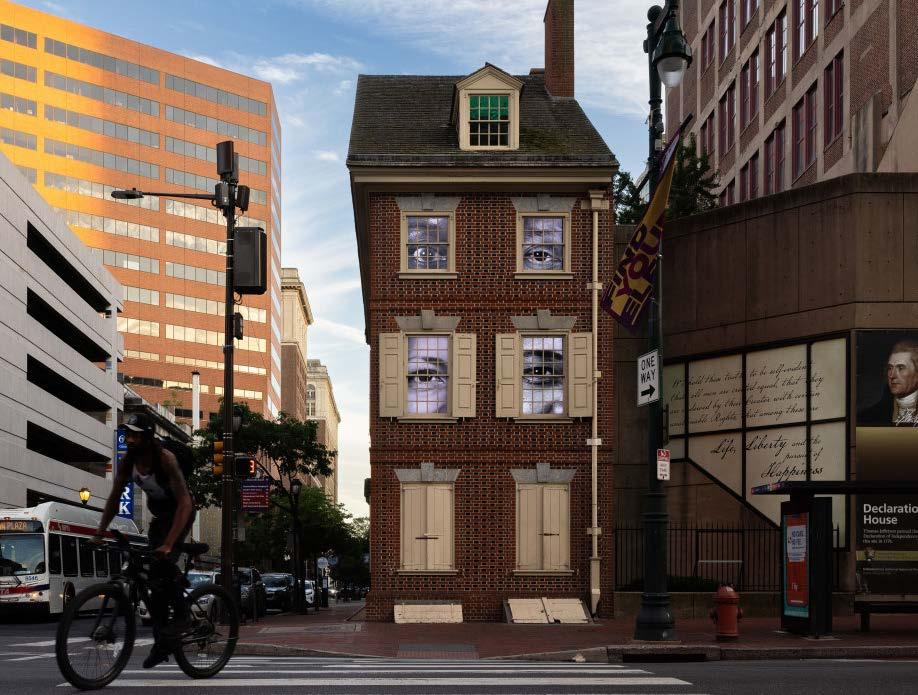
Anna Arabindan-Kesson curated two projects in the 2024–25 academic year. The first, as a
co-curator with Monument Lab in Philadelphia, was The Descendants of Monticello by Sonya Clark. Focusing on the story of Robert Hemings, a cousin of Thomas Jefferson who was an enslaved valet and with Jefferson as he drafted the Declaration of Independence, the project examined what has been forgotten in our understanding of history and what happens to our lines of sight when these stories are centered. The installation was located at Declaration House on Market and 7th Streets in Philadelphia, the site of the building in which Hemings and Jefferson stayed while the Declaration was drafted. The second project, with New York–based photographer Sam Contis, was a mid-career exhibition of 85 of her works from the last 12 years. Called Sam Contis: Moving Landscape, it is on view at the Art Gallery of Western Australia from May to September 2025 and is the first exhibition of the artist’s work in Australia.
As well as working on two books related to these exhibitions, Arabindan-Kesson has been developing several essays for artist catalogues, an edited collection with Yale University Press called Beyond Boundaries: Seeing Art History from the Caribbean (fall 2025), and her book An Empire State of Mind: Art, Medicine and the Colonial Plantation. She taught two courses based on this book in the fall and spring, one
on colonial medicine and the other called “Reparative Aesthetics,” in collaboration with Ekow Eshun, which was supported by the Humanities Council and ProCES.
Nathan Arrington made progress on his book project about haptics and Greek art with the publication of an article in Res, titled “Connecting with Corpse and Tomb: Greek Mortuary Objects as Tools of Haptic Mediation.” In invited lectures (Bryn Mawr College, University of Texas at Austin), he compared skin in art to its treatment in philosophical and medical texts. He also has turned his attention to healing cults, giving a lecture at the University of Pennsylvania titled “Sick Suppliants: Subjectivity, Authority, and the Senses in the Asklepieion,” which has been submitted for peer review. A weeklong series of seminars at the École du Louvre titled “Touch and Greek Art” allowed him to sketch out the
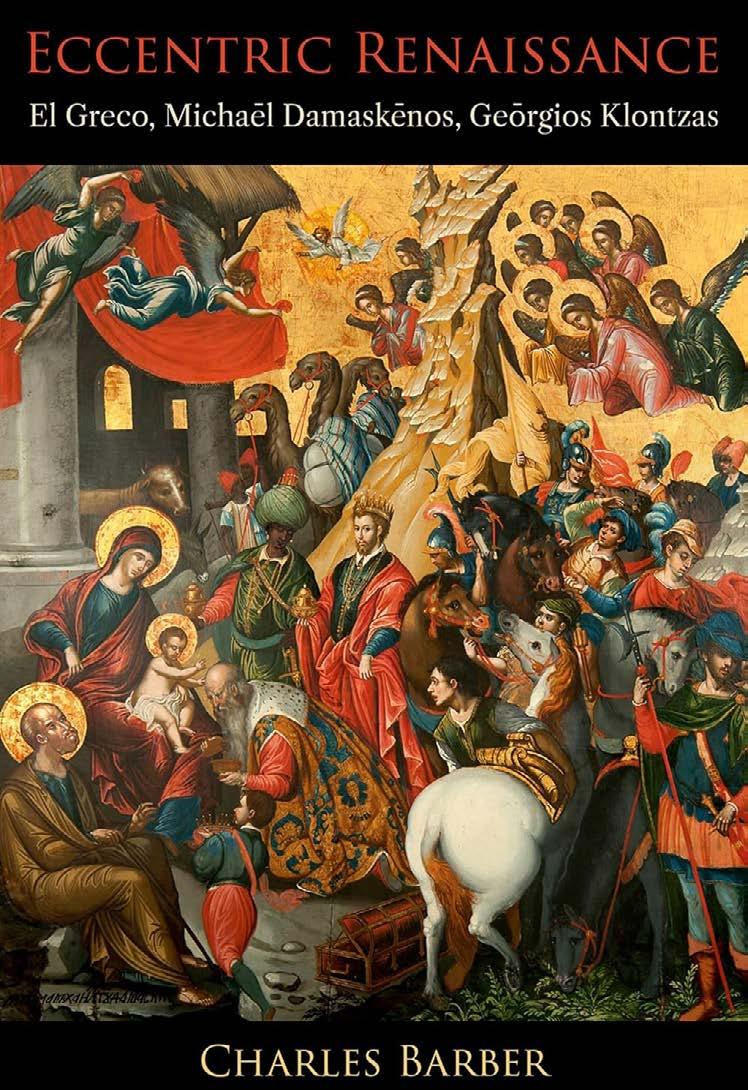
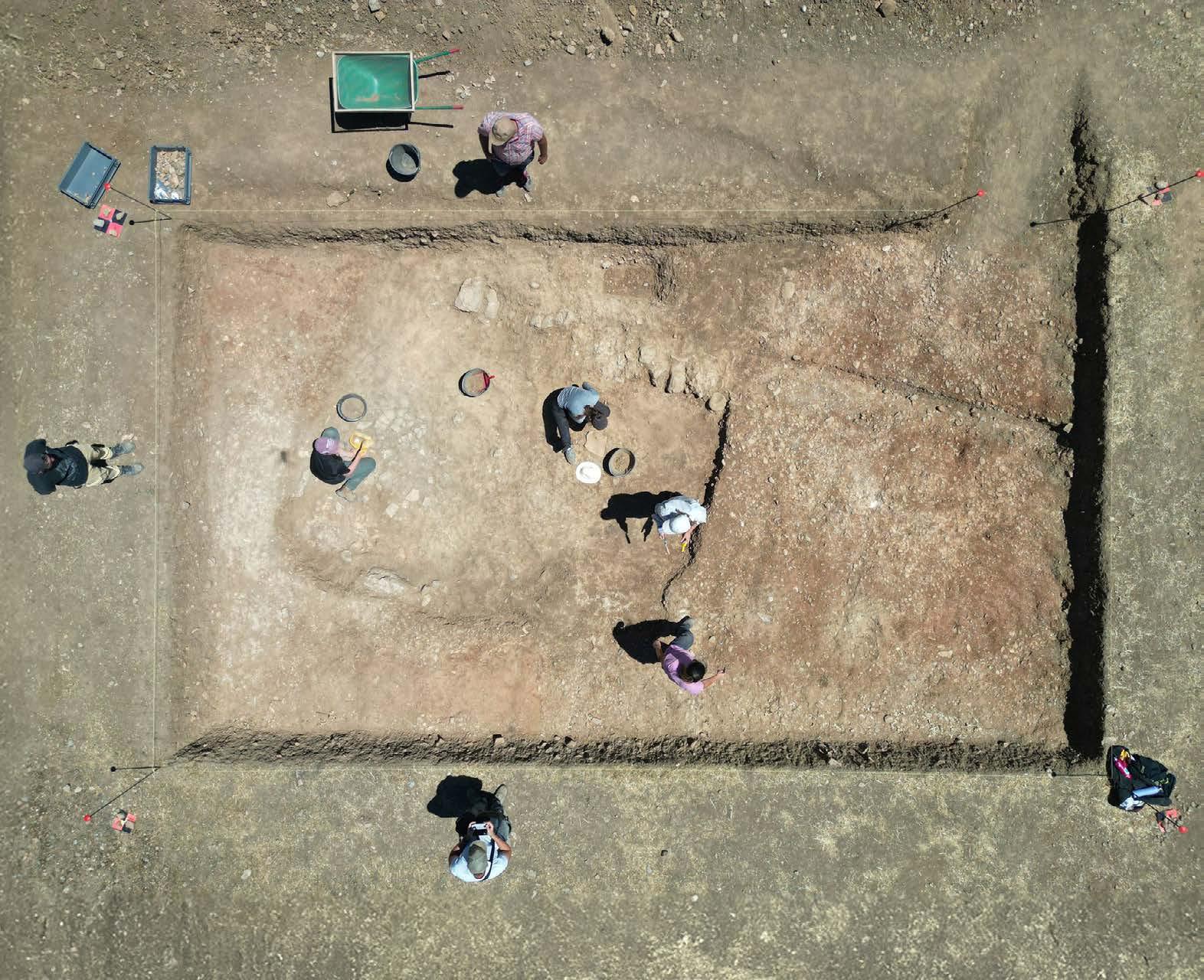
arc of his book and refine some of his ideas. The excavation that Arrington codirects in northern Greece continues in study seasons focused on the final publication. Arrington presented the temple that the team found at conferences in the United States and Greece. With the help of postdoc Mattia D’Acri, he launched the project’s open-access web database, which will help researchers collaborate and will disseminate findings. A publication, coauthored with Marina Tasaklaki, titled “Digital Digging on the Molyvoti, Thrace, Archaeological Project,” details aspects of this endeavor. While the first volume of the final publication of the project is in press, Arrington convened a workshop at Princeton for the contributors to the next volume, which presents the results from the 4th-century B.C.E House of Hermes.
Arrington cotaught the graduate proseminar in art history with Rachael DeLue and the Program in the Ancient World’s proseminar, on the topic of the senses in the ancient world.
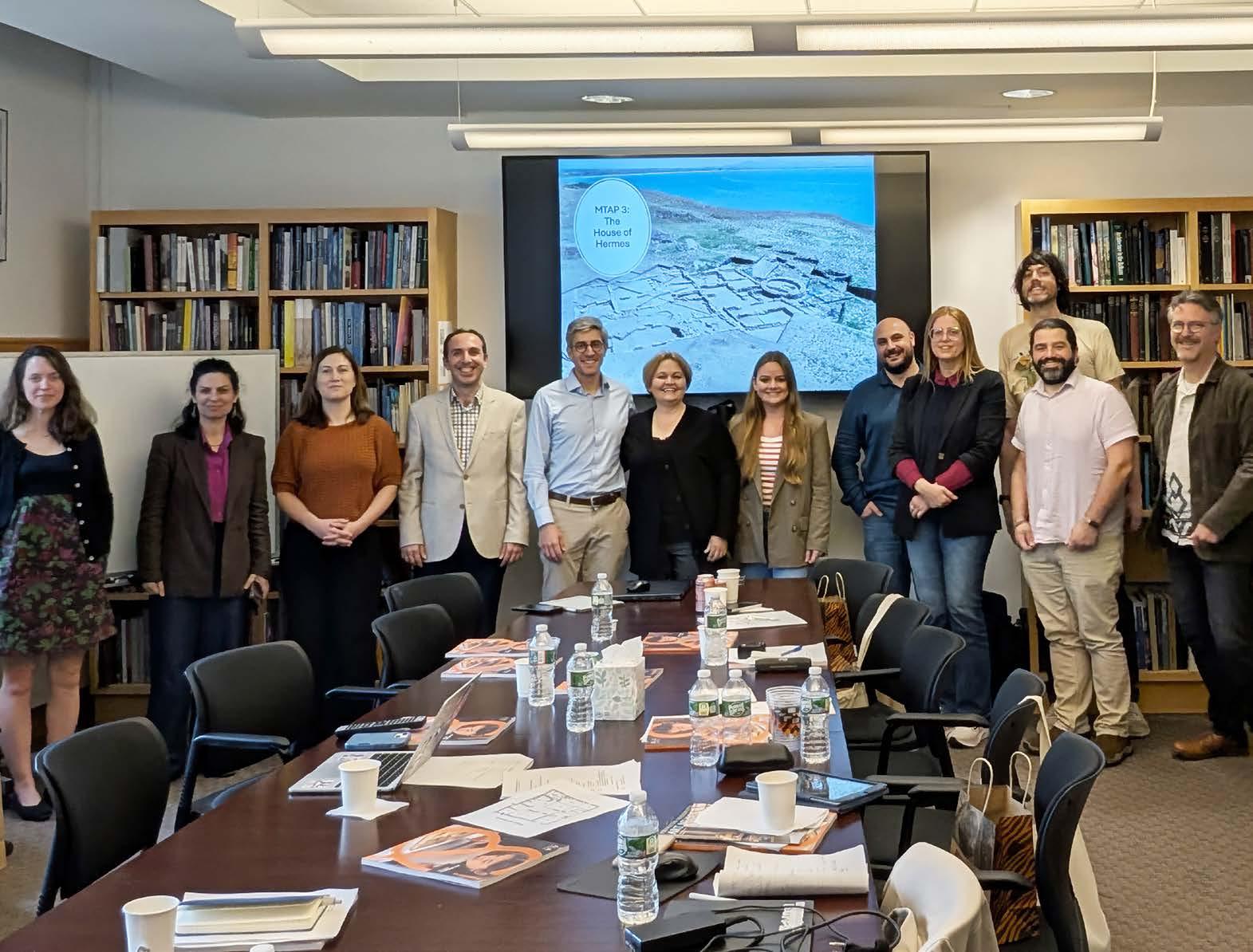
Charlie Barber published Eccentric Renaissance: El Greco, Michaēl Damaskēnos, Geōrgios Klontzas (Oxford University Press, 2024) and a pair of essays on early Palaiologan aesthetics. He taught a course on Byzantine art and an undergraduate seminar titled “Genesis: Cosmos and Ethos in Late Antique Art.” He took parental leave for the spring semester.
Basile Baudez has spent the year working on the manuscript of his next book project, Fabricating the City: Textiles in Eighteenth-Century Venice, while coediting with Victoria Bergbauer Carceral Architecture: From Within and Beyond the Prison Walls (Jovis Verlag, 2025) with the generous help of the Barr Ferree Fund. This volume, assembling an array of 30 authors, centers the voices of people directly impacted by the carceral system in conversation with activists, scholars, people of faith, administrators, architects, designers, and artists from within and outside the United States. The contributions offer an unprecedented account of prison architecture and its effects beyond the walls of the facility,
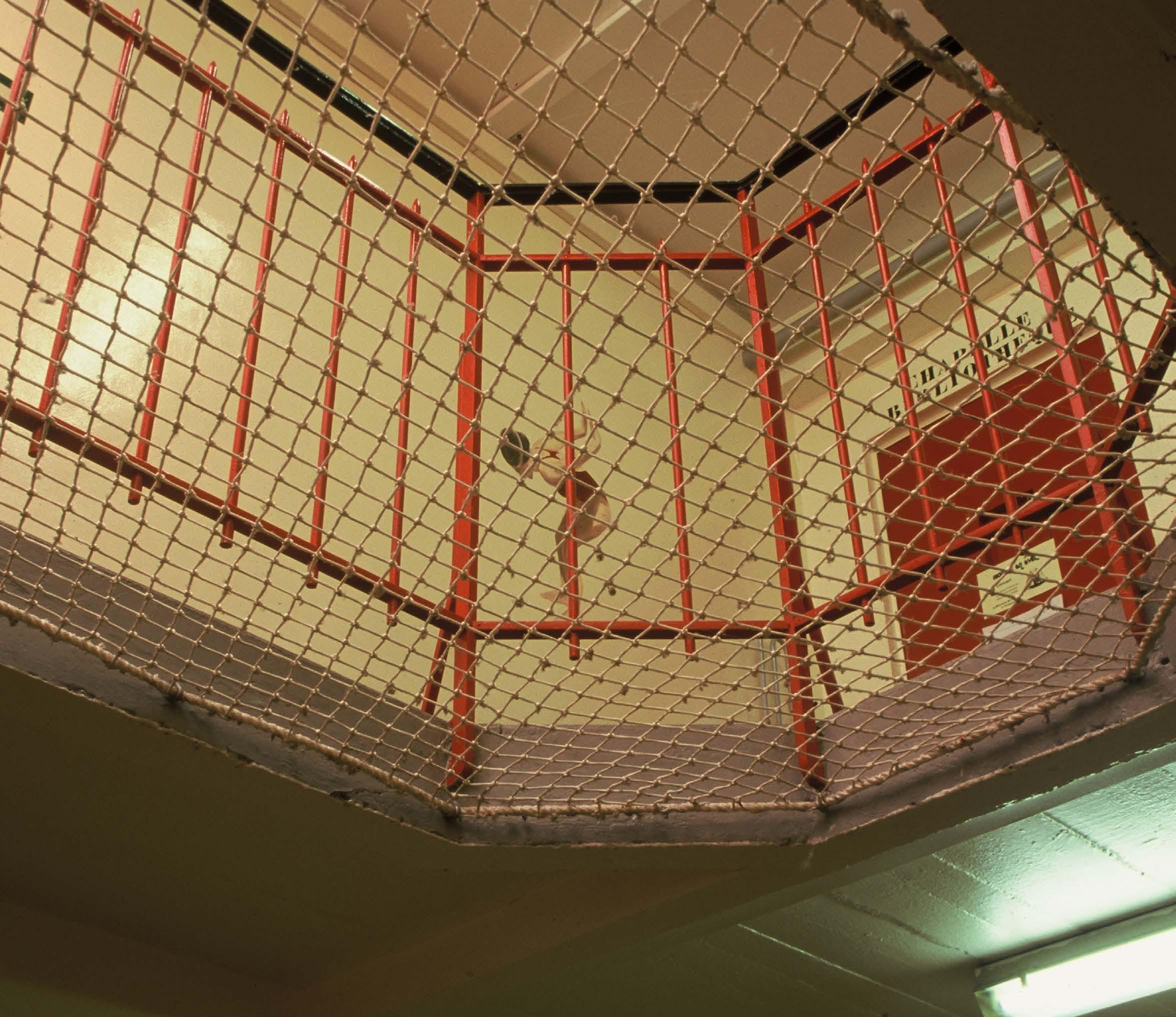
shedding light on the lasting ramifications of carceral architecture. They not only speak to the construction of prisons per se but explore how the strategies that create these structures of confinement extend and dissipate into society at large. As this volume aims to make clear, carceral architecture is always more than the space bound by the walls of the prison complex, which seems to imply an entirely separate world of incarceration. While the book was in production, Baudez contributed “Painting the Sky in HandColored Prints” for the international conference
“Watercolour and Weather, 1750–1850” held in Lausanne. Continuing his role as director of undergraduate studies, he was awarded the Sophie and L. Edward Cotsen Faculty Fellowship for 2025–28 in recognition of his distinguished careers in teaching and scholarship at Princeton.
In the fall, he taught ART 291 “Competing Professions: Architects and Engineers in Early Modern Europe” for which students designed Redefining Architecture: Stories of Those Who Broke the Mold, an online exhibition showcasing the lives of Princeton professors of architecture
and engineering such as Howard Crosby Butler, Elizabeth Kassler, Victor and Aladar Olgyay, Pietro Belluschi, and Alfred Kastner, who expanded the professional field of architecture. Students learned to do archival research in the Seeley G. Mudd Library and in the Department of Art & Archaeology’s Visual Resources collections. In the spring Baudez taught ART 521 “Beaux-Arts Architecture and Urbanism,” during which M.Arch students worked on theses from the 1940s held in the Princeton School of Architecture archives.
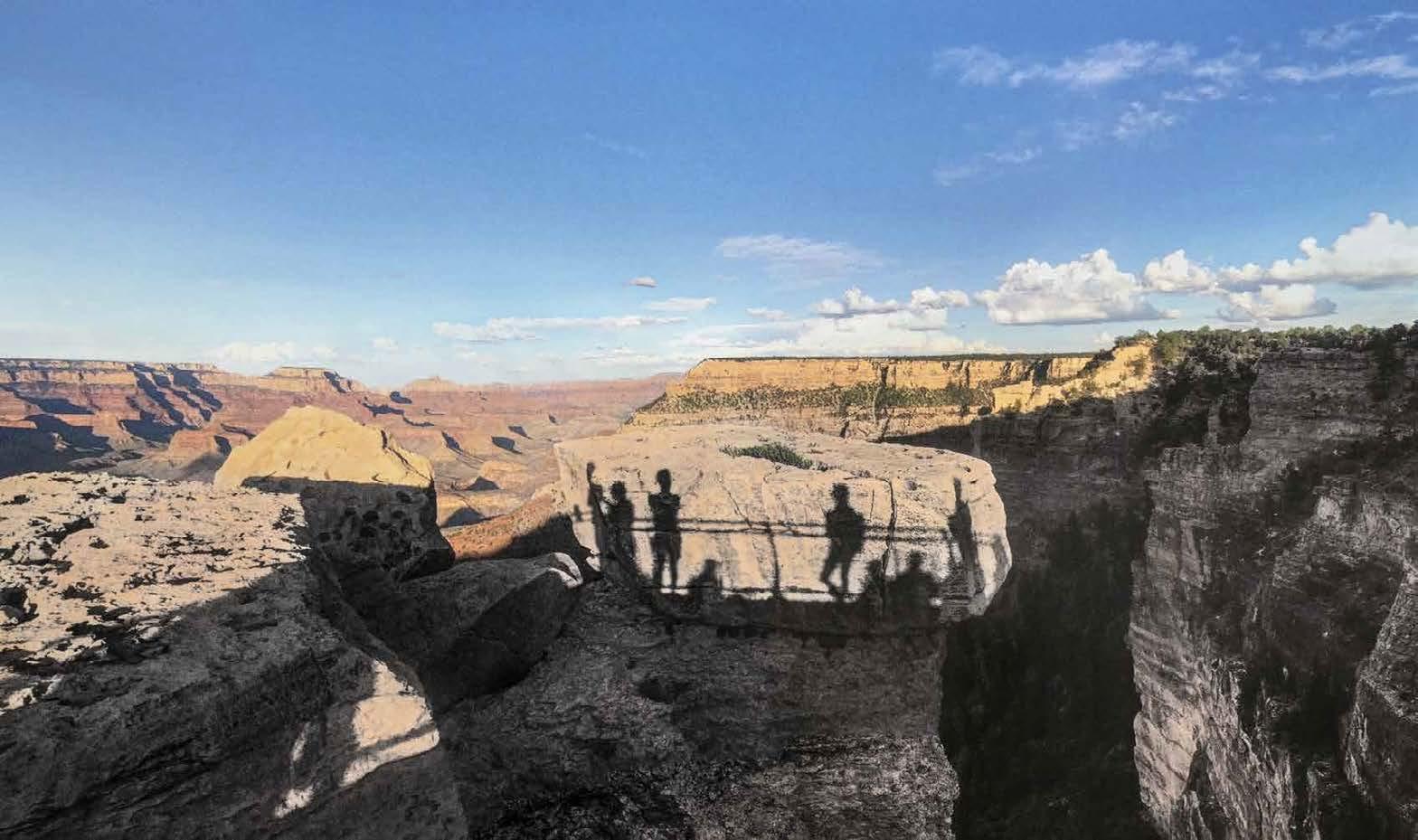
Cover of special issue, “National Parks in Prospect,” Art Journal 83.4 (Winter 2024)
Monica Bravo published several peer-reviewed articles this academic year, including “Mineral Analogs: Carleton Watkins’s Photographs and the Gold Standard” in Art Bulletin, which was the recipient of the College Art Association’s Arthur Kingsley Porter Prize. She also published “Mercury Is a Messenger: Photography’s Dependence on Quicksilver and Mining Labor” as part of a commentary on 19th-century resource extraction in American Art. Together with Emma Silverman, her special issue titled “National Parks in Prospect” came out in winter 2024 with CAA’s Art Journal. Finally on the publication front, she coedited a Print Plus cluster in Modernism/modernity with Florian Grosser titled “Another Revolution: Building Modern Worlds at the Interface of Art, Culture, and Politics.”
In terms of invited lectures, Bravo spoke on minerality at the Museum of Modern Art’s Idea Lab and gave the annual Robert Lehman Lecture at Carleton College. She also spoke on research related to her current book project (under contract with Princeton University Press) at the Comité International d’Histoire de l’Art conference in Lyon; “Blinded by light, just to see: Flashes and revelations” conference in Paris; and the Organization of American Historians annual conference in Chicago.
In her second year of teaching at Princeton, Bravo was responsible for the ART 100 undergraduate survey and taught
a graduate course on photography theory, with participants from A&A, architecture, and Spanish and Portuguese.
Together with Museum curator Katherine Bussard, she programmed the Photo History’s Futures lectures series with well-received talks by Drew Sawyer (Sondra Gilman Curator of Photography at the Whitney Museum of American Art) and Giulia Paoletti (associate professor of art history at the University of Virginia). She also conducted archival research for, and had many interviews with, photographer Emmet Gowin in preparation for an exhibition she is planning at the Museum: Emmet Gowin: A Garden.
Tina Campt enjoyed a prodigious sabbatical year working on a new book project titled Art in a Time of Sorrow (MIT Press). The book offers a personal account of how the work of Black contemporary artists helped her grapple with devastating personal losses and widespread social grievance in the years before, during, and since the pandemic. She kicked off her leave in summer 2024 by leading two writing workshops: the first, as a scholar in residence at the Banff International Curatorial Institute in Canada, and the second, as a visiting fellow at the Dutch National Research School for Art History (OSK) and the Stedelijk Museum Amsterdam. During the academic year, she spent the fall in residence as a visiting fellow at
the Courtauld Institute of Art in London and the spring as a visiting scholar in residence at the Ruskin School of Art at Oxford University. She was honored to receive the 2024 Photographic Studies Award from the Royal Anthropological Institute in London for distinguished contributions to the study of anthropology and photography. One of the highlights of her year was serving as executive producer for a performative adaptation of two essays by her longtime colleague and collaborator Saidiya Hartman. Developed as part of a workshop hosted by the Princeton Collaboratorium for Radical Aesthetics in 2023, Campt and her collaborators staged Minor Music at the End of the World at the Brooklyn Academy of Music for a sold-out, one-night-only, open rehearsal. The play will premiere at the International Theater Amsterdam in October 2025. The second highlight of her year came at the end of the spring semester when she curated a daylong program inspired by her book Listening to Images at the Barbican in London. Featured as part of a series of events hosted in conjunction with a major retrospective of African American painter Noah Davis, the program included contributions by artists Jenn Nkiru, Alberta Whittle, Phoebe Boswell, James Massiah, and Julianknxx.
In July 2024, Rachael DeLue was appointed the director of the Princeton Humanities
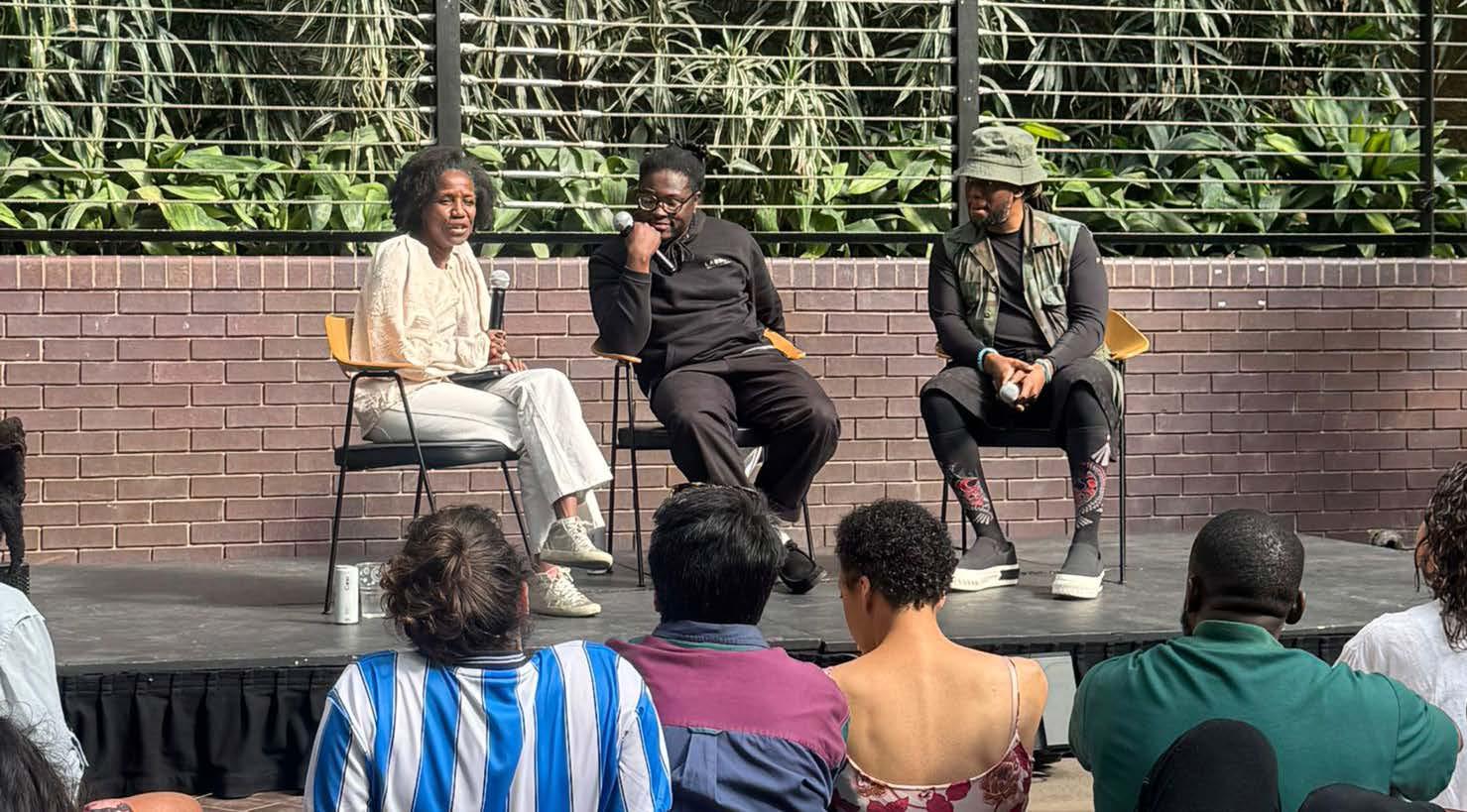
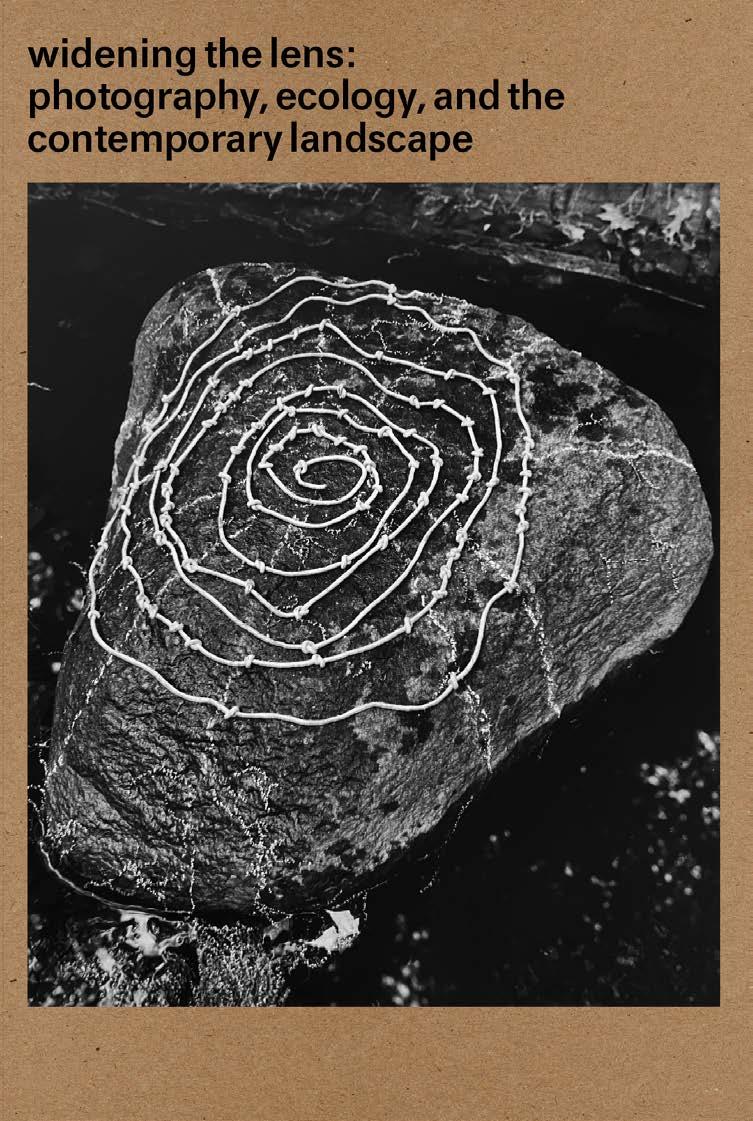
Initiative. Established after a multiyear planning process, the initiative supports innovative, interdisciplinary, and collaborative humanitiescentered research, teaching, and community engagement while also serving as a multiyear bridge to the foundation of a Humanities Institute at Princeton. DeLue also published three essays, one on Charles Darwin’s diagram of evolution in On the Origin of Species; another, coauthored with Ivana Dizdar, that considers the biography of a snowy owl before and after it was killed and preserved in 1886; and a third on the historical roots of contemporary landscape photography in the catalogue for the exhibition Widening the Lens: Photography, Ecology, and the Contemporary Landscape. She delivered lectures in Athens, Greece; Raleigh-Durham, North Carolina; Geneva, New York; and New York City, and she presented the department’s Reunions lecture, titled “Dead Birds, or, How to Make a Picture Come to Life.” In addition, she thoroughly enjoyed coteaching with Nathan Arrington the department’s required theory and methods seminar for first-year graduate students and was equally delighted to teach a graduate seminar titled “Languages of Art and Science,” which explored the intersection of the subjects, methods, concepts, and terminologies of art and science in Europe and the United States circa
1750–1900. Finally, she kept busy helping her son learn how to drive and exploring Princeton’s many bubble tea venues with her daughter.
Brigid Doherty enjoyed working with A&A graduate students this year as director of graduate studies. Following her sabbatical fellowships at the Clark Art Institute (fall 2023) and the Erikson Institute (spring 2024), she has had the opportunity this academic year to launch two projects that will expand her work in interdisciplinary psychoanalytic studies: first, an initiative with the Erikson Institute, the Freud Foundation, US, and the Sigmund Freud Museum, Vienna, that will debut with a conference in Vienna in November, and second, a new Interdisciplinary Working Group in Psychoanalytic Studies, the Humanities, and the Arts, co-organized with psychoanalyst, historian, and media theorist Ben Kafka, that will launch in fall 2025 with the support of a Collaborative Humanities Grant from the Humanities Council. This summer, Doherty will travel to Berlin for the annual retreat of the Matters of Activity Cluster of Excellence at the Humboldt University in Berlin, in connection with her work as a coprincipal investigator for the Humboldt-Princeton strategic partnership initiative, Materials and Materialities: Critical Conversations Across the Humanities and Sciences.
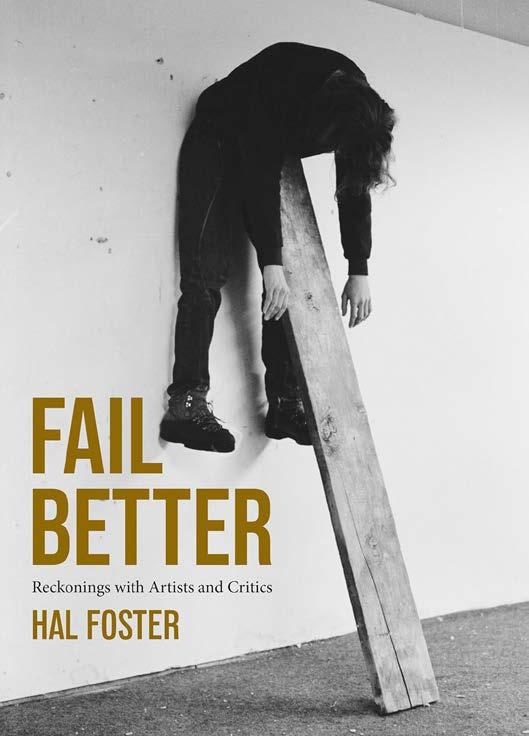
Hal Foster published Fail Better: Reckonings with Artists and Critics (MIT Press, 2025) and gave a series of book talks throughout the year. At the Museum of Modern Art’s memorial for artist Richard Serra, Foster gave the eulogy. He also interviewed artist Matthew Barney at the “Fantasies of the People” conference convened by the German department. In addition to teaching seminars in Modernist art and theory, ART 455 and ART 565, Foster also took part in the effort to reform Princeton’s advocacy chapter of the American Association of University Professors (AAUP).
Samuel Holzman began the year hosting the visit of PITHOS (Princeton-Ioannina-Thessaly
On-Site Seminars) 2024, in which graduate students in archaeology from Princeton, the University of Ioannina, and the University of Thessaly visited Princeton for a graduate workshop, as well as excursions to museums in Philadelphia and New York City. Together with Branko Glišić (civil and environmental engineering), Holzman took the students of HUM 417 “Historical Structures” to Greece for behind-the-scenes tours of architectural restoration projects on the Acropolis and the sanctuary of Zeus at Nemea—supported by a Humanities Council Magic Grant and Team Teaching Grant.
Summer 2024 marked the final year of a five-year excavation permit for American Excavations Samothrace, where Holzman is the lead investigator of the ancient city wall. The project, which included four Princeton students, uncovered much of the gate building that connected the ancient city of Samothrace with the sanctuary. The team will return for a study season in 2025 to draw the architectural remains uncovered last season.
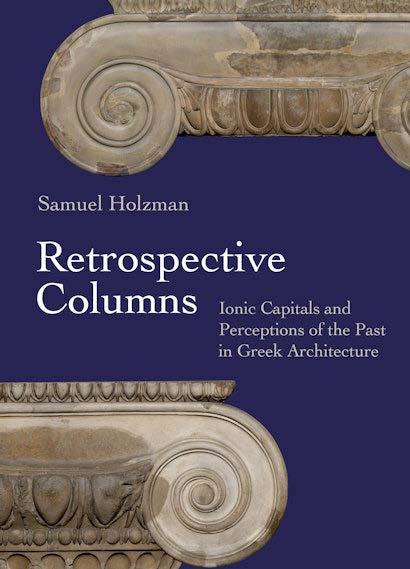
Holzman’s first book, Retrospective Columns: Ionic Capitals and Perceptions of the Past in Greek Architecture, will appear in print from Princeton University Press in October. In 2025–26, he will be on sabbatical in Greece working on his next project as the Jonathan Edwards Bicentennial Preceptor.
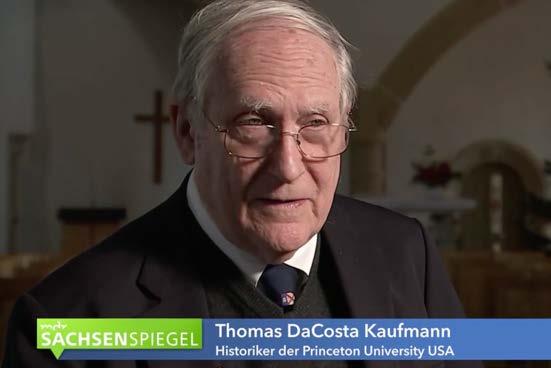
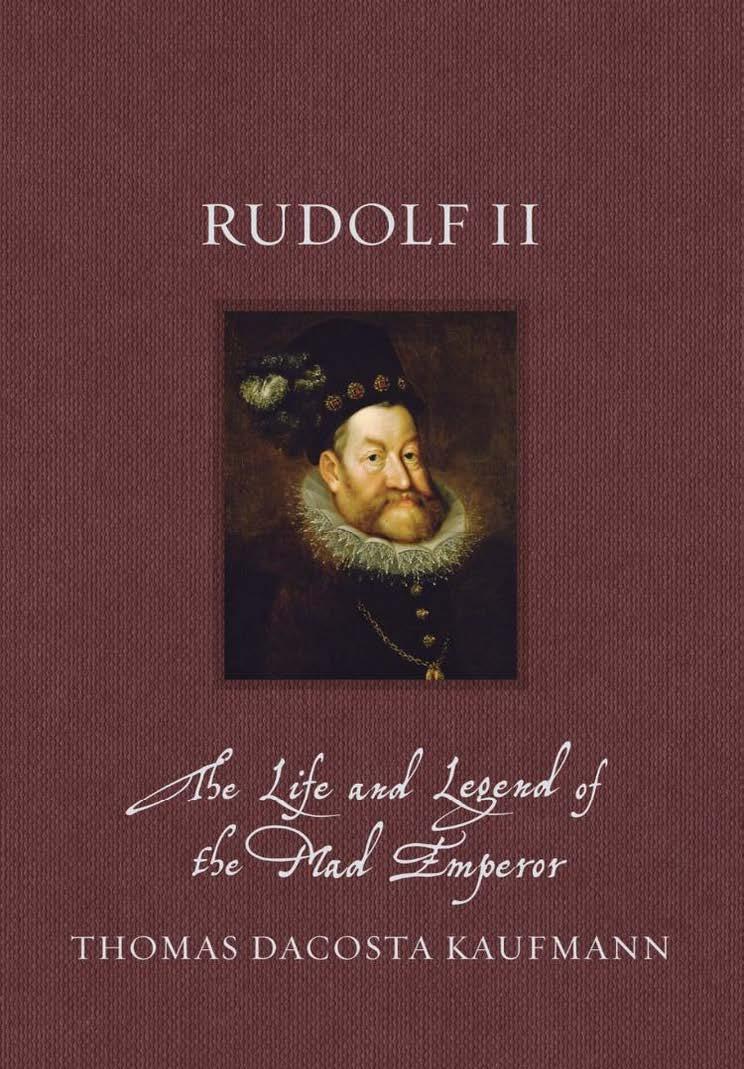
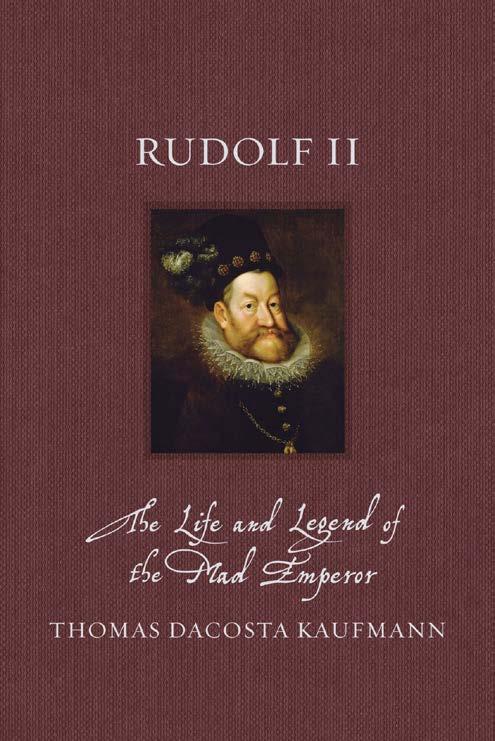
During the past academic year Thomas DaCosta Kaufmann published Rudolf II: The Life and Legend of the Mad Emperor (Reaktion Books and University of Chicago Press), a revisionist biography of the great patron and collector of art and science. He also published “Arcimboldo et le portrait de l’empereur” and “Magie, enquête naturaliste, culture matérielle et art dans la Prague de Rodolphe II,” in L’expérience de la nature: Les arts à Prague à la cour de Rodolphe II, the catalogue of an exhibition at the Louvre. His “The Globalization of War and the Globalization of Art in the Netherlands” was published in Netherlandish Art and the World (ed. Thijs Weststeijn and Benjamin Schmidt), while in December a review of Alessandra Russo, A New Antiquity: Art and Humanity as Universal, 1400–1600 appeared in the Journal of Early Modern History.
At the end of June 2024, Kaufmann chaired two sessions titled “The Global Circulation of Lacquer” at the 36th International Congress of the History of Art held in Lyon, France, and delivered a commentary on three sessions. He gave a plenary lecture, “From Geography of Art to a Global History of Art: The Tradition of Aby Warburg and Its Promise,” at a conference
of Spanish art historians in the Universidad Complutense, Madrid (October 17, 2024) and spoke at the same university on “Problems and Prospects of Global Art History” (October 16, 2024). On December 9, 2024, he gave a talk via Zoom to the John Paul II University (Lublin, Poland) titled “Central Europe Then and Now: Reflections on a Career.” On January 16, 2025, he gave a lecture titled “The Torgau Schlosskapelle: Political Pretensions and Religious Convictions,” and on January 17 participated in the concluding discussion of a conference, “Talking about the Torgau Castle Chapel,” held at Schloss Hartenfels; while in Germany he was interviewed on television news. At the annual meeting of the Renaissance Society of America held in Boston on March 20 he spoke on “Magic, Science, Art: Della Porta, Kepler, Hoefnagel.” On April 24 he lectured at Rutgers University (New Brunswick) on “Modes and Approaches to Global Art History/Geohistory of Art” in the Distinguished Speaker Series of the Art History Graduate Student Organization.
Kaufmann traveled to Brussels in February to participate on a committee selecting candidates for starting grants from the European Research Council.
Among the three different courses that he taught during spring term, Kaufmann especially enjoyed leading three preceptorials for AnnMarie Perl in her class on contemporary art.
Beatrice Kitzinger returned from parental leave for the spring 2025 semester. She enjoyed teaching “Arts of the Medieval Book” entirely out of Marquand and Firestone’s Special Collections, and ART 228/HLS 228/MED 228/HUM 228 “Art and Power in the Middle Ages” as a Collaborative Teaching Initiative course with graduate student Fatih Han. Kitzinger presented collaborative papers at a conference on early medieval law convened at the University of Cologne (with Jennifer Davis, Catholic University of America) and at the Medieval Academy of America’s 100th Annual Meeting (with Jamie Reuland, music) in a session she organized with Daniela Mairhofer (Classics), titled “Sine quo non: Manuscript Medium and (Con)textual Meaning.” Kitzinger also participated in a Swiss symposium celebrating a particular Carolingian Bible. Her editing work continued apace for the De Gruyter series Sense, Matter, and Medium: New Approaches to Medieval Literary and Material Culture, coedited with Fiona Griffiths and Kathryn Starkey (Stanford University). She is looking forward to coordinating the Western Humanities Sequence next year.
Carolina Mangone spent her sabbatical year between Princeton and Italy, writing and conducting new research on minor projects and on her ongoing study of Michelangelo’s unfinished sculptures, from their production to their reception, as they inflected and shaped an early modern aesthetics of the imperfect. She spent several months in Florence, in fall 2024 as a guest scholar at the Kunsthistorisches Institut and in spring 2025 as the Lila WallaceReader’s Digest Visiting Professor at I Tatti. She presented papers in Europe and North America on stonework and concepts of nature, on curious imitations of Michelangelo’s non-finito, and on the dialogue between carving flawed stone and purging the soul. During the fall break she also led a group of Western Humanities Sequence students on a trip to Rome with her colleagues Andrew Feldherr (Classics) and Benjamin Conisbee Baer (comparative literature). Throughout the year Mangone continued her work as director of the Program in Italian Studies.
Chika Okeke-Agulu gave keynote lectures at Talbot Rice Gallery, University of Edinburgh in August 2024, and at the Museum of West African Art, Benin City, Nigeria, in November. Also in November, he delivered a public lecture on the work of El Anatsui and the Aka Circle of Artists at Kó Gallery in Lagos, Nigeria. In December, he gave the ASR Distinguished Scholar Lecture at the African Studies Association annual conference. In spring 2025, he delivered the Humanities Now Lecture at the Whitney Humanities Center, Yale University; the 2025 Lectures in Criticism at the Center for the Humanities, Boston University; and a public lecture at the Africa Institute, Sharjah. In fall 2024, Okeke-Agulu received the Arnold Rubin Outstanding Publication (triennial) Award from the Arts Council of African Studies Association and was appointed to the Board of Trustees of the Global Studies University, Sharjah, UAE. At Princeton, he continues to serve as director of the Africa World Initiative.
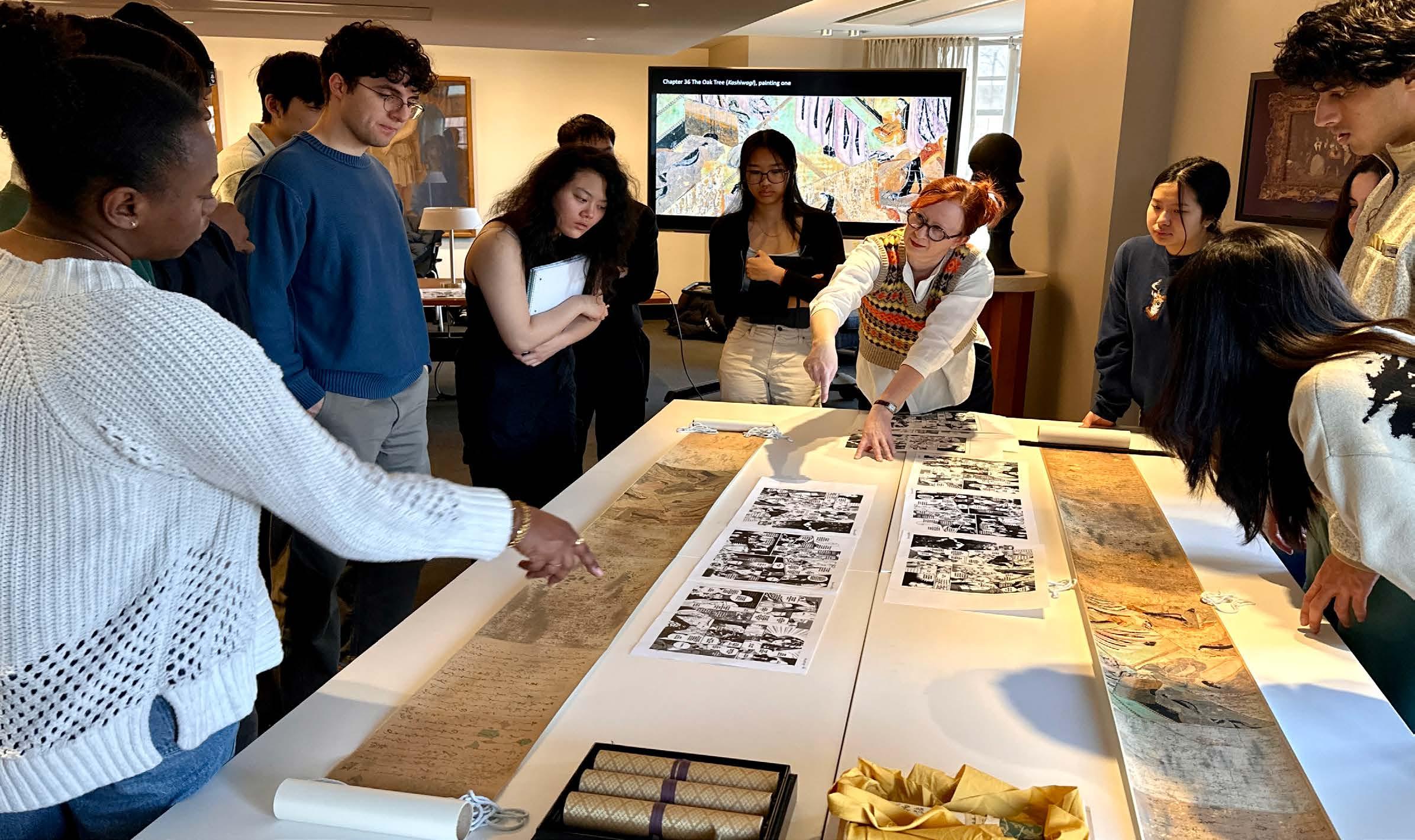
Rachel Saunders moved to Princeton in August 2024 from the Harvard Art Museums, where she had served as Abby Aldrich Rockefeller Curator of Asian Art since 2015. Since her arrival, she has been at work on her book manuscript, Making Sacred Matter: Xuanzang and Buddhist Materialities in Medieval Japan, a monographic study of human and nonhuman agencies in the creation of powerfully excessive objects in medieval Japan that are today commonly labeled “Buddhist art.” She completed the essay “Painting to Snail Time: Plant Blindness, Poetic Attention, and Edo Rinpa” (Penn State Press) and an article on the narrative “infection” of Buddhist icon paintings with the heroes of the epic Chinese classic Journey to the West is in preparation. Saunders offered three new classes in Japanese art history, each of which also incorporated off-campus excursions to collections in New York and Boston. ART 217/ EAS 217 “The Arts of Japan” covered 5,000
years of art history, from prehistoric Jōmon archaeology to the ethics of painting in nuclear time. ART 327/EAS 327 “Handscroll to Anime: Visual Storytelling in Japanese Art” introduced students to a wide variety of graphic-narrative media, from medieval handscrolls (emaki) to contemporary manga and anime.
Her new graduate seminar ART 526/EAS 566/REL 540 “Arts of Enlightenment: Buddhist Materialities in East Asia” roved across Asia asking: How does stone become sacred, or lumber enlivened? Where is the Buddha Body in a decorated sutra? And why were so many ink paintings produced in the name of Zen, which declares images unnecessary? The class met with curators and conservators at the Harvard Art Museums to engage with practicing professionals in examining objects discussed during the seminar.
Saunders has maintained an active speaking schedule. She was invited to speak on cognitive mapping and virtual pilgrimage at Harvard University, and organized and presented a panel titled “Recycling and Repurposing in the Lives of Icons” at the College the Art Association (CAA) in New York. On campus she presented a colloquium on


her book project (East Asian Studies) and was invited to speak about her collaborative work with biologists and conservation scientists at the Princeton Catalysis Initiative (Department of Chemistry). She served as discussant and respondent at several events during the spring, including an international meeting on the world’s oldest archive, the Shōsōin Treasury. She is grateful for the supportive welcome she has received from the department and looks forward to teaching in the new Princeton University Art Museum next year.
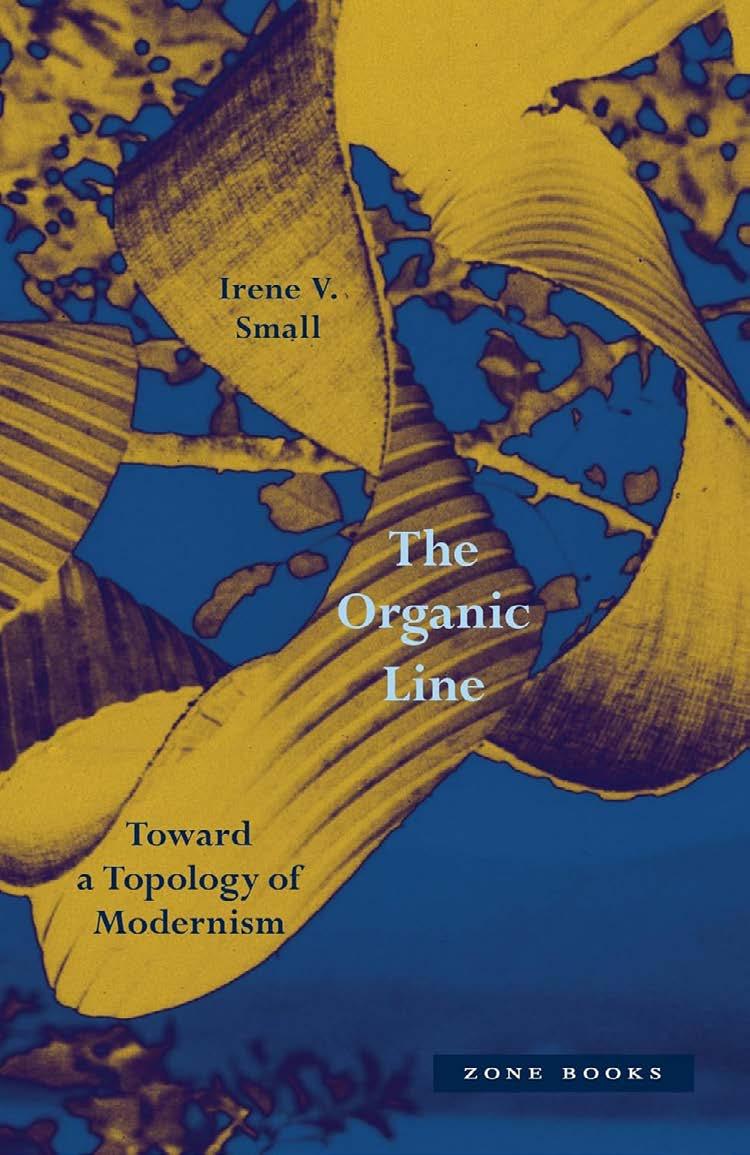
Irene V. Small celebrated the launch of her book The Organic Line: Toward a Topology of Modernism (Zone Books) in October 2024, and was thrilled to participate in book presentations and conversations over the course of the academic year in Berkeley, Princeton, New York City, New Haven, London, Rotterdam, Cambridge, Berlin, Rio de Janeiro, and São Paulo. In the fall, she brought undergraduate students to Venice to see the biennale Stranieri Ovunque: Foreigners Everywhere as part of
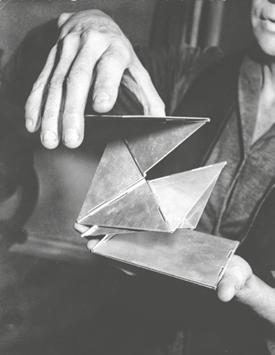
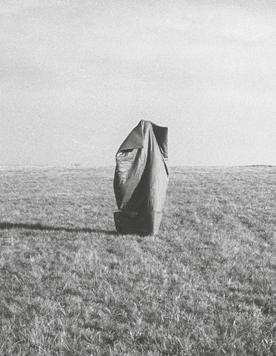
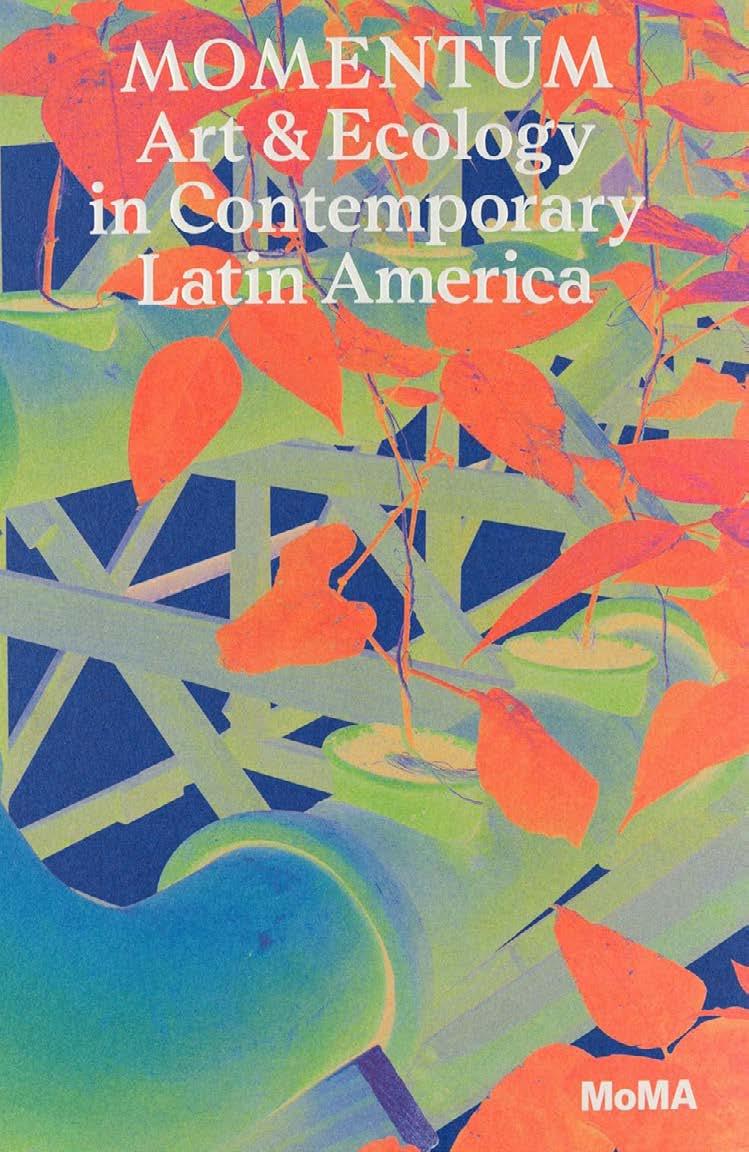
her class ART 456 “Seminar in Contemporary Art: The World Picture,” and in January, she inaugurated a new collaboration with the Institute for Studies on Latin American Art (ISLAA) with a workshop at the organization’s Tribeca, New York City space. The workshop focused on meditations on carceral space developed by the conceptual artist, architect, and theorist Horacio Zabala during the Argentine dictatorship of the 1970s and ’80s, and included close inspections of original works of art as well as archival material. Graduate student participants included specialists in Latin American art and graduate instructors in Princeton’s Prison Teaching Initiative. A welcome spring semester leave provided Small time to delve into research and writing on the proto-photographer Hércule Florence, to be included in a new book that explores how practitioners in Brazil have made recourse to truncated and deliberately impoverished forms of media in order to facilitate itineracy, dissemination, and connectivity from the 19th through the 21st centuries. Texts published this academic year included an essay on Lygia Clark and the German artist Franz Erhard Walther focusing on notions of patterning, bodily
participation, and the animation of abstract form, as well as an extended interview with the Puerto Rican–based duo Allora y Calzadilla for the MoMA anthology Momentum: Art and Ecology in Contemporary Latin America
Cheng-hua Wang had a productive and stimulating academic year in 2024–25. A highlight was her coteaching of a graduate seminar on Chinese calligraphy, ART 525/ EAS 555, with Professor Hui-Wen Lu, an internationally recognized expert from National Taiwan University and a Princeton alumnus. Lu’s presence greatly enriched the intellectual environment, fostering lively classroom discussions. The seminar culminated in a workshop titled “Writing and Women Calligraphers in East Asia,” held on April 4, which drew wide acclaim from speakers and attendees. The event provided Wang with a valuable opportunity to reconnect with colleagues in East Asian art history and to gain new insights into the creative practices of contemporary calligraphy.
The seminar included two special visits to the Metropolitan Museum of Art, one of which included a viewing of a range of calligraphic
works from the Tang, Song, and Yuan dynasties. Central to the class’s discussion on contemporary calligraphy—particularly the contested category of women calligraphers—was a commissioned installation by Tong Yang-Tze. For Wang, the installation prompted renewed reflection on the graphic dynamism and spatial performativity of contemporary calligraphy, especially in its engagement with architectural space.
In the realm of publications, Wang took satisfaction in the release of her anthology on heritage preservation and exhibition culture in modern China. Comprising articles primarily translated from English, the volume was published in Taiwan in summer 2024, with a mainland Chinese edition following in February 2025. An online book talk, held in early March and open to Chinese-speaking audiences, further extended the volume’s reach.
Wang’s English-language monograph, Up the River of Time: The Chinese Painting Tradition of Qingming Shanghe, is forthcoming from the Harvard University Asia Center. In the meantime, she has embarked on two new book projects. The first examines the politics of topographical painting in 18th-century China, with a focus on spatial performativity and imperial territoriality—a subject she presented in a lecture at the University of Edinburgh in October. The second project builds on her
long-standing interest in the handscroll format, tracing the evolution of landscape handscrolls from the 10th century to the present day.
Wang will be on academic leave during the 2025–26 year. Supported by external fellowships, she plans to spend several months conducting research in Taiwan and working on her new book projects.
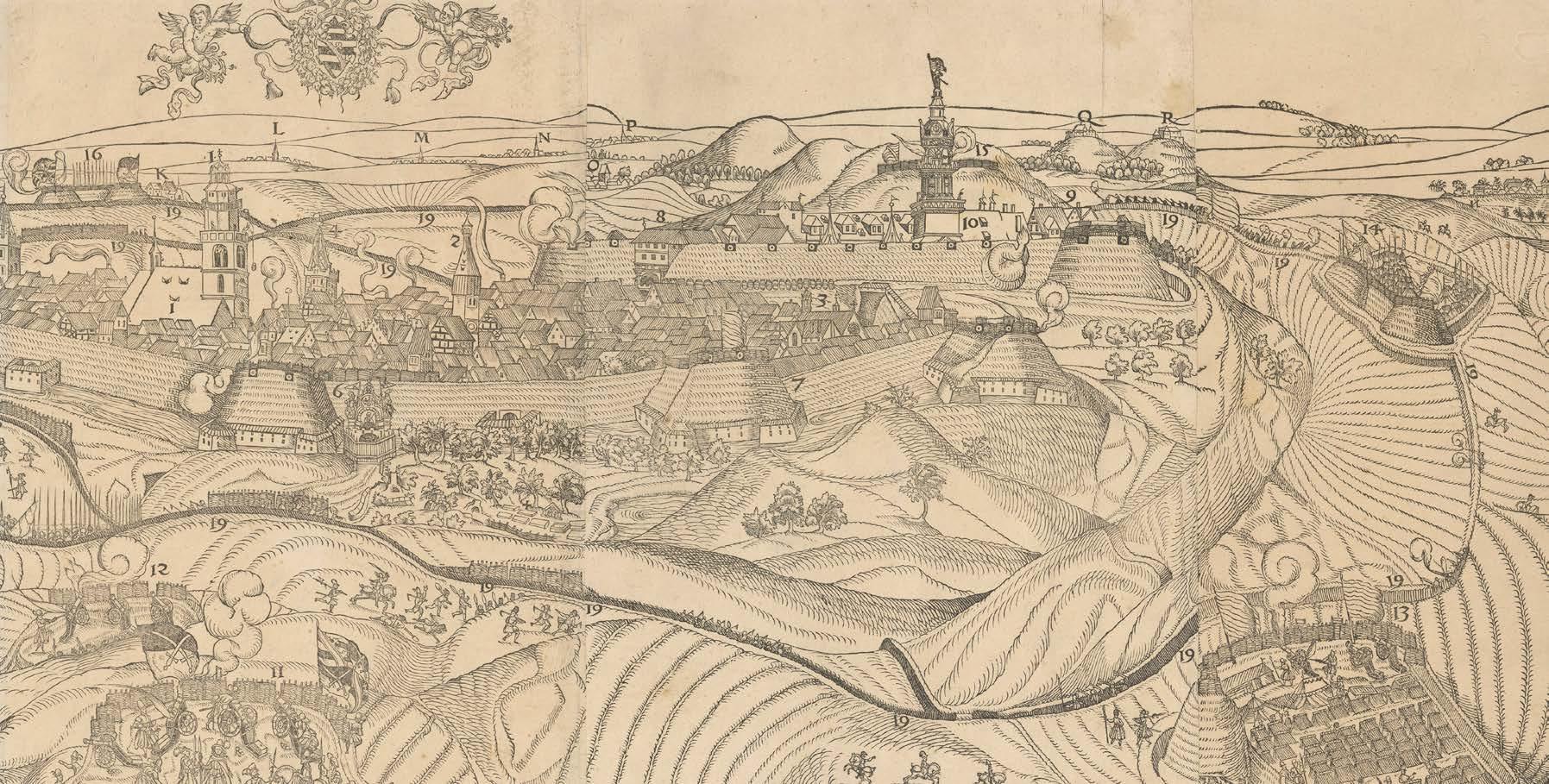
Carolyn Yerkes used a year of leave to complete a book manuscript titled Siegelands: Early Modern Warfare and the Monumental Print. The work explores artistic identity, place, and conflict in 16th-century northern European siege prints. To present aspects of this project in lectures and conferences, she has traveled to Toronto, Oxford, and Cambridge over the past twelve months. An article related to the book, “The Architecture of Attrition,” is scheduled to appear in a special issue of Opus Incertum, coedited by Nadja Aksamija *04 Yerkes wrote the essay “Piranesi’s Monumental Words” for the upcoming Monumentality volume of the Getty’s Issues & Debates Series, coedited by Elizabeth KasslerTaub ‘10, and published reviews in Renaissance Quarterly, Zeitschrift für Kunstgeschichte, and Print Quarterly
ANNA ARABINDAN-KESSON GradFUTURES Faculty
Fellow in Professional Development Innovation
BASILE BAUDEZ
Sophie and L. Edward Cotsen Faculty Fellowship, 2025–2028, and Behrman Faculty Fellow
BASILE BAUDEZ, RACHAEL Z. DELUE, AND IRENE V. SMALL
250th Anniversary Fund for Innovation in Undergraduate Education
MONICA BRAVO
College Art Association (CAA)
Arthur Kingsley Porter Prize
TINA M. CAMPT
Royal Anthropological Institute Photographic Studies Prize
BRIGID DOHERTY
Interdisciplinary Working Group in Psychoanalytic Studies, the Humanities, and the Arts
CHENG-HUA WANG
Chiang Ching-kuo Foundation Grant
FATIMA
QURAISHI
Assistant Professor of Art and Archaeology
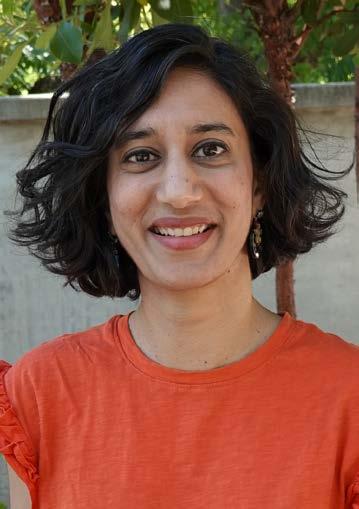
Fatima Quraishi, who specializes in the art and architecture of South Asia, joined the faculty as assistant professor of art and archaeology on July 1, 2025.
With a particular interest in the visual culture of Muslim communities in the premodern period, Quraishi examines the intersection of transregional artistic styles with locally embedded practices, highlighting early modern mobilities, of people and of objects. An underlying theme in her research is the central role of artists in processes of cultural formation. Quraishi’s current book manuscript, Palimpsests Past and Present: The Sufis and Sultans of the Makli Necropolis (1380–1660), is an interdisciplinary study of a vast funerary site in the Indus deltaic plain. Building on her interests in monumental landscapes and practices of memorialization, she is working on a new project on the cartographic imagination in Kashmir during the 18th and 19th centuries.
Quraishi comes to Princeton from the University of California-Riverside, where she has been an assistant professor in the History of Art department. Previously, she held teaching positions at the Indus Valley School of Art and Architecture and at the Shaheed Zulfiqar Ali Bhutto Institute of Science and Technology, both in Karachi, Pakistan. In 2017, she curated the exhibition Paradise on Earth: Manuscripts, Miniatures, and Mendicants from Kashmir at the Mohatta Palace Museum in Karachi. She holds a Ph.D. from the Institute of Fine Arts (New York University), an M.A. from the University of Victoria, and an A.B. from Brown University.
JOHN SIGMIER
Assistant Professor of Art and Archaeology
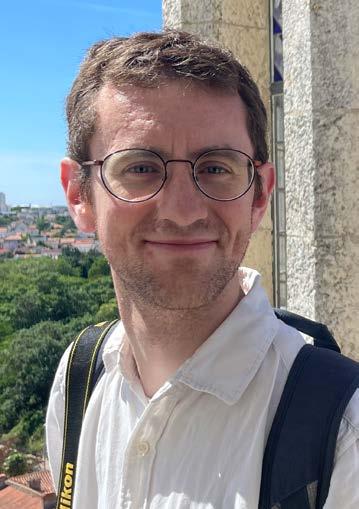
John Sigmier, archaeologist and architectural historian of the Roman world, joins the faculty as assistant professor of art and archaeology on September 1, 2025. Sigmier comes to Princeton from the University of
Toronto, where he was an Arts and Science Postdoctoral Fellow with a joint appointment in the Departments of Classics and Art History. His research interests include ancient architecture and urbanism, the archaeology of the Roman provinces, knowledge networks and information exchange, and computational approaches to architectural documentation and analysis. Most recently, Sigmier examined how patterns of knowledge-sharing across social networks impacted the development of theater architecture in the Roman Empire. Sigmier has worked at archaeological sites in Tunisia, Greece, Israel, Turkey, and Italy. He is working on a book on a recently discovered Roman gate at the ancient city of Sardis in western Turkey, where he has worked since 2011; and he has begun a study of the theater at the site of Falerii Novi in central Italy.
Sigmier’s research and teaching draw upon a variety of digital methods and tools, including photogrammetric modeling, computational morphometric analysis, social network analysis, and augmented reality.
He earned his Ph.D. in the Art and Archaeology of the Mediterranean World at the University of Pennsylvania in 2024.
ROBERT BAGLEY
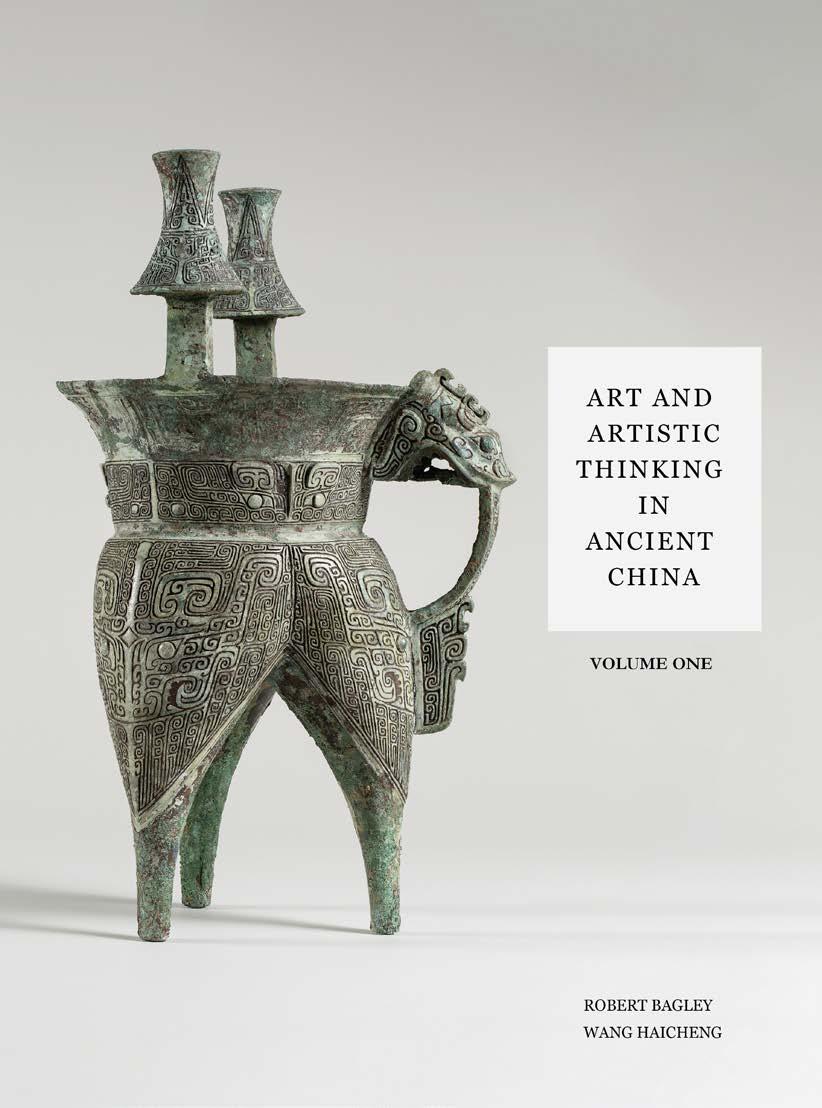
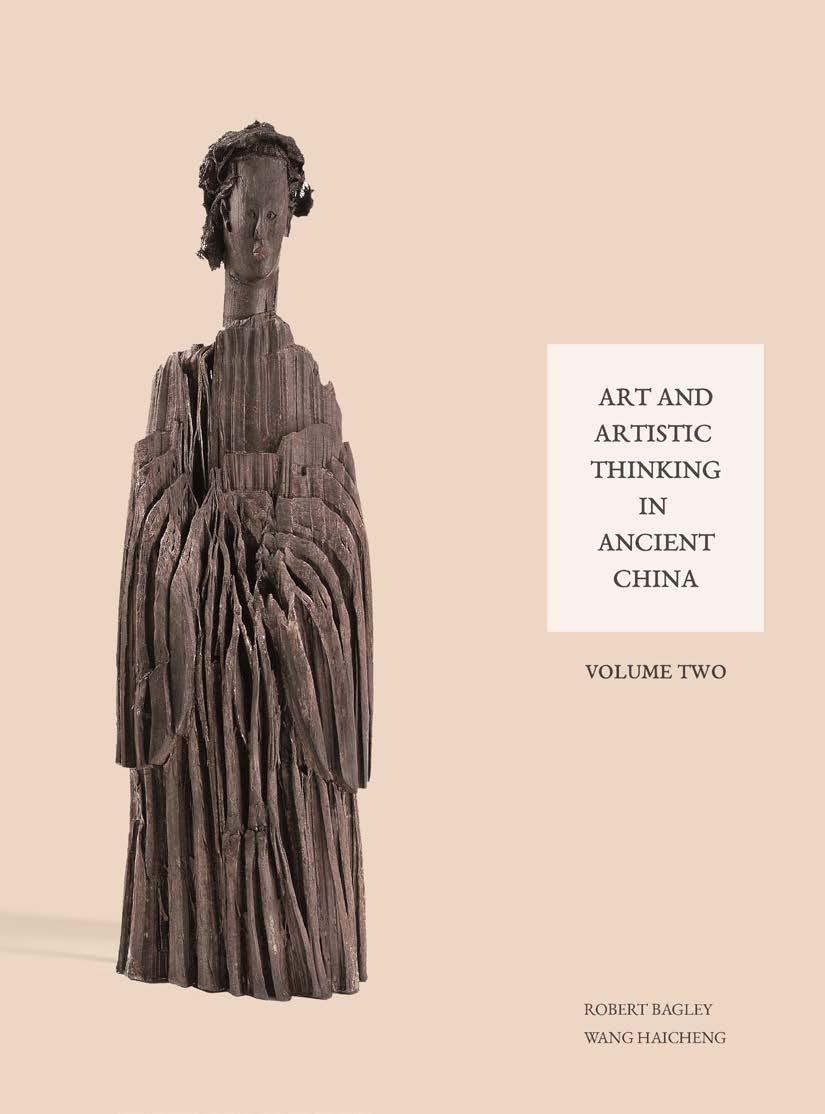
In 2024 Robert Bagley gave the keynote lecture at the Freer Gallery of Art’s Anyang symposium, part of its centenary celebration, and the keynote lecture at the Asian Art Museum of San Francisco’s Phoenix Kingdoms symposium. With coauthor Wang Haicheng *07 (Mary and Cheney Cowles Endowed Professor of Art History, University of Washington), he has spent the past 11 years working on a two-volume history of ancient Chinese art titled Art and Artistic Thinking in Ancient China. The book examines the arts of jade, ceramics, lacquer, silk, bronze, and display writing from the 4th millennium (late Neolithic) to the 3rd century B.C.E. in the light of the most recent archaeological discoveries. One of its particular concerns is to throw light on artistic thinking by means of attentive visual examination and technical studies, which can reveal, sometimes in surprising detail, what the maker’s hands did. Copublished by the Asian Art Museum of San Francisco and Art Media Resources (Beijing and Chicago), the book was printed in Shenzhen in April and should be available on these shores, barring tariff wars, by the fall. Though a little fatigued by the task of seeing a book with two thousand illustrations through the press, the authors have found collaboration so enjoyable that they are now contemplating a new book. All that they are prepared to say about it at present is that it will be shorter than the last.
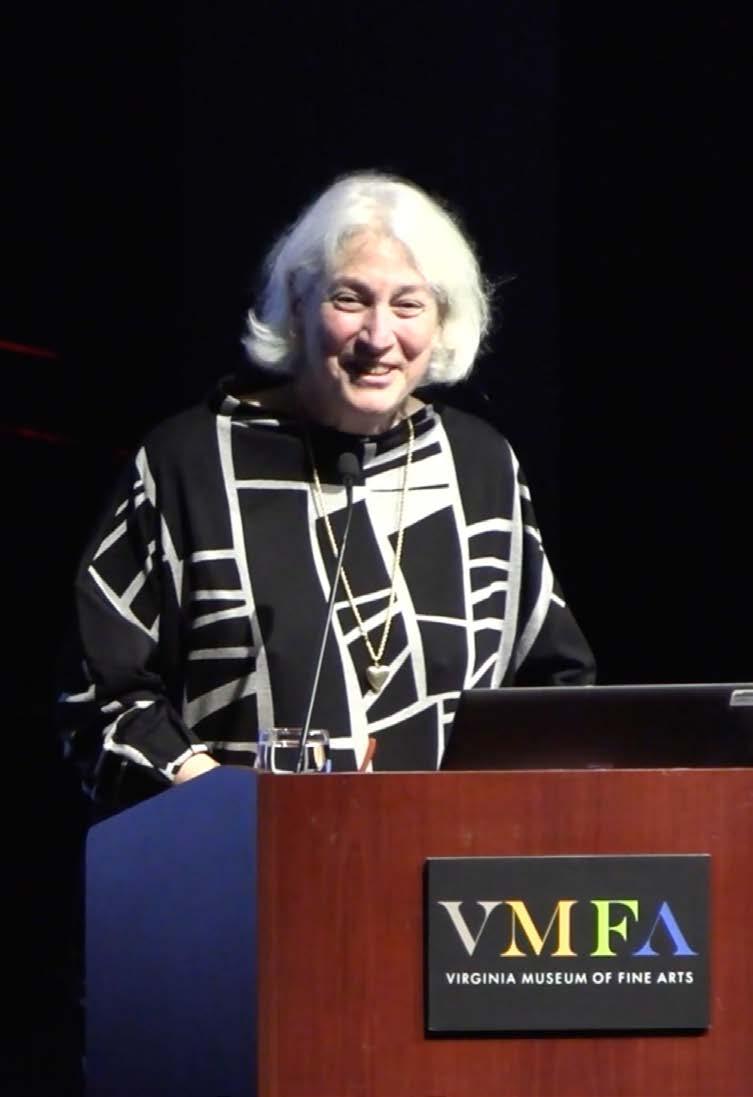
In fall 2024, Ronni Baer taught ART 487, a seminar on Rembrandt, which included three trips to New York to visit print rooms, a conservation studio, and museum galleries to supplement the study of prints by the artist at the Princeton University Art Museum. In January 2025, she gave the inaugural Saunders lecture at the Virginia Museum of Fine Arts titled “The Rough and the Smooth in (the Saunders Collection and) 17th-Century Dutch Painting” and in March, she gave a lecture to PUAM members, “Rembrandt and Dou: The Rough and the Smooth,” both in preparation for the exhibition The Rough and the Smooth in 17th-Century Dutch Painting, opening in Princeton in fall 2027. Baer also readied two articles for publication: one on the relation between Dou’s genre paintings and Rembrandt’s art, to be published by Amsterdam University Press, and the other, “The Lure of El Greco in Isabella Stewart Gardner’s Boston,” to be published by the Centro de Estudios Europa Hispánica, Madrid.
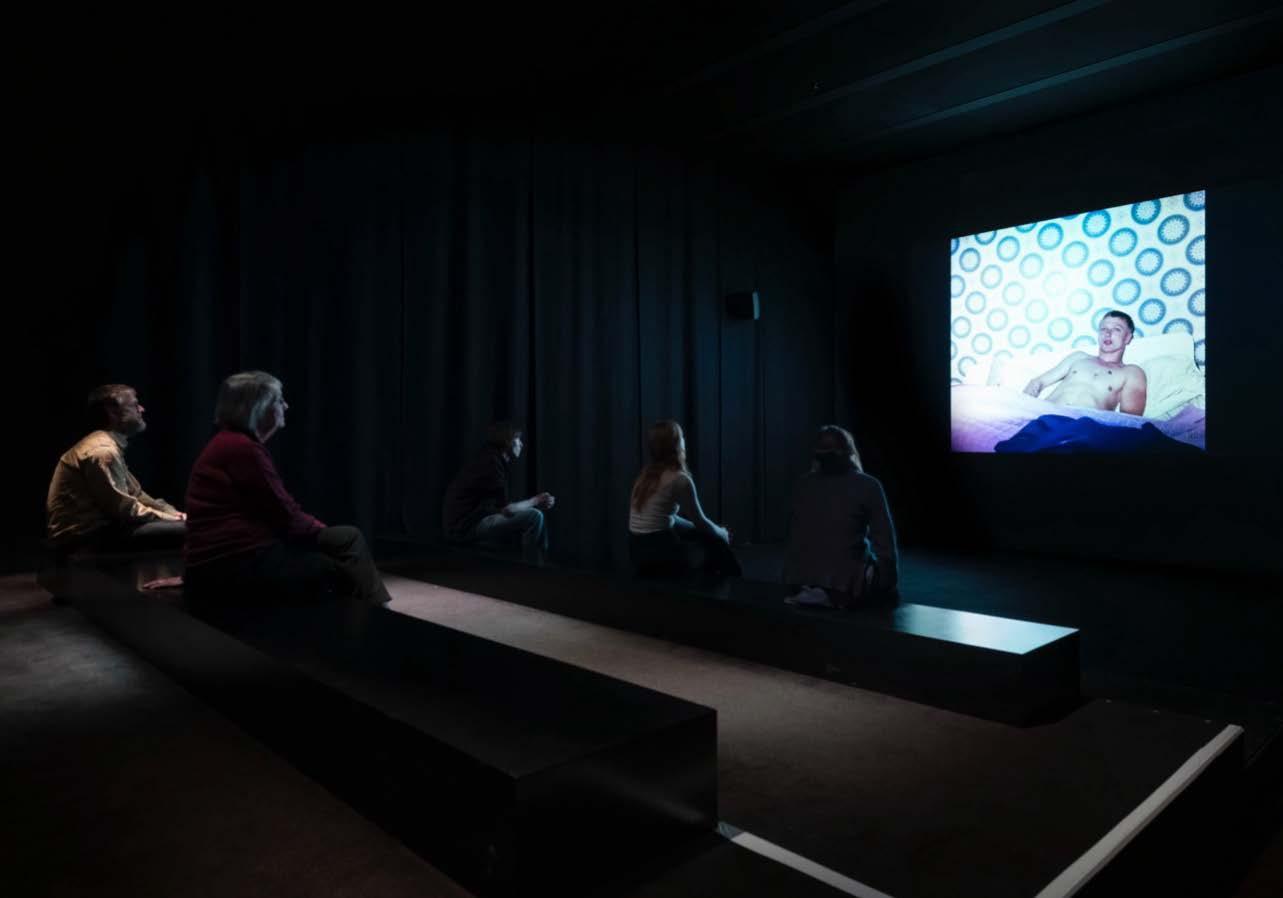
In 2024–25, Katherine Bussard served as project manager for art donations on the occasion of the new building for the Princeton University Art Museum. Successes numbered well over 400 objects; examples from the medium of photography included: a landmark donation of more than 30 contemporary Chinese photographs (coordinated with Zoe Kwok), rare cased 19th-century Japanese photographs (coordinated with Kit Brooks), and a rare early painted portrait by W. S. (William Southgate) Porter and David R. H. Hoag (coordinated with Karl Kusserow). These donations change what is possible to teach and view in the new Museum.
Bussard also secured for the Museum the last available edition of Nan Goldin’s slideshow The Ballad of Sexual Dependency. Arguably no artist, and certainly no photographer, alive today has created a more symbiotic relationship between life and art than Nan Goldin. For over half a century, it has been her obsession to record her world, and The Ballad represents the zenith of this endeavor. Over 700 of her photographs are projected in the artist’s own unique sequence accompanied by her specified soundtrack. Creating a space between photography, time-based media, and installation art, Goldin’s Ballad invites a powerful dialogue between socially accepted notions of identity, relationships, and community, and the experiences that fall outside of them. Widely acknowledged as one of the most intense and inspiring experiences in contemporary art, it will be an incredible resource in A&A and beyond.
In her role as steward of the Minor White Archive at the Museum, Bussard helped finalize the Memorable Fancies publication (Princeton University Press, 2025), one of the most significant unpublished texts in the history of photography, and secured a national tour for the exhibition Photography as a Way of Life: Minor White, Aaron Siskind, and Harry Callahan (debuting in the new building in April 2026).
Most recently, as lecturer in A&A for spring 2025, Bussard revised and updated her popular history of photojournalism course and enjoyed a class roster of 19 students from 13 departments. Robust seminar-style conversations and creative non-essay final projects were hallmarks of the class. A special visit by artist and scholar Gonzales-Day made a lasting impression on all
Bussard is concluding her term as cochair of CAA’s Photography Network, which has grown to more than 600 international members during her tenure. A Terra Foundation Convening Grant supported the 2024 symposium in Tucson “In Relation: Photography’s Communities.”
Breton Langendorfer joined A&A as lecturer in fall 2024. His current research projects focus on the early visual cultures of the Iranian plateau during the 3rd millennium B.C.E., and the use of ornamental repetition, duplication, and fine craftsmanship in Achaemenid royal art. Before arriving at Princeton he taught at Hamilton College, Brown University, and the University of New Hampshire.
A&A alum Nassos Papalexandrou *98 is responsible for drawing Langendorfer to the field as a graduate student at the University of Texas at Austin. “He really opened my eyes to this material,” Langendorfer said.
“I’ve been consistently fascinated with the ways in which the material culture of the ancient Middle East eerily prefigures our contemporary moment—from ‘speaking’ tablets on which one can manipulate information to the use of objects like ancient cylinder seals or modern ID cards that allow us to swipe traces of our identity in official contexts,” said Langendorfer.
In spring 2025, Langendorfer took the opportunity to inspire the next generation of art historians with ART 416/CLA 416/NES 418 “Borderlands: Art and Society Between Rome and Iran.”
“I think that the study of premodern visual culture is becoming ever more relevant,” he said. “The more I learn and teach the more convinced I am that literacy in the ancient world was fundamentally visual-based on a sophisticated recognition of familiar images, motifs, and visual formulae rather than the written word. In our contemporary era of hypertexts and internet memes I think we’re returning to a period in which literacy will be primarily visual rather than textual, and ancient art has many pressing lessons to impart about navigating this new reality.”
Pamela Patton, director of the Index of Medieval Art, taught ART 431, “Living with Others in
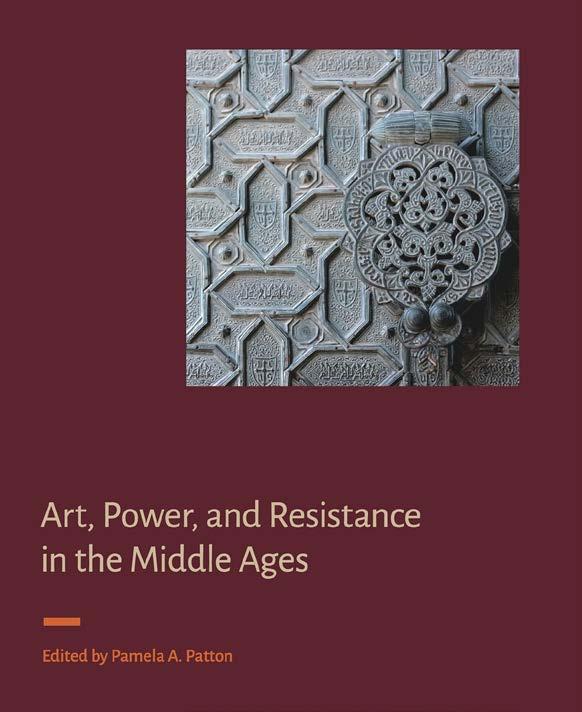
Medieval Spain,” in fall 2025. A highlight was a class visit to the Metropolitan Museum of Art, where Associate Curator Julia Perratore met with students for direct study of several medieval Iberian objects and invited them to think with her about the attribution and function of a recently acquired medieval ivory sculpture. In October, Patton collaborated with curators and archivists in Princeton University Library to launch a roundtable and foyer exhibition, supported by the Princeton Histories Fund, titled Belle da Costa Greene at Princeton, 1901–1905, and in January 2025, she published the edited volume Art, Power, and Resistance in the Middle Ages (Signa: Papers of the Index of Medieval Art, 4) with Penn State University Press. Over the course of the year, she gave lectures at the Newberry Library, Case Western Reserve University, and the University of MissouriColumbia and chaired an Index-sponsored session at the 60th International Congress on Medieval Studies in Kalamazoo. She continues as coeditor of Studies in Iconography: A Journal of Medieval Visual Cultures
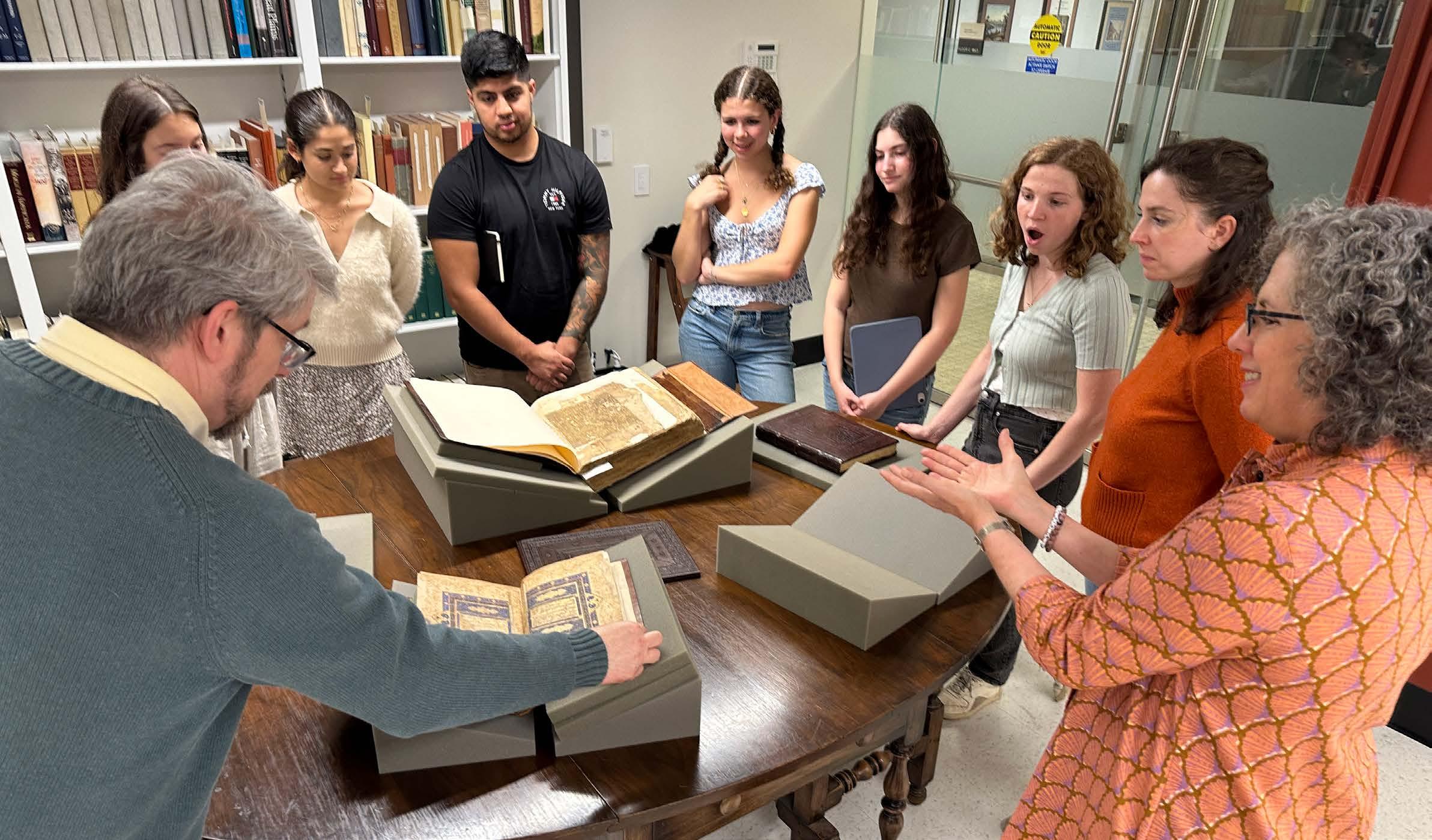
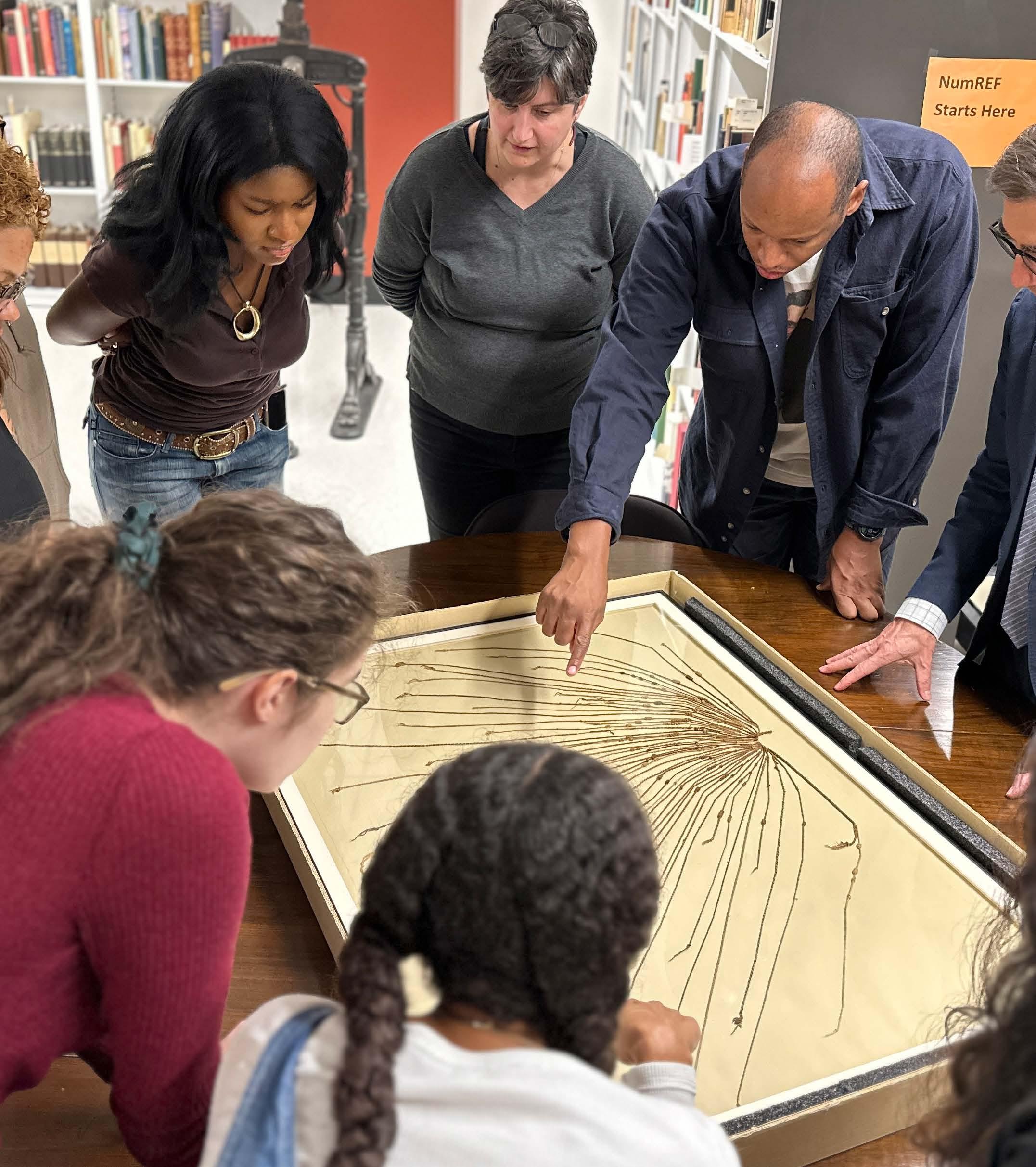
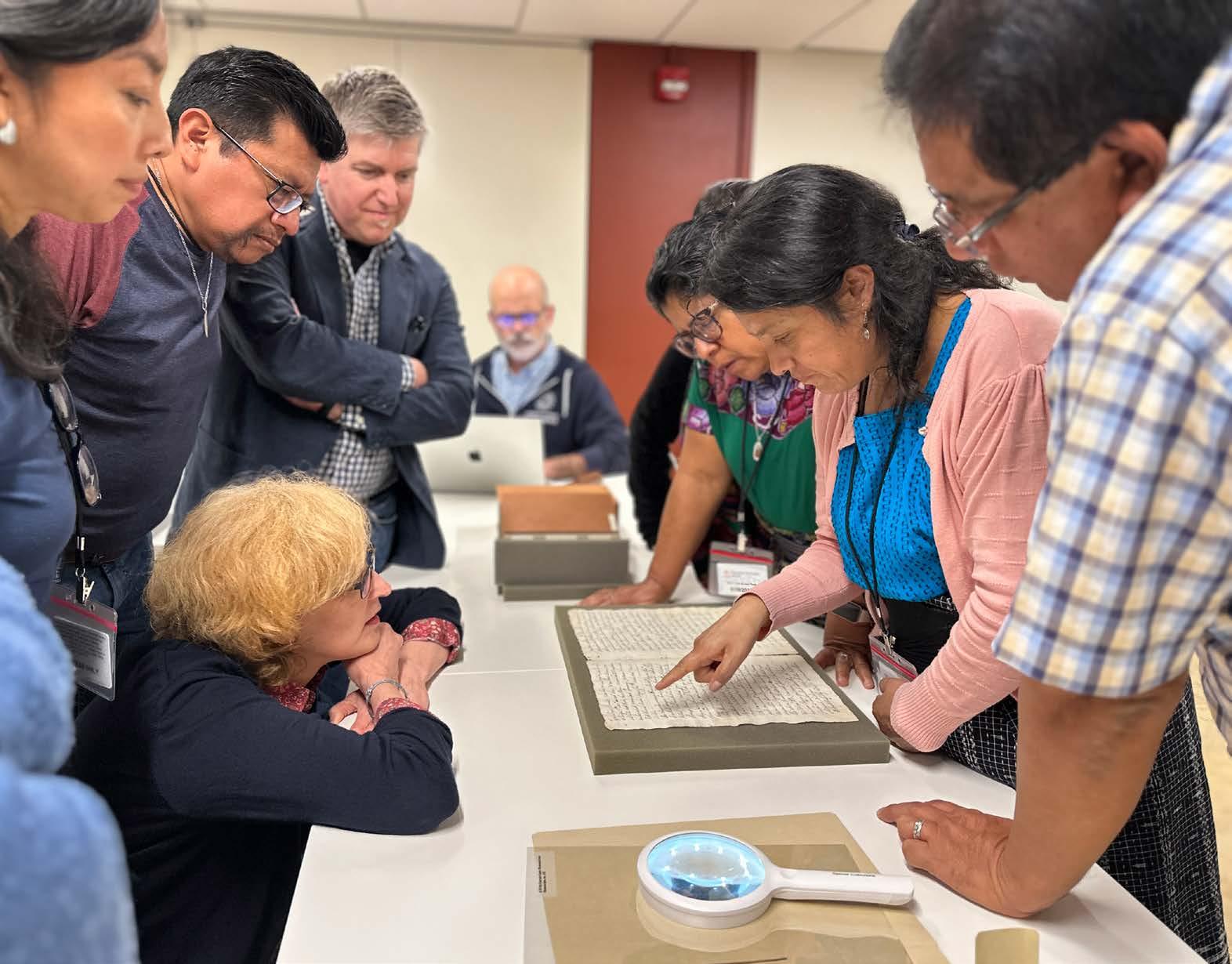
Alanna Radlo-Dzur, postdoc in Indigenous and Native North American Studies at Princeton University from 2023 to 2024, joined the Art and Art History department at the University of Rochester in January 2025. At the Pre-Columbian Society of New York, she presented “Scrolls of Smoke and Sky: Picturing the Invisible” on sound and scent in 15- to 16th-century Mexican manuscripts, research published in “Scrolls of Smoke and Sky: Reevaluating Scent and Sound in the Borgia Group Manuscripts” (Art and the Senses in Ancient America: Materiality and Meaning, ed. M. L. Vázquez de Ágredos Pascual, A. García Barrios, and M. O’Neil, Archaeopress, 2024). She presented “Marking the Invisible” for the roundtable “Nahua Ways of Knowing: New Insights from Mesoamerican Science and Epistemology” at the History of Science Society in Mérida. Research in Veracruz with Mackenzie Cooley (Hamilton) explored the ethnohistorical context Spanish royal physician Francisco Hernández (1517–1587) entered during his 1571–78 expedition to Mexico for the Historical Pharmacopeias project. Radlo-Dzur attended the Missionary Manuscripts Summer Workshop, hosted by the Princeton University Library, Dumbarton Oaks Research Library, and the Library of Congress, that focused on their in-house collections of materials written in Mesoamerican languages directed by Garry Sparks (religion), Frauke Sachse (Dumbarton Oaks), and Ben Leeming (Rivers School) with guest lectures from specialists at each institution. Radlo-Dzur contributes to the K’acha Willaykuna Andean and Amazonian Indigenous Art and Humanities collaboration developing exercises in “unlearning” grounded in decolonial approaches and Indigenous meaning-making practices. Incorporated into Radlo-Dzur’s syllabi, This Insistence, inspired by Alutiiq artist Tanya Lukin Linklater, was a public program developed concurrently with her 2024 exhibition at the Wexner Center for the Arts.
A new course, ART 485/LAS 485 “Collecting and Exhibiting Art of the Ancient Americas,” considered how collecting practices impact perceptions of Indigenous people in the past and present. Angela Brown and Paulina Pineda (NYU) presented on proactive strategies to emphasize Indigenous perspectives in contemporary art and literature, while RadloDzur accompanied doctoral student Estela Imigo Gueregat (Spanish and Portuguese) in
research at the American Museum of Natural History and invited Alejandro Virue (Spanish and Portuguese) to present on his dissertation. Participants drew on materials from The Sims 4: Jungle Adventure video game to Song Dynasty jades in their final exhibition proposals. At Rochester, Radlo-Dzur continues collaborating with the Princeton community. “Readers of Nahuatl-language Texts,” In tlilli in tlapalli amoxpohuanih (2018–present) worked through the “Diario” of don Domingo Chimalpahin of Chalco, who recorded events from the 1570s to 1615 in Mexico City. With Nadia Cervantes Pérez (Spanish and Portuguese), the Early Modern Nahuatl Workshop introduces participants to the rich world of Nahuatl language and cultural studies in support of Translating Mesoamerica, a new digital platform contextualizing a group of documents from the Princeton Mesoamerican Manuscripts collection led by Cervantes with Nahua linguist Humberto Iglesias Tepec (IEMSEmiliano Zapata). Radlo-Dzur and Cervantes presented “Wild or Merciful: Translating Early Modern Mexico” for the Program in Translation & Intercultural Communication with updates on the collaboration this spring.
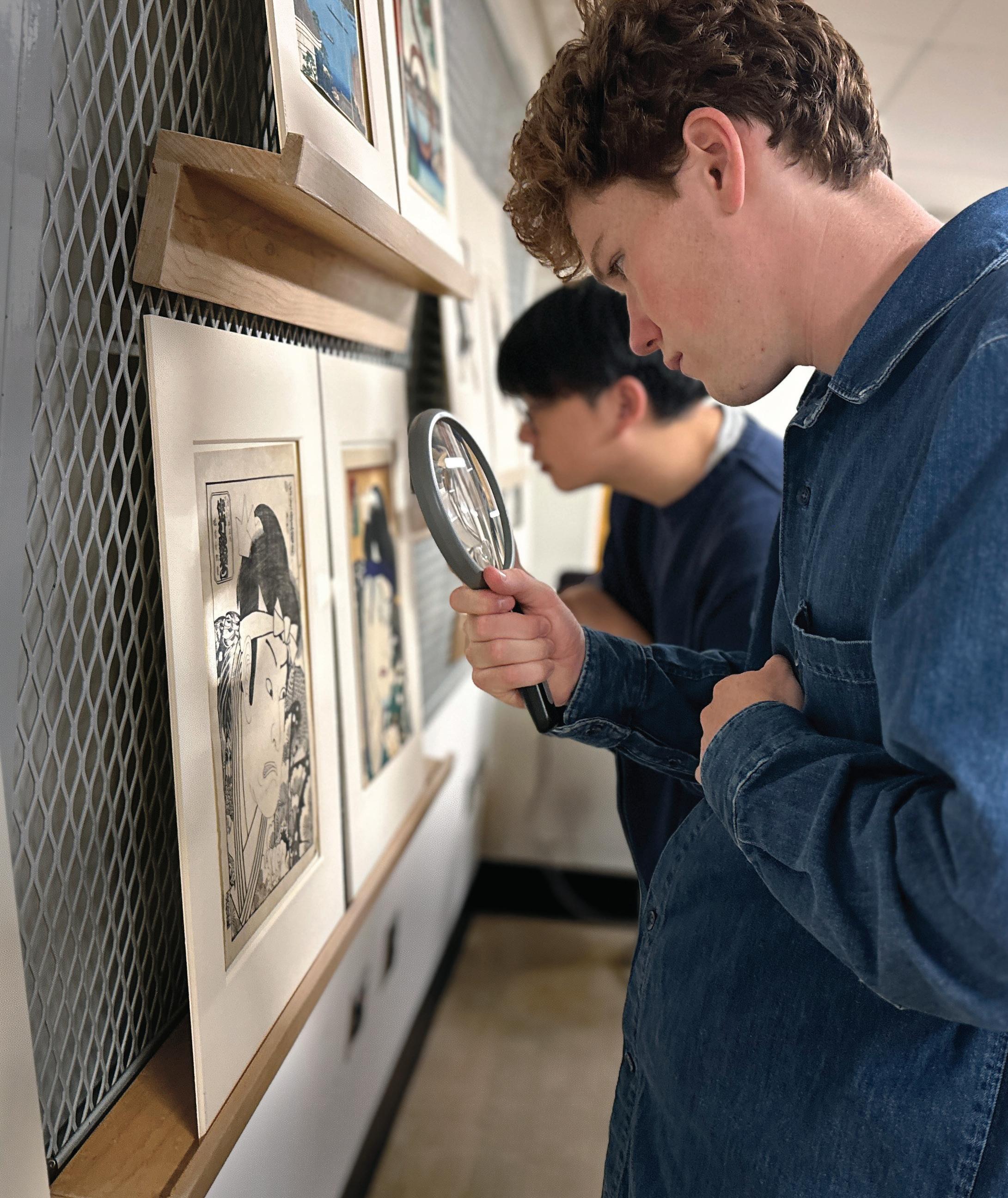
In the fall semester, Alan Stahl gave a lecture on ancient coinage to ART 100 and supervised the visit of all of the precepts to the Numismatic Collection in Special Collections of Firestone Library to look at Roman coins. He also met with and showed coins to classes on Byzantine art and archaeological methods and theory. The chief recent acquisitions by the Numismatic Collection were in the realm of Axumite coinage and coins of medieval France and the Crusader States, as well as the ongoing project to make Princeton’s Byzantine numismatic collection a world leader in the field.
Susana Costa Amaral works at the intersections of visual arts and politics, performance studies, critical race theory, and queer studies. She joined Princeton as a Presidential Postdoctoral Research Fellow after earning her Ph.D. from New York University. Her new research project examines the role of artificial intelligence in Latin American arts and culture. Costa Amaral taught ART 322/LAS 313 “Anti-Colonial Practices in Latin American Contemporary Art” in spring 2025, utilizing Princeton University Library’s impressive collections.
“The field of Latin American art is immense, so it’s always an exciting challenge to propose a course centered on this topic,” said Costa Amaral. Students in her class worked with a spectrum of materials from across geographic regions: “When we place these materials together, we gain an overview of the complexity of Latin America’s cultural and artistic histories,” she said.
Costa Amaral hopes students came away with “a deeper understanding of Latin America as a dynamic space of cultural expression, rather than a fixed or static entity. The course invites them to consider what is at stake when situating an artwork within this complex and contested territory. Instead of relying on simplistic or reductive frameworks, students are encouraged to engage with Latin America as a region where histories, cultures, and artistic practices are constantly being negotiated, challenged, and reimagined.”
“Today, terms like ‘decolonization’ and ‘anti-colonialism’ are being increasingly co-opted by authoritarian discourses,” she said, “making it more critical than ever to understand the histories behind these concepts and to interrogate how they have operated across different theoretical frameworks.”
Mattia D’Acri began his appointment as a postdoctoral research associate in the Department of Art & Archaeology in fall 2024. Over the past academic year, he has made significant contributions to both departmental research and the broader scholarly community, distinguishing himself through a combination of fieldwork, publication, and public engagement.
A major focus of D’Acri’s work this year has been the Molyvoti, Thrace, Archaeological Project (MTAP). He played a central role in designing, managing, and launching WebDig, an open-access digital platform that allows users to explore the site’s stratigraphy and material culture in detail. This innovative tool enhances the accessibility of excavation data and has proven valuable to both scholars and students. In addition to his digital work, D’Acri conducted hands-on research on the Archaic pottery from Molyvoti, the results of which will appear in the forthcoming MTAP III volume. This volume focuses on the House of Hermes, and D’Acri continues to assist in its preparation alongside the lead editor, Nathan Arrington.
Beyond MTAP, D’Acri has remained active in his research on preRoman Central and Southern Italy, with a particular emphasis on ceramic production and indigenous communities. Between fall 2024 and spring 2025, he published three peer-reviewed articles and submitted additional pieces scheduled for publication later this year. His work reflects a deep commitment to interdisciplinary approaches, especially the integration of archaeometric analysis and traditional archaeological methods.
D’Acri has also been an engaged member of the academic community at Princeton. He presented his research at the annual meeting of the Archaeological Institute of America in Philadelphia and delivered a lecture as part of Princeton’s Program in the Ancient World, where he received thoughtful feedback on his ongoing work.
D’Acri will return to Italy this summer to codirect the Torre Mordillo Archaeological Project in Calabria. There, he will lead excavations with students from Mount Allison University and other Canadian institutions, investigating the dynamics between indigenous populations and Greek settlers in the region around Sybaris. His leadership in the field underscores his commitment to collaborative, student-centered research and his growing international profile as a scholar of the ancient Mediterranean.
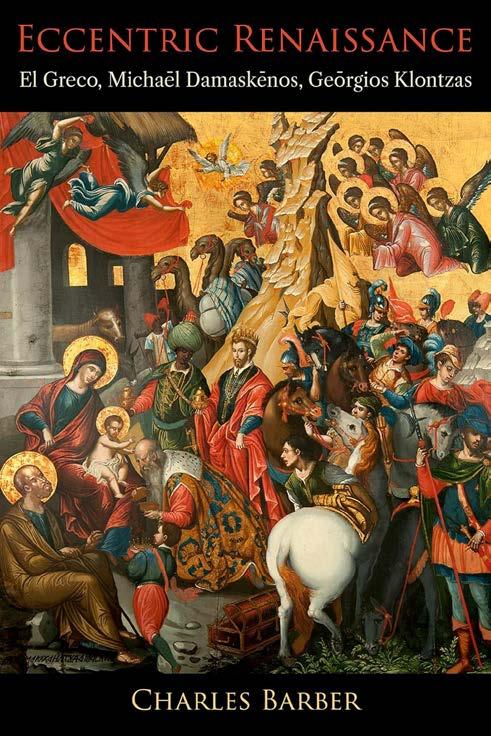
Eccentric Renaissance: El Greco, Michaēl Damaskēnos, Geōrgios Klontzas Oxford University Press, 2024
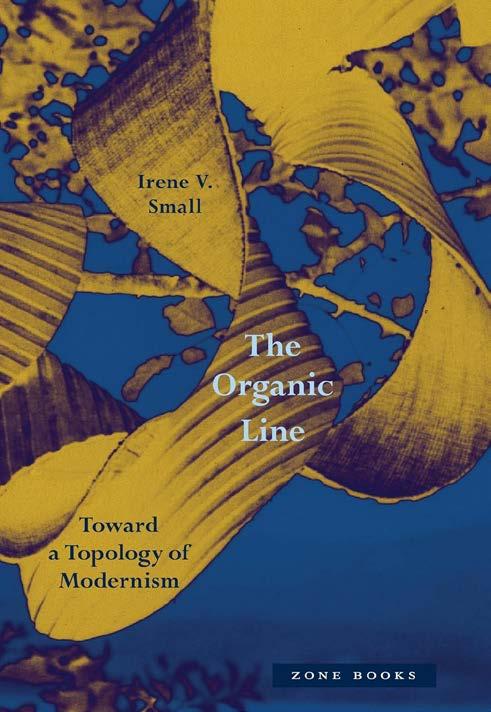
The Organic Line: Toward a Topology of Modernism Zone Books, 2024
H. D. BUCHLOH AND HAL FOSTER
Exit Interview: Benjamin Buchloh in conversation with Hal Foster no place press/MIT Press, 2024
Fail Better: Reckonings with Artists and Critics MIT Press, 2025
Art, Power, and Resistance in the Middle Ages Penn State University Press and The Index of Medieval Art, 2024
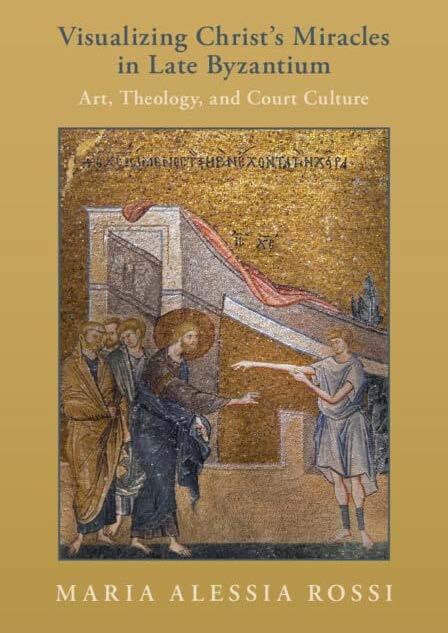
Visualizing Christ’s Miracles in Late Byzantium: Art, Theology, and Court Culture Cambridge University Press, 2024
Rudolf II: The Life and Legend of the Mad Emperor University of Chicago Press, 2025
WITH PROFESSOR RACHAEL Z. DELUE at the helm, the Princeton Humanities Initiative was launched in July 2024 to supercharge innovative, interdisciplinary, and collaborative humanitiescentered research, teaching, and community engagement while also serving as a multiyear bridge to the foundation of a Humanities Institute at Princeton. John Paul Christy joined as executive director in spring 2025.
Aiming to expand the impact of humanities scholarship on campus, in higher education, and in the wider world, the Initiative brings together faculty, students, staff, affiliates, and community partners from a range of disciplines to work together on shared projects. “The Initiative,” DeLue says, “explores the current state and possible futures of the humanities
in the 21st century, building on long-standing traditions of scholarship while envisioning new models and methods of humanistic study that are inclusive, international in scope, and culturally and intellectually capacious.”
Representing the first step in an institutional transition from the Humanities Council to a planned Humanities Institute at Princeton, the three-year Initiative centers on the theme “Media & Meaning: Humanities in the World.”
Broad and interdisciplinary in scope, media spans all time periods and geographic regions in diverse forms, from literature, architecture, and the visual arts to mass communication, smartphones, social media, and ChatGPT. The Initiative is therefore making broad investments in new research and in teaching
that helps students, scholars, and the broader public explore the many roles media play in shaping our understanding of the world.
Professor of Spanish and Portuguese Christina Lee, who is a member of the Initiative’s steering committee and acting chair of the Humanities Council, spoke to the vital role of the humanities in Princeton’s curriculum.
“Students discover their intellectual voice when they engage meaningfully with local and global histories … whether one studies engineering, literature, or economics, confronting our collective narratives reveals the intricate threads binding us across time and space,” she said. “Even when we face historical moments of profound injustice and suffering, understanding our shared narratives creates possibilities for collective healing and unexpected solidarity.”
The Initiative has forged a spectrum of partnerships in its inaugural year. On campus, these include the Center for Digital Humanities (CDH), GradFUTURES, Princeton’s Program for Community College Engagement, the High Meadows Environmental Institute, and the Princeton University Art Museum, to name a few; and public outreach collaborations include the New Jersey Council for the Humanities (NJCH), the New Jersey Council of County Colleges (NJCCC), and the Princeton Public Library.
The resulting programs in spring 2025 were diverse in scope, ranging in topics from advanced text recognition technology to Indigenous language scholarship; from the evolution of collective fantasy expressions to the ethics of AI; from bolstering the future of the humanities across New Jersey’s community colleges to forging productive approaches to reckoning with the climate change crisis.
The humanities at Princeton encompass more than 50 academic departments and programs, spanning art & archaeology, classics, philosophy, languages, music, aspects of history and other social sciences, and creative programs housed in the Lewis Center for the Arts. According to Dean of the Faculty and William S. Tod Professor of English Gene Jarrett, “The secret sauce of the humanities at Princeton is structure—one faculty, within one community, that can create great inspiration for scholarly ideas.” “We are not siloed in the ways other universities are that have many schools and faculty spread out,” Jarrett continued. “We’re now poised to develop, in the Humanities Initiative and then the Humanities Institute, an even more remarkable way of bringing people together.”
Professor of Geosciences and Director of the High Meadows Environmental Institute
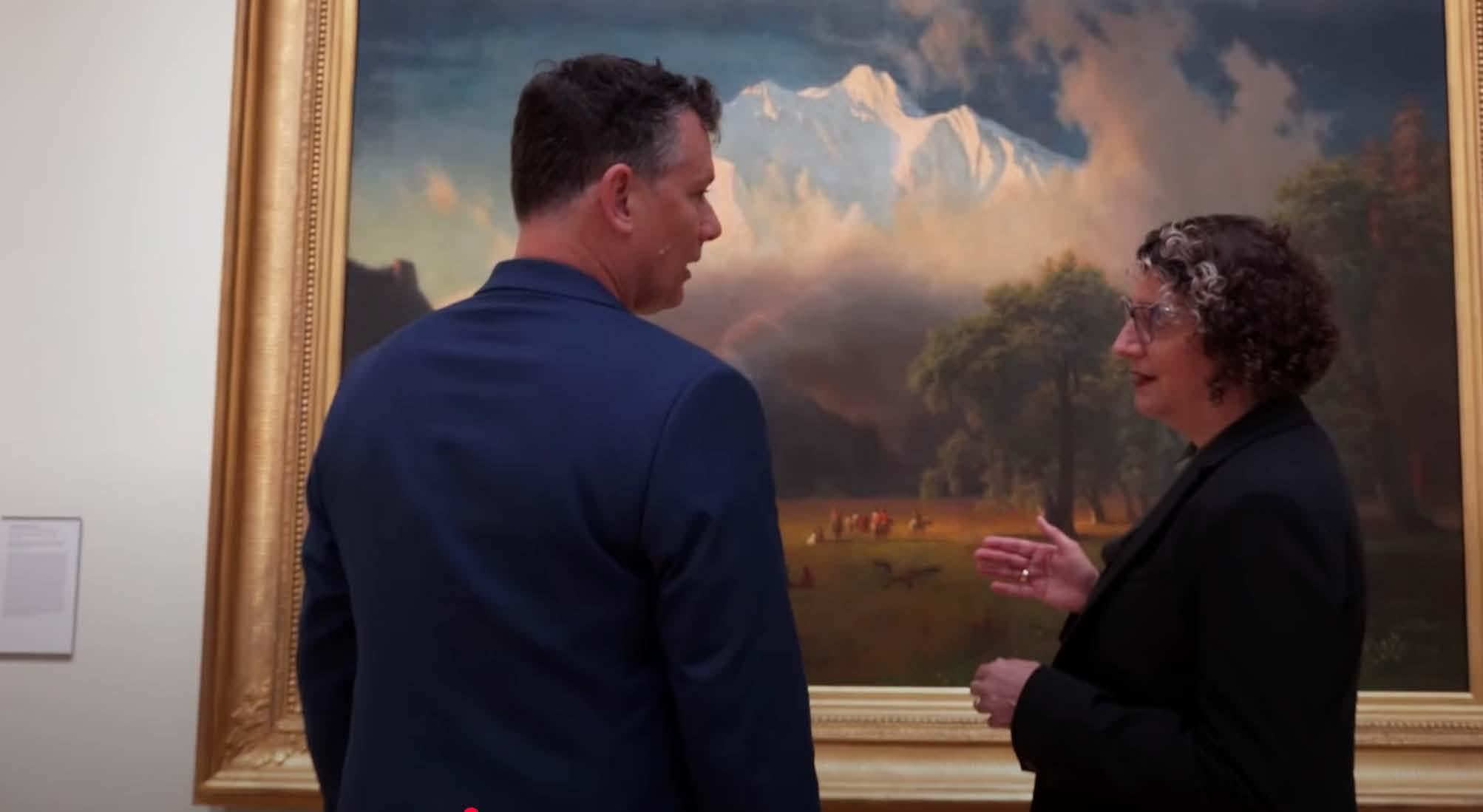
Gabriel Vecchi and Rachael Z. DeLue take in Mount Adams, Washington by Albert Bierstadt at the Princeton University Museum of Art (still from “What Makes Us Human,” produced by the Princeton University Office of Communications)
Watch video

Brigid Doherty
IN FALL 2024, eight new students joined the graduate program in A&A. Over the course of the academic year, seven students passed their general examinations, five presented their dissertation proposals, and 18 completed the final public oral examinations of their dissertations. An abundance of student-led co-curricular initiatives enriched the graduate program throughout the year, fostering collaboration within the A&A community and across campus. The conference “Bandung to Berlin: Art, Decolonization, and the Cold War” featured nine graduate student speakers from around the world, including three from A&A, along with a keynote by Professor Atreyee Gupta (University of California-Berkeley). Students also
organized reading groups on topics ranging from disability studies to environmental humanities, from the arts of Palestine and the diaspora to the broad significance of Toni Morrison’s writing for the humanities today. Speakers in this year’s ART 502 Lecture and Seminar Series presented cutting-edge research on topics ranging from Hellenistic Greek epigrams to the globalization of protest art in 1968. In addition, each of the five speakers shared their reflections on the state of the discipline and its methodologies in a seminar with the department’s first- and secondyear students in tandem with their lectures. A&A graduate students continued to garner an extraordinary number and range of prestigious fellowships to support their dissertation research,
and those who completed their degrees this year assembled a splendid record of placements in academic and other professional positions. Graduate Student Representatives and other members of the student community made vital contributions to the program at every level, from the selection of speakers for next year’s ART 502 Lecture and Seminar Series, to the department’s collaborative engagements with the Princeton University Art Museum and Marquand Library, to the success of workshops on best practices for preparing for general examinations and on demystifying the re-enrollment process, to the development of a new peer-mentoring initiative that will launch in fall 2025, when 15 new students will enter the A&A graduate program.
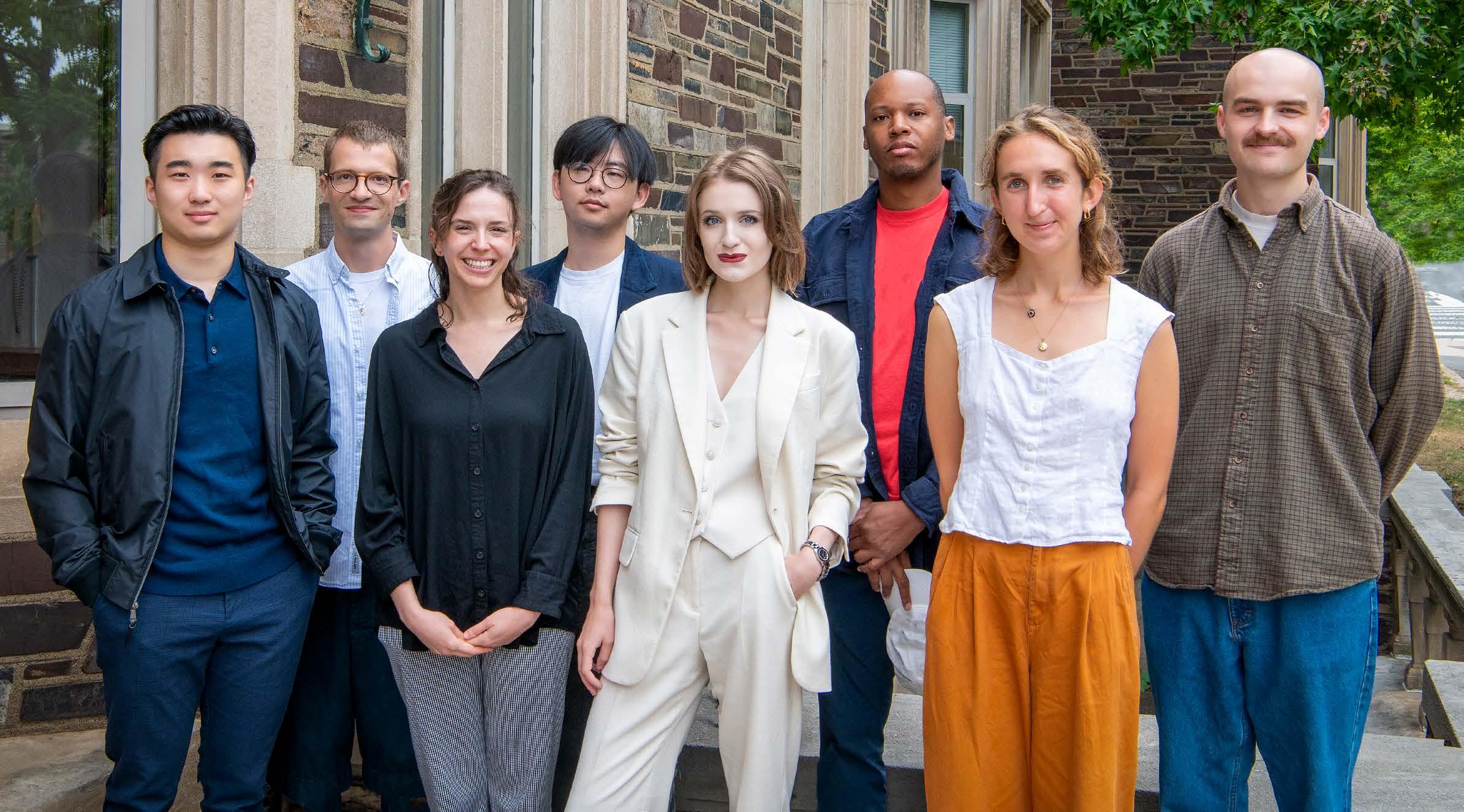
JULIA CURL
“The Artist’s Hand and the Camera Eye: Stella F. Simon’s Hands (1927) and the International Avant-Garde”
ADVISER: Brigid Doherty
ALEXANDRA GERMER
“Forgery, Facsimile, and the Bureaucratization of Authenticity (1919–1950)”
ADVISER: Brigid Doherty
MARGARET HIRE
“Creating Common Meaning: VALIE EXPORT, Ulrike Rosenbach, Natalia LL, and Feminism in Central Europe”
ADVISER: Brigid Doherty
NICK IRVIN
“Siqueiros’s Schools: Workshopping Political Education in Communist Networks across the Americas, 1924–1937”
ADVISER: Hal Foster
DAVID SAIZ
“Liberty, Columbia, and the Complexities of a Nationalist Cultural Identity in the United States, 1775–1893”
ADVISER: Anna Arabindan-Kesson and Rachael Z. DeLue
AMELIA AMES
“Senga Nengudi: Maternal Modern”
ADVISER: Chika Okeke-Agulu
HANNAH ROSE BLAKELEY
“The Carnivalesque and Belgian Modernism”
ADVISER: Bridget Alsdorf
MOLLY ECKEL
“Robert S. Duncanson’s Antislavery Allegories”
ADVISER: Rachael Z. DeLue
ISABELA MUCI-BARRADAS
“The Polyphonic Forest: Photographing the Amazon, 1970–1989”
ADVISER: Anne McCauley and Irene V. Small
CAITLIN RYAN
“Documents of Social Life: Photography in Paris from Class War to Popular Front, 1932–1937”
ADVISER: Anne McCauley
CLAIRE SABITT
“European Decorative Scissors and Their Ornamentation, ca. 1450–1800”
ADVISER: Thomas DaCosta Kaufmann
EMILY SMITH-SANGSTER
“Think Globally, Identify Locally:
An Examination of Non-Royal Identity Expression in South Abydos at the Dawn of the New Kingdom (1550–1525 BCE)”
ADVISER: Nathan Arrington
NATHAN STOBAUGH
“The Impersonal Is Political:
VALIE EXPORT’s Queer Media”
ADVISER: Brigid Doherty
SASHA WHITTAKER
“Sun, Sand, and Stone: George Hoyningen-Huene’s Fashion Photography in the Mediterranean”
ADVISER: Anne McCauley
MICHAEL ZHANG
“Art, Corporations, and Cultural Politics in Late Apartheid South Africa”
ADVISER: Chika Okeke-Agulu
HANNAH ROSE BLAKELEY *25
Quin Morton Writing Fellowship, 2024–25
CHARMAINE BRANCH
Joshua C. Taylor Predoctoral Fellowship at the Smithsonian American Art Museum (SAAM), September 2024–November 2024; Tyson Scholars of American Art Program, Crystal Bridges Museum of Art, 2025–26
ANGELA H. BROWN
Visiting Fellow, Bard Graduate Center, Fall 2024
ELISE CHAGAS
Getty Scholars Program Fellowship, 2025–26
YUTONG LI *24
Postdoctoral Fellow of Global Asia, NYU Shanghai
LOUIS LOFTUS
Fulbright ENS Paris-Saclay
International Scholarship, September 2024–February 2025
IHEANYICHUKWU
ONWUEGBUCHA
Predoctoral Fellowship, Smithsonian National Museum of African Art (NMAA), 2024–25
WILLIAM PEDRICK
Samuel H. Kress Foundation
Rome Prize, 2025–26
BENJAMIN PRICE
Getty Scholars Program Fellowship, 2025–26
MASHA SLAUTINA
JASSO Scholarship, University of Tokyo Exchange Program, through September 2024
WILL AUSTIN *24
Curatorial Assistant, Getty Museum
HANNAH ROSE
BLAKELEY *25
Lecturer, Princeton Writing Program, 2025–26
JESSICA BELL BROWN *16 (M.A.)
Executive Director, Institute for Contemporary Art at Virginia Commonwealth University
GINA CHOI *24
Visiting Assistant Professor of East Asian Art History, Department of Art and Art History, New York University Abu Dhabi
MOLLY ECKEL *25
Shackelford Family Assistant Curator of American Art, Columbus Museum of Art
DANIEL HEALEY *16 (M.A.)
Provenance Research Specialist, Worcester Art Museum; Lecturer in Art History, University of Massachusetts-Amherst
ARIEL KLINE *24
Tenure-track position as Assistant Professor of Modern Art, Georgetown University
JAMIE KWAN *19
Assistant Curator of Drawings, Prints, and Graphic Design, Cooper Hewitt
JAVIER RIVERO RAMOS *23
Associate Curator, Art Bridges Foundation
EMILY SMITH-SANGSTER *25
W. Benson Harer Egyptology
Scholar in Residence, Cal State University-San Bernadino, 2025–26
JUSTIN WILLSON *21
Assistant Professor of Medieval Worlds, Department of the History of Art, Yale University
In June, Joseph Litts presented a paper titled “Watercolour and the ‘melancholy darkness’ of Caribbean Weather in the 18th Century” at the conference “Watercolour and Weather, 1750–1850.” Organized by Bérangère Poulain and Desmond-Bryan Kraege and hosted by the Musée cantonal des Beaux-Arts de Lausanne, the Université de Lausanne, and the Université de Genève, the international conference investigated the many surprising intersections of climate and art. Professor Basile Baudez both chaired a session and presented his own paper.
Litts spoke on one chapter of his dissertation. Drawing from research conducted in London through the generosity of the Paul Mellon Centre for Studies in British Art and in Jamaica with the assistance of the Princeton Institute for International and Regional Studies, Litts brought cultural and aesthetic context to an unusual watercolor by Thomas Hearne. The watercolor, in the collections of the Oak Spring Garden Library, shows Hurricane San Ramón in action, directly hitting the island of Antigua in 1772. Hearne’s watercolor is part of a larger series that shows various landscapes throughout the Anglophone Leeward Islands. By situating the hurricane watercolor within the broader series of 20 paintings (sold individually at auction in 1810), Litts demonstrated how the one hurricane spilled across the series. Turning to other rare representations of the storm (mostly in the British Museum) further indicated
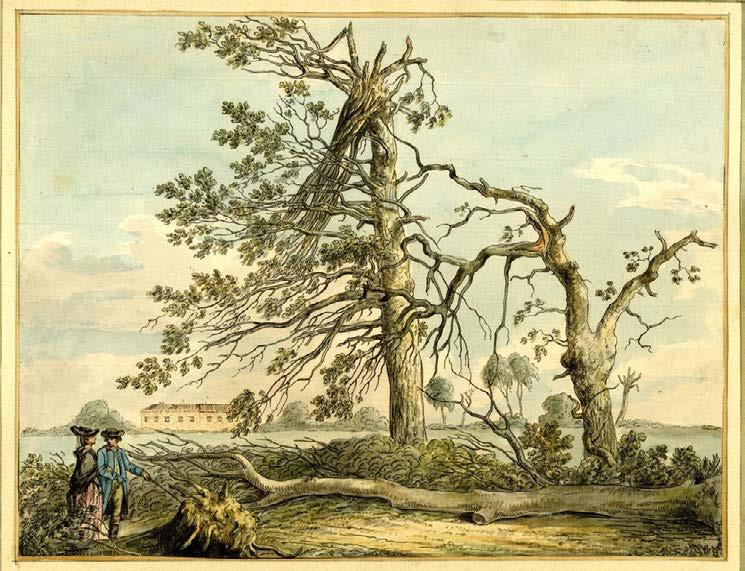
how 18th-century artists struggled with this meteorological phenomenon. No hurricane was seen in its entirety until 1961, and before then, artists came up with many novel approaches to wrestle with this severe weather. As his dissertation chapter argues, the results suggest the extent to which the “Plantation Picturesque” theorized by Charmaine Nelson, Krista Thompson, Geoffrey Quilley, and others was also about trying to control weather through art.
This year, Sonya Merutka founded the Disability, Debility, and Crip Theory Working Group at Princeton, which brings together graduate students, postdoctoral fellows and researchers, and faculty to discuss disability studies in our contemporary moment, share work in progress, and foster community among disability studies scholars in diverse fields and at different stages of their career. The working group is supported by the
programs in Gender and Sexuality Studies and Interdisciplinary Humanities, and will continue next year. For the group participants, Merutka organized visits to three exhibitions: Smoke & Mirrors at Zimmerli Art Museum, Rutgers University; Carolyn Lazard at Artists Space; and Christine Sun Kim at the Whitney Museum of American Art. Continuing their dedication to communal learning spaces, Merutka brought the Arts of Palestine and the Diaspora Reading Group into a second season after cofounding the group last spring. With support from Art & Archaeology, the group provides 10 participants with books on diverse topics each meeting, which included books by poet Mosab Abu Toha and the interdisciplinary publishing space Bilna’es this semester. This year marks a new collaboration with the Princeton University Library, first and foremost Marquand Art Library, to acquire every book from the group, including rare artist books by contemporary Palestinian artists, which will be developed into a study collection by Merutka and the library.
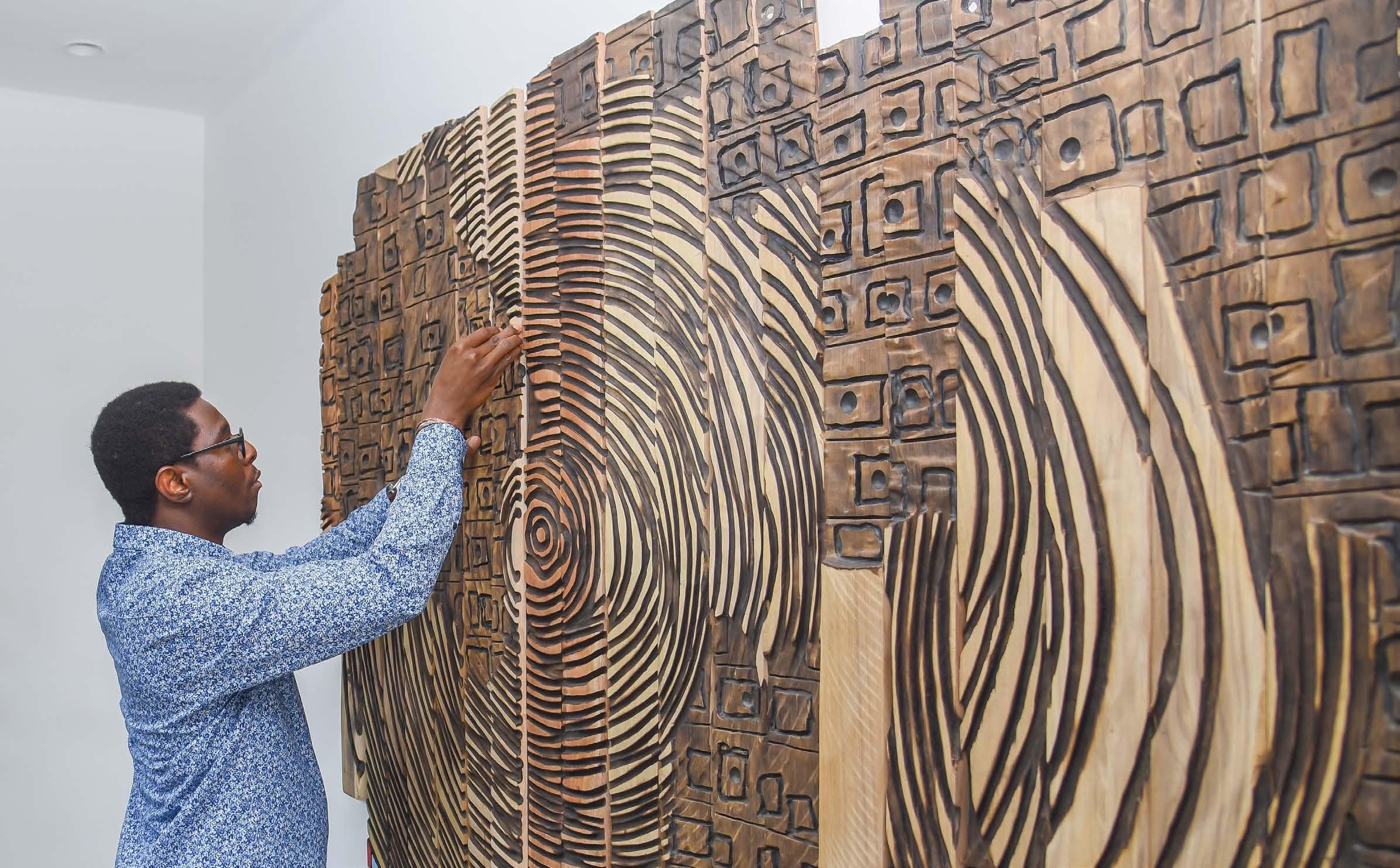
In summer 2024, with support from the Princeton Institute for International and Regional Studies (PIIRS), Merutka conducted research on Cuban American artist Ana Mendieta in Oaxaca, Mexico, visiting and rephotographing several sites of her 1970s performances across the region. They also developed and presented new work at conferences for the American Studies Association and ASAP/14: Association for the Study of the Arts of the Present, as well as in the “Exercise: Forming Bodies, Selves, Disciplines” workshop in Princeton’s German Department. This spring, they were a participant in the study sessions for the Mellon-Marron Research Consortium at the Museum of Modern Art, conducting in-depth research and producing a critical
text on Cochiti Pueblo artist Quah Ah (Tonita Peña), who made paintings of Pueblo life and performance from the 1920–40s. For this academic year, Merutka was awarded the Nimick Venture Forward Graduate Fellowship.
In July 2024, Iheanyi Onwuegbucha started a Smithsonian Predoctoral Fellowship at the National Museum of African Art in Washington, D.C., where he spent 11 months conducting research in the Eliot Elisofon Photographic Archives and the Warren M. Robbins Library for his dissertation on the Nsukka School of art. In August, he participated in the Arts Council of the African Studies Association Triennial
Conference in Chicago, where he cochaired a panel and presented his paper, “The Postcolonial Museum: Community-Centered Heritage Practice as a New Paradigm for Africa.” Later that month, he presented two papers at the African Studies Association of the UK conference in Oxford: “The Biafra War and the Nsukka Art School: Trauma, Memory, and Activism in Nigerian Art” and “Unpacking the Politics of Commemoration in the National War Museum, Umuahia, and the Reconstruction of the Biafra War History.”
In October, he co-curated Being at Home in Princeton at the James S. Hall Memorial Gallery, Butler College. Presented by Museumverse—a research collective exploring the intersections of art, technology, and public humanities—the exhibition examined the displacement of
Princeton’s Witherspoon-Jackson Black community during the construction of Palmer Square. Featuring archival photographs, new paintings by Nigerian artist Onome Olotu, and an immersive virtual reality experience, the show reimagined Black life in Princeton while exploring themes of home, memory, and belonging.
Later that month, Onwuegbucha traveled to Lagos, Nigeria, where he organized “Rethinking Exhibition Practices for African Museums and Africa-Focused Exhibitions,” a major international museum leadership workshop. The two-day event brought together directors, curators, architects, and scholars from across Africa and Europe to consider new paradigms for African museums in the wake of restitution and repatriation. He delivered a keynote address titled “The Need to Rethink Exhibitions in African Museums.”
In November, he curated Kindred Spirits: A Gathering of the Aka Circle of Artists in Lagos. Drawing from his dissertation research, the exhibition spotlighted the influential Aka Circle—a collective founded in 1985 by artists El Anatsui and Obiora Udechukwu. Known for their radical experimentation and rejection of Western art orthodoxies, the group shaped contemporary Nigerian art through landmark exhibitions from 1986 to 2005. Featuring works by all 15 members, the exhibition traced four decades of creative innovation that expanded the boundaries of contemporary art in Nigeria.
Georgie Sánchez published an essay in the NACLA Report on the Americas—a journal dedicated to Latin American issues since 1967. For their spring 2025 issue, Cuerpos Furiosos, Sánchez wrote “Hacia las lenguas del corazón/ Towards Languages of the Heart,” a text reflecting on the work of visual artist Carlos Martiel and the activist and artistic collectives Queer Crisis and Undetectable. In their editorial introduction, Latin Americanist and transgender studies scholar Cole Rizki described the contribution as follows: “a diasporic and queer meditation on ‘sharing the blood’ ... that poses a critique of racialized, colonial, and imperial violence through what Sánchez names the ‘grammar of the heart.’” Sánchez also curated, with Head Curator and Director of Exhibitions and Collections Stamatina Gregory, the exhibition ficciones patógenas at the LeslieLohman Museum of Art in New York.
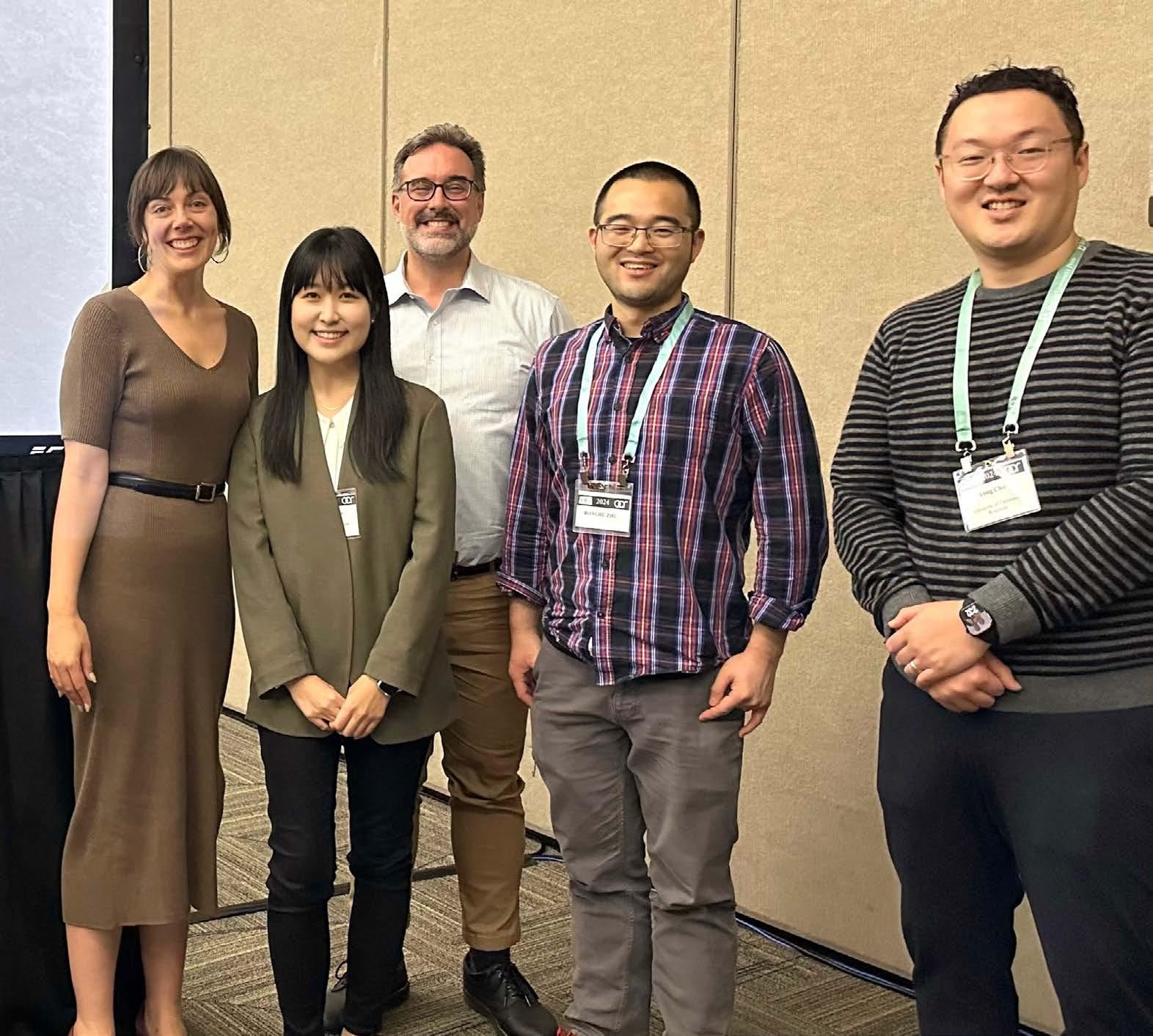
After advancing to doctoral candidacy in May 2024, Zhuolun Xie conducted fieldwork research for her dissertation in summer and winter 2024 at museums, monastic institutions, and private collections in Japan and China. She had a memorable time interning at the Princeton University Art Museum’s Asian Art department, where she worked on projects in preparation for the Museum’s reopening under the mentorship of Zoe Kwok and Kit Brooks. She also presented her various research projects on Chinese and Japanese religious arts at multiple academic conferences, including the annual meetings of the American Academy of Religion and College Art Association, as well as two venues in Europe. Xie feels grateful to have recently been awarded the Metropolitan Center for Far Eastern Art Studies Doctoral Grant for her forthcoming research year abroad and the Center for Culture, Society and Religion Graduate Research Fellowship.
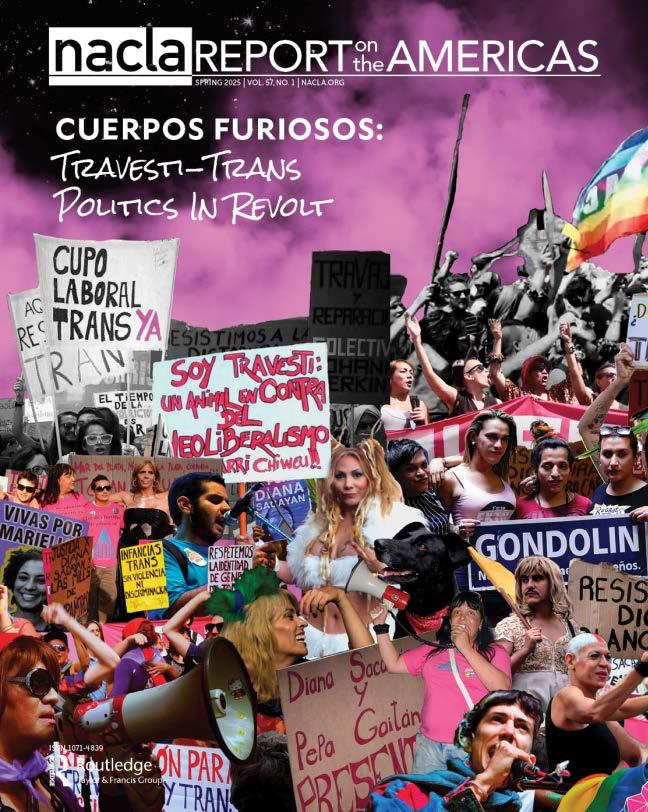
The spring 2025 issue of the NACLA Report on the Americas, Cuerpos Furiosos, includes an essay by Georgie Sánchez. Cover art by Mal Gallina Robert @mal.flash, We will never go back to the dungeon First used as background for the YouTube channel @ CarrilcheActivismoTravesti
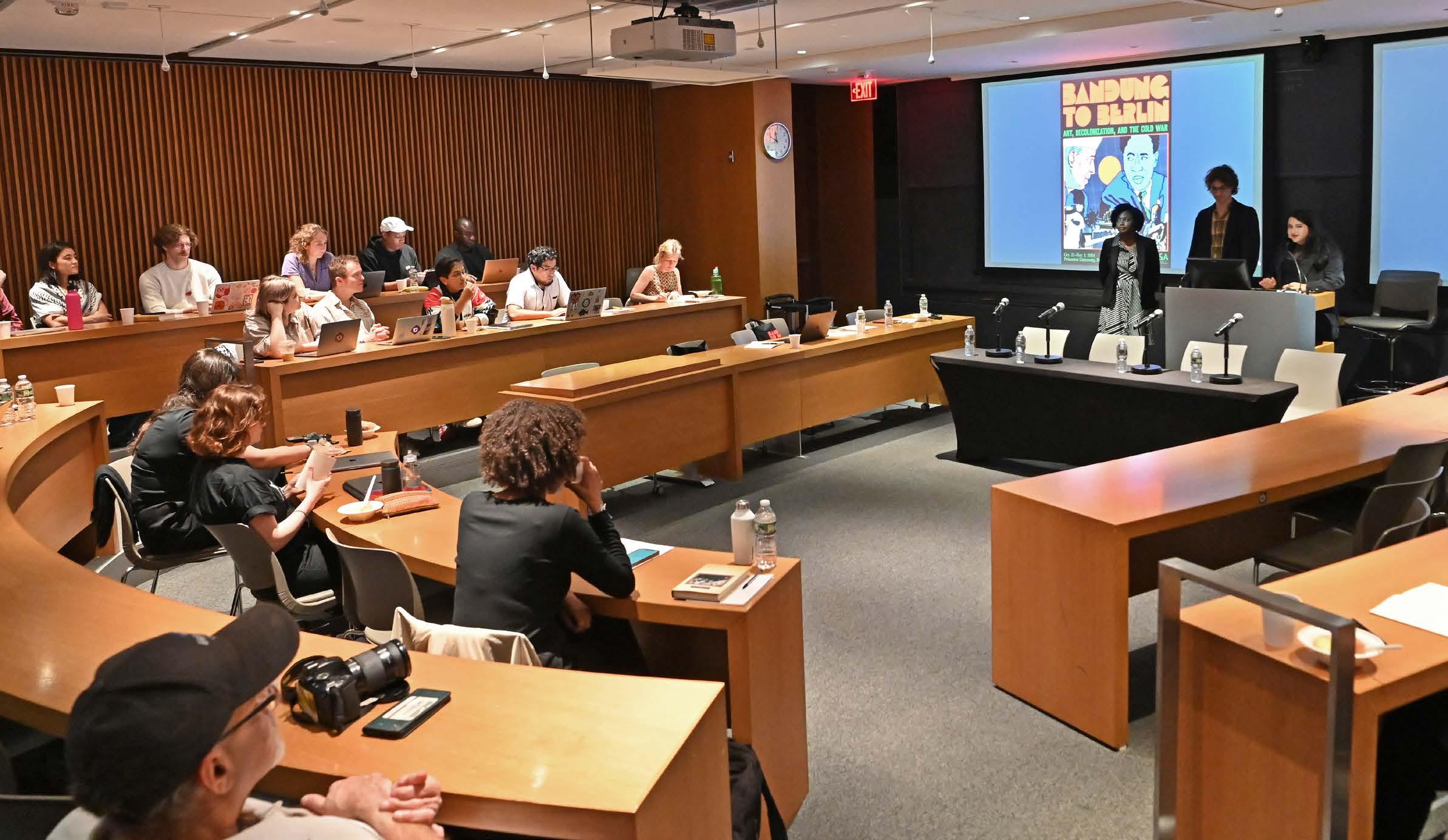
GRADUATE STUDENTS Nicole-Ann Lobo, Victoria McCraven, and Tobias Rosen organized the conference “Bandung to Berlin: Art, Decolonization, and the Cold War,” which took place October 31–November 1. Atreyee Gupta, associate professor of global modern art and modern and contemporary South and Southeast Asian art at the University of California-Berkeley, gave the keynote lecture, titled “From Berlin to Bandung, or Third World Aesthetics before Third World Politics.”
The conference included a lunch workshop, visits to Special Collections, a reception at the Princeton University Art Museum, and a daylong schedule of graduate student speakers. These activities provided unique vantage points onto “Third World” organizing and politics from the 1930s until the present day.
The first panel, “Public Art through and beyond Red Migration and Global Capital,” considered the effects of transnational migration and ties on public exhibitions and popular art. It was moderated by Tobias Rosen and included presentations by Suhyun Choi, Ph.D. candidate at Columbia University, Klaudia Ofwona Draber, Ph.D. candidate at the University of Reading, and Jonathan Mandel, Ph.D. student at Princeton University.
The second panel, “Localizing Transnational Solidarities: Bandung, Beirut, Hong Kong,” examined the geographic bounds of solidarity in three case studies. It was moderated by Nicole-Ann Lobo and included presentations by Patriot Mukmin, Ph.D. student at the University of Melbourne, Natasha Gasparian, Ph.D. candidate at the
University of Oxford, and Genevieve Trail, Ph.D. candidate at the University of Melbourne.
The final panel, “(Self)-Fashioning the Nation: Cold War Diplomacies,” looked at self-fashioning and nation-building, was moderated by Victoria McCraven and included presentations by Amelia Ames, Ph.D. candidate at Princeton University, Weerada Muangsook, Ph.D. student at the University of St. Andrews, and Nectar Knuckles, Ph.D. student at Princeton University.
The co-organizers thank the Department of Art & Archaeology, the Princeton University Art Museum, Princeton Special Collections, and conference co-advisors Professors Irene Small and Chika Okeke-Agulu for helping make this conference possible.
► MORE: 2024 Graduate student conference
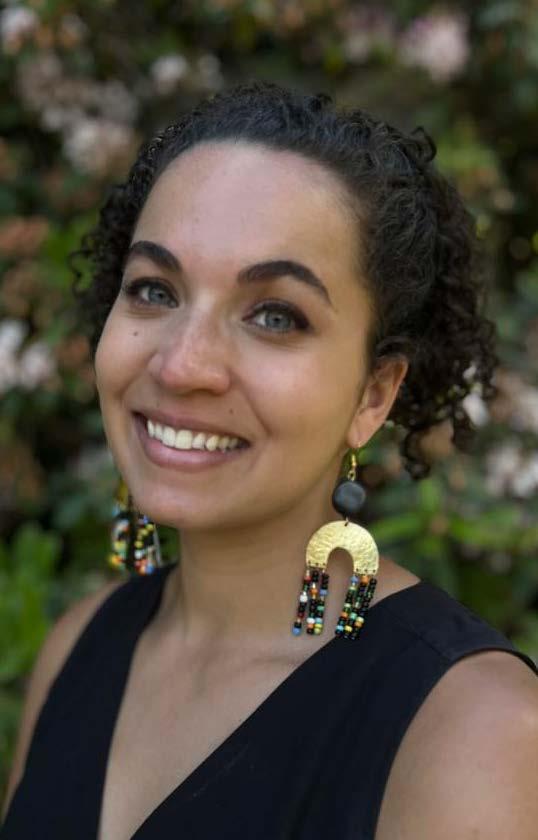
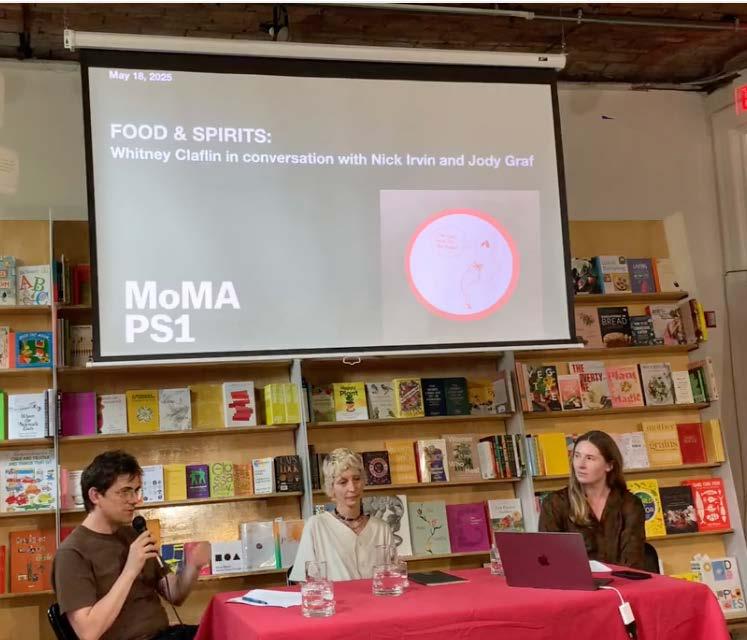
As the publisher of her book Food & Spirits, Nick Irvin joined a conversation with artist Whitney Claflin, along with assistant curator Jody Graf, at MoMA PS1 on May 18, 2025.
The book is a collection of Claflin’s poetry and drawings, first published by Irvin’s publication series Song Cycle in 2022, which has just been reprinted to coincide with Claflin’s first institutional solo exhibition at MoMA PS1. Titled I was wearing this when you met me, the exhibition includes a selection of drawings from Food & Spirits alongside her paintings, videos, and sculptural interventions.
Irvin approached Claflin with a book proposal in 2017 after hearing her read during her exhibition Just Disco at Real Fine Arts in Brooklyn. On Sunday afternoons during the exhibition’s run, Claflin would play a song she wrote for the occasion while making as many grilled cheese sandwiches as she could on a portable hot plate. Her distinct energy stood out to Irvin: “there was this feeling of careening that I found really engaging,” he said.
shallow water systems like streams, tide pools, and storm drains. She renders her memory of the relationship between shape, line, and color rather than a precise representation of a scene.
Charmaine Branch Researches Teaching with Difficult Visual Materials in GradFUTURES Fellowship
Charmaine Branch furthered her work on social equity and community care with a GradFUTURES fellowship at Princeton University Library.
One outcome was the independent research project “Teaching with Difficult Visual Materials in Princeton University Collections.” Branch spoke with McGraw Center for Teaching and Learning staff and PUL librarians about their experiences using materials with violent imagery or offensive language and compiled resources related to inclusive teaching.
“Through my experiences as a facilitator, I have come to realize that you have to be very intentional in how you set up a discussion so that people feel prepared to engage with visual material in a respectful manner while sharing their observations with their peers,” Branch explained.
As part of the fellowship, Branch also added content to the Indigenous Studies LibGuide and Indigenous Studies Digital Princeton University Library (DPUL) Collection as well as creating a LibGuide for the African American Studies Graduate-Faculty Seminar, which compiles five years of seminar resources into one guide.
All of the works in Food & Spirits are centered around Claflin’s experience of food and spirits in New York City, a tribute to the bars and restaurants in which she wrote them, many of which have since closed. These bygone “New York institutions of affordability,” as Irvin called them, functioned as “wombs” for her work. The atmospheric sounds, smells, conversation, and other distractions provided precisely the setting Claflin needed to focus. She described a transactional arrangement in which she paid for food and spirits in exchange for a productively finite workspace.
Michael Quituisaca Curates Léni Paquet-Morante: Extract/Abstract
A&A graduate student Michael Quituisaca curated the exhibition Léni Paquet-Morante: Extract/Abstract, on view July 19 to November 9, 2025, at Art@Bainbridge.
Based in Hamilton, New Jersey, artist Léni Paquet-Morante reconfigures familiar landscape elements to capture the elusiveness of memory and dreams. The collection of collage-like acrylic, ink, and monoprint landscapes fuses process-driven imagery, abstraction, and color.
Paquet-Morante draws on her fieldwork in
“Léni Paquet-Morante has a special ability to transform landscapes into eclectic and emotionally contemplative works of art,” said Quituisaca. “Extract/Abstract showcases the varied and distinct ways she interprets the world, from plein-air observational abstractions to synthetic abstractions that rearrange the objects in her field of vision.”
Quituisaca is grateful to Karl Kusserow for the opportunity and experience. “My hope is that other graduate students will be inspired to reach out to the Museum staff and create working relationships to augment their academic experience,” said Quituisaca. “Karl’s exhibition Nature’s Nation: American Art and Environment was pivotal to my master’s thesis. As such, I jumped at the chance to reach out to him when I started the program here at Princeton University.”
Georgie Sánchez Co-curates ficciones patógenas at the Leslie-Lohman Museum of Art
Georgie Sánchez curated, with Head Curator and Director of Exhibitions and Collections Stamatina Gregory, the exhibition ficciones patógenas at the Leslie-Lohman Museum of Art in New York, on view March 14 to July 27, 2025.
“Possessed.” “Deviant.” “Sick.” Historically, colonial regimes attempted, gained, and
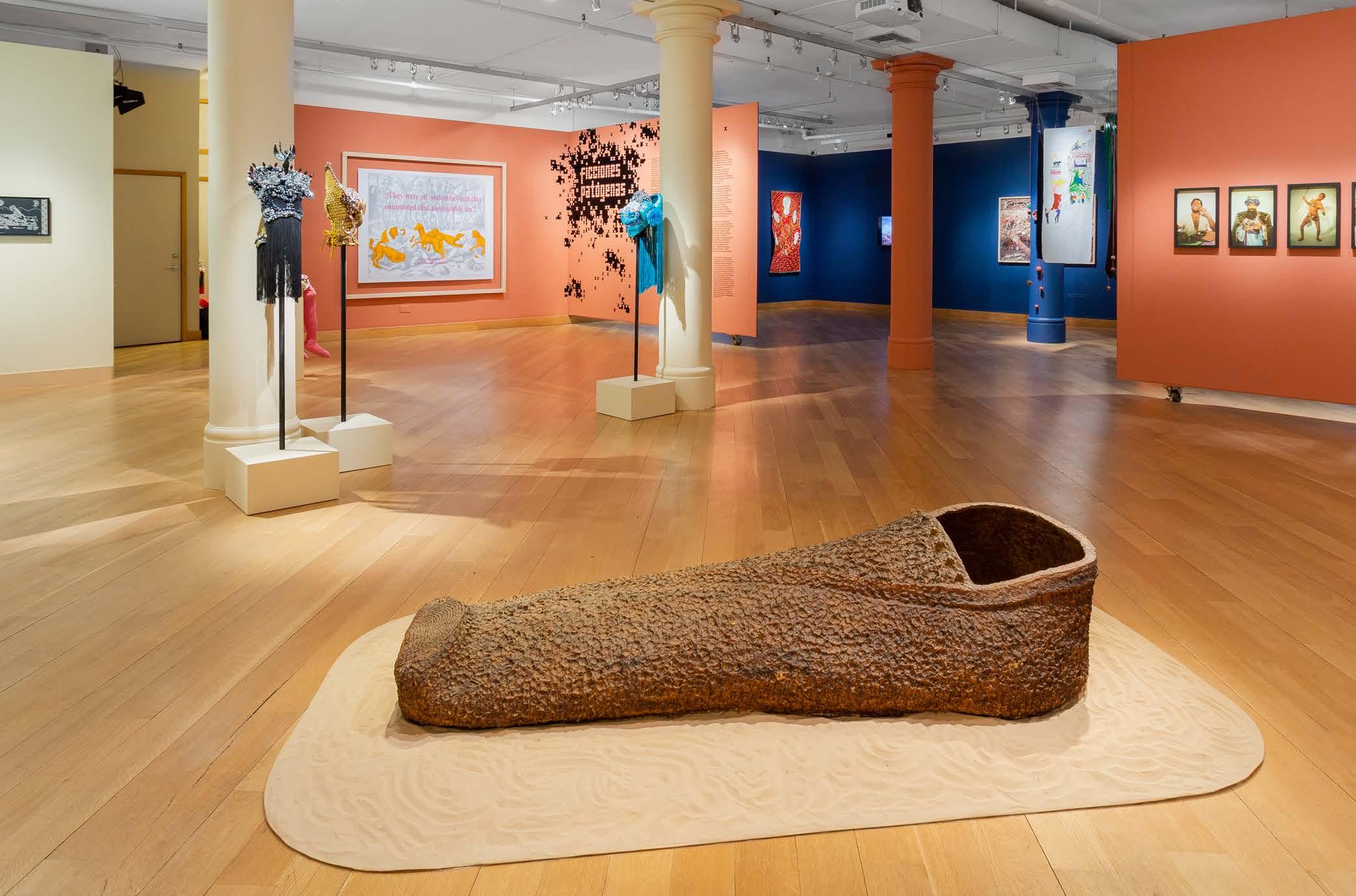
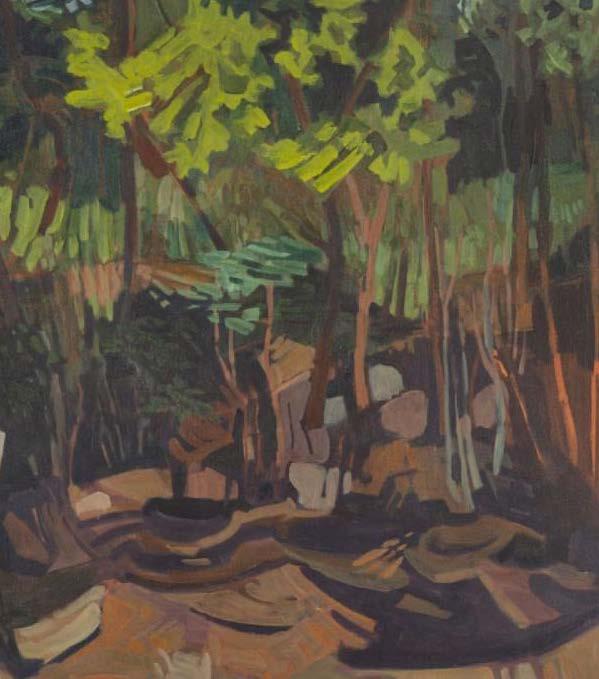
maintained control over cuir/kuir/queer, trans, Black, and Indigenous people by pathologizing them along with their relationships—to the land, to the nonhuman, to one another. The rich sexual and gender diversity of the many cultures of Abya Yala (Kuna for the entirety of the Americas) was unintelligible to Western knowledge frameworks. To justify acts of violent dispossession and extraction, they characterized specific ways of existing as unnatural. These narratives have wound through legal, religious, cultural, political, and ideological structures in Abya Yala since 1492, and—as ficciones patógenas (pathogenic fictions)—they shape our understandings of bodies, land, culture, and power today.
The artists in the exhibition explore how ficciones patógenas have been perpetuated and embodied, occluding local, non-Western, Black, and Indigenous ways of being and knowing. In their 2018 book ficciones patógenas, Guaxu trans writer, activist, and participating artist Duen Neka’hen Sacchi traces their own medical history through Western regimes of bodily conformity. The wounding and suturing of Neka’hen’s body
(and other nonconforming bodies), based on false notions of order and reproduction, echoes the violent reshaping of the “Indies,” which inextricably bound biology to nationhood. Through hybrid practices that draw from Indigenous, colonial, and contemporary images and strategies, the artists propose ways in which land and bodies exist as sites of resistance and transformation.
The exhibition is the culmination of “Dispossessions in the Americas: The Extraction of Bodies, Land, and Heritage from La Conquista to the Present,” a project of the Mellon Foundation’s Just Futures Initiative. Over the past three years, in 11 countries across the Americas, the initiative sponsored exhibitions documenting over 500 years of territorial, embodied, and cultural heritage dispossession through mechanisms of deceit, disease, and warfare. The exhibitions have featured contemporary artworks that address indigeneity, extractivism, coloniality, racism, and gender and sexual dissidence. Stamatina Gregory and Sánchez brought together only a small selection of the artists and artworks presented across this multitude of international exhibitions.
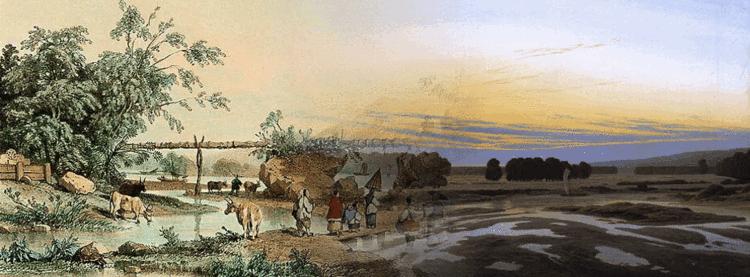
“Representing Ecology, Ecologizing Representation”
Shing-Kwan Chan and Xiaoyao Guo (German), cofacilitators
Interdisciplinary Doctoral Program in the Humanities (IHUM)
Exploring intersections between modes of representation and ecological-ecocritical themes, the group fostered interdisciplinary dialogue to reconsider the ecological dimensions of humanity.
“With the raised awareness of the ecological exigency in today’s world, this reading group joins in the collective endeavor to rethink the ecological condition of human beings by addressing the key question: How have arts and humanities—as representations—contributed to a historically evolving vision of the ecological (as in the case of the image of the blue marble)? What new modes of representation are being called upon to bring about the urgency as well as potential of ecologizing our anthropocentric way of living? We contend that to be ecological does not simply mean to be at one with nature (a localized, romanticized, or idealized one-worldism) but to look at the concrete mediations—be it collaborative, complementary, or antagonistic—
within the matrix of interconnection. Hence, ecology is first and foremost an issue of ‘representing,’ and to represent ecology becomes a double challenge at the level of both form and content,” said the cofacilitators.
“Following this line of inquiry, this reading group will engage with a variety of artistic and scholarly works from around the world, examining how these
works reflect and reshape our relationship with the planet. As laid out, our discussions will focus not only on how ecological themes are represented but also on how these representations can foster an ecologically integrated mindset, encouraging a shift from anthropocentric narratives to perspectives that include a wide array of regional-ecological interactions.”
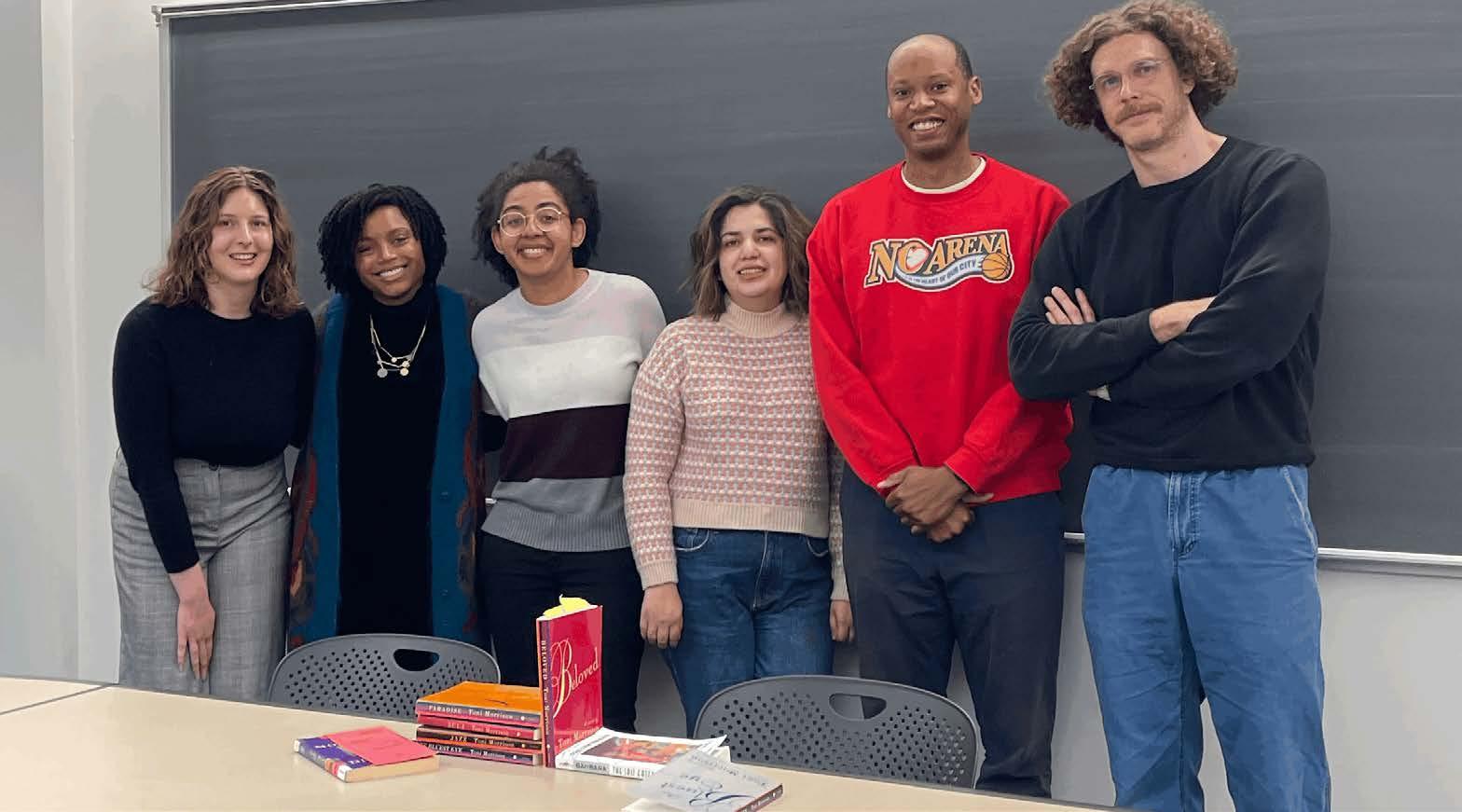
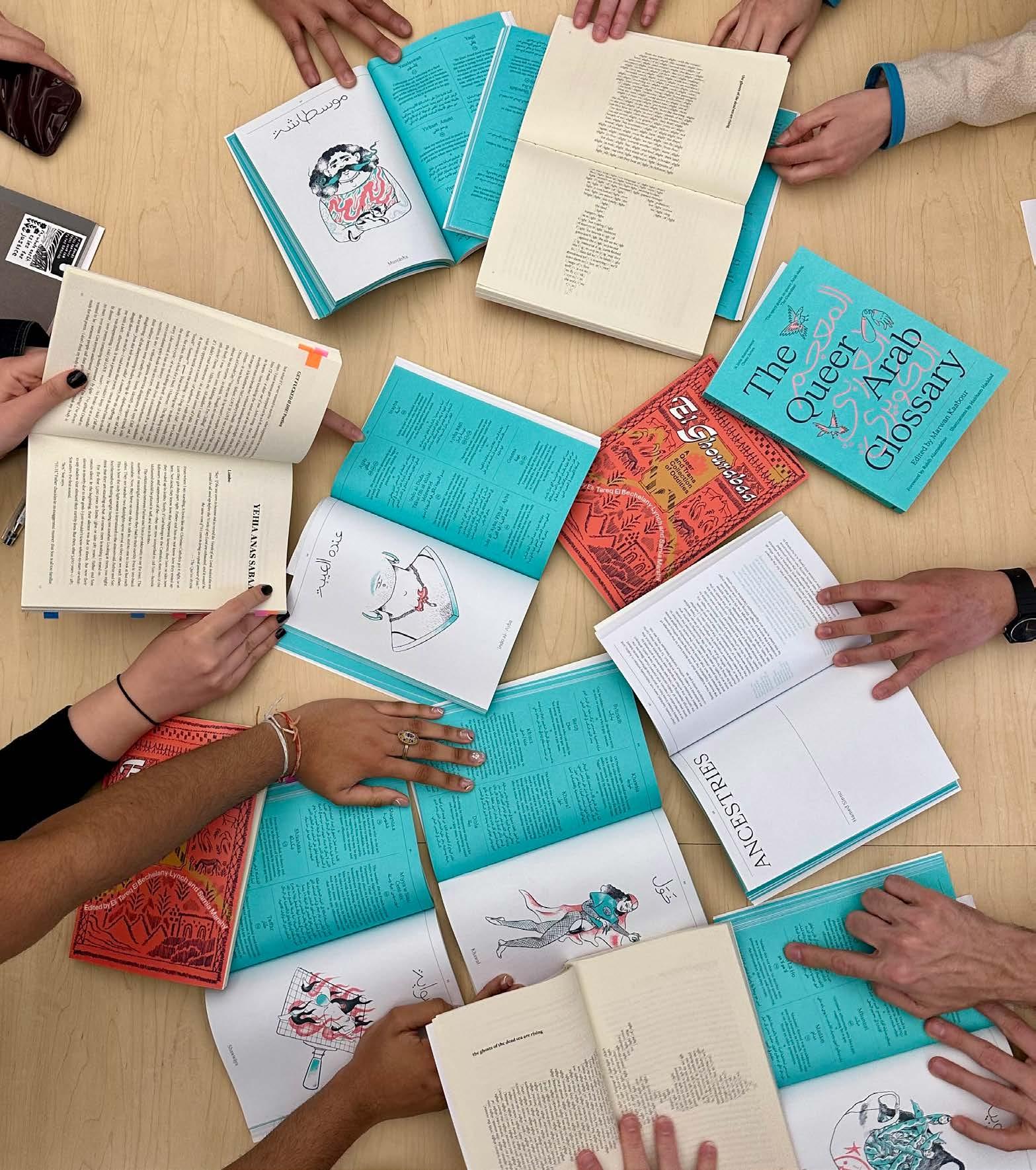
Arts of Palestine and the Diaspora Reading Group with books for the meeting on queer and trans poetics, including El Ghourabaa: A Queer and Trans Collection of Oddities (2024), edited by Samia Marshy and Eli Tareq El Bechelany-Lynch, and The Queer Arab Glossary (2024), edited by Marwan Kaabour
“Toni Morrison: Kinesthetics and Kinship” Victoria McCraven and Amber Stanford (Religion), cofacilitators
Interdisciplinary Doctoral Program in the Humanities (IHUM)
“Toni Morrison: Kinesthetics and Kinship” creates a generative and transdisciplinary space for graduate students and faculty to study and celebrate Toni Morrison’s incredible oeuvre. Reading some of Morrison’s most well-known texts, this reading group seeks to situate Morrison’s work within a greater Black literary, artistic, and filmic history. Morrison’s works have proved essential reading for those working across the humanities, inspiring a generation of scholars and creatives. Exploring kinesthetics and kinship as two points of entry into Morrison’s work, this reading group urges participants to examine alternative forms of knowledge production.
Focusing on Toni Morrison was a natural choice, said the co-organizers, given their shared interest in Black feminist literature and Morrison’s impact and legacy in the 17 years she taught at Princeton. Morrison’s papers are now held at Special Collections in Firestone Library and served as an invaluable resource to the reading group’s discussion.
In the fall semester, the group engaged Morrison’s Beloved and Jazz, as well as Toni Cade Bambara’s The Salt Eaters and Julie Dash’s Daughters of the Dust, through the lens of kinesthetics. “This exploration of kinesthetics provided a closer look at how Morrison’s characters learn about life and their world through the movement of their bodies,” said the co-organizers. The group later investigated the characteristics and boundaries of kinship in Sula, Paradise, and The Bluest Eye to gain further insight into belonging, community, and diaspora in the spring semester.
“Disability, Debility, and Crip Theory Working Group”
Sonya Merutka, facilitator Program in Gender and Sexuality Studies and Interdisciplinary Doctoral Program in the Humanities (IHUM)
Sonya Merutka started the Disability, Debility, and Crip Theory Working Group in fall 2024 to bring together graduate students, postdoctoral fellows, and researchers, as well as faculty members, to discuss disability studies in the contemporary moment, share work in progress, and foster community among disability studies scholars in diverse fields and at different stages of their career at Princeton.
“As the founder of this group, my main goal is to facilitate more discourse on disability, debility, and crip theory on campus and to connect those who are excited by this work, these models for theorizing and living,” said Merutka.
The working group aims to expand the understanding of disability/debility, exchange texts, and respond to the work of colleagues in the field, providing a platform for testing out new ideas. The group is fundamentally intersectional in its approach, with areas of interest including disability and race, queer/trans/crip studies, mobility and migration, postcolonial studies, feminist theory, film and media, aesthetics and artistic practice, performance studies, and language.
“I wanted to highlight the growing discourse on debility and crip theory, which offer radical takes on theory and practice in the field,” said Merutka. “Many of us are interested in the intersection between disability and art, geopolitics, science, socialism, and queer studies—so these expanded notions of disability have been particularly valuable for our thinking.”
Sonya Merutka, facilitator Department of Art & Archaeology
Sonya Merutka continued to facilitate the “Arts of Palestine and the Diaspora” reading group that she started with fellow graduate student Nicole-Ann Lobo in spring 2024, compelled by the disruption of Palestinian culture caused by the war in the West Bank and Gaza. The group, comprised of students from a diverse array of subfields, focused on Palestinians’ artistic practice.
Each week, the group explored one or two Palestinian artists whose mediums include performance, film, painting, and traditional crafts.
A NEW PARTNERSHIP between A&A and the École du Louvre was established in January 2025, creating new opportunities for both students and faculty.
“I’m excited about the possibilities our new partnership will open up for students and I hope that many are able to take advantage of this opportunity,” said Professor Nathan Arrington. “The École du Louvre boasts a rich, vibrant intellectual community engaged in nearly all facets of art history.”
In January, an inaugural group of three A&A seniors, Moses Abrahamson ’25, Kate Weseley-Jones ’25, and Audrey Zhang ’25, participated in the Winter School, a 10-day intensive educational program that explored the topic “Provenance Research & Duty to Care.” In addition to taking courses in art history, archaeology, epigraphy, anthropology, and museology, students spent half of their class time in museums, a feature unique to the École. The students visited the Musée Rodin,
Musée d’Orsay, and Musée du Quai Branly–Jacques Chirac in Paris and the Royal Museum for Central Africa in Belgium. Also distinctive is the makeup of the instructors, which includes art market professionals, museum curators, and colleagues at universities.
Along with students, the École du Louvre also invites faculty to hold seminars in Paris to develop their work. Professor Arrington launched this program with a one-week course in March, “Touch and Greek Art.” The seminar examined works in the Musée du Louvre’s collection that exemplify how the sense of touch changes the experience of Greek art. And in June, as part of École du Louvre’s Grande conference, Professor Thomas DaCosta Kaufmann presented in French his lecture “Rudolph II Habsburg: Madness, Art, Magic and Science in Prague.”
A&A students, faculty, and staff welcomed the École du Louvre director, Claire Barbillon, in spring 2025, who shared the innovative
curricular approach, priorities, and background of the École. Professor Barbillon emphasized the importance of facilitating inclusion and promoting access and diversity. At the École, 70 percent of students come from outside Paris and 30 percent are from low-income families; since 2021, the Maison des élèves has housed 50 first-year students as a means of eliminating the stress of seeking housing in Paris in the first year.
“This time spent with Princeton colleagues and students was a wonderful experience,” said Barbillon. “I hope that this is the beginning of a partnership that will enrich the studies of many students.”
In fall 2025, the partnership will continue to develop with the launch of a graduate student exchange program. A&A will send two graduate students to the École du Louvre while hosting two visiting exchange students.
► MORE: New École du Louvre partnership
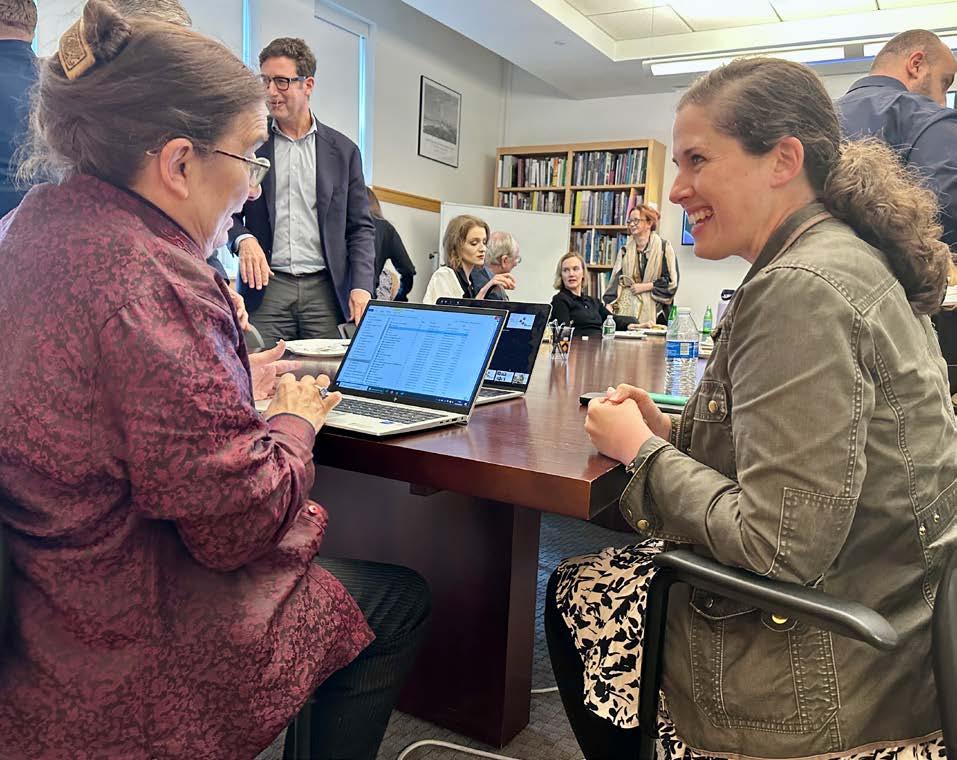
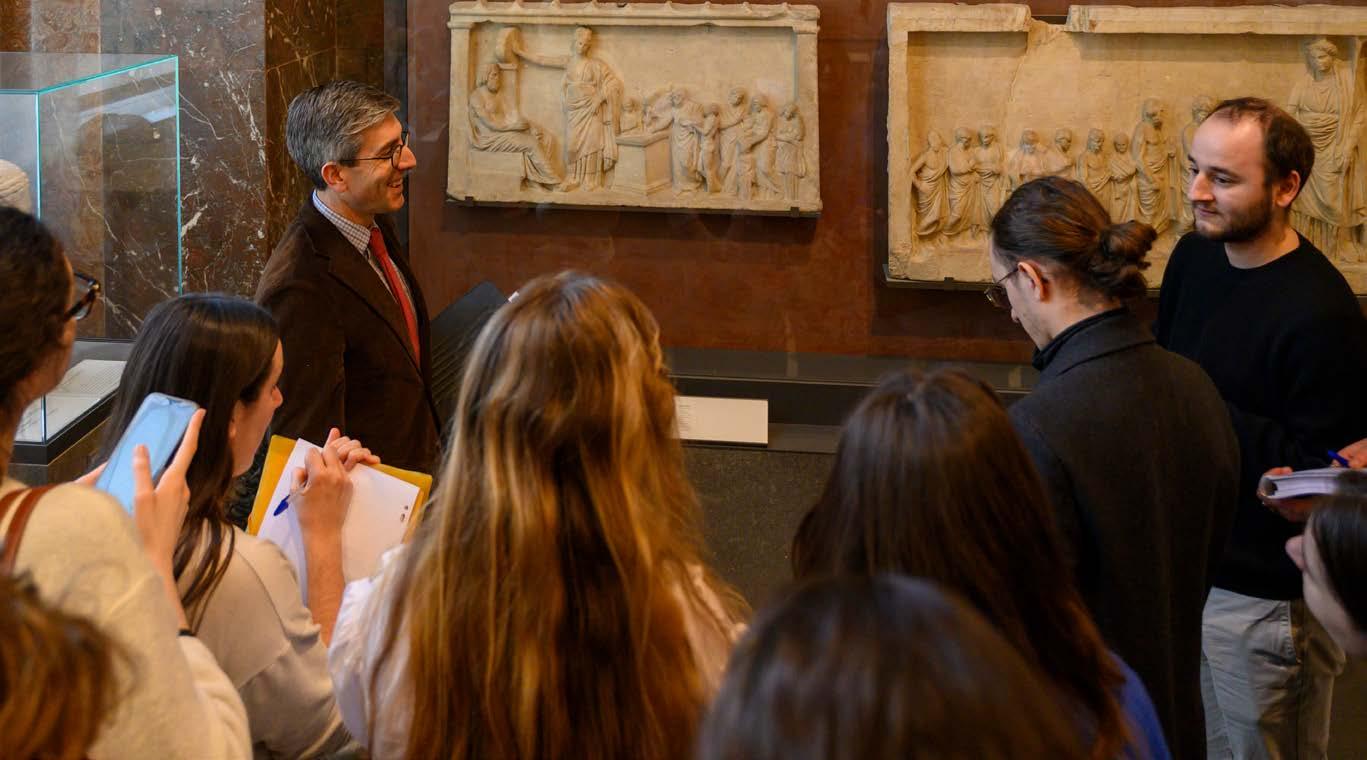
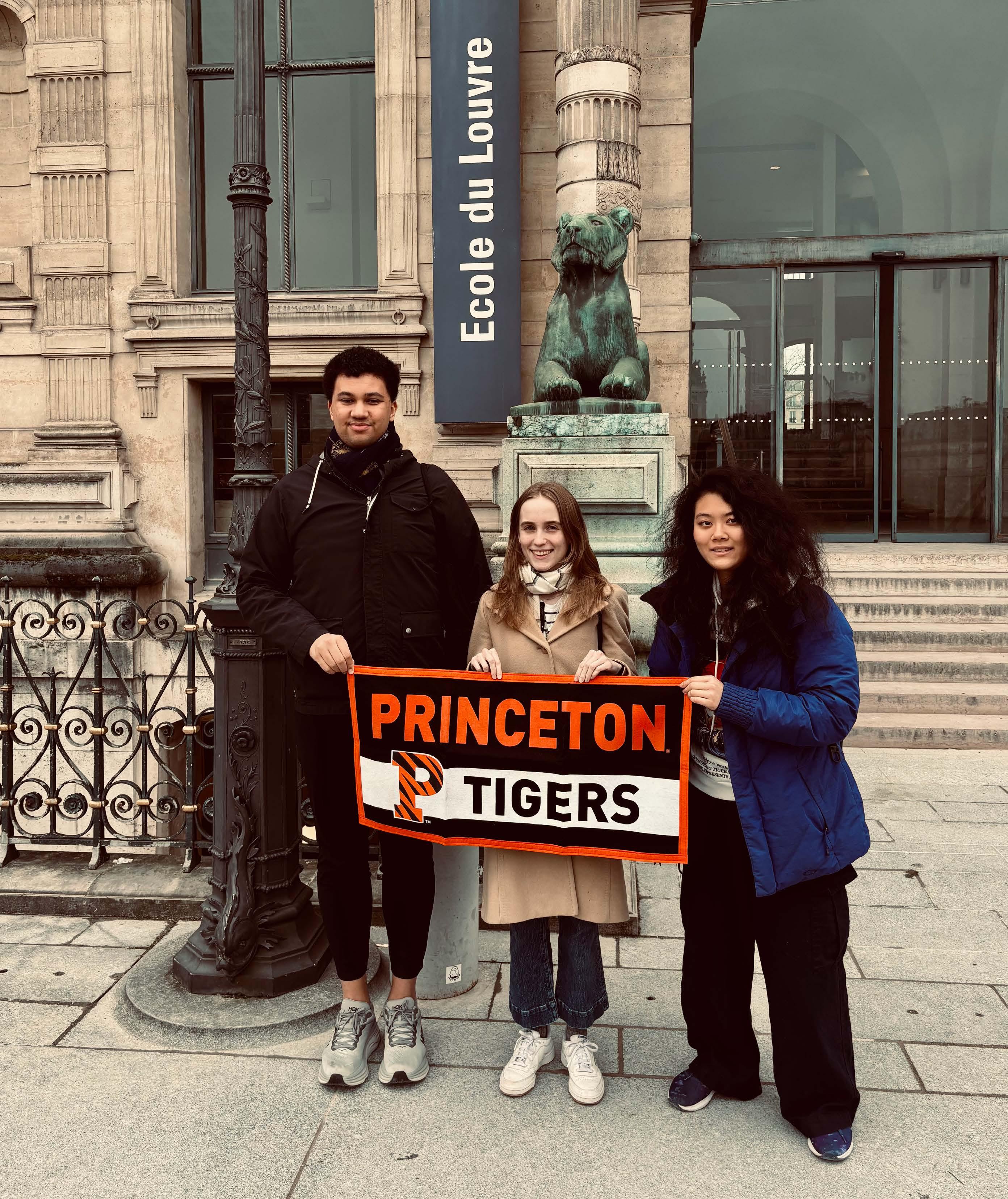
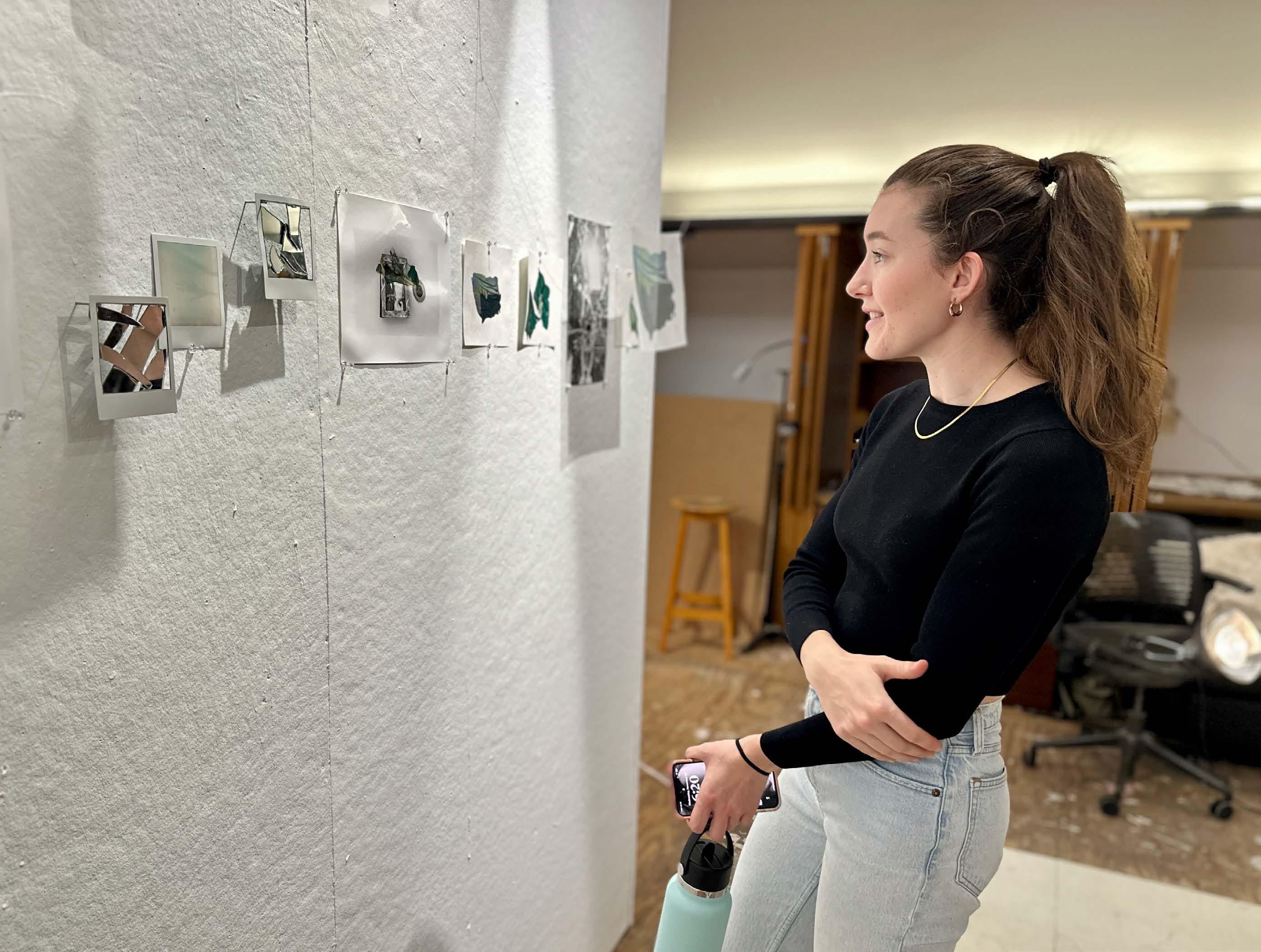
Professor Basile Baudez
Students in the undergraduate program enjoyed a year filled with dynamic opportunities and comprehensive learning. We expanded our introductory course offerings to 12 diverse options that showcase the full range of our faculty’s expertise. To strengthen the connection between Art History and Practice of Art, we developed new cross-listed courses and strengthened the Majors’ Colloquia— collaborative spaces where students present their independent research, exchange insights, and mentor one another. Our commitment to student development extended beyond the classroom through regular writing workshops and diverse educational experiences facilitated by the Undergraduate Mentorship Program. This comprehensive approach culminated in impressive student achievements: seven Art History majors completed their degrees with research spanning from 18th-century French grotesque décor to contemporary American monumental art, while five Practice of Art students graduated having worked across an extensive range of media and techniques.
Director of the Program in Visual Arts
Professor Jeffrey Whetstone
In 2025, five seniors graduated from the Practice of Art track, a collaborative learning initiative between A&A and the Program in Visual Arts, a part of the Lewis Center for the Arts. An additional eight juniors are majoring in the program. The year began with a six-week exhibition featuring the work of several Practice of Art alumni, including Pauli King ’18, Lane Marsh ’23, Titi Sodimu ’23, and Lauren Olson ’24, as a part of the symposium “Photography as Poetic Record” organized by the Lewis Center for the Arts. The exhibition was visited by some of the most important artists and curators working in the field of photography. Madison Davis ’26 was admitted into the Yale Norfolk Summer Residency, the most prestigious art residency for undergraduate students in the nation, supporting young artists in a vital moment of growth. Sam Lee Regan ’27 received a Dale Fellowship, an emphatic step for a newly declared Practice of Art major. These are a few of the opportunities for and accomplishments of our Practice of Art majors that are made possible by the Lewis Center’s dedicated collaboration with A&A.
Director of the Program in Archaeology
Professor Samuel Holzman
The 2024–25 year marked the transition from offering a certificate to a minor in archaeology. One student completed the minor this year, Samantha Chen ’25, who majored in operations research & financial engineering. Her senior thesis, which used GIS to model pedestrian flow in Pompeii’s street grid and even make predictions about unexcavated areas, received the Frederick Barnard White Prize in Archaeology. The program hosted multiple speakers, including Ulrike Koch-Brinkmann and Vinzenz Brinkmann (Frankfurt Liebieghaus Museum) on polychromy and Peter Cobb (University of Hong Kong) on 3D-scanning pottery. The program offered summer fieldwork grants to students to participate in excavations.
In spring 2025, A&A welcomed 27 new members to the majors and minors community! The new majors join the Practice of Art and History of Art majors, with two of them adding the Archaeology minor to their study. The Archaeology minor has had tremendous growth with this new cohort and additional minors hail from a wide range of majors across campus, including Anthropology (ANT), Classics (CLA), History (HIS), Physics (PHY), Ecology & Evolutionary Biology (EEB), Operations Research & Financial Engineering (ORFE), Astrophysical Science (AST), and Geosciences (GEO). The History of Art minor, newly introduced for the graduates in the Class of 2026, has also welcomed students from a pastiche of majors: East Asian Studies (EAS), Economics (ECO), Ecology & Evolutionary Biology (EEB), Molecular Biology (MOL), English (ENG), Operations Research & Financial Engineering (ORFE), Mechanical and Aerospace Engineering (MAE), Computer Science (COS), Politics (POL), Architecture (ARC), and Anthropology (ANT). “This growth and exchange of ideas between our students who are focusing on the study of art making and art history with those in other departments shows a wonderful synergy of the sciences and humanities that we’re seeing our majors and minors embracing,” said A&A Undergraduate Program Administrator Kelly Lake.
Moses Abrahamson
“Contested Objects: The Role of the Law in the Erection, Politicization, and Removal of Confederate Monuments”
ADVISER: AnnMarie Perl
Claire Brockman
“Living Lightly on the Land: Interdisciplinary Experiments in Art, Architecture, Dance, and Ecology at the Sea Ranch”
ADVISER: Samuel Holzman
Penelope Effron
“Conceal and Reveal: Impressionist Hand Fans and Femininity”
ADVISER: Rachael Z. DeLue
Henry Moses
“Slavery and the Avant-Garde: An Essay on Cameron Rowland”
ADVISER: Brigid Doherty
Annabelle Rustum
“Modernism Across Media: Interpreting Bely’s Petersburg Through Abstract Modalities”
ADVISER: Monica Bravo
Kate Weseley-Jones
“A Model for the Modern Sculptor: Innovations in the Studio of Albert-Ernest Carrier-Belleuse”
ADVISER: Basile Baudez
Yuanfang Zeng
“‘Go East’: Reframing Tradition and Modernity in Yu Youhan’s Landscape Painting”
ADVISER: Cheng-hua Wang
Dana Corbo
ABCDEFGHIJKLMNO
PQRSTUVWXYZ
ADVISERS: Colleen Asper, Bridget Alsdorf
Sophie Main Metalogue
ADVISERS: Martha Friedman, Hal Foster
Paige Morton Between Then & Now
ADVISERS: Bent-Jorgen Perlmutt, Monica Bravo
Kate Stewart Memorabilia
ADVISERS: Nicolás Pereda, Beatrice Kitzinger
Audrey Zhang Immortality
ADVISERS: David Reinfurt, Basile Baudez
Samantha Chen
“Modeling Movement in Ancient Pompeii”
ADVISER: Margaret Holen
The Department of Art & Archaeology Senior Thesis Prize
Penelope Effron
Established by the Irvine Foundation, this prize is awarded annually for the most outstanding senior thesis in the Department of Art & Archaeology.
The Jim Seawright Award in Visual Arts
Dana Corbo
Established in 2009 in honor of Jim Seawright, professor of visual arts, this award is presented annually to a student whose work exemplifies exceptional originality or innovation in any medium in the Program in Visual Arts.
The Stella and Rensselaer W. Lee Prize
Henry Moses
This prize is awarded to the student who has written an outstanding senior thesis on a subject involving the theory of art and architecture or their relationship to literature.
The Herbert L. Lucas Prize in Visual Arts
Sophie Main, Paige Morton, and Audrey Zhang
This prize was established in 1998 by Herbert L. Lucas, Class of 1950, and was amended in 2004 to recognize excellence and the quality of a body of work by graduating seniors in painting, sculpture, photography, film, and media.
The Irma S. Seitz Prize in the Field of Modern Art
Kate Weseley-Jones
This prize was established by Irma S. Seitz after the death of her husband, William, in 1974. It is awarded annually to a Princeton senior in acknowledgment of their contribution to scholarship in the area of modern art.
The Frederick Barnard White Prize in Archaeology
Samantha Chen
Established in 2001 in memory of Frederick Barnard White, Class of 1883, this prize is awarded to the student who has written an outstanding senior thesis in archaeology.
The Frederick Barnard White Prize in Art History
Moses Abrahamson
Established in 2001 in memory of Frederick Barnard White, Class of 1883, this prize is awarded to a student who has written an exceptional senior thesis on any art historical topic.
HONORS
Highest Honors
Dana Corbo
Penelope Effron
Henry Moses
Audrey Zhang
High Honors
Kate Weseley-Jones
Yuanfang Zeng
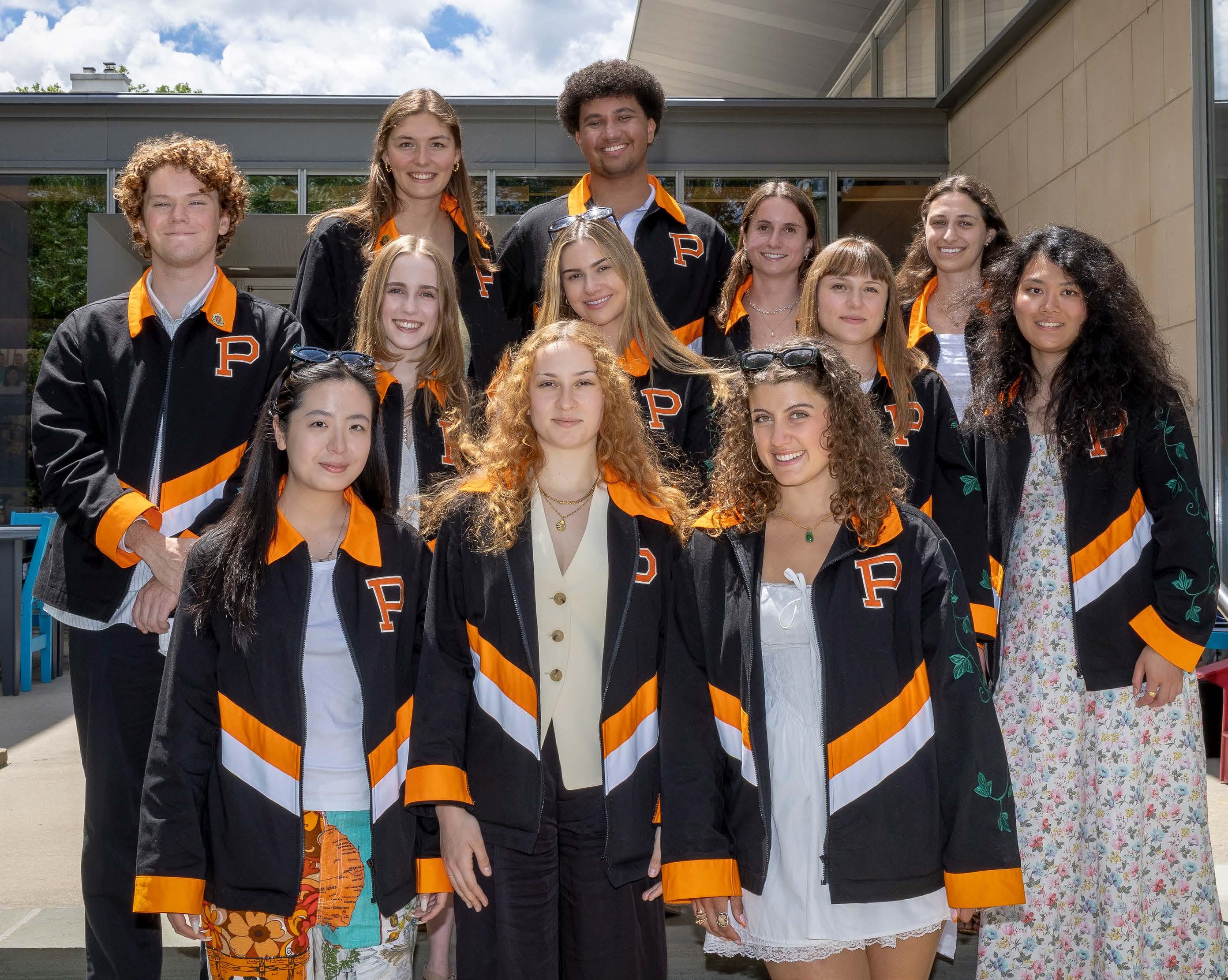
Professor Jeffrey Whetstone
THE 2025 SERIES OF PRACTICE OF ART senior theses exhibitions began with Audrey Zhang’s imaginative show, Immortality, which featured, among many works, a giant origami sculpture hanging from the ceiling titled Starsail—a futuristic spaceship that could theoretically preserve all human knowledge. As a result, Audrey’s artistic research has landed her a coveted position in Princeton’s Ph.D. program in computer science studying the mathematical and practical applications of origami structures.
Sophie Main’s thesis installation, Metalogue, consisted of a room full of chains of all different types hanging from the ceiling, tangled into each other, and sprawling across the floor. The chain is an object historically burdened with metaphors of bondage and labor. Sophie worked with the symbolism of chains, sculpting them into structures that prompted timely questions about our culture: How do weight, tension, and history shape the spaces between us?
Paige Morton’s innovative and touching film, Between Then & Now, blends animation and macro-photography to reflect on her childhood home and the transition her family is going through as they navigate the empty nest. As her narrative spans the past and the present, we get insight into Paige’s own creative journey as a filmmaker, painter, athlete, daughter, sister, and dreamer.
Kate Stewart’s film, Memorabilia, is set in the year 3050. When the protagonist finds a camcorder left behind in 2010, she becomes obsessed with the quotidian gestures of human relationships: people hugging, laughing, and dancing. She reflects on the beauty of this past civilization. The film prompts the audience to ask, what in our present, everyday lives will be our most cherished memories in the end?
Dana Corbo’s thesis exhibition was comprised of 50 paintings of bodies and body parts. All the paintings were rigorously and skillfully rendered in a representational manner. Dana focused on sites of the body that we rarely consider: the inside of the elbow, a section of the scalp, an Adam’s apple. So even when she painted them realistically, they referenced abstractions. Dana’s work received the James Seawright award, the highest honor for a thesis exhibition in the Program in Visual Arts.
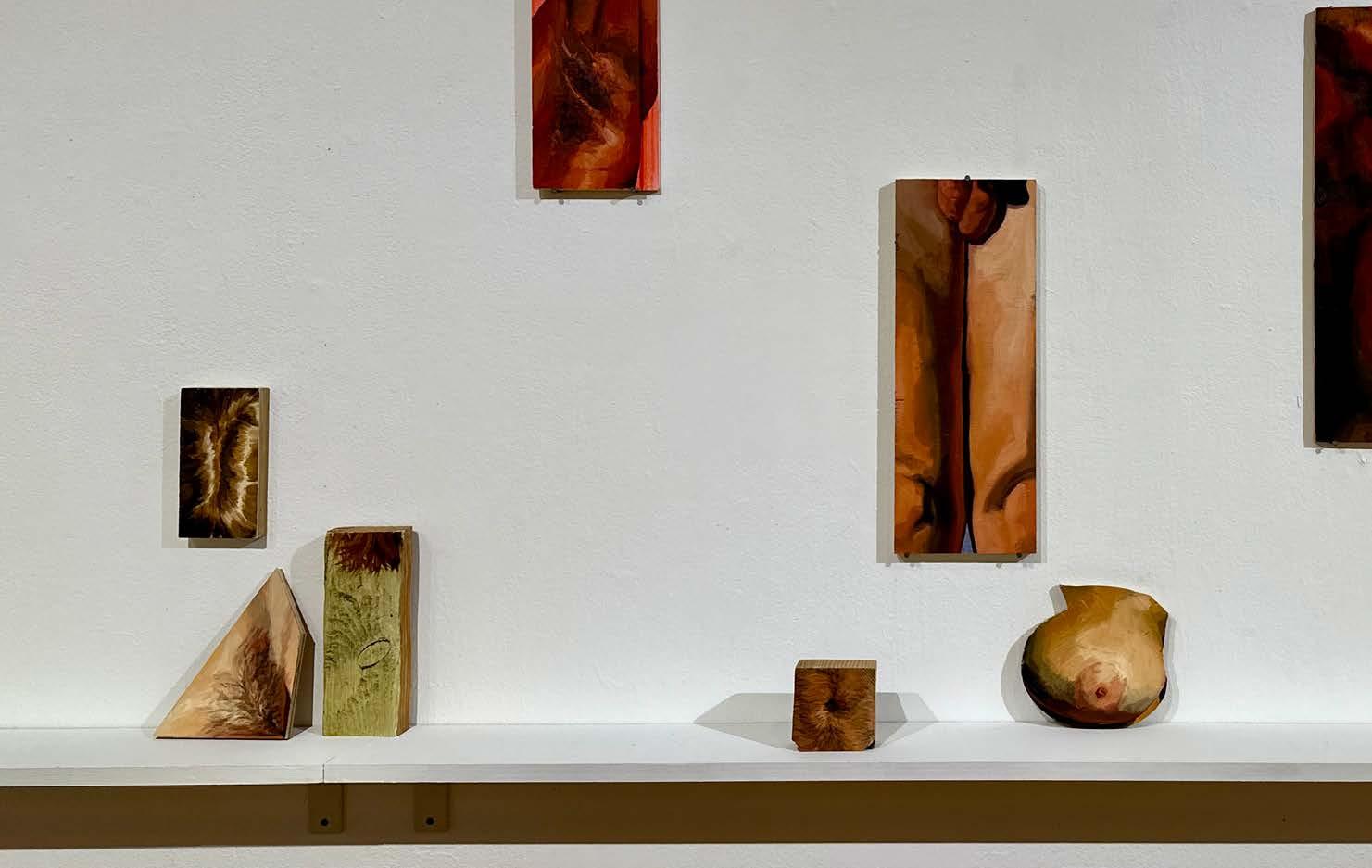
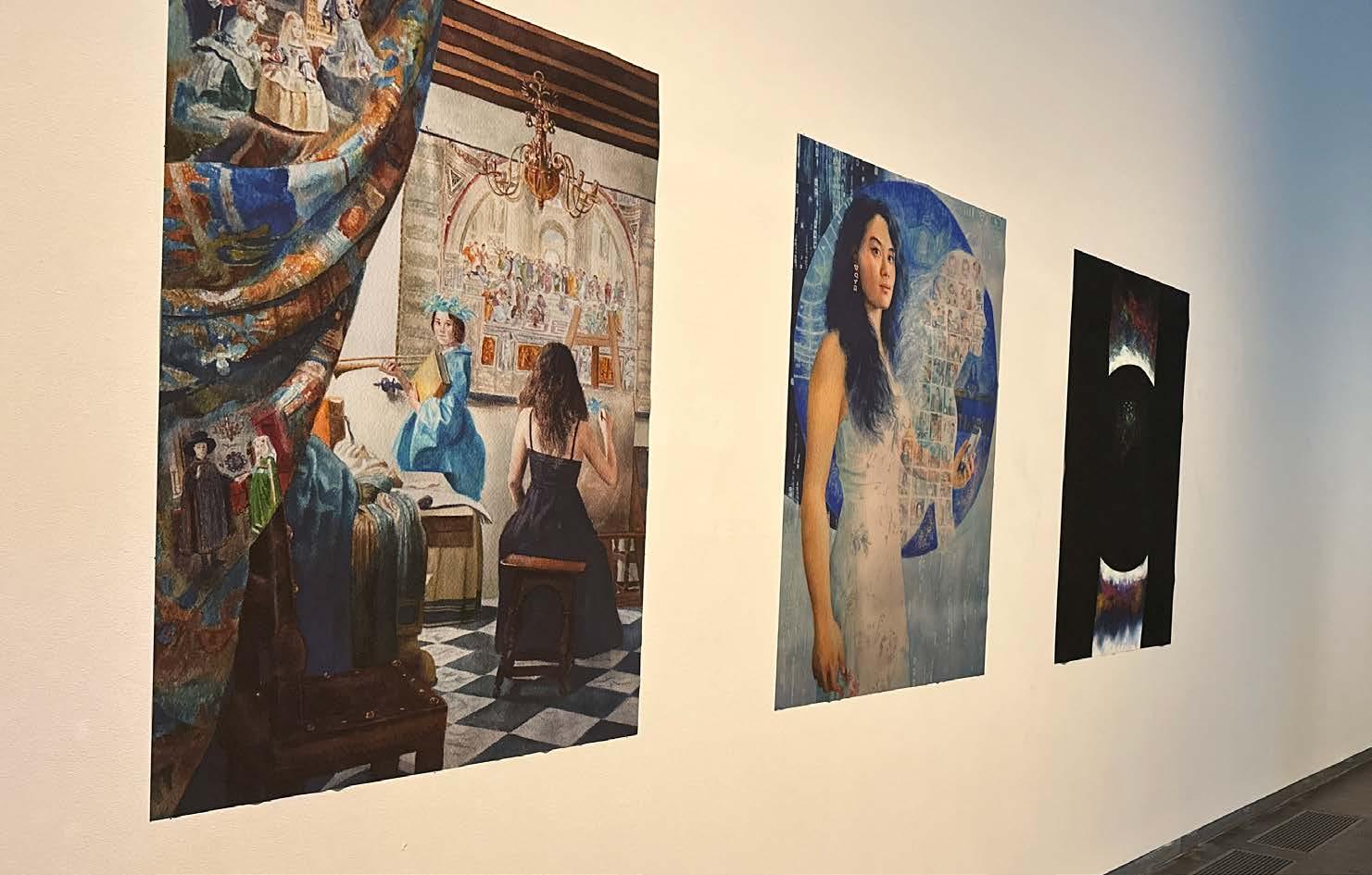
Dana Corbo
ABCDEFGHIKLMNOPQRSTUVWXYZ
ADVISERS: Colleen Asper, Bridget Alsdorf
Sophie Main Metalogue
ADVISERS: Martha Friedman, Hal Foster

Paige Morton Between Then & Now
ADVISERS: Bent-Jorgen Perlmutt, Monica Bravo
Kate Stewart Memorabilia
ADVISERS: Nicolás Pereda, Beatrice Kitzinger
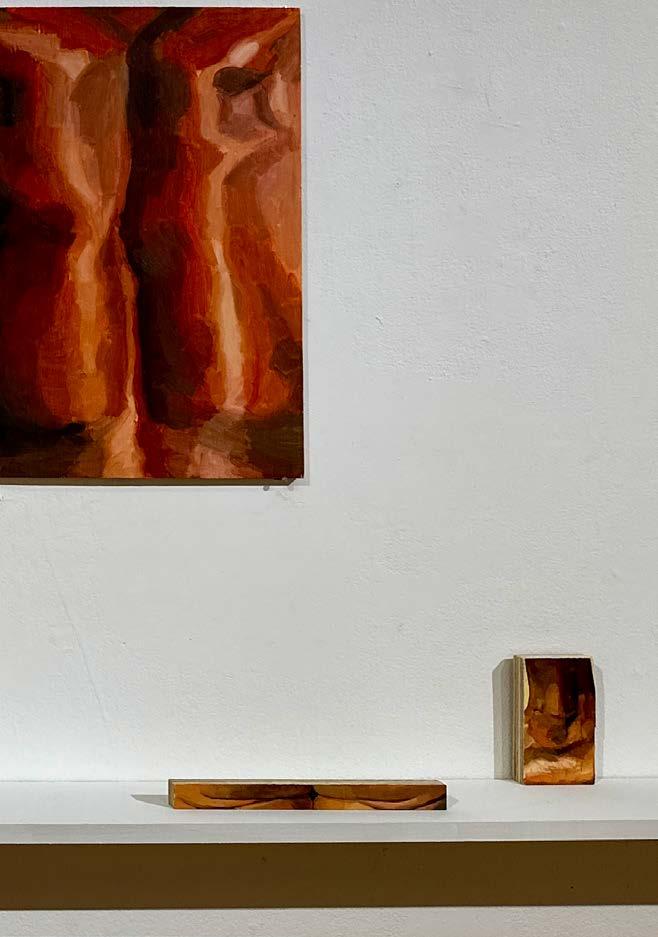
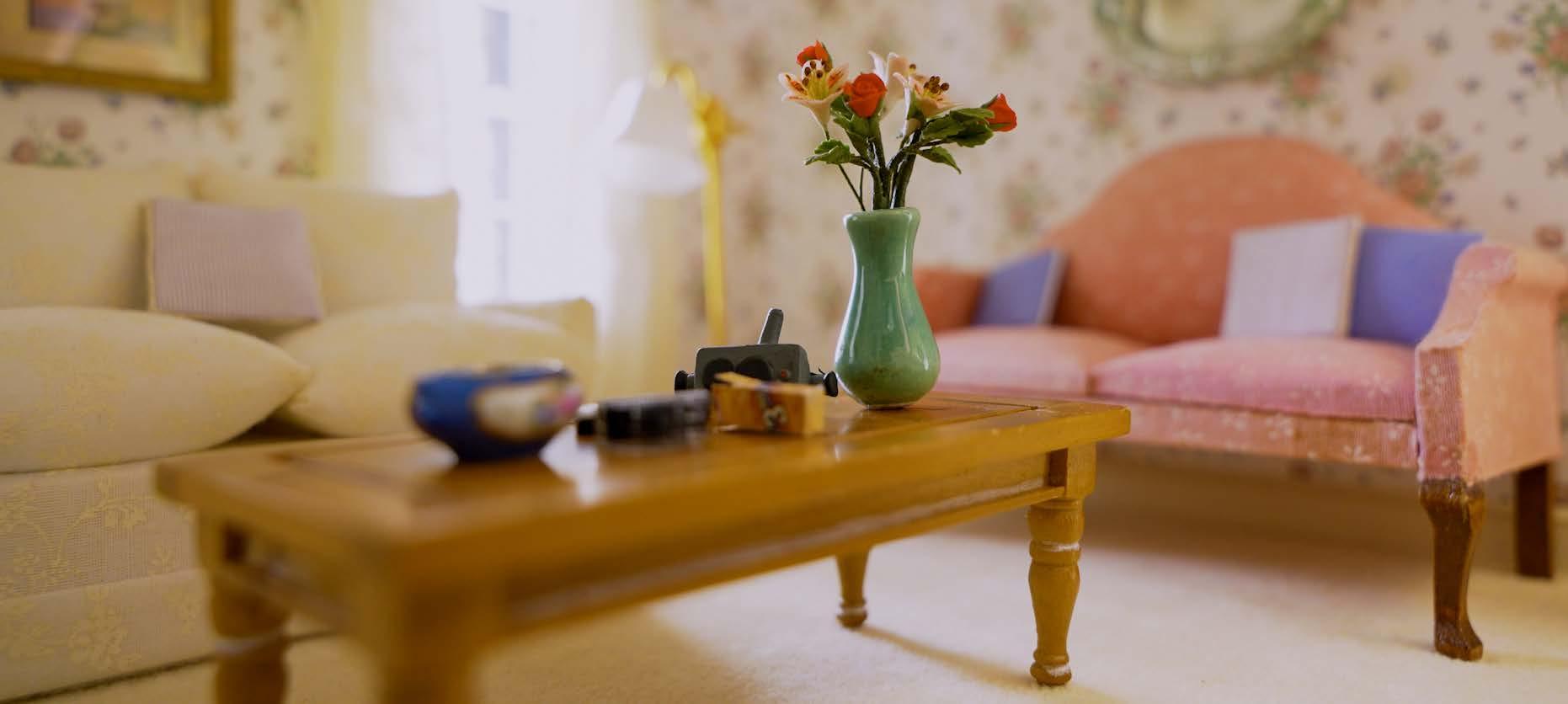
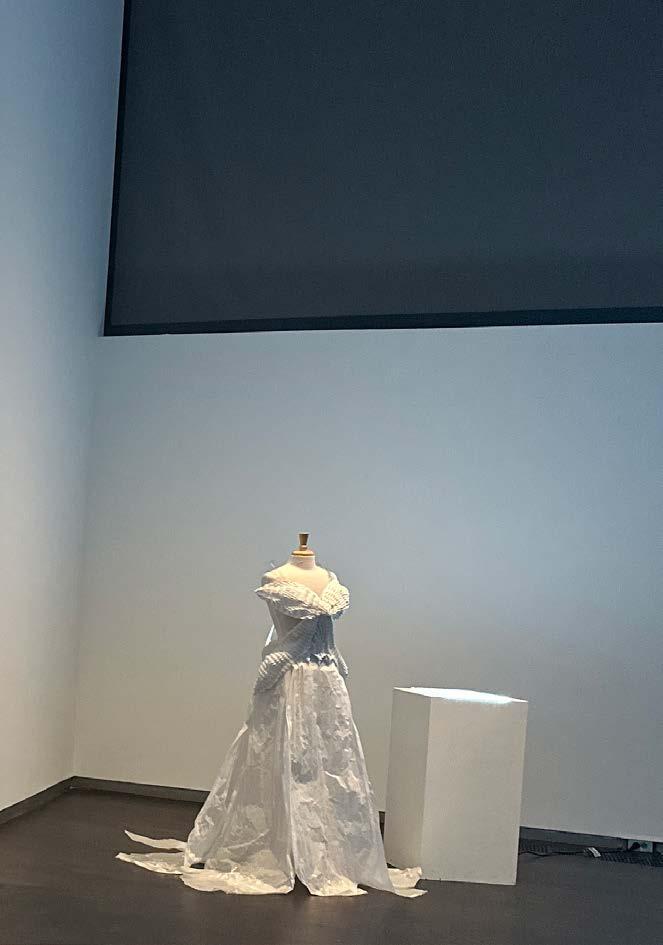
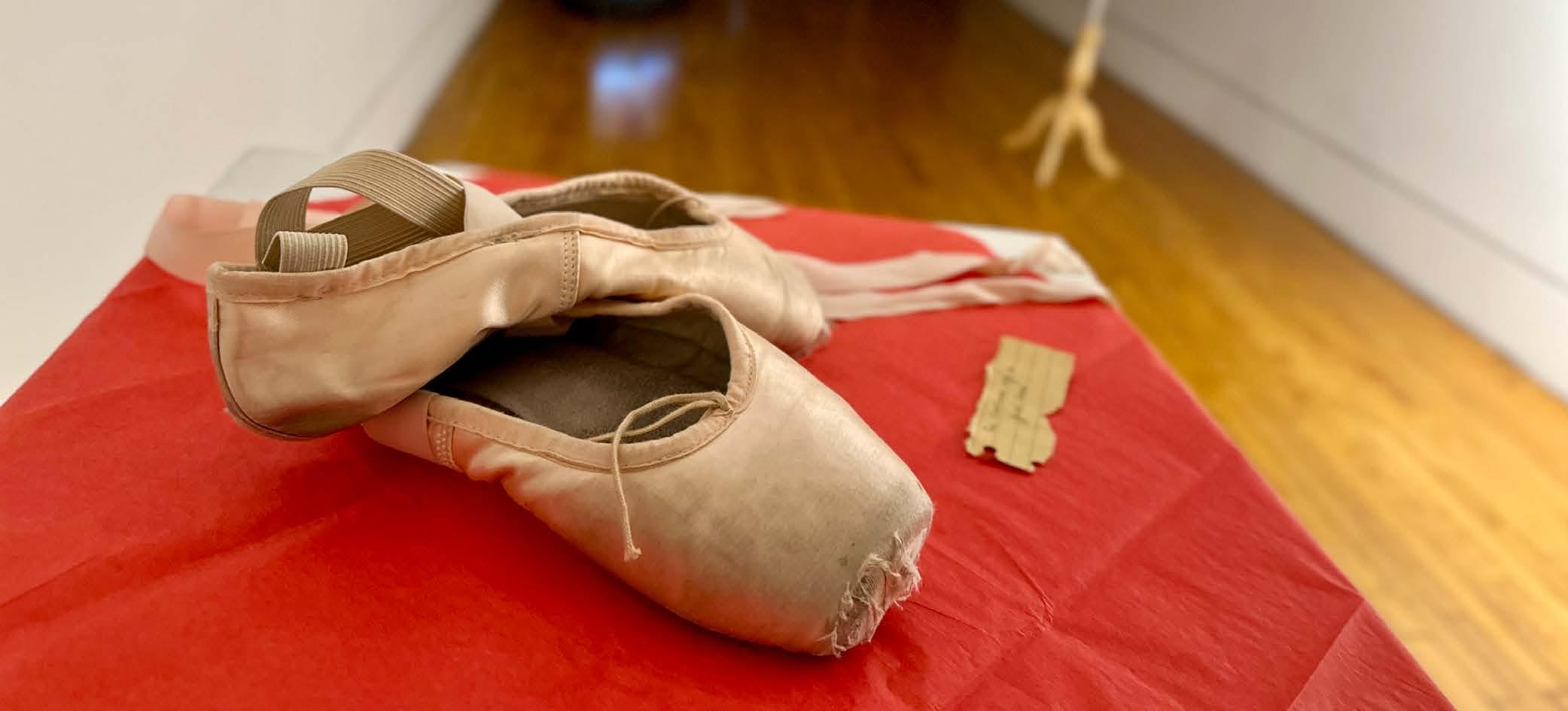
ADVISERS:
IT TAKES A DIVERSE TEAM of experts to address the function, safety, and aesthetics of a structure—just as it takes the prism of a liberal arts education to develop a mind. Centered on these premises, Professors Branko Glišić, chair of Civil and Environmental Engineering, and Samuel Holzman, director of the Program in Archaeology, cotaught the course HUM 417/ART 408/CEE 415/HLS 417 “Historical Structures: Ancient Architecture’s Materials, Construction and Engineering,” investigating the intersections of engineering, architectural history, and archaeology, which was featured on the Princeton University homepage.
For civil engineering major Braeden Carroll ’26, the course epitomizes what drew him to Princeton. Whereas other universities offer math and physics courses, “only at Princeton can that technical education both ground and interact with the humanities in the way it has for me this fall,” he said.
Comparative literature major Lucia Brown ’25 agreed. “The combination of disciplines in this course offers the perfect example of why understanding the relationship between engineering and the humanities is so critical,” she said. Along with building materials, trading patterns, and funding sources, the course taught her to consider engineering principles in their historical contexts.
Glišić and Holzman, who regularly collaborate in their research, don’t recognize a definitive border dividing their respective disciplines; rather, they treated students to an interdisciplinary “mashup,” to borrow their term. In the classroom, this was evidenced by the elaborate schematics on the whiteboard after each class, with Holzman’s architectural sketches and Glišić’s equations and engineering drawings dynamically informing each other. When the class visited Greece over fall break, the whiteboard illustrations gave way to the ancient monuments themselves, dating as far back as the second millennium B.C.E.
Thanks to the Greek Ministry of Culture’s gracious permission and Holzman’s and Glišić’s relationships with Greek colleagues, the class had the phenomenal privilege of examining ancient structures up close. On the Acropolis in Athens, students were thrilled to cross the ropes and see the temple of Nike up close at eye level—and outright awestruck when Glišić and Holzman lifted the hatch to descend into the temple’s foundations.
Stepping into the Temple of Hephaestus at the Greek Agora sparked a prime example of the interdisciplinary detective work central to the course, when Glišić observed a crack above a doorway. After Holzman explained that the door was introduced when the temple was converted to a Christian church, Glišić took students through the resulting spiderweb of cracks.
“Branko can sleuth out a whole cascade of clues that explain what happened to a building over time,” said Holzman. “Seeing a building through the eyes of a world-renowned expert in structural health monitoring makes you newly aware of the extreme stresses that buildings are under and the many imperceptibly small ways that building materials compress, bend, and vibrate.”
From Glišić’s perspective, the art historical context with which Holzman primed each site resolved lingering puzzles. “Many open engineering questions suddenly found logical solutions,” said Glišić, “as Sam provided the missing pieces that fell into place like mosaic tesserae and completed the picture.”
Glišić and Holzman expanded their teamtaught approach to include a host of experts, in both Greece and Princeton.
At the Acropolis, Vasileia Manidaki, architect of the Acropolis Restoration Service, invited the class into the Parthenon to explain her conservation approach, then led them to the workshop a few steps away, where marble experts were using ancient techniques to carve stone for reconstruction. Seventy miles west, in the Peloponnese, Nicos Makris (SMU)
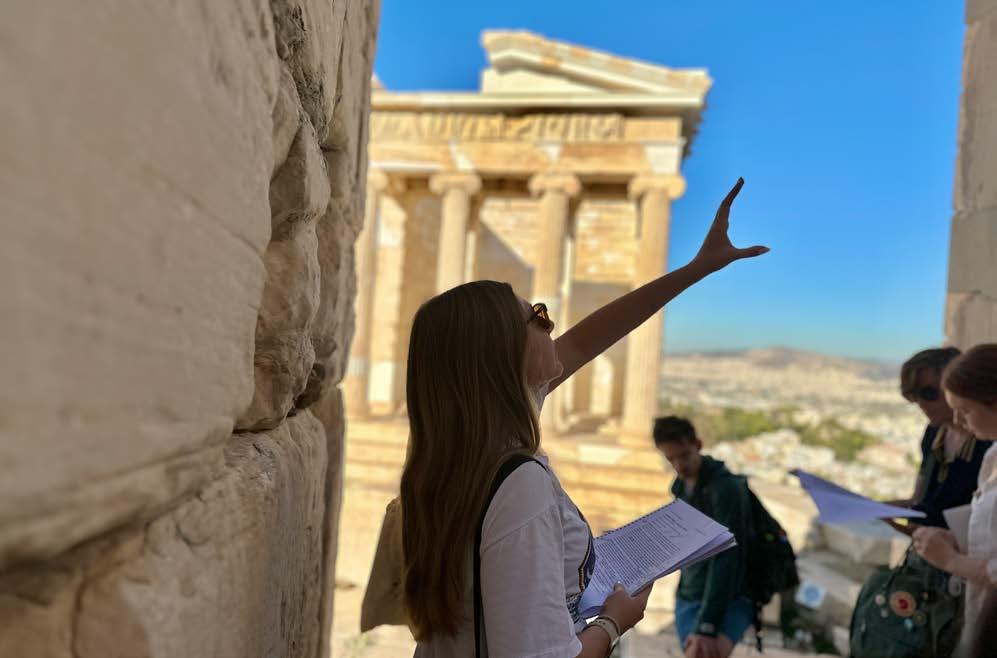
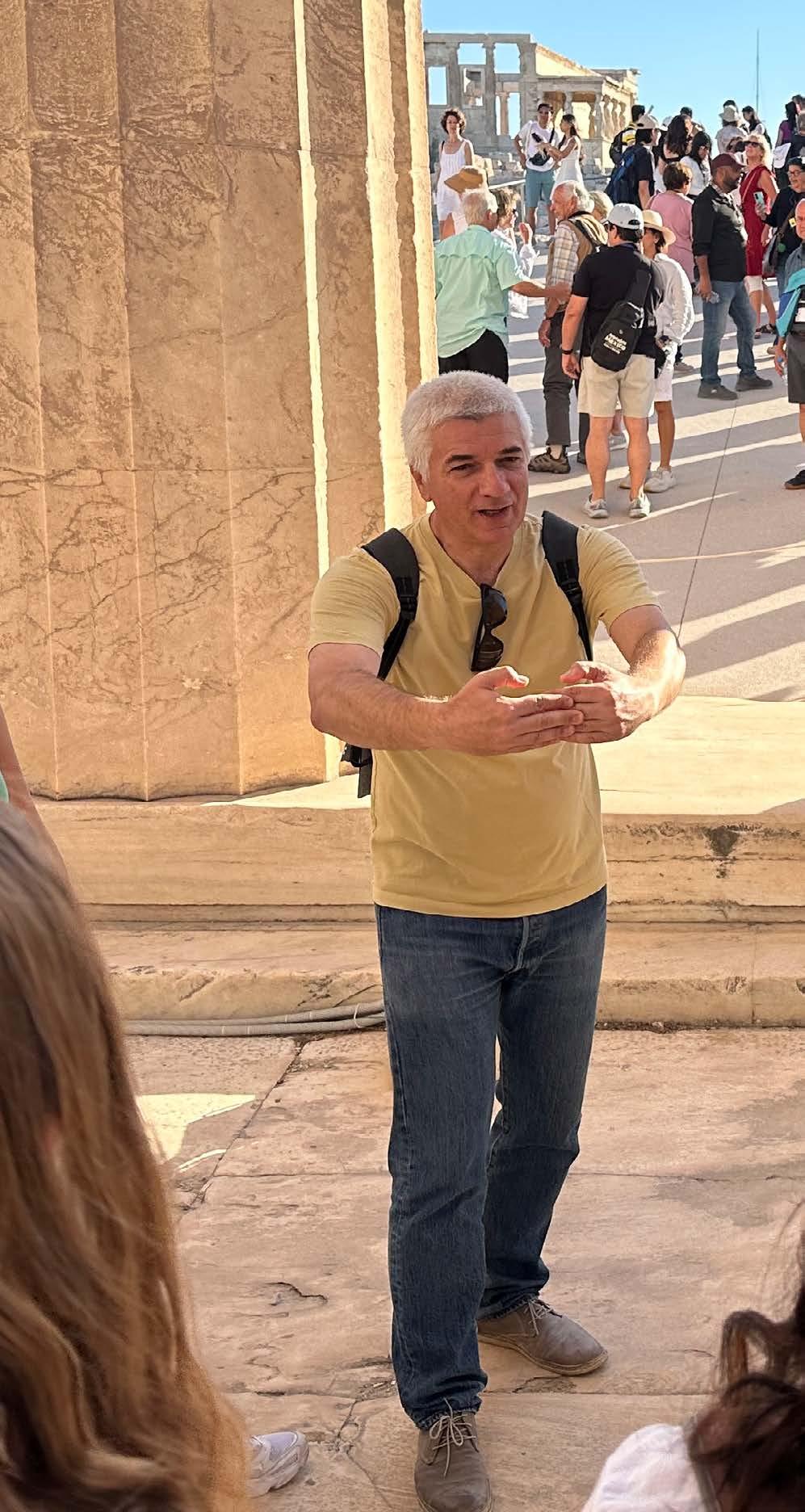
explained his reconstruction approach at the Temple of Zeus at Nemea. These visits were highlights for both Holzman and Glišić. They underscored “the importance of the interdisciplinary interchange at the heart of this course,” said Holzman. “These are civil engineers, architects, archaeologists, and marble carvers who work together every day to preserve cultural heritage.”
The class was joined in Princeton for lectures by restoration architects, archaeologists, and engineers. Tassos Tanoulas (emeritus architect of the Acropolis Restoration Service) explained
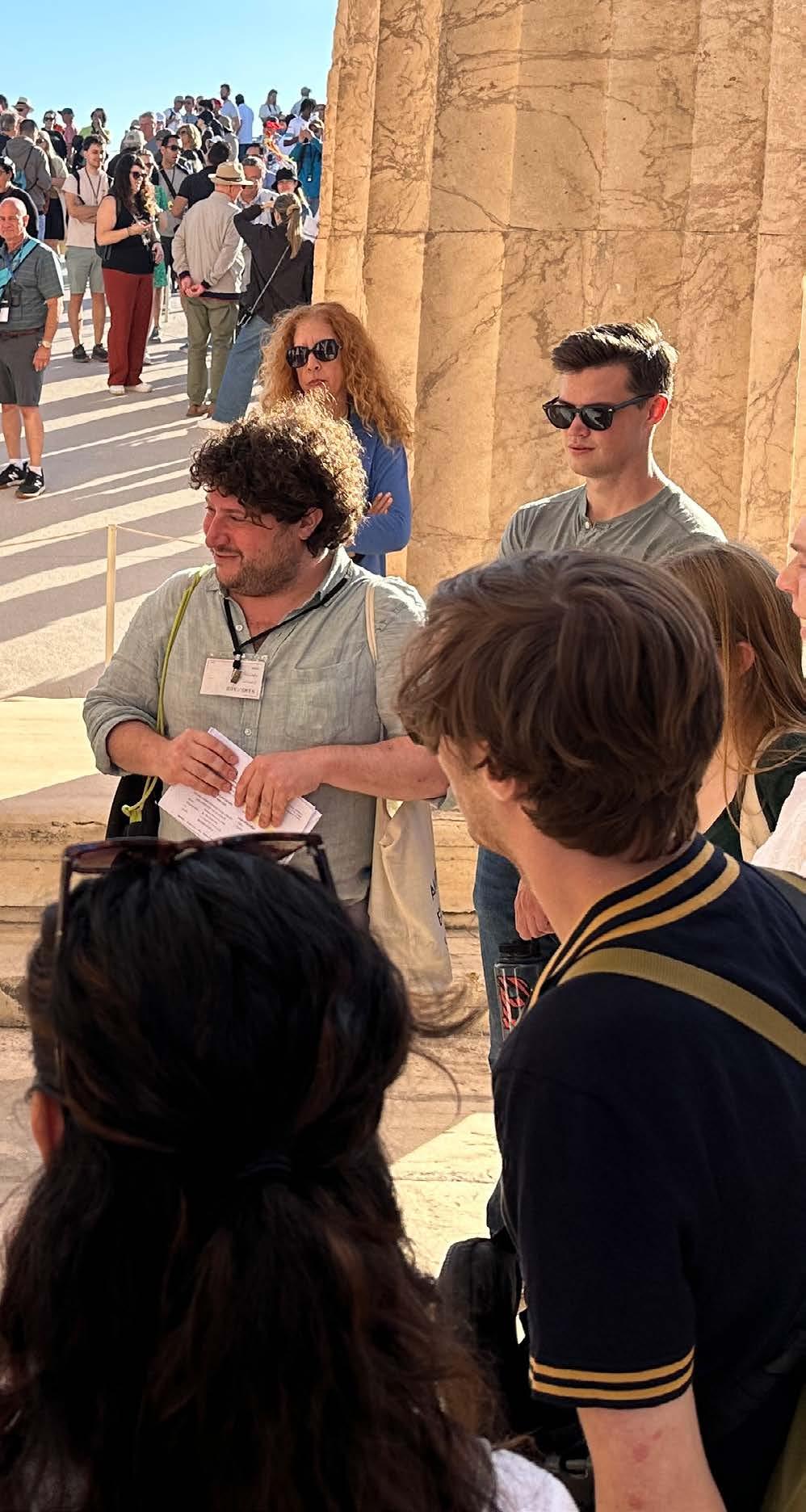
the decision making behind his work on the restoration of the Acropolis over blueprints. Alessandro Pierattini (Notre Dame) announced new discoveries at the oldest stone-built temple in Greece. Helmut Wenzel (University of Life Sciences, Vienna and WENZEL Consulting Engineers GmbH, Vienna) showed his techniques of using lasers to record how buildings vibrate, which can provide early warnings before structural failures.
Making use of resources on campus, the class visited Princeton University Library’s Special Collections to trace 500 years of rare books about ancient structures. Among the highlights was Galileo Galilei’s 1638 Two New Sciences, in which he set out the first analytical approach to cantilevers. Then Glišić took over where Galilei left off.
Behind Green Hall, the class also tried their hand at marble carving, gaining hands-on insight into the difficult art they had witnessed on the Acropolis just weeks before.
Glišić and Holzman are grateful for the Humanities Council Magic, Team Teaching, and Council of Science and Technology grants and support from CEE and A&A that funded the course development and trip. They are already talking about their next coteaching destination.
In the meantime, students of HUM 417 are carrying forward, in their respective pursuits, a vitalized, richer, more nuanced perspective.
Glišić hopes students will take inspiration from the curiosity, creativity, and experimentation of the ancient Greeks. “The Greeks’ mixture of playfulness and discipline showed excellent results some 2,000 years before the scientific concepts even started to be developed,” he said. “Understanding the evolution of engineering thoughts and experiences helps build the intuition, creativity, and confidence necessary to push the boundaries of the discipline.”
Holzman agreed: “I hope we are training bright young people to have a lifelong openness to collaborate across disciplines, to look for the ways that the humanities and the applied sciences inform one another.”
The course has fortified Brown’s interest in architectural history and adapted Carroll’s outlook. “The biggest impact this course has had on my approach to engineering is looking at the eccentricities of different design criteria and decisions,” said Carroll. “As I go forward with my engineering design courses and whatever the world beyond holds in store, I will do so remembering to think about problems and solutions in the context of history, community, and humanity.”
► MORE: Engineering and humanities mash-up course
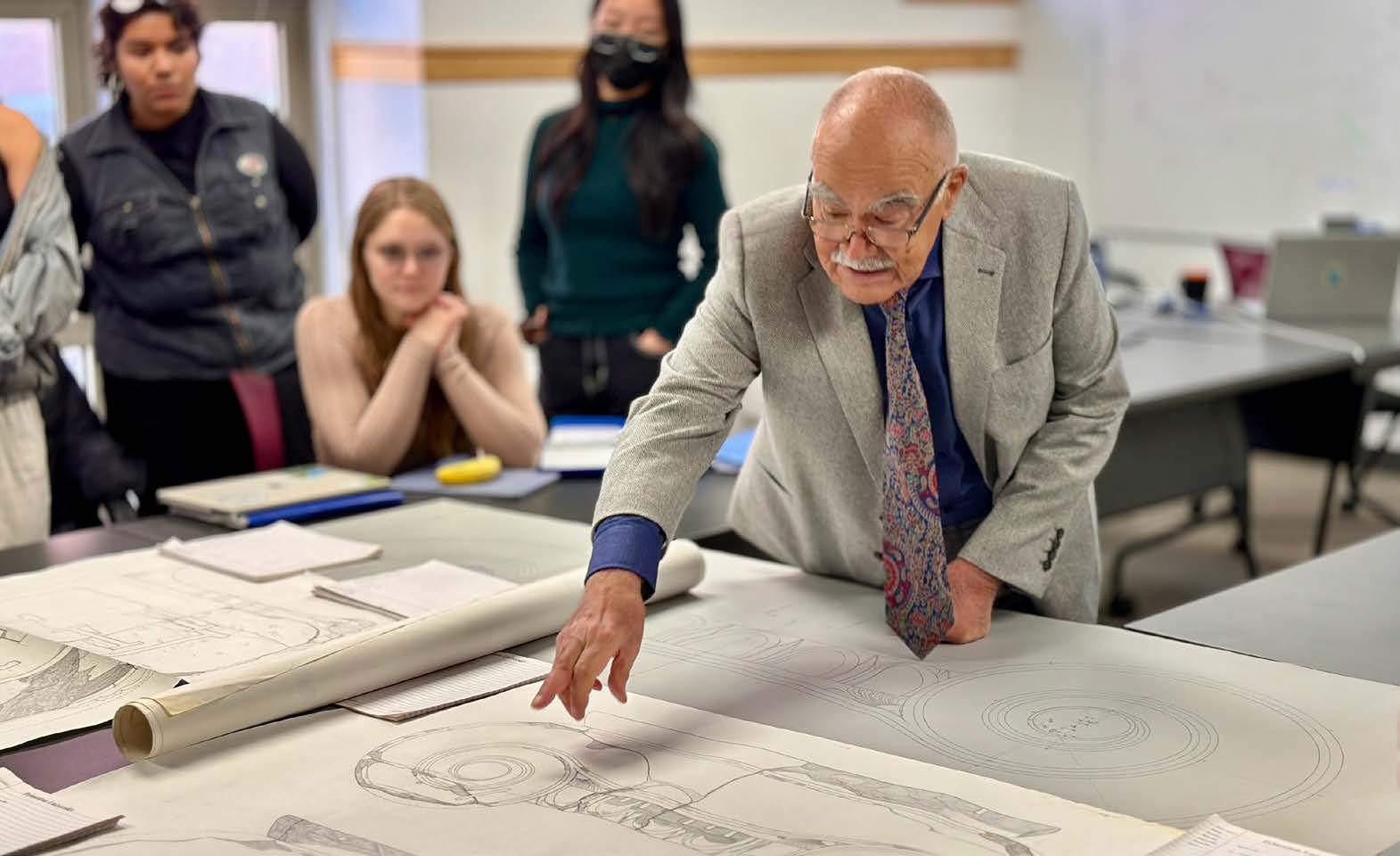
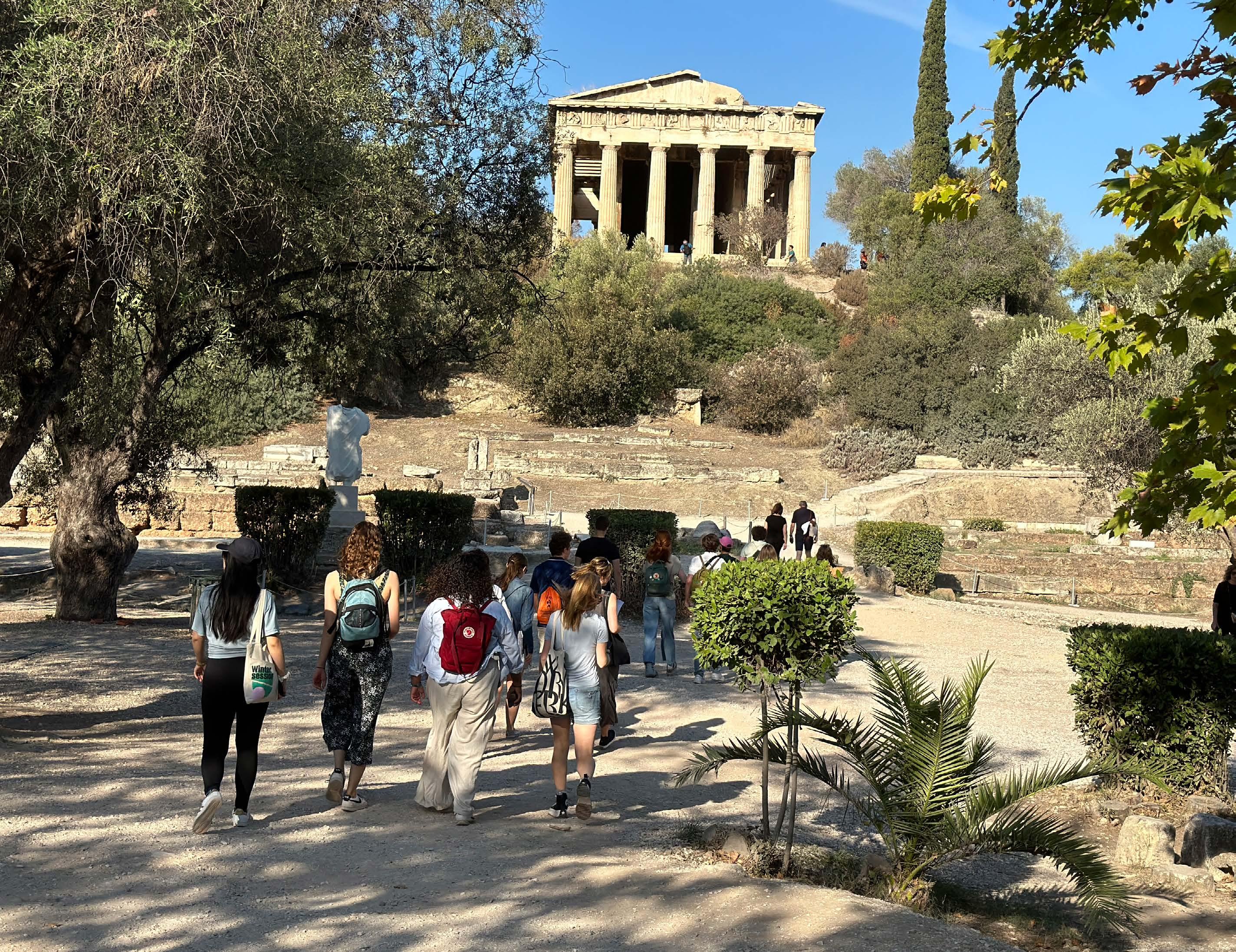
Molyvoti, Thrace, Archaeological Project (MTAP), Greece
Nathan
Arrington
THE 2024–25 ACADEMIC YEAR has seen exciting developments in the Molyvoti, Thrace, Archaeological Project (MTAP), a synergasia, or collaboration, of the Ephorate of Antiquities of Rhodope and the American School of Classical Studies at Athens, represented by Princeton University. The project is led by Professor Nathan Arrington, alongside Greek codirectors Domna Terzopoulou and Marina Tasaklaki.
December saw the launch of WebDig, a new open-source web application that now houses all MTAP excavation data. WebDig is built on the earlier iDig platform, which recorded details about artifacts, architectural elements, sketches, photographs, 3D renderings, soil descriptions, and other observations, all plotted on an aerial view of the excavation, or orthomosaic. WebDig improves on these features, allowing a decade’s worth of data points to be accessed, updated, and edited by team members, and studied by anyone with internet access, free of charge.
Tasaklaki estimated that WebDig has reduced her workload as the excavation’s numismatist to a third of what it was and “allows researchers to quickly access critical data about coins and cross-reference these findings with related materials such as fine pottery, lamps, amphorae, and loom weights,” she explained.
Arrington sees WebDig delivering two game-changing benefits to scholarship: it promises data to be both current and comprehensive. “We wanted a platform on which scholars could work on their materials and have immediate up-to-date information from other scholars,” he explained. “So if a coin identification changes the date of a context, the person studying the amphoras from that same context will be informed, rather than working in isolation.” Arrington also sees the database functioning as its own form of publication. “The database offers a level of comprehensiveness and contextual detail that no print publication can provide,” he said. “Every sherd and every find has a photograph. In addition, people can see where the material comes from and which artifacts were associated with each other. So they can recreate the ancient contexts.” Using this multimedia approach, the team plans to publish four volumes on the MTAP project complemented by WebDig. The first volume is scheduled to be released in August 2025, with
the second volume currently underway.
In April, A&A hosted a workshop dedicated to MTAP that brought together the many authors whose work will appear in the third volume on the excavation, which focuses on the House of Hermes. In attendance, along with the directors, were: Ioannis Bellas (Greek Ministry of Culture), Demetrios Brellas (Framingham State University), Elena Cuijpers (Rheinische Friedrich-Wilhelms-Universität Bonn), Mattia D’Acri, Nicholas Hudson (University of North Carolina-Wilmington), Jessica Lamont (Yale University), Simon Oswald (University of Massachusetts-Amherst), Maria Spathi (University of Crete), Thomas Tartaron (University of Pennsylvania), Konstantina Tsonaka (Aristotle University of Thessaloniki), and Chantel White (University of Pennsylvania).
Postdoctoral research associate and pottery specialist Mattia D’Acri, who works in tandem on multiple excavations, found the workshop exemplary. “Not only did we learn more about each other’s research, but we also had the chance to brainstorm collectively, enriching our individual work. By the end of the event, the progress toward the publication on the House of Hermes was truly impressive,” he said. “More archaeological projects should promote similar initiatives, as the benefits are numerous.”
Along with the rich exchange of research, the group enjoyed a visit to the Roberto Lugo/ Orange and Black exhibition at Art@Bainbridge as well as presentations in A&A’s Visual
Resources and Princeton University Library’s Numismatics department.
American Excavations Samothrace, Greece
Samuel Holzman
American Excavations Samothrace returned to the field for a further season of excavation in summer 2024. Part of the work was focused in the Sanctuary of the Great Gods. New trenches on the Stoa terrace offered a glimpse of the 100-meter-long portico’s foundations as well as an area of a possible staircase leading up to the elevated terrace. Previous investigations in the area of Hieron had produced many fragments of large plaster moldings that belonged to an undiscovered building. Trenches near the Hieron sought to find this building, while the architectural research team worked on a reconstruction of the plaster wall decoration. Outside the sanctuary, work continued in the area of the ancient fortification wall. Two new trenches revealed more of a gate building that was likely the main point for leaving the ancient city and reaching the sanctuary. Princeton participants in the project in 2024 included Professor Samuel Holzman, graduate students Hannah Hungerford and Eirini Spyropoulou, and Elena Evnin ’24. The team will return to the field in 2025 for a study season to analyze excavated artifacts. In spring 2025, the Samothrace team also put on an exhibition in
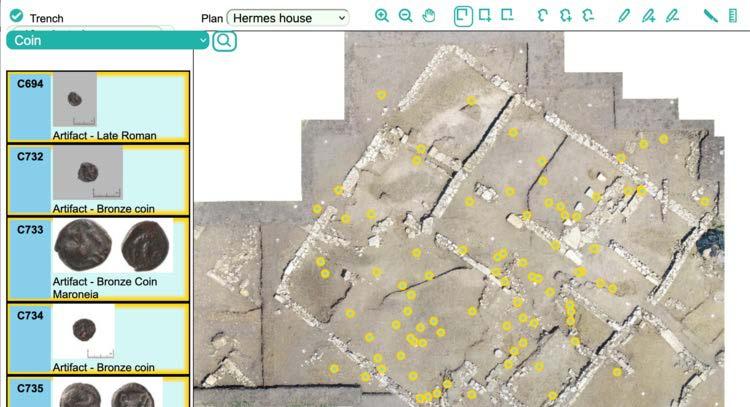
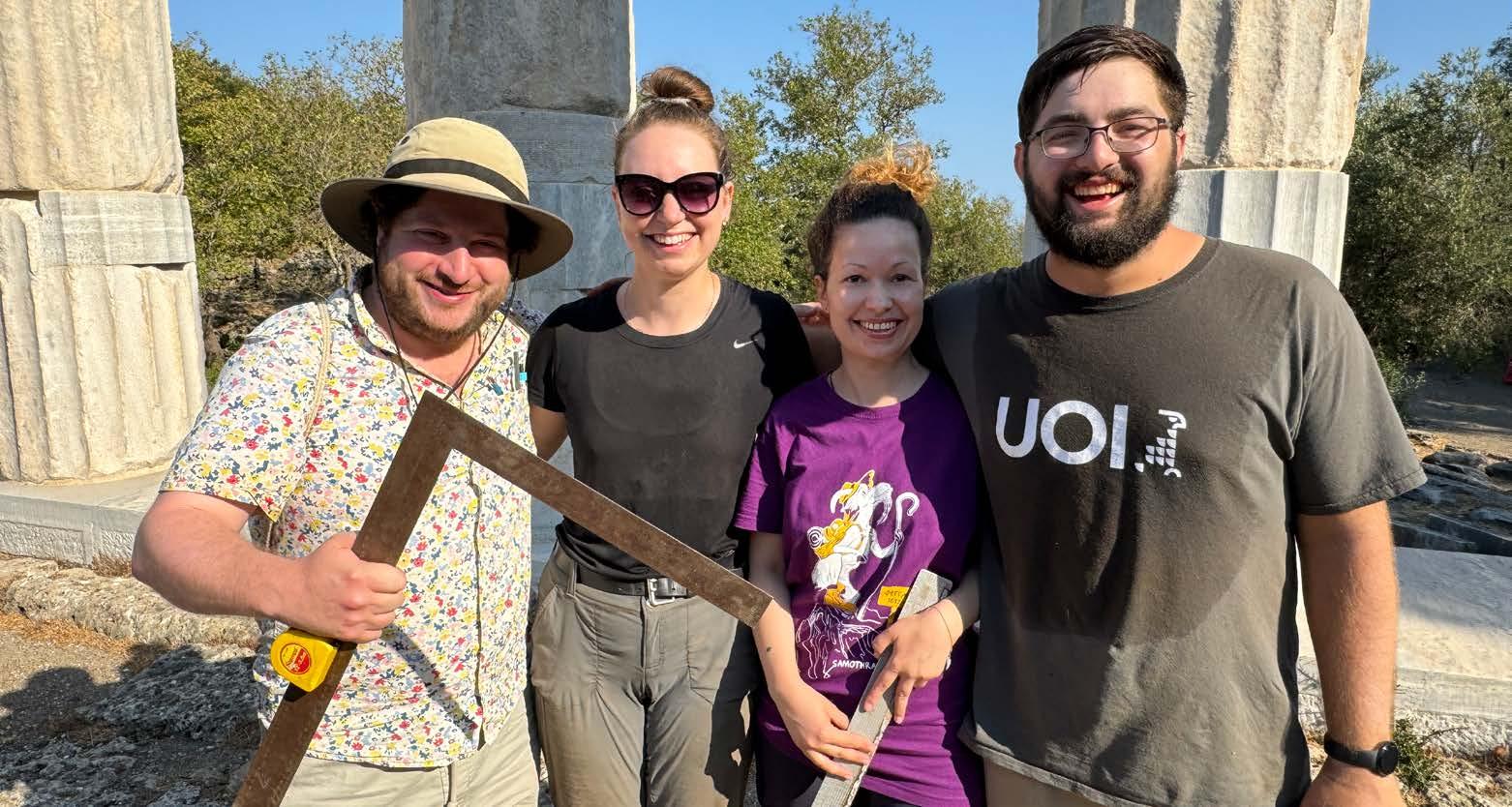
Athens, Imag(in)ing Samothrace: From Homer to the HoloLens, at the Ioannis Makriyannis Wing of the American School of Classical Studies at Athens.
Tharros Archaeological Research Project, Sardinia, Italy
Leigh Anne Lieberman
Katy Knortz (graduate student) and Leigh Anne Lieberman (Digital Project Specialist, Visual Resources) returned this summer to Sardinia as part of the Tharros Archaeological Research Project, an excavation and research initiative directed by Steven Ellis of the University of Cincinnati. Knortz contributed to the team’s
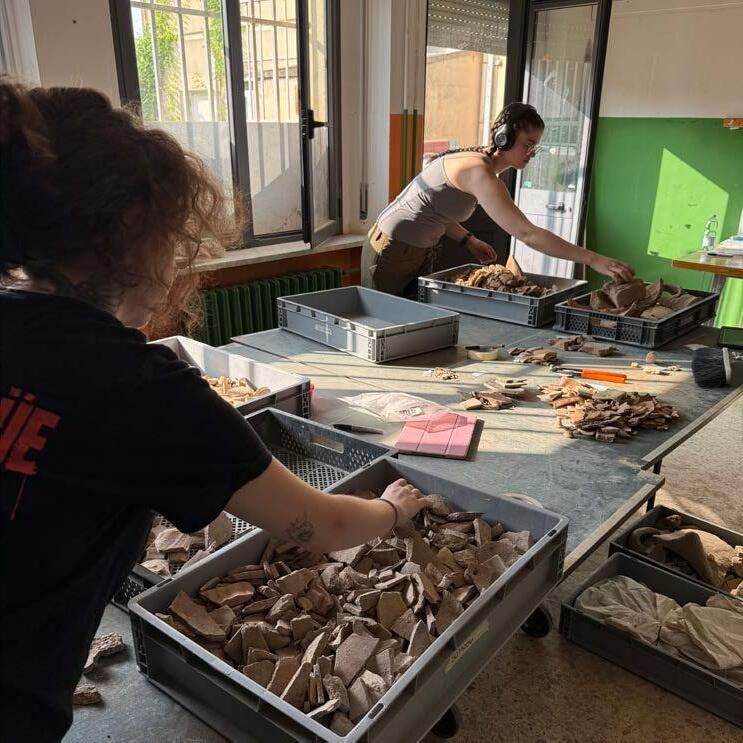
work in the field, while Lieberman and her team worked in a lab processing and studying all the material culture excavated throughout the season. Situated on the west coast of the island, the Punic-Roman city of Tharros played an important role in the network of trade routes between Spain (and the Balearics), Carthage, and Massalia. Although Tharros is best known for its unusually rich Punic tombs, the team’s work this season focused on one of the city’s major temples in order to establish a more detailed and contextualized understanding of the city’s initial development and ultimate abandonment, phases that until now have been either poorly understood or, where more confidently attested, built upon indifferent or even nonexistent bodies of data. A more complete and evidence-based delineation of urban development, particularly one that can be anchored to chronological markers, could aid in connecting the city’s urban growth spurts and decline to broader aspects of Mediterranean history. Follow the team’s ongoing work on Instagram @uctharros.
American Excavations at Morgantina: Agora Valley Project (AVP), Sicily, Italy
William Pedrick
In summer 2024, William Pedrick returned to Sicily to serve as a field supervisor for the American Excavations at Morgantina: Agora Valley Project (AVP). This multiyear project returns to a portion of the urban center at Morgantina that was partially excavated in 1962 and 1966 but never published. The 1960s
seasons uncovered a striking concentration of material in this area dated to the largely understudied final centuries of Morgantina’s history following its capture by the Romans in 211 B.C.E. The current project aims to combine archival research with renewed excavation to better understand the continuities and ruptures in the ancient city’s urban fabric from the 3rd to the 1st century B.C.E. As a field supervisor, Pedrick led a team of American and Italian archaeologists in the continued exploration of a monumental structure in the agora that might have been a “naiskos” (small temple). Following a largely extensive approach to excavation in 2023 that uncovered the structure’s ground plan, we adopted a more intensive method in the 2024 season by digging a series of small excavation probes to shed light on the stratigraphy from deposits predating the building’s construction to those created in its final occupation.
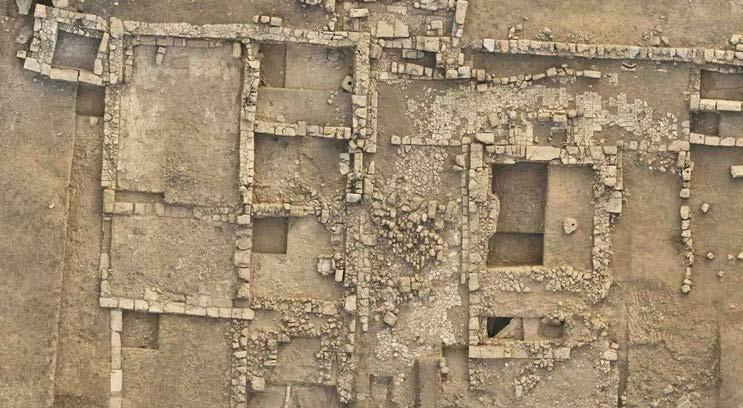
Abydos South Project (ASP), Egypt
Emily Smith-Sangster
In summer 2024, the Abydos South Project (ASP) undertook two study seasons. The first season focused on the examination of individual items and ceramics, illuminating more about the tomb variation present at the site. The second season focused on the examination of osteology material, illuminating the population makeup of a further five tombs.
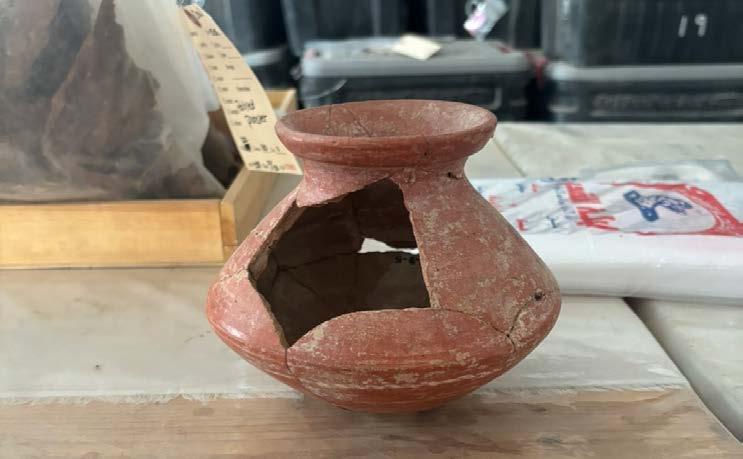
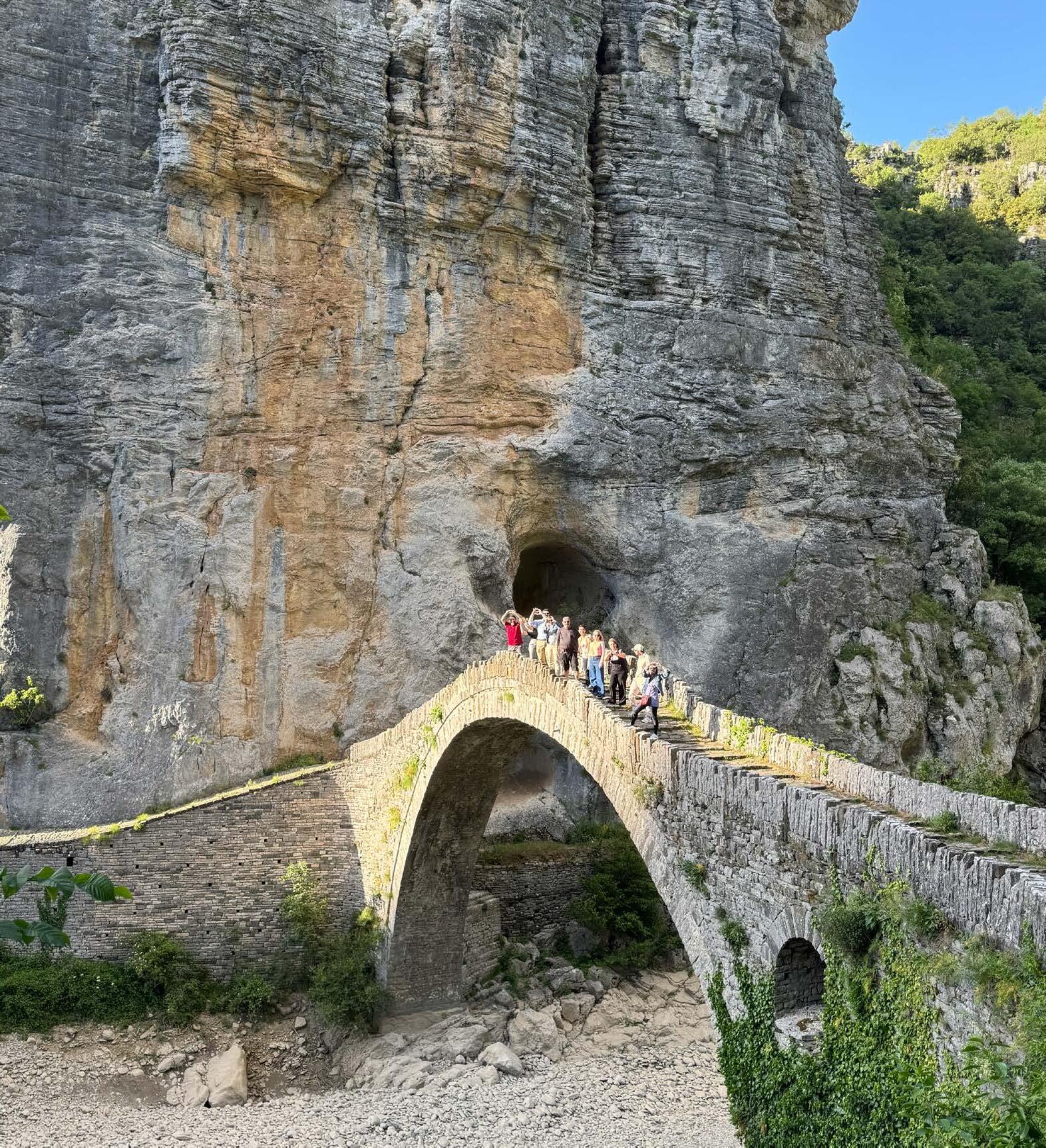
LAUNCHED IN 2023 at the Princeton Athens Center, PITHOS (Princeton-Ioannina-Thessaly-OnSite-Seminars) brings together an annual cohort of nine graduate students, comprising three each from Princeton University, the University of Thessaly, and the University of Ioannina. Cosponsored by the Seeger Center for Hellenic Studies and A&A in its initial two years, PITHOS aims to strengthen ties and foster intellectual collaboration among scholars of Greek art and archaeology.
The program begins each year with a weeklong spring seminar in Greece and culminates when participants convene again in Princeton to present their research in the fall. “PITHOS is a mutually beneficial exchange that offers our graduate students the opportunity to workshop papers based on their dissertation research, building professional networks between Greece and the United States,” said Professor Samuel Holzman, who served as the 2024 coordinator.
The 2024 convenings centered on the theme of “elite cultures.” In May, the group met in Greece to launch the second year of the PITHOS program. Professor Andreas Vlachopoulos of the University of Ioannina hosted the group, which included Princeton graduate students Mark Paul,
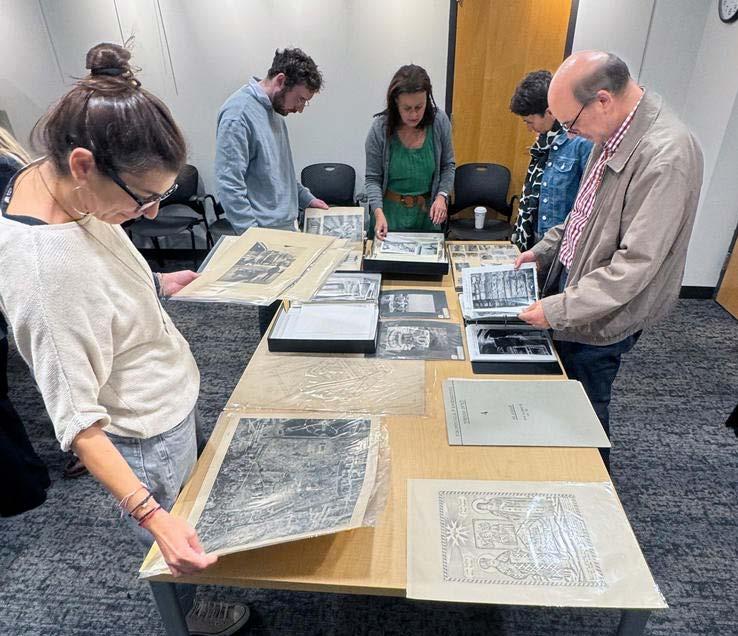
PITHOS participants examine photos and documents at A&A’s Visual Resources Department (Photo/Yichin Chen)
Eirini Spyropoulou, and Robert Yancey. Over the course of the week, participants engaged in faculty-led seminars, workshops, and field visits.
The group reconvened in Princeton in fall 2024 for a three-day program that began with students presenting their research. Each day, one student from each participating university gave a lecture incorporating feedback from the spring gathering. Participants also visited Princeton Battlefield, the numismatics collection at Princeton University Library, A&A’s Visual Resources collection, the University of Pennsylvania Museum of Archaeology and Anthropology, where they toured the Center for the Analysis of Archaeological Materials, and, finally, the Metropolitan Museum of Art. Carolyn Laferrière, associate curator of ancient Mediterranean art at the Princeton University Art Museum, has taken over for 2025, under the theme “Archaeology in Context: Media, Function, and Meaning.”
Notably, the Princeton Humanities Initiative has joined in supporting PITHOS in 2025. “Archaeology brings together so many different disciplines and methodologies, and it is by nature a collaborative enterprise. So, it provides the perfect context for thinking deeply and complexly about media across time, from the materials used to create objects in the ancient world to media like drawing and photography that archaeologists use to generate knowledge about the past through its material remains,” said the Initiative’s director, Rachael DeLue.
“Media makes meaning, and I’m really looking forward to exploring with this group how media, then and now, shapes how people understand themselves and their world.”
► MORE: PITHOS 2024
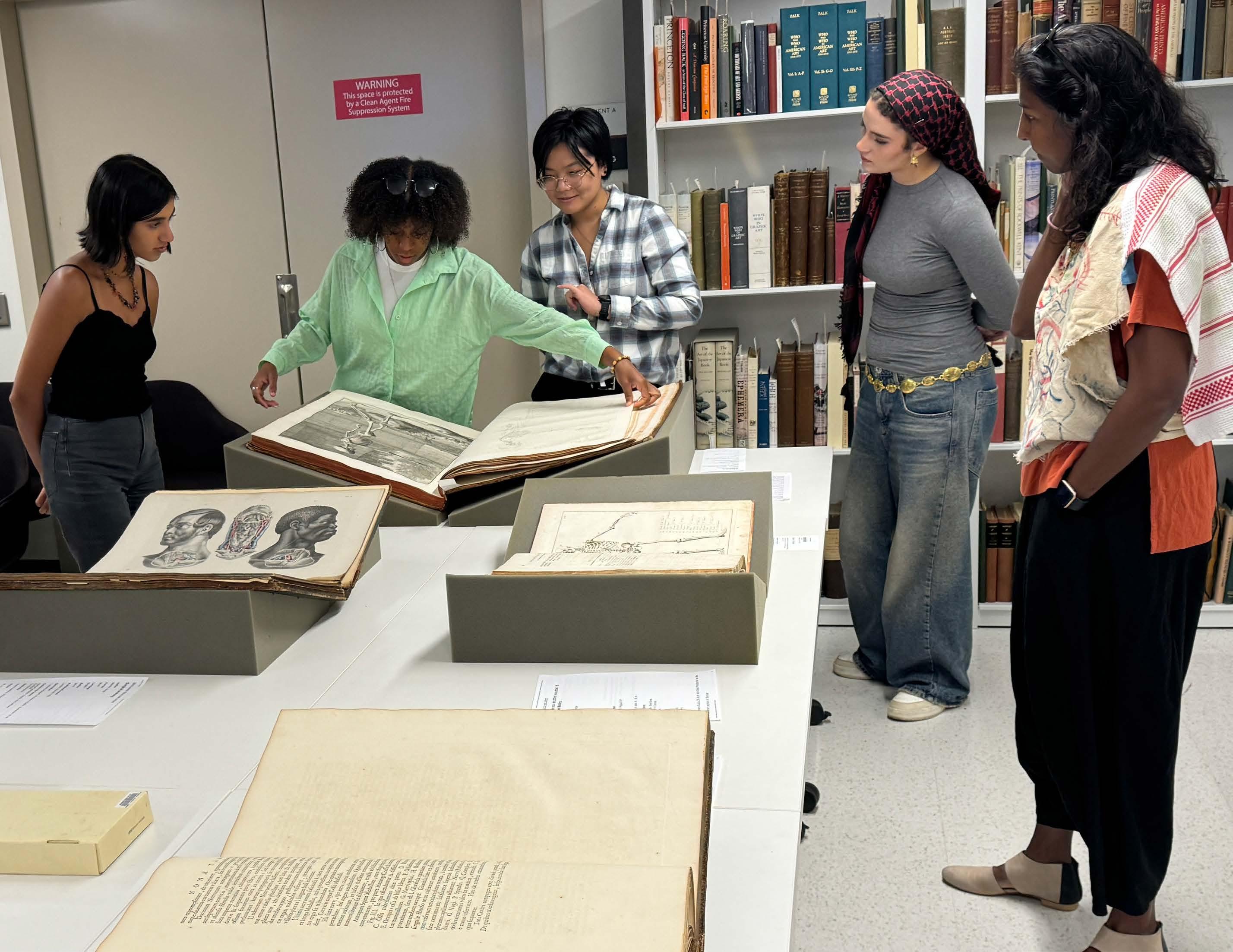
examine manuscripts in Princeton University Library’s Special Collections as part of ART 483/AAS 483/HUM 483
“Pathologies of Difference: Art, Medicine and Race in the British Empire” (Photo/Kirstin Ohrt)
PROFESSOR RACHEL SAUNDERS launched into her new position teaching Japanese art history in the fall, bringing her deep curatorial experience with and knowledge of Japanese art to Princeton’s collection in a special iteration of ART 217/EAS 217 “The Arts of Japan.” Covering 5,000 years, the course explored a broad range of media by delving into the life stories of individual things like prehistoric ritual figurines, medieval mandalas, “impossible” Zen paintings, and “enlivened” sculpture, as well as narrative paintings of the world’s oldest novel and contemporary protest art in Okinawa. The course also examined calligraphy, ink arts, photography, and, drawing on Princeton’s robust collection, printing. During a visit to the Metropolitan Museum of Art, students had the rare opportunity to view several objects, including works held in storage, that they had discussed in class.
From the outset, Saunders prioritized honing students’ visual analysis skills to make close, sustained, and repeated observations of objects and then articulate those observations. This focus on close looking continued into the spring semester, when Saunders taught two additional courses in Japanese art history.
The graduate seminar ART 526/EAS 566/REL 540 “Arts of Enlightenment: Buddhist Materialities in East Asia” focused on the history of Buddhist image-making and visualization practices, following the early transmission paths of Buddhism from India through China and eastward to Japan, as theology and scripture responded to the particularities of new times and places. The class visited both the Metropolitan Museum of Art and the Harvard Art Museums, where Saunders was previously Abby Aldrich Rockefeller Curator of Asian Art. Students viewed objects studied in class and engaged with curators and conservators. At Harvard, Sarah Laursen (Alan J. Dworsky Curator of Chinese Art) presented her recent reinstallation of fragmentary wall paintings and the figure Kneeling Attendant Bodhisattva, which was infamously taken from the desert cave temples of Dunhuang, Western China, in 1924 by then curator Langdon Warner (1881–1955). The
group also learned about the exacting process of capturing the figure using photogrammetry and participated in a discussion about the complexities and changes in museum praxis over time.
Also in the spring, ART 327/EAS 327 “Handscroll to Anime: Visual Storytelling in Japanese Art” explored the enormous cast of characters who inhabit the lively moving surfaces of a wide variety of artistic media, from medieval handscroll format paintings to contemporary manga and anime. Delving into the famous Genji Monogatari (“Tale of Genji”) by Murasaki Shikibu (d.c. 1014), widely considered the world’s first novel, students examined both its 12th-century handscroll
and its 21st-century manga adaptation by Yamato Waki. In Marquand Library’s rare books collection, they viewed the Genji Monogatari Emaki, one of the earliest surviving iterations of the text. Comparing how artists separated by a thousand years pictorialized the same narrative revealed significant differences along with surprising similarities. Taking advantage of the concurrent Art@Bainbridge exhibition Roberto Lugo/Orange and Black, the class expanded that comparison to include ancient Greece by way of ceramic artist Roberto Lugo’s presentday reinterpretation. Princeton University Art Museum Curator of Ancient Mediterranean Art Carolyn Laferrière, who curated the exhibition, gave the class a tour. “For a class about the
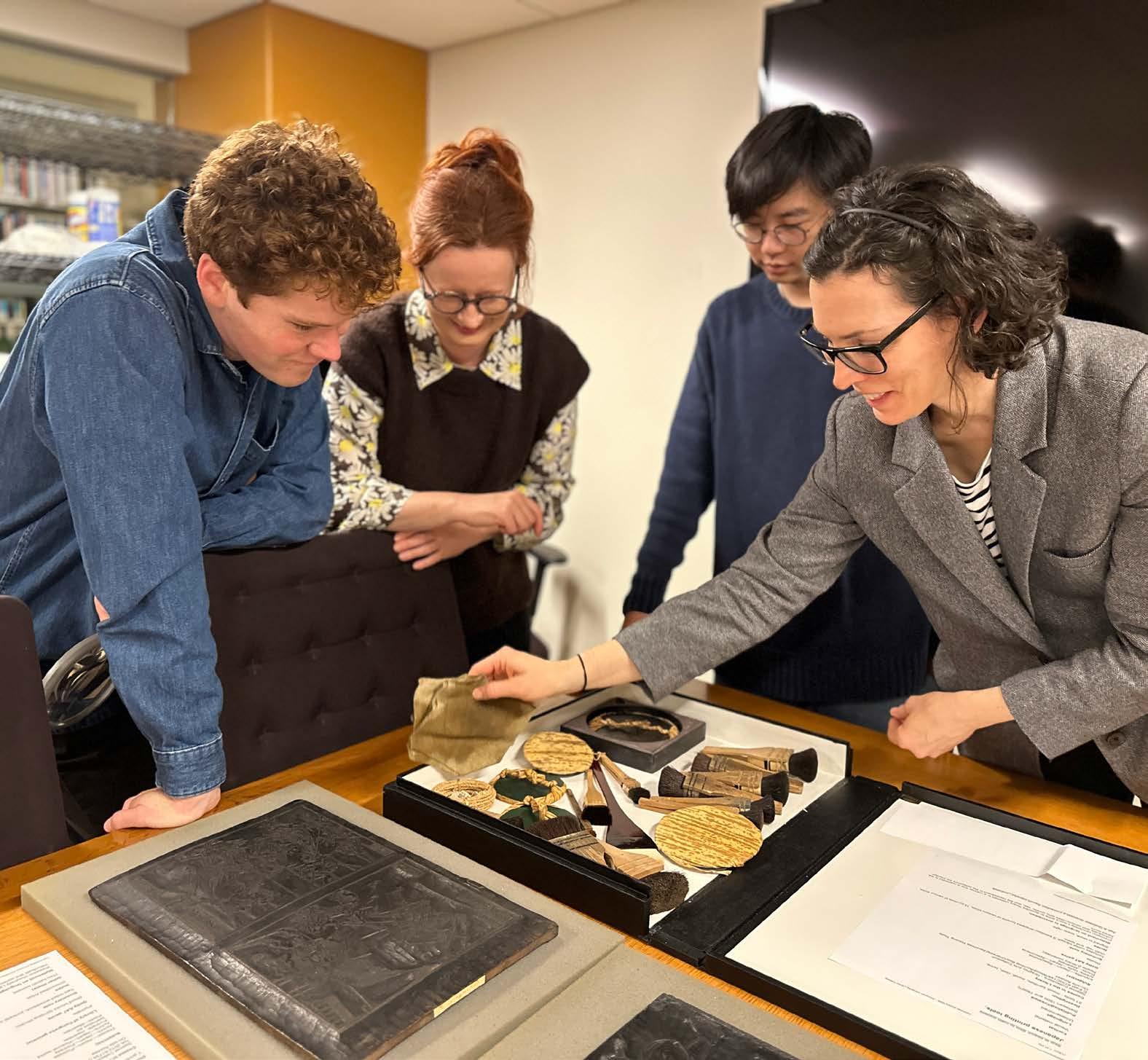
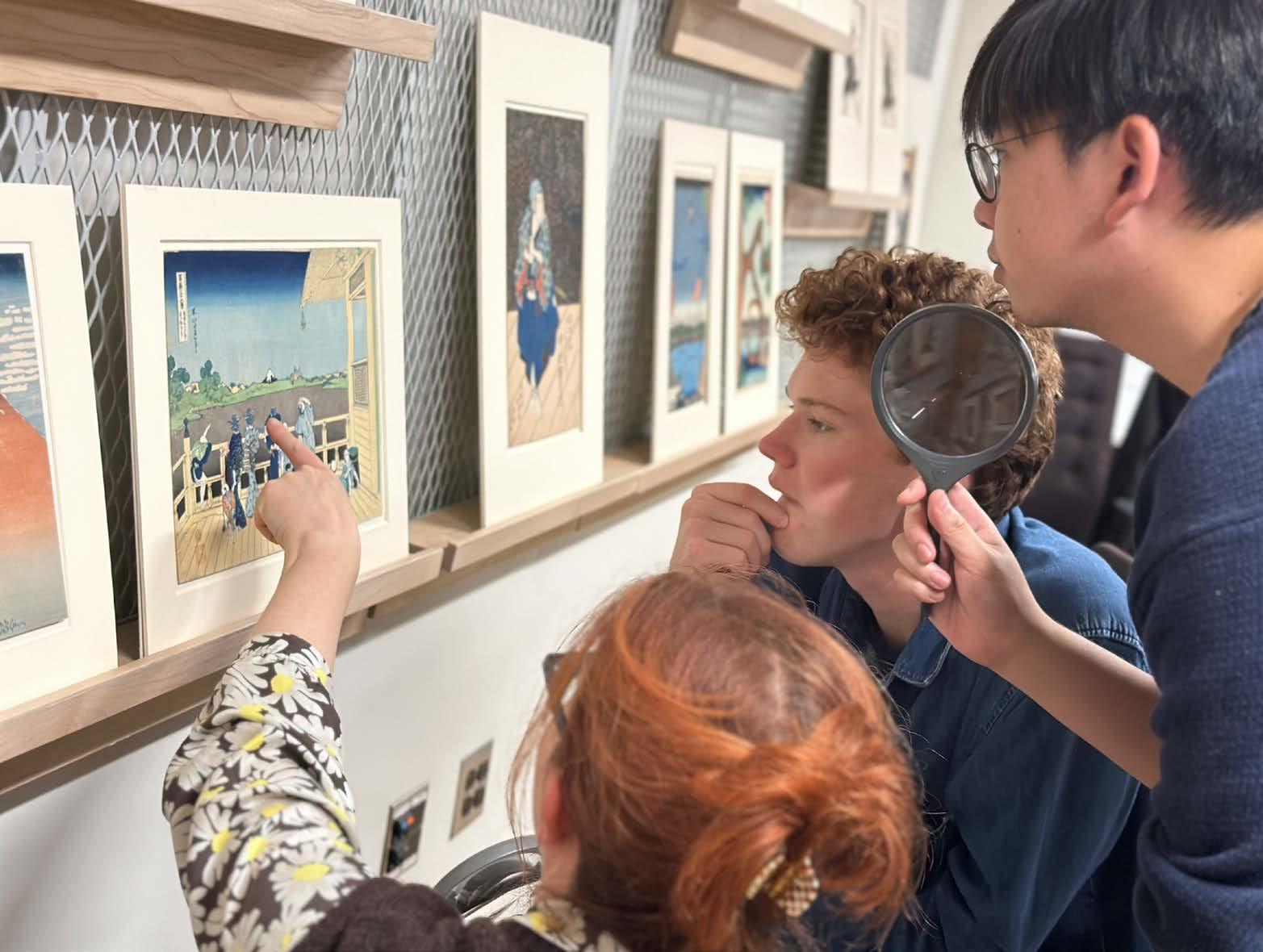
production and consumption of visual narrative— as sites of memory and experimentation, shared values, identity, as a means of articulating the unbearable—the opportunity to look closely at Lugo’s work together was very meaningful, especially with the generous guidance of Dr. Laferrière,” said Saunders. “Our visit opened up new avenues for our looking and thinking back in the seminar room.”
The Daily Princetonian singled out the course as being especially effective in bringing fresh approaches to understanding today’s world.
“Pictures are everywhere, and they’re flooding our consciousness and our experience all the time, every day, and yet, we don’t have much rigorous training in dealing with them,” Saunders told the Prince. “One of the motivations for doing the class is to provide a space where we have an hour and 20 minutes twice a week where we’re creating a space to experience narrative time on its own,” she continued, “and we can put all our attention into these objects.”
► MORE: “The Arts of Japan” course
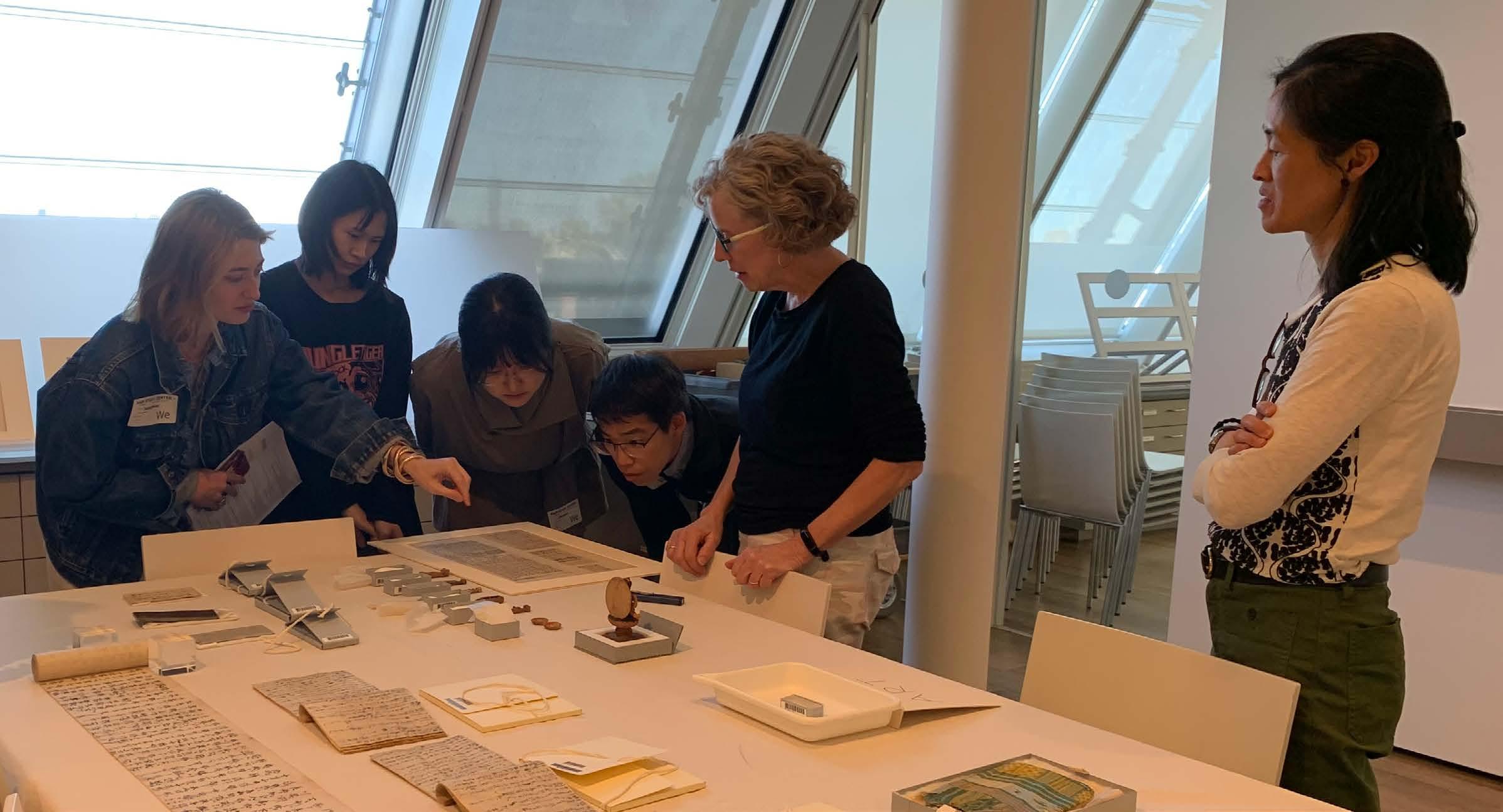
ART 100
An Introduction to the History of Art: Meanings in the Visual Arts
Monica Bravo
ART 102/ARC 102
An Introduction to the History of Architecture
Samuel Holzman
ART 200/NES 205/AFS 202
The Art and Archaeology of the Ancient Near East and Egypt
Breton Langendorfer
ART 209
Caravaggio, Velázquez, Vermeer, Goya: Between Renaissance and Revolution
Thomas DaCosta Kaufmann
ART 212
European Art: Revolutions and Avant-Gardes
Bridget Alsdorf
ART 214
Contemporary Art: 1950–2000
AnnMarie Perl
ART 216/EAS 213
Aesthetics and Politics of Chinese Painting
Cheng-hua Wang
ART 217/EAS 217
The Arts of Japan
Rachel Saunders
ART 220/LAS 230
Modern and Contemporary Latin American Art
Irene V. Small
ART 228/HLS 228/MED 228/ HUM 228
Art and Power in the Middle Ages
Beatrice Kitzinger and Fatih Han (CTI)
ART 240/EAS 240
Introduction to Asian Art
Zoe Kwok
ART 260/AAS 260/AFS 260
Introduction to African Art
Chika Okeke-Agulu
ART 291/URB 291/ARC 291
Competing Professions
Basile Baudez
ART 311/MED 311/HUM 311
Arts of the Medieval Book
Beatrice Kitzinger
ART 322/LAS 313/AAS 323
Anti-Colonial Practices in Latin American Contemporary Art
Susana Costa Amaral
ART 323
World Art History
Thomas DaCosta Kaufmann
ART 327/EAS 327
Handscroll to Anime: Visual Storytelling in Japanese Art
Rachel Saunders
ART 335/HLS 336/MED 335
Byzantine Art
Charlie Barber
ART 356/EAS 353
Rethinking Modernity in a Century of Turmoil: Modern Chinese Art, ca. 1840s–1940s
Cheng-hua Wang and Yixu Eliza Chen (CTI)
ART 393/AMS 392/JRN 393
Getting the Picture:
Photojournalism in the U.S. from the Printed Page to AI
Katherine Bussard
ART 400
Junior Seminar
Basile Baudez
ART 393/AMS 392/JRN 393
“Getting the Picture: Photojournalism in the U.S. from the Printed Page to AI,” taught by Princeton University Art Museum Curator of Photography and A&A Lecturer Katherine Bussard, examined the “picture press” that defined global visual knowledge of the world in the last century. Among the spectrum of work the class considered, artist Ken Gonzales-Day presented his Erased Lynching series that comprises photographs of lynchings between 1850 and 1935 from which Gonzales-Day removed, or “erased,” the victims to draw attention to the historic absence of Latinx, Asian, and Native American victims from the history of lynching in California.
Bussard was impressed by students’ participation in Gonzales-Day’s presentation and throughout the course. “What can—or will—be reported and pictured in U.S. news sources is potentially changing with each new Executive Order and libel lawsuit,” said Bussard. “I cannot think of more important issues and questions to discuss.”
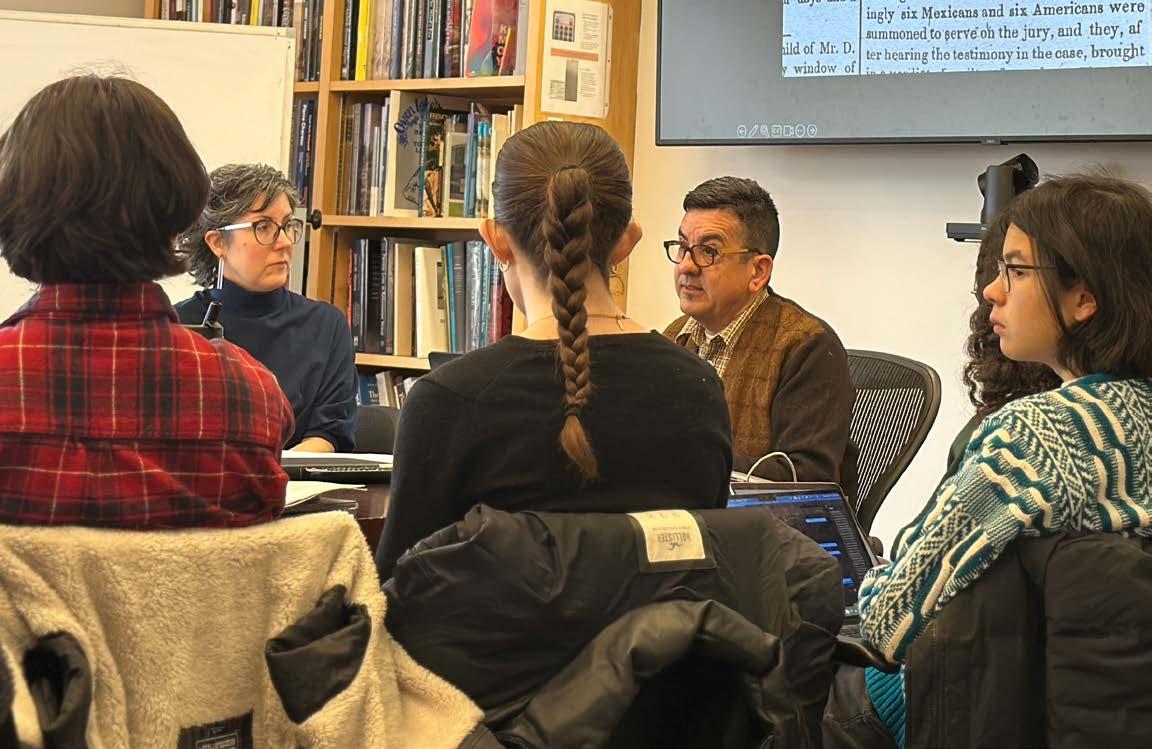
ART 401/HLS 411 Archaeological Methods and Theory
Samuel Holzman
ART 407/CLA 407/VIS 408/ HLS 408
Drawing Archaeology
Samuel Holzman
ART 416/CLA 416/NES 418
Borderlands: Art and Society Between Rome and Iran
Breton Langendorfer
ART 428/EAS 428
Song Dynasty Painting
Cheng-hua Wang
ART 407/CLA 407/VIS 408/HLS 408
Students in Professor Samuel Holzman’s ART 407/CLA 407/ VIS 408/HLS 408 “Drawing Archaeology” came away with a robust drawing portfolio along with an understanding of how archaeologists use drawings to think about the past. This unique hybrid studio/seminar course was supported by a grant from the 250th Fund for Innovation in Undergraduate Education. Students drew excavated artifacts like oil lamps, terra cotta loom weights, and bronze arrowheads from Visual Resources’ long history of study collections.
The class also benefited from visits to Princeton University Library’s Special Collections and Makerspace, along with guest lectures from Peter Cobb (University of Hong Kong) and Ulrike Koch-Brinkmann and Vinzenz Brinkmann.
Holzman is pleased by the enthusiasm his course inspired and hopes his students will take their newly acquired drawing skills on future excavations. “But more importantly,” he said, “I hope they will take the forensic, analytical eye of the archaeologist into other endeavors in their lives.”
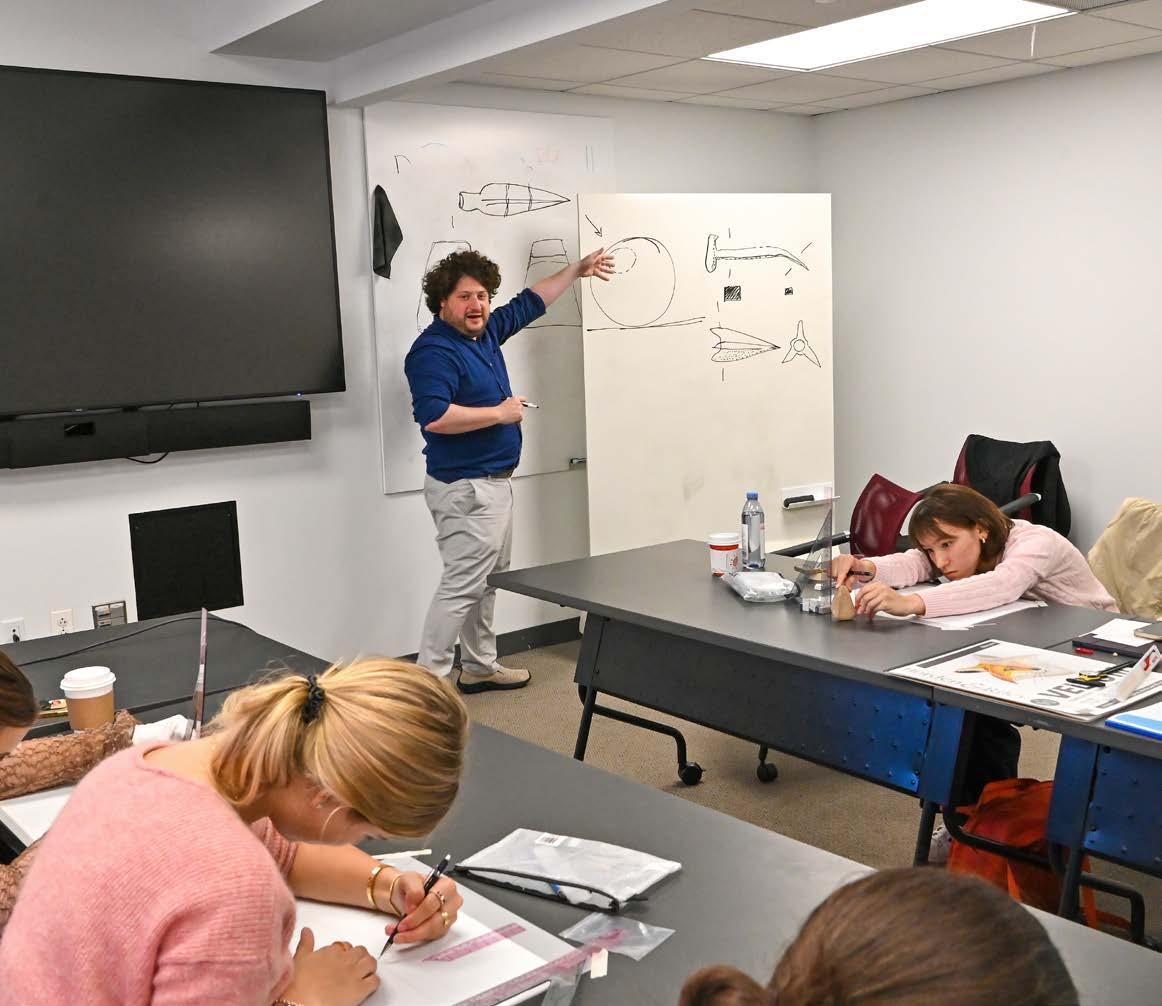
ART 450/FRE 408
19th-Century European Art: Inventing Impressionism
Bridget Alsdorf
ART 455/VIS 455/ECS 456
Seminar in Modernist Art and Theory: Alienation in Modern Art and Literature
Hal Foster
ART 456
Contemporary Art: The World Picture
Irene V. Small
ART 470/ENV 470/ECS 471
Early Modern European Art: The Ecological History of Early Modern Prints
Susan Dackerman
ART 473/AAS 473/AFS 473
Kongo Art
Chika O. Okeke-Agulu
ART 483/AAS 483/HUM 483
Pathologies of Difference: Art, Medicine and Race in the British Empire
Anna Arabindan-Kesson
ART 485/LAS 485
Collecting and Exhibiting Art of the Ancient Americas
Alanna Radlo-Dzur
ART 487
Rembrandt
Ronni Baer
ART 500
Proseminar in the History of Art
Nathan T. Arrington and Rachael Z. DeLue
ART 430/MED 430/HLS 430
Medieval Art: Genesis: Cosmos and Ethos in Late Antique Art
Charlie Barber
ART 431/MED 431
Art, Culture, and Identity in Medieval Spain
Pamela A. Patton
ART 434/ECS 433
The Modern Art of Spectacle
AnnMarie Perl
ART 440
Renaissance Art: Courts of Europe
Thomas DaCosta Kaufmann
ART 502 A and B
The Graduate Seminar
Brigid Doherty
ART 521/ARC 520
Beaux-Arts Architecture and Urbanism
Basile Baudez
ART 525/EAS 555
Seminar on Chinese Calligraphy
Cheng-hua Wang and Hui-Wen Lu
ART 526/EAS 566/REL 540
Arts of Enlightenment: Buddhist Materialities in East Asia
Rachel Saunders
ART 545
The Geography of Art: World Art History
Thomas DaCosta Kaufmann
ART 562
Seminar in American Art: Languages of Art and Science
Rachael Z. DeLue
ART 565/MOD 565/ARC 585
Seminar in Modernist Art and Theory: Modernism and Socialism
Hal Foster
ART 566
Seminar in Contemporary Art and Theory: Sculpture and Scandal
Hal Foster
ART 593/MOD 593
Photography Theory
Monica Bravo
EAS 211/COM 213/ART 225
Manga: Visual Culture in Modern Japan
Brian R. Steininger
AAS 244/ART 262/LAS 244
Introduction to Pre-20th Century
Black Diaspora Art
Anna Arabindan-Kesson
AFS 331/ART 314
African Technologies and Technofutures”
Colin E. Bos
ARC 346/RES 346/EAS 336/
ART 317
Modern Architectures in Context: Cities in Asia
Da Hyung Jeong
ARC 308/ART 328
History of Architectural Theory
Jay Cephas
LAO 330/ENG 329/ART 336
Latinx Photography
Monica Huerta
GER 372/ART 342/ECS 384
Writing About Art (Rilke and Freud)
Brigid Doherty
URB 345/ARC 345/ART 357
Urban Nature and Society, 1450–1800
Jennifer Strtak
ARC 322/ART 372
History of Comparative Architecture: What Color Is the Modern?
Daniel Sherer
AAS 372/ART 374/AMS 372
Postblack—Contemporary African American Art
Chika Okeke-Agulu
VIS 392/ART 392
Artist and Studio
Jeffrey Whetstone
HUM 417/ART 408/CEE 415/ HLS 417
Historical Structures: Ancient Architecture’s Materials, Construction and Engineering
Branko Glǐsić and Samuel Holzman
AAS 404/ART 436
Reparative Aesthetics: Art, Medicine and the Colonial Plantation
Anna Arabindan-Kesson
HUM 450/GER 407/ART 482/
ARC 450
Empathy and Alienation: Psychological Aesthetics and Cultural Politics
Brigid Doherty and Spyros Papapetros
ARC 525/ART 524
Mapping the City: Cities and Cinema
M. Christine Boyer
CLA 547/PAW 503/HLS 547/ HIS 557/ART 527
Problems in Ancient History: The Senses in the Ancient Mediterranean
Nathan Arrington and Michael A. Flower
COM 532/ART 531/ENG 591/ MUS 533
Publishing Articles in Literature, Art, and Music Studies Journals
Wendy Laura Belcher
CLA 548/HLS 548/PAW 548/ ART 532
Problems in Ancient History: Introduction to Ancient and Medieval Numismatics
Alan Stahl
SPA 548/ART 549/LAS 548
Seminar in Modern Spanish-
American Literature: Documenting the Real: Truth, Representation, and the Latin American Gabriela Nouzeilles
ARC 571/ART 581/MOD 573/ LAS 571
PhD Proseminar: Nuclear Architectures
Beatriz Colomina and Sylvia Lavin
HUM 595/ART 591/HLS 590/ ANT 595
Interdisciplinary Studies in the Humanities: Death
Elizabeth Davis and Carolyn Laferrière
FRE 536/HUM 510/MOD 512/ ART 592
What Photography Can Do Christy Wampole
ARC 576/MOD 502/ART 598
“Advanced Topics in Modern Architecture: Intestinal Architecture”
Mark A. Wigley
ART 483/AAS 483/HUM 483
“Pathologies of Difference: Art, Medicine and Race in the British Empire” examines connections between art and medicine and untangles their complicated history. Professor Anna ArabindanKesson, herself a registered nurse, taught the course for the third time in the fall. She allowed students’ diverse perspectives and interests to propel the course. “Seeing the students from non–art history backgrounds unwrap the narratives that are embedded in visual objects was a highlight for me,” said Arabindan-Kesson. She saw them putting what they were learning directly into practice as they made connections between the historical material and their experience of the world today.
The class featured a rich program of guest speakers, and Princeton’s Special Collections provided a wealth of thoughtprovoking material. Collaboration was also crucial to this iteration of the course, as students developed a podcast series based on key terms explored in class.
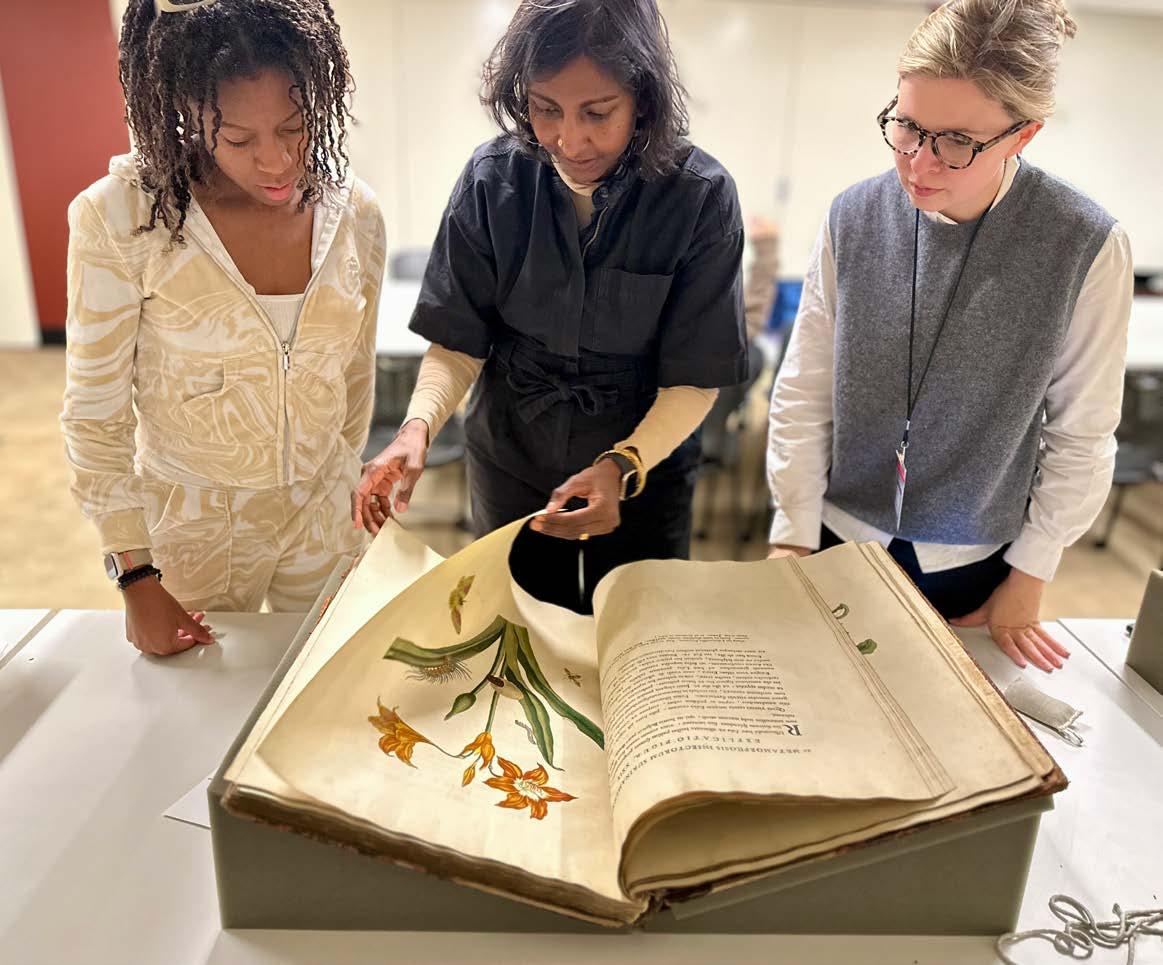
From left: Chris-Tina Middlebrooks, Anna Arabindan-Kesson, and Kate Keohane examine a manuscript in Princeton University Library’s Special Collections (Photo/Kirstin Ohrt)
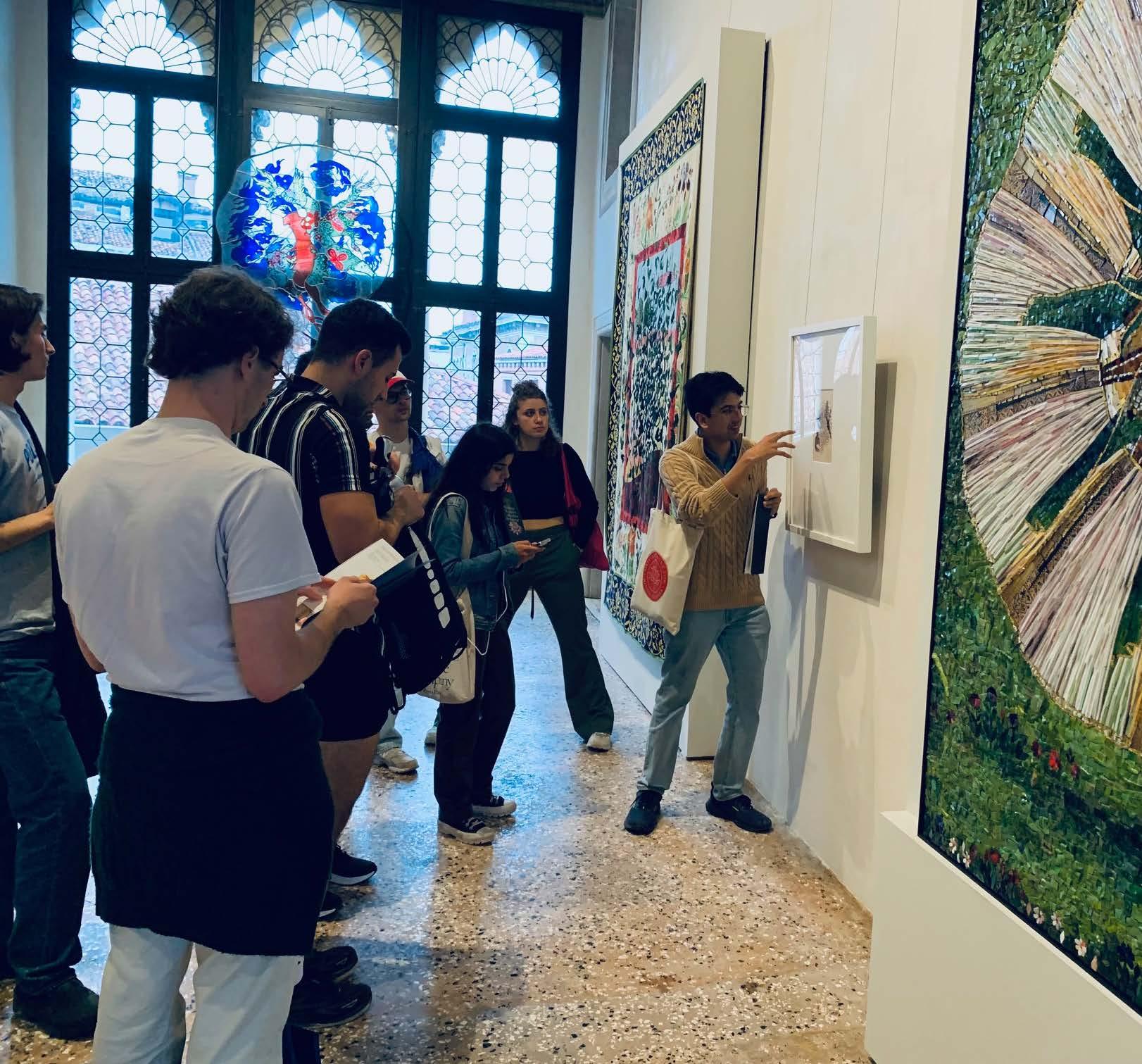
IN 2024, Professor Irene V. Small brought students in two of her classes to the Venice Biennale in Italy. The first trip complemented her spring graduate seminar ART 566 “The Global Contemporary,” while also setting the stage for her fall 2024 undergraduate seminar ART 456 “Contemporary Art: The World Picture,” which included a visit to Venice over fall break. As the oldest and most influential international art exhibition in the world, the Venice Biennale was central to Small’s exploration of global-scale exhibitions and contemporary art as a form of worldmaking. “As a scholar of modern and contemporary art who has spent a lot of time researching Brazil, questions of the global south, and the larger geopolitics of such nominations, have long been present in discussions in my various fields. I was very curious to see what the Brazilian curator Adriano Pedrosa, the first Latin American curator to oversee a Venice Biennale, would do with that platform,” said Small. “I was most intrigued by how various national pavilions took up issues of queerness, indigeneity, coloniality, and networks in distinct ways.”
“Pedrosa’s curation filled the Arsenale and Giardini with art by more indigenous and queer artists than I had ever seen at previous Biennales,” graduate student Sonya Merutka echoed. “We gave thought to terms such as ‘native,’ ‘indigenous,’ and ‘colonial’ in terms of artistic practice and how they become attached to notions such as static, land-based, or mobile—migration being an age-old reality on this planet.”
Magnus von Ziegesar ’25, a student in ART 456, said, “This course had some of the best classroom conversations I’ve ever experienced at Princeton.” “Professor Small talks about how with art, each piece brings with it an excess of meaning,” he continued, “as if one could talk about a piece forever.”
Small encouraged a collaborative approach to taking in the exhibitions. “I usually prefer to walk through exhibitions solo, but Professor Small had us move through the exhibition with another student and discuss with the group afterward, which led me to think about the works in ways I never would have on my own,” said comparative literature major Isadora Knutsen ’25.
Robert Mohan ’26 agreed: “It was the most consecutive time I’ve ever spent looking at contemporary art, but the way we tackled the massive exhibition in small groups and solo walks really helped me process the art and its connection to the overarching theme.”
► MORE : Learning from the 2024 Venice Biennale
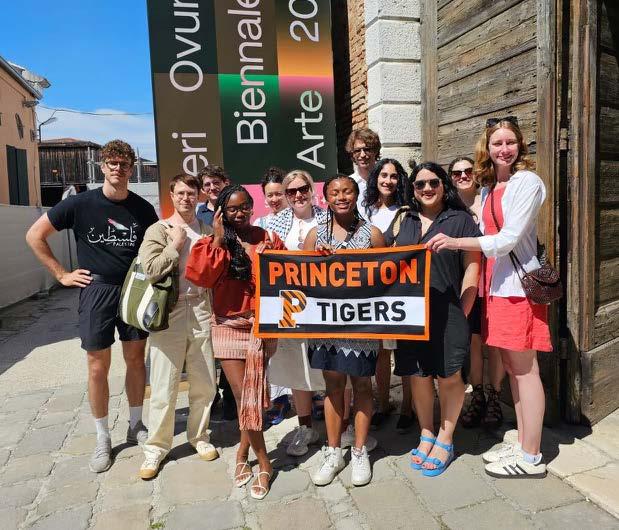
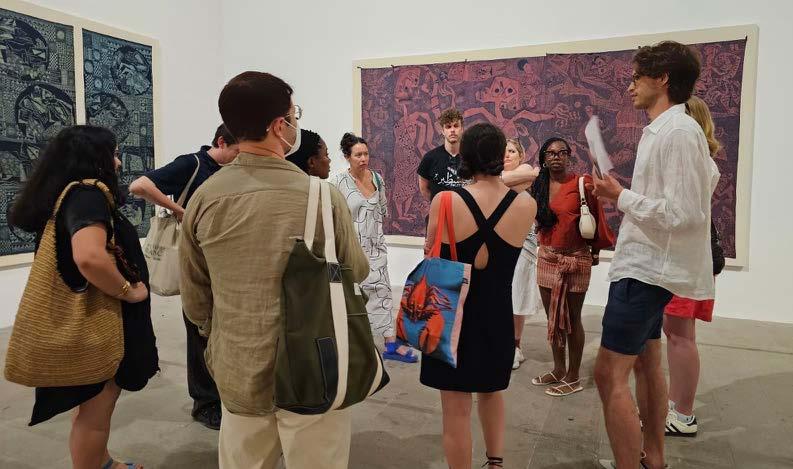
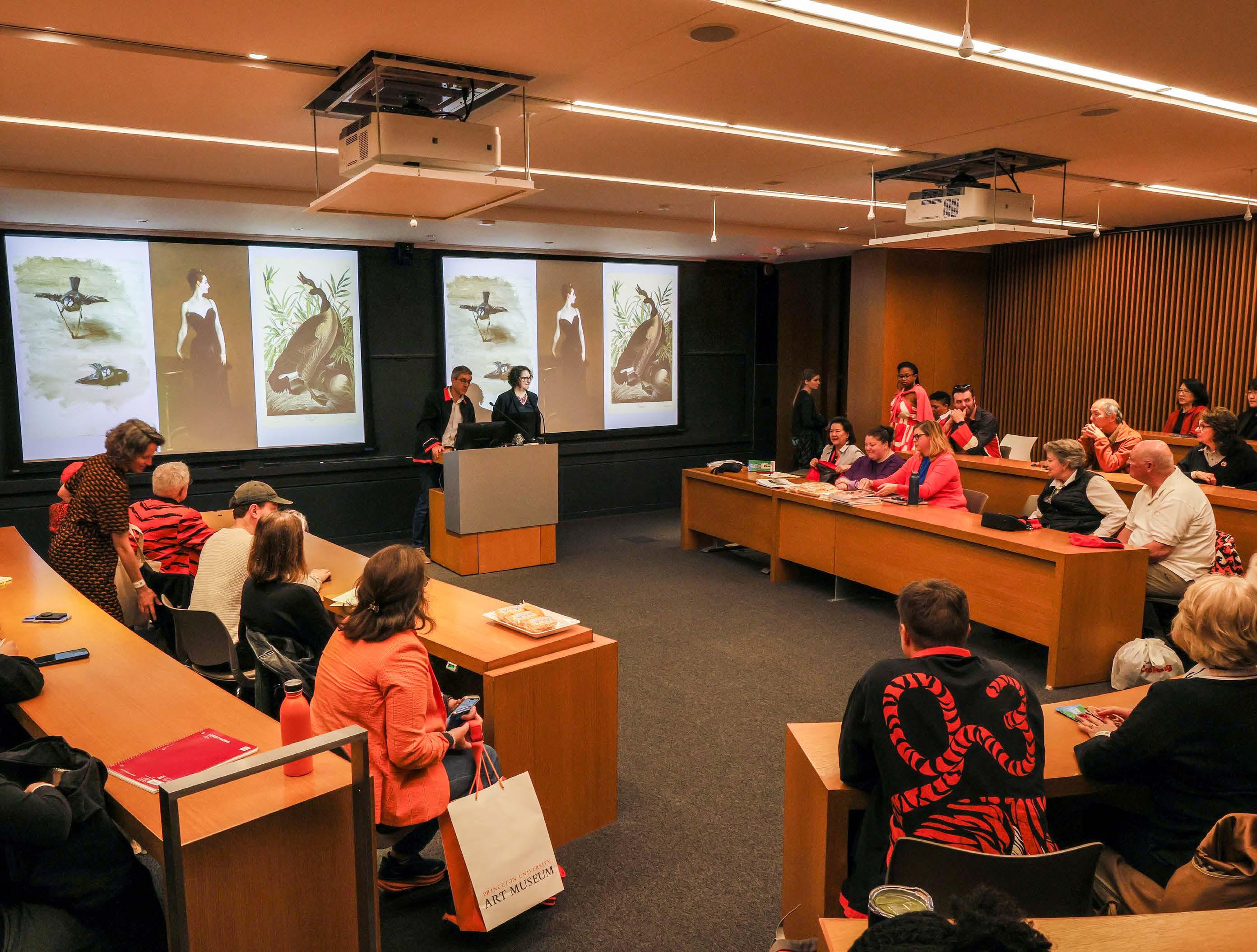
THOUGH THE FINISHED WORKS of her subject, German Renaissance painter and printmaker Albrecht Dürer, are well studied, Dackerman investigates the matrices from which he printed, until now relegated to the marginal category of artifact. Dackerman has opened novel and meaningful paths of inquiry, bringing the A&A community along through her course “Early Modern European Art: The Ecological History of Early Modern Prints” as well as in her Robert Janson-La Palme *76 Lecture, “The EcoHistory of Print: Dürer’s Woodblocks.”
Dackerman reframed Dürer for the brimming audience of her lecture as an arborist of sorts. His intimate familiarity with wood would have been a prerequisite of his craft, as thoroughly understanding a medium is for any artist. Between 1495 and 1500, as he was painting tree portraits, he was producing especially dramatic woodblock matrices in parallel. Though not trained as a sculptor, Dürer gouged far more pronounced and dramatic reliefs into his matrices than print production would require. “Reviewing the cycle from forest to timber to print matrix to artifact, through networks of wood workers, begins to evoke the precarious environmental history,” Dackerman said in concluding her lecture, “and the history of wood in which Dürer is ingrained.”
“One of the highlights of Susan’s lecture was the way she put specific works from Princeton’s collections into perspective,” said Professor Carolyn Yerkes. “For example, there is a woodblock of a portrait of Dürer, attributed to Erhard Schön, that speaks both to the history of the artist’s reception and to the history of printmaking more generally. It was fascinating to hear how Susan contextualized the art of the woodcut within a series of larger issues.”
Giving such a provocative lecture to her Princeton colleagues advanced Dackerman’s own work as well. “Since my lecture, I’ve received notes from those who attended suggesting additional research materials and related avenues of inquiry, which to my mind is the best reason to give a talk, especially to such a smart audience,” she said.
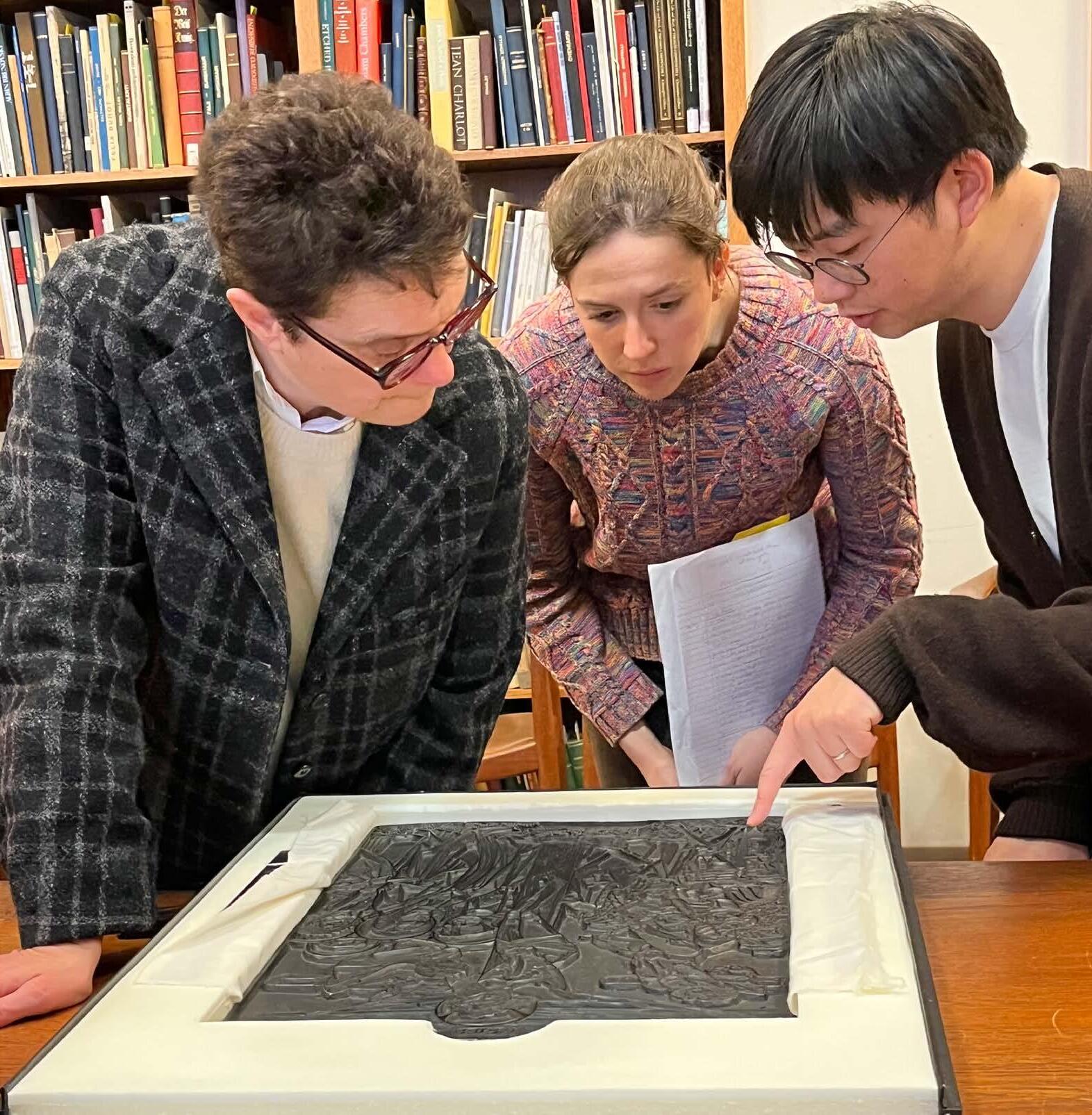
Cross-listed in Environmental Studies and European Cultural Studies, Dackerman’s course
“Early Modern European Art: The Ecological History of Early Modern Prints” brought the intersection of science and art to life and ventured beyond conventional art historical analysis. “The topic of my seminar did not come from codified art historical literature but required reading and thinking across fields,” she said. “Imagining that we could tie all the ideas together was a leap of faith that the
students were willing to take with me, and I very much appreciate their efforts in making the classroom discussions so successful.”
A&A graduate student Allison Marino, who had studied Dackerman’s published works and highly anticipated the course, found it even more enriching than expected. “This course has completely changed how I look at not only early modern material but material from all periods and of all different media,” she said.
“One of the central themes of the course is
that when we see a print in a museum, gallery, or research library, we are seeing only the final stage of its production,” said Marino. “There is so much left to learn by thinking about the earlier stages—the woodblock or copper plate from which it was printed, where the wood and copper came from, who sourced it, what the larger environmental impacts of that sourcing were, how an artist had to think around and work with the materiality of the matrix, and how that inevitably affected the final product.”
Dackerman emphasized how gratifying and enjoyable her semester at Princeton has been. “The A&A faculty and staff have been unwaveringly welcoming and helpful,” she said. “A&A provided not only a gracious environment but also an intellectually enriching one.” “Before my semester here, I wasn’t sure whether my research on the ecologies of early modern print would come to fruition as an article or as a book,” she continued. “After my time engaging
with students, faculty, and the university’s outstanding resources, I’ve come to realize that the project has the potential to be a book that can be used for teaching a relatively unexplored aspect of print history.”
At the close of her semester at Princeton, Dackerman leaves the A&A community richer as well. Of the many things Marino takes away from Dackerman’s course and lecture, she said, “I will always remember that the object I see in front of me is only one part of its larger ‘life cycle,’ and it is always worth it to spend time thinking about its earlier lives and stages.”
Looking ahead, the 2026 Robert JansonLa Palme *76 Visiting Professor will be Frank Zöllner, renowned art historian and professor emeritus at the University of Leipzig. Zöllner has published on major topics of Renaissance art and art theory and on late 19th- and 20thcentury art. Subjects include Leonardo da Vinci, Sandro Botticelli, Michelangelo, Raphael,
Vincent van Gogh, Paul Klee, the art of the GDR, Neo Rauch, the Leipzig School of Painting, and Aby Warburg.
The Robert Janson-La Palme *76 Visiting Professorship and Conference was endowed in 2002 in honor of Robert Janson-La Palme by his mother-in-law, Mrs. Lillian Marks. Robert Janson-La Palme, professor emeritus of art history at Washington College in Maryland, received his B.A. from Brown University in 1952 and his Ph.D. from Princeton in 1976, studying under Professors Millard Meiss and John Rupert Martin. This endowment was established to bring a visiting scholar and teacher of national and international stature to Princeton to teach and conduct other scholarly activities, primarily at the graduate level, in European art of the period 1200–1800 A.D.
► MORE : 2025 Janson-La Palme Visiting Professorship
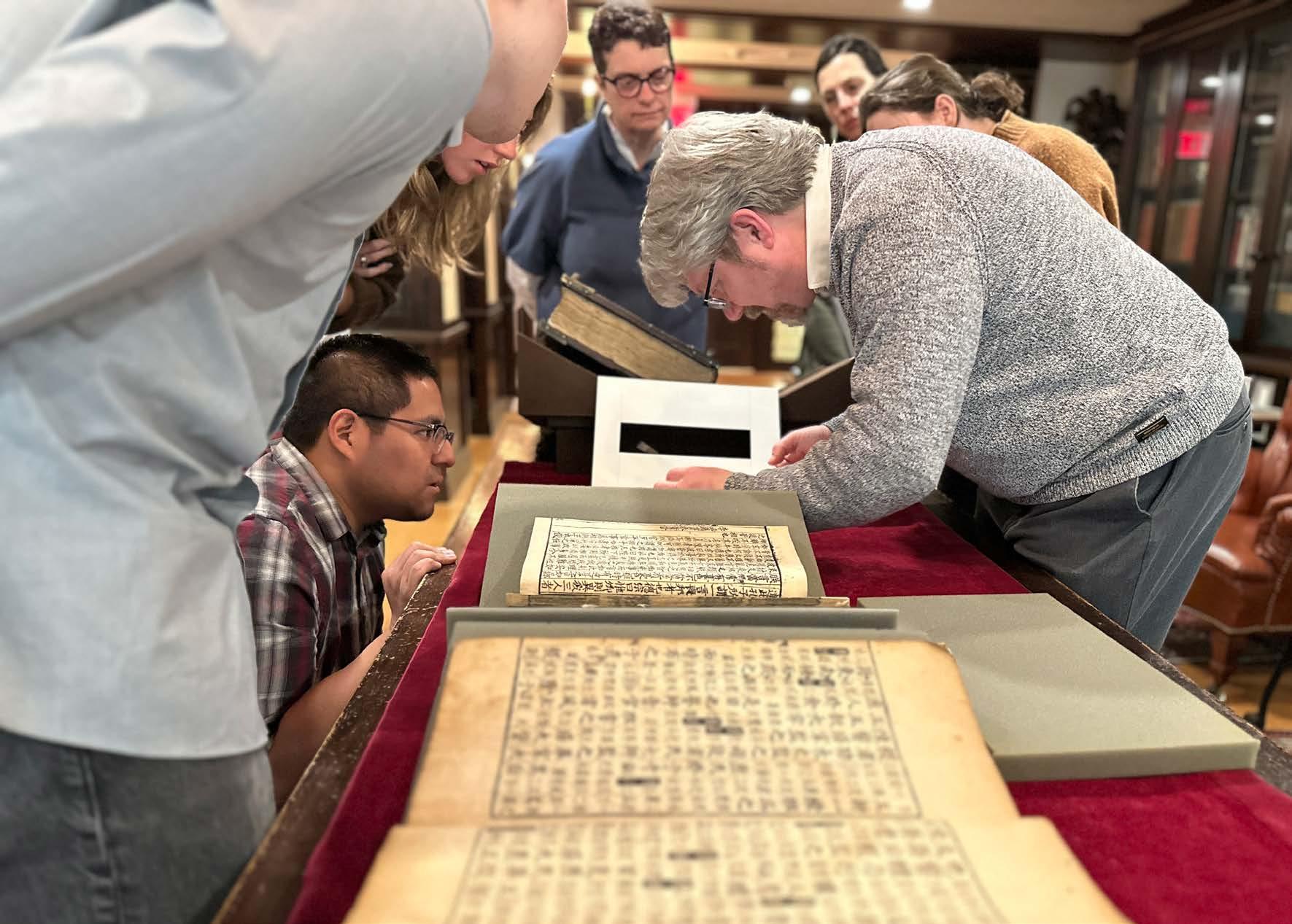
SEPTEMBER 16, 2024
Art Hx Zoom
Layal Liverpool, Science Journalist
“Systemic: How Racism Is Making Us Sick”
Cosponsored by Art Hx, Department of African American Studies, Humanities Council
SEPTEMBER 26, 2024
A&A Lecture Series
Andrei Pop, University of Chicago “Vertical Perspective”
OCTOBER 24, 2024
A&A Lecture Series
Jonathan Hay, Institute of Fine Arts, New York University
“Sardonic Dissonance in Xu Wei’s Parapaintings ca. 1573–1593”
Cosponsored by the Tang Center for East Asian Art
OCTOBER 31, 2024
A&A Graduate Student Conference
Atreyee Gupta, University of California-Berkeley
“Bandung to Berlin: Art, Decolonization, and the Cold War”
NOVEMBER 9, 2024
Index of Medieval Art Conference “Unruly Iconography? Examining the Unexpected in Medieval Art” Cosponsored by the Index of Medieval Art
NOVEMBER 12, 2024
ART 407 Public Lecture
Vinzenz Brinkmann, Liebieghaus Skulpturensammlung
“Reconstruction as a Research Tool: The Frankfurt Liebieghaus Polychromy Research Project”
Cosponsored by the Program in Archaeology
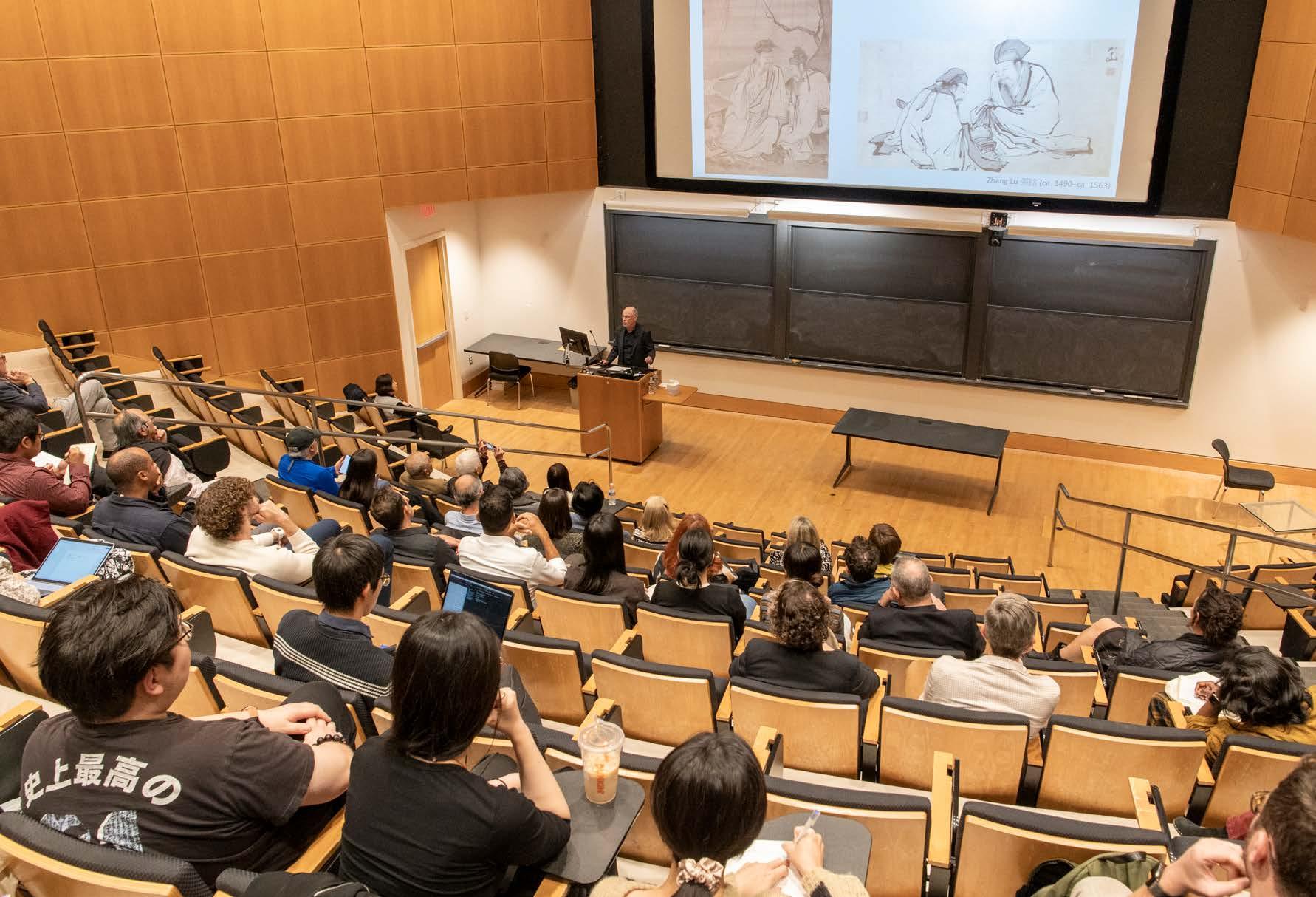
“Sardonic
NOVEMBER 19, 2024
ART 407 Public Lecture
Peter J. Cobb, University of Hong Kong
“More Love for the Common Body
Sherd: Implications and Challenges of 3D Scanning All Your Pottery”
Cosponsored by the Program in Archaeology and Archaeological Institute of America
FEBRUARY 20, 2025
Photo History’s Futures
Drew Sawyer, Whitney Museum of American Art
“Copy Machine Manifestos: Artists Who Make Zines”
Cosponsored by the Princeton University Art Museum
FEBRUARY 27, 2025
A&A Lecture Series
Verity Jane Platt, Cornell University
“The Intelligent Hand: From Hellenistic Epigram to the Hoby Cups”
MARCH 24, 2025
Livia Lupi, University of Warwick
“Architecture According to Artists: The Intersection of Art and Architectural Practice in Renaissance Italy”
Cosponsored by the Index of Medieval Art, Committee on Renaissance and Early Modern Studies, Program in Italian Studies
MARCH 26, 2025
ART401 Guest Lecture
Christina Papageorgopoulou, Democritus University of Thrace
“Living in a City: Population Resilience and Adaptation in Preindustrial Urban Settings (300 B.C.E.–A.D. 1500)”
Cosponsored by the Program in Archaeology, Seeger Center for Hellenic Studies, Program in the Ancient World
MARCH 27, 2025
A&A Lecture Series
Margaret Graves, Brown University
“Fictions of Capital: Extracting, Liquidating, and Fabricating Islamic Ceramics for a Global Market”
APRIL 4, 2025
Hui-Wen Lu, A&A Visiting Scholar and National Taiwan University, and Cheng-hua Wang
“Writing & Women Calligraphers in East Asia”
Cosponsored by the East Asian Studies Program and Tang Center for East Asian Art
APRIL 7, 2025
AIA Ettinghausen Lecture
Melissa Cradic, University at Albany, State University of New York
“Archive Archaeology: The Invisible Hands of Colonial-Era Excavations in the Middle East”
Cosponsored by the Program in Archaeology and Archaeological Institute of America
APRIL 9, 2025
Photo History’s Futures
Giulia Paoletti, University of Virginia
“Portrait and Place: Photography in Senegal, 1840–1960”
Cosponsored by the Princeton University Art Museum
APRIL 14, 2025
AIA Thompson Lecture
Anastasia Dakouri-Hild, University of Virginia
“The World In Between: Egypt and Nubia in Africa: Telling the Story Through Museum Artifacts” Cosponsored by the Program in Archaeology, Archaeological Institute of America
APRIL 17, 2025
Robert Janson-La Palme *76 Lecture
Susan Dackerman, Robert JansonLa Palme *76 Visiting Professor
“The Eco-History of Print: Dürer’s Woodblocks”
APRIL 24, 2025
A&A Lecture Series
Ming Tiampo, Carleton University
“Decolonizing May ’68: The Art of Protest in Post-Imperial London and Paris”
APRIL 28, 2025
Workshop:
“Connecting Histories: The Princeton and Mount Athos Legacy”
Cosponsored by the Princeton Institute for International and Regional Studies (PIIRS), Index of Medieval Art, Seeger Center for Hellenic Studies, with the support of the Dimitrios and Kalliopi Monoyios Modern Greek Studies Fund
APRIL 29, 2025
James F. Haley ’50
Memorial Lecture
Maria Loh, Institute for Advanced Study
“Early Modern Ms. Fortune”
MAY 9, 2025
Claire Barbillon, École du Louvre
“The École du Louvre Yesterday and Today: Breaking with Tradition”
May 22–25, 2025
Arts Alumni Programming
Cosponsored by the Lewis Center for the Arts, Department of Art & Archaeology, Department of Music
May 23, 2025
A&A Reunions Lecture
Rachael Z. DeLue
“Dead Birds, or, How to Make a Picture Come to Life”
2024–25
Media & Modernity Lecture Series
Hosted by the Program in Media and Modernity
2024–25
Princeton Mellon Initiative Series
Hosted by the School of Architecture
2024–25
Annual Student Programming
Support ODUS
Hosted by Office of the Dean for Undergraduate Students
2024–25
Modern Greek Studies
Association Program
Hosted by the Seeger Center for Hellenic Studies
SEPTEMBER 4, 2024
Late Antique, Medieval, and Byzantine Workshop (LAMB) Workshop Series
Lucia Waldschuetz (History)
“Navigating Community: Social Networks and Dependence on the Large Estates of Late Antique Egypt”
Hosted by the Program in Medieval Studies
SEPTEMBER 24, 2024
Late Antique, Medieval, and Byzantine Workshop (LAMB) Workshop Series
Lottie Page (English)
“Dom(i)nae: The Written Women of Roman Love Elegy and Troubadour Love Lyric”
Hosted by the Program in Medieval Studies
SEPTEMBER 28 & OCTOBER 7, 2024
Celebrating Latinx Culture Through Traditional Mexican Art
Jane Cox (Lewis Center for the Arts)
Hosted by the Lewis Center for the Arts
SEPTEMBER 30, 2024
Alexandra Alexandridou, University of Ioannina
“The Early ‘Biography’ of the Temenos on the Island of Despotiko: Paving the Route to the Consolidation of Cult in the Cyclades”
Hosted by the Seeger Center for Hellenic Studies
OCTOBER 1, 2024
Seuls en Scène, Princeton French Theater Festival 2024
Florent Masse (French & Italian)
Hosted by the Department of French & Italian
OCTOBER 1, 2024
Program in the Ancient World (PAW)
Yannis Lolos, University of Thessaly
“Refounding Sikyon: The Creation of a Monumental Landscape”
Hosted by the Program in the Ancient World
OCTOBER 9–10, 2024
Marcel Broodthaers and America: A Symposium
Hosted by the Lewis Center for the Arts
OCTOBER 10, 2024
Late Antique, Medieval, and Byzantine Workshop (LAMB) Workshop Series
Jeremy Stitts (History)
“Tetrarchic Christianity: The Transformation of Trier and Sirmium into Competing Christian Capitals”
Hosted by the Program in Medieval Studies
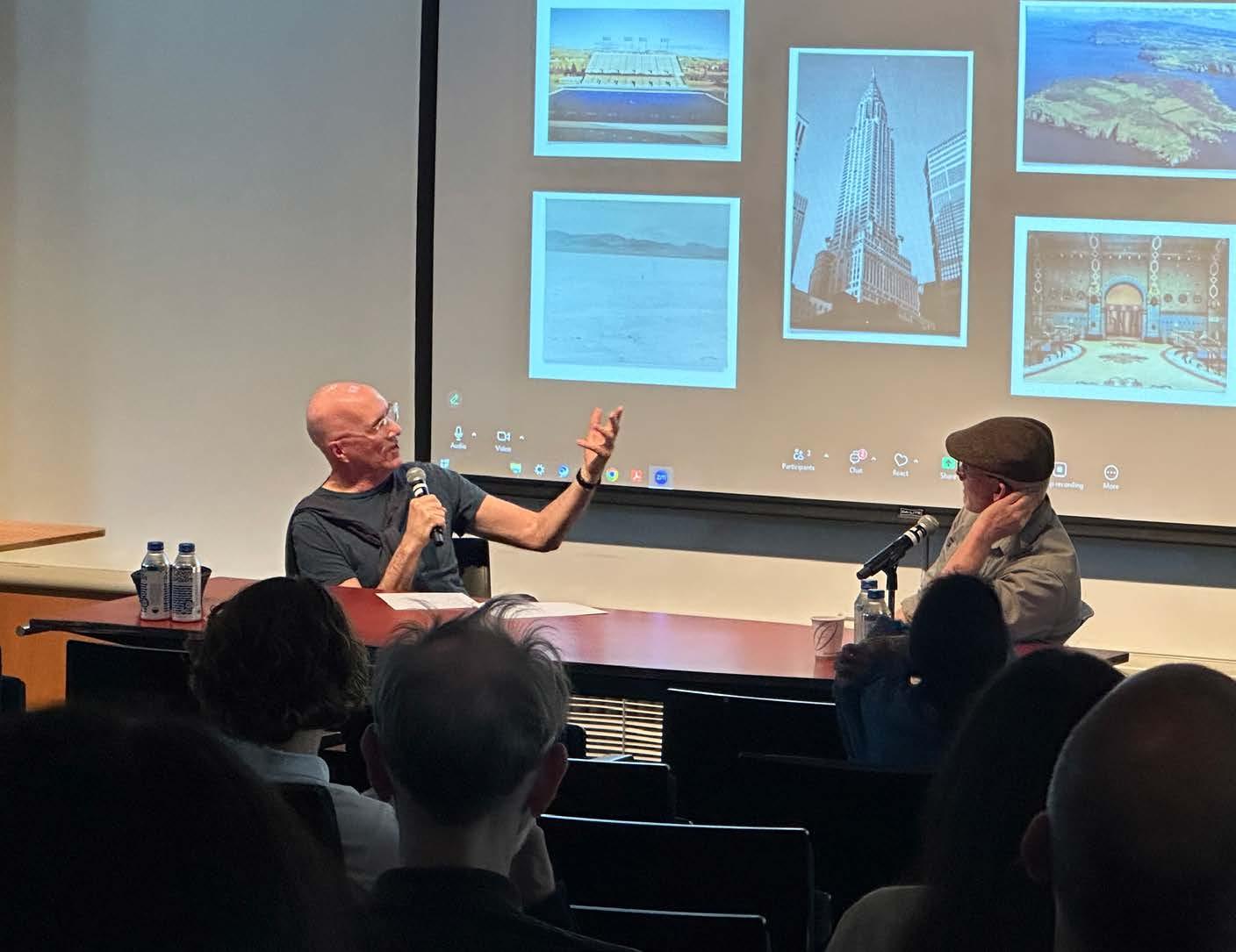
OCTOBER 10–11, 2024
Poetic Record: Photography in a Transformed World
Hosted by the Lewis Center for the Arts
OCTOBER 22, 2024
Late Antique, Medieval, and Byzantine Workshop (LAMB) Workshop Series
Rachel Singer, Georgetown University
“Plague, Famine, and Plundering Pagans: Disaster in Gildas’ De excidio Britonum”
Hosted by the Program in Medieval Studies
OCTOBER 26, 2024
Maria Alejandra Peñuela Hoyos (Spanish & Portuguese)
“Indelible Footprints in Spain and Beyond”
Hosted by the Department of Spanish & Portuguese
OCTOBER 26, 2024
2024 Medieval Studies
Graduate Conference
Anne Lester, Johns
Hopkins University
“Ordinary People, Everyday Lives: Exploring the Mundane in Late Antiquity and the Middle Ages”
Hosted by the Program in Medieval Studies
NOVEMBER 4, 2024
Late Antique, Medieval, and Byzantine Workshop (LAMB) Workshop Series
Alice Morandy (History)
“The Typical and the Atypical: Slices of Life (As Transcribed in 13th-Century Mancelles Miracles)”
Hosted by the Program in Medieval Studies
NOVEMBER 19, 2024
Late Antique, Medieval, and Byzantine Workshop (LAMB) Workshop Series
James Cogbill (History)
“Precarity and Local Loyalties in Byzantine Provincial Governance, c. 1261–1341”
Hosted by the Program in Medieval Studies, Center for Collaborative History, Department of English, Department of Religion, Department of Classics
DECEMBER 11, 2024
C. Brian Rose, University of Pennsylvania
“Troy and Gordion:
An Excavator’s Perspective on Two Legendary Sites in Anatolia”
Hosted by the Department of Classics
WINTERSESSION, JANUARY 2025
FLAME Project
Alan Stahl (Princeton University Library) Hosted by Princeton University Library
FEBRUARY 10, 2025
Weimin Zhang, San Francisco State University
Film Screening: Of Color and Ink: The Chang Dai-chien Story Hosted by the Tang Center for East Asian Art
FEBRUARY 11, 2025
Faber Lecture
Lawrence Abu Hamdan, artist
“The Sonics of Self Determination” Hosted by the Humanities Council
FEBRUARY 15, 2025
Uberto Pasolini, Film Producer and Director
“The Return”: Q&A with Director Uberto Pasolini and Barbara Graziosi
FEBRUARY 16, 2025
Humanities Research/Creative Projects: On Media and Meaning
Rachael Z. DeLue, Barbara Graziosi (Classics), Carolina Mangone Breakfast Conversation with Filmmaker Uberto Pasolini, Director of The Return Hosted by the Department of Classics
FEBRUARY 21, 2025
Jonah Estabrook (German) “Mysticism and Modernism: The World of Margarete Susman” Hosted by the German Department
MARCH 18, 2025
Darya Tsymbalyuk, University of Chicago
“Coal: Between Extraction and More-than-Human Archives” Hosted by the Department of Slavic Languages and Literatures
MARCH 28, 2025
Mattia D’Acri
“From Science to Narrative: Pottery Production and Social Dynamics in Archaic Rome” Hosted by the Program in the Ancient World
MARCH 28–29, 2025
Devin Fore (German) Conference: “Fantasies of the People: There Have Never Been Any Others” Hosted by the German Department
APRIL 2, 2025
Yassine Ait Ali (French & Italian)
“Euzhan Palcy: A Pioneer of Transnational Cinema” Hosted by the Department of French & Italian
APRIL 4–6, 2025
Maxwell Smith-Holmes (School of Architecture) Doctoral Symposium: “Traffic” Hosted by the School of Architecture
APRIL 19, 2025
Cindy (Ruoheng) Li *26
The 1st Princeton China Forum (The Art and Culture Panel) Hosted by the Office of the Dean for Undergraduate Students
APRIL 21, 2025
Allison Emmerson, Tulane University
“New Excavations at Pompeii: Seasonality and Non-Elite Lifestyles” Hosted by the Department of Classics
APRIL 29, 2025
Brendan Byrne (StudioLab, Center on Science and Technology) Art of Science 2025 Exhibition Hosted by the Center on Science and Technology
For too long, the story of Chinese calligraphy has featured emperors, scholars, and monks—all male. Where were the women?
THIS WAS THE CENTRAL QUESTION at the spring 2025 “Writing and Women Calligraphers in East Asia” workshop convened by Professor Cheng-hua Wang and Hui-Wen Lu *03, visiting professor from the Graduate Institute of Art History, National Taiwan University.
Situating women in the practice of calligraphy goes beyond identifying their names and works; it requires investigating engendered hierarchies of labor and cultural value and rethinking the framework through which calligraphy is studied. In four panels that filled the day, participants of the workshop did just that. “Calligraphy inscribes meaning into form,” said Lu. “We are reshaping the field itself when we uncover women figures within it.”
“What impressed me most about the workshop was the introduction to the works of contemporary artists and the intersectional issues surrounding women and writing,” said Wang. “The predominantly male tradition
of writing in premodern China has been transformed, challenged, or even discarded by these practitioners,” she said.
In addition to the invited attendees who filled the lecture hall, approximately 100 participants joined via Zoom. Sponsored by the Department of Art & Archaeology, the East Asian Studies Program, and the Tang Center for East Asian Art, the conference spanned East Asia in scope, including China, Japan, Korea, and Taiwan.
As part of a panel titled “Contemporary Practices” moderated by Princeton University Art Museum Curator Zoe S. Kwok *13, Lu introduced the work of a new generation of women calligraphers in her presentation “Walking Their Own Paths: Women Calligraphers in Contemporary Taiwan and Beyond.” This group of calligraphy innovators are “inscribing not just characters but also voice,” said Lu.
Artist Tomoko Kawao, for example, develops calligraphic characters specific to women she
interviews, whereas Shirin Neshat uses Persian calligraphy as a form of resistance. Lu also cited Peng Wei, who visited Princeton in 2023 to demonstrate her brushstroke techniques, and Cui Fei, who took the podium after Lu. In her presentation “Nature and Calligraphy,” Cui showed five series of her work, all entwining nature with calligraphy.
Professor Rachel Saunders moderated the panel “Writing and Mediums,” with presenters Melissa McCormick *00 (Harvard University) and Aida Yuen Wong (Brandeis University). Presenters also included Amy McNair (University of Kansas) and Hui-shu Lee (University of California-Los Angeles) as part of a panel titled “Shifting Perspectives,” and Ksenia Chizhova (East Asian Studies) and Doris Sung (University of Alabama) on the panel “Nation Building and Cultural Diplomacy.”
Over the spring semester, Lu and Wang have been coteaching ART 525 “Seminar on Chinese Calligraphy,” which examines the studies of Chinese calligraphic paradigms, focusing on the period from the 7th to the 14th century. Offering a course on calligraphy was an obvious choice for Wang, as was the ideal instructor to teach it with her. “Professor Lu’s name naturally came to mind,” said Wang, “second to none.” This was a welcome opportunity for Lu, who, having earned her Ph.D. from A&A in 2003, looked forward to returning to her alma mater as the teacher. “In fact,” she said, “this was one of the very first seminars I took with Professor
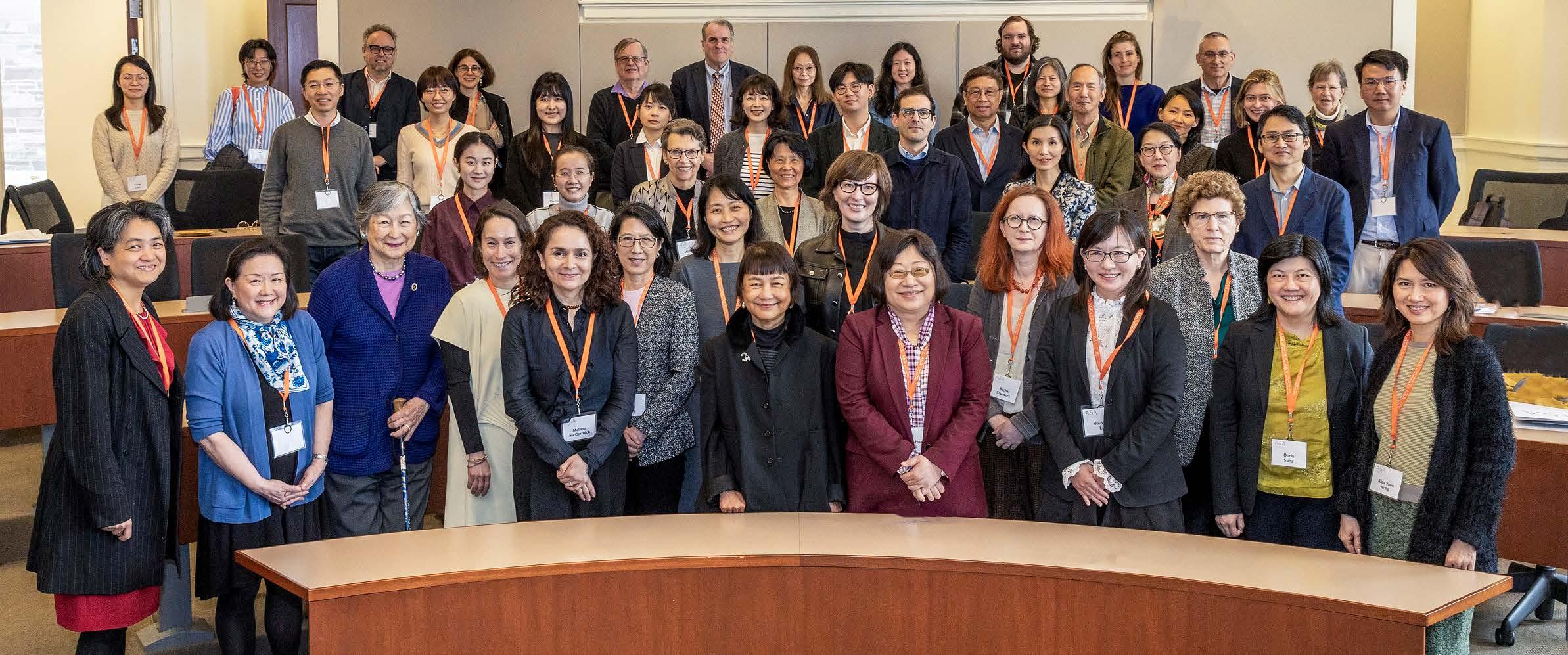
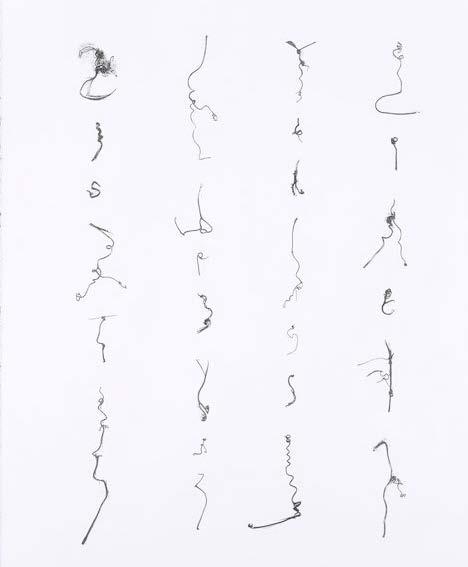
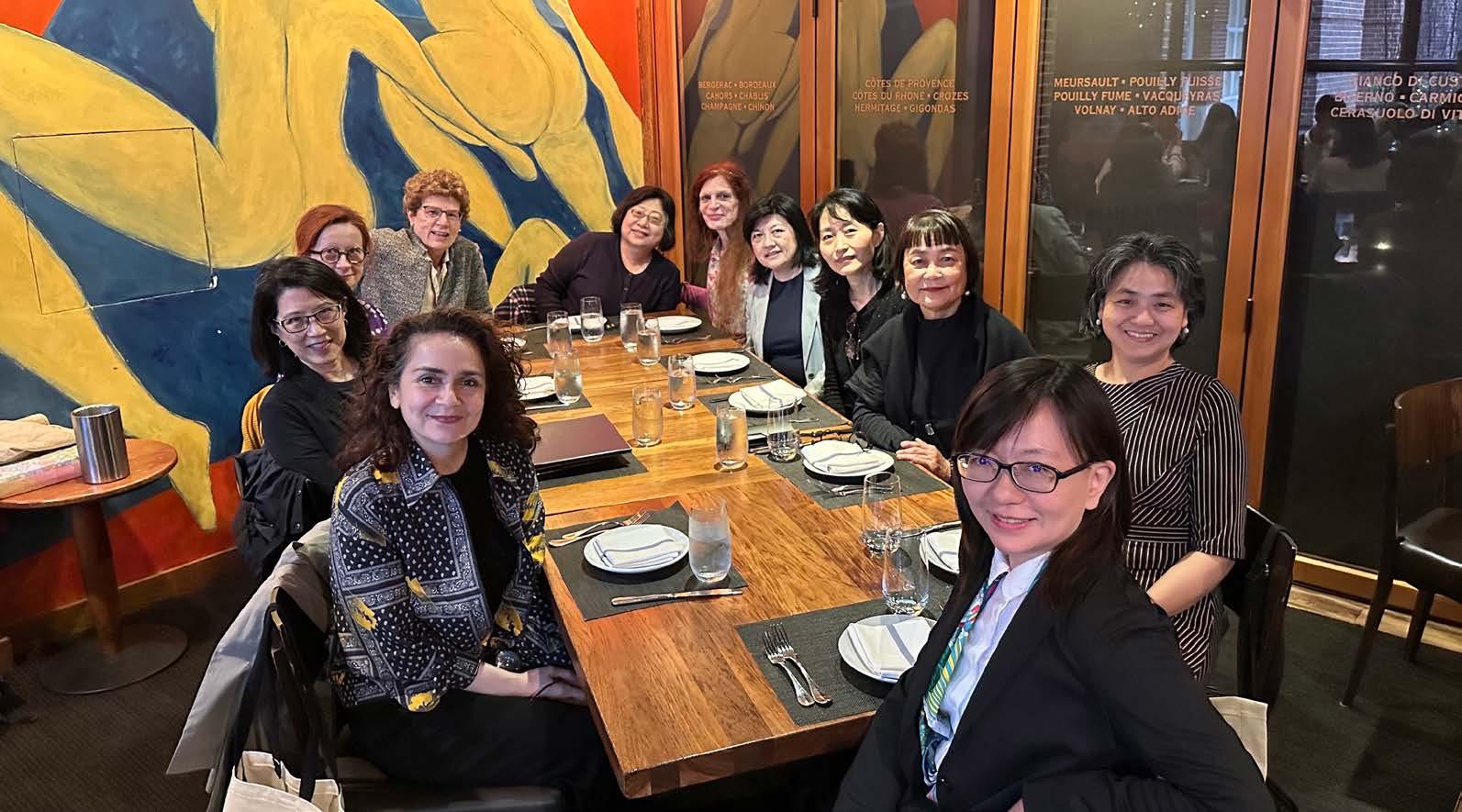
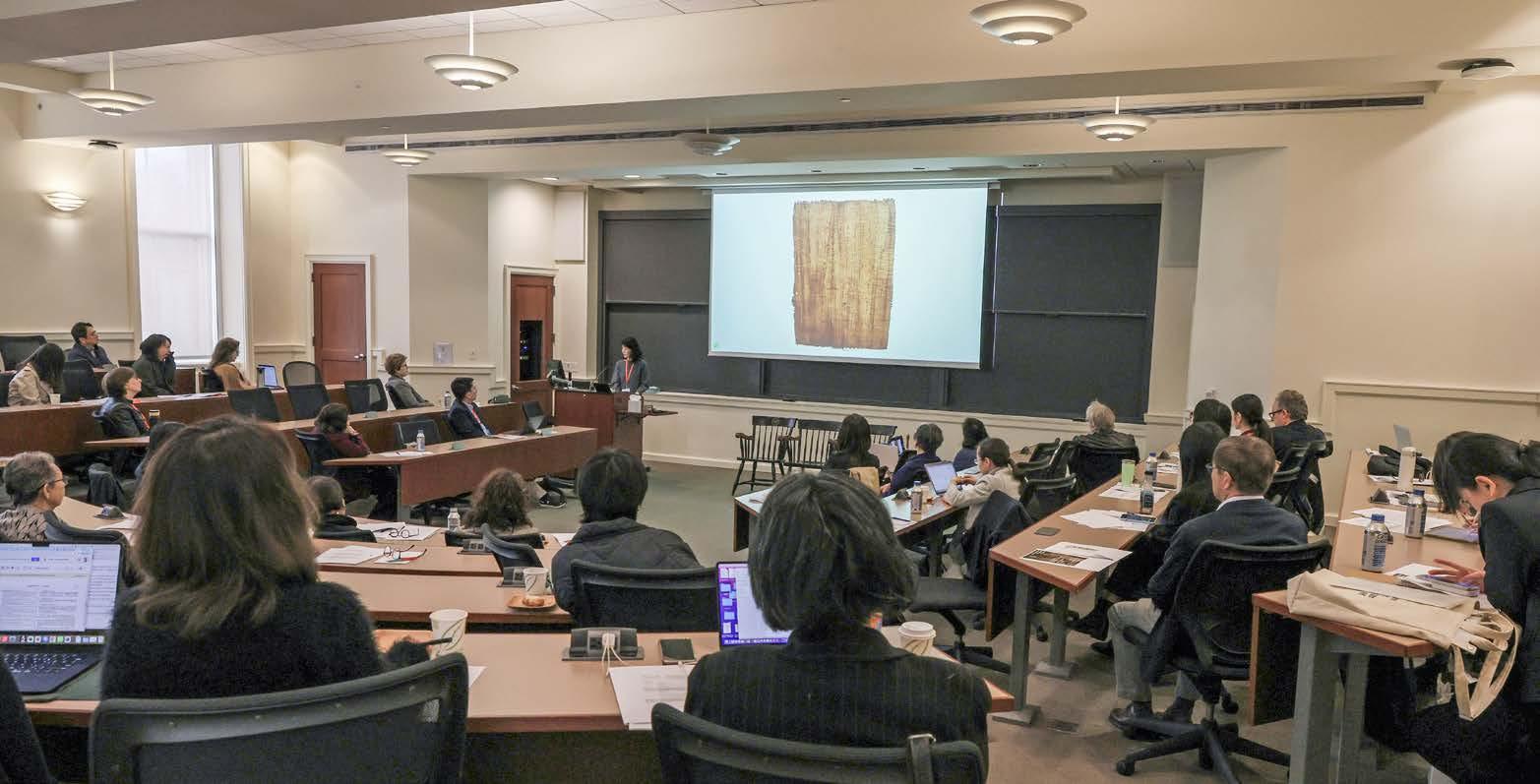
Wen C. Fong when I was a Ph.D. student here in the late 1990s.”
As a Ph.D. student, Lu’s first presentation at a major conference was at Princeton’s last convening on the topic of calligraphy, “Character and Context in Chinese Calligraphy,” held in 1999. As she opened this year’s workshop, Wang noted the preeminent role Princeton has played in elevating the study of calligraphy. “The number of universities in the United States that have offered courses on the history of Chinese calligraphy could be counted on one hand,” she said. “Princeton not only is a pioneer in the teaching of advanced courses on Chinese calligraphy in the English-speaking academic world but also houses an outstanding collection of Chinese calligraphy.” Princeton
and the Metropolitan Museum of Art hold the two best calligraphy collections outside China, Japan, and Taiwan.
Just as important, she explained, was Princeton’s cultivation of the lineage of Chinese calligraphy scholars. On all counts, credit can be traced back to the late Professor Fong, who earned his doctorate from A&A in 1958 and taught in the department until his retirement in 1999. Poignantly, Lu was his last student. During his tenure, he helped establish at Princeton the nation’s first Ph.D. program in Chinese art and archaeology and defined the foundational vocabulary and methods of scholarly analysis for calligraphy history, firmly positioning calligraphy at the core of Chinese literati art.
Today, Princeton graduates and their students constitute an impressive group of faculty teaching East Asian art history in the United States. Several other members of Princeton’s cross-generational cohort were in attendance at the conference, including: Executive Director of the Tang Center for East Asian Art Dora Ching *11, Zoe Kwok *13, Cary Liu ’78 *97, Melissa McCormick *00 (Harvard), Alfreda Murck *95, Curator of Chinese Art at the Metropolitan Museum of Art Jason Zhixin Sun *96, Andrew Watsky *94, and Luther W. Brady Curator of Japanese Art at the Philadelphia Museum of Art Xiaojin Wu *11. Connie Fong, wife of the late Professor Fong and an avid art lover herself, was also in attendance.
“It can be said that the ‘Princeton school’ pioneered a modern, art-historical approach to the study of Chinese calligraphy,” said Lu. “I am very proud to be part of that lineage and deeply honored to have been invited back to Princeton to help train the next generation of scholars.”
The emerging generation of scholars, A&A graduate students Shing-Kwan Chan, Josephine O’Neil, and Yuchen Wang, helped facilitate the conference.
“I’m very glad to see that the younger generation of students is not only interested in the study of Chinese calligraphy but also approaching it through cross-cultural, crossmedia, and interdisciplinary perspectives, making the field more exciting and dynamic than ever before,” said Lu.
► MORE : Women Calligraphers conference
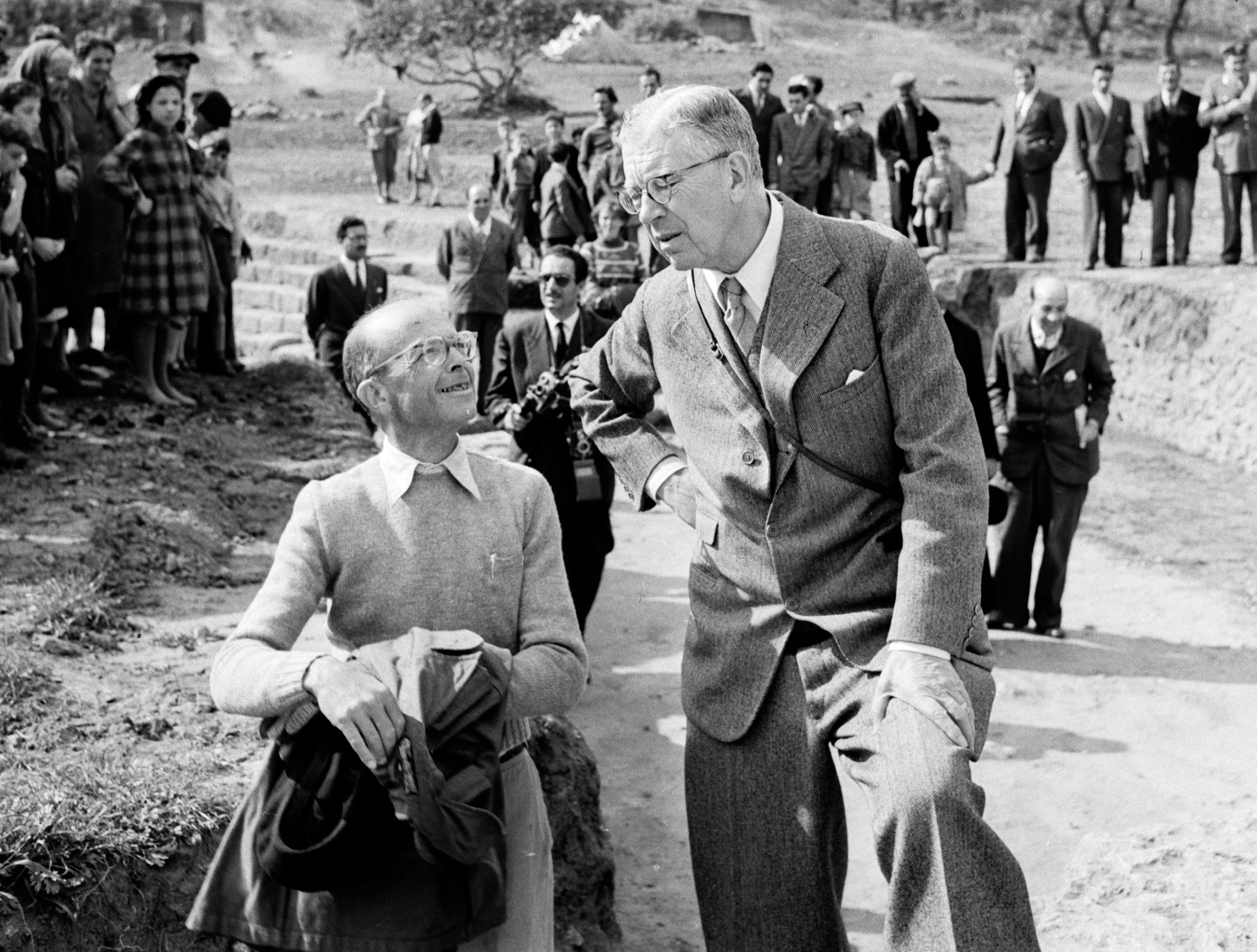
THE TANG CENTER, under the leadership of Executive Director Dora C. Y. Ching and Interim Director Nathan Arrington, focused primarily on charting the future direction of the Tang Center. Ching also engaged in activities ranging from screening a documentary film to supporting programs through cosponsorships and planning scholarly events for the 2025–26 academic year.
This past year, the Tang Center collaborated with the Department of Art & Archaeology, the East Asian Studies Program, and the Center for Culture, Society, and Religion. On October 24, 2024, Jonathan Hay (Institute of Fine Arts, NYU) presented the lecture “Sardonic Dissonance in Xu Wei’s Parapaintings, ca. 1573–1593,” cosponsored by the Tang Center, as part of the department’s 502 Lecture Series. Focusing on works such as Grapevines by Xu Wei (1521–1593), Hay discussed new ways of painting and sense-making in late 16thcentury Chinese painting (Fig. 1). The Tang Center teamed up again with the department as well as the East Asian Studies Program to sponsor the workshop “Writing & Women Calligraphers in East Asia” on April 4, 2025.
Organized by Hui-Wen Lu *03 (National Taiwan University; visiting scholar, Princeton University) and Professor Cheng-hua Wang, the workshop brought together ten scholars and one practicing artist who presented papers on the topics of early textual terminology and imagery; 7th-century writing and art at the court of Empress Wu Zetian; the artistic identity of Ōtagaki Rengetsu (1791–1875), who forged a singular hand through poetry, writing, and pottery; the use and reuse of kimono fabrics in mountings; nation-building through writing styles and educational texts in the first half of the 20th century in Korea; traditional painting and calligraphy as cultural diplomacy in China’s relationship to the West in the first half of the 20th century; a New York–based artist’s evolving art as a meditation on nature and its intersection with writing; and, finally, a preview of an exhibition of works by contemporary women calligraphers (Fig. 2). The large audience—50 people in person with close to 150 people on Zoom—attests to the
deep interest in calligraphy. The Tang Center also cosponsored the conference “Tangible Knowledge: Japan’s Shōsōin and the Making of Manuscripts, Treasures, and Archives,” convened by Bryan Lowe (religion) and Akiko Walley (University of Oregon; Numata Visiting Scholar, Princeton University) and organized by Princeton’s Center for Culture, Society, and Religion (Fig. 3). During the conference on March 1–2, 2025, scholars from Japan, Scotland, and the United States gathered to present research on the relationship between tangible objects and abstract knowledge through the lens of the Shōsōin, an 8th-century treasure house located in the Tōdaiji temple complex in Nara, Japan. Lectures on analogous materials such as the Cairo Geniza and the Lo Archive photographs of the Mogao and Yulin Caves in China provided comparative examinations of the ways in which objects create knowledge.
In February 2025, the Tang Center screened the documentary Of Color and Ink: The Chang Dai-chien Story, followed by a conversation with director Weimin Zhang (School of Cinema, San Francisco State University), producer Xiao Yu (PBS affiliate South Carolina ETV), and associate producer Guilherme Gorgulho (University of Campinas, Brazil). The film, which has won several “Best Documentary” awards at festivals in China, Brazil, and the United States, played to a Princeton audience of nearly 100 people. Weimin Zhang spent 12 years reviewing historic footage and retracing Chang Daichien’s (Zhang Daqian) journey from China to South America, Europe, the United States, and finally Taiwan. The film reveals the hidden story of Chang Dai-chien’s rise as an artist of global stature and how his art transcended cultural boundaries and political borders (Fig. 4).
Throughout the year, the Tang Center pursued a number of behind-the-scenes projects including publishing, in association with Princeton University Press, Exemplary Things: Meibutsu in Premodern Japan by Christine M. E. Guth (Fig. 5). Exemplary Things analyzes the concept of meibutsu, tracing its lexical usage, permutations, and impact on changing issues of sociocultural meaning,
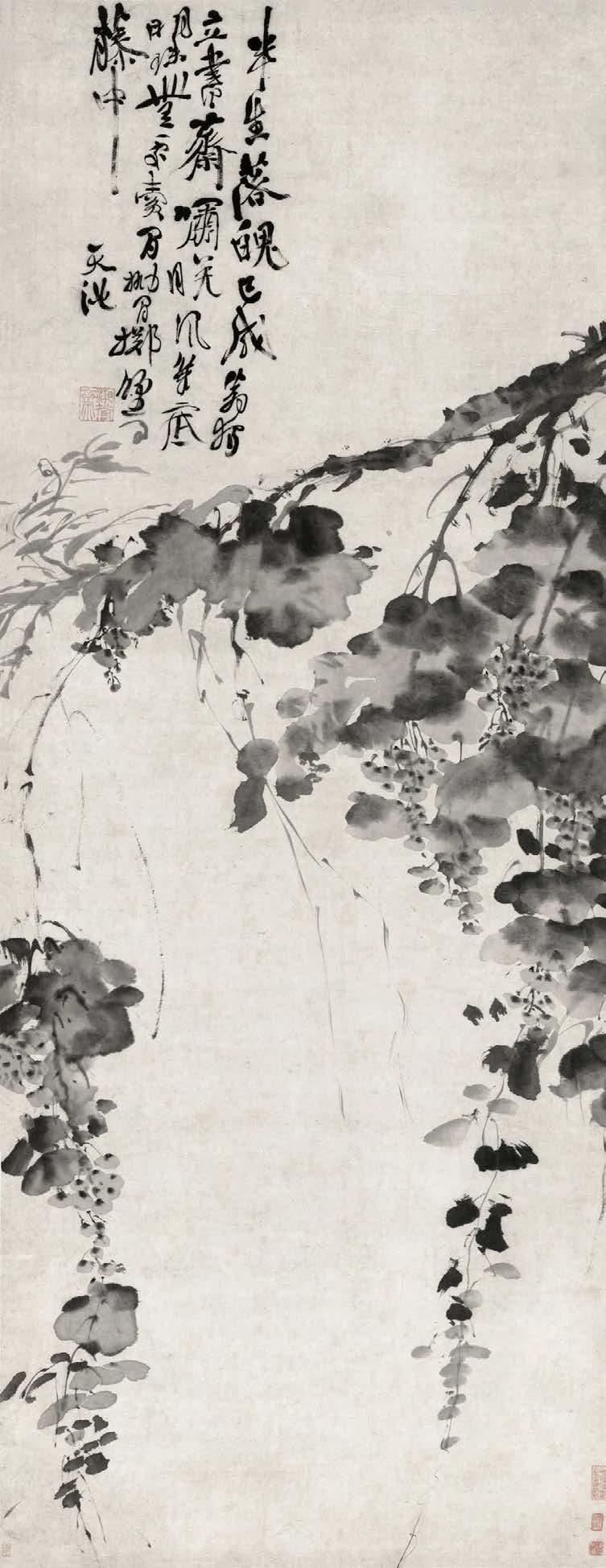
Fig. 1. Xu Wei (1521–1593), Grapevines, hanging scroll, ink on paper, 165 × 64 cm, Palace Museum, Beijing, one of the works discussed in Jonathan Hay’s Tang Center lecture
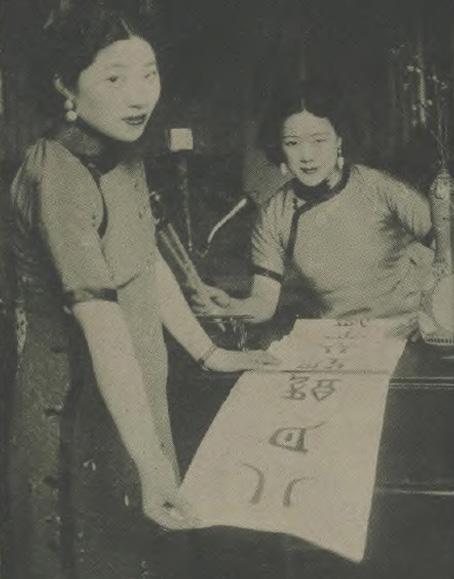
National Taiwan University
Princeton Universty
Princeton University
Ksenia Chizhova
Princeton University
Cui Fei
Artist
Hui-shu Lee
University of California, Los Angeles
Amy McNair
The University of Kansas
Doris Sung
The University of Alabama
Zoe Kwok *13
Princeton University Art Museum
Melissa McCormick *00
Harvard University
Rachel Saunders
Princeton University
Aida Yuen Wong
Brandeis University
Friday, April 4, 2025 · 10:00 am to 5:00 pm
In-person by invitation · Zoom open to all
aesthetic and economic value, and political power in Japan through renowned objects. In her insightful study, Guth reconsiders the distinctions between “art” and “craft” in Japan as mediated through meibutsu, or “exemplary things,” offering a new framework in which to understand revered objects, including those designated as “national treasures.” This volume originated as the Tang Center Lecture Series “Meibutsu and the Formation of Japan’s Artistic Canon,” presented by Guth in 2022. A different publication stemming from a Tang Center Lecture Series and concurrent seminar, Recording State Rites in Words and Images: Uigwe of Joseon Korea (2024) by Yi Song-mi *83, received the Best Historical Materials Book of the Year award from the Reference and User Services Association, an affiliate of the American Library Association (Fig. 6).
In anticipation of the move to the new Art Museum building and Marquand Library after the fall 2025 semester, the Tang Center focused on organizing its archival holdings. The Lo Archive photographs have been reordered and prepared to be moved to the Tang Seminar Room in Marquand. The Tang Center office will also move to Marquand Library, adjacent to the Tang Seminar Room. Work continues on sorting and cataloguing the large collection of research photographs of Chinese and Japanese art, which will be transferred to an offsite storage facility for easy recall to use in classes. In addition, the ongoing organizing of the late Professor Wen Fong’s papers continues in preparation for their eventual transfer to Mudd Library.
In July, the Tang Center welcomed Chenghua Wang, associate professor of Chinese art history, as its new director, bringing a fresh perspective to the Tang Center’s activities. Finally, working with the Asian Art Group at Princeton, which consists of faculty and curators in Asian art, the Tang Center is organizing the international symposium “Asian Art at Princeton: Celebrating Collecting and Scholarship,” scheduled for April 9–11, 2026, cosponsored by the Princeton University Art Museum, the Department of Art & Archaeology, and the East Asian Studies Program.
For details about the Tang Center’s activities, please visit: tang.princeton.edu
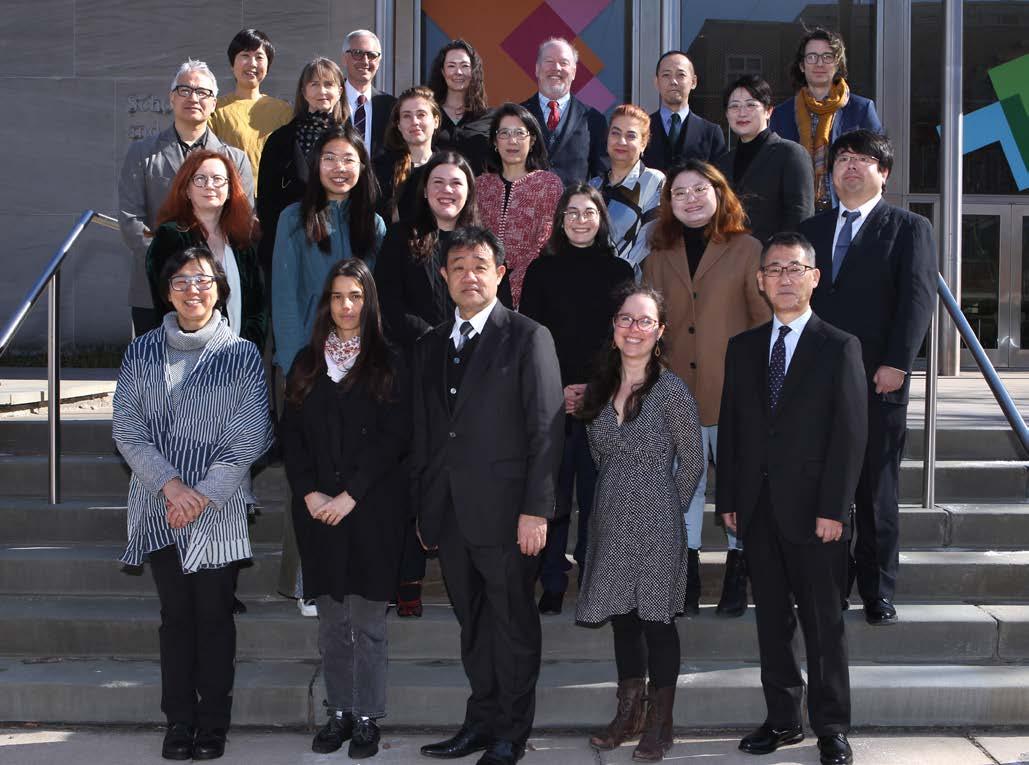

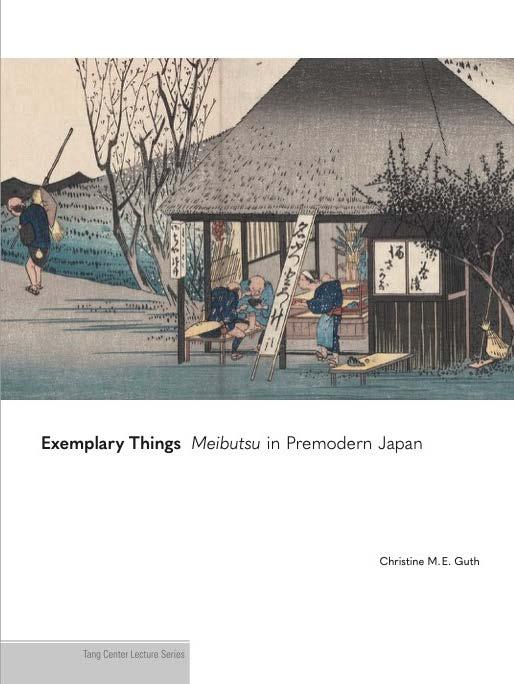
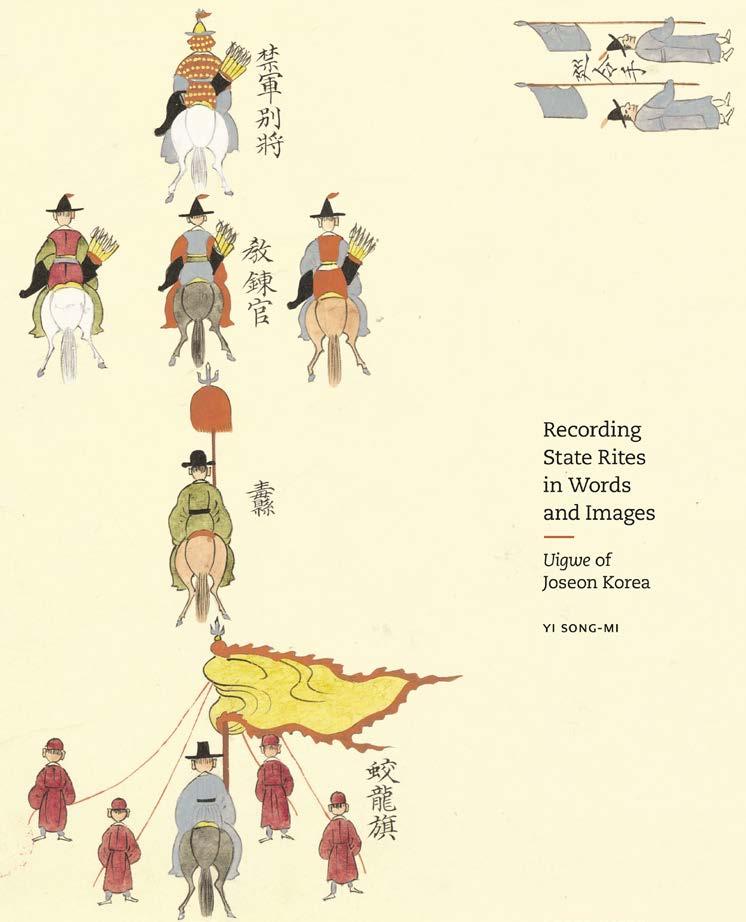
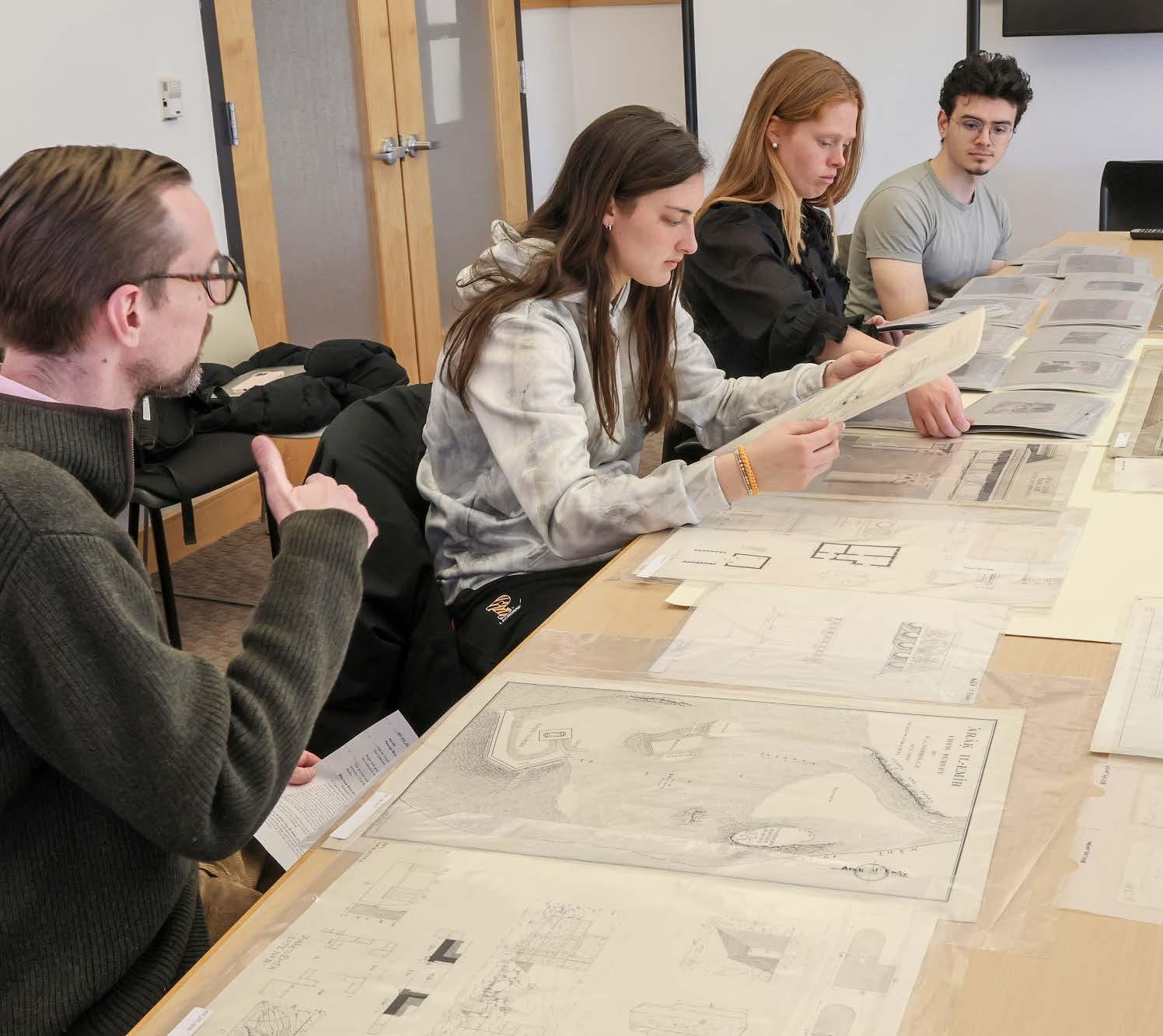
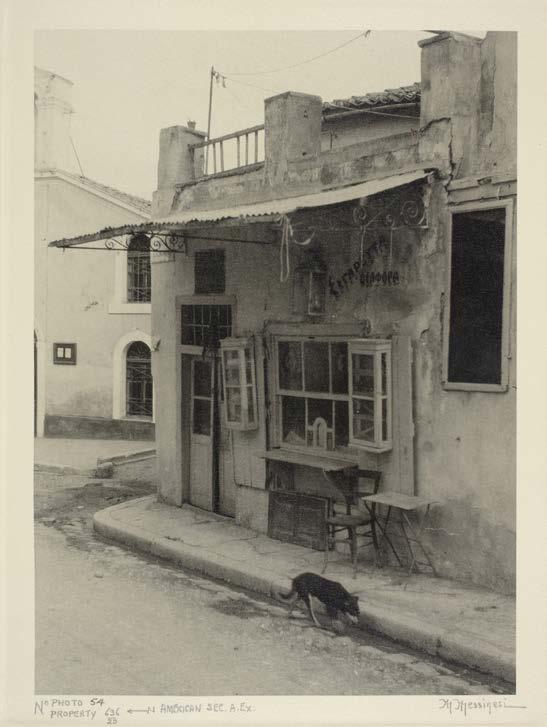
Fig. 2. Facade of shop at 9 Eponymous Street, with the Church of Panayia Vlassarou in background, M. Messinesi photograph number 54, taken 1930. Homer A. Thompson Collection
IT HAS BEEN A BUSY YEAR for Visual Resources (VR)! Members of the team supported twelve courses during the academic year; eight used department archives and special collections in the classroom and four incorporated digital projects or technologies into their curricula.
In preparation for fall 2024, Leigh Anne Lieberman (VR’s Digital Project Specialist), Ben Johnston (McGraw Center for Teaching and Learning), Professor Monica Bravo, and lecturer Breton Langendorfer designed a digital curatorial project for students in ART 100 “An Introduction to the History of Art” The students’ exhibitions, built using the multimodal digital publishing platform Scalar, put individual works of art and objects in conversation with one another as students shared art historical stories that focused on a specific theme of the class.
Director of Visual Resources Julia Gearhart facilitated the use of the Howard Crosby Butler Archive in two courses: ART 407 “Drawing Archaeology” in fall 2024 and ART 102 “An Introduction to the History of Architecture” in spring 2025, both taught by Samuel Holzman (Fig. 1). Students in each class had an opportunity to map Butler’s documentation and research process through the rough field sketches, notebook drawings, and polished final publication drawings from his expeditions through Syria at the turn of the 20th century. Students in “Drawing Archaeology” also used the Antioch sherd collection to practice illustrating archaeological ceramics.
Launched last year, the annual VR research grant enables scholars with a need for inperson consultation of the unique resources found in VR’s collections to visit Princeton.
The award’s inaugural winner, Aspa Efstathiou, examined the Homer A. Thompson Collection in September 2024. Efstathiou is the associate registrar for the Agora Excavations at the American School of Classical Studies in Athens (ASCSA). Within the Thompson Collection, she singled out a map and photographic prints made by M. Messinesi in 1930 of the Vrysaki neighborhood in Athens prior to the excavation of that area by the ASCSA (Fig. 2). Since VR holds the original map produced by Messinesi, indicating where each photograph was taken, as well as quality contact prints, Efstathiou advised VR to prioritize these materials for photography and publication. The Messinesi Collection will also be the subject of the Seeger Center’s Digital Humanities for Hellenic Studies Summer Institute called “Visualizing the Past: Mapping Athens’ Lost Neighborhood,” instructed in part by Yichin Chen (VR’s Curator of Asian Collections and Digital Specialist), in which participants will collaboratively create a digital map of the collection.
June 2024 saw the launch of VR’s comprehensive digital content management system that makes all the department’s archaeological and archival collections available online in a single place for the first time (collections.visualresources.princeton.edu). At that time, the platform consisted of around 11,000 digital records that had been migrated
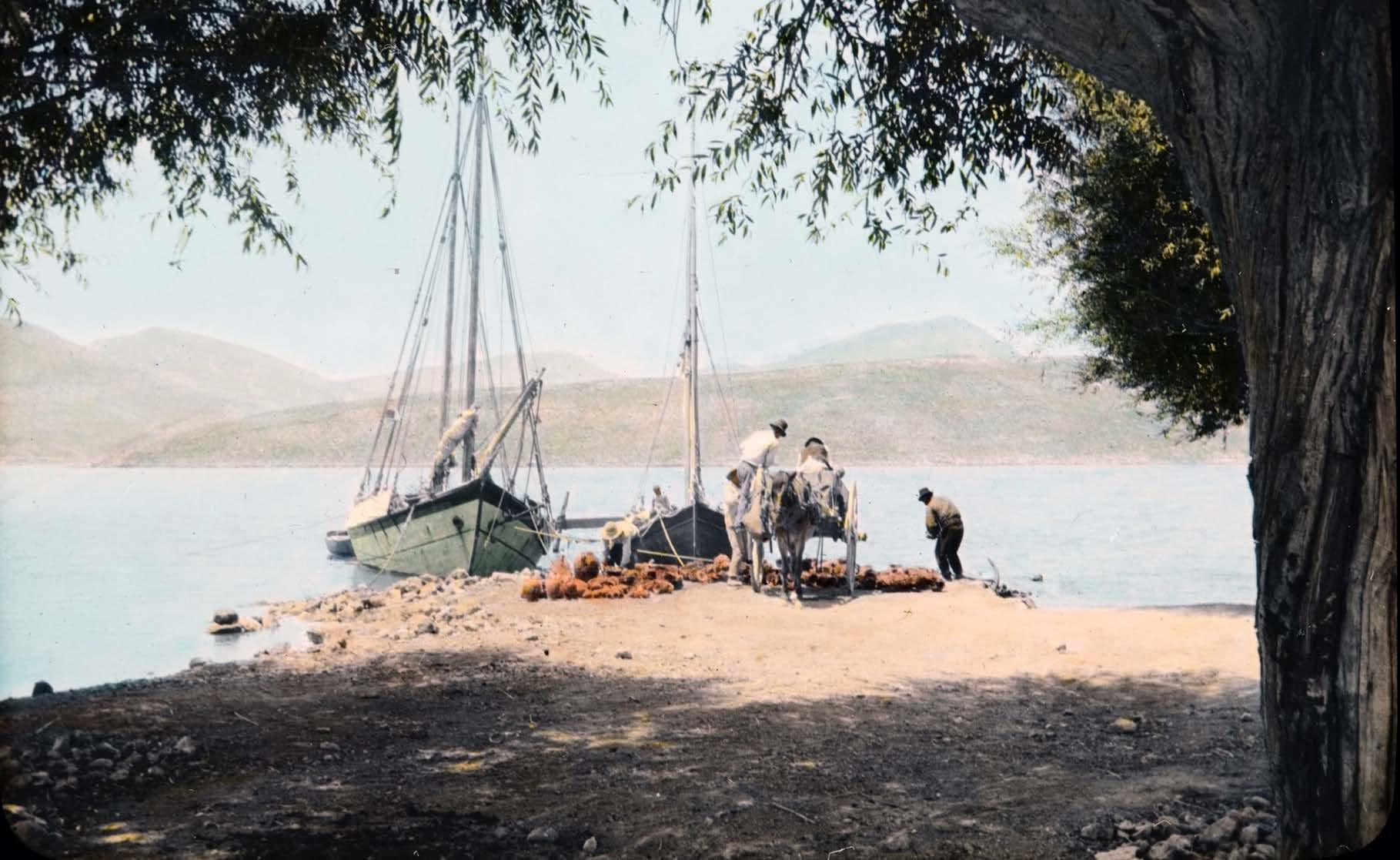
from older sites; just over one year later, it boasts roughly 30,000 digital records. Among the platform’s highlights is the newly digitized Greek Lantern Slides Collection, curated by Chen (Fig. 3). Chen oversaw the work of Digital Imaging Specialist Stella Amyot ’25, who captured and edited the slides, and Katy Knortz (digital imaging specialist, graduate student), who continues to catalogue the collection. To date, 1,964 Greek Lantern Slides are available publicly online and 2,176 slides have been captured and are in the process of being added to the public platform.
Digital Imaging Specialist Talia Goldman ’27 has made great strides this year in digitizing photographs from the Kurt Weitzmann Collection as part of “Connecting Histories: The Princeton and Mount Athos Legacy” project, an initiative directed by Gearhart and Maria Alessia Rossi (Art History Specialist in the Index of Medieval Art). These photographs document the Byzantine art historian’s trips to Mount Athos in the 1930s. Goldman gave an exceptional presentation about her ongoing work at the project’s weeklong workshop at the end of April, in which she highlighted some unusual elements of the archive, including Weitzmann’s sketches inspired by specific manuscript illuminations (Fig. 4).
In addition to funding Goldman’s work and
the project’s weeklong workshop, “Connecting Histories” also invited scholars to come to Princeton for a monthlong research residency. Dubravka Preradović (art historian at the Institute for Balkan Studies in the Serbian Academy of Sciences and Arts) undertook a systematic examination of the Hilandar Drawing Archive in VR for her residency. The archive, obtained for the department by Slobodan Ćurčić, consists of photographs, field drawings, rubbings, paper icons, and plans created by the architect Slobodan Nenadović that illustrate his restoration of Hilandar Monastery from 1960 to 1990. The collection includes five-meter-long drawings, in color, of the mosaic floor of the Church of King Milutin at Hilandar Monastery on Mount Athos. At Samuel Holzman’s recommendation the senate chamber at Whig Hall was reserved to lay the drawings out as they would be found in the church (p. 72).
In March, VR sadly had to say goodbye to Michele Mazeris, VR’s Senior Image Collections Specialist, after 12 years of service in the department. We wish her the best in her new position and look forward to hosting her for lunch in the new building. On a happier note, we were very proud to recognize John Blazejewski, VR’s Photographer and Digital Imaging Specialist, for his 35 years of service at Princeton. Congratulations, John!
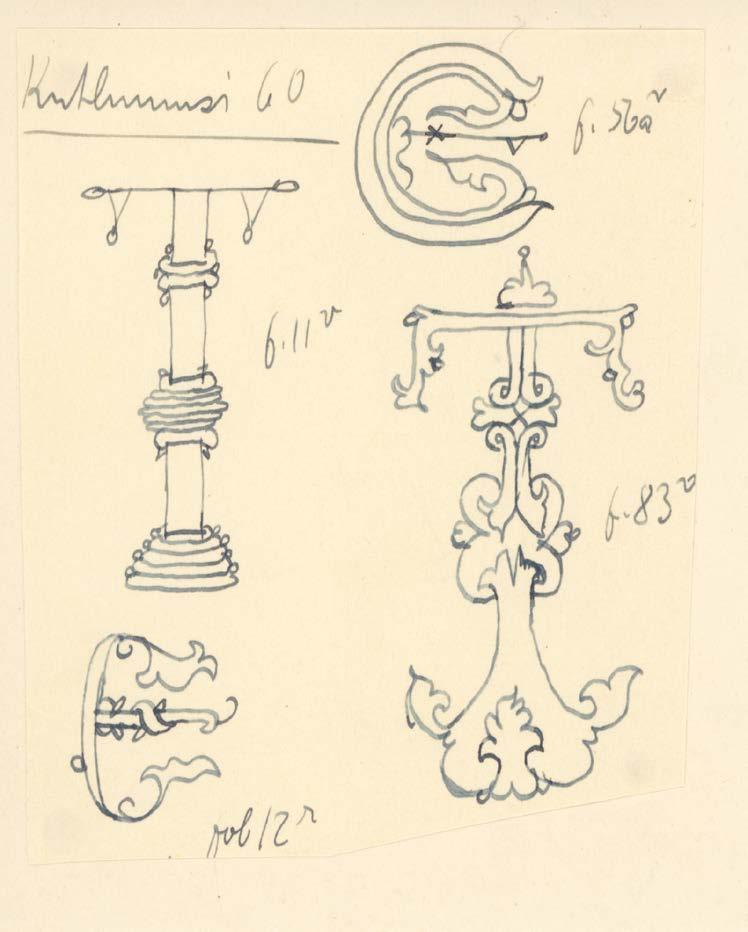
Fig. 4. Drawings by Kurt Weitzmann of elements from Koutloumousiou Codex 60, folios 11v, 12r, 56v, and 83v from the Kurt Weitzmann Collection
AS PART OF THE “Connecting Histories: The Princeton and Mount Athos Legacy” project, which explores Princeton’s remarkable connection to Mount Athos in Greece, a workshop brought to campus a group of specialists from around the globe from April 28 to May 2, 2025.
The unique Athonite collections in A&A began with an unofficial Princeton expedition to Mount Athos in 1929, which itself resulted in remarkable and rare film footage, and was followed by several expeditions led by Professor Kurt Weitzmann in the 1930s to photograph manuscripts in the many monasteries. These collections were expanded by Professor Slobodan Ćurčić, who obtained
the archive made by Slobodan Nenadović during Nenadović’s restoration of the Serbian monastery of Mount Athos, Hilandar.
Princeton also houses remarkable materials connected to Mount Athos, such as Byzantine and post-Byzantine manuscripts, engravings, watercolors, and photographic prints held in Special Collections in Princeton University Library. These collections, in addition to the Mount Athos material at the Index of Medieval Art in the Department of Art & Archaeology, make Princeton a dynamic destination for Mount Athos research.
The workshop was co-organized by Director of Visual Resources Julia Gearhart and Art
History Specialist in the Index of Medieval Art Maria Alessia Rossi, in collaboration with Professor Charlie Barber, Director of the Seeger Center for Hellenic Studies Dimitri Gondicas, and Professor Molly Greene (history).
“Athonite collections, both within and beyond the borders of the Holy Mountain, come with a unique set of challenges and throughout the workshop, we learned from each other, brainstormed new collaborative efforts, and discussed ways of making them more accessible and available,” said Rossi.
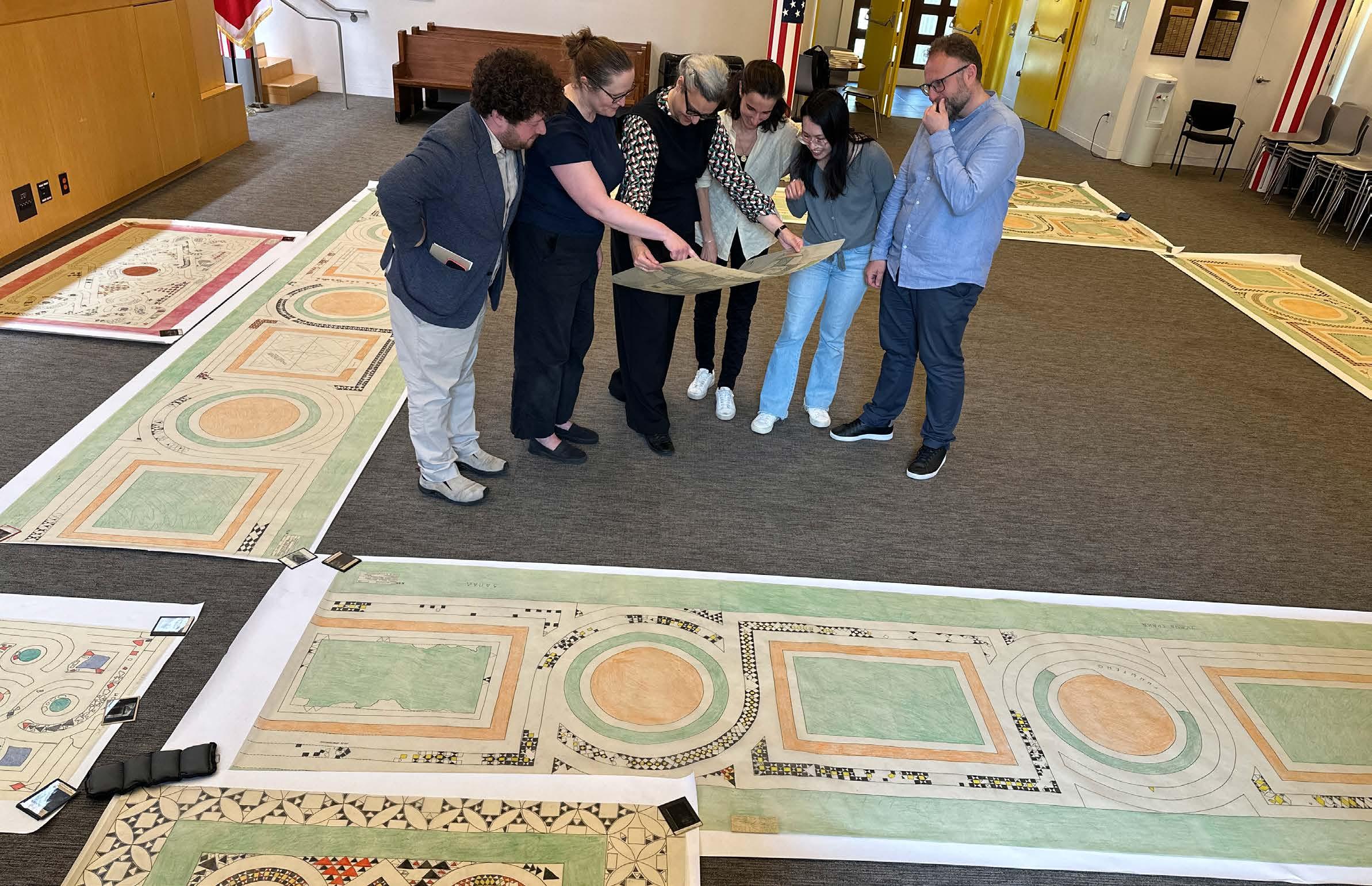
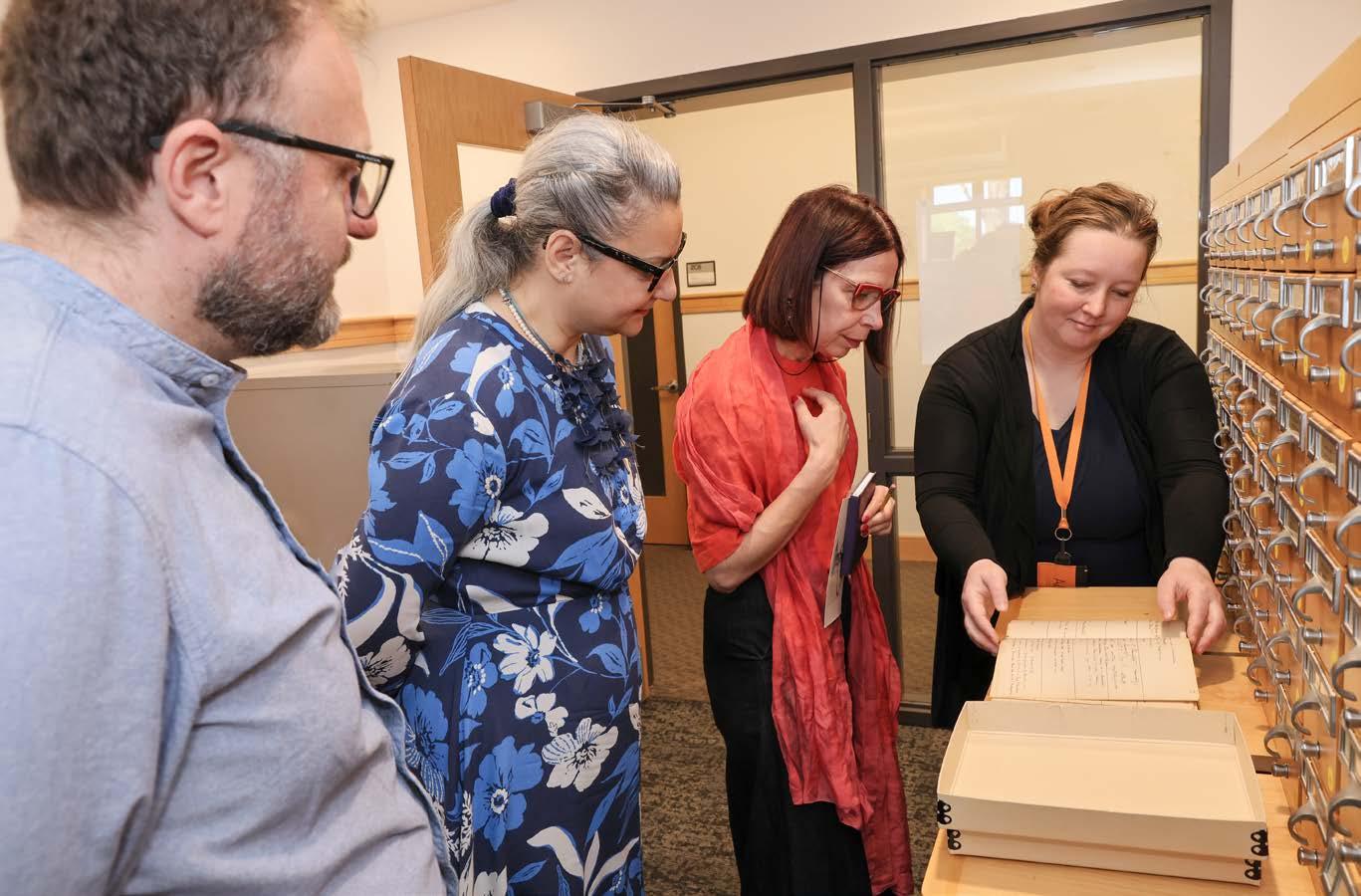
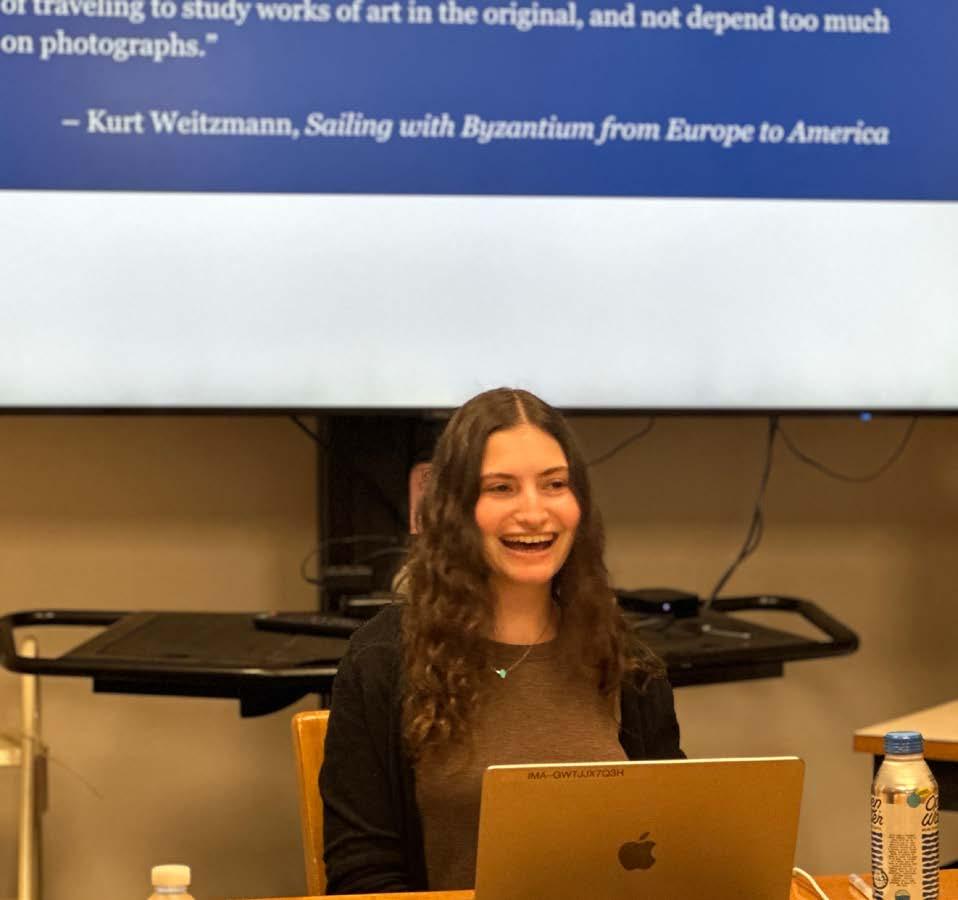
INDEX DIRECTOR Pamela Patton reports that public interest in the Index of Medieval Art has climbed steadily since the launch of free public access to the database in July 2023. By the estimate of technology manager Jon Niola, there has been a nearly threefold jump in online traffic since that time. The fact that usage regularly peaks in April and October every year suggests that students are making good use of the database for papers and exams! To support this growth, Niola and the Index staff have made multiple accessibility enhancements in the database, while Jessica Savage and Maria Alessia Rossi offer regular online trainings for new users. All the Indexers continue to receive dozens of research inquiries, both online and from in-person visitors to our Green Hall reading room, and they regularly support Princeton classes and individual students in their research on medieval art.
In November 2024, the Index hosted its annual conference, this year on the theme of “Unruly Iconography.” Presented in person with a livestream for offsite attendees, it engaged eight speakers in diverse specializations who proposed fresh ways to approach medieval images that seem not to follow art historical “rules” (Fig. 1). Their papers addressed a wide range of topics, from ivory caskets and chessmen to an unusual French scribal
portrait, paratextual marks in Hebrew Bibles, and monumental images in Sicily, Serbia, and Sogdia, closing with Patricia Simons’s memorable musing on the significance of the goldfinch in Italian painting. The conference topic was conceived in collaboration with scholars at the University of Texas at Dallas and the Center for the Art and Architectural History of Port Cities “La Capraia” in Naples, who hosted a site seminar on the same topic in Naples in June 2025. Together, the linked events made a persuasive case for a more expansive and flexible approach to images and image-making in a more capaciously conceived Middle Ages.
Index staff offered a Wintersession course this year that focused on accessibility (Fig. 2). In “Making an Accessible Middle Ages,” staff and students from across the university joined a hackathon to learn how to write alternative texts for digital images, bolstered by medieval music and snacks. Participants came away with the tools to write their own alt texts and the satisfaction of having helped advance university goals for accessibility and inclusion.
January also saw the publication of volume 4 of the peer-reviewed Index book series Signa: Papers of the Index of Medieval Art, copublished with Penn State University Press (Fig. 3). Edited by Pamela Patton and generously supported by the Barr Ferree Fund for Publication, the volume
Art, Power, and Resistance in the Middle Ages considers how works of art both asserted and resisted power in the Middle Ages. Its eight chapters, by Heather A. Badamo, Elena N. Boeck, Thomas E. A. Dale, Martha Easton, Eliza Garrison, Anne D. Hedeman, Tom Nickson, and Avinoam Shalem, explore patterns of visual rhetoric across a wide cultural and geographical sphere and highlight how modern priorities and sensibilities might amplify, mute, or transform understanding of medieval discourses of power.
The Index continues to host and coedit the journal Studies in Iconography, now published with the subtitle A Journal of Medieval Visual Cultures (Fig. 4). The change preserves a title that has been recognized by readers and enshrined in indexes and databases for nearly 50 years while also signaling the journal’s recent commitment to representing the visual cultures of the medieval world more expansively and inclusively, both by publishing articles addressing a widened range of regions, cultures, and visual traditions and by welcoming new methodologies. The most recent volume (46) appeared in May 2025; it opens with a thematic cluster titled “Looking at Language,” on Anglo-Saxon, Hebrew, and Byzantine art, and includes four freestanding articles on the ambiguity of the centaur in 15th-century Italian painting, a rereading of the Merode Altarpiece, the role of authoritative portraits in medieval Iberian charters, and a critical historiography of medieval Christian images of Jews and Judaism, followed by several book reviews.
As always, the Art History Specialists who staff the Index have maintained strong scholarly engagement in the field, producing presentations, lectures, and publications in their respective areas of specialization. Highlights this year included Catherine Fernandez’s lecture at the Université de Poitiers, Jessica Savage’s review of Lucy Freeman Sandler’s Penned & Painted: The Art and Meaning of Books in Medieval and Renaissance Manuscripts in CAA.Reviews, and the publication of Maria Alessia Rossi’s first monograph, Visualizing Christ’s Miracles in Late Byzantium: Art, Theology, and Court Culture (Cambridge University Press, 2024; p. 21). The entire staff looks forward to joining the rest of A&A in its relocation to the new museum building in January 2026.
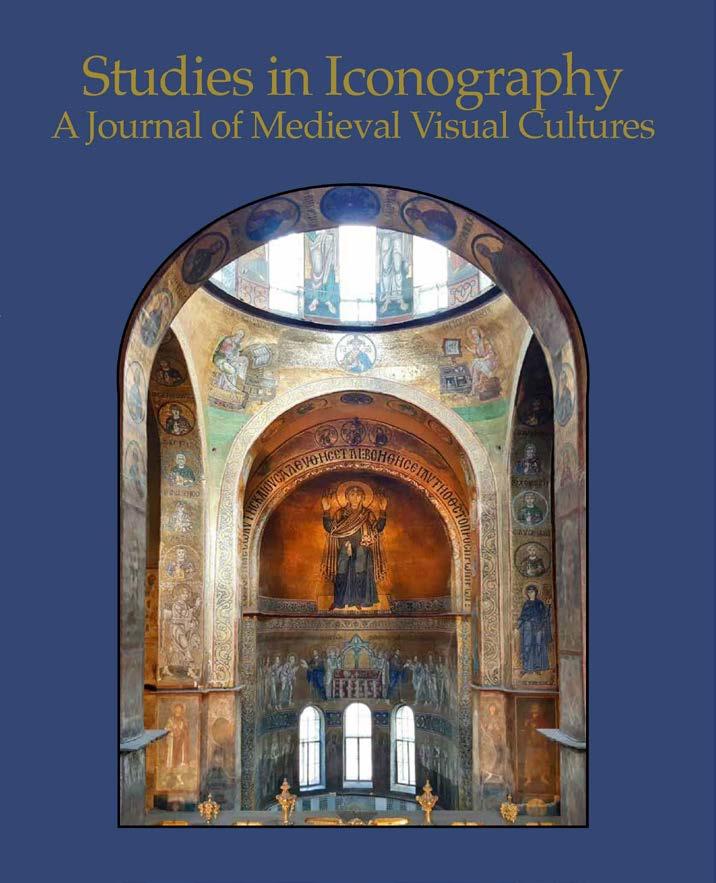
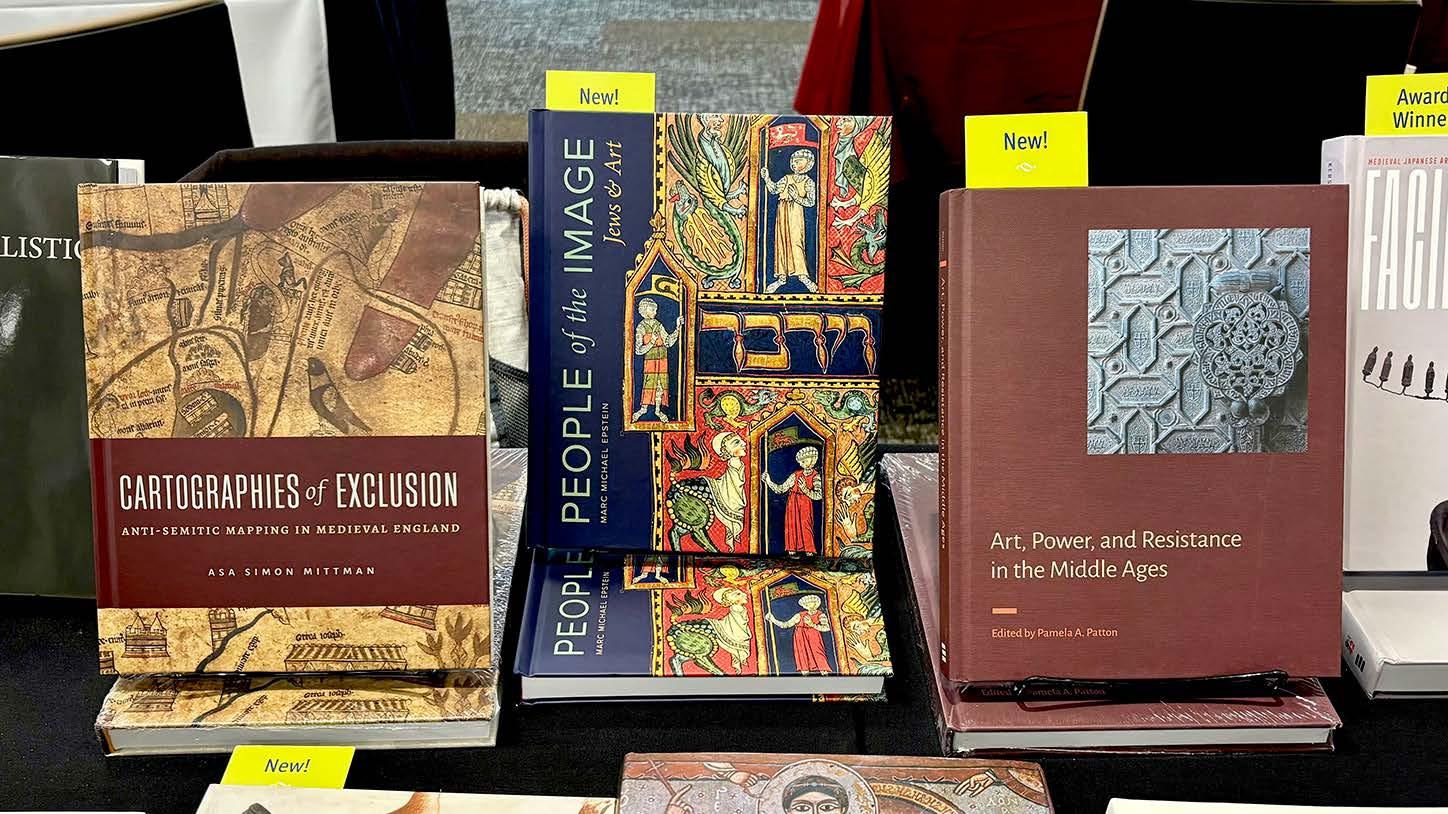
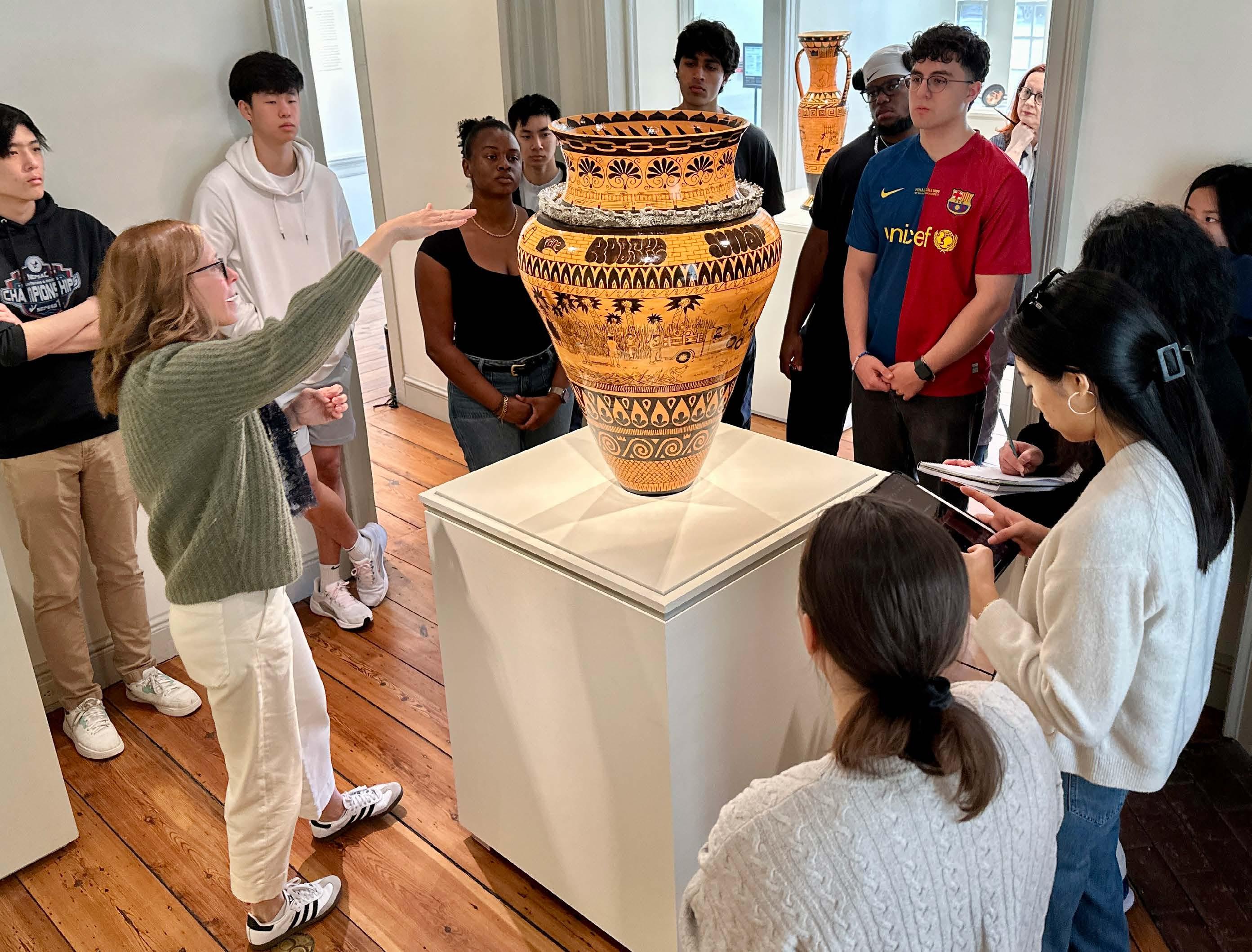
THE PROGRAM IN VISUAL ARTS started off the 2024–25 academic year with Poetic Record: Photography in a Transformed World, a series of events exploring the poetics of photography, its instability, and its latent potential. Organized by Deana Lawson, in collaboration with Jeffrey Whetstone and James Welling, the project included a symposium, a major international exhibition, and an exhibition of work by 11 recent Princeton alumni. A Princeton Humanities Council Magic Project, the two-day symposium gathered photo-based artists, writers, curators, historians, and students for a series of panels on contemporary photography and was funded through a David A. Garner ’69 Magic Grant and cosponsored by Princeton’s Collaboratorium for Radical Aesthetics and Council on Science and Technology. The exhibition in the Hurley Gallery featured work by 23 artists and was co-curated by Lawson and Aperture magazine editor in chief Michael Famighetti. The symposium coincided with the fall 2025 issue of Aperture, an edition that refracted themes of family, social history, and the astrophysical guest edited by Lawson and featuring many of the artists in the exhibition.
Another two-day fall symposium focused on 20th-century Belgian artist Marcel Broodthaers, the poet turned visual artist, who invented ways to give material form to language while working across mediums—poetry, sculpture, painting, artists’ books, printmaking, and film. Marcel Broodthaers and America was organized by Joe Scanlan as the centerpiece of the new course “Haptic Lab,” which was made possible in part by the 250th Anniversary Fund for Innovation in Undergraduate Education, Princeton’s Humanities Council, the University Committee on Research in the Humanities and Social Sciences, the Department of Art & Archaeology, and the Lewis Center.
The annual Open Studios event each November is one the entire community anticipates. Juniors and seniors pursuing a minor in the Program in Visual Arts or a degree in the Department of Art & Archaeology’s Practice of Art track open their studios to share their works in progress with the campus and wider community.
In December, Princeton Arts Fellow Gi (Ginny) Huo and her students in the course “Futurity of Art on Public Spaces: Site,
Materials, and Community” installed temporary sculpture in the new exhibition pad on the recently refurbished front lawn of 185 Nassau Street. On view for a week, the work explored the concept of metamorphosis within the shifting notion of public space and the built environment
Rah Rah Arts magazine, which debuted in 2023, published fall 2024 and spring 2025 editions. Princeton students, alumni, staff, and faculty were invited to submit work in any artform that helps them process the
world around them and express their voice. Princeton’s only student-run visual arts magazine, Rah Rah is edited entirely by students under advisement of Program in Visual Arts faculty Jeff Whetstone and Colleen Asper. At the Book and Poster Show in February, juniors exhibited their artists’ books made as part of junior seminar and seniors shared posters they designed in senior seminar. In March the annual Junior Show exhibited recent independent work by juniors in the program in a group show.
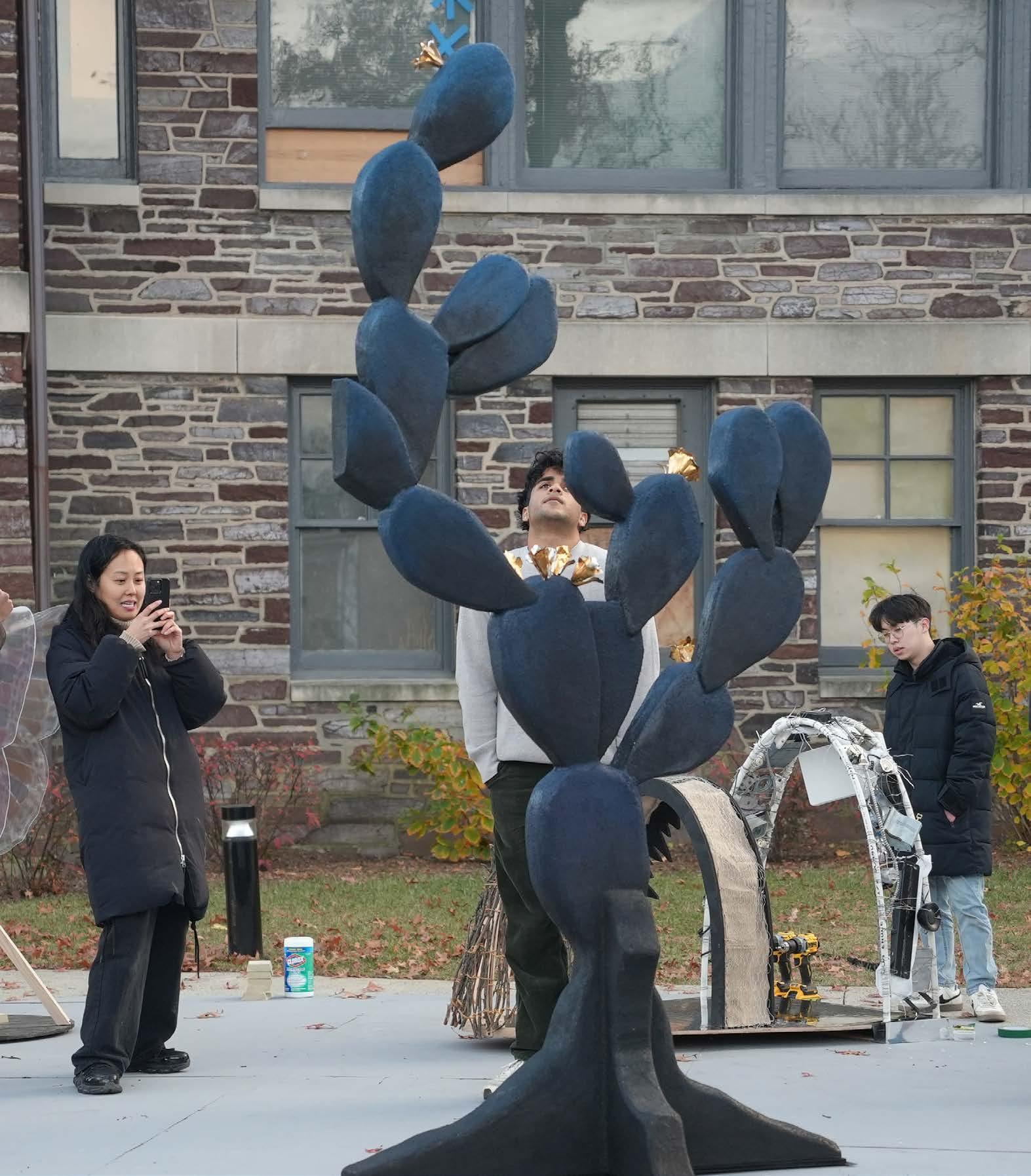
From February through May, 18 seniors presented exhibitions of independent bodies of work. In solo and two-artist shows, students completing a visual arts minor or majoring in the Practice of Art track exhibited new work that focused on a specific medium, such as photography or painting, or more often employed multiple media, combining such elements as sculpture, prints, photography, video, textiles, ceramics, and painting to explore a range of issues and ideas.
In the area of film studies, the Program in Visual Arts welcomed two filmmakers to the faculty: Christoper Harris, whose films and video installations read African American historiography through the poetics and aesthetics of experimental cinema, and Nicolás Pereda, whose films integrate fiction and documentary to create fractured, elliptical narratives of everyday life.
In the fall, Harris hosted filmmaker Courtney Stephens and her essay feature, Terra Femme, composed of amateur travel footage shot by women in the early 20th century, which was a New York Times critic’s pick and has toured widely as a live performance. Throughout the spring, he presented “Seeing the Big Picture: An Experimental Film Series,” a nine-event series that featured 16mm analog films by internationally celebrated experimental filmmakers working at the forefront of artists’ films in a variety of idiosyncratic forms, using handmade methods and unconventional materials. Each screening was followed by a conversation with the artist.
In February, the Program in Visual Arts again partnered with the Thomas Edison Film Festival to present the premiere screening of the 44th season of the internationally renowned festival. In May, 12 seniors and juniors screened their independently produced films.
Students interested in being accepted into the minor or Practice of Art programs apply in spring of their sophomore year. Following information sessions in fall and early spring, 33 students applied, and in April 27 rising juniors were invited into the program.
The 2024–25 academic year culminated with 16 members of the Class of 2025 earning a minor in visual arts and five earning a degree in the Department of Art & Archaeology’s Practice of Art track. Visual arts minor Schuyler Saint-Phard was one of two recipients of the Lewis Center’s prestigious Toni Morrison Prize and minor Nathalie Barnes was one of two recipients of the Action Based Community Engagement Award.
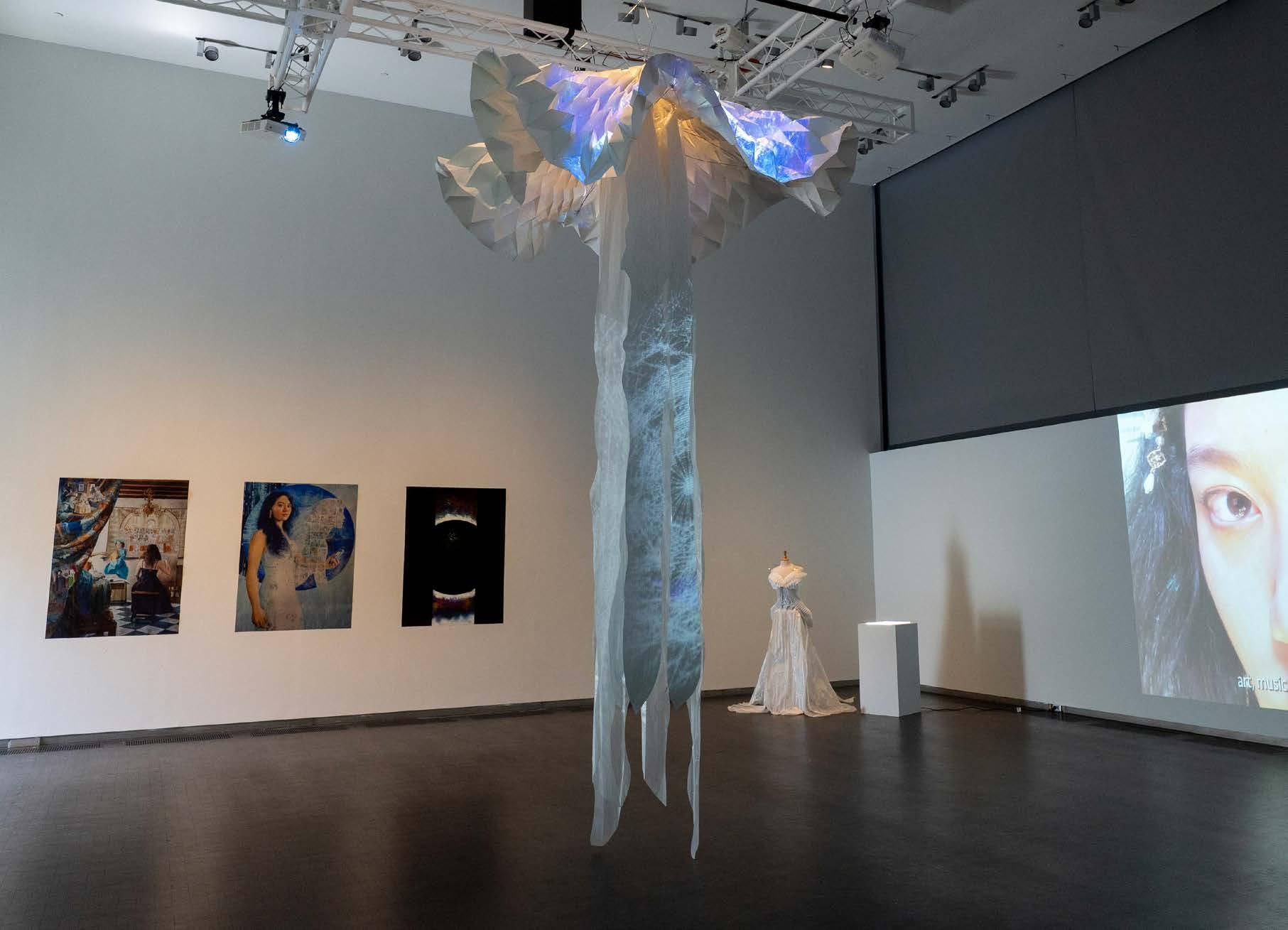
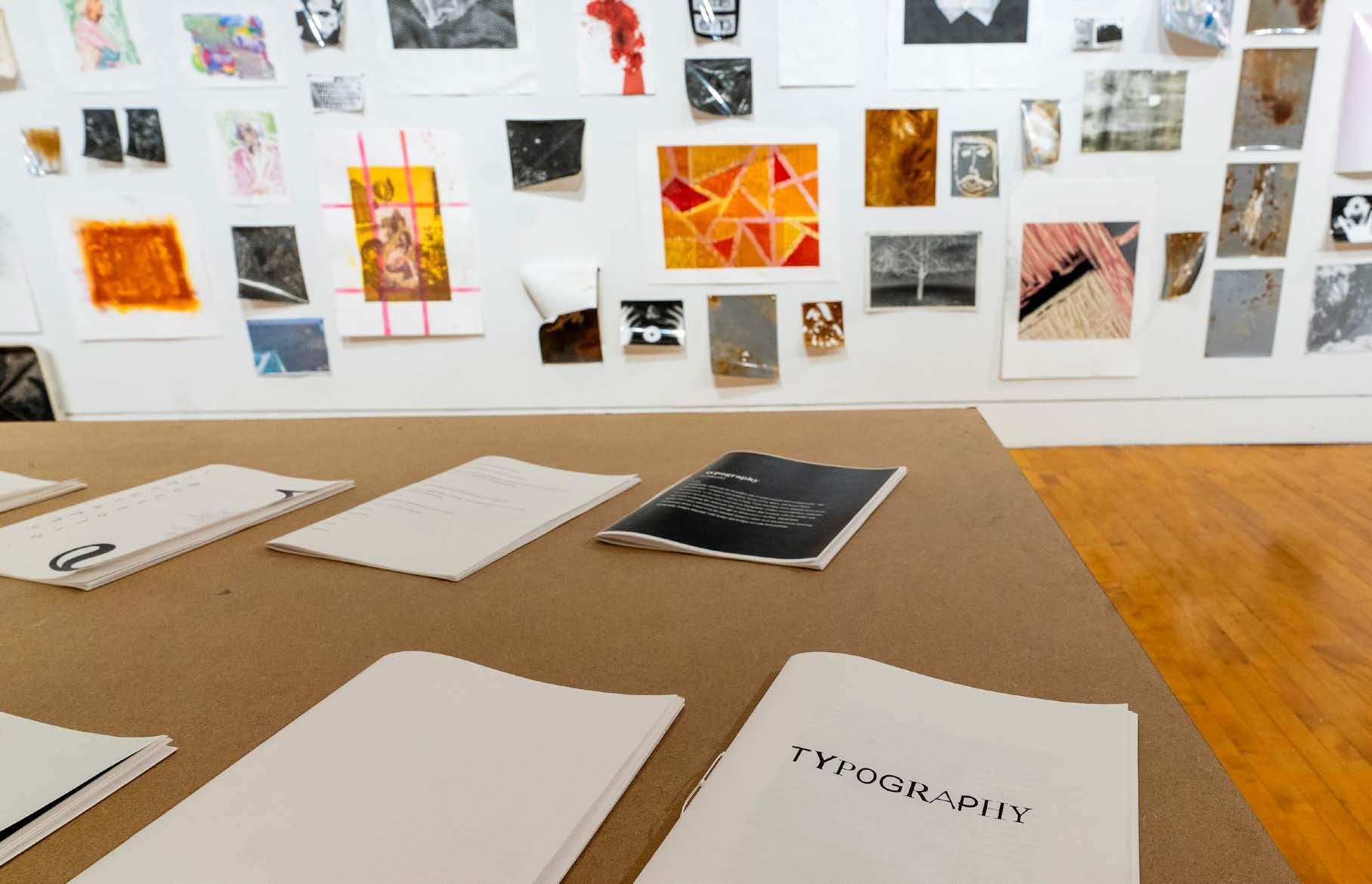
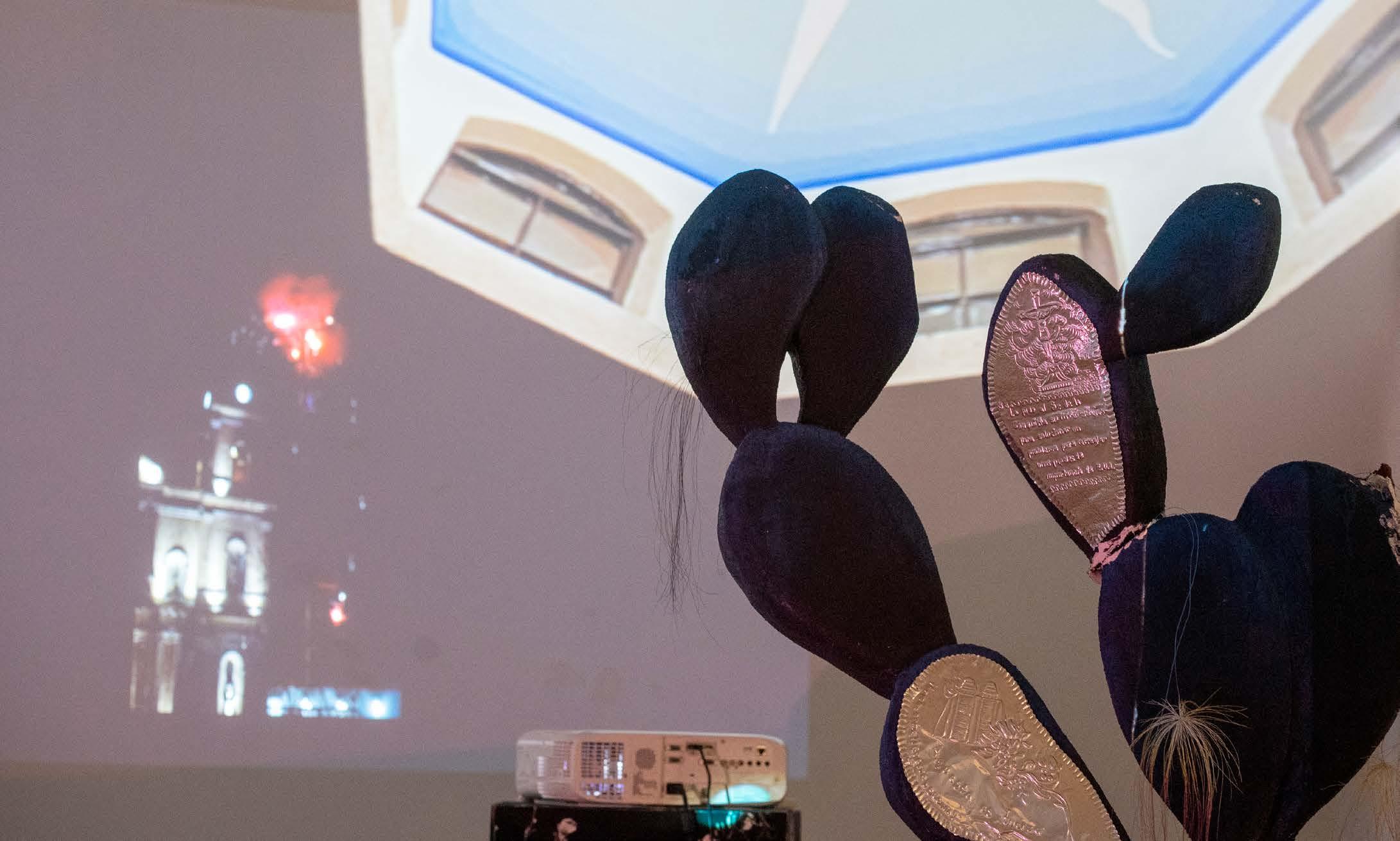
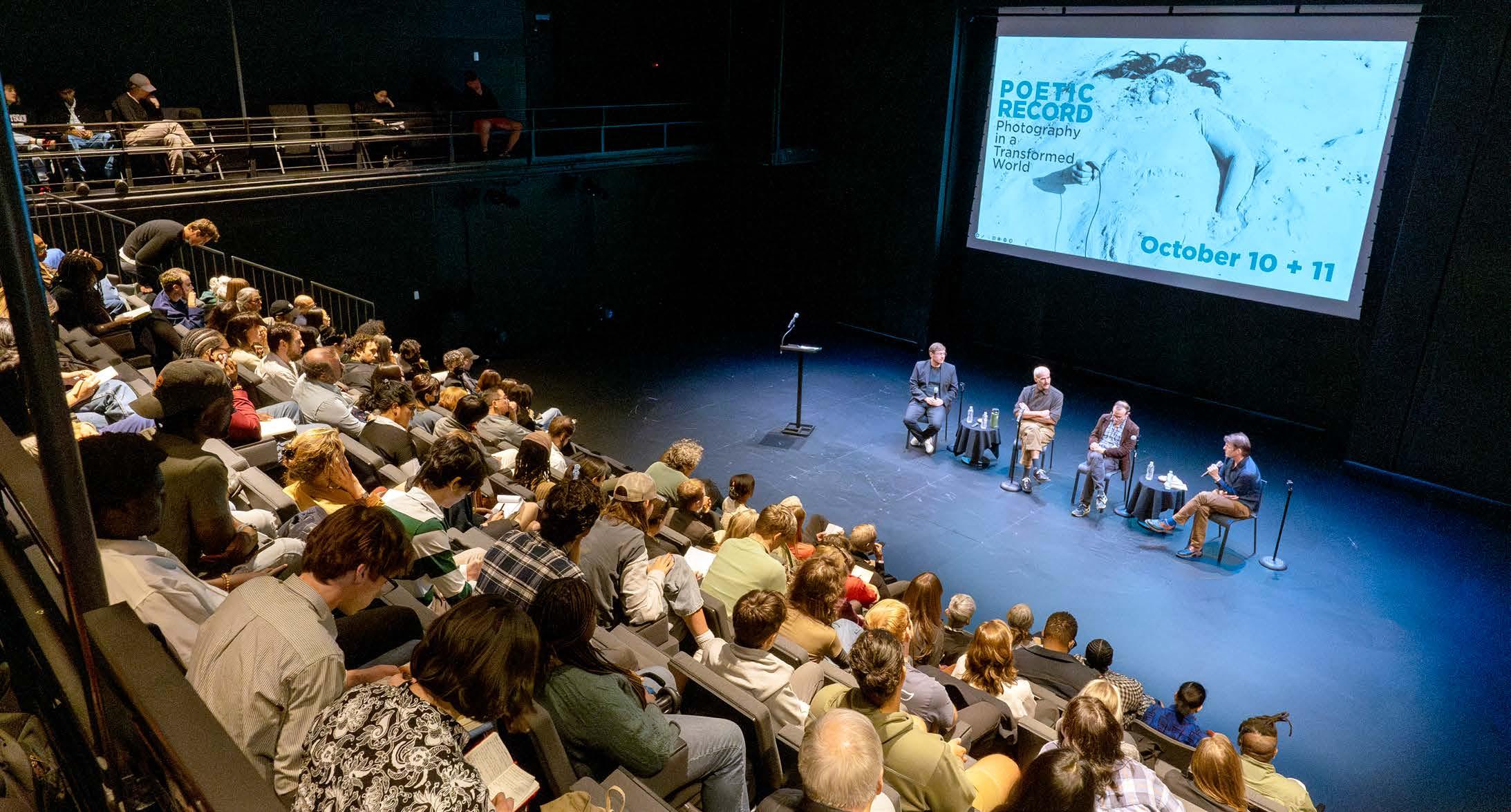
MARQUAND LIBRARY IS preparing for the long process of moving back into our newly renovated space. Our stacks, special collections, and staff will slowly be transitioned throughout the summer, fall, and winter break as we prepare for the “grand reopening” to patrons in early 2026. This fall (2025), we will continue regular operations and coordinate faculty teaching with our rare collections in our temporary Firestone spaces, while continuing to acquire new and rare materials that fulfill our commitment to collect in all areas of art history and visual culture. As always, we continue to support library and museum communities through exhibition loans, including several upcoming items that will be featured in a Surrealism exhibit at the Philadelphia Museum of Art, shared book purchases with Firestone Special Collections that complement both our collections, and rare book exhibitions, like the upcoming Japanese show in fall 2026. The Marquand staff greatly appreciates the patience of our patrons throughout our transition, and we look forward to welcoming everyone back to a new and improved Marquand Library!
Notable items added to the Western art collection included facsimiles of illuminated manuscripts of the Gero Codex, a superb example of Ottonian art (pre-969), the Barberini Greek Psalter, commissioned by the Byzantine emperor Alexius I Comnenus (Constantinople, ca. 1092–1095), and Christine de Pizan’s Epistle of Othea to Hector (1407–1408) (Fig. 1), created in the author’s Paris workshop. Other highlights included: ten large-scale broadsides with illustrations by Matthaeus Greuter of the major pilgrimage churches with relics in Rome (ca. 1651); three treatises on architectural theory by Abraham Bosse (1660s–1670s); a scarce copy of Traité de la mignature ... (1693) by Catherine Perrot (one of the few women admitted to the Académie royale de peinture et de sculpture); two major publications about the architecture of Amsterdam, Afbeeldinge der voornaamste gebouwen van Amsterdam (1700), by renowned printmaker Peter Schenk, and the “Grachtenboek” (1768), a striking pictorial record by Caspar Philips of the facades
of all the houses on both sides of Amsterdam’s most famous canals (Fig. 2); L’Électricité (1931), a lavish book promoting the French electric company, with experimental rayographs by Man Ray (Fig. 3); Magna Feminismus: Kunst und Kreativität (1975), the catalogue of a landmark Viennese exhibition by contemporary women artists; and a group of catalogues of contemporary art from Argentina, including publications from the Ruth Benzacar Gallery, Buenos Aires (1984–2012).
Noteworthy additions to Marquand’s Chinese art collection included facsimile scrolls, an assortment of later 19th- and early 20th-century publications on European collecting of Chinese and Southeast Asian decorative arts, and contemporary photography. Of particular note is Chinese Porcelain (1908) (Fig. 4), the Stephen Bushell translation and annotation of the 16th-century text Li dai ming ci tu pu (Illustrated Description of Porcelains of Different Dynasties) by noted collector Xiang Yuanbian. Bringing together recreations of the sumptuous illustrations with the original text and Bushell’s own translations, this volume has been a core text for ceramics collectors since its publication. Marquand also acquired the extraordinary 2013 Mao Zedong shi ci mo ji (qian ye long lin zhuang) (Poems by, and in the Calligraphy of, Mao Zedong [ “produced in a “Thousand-leaf Dragon Scale Binding”]), published to commemorate the 120th anniversary of Mao’s birth. The long hand scroll reproduces 33 poems by Mao and 65 photographs of important events in his life united in a complex binding style known as dragon scale (long lin) or whirlwind binding (xuan zhuang), a unique recreation of a Tang-dynasty binding style formerly used for Buddhist sutras produced for the imperial court, by contemporary designer Zhang Xiaodong.
Plans continue for the fall 2026 exhibition The Art of Japanese Publishing: A Selection of Illustrated Books from the Marquand Library of Art and Archaeology, 1660’s to 1960’s. Included will be some truly exceptional rare books recently acquired for the collection. We were especially fortunate, with the help
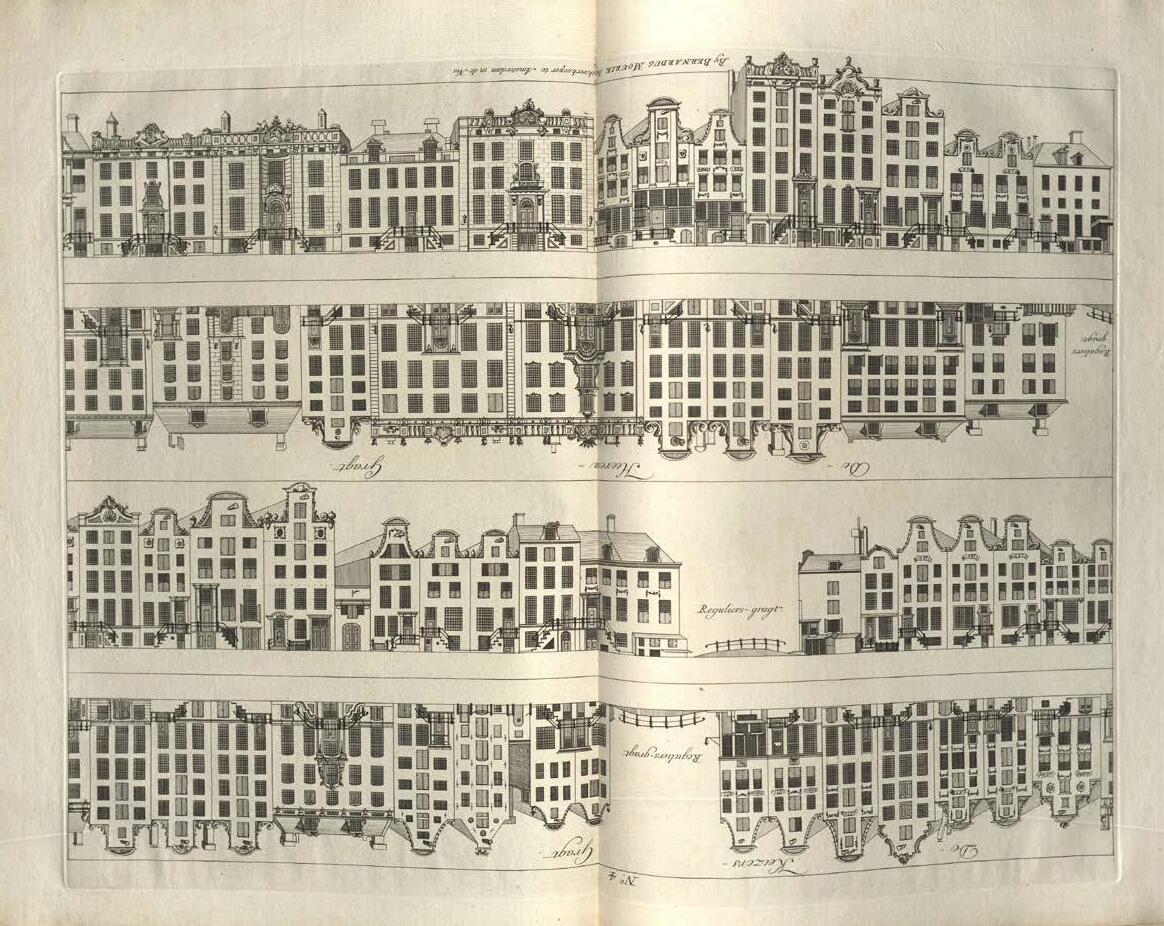
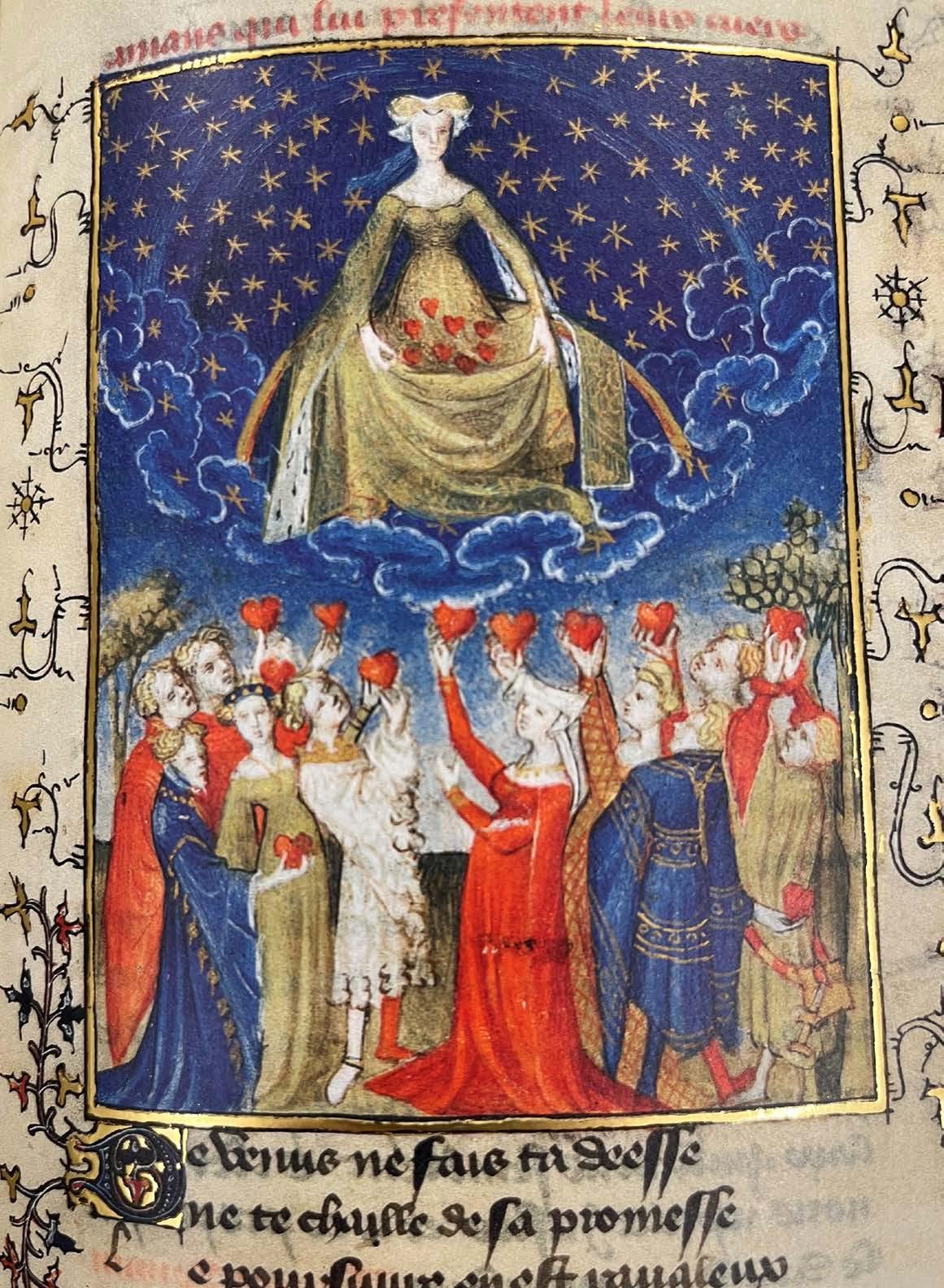
of the Friends of Princeton University Library, to have purchased an extremely rare and pristine copy of what is often considered the quintessential example of 18th-century Japanese publishing, Yoshiwara Courtesans: A New Mirror Comparing the Calligraphy of Beauties (Yoshiwara keisei: Shin bijin awase jihitsu kagami) (1784) (Fig. 5) by Kitao Masanobu (Santō Kyōden). In this, the first printing of the book, the relatively new
process of color woodblock printing is fully exploited with 15 richly saturated colors, sprinkled mica powder, and the earliest known use of gauffrage created with un-inked, “blind” blocks pressed into the soft, thick, luxurious paper. Among other additions to the collection, we also had the rare good fortune to acquire a complete 108-issue run of the serial Kōgei (1931–1951) (Fig. 6), published by Yanagi Sōetsu, founder of the Mingei (folk art)
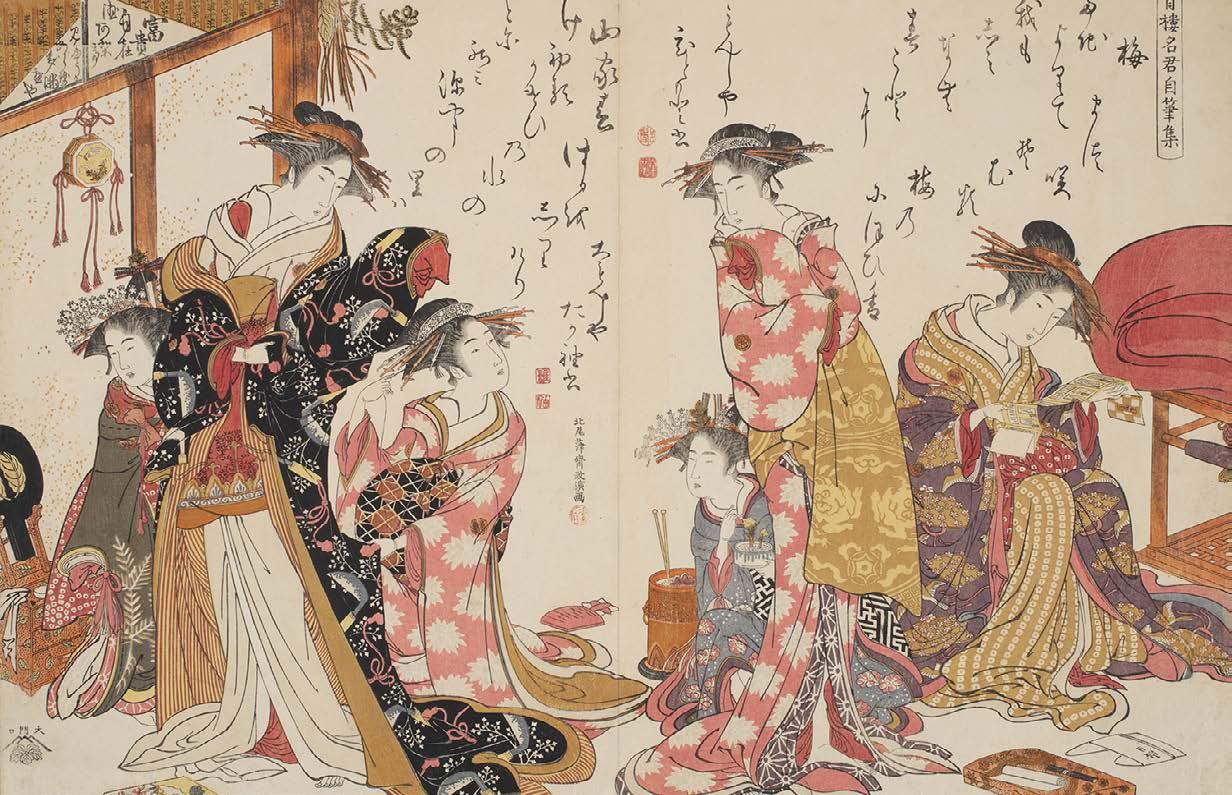
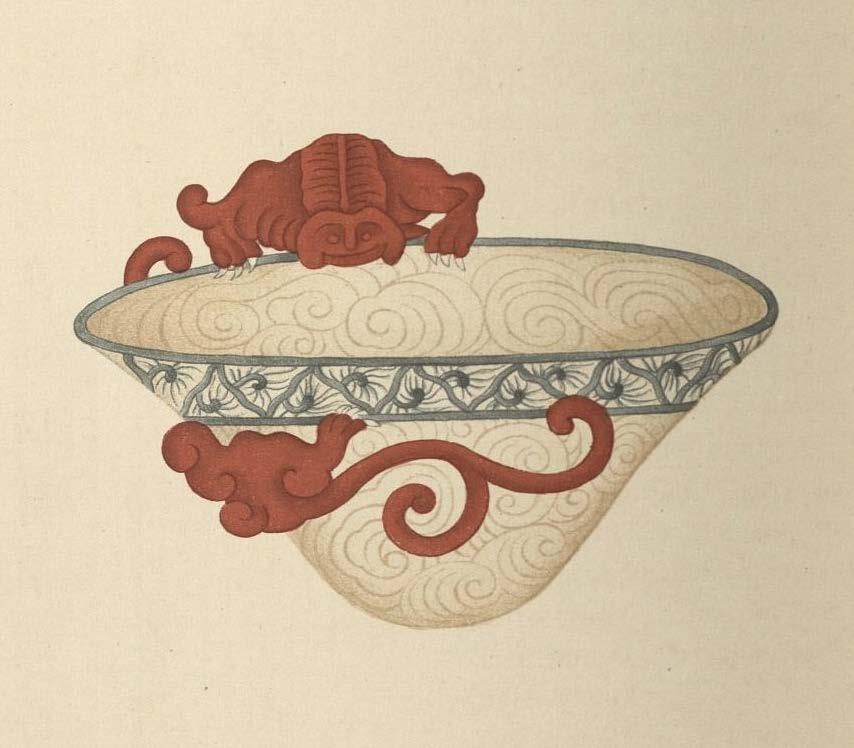
movement in Japan. Each beautifully designed issue has a distinct handmade cover and some feature beautiful textile and paper samples— examples of the traditional crafts the magazine sought to promote.
Stay up-to-date on Marquand’s recent special purchases by checking out ReMarquable, Marquand Library’s rare book blog about notable acquisitions at marquandrarebooks.princeton.edu
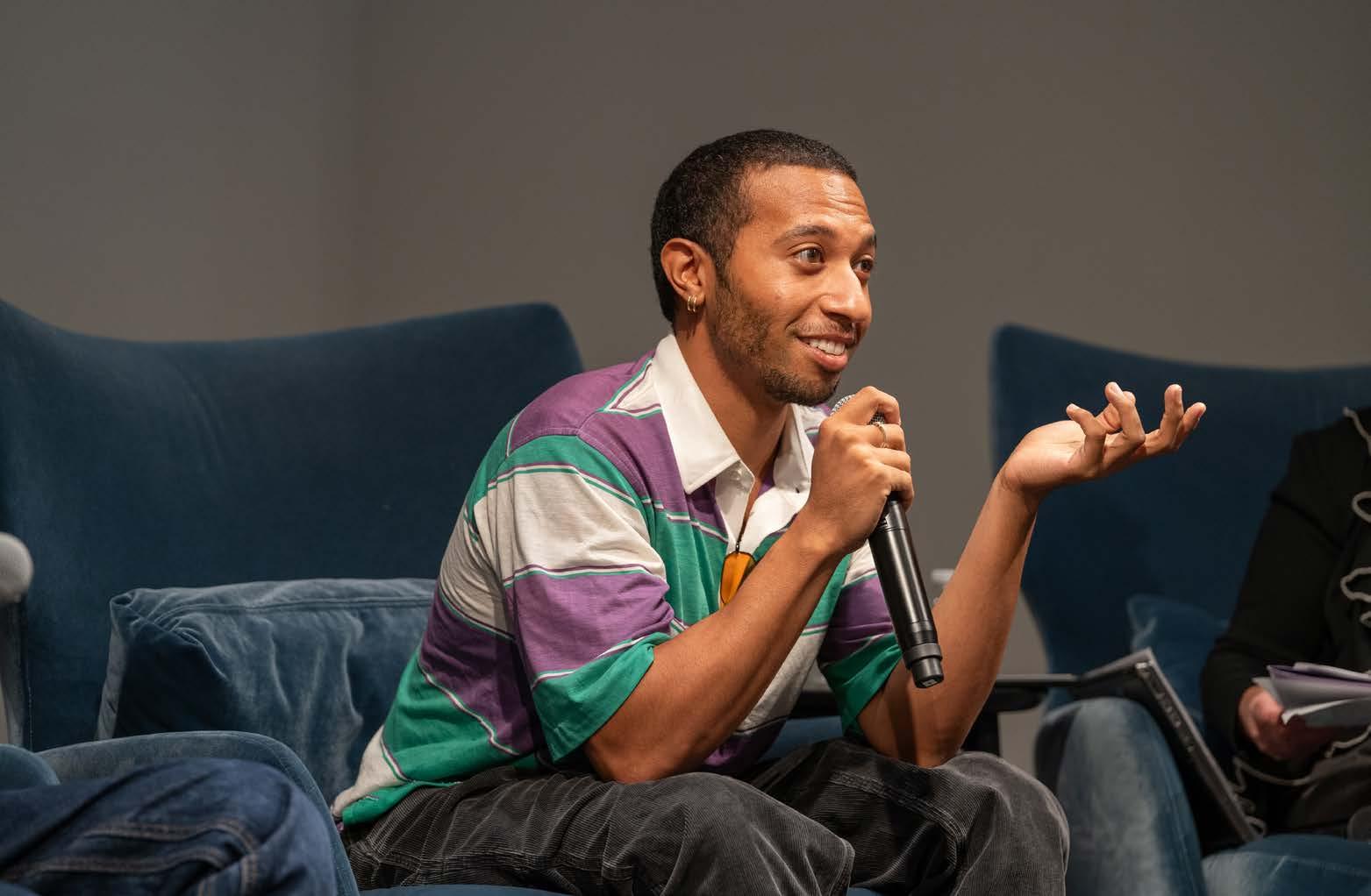
BEHIND THE WALLS of the new Museum, the meticulously choreographed dance of art installation is taking place as we prepare to welcome the public inside for a 24-hour open house on October 31. Appropriately Princeton students, alumni, faculty, and staff will be among the first visitors to the new Museum before the public festivities take place. These dates and further details about the experiences that will activate the new spaces during the opening festivities will be announced at the start of the 2025-26 academic year.
While we eagerly await the operation of the new Museum, with its six new classrooms devoted to object-based study, including a bilevel conservation studio and dedicated object study room, we remain dedicated as ever to educating the next generation of cultural scholars at Princeton. This year over 6,500 objects from the collections were used for teaching and research, thanks to the operation of temporary object study rooms and virtual access made possible by Museum staff.
This year, Museum curators led courses on a wide range of topics, including a seminar on the work of Rembrandt led by Ronni Baer; a
course in the history of photojournalism from the printed page to AI led by Katherine A. Bussard; and an interdisciplinary course in the humanities cotaught by Carolyn M. Laferrière and Elizabeth A. Davis (anthropology), among many others.
Students also engaged directly with our exhibition program at the two downtown galleries.
This year, nearly 2,500 students made almost 200 course visits to Museum spaces Art@Bainbridge and Art on Hulfish. The penultimate exhibition held at Art on Hulfish, “Don’t we touch each other just to prove we are still here?”: Photography and Touch, invited visitors and students alike to engage with contemporary photographers such as Clifford Prince King and Jeff Mermelstein, who joined us for an artist conversation this summer (Fig. 1). In the fall, the final Art on Hulfish exhibition, Under a Southern Star: Identity and Environment in Australian Photography, joined with the Art@ Bainbridge exhibition to host graduate students and Museum curators for the annual cocktails and curators event (Fig. 2). This event also featured a conversation between photographers Justine Varga and Judith Nangala Crispin, whose work was on view in the gallery.
The Art@Bainbridge gallery welcomed exhibitions Helène Aylon: Undercurrent along with Roberto Lugo/Orange and Black. Undercurrent was a career survey of the influential yet underappreciated ecofeminist artist Helène Aylon, the first since the artist’s death in 2020. The Philadelphia-based ceramicist and social activist Roberto Lugo debuted a new series of works with Orange and Black—which put new vessels in conversation with works from the ancient Mediterranean collections. A series of related campus programs featured this artist, whose acclaim
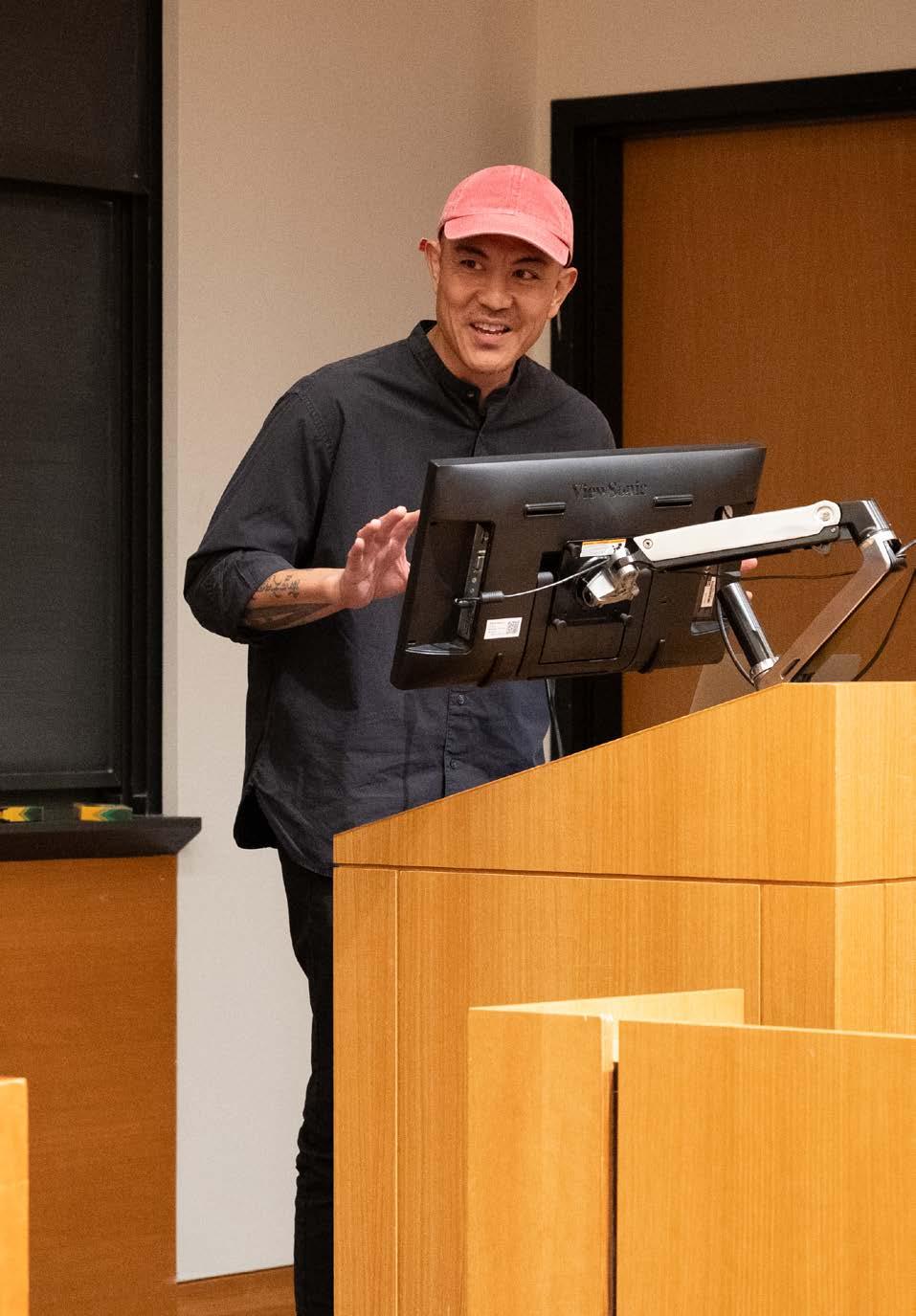
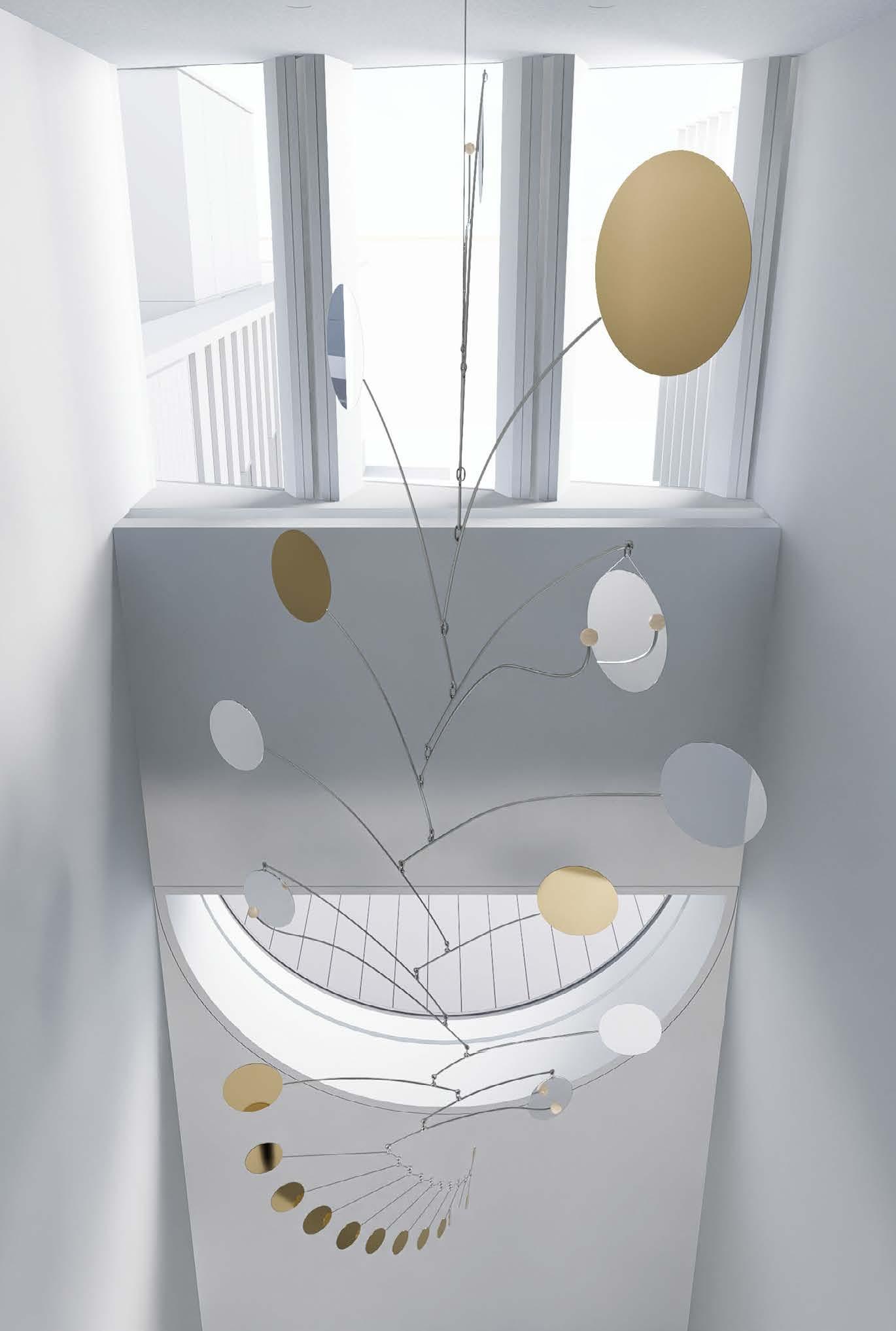
(rightfully) seems to be growing exponentially. A faculty panel on Lugo’s work featured Nathan Arrington and Anna Arabindan-Kesson in conversation with Barbara Graziosi (Classics) and Carolyn Laferrière. Course visits to the exhibition included Rachel Saunders’s course “Handscroll to Anime: Visual Storytelling in Japanese Art.” Students investigated Lugo’s work as part of a long lineage of storytellers across time and media (p. 76).
Roberto Lugo was far from the only artist
to visit the campus. Last fall, artist Tuấn Andrew Nguyễn (the Art Museum’s Fall 2024 Sarah Lee Elson, Class of 1984, International Artist-in-Residence) arrived for a weeks-long residency, visiting Irene Small’s course on contemporary art, among other classrooms (Fig. 3). During his time in Princeton, he screened his film The Unburied Sounds of a Troubled Horizon (2022) (Fig. 5) and spent time installing his monumental commissioned artwork, Naga (2024)—one of six site-specific
artworks created or acquired—for the new Museum (Fig. 4).
Like our students, the Museum’s active acquisitions program continues to benefit from the expertise of A&A faculty and visiting artists and professors. One highlight of this year’s acquisitions is Ibrahim El-Salahi’s Alphabet No. 1 (1960), a remarkable work of African modernism. The acquisition of this work is just one outcome of the years-long academic partnership between Chika Okeke-Agulu and his former Princeton
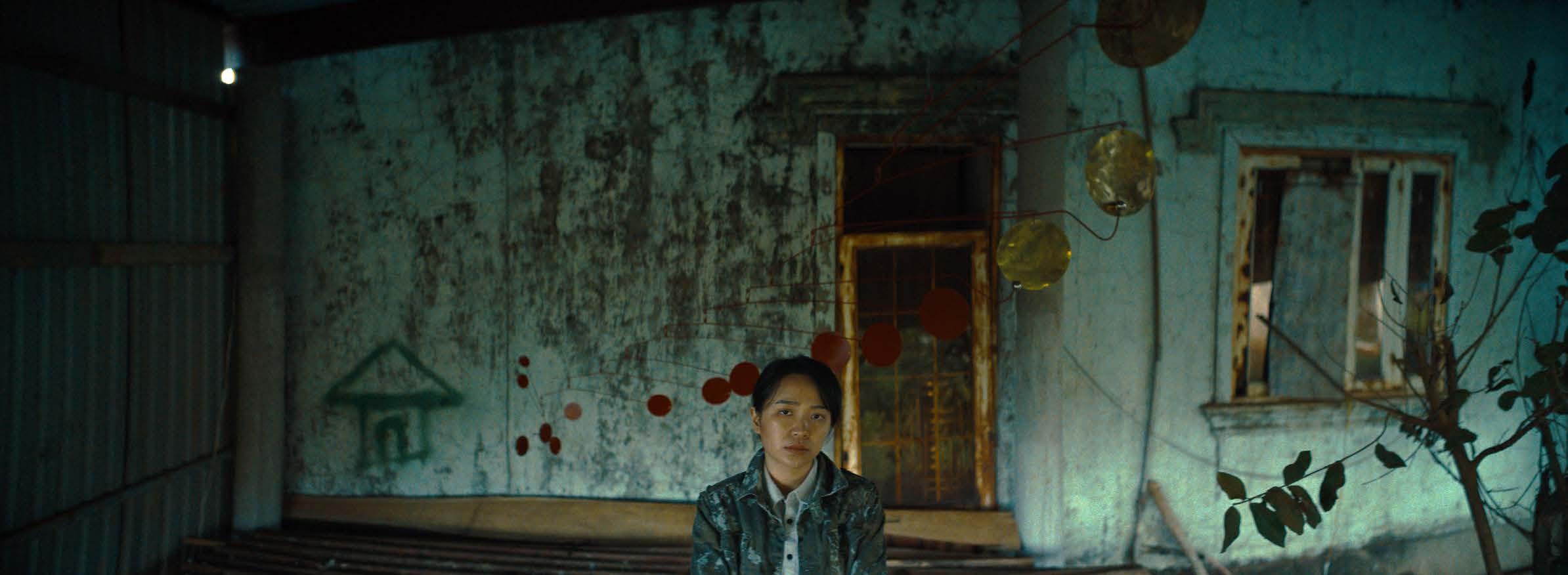
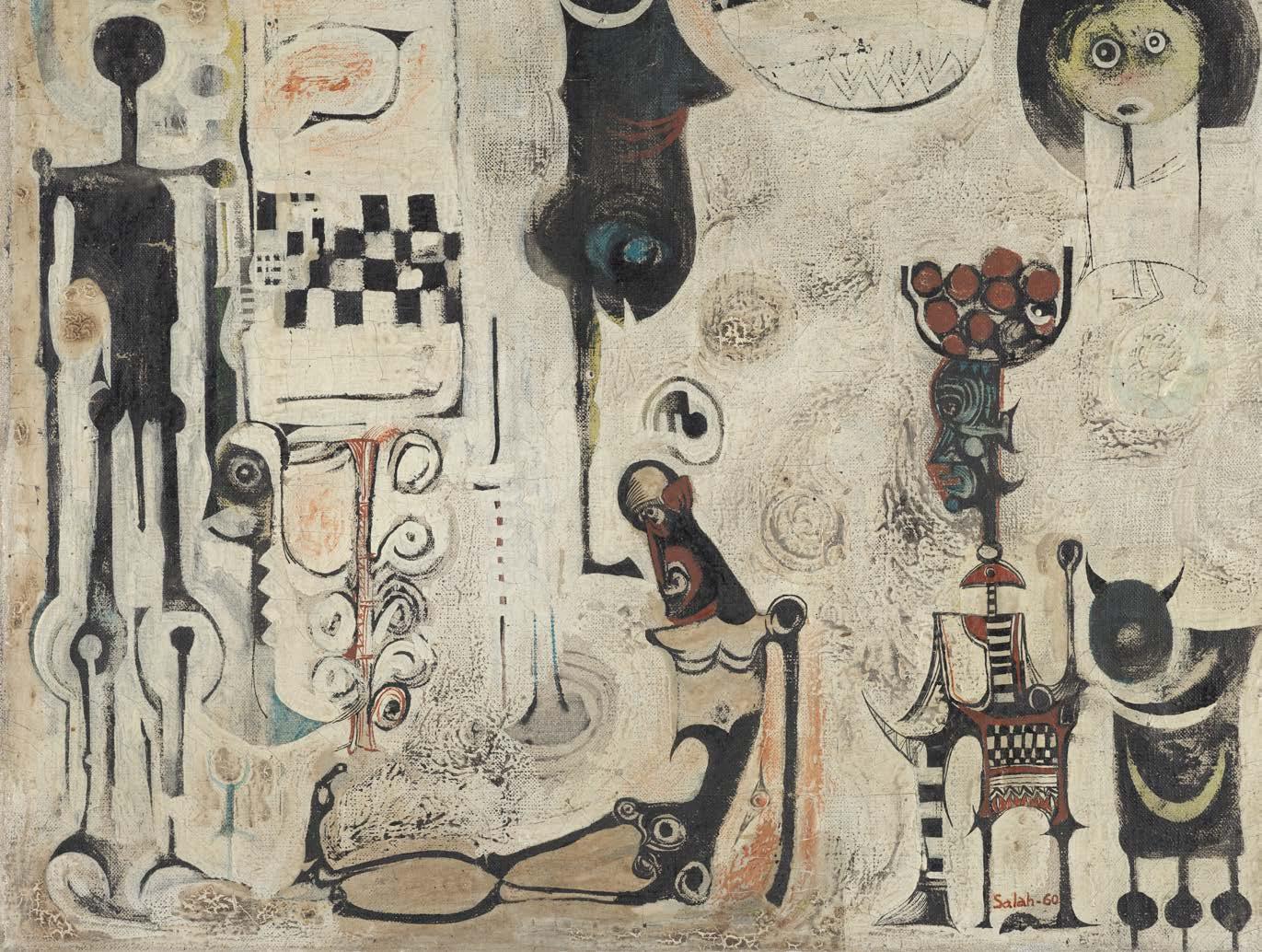
student Perrin Lathrop, the Museum’s assistant curator of African art (Fig. 6).
Key appointments made to curatorial positions this year include Scott Miller—the new assistant curator of European art—who joined us this fall from the Cloisters at the Metropolitan Museum of Art, and Alexandra Foradas—the new Haskell Curator of Modern and Contemporary Art—who arrived this spring following a number of years at MassMoCA. Finally, the Museum’s inaugural curator of
provenance, MaryKate Cleary, joined the staff in early fall. Her knowledge of legal and ethical issues surrounding cultural heritage is already benefiting the Museum and University, as evidenced by her participation in a panel discussion, “Provenance and the Modern Museum,” organized by Carolyn Laferrière, and featuring Perrin Lathrop, Laferrière, and Cleary, along with provenance experts from Museum of Fine Arts Boston and the Smithsonian’s National Museum of Asian Art (Fig. 7).
As the years of closure of the main Museum building come to an end, we reflect with pride and gratitude on our partnership with A&A faculty, staff, and alumni. Together we pioneered new ways to sustain and even expand our commitment to giving Princeton students the best educational opportunities even without a building. With the opening of the new Museum in October 2025, a new generation of educational possibilities is within reach. We can’t wait to see what comes next.
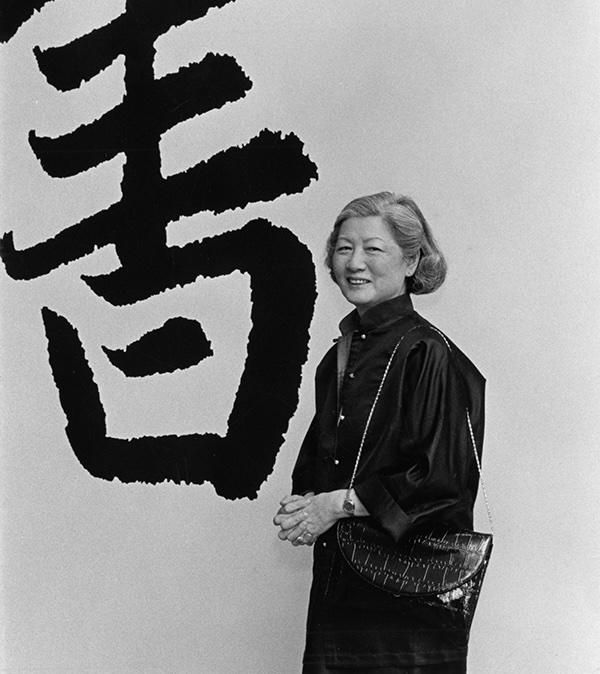
LUCY L. LO (劉先)
LUCY L. LO (劉先) passed away peacefully at her residence in northern New Jersey on December 24, 2024, at the age of 104.
Curator of the Far Eastern Seminar Room in Marquand Library at Princeton University for 17 years, Lo retired in 1985. Her connection to Princeton, however, remained strong. She generously donated artworks to a number of institutions, including the Princeton University Art Museum and the Princeton University Library. She also gifted Lo Archive materials to the Tang Center for East Asian Art in the Department of Art & Archaeology.
Lo was born in 1920 and grew up in Nanjing, Chongqing, and then Shanghai, where she met her husband, James C. M. Lo (羅寄梅), who predeceased her in 1987. James Lo was an accomplished photojournalist and senior photographer at the Central News Agency, where Lucy Lo was also a staff photographer. In 1943, they took a leave of absence, setting
out from Chongqing to travel to Dunhuang to photograph the Buddhist cave temples and environs.
Their lifelong wish to publish their photographs of Dunhuang became a reality for Lucy and James Lo in 2021 with the release of a nine-volume compendium, Visualizing Dunhuang: The Lo Archive Photographs of the Mogao and Yulin Caves (P.Y. and Kinmay W. Tang Center for East Asian Art in association with Princeton University Press, ed. D.C.Y. Ching).
Over the years, Lo befriended generations of graduate students in Princeton’s Ph.D. program in Chinese and Japanese art history, helping students read Chinese cursive calligraphy and translating classical Chinese. “Everyone who came into her orbit felt her warmth and kindness,” said Dora C. Y. Ching, executive director, Tang Center for East Asian Art. “She was a teacher, a consummate storyteller, and a true friend to many.”
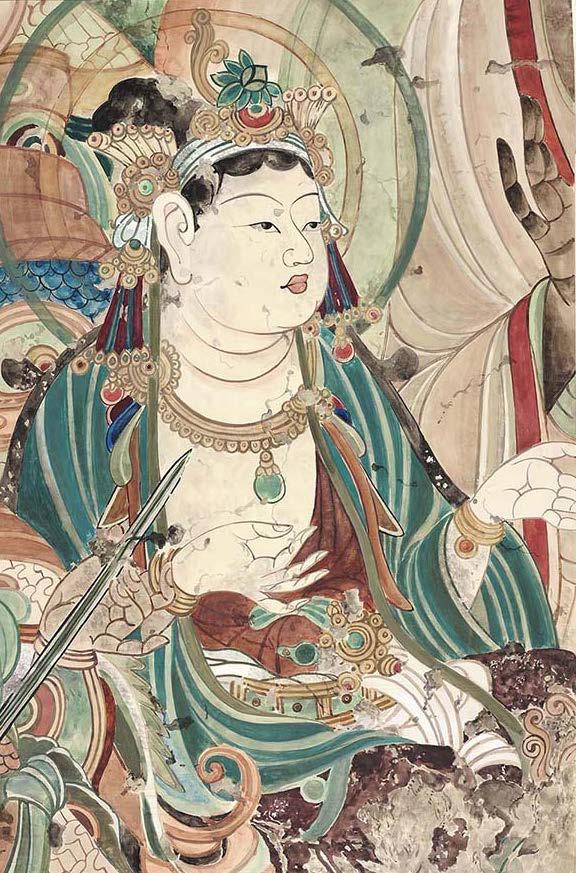
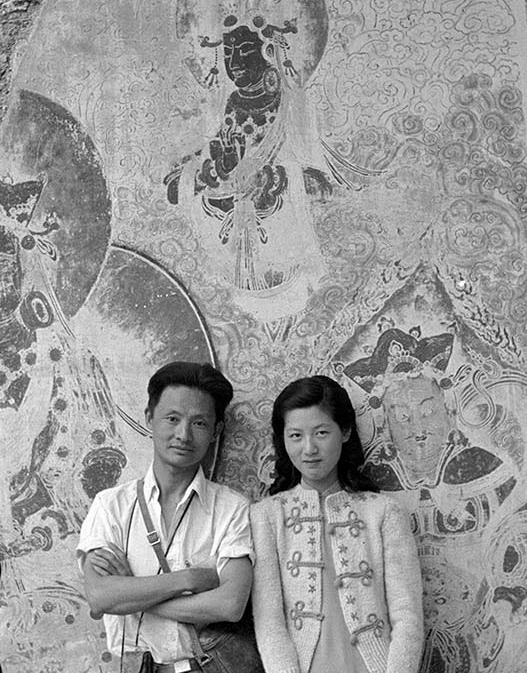
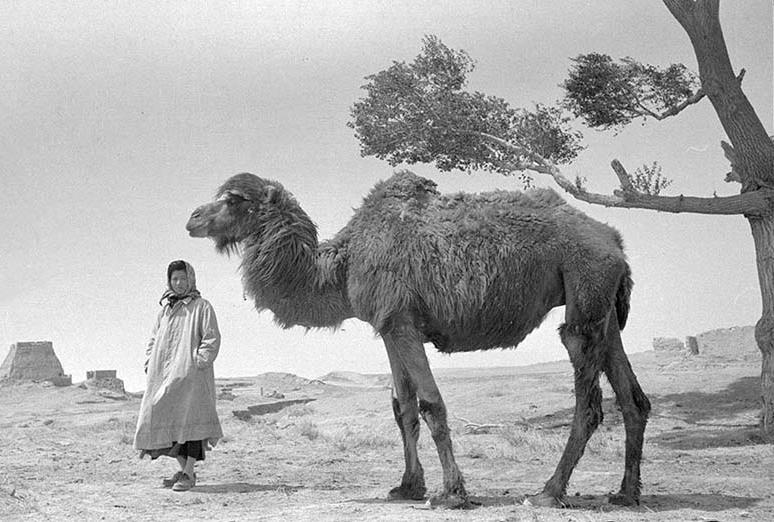
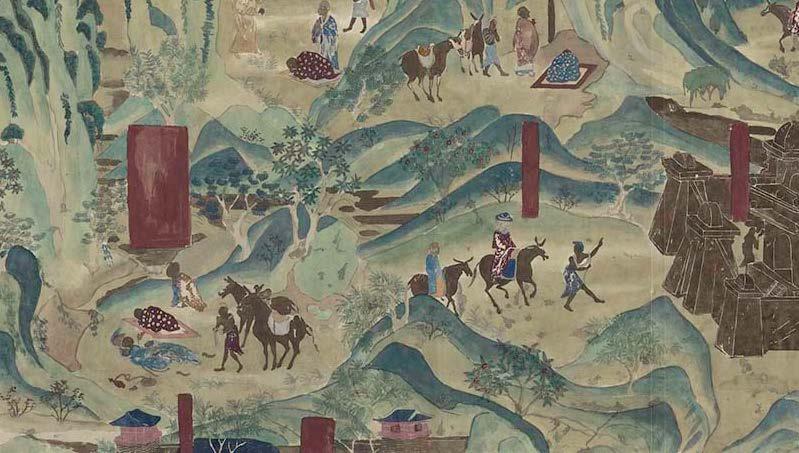
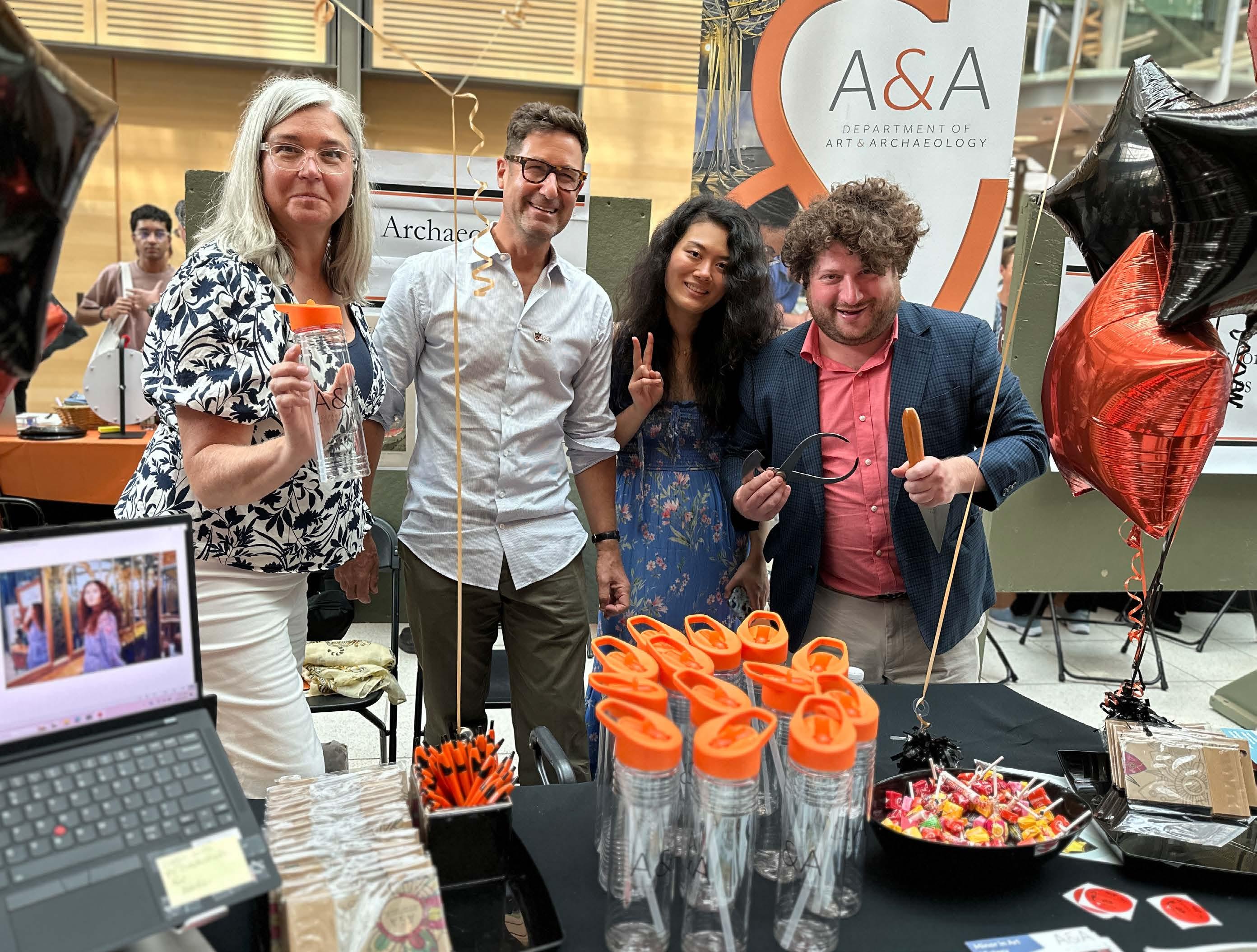
AFTER 15 YEARS IN A&A and almost 24 at Princeton, Stacey Bonette retired on August 1, 2025. She’s delighted by the serendipity of having started her role in A&A during the faculty search that would result in Nathan Arrington’s hiring, who, as the sixth chair since then, had the honor of celebrating Bonette’s retirement from her role as assistant to the chair.
Bonette felt at home in A&A the moment she made the switch from her faculty assistant position in molecular biology in 2010. There’s no question about what Bonette will miss the most: “The people,” she said. “I’ll miss the people, I really will.” “I really like the faculty in this department,” she added, “they’re good folks.” She was thrilled to see many of them at her retirement lunch. “That was absolutely perfect for me,” she said.
Of the changes Bonette has seen during her tenure in A&A, one stands out in particular. “When I started there were definitely more men than women,” Bonette remembers, “and now the tides have changed. I like that!” “I appreciate when women are strong-willed— that’s important,” she added. Bonette can relate to the spirit of gaining new ground for women. She was in the inaugural co-ed class at the Hun School in 1971. “We were the first four-year students to graduate as gals,” she said. “That was important to me.” The Hun School writes about Bonette and her cohort: “You might call them trailblazers, disruptors, agents of change, or the first thirty-five.”
She’s instilled independence in her own two daughters, who now have strong-willed children of their own. She looks forward to spending more time with all of her family—from her threeyear-old granddaughter who lives in Ewing to her 98-year-old mother who is right next door. Bonette celebrated the day she could stop setting her alarm for 5:30 in the morning. “I want a month just to not have to do anything!” she said. After that, she looks forward to
playing with her dogs, Kleo and Muffin, and says working at an animal shelter would be her dream job. “That’s not work,” she said, “that would be going to ‘love.’”
Another passion of Bonette’s is reading, especially historical romances by authors like Lindsay Sands, Donna Grant, and Hannah Howell. What do they all have in common? Strong heroines, of course!
And there’s another essential part of A&A’s spirit that Bonette holds dear. “It’s important to appreciate how beautiful things are,” she said. “I’ve stopped and smelled the roses for a long time.”
Stacey Bonette
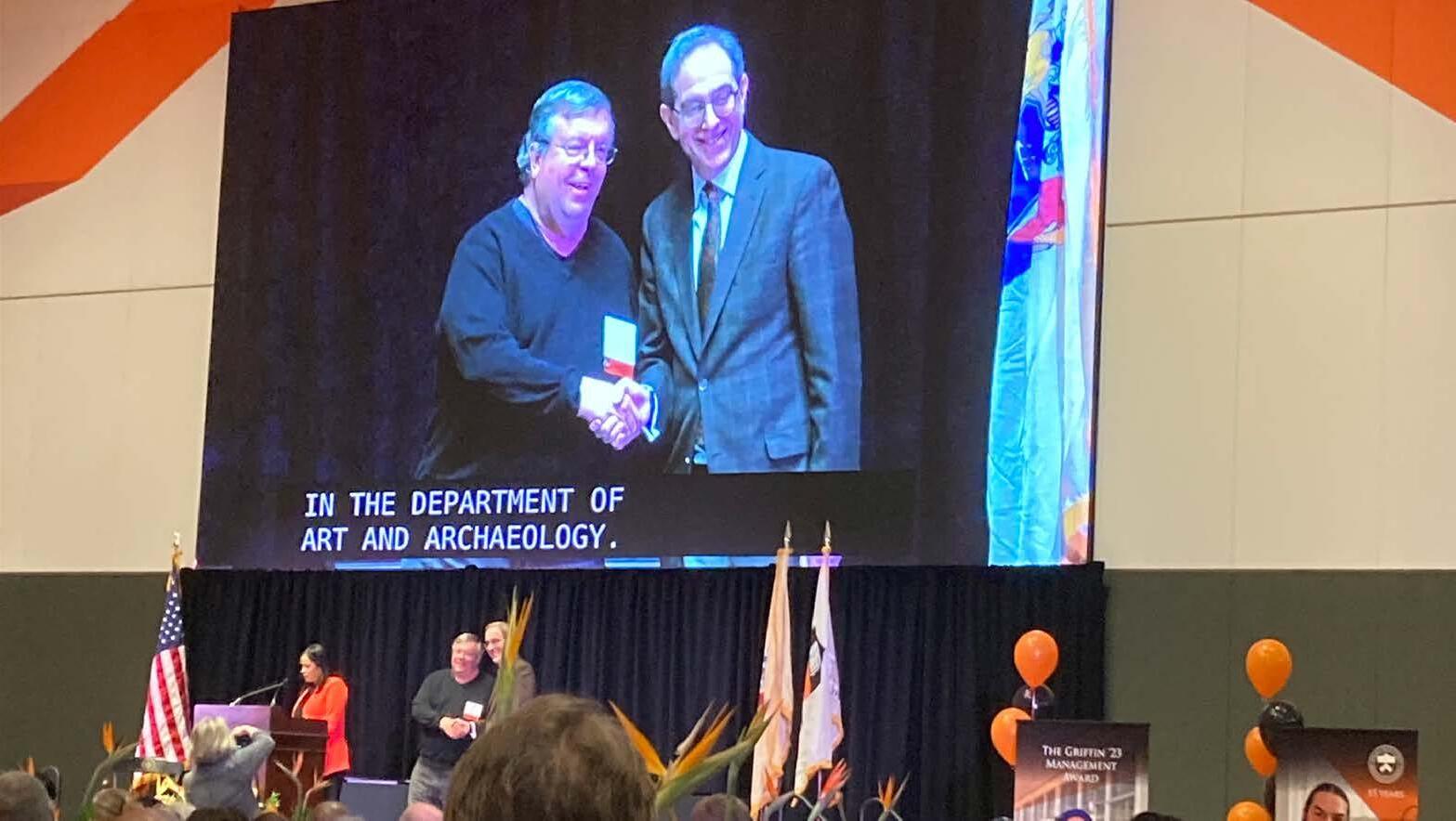
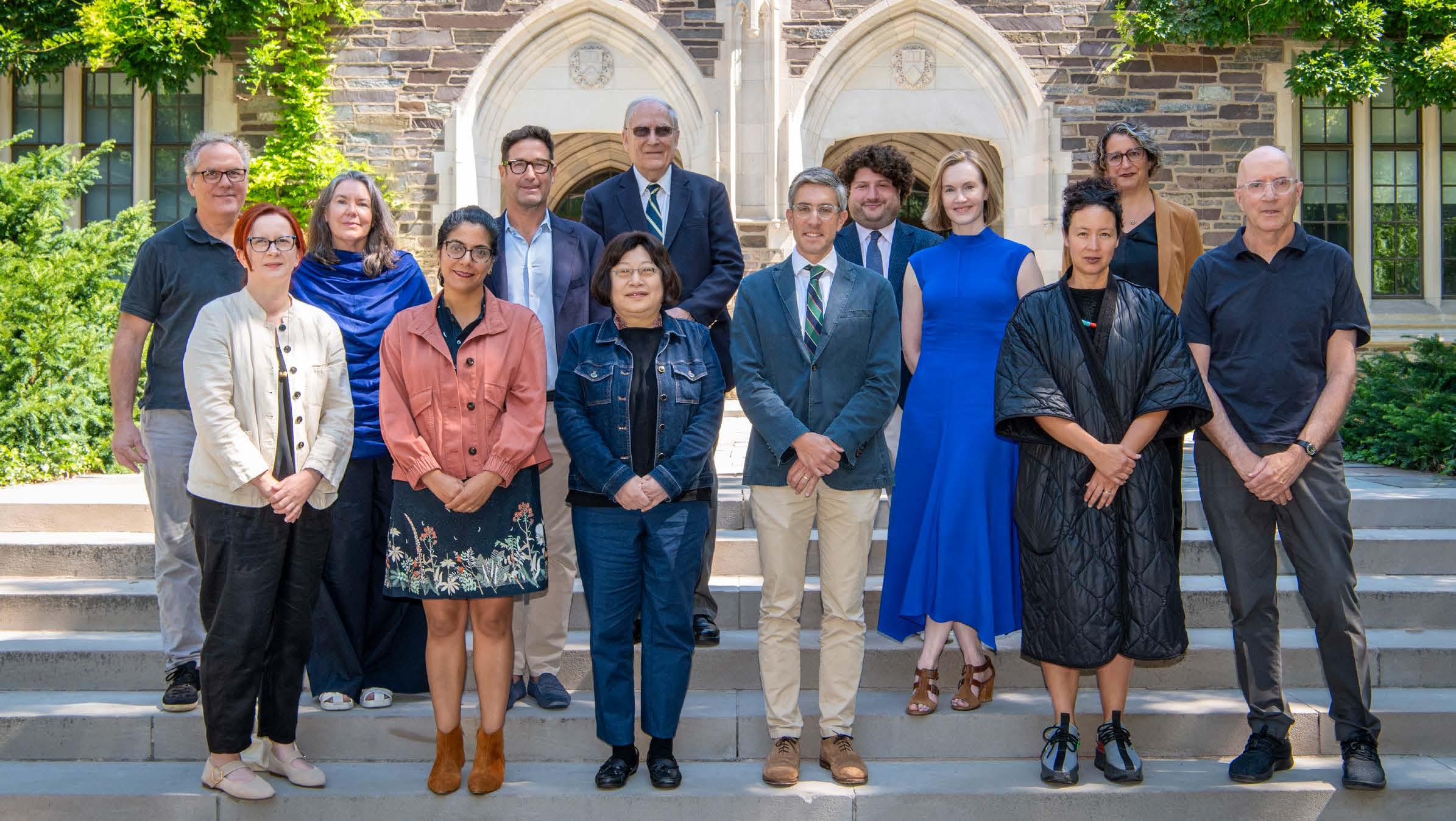
From left, back row: Charlie Barber, Brigid Doherty, Basile Baudez, Thomas DaCosta Kaufmann, Samuel Holzman, Bridget
Rachel Saunders, Monica Bravo, Cheng-hua Wang, Nathan Arrington, Irene V. Small, and Hal Foster
Faculty
Bridget Alsdorf
Anna Arabindan-Kesson
Nathan Arrington
Charlie Barber
Basile Baudez
Monica Bravo
Tina M. Campt
Rachael Z. DeLue
Brigid Doherty
Hal Foster
Samuel Holzman
Thomas DaCosta Kaufmann
Beatrice Kitzinger
Carolina Mangone
Chika Okeke-Agulu
Rachel Saunders
Irene V. Small
Cheng-hua Wang
Carolyn Yerkes
Associated Faculty
Caroline Cheung (Classics)
Devin Fore (German)
Elena Fratto (Slavic Languages and Literatures)
Branko Glǐsić (Civil and Environmental Engineering)
Anthony Grafton (History)
Spyros Papapetros (Architecture)
Rachel Price (Spanish and Portuguese)
Brian Steininger (East Asian Studies)
Jeffrey Whetstone (Visual Arts)
Visiting Scholars
Susan Dackerman* Hui-Wen Lu*
Lecturer with Rank of Professor James Steward
Lecturers
Ronni Baer
Katherine A. Bussard
Yixu Eliza Chen (CTI)
Fatih Han (CTI)
Zoe S. Kwok
Breton Langendorfer
Graduate Student
Teaching Assistants
Nicholas Barone (History)
Christopher BarrettLennard
Jenica Brown
Shing-Kwan Chan
Alexandra Germer
Nick Irvin
Meredith Noorda
Tobias Rosen
Ewan Wallace
Zhuolun Xie
Researchers
William Austin
Joseph Bucciero
Mengge Cao
and
Susana Costa Amaral*
Mattia D’Acri Yutong Li
AnnMarie Perl*
Alanna S. Radlo-Dzur*
Nomi Schneck
Michelle Tian*
The Index of Medieval Art
Fiona Barrett
Catherine Fernandez
Jon Niola
Pamela Patton*
Maria Alessia Rossi
Jessica Savage
Henry Schilb
Marquand Library
Nicola J. Shilliam
Tang Center for East Asian Art
Dora C. Y. Ching
Visual Resources
John Blazejewski
Yichin Chen
Julia Gearhart
Leigh Anne Lieberman
Michele Mazeris (until March 2025)
Administrative Staff
Julie Angarone
Stacey Bonette
Mo Chen
Kelly Lake
Jennifer D. Loessy
Gina Migliaccio-Bilinski
Kirstin Ohrt
Shared Staff
Julia Guan (Shared Services)
Lisa Kraut (Research and Project Administration)
*Also Lecturer
Copyright © 2025 by The Trustees of Princeton University
Nondiscrimination Statement
In compliance with Title IX of the Education Amendments of 1972, Section 504 of the Rehabilitation Act of 1973, and other federal, state, and local laws, Princeton University does not discriminate on the basis of age, race, color, sex, sexual orientation, gender identity or expression, religion, national or ethnic origin, disability, or status as a disabled or Vietnam era veteran in any phase of its employment process; in any phase of its admission or financial aid programs; or other aspects of its educational programs or activities. The associate provost is the individual designated by the University to coordinate its efforts to comply with Title IX, Section 504 and other equal opportunity and affirmative action regulations and laws. Questions or concerns regarding Title IX, Section 504 or other aspects of Princeton’s equal opportunity or affirmative action programs, should be directed to Michele Minter, Vice Provost for Institutional Equity and Diversity, Princeton University, 205 Nassau Hall, Princeton, NJ 08544 or 609-258-6110. Further, inquiries about the application of Title IX and its supporting regulations may also be directed to the Assistant Secretary for Civil Rights, Office for Civil Rights, U.S. Department of Education.
Front cover
As part of ART 217 / EAS 217 “The Arts of Japan,” taught by Professor Rachel Saunders, graduate student Yuchen Wang and Henry Moses ‘25 closely compare two prints titled Nakamura Utaemon IV as Matsuomaru (「舎人松王丸」四代目中村歌右衛門) from an untitled series of actor portraits ca. 1863 By Utagawa Kunisada 歌川国貞 (Utagawa Toyokuni iii 三代歌川豊国), 1786–1865, both selected for purchase by students in ART 425 in 2015 with the Laura P. Hall Memorial Fund for the Princeton University Art Museum. (Photo/Kirstin Ohrt)
Contents page
2025 VIS Book & Poster Show, Program in Visual Arts (Photo/Kirstin Ohrt)
Back cover
Anna Neznamova ‘25 captures one of countless impressions during the fall 2024 HUM 417 trip to Greece (Photo/ Kirstin Ohrt)
Editor
Kirstin Ohrt, Department of Art & Archaeology
Copy Editor
Jenn Backer
Consultant Design
Duane Bruton
Printing Brilliant, Exton, PA