




BY ALISON GROVER, COMMUNICATIONS MANAGER
The past year has been a whirlwind of change when it comes to the all-important issue of Service Family Accommodation. From the Government’s decision to ‘buy back’ 36,347 military houses to the publication of a promising new Defence Housing Strategy, it seems that no brick has been left unturned in the pursuit of much-needed improvements.
How the Ministry of Defence’s foundations for the future will impact those of you in the British Army or supporting a loved one in uniform is the focus of this edition.
Service accommodation, however, does not hold the monopoly on positive change.
As you will notice as you flick through the pages that follow, Army&You is also subject to something of a refresh – with its design and content evolving to ensure the magazine remains a trusted source of information and guidance for readers.




Whether you are serving as a regular or reservist, a partner of a soldier, part of a military household or a more (geographically) distant member of an Army family, we want the magazine to reflect the issues that matter most to you.
And in the true spirit of ‘patch’ life, meeting that mission requires a whole of community effort and an open and honest conversation. So, please feel free to be frank with us and tell us how we can enhance your magazine. You can do so by emailing your thoughts to editor@aff.org.uk or by having your say as part of AFF’s forthcoming market research.
In addition to reviewing what will feature in future editions, we’re also changing the way Army&You is distributed.
Readers now need to sign up to continue receiving (or request to receive) a free copy direct to their door, which can be done by scanning the QR code below or visiting armyandyou.co.uk
Doing so will ensure that you don’t miss out on the magazine’s continued march and enter you into a prize draw for a chance to win an Apple iPad or pair of AirPods.
And for those constantly on the move, don’t worry – you’ll be able to pick up a copy of the magazine at a multitude of military hubs, be it a mess, welfare centre or medical waiting room.
Enjoy the issue.
20 Housing Special - Fantastic Foundations
closer look at the biggest transformation of Armed Forces accommodation in 50 years
22 Gen up on Capital Gains Exploring the potential implications for military families
24 A life less ordinary The unseen side of war: one woman’s account of holding life together at home
30 Bricks and mortar briefing A recce of the road to picking up the keys to a property
35 Boots, barracks and brain fog Managing the menopause while serving
37 Building belonging How a ‘behind the wire’ school tackles mobility
38 Career comforts Why home-based businesses are a good fit for partners
43 A slice of Sennelager Proof good things can come in small packages
45 Navigating the route to citizenship
soldiers to settle
Make yourself at home Military makeovers... how far will you go? 57 Minority Report How to overcome the culture shock of being one of the only ‘guys’ in the village



up to date with the latest news, whats happening at AFF Headquarters and what’s new online
Are you looking for a Boarding School? Let Claire Calder guide you.



Providing FREE and impartial advice to HM Forces and FCDO families
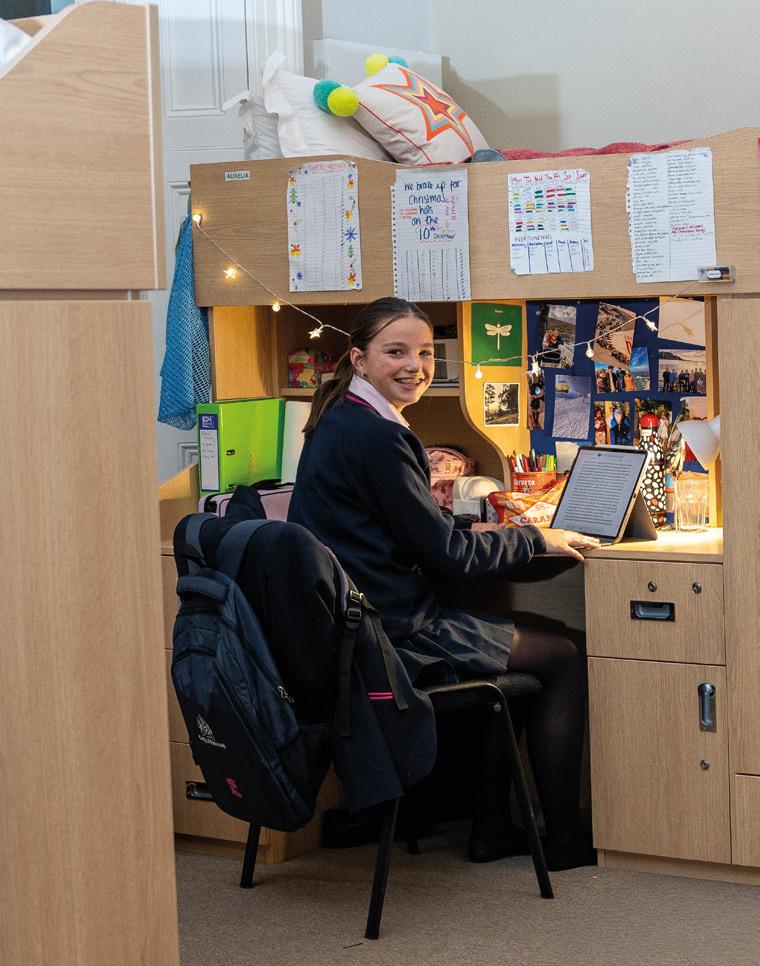
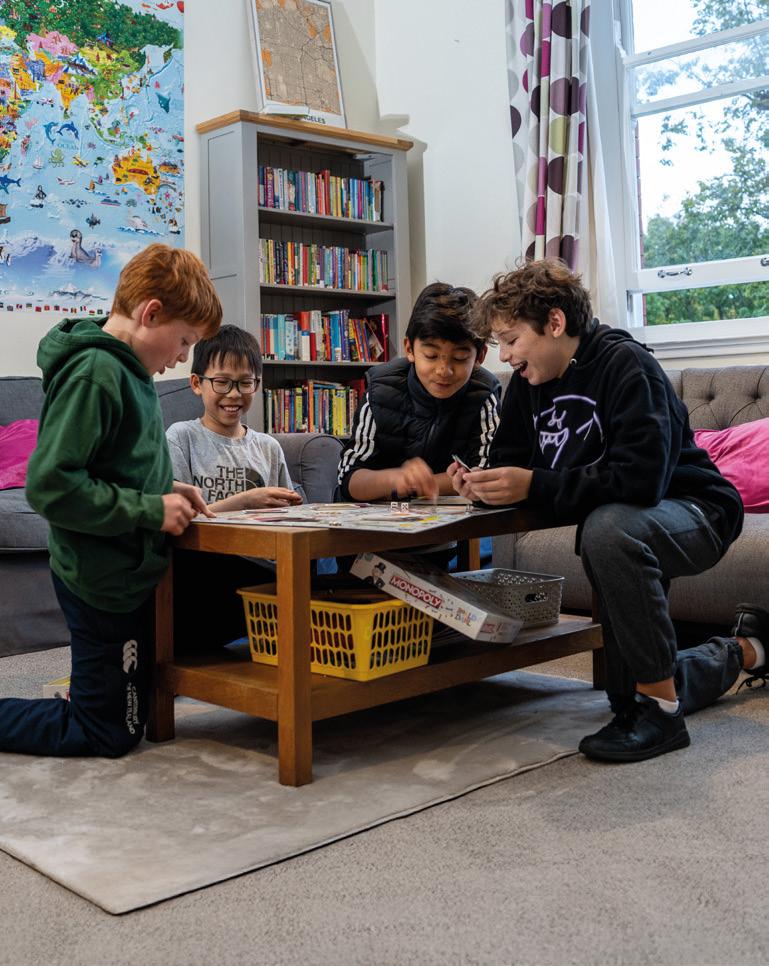
With her personal experience as a boarding school parent and as a Forces wife, Claire understands the unique challenges military families face. She offers a fully personalised advisory service - from your first phone call to the moment your child begins their boarding school journey.
Placement at the right UK boarding school
Advice on Forces and FCDO discounts
Support with private tutoring and revision courses

Military families in receipt of CEA pay 10% of the fees Full boarding from Year 3 to Year 13



Based in the Cotswolds, the safe and lively town of Cheltenham
BY CAT CALDER, AFF HOUSING SPECIALIST
Habitual underinvestment, slow repairs and a lack of accountability have made military housing a longstanding source of frustration for many soldiers and Army families. There is, however, a growing body of evidence to suggest that the days of accommodation angst are set to ease.
Indeed, since the beginning of 2025 there has been a seismic shift in the Service Family Accommodation (SFA) landscape – one that offers hope for lasting improvement.
The turning point came when the Ministry of Defence (MOD) bought back all SFA properties previously owned by Annington Homes. This move ended a decades-long leaseback arrangement that had cost the public purse more than £230 million annually and left families living in houses that were often below acceptable standards. With ownership returned to the MOD, the UK Government now has full control over the estate, removing the constraints of private ownership and enabling direct investment in repairs, upgrades and new developments.
The Secretary of State also launched the Defence
Housing Strategy Review, a comprehensive evaluation of the entire SFA system, that informed the new Defence Housing Strategy announced in November. The aim was clear: to ensure that the opportunity for transformation would not be wasted.
Crucially, the review was led by independent housing experts. I was included in this as a representative of the three families federations, a measure that ensured the voices of service families were not only heard but embedded in the resulting strategy.
Unlike previous initiatives, the current plan is backed by substantial funding – with the Government pledging to invest £9 billion over 10 years. Some of this money is already being used to refurbish the homes in the worst condition, tackle persistent issues such as damp and mould, and accelerate new housing developments at key sites including RAF Brize Norton and Catterick Garrison.
Alongside physical improvements, the MOD has introduced the SFA Consumer Charter, with seven commitments designed to improve your day-to-day experience of living in SFA.
You will now have a named housing officer, faster repairs aligned with Awaab’s Law, higher move-in standards, a streamlined


These changes are not just promises; they are commitments backed by policy and funding
complaints process, and greater freedoms to personalise your homes. These changes are not just promises; they are commitments backed by policy and funding.
Early signs of progress are already visible with improvements to 1,000 homes most in need of refurbishment across the UK now complete. Similarly, AFF is beginning to hear from families that improvements in responsiveness, quality and communication are being felt – clear indicators that change is not just possible but underway.
There is a caveat. There is no magic wand to wave that will resolve everything overnight. Change will take time, especially when it includes major refurbishments or new-build projects. However, under the new Defence Housing Strategy, I am hopeful you and your families will see a demonstrable change for the better soon. And rest assured that AFF will continue to engage with the new governance, policies and improvements to ensure your views are given the highest priority in all decisions. A
RACHEL BARNES, AFF
Overseas Assistant (Europe), attended the Heads of Location Conference – an event that brought together those working under the Global Support Organisation, and representatives from the Defence Infrastructure Organisation and welfare teams.
“It was a valuable chance to put a face to the name, share real experiences and understand what the priorities currently are,” she said. “The conversations felt open, supportive and genuinely focused on making life better for families overseas.”
Rachel, who was joined by colleagues from the RAF and Naval Families Federations, added: “I returned from the conference feeling positive, connected and encouraged — it was another step to improving the experience of those serving overseas.”
AFF OVERSEAS Manager
Esther Thomas reinforced ties with the British Defence US Support welfare team and explored how best to serve the dispersed community of Army families and serving personnel in America during a visit to Washington. By reviewing current practices and meeting spouses newly arrived in America while attending a British Army Staff Conference, she gained
valuable insights into the challenges of adapting to life abroad while supporting serving personnel in Defence engagement roles.
The visit provided a candid look at the realities of settling into such a vast country.
Experiences varied widely depending on regional processes and available support, but one message was clear: the British Defence US Support welfare team may be small but it’s there to provide a dependable lifeline, whether by phone or email.
For those preparing for a posting to the US, Esther strongly recommends visiting bdsus.co.uk, which offers a comprehensive overview of allowances, education, healthcare, driving regulations and many other aspects of American life.
She also encouraged families to take advantage of the new virtual briefs now being facilitated by British Defence US Support, which are designed to help both those heading to the US and those returning to the UK navigate the complex administrative requirements.
“There is lots of administration to do in the States and financial planning is required,” she said.
Whether you’re having a wonderful time or facing a few challenges overseas, AFF is keen to hear from you to help support best practice or evidence common concerns. Email overseassupport@aff. org.uk in confidence.
LAST YEAR AFF was awarded
a significant grant from the Armed Forces Covenant Fund Trust to deliver a fouryear programme, Valuing Forces Families Overseas, in partnership with the Naval Families Federation and the RAF Families Federation.
The initiative is focused on supporting postings outside of the UK and its initial research project – being conducted alongside an external partner – aims to discover hidden need among the military community and pinpoint where additional assistance is required.
Examining the cycle of overseas assignments to provide an up-to-date understanding of families’ experiences, the study will include focus groups and stakeholder interviews to ensure your voices remain central to the process. Work is underway so look out for any opportunities to get involved.
Sian Timms, overseas project lead at the Naval Families Federation, which is creating a series of tri-service briefs, said: “Last summer, service personnel and their families serving overseas or recently assigned abroad were asked what was the ‘just one thing’ they wished they had known before their assignment.
“Using their insights, along with other evidence from engagements, we are developing a new suite of video resources to help service personnel and their families make informed choices about overseas assignments. Working with a video production company, we’re creating dynamic scripts and animations with service families in mind.”
Work on a tri-service website has also begun and is currently in the discovery phase, with the RAF Families Federation currently talking to families to understand their overseas experiences and reviewing existing resources to identify gaps. Insights from this analysis will shape the project and ensure the platform meets families’ needs.
AFF WANTS to know your preferences when it comes to receiving news and information on the issues that affect you and your Army family life, and the ways in which you interact with us. For example, do you favour print over digital
communications or to converse in-person or via virtual events?
Keep an eye out on our social media and website for the chance to have your say.
THE AFF Devolved and Overseas Managers recently held a productive meeting with the Army Personnel Centre’s Chief of Staff and wider team in Glasgow.
The discussion provided a chance to explore how serving personnel thinking of accompanied assignments to Scotland, Wales, Northern Ireland or overseas could be better supported in their career management.
RACHEL BARNES, AFF Overseas Assistant (Europe), was recently invited to visit NATO headquarters to meet key contacts and gain an insight into how the British Army operates in Brussels. The UK’s footprint in Belgium is complex, comprising 10 different organisations, five sites and four legal agreements. There are personnel located in a dozen locations and two official languages spoken –Dutch and French.
Rachel is looking forward to continuing to build a relationship with the National Support Element and assisting the wider community in SHAPE [Supreme Headquarters Allied Powers Europe]. A
SERVICE LEAVERS are an asset to employers and possess qualities that are important for the UK’s economic future, according to a recent report.
The research, commissioned by recruitment agency Reed, flagged that military-honed traits – such as leadership, problem-solving skills and resilience – are highly sought by companies.
“Service leavers are more than ready for today’s jobs – they are equipped for the careers of tomorrow,” said Reed in Partnership’s managing director Donna Murrell.
“By demonstrating how military-acquired skills match with employer demand across the UK economy, we are seeking to open up the widest possible choices for service leaver careers.”
The report, Skills in Transition: How UK Service leavers can power the nation’s economic future, highlights the personalised support provided by the
MOD’s Career Transition Partnership (CTP).
The CTP programme, a Forces Employment Charity and Reed in Partnership initiative, assists those hanging up their uniforms to translate their military experience into a civilian context and provides specialist support for those leaving early or on recovery duties.
ASPIRING ENGINEERS have the chance to get their careers off to a flying start through a new defencefocused drone degree.
Taking off in September, the Integrated Engineering (Autonomous Robotics) course at the New Model Institute for Technology and Engineering in Hereford will train a cohort of civilian students and up to five soldiers each year.
Those involved in delivering the three-year degree, which is being funded by a £240,000 investment from the British
Army, were recently visited by Al Carns, Minister for the Armed Forces.
“In Ukraine, drones are causing more casualties than artillery, that’s the reality of modern warfare,” said the former Royal Marines officer. “This degree gives young engineers a fast track to careers at the cutting edge, protecting Britain and powering growth in places like Hereford. These graduates will strengthen our Armed Forces and help push forward advances in civilian and commercial drone technology, developing homegrown talent, building British capabilities, from battlefield to business.”
The degree forms part of a broader effort to deliver the Strategic Defence Review’s ambition to make the British Army ten times more lethal through the integration of artificial intelligence, drones and autonomous systems.
Sign up to find out more at nmite.ac.uk/form/registeryour-interest-in-autosy A

We’re
Contact Forcesline.
We’re open 09:00–17:00 Monday to Thursday, and 09:00–16:00 on Friday

EDUCATION & CHILDCARE
A CERTIFICATE of Higher Education course run by the University of Sunderland adopts a reassuring ‘bedside manner’ to help members of the military community to pursue a career in healthcare.
Designed with serving personnel, veterans and Armed Forces families in mind, the one-year online programme provides a flexible and supportive pathway into degree-level study in nursing, mental health, paramedic science and other health professions. The course was developed in partnership with HQ Army Medical Services and underlines the University’s commitment to its Armed Forces Covenant gold award, ensuring that military learners are valued and supported.
A number of veterans and reservists teach on the programme and bring an understanding of the challenges faced, and skills possessed, by the Armed Forces community. This helps students transition smoothly into academic study.
Explaining how multiple moves as an Army spouse had hampered her ability to build a career or advance her education, Nicola Ross commended the course: “It has opened a door to a career I’m passionate about and helped me begin my mental health nursing degree at Sunderland. The course structure was clear and easy to follow and the support from my tutor,
Garry, was outstanding. I don’t think I could have done as well without his encouragement and guidance.”
Jacob Halls, who is married to a member of the Royal Army Medical Service based in Brunei, added: “I faced the extra challenge of living overseas with an eight-hour time difference. Despite that, I completed the course thanks to its flexibility and the fantastic support from Garry, who went above and beyond to help me stay connected.
“The course broadened my understanding of healthrelated topics and gave me the confidence to pursue further studies, with the goal of becoming a PT instructor.”
To find out more about the course, which is registered with the Student Loans Company and eligible for the Ministry of Defence’s Enhanced Learning Credits Administration Services, visit sunderland.ac.uk/cert-hehealth
RESEARCH COMMISSIONED by the Service Children’s Progression (SCiP) Alliance has found that many young people from military families feel like ‘perpetual outsiders’ while at university.
The Thriving Lives in Higher Education study gathered evidence from 230 students and 73 learning institutions around the UK, and considered data from the Universities and Colleges Admissions Service. It found many higher
education providers lacked the ability to identify and monitor those from forces families, which meant the opportunity to provide targeted support was limited.
The report recommends the development of mechanisms to pinpoint students from service households during the enrolment process and calls for admissions policies to address the impact of frequent relocations and disrupted schooling. It also champions the provision of tailored support, such as flexible deadlines and alternative assessment measures, and dedicated wellbeing initiatives. The SCiP Alliance has also launched the Pioneer Programme, enabling universities to become early adopters of the new Thriving Lives Toolkit. Contact Emily. flores@winchester.ac.uk for details.
To read the full findings, which state the case for bespoke bursaries, visit tinyurl.com/thrivinglives
THE ARMY veteran and military spouse who launched Little Troopers, which supports the children of Armed Forces personnel, was awarded an MBE in the King’s New Year Honours list. Louise Fetigan founded the charity in 2011 after seeing the challenges faced by her daughter because of military life, and has overseen its growth into an organisation that now helps thousands every year

through a range of resources and activities for families and schools.
Describing her award as humbling, Louise said: “This isn’t just about me, it’s about every military child who deserves to feel recognised, understood and celebrated as part of our military community.”
Visit littletroopers.net to find out more about what the charity offers.
A NEW funding system for post-18 education in England will enable eligible students aged up to 60 to apply for tuition fee and maintenance loans.
The lifelong learning entitlement, which is being launched in September ready for courses and modules starting from January 2027 onwards, will be available to those targeting level 4 to 6 qualifications.
The funding is intended to broaden access to highquality education and help people learn during their working lives, and will eventually replace the current system of higher
education student finance and advanced learner loans.
Eligible learners will have access to tuition fee loans up to £38,140, which covers four years of study at 2025/2026 rates.
The devolved nations have different funding arrangements for education, but the Government is working with the administrations to make sure students can move seamlessly between institutions around the UK.
Search ‘lifelong learning entitlement’ on gov.uk
WRAPPING YOUR head around childcare costs can be confusing, particularly given the Ministry of Defence has three elements to the support it extends to working families.
While each can be used to meet some of the expense of before and after-school care for children aged between four and 11, which of the trio you could apply for depends on your eligibility and where in the world you are.
■ Wrap Around Childcare is for families living in the UK. To claim it you must meet all the eligibility criteria and be able to pay your provider from a tax-free childcare account.
■ Wrap Around Childcare Overseas is, as its name suggests, the overseas equivalent of Wrap Around Childcare.
Families who are eligible and assigned to countries in the European Economic Area, Switzerland or who use Defence Children Services providers may be able to claim it. If a local childcare provider is used, they must be registered with host nation authorities.
■ Primary School Aged Childcare Overseas was launched in January and is for families living in locations where Wrap Around Childcare Overseas eligibility rules do not apply. Families must meet the eligibility requirements and, when using a local childcare provider, they must be registered with host nation authorities.
To find out more, visit discovermybenefits.mod. gov.uk
NEVER SUCH Innocence is inviting young people aged 8-18 to write a poem or create a piece of artwork reflecting on the theme ‘winds of change’ as part of its annual Month of the Military Child celebration. The charity will provide every entrant with a certificate of commendation and winners will be invited to an awards ceremony in London, receive a goodie bag of prizes and have their work published in a digital booklet and displayed at the Ministry of Defence.
Schools or groups can scoop a £250 book voucher, donated by the Armed Forces Education Trust, in the ‘best display’ category.
The competition is open 1 April to 1 May. Visit neversuchinnocence.com/ month-of-the-military-child to enter.
Don’t forget to wear purple on 24 April to show your support for Month of the Military Child.
JUNIOR MEMBERS of Army families living in, or moving to, Scotland will soon have a dedicated digital resource rich in age-related news and discounts.
Hosted on youth website young.scot and run in partnership with Forces Children Scotland, the hub for national and regional news is being funded by a £44,371 grant from the Armed Forces Covenant Fund Trust’s Serving Families: On the Move programme and as part of the Finding Your Place in Scotland initiative.
The launch follows members of Forces Children Scotland’s online forum reporting that they value the tips shared by their peers.
“When you move it can feel really isolating, sometimes schools and other people don’t think about what’s happening to you,” wrote one contributor.
“If I’d had this information the last time I moved it would have made me feel special and that someone
was thinking of me,” explained another. “I think it would make me feel linked to the new community and the new country I was moving to.”
Find out more at covenantfund.org.uk
A SERVICEMAN who spearheaded an initiative introducing young people to the power of computing is championing coding as a rewarding hobby for children.
Sergeant James Smith established a Code Club using resources from the Raspberry Pi Foundation, a global charity on a mission to develop young people’s digital skills, during a twoyear assignment to RAF Wyton.
The senior noncommissioned officer said the free-to-access projects on offer fuel confidence and creativity through game design, animation and website building and are a novel way for parents to reconnect with their children after time away or an ideal shared activity during periods of absence.
“As Code Club offers a variety of projects and learning pathways for children to take part in, I was keen to develop a fun, learning community for service children who regularly move around,” James added.
To try coding with your family, visit rpf.io/projectsservice or visit codeclub.org for further details on how to join or start a club. A


As you’ll see in the pages ahead, Army&You is on the move. We’ve refreshed the design and are evolving the content to ensure the magazine remains a trusted source of information, guidance and support for the whole Army community.
Whether you’re serving as a Regular or Reservist, a partner, part of a military household, or supporting from further afield, our aim is simple: to reflect the issues that matter most to you.
And true to the spirit of patch and service life, delivering that mission takes a whole-force effort. An open, honest conversation helps us get it right — so we want your feedback, good or bad.
Email your thoughts to editor@aff.org.uk


armyandyou.co.uk | facebook.com/armyandyou | instagram.com/armyandyou | x.com/armyandyou
GRIEVING FAMILIES will soon benefit from specialist mental health and wellbeing support, thanks to a grant from the Armed Forces Covenant Fund Trust’s Empowering Bereaved Military Families programme.
The trust awarded nearly £2 million to the Defence Medical Welfare Service (DMWS) to deliver counselling and emotional and practical care to military families who’ve lost loved ones during or connected to service.
The programme builds on insights from the Fund’s three-year consultation framework, launched in 2024, which highlighted the need for more joined-up, accessible and compassionate support for bereaved families.
DMWS will provide support to the whole family, including children and extended family members, and families will no longer need to repeat their story at every stage.
Read more about the programme at covenantfund.org.uk
THANKS TO a grant from the Armed Forces Covenant Fund Trust, the Defence Medical Welfare Service is now able to provide online counselling tailored to the needs of serving and reservist
women across the UK.
Support is available for those struggling with issues such as stress and anxiety, loneliness and isolation, health worries, work pressures and caring responsibilities.
If you think you or someone you know would benefit from free online counselling, you can self-refer by emailing seenandheard@dmws.org. uk
SERVICEWOMEN OF all ranks who are victims of sexual harassment or abuse have a new confidential route to advice, support and advocacy.
Safe to Serve, a service run by SSAFA and funded by a £100,000 Armed Forces Covenant Fund Trust grant, is part of the Servicewomen: Seen and Heard programme.
Recent cases reported in the media have highlighted the challenge some women in the UK military still face, according to SSAFA’s Director of Social Care Operations Lynne Doherty.
“By amplifying their voices and using anonymous insights to influence policy, we’re helping to create safer, fairer environments for women serving in the Armed Forces,” she said.
Servicewomen, whether regular or reservist, can call +44 800 260 6722 to speak directly to an adviser or message securely via WhatsApp on +44 203 807 4400.
A NEW initiative run by a mental health charity in Suffolk aims to address the additional challenges that accompany a move to the remote and rural settings of the county’s military bases.
Frontline Partners, a project funded by the Armed Forces Covenant Trust and Ministry of Defence and run by Suffolk Mind, is dedicated to helping spouses and partners transition to the East of England, where there may be extra challenges, particularly if you live in a rural part of the county. Limited public transport is just one of the hurdles that can be experienced.
The scheme aims to improve the mental health, emotional wellbeing and employability of Suffolkbased Armed Forces households through targeted outreach, counselling, peer support and upskilling opportunities. If you are living in the county and interested in the support on offer, visit suffolkmind.org.uk/services/ frontline-families, email Liz. mackenzie@suffolkmind. org.uk or call 0300 111 6000.
AN UPDATE to the TriService Accommodation Regulations (JSP 464) has been published that includes revisions to the process of making additional needs and disability adaptations (ANDA) to Service Family Accommodation (SFA).
The amended policy offers clearer guidance on the supporting evidence the Defence Infrastructure Organisation (DIO) will consider when reviewing proposed modifications and clarifies when an occupational therapist report is required. The changes follow a consultation led by the DIO accommodation policy team, which included feedback from AFF.
If you have a family member who requires ANDA to SFA you should contact Pinnacle Home Services and follow the guidance at pinnacleservicefamilies. co.uk. There is also some useful information on the process on the AFF additional needs page at aff. org.uk
We are always interested in how any changes to policy are impacting Army families, so contact our Health & Additional Needs team healthsupport@aff.org.uk if you have any feedback or need support with the ANDA process.
A DIGITAL platform offering access to free mental and physical health tools and resources is available to help combat the stresses and strains of military life.
Designed for serving personnel, veterans and their families, HeadFIT features a range of simple self-help techniques that fit easily into everyday routines. Visit headfit.org A
FOR THOSE based in East Yorkshire it is not difficult to find a sympathetic ear or distraction from servicerelated stresses thanks to the army of volunteers helping to run the Military Assistance Social Hub (MASH).
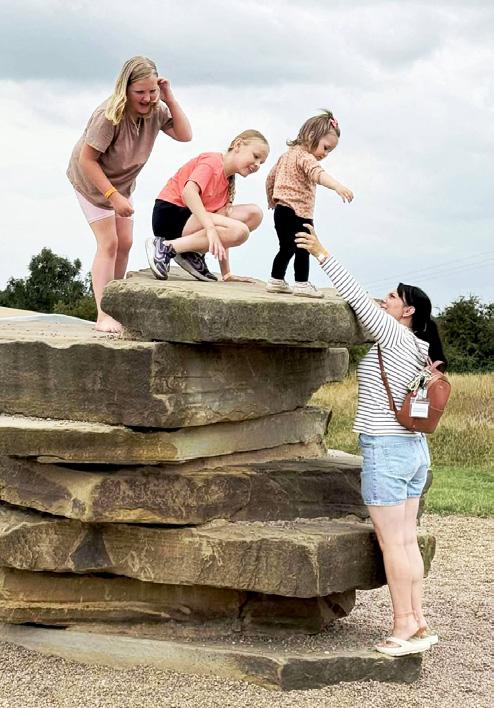
The initiative aims to provide help, understanding and practical assistance to those in uniform and to the families and carers who serve alongside them.
Michelle Leach leads the MASH at Normandy Barracks (home to the Defence School of Transport) in Leconfield, which offers services ranging from crisis support and counselling to social activities.
“While we assist a broad range of people, serving personnel remain central to our work,” she said. “Many approach us seeking a neutral, confidential space outside the military chain of command.”
Common problems shared with MASH include housing frustrations, financial challenges or relate to the
mental toll associated with the strain of deployments and relocations.
“Partners and parents often contact us when they are uncertain how best to help a loved one facing difficulties,” added Michelle. “They look for guidance on coping with absences, managing stress at home and understanding the systems that govern military life.
“For many, the military environment can feel complex and overwhelming. We help bridge that gap by clarifying processes, directing families to appropriate resources and offering reassurance. Often, they simply need someone who understands the unique challenges and quiet sacrifices of military family life.”
MASH events are designed to bring families together to allow them to mutually support each other and activity days give children a chance to make new friends.
In addition to arranging get-togethers and trips out, the hubs in Bridlington, Beverley, Leven and Leconfield hold digital literacy sessions and host guest speakers from professional counselling and support groups.
“The most rewarding aspect of our work is witnessing its positive impact,” Michelle concluded. “MASH has become a trusted presence within the local military community.
“Serving personnel value having an independent, supportive space where they
can seek help without fear of stigma.
“Our impact is reflected not only in the number of people we help but also in the stronger sense of community we help foster. We see families grow more resilient, relationships strengthen and individuals find clarity during challenging times.”
To find out more, visit mashuk.org.uk
GIRLS’ BRIGADE England & Wales is working with the Methodist Church to launch new groups in regions with high numbers of military families.
The drive, which seeks to help girls between the ages of four and 17 to build friendships and explore spirituality, will see sessions become available in the Salisbury Plain area, Andover and Carterton.
Hazel Adamson, who has been appointed by the Girls’ Brigade as a military families worker, said: “We want to give girls and young women a safe and welcoming space to make friends and learn
new things, which is so important when times feel uncertain.
“We aim to listen to girls from military families, develop a picture of how we can best support them, and empower them on their journey.”
If you’re interested in joining one of the new groups, or can offer help to run one, email hazel. adamson@gb-ministries. org
To find out the closest group to you, visit girls brigadeministries.org.uk A
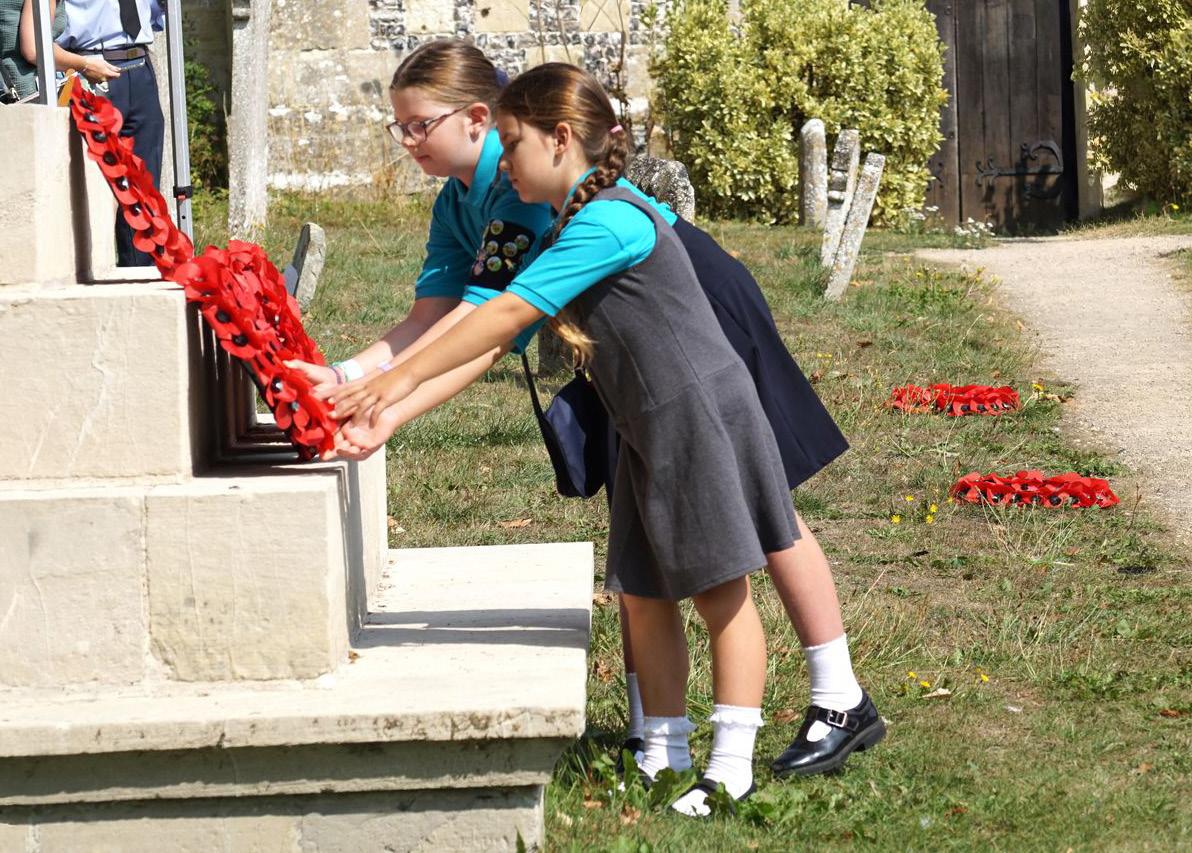

Sedbergh understands military life. For generations, we have supported Forces families with stability, continuity and a boarding community where pupils quickly feel they belong.
From September 2026, Sedbergh will become a CEA +10% School, reinforcing our commitment to military families seeking exceptional full-boarding education.
A 98% full boarding environment means structure, routine and opportunitySaturday lessons, full weekends and outstanding academic, sporting and co-curricular pathways, all within a supportive community that understands service life.


FOR THOSE regularly transiting to and from overseas postings, trooper flights appear an attractive proposition and many families have been ‘checking in’ with AFF to enquire about the rules relating to flying ‘military air’. In a bid to avoid any travel turbulence, here are the answers to some of your most frequently asked questions:
Trooper flights are operated by the Ministry of Defence to support Defence activity. Families can sometimes book spare seats on these aircraft through concessionary travel. Seats are often less expensive than civilian airlines, but they’re only confirmed once all duty passengers have checked in.
Adults travelling on concessionary fares cannot be nominated to accompany a child unless the child is also travelling on a concessionary fare.
Eligibility is carefully defined. The main groups include:
■ Spouses or civil partners – legally recognised partners of service personnel.
■ Long-term relationship partners – only in specific pilot locations.
■ Dependent children –usually under 18.

■ Dependent young adults – aged 18–21 and in full-time education.
■ Dependent adults with infirmities – over 18, medically certified, living at home.
■ Unmarried adult children – over 18, living at home for compassionate reasons such as bereavement or chronic illness.
Children can only travel under specific conditions:
■ With a parent or guardian – ideally for the whole journey, and the adult must also be entitled to travel.
■ With a nominated adult – parents can nominate another entitled adult using an accompanied minor form.
■ Unaccompanied 16 to 17-year-olds – allowed if parents give consent via the unaccompanied minor form.
KNOW?
■ Applications: You can
apply up to three months in advance, but confirmation only comes the day before travel.
■ Prioritisation: Seats are allocated based on application date and priority category.
■ Check-in: Expect longer and earlier check-in times than civilian airlines.
■ Baggage: Allowances may differ from commercial carriers.
■ Dress codes: Some routes have restrictions on passenger attire.
■ Different surnames: Carry proof of relationship (birth/ adoption certificates) if your party’s surnames don’t match.
■ Insurance: Ensure nominated adults have cover for escorting children overseas.
Trooper flights can be a helpful way for families to stay connected, but they’re not always straightforward. You should check eligibility carefully, prepare the right paperwork, and always have a back-up plan in case flights change at short notice. A
NEW MEASURES being introduced through the Armed Forces Bill will raise the maximum age at which veterans can be recalled from 55 to 65 and lower the threshold for them being called into service.
Intended to strengthen the UK’s Strategic Reserve, former service personnel with an ex-Regular and Recall Reserve liability, the move will make it easier for the UK to call on experienced individuals in times of crisis. The changes, which will align the time for which recall applies across all three services and means Reservists can be called upon for ‘warlike preparations’, will come into force next year if passed by Parliament.
Commander Standing Joint Command, Lt General Paul Griffiths, who is leading efforts to ensure the UK is ready to combat any acts of aggression, said: “As the threat to our nation grows, we must ensure our Armed Forces can draw on the numbers and skills required to meet it.
“Our Strategic Reserve represents a wealth of expertise built over years of military and civilian experience – from cyber and intelligence to medicine and communications. These reforms will allow us to mobilise that talent rapidly when it matters most, strengthening our readiness and aligning with a similar approach many NATO forces are taking to bolster their own resilience.” A





THE ARMY, Naval and RAF Families Federations are set to re-run a survey aimed at non-UK serving personnel, Armed Forces veterans and military family members in a bid to further fine tune immigration and visa messaging.
Insights from the original research, conducted in 2024, helped to identify how accessible information was to different groups and the data captured by the latest iteration will shine a spotlight on what is working well and any areas in need of improvement.
The findings will inform work being done by the families federations, the chain of command across all three services and supporting organisations to ensure that anyone who needs it can access clear, accurate and user-friendly guidance.
Your input will help us make a difference. Keep an eye out for further information on aff.org.uk and our social media in the coming months.
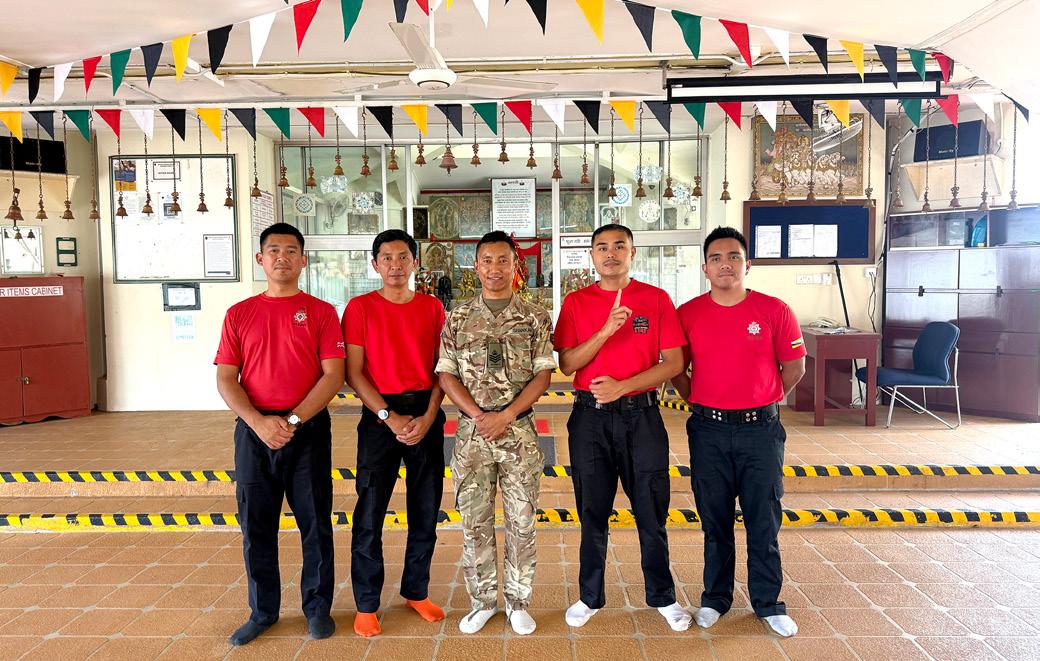
British Forces in Brunei were given an introduction to the proud heritage, rich traditions and distinguished history of the Gurkhas during a three-day Nepali culture and language course.
The bond-building initiative included lessons on Nepali grammar, conversation practice, a visit to the garrison temple and the opportunity to mix with Nepalese families.
Dillikumar Rai – the Gurkha Major of Brunei’s resident infantry battalion, 2nd Battalion, The Royal Gurkha Rifles – delivered a brief on the course, which culminated with a hands-on ‘messing’ lesson, where the students learned to prepare a traditional curry.
WITH UK elections due in the coming months it’s vital that Army personnel, spouses, civil partners and eligible children are correctly registered to vote. If eligible, there are several registration options depending on
factors such as age, nationality and residence status:
■ Ordinary voter: for those based in the UK with a stable address (gov.uk/ register-to-vote);
■ Service voter: for those based overseas, or expecting to be deployed with no longterm base. A service declaration lasts five years (gov.uk/registerto-vote-armed-forces);
■ Reservists and some adult children are not eligible to register as service voters. They should either register as ordinary or overseas voters. This may affect those who are attending university in the UK, and rules differ across the devolved nations.
Whilst voting is a personal matter, the Ministry of Defence offers the following support:
■ Unit registration officers to advise families.
■ Registration days.
■ Personnel can update their JPA file to record voter registration status.
Visit electoralcommission. org.uk/i-am-a/voter or see aff.org.uk for more details.
consultation on proposals to reform settlement rules, which determine a person’s right to live in the UK permanently, closed on 12 February.
AFF submitted a report as part of the review having gathered the views of the military community, but it is not yet known if any changes to the current pathway (four years for serving personnel and five years for spouses/children) will be implemented.
UKRAINIAN SOLDIERS will continue to receive expert tuition from the British military throughout 2026. The extension to the Operation Interflex training mission aims to ensure Ukraine’s Armed Forces are in the strongest possible position as they resist ongoing Russian attacks, and to deter any further Russian aggression under a future peace deal by supporting the regeneration of Ukraine’s army. To date, more than 50,000 Ukrainian recruits have been trained on British soil, with the UK leading 13 other nations providing support to the programme.
Supporting Ukraine’s defence supports the UK’s own national security and helps counter the economic disruption caused by Putin’s illegal invasion.
Turn to page 24 for an insight into the emotional toll the ongoing war in Europe is having on those having to stand strong behind their loved ones in uniform. A
The Defence Housing Strategy 2025 heralds the biggest transformation of Armed Forces accommodation in more than 50 years. It’s a plan about far more than just bricks and mortar and is set to create homes that truly support the unique lifestyle of service households. Here’s what it means for you and how families will remain involved every step of the way.
BY CAT CALDER, AFF HOUSING SPECIALIST
For too long, many military families have faced housing that didn’t meet modern standards. The new strategy promises a generational renewal; a 10year programme backed by a £9 billion investment to modernise, rebuild and improve homes across the Defence estate. The goal? To make sure every family has a safe, comfortable and welcoming home.
Better homes, better standards
■ Nine out of 10 homes will be modernised, refurbished or rebuilt;
■ Expect new kitchens, bathrooms, heating systems and improved layouts;
■ Homes will meet modern property standards, comparable to the best civilian housing.
A ‘Forces First’ approach
■ A new Defence Housing Service will
be created, dedicated to putting families first;
■ Named housing officers will provide dedicated support;
■ You will have more freedom to make your house a home, such as greater scope when it comes to decorating and it will be easier to keep pets.
■ A new Consumer Charter for forces families (see opposite);
■ A streamlined complaints process that is easier to navigate.
More choice and access
■ Housing policies will reflect modern family life, including support for long-term relationships and nonresident parents;
■ New home ownership opportunities for service personnel and veterans will be introduced.

This is a 10-year plan, so while the vision is ambitious, families may not see all the big changes straight away. Improvements will roll out in phases, starting with the most urgent upgrades, and 1,000 of the homes most in need have already been refurbished. The Ministry of Defence wants to get this right, so it’s taking time to ensure homes meet the highest standards.
This strategy was shaped by 6,300 responses from service families and input from the Forces families federations, who were represented on the independent review team by Cat Calder, AFF housing specialist.
Your voices have already influenced key changes such as ending outdated rules that stopped families from making homes their own, prioritising family needs in new housing developments and ensuring transparency, with annual reports on housing standards and satisfaction.

Families will remain at the heart of the process, with several recommendations designed to embed the families federations in decision-making, ensuring your voices are consistently heard and valued.
Changes include the Defence Housing Service publishing customer satisfaction data and feedback channels staying open to make sure improvements reflect what you most need.
Of course, the three families federations will continue to represent you in shaping policies.
Beyond military housing, the strategy unlocks surplus Defence land to build more than 100,000 new homes for both military and civilian families, boosting local communities and creating jobs. This will include opportunities for service personnel and veterans to purchase discounted homes, as well as the provision of homes for housing organisations who provide support and housing for veterans. A
There are early signs that the new Consumer Standard for families living in Service Families Accommodation (SFA) is helping to improve lives.
When launched, it included a series of commitments and set a deadline for them to be met by the first anniversary of the date in January when the Ministry of Defence bought back 36,347 military homes from Annington. Since then the Defence Infrastructure Organisation (DIO), Pinnacle, VIVO and Amey have been working to ensure they become a reality.
AFF is very hopeful that this is the starting point for a big change in the way SFA is managed and that you will see improvements in your standard of living. Here’s a quick look at what has changed since the buy back and what it means for you…
A more robust standard was brought in to give families confidence the home they are moving into will be ready on time and will be clean and functional.
Hard flooring is being installed in downstairs areas instead of carpet when replacement is required, while vinyl flooring will be used in all bathrooms, toilets, kitchens and utility rooms if floor tiles or hard flooring are not already installed.
Internal walls are being painted white and families can leave up to four picture hooks per room without incurring charges.
Work continues to get up-todate photos and floorplans in place for all SFA. This has started to filter through, but not everyone will see the benefit when they make their applications this summer. By next year’s churn,
however, all properties should at least have floor plans which will enable you to plot where your furniture will go.
All families now have a named housing officer to help them during the move-in move-out process.
When it comes to repairs, DIO has committed to following the regulations set out in Awaab’s Law, which came into force in October. It requires social landlords to fix emergency repairs, damp and mould inside strict timeframes. To meet the requirements changes have been made to recategorise which repairs class as emergency, urgent and routine, and to the repair timelines so they mirror those set out in the new regulations. Families can also sign up to the new Home Hub online portal, which allows them to log repairs.
A rapid upgrade of the 1,000 homes in the SFA estate most in need of refurbishment was undertaken in 2025, raising the minimum standard of forces family housing and the complaints process was shortened to two stages, in line with industry best practice, to ensure a quicker resolution.
Policies have been modernised to give families more freedom to make improvements, run businesses from home and have pets. A paint colour palette has been introduced that doesn’t require walls to be repainted white or magnolia at move-out. And there is a new ‘traffic light’ policy on what enhancements can be made to personalise homes. The latest move-in/moveout standards are available at pinnacleservicefamilies.co.uk A
IF YOU’RE considering buying or have bought your own home it is wise to be mindful of the additional costs you could face.
Liz Hart* from finance and accountancy firm Money Bee takes a look at capital gains tax and the potential implications for military families…
What is capital gains tax (CGT)?
When you sell something for more money than you paid for it, this is a gain. This applies to selling a property you own that’s not your main home – known as a capital gain. HM Revenue & Customs (HMRC) is entitled to take some of that gain as tax because it is a form of income. Remember: it is the gain that is taxed, not the whole sale price.
If you sell a property in the UK, will you need to pay CGT?
Most UK properties bought and sold are residential homes. If you buy a house, live in it and then sell it, you generally have no CGT to pay.
If at any point you lived somewhere else and chose to rent out the property, under normal circumstances you would be liable to pay CGT for the period it was rented.
What difference does being in the military make?
Postings are common in the Army and moving is not necessarily something you choose to do. If you own a property, you may decide to rent it out for the duration of the posting.
Postings are common in the Army and moving is not necessarily something you choose to do.
Living in military accommodation, classed as Job Related Accommodation (JRA) by HMRC, allows you to nominate the property you own to be your primary residence on the basis that it is your intention is to live in it, but you are unable to do so because of the demands of service.
Therefore, nominating your home as your primary residence means there’s no CGT to pay, even if you’re renting it out.
However, if you rent out your own home while living in service accommodation, you will still need to pay tax on the rental income as there are no Armed Forces exemptions for this.
there anything else I should know?
Your intentions are important. As long as a property is nominated as your primary residence, you should intend to move back into it as soon as your job allows.
However, if – for example – you buy a bedsit and live in it for two years before being posted several
times over the next 20 years, during which time you meet a partner and have children, the intention to live in that property is likely to change. It is at this point that you should advise HMRC that you no longer nominate that property as your primary residence.
How do I nominate my property as my primary residence?
You do this in writing to HMRC and it should be done within two years of leaving the property to live in JRA. If HMRC subsequently advises that you are too late to nominate the property, or your calculations of CGT are incorrect as you have received rental income, it could be that the person dealing with your case is not familiar with JRA rules. If that happens you should respond requesting a technician review your circumstances.
*Liz Hart is not an HMRC representative and further specific advice should be sought before taking any action. A

When one woman’s husband* chose to serve, she found herself fighting a different war — one of waiting, resilience and holding life together at home. This is a story about love, service and the quiet strength of those who stand behind the uniform.
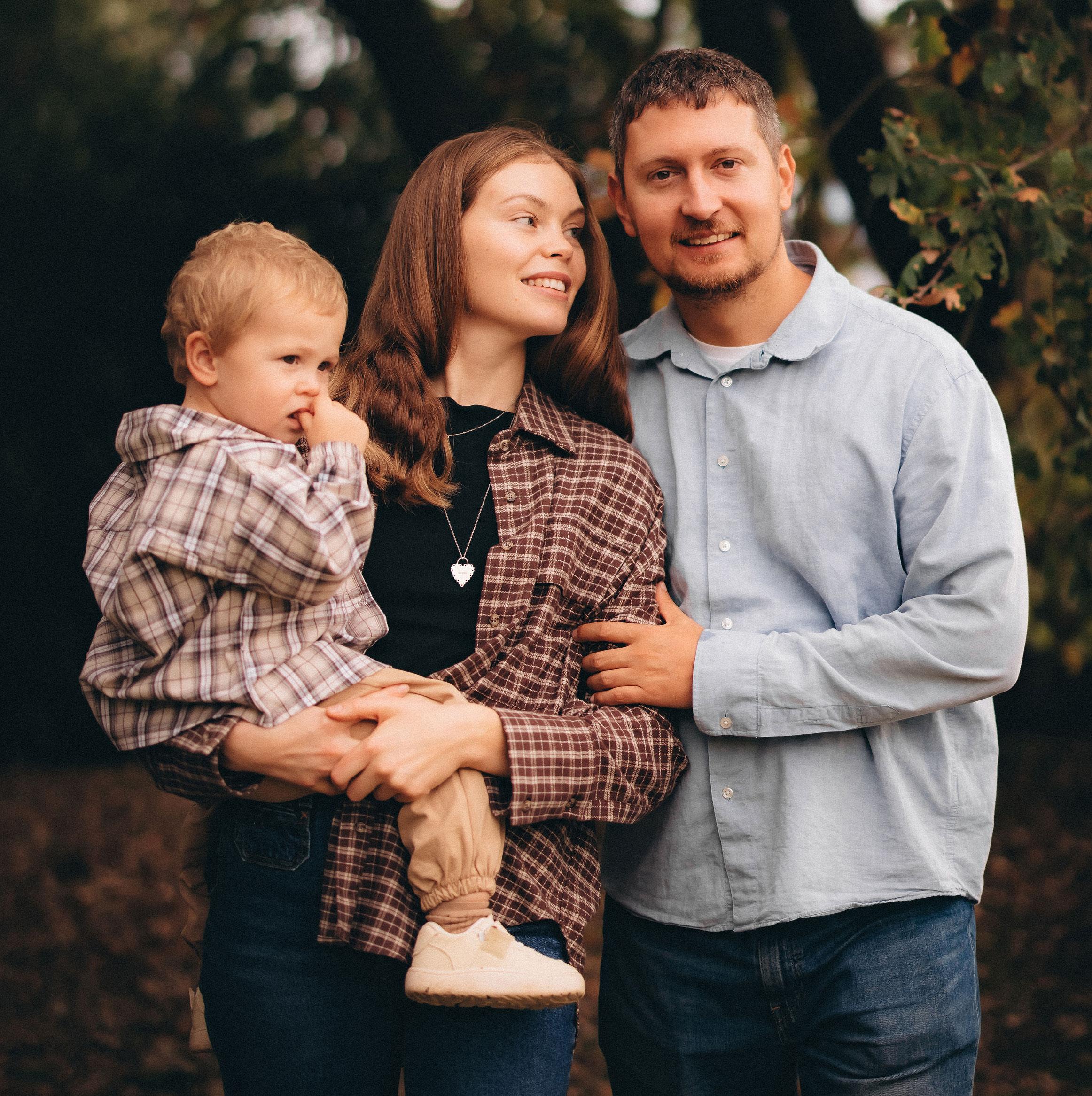
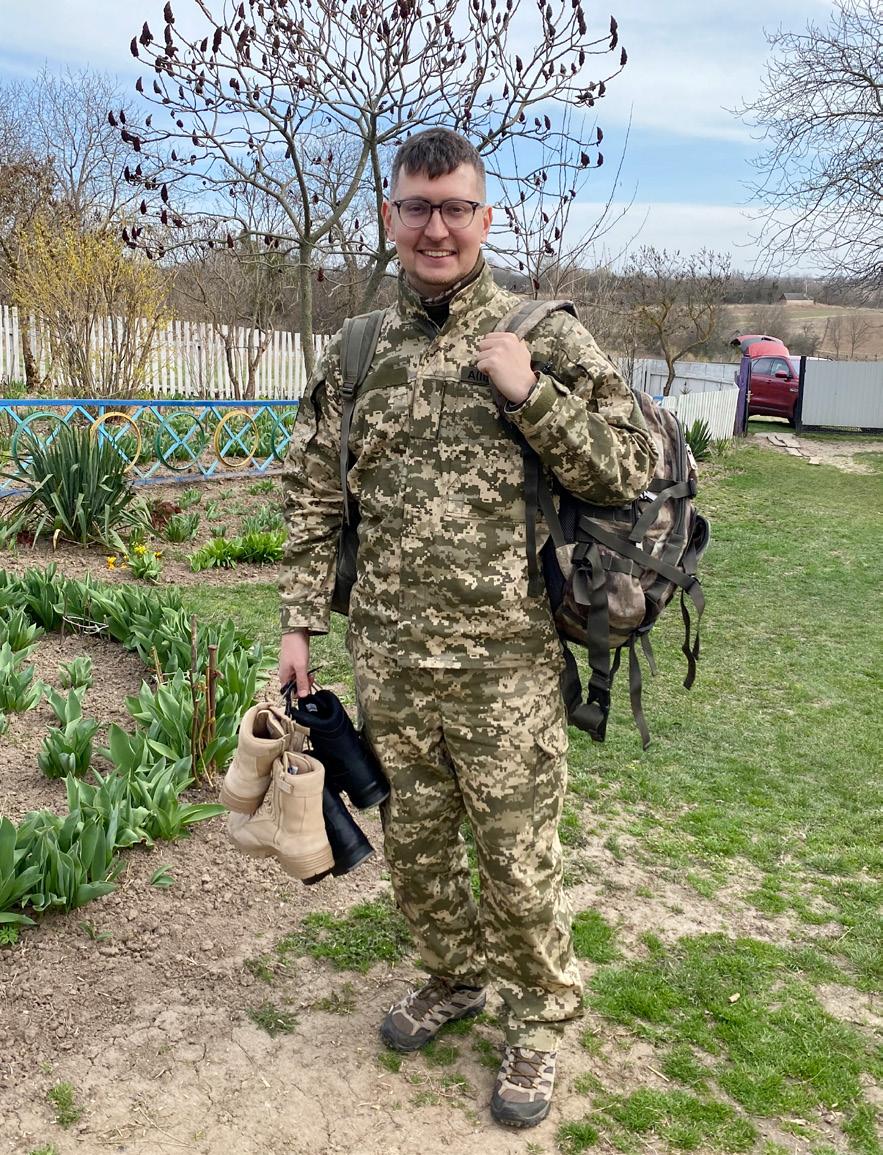
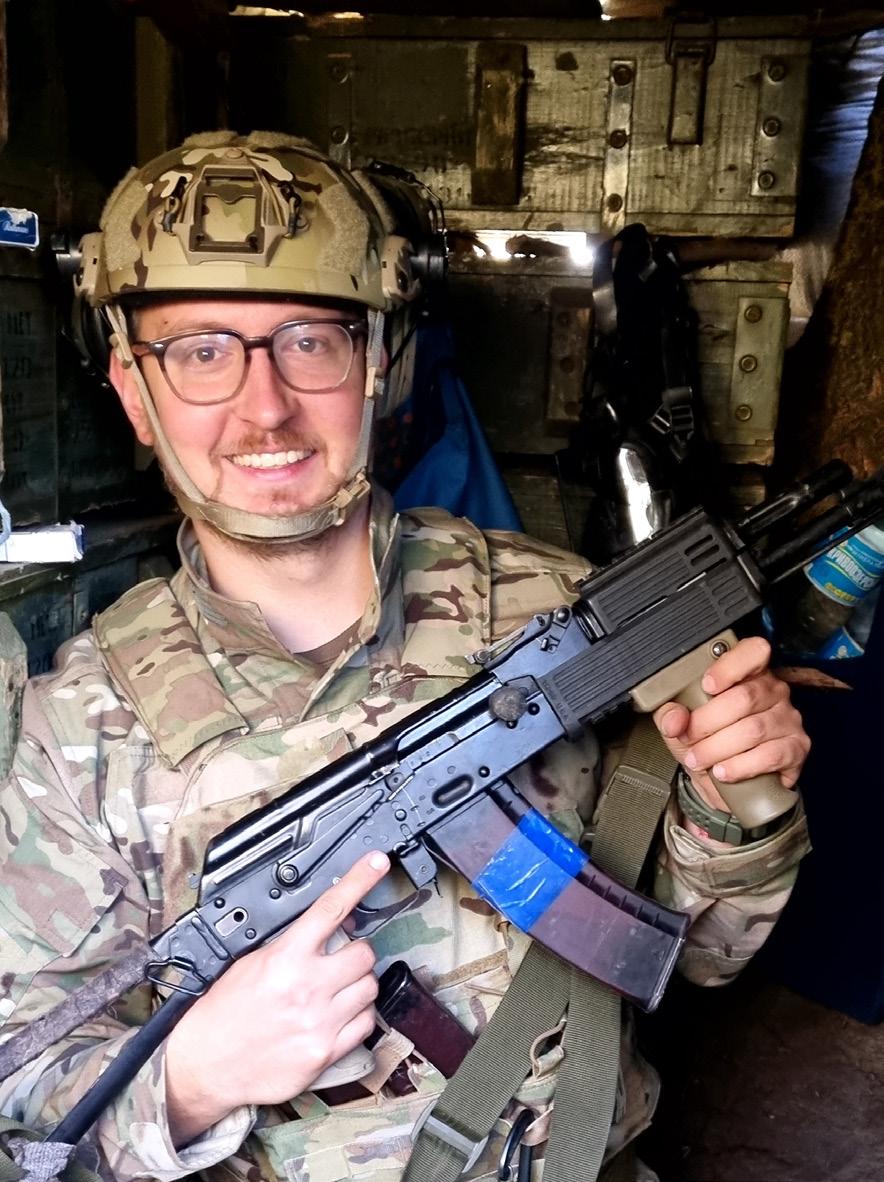
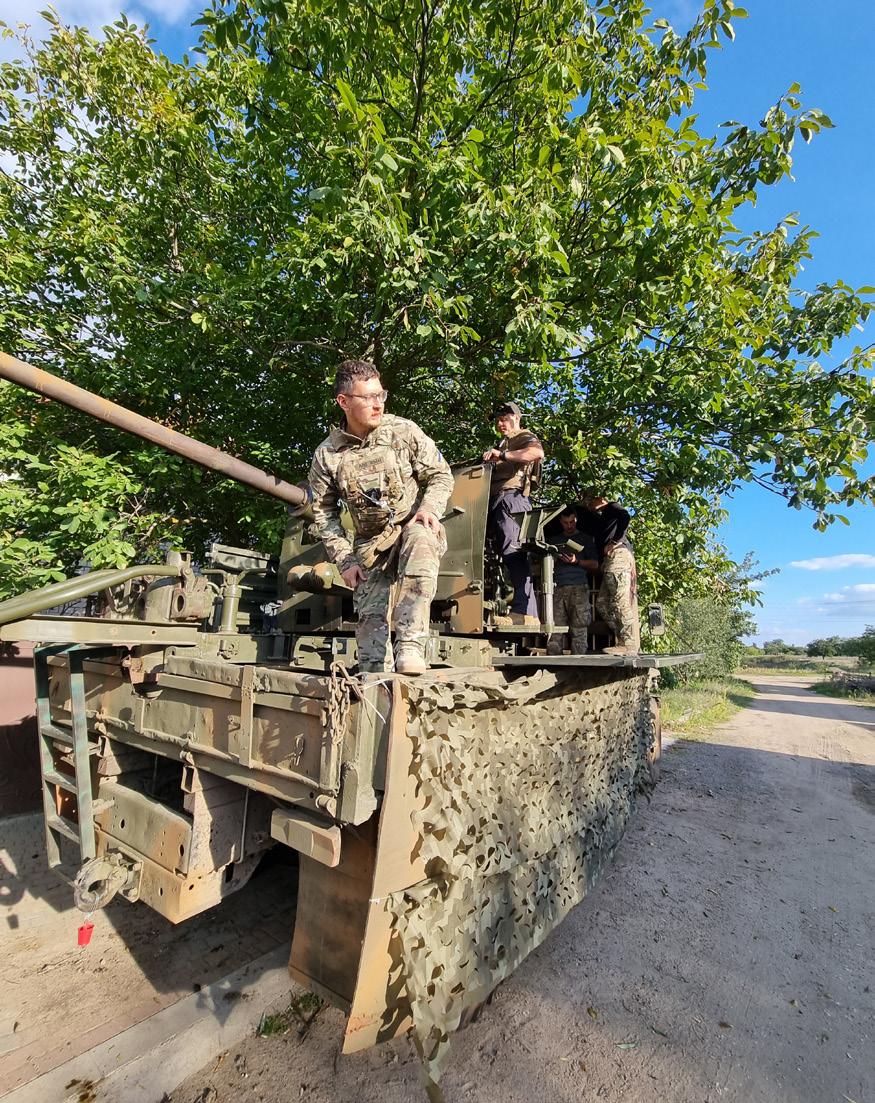
*Before Russia’s full-scale invasion of Ukraine in February 2022, Evgenia’s husband Illya Sekirin had it all to lose –he was the CEO and owner of a successful tech company and lived in a spacious apartment in one of Kyiv’s best neighbourhoods with his then fiancée. However, despite his charmed existence and – as a naturalised Canadian citizen – being under no obligation to fight, he put his affairs in order and joined the defence of Ukraine. Trained as a drone operator, he served on the war’s frontlines and, as his experience and expertise grew, became an unofficial adviser to several members of the Stavka [Ukrainian High Command], a body chaired by President Volodymyr Zelensky. He advised on multiple operations; on drone strategy and tactics; and authored a paper that informed Zelensky’s decision to create Unmanned Systems Forces as a separate branch of the Armed Forces of Ukraine.
BY EVGENIA SEKIRINA
Did I ever imagine I would become the wife of a soldier?
Not for a moment. And yet, that is who I became.
War does not arrive politely. It comes like a wild, starving beast, tearing you out of an ordinary life and stripping away everything familiar. Sometimes it takes away everything — and everyone — you love most.
When the full-scale invasion of Ukraine began, our first thoughts were instinctive rather than philosophical. Where do we go? How do we survive? These are the questions that surface when certainty disappears and you have no idea how far the enemy will go.
We were fortunate. My mother lived in central Ukraine, an area that was comparatively calm in those first weeks.
My husband and I, his mother, and our two cats took shelter there. Each morning I woke up hoping to read the same impossible headline: ‘War is over’. The reality of war simply refused to settle in my mind.
But the days passed, and with them, more and more people across the country stepped forward to defend their homes. I understood — long before he said it out loud — that it was only a matter of time before my husband would make his choice.
He had always been interested in military history, closely followed global politics and acted decisively when he believed something mattered. Once
he made up his mind, persuasion was futile. This was his moment to stand up for what he believed in, to contribute his skills and knowledge — even though, as a Canadian citizen of Ukrainian origin, he faced significant obstacles to joining the Ukrainian armed forces as he was deemed a foreign national.
Several weeks into the invasion, the situation remained unchanged, and I saw growing unrest in his eyes. Waiting was unbearable for him. When he told me he was returning to Kyiv, it felt as though the ground disappeared beneath my feet.
Fear, despair, helplessness — these emotions arrived all at once. My life, once again, was moving in a direction I could not control.
People around me expected pride, but pride came much later. At first, my feelings were tangled with anger, fear and tears — not because I lacked understanding, but because war had already exhausted all of us. It invaded our minds daily with its brutal reality, draining emotional and physical strength. We were all broken in our own way by what was happening in our country — on the same streets where, not long before, we had walked freely and planned our futures. In moments like these, you want to protect the one thing that still feels real: your family, your hope for tomorrow. The instinct is simple: stay together, do not separate.
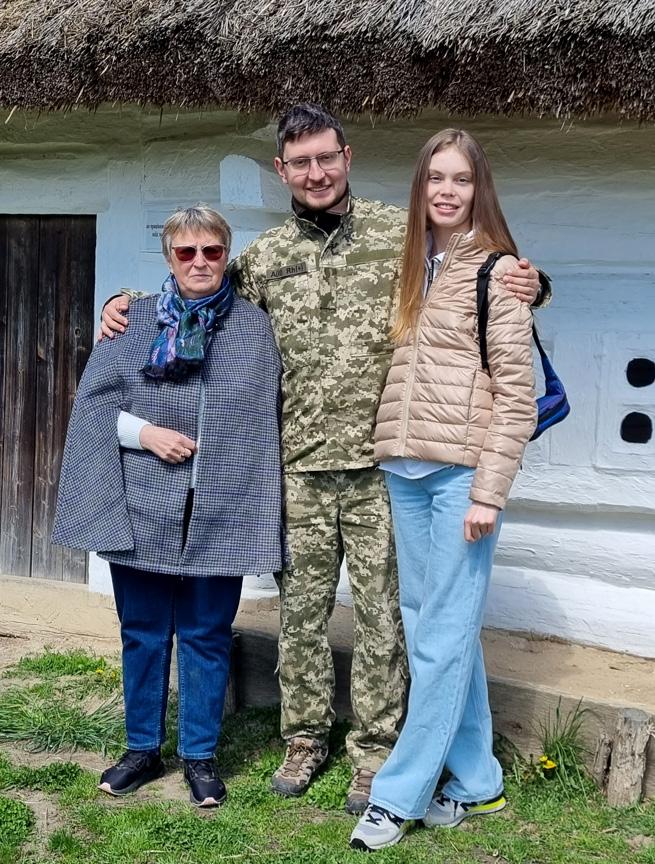
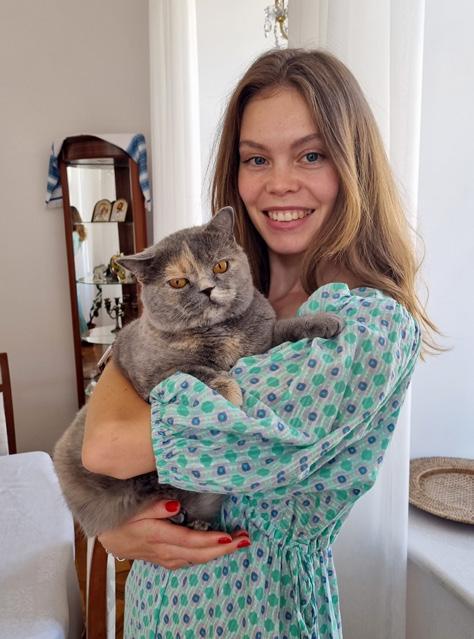
Illya, flanked by his mother Valentina and Evgenia, at the outbreak of war (left) and Marcy, the subject of ‘catty’ conversations during deployments
And yet, I also knew this was his right. His decision. I had no power to change it.
Before the war, we lived in the very heart of Kyiv — not only geographically, but emotionally. Our life followed a rhythm we cherished: theatre evenings, opera performances, long walks through the city, observing people, architecture and atmosphere. We loved hosting friends, going to the cinema, filling our
lives were put on hold — not by choice, but by force. We postponed not only daily routines, but the very idea of planning ahead. The future became something fragile, unspeakable.
Time itself seemed to fracture into anxious days of waiting, where the past hurt and the future felt too uncertain to name.
Illya returned to Kyiv, and later went to the front. Some of his civilian work responsibilities were passed on to me — what I could reasonably take over. I stayed behind, surrounded by our mothers, the cats and a silence constantly charged with anticipation.
My legs felt weak, but I made myself a promise: I would not abandon him — not in this war, not in this reality, not in this choice. Even if, in that moment, it felt as though he had chosen something other than me.
Because I chose him.
I knew all the possible outcomes. Injury. Trauma. Disappearance. Death. We never said these words aloud, as though silence might somehow protect us. But I lived those scenarios daily, rehearsing them in my mind, trying to prepare for the worst.
And yet, I clung stubbornly to hope. To faith without guarantees. It was the only thing that allowed me to get up each morning and continue living.
I understood that his decision was only a matter of time — but knowing did not make it easier
home with conversation and laughter. My husband, Illya, worked from home in the IT sector. I, at the time, was preparing for what I believed would be the most important chapter of my life — motherhood. I was undergoing medical treatment to improve my chances of becoming pregnant, while also learning to drive and sitting my tests, as if quietly preparing myself for change.
Everything felt logical, achievable, close. A family. A home. A future that seemed to be waiting just beyond the threshold.
War erased that sense of continuity. Because of the Russian invasion, our
Separation became survivable only through discipline and routine. Ordinary tasks created a sense of structure and prevented emotional collapse. Life during war requires constant inner focus — you are here, but never fully.
In the early months, many men were mobilised. Civilians still had choices: to enlist or to continue working in support roles. Most of our friends believed the war would be short and fought by professional soldiers. I do not judge that choice. I watched how difficult those decisions were, made under complete uncertainty.
Over time, the war reached them



Christ College Brecon is a supportive school with a big family feel. Our motto “they achieve because they believe they can” encourages self-confidence and a love of learning. With exceptional pastoral care, a warm welcome, and a compassionate community, pupils thrive in an environment where kindness, respect, and personal growth are at the heart of everything.
Service parents pay only 10% of our boarding fee in addition to CEA.
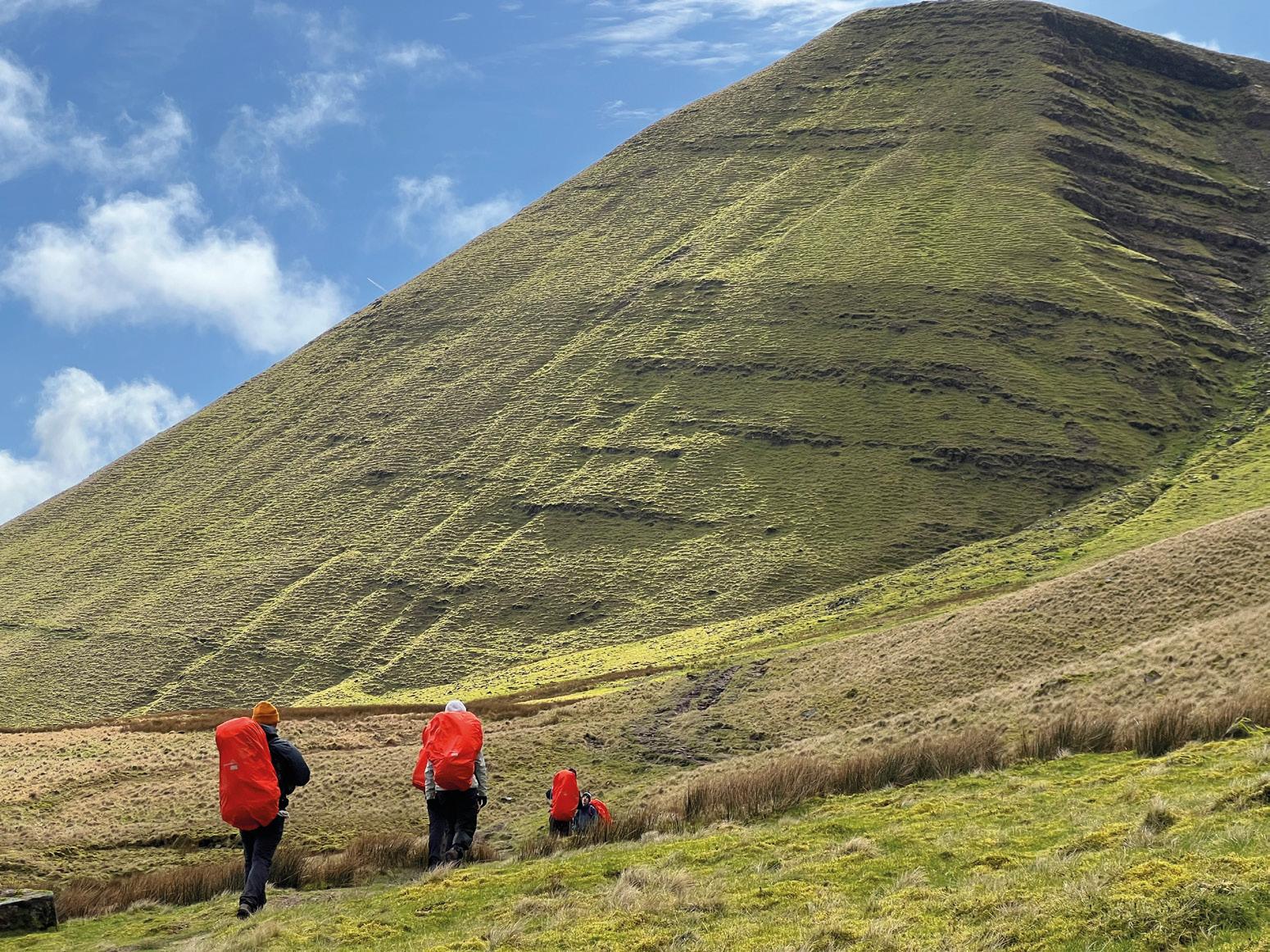
Open Afternoon on Monday 4th May 2026. Day from age 4+, full, weekly and flexi boarding for girls and boys aged 10-18 in the peaceful Brecon Beacons National Park.

Owning a brand new home in the scenic Leeming Bar area doesn’t have to be just a dream.






Through Shared Ownership with Together Homes, you can part rent, part buy your very own modern and energy efficient home.
Keeper’s Forge is a delightful development of 2, 3 and 4 bedroom homes built to a high specification through our partnership with Wharfedale Homes.
Situated in close proximity to local schools and amenities, this truly is an ideal location to start your 2026.
Northallerton Road, Leeming Bar, North Yorkshire, DL7 9FH






too. Many who initially remained in the rear eventually took up arms. Today, I know very few people who have not been personally affected. Everyone has someone close serving — a partner, a friend, a relative. This has become part of daily life, something we live with, even if we never truly accept it.
Illya and I stayed in touch whenever circumstances allowed. Sometimes it was a brief message, sometimes a few minutes of hearing his voice. I rarely knew exactly where he was or what he was doing — for security reasons and because war does not allow routine.
Knowing his location did not always bring comfort. Sometimes it made things worse, as place names triggered news reports and my imagination filled in the gaps. Eventually, I realised that location mattered less than connection. A message meant he was alive — and that was enough.
We learned to talk despite the war, not about it. About everyday things. About home. About the cats. These conversations did not remove fear, but they briefly restored something invaluable: a sense of normality.
Media and social networks made everything harder. When someone you love is in combat, every headline feels personal. There is too much information, and it rarely brings reassurance.
Over time, I learned to limit my exposure and focus on what truly mattered — staying in touch. For me, that meant more than any official briefing.
I was not alone. Conversations with our mothers — sharing fear, grief and support — helped me endure. Among Ukrainians, the most common question became simply: “How are you?” Every day, you asked it or answered it. We felt like one exhausted body trying to keep itself alive.
I also adopted a large, gentle dog from a shelter. Caring for him restored a sense of purpose. His quiet presence brought light into dark days. Professional psychological support also became essential. Step by step, I learned how to live beyond constant waiting.
If asked what kind of support matters most to families of serving personnel, my answer is simple: clear, stable communication. Even minimal but
predictable information significantly reduces anxiety. No one should feel abandoned in uncertainty.
Systematic mental health support — accessible, ongoing, without excessive bureaucracy — is vital. Not only in moments of crisis, but over time, because emotional strain accumulates slowly.
From friends and family, what helped most was presence. Listening without judgement or advice. Sometimes that alone is enough.
Even now, as Illya focuses on a calmer but no less critical role — developing drone capabilities — the sense of threat remains, hanging over us like a sword of Damocles. The war continues. More people are drawn into it. More lives are lost or disappear.
Those who remain alive often carry a quiet sense of guilt for continuing to live. It is a deceptive feeling, but one that also
drives action — to support those serving, to refuse indifference.
I believe everyone in this war has a role. A mission. Illya found his. I am proud of him and convinced that what we endured was not in vain. His work may save lives. Today, I am his support. His home front. His hope for peace. And our son — born despite war and separation — is proof that life is stronger. He reminds us why the future matters.
War taught us to live in the present, to love life without postponement, because tomorrow is never guaranteed. Separation revealed both our weaknesses and our strength, giving us the courage to make decisions that shape destiny.
We fight not only an external enemy, but our own fears. And we overcome them — because that is the only way to survive, grow and remain true to ourselves. A
THE RUSSIA–Ukraine War has produced many surprises, but none more profound — or more consequential for the future of armed conflict — than the explosive ascent of the drone. In Rise of the Machines, Illya Sekirin offers the first comprehensive, insiderinformed study of how unmanned systems have come to dominate the modern battlefield. Drawing on his own experience as a volunteer drone pilot, front-line soldier, interpreter for Western units, researcher for the Ukrainian General Staff, and later adviser to Ukraine’s High Command, Sekirin delivers an unparalleled account of how drones have reshaped every level of war: tactics, operations and strategy.

Rise of the Machines is out now and can be ordered by scanning the QR code (right).


To be in with a chance of winning one of three copies, click the giveaways tab at armyandyou.co.uk and follow the links.




With the help of an expert guide, Army&You conducts a recce of the road to home ownership and explores the six steps prospective buyers can expect to encounter

One solution to repeatedly riding the Service Family or Single Living Accommodation roundabout is to plant some firm roots by climbing on to the private property ladder.
Doing so, as detailed in The Defence Housing Strategy 2025, is the preferred option of six in ten forces families, and yet less than half those in uniform own their own home.
The low uptake, according to the strategy, which was supported by AFF and informed by responses from 6,300 service households, is down to barriers such as the mobility requirements of service life and a lack of ‘know how’.
In a bid to help address the latter, Army&You asked experienced mortgage broker Graham Salloway, whose firm PFL Mortgages provides its professional services free of charge to military families, for the lowdown on the monetary aspects of a move.
Put the Rightmove app down. Before you start looking at properties, speak to a mortgage adviser to find out where you stand. Your aim should be to find out the maximum price you can afford based on your circumstances, the costs involved and the approximate monthly mortgage repayments. To do so you will need to provide details of your income (pay slips will help) and regular outgoings, especially any loan or credit card payments (your latest bank statement is ideal for this).
The adviser will also need to know if there are any issues with your credit history, for example, due to late payments on finance agreements. If you are unsure, you can be one step ahead of the game by downloading your credit report from checkmyfile.com. This service shows all three main credit agencies, is very detailed and has the advantage of being free for 30 days, so it won’t cost you a penny if you remember to cancel your subscription before the end of the trial period. Poor credit does not necessarily stop you getting a mortgage, so don’t shy away from sharing what you know with your adviser.
In most circumstances you will need a deposit of at least five per cent of the purchase price of your new home. As an example, a purchase price of £200,000 would require a £10,000 deposit. You may be able to use the Forces Help to Buy scheme (a 10-year interest free loan) towards your deposit and/or other setting up costs and a military-savvy adviser will be able to explain how this works, set out the monthly costs and walk you through how to apply via the JPA [Joint Personnel Administration] portal. Not all mortgage lenders accept Forces Help to Buy as a source of deposit, but a broker with experience of the initiative can guide you to those that do.
which can demonstrate your credibility as a serious buyer in the eyes of sellers and estate agents.
Making an offer on a property can be daunting, especially if it is below the asking price. Estate agents can play hard ball (remember they work for the seller, and their mission is to get the highest possible price from you), so if negotiation isn’t your thing, look around for a broker willing to put your offer forward – think Kirstie and Phil on Location, Location, Location


previous discussions but, at the time of application, should have a final check around the market to make sure that you get the best deal based on current rates. Once the best option has been identified, they should complete the application on your behalf. Again, I’d recommend using a specialist Armed Forces adviser as they will have the necessary know-how to present militaryspecific information – such as pay, allowances and BFPO addresses – to the lender in question. Similarly, when it comes to offering guidance on any protection or insurance you may need, including life assurance and critical illness cover, an adviser with a knowledge of how various insurers treat those serving is vital and can save you a lot of money.


To save any disappointment, if your intent is to buy a property to rent out until you or your partner leaves the Army, you should declare this from the outset. This is a relatively niche ask and there are only a handful of lenders who allow you to do this. Get this wrong and you are likely to be offered standard ‘buy to let’ terms which usually involve large fees, a substantial deposit and higher interest rates.
Armed with your figures, you can now start your search. If your hunt for a home is in an area in demand, ask your adviser for a ‘Mortgage Decision in Principle’,
Once you have an offer accepted, you will be asked to supply the name of your solicitor or licensed conveyancer. A good broker will be able to recommend one to you if you don’t already have someone in mind and it is advisable to appoint a solicitor used to dealing with Armed Forces mortgages, particularly if you are using the Forces Help to Buy Scheme, which involves additional legal work. A quality solicitor will work in close coordination with your broker to help provide you with regular and accurate updates.
Your broker will already know the type of mortgage deal you prefer based on
The key to securing the keys to your new home is receiving a formal mortgage offer. Some lenders are more efficient than others and an offer in a few hours is not impossible, however, a one-to-two-week window is more realistic. At the other end of the scale, some lenders can be slower off the mark because of being inundated with applications, particularly if they have a market leading deal.
Once you have your offer, the focus switches to your solicitor. The conveyancing process can take several weeks, and it is common to have periods of time where nothing seems to be happening. However, when everything is in place, contracts will be exchanged and it is at this point that you will be legally committed to buying the house and a completion date can be set.
Following completion, when the property legally becomes yours, the only stress remaining is ensuring a kettle for brews and steady supply of biscuits are on hand to fuel you during unpacking. A



The Building Engineering Services Association (BESA) is urging military engineers transitioning to civilian life to consider becoming trainers, assessors and building safety auditors.
With engineering and construction-related businesses reporting huge shortages of suitably trained people able to fill their widening skills gaps, the Association is reaching out to army leavers in a bid to address the critical shortage of apprenticeship trainers and assessors that continues to undermine the delivery of building services courses.
It is urging them to consider signing up to BESA’s fully funded Skills Legacy programme which was launched this year with the aim of recruiting 100 trainers and assessors to help further education (FE) providers deliver more building services apprenticeships.
BESA’s nationwide scheme is bringing together employers and training providers to create a pathway for anyone with the right skills, experience and qualifications to become a trainer or assessor qualified to a Level 3 Certificate in Assessing Vocational Achievement (CAVA).
It will also train engineers to become qualified building safety auditors in line with the ISO 9001 management standard to help the industry cope with new competence requirements created by the Building Safety Act.
Solution
“68% of UK employers struggled to find skilled workers in the past year, with the shortfall costing businesses a collective £4.4 billion,” said BESA’s head of competence Stuart Rattray. “Yet there is an often-overlooked solution hiding in plain sight in the shape of highly trained people leaving our armed forces.
“They represent a rich and largely untapped pool of skilled, dedicated professionals who bring with them a wealth of transferable skills, discipline, and a proven ability to thrive in high-pressure environments,” he added.

“However, as well as being ideal direct recruits into the built environment workforce, they can also be rapidly re-trained to help our colleges deliver more of the specialist courses we so desperately need.”
Army leavers have a range of technical and leadership skills developed in challenging situations which gives them the attributes needed to become trainers, assessors and building safety auditors.
They are used to working under pressure, adapting to new technologies and environments quickly, and delivering results against tight deadlines – and, while many can be recruited directly into the sector’s workforce, BESA is keen to encourage others to focus on training up the next generation of building engineers.
“With a background that values commitment, structure, and integrity, former armed forces personnel are ideal for passing on a strong work ethic and the importance of reliability to a new generation – things that are hugely valuable to employers,” said Rattray.
“They can also hit the ground running which is also extremely valuable at a time when our industry is struggling to cope with an ageing, and therefore shrinking, workforce.”
By way of illustration, two members of the Royal Corps of Engineers reached the final of this year’s WorldSkills UK refrigeration, air conditioning, and heat pump section, which is organised by BESA, with one of those, 18-year-old Isaac Jervis, going on to take the gold medal.
The Manly Charitable Trust is co-sponsoring the scheme and is committed to funding the first 50 participants. Founded in 1991 by former BESA President Graham Manly in memory of his father Alfred Manly, the trust provides financial assistance to charities that provide opportunities for young people in STEM (science, technology, engineering and maths) and help advance engineering education.
For more information about joining BESA’s Skills Legacy programme, visit the website here, and more information about the Manly Trust can be found here. www.thebesa.com/skills-and-training/skills-legacy-assessor


Help Make May Purple support stroke survivors like Vicki.
Every day in May, another 240 people will face the life-changing impact of a stroke.
At just 20 years old, Vicki’s life took a devastating turn. Full of energy, optimism and a passion for animals, she was pursuing her dream career with horses when a stroke changed everything.


Sharing her experiences has been a big part of moving forward in her stroke recovery journey. In April 2025, Vicki and her best friend Sarah successfully tackled a half marathon in aid of the Stroke Association, raising a whopping £2,290 for the charity.
Vicki says ‘The Stroke Association’s Stroke Support Helpline was such a huge support for me and my family. When I was panicking or worried, there was always someone to reassure us or signpost at the other end of the phone. They made me and my family feel like we were supported and not alone.’
Feeling inspired?
This Stroke Awareness Month, let’s Make May Purple. Start your fundraiser today and together we can help more people find strength through support.
Visit stroke.org.uk/SAM

BY STAFF SERGEANT JODI STICKLAND, AGC SPS
Serving in the Armed Forces demands resilience, discipline and unwavering commitment. For years, I prided myself on meeting these expectations head-on. However, when perimenopause entered my life at the age of 37, it brought challenges I never anticipated –personally and professionally. It crept in quietly at first –irregular periods, disrupted sleep, headaches and fatigue that no amount of rest could cure. Soon, the symptoms intensified – hot flushes, vaginal dryness, sore breasts, brain fog so severe I feared early-onset dementia, and aching joints that made PT difficult. The physical symptoms were challenging, but the emotional toll was equally consuming.
The calm composure I once relied on gave way to anxiety, which surfaced in situations where I had previously excelled, and my confidence began to wane as the brain fog and fatigue led me to question my abilities. I found myself second-guessing decisions, worrying about how others perceived me and not feeling good enough.
At home, the strain was just as real. My patience wore thin and the energy I once devoted to family life seemed to vanish.
Social interactions felt overwhelming and I often withdrew, feeling misunderstood.
My relationship with my husband began to suffer as unpredictable mood swings took hold and my libido went completely AWOL. My poor partner didn’t know if he was living with a wife or a walking volcano in uniform.
In hindsight, it’s easy to make light of that time. But it was tough and I felt isolated and unsure of who I could talk to.
The turning point came when I sought medical advice and started hormone replacement therapy (HRT). It was a gamechanger. Gradually my symptoms eased, my energy returned and my emotional balance was restored. It wasn’t an overnight fix, but as the fog lifted, I began to
In hindsight, it’s easy to make light of that time. But it was tough and I felt isolated and unsure of who I could talk to.
feel like myself again – confident, upbeat and ready to embrace life with joy.
Now 43, I’ve made some lifestyle changes – alongside continuing HRT – as I don’t have the body or abilities of my younger self. I focus on exercise, a healthier diet and prioritising my mental well-being. And sharing my perimenopause journey isn’t just therapeutic, it’s a way to lead by example and break down the stigma that has silenced so many women for too long.
As part of the MOD Menopause Network Committee, I share my experience to educate and raise awareness among both service men and women. I’ve turned my personal journey into a platform for change by empowering and breaking down barriers.
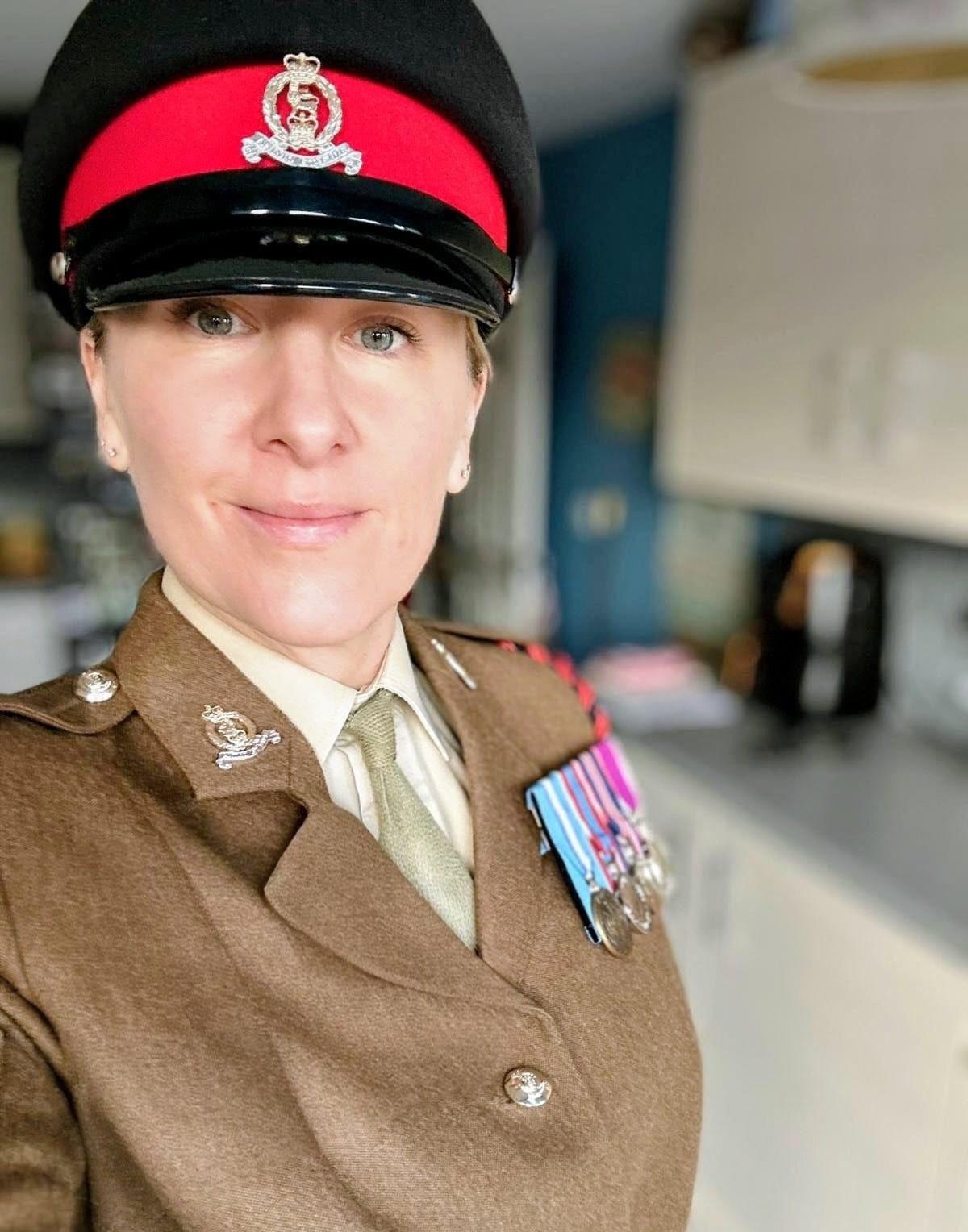
My mission is simple yet powerful: to make sure every woman knows she is not alone, and that seeking help is a sign of strength, not weakness.
The menopause is a natural stage of life, but its effects can be profound, especially in demanding roles in the military. My journey has been challenging, but the help of my husband and chain of command allowed me to rise stronger than ever and if this experience has taught me anything, it’s that true strength begins with support.
The network can be reached by serving personnel on the internal MOD system A
BY ANNA HUTCHINSON, AFF EDUCATION & CHILDCARE SPECIALIST
Sitting ‘behind the wire’ on Blandford Camp, Downlands Community School is a wellestablished feature of the Army community in Dorset and has certainly done its homework when it comes to putting the children of service families at ease.
Key to that care is a firm grasp of the challenges students from military homes can face, according to headteacher James Rielly.
“Making children feel safe and happy, and that they belong is something that is in the DNA of the school,” said James, who has upheld Downlands’ motto – We care. We share. We believe. We achieve – for the past seven years. “It’s something that is built into everything we do.”
A warm welcome is also extended to parents, with an open-door approach that encourages families to step inside, talk to staff and feel part of the school’s daily routines. The head promotes interactions with teachers during drop-offs and pick-ups – or at one of the frequent coffee mornings held to bring Downlands’ community together – and believes doing so builds trust and confidence that pupils are in good hands.
Ensuring inclusivity is important to the school’s staff, who work hard to identify gaps in confidence or learning and put programmes in place that support the children.
Making children feel safe and happy, and that they belong is something that is in the DNA of the school

There is a dedicated emotional literacy support assistant hub for pupils to use to advance their social skills, build self-esteem and develop their emotional wellbeing.
Playtimes encompass practices such as having a dedicated bench where children can signal the need for a friend, while students in older year groups act as play leaders and encourage inclusive play, so all children have the option to join in.
These initiatives demonstrate the school’s commitment to helping children feel stable and secure, no matter what is happening at home.
Downlands also works hard to embrace other elements of camp life to make sure families feel connected beyond the school gates. International cultures are celebrated during events such as Fiji Day and Nepal Day, which give children a chance to share their traditions, feel recognised and see their experiences reflected in the classroom.

Schools with close military ties inevitably

face the challenge of a high turnover of pupils but Downlands takes special care to mark every arrival and departure. James showed me a ‘Welcome and Goodbye Wall’, which has been created to help children feel seen from their first day until the moment they move on. Photographs, names and messages of encouragement remind children that they are part of something meaningful, even if their time at the school is short. Each pupil is also given a Child Passport in which they can note their achievements, memories and milestones. For those whose lives involve frequent change, the record becomes a tangible link, something constant they can take with them as they move. James said some children who return to the school bring their passport back and show teachers how they have continued to fill it in. It helps them celebrate their progress and understand their own story.
James explained that, at its heart, Downlands is a place where children can learn without having to explain the intricacies of their home lives. Many classmates have experienced similar disruptions, so new students quickly discover that they are understood. They have time and space to figure out who they are, surrounded by adults and friends who listen, and within a community that cares. Visit downlandsschool.org for more information. A









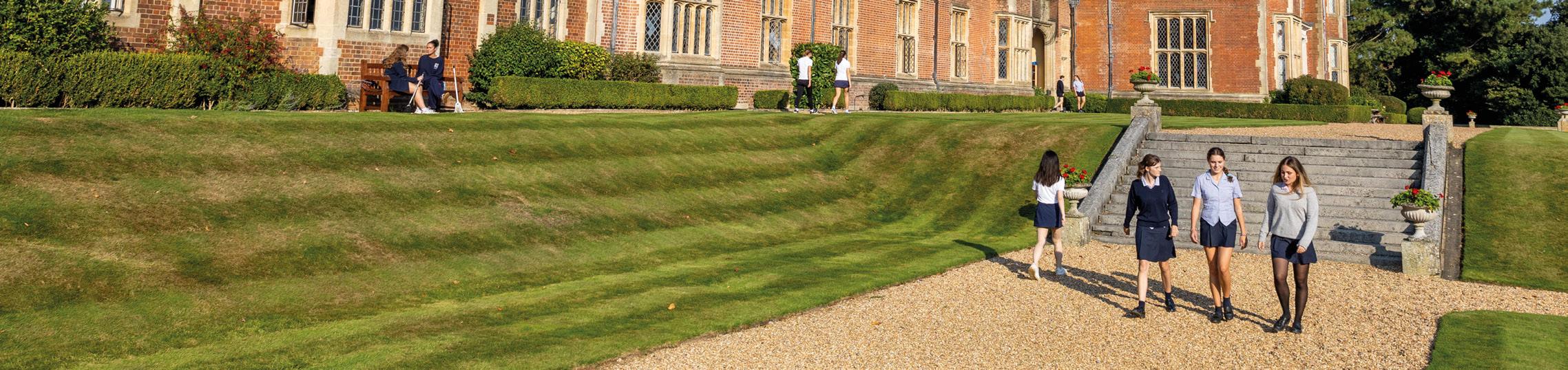
For those in search of a career that fits around postings and the general comings and goings of their partner’s Army life, setting up and running a business from beneath your own roof is often seen as a ‘golden bullet’ solution.


How home-based businesses are helping Army spouses and partners create careers that move with military life
Putting aside any stresses associated with being self-employed or becoming a franchisee, it comes with an array of obvious benefits – be it easy access to home comforts, a pleasurably short commute or being on-hand to tame toddlers or dote on your dog.
And the good news is that, if you are living in Service Family Accommodation, it is an option that is becoming easier to pursue. While you must still get authority from Pinnacle to do so, the Defence Infrastructure Organisation (DIO) recently completed a review of the permissions process to ensure it is fit for purpose and adequately supports spouses and partners.
In a statement, DIO said: “Under the changes, those operating a business from home can expect to receive better and clearer communication from a named housing officer who can help answer their specific housing-related queries.”
Welcoming the news, Lucy Ritchie, AFF’s employment and training specialist, said: “I hope that, with this fair and consistent approach, it is one less barrier to employment for spouses and partners, and that more people feel encouraged to take the leap and set up their own business. Doing so can be a really rewarding career option that works well around military life and it is not a step you need to take unsupported. There are some fantastic organisations that can help you to become a successful entrepreneur and I encourage readers to check out AFF’s self-employment page at aff.org.uk for details.”
Amelia Lockey flexed her entrepreneurial muscle by launching The 21/90 Club, a fitness business specialising in one-toone personal training and child-friendly bootcamps.
“I am fortunate to run most of my services from home, having converted our former dining room into a fullyequipped private gym,” she told Army&You. “Working from home gives me complete flexibility over my schedule. With no commute and the ability to continue sessions even when my children are off school, I can provide a reliable and adaptable service to my clients. Many of them feel more comfortable training in a home environment as it offers a welcoming and less intimidating alternative to large commercial gyms.”
Amelia runs several classes after collecting her children from school, meaning she doesn’t have to squeeze her working day into the hours between 9am and 3pm. “This setup allows me to maximise my earning potential while still spending valuable time with my children — without relying on before or afterschool clubs,” explained the qualified gym instructor and personal trainer, who also offers remote sessions which can be booked via the21-90club.com
“If you’ve been considering a similar setup for your own business, I truly encourage you to take the leap. It has been one of the best decisions I’ve made.”
Sophie Davies left a senior role with the National Trust to set up Your Marketing Department (yourmarketingdepartment.co.uk), with the aim of creating a business that worked around service and family life.
“Military life asks a lot of us,” she said. “New postings, long absences, rebuilding routines from scratch. You learn to adapt quickly, steady yourself through uncertainty and keep your family anchored while everything around you shifts.
“When my husband deployed with the Royal Fleet Auxiliary for months at a time, I realised I needed work that could move with our life. I wanted to be present for our daughter, but I also wanted a career I loved — something challenging, meaningful and mine.
“What I didn’t expect was realising

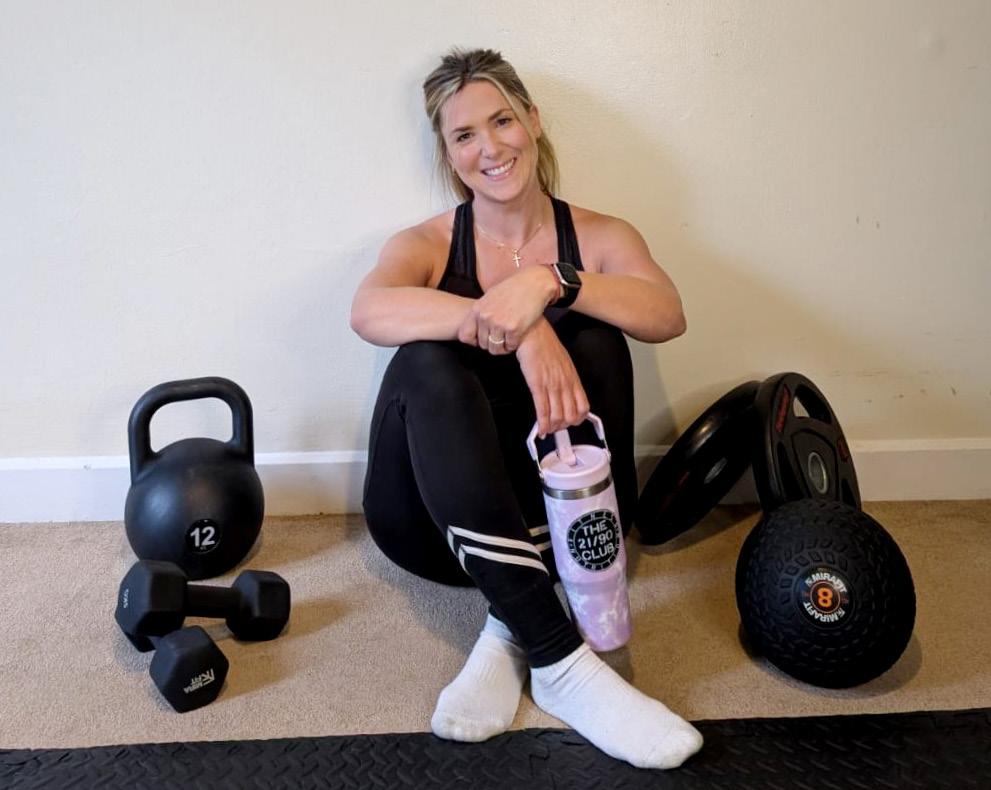
Under the changes, those operating a business from home can expect to receive better and clearer communication from a named housing officer
that the greatest strength of my business would come from the military community itself. Every spouse and veteran I have worked with brought qualities shaped directly by service life: resilience, initiative, loyalty and an instinctive ability to problem-solve under pressure. Not despite our lifestyle, but because of it.
“Today, our team is entirely military spouse-led. When our marketing manager Hana was posted to Cyprus with 4 SCOTS, we adapted her working hours and carried on seamlessly. I’ve taken client calls from RFA Argus and worked remotely from ports around the country. We’ve facilitated digital marketing training for spouses and partnered with organisations like Recruit for Spouses to open more doors for our community.
“To every military spouse reading this: your experience and skills have real value. They have been shaped by a life that demands courage, adaptability and heart. Don’t underestimate what you bring.”
Rachel decided to turn her passion for globetrotting into a revenue stream by signing up to be an independent travel agent through a franchise. She now
earns commission booking holidays for herself, friends and family.
In return for a set-up cost and monthly membership fee, she is provided with training and access to travel suppliers and a supportive community of likeminded peers. While her work can be scaled to a full-time job, Rachel uses the business to bring in a bit of additional income and is revelling in the flexibility of logging on wherever and whenever she wants.
“The best bit is that I am now in a really nice group of 200 other agents, and they are all so lovely,” she told Army&You. “They are a great support network and I am building friendships.”
Running a business from home can blur the boundaries between work and family life and can be an isolating experience so it is imperative that you remain mindful of your wellbeing, according to Lucy.
“Self-care is vital to ensure that you can ace your work and don’t burn out, and a support network can really help,” concluded the AFF specialist.
“The Military Coworking Network (militarycoworking.co.uk) and milspo. co.uk are online communities for military spouses and partners that offer a great source of guidance and inspiration.” A

WHILE THE roll call of big firms asking employers to return to the office on a ‘fuller-time’ basis grows, Whitney Wilde remains an unapologetic champion of the remote working camp.
The virtual assistant, who is married to an Army padre, ranks becoming selfemployed among her best decisions and believes working from home is ideally suited to those with serving partners.
Currently based in Cyprus, Whitney’s flexible employment has enabled her to build a career around family commitments, the unpredictable nature of military life and her own interests.
She was introduced to the advantages of being a virtual assistant, which involves providing clients with a range of remote services – anything from administration and invoicing to tracking data and social media management – during COVID. But the real benefits of her chosen role became clear when her husband Tom deployed on a three-month exercise.
Despite having to nurse two young children with chickenpox, Whitney was able to continue working, something that would have been impossible had she been employed in a traditional role.
“I realised it [being a freelance virtual assistant] was very good for military spouses,” explained the Californian, who met Tom while studying at Durham University. “You get to work across different industries, and you can take the job with you.”
Having first completed the school run and a PT session, Whitney’s average working day will see her open her laptop at about 10am to tackle tasks for her clients, beginning with those in the
DECIDING TO be your own boss and ‘go it alone’ work wise need not be a solitary experience, insists Jess Sands, founder of the military spouses, partners and other halves network Milspo.
“We support Armed Forces spouses and partners who have started, or want to start, a small business to fit around the unpredictability, isolation and juggle-struggle that comes with modern military lives,” explained the graphic designer-turned-global community creator.
“Founded and run by military spouses, for military spouses, we truly ‘get-it’ and we know that, with the right support, anything is possible. That includes building a business that doesn’t just survive but thrives in this military world.
“We have a supportive community, free resources and online events to help you achieve exactly what you need from that business you’ve always dreamed of building.”
Among the Network’s array of gratis offerings is an eight-week Business Launch Accelerator StartUp course, which is fully funded by the Ministry of Defence. The online resource is a comprehensive ‘how to’ guide that is delivered in bite-sized modules.
You can find out more – and secure a place on the next course in May – at milspo.co.uk/course/
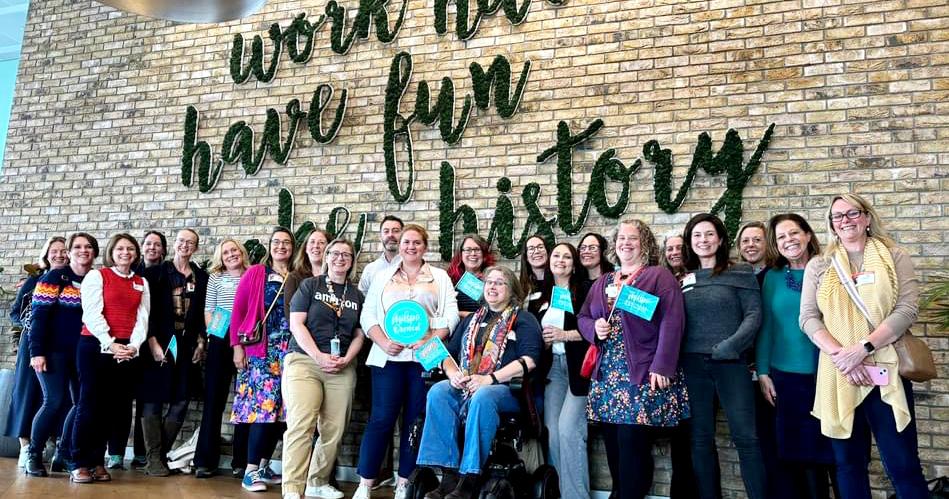
UK and then the US. She aims to have everything wrapped up in time for school pick-up and, with one evening meeting a week, also finds there are plenty of opportunities to go paddleboarding.
“It’s up to you to be diligent about getting your tasks done, but how that works day-to-day is flexible,” she concluded. “I’m honest with clients about the way the military works, such as Tom having to go away at short notice.”
Whitney honed her skills at the ROCKET VA Academy, which delivers
online modules focused on learning skills and growing a client base, and offers military families a 15 per cent discount on its core training programme. Use code FORCES15 at rocketva.com Find Whitney at thewildeva.com
If you're considering running your own business while overseas it's important to do your research beforehand because not all locations have the same employment rules for military partners. Visit the employment and training pages at aff.org.uk for guidance. A
Proudly supporting our Forces families for 140 years


BESPOKE RESIDENTIAL BOARDING HOUSE FOR YEAR 7 STUDENTS

‘Students thrive and make excellent progress because of the genuine and nurturing relationships they have with boarding staff’. OFSTED BOARDING INSPECTION REPORT 2024 A home-from-home while you serve Pay only 10% of fees in addition to CEA. Scan to
NON-SELECTIVE LOWER SCHOOL PRIORITY PLACES FOR FORCES CEA ACCEPTED



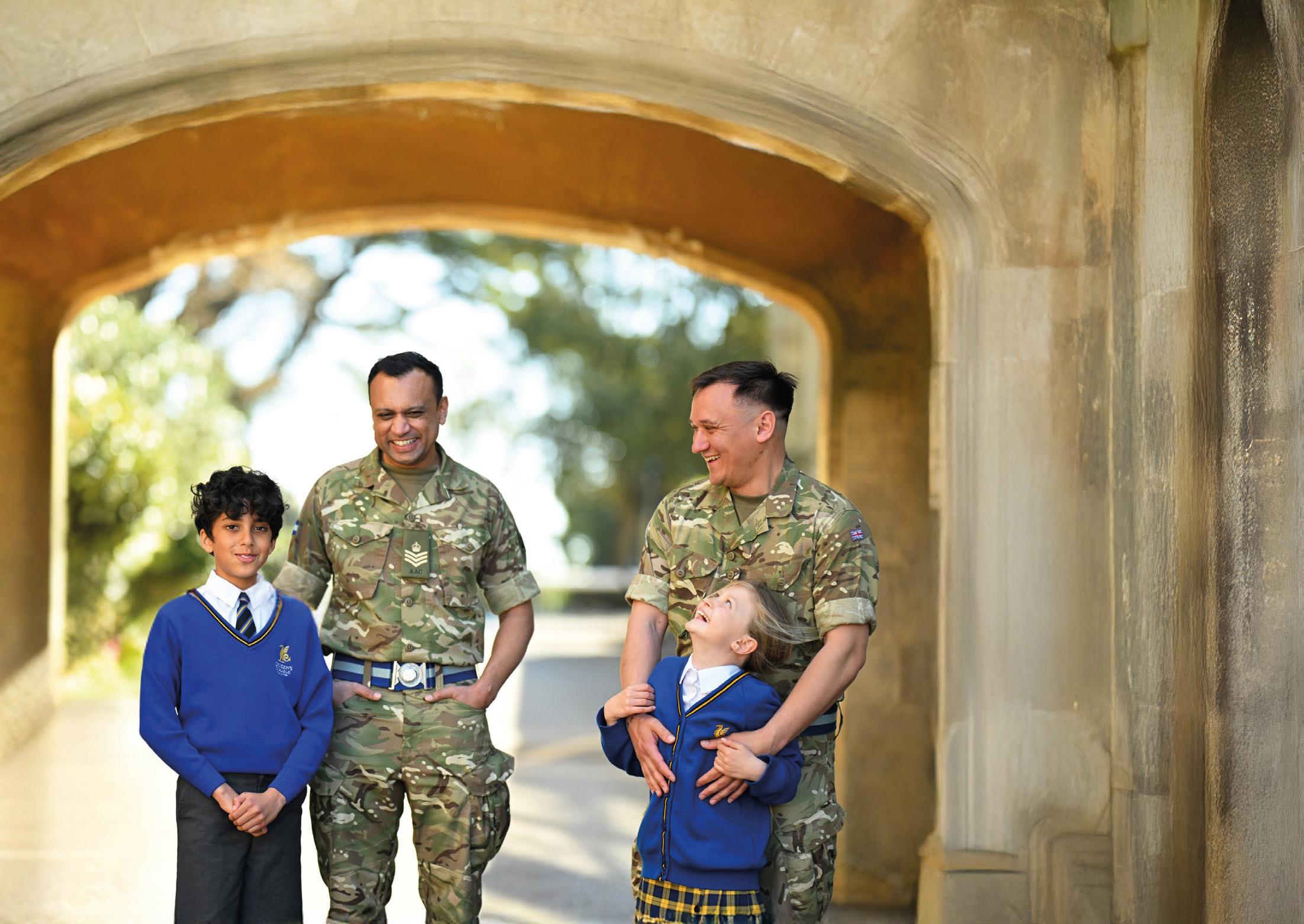


• Meals, Laundry and Exclusive Uniform Allowance
• World Class High Performance Learning
• Award-Winning Wellbeing Programme
• Extensive Outdoor Education Starting in Year 3
• Over 10 Hours of Co-Curricular Activities Weekly
• “World’s Leading Boarding School” Why Queen’s?

Take your career in a new direction at the
Times Higher Education 2025
As you prepare for life after the forces, talk to us about HNCs, HNDs, top-up degrees, and flexible undergraduate or postgraduate study with online and on campus options available.
Most of our courses are eligible for ELC funding — speak with your education or resettlement officer to find out what support you can access.
Come to our next open day to explore your options, discover our courses and campus, learn how to apply, and get all your questions answered.

Matthew was a Lance Corporal combat medic in the Royal Army Medical Corps, where he served for six years.
‘I’m looking forward to working on projects independently and with other students in the hope of publishing them, and all being well, I aim to set up my own game studio. Teesside focuses on getting developers employed through connections to industry.’
Book your place at our next open day tees.ac.uk/opendays
It is little surprise – six years on from the large-scale drawdown of British troops from Germany – that service life in Sennelager is generally more of a ‘scaled back’ affair.
Fewer ‘resident’ personnel and families does not, however, mean there has been a complete withdrawal of welfare support from the military hub now known as the NATO Support and Training Centre (Germany).
Indeed, as demonstrated during Sennelager’s recent community health and wellbeing event, good things do come in small packages. While pared back from the past, support services remain present and accessible. Brydon House is the beating heart of the provision and where families can find the unit welfare officer and their assistant, Army Welfare Service and youth staff, the padre and HIVE all under one roof.
The centre also boasts a multiactivity room, meeting facilities, internet access, a garden and play area, and affordable, fully furnished ensuite contact accommodation for single soldiers and families.
In addition, the WRVS Services Welfare provides a space to relax, complete with BFBS’ Cinelink, pool tables and a chillout area. This great facility is near a small NAAFI shop and the newly refurbished Senne Arms.
Strengthening the sense of community further, Service Family Accommodation (SFA) is located close to the barracks, meaning families enjoy short journeys to Attenborough Primary School and work.
Many families reported that they were loving their time in Sennelager. Lisa, who has

been there for many years, said: “Germany is such a lovely country with so much to offer. I think there is a festival for every month of the year, allowing you to experience their food, drink, crafts and traditions.
“Sennelager and the surrounding areas are so beautiful and really do offer something for everyone. There are lakes for swimming, paddle boarding and kayaking, and cities and towns to explore with cathedrals, churches and museums. You can also go skiing, sledging and hiking in Willengen, where there is a skywalk for the brave!”
Children at the youth club were equally enthusiastic. Matilda, 10, told Army&You: “I have lived in England, Kenya and now Germany. I think Germany is one of the best places I’ve been because of the friendliness here and the school is wonderful, and you meet so many new people.” Mairi, nine, added: “I get to learn to speak German with my school friends and have fun at my German football club.”
Despite the glowing reports, some stationed in Sennelager said there were inevitable
drawbacks to the drawdown. With no secondary school provision locally, more families are having to consider UK boarding options and, in respect of childcare, many are reliant on using the German Kita system to support extended working hours. Furthermore, under current rules, if you have adult children over 18, they cannot remain living with you if they’re not in full-time education or training.

and the surrounding areas are so beautiful and really do offer something for everyone
Partners find there are limited job opportunities, with some restrictions linked to the NATO Status of Forces Agreement and supplementary agreement for Germany, and single serving personnel expressed frustration that those in long-term relationships are not entitled to SFA. Even with the introduction of the new European Commuting Allowance for single personnel, travel time back to the UK can be challenging for maintaining relationships.
Some families reported that due to operational reasons, their serving person has spent a disproportionate amount of time in the UK training in the last year.
“While recent years have seen a shift in community dynamics and new challenges following the UK’s exit from the European Union, it remains a wonderful posting opportunity, especially for young families,” said AFF Overseas Manager Esther Thomas. “It offers a slower pace of life and the warmth of the local community. A posting to Sennelager is a chance to experience life in a culturally rich part of Europe.”
To learn more, contact overseassupport@aff.org.uk A

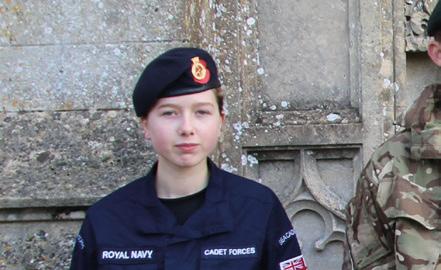


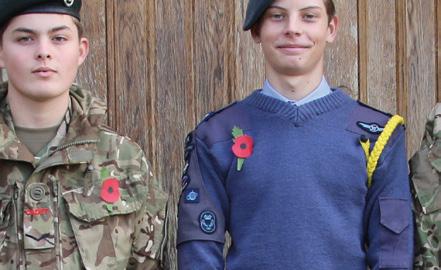


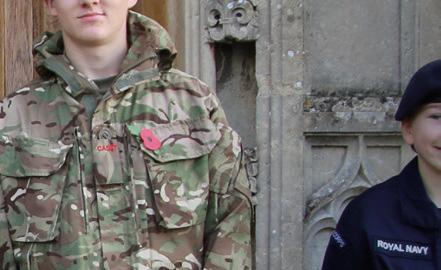












































































When serving Foreign and Commonwealth personnel are posted overseas, navigating the journey to British citizenship can be complex, as one nomadic soldier discovered during his attempt to complete naturalisation.
Originally from Australia, Stephen Foreman submitted his application while based in the USA, having taken the Life in UK test, an English language assessment and met the residency requirement with 24 years of service under his belt.
However, while his paperwork was still being processed, he was posted again — first back to the UK at very short notice, then, just two weeks later, to Kuwait. During this period his application was approved and he was told that his citizenship certificate was on its way to the US.
The certificate is a crucial part of the citizenship process. If your application is successful, you’ll be invited to attend a citizenship ceremony, which, if you’re in the UK, will be arranged and confirmed by the relevant local authority.
Your certificate is sent directly to the local authority, to be presented to you at the ceremony, which is a legal requirement. You are not a British citizen until you have attended a ceremony and received your certificate.
If you’re outside the UK, arrangements will be made for you to attend a ceremony
at a British Embassy, High Commission or the nearest Consulate depending on where you are serving. Your certificate will be sent there via a diplomatic bag.
In Stephen’s case, AFF liaised with contacts in the relevant departments to arrange for the return of the certificate to the UK and onwards to Kuwait so that the original legal ceremony could be rescheduled and relocated.
Despite multiple international moves, tight timeframes and logistical challenges, Stephen successfully became a British citizen. This outcome was only possible through co-ordinated work between AFF, the Home Office and overseas officials to reroute documentation and rearrange the location of his ceremony.
A diplomatic bag (or pouch) is a legally protected container used by embassies and consulates to send official documents and items to and from the home government. Its purpose is to ensure free and secure communication between a diplomatic mission and its government, independent of local laws and customs. Unfortunately, using the system can take up to 12 weeks for a certificate to reach its destination.
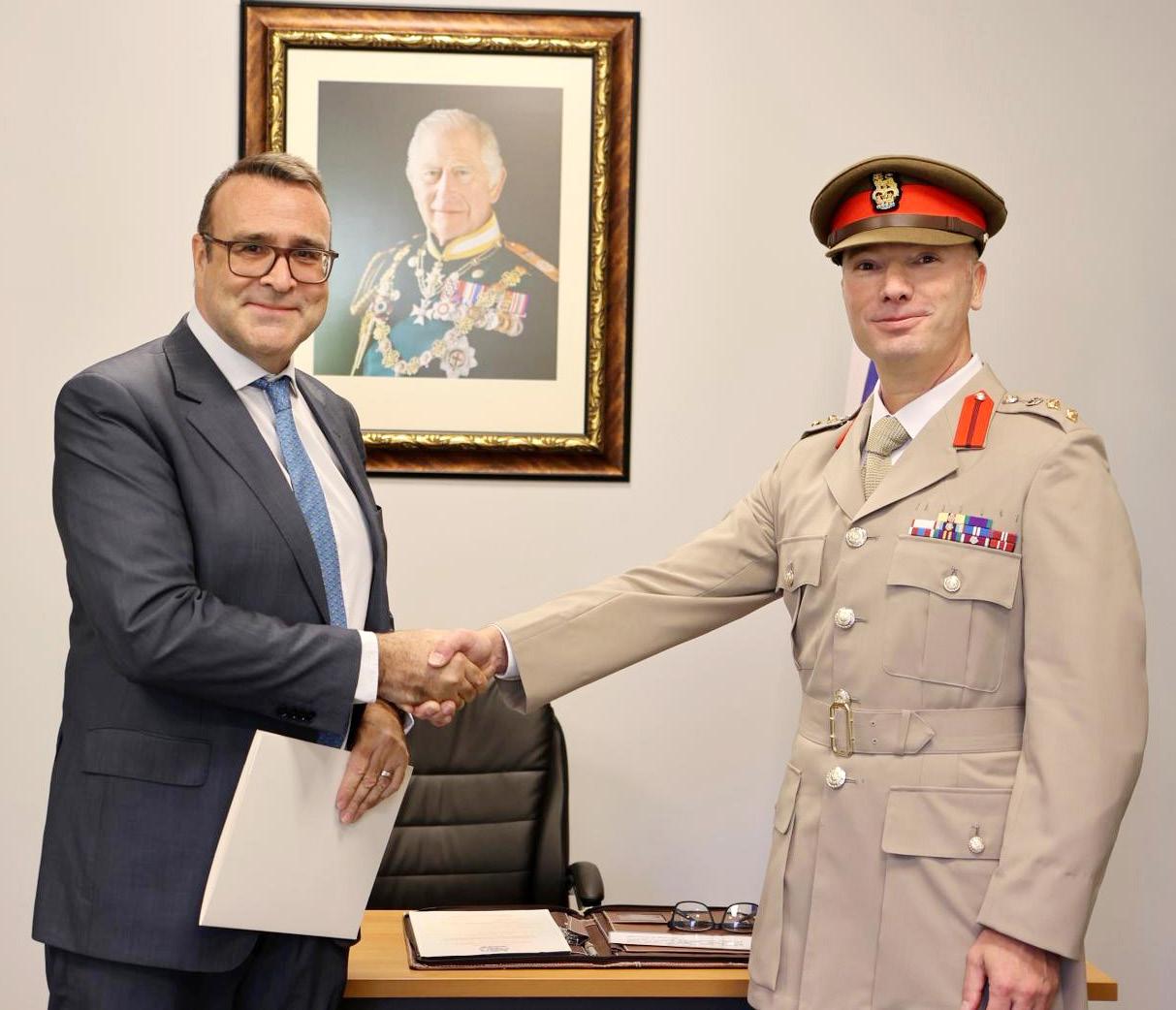
By supporting cases like Stephen’s, we aim to reassure other serving personnel that citizenship is achievable — even if the process becomes complicated
Military service often requires unpredictable overseas postings which can interfere with long administrative processes such as naturalisation. Our specialist advisers understand these unique pressures and can advocate on your behalf.
We can help with communications between soldiers and the Home Office, expedite applications where needed, and help manage rerouting certificates or paperwork if postings change.
By supporting cases like Stephen’s, we aim to reassure other serving personnel that citizenship is achievable — even if the process becomes complicated.
If you or someone you know is in a similar situation, AFF is here to help.
If you’re on an overseas assignment or are due to be posted and wish to apply for citizenship, check out aff.org.uk/ advice/foreign-commonwealth A
Army housing is getting a much-needed makeover, with
major investment in accommodation and more freedom for families to enhance the spaces they live in. But how far will you go to make your house feel like a home?
BY JILL MISSON
When you’re buying or renting a house on the open market you can usually have a good look around before making your mind up. However, there isn’t as much choice when it comes to Service Family Accommodation (SFA), and you often don’t get the opportunity to arrange a viewing in advance of move in.
Consequently, opening the door to a military property for the first time can feel like something of a lottery, as Army spouse Cerys can testify: “Our first two quarters were excellent. They were clean, modern and really well laid out. Our third hasn’t been as positive and lets the overall experience down, though the house is still warm, dry and secure.”
Sarah, who has lived in SFA around the UK and overseas, added: “We have had our fair share of bad quarters and nothing compares to that gutting feeling when you get inside and find it is clean and liveable, but just not very nice.”
Recalling a chance visit to one property before moving in, she added: “Making our way upstairs my heart sank as there was thick black mould on the ceiling and around the window in the bedroom that was soon to be our nursery. We were
worried they would just paint over it and not treat the mould, so we rang the housing officer and refused the quarter.”
Sarah also remembers some dreadful decor over the years, which will be familiar to many Army families, including wood-chip wallpaper, mis-matched kitchen cupboards and pink carpets. “In family photos it’s those eyesores that reveal the exact location when our girls ask where a picture was taken so we do look back and laugh. As spouses we have an amazing superpower of turning any old house into a home.”
In November 2025, the Defence Secretary announced a total investment of £9 billion over the next decade to radically improve military housing, which builds on the additional £1.5 billion set out in the Strategic Defence Review. More than 40,000 service family homes will be modernised, refurbished or rebuilt.
Detailed feedback from 6,300 forces families ensured that lived experience is at the heart of the new Defence Housing Strategy. AFF Housing Specialist Cat Calder, who played a key role on the independent review panel, welcomed the plans: “We know that promises have been made in the past which weren’t kept, however, one of my abiding pleas has been for significant and sustained funding to ensure that promises can become reality. For the first time this is a fully fledged set of recommendations which is backed up by assured funding over 10 years.”
Work has already started to make much-needed improvements to homes across the Defence estate, including renewing kitchens and bathrooms, fixing unreliable boilers and heating systems, repairing leaky roofs, eliminating damp and mould, and upgrading electrics and plumbing. All new-build properties will be designed with families in mind with practical things like outdoor taps and patios fitted as standard.
Air Commodore Leah Griffin, Head of Accommodation at the Defence Infrastructure Organisation (DIO), said: “We’re delivering real change for service personnel and their families. We have strengthened move-in standards and are working hard to ensure more reliable repairs and better communication.”
Families are being encouraged to register for HomeHub so that they can use the new online platform to report and track repairs.
For a long time, families have felt frustrated by some of the rigid rules around decorating SFA or being able to leave alterations in place for the benefit of the next occupants.
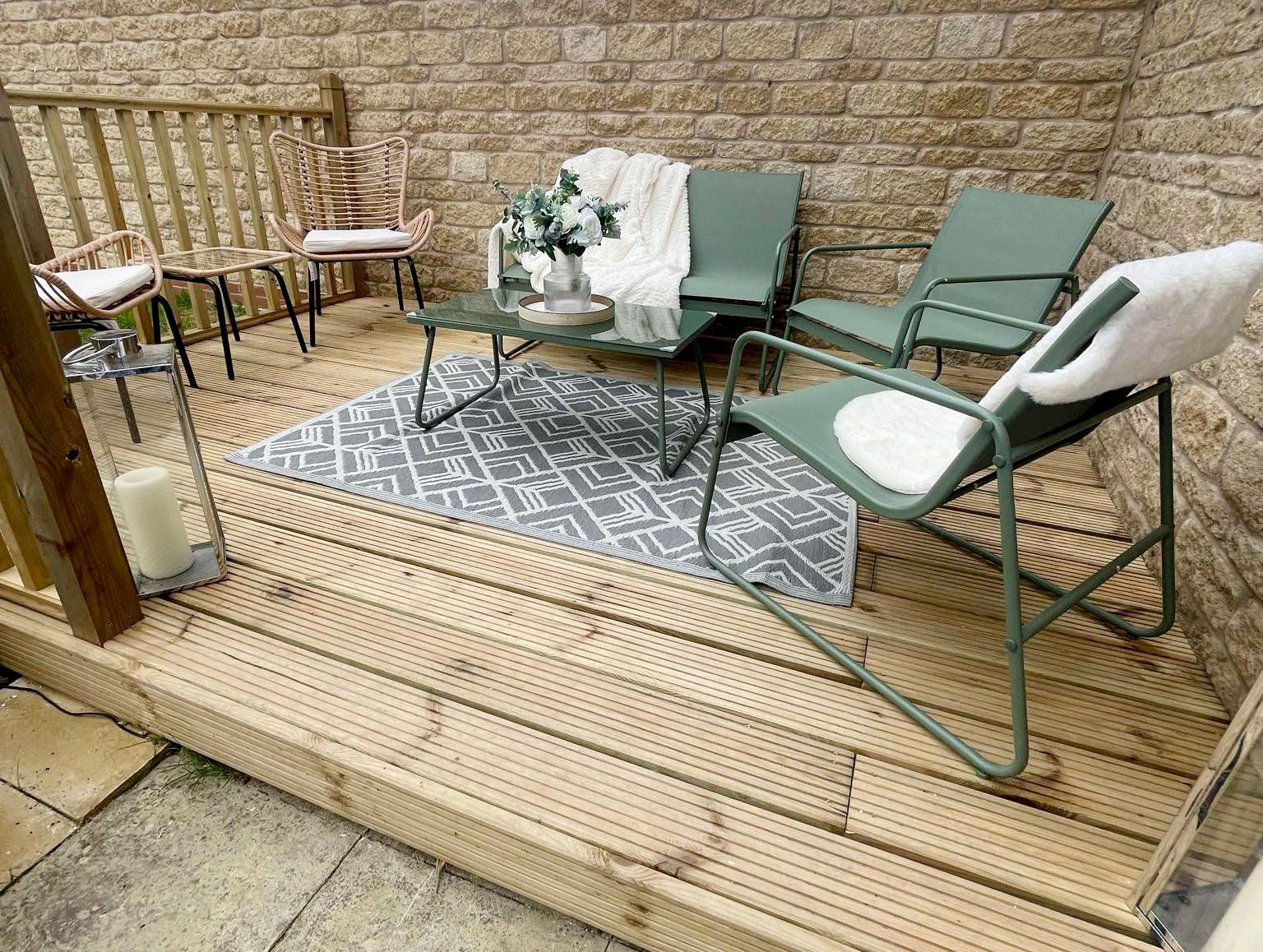
Decking is classed as a permanent enhancement in the amber category
Army spouse Wroxy said: “In one property we were moving into, the previous family had installed decking in the garden. It was safe, well-maintained and something we specifically asked to keep. Despite this, they were required to remove it before handover, which felt unnecessary and wasteful, especially when families are willing to take responsibility for these structures. This kind of blanket approach to removal seems to prioritise policy over practicality and quality of life.”
The good news is that we are now seeing a different mindset with much more flexibility around what is allowed. DIO is committed to giving families more freedom to personalise their homes by removing unnecessary processes and updating policies.
Decking, for example, would now be classed as a permanent enhancement in the amber category. This means it has to be installed by a qualified tradesperson and families need to notify DIO/Pinnacle before any work starts, using a new simplified online form. Home improvements in the green category, including adding shelves and coat hooks or planting flower beds, can be made by families themselves without notification. Providing these permanent enhancements are of sufficient quality and in good working order, they don’t need to be removed before moving out. Families can also make temporary enhancements if they wish to update the style of their home with features such as non-drill wall decorations like decals, peel-and-stick wallpaper or adhesive coverings for wall and floor tiles. These changes can be made without submitting forms or seeking approval but must be removed before leaving.
If you’re sick of the sight of magnolia walls, then you’ll be pleased to hear the future looks brighter. The Defence Homes colour palette offers a broader range of paint swatches for families to choose from when deciding to decorate a room, including pale yellows, greens and blues.
Air Commodore Griffin said: “Appreciating not everyone’s taste is the same, it was designed to be light, neutral and unobtrusive and is therefore versatile enough to work with a variety of furniture and decor styles. It wouldn’t be
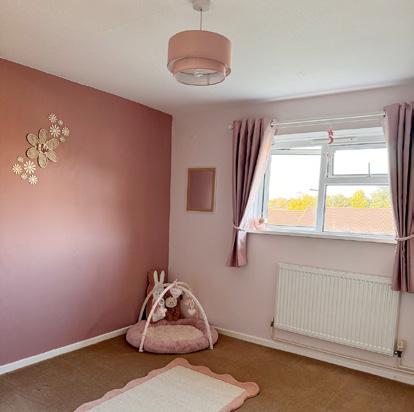
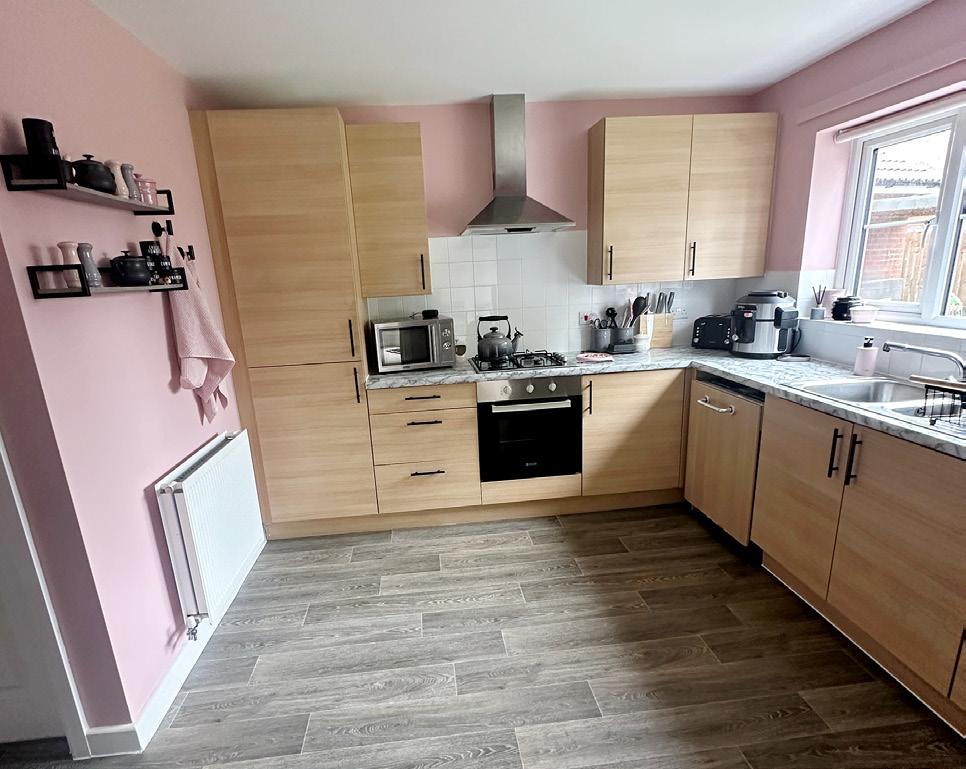
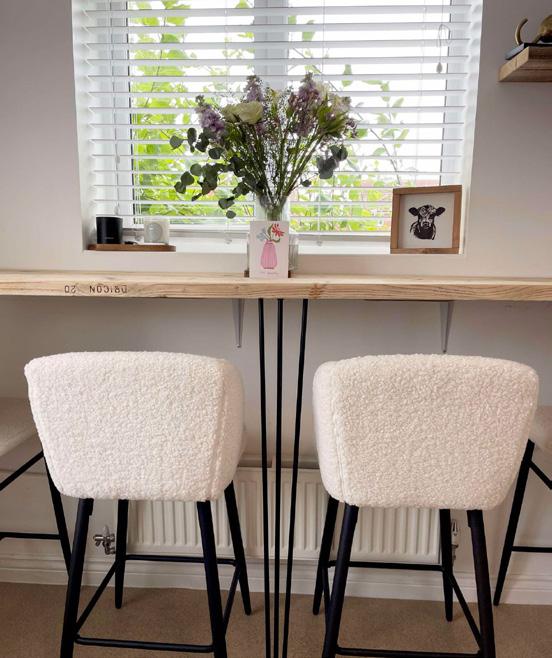

practical to list all colour shades across all paint brands and ranges – instead, we’re empowering families to use a commonsense approach and use the colour palette as a guide, avoiding colours darker or more vibrant than those included in the palette.
“These colours can be left at move out but families can still choose to add pops of brighter or bolder colours through accessories or indeed painting the walls, but these will need to be reverted to white at move out.”
Cerys runs ukmilitaryhome, a popular Instagram account where she shares ideas about DIY and renovations.
“It’s important to me to add our own touches because it helps the house feel like our home, not just somewhere we’re staying for a while,” she said. “Moving often can be unsettling so having familiar things around us brings comfort. I think the majority of families haven’t painted walls because they’d have to revert it back to magnolia, whereas this [the new strategy] allows families to choose a shade they like without having to paint it back or the fear of being charged.”
Cerys and her husband have enhanced their SFA with all kinds of creative solutions, from painting a bedroom sage green to adding wall panels in the living room and rustic shelving in the kitchen.
“I started the account as a simple hobby and to maybe give others inspiration for their quarters too,” she continued. “We use renter-friendly methods which don’t cause damage and fully anticipate reverting everything back exactly as we found it before march-out. My personal favourite, which gives a whole new feeling to a home, is vinyl wrapping the kitchen. I managed to transform our units and worktops for under £50.”
Jennifer has also found social media success with miniature_french_world, which features her beautiful collection of doll’s houses, although she works on a larger scale when it comes to furnishing her SFA.
“My style is French, and I like baroque renaissance ornate, so if anything takes my eye it ends up in my house,” she said. “It makes it feel homely and nice to come back to after work. Upcycling, secondhand shops, antique stores and Facebook Marketplace are great places to find unique pieces for the home.”
Families are being encouraged to share their tips and tricks by tagging DIO on socials or going to the Patch Hacks page, defencehomes.mod.gov.uk/patch-hacks
“We have listened to families and know that these freedoms will make a huge difference to feeling more at home,” concluded Air Commodore Griffin. “We’re really looking forward to seeing the exciting ways in which families will achieve this.” A


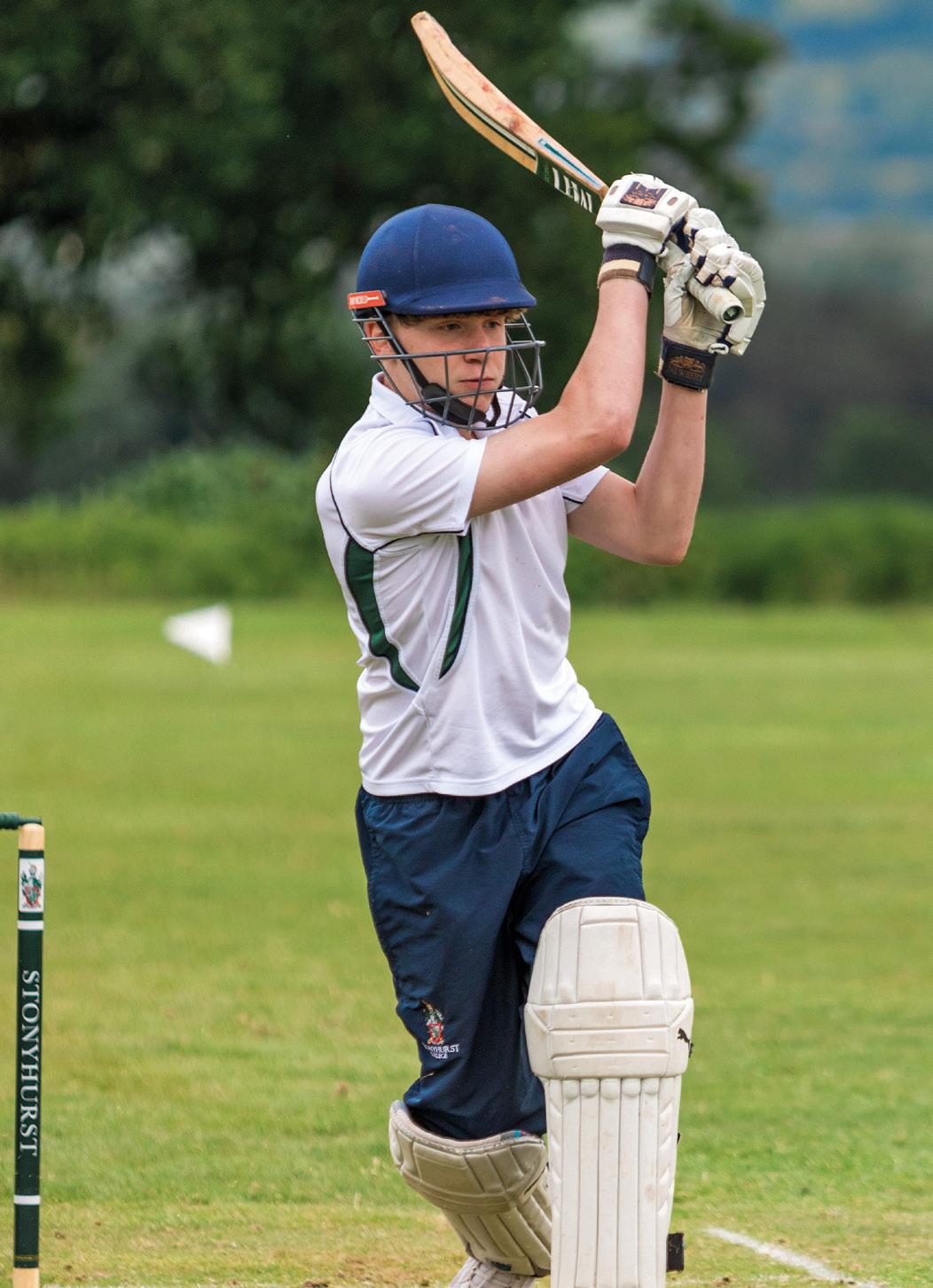


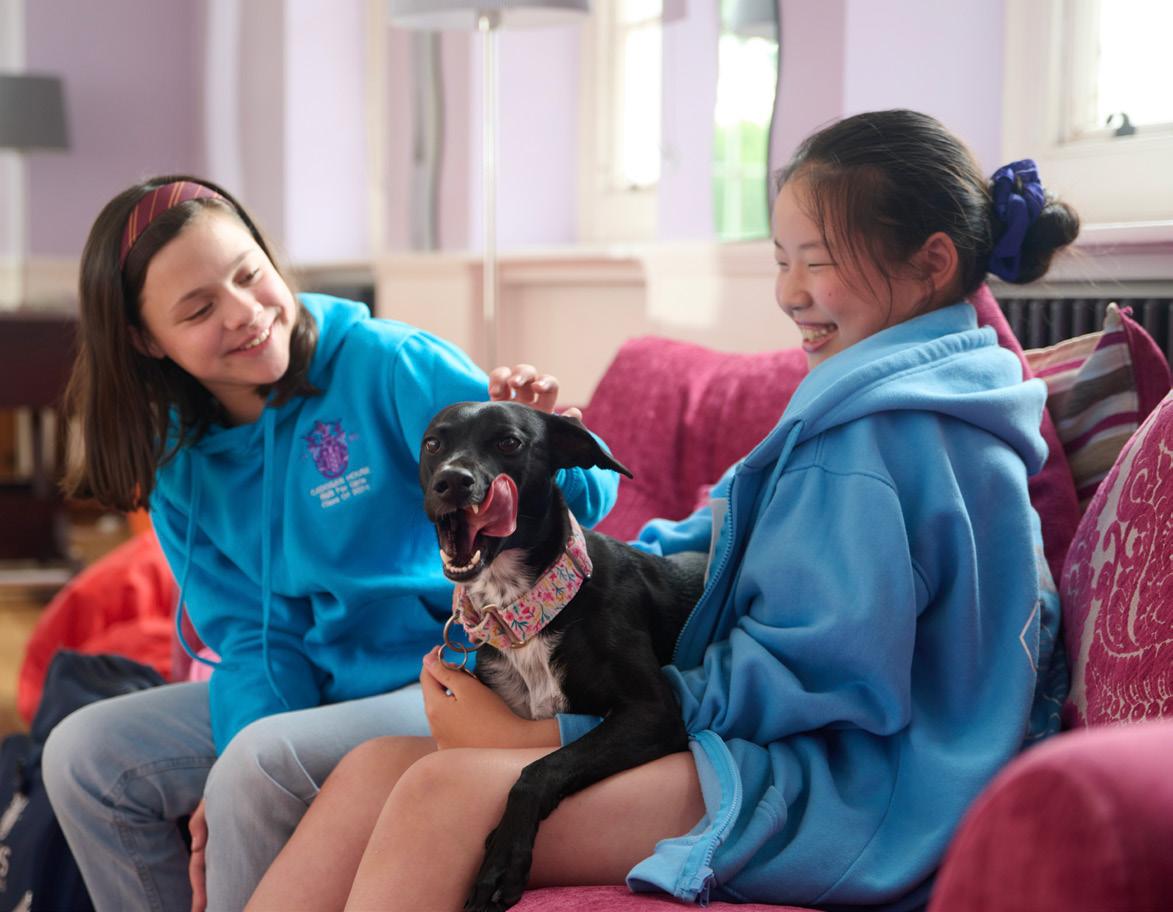
Meet leading UK boarding schools and receive free help & advice from our education consultants


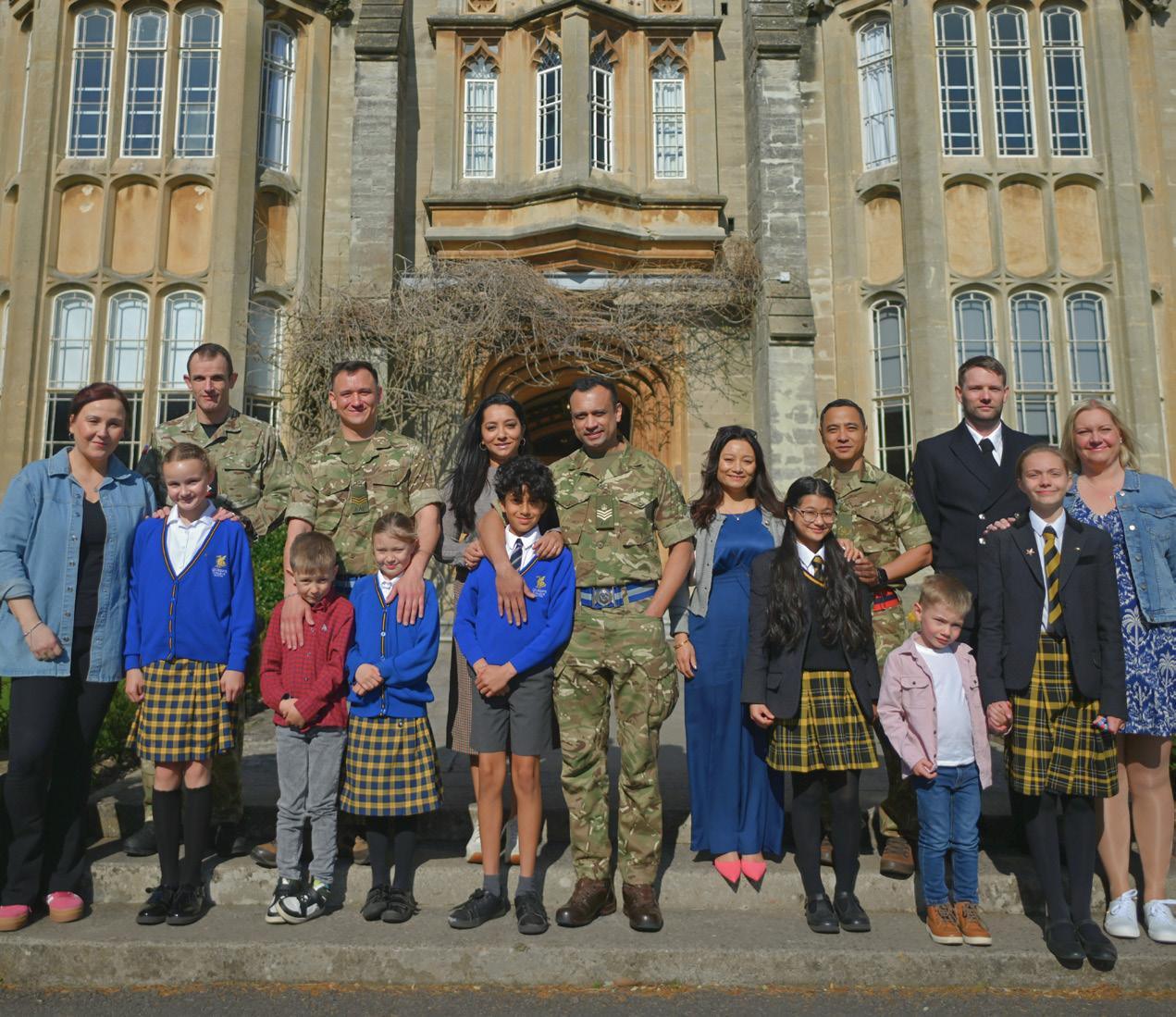
In this issue of Army&You we look at how service-friendly schools and colleges can provide a firm rock to the children of those navigating the military’s nomadic lifestyle...
LEADING boarding schools such as Benenden School in Kent are more than just educational institutions. They are immersive communities where students live, learn and grow together. The strength of the teacher-student relationships, as well as the close relationships between the students that come from living and working together, creates a safe and supportive environment which is key to the foundations of successful outcomes.
Benenden’s latest A Level results place it amongst the top independent schools in the country and the amount of value they add to a student’s grades puts it in the top six per cent of all schools in the UK. All this is achieved despite Benenden being less academically selective than many independent school peers.
So how do they do it?
“This focus on happiness is undoubtedly a key ingredient in this success,” says Headmistress Rachel Bailey. “When students feel happy and secure, they are more engaged, resilient and capable of overcoming challenges.”
This approach is backed by the science. Research in neuroscience and psychology, including a 2024 study by Hochschild Ovalle and funded by the Medical Research Council, supports the idea that
a positive emotional state plays a significant role in learning, motivation, memory retention and overall academic achievement.
So how does Benenden achieve this balance between work and play?
With more than 90 per cent of students boarding and at least 65 per cent choosing to stay at school at weekends, the strong boarding ethos and close knit community creates a structured, supportive and inspiring environment as well as a strong sense of belonging.
The immersive nature of boarding life ensures that learning is not confined to the classroom; it extends into dormitories, common rooms and co-curricular activities. The Weekend Programme at Benenden is renowned for being one of the most comprehensive – and fun – of all British boarding schools.
The importance of enjoying school is central to the philosophy of A Complete Education that Benenden offers. Boundless co-curricular activities are on offer for students to develop their interests and learn more about themselves. Participation is particularly high because they are operating within the safety of a supportive environment where they are comfortable to take risks.
Students learn to manage their time effectively too. Ensuring there is a good balance between academic focus and downtime allows the girls to unwind, re-set and simply enjoy their school days. Benenden’s culture nurtures curiosity and diverse perspectives are not just respected but positively encouraged.
A happy student is one who is supported in their ambition and enjoys taking on new challenges. The strong work ethic that is fostered both inside and outside of the classroom serves them well in higher education and future careers and ensures they are stretched without being stressed.
benenden.school

AT Aldro, we want all our boarders to feel that the school is a homely, happy, stable and fun place to be. Our amazing boarding team work incredibly hard to ensure that every child is carefully supported in their transition to the school and given a high level of pastoral care, from little touches like making a favourite banana milkshake to a special spray of lavender on the pillow to help sweet dreams. We strive for an outstanding, home-from-home experience, with first-class pastoral care, individualised support, and a strong sense of communication and partnership between home and the boarding team. We want every child to feel the warmth of the Aldro community from the moment they step into school.
A big part of delivering a brilliant boarding experience, is focusing on the fun of being with your friends. Every term, the boarding team create an enviable carousel of themed activities such as mid-week, ‘Wacky Wednesdays’, in addition to exciting excursions to roller discos, pool parties, slip and slide and wide games with s’mores on the bonfire. We are fortunate to have wonderful grounds and resources at our fingertips too, and there aren’t many prep schools whose boarders can spend summer evenings boating on their own lake! At the weekend, trips are planned to theme parks, the beach, go-karting and even a trip to Twickenham to watch England play rugby. It’s nonstop fun and adventure. The boarding community at Aldro is busy and thriving and we run waiting lists on some nights for part-time boarders. We also run ‘Big Boarding Weekends’ when specific year groups can experience a super-charged, fun, boarding weekend together.
aldro.org
FOR military children, the rhythm of life often means frequent moves, new schools, unfamiliar classrooms and the challenge of rebuilding friendships and academic momentum on repeat. In this context, the stable environment of a boarding school can be profoundly beneficial.
A boarding school offers uninterrupted academic and personal progress, deepening relationships with teachers and staff, who get to know each child’s strengths and needs over time. Instead of struggling to catch up after every relocation, children thrive in an environment where their life is continuous and supported.
Beyond the classroom, the structured routine of boarding provides emotional security. Military children often cope well with prolonged parental absences as they find dependable caregivers, mentors and peers who contribute to a reassuring sense of normality.
One shining example of the supportive, stable environment boarding can provide is Cottesmore School on the border of Surrey and Sussex. This co-educational prep school, set in the peaceful countryside, combines academic excellence with
MILLFIELD – recently named the UK’s Best Sports School for the 12th time – is home to more than 40 military children and has many former military personnel working at the school. The school understands that a good, consistent and stable education is important to military families. With Millfield Prep having 130 full-time boarders and Millfield home to 950 students, including 250 British expats, the schools offer an outstanding education, excellent learning support, world class sporting programmes and facilities, unrivalled co-curricular programmes, and a real home from home environment.
Millfield and Millfield Prep are full boarding schools. This means that every weekend our boarding houses are full. Millfield is home to students from
warm, family-style boarding that helps children feel “at home” from the moment they arrive. The community ethos ensures every child is known and supported, fostering close friendships that endure year after year.
Importantly, boarding life cultivates independence and resilience. In a nurturing boarding setting like Cottesmore, these qualities are strengthened within a stable framework of routine, shared responsibilities and community values. Over time, children not only keep pace academically but build confidence, social skills and emotional wellbeing that serve them well into adulthood.

For military families seeking balance between an adventurous life and reliable schooling, boarding can be more than an option, it can be a foundation.
cottesmoreschool.com
75 different nationalities, and this breadth and rich cultural diversity is something everyone in the school embraces, learns from and is proud of.
Full boarders enjoy a weekend programme filled with exciting activities and trips. Boarding houses are the place where most students make long-lasting friendships and receive the support and guidance


of a team of dedicated staff to guide them through their time at school. All houses have a resident Housemaster or Housemistress (HsM), an Assistant HsM who also lives on-site, and matrons and nonresident tutors who provide boarders with a warm and supportive atmosphere. Boarders also have access to a well-staffed medical centre, counselling service and the spiritual director.
Millfield is a busy place, and life beyond academics is rich and varied. Prep School and the start of Senior School is a time where students can, alongside their academics, try anything. They are given free rein to discover their passions, find what they’re good at, and try everything in a supportive, nurturing and positive environment.
At Millfield Prep, with over 10 hours of sports and co-curricular sessions weekly, Year 7 and 8 pupils dive into everything from team sports and musical theatre productions to inter-house bake-offs, councils, and camps. This is often where passions start to be discovered. Pupils are given the opportunity to try everything and find what they really love, and it’s absolutely fine, and actively encouraged, if this exploration continues into Year 9.
As part of the Nine at Millfield programme at Millfield, students are given the opportunity to try a range of different activities through the Millfield Activity Programme. The relaxed environment allows students to try something new, such as mountain biking or beekeeping, with no commitment to continue it long term.
millfieldschool.com

FOR children in Army families, frequent moves can be challenging. Each relocation brings a new school, new peers, and new routines, making it difficult for children to form lasting friendships and feel a sense of belonging. This disruption can also affect learning, as continuity and progression are interrupted. In this context, a school that provides stability, community, and support is invaluable. Clayesmore School in Dorset exemplifies such an environment, offering students a secure foundation where they can thrive.
At Clayesmore, every child is recognised for who they are and encouraged to find their place within the school community. This sense of belonging is vital for children who move regularly. When pupils feel accepted and valued, they are able to build friendships, engage confidently in learning, and explore their potential. The school’s boarding and day provision creates a “home-from-home” atmosphere, where staff listen and guide pupils, helping them feel safe and supported. In this environment, children gain the stability needed to grow into confident, capable young people.
AT Farleigh School, stability goes beyond where pupils sleep during term time – it means continuity of care, familiar routines, trusted adults, and a strong sense of belonging, at weekends and even during exeat weekends. We are acutely aware of how important this is for military families.
Our in-exeat provision is one of the ways we deliver this. While many schools fall quiet on exeat weekends, Farleigh remains open and full of life. Pupils who stay with us enjoy calm, structured, activity-filled weekends where they are known, feel safe and fully engaged. With access to the school’s fabulous facilities, their days are busy and purposeful: disco dodgeball, Cornish longball, badminton and five-a-side in the sports hall; water polo and fun swims in our indoor pool; baking sessions in the food technology room; and plenty of time on the AstroTurf. On Saturday mornings, the AstroTurf also hosts around 40 local families for social hockey, extending our sense of community beyond the school gates. On Sundays, our beautiful Chapel becomes a vibrant hub, regularly welcoming 200–300 people for Mass throughout the year, often with coffee and biscuits afterwards – a powerful reminder that Farleigh is a thriving, supportive community all year round. Full boarders of all ages read at Mass - another way in which they feel valued within the wider community.
While pupils love staying in for the weekend – thanks to the safety, structure, and constant activity – we also make the most of opportunities to explore. Trips to waterparks, ice rinks, football matches, and nearby landmarks such as Danebury Hillfort, Mottisfont, Winchester, Salisbury, Oxford and Basingstoke give pupils a sense of adventure and connection to the wider world.
What truly makes these weekends – and boarding generally at Farleigh - special is our staff. Those staff who stay in for exeats choose to do so. They know the pupils well, maintain consistent routines, check in regularly, and throw themselves into a lively programme. For our important military families, Farleigh offers exceptional stability and a place that genuinely feels like home.
farleighschool.com
Clayesmore’s academic and co-curricular programmes provide both continuity and breadth in learning. The LEX programme is a specifically tailored extra-curricular curriculum that addresses the needs of children at different ages, ensuring that every pupil is challenged, inspired, and prepared for life beyond school. From Prep School to Sixth Form, LEX develops leadership, resilience, and critical thinking, while opportunities in arts, sport, outdoor adventure, and intellectual enquiry allow pupils to discover new interests and talents. Importantly, Clayesmore recognises the emotional and social impact of a mobile lifestyle. Friendships are strengthened, individuality is celebrated, and every pupil is supported to excel in their own way. As the school emphasises, when children belong, they become – scholars, artists, visionaries, and leaders. For families accustomed to frequent moves, Clayesmore offers more than an education: it provides a stable community where children feel valued, secure, and ready to reach their full potential.
clayesmore.com


AS Head of Boarding at Kingswood School, I see every day how a well-run boarding environment can provide real stability for children from armed forces families, writes Darrell Harding. When parents are posted elsewhere or deployments take them away from home, consistency and belonging matter more than ever.
At Kingswood, we have earned a strong reputation for exceptional pastoral care. Our boarding houses are genuine homes away from home, where houseparents and staff take a close, personal interest in each pupil’s wellbeing and development. Our founder, JohnWesley, believed that “an ounce of love is worth a pound of knowledge”, and that philosophy still underpins everything we do. Academic success is important, but it is belonging, routine and feeling known that allow young people to truly flourish.
Our location also plays a significant role. Bath is an inspiring and welcoming city, rich in history, culture and creativity. Kingswood itself sits just a short walk from the city centre, yet is nestled within 120 acres of green space and woodland. This balance offers pupils both stimulation and calm - an ideal setting in which to live and learn.
Boarding life at weekends is busy, varied and fun with lots of input from our boarders on how they would like to spend their time. Pupils enjoy trips to theme parks, historic sites, sporting fixtures, activity centres and film nights, alongside relaxed housebased events such as cooking, team games and creative projects. Living onsite allows them access to the gym, sports hall, Music and Art Departments and the swimming pool. These shared experiences build confidence and friendships that last well beyond school.
For our younger boarders, Beaconfield House provides a gentle and nurturing introduction to boarding, supported by older pupil prefects who play a vital role in evening routines and reassurance.
Crucially for forces families, Kingswood offers consistency. With no exeat weekends and most pupils remaining in school, children benefit from familiar faces, structured routines and a strong sense of community — a stable foundation, whatever life may bring beyond the school gates.
kingswood.bath.sch.uk
EACH morning at Bryanston School, you notice it before almost anything else, writes Claire Miller, Senior Deputy Head. There is no procession of identical blazers. No prescribed combinations of tie and school badge. Instead, pupils cross the Dorset estate in clothes that are chosen rather than assigned. Practical, expressive, sometimes understated, sometimes bold, and occasionally pushing boundaries.
For many military families, that difference carries particular weight. Service children are often experts in adaptation. They learn early how to enter a new school mid-year and decode social rules at speed. They know what it means to be the unfamiliar face in a corridor where everyone else already seems to belong.
Uniform can ease that transition on the surface. It offers instant camouflage. But it can also become a way of hiding, a fast route to blending in without ever quite being known.
At Bryanston, the absence of uniform is sometimes described as quirky. In reality, it is a deliberate educational choice, closely aligned with what our military families consistently say they want most from a school - stability, strong pastoral care, and an environment in which their child is seen quickly and supported properly.
To be clear, Bryanston is not laissez-faire about appearance. There is a dress code, and expectations are explicit. But it is a dress code, not a uniform, and that distinction matters. When pupils are not visually standardised, they are harder to reduce to a type, harder to disappear into sameness, and easier for adults to know properly, not through surveillance, but through conversation, relationships, and consistent attention.
This same non-uniform spirit runs through Bryanston’s educational model, where individuality is at its core. Since 1928, the school has pushed back against rigid, one-size-fits-all schooling in favour of an approach that trusts pupils to think, question and take ownership.
We remain the only school in the UK with our own named educational framework, the Bryanston Method, rooted in the Dalton Plan. At its core are one-to-one tutoring, independence of thought, personal responsibility and reflective learning.
Pupils move between classrooms and assignment rooms, guided by subject specialists but encouraged to pursue their own lines of enquiry and work at a pace that suits them. In the Sixth Form, small individual groups sharpen this further with ideas debated, assumptions tested, and pupils learning to articulate their thinking with confidence and clarity.
The result is an education that doesn’t try to make everyone the same but helps each pupil become more fully themselves and it’s one that consistently proves its value after Bryanston too. Crucially, pupils are encouraged to understand themselves. To know how they learn, what motivates them, what unsettles them, and how they recover when things go wrong.
For military children, this matters deeply. When a child has moved schools several times, the key question is rarely just “Are they bright?” but “How quickly can someone read them accurately?”
Do they withdraw under pressure? Overachieve? Perform? Become invisible?
The Bryanston approach is designed to identify these patterns early, not through monitoring, but through conversation and consistent adult attention. In that context, uniform begins to look like a contradiction. If the aim is to see the whole child, standardising appearance risks masking exactly the signals that matter most.
We treat clothing and appearance as information, rather than a battleground. A sudden retreat into anonymity. A sharper edge. A softer one. A burst of colour where there was none before.
These shifts are often subtle, but they can be revealing, particularly for children who have learned, through experience, to keep their emotions neat and contained. The principle is simple, though still considered fairly radical. Children should not be able to disappear behind enforced sameness.
In more uniformed schools, belonging is often visual. You look right (and usually the same), therefore you belong. But military children frequently have a more complex relationship with belonging, feeling, at times, that they belong everywhere and nowhere. At Bryanston, we offer a different proposition. You belong here as a person, not as a surname sewn onto a blazer, not as a type.
bryanston.co.uk

SET in 500 acres of beautiful Somerset countryside, Downside School offers a distinctive full-boarding education for pupils aged 11–18. With a strong Catholic foundation and a tradition of welcoming families from all faiths and none, Downside combines academic ambition with outstanding pastoral care and a deeply rooted sense of community.
Boarding lies at the heart of the Downside experience. As a full-boarding school, evenings and weekends are busy, structured and purposeful. Pupils benefit from supervised prep sessions, a rich co-curricular programme and a wide range of activities that extend well beyond the classroom.
From sport, music and drama to outdoor pursuits, Combined Cadet Force, debating and service opportunities, pupils are encouraged to discover new talents and develop confidence, resilience and independence.
Downside has long-standing and valued links with the Armed Forces. The school understands the particular demands placed on military families and offers continuity, stability and strong pastoral support. With experienced house staff and a closeknit boarding community, pupils quickly feel at home, supported both academically and personally. Regular communication with parents ensures families remain closely connected to school life, wherever they may be posted.
Above all, Downside offers more than an education - it offers belonging. In a safe, structured and inspiring environment, pupils grow not only in knowledge but in character. They leave as confident, articulate and grounded young adults, ready to contribute positively to the world around them.
For military families seeking stability, community and a genuinely holistic boarding experience, Downside offers a school where young people can truly thrive.
downside.co.uk

BOARDING at Adcote School provides a vibrant and welcoming ‘home from home’ for girls aged eight to 18. We have extensive experience in caring for the needs of children whose parents may need to move frequently, meaning we are a popular choice for families serving in the Armed Forces.
We understand deployment can sometimes happen at short notice and often overseas, and our Forces families rely on our ability to offer their children the stability they crave, in a nurturing and consistent environment. Under the caring guidance of our dedicated Heads of Boarding and their experienced teams, girls are provided with continuity of care that promotes independence and self-confidence, enabling them to focus their energy where children should – on fun-filled activities that banish boredom and forge lasting friendships.
Like other boarders, our Forces girls usually travel to see their families during the school holidays, but whilst their parents are regularly moved around the world, they can enjoy the close-knit family atmosphere of boarding life at Adcote and benefit from a place to truly call home. From cosy evenings to exciting events, every moment is designed to foster growth and happiness for the girls in our care, whilst supporting their academic development.
Forces life can be full of uncertainty, for serving parents and especially for their children. Our Armed Forces Bursary can be combined with the Continuity of Education Allowance (CEA) to provide an affordable stable environment that helps make life feel a little less scary. Less fear, more fun. Less unknown, more home.
adcoteschool.co.uk
CHRIST College Brecon has long been known for academic strength and strong pastoral care, but what increasingly sets the school apart is its deliberate focus on preparing pupils for life beyond the classroom. At a time when employers are calling for resilience, adaptability, and real-world skills, the school has embedded a practical, forward-looking approach into everyday school life.
Central to this is the school’s “Curriculum for Life” programme, introduced in 2018 for Sixth Form pupils. Rather than treating career preparation as an afterthought, the programme features weekly experiences designed to help pupils explore their future with confidence. It combines lectures, workshops, and practical sessions across four core areas: politics and philosophy, next steps and wellbeing, financial literacy, and cooking for university.
The emphasis is not just on academic progression, but on life skills. Pupils learn how to manage money, write CVs, navigate university applications, and even cook budget-friendly meals. They also hear from a wide range of visiting speakers, including entrepreneurs, adventurers, military personnel, authors, and alumni, who share their own experiences of work and life after school. The result is

a programme that widens horizons and helps young people see the many paths open to them.
Alongside this, the school provides personalised guidance for university and career choices. Pupils receive tailored support with applications, access to work experience opportunities, and dedicated sessions on writing personal statements and cover letters.

Leadership and community engagement also form an important part of preparation for the working world. Sixth Formers take on meaningful roles as prefects and house leaders, organising charity events and initiatives such as mental health fundraising campaigns. These experiences foster confidence, empathy, teamwork, and resilience—qualities consistently sought by employers.
AT Dauntsey’s, preparing young people for life beyond school is approached with thoughtfulness and structure, alongside the appreciation that futures are rarely linear, writes Jenna Jones, the school’s Head of Futures Futures guidance is built around the belief that good decisions are made over time, through conversation, reflection and access to the right support, rather than at any one single moment.
Pupils benefit from a comprehensive Futures programme that runs throughout their time at school and evolves as they progress. Alongside structured workshops, events and experiences, strong emphasis is placed on individual guidance. Pupils are encouraged to speak openly about their interests and ambitions, and one-to-one support is readily available. Parents and guardians are welcomed into this dialogue at any stage, recognising the vital role families play in shaping future choices.
This support is delivered through a dedicated Futures Department, with specialist staff working closely with colleagues who lead on particular

Importantly, this preparation begins well before Sixth Form. The boarding environment plays a formative role in helping younger pupils develop independence, strong friendships, and a sense of belonging. As one parent of a Year 9 pupil reflects: “One of my aims in choosing a school, was that my children could develop their potential, make lifelong friendships, be taken out of their comfort zone and learn that kindness is a great strength. Christ College has provided this and I am grateful. They have had a great start in life.”
christcollegebrecon.com
pathways, including medicine, law, the creative arts, competitive university entry and degree apprenticeships. This collaborative approach ensures that pupils receive both broad careers education and targeted expertise where routes are complex or highly competitive.
From early exploration of strengths and transferable skills in the Lower School, through subject selection, work experience and employability, to post-18 planning, the provision is deliberately joined-up. Experiences such as careers and gap year fairs, alumni and employer engagement, university visits and Armed Forces drop-in meetings provide valuable real-world insight while remaining grounded in personalised guidance. Some pupils arrive with a clear plan; others need time and reassurance to discover what suits them best. Our role is not to direct pupils towards a single outcome, but to equip them with the confidence, self-awareness and resilience to make informed decisions – qualities that serve them well wherever their future path may lead.
dauntseys.org
YOU might stumble across a Sixth Form student at Gordon’s changing a car tyre, putting up a flat screen TV or even sewing! These practical life skills are examples of how the school prepares young people not only for exams, but for the realities of adult life and work. In a rapidly changing labour market, where young people are likely to move between roles or change careers multiple times, success increasingly depends on adaptability, confidence and resilience as much as academic achievement. This is where Gordon’s approach to careers education and its emphasis on building resilience plays a crucial role.
Careers education at Gordon’s School is deeply embedded across the curriculum and co-curricular programme, from the youngest students in Year 7, aged 11, right through to those completing their A Levels. Rather than being something that happens at the end of a student’s school journey, careers thinking is woven in from the very beginning, helping students understand how what they are learning connects to the wider world and the opportunities available to them.
This constant exposure helps students build confidence, understand the language of the workplace and recognise that there is no single


definition of success. It also supports the school’s belief that students who are aware of their options early are better equipped to make informed, realistic and ambitious decisions later on.
At key transition points students receive next-steps support from specialist, impartial careers advisers. These one-to-one guidance interviews allow students to reflect on their strengths, interests and aspirations while receiving expert advice on GCSE and A Level choices, university routes, apprenticeships, employment or gap years.
Regular encounters with employers and professionals from a hugely diverse range of sectors, industries and educational establishments help bring careers to life. These encounters are often linked to work experience and workplace visits and
Award-winning Independent Day & Boarding School for Girls aged 7 - 18


are supported by interview skills days, CV writing and personal statement workshops, UCAS guidance and more.
Co-curricular activities are viewed as essential at Gordon’s, underpinned by the belief that while qualifications may open a door, it is personal experiences, character and communication that truly set candidates apart. This philosophy strongly reflects the school’s ethos of promoting resilience in students and encouraging them to step outside their comfort zones, face challenges and learn from them, rather than avoiding risk.
As part of its commitment to career readiness, Gordon’s School aligns its provision with the Gatsby Benchmarks, the national standard for high quality careers education. The Benchmarks ensure students receive structured guidance, meaningful employer encounters, up to date labour market information and personalised support, all of which are vital in helping young people successfully transition from education into employment or further study. Their parents are also part of the process, attending higher education seminars and talks, recognising the importance of a joined-up approach.
Many other events and opportunities exist to support the students to build useful contacts and recognisable skills, including partnerships with London Pulse Netball and Harlequins Rugby, annual Careers and Apprenticeships Fairs and the popular ‘Dine and Discuss’, building cultural capital and a dining etiquette. Speed networking events add an energetic and enjoyable element, helping students practise communication and confidence under pressure.
Gordon’s Careers Lead, Augusta Kennedy, explains that the aim is to expose students to as wide and varied a range of opportunities as possible, enabling them to make informed decisions about their next steps.
“The Careers Department is focused on embedding a culture of resilience, curiosity and ambition from the moment students begin their Gordon’s journey. By helping to develop their confidence, adaptability and skills they are equipped to succeed in their careers and thrive in life.” gordons.school
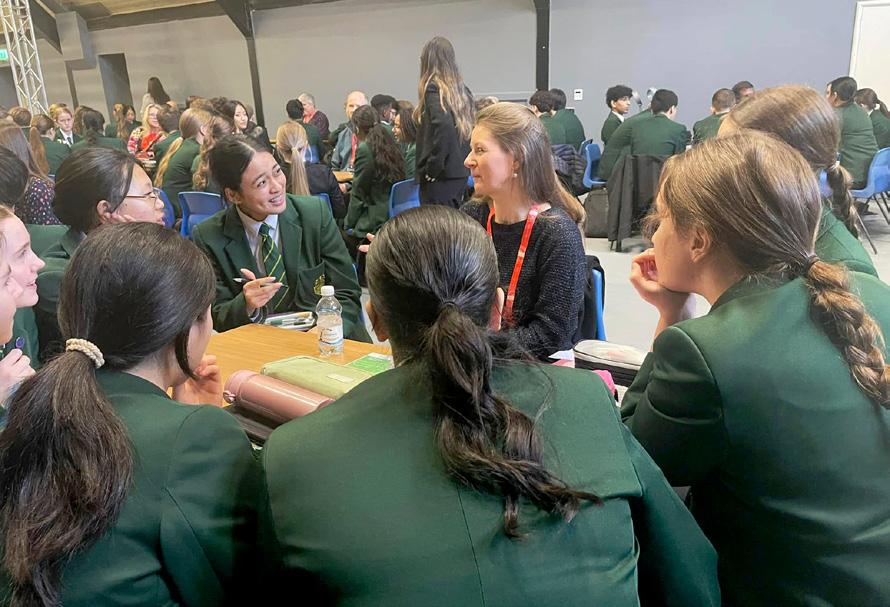
Adapting to life as the partner of a soldier can be a challenge, and not just because of the deployments, the house moves or the impact on any personal employment aspirations.
You’re a civilian stepping into a world that may be very unfamiliar – one with different priorities and even a different language to decipher.
If you’re male, you will also be doing so as a minority because, in contrast to the Army – in which women only account for a little over 10 per cent of the service’s current strength – patch life predominantly remains the preserve of female spouses.
And as Alistair Laburnum discovered, such a gender imbalance can intensify the culture shock of becoming a part of the military community.
When the 39-year-old fell for Janay (34) online during the COVID pandemic, he was a homeowner with an established career in physiotherapy.
And even when, six months into their romance, his new love went to Sandhurst, the Army’s impact on his life was negligible, with lockdown dictating a long-distance relationship.
That, however, changed when Janay commissioned as a REME officer, received her first posting and the couple opted to move into military housing.
“Going from having my own house to moving into Army housing in an area I was really unfamiliar with was an adjustment,” said Alistair, recalling his relocation to a small grouping of military properties in Farnborough, Hampshire.
“One of the things I had heard a lot about was how much community there is in Army life, but I’ve not seen that,” he added, while stressing his neighbours are friendly and ready to lend a hand if needed. “[That experience] might be because I’m not on a patch.

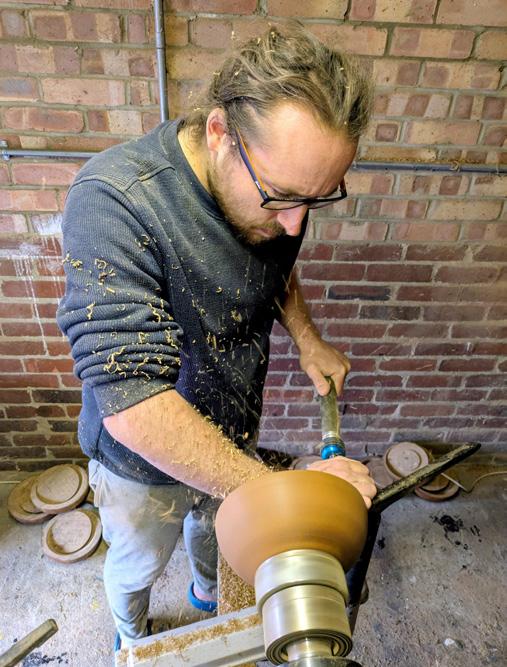

“And whenever I’ve been to the odd Army function I’m usually the only male spouse,” he continued, highlighting that, while Janay’s colleagues are pleasant company, it is not always easy to join in ‘work’ conversations. “It’s just that the nature of Army life is exclusive.”
Alistair even found joining an online workshop offering business start-up support for veterans and spouses did little to lift his sense of isolation, with many attendees being exservice personnel who sprinkled the conversation with military acronyms.
“I didn’t have any shared experience and it was difficult to relate,” he said.
“I’ve also found that there is a much more limited Army spouse community for husbands as opposed to wives, especially in male-dominated cap badges like REME.”
One useful source of guidance Alistair says has helped is Army&You. “As someone becoming an Army spouse a little bit later in life, I have really valued your magazine,” he continued. “On several occasions your content has helped me develop insight into what it means to be part of the forces family, and how to start to navigate Army life. But I’ve never seen anything similar to my own experience.”
Now an advanced physiotherapist practitioner and prescriber dealing with patients suffering from chronic pain, Alistair can work remotely, meaning he does not need to find a new job when he and Janay move to a new assignment.
The emotional toll of his role can be draining so he has found a new hobby to enhance his mental wellbeing and keep him occupied when his wife deploys.
“If she’s away I can get to the end of the week and I’ve not really spoken to anybody apart from distressed people,” he explained.
Alistair discovered woodturning, which has filled the couple’s home with finely crafted items made from reclaimed wood in his workshop. He sells his creations online and at craft fairs, accepts commissions and has created presentation pieces for the Army and Janay’s unit.
“I’d encourage people to find something that they’re passionate about and they enjoy for the time their spouses are away.”
You can find example of Alistair’s work on Instagram @laburnumwoodturning or online at laburnumwoodturning. sumupstore.com A
Some of the key issues you asked us for advice on between October and December 2025
I would like to run a business from my SFA, what is the process for this?
We have a child with additional needs; we need to make some adaptations to our property. How do we go about this?
We are moving from SFA to our own home, are we entitled to removals?
We have had to move out of our own home into SFA. Are we able to get a council tax discount while our home is empty?
Will the pending visa application for my partner affect our housing application?
It is too far to walk between our SFA and child’s school. How do I organise transport?
of enquiries came from the spouse/partner of a serving person 38%
35%
of enquiries came from a serving person

TOP 3
Foreign & Commonwealth issues concerned:
Visas to enter the UK
Citizenship
Visa extension/ switching
5%
of enquiries came from welfare support teams
5
6%
of enquiries came from the ex-spouse/partner of a serving person
issues for serving personnel were:
Housing Allocation/entitlement
Housing repairs/maintenance
Military allowances
Additional needs support in education
NHS provision and waiting lists
issues for spouses/partners were:
Housing repairs/maintenance
Job seeking/employment - UK
State benefits
Age 4-11 childcare
Housing allocation/entitlement



A co-educational school for students aged 11-18-years

See why families are calling us great value for money

NESTLED IN a charming hamlet, the Clarion Hotel Charlecote Pheasant is one of Stratford-upon-Avon’s most delightful getaways.
Originally a 16th-century farmhouse, it’s surrounded by landscaped gardens and boasts original beams and exposed brickwork. Recently renovated to celebrate the region’s Shakespearean heritage, the hotel is a warm and inviting place to relax and explore.
The National Trust’s Charlecote Park is a short walk away, while Warwick Castle and the town of Stratford-upon-Avon are within a 15-minute drive.
One lucky winner will enjoy
RORY GREEN, The Space Beez and the World-Saving Sneeze by Kerry McIntosh is a thrilling, eco-friendly children’s adventure and Army&You has a copy to be won.

Fans of Rory Green: Secret Agent to the Queen will be thrilled to see the book’s protagonist back in action. Packed with laughs, excitement and inventive problem-solving, this dyslexia-friendly novel continues the author’s mission to nurture an army of eco-heroes.
an overnight stay for two in a beautiful suite with breakfast and a two-course dinner included.
The hotel has a restaurant, bar and café, free parking and Wi-Fi.
The prize is valid until 30 November 2026 and is subject to availability.
For more about the hotel go to charlecote pheasanthotel.co.uk
Army&You readers can also take advantage of an offer of a two-night stay with breakfast, two-course dinner one evening with a glass of fizz, and late check out for £199 (valid until 31 May 2026). To book, call 01789 335960 and quote RO-NA.
GILLIAN JONES specialises in creating striking artworks based on military people, ships, aircraft and vehicles.
A former Royal Navy officer with a PhD in manufacturing engineering and lifelong interest in art, Gillian takes great pride in the accuracy and attention to detail she affords her subjects.
One lucky Army&You reader has the chance to win a £50 voucher which can be redeemed at gillianjonesdesigns. com. You can also find Gillian Jones Designs on Facebook and Instagram.


FORMER ARMY captain Steve Higgs is set to publish his bestselling crime series Albert Smith’s Culinary Capers in paperback for the first time. Over the past eight years, the retired officer has become one of the world’s most successful independent authors, with readers devouring over a billion of his pages digitally in 2024. He has ranked as the third topperforming ‘cosy mystery’ author on Kindle Unlimited,
ahead of The Thursday Murder Club’s Richard Osman. Pork Pie Pandemonium follows 78-year-old retired police superintendent Albert Smith and his loyal dog Rex as they tour Britain solving crimes through culinary adventures.

How to enter: Click the giveaways tab at armyandyou.co.uk
Closing date for entries is 12 April 2026 unless
will not be used for marketing purposes. Winners’

A fast-paced, funny and feel-good mystery, Pork Pie Pandemonium combines British eccentricity with crime-solving capers and laugh-outloud commentary from Rex.
Five Army&You readers could each win a copy of the book.
How long have you been an Army family?
11 years.
How long have you been in Brunei?
Seven months.
What’s your quarter like?
We’ve been lucky enough to get a refurbished bungalow. They are in the process of renovating them all. It definitely made it easier to settle in and make it a home. The quarters here are big so it’s nice having the extra space. I especially love our patio area, it’s great for watching Brunei’s amazing tropical rainstorms and sunsets.
Are there any employment/ training opportunities?
Employment is limited as it is all mainly within the garrison. Jobs that come up at the local school and nursery tend to get snapped up quickly. There are opportunities within Bruneian companies but they are very rare. Training and courses are accessible many spouses are using their time here to study and get some qualifications.
What about schools/ childcare?
There is a lovely MOD school and a nursery which is a short drive away. Some families do employ full/part-time ‘amahs’
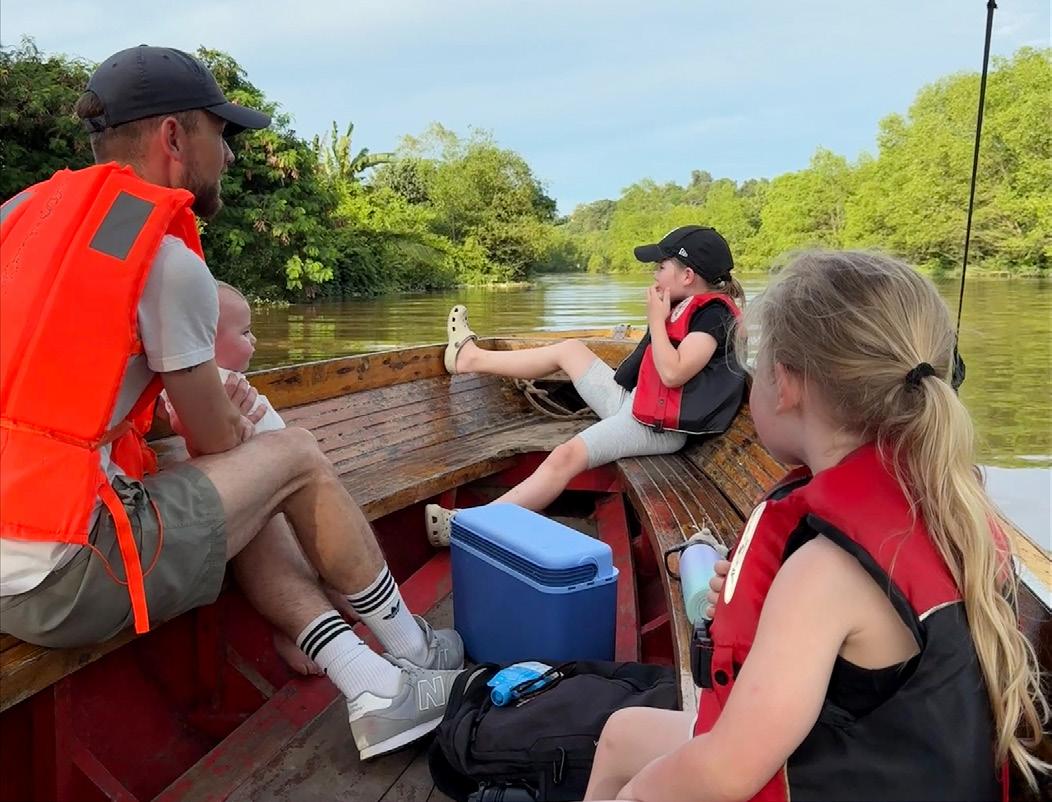
for childcare and to have help at home as it can be difficult being so far away from family, especially if you are working.
Where do Army families get together and who supports you?
There is always something going on here whether it’s bingo or a quiz at the patio bar on the patch, people’s houses, the pool, coffee dates or play dates. We always like to have something in the diary. The community support is amazing and friends quickly become like family; we all look out for each other.
How do you find the cost of living out there?
The cost of living here is a mixed affair, especially compared to the UK. Eating out is definitely a lot cheaper. Getting my nails done, going




for a massage or going out for coffee is also cheaper.
Fuel is exceptionally cheap here but food shopping is around 40 per cent more than the UK.
What are the best and worst things about living there?
The travel, the food and learning about different cultures are highlights. The lifestyle we get to enjoy feels incredible and we feel very lucky to have been given this opportunity.
The hardest part is being far from family and friends and not having our dog Bailey with us. We chose to leave him with our parents for many reasons. I miss the UK shops and the ease of nipping out for stuff. You have to think ahead and be organised which is something I am not very good at! A









To book your place please visit: www.downside.co.uk/open-morning Or email admissions for a private tour admissions@downside.co.uk or call 01761 235103
•
•
• Awarded ‘Outstanding’ in all categories by Catholic Schools Inspectorate May 2024
• Organ, choral, music, art, drama, sports, academic, product design & all-rounder scholarships available
• Long-standing link between Downside and military families
• Fully boarding school with busy and productive evenings and weekends
• Parents in receipt of CEA will only be required to pay 10% of the basic boarding fees

Templar Books, paperback £7.99
Reading Force Book Club members satisfy their appetites for fun by reviewing Hangry by
Kathryn Wanless and Fred Blunt
Beatrice, aged six, and dad
BEATRICE’S FAVOURITE page was when the girl’s mum turned into a hangry monster because it featured bright colours and a chance to shout. This was a relevant life book and not too difficult for a six-year-old, who only needed help with a few words. It allowed us to have a discussion about other ways people might feel angry. It was bright, colourful and direct with an injection of humour.

Orla, aged five
Would your children like to review books? Email hattie@readingforce.org.uk with their names and ages.

Amelia and Ellie, aged 10 and six
IT IS a really good book and we enjoyed reading it with daddy over Facetime. Evangeline is a happy girl until she turns hangry! We liked mum and Evangeline hugging with a banana, everyone gets hangry sometimes.
Amelia said: “I like this book, my sister acts like that sometimes.”
Ellie added: “I like the cute dog and mum’s hairstyle.”
THE BOOK is about a little girl who gets ‘hangry’. She turns into a monster when she is feeling hungry. I think the book is funny. I like how the little girl and her mummy both become ‘hangry’ monsters. That was surprising!

Enter our giveaway to win a copy of Hangry and a Reading Force scrapbook. See armyandyou.co.uk for entry rules. Already read it? Tell us your thoughts @ArmyandYou
WHEN READING Force launched a memoir writing competition last year and invited members of the Armed Forces community to capture their experiences on paper, the charity was inundated with responses.
Open to everyone from service children to veterans, submissions tackled a broad range of topics that included the excitement of travelling to a new country, explorations of what it takes to repeatedly move school or home, and the highs and lows of serving.
Entries in the children and young people category were judged by the editors of their respective service’s families federation magazine, with the prize for the winners being the pleasure of having their writing published.
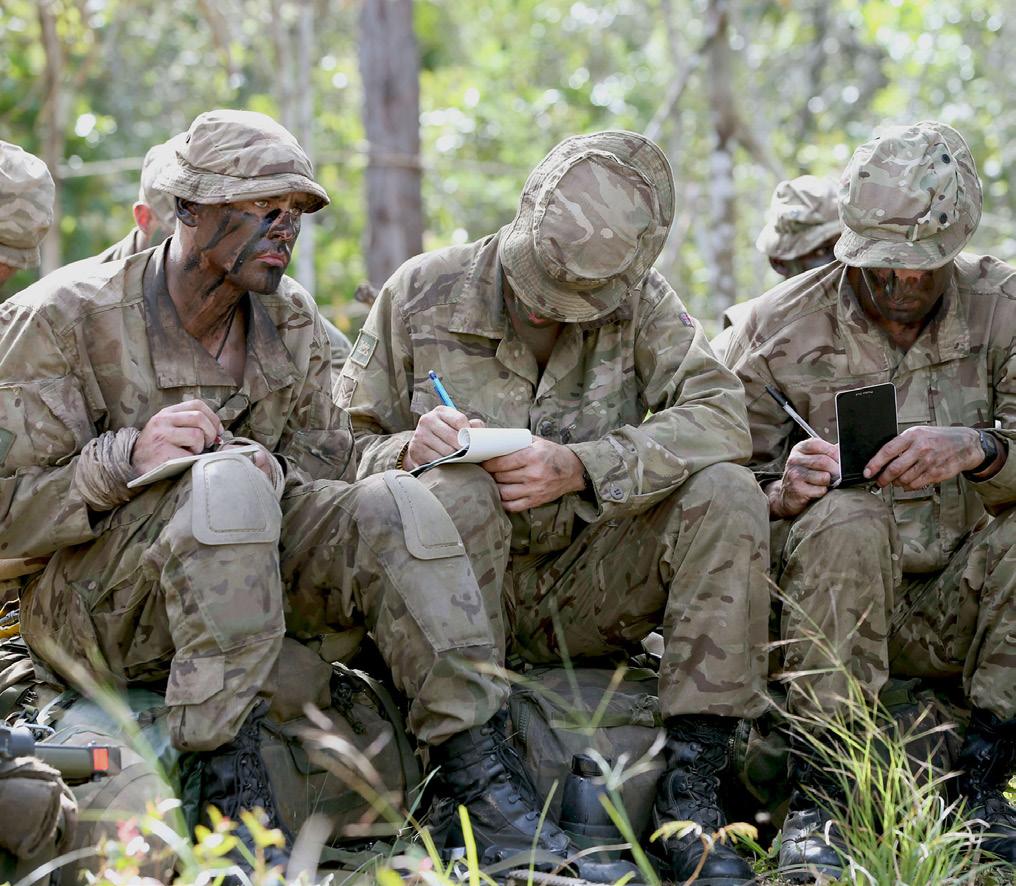
Evie Evans, aged 15, took top honours for the Army, with her poem A Soldier’s Love (which you can read on the right). Explaining the inspiration behind her winning entry, the fledgling poet said: “I wrote the poem as being a military child for a lot of my life has affected me in many different ways. I dedicated it to my dad specifically because, as a child, I was very close with him and every time he came home from his deployment he would tell me stories about how he was one of the country’s heroes, saving people’s lives, and that he would protect me, like he did in any other country he would get deployed to.”

Christopher (8), who penned My Camping Adventures, and 18-yearold Abi Jones, who wrote a piece titled Military Child, were awarded joint second place.
The winners of the adult category, who will receive a publishing deal with Pen & Sword Books, are Catherine Williams and Julian Allen.
While commending all those who shared stories and recollections, Reading Force thanked Bolt Burdon Kemp Solicitors, Pen & Sword Books and the families federations for their support of the competition. A
Sharing books – a good way to stay close
READING FORCE gives service families the opportunity to read a book together and talk about it, whether they’re all at home or on a video call if they’re separated. Children aged up to 10 receive a free book and a scrapbook they can fill with their thoughts, drawings, photographs and
By Evie Evans KHAKI CLOTHES
and quiet goodbyes, my dad in his uniform, under brave skies. He was strong like a mountain, always in my mind, a brave lion, caring for all mankind.
Like a strong tree, he stood tall and true. Helping his country, in places far and new. His duty, a guide, showing him the way, always helping others, come what may.
While I slept soundly, a doll in my bed, he was like an angel, where danger had spread. Saving lives, a quiet, brave thing he’d do, a hero’s choice, sometimes making him blue.
But home he’d come back, with a tired smile. My dad, my safe place, worth every long mile. The sound of his boots, a memory I keep, a soldier’s love, buried so deep.
letters. Teenagers receive a book and a journal. Families say it’s a good way to stay close, connected and to keep communicating. Best of all, it’s fun! You can take part via your children’s school, HIVE or register online at readingforce.org.uk







armyandyou.co.uk | facebook.com/armyandyou | instagram.com/armyandyou | x.com/armyandyou
Your thoughts. Your views. Your mission.
Got an opinion that needs airing? A story worth sharing? Or a blog ready for deployment?
This is your chance to sound off. Whether it’s sharp analysis, service humour or something that’s been bugging you — we want to hear it.
Fall in, write in and let your voice be heard. Send all submissions to: editor@aff.org.uk
By Claire Borg
A POSTING to Kenya gave our family more time together and, with more control over my own diary, allowed me to rediscover a passion I thought I’d left behind.
Before the move, our life in the UK had been structured but strained. My husband was working away Monday to Friday and only home at weekends, and once our daughter was born that routine became more of a challenge than we’d anticipated. Our arrival in Africa made it easier to be together throughout the week and helped my husband and daughter to build a stronger connection.
Our arrival in Africa made it easier to be together throughout the week and helped my husband and daughter to build a stronger connection
From my side, the change of continent also lifted a huge weight. Back ‘home’ I was juggling a career and solo parenting during the week, which left little time

(or energy) for anything else. In Kenya, I had the opportunity to pause, reflect and reconsider my routine – head space that led me to make the bold move to capitalise on my experience as a chartered accountant and launch my own business, Claire Borg Accounting. I realised that having my own business would give me more flexibility and set a pace I could maintain as my family transitioned back to life in the UK.
Before having our daughter, I had been a competitive track athlete, specialising in the 400m and 400m hurdles. Despite years of hard work, I never quite reached the level I’d hoped for, but my love for the sport never faded.
When I became a parent, I stopped running altogether. Life was just too full, but the mental toll of giving up something that had always been ‘mine’ was far heavier than I expected. I felt that I had lost my identity.
Being in Kenya gave me the chance to reconnect with that part of myself. With more time, space and a big push from my husband, I began training again. After a few months of doing so alone, I reached out to Athletics Kenya and, at the end of a short trial period, was given the chance to work with a fantastic coach and train alongside some truly phenomenal athletes.
Less than six months of being back in the game, I competed at the Nairobi Regional Championships –my first 400m race in four years. I finished second in my heat and qualified for the Kenyan National Championships. It felt incredible. Over the next 18 months I trained consistently and raced regularly. I had my identity back and will forever be grateful to the coaches for helping me find it.
Now that we’re back in the UK, I’m continuing to train hard. I’ll turn 35 this year and with that milestone comes a new goal: competing at masters level, maybe even finally making it to an international competition. A
By Kayleigh Atherton
GROWING UP as a military child meant learning to adapt quickly. New schools, towns and friends became a regular part of life. I attended 10 different schools and moved house more times than I can remember. At the time, it just felt normal, but looking back, I can see how much those experiences taught me about resilience, confidence, independence and how to adapt to change quickly. Alongside the adventure came sacrifice. For me, it was watching my mum and the sacrifices she made. Each move meant starting again for her too, yet she always put our family first. She put her own career on hold, following my dad between postings and holding everything
together during deployments. Opportunities for Army spouses were limited then, and there was little flexibility to build a career that could travel with you.
Thankfully things have moved on. More employers now recognise the unique skills military spouses bring, and remote and flexible work has opened up options that simply didn’t exist when my mum was raising me.
That experience has stayed with me and continues to influence how I live and work. I’m not suggesting that sacrifice isn’t a part of military life, it always will be, but I do believe it shouldn’t mean giving up on your own ambitions completely.
I believe that work should fit around life, not the other way round. For years, I found
myself in the same position my mum had been in, trying to make a role fit around family needs. Eventually, I realised something had to change. In 2021, I decided to start my own learning development agency, Evolved Business Support. One of the things I am most proud of in growing my business is employing Army spouses. We have built flexible, remote-first roles that move with them wherever they are posted. These include positions in HR, executive support and project management, designed to work around family life and deployments. In a small business of 10 employees, we currently have two Army spouses, and I am determined to see that number increase.
Earlier this year, we received the Bronze Award
By Christina Hyslop
WHEN MY husband returned to work just two weeks after the birth of our son Rupert, and only four weeks after moving – far from the support of loved ones – to Shropshire, it really hit home how important it was to make the most of family life.
Consequently, we were determined to do things differently when our second child, Florence, arrived. With just under two years between siblings, I knew that shared parental leave would also give our eldest time with both of us, helping him adjust to life as a big brother.
It wasn’t just about time away from work, but about sharing the load, the joy and the challenges of early
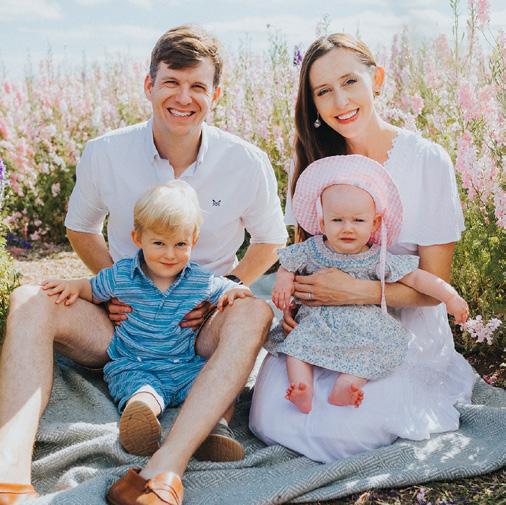
parenthood while balancing Army life. For us it meant bonding as a family of four and not missing those small but unforgettable moments. Between our son and daughter, I worked as a tutor and supply teacher. I enjoyed the flexibility but felt restless and wanted to try something new. I had hoped to grow my tutoring business but soon found myself veering in a different direction. Despite
being busy, my husband and I took long walks that gave us space to talk and reflect.
One day, we discussed the growing use of artificial intelligence in business. Some education companies had created basic lesson planners, but none I would personally use.
I imagined a tool that could save time, deliver quality and truly support teacher wellbeing. From there my idea grew – I wanted to help primary teachers, home educators and remote tutors. Most importantly, I wanted planning to be more inclusive for children with special educational needs. My concept of an AI lesson planner (ailessonplanner. co.uk) began to take shape. Florence was only three

from the Defence Employer Recognition Scheme, acknowledging our support for service personnel, veterans and their families. It was a proud moment and a personal reminder of why this work matters to me.
My mum’s story has shown me that every Army spouse deserves the opportunity to build not only a role that suits their circumstances, but a career and identity of their own. A
weeks old when we started building the business. Armed with a product design degree, my husband Jonny created the website while I developed content and marketing materials. We went on to add tools including a scheme of work builder and an intuitive duty planner for busy leaders. Within the space of just three months, we launched. Much of the work was done during nap times, with one of us caring for Rupert. It was hard but we still made time for walks and toddler groups. Shared parental leave gave us more than time at home –it gave us balance, resilience and the chance to build something new. What began as a family conversation is now supporting teachers across the UK. A




CONTRIBUTIONS
If you’ve got a story to tell about Army life, then let us know, email: editor@aff.org.uk
SUBSCRIPTIONS
Subscribe for FREE via armyandyou.co.uk – you can unsubscribe at any time via the same link or by emailing unsubscribe@aff.org.uk. If you need to change your details, email: update@aff.org.uk
DELIVERY
If you would like to be removed from our mailing list email unsubscribe@aff.org.uk or visit armyandyou.co.uk, where you’ll find our privacy policy and T&Cs.
PUBLISHER
Army&You is published by TylerBale Communications on behalf of the Army Families Federation.
Editorial content © AFF. Not to be reproduced without permission. tylerbale.co.uk
Design by Wroxy Meredith, wroxym.myportfolio.com

AFF
Army Families Federation is a charitable incorporated organisation registered in England and Wales with registered charity number 1176393 and a charity registered in Scotland with registered charity number SC048282.
Principal office: IDL 414, Floor 1, Zone 6, Ramillies Building, Marlborough Lines, Monxton Road, Andover SP11 8HJ.
COMPETITIONS
To enter, visit armyandyou.co.uk Full terms & conditions and closing dates are available on the website, click the giveaways tab at armyandyou.co.uk and follow the links.
ADVERTISEMENTS
Interested in advertising in Army&You?
Contact TylerBale Communications.
Email: info@tylerbale.co.uk Web: ayads.co.uk Tel: 01252 714870
Editor editor@aff.org.uk 01264 554004
To contact AFF HQ, report as follows:
01264 554004
(Option 1 – Enquiry Team) Monday–Thursday 8.30am–5pm Friday 8.30am–1pm
contact@aff.org.uk
HQ Location: AFF, IDL 414, Floor 1, Zone 6, Ramillies Building, Marlborough Lines, Monxton Road, Andover, SP11 8HJ
Alternatively, you can open an online channel by visiting aff.org. uk/contact, or scan the QR code above for quick access.

AFF Housing housingsupport@aff.org.uk
Pinnacle pinnacleservicefamilies.co.uk/ contact-us

Money & Allowances * moneysupport@aff.org.uk
Foreign & Commonwealth fcsupport@aff.org.uk
Education & Childcare educationsupport@aff.org.uk
Health & Additional needs healthsupport@aff.org.uk
Employment & Training employment@aff.org.uk
Devolved Nations contact@aff.org.uk
England contact@aff.org.uk
Overseas overseassupport@aff.org.uk

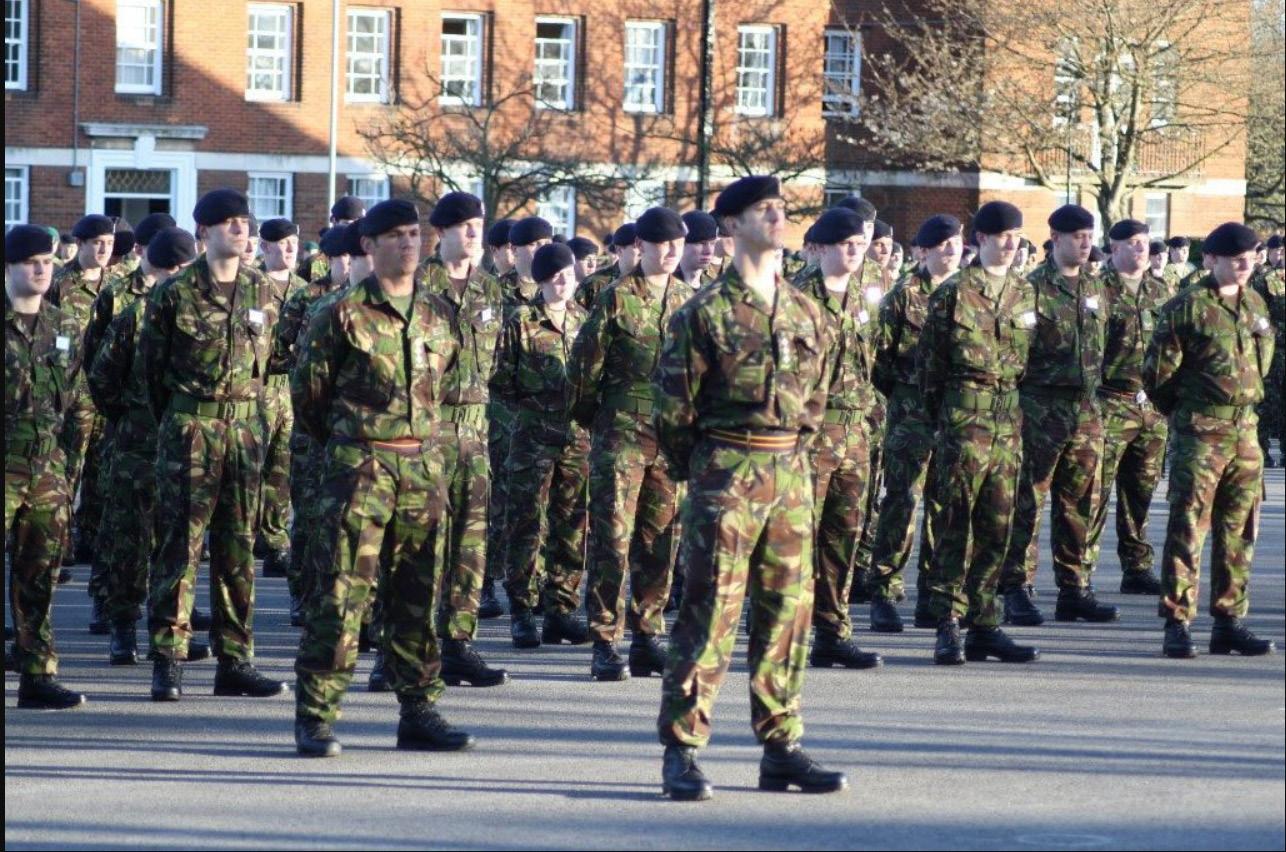
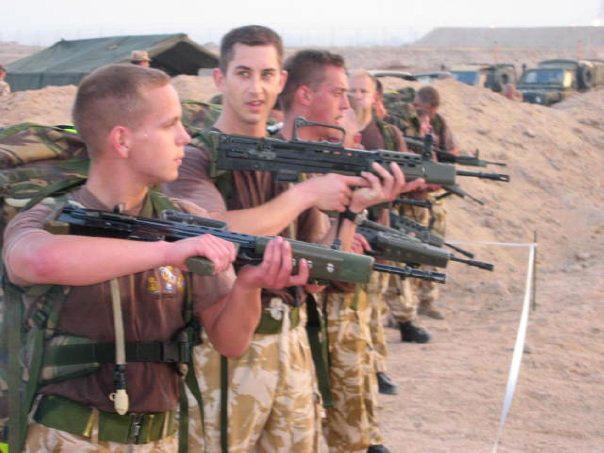
Steve Higgs grew up in an Army family in Kent. Following in his father’s and older brothers’ footsteps he joined the REME in 1988 as a 17-year-old apprentice mechanic. He served for close to 25 years and gained a late entry commission and promotion to captain in 2010. Hanging up his uniform in 2012, he is now a prolific author (see page 60).
Looking back, one of the biggest things for me was the opportunity military life presented. I got to play a lot of sport and most of it was during what civilians would call ‘the working week’. Everywhere I went there was a wellstocked gym that was free to use, and adventurous training opportunities taught me to sail, ski, rock climb and paraglide to name but a few.
Beyond the physical side of things there were educational pursuits. I gained a bachelor’s degree, a master’s degree and a plethora of vocational qualifications is arenas such as health and safety. The military not only gave me the additional time I needed to complete my studies and attend the exams, they helped to pay for it! In some instances, I gained a civilian recognised qualification for attending a military course. The net result made employment easy once my military career came to its natural conclusion.
Regimental life meant I was always part of a wider family. Working and living together, there was a sense of belonging that doesn’t exist outside of the military. After work and at weekends, the same teams who spent the week alongside each other would gather in the garrison bars, further strengthening the bonds they would need when it came time to deploy. Spouses and children were embraced by the same comforting inclusion, building their support network for the inevitable periods when the regiment had to deploy.
The very nature of the job dictates extended periods of separation from loved ones. My children came along after my military career, so I can only imagine how hard it must be for a parent to say goodbye to a child that will grow and change dramatically in the time they are away. I left behind a wife and two dogs many times and it clawed at my heart to have to walk away from them.
In my opinion, the separation is easier for the servicemen and women. When they go away, they do so with all their friends and colleagues. Until things get dicey, it could even be described as fun.
This is one about which I still feel ambiguous. I was posted between units every few years, constantly packing everything into boxes and driving to a new garrison, often in a different country. In this there is good and bad.
With each move my spouse lost her job and there was no guarantee of employment wherever we were going. Friends were left behind, and though there are always new ones to make, starting from scratch can be hard.
At the same time, the moves could be seen as a busman’s holiday. I was sent to live in different countries where I could fully immerse myself in their geography and culture. What other job offers that?
But for families with children, losing friends and switching schools must be especially hard. A

World-class day and boarding education for girls and boys in the heart of Cornwall.
Top 10% nationally for A-Level value added success.
HM Forces families pay only 10% of our boarding fee in addition to CEA.



EDITED BY ANDREW SIMMS

"To all those in armies that take themselves and their future capabilities seriously (and, for that matter, to all those with an interest in such things), I commend this book in the strongest terms and urge you to read it."
Major General
The Russia–Ukraine War has produced many surprises, but none more profound — or more consequential for the future of armed conflict — than the explosive ascent of the drone. In Rise of the Machines, Illya Sekirin offers the first comprehensive, insiderinformed study of how unmanned systems have come to dominate the modern battlefield.
Rich in operational detail, strategic insight and first-hand testimony, Rise of the Machines is an essential guide to the conflict that is redefining twenty-firstcentury combat. It shows not only how drones changed this war, but how they will shape all wars to come.
An unparalleled account of how drones reshaped every level of war: tactics, operations and strategy.
(Retd) Dr Andrew Sharpe 20% OFF WHEN YOU USE CODE RISE20 AT CHECKOUT





CEA families pay no more than 10% of boarding fees


‘A warm smile, a kind word, a genuine welcome - simple gestures that make even the biggest room feel like home. Every encounter is a chance to connect, to lift someone up, and strengthen our community. I want to lead with compassion, so everyone feels seen and valued. Kindness really does go a long way.’