Federal Department of Defence, Civil Protection and Sport DDPS armasuisse
Science and Technology
Focus topic Artificial Intelligence
Timeline
What is AI? – Milestones of artificial intelligence
Article
The Swiss Armed Forces and armasuisse: Together from the idea to the product
Foreword
Dear Reader,
The origins of artificial intelligence (AI) lie much further back than many think. Back in the 1930s, the British mathematician Alan Turing demonstrated, using his Turing machine, that machines could also execute certain cognitive processes autonomously. The first chess computer followed in the 1950s. Since then, AI has been developing rapidly and in the meantime we can no longer do without it in our everyday life.
The same applies for the defence sector. AI has long been recognised as a strategically important element for security and defence capability. For this reason, both civilian partners and defence authorities worldwide have been investing more and more in research and development, for example in the areas of cyber defence, data analysis, simulation and autonomous systems.
This is where armasuisse Science and Technology comes in. In the Competence Centre Artificial Intelligence and Simulation – known briefly as AISI – created in 2024, my team and I are pursuing the goal of supporting the Swiss Armed Forces and other public safety organisations with innovate solutions.
Together with our partners from the military, industry, administration and science, we are developing practicable concepts and demonstrators for current and future challenges. As a central point of contact for AI in the DDPS, we observe technological trends, advise our partners and actively promote knowledge building. A further focal point is the development of demonstrators. In our AI and simulation laboratory in Thun, we combine, for example, various simulation and AI technologies into one holistic simulation platform. This simulation platform enables our partners to analyse and train critical missions in the air, on the ground, in outer space and in electromagnetic space together. Our partners thus benefit from more effective training and can make more informed and more robust decisions.
Artificial intelligence today is a key factor in military performance and security and offers enormous opportunities. At the same time, new technologies are also always accompanied by new risks and challenges. As Head of the AISI, I take this responsibility with my team seriously.
In this issue of Inside S+T, I invite you to discover the world of AI from the perspective of science and technology. Let’s shape the future together!
DR MICHAEL RÜEGSEGGER Head of Competence Centre Artificial Intelligence and Simulation AISI
Real or fake?
What does research teach us about identifying fake images generated by artificial intelligence?
The Competence Centre AISI
Learn more about the tasks and role of the Competence Center Artificial Intelligence and Simulation.
Taskforce Drones
Last year, the Taskforce Drones was launched. Its goal: strengthening defence capacity with Swiss drones. Learn more about the current status of the Taskforce Drones.
4 What is AI? – Milestones of artificial intelligence
8 The Competence Centre Artificial Intelligence and Simulation
10 The structure of the Competence Centre for Artificial Intelligence and Simulation
12 The Swiss Armed Forces and armasuisse: Together from the idea to the product
16 Real or fake? What research teaches us.
20 AI above the clouds – strengthening Swiss air defence
24 Avalanches – a particular danger at the workplace
28 Taskforce Drones: Strengthening defence capacity with Swiss drones
31 Did you know that...
What is AI? –Milestones of artificial intelligence
What is AI?
“Can machines think?” – With this question, Alan Turing, a British mathematician and pioneer in the field of computer sciences, coined the term “artificial intelligence” in the early 1950s. Despite this, no universally accepted definition has been established to date. A large number of definitions and typologies exist around the concept of artificial intelligence (AI). Nonetheless, AI is described in the most common definitions as an attempt to recreate human intelligence. This means that AI processes large quantities of information to fulfil specific tasks. These include processing natural language, recognising patterns, adaptive learning and developing strategies. Accordingly, AI is dependent on ideas and methods from various disciplines such as mathematics, neuroscience, linguistics and psychology.
Three levels of AI can basically be defined – weak AI (Artificial Narrow Intelligence), which is specialised in executing a task such as a chatbot on a website. In addition, general or strong AI (Artificial General Intelligence) focuses on replicating human intelligence. In this context, strong AI has the ability to acquire broad knowledge in order to perform various tasks. Finally, the third level refers to artificial super intelligence (Artificial Super Intelligence), the capabilities of which exceed human intelligence. Compared to human cognitive function, the intellectual capabilities of this super intelligence are highly developed and well advanced.
The current research and AI technologies concern, in particular, the strand of weak AI. Here, it is clear that AI applications do not match human skills. Only in certain specialised branches have individual AI technologies succeeded in exceeding human skills.
Milestones of AI:
1943
McColloch-Pitts neuron
Back in the early 1940s, Warren McCulloch and Walter Pitts presented a first biological neuron model. Based on a binary approach, the model recognises neurons as inactive or active elements. The neurons are assigned the value 0 or 1. To date, the model is considered to be the first work in the research field of artificial intelligence.
1950 Alan Turing
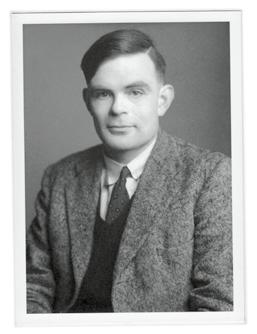
The renowned British mathematician Alan Turing created the Turing Test still used today in 1950. The test is a recognised indicator for checking the independent computing power and intelligence of machines. The test, also known by the name Imitation Game, is considered passed as soon as a human being can no longer distinguish whether the managed interaction is taking place with a human being or with a machine.
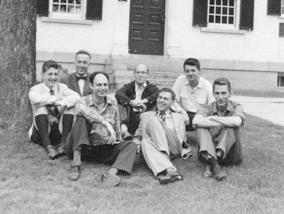
In summer 1956, leading computer scientists, mathematicians and linguists met at Dartmouth College in the US state of New Hampshire for a workshop dedicated to the topic of artificial intelligence. This formally designates the birth of the term “artificial intelligence”. During the meeting, the first AI programme with the name Logic Theorist was developed on the spot.
1956
Dartmouth College Conference
1970 – 1990
AI winter
Despite several intermediate milestones in the history of AI, such as the primitive neuron network Perceptron developed by Frank Rosenblatt in 1958 and the psychotherapeutic dialogue system ELIZA in 1966, these achievements remained far behind expectations. The AI winter designates, in particular during the period between 1970 and 1990, the boundaries of AI at that time. Small quantities of data, a limited pool of specialised knowledge and a shortage of skills in language recognition and interpretation led directly to the extensive discontinuation of financial support. As a result, the activities in the area of AI were reduced to a large extent.
Group photo of the Dartmouth Conference of 1956.
Portrait of Alan Turing.
1990 – 2010 AI upswing
At the beginning of the 1990s, the introduction of the publicly accessible Internet in particular presented a considerable breakthrough for the research field of AI. Due to the rapid spread of the Internet, the globalisation and the advancing digitalisation, interest in AI technologies once again flourished. In particular, the rapid increase in freely accessible data quantities led directly to an exponential development of AI systems. This positive trajectory was promoted by the continuous increase of the processing power of computers and the improved methods in the area of AI. At the end of the 1990s, AI returned to the media spotlight as a result of a number of promising victories against its human opponents in the areas of chess and computer games. In the 2000s, private companies such as Amazon, Google and IBM also started to finance their own AI projects to an increasing extent. One thing was certain – by this time, AI was a fixed component in the business models of several private companies.
2020
First guidelines of the Federal Administration on AI
The tasks and activities of the Federal Administration are also increasingly affected by advancing digitalisation and thus by AI. AI has long been an important technological component of the Federal Administration in many areas. As a reaction to the increasing impact of artificial intelligence as well as the accompanying challenges, the Federal Council approved first guidelines on dealing with AI in the Federal Administration in November 2020. These guidelines primarily offered a reference framework for all responsible bodies of the Federal Administration. The goal was to attain a joint understanding of AI and thus to pursue a uniform policy when dealing with AI.
From 2021 Generative AI boom
From the 2020s, major leaps in development led to generative AI. Generative AI is based on what are known as Large Language Models (LLM). These enable various functions such as processing and editing texts, creating contents and translating languages. The term first became known to a wider public through the publication of the tool ChatGPT from the US company OpenAI in 2022. ChatGPT was the first service of its type and is available free of charge to its users. Only a short time after the market entry of OpenAI, countless services of the same type from other companies followed.
2022 Foundation of the Competence Network CNAI
In 2022, the Federal Council assigned the Federal Statistical Office (FSO) the task of setting up a Competence Network for Artificial Intelligence. The tasks of the Competence Network include, for example, support in the exchange of knowledge and networking in the area of AI, either within the Administration or beyond.
2025
Focal points of the AISI Competence Centre
The Competence Centre is currently focused on closing priority capability gaps in defence. For operational capabilities such as shared situational awareness, joint management and robust as well as secure data processing, the Competence Centre implements and tests first demonstrators in the operational environment with the troops. In this context, the learning method Reinforcement Learning (RL) is used in addition to generative AI. Using RL, for example, decision-makers can be supported and new tactics created in the research project “AI4Wargaming”. In addition, the use of RL in the project “AI4CombatTraining” promotes tactical flight training in the
2024 Foundation of the Competence Centre AI and Simulation (AISI)
As part of the development of armasuisse 4.0, armasuisse S+T was assigned the task of drawing up a development plan for the Competence Centre for Artificial Intelligence and Simulation (AISI) at the beginning of 2024. The goal of the AISI Competence Centre is to develop and transfer innovative solutions for institutions of national security. For this purpose, specialists work together closely with the end users of all federal offices within the DDPS.
One of the main services is to develop demonstrators and test these in experiments as well as together with the end users. In addition, the Competence Centre is the central point of contact within the DDPS. Specifically, it guides and coordinates all practical activities in the area of AI and simulation for security applications. These activities include, for example, technical advice to the Armed Forces when initialising new projects or conveying technical expertise to partners and industry to develop demonstrators for products. Thanks to the high degree of specialisation in the various specialist areas of armasuisse S+T, the AISI can draw on internal support from various experts in the execution of its activities. The Competence Centre also conducts technology and market monitoring, to identify new developments early on and to incorporate them in good time in projects.
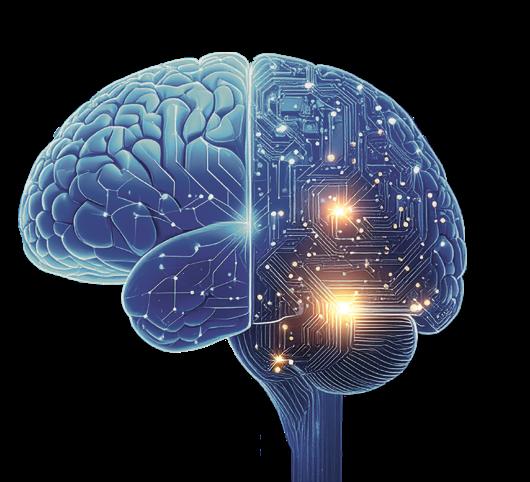
Neuromorphic computing
Although the beginnings of neuromorphic computing lie in the 1980s, the current importance of this technology is steadily increasing. The computer approach is based on the replication of functions in the human brain, to develop efficient and adaptive computer systems. Here, the technology is primarily focused on the neurological and biological structures of the brain. Neuromorphic calculation is therefore also treated as a future key technology for optimising the energy efficiency of resource-intensive AI tasks.
Dr Michael Rüeggsegger, Head of Competence Centre for AI and Simulation.
The Competence Centre Artificial Intelligence and Simulation
armasuisse Science and Technology (S+T) Competence Centres develop innovative solutions for national organisations of state security and put them into practice. Together with the end users, they develop solutions for their daily challenges and are the central contact point within the DDPS in the respective area of responsibility. The Competence Centre Artificial Intelligence and Simulation is thus the main contact partner for all technologies in this topic area. But what exactly are their tasks? What roles do they assume? You can find out the answers to these and other questions in this article.
Lucas Ballerstedt, Staff, armasuisse Science and Technology
The Competence Centre Artificial Intelligence and Simulation (AISI) of armasuisse S+T observes, develops, experiments and tests technologies and transfers innovative solutions to public safety organisations. Thus, for example, technological developments are tracked, demonstrators developed and tested and a laboratory infrastructure maintained. Through this work, the Competence Centre generates direct added value in the areas of security, efficiency and sustainability. At the same time, it provides internal added value by supporting and advising the employees with technological knowledge. It attains its goals through partnership-based cooperation with the end users, with a pragmatic approach and by continuously checking possible solutions by means of demonstrators in a mission-critical test environment.
TRL is a method originally developed by NASA for classifying the degree of technological maturity from TRL1 (first technology principles observed) to TRL9 (the system has proved itself successfully in use) and is widely used today in research and industry. The AISI Competence Centre deals mainly with technologies in the TRL levels 4 (test setup in the laboratory) to 6 (prototype in the deployment environment).
Where are the focal points?
In the area of artificial intelligence, the focus is on closing priority capability gaps. These are geared to the strategic goals and decisions of national security organisations such as the Swiss Armed Forces. The AISI Competence Centre, for example, is thus working on how the sensor intelligence collection and tactical reconnaissance network (SNFW) can be accelerated using AI. The goal here is to accelerate leadership decisions and operational planning and to make them more resilient. In the area of simulation, everything revolves around the future simulation landscape of the Armed Forces. These topics support security organisations in jointly developing and testing new concepts, identifying optimal procedures before a tactical operation and increasing efficiency in training.
The AI and SimLab as a safe environment for joint experiments with partners
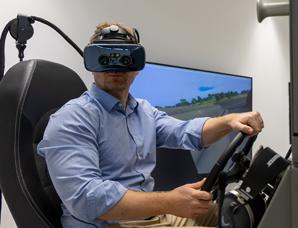
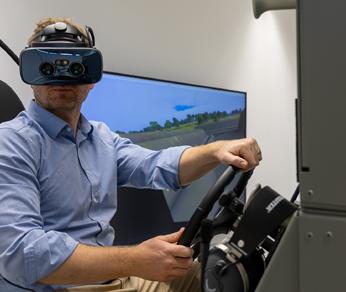
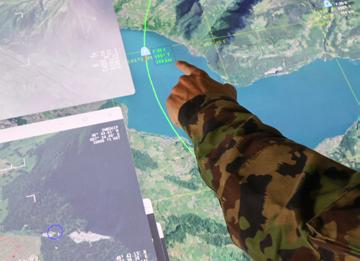
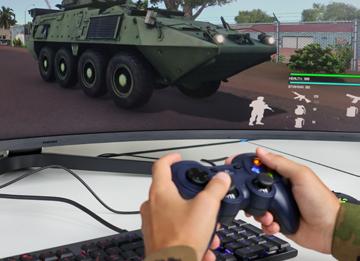
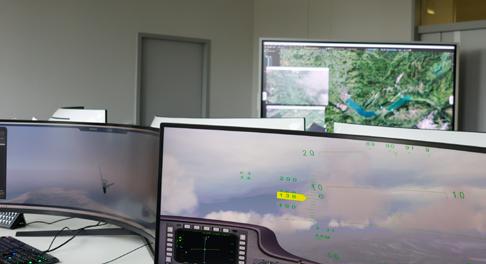
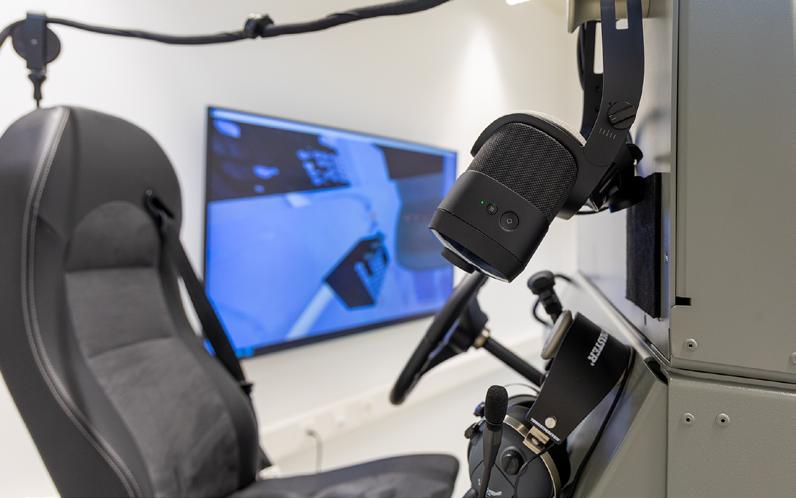
The laboratory is the heart of a Competence Centre. As are the AI and SimLab. In this laboratory, partners from industry, academia and the Swiss Armed Forces have the opportunity of testing and developing solutions for current and future challenges of the Swiss Armed Forces and potential partners in a protected, accessible environment. At the Thun location, various simulators and a powerful server are currently coupled with a large simulation system. A networked, AI-based simulation environment is thus available, in which cross-domain of operations exercises can be performed. In practice, this means that a scout on a simulated mission can transmit information on enemy locations in real time to the pilot, who is taking part in the same exercise at the flight simulator and monitoring the airspace. The SimLab offers an efficient and easy to use platform for training, armed forces development and operational support.
Cooperation as a key element
All the work in a Competence Centre is only as good as it is addressed to the needs of the partners. This applies even more so for the new AISI Competence Centre, as it is still being developed. Close cooperation and continuous exchange are therefore very important – whether they take place at an early stage during needs assessment or at a later point in time during the development of demonstrators. For this purpose, the employees at the AISI Competence Centre will participate in various national and international working groups, to maintain regular exchanges of knowledge and information and to apply this information as best possible for the needs of the partners, such as the Armed Forces. At national level, industry, higher education institutions and security organisations are important partners for discussing current and future challenges and developing solutions. At international level, the AISI exchanges ideas with partners in the German language region (D, A, CH) as well as with NATO. The SimLab therefore regularly receives foreign military representatives and thus promotes international cooperation.
In the SimLab, exercise instructors can track the actions of the participants in real time and issue orders.
The interaction between the domains of operations is a key aspect here.
The structure of the Competence Centre for Artificial Intelligence and Simulation
In the interview on the Competence Centre Artificial Intelligence and Simulation (AISI) created by armasuisse Science and Technology (S+T), Adrian Christ, Business Owner Doctrine Armed Forces Cyber Command and Martin von Niederhäusern, Head of Competence Centre Simulation of the Armed Forces discuss the significance of AI in their field of work, the opportunities for nationwide cooperation and the expectations for the created Competence Centre.
Interview with Adrian Christ, Business Owner Doctrine Armed Forces Cyber Command and Martin von Niederhäusern, Head of Competence Centre Simulation of the Armed Forces; conducted by Moana Häfeli, Staff, Science and Technology.
Adrian and Martin, you’re both attached to Defence. To what extent are you involved with the topics of AI and simulation? What are your roles within Defence?
Adrian: In my role as Business Owner Doctrine for the Armed Forces Cyber Command (AFCC) I focus on the long-term development of our organisation. Here, artificial intelligence is an important driver which enables us to automate decision-making processes and achieve a leading edge in knowledge. Simulations play a supporting role, particularly when it comes to developing scenarios and testing strategic options. Our goal is to create a viable basis for developing the skills of the Swiss Armed Forces.
Martin: My employees are responsible for the short- to long-term development planning of the simulation systems, from a technical perspective. They work in interdisciplinary project and system teams in roles as user representatives, in the user team or as technical experts. Here, they develop technical products as part of concepts, innovations and project planning, in procurement projects and the change management of implemented simulation systems. From a technical perspective, they also coordinate the stakeholders across various projects, as synergies and dependencies exist in many cases. Last but not least, we pursue technological development at home and abroad and ensure the transfer of expertise in the simulation community of the Armed Forces and armasuisse. Amongst other things, I represent the Swiss Armed Forces in the NATO Modelling and Simulation Group (NMSG).
armasuisse S+T has been working for a long time on the topics of AI and simulation, and has now created a Competence Centre for this purpose. You have also cooperated in the past with armasuisse S+T and its specialists in the areas of AI and simulation. Which opportunities does the cooperation with the new Competence Centre open up for you?
Adrian: The new Competence Centre offers the Armed Forces and the AFCC the option of processing even more specific questions in the area of AI and simulation. What is particularly valuable is the expertise in the development of demonstrators, with which we can validate concepts and test their feasibility. The close involvement of users of these developments ultimately creates benefits for operations and the forces. Through the close cooperation with armasuisse S+T, we not only obtain access to the latest technology, but also benefit from synergies which increase the innovative capacity of the Swiss Armed Forces and the AFCC. We can thus develop prototypes within a short space of time and react quickly to challenges.
Martin: Thanks to close nationwide cooperation, we are able to bridge a gap between research, innovation/testing and procurement. Together, we can develop focused solutions for the forces on a non-bureaucratic basis. For example, we took part in the international exercise CWIX 25, together with the Competence Centre AI and Simulation, in cooperation with the Armed Forces Cyber Command. We thus obtained findings for an ongoing project which is only at milestone 10. This type of interdisciplinary and proactive approach would not previously have been possible.
“It’s important that we continue to cooperate in a straightforward and non-bureaucratic manner.”
How can the Competence Centre AI + Simulation support you in your daily business and offer added value? Can you give a few specific examples?
Adrian: It helps us to make substantiated assessments and to ensure that we are making the right decisions for future developments. A key aspect is the support when using AI, such as Large Language Models (LLM), in various systems relevant for deployment. It also enhances our decentralised innovation processes by providing us with professional advice in our development trends, developing demonstrators and supporting us on this path. The Competence Centre’s expertise enables us to implement ideas more efficiently in practice and to pursue innovative strategies on a systematic basis.
One specific added value of the Competence Centre lies in its support of practical use cases, where we have already been able to achieve initial success. One example: How can an operational picture be created efficiently and filtered with prompts to present relevant information quickly and precisely? Another example is the conversion of voice commands into text, with which we can accelerate decision-making processes and simplify communication. Or how we can develop and optimise AI models with minimum training effort – perhaps by using pre-trained models. These approaches are particularly valuable where specific use cases with limited data sources need to be addressed. Such solutions don’t just offer practical support on a day-to-day basis, but also strategic advantages in decisionmaking and operational planning.
Martin: Michael and his team are helping us to bridge a gap between theoretical research and the specific procurement project. With the jointly operated simulation laboratory, we are also able to discover the truth behind the glittering sales promises of industry, carry out technical and methodical trials and explore the effective options of the technological status.
A S+T Competence Centre supports internal partners in the utilisation of technological knowledge in innovative solutions.
What are your expectations and goals for the future cooperation and long-term development of the Competence Centre?
Adrian: We expect the Competence Centre not just to deliver technological innovations but also to serve as a catalyst for strategic development. The goal is to establish a long-term, confidence-based partnership in which we develop solutions which are practical and sustainable together. In addition, we hope that the Competence Centre will offer a platform for knowledge transfer and networking between various partners, both at national and international level.
Martin: It’s important that we continue to cooperate in a straightforward and non-bureaucratic manner. The goal must be to find pragmatic solutions for the problems of the forces.
Many thanks, Adrian and Martin, for your time and for this informative interview.
You can read the whole interview here:
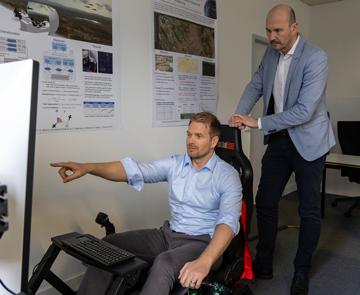
Dr Michael Rüegsegger demonstrates the aircraft simulator to Martin von Niederhäusern.
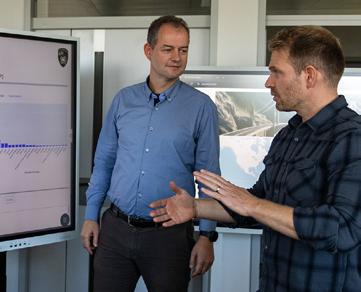
Dr Michael Rüegsegger talking to Adrian Christ.
The Swiss Armed Forces and armasuisse: Together from the idea to the product
The Competence Centre Artificial Intelligence and Simulation (AISI) develops innovative solutions for organisations of national security. The latest example is an AI tool named NJÖRD, developed together with the Cyber-Defence Campus of armasuisse S+T for the Swiss Armed Forces. What used to take several days now works in just a few minutes. But what is NJÖRD and what is an inter-agency cooperation like?
Matthias Sommer, Competence Centre Artificial Intelligence and Simulation Lucas Ballerstedt, Staff, armasuisse Science and Technology
An AI tool named NJÖRD emerged as part of an inter-agency cooperation between the Federal Office for Defence Procurement armasuisse and the Swiss Armed Forces. NJÖRD is a good example of a successful cooperation. From the idea to the needs assessment and the development of a prototype to the final product development. But what is behind all of this? The area of Operational Studies and Training in the Swiss Armed Forces is also tasked with planning and conducting exercises at military strategic level. This also includes online exercises in simulations. Here, scenarios are executed in the programme, to which the participants in the exercise have to react. To enable a training environment that is as realistic as possible, these scenarios are supplemented with messages. These messages are intended to influence the decisions of the participants. In an ideal case, this means that each exercise is unpredictable for the participants and appears realistic. However, the problem is that these messages have to be created manually, which requires using a considerable amount of resources. In the NJÖRD project, the use of Large Language Models (LLM) was examined for creating these messages.
An LLM is a model of artificial intelligence (AI) and its purpose is to create and understand a text in a human-like manner. The understanding of LLMs is fundamentally different from the human understanding of language. Because AI does not distinguish between letters, words or sentences as they are interpreted by persons. Instead, LLMs use probability calculations and neural networks to find out how text modules are combined with each other. By using large quantities of text as training material, the probability with which a particular text module follows another text module can be calculated.
From the requirement to the demonstrator
Specifically, these messages must imitate the messages from message agencies in simulations and, depending on the exercise, cover various languages. Generating these messages demands considerable resources and can take up several days. The requirement was thus recognised to generate these messages via an LLM, in other words, an AI application, and armasuisse Science and Technology (S+T) was tasked with a corresponding feasibility study. In the study, a specific simulation scenario was used, consisting of 75 different events. Supplementary messages had to be generated for 73 of these events. The approximate number of messages to be generated varied between five and thirty according to event. The messages were to be generated in different languages, including English, German, Russian, Finnish, Swedish, Norwegian, Estonian, Lithuanian, Latvian and French. There are thus a considerable number of fictitious messages to be produced. Four open source models were tested for the generation of the texts. Open source models are publicly accessible systems which can be further developed if necessary. The systems could thus be adapted to the needs of the Swiss Armed Forces and developed into a prototype. The specific end product consists of an application in which the exercise instructor could produce AI-generated messages on a graphical user interface (GUI) with just a few clicks. In this self-developed software, exercise instructors only need to enter a few core elements, and within a few seconds a fictitious message from a message agency appears. Thus for example, using the data “Europe-wide interference in the radar network in civil aviation leads to irregular interruptions in the military radar network. However, military network mostly stable.” the following fictitious message is created:
“The task forces are working on rapid troubleshooting and are checking long-term solutions immediately without delay.”
“An unexpected interruption in the military radar network of the Swiss Armed Forces was reported today. According to sources, short-term outages occurred in several regional control centres, while most systems remained stable. The responsible parties report technical errors and a possible load on the communication connections as the main causes. The defence ministry established that the network was widely intact and did not present a threat to national security. Civilian air transport radar continues to remain affected due to Europe-wide interference, but the network does not affect the military situation. Further investigations are pending. The task forces are working on rapid troubleshooting and are checking long-term solutions immediately without delay”.
From demonstrator to product development
The results of the feasibility study and the application demonstrator have proved to be of considerable use for the Swiss Armed Forces. What used to take several days can now be produced in just a few minutes. This success was possible thanks to the close cooperation between the Swiss Armed Forces and armasuisse S+T. In a further step, possible industry partners were sought to further develop the application demonstrator into a usable AI tool for the Swiss Armed Forces. Because a demonstrator is only used to demonstrate the intended purpose and its benefits and is not intended as an operative tool. Such a partner was found in the company IBM.
Miltiade Athanasiou, Chief of Principles in Operational Studies and Training in the Swiss Armed Forces, was the customer in the NJÖRD project. In his role, he represents the needs of the Swiss Armed Forces and was very closely involved in the project and in the cooperation with armasuisse S+T. He reflects on the project in the interview below.
Miltiade, how did you come to be the customer in the project for the Armed Forces?
Operational Studies and Training (op S) has various mandates. One of these concerns the planning and execution of training at military strategic level. In this context, it quickly became clear to us that we could use new technologies to support one of our tasks.
“We want, we can, we will do.”
How did you recognise the need for such an AI model and where does this come from?
The requirement sprung mainly from the following two conclusions: First of all, AI enables us to generate a large number of open source messages based on a particular scenario in our work. Up to now, this work was performed manually, which means that each message was created individually. Secondly, we are a small (but excellent) team and have limited resources when it comes to performing strategic exercises.
Can you explain to us what the cooperation with armasuisse S+T was effectively like? How do you develop an AI-based application together, tailored to your requirements?
We started with nothing, but with a pretty good idea of our requirements. The cooperation with armasuisse S+T initially consisted of acquiring a better understanding of the current options of AI. It was therefore about benefiting from the expertise of armasuisse S+T. The next phase consisted of designing a first demonstrator quickly. This was decisive, because in this phase the fundamental questions were posed, in particular regarding the scope of the project. Over the entire project – which is not yet concluded – the close operation with armasuisse S+T was of utmost importance to us.
What is the added value of this AI-based application for your team?
The main added value is the time saved creating open source messages as part of the exercises. The result is very positive: We can now create hundreds of high-quality messages in French, German, Italian and English in just a few minutes, for which we previously needed several days.
Looking back, how do you assess the cooperation with armasuisse S+T?
The cooperation was very good, particularly with the project managers. I appreciated the short reaction times, as well as the simplicity of the result-oriented exchange. For us, it was important to know how we could get from “we want to” to “we can” to “we will do”. So it was a matter of researching together, contributing ideas and proposing realistic solutions.
The product is now under development. What are the next steps?
The work is currently being continued with IBM. At the same time, the AI model is to be developed. We have therefore taken up contact with Joint Operations Command, in particular, which likewise has requirements in this area. For us, it’s important that the AI model, which we’ve called NJÖRD, and the experiences from its development are accessible and serve the entire army system. Ultimately, we also work on other projects in the areas of anticipation and AI.
MILTIADE ATHANASIOU
Chief of Principles, Operational Studies and Training, Swiss Armed Forces
Miltiade Athanasiou has been employed by the Confederation for over fifteen years. Following various other positions in Joint Operations Command at the Federal Criminal Police fedpol and in the Cyber Command project, he now works in Operational Studies and Training.
Real or fake? What research teaches us.
The Cyber-Defence Campus of armasuisse Science and Technology (S+T) is publishing new studies about the increasing difficulty in identifying images generated by artificial intelligence (AI) as such. This joint research project of the Cyber-Defence Campus and the University of Applied Sciences of Northwestern Switzerland (FHNW) deals with the increasing use of AI-generated images and with the subtle artefacts that distinguish them from real images.
Artificial intelligence has revolutionised the creation of digital images. As a result, synthetic, photorealistic images are becoming increasingly widespread and are used in various areas – for example in entertainment or in advertising. However, this technology also encourages misuse, for example for spreading wrong or misleading information through realistic looking but fabricated images.
Andrea Thäler and Raphael Meier, Cyber Security and Data Science, armasuisse Science and Technology
Hair doesn’t hang down
Dental block
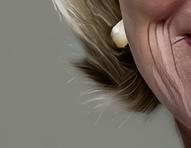
Synthetic portrait of a woman with small irregularities on the left eye, the hair, the teeth and the shape of the left ear.
“Even if AI models keep improving, they still have difficulty generating certain details.”
AI-generated images are currently becoming more realistic, so that it is increasingly difficult to distinguish between real and synthetic contents. For this reason, the Cyber-Defence Campus and the University of Applied Sciences of Northwestern Switzerland (FHNW) conducted studies on the analytical capabilities of modern generative diffusion models, focusing on their weaknesses, in a joint research project. The focus of a study are the difficulties in identifying synthetic contents. Here, it is emphasised how important it is to account for small but significant errors such as irregularities in the human anatomy, the incidence of light and the object symmetry. These subtle errors, which can be overlooked by the untrained eye, provide important clues when distinguishing AI-generated images from real images.
In the studies, the use of generative deep learning models – including the diffusion models – for generating synthetic images for potential deception, manipulation and infiltration in cyber operations is examined. Although AI can generate high-quality illustrations and not realistic image contents, the achievement of photorealistic results still remains extremely difficult. The reasons for this are the limited processing power and the need for human post-processing. The accessibility and practical applicability of such tools lead to concerns with regard to their misuse, in particular to the distribution of disinformation as well as digital deception. The findings of the second study concerning the problems of recognising synthetic photos is presented below.
Hidden clues in AI-generated images
Even if AI models keep improving, they still have difficulty generating certain details. In the study, typical errors in synthetic images were determined, termed artefacts, which could provide important clues to the synthetic origin. The errors were then classified in a comprehensive taxonomy. These errors frequently occur because generative models cannot reproduce complex visual structures completely accurately.
Many of the problems include:
– Errors in the human anatomy: AI frequently generates hands with too many or too few fingers, unnatural positioning of the fingers or asymmetric facial features. Ears, eyes and teeth can also be distorted or placed incorrectly.
– Irregularities in light: Shadows and reflections can appear unnatural, because light sources behave differently than in a natural environment. An emphasis on the face or on objects can be incorrectly placed and thus produce an artificial impression.
– No symmetry: Objects can be slightly distorted or placed incorrectly such that symmetrical objects appear asymmetrical – for example, different rear-view mirrors of a vehicle – or repetitive structures can be reproduced inconsistently, such as railings or fences with irregular spacing.
Even if these errors are subtle, they become obvious when observed more closely. As AI-generated images are increasingly improving, both professionals and the public must be made equally aware of how to recognise these subtle fine details so that they can distinguish between real and synthetic contents.
Shape of pupil
Deformed ear
AWhy training and raising awareness are important Training and raising awareness are essential for counteracting the risks posed by synthetic imagery. The study recommends that specialists in the areas of journalism, news analysis and digital forensics are specifically trained in better recognising AI-generated contents. Raising awareness of synthetic image generation among the general public can also help to reduce the dissemination of misinformation and manipulation.
“Training and raising awareness are essential.”
Avoiding distortions in image analysis
Two basic errors are possible when analysing images: “False positives” can occur, where real images can mistakenly be identified as artificial, as well as “false negatives”, where AI-generated images can be incorrectly considered to be real. These types of errors can lead to misinformation, mistrust and serious consequences in areas such as journalism, law and research. Cognitive distortions, particularly confirmation errors, can further distort the analysis and lead to artefacts being incorrectly identified or clear signs of manipulation being overlooked. The frequency of such errors can be reduced if a systematic, impartial approach and modern recognition tools are deployed. In addition, it is important to make image analysts aware of the influences of cognitive distortions when examining images.
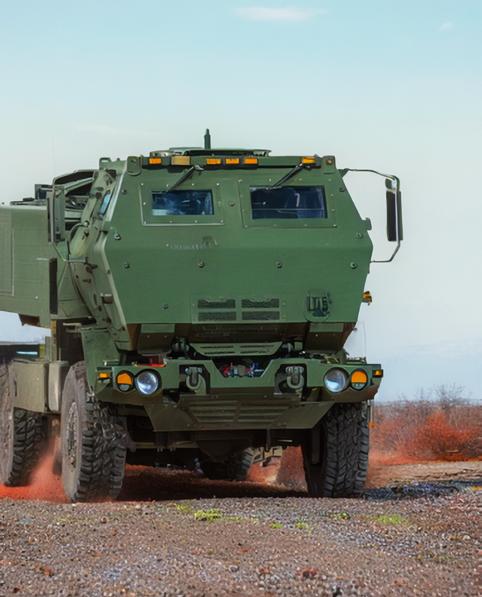
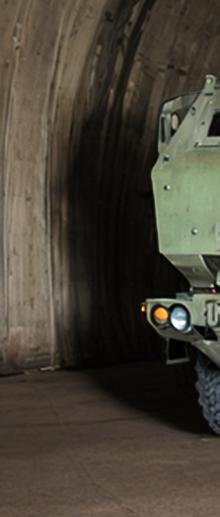
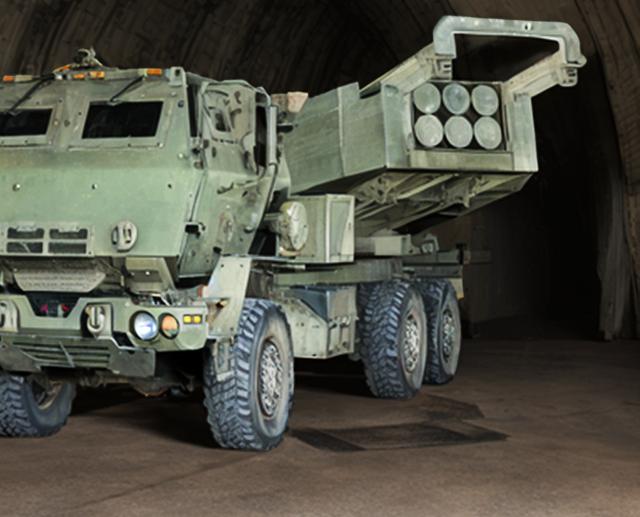
Synthetic images of HIMARS vehicles. Both images were generated using ControlNet, where the edge structures of real images served as templates. Image (A) was generated by the prompt “Photo of a HIMARS vehicle on a gravel road in good weather with blue sky”, image (B) by the instruction “Photo of a HIMARS in a large military bunker with clear structures and little light”.
BPractical application of the results of the study
AI-generated images are already used today to manipulate public opinion, stock markets and even political events. Falsified images can spread incorrect information as well as cause confusion and mistrust. Countermeasures could consist of novel recognition technologies and better media skills. The documents and findings of the study can be used to:
– support education and training measures in the areas of digital forensics, news analysis and journalism,
– check images systematically for clues to AI generation,
– support campaigns for media expertise,
– develop new guidelines and instructions to prevent the improper use of synthetic imagery,
– encourage new research for the automatic recognition of AI-generated images.
FHNW perspective
At the FHNW, we examine AI in contexts in which rigorous research is confronted with practical challenges. As researchers, we are at the same time both fascinated and concerned about the latest advances in AI and the associated potential impact on our society. The CYD Campus promotes research on these important questions with financial resources and brings specialists from various areas together to manage projects on topics with practical relevance. We are proud that we were able to examine the weaknesses of generative AI and could develop a workflow together for practitioners to identify synthetic imagery as such. Our thanks go to all those involved who have led this project to success, but particularly to Raphael Meier, who supported us with his extensive expertise and the efficient use of his network to bring together science and practice.
AI above the cloudsstrengthening Swiss air defence
The potential of artificial intelligence (AI) in the defence sector is undisputed. But how can AI be used to strengthen the Swiss air defence and which role does the interaction between theory and practice play here? The AI research project “AI4DogFight” of armasuisse Science and Technology (S+T) and the Institute of Artificial Intelligence (IDSIA) of the University of Lugano (USI) provides answers to these questions.
Moana Häfeli, Staff, armasuisse Science and Technology
AI has become an integral part in several areas of life. AI also plays an important role in the military context. The use of AI in air defence, in particular, is reforming modern aerial combat. Intensive research is being conducted into the use of AI in what are known as DogFights – close combat between two combat aircraft. In 2019, the US Air Force provided an example of how AI agents defeated human pilots in simulated aerial combat. These tests as well as current research on this type of aerial combat are focusing on a machine learning (ML) method: Reinforcement Learning (RL). In addition to the traditional learning methods of ML, RL constitutes a further, very promising branch of AI.
Reinforcement Learning
In 2024, research on RL application attained a further milestone. The US military successfully performed flight test runs in the area of autonomous aerial combat. As part of a large-scale test campaign, demonstrations performed for the first time showed how a modified F-16 combat aircraft with an integrated RL application implemented autonomous and tactical decisions during staged air combat with a manned F-16 combat aircraft.
The knowledge obtained reinforces the exponential development as well as the application potential of this ML method in air defence. As a result, there is a great deal of interest in the use of RL, particularly in the area of DogFights. armasuisse S+T has recognised this potential and launched a joint research project with the IDSIA.
The method of RL is based on an automatic learning process. At the heart of this is the idea that the “agent” learns to make decisions itself, with the goal of maximising the reward for the decisions made. For this purpose, the agent interacts tirelessly with its environment to receive as much information as possible. The agent does not know in advance how the triggered action will be assessed. The environment reacts to the action triggered by the agent in the form of a reward or a penalty. The agent can thus assign a value to the performed actions.
The research project “AI4DogFight”
For the last four years, Ardian Selmonaj, doctoral student at the Institute of Artificial Intelligence (IDSIA) of the University of Lugano (USI), has been working together with various specialists from practice and science on the PhD research project “AI4DogFight”. The focus is on the goal of analysing the possibilities of RL as an effective tool for collaborative cooperation and for communication in aerial combat, in DogFights. The use of RL in various virtual air combat simulations will be tested as part of this research project. RL offers a reliable method of testing all available combinations in a room full of options. With regard to the research project, the RL method calculates millions of aerial combat scenarios. This procedure means that new strategies are revealed which up to now have remained undiscovered and which can be adopted and implemented over the further course of the project.
Cooperation with test pilot
The use of AI in air defence and particularly in DogFights presents a multifaceted challenge, as it requires comprehensive understanding of the complex DogFight procedures. For this reason, the PhD research project includes cooperation with test pilots from the Flight Test Center of armasuisse S+T. Apart from the concept of AI agents (AI pilots), the first project phase also focused on the development of accurate simulation environments with different scenarios, for example, various DogFights between combat aircraft. The interaction between research and application started right here.
“The use of AI in air defence and particularly in DogFights presents a multifaceted challenge.”
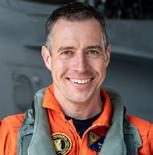
In a constant exchange of information with Roger Mathys, test pilot at armasuisse S+T, it was possible to obtain a realistic insight into the DogFight procedures at an early stage. In particular, this primarily included indepth knowledge of the tactical methods and the defence systems used in DogFights. The transfer of knowledge was therefore an important step in optimising the research project relating to the simulation environments, the simulation scenarios and the AI agents. In the long term, the project follows the central concept of creating scenarios in which test pilots can compare or test their capabilities in aerial combat directly with AI agents.
Conclusion and outlook
The preliminary findings from the PhD research project substantiate the effectiveness of the use of AI in air defence. RL methodology not only has considerable potential in training but could also become an important instrument in the development of armed forces. The capabilities obtained within the research project as well as the developed software and hardware packages can be used in this respect for a variety of current and future challenges in the area of defence. In addition, from a project-specific view, new insights could be gained in the area of collaboration air defence, with regard to the networking of various systems and expertise.
One thing becomes clear – overarching cooperation, particularly with application representatives, will play an important role in future. The coordinated exchange directly satisfies the efficient use of synergies and makes a significant contribution to mutual knowledge transfer.
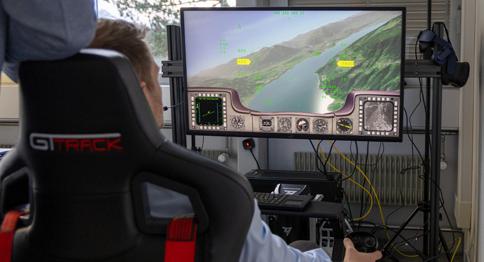
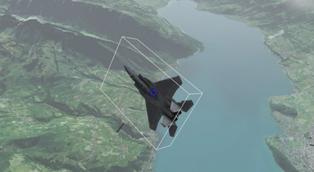
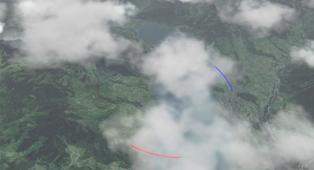
Image of an AI-controlled fighter jet above Lake Thun.
Image of aerial combat (1 to 1) above Lake Thun.
Interview – doctoral student Ardian Selmonaj
The potential of artificial intelligence has developed rapidly over the last few years. The competence area armasuisse S+T and the Competence Centre AI and Simulation specially set up for this purpose have been involved in this topic for some time. How do you assess the potential of AI in the defence sector?
Ardian Selmonaj: With more than 10,000 scientific publications each year, AI is definitely attracting an enormous amount of attention at the moment and is making rapid progress. The potential of AI in the defence sectors depends, firstly, on the existing architecture, and secondly on the amount and variety of the data that is either predefined or generated through interactions in suitable simulation environments. Thanks to own simulations in the defence area, historical data can be supplemented with high-quality simulation data. In addition, expert knowledge from the defence sector can be integrated in the models and data. This changes expectations on a continuous basis and improves the performance of AI systems. These factors render the use of AI in the defence sector particularly promising and represent an enormous potential for simulating complex challenges realistically and for developing optimal and efficient solutions.
As part of your PhD research project, you have been researching since 2022 together with armasuisse S+T on the research project “AI4DogFight – Artificial Intelligence in Air-to-Air Combats”. Can you explain to us exactly what the goal of this research project is?
Ardian Selmonaj: Our goal is to develop a model that not only precisely controls fighter jets but also issues tactical orders at a higher level. Our AI aims to cover a variety of potential and new scenarios as well as to be used to train real fighter pilots, to expand their capabilities. With this in mind, we want to contribute to the further development of Swiss defence readiness. In order to make the AI model as transparent as possible, we are also steering towards “Explainable AI”, to understand the decisions and the behaviour of the AI agents. This point is particularly important in the use of AI in the defence sector, both with respect to security-relevant requirements as well as ethical issues.
How did the PhD research project with armasuisse S+T come about?
Ardian Selmonaj: IDSIA and armasuisse began their partnership in 2008. The cooperation focused first on the development of knowledge-based decision-making systems. From around 2018, the focus of cooperation shifted from individual decision tasks to sequential decision processes. The outstanding performance of the AI model from Lockheed Martin at the “DARPA Alpha DogFight Trials” in 2021 motivated armasuisse and IDSIA to use AI in simulated air-to-air combat scenarios with several agents (pilots). As a precise and realistic AI model for air combat scenarios requires comprehensive, in-depth research, this PhD research project emerged through the cooperation between IDSIA and armasuisse.
Over the entire PhD Fellowship, you worked together closely with armasuisse S+T and other federal units of the DDPS. How did you experience this cooperation?
Ardian Selmonaj: I always experienced the cooperation with armasuisse and the DDPS as extremely pleasant and constructive. Our team at IDSIA is primarily focused on research in AI, and thanks to the military knowledge and expert support from armasuisse we are able to apply our research results effectively in the defence area. I particularly appreciated the open exchange, the transparent communication and the reliable support in all practical tasks, which enabled the work to be managed extremely efficiently.
A brief outlook in conclusion: What are your long-term expectations for the research project and what are the goals? Where do you see specific development opportunities?
Ardian Selmonaj: In the long-term, I hope that my AI research will have a wide range of applications and offer the defence sector and armasuisse the highest possible added value. Here, simulated air combat is only a part of the whole, because ground combat and drone swarms are also possible scenarios that can be simulated using AI. That’s why, for me, it’s a great source of inspiration and motivation to continue to research at this interface and to be able to be involved in the technology of Swiss defence, as well as to significantly expand and improve it.
“Our goal is to develop a model that not only precisely controls fighter jets but also issues tactical orders at a higher level.”
ARDIAN SELMONAJ
Doctoral student at the Institute of Artificial Intelligence (IDSIA) of the University of Lugano (USI)
Interview Part 2 – test pilot Roger Mathys
Roger, as part of the research project “AI4DogFight” you were involved as an expert in your role as a test pilot at armasuisse S+T. How has the significance of AI changed in the last few years in your perception and function as a test pilot?
Roger Mathys: Overall, I notice a rapid development and increasing significance in AI. In my opinion, AI is developing into a key technology. However, in my professional environment and my activity as a test pilot, its specific application, which goes beyond ordinary automation, is still modest. In addition to the deployment of AI in data analysis and simulation, I see first and foremost in our environment research projects concerned with autonomous flight manoeuvres and decision-making processes from unmanned aircraft. Their testing and approval will be the greatest challenge in the area of flight testing in the near future.
“An opportunity to maintain exchange and contact with science and research and its experts.”
What opportunities are created through the research project?
Roger Mathys: With the research project “AI4DogFight”, I see the focus on knowledge development. How can AI be deployed in the military sector and where are the boundaries? The “DogFight” – air combat in the abovementioned research project – serves as a suitable tool for this purpose. Transparency and a certain degree of trust are also required to achieve optimal cooperation between systems controlled by humans and AI in future applications. Understanding the behaviour of “agents” is therefore also a key part of the research project. Incidentally, such interdisciplinary projects are always an opportunity to maintain exchange and contact with science and research and its experts.
From your perspective as a test pilot: What were the biggest challenges of the research project?
Roger Mathys: In such research projects, it is a major challenge to not lose sight of reality and to coordinate the different expectations of the scientists and other users with each other. It’s a long way from the research project to the practical implementation. While the pilot tends more to question various areas of the simulation environment such as flight dynamics or application areas of weapons systems, scientists are primarily more concerned with basic research aspects and solution approaches. In addition, you need to speak the same language, or at least learn a part of it, which requires a certain effort on both sides.
In conclusion: What are your expectations for the project and where do you see long-term possible applications?
Roger Mathys: The research project aims to demonstrate opportunities as well as boundaries regarding how AI can be deployed in military applications. In addition, it should be recognised which areas will continue with the research and development of AI.
In military aviation, I see various potential applications, for example in autonomous air reconnaissance and surveillance, in the deployment of intelligent mission computers to support the procurement of information and processing in the cockpit, as well as in flight simulators to train the pilots. In the area of air combat, I could imagine a combination of manned and unmanned combat aircraft/drones, which could be deployed together as units. It is conceivable that the unmanned AI-controlled combat aircraft could assume fields of application with higher risks. However, I don’t think that AI will replace pilots completely in the near future.
“However, I don’t think that AI will replace pilots completely in the near future.”
S+T
ROGER MATHYS
Test pilot at armasuisse
Avalanches –a particular danger at the workplace
The armasuisse Science and Technology (S+T) employees carry out shooting and explosion testing throughout the year. Even in the depths of winter on remote shooting ranges in the mountains. The possibility of an avalanche being triggered can never be ruled out. To optimally prepare the employees for an emergency, internal trainings on avalanche victim search are carried out regularly. This contributes to the safety of all those involved in shooting and explosion testing.
Lucas Ballerstedt, Staff, armasuisse Science and Technology
Avalanche Bulletin: The Avalanche Bulletin from the Institute for Snow and Avalanche Research SLF informs the public about the snow and avalanche situation in the Swiss Alps and in the Jura Mountains. The Bulletin classifies the danger from Level 1 (low) to Level 5 (very high).
In the winter of 2023/2024, the Institute for Snow and Avalanche Research SLF registered 234 avalanches with injury to persons and damage to property. This is a substantial number, projected over the winter season. On the Hinterrhein shooting range, there is an increased avalanche risk in the winter depending on the weather conditions. The employees of armasuisse S+T have the necessary training to be able to safely access the shooting ranges, even in the event of increased danger of an avalanche. Thus shooting and explosion testing is also carried out regularly even in the winter. These usually take several weeks. The snowfall and the weather conditions can vary heavily, which has a direct impact on the danger of an avalanche. It is therefore no surprise that the detonation wave in shooting can trigger an avalanche. The employees of armasuisse S+T have already experienced avalanches on shooting ranges. Thanks to the safety precautions, there have been no injuries to persons to date. Nevertheless, should this occur, prompt action and solid preparation are required.
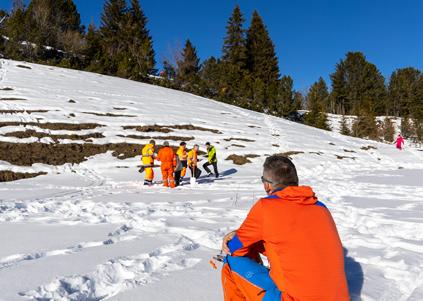
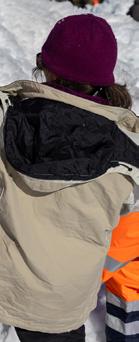
Practical exercises are important to be well prepared in the event of an emergency.
“However, regular practice when dealing with the avalanche safety equipment and mutual trust are crucial.”
Safety always comes first
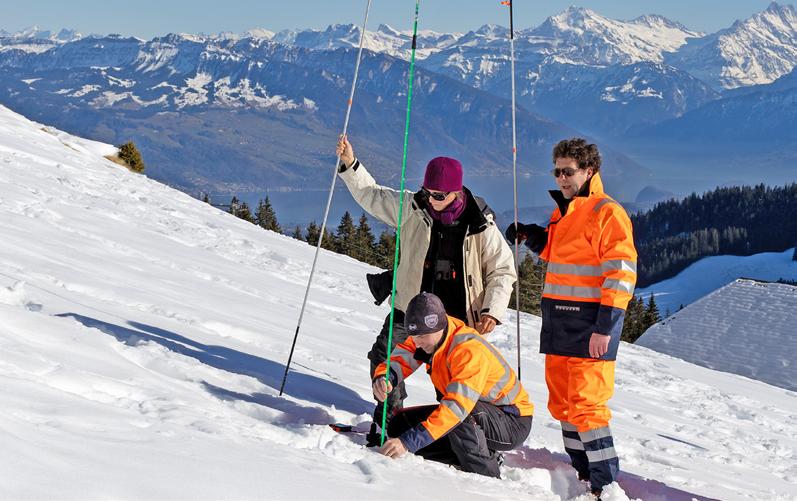
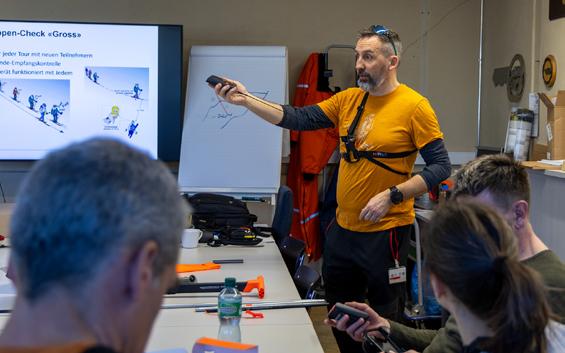
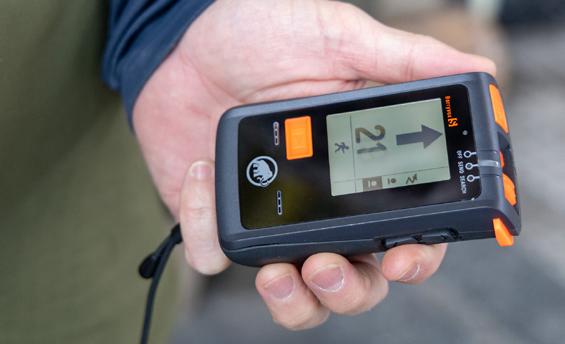
Before the shooting tests in the winter, Christian Michel, project engineer in mobility testing in the Weapon Test Center, holds internal courses on avalanche victim search. Christian is at home in the mountains and has a wealth of alpine experience. The aim of the course is to optimally prepare the employees for an avalanche accident on the shooting ranges. Employees from companies who are active in the support of shooting and explosion testing also take part in the training. Here, theory and practice are combined –from victim search, shovelling strategies, technical knowledge of detection devices to practical exercises in the terrain. The participants are equipped with an avalanche victim detector (AVD). This is part of the personal safety equipment that the employees always carry with them during shooting and explosion testing in the winter. The devices are both transmitters and receivers. The same device is thus used for transmission and for search. When switched on, it transmits a localisation signal.
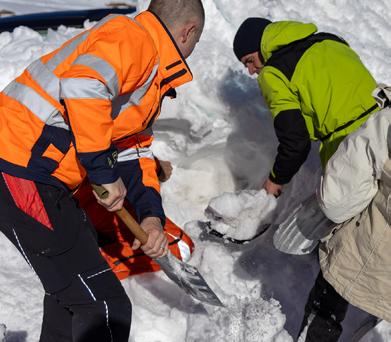
As a receiver, it is possible to locate a buried person with a switched on AVD device in order to rescue them without any delay if possible. Because even after 15 minutes, the chances of survival of a buried person are only around 50%. The rapid localisation and rescue of a buried person are therefore of crucial importance. The most important principle, however, is always: never put yourself in danger! The search device includes an avalanche shovel and an avalanche probe to complete the minimum set of equipment. With shooting and explosion testing, this equipment is always close at hand. Using the probe, a buried person is searched for in a grid pattern at a distance of approximately 25 cm after pinpoint location. If someone is found, the most strenuous and time-consuming part of the rescue starts – shovelling. When shovelling, it is important not to shovel directly over the buried person but horizontally slightly downhill. This helps to secure any existing air cavities and the possibility of the buried person being able to breathe freely. If a person is located one metre under the snow, around 600 kilogrammes of snow need to be shovelled away. Depending on the physical condition and number of rescuers, this can take up to 10 minutes or longer.
Trust is good, checking is better
Every day before the employees go into the field or after breaks, a group check is carried out. The devices are checked for proper functioning. If an emergency occurs with an avalanche burial, all devices need to work with each other in order to find the buried person as quickly as possible, because in these cases it is a race against time. In the event of an avalanche accident, roles need to be clearly allocated, with one person coordinating the search and rescue. The shooting manager or person defined for this purpose usually takes on this role.
Thanks to safety precautions, clear procedures and good preparation, the employees of armasuisse S+T are best prepared for potential winter operations. However, regular practice when dealing with the avalanche safety equipment and mutual trust are crucial. Comprehensive risk analyses in cooperation with the local shooting range manager has prevented armasuisse employees from being buried in an avalanche to date. However, the employees are well prepared for an emergency with armasuisse’s internal safety precautions.
When shovelling, several hundred kilograms of snow need to be moved within as short
short a time as possible.
An AVD device is part of every set of equipment and together with an avalanche shovel and an avalanche probe makes up the minimum set of equipment.
Christian Michel explains the correct functioning and handling of an AVD device.
Taskforce Drones: Strengthening defence capacity with Swiss drones
They dominate wars and conflicts today – we’re talking about drones. This also changes understanding of modern warfare. For this reason, National Armaments Director Dr Urs Loher, Chief of the Armed Forces Thomas Süssli, Secretary-General Daniel Büchel and Director of the Federal Office for Civil Protection Michaela Schäfer launched the Taskforce Drones in 2024. Its goal –strengthening defence capacity with Swiss drones.
Kai Holtmann, Managing Director Taskforce Drones, Anela Ziko, Staff, armasuisse Science and Technology
The Taskforce Drones (TFD) is a cross-DDPS project. The customers are Dr Urs Loher, National Armaments Director, and Lieutenant General Thomas Süssli, Chief of the Armed Forces. Head of the TFD is Dr Thomas Rothacher, Head of armasuisse Science and Technology (S+T). Partners in Switzerland are appointed via the TFD and included in the project work.
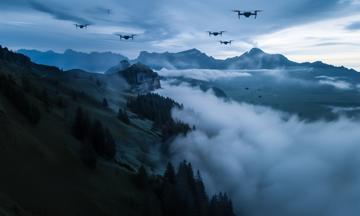
In the meantime, drones have become affordable and available everywhere. They are often used for civilian purposes. For example, for photo and video recordings at events, but also for civilian racing competitions. But more than 100 nations worldwide also use drones for military purposes. They are often of the larger variety, but the number of small and minidrones in armed forces is increasing. The Swiss Armed Forces are also already using mini and microdrones, for reconnaissance, surveillance, identification and for tracking goals. Why do we now need a Taskforce Drones?
Strengthening defence capability
Current conflicts and global crises have shown us that countries mainly have their own interests at heart in exceptional times. News portals show us daily that crises and wars are currently booming. A new awareness can be observed amongst many people, as security is not a given. According to Dr Thomas Rothacher, Head of Taskforce Drones, understanding has increased in the population that security is a commodity which is worth defending. According to the Stockholm International Peace Research In -
stitute (SIPRI), global military expenditure reached a new record value in 2024 at 2,718 billion US dollars. This corresponds to an increase of 9.4% compared with the previous year. The expenditure increases with the higher demand, and the delivery times for various products such as artillery ammunition and armoured personnel carriers, as well as for military drone systems, also rise.
Independent supply chains for a strong industrial basis
In particular, Switzerland wants to counteract the long delivery times and supply chains in the area of small to medium-sized drones and therefore uses the existing Swiss drone ecosystem. Switzerland is also called the Home of Drones. The goal is to use and strengthen the local advanced Security-relevant and Technology and Industry Base (STIB), to reduce dependencies on international supply chains as far as possible. By involving industry and academia, skills should be built up in the area of (attack) drones and their production, thus increasing the security of Switzerland. It should be emphasised that the Taskforce Drones is planned for three
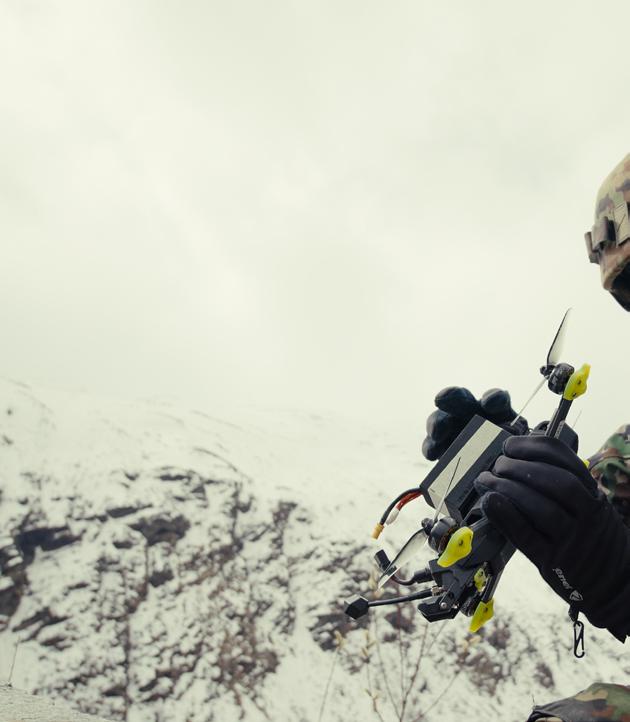
Swiss soldier holds an attack drone in his hand.
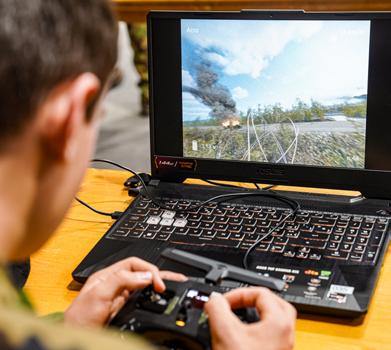
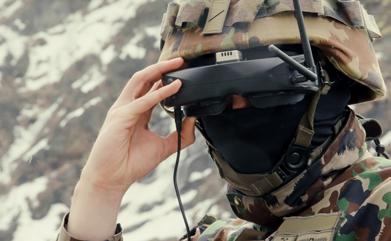
A FPV done can be operated via various screens, including a laptop, but also VR glasses or a smartphone.
years and does not perform general introductions. However, if solutions were to become necessary in large quantities, scaling – in other words procurements – would take place.
According to Thomas Rothacher, one of the difficulties is tackling the challenges of the future with the processes of the past. Because procurements are designed for long-term use. However, in times of crisis speed counts. This only works with a close, cooperative partnership with all the relevant offices from industry, academia, defence and administration.
Switzerland, including the Swiss Armed Forces, benefits from more independent and shorter supply chains. The Armed Forces can thus acquire drones quickly and develop their drone expertise strategically, tactically and operatively. The Armed Forces has been gaining experience with smaller drones since 2019. The minidrones regularly procured with the 2019/2020 armament programme can be used for reconnaissance or monitoring targets. In the context of the Taskforce, however, the impact on ground and air targets with drones is considered a priority. The first projects are already underway.
Training with First Person View drones
On behalf of the Taskforce Drones, members of the Armed Forces received training with First Person View (FPV) drones in 2025. This was conducted in close cooperation with Swiss partners. The goal was to develop knowledge and capabilities in the training of FPV drones within a short time. Here, civilian and commercial drones were used, which were not stabilised. This means that the pilot is completely occupied with controlling the drone and cannot rely on any assistance systems such as position hold. As a result, the drones react more sensitively to external influences, which makes control more difficult at the beginning. For example, the drone will crash if no inputs are made by the pilot. With increasing practice however, the members of the Armed Forces improve
their flight capability and learn how to control the drones more precisely – even with more challenging flight manoeuvres.
The training has shown that the soldiers developed strong skills in handling non-stabilised drones for training flights after around ten days of training. The course of instruction used for this purpose, including simulators, represents a solid basis for training, will be continuously developed and adapted according to requirements. This accumulated experience can now be used as the basis to develop future deployment and training concepts in the field of FPV drones.
What next?
The Head of the Taskforce Drones said in an interview with the NZZ that the Armed Forces should always be able to train with hundreds of modern drones in the future, in order to acquire basic knowledge. This is where the Taskforce Drones comes in. The idea is to develop a drone ecosystem which can adapt and deliver these drones respectively. Adapting more quickly means clear advantages on the battlefield. In addition, the first technical trials are to be performed at Swiss shooting ranges, to test drones. Technical testing is highly scientific in nature and is performed by employees of armasuisse S+T. For example, measurements and analyses are conducted which contribute to knowledge development.
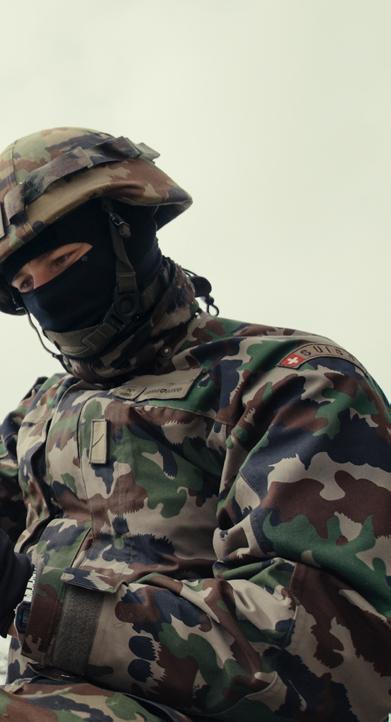
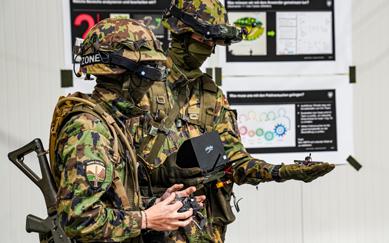
Swiss soldier during training as a FPV drone pilot.
Swiss soldier during exercises with a FPV drone.
Did you know that...
… Switzerland has been an official member of the Hub for European Defence Innovation (HEDI) of the European Defence Agency (EDA) since January 2025?
Switzerland has been an official member of the HEDI since 1 January 2025. This enables it to be involved in the area of innovation on an international basis. For example, this year a Swiss delegation headed by armasuisse Science and Technology (S+T) was able to take part for the first time in the European Defence Innovation Days (EDID), the largest event of the HEDI.
… Language models (Large Language Models, LLMs) can also be the target of cyber attacks?
Like conventional computer programmes, AI-based applications, in particular applications that use language models, can also be the target of cyber attacks. In contrast to conventional software, language models offer a much more complex attack surface, which is caused by the linguistic interface characteristic of such models (such as a conversation with a chatbot). The attack surface of an LLM is co-influenced by the languages supported by the model, the specific applications and the dependencies with other language models and computer programmes (agent-based AI). The security of such language models is therefore a major challenge.
… The Cyber-Defence Campus is examining security solutions for artificial intelligence?
The Cyber-Defence Campus launched a start-up challenge on the topic of “Safety of artificial intelligence” in 2024. The software solution from the winner of the start-up challenge, the company Patronus AI, is currently being examined in the Cyber Data Technologies (CDT) Group at armasuisse Science and Technology (S+T) and the Cyber-Defence Campus. The product from Patronus AI, which is specialised in the automated evaluation of Large Language Models, is part of a growing market segment of specific software solutions for ensuring security in AI-based applications.
… Once a year, first-hand insights into the work of the Cyber-Defence Campus on AI security are provided?
This year, the Cyber-Defence Campus “Technology Day” was held for the first time. At the “Technology Day”, members of the DDPS can experience at close hand demonstrators and proof of concepts which have been developed at armasuisse Science and Technology (S+T) and the Cyber-Defence Campus. Take the opportunity at the next “Technology Day” to have a chat with us about the topic of AI security.