






Editor-in-Chief
Sierra Blaser editor@dailywildcat.com
Managing Editor
Emma LaPointe editor@dailywildcat.com
News Editors
Emma McDonough
Ruby Wray news@dailywildcat.com
Opinions Editors
Sarah Arellano
Zaina Jasser opinion@dailywildcat.com
Editing Staff
Sports Editors
Melisa Guzeloglu Ellie Conover sports@dailywildcat.com
Arts & Life Editor
Kate Eid arts@dailywildcat.com
Photo/Multimedia
Editors
Mason Kumet
Josie Shivers photo@dailywildcat.com
Copy Chiefs
Ari Keating
Olivia Volland copy@dailywildcat.com
Comics Editor
Sela Margalit smargalit@dailywildcat.com
Social Media Coordinators
Nandini Manepalli
Michael Smith socials@dailywildcat.com
Training Coordinator
Dylann Sweeney
Designers
Sierra Blaser
Kasey Leftwich
Sela Margalit
Mason Kumet
Emma LaPointe






The Daily Wildcat
My time at the Daily Wildcat has been such a wonderful blur, I can’t believe I’ve already come to the end of my undergraduate career.
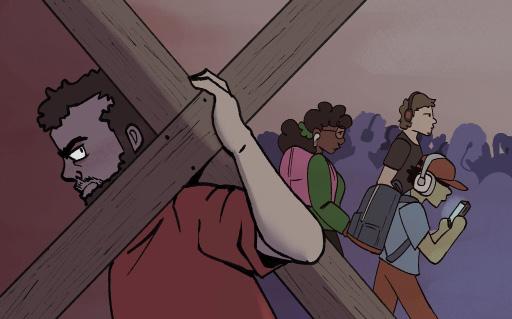
Coming in as a sophomore to the Wildcat, I feel like I’ve seen so much evolve and grow both in Student Media and the university as whole. As I stepped into the role of editor, I’m proud to say that the comics desk has never been stronger.
I absolutely loved drawing our print edition covers, as well as the hijinks of Sylvania Spaceray and Crater in my
comic Atomic Age Adventures. Being an art major, this role was a dream come true, both in the work I got to produce as well as the invaluable learning experience of leading and supporting a team.
Above all, the community that the Wildcat provides will always be so important to me. While thinking of all the friends I’ve made through the years, I know that being a member of the Wildcat will be my favorite college memory as I venture into my future. I’ll miss you all dearly even though my heart will always be in the newsroom!
The Daily Wildcat
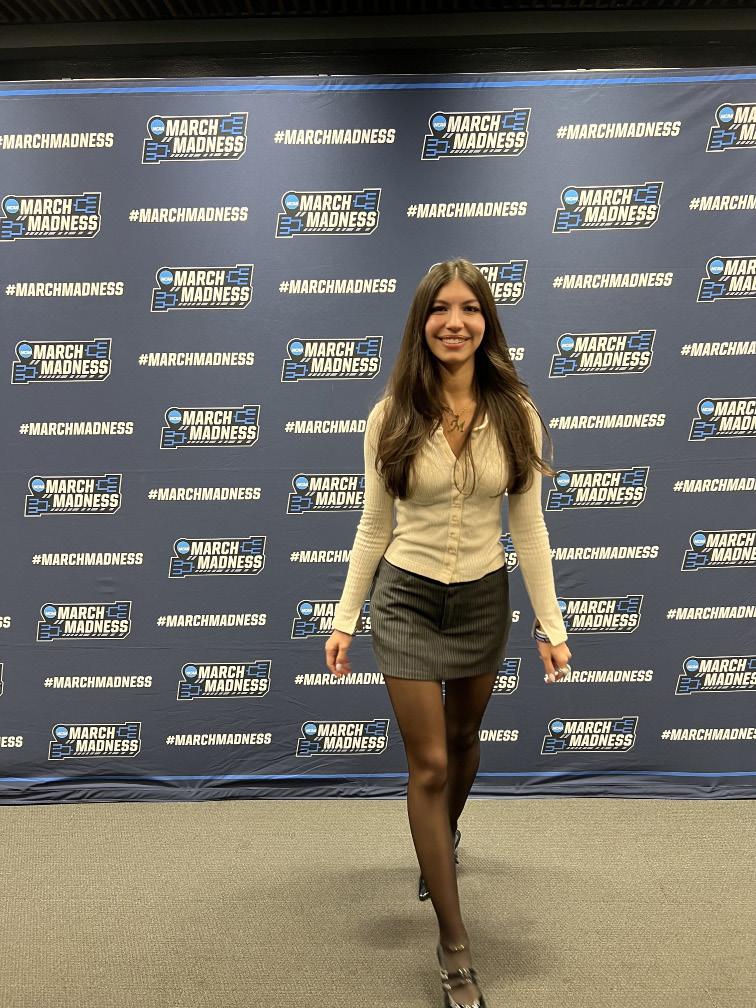
My time at the Daily Wildcat has been nothing short of inspiring. Moving here from Brooklyn, New York, I started out knowing I wanted to report for sports, but not knowing all the beautiful memories and lessons that would come with it. From learning from my editors, to becoming one and learning some more from my team… sports writing and the Wildcat will always be a part of who I am. All the preparation, traveling and long nights made it all the more special. I got to figure out my writing style and a little more about why I loved the process of
this art.
Seeing March Madness up close and gaining in-person experience with coaches and athletes was a dream come true. Not one moment was taken for granted, because how could I? The dinners, all-staff parties and moments with the crew made me feel like I belonged. The best decision I could’ve made was joining this newspaper and using it to its fullest extent.
Thank you to the Daily Wildcat for the friendships and experiences I will always cherish.
DAVID M00RADIAN KAMP Student Radio
Late Thursday, Oct. 30, KAMP Student Radio lost its general manager, Sophia Troetel. But on that day, they lost much more than that. KAMP lost its leader, friend and the heartbeat of the station. It lost the loudest voice, the kindest heart and the hardest worker. Her loss to the station itself and her countless friends there will be irreparable.
This profile and tribute to Troetel includes quotes from dozens of KAMP members, some of whom were among her closest friends.
‘Sophia made me feel like I mattered’
Part of what made Troetel such an effective leader for KAMP was her ability to flip someone from being interested in KAMP to becoming a member or fellow leader in the organization.
Faye Zhang, a current music director at KAMP, said, “Sophia [Troetel] didn’t hesitate to invite me to go to Noodleholics with everyone; she even offered to drive since my car was parked a while away. We picked up Katya [Castillo-Mendoza] from Scented Leaf along the way and I think we talked about her upcoming birthday and work on the way over.”
Zhang continued, “I was just starting to get to know the rest of the officers so it genuinely meant so much that her first thought was to invite and sit next to me at the table to make me feel included. She was always so inviting and would never hesitate to talk about our shared dislike of apathy or to give me a hug every time we saw each other. KAMP is easily the best part of my time in college and I don’t know if I would have gotten to know everyone or be as involved if it wasn’t for her.”
“I think the first time we ever spoke, she complimented my KAMPer of the Week presentation. She would dance with me to Kesha and Britney Spears at the house parties

we attended,” Crista Valenzuela, an executive board member at KAMP, said.
“She was always a hype-woman, making me feel heard and supported whenever I had a conversation with her.”
“Sophia [Troetel] made me feel like I mattered. She took everything I said seriously, even the stuff that definitely wasn’t so serious,” Alyssa Acevedo, KAMP’s news director, said. “I keep thinking she’s going to pop up out of nowhere with ‘Hey cutie!’ and brighten my day with a compliment on my outfit and a chat.”
‘She brought KAMP together like no one else’
Troetel put great effort into everything she did and KAMP was no exception.
“I was so nervous to run KAMP with her as we were heading into the sum -
mer. I was just thinking about how busy both of us were and if we were gonna be able to give our full attention to the organization like it deserved,” KAMP’s head music director Micah Dalton said.
“I went over to her apartment and she had all the interviews planned with the details of every music director already written out, and specific questions for every person.
“We spent two weeks seeing each other almost every day, stopping to grab Ding Tea or lunch at Cheba Hut. When we were finished with the interviews, we would relax and watch movies on her laptop. Katya [Castillo-Mendoza] and Josiah [Santos] would stop to watch with us sometimes, and I never felt like I was being rushed out of the house even though I knew they were so busy and had such little time together. I felt so comforted and at peace at her house.
Knowing I won’t see the three of them anymore feels like an insurmountable loss.
“One of my last in-person conversations with Sophia [Troetel] was just each of us telling the other that we were so proud of our work and how special KAMP felt this year. I don’t know how to continue on without her.”
“Sophia [Troetel] was one of the most bubbly and kind people I’ve ever met. The first time I went to KAMP in freshman year, we were both new and excited about our future in the radio,” Fae Campbell said. “We instantly connected through our shared love of music and being from New York. While I had trouble mak -
CONTINUED ON PAGE 6
ing friends, she was always the light that guided me to other people in the club and she soon became one of my few friends in freshman year. She was my first friend in KAMP, and we made friends together that I still keep to this day. She always had a way of making everyone feel included.”
Campbell also spoke about Troetel’s leadership: “As the GM, she brought KAMP together like no one else, and created a community out of our cliques. She is truly a person who cannot be replaced. I really strive to be like Sophia [Troetel] and I hope to honor her in the future by showing up for my community in the ways that she has.”
Zhang also said, “KAMP is easily the best part of my time in college and I don’t know if I would have gotten to know everyone or be as involved if it wasn’t for her.”
An infectious personality Troetel stood out as a presenter during general meetings for KAMP.
Meetings are typically loud and chaotic, but not in the first half. The beginning of meetings is reserved for updates and announcements. Most executive board members speak briefly and procedurally. When Troetel grabbed the mic, none of that was the case. She was entertaining, enthusiastic and impossible to ignore.
“Her positivity and bubbliness were infectious. She could spark a smidgen of energy in the most exhausted person,”
Teddy LaBette, a KAMP member, said.
“She was a wonderful leader: compassionate, welcoming and kind to everyone. She made this bitter, cold world sweeter and warmer when she was in it. That is no small feat.”
University of Arizona students who have recently graduated shared their experiences with Troetel as well. “Every single interaction I had with Sophia [Troetel] was incredible,” one former student said. “Her genuine joy, kindness and sweetness was so infectious — she was the embodiment of a sunflower or sweet candy. I have never met someone so bubbly and kind 100% of the time […]. Her impact and personality was one of a kind.”
‘She helped me look forward to living again’
Troetel transformed KAMP into a space that altered people’s well-being.
“I wasn’t in a good place mentally when I first became a member at KAMP,” LaBette said. “The atmosphere she helped create made me look forward to living again. She gave me hope and inspired me to make the changes I needed in my life.”
Another member wrote, “As a new KAMP member, I noticed right away how kind a person Sophia [Troetel] was towards everyone. Sophia [Troetel] was a very positive person and I looked forward to the club meetings every week. I will miss her enthusiastic energy and wish I could’ve known her more sooner but I’m glad to have seen her at club meetings, she was such an angel.”
Campbell also recounted, “She remembered everything you’d tell her and she had genuine care for everyone she spoke to; no matter who they were. Sometimes when we went back home, we would hang out in NYC and go shopping for little trinkets — I got to know all of her favorite characters and stores, and we always had the best conversations even if we hadn’t seen each other in a while.

It was amazing that our friendship lasted outside the hustle of school and KAMP, and it really showed that she truly cared about all her friends no matter where she was. No matter if it was years or months since seeing you, she always greeted you with a hug and a smile on her face.”
“Sophia was someone who would lift you up,” Kamsi Kamna-Okafor said. “She was one of the best mentors ever. Everyday, she reminded me that I have what it takes to succeed by saying, ‘You got this, king!’ This echoes in my head everyday. She boosts everyone’s confidence by calling them ‘king’ or ‘queen’ and she was honestly the nicest person in KAMP. I’ll always miss her.”
A reverence of the station’s history
Obsessed with improving the station, Troetel looked back in time to evaluate how to improve in the future. KAMP, founded in 1988, has been a cultural and social pulse of the university for decades. The walls of KAMP are lined with student memories, music and archives from its 37-year history. If the walls could talk, they would beg someone to look through them. Last year, Troetel did just that. As Troetel rummaged through the station, she discovered something: a 2013 KAMP zine, folded into a small four-page booklet. The zine featured art, event information and served as a tool for attracting new members. This find led Troetel to revive the zine for the first time in 12 years.
In many ways, the zines embodied Troetel herself — bright, loud and creative. With help from former KAMP news director Topaz Servellion, Troetel brought the project back to life. By the end of the academic year in May, there was no doubt the zine would once again be a staple of KAMP.
Her fascination with the station’s past didn’t end there. Troetel learned and taught about KAMP’s earlier eras and incorporated ideas from its history into her modern vision — more marketing, more music across campus and more visibility.
Troetel was the closest thing KAMP had to a historian. Her love for the station motivated her to learn everything she could about its past.
CONTINUED FROM PAGE 6
Although Troetel was just 21, she was relentlessly focused on helping people and making a difference.
As GM, Troetel continued the “KAMP Cares” initiative, which she led up until the day she passed. Under her direction, KAMP was holding a menstrual product drive for those who couldn’t afford them, set to conclude on Halloween. Troetel named the initiative “A Bloody Good Time.”
In addition to being a dedicated student and organizational leader, Troetel volunteered with victim services for the Pima County Attorney’s Office.
“Sophia [Troetel] was incredibly feminist and made uplifting women a part of her daily life,” Miriam Kaylor, KAMP’s electronic music director, said. “I can’t think of anyone who was more active and involved in her community.”
Troetel was studying psychology to become a psychiatrist. Many at KAMP expressed that she was the one they turned to when they needed to talk about their lives.
“[I] was coming out of the Daily Wildcat with a stack of freshly printed zines and seeing her come out from the KAMP office,” Acevedo said. “We met in the middle of the hallway and she pulled me into the bathroom of all places just so we could have a private place to chat. We stood in there and talked about life and school and I can’t remember the details now but it mattered to me that she just wanted to talk. Her love was simple, but it was so loud.”
Countless KAMP students described Troetel as “unique.” Her energy set her apart.
Troetel was deeply committed to hard work — transitioning from hours of assignments to hauling DJ equipment across campus without complaint. She drove the old KAMP van “like a true New Yorker,” as one member put it, with determination and confidence.
Troetel was kind — many called her “the nicest person I had ever met” — but she was also strong. She loved to quote former KAMP advisor Mike Camarillo, who encouraged students

to be “politely persistent.”
Whether Troetel was coordinating DJ events or managing KAMP’s 100-plus members, she balanced kindness with leadership, always keeping the station’s best interests at heart.
Troetel was also omnipresent — active in multiple social circles, connected with university faculty and staff, and somehow managing a double major in psychology and Spanish while running one of the largest student organizations on campus.
“Sophia [Troetel] treated me like a friend from the moment we met,” April Cushman said. “She endeavored to know and care about me even through the few interactions we had. I’ll never forget that she knew my name before I had even said a word to her. Even in a big, complicated club like KAMP, she made it feel like a family to which I was immediately welcome.”
The love of her life
Tragically, Troetel was not alone when she was fatally struck in a pedestrian crosswalk. She was with her roommate and close friend, Katya Castillo-Mendoza, and the love of her life, Josiah Santos. It was not uncommon for Troetel to interrupt herself mid-conversation to express how much she loved Santos. The two were, in many ways, a perfect match — both artistic and passionate. Santos, a member of the a cappella group Meow or Never, had no greater supporter than Troetel.
Santos had a unique ability to capture her full attention. Even during KAMP’s “Mondays on the Mall” events, where Troetel DJed and promoted the station, she would stop everything when she saw him.
Acevedo described their relationship: “Josiah [Santos] loved Sophia [Troetel] just as much as she loved him. They were really the perfect couple: perfect for each other and for the people that knew them.
As much as they were a textbook ‘lovey-dovey’ couple, I felt nothing but warmth and happiness when I would see them together.”
“My favorite memories to recount of them are when Josiah [Santos] would come by the office to drop Sophia [Troetel] off before our Friday e-board meetings. He would walk up with her to the door but never step past the doorframe. You would be able to see them through the sliver of a window in the door and they would look at each other, talk, and most of the time, they would kiss.”
“After a long embrace with Josiah [Santos], Sophia [Troetel] would pop her head in and tell us it’s time for our meeting and Josiah [Santos] would somehow disappear down the hall, to be seen next Friday. Knowing they had each other in their final moments is devastatingly beautiful and comforting.”
SOPHIA GLADIEUX
The Daily Wildcat
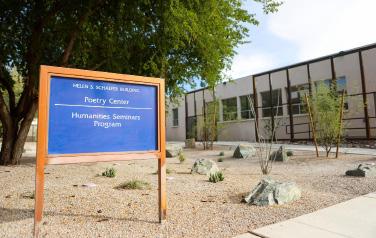
Built as a harmonious collaboration of poetry, art and nature, the University of Arizona completed it’s Poetry Center’s new garden.
The College of Humanities McCauslin-Smith Gardens opened on Oct. 15 and is named after two supporters of the Poetry Center, Max McCauslin and John Smith. Since its opening, this space has been drawing in people for all kinds of events, such as K-12 field trips and performances.
Designed by the same architecture company as the current Poetry Center building, Line and Space, the garden was envisioned to blend with the existing structure while adding something new and transforming the old alleyway into a welcoming space.
“So they did a kind of holistic process where they talked about what the space needed to do, what it would need to accommodate, what we might dream it would look like in 30 years,” Tyler Meier, the executive director for the Poetry Center, said. “If you’re in the space, you’ll notice there’s a lot of angles and inner personality that is meant to be in conversation with the building’s outside envelope, and the way that it’s designed to take advantage of light or shield from light.”
Originally, the alleyway behind the building was there because the UA did not own the buildings behind the Poetry Center, and there were utility poles positioned there. However, with these buildings now on the UA grid, the utility poles were no longer needed, opening up the space for remodeling.
The construction was done by Lloyd Construction and started in late May. It was originally planned to be completed before this semester started but ended up being completed in early October. The project cost $1.1 million altogether.
Even though the garden was
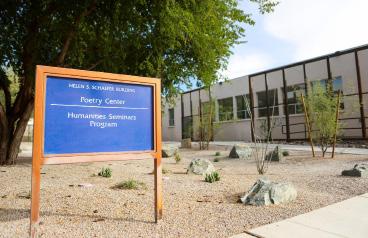
unveiled in October, there are certain features that are still being added, like light features, and they are looking to incorporate more pieces of art. This remodel also created a new home for “Look to the Mesa,” a sculpture by Kim Obrzut honoring Helen S. Schaefer, the wife of former UA President John Schaefer (who the original building is named after).
There are three areas of the garden space that are named by supporters. Bubbe’s Garden, named by David, Ashley and Morrison Hazan, in honor of Soozie Harzan, the Apostrophe Garden, supported by an anonymous donor and the Sculpture Garden, named by Tim and Anne Schaffner. This new space features an expanded
version of the existing Hillman Odeum stage area, with more benches and easier access, opening up a lot more opportunities for uses of the space.
“Also creating a lot more accessibility,” Meier said. “So prior to this, when it was an alleyway, it was relatively difficult to navigate, if you were a person that has any kind of mobility concerns. And so being able to address those in a way that’s proactive and thinking about the future, while also making the space more attractive has been a great gift.”
Another feature of the garden is the new plants. The Poetry Center partnered with the Tucson Succulent Society to add native plants as well as reclaimed plants, which are plants that
had to be removed elsewhere. There are also new trees that will provide shade once they grow.
“We’re excited to bring a kind of aspect of Sonoran wildlife back into a really densely urban area,” Meier said. “And we already see it a little bit with birds and butterflies and we can’t wait for that to grow over time.”
The Poetry Center is excited about all the new opportunities that this space allows them to do, with more space for readings, speakers, field trips, classes and overall providing a peaceful space for students and people of the community to come and enjoy.
The Daily Wildcat
In 2023, the University of Arizona revealed a miscalculation in the amount of cash on hand; it was short by $240 million in available funds. This accounting error translated into a $177 million budget deficit once the university’s obligations and spending commitments were fully accounted for.
By 2024, the university had trimmed its deficit to $63 million, according to the Unrestricted Funds Operating Budget for Fiscal Year 2025, a turnaround led by the university’s new chief financial officer and senior vice president for business affairs.
The university’s finances have shifted dramatically in less than 2 years. Under the leadership of President Suresh Garimella, the university has erased its deficit and balanced its budget without raising tuition for resident undergraduates and while granting raises to faculty and staff.
What led to the deficit, how was it reversed and what lessons does UA’s recovery offer about managing public university finances?
In an interview, the deficit reflected the university “spending more money than it was generating,” Preeti Choudhary, an accounting professor at the university’s Eller College of Management, said.
She explained that the $177 million shortfall was significant because total revenue influences decision making or materiality. “A common benchmark for materiality is about half a percent of revenue,” Choudhary said. In 2024, the university was looking at roughly 20 times that according to her.
She compared the situation to a company running a big loss. Where this was a result of “a faulty process of budgeting and allocating revenue, maybe double-count -

deficit.
ing, incorrect expectations of what was coming in and ultimately, overspending caused by several overlapping factors,” Choudhary said.
This year, the university reported a balanced budget. But because it’s a nonprofit institution, as Choudhary noted, balanced is closer to breaking
even than restructuring for profit. “Solvency has improved a bit SELA MARGALIT | THE DAILY WILDCAT
and the cash position looks slightly better, though not by much,” Choudhary said. “It’ll be interesting to see what the 2025 numbers show. The fiscal year ends June 30, but nonprofits often take longer to report. It looks as if the independent auditor’s report usually comes out around November [or] December.”
When asked what Garimella meant by “careful financial management,” a phrase that referenced debt refinancing and limited capital spending, Choudhary broke it down in simpler terms.
“Debt refinancing, hopefully, means they were able to get better terms on their debt, a lower interest rate, which gives them more cash on hand,” Choudhary said. “And limiting capital expenditures just means they’re cutting back on big investments or purchases for now.”
Hilmi Songur, senior lecturer in finance, stated that the deficit was a structural imbalance between revenues and expenditures that had been building for years rather than a sudden shock.
“Declining state support since 2008 forced universities to rely more heavily on tuition and auxiliary revenues,” Songur said. “It’s similar to a corporation operating at a loss, though universities have less flexibility to adjust prices or cut core services quickly.”
According to Songur, higher education institutions balancing the budget means aligning recurring revenues and expenditures, similarly to breaking even in the corporate world but with greater emphasis on sustainability than profit generation.
Garimella’s strategy of refinancing debt and pausing large purchases “is like a family refinancing their mortgage at a lower rate and holding off on major expenses to stabilize their finances.” Songur said.
Revenue growth is essential for any organization, and for a university, tuition and fees are the primary sources of revenue. Last year, the university reported a net revenue increase of more than $47 million. According to Choudhary when reviewing the 2024 budget, roughly 50% of university revenue comes from student tuition, 35% from contracts and 25% from federal sources. However, Choudhary noted that under the current administration, securing federal grants has become increasingly difficult.
“For universities, sustainable revenue growth involves expanding enrollment, research funding, philanthropy and endowment income,” Songur said. “The challenge is ensuring those streams are recurring, not one-time inflows that create a temporary boost.”
The Trump administration sent UA, along with eight other universities, a request to sign a pledge in exchange for better access to federal funds on Wednesday, Oct. 1.
The UA formally declined to sign the Trump administration’s Compact for Academic Excellence as written on Oct. 20. However, the administration has not officially denied participation in some version of the compact, a significant decision considering that around 25% of the university’s funding is provided by the federal government.
The risks of running a deficit this large poses a threat to the university’s long-term financial health. Fiscal constraint often means delaying salary increases or cutting academic programs, which can raise turnover and drive up costs.
“Running a deficit of this magnitude erodes reserves, weakens liquidity ratios and can negatively affect the university’s creditworthiness, much like how persistent losses impact a firm’s balance sheet and investor confidence,” Songur said.
Although the UA received national attention for its bad finances,
the university isn’t alone.
Across higher education, running a deficit has become increasingly common. A recent article in the Wall Street Journal highlighted this trend, pointing to the University of Chicago, which ran budget deficits for 14 years straight.
According to the Wall Street Journal , low interest rates before the pandemic made borrowing cheap and fueled a wave of construction on campuses nationwide. NYU is issuing billions in debt, USC is running a deficit and Swarthmore College, a private liberal arts college in Pennsylvania, is in danger of losing its AAA rating from S&P.
Widespread financial mismanagement in higher education has become a national issue. At Arizona, faculty say the lesson is clear: lasting recovery depends on financial discipline and accountability.
Choudhary and Songur agreed that the key to avoiding another deficit lies in strengthening financial discipline and oversight.
“Preventing future deficits requires internal controls, multiyear forecasting and transparency, the same practices corporations use in strategic budgeting and performance accountability,” Songur said.

IAN WEAVER
The Daily Wildcat
The University of Arizona triathlon team just became back-to-back National Champions after placing first on Saturday, Nov. 8, in Tempe. Leading the Wildcat team is humble competitor Kelly Wetteland. While a kind and compassionate person, Wetteland is as competitive as can be when she gets on the race course. She capped off her undefeated season this year with a win at the NCAA Triathlon National Championships.
Some triathletes on the Arizona team have been competing in triathlons their whole life. However, that is not the case for Wetteland. Growing up an avid athlete, she ran and swam in middle school but decided to focus solely on swimming upon entering high school.
Wetteland swam the first 3 years of high school until her family moved from Tennessee to Los Alamos, New Mexico. In fact, she was such an extraordinary swimmer that she committed to swim at the United States Naval Academy in the summer prior to entering her senior year of high school.
Wetteland joined the cross country team her senior year of high school merely to make friends in New Mexico and found she was a natural. As a result of her running success, she also committed to run at USNA. However, Wetteland wasn’t accustomed to all the new and intense running, causing her to get a stress fracture.
This injury threw off Wetteland’s entire world. Prior to a midshipman’s freshman year at USNA, they go through an intense boot camp. Due to her stress fracture, USNA told her she could either defer her spot a year, or go to prep school. However, instead of doing either option, Wetteland decided to come to the only other place she applied: the Univer-

sity of Arizona.
“It was scary when I got my stress fracture. All my plans were to attend the Naval Academy, and I didn’t know what the future held,” Wetteland said.
The only reason Wetteland applied to Arizona was because she and her father toured on an unofficial visit. Her application was merely a backup plan, fully believing she would be heading to USNA. After deciding to attend Arizona, Wetteland reached out to the swim team to see if she could compete for the Wildcats. Due to her remarkable high school swimming career, she earned a spot.
During her freshman year, Arizona started their triathlon team. Even though Wetteland was on the swim team she felt like something was missing.
“I felt like I wanted more. I had a vision for where I could be and I wasn’t there,” Wetteland said.
Thus, an amazing triathlon career was born.
Wetteland began training as part of Arizona’s first ever recruiting class. Despite having teammates who had more experience in triathlons, Wetteland never got discouraged. She put her head down and trained hard.
Recognizably so, Wetteland is no stranger to hard work. In fact, she exemplifies it every single day. As a double major in law and political science, Wetteland balances her studies with two to three workouts every single day.
Depending on the day and what type of workout needs to be done, the team will meet one to two times. For example, Wetteland may have a hard swim and bike workout in the morning with the team, then go for an easy run in the evening on her own, outside of the team practice. This grueling schedule may take its toll on an ordinary individual, but Wetteland truly has the heart and mind of a champion.
One of the ways Wetteland is able to balance all of her commitments is by having an amazing community around her.
“It’s tough to pick [a favorite memory],” Wetteland said. “An easy memory to point to would be our breakthrough win at nationals last year [2024], but also just meeting and becoming friends with everyone.”
The true memories and value of a team don’t come from one singular
event. The value comes from the endless amount of days working out and struggling through pain side-by-side with one another.
With all the success Wetteland has already had in her relatively short triathlon career, some wonder about her future plans and whether she would be interested in continuing to compete and make a career out of being a triathlete.
However, this raises a broader point. In triathlon, all the major money from sponsorships lies in long-course racing. Wetteland and her fellow teammates race a short-course triathlon, which consists of a 750-meter swim, a 12.4 mile bike and a 3.1 mile run. The long-course triathlon event is a bit different, with the shortest long-course race being a 1.2 mile swim, a 56 mile bike and a 13.1 mile run. Based on her short course performances, Wetteland would most likely have success in long-course. However, she doesn’t seem to be focused on the future of her triathlete career yet.
“I am not necessarily chomping at the bit to jump into long-course,” Wetteland said. “I am just happy, honestly living the dream here at Arizona as long as they will have me.”
Wetteland has one more year of eligibility left before her time as a Wildcat ends. This leaves the chance at becoming a single back-to-back national champion.
“The main thing was the team becoming back-to-back champions,” Wetteland said.
This attitude exemplifies how humble Wetteland is. Despite all her success, she still puts the team above herself. Wetteland is an extraordinary example of what it means to be a student-athlete at the highest level. A double major, an all-American, a national champion and a teammate to the highest regard.
SAMANTHA SHARLOT
The Daily Wildcat
The University of Arizona’s decision not to sign the Trump administration’s Compact for Academic Excellence in Higher Education as currently written has sparked strong reactions from students on both sides of the political spectrum.
The compact, which was sent to universities nationwide, called for eliminating race-based admissions, scaling back diversity programs and enforcing “viewpoint neutrality” in classrooms.
On Oct. 20, UA President Suresh Garimella announced the university would not sign the compact as written, instead issuing a separate Statement
of Principles reaffirming the university’s independence and commitment to free speech.
For Victoria Watson, a sophomore studying political science and Middle Eastern studies, as well as the secretary of the College Democrats of Arizona, that cautious response didn’t go far enough.
“Higher education has been under attack constantly,” Watson said. “If you’ve been marginalized, our government needs to make up for that. This compact would erase that progress.”
Watson expressed that she was especially troubled by language in the compact limiting the consideration of race and identity in admissions. “As a firstgeneration woman and a Latina, I know firsthand how much these policies matter,” Watson said. “We can’t pretend everyone starts from the same place.”
Cooper Long, the College Democrats’ political affairs director, echoed her concerns, warning that the compact could erode academic freedom.
“I was worried about our ability to make our own decisions […], admissions, research, hiring,” Long said. “Universities should stand up for students and not bend to the will of a political administration.”
According to Long, he appreciated Garimella’s refusal to sign, but he hoped the administration would take a firmer stance in the future.
“I wish there was more clarity,” Long said. “We shouldn’t be pawns in a political game. Our education should be based on merit, not loyalty to an administration.”
While many progressive students condemned the compact, others defended it as a long-overdue correction.
In an Oct. 15 opinion column, Zaina

Jasser viewed the compact as refreshing. Jasser argued that the Associated Students of the University of Arizona Student Body President, Adriana Grijalva, has not prioritized the thousands of conservative students waiting for action.
“Don’t be fooled, my UA student body president does not represent me,” Jasser wrote. “Her words of faith to represent the university community apply to only the voices in power, already unrepresentative.”
Jasser described the Higher Education Compact as an important step toward equal representation for conservative students.
“This is a long-awaited initiative […] to finally respect, bolster and represent conservative students as they do our liberal counterparts,” Jasser wrote. “It is fairness with incentive.”
Jasser also defended the compact’s limits on identity-based admissions and hiring practices, arguing that the policy promotes equity without discrimination.
“Eliminating identity-based rewards does not destroy the educational equity you deserve,” Jasser said. “Educational equity can exist separate from identity and a destruction of conservative ideas.”
Jasser ended her piece with a call for conversation and courage on campus.
“Where is the dialogue around protecting conservative voices?” Jasser asked. “The university must remain a place where I can share my opinions and arguments without fear of judgment.”
The clash between these perspectives mirrors a broader campus divide over how students should be prioritized. As the UA continues to navigate that balance, one thing is clear: students on both sides believe the future of academic freedom is at stake.
AIDEN WILLIAMS
The Daily Wildcat
Eight-foot tall wooden crosses are as prolific around the Student Union Memorial Center as the indecipherable odor coming from the sushi restaurant.
Accompanying these crosses are platoons of evangelists. Their mission is to call as many passing college students as they can horrible and sinful people. Then they tell them that they are being brainwashed by liberalism, atheism, science or some other alleged evil. The prescription to fight these evils is to forsake all prior beliefs and subscribe to a fringe Christian belief system.
Around 4 p.m. on Halloween, I observed the absurd sight of a street-preacher in a “Jesus” T-shirt, debating asexual dinosaur reproduction. The preacher was holding a microphone and was surrounded by two banners, one proclaiming to reveal “6 myths about Atheism” and the other “7 myths about sex.”
“You’re trying to say humans came from lizards,” the preacher said followed by an uncomfortably long pause. “Why hasn’t that common ancestor been found?”
Across the walkway a person in a hoodie said, “Humans didn’t evolve from dinosaurs.”
The conversation went around in circles, as the preacher demonstrated he knew less about dinosaurs than your average 6-year-old. As I was hastily jotting down my notes, I was spotted by another member of their posse. She handed me a fake million dollar bill emblazoned with the image of Jesus being crucified. Death was everywhere you looked. The 8-foot tall Roman execution devices, the crucifixion money and signs calling abortion murder. Even one of the listed atheism myths was “when you die it all goes black.” Our lively campus was overrun by a syndicate of death
obsessed preachers.
I’m not sure how we as Americans decided these college open mic debates are an acceptable form of discourse. Perhaps like the crosses suggest, we’re nostalgic for public executions. But modern America doesn’t have gladiators like ancient Rome. We have professional wrestlers, and much like professional wrestling, these open mic debates are pure kayfabe – A performance intended to rage-bait students into endless, cyclical arguments. These evangelists will claim openly that they are trying to save souls by bringing people closer to the teachings of Christ. In practice, all they do is berate, insult and harass the student body. I can’t imagine their messaging is effective; most students duck their heads as they walk past them.
As my fake million dollar bill helpfully informed me, these public debates are the work of Kingdom Enterprises, an evangelical non-profit that is currently trying to win Tucson.
KE has a YouTube channel where they upload select clips of their conflicts at UA. They’re impressively intolerant, truly foes of everyone. They argue with atheists, agnostics, Catholics, liberals, Muslims, Mormons, Harry Potter fans and Hindus. Seems we’re all pretty much screwed. In my brief conversation with the evangelist who gave me the fake bill, I asked if people who are born Christian and faithfully practice their entire life would be fine. She told me no, and only those who are born again will make it to Heaven.
A motif across their catalog is labeling their opponents as “trans” to paint them as irrational and mentally ill with the assumption that their audience shares their prejudices, as seen in their absurdly titled video “Trans College Student GOT SO ANGRY When He Heard This Testimony.” Despite the thumbnail of this video featuring a math equation depicting a transgender flag adding to a gay flag, then they were set equal to an explosion. jpg, at no point in this video does the issue of gender identity actually come up. Bafflingly, there is no indication whatsoever that the student is even transgender. During a debate on abortion, the supposedly “trans” student identifies himself

as a male with no uterus. Late in the video, an evangelist berates the student for wearing a satanic hoodie because the hoodie has the Slytherin logo on it. While not impossible, I’m skeptical that there are many transgender students out there wearing merchandise of the openly transphobic J.K. Rowling.
Other highlights of the video include the evangelists telling the student that they are afflicted by demons, attacking their use of antidepressants and declaring them to be a full-blown enemy of God. The preachers are quick to tack on a seemingly condescending phrase, “but Jesus loves you,” as if that waters down their hateful language. But their videos wouldn’t have any hook if the students didn’t overreact. The algorithm loves negativity. Intentional or not, KE’s methods exploit university students to farm content for their scarcely viewed YouTube channel.
Legally, as a public university, UA cannot kick evangelists off campus. Doing so would jeopardize First Amendment
rights of well-meaning organizations demonstrating on campus – not that kicking evangelists off campus would stop them. The infamous Brother Dean was arrested at the UA Mall for assaulting a student in 2016. Much like General Zod, banishment has done little to stop Brother Dean from reappearing last year.
So how do we get rid of them? The solution is pretty simple. Stop giving them attention.
These evangelists are rage-baiting trolls. They subsist off hatred and negativity and yearn for students to flagellate themselves in public for their amusement. Every time they rattle off hateful, bigoted and antiscience gobbledygook, they are fishing for a reaction. So next time you see an open mic just asking to have dinosaur facts spoken into it, walk away.
The day they stop finding someone to argue with is the day they disappear.
The African American Cultural Resource Center marked 35 years at UA during Homecoming with a celebration rooted in the center’s founding protest.

The African American Cultural Resource Center celebrated its 35th anniversary on Friday, Nov. 7 at the Dr. Martin Luther King Jr. Dream Space, hosting former student organizers, alumni, faculty and current students as part of the University of Arizona’s Homecoming events.
Nearly 100 people attended the evening program, which recognized the students who advocated for the center’s creation in 1989 and the students who continue its work today.
The AACRC was founded after
Black student protests in April 1989, when organizers called for a dedicated campus space and administrative support for Black students. The Dr. Martin Luther King Jr. Student Center opened in 1990 and became a hub for student programming, academic support and community.
Friday’s celebration connected early student advocacy to the center’s role today, with speakers acknowledging both the original organizers and the students currently involved in the space.
Tim Stark, one of the 1989 protest organizers, recalled the moment student advocacy moved from meetings to direct action.
“We were tired of meetings. We wrapped arms around the Administration building at
6 a.m. and said nobody is coming in,” Stark said. “We fought for a space where students didn’t have to ask to exist.”
According to Stark, the goal was longterm institutional support, not symbolic recognition.
The program also emphasized today’s student leadership and the role of the MLK Dream Space in daily campus life.
According to Charles Johnson, a student employee at the center, the space influenced his college path beyond academics.
“Having a job here, having a place where I have to be, having people I can talk to — that helped me stay at U of A and graduate,” Johnson said.
The anniversary’s inclusion in Homecom-
ing programming brought alumni back to campus, allowing former organizers and current student staff to connect during the same event.
The program also recognized Jesse J. Hargrove, the founding director of African American Student Affairs, who helped lead the center’s early development.
Hargrove delivered the final remarks of the evening.
“We wanted to work ourselves out of a job. We thought society would change and we wouldn’t need these centers anymore,” Hargrove said. “But the community still needs this space. The mission is still here.”
The University of Arizona soccer team concluded its fall season in a draw against ASU on Thursday, Oct. 30. The Wildcats suffered tough losses throughout the months completing the season with a 7-11-1 overall record and 2-8-1 conference record, making it difficult to stand a chance at entering the Big 12 tournament in the post season.
Despite Arizona’s struggles, several Wildcats stood out in both the defensive and offensive third. Narissa Fults, a sophomore forward, led the offense when Aurora Gaines, another sophomore forward and point leader for Arizona, suffered an injury in the midway point of the season. Fults earned 2 goals and three assists on the season, often driving attacking efforts for the Wildcats.
Even with Gaines’ near seasonending injury, she remained at the top of the line for Arizona with 4 goals, 2 of which were game-winners and three assists. Gaines was a powerful forward for the team, utilizing her speed and strength to find clutch goals for Arizona.
Moving deeper into the lineup, Lily Boydstun created countless opportunities for the Wildcats from the midfield. Making efforts getting back on defense and creating possessions for Arizona, Boydstun collected 3 goals and assists, getting 22 shots on goal, the second most behind Fults with 33. In the back line, senior defender Maia Brown was one of the biggest players on the field for Arizona. She served as a brick wall, keeping impressive opponents from breaking through her line. Brown played the
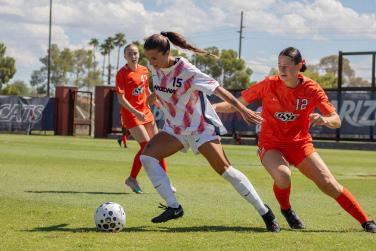
second-most minutes of any Wildcat, often never seeing the sideline and being a key to the team. Despite her lack of numbers on the stat line, Brown’s presence was notable across the pitch.
The Wildcats started their season with an exhibition matchup against NAU, walking away with a 1-0 win. Following up, Arizona went on a three-game win streak to extend their record. They competed against the University of Las Vegas first, securing a massive 5-0 win, 2 of the goals coming from Gaines. In their second home
game of the season, they defeated the University of California, Irvine 1-0.
As the Wildcats got on the road, they bagged their first away-game victory over New Mexico State University in a 2-0 defeat. Jessica Bedolla, sophomore forward, put both goals away for Arizona.
The start of Arizona’s downfall began on their California road trip, facing ranked teams like Stanford University. The Wildcats suffered a 6-0 loss, unable to find any attack in this match. Against University of California, Berkeley, Arizona found their second loss in a 2-1 contest. The Wildcats showed fight in this match, coming just short of Cal.
Fortunately for Arizona, they found a redemption match against University of Denver, putting away 2 goals to Denver’s 1. Sami Baytosh and Fults secured the points. The next three games traded off two losses and one win, their only victory coming over GCU in a 5-2 blowout.
Nonetheless, Arizona fell 3-0 to the University of Pepperdine and 1-0 to Iowa State University. At this point in the season, Arizona held a 5-4 record.
CONTINUED FROM PAGE 16
The Wildcats’ next two games served beneficially for the team, winning 1-0 and 3-1 against the University of Central Florida and Oklahoma State University. Gaines, Marissa Arnst and Mireya Stephenson tallied these points for Arizona. Unfortunately for the Wildcats, these goals were the last Arizona saw for the next three games.
The team fell to West Virginia University, the University of Cincinnati
and the University of Utah, unable to put any points on the board. Notably, these matchups were the start of Arizona’s damaging seven-game losing streak.
Finally, against BYU on Oct. 16, Bedolla and Boydstun put Arizona back in the scoring column with a goal apiece. These were the last goals the Wildcats put away for the season. Ultimately, the Wildcats fell 3-2 to the Cougars, adding another loss under their belt.
Arizona then went on to face a ranked No. 12 Texas Tech University and No.
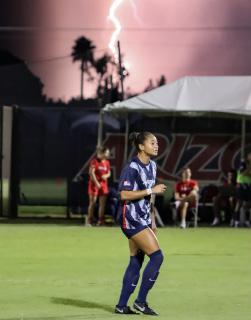




9 TCU in back-to-back home games, losing 2-0 and 1-0, respectively.
While they weren’t able to find a win, their efforts, both offensive and defensive, were impressive regarding the state of their season at that time. Holding the No. 12 and No. 9 team to just 3 goals was an achievement in itself.
The team then traveled to Boulder, Colorado to face the University of Colorado, falling 1-0. These matchups were a testament to the struggles facing Arizona’s offense this season. With a solid back line, the Wildcats could not find working connections up top to put the ball in the net. Despite valiant efforts from several forwards, key opportunities to score were often gone to waste.
This left Arizona in its last matchup of the season, hosting rival ASU at home.
For several Wildcats, this would be their last collegiate matchup. With that
thought in mind, Arizona was eager to find the net and secure one last win on the season. Unfortunately, the Wildcats fell just short in a 0-0 draw. This game ultimately finished the Arizona soccer chapter for departing seniors as well as the entire team for the season.
As Arizona soccer moves into the spring season and eventually the 2026 fall season, fourth-season head coach Becca Moros will need to evaluate her attack to find ways to put the ball in the net. Defensively, the Wildcats hold a solid foundation, but leaving players could alter their stability. Finding chemistry amongst the midfield to glue these sections together will be key for Arizona’s success moving forward.
ISABEL VIDRIO
I am an avid concertgoer. In the past 5 years I have attended nine concerts, all of which have been pretty solid experiences. I’ve been to concerts where artists have stayed on for as long as 3 hours. Some will stay for 1 hour,
but it doesn’t matter. Concerts are meant to be a fun, positive event for the artist and the fans. Lately, however, I’ve noticed a worrying shift in the culture of live music, a change that threatens the very environment we pay to enjoy. While the music remains great, a growing number of fans seem to be losing all sense of courtesy and spatial awareness. This new trend of self-centered and disrespectful behavior has turned what should
be a communal celebration into a surprisingly frustrating and sometimes unsafe experience. The growing number of incidents at concerts, like shoving others for a good view or fans fighting over an object tossed to the crowd by the artist, is concerning. I noticed recently that fans have been losing respect for others around them and the artists performing, with blatant disregard of what’s going on around them, like

spatial awareness, noise level and even proper manners. It is genuinely rude to act this way around others, especially when there are concertgoers that spent a lot of money to get to these concerts. According to LendingTree, fans spend an average of $795 on concerts. This includes travel, food, merchandise, VIP perks and most importantly the concert ticket itself. If we have to spend so much money on concerts, we should expect a safe and fun environment, not one where we fear for our safety.
There have been times where these behaviors have turned out dangerous for the artists.
On June 18, 2023, singer Bebe Rexha was struck in the face by a phone thrown from the crowd, an injury that required stitches and ended the concert abruptly. Rexha did post a video of herself claiming she was okay, but the fan who threw the phone did get arrested. Fans throwing phones in hopes of getting a selfie or video taken by the artist has become disturbingly common. It’s mind-blowing how a fan is willing to go against the law just so they can get the artist’s attention.
I understand wanting to be with the artist and getting a few seconds of notice from them, but I’m not willing to break the rules for something as crazy as throwing objects and getting on stage. Situations like these can turn tragic for the concertgoers, like the unfortunate incident of the Travis Scott Astroworld Tragedy, where 10 people lost their lives and over 300 fans were injured. A concert shouldn’t put people at risk of death and injury, especially when it’s meant for a large scale audience.
If we want to get the attention of the artists, we have to do so respectfully. Depending on the type of concert and ticket vendor, VIP packages are offered to fans that include meet and greets, early venue entry and access to merchandise. Some may include soundcheck, where fans get to meet the artists before the concert and have a chance to interact with them. These are exclusive opportunities for fans to enjoy the concert with the artist and not have to deal with going the extra mile to get to the concert on time. Even then, the concert can be enjoyed from any seat. If someone is sitting up at the nosebleeds, they can still have fun at the concert.
It takes a lot of mental energy out of the artists to come out and perform in front of an audience. You should show that same respect and love at every concert you plan on attending.
Make your experience a positive and safe one!

MULTIMEDIA DESK
The Daily Wildcat
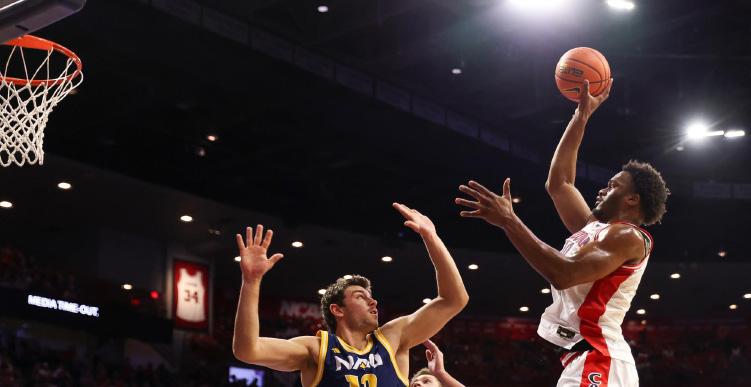
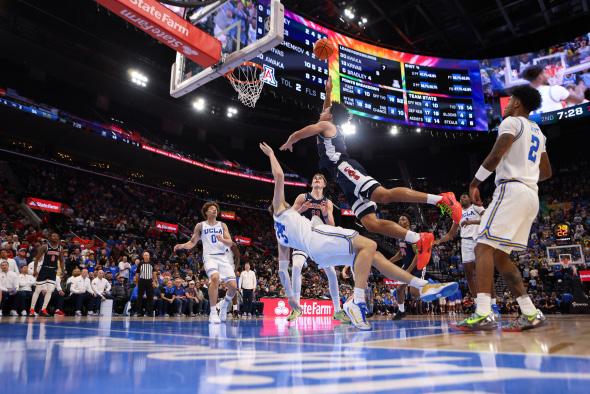
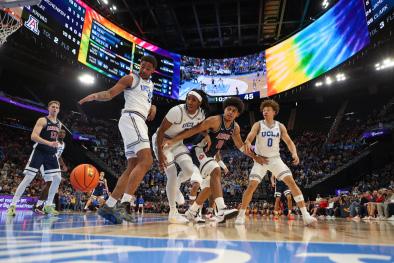
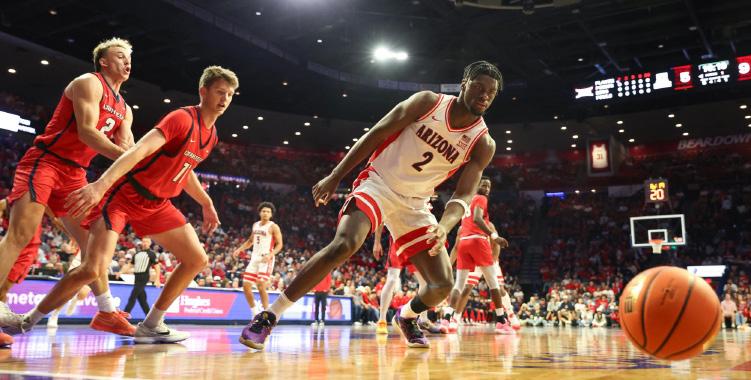
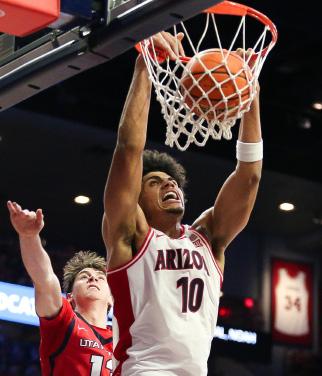
Only a few weeks into the season, the Arizona Basketball team has already established itself as one of the best teams in the nation. The Wildcats opened the season in Las Vegas against the reigning national champions, the Florida Gators. In a hard fought game the Wildcats took the Gators down, but that wasn’t the end of it. The Cats went into Inglewood, Calif. just two weeks after to take on UCLA in the Intuit Dome. The Bruins were taken down behind a Dell’Orso 20 piece off of the bench. That’s not it however. The Wildcats have games coming up against Auburn University, the University of Alabama and San Diego State University.

CONTINUED FROM PAGE 20