Farm Bureau Press
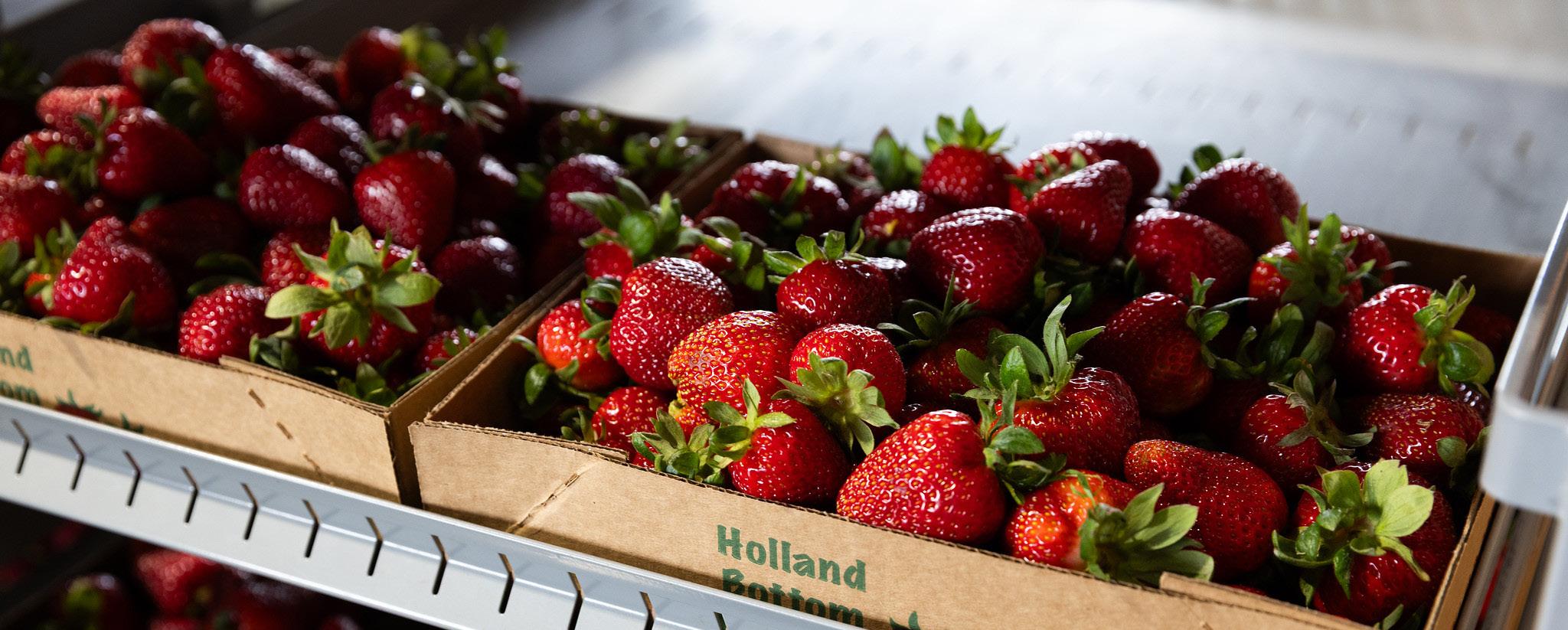
Arkansas Farm Bureau is excited to open the 2026 Arkansas Farm Trail March 28. AFT allows farmers to share stories, connect with consumers and increase visibility for ArFB members producing direct-toconsumer goods. Returning for a second season, AFT is the first-of-its-kind Arkansas program connecting consumers with local agriculture and teaching about the state’s agricultural industry.

The 2026 AFT includes nearly 40 passport stops, almost doubling the number in its second year. The featured farms grow or raise at least one food product sold on site. This farm-to-shelf experience allows producers to showcase what they grow, raise and make, while emphasizing the importance of buying local and teaching customers how food is grown and produced. Farmers in the program offer fruits, vegetables, grains, meat, canned goods and more.
Get a passport at any participating farm, at county Farm Bureau offices or by printing it from the website. With the passport, consumers visit farms to make a purchase and collect a stamp. Prizes are awarded by the number of stamps, with a grand prize for the first six participants submitting passports stamped by 22 farms. The grand prize is a fire pit custom-made by Arkansas FFA members.
“With agriculture as Arkansas’s number one industry, the response to the Arkansas Farm Trail shows just how much people want to connect with the farmers who produce their food,” said John McMinn, director of commodity activities at ArFB. “In just its second year, we’ve nearly doubled participation to 39 farms across the state. That growth reflects the strong direct-toconsumer movement Arkansas farmers have built and the growing interest from families who want to see where their food comes from. The Arkansas Farm Trail continues to create a win for both farmers and consumers by strengthening that connection.”
For more information about the AFT, visit ARFarmTrail.com
American Farm Bureau Women in Ag Survey, Page 2
Outstanding Agriculture Teacher of the Year Awarded, Page 2
Scan the QR code to access direct links referenced in each article. GET THE LINKS
American Farm Bureau Federation’s Women’s Leadership Program partnered with a team of researchers in the fall of 2025 to launch the National Women in Agriculture Study.
This nationwide initiative will explore women’s leadership and involvement in agriculture, identify barriers and opportunities, and provide actionable insights to strengthen engagement and support systems across the U.S. agricultural sector — from production and agribusiness to advocacy, education, and entrepreneurship.
The survey is open to individuals ages 18 and older in the U.S. and Puerto Rico who have an interest in or involvement with agriculture, including those working in production agriculture, agribusiness, education, advocacy, or related fields. Perspectives from both women and men are welcomed. The survey, which closes March 31, can be found here.
The Arkansas Boll Weevil Eradication Foundation board of directors voted to authorize the distribution of a $1 per acre cash rebate to growers for assessments paid on the 2025 cotton acres verified with the Arkansas Boll Weevil Eradication Program. A total payout of approximately $487,000 will be returned to Arkansas cotton growers with delivery expected by end of April.
“Arkansas cotton producers persevered with the same hard work and dedication they bring year after year,” said Joe Mencer, a grower from Chicot County and ABWEF Chairman. “We’re pleased to once again support their efforts through the rebate program.”
The Foundation verified 486,798.3 acres from Arkansas’s cotton producers for the 2025 season. The crop remains a cornerstone of the state’s agricultural economy, with Arkansas holding the third-highest cotton production ranking in the nation.
Learn more about ABWEF and its mission to protect the Arkansas cotton industry here.
Jenie James of Cabot was named Arkansas Ag in the Classroom Outstanding Teacher of the Year at Ward Central Elementary. Arkansas Farm Bureau’s Donette Spann presented James an iPad, $1,000 check and an all-expenses paid trip to the National Ag in the Classroom conference this summer in Providence, R.I. James helps integrate ag into academic instruction and oversees a therapeutic, instructional and community building space called “The Ward Central Cultivating Kindness Garden.”
The program began during COVID-19, when a passion for growing things blossomed, and James wanted to share that passion with students. Since its inception the garden has grown to not only educate students, but also connect them with local farmers and businesses. Ward Central Elementary hosts an annual taste test event, creating recipes using produce grown in the garden and inviting farmers and community members to the event. The Arkansas Department of Agriculture named the garden the 2025 Arkansas School Garden of the Year and Champion of
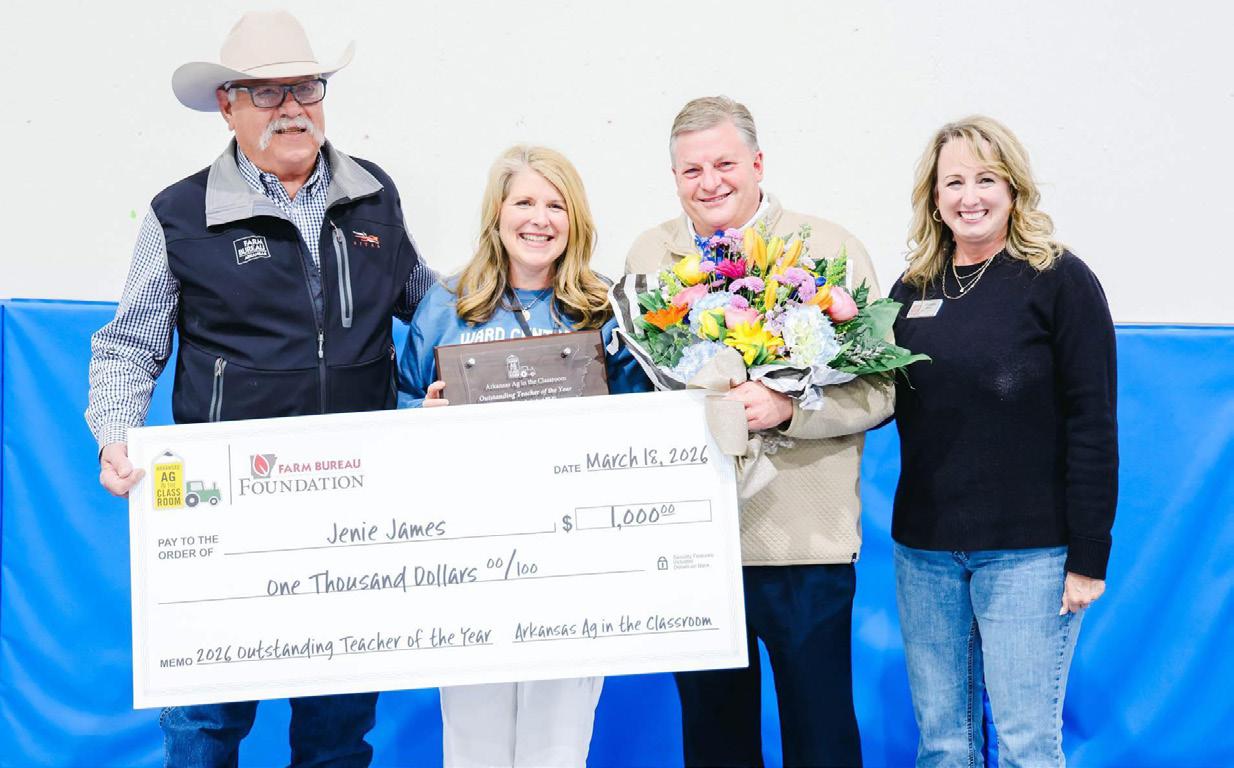
School Garden Sustainability. James is an active Lonoke County Farm Bureau member and has also received Garden Grants from Arkansas Ag in the Classroom and been a recipient of an Egg Hatching Educational Grant from the Arkansas Farm Bureau Foundation.
James has continued to find new and innovative ways to invest in the Cultivating Kindness Garden over the years, now as the Outstanding Agriculture Teacher o f the Year, James is adding an award for herself.
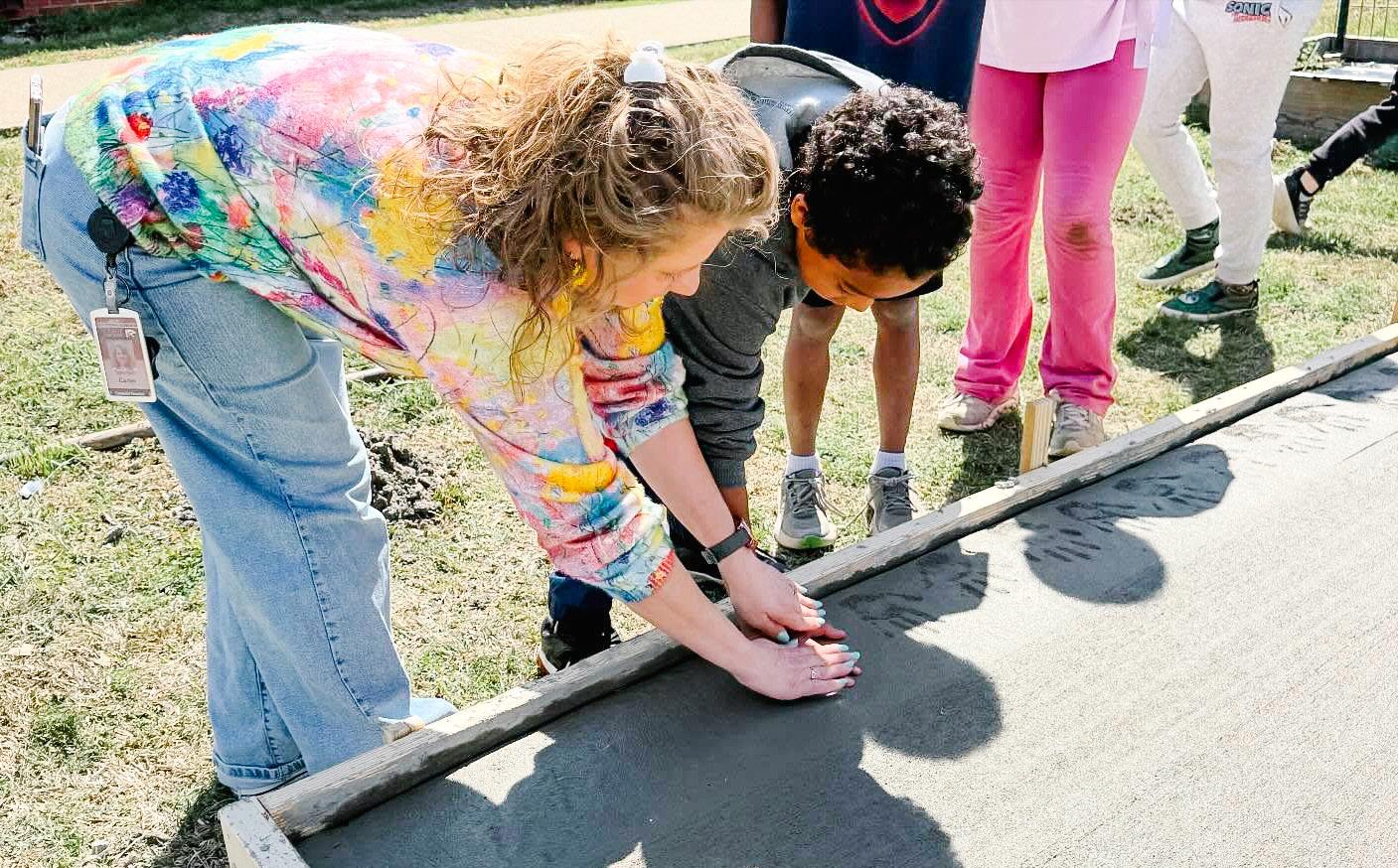
“Today is a day I will never forget, truly a dream come true,” said James. “We started the day by pouring the foundation for our greenhouse.
A huge thanks to Carter’s Concrete and Construction and CenArk Ready Mix for making it happen! One of the most special moments was watching our Sprouts [students] leave their mark in the foundation. Then, to top it all off, the day ended with the most incredible surprise. An amazing award, I’m still in awe!”
Learn more about Arkansas Ag in the Classroom online


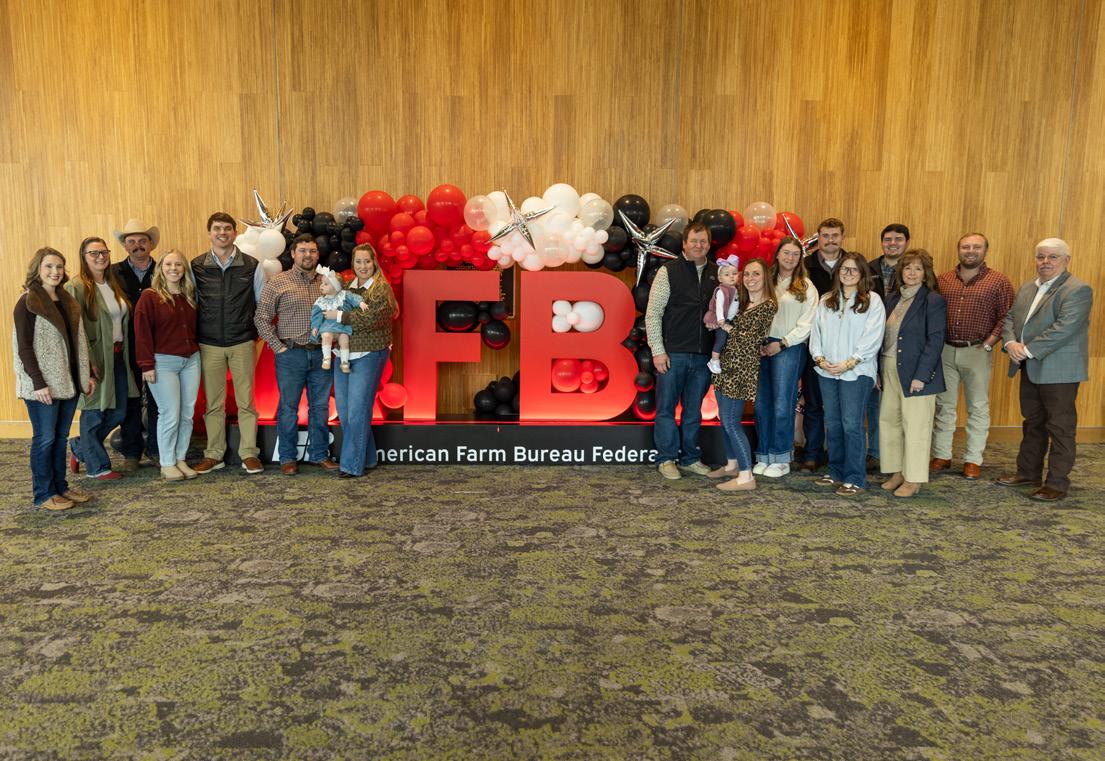
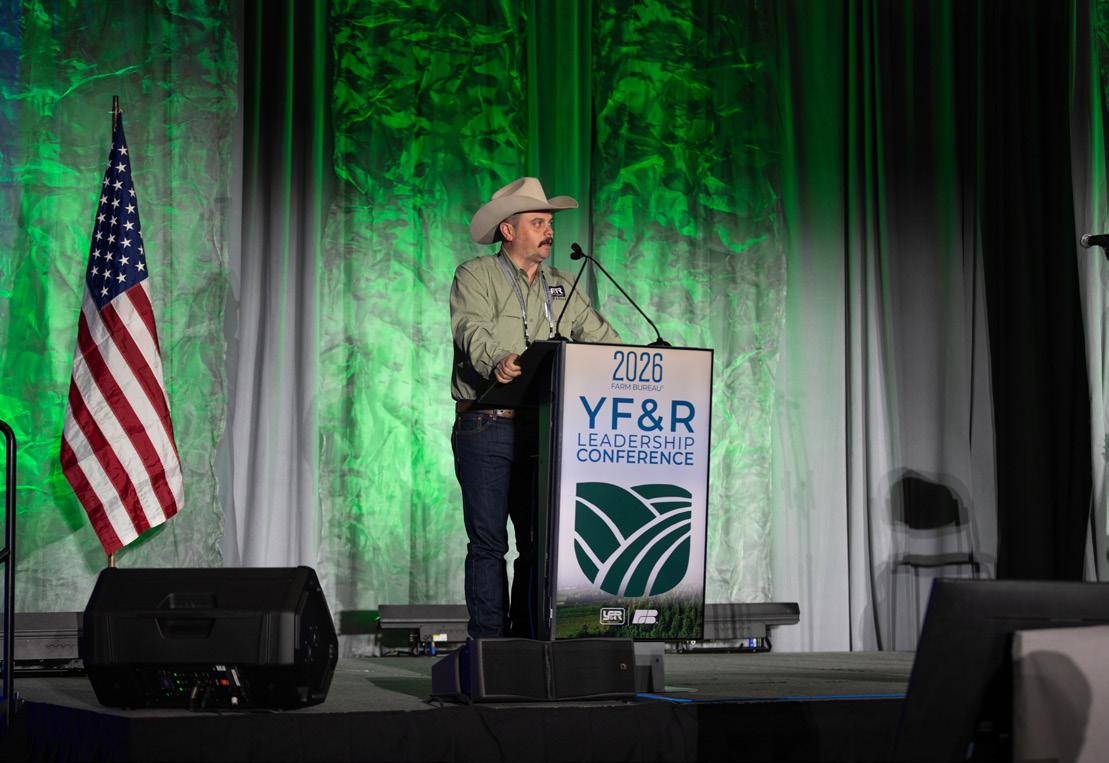

2026 American Farm Bureau YF&R Conference | Arkansas Farm Bureau Young Farmers & Ranchers members spent the weekend in Portland, Ore. networking with farmers and ranchers from across the country, attending meaningful workshops and working to improve their farms and the ArFB YF&R program. ArFB Vice President Magen Allen (bottomleft) graduated from AFBF’s Partners in Advocacy Leadership program during the event. Allen is the second Arkansan to complete PAL training, a two-year program focused on developing advocacy skills such as storytelling, policy development and stakeholder engagement.
as of March 18, 2026
Contact
Brandy Carroll brandy.carroll@arfb.com
Tyler Oxner tyler.oxner@arfb.com
Rice futures continue to climb higher, with the May contact holding above $11. The next upside objective is the February high of $11.64. However, abundant supplies in Asia and a growing rice industry in South America continue to keep a lid on U.S. long-grain prices. U.S. consumers are turning to imported aromatic rice in record amounts, with 30% of the rice consumed in the United States projected to be imported this marketing year. The import projection that was projected was lowered by 2 million cwt in the monthly WASDE. A 2 million cwt decline in exports, however, offset that decrease, resulting in unchanged ending stocks of 50.3 million cwt. A significant reduction in acres this year could have some impact on prices, but that decline in production is not unexpected.
After trending higher for most of the year, soybeans have moved sharply lower on worries that the upcoming trade summit with China is in jeopardy of falling apart. With exports projected to decline by over 300 million bushels, and ending stocks to increase by 25 million bushels, the market needs to see an agreement with China to help increase demand for U.S. soybeans. Recent fundamental support has come mostly from the oil side of the complex with high values and demand coming from the biodiesel market. Higher crude oil prices have
been supportive. However, in the March WASDE, USDA lowered the oil for biodiesel projection by 5.4%.
The March WASDE report delivered no changes to the 2025/26 U.S. cotton balance sheet or price outlook. However, the global outlook turned slightly more bearish. World production increased by more than 1.1 million bales, driven by larger crops in Brazil due to expanded acreage and in China from improved yields. At the same time, global consumption was trimmed modestly, despite stronger use expected in China. On the trade side, global exports rose by 200,000 bales, supported primarily by increased import demand from India. From a technical standpoint, the Dec. 2026 futures contract has shown improving momentum, closing higher in eight of the last nine sessions. Prices recently posted a contract high of 72.99, suggesting the market may be in the early stages of establishing a short-term bottom.
The March WASDE was largely in line with expectations domestically but carried a slightly bearish tone due to expanding global supplies. The U.S. balance sheet was essentially unchanged, with ending stocks held at 2.127 billion bushels and no revisions to demand categories. The more notable shift came globally, where world ending stocks rose to 292.8 million metric tons—an increase of nearly 3 million from last month and above trade expectations. Despite this, new-crop corn futures have found underlying support from rising input cost concerns, particularly surrounding fertilizer availability ahead of planting and diesel prices climbing above $5 per gallon for the first time in four years. Technically, September futures are holding support near $4.60, with resistance developing around $4.80
as the market balances global supply pressure against tightening margin considerations for producers.
The March WASDE report was largely neutral for wheat on the domestic side, with no changes to supply or demand and ending stocks remaining at 931 million bushels. The only adjustment was a modest increase in the season-average farm price, raised $0.05 to $4.95 per bushel. Wheat futures, however, have been on a strong upward trajectory since early January, with Chicago contracts rallying from near $5.30 to recent highs around $6.49. Despite the strength of this move, there is not yet a clear technical signal that the market has reached a top. Support is now developing near the $6.00 level, which will be an important area to watch if prices begin to consolidate or correct.
In the March WASDE report, USDA decreased the beef production estimate based on the recent slower pace of slaughter through early March, that more than offset heavier dressed weights. The beef export forecast was lowered based on tighter supplies, while import forecast was raised. Prices are forecasted to remain strong, again, based upon tight supplies. The pork production estimate was unchanged. The Quarterly Hogs and Pigs report, released later this month, will provide more information about supplies for 2026. Broiler production estimates were increased based on recent hatchery and slaughter data. Turkey production is still being impacted by the culling of birds affected by Highly Pathogenic Avian Influenza.