Farm Bureau Press
U.S. Secretary of Agriculture Brooke Rollins announced that the U.S. Department of Agriculture (USDA) will provide $1 billion through the Assistance for Specialty Crop Farmers (ASCF) Program for those not covered through the Farmer Bridge Assistance (FBA) program. The one-time bridge payments will help address market disruptions, elevated input costs, persistent inflation, and market losses from foreign competitors engaging in unfair trade practices impeding exports. Specialty crop producers have until March 13, to report 2025 acres to USDA’s Farm Service Agency (FSA).
“President Trump has the backs of our farmers, and today we are building on our Farmer Bridge Assistance program with the Assistance for Specialty Crop Farmers (ASCF) Program. Our specialty crop producers continue to feel the negative effects of four years under the Biden Administration, suffering from record inflation, a depleted farm safety net, and delayed disaster assistance,” said Secretary Rollins. “President Trump and the entire cabinet are working every day to fight bidenflation and lower prices for consumers. If our specialty crop producers are not economically able to continue their operations, American families will see a decrease in the food they rely on, wholesome and nutritious fruits and vegetables. Putting farmers first is essential to the Make America Healthy Again movement, and we are doing both at USDA by expanding market opportunities and improving the farm economy for all producers. Today’s specialty crop announcement builds on our efforts to improve markets for real food into American schools, institutions, and family dinner tables.”
The Assistance for Specialty Crop Farmers Program is authorized under the Commodity Credit Corporation Charter Act and will be administered by FSA.
Eligible Specialty Crops
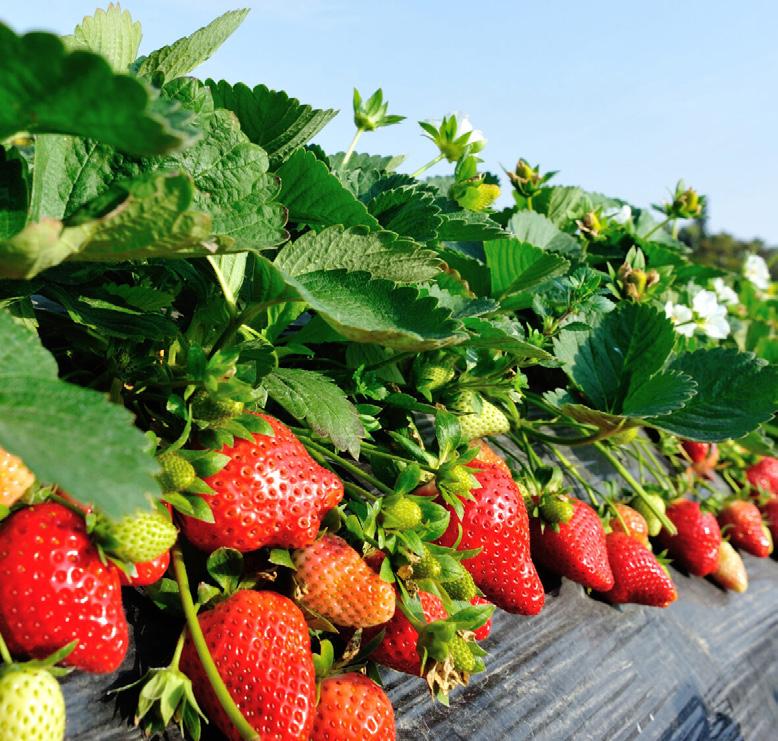
ASCF-eligible specialty crops include: almond, apple, apricot, aronia berry, artichoke, asparagus, avocado, banana, bean (snap or green; lima; dry edible), beet (table), blackberry, blueberry, breadfruit, broccoli (including broccoli raab), brussels sprouts, cabbage (including chinese), cacao, carrot, cashew,
Continued on page 2
Mid-South Farm & Gin Show Seeks Survey Input, Page 2

Apply for AFBF’s PALs Program, Page 3
Scan the QR code to access direct links referenced in each article.
Continued from page 1
cauliflower, celeriac, celery, cherimoya, cherry, chestnut (for nuts), chive, citrus, coconut, coffee, collards (including kale), cranberry, cucumber, currant, date, dry edible beans and peas*, edamame, eggplant, endive, feijou, fig, filbert (hazelnut), garlic, gooseberry, grape (including raisin), guava, horseradish, kiwi, kohlrabi, leek, lettuce, litchi, macadamia, mango, melon (all types), mushroom (cultivated), mustard and other greens, nectarine, okra, olive, onion, opuntia, papaya, parsley, parsnip, passion fruit, pea (garden; english or edible pod; dry edible), peach, pear, pecan, pepper, persimmon, pineapple, pistachio, plum (including prune), pomegranate, potato, pumpkin, quince, radish (all types), raspberry, rhubarb, rutabaga, salsify, spinach, squash (summer and winter), strawberry, suriname cherry, sweet corn, sweet potato, swiss chard, taro, tomato (including tomatillo), turnip, walnut and watermelon
*Dry edible beans and peas covered by FBA will not be eligible for ASCF.
ASCF payments are based on reported 2025 planted acres.
Eligible farmers should ensure their 2025 acreage reporting is accurate by 4 p.m. CT on March 13. Commodityspecific payment rates will be released by the end of March. Crop insurance linkage will not be required for the ASCF Program. However, USDA strongly urges producers to take advantage of the new One Big Beautiful Bill Act (OBBBA) risk management tools to best protect against price risk and volatility in the future.
More information on ASCF is available online or producers can contact their local FSA county office.
The Mid-South Farm & Gin Show is conducting a survey for insights from farmers, attendees, exhibitors and others. They’re asking stakeholders to share sentiments on the state of agriculture as well as ideas for addressing the situation. The intent? Gather meaningful data about attitudes and perspectives on the industry challenges that extend beyond immediate financial relief.
The survey is digital and provides demographic information as well as a series of questions that provide multiple choices, and space for comment. Some of the questions include:
• As you look at your operation and the viability of local communities over the next two years, will you be better or worse off than now?
• Given a list of factors impacting agriculture, which are most concerning to you? Looking at the top 5 factors you selected, what recommendations could improve the situation?
• How competitive do you believe U.S. agriculture is today in the global market compared to major competitors? Has it improved or declined over the past 5 years?
Take the survey here or scan the QR code.
All data, collected via the digital survey or in person during the Mid-South Farm & Gin Show, will be compiled in a report and made publicly available. The report will also be distributed to state and federal legislators, and state and national farm and commodity organizations.

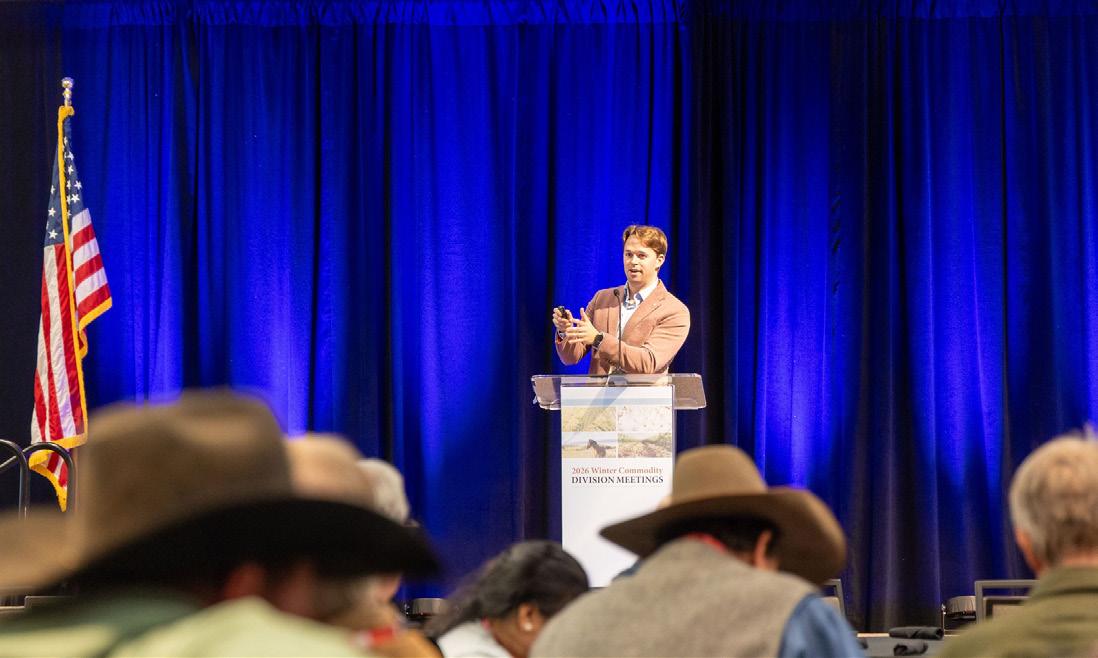
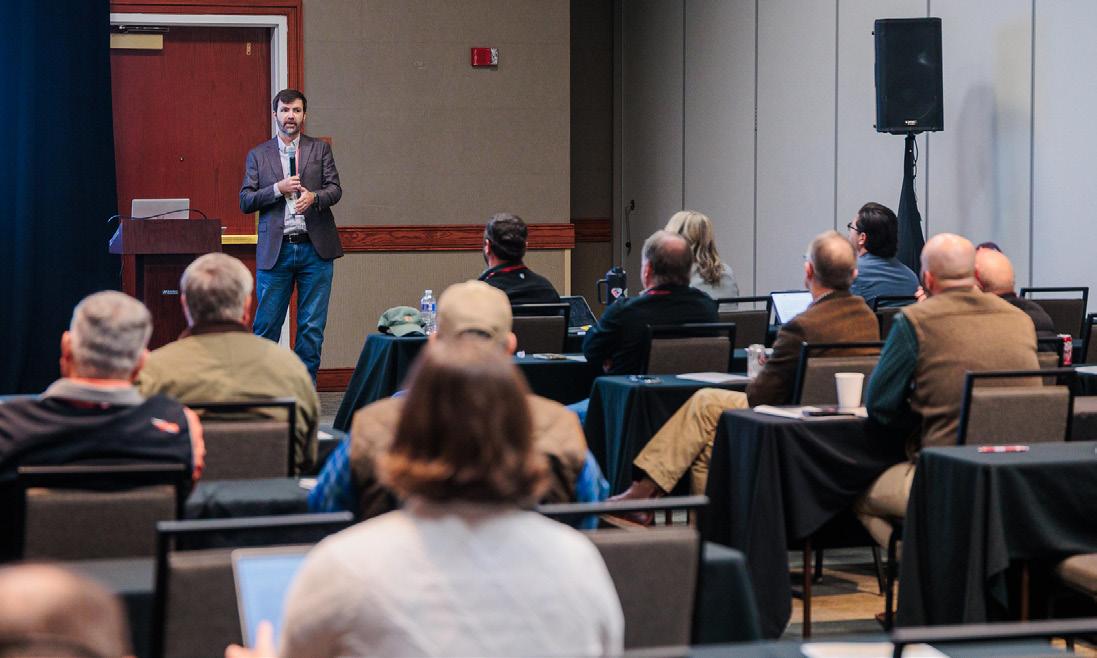

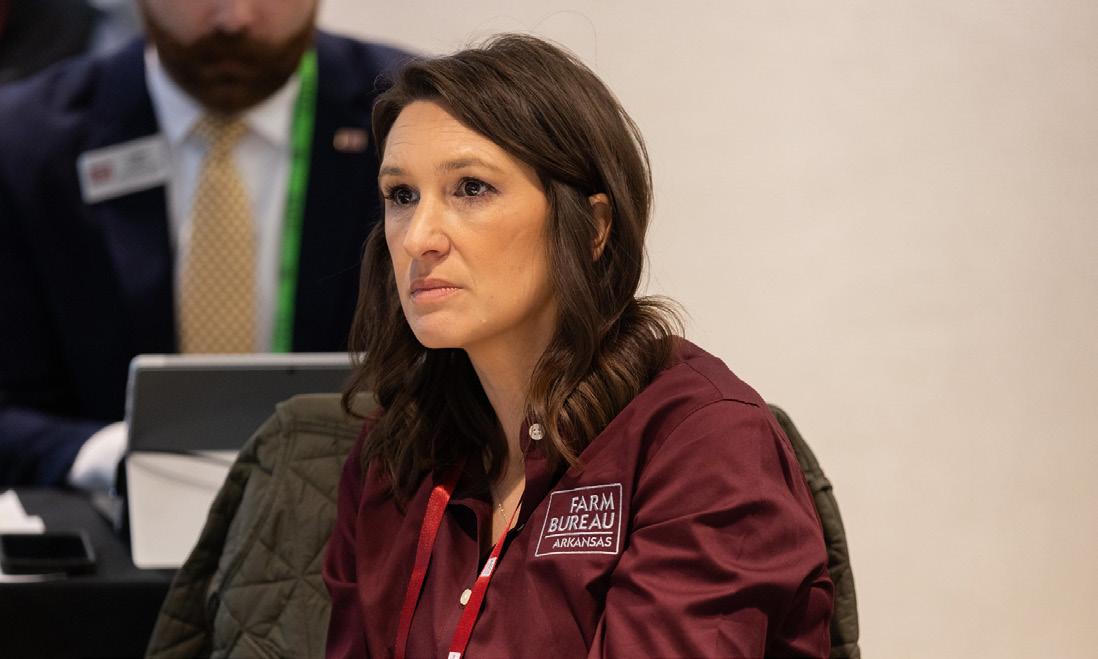
Winter Commodity Division Meetings | Arkansas farmers and ranchers gathered for the Winter Commodity Division Meetings Feb. 17 in Little Rock to hear from industry experts and discuss the issues that impact them. Members and leaders spent the day addressing challenges and policy priorities for state commodities. Meteorologist James Bryant presented seasonal forecast information and discussed in-depth precipitation outlooks for the spring and summer while hearing feedback from attendees on needs for weather apps and resources.
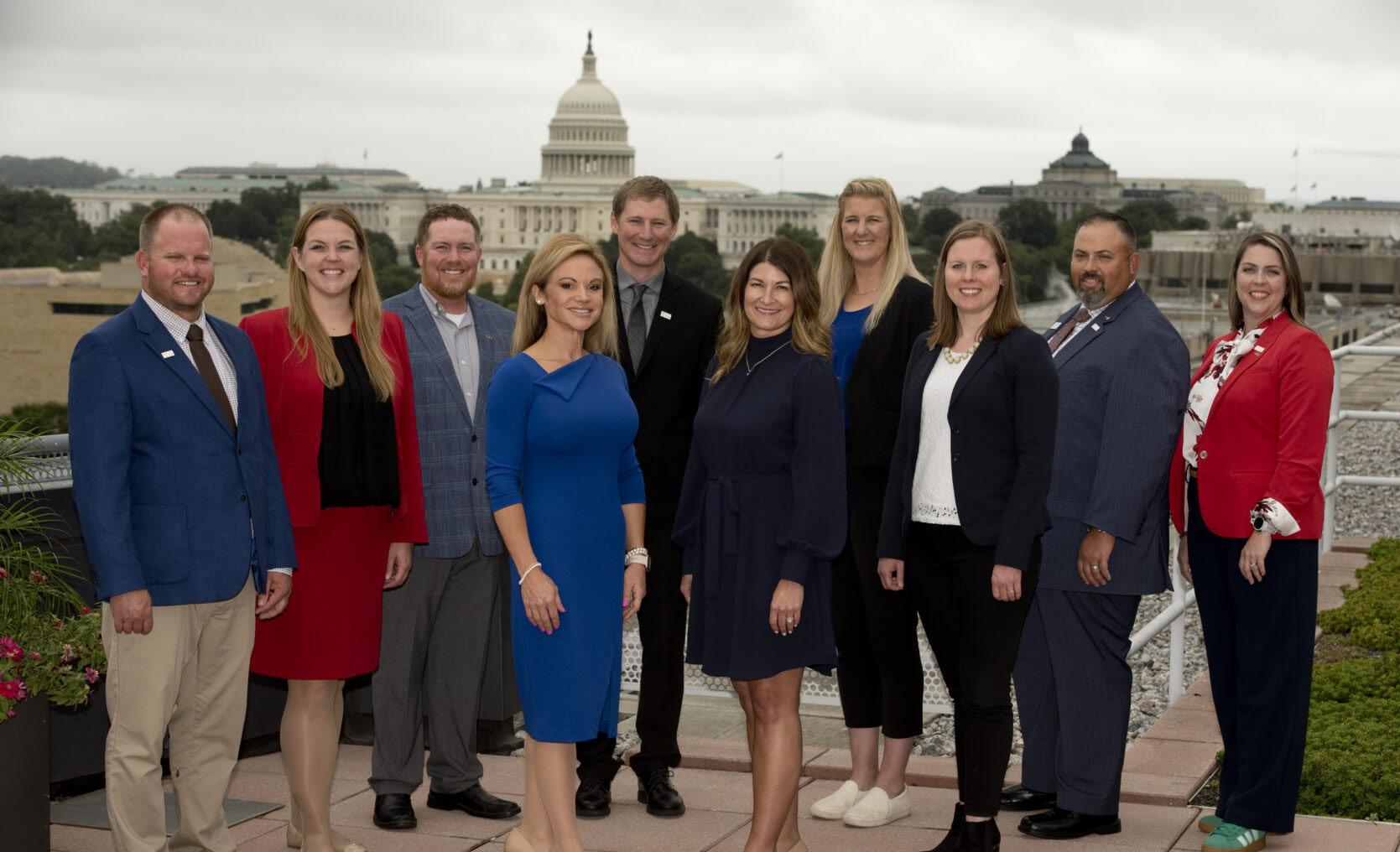
The American Farm Bureau Federation (AFBF) is accepting nominations for the Partners in Advocacy Leadership (PAL) program. The PAL program focuses on young members, who have already begun their personal development journey, moving to the next level. The curriculum is designed to be a challenging executive-level program and a lot of hard work. Core competencies are self-awareness, industry knowledge, message development, message delivery, policy engagement and interpersonal skills.
Ideal candidates are interested in advocacy and policy and eager to use social media. Eligible candidates are between the ages of 30-45 at some point during their program years (20262027).
Applications should be submitted to Arkansas Farm Bureau by March 13 for a letter of recommendation to be completed before submission to AFBF. Please send applications to Jennifer Craig, director of leadership development. Learn more about the program and access the application here
as of February 18, 2026
Contact Brandy Carroll brandy.carroll@arfb.com
Tyler Oxner tyler.oxner@arfb.com
Rice futures plummeted in recent days as the rally that began in January clearly ran out of steam. The February WASDE was a mixed bag for rice. Projected imports were reduced by 1 million cwt, but projected exports were reduced by 2 million cwt, resulting in a 1 million cwt increase in ending stocks. The all-rice average on-farm price was increased by 30 cents to $12.10 on the strength of California and southern medium grain prices, while the long grain expected on-farm price was steady at $10.50. Futures could see support, however, as we know more about the size of the 2026 crop. Given current margins, other commodities look more favorable than rice and could pull acres.
The February WASDE delivered minimal changes to the corn balance sheet. USDA raised exports by 100 million bushels to 3.3 billion, a move that was largely anticipated by the trade. Ethanol demand remains strong and appears on pace to meet USDA projections. Since the report, however, there has been little fresh fundamental news to provide direction. Corn futures have faced modest pressure this week due to spillover weakness from wheat and strength in the U.S. dollar. March futures recently snapped a brief two-day rally and closed below immediate trendline support near $4.30. The next support level is seen
at $4.25, and a break below that area could open the door to a retest of the January lows just under $4.20.
Soybean futures surged after President Trump stated Feb. 4 that China was considering the purchase of an additional 8 million metric tons, or 294 million bushels, of U.S. soybeans for 2025/2026 delivery. Trading volume spiked to near-record levels following the announcement. Despite the bullish headline, USDA made no changes to the U.S. soybean balance sheet in the February WASDE. The agency did raise its estimate for Brazil’s crop, now projected at 6.6 billion bushels, reinforcing expectations for strong global supplies. Technically, the February rally has slowed, but attempts to push March futures below $11.30 have been met with buying interest. That level continues to act as near-term support as the market weighs export optimism against expanding South American production.
Wheat has remained in a buyer’s market since mid-December, though the February WASDE offered little fundamental encouragement, with U.S. stocks edging slightly higher. This week’s rebound appears driven more by speculative bargain hunting and technically driven short covering than by fresh supply-and-demand developments. March futures have pushed above $5.50, with the next upside target near $5.60. However, declining open interest suggests much of the recent strength stems from funds exiting short positions rather than new bullish buying. Sustained gains may require stronger export demand or weather-related concerns to justify higher prices.
Cotton futures are consolidating near
contract lows. The National Cotton Council released their annual grower survey last week, reporting that U.S. cotton farmers intend to reduce cotton acres by 3.2% year over year, with 2026 acres pegged at 9 million. Arkansas, however, is expected to see a 30.3% drop in acres with farmers seeding only 362,000 acres to cotton, with corn and soybeans showing the potential for better margins — maybe not profits, but at least more likely to break even. The WASDE report was mostly unchanged, with a 200,000 bale decrease in the export projection carrying over directly into ending stocks, resulting in 200,000 bale increase to 4.4 million bales. The expected average on-farm price was reduced by a penny to 60 cents.
In the February WASDE, USDA raised its forecasts for beef production on higher slaughter of steers and heifers, increased cow slaughter, and heavier weights. Pork production was also raised on higher slaughter and slightly heavier dressed weights. The broiler production estimate was lowered on recent hatchery and production data, and turkey production is estimated lower due to Highly Pathogenic Avian Influenza related culling. Egg production was also reduced on recent production and hatchery data and HPAI related culling. Beef import forecasts were raised for 2026 due to the recent agreement between the U.S. and Argentina to increase the beef import quota. Fed-cattle prices are expected to increase during all four quarters of 2026 as demand is expected to remain solid. Broiler price forecasts were unchanged in the report, while turkey and egg prices are projected to rise due to supply concerns.
Shaylee Wallace Barber shaylee@arfb.com